
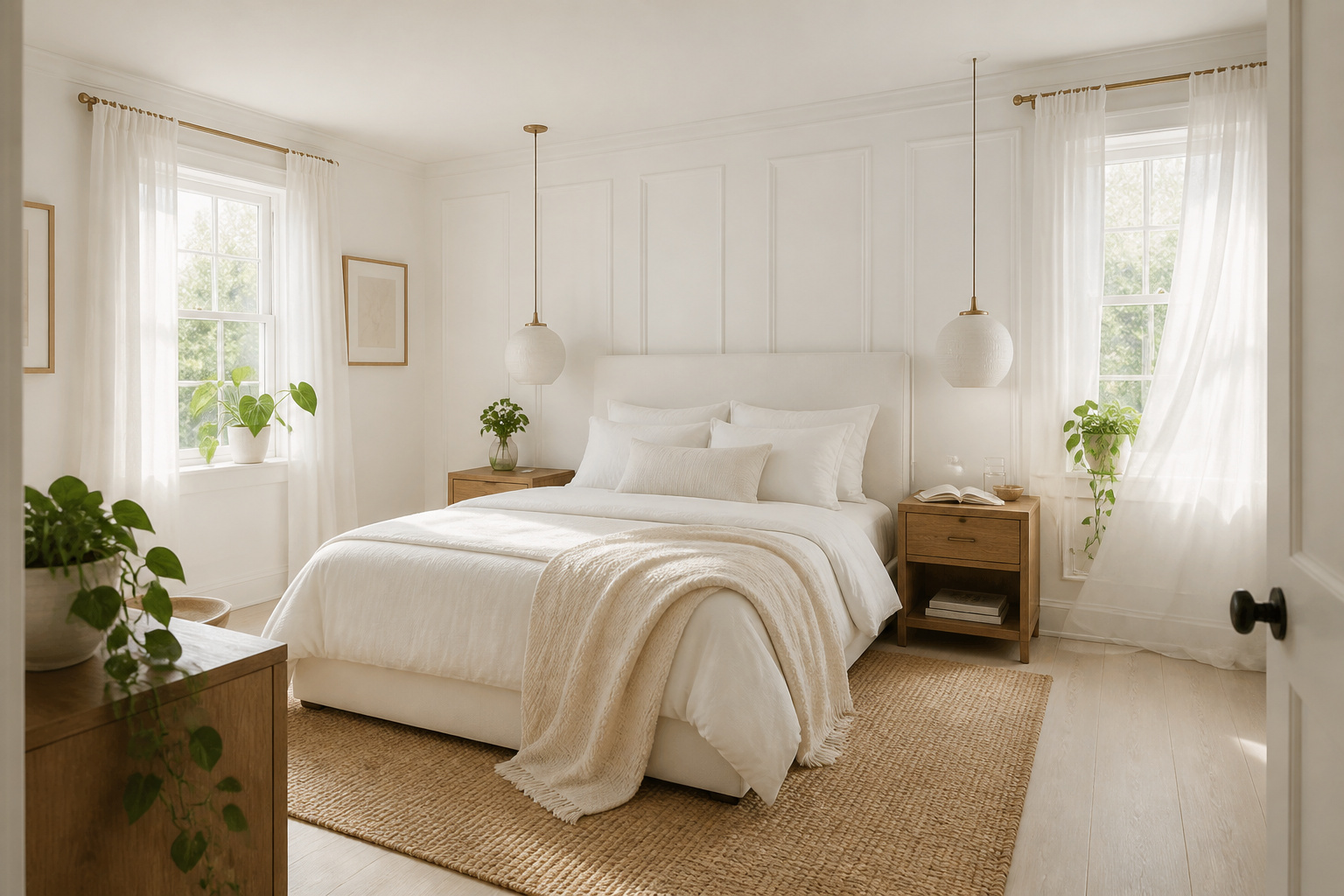

There is something that happens when you wake up in a white bedroom. The light comes in clean. The walls don’t press. The air feels easier to breathe. That’s not coincidence — it’s design working quietly in the background, the way good design always does.
White bedroom decor is one of the most studied approaches in environmental psychology. Research into color and cortisol levels consistently shows that low-stimulus, high-luminance environments reduce physiological stress markers. A white room doesn’t just look calm. It helps your nervous system settle. For anyone designing a bedroom with rest and recovery in mind, that matters.
But a white bedroom can also fall flat. A room with nothing but plain white walls and a white comforter often feels more clinical than restorative. The difference is in the layering — texture, warmth, contrast, and intention. Each of the white bedroom decor ideas below adds one of those elements, building toward a space that feels genuinely nourishing rather than simply pale.
I’ve spent ten years helping clients create bedrooms that actually support their health goals. White, done well, is one of the most powerful tools for that work. Here are the 15 approaches I return to most.
1. All-White Layered Linen Bedding for a Cloud-Like Sleep Space
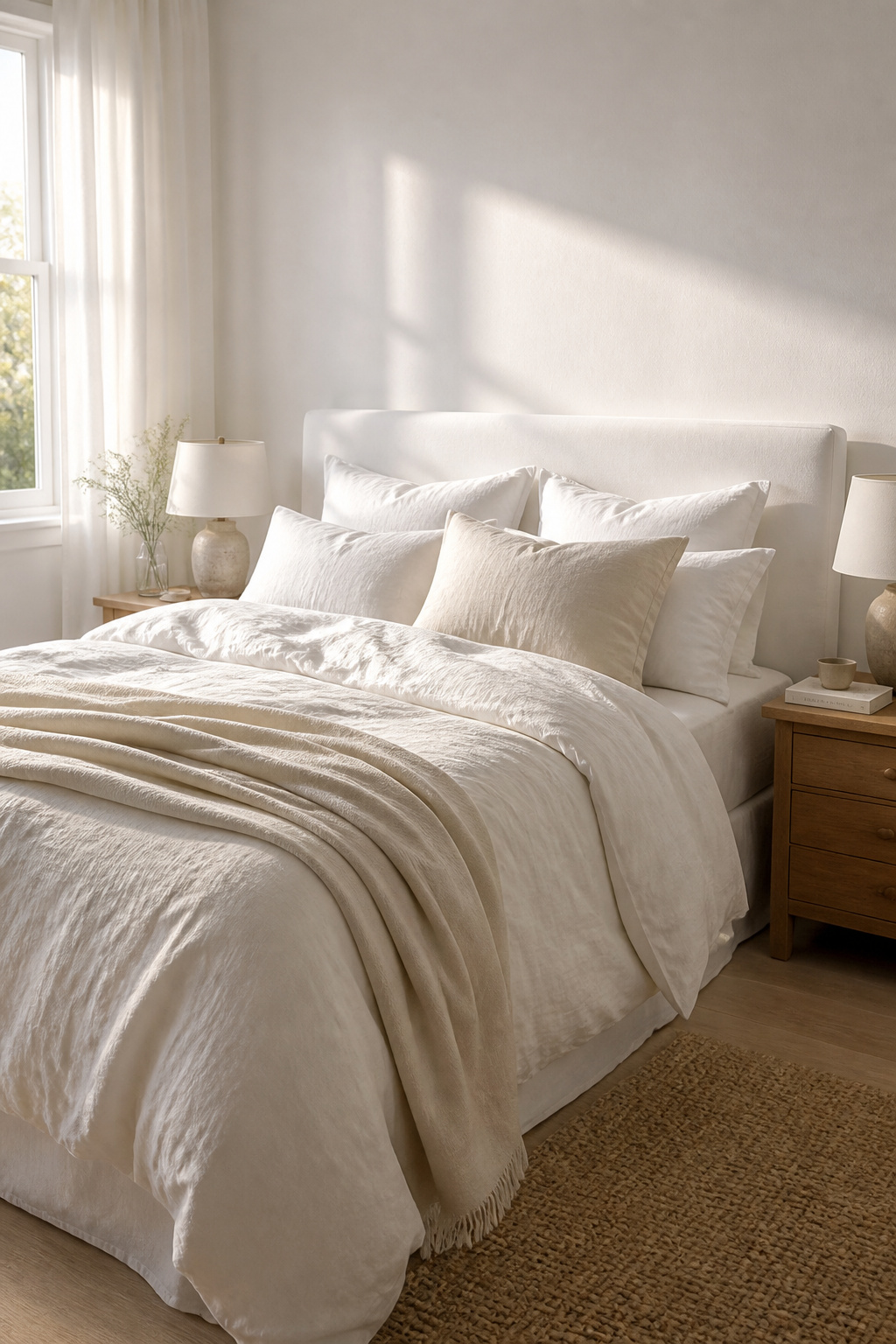
The bed is where white bedroom decor has the most immediate impact on your sleep quality. Linen, in particular, is worth choosing deliberately — it’s naturally breathable, temperature-regulating, and gets softer with every wash, without ever looking processed or plasticky.
Why Linen Beats Cotton for a White Bedroom
Plain white cotton can turn yellow faster than linen and often reads as flat under natural light. Linen holds its tone better over time and catches light differently at different angles, which gives it visual complexity without introducing any color. Start with a linen duvet cover in bright white, then layer a slightly warmer ivory flat sheet beneath it.
How to Build the Layers Without Overdoing It
The goal is depth, not volume. Two standard pillows, two Euro pillows in plain white cases, and one lumbar cushion in textured white linen is enough. Add a thin throw across the foot of the bed in a slightly off-white or pale oatmeal tone. That single tonal variation — white against near-white — creates dimension without introducing a contrasting color.
Pro Tip
If you want the bed to look considered rather than just slept-in, fold the duvet back about one third and leave it. It suggests ease in a way that a perfectly made bed never does.
2. White Panelled Accent Walls That Add Texture Without Color
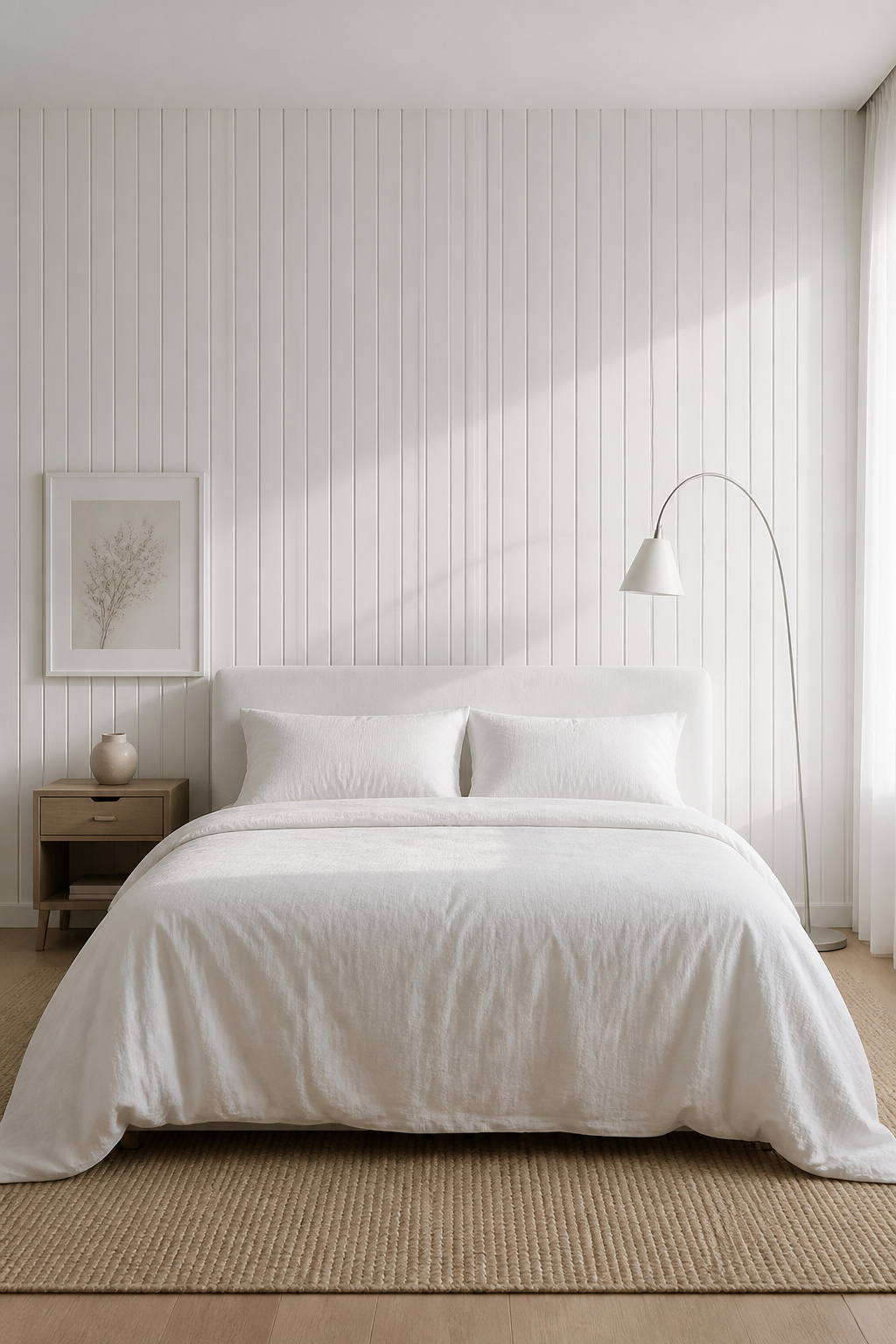
One of the most common reasons a white bedroom decor scheme feels dull is that every surface has the same flat finish. White panelling solves this problem without introducing a single new color. The panels create shadow lines across the wall — subtle architectural detail that changes throughout the day as the light moves.
Panel Styles Worth Knowing
Tongue-and-groove runs vertical, which draws the eye upward and makes rooms feel taller. Shaker-style wainscoting runs about two-thirds up the wall, leaving a smooth painted section above, which works particularly well in rooms with lower ceilings. Full-height flat-panel planks are the most contemporary option and suit minimalist spaces best.
Painting Tips for a Seamless Finish
The key to white panelling is using the same paint color on the panels, the trim, and the wall above — no contrast breaks. A matte or eggshell finish reads softer than gloss and photographs beautifully. Benjamin Moore’s Chantilly Lace (OC-65) and Sherwin-Williams’ Alabaster (SW 7008) are both excellent. They hold warm and cool light equally well without reading as grey.
A Note on DIY
Peel-and-stick panel kits have gotten genuinely good over the last few years. Several brands now offer MDF flat-panel systems designed for bedroom walls that can be installed in a weekend. For modern bedroom wall decor ideas beyond panelling, there are plenty of approaches that achieve similar depth with less commitment.
3. White Bedroom Decor with Warm Wood Accents for Natural Balance
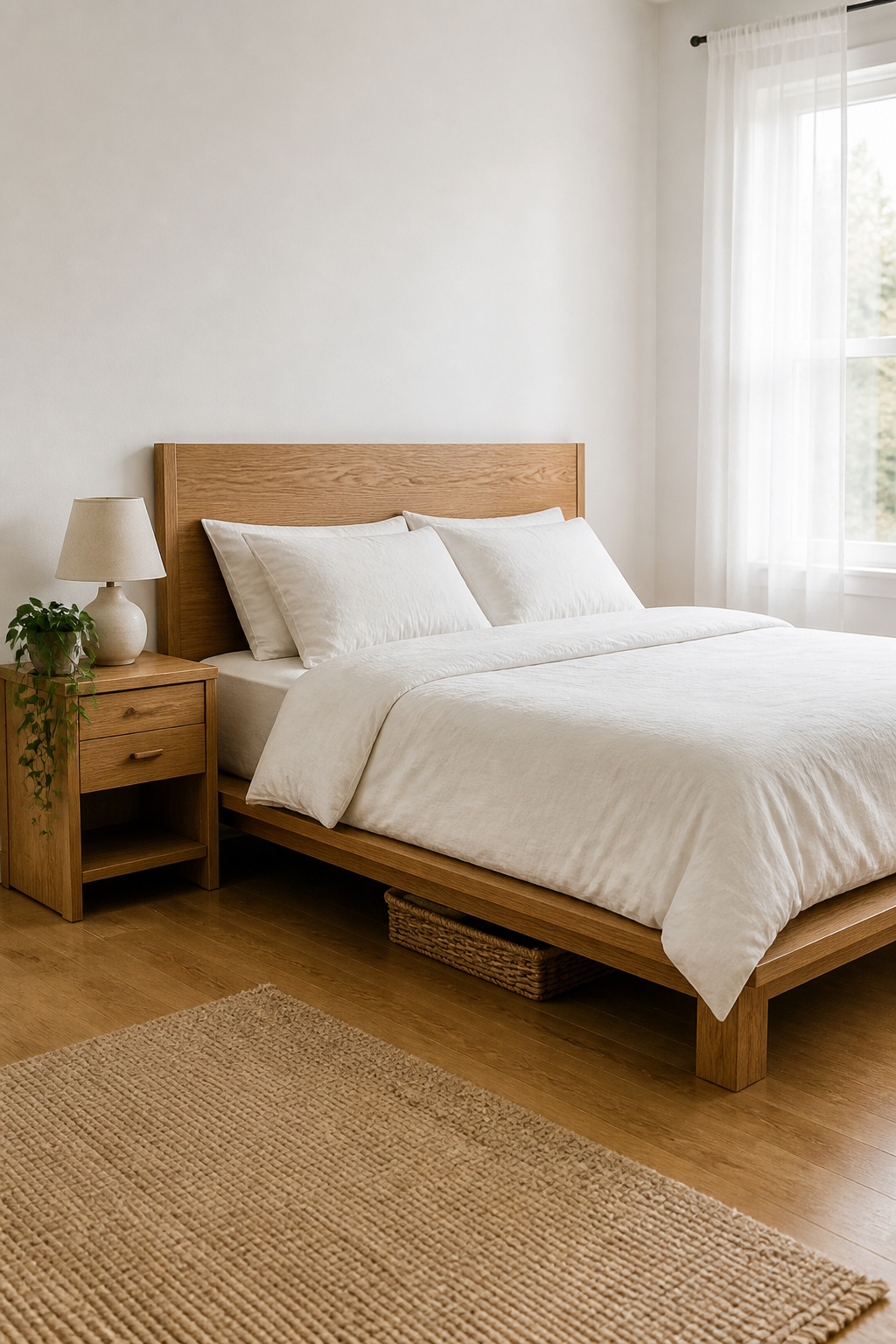
A fully white bedroom can veer toward sterile if there’s no warmth to anchor it. Warm wood is the most reliable counterweight — it grounds the palette, references nature, and introduces a material that reads as inherently restful. This is one of the foundational principles in biophilic design, and it’s why white bedroom decor almost always benefits from at least one substantial wood element.
Which Woods Work Best
Light woods — oak, ash, and maple — sit most harmoniously against a white backdrop because they share the same warmth register. Walnut works too, but it introduces more contrast, which suits a slightly more dramatic version of this look. Pine is affordable and accessible, though it can read as rustic rather than serene if the grain is too pronounced.
Where to Place the Wood
You don’t need much. A bed frame, a single nightstand, or even a floating wooden shelf is enough to introduce the material. If you already have white-painted furniture, one piece of raw or natural-finish wood will anchor the whole room without dominating it. A raw timber stool used as a bedside table is an easy, low-cost starting point.
Integrating Wood with Other White Bedroom Decor Elements
Wood works best when it connects to at least one other organic element in the room — a woven rug, a linen throw, a terracotta pot. These materials form a quiet ecosystem that makes the white feel intentional rather than empty.
4. Sheer White Curtains That Draw in Natural Light and Airflow
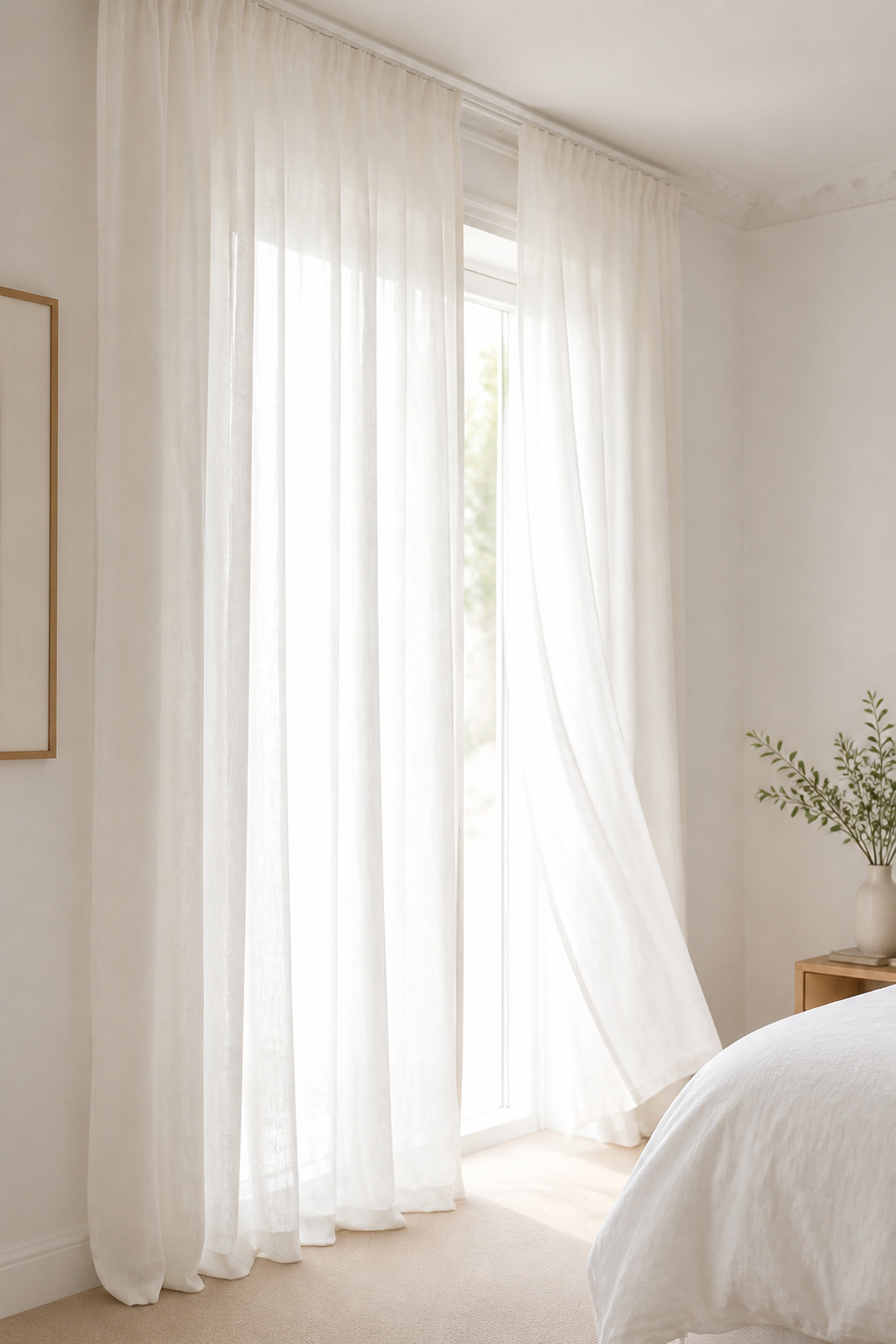
Natural light is the most important element in any white bedroom. It activates the white surfaces, makes the space feel alive, and supports healthy circadian rhythms in a way that no artificial light can fully replicate. Sheer white curtains let the light in without sacrificing privacy, and they move with any breeze in a way that feels genuinely calming to watch.
Hanging Height Matters More Than You Think
Hang curtains as close to the ceiling as possible, regardless of where your window actually ends. This extends the perceived height of the room substantially. Use a ceiling-mounted rod or a rod positioned just below the crown molding. Let the curtains pool two to three inches on the floor — it reads as intentional and softens the whole composition.
Fabric Choice
Linen sheers are warmer and more textured than polyester voile. They don’t let quite as much light through, but the diffusion they create is gentler and more complex. Cotton-linen blends are easier to find and still perform well. Avoid pure polyester sheers. They tend to look flat and can take on a yellowish cast over time — the last thing you want against white walls.
Pro Tip
If you want blackout capability alongside the sheer look, hang a second rod behind the sheer panel. Install a blackout blind or a heavier linen in a matching white behind it. The two layers pull independently, giving you full control over light and privacy without compromising the airy aesthetic.
5. White Floating Shelves as Everyday Bedroom Decor
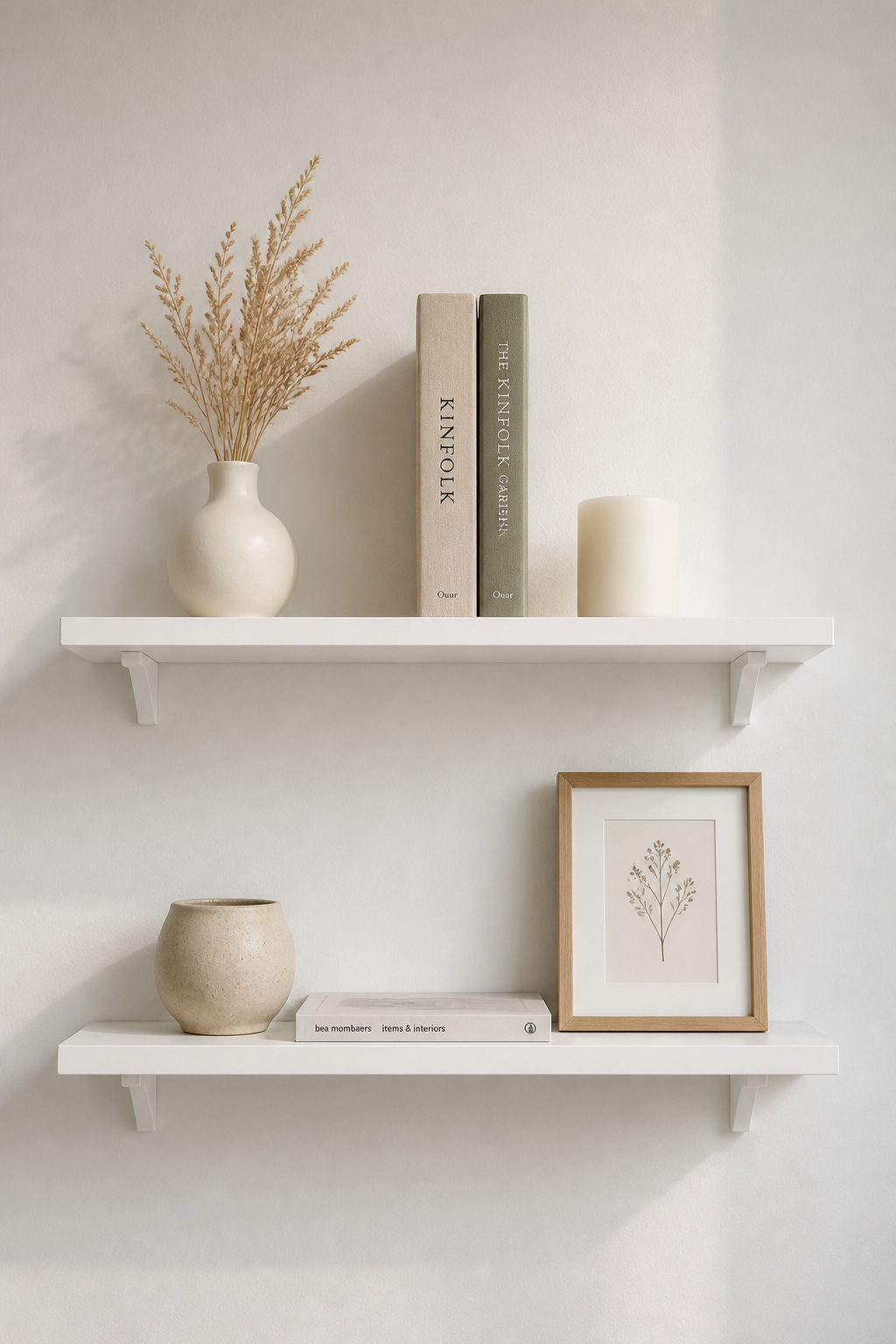
Floating shelves might be the single most versatile piece of bedroom decor available. In white, they read as architectural detail as much as storage — they add visual interest to a plain wall without making the space feel busy. The key, as with everything in a white bedroom, is in the curation.
What to Put on Them (and What to Leave Off)
The most successful white shelf styling follows a simple ratio: two thirds decorative, one third practical. A small plant, a ceramic dish for jewelry, a single framed photo, and two or three books is enough. Anything more and the shelves start working against the calm the room is trying to create. Rotate objects seasonally rather than adding more.
Placement and Sizing
Two shelves at different heights on the same wall create more visual interest than two shelves at the same level. A longer shelf — 60 to 90 centimeters — reads as furniture rather than an afterthought. Install them at eye level when you’re standing, not seated on the bed — the proportions look better from both positions that way.
Connecting to Other Bedroom Decor Elements
Floating shelves work particularly well alongside a minimalist bedroom design approach, where every object is deliberate and the shelves don’t need to carry much visual weight. In a more layered white bedroom, they provide a point of focus that stops the eye without cluttering the composition.
6. Layered White Rugs to Define the Sleep Zone
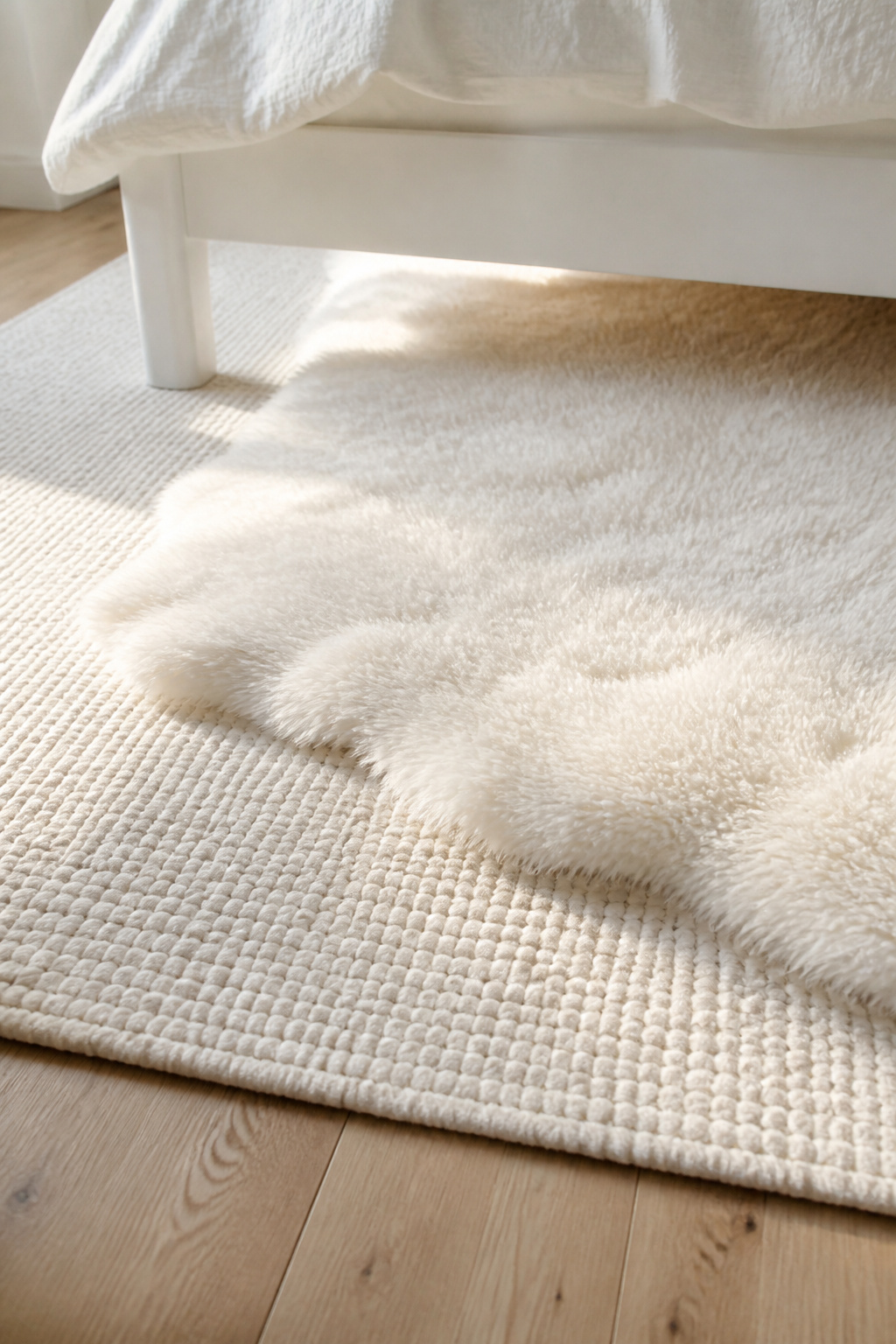
A rug under the bed does several things at once. It defines the sleeping area as its own zone. It adds softness underfoot for that first step in the morning. And it holds warmth in a way hard floors never can. In white bedroom decor, two rugs layered together — one larger, one smaller — create tonal depth on the floor that mirrors the layering in the bedding.
Which Rug Combinations Work
The key is textural contrast. A flat, woven cotton rug as the base and a shaggy, high-pile rug or a natural sheepskin on top creates genuine visual depth. Both in white or near-white. You could also reverse the order. A large jute-blend rug as the base with a smooth cotton dhurrie on top gives a more defined, graphic look.
Sizing the Layers
The base rug should extend at least 60 centimeters beyond each side of the bed. That ensures your first step lands on something soft. The top rug sits centered within it, small enough that 15 to 20 centimeters of the lower rug shows on all sides. This reveals the layering and makes both rugs visible parts of the composition.
Care Note
White rugs need washing two to three times a year to stay truly white. Cotton flatweaves go in the machine. Sheepskins need specialist cleaning. This is not a good area to compromise — a yellowed or grey-tinged rug reads as neglect in a white bedroom and undermines everything else.
7. White Mirrors That Open Up the Space and Multiply Light
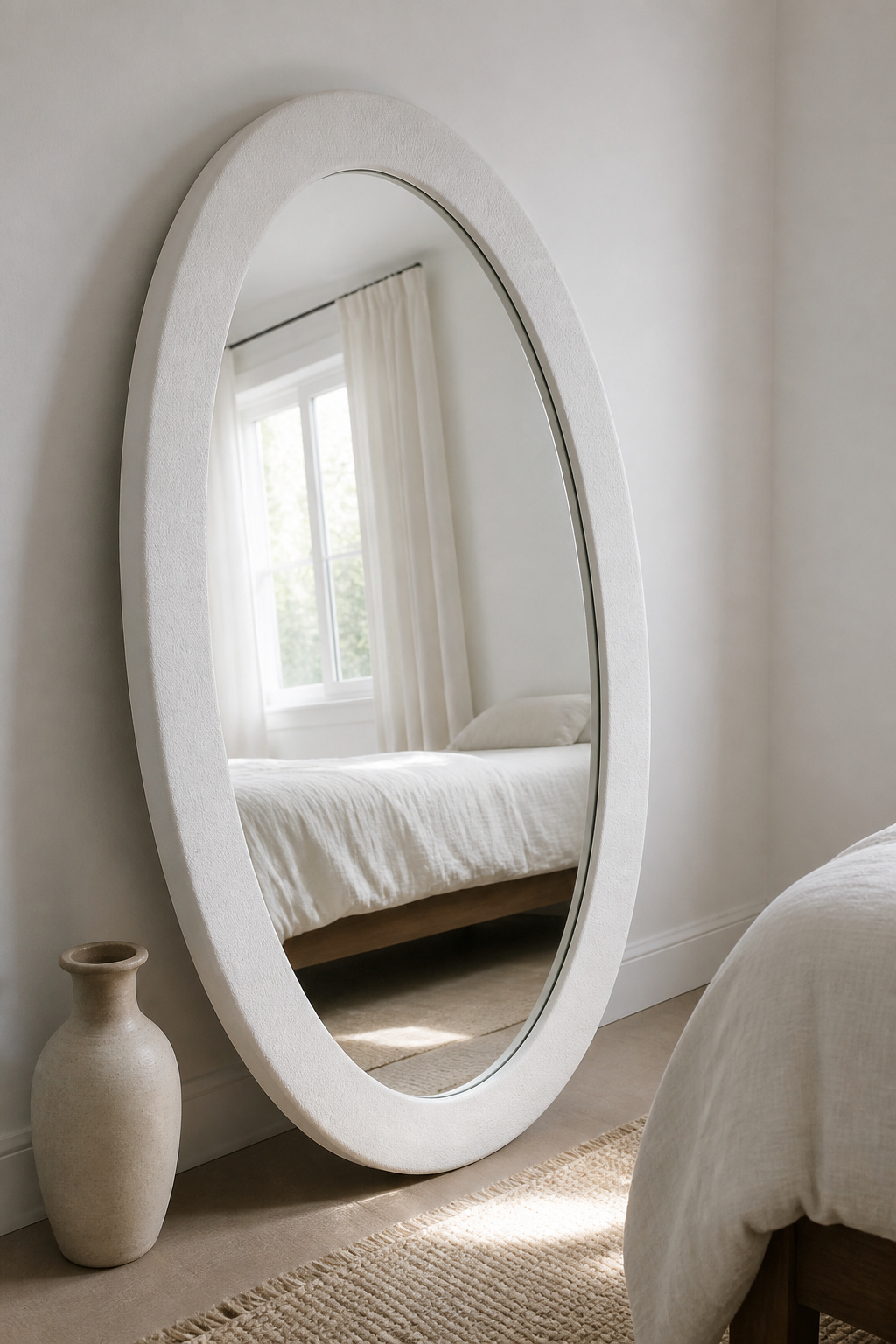
A large white-framed mirror is one of the most functional pieces of white bedroom decor you can add. It reflects natural light deeper into the room and makes the space read as larger. It also adds a focal point to an otherwise plain wall, without introducing a competing element. For smaller bedrooms, a well-placed mirror is genuinely transformative.
Frame Styles to Consider
An oval mirror with a chunky matte white frame has become one of the defining pieces of contemporary white bedroom design. It’s organic and sculptural. It reads as deliberate without being decorative in an obvious way. Arched mirrors achieve a similar effect. For a more traditional room, a rectangular gilt-white frame adds detail without breaking the palette.
Placement
The most effective position for a bedroom mirror is opposite or adjacent to the main window. This bounces natural light across the room rather than reflecting the wall behind you. Avoid placing a mirror directly opposite the bed unless the reflection feels comfortable — some people find it disruptive to sleep.
For a more refined look
A built-in or leaning full-length mirror against the wardrobe wall doubles as practical dressing space too. It removes the need for a separate wardrobe mirror and keeps the furniture count low. Lower furniture count is consistently associated with lower perceived stress — which is the whole point of the ultimate white bedroom aesthetic.
8. Muted Natural Tones to Complement a White Bedroom Palette
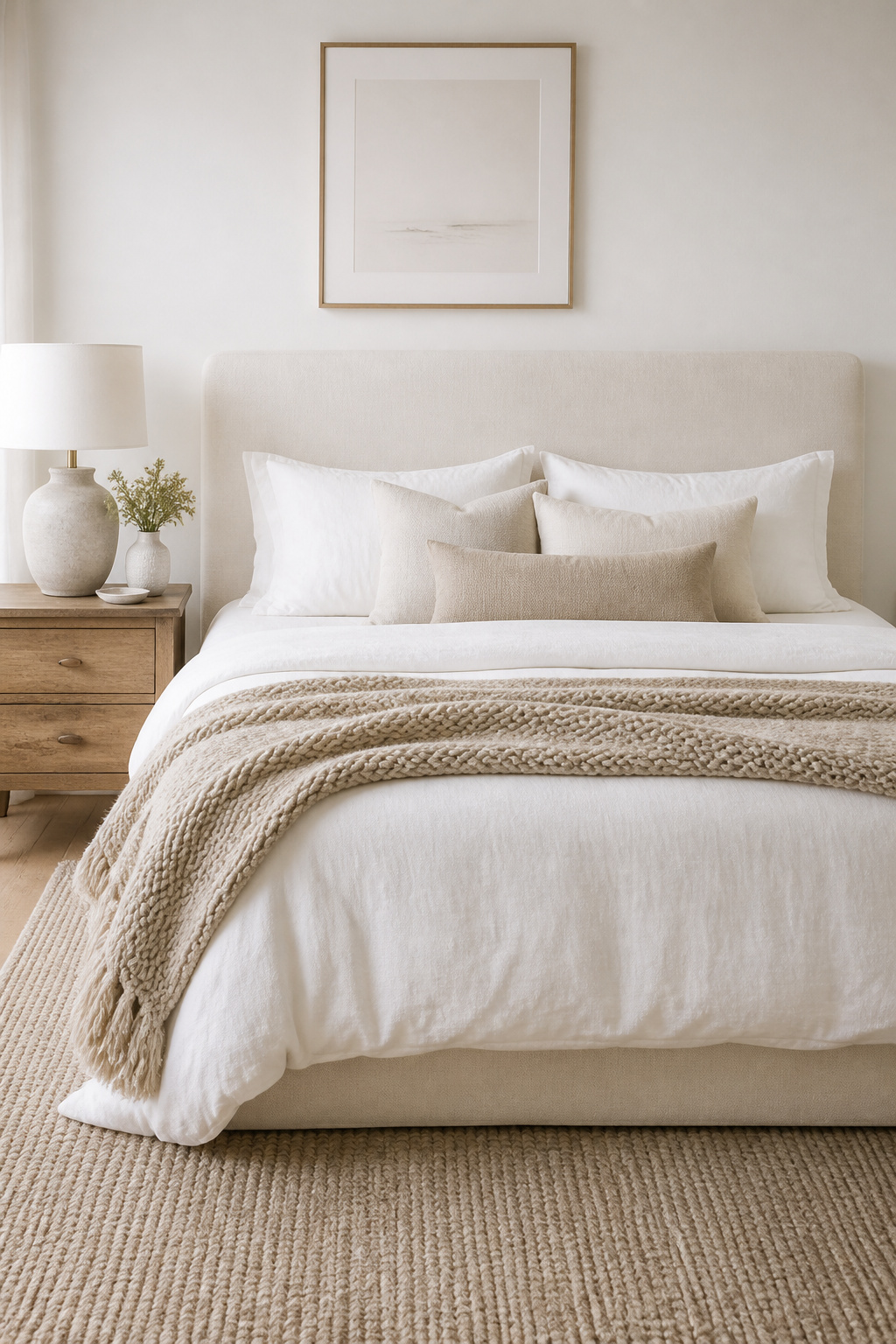
A pure white palette with no variation at all tends to feel more blank than peaceful. The solution isn’t to add a color. Instead, add near-whites, off-whites, and very soft naturals that sit within the white family but give the eye somewhere to rest. Linen, warm ivory, oatmeal, and very pale sage all work. So do the natural tones of wood, stone, and ceramic — all of them compatible with a white bedroom without disrupting the calm.
How to Identify Your Undertones
White paint comes in warm whites (yellow or pink undertone) and cool whites (blue or grey undertone). The naturals you bring in need to match. Warm whites pair with linen, beeswax, stone, and wood tones. Cool whites pair with pale grey, silver, and bleached linen. Mixing warm and cool tones in the same room creates subtle discord that registers as unease even if you can’t name it.
A Simple Rule for Tonal Layering
Work with three tonal bands: bright white (walls and ceiling), mid-white (bedding and curtains), and warm near-white (textiles, ceramics, and wood accents). Keep each band consistent and don’t let any single object stray too far toward beige or grey. The visual effect is a room that holds together without looking like a paint chip comparison.
The Case for One Small Color Accent
Many designers allow one very soft accent — a dusty rose cushion, a muted sage plant pot, a pale terracotta candle holder. Not as a feature color, but as a signal that the palette is intentional. If the room feels too blank, a single muted accent near the window is often enough.
9. White Upholstered Headboards for a Hotel-Inspired Look
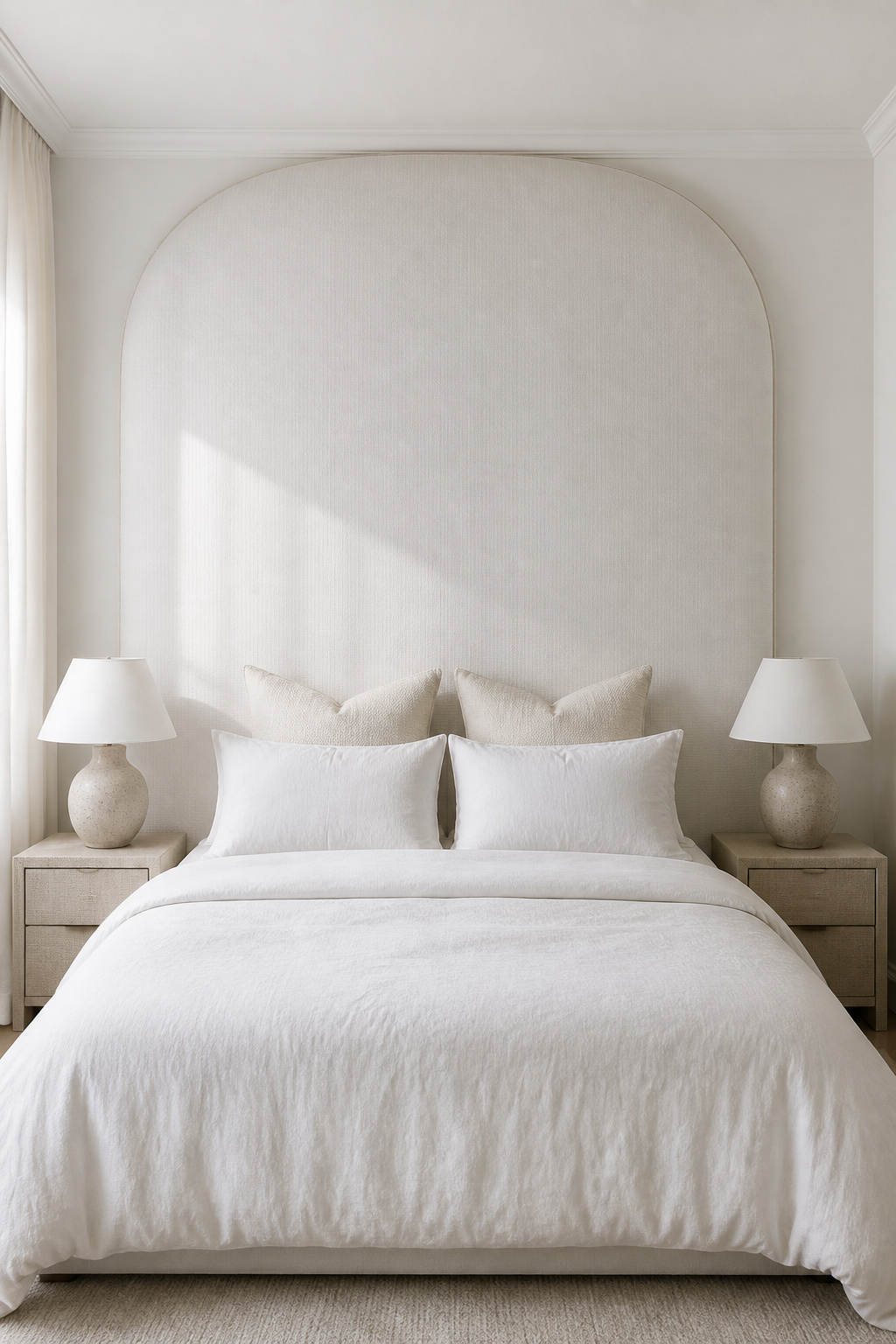
A white upholstered headboard transforms a bedroom’s register almost immediately. It softens the wall behind the bed and adds a tactile focal point. It also connects the bedding to the wall so the whole composition reads as considered. In a white bedroom, an upholstered headboard in white or very pale linen acts as the centrepiece without demanding attention.
Size and Shape Options
Bigger tends to be better for upholstered headboards. A headboard that extends 15 to 20 centimeters above the top of standard Euro pillows reads as intentional and anchors the bed properly. Curved or arched tops are the most popular form right now and suit a wide range of room styles. Straight rectangular headboards are more traditional and work well in rooms with clean architectural lines.
Fabric and Fill
Linen and cotton velvet are both excellent for white bedrooms. Linen is the more casual of the two — it suits layered, textural rooms. Velvet has a slight sheen that reflects light differently and suits a more refined, polished version of white bedroom decor. Both should be treated with a fabric protector before use, particularly in a room with pets or children.
Mounting Considerations
A wall-mounted headboard hung slightly higher than standard — about 30 centimeters above the mattress top rather than 10 — creates a more dramatic, considered look. It also makes making the bed easier, since there’s no gap to reach behind.
10. Plants That Elevate White Bedroom Decor and Calm the Air
Plants in a white bedroom introduce organic form into a geometric space. They bring a note of living color that prevents the palette from feeling static. And they genuinely improve air quality. For white bedroom decor, the plant selection matters — you want forms that read as soft and architectural rather than bushy or tropical.
Best Plant Choices for a White Bedroom
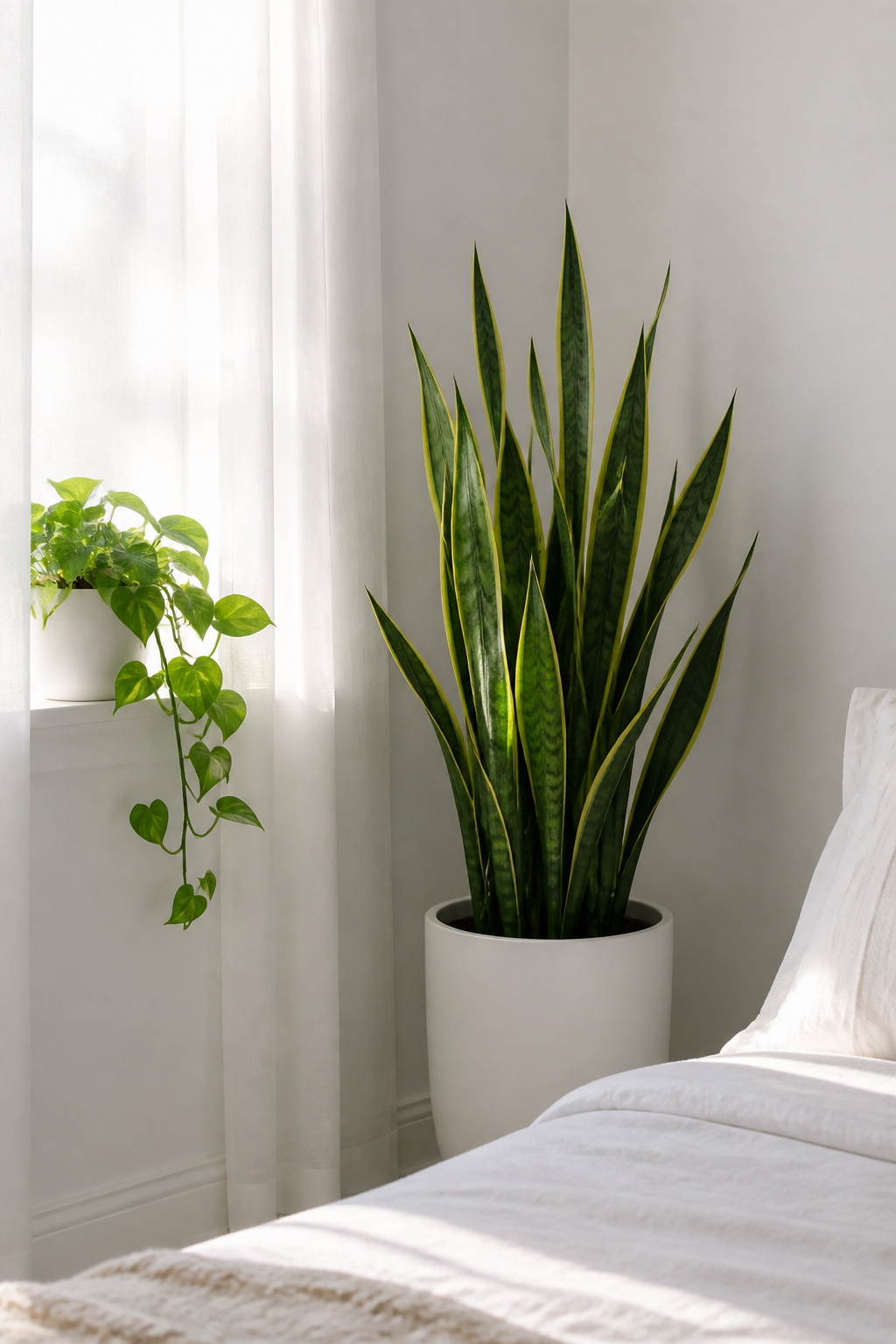
Snake plants are my first recommendation — they release oxygen at night, tolerate low light, and their upright form reads as architectural rather than sprawling. Peace lilies are excellent for bedrooms with limited natural light and their white flowers maintain the palette. Trailing pothos work beautifully on windowsills and shelves, softening edges. For a more dramatic form, a fig tree (Ficus lyrata) in a white pot adds significant presence without introducing a distracting color.
Container Choice
White ceramic pots are the obvious choice, but they can read as too uniform. A concrete-finish pot, a pale terracotta pot, or a woven basket planter in natural tones all sit comfortably within a white bedroom palette while adding material variation. Avoid pots with bold graphics or strong colors — even a small patterned pot draws significant attention in a room that’s otherwise without pattern.
Care and Placement
Plants that stay healthy are the only plants that serve the room. Before choosing a plant, assess your actual light levels and be honest about your maintenance habits. A thriving snake plant in a white pot contributes more to white bedroom decor than a stressed fiddle leaf that drops leaves onto the floor every week.
11. Statement Pendant Lighting Over the Bed
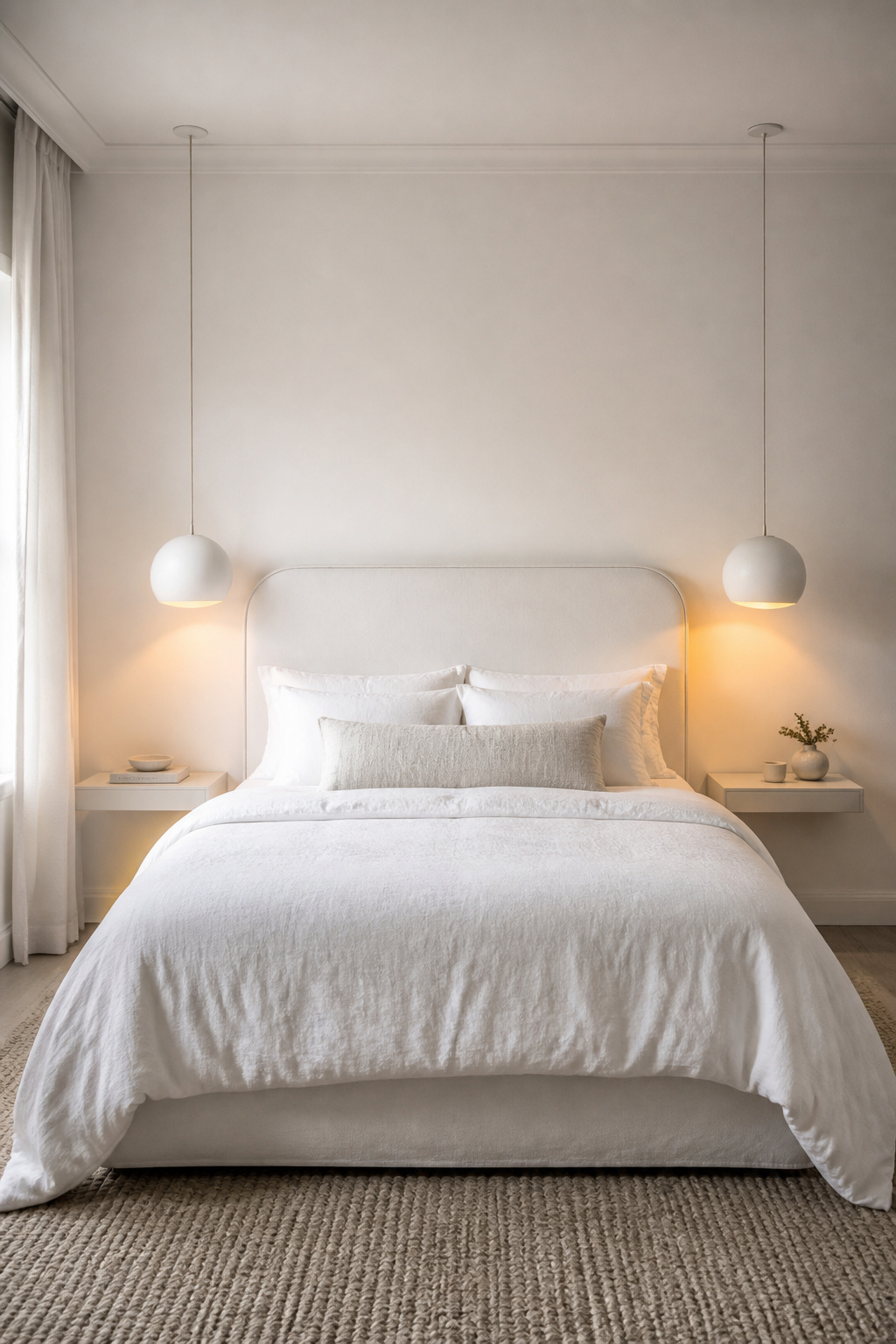
Lighting is where a lot of white bedrooms fall short. Recessed downlights are efficient and unobtrusive, but they do nothing for the room’s character. A pendant — or two, one on each side of the bed — introduces a sculptural element. It brings the ceiling into the composition and changes the room’s mood entirely when switched on at night.
Pendant Styles for a White Bedroom
White ceramic pendants are the most versatile — they disappear in the daytime and become sculptural at night when lit. Rattan pendants in a natural or bleached finish introduce an organic material while staying within the neutral palette. For a more refined look, try a sculptural plaster pendant. It holds the same light as the walls and reads almost like a ceiling installation.
Hanging Height
Pendants over bedside tables should hang at roughly reading height — about 50 to 60 centimeters below the ceiling. You need to be able to comfortably reach the switch from the bed. If you’re using the pendants as primary reading light, a bulb with good directional output is essential.
Choosing Bulbs
Warm white bulbs (2700K) suit the calming register of a white bedroom far better than daylight bulbs (5000K+), which read as office lighting. Dimmable bulbs are worth the additional cost — the ability to reduce light levels by 80% before sleep is genuinely useful for circadian health.
12. White Storage Furniture That Controls Clutter Quietly
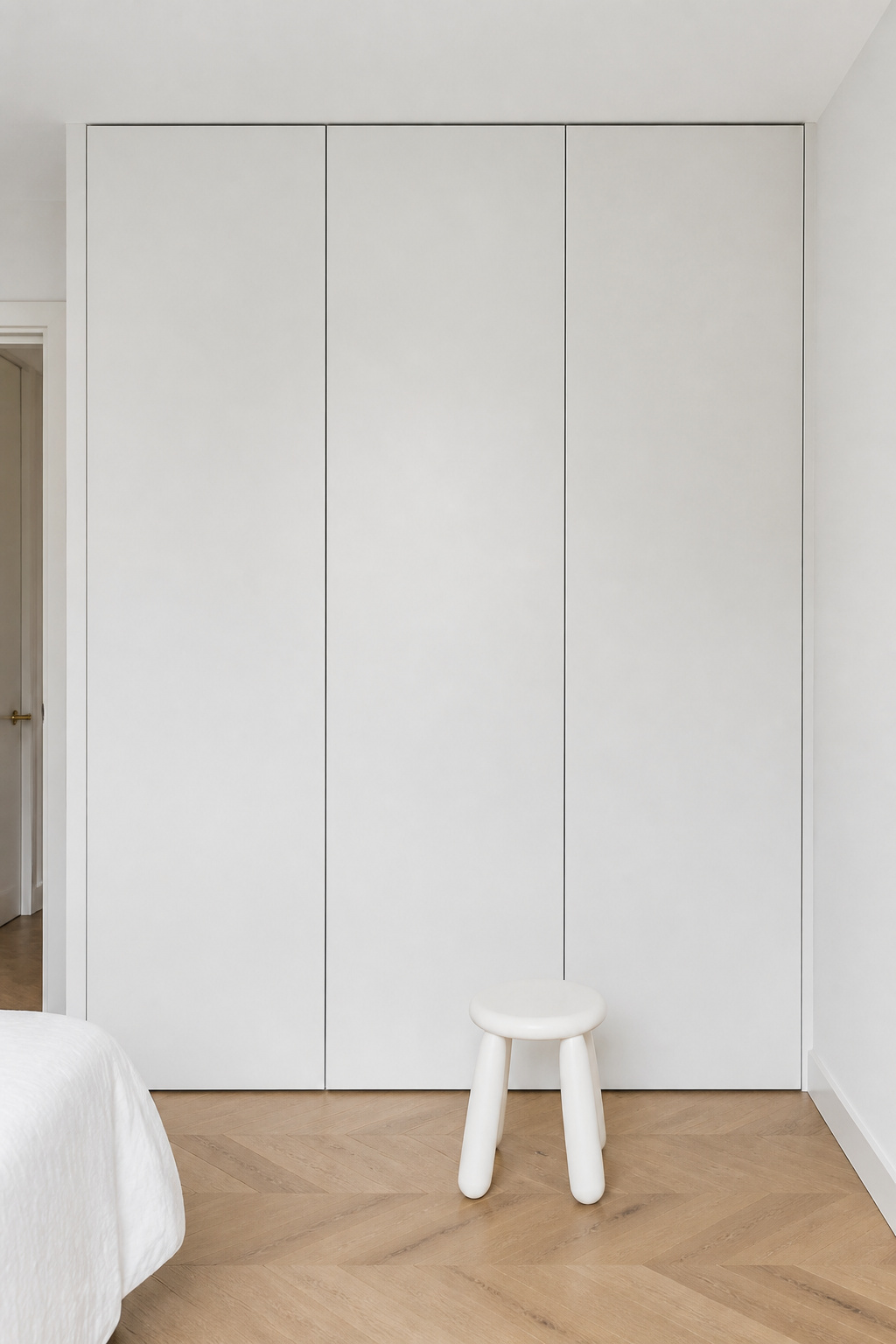
Clutter in a white bedroom is more disruptive than it would be in a darker room. There’s nothing to absorb or distract from it. White storage furniture solves this by making the storage itself recede into the walls. A wardrobe or built-in closet in the same white as the walls essentially disappears from the composition. It leaves only the elements you want to see.
Built-in vs. Freestanding
Built-in wardrobes are significantly better for a white bedroom because they eliminate the gap between furniture and wall where dust accumulates and visual noise begins. If built-ins aren’t possible, choose freestanding wardrobes with minimal visible hardware and in a white finish that matches your wall color as closely as possible. The closer the match, the more the furniture disappears.
For a [bedroom furniture decor](https://pennyshome.com/bedroom-furniture-decor/) approach focused on wellness, the principle is simple
Less visible storage means fewer visual cues that trigger planning mode in the brain. When you wake up, you want the bedroom to signal rest — not tasks. White storage that blends with the walls supports this by removing the furniture from your peripheral awareness while you’re in the bed.
What to Store Where
Items used daily belong in the most accessible drawers and compartments. Seasonal items can go behind less accessible doors. The goal is a room that can be tidied in under two minutes each morning. That makes keeping the space calm a realistic daily habit rather than a weekend project.
13. Textured White Throws and Cushions for Layered Depth
Texture is what separates a thoughtfully designed white bedroom from a blank one. When everything is a similar pale tone, the variety comes from how light hits different materials. The soft pile of velvet reads differently from the woven ridge of a chunky knit or the smooth surface of a cotton sateen. Throws and cushions are the easiest way to introduce that textural play, since they can be swapped seasonally without any redecorating.

The Three-Texture Rule
Choose three distinctly different fabric textures for your cushion set. One should be smooth and flat (sateen, linen, or cotton). One should have surface pile or weight (velvet, boucle, or waffle knit). One should have open structure (macramé, loose-weave, or chunky knit). All in the same white or near-white range. This combination creates enough visual interest to read as designed without introducing any pattern or color.
Seasonal Rotation
In warmer months, linen and cotton takes the lead — lighter, more breathable textures. In cooler months, chunky knit, fleece, and thick boucle create a cocooning quality. Swapping these out twice a year is one of the simplest ways to keep white bedroom decor feeling fresh without buying anything new.
How Many Cushions
More is not always more. For a queen bed, four to five cushions is enough — two Euro pillows, two standard pillows, and one lumbar. That’s a composed set that doesn’t need much rearranging to get into bed at night. Add a throw at the foot and the textural layering is complete.
14. White Bedroom Decor and the Art of Tonal Variation
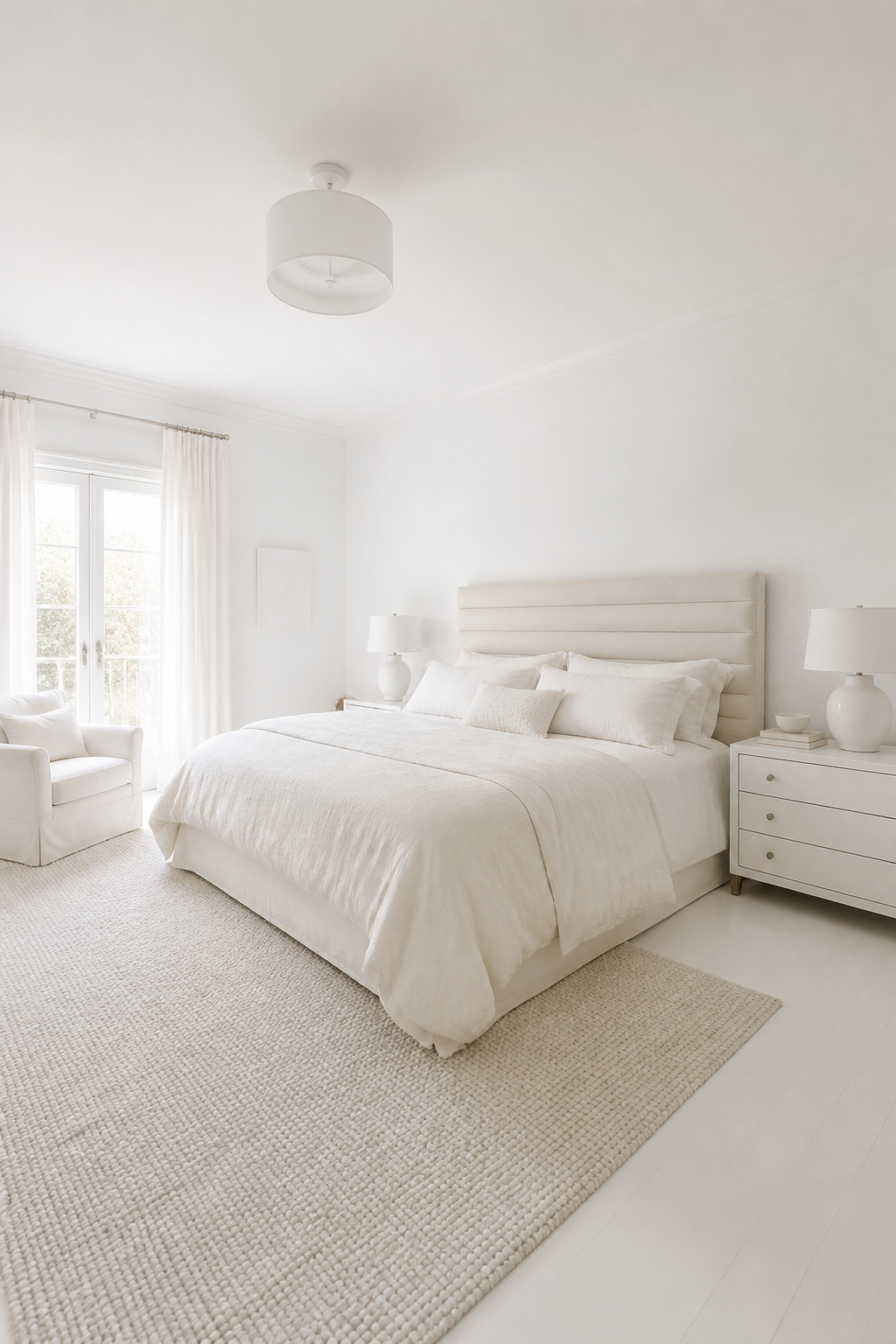
This is the most nuanced idea on the list. It’s also the one that most separates experienced designers from those who try white and find it flat. White is not a single color. It’s a family of tones, and the art of white bedroom decor lies in understanding which whites to use where and why.
How Tone Affects Perceived Temperature
Bright whites read as cool and sharp — good for walls and ceilings because they maximize light reflection. Warmer whites and ivories read as softer and more intimate — good for bedding, upholstery, and textiles that you touch. The rule is: the surface you look at benefits from a brighter white; the surface you touch benefits from a warmer white.
The Ceiling Exception
Most ceilings are painted in pure brilliant white. But in a bedroom, a slightly warmer white on the ceiling makes the room feel lower and more enveloping. It’s a small change that reads as a large one. This technique comes from hospitality design, where a cocooned feeling is a deliberate goal.
Choosing Your Whites Deliberately
Sample at least three white paint options before committing. Pin the samples to the actual wall and observe them at three different times of day — morning, midday, and evening lamp light. The differences between warm and cool whites are most visible in lamplight. For more on how layered thinking applies to bedrooms, the approach to cozy bedroom ideas shares a similar philosophy — layering sensation rather than adding more stuff.
15. White Nightstands and Dressers That Anchor the Room
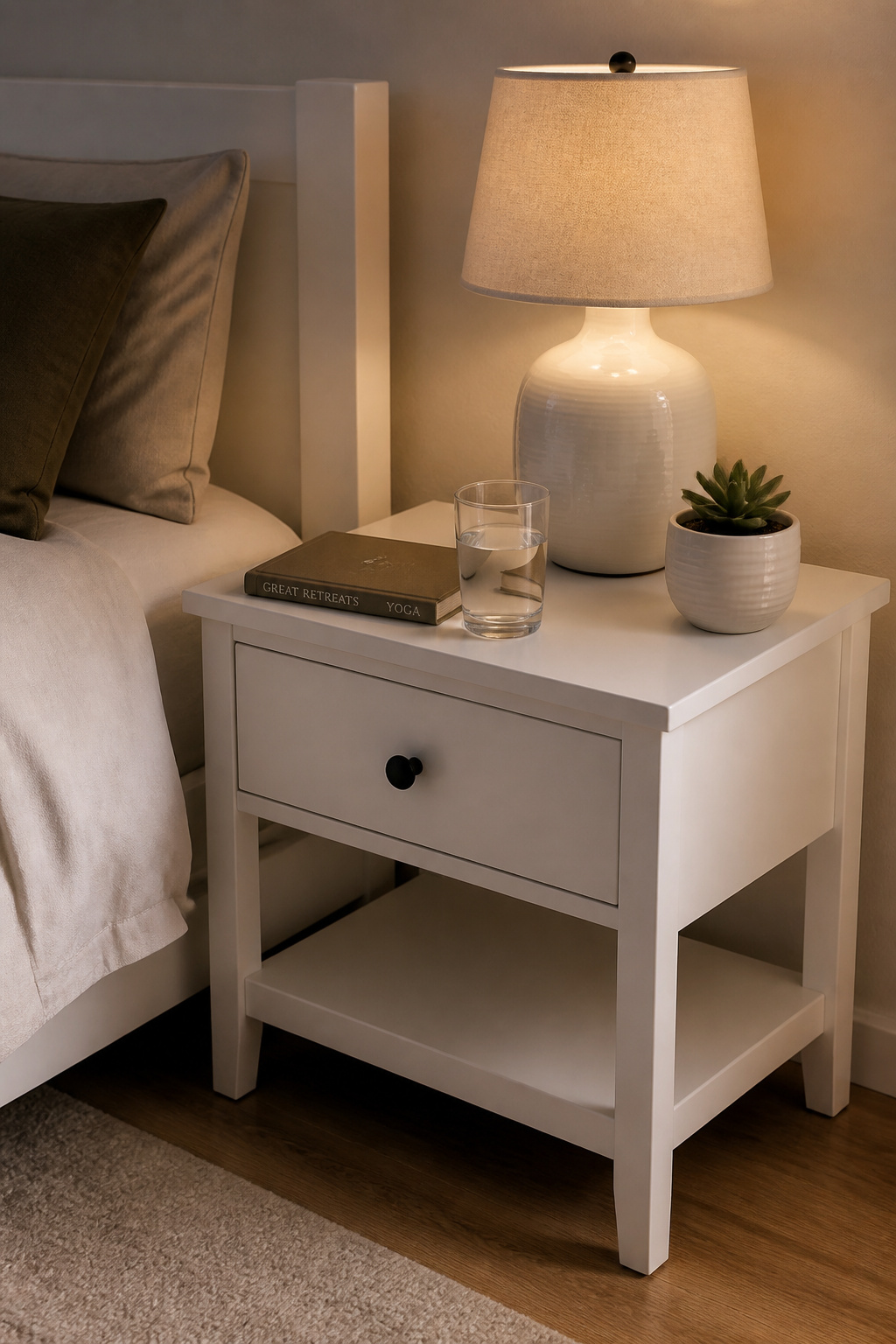
Bedside furniture is often the last thing people think about in a white bedroom. But it’s where the room’s daily livability actually lives. A nightstand at the right height, with enough surface area for the things you use at night, makes a real difference to how the room functions. In white, the nightstand and dresser become part of the room’s architecture rather than standalone furniture.
Getting the Height Right
The ideal nightstand sits level with the top of your mattress. This means the height varies based on your mattress and base combination. Most standard mattresses with a platform base sit at 50 to 60 centimeters. A nightstand in that range will feel balanced from both standing and lying positions.
Drawer vs. Open Shelf
One drawer plus one open lower shelf is the most useful nightstand configuration. The drawer handles items you don’t want visible — medications, charging cables, a journal. The open shelf is for things you use regularly — a book, a glass of water, a small candle. Keeping the open shelf to three objects maximum is a practice worth developing; it takes about 30 seconds and the visual effect on the room is significant.
Coordinating with the Dresser
If your room includes a dresser, choose pieces from the same range or in finishes close enough to read as a family. It doesn’t need to be a traditional matching set. But the handles, finish, and leg style should share enough similarity that the pieces look like they belong together.
Build Your White Bedroom Decor Layer by Layer
The most important thing to understand about white bedroom decor is that it works through accumulation. No single piece makes the room. It’s the layered linen over a warm wood bed frame. The sheer curtains beside a well-placed mirror. The textured cushions against a panelled wall. That combination creates the effect you’re after.
Start with the largest fixed elements — walls, flooring, and bed frame. Get these right before spending anything else. White painted walls, natural flooring or a neutral carpet, and a bed frame in white or natural wood account for roughly 60% of the room’s visual impact. Choose your white tone carefully. Everything else layers on top.
Next, add the bedding. Linen in white and ivory, with at least two textures. Then the window treatments — sheer curtains hung high. Then the lighting — pendant or wall-mounted rather than relying on overhead. Then the furniture — nightstands, dresser, and storage that match or disappear.
Finally, add the living elements: a plant or two, a rug, a few considered objects on the shelves. These are the things that make the room feel inhabited rather than staged.
The rooms that work best are the ones where each decision was made in relation to everything else in the space rather than in isolation. White bedroom decor rewards that kind of thinking because the palette gives you nothing to hide behind — only the layering and the intention show.
Take it one layer at a time. Live with each addition for a few days before moving to the next, and you’ll end up with a space that genuinely supports your rest.