
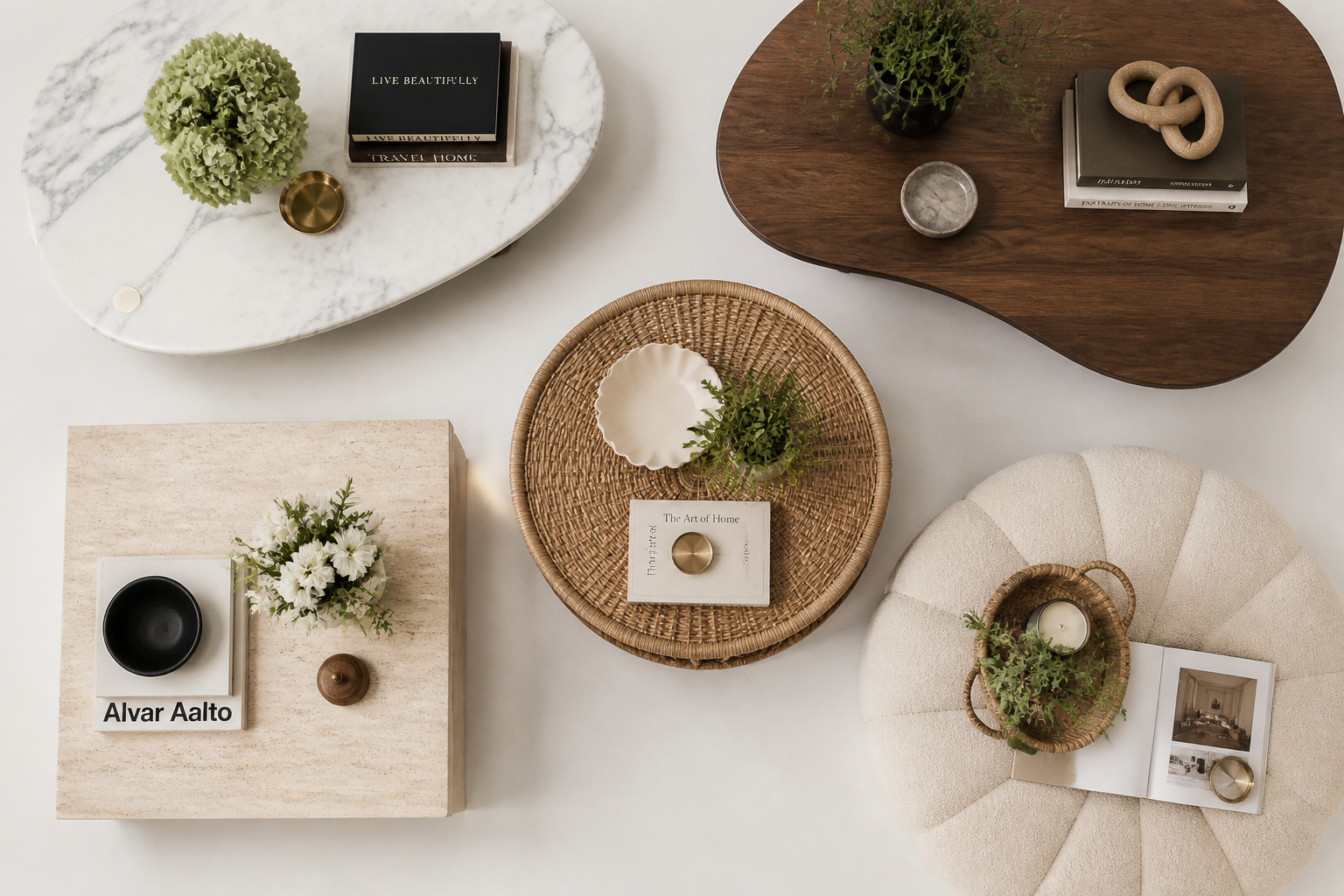
The coffee table sits at the physical center of the living room — and yet it is the piece most people treat as an afterthought. I have watched clients spend months agonizing over sofa fabric and wall color, then settle for the first rectangular table that ships in two days. The result is always the same: a room that is almost right but feels slightly unresolved.
After twelve years sourcing and restoring furniture — pulling mid-century walnut tables from estate sales, tracking down stone pieces at trade shows, watching thousands of living rooms take shape — I can say this: coffee table design is where a room earns its personality. The right piece ties the sofa, rug, and conversation area together. The wrong one works against everything around it.
These 15 coffee table design ideas cover every style, budget, and living situation. Whether you are starting fresh or rethinking a room that has never quite worked, one of these directions will give your space the focal point it needs.
1. Low-Slung Mid-Century Walnut: The Classic Coffee Table Design
Few pieces of furniture have aged as gracefully as the low, tapered-leg walnut coffee table that defines mid-century American design. First produced in earnest between the late 1940s and early 1970s, these tables are still being made today. The vintage originals, however, remain among the best coffee table investments you can find.
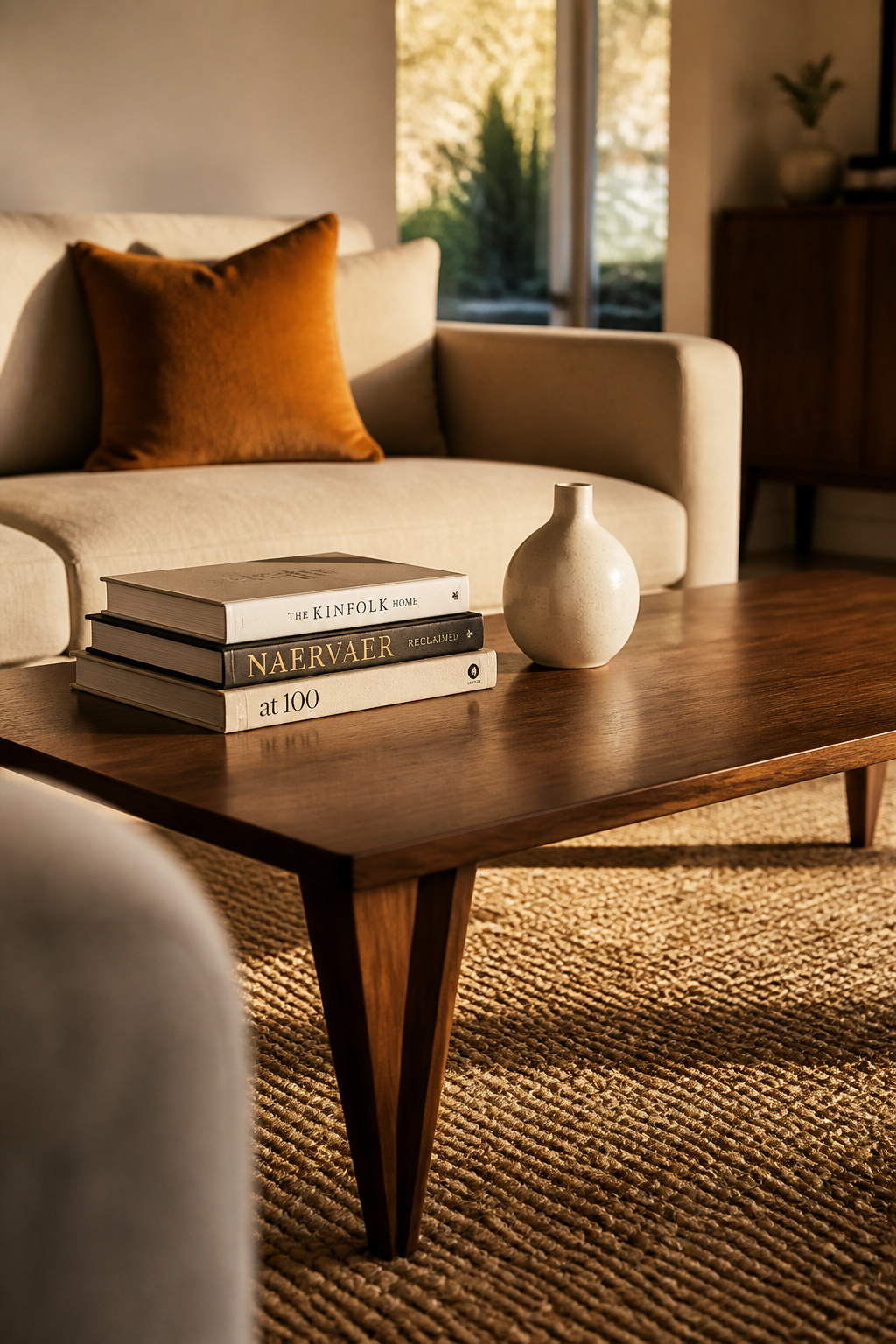
The appeal is in the proportions. A genuine mid-century table sits 16 to 18 inches high — the exact range where a coffee table feels useful rather than decorative. The tapered legs keep the piece from feeling heavy. Walnut’s warm reddish-brown tone also works with neutrals, jewel colors, and earthy palettes alike.
Sourcing Vintage vs. Buying New
For new production, the West Elm Anton ($499) and Article Culla ($449) are both solid options at accessible prices. If you want the real thing, though, the Lane Acclaim series is worth hunting. These tables were built with dovetail joinery and solid walnut construction that holds up beautifully after sixty years. Estate sales and Marketplace listings regularly surface them for $200 to $450 — often needing only a clean and a wax.
When inspecting a vintage piece, check the joinery first. Tight dovetail corners and even veneer color are good signs. Structural damage from moisture warping is the one problem that genuinely isn’t worth fixing; cosmetic issues almost always are.
Restoration Without Stripping
The single best thing I have learned restoring walnut tables: start with 0000 steel wool and Howard Feed-N-Wax, not sandpaper. You remove decades of surface grime and bring up the grain without touching the original finish. For tables with deeper damage, apply Danish oil with a lint-free cloth. Let it cure for 24 hours. It restores warmth without the plasticky look of modern polyurethane.
Keep the surface edited: one stack of three books, a small ceramic object, and a coaster or two. Walnut grain is visual enough on its own that it doesn’t need to compete with a cluttered surface.
2. Marble-Top Coffee Table for a Sculptural Focal Point
A marble-top coffee table does something almost no other material can: it reads as both ancient and completely current. The same stone used in Roman temples and Renaissance palaces sits equally at home in a contemporary apartment. That is not a coincidence — marble’s veining is essentially the original abstract art.
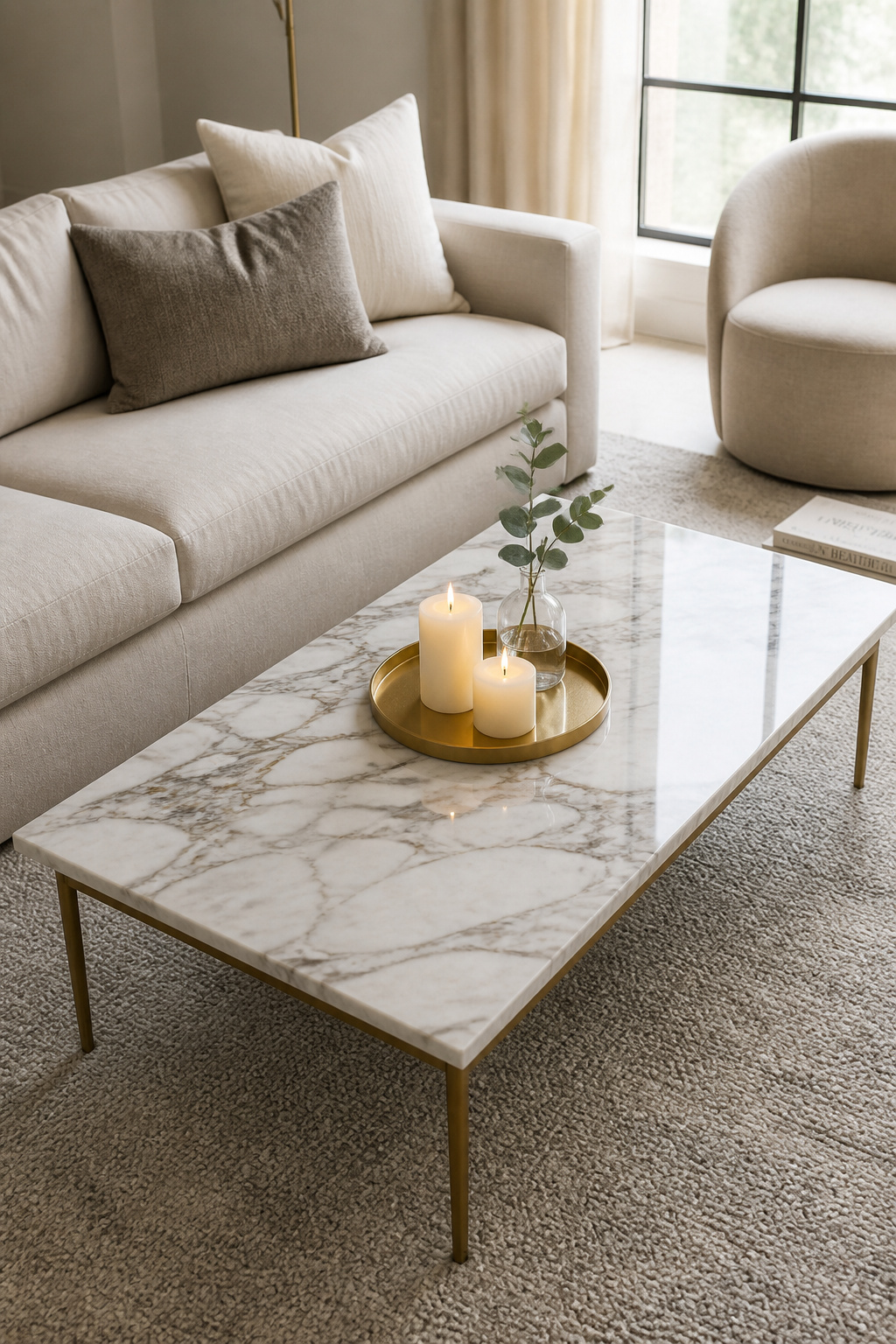
The practical question most people avoid: not all marble is equal for everyday use. Carrara (white with grey veining) is more porous than Calacatta (white with gold and grey veining). It also etches more readily from acidic liquids like citrus and wine. For a daily-use coffee table, honed marble — matte rather than polished — shows fewer scratches and fingerprints. It is significantly more forgiving.
Choosing the Right Base
The base style does most of the stylistic work. A brass base (as on the CB2 Rouka at $999) pushes the table toward traditional luxury. Powder-coated black (Restoration Hardware Elba, $2,195) reads as architectural and contemporary. A simple oak base (Article Faure, $699) grounds the marble in something warmer. I have also seen marble tops sourced separately and set on vintage trestle bases. That approach gives you both pieces at a fraction of the combined retail price.
Living With Natural Stone
Seal the surface annually with a penetrating stone sealer — Miracle Sealants 511 takes ten minutes and prevents most staining. The one rule that saves marble tables: blot, never rub. Citrus juice and red wine etch marble in under a minute. Keep a pH-neutral stone cleaner nearby rather than vinegar or all-purpose spray — it matters more than most people realize.
3. Nesting Tables as a Flexible Coffee Table Design Solution
There is a version of this article that recommends nesting tables only for small rooms. That version is too conservative. Nesting tables are the right coffee table design solution for any room where life changes — and most rooms do.
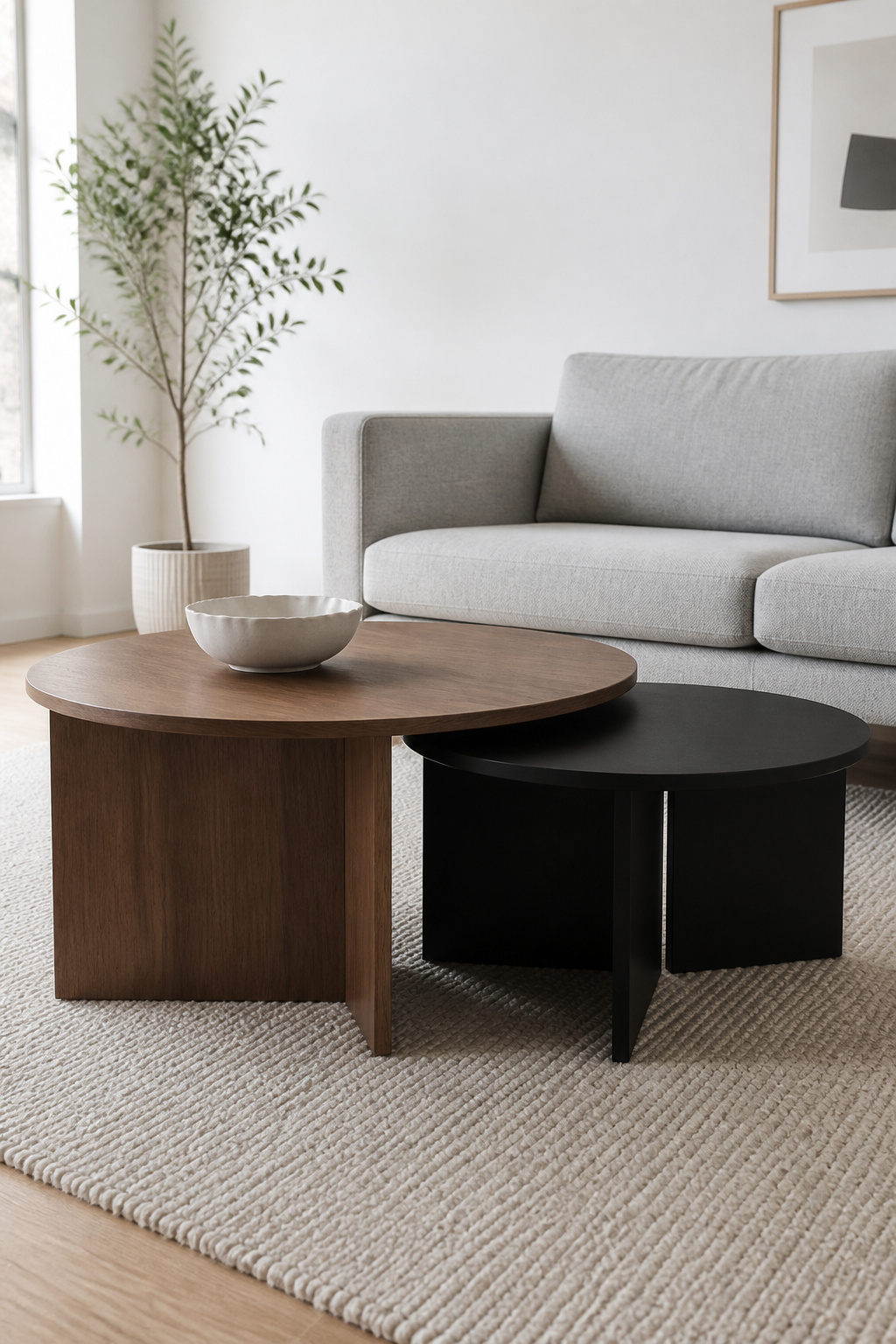
The functional case is simple. Two tables that nest together occupy the same floor footprint as one. Pull them apart and you get twice the surface area for entertaining or working. When guests arrive, separate them to hold drinks. When guests leave, nest them back and reclaim the floor.
Materials That Layer Well
The most compelling nesting combinations mix materials rather than matching them. A rattan smaller table nested under a lacquer larger table introduces texture without requiring additional accessories. A marble top on the larger table with a matte black steel smaller version creates contrast that looks intentional rather than accidental.
HAY’s Bella Coffee Table set ($620) pairs a glass top and powder-coated steel beautifully. At the budget end, IKEA’s KRAGSTA at $99 (set of two) is lacquered MDF and not built to last. Still, it is perfectly serviceable for a first apartment or a temporary space. The CB2 Terrace set ($349) hits a good middle ground — quality steel with a price that doesn’t require planning.
The Styling Trick
Here is something most articles miss about nesting tables. Style the larger one as the ‘display surface’ with a tray and an object or two. Keep the smaller one completely empty. Pull it out for drinks, push it back when done. Two styled surfaces almost always look cluttered; one styled surface and one clear surface looks considered.
4. Rattan and Wicker Bases for a Natural, Tactile Look
Rattan coffee tables have a permanence to them that trends come and go around. They appeared in mid-century Hawaiian interiors, colonial-era British spaces, and 1970s bohemian apartments. In each context they looked right. Today’s coastal California homes are no different. That kind of adaptability is rare in furniture.
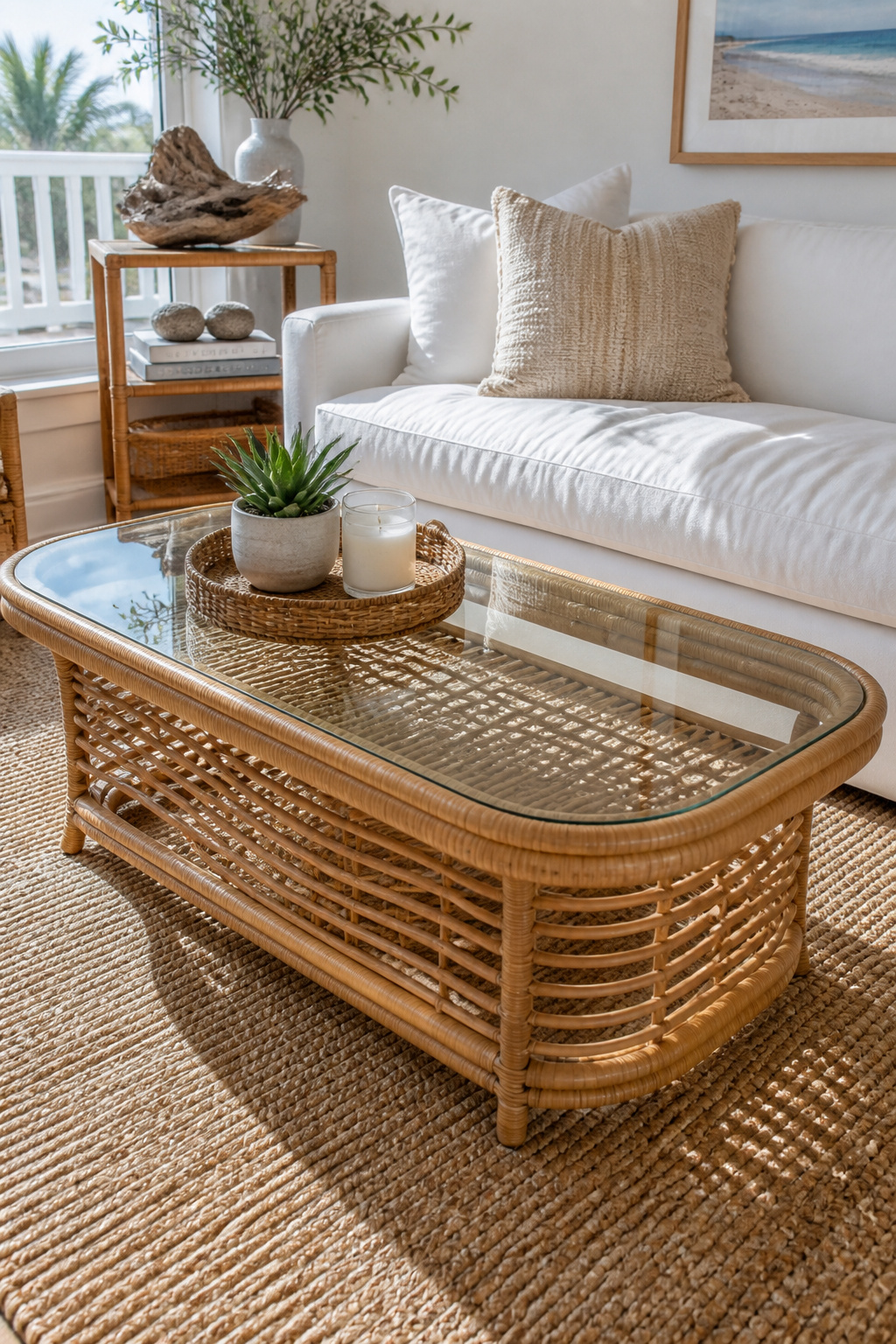
First, a clarification worth making: rattan and wicker are not the same thing. Rattan is the vine — a solid core climbing palm that is bent and shaped into furniture frames. Wicker is the technique of weaving plant material, which can be applied to rattan, reed, bamboo, or even paper. Furniture labeled ‘rattan’ should have rattan poles; furniture labeled ‘wicker’ may have a cheaper core material. For a table that lasts, check that the structural frame is rattan or solid bamboo — not paper rope or reed.
Glass Tops and Durability
A glass top adds $80 to $200 to the cost of a rattan table but significantly increases its practicality. Without glass, drinks and trays sit directly on the weave, which compresses over time and stains easily. With glass, the weave beneath remains pristine and the table is far easier to keep clean. Serena & Lily’s Catania table ($898) handles this well; the glass sits recessed into the frame so it doesn’t slide.
Natural rattan dries out in low-humidity environments — particularly during winter near radiators or HVAC vents. Treat the frame annually with linseed oil to prevent cracking. This one step extends the life of a rattan piece by years.
5. Industrial Steel and Glass Coffee Table Design for Urban Lofts
The industrial coffee table has a specific habitat: exposed brick walls, concrete floors, leather sofas, dark wood shelving. In those rooms, a powder-coated steel frame with a glass top is exactly right. It reads as a material choice that fits the environment. Against a pastel palette or a traditional upholstered room, the same table can look awkward and misapplied.
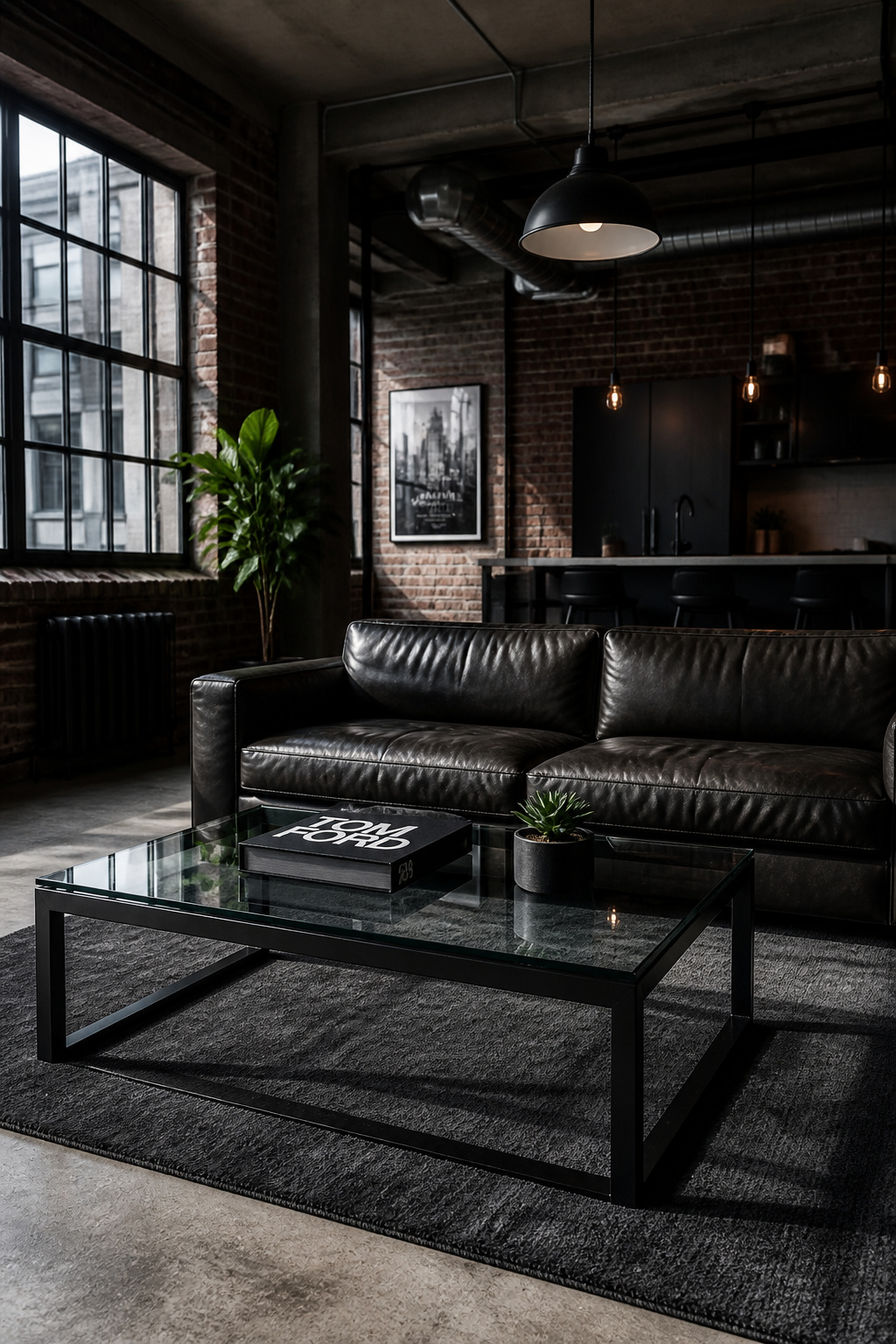
The most important specification to check before buying: glass thickness. Ten millimeters is adequate for light use in a household without children or pets. Twelve millimeters is the practical minimum for daily use; fifteen is used in commercial applications. Always confirm the glass is tempered. It is four times stronger than standard glass and breaks into small blunt fragments, not sharp shards. The Article Teagan ($299) and CB2 Smart ($449) both use tempered glass correctly; cheaper alternatives sometimes don’t.
The Right Finish
Powder-coated black is more durable than chrome or brushed nickel. Both chrome and brushed nickel show fingerprints badly and can corrode at frame welds over time. Smoked or bronze glass reads as more considered than clear glass. The tint integrates better with the dark palette most industrial rooms carry.
Softening the Look
The one design move that prevents an industrial coffee table from making a room feel cold: a large, low-pile area rug underneath. A jute or wool rug in warm tones does the most to counteract the steel-and-glass combination. Without it, the table can make the living room feel more like a showroom than a home.
In a modern living room decoration context, the industrial steel table works best when balanced by warm textiles. It grounds the room without competing with other elements.
6. Lift-Top Coffee Tables That Earn Their Space
The lift-top coffee table occupies an odd place in the design world: widely dismissed by decorators, genuinely useful to everyone else. I understand the snobbery — cheap versions look cheap and the mechanisms feel flimsy. But a well-made lift-top is a serious piece of functional furniture. In households where the living room doubles as a home office or dining area, it is often the smartest choice.
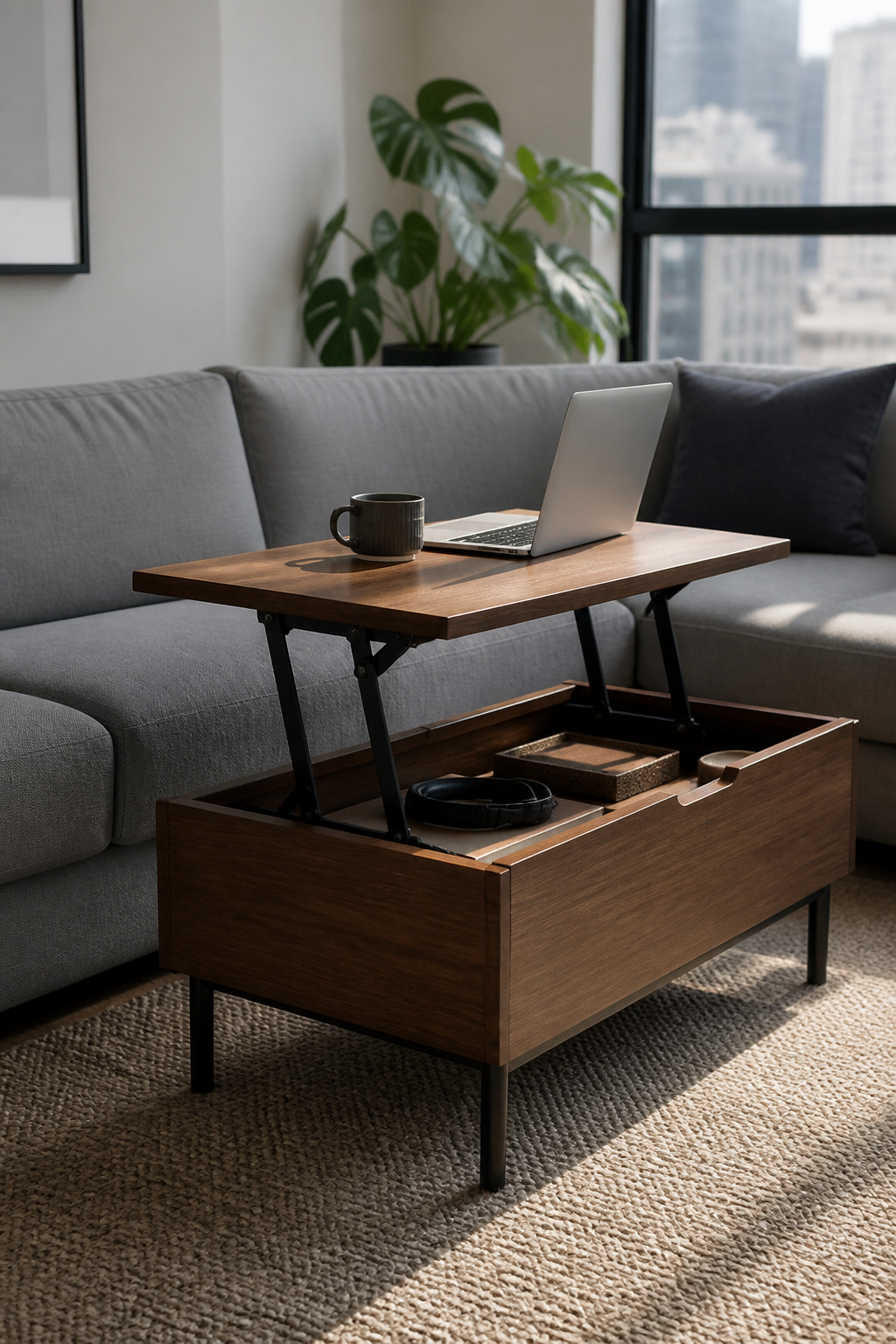
The mechanism is everything. A good one extends 8 to 12 inches toward the sofa when raised — enough to eat or work comfortably. The raised surface should land at approximately elbow height when seated, roughly 26 to 30 inches. Spring-loaded mechanisms are more reliable than gas-piston versions for daily use. Look for ‘soft-close’ in the product description — it is a reliable quality indicator.
Before buying, watch a video of the specific mechanism in action. Some cheaper versions require two hands and real force to operate — that defeats the purpose. The Steve Silver Hamlyn ($449) uses one of the better mechanisms I have seen at this price point.
Hidden Storage
Most lift-top tables offer 20 to 35 liters of hidden storage below the surface. It holds remotes, chargers, books, and gaming controllers. This is not glamorous storage, but it is genuinely practical, and it keeps the room cleaner than the alternative. The Southern Enterprises Ellington ($289) balances storage volume and mechanism quality better than most entries at that price.
7. Upholstered Ottoman as a Soft Coffee Table Design Alternative
Replacing a hard coffee table with an upholstered ottoman changes the energy of a living room. The difference is difficult to explain until you live with it. The room becomes quieter — acoustically and visually. Children don’t encounter sharp corners. Guests put their feet up without asking. The space starts to feel like somewhere people actually want to stay.
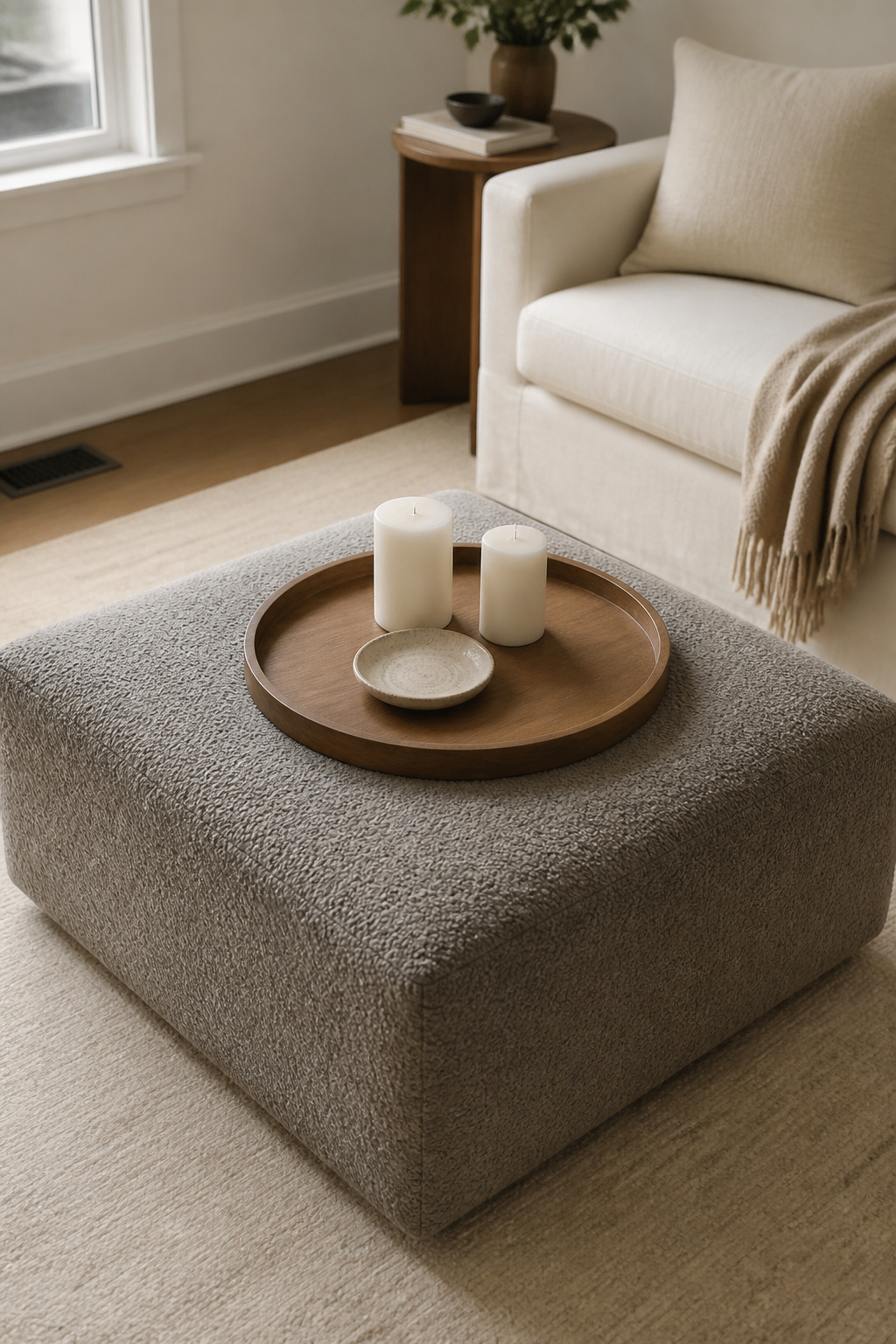
A tray is essential. An 18 to 22-inch round tray placed on an ottoman creates a stable surface for drinks, books, and a candle. Without the tray, the surface is too soft for glasses and the room looks unfinished. With it, the styling practically does itself.
Fabric Choices That Hold Up
Boucle ottomans are beautiful but impractical in households with pets — the looped texture catches fur and pills. Performance velvet (West Elm Havana, $599) and Crypton-finished fabrics resist both stains and pet hair significantly better. Pottery Barn’s Turner Square Tufted Ottoman ($899) offers the widest range of performance fabric options. It works well if you need durability without sacrificing the upholstered look.
The Two-Ottoman Approach
The best styling trick for upholstered coffee tables: use two medium square ottomans instead of one large rectangular one. You get more seating flexibility and they’re easier to move when you need floor space. The gap between them also holds a small drinks tray. It’s a solution I come back to again and again in rooms where flexibility matters as much as aesthetics.
For how upholstered ottomans fit into a complete scheme, the living room styling guide covers vintage and contemporary mixing.
8. Live-Edge Wood Slabs as Statement Coffee Table Design
A live-edge coffee table is the one piece of furniture that genuinely cannot be replicated by mass production. Every slab is from a specific tree, with a specific grain pattern and edge outline. You will never encounter the same piece twice — and that singularity is exactly the point.
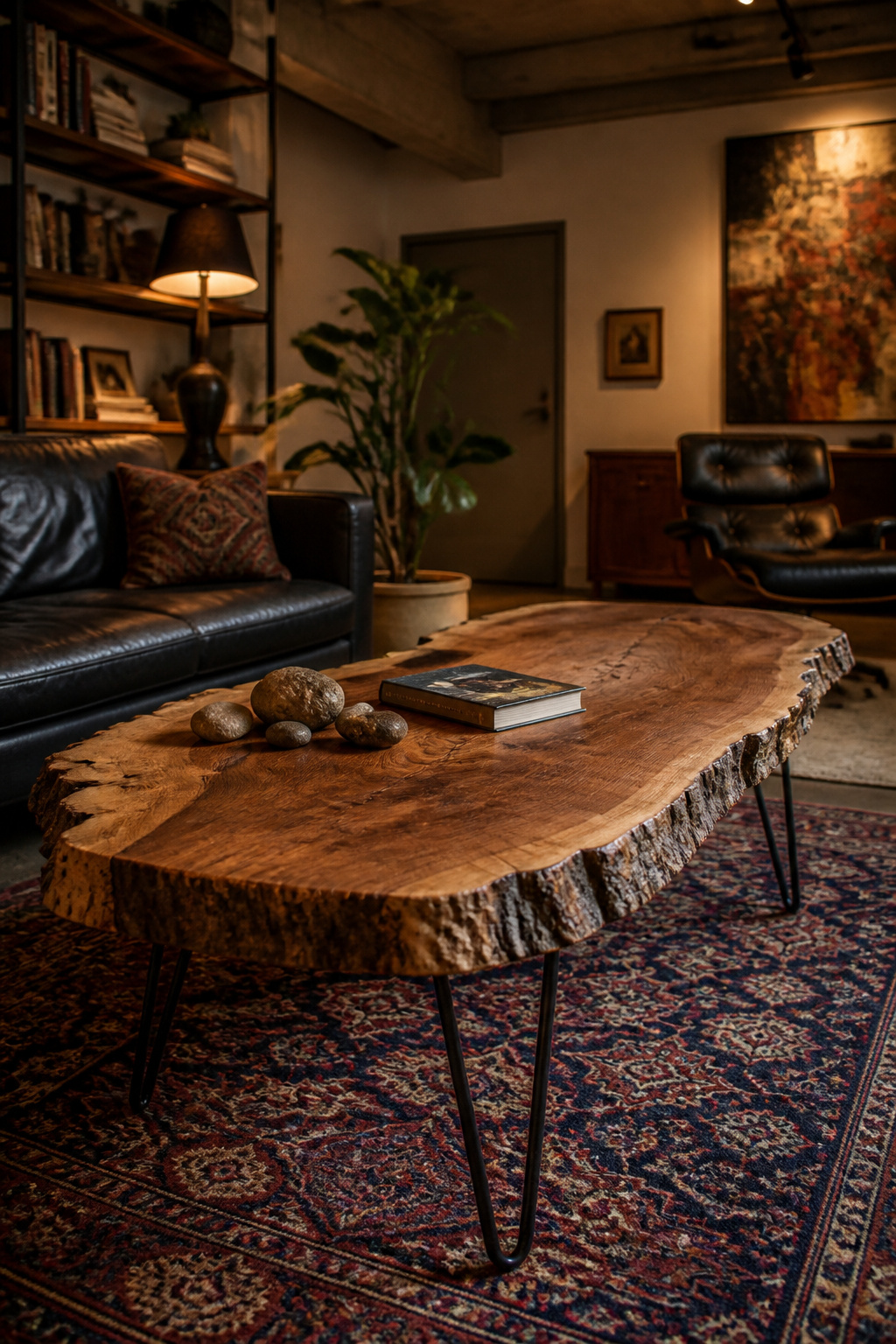
Live-edge means the furniture preserves the natural edge of the wood slab. This includes the bark outline, grain irregularities, knots, and natural voids. The leg style does most of the stylistic work. Hairpin legs (thin steel, industrial-modern), trestle bases (traditional-modern), and waterfall edges (sculptural, contemporary) each position the same slab in a completely different register.
Materials and Moisture
Walnut is the most popular choice for live-edge coffee tables — warm in tone, tight in grain, and stable. Maple is lighter and harder; cherry develops a deep reddish-brown patina over years that many owners love. Regardless of species, the single most important specification: moisture content below 8% before installation indoors. Wood at 12% or higher will warp or crack in a heated home. Ask any reputable maker for a moisture reading; they will have it if they know their craft.
Epoxy resin fills are often used to stabilize natural voids and cracks. Clear epoxy is subtle and preserves the wood’s character; tinted (usually blue or black) is more dramatic. Local makers and Etsy artisans typically offer custom finishes for $400 to $2,000. That competes favorably with Croft House ($1,200 to $3,000) or Restoration Hardware ($2,800).
For sourcing statement pieces where provenance matters, the coffee table furniture guide walks through finding, assessing, and restoring vintage and artisan pieces.
9. Black Coffee Table Design to Anchor a Light-Filled Room
A black coffee table is a design statement that works through contrast rather than harmony. In a room with pale walls, light flooring, and neutral upholstery, a matte black table reads as a deliberate anchor. It provides the visual weight that keeps the room from floating away into beige sameness.
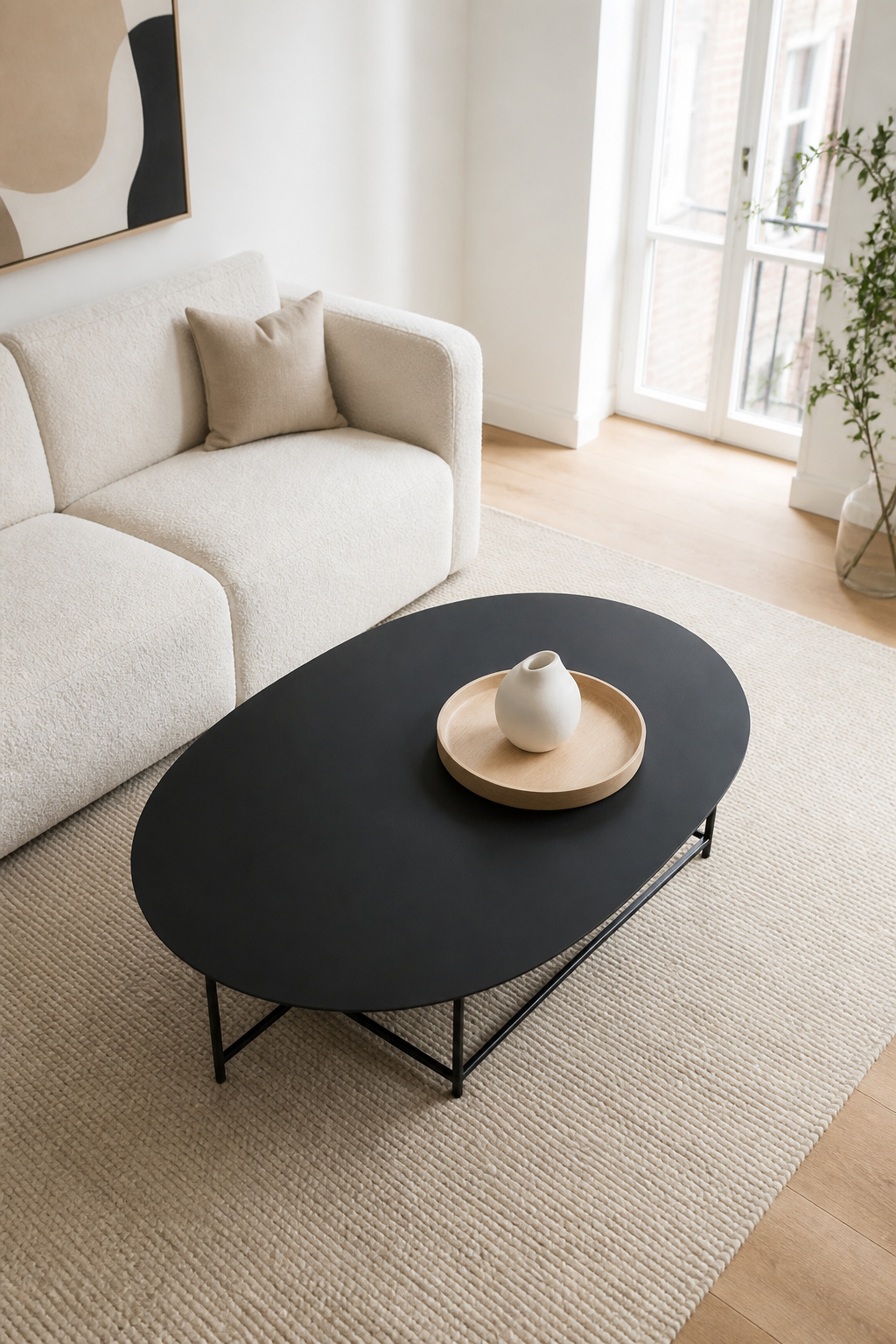
The finish choice matters enormously here. Matte black absorbs light and reads as sophisticated. High-gloss black reflects light and can look cheap unless the quality is genuinely exceptional. For most residential applications, matte is the safer and more durable choice.
Shape and Scale
Black oval coffee tables are having a genuine moment in contemporary design. The reason is practical as well as aesthetic. Oval avoids the sharp corner problem that makes rectangular black tables feel aggressive. The elongated shape also handles a sofa’s length well. The West Elm Roar & Rabbit Geo table ($449) and the CB2 Silverado ($549) are both worth considering. The former has warmer material accents; the latter is more architectural.
Avoiding Visual Heaviness
A black coffee table against a dark sofa needs deliberate contrast. An ivory or oatmeal area rug does the most work here. It separates the table visually from the floor and prevents the seating area from becoming a dark mass. For the surface: two colors maximum. White ceramics, a light wood tray, one plant. The dark surface is a stage, and a cluttered stage undermines the whole effect.
10. Round Coffee Table Design for Softer Living Room Flow
The rectangular coffee table is the default — and defaults in interior design are worth questioning. A round coffee table does something a rectangle cannot: it softens the room’s geometry and improves traffic flow simultaneously. There are no corners to navigate around, no sharp edges catching hips as you pass. There is no visual tension between the table’s lines and the room’s organic life.
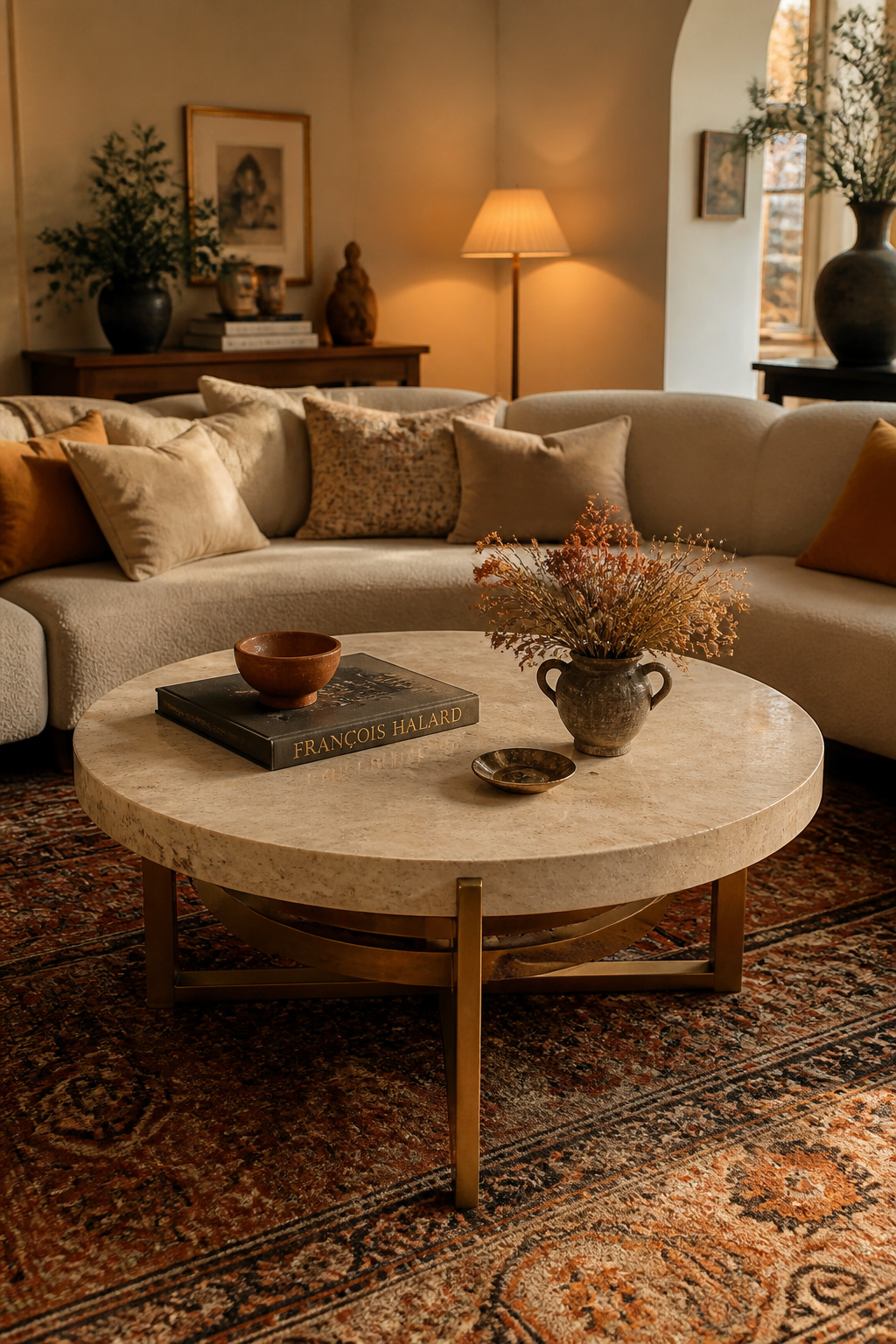
The sizing rule is worth knowing: round coffee table diameter should be approximately two-thirds of the sofa’s length. A 90-inch sofa works with a table up to 60 inches across. A 75-inch sofa works better with something in the 48 to 52-inch range. Go too small and the table looks lost; go too large and you lose the walkway.
When Round Works Best
Round tables are most effective in front of L-shaped sectionals or in conversation groupings with multiple chairs facing each other. A rectangular table in those situations creates clear ‘inside’ and ‘outside’ zones. In a narrow room, however, a round table projects further into the walkway than a rectangle. Measure carefully before committing.
The West Elm Terrace Round ($499) pairs white marble with an antique bronze base. The combination works across many room styles. For smaller rooms, a round rattan or bamboo table reads as lighter and less imposing than stone.
11. Travertine and Stone Coffee Tables: The Designer’s Quiet Statement
There is a reason travertine coffee tables appear in roughly half the living rooms on any interior design account worth following. They look expensive without being ostentatious. The material has texture, warmth, and visual weight, but it doesn’t demand attention the way marble does. It earns its place quietly.
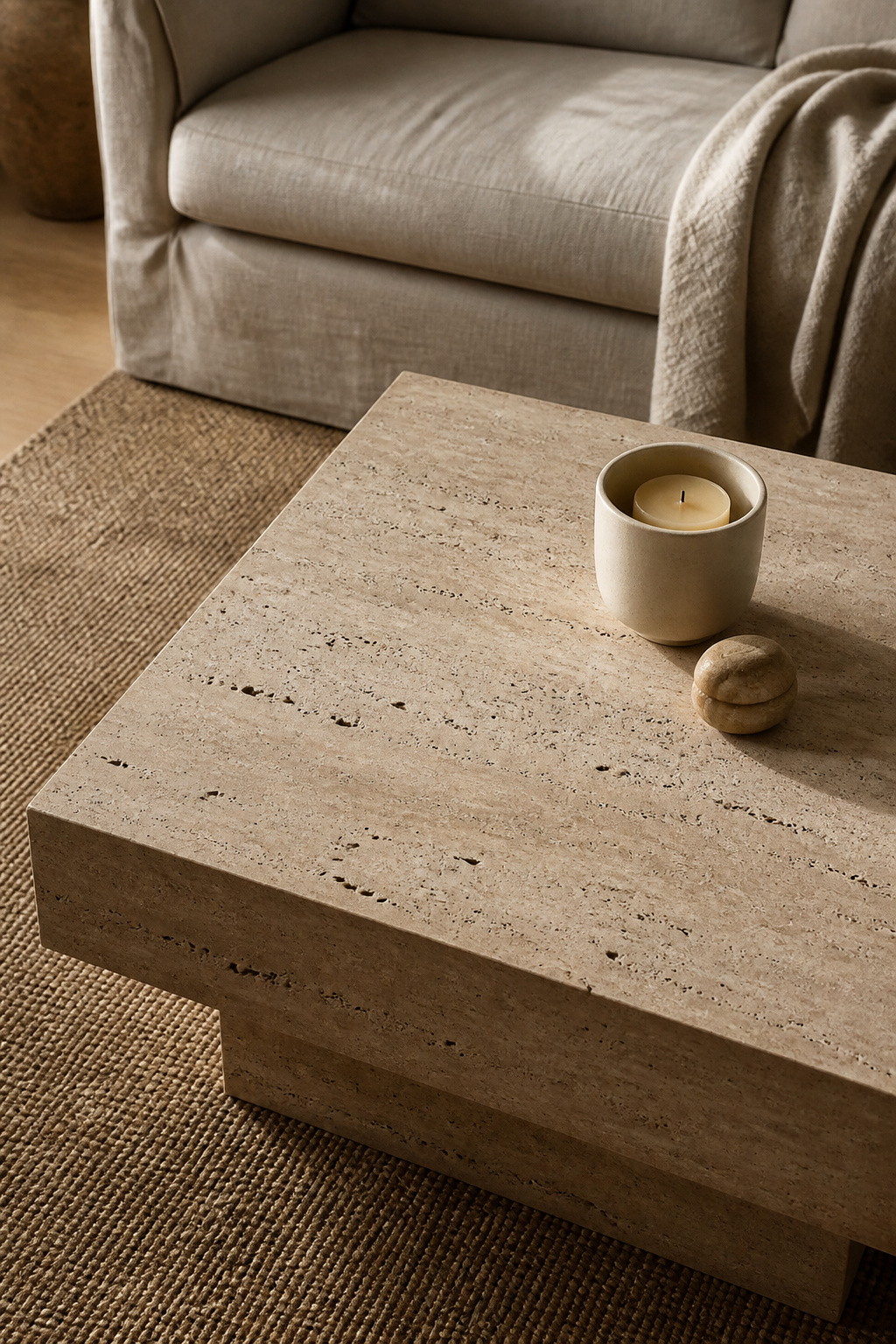
Travertine is a form of limestone deposited by mineral springs. The characteristic holes are natural voids — the result of gas escaping as the stone was forming. Unfilled travertine preserves this texture entirely, which looks beautiful but traps crumbs and is harder to clean. Filled travertine is more practical for a coffee table. The voids are grouted smooth while the surface texture and pattern remain visible.
Finishes and Weight
For daily use, honed travertine (matte) is the right choice — polished travertine shows scratches and watermarks more readily. Unlike marble, travertine develops a characterful patina over time rather than etching visibly. That makes it significantly more forgiving for households that actually use the table.
The weight deserves a mention: a 24 by 48-inch travertine top weighs approximately 85 to 120 lbs. For those in upper-floor apartments, check the floor load capacity if you are adding multiple heavy pieces simultaneously. The CB2 Travertine Coffee Table at $1,299 and Anthropologie’s Selin at $1,498 represent two strong options. The Selin’s natural finish is particularly warm.
12. Mirrored Coffee Table Design for Small or Dark Rooms
Mirrored furniture has a reputation problem. Cheaper versions look dated and feel more appropriate to a Las Vegas hotel suite than a home. But a well-made mirrored coffee table is a genuinely useful design tool in the right context. That context is specific: rooms that are dark, small, or both.
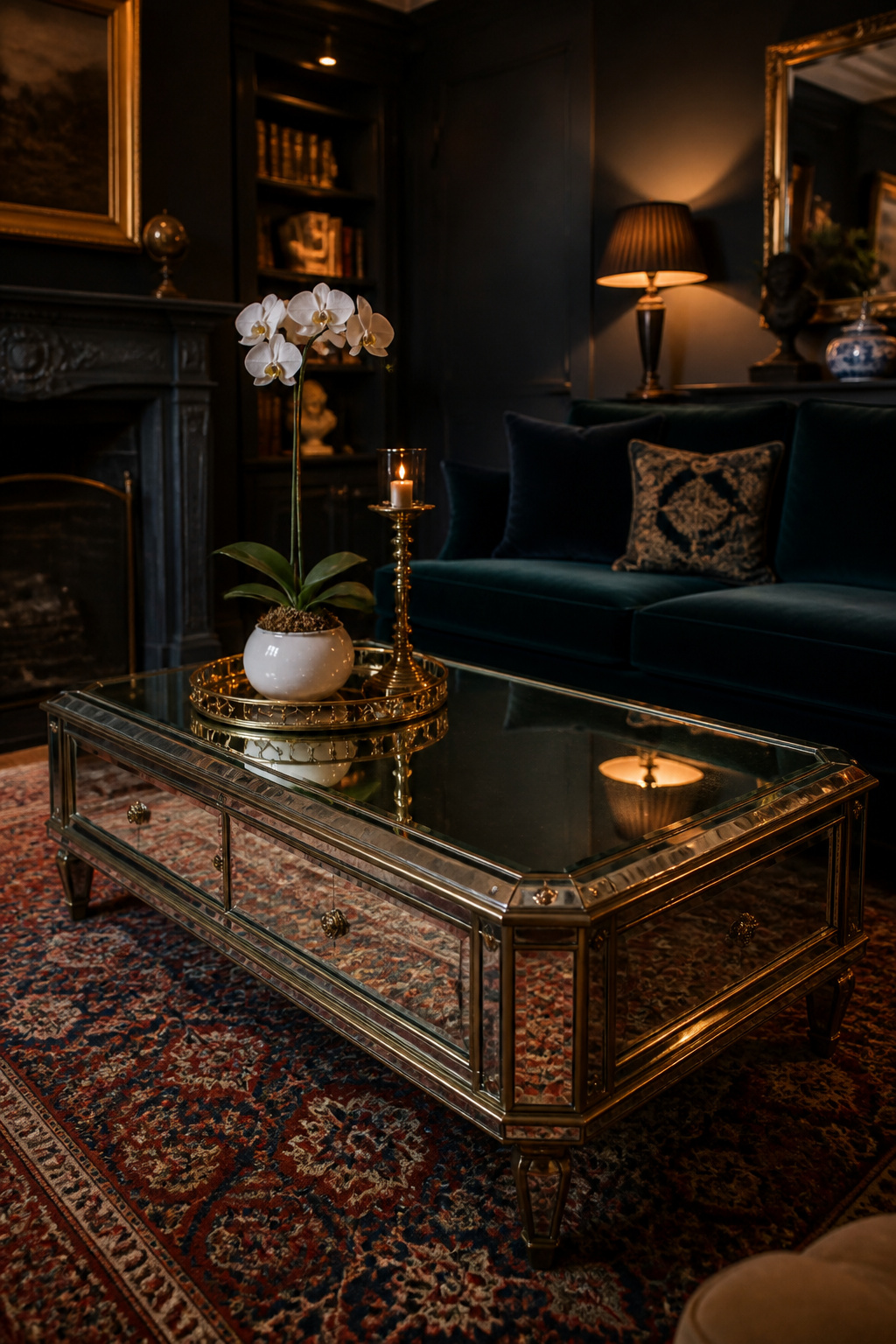
Mirrored surfaces reflect 60 to 80% of ambient light. That makes a real difference in a north-facing room with limited natural light or a compact city apartment where windows are few. The key distinction to know: antique mirror (with slight foxing and grey undertones) looks more sophisticated than clear modern mirror. Antique mirror reflects without the harsh, bathroom-mirror clarity that makes some mirrored furniture feel clinical.
For rooms where every choice has to work harder, the small living room ideas guide covers how reflective surfaces fit into a broader spatial strategy. With the right furniture scale and layout, a mirrored table can make a compact room feel genuinely different.
Keeping It Current
The panel detail determines how the table reads. Wide bevels and geometric grid patterns lean Art Deco — formal, slightly theatrical. Frameless edge-to-edge mirror panels read as cleaner and more contemporary. The Bernhardt Criteria ($1,800) handles this well with its antique panel treatment. The Safavieh Couture Zada ($479) offers a credible version at a fraction of the price.
Mirrored tables reflect whatever is in front of them — keep the opposite wall clear, or arrange something worth seeing.
13. Vintage Trunk as a Repurposed Coffee Table Design with Character
Every room has a backstory, whether the owner knows it or not. A vintage trunk used as a coffee table makes that story explicit. It is the choice of someone who has been places and accumulated things. They decided that an object with genuine history beats anything made last year.
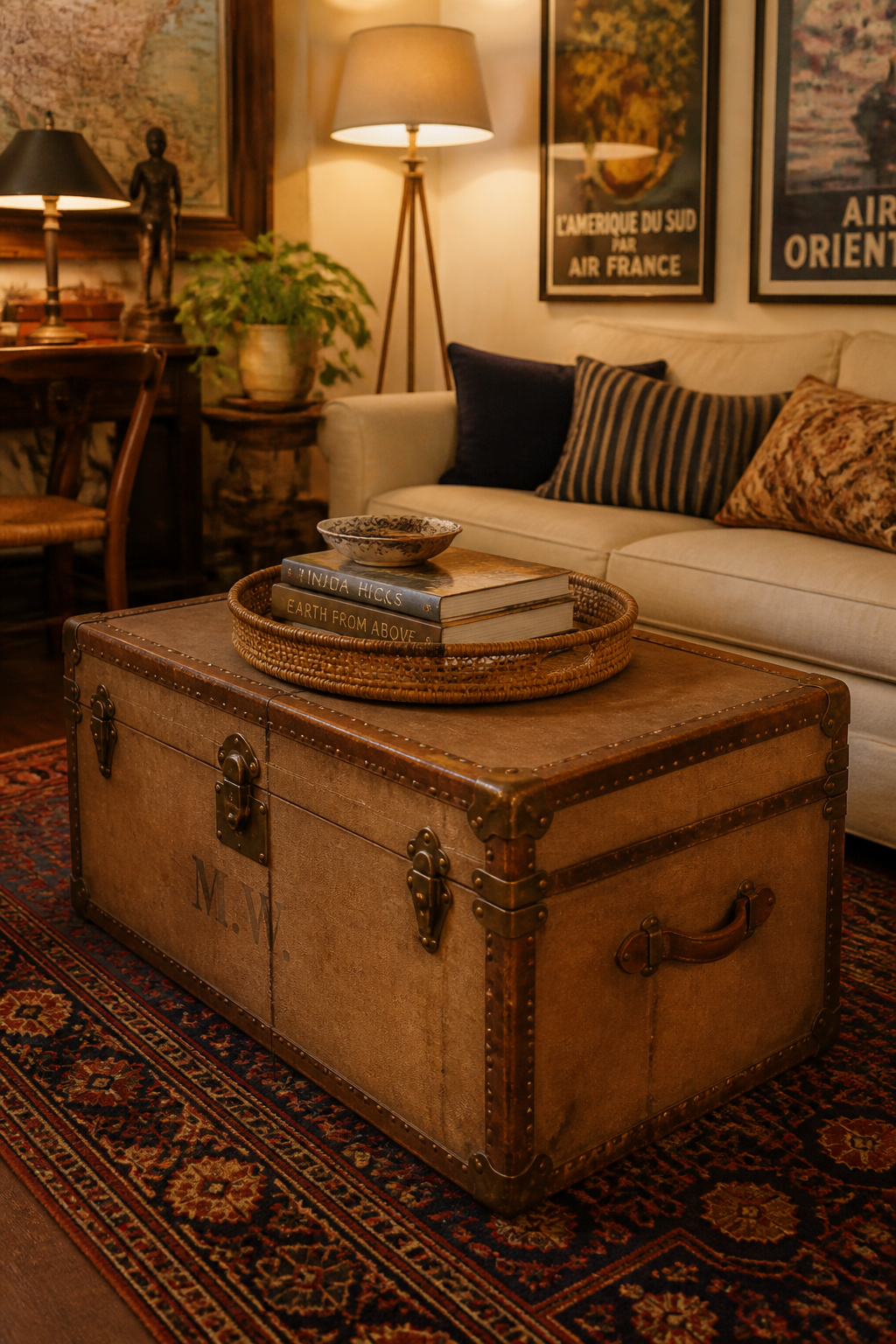
Genuine steamer trunks from the early 20th century were built to withstand transatlantic travel. The construction — riveted metal corners, heavy canvas or leather exterior, solid wood frame — is more durable than most modern furniture. That is why they have survived in such numbers and why they work as coffee tables without any structural modification.
What to Look For
Canvas-covered trunks are affordable ($80 to $200 at estate sales) but less durable than leather or slatted wood (Saratoga-style). When assessing a piece, check the interior frame and base. The canvas or leather exterior can be fully restored, but water damage to the internal wooden structure is harder to address. Hardware is almost always salvageable: Bar Keepers Friend on oxidized brass corners often reveals beautiful original metal underneath.
Add furniture feet — available for $10 to $20 — to raise the trunk off the floor. This improves the proportion significantly and protects rugs from the metal base.
Storage and Styling
A trunk coffee table provides 60 to 100 liters of storage — more than most purpose-built storage ottomans. Line the interior with cedar sheets before using it for blankets or cushion covers. It deters moths, neutralizes decades of accumulated odor, and adds a refinement that makes the piece feel considered rather than improvised.
For styling the surface, a round rattan tray holds objects in place. It also prevents the trunk lid from looking like a dumping ground. A small stack of large-format books and one ceramic or stone object is enough. The trunk’s character does the rest.
14. Japandi-Inspired Minimalist Coffee Table Design
Japandi is one of the few design philosophies that has actually improved on its component parts. Japanese minimalism can feel austere; Scandinavian hygge can tip into clutter. The combination — quiet functionality, honest materials, carefully edited surfaces — produces something warmer than pure minimalism. It is also more serene than Nordic coziness.
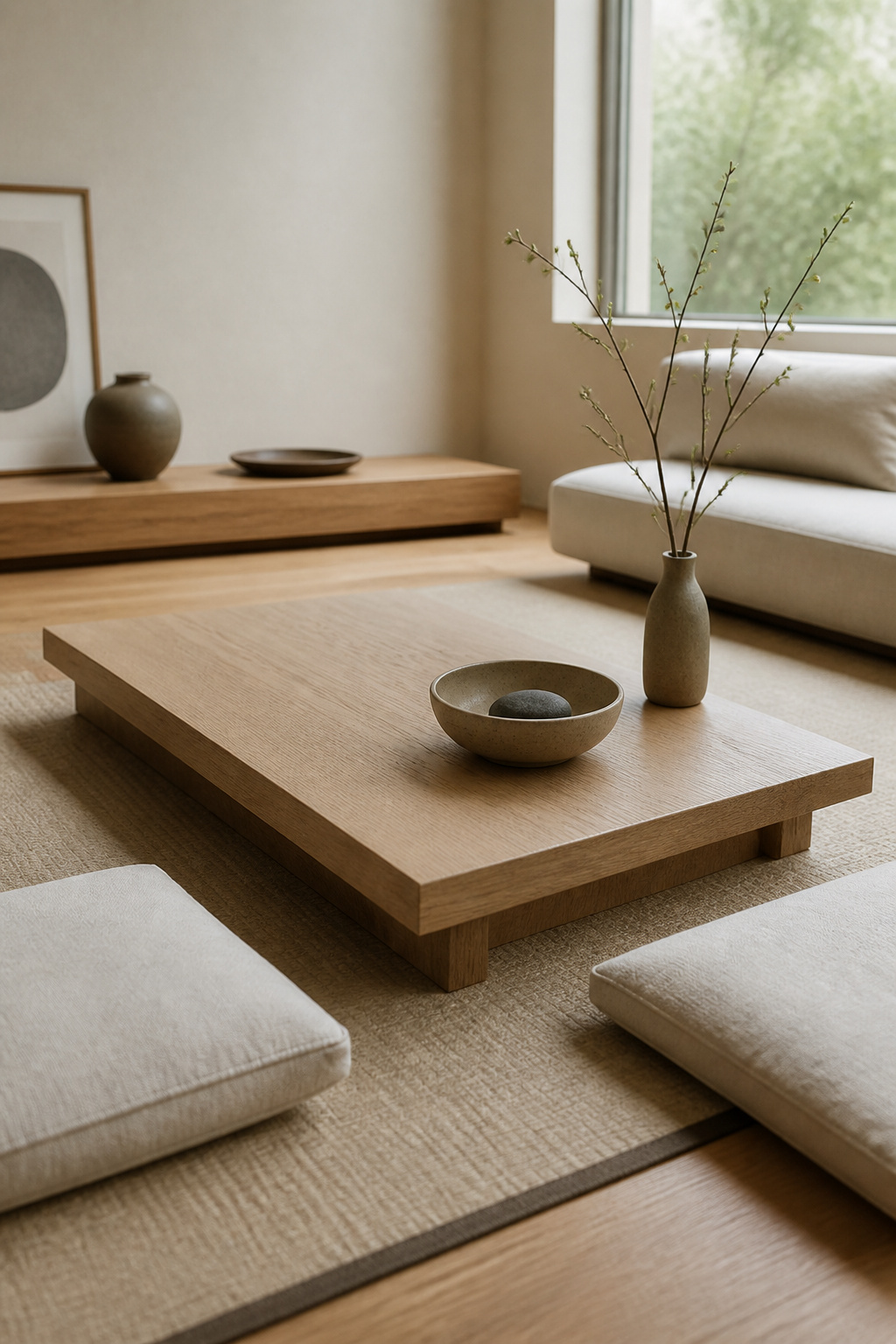
The defining coffee table design characteristic of Japandi is height. Western coffee tables typically sit at 16 to 18 inches. Japandi-inspired tables sit at 12 to 16 inches — closer to Japanese chabudai proportions. This lower profile changes the room’s geometry and encourages a more relaxed, floor-oriented posture. That is, in fact, the point.
Materials and Philosophy
Light oak, bamboo, and pale ash are the appropriate wood choices. Dark-stained finishes read as Western traditional rather than Japandi; avoid them. The Muji Low Table ($299) is the most accessible proper interpretation. Ethnicraft’s Thin Low Table ($890) in solid oak is the more refined version. IKEA’s VITTSJÖ ($69) approximates the aesthetic in steel and glass if budget is tight.
The surface edit is the design. Three objects maximum: a small tray, one ceramic piece, and optionally one plant or river stone. The philosophy here is not deprivation. It is the Japanese concept of ma: the intentional use of empty space. The space around the objects is as considered as the objects themselves.
Common Japandi Mistake
The most frequent error: confusing Japandi with bare minimalism. Wabi-sabi — the Japanese aesthetic of beauty in imperfection — welcomes a hand-thrown ceramic bowl, a slightly asymmetric vase, a dried flower stem. The goal is a surface edited by a person with taste. Not cleared by someone who forgot to put things back.
15. Upcycled and DIY Coffee Table Design on a Budget
Budget constraints do not preclude a considered coffee table design. They just require a different approach. Start with a structure rather than a finished piece. Apply the finishing details that separate an improvised find from something intentional.
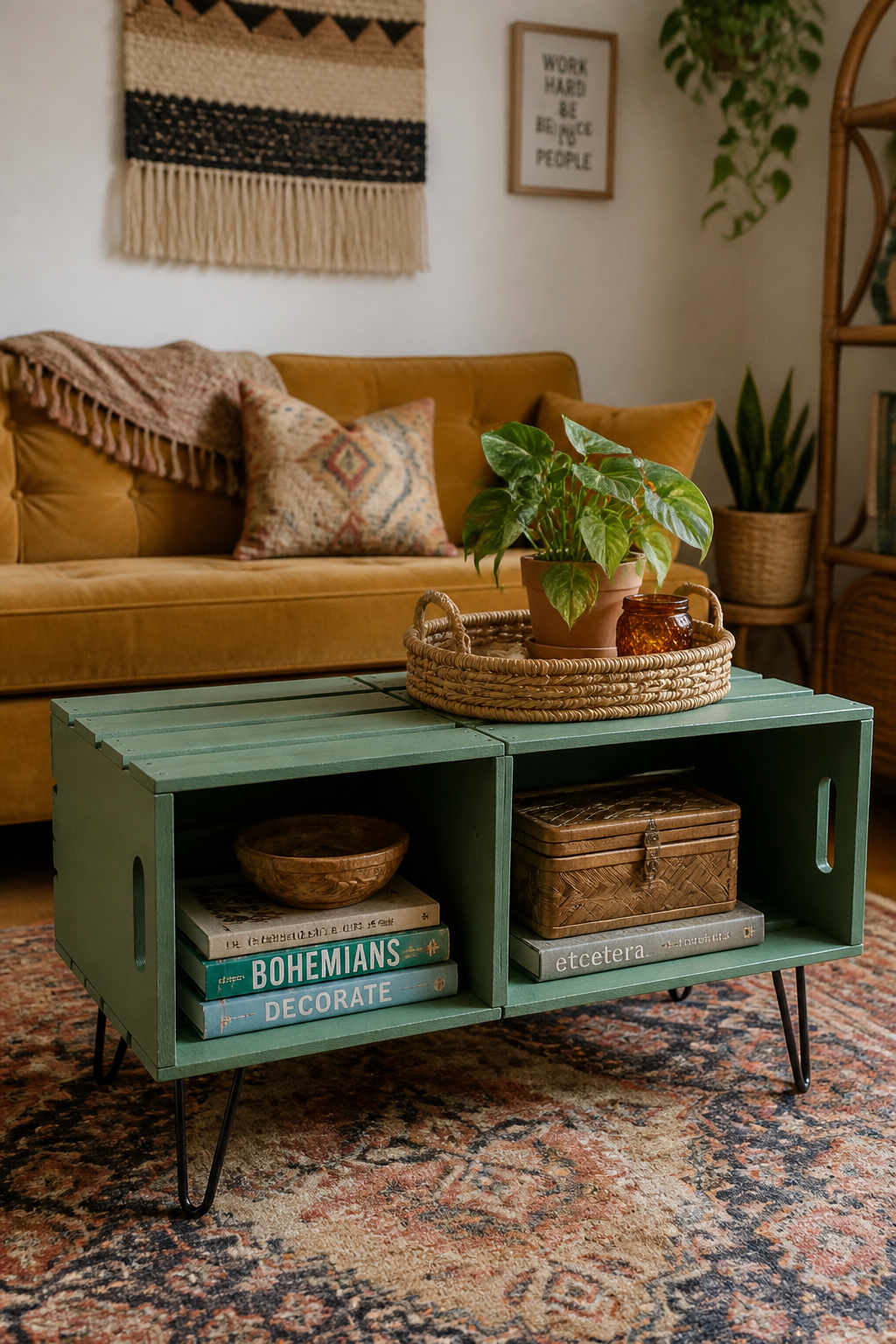
Three DIY approaches actually hold up in practice. First: hairpin-leg tables — any flat surface plus a $30 to $60 set of steel legs. Second: stacked crates — two wooden crates side by side, with or without a glass top. Third: sewing machine base conversions — cast iron treadle bases support glass or wood tops and are genuinely beautiful.
The Finish Makes the Difference
Chalk paint adheres to most surfaces without sanding or priming and covers in two coats. Annie Sloan’s range ($44 per quart) includes tones that look genuinely sophisticated. Old White, Paris Grey, and Duck Egg Blue all read as considered rather than painted-DIY. For surfaces you want to preserve rather than cover, Watco Danish Oil ($18 per quart) brings out the grain. It cures to a hard, wipeable finish.
The one finish that separates deliberate coffee table design from obvious craft: quality metal hardware. A $30 set of modern hairpin legs on a thrifted tabletop reads as intentional furniture, not an improvised solution. Replacing cheap drawer pulls with brushed brass hardware costs $20. It changes how the entire piece reads.
Sourcing the Right Base
Pallet wood is free but requires treatment. Leave it 48 to 72 hours after sealing to off-gas any residual chemicals before use indoors. Wooden crates from grocery suppliers or wine merchants are structurally sound, cheap, and stackable. An old door on trestle legs is the easiest large-surface option. Sand it, oil it, add legs that match your room’s metal tone.
The upcycled coffee table also fits naturally into the broader approach of sustainable furniture sourcing — choosing pieces with a previous life over newly manufactured ones, which is both better for the environment and more likely to produce something that reflects your specific taste.
How to Choose the Right Coffee Table Design for Your Living Room
After fifteen options, the question becomes practical: how do you choose? The design world often makes this seem like a taste question — and it partly is. But it is also a geometry question, a lifestyle question, and a budget question. Those three factors narrow the field faster than aesthetic preference does.
The Three Measurements That Matter
Before you look at a single table, take three measurements. First, the length of your sofa. Second, the clearance between your sofa and any wall or furniture behind the table. Third, the height of your sofa seat. A coffee table should be two-thirds of your sofa’s length or less. It should leave at least 18 inches of clear space in front of the sofa. And its surface height should be within an inch or two of your sofa seat height. Tables that violate these proportions look wrong regardless of how beautiful they are in isolation.
For small living rooms, our small living room ideas guide covers coffee table sizing that prevents the most common proportion mistakes.
Matching Style to the Room
A coffee table’s material should connect to at least one other material already in the room. Marble connects to white walls, stone tile, and brass hardware. Walnut connects to warm wood floors, leather, and linen. Rattan connects to natural fiber rugs, ceramic objects, and whitewashed walls. When the material of the table relates to something else in the room, the piece looks chosen rather than placed.
The leg detail and finish should connect to the room’s metal tones. Brass legs pair with brass light fixtures and hardware. Black steel pairs with black-framed windows and matte black fixtures. Chrome pairs with contemporary appliance finishes. Mixing metal tones is fine when it is deliberate; when it is accidental, it reads as unresolved.
Finally, consider the formal living room function of your space. A room used primarily for entertaining calls for a different coffee table than one used for daily family life. Forgiving surfaces — stone, upholstered, lacquer — earn their premium in a household where the table is genuinely used. Precious surfaces — polished marble, mirrored glass — belong in rooms where the table is primarily decorative.
The right table is the one that fits the room you actually live in, not the room in the photograph.