
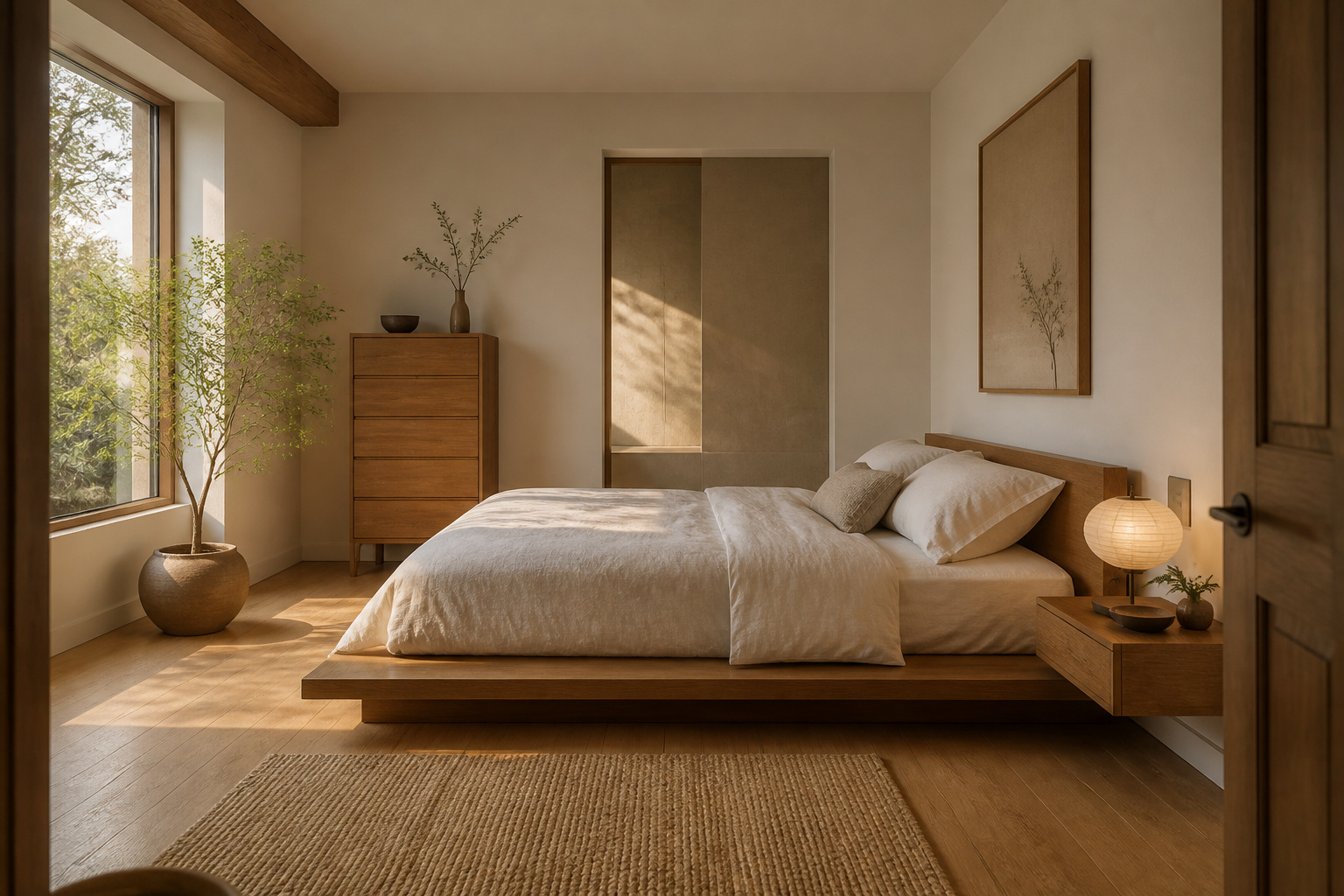
Choosing what goes into your bedroom matters more than most design decisions. Bedrooms aren’t complex spaces. But they’re the first thing you see each morning and the last thing you register at night. Every piece of minimalist bedroom furniture either supports rest or quietly undermines it. A cluttered surface raises background stress before you even register it consciously. Research from environmental psychology is clear on three points: a clear visual field lowers cortisol, natural materials reduce perceived stress, and fewer, better pieces almost always outperform more.
These 18 minimalist bedroom furniture ideas strip the room back to what genuinely serves rest. Not what fills space. Not what looks appealing in a catalogue. The difference shows up every morning when you open your eyes.
1. Low-Profile Platform Bed: The Heart of Minimalist Bedroom Furniture
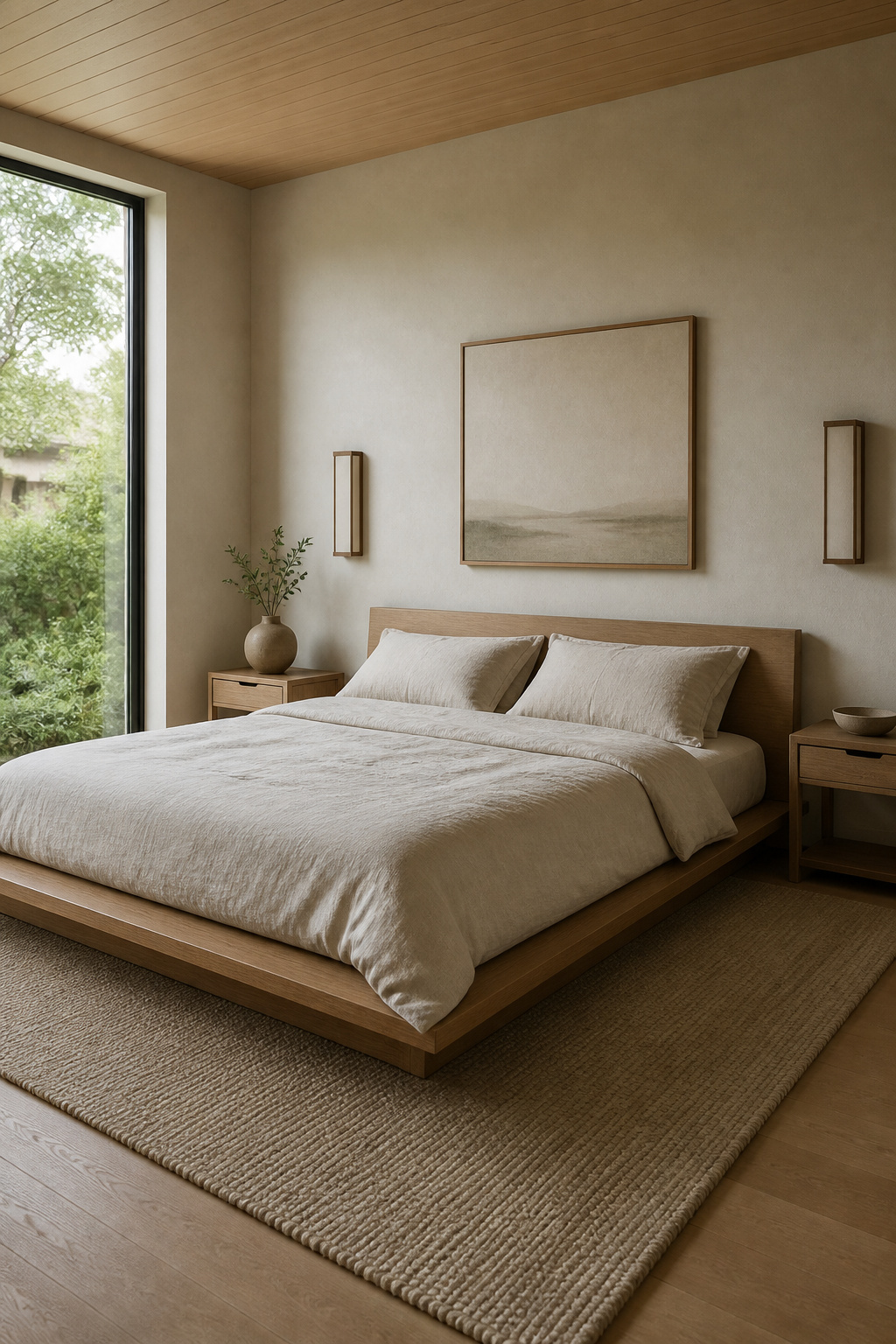
The bed is the largest object in the room, so it sets the register for everything else. A low-profile platform frame sits 12 to 14 inches from floor to mattress top. A traditional high-leg design runs 24 to 26 inches. That difference fundamentally changes how a space feels. The ceiling appears taller. The walls breathe. A 2019 study in the Journal of Environmental Psychology found rooms with lower furniture were rated as more restful. Equivalent rooms with high-leg pieces consistently scored lower for perceived calm.
Why a Lower Frame Changes the Room
When a bed sits low, your eye travels across the room rather than being stopped by a tall headboard. That uninterrupted sightline is what makes a room feel restful. Thuma’s The Bed (from $1,095, solid rubberwood) and Floyd’s Platform Bed (from $849, FSC-certified wood) are two reliable options. Both deliver real material quality without bespoke joinery prices.
Getting the Sizing Right
Leave at least 24 inches of clear floor on either side of the bed for comfortable access. In smaller rooms, 18 inches is workable. Choose the largest size that maintains those clearances. A properly proportioned bed looks intentional. One too small for the room simply looks provisional. Solid slatted bases spaced no more than 3 inches apart provide even support and eliminate the need for a box spring.
2. Wall-Mounted Floating Nightstands for an Uninterrupted Sightline
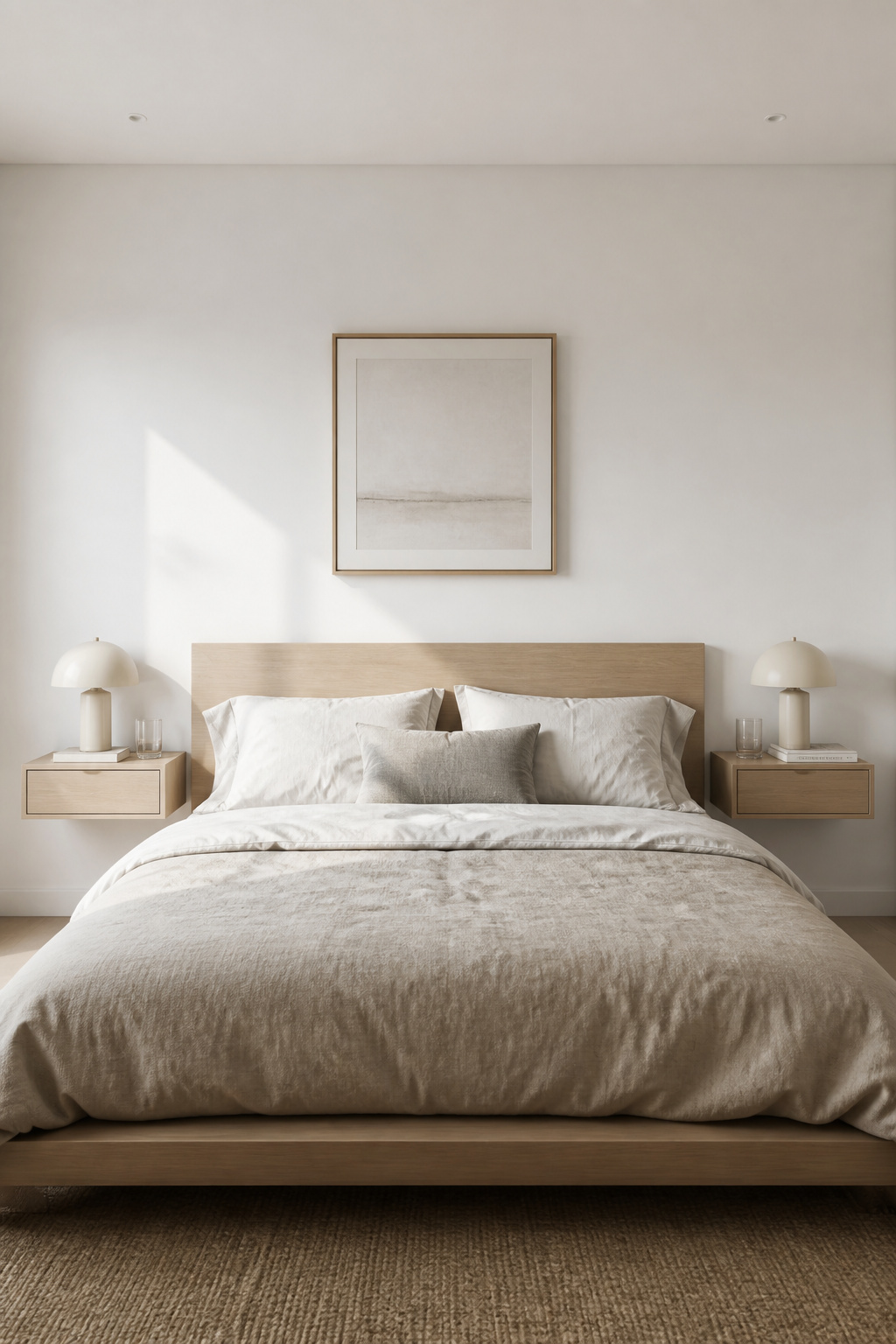
Traditional nightstands sit on the floor and accumulate. A wall-mounted version eliminates the leg clutter below. It makes clear that the floor belongs to the room — not the furniture. Research from the Cornell Center for Hospitality Research found that visible floor space directly correlates with perceived room size. Recovering 5 to 6 square feet of visual floor space doesn’t require a bigger room. It just requires removing what’s sitting on it.
Installation and Height
Mount into wall studs, not drywall — toggle bolts into drywall will pull out over time. Place the top surface 2 to 4 inches above the mattress top. For most platform beds, that’s 22 to 28 inches from the floor. String Furniture’s Pocket shelf ($89) and CB2’s Suspended Nightstand ($249) both mount cleanly with no visible hardware from the front. Install a flush power point at the same height as the bracket and your lamp cord disappears entirely.
What Belongs on Them
Four items maximum: a lamp, a book, a glass, and one small personal object. That ceiling is the point. Anything more starts compromising the visual rest the shelf was chosen to provide.
3. A Slimline Dresser as Core Minimalist Bedroom Furniture
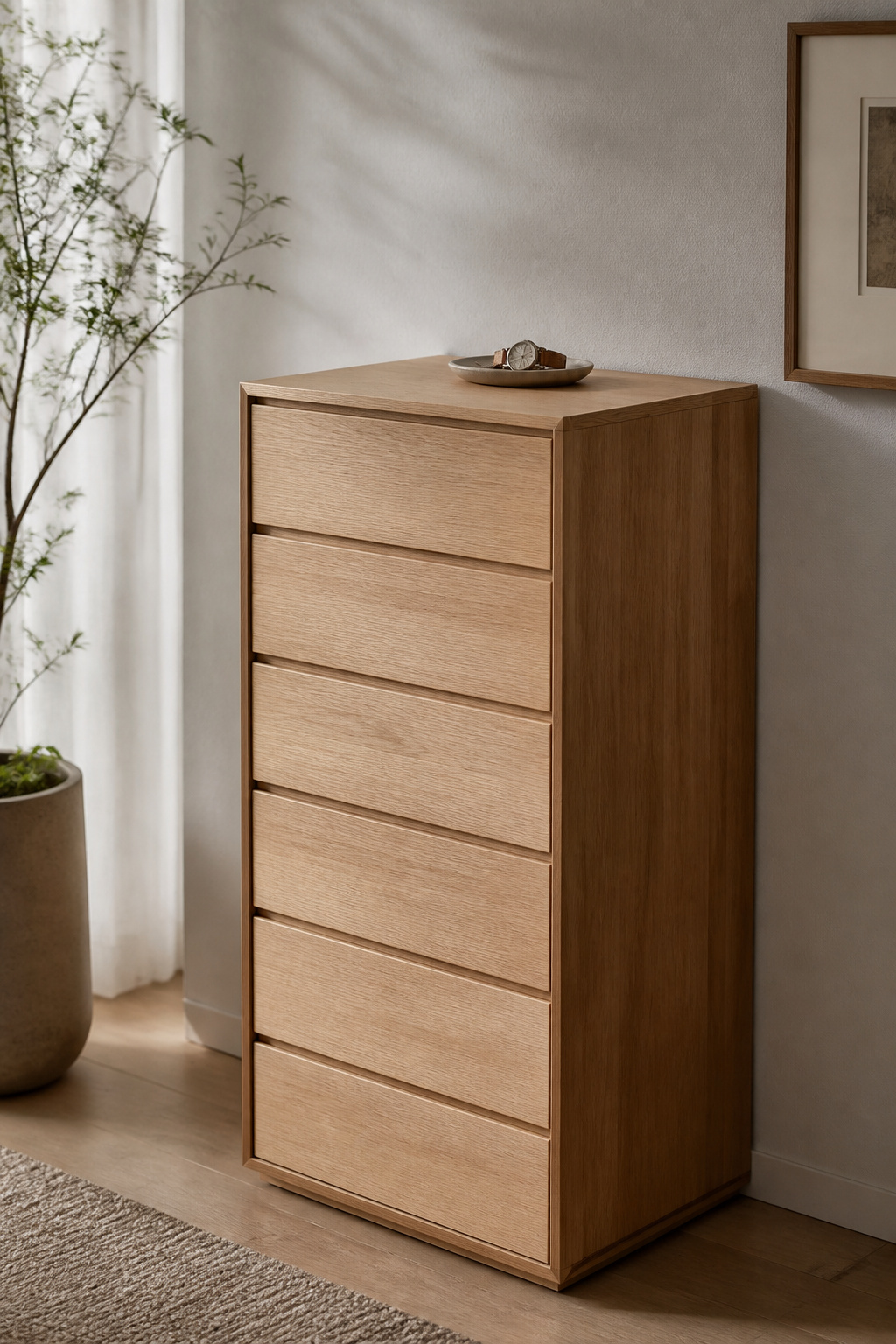
Most dressers are wider than they need to be. A six-drawer unit at 60 inches wide is a dominant presence against any wall. A tall, narrow dresser at 35 inches wide and 57 inches tall holds equivalent clothing volume. It does so in roughly half the wall footprint. For minimalist bedroom furniture planning, the narrow tower format is consistently underused.
The Handleless Difference
Drawer pulls and handles are small but create visual busyness that registers subconsciously. Blum Tip-On push-to-open mechanisms ($8 to $15 per drawer) eliminate every horizontal interruption across the dresser face. The result reads more like a wall panel than a piece of furniture. West Elm’s Modern 6-drawer dresser (from $749) and HAY’s Matchstick chest (from $890) both deliver this finish. Each is built for daily use.
A Practical Top-Surface Rule
Place a tray on the dresser top and keep only 3 to 4 items inside it. The tray signals a boundary. It defines the permitted surface area and prevents the gradual accumulation that makes every bedroom dresser eventually look chaotic. White oak works against almost any wall colour. Choose the tone at least one shade lighter than the darkest element already in the room.
4. Linen-Upholstered Headboard That Brings Softness Without Bulk
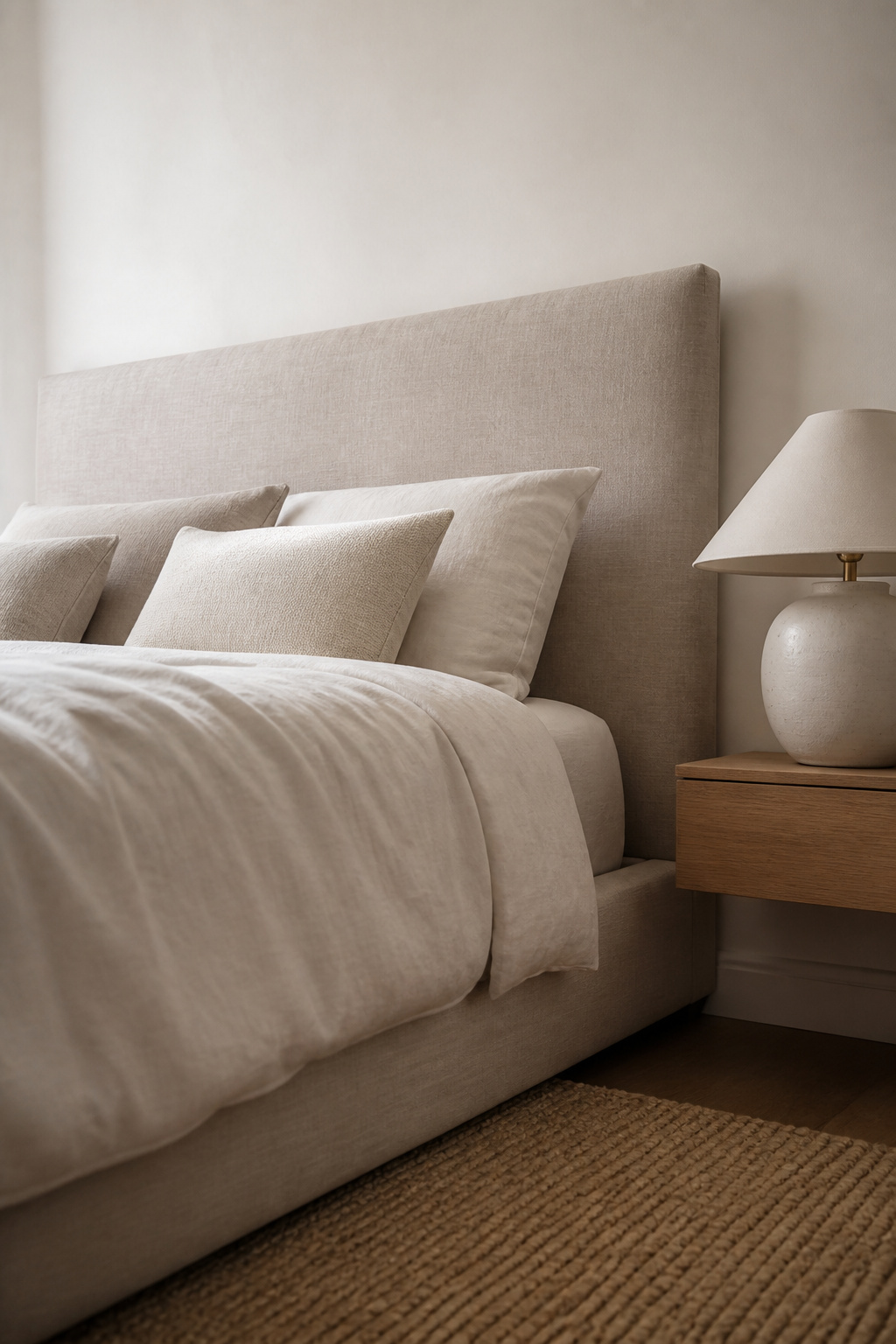
A room with a wooden bed frame, a wooden dresser, and wooden floors can feel more like a workshop than a bedroom. Hard surfaces need a counterpoint. A linen-upholstered headboard corrects this. It introduces softness and acoustic absorption without adding visual weight and uses no floor space at all. Belgian linen in flax or oatmeal has a texture visible from across the room. It adds interest without introducing pattern. That’s the minimalist’s ideal: presence without noise.
Sizing and Long-Term Care
For a platform bed with a 10-inch mattress, aim for the headboard top at 48 to 58 inches from the floor. High enough to read as architectural. Not so tall it dominates the room. Belgian linen at 175 GSM or above resists pilling significantly better than cheaper blends. Spot-clean with a damp cloth and mild soap; avoid steam cleaning, which can alter the fibres and distort the backing. Article’s Zola headboard (from $399) and Pottery Barn’s Comfort version (from $599) are both well-built options.
5. Natural Solid Oak Bed Frame for Warmth With Restraint
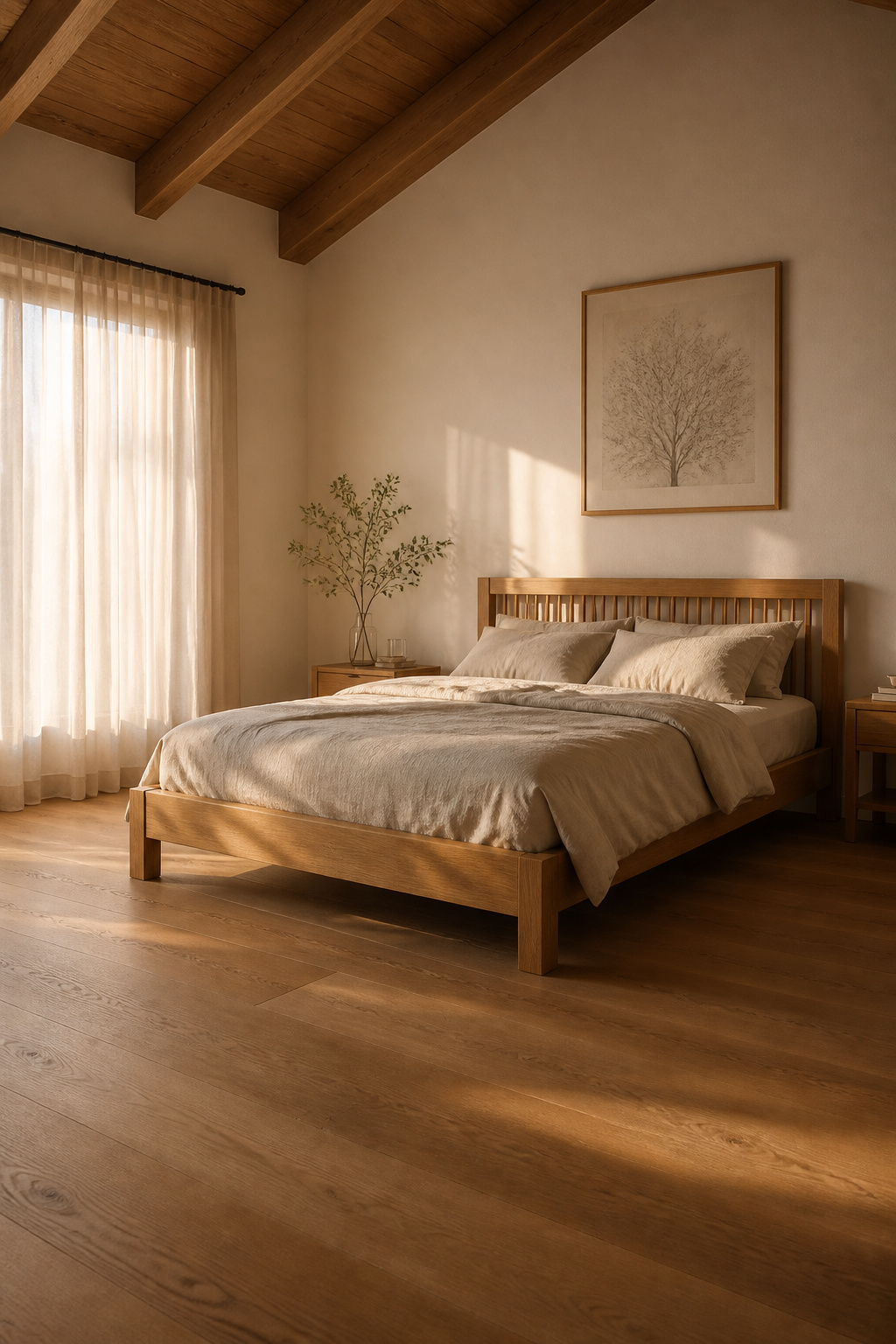
Biophilic design research consistently shows that natural wood materials in the bedroom reduce cortisol and improve perceived sleep environment quality. Solid oak has a density that communicates durability without heaviness. It develops a patina over time that engineered wood cannot replicate. For minimalist bedroom furniture, a piece that improves with age rather than requiring replacement is exactly the right logic.
What Makes It Worth the Cost
European oak is denser than engineered alternatives and doesn’t delaminate at joints. Ethnicraft’s Bok bed (from $2,890) and Hem’s Kona frame (from $1,650) represent the quality tier. Both sit comfortably alongside options in a broader modern bedroom furniture guide. Article’s Nera (from $849 in solid acacia) is a more accessible option. Apply Osmo Polyx-Oil annually to any untreated frame. Avoid silicone polishes — they seal the wood and prevent it from breathing naturally. The solid sprung slat system in quality frames curves upward and fixes with rubber clips. It adds gentle flex that firm-mattress users often find genuinely improves comfort.
6. Built-In Wardrobe Panels for Seamless Minimalist Bedroom Storage
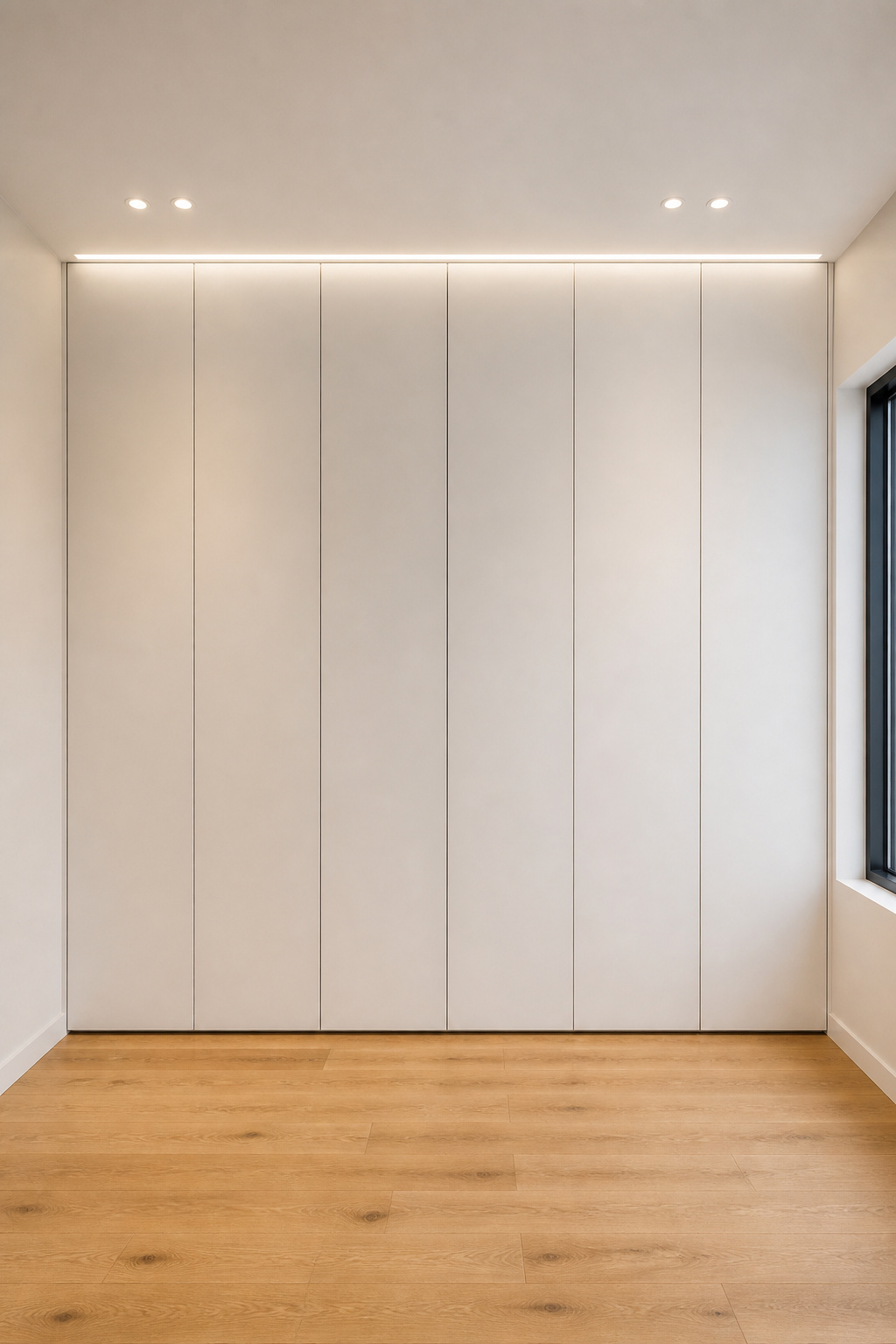
Interior designers consistently identify built-in wardrobes as the single change that most dramatically reduces perceived clutter in a bedroom. Freestanding wardrobes leave gaps above, beside, and below. Built-in panels run floor to ceiling and wall to wall. The storage disappears into the architecture of the room, which is the core ambition of any minimalist bedroom furniture approach.
The Budget-Conscious Route
A professional fitted system from Hammonds or Sharps starts at $2,800. IKEA PAX with Grimo handleless doors costs $300 to $800 depending on configuration. The difference is precision — custom joinery is fitted to the millimetre; modular systems require a square room. Paint the PAX frame to match the wall before fitting the doors. Add a caulked cornice board at the top. The result reads as built-in from any normal viewing distance. For minimalist bedroom storage, sliding doors save 12 to 18 inches of swing clearance versus hinged — a meaningful gain in tight rooms.
What Goes Inside
A clean interior matters as much as a flush exterior. One hanging rail for full-length items, a second for tops and jackets, shelves for folded clothing, and deep drawers for smaller items is enough. Most wardrobes don’t need more than that. The real discipline is maintaining that organisation rather than simply setting it up. Built-in systems, with their fixed compartments, enforce tidiness better than open freestanding wardrobes.
7. A Low Bench at the Foot of the Bed for Function Without Fuss
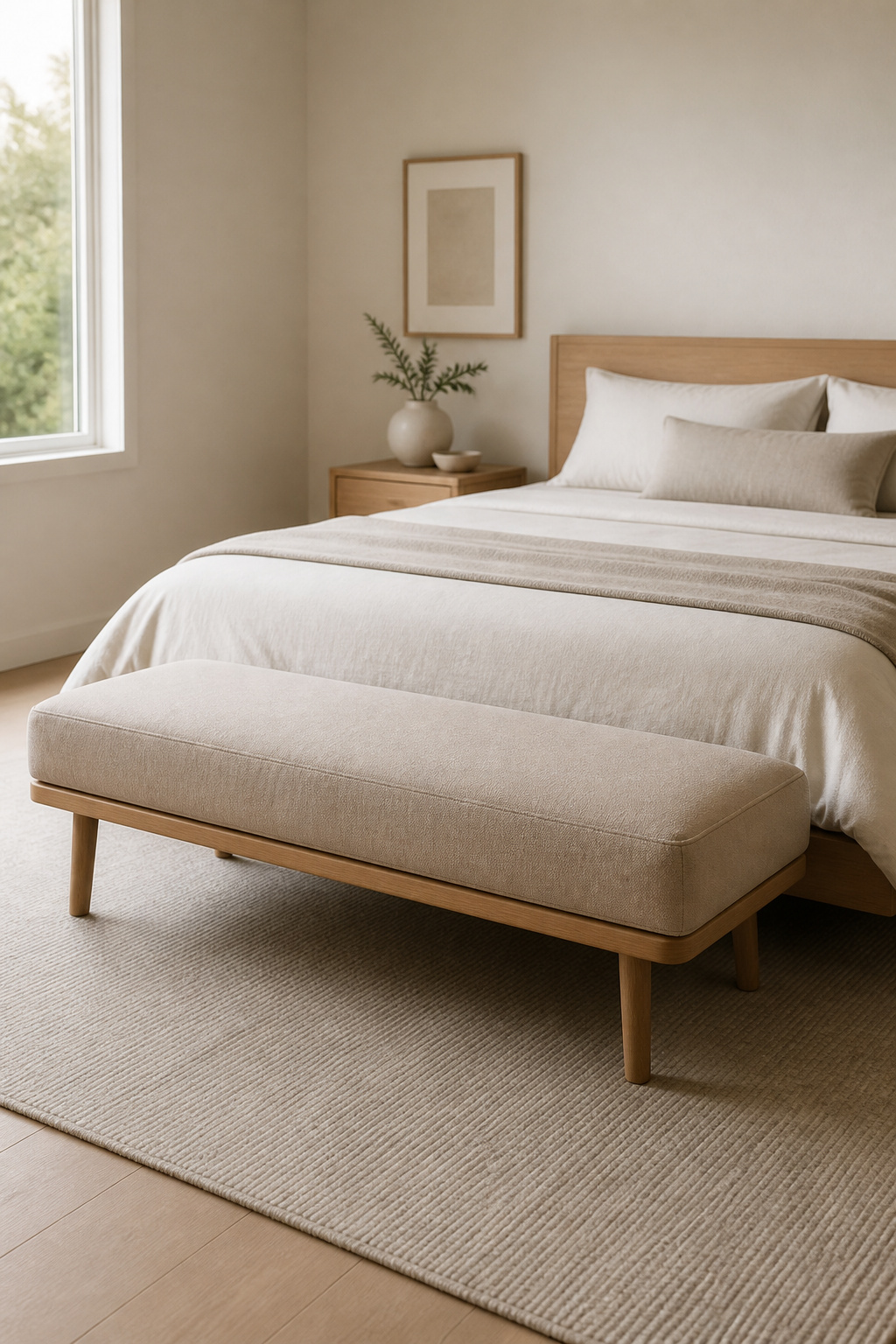
The bench at the foot of the bed earns its place every day. It’s where you sit to put shoes on. It’s where you lay tomorrow’s clothes the night before. Visually, it grounds the foot of the bed in a way a bare floor cannot. One piece doing three jobs is exactly how minimalist bedroom furniture thinking should work.
Getting the Proportions Right
Size the bench to 80% of the bed width — it leaves clearance on both sides, reads as intentional, and stops the room from feeling blocked. CB2’s Avec Upholstered bench ($349) and Article’s storage bench ($399) are well-proportioned for this role. Storage versions add a hinged lid compartment for spare bedding, which is worth considering if under-bed capacity is already at its limit.
The Material That Fits the Room
For a bedroom already using soft textiles — a linen headboard, upholstered chair, fabric bedding — a solid wood bench provides contrast without competing. For a room leaning harder (oak frame, stone side table, wooden floor), an upholstered version adds the softness the room needs without requiring a separate textile piece. CB2’s Avec bench ($349) and Article’s storage version ($399) both sit at the right height and width for this role.
8. Floating Shelves Instead of a Traditional Bedside Table
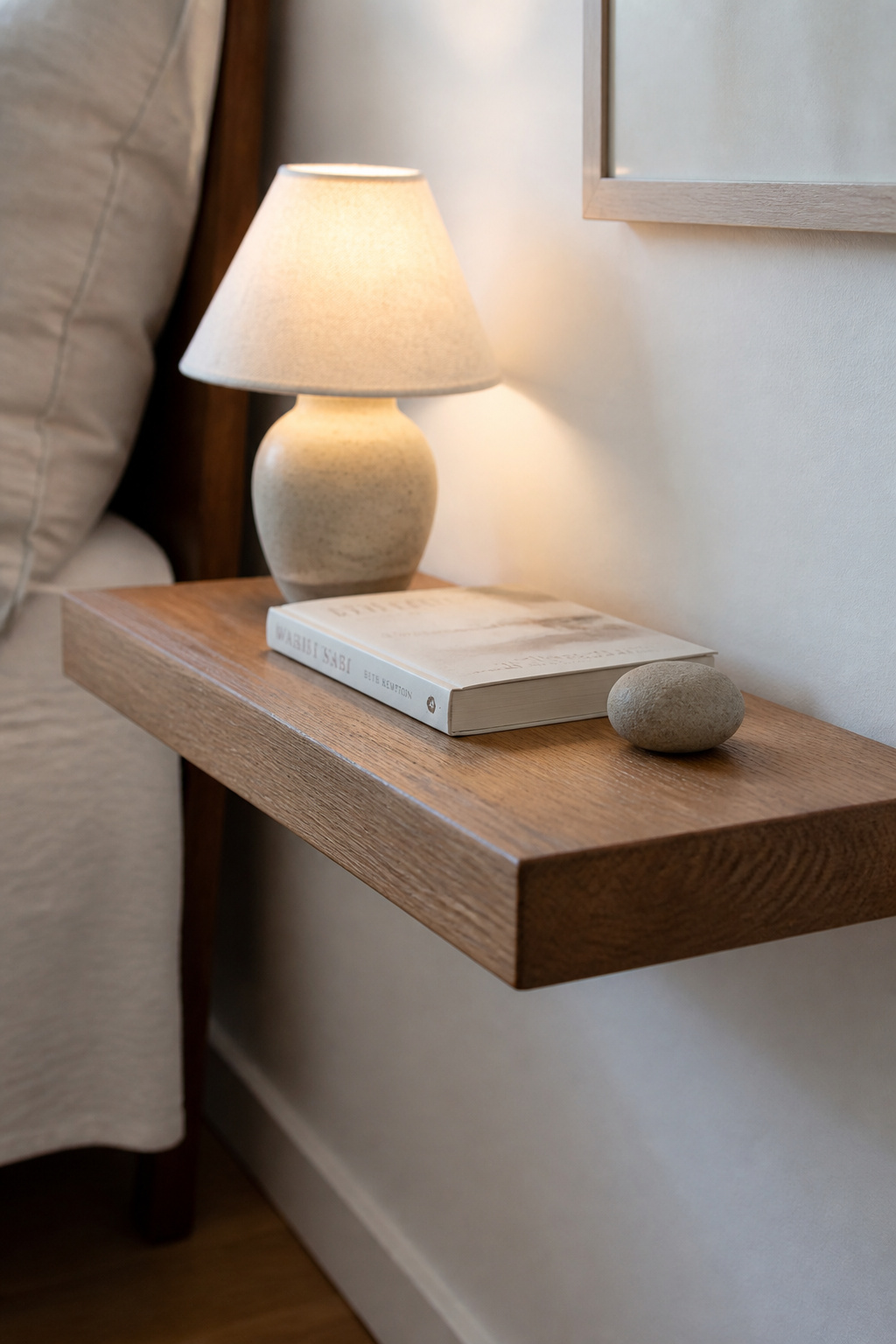
The floating shelf nightstand’s value is precisely its constraint. It won’t let you accumulate. A traditional nightstand has drawers that fill; a floating shelf with a 14 by 10 inch surface has nowhere for things to accumulate beyond what actually belongs there. That constraint is the feature. Removing the visual bulk of a conventional nightstand from the floor plane recovers roughly 5 square feet of visual real estate in an average bedroom.
Hardware and Styling
Invisible floating brackets — steel rods embedded into the shelf and into the wall — create the cleanest look and support 30 to 50 pounds when mounted into studs. String Furniture’s Pocket shelf ($89) and IKEA’s TRANHULT system ($25 to $45) offer this in well-built versions. Keep the shelf to four items: lamp, book, glass, one personal object. Beyond four, the visual rest the shelf was chosen to deliver starts to diminish.
When the Constraint Becomes Natural
After a week of using a floating shelf instead of a nightstand, most people find they naturally stop reaching for things they no longer have room for. The discipline isn’t effortful — it’s simply designed into the surface. That’s the difference between furniture that helps you maintain a minimalist bedroom and furniture that requires constant willpower to keep tidy.
9. A Minimal Writing Desk That Disappears Into the Room
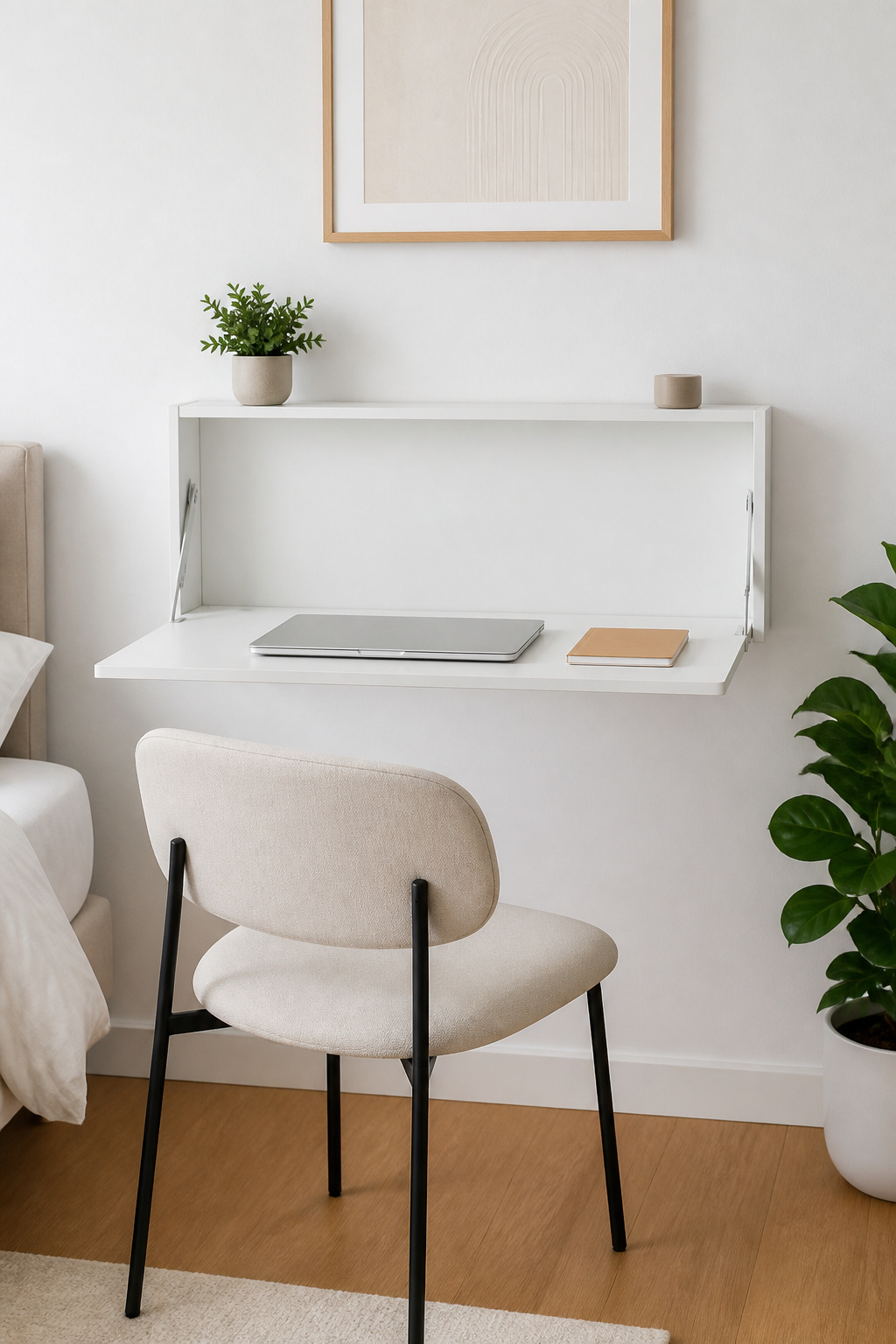
A wall-mounted fold-down desk closed flush contributes zero visual footprint to the bedroom. It is, technically, no furniture at all until the moment you need it — which is the closest minimalist bedroom furniture gets to perfect efficiency. Sleep researchers at Harvard Medical School note that keeping work surfaces visible from the bed can blur the psychological boundary between work and rest. A fold-away desk sidesteps this entirely.
Fixed Versus Fold-Down
String Furniture’s desk section ($340) combines well with their shelf systems for a cohesive wall solution. Freestanding slim desks work when kept under 24 inches deep — anything deeper starts protruding past the dresser’s visual line and crowds the room. A cable tray mounted under the desk surface keeps power strips out of sight; a single flat cable channel runs the cord down the wall invisibly. For the bedroom furniture decor around a desk, a single lamp and no visible cables changes the character of the whole corner.
The Psychological Benefit
Sleep researchers recommend keeping work zones out of the direct sightline from the bed. A fold-down desk that closes completely addresses this without sacrificing the functionality a home-working bedroom needs. The visual cue of a closed surface — a flat panel against the wall — sends the room a clear signal about what mode it’s in.
10. Under-Bed Storage Drawers: Hidden Minimalist Bedroom Furniture
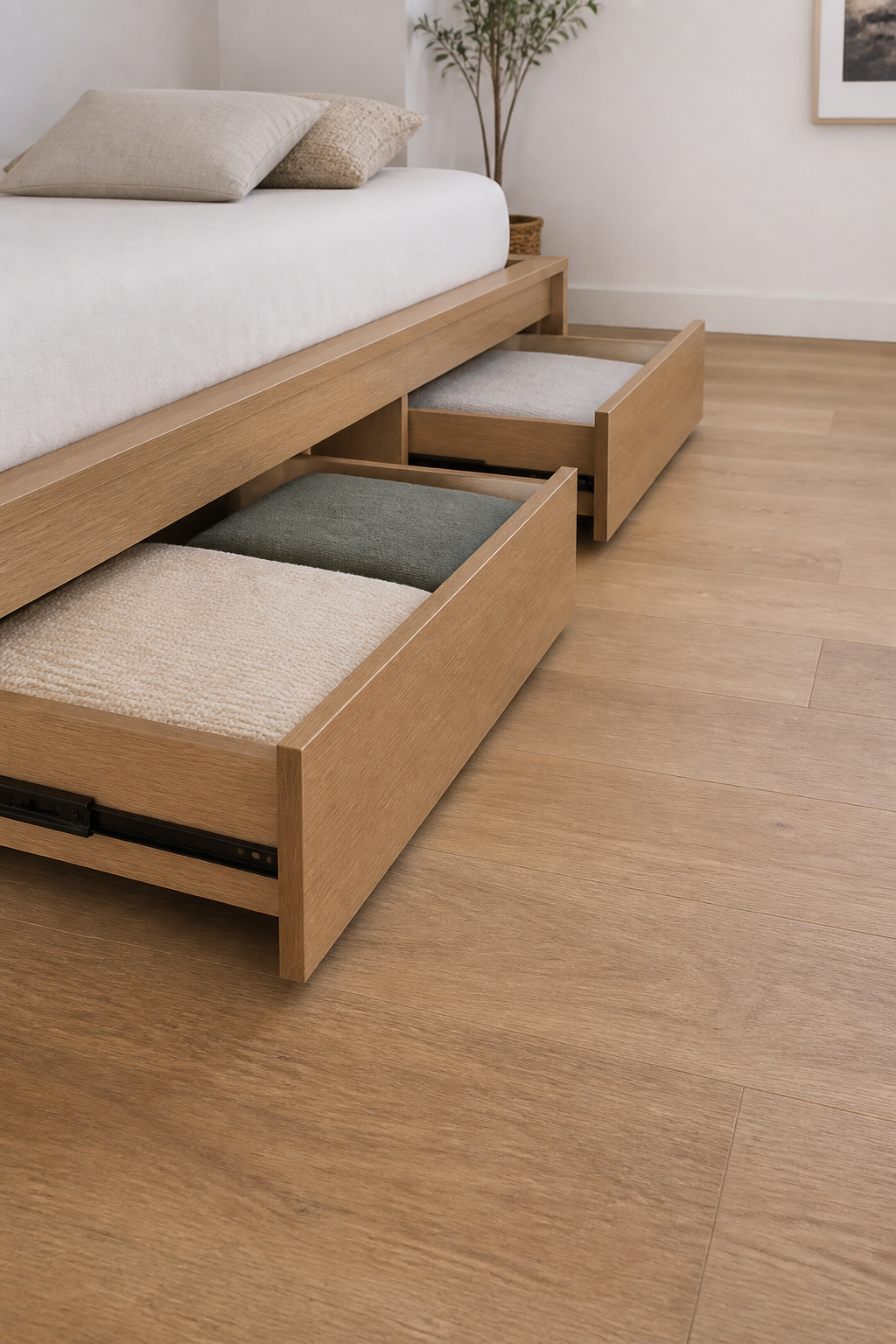
Under-bed storage adds the equivalent of a 12 to 15 cubic foot chest without claiming any floor space. An ottoman-lift platform gives the most total capacity. It’s also the most satisfying to use — lift the whole mattress base and the storage reveals itself cleanly. A drawer-base provides easier daily access. Either way, the floor plane stays clear. You’re not adding furniture to the room. You’re adding storage inside furniture already there.
What Works Best Inside Them
IKEA’s MALM bed with four storage boxes ($399) and Thuma’s storage upgrade ($1,345 total) cover the range of integrated options. You need at least 7 inches of floor-to-frame clearance for a useful drawer depth. Store spare bedding, seasonal clothing, and extra pillows — items accessed seasonally rather than daily. Use flat vacuum storage bags for duvets: they compress bulk by roughly 75% and keep contents dust-free. Avoid shoes and anything with persistent odour directly under a sleeping surface. Also, resist using under-bed space as a general overflow zone — it should hold a finite, defined set of items, not whatever doesn’t fit elsewhere.
11. A Full-Length Mirror Leaning Against the Wall as Quiet Statement
A leaning mirror offers something a wall-mounted version cannot: it stays moveable. Research from the American Institute of Architects found strategic mirror placement can increase perceived room size by up to 40%. That’s not a small effect for zero additional floor space. Position it perpendicular to the main window rather than opposite. You capture the light-reflection benefit. And you avoid the glare that makes a room feel like a changing room.
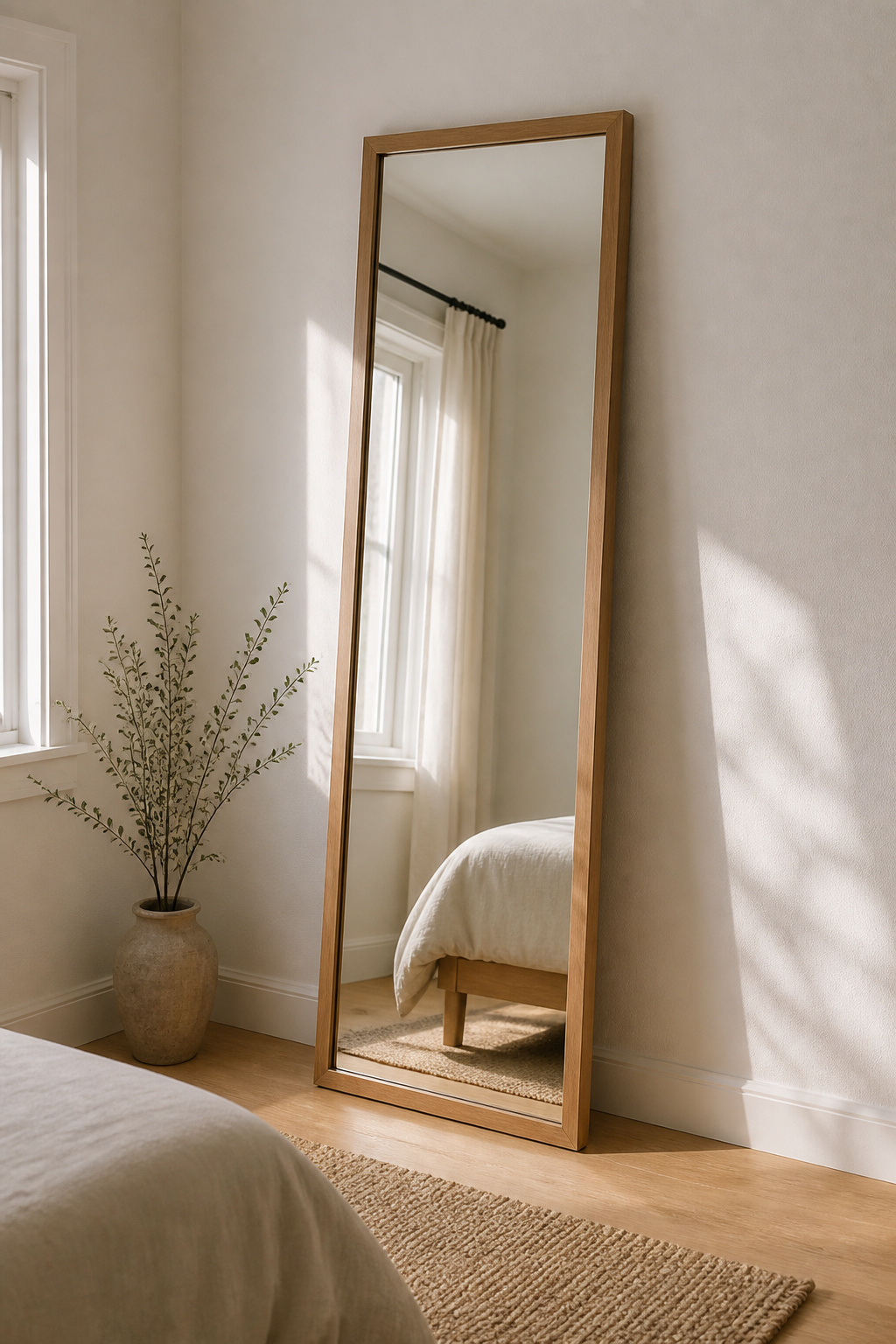
Frame Selection
Natural oak frames work against almost every minimalist bedroom palette. Raw brass adds warmth in rooms already using metallic touches. Avoid silver chrome — it reflects blue-toned light that feels clinical against warm whites. IKEA’s HOVET aluminum mirror ($229 at 77 x 24 inches) is the standard recommendation at this price point. The proportions are honest and the frame reads as intentional from across the room. West Elm’s Arched Leaning Mirror ($349) is a popular alternative — the arched top adds softness that works well in rooms already using straight-lined furniture throughout.
12. Single Upholstered Accent Chair in a Restrained Neutral Tone
One chair in a bedroom is enough. A single upholstered chair in the corner — in boucle, performance linen, or a muted velvet — creates a destination. It says the room is for more than sleeping: it’s for the brief, restorative moments of reading and quiet that a good bedroom should accommodate. Environmental psychologists note that a dedicated reading chair can improve sleep by establishing clear purpose zones. For a white bedroom aesthetic approach, an ivory or oatmeal chair integrates quietly while registering as a considered piece.
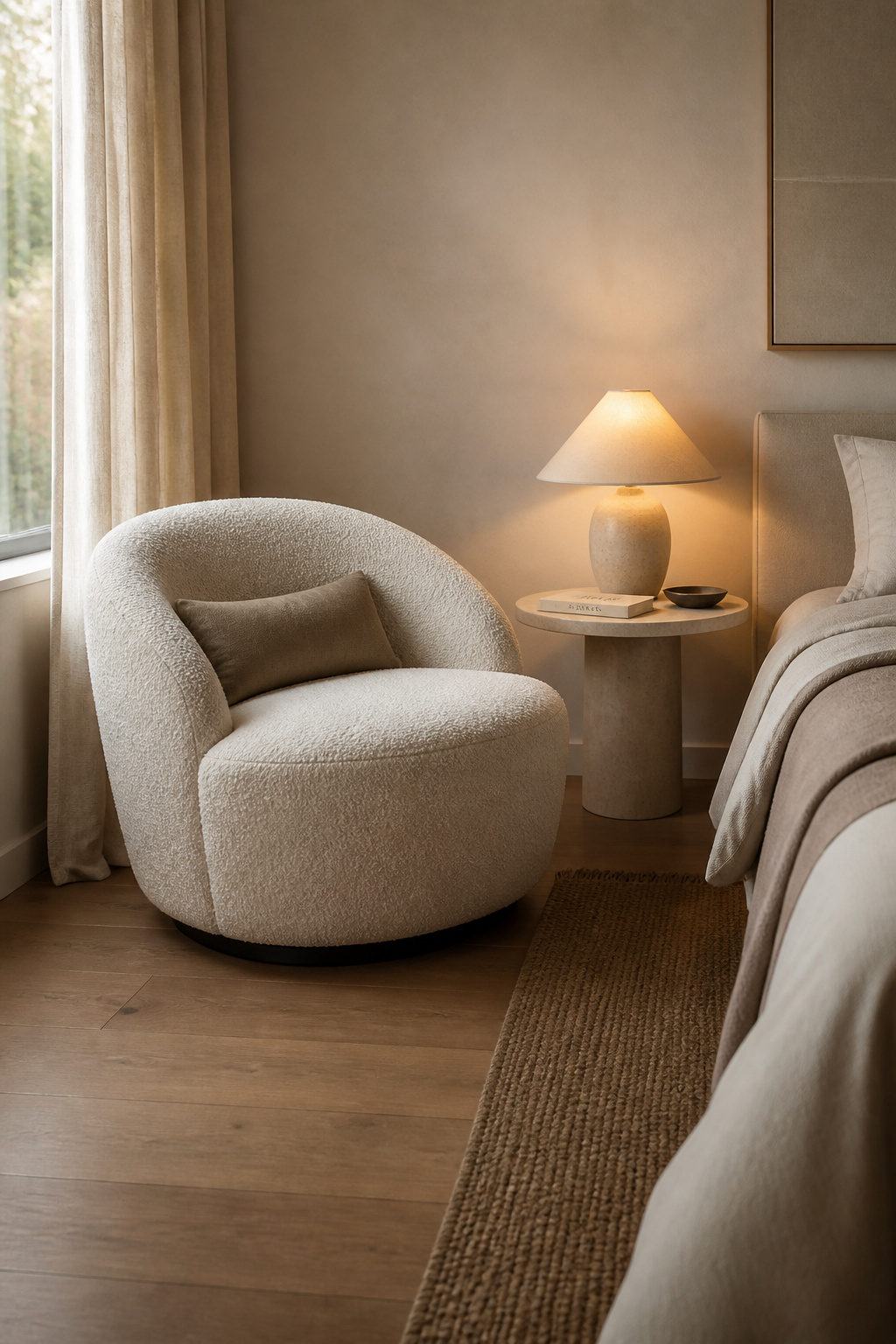
Fabric and Positioning
Performance linen is the most practical bedroom fabric: cleans easily, resists pilling, ages gracefully. Boucle holds its shape but pills slightly over years of heavy use. Position the chair at 30 to 45 degrees in a corner — it takes roughly 18% less visual footprint than the same chair positioned flat against a wall. HAY’s AAC22 ($490) and Article’s Timber ($449) are well-proportioned for this role. Both have a seat depth under 26 inches, which is the upper limit for bedroom chairs that don’t crowd the floor. For smaller rooms, IKEA’s POÄNG in a linen slipcover ($109) is a genuinely practical option. The slipcover washes at 60 degrees — useful for a chair with daily contact.
13. Open-Frame Wardrobe With Canvas Covers for Flexible Storage
An open-frame wardrobe with a canvas cover sits between fitted joinery and a freestanding wardrobe in the minimalist hierarchy. It’s not the cleanest option, but it costs a fraction of a fitted solution and works well in rooms where built-in work isn’t possible. The key variables are cover colour (choose within two tones of the wall) and hem weight (a weighted bottom hem keeps the cover hanging straight in drafts).
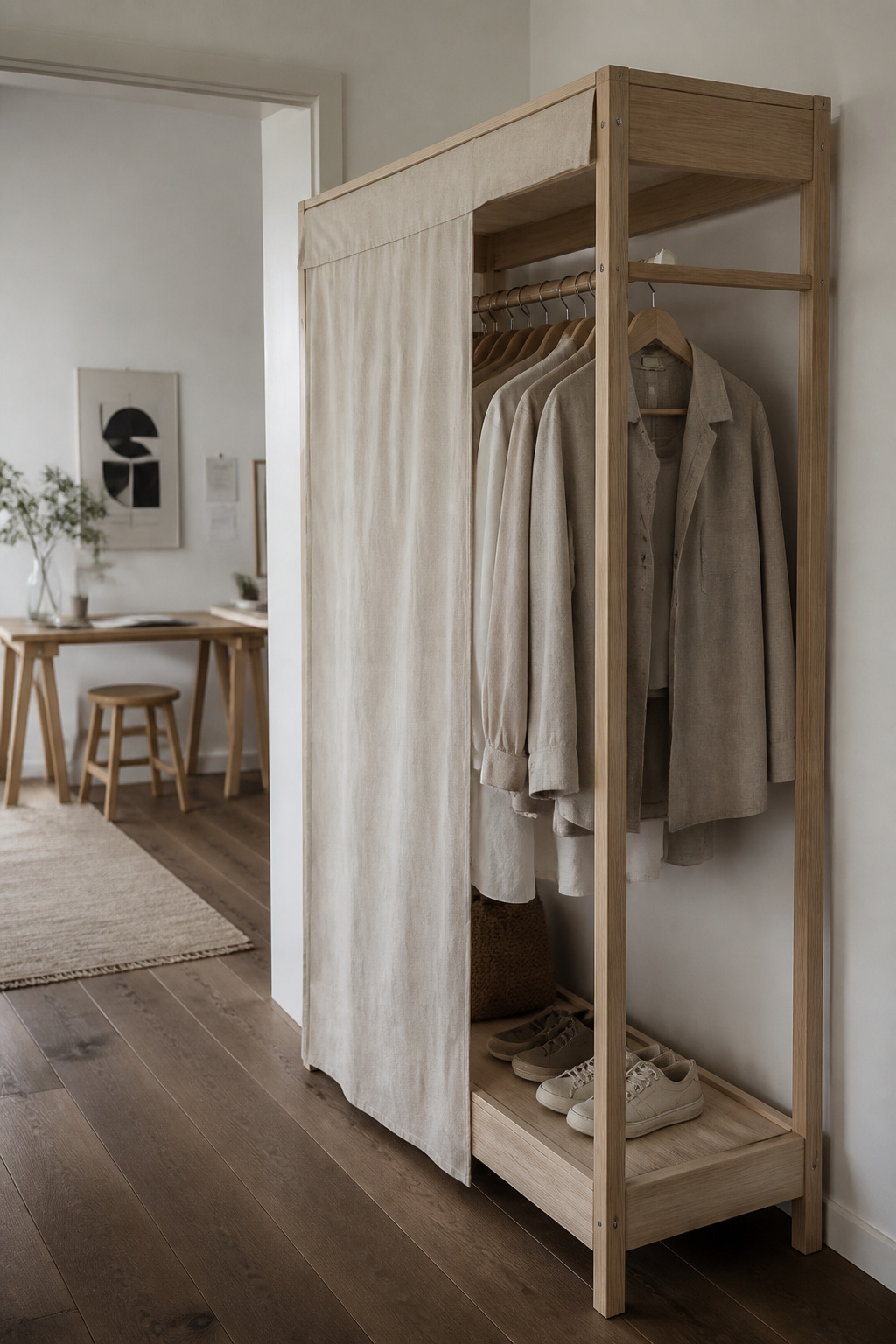
Making It Look Intentional
Commit to a single colour palette inside the wardrobe before installing the cover. A curated row of neutrals visible through a gap reads as deliberate. A jumble of mixed colours reads as a mess with a curtain over it. Yamazaki’s Tower Wardrobe ($189) and HAY’s clothes rack with canvas cover ($230) are both better-designed than the typical option at these prices. The Yamazaki has a steel frame that won’t flex under weight; the HAY version uses a canvas cover with a weighted hem that drapes cleanly. Both outperform cheaper alternatives where the canvas bunches at the sides and the frame wobbles after a few months.
14. Solid Wood Ladder Shelf for Vertical Minimalist Bedroom Display
Vertical furniture is underused in bedrooms because most bedroom storage thinks horizontally — dressers, benches, under-bed drawers. A ladder shelf introduces a vertical line that draws the eye upward, making the ceiling feel higher without adding any horizontal footprint. In a room under 150 square feet, vertical gain at zero floor-footprint cost is hard to argue with.
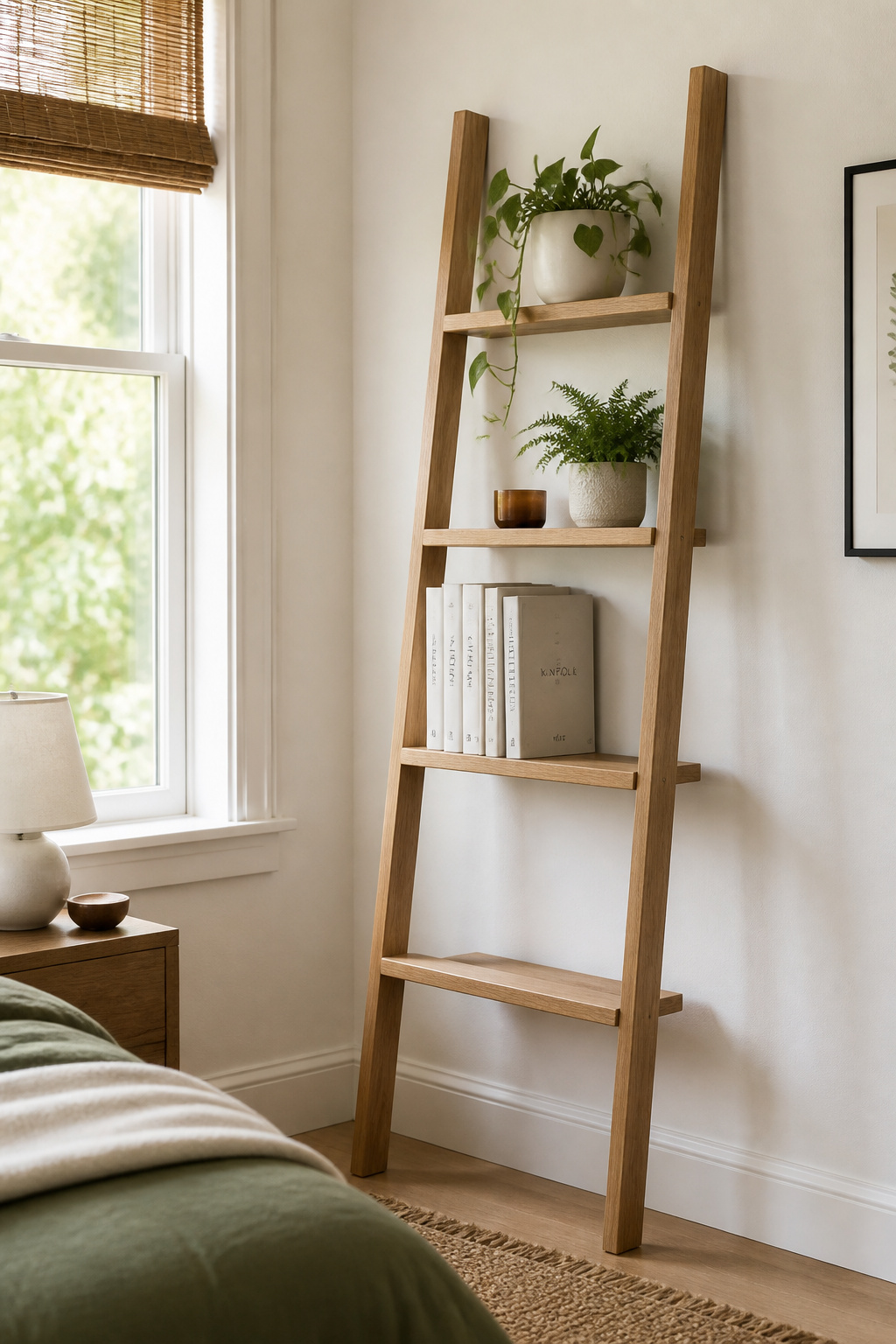
Styling and Wood Selection
Keep the top two rungs light — a small plant, a single ceramic. Use the middle for books stacked horizontally. Leave the bottom two nearly empty: the breathing space at the bottom makes the whole piece read as minimalist bedroom furniture rather than storage overflow. For wood bedroom furniture, solid oak rather than pine is worth the premium — the grain stays consistent as it ages rather than yellowing. West Elm’s Industrial Ladder Shelf ($399) holds up significantly better than IKEA’s LERBERG ($39) over years of daily use, but both serve the purpose.
15. Handleless Cabinet System for a Wall That Reads as One
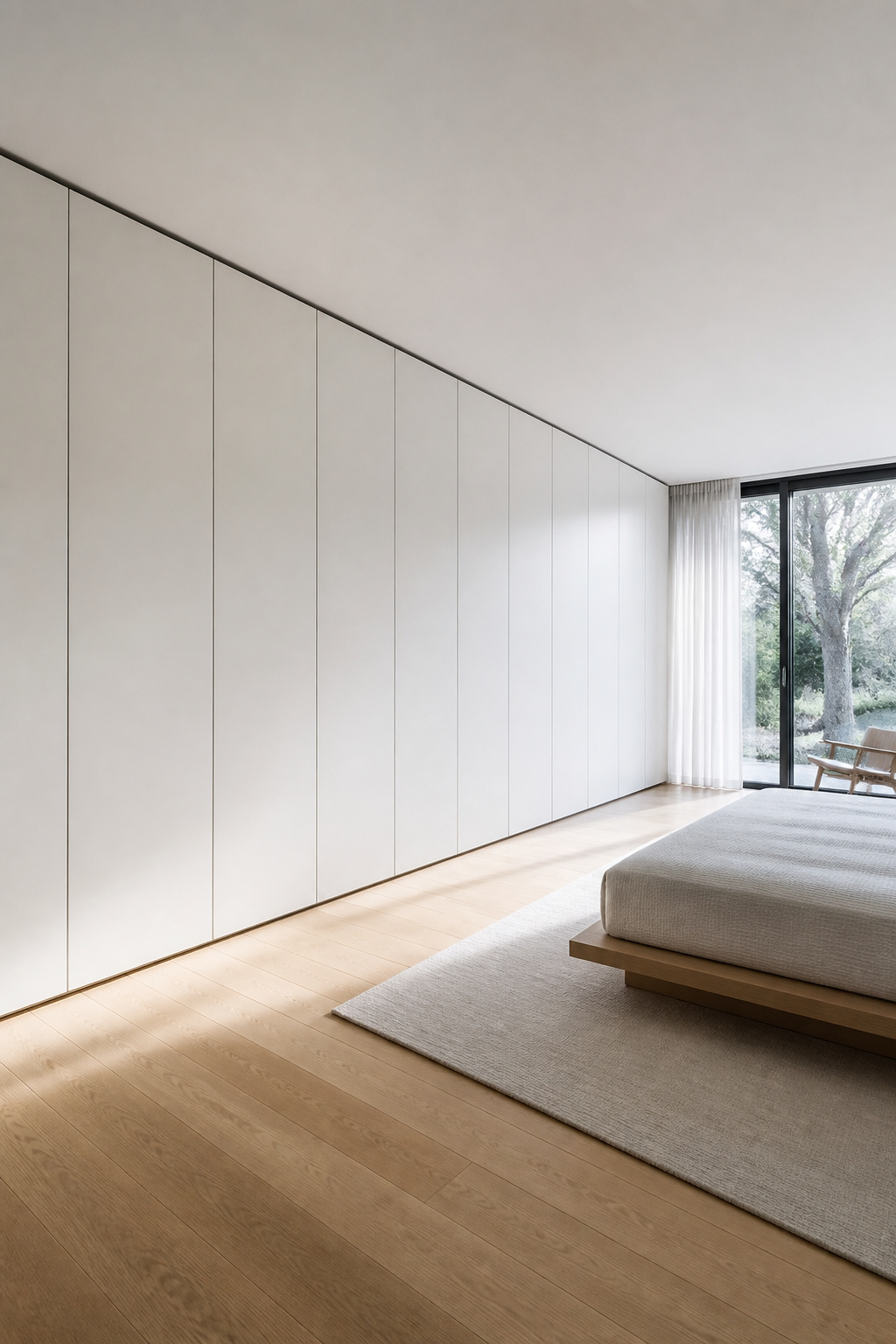
When a wall of cabinets runs corner to corner with flush handleless doors and a consistent finish, it stops reading as furniture and starts reading as architecture. Interior designers report that a continuous cabinet wall can reduce the perceived number of furniture items by up to 60%. This holds even when actual storage volume is the same or greater. That perceptual shift is the whole point of minimalist bedroom furniture at its most resolved.
Cost Reality
IKEA PAX with Grimo handleless doors costs $300 to $800 depending on configuration. A professional fitted system from Hammonds starts at $2,800. The practical difference is precision — custom joinery is fitted to the millimetre. Paint the PAX frame to match the wall, add a caulked cornice board at the top, and you achieve 80% of the custom result at 30% of the cost. Push-to-open Blum Tip-On hinges run $8 to $15 per door and are the detail that most convincingly eliminates every handle shadow from the cabinet face.
16. Stone or Travertine Side Table for Texture Without Pattern
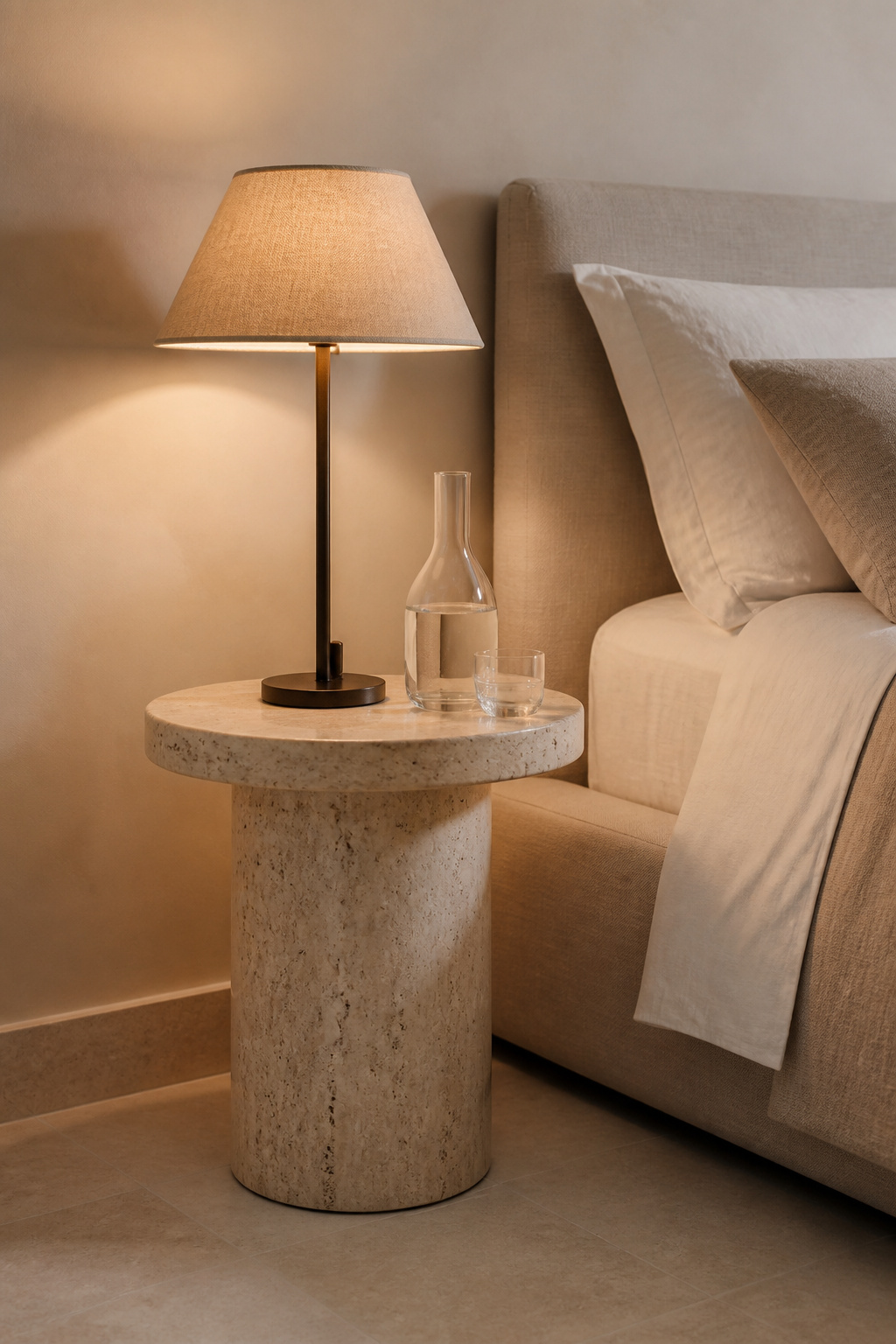
Travertine provides texture at a scale that reads across the room without introducing pattern — a key distinction for minimalist spaces. Textured but not patterned: visual complexity that reads as calm rather than busy. A 2023 Houzz survey found that 71% of respondents cited natural stone surfaces as the material choice that most reliably communicates calm, grounded bedroom aesthetics. That’s a significant consensus.
Care and Alternatives
Seal natural travertine with a penetrating sealer on arrival — one coat protects for 12 to 18 months. Engineered stone (quartz) is more practical: non-porous, scratch-resistant, no sealing required, though it reads as slightly less organic. Pair any stone table with a ceramic or linen-shade lamp and nothing else. The material combination — stone base, ceramic body, fabric shade — uses three natural materials without a single manufactured element. That coherence makes a bedside vignette feel considered rather than assembled. H&M Home’s Stone Side Table ($149) is the most accessible option; Normann Copenhagen’s Onyx Table ($890) is the most refined.
17. A Low Linen Ottoman as Dual-Purpose Minimalist Bedroom Furniture
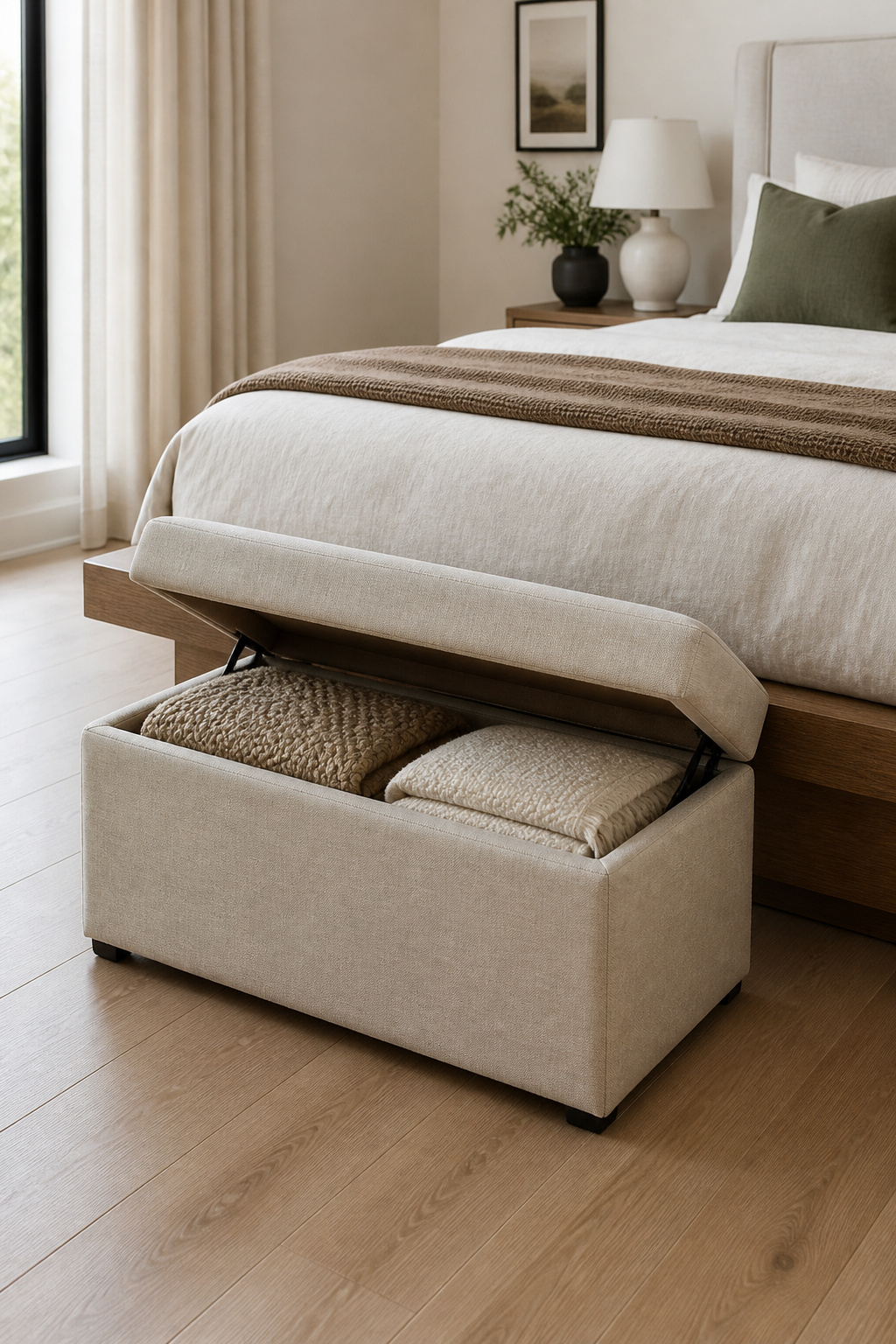
The ottoman earns its floor space through daily use rather than occasional access. Use it for the things you remove every evening — glasses, phone, the book you were reading — rather than for seasonal storage. That daily interaction is what separates a useful piece from a placeholder that happens to hold blankets twice a year. When minimalist bedroom furniture earns its keep every single evening, it stays.
Practical Considerations
Storage ottomans typically hold 20 to 30 litres — enough for spare pillows and extra blankets. West Elm’s Haven storage ottoman ($449) and CB2’s Avec version ($399) both offer linen finishes that hold up to daily use. The CB2 version has a removable, washable cover — an underappreciated detail for a piece with direct contact every day. Choose the ottoman within two tones of the headboard fabric; a matching material reads as intentional, a contrasting one reads as an afterthought.
18. The Curated Edit: Choosing Only What the Room Genuinely Needs
Every minimalist bedroom furniture decision eventually comes back to this: what actually belongs here? Dr. Catherine Roster’s research at the University of New Mexico found that intentional editing of possessions produced longer-lasting improvements in well-being and life satisfaction. Merely organising them did not. Editing is not a one-time event. It’s a practice that runs alongside the original decisions about what to bring into the room.
The One-In-One-Out Rule
Before any new piece arrives, decide what leaves. Before the new lamp is unboxed, the old one goes. This isn’t deprivation — it’s maintaining the equilibrium that makes the room work. The furniture relationships that create visual rest — bed and nightstand, dresser and mirror, chair and side table — are calibrated. Add to one without removing from another, and the calibration shifts in a way that’s immediately perceptible, even if you can’t name what changed.
The Removal Test
Remove one piece temporarily and see if the room functions without it. If it does, the piece was surplus. If the room feels immediately incomplete, the piece was doing real work. Apply this before buying anything new — the editing pass usually reveals the room needs something removed more than it needs something added.
Building Your Minimalist Bedroom Furniture Set With Intention
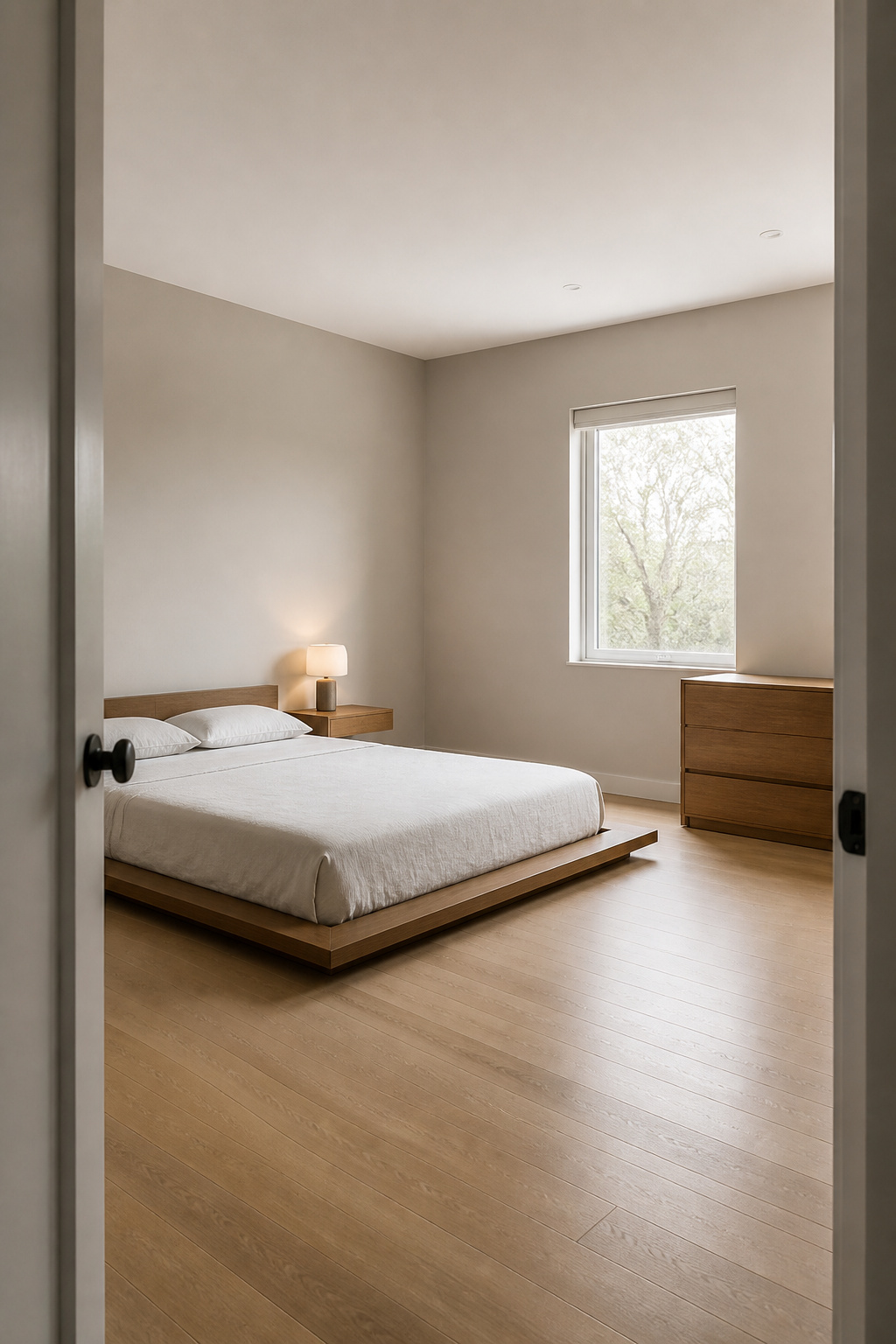
The most effective minimalist bedrooms are edited, not purchased. They start with what’s already there and remove before they add. They buy one piece, live with it for a month, and then decide what comes next. Furniture relationships take time to reveal themselves — the dresser that seemed necessary during planning sometimes turns out to be redundant once the built-in wardrobe is in. The accent chair that seemed indulgent becomes the piece you use every morning.
Prioritise the bed first: it sets the scale and register for everything else. Then the storage — wardrobe, dresser, or cabinet system — that hides what needs hiding. Then the bedside arrangement, because what you see first and last every day matters most. Everything else arrives gradually, one piece at a time, as each earns its place.
Where to Invest and Where to Save
Invest in the bed frame and any fitted or built-in storage: these have the highest daily impact and the greatest architectural effect on the room. Save on accent pieces — the ladder shelf, the bench, the ottoman — where a mid-range option performs nearly identically to an expensive one. And save on the mirror, where proportions and finish matter far more than the brand on the back.
A well-chosen set of minimalist bedroom furniture doesn’t declare itself. It recedes. The room feels calm and clear. The surfaces stay that way. The furniture is simply how the room is — not a collection of objects that happen to be in it. For a deeper look at how these principles apply across the full room, the minimalist bedroom design guide covers the complete picture from floor to ceiling.