
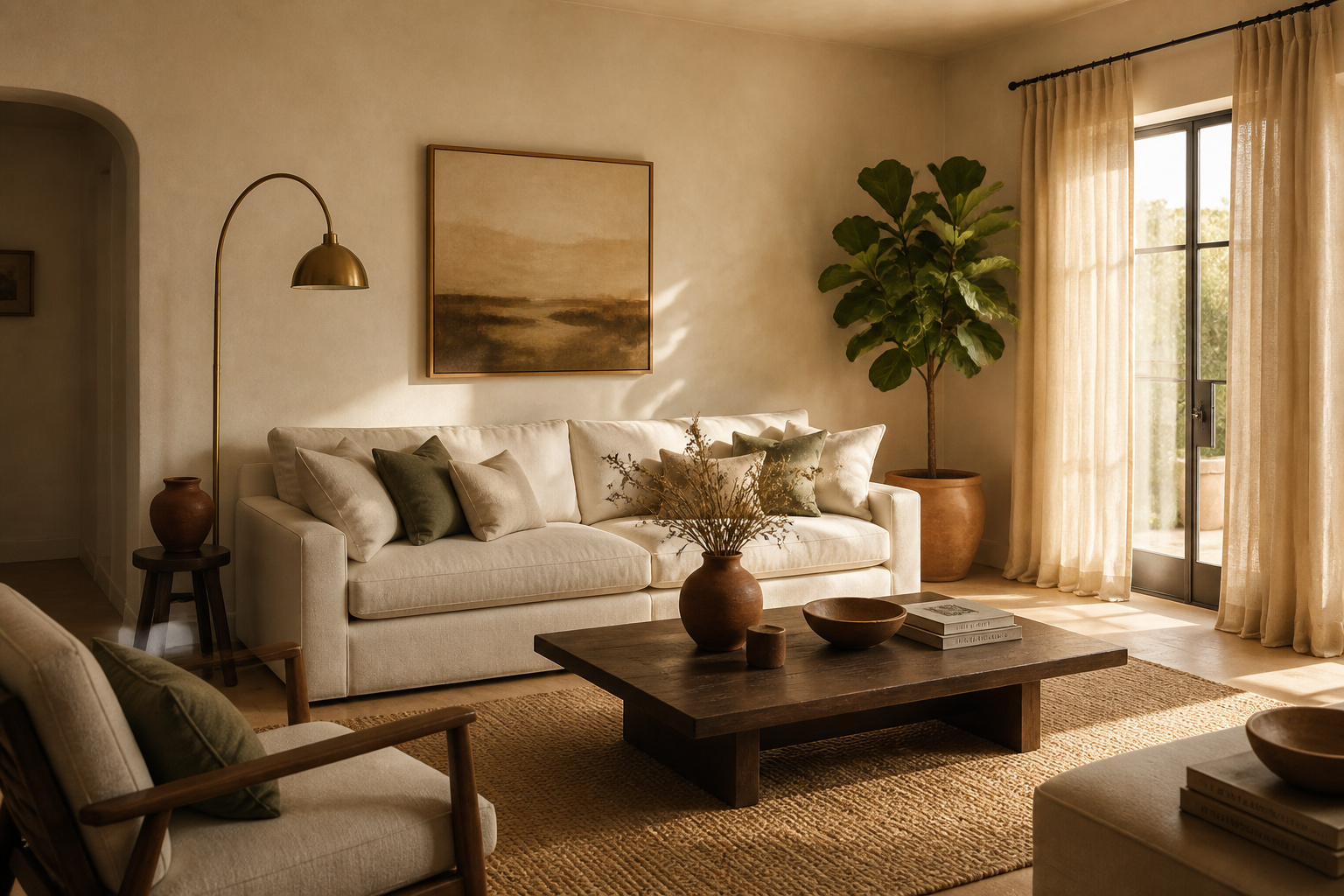

Beige gets a bad reputation. For years it was shorthand for uninspired, a colour you chose when you had no idea what you actually wanted. But spend time in a well-designed beige living room and you quickly understand what those bland hotel lobbies got wrong. Real warmth, layered texture, and natural materials change everything. Beige is not boring. Beige done right is one of the most restorative colour palettes available to us, and the science backs this up. Research in environmental psychology links warm neutral tones to lowered cortisol levels. People feel a greater sense of control in these spaces, too.
The key difference between a beige living room that calms and one that merely exists is intention. These 16 beige living room ideas cover the full range — from sofa choice and wall treatment to the small details that make a space feel curated. So whatever your starting point with these beige living room ideas, you’ll find something useful here.
1. Natural Linen Sofa as the Anchor of a Beige Living Room
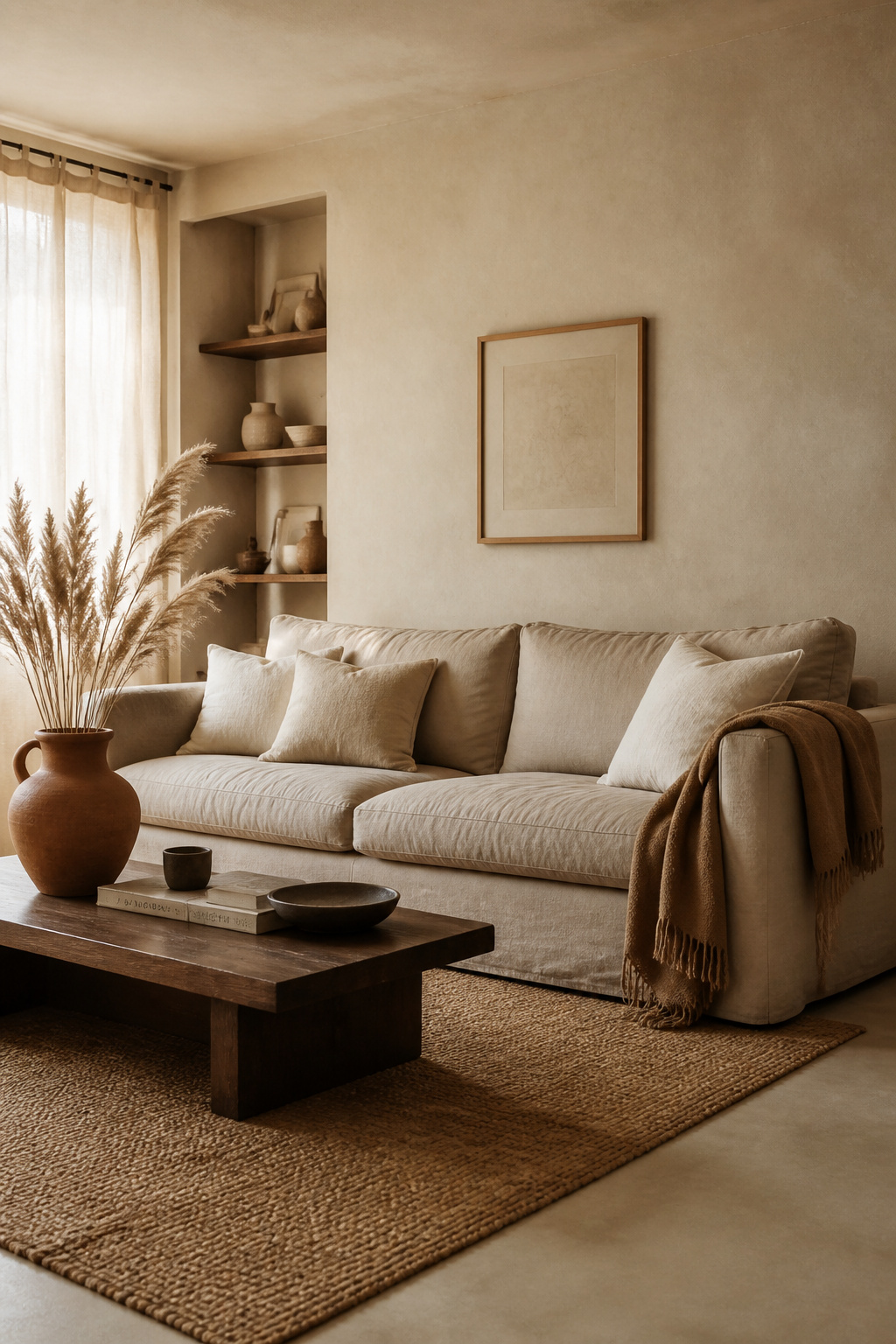
A beige living room lives or dies by its sofa choice. No fabric serves this palette better than natural linen. Linen has a particular quality of warm neutrality. It reads slightly warm in sunlight and slightly cool in the evening. That shift keeps a neutral room from feeling one-dimensional. It also creases beautifully. That sounds like a flaw, but it’s what gives a linen sofa its lived-in, approachable quality.
Why Linen Works Better Than Cotton or Velvet Here
Cotton softens a space but lacks linen’s subtle texture variation, which means it reads flatter in a monochromatic scheme. Velvet, while beautiful, introduces too much sheen and too much visual weight for a palette built around quiet. Linen holds the middle ground — tactile enough to add depth, neutral enough to let everything around it breathe.
Choosing the Right Weave and Cushion Configuration
For beige living room ideas involving a linen sofa, look for Belgian or European linen in a medium weave weight. Something between 200–300 gsm is ideal. Heavier linens feel upholstered and substantial; lighter ones can read flimsy. Belgian brands like Ethnicraft or Sofá & Co offer options in this range from around $1,200 for a two-seater. If budget is a concern, IKEA’s UPPLAND range starts under $600. Pottery Barn’s Belgian Track Arm sofa performs well under $1,000.
For cushions, resist the urge to go all-matching. Mix loose back cushions in two or three tones — ivory, warm oat, and a single deeper camel. This creates a layered feel without looking over-styled.
Maintaining a Linen Sofa in a High-Use Room
Linen is more forgiving than people expect. Most woven linen covers are removable and machine washable on a cool cycle. However, slipcovers work better than fixed upholstery if you have children or pets. The cover washes regularly without any worry about the internal structure. Spot treat stains with cold water and mild dish soap within the first few minutes. Linen’s open weave means liquid sits briefly on the surface before absorbing. That gives you a reasonable window.
2. Layered Bouclé Accent Chairs for Depth and Tactile Softness
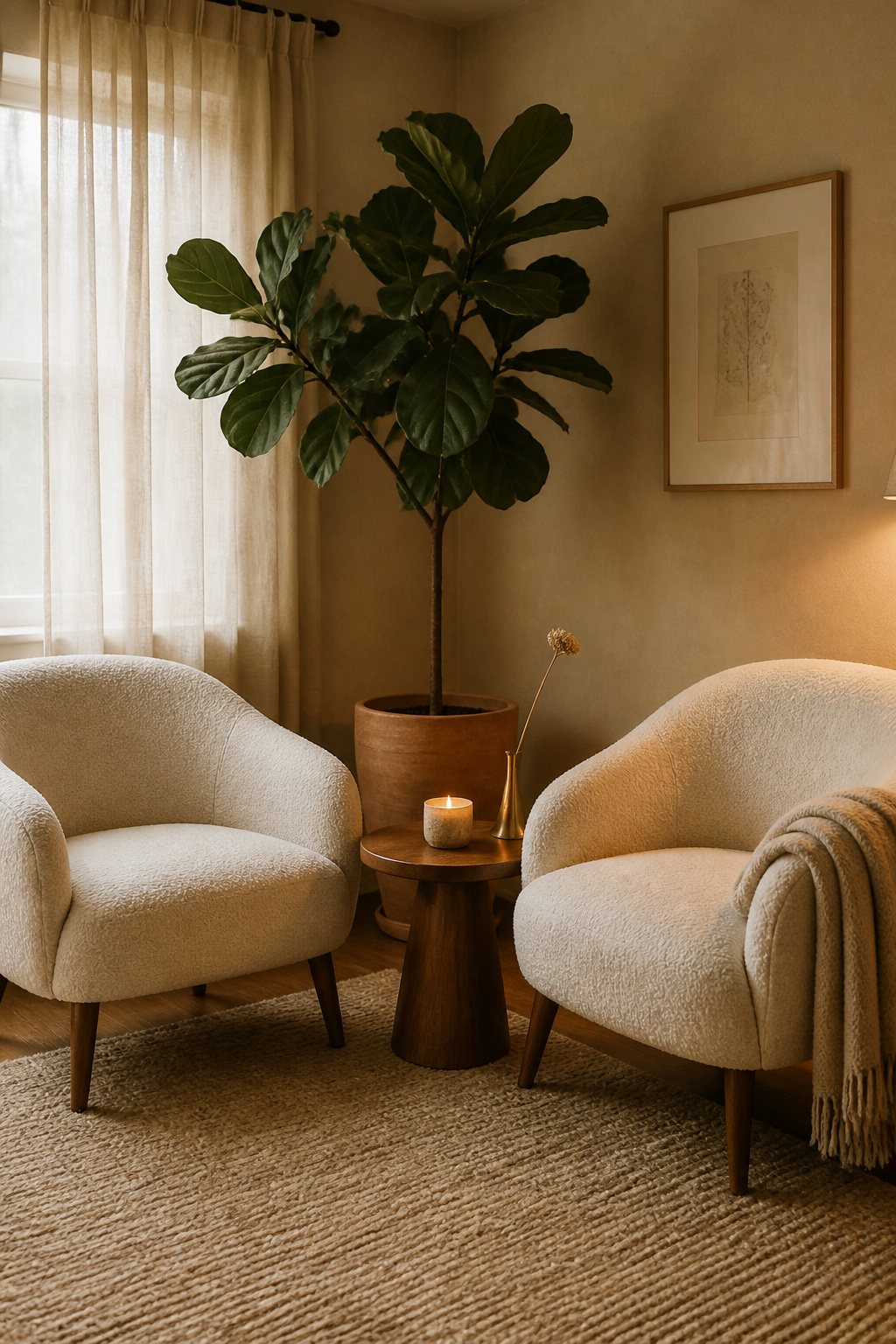
If the linen sofa is the calm of your beige living room, a pair of bouclé accent chairs is where it gets interesting. Bouclé became ubiquitous around 2021, and it remains one of the best texture choices for neutral rooms. It reads relaxed or sophisticated depending on the chair shape it covers — a useful quality in a beige space. It catches light differently across its looped surface, creating tonal variation without introducing a second colour.
The Tactile Appeal of Bouclé in a Neutral Room
The looped construction means bouclé looks different in different lights. Near a lamp it picks up warmth. In natural daylight it reads almost silvery. So it adds visual interest to a beige scheme without relying on colour contrast. It also photographs beautifully, which matters if you’re designing a room you’ll want to share.
Placement Strategies That Actually Work
The most common placement mistake with accent chairs: placing them too far from the sofa. For a cohesive result, pull chairs to within 6–8 feet of the sofa. Angle them inward at roughly 45 degrees. This creates the sense of a genuine seating zone rather than furniture floating in space. If the room is large enough, a pair of bouclé chairs flanking a reading lamp creates a secondary zone. This makes the room feel generously proportioned.
The Best Bouclé Chair Options Across Price Points
At the accessible end, IKEA’s ÄSPERÖD chair comes in warm beige-grey bouclé for around $250. It’s surprisingly well-made. The Anthropologie Lorne chair ($700–$900) offers a more refined silhouette with tapered legs. For something more investment-level, the Boucle Chair from West Elm’s Silhouette range ($900–$1,400) has excellent cushion density and holds its shape well over time. CB2’s Gwyneth chair at around $1,100 has a modern curved back that works well in contemporary beige rooms.
3. Walnut Wood Accents to Warm Up Neutral Living Room Ideas
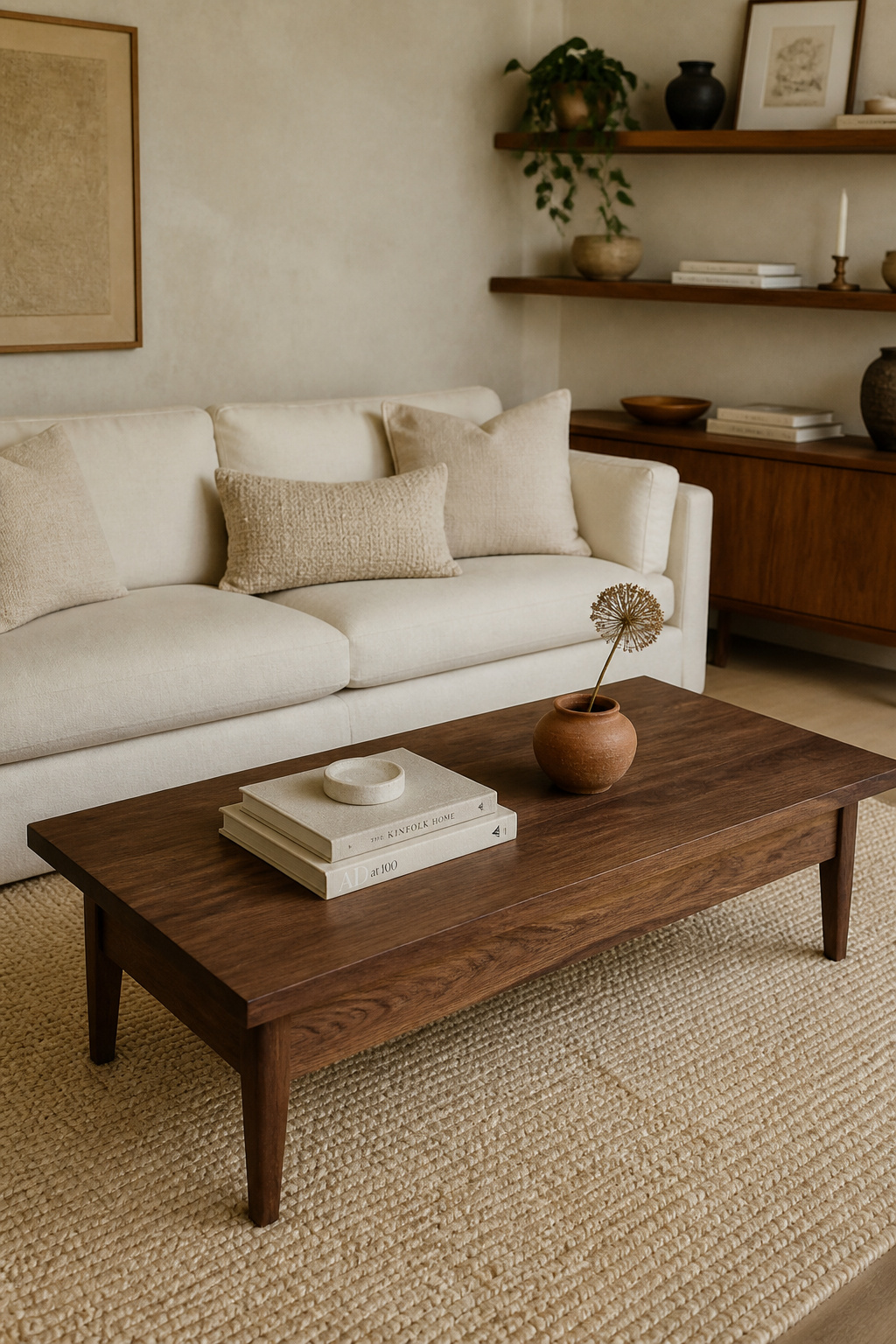
One of the most reliable fixes for a beige living room that feels flat is the addition of walnut wood. Lighter woods — ash, pine, birch — can read almost cool against a beige palette. Walnut brings a richness and depth that makes everything around it feel more considered. The reddish-brown undertones in walnut warm up ivory and cream tones naturally.
Where Walnut Makes the Biggest Difference
In neutral living room ideas, walnut works hardest in the largest horizontal surface. That’s usually the coffee table. A walnut coffee table at the centre acts as a visual anchor. It provides contrast that stops the room looking monochromatic. Secondary placements compound the effect. A pair of walnut side tables, a media console, or walnut shelving all reinforce the material story.
Solid Walnut vs. Walnut Veneer
If budget allows, solid walnut is worth the investment. It can be sanded and re-oiled when scratched, and the grain runs consistently through the piece. A good walnut veneer on solid wood substrate (not MDF) performs almost as well. It costs 30–50% less. What to avoid: walnut-finish laminates with a printed wood grain on synthetic surfaces. These look convincing in photos but read as flat in person. They lack the natural grain variation and lustre that make real walnut work.
Caring for Walnut in a Light-Filled Room
Direct sunlight will fade walnut over time. Position your walnut pieces away from the main south or west-facing windows, or use sheer curtains to filter UV. Treat solid walnut with food-safe oil — Danish oil or Howard Feed-N-Wax — every six to twelve months. This keeps the grain open and the colour rich rather than greying.
For a look at how to bring vintage and antique wood finds into a living room scheme, the Living Room Styling: Curate Your Home with Vintage Finds guide has useful sourcing advice.
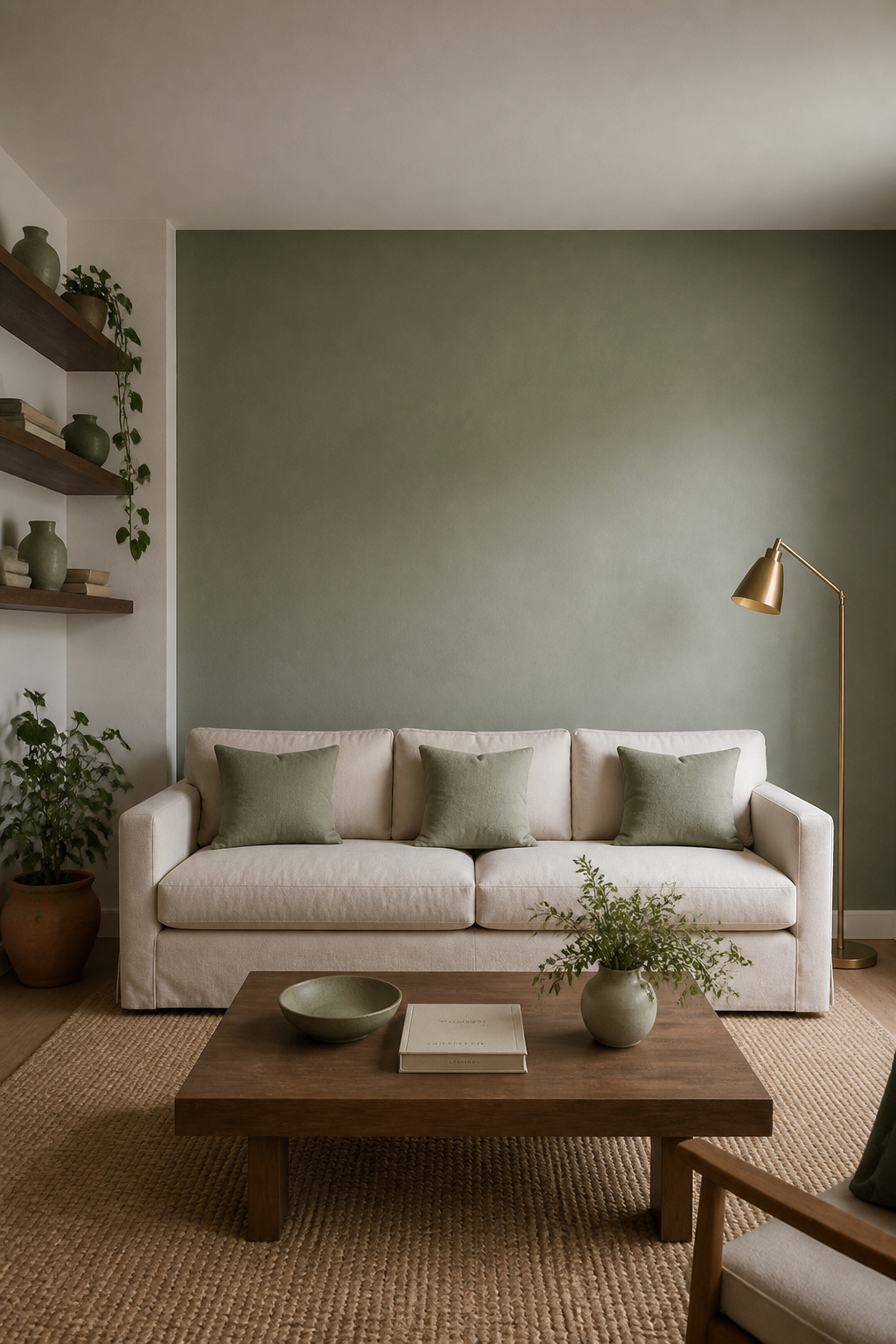
4. Sage Green Paired With Beige for a Living Room That Breathes
Of all the accent colours that work alongside beige, sage green comes closest to perfect. It’s close enough tonally to feel harmonious, yet different enough to give the eye somewhere to rest. There’s also real science here. Both beige and sage green sit in the mid-range of the visible spectrum. Neither triggers the mild arousal response associated with warmer or cooler colour extremes. That’s why the combination feels so calm.
Introducing Sage Without Overcommitting
The least risky entry point for sage is cushions. Two or three sage linen or velvet cushions cost under $100. You can swap them out if the pairing doesn’t feel right. If the test works, the next step is a throw or a small ceramic piece. Only after you’re confident in the pairing should you consider a painted wall. One sage accent wall behind the sofa can transform the feel of the room. It’s a big move, but it works.
The Right Shade of Sage
Sage varies considerably between paint brands and in different light conditions. In a beige room, choose a sage with clear grey undertones rather than yellow ones. Yellow-toned sages read as olive and fight the warmth of beige. Farrow & Ball’s Mizzle (No.266) and Sage (No.80) both work well in beige living room ideas. Benjamin Moore’s Salamander and Hillside Green are slightly more accessible price-wise and read beautifully in warm artificial light. Test any paint in both daylight and evening light before committing. Sage shifts more than most colours.
5. Terracotta Pottery and Earthy Accent Pieces for Grounding
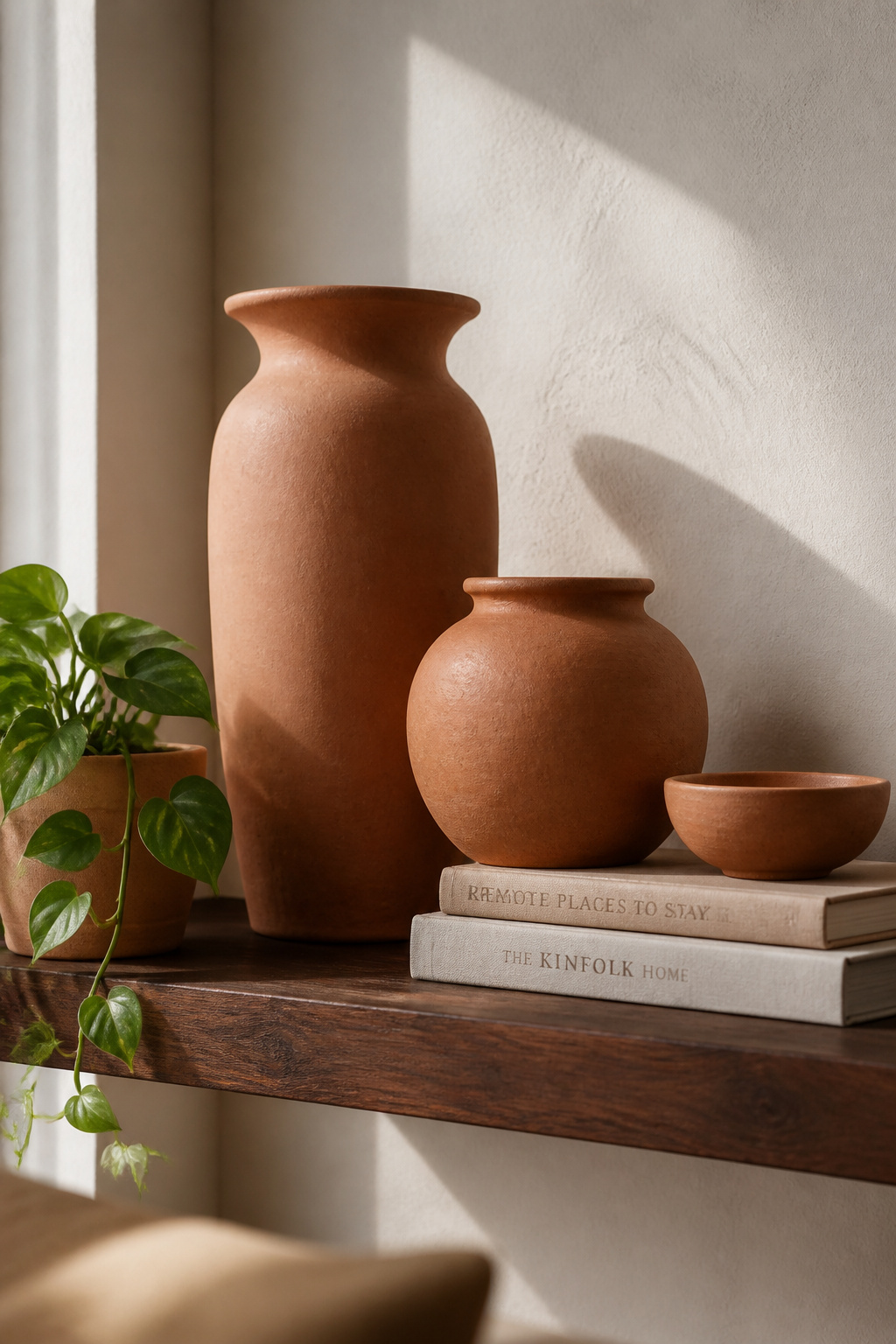
Beige living rooms can drift toward feeling airy to the point of weightlessness. Beautiful, yes — but without grounding, a room can feel hard to actually live in. Terracotta is the most effective antidote. Its warm, iron-rich tones are close enough to beige to feel harmonious. But they’re distinct enough to add visual weight. A grouping of terracotta vessels anchors the eye at a fixed point. Cushions and throws can’t do that.
The Proportion Rule for Grouped Objects
When grouping terracotta vessels, use odd numbers. Three or five pieces read more naturally than two or four, which tend to look deliberately paired. Within the group, vary height significantly. One tall piece (30cm+), one mid-height (15–20cm), and one low wide piece creates a rhythm that feels composed. Also vary the width. A tall narrow vessel with a round belly pot and a shallow bowl suggests a collected quality rather than a matched set.
Where to Source Good Terracotta for a Beige Room
Mass-produced terracotta from home goods stores works well. The slight imperfections in factory-made pots actually add to their appeal in beige living room ideas. H&M Home, TJ Maxx, and Target regularly stock affordable options in the $12–$40 range. If you want handmade quality, Etsy artisans in Morocco, Portugal, and Spain produce genuine wheel-thrown pieces for $30–$150. Look for sellers with visible throwing marks and glaze variations — these details make the difference between something that reads as decorative and something that reads as genuinely crafted.
6. Warm Metallic Finishes to Lift Your Beige Living Room
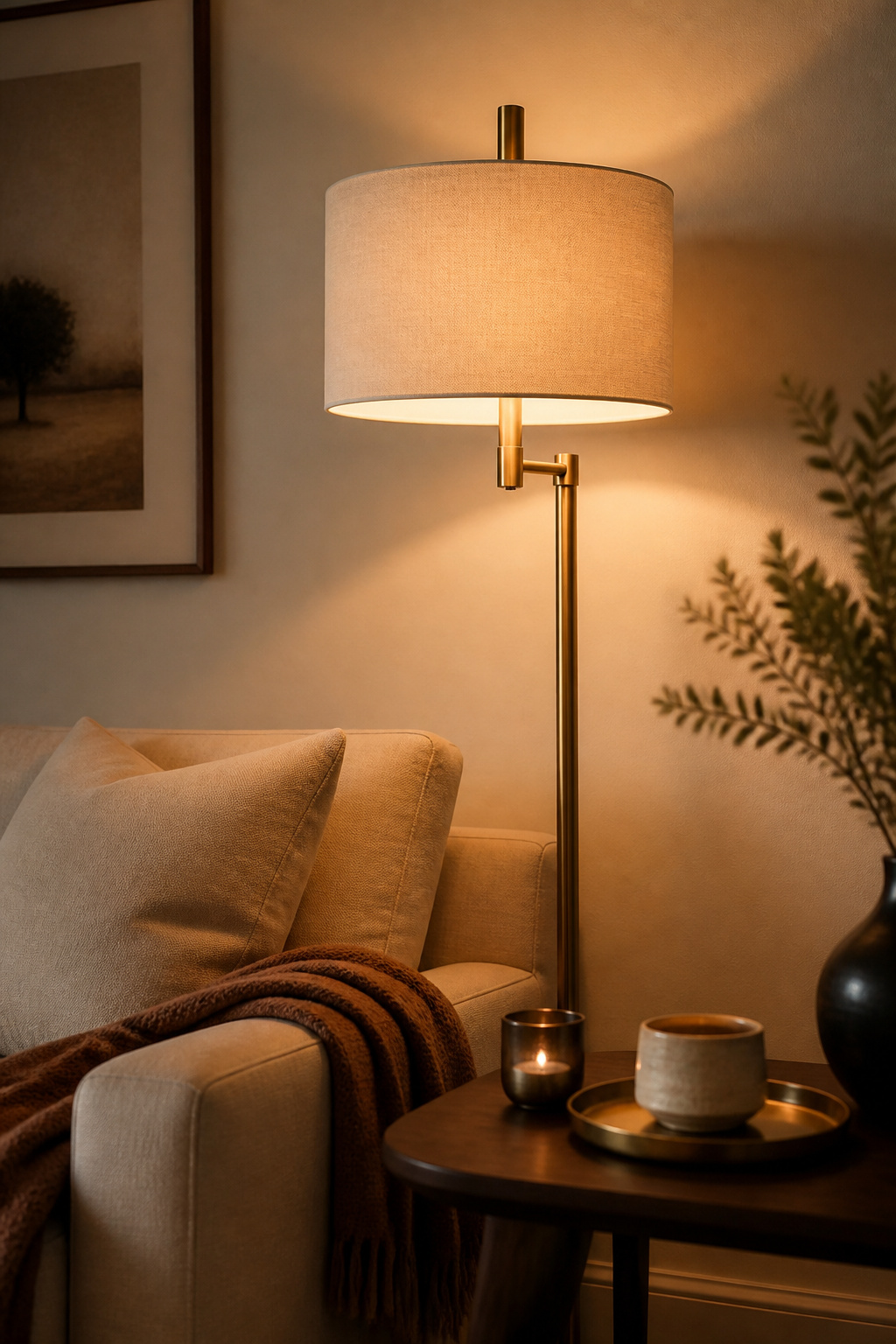
A beige living room without metallic elements risks feeling flat. The right metallic touches add warmth and occasional sparkle. The key is using them sparingly. The critical word here is warm. Cool metals like polished chrome or bright silver sit on the blue-grey end of the spectrum. They actively work against a beige palette. Warm metals — brushed brass, aged bronze, unlacquered copper — share beige’s warm undertones and amplify them.
Bronze, Brushed Gold, or Unlacquered Brass — Which to Choose
Each warm metal has a slightly different character. Brushed gold reads modern and clean — good for contemporary beige rooms. Unlacquered brass starts bright but develops a patina over months, becoming darker and more character-rich. It suits organic or vintage-leaning beige living room ideas best. Aged bronze is the darkest of the three, reads most traditional, and pairs especially well with deep walnut tones. As a general rule, pick one metal family and use it consistently across all hardware, fixtures, and decorative objects. Mixing warm metals can work, but it requires careful curation. It’s hard to get right without experience.
Where Metallic Finishes Work Hardest
The floor lamp is the single most impactful metallic investment in a beige living room. A brass or bronze floor lamp behind the sofa creates a warm pool of light. The metallic base also contributes to the room’s material story throughout the day. After the floor lamp, focus on hardware. Picture rail hooks, curtain rods, light switch covers — these small decisions either make a room cohesive or quietly undermine it.
How Much Metal Is Enough
A useful rule: metallic surfaces should account for roughly 5–8% of the room’s visible decorative surfaces. Too little and the room feels dull; too much and it starts to look like a showroom. For most living rooms this means one large piece (the floor lamp or a mirror), two to three medium pieces (side table, tray, candleholder), and a handful of small hardware touches.
7. A Statement Rattan Coffee Table as the Room’s Centrepiece
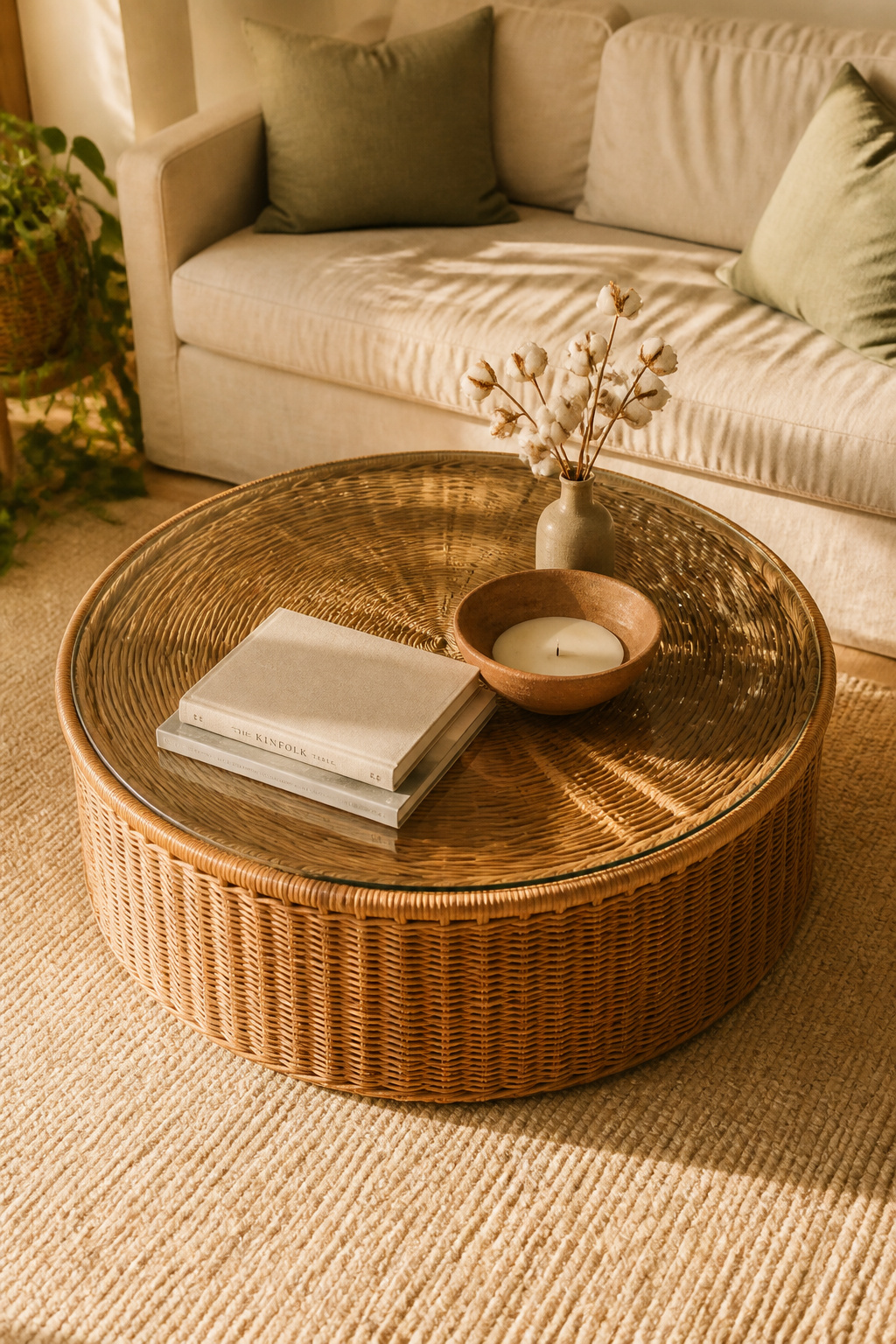
Rattan has earned its place as one of the most versatile natural materials in interior design. Nowhere does it work better than in a beige living room. Its warm, honey tones sit harmoniously within the beige palette. The open-weave construction keeps it visually light — it doesn’t dominate the room the way a solid wood or glass table can. There’s also something about rattan’s tactile quality that reinforces the warmth-without-weight feeling all good beige living room ideas aim for.
Round vs. Rectangular Rattan Tables
Round rattan coffee tables work better in smaller rooms or square layouts. They soften the geometry and allow easier movement. Rectangular rattan tables suit longer, more formal rooms. The coffee table should be roughly two-thirds the length of the sofa. That proportion looks balanced.
The Best Rattan Coffee Table Options
World Market (Cost Plus) offers reliable rattan options in the $200–$350 range that perform well in everyday use. Serena & Lily’s rattan pieces are premium quality and come in refined shapes from $600–$1,200. CB2’s Rowan rattan table (~$550) strikes a good balance. The silhouette is contemporary, the construction durable, and it comes in a round version that suits most beige living room ideas. For a budget option, JOSS & MAIN and Wayfair offer manufacturer-direct rattan at $150–$250. Quality varies, so check reviews on weave tightness before buying.
Styling the Coffee Table Surface
The most common coffee table styling mistake is symmetry. Everything centred and perfectly balanced reads as staged rather than lived-in. Try an asymmetric arrangement instead. Stack books toward one end, place a tray slightly off-centre, and leave at least 40% of the surface clear. Change one element every few weeks to keep the room feeling current without redecorating.
8. Limewash Walls for an Organic, Layered Backdrop
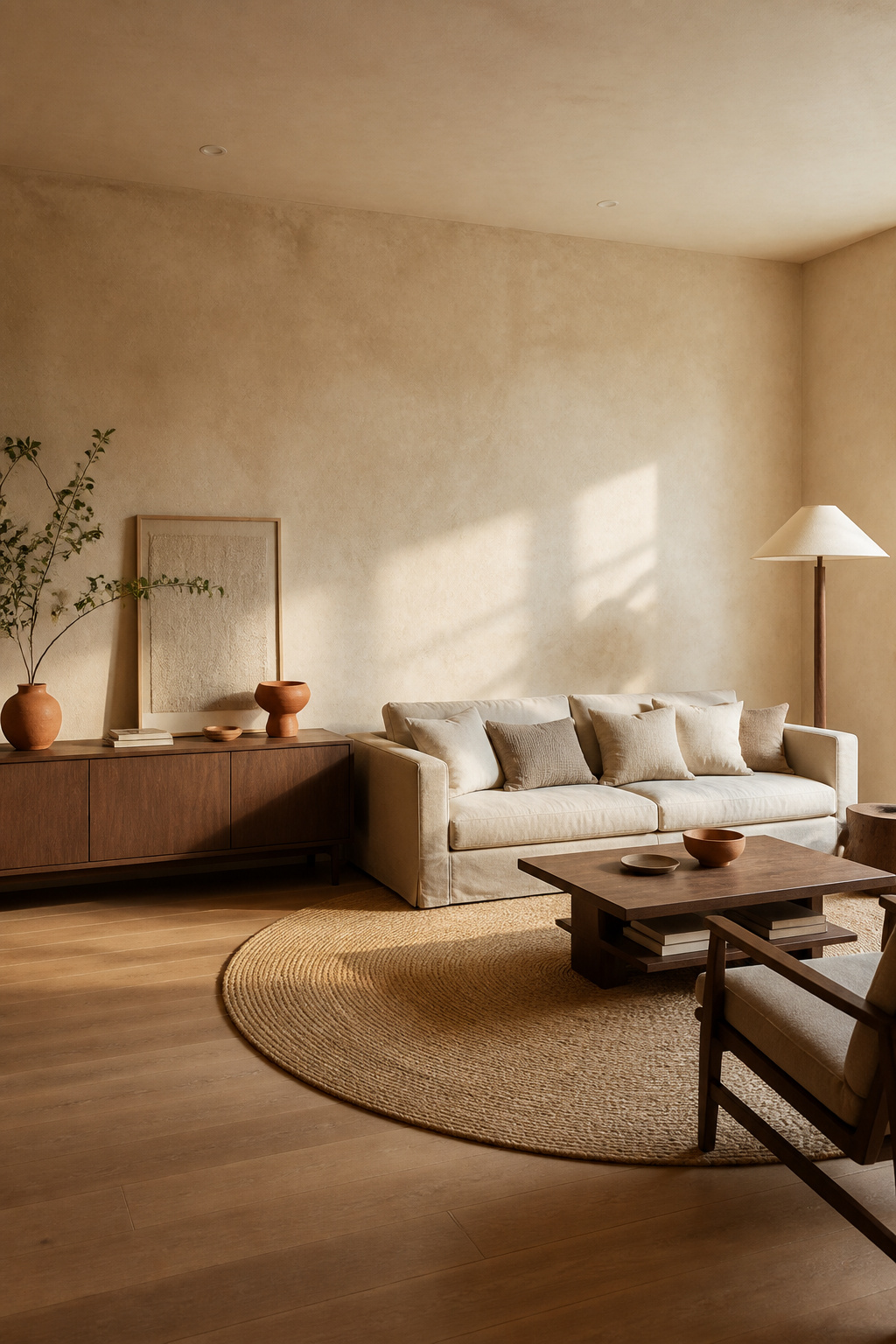
If one wall treatment elevates a beige living room from pleasant to remarkable, it’s limewash paint. Unlike standard emulsion, limewash applies in thin layers with subtle pigment depth variations. The result is a wall that reads differently in different light. No flat paint can replicate that cloudy, organic quality. In a beige living room, this tonal movement does the work that pattern and colour do in bolder spaces.
What Limewash Paint Actually Is
Traditional limewash is slaked lime (calcium hydroxide) mixed with water and natural pigments. It penetrates porous surfaces rather than sitting on top, which gives it that characteristic depth and variability. Modern limewash-effect paints like Portola’s Roman Clay or Backdrop’s Venetian Plaster use acrylic binders. They work on standard drywall without the lengthy cure times of true limewash. For most homeowners, these alternatives deliver 85–90% of the aesthetic at a fraction of the complexity.
DIY vs. Specialist Application
True limewash requires multiple thin layers applied with a large brush in overlapping, irregular strokes. It’s achievable as DIY, but the technique takes practice. Roman Clay and similar products are genuinely beginner-friendly. Portola provides a detailed tutorial and sells application kits. Expect to spend 1–2 days on a standard living room with the modern alternatives. Professional application of a full living room runs $800–$1,500 depending on region. If you want a clean, consistent result for a primary living space, the professional route is worth serious consideration.
Pairing Limewash With the Rest of the Room
Limewash walls work best when the rest of the room stays smooth. Plain oak floors, flat-woven rugs, and simple furniture silhouettes are the right companions. Too many competing textures creates noise rather than richness. Limewash plus bouclé plus rattan plus macramé in one room is too much. Let the wall be the textural hero; keep the surrounding elements quieter.
9. Woven Area Rugs to Define Beige Living Room Ideas
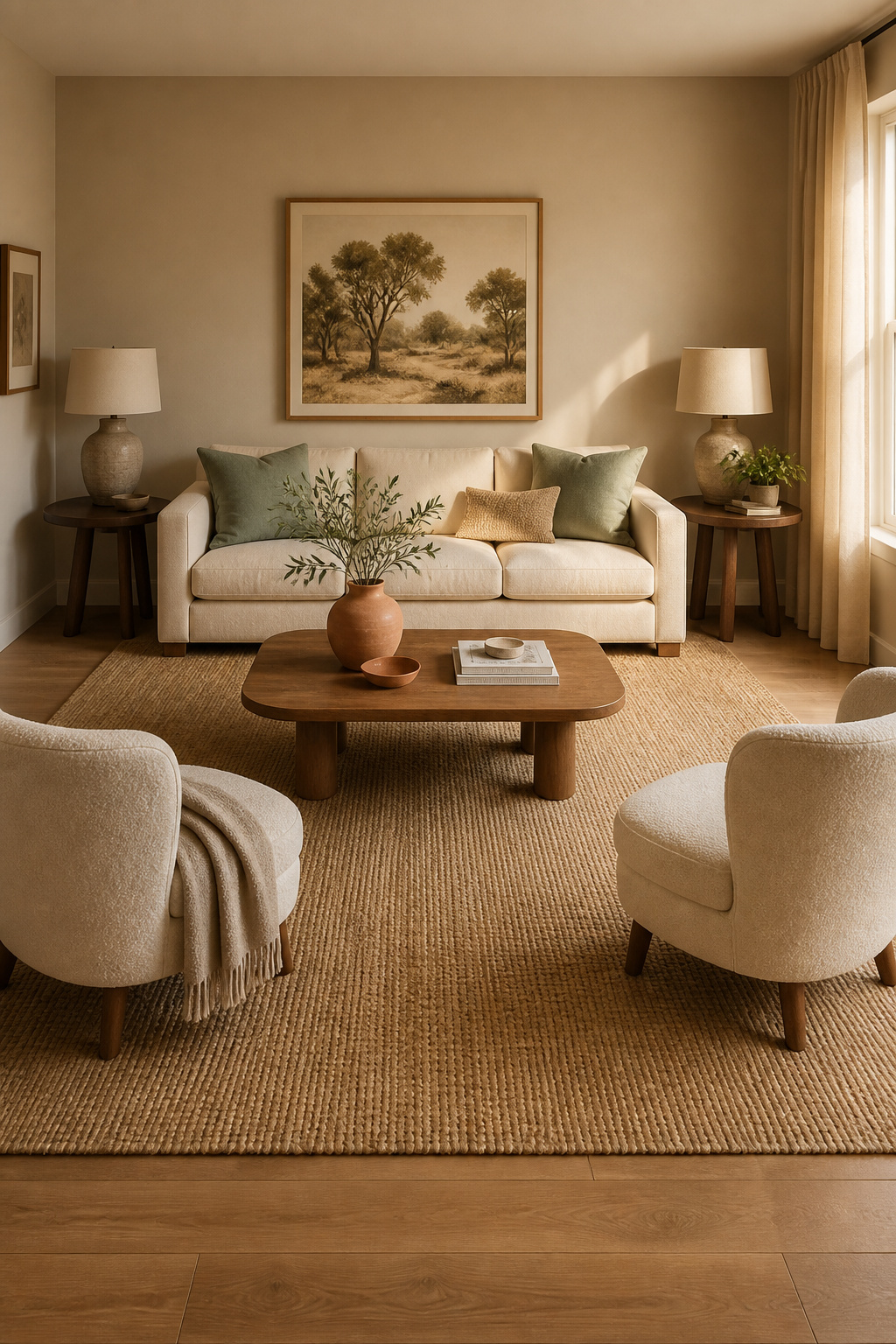
A rug is the piece most people get wrong in a beige living room. The mistake is almost always size. The rug should be large enough for the front legs of every seating piece to sit on it. Ideally, all four legs of both sofa and chairs. An 8×10 works for smaller rooms; a 9×12 or 10×14 for larger spaces. Get the size right first; then choose the material.
Natural Fiber vs. Power-Loomed Rugs
Jute and sisal rugs are the natural choice for beige living room ideas. Their warm, honeyed tones reinforce the palette. Their texture adds interest without colour contrast. However, they’re not the softest underfoot and feel scratchy with bare feet. If you spend time on the floor, a wool rug in warm ivory or oat is the upgrade worth making. Power-loomed wool rugs from Rugs USA and Wayfair start around $250 for an 8×10; Pottery Barn’s Chunky Wool rug at $450–$750 remains one of the most reliable options in this category.
For inspiration on how to layer rugs and textures in a living room, the 20 Enduring Rustic Living Room Decor Ideas guide has excellent guidance on layering natural materials effectively.
10. Botanical Touches and Indoor Plants for Living Warmth
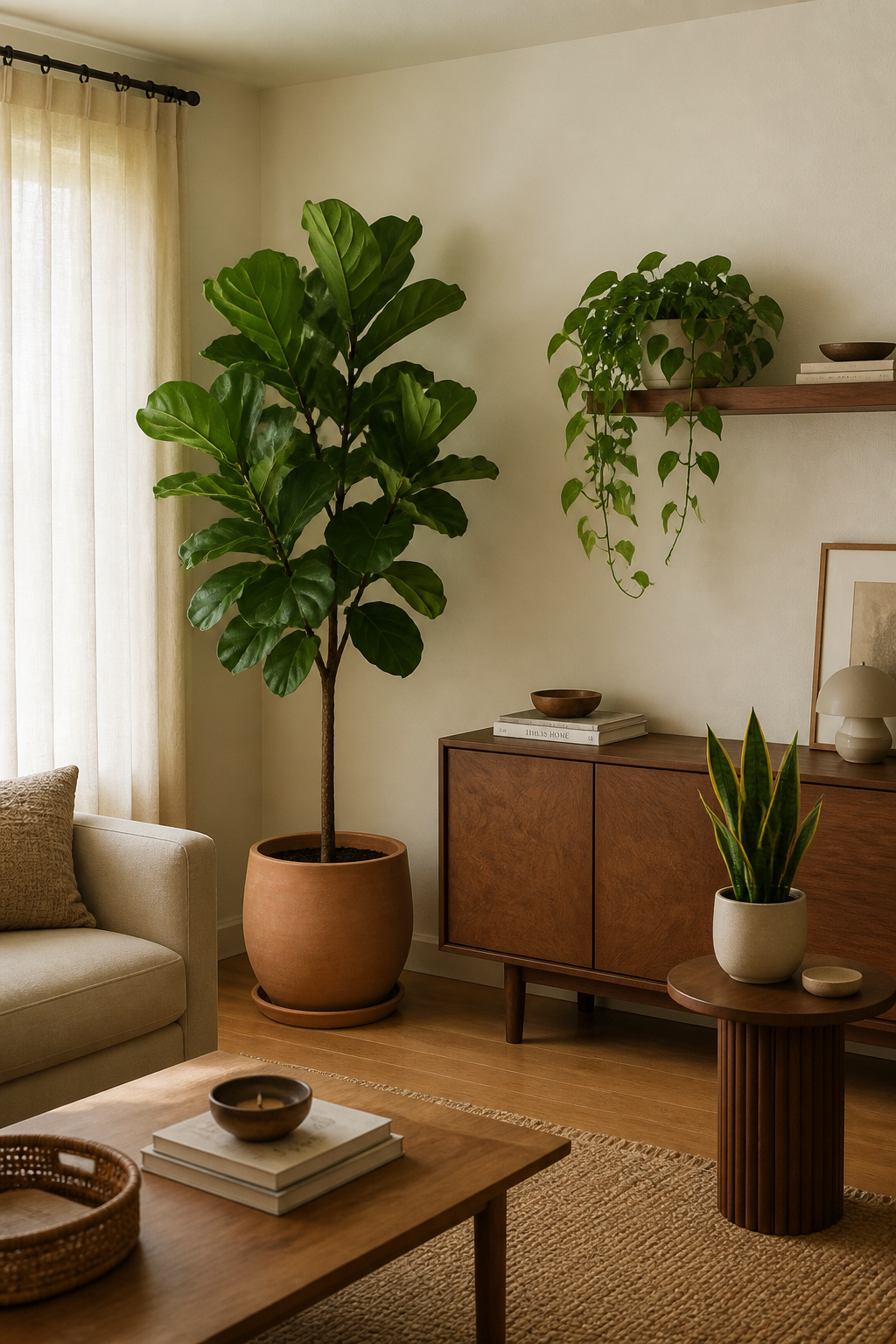
No beige living room feels complete without at least one significant plant. Green is beige’s most natural companion. They appear together constantly in nature, which is why the pairing reads so intuitively. Plants also do something no other decorative element does: they change. New leaves and seasonal growth make a room feel inhabited rather than styled.
The Best Plants for Beige Rooms
A fiddle-leaf fig (Ficus lyrata) is the aspirational choice. Sculptural, dramatic, genuinely beautiful. It is also notoriously temperamental. If you want reliability, a monstera deliciosa gives similar architectural impact with far less drama. It’s a better choice for most beige living room ideas. For lower light, a ZZ plant or snake plant works well. Their structural, upright growth reads as intentional. Whatever you choose, put the plant in the room’s best light source. A stressed, yellowing plant undermines the whole room. No amount of good cushion-work fixes that.
11. Layered Ambient Lighting in Warm Whites and Golds
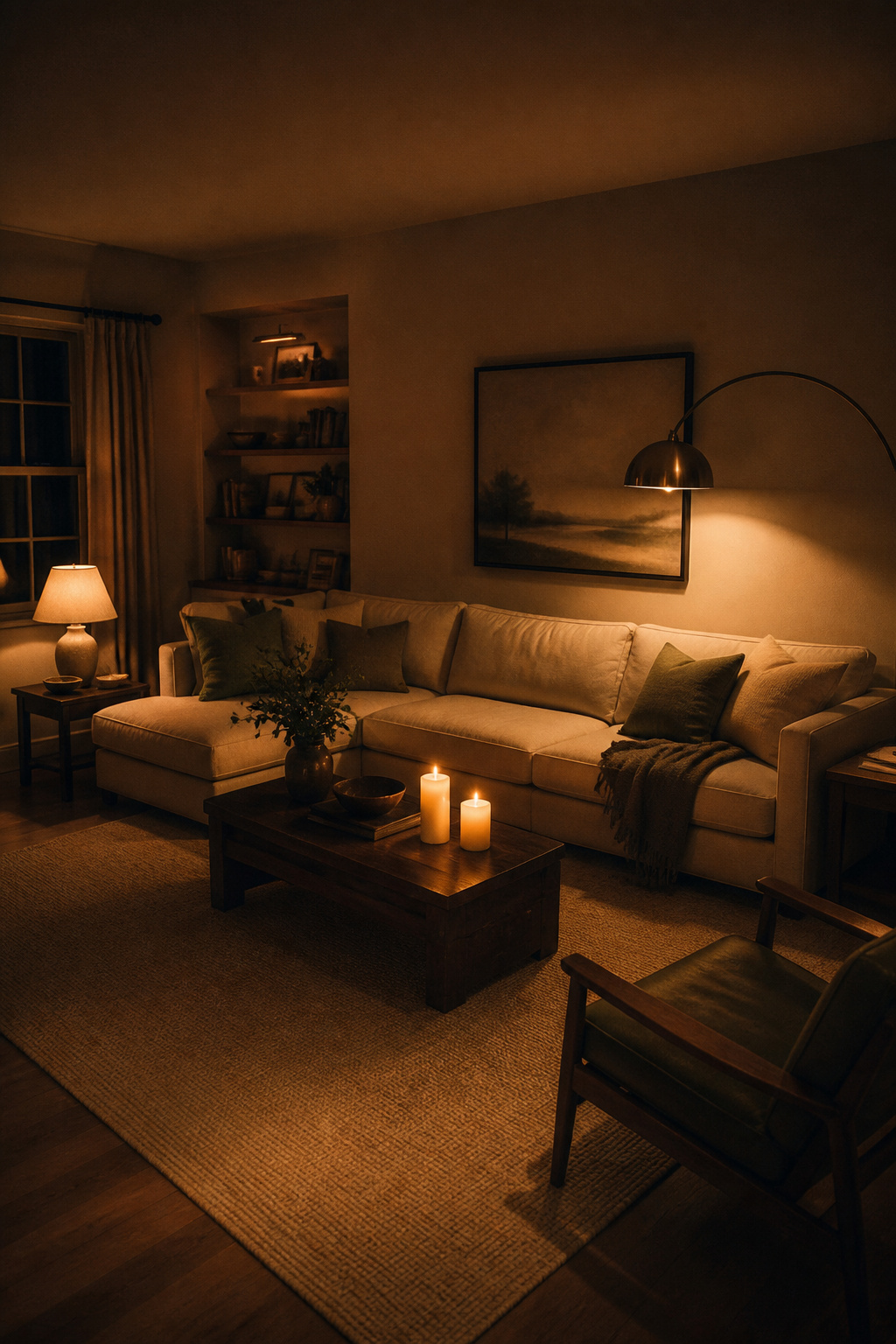
Overhead lighting alone is the enemy of beige living room ideas. A single ceiling fixture casts flat, even light. It erases the tonal variation and shadow play that make a neutral room interesting. The fix is layered lighting: ambient light from multiple lower sources, task lighting where needed, and accent light to highlight specific features.
The Bulb Temperature That Makes or Breaks a Beige Room
Bulb colour temperature is measured in Kelvin. For beige living room ideas, you want 2700K–3000K — the warm white range. Anything above 3500K pulls colour out of warm neutrals and makes beige look grey. Smart bulbs like Philips Hue or LIFX let you dial in exactly the right temperature. You can dim to a golden amber in the evenings. This is the upgrade with the highest return on investment in a beige room. It costs $30–$60 per fixture and changes how the room feels at every hour of the day.
12. A Linen Gallery Wall in Warm Earth Tones
A gallery wall in a beige living room needs different thinking than in a coloured room. With no competing wall colour to unify things, the art itself has to do more work. The most reliable approach uses a restricted palette. Choose art in warm earth tones, creams, and greens, framed in natural wood, warm brass, or simple white. This keeps the gallery feeling like a curated extension of the room rather than a separate statement.
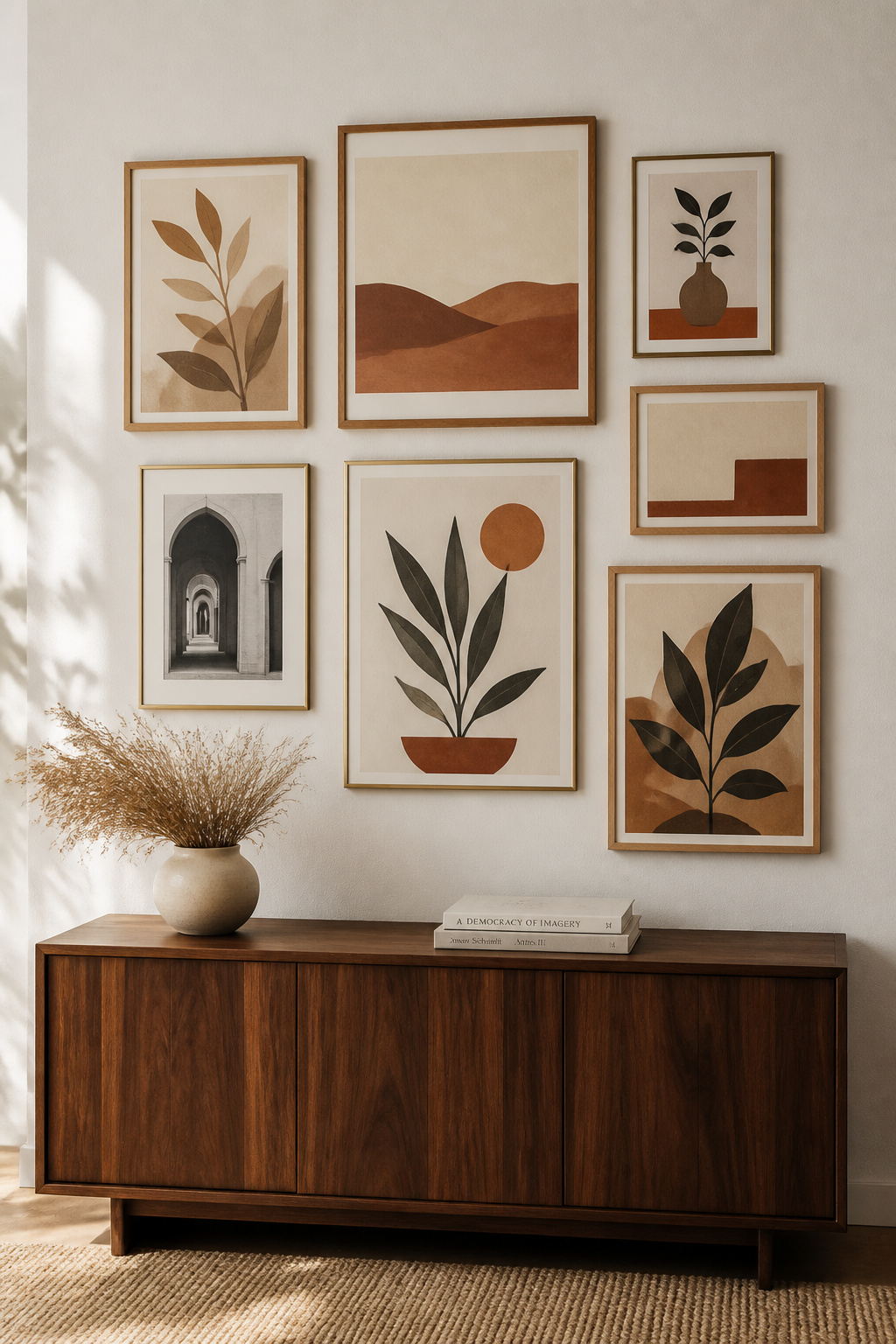
Curating Art That Works in a Neutral Room
Abstract art with minimal colour works reliably. Simple geometric shapes in cream, rust, and terracotta are safe starting points. Botanical prints (pressed fern, eucalyptus, or botanicals on cream backgrounds) are perennial performers. Black-and-white photography adds contrast without disrupting the beige living room ideas palette. What to avoid: highly saturated colour prints. Unless they match your chosen accent colour exactly, they pull the eye too strongly and fight the calm you’ve worked to create.
For a formal living room approach to curating a cohesive art collection, the The Ultimate Formal Living Room Design Guide has a useful section on art selection and wall arrangement principles.
13. Stone or Marble Fireplace Surround as a Natural Focal Point
A fireplace is the natural focal point of a living room. The material of the surround is one of the most impactful decisions in any beige space. Painted wood mantels can look beautiful. But stone — particularly travertine, limestone, or vein-cut marble — introduces a depth that transforms the fireplace from functional to genuinely architectural.
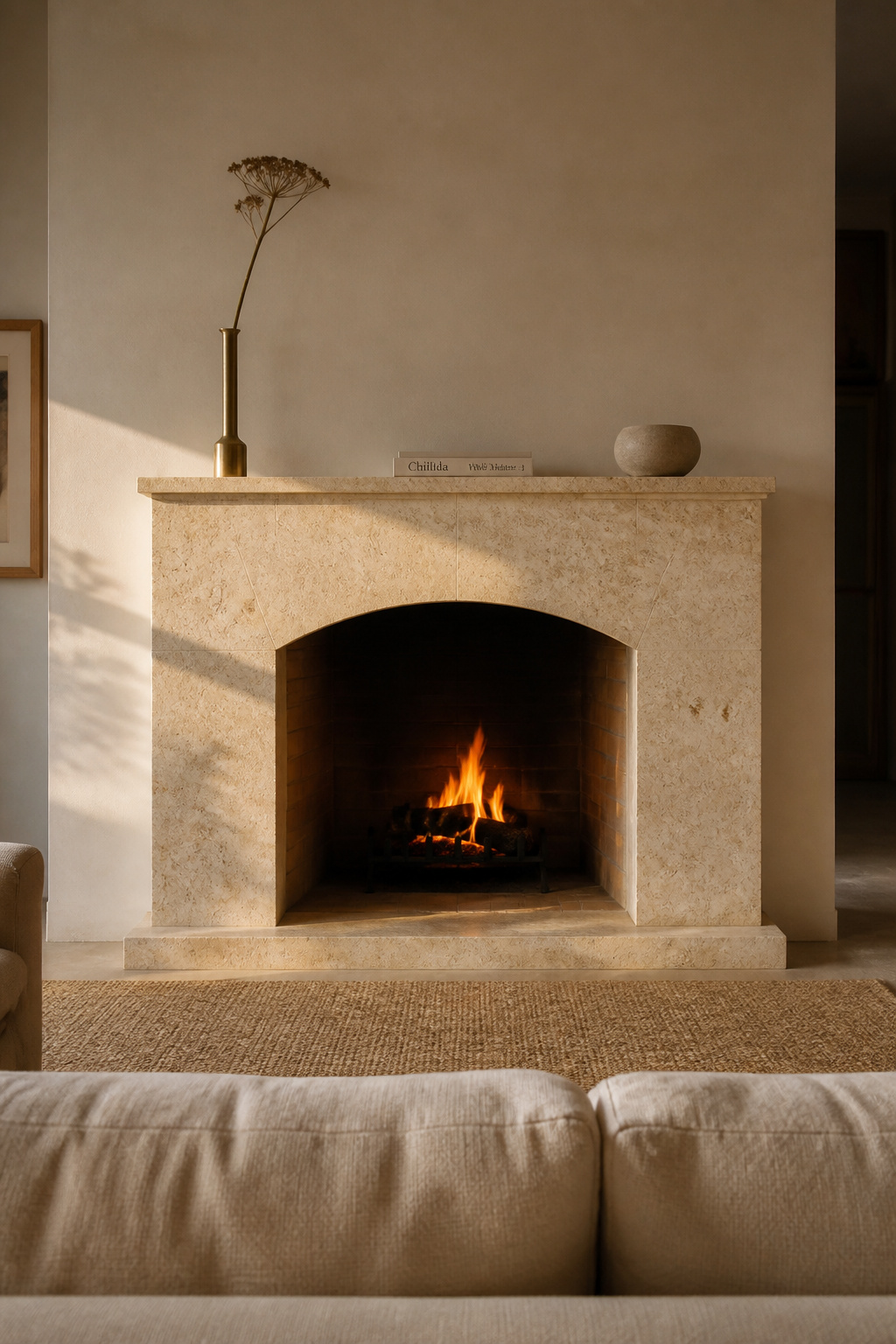
Travertine vs. Limestone vs. Marble in a Beige Room
Travertine is the warmest of the three. Its creamy, pitted surface and fossil inclusions read as natural and organic. It’s also the most forgiving to live with. Marks and variations add to its character. Limestone is similar but smoother. It has a quieter, more refined quality suited to contemporary beige living room ideas. Marble — particularly vein-cut Calacatta or Statuario — introduces drama and luxury. It costs more and needs careful maintenance. For beige living room ideas aiming for calm over drama, travertine or limestone is the better choice.
14. Natural Fiber Curtains to Frame a Beige Living Room
Curtains do two jobs in a beige living room: controlling light and contributing to the room’s material story. Natural fiber options — linen, cotton, sheer voile — do both jobs better than synthetics. Synthetic curtains tend to look plasticky in the natural light that beige rooms require. Heading style and hanging height also affect how the room feels.
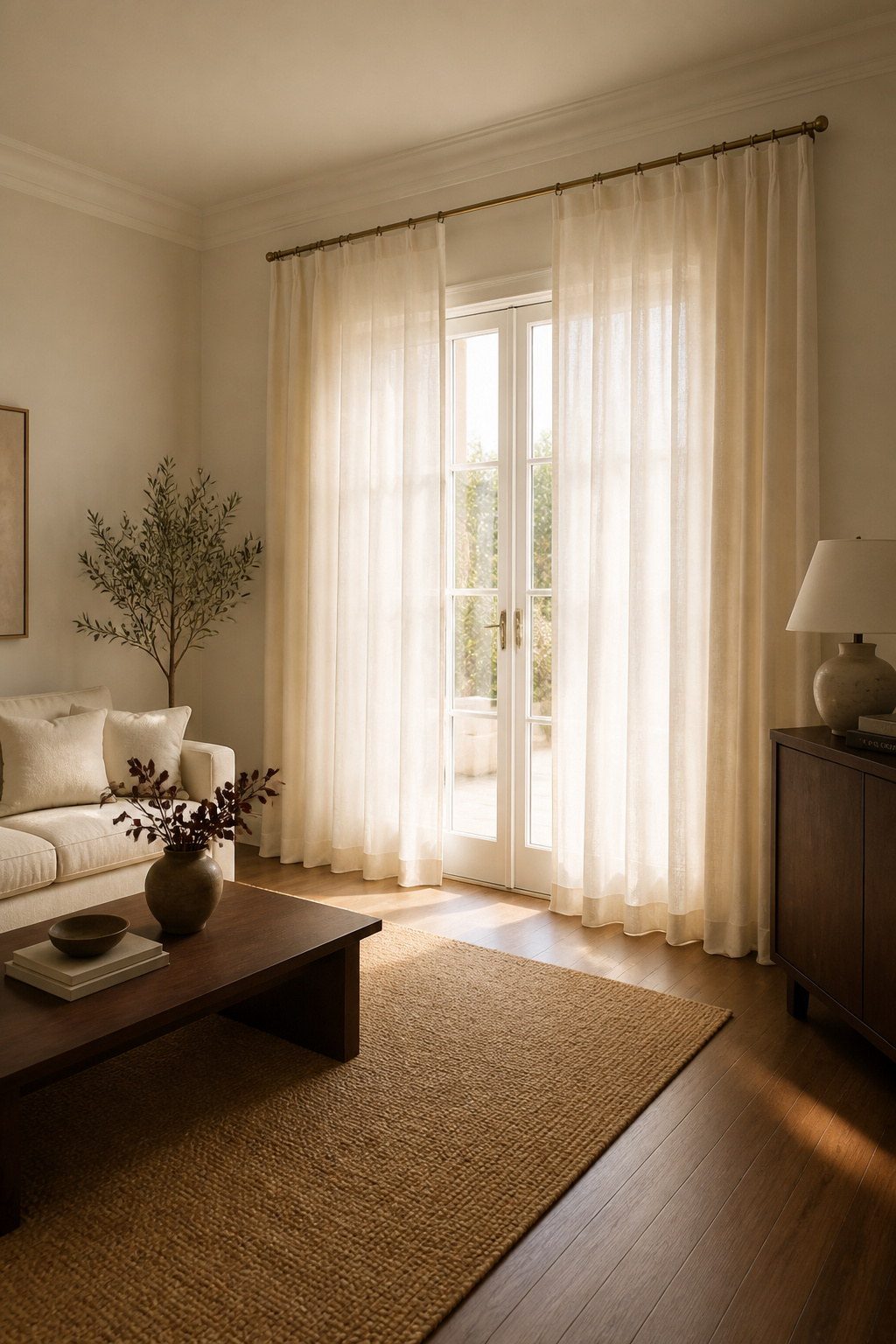
Hanging Height Makes the Room
The most common curtain mistake is hanging the rod at window height rather than ceiling height. Curtains hung high — 4–6 inches from the ceiling — make rooms feel dramatically taller and windows feel larger. In a beige living room, this matters especially. The palette depends on a sense of spaciousness. IKEA’s RITVA curtains in natural undyed cotton are a reliable budget option at $25–$40 per panel. Cultiver ($90–$130) and Parachute ($90–$120 per panel) are the premium step up. Heavier fabric holds shape and folds more beautifully.
15. Cream and Camel Throw Layers for Seasonal Comfort
Throws are the most regularly rotated element in a beige living room. They deserve more thought than most people give them. A well-chosen throw completes a sofa arrangement. The right weight and texture, draped just so, make all the difference. The wrong one makes an otherwise carefully designed beige living room look like a guest bedroom.
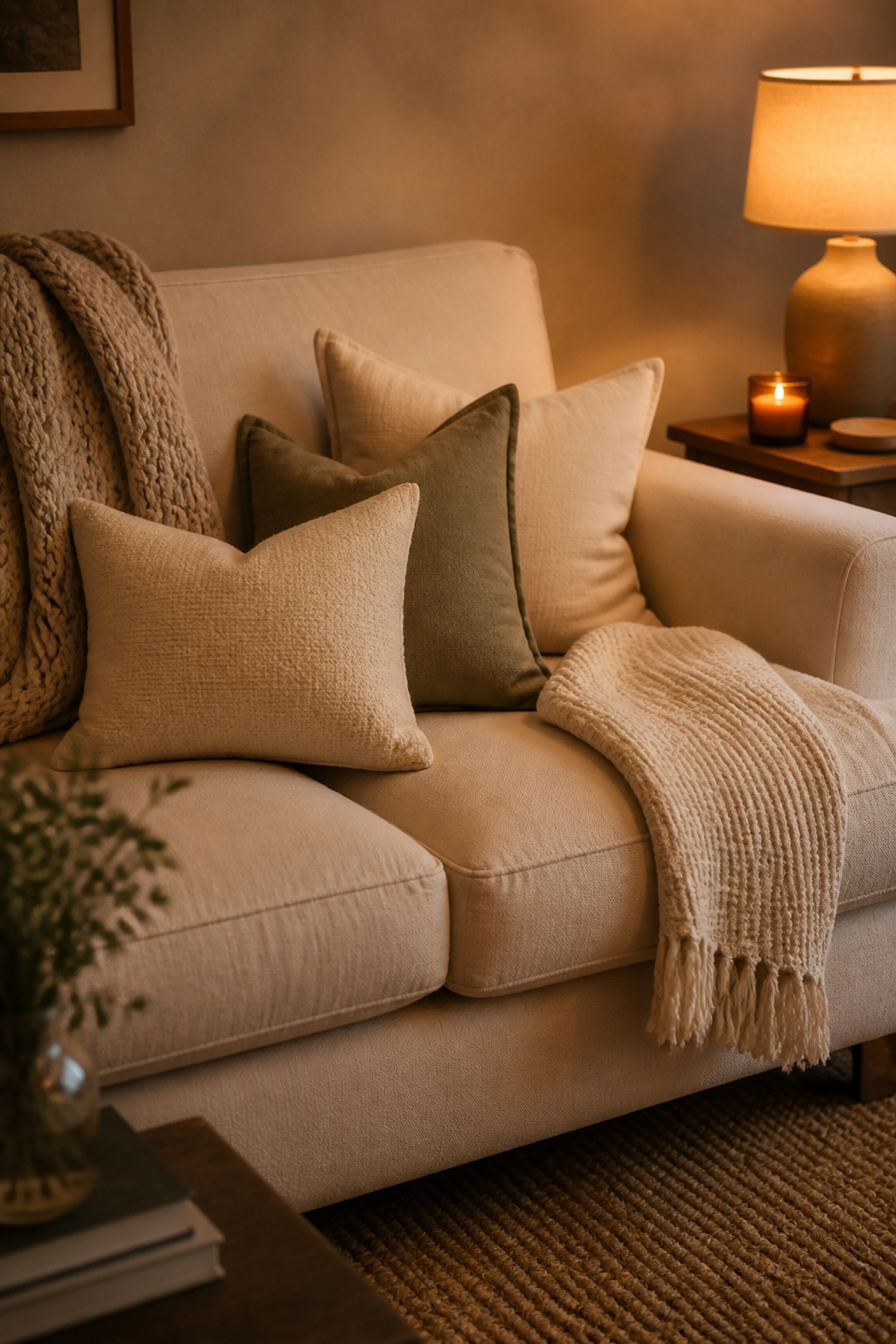
The Drape Matters More Than the Fold
A throw tossed loosely over a sofa arm, trailing slightly, reads as lived-in. That’s better than the precisely folded version. The most natural technique: hold the throw at its centre and let it fall over the sofa arm with one half longer than the other. A light scrunch before you drape adds looseness. Avoid the hotel-fold where it’s draped perfectly across the back in a straight line — this looks staged rather than comfortable.
Best Throw Options for a Beige Room
For the softest option, Brooklinen’s Waffle Knit throw ($70) drapes beautifully and washes well. Zara Home’s merino wool blend throws (~$80) are consistently excellent quality. For budget options, H&M Home regularly offers well-made cotton throws for under $30. In winter, swap light cotton throws for a heavier chunky knit in oat or camel. That textural shift alone makes the room feel seasonally appropriate.
16. Minimalist Shelf Styling With Beige Living Room Ideas in Mind
The way you style your shelves has an outsized effect on how a beige living room reads. Shelves that are too full make a neutral room feel cluttered. Shelves that are too empty read as unfinished. The goal is a carefully edited selection where negative space is as intentional as the objects themselves — a principle that fits most beige living room ideas.
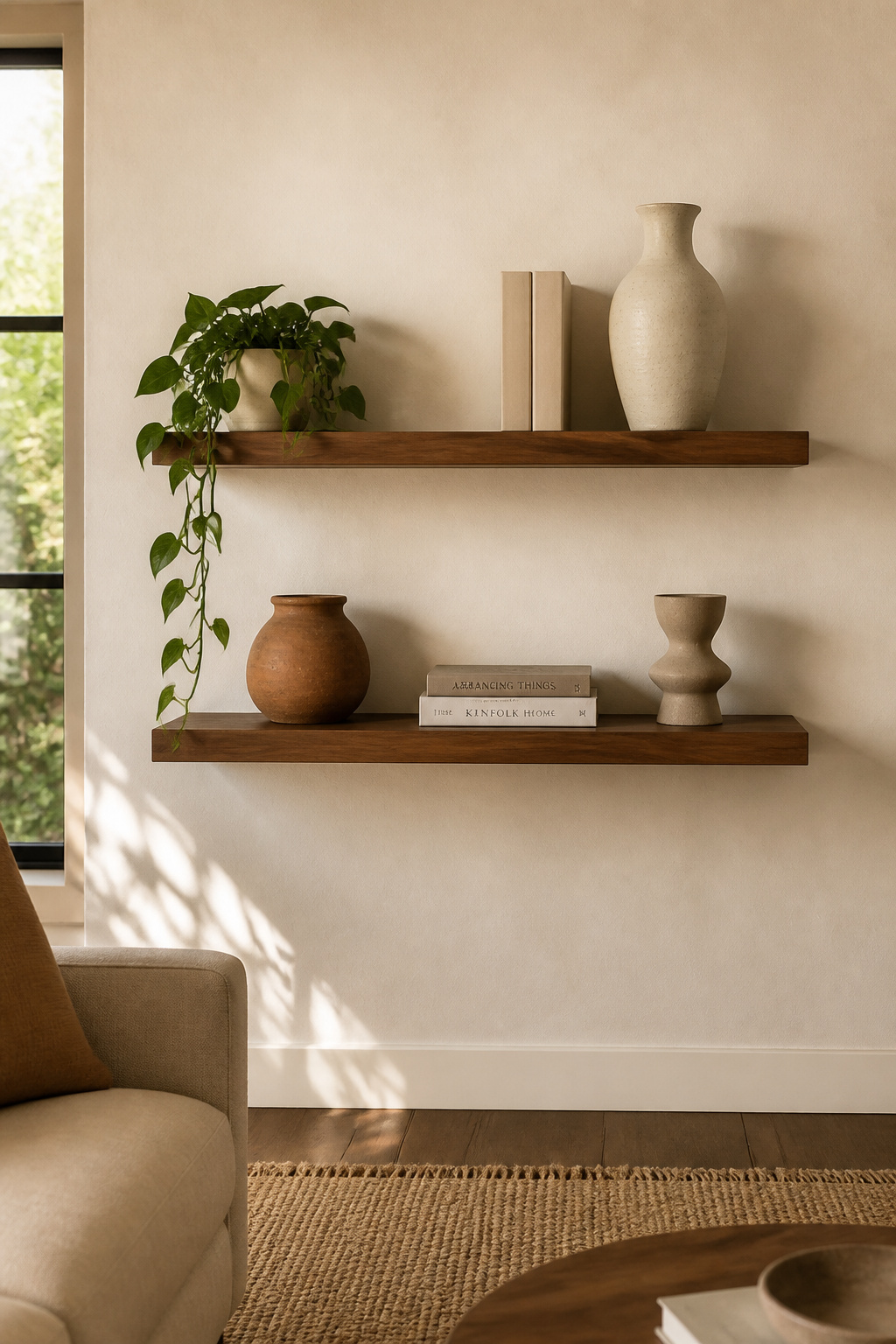
The Rule of Odd Numbers and Negative Space
Three objects read more naturally than two or four. Five objects read better than six. Within any grouping, vary height, material, and mass. One tall vertical, one low horizontal, one round shape. Always leave at least 40% of each shelf surface clear. This emptiness is what makes the objects you do have look considered rather than accumulated.
Books as Decorative Elements
Books add warmth, colour, and intellectual character to beige living room ideas. For a cohesive look, turn books with colourful spines backward. Only the cream pages face out, creating subtle tonal layering. Alternatively, group them by spine colour. Never mix both approaches on the same shelf.
For more ideas on how to layer and style living room surfaces with a collected aesthetic, the 14 Authentic Ideas for a Timeless Rustic Living Room Decoration guide offers a useful framework for building a room that feels genuinely personal.
How to Pull Your Beige Living Room Together With Confidence
The most common reason a beige living room doesn’t come together is not colour choice or furniture selection. It’s the absence of one clear starting point. Every successful neutral room begins with one hero piece. A sofa in a specific shade of linen, a limewash wall treatment, a travertine fireplace surround — pick one and build from there. Everything else — the accent colours, the textures, the metals — follows from that first decision.
Start With One Piece and Build Outward
If you’re starting from scratch, buy the sofa first. It’s the largest piece of furniture in the room and the most expensive to replace if you get it wrong. Its fabric, tone, and silhouette inform every subsequent decision. If the room already exists and you’re refreshing it, start with the wall colour — paint is relatively cheap and the shift it creates is significant enough to clarify what else needs to change.
The Beige Mistakes Worth Avoiding
The most reliably disappointing beige rooms share a few common traits. All the beige is the same tone — no variation between cool cream, warm ivory, and mid-toned camel. All the furniture is the same height, with no variation between low and high. And there’s no texture contrast. Correct any one of these and the room improves. Correct all three and it transforms.
When to Get Outside Perspective
If you’ve tried and the room still feels flat despite your best efforts, the issue is usually one of proportion or lighting rather than colour or material. A single online consultation with an interior designer can identify the specific problem faster than months of trial and error. Many offer 60–90 minute sessions for $150–$300. Sometimes the solution is moving a piece of furniture. Sometimes it’s raising the curtain rod six inches. For a contrasting perspective, the 16 Secrets to a Maximalist Living Room: The Art of Layering is worth reading. Understanding what makes bold layering work clarifies why neutral curation is structurally different — even if maximalism isn’t your direction.
Beige is patient. It rewards attention to texture, light, and material in a way that coloured rooms don’t require. Get these right and you end up with a room that genuinely restores you. Not because it’s quiet, but because it works with you rather than demanding your attention.