
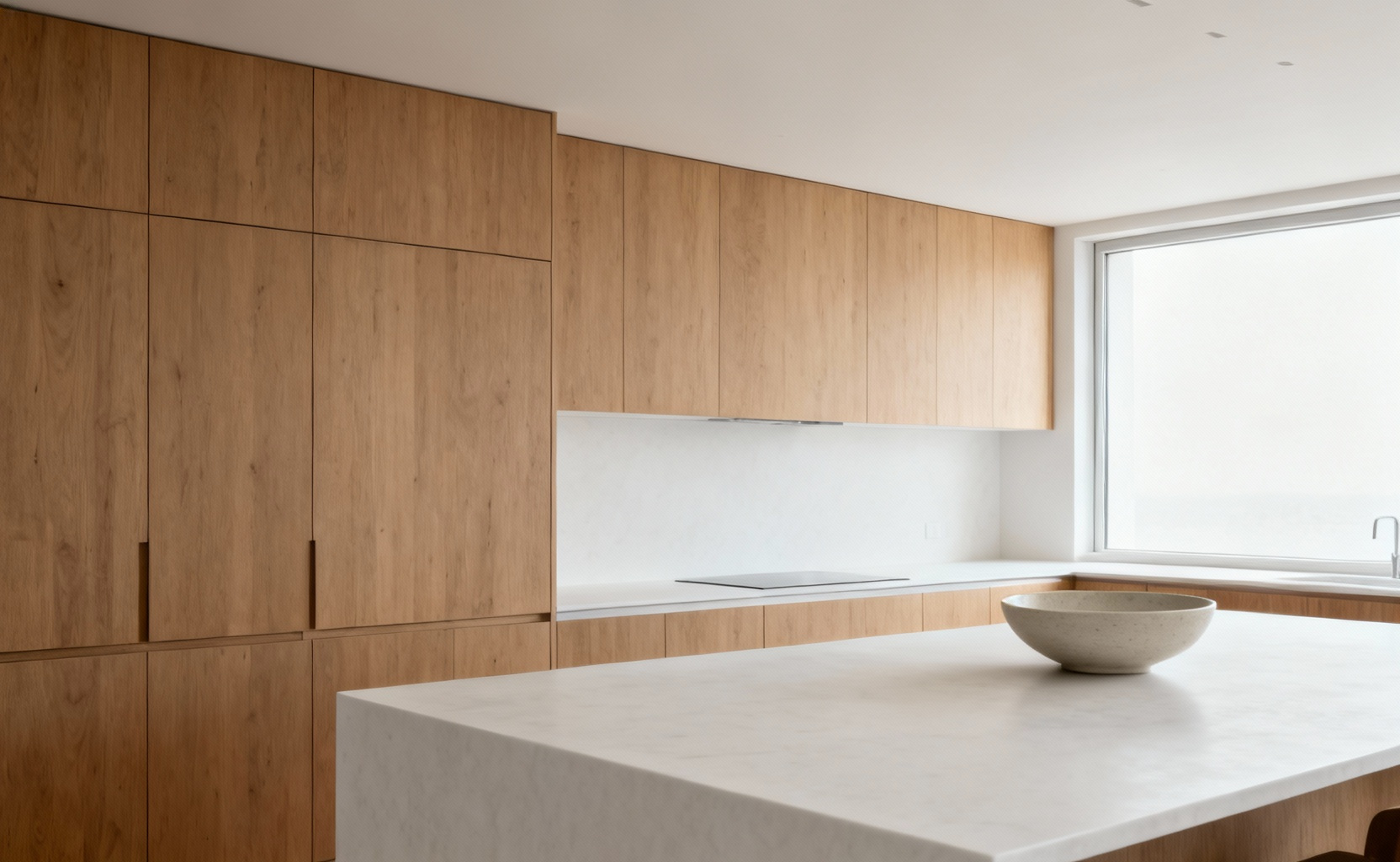

Designing a sanctuary, especially the heart of the home, is an act of profound self-awareness—every choice reflects not just an aesthetic preference, but a deeper understanding of the values we seek to cultivate in our daily lives. The most resonant spaces are not merely designed; they are authored. These twenty foundational elements distinguish truly transformative minimalist kitchen layouts, separating spaces that genuinely foster well-being from those that only offer a fleeting appeal.
In a world that constantly pulls at our attention, the kitchen can so easily become a place of energetic clutter. Yet, it holds the profound potential to be an epicenter of tranquility and mindful creation. To embrace minimalist kitchen layouts is to move beyond decluttering a countertop; it’s an invitation to cultivate an environment that supports mental spaciousness, lowers our cortisol levels, and elevates the simple act of preparing a meal into a grounding ritual. It’s about creating a space that breathes, allowing energy—what feng shui practitioners call Chi—to flow freely, helping our minds find stillness.
This journey will guide you through the heart of creating such a space. We will touch on the philosophy that underpins minimalist design, move through the serene, tactile experience of materials, explore the quiet choreography of spatial flow, and finally, integrate these principles into a sustainable, calming lifestyle.
Cultivating Clarity: Philosophical Foundations for the Minimalist Kitchen (Part 1)
The path to a minimalist kitchen begins not with objects, but with intention. It is a philosophy aimed at fostering tranquility and nourishing our well-being from the inside out. Here, we explore the foundational principles that transform a cooking space into a sanctuary of clarity, creating an environment where peace truly resides.
1. Embrace the Principle of Visual Silence to Reduce Cognitive Load
At the very heart of a soul-nurturing minimalist kitchen is a commitment to visual silence. This principle is a gentle invitation to reduce unnecessary elements, creating an expanse of calm that soothes the senses and quiets the mind. Our kitchens often become a collection of visual noise—appliances, gadgets, and decor that, while perhaps useful, contribute to a subtle but persistent cognitive load. By embracing visual silence, we consciously edit our surroundings, allowing the eye to rest and the mind to find a moment of precious stillness.
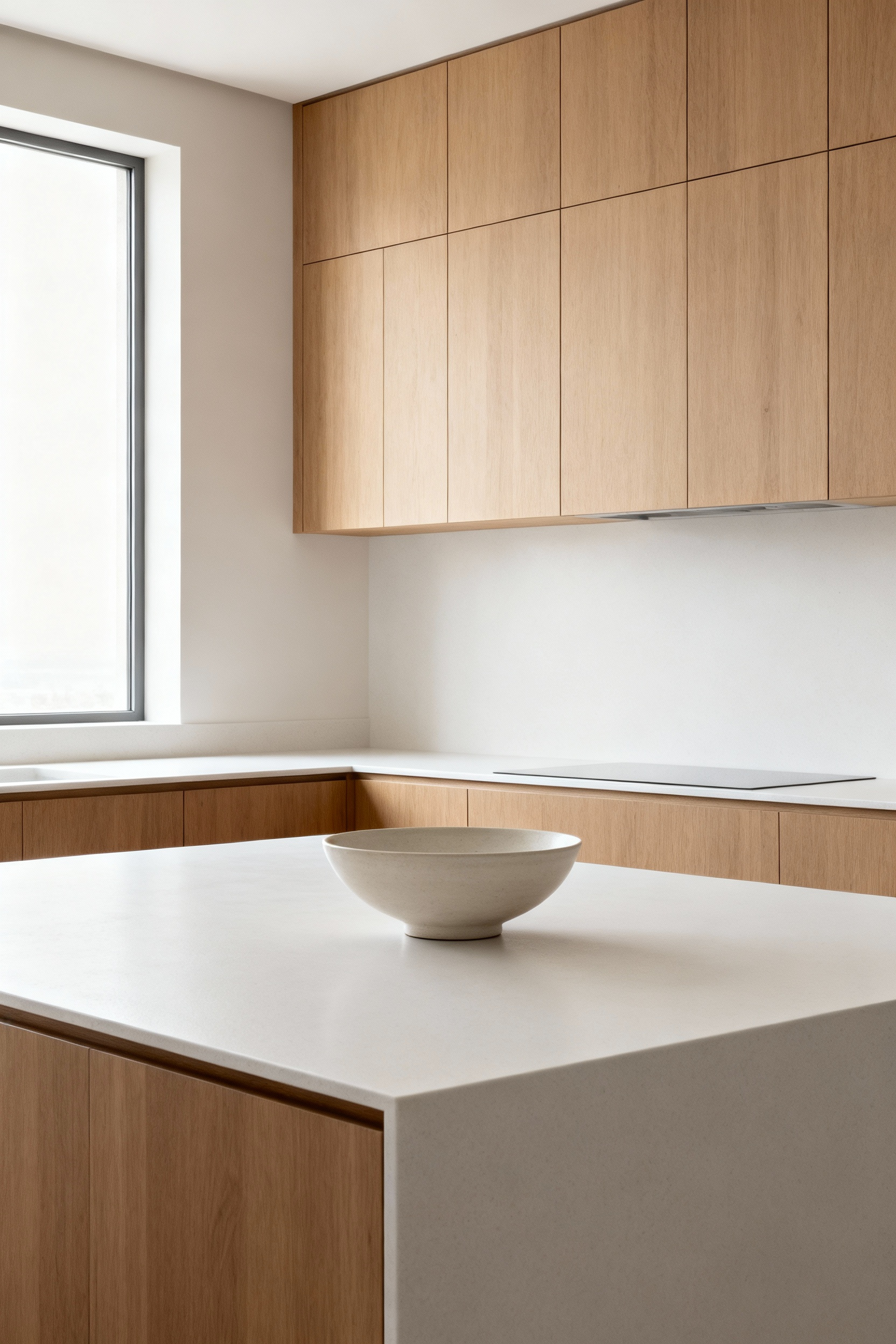
This translates into thoughtful design choices: integrated appliances that disappear seamlessly into cabinetry, unadorned surfaces that extend in clean, uninterrupted lines, and a dedicated, hidden home for every object. Imagine an induction hob flush with the countertop, or an extractor fan that retracts from view. The goal is not emptiness but a curated quietness, a space where every visible item is there by intention. When the kitchen embodies this visual silence, our daily interactions become less about managing chaos and more about experiencing serene functionality. This transforms cooking into a meditative practice.
2. Harmonize Form and Function through Deconstructive Simplicity
Building upon visual silence, we find a beautiful harmony between form and function through deconstructive simplicity. This approach invites us to look deeply at the essence of each element in the kitchen, questioning its necessity and its purest expression. Inspired by principles from Shaker design to Japanese aesthetics, this is not about adding, but about distilling. We seek to uncover the unadorned beauty of an object’s utility.
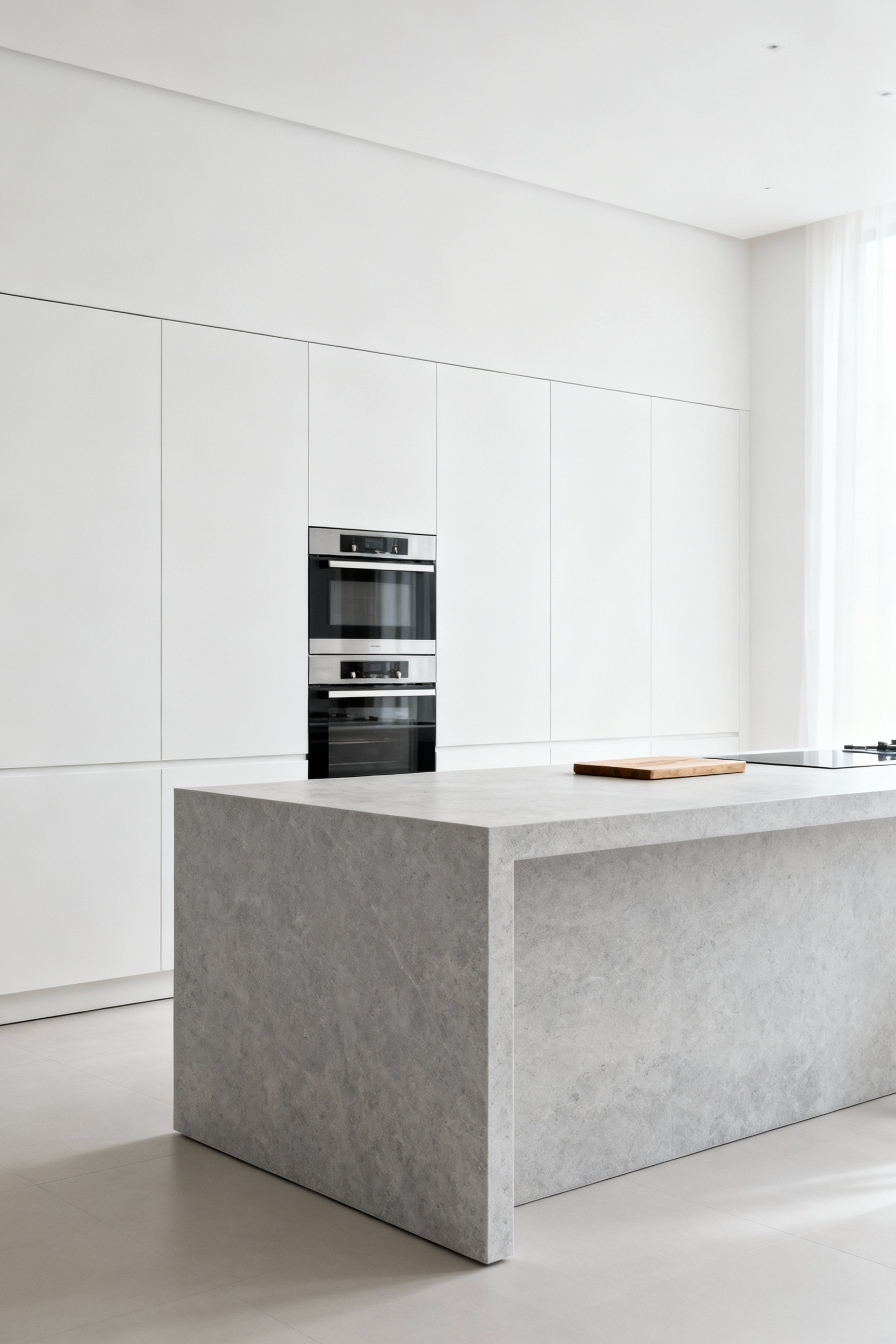
Instead of ornate handles, a minimalist kitchen might feature integrated finger pulls that become part of the cabinet front itself, preserving clean, flowing lines. A kitchen island might be a single, solid form, its beauty found in the honesty of its material—a piece of honed stone or warm wood—offering ample preparation space and nothing more. What I often see in my wellness sanctuary design practice is that true minimalism isn’t about having less; it’s about making space for what truly matters. When form so directly articulates function, superfluous decoration becomes redundant, revealing a deeper, more enduring beauty in the things we use every day.
3. Optimize Workflow Dynamics: The Art of Uninterrupted Movement Zones
The quiet elegance of simplicity finds its true expression in the flow of the kitchen—optimizing workflow through the creation of uninterrupted movement zones. A truly minimalist kitchen considers the human body’s dance within it, ensuring every gesture is fluid and unimpeded. This is about viewing the kitchen as an ecosystem where efficiency is born from ease and grace.
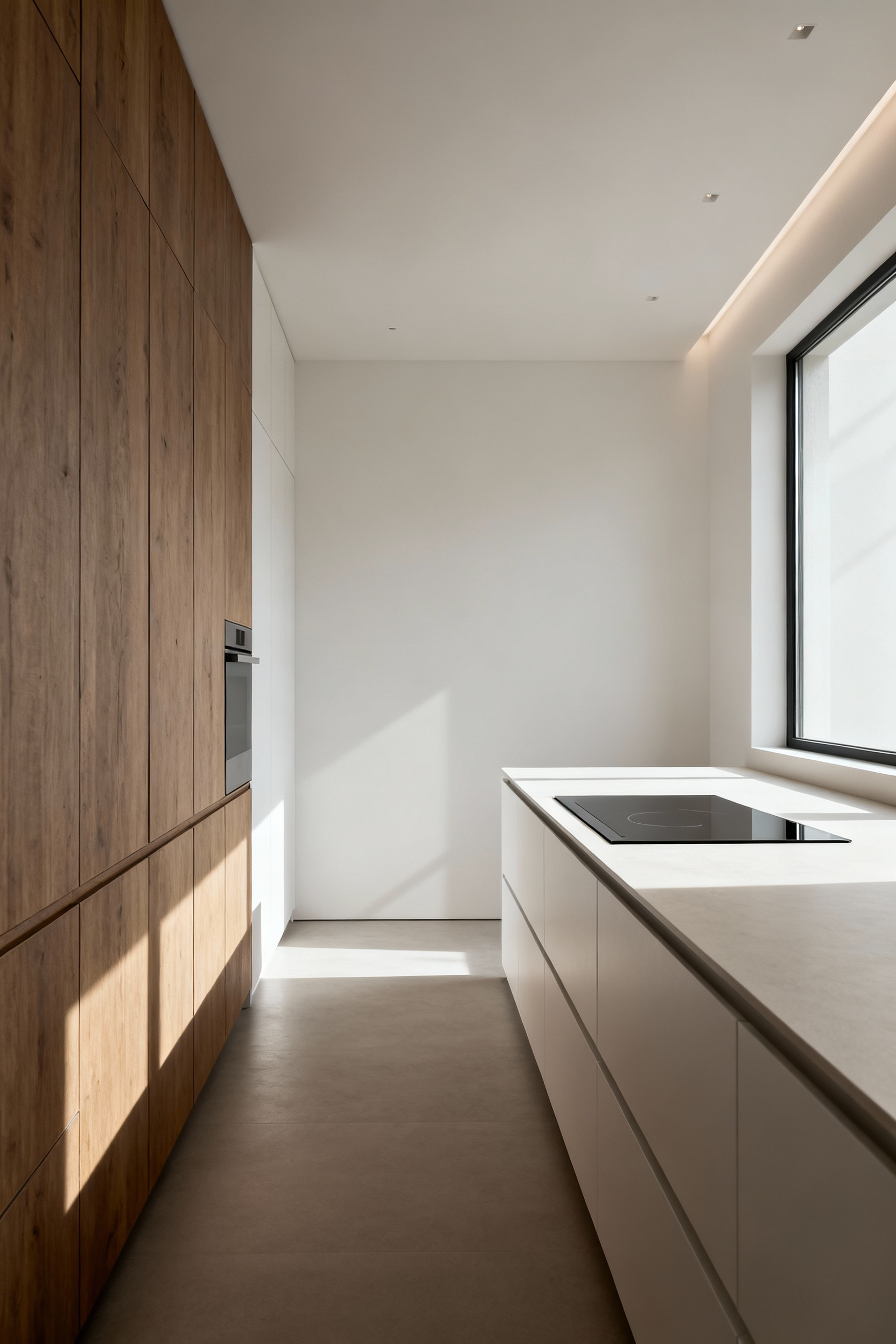
It’s about evolving the traditional “work triangle” into a more nuanced understanding of work zones for preparation, cooking, and washing, each placed to minimize steps and reduce friction. Imagine a pot filler over the stove, eliminating the need to carry heavy water, or having recycling bins integrated right where you do your food prep. In minimalist kitchen layouts, clear pathways are sacred. By consciously designing for this ergonomic flow, we transform the daily rituals of cooking and cleaning from chores into moments of mindful engagement, creating a quiet ballet of productivity.
4. Prioritize Enduring Serenity Over Fleeting Aesthetic Trends
The final philosophical cornerstone is a commitment to enduring serenity over the siren call of fleeting trends. A truly tranquil space emerges from choosing timelessness, selecting elements that resonate with inherent quality and classic appeal. This is about investing in foundational materials and design that will retain their elegance for decades.
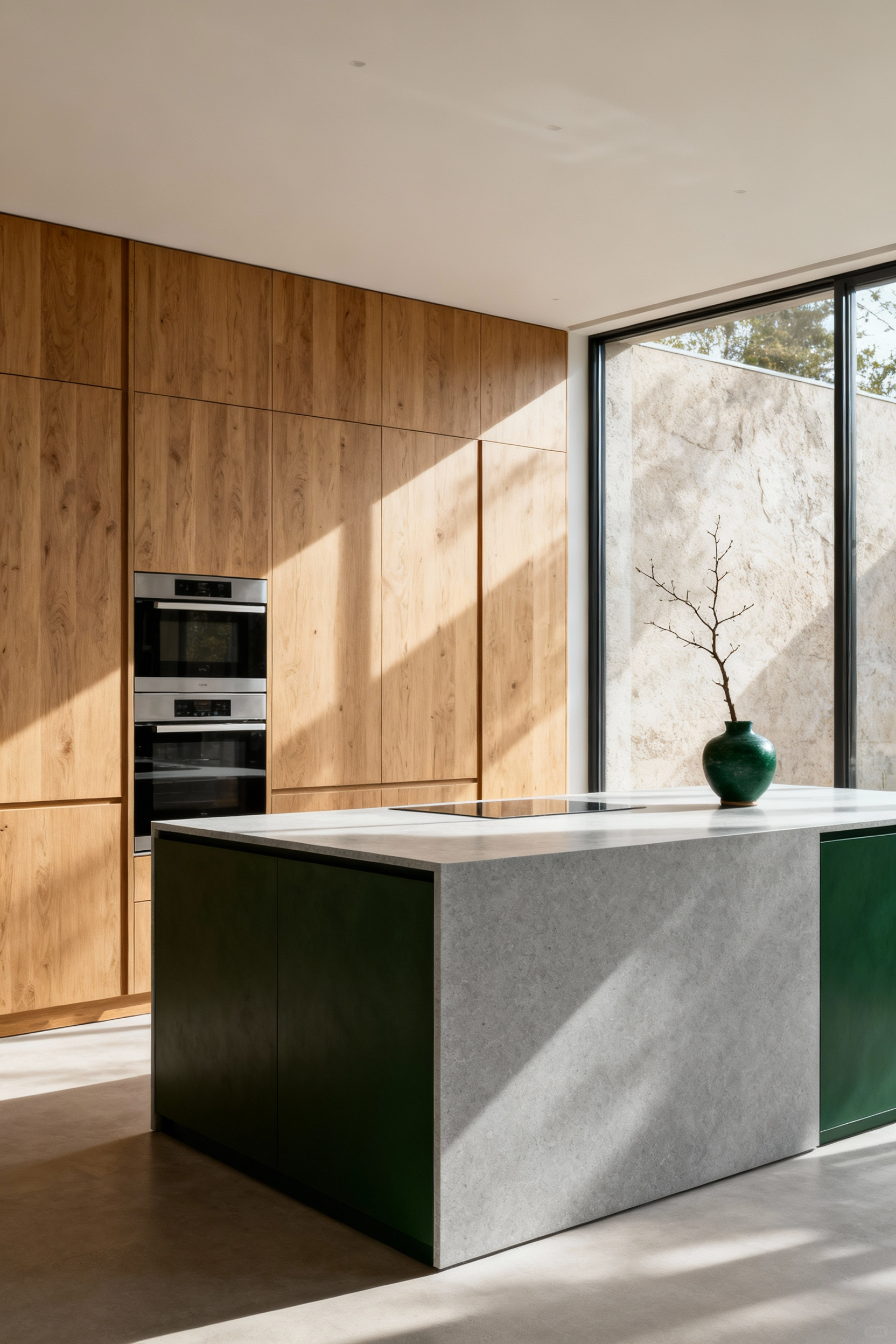
Think of natural wood grains, classic stone, and understated metals. These materials possess an innate beauty that deepens with age, developing a rich patina rather than looking dated. A serene color palette of whites, soft greys, and muted earth tones provides a soothing backdrop that remains relevant. Prioritizing enduring serenity means designing with a long-term vision, reducing the cycle of discarding and replacing. A kitchen built on this principle becomes a steadfast anchor in the home, a stable and reassuring sanctuary where true well-being is not just a goal but a lived experience.
Cultivating Clarity: Philosophical Foundations for the Minimalist Kitchen (Part 2)
Our exploration continues, turning inward to the profound connection between our tools and our state of being. This is about understanding how a discerning approach to the objects we interact with daily can shape the energetic landscape of our kitchen and, by extension, our inner world.
5. Cultivate Mindful Engagement with Essential Culinary Tools
The philosophy of a minimalist kitchen extends to the very essence of how we interact with our tools. It calls for a conscious reverence for each instrument’s purpose, its quality, and its simple beauty. We move away from accumulation toward a curated collection where every knife, spoon, or pan feels good in the hand and performs its function flawlessly.
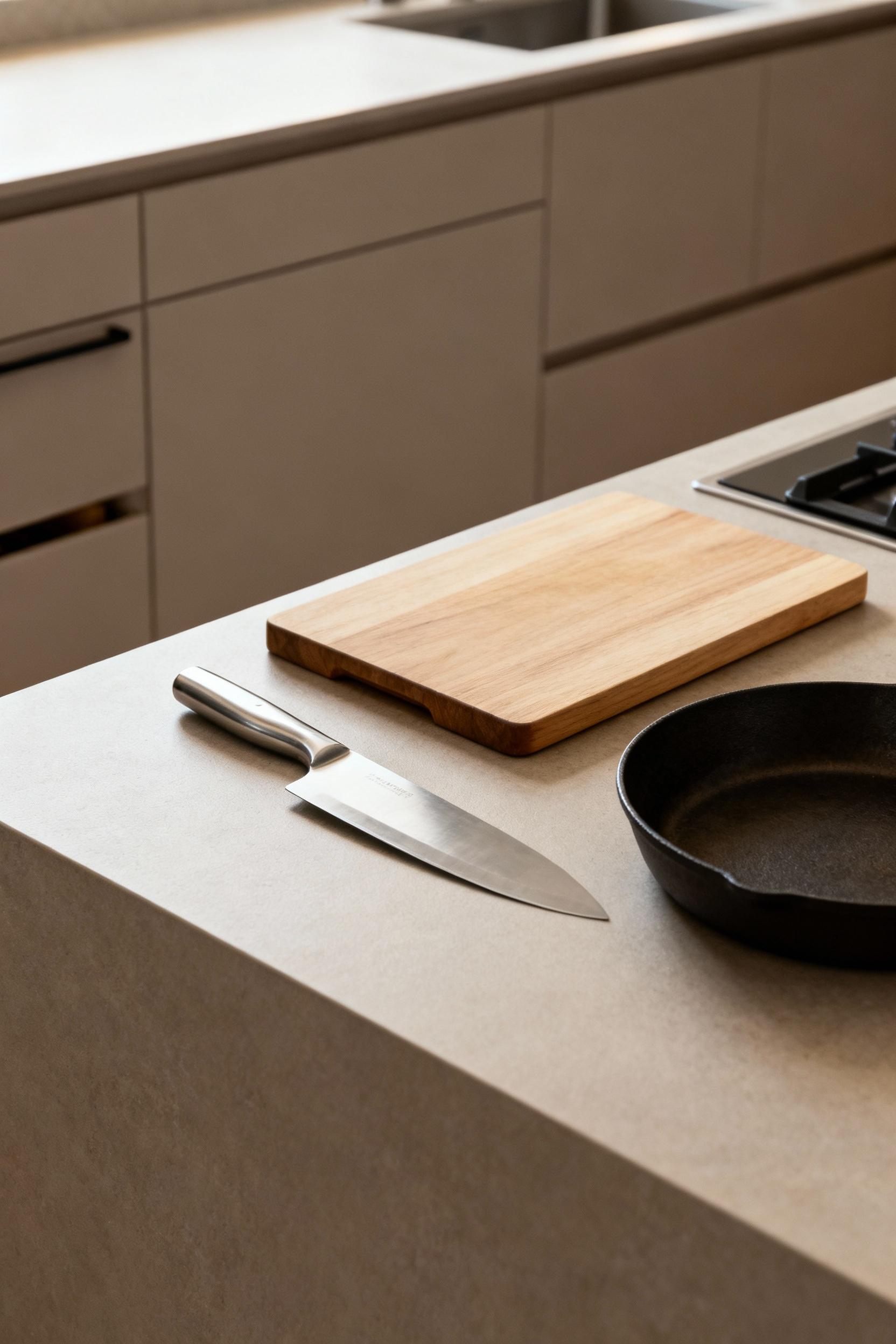
This begins with valuing resilience and timelessness. Consider tools crafted from natural, durable materials—sustainable wood, forged steel, high-grade ceramics. These materials carry an earthiness, a warmth that connects us to the primal act of creation. When every tool is a cherished companion, its rightful place in the kitchen is carefully considered. In my experience, when clients begin to curate their culinary tools, they often discover a newfound respect for the ritual of cooking itself. It becomes less a task, and more an art form.
Tactile Serenity: The Art of Material and Finish Exploration (Part 1)
Materials are not mere decoration; they orchestrate the sensory experiences that ground us in our homes. By thoughtfully engaging with the tactile and visual language of surfaces, we sculpt environments that invite a profound calm, allowing the subtleties of design to resonate deep within us.
6. Select a Restrictive Palette of Cohesive, Low-Impact Surfaces
The first step toward a kitchen imbued with lasting tranquility is embracing restraint through a highly selective material palette. This is not about starkness, but a commitment to cohesion and visual quietude. The belief here is that fewer, carefully chosen elements speak with greater power, allowing the intrinsic beauty of each material to shine without competing for attention.
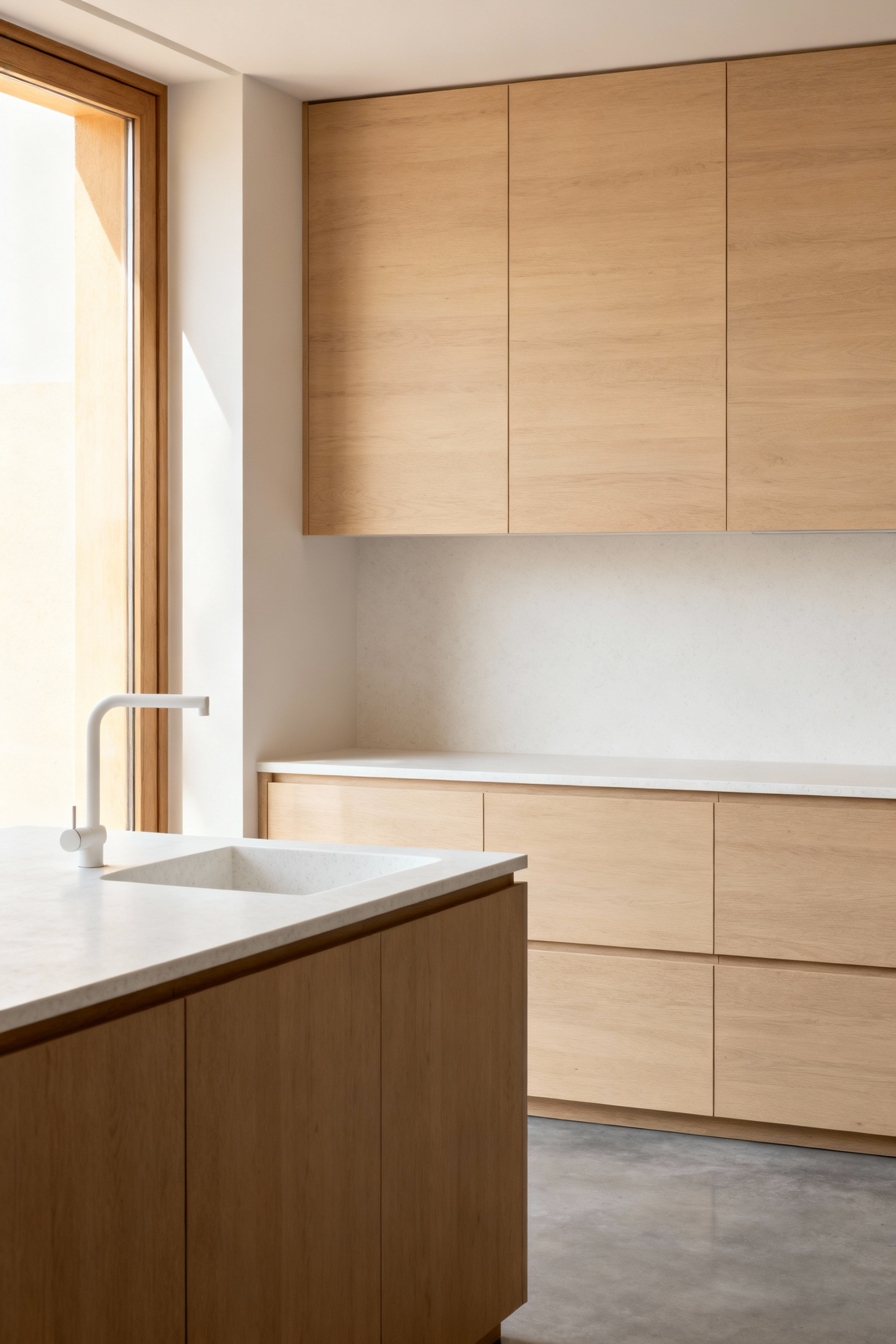
Consider the gentle qualities of natural elements: a matte-honed stone for countertops that offers a soft, diffuse reflection of light, paired with sustainably sourced wood veneers for cabinetry, allowing their subtle grain to introduce texture without business. Low-impact surfaces, such as limewash paints or plaster finishes, add a soft, organic depth that absorbs light beautifully. I often guide clients to touch and feel materials before choosing. The way a cool stone or warm wood feels under your hand contributes to the kitchen’s subconscious energy, grounding you every time you interact with it.
7. Integrate Biophilic Elements for Grounding Resonance and Natural Calm
Our innate human connection to the natural world—biophilia—is a powerful anchor in designing minimalist kitchen layouts that nurture well-being. It’s an acknowledgment that our bodies and minds respond positively to the patterns and presence of nature, reducing stress and enhancing our sense of vitality. This is about integrating natural elements with purpose to foster grounding and calm.
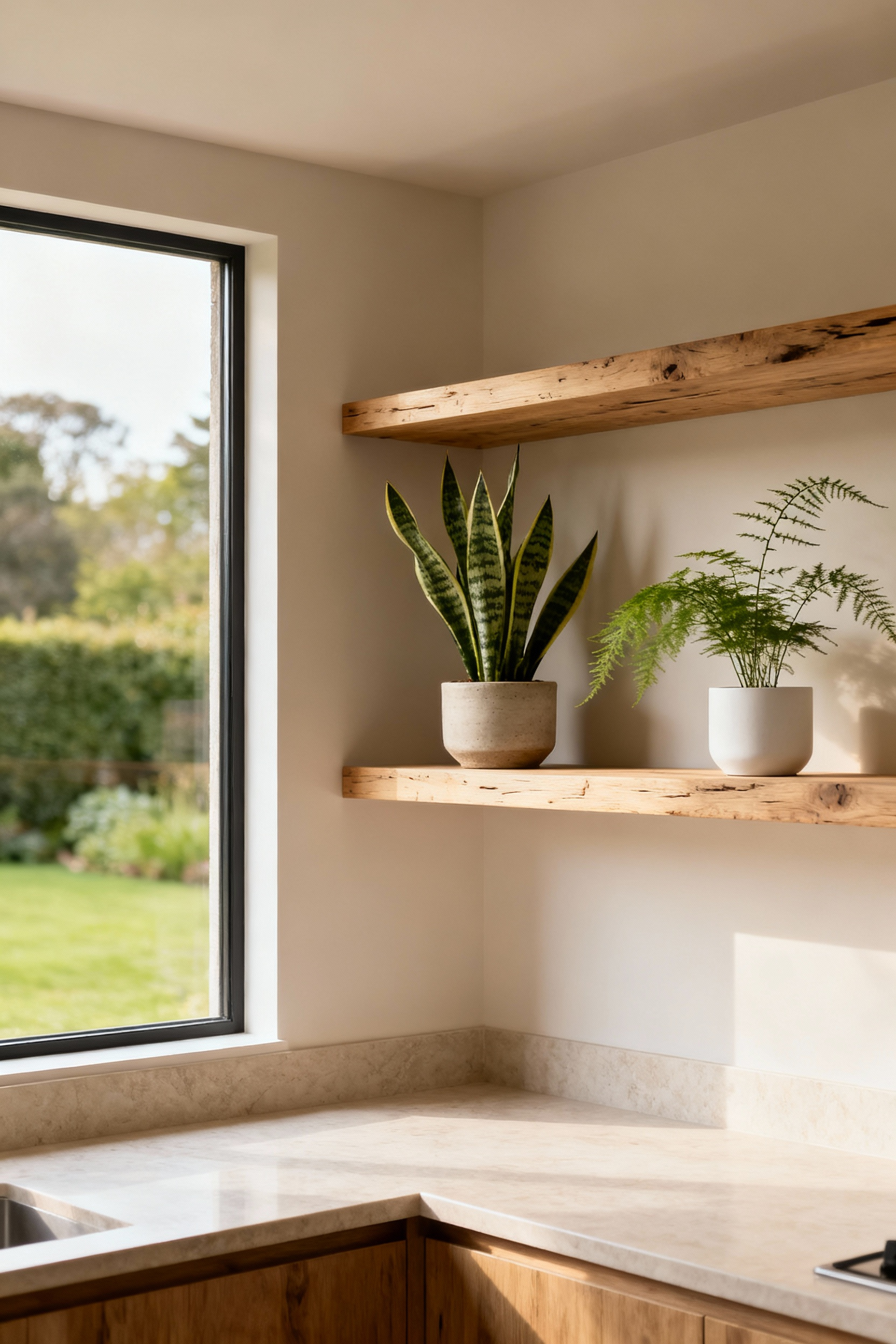
This is more than just a potted plant. It’s about incorporating raw, unprocessed wood, natural stone with its beautiful imperfections, or even just maximizing natural light through thoughtfully placed windows. It’s about creating clear sightlines to the trees outside or bringing in fresh herbs on a sunlit sill. This approach transforms a functional space into one that nourishes the spirit, reminding us of our connection to the world outside our walls and imbuing the kitchen with an organic warmth.
8. Leverage Reflective Finishes for Amplified Light and Perceived Spatial Expansion
Within minimalist kitchen layouts, the thoughtful use of reflective finishes can be transformative. It’s about harnessing and amplifying light to create an expanded, airy quality. This principle recognizes that space isn’t just about square footage, but about how light interacts with surfaces to create a feeling of openness.
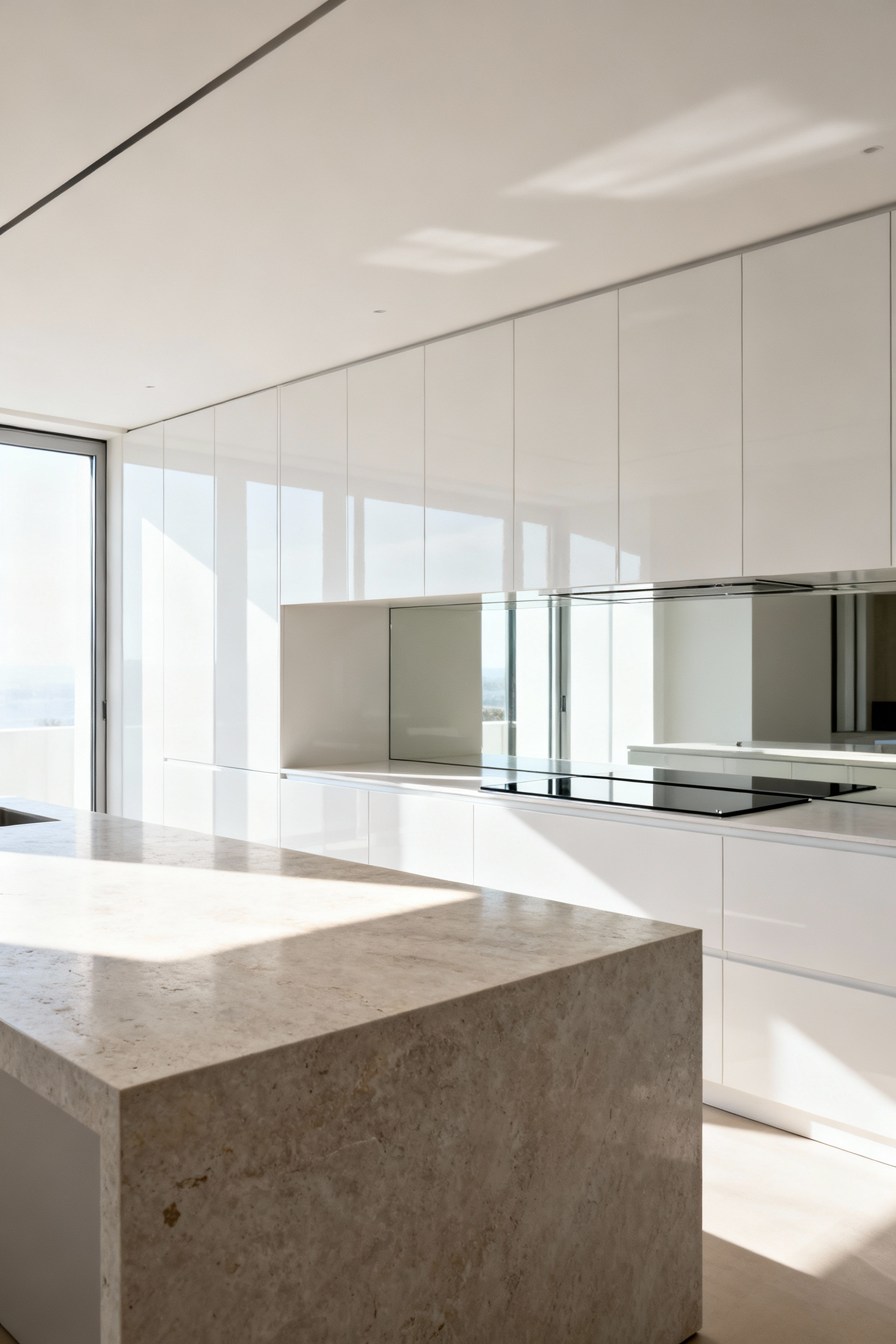
This doesn’t mean high-gloss everything. It could be the subtle sheen of polished stainless steel appliances, a backsplash of handmade zellige tiles that scatter light beautifully, or even a polished concrete floor that reflects the sky. A single, large pane of antique mirrored glass as a backsplash can amplify light and create an illusion of depth, effectively expanding the feel of the room. A brighter, airier kitchen feels more uplifting and less confining, fostering a sense of freedom and lightness that directly impacts our well-being.
9. Employ Integrated Appliances and Hidden Fixtures for Visual Continuity
The pursuit of visual continuity—an unbroken flow of form and surface—is a cornerstone of sophisticated minimalist kitchen layouts. This principle allows functional elements to recede, enabling the intrinsic beauty of the space itself to emerge. The intentional ‘disappearance’ of appliances creates an environment of profound calm and uncluttered clarity.
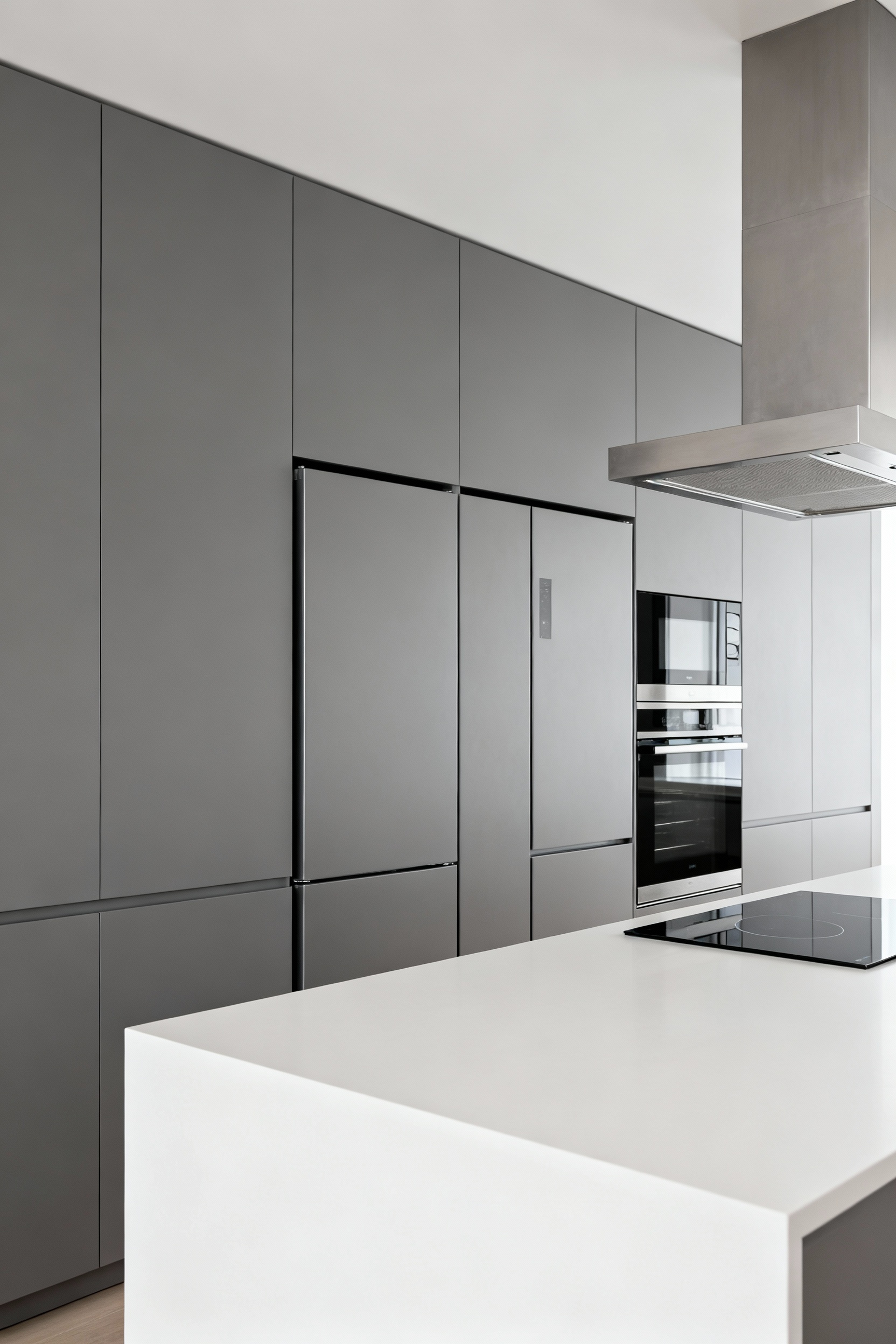
This involves custom-paneled refrigerators and dishwashers that seamlessly blend with cabinetry. Induction cooktops can sit flush with the countertop, while ventilation hoods are cleverly concealed within overhead joinery. Handles are often eliminated in favor of touch-latch systems. This thoughtful integration dramatically reduces visual distraction, allowing the kitchen’s architecture to shine. It creates an environment that encourages mindfulness, where the focus shifts from managing objects to the joyful experience of simply being.
Tactile Serenity: The Art of Material and Finish Exploration (Part 2)
In the quest for a restorative kitchen, our journey continues into the very fabric of our surroundings. This is where we explore how considered material choices lay the groundwork for a space that not only functions flawlessly but also nourishes the spirit with every touch.
10. Choose Resilient, Ultra-Low Maintenance Materials for Effortless Purity
The essence of minimalist living is a profound liberation from the superfluous. In the kitchen, this philosophy extends to the very surfaces we touch. A truly harmonious kitchen is one that asks little of you in terms of upkeep, offering a pervasive sense of effortless purity. The constant demand for maintenance can be a source of unseen friction, eroding the tranquility we seek.
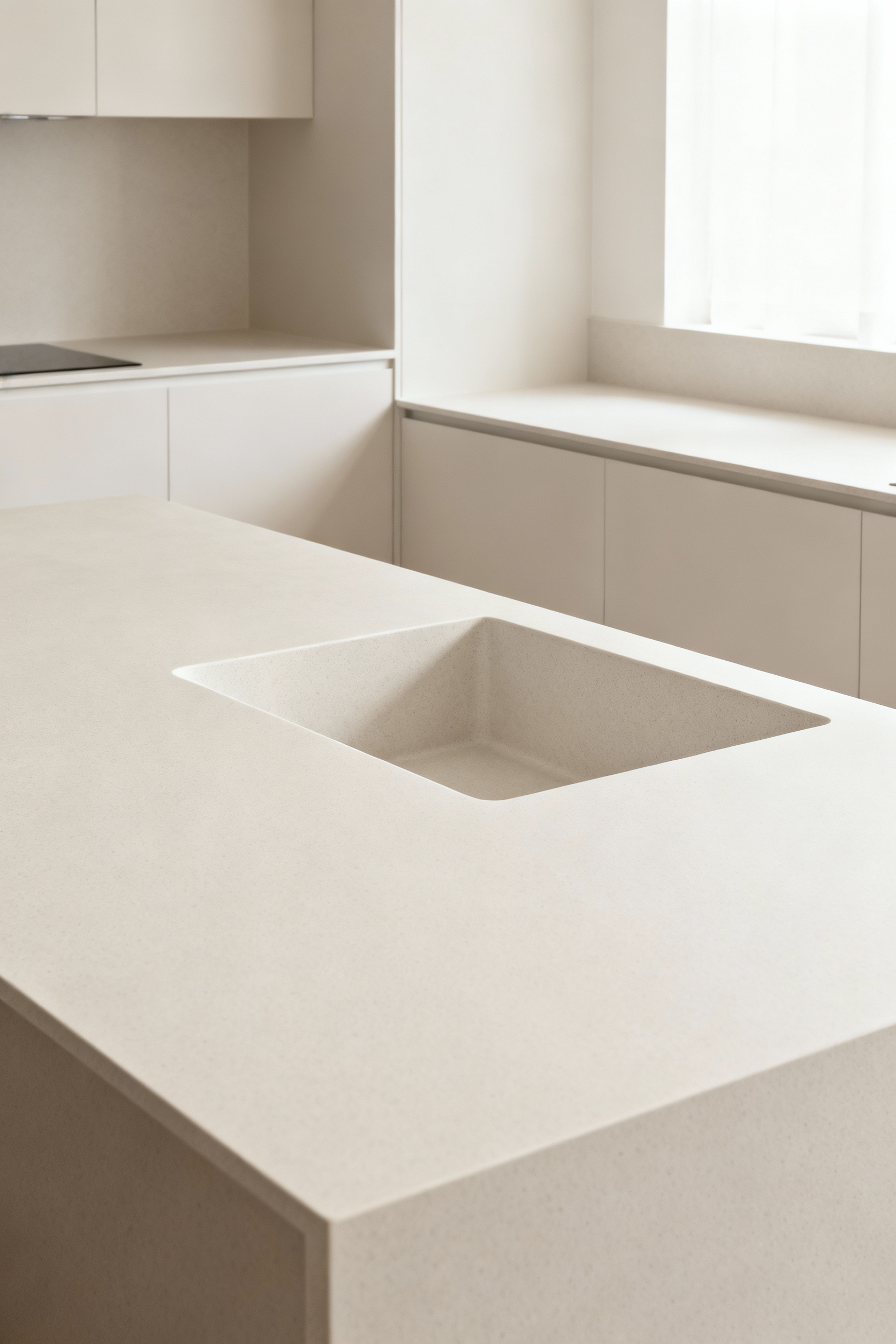
By choosing materials celebrated for their innate strength and resistance to daily life—sintered stone, high-quality quartz, stainless steel, large-format porcelain—we invest in a persistent state of calm. From my work in holistic home design, I’ve learned that a space that asks little of you in return gives the most back in the form of peace and mental energy. A kitchen that remains pristine with minimal effort intrinsically supports an elevated sense of well-being, allowing the inherent calm of the space to permeate your spirit.
Architecting Uninterrupted Functionality: Strategic Spatial Application (Part 1)
In the pursuit of tranquility, the intentional architecting of space becomes paramount. This section delves into how strategic choices can transform a kitchen from merely functional to a sanctuary of uninterrupted well-being, where every element serves a purpose without visual discord.
11. Design Bespoke Joinery for Precisely Configured Containment and Flow
At the core of a serene kitchen is the principle of inherent order, a silent acknowledgment that every item has a rightful, designated place. This ideal finds its concrete expression in bespoke joinery. Instead of standard boxes, custom cabinetry is an extension of the room’s architecture, meticulously conceived to house precisely what is needed, and nothing more.
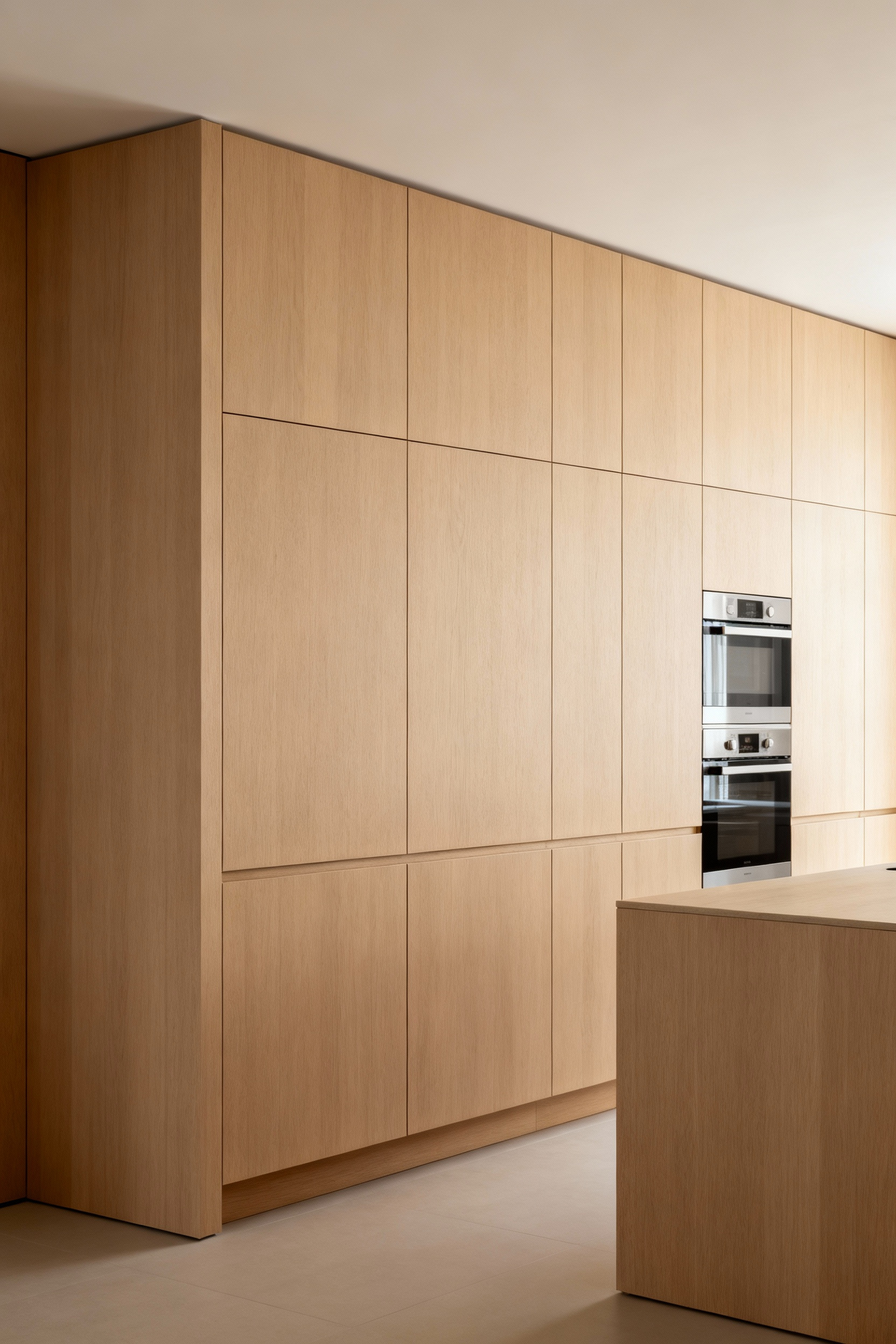
This bespoke approach allows for a granular consideration of how each tool and dish will be contained, preventing visual clutter before it can even begin. It might be a coffee station that appears only when in use, or waste and recycling solutions integrated into multi-compartment drawers. The flow through the kitchen becomes an uninhibited dance. This architectural discipline within minimalist kitchen layouts promotes an intentional way of living, where every culinary endeavor is underscored by an atmosphere of calm efficiency.
12. Implement Concealed Storage Systems for a Visually Unencumbered Aesthetic
Building on bespoke joinery, concealed storage elevates the pursuit of an unencumbered aesthetic to an art form. The philosophy here is the profound psychological calm that comes from visual whitespace, an environment where the eyes can rest. It is an intentional act of removing any element that could distract from the overarching sense of serenity.
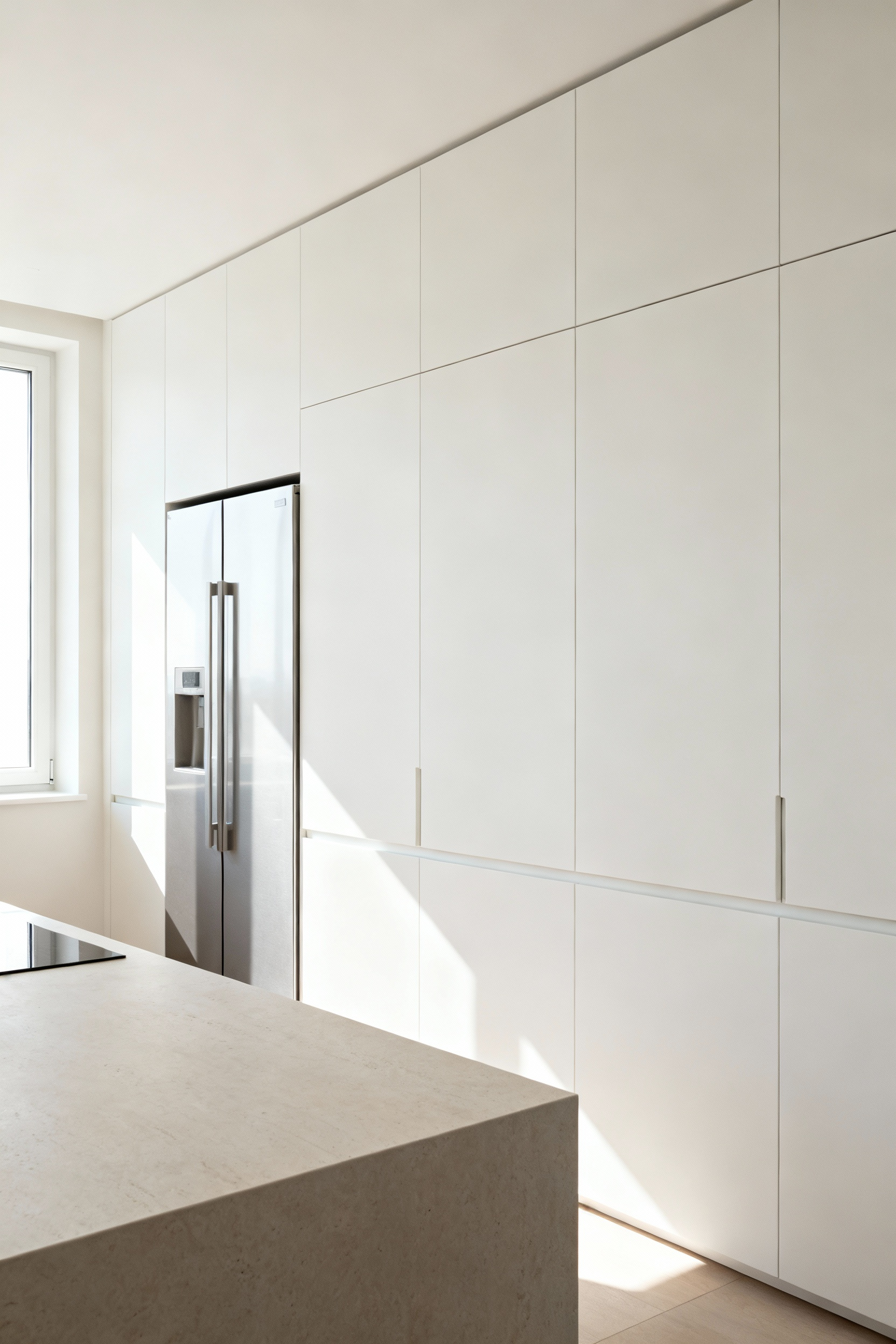
This manifests in appliance garages where small machines are tucked away, or walk-in pantries that seem to vanish into the wall when closed. Push-to-open and soft-close hardware create a pristine, handleless appearance. This architectural ingenuity transforms everyday functional necessities into discreet elements that contribute to the kitchen’s quiet beauty. It creates an atmosphere conducive to mindfulness, allowing one to engage fully with the tasks at hand or simply savor a moment of peace.
13. Optimize Layered Task Lighting for Focused Utility and Ambiance Creation
The subtle manipulation of light is a cornerstone in creating a kitchen that transcends mere function. Philosophically, light is not just illumination; it is a constructor of mood, a guide for focus, and a sculptor of form. Layered lighting creates a dynamic environment that transitions from stimulating utility for tasks to calming ambiance for relaxation.
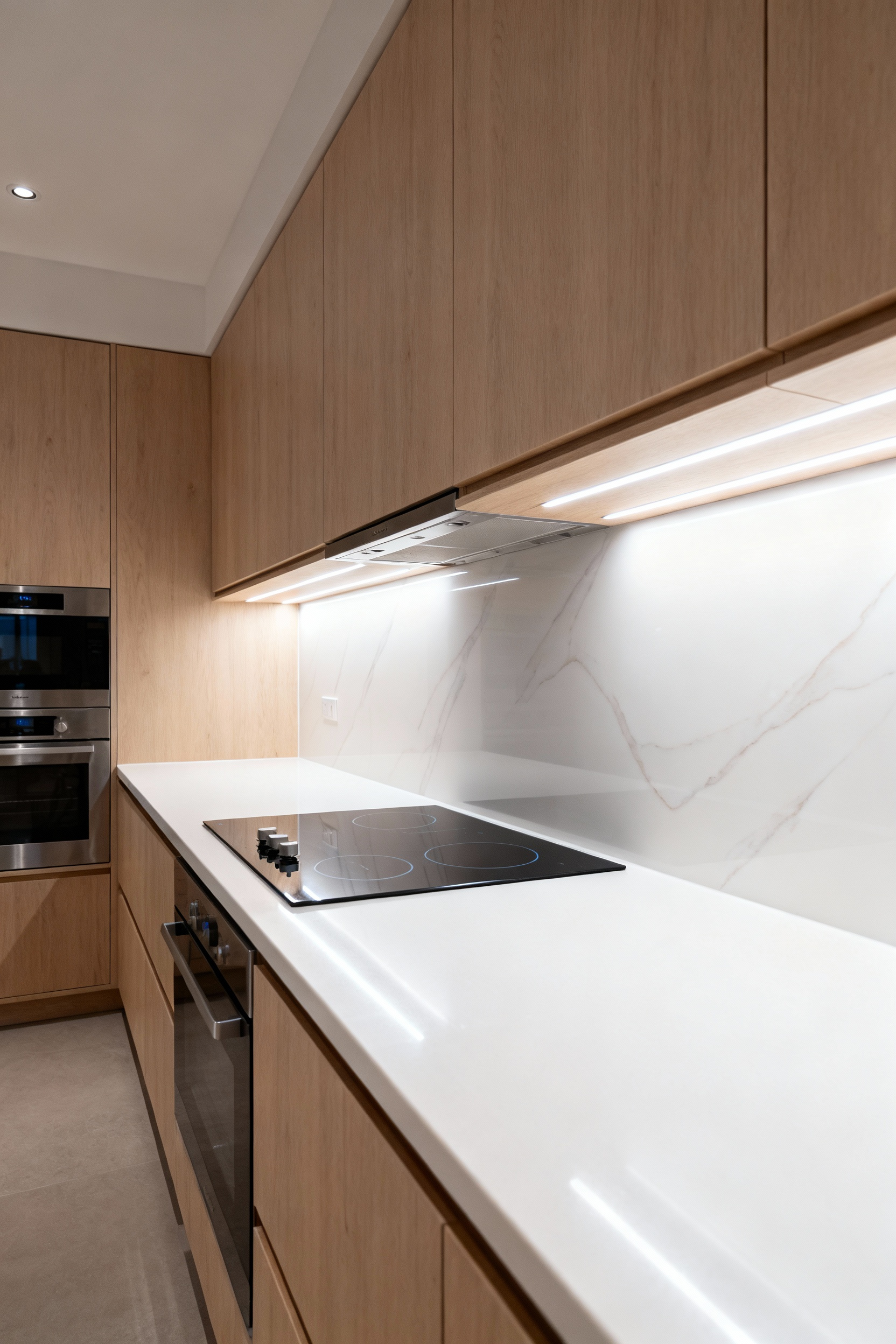
Years of creating healing environments have taught me that a well-placed light can do more for a person’s mood than almost any other design element. This means direct, shadow-reducing light over prep areas, the hob, and the sink. Then, soft ambient light from recessed or indirect fixtures sets a gentle overall tone. Finally, a single, beautiful accent light might highlight a piece of art or a vase of flowers. Dimmers on all layers are essential, allowing you to curate the mood and align your space with your inner state.
14. Harmonize the Kitchen Island as a Multifunctional, Integrated Anchor
The kitchen island, in a minimalist kitchen layout, becomes a philosophical anchor—a nexus of function, community, and understated elegance. Its design embodies the principle that central elements should be inherently adaptable, providing robust utility without visually dominating the space. It’s a gravitational point that is both powerful and subtle.
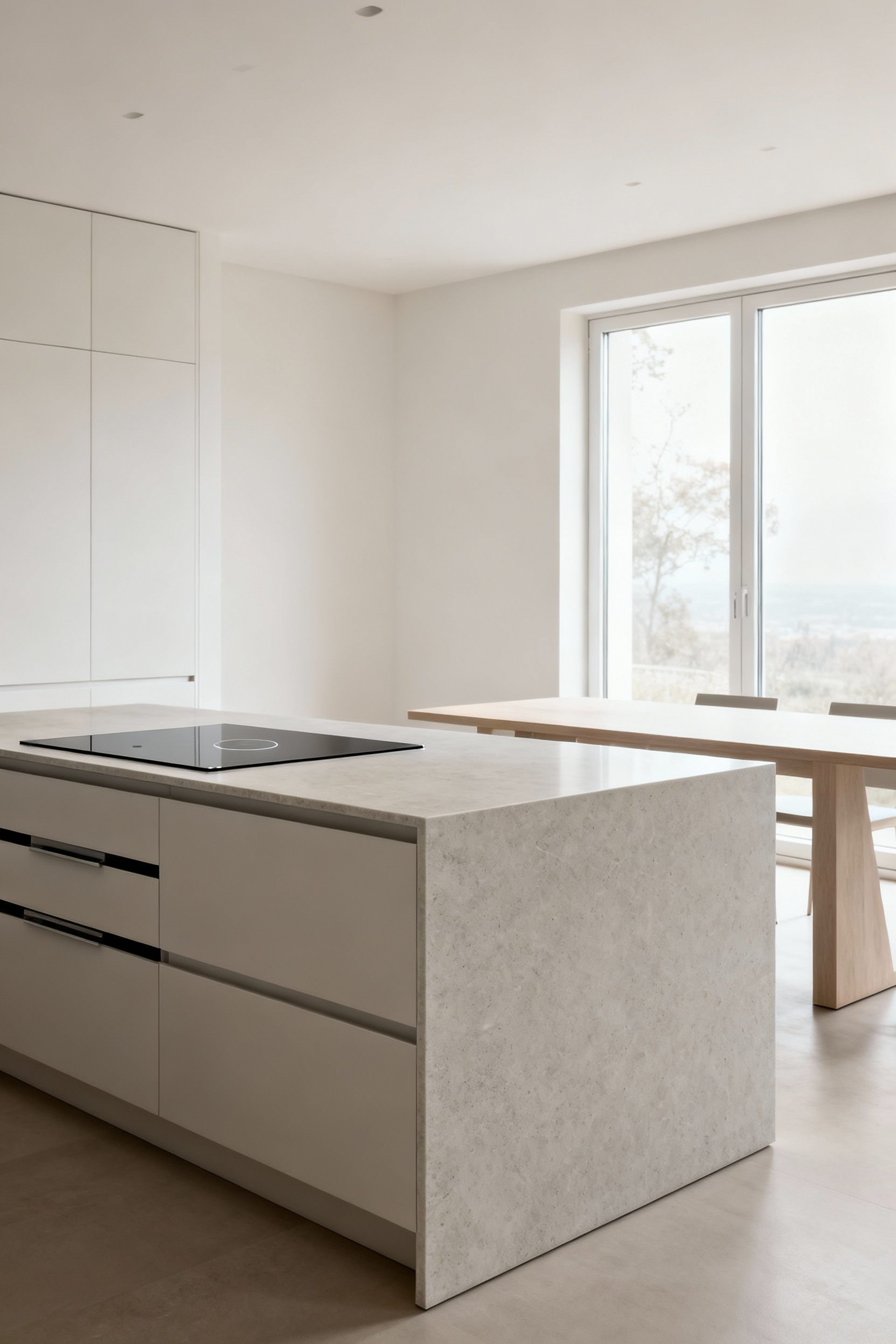
It might be a beautiful slab of honed stone or solid timber, with an integrated flush-mounted cooktop or a discreet prep sink. One side might feature tucked-away seating for conversation, while the other houses deep drawers for pots and pans. A well-designed minimalist kitchen island becomes a physical manifestation of an intentional life—a quiet hub of activity and connection that grounds the space, contributing significantly to a sense of clarity, efficiency, and well-being.
Architecting Uninterrupted Functionality: Strategic Spatial Application (Part 2)
Building upon foundational elements, this section explores how a deliberate approach to spatial application can cultivate an environment of seamless tranquility and enhanced well-being, transforming the mundane into moments of serene efficiency.
15. Integrate Waste Management Discreetly Within Cabinetry Design
In the pursuit of serene minimalist kitchen layouts, few elements demand such meticulous concealment as waste management. The visible presence of bins, no matter how stylish, inherently disrupts the visual and energetic purity of a space designed for nourishment. The goal is to contain the less appealing necessities of daily life within an integrated, harmonious framework that supports mental clarity.
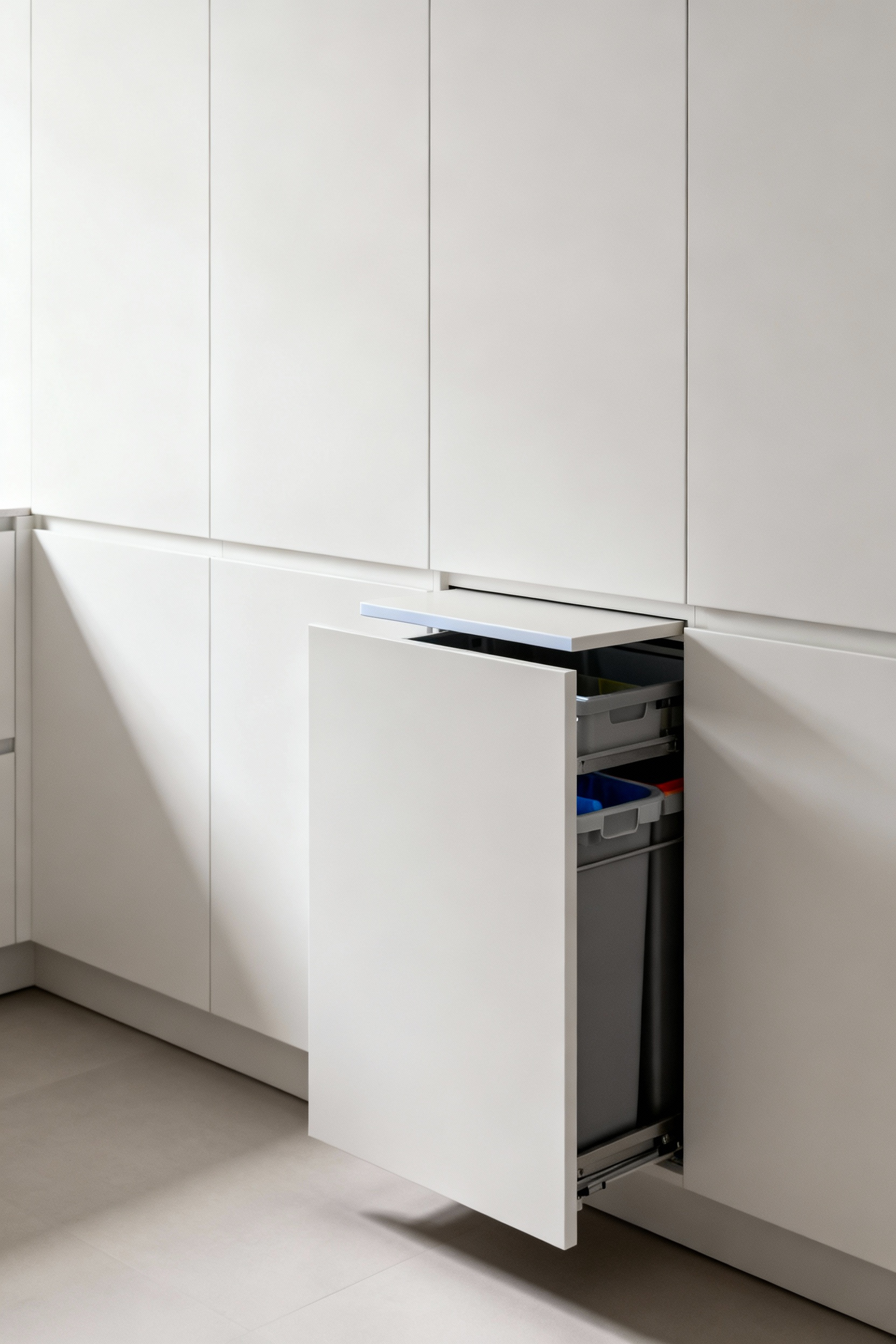
This is best achieved with dedicated pull-out systems within existing cabinetry, often with multiple compartments for refuse, recycling, and compost. Placed near primary prep zones, this streamlines the flow from creation to cleanup. I’ve seen this play out time and again: when waste management is thoughtfully hidden, the kitchen’s energy immediately feels cleaner and more uplifting. It’s a small change with a profound energetic impact, removing a significant source of visual noise and allowing the mind to rest in a pristine space.
Sustaining Serenity: Integrating the Minimalist Kitchen into Lifestyle (Part 1)
The soul of a minimalist kitchen blossoms when its design is woven into the fabric of daily living. This section explores how our conscious interaction with this intentional space can sustain a harmonious atmosphere, fostering well-being that permeates beyond its physical boundaries.
16. Cultivate a Mindful Ritual of Daily Decluttering for Lasting Order
The anchor of enduring kitchen tranquility lies in a daily ritual of resetting the space. It’s not a chore, but a mindful practice—a gentle sweep of energy that clears the stage for clarity. This can be a moment to connect with your surroundings: the feeling of a clean, cool countertop, the quiet click of a cabinet door, the scent of a natural cleaning spray.
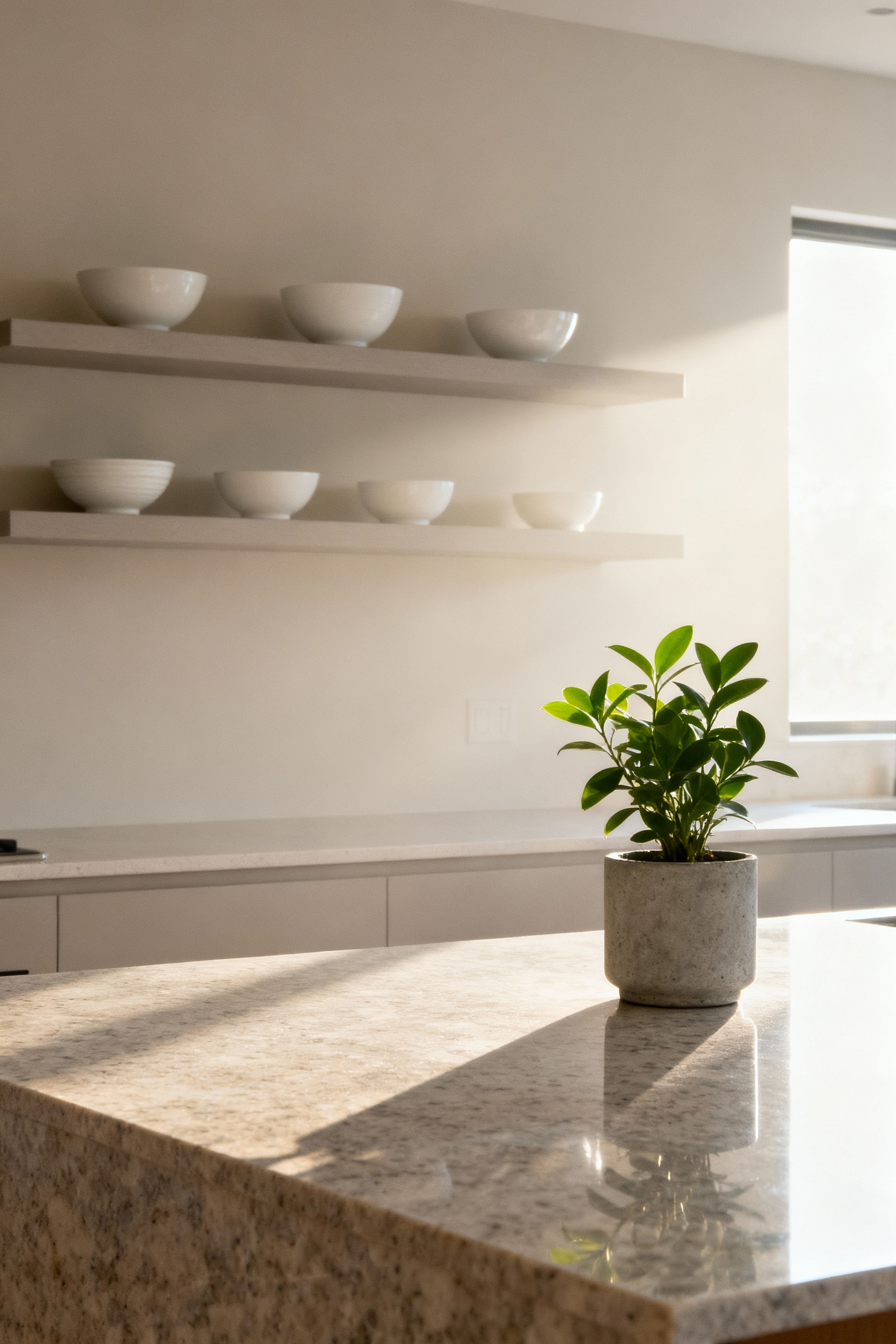
This daily rhythm ensures your kitchen remains perpetually prepared, a sanctuary ready for creation or repose. The lifestyle integration manifests as a profound liberation from the cognitive burden of disarray. By dedicating mere moments each day to this ritual, you establish an unwavering foundation for order, inviting a deeper sense of peace into your life.
17. Adopt a ‘One-In, One-Out’ Principle for Curated Inventory Management
This principle isn’t restrictive but a liberating framework for conscious living. It embodies the wisdom of sufficiency: recognizing that abundance is found not in accumulation, but in having precisely what serves you. When a new item enters your kitchen, it necessitates a thoughtful farewell to an existing one.
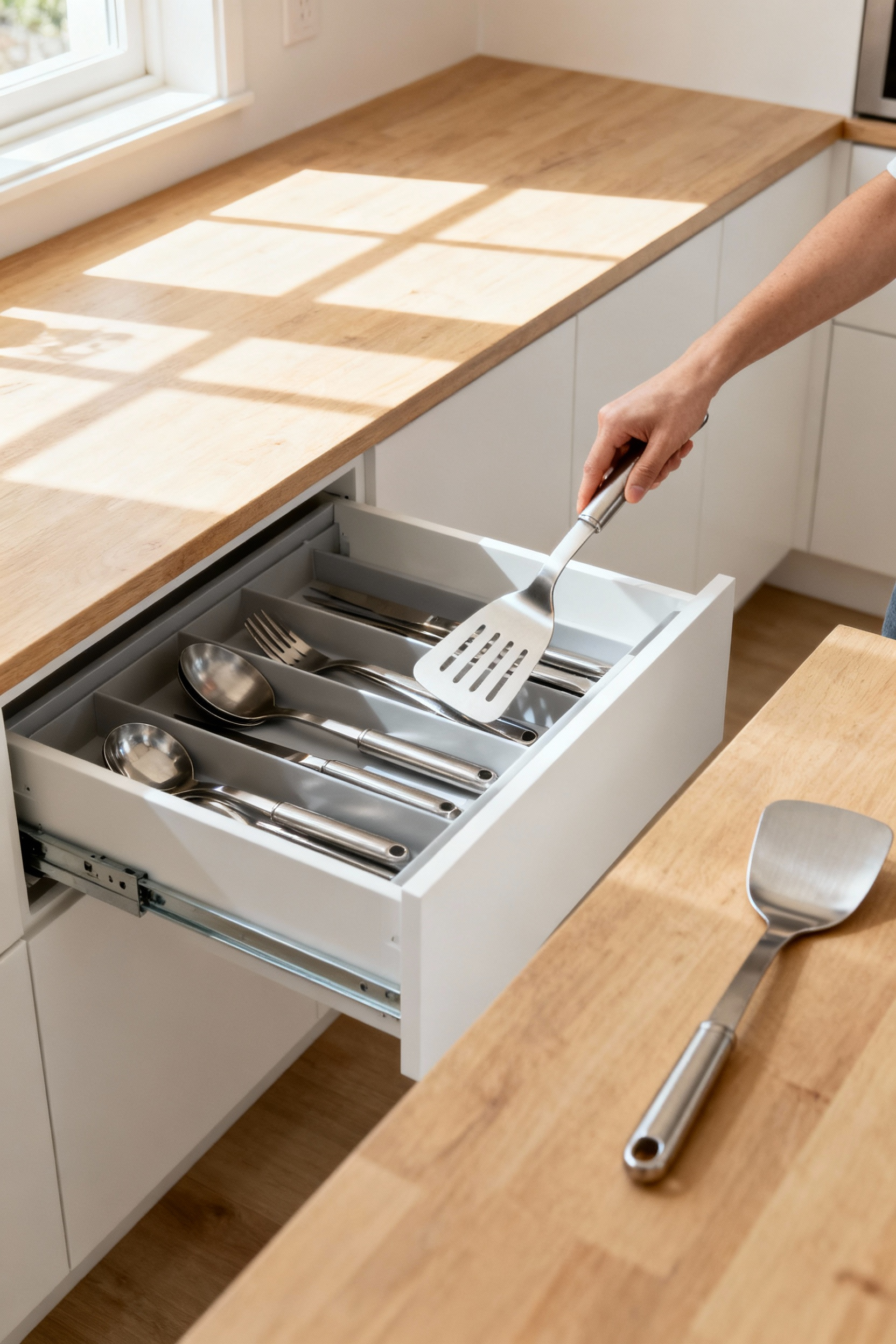
This encourages an intimate understanding of your kitchen’s contents. A question I encourage my clients to ask is, ‘Does this object support the life I want to live in this space?’ It turns curation into an act of self-care. This practice inherently guards against the creep of clutter into cupboards and drawers, ensuring that every item has its rightful, accessible place. It transforms shopping into an intentional act, maintaining harmony with what you truly need and cherish.
18. Personalize with Purposeful, Curated Artistry Rather Than Excess Adornment
Minimalism doesn’t mean a lack of personality. Rather than adorning with an abundance of decorative items, a minimalist kitchen layout invites us to personalize with purposeful, curated artistry. The idea is that true beauty resides in intention and narrative, where each chosen piece tells a story or evokes a specific feeling.
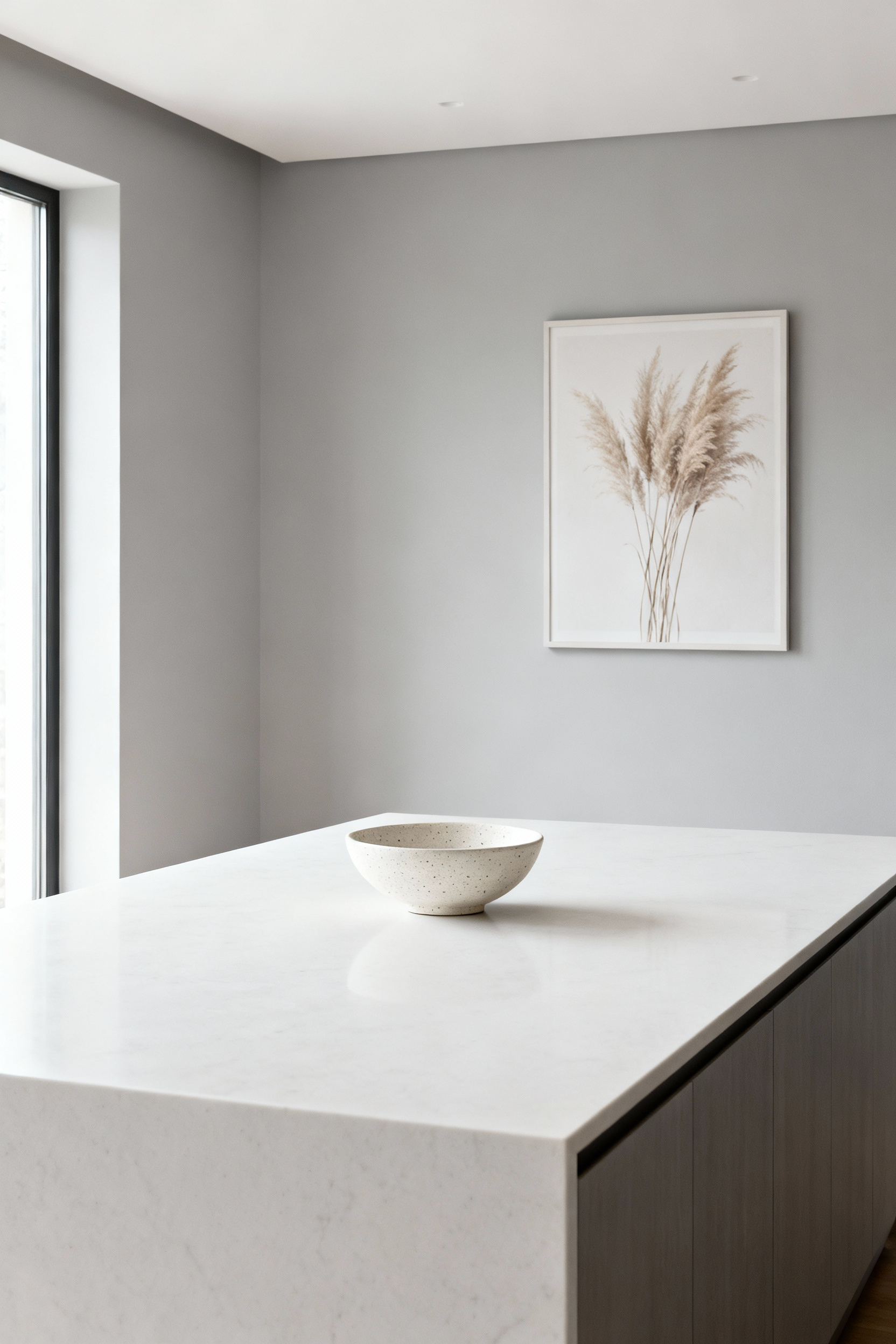
This might be a single hand-thrown ceramic vase with a unique glaze, a beautiful wooden cutting board leaning against the wall, or a piece of framed art that draws the eye without demanding attention. The open space around these items is as important as the items themselves, amplifying their impact. This deliberate curation prevents visual noise, offering a soothing backdrop to your daily life and transforming your kitchen into a gallery of artifacts that truly elevate your spirit.
19. Design for Intuitive Navigation and Reduced Cognitive Effort in Daily Use
The final imperative for sustaining serenity is to design your minimalist kitchen layout for intuitive navigation. The goal is to create an environment where tasks flow seamlessly, almost without conscious thought. This is about psychological ergonomics—how the arrangement of a space can profoundly influence our mental load.
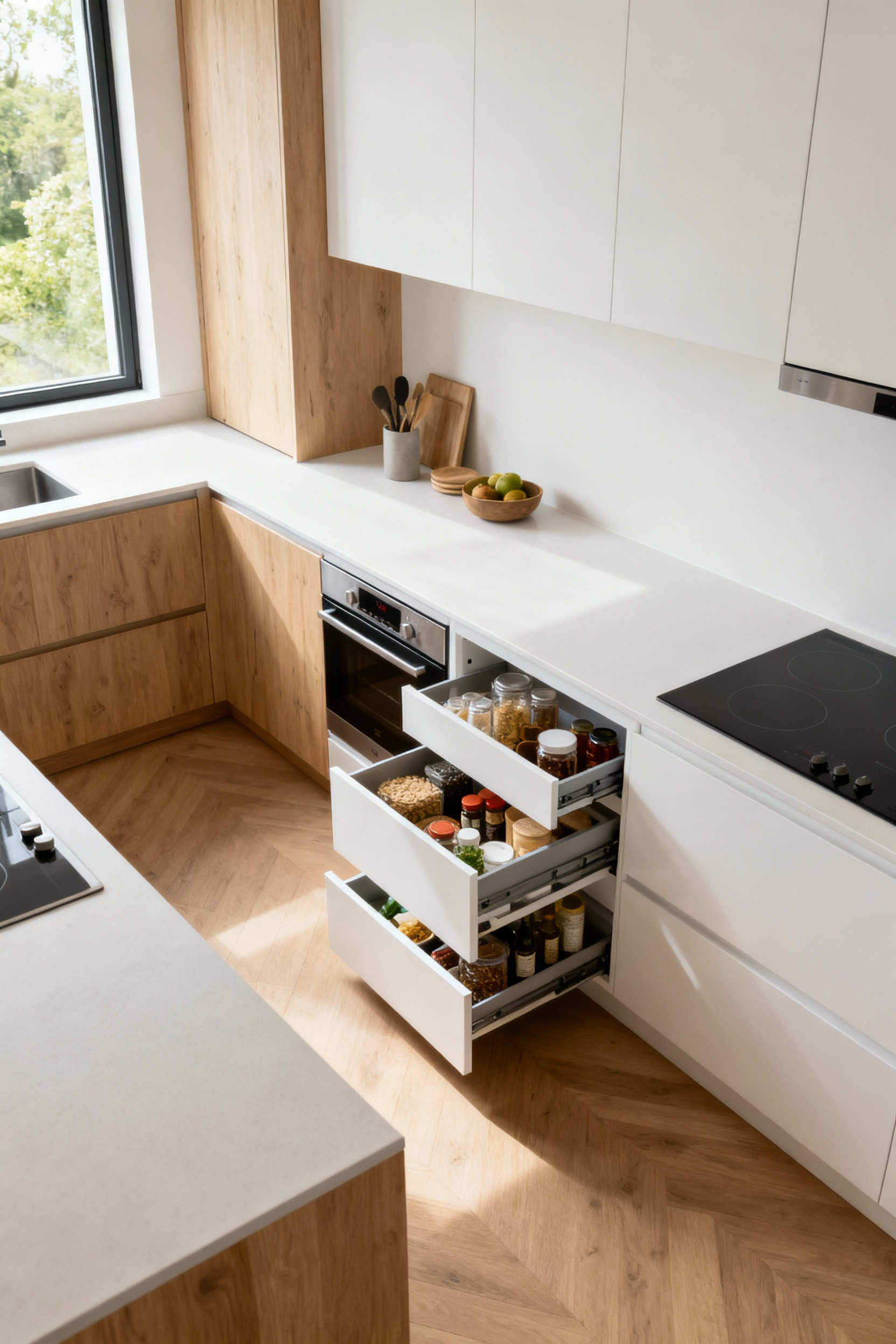
Frequently used items are placed within arm’s reach of where they are used—spices near the stove, knives and boards near the prep area. This thoughtful ‘zone planning’ preempts the need for constant searching or excessive movement. By minimizing the cognitive effort required to simply use your kitchen, you liberate mental resources, reduce daily stress, and increase moments of calm presence. Your kitchen becomes a space that actively supports your mental and emotional well-being.
Sustaining Serenity: Integrating the Minimalist Kitchen into Lifestyle (Part 2)
Here, we transition from tangible design elements to the profound, almost spiritual, integration of the minimalist kitchen into a life of elevated consciousness. It is within these cultivated spaces that true serenity is not merely observed, but actively lived and sustained.
20. Foster a Sanctuary Mindset: Prioritizing Culinary Mindfulness and Connection
The minimalist kitchen, at its deepest expression, becomes an anchor for a sanctuary mindset. It invites us to view our daily culinary acts not as chores, but as potent rituals of self-nourishment and connection. In my practice, I refer to this as creating a ‘sanctuary space.’ It’s about consciously designating a room not just for its function, but for its ability to restore your spirit.
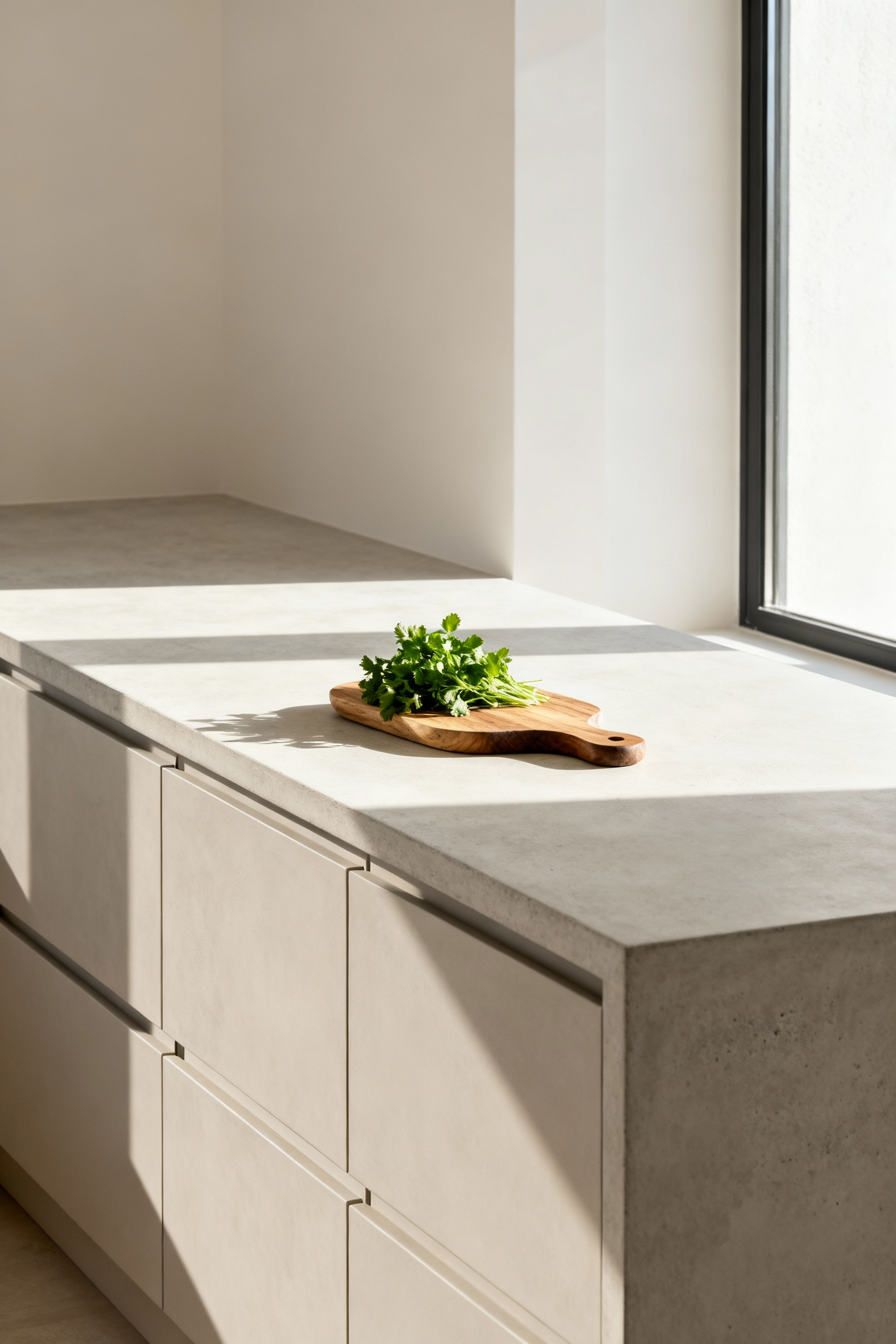
The streamlined aesthetic inherent in minimalist kitchen layouts is a deliberate reduction of visual and energetic clutter, designed to liberate the mind from distraction. Pristine surfaces and concealed storage sculpt a mental spaciousness, inviting you to engage with the act of creation without impedance. Within this tranquil framework, every choice—from the uncluttered countertops to the restrained palette—converges to create a haven where the act of cooking transcends necessity to become an act of profound self-care, shared connection, and unhurried joy.
Conclusion
As we conclude our journey, it becomes clear that designing minimalist kitchen layouts is a philosophical act. It is a conscious decision to craft an environment that actively nurtures inner tranquility. Each principle serves not merely as a guideline, but as a silent guardian of our peace, orchestrating a subtle harmony in the heart of our homes.
The path we have explored reveals a movement from external simplicity to internal resonance. Uncluttered surfaces can mirror uncluttered minds; intelligent storage can liberate our focus. These are not just spatial arrangements; they are invitations to a more deliberate existence. Allow these insights to be a gentle guide for introspection. Consider how each element can transform your space, inviting an enriched sense of calm into your daily rhythm. For in thoughtfully curating the very heart of your home, you are, in essence, curating the tranquility of your soul.
Meta Description: Transform your kitchen into a sanctuary. Discover 20 intentional elements for minimalist kitchen layouts that cultivate clarity, function, and deep well-being.