
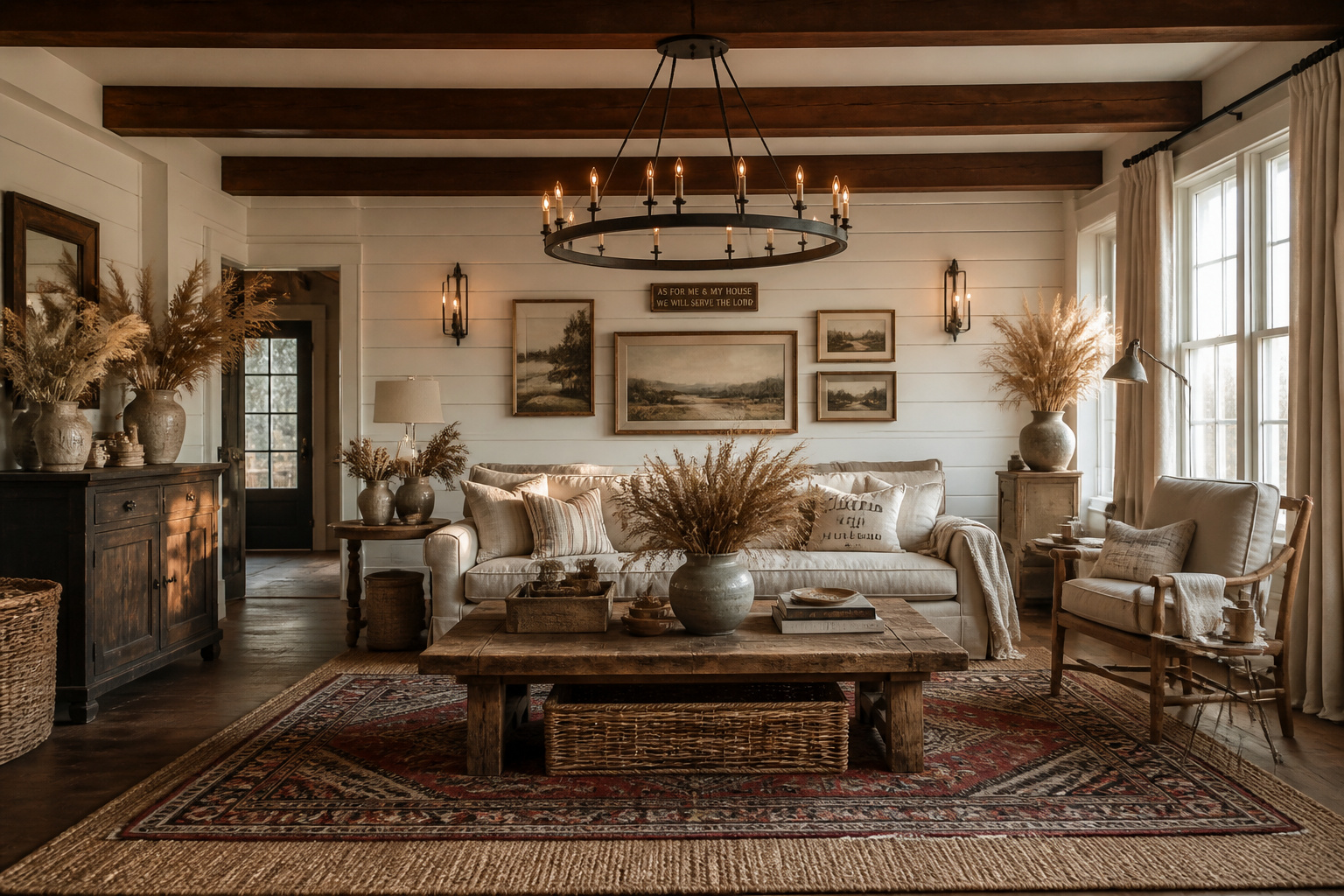
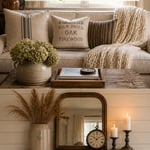
There’s a specific feeling that comes with walking into a well-done farmhouse living room. The air smells faintly of beeswax polish and old wood. A chunky linen throw is draped over a worn leather chair. A vintage crock holds dried cotton stems on the mantel. The lamp casts a warm amber pool across a jute rug that looks like it’s been there for decades. You want to sit down and stay.
I’ve spent the better part of twelve years hunting vintage pieces, restoring forgotten furniture, and helping people build rooms that feel genuinely lived-in. And what strikes me every time is how achievable that farmhouse feeling really is. You don’t need a country estate or an unlimited budget. You need the right layering, the right textures, and a little patience at a thrift store.
These 17 ideas give you specific starting points. They range from wall treatments that immediately shift a room’s character to small accessories that tie everything together.
1. Shiplap Accent Wall Behind the Sofa
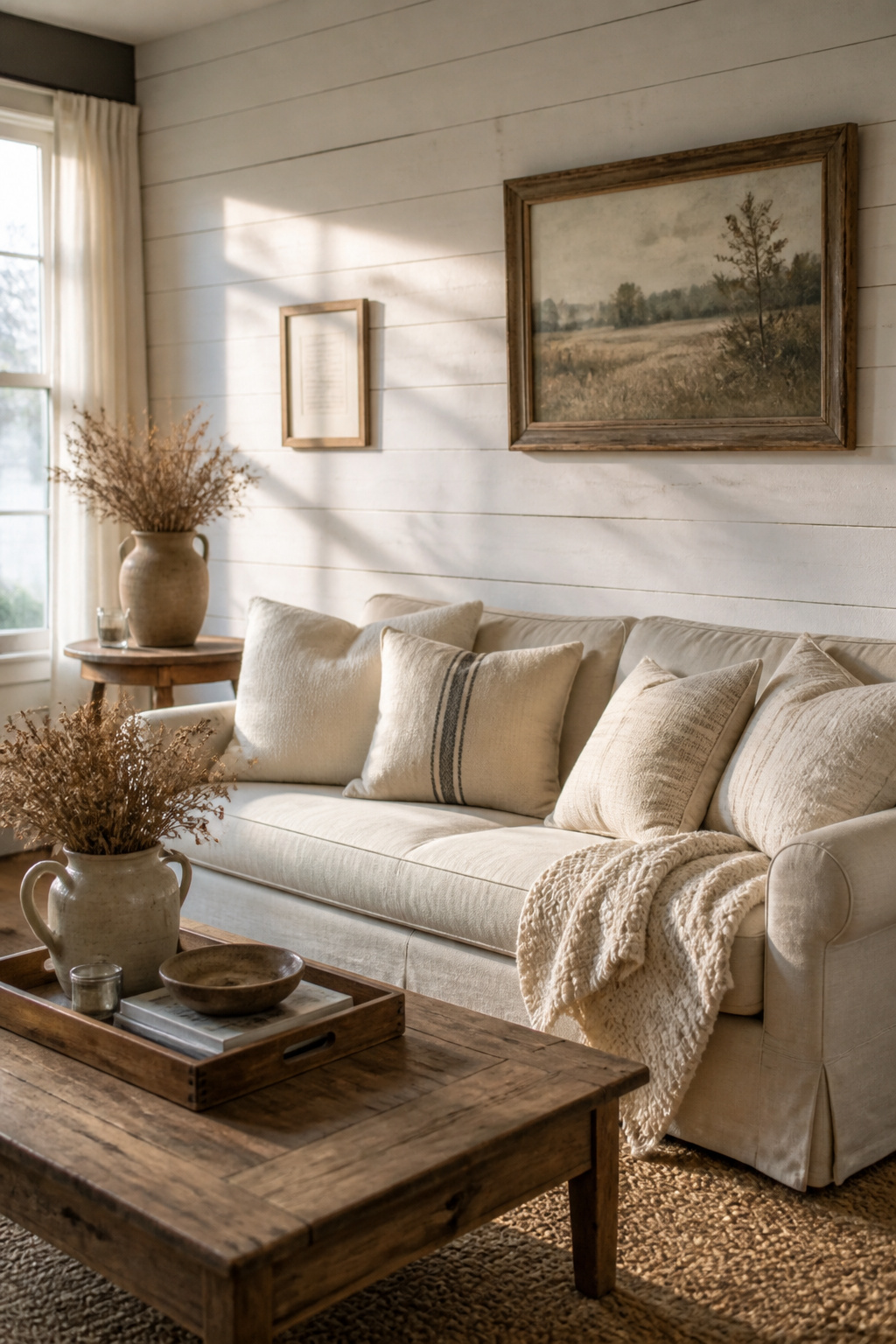
A shiplap wall does something to a room that paint alone can’t replicate. It adds dimension, warmth, and an immediately recognisable signal. The horizontal lines draw the eye across the room and make any space feel more expansive.
Why Horizontal Boards Work
Shiplap originated as a practical construction technique — boards with a small rabbet cut so they overlapped and kept out the weather. In a farmhouse living room, those origins matter. Horizontal boards create calm and groundedness that vertical panelling doesn’t quite achieve. If you’re choosing between orientations, go horizontal.
DIY vs. Pre-Primed Panels
Pine boards from a lumber yard cost $1.50–$3.00 per square foot and carry the grain variation that gives a wall its soul. Pre-primed MDF shiplap panels from Home Depot run $35–$55 per sheet — faster to install, but with less character. For a first project or a rental, they’re a sensible choice.
Paint Colour
Warm white is the most forgiving option. Benjamin Moore’s Chantilly Lace and Sherwin-Williams’ Alabaster both read bright in good light without feeling cold on an overcast day. If your room gets limited natural light, lean towards cream — Sherwin-Williams’ Antique White adds warmth without yellowing.
2. A Vintage Wood Coffee Table as the Centrepiece
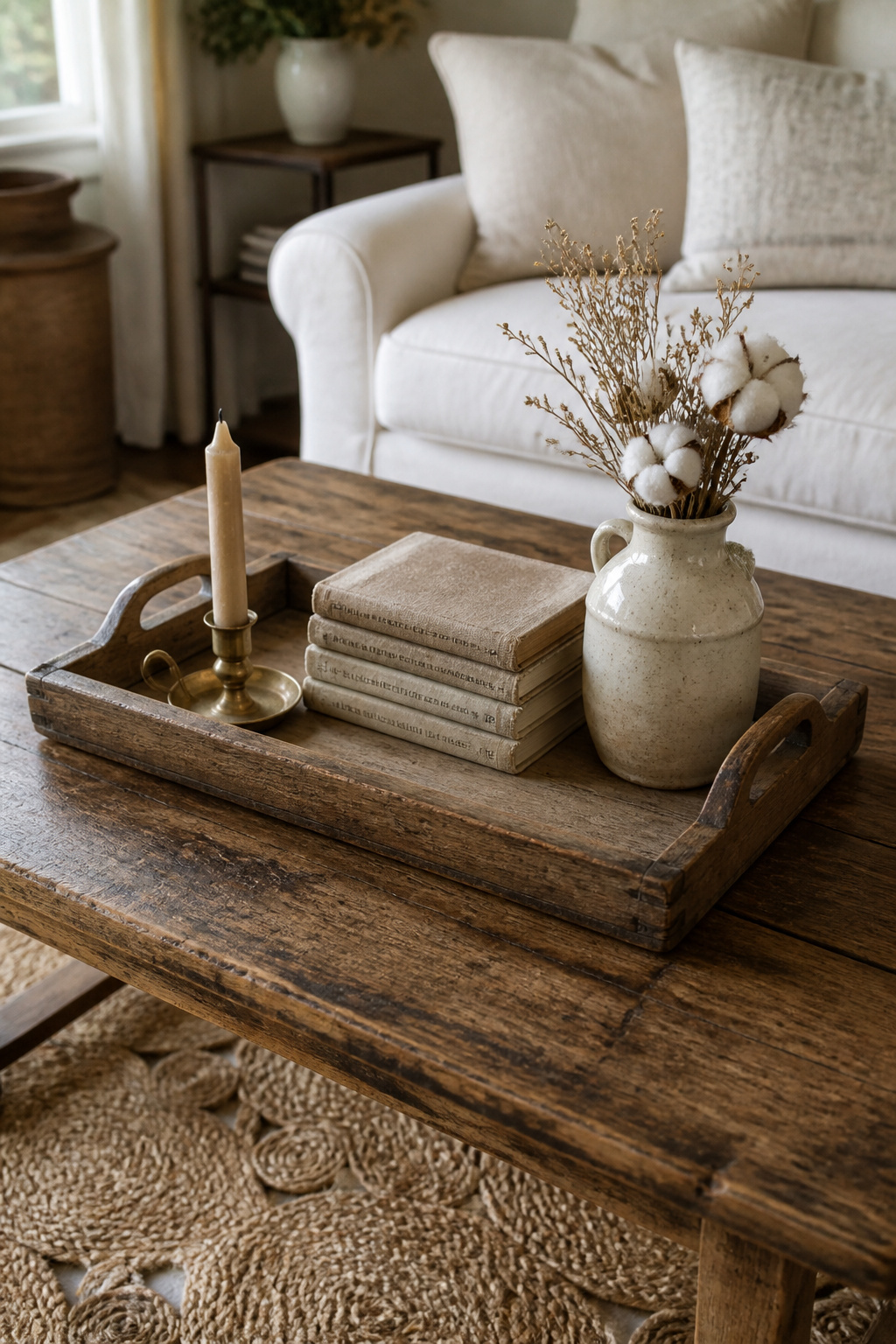
This is the piece I’d prioritise above almost anything else. The right coffee table adds patina, anchors the seating arrangement, and gives you a styling surface that evolves with the seasons. A new table with a distressed finish can work. But a genuinely old one — battered, slightly uneven, with marks that tell a story — is something else.
What to Look For at Estate Sales
Solid wood construction is non-negotiable — particleboard warps and won’t survive refinishing. Run your hand along the underside of the top; real wood has weight and grain variation. Mortise-and-tenon joinery usually indicates a quality piece. Don’t be put off by water rings or scratches — all of that can be addressed.
Refinishing vs. Leaving the Patina
My strong preference is to leave a good patina alone. A quick clean with Murphy’s Oil Soap and a coat of paste wax is often all an aged table needs. However, if the surface is sticky or flaking, a light sand with 120-grit paper followed by Danish oil will restore it without stripping the character.
Styling the Surface
A divided tray corrals the clutter and makes the table look intentional. Stack two or three books flat, add one small ceramic vessel with dried stems, and keep the arrangement to one side of the tray. Change the seasonal element — dried hydrangeas in autumn, eucalyptus in winter, wildflowers in spring — and the rest of the styling holds.
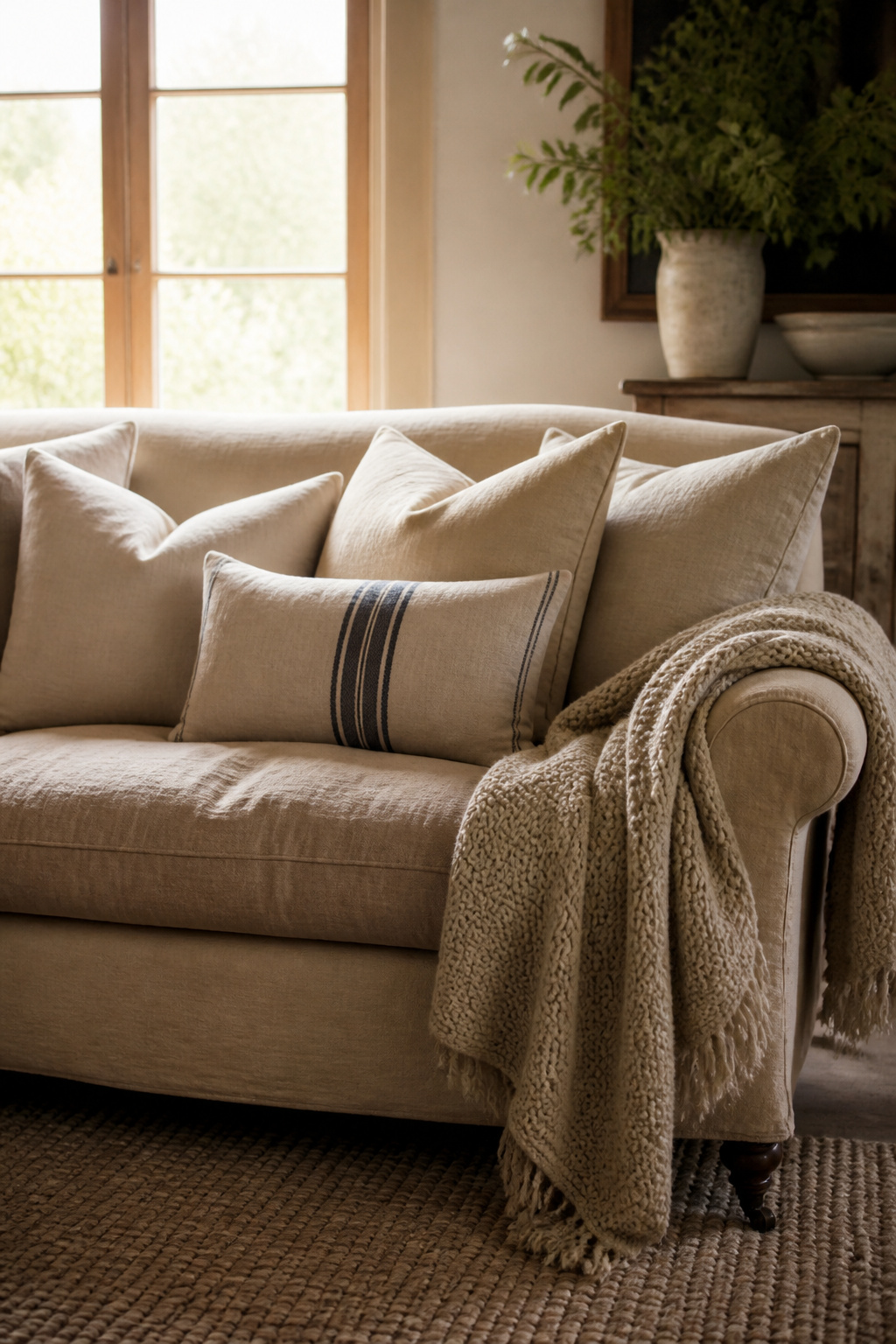
3. Linen and Grain-Sack Pillows for Texture
Pillows are the fastest way to shift a sofa from generic to farmhouse, and linen does it most reliably. It creases naturally, softens with washing, and has a subtle slub texture that feels honest in person. Pair it with grain-sack stripe fabric and you have a combination that’s been working in country interiors since before the aesthetic had a name.
Why Linen Works
Linen is woven from flax and has been a staple of European farmhouse homes for centuries. Unlike cotton or polyester blends, linen doesn’t look shiny or polished. Its slight weave irregularity gives it an organic quality that authentic farmhouse style depends on.
Grain-Sack Stripes
True antique grain sacks from French and German farms are expensive ($80–$200) and impractical for most pillow projects. Good reproductions from companies like Farmhouse Pottery or Prairie Chic ($25–$50 per cover) use the same indigo-on-natural-linen colourway. The character is in how you style it, not what’s stitched on the back.
Mixing Without Visual Chaos
Keep to three textures on a sofa at most — linen, a knit or woven stripe, and a solid cotton or wool. Hold the colour palette tight: neutral cream, natural, and one muted tone. Vary the sizes: two large squares, two standard rectangles, and one lumbar pillow across a three-seater give the arrangement depth without visual clutter.
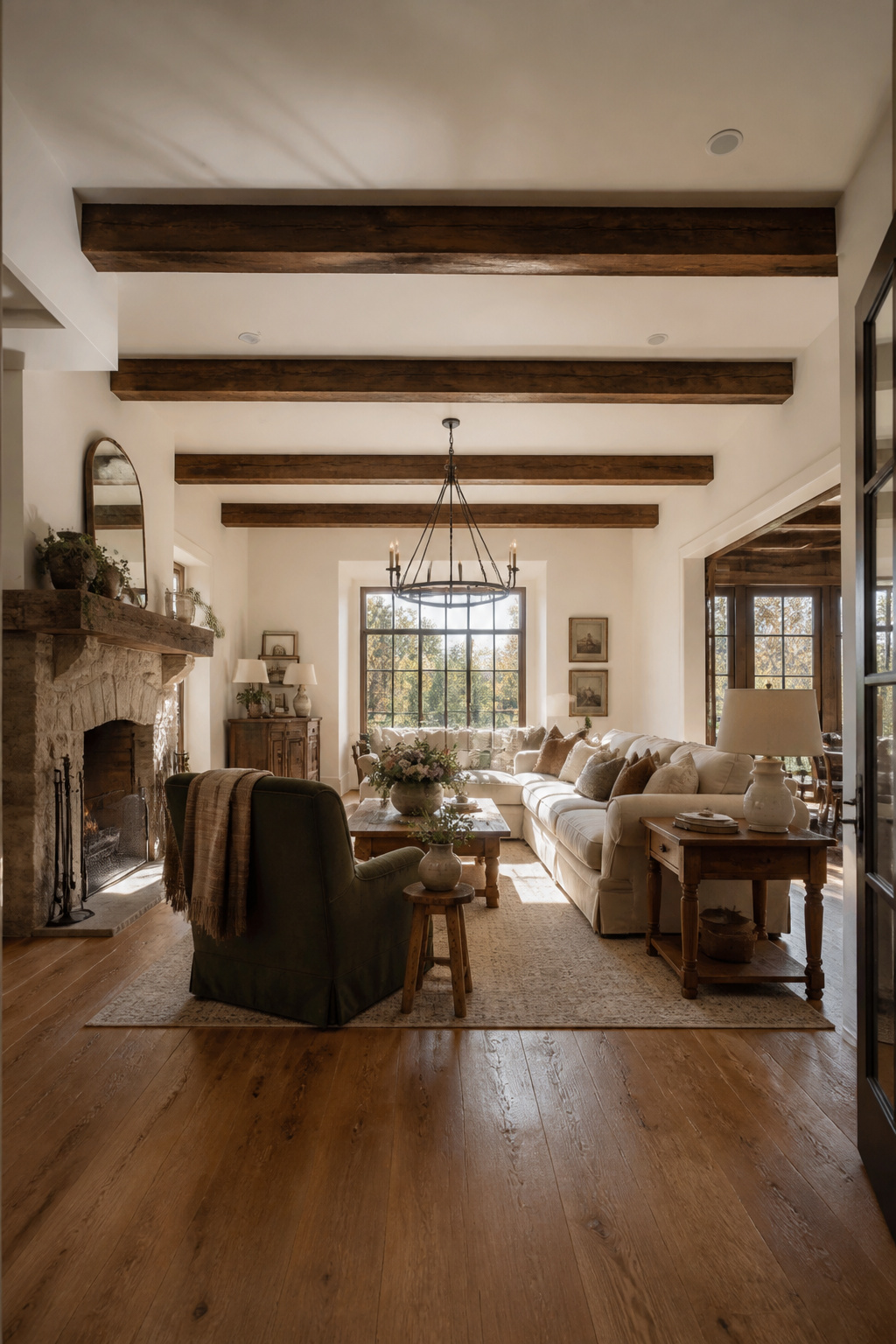
4. Exposed Wood Beams That Give Your Farmhouse Living Room Character
Ceiling beams change a room in a way that almost nothing else does. They add architectural weight, draw the eye upward, and create an immediate farmhouse signal from the doorway. Real or faux, dark or whitewashed — the presence of the beams matters more than the precise details.
Real Beams vs. Faux Box Beams
Genuine reclaimed timber beams are beautiful and heavy. Unless your ceiling joists are engineered for the load, they require a structural engineer’s sign-off and run $15–$40 per linear foot. Faux box beams cost $12–$18 per linear foot. They’re hollow shells of solid wood that slide over a 2×4 frame and look identical from floor level. For 95% of homeowners, faux beams are the right call.
Staining Options
Dark walnut (Minwax Dark Walnut 2716) is the most reliable choice — deep, warm, and immediately evocative of old barn timber. Whitewashed beams suit lighter schemes. Mix white paint and water 1:1, apply it, and wipe it back. The result reads as part of the same palette as the walls rather than a contrast element. Both approaches have real farmhouse precedent.
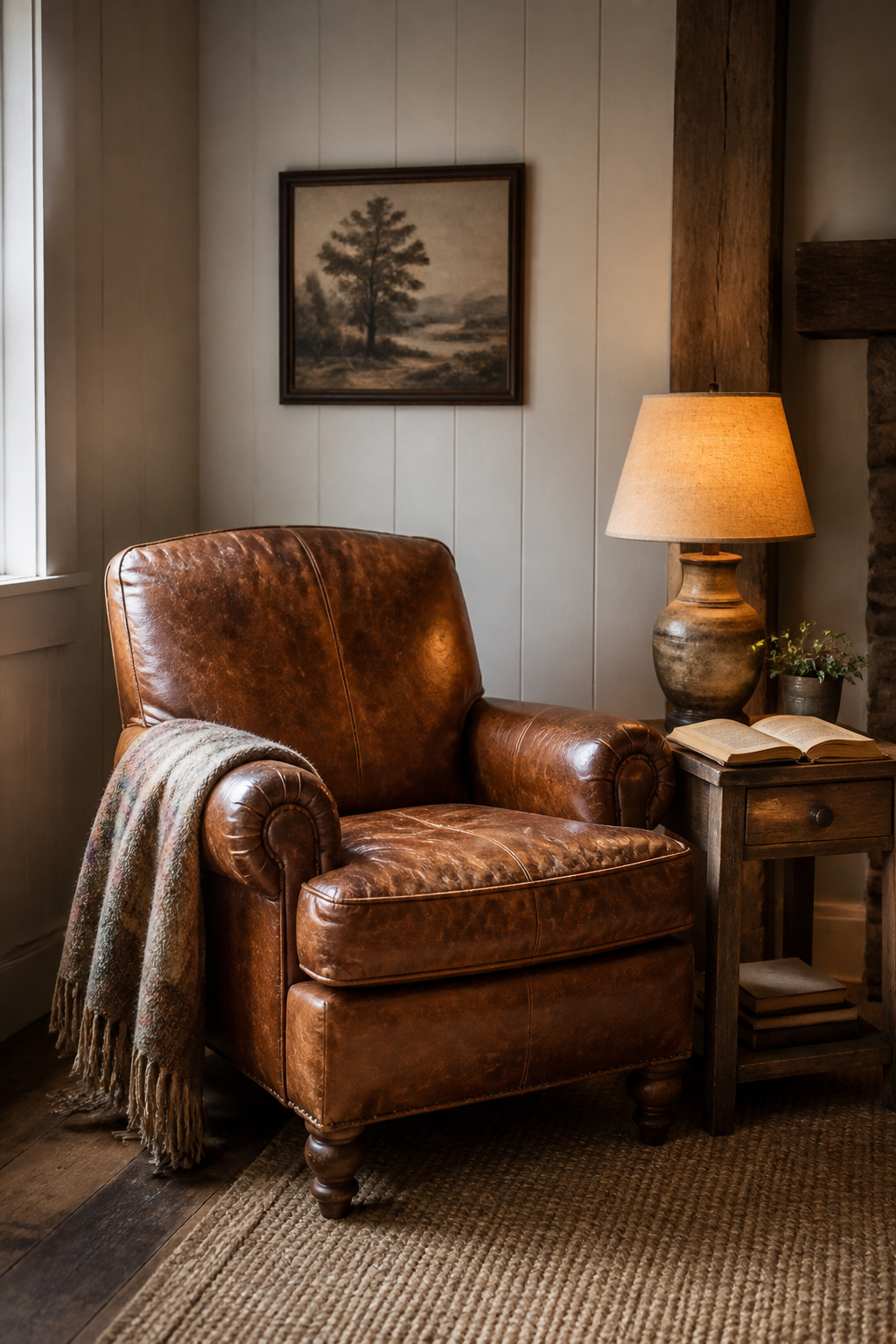
5. A Distressed Leather Armchair in the Corner
Every farmhouse living room needs a piece that communicates comfort through its imperfections. A well-worn leather armchair does this better than almost anything. The cracked finish, the slightly uneven cushioning, the armrests polished by years of use — these details signal a room for living in, not a showroom.
Finding a Genuine Vintage Piece
The best places to look: estate sales via EstateSales.net, Facebook Marketplace, and specialist vintage furniture dealers. Look for chairs from the 1940s–1970s that were originally commercial or club-quality. Budget $200–$600 for something with real character, plus $50–$100 for a professional leather conditioning treatment if the hide is dry. The rustic living room decor guide covers how leather pieces sit alongside other warm materials in a room like this.
Colour Choice
Cognac (orange-leaning tan) reads warm and lively. Saddle brown is the most versatile choice and plays best with natural wood tones, cream linens, and the earthy palette of a farmhouse living room. If your room already has dark walnut tones, go lighter. If everything else is pale and airy, tobacco adds useful depth.
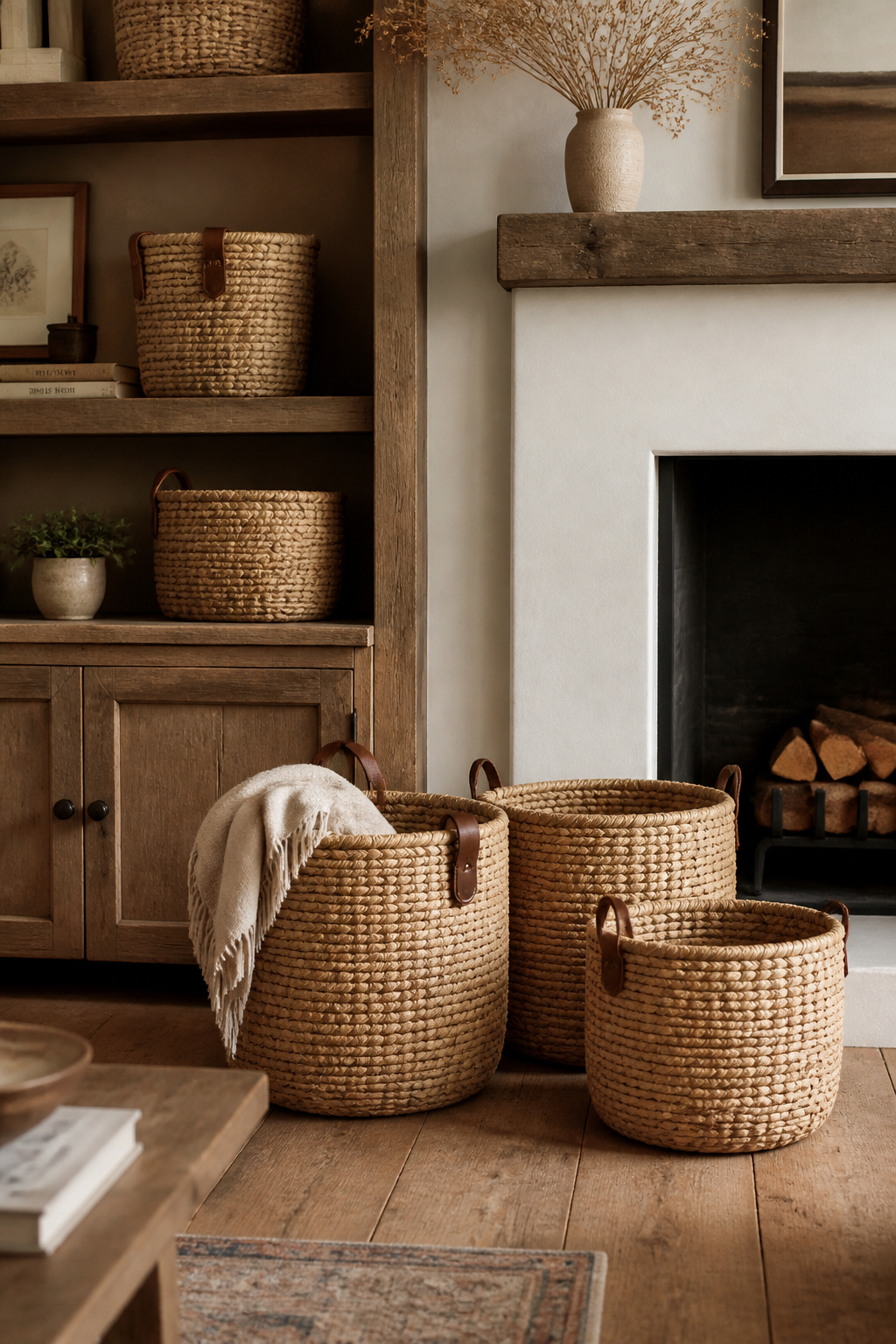
6. Woven Rattan Baskets for Farmhouse Living Room Storage
Rattan baskets earn their place twice over — they look right and they solve a real problem. Blankets, remotes, children’s books, extra pillows: all of it can go into a basket and suddenly the room looks intentional rather than cluttered. The woven texture also adds visual interest you can’t achieve with a plastic bin or a canvas box.
Sizes and Placements That Work Hardest
A large belly basket (18–22 inches diameter) beside the sofa is the workhorse — it holds throws and can park an extra pillow. Medium rectangular baskets (14×10 inches) slot neatly onto open shelves, especially in pairs. A tall cylinder basket beside the fireplace for kindling is a classic farmhouse living room move that earns its keep every single day.
Natural vs. Painted
Natural rattan and seagrass baskets are the most durable option for everyday use. The fibres are dried at stable moisture content and don’t crack or peel like a painted finish eventually will. If you want a white or black basket, look for woven-in colour using dyed fibres. Baskets sprayed over a natural base peel over time — dyed versions age far more gracefully.
7. Layered Rugs Over Wide-Plank Hardwood
Rug layering is the farmhouse technique I recommend most often to people who feel like their room is missing something warm at the floor level. A single flat rug doesn’t have the depth of two rugs working together — a coarse natural-fibre base with a softer, patterned layer on top. Also, it extends the life of an expensive rug by putting a cheaper one underneath it.
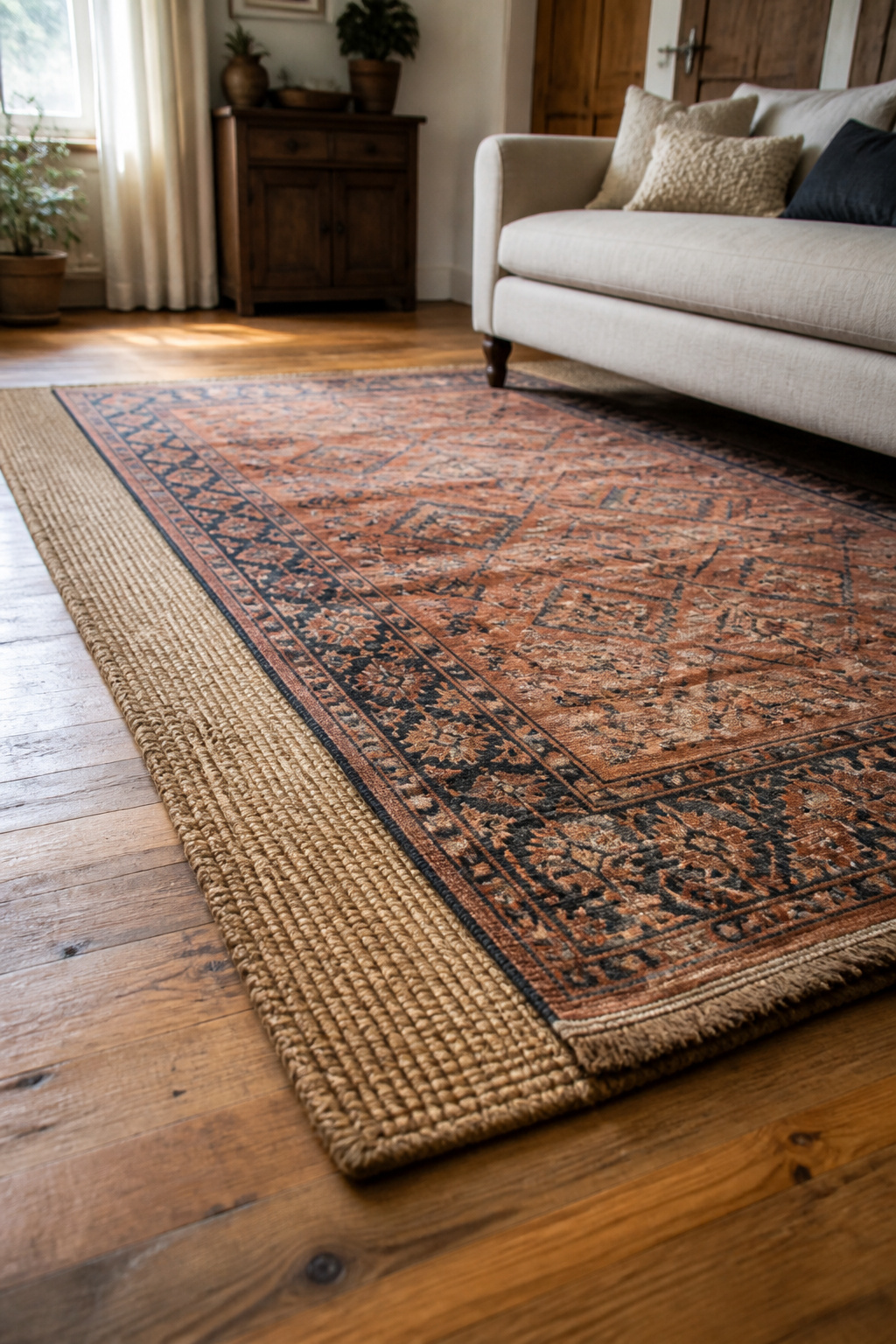
The Jute-Under-Wool Layering Trick
Start with a large flat-woven jute or sisal rug as the base. Good options from Ruggable, Pottery Barn, and IKEA run $80–$250. Layer a smaller patterned wool or cotton rug on top. The top rug should be 60–70% the size of the base layer, with the base peeking out by at least 12 inches on each side. A vintage kilim is the most characterful top layer.
Sizing Rules
The single most common mistake is going too small. For a standard sofa and two-chair arrangement, the base rug should be a minimum of 8×10 feet. All front legs of every piece of furniture should sit on the rug. A rug that only sits under the coffee table looks like an island in the middle of nowhere and makes the room feel smaller.
For more on sourcing and styling vintage rugs alongside other rustic elements, the rustic living room decoration guide covers complementary approaches that work well with a layered rug scheme.
8. An Antique Fireplace Mantel as the Focal Point
The fireplace mantel is the natural anchor of a farmhouse living room — the piece everything else orients towards. If you have an original Victorian or Edwardian mantel, your job is largely done: clean it up, seal the stone if needed, and style it with restraint. If you have a basic builder-grade surround, or no fireplace at all, there are still strong options.
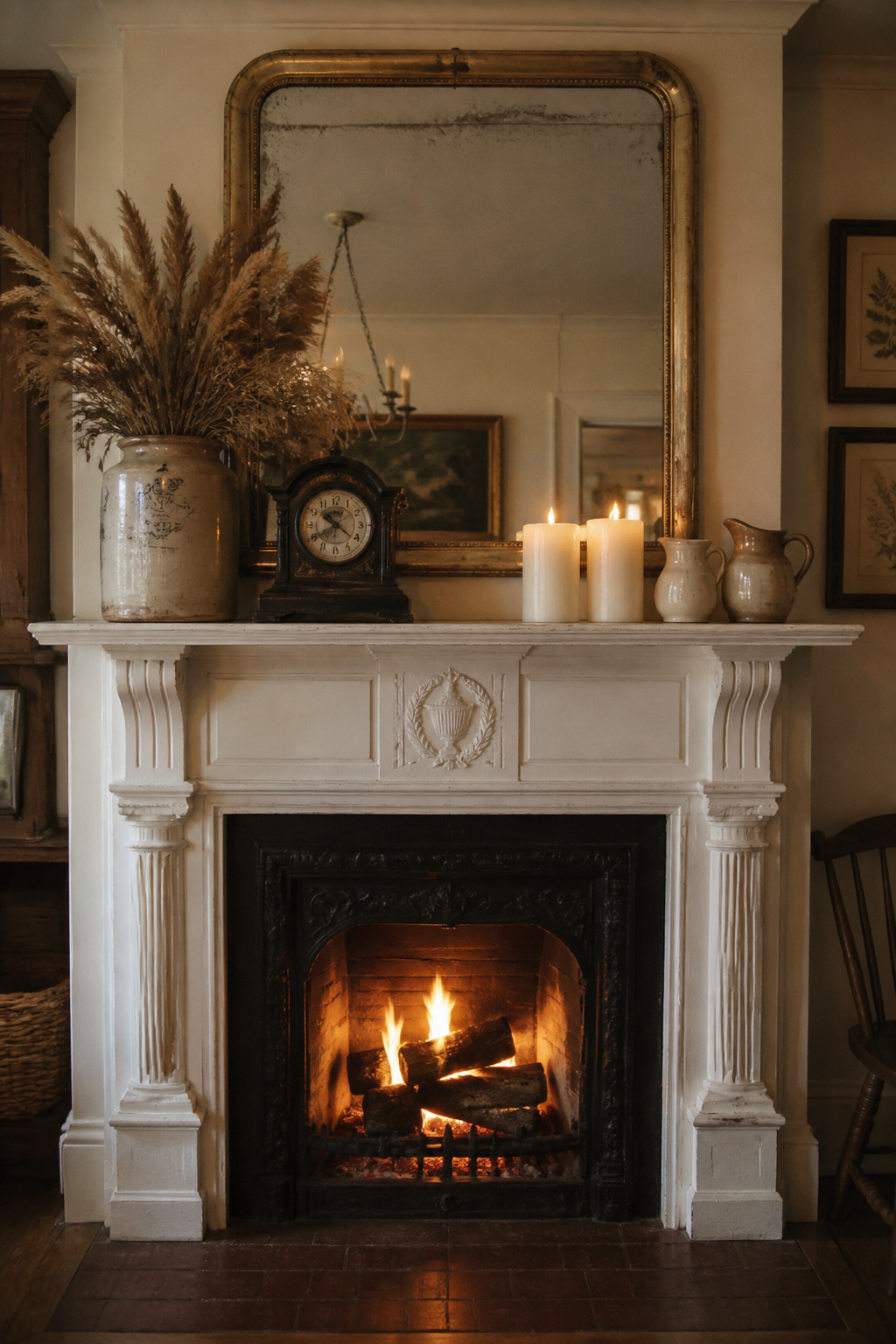
Sourcing an Antique Mantel
Salvage yards (search the Salvage Association directory or local Craigslist) cost $200–$600 for a solid Victorian marble or pine mantel in decent condition. Architectural antique dealers carry better-curated stock at $600–$2,000, with many offering delivery. For a piece that becomes the room’s centrepiece, that price difference is usually worth it.
Mantel Styling and the Faux Option
A large, slightly oversized mirror above the mantel is the single most impactful styling choice — it reflects light and provides vertical mass. Below it, work in odd groupings. Put a clock in the centre, a crock of dried stems to one side, and two or three smaller ceramics or candle holders to the other. No working fireplace? A decorative frame and shelf mounted to the wall can be built from MDF for under $200. Pre-made options from companies like Pearl Mantels run $300–$700.
9. A Sliding Barn Door That Defines Your Farmhouse Living Space
A barn door is one of those farmhouse elements that earns immediate recognition. In a living room, it most often serves as a divider between the living space and a hallway, dining room, or home office. Done well, it adds genuine character. Done cheaply, it looks like a costume.
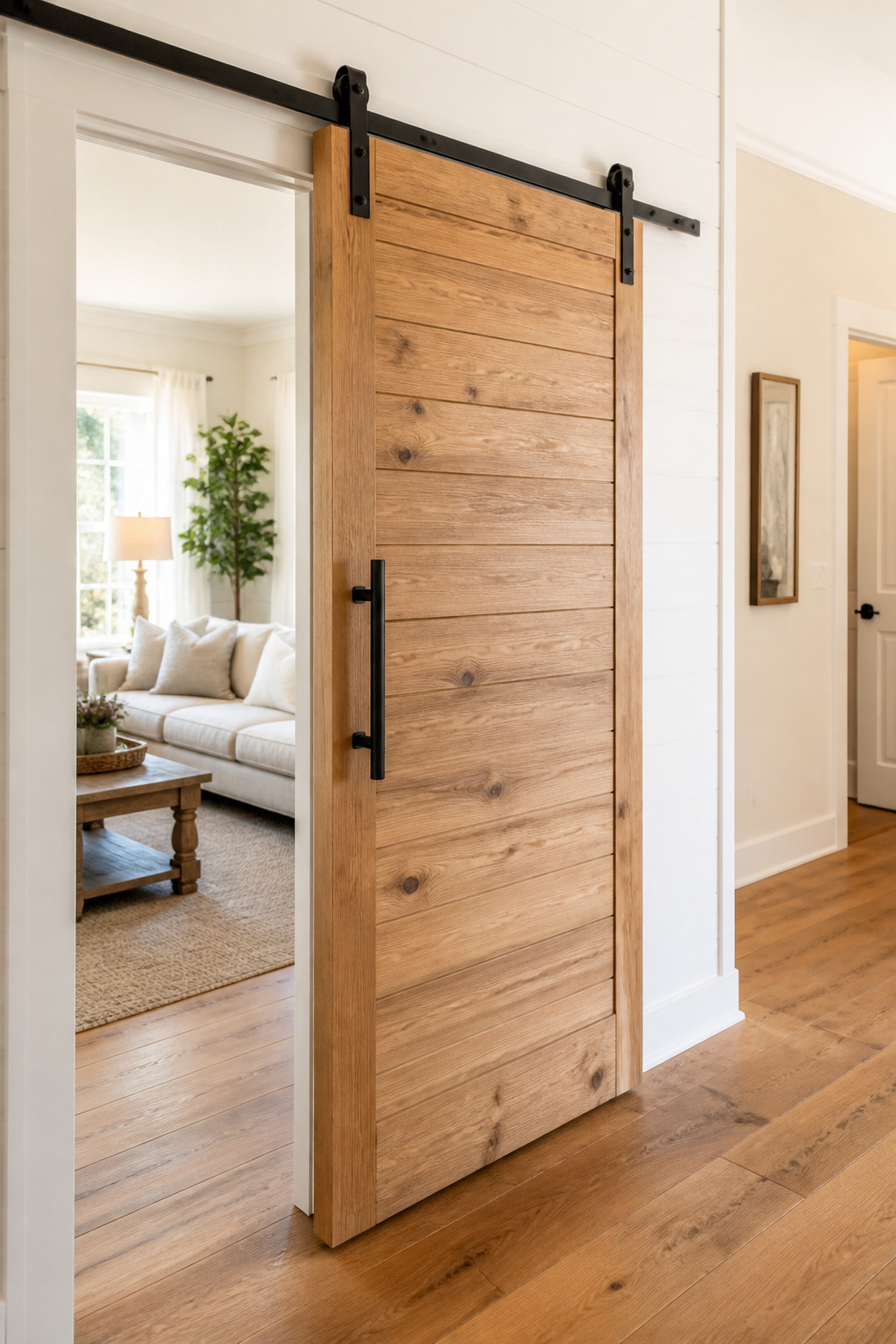
Solid Wood vs. Hollow-Core
This is not a place to compromise. Hollow-core barn doors ($80–$120 at big-box stores) rattle on the hardware and dent easily. A solid wood door costs $300–$600 but feels substantial in a way hollow-core never does. For a piece you’ll interact with daily, the extra spend is justified.
Hardware Finishes
Matte black barn door hardware is common enough in farmhouse interiors now that it occasionally risks reading as a trend rather than a tradition. Oil-rubbed bronze is warmer and more antique-feeling. Raw steel (unsealed, allowed to develop a surface patina) is genuinely the most authentic-looking option. Antique iron hardware from specialist suppliers like D. Lawless Hardware adds something you can’t replicate with a standard kit.
10. Galvanized Metal and Mason Jar Accents
Galvanized metal has been part of American farmhouse life since the 1800s — buckets, watering cans, feed troughs, toolboxes. In a living room context, it brings that agricultural heritage into a space where it feels slightly unexpected but entirely right. The grey-silver finish contrasts well with warm wood and cream linen, and it ages gracefully rather than poorly.
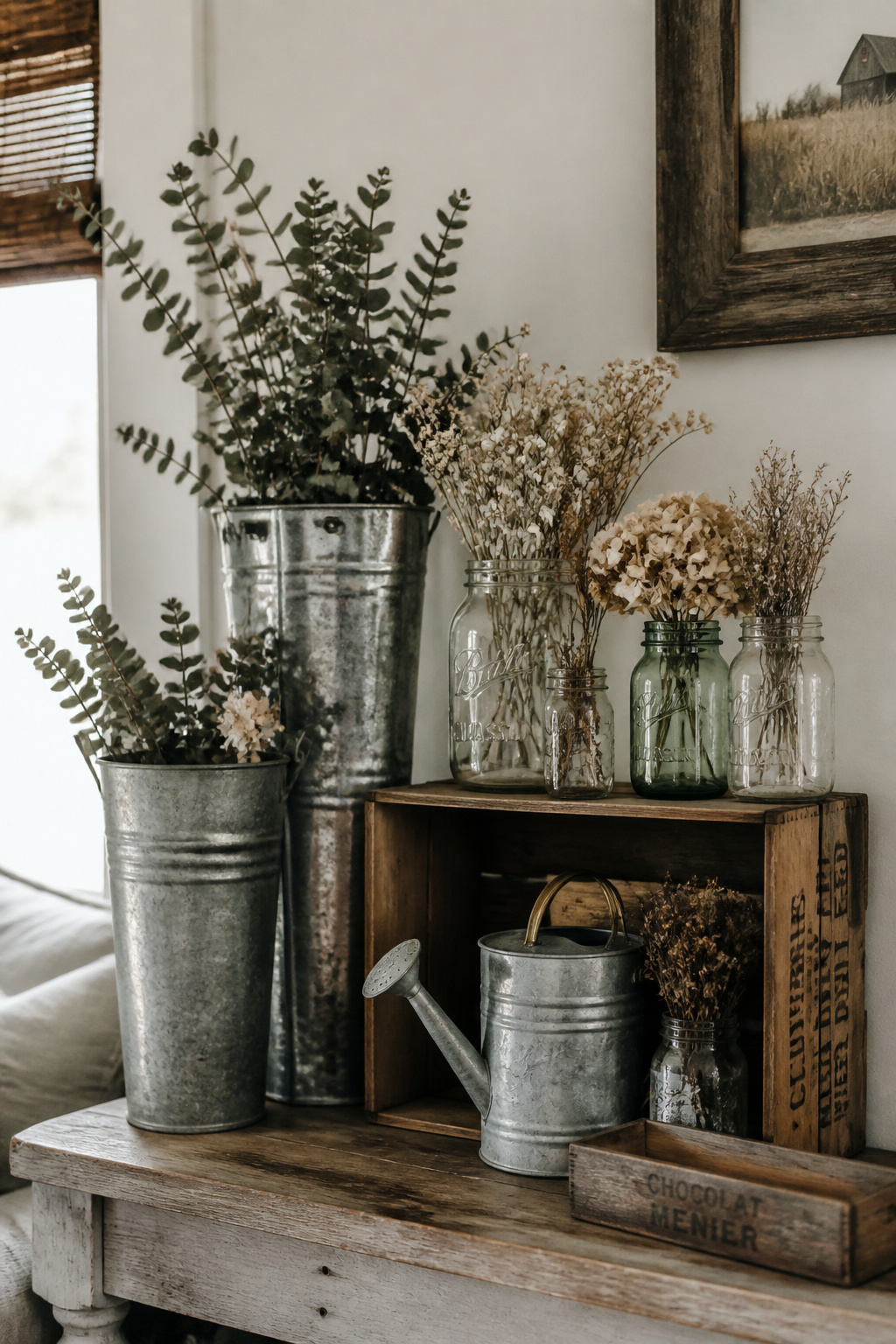
Where Galvanized Metal Works
Galvanized metal earns its place in pieces that originally served a practical purpose: buckets, tins, watering cans, tool holders, pitchers. A galvanized bucket holding dried eucalyptus beside a fireplace looks right because the bucket is a bucket — it has a functional shape. A galvanized picture frame, by contrast, takes a material out of its natural context and usually reads as forced.
Mixing Metal Finishes
Keep your dominant metal finish consistent and use one accent finish sparingly. Matte black hardware (barn door rail, curtain rod, light fixtures) as the dominant finish, with galvanized metal as the accent, works well. Three or four different metal finishes competing at the same visual level makes the room look unresolved rather than layered.
11. Farmhouse Living Room Lighting: The Statement Chandelier
Lighting is where many farmhouse living rooms fall short. The room is beautifully furnished but still feels flat because the ceiling fixture is a basic semi-flush dome. A statement chandelier changes the whole atmosphere. It adds vertical drama, anchors the centre of the room, and signals that someone thought carefully about the evening atmosphere.
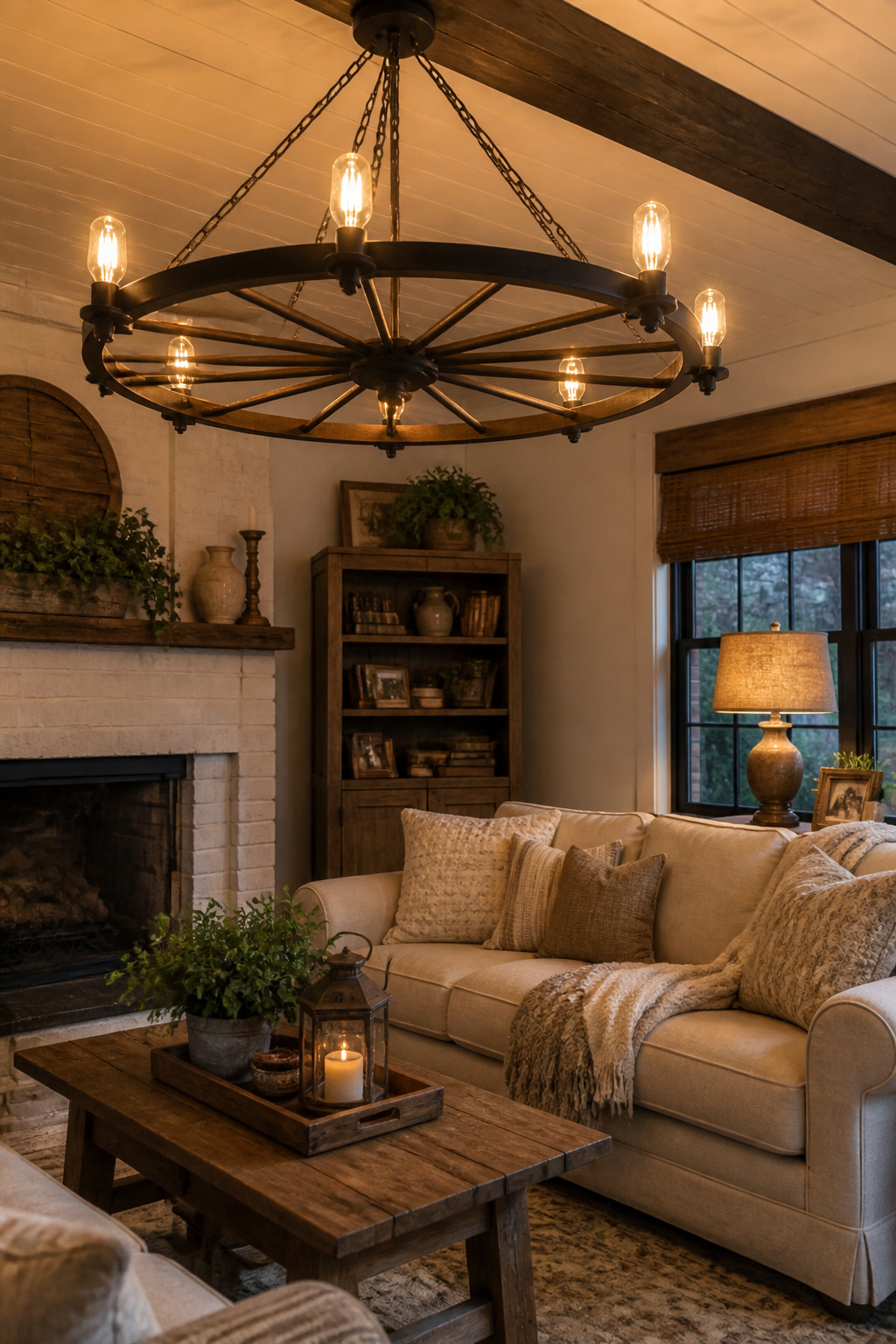
Chandelier Styles
The wagon wheel chandelier is the most quintessentially farmhouse option and works best in rooms with beamed ceilings or height over 10 feet. For lower ceilings (8–9 feet), a multi-arm candelabra style or cluster of lanterns is more practical. The lantern style also suits farmhouse rooms that lean slightly more formal. Good options are available from Shades of Light and Lamps Plus in the $150–$600 range.
Scale and Layering Light
The standard guidance: a chandelier’s diameter in inches should equal the room’s two dimensions added together in feet. For a farmhouse living room, round up by 20–30% — farmhouse scale leans generous. Then layer your light. Two linen-shade table lamps flanking the sofa and a floor lamp beside the reading chair give you the warm pools that make a room feel alive after dark.
12. Chunky Knit Throws and Wool Blankets on Every Seat
In a farmhouse living room, blankets are not decorative accessories — they’re an active invitation. They say: sit down, stay a while, get comfortable. A room with throws on every seat signals warmth and generosity in a way that no cushion or rug can replicate. Also, the chunky knit throw has become one of the defining textures of the farmhouse aesthetic for very good reason.
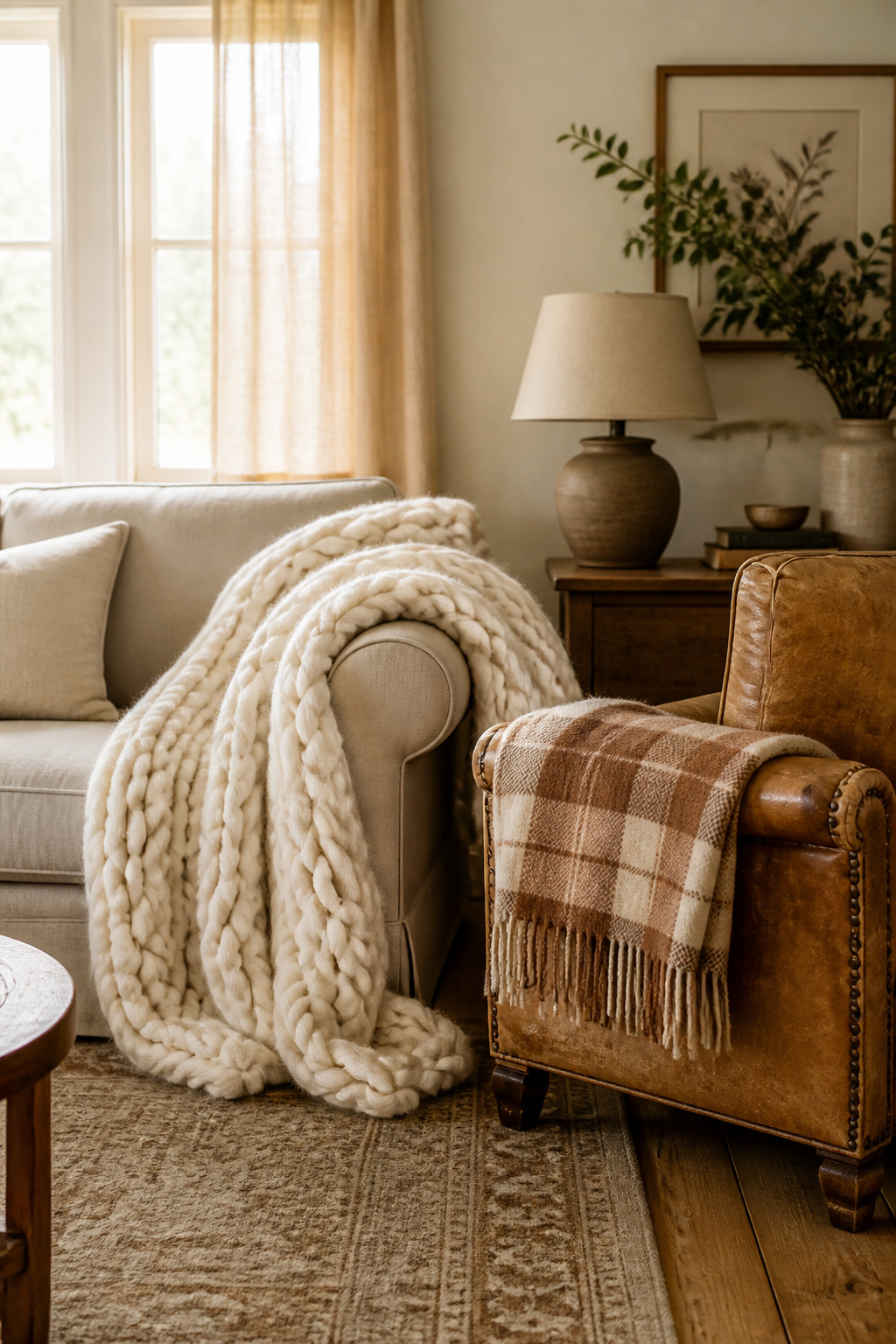
Why Texture Matters More Than Colour
In a neutral farmhouse palette — creams, naturals, warm whites — colour variation is limited by design. Texture is where the visual interest lives. A chunky knit throw has more character than any solid-colour pillow. The three-dimensional weave catches light differently at every angle and feels as good as it looks. Prioritise texture over colour when choosing throws for your room.
Merino vs. Acrylic
Genuine merino wool chunky knit throws ($80–$200 from hand-knit Etsy makers) are soft against bare skin, regulate temperature well, and age beautifully. They pill slightly with use but the pills remove easily with a fabric comb. Acrylic chunky knits ($25–$60 from IKEA or Amazon) pill more aggressively and have a slight sheen that reads as synthetic in good light. For a piece you’ll use daily, merino is worth the investment.
13. Reclaimed Wood Shelving for Character and Storage
Open shelving does more than store things. It displays them, and in doing so it tells the story of the people who live in the room. The character of the shelf itself matters, though. A reclaimed wood shelf — with its saw marks, nail holes, and weathered grain — is a piece in its own right before a single object lands on it.
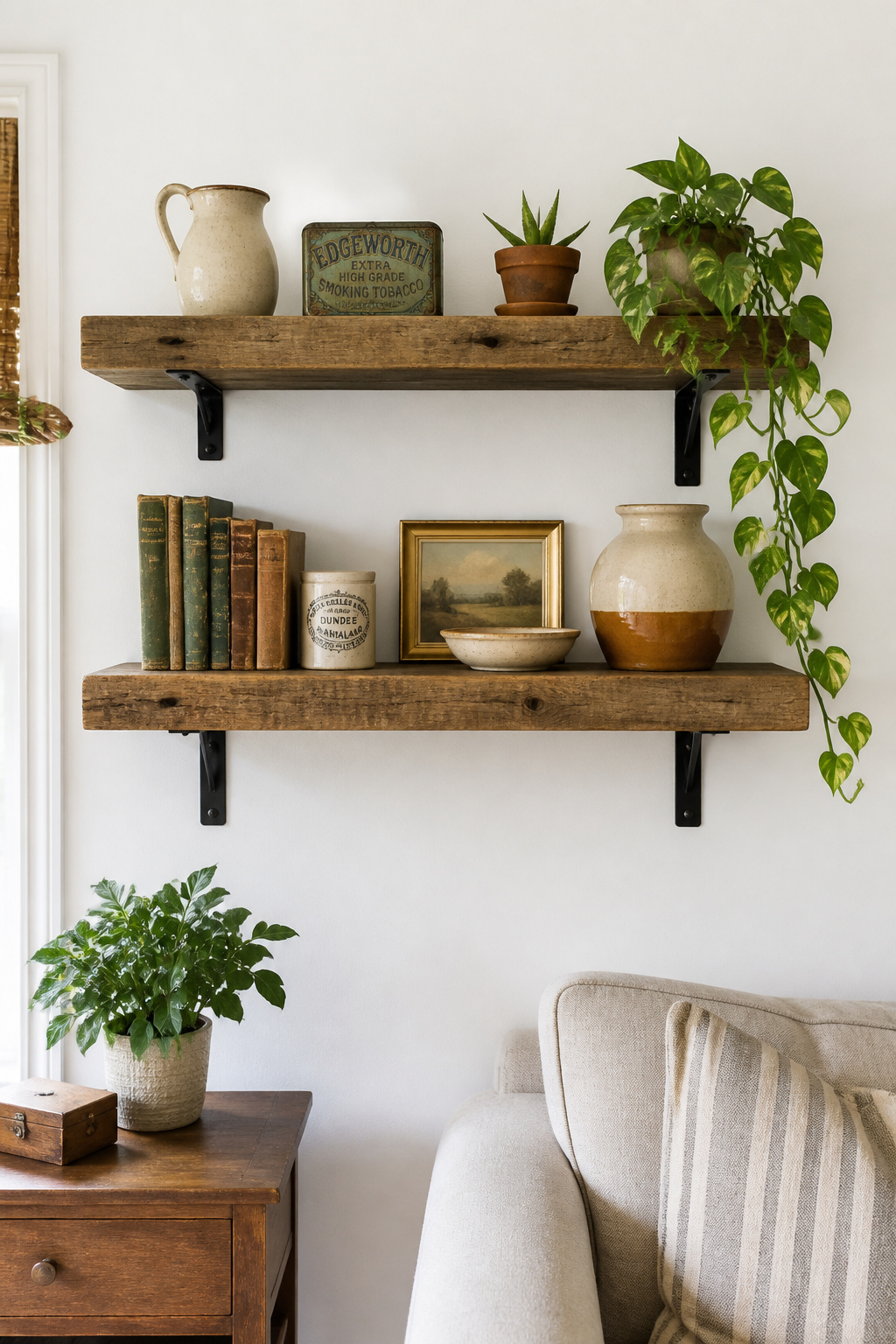
True Reclaimed vs. New Wood With a Reclaimed Finish
True reclaimed wood (salvaged from old barns or factories) carries visual history that new wood cannot replicate. The grey surface oxidation, nail holes, and old-growth timber rings make every plank unique. Sources include Etsy specialists and local architectural salvage yards, at $8–$15 per board foot. New wood with a greywash treatment is a credible substitute at half the price. Fine for high shelves — but at arm’s reach, genuine reclaimed is worth hunting for.
What to Display and How to Install
Vary the height, vary the object type, and include something living. Stack two books flat as a platform. Add a vertical item (stoneware pitcher, glass bottle), one vintage tin for the patina, and a trailing plant for movement. For installation, find the wall studs and screw heavy-duty floating brackets (rated 50+ lbs) directly into them. A fully styled 6-foot reclaimed plank can weigh 20–30 lbs — plan accordingly.
Also, the living room styling guide has a thorough section on curating open shelves alongside vintage finds for a cohesive look across the whole room.
14. Farmhouse-Style Living Room Curtains: Linen Panels
Curtains are one of the most undervalued elements in a farmhouse living room. The wrong choice — polyester blackout panels, cheap patterned cotton — can undermine the whole scheme. Linen panels, hung correctly, do the opposite: they add softness, height, and a natural quality that ties together everything else.
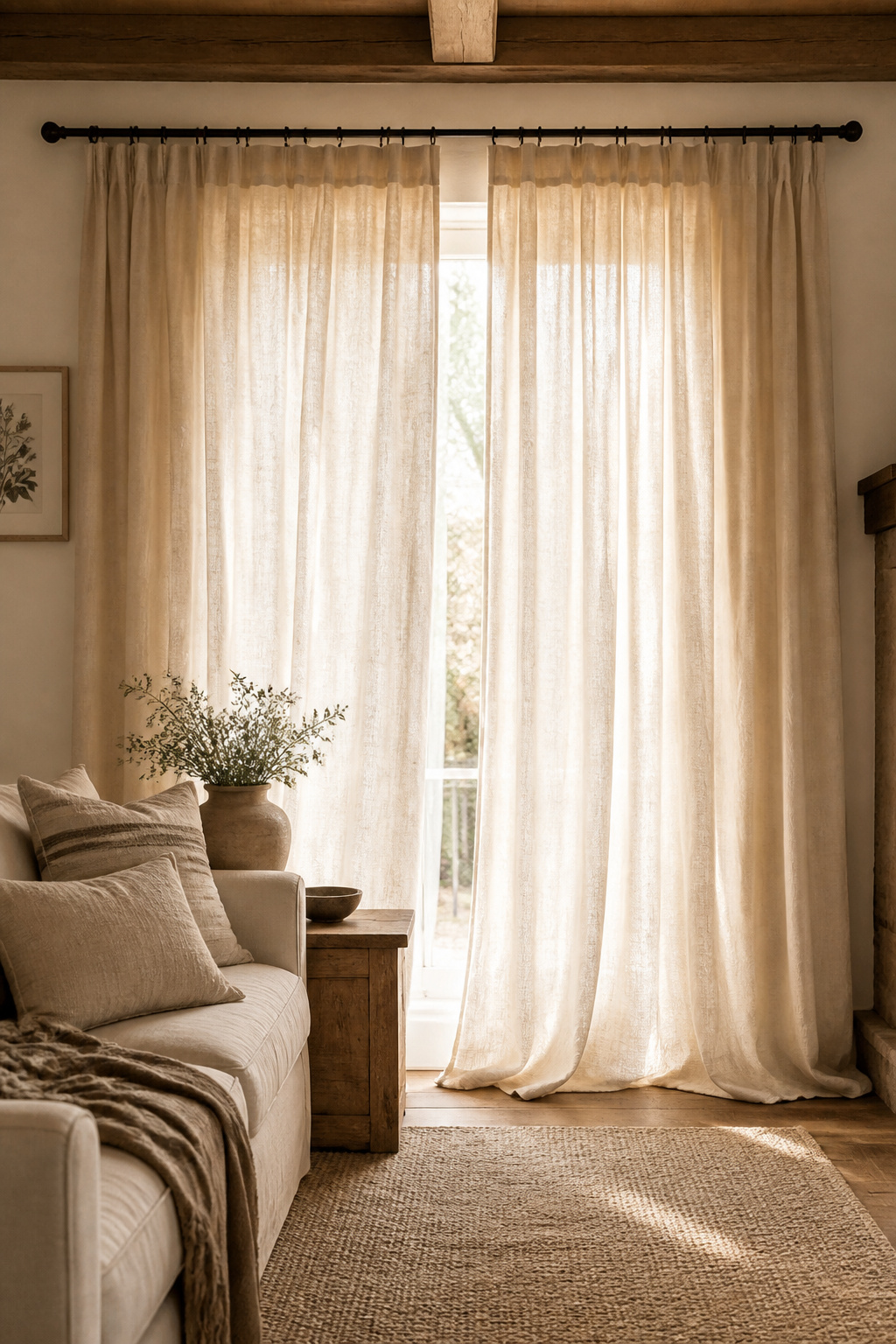
How to Hang Them
Mount the rod as high as possible — within 4–6 inches of the ceiling. Let the panels puddle very slightly on the floor (about 1 inch) or just kiss it. Also, extend the rod 6–8 inches beyond the window frame on each side. This way the curtains stack away from the glass when open and allow maximum light in.
Choosing the Fabric
Off-white linen (cream or warm white) is the most versatile choice and the most forgiving in rooms with limited natural light. Natural/undyed linen reads slightly more rustic and works well when your walls are already white — the slight contrast stops the window wall from disappearing. Patterned linen (small check or ticking stripe in neutral tones) can add pattern that a very neutral room sometimes needs. But avoid a busy repeat — it will fight with the other textures.
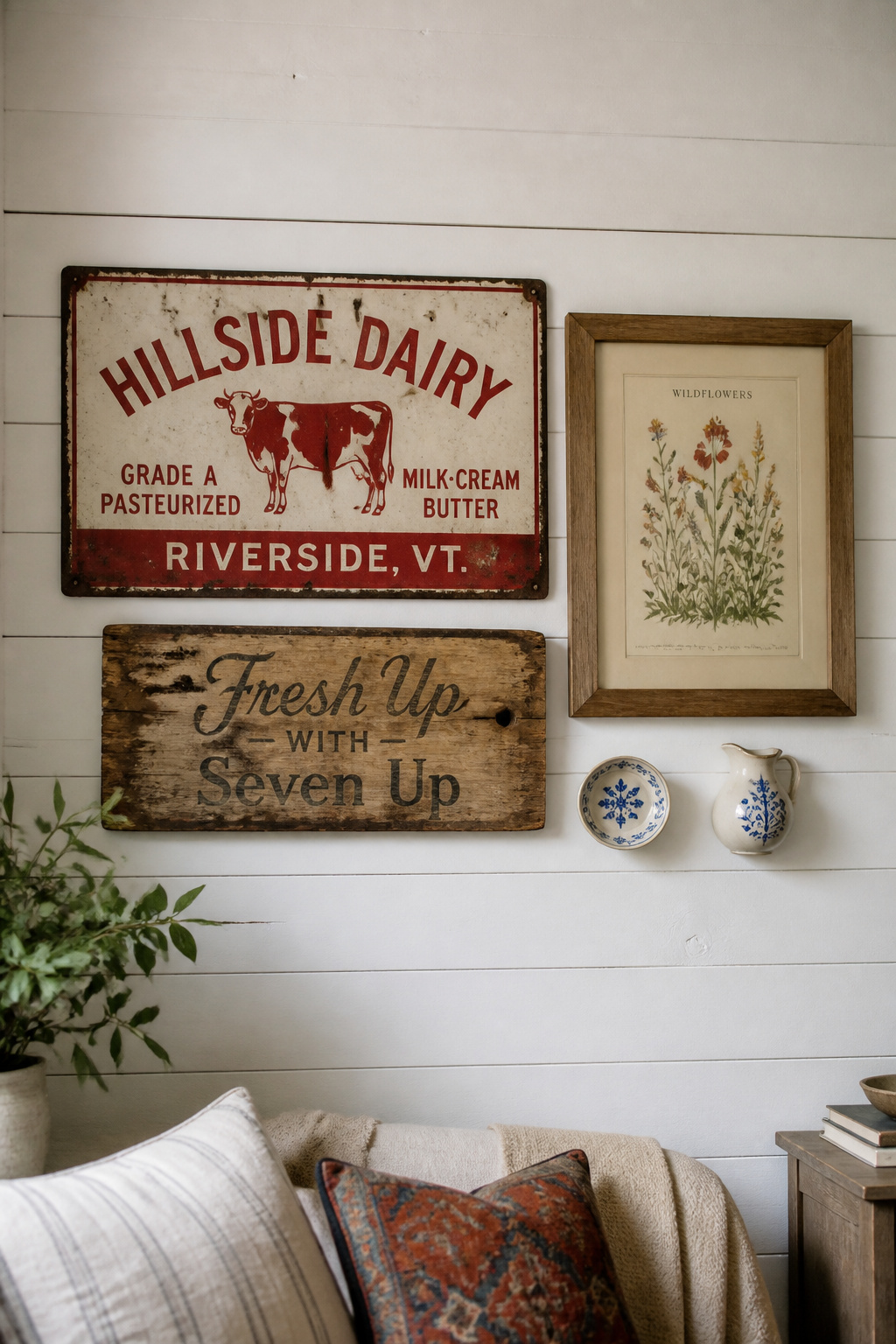
15. Vintage Signs and Salvaged Wood Wall Art
Wall art in a farmhouse living room should feel like it was collected, not purchased all at once. A few vintage signs, a piece of salvaged wood with old paint, a framed seed packet print from 1920 — each carries its own history. Together they create a wall that tells a story rather than just decorating a space.
Genuine Vintage vs. Reproductions
Genuine vintage signs (advertising dairy products, seed companies, hardware stores) are available through eBay, Etsy vintage sellers, and antique malls. A good-condition original tin sign from the 1930s–1950s runs $50–$200. Reproductions ($15–$40 at most home goods stores) are uniform and perfectly flat — they read as decoration rather than history. Build the wall around two or three genuine pieces and fill in with good-quality reproduction prints in simple frames.
Typography and Motifs That Feel Earned
The best farmhouse wall art references the actual life of a farmhouse: livestock, crops, tools, the land, food, community. A 1940s seed catalogue cover, a hand-drawn county map, an old milk bottle label framed in glass — these feel earned. They’re connected to a real place and time. The test is simple: does this piece look like it came from somewhere? If yes, it belongs.
16. Wildflowers and Dried Botanicals in Ceramic Vessels
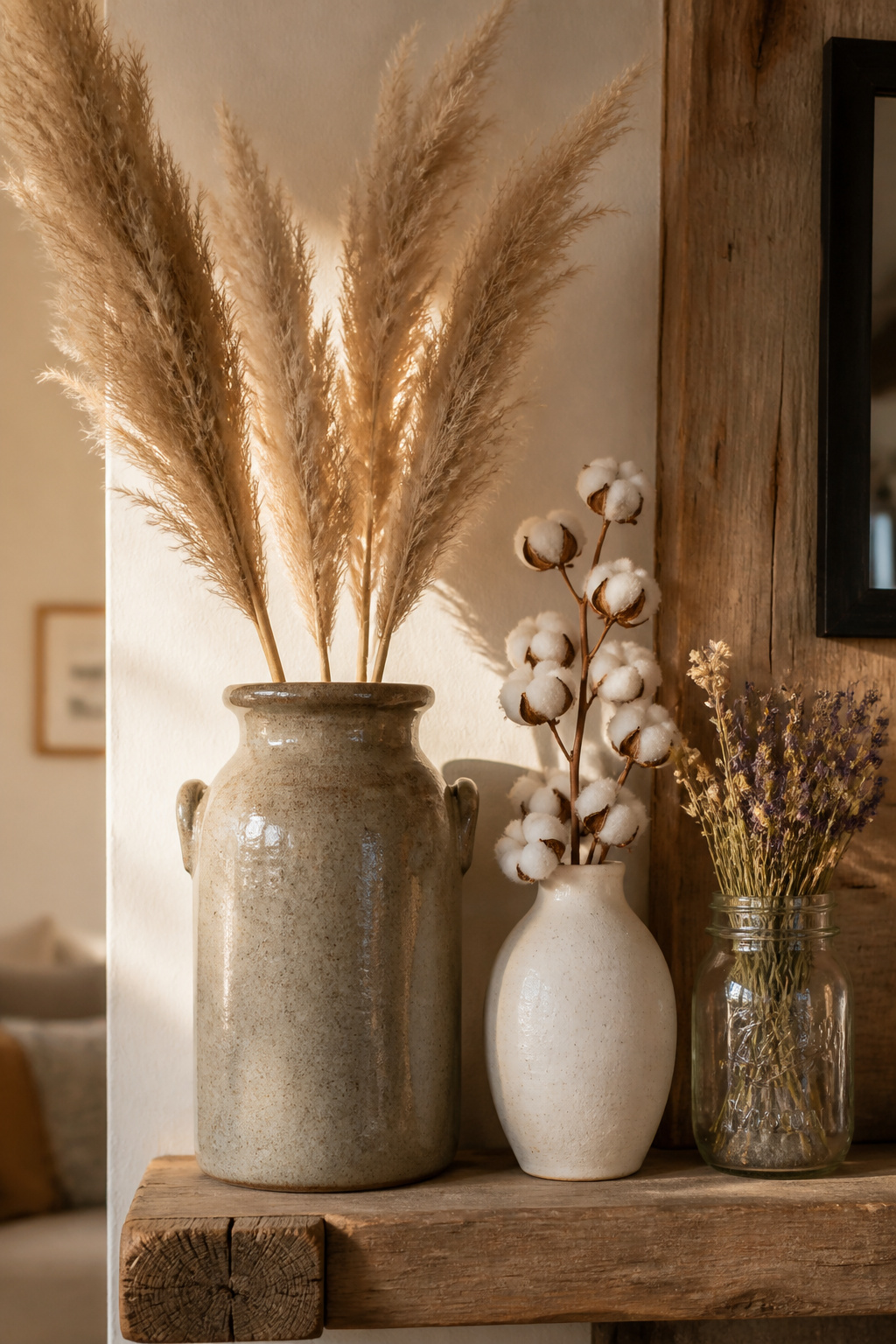
Fresh and dried botanicals breathe life into a farmhouse living room. They add organic form, colour, and seasonal variation that no other decor element provides. Unlike cut flowers from a florist, farmhouse botanicals skew wild and unstructured. Think dried pampas grass in a stoneware crock, cotton stems in a mason jar, or a single branch of eucalyptus propped against a wall.
Dried vs. Fresh
Dried botanicals are the practical choice for a farmhouse living room — they last months without any care. Pampas grass ($15–$30 per bunch), cotton stems ($12–$20 per bunch), and dried wheat ($8–$15) are all farmhouse staples. However, fresh wildflowers in season bring something dried arrangements can’t: real colour and movement. Keep seasonal wildflowers on the coffee table and use dried arrangements for the mantel and shelves that need year-round presence.
Vessel Choices
The vessel matters as much as the botanical. Look for vessels with an organic quality: uneven lips, visible thumb marks, rough-textured exteriors, earthy glazes. Etsy sellers like Farmhouse Pottery and East Fork make beautiful options. Estate sales and antique shops often yield old stoneware crocks (blue salt-glaze or brown Albany-slip varieties) for $20–$80. These are the best possible vessels for this kind of scheme and worth hunting for specifically.
17. A Farmhouse Living Room Gallery Wall Built Around Vintage Finds
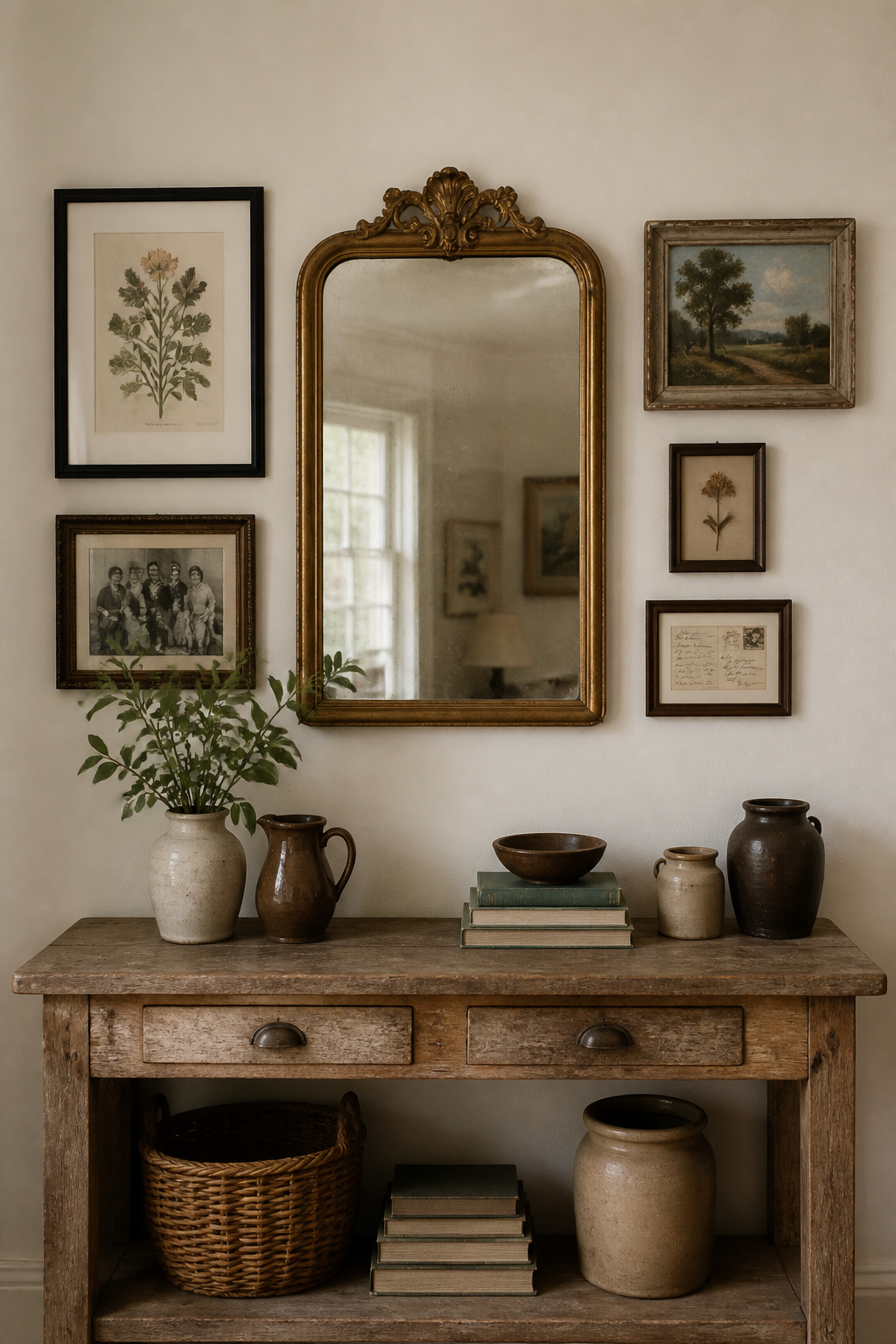
A gallery wall is the most personal statement in the room, but only when it’s built the right way. The version that falls flat is assembled from matching prints, ordered from one website, identically framed, hung in a perfect grid. The version that works is built slowly. It grows around pieces with genuine history, framed inconsistently, hung with just enough imprecision to feel organic.
Starting With One Anchor Piece
The anchor piece should be the largest and most dominant item — an antique mirror, a large framed print, or an original oil painting. Place it first, centred roughly where you want the gallery’s visual centre. Build outward from there, alternating horizontal and vertical orientations, varying frame sizes, and keeping the outer edges loose and slightly irregular. A useful shortcut: lay the whole arrangement on the floor first and photograph it from above. You’ll immediately see whether the spacing is too uniform or one frame size dominates too heavily.
Mixing Frames and What to Include
Three frame finishes is the right maximum: aged gold (suits botanical prints and mirrors), black (suits photographs and high-contrast prints), and natural wood (acts as a neutral connector). For content, mix media types: something representational (a landscape painting), something botanical (pressed flowers), something personal (a framed photograph or postcard), and something unexpected. An old auction receipt or a hand-drawn local map works well. That specificity is what makes a farmhouse living room gallery wall memorable rather than generic.
For more on achieving the layered, collected quality of this kind of room, the country living room guide covers the broader styling principles that complement a farmhouse gallery wall well.
Pulling Your Farmhouse Living Room Together: Where to Start First
The hardest part is not finding the right pieces — it’s knowing which pieces to find first. Buy things in the wrong order and you end up with a room assembled from a theme rather than built from a point of view.
The Two Pieces That Anchor Everything Else
Start with the sofa and the rug. These are the largest surfaces in the room and they set every other decision. A linen sofa in natural or warm white gives you the neutral canvas the farmhouse scheme depends on. An 8×10 jute or sisal rug defines the seating zone and establishes the organic quality everything else responds to.
The fireplace mantel (or faux console) is the second anchor — the focal point that tells the room where to orient. If you have a working fireplace, style it well before spending money on accessories. If you don’t, a well-placed mirror above a reclaimed wood console serves the same purpose.
A Realistic Order of Purchases
After the sofa and rug: address the walls first. Shiplap or beams are the most disruptive projects and should happen before soft furnishings arrive. Then replace the ceiling fixture. Then buy the coffee table and side tables (vintage, take your time). Then curtains, baskets, throws, and finally the smaller accessories: botanicals, signs, gallery wall pieces.
The gallery wall should always be last. It needs to respond to everything already in the room — and the best ones are assembled over months, not ordered from a single source on a single afternoon.
How to Stay Cohesive
Before buying anything new, stand in the room. Ask whether the piece you’re considering shares at least one element with three things already there. That common element might be a material (wood, linen, iron), a colour (cream, natural, warm brown), or a quality (aged, organic, handmade). If it connects to three existing pieces, it belongs.
The best farmhouse living rooms don’t look designed. They look like they happened over time, shaped by a person with consistent taste and a genuine eye for the character in old things. So be patient, shop slowly, and trust the process. The room you build piece by considered piece is nearly always better than the one you order in a weekend.