
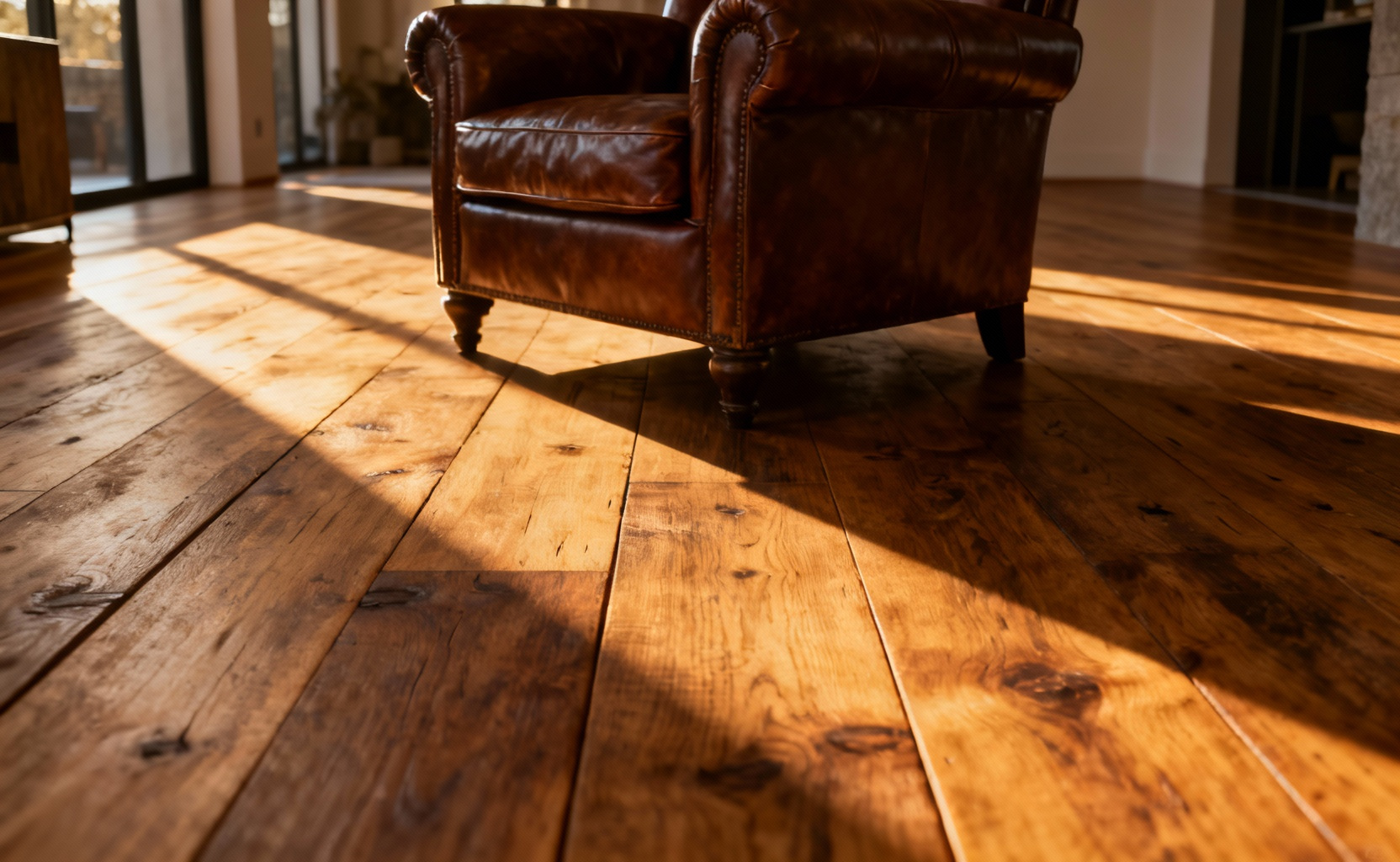

Modern renovations often favor quick aesthetics over longevity. Homeowners grab “luxury” vinyl or trendy gray finishes to match a fleeting image. Yet, due to planned obsolescence, these materials become expenses rather than assets. True value relies on viewing living room flooring as a multi-generational legacy.
Authentic materials like solid hardwood possess inherent authority. Unlike printed alternatives, these assets can be restored multiple times over a century. They develop heritage, accumulating a rich patina that enhances the home’s story. This tactile quality offers a sensory connection mass-produced plastic simply cannot replicate.
This guide helps you distinguish between temporary trends and permanent investments. We define the financial logic behind choosing refinishable assets over disposable surfaces. Learn to select flooring that honors architectural history while securing future market value.
THEME I: MATERIALITY AND AUTHENTICITY
True authenticity in flooring transcends looks. It defines the ethics and sensory experience of a space. Consider the conflict between genuine patina and manufactured photo-realism. Solid hardwood offers an organic narrative. Unlike synthetics that degrade, real wood gains character through aging. Scratches become a record of history. You can refinish these floors for decades. This allows for renewal rather than replacement.
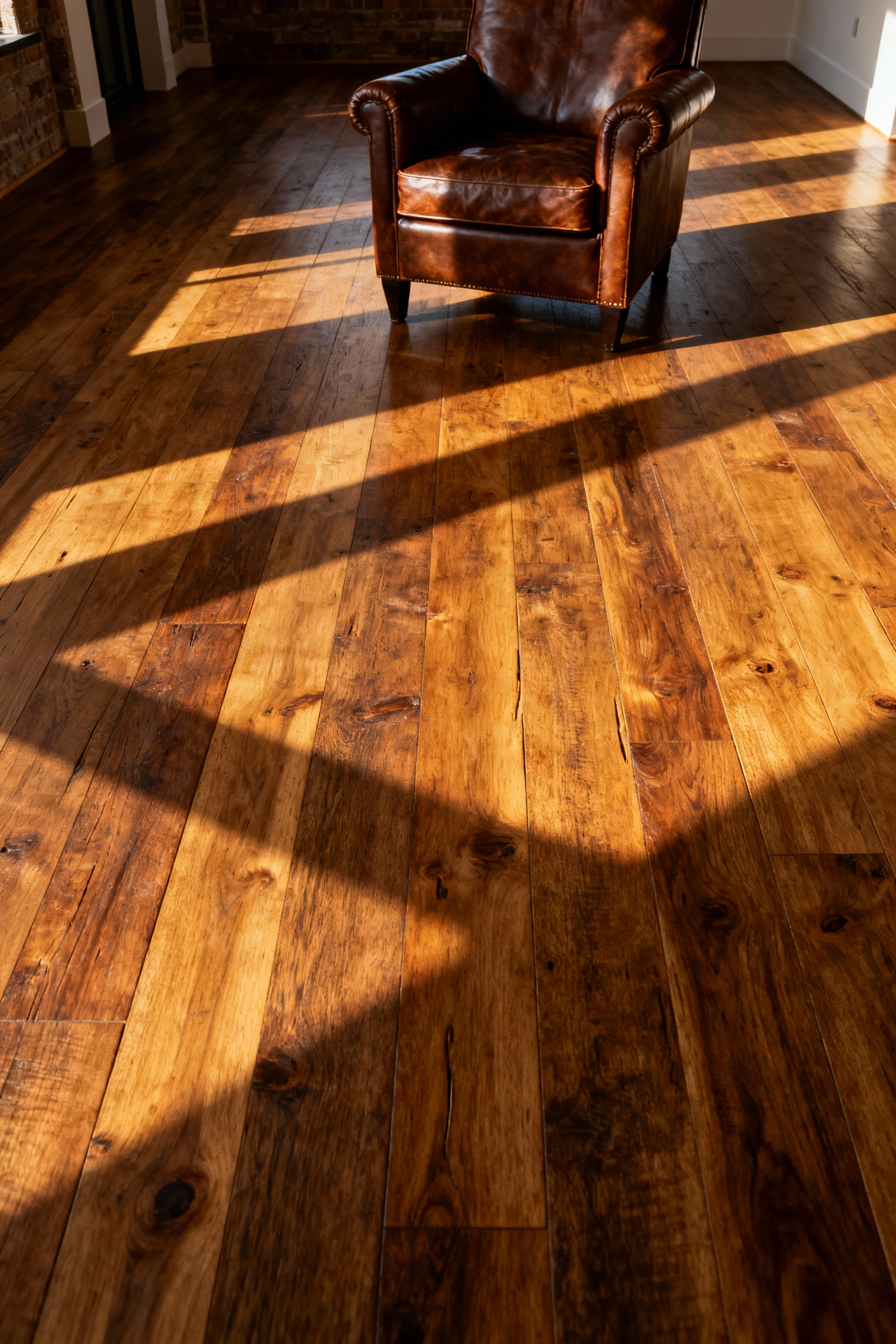
Modern synthetic options often fail this longevity test. If you are curating a space for deep investment, alignment with Modern Living Room Decoration is paramount. Luxury Vinyl Plank relies on photographic layers. Visual repetition of patterns often reveals the imitation. There is also a distinct sensory difference. Real wood sounds solid and quiet. Floating synthetics often generate a hollow, sharp click. This impacts the subconscious comfort of a room.
Finally, consider the environmental impact. Hardwood is a renewable resource that sequesters carbon. It acts as a generational investment. Conversely, vinyl floors are plastic and rarely decompose. They contribute significantly to landfill waste. Investing in authentic materials protects both heritage and the planet.
1. The Soul of the Structure: Assessing and Restoring Original Subfloors
In pre-industrial homes, the wide-plank base layer was never intended as a subfloor. It was simply the floor. Builders nailed rough-sawn Heart Pine or Douglas Fir directly to the joists. These planks often spanned over 24 inches. Restoring this layer reclaims the building’s original, utilitarian foundation.
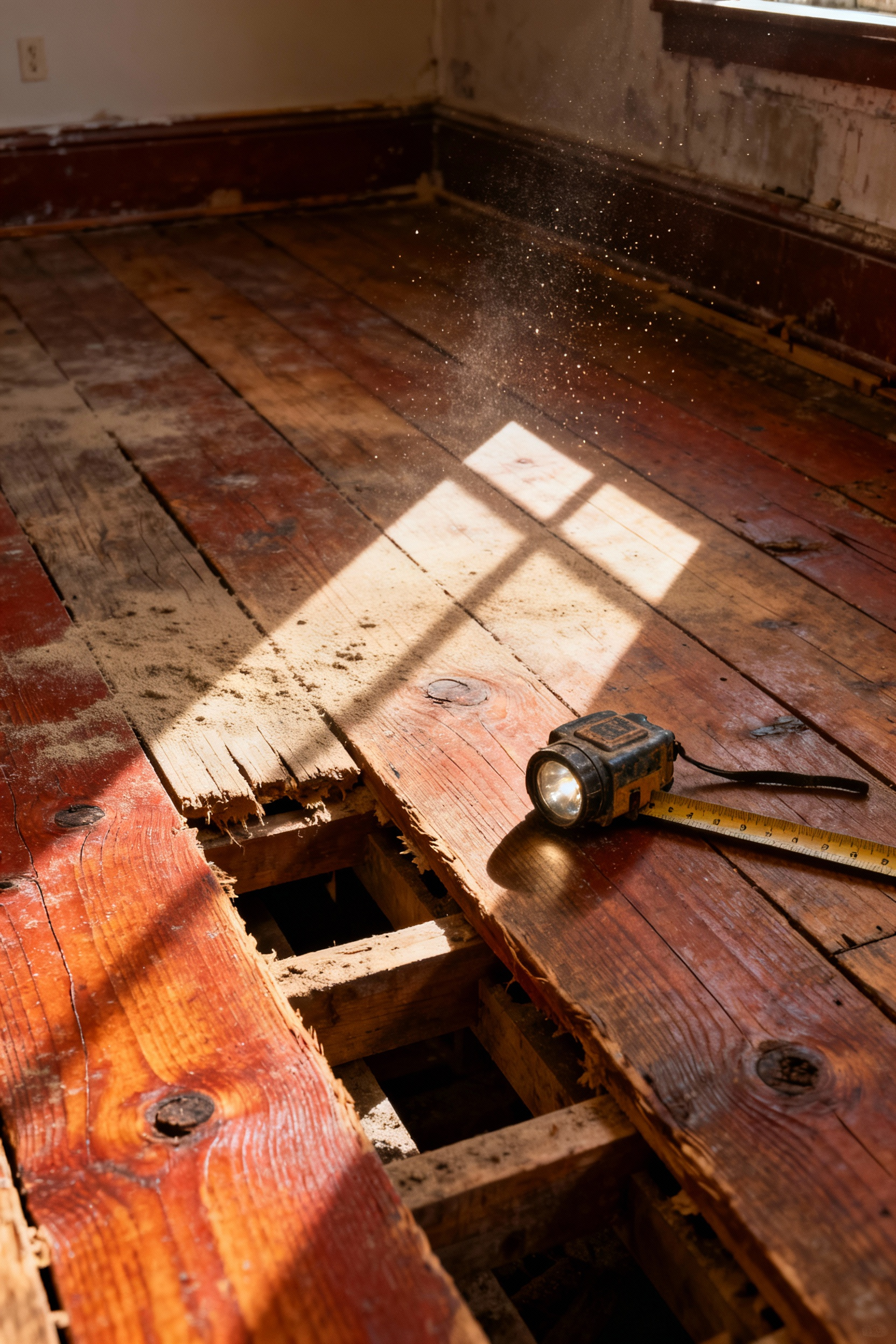
Assess the structure before starting cosmetic work. Inspect the joists from the basement for rot. Soft spots indicate a compromised system needing immediate repair. Next, evaluate the floor’s flatness. Centuries of settling leave surfaces uneven. Aggressive sanding to flatten deep dips removes too much material. Use a laser level to measure discrepancies. Finally, verify the wear layer thickness. You need at least 1/4 inch of wood above the tongue for safe restoration.
Treat this antique wood as a time capsule. Old-growth species offer tight grains effectively extinct in today’s market. Resist the urge to sand away every scratch. Deep sanding significantly shortens the floor’s life. Instead, highlight the patina. Embrace the imperfections. This sustainable approach honors the home’s narrative while preserving structural integrity.
2. Reclaimed Timber: Sourcing Material with a Provenance
Sourcing reclaimed timber installs a physical archive directly into your home. These planks carry narratives from 18th-century mills and barns. You might uncover rare American Heart Pine or fumed European Oak. This provenance offers far more than material value.
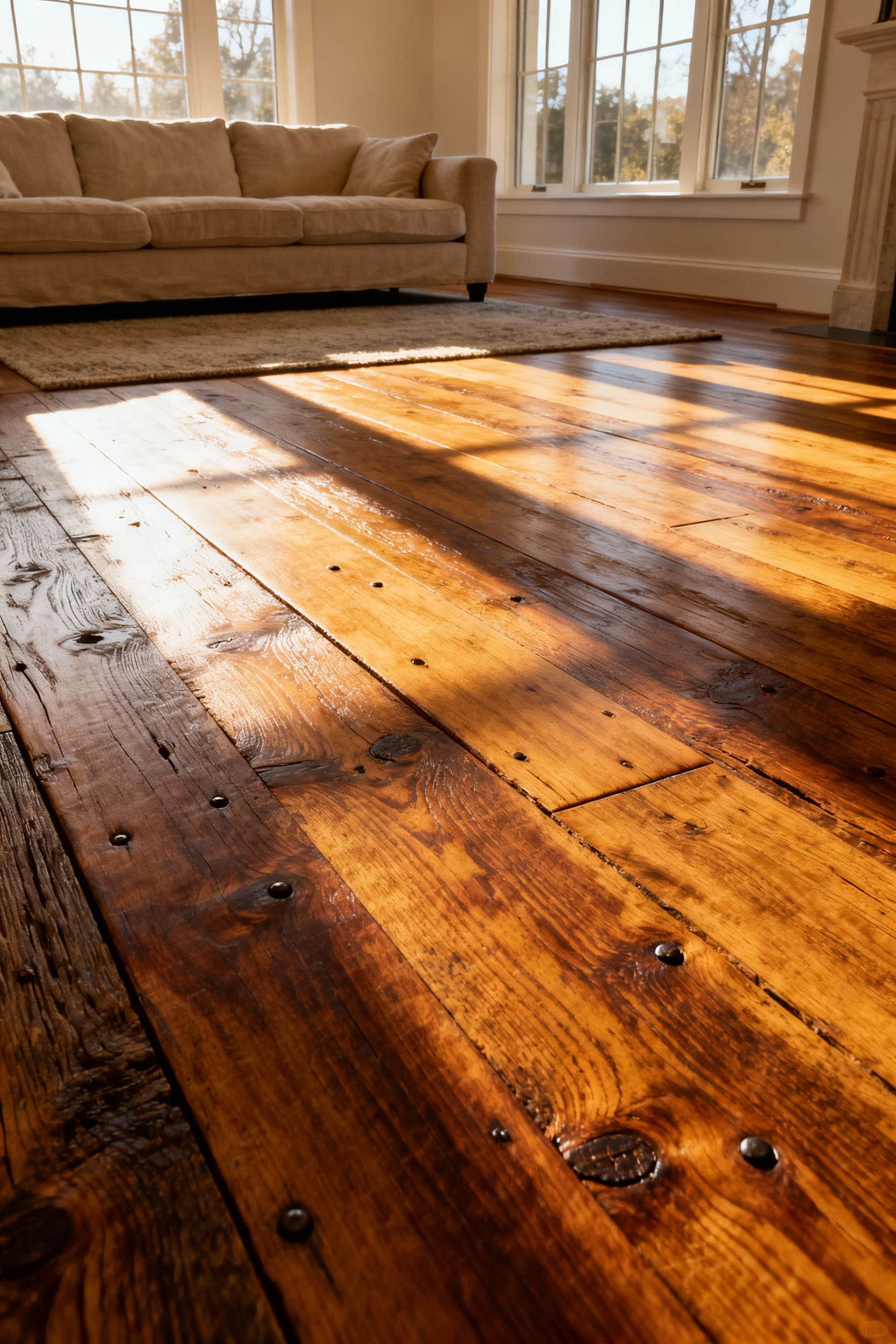
The surface chronicles its previous life. Look for “battle scars” like iron nail holes or saw kerfs. These are authentic timestamps from the Industrial Revolution. They turn a standard architectural element into a storytelling device.
There is also a technical advantage. “Reclaimed” often means old-growth timber. These trees grew slowly, resulting in tight rings and superior density. This makes the flooring significantly harder than fast-grown modern lumber.
Decades of service have seasoned the material. The wood has completed its expansion cycles. Consequently, it offers exceptional stability. It resists the warping that plagues new wood in climate-controlled homes. The final payoff is the patina. Oxidation creates deep hues synthetic stains cannot mimic. This warmth grounds a room and offers a tactile connection to the past.
3. Wide-Plank Oak: Reviving the 18th-Century Farmhouse Aesthetic
Wide-plank oak stems from 18th-century practicality, not vanity. Colonial settlers utilized massive logs to minimize labor. Fewer cuts meant less milling time. Today, we treasure those resulting knots. They offer a sense of humble history often missing in new construction.
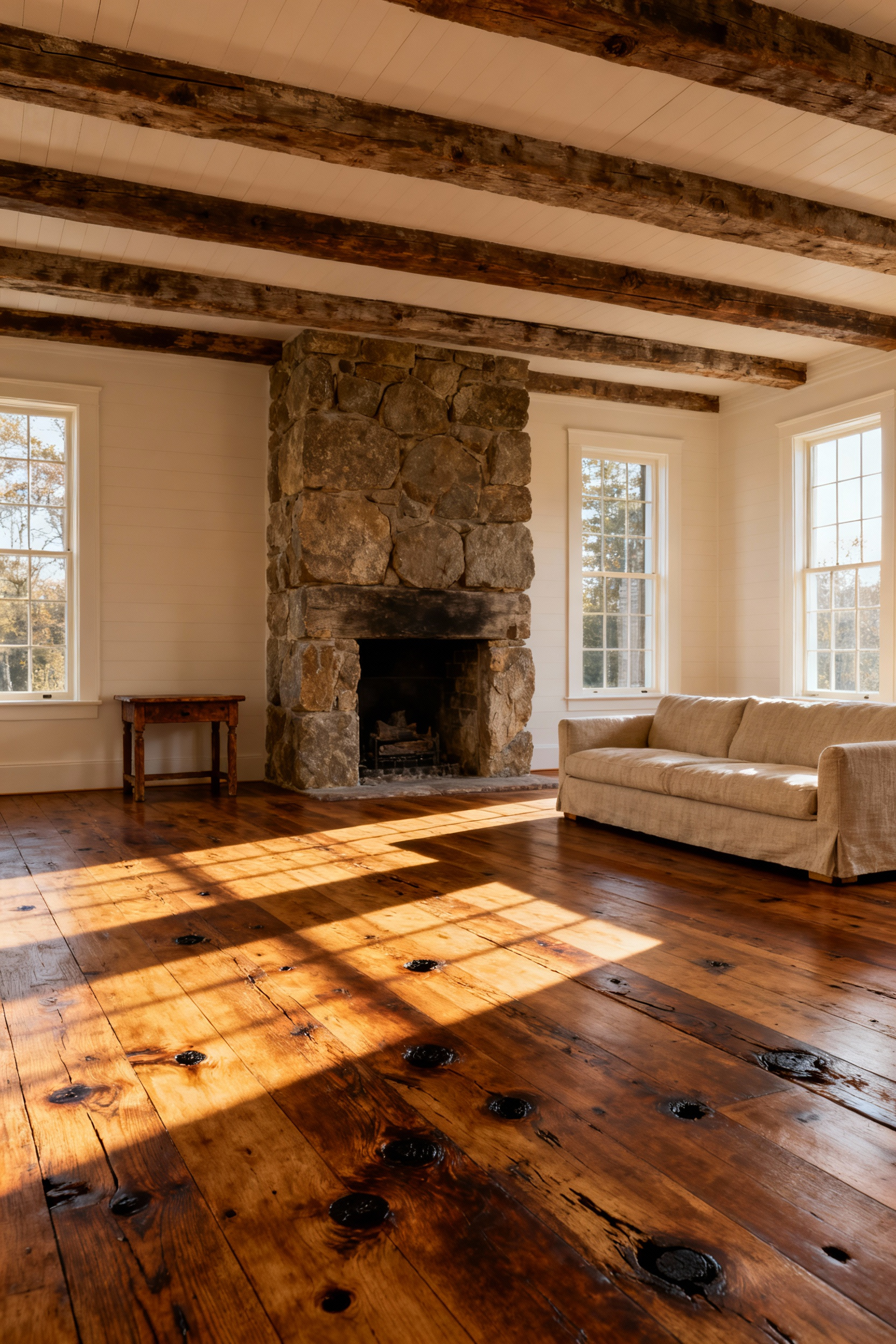
Recreating this look now requires modern engineering. Solid planks over five inches struggle with indoor climates. They can cup or gap in heated homes. Engineered cores provide necessary stability. This allows for a seamless, uninterrupted canvas. Fewer seams draw the eye outward. This makes open-concept living rooms feel significantly more expansive.
White Oak is the ideal species here. Its neutral grain grounds spaces without dominating them. Opt for a matte European oil finish instead of gloss. This highlights the raw texture. It softens light reflection and hides wear. The result achieves a “Modern Rustic” balance. The floor becomes a tactile foundation for sleek furniture. Dense boards also absorb sound, reducing harsh echoes.
4. The Patina Paradox: Why Imperfection is the Ultimate Luxury
In an era of mass-produced perfection, flawless finishes are common. Anyone can buy pristine, factory-stamped flooring. True luxury has migrated to the in-replicable. It values surfaces bearing authentic marks of time. This redefines status from conspicuous newness to curated heritage.
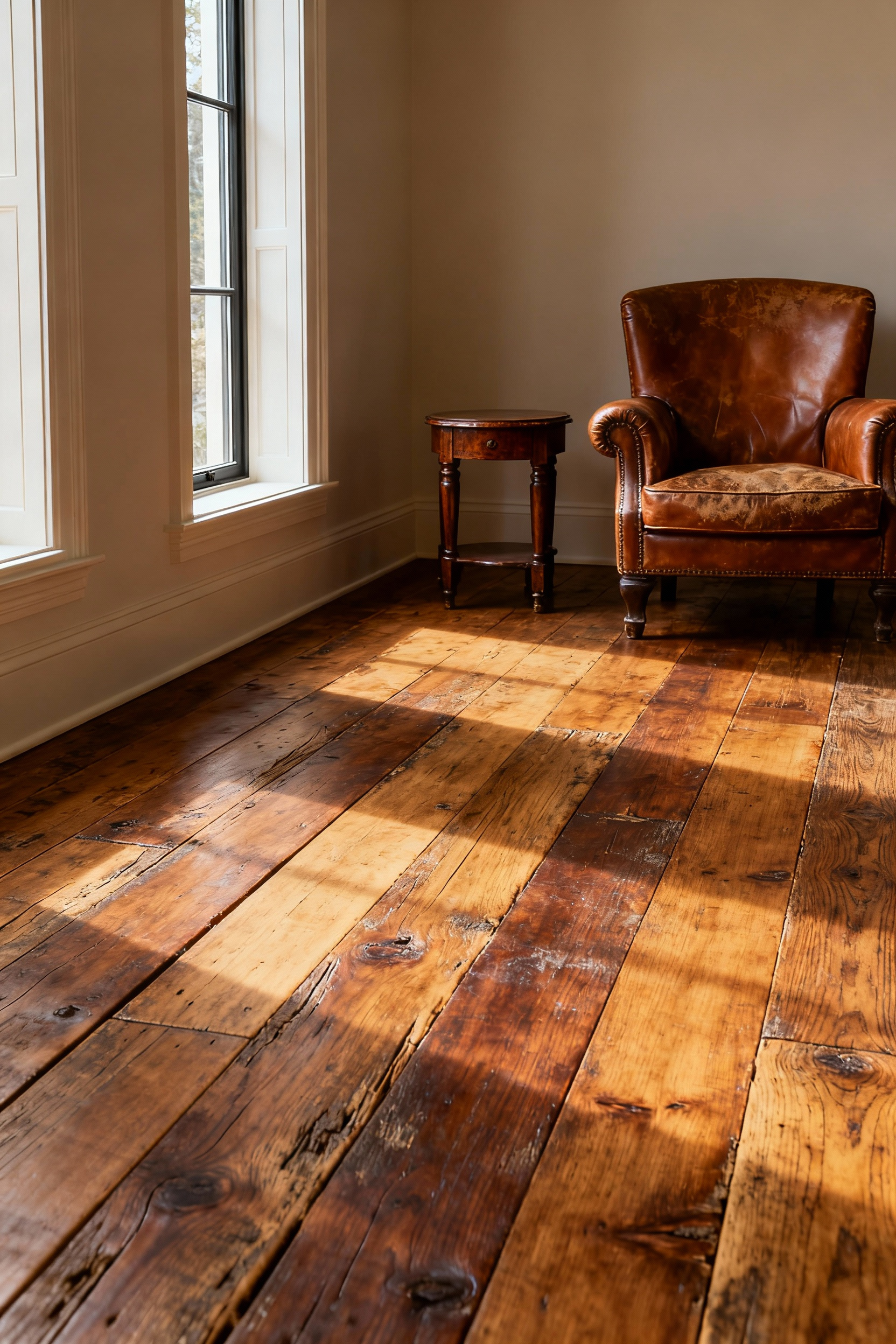
This aesthetic requires material integrity. Solid hardwoods and natural stone age gracefully. Consider the deep, honeyed gloss of reclaimed oak. That color comes from natural oxidation, not a chemical stain. The restoration process adds bespoke value. Hand-sanding warped boards creates a unique fingerprint.
Natural stone behaves similarly. Unsealed marble develops a micro-patina known as etching. These small scratches distinguish real material from printed replicas. This aligns with Wabi-Sabi philosophy. Imperfections become narrative elements.
Psychologically, this offers comfort. A floor with history invites interaction. You don’t fear ruining a showroom finish. It grounds contemporary spaces with soul. Ultimately, accepting wear transforms a house into a sanctuary.
5. Sustainable Bamboo: The Mid-Century Favorite Reimagined for Durability
Bamboo brings a casual elegance perfect for Tropical Modern interiors. It captures the airy aesthetic championed by mid-century designers. However, early versions disappointed many homeowners. Horizontal planks often dented under heels because they were simply too soft.
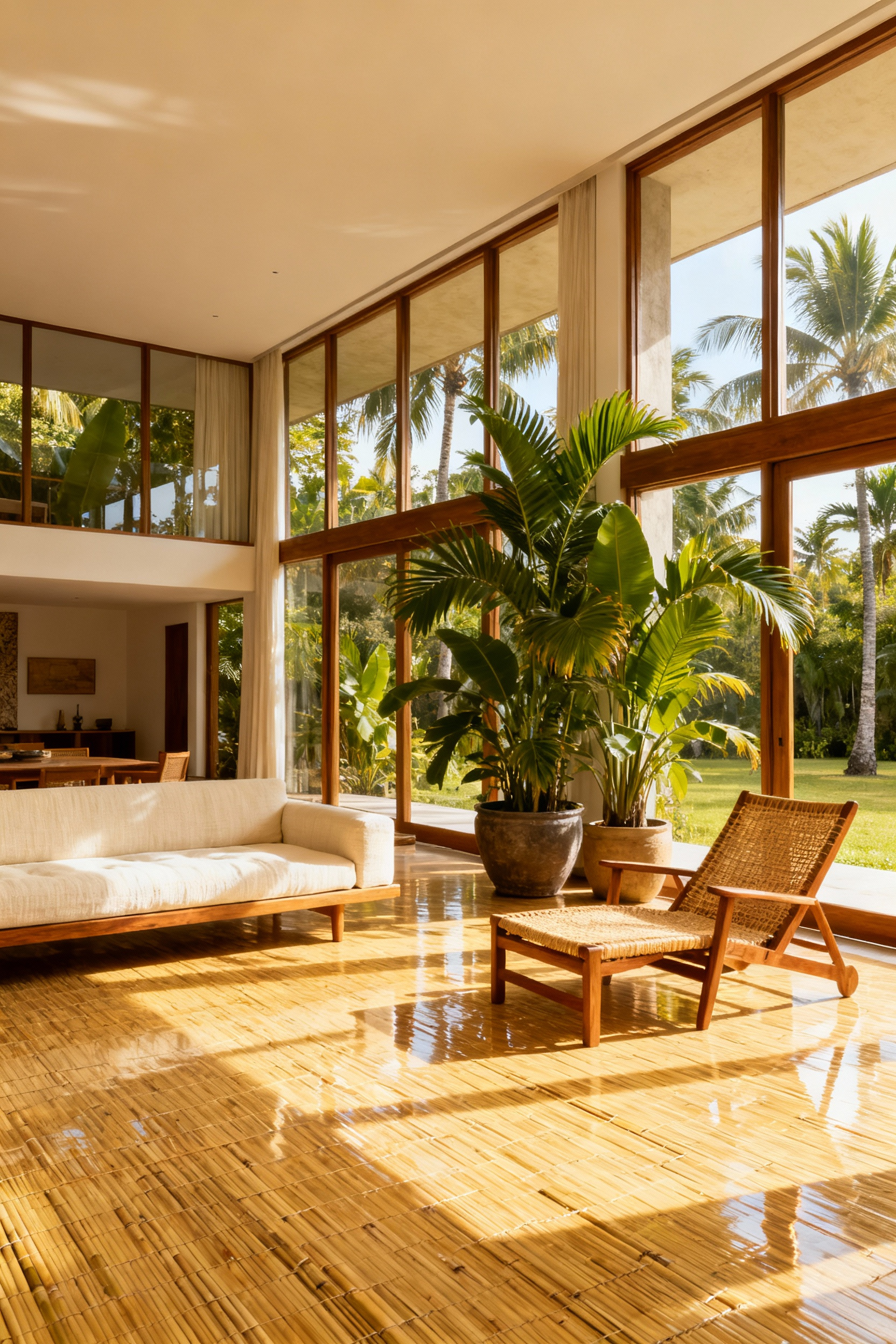
Modern engineering solved this softness issue. Strand-woven technology shreds mature Moso bamboo into fibers. Manufacturers compress these with resin under extreme pressure. The result is a dense plank rivaling exotic hardwoods. With a Janka rating often reaching 4,000 pounds, it creates an incredibly resilient surface. It is two to three times harder than red oak.
Visually, the tell-tale “knuckles” are replaced by a sophisticated flow. The compressed fibers create a marbled grain. This provides texture without feeling rustic. It complements clean lines while hiding scratches.
Sustainability remains the core appeal. Moso bamboo regenerates in five to seven years. The root system stays intact during harvest. You gain the longevity of a 30-year floor without depleting forests. This balance of renewal and durability makes it a practical triumph.
THEME II: PATTERN AND GEOMETRY
Flooring pattern anchors a room’s history and structural perception. Consider the classic parquet family, specifically Herringbone and Chevron. Herringbone uses rectangular blocks at 90-degree angles. This interlocking zigzag originated with Roman road paving.
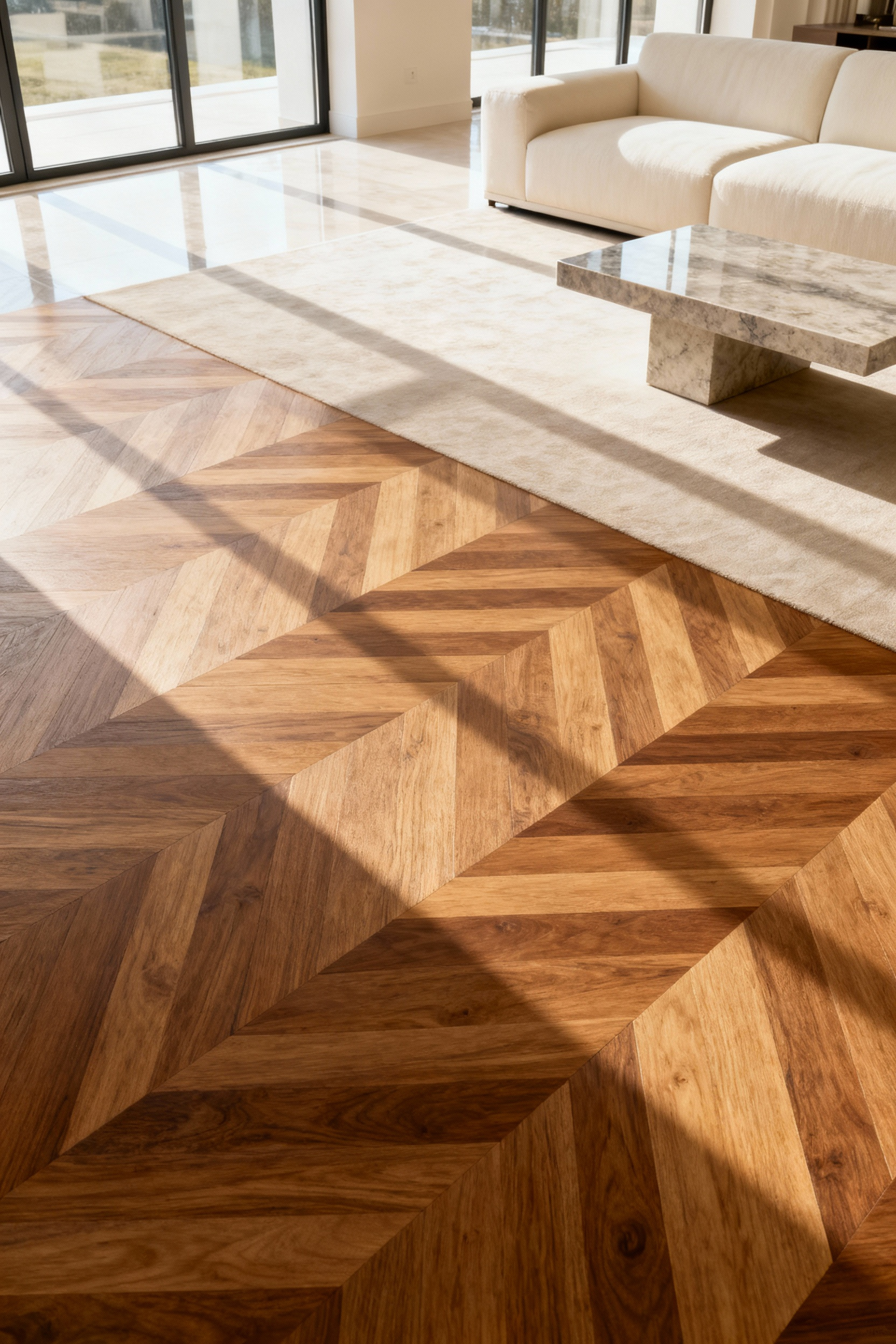
In contrast, Chevron cuts blocks at an angle to create a seamless meeting point. This sharp “V” shape echoes French palaces. It aligns for a cleaner, streamlined aesthetic in modern plans. Geometry influences spatial psychology. Repetitive lines guide the eye.
Laying patterns parallel to the longest wall creates an illusion of length. Symmetrical grids offer order. Conversely, bold shapes inject energy. In open concepts, a subtle shift in pattern defines the living area without walls. This provides unconscious navigation cues.
Modern materials like LVT now replicate these designs. You can introduce Victorian balance or Art Deco luxury. Hexagonal motifs offer versatility. A single-color honeycomb feels minimalist. Multi-colored arrangements evoke vintage charm. These choices honor history while meeting modern needs.
6. Decoding Parquet: The Historic Distinction Between Herringbone and Chevron
Many confuse these two iconic patterns, yet the distinction lies in the cut. Herringbone relies on uniform, rectangular planks. You install the end of one plank against the side of another. This creates a staggered, “broken” zigzag effect. The result is a dense, woven texture.
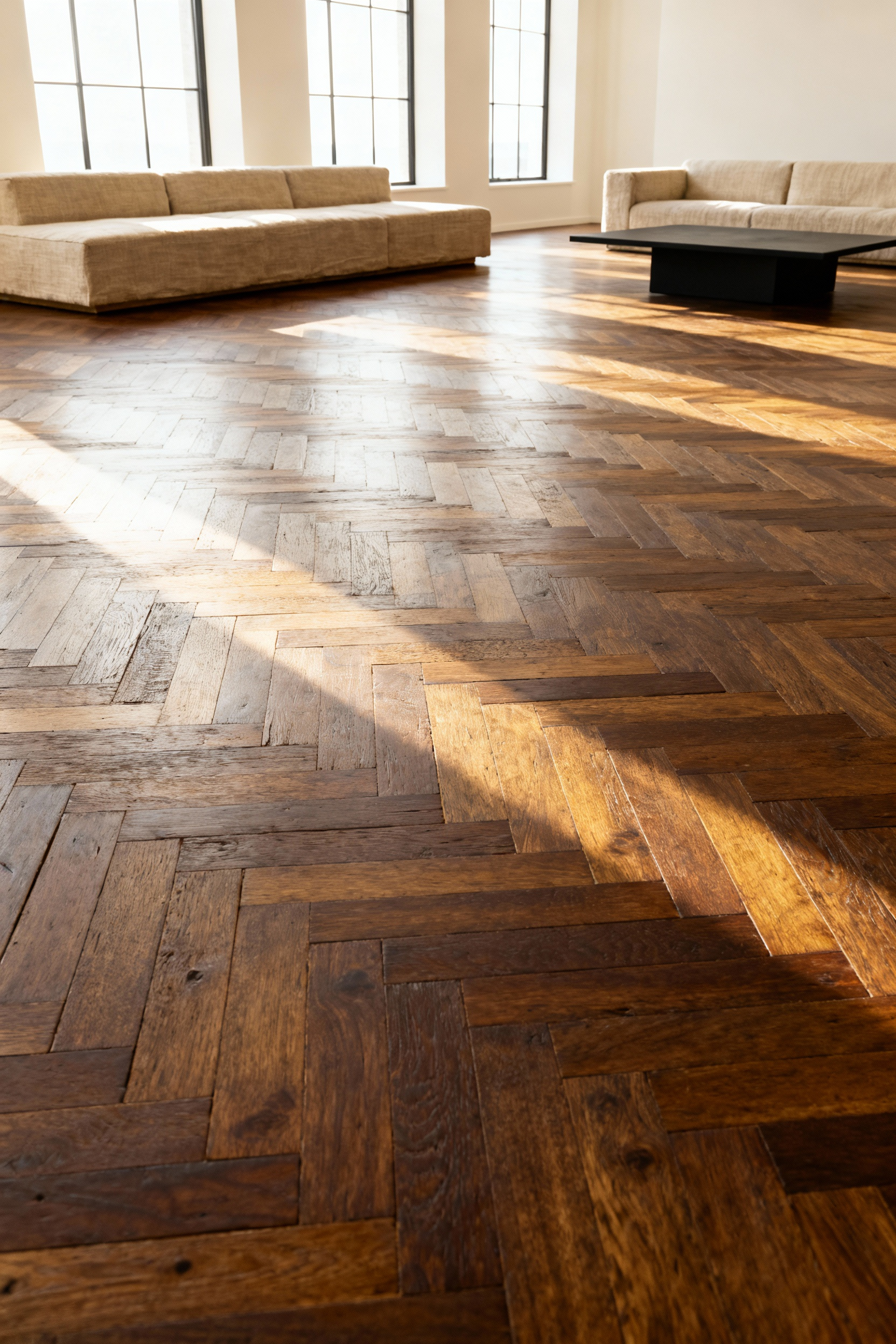
Chevron requires a sharper approach. Craftsmen cut planks at precise angles, typically 45 degrees. They meet at a perfect point to form a seamless arrow. This precise alignment demands complex installation.
These differences carry historical narratives. Herringbone roots itself in utility. Romans used this interlocking style to stabilize roads. It later moved indoors to 16th-century estates. It offers a substantial character. Chevron leans toward formality. It became the signature of 19th-century Paris. The clean lines communicate status.
Your choice dictates the room’s energy. Chevron acts like arrows. It draws the eye forward, elongating spaces. It feels directional. Herringbone offers a softer approach. The overlapping joints create visual texture. It bridges traditional warmth and contemporary design.
7. Parquet de Versailles: Integrating Aristocratic Geometry into Modern Living
King Louis XIV commissioned this flooring in the 1680s to solve a problem. The original marble floors were cold and rotting the joists. Replacing stone with wood saved the structure. This elevated the floor to a primary architectural feature.
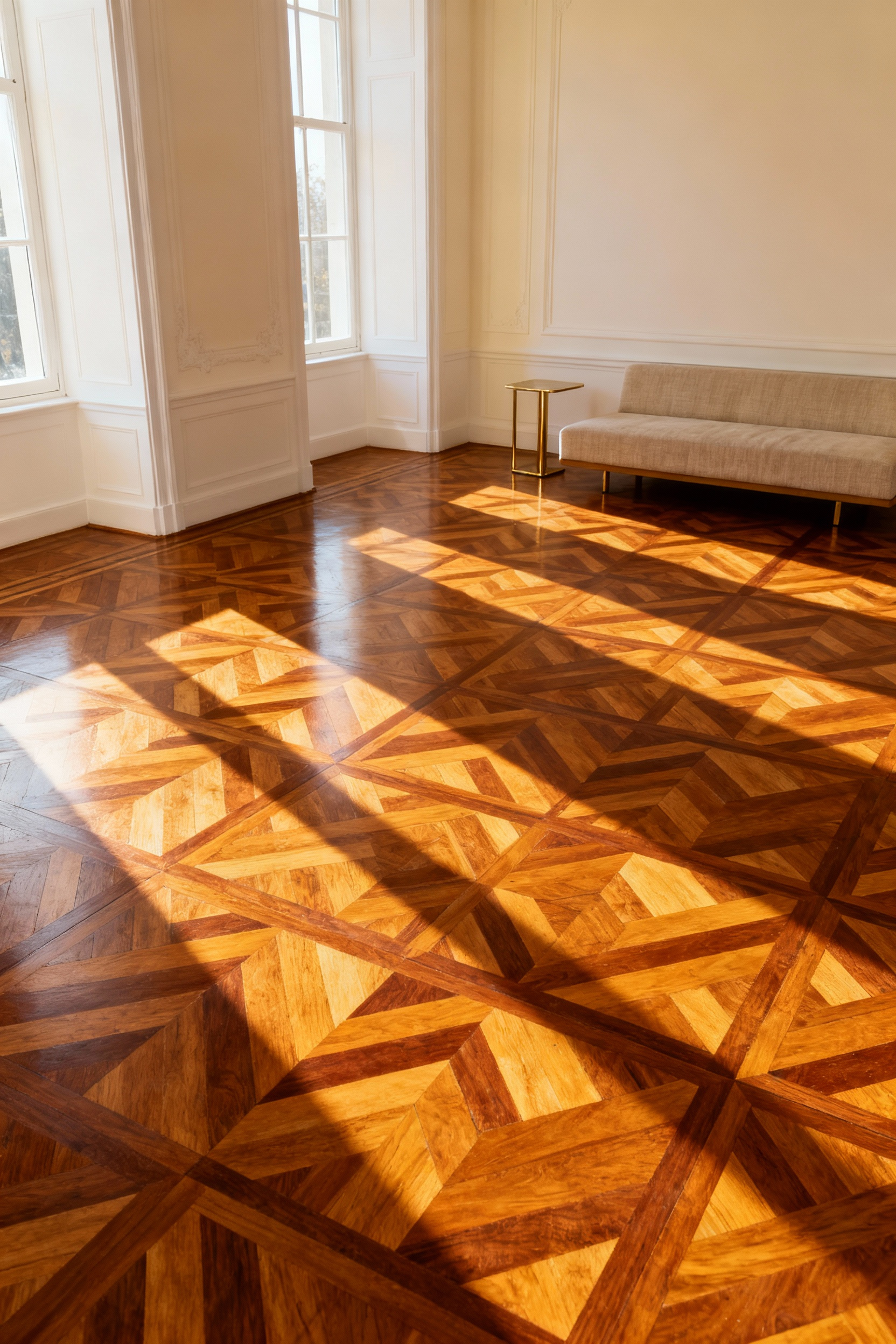
Visually, the pattern consists of large, modular square panels. Interwoven slats create a complex mosaic. This geometry creates sophisticated movement. The intricate texture anchors the space without overwhelming furniture.
Historical panels required intricate joinery. Modern versions favor engineered panels for stability. A top layer of hardwood bonds to a plywood core. This resists warping in heated homes and simplifies installation.
You do not need a palace to utilize this style. Opt for light oak or white-oiled finishes. These lighter tones contrast beautifully with modern furniture. Brushed textures add a lived-in patina. This approach bridges 17th-century opulence with contemporary design.
8. Terrazzo Treasures: The Venetian Art of Aggregate Flooring
Terrazzo stands as arguably history’s first green building material. It began with Venetian workers cutting costs. They repurposed discarded marble chips to pave their own terraces. This turned construction waste into a durable floor.
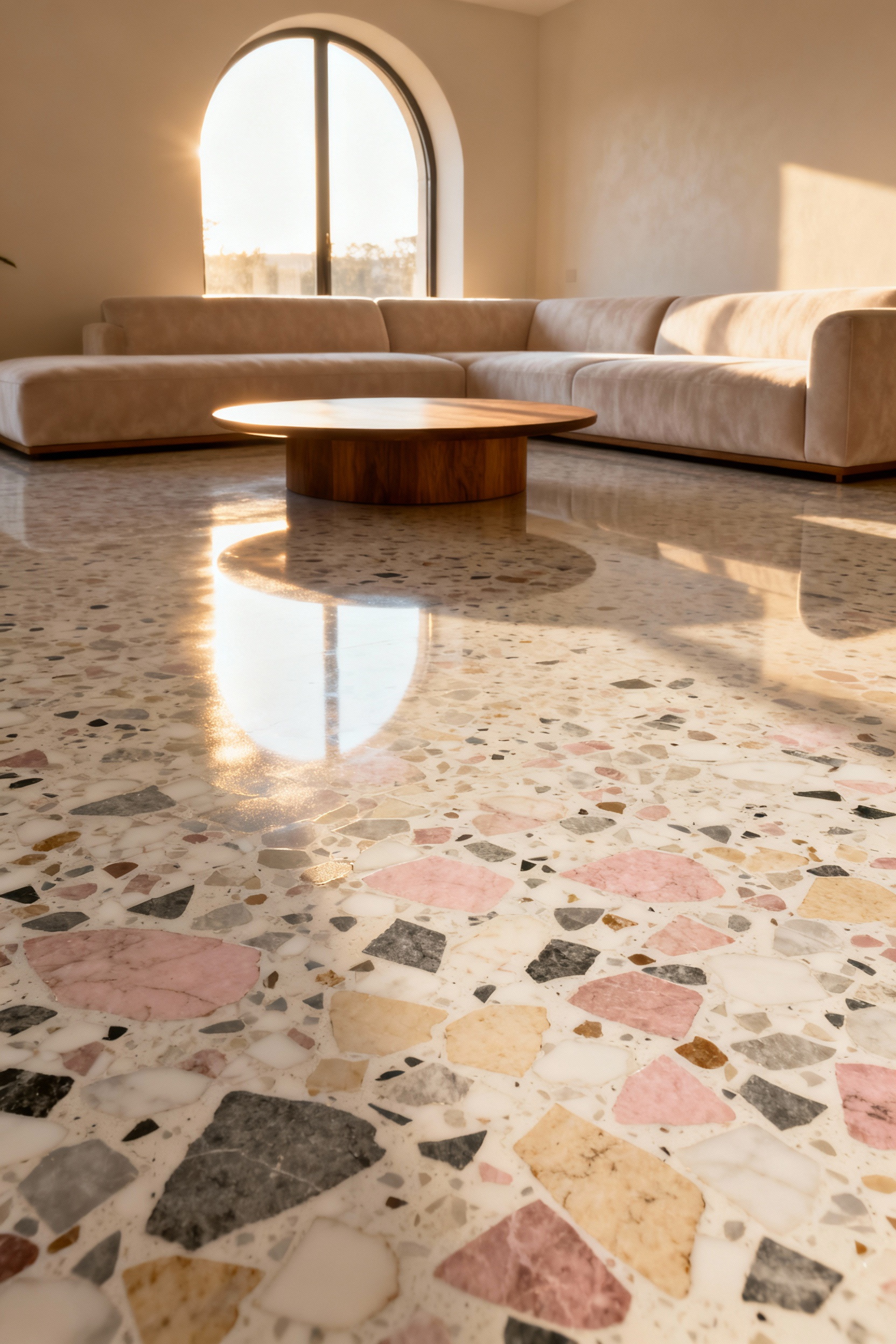
Unlike tiles, poured terrazzo creates a seamless canvas. The visual depth comes from the aggregate composition. Workers historically ground the surface by hand. Today, machines achieve that “endless carpet of light.” Metal divider strips prevent cracking and allow for custom patterns.
This material offers incredible thermal performance. The dense stone conducts radiant heat perfectly. It eliminates cold spots. Conversely, it stays cool during summer. While durable, the porous surface requires care. Avoid harsh chemicals that etch the polish. Use pH-neutral cleaners and reseal professionally every five years.
9. The Painted Floor: Scandi-Style Solutions for Compromised Wood
Scandinavian design prioritizes function alongside aesthetics. The painted floor embodies this ethos. It is a pragmatic response to limited daylight. A pale, chalk-white surface reflects light. It pushes walls outward to lift the ceiling. This combats winter gloom and fosters *Hygge*.
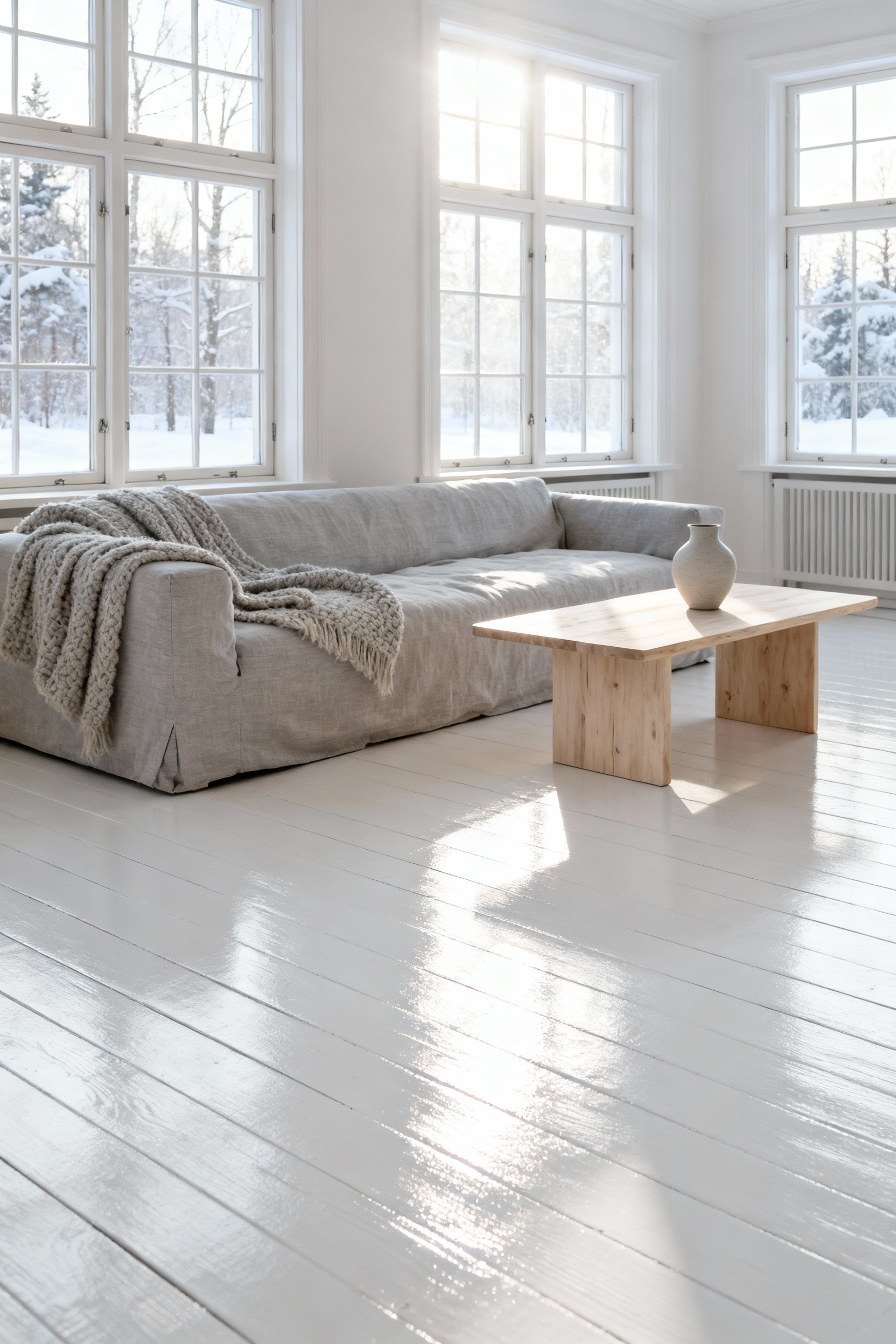
This also saves compromised timber. Vintage floorboards often bear deep stains or patches. Sanding cannot always rectify these flaws. Paint provides a uniform canvas. It conceals damage that would otherwise dictate replacement.
Selecting the finish depends on the wood’s condition. For damaged planks, use a durable floor enamel. An opaque white hides imperfections. If the grain is intact, consider white-pigmented lye. This prevents yellowing. Follow it with a white oil to retain texture.
To mask future wear, try a distressed finish. Lightly sand high-traffic areas after painting. This reveals the wood underneath. New scratches blend in naturally. The result is a resilient floor.
10. Mixing Mediums: Where Stone Meets Wood in Open-Plan Spaces
Mixing stone and wood creates sensory dialogue. It balances natural extremes. Warm walnut feels inviting. Sleek limestone feels cool and permanent. This juxtaposition creates harmony without walls.
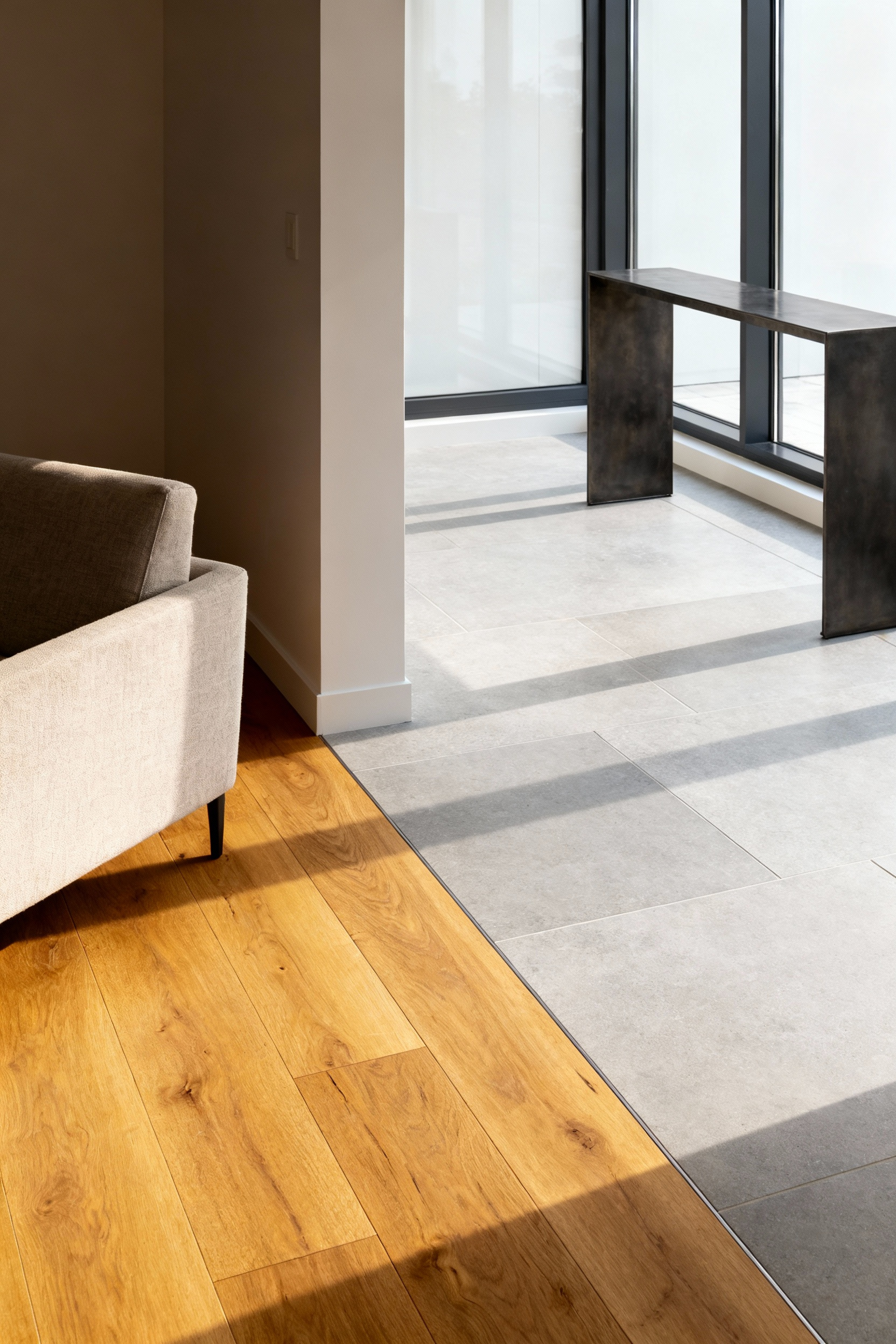
In open layouts, the floor becomes a material code. Place stone in high-traffic zones like entryways. Transition to wood for living areas. This separates functions visually while maintaining flow. It creates intimacy without sacrificing space.
Joining these mediums requires precision. Wood expands; stone remains stable. A hidden expansion gap prevents buckling. Installers often use leveling compounds to ensure a flush surface. Whether straight or geometric, precision is key. This approach marries structural durability with organic warmth.
THEME III: FINISH AND PRESERVATION
The finish dictates your floor’s lifespan. It is a choice between a plastic shield and a living patina. Polyurethane creates a barrier. It is durable against traffic. However, it presents a challenge. You cannot easily spot-repair a film finish. Deep scratches often necessitate sanding the entire room.
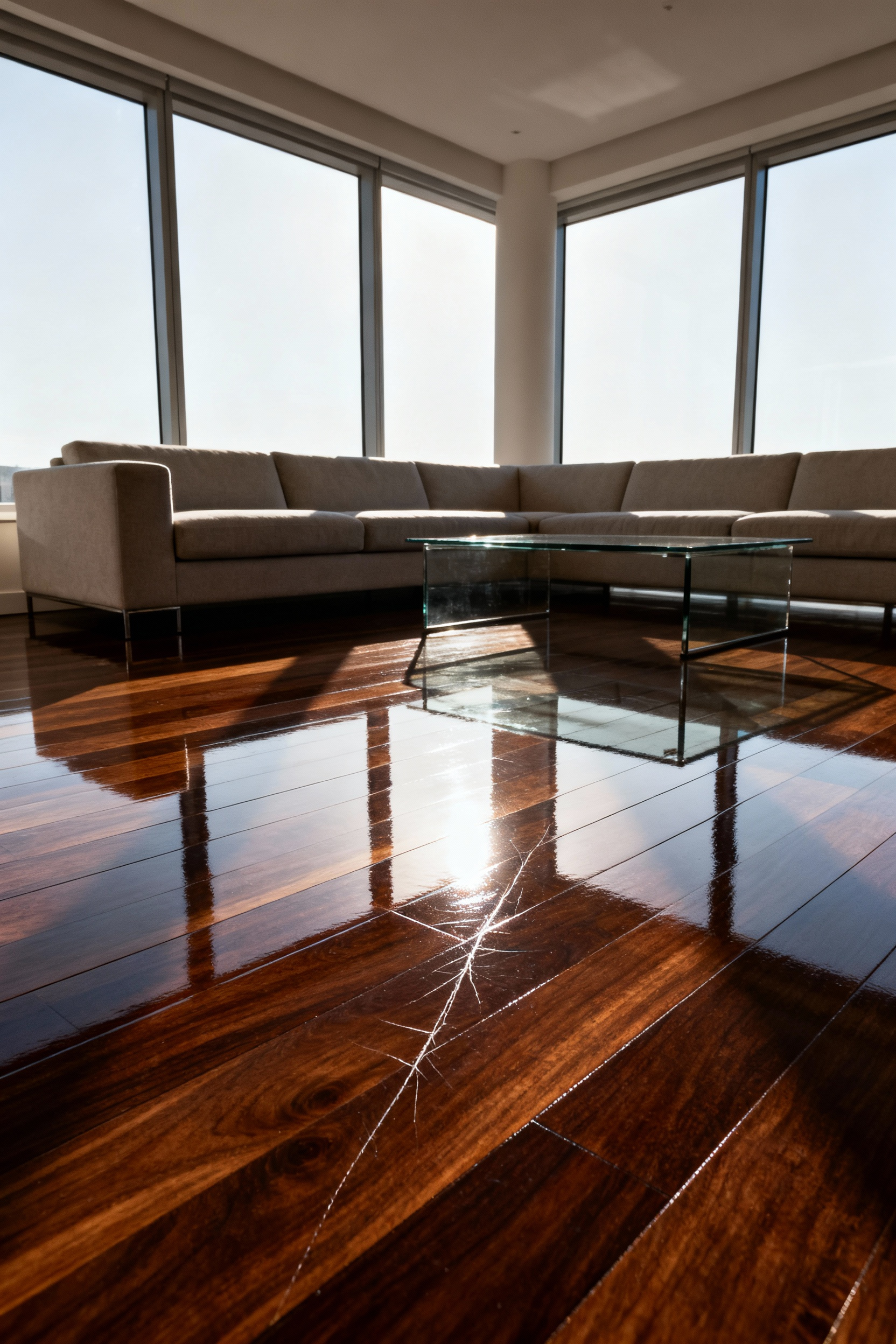
Natural penetrating oils offer a sustainable alternative. These harden within the wood fibers. This allows for seamless spot repairs. You simply clean and re-oil. The floor builds history instead of damage. This revives the tactile warmth of vintage timber. It avoids the plasticized look of modern synthetics.
Sheen level also impacts maintenance. High-gloss highlights dust and scratches. Matte finishes diffuse light to camouflage wear. They extend the visual life of the floor. For concrete, the finish preserves the material. Unfinished slabs stain easily. Polished coatings seal the surface, transforming raw material into design.
11. The Chemistry of Preservation: Natural Oils vs. Polyurethane Lacquers
Choosing a finish fundamentally alters the wood’s chemistry. Natural oils operate through penetration. They soak deep and harden within the fibers. This fortifies the timber. Polyurethane lacquers rely on encapsulation. These resins cure into a film on the surface. Think of this as a raincoat.
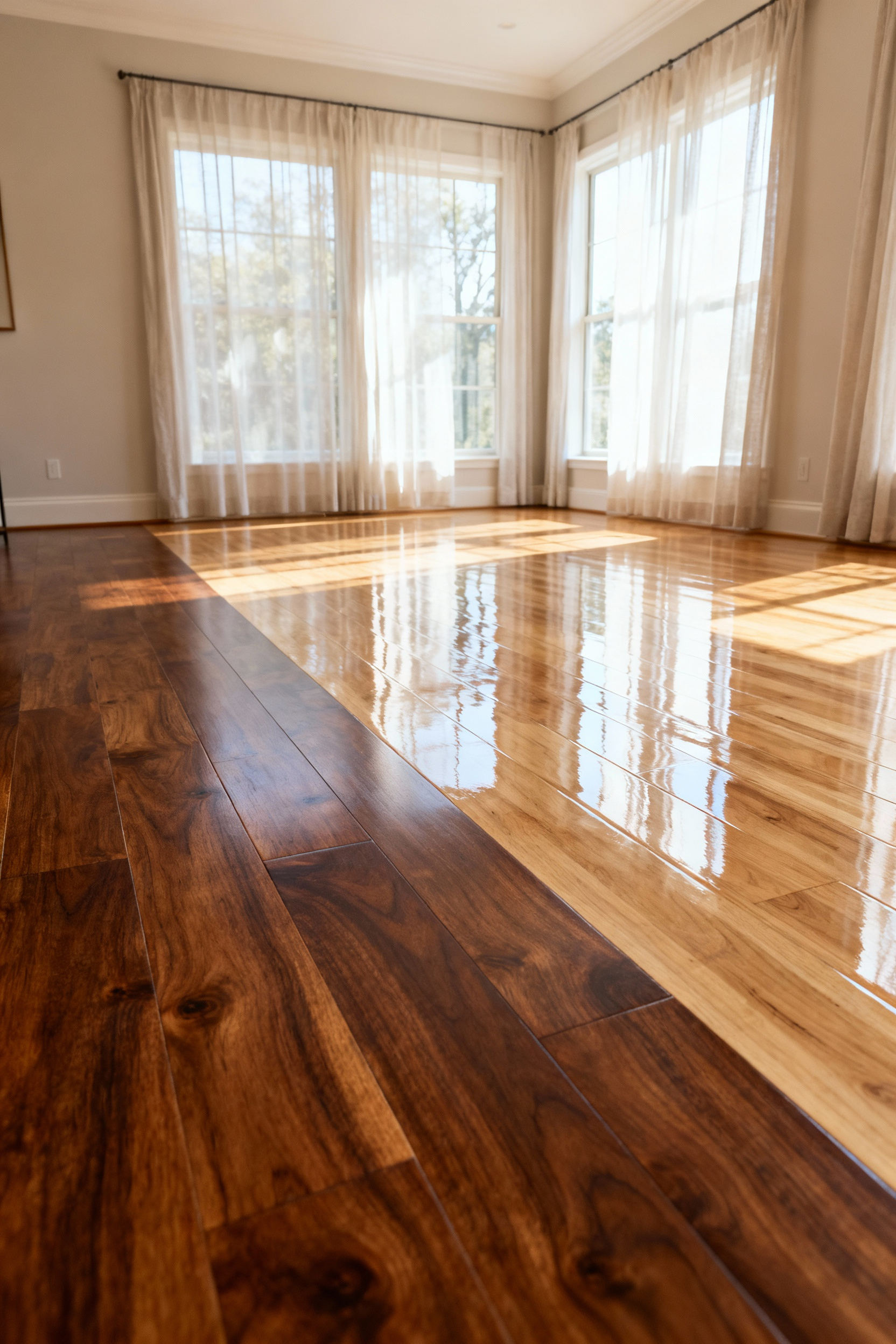
This chemical difference changes how a room feels. With oil, you walk directly on the material. The haptic experience remains textured. Polyurethane creates a smooth, synthetic separation. You are walking on cured plastic. Visually, oil finishes enhance the wood. While oil-based poly yellows, water-based versions remain clear.
Long-term care offers a stark contrast. Oiled floors age with the house. You can spot-repair scratches easily. Polyurethane is unforgiving. Once the film cracks, you cannot patch it invisibly. You must sand the entire room. For sustainable living, oil allows the floor to breathe. It avoids the cycle of aggressive refinishing.
12. The Cork Comeback: Acoustic Warmth and Sustainable Softness
Frank Lloyd Wright understood the appeal of cork. He utilized it in Fallingwater. Today, cork is enjoying a renaissance. It offers a sensory depth that cold tile cannot match.
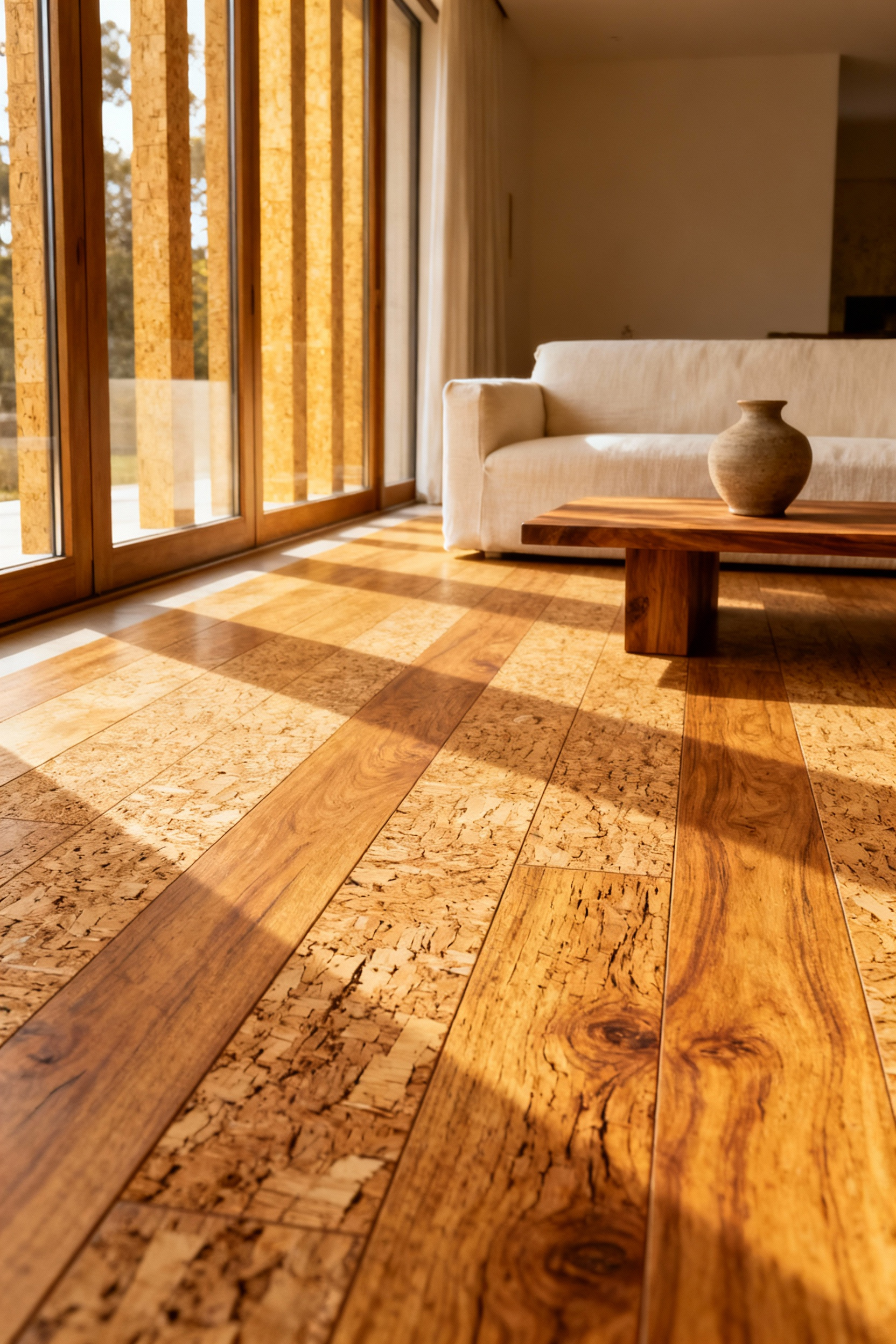
Step onto cork, and you feel the difference. The floor gives slightly. This resilience comes from a microscopic honeycomb structure. Millions of air cells act as shock absorbers. They diffuse sound waves. This dampens footsteps and reduces echoes. Your living room becomes a noticeably calmer environment.
The ecological narrative is impressive. We harvest cork without felling the tree. Workers hand-strip the bark every decade. The tree regenerates, living for up to 200 years. A stripped tree absorbs five times more carbon dioxide. It actively benefits the climate.
Modern finishes address durability. New sealants protect against moisture. However, this softness demands respect. Grit acts like sandpaper, so sweep regularly. Use pads under heavy furniture. With care, cork creates a timeless foundation.
13. Matte vs. Gloss: How Light Reflection Alters Historical Perception
Modern high-gloss finishes often look like hard plastic. Historical floors offered a softer reality. Pre-1920s flooring relied on wax or shellac. These materials penetrated the timber. The result was a mellow, low-luster patina that absorbed light.
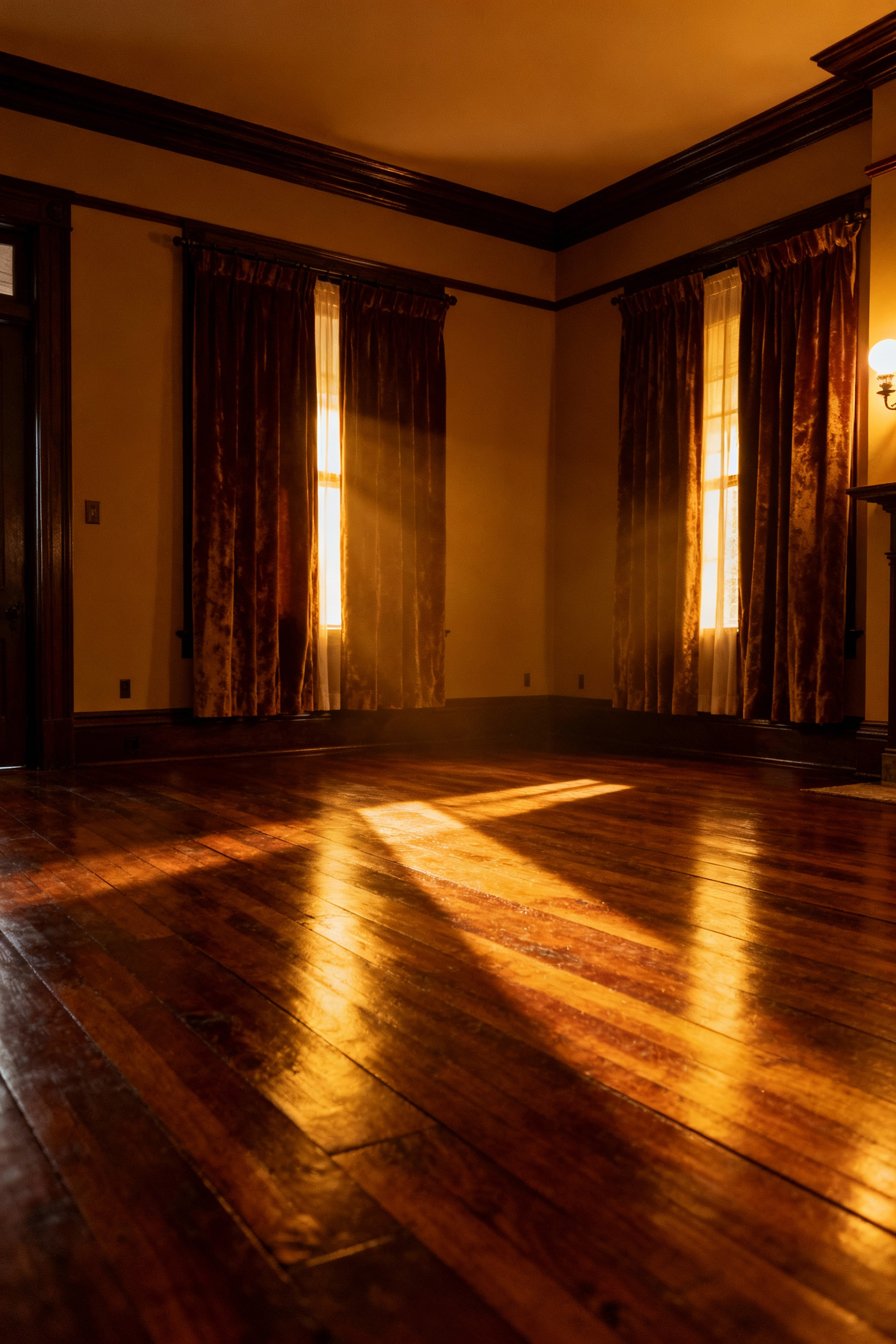
Consider the lighting of that era. Gaslight and firelight cast a low glow. Wax finishes diffused this illumination. They created a golden haze rather than a harsh reflection. This established a cozy atmosphere.
Polyurethane finishes create a mirror-like surface. Under bright LEDs, this produces glare. The reflection highlights every footprint. This shifts a room from intimate to clinical. It disrupts the visual history.
Choosing a matte finish restores authenticity. It mimics hand-buffing. This allows the wood to age gracefully. It avoids the synthetic shine that betrays a restoration project.
14. Eco-Conscious Staining: Achieving Deep Tones Without Toxicity
Deep, rich tones don’t require hazardous solvents. We can look to historical alchemy. Reacting steel wool with vinegar creates iron acetate. This mixture interacts with tannins to form iron tannate. The result is a chemical color change, not just a coating. It creates a variable “ebonized” patina.
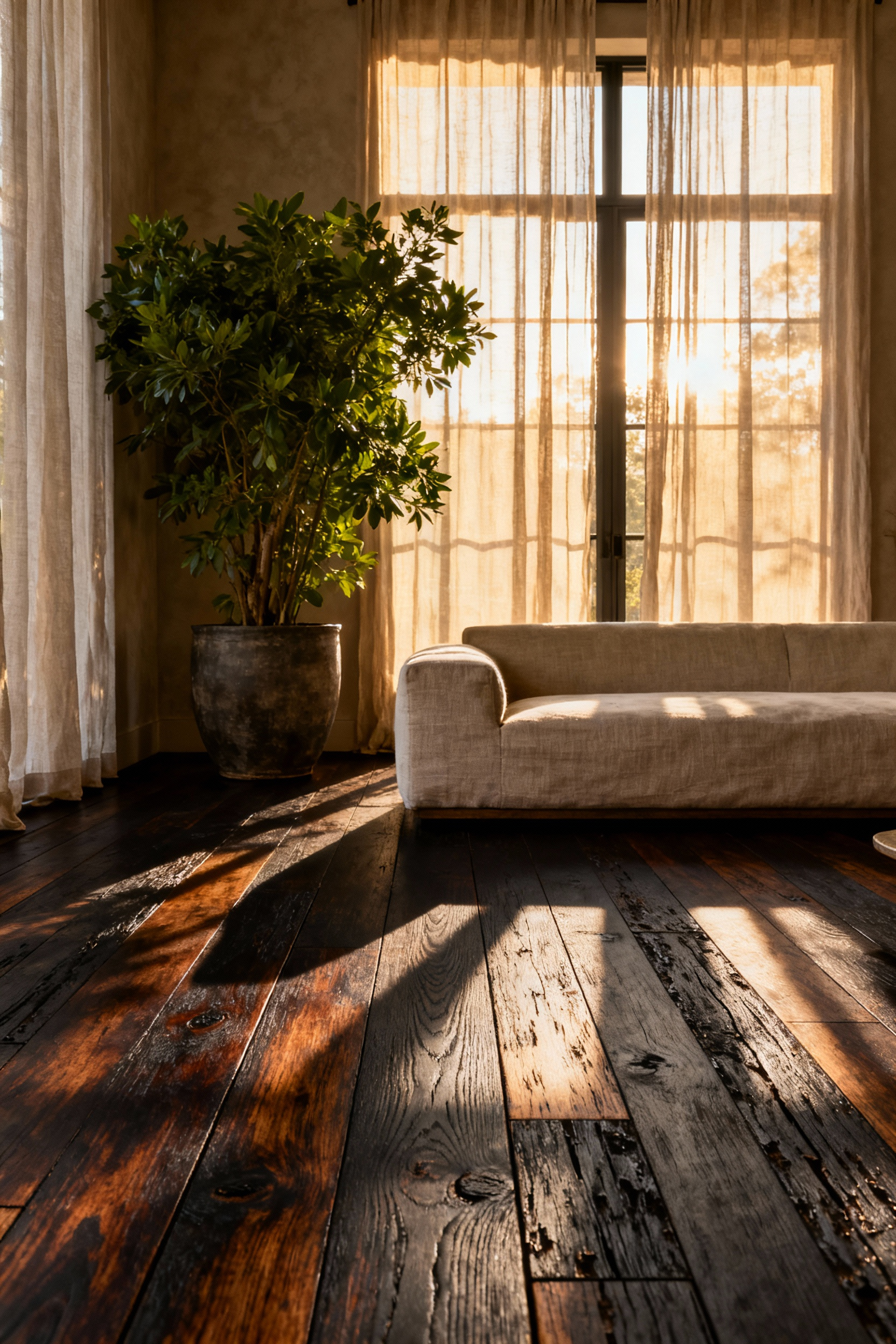
For a modern approach, zero-VOC hardwax oils offer depth without toxicity. These blends use plant-based ingredients. Unlike polyurethane, they bond molecularly with cellulose fibers. This creates a durable, matte finish. You can achieve saturated tones like charcoal in a single coat. This allows for easy spot repairs.
Commercial zero-VOC water-based stains provide another safe alternative. These formulas meet strict toxicity standards. They eliminate headaches caused by traditional solvents. You can build these stains up for custom intensity. However, they require a separate low-VOC clear coat. This ensures your floor withstands high traffic.
THEME IV: LIFESTYLE INTEGRATION
The living room has evolved from a formal parlor into a “flex room.” It serves as office, gym, and play area. This demands flooring that withstands conflicting activities. Durability is no longer just scratch resistance. Surfaces must resist spills and heavy rolling chairs. Porcelain tile or Luxury Vinyl Plank (LVP) excel here.
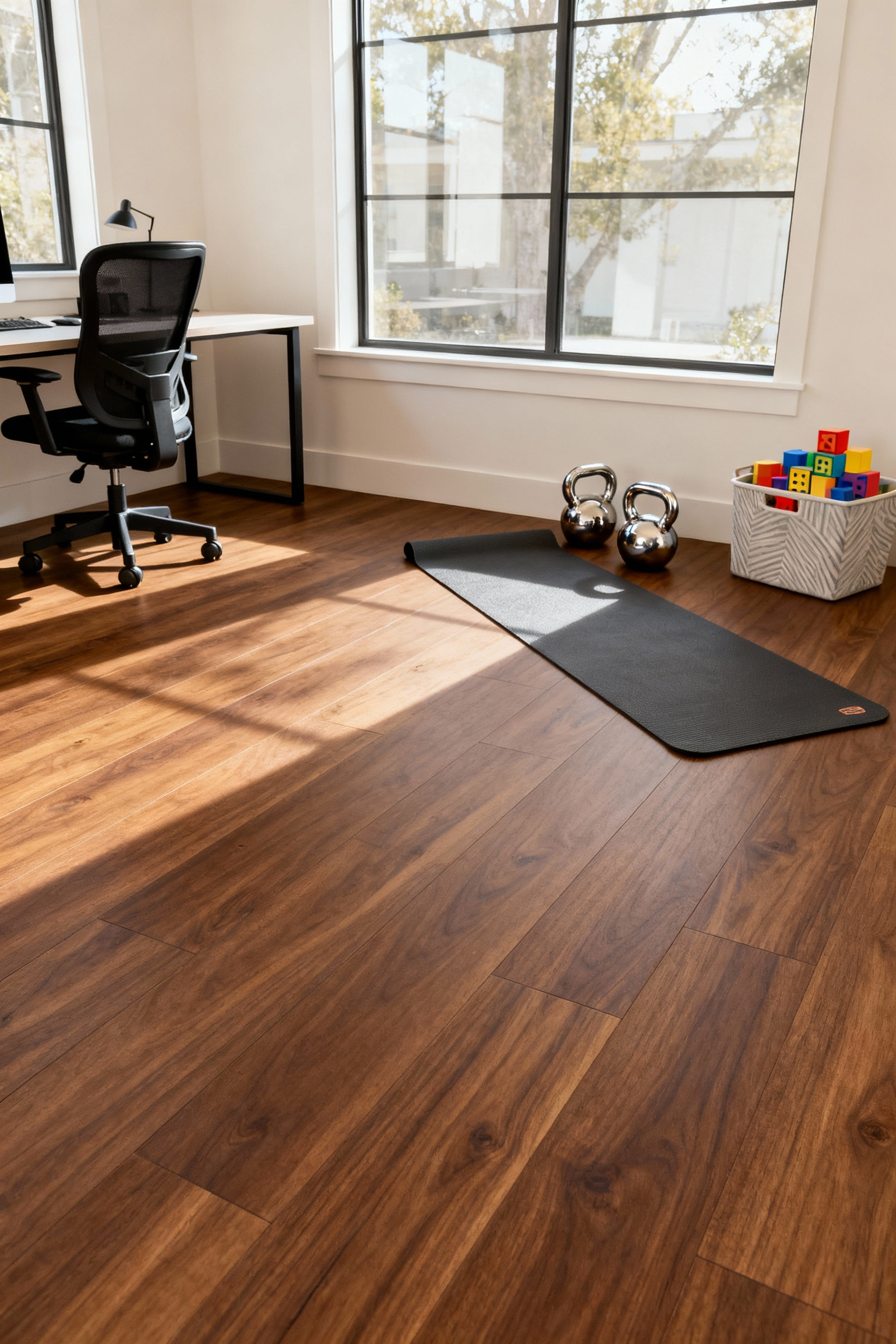
Homeowners seek the aesthetic of natural materials without the maintenance. LVP resolves this. These materials mimic oak or walnut while remaining waterproof. They reduce worry over accidental damage. For longevity, select a product with a 20-mil wear layer. This ensures the floor remains a practical investment.
Sensory comfort creates an integrated space. Cork offers a “cloud-like” feel. It retains heat and dampens sound. This acoustic management is crucial when video calls and leisure time happen concurrently. Cork also repels dust. For colder materials like stone, radiant heating is a functional upgrade. It transforms a hard surface into a cozy part of your home.
15. The Textile Layer: Vintage Rug Strategies for Hard Surfaces
Sleek materials like polished concrete define many modern rooms. While striking, hard surfaces can feel sterile. A vintage rug acts as the essential counterpoint. Hand-knotted wool introduces tension against the smooth floor. This texture grounds the furniture and adds depth.
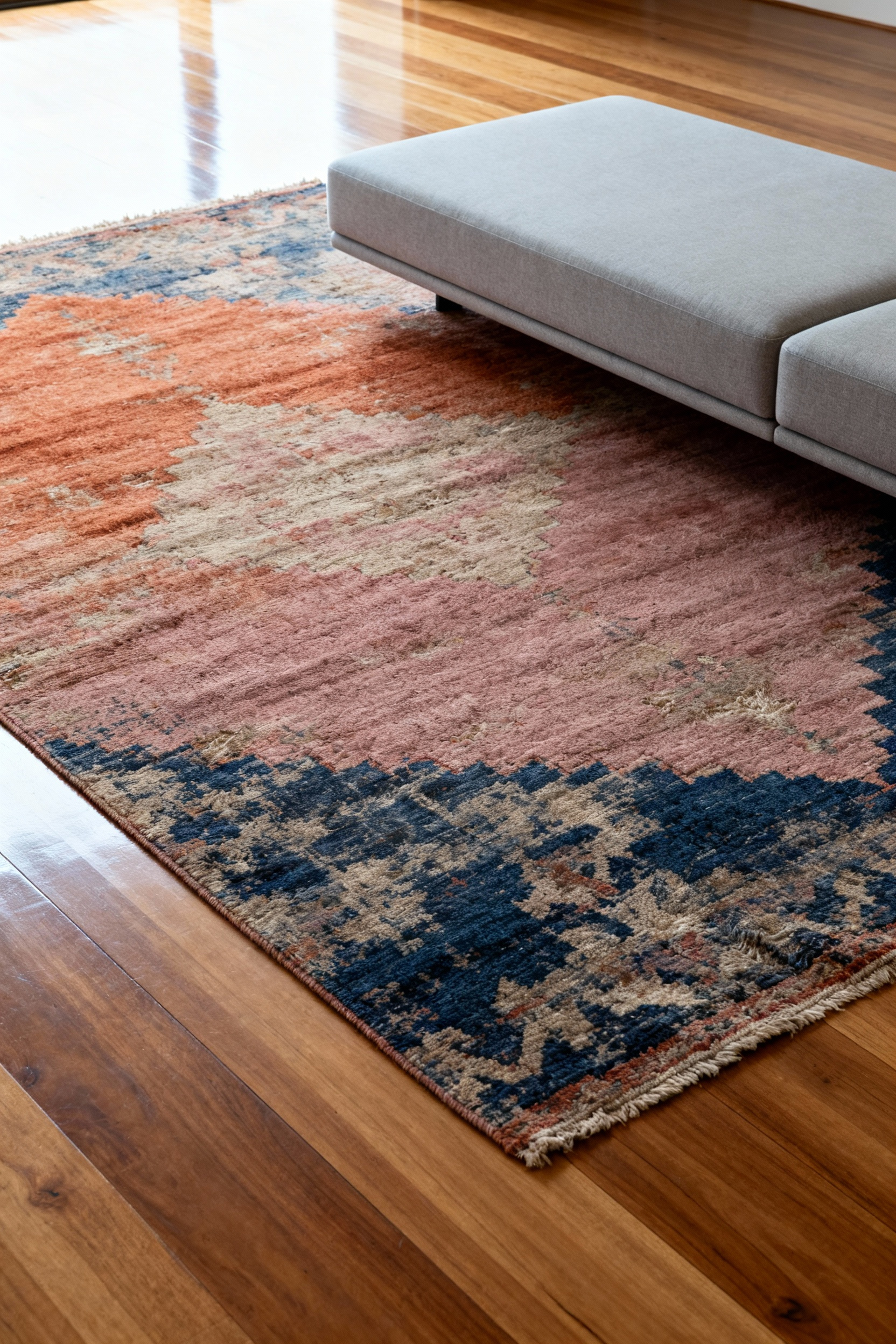
The textile layer solves functional problems. Reflective surfaces amplify sound. Dense wool absorbs noise and softens footfall. It also creates a thermal barrier. This makes the seating area inviting. If you are learning how to curate your home with vintage finds, rugs are the best starting point.
For open plans, consider layering. Place a neutral sisal rug as your foundation to define the zone. This provides a durable base. Then, float a patterned vintage piece on top. Center it under the coffee table. This protects delicate fibers while anchoring your space in history.
16. Acoustic Architecture: Underlayment Secrets for Quiet Luxury
“Quiet luxury” focuses on tranquility. Acoustic underlayment is the invisible secret here. It turns a hard-surface floor into a sanctuary. This layer dampens sharp noises like clicking heels. By absorbing impact, the room feels softer.
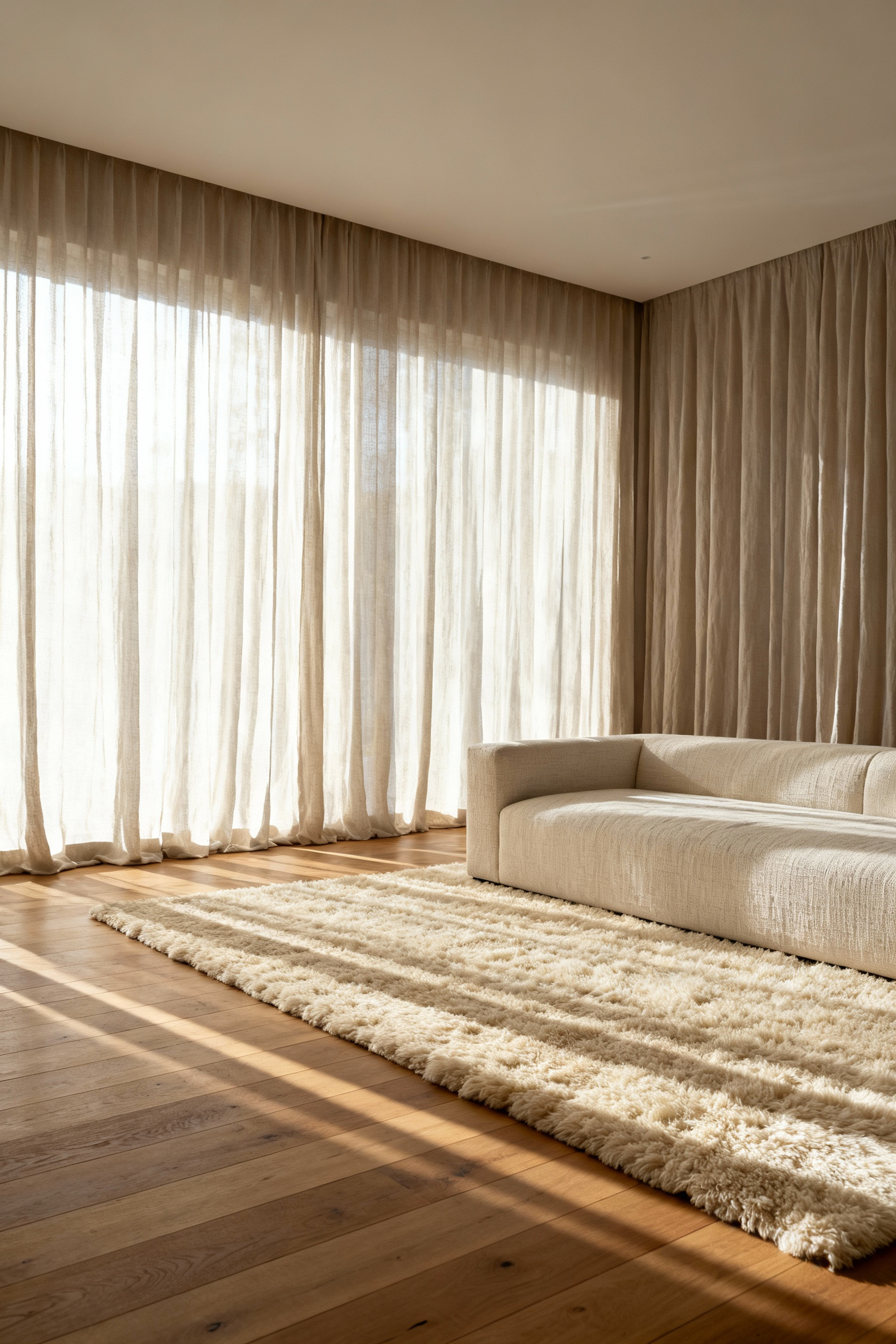
True acoustic performance exceeds basic codes. Aim for materials achieving IIC ratings of 60 or higher. Check the Delta IIC rating. This metric isolates the underlayment’s capability. It proves the material works independently of the subfloor.
Material selection requires balancing density. High-density recycled rubber is a top choice. Made from tires, it offers superior performance. Its resilience resists compression. Alternatively, acoustic cork appeals to eco-conscious renovators. While renewable, cork often requires greater thickness. Rubber generally provides a better performance-to-thickness ratio.
17. Transition Thresholds: Navigating Flow Between Historical Eras
The threshold mirrors architectural history. It reflects the shift from compartmentalized living to modern fluidity. Victorian homes relied on boundaries. Thick saddles separated rooms to stop drafts. If you are designing a Formal Living Room Design, this separation is key. Mid-Century Modern design rejected this. It favored seamless flow.
Stepping across eras engages the senses. You might move from dense tile to plush carpet. This haptic jump alters your gait. Acoustics shift instantly. A colonial floor creaks; linoleum taps. These sounds signal the changing philosophy.
Restoration often reveals height discrepancies. Peeling back layers exposes original hardwood. A standard strip cannot handle this gap. Install a “reducer” to bridge the levels safely. This stepped piece creates a functional bridge. It honors the structural wood while accommodating modern updates.
18. Future-Proofing: Selecting Floors That Age into Heirlooms
True longevity isn’t about looking new forever. Future-proofing prioritizes materials designed to embrace time. This philosophy treats wear as character rather than damage.
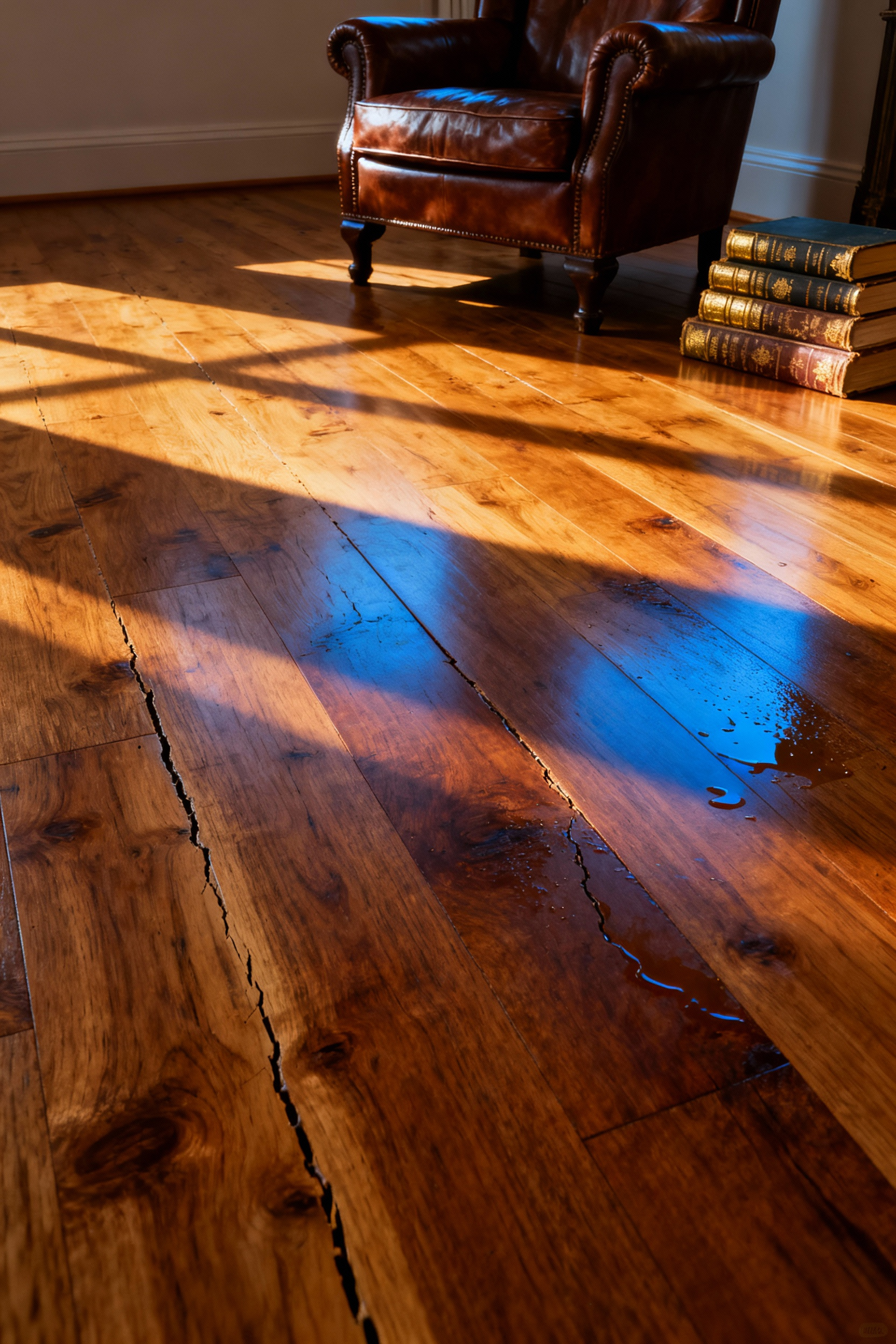
The core differentiator is patina. This natural maturation adds depth. Cherry darkens to red; White Oak settles into amber. Stone surfaces benefit from daily life. Foot traffic softens the texture. This transforms the surface from sterile to lived-in.
Your choice of finish dictates maintenance. Avoid film-forming polyurethane. Scratches appear white and require aggressive sanding to fix. Select a penetrating hardwax or natural oil instead. You can spot-repair worn areas by re-oiling. This preserves the floor’s history.
Aesthetic longevity is equally vital. Avoid trends that instantly date a home. Gray faux wood often feels cold. High-gloss finishes highlight every scuff. The safest choice remains neutral White Oak with a matte finish. This allows the material’s evolution to take center stage.
Frequently Asked Questions about Luxury Living Room Flooring
What is the most durable, high-end living room flooring material for long-term value?
For true generational value, solid hardwood (such as old-growth oak, maple, or reclaimed timber) finished with penetrating oils is superior. Unlike synthetic materials, hardwood can be refinished multiple times over a century, allowing it to accrue aesthetic and financial provenance rather than requiring replacement.
Should I choose solid hardwood or luxury vinyl plank (LVP) for a discerning home?
Discerning homeowners prioritize authenticity and refinishability, viewing flooring as a generational capital investment. Solid hardwood or engineered wood offers genuine tactile warmth and a rich patina. LVP provides excellent water resistance and durability but lacks authenticity, cannot be refinished, and offers a lower acoustic quality, often generating a hollow sound.
How can flooring choices contribute to “Quiet Luxury” and sound dampening in a living room?
Acoustic comfort is key to quiet luxury. Opt for materials that naturally absorb sound, like dense, wide-plank cork flooring, or invest in a high-performance acoustic underlayment (IIC 60+) beneath solid hardwood or tile. A large, dense vintage wool rug also dramatically reduces echo and softens footfall noise.
“`json
“`