
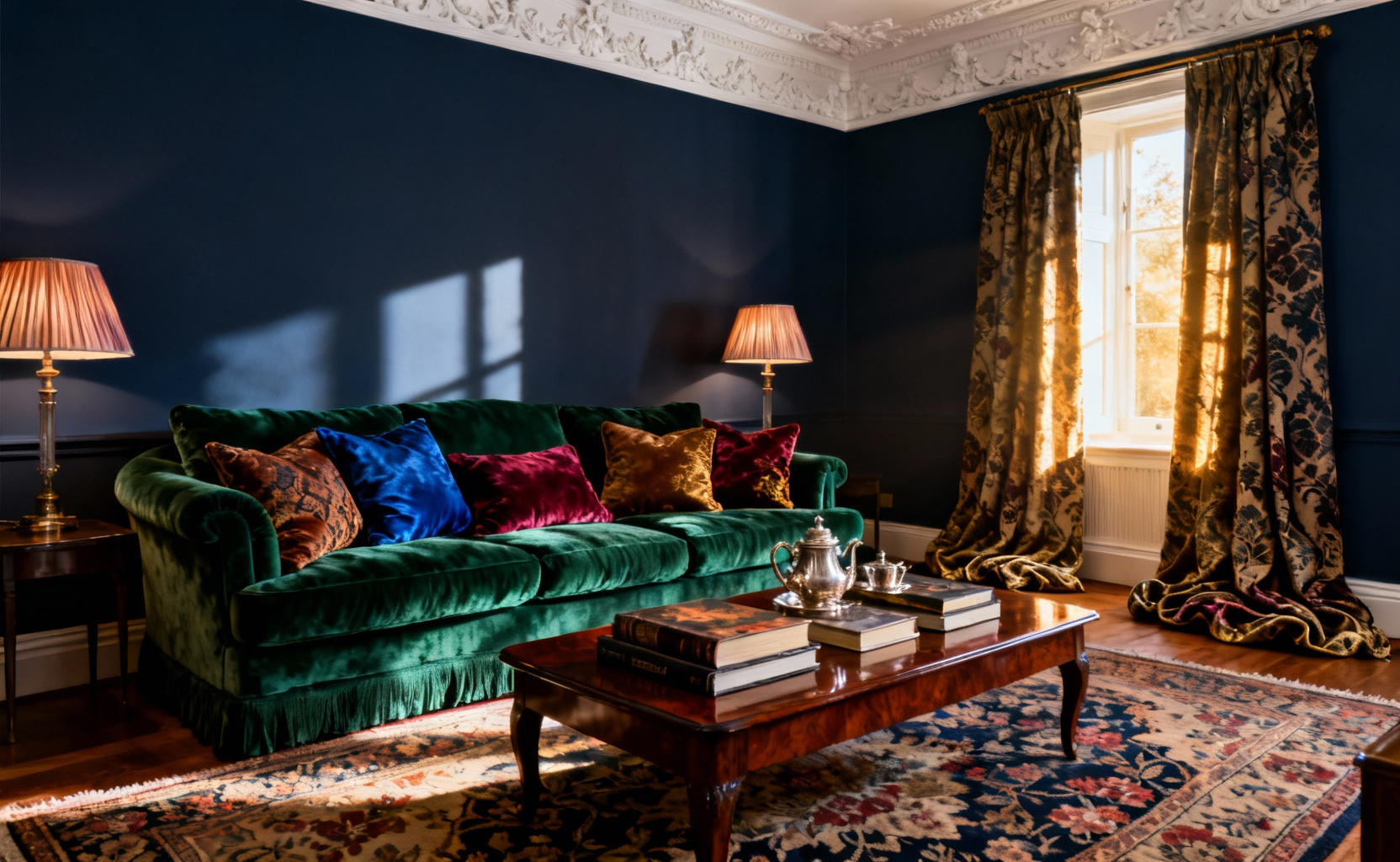

I still remember the terrifying silence of my aunt’s formal living room. It was a shrine to perfection, filled with stiff brocade and fragile porcelain that felt like a trap for a high-energy child. We treated it like a mausoleum where life was strictly forbidden, a space existing solely for the approval of imaginary guests. But true luxury isn’t about looking without touching; it is about living furiously and joyfully in every square inch of your home. That outdated era of performative perfection is dead, and I am here to dance on its grave.
Consider the financial absurdity of the traditional formal living room. It is frequently the most expensive space to decorate, yet it gathers more dust than memories. Why dedicate your home’s prime real estate to a fantasy version of yourself that only exists twice a year? We are shattering the myth that elegance requires discomfort. Instead, we must demand spaces that serve our daily whims, transforming stagnant showplaces into vibrant lounges, sultry media rooms, or decadent reading nooks.
This article is your permission slip to abandon the rules. We will dismantle the “Museum Room” concept, rejecting rigid layouts for deep, inviting textures. You will learn to weave functional joy—like a hidden television or a glittering built-in bar—into the very fabric of the design. Your home should be a chaotic, beautiful celebration of your personality, not a stage set. Let’s reclaim your square footage and design for a life that is loud, layered, and unapologetically yours.
Core Argument: Why the formal living room isn’t dead—it was just boring.
The formal living room didn’t die; it simply suffocated under the weight of beige upholstery and stiff etiquette. We need to resuscitate these spaces with “Maximalist Hospitality,” a philosophy that rejects the “look but don’t touch” vibe for unapologetic comfort. Drawing from my multicultural roots, I layer rich textures—think deep-seated chenille sofas piled with silk cushions—to create a sensory feast that begs guests to sink in. Visual opulence must serve the human experience, not stifle it.
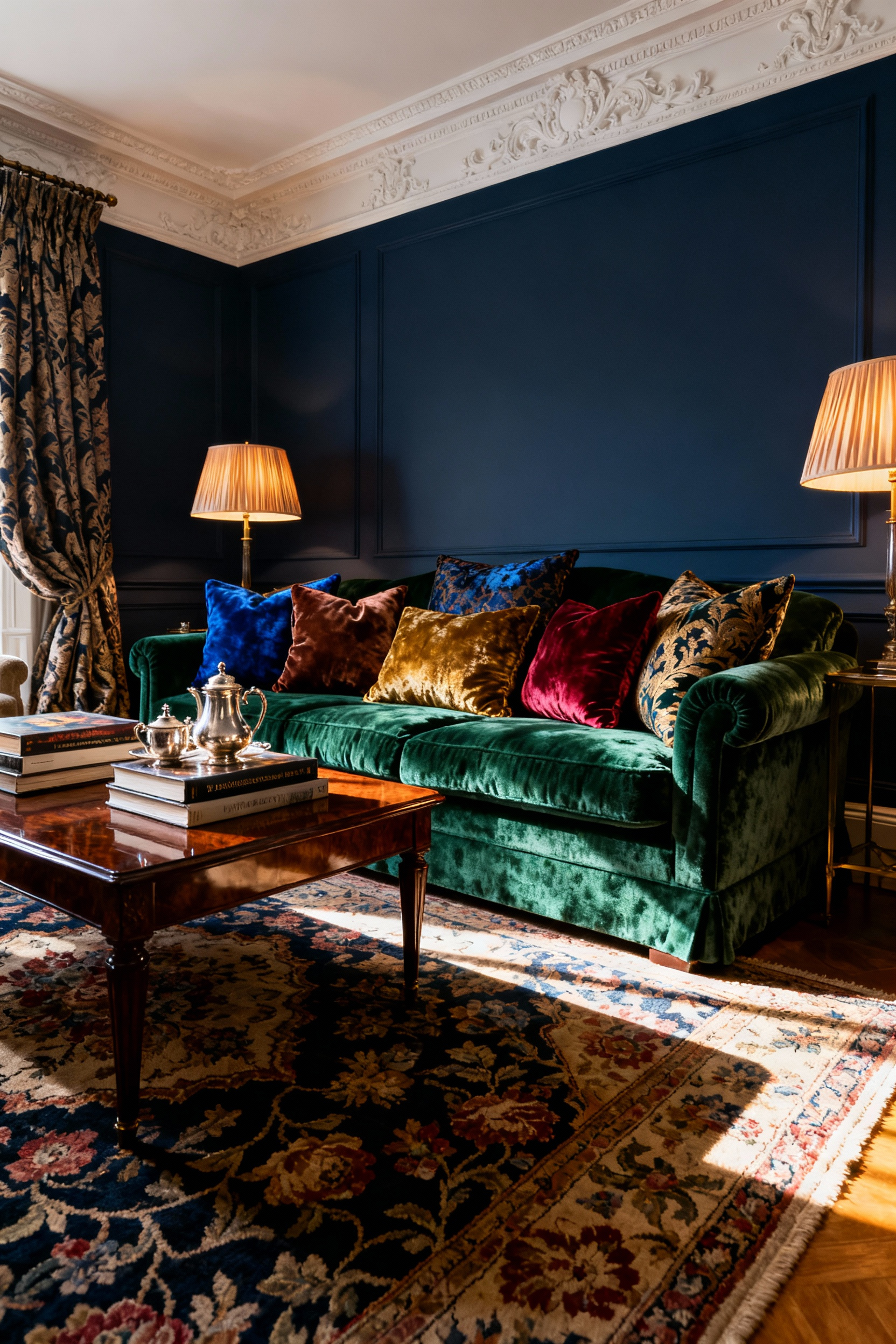
To achieve this, you must design specifically for dialogue. Banish the television focus and arrange furniture into intimate “conversation pits” that encourage face-to-face engagement. To master this sophisticated rebellion:
- Commit to a narrative: Let statement art or heirlooms dictate a bold color story.
- Mix high and low: Pair vintage finds with modern modular seating to prevent a showroom feel.
- Prioritize depth: Select furniture that engulfs the sitter.
Real luxury is how a room feels, not just how it looks.
Phase 1: Designing the Ultimate Formal Living Room Layout
Your formal living room demands a stage, not merely a floor plan. Anchor your design immediately around a commanding focal point, like a carved marble fireplace or a dramatic bay window, and employ strict symmetry to create a sense of opulent order. I treat the room’s bones as the canvas for my “more is more” philosophy; the structure must support the drama to come. Prioritize the “conversation pit” by arranging seating face-to-face within ten feet to force connection, intimacy, and joy.
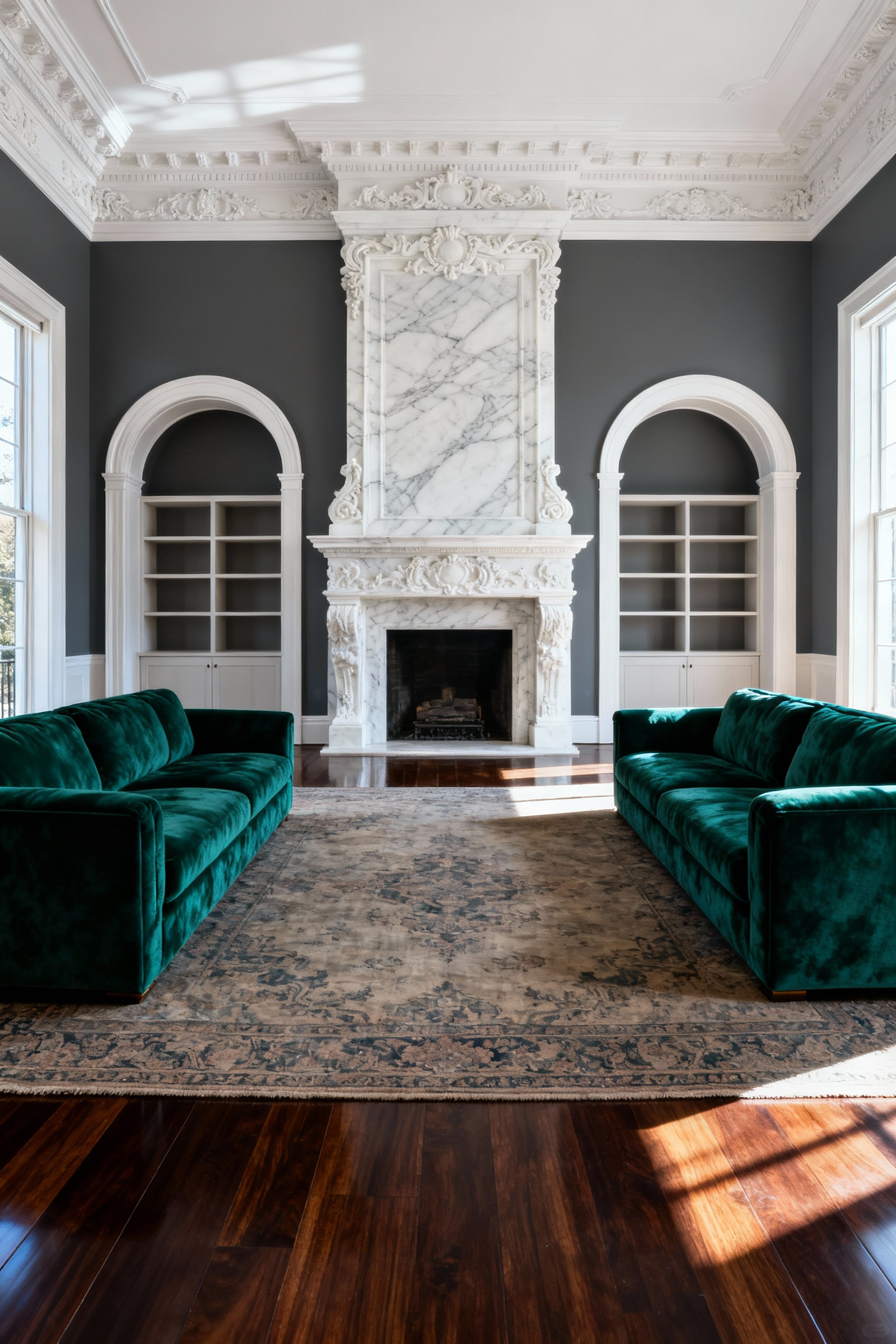
True luxury lies in effortless movement, so never let your layout become an obstacle course. Adhere to these spatial commandments to maintain elegance:
- Clear the path: Leave at least 36 inches for main walkways so guests glide, rather than squeeze, through the space.
- Welcome the eye: Never position a sofa’s back directly against the entrance, as it visually rejects the visitor.
- Zone the grandeur: Break cavernous rooms into distinct seating groups, such as a main social ring and a secondary window nook, to manage scale and offer versatility.
1. The ‘Salon’ Layout: Rethinking furniture arrangement to prioritize conversation.
Banish the television from its throne. Your luxury space demands connection, not passive consumption. Drawing from a childhood filled with boisterous, multicultural gatherings, I insist you reclaim your space for storytelling. Pull your sofa off the wall immediately. This “floating” technique transforms a cavernous void into an intimate stage for drama. Anchor this zone with a massive, opulent coffee table and ensure no seat sits more than eight feet from another. This proximity creates a magnetic pull that makes conversation inevitable.
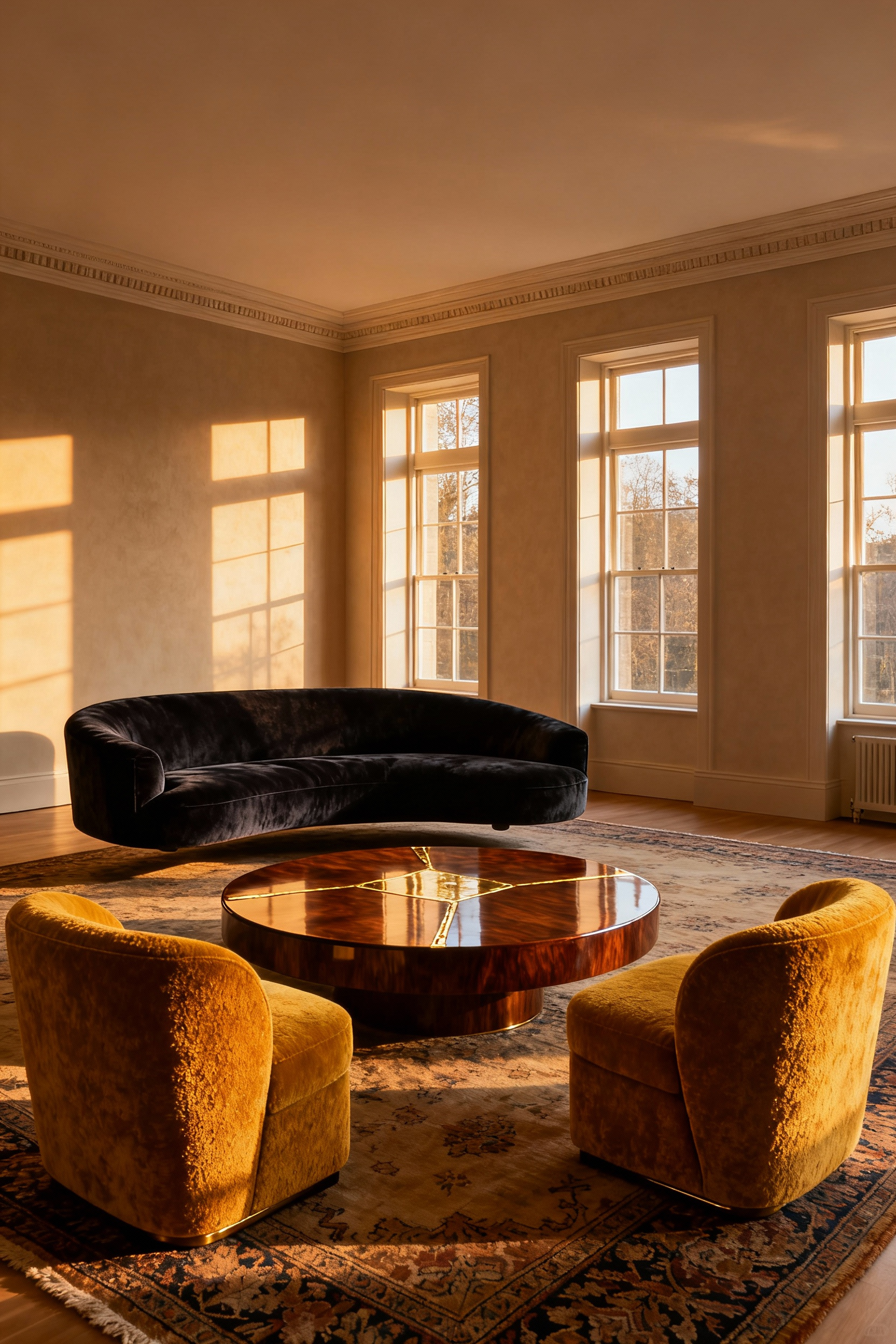
Perfect the illusion with strategic layering. An exposed sofa back often looks unfinished, so place a sleek console table behind it to ground the furniture and display your boldest sculptures. A true salon breathes with the party, so incorporate movable accents to ensure flexibility:
- Scatter velvet ottomans for spontaneous perches.
- Deploy ceramic garden stools for texture.
- Add lightweight club chairs to tighten the circle.
This fluidity proves that true luxury serves the guest, never the room.
2. The Fifth Wall: Elevating ceilings with architectural detail.
Stop ignoring the massive canvas above your head. The “Fifth Wall” dictates the mood of a formal living room and demands bold treatment. I treat ceilings as the crown jewel of a space, often drawing inspiration from the ornate architecture of my heritage to layer texture and pattern fearlessly. To build immediate grandeur, install coffered details, but measure first. Deep beams require at least nine-foot ceilings to avoid shrinking the room, while shallower profiles suit standard heights. Once built, inset the recessed panels with velvet or grasscloth to create a rich, tactile feast for the eye.
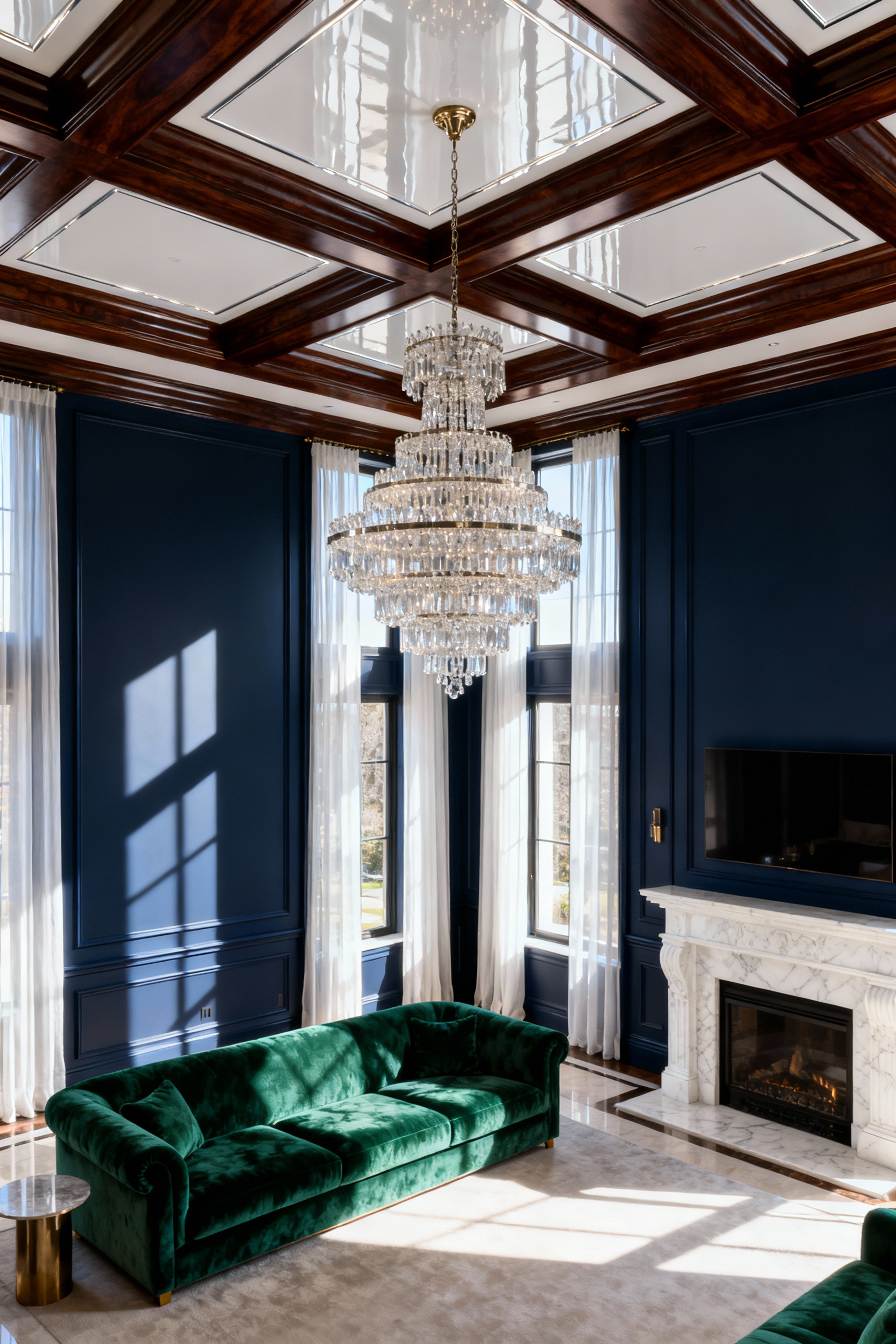
Alternatively, transform a flat surface into a liquid mirror with high-gloss lacquer. This finish creates an illusion of infinite height and unapologetic glamour, but you must respect the process.
- Hire a professional: Lacquer highlights every flaw, so meticulous sanding is non-negotiable.
- Maximize reflection: Stick to lighter creams or whites to visually double the volume of the room.
- Add shimmer: If using wallpaper instead of paint, select metallic or pearlized finishes to catch the sparkle of your chandelier.
3. Architectural Embellishment: The necessary skeleton for maximalist layering.
True maximalism demands discipline, not chaos. You must establish a rigid architectural skeleton before layering patterns and textures. Over-scaled crown molding and high wainscoting provide this essential framework. Without these substantial bones, a sophisticated parlor filled with treasures feels cluttered rather than curated. Think of deep millwork as the confident host holding the party together; it creates a visual hierarchy that allows your eye to rest.
Drawing from the ornate architecture of my heritage, I learned early that heavy plasterwork effectively grounds even the wildest silk tapestries. Install wainscoting at least three-quarters up the wall. This solid block quiets aggressive colors or busy wallpapers applied above, ensuring your bold choices look intentional.
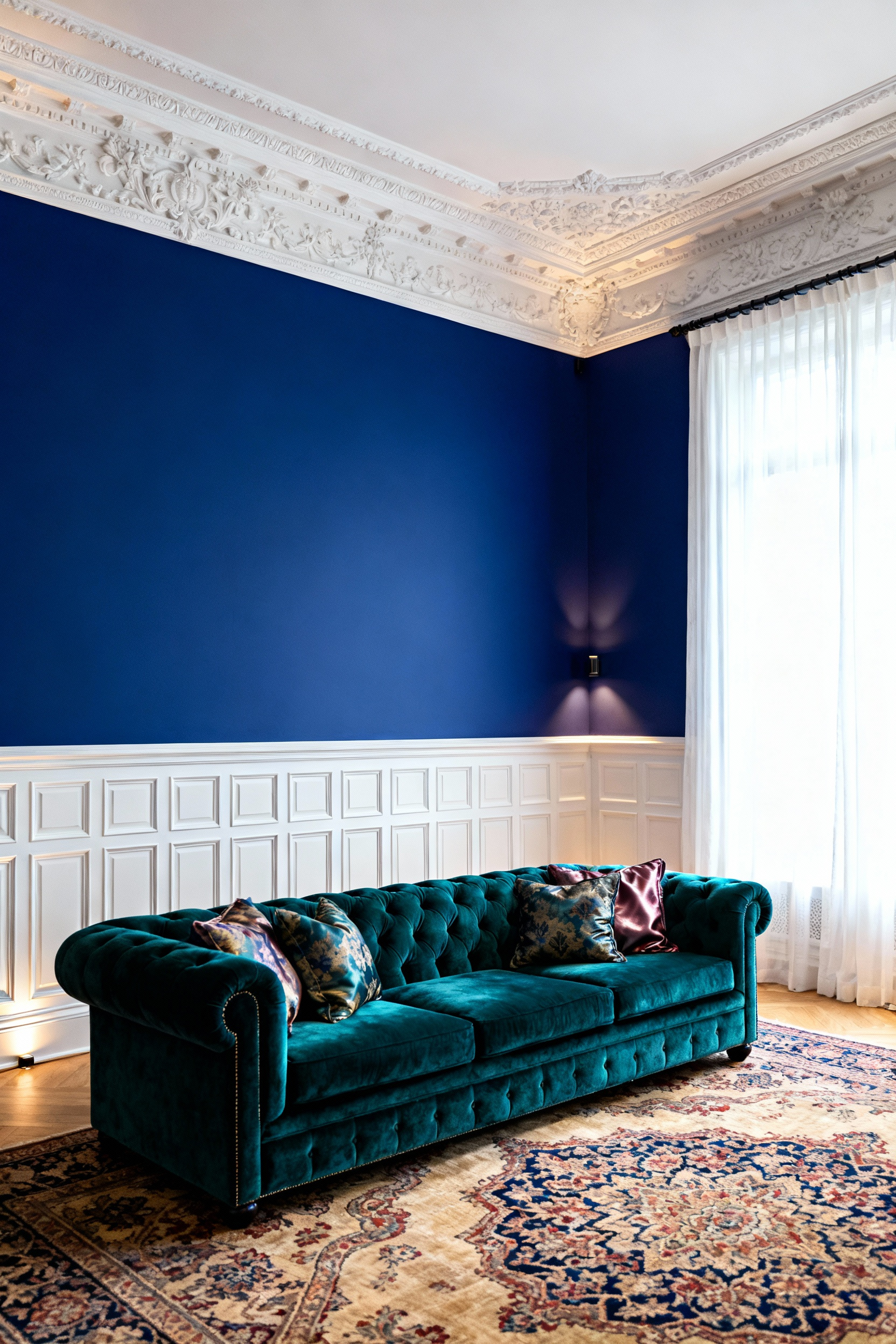
Refuse builder-grade flatness and commit to drama. To achieve a truly bespoke, luxury aesthetic, you must build up the millwork.
- Stack your molding: Top standard wainscoting with an extra rail for added depth and visual weight.
- Drench the color: Paint the trim, ceiling, and walls in one deep hue to envelop the room in moodiness.
- Contrast the texture: Let the crisp, hard lines of wood paneling play against soft bouclé or velvet furnishings.
This creates a rich, tactile backdrop, transforming the room from a plain box into a sophisticated jewel box ready for your life’s collection.
Phase 2: Creating Opulence: Color, Pattern & Texture
Treat your formal living room like a couture gown; start with a flawless, understated foundation before piling on the jewels. Upholster your largest furniture pieces in rich, timeless neutrals—like heavy ivory linen or taupe velvet—to create a serene stage for the drama to unfold. Then, unleash your personality through texture. Drawing from the vibrant textile markets of my youth, I believe true luxury lives in the friction between materials. Fearlessly mix at least five distinct textures—perhaps a crisp silk pillow against a nubby wool throw—to create deep, tactile sophistication that demands to be touched.
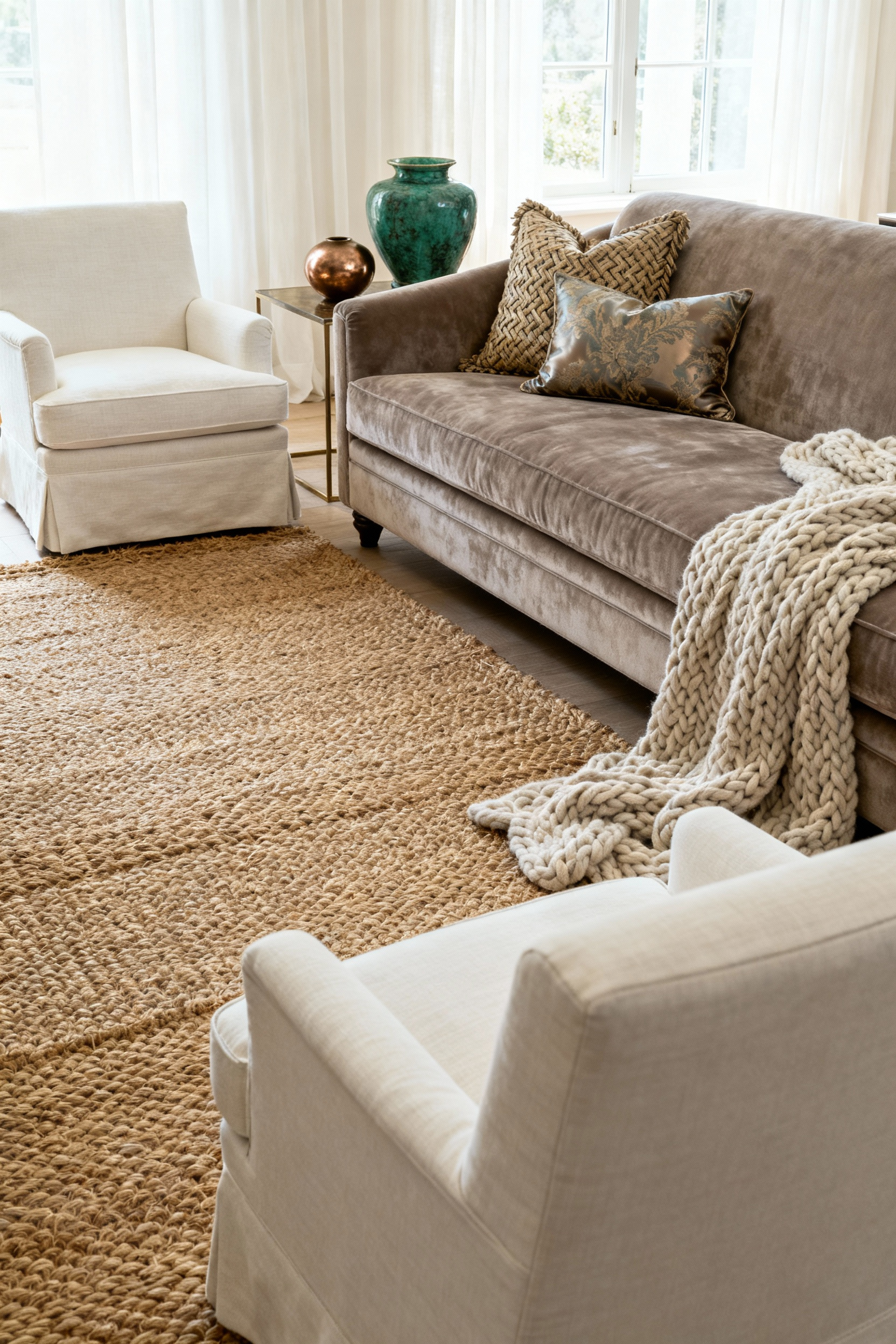
Pattern mixing requires bravery, but it must never feel chaotic. To channel a “more is more” philosophy while maintaining high-end elegance, follow a strict code of curation:
- Vary the Scale: Clash a grand, sweeping floral pattern with a tight, precise geometric print.
- Unify the Palette: Ensure every patterned element shares one core hue to bind the look together seamlessly.
- Limit the Saturated Bursts: Reserve your boldest, most electric colors for interchangeable accents like throw pillows or a single statement chair.
By anchoring bold choices with intentional design, you transform a room from merely decorated to exhilaratingly alive.
4. Fearless Color Drenching: Enveloping the space in jewel tones.
Abandon the timid safety of the accent wall and commit to the drama of full immersion. To create a sophisticated “jewel box,” paint every architectural surface—walls, trim, ceiling, and doors—in a single, saturated hue like deep aubergine or emerald. This technique erases visual breaks, making the room feel expansive yet intimate. Drawing from my background in vibrant, pattern-rich design, I view these spaces as celebrations of personality; the uniform color actually highlights intricate molding rather than hiding it.
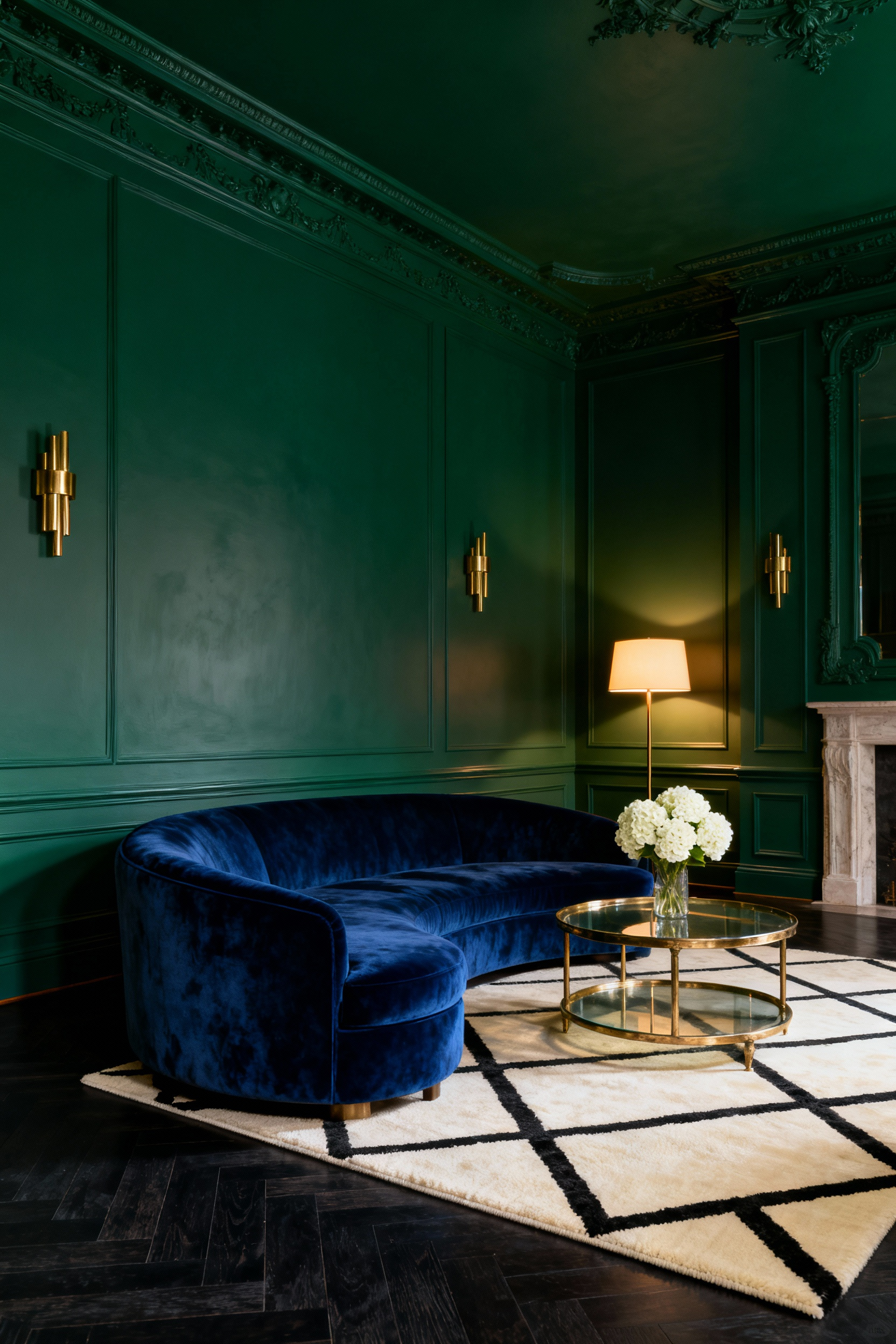
However, deep color requires dimension to avoid feeling flat or gloomy. You must rigorously layer materials that interact with light to break up the visual weight of the pigment. Implement these three tactics to ensure your space exudes opulence:
- Prioritize texture: Utilize velvet upholstery or silk drapery, as these fabrics naturally enhance the richness of jewel tones.
- Force reflection: Position oversized mirrors and brass accents strategically to bounce light and cut through the darkness.
- Layer warm lighting: Combine chandeliers, picture lights, and floor lamps to ensure the color retains its depth into the evening.
5. The Symphony of Patterns: Mixing floral Chinoiserie, geometrics, and animal prints.
True luxury requires audacity. Do not fear the clash; orchestrate the chaos. Drawing from my multicultural heritage, I treat patterns like distinct languages that communicate through a shared dialect: color. Anchor your room with a strict palette. Select two neutrals and one vibrant hue pulled directly from your Chinoiserie. This cohesive thread ensures your angular geometric rug and fluid floral drapes speak to one another rather than shout.
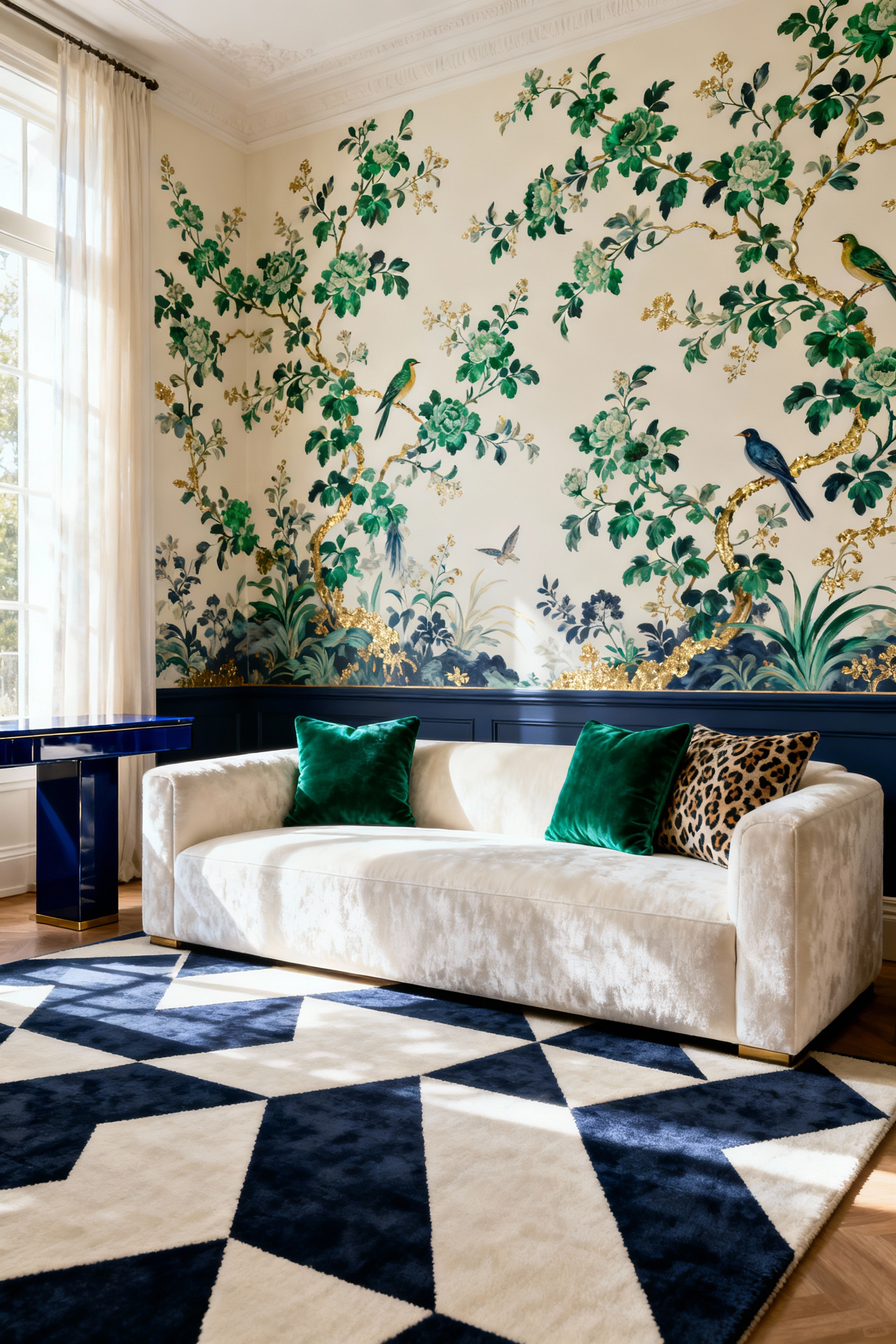
To prevent visual anarchy, you must rigorously control the scale. Think of your room as a hierarchy:
- The Foundation (60%): Deploy a large-scale geometric rug to ground the space with structural order.
- The Melody (30%): Layer medium-scale Chinoiserie on drapes or a feature chair to introduce organic curves.
- The Spice (10%): Sprinkle small-scale animal print on cushions or piping as a textural wildcard.
Finally, embrace negative space. Allow solid velvet sofas or neutral walls to serve as the silence between the notes. This visual rest transforms a busy space into a curated, sophisticated masterpiece.
6. Tactile Luxury: The importance of layering ‘touchable’ fabrics.
True luxury seduces the fingertips, not just the eyes. Stop settling for flat, one-dimensional textiles and start curating a sensory feast. In my own designs, I draw from my multicultural heritage by fearlessly crashing opposing textures together to create emotional depth. You must orchestrate a collision of surfaces. Anchor the room with a heavy brocade on a statement chair for regal structure. Then, soften the edges with plush mohair on your primary sofa. This creates a necessary friction between the intricate weave and the deep, durable pile.
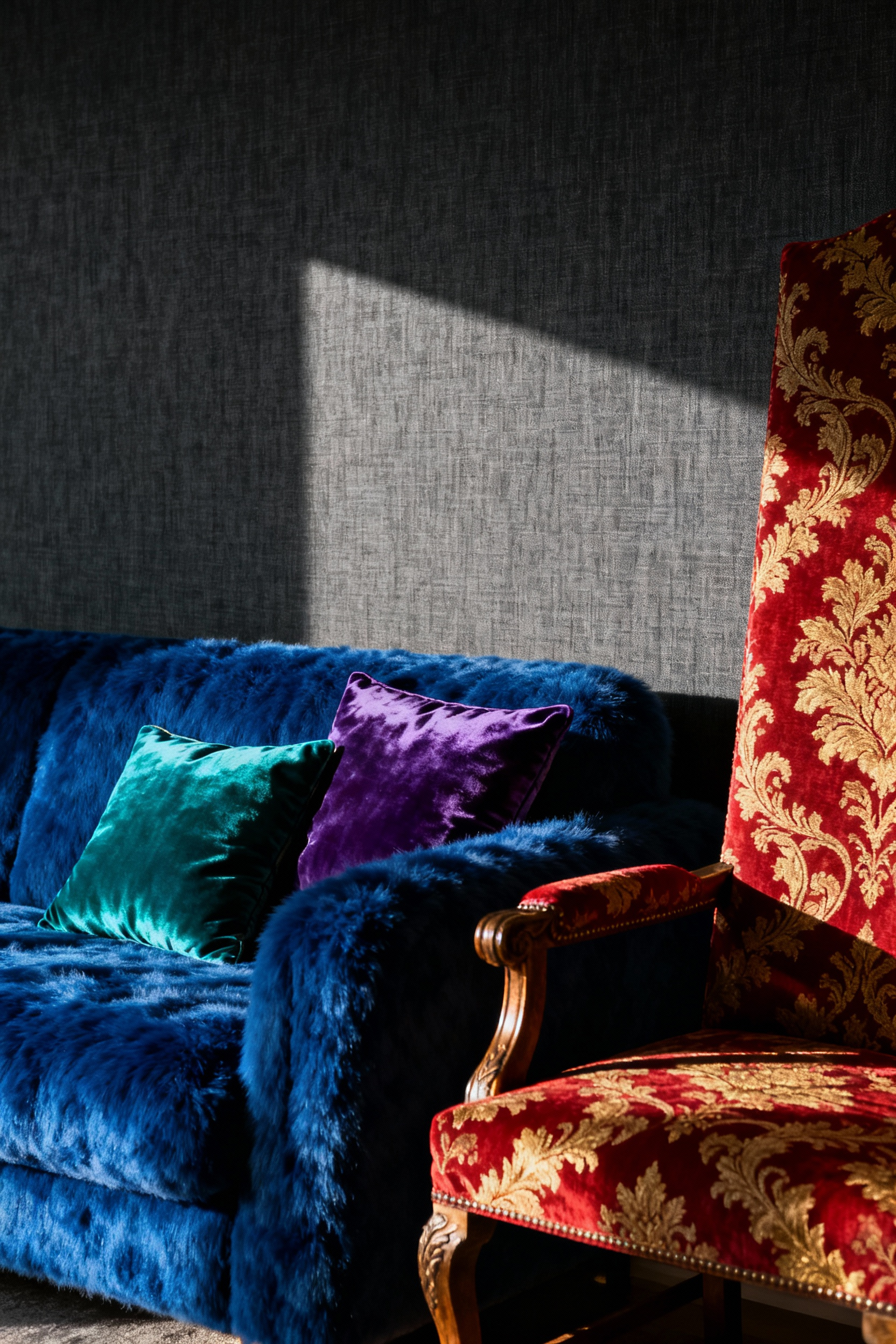
To maximize impact, assign fabrics based on their interaction with light and human touch:
- Mohair: Use this resilient velvet on high-traffic seating for a subtle, deep glow that survives daily life.
- Silk Velvet: Reserve this high-luster, delicate fabric for pillows or drapes to catch the evening light.
- Brocade: Treat this dense pattern as art; apply it to a single ottoman or chair to ground the space without overwhelming it.
This strategic layering reflects light dynamically, ensuring your home feels as expensive as it looks.
7. The Window Drama: Why custom floor-to-ceiling drapery is non-negotiable.
Treat your windows as the stage for your daily life, not an afterthought. To command absolute attention, banish the timid look of standard-height rods. Mount hardware directly against the ceiling or utilize a track system to maximize verticality. This floor-to-ceiling expanse draws the eye upward, instantly creating an illusion of grand volume. Furthermore, insist on a custom fit. Ready-made panels simply cannot deliver that crucial “kiss” or slight puddle at the floor, a subtle tailoring detail that separates true luxury from amateur decoration.
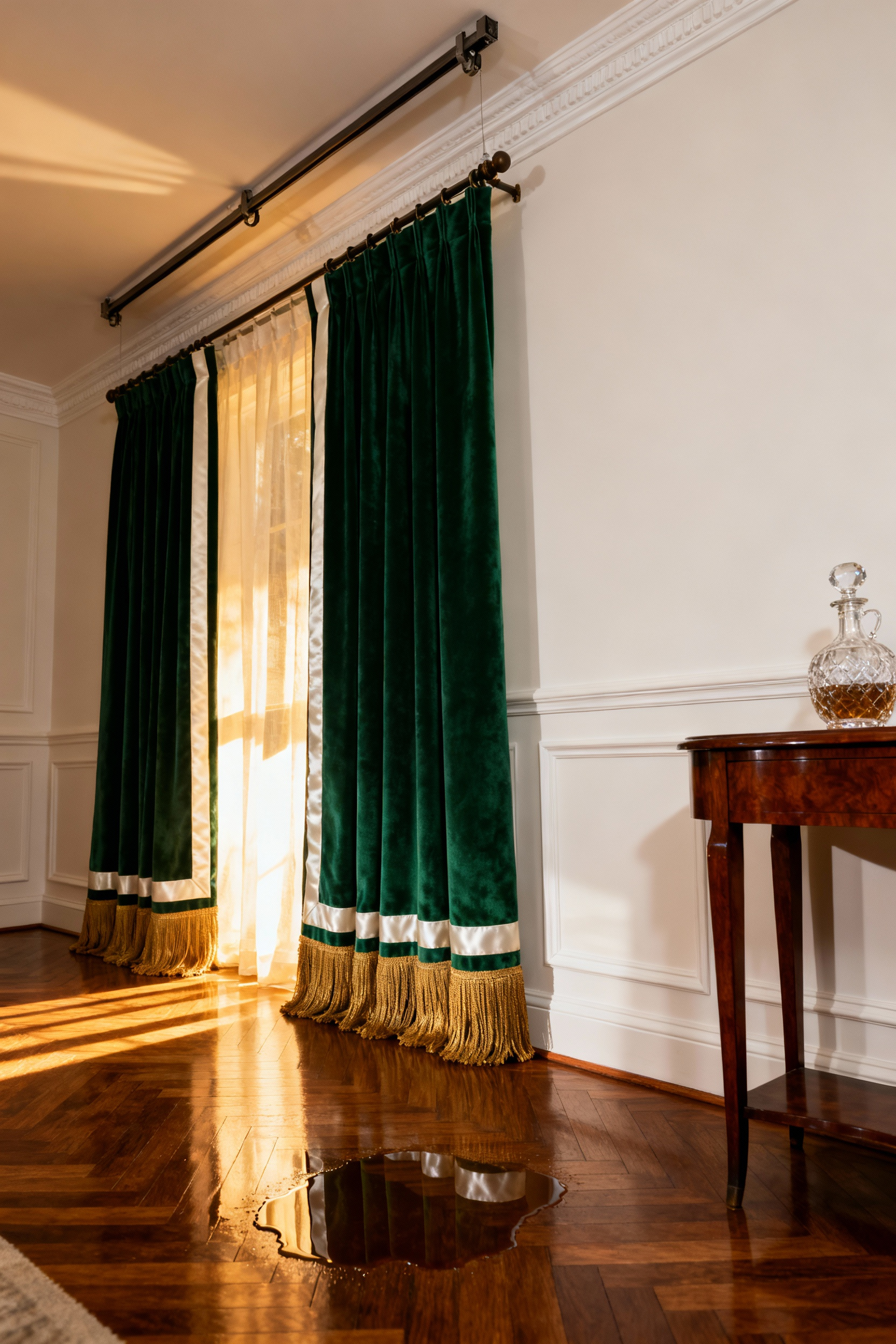
Once the scale is set, demand opulence in the details. A fearless approach to texture transforms simple fabric into a high-end statement.
- Layer rich textiles like heavy velvet or silk over sheers to control light and add architectural depth.
- Apply contrast piping to the leading edges for a sharp, tailored silhouette that defines the view.
- Finish with twisted bullion fringe to anchor the drapery with heavy, Old-World grace.
These custom elements create a polished aesthetic that feels thoroughly constructed, rather than merely hung.
Phase 3: Essential Furniture for a High-End Formal Living Room
This is where the drama unfolds. Your furniture acts as the cast of your high-end living room’s theatrical production, so demand a performance from every piece. Drawing from my multicultural roots, I learned that true luxury lives in the fearless mix of eras and textures. Reject the slouchy sectional for structured silhouettes like a button-tufted sofa with firm, full-foam cushions. This commands respect and holds its shape. Arrange these pieces symmetrically to create an intimate conversation pit that invites connection rather than napping.
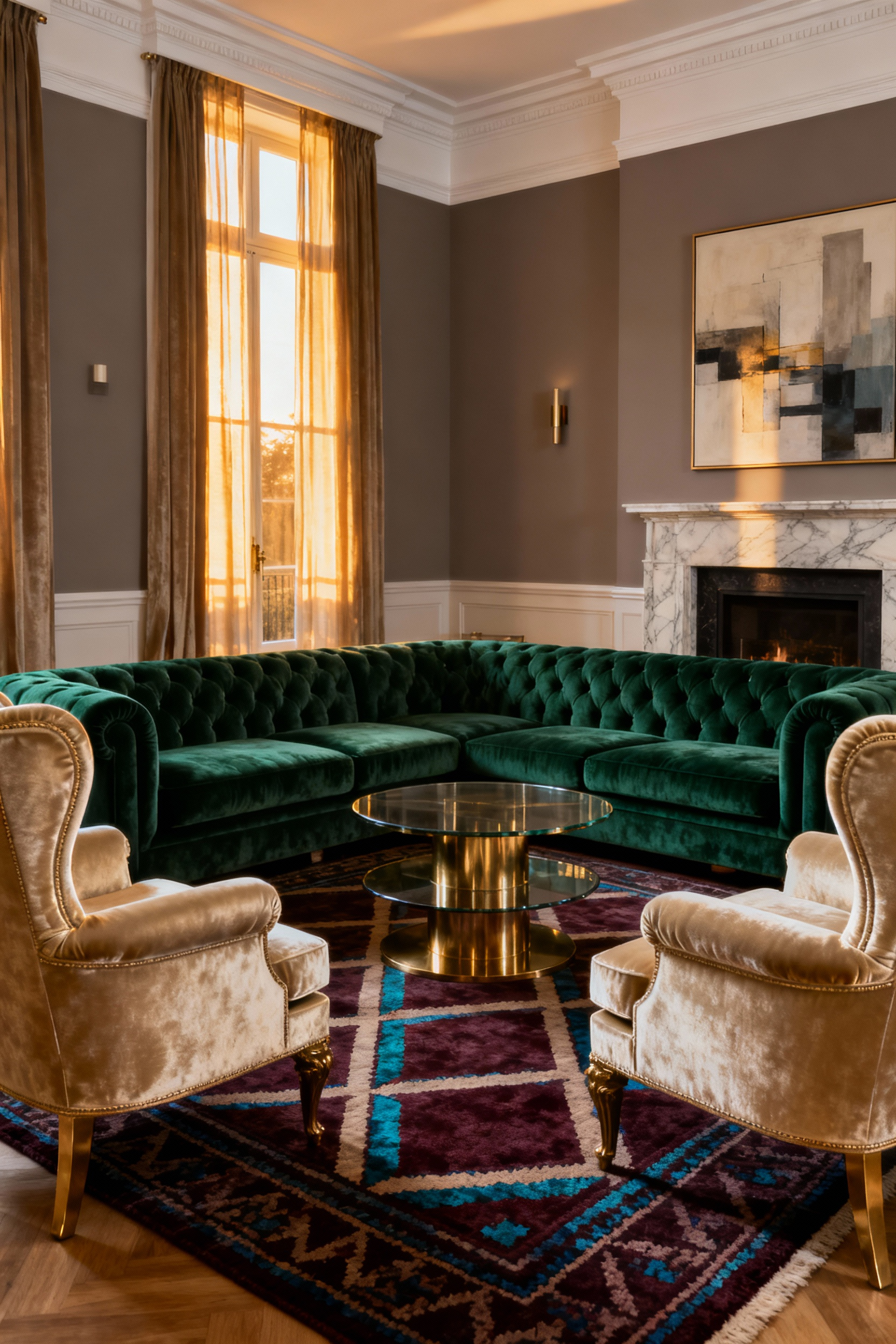
To achieve a space that feels curated rather than catalog-ordered, follow these rules of engagement:
- Anchor with Opulence: Deploy a marble or gold-and-glass coffee table as a gleaming centerpiece to reflect light and inject glamour.
- Elevate with Form: Introduce high-back accent chairs in rich velvet to add immediate aristocratic flair and sculptural interest.
- Disrupt the Timeline: Pair traditional elements, like nailhead trim, with a sleek mid-century piece to ensure the room feels fresh, not stuffy.
Embrace your maximalist instincts here. Let every chair and table stand as a bold declaration of your personality.
8. The Curvilinear Sofa: Softening the room’s energy.
Banish the monotony of straight lines and embrace the drama of a curve. A kidney-shaped or serpentine sofa acts as functional sculpture, instantly softening a room’s energy while commanding attention. To truly honor this silhouette, float the piece in the center of the room. This placement creates natural pathways and allows the furniture to define the space, rather than the walls. This arc instinctively draws people together, fostering the kind of intimate, face-to-face conversation that transforms a stiff party into a memorable night.
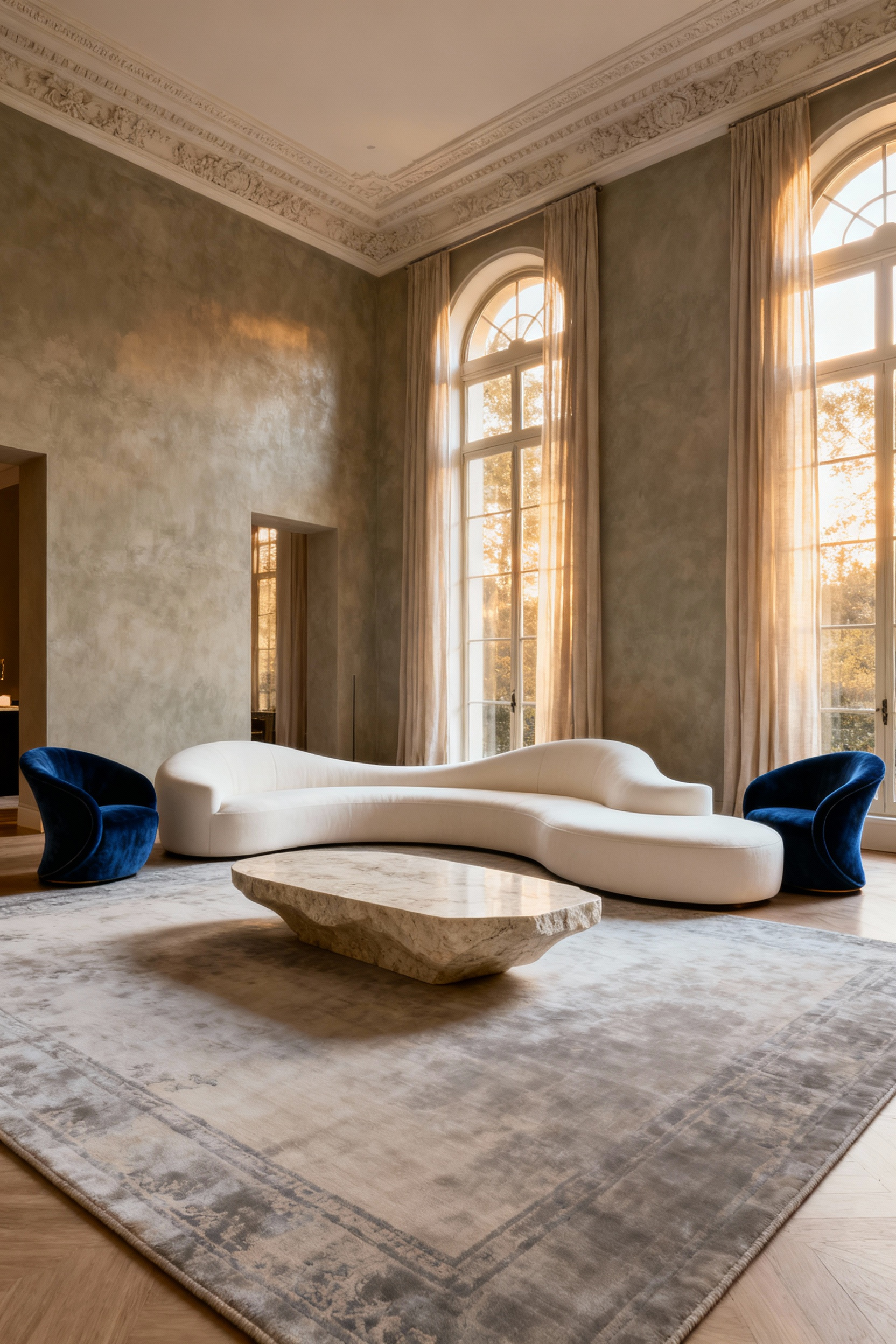
Elevate the sensory experience by wrapping these curves in decadent fabrics like performance velvet or plush mohair. I fearlessly mix these rich textures in my own designs to invite touch and exude warmth. Finally, ensure cohesion by echoing the sofa’s geometry throughout the room:
- Anchor the seating area with a round or sculptural coffee table.
- Soften the vertical space with arched mirrors or globe lighting.
- Repeat circular motifs in artwork to balance the organic energy.
Create a rhythm that feels deliberate, luxurious, and unapologetically bold.
9. Sculptural Occasional Chairs: Functional art pieces.
Treat your occasional chairs as museum-worthy masterpieces, not just background fillers. I approach every project with a “more is more” mindset, demanding that secondary seating serves as functional sculpture. Abandon safe, traditional shapes immediately. Instead, hunt for dramatic silhouettes with exaggerated curves or sharp, geometric angles that command attention. To truly highlight these art pieces, maximize the tension between materials:
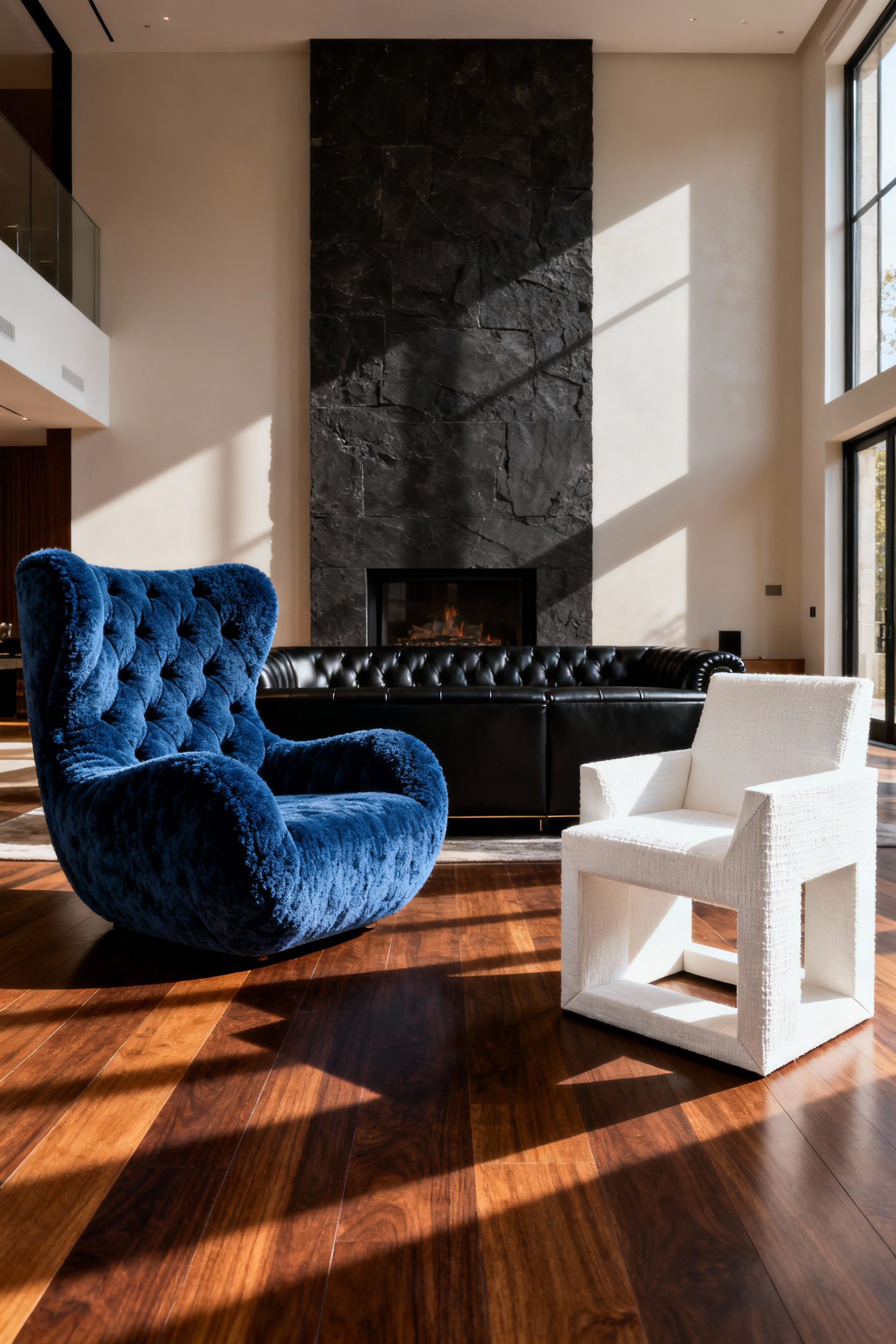
- Pair a sleek leather sofa with chairs in nubby, chaotic bouclé.
- Contrast a neutral linen sectional with high-back wing chairs in electric, jewel-toned velvet.
- Offset soft upholstery with a chair featuring a severe, polished wood or lacquer frame.
Position a matching pair symmetrically opposite your main sofa to frame the conversation area. This layout honors formal elegance while injecting unapologetic personality into the room. Alternatively, in expansive living rooms, float two low-profile lounge chairs with a small side table away from the main group. This creates a distinct, intimate nook for private whispers during parties. Your home is a celebration of your spirit, so refuse to settle for boring silhouettes.
10. The ‘Jewelry’ of the Room: Statement case goods.
Treat your case goods like the heavy gold cuffs or statement earrings of your formal living room. These pieces must scream luxury and personality, serving as art rather than mere storage. Do not settle for invisible furniture. Instead, command attention with a singular, sculptural burl wood console. Its abstract grain provides instant warmth and texture without cluttering the eye. For true opulence, incorporate a handcrafted chest adorned with mother-of-pearl inlay. This material catches the light and injects a captivating, old-world elegance that I have always admired in my family’s heirloom collections.
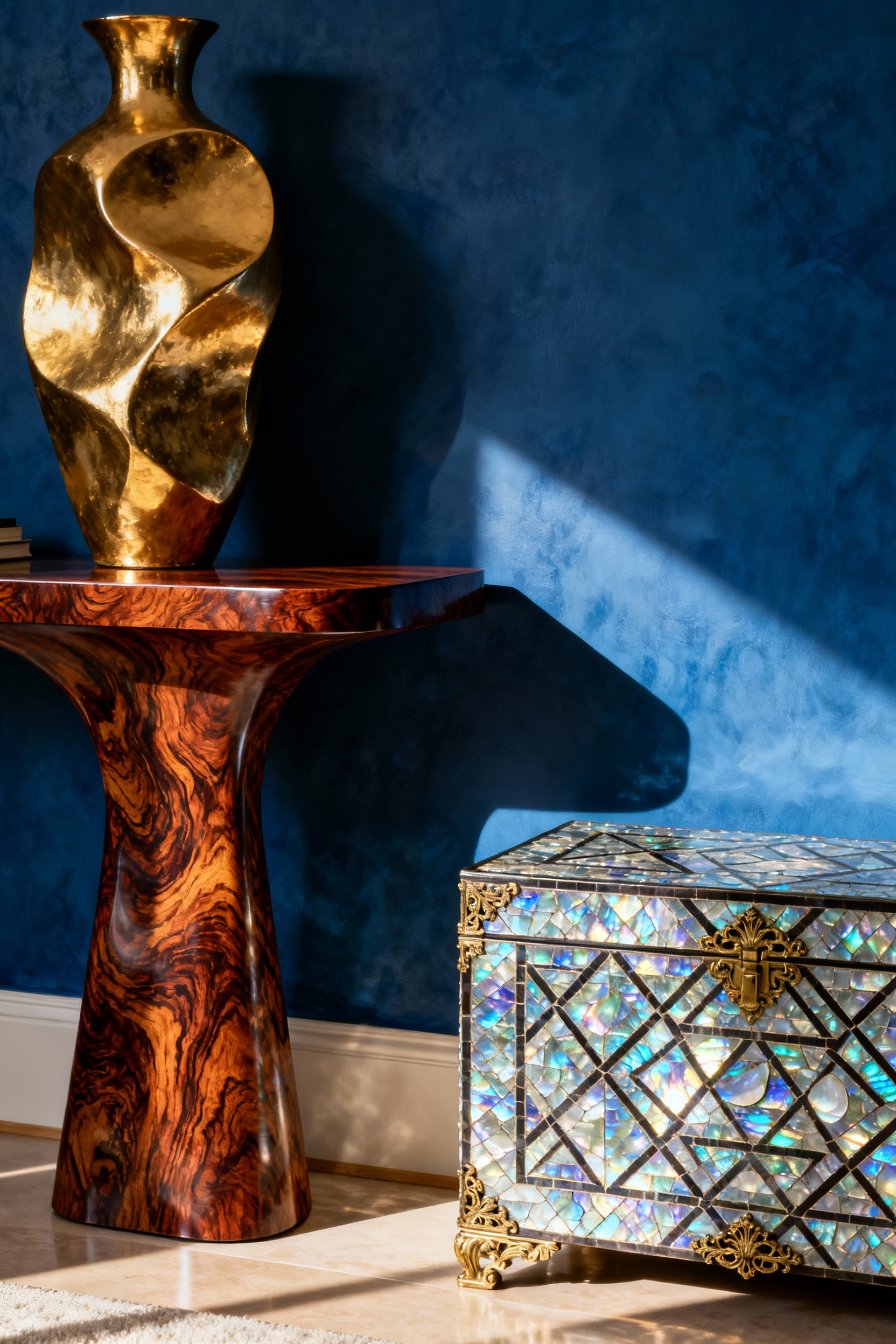
Balance these rich textures with the strategic use of brass. Think of metal as the setting for your gemstones. However, restraint is key here. Avoid high-polish finishes that can look cheap or trendy. Opt for brushed or aged brass on legs and hardware to maintain a timeless sophistication. To master this look:
- Mix thoughtfully: Pair the organic swirl of burl wood with the sharp shimmer of pearl on a secondary accent piece.
- Unify the details: Ensure distinct pieces share a common dark wood base or warm metal tone.
This layering creates a curated visual depth that feels expensive, deliberate, and deeply personal.
Phase 4: Mastering Atmosphere in Your Formal Living Room
Treat lighting as the jewelry of your home; it must be bold, sculptural, and unapologetically opulent. A room without dynamic lighting lacks soul. I learned early on that a single overhead light kills the mood, so you must layer your illumination to create depth and drama. Start with a show-stopping chandelier as your central art piece, then weave in floor lamps and sconces to eliminate shadows. To truly elevate the atmosphere in your luxury drawing-room, adhere to these non-negotiables:
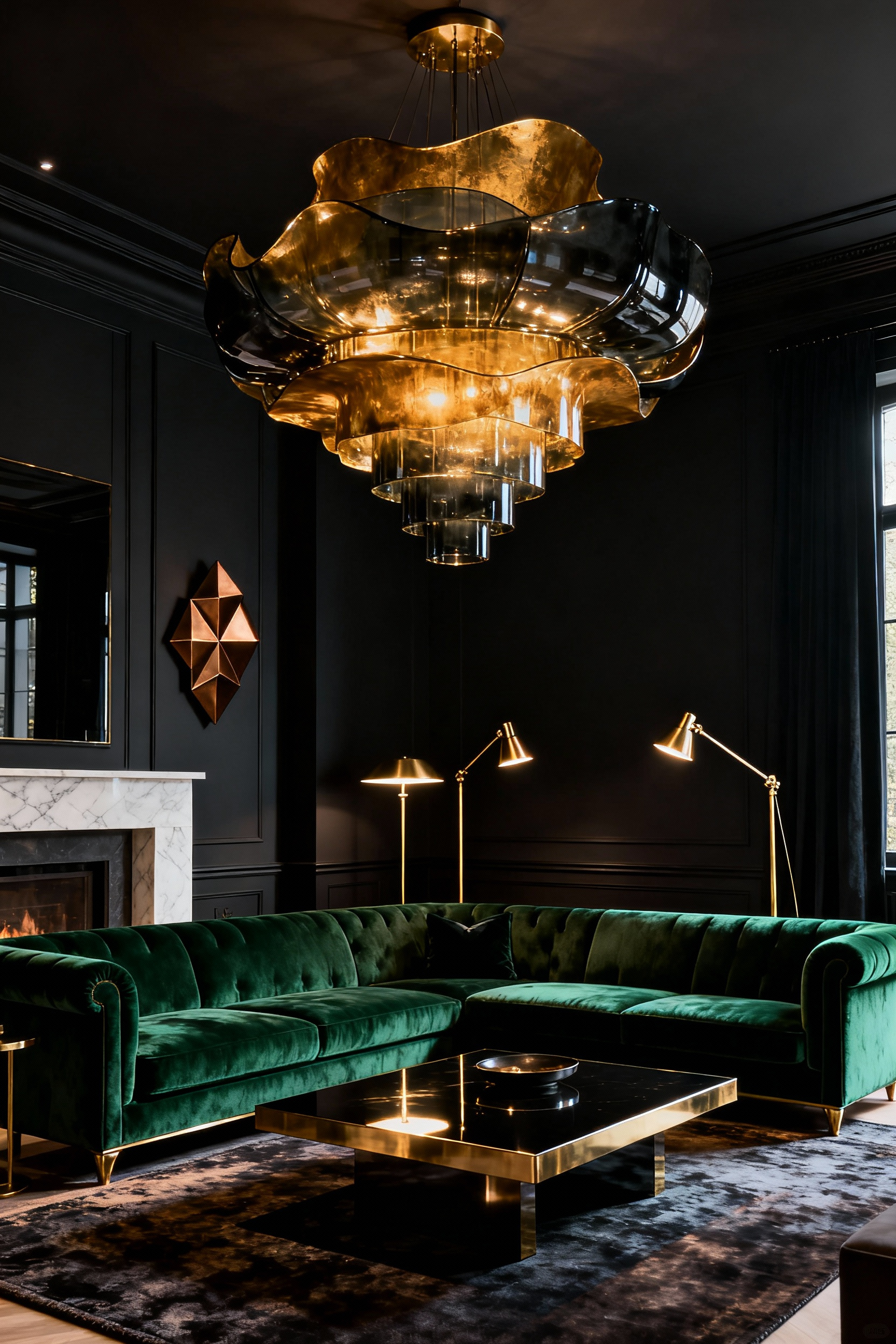
- Install Dimmers: Control the emotional tempo from bright entertaining to intimate whispers.
- Check the Temperature: Only use 2700K–3000K bulbs for a warm, golden embrace.
- Diffuse the Glow: Choose alabaster or opal glass to flatter your guests and soften the edges.
Direct focus toward your art collection using specific accent lighting. Install picture lights or a “sconce sandwich” around a focal point to demand attention. Your formal living room should feel like a curated gallery, where every beam of light celebrates your unique personality and style.
11. Lighting Layers: The trinity of ambient, task, and mood lighting.
Lighting dictates the theater of your life. Never settle for flat, clinical illumination when you can sculpt your room’s emotional temperature with the holy trinity of lighting layers. Begin with a statement chandelier suspended at least seven feet high. Treat this fixture as the room’s crown jewel, but strictly enforce a dimmer switch to transition from high-energy grandeur to a sultry evening glow. Ground this opulence with purposeful task lighting. Place floor lamps exactly 15-20 inches from your velvet armchairs at shoulder height to cast a focused, shadow-free beam for late-night reading.
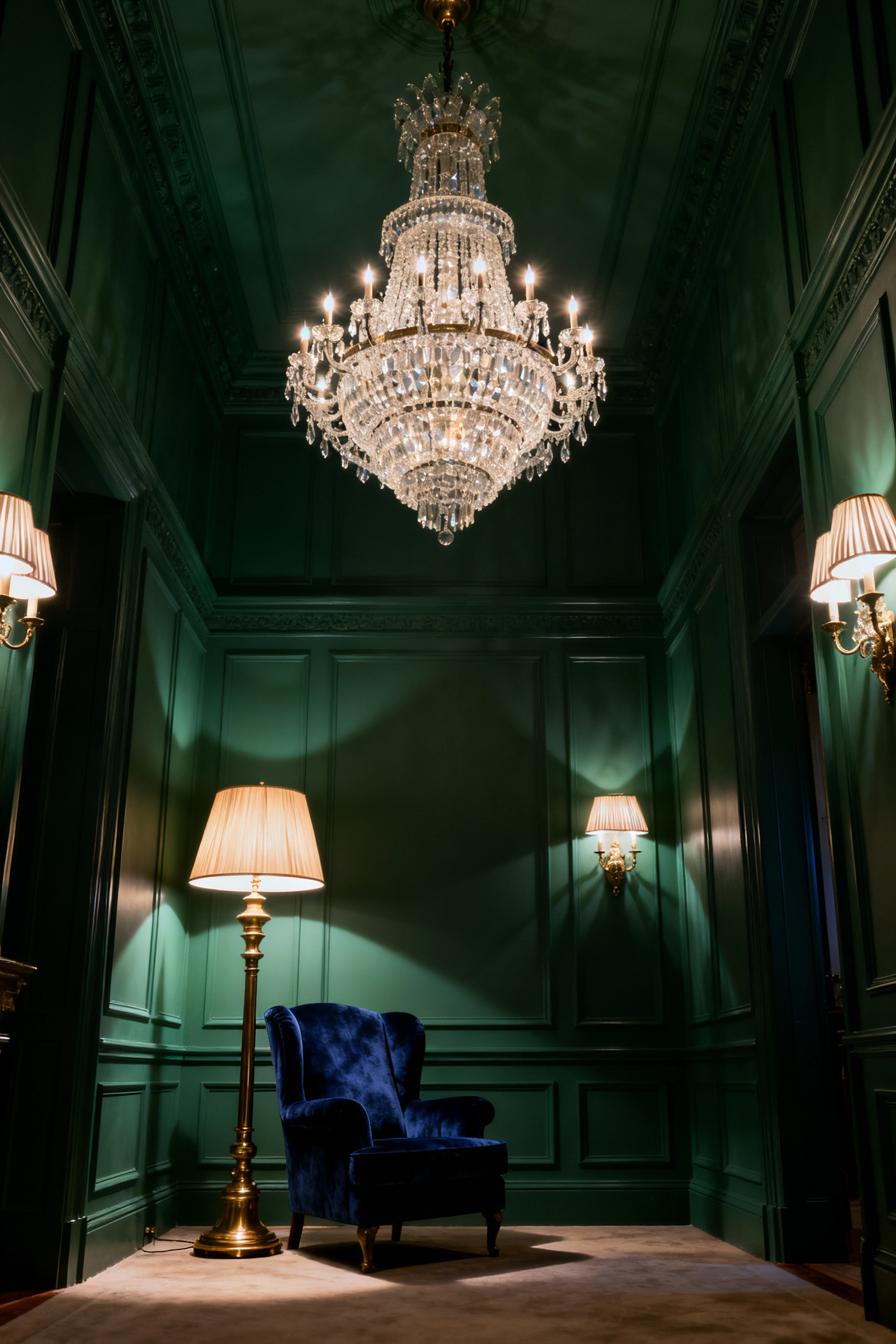
To truly embrace the “more is more” philosophy, add the seductive whisper of wall sconces. Choose designs with fabric shades or uplighting to diffuse harsh glare and bounce a soft radiance off the ceiling. This adds architectural depth without cluttering your surfaces. However, even in a maximalist space, cohesion is king. Follow these rules for a polished aesthetic:
- Uniform Warmth: Exclusively use 2700K–3000K bulbs in ambient sources to maintain an eternal “golden hour” vibe.
- Metal Harmony: Coordinate your finishes, such as brushed brass or oil-rubbed bronze, across all fixtures to unify the scheme.
12. The Gallery Wall 2.0: Mixing brackets and sculptures.
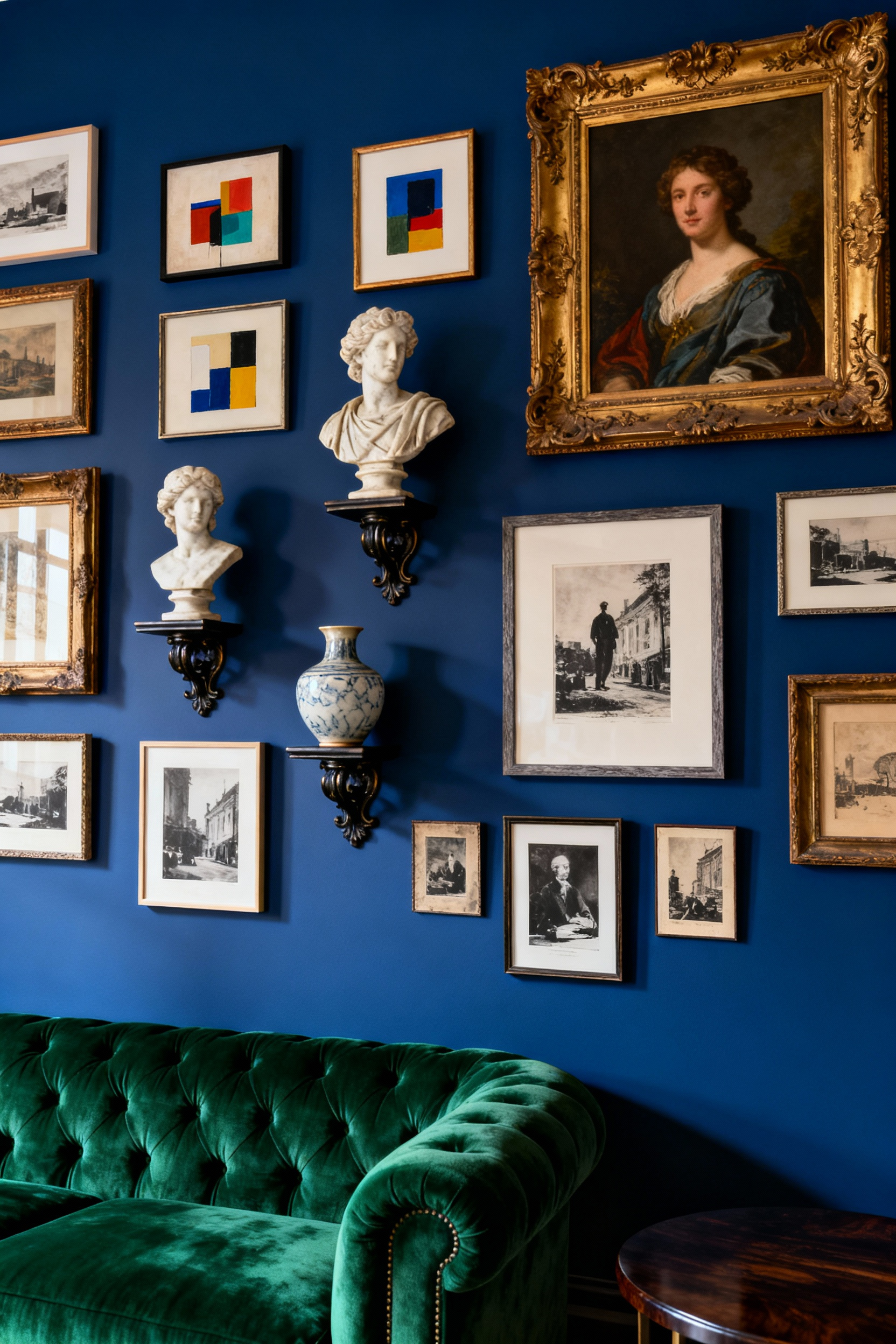
Abandon the safety of symmetrical grids immediately. True opulence requires drama, and nothing delivers grandeur like a floor-to-ceiling, salon-style display. I draw on my multicultural heritage to mix textures fearlessly, treating walls as living canvases rather than static exhibits. To master the Gallery Wall 2.0, you must transcend flat surfaces and embrace a curated, three-dimensional aesthetic.
- *Lighting:** Dramatic, high-contrast side lighting achieved by soft, early afternoon daylight streaming from an unseen window, highlighting the depth and dimensionality of the wall sculptures. Warm accent lighting from a vintage brass table lamp provides a jewel-toned glow.
- *Camera Settings:** Shot on a Canon EOS R5 with a 35mm lens, f/4 aperture, sharp focus on the central wall display, cinematic color grading, high resolution, professional interior photography style.
- Add Dimension: Intersperse framed art with ornate wall brackets, textile hangings, or sculptures to create architectural depth.
- Anchor the Spread: Position a commanding visual anchor off-center, then expand outward to the ceiling and floor.
- Unify with Color: Disregard perfect spacing; bind the eclectic mix with a strict color palette or consistent gilding.
Preparation is non-negotiable. Mock up your asymmetrical arrangement with paper cutouts before driving the first nail to ensure the scale feels intentional, not accidental. Transform your formal living room into a fearless celebration of joy.
13. The Mirror Effect: Amplifying light and impact.
Don’t settle for subtle accents when you can command the room with an oversized, ornate antique mirror. I often hang these heavy, gilded beauties directly above the fireplace mantel to instantly anchor the space and draw the eye upward. From this vantage point, the mirror acts as a theatrical stage for your lighting. Specifically, position the glass opposite your largest window or a sparkling chandelier to trap and amplify every photon of natural and ambient light. Instantly, even a dimly lit room transforms into a boundless, radiant sanctuary.
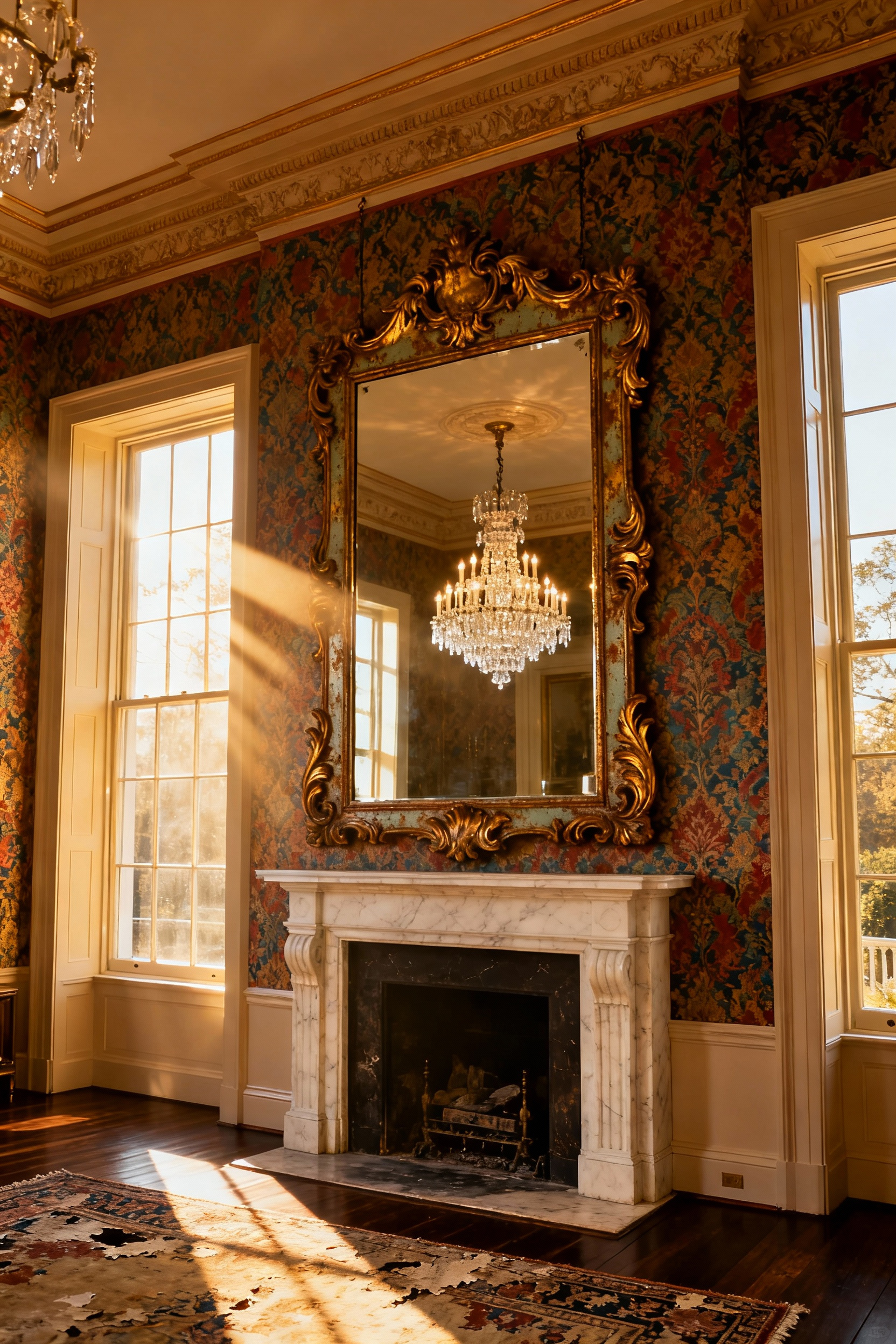
Beyond illumination, use the “Mirror Effect” to feed your maximalist soul. Angle the mirror to capture and reflect your boldest design choices, effectively doubling the visual impact of a luxurious patterned rug or vibrant wallcovering. This trick multiplies texture without adding physical clutter. To ensure the space feels curated rather than dusty, rely on sophisticated contrast:
- Juxtapose eras: Pair the heavy, historical frame with sleek, clean-lined modern furnishings.
- Curate the view: Ensure the reflection captures a dynamic pattern, never a blank wall.
This “old-meets-new” tension prevents a museum-like atmosphere and injects a confident, high-end drama that celebrates your unique personality.
Phase 5: Integrating Lifestyle and Luxury
Treat your formal living room as a high-voltage retreat, not a dusty museum. While the family room absorbs the chaos of daily life, this space must remain a pristine celebration of your personality. I believe true luxury lies in the freedom to embrace “more is more” without apology. This means prioritizing intimacy over sprawling comfort. Banish the massive sectional and instead curate groupings of sculptural chairs angled at 45 degrees to spark spirited debate.
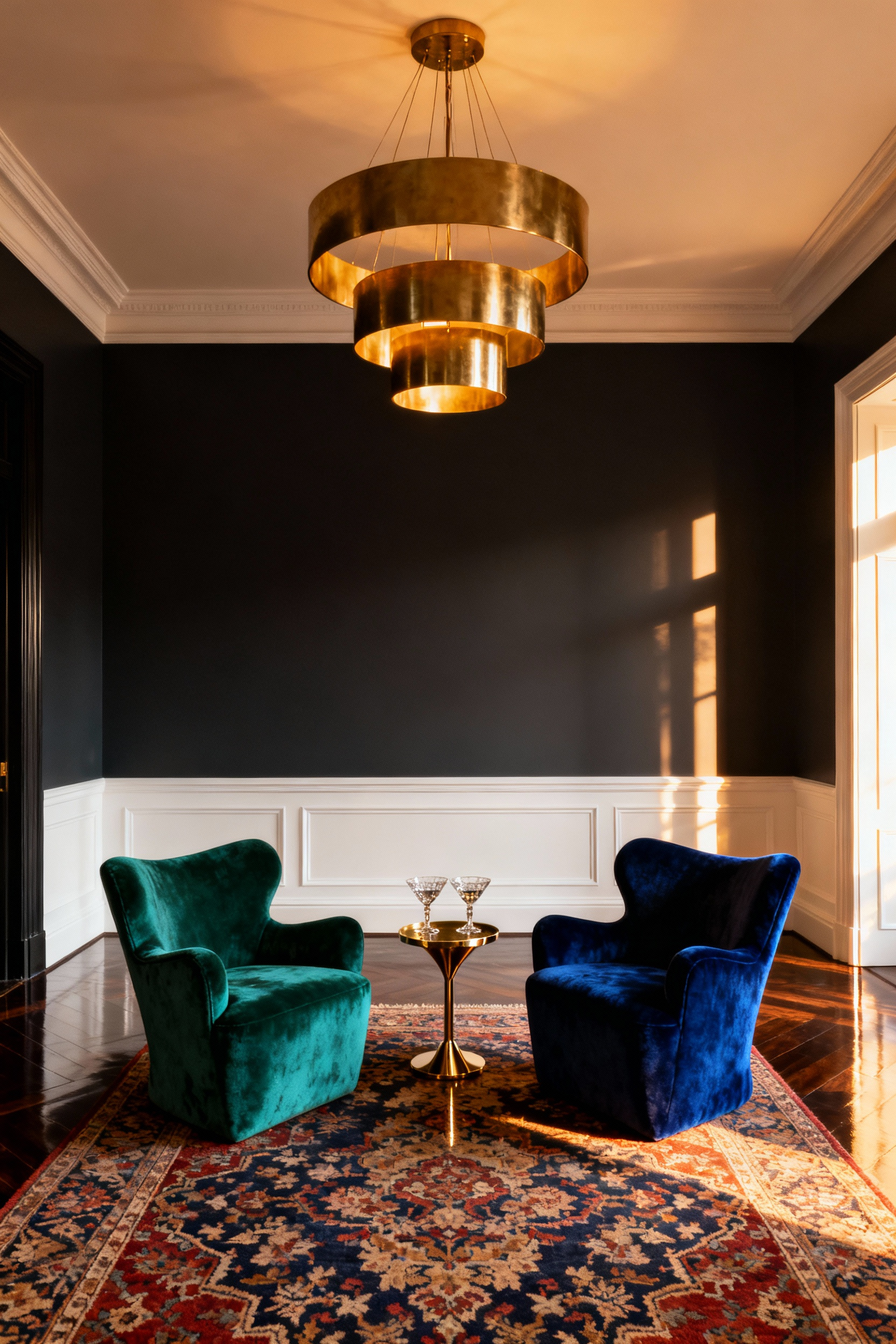
Ensure your bold aesthetics serve a practical purpose. Anchor the space with a substantial, dual-purpose center table that creates a secure stage for cocktails and hors d’oeuvres. Elevate the guest experience immediately with these sophisticated touches:
- Install dramatic lighting to set a seductive, non-stuffy mood.
- Position a stocked bar cart for effortless, elegant hosting.
- Use glass-front cabinets to display treasures that tell your unique story.
Design this room as a sanctuary that demands to be enjoyed, balancing visual drama with the warmth of human connection.
14. The Hidden Bar: From visual splendor to functional entertaining.
Transform your elegant living space from a visual masterpiece into a vibrant social hub by integrating a high-shine lacquer bar cabinet. When closed, this piece masquerades as high art and preserves your pristine, clutter-free aesthetic. However, the real magic lies in the reveal. Drawing from my multicultural roots where hospitality is theater, I insist on a dramatic interior that dazzles upon opening. Ensure your cabinet shocks guests with specific luxe features:
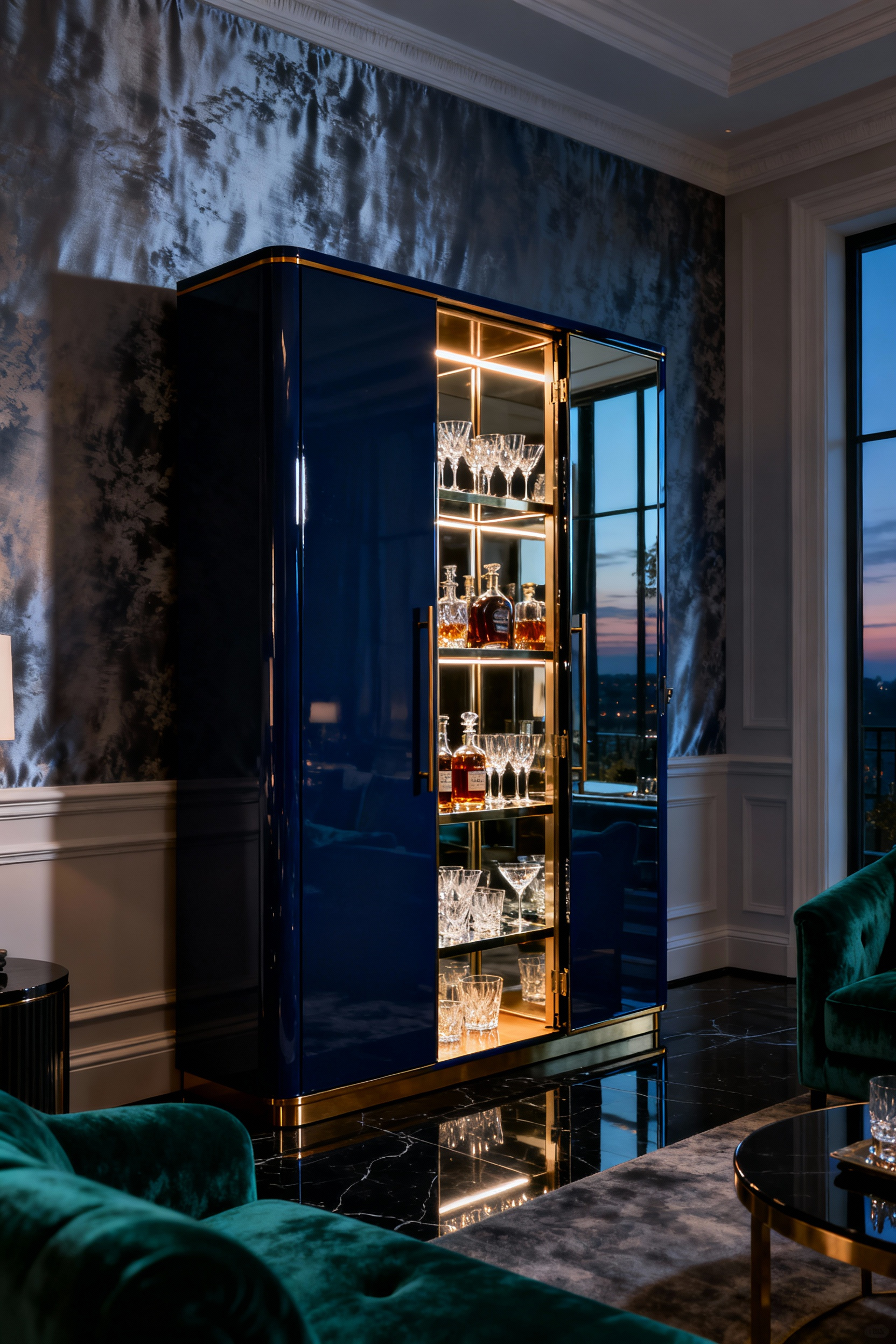
- Integrated LED lighting to spotlight your premium collection.
- Mirrored back panels to multiply the sparkle and depth.
Alternatively, if you select an elaborate bar cart, treat it as a curated vignette rather than a storage unit. Display only elegant decanters and fresh florals to maintain visual splendor, avoiding the chaos of overcrowding. Finally, anchor the room by positioning your bar element near plush seating. This strategic placement defines the entertaining zone and physically signals the shift from formal admiration to spirited celebration. Your home must serve your joy as much as your style.
15. The Signature Scent Profile: A dedicated olfactory identity.
Visuals alone fall flat; true luxury engages every sense. Your formal living room demands a dedicated olfactory identity, serving as a silent introduction that lingers long after guests depart. Growing up, my aunt’s parlor always carried a faint, lingering note of spiced amber; that scent signaled elegance and occasion before I even saw the velvet drapes. Establish this atmosphere by selecting sophisticated base notes like sandalwood, cedarwood, or vetiver. These grounded, earthy scents command attention without screaming, anchoring the room in opulence rather than fleeting trends.
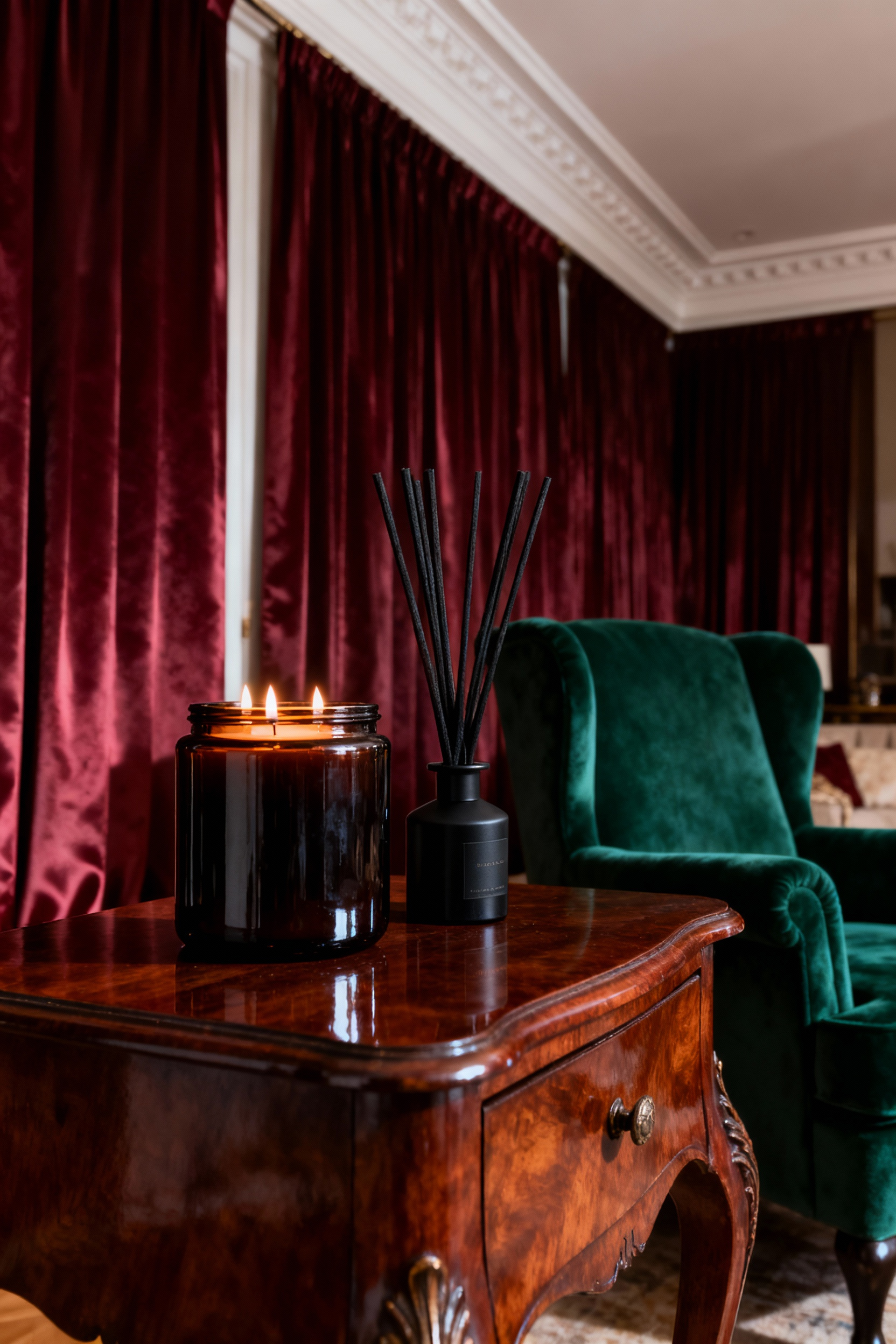
To maintain this presence, master the art of dual-method layering. A single flame is insufficient for a grand space; you must construct a cohesive profile using high-quality tools.
- The Anchor: Deploy high-grade reed or electronic diffusers to provide a continuous, subtle background aroma, ensuring the room never smells “empty.”
- The Amplifier: Ignite heavy, three-wick candles in soy or coconut wax during gatherings to boost intensity and add visual warmth.
Finally, invest in scale that matches your architecture. A cavernous room swallows small scents, so choose substantial vessels that assert themselves. This is “quiet luxury” at its most potent—an invisible, unforgettable signature.
Frequently Asked Questions About Formal Living Rooms
How do you make a formal living room feel less stiff and more inviting?
To transition a formal living room from stiff to inviting, prioritize deep comfort over visual perfection. Incorporate plush, deep-seated furniture (like chenille or mohair sofas) and layer numerous soft, oversized pillows. Banish the television to encourage face-to-face conversation, and use warm, layered lighting (2700K–3000K) to create an intimate, golden-hour atmosphere instead of harsh overhead light.
What is the primary difference between a formal living room and a family room?
The primary difference lies in function and frequency of use. A family room (or great room) is designed for everyday, casual activities—like watching television, homework, and relaxing—and often features durable, stain-resistant fabrics. A formal living room (or *parlor*) is designed for sophisticated hosting, intimate conversations, and showcasing curated design elements. It prioritizes structure and opulence and is often reserved for entertaining guests or quiet reflection.
What furniture pieces are essential for anchoring a formal conversation area?
The essential pieces for a formal living room conversation area are a structured sofa (such as a Chesterfield or tuxedo style), two symmetrical high-back occasional chairs, and a substantial coffee table (marble or metal/glass) that acts as a central anchor. The furniture should be arranged symmetrically and “floated” away from the walls to force intimacy and focus all attention inward.
Should a formal living room have a television?
While traditional design dictates banning the television entirely, modern high-end design often integrates it discreetly. If you must include a TV, choose solutions that hide the screen when not in use, such as custom joinery that recesses the screen, art TVs that display masterpieces, or projector screens that descend from the ceiling. The key is ensuring the TV does not become the room’s permanent focal point, preserving the area for dialogue.
Reclaiming the formal living room is not about sacrificing elegance for comfort; it is about demanding that your spaces serve your joy. By embracing structured furniture, layered textures, and dramatic lighting, you transform a stiff showplace into an opulent sanctuary designed for fierce hospitality and unforgettable connection. Design boldly, reject the boring, and ensure your home is a celebration of the life you furiously and joyfully live.