
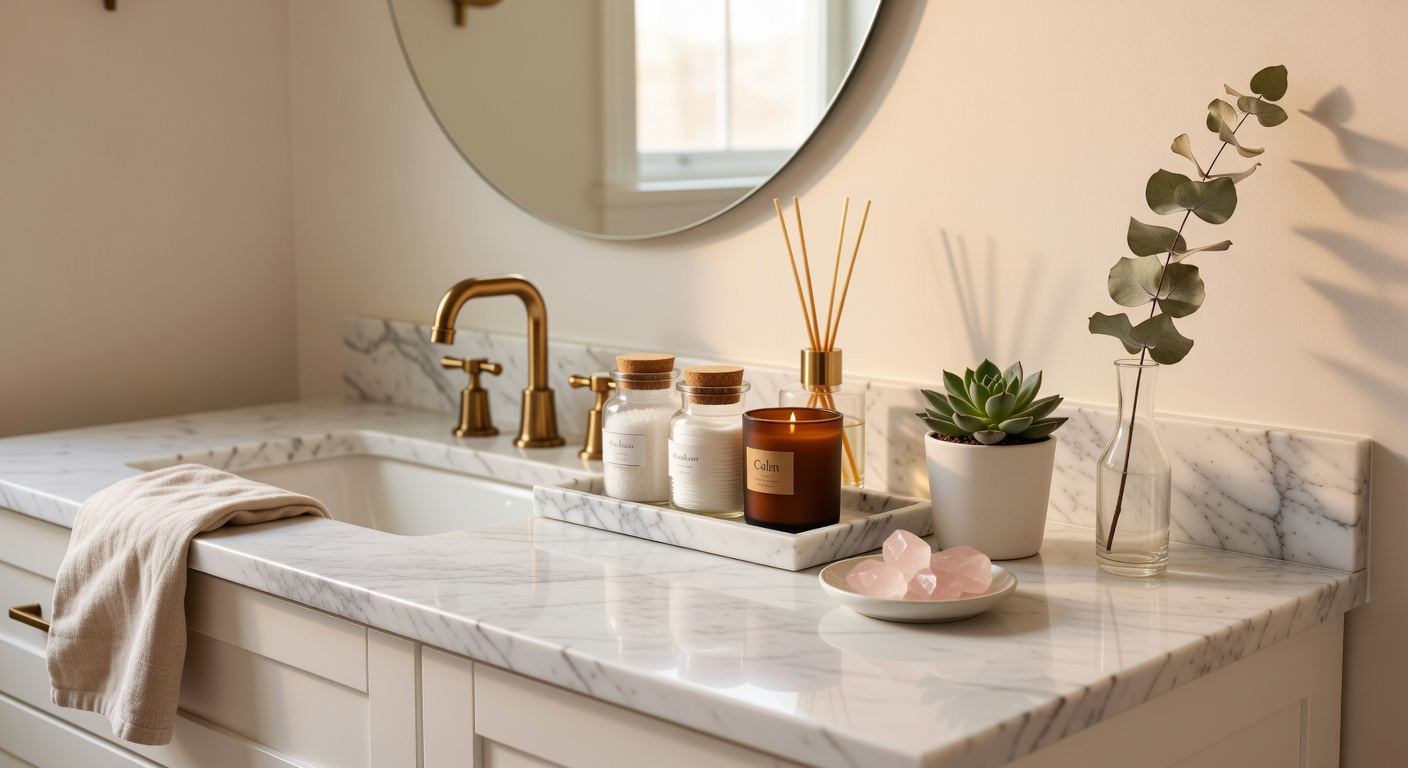
As a wellness sanctuary designer, I’ve studied how our immediate environment shapes our nervous system, and nothing demonstrates this more clearly than the morning bathroom. The spaces where we begin our day deserve intention. Yet so many bathrooms feel purely functional—a place to rush through rather than settle into. This is where thoughtfully chosen bathroom vanity decorations change everything. I’m not talking about cluttered collections or impulse purchases. Instead, I’m referring to curated objects that transform your morning routine from a task into a ritual. Each piece should serve a purpose beyond aesthetics: reducing decision fatigue, supporting your wellness goals, inviting calm, or grounding you in mindfulness.
Over the past five years, I’ve worked with hundreds of clients to design bathroom spaces that feel like personal sanctuaries. The ones that succeeded had one thing in common—they trusted the power of small, intentional objects. A marble tray isn’t just storage; it’s a visual boundary that says, “These items matter.” A single candle isn’t just fragrance; it’s an olfactory anchor that signals to your brain that this moment belongs to you. A succulent or air plant brings living energy into a room where we’re often most vulnerable—emerging from sleep, preparing to face the day.
What follows are fifteen bathroom vanity decorations, each with a specific psychological or functional purpose. Whether you’re designing a vanity from scratch or refreshing one that no longer serves you, these are the pieces that research, neuroscience, and years of design practice have proven actually work.
1. A Decorative Vanity Tray That Transforms Clutter into Curated Display
Choosing the Right Material and Size
A vanity tray is the architectural anchor of your morning ritual. Its primary job is simple: it defines what belongs. For most standard 24- to 36-inch vanities, a tray measuring 9 by 18 inches or 12 by 12 inches provides the perfect proportion without consuming your entire surface. Material matters more than you’d think. Marble trays—whether with brass trim or natural edge—have become the gold standard for good reason. They’re durable, elegant, and they naturally reflect light back toward your mirror, which means you’ll use better lighting without adding fixtures.
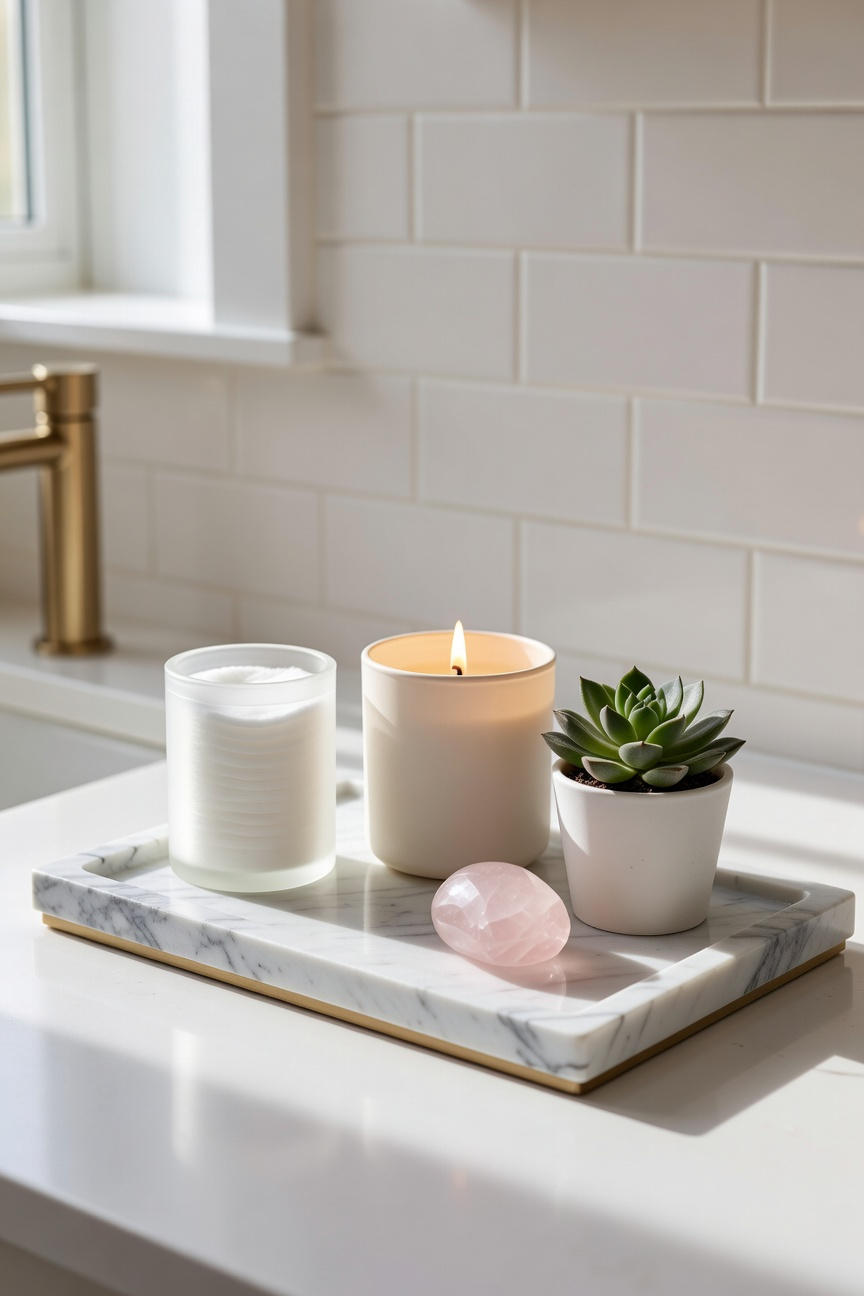
The research is compelling. Princeton University studies found that organised, visually contained spaces reduce cognitive load and lower cortisol levels by helping your brain process fewer decisions in the morning. When everything your skin or hair needs sits within a defined boundary, you’re not scanning a chaotic counter — you’re working within intention. Popular options at various price points include the West Elm Foundations Marble Vanity Tray (12 by 6 by 0.75 inches, approximately $130), the Williams Sonoma Marble and Brass Vanity Tray (around $140), and the L’AVANT Collective White Marble Tray ($125–150). Even the most accessible options in this range will last years and feel substantial.
What to Place on Your Tray
Restraint is an art form here. Select 3 to 5 curated items maximum — fewer pieces chosen with intention communicate elegance far better than a crowded surface. Negative space is as important as the objects themselves. Each item on that tray should be something you reach for daily or something that genuinely delights you visually. A thoughtful bathroom vanity makeover often begins with this one decision: making your tray intentional rather than accidental.
2. Apothecary Jars and Glass Canisters That Elevate Everyday Bathroom Essentials
Glass vs. Ceramic: Which Vessel Works Best
Glass apothecary jars do something simple but important: they make the everyday beautiful. Cotton rounds, Q-tips, bath salts, and even dental floss become intentional objects when displayed in the right vessel. Three-piece sets typically offer the perfect graduated sizes — 5 ounces, 12 ounces, and 24 ounces — meaning you’ll have the right vessel for every bathroom essential.
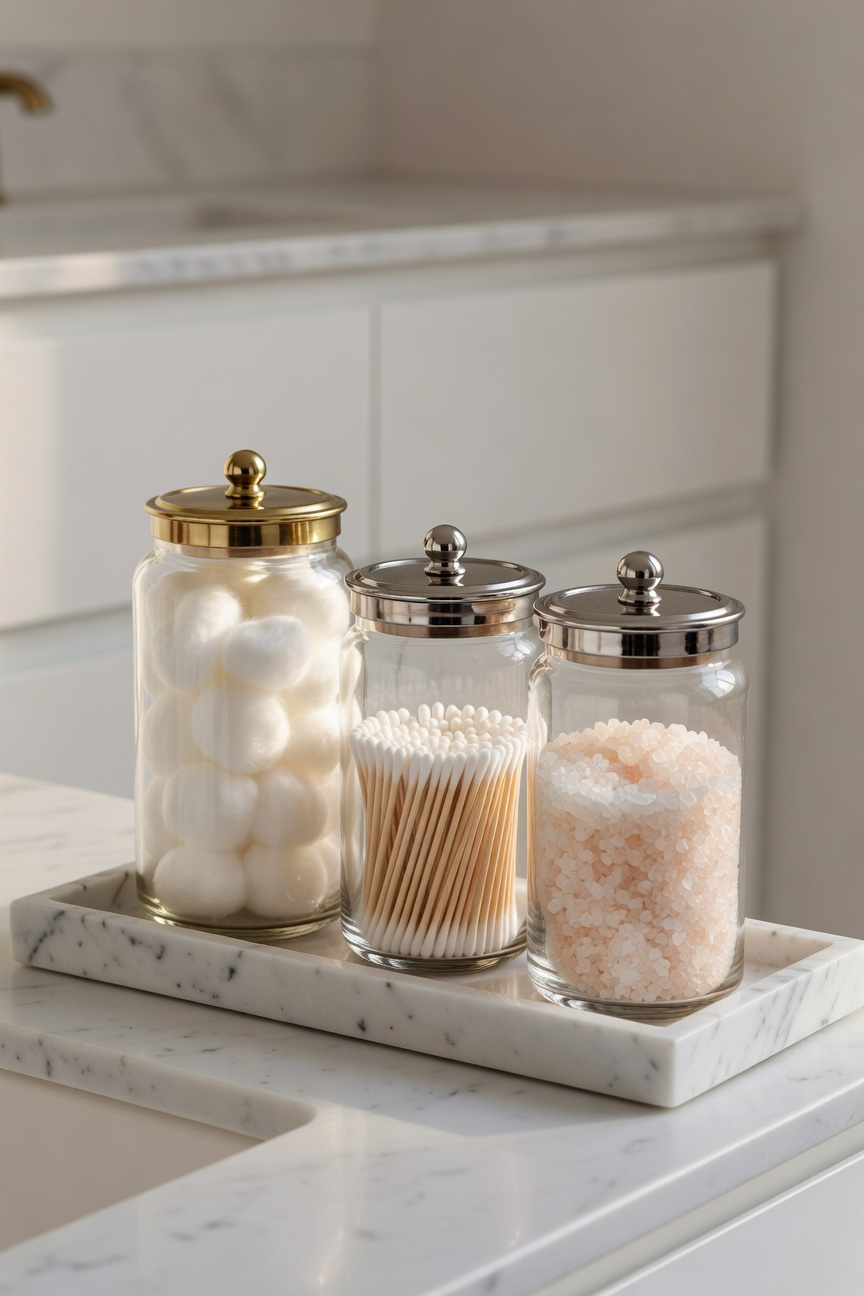
Glass is non-porous, which prevents bacterial growth in humid bathroom environments. Additionally, glass allows you to see what you’re running low on, eliminating that moment of reaching for something and finding it empty. The Suwimut Set of 3 Glass Apothecary Jars costs approximately $18–25, while Crate & Barrel options range from $30–50 per set. Ceramic works beautifully too, especially for aesthetic cohesion, but glass remains the most practical for daily bathroom use.
What to Store and Display
Behavioural psychology supports what you likely intuit: visible storage supports rituals by reducing decision fatigue. When your cotton rounds are easy to reach and visually available, you’re more likely to create a consistent skincare practice. Since you’re working with a vanity, each jar becomes part of your visual morning environment. Therefore, think of them as both functional and decorative. Reserve clear glass for beautiful contents — perhaps Epsom salts in a soft colour or decorative bath soaks that are genuinely lovely to look at. Use frosted glass for less-attractive items like cotton swabs. A well-chosen set anchors your tray and communicates care for the details.
3. A Small Potted Succulent or Air Plant for Living Energy on Your Vanity
Best Plant Species for Low-Light Bathrooms
Among the most life-affirming bathroom vanity decorations you can choose, a small living plant stands apart. It shifts the entire energy of your morning routine. The challenge, however, is that most bathrooms lack the bright, direct light that typical houseplants prefer. This is where specific species become your allies.
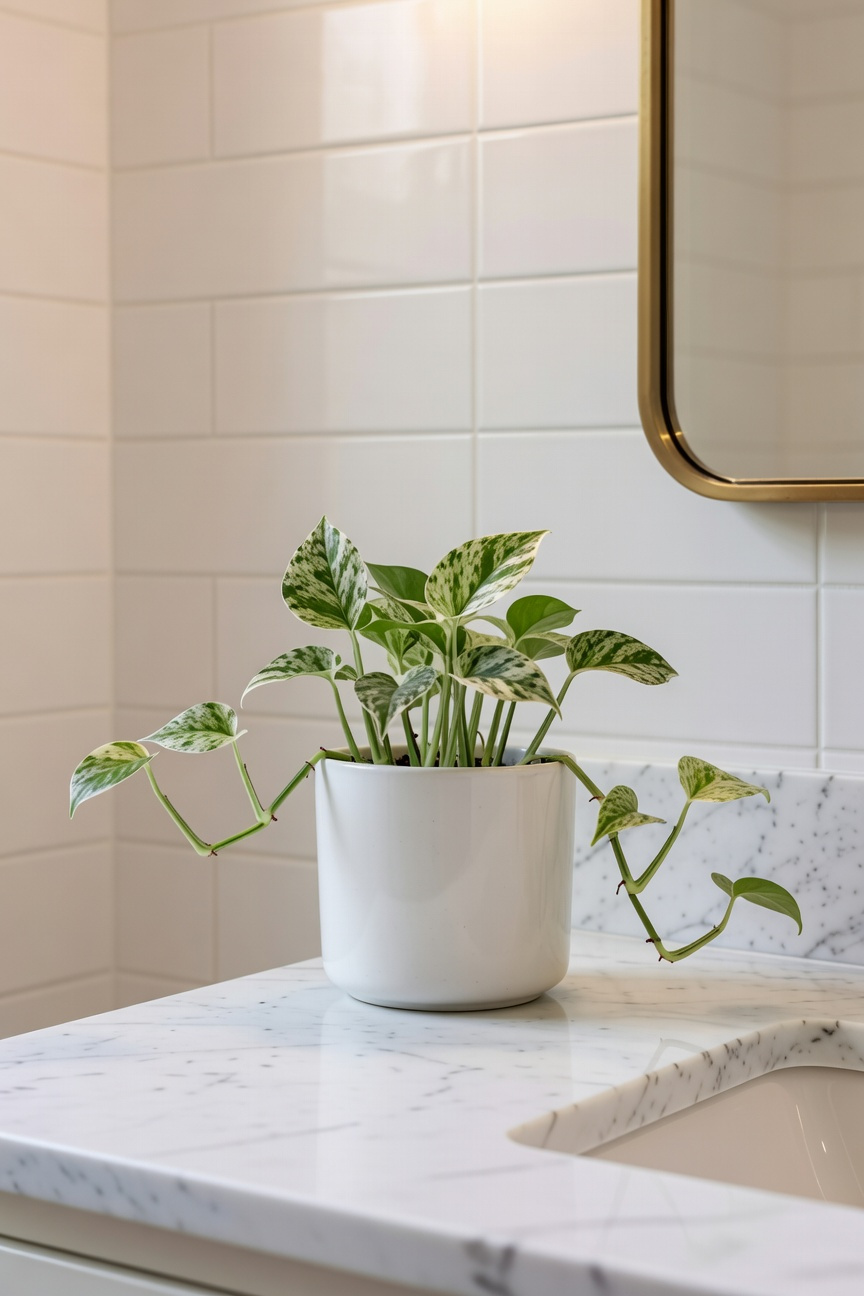
Tillandsia, commonly called air plants, require zero soil and thrive in bathroom humidity without any special care beyond occasional misting. Pothos tolerates low light and high humidity — in fact, humid bathrooms often suit it better than drier rooms. The ZZ plant is perhaps the most forgiving option of all, requiring watering only 3 to 4 times yearly while maintaining a sophisticated, sculptural appearance. Recent research published in Scientific Reports (2025) demonstrates that biophilic interventions reduce cortisol and support parasympathetic nervous system activation. The Pothos ‘N’joy’ variety costs approximately $15–25, while a 6-inch ZZ plant runs $20–35.
Placement and Care
Position your plant where it receives indirect light — ideally a few feet from a window rather than on the windowsill itself, where temperature fluctuations might stress it. Air plants should never sit in soil; instead, mount them on pieces of driftwood or display them in open terrariums where air circulates freely. Because your bathroom is likely humid, these plants often thrive with minimal intervention. The psychological benefit is immediate: you’re nurturing something alive in a space dedicated to self-care. This act of care becomes part of your ritual.
4. A Woven Basket or Rattan Organiser That Adds Warm Texture to Vanity Storage
Sizing for Your Vanity Space
Natural fibres — seagrass, rattan, jute — activate your parasympathetic nervous system in ways that plastic or metal cannot. The texture alone signals safety and groundedness to your brain. When choosing a basket for vanity storage, measure your available floor space beneath the sink or beside your vanity cabinet. Most small to medium baskets range from 15 to 21 inches in depth and height, providing storage without visual overwhelm.
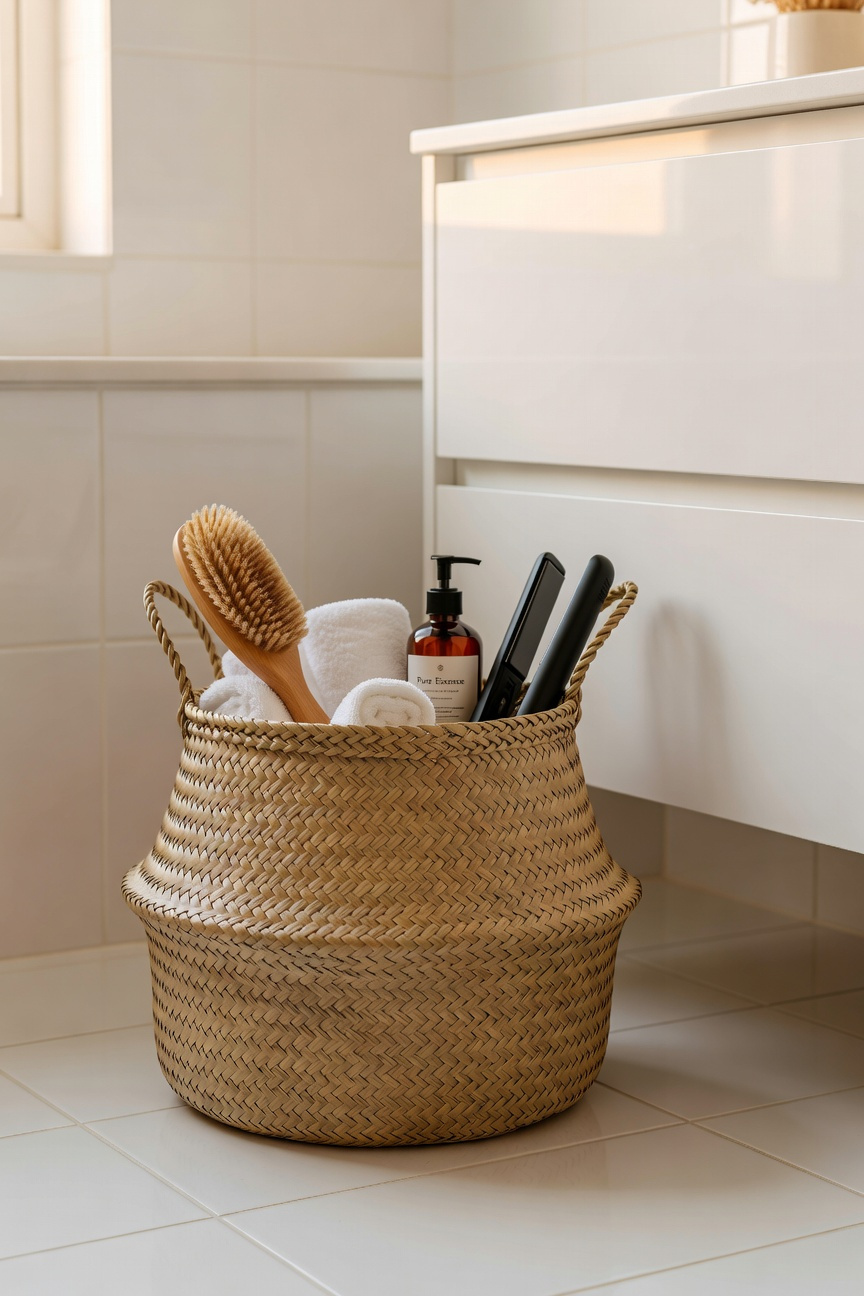
The Serena & Lily La Jolla Basket (Small, 15 inches deep by 21 inches high) costs $118–148. Pottery Barn’s Savannah Handwoven Seagrass Lidded Basket runs $80–120. All three natural fibre materials — seagrass, rattan, and jute — are naturally breathable, which means moisture won’t accumulate and create mildew concerns. This natural breathability connects beautifully to wooden bathroom ideas, where organic materials work together to create cohesion and warmth.
What Goes Inside vs. On Display
The basket works best for items you need but don’t want visible — extra hair tools, nail supplies, sunscreen backups, or cotton pads you rotate seasonally. Meanwhile, your tray and jars hold the pieces you want to see and touch daily. Since your basket sits below eye level, it creates visual calm while keeping everything accessible. The open weave is key; it allows air to circulate naturally, preventing the trapped moisture that closed containers invite.
5. Soy or Beeswax Candles in Decorative Vessels for Ritual Atmosphere
Fragrance Choices That Support Wellness
A candle transforms your morning routine into a sensory ritual. Beeswax releases negative ions that actively purify air, while soy candles burn cleanly without the toxins present in paraffin alternatives. But the real magic lives in fragrance science. Lavender increases theta and alpha brain waves — the frequencies associated with calm focus. Diptyque Baies ($65–74 for 6.5 ounces) is the luxury choice. Voluspa Japonica ($32–38 for 18 ounces) provides sophistication at a more accessible price. Paddywax Color Block ($24 for 8 ounces) rounds out budget-conscious options without sacrificing quality.
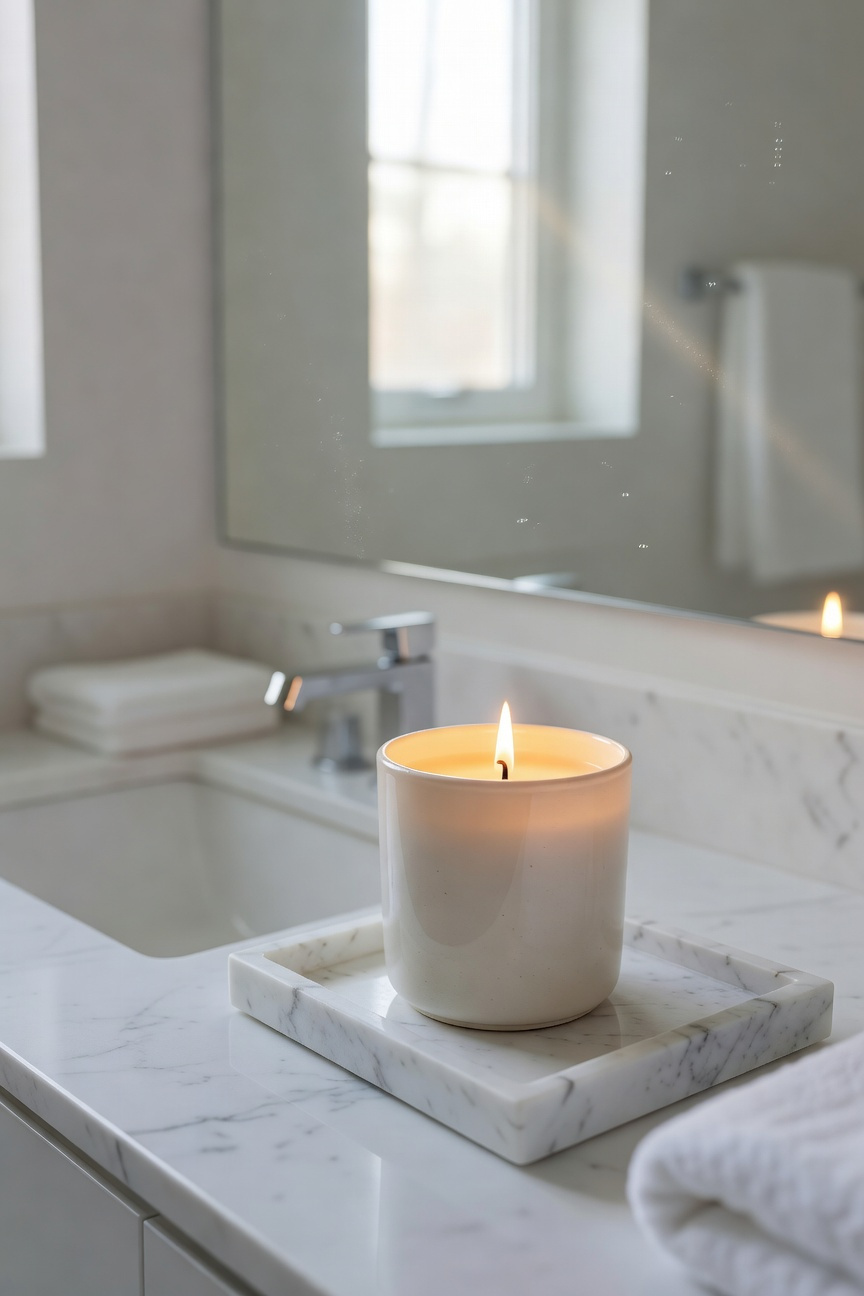
When you light the same candle daily, your nervous system begins to anticipate calm before your conscious mind even registers the smell. This is classical conditioning at its most elegant — and one of the most powerful bathroom vanity decorations for establishing ritual.
Safe Vanity Candle Placement
Place candles at least 12 inches from flammable materials — keep them away from shower curtains, window treatments, and towels. Trim wicks to 1/4 inch before each lighting to prevent mushrooming, which creates excess soot and shortens burn time. Beeswax lasts approximately 25 percent longer than soy and purifies air — worth the investment for daily ritual use. That said, safety always comes first: never leave a burning candle unattended.
6. A Reed Diffuser or Essential Oil Diffuser as a Constant Aromatherapy Bathroom Vanity Decoration
Reed vs. Electric: What Works on a Vanity
Reed diffusers operate silently, require zero electricity, and last 2 to 4 months per fill. They’re genuinely passive — you insert them and they work without effort. Electric diffusers offer more control, allowing you to set timing and intensity. The Vitruvi Stone Diffuser (ceramic ultrasonic, 70 millilitres, $120–150) is the investment choice — beautiful enough to display and genuinely effective. NEST Reed Diffuser ($62–75) offers luxury scent with traditional diffusion. Lafco New York Classic Reed Diffuser ($64–75) bridges luxury and accessibility.
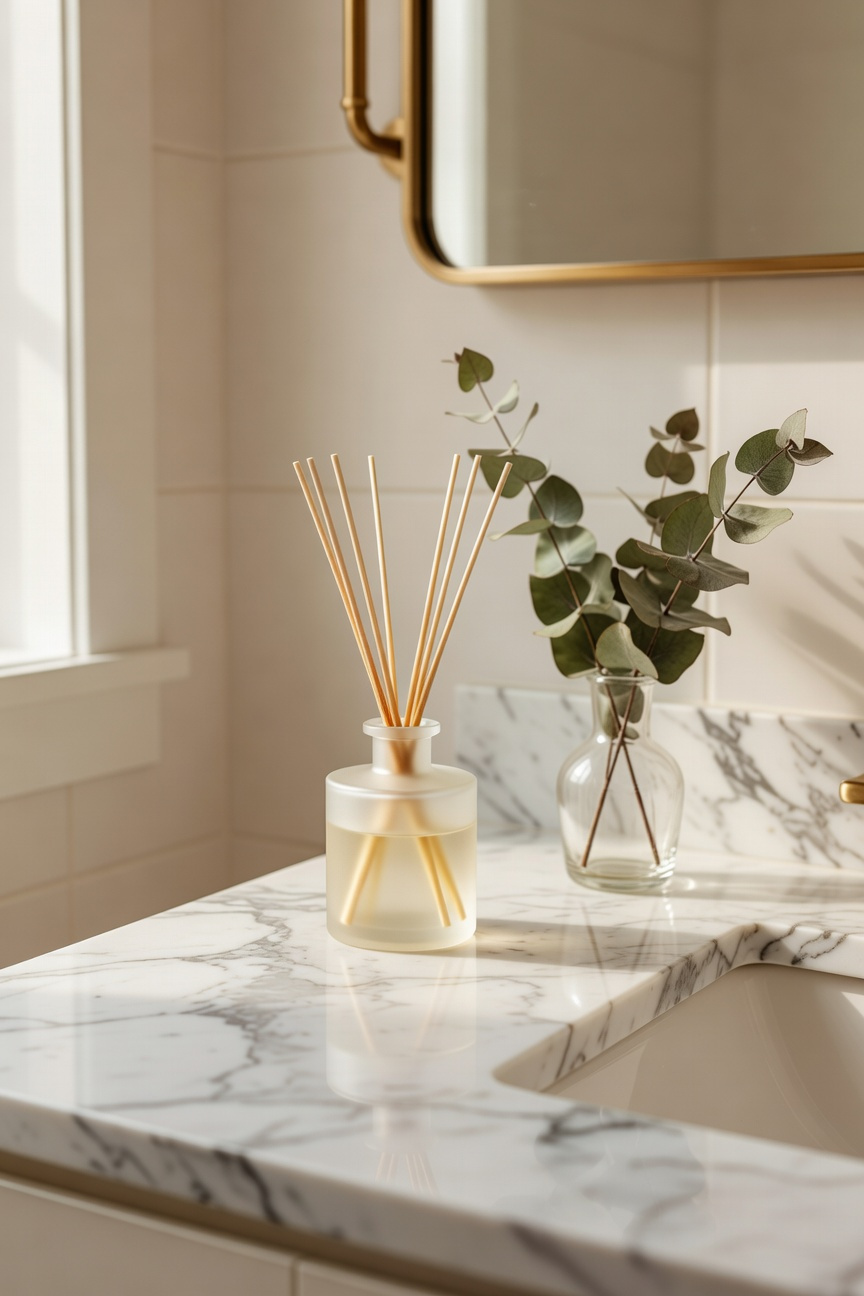
For vanity placement specifically, a reed diffuser is my top recommendation among passive bathroom vanity decorations. Even so, if you prefer the aesthetic and control of an electric model, choose one with an elegant vessel — since your vanity is a ritual space, your diffuser should be something you genuinely enjoy looking at.
Scents That Transform Morning Routines
Citrus stimulates dopamine production and activates alertness — perfect if your mornings feel sluggish. Lavender reduces cortisol and supports parasympathetic activation. Peppermint enhances focus and concentration by 15 to 20 percent according to research. Keep your diffuser 12 to 18 inches from your mirror to prevent essential oil residue from clouding the glass. Additionally, rotate scents every 1 to 2 weeks; your nose adapts to constant fragrance (olfactory adaptation), so variety keeps the impact fresh.
7. Fresh or Dried Botanical Arrangement in a Bud Vase for Organic Softness
Choosing Blooms That Last
Dried botanicals offer longevity that fresh flowers cannot match. Most will maintain their beauty for 3 to 6 months, with some lasting a full year. Fresh eucalyptus lasts 7 to 10 days in water and offers a specific advantage: bathroom humidity naturally releases eucalyptus’s essential oils, creating therapeutic aromatherapy as a side benefit. The House of Lilac Fresh Eucalyptus Shower Bouquet ($15–28) arrives ready to display. Heath Ceramics’ handmade bud vases ($55–85) are objects of genuine craft — high-fired and beautiful enough to keep indefinitely.
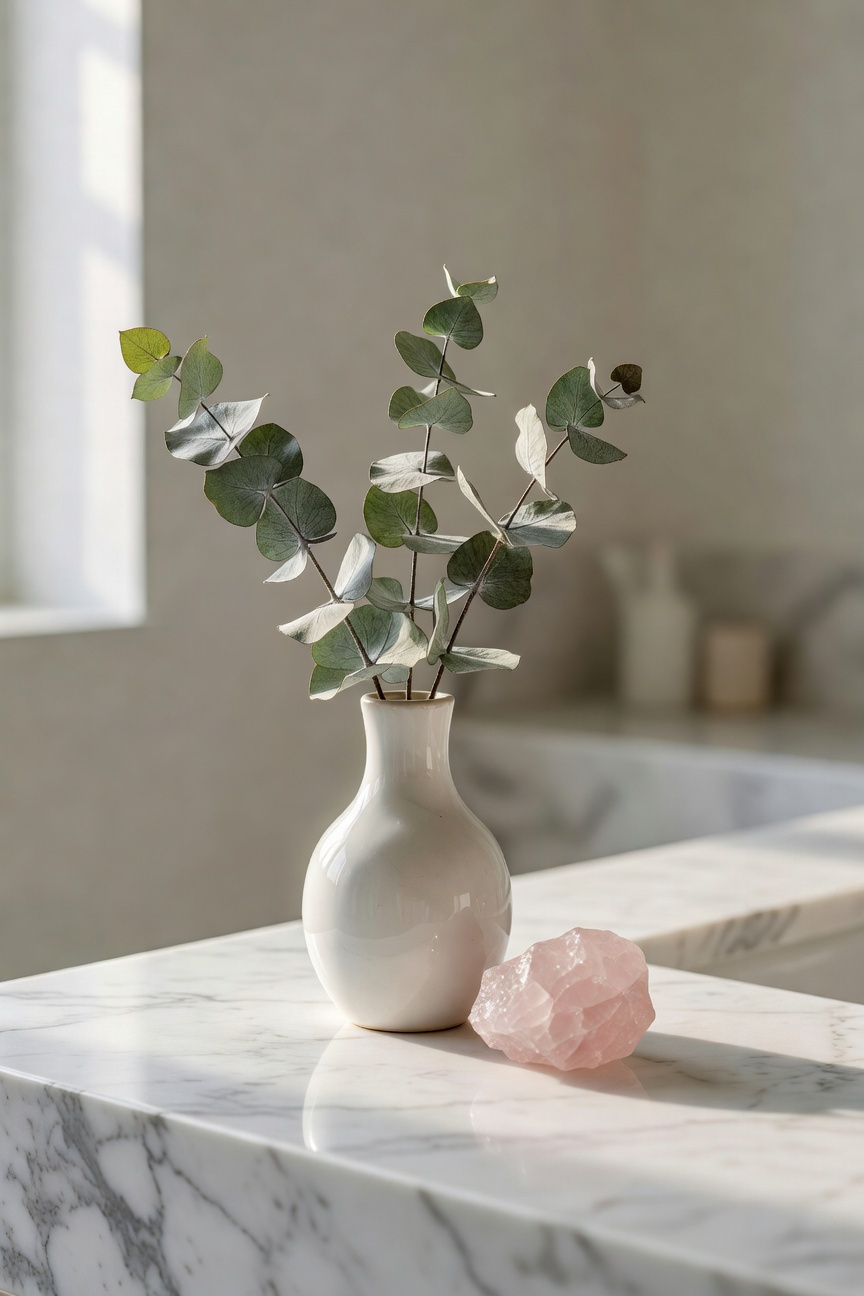
Bud vases typically range from 3 to 8 inches tall with openings of 0.75 to 1 inch, which naturally limits what you can fit — forcing the curation that makes vanity arrangements work. A single stem or a small gathered bunch creates elegance. Multiple stems jammed together creates clutter.
Styling the Vase on Your Vanity
Position your bud vase where you’ll see it during your morning routine — perhaps at the far corner of your tray or on the countertop beside your candle. Pro tip: buy fresh eucalyptus in bulk from wholesale florists and air-dry it naturally in your bathroom. Within two weeks, you’ll have beautiful dried stems that cost a fraction of retail bundles. Therefore, this single element anchors both aesthetics and function. This approach to organic, collected styling connects naturally to bohemian bathroom ideas — natural materials that feel found rather than purchased.
8. Crystal Specimens and Healing Stones as Mindful Bathroom Vanity Decorations
Which Crystals Work Best in a Bathroom
Not all crystals tolerate bathroom humidity. Amethyst and rose quartz both rate 7 on the Mohs scale, meaning they resist water damage and will thrive on a humid vanity. Selenite, by contrast, rates only 2 and will literally dissolve if exposed to bathroom moisture — never place selenite on a bathroom vanity. Raw Amethyst Clusters cost approximately $15–35, while Rose Quartz Clusters run $25–45. The AURA 8 HOME Rose Quartz Vanity Tray ($55–95) elegantly combines beauty with function if you want your entire tray to be crystal.
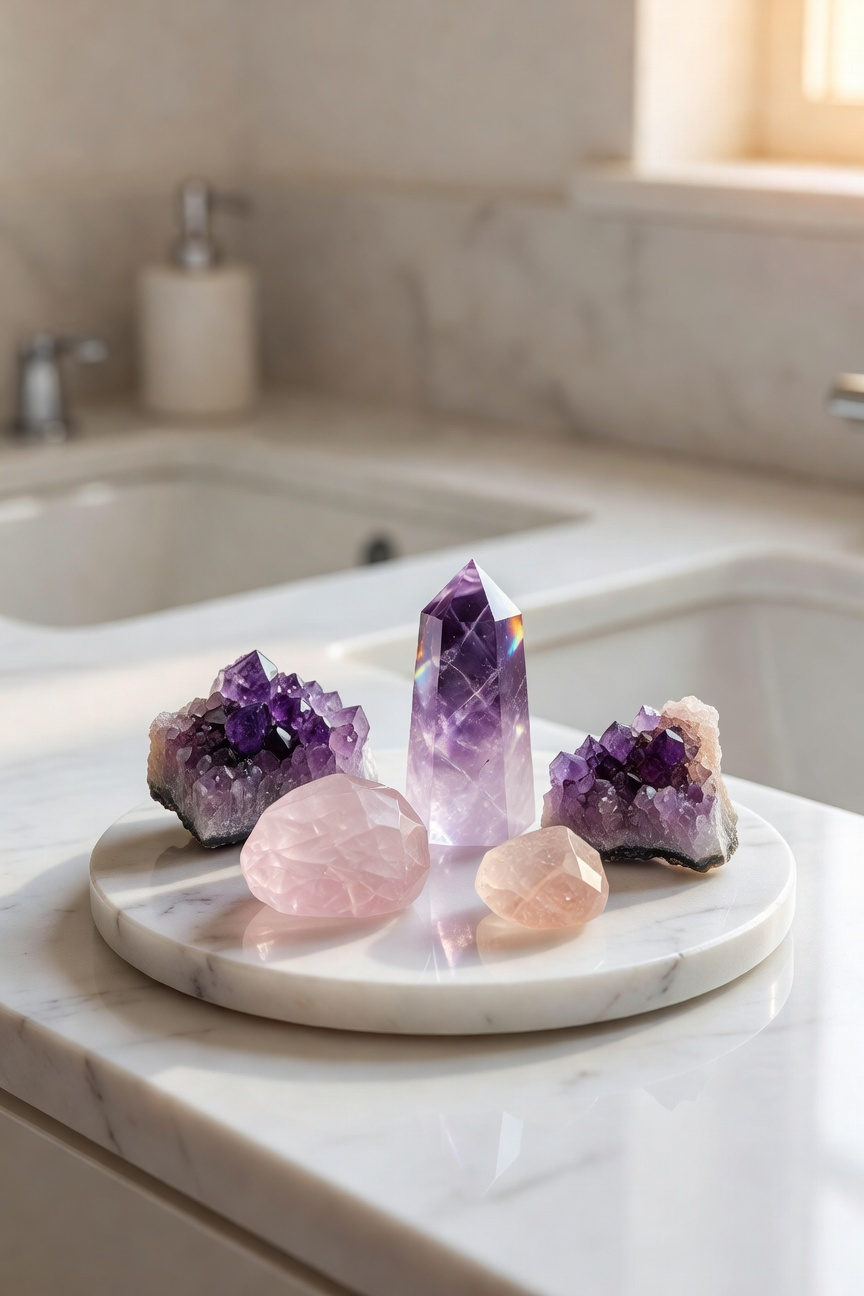
These aren’t mere decorative objects. Environmental psychology research demonstrates that natural mineral forms reduce perceived stress by 12 to 15 percent. When you see a crystal’s geometric formations and touch its cool surface, your nervous system registers natural order and stability. This is grounding work.
Grouping and Display Techniques
Display 3 to 5 crystals on a 7- to 8-inch tray or dish. Odd numbers (3 or 5) create visual interest where even numbers feel static. Vary the heights slightly, grouping larger pieces with smaller points to create depth and visual rhythm. Because crystals work as both aesthetic and wellness elements, position them where you’ll see them during your morning routine. Perhaps rest your hand on a rose quartz while your skincare absorbs, or touch an amethyst when you’re feeling rushed. These physical interactions anchor mindfulness and make your bathroom vanity decorations function as a true wellness space.
9. An Artisan Soap Dish and Pump Dispenser Set That Signals Intentional Self-Care
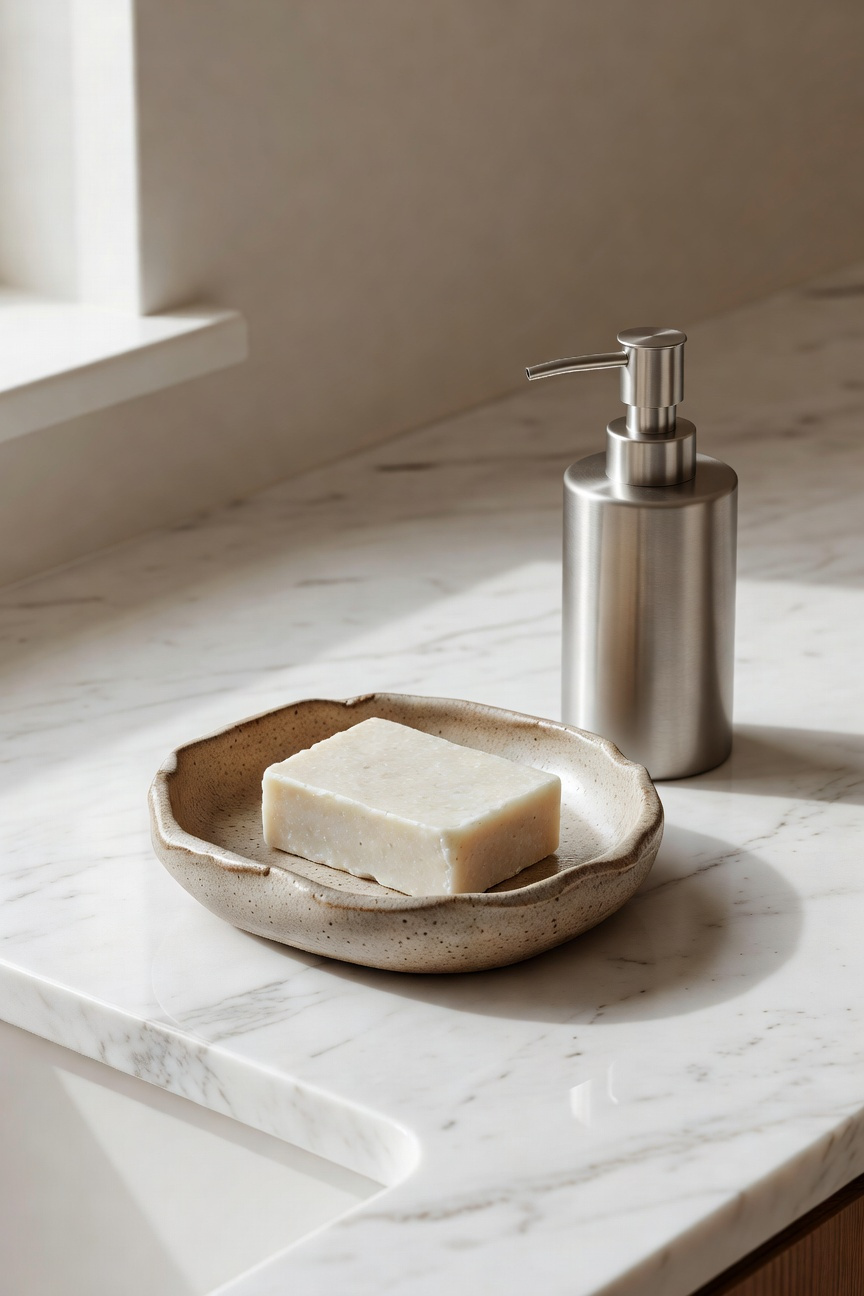
The soap dish might seem like a minor player in your bathroom vanity decorations, yet it’s one of the most frequently touched objects in your morning ritual. When this everyday necessity becomes beautiful, something shifts psychologically. You pause. You notice it. That small moment of appreciation triggers a cascade of intention-setting that influences how you approach the rest of your routine.
Materials Worth the Investment
Natural stone options like marble and travertine demand commitment. They require sealing every 6 to 12 months, which means you’re actively tending to these objects — and that care deepens your relationship with them. Ceramic, by contrast, is wonderfully low-maintenance while offering the same visual richness.
The real transformation happens when you add a refillable pump dispenser. Standard plastic pumps mean replacing them constantly; refillable stainless steel pumps reduce plastic waste by 80 percent while lasting years. Consider the Hawkins New York Pump-It Soap Dispenser (~$20 in ceramic) or the Farmhouse Pottery Simple Soap Dish (~$35–48 in handthrown stoneware). For marble, the Labrazel Aztec Travertine Soap Dish (~$65–85) is museum-quality. Behavioural economics research shows that quality daily-use items increase happiness more than equivalent spending on occasional luxuries — and your soap dish qualifies.
Coordinating with Your Vanity Aesthetic
My honest advice: buy the beautiful dish you love, then add a quality refillable pump separately. This flexibility means you’re not locked into one designer’s vision. Coordinate the dispenser colour with your vanity hardware — brass pump with brass faucets, silver with chrome. This cohesion creates the bathroom counter decor logic that makes a space feel intentionally designed rather than accidentally assembled. Since you touch this object twice daily, investing in the right material is worth every penny.
10. A Curated Skincare and Perfume Display That Turns Products into Bathroom Vanity Decorations
Your skincare and perfume bottles are already in your bathroom. The question is whether they’re hidden in drawers or celebrated as part of your vanity design. When you display your hero products beautifully, something remarkable happens. Research shows that seeing your skincare routine displayed increases routine completion rates by 23 percent — you’re more likely to use what you can see.
The Edit — What to Display vs. Hide
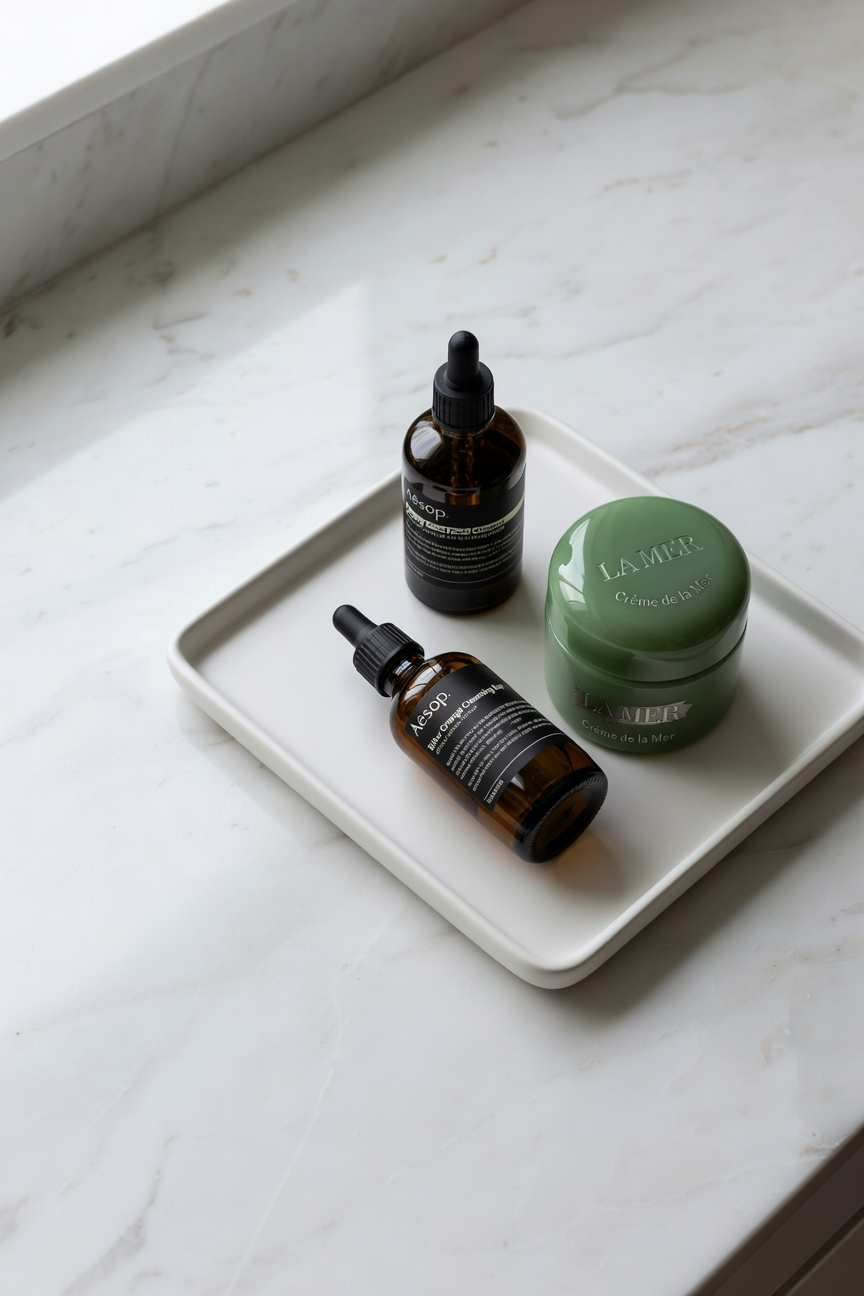
The temptation is to display everything. Resist it. Five to seven hero products maximum create visual calm and psychological ease. Too many bottles create visual noise, which activates your stress response — even subconsciously. Choose products with beautiful packaging. Aesop’s iconic amber bottles (~$45–65 each) are objects worth showing. Tatcha’s natsume tea caddy-inspired jars (~$48–68) look like precious vessels. La Mer’s signature green jar (~$95–280 depending on size) is deeply soothing to the eye. Everything else belongs in a drawer. When in doubt, edit further.
How to Style Products Beautifully
Use a 6 to 10 inch ceramic or marble tray to contain your display. This boundary creates visual order. Arrange bottles by height, creating a gentle rise that draws the eye naturally. For example, place taller serums at back and smaller jars at front. Consider a morning/evening split — serums and oils on one side, evening creams on the other. This reinforces the ritual structure. RMS Beauty’s hand-painted glass jars (~$28–42) add warmth to any arrangement. Edit quarterly; remove anything you’re not actively using. A rotating display stays curated and genuinely reflects how your skincare practice is evolving.
11. A Small Framed Botanical Print or Wellness Artwork Mounted Near the Vanity
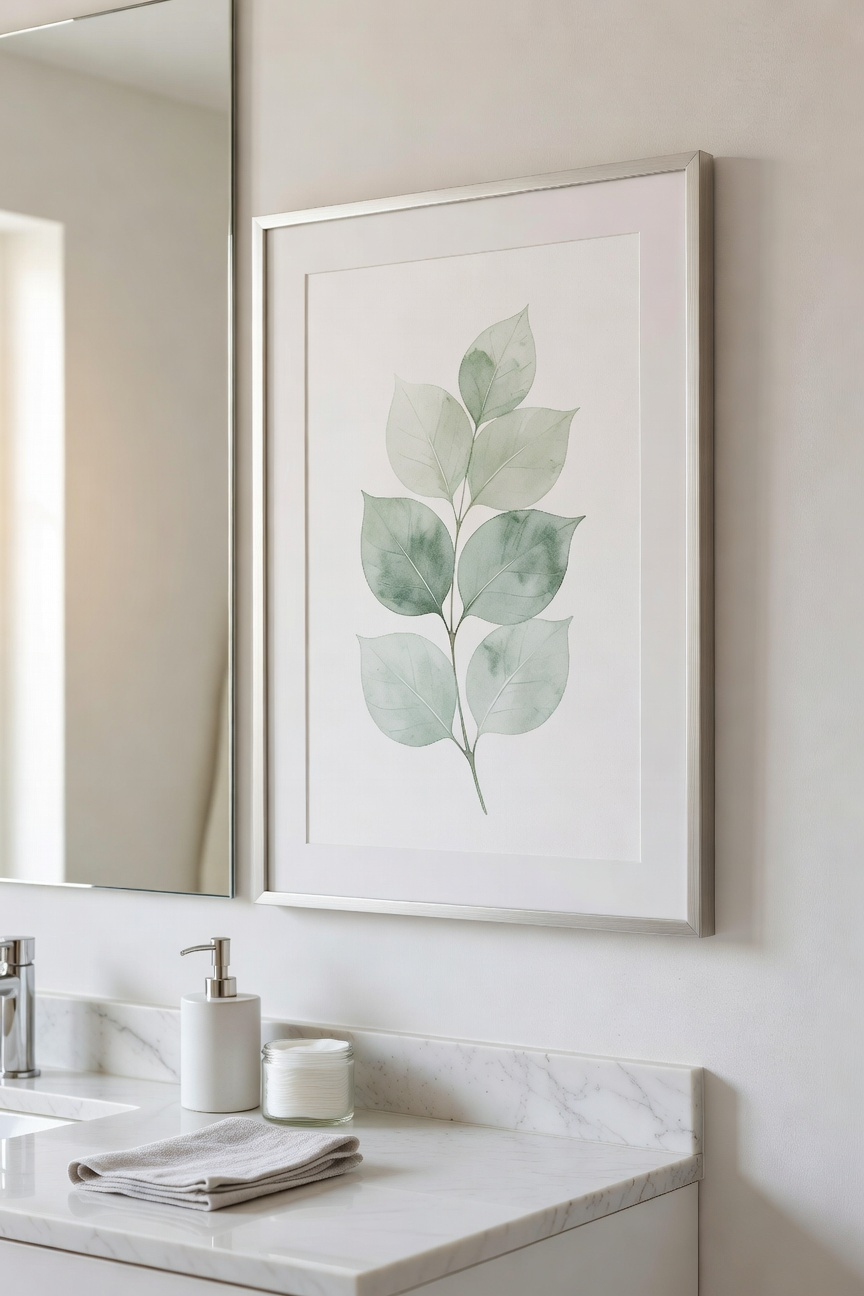
Botanical imagery does something profound in a bathroom space. Studies show that looking at plant imagery activates your parasympathetic nervous system — the calming branch — in just a few seconds. Because of this neurological response, a single well-chosen art piece transforms the entire energy of your morning routine, even when you’re rushing.
Choosing Art That Enhances the Mood
Colour matters scientifically here. Blue and green tones calm the nervous system more effectively than warm colours. This doesn’t mean your art must be photorealistic. Abstract botanicals, watercolour studies, or impressionistic leaf patterns all deliver the same neurological benefit. Society6 offers botanical mini art prints (~$15–25) with broad design selection. Minted carries beautifully curated botanical watercolour prints with metal frames in 8 by 10 inches (~$45–65). Etsy hand-painted botanical prints with solid wood frames (~$20–40) offer artisan authenticity. I find hand-painted pieces feel most personal in a bathroom — they carry the artist’s brushwork rather than commercial production.
Size, Frame, and Placement Rules
Optimal sizing ranges from 5 by 7 to 11 by 14 inches — large enough for visual impact, small enough to avoid overwhelming a vanity area. Always choose acrylic glazing over glass; acrylic resists bathroom moisture far better. Metal frames, particularly aluminium, resist humidity better than wood. Avoid MDF backing, which absorbs moisture and deteriorates. As a result, you’ll end up replacing an MDF-framed piece within a year. Position your artwork 18 to 24 inches above the mirror so it sits naturally in your sightline during your morning routine. This simple placement rule — explained further in our guide to bathroom art decor — transforms a random print into a cohesive wellness element.
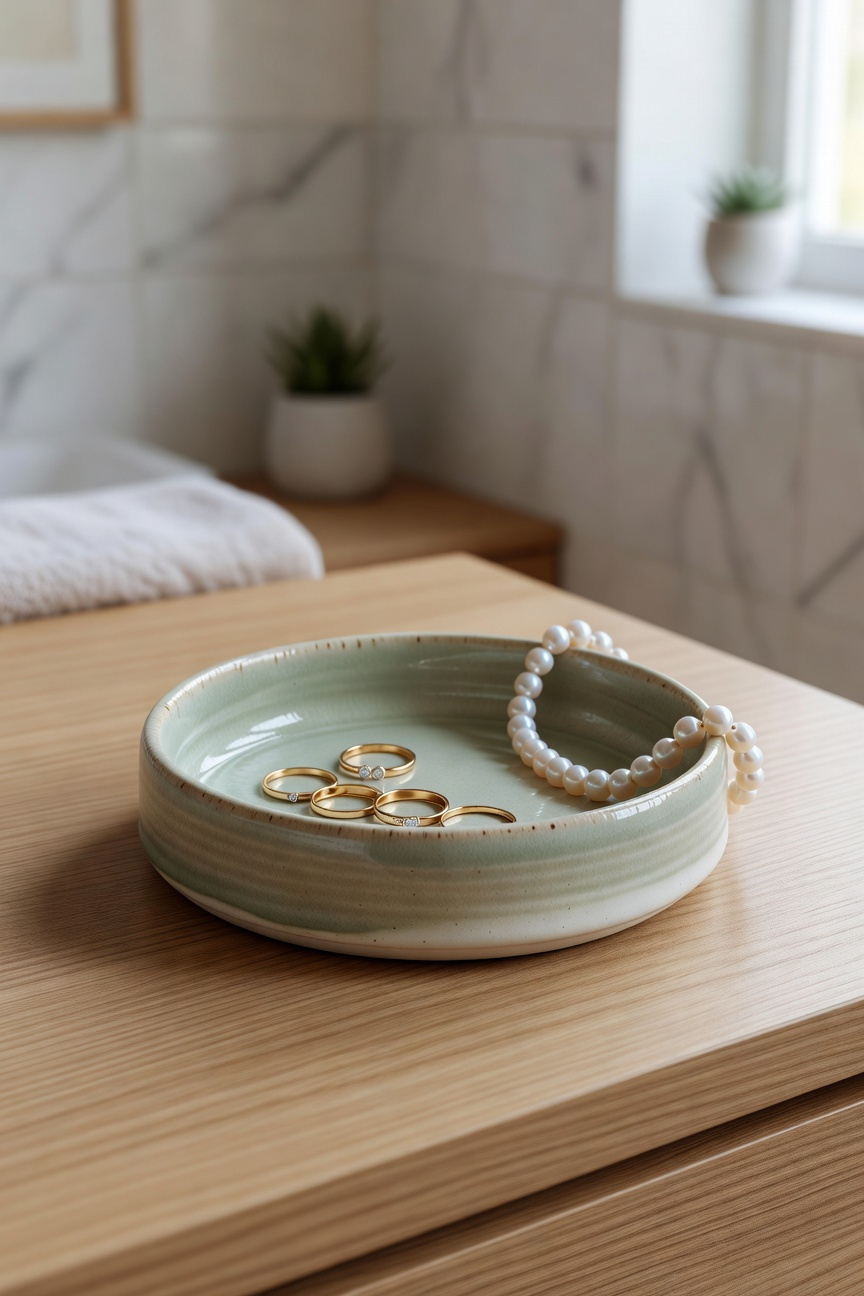
12. A Decorative Small Bowl or Dish for Jewellery, Rings, and Trinkets
A small ceramic bowl near your vanity serves dual purposes: it catches jewellery and trinkets, and it creates a ritualistic landing place. When you remove your rings each morning and evening, you’re creating a tactile transition moment. The act of placing them intentionally — rather than leaving them scattered — shifts your nervous system toward containment and care.
Materials That Work in Humid Spaces
A jewellery dish ranks among the most practical bathroom vanity decorations because it does its best work invisibly. Glazed ceramic and porcelain resist humidity beautifully. Unglazed ceramics, though lovely, absorb moisture and require sealing every few months — more maintenance than most people sustain. Sterling silver tarnishes in humid bathroom air, so avoid metal dishes entirely. The Anthropologie L&Clay Handpainted Stoneware Trinket Dish (~$10–24, 5–6 inches diameter) feels handmade and warm. The West Elm Ceramic Animal Ring Dish (~$20–35 at 4.1 inches square) adds subtle whimsy. Etsy hand-thrown ceramic ring dishes (~$18–35) offer one-of-a-kind artisan appeal.
Positioning for Daily Use
Place this dish within arm’s reach of your mirror, ideally where you naturally remove jewellery as part of your morning or evening routine. This positioning transforms a simple dish into a functional anchor for your ritual. A 4 to 6 inch diameter is ideal — large enough to hold a few pieces, small enough to fit naturally without dominating the vanity. Pro tip: test absorbency before purchasing. Water should bead and roll off, not absorb into the glaze. This single test determines whether your bathroom vanity decorations will last years or deteriorate within months.
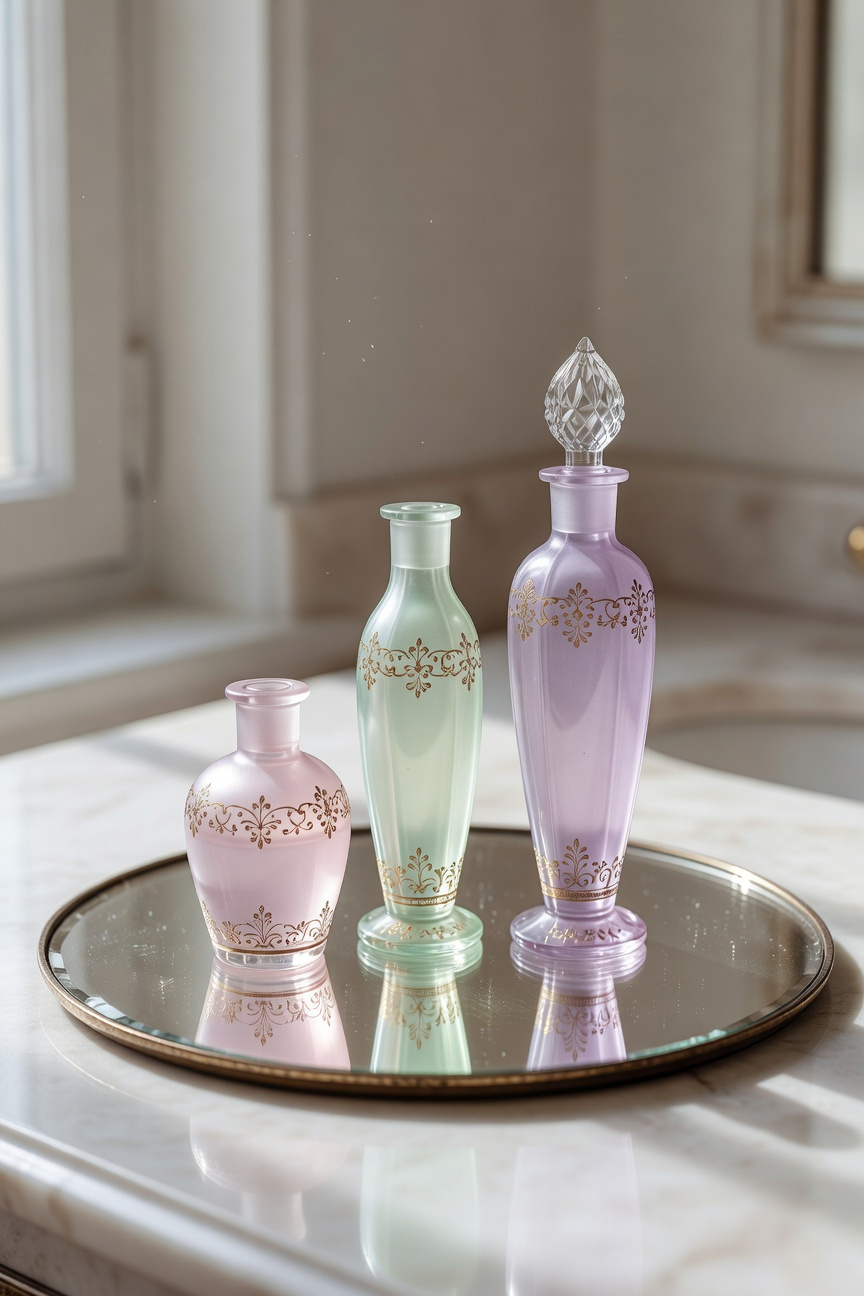
13. A Vintage Perfume Bottle Collection as Vanity Jewellery and Bathroom Vanity Decoration
Vintage perfume bottles occupy a fascinating category of objects. They’re practical, beautiful, historically significant, and increasingly valuable. Collectors understand something that decorators are just discovering: a curated collection of small vintage bottles elevates an entire vanity from “decorated” to “collected.” There’s psychology in that shift. Ownership matters. Intentionality matters.
How to Source and Curate Vintage Bottles
Vintage perfume bottles range dramatically in price — from $5 at a thrift store to $200 or more for Baccarat or Czech art glass. The sweet spot for most collectors sits between $20 and $80 per bottle. Czech art glass from Etsy (~$40–120) offers stunning colour and form. Pressed glass bottles from antique markets (~$5–35 each) provide an accessible entry into collecting. Since genuine vintage bottles increase 15 to 20 percent annually in value, you’re investing while you decorate. The hunt matters as much as the result; when you source your own bottles, you develop a relationship with each piece.
Arranging a Mini Collection
Display 3 to 5 bottles grouped by varying heights. A mirrored tray multiplies light, creating the illusion of depth and luxury. Keep the collection away from direct sunlight, which fades labels and can degrade delicate glass. Arrange by colour progression (warm to cool tones) or by era (Art Deco to mid-century) for visual coherence. For example, placing tallest bottles toward the back and shortest toward the front creates a natural gallery-wall tiering effect. Even a single exceptional bottle becomes a statement piece. Rotating bottles seasonally keeps your display fresh and genuinely intentional.
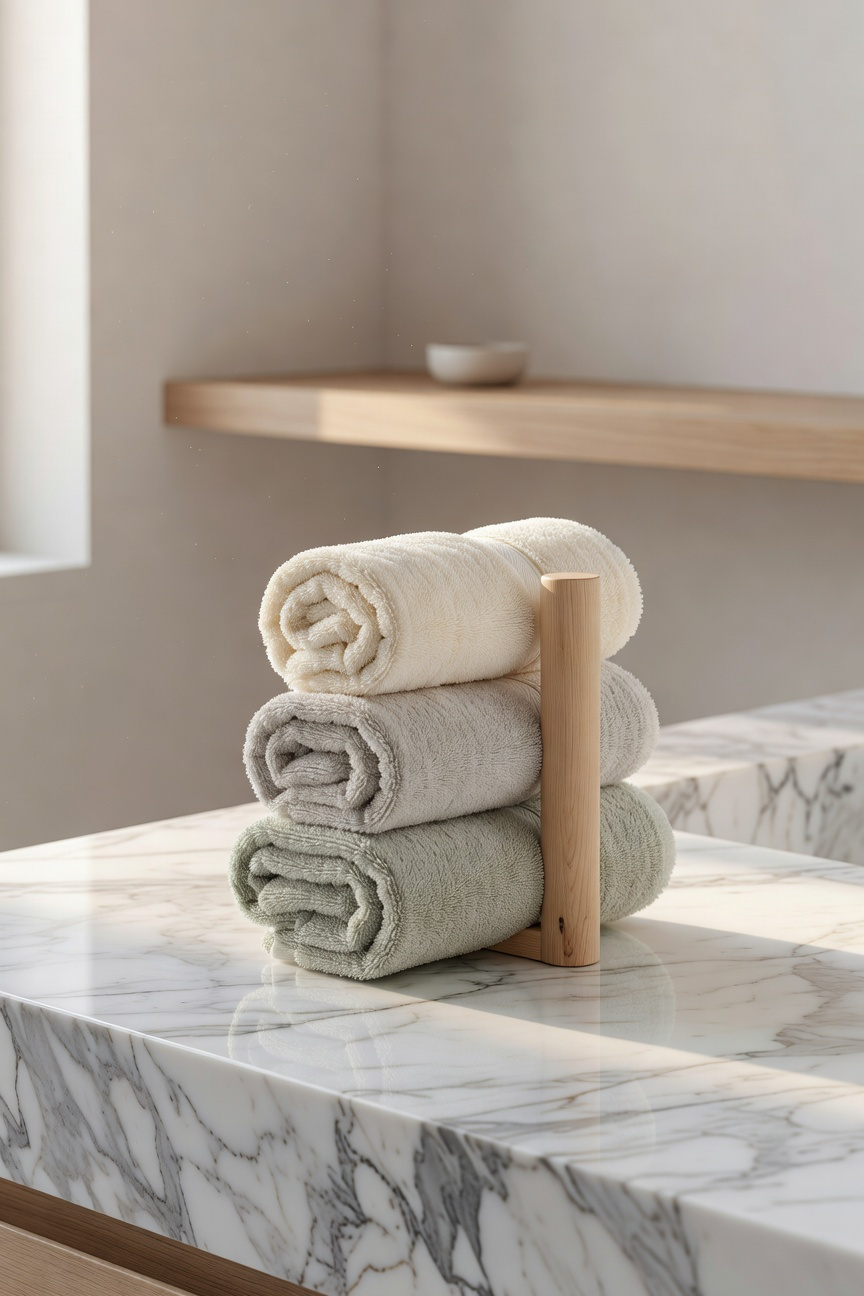
14. Folded or Rolled Hand Towels Displayed Decoratively for Texture and Warmth
Hand towels are textiles, and textiles carry psychological weight in a space. The presence of soft, quality towels signals self-care to your brain. When these towels are displayed beautifully — rolled, folded, stacked — they become part of your bathroom vanity decorations rather than hidden utilities. The texture they introduce, combined with their warm tones, shifts the room’s entire psychological temperature.
Fabric and Colour Choices That Elevate the Vanity
Turkish cotton with 650 or more GSM (grams per square metre) is the quality baseline. The Kassatex Hammam Turkish Hand Towel (~$29.99 at 650 GSM) feels substantial and dries quickly. Parachute’s Classic Turkish Cotton (~$29–39 at 700 GSM) offers minimalist aesthetics with performance. For organic certification, the Coyuchi Air Weight Organic (~$40–65 at 550 GSM) carries GOTS certification and feels feather-light. Colour should coordinate with your larger vanity palette — warm whites, soft greys, sage greens, and blush tones create visual calm. Bamboo-cotton blends resist mildew, making them ideal for humid bathrooms.
Folding and Display Techniques
Master the spa roll: fold your towel lengthwise, then roll tightly, tucking the loose end underneath. This creates the visual effect of a luxury spa. Display rolls in an open woven basket or wooden dowel holder. Rotate colours seasonally. Layer three textures — Turkish cotton, waffle weave, linen — for visual and tactile depth. Because even small variations in weave create sensory richness, your bathroom vanity decorations become tactilely engaging, not just visually interesting. This is how a humble hand towel transforms into a genuine wellness object.
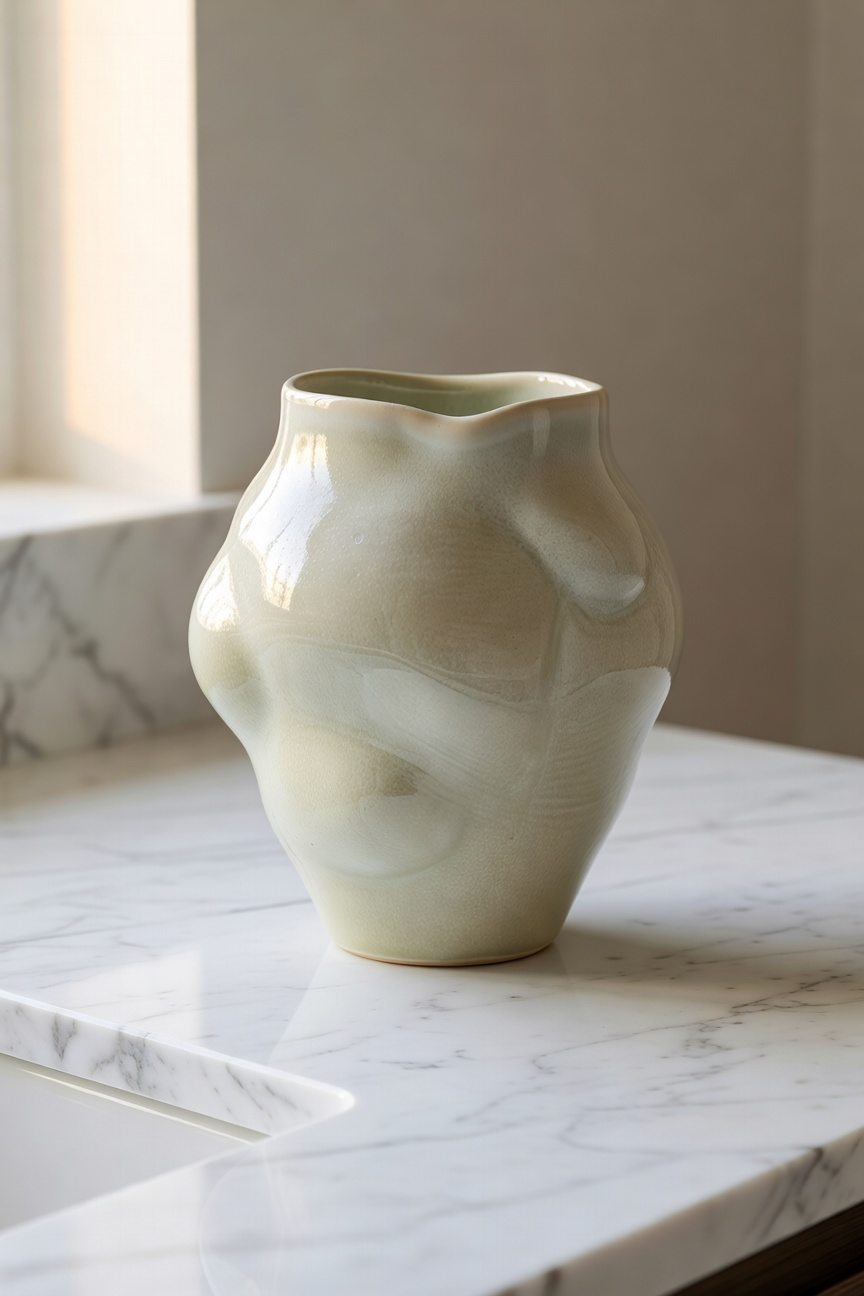
15. A Sculptural Ceramic or Porcelain Object as an Unexpected Artistic Bathroom Vanity Decoration
Here’s a truth about bathroom vanity decorations: they don’t have to be functional. One unexpected sculptural object — a ceramic vessel, a hand-thrown bowl, an abstract form — shifts the entire composition from utilitarian to artful. Suddenly, your vanity isn’t just a place where you perform routines. It becomes a gallery space where you’ve invested in beauty for its own sake.
Finding the Right Scale for Your Vanity
Keep sculptural pieces under 8 inches in height. This prevents them from overwhelming a vanity area or obstructing mirror views. Always choose glazed ceramics — unglazed absorbs moisture and deteriorates quickly in humid bathrooms. East Fork Pottery’s Small Contour Vase (~$98 in glazed ceramic) offers handmade beauty. Hay Design’s La Pittura hand-painted ceramic bowl (~$40–80) brings colour and form together. The ferm LIVING sculptural vase (~$60–120) introduces Nordic minimalism. Source from local ceramicists via Instagram or Etsy where possible — supporting individual makers means your bathroom vanity decorations carry stories.
Pairing Sculpture with Other Elements
One unexpected sculptural object shifts your entire vanity composition. It breaks the visual monotony of bottles and dishes. However, don’t overdecorate — let the sculpture breathe. Pair it with negative space and simpler surrounding objects so it remains the focal point. If you’ve chosen a white bathroom vanity, darker or earthier sculptural pieces create striking contrast. If you select an unglazed piece you love, apply food-safe ceramic sealant every 6 to 12 months. Choose sculptural pieces that genuinely move you aesthetically — that authenticity translates into daily enjoyment and a deeper relationship with your ritual space.
Building Your Vanity as a Wellness Ritual Space
Your bathroom vanity decorations aren’t accessories — they’re anchors for daily intention. Each object, from the artisan soap dish to the vintage perfume bottles to the unexpected ceramic sculpture, serves as a touchpoint in your morning and evening rituals. When these decorations are chosen thoughtfully, they communicate to your nervous system that you’re worth this care.
The research throughout this article points to something consistent: quality daily-use items increase happiness more than occasional luxuries. Your vanity exists in that precious category. You visit it every single morning. Because of that frequency, every object you display shapes your emotional experience of self-care.
So start with one piece. Choose the category that resonates most deeply — if you love plants, begin there. If you’re a collector, start hunting vintage perfume bottles. If textures speak to you, invest in beautiful rolled towels. Resist the urge to complete this entire list at once. Rituals develop slowly; they deepen through time and repetition. Each object you add becomes part of how you relate to yourself during these quiet morning moments. That’s what transforms a bathroom into a wellness sanctuary — and bathroom vanity decorations into something that genuinely matters.