
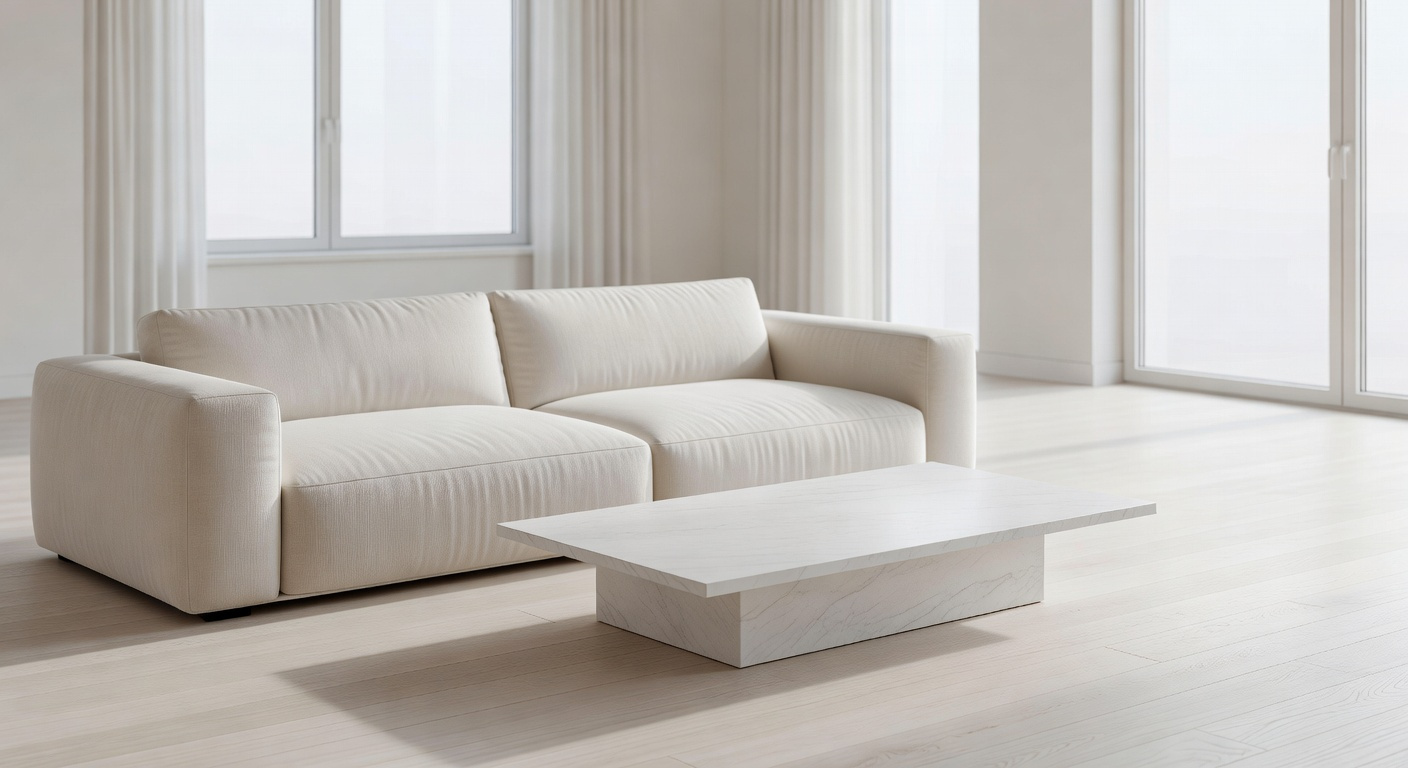
Let’s be honest about white living rooms. They aren’t just an aesthetic trend; they offer a genuine neurological exhale. Environmental psychology actually shows that visual clutter aggressively competes for our brain’s attention. Therefore, mastering white living room decoration becomes a commitment to mental clarity. A predominantly white space dramatically reduces that subconscious visual search. In fact, highly organized minimalist rooms can lower your cortisol levels by up to 22 percent. Stripping away chromatic noise finally lets the mind rest. However, refining your living room style takes more than just picking a basic paint chip. It requires an understanding of how light and void interact.
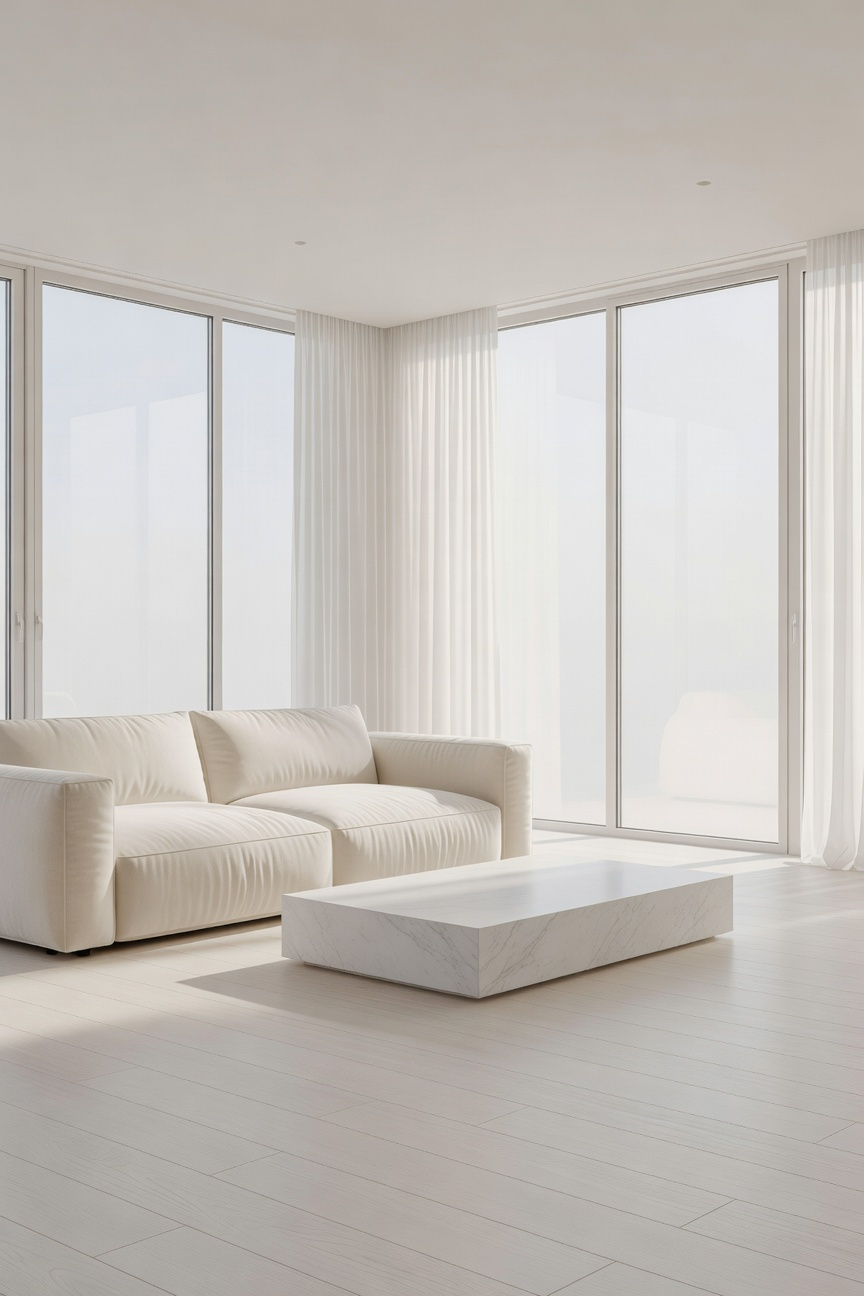
This concept naturally echoes the Japanese philosophy of *Ma*, or the meaningful pause. Here, white space is never just an empty background. Instead, deliberate emptiness becomes the actual substance of the room. It frames the absence of objects as a healing choice.
However, I always warn against aggressive, clinical whites. Nobody wants to live in a hospital ward. Instead, build a palette around soothing shades of bone, linen, and parchment. These nuanced tones highlight raw, organic textures beautifully. Indeed, because pale walls reflect so much light, they soften harsh depth cues and shadows. The resulting physical space feels liberating and limitless.
This perceived emptiness is auditory, too. For instance, thick white textiles softly absorb sound. They also provide incredible tactility. Next, try introducing a lime-washed floor for a bit of biophilic texture. Finally, warm evening lighting will transform these quiet walls into a restorative cocoon.
1. The Canvas of Clarity: Embracing White as a Tool for Mental Decompression
White is far more than a simple color choice. Actually, it is a powerful neurological strategy. An all-white palette acts as a filter for your brain. It immediately reduces the visual noise competing for your neural resources. In fact, Princeton researchers directly link visual clutter to increased cortisol levels. Therefore, white surfaces provide much-needed visual silence. This emptiness gives our thoughts room to expand peacefully.
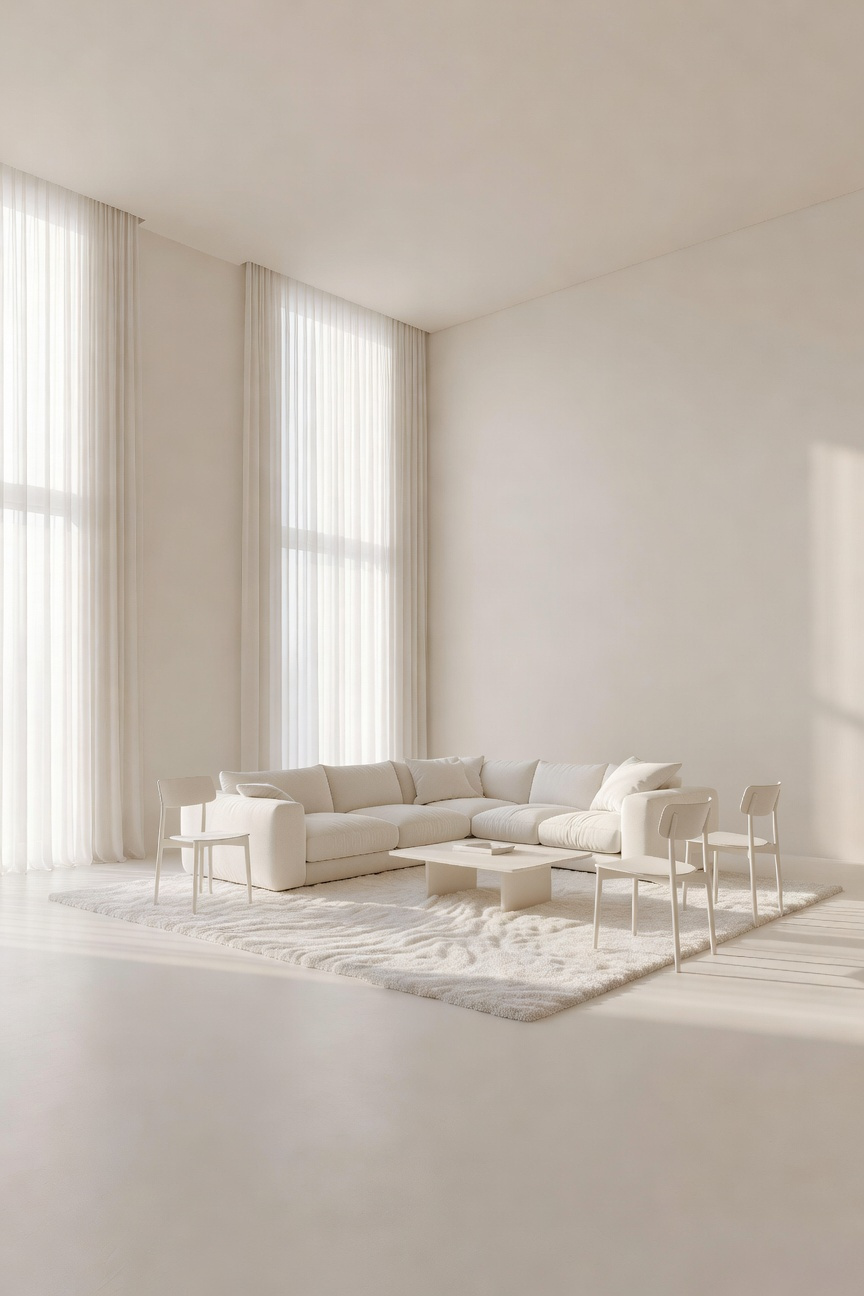
The real technical magic of white lies in its light reflection. Pure white has a remarkably high Light Reflectance Value. Thus, it maximizes natural daylight to help regulate our circadian rhythms. Bouncing light off walls visually dissolves the room’s physical boundaries. As a result, this atmospheric expansion deeply soothes the subconscious. Designer Syrie Maugham proved this decades ago by creating luminous, all-white sanctuaries.
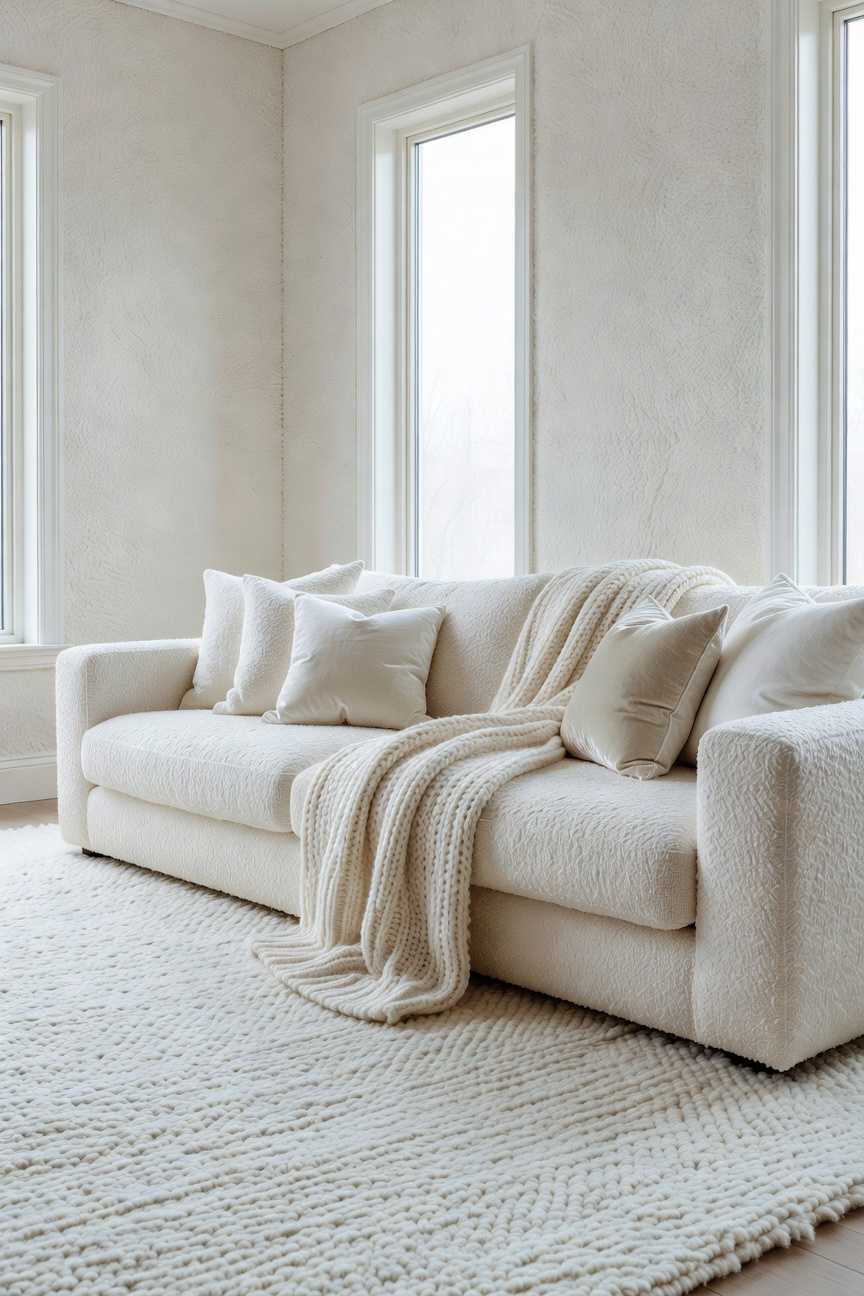
However, people often worry that white spaces feel overly clinical. To prevent this sterility, we must introduce thoughtful tactile counterpoints. Layering rich textures provides essential sensory grounding for your body. For instance, try pairing a matte wall with a shaggy wool rug. Next, add a soft linen sofa and smooth, bleached wood elements. Without color distractions, our brains become highly sensitive to touch. Indeed, this physical interaction anchors us firmly in the present moment. Selecting warm whites with subtle yellow undertones ensures total mental decompression.
2. Chromatic Fasting: How a Monochromatic Palette Detoxifies Your Visual Environment
Every color carries a distinct wavelength that your brain must constantly decode. High-contrast environments often create exhausting visual noise. Chromatic fasting intentionally reduces this sensory volume to offer relief. Specifically, an all-white living room acts as a soothing neurological balm. By eliminating harsh chromatic separations, you effectively lower your cognitive load. In fact, this shift helps reduce the cortisol spikes caused by digital screens. Your mind naturally embraces calm inward reflection instead of outward processing.
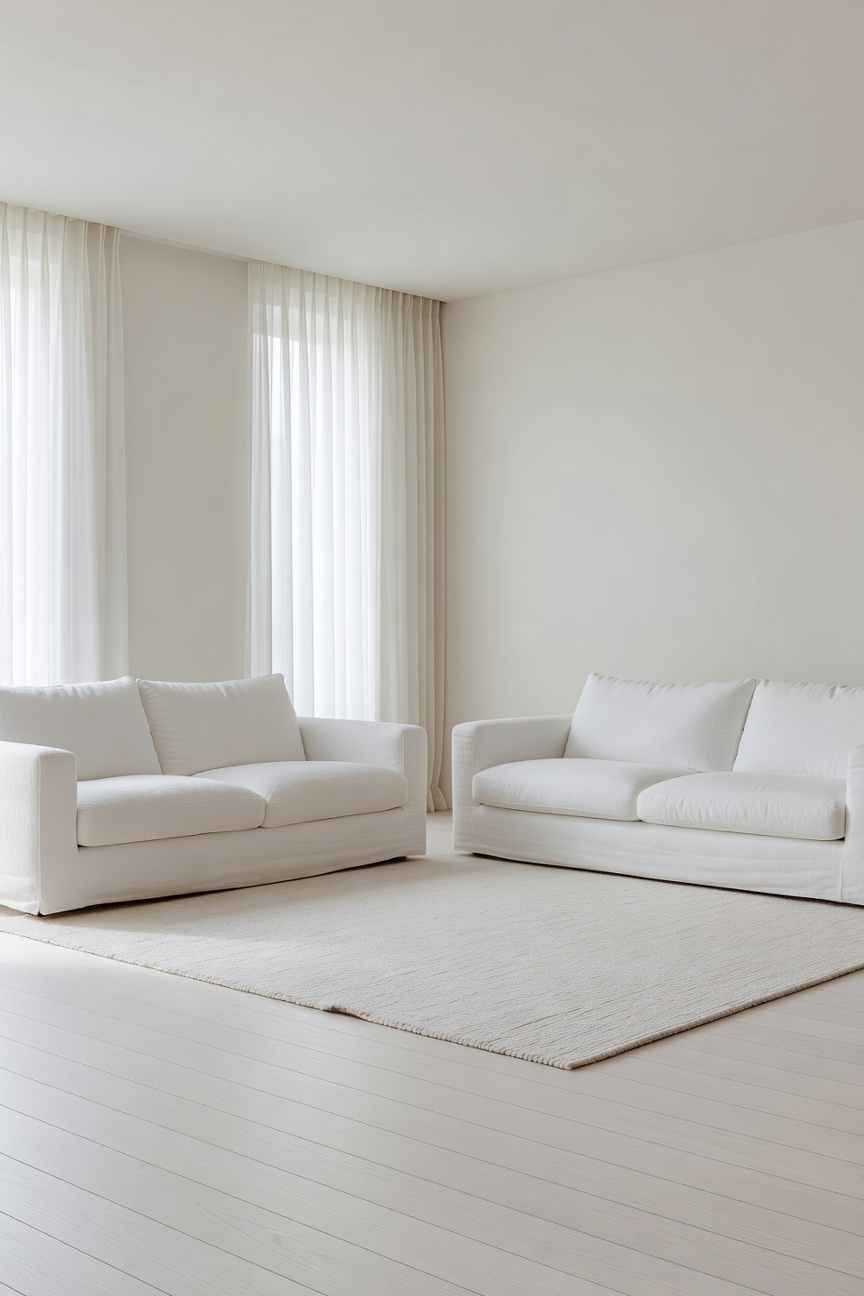
However, a successful visual detox requires selecting the right shades. Stark optical whites with blue undertones often cause visual fatigue. Instead, experts recommend warm chromatic whites like soft alabaster or ivory. Using a cascade of layered tones actively prevents mental understimulation. Removing bright hues allows your other senses to gently heighten.
As a result, tactile elements become your primary source of visual interest. For example, pairing a soft linen sofa with a smooth marble table provides lovely rhythm. White walls also act as a living canvas for natural sunlight. This shifting shadow play deepens your connection to daily circadian rhythms. Ultimately, a monochromatic room remains emotionally neutral and beautifully grounding. It provides a quiet zero-point for your well-being.
3. Warm vs. Cool Alabaster: Selecting the Right Frequency for Your Sanctuary’s Foundation
Historically, the term alabaster honored the protective goddess Bast. Ancient builders used this translucent stone to filter harsh glare. Today, selecting the right paint frequency transforms a room into a psychological sanctuary. Designers treat alabaster as a spectrum of light-reflecting vibrations.
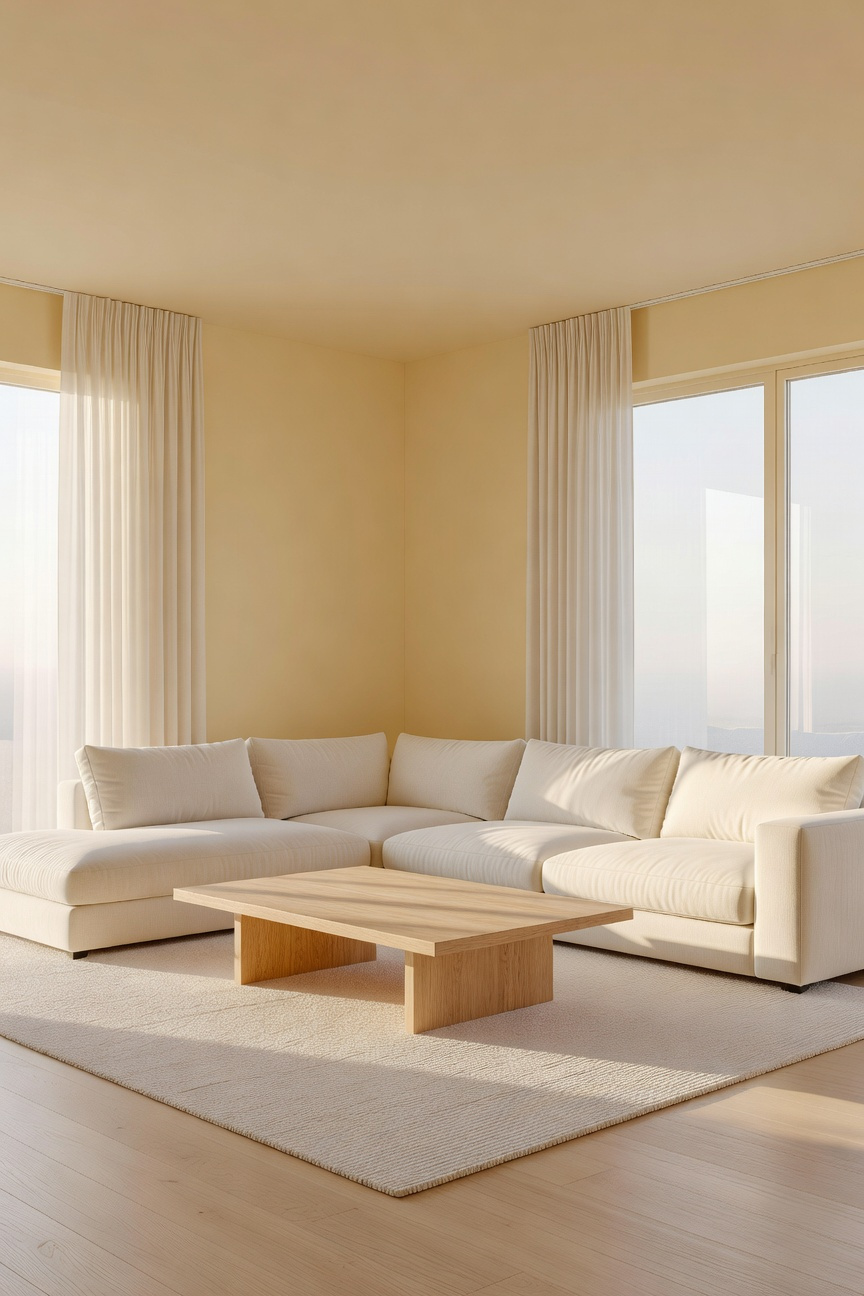
For example, Sherwin-Williams Alabaster is a great warm benchmark. It has a high light reflectance value of eighty-two. Its subtle yellow undertones mimic the soothing frequency of candlelight. Biologically, this warm frequency stimulates melatonin production to encourage deep relaxation. Therefore, it perfectly counteracts the flat, chilly light in North-facing rooms. Pairing this warm base with white oak and heavy linens organically grounds the space.
Conversely, cooler alternatives like Benjamin Moore Alabaster vibrate at a crisper frequency. This variation leans slightly toward pink and gray. Thus, it is the superior choice for sun-drenched, South-facing spaces. Psychologically, cool alabaster enhances visual acuity and mental clarity. It prevents the golden afternoon sun from feeling overly yellow. To create purposeful depth, cool foundations require high-contrast elements. Indeed, holistic designers often introduce matte black steel or charcoal wool here. Your chosen frequency dictates whether your sanctuary promotes restful hibernation or creative thought.
4. The Biophilic Blueprint: Using White to Frame and Elevate Natural Views
White walls act as a deliberate gallery frame. They channel our focus away from the interior. Instead, they draw our eyes toward the vibrant landscape outside. This creates a fascinating visual phenomenon called simultaneous contrast. Naturally, when bright white meets natural colors, both instantly intensify. The green foliage outdoors suddenly appears far more vivid. Therefore, the outdoor view becomes a curated, high-definition exhibit.
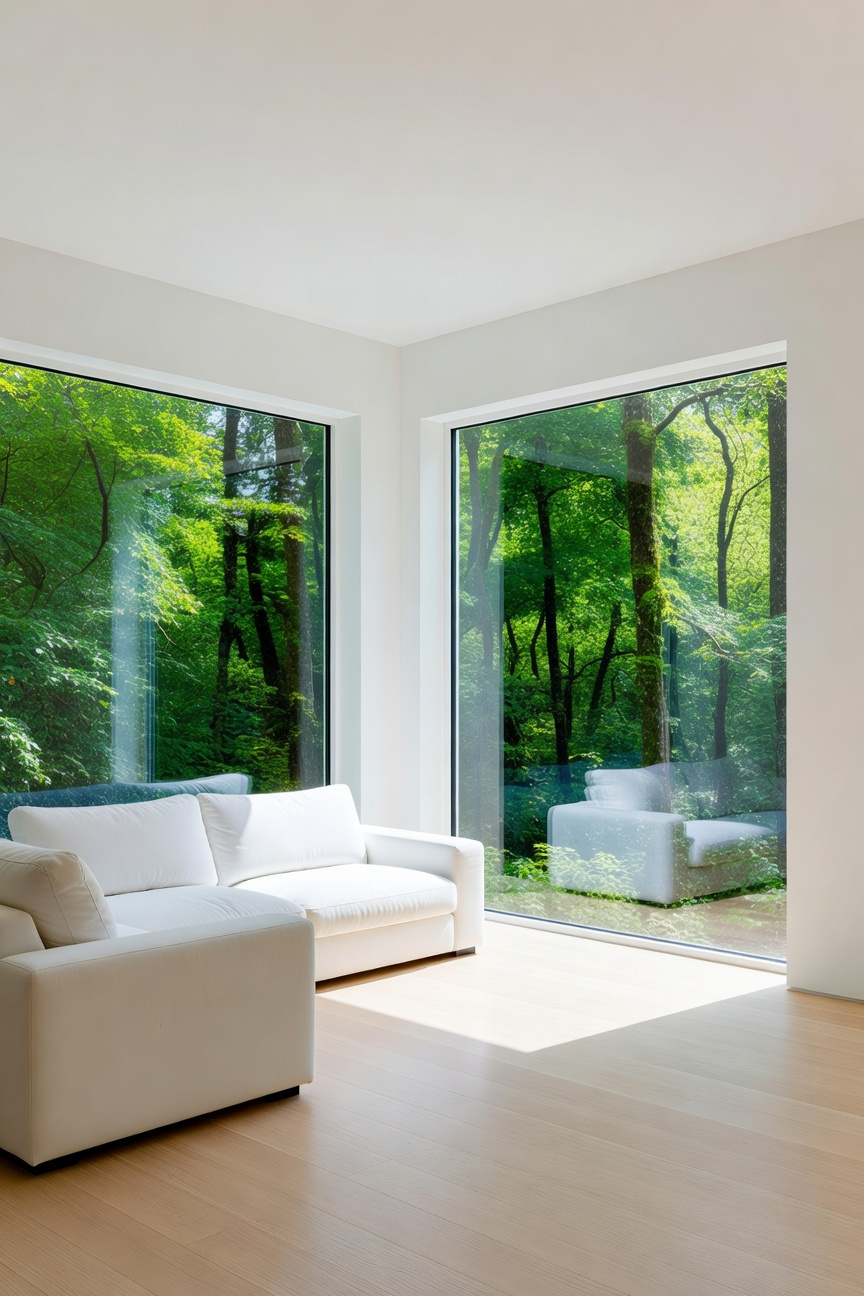
This spatial strategy also maximizes vital daylight penetration. In fact, white rooms carry natural light deeply indoors. In darker climates, this helps combat seasonal affective disorder. The room’s atmosphere shifts organically with the weather. Psychologically, this approach beautifully satisfies the prospect-refuge theory. The clean white interior provides a calming, safe refuge. Meanwhile, thin-profile white window frames practically vanish under bright sunlight. Thus, they dissolve the visual boundary between indoors and outdoors.
Importantly, your window becomes the primary source of dynamic color. For instance, spring washes the room in soft neon greens. Later, autumn light turns the space a golden amber. This gentle, shifting light promotes essential attention restoration. Our cognitive fatigue fades away as we watch moving leaves. Finally, natural textures like linen and raw wood catch passing shadows. Together, they ensure the pristine space remains beautifully warm and grounded.
Phase II: Material Exploration — Tactility in the Absence of Color
The all-white room actually began as a bold design rebellion. Syrie Maugham used pickled wood and white velvet back in 1927. She proved that luxury lives in texture rather than pigment. Today, this tactile approach supports our mental well-being on a much deeper level. Biologically, physical touch and texture directly activate the limbic system. Our brains process material surfaces as a profound emotional anchor. Indeed, varying textures naturally trigger essential sensory grounding. This prevents visual overstimulation and creates a safe, nurturing sanctuary.
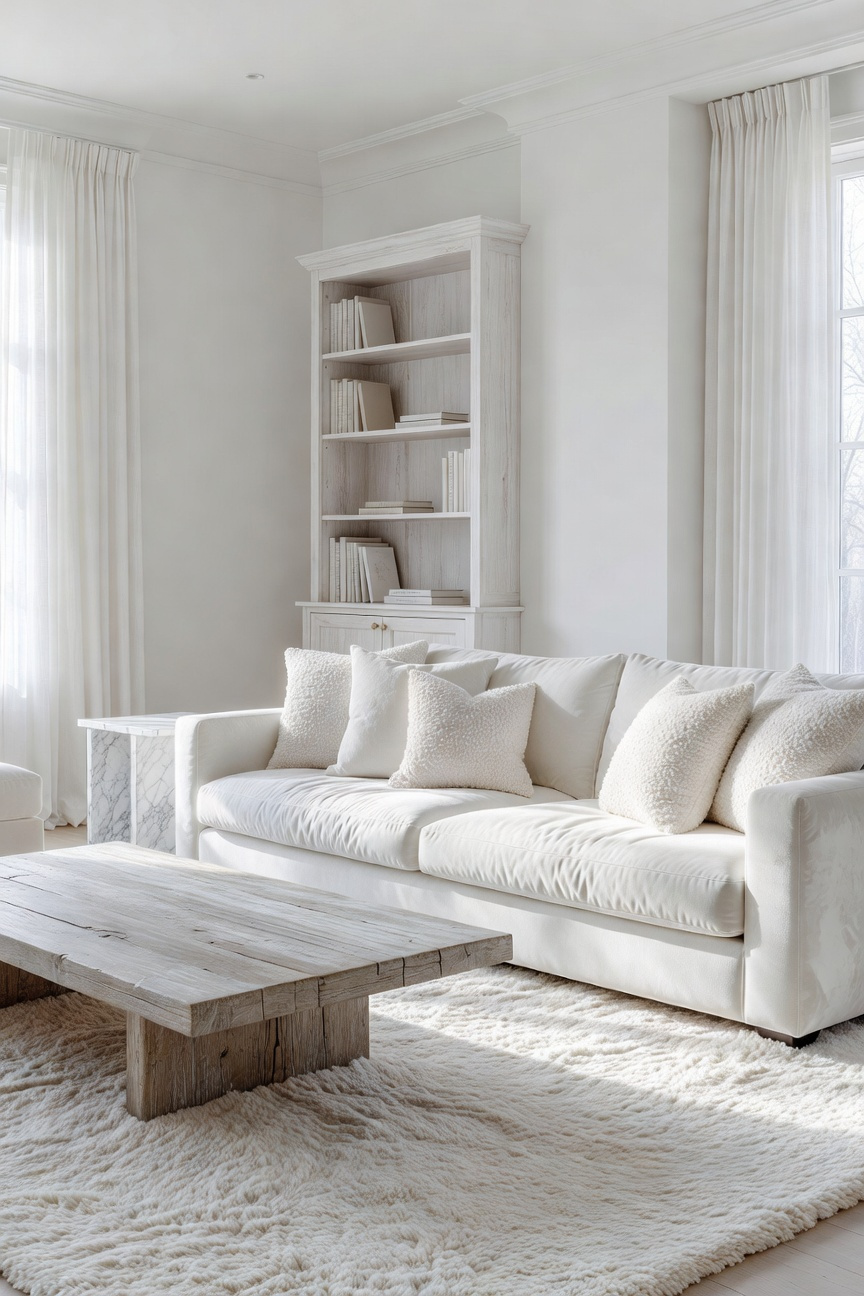
Tactility also serves as invisible acoustic infrastructure. Visually quiet rooms can ironically feel loud if they rely on hard surfaces. Therefore, we prioritize porous, biophilic materials instead. For example, chunky boucle weaves and unglazed lime plaster safely absorb echoes. They lower the auditory temperature to cultivate deep peace.
Light acts as the primary sculpting medium here. In pure white spaces, we rely entirely on illumination to reveal depth. Specifically, grazing a textured wall with warm 2700K light catches beautiful micro-shadows. Natural fibers appear creamy and uniquely inviting. Conversely, cool light renders these organic materials visually flat and clinical.
Finally, material exploration demands a strict contrast. For every smooth surface, a rough counterpart must exist. For instance, you can ground crisp linen with a hand-knotted wool rug. This syntax creates a soothing, subconscious material conversation. Balancing multiple distinct textures ensures the room feels perfectly settled.
5. Layering Organic Linens: The Breathable Furniture Paradigm for Deep Relaxation
Layering organic linens transcends basic aesthetics. It introduces a breathable paradigm for deep relaxation. Unlike dense cotton, flax fibers possess a hollow core. This unique structure absorbs significant moisture before it ever feels damp. These highly conductive fibers facilitate a constant, passive air exchange. Therefore, resting on linen can actually lower your skin temperature. This rapid heat dissipation prevents the micro-thermal spikes that trigger physical restlessness.
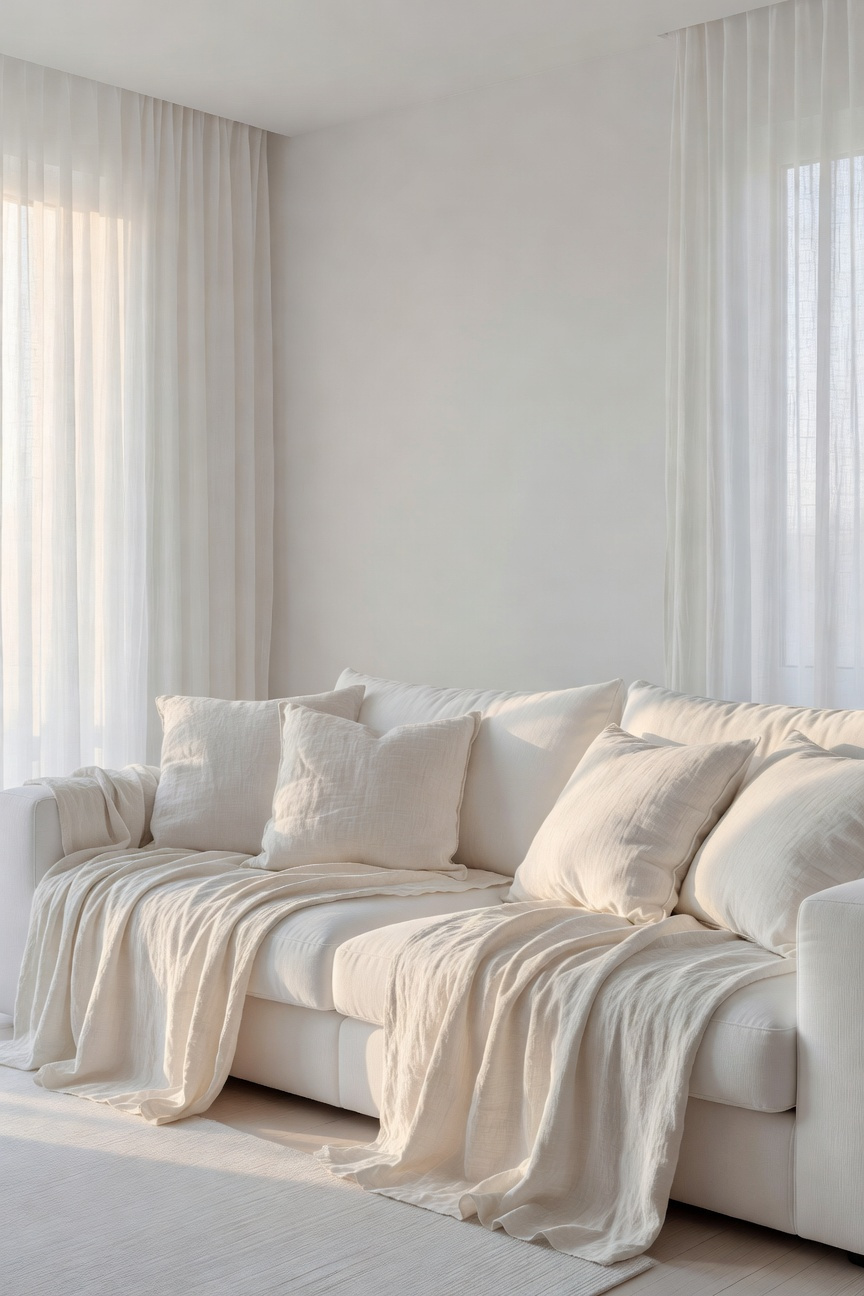
However, a single pure white tone risks creating a hospital-grade sterility. That actually triggers stress. Instead, holistic designers layer chromatic depth using chalk, bone, and oyster hues. Chalk provides a crisp, reflective base. Meanwhile, buttery bone adds necessary visual weight to the furniture. Oyster beautifully mimics the cool natural shadows nestled within the linen folds. The irregular slubs in organic fabric diffuse light rather than reflecting it harshly. This tactile shadow play signals to your brain that the environment is entirely safe.
This setup integrates perfectly with porous substrates like cane and rattan. For instance, a white-washed rattan chair paired with loose-weave linen creates great airflow. Heavyweight stonewashed slipcovers eliminate the subconscious fear of damaging pristine furniture. Volcanic rocks break down tough fibers to create a supple, velvet-like drape. This beautiful imperfection gives you psychological permission to fully let go. Consequently, this comfort-first architecture lowers cortisol by supporting the parasympathetic nervous system.
Acoustically, these thick textiles act as a soft baffle against sharp room frequencies. They contribute to a hushed, library-like atmosphere even within open-plan spaces. Always verify GOTS certification to ensure no formaldehyde resins inhibit the natural breathability. Indeed, these chemical-free layers continue the ancient Egyptian legacy of wrapping spaces in woven moonlight.
6. Bouclé, Cashmere, and Raw Silk: Introducing Healing Textures to prevent Sterility
An all-white living room can easily become a clinical vacuum. The space might feel emotionally inaccessible, stark, and sterile. To fix this, we introduce tactile intelligence through specific fabrics. Bouclé fabric acts as a brilliant, texture-rich light trap. Its signature nubby and looped surface naturally creates complex micro-shadows. Therefore, this subtle effect significantly lowers the room’s visual temperature. It cleverly introduces matte warmth without relying on added color.
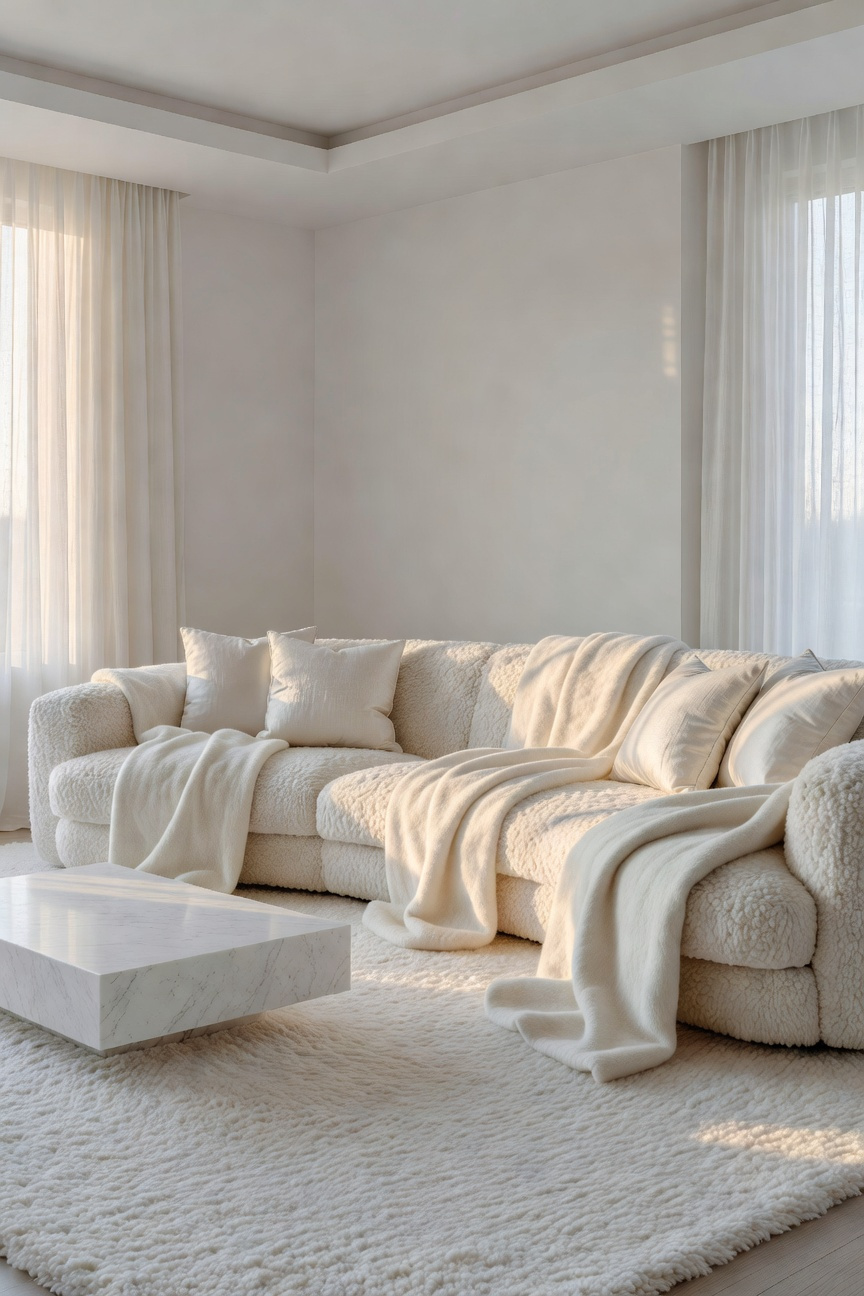
Cashmere provides essential tactile grounding for your nervous system. Touching soft, natural fibers triggers comforting oxytocin release while lowering your cortisol. This physical interaction rapidly reduces daily stress levels. Breathable cashmere serves as a comforting buffer against hard, unforgiving surfaces like glass or marble.
Next, raw silk introduces vital biophilic authenticity into the environment. Unlike highly processed alternatives, it retains its natural silk proteins. Thus, its distinctively slubby texture feels incredibly honest and pleasantly imperfect. This organic material also adds a subtle pearly sheen. The unique light refraction easily breaks the flat sterility of standard white walls.
True healing environments emerge from the intentional conversation between these materials. Together, they form a perfect haptic rhythm that nourishes the senses. Bouclé provides a rough, cozy foundation. Cashmere adds smooth, breathable comfort. Finally, raw silk delivers rustic refinement to complete the space. These dense fibers also provide crucial acoustic softening. They absorb high-frequency sounds to eliminate harsh echoes entirely. Therefore, the once-sterile room transforms into a hushed, nurturing sanctuary.
7. The Matte Plaster Effect: Softening Walls for Acoustic Calm and Gentle Light Diffusion
Standard flat paint often creates a harsh glare in white rooms. Conversely, matte plaster features tiny microscopic peaks. These mineral aggregates scatter light seamlessly in every direction. Therefore, the walls appear to emit a soft, natural glow. This diffuse reflection eliminates stark, stressful shadows. It dramatically reduces visual fatigue.
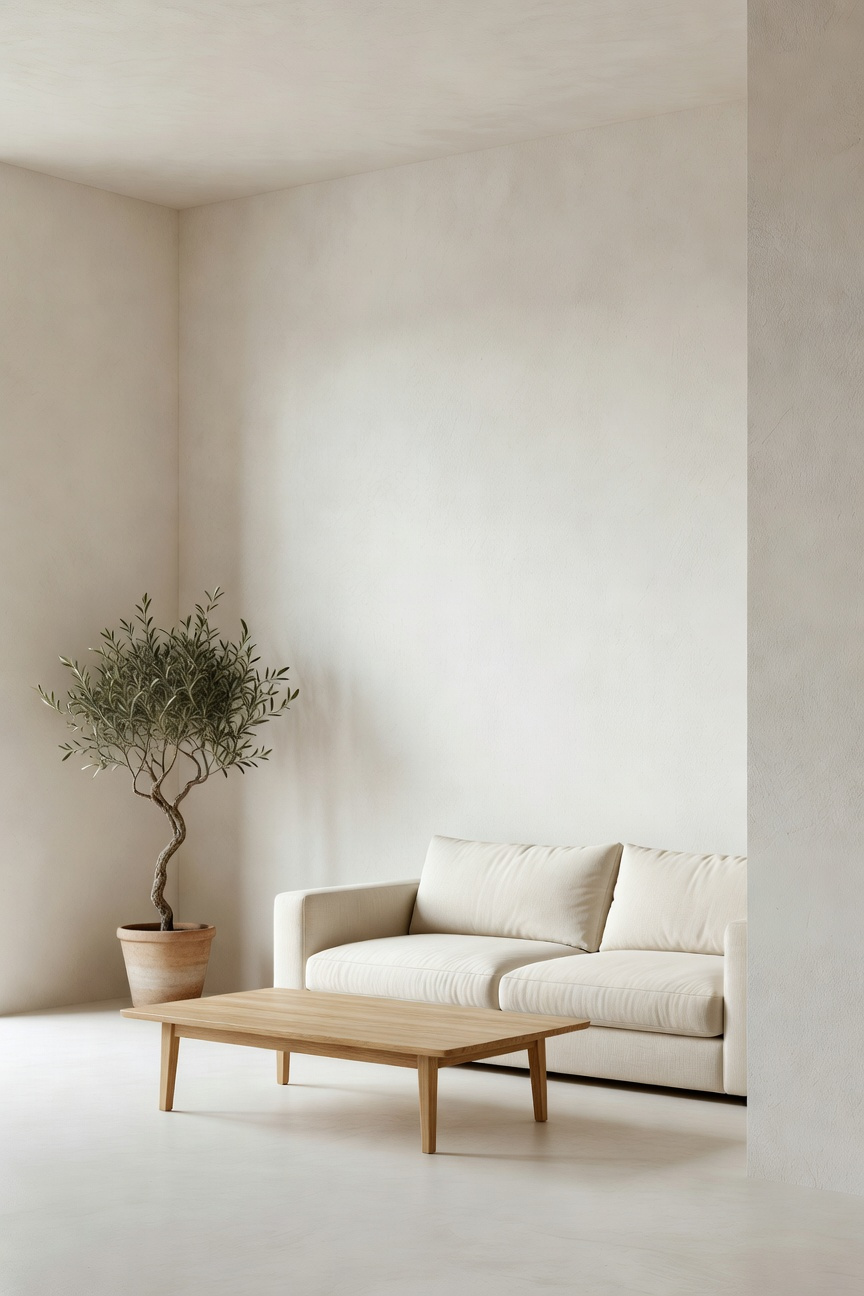
Modern drywall typically bounces noise rapidly around a room. However, lime and clay-based plasters act as acoustic sponges. Their microporous structure physically traps bouncing sound waves. Consequently, these walls can absorb most ambient background noise. This invisible acoustic rug grounds the entire living space. The resulting silence feels intentionally heavy and calming.
Beyond sensory peace, matte plaster physically improves your environment. This breathable material naturally regulates indoor humidity levels. In fact, its alkaline makeup makes it inherently antimicrobial. It prevents mold while keeping surfaces completely pristine. Additionally, the matte finish easily stops stray color casts. Vibrant furniture will not tint these pure white walls. Overall, this tactile, suede-like material deeply nurtures holistic well-being.
8. Grounding Elements: Anchoring the Ethereal with Bleached Woods and Raw Travertine
An ethereal living room with high light reflectance can sometimes feel unmoored. Therefore, introducing tactile anchors is essential for psychological comfort. Raw travertine and bleached woods provide the ultimate grounding effect. They share a light color palette while offering deep, geological weight.
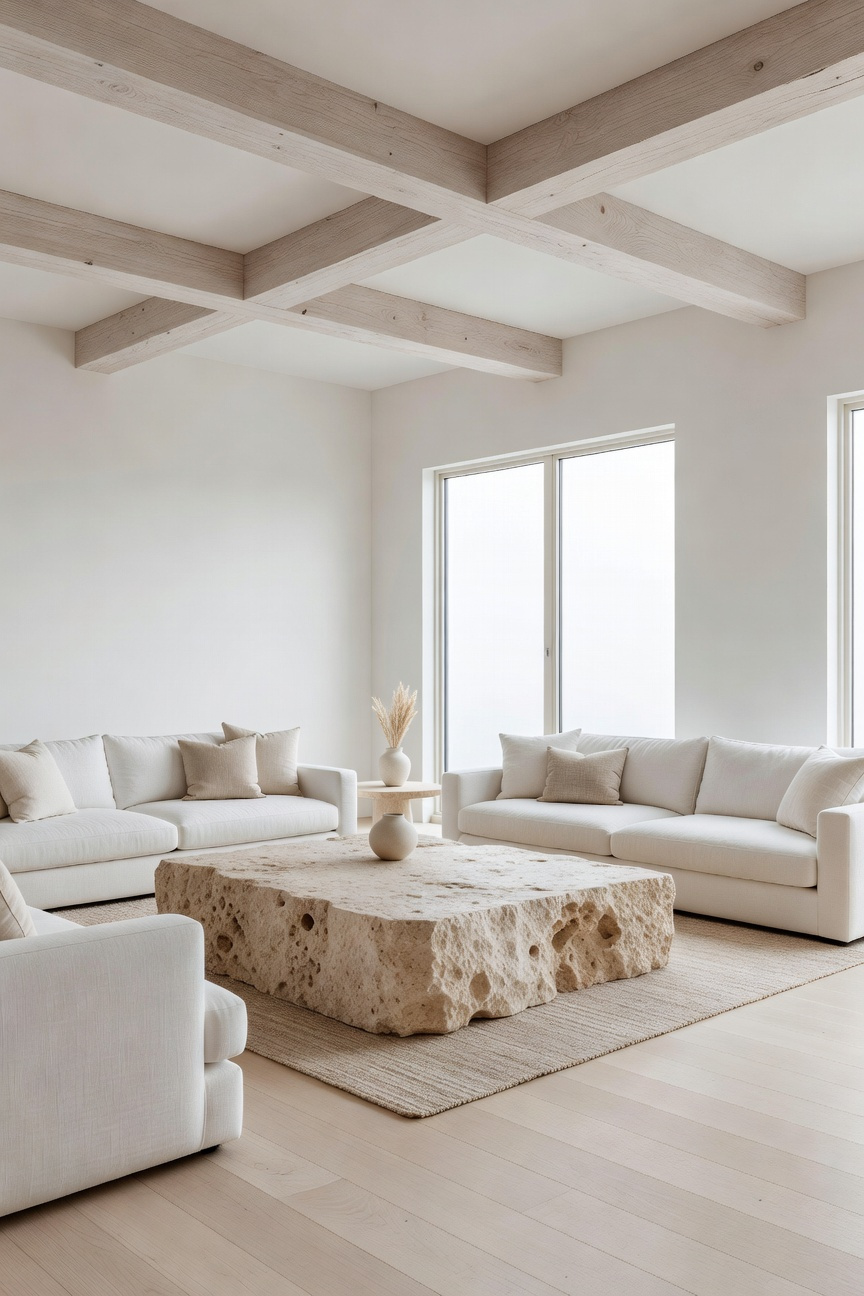
Raw travertine diffuses harsh light instead of reflecting it. In fact, its signature honeycomb structure scatters light rays beautifully. This creates a soft-focus glow that warms the surrounding white decor. Maintaining an unfilled finish preserves the stone’s primal, earthy gravitas.
Similarly, bleached timber anchors a room without adding visual clutter. A bleaching process removes heavy red and yellow tannins. As a result, the wood achieves a chalky, bone-white finish. Its natural grain catches the light to create organic shadow-play.
These materials root us deeply in biophilic design principles. In a boundless white room, the brain often experiences cognitive load. However, the weight of solid wood provides a reliable visual landing strip. This subtle stability lowers cortisol and encourages mindful reflection. Indeed, touching a pitted stone surface nurtures genuine mental well-being. These raw elements perfectly anchor an ethereal sanctuary.
9. Woven Jute and Hemp: Introducing Earth-Centric Fibers to a Pristine Space
All-white spaces often feel visually flat and sterile. Introducing jute and hemp provides necessary visual weight. Belgian minimalists actually pioneered this specific textural juxtaposition. Pairing rough fibers with pristine surfaces creates a grounding tension. This approach embraces Wabi-Sabi by finding beauty in natural imperfection.
These coarse materials introduce vital tactile friction. Interestingly, new jute releases a sweet, hay-like earth scent. This subtle natural aromatherapy deeply grounds the human mind. Additionally, these fibers serve as powerfully sustainable carbon sinks. In fact, jute absorbs immense carbon dioxide without needing harmful pesticides.
Practically, a large hemp rug anchors floating white furniture perfectly. It defines seating areas without adding any distracting colors. These earth-centric fibers develop a glowing golden patina over time. Admittedly, some natural fine shedding might occur in a pristine room. Yet, this organic trait just confirms a truly authentic, non-plasticized sanctuary.
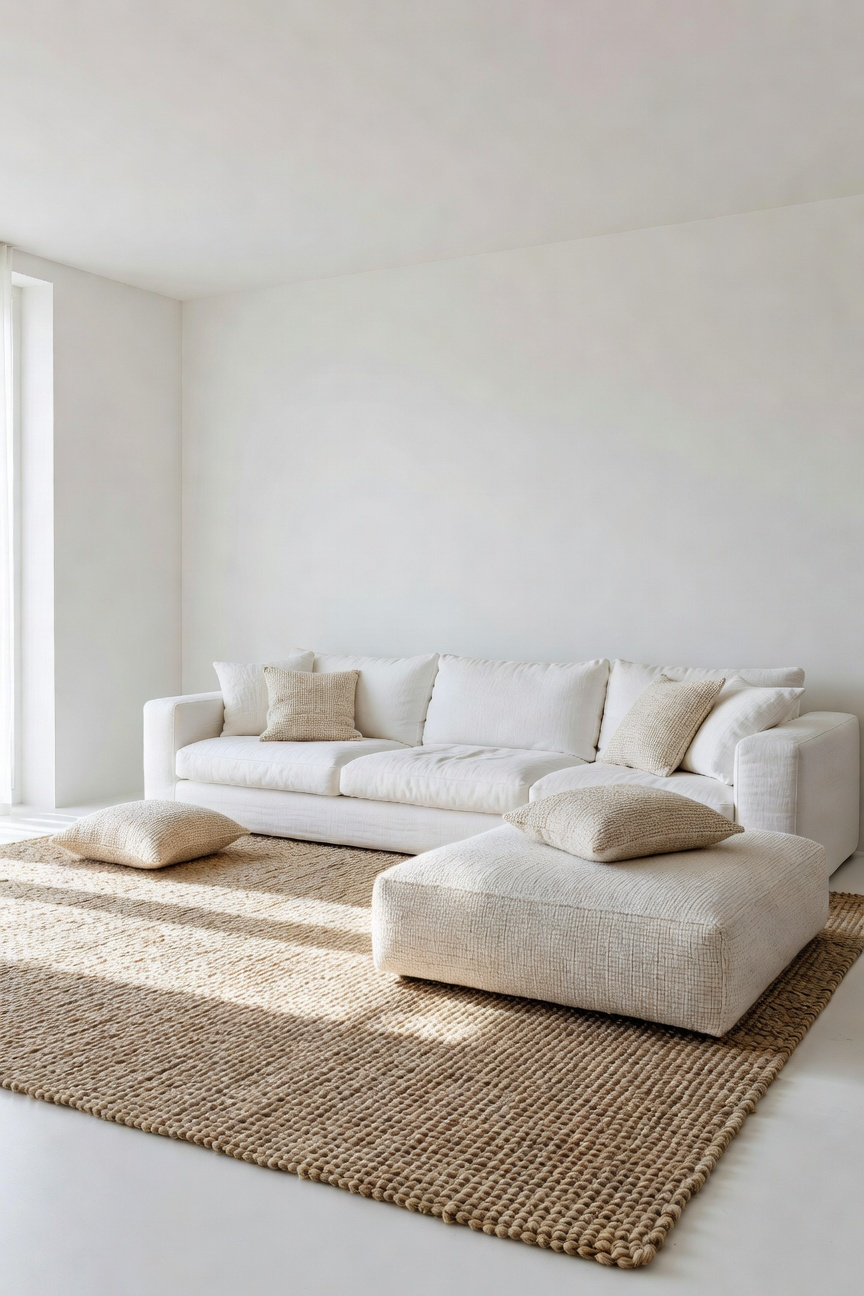
Phase III: Spatial Application — Sculpting with Light and Flow
In this phase, white transcends mere color. It becomes a high-reflectance medium. We use it to sculpt living, three-dimensional spaces. By following the fundamental principles of modern living room decoration, you can achieve a timeless aesthetic. The result feels both expansive and intimate. Therefore, understanding the physics of light is essential here. Ultra-matte white walls provide diffuse, ambient reflection. These surfaces seem to emit a gentle glow. Alternatively, wall grazing illuminates natural textures like linen. This technique creates physical shadow without introducing harsh colors.
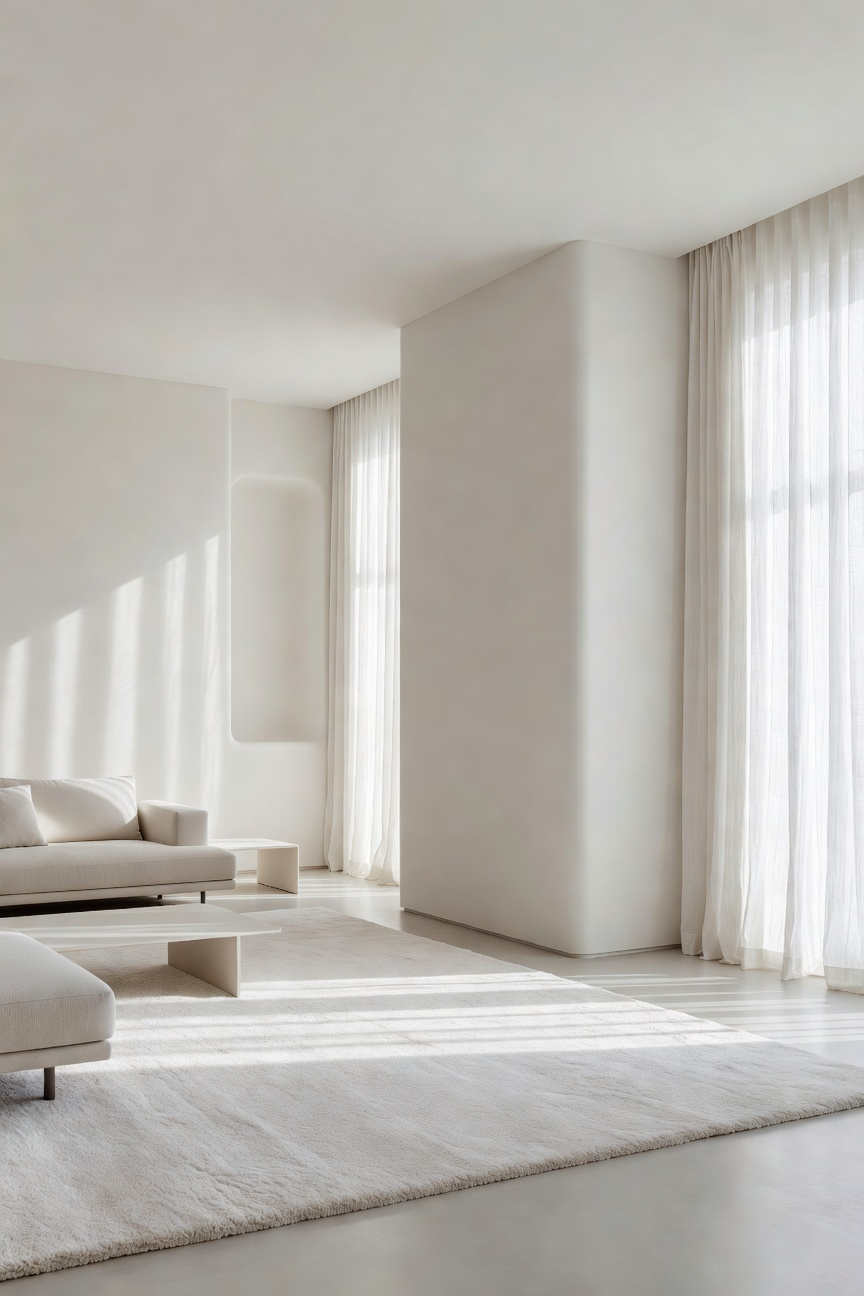
A white room also acts as a temporal canvas. Architect Richard Meier clearly understood this solid and void dialogue. Naturally, changing sunlight physically paints the room daily. The shifting golden hour warms the space beautifully. This biophilic connection to nature greatly enhances mental well-being. The luminous environment never feels sterile or stagnant.
However, endless brightness can sometimes cause visual disorientation. Curating visual flow requires strategic sightline anchors. Leading designers recommend a thoughtful 90/10 spatial rule. Ten percent of the room should feature deep, high-tactility material anchors. A dark oak grain provides a grounding focal point. These physical elements gently guide energy through the space.
Advanced spatial design must also support internal circadian rhythms. White walls naturally reflect highly energizing blue light. Unfortunately, this brightness can keep your cortisol levels elevated late into the evening. Instead, try integrating tunable LED smart lighting technology. The room can then visually shift into a warm sanctuary at night. Finally, recessed baseboards create a feeling of absolute weightlessness. The rigid room becomes a restorative, floating atmospheric experience.
10. Circadian Illumination: Mapping the Journey of Natural Light Across White Surfaces
White surfaces act as a biological amplifier for our internal clocks. They reflect short-wavelength light incredibly efficiently. Morning sunlight in a white space suppresses melatonin and triggers cortisol. This wakes up your brain completely naturally. These bright surfaces provide exceptional circadian stimulation. In fact, white walls can increase this biological benefit by up to 255 percent.
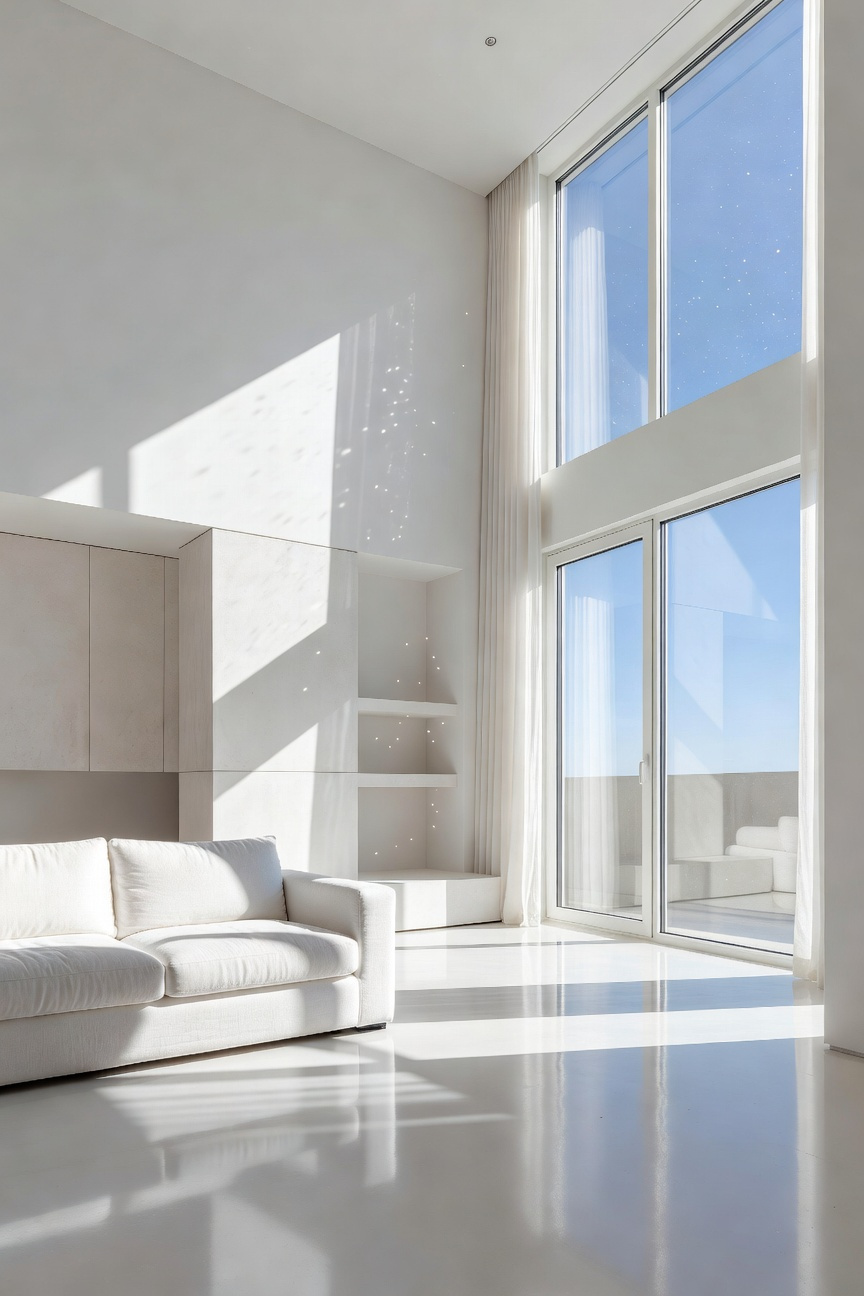
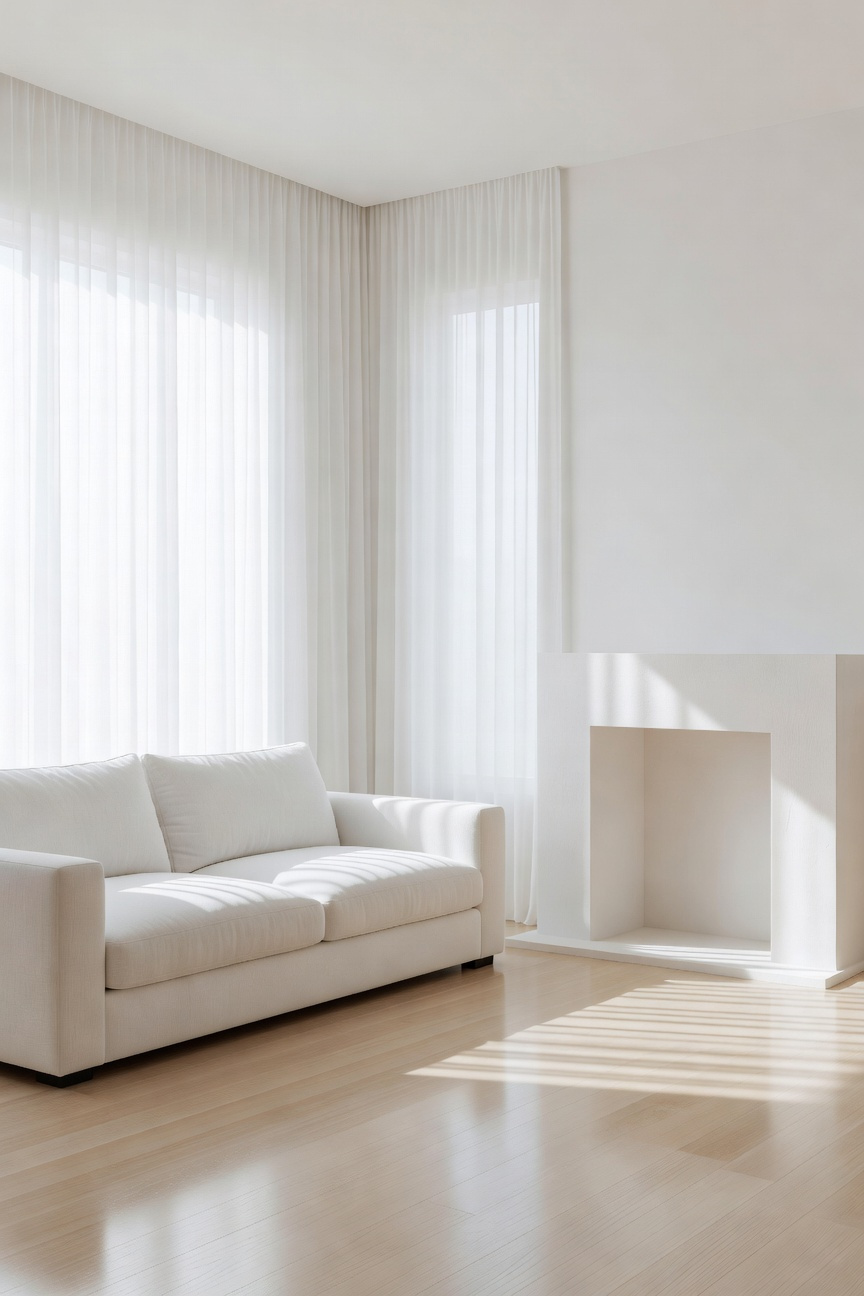
However, mapping the journey of light across a room requires careful material selection. Glossy finishes direct bright light deeply into a space. Unfortunately, this can cause harsh hotspots and visual overstimulation. Conversely, matte white walls offer diffuse reflection. They scatter light to create a soft, violet-blue wash at sunrise. Later, this shifts beautifully to a warm, orange-pink hue during the golden hour. Textural variety also prevents sensory deprivation in all-white rooms. A crisp white marble fireplace contrasts perfectly with a soft wool rug. Together, these materials map the light dynamically without static intensity.
Yet, we must also consider the risks of circadian over-exposure. Highly reflective walls can bounce cool LED light late at night. This tricks your brain into thinking it is still midday. Incorporating warm-to-dim technology neutralizes this high reflectivity after sunset. Finally, placing primary seating near white-surrounded windows offers passive light therapy during winter. This intentional design strategy nurtures both physical health and mental clarity.
11. Shadow Play: Utilizing Architectural Relief to Create Depth Without Pigment
Pure white paint reflects roughly 82 percent of ambient light. Flat white living rooms often feel clinically harsh and visually ungrounded. However, architectural relief breaks this exhausting uniformity perfectly. By physically receding or extruding surfaces, we intentionally capture varying light angles. Designers can sculpt soothing continuums of grays and blues from a single white hue. Indeed, experts frequently view white merely as a reflector of its surroundings.
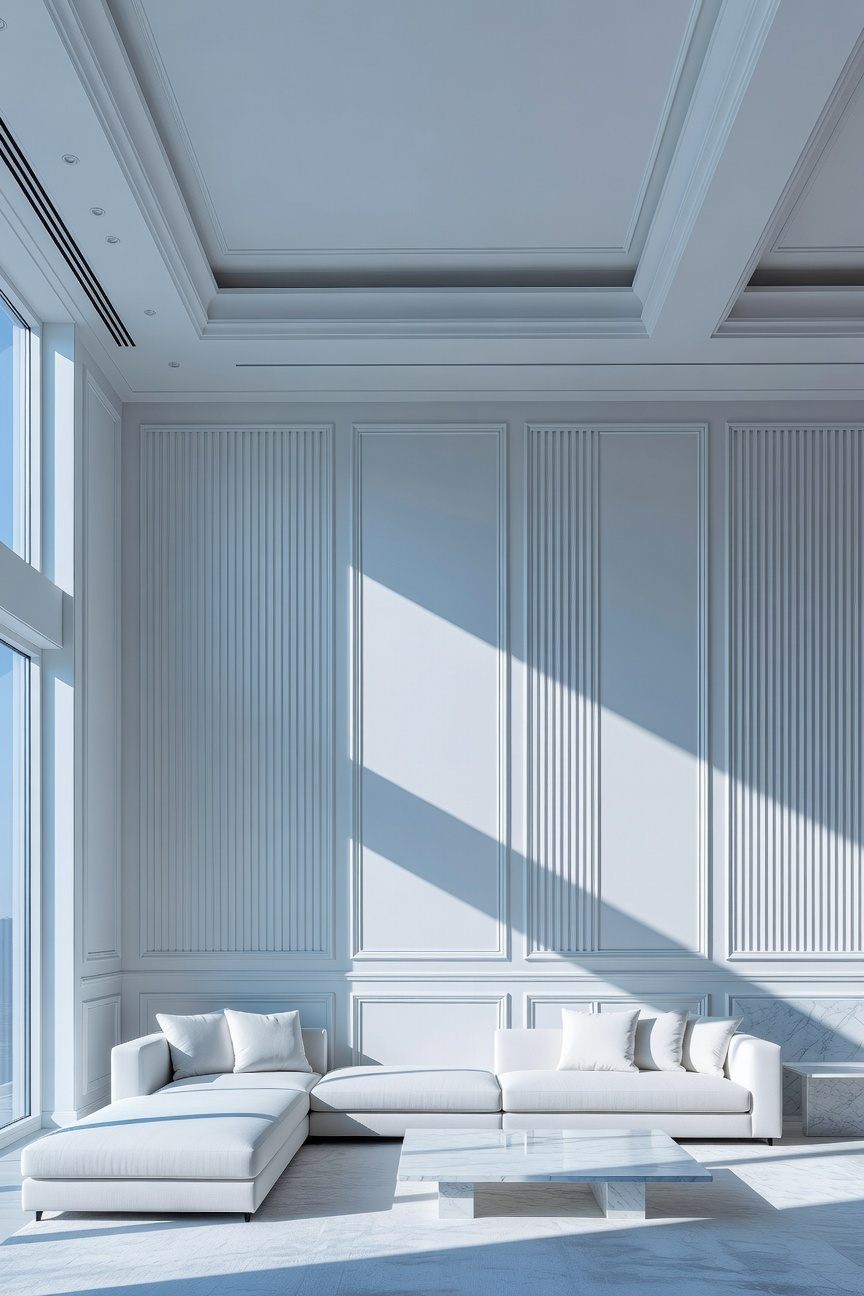
The modern shadow gap exemplifies this mastery of subtle depth. Instead of heavy traditional baseboards, holistic designs leave a deliberate 10mm wall void. This tiny line of absolute darkness creates a beautifully calming, floating wall effect. The absence of rigid physical borders relaxes the mind perfectly. It channels the Japanese concept of *Ma*, acting as an intentional pause. This literal empty space allows the entire room to visually breathe.
Naturally, how illumination strikes these textures dictates the room’s daily mood. For instance, light grazing places hidden LEDs directly along 3D panels. This reveals every micro-peak to cast dramatic, grounding shadows. Conversely, wall washing floods the architectural relief from a much greater distance. This gentle approach softens shadows into delicate visual whispers.
Therefore, mindful material selection is vital for achieving pigment-free depth. Chalky matte finishes absorb ambient light into deep, incredibly quiet shadows. Meanwhile, glossy Venetian plaster reflects light warmly from its complex internal stone layers. These thoughtful material contrasts forge a balanced, nurturing sanctuary without using a single drop of pigment.
12. Feng Shui Fluidity: Arranging White Furniture to Optimize the Flow of Restorative Chi
In Feng Shui philosophy, white embodies the Metal element. It represents clarity, precision, and vital life force. However, white furniture also acts as a profound grounding force. Traditionally, it connects deeply to the protective White Tiger. Therefore, it brings essential Yin energy directly into your living space. Try positioning your major white pieces on the right side of the room. Imagine looking outward from your main entrance to find this alignment. This mimics the resting tiger’s stable and secure stance. This heavy energetic anchor quickly settles the entire room. It allows your nervous system to shift into a restorative state.
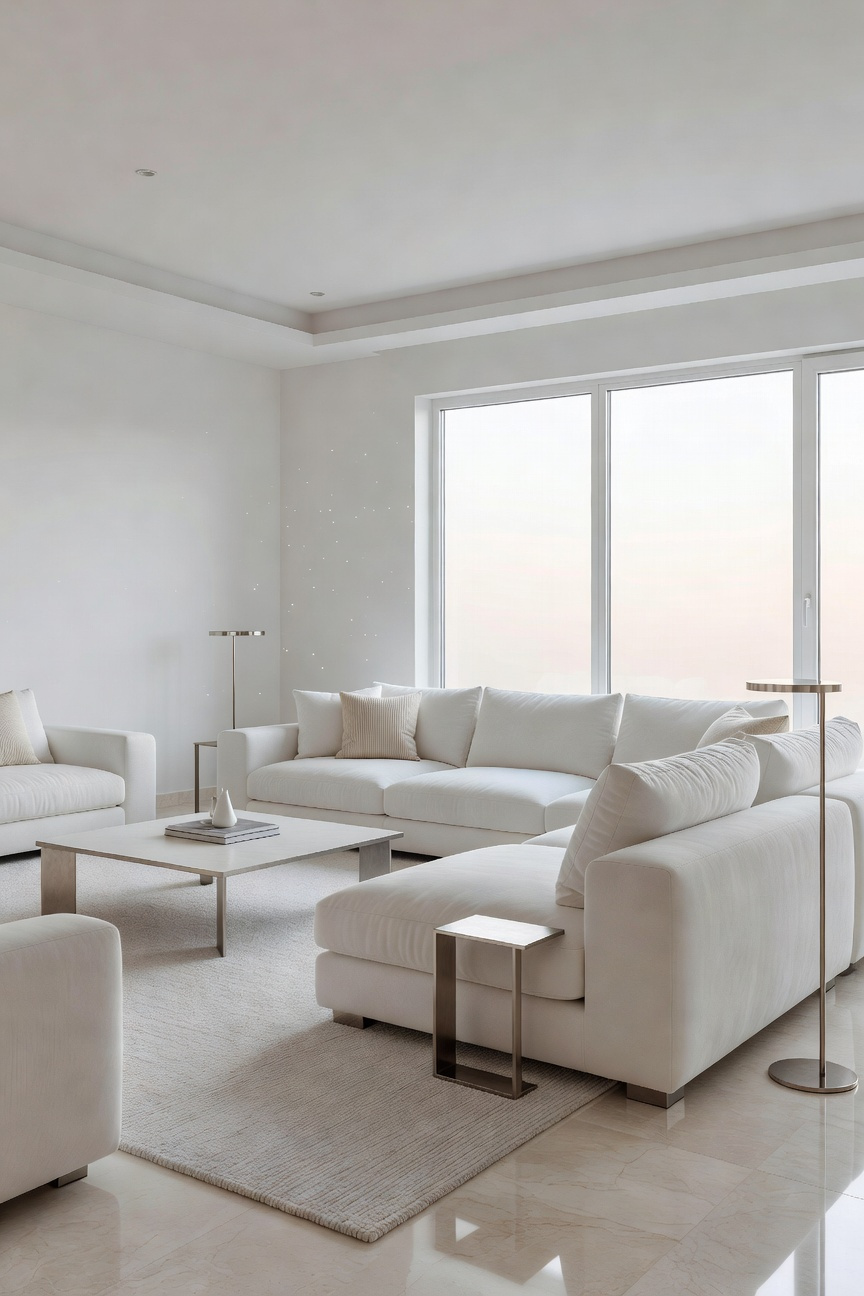
Restorative Chi requires constant, gentle circulation to truly thrive. Visually, bright white upholstery expands your living room beautifully. Physically, your exact furniture arrangement must support this airy feeling. Practitioners highly recommend utilizing the simple two-inch rule. Never push a white sofa perfectly flush against your walls. Instead, leave a small gap for energy to flow freely. Choose white pieces that feature beautifully exposed, visible legs. Fresh energy can then move smoothly underneath the furniture frame. This prevents daily stress from stagnating near your floorboards.
Warm earth elements must also support metal to prevent coldness. Softly curved white furniture effortlessly diffuses harsh, bright reflective light. Sharp corners create aggressive energy known as poison arrows. Therefore, select low-slung, rounded profiles to foster a deeply calming environment. This diffused visual glow actively lowers your daily cortisol levels.
Finally, always place your seating clearly within the commanding position. Anchor the main white sofa firmly against a solid wall. However, avoid placing it directly opposite bright, south-facing windows. Intense natural light creates irritating, glare-induced Sha Chi. Instead, angle pieces slightly to catch a much softer, secondary glow.
13. The Floating Illusion: Harnessing Negative Space to Expand the Room’s Perceived Boundaries
The human brain calculates room size using visible floor space. Heavy decor cuts rooms into disconnected, confined segments. Instead, we can utilize the floating illusion for better spatial flow. This mastery of spatial volume mirrors techniques used in luxury small living room ideas. Leggy mid-century furniture allows the eye to travel underneath. An uninterrupted flow of white oak flooring creates continuous expansion. In practice, the room’s footprint feels incredibly open and boundless.
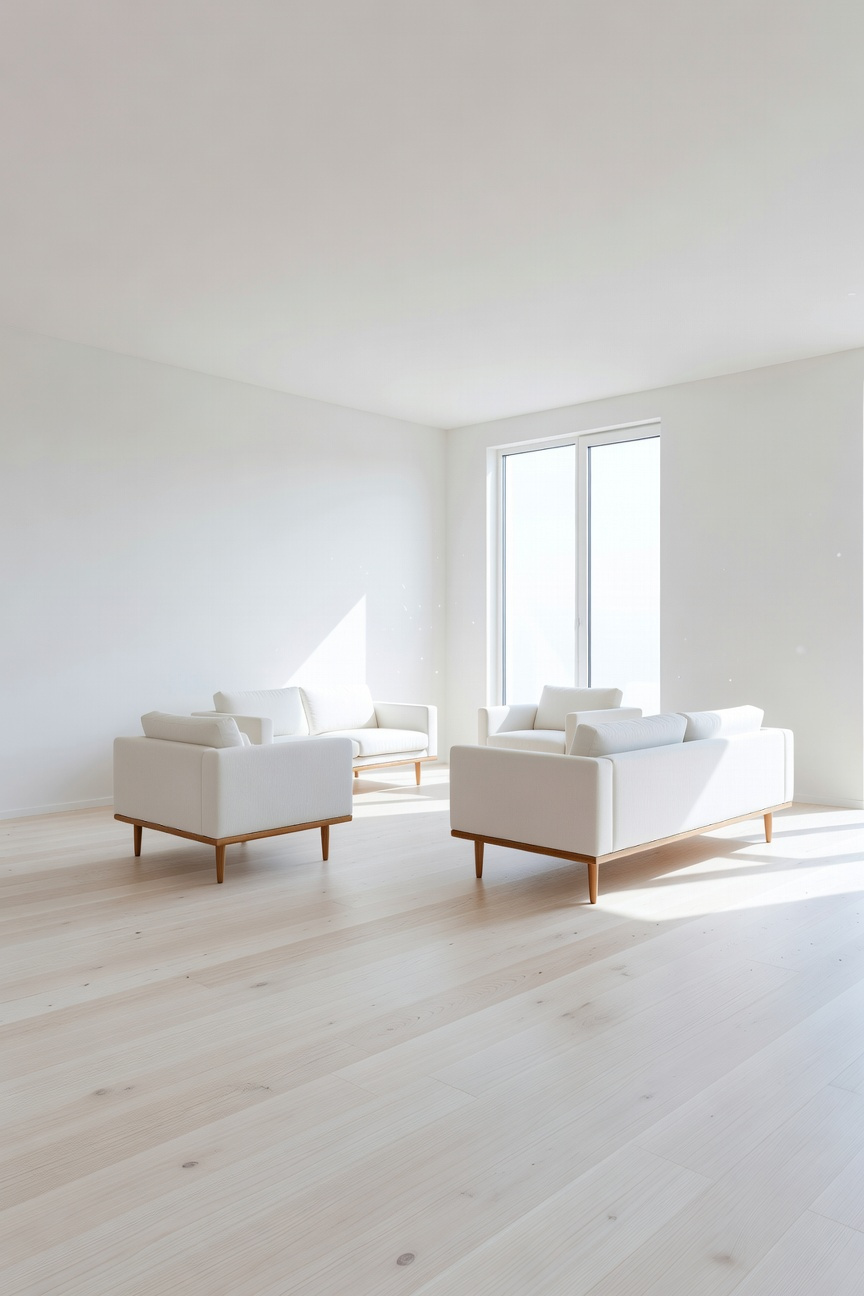
White furniture also acts as a diffuser to lower visual weight. Light bounces under floating sofas to eliminate dense dark corners. Similarly, wall-mounted cabinetry achieves a beautiful sense of architectural levitation. A floating white lacquer console appears entirely weightless. To enhance this, subtle under-cabinet LED lighting creates a soft glow. This ethereal light cushion visually severs the furniture from the earth.
Philosophically, this embraces the Japanese concept of *Ma* quite beautifully. It honors the pure, breathable tension between carefully placed objects. The home’s atmosphere shifts from enclosed to completely free. Clear acrylic tables let light flow without any visual clutter. Layering tactile white bouclé with invisible glass maintains absolute harmony. Overall, this mindful approach transforms empty air into a healing, expansive volume.
14. Ambient Aromatherapy: Scenting the Clean Slate with White Tea and Jasmine
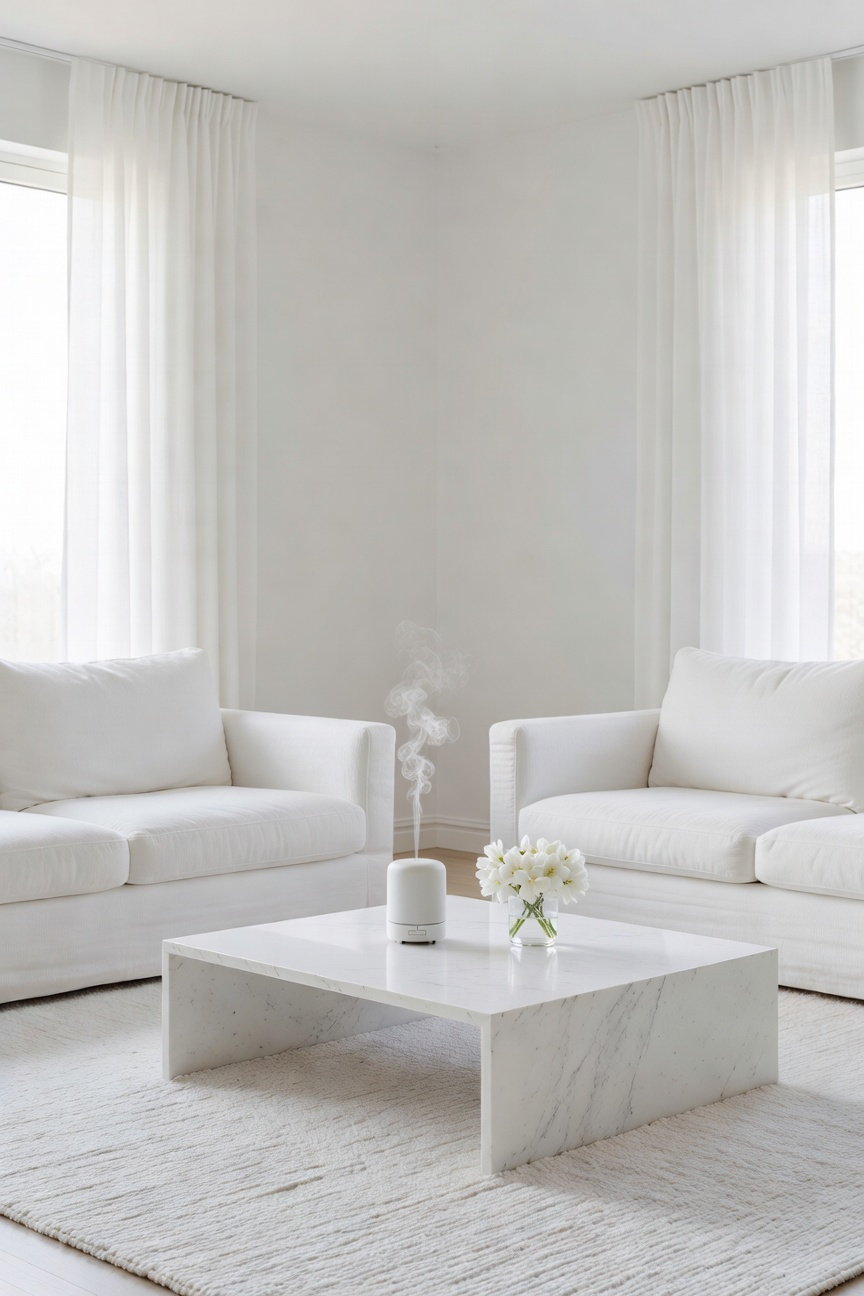
Scent acts as an invisible architectural layer in a white living room. White tea and jasmine perfectly complement a minimalist, clean slate environment. These luminous aromatics possess a beautifully transparent quality. They refine the room’s energy without introducing overwhelming sensory clutter. Psychologically, white tea provides a crisp, woody-green structural base. Historically, this botanical holds an imperial lineage of ultimate purity. The clarifying aroma promotes a complete emotional and mental reset. In fact, white tea gently lowers cortisol while maintaining your calm alertness.
Meanwhile, jasmine adds a highly delicate and radiant white floral top note. An airy perfumery molecule called Hedione makes the room feel remarkably expansive. Therefore, this strategic pairing adds vital sensory volume to the physical space. It prevents a pristine room from feeling cold, flat, or sterile. Jasmine seamlessly bridges the natural transition from bright daylight to serene evening. Known as the Queen of the Night, it adds highly sophisticated evening warmth.
This natural pairing brings a deeply essential biophilic element indoors. Indeed, it suggests the calming presence of true nature without any messy visual clutter. Scientifically, inhaling pure jasmine significantly decreases your high-stress beta brain waves. Finally, utilizing cold air diffusion keeps this restorative fragrance acting as a subtle ambient wash.
Phase IV: Lifestyle Integration — Sustaining the Holistic Haven
Sustaining an all-white environment requires viewing your home as a dynamic, living system. A room truly flourishes when it gracefully shows the passage of time. Expert designers embrace this organic patina of white through natural wabi-sabi elements. Instead of stark synthetics, choose organic chalk-based pigments that age beautifully alongside untreated timber. These subtle imperfections reduce showroom stress and invite deeply healing relaxation.
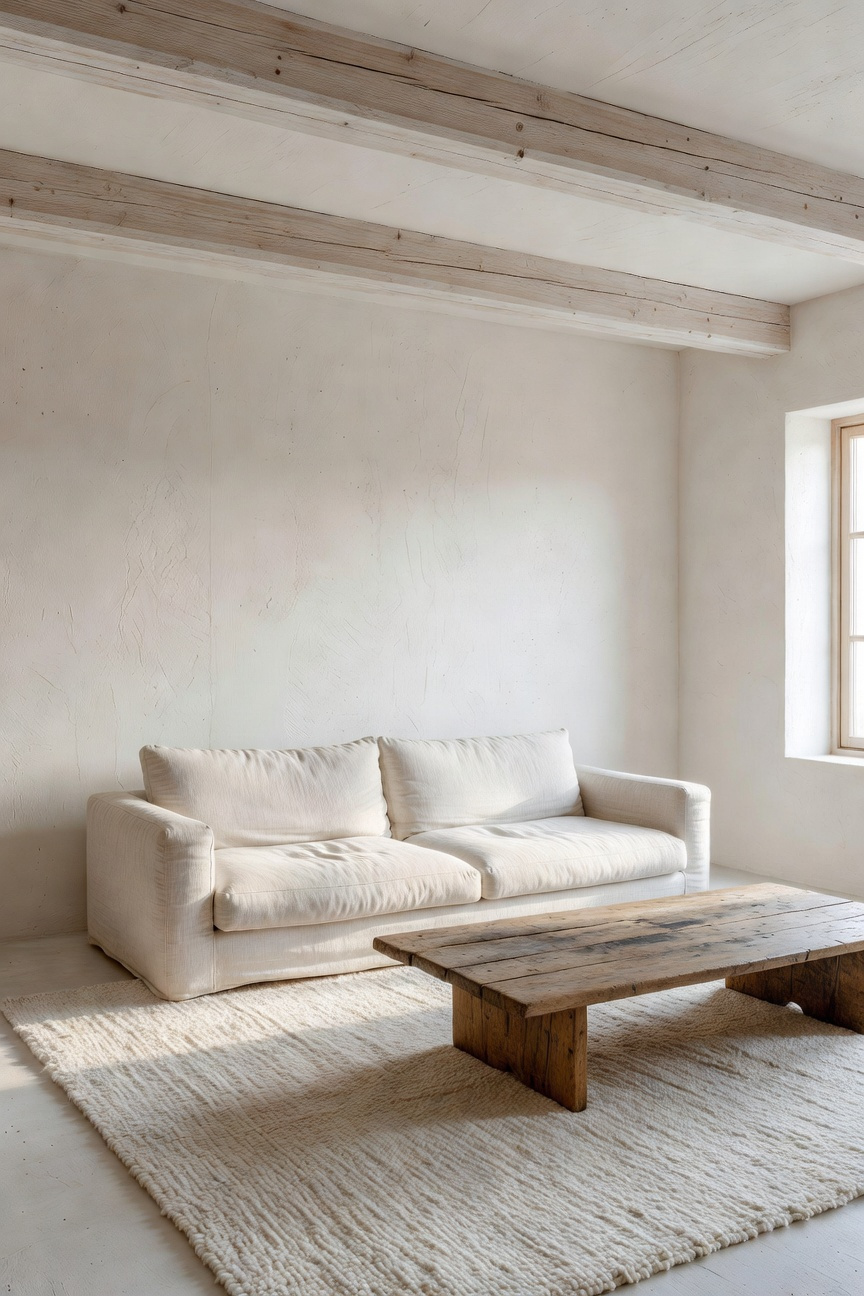
Maintaining this pristine haven becomes a meditative psychological ritual rather than a chore. Intentionally clearing the visual space refreshes the room’s Qi and restores mental balance. For example, the simple act of straightening a tactile linen throw can lower cortisol. These mindful daily tasks provide comforting agency without causing sensory overwhelm.
Chronobiological lighting also integrates the bright space with your natural circadian rhythm. Morning daylight reflecting off pale walls boosts serotonin production for mental focus. Conversely, your minimalist living space must transition beautifully into a soft sanctuary by evening. Casting a warm amber glow on white surfaces signals your tired body to produce melatonin.
True holistic integration transcends strictly visual interior design elements. Utilizing heavy bouclé rugs acts as invisible softening against harsh, echoing acoustics. Similarly, anchoring the tranquil room with sandalwood aromatherapy instantly calms an overworked mind.
Ultimately, sustaining this peaceful haven means embracing negative white space as a visual palate cleanser. Gently curating the empty air between functional objects becomes your most vital daily practice. It preserves the essence of white living room decoration as a lifelong practice of serenity.
15. Mindful Minimalism: Curating Purposeful, Joy-Sparking Objects of Affection
In mindful minimalism, a white living room acts as a curatorial frame. This space functions much like a serene gallery. Stripping away wall color creates a profound sense of visual silence. Therefore, your nervous system downregulates organically in this quiet environment. This pristine backdrop perfectly celebrates the concept of negative space. You treat this emptiness as a vital structural element. Indeed, the white space gives your favorite objects oxygen to breathe.
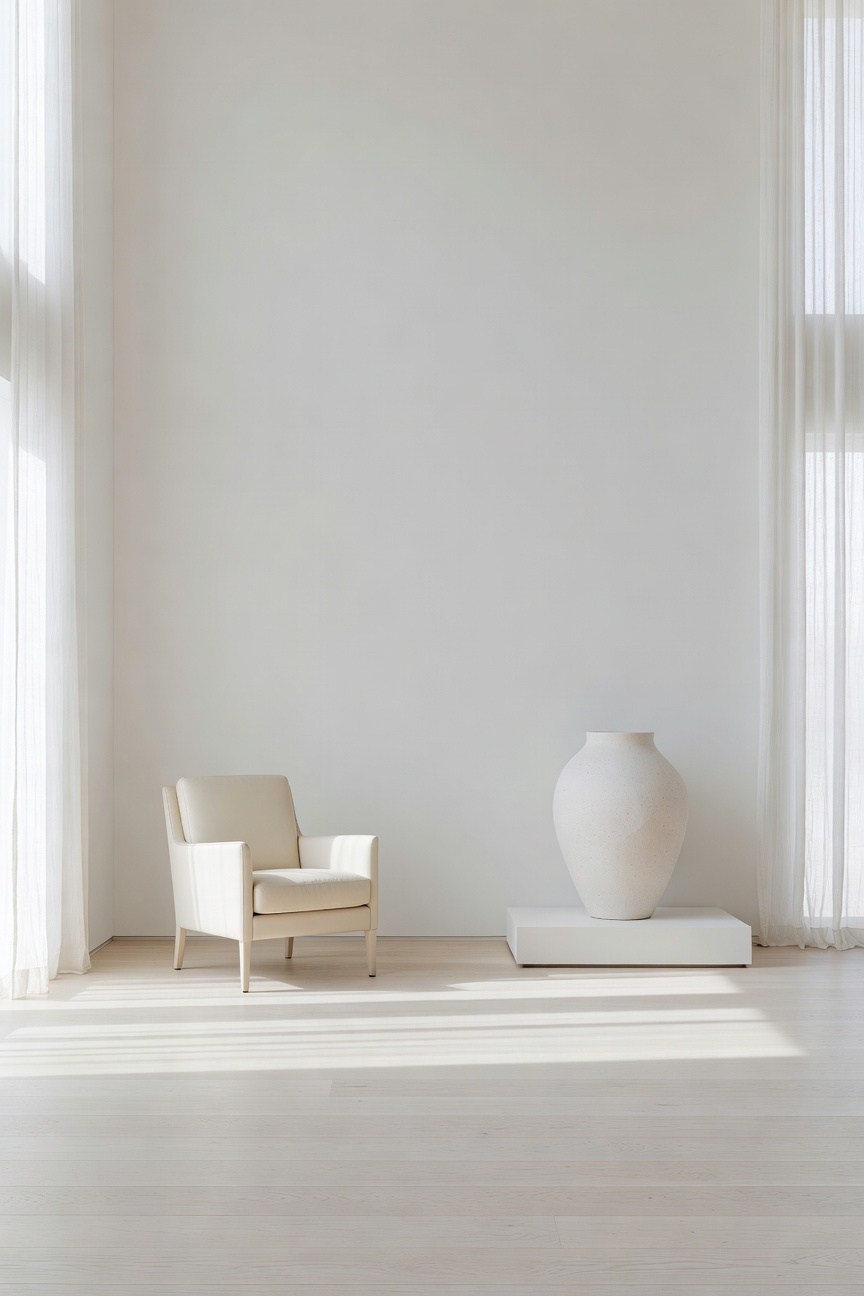
Because the color palette is restricted, tactile materiality takes precedence. For example, the heavy weave of a linen throw becomes vivid. The smooth grain of an oak table catches striking shadows. This sensory depth creates a grounded, somatic connection to your home.
However, a common pitfall is creating a cold, showroom-like atmosphere. You must introduce temporal contrast through organic wabi-sabi pieces. A weathered wooden stool placed against pristine plaster adds instant warmth. The crisp white walls represent the fresh present moment. Meanwhile, your carefully curated antiques anchor the space in history. Practicing an affection audit ensures every item serves your emotional narrative. Ask yourself if each piece holds true personal meaning. Your minimalist sanctuary then becomes a living biography rather than visual clutter.
16. Air-Purifying Greenery: Integrating High-Contrast, Toxins-Filtering Botanicals
Integrating high-contrast botanicals into a monochromatic space goes beyond simple aesthetics. White living rooms actually create a highly reflective microclimate. Light bounces directly into the lower shadows of foliage. This continuous exposure accelerates a plant’s metabolic rate. Species like the dark-leafed rubber tree function as high-speed bio-filters. They process harmful volatile organic compounds with remarkable efficiency. Visually, the stark white backdrop makes these deep greens appear hyper-saturated. Therefore, this vibrant contrast triggers our innate biophilic instincts. This neurological reward reassures our brains that the environment is safe.
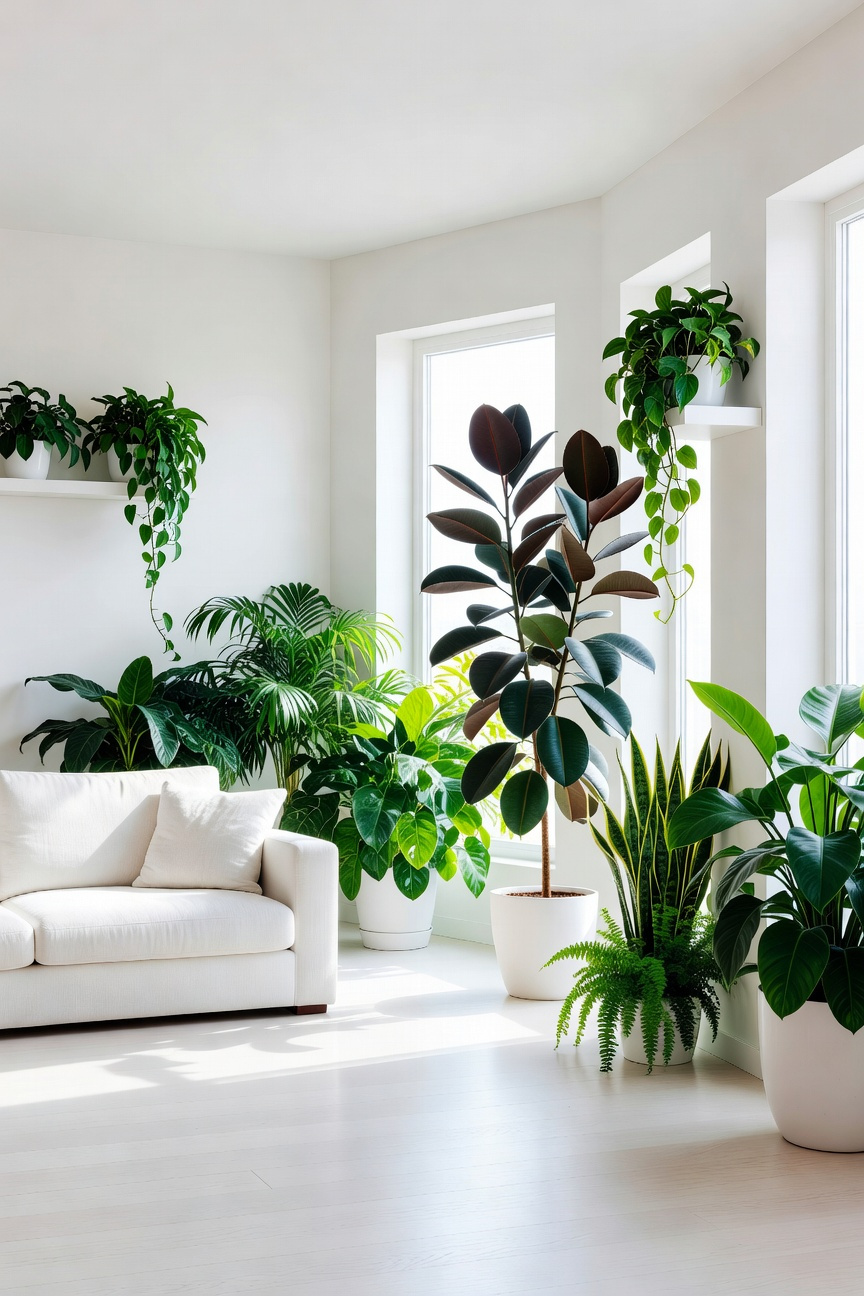
However, all-white spaces often risk feeling overly clinical or unmoored. High-contrast greenery grounds these rooms through bold, organic silhouettes. For instance, the near-black leaves of a ZZ Plant disrupt sterile perfection beautifully. These dark, waxy leaves absorb light rather than reflecting it. They offer the eye a gentle resting point. Interestingly, this process of soft fascination actively lowers heart rates.
True air purification happens deeply within the root-soil interface. Clean aesthetics are easily maintained by utilizing semi-hydroponic substrates. These inorganic setups allow superior airflow to the hardworking root zone. Strategic placement also maximizes this invisible chemical labor. For example, corners often trap stagnant air and lingering toxins. Therefore, placing a large Monstera in these dead zones creates vital airflow. Alternatively, positioning a Dracaena near new furniture blocks off-gassing at its source. These living sculptures actively nurture your physical and mental well-being.
17. The Tactile Transition: Adapting the Room Seasonally Without Shifting the Color Palette
Transitioning a white living room seasonally requires a sophisticated discipline known as tactile layering. This holistic method shifts weights and textures rather than actual colors. Your space transforms from a breathable summer oasis into a cocooning winter sanctuary. Designer Syrie Maugham pioneered this dynamic white-on-white revolution in 1927.
This seasonal adaptation heavily influences both acoustic and thermal comfort. For instance, winter design utilizes thick textures like bouclé and plush velvet. Naturally, these dense materials act as acoustic sponges to create a soothing psychological hush. Conversely, summer calls for lightweight fibers like crisp flax linen and organza. Therefore, these materials promote maximum airflow and introduce an energetic tactile quality.
Altering how surfaces interact with natural light deeply enhances seasonal well-being. Chalky and matte summer whites help absorb harsh, glaring sunlight beautifully. The room feels like a cool, shaded, and calming retreat. Alternatively, dark winter months require crystalline surfaces like capiz shell and silver-threaded silk. Indeed, these reflective materials mimic snow to bounce precious daylight deeper into your home. Finally, introducing rough-hewn textures creates warm micro-shadows that feel incredibly nurturing all winter.
18. The Ritual of Renewal: Joyful Maintenance Practices to Preserve the Sanctuary’s Purity
Maintaining a white sanctuary transcends basic household hygiene. It becomes a mindful and restorative practice. Architect Le Corbusier famously viewed whitewashing as a profound moral cleanse. Removing dirt from bare walls acts as a ritual of truth. This careful maintenance brings deep psychological clarity to the home.
Physical renewal also eliminates stagnant environmental energy. The ancient Persian practice of Khoune-Tekouni literally means shaking the house. Vigorously shaking out rugs clears heavy energetic blocks. Alternatively, ringing Tibetan bells shifts room energy just like a vacuum.
We can also look to the ancient whitster tradition for inspiration. Households once used solar bleaching to purify their white textiles. Wet linens were laid across lush grass to naturally whiten the fabric. This biophilic process creates a beautiful, lingering ozone scent. Similarly, modern homes can give slipcovers a refreshing outdoor sun bath.
Routine indoor upkeep involves a deeply sensory choreography. For instance, scent-layering with white musk or lemon verbena visually brightens a space. Fabric shaving gracefully restores the soothing texture of wool throws. The subtle art of curation simplifies these daily minimalist rituals.
Ultimately, maintaining purity requires a gentle and thoughtful approach. Designers recommend layering warm shades of ivory, cream, and bone. These slight color variations naturally hide minor daily imperfections. The sanctuary remains impervious to the stress of a sterile showroom. In short, these joyful maintenance practices beautifully preserve both purity and peace.
Frequently Asked Questions
How do I keep a white living room from feeling sterile?
To prevent a white living room from feeling clinical, introduce a variety of tactile textures such as bouclé, organic linen, and raw wood. Layering different shades of white, such as cream and alabaster, adds essential visual warmth and depth.
What are the best accent colors for white living room decoration?
While white thrives as a monochromatic palette, natural accents work best. Incorporate deep-leafed greenery for air purification and biophilic contrast. You can also use bleached woods and raw stone to provide grounding earthy tones without disrupting the serene aesthetic.
Is white furniture practical for high-traffic premium homes?
Yes, white furniture can be highly practical when utilizing high-quality, washable slipcovers made from heavy organic linens. These materials allow for regular cleaning while maintaining a luxurious, soft-touch finish that ages gracefully with the home.