
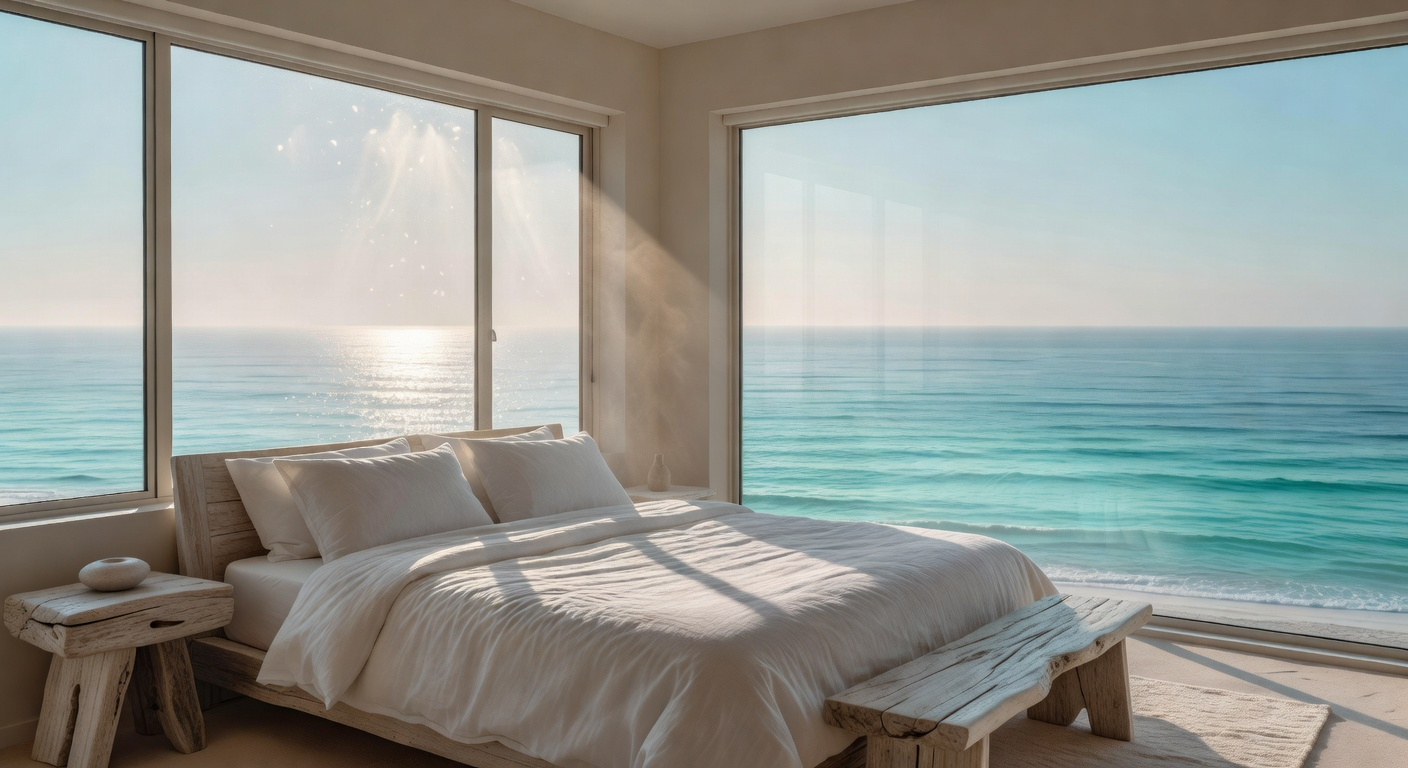
Let’s be honest. Coastal bedroom decorating doesn’t mean you need to cover everything in anchors and navy stripes. If you want a genuinely refined sanctuary, the goal is simple. You want to capture the feeling of the shoreline through biophilic design and natural light. Many people still think coastal design demands a strict nautical theme. These spaces end up relying heavily on seashell lamps and thick blue stripes. As a result, they feel like weekend vacation rentals rather than permanent homes. The modern approach completely rejects these outdated translations.
Instead, prioritize emotional resonance over rigid visual themes. This shift turns a basic bedroom into an atmospheric, full-time retreat. The new objective is to whisper about the coast, not shout it. We need to move away from strict navy and white palettes. Designers now favor earthy tones like misty grays, warm oats, and muted corals. In fact, these desaturated colors reflect the shifting weather of the actual coast. Organic textures replace literal motifs as the main focus. You build visual interest by mixing rough and smooth materials. For example, unpolished reclaimed wood pairs beautifully with heavy linen. These textures naturally create a collected look that brings the outdoors inside.
This biophilic approach fosters deep relaxation. Sensory details reduce daily stress and can actually improve sleep quality. Next, we will explore the exact science behind modern coastal sleep environments. We will look at styles ranging from a rugged fisherman aesthetic to cozy coastal grandma nostalgia. By the end, you will understand how to bring quiet luxury and elevated living into your own home.
Harnessing Natural Light: The Ultimate Seaside Accessory
Coastal light is genuinely unique. The shoreline’s atmosphere contains suspended salt particles that create a mild Tyndall effect. Because of this, morning sunbeams become visible and almost tactile. The saturated ocean air also enhances Rayleigh scattering. Therefore, seaside mornings have a prolonged, crisp blue tone. Capturing this specific light is all about amplifying your view of the horizon.
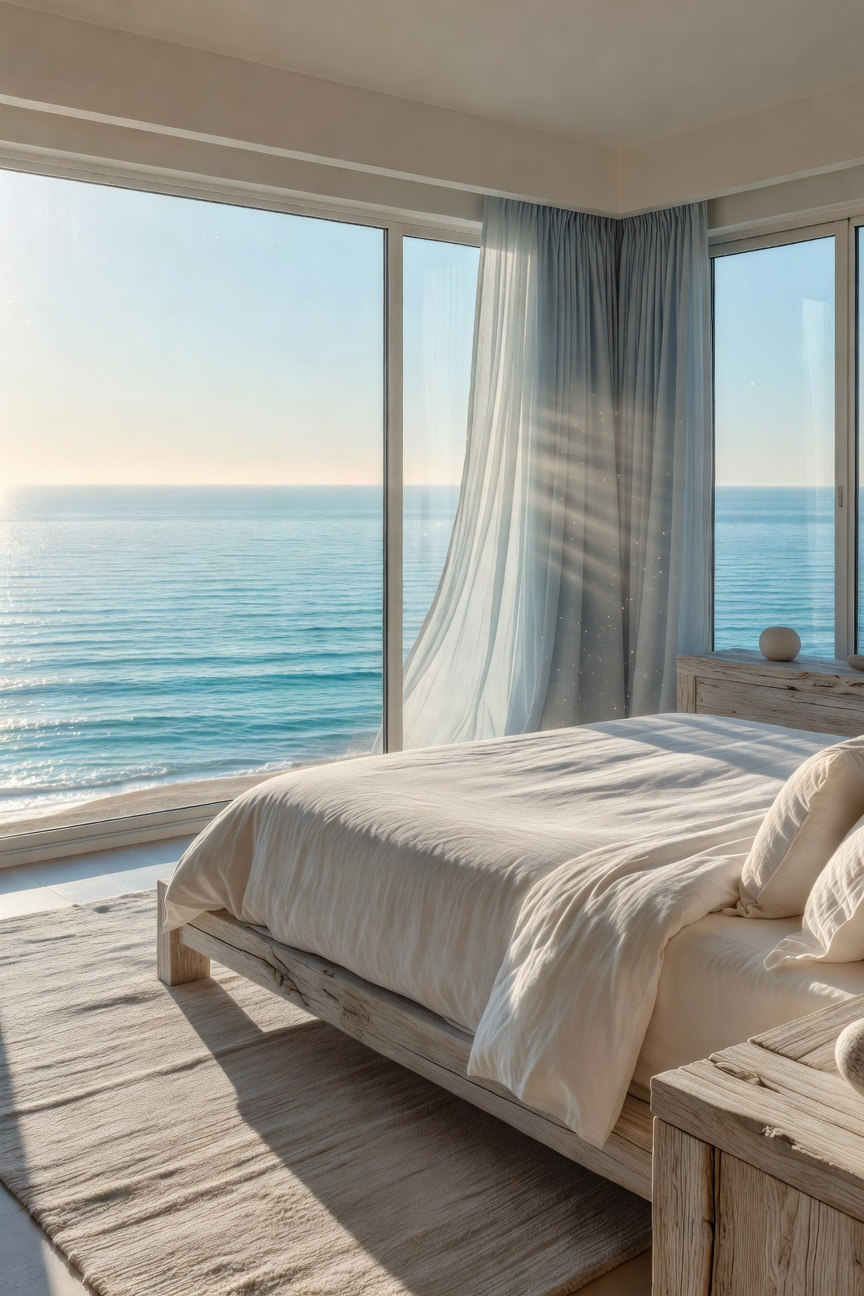
Architects often manipulate this cool-toned light using passive design elements. For instance, a reflective light shelf catches the high-angle summer sun. Then, it bounces that light deep onto the ceiling. This brightens the darkest corners of a bedroom without adding uncomfortable heat. Additionally, clerestory windows bring in early morning rays from high above eye level. Ultimately, this strategy regulates your circadian rhythm while keeping the space private.
Coastal designers also manage room lighting through careful paint selection. Historically, Southeastern coastal homes painted their ceilings a pale “Haint Blue.” Originally, this watery shade was meant to ward off spirits. Today, that specific blue-green tint simply makes a room feel cooler. Professionals also pay close attention to the Light Reflectance Value (LRV) of their paint. In fact, pure white walls can feel blinding under intense coastal sun. Instead, muddied whites in the 60 to 85 LRV range absorb the worst of the glare. They create a soft, perfectly sun-washed atmosphere.
Layering different paint sheens helps mimic the varied textures of the coast. Flat matte walls diffuse light well, hiding any salt-worn imperfections. Conversely, a high-gloss lacquered ceiling reflects the movement of the ocean outside. Together, these choices capture the true feeling of living by the water.
The Architectural Canvas: Sophisticated Millwork, Shiplap, and Beadboard
The walls and ceilings of a coastal bedroom do more than hold up the roof. They manipulate light, sound, and spatial psychology. Modern nickel-gap shiplap creates a distinct visual rhythm. A precise eighth-inch gap forms sharp shadow lines that resemble the ocean horizon. Vertical installations can even draw the eye upward to make the ceiling feel higher. Meanwhile, traditional beadboard works beautifully as a tactile wainscoting. This grounds the lower half of the room against smooth upper walls.
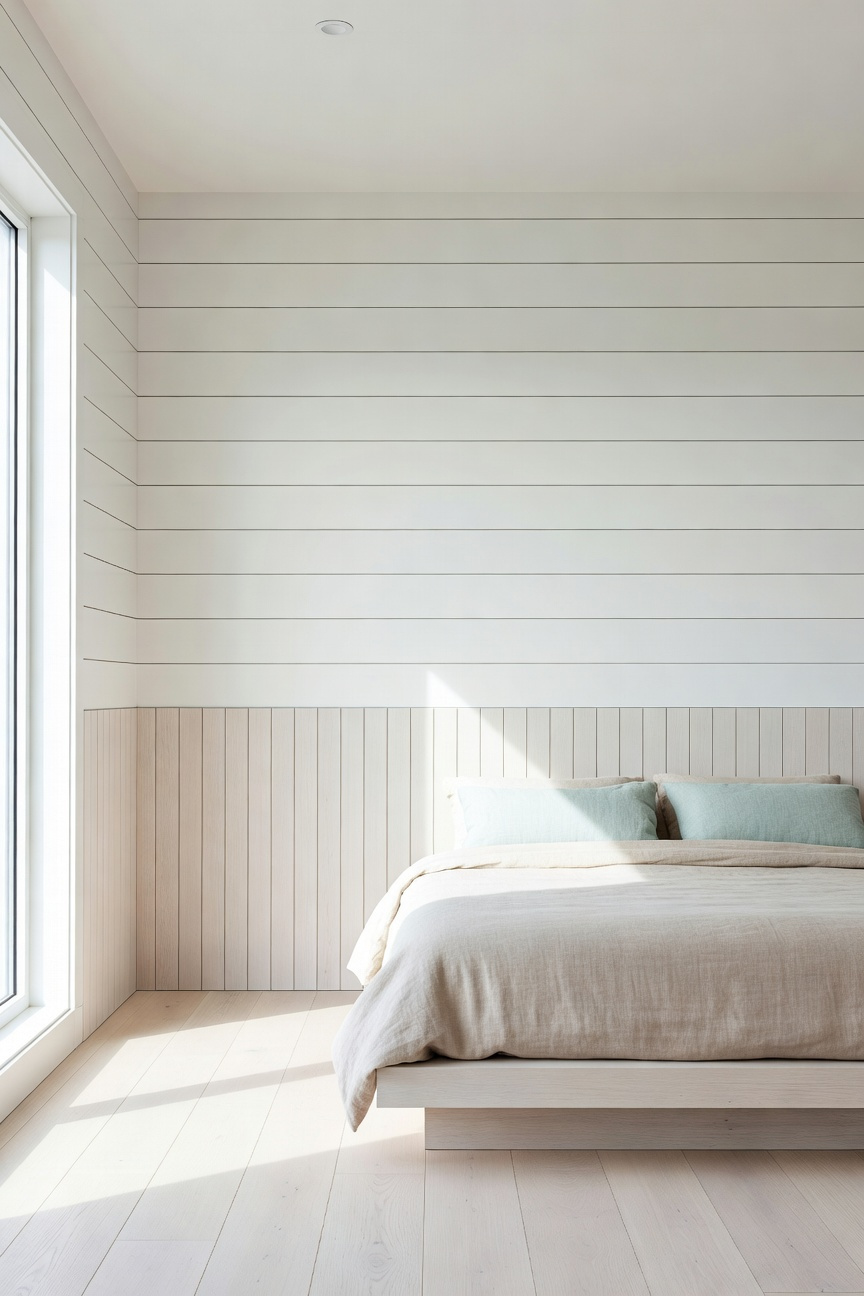
Wood paneling also drastically improves how a room sounds. Flat drywall often creates subtle, overstimulating echoes. However, milled grooves break up sound waves to reduce that harsh reverberation. Historically, shiplap was the watertight skin used on ships. Bringing those sand-toned textures indoors creates a comforting, cocoon-like effect. Visible structural elements help us feel psychologically sheltered.
Coastal light shifts constantly from morning to night. Because of this, designers treat the ceiling as a crucial fifth wall. Coffered ceilings capture midday shadows and reflect golden sunset rays. Today, sophisticated millwork often hides modern technology, much like the concepts found in modern bedroom wall decor ideas. Hidden circadian lighting delivers an amber evening glow without any visible bulbs. This approach honors historic nautical simplicity while utilizing modern carpentry.
Foundational Palettes: Drawing Tones from Morning Fog, Sand, and Seaglass
Coastal design used to rely heavily on navy blue and stark white. Sophisticated spaces now lean on a nuanced morning fog foundation instead. Soft blue-grays diffuse the intense coastal light beautifully. These foggy neutrals provide a visual pause, which is a hallmark of serene blue bedroom decor ideas. Paints like Sherwin Williams Silver Strand actually shift color dynamically. Therefore, the room’s energy syncs with the natural progression of daylight.
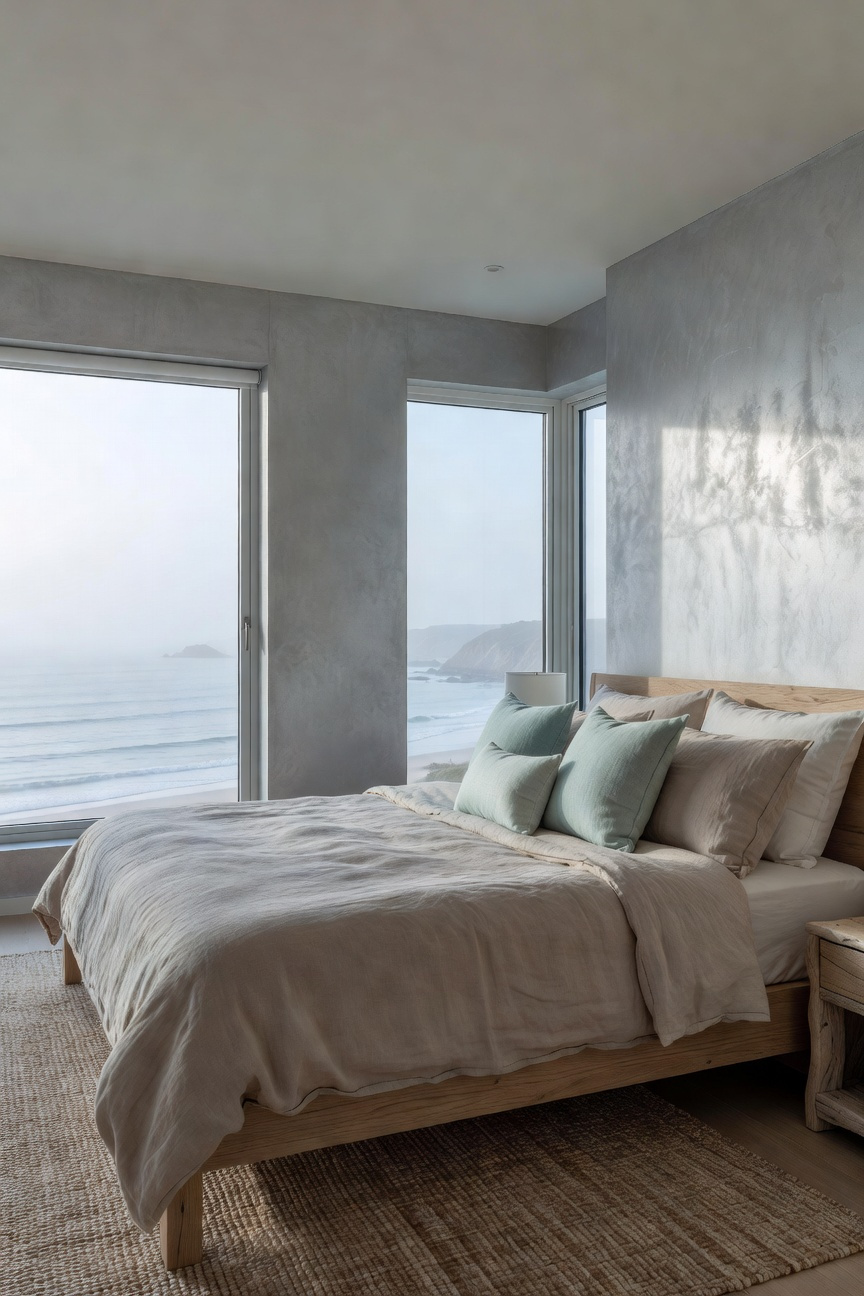
I like to treat sand tones as a grounding textural element. Instead of using a generic beige, choose sand tones that reflect weathered shoreline history. Layering sun-washed linen over weathered oak builds incredible tactile depth. To avoid a flat design, try applying the 60-30-10 rule. You might pair sixty percent fog gray with thirty percent sand. This makes heavier furniture pieces feel securely anchored, much like a dunescape.
The remaining ten percent of the palette is for luminous seaglass accents. Seaglass tones introduce a sense of quiet optimism. You can achieve this translucent depth by using frosted glass finishes. For instance, pale amethyst glass breaks up matte neutrals beautifully. This specific mix of colors helps manage harsh coastal glare. As a result, the soft visual stimuli help your brain recover from daily stress. Painting the ceiling a pale mist shade can also expand the horizon. This simple trick prevents the bedroom from feeling boxed in.
Textural Symphony: Layering Breathable Linens, Jute, and Washed Cotton
Authentic coastal design avoids predictable nautical clichés. Instead, it relies heavily on natural textures. Layering different natural fibers is the secret to a restorative sanctuary. This approach balances light, history, and fabric science. High-quality European linen contains slight irregularities called slubs. These tiny bumps diffuse morning sunlight into a soft, hazy glow. On the floor, coarse matte jute acts as a visual anchor. Jute absorbs excess light to prevent the room from feeling clinically bright. Together, they create a low-glare environment that signals deep rest.
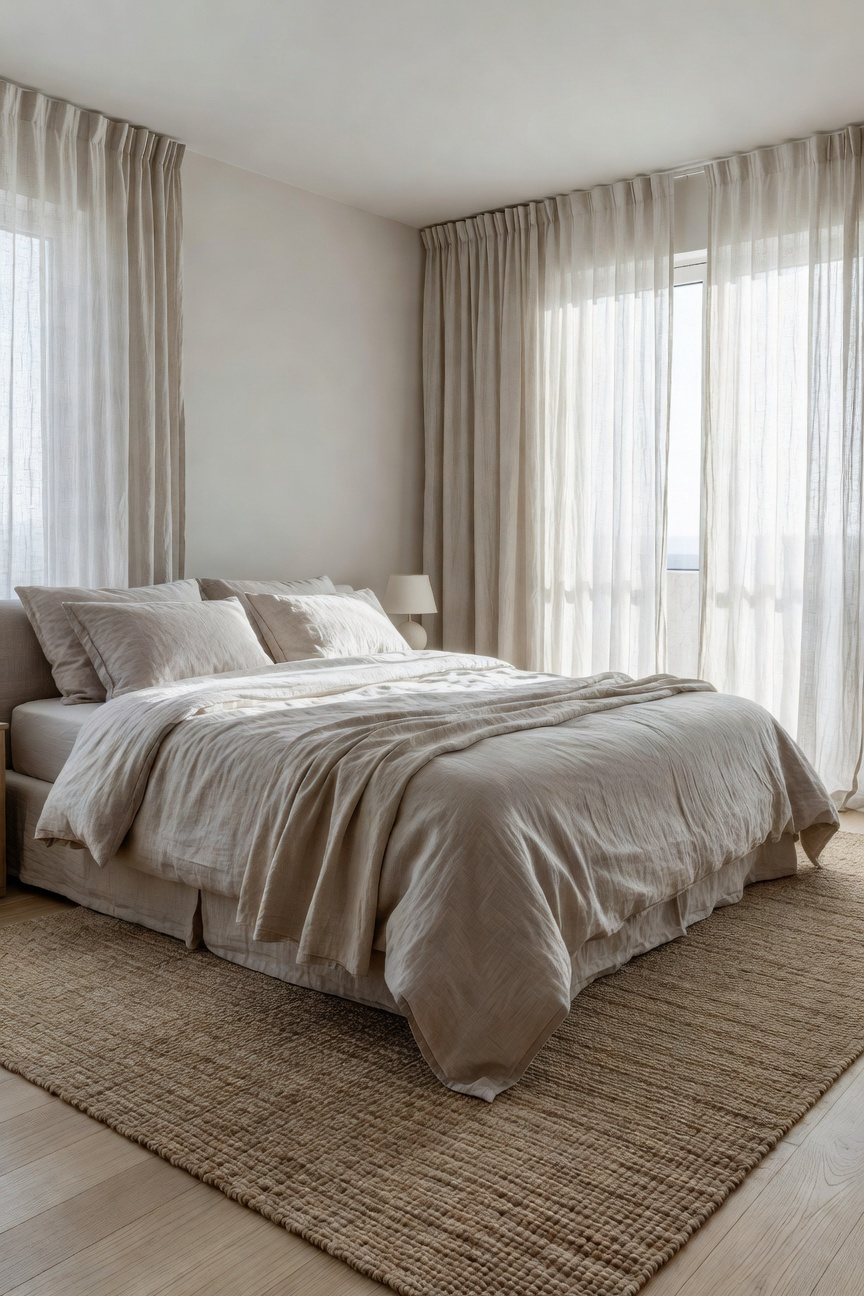
Modern manufacturing has changed how we process classic maritime materials. Historically, people used harsh pumice stones to soften rugged fabrics. Today, advanced bio-enzymes safely dissolve loose fibers without damaging the cloth. As a result, washed cotton gains a buttery, matte finish. This comfortable patina provides an instant feeling of coziness. Beyond aesthetics, layered fabrics manage coastal humidity very effectively. Linen easily absorbs twenty percent of its weight in moisture. Pairing a linen duvet with a cotton base layer naturally regulates your temperature. The open weave of the linen wicks away excess moisture while you sleep.
Designers often use a specific ratio to balance textures. Typically, sixty percent of the room remains smoothly neutral. Next, woven jute or sisal adds structural rhythm at about thirty percent. Finally, the last ten percent is reserved for highly tactile accents. This intentional layering turns humble textiles into a sophisticated coastal retreat.
The Sophisticated Bedstead: Emphasizing Driftwood Tones and Weathered Oak Finishes
Every coastal bedroom needs the right coastal bedroom furniture. A weathered oak bedstead is an excellent anchor piece. The wood firmly grounds the space through its organic texture. This weathered look actually traces back to sixteenth-century cerusing. Craftsmen originally rubbed white pigment into open oak pores to prevent rot. Today, this old-world technique simply looks incredibly durable and luxurious.
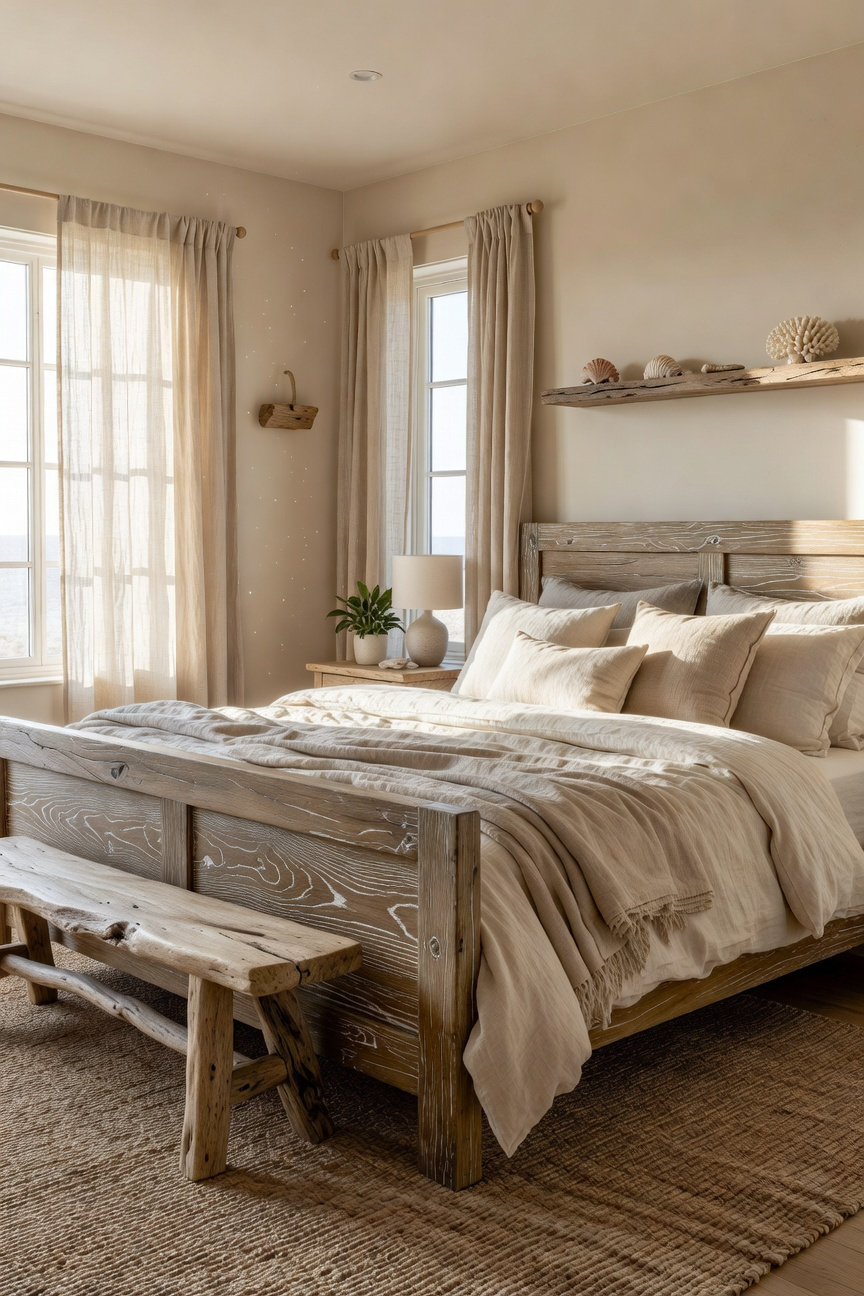
You won’t find literal shells or anchors carved into this furniture. The brushed wood grain subtly implies ocean waves all on its own. Achieving an authentic driftwood tone requires some chemical artistry. Artisans often wire-brush white oak to expose the hard ridges. This process closely mimics natural erosion from salt and wind. Next, tannin-reactive stains age the timber from the inside out. Therefore, you avoid the plastic look of 1980s pickled oak. Modern finishes prioritize beautiful transparency over heavy, opaque paint.
Furniture makers often apply a light liming wax into the brushed grooves. This layered glaze catches the light beautifully throughout the day. Current designs favor warm greige over clinical, cool grays. These sun-bleached tones blend perfectly with sandy wall colors. Low-contrast environments like this successfully reduce visual noise. In turn, the tactile wood helps trigger a relaxed brain state. The room quickly becomes a timeless seaside sanctuary.
Maritime Metals: Integrating Unlacquered Brass, Bronze, and Tarnished Nickel
Embracing living finishes is a great way to move past generic nautical decor. Unlacquered brass, bronze, and tarnished nickel act as biological records of the room. These metals react directly to the moisture and salt in the coastal air. Consequently, they undergo a beautiful chemical metamorphosis over time. Unlacquered brass starts out as a bright, mirror-like gold. However, it quickly mellows into deep amber and honey tones. High salinity can even create verdigris, a prized sea-foam green oxidation. Historically, this patina protected copper-bottomed ships from harsh saltwater.
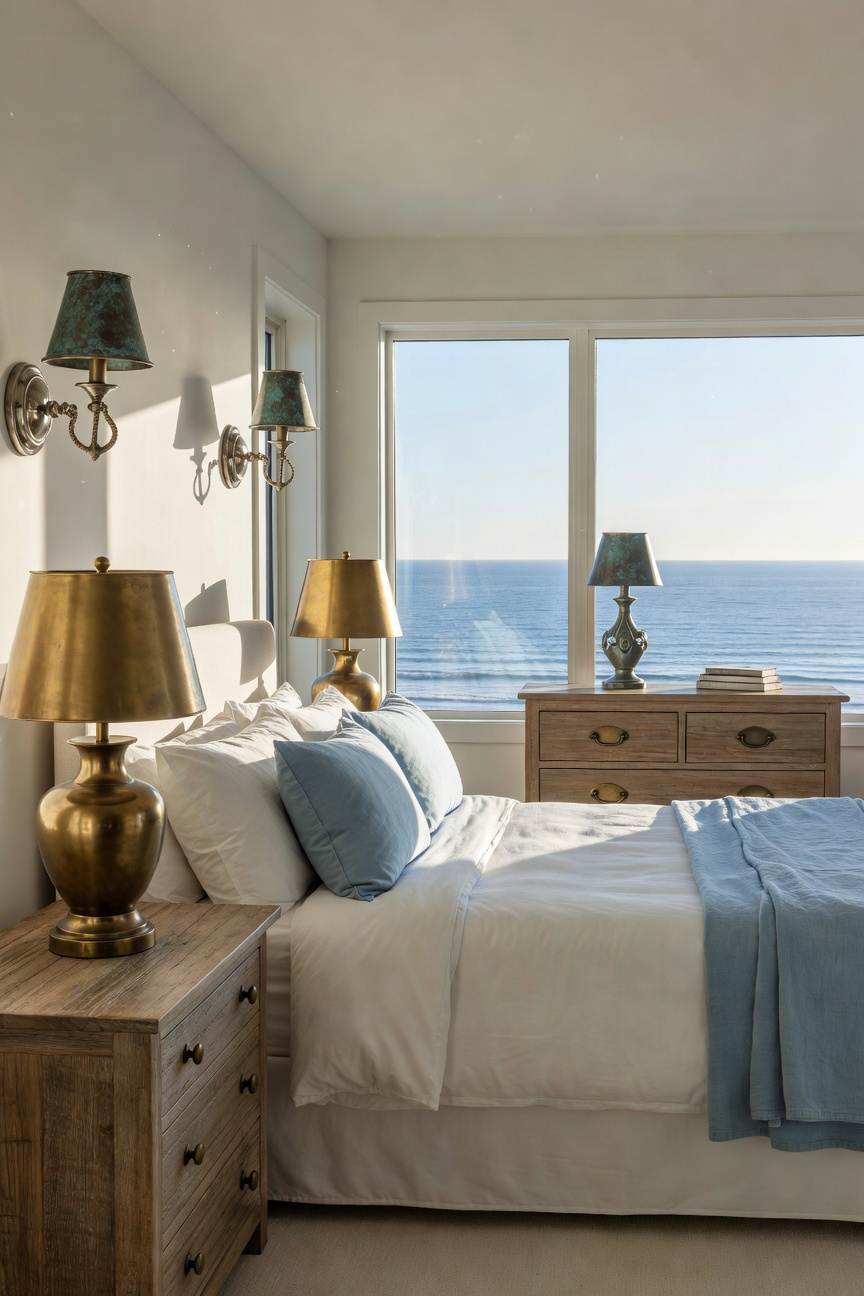
These metal finishes offer profound sensory depth. When you touch a brass handle, the oils from your skin interact with the metal. Frequent contact points stay bright, while untouched edges darken. To get this right, you must balance the maritime hierarchy. Bronze acts as the heavy ballast in a bedroom. Its deep, earthy hues firmly ground the space. Conversely, naval brass provides the delicate glint of sun on water.
Tarnished nickel works as a neutralizer between dark bronze and bright brass. It has a naturally warm, champagne-like hue that feels much softer than chrome. Eventually, its cloudy patina resembles heirloom silver or weathered driftwood. This muted reflection mirrors a foggy morning on the Atlantic. Unlacquered brass even emits a faint scent reminiscent of warm pennies. This subtle fragrance reinforces the authentic maritime narrative. These metals skillfully manage the visual temperature of the room. They prevent the intense coastal light from feeling too bright. Instead, they create a soft glow that reminds me of the golden hour.
Breezy Window Treatments: Sheer Drapery for Filtering the Ocean Sun
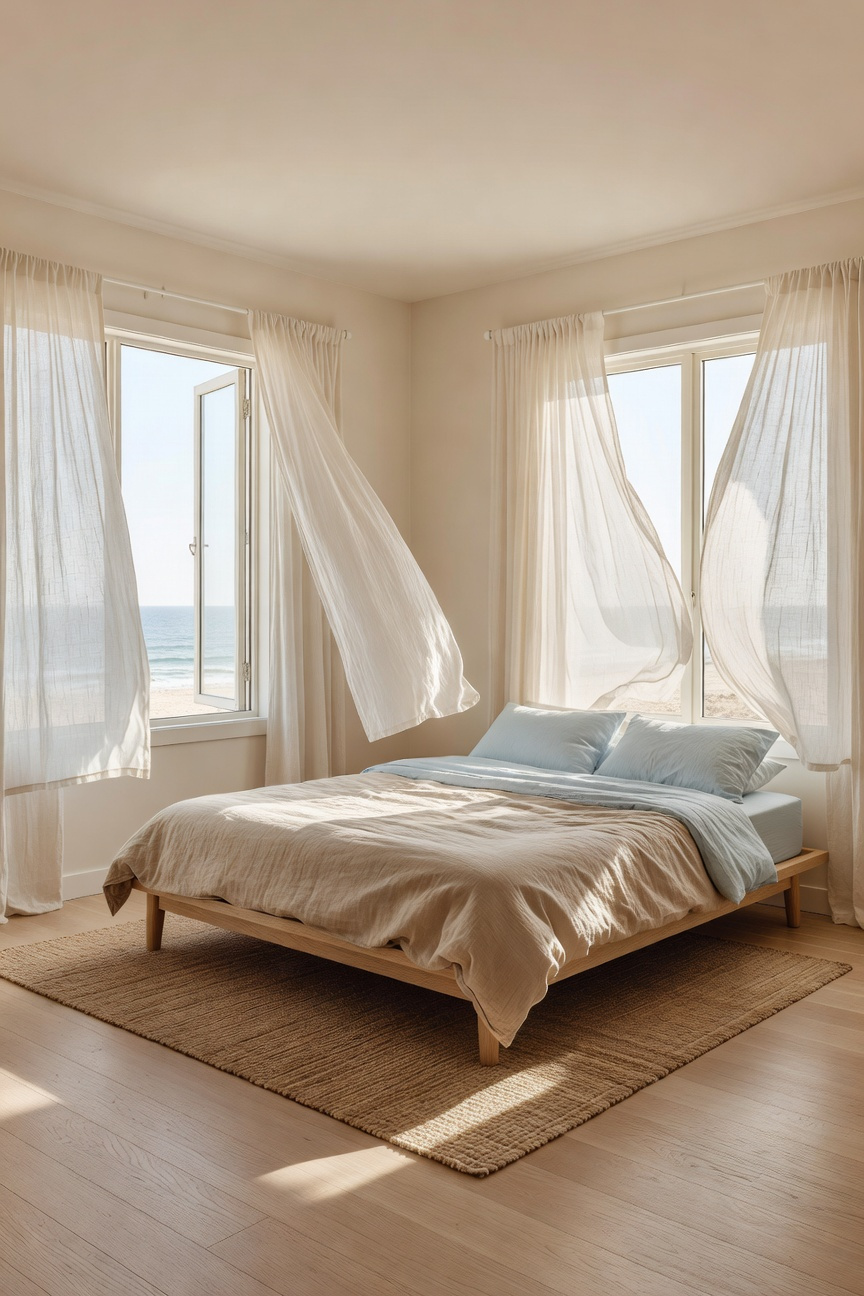
Coastal environments present a unique optical challenge known as sun glint. Sunlight reflects off the ocean at shallow angles. This creates a harsh, horizontally polarized glare that can overwhelm a room. Sheer drapery offers an elegant solution for bright bedrooms. A semi-opaque weave acts like a soft-focus lens. It diffuses blinding light into a gentle, multi-directional glow. Professionals typically look for a three to five percent openness factor. Importantly, this blocks the glare while preserving your view of the horizon.
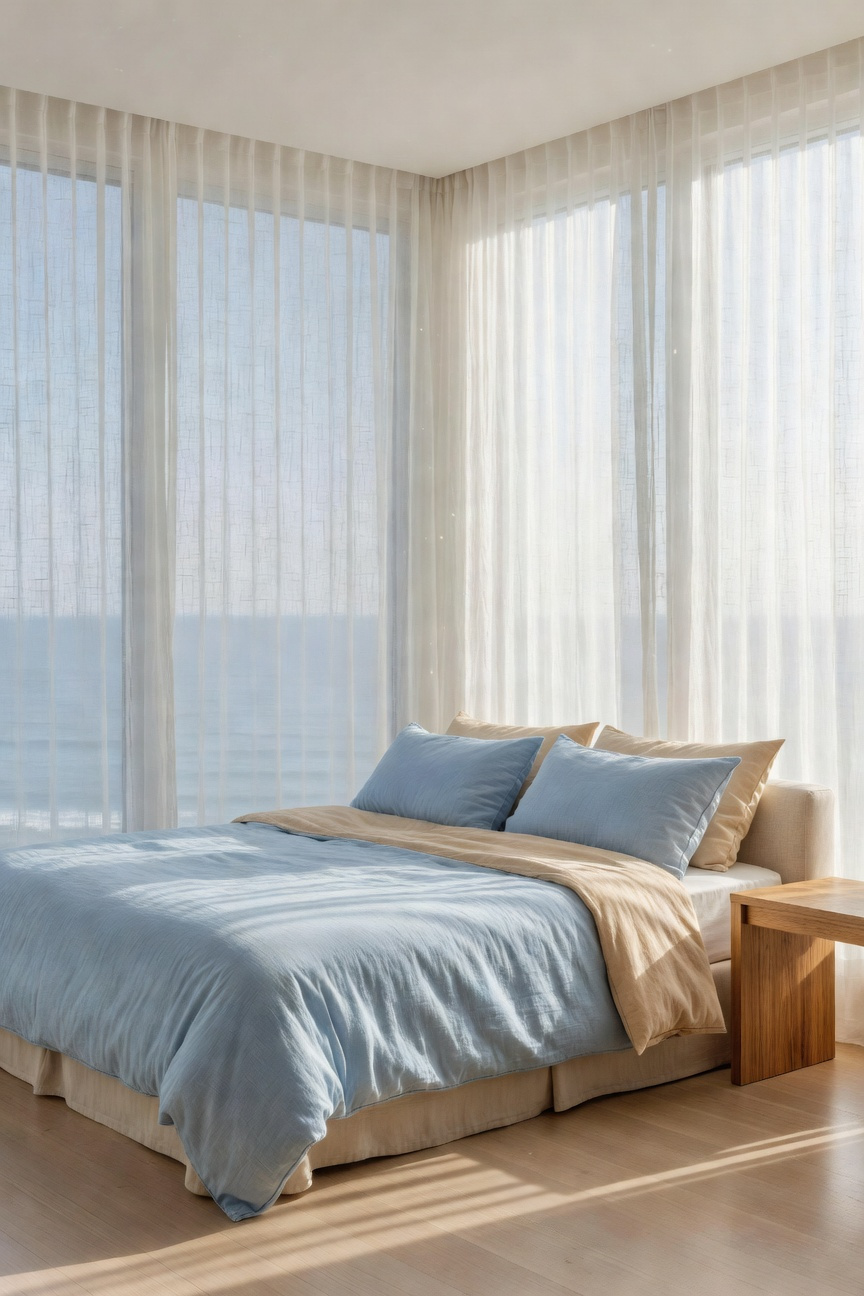
Modernist architects largely pioneered this translucent aesthetic. They replaced heavy colonial shutters with vast floor-to-ceiling glass. Sheers quickly became the essential window covering for these airy spaces. Atlantic homes often favor crisp, white voile fabrics. Pacific designs tend to use raw, driftwood-toned linen blends instead. However, pure linen shrinks and stretches wildly in humid salt air. Because of this, performance linen-polyester blends are the modern standard. They provide the visual texture of natural flax without the maintenance. Furthermore, these synthetic blends resist mold and UV fading.
Movement is incredibly crucial to the coastal sensory experience. Designers often rely on specialized wave-fold track systems for curtains. These headers force the sheer fabric into a continuous, rolling shape. A lead-free weighted hem prevents the curtains from flying uncontrollably in the wind. This simple weight allows the fabric to sway rhythmically. Watching this slow movement can actively lower your resting heart rate. Porous curtains filter the salty sea breeze beautifully. Denser fabrics also offer subtle acoustic dampening. They absorb harsh wind noise to create a soothing hush indoors.
Underfoot Comfort: Natural Fiber Rugs and Barefoot Elegance
The use of natural rugs in coastal design is an interesting material evolution. Designers transformed humble maritime utility cords into luxurious bedroom staples. Jute and hemp were once strictly used for ship rigging. Today, these un-dyed organic fibers establish a vital sense of barefoot elegance.
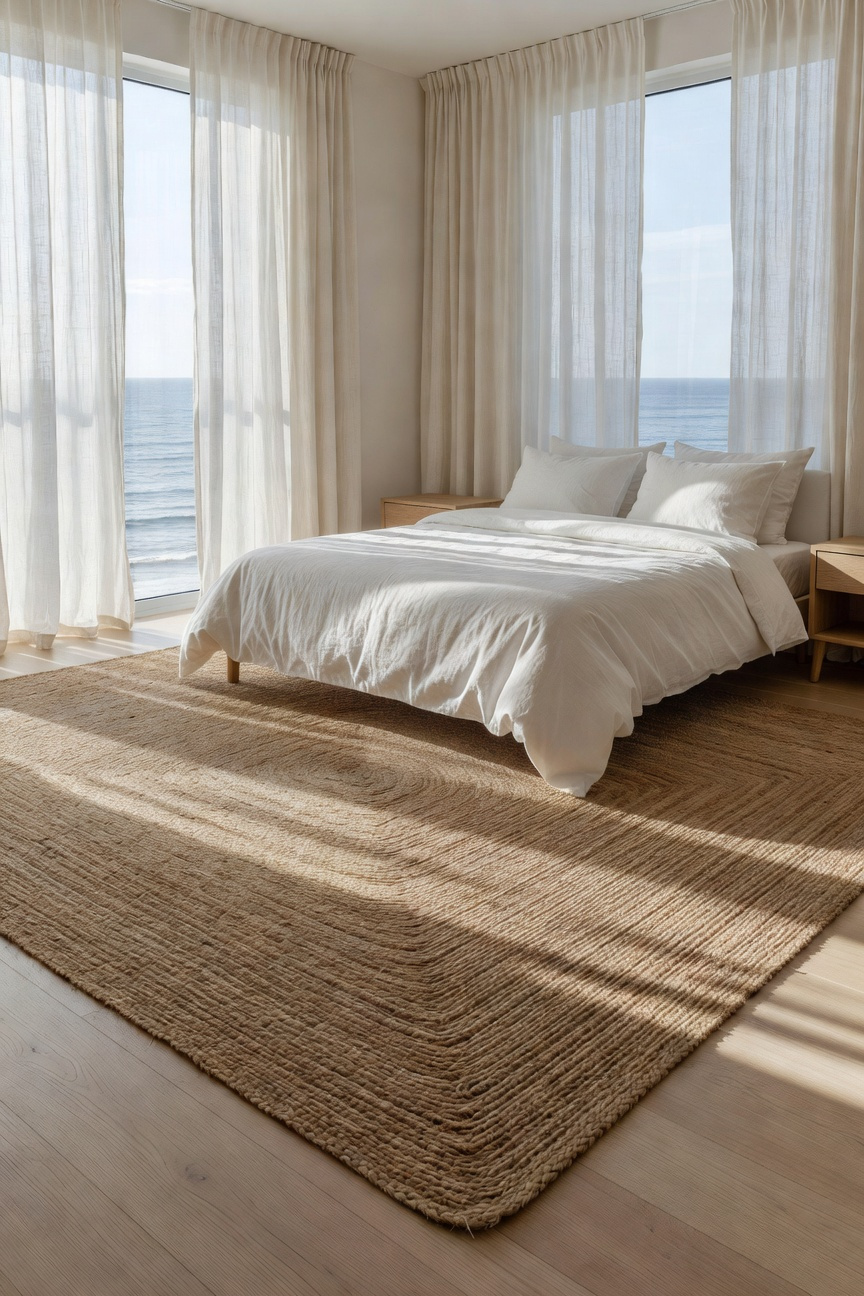
Walking barefoot on plant fibers actually serves a physiological purpose. Direct tactile contact triggers oxytocin release and lowers stress hormones. This sensory grounding helps shift your mind into a restorative state. The specific weave you choose dictates the comfort of the room.
A soft bouclé weave provides a gentle foot massage right beside the bed. A chunky basketweave offers a springy surface compared to a rigid herringbone pattern. Seagrass rugs feel remarkably cool and waxy underfoot. This refreshing texture naturally repels humidity thanks to a saltwater-resistant plant coating. However, raw coastal fibers can sometimes feel slightly abrasive against bare skin.
Because of this, I recommend a smart hybrid layering technique. First, use a large sisal rug as a moisture-wicking room foundation. Next, layer a plush, organic wool flatweave right over the plant fibers. This pairing delivers cloud-like softness alongside durable maritime structure. Ultimately, you get a luxurious seaside feel without relying on anchor-printed bath mats.
Ocean-Inspired Art Collection: Choosing Abstract Horizons Over Literal Seascapes
Selecting artwork for a coastal bedroom takes careful thought. We really need to move away from cliché, literal seascape paintings. Abstract horizon lines offer a much more sophisticated alternative. Evolutionarily, a clear wide horizon signals safety to our brains. Therefore, these abstract lines allow the nervous system to relax. Realistic paintings of crashing waves actually increase our cognitive load. The brain instinctively tries to decode the literal details of the scene. Stripping away those details promotes a much more meditative presence.
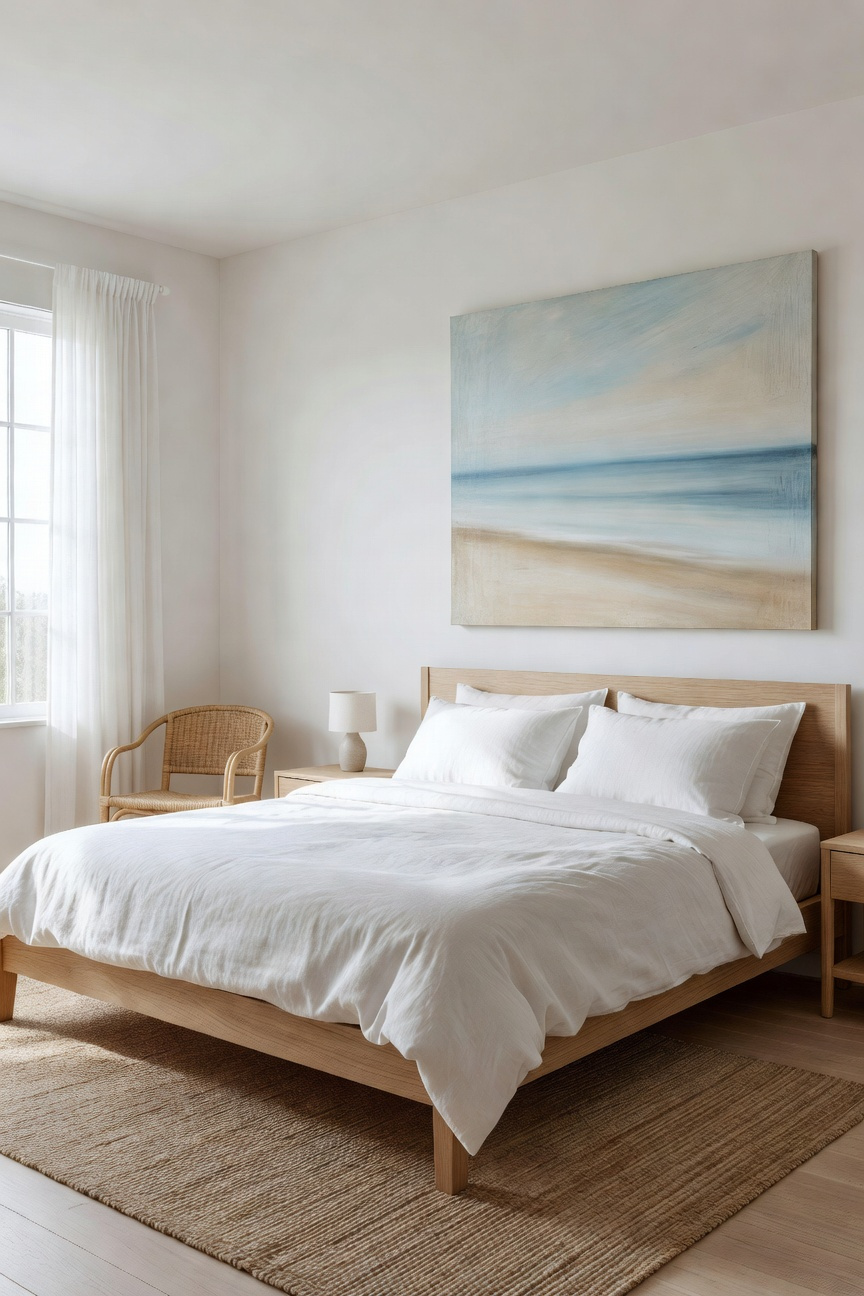
Artists like Mark Rothko championed this exact visual approach. Hiroshi Sugimoto also captured the ocean as a blurry, primordial experience. Modern designers use this concept to craft quiet sanctuaries. Blue space theory heavily supports this aesthetic choice. Therapeutic hues like soft azure trigger the brain’s reward centers. Sophisticated art also relies on tactile texture rather than strict imagery. Heavy impasto or sand-infused paints ground the space beautifully.
Abstract horizons create a powerful illusion of infinite space. They push visual boundaries outward to expand the room. This expansive technique anchors many modern Coastal Japandi designs. Finally, abstract art remains emotionally neutral throughout the day. Your bedroom can easily transition into a dark, introspective cocoon at night.
Ambient Lighting Solutions: Woven Pendants and Lantern-Inspired Sconces
Ambient lighting in a coastal bedroom acts like atmospheric glue. It binds the tactile textiles together with the natural seaside light. Woven pendants and lantern-inspired sconces serve as functional artifacts. They seamlessly bridge maritime history with modern design. Woven pendants excel at playfully obstructing light. Fixtures made from rattan or seagrass mimic sunlight filtering through a beach canopy. This creates a beautiful dappled sun effect on your floor. These patterns project moving shadows onto the walls, adding visual texture to flat spaces. An oversized pendant makes a fantastic visual anchor.
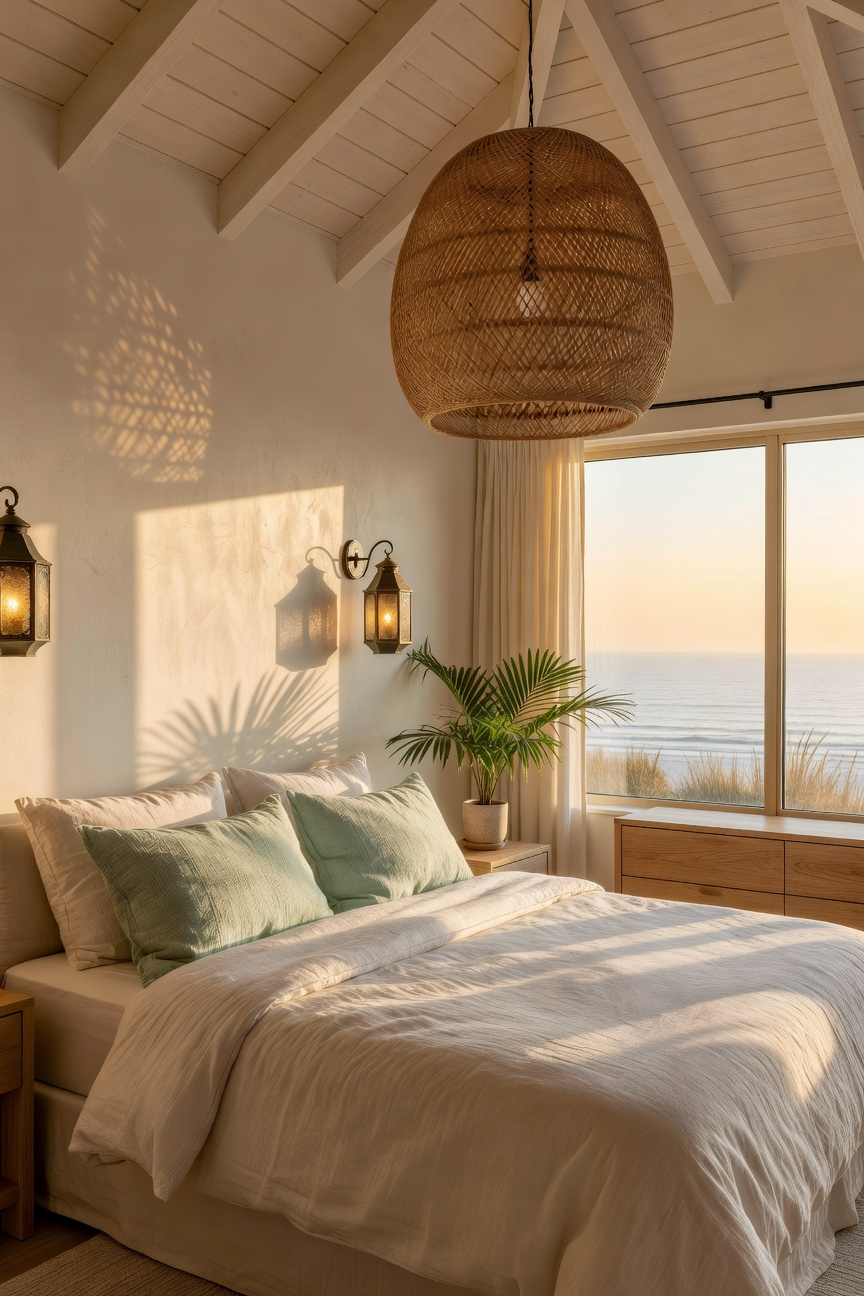
Lantern-inspired sconces bring an inherent sense of maritime safety. Historically, these solid brass fixtures protected open flames from turbulent winds. Today, verdigris finishes suggest a beautifully weathered history. Matte black options offer a striking, contemporary contrast. Strategically, these sconces should sit at eye level beside the bed. This lowers the room’s visual center. As a result, the brain receives a gentle signal to prepare for rest. Getting the right coastal glow requires precision. Experts recommend a warm color temperature near 2700K. Any cooler, and natural woven fibers will look dull and lifeless. Using frosted bulbs also prevents harsh glare through open-weave shades.
The true magic happens when light hits specific wall treatments. Directional pendant shadows emphasize the sharp architectural lines of shiplap. Sconce light enhances the velvety texture of limewashed plaster. The walls themselves begin to glow like sun-bleached coral. However, these natural lighting materials require mindful maintenance. Intricate weaves trap dust and salt very easily. Regular brushing prevents the fibers from looking flat and dirty. Natural fibers also become brittle in dry, air-conditioned rooms. Applying a little lemon oil helps maintain their rich appearance.
Subtle Biophilic Design: Coastal Foraging and Native Dune Greenery
Traditional coastal design relied way too much on predictable tropical motifs. True sophistication demands a more subtle biophilic approach. Prioritize native dune greenery over invasive, plastic-looking tropical plants. Incorporating wispy Sea Oats directly honors the local shoreline. These resilient plants naturally stabilize vulnerable coastal landscapes outdoors. Bringing their sweeping silhouettes inside establishes a deep sense of ecological authenticity.
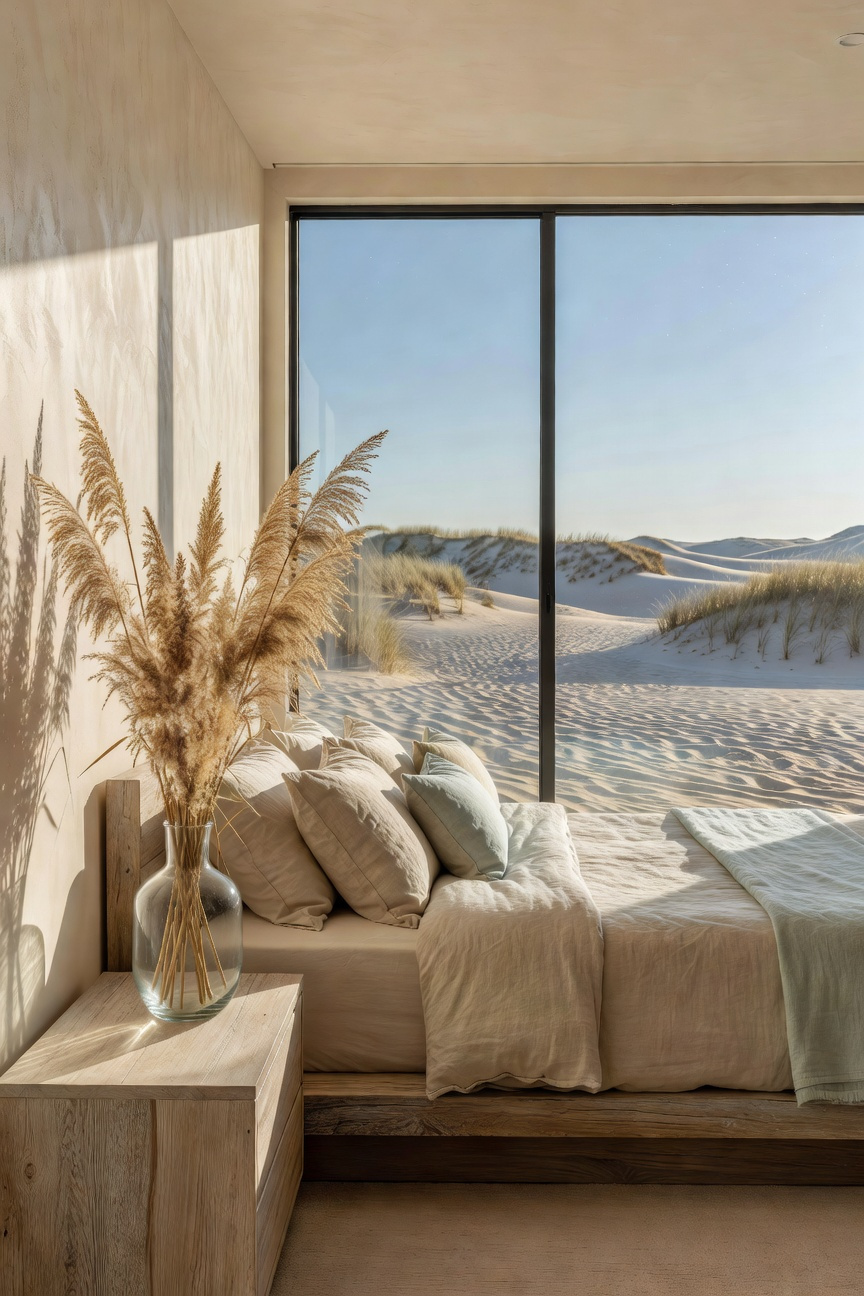
Good design also relies on nuanced sensory layering. Dried Sea Lavender introduces a muted, papery texture to a nightstand. Placing foraged grasses near an open window is a great trick. They produce a gentle rustle whenever the ocean breeze blows in. This soft acoustic layer acts as calming white noise for better sleep. Visually, the loose, windswept geometry of native grasses lowers your cognitive load.
Using foraged objects provides surprising psychological comfort. Natural elements like spiky Sea Holly act as autobiographical memory markers of your beach walks. Their weathered patina signals the raw power of the coastal elements. Meanwhile, authentic bedrooms must effectively harness dynamic shoreline light. Sheer linen drapery gently diffuses the harsh midday sun. This luminous coastal glow safely regulates your natural sleep cycles. Finally, introducing native aromatics like Coyote Mint subtly purifies the space. Fresh cross-breezes will transform the room into a breathing ecosystem.
Functional Flow: Space Planning to Maximize the Cross-Breeze
Designing a coastal bedroom goes far beyond picking a paint color. The true luxury of seaside living involves mastering the cross-breeze. Functional airflow relies entirely on the physics of air pressure. To maximize this cooling effect, rooms need both an air inlet and an outlet. Positioning your furniture strategically is a vital design step. Avoid placing a solid bed headboard directly against the primary windward window. Instead, utilize a slatted or woven cane headboard. These permeable materials allow ocean air to pass through freely. This prevents hot, stagnant air pockets from forming around you while you sleep.
Architects consistently recommend floating furniture away from the walls. By pulling the bed inward, incoming air circulates 360 degrees. Historically, coastal homes utilized transom windows and louvered closet doors. Modern spaces can easily revive this functional respiratory system. Open interior transoms allow rising hot air to escape effortlessly. Louvers give the breeze a continuous path right through the house. This constant atmospheric exchange flushes heavy carbon dioxide from the room. Sleepers are bathed in restorative negative ions from the sea. Window treatments also act as mechanical air-directors for the space. Plantation shutters remain the gold standard for functional airflow. By angling the wide louvers upward, incoming cool air hits the ceiling. It then mixes with warmer air to cool the entire room evenly. Simply leaving a window wide open just creates a narrow, annoying draft. Thoughtful space planning really transforms a basic room into a breathable retreat.
The Waterfront Contemplation Space: Designing a Seaside Reading Nook
Designing a sophisticated coastal reading nook goes beyond tossing a striped pillow on a chair. Historically, elevated rooftop platforms provided vital vantage points for sailors’ wives. We can elevate a nook’s seating slightly to honor this tradition. This creates a commanding, cozy space. Psychologically, an unobstructed horizon line is essential for true relaxation. Watching the shifting water gently engages our involuntary attention without causing mental fatigue. It induces a deeply meditative state of mind.
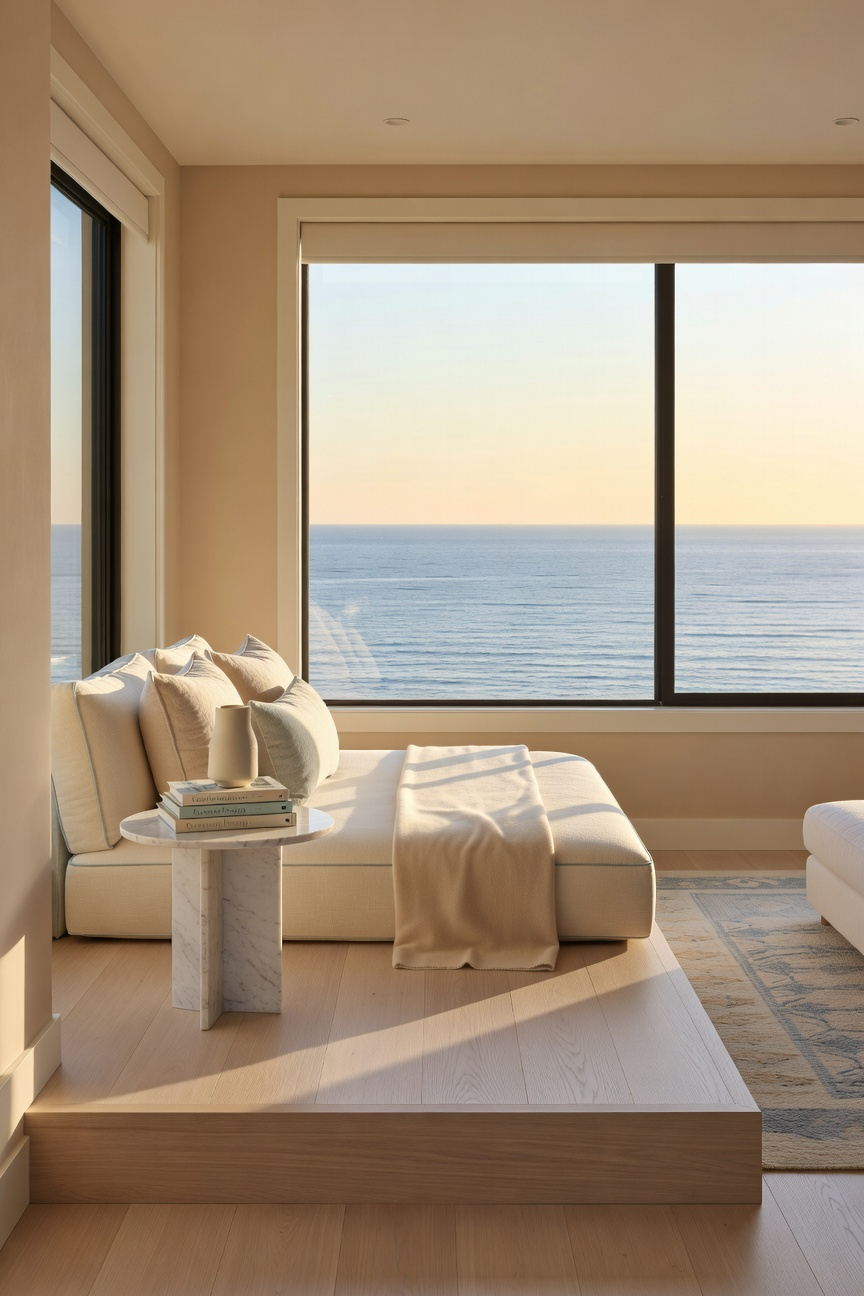
However, intense seaside glare can quickly ruin the reading experience. Adjustable plantation shutters solve this issue easily. By tilting the louvers upward, harsh sunlight reflects directly toward the ceiling. The room fills with a soft, diffused glow that illuminates your book perfectly. The coastal environment also brings unique sensory challenges. While wave sounds are soothing, a constant roar can cause subtle stress over time. Honeycomb cellular shades are perfect for dampening sharp wind noises.
Positioning the nook near a casement window is highly strategic. These windows act as scoops for the therapeutic sea breeze. They pull healthy sea spray aerosols directly into your reading zone. Material resilience should also dictate your aesthetic choices. Salty air is highly corrosive to cheap metals. Always specify marine-grade 316 stainless steel or solid brass hardware. It develops a rich patina rather than pitting and rusting. Linen remains the quintessential coastal fabric for its thermodynamic properties. Unlike synthetics, it actively wicks away heavy moisture. The seat will never feel clammy in humid waterfront air.
Weather-Resistant Luxury: Utilizing Performance Fabrics for Open-Window Living
Performance fabrics serve as invisible armor for the coastal bedroom. Opening windows historically invited destructive salt moisture inside. Natural linens act like sponges in these environments. They trap humidity and develop musty odors very quickly. Fortunately, solution-dyed acrylics have completely revolutionized this dynamic. Manufacturers infuse pigment directly into the liquid polymers before weaving. The color becomes part of the fiber’s actual DNA. This molecular shield prevents degradation from harsh sunlight.
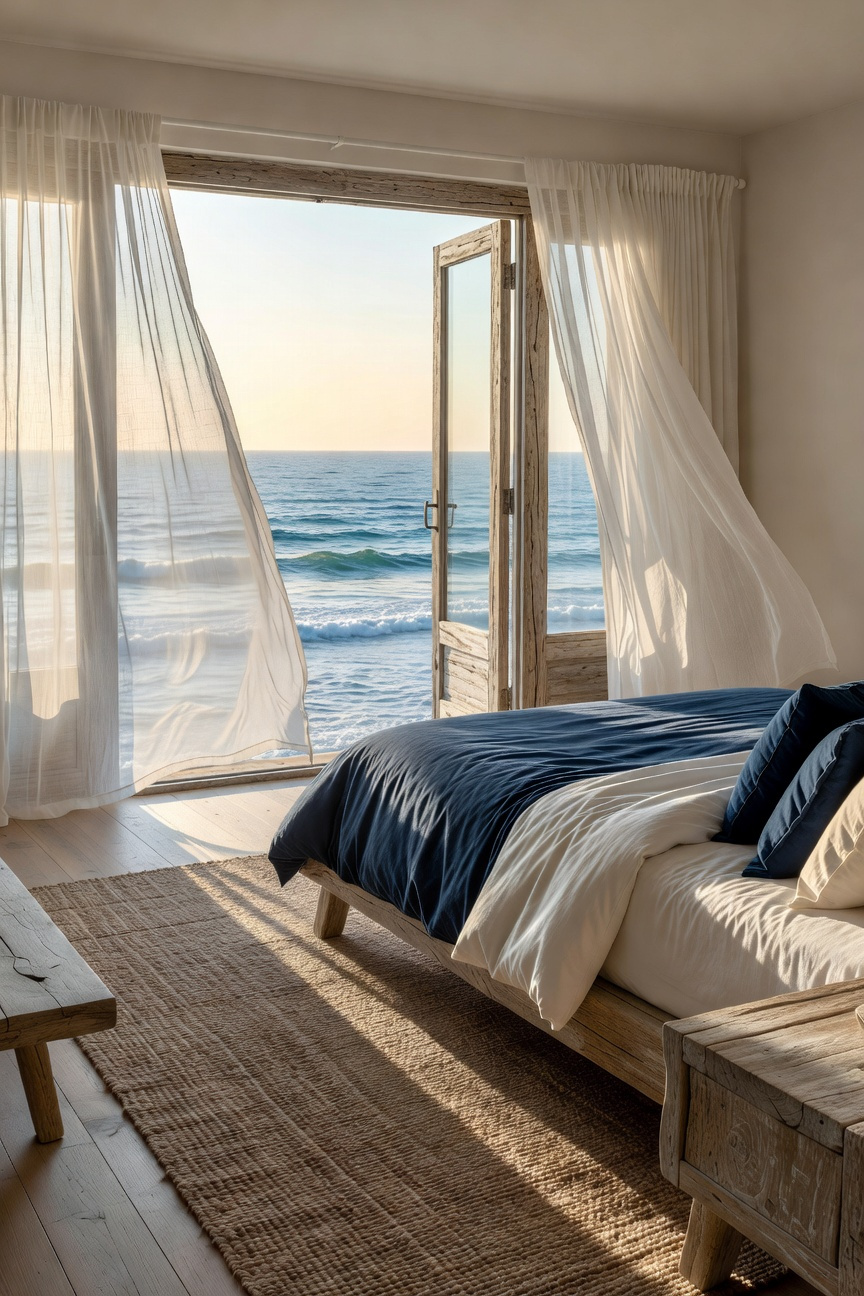
Today, these textiles feel exactly like delicate natural fibers. Performance velvets and bouclés offer absolute white-sofa luxury without the panic. Designers often utilize high-weight fabrics to improve room acoustics. Heavier materials absorb harsh noises like rattling window shutters. However, they still let the soothing surf rumble through. Increased fabric weights also prevent wild fluttering in heavy ocean breezes. This provides a necessary sense of stability.
Abrasive salt crystals easily destroy untreated natural fibers. Performance threads resist this microscopic grinding perfectly. Naturally, we pair them with marine-grade stainless steel drapery hardware. This prevents corrosive salt from pitting the curtain rods over time. These modern innovations successfully revive the classic sleeping porch experience. Homeowners can safely embrace true open-window living. You finally get to live with the sea instead of fighting against it.
Bedding Architecture: The Art of the Undone, Effortless Coastal Bed
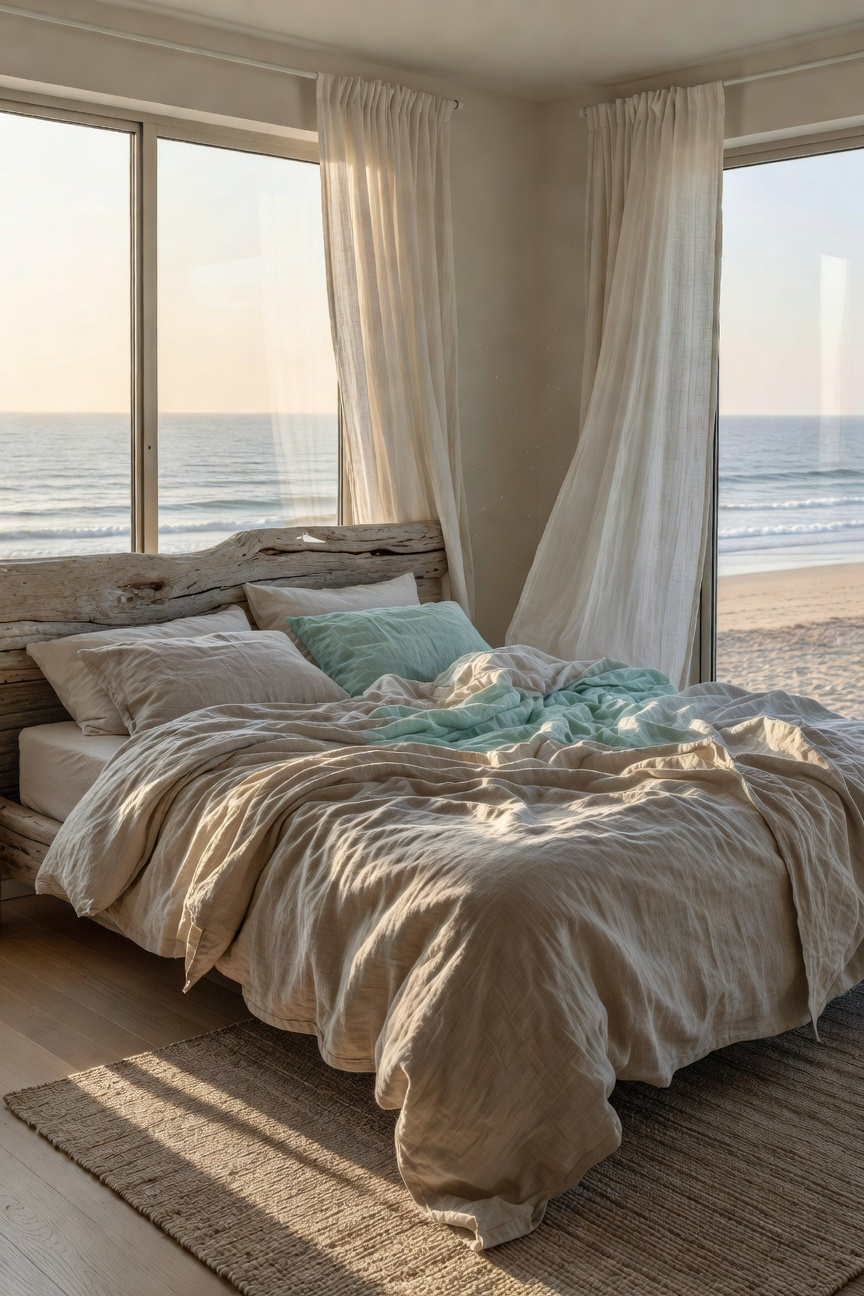
Modern coastal bedding rejects rigid hospital corners entirely. We treat the bed as a sculptural, comfortable living space. This aesthetic embraces the Japanese concept of Wabi-Sabi. You find true luxury in beautiful, tactile imperfection. A gently rumpled bed signals an effortless and authentic freedom. However, this undone look requires precise material choices. Authentic Belgian linen relies heavily on the natural slub of the yarn. These tiny irregularities create beautiful and completely unavoidable wrinkles. Stiff flax fibers also act as incredible biological air conditioning. They actively move moisture away from your resting body.
In practice, this effortless style demands a strict layering hierarchy. Designers utilize a deliberate coverlet-over-duvet technique. This method creates a generous, cascading waterfall drape. A top double fold-over exposes contrasting layered fabric textures. This invitatory roll-down mimics a welcoming, half-opened book. Conversely, your accent pillows must always maintain crisp structural integrity. A firm karate chop provides a tailored designer dimple. Sophisticated coastal beds must respond directly to their local climate. Loose waffle weaves capture cooling sea breezes perfectly in warmer months. Finally, atmospheric colorways should replace those literal nautical shell motifs. Tones like driftwood and seafoam gently diffuse harsh sunlight. These subtle hues keep the bedroom feeling eternally fresh.
Heritage Elements: Integrating Authentic Maritime Antiques with Restraint
Integrating authentic maritime antiques shifts a bedroom from kitsch to hereditary storytelling. This approach requires careful visual restraint. Consider the elegant marine chronometer, for example. Historically, these technical miracles solved the global longitude crisis for sailors. A chronometer in its original mahogany box introduces a theme of stability. Its brass gimbals serve as a tactile metaphor for balanced sleep. You easily avoid cliché anchor motifs with a piece like this. Instead, you embrace the faint scent of aged machine oil and salt-cured wood.
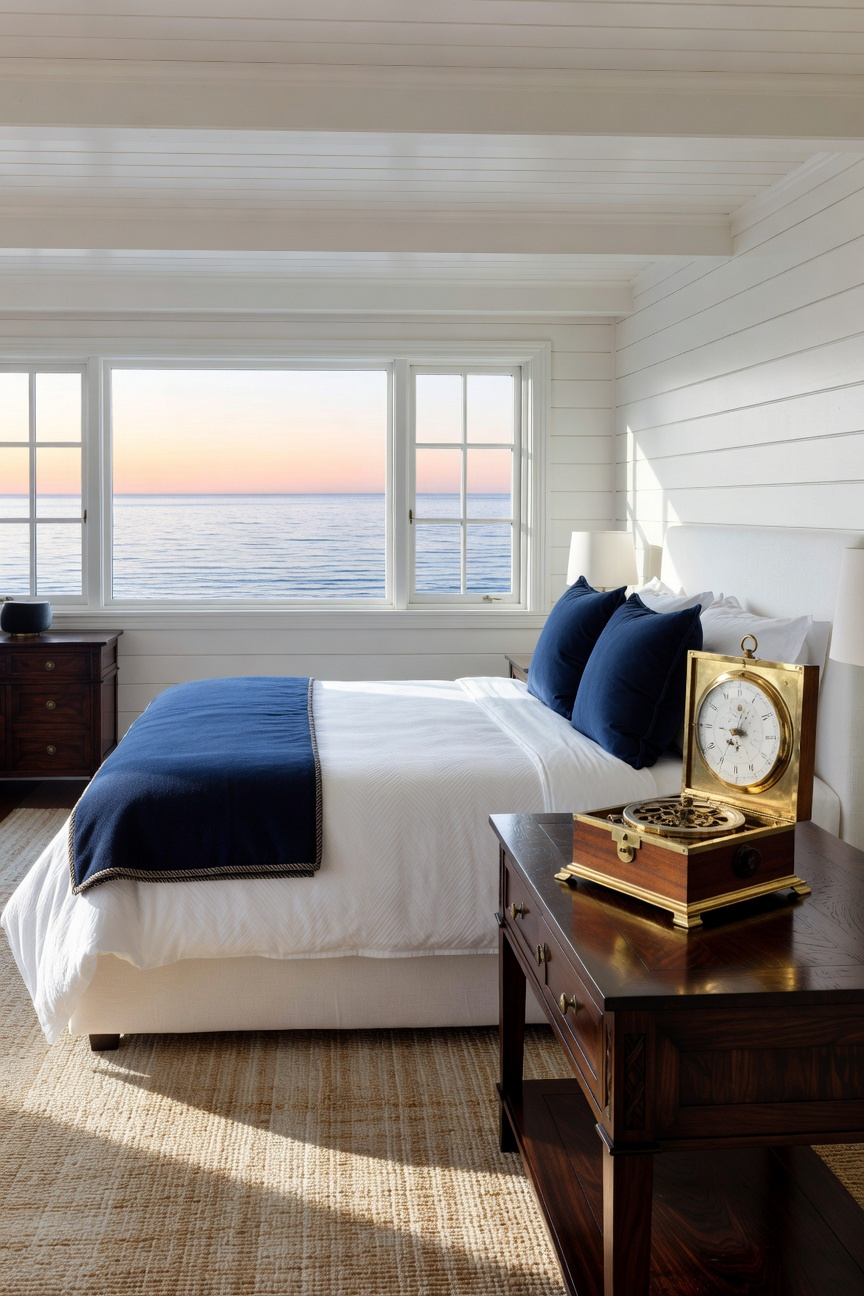
The materiality of authentic brass dictates your room’s visual volume. Genuine nineteenth-century brass features a remarkably high copper content. It yields a buttery glow and a long musical ring when tapped. Preserving this natural patina is absolutely essential for true authenticity. Uneven wear spots on a vintage telescope offer a ghostly connection to past captains. This unpolished ruggedness contrasts beautifully with crisp white linen bedding.
Designers often employ a strict sixty-forty rule to achieve harmony. Balance sixty percent clean contemporary lines with forty percent antique character. You should select only one loud historical piece per room. If you feature a large ship’s wheel, other accents must remain whisper-quiet. Visually heavy artifacts require at least eighteen inches of empty wall space around them. This essential breathing room prevents the space from feeling like a theme restaurant. Vintage signal flags spelling a subtle private message can add soft heritage. Their heavy wool bunting gently grounds the sharp edges of modern interiors.
The Nightstand Edit: Curating Minimalist Essentials for Seaside Tranquility
The nightstand is a crucial micro-sanctuary in coastal bedroom design. It bridges the gap between the stimulating outdoors and restful sleep, serving as a key part of sophisticated bedroom furniture decor. Coastal residents historically repurposed maritime tools for these bedside spaces. A modern edit replaces visual clutter with this kind of maritime utility. A vintage brass compass provides beautiful bedside weight. A classic mechanical chronometer can replace harsh blue-light screens completely.
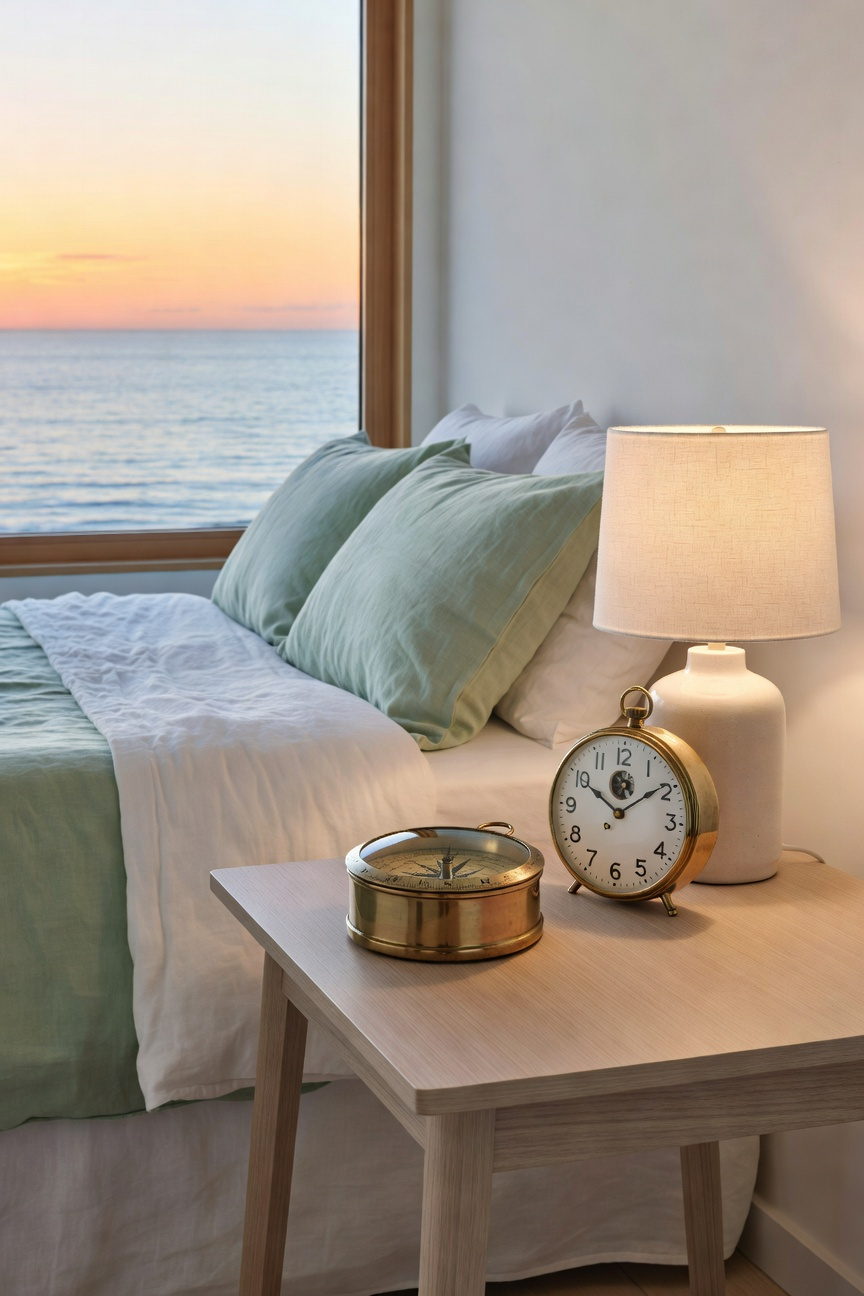
Bedside lighting requires careful curation to mimic seaside tranquility. Your primary lamp should emit a warm 2700K glow. This amber light naturally simulates the soft coastal golden hour. It triggers essential melatonin production right before you sleep. A secondary reading light at 4100K mimics reflecting moonlight. This cooler tone leverages the human eye’s Purkinje effect to create a profound sense of immersion.
Sensory details must follow a ruthless, minimalist approach. Interior experts highly recommend the tactile rule of three. Blend one natural texture, one smooth surface, and one piece of life. Skip the synthetic room sprays and seek natural scents containing Cis-3-Hexenyl Salicylate. This specific compound undeniable recreates the true aroma of damp sand. Anchor the space with a small piece of sun-bleached driftwood. Next, introduce a Tillandsia air plant in recycled glass. This simple bio-indicator provides oxygen without adding visual noise.
By prioritizing curated aesthetics and elevated living principles, coastal bedroom decorating becomes an exercise in timeless tranquility rather than a seasonal trend.
Frequently Asked Questions
What are the best colors for a modern coastal bedroom?
Modern coastal palettes favor a foundation of “morning fog” blue-grays, warm oats, and muted sand tones. These are often accented with soft seaglass colors like seafoam green or pale azure. This reflects the natural environment without relying on harsh primary blues and whites.
How can I make my coastal bedroom feel more luxurious?
Luxury in coastal design comes from using high-quality natural materials and “living finishes.” Incorporate Belgian linen bedding and weathered white oak furniture. Unlacquered brass accents that develop a natural patina over time also create an authentic, high-end atmosphere.
What types of textures are essential for coastal decorating?
The most essential textures include breathable European linen, coarse jute or sisal for floor coverings, and smooth, weathered wood. Layering these different tactile elements creates a layered look that mimics the varied surfaces of the shoreline.