
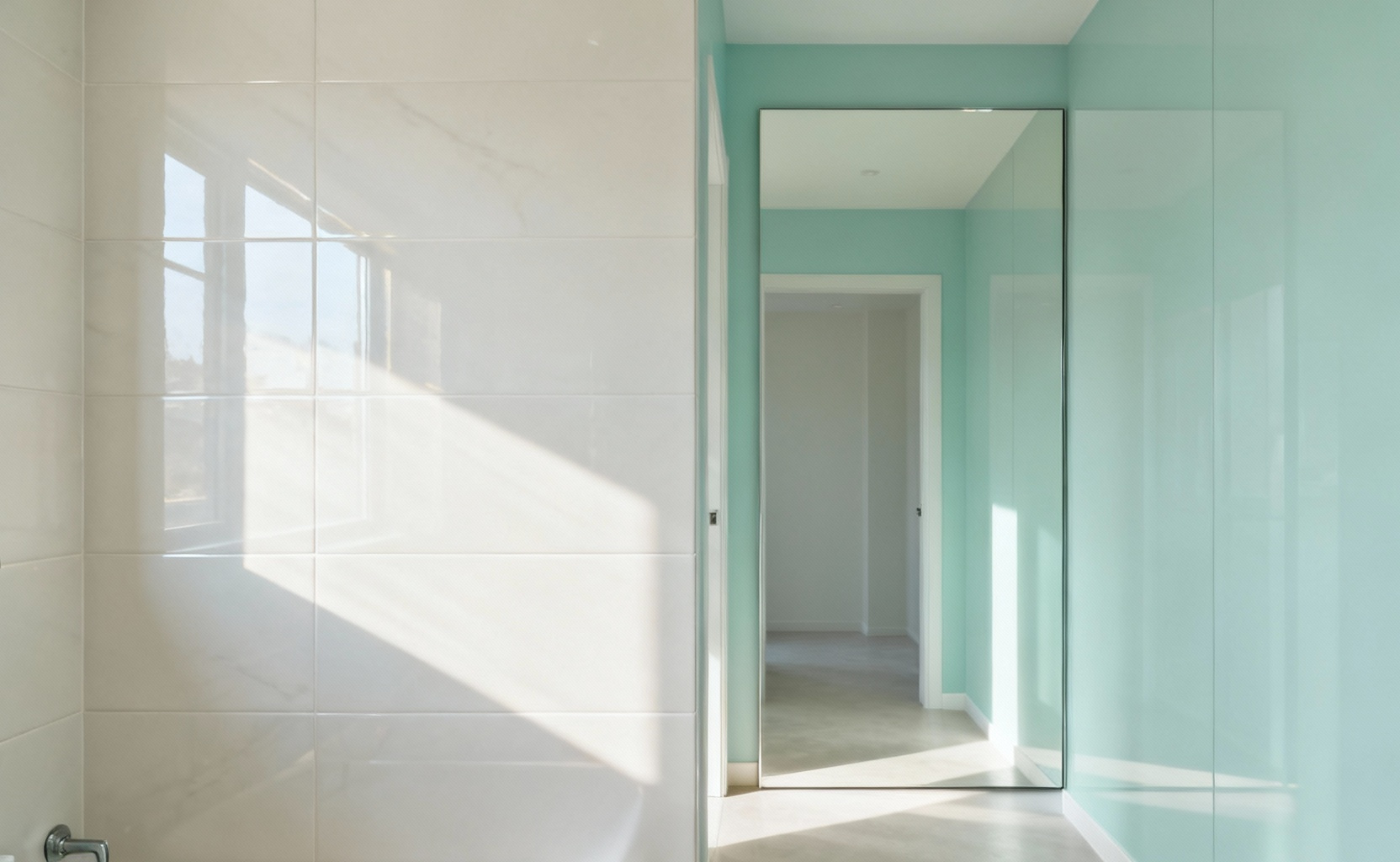
Most of us have been told that a small bathroom is a design problem to be solved, a space where function must always win out over feeling. We see this idea echoed across home design blogs and renovation shows that praise sprawling, spa-like master suites. Here’s a gentler truth they often miss: in my decade of work creating wellness sanctuaries, I’ve learned that a compact space holds a unique power. Its intimacy creates a potent canvas for focused, intentional design. These 20 small bathroom remodeling secrets will show you how to transform limitations into opportunities, creating a restorative retreat where profound well-being can truly flourish.
The conventional wisdom that small means compromised overlooks the beautiful potential for a space to feel like a protective cocoon. Instead of a limitation, a compact area invites a mindful approach where every element—from the texture of the tiles to the warmth of the light—is chosen with purpose. This isn’t about simply saving space; it’s about curating an environment that actively nurtures your spirit. Together, we’ll journey through a process that builds from a calm foundation to a fully realized, holistic design, proving that a sanctuary is defined by its energy, not its square footage.
We will begin with the essential fundamentals for creating a sanctuary, establishing a base of harmony and flow. From there, we will explore smart techniques that elevate the design, expanding the feeling of space and light. Then, we will move into advanced strategies for integrating every detail seamlessly, before finally mastering the holistic principles that will ensure your small bathroom provides enduring serenity. This is your guide to crafting a space that nurtures you in return.
Essential Small Bathroom Sanctuary Fundamentals (Part 1)
Transforming a small space begins with a foundational shift in perspective. It’s about understanding that every choice can either add to a sense of calm or contribute to subtle chaos. This section lays the groundwork, revealing the core principles for recasting your small bathroom remodeling project as an act of self-care. We will explore how color, reflection, and intentional focus create the visual and energetic harmony necessary for a true personal haven.
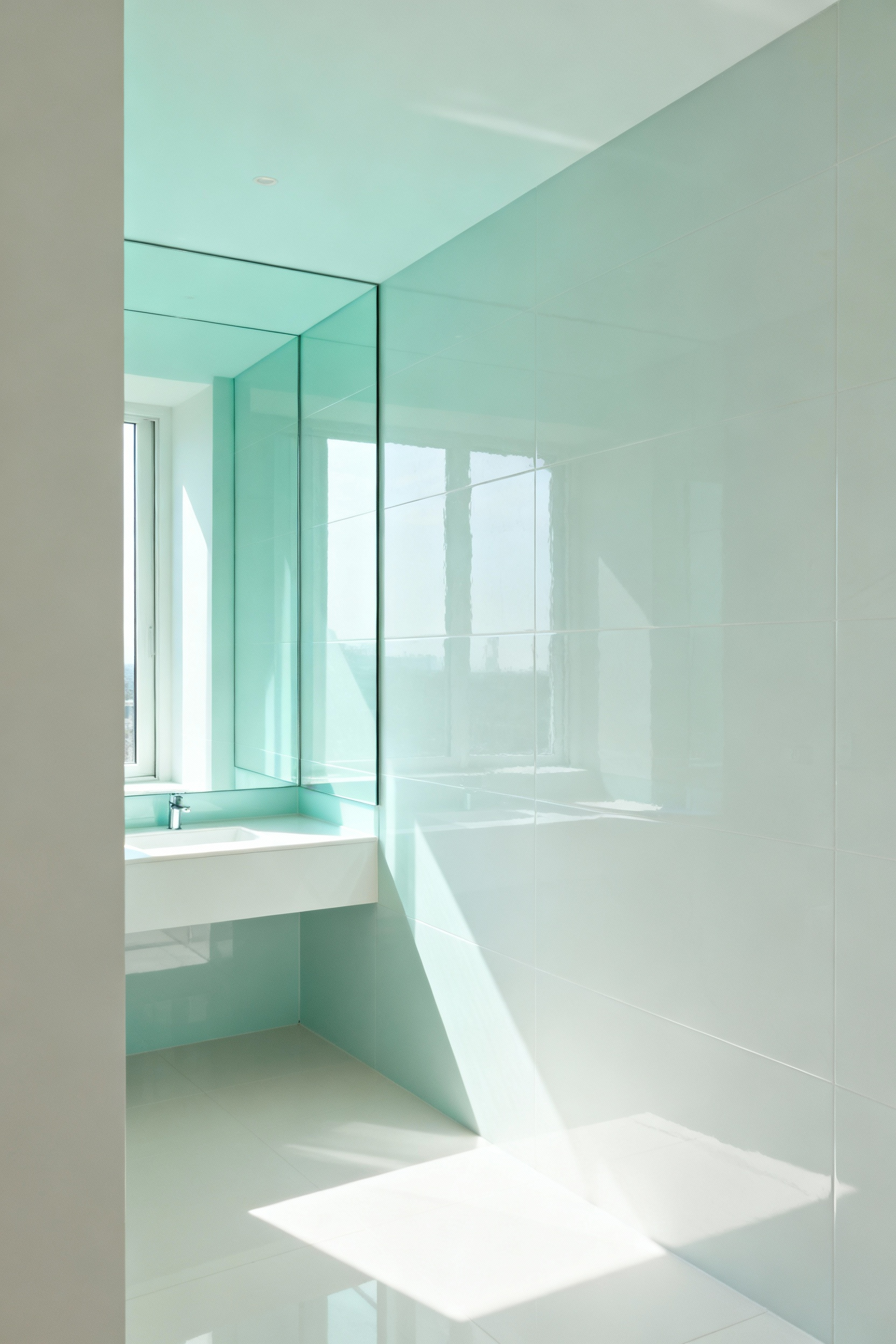
1. Leveraging Light-Reflecting Hues: Opting for a Harmonious Color Palette
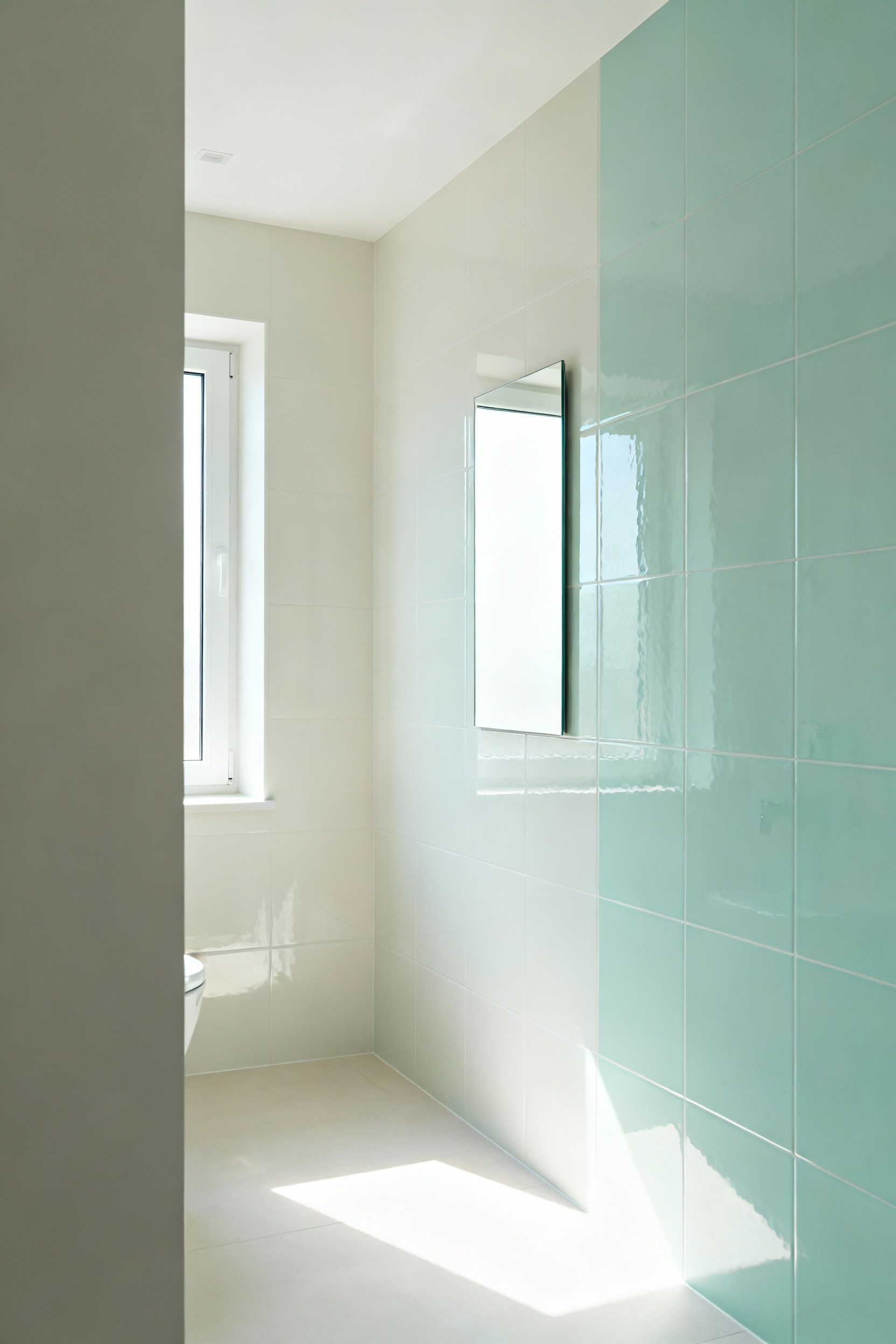
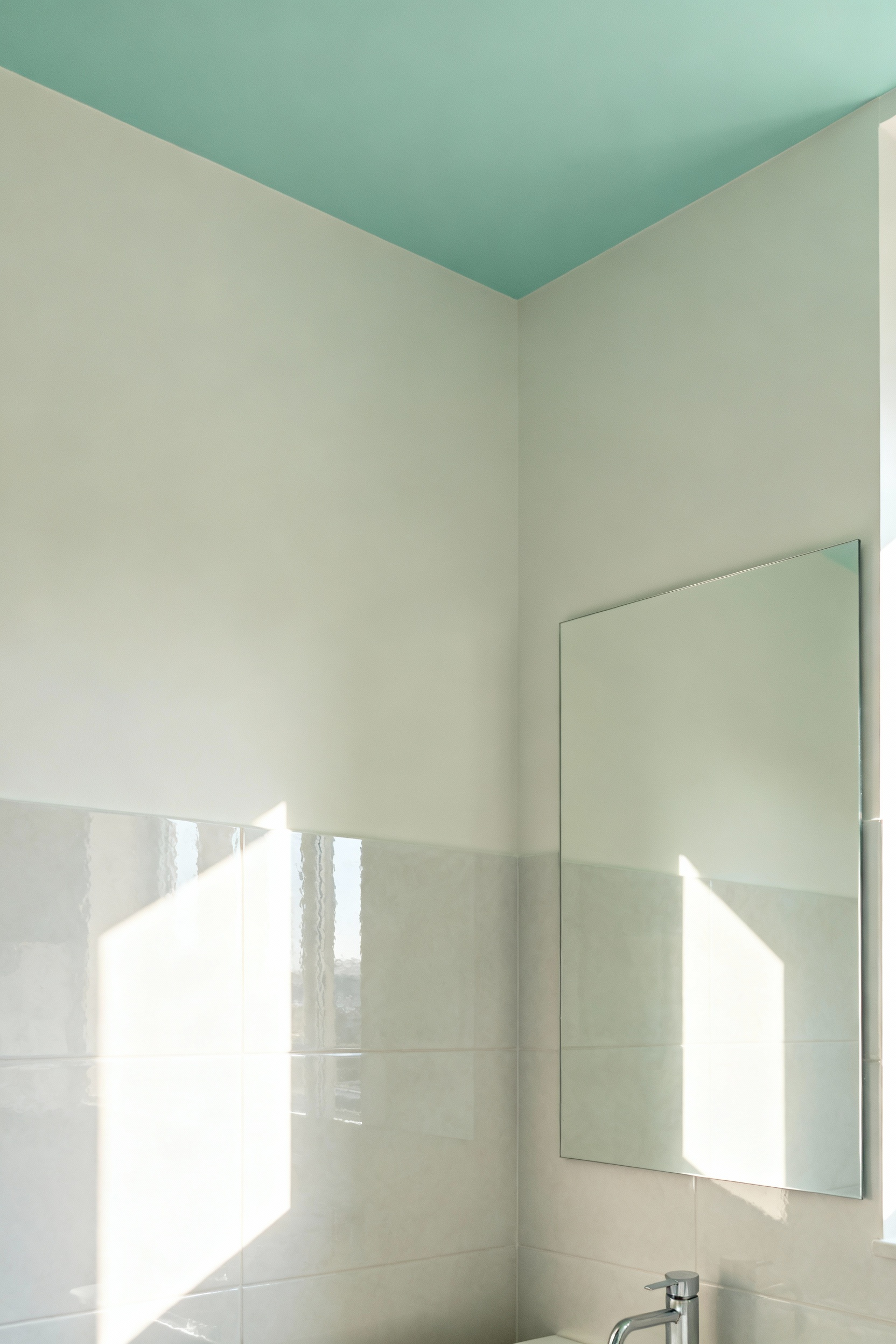
The colors we surround ourselves with have a profound, scientifically-backed effect on our mental state. For a small bathroom, a palette of soft, light-reflecting hues—think gentle whites, ethereal blues, and warm, misty grays—is the simplest way to create a feeling of expansiveness. These colors work by bouncing light around the room, which our brains interpret as openness. But more than that, they carry psychological weight, evoking feelings of purity, calm, and clarity, which are the cornerstones of a restful sanctuary. This is your foundation for building a tranquil atmosphere.
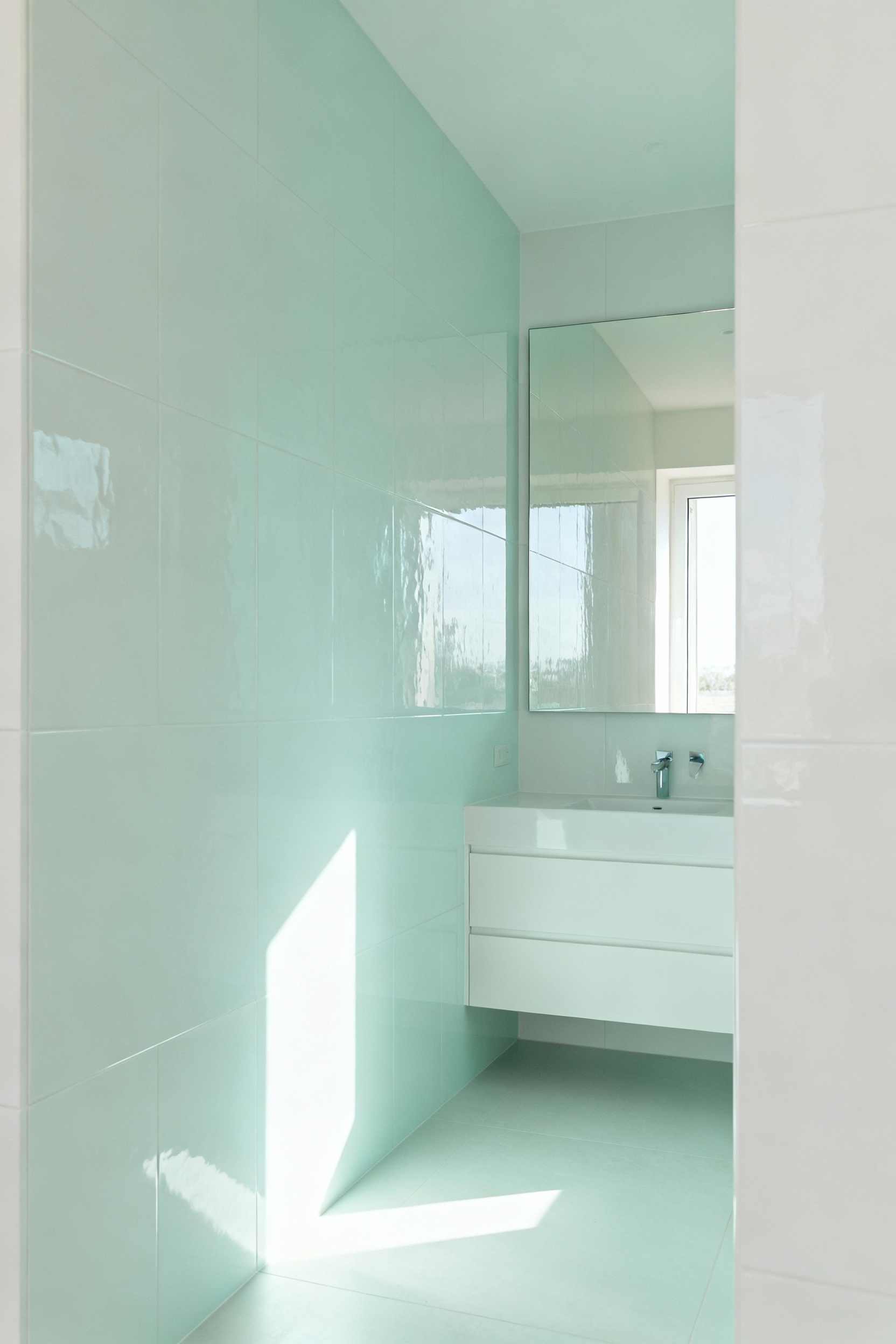
As you move deeper into your design, consider the nuanced undertones within these light palettes. A warm white with a hint of cream or rose feels nurturing and embracing, while a cool gray with a touch of lavender can create a sophisticated, spa-like calm. From my work in holistic home design, I’ve learned that layering different textures within a single-color family—a polished tile, a matte wall, a soft linen towel—builds incredible depth without overwhelming the eye. This allows energy, or chi, to flow smoothly, turning a simple color choice into a sophisticated design element that makes your sanctuary feel boundless.
2. Strategic Mirror Placement: Expanding Visual Depth with Reflective Surfaces
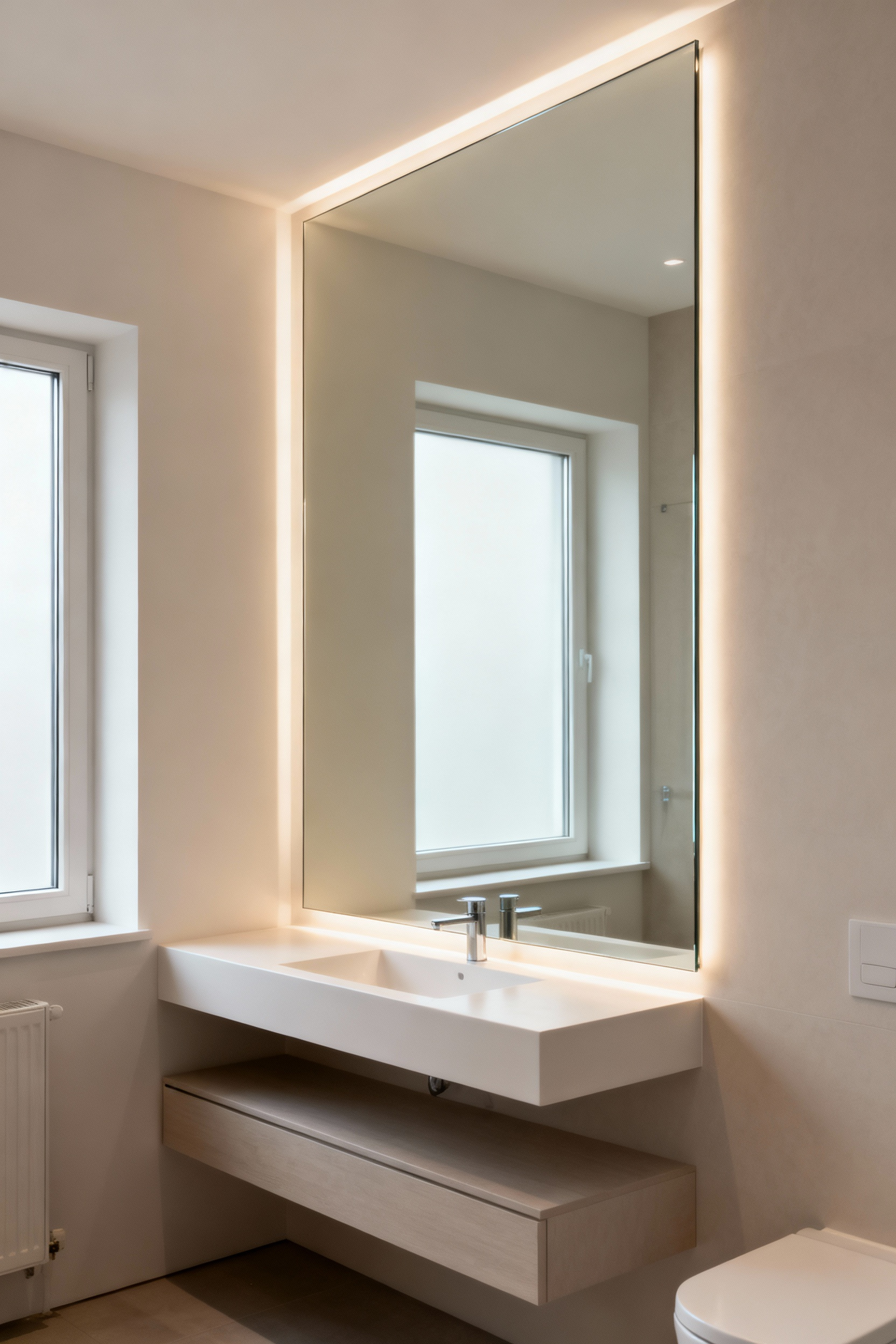
Mirrors are so much more than functional objects; they are instruments of light and energy. The most accessible way to use a mirror in a small bathroom remodeling project is to place a single, large one above the vanity. This simple act instantly doubles the perception of light and space in the room. This is the starting point for anyone wanting to create a more open environment, a classic technique for good reason. But we can take this principle so much further.
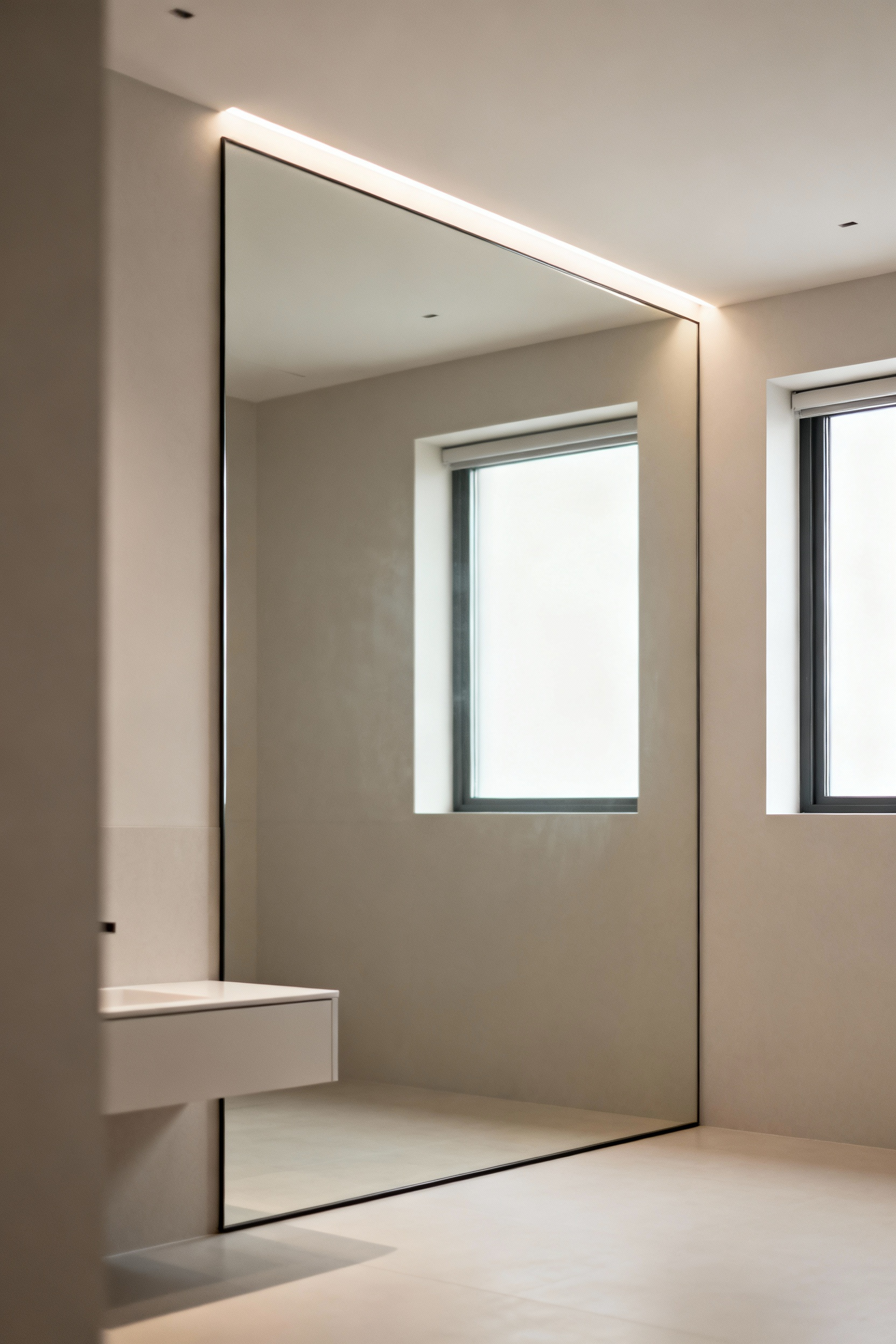
To elevate this, think of the mirror as an artist’s tool. Instead of a standard rectangle, perhaps a round mirror can soften the room’s hard angles and promote a gentler energy flow. Positioning a mirror to reflect a window is one of my favorite techniques; it not only amplifies natural light but also “borrows” the view from outside, bringing a vital biophilic element of nature into your sanctuary. This creates a living piece of art that changes with the seasons, making the room feel connected to something larger than its own four walls.
3. Intentional Decluttering Rituals: Cultivating an Unobstructed Visual Flow
Visual clutter directly translates to mental clutter. In a small bathroom, this effect is magnified. The first step toward a serene space is to create a ritual of intentional decluttering. Begin by mindfully assessing every item on your countertops and shelves. If it doesn’t serve your daily wellness routine or bring you joy, find it a home elsewhere. This act isn’t about sterile minimalism; it’s about making space for peace, allowing your mind to rest by giving your eyes an unobstructed view.
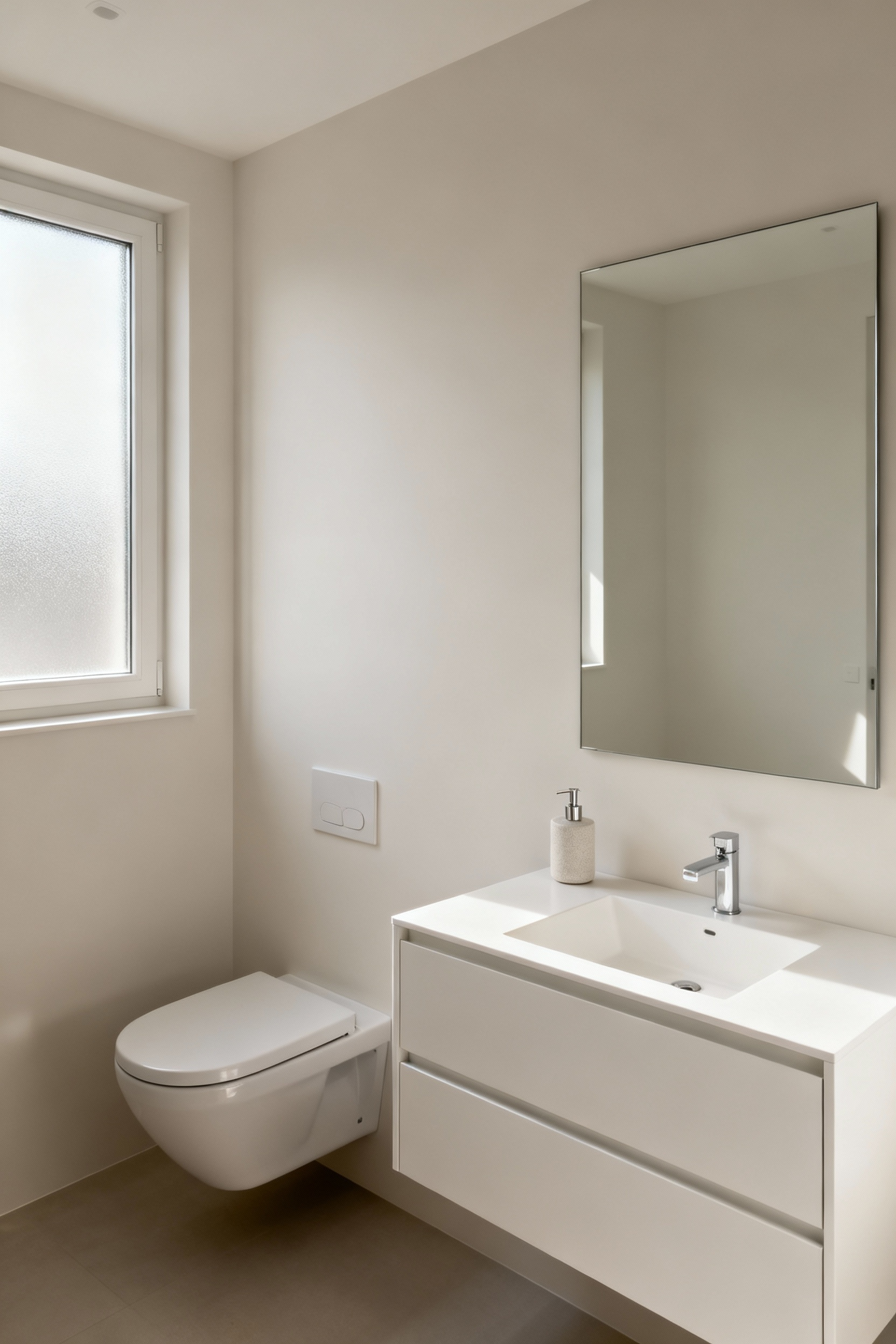
The next evolution of this practice is to create what I call ‘invisible storage’—solutions so integrated they feel like part of the room’s architecture. This could be recessed niches in the shower wall or a medicine cabinet set flush with the wall. By giving every single item—from your toothbrush to your spare towels—a designated, hidden home, you transform the act of tidying up into a small, daily ritual of restoring calm. Your bathroom becomes a space that is effortlessly pristine, ready to support you rather than demand your attention.
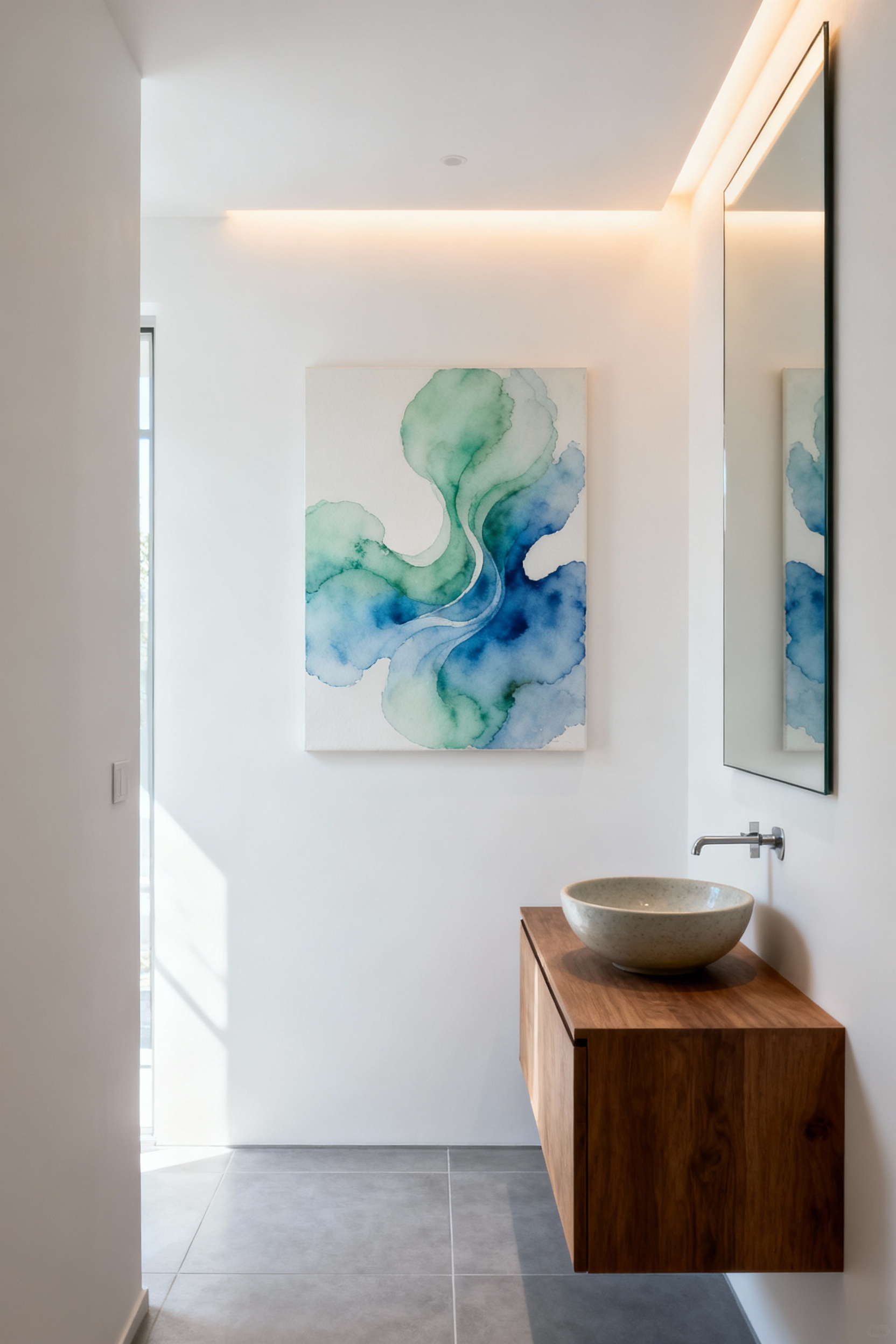
4. Curating a Statement Focal Point: Elevating Ambiance with Deliberate Artwork
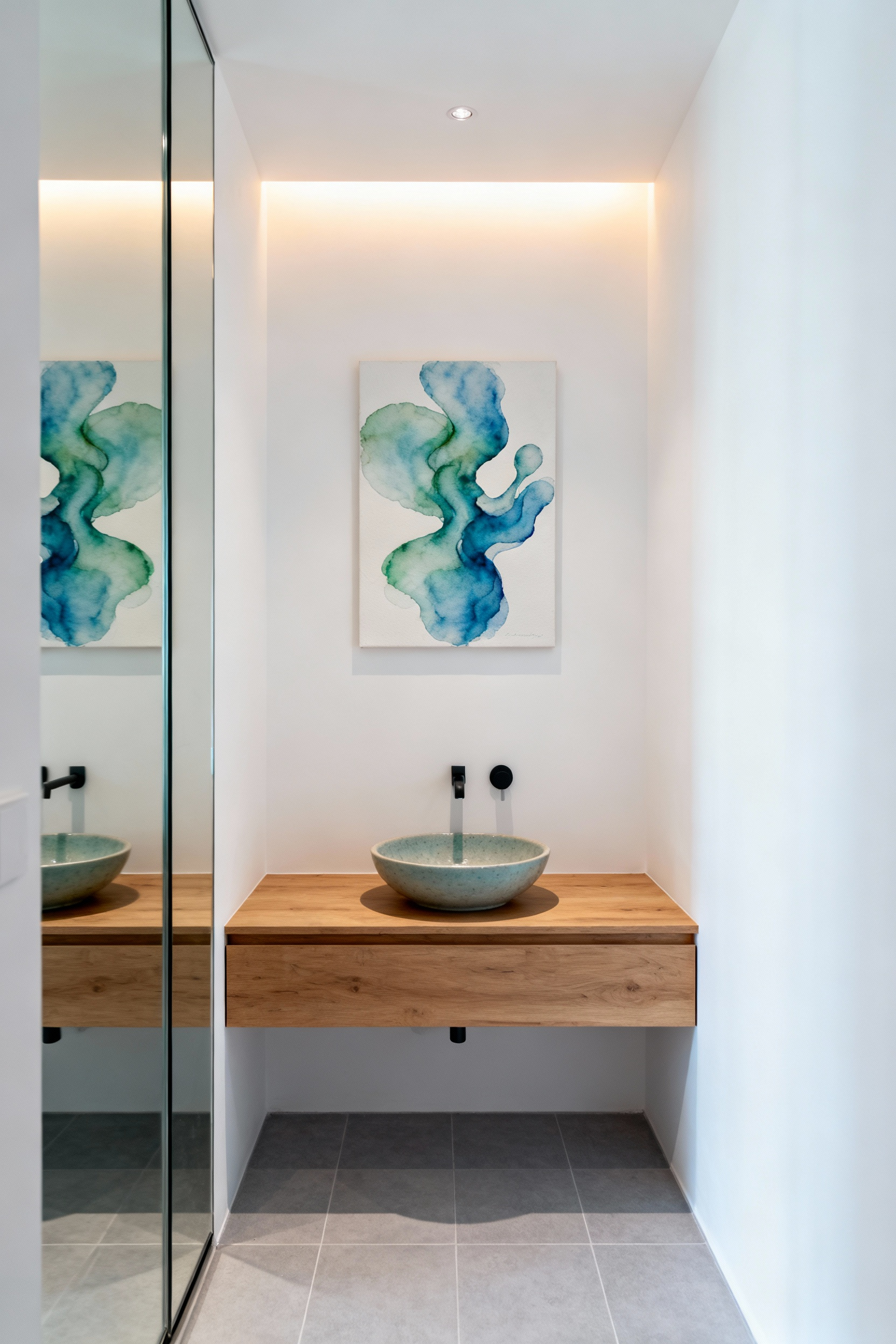
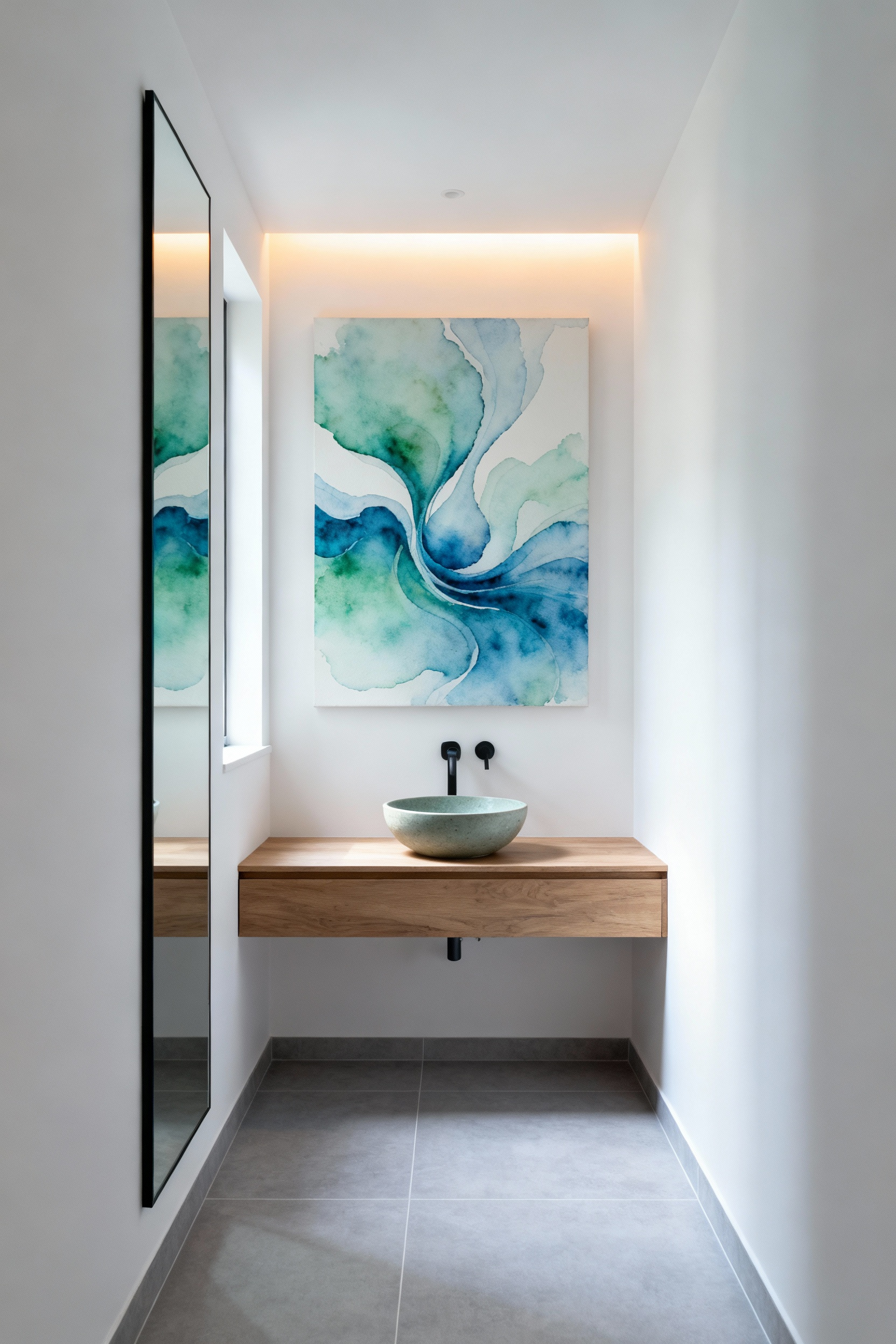
In a small room, the eye can wander aimlessly, making the space feel disorganized. Creating a single, intentional focal point gives the eye a place to land, grounding the entire room’s energy. This doesn’t have to be a grand gesture. It could be a unique light fixture that casts a beautiful pattern, a small, vibrant piece of art, or even a stunning living orchid. The key is to choose one element that feels truly special and acts as the heart of your bathroom’s design.
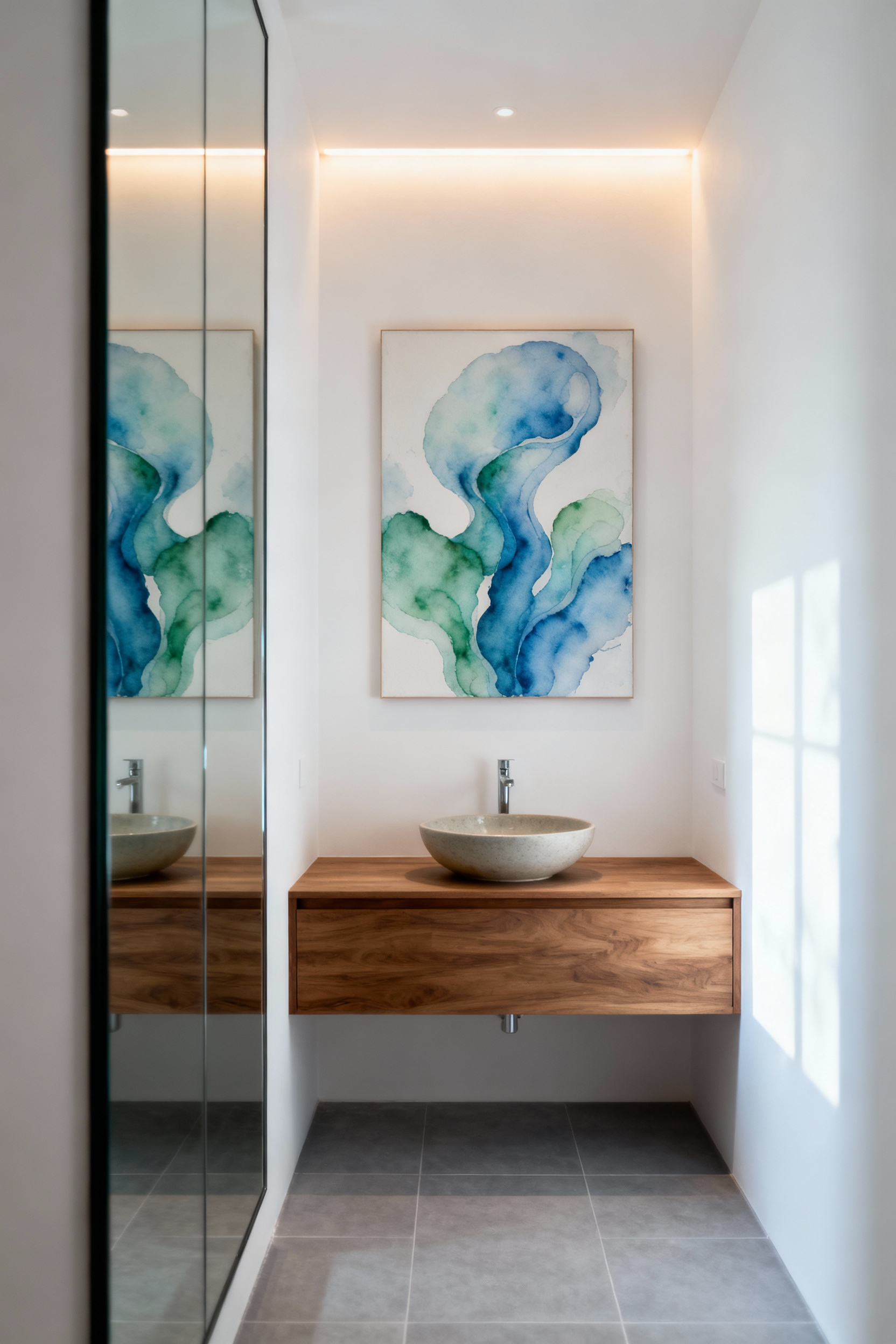
This focal point becomes more than just decoration; it serves as a visual anchor for mindfulness. As you begin your morning routine, your gaze might rest on this beautiful object, offering a moment of quiet appreciation before the day begins. In my wellness sanctuary design practice, I’ve seen how a thoughtfully chosen piece can completely shift the feeling of a room. It declares that this space is not just for function, but for rejuvenation and beauty, a crucial element in any successful small bathroom remodeling effort.
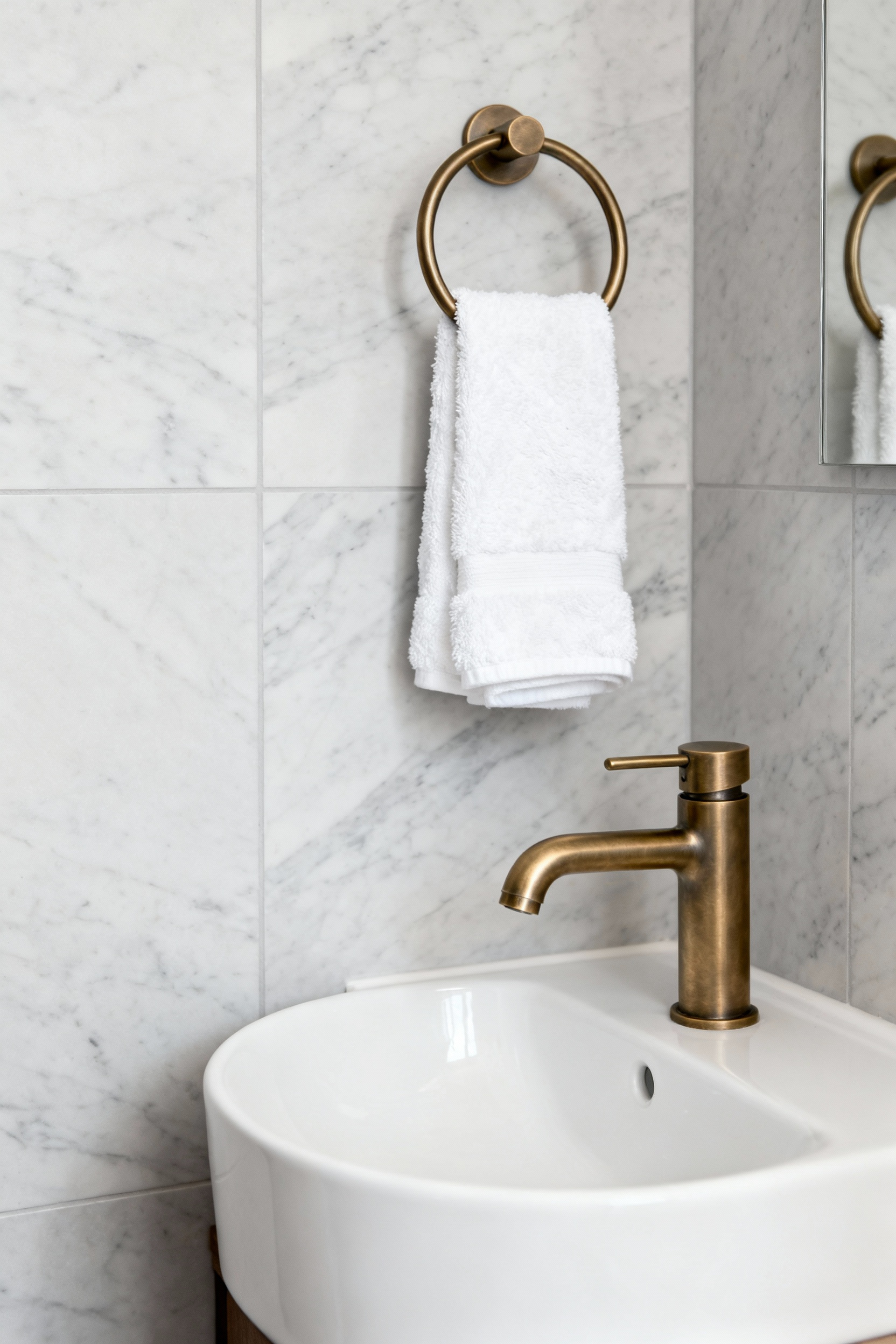
5. Optimizing Single Fixture Upgrades: Infusing Modernity with Elegant Hardware
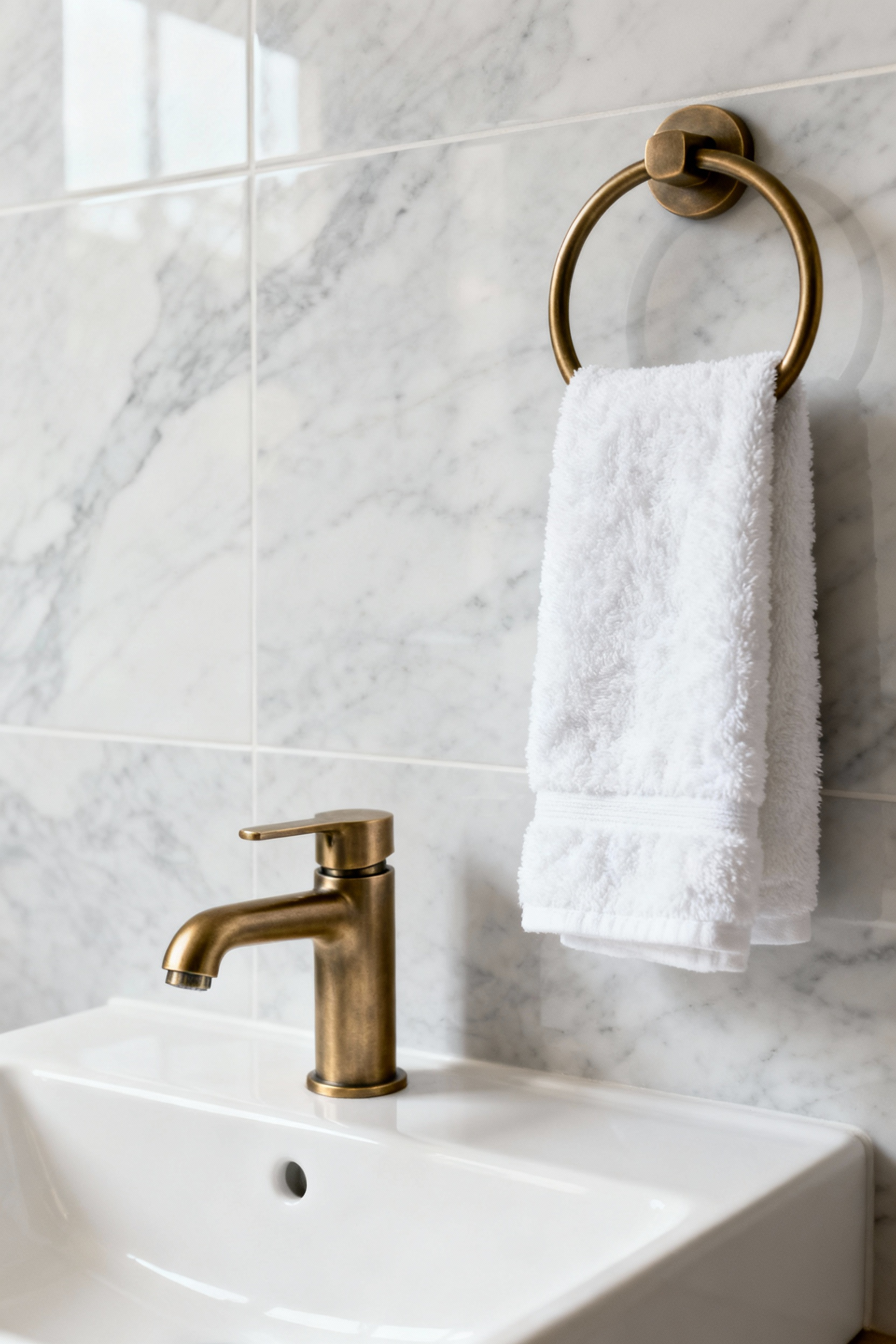
The details you touch every day carry immense energetic weight. Upgrading basic hardware—like a faucet, cabinet pulls, or a showerhead—is a simple change with a disproportionately large impact. Think of it as adding a beautiful piece of jewelry to a simple outfit. Replacing a dated faucet with one that has clean lines or swapping plastic knobs for solid brass handles instantly signals quality and intention, elevating the entire space from builder-grade to bespoke.
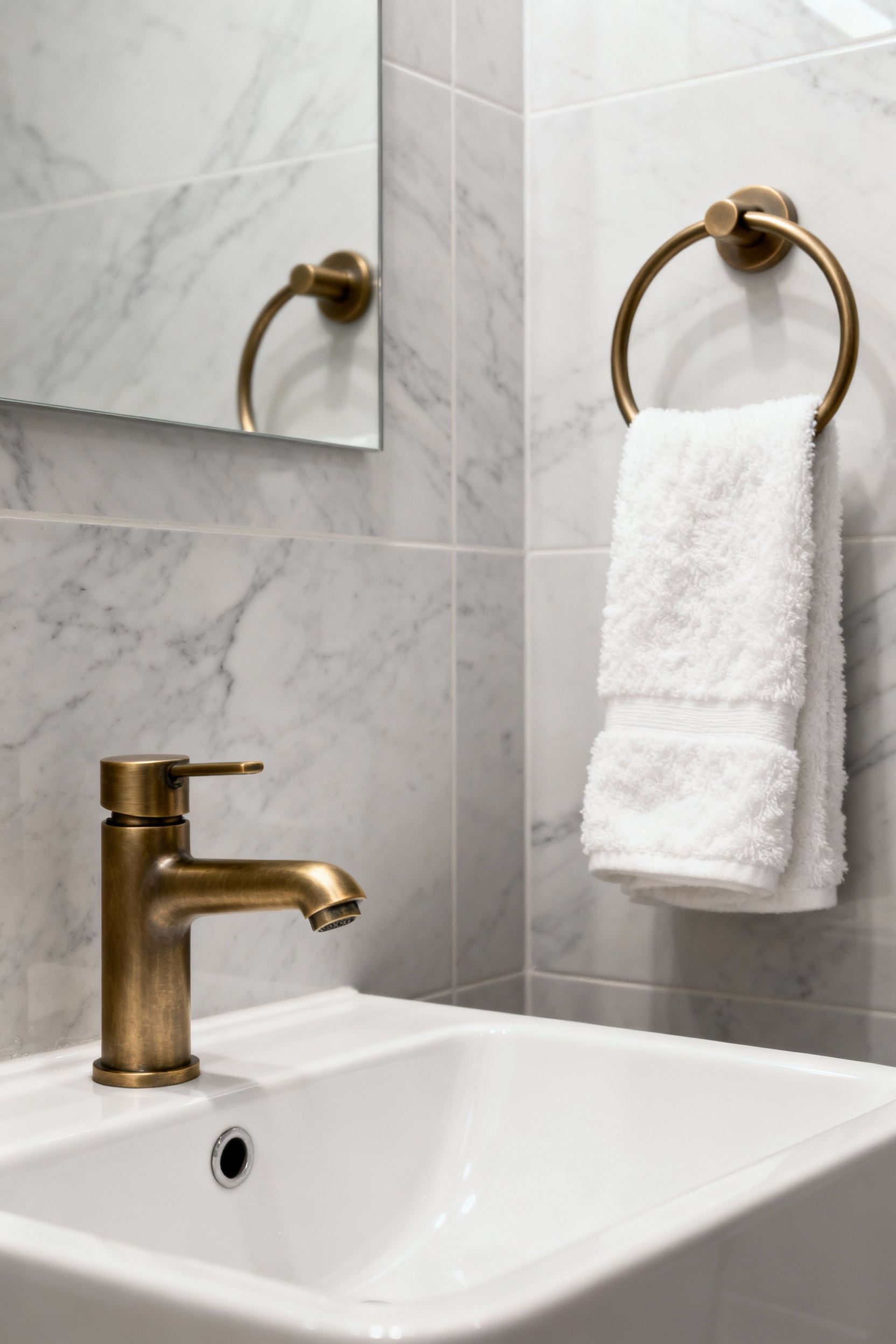
Beyond the visual, consider the tactile experience. How does the handle feel in your hand? Is it cool and solid? Does it move with a smooth, satisfying resistance? This daily physical interaction becomes part of your self-care ritual. Choosing high-quality, thoughtfully designed hardware isn’t an indulgence; it’s an investment in the sensory quality of your daily life. This is one of the quickest ways to bring a sense of grounded luxury into your small bathroom sanctuary.
Elevating Your Small Bathroom Design with Smart Techniques (Part 1)
With our calm foundation in place, we can now explore techniques that intelligently engineer the feeling of spaciousness and serenity. This isn’t about illusion; it’s about a deeper understanding of how we perceive our environment. Here, we delve into sophisticated strategies that harness light, reclaim space, and create an atmosphere of effortless flow.
6. Multilayered Illumination Design: Harnessing Light for Spatial Perception
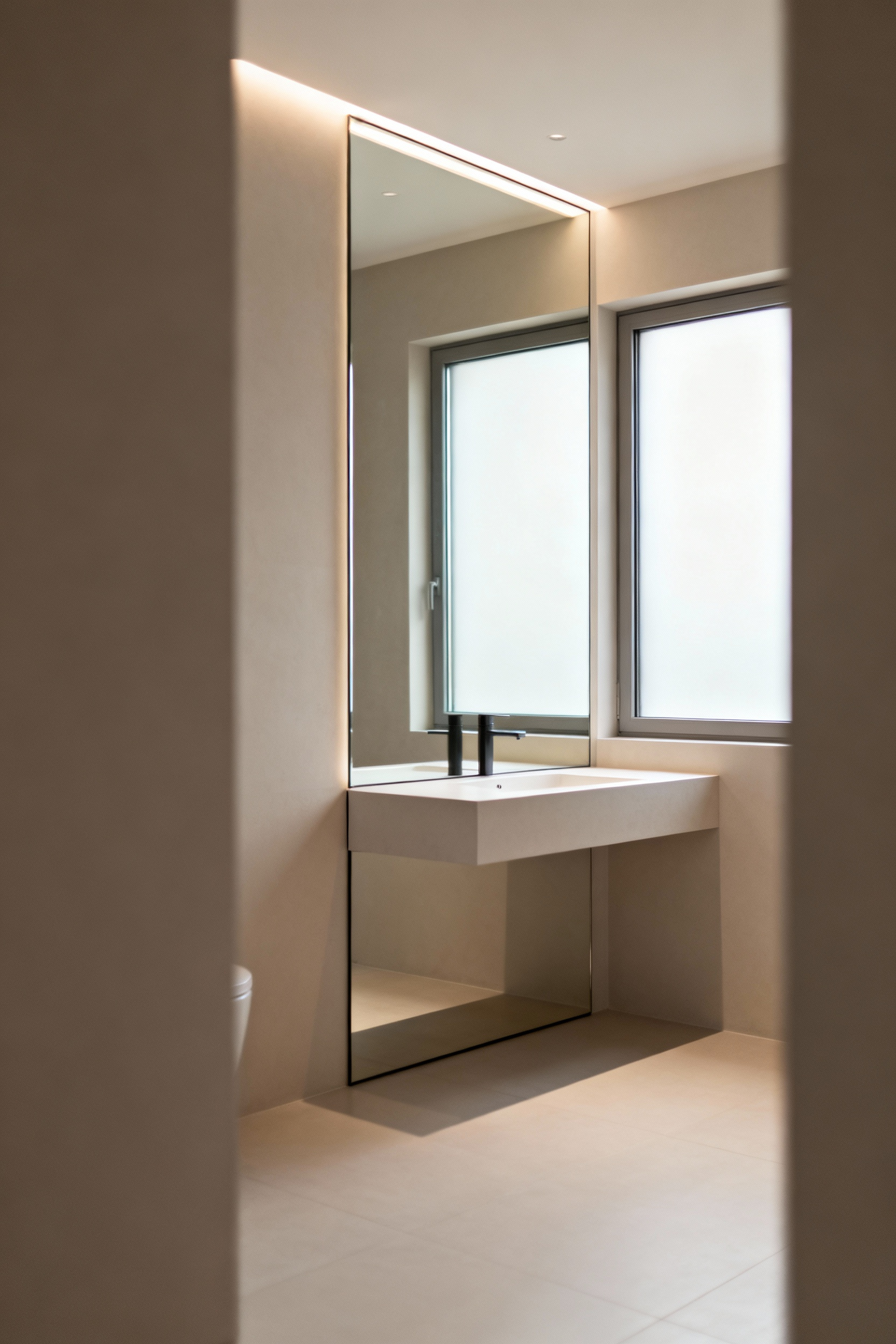
A single overhead light in a small bathroom casts harsh shadows, flattening the space and creating a clinical feel. To create a true sanctuary, we must layer our lighting. A gentle, multilayered approach includes at least three types: ambient (for overall illumination), task (for specific activities like grooming), and accent (to add depth and mood). Ambient light could come from recessed ceiling lights on a dimmer, allowing you to adjust the brightness to match your energy, supporting your natural circadian rhythms.
For task lighting, flank your mirror with sconces at eye level; this provides even, flattering light without the shadows cast by an overhead fixture. The real magic, though, comes with accent lighting. A soft LED strip glowing from beneath a floating vanity or a small spotlight highlighting the texture of a feature wall creates a beautiful, warm ambiance. This is what elevates a room from simply being bright to being truly luminous, making your small bathroom feel expansive and inviting.
7. Vertical Storage Alchemy: Maximizing Underutilized Wall and Corner Space
Horizontal surfaces are the most precious real estate in a small bathroom. Instead of cluttering them, we look up. The walls offer a vast, often untapped opportunity for storage that is both functional and beautiful. Go beyond basic shelving and consider slender, floor-to-ceiling cabinets or custom built-ins that climb the walls. These solutions draw the eye upward, creating an illusion of height and offering incredible storage without eating into your valuable floor space.
Think about the overlooked spaces: the area above the toilet or the corner beside the shower. These can become homes for elegant floating shelves or recessed niches that feel integrated into the wall itself. What I love about this approach is its power to create a sense of order. When everything has its place, tucked away vertically, the room feels calm and uncluttered. It’s a key principle for anyone undertaking a small bathroom remodeling project with serenity in mind.
8. Embracing Walk-In Showers: Dispelling the Confining Bathtub Myth
For many small bathrooms, a bulky bathtub-shower combo is the biggest spatial constraint. Removing it in favor of a glass-enclosed walk-in shower is often the single most transformative decision you can make. Suddenly, the entire footprint of the shower becomes visually accessible, making the whole room feel larger, brighter, and more open. This creates an immediate sense of liberation and flow.
For an even more seamless look, a curbless entry, where the shower floor is flush with the rest of the bathroom floor, erases yet another visual barrier. Using the same large-format tile throughout the room and into the shower enhances this effect, creating an unbroken plane that the eye can glide across. Your shower becomes less of a separate cubicle and more of an integrated, spa-like zone dedicated to the ritual of cleansing.
9. Pocket Doors & Barn Door Integration: Reclaiming Vital Swing Space
The traditional swing door is a silent space thief. In a small bathroom, the arc of an inward-swinging door can consume up to nine square feet of usable floor and wall area, dictating where you can place fixtures and making the room feel cramped. Replacing it with a pocket door, which slides neatly into the wall, is a game-changing move. This instantly reclaims that vital space, opening up new layout possibilities and allowing for a much more gracious flow of movement.
If modifying the wall for a pocket door isn’t possible, a stylish barn door that slides along an external track offers a similar benefit. It still eliminates the swing space while adding a beautiful design element. I’ve noticed in my professional experience that once a client experiences a bathroom without a traditional door swing, they’re astonished by how much freer and more accessible the room feels. It’s a simple architectural change that profoundly impacts the room’s energy and functionality.
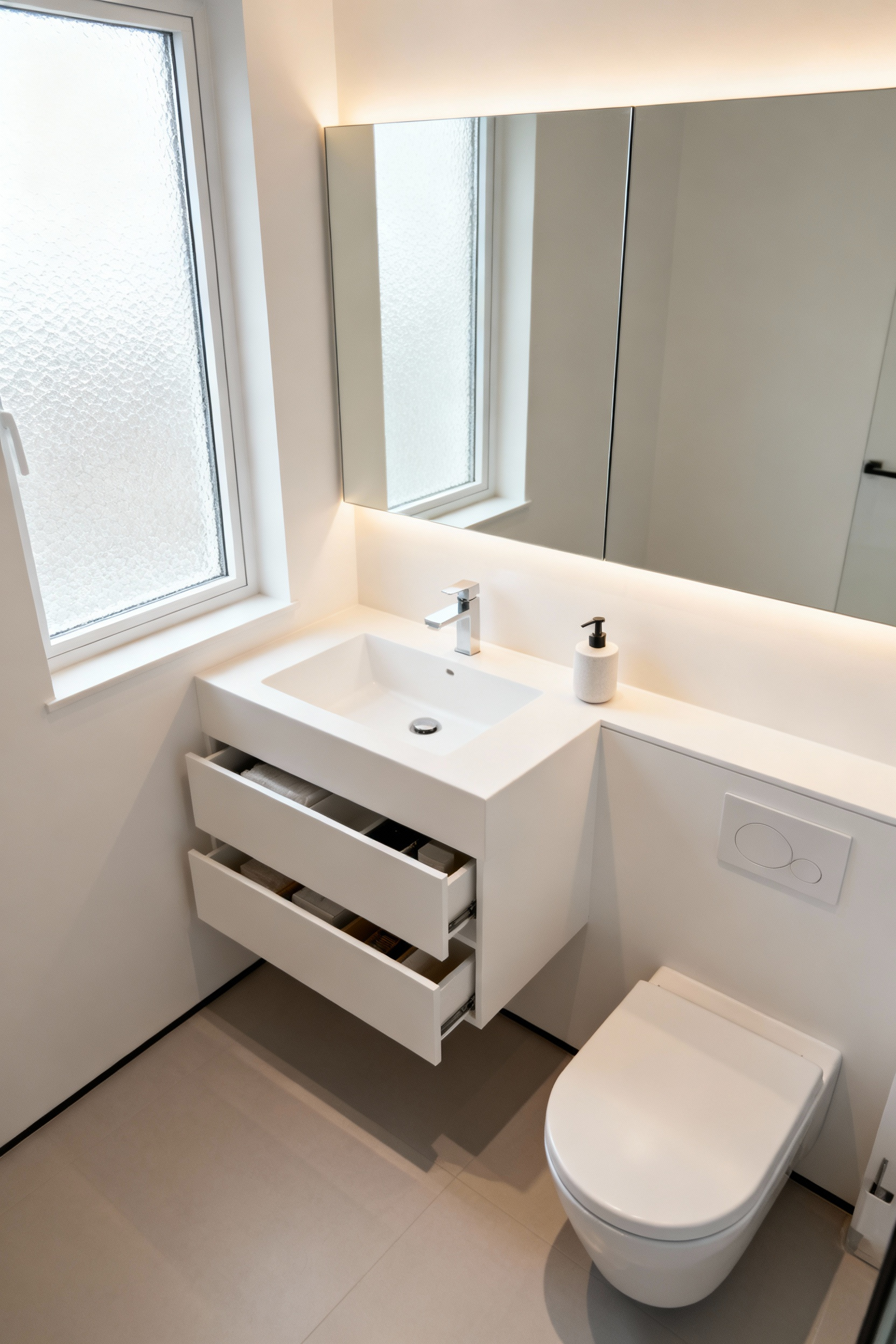
10. Implementing Floating Vanities and Toilets: Liberating Floor Area for Airiness
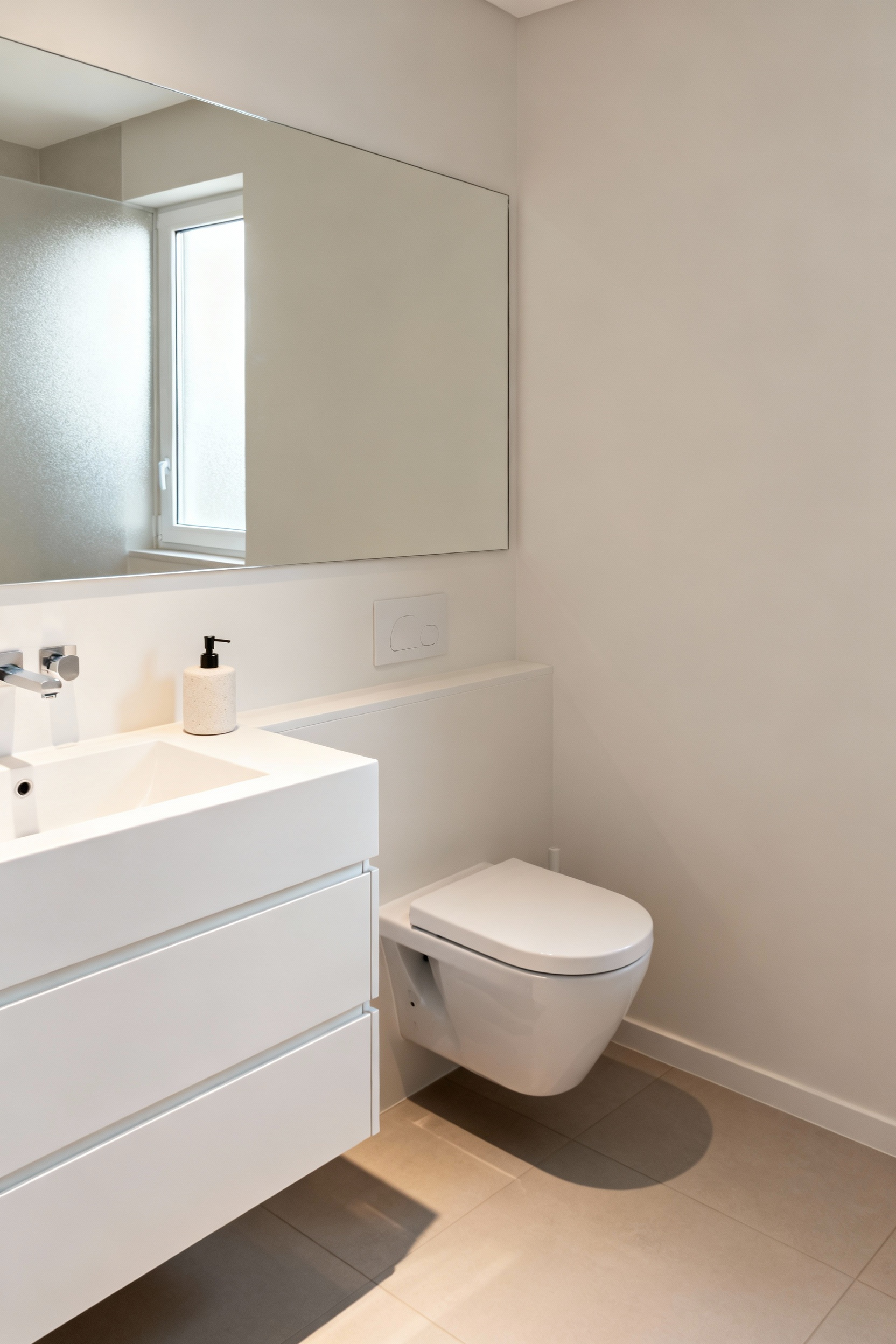
One of the most powerful ways to create a sense of spaciousness is to lift fixtures off the floor. Floating, or wall-mounted, vanities and toilets expose more visible floor area, which tricks the eye into perceiving the room as larger than it is. This simple design choice instantly creates a feeling of lightness and airiness, countering the heavy, grounded feeling that can make small spaces feel oppressive.
Beyond the visual expansion, this approach has a practical wellness benefit: it makes the floor incredibly easy to clean, contributing to a more hygienic environment. To amplify the effect, you can install soft, indirect lighting beneath the floating vanity. This creates a gentle glow that seems to make the fixture hover, enhancing the open, spa-like atmosphere. It’s a sophisticated strategy that marries functional beauty with a deep sense of calm.
Advanced Strategies for Maximizing Every Inch of Your Small Bath
Now we move beyond foundational techniques into a realm of sophisticated integration. This is where a small bathroom truly becomes a testament to mindful design. These advanced strategies focus on architectural ingenuity and sensory experience, transforming your compact space into a perfectly tailored sanctuary where every inch serves a higher purpose of function and well-being.
11. Custom Built-Ins: Tailored Solutions for Seamless Storage Integration
Off-the-shelf storage solutions often fail to use space efficiently. Custom built-ins, on the other hand, are tailored precisely to your bathroom’s unique dimensions and your personal needs. This allows you to turn awkward nooks, unused wall cavities, or the space around plumbing into perfectly integrated storage. Imagine a floor-to-ceiling cabinet that appears to be part of the wall, or recessed niches that provide a home for your self-care items without protruding into the room.
This is storage as architecture. By designing solutions that are seamless and flush with the walls, you eliminate the visual clutter of bulky furniture. From my work creating healing environments, I know that this level of integration fosters a deep sense of peace. The space feels intentionally crafted and serenely uncluttered because everything you need is present but hidden from view, ready to support your daily rituals without creating any visual noise.
12. Integrated Smart Technology: Enhancing Functionality and User Experience
Technology, when applied mindfully, can beautifully enhance the sanctuary experience. This isn’t about adding distracting gadgets, but about integrating systems that support well-being. Think of a mirror that defogs at the touch of a button, or radiant floor heating that gently warms your feet on a cool morning. These are subtle luxuries that remove small points of friction from your daily routine, contributing to an overall feeling of ease.
For a more immersive experience, consider chromotherapy lighting in your shower, which uses different colors to influence your mood, or a discreet, high-fidelity sound system for playing calming music or guided meditations. A smart shower can be programmed to your ideal temperature, creating a perfect, personalized ritual every time. This is technology in service of serenity—working quietly in the background to make your sanctuary more responsive, comfortable, and restorative.
13. Ventilation Optimization: Prioritizing Air Quality for Wellness
A truly healthy space starts with the air you breathe. In a humid environment like a bathroom, proper ventilation is not a luxury—it is essential for preventing mold and mildew and ensuring excellent air quality. An undersized or noisy fan detracts from the calm you’re trying to create. The solution is a high-quality, ultra-quiet exhaust fan that is correctly sized for your room’s volume, ensuring it can efficiently clear moisture from the air.
For an advanced approach, a humidity-sensing fan is a brilliant addition. It automatically turns on when it detects excess moisture and shuts off once the air is clear, offering a set-it-and-forget-it solution that provides peace of mind. Investing in superior ventilation during your small bathroom remodeling is an investment in your long-term health and the longevity of your beautiful new space. Fresh, clean air is the invisible foundation of any true wellness sanctuary.
14. Sensory Design Principles: Crafting an Immersive Wellness Micro-Environment
Our experience of a space is multisensory. To craft a truly immersive sanctuary, we must engage more than just our sense of sight. Introduce varied textures: the smoothness of a river stone on the shower floor, the softness of a plush organic cotton towel, the warmth of a natural wood shelf. These tactile elements ground us in the present moment and enrich our daily rituals.
Incorporate aromatherapy with an essential oil diffuser, using calming lavender for evening relaxation or uplifting eucalyptus in the morning. Consider the element of sound—not just with music, but by selecting fixtures that produce a gentle, pleasant water flow. This multi-layered, sensory approach is the essence of holistic design. It transforms your bathroom from a room you see into an environment you feel, creating a deeply personal and restorative escape from the outside world.
Mastering Holistic Small Bathroom Integration for Enduring Serenity
We have now arrived at the heart of our work: integrating every element into a single, harmonious whole. This final stage is about weaving together function, beauty, and wellness into a cohesive design that feels effortless and enduring. Here, we embrace philosophies that honor authenticity and ensure your sanctuary remains a source of tranquility for years to come.
15. Sustainable Material Selection: Cultivating an Eco-Conscious Sanctuary
The materials you choose for your small bathroom remodeling have an impact that extends far beyond your walls. Opting for sustainable, non-toxic materials is an act of care for both your own well-being and the planet’s. Choose low-VOC (volatile organic compound) paints to maintain healthy indoor air quality. Select tiles made from recycled glass or locally sourced stone to reduce your project’s carbon footprint. A beautiful vanity crafted from reclaimed wood or FSC-certified timber brings a soulful, natural element into your space.
Creating an eco-conscious sanctuary is about recognizing the interconnectedness of our health and the health of our environment. Using water-saving fixtures, energy-efficient lighting, and materials that are designed to last a lifetime reflects a deeper commitment to mindful living. Your bathroom becomes a testament to the idea that true luxury is gentle, thoughtful, and deeply respectful of the natural world.
16. Subtle Plumbing and Wiring Integration: Concealing Utilities for Clean Aesthetics
One of the secrets to a profoundly calm space is the artful concealment of its inner workings. Visible pipes, outlets, and switches create visual noise that can subtly disrupt a serene atmosphere. In a holistic design, we integrate these utilities so they nearly disappear. Wall-mounted faucets and in-wall toilet cisterns hide plumbing from view, creating clean, uninterrupted surfaces. Wires for lighting or a heated towel rail can be routed within the walls for a seamless finish.
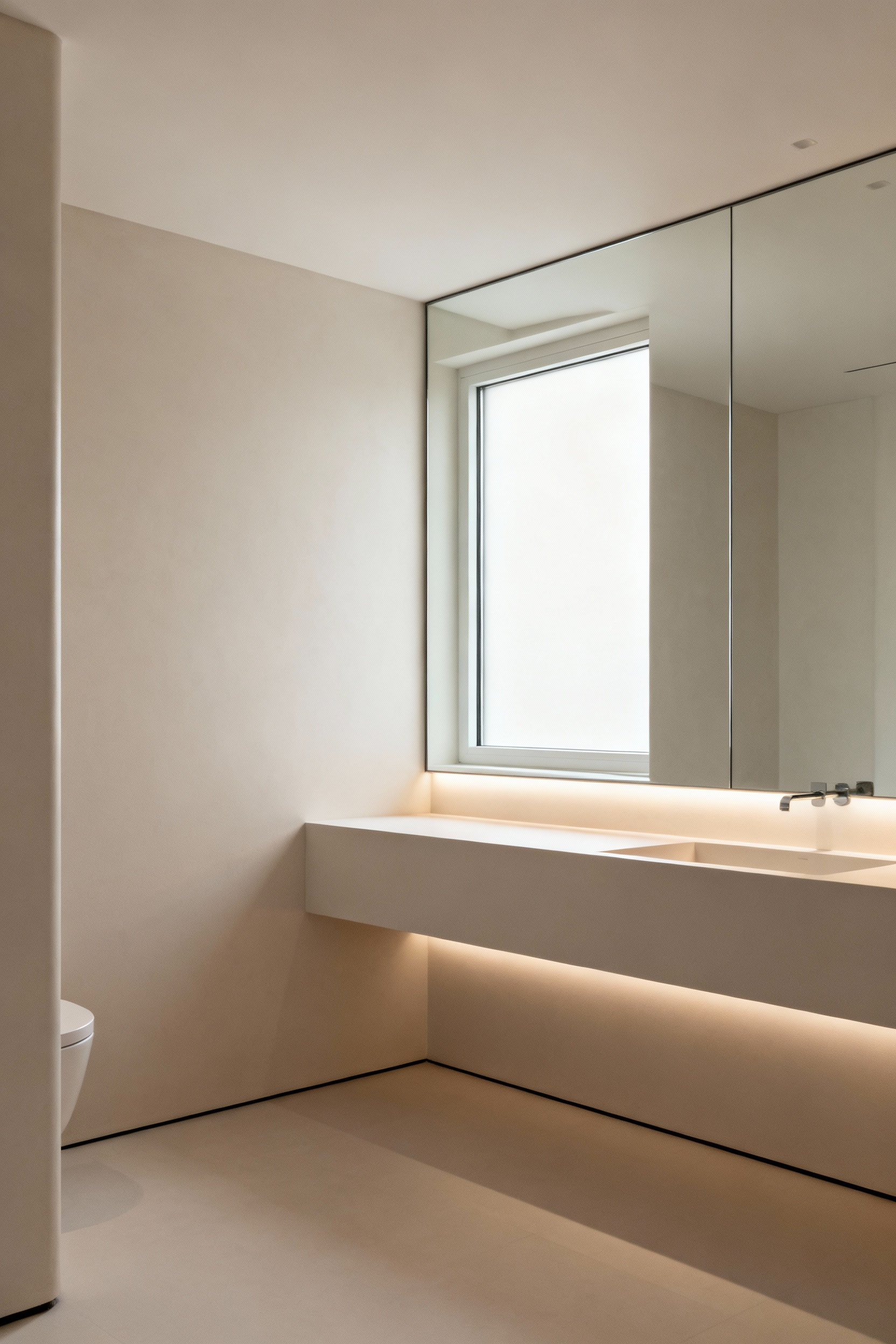
Advanced planning during your small bathroom remodeling is key here. Consider incorporating outlets inside a drawer or medicine cabinet for charging electric toothbrushes and shavers, keeping your countertops beautifully clear. The goal is to create a space where everything functions perfectly, but the mechanics are invisible. This allows the beauty of your chosen materials and the peacefulness of the design to take center stage.
17. Personalized Amenity Nooks: Curating Intentional Self-Care Stations
Instead of generic storage, think of creating personalized “altars” for your self-care rituals. This means designing intentional nooks and stations for the specific items you use to nurture yourself. A beautifully tiled niche in the shower can hold your favorite artisan soaps and scrubs. A custom drawer insert can organize your essential oils and skincare products. A small, heated shelf can keep a warm towel ready for when you step out of the bath.
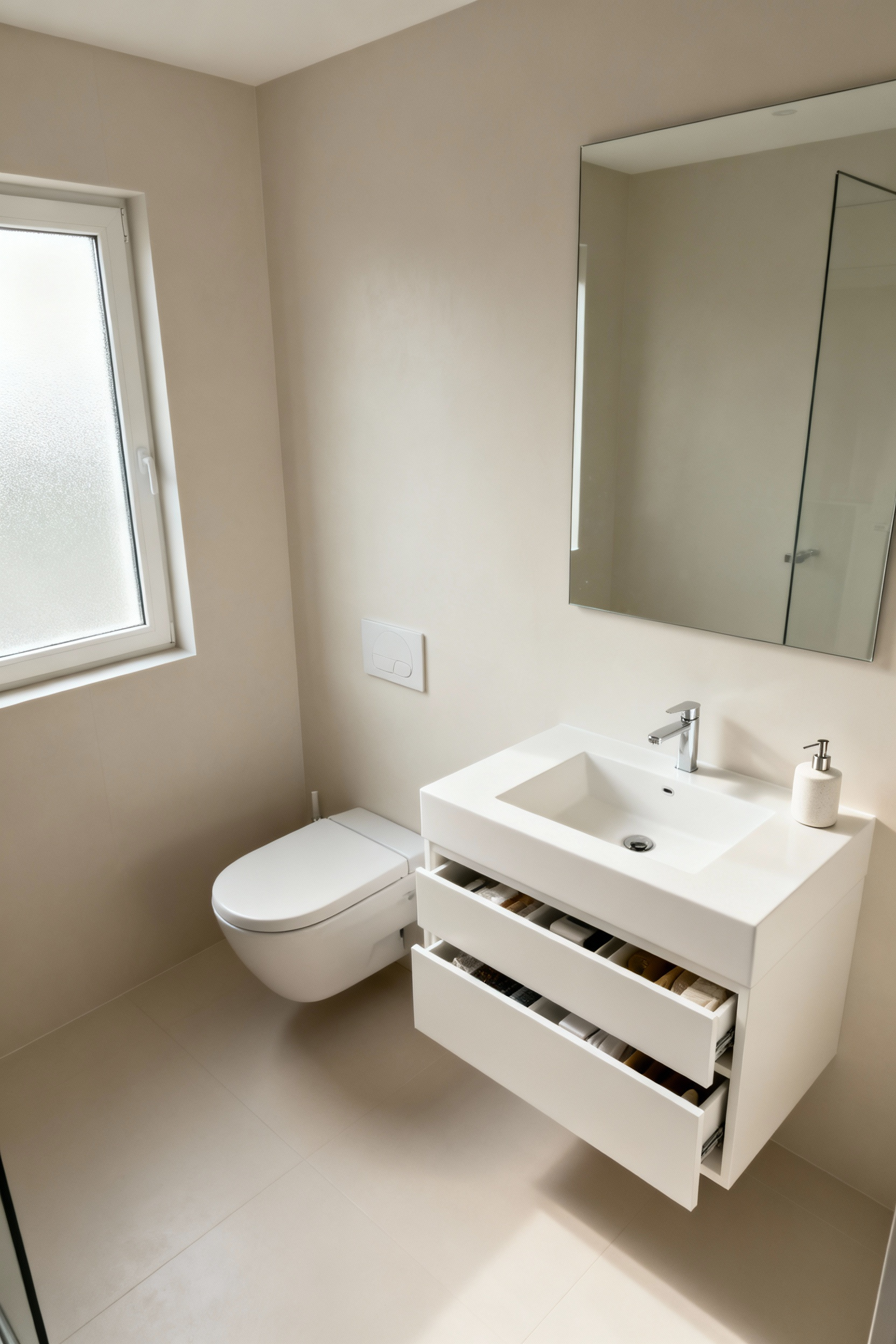
What I tell my clients is to think about their entire wellness routine, from start to finish, and design storage that supports it with grace and ease. This is about transforming storage from a purely practical concern into a deeply personal expression of self-care. When every object has a beautiful, intentional home, your daily routines feel less like chores and more like cherished rituals. This is where your small bathroom truly becomes your sanctuary.
18. Embracing the Wabi-Sabi Principle: Finding Beauty in Imperfect, Authentic Spaces
In our search for perfection, we can sometimes lose touch with soulfulness. The Japanese philosophy of Wabi-Sabi offers a beautiful alternative: it finds beauty in imperfection, authenticity, and the natural passage of time. To embrace this in your small bathroom, choose materials that have character and will age gracefully—unlacquered brass that will develop a unique patina, a natural stone with organic variations, or a hand-troweled plaster finish that celebrates the mark of the human hand.
This is not about creating a rustic look, but about cultivating an appreciation for things as they are. A Wabi-Sabi approach allows a space to feel honest, warm, and deeply calming. It frees you from the pressure of maintaining a flawless facade and invites a sense of peace that comes from embracing authenticity. In a world that often feels sterile and mass-produced, a space with a little imperfection can feel incredibly soulful and grounding.
19. Proactive Maintenance Protocol: Preserving Your Sanctuary’s Longevity and Vibrancy
Your sanctuary is a living space, and it requires gentle care to maintain its serene energy. Creating a proactive maintenance protocol transforms this care from a chore into a mindful ritual. This includes simple daily practices, like wiping down the shower to prevent mildew, and weekly routines, like gently cleaning surfaces with non-toxic products that honor the materials you’ve chosen.
A deeper level of this practice involves scheduling periodic care, such as resealing natural stone or deep-cleaning grout, to preserve the beauty and longevity of your investment. Think of this not as work, but as an act of gratitude for the beautiful space that nurtures you every day. By consistently tending to your sanctuary, you ensure that it remains a vibrant, healthy, and deeply restorative haven for years to come.
Conclusion
We began this journey by challenging the belief that a small bathroom is an obstacle. Throughout these 20 secrets, we have seen time and again that a compact space is, in fact, an incredible opportunity—a canvas for focused intention, mindful design, and profound well-being. We have moved far beyond clever space-saving tricks to embrace a holistic philosophy where every choice, from the color on the walls to the feel of a faucet, contributes to a harmonious whole.
Your bathroom is more than a functional room; it is the place where you begin and end your day. It holds the potential to be a powerful sanctuary for private ritual, quiet reflection, and deep rejuvenation. Armed with these insights, I invite you to see your small bathroom remodeling project not as a challenge, but as a beautiful act of self-care. Embrace these strategies to craft a space that is a true reflection of your wellness journey—a testament to the fact that sanctuary is a state of being, not a measure of square footage.