
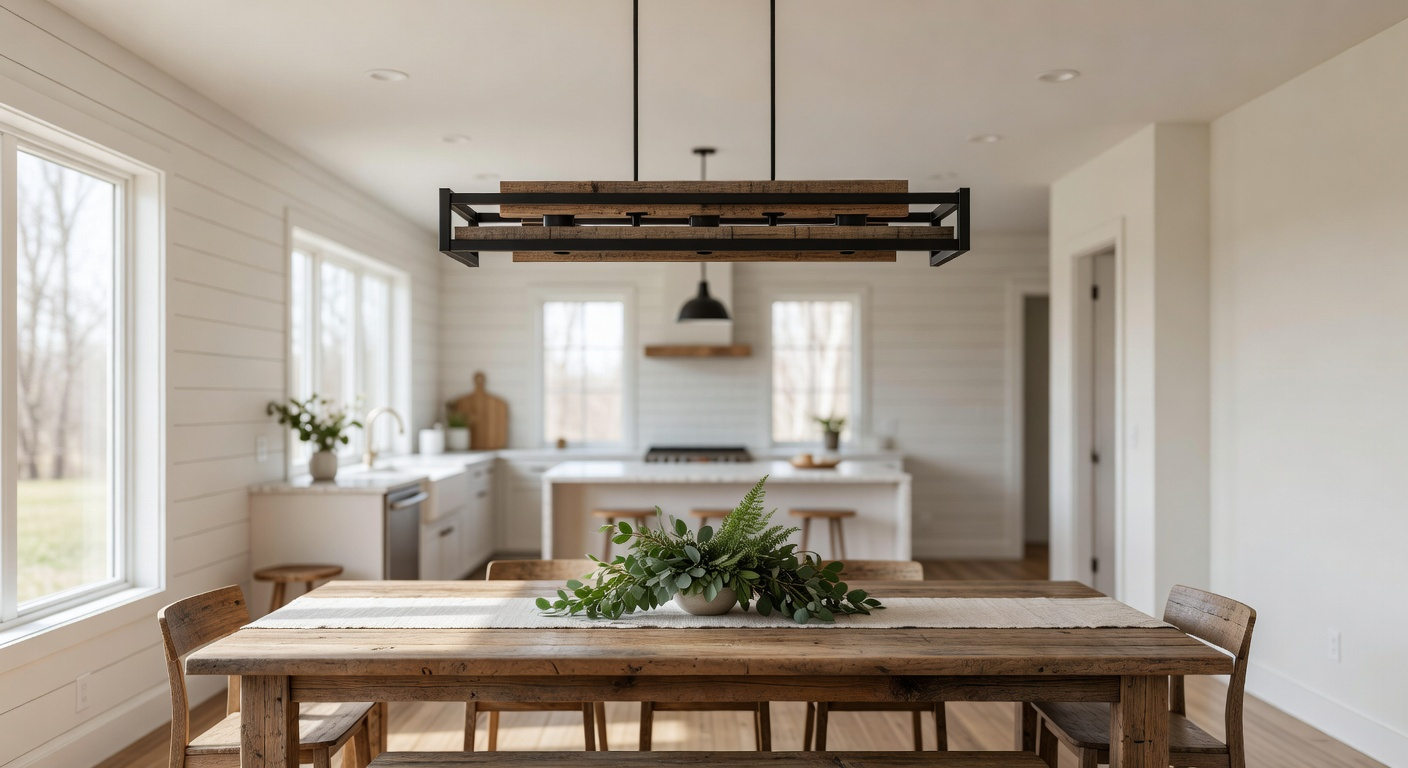
Finding the perfect farmhouse dining room lighting goes beyond simple illumination. Instead, it establishes an architectural anchor that defines your home. These fixtures bridge the gap between historical soul and modern style. I always find myself drawn to the rugged charm of hand-forged iron. Still, the ethereal glow of prismatic glass is equally stunning. Indeed, the right light creates true ambient warmth. By selecting artisan-crafted pieces, you transform everyday meals into memorable events.
I. The Nostalgic Anchor: Why Lighting is the True Heartbeat of the Farmhouse Dining Room
Modern open-plan farmhouse dining rooms often lack physical walls. Therefore, lighting acts as a crucial architectural anchor. These fixtures define the room’s boundaries using vertical volume. Designers usually apply the proportion principle to ground the space. This ensures the fixture matches the guidelines found in The Ultimate Dining Room Table Guide for Grand Homes. As a rule, a chandelier should span roughly half the table’s length. Ultimately, this creates a magnetic pull without blocking your sightlines.
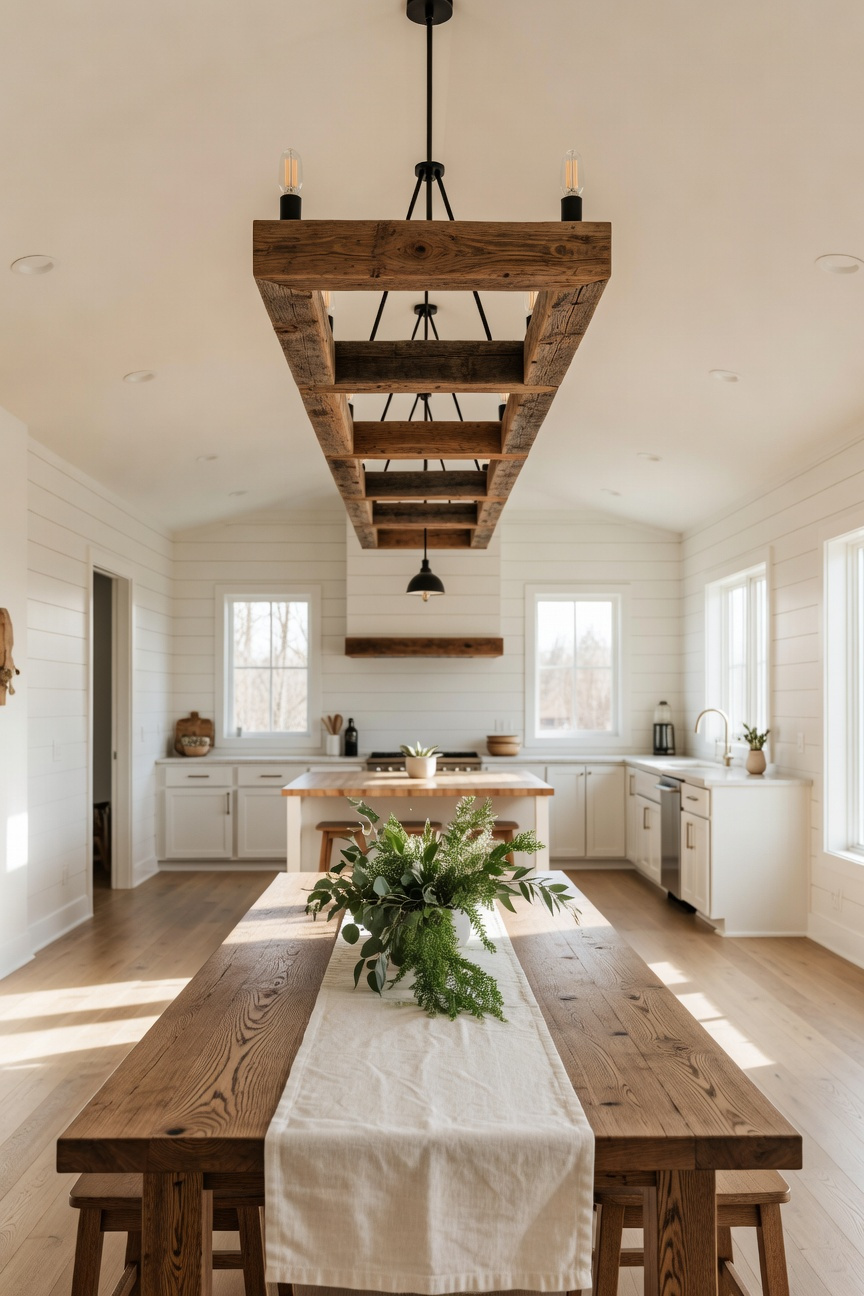
Historically, these pieces evolved from purely utilitarian wooden crosses. Today, vintage wagon wheels honor that hardworking rural past. Authentic farmhouse lighting also celebrates raw, honest materials. For example, galvanized steel offers a rugged, unpolished texture. Next, consider how metals like copper and brass feature a living finish. Over time, this natural patina tells a lived-in story. This exact philosophy is often explored in authentic rustic kitchen decor. Naturally, pairing hard wrought iron with soft seeded glass creates depth. In fact, these tiny glass bubbles perfectly mimic historical hand-blown imperfections.
However, the true heartbeat lies in the emotional memory of light. Standard warm white bulbs usually sit at an ordinary 2700K. In contrast, nostalgic farmhouse lighting often dips to a warmer 2200K. This amber glow flawlessly mimics a sunset or roaring fireplace. The exposed filament of an Edison bulb provides tangible history, too. Ultimately, this softer light encourages guests to linger long after dessert. Thus, the dining room becomes a welcoming, timeless sanctuary.
II. Beyond the Mason Jar: Elevating Farmhouse Style with Authentic Vintage Character
Authentic farmhouse lighting requires pivoting away from rustic kitsch. We must look toward true industrial heritage instead. The ubiquitous mason jar fixture often provides harsh, uneven glare. To truly elevate a room, seek out prismatic or Holophane glass. Historically, this glass was engineered in the 1890s. Its main purpose was to maximize dim early light bulbs. Therefore, its ribbed, crystalline texture creates a soft, velvety glow. This architectural look bridges industrial utility and elegant design perfectly.
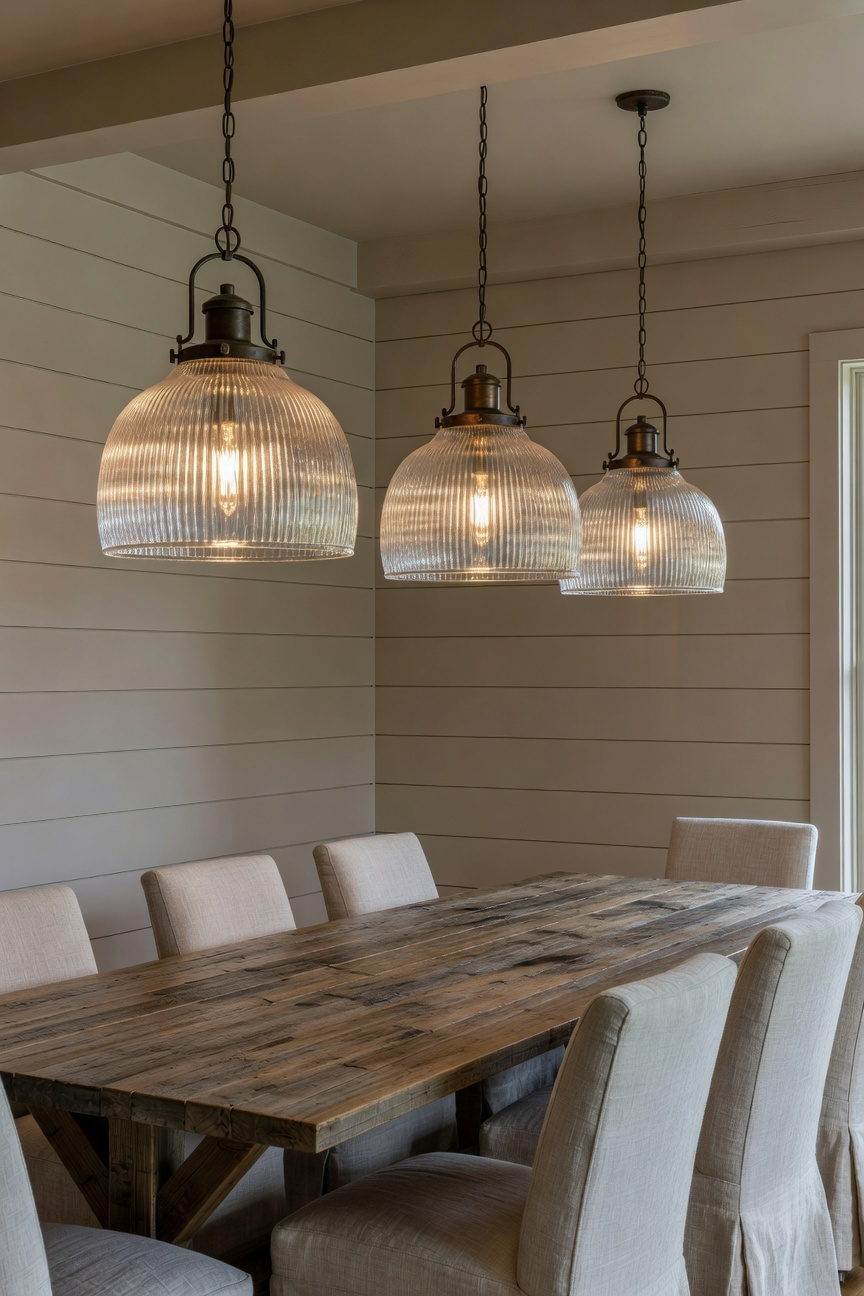
Vintage fixtures were originally built as multi-purpose tools. For example, the classic pulley system solved spatial constraints beautifully. Weighted ceramic counterweights allowed lamps to adjust for close-up task work. Incorporating these pulleys adds necessary kinetic energy to your dining space. Replacing cheap plastic cords with braided silk honors early electrical history, too.
Material integrity is also paramount for sustainable design. Instead of thin painted aluminum, authentic pieces feature heavy vitreous enamel. In fact, powdered glass fused to steel creates a glassy, cold finish. Over decades, this heavy enamel develops fine spiderweb cracks. This crazing actually adds beautiful wabi-sabi character to the room. Similarly, seeking out unlacquered brass rejects disposable decor trends. Naturally, these unsealed metals oxidize gracefully as they are touched. The fixture matures, perfectly capturing the slow-living philosophy.
III. The Sustainable Glow: Why Upcycling Beats Mass-Produced Fast Furniture
Lighting is often called the jewelry of a dining room. However, the modern market is saturated with mass-produced fast furniture. These trend-driven fixtures merely mimic history without offering any real soul. Upcycling vintage finds offers a superior, eco-conscious design strategy instead. Authentic patina forms a multidimensional surface through decades of actual oxidation. Conversely, factory-made faux finishes rely on flat layers of distressed paint.
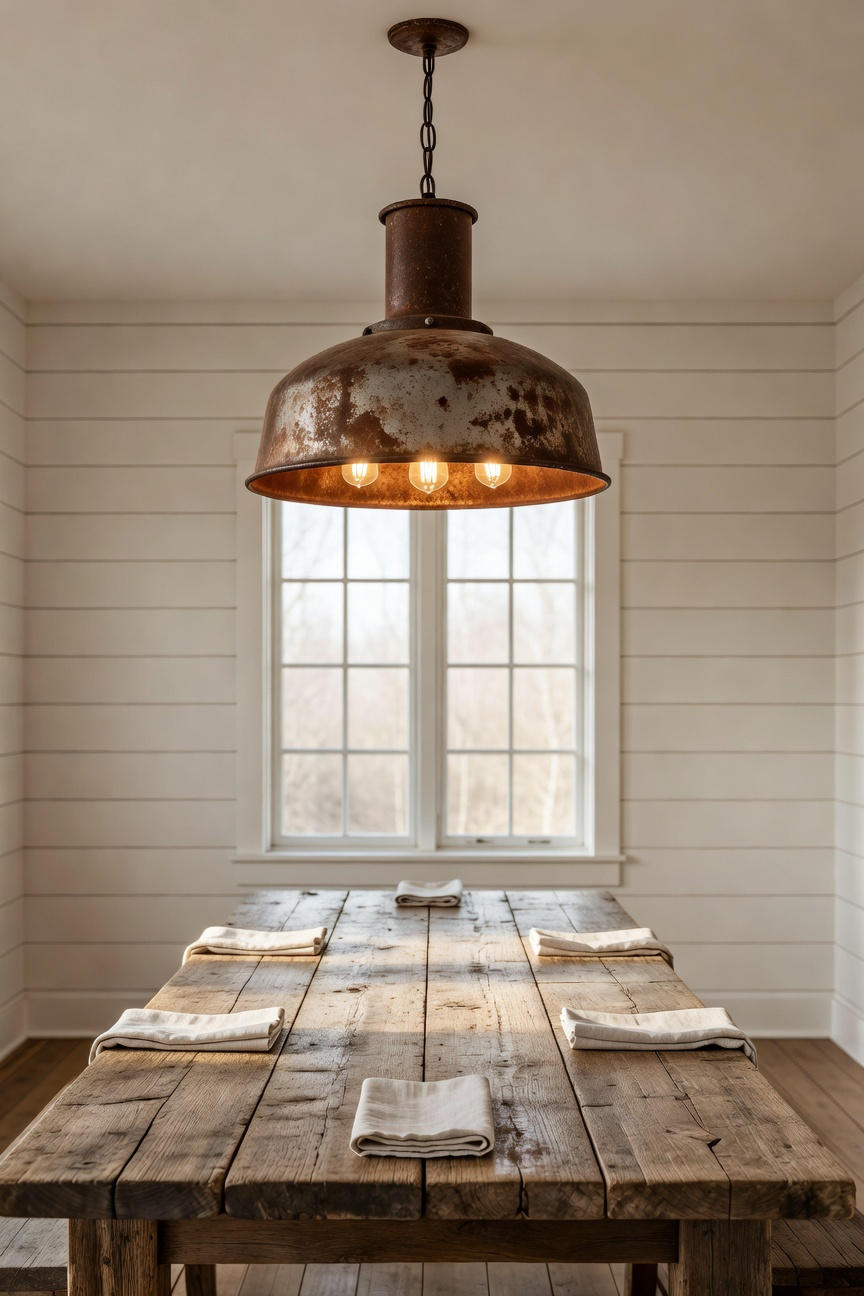
True aged metal reflects light with a uniquely soft, warm glow. Vintage schoolhouse or factory lighting also utilizes high-quality glass. This vintage glass has a high refractive index for sparkling light. Meanwhile, modern fast lighting relies heavily on cheap plastic or acrylic. Plastics attract dust through static electricity and yellow over time. Alternatively, vintage glass remains electrically inert and stays perfectly clear.
Upcycled pieces boast incredible structural integrity and satisfying heft. Antique cast-iron wheels and heavy-gauge steel were built to last. Their modular sockets and solid brass screws are completely repairable today. Indeed, professional restorers upgrade these vintage fixtures for modern safety. They install new grounded wiring and heavy-duty porcelain sockets. Therefore, you get timeless charm with completely safe electrical systems.
Ultimately, a restored artifact becomes a conversation starter in your home. It carries the warm, authentic ghost of its previous life. Thus, it grounds your gathering space with a genuine, living narrative.
IV. Wrought Iron & Forged Metals: Honoring the Industrial Roots of Agricultural Heritage
Historically, blacksmiths were as vital to farming communities as local doctors. Incorporating wrought iron lighting honors this deep agricultural heritage. Specifically, authentic hand-forged fixtures anchor a dining room beautifully. They serve as a modern surrogate for the traditional hearth. For example, the iconic wagon wheel chandelier evolved from discarded pioneer wheels. Today, skilled artisans often use a specialized technique called tapering. By hammering the metal ends thinner, they reduce the visual weight. Consequently, heavy industrial materials feel surprisingly elegant above a table.
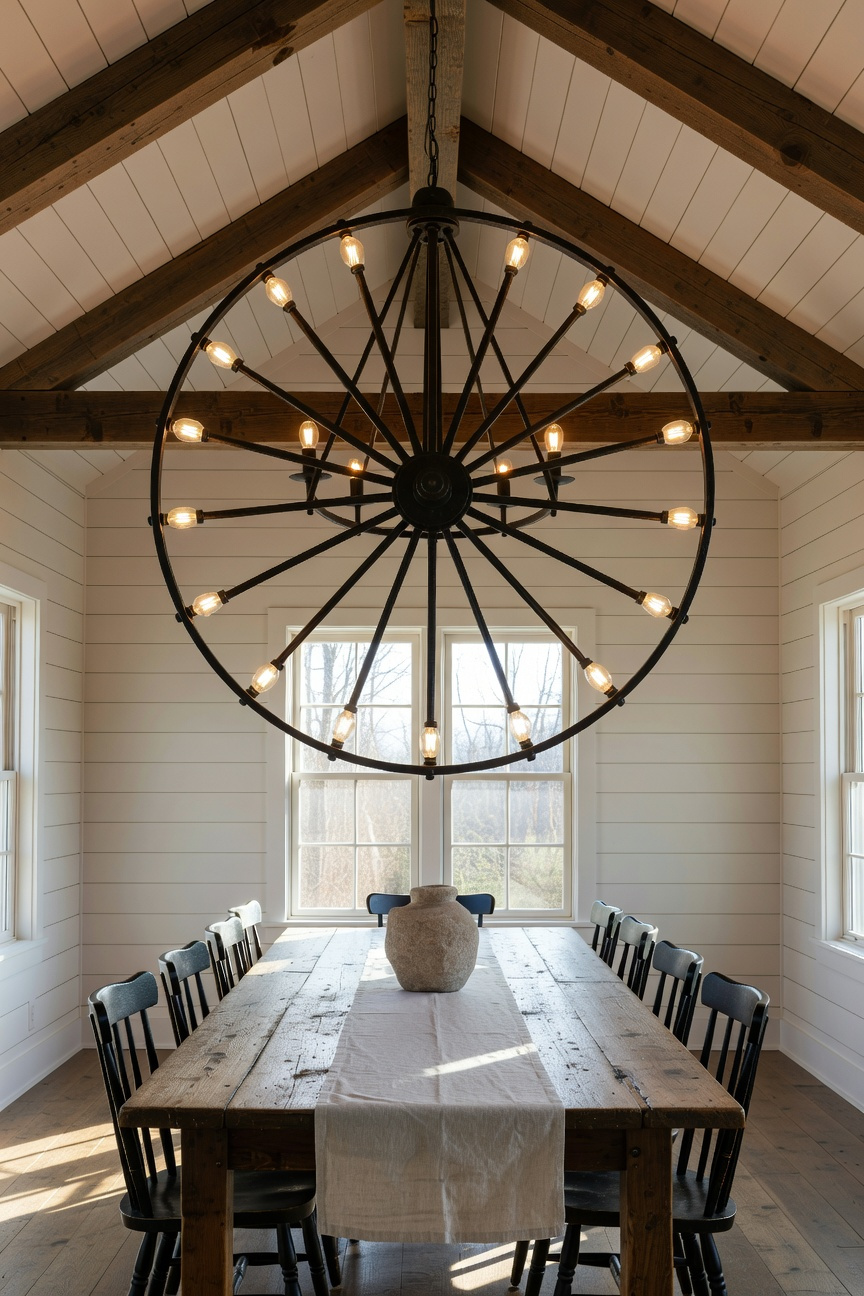
True wrought iron carries the distinct voice of its maker. Unlike mass-produced steel, authentic pieces showcase unique sensory textures. For instance, artisans use traditional methods like drawing out and upsetting. These techniques create graceful curves and beautiful scrolled ends. Sustainable design also favors fixtures retaining their natural forge scale. Instead of smooth powder coatings, look for authentic oil-rubbed finishes. These rich metal patinas provide a tactile, lived-in aesthetic.
Forged metal lighting creates a dynamic living shadow effect. Because iron is opaque, the solid frames cast architectural shadow grids. As ambient light shifts naturally, these cast shadows change throughout the day. Ultimately, this dark iron creates a striking visual contrast. It naturally punctuates the typical white and wood farmhouse palette.
Careful buyers must verify authentic vintage materials, however. Unfortunately, mass-market lighting often uses hollow, factory-bent steel tubes. True heritage pieces rely on solid, heavy metal components instead. Specifically, you should examine the construction of the actual piece. Instead of invisible modern welds, genuine fixtures feature traditional banded joins. Here, red-hot iron physically wraps around another intersecting piece. This enduring detail honors the timeless resilience of vintage design.
V. Patinated Brass and Copper: Introducing Warm, Lived-In Elegance to the Table
Early farmhouses relied on copper and brass out of sheer necessity. Specifically, copper resiliently survived harsh coastal salt air. Early homeowners often reserved elegant brass for formal dining rooms. Incorporating these metals today honors this rich design history. It also follows the mandates for exquisite luxury dining room decor.
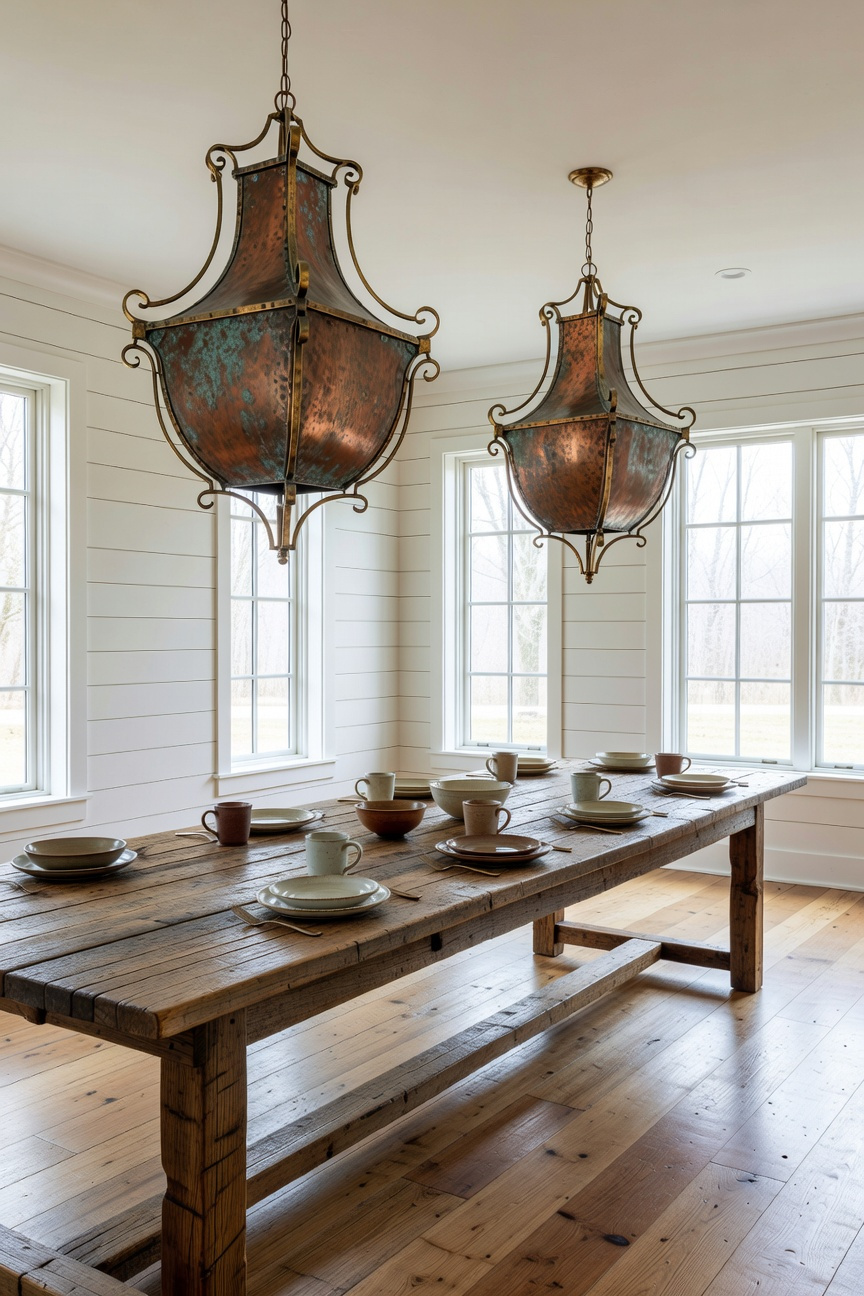
These materials feature a dynamic, evolving living finish. Unlacquered metals remain chemically active over time. Consequently, they react to humidity, heat, and daily touch. This natural process creates a chronological record of your home.
Aesthetically, patinated brass and copper offer distinct chromatic warmth. Specifically, these metals reflect long-wavelength red and yellow light. Thus, even modern LED bulbs cast a warm, candlelight glow. This oxidized texture naturally diffuses harsh glare. Accordingly, it creates soft, flattering light for intimate dinner conversations.
Smooth, iridescent metal provides essential visual tension, too. Reclaimed oak tables usually feature matte, porous textures. Therefore, pairing these contrasting surfaces prevents the room from feeling flat.
From a sustainability perspective, patination is highly practical. In fact, this protective oxide layer prevents deep corrosion. These anti-disposable fixtures can actually last for centuries. Artisans often use chemical fuming to start this aging naturally. Then, they apply a final protective layer of beeswax. Naturally, this introduces a faint honey scent and satin texture. Leaving the finish unsealed allows the piece to evolve beautifully.
VI. Milk Glass and Seeded Glass Shades: Diffusing Light with Antique Softness
Achieving antique softness depends heavily on your choice of glass. Milk glass and seeded glass manipulate light quite differently. Originally crafted in sixteenth-century Venice, milk glass beautifully mimics expensive porcelain. Added opacifiers like tin oxide create its creamy translucency. Therefore, the glass scatters photons internally. This effectively emits an ethereal, highly uniform glow. Consequently, it perfectly conceals harsh modern LED bulbs. Experts favor this opaque glass for establishing a harmonious dining mood. Warm, diffused light gently softens harsh shadows across a room. Ultimately, this relaxed ambiance actually enhances the sense of taste.
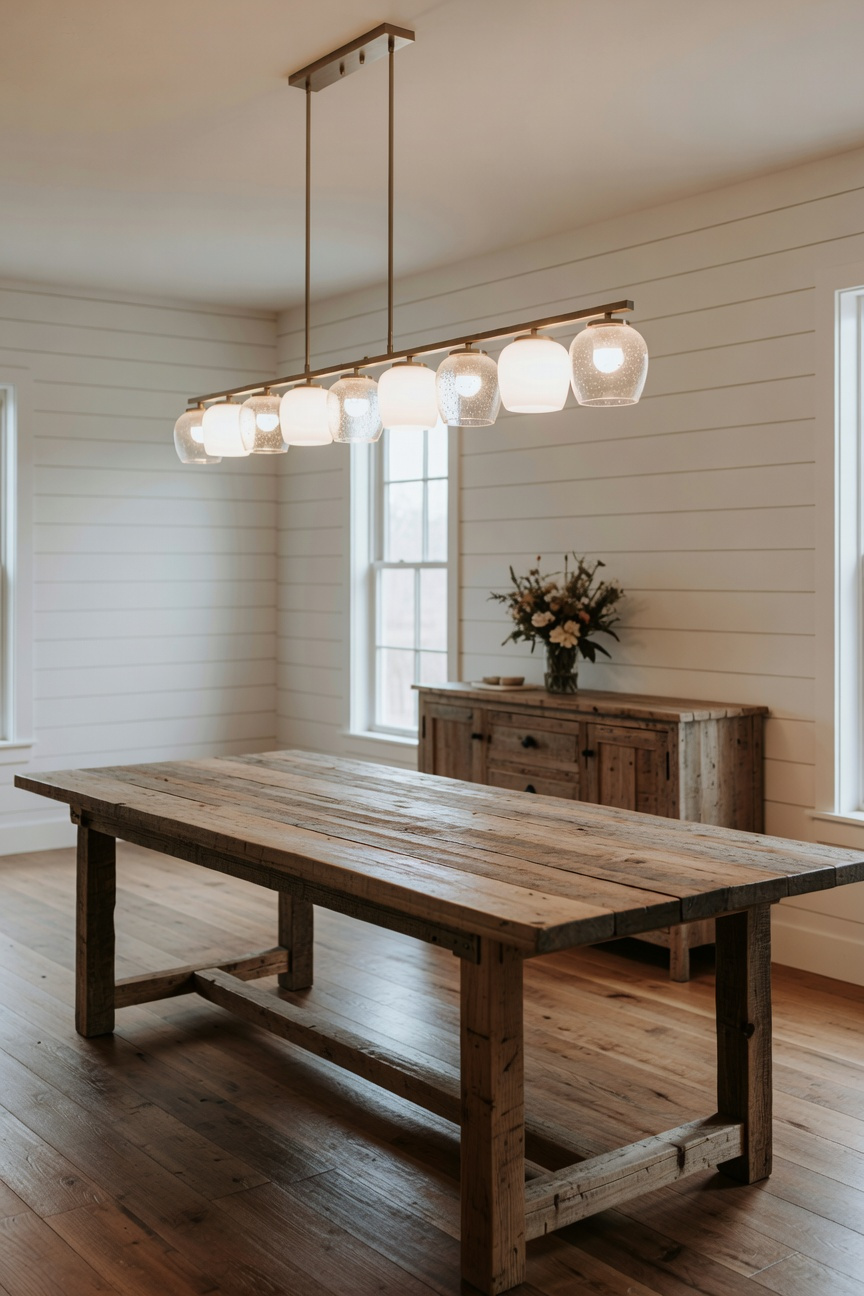
Seeded glass celebrates imperfect colonial manufacturing techniques instead. Tiny air bubbles were intentionally trapped during early glass-blowing. Each trapped bubble effectively acts as a miniature lens. Thus, the textured material refracts light rather than absorbing it. This naturally creates a beautiful, shimmering dewdrop effect. The dynamic sparkle keeps a dining space feeling highly energetic. Therefore, it is absolutely ideal for lively family breakfasts.
Designers usually pair these materials with distinct fixture styles. Seeded glass demands streamlined, minimalist lighting silhouettes. Otherwise, the textured bubbles make ornate frames look terribly busy. Alternatively, milk glass beautifully anchors traditional, multi-curved Schoolhouse shapes. This provides a functional ornament for the eye to rest upon. Practically, seeded glass easily hides daily dust and fingerprints. Milk glass, however, occasionally reveals airborne cooking grease. Consequently, it requires gentle washing to maintain its brilliant glow. Both historic materials effectively bridge vintage charm and modern needs.
VII. Reclaimed Wood Beams: Crafting Custom Linear Suspension for Long Dining Tables
A reclaimed beam is never merely a building material. Rather, it serves as a tangible historical record. Designers actively seek out rugged, non-repeating adze marks. These scalloped rhythmic cuts show a hand-held axe was used. Old mortise pockets tell fascinating stories of early joinery, too. We often internally backlight these hollows to highlight architectural ghosts.
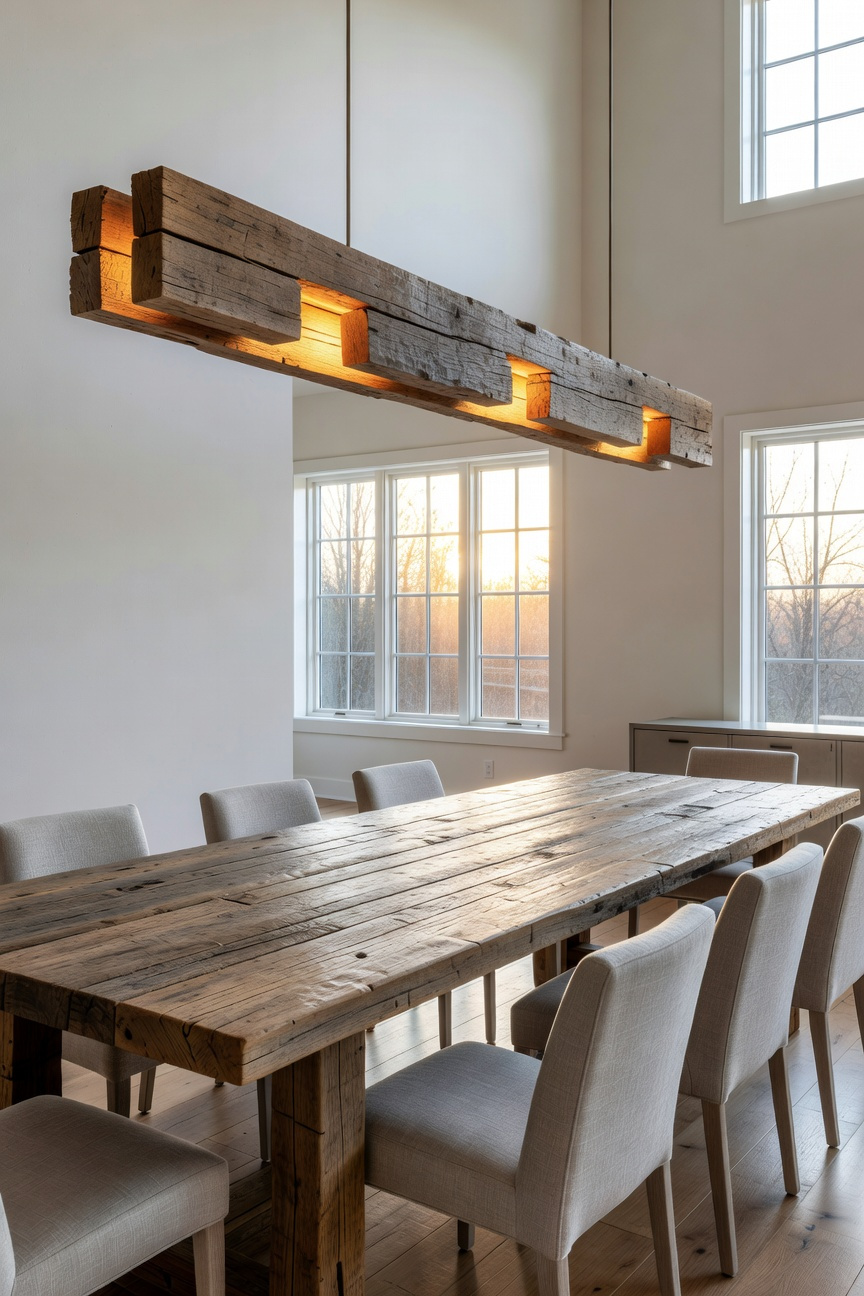
Transforming heavy structural timber requires precise technical alchemy. Craftsmen use a clever split-and-hollow technique to conceal wiring. Consequently, the beam looks completely solid while safely housing cables. Modern dim-to-warm LEDs are the required contemporary light source here. Traditional Edison bulbs generate too much dry, damaging heat. Efficient LEDs protect the century-old wood from severe cracking.
Visually, a long linear beam perfectly anchors a dining table. It establishes a grounding horizontal horizon line in vaulted rooms. The heavily textured porous wood acts as a sound diffuser, too. It effectively softens loud acoustic echoes during intimate dinner conversations.
Structurally, these massive fixtures require fully independent ceiling support. Strict building codes mandate anchoring directly to wooden joists. Hidden threaded steel rods safely bear the actual heavy load. Decorative ropes simply disguise this essential modern structural engineering.
Preserving these timeless pieces requires very minimal intervention. Owners should completely avoid using harsh waxes or heavy oils. Instead, a soft vacuum brush safely clears dust from deep crevices. This careful balance honors design history while meeting modern needs.
VIII. Woven Textures: Softening Rustic Spaces with Rattan and Natural Fibers
Historically, woven materials transitioned from airy 19th-century porch furniture to indoors. Mid-century designers like Paul Frankl transformed humble rattan into high design. Today, incorporating these sustainable textures adds profound warmth to dining rooms. Natural fibers serve as a vital visual bridge. They beautifully soften the harsh, jagged edges of reclaimed timber. Ultimately, this creates a perfectly balanced texture triangle alongside wood and metal.
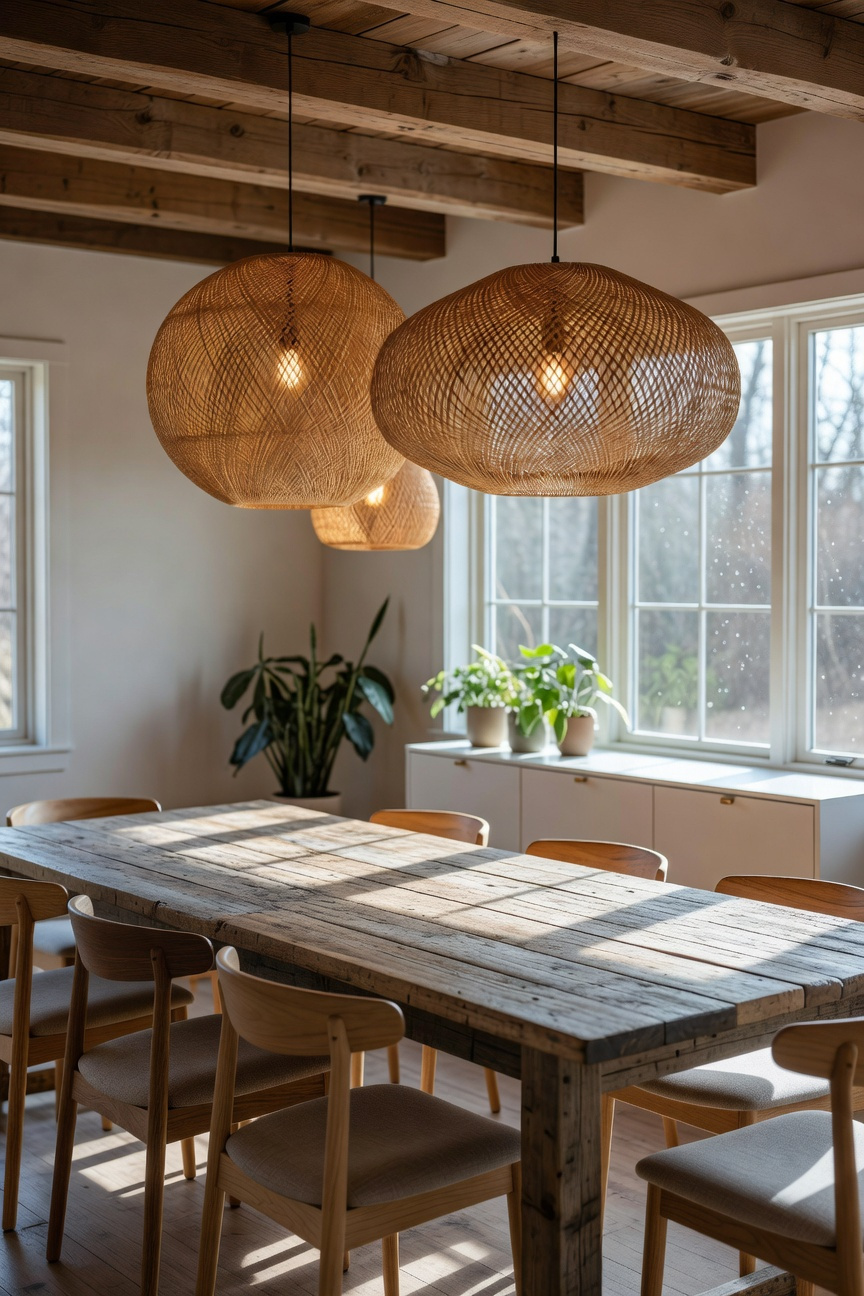
Rattan and jute are not merely aesthetic choices, though. In fact, they act as brilliant acoustic softeners. Farmhouse spaces typically feature reflective surfaces that create loud, draining echoes. Porous natural fibers trap sound waves in the mid-range frequencies. Therefore, a large woven pendant becomes a functional acoustic cloud. It effectively hushes dinner party chatter for a more intimate atmosphere. These biophilic materials also increase our emotional connection to a room. As they age, sustainable fibers develop a rich, honey-toned patina. Sometimes, the bulb’s warmth even releases a faint, pleasant earthy scent.
Woven fixtures offer an unparalleled quality of ambient light. While glass provides clarity, woven shades beautifully sift the glow. Tight weaves block uncomfortable direct glare over the dining table. Alternatively, open hexagonal weaves cast dynamic, geometric shadow patterns across walls. This clever light diffusion cleverly mimics natural dappled sunlight. Thus, it adds necessary visual weightlessness to heavy rustic spaces.
IX. The Iconic Wagon Wheel Chandelier: Modernizing a Timeless Farmhouse Centerpiece
Pioneers initially salvaged broken wagon wheels from prairie schooners. This rugged tactic consequently provided essential frontier illumination. The iconic chandelier remains a powerful visual heartbeat today. It beautifully bridges vintage history with contemporary dining needs. This linear lightness perfectly aligns with minimalist Japandi trends. You can often see this showcased in modern farmhouse kitchen design.
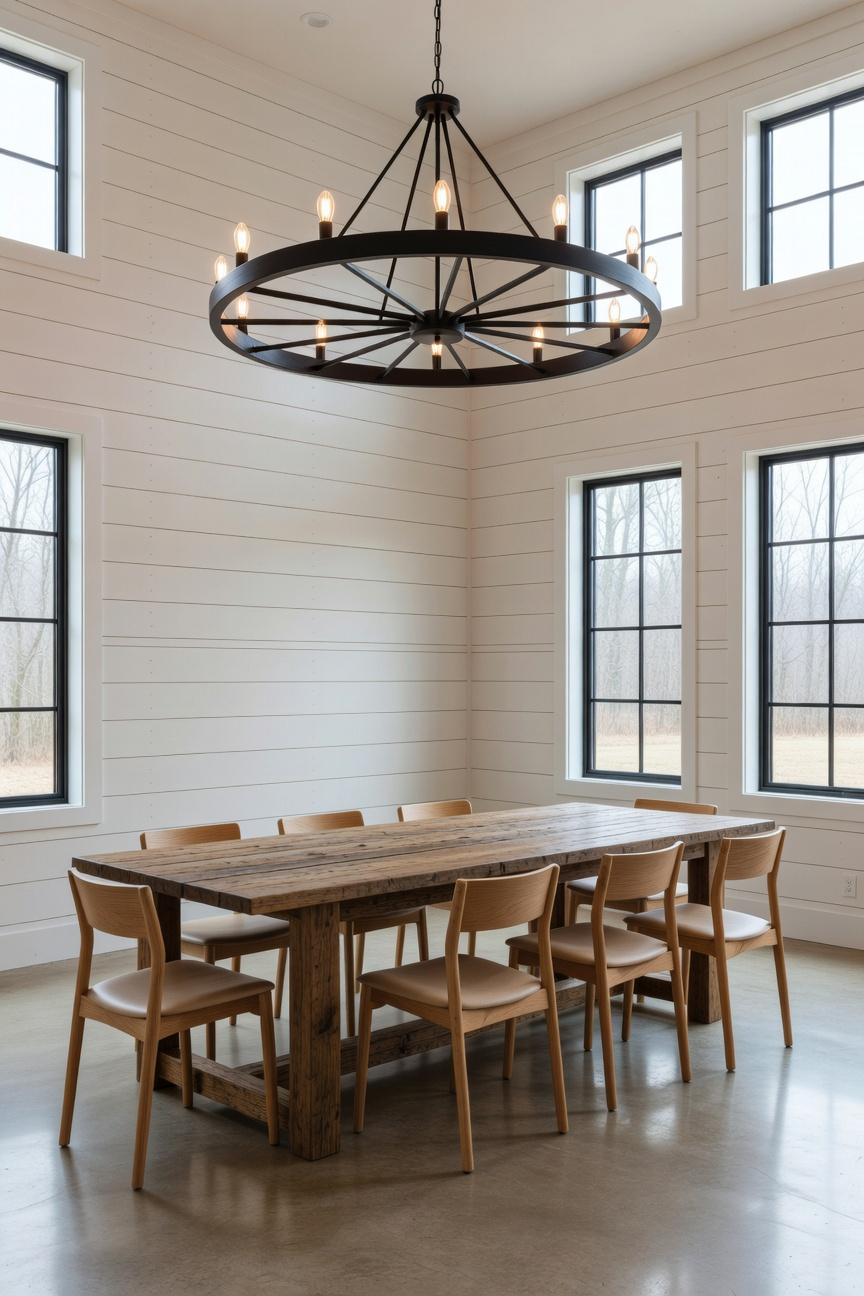
Traditional versions previously relied on heavy, steam-bent hickory wood. Modern iterations embrace sleek, powder-coated steel or aluminum instead. Many high-end designs also utilize continuous integrated LED strips. This modern approach removes vertical bulbs to create glowing halos.
The continuous circular shape psychologically represents equality and unity. This geometric frame illuminates every face equally, unlike linear fixtures. Warm lighting naturally lowers cortisol levels for relaxed gathering. Older dense designs technically cast a frustrating dark pool beneath them. Clever up-down lighting completely eliminates this dreaded shadow donut, however.
Scale is critical for maintaining open conversational flow. Designers routinely apply the two-thirds proportion rule for table sizing. A fixture should specifically span two-thirds of the table width. An oversized wheel easily creates a claustrophobic dining experience. Modern farmhouse spaces finally thrive on mixed-metal finish fusions. Pairing matte black rings with antique brass works perfectly, for instance. This thoughtful blend prevents a sterile, matching catalog look.
X. Pendant Trios: Mastering Proportion and Spacing Over the Farmhouse Table
Traditional harvest tables were historically built for large, lively family gatherings. A single large chandelier often leaves the table’s ends in shadow. Therefore, designers utilize a pendant trio to create a distinct visual spine. This odd-numbered grouping provides a central anchor with two supporting bookends. Ultimately, a trio resolves visual tension and introduces a pleasing dynamic balance.
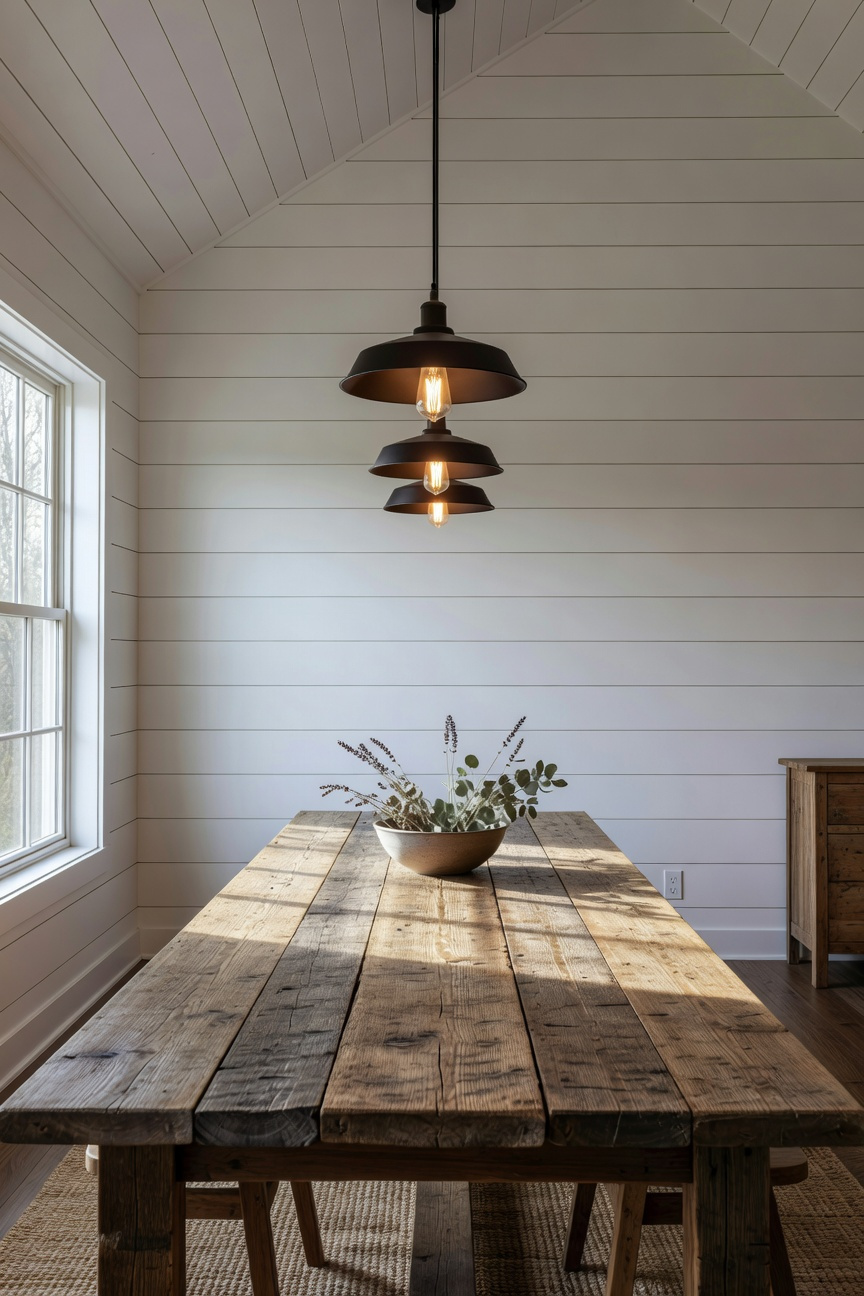
Functionally, these multiple fixtures act as an architectural dropped ceiling. They beautifully delineate the dining zone within open-concept farmhouse spaces. The pendants must span roughly two-thirds of the total table length. You should space the outermost fixtures slightly inward from the edges. Leaving six to twelve inches of edge clearance prevents a top-heavy appearance. Naturally, the gap between each pendant should equal the fixture’s actual diameter.
Hanging them thirty-six inches above the wood creates an intimate glow. This golden height focuses attention while maintaining clear sightlines for conversation. In fact, three overlapping light sources dramatically reduce harsh platter shadows. This diffused buttery light makes culinary textures look highly appetizing.
Visually, opaque steel shades focus light strictly downward for a moody spotlight. Vintage seeded glass provides airy volume and soft ambient diffusion instead. This textured glass beautifully mimics the gentle flicker of historic candlelight. Precise pendant trios thoughtfully elevate humble barn utility into functional room jewelry.
XI. Heritage Sconces: Framing Your Vintage Hutch or Buffet with Accent Lighting
Framing a vintage hutch with dual sconces creates a classic triptych composition. Essentially, this technique anchors heavy furniture to the room’s architecture. It elevates your restored buffet from a floating object into a focal point. Designers recommend placing sconces about ten to twelve inches from the hutch edges. This spacing allows the light to beautifully wash the sides of the furniture. Meanwhile, you avoid casting harsh glares on the restored wood surface.
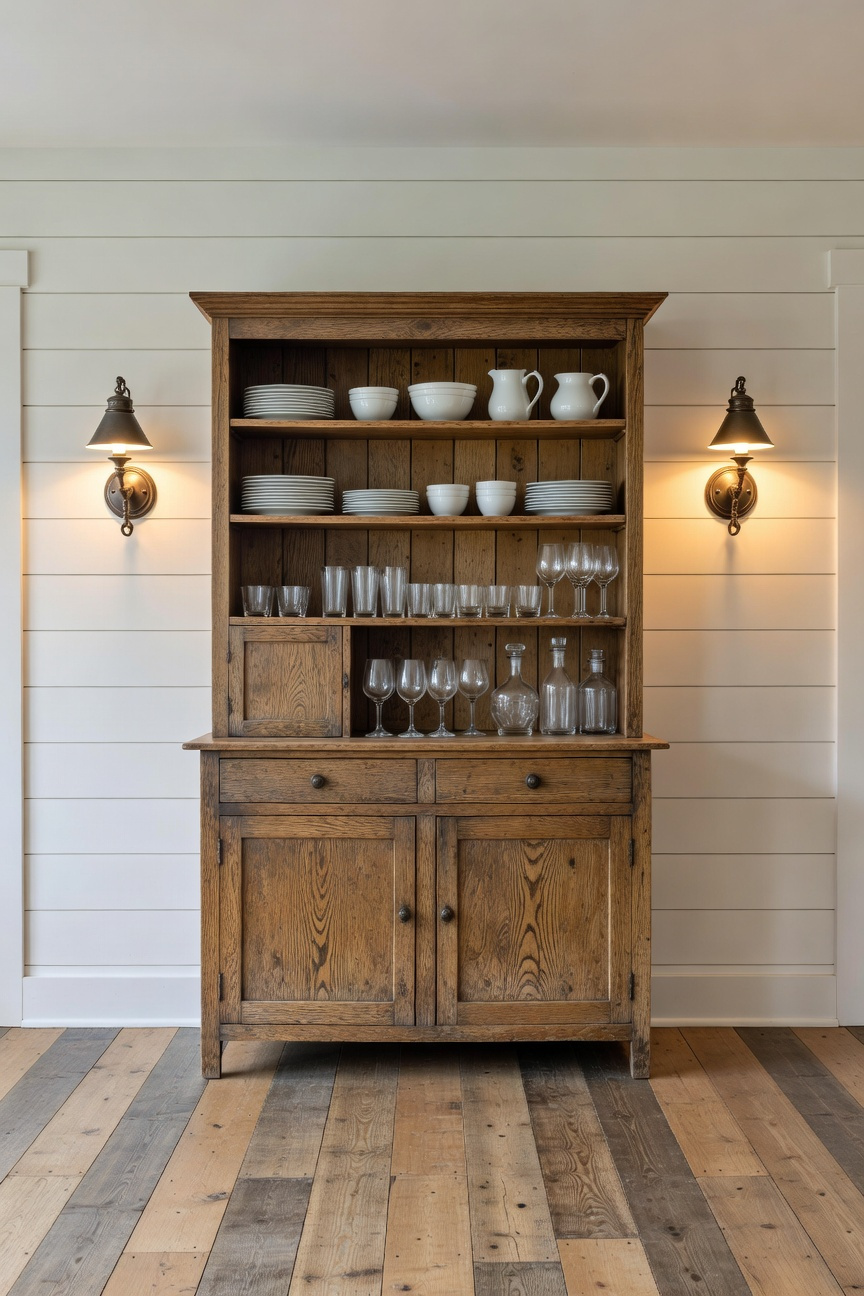
The choice of materials plays a crucial role in authentic restoration. Unlacquered brass or oil-rubbed bronze provide beautiful living finishes. These metals oxidize over time to mirror the historical wear on your hutch. Next, consider the actual lighting technique known as light grazing. Mounting the sconce slightly forward directs light down the furniture at a steep angle. Therefore, it highlights the tactile dovetail joints and undulating wood grain. Bulbs kept in the 2200K to 2700K range yield a warm, amber glow. Whiter bulbs can make a timeless piece feel too clinical or staged.
The glass shade you select also impacts the final atmosphere. Historically, Holophane glass redirects light downward to saturate the buffet evenly. Opaline glass diffuses light to create a soft, moonlight effect instead. This subtle glow beautifully unifies your curated collection of heirloom ceramics. Thus, heritage sconces breathe new life into classic pieces while honoring their history.
XII. Carriage Lanterns: Bringing Historical Exterior Charm into the Dining Space
Drawing exterior carriage lanterns indoors is a profound act of architectural storytelling. Originally, these fixtures signaled the wealth of 19th-century travelers. Restoring these historical exterior pieces honors our design past today. They bring the romance of historic carriage houses to the modern table. Repurposing these sturdy fixtures aligns beautifully with sustainable adaptive reuse.
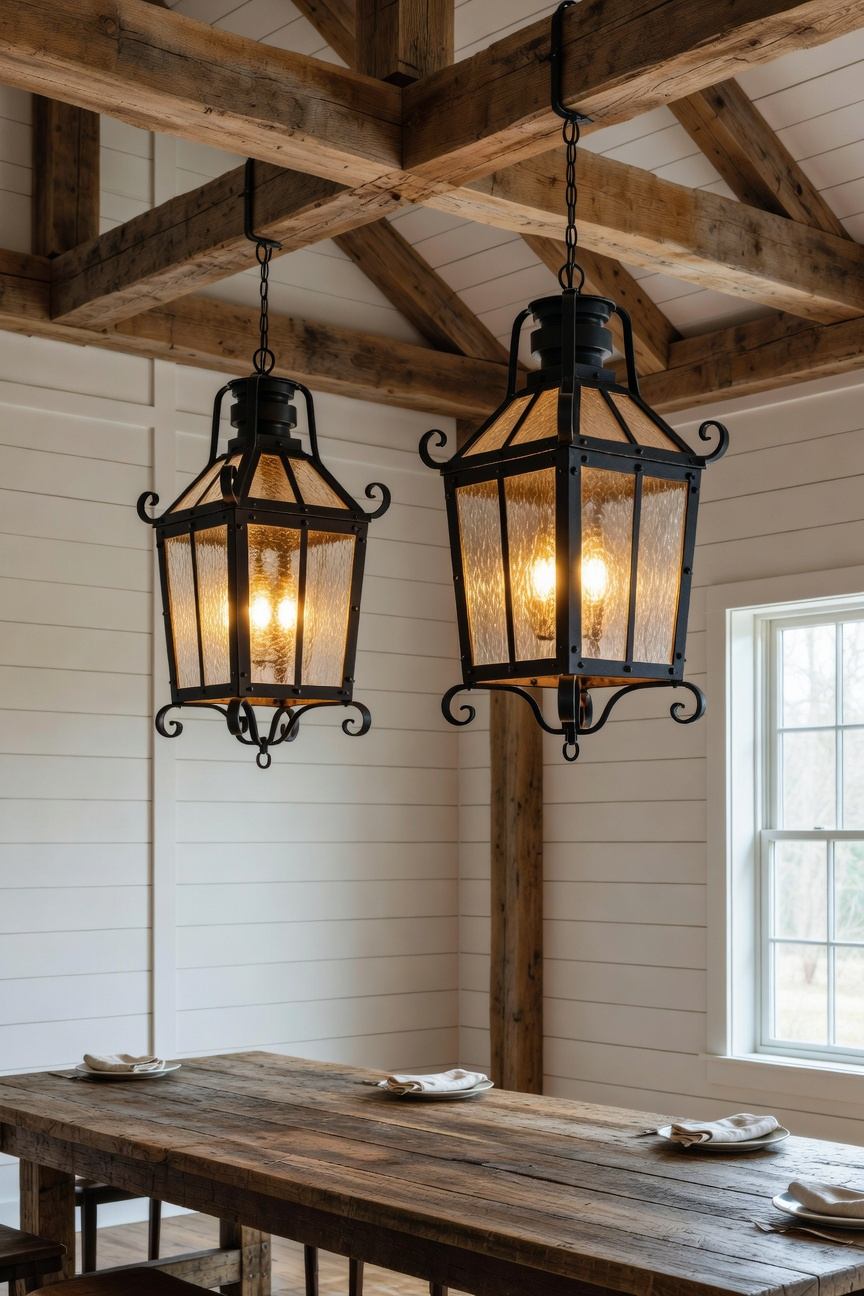
The texture of the lantern glass dictates the room’s entire mood. Beveled glass refracts light to create a sophisticated, moving color spectrum. Seeded glass mimics historical hand-blown imperfections with tiny air bubbles instead. This diffuses harsh modern LED bulbs into a soft, unpretentious glow. The structured iron frames also cast architectural, dancing shadows across your walls. These rich shadows mimic a contained flame perfectly. Pairing them with warm 2200K Edison bulbs naturally encourages your guests to linger.
Balancing scale is absolutely essential for these prominent vintage statement pieces. Typically, a carriage lantern should span roughly half the dining table’s overall width. This massive scale successfully anchors large open-concept farmhouse spaces. Modern designers warn against repeating identical oversized lanterns everywhere, however. Instead, treat your dining lantern as a singular, curated hero piece. Interestingly, you can also explore primitive pierced tin designs for true historical accuracy. Early farmhouses used these metal lanterns to safely transport live hearth coals. Choosing a punched metal fixture introduces a gritty, authentic historical texture.
XIII. The Art of the Bulb: Selecting Vintage-Style Edison Bulbs for Warm Color Temperatures
Selecting vintage-style Edison bulbs requires understanding the physics of light. Standard warm LEDs sit at 2700K. Authentic farmhouse spaces demand an extra-warm 2000K glow, however. Amber-tinted glass physically filters this modern light to mimic a historic candle flame. This deep warmth grazes reclaimed wood surfaces beautifully. Indeed, the longer wavelengths emphasize tactile wood grain perfectly. Unfortunately, heavy amber glass lowers the color rendering index. Colorful table settings might appear somewhat muddy as a result. To preserve vibrant tones, select clear 2400K bulbs instead.
The internal filament actually acts as mechanical art. The classic teardrop shape provides a hand-crafted narrative. Similarly, wound spiral filaments cast incredibly soft, flattering dining light. Vertical squirrel cage filaments offer raw industrial energy instead. This clear glass facilitates connection without blocking your sightlines across the table. For curated aesthetics, target 200 to 400 lumens per bulb. Proper modern dimming ensures a tranquil farmhouse mood, too. Always pair vintage LEDs with electronic low-voltage dimmers. Ultimately, this prevents harsh buzzing that ruins quiet meals.
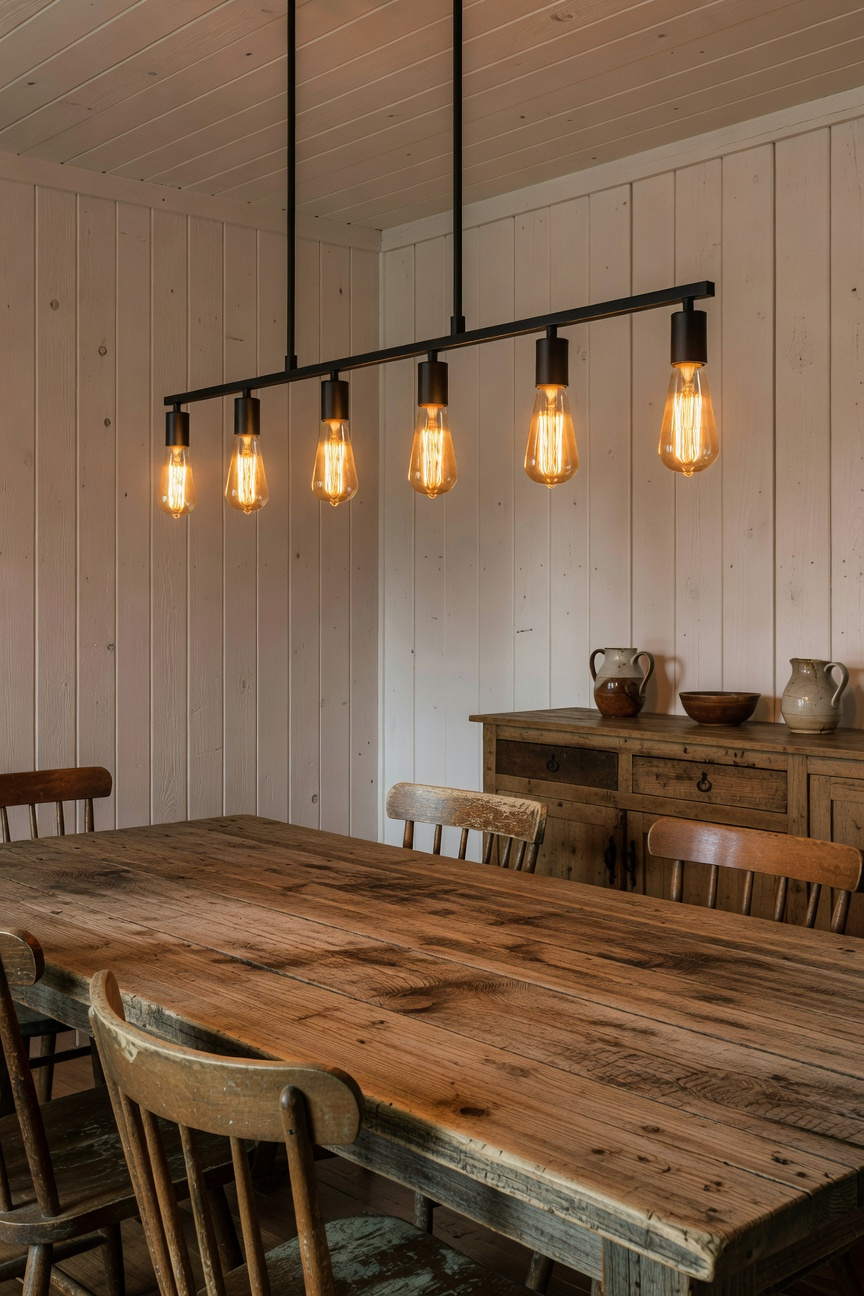
XIV. Scale and Geometry: Sizing Your Fixtures to Match Ceiling Height and Table Dimensions
In farmhouse design, the dining table acts as the home’s hearth. A lighting fixture must physically and psychologically anchor this space. Experts rely on the two-thirds rule for perfect symmetry. Your fixture should measure between one-half and two-thirds of the table’s width. A fixture that is too small leaves the furniture feeling completely adrift. Oversized solid pieces can make a room feel suffocatingly top-heavy, however. Open-frame geometric lanterns feature airy negative space. You can safely scale these transparent fixtures up to three-quarters of the table width.
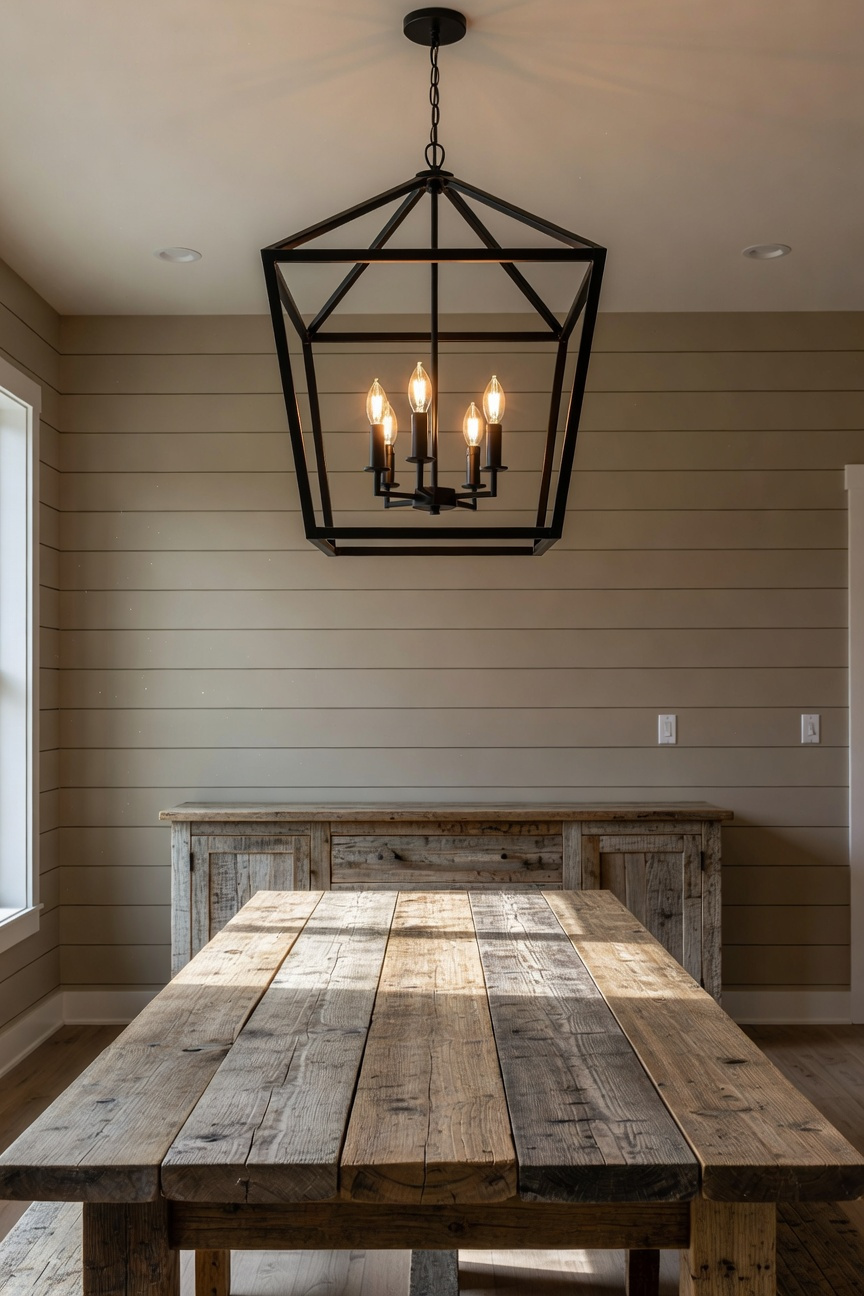
Original colonial farmhouses featured low ceilings to retain heat. Modern great rooms often boast vaulted ceilings reaching twenty feet today. This shift fundamentally changes your vertical lighting geometry. For a standard eight-foot ceiling, hang fixtures thirty to thirty-six inches above the tabletop. Add three inches of hanging height for every additional foot of ceiling space. In high-vaulted spaces, a single-tier chandelier often gets completely lost. Instead, use a tall vertical lantern or multi-tier fixture. This fills the dead air and prevents the room from feeling cavernous.
Long rectangular harvest tables introduce an entirely different geometric challenge. Designers usually apply the rule of odd numbers for linear continuity. Hang multiple pendants twenty-four to thirty inches apart from center to center. Always maintain a visual buffer at the table’s ends. Keep the outermost fixtures at least six to twelve inches away from the edge. Visually, this prevents the layout from appearing stretched and unstable. Matching fixture size perfectly to the table honors historical lighting traditions. You easily recreate the intimate, candle-lit atmosphere of a nineteenth-century farmstead.
XV. The Thrill of the Hunt: Penny’s Guide to Sourcing and Rewiring Flea Market Finds
Finding the perfect farmhouse fixture requires looking past dusty exteriors. You must seek out objects with strong industrial or agricultural skeletons. Genuine porcelain-enamel barn shades offer authentic, chipped character, for example. Wire egg baskets or galvanized chicken feeders provide excellent structural narratives. Always ignore the existing, degraded electrical wiring during your initial search. Instead, evaluate the heavy metal weight or the clarity of prismatic glass.
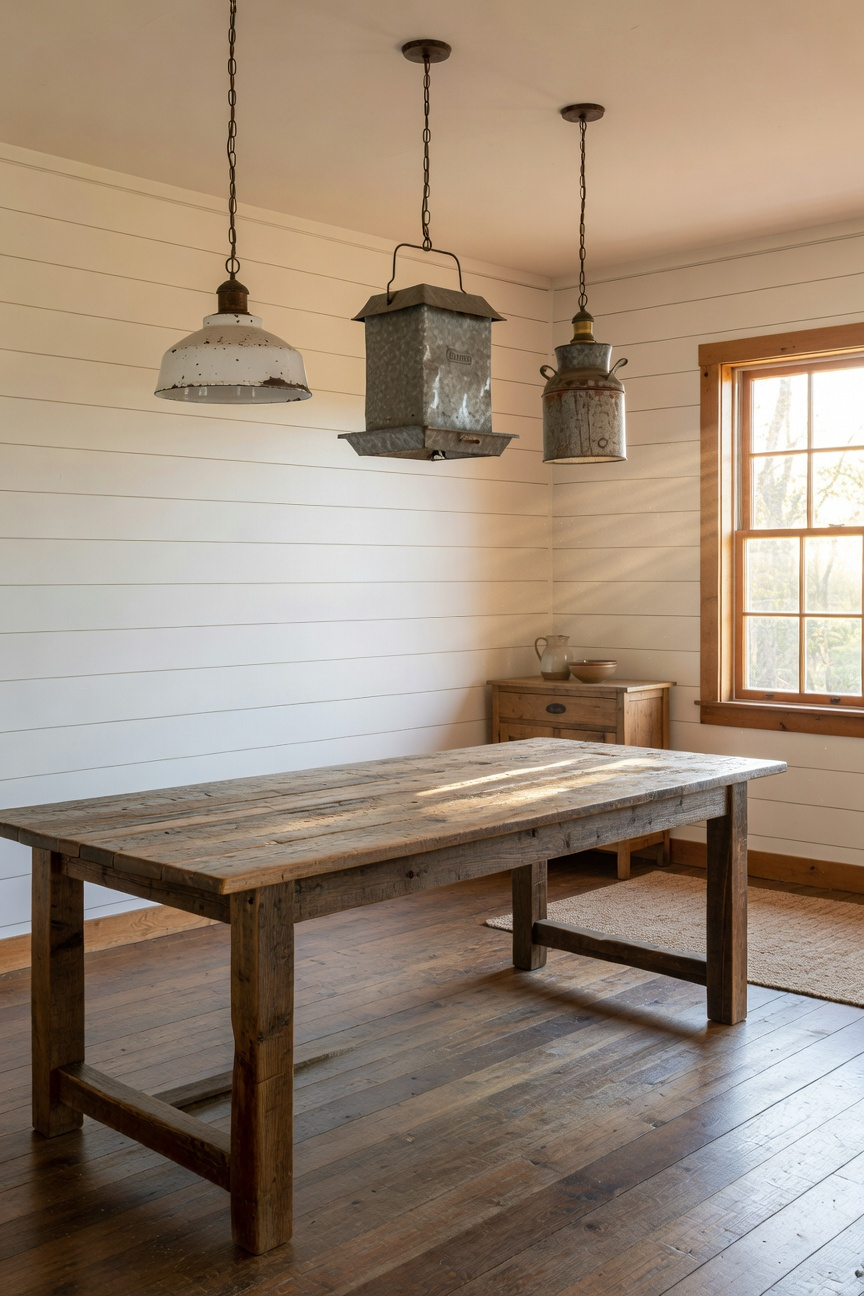
Proper rewiring transforms these forgotten treasures into safe, functional centerpieces. Replace cheap plastic cords with period-correct braided cloth-covered cable. Secure the connection using a classic Underwriters Knot inside heavy-duty porcelain sockets. This technique prevents dangerous wire tension if the fixture is bumped. Scale plays a crucial role in grounding your dining space, too. The sourced fixture should measure about two-thirds of your table’s width. If your vintage finds are too small, simply group them together. Hang three identical funnels from a single reclaimed timber spreader bar.
Preserving the living history of your piece requires careful surface stabilization. Gently apply microcrystalline Renaissance Wax rather than yellowing clear-coat sprays. This effectively seals the charming rust without letting flakes fall on your food. Deep metal pitting signals severe structural failure and must be avoided entirely. Complete the historical mood by installing warm Edison-style LED bulbs next. This 2700K light creates a beautiful candlelight glow that softens rugged metal.
XVI. Era-Mixing Mastery: Pairing Mid-Century Modern Dining Chairs with Rustic Lighting
Pairing Mid-Century Modern chairs with rustic lighting creates a strategic architectural dialogue. This era-mixing mastery relies heavily on balancing visual weight. MCM pieces like the Eames Molded Plastic Chair feature slender, leggy silhouettes. These thin profiles create negative space that delicately floats above floors. A room can feel quite fragile if paired with light fixtures, however. A massive reclaimed wood chandelier provides a necessary gravitational anchor. This heavy lighting allows thin-legged chairs to maintain their airy sophistication.
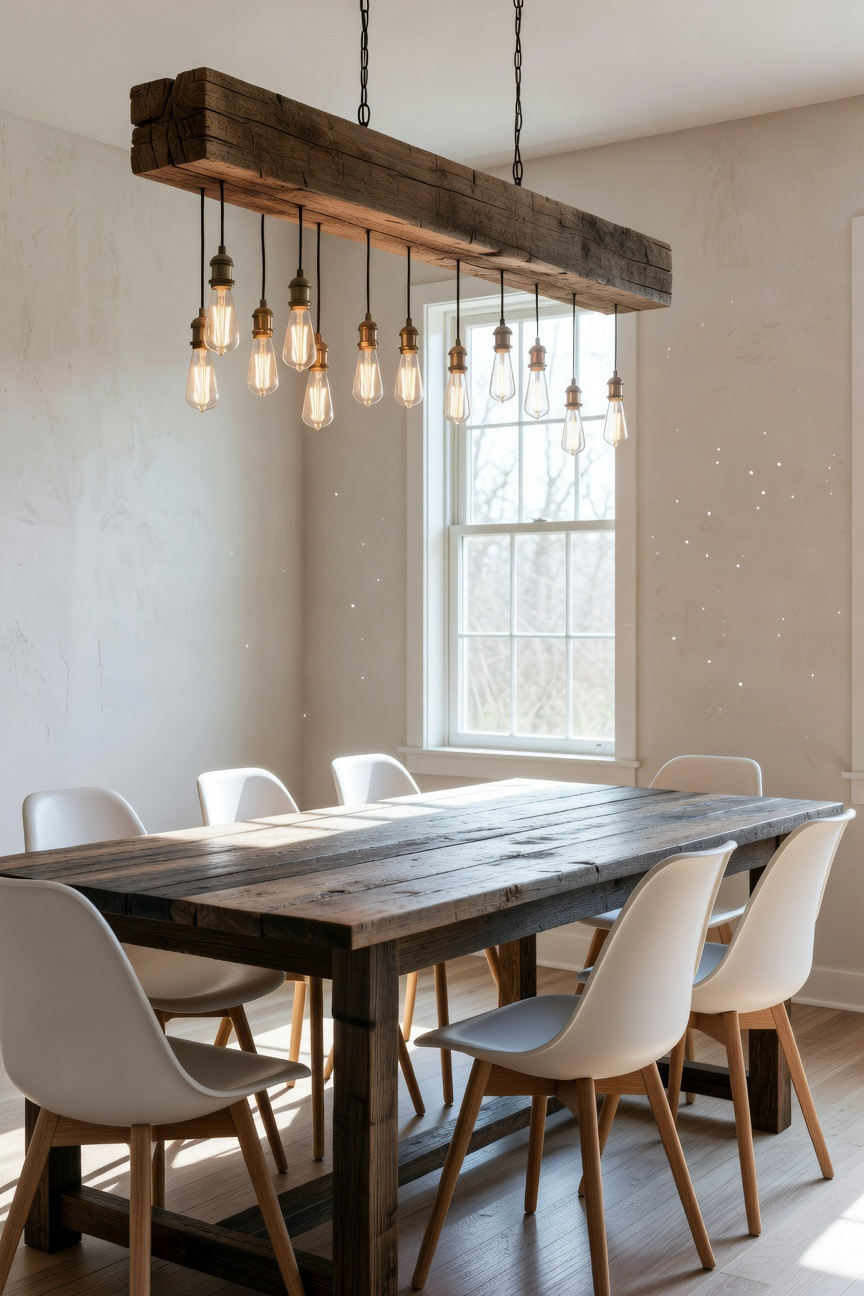
Expert designers use a shared material language to prevent aesthetic clashes. Danish Modern vintage finds frequently utilize smooth, oiled white oak or walnut. Rustic farmhouse lighting employs these same woods in sustainable rough-sawn states. Matching these undertones creates a beautiful and cohesive material echo. This pairing builds a high-contrast tactile environment within the dining space. A glass-smooth Saarinen Tulip chair contrasts remarkably against a restored iron pendant. Smooth surfaces reflect light sharply while rustic textures elegantly diffuse it. This sensory interplay prevents the room from feeling clinical or cluttered.
This blend represents a mature evolution beyond predictable modern farmhouse design trends. Introducing a Bertoia Wire Chair under an agrarian lantern adds edge, for instance. The room transforms into a sophisticated city-to-country retreat. Visually, the steam-bent Wishbone chair softens the rigid lines of a rustic beam. The industrial Eames shell looks remarkably grounded under a large lantern, too. Hence, the rugged fixture beautifully frames the chair like fine gallery artwork.
XVII. Layering the Light: Balancing Ambient, Task, and Accent Fixtures for Depth
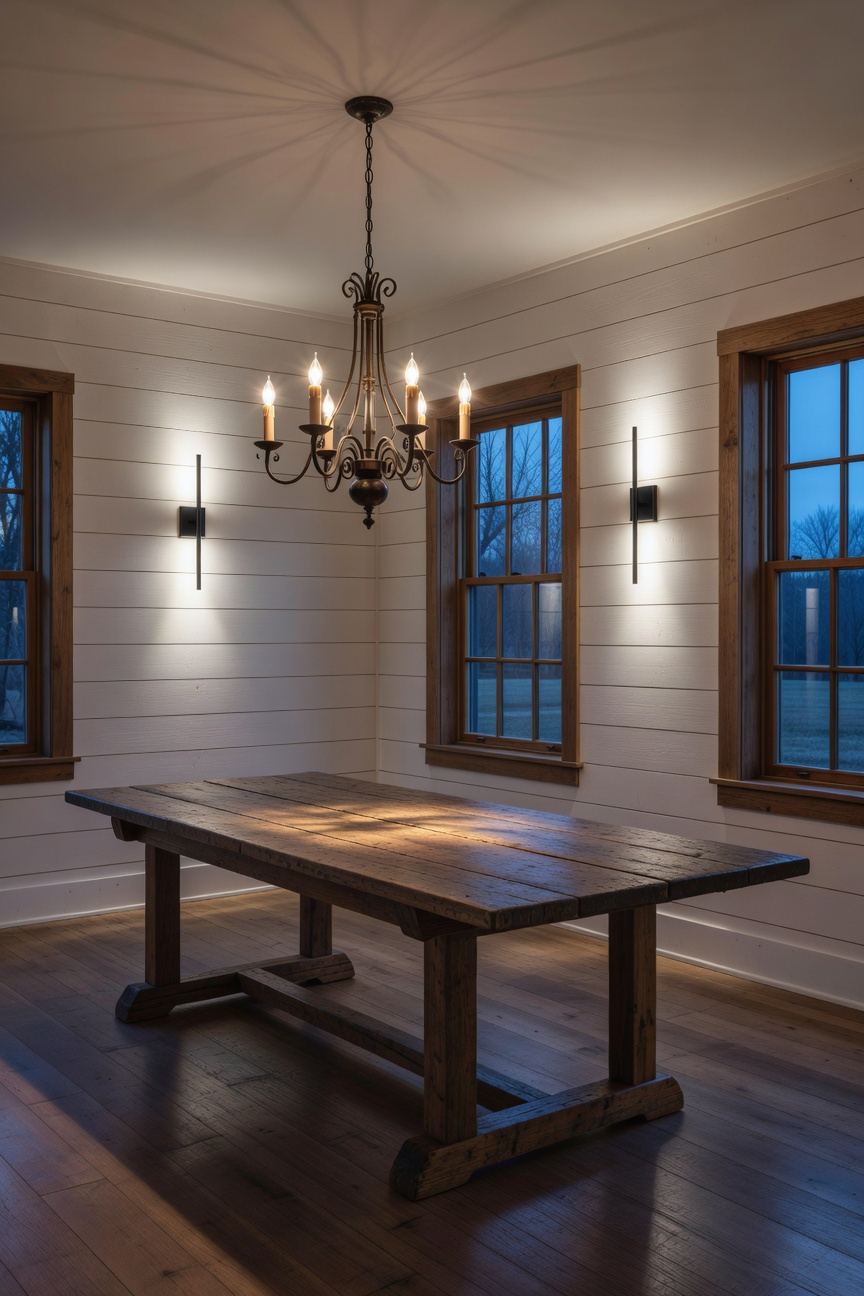
Layering light is absolutely essential to creating a timeless farmhouse dining space. This approach transforms flat rooms into historically rich environments. Vintage design often features textured walls like shiplap or stone. Standard central chandeliers can flatten these beautiful architectural details, unfortunately. You should utilize a clever wall grazing technique instead. Placing slim sconces within twelve inches of the wall creates massive depth. Elongated shadows skim the surface to highlight the texture brilliantly.
Material choices also play a crucial role in your design. Seeded glass offers incredible historical and sensory appeal. The tiny trapped air bubbles refract light rather than simply diffusing it. As a result, this creates a sparkling and staccato lighting effect. It mimics candlelight to provide cozy and authentic warmth.
You must balance this translucent ambient light with heavy task fixtures. Galvanized metal or black iron pendants work perfectly here. These opaque materials force a dramatic cone of light downward. Ultimately, this material contrast physically defines the boundaries of your room.
Consider the psychological impact of your layered lighting scheme as well. Experts consistently recommend a specific three-to-one contrast ratio for intimate spaces. In practice, accent lights should be three times brighter than ambient fixtures. Dimming the central chandelier shrinks the visual focus around your table. Thus, you create a psychological sense of safety and lingering comfort.
XVIII. The Dimmer Switch Philosophy: Setting the Mood for Long, Lingering Family Dinners
Before 1959, dimming lights was considered a massive theatrical luxury. The solid-state residential dimmer changed domestic design forever. This subtle dial brings the natural golden hour indoors effortlessly. Consequently, it transforms functional farmhouse tables into restorative sanctuaries.
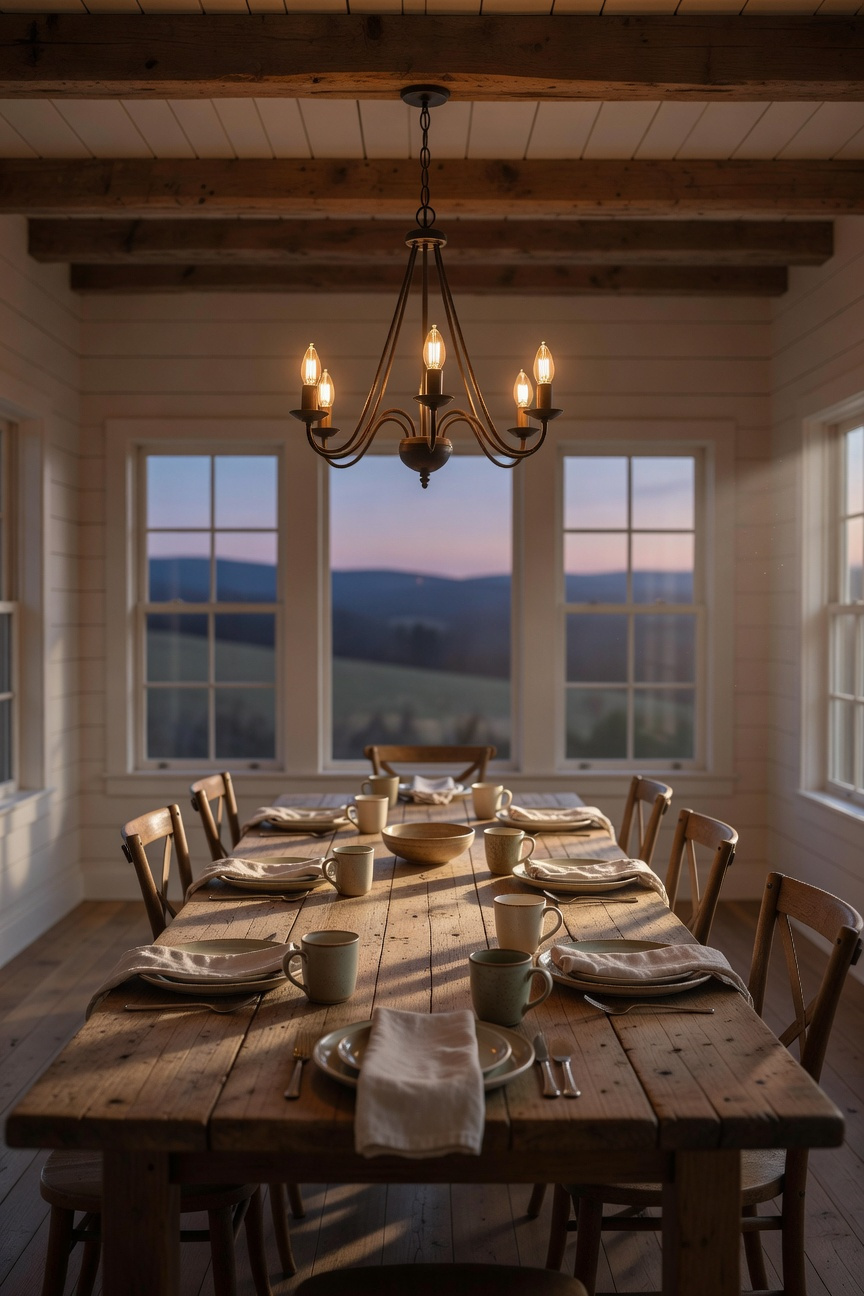
Interestingly, low ambient light creates a psychological social shield. Studies show diners linger and converse much longer in darker rooms. These dim environments actively lower cortisol and reduce daily stress. Bright kitchen prep gives way to relaxed family storytelling. Turning the dial physically cues everyone that work concludes for the evening.
Vintage reclaimed woods require careful, tactile illumination. A warm 3000K glow beautifully highlights rugged wood grain imperfections. Sustainable bulbs with high color rendering are absolutely vital, however. Otherwise, vibrant home-cooked meals might look muddy and completely unappetizing.
Selecting the right farmhouse dining room lighting is a journey of balancing scale, history, and texture. I always recommend moving beyond mass-produced trends to embrace authentic, artisan-crafted materials. You create a gathering space that feels incredibly grounded and elevated. Whether through a reclaimed beam or a patinated copper lantern, your dining room light should tell a story. Ultimately, it celebrates heritage, sustainability, and a home built for lingering.
Frequently Asked Questions
How high should farmhouse dining room lighting be hung above the table?
For a standard eight-foot ceiling, hang fixtures thirty to thirty-six inches above the tabletop. If your ceilings are higher, add approximately three inches of hanging height for every additional foot of vertical space. This maintains proper visual balance.
What is the best way to choose the right size chandelier for a farmhouse dining table?
Designers typically follow the two-thirds rule. The width of your light fixture should be between one-half and two-thirds the width of the dining table. For long harvest tables, consider a linear chandelier or a trio of pendants. This ensures even illumination across the entire surface.
Which light bulbs provide the most authentic farmhouse look?
Vintage-style Edison LED bulbs are the absolute gold standard for farmhouse aesthetics. To achieve a nostalgic, sunset-like glow, look for bulbs with a color temperature between 2000K and 2400K. These provide the ambient warmth that highlights wood textures without the harshness of standard daylight bulbs.