
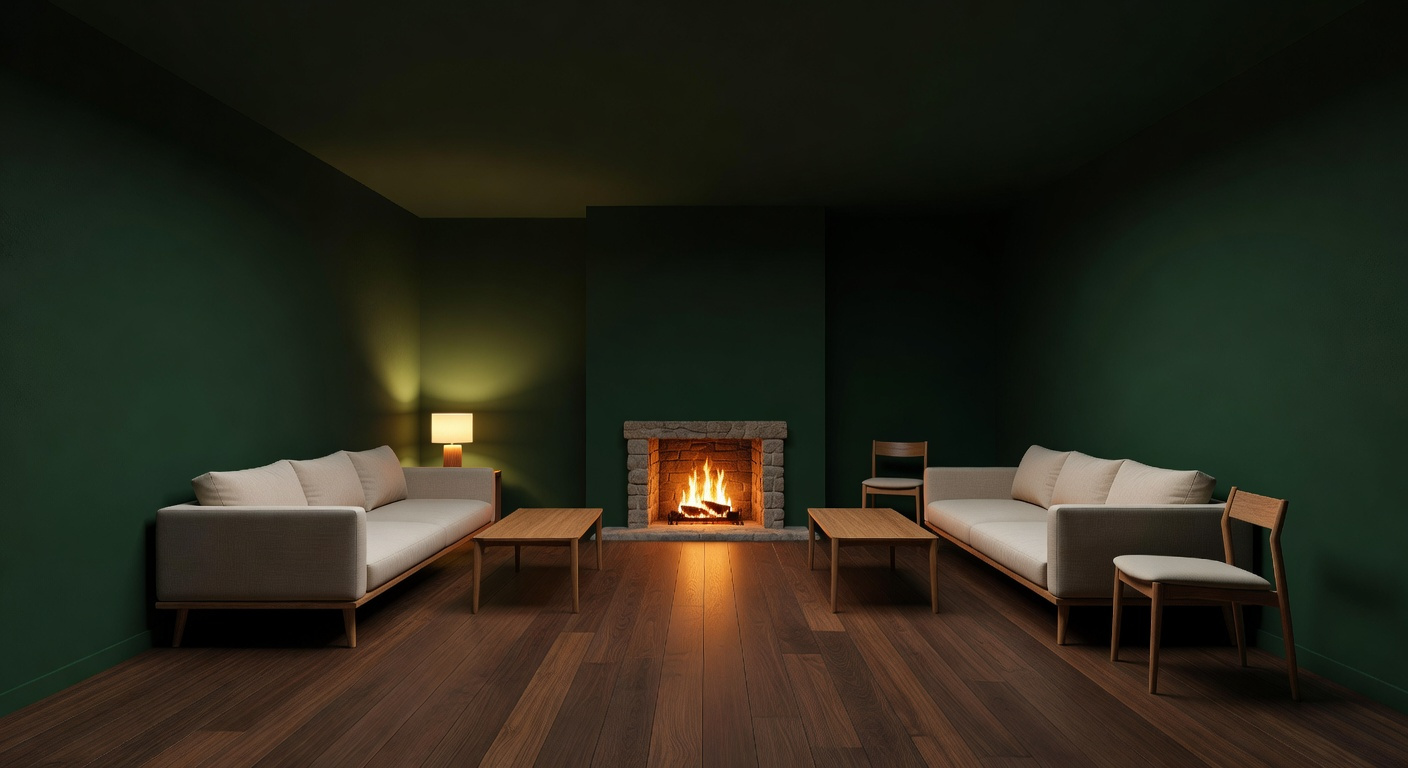

Many believe that creating a cozy living room look is simply about aesthetics or selecting soft furnishings. However, true relaxation requires much more than surface-level decoration; it is an exercise in quiet luxury. In reality, the “Exhale” moment is a measurable physiological shift within the body. Specifically, we transition from high-alert stress to the Parasympathetic Nervous System when the environment feels safe. Thus, effective design must address our primal biological needs for curated interiors alongside contemporary style.
To achieve this, we must understand the Intimate Authority Framework. This approach prioritizes physical ease over formal rigidity. For instance, it uses “low-frequency” visual stimuli to signal safety to the Vagus nerve. Furthermore, it leverages haptic perception, or “visual touching,” to ground us in the present. Unlike mass-produced synthetics, natural materials like raw wood and artisanal textures provide a specific “resonant frequency.” Consequently, these textures create a sensory narrative of stability. The room effectively gives the occupant permission to stop performing.
This guide reveals the biological and psychological triggers that transform a room into a sanctuary. First, we explore how Prospect-Refuge theory satisfies our evolutionary need for safety. Next, we examine how “soft fascination” aids in essential cognitive recovery. Additionally, we analyze the “Kelvin Threshold” to understand how lighting impacts our circadian rhythms. Ultimately, we will define how to transform a visual aesthetic into a physical release of tension.
Phase 1: The Envelope — Establishing Warmth Through Palette
In interior design, “The Envelope” forms the room’s foundation. This term refers to the primary surfaces: walls, ceilings, and floors. To establish true warmth, we must first analyze Light Reflectance Value (LRV). Ideally, a cozy space thrives in a mid-to-low LRV range of 30 to 50. As a result, these deeper shades absorb shadows rather than reflecting them. This creates a sense of atmospheric pressure, mimicking the evolutionary safety of a cave.
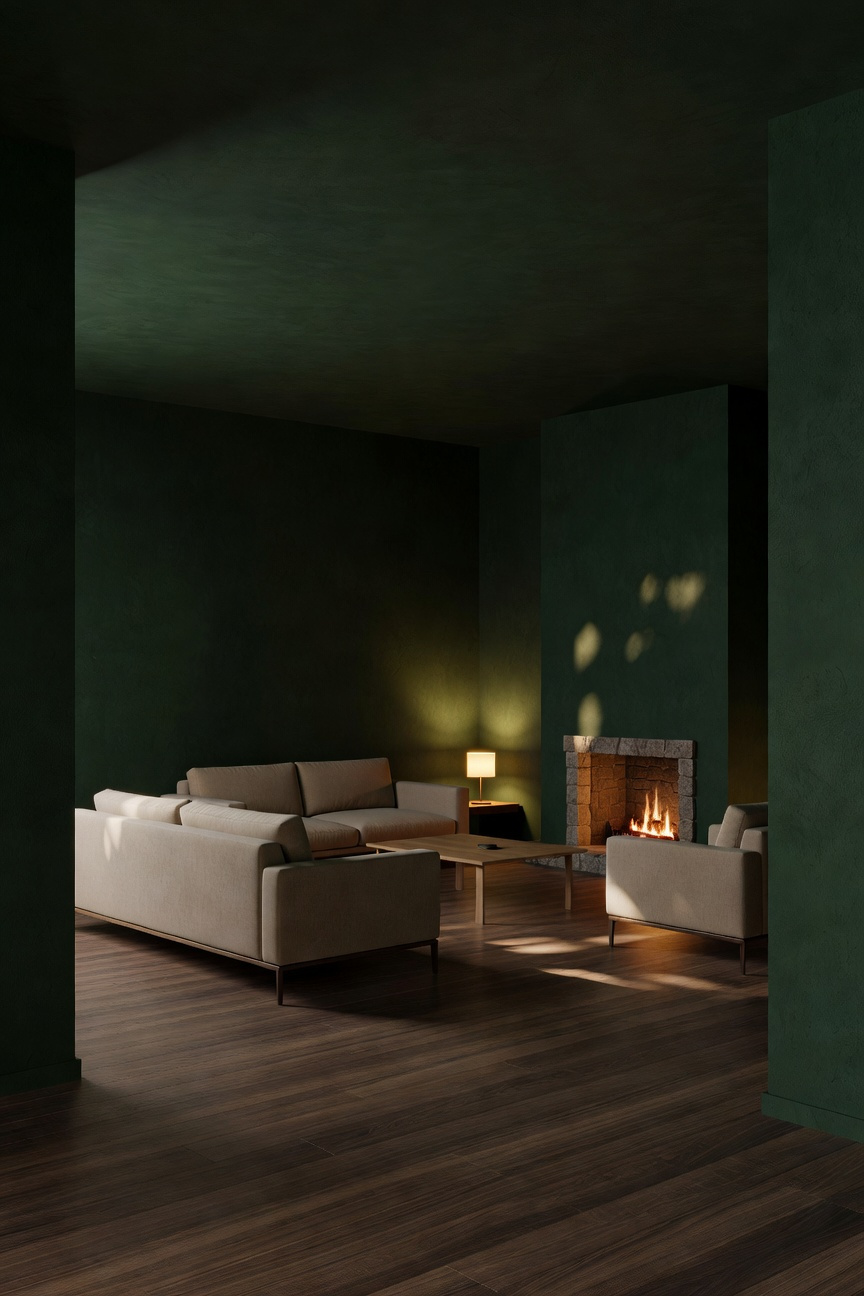
Next, consider the historical technique of “Color Drenching.” Traditionally, white trim breaks the visual field. However, painting woodwork to match the walls erases this “visual stutter.” You create a seamless, Regency-inspired cocoon. To maintain depth, simply use a matte finish on walls and satin on trim.
Additionally, the modern cozy palette rejects cool greys for “Living Neutrals.” In fact, complex pigments with red or yellow undertones glow warmly during the “Golden Hour.” This mirrors the principles used in a beige living room decor sanctuary. Finally, remember that texture creates visual weight. For example, breathable limewash or grasscloth adds a tactile quality that flat drywall lacks. Your envelope becomes a physical embrace, not just a color.
1. Embracing ‘Muddied’ Hues: Why imperfect colors feel more human
Embracing “muddied” hues offers more than just a unique visual aesthetic. Fundamentally, these desaturated tones create a deep psychological sense of safety. From an evolutionary standpoint, human vision naturally craves “legible complexity.” Conversely, pure, saturated colors often signal danger or toxicity in nature. Therefore, earthy browns and clay reds mimic the security of a safe habitat.
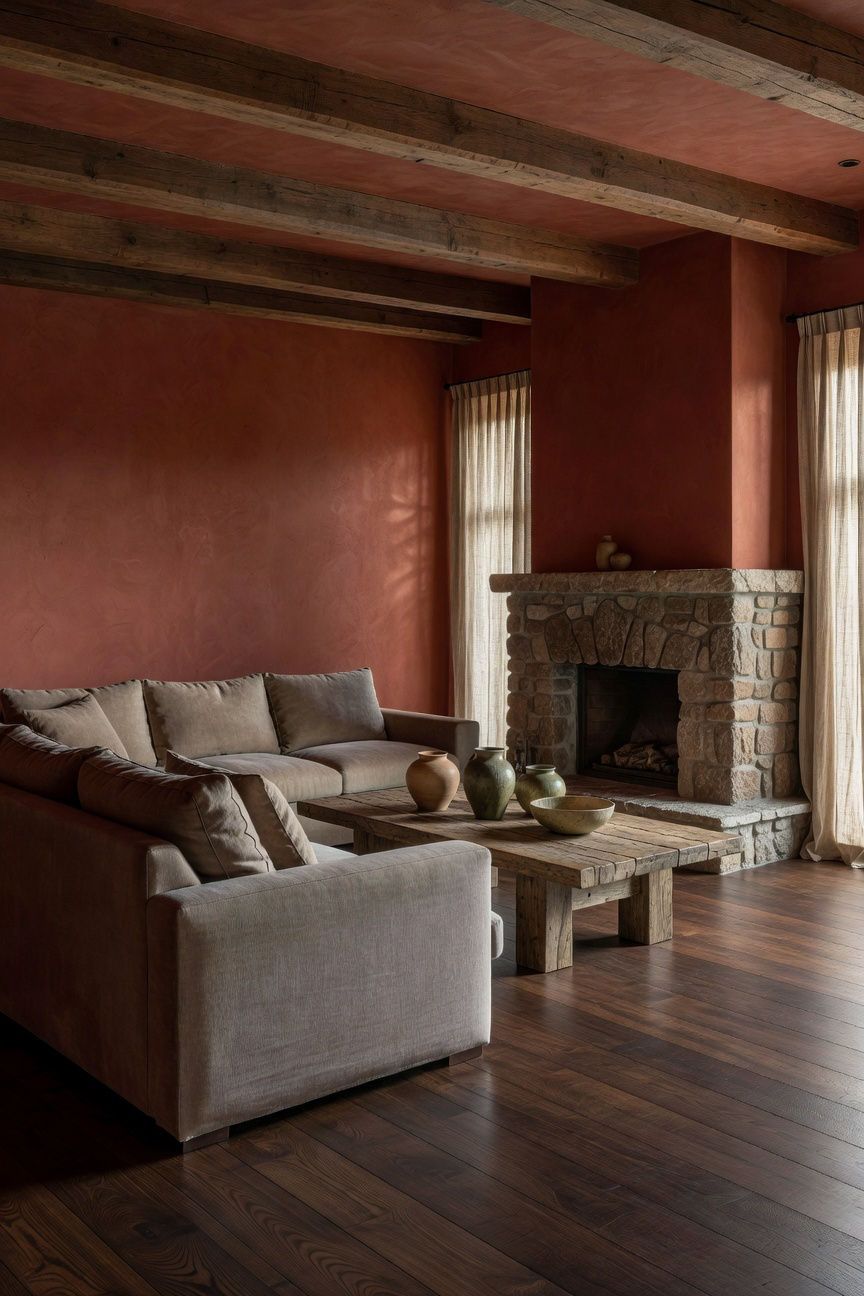
This preference has deep roots in design history. Notably, the Arts and Crafts movement rejected harsh, synthetic perfection. Instead, William Morris championed organic vegetable dyes for their complex, “living” shades. These “imperfect” colors represent the human hand rather than the machine.
Beyond history, the application method impacts this “human” feel. For instance, finishes like limewash create deep, tactile tonal movement. Unlike flat acrylics, these textured surfaces seem to breathe with the light. A “dirty” sage shifts beautifully from morning to night.
Finally, contemporary designers value the “lived-in” quality of these shades. Actually, “ugly” colors like ochre or mustard lower the room’s stakes. They forgive the clutter of daily life, making the space feel welcoming. Muddied hues provide the visual gravity needed for true coziness.
2. The ‘Wrapped’ Room: Painting trim and ceilings for a cocoon effect
In interior design, the “Wrapped Room” represents a significant shift away from traditional layouts. Designers call this technique Color Drenching. It involves painting walls, trim, and ceilings in one unified hue. Historically, white trim was a functional necessity designed to hide soot from candlelight. Today, however, we use this monochromatic approach to erase rigid architectural boundaries. The eye glides uninterrupted across surfaces, making spaces feel larger and more intentional.
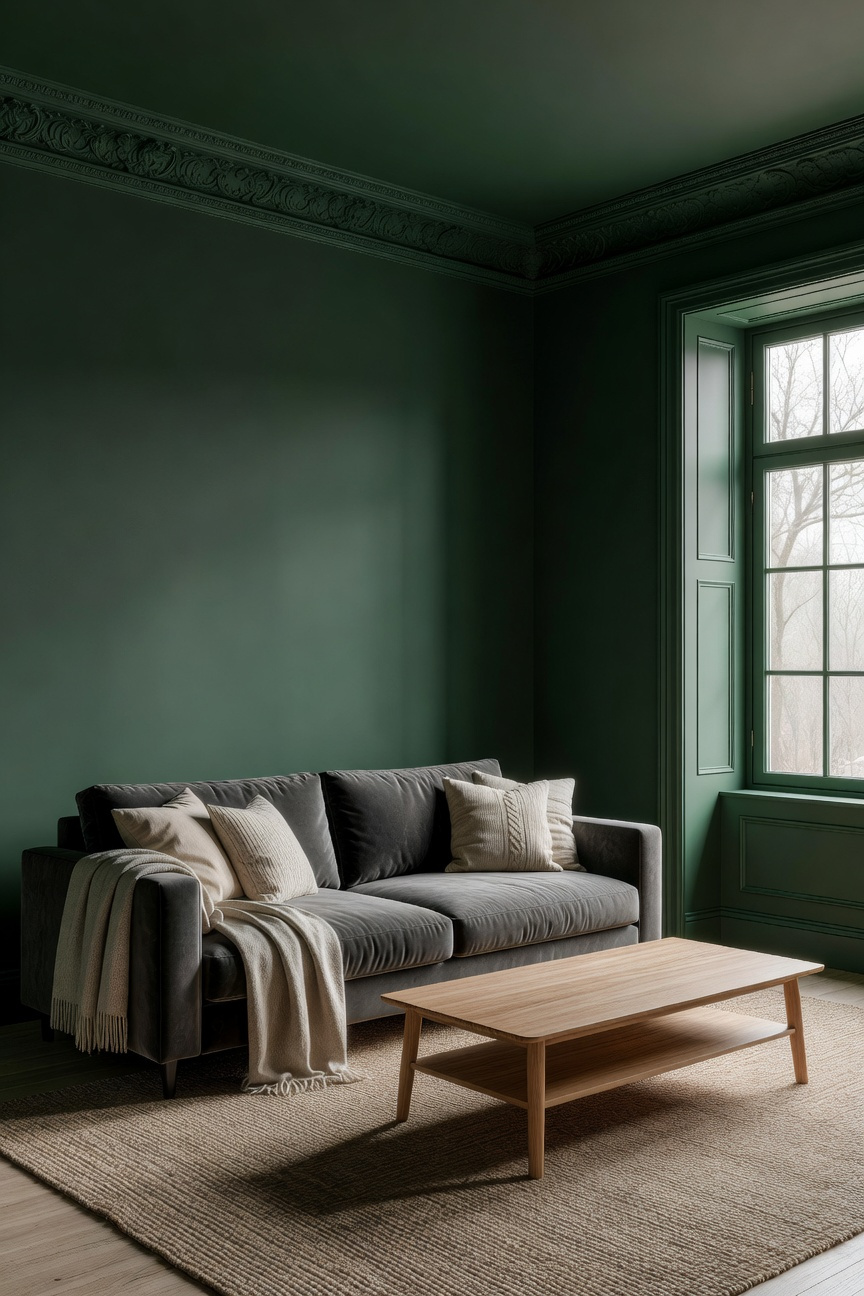
Beyond aesthetics, this method is deeply rooted in environmental psychology. Specifically, eliminating high-contrast transitions creates a “Secure Base” for the nervous system. Without the visual noise of white borders, our bodies naturally enter a restful state. This reduced contrast mimics a safe cocoon, effectively lowering cortisol levels.
Successfully executing this look relies heavily on the paint finish. Recently, “Dead Flat” paints have revolutionized the application process by offering durability for baseboards. These ultra-matte finishes create a soft-focus effect across wood and plaster alike. Alternatively, you can use a “sheen play” technique for added narrative depth. Simply paint the trim in a high-gloss version of the exact wall color. You create subtle “ghost shadows” that register as you move through the space. Finally, texture becomes essential to prevent the room from feeling clinical. Layer heavy textiles like plush velvet to absorb light and deepen the hue.
3. Restoring Soul: Bringing forward the honey tones of vintage wood
The coveted “honey tone” in vintage furniture is not actually a surface pigment. Rather, it represents a biological transformation known as lignin maturation. Over time, exposure to UV light ripens species like Pine and Cherry. This process creates a deep, amber glow that modern chemical stains simply cannot replicate.
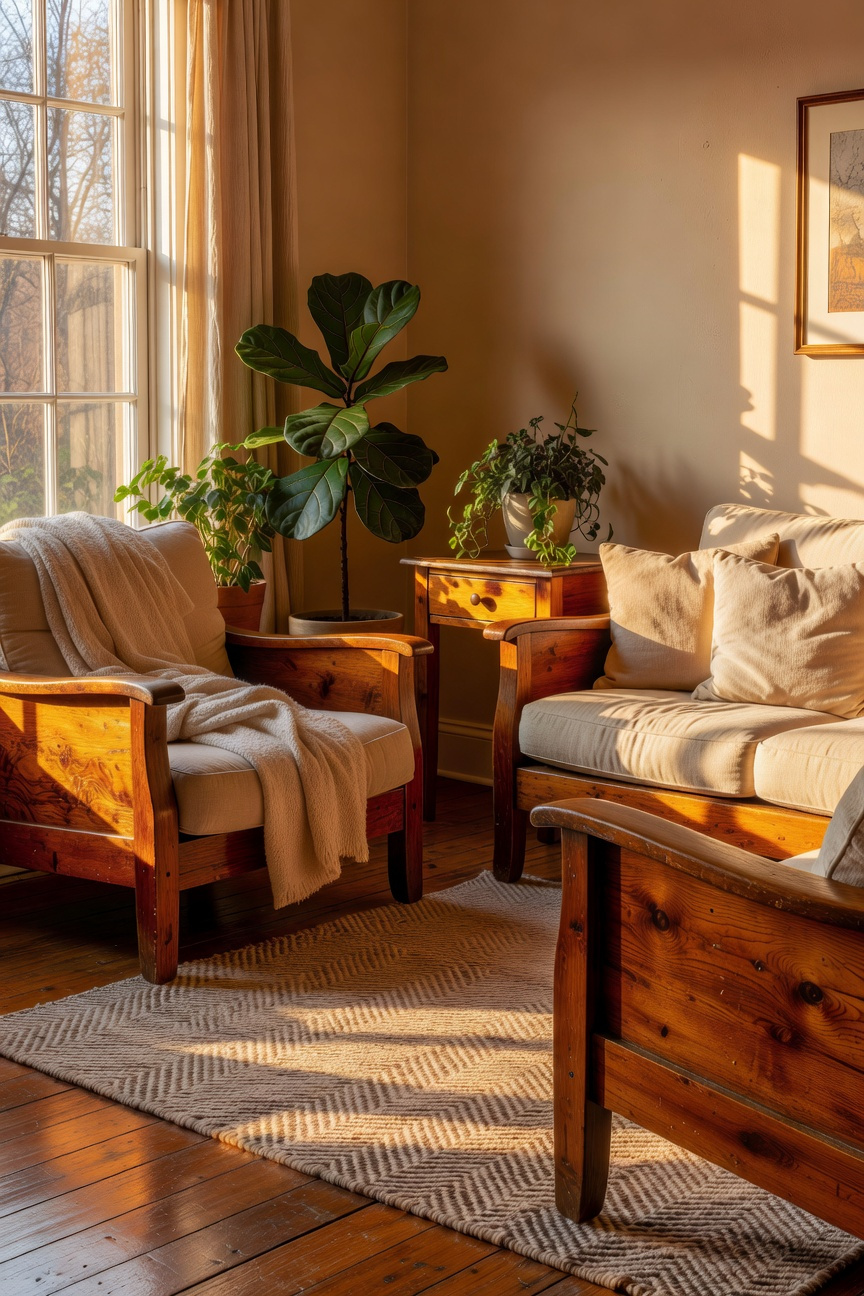
To preserve this soul, you must avoid applying heavy polyurethane topcoats. Sadly, these finishes “plasticize” the surface and flatten the wood’s natural color. Instead, restoration experts favor penetrating options like Tung or Linseed oil. Integrating these high-quality elements is a core part of Living Room Styling, where vintage finds add layers of history and artisanal charm. Furthermore, they enhance “chatoyancy,” an optical effect where the wood seems to glow from within.
This internal glow serves a functional purpose in interior design. In fact, honey-toned wood acts as a passive “warmth multiplier.” Unlike cool modern laminates, aged timber filters light to mimic the “Golden Hour” of a sunset. Thus, it triggers a psychological sense of safety and relaxation within the home.
To achieve this look, shift your focus from sanding to nourishing. Vintage wood is often “thirsty” from years of dry central heating. Treat the surface with a rich mix of Beeswax and Carnauba. Additionally, use 0000-grade steel wool to gently clean the piece without erasing its history. Ultimately, this method preserves the “wabi-sabi” imperfections that give the piece its true narrative and character.
4. Wall Treatments with History: Utilizing beadboard or textured wallpaper
Historically, beadboard served a purely utilitarian purpose in back halls. Bringing it into the living room reclaims a rustic, unpretentious charm. To achieve a “Lodge” aesthetic similar to traditional rustic living room decoration, select wider V-groove planks rather than narrow Victorian beads. Also, prioritize real wood over MDF whenever possible. Actually, natural wood offers unique acoustic qualities and a tactile “material honesty” that synthetic materials lack.
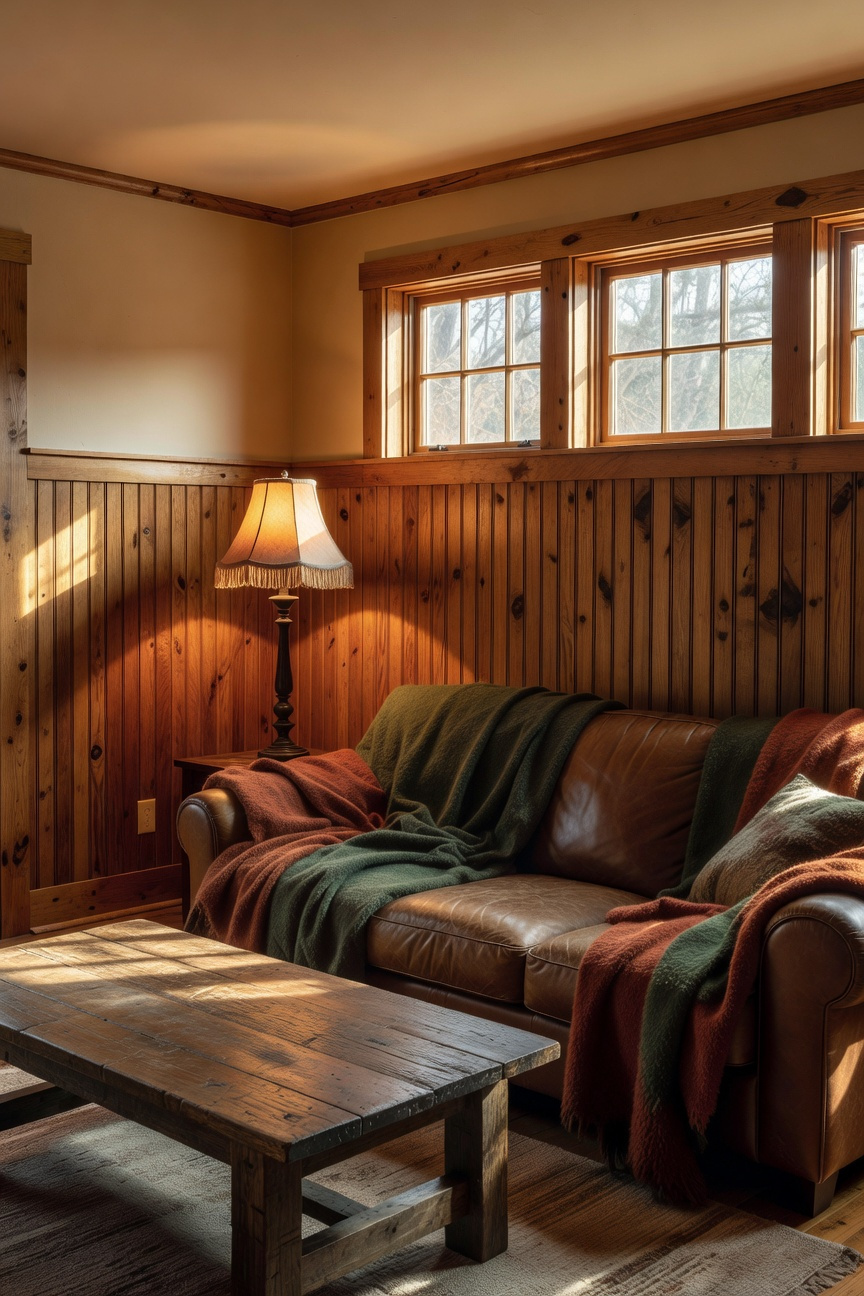
However, the height of your installation matters significantly. Specifically, designers advise against stopping wall treatments exactly halfway up the wall. Instead, adhere to the “rule of thirds.” For example, stopping at chair-rail height maintains openness in rooms with low ceilings. Conversely, extending paneling up to two-thirds of the wall creates a moody, “nesting” effect.
Alternatively, consider the sensory depth of textured wallpapers like Lincrusta or Anaglypta. Originally, these materials mimicked hand-tooled leather or plaster. Their raised relief catches light to create a rhythmic visual warmth. Finally, enhance this depth with a glazing technique. By wiping a darker glaze over the base coat, pigment settles into the texture. You instantly create a historical patina that feels curated and cozy.
Phase 2: Tactile Storytelling — The Art of Layering
Layering acts as a biological signal for safety, a concept known as “safety enveloping.” The human brain processes texture instantly to gauge if a space feels secure or clinical. As a result, soft materials like bouclé trigger comfort, while hard surfaces often create high-alert states. To achieve balance, designers often utilize the “Rule of Three.” First, lay a foundation with a rough element like jute or reclaimed wood. Next, add a soft mid-layer like linen. Finally, top it with a high-comfort accent like mohair to prevent sensory desensitization.
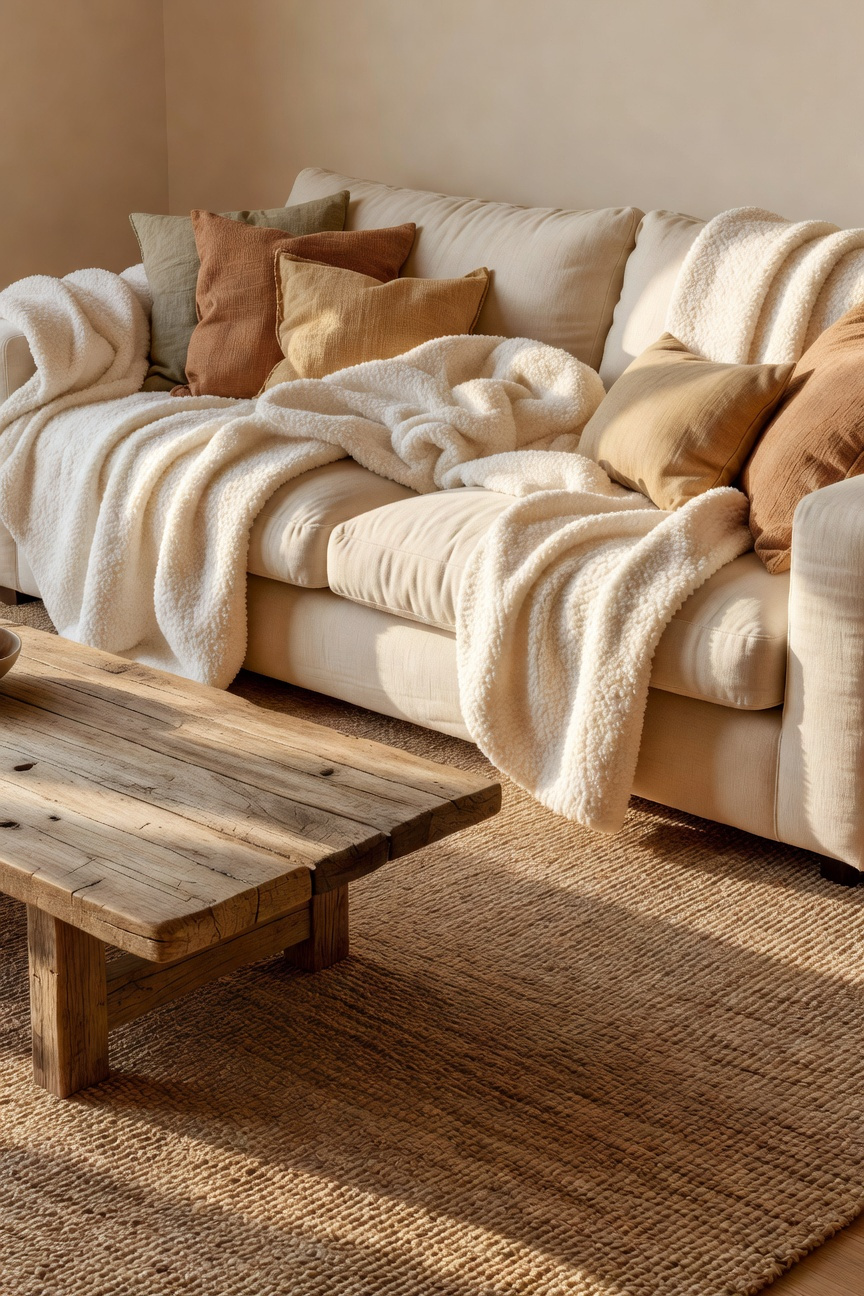
Beyond touch, layering profoundly impacts a room’s acoustics. In fact, natural fibers like wool possess high sound-absorption capabilities, effectively dampening echoes. Therefore, a thick rug creates a “quiet rhythm,” lowering cortisol levels and fostering intimacy. Similarly, lighting plays an unsung role in revealing these textures. For example, side-lighting creates micro-shadows in fabric, adding necessary visual depth to simple weaves.
However, authentic layering requires “material narratives” rather than just clutter. Historically, textiles provided thermal utility; today, they tell a story of mixed eras. For instance, pairing a sleek, mid-century leather sofa with an antique rug bridges the gap between old and new. Ultimately, restraint is key to this visual story. Without negative space, the tactile experience becomes noise. Allow smooth surfaces to balance rich textures, ensuring the room feels curated rather than chaotic.
5. The Foundation: Grounding the space with worn Persian or Moroccan rugs
To achieve a truly cozy aesthetic, the floor must serve as a visual and tactile anchor. A worn rug acts as the room’s heartbeat, offering a sense of history that mass-produced textiles cannot replicate. Specifically, antique Persian rugs possess a unique quality known as “Abrash.” These natural color variations soften fiery reds into mellow terracottas, effectively creating a non-competing foundation. This desaturated palette allows velvet sofas and mid-century woods to shine without visual friction.
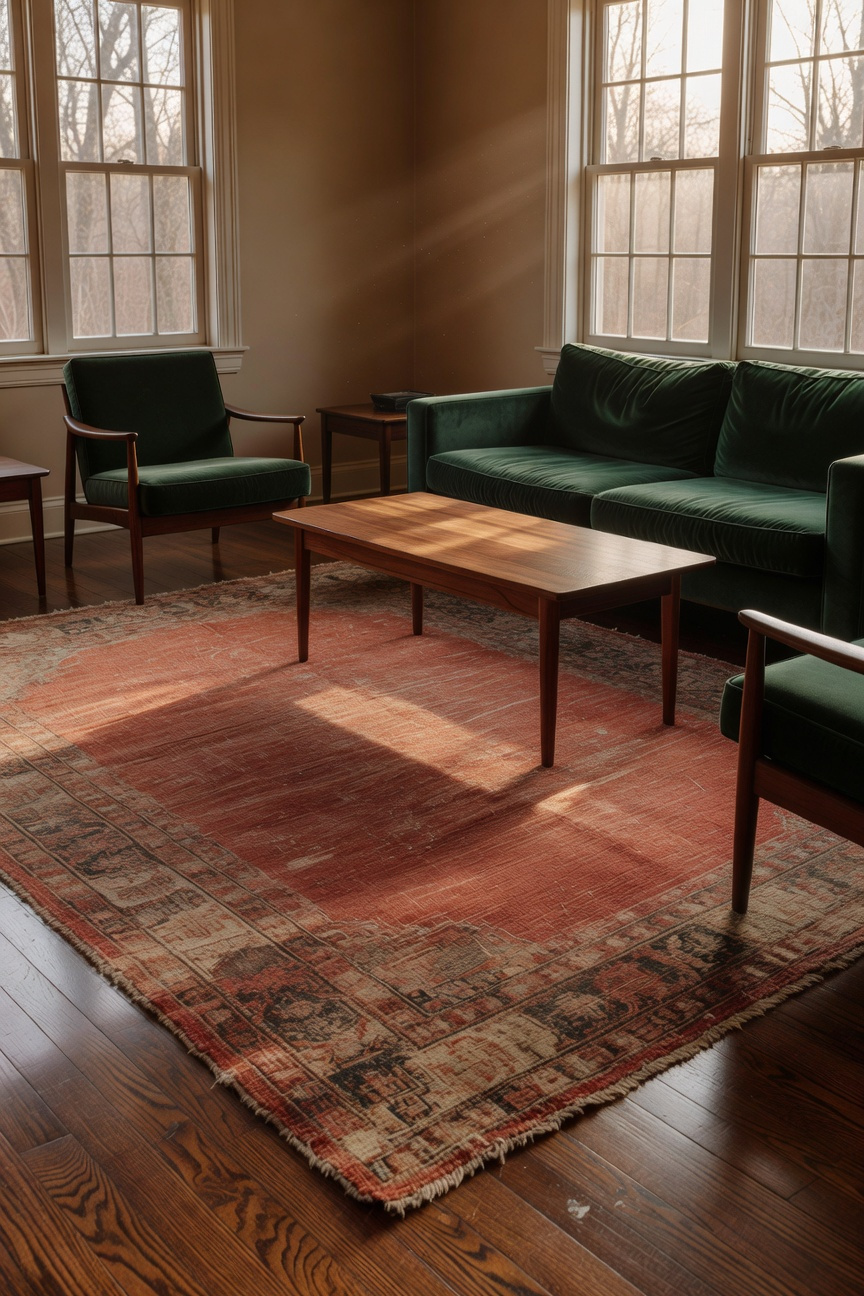
Alternatively, Moroccan Beni Ourain rugs introduce a primal, tactile comfort. Because they are woven from “live wool” retaining natural lanolin, they offer a deep, shaggy texture. This high pile acts as a sensory safety net, inviting residents to sit directly on the floor. Furthermore, these dense fiber masses provide essential acoustic grounding. By absorbing “flutter echoes,” the rug eliminates the cold, hollow sound often found in modern architecture.
Choosing a vintage piece supports the “Slow Decor” philosophy. Authentic wear patterns map a family’s history, unlike the printed effects on synthetic “distressed” rugs. As the wool pile naturally wears down to the cotton foundation, a beautiful, textured grid emerges. This imperfection is the ultimate luxury, granting inhabitants permission to relax in a space that is genuinely lived-in.
6. The ‘Hap-Hazard’ Drape: Styling vintage wool throws for approachability
A perfectly folded throw often signals that a room is strictly for display. However, the “hap-hazard” drape utilizes an intentional mess to break this visual sterility. This technique relies heavily on the physical weight of vintage wool. Heritage wool possesses a high density that creates self-supporting, “architectural gathers.” Unlike thin synthetics, these textiles offer a “toothy” texture that catches light softly. This ruggedness helps ground the living room, preventing a plastic aesthetic.
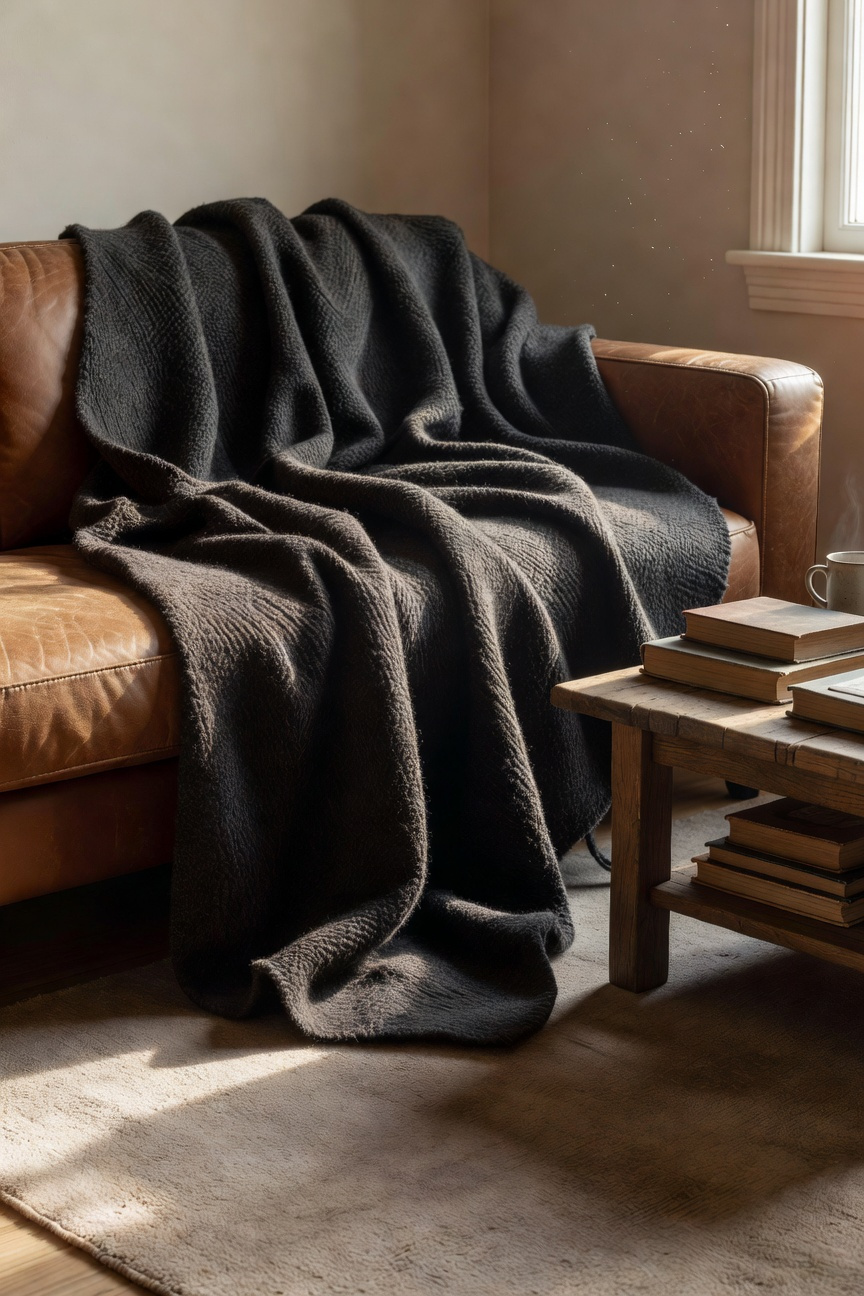
Psychologically, this casual styling creates a tangible visual invitation. In fact, seeing natural textures can actually lower stress levels for your guests. To achieve this, professionals use the “pinch and sling” method. Simply find the center point, lift it high, and let gravity create vertical folds. Next, drape it asymmetrically over the sofa arm, occupying roughly one-third of the space. Allowing one corner to “pool” on the seat creates a grounded, lived-in feel.
This approach honors the wool’s history as a utilitarian workhorse. Whether displaying a Hudson’s Bay label or “points,” the blanket remains accessible rather than precious. The “hap-hazard” drape effectively bridges the gap between historic utility and modern comfort.
7. Mixing Eras in Upholstery: Pairing mid-century sleekness with overstuffed comfort
Mixing mid-century sleekness with overstuffed comfort is more than a simple styling choice. It represents a deliberate architectural dialogue between two opposing philosophies. Historically, mid-century design prioritized efficiency and “leggy” silhouettes to aid cleaning. However, the 1970s introduced a cultural shift toward “Soft Modernism.” Merging these eras balances structural clarity with deep sensory indulgence, a hallmark of modern living room decoration for luxury homes.
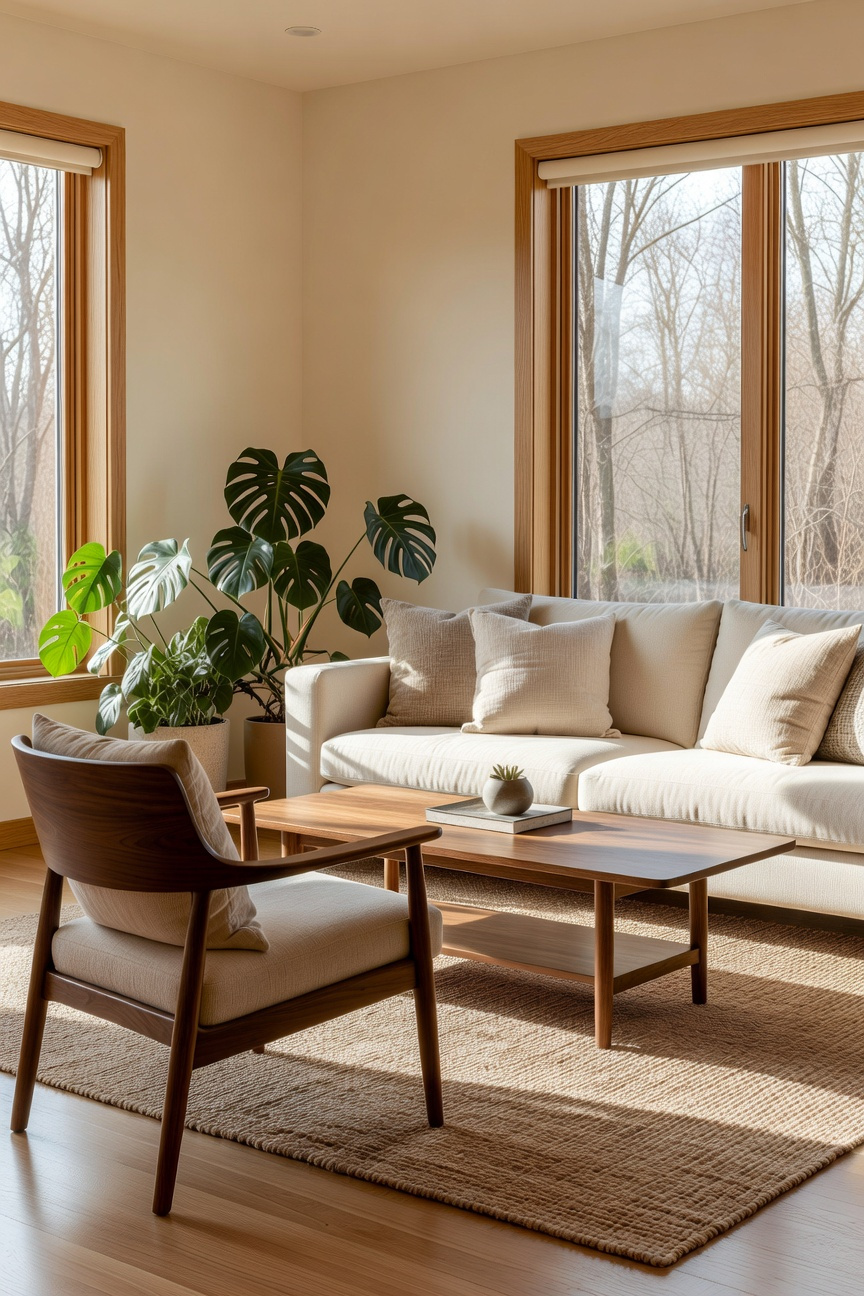
To achieve this, you must carefully manage visual weight. Overstuffed furniture, like a cloud-like sofa, creates a heavy visual anchor. Conversely, mid-century pieces usually feature tapered legs that promote airflow. Experts recommend maintaining balance by observing the 60-30-10 rule. Let sleek timber pieces provide the room’s structural baseline for sixty percent of the space. Then, dedicate thirty percent to plush, inviting seating to act as the room’s heart.
Furthermore, the tactile experience acts as a unifying thread. Sleek restorative pieces often utilize “hard” materials such as walnut or steel. In contrast, overstuffed items prioritize soft bouclé or velvet. For example, upholster a puffy 1970s-style sofa in a mid-century mustard velvet. Instantly, this connects the disparate shapes through a shared, vintage color story. This approach prevents the static feeling of a showroom. Instead, the asymmetry ensures the space feels curated, secure, and physically nurturing.
8. Softening the Edges: Replacing harsh lines with organic, curved furniture
Traditional architecture often relies on rigid, grid-based layouts that can feel subconsciously imposing. However, true restoration involves softening these harsh lines to favor human biology. Evolutionarily, sharp angles can trigger a subtle “threat-detection response” in the brain’s amygdala. Conversely, curved silhouettes activate regions associated with emotional safety and rest. Therefore, introducing organic furniture acts as a “visual exhale,” breaking the tension of a boxy room.
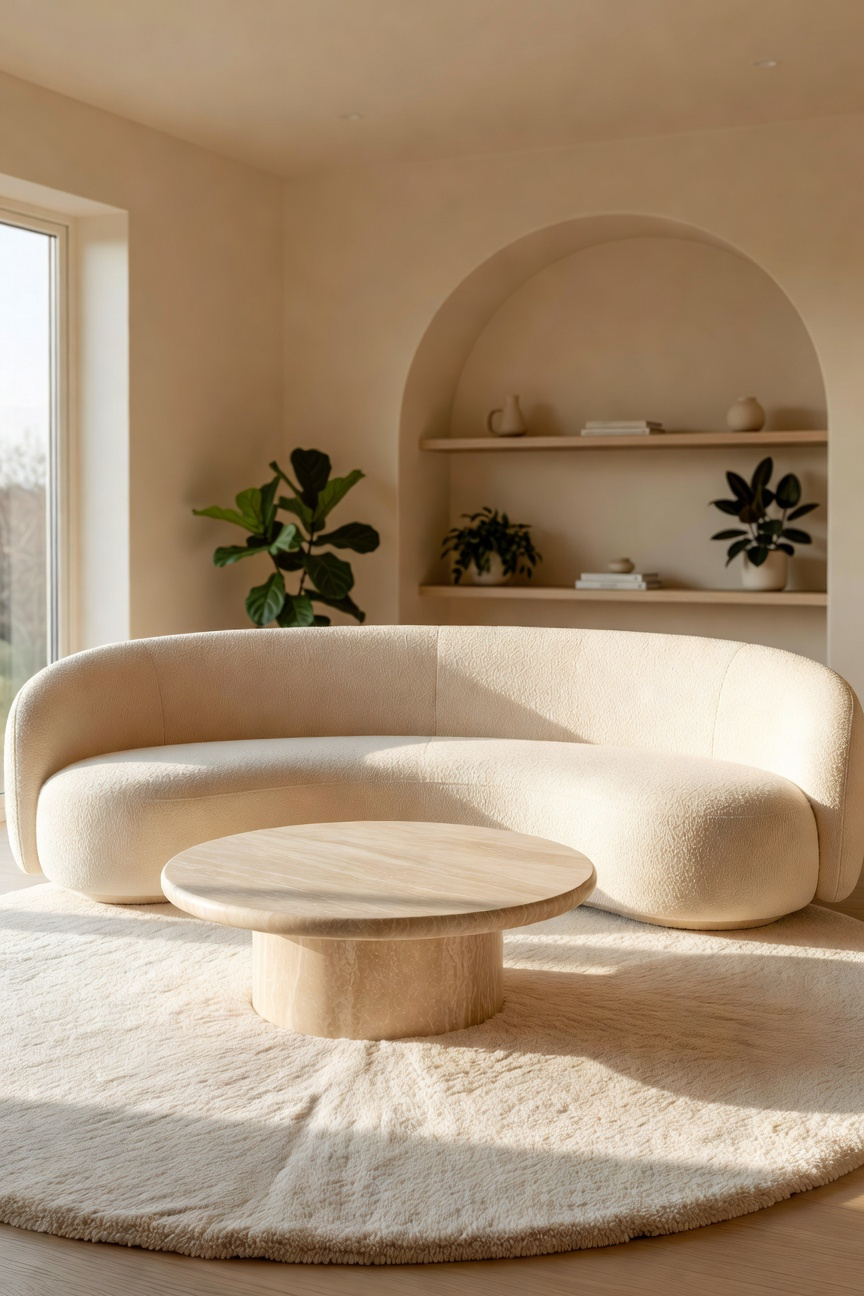
This philosophy aligns with mid-century masters like Alvar Aalto, who viewed the curve as the most natural form. Kidney-shaped tables or pebble-like ottomans mimic the “fractal geometry” found in nature. These biomorphic shapes provide the rhythmic variation our eyes crave, making a space feel visually nourishing rather than draining.
Beyond aesthetics, these shapes fundamentally change how a room sounds. Rectangular surfaces often create “flutter echoes,” bouncing noise rapidly between flat planes. Alternatively, convex forms act as natural sound diffusers. In fact, a bouclé-wrapped tub chair absorbs sound waves, creating a hushed, intimate atmosphere similar to a quiet forest.
Curved designs also improve physical navigation by eliminating awkward “pinch points.” Instead of dodging sharp corners, you can move freely through the space using “peripheral navigation.” Finally, serpentine seating naturally cradles conversation. By softening the edges, you transform a standard living area into a restorative sanctuary.
9. Window Dressing: Heavy linens and velvet drapes that pool at the floor
True coziness often relies on how a room sounds, not just how it looks. Selecting heavy linens or velvet drapes serves a functional purpose beyond mere decoration. Historically, the practice of “puddling” fabric on the floor originated from gritty necessity. In drafty 17th-century homes, extra length acted as a physical barrier against cold air. Today, this technique acts as a “silent shield” for your living space.
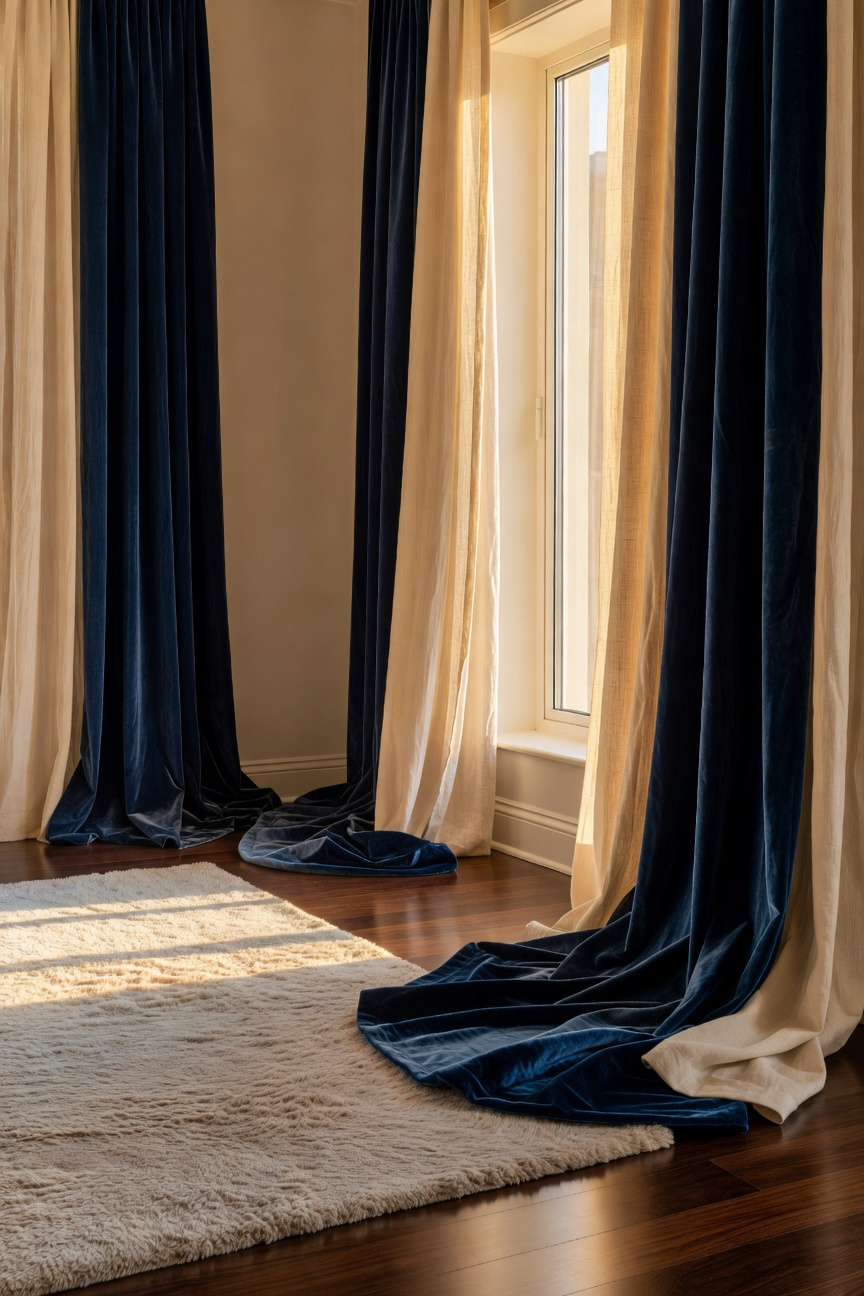
By eliminating the gap at the floor, you effectively trap sound waves. Acoustic experts note that even a half-inch gap creates a path for noise. Letting drapes kiss the floor significantly dampens outside traffic. Moreover, the texture matters immensely. Velvet’s dense pile absorbs light and sound, creating a protective, grounded feeling. Alternatively, heavy linen offers an organic glow, filtering sunlight for a lived-in warmth.
The amount of fabric pooling on the floor defines the room’s character. Historically, excess fabric signaled wealth, as it prioritized luxury over efficiency. For a modern approach, consider the “trouser break.” This style features a single, clean fold where the fabric meets the floor. It offers thermal benefits without the high maintenance of a deep, dust-gathering puddle. Finally, mount your rod near the ceiling. This creates a vertical line that heightens the room while keeping the atmosphere snug.
Phase 3: The Glow — Lighting as Emotional Architecture
In the realm of restoration, lighting must transition from utility to emotional architecture. This phase treats light as a material substance rather than a void-filler. We avoid sharp beams that create visual noise. Instead, prioritize diffusion through vintage linen, frosted glass, or rice paper. The light becomes a tangible “mist,” creating a supportive halo effect around your furniture.
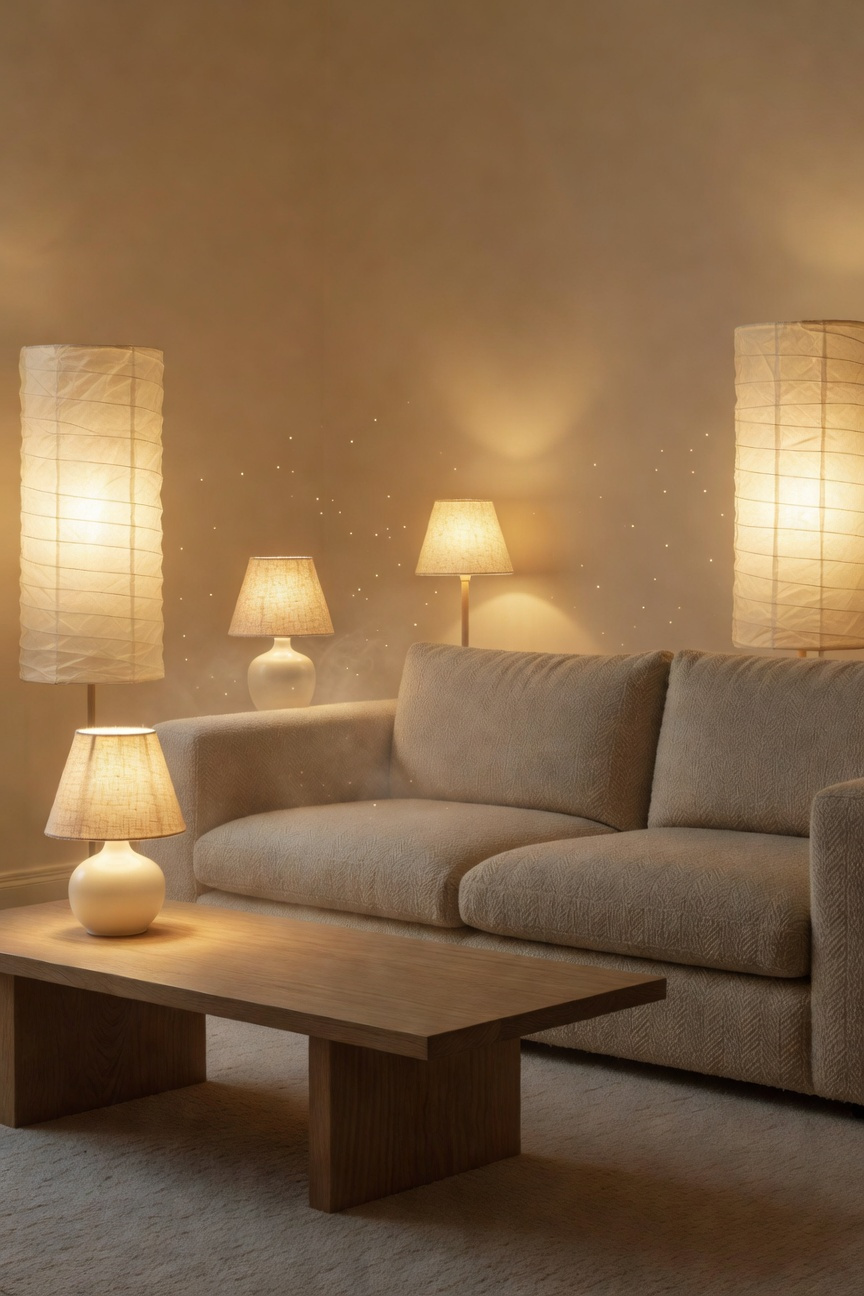
The temperature of this glow is biologically critical. Ideally, stick to the 2700K standard to mimic the sun’s “Golden Hour.” However, for true “hearth-like” warmth, drop to 2200K amber LEDs. Historically, this low-source lighting signals safety to the brain, effectively suppressing cortisol.
Additionally, you must construct “pockets of intimacy” rather than using flat overheads. For example, utilize floor lamps with a short attenuation radius. This technique ensures the light fades quickly into shadow, creating a private island of calm. Finally, allow light to hit “thirsty” materials like velvet or unfinished wood. These surfaces soak up the glare, releasing only a soft, textured radiance.
10. Banishing the ‘Big Light’: Creating pools of illumination with floor lamps
The “Big Light”—that single, harsh overhead fixture—is often the enemy of a cozy living room. Many designers jokingly refer to it as “interrogation lighting” because of its intense psychological impact. Biologically, bright overheads mimic the high-noon sun, signaling our brains to produce cortisol and stay alert. Creating “pools of illumination” with floor lamps allows the nervous system to shift into a state of rest. This approach aligns with lighting pioneer Richard Kelly’s mid-century concept of “Focal Glow.” This technique highlights specific areas, like a reading nook, while intentionally leaving corners in shadow.
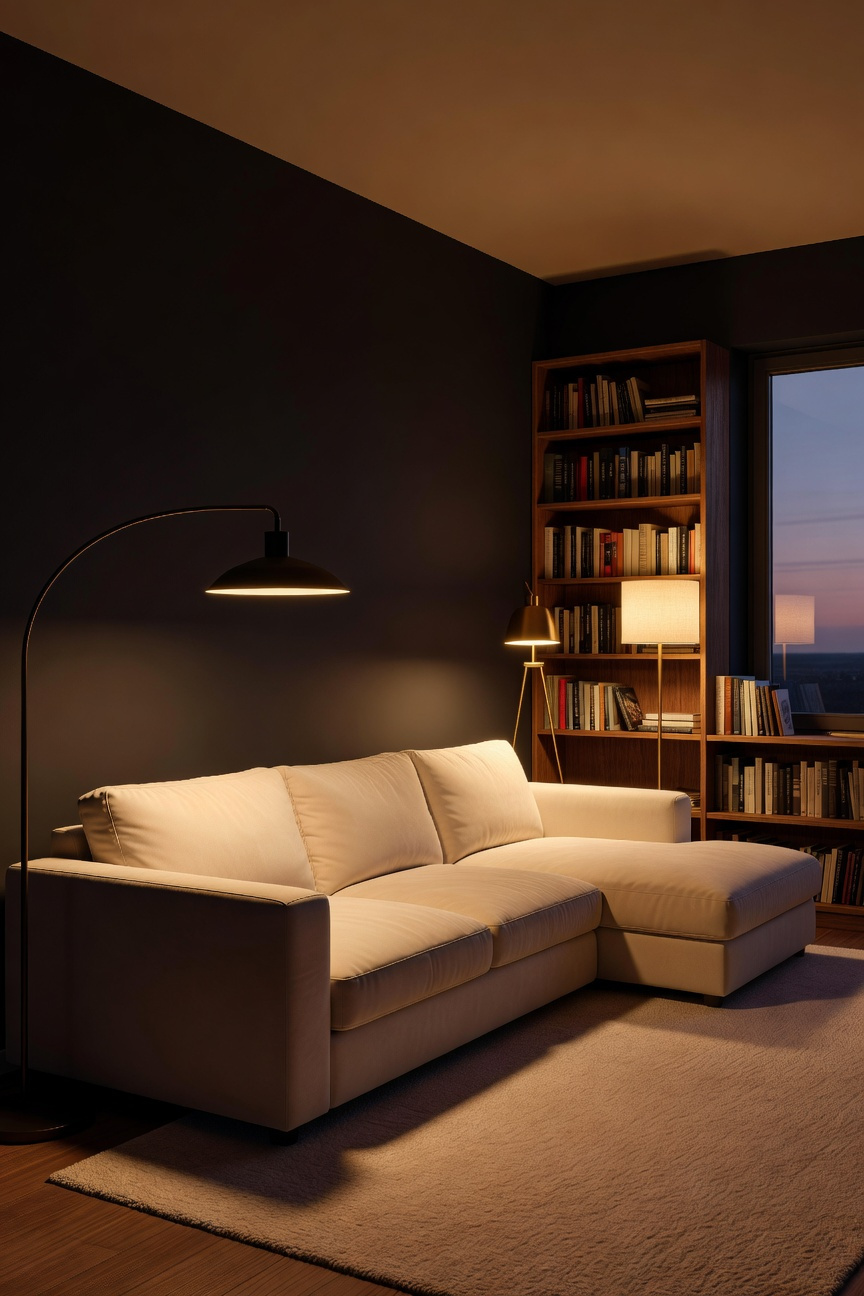
These shadows are vital because they provide visual rest and depth, a concept known as Chiaroscuro. Without them, a room feels flat and clinical, resembling a mid-century office rather than a home. To achieve this intimate look, designers recommend the “Rule of Three” using varying heights. For example, place a tall arc lamp over the sofa and a fabric-shaded tripod lamp at eye level. Additionally, you must select the correct bulb temperature. Aim for the 2200K to 2700K range to mimic the warm, amber hue of candlelight. Ultimately, this lower-lumen setup transforms your space from an exposed public stage into a private, textured cocoon.
11. The Amber Spectrum: Choosing bulbs that mimic candlelight (2700K or lower)
To truly achieve a cozy atmosphere, lighting must go beyond simple visibility. Choosing bulbs in the amber spectrum—2700K and lower—taps into ancient biological cues. For nearly a million years, the hearth served as humanity’s primary “social theater.” Sitting by amber light, which mimics a campfire’s 1800K glow, naturally lowers blood pressure. This specific spectrum signals the brain to shift from active hunting modes to social bonding modes.
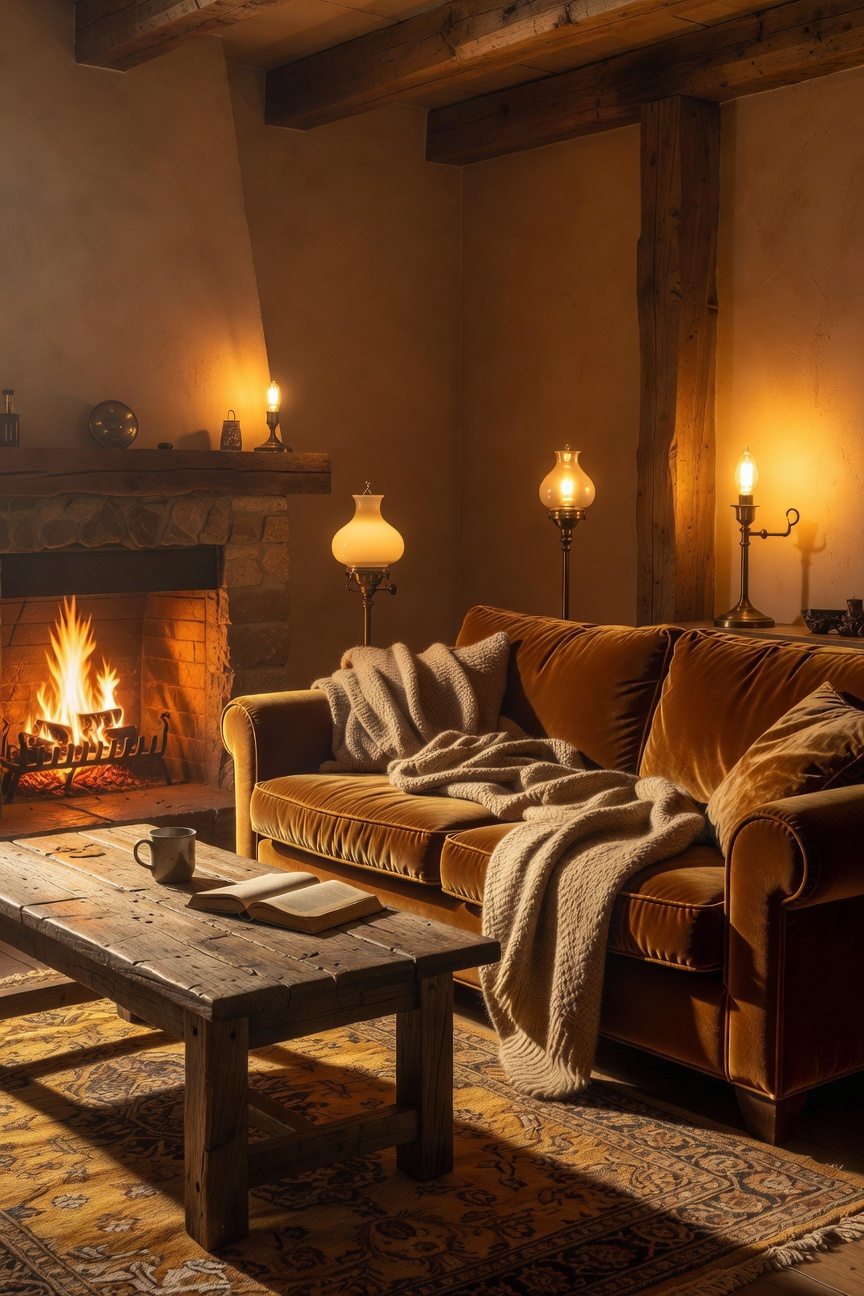
There is significant nuance within this warmth. While 2700K is the standard for general lighting, it often lacks deep intimacy. Consider using 2200K bulbs for a “sunset glow.” This lower temperature acts as a soft haze, effectively hiding architectural imperfections. Furthermore, amber light enriches the red and orange undertones in vintage wood furniture. Under this glow, walnut grains appear alive, and tactile fabrics like velvet gain deeper, softer shadows.
For the ultimate mood, incorporate “dim-to-warm” technology. These specific LEDs shift from a functional 2700K down to a candle-like 1800K as they dim. Thus, they mimic the physics of early carbon filament bulbs found in the late 19th century. This creates a bridge between modern efficiency and a comforting “Gilded Age” aesthetic. Layering these temperatures creates “pools of light” that turn a standard living room into a sanctuary.
12. Flicker and Flame: Styling non-functional fireplaces or grouped beeswax candles
Historically, the hearth served as the literal heart of the family home. Today, however, many fireplaces exist only as “decorative masonry.” Yet, leaving this architectural void empty feels emotionally cold. Styling non-functional fireboxes with grouped candles acts as a smart “adaptive reuse.” This approach uses “biophilic” design to bridge ancient instincts with modern needs.
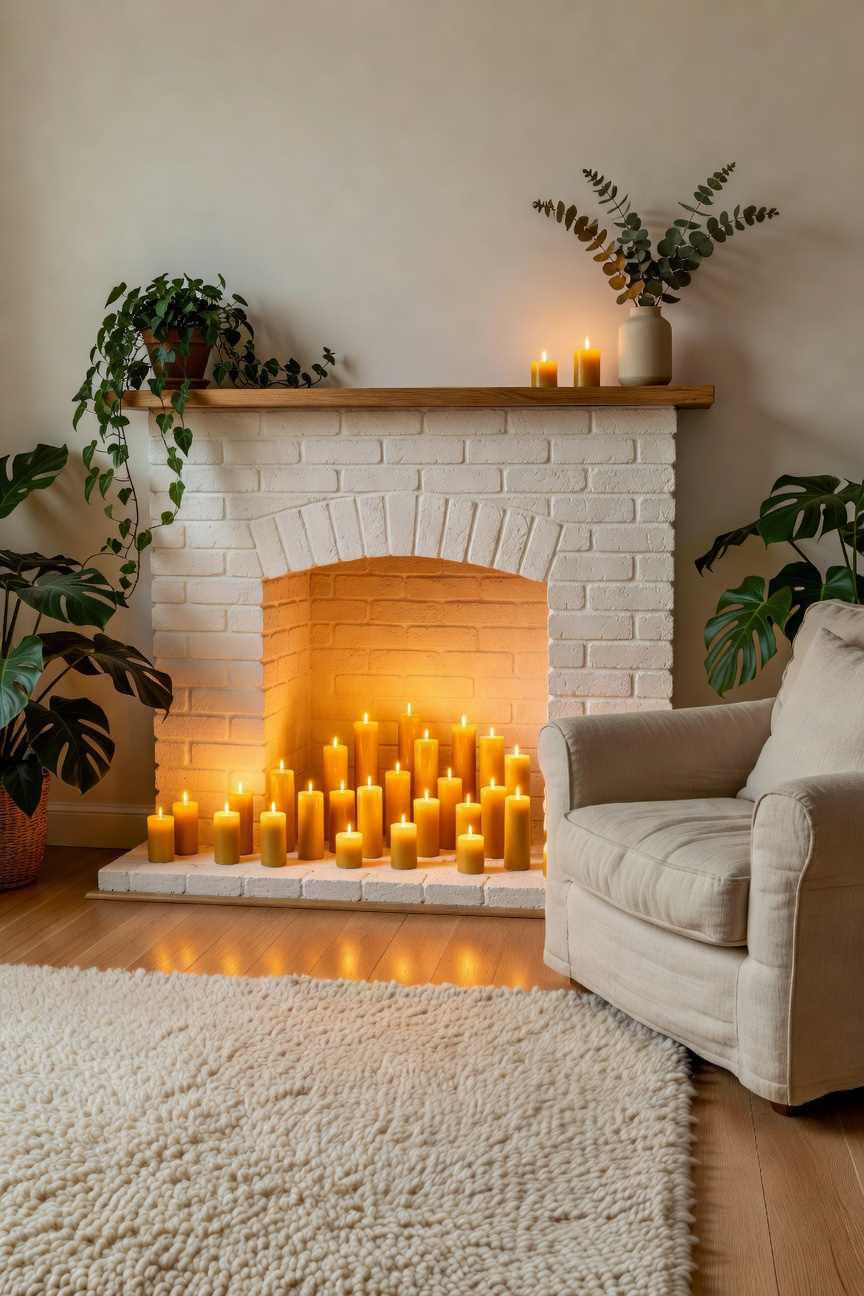
Unlike the harsh blue spectrum of LEDs, beeswax candles burn at a warm 1800K. This hue mimics low sunlight, signaling the brain to produce melatonin. Furthermore, the flame provides “non-rhythmic sensory stimuli.” This gentle movement captures the eye without overstimulating the mind, effectively reducing mental fatigue.
Technically, beeswax is the “gold standard” for these arrangements. Because it melts at a higher temperature than paraffin, it burns much slower. Your vignette maintains its structural integrity longer. Additionally, beeswax is a natural byproduct, avoiding the toxins found in petroleum-based waxes.
To achieve a professional look, apply the “Rule of Odds.” Group pillars in clusters of three or five to feel organic. Also, utilize the “zig-zag” method by placing rear candles on risers. This ensures every flame remains visible. Finally, consider installing a mirror-backed firebox. This trick reflects the glow, creating an illusion of depth and restoring the hearth’s living spirit.
Phase 4: Curation & Life — Making it Personal
Transitioning from a staged house to a lived-in home requires emotional resonance. Fundamentally, this phase is about “territoriality,” or seeing oneself reflected in the environment. Unlike generic decor, curated objects act as crucial “anchors of identity.” In fact, research suggests that personal heirlooms lower stress more effectively than pristine minimalism. Historically, mid-century designers like the Eameses championed this shift toward the “all-purpose room.” Spaces became vessels for actual human hobbies, encompassing books, records, and art.
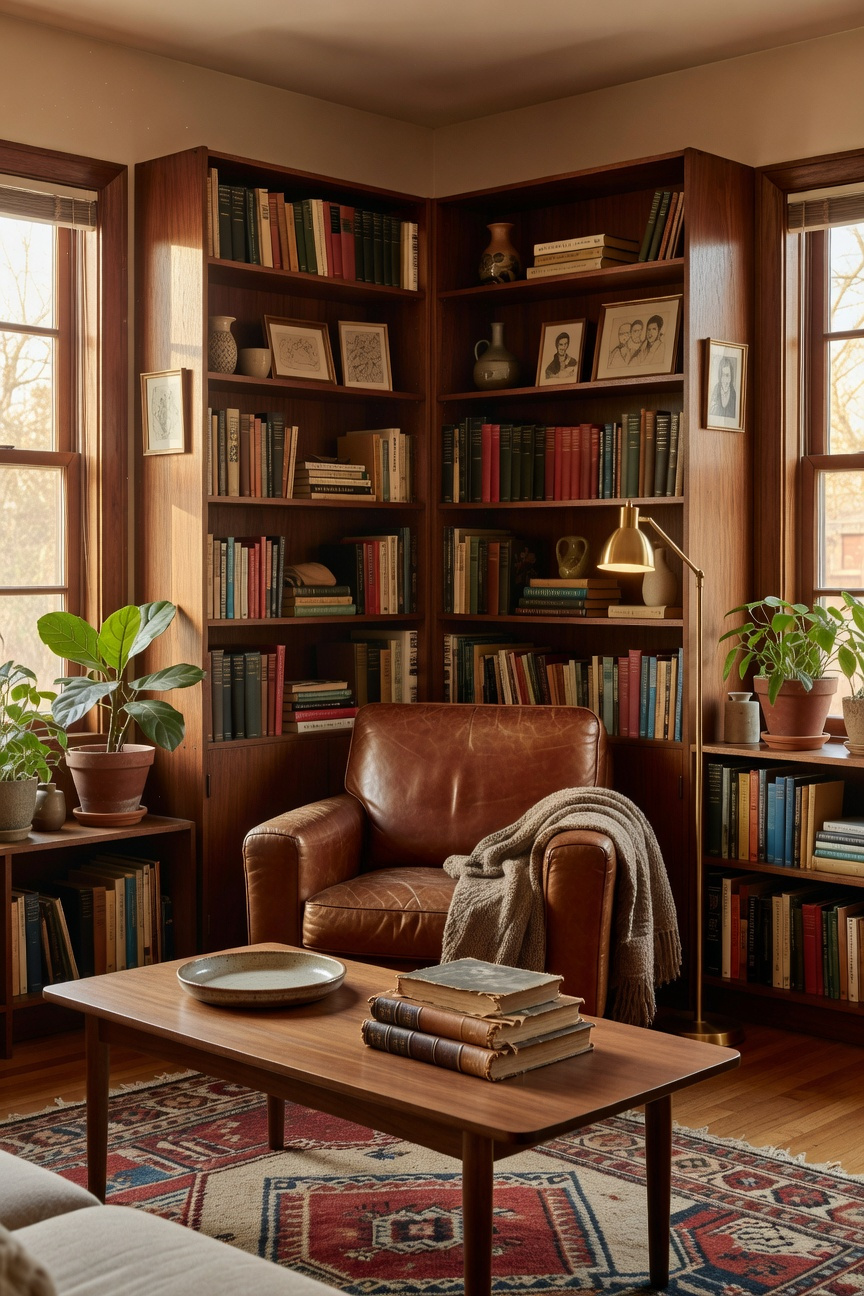
To achieve this look, professional stylists utilize specific technical ratios. Specifically, the “Rule of Odds” suggests grouping items in threes or fives. Often, these form a “Triangle Composition” to guide the eye across a surface. However, restraint is necessary to avoid a cluttered appearance. Therefore, apply the 30% Negative Space Rule. Simply put, ensure nearly a third of any shelf remains empty to prevent visual fatigue. Also, alternate book orientations between vertical and horizontal to break rigid lines.
Finally, a truly cozy space requires the “patina of life.” Crucially, this involves embracing wabi-sabi, or the beauty of imperfection. Ideally, incorporate materials that age well, such as scuffed leather or wrinkled linen. Additionally, introduce biophilic elements like a Fiddle Leaf Fig to soften hard furniture angles. Simultaneously, switch lighting to 2700 Kelvin bulbs. This warm, amber glow mimics a sunset, triggering the brain’s natural relaxation response.
13. The Reading Corner: carving out a dedicated sanctuary for solitude
Creating a true reading sanctuary requires looking back at architectural history. The modern nook descends from the medieval “inglenook,” a cozy chimney corner. Later, Arts and Crafts designers reimagined these spaces as safe retreats from industrial noise. Today, we still crave this distinct sense of protection. Psychologists call this desire “Prospect and Refuge” theory. Essentially, we feel safest in high-backed chairs where we are sheltered yet observant.
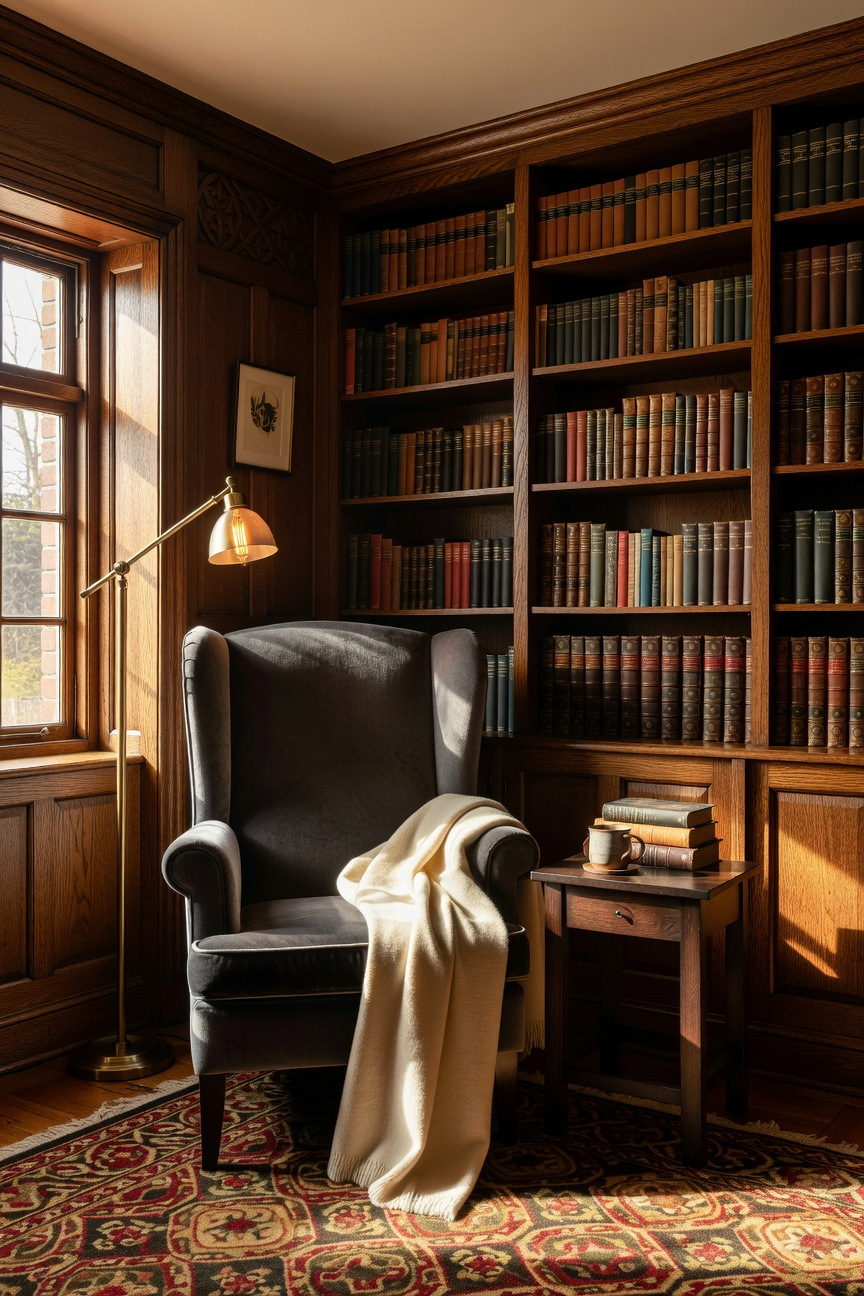
Physical boundaries are vital for mental solitude. To achieve this, incorporate acoustic materials like heavy velvet curtains or vintage bouclé upholstery. These textures actively absorb sound, effectively creating a “silent zone” for deep reading. Furthermore, lighting must be precise to avoid eye strain during long sessions. Ideally, position a pharmacy-style floor lamp behind your shoulder at a 30-degree angle.
Technically, aim for warm bulbs around 2700K to mimic natural candlelight. This specific setup discourages digital skimming and encourages true immersion. Ultimately, this corner becomes a “Third Place” within your home. Unlike shared spaces, this area is selfishly curated for your personal identity. Add an ottoman for circulatory comfort, allowing your body to fully settle.
14. ‘Un-styled’ Bookshelves: Displaying literature and vinyl for use, not just looks
Historically, bookshelves were not originally designed for public display. Instead, they resided in private “closets” as active working tools for study and correspondence. The modern “un-styled” shelf embraces this utility-driven authenticity. It effectively shifts the design focus from a curated catalog to a collected biography.
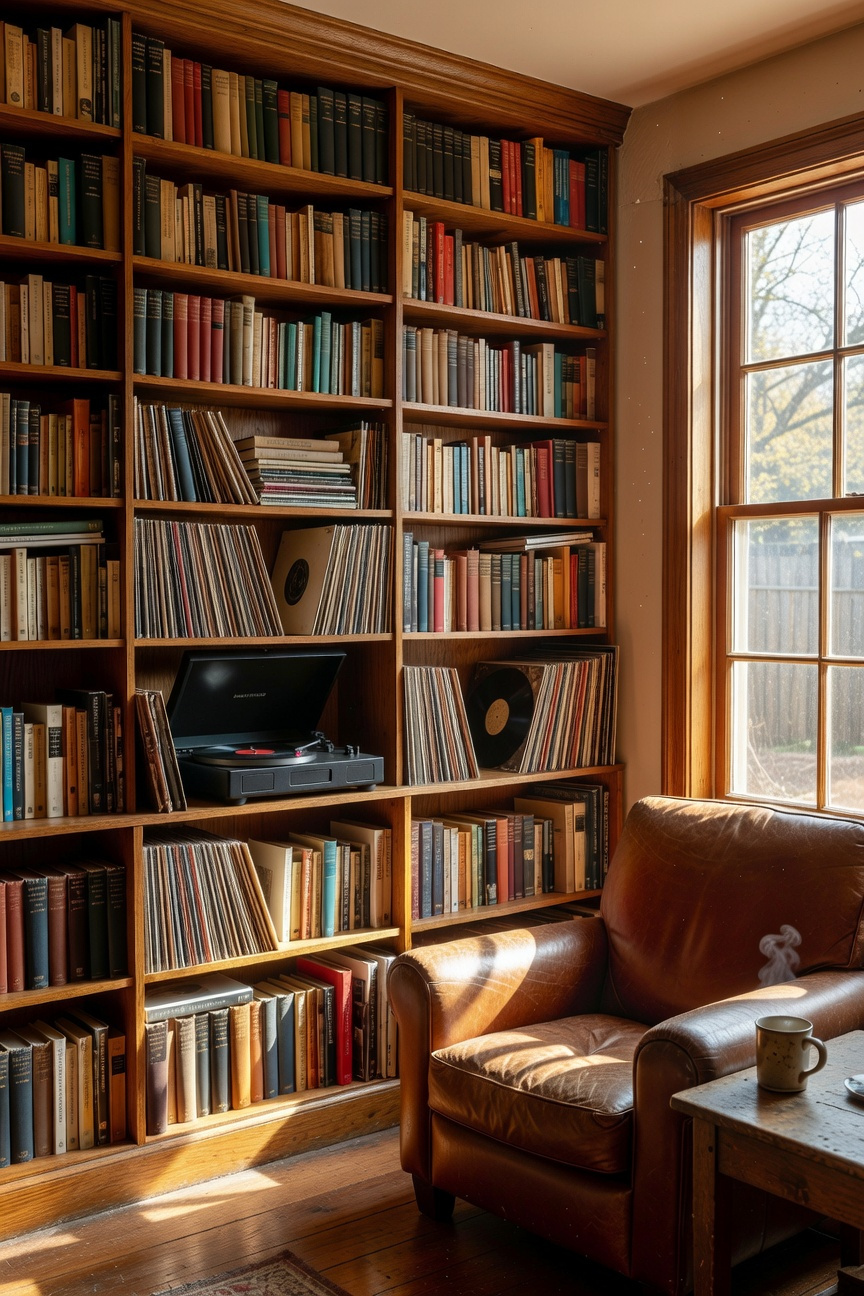
Psychologically, this approach offers deep comfort through familiarity. The Zeigarnik Effect suggests that visual “unfinished business,” like a stack of to-read books, signals dynamic potential. Therefore, a casual stack isn’t clutter; it is simply evidence of life. Furthermore, these dense collections serve a vital technical purpose. A fully stocked, irregular shelf acts as a superior acoustic sponge. Research indicates it can reduce noise transfer by 50%, creating a distinct, “hushed library” atmosphere.
Functionally, prioritizing access drastically changes the layout. For instance, vinyl records require the “flip,” not just a spine display. Thus, you should incorporate “now playing” ledges or forward-facing bins. Ideally, place these “most-loved” items at waist height, the ergonomic power zone for retrieval.
This style celebrates “hard-won character” and the wabi-sabi of media. Rather than seeking perfect alignment, allow books to lean or stack horizontally. These tactile details, like a worn record sleeve, add necessary depth. They transform a room from a static showroom into a living, breathing space.
15. Bringing the Outside In: Large-scale interior trees to oxygenate the space
To master the cozy living room aesthetic, you must move beyond simple decoration. This means embracing the principles of Biophilic Architecture. Large-scale trees, such as the Ficus Lyrata, essentially create a “ceiling within a ceiling.” This lowers the room’s perceived scale, making high ceilings feel more intimate. Furthermore, this “canopy effect” triggers a deep psychological sense of security known as Prospect-Refuge theory.
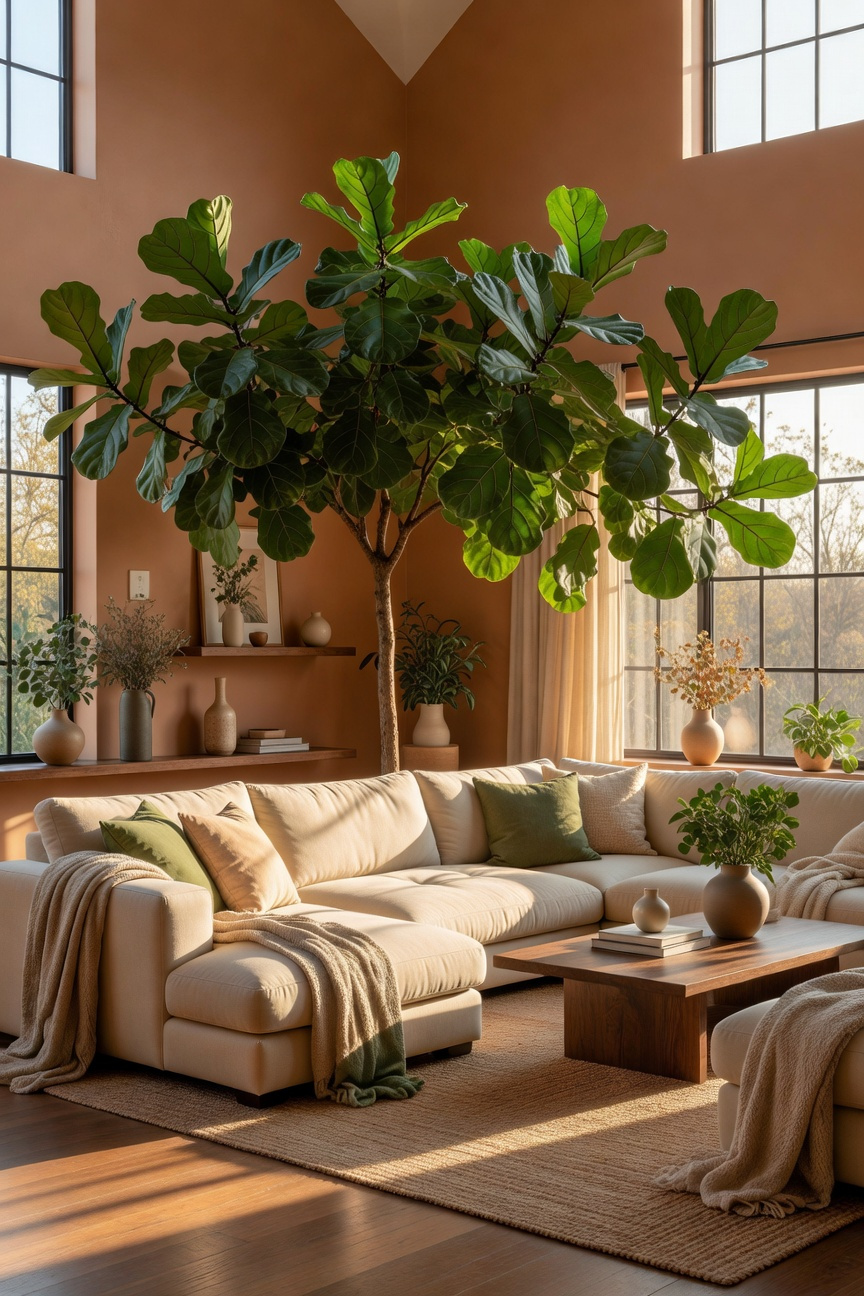
The benefits extend far beyond visuals. A room cannot feel truly cozy if it sounds “echoey” or cold. Therefore, large-scale greenery acts as a powerful, natural sound diffuser. Additionally, the complex surface area of leaves breaks up harsh sound waves effectively. Beyond acoustics, these living sculptures function as biological humidifiers. Through transpiration, they release moisture to combat the dry heat of modern HVAC systems. In fact, trees emit phytoncides which can boost the immune system.
Finally, consider the vessel itself. To maintain a timeless aesthetic, avoid high-gloss plastic planters. Instead, utilize tectonic materials like oversized terracotta or weathered stone. This approach grounds the tree’s vertical reach with necessary earthy weight. You create a space that feels both physically comfortable and historically rooted.
16. The Gallery Wall of Memory: Mixing thrifted oil paintings with personal photos
Creating a truly cozy living room requires more than just family snapshots. A wall containing only personal photos can sometimes feel surprisingly staged. Therefore, designers often introduce the psychological concept of “found ancestry.” By placing a thrifted 1940s landscape next to a modern family portrait, you create a shared lineage. The room feels anchored by a longer, continuing story rather than just recent events.
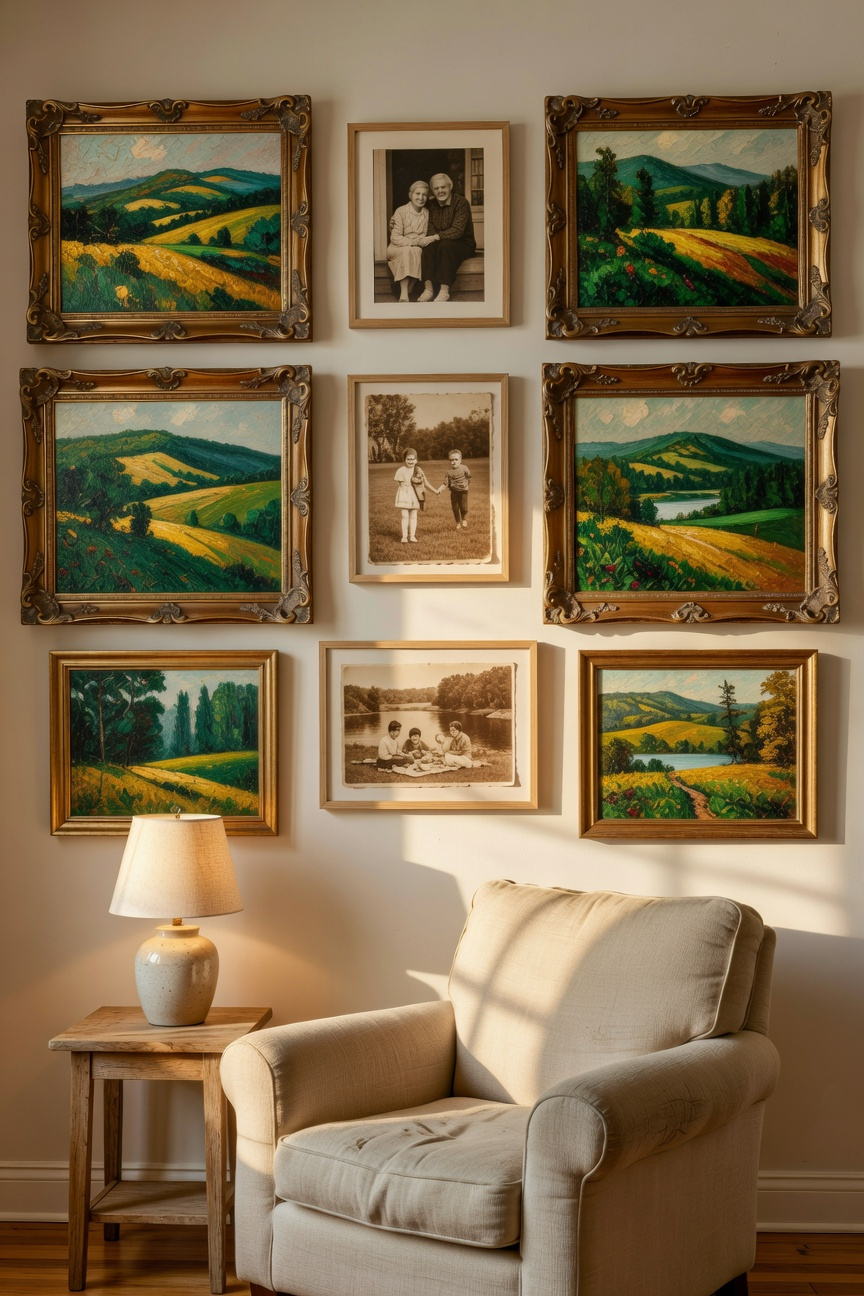
This mix introduces necessary visual friction through texture. Vintage oil paintings often feature impasto, where paint is applied quite thickly. In contrast, modern photographs are physically flat and smooth. When lit by warm lamps, the raised brushstrokes catch shadows, adding three-dimensional depth. Meanwhile, the glossy or matte photos provide a sleek counterpoint to the cracked varnish of old canvases.
To unify these disparate elements, focus on your framing strategy. However, you must avoid matching sets entirely to maintain an organic feel. Instead, follow the “broken set” rule by mixing heavy, gilded frames with thin, wooden profiles. This connects different eras through a shared tonal temperature rather than identical shapes.
Finally, arrange the art using an “anchor and satellite” method. First, place the largest thrifted oil painting slightly off-center on the wall. Then, let small personal photos orbit this piece. Try matching the color story of a photo to the painting’s palette. Thus, you achieve a curated, collected aesthetic that feels authentically lived-in.
17. The Scent of Home: Layering sensory nostalgia with cedar, clove, or old paper
True restoration involves more than sanding wood or sourcing vintage textiles. The most potent layer of a “cozy” room is often invisible. This concept is known as olfactory architecture. It engages the brain’s limbic system directly to evoke deep comfort. Scent anchors a sense of safety far deeper than visuals alone.
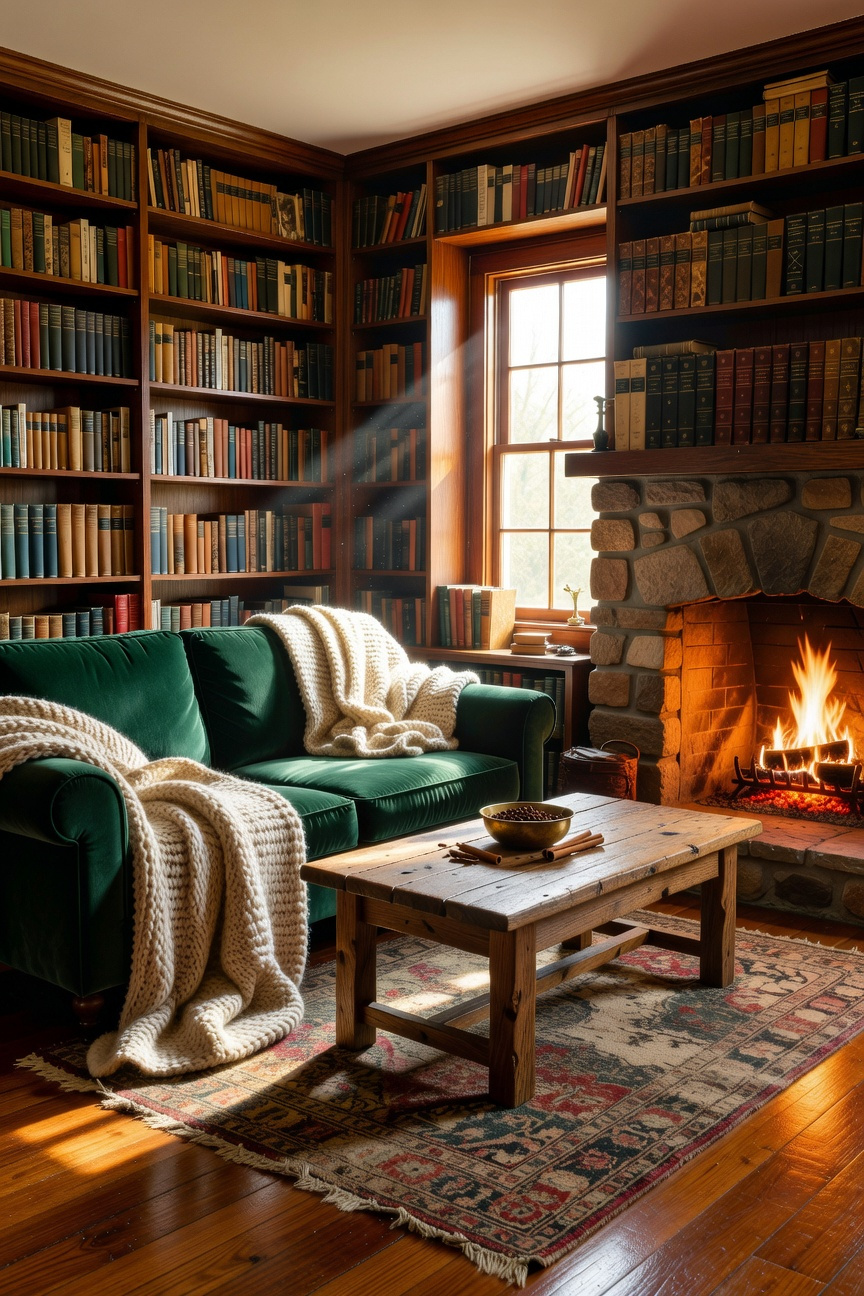
Consider the unique chemistry of old paper, technically called bibliosmia. Surprisingly, this aroma is a signature of chemical decay, not dust. As lignin in vintage bindings breaks down, it actually releases vanillin. Consequently, a wall of mid-century books emits a comforting, vanilla-like sweetness. Furthermore, you can layer this sweetness with the “hearth shield” of cedar. Historically, cedar served as a functional guardian against pests in the home. Now, however, its dry wood notes signal structural stability and domestic care.
Similarly, clove adds a grounding weight to the room’s atmosphere. This layering technique leverages the Proust Effect for maximum emotional impact. Because scent travels directly to the amygdala, it bypasses the brain’s logic centers. It instantly triggers memories of childhood security. To achieve this, tuck a cedar diffuser behind books for a structural background. Meanwhile, light a clove candle to create a temporary “dome of warmth.” Together, these elements ensure the space feels genuinely, and timelessly, lived-in.
Frequently Asked Questions
What is the best color for a cozy living room look?
The most effective colors for a cozy living room look are “muddied” neutrals and earthy tones with warm undertones, such as clay red, olive green, or deep ochre. These shades absorb light and create a sense of secure “atmospheric pressure.”
How do I make a large living room feel cozy?
To make a large room feel more intimate, utilize the “canopy effect” by adding large-scale interior trees and floor lamps that create “pools of light.” Additionally, use the color drenching technique on walls and ceilings to visually “wrap” the space.
Can modern design achieve a cozy living room look?
Yes, modern design achieves a cozy living room look by mixing sleek, mid-century silhouettes with overstuffed upholstery and organic, curved furniture. This balance of clean lines and tactile comfort prevents the space from feeling clinical.
Conclusion: Transitioning from ‘Staged’ to ‘Lived-In’ (Thematic Synthesis)
Transforming a house into a home requires moving beyond the “Intruder Effect” of perceived perfection. Historically, we rejected the cold “Death Room” to embrace spaces that truly celebrate daily life. Success lies in layering tactile friction and warm lighting to build deep “Place Attachment.” Adhering to the “80/20 Rule of Order” ensures your space possesses a soulful, lived-in narrative. The goal is not a pristine showroom, but a resilient environment that actively invites human connection.
Moving forward, embrace the philosophy of “Staging for Staying” to future-proof your interior design. Achieving a cozy living room look transitions a room from being merely observed to being deeply experienced. Begin by auditing your space for “low-frequency” heirlooms that anchor your personal history. Then, allow small signs of use to complete the aesthetic rather than detract from it. A sanctuary is not a destination you visit, but an origin where you truly belong.