

Commonly, homeowners believe that authentic coastal design requires seashells, nautical anchors, and distinct navy stripes. Traditionally, this literal approach relies heavily on obvious decoration to convey a seaside theme. Often, these spaces feel kitschy rather than sophisticated or timeless. In fact, relying on props ignores the actual, serene sensory experience of the ocean.
However, the philosophy of the “Modern Seascape” offers a refined alternative to this common aesthetic. Instead of mimicking iconography, this approach focuses on the immersive atmosphere of the coast. It prioritizes the feeling of light, the touch of the breeze, and organic textures. This defines a truly bespoke aesthetic. Specifically, we utilize high-quality coastal bathroom tiles to capture the essence of the environment without the clutter. They create a true architectural element. For example, high-gloss glazes act as ephemeral water. Meanwhile, matte surfaces represent the grounded landscape. Therefore, the design “whispers ease” and calm rather than shouting a specific theme.
This guide reveals how to apply these nuances through specific coastal bathroom tiles. We will explore using “High Variation Glazes” to mimic the dynamic movement of water. Next, we examine how 3D-textured and matte tiles ground the design like earthy sand dunes. Indeed, we discuss the “anti-pattern” aesthetic that favors seamless, rectified edges to mirror the horizon. Ultimately, you will learn to curate a space that is authentically atmospheric.
1. Weathered Wood-Look Porcelain: Capturing the Driftwood Narrative Without the Rot
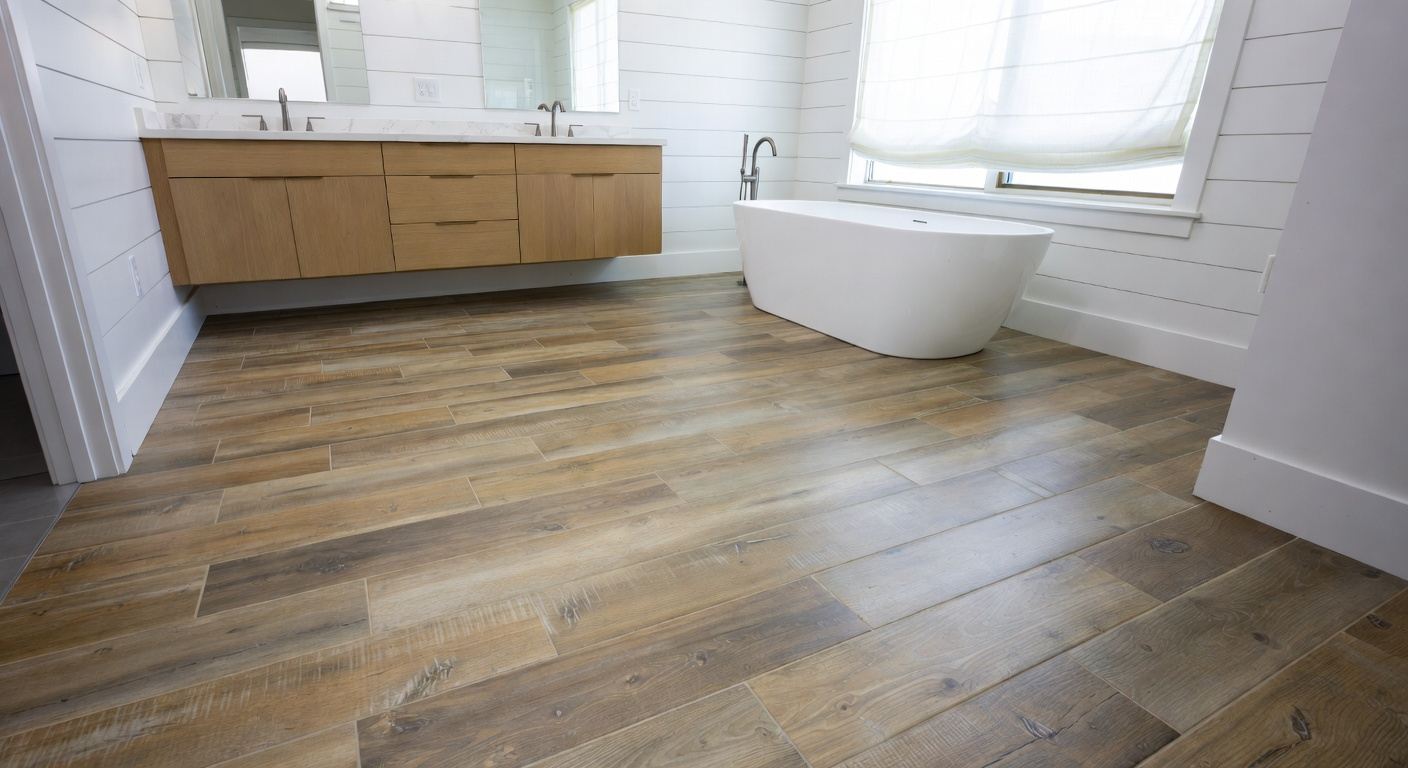
Capturing the essence of seaside living often starts with the floor. Specifically, many homeowners crave the “driftwood narrative.” This aesthetic evokes sun-bleached, grayed timber that has been smoothed by sand. However, real wood is naturally hygroscopic. It absorbs moisture, leading inevitably to warping, mildew, or rot. Fortunately, weathered wood-look porcelain bridges this gap perfectly. It offers a sophisticated design response to a common coastal compromise.
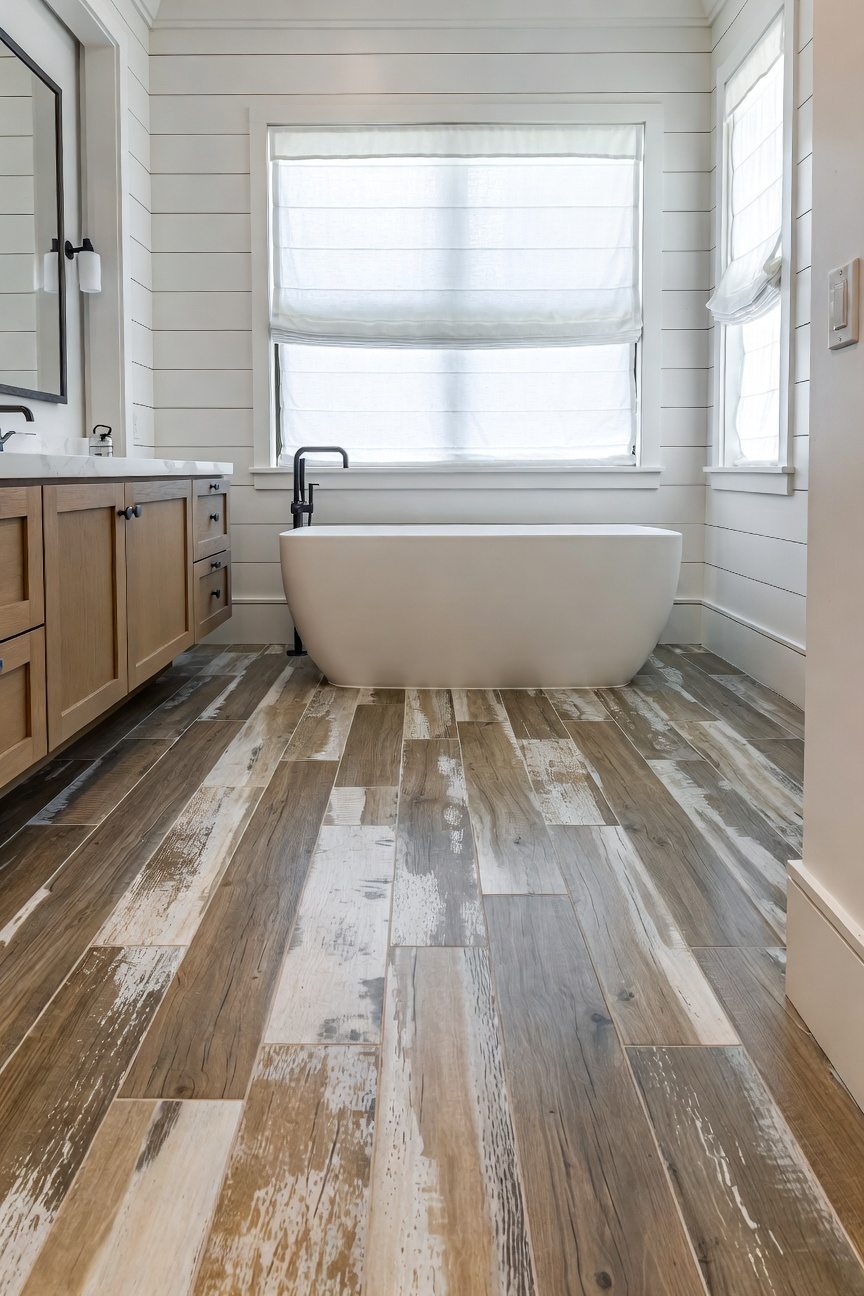
Through high-definition inkjet printing, manufacturers now replicate intricate visual details. In fact, they faithfully capture the knots and gnarls of salvaged timber. Furthermore, this innovation extends beyond mere pattern. The surface often features a tactile, worn-wood finish. Therefore, the tile reflects light authentically rather than appearing flat or artificial.
Beyond aesthetics, the technical performance is unyielding. Unlike timber, true porcelain boasts near-zero water absorption. Typically, absorption rates sit at or below 0.5 percent. Therefore, the material remains completely impervious to heavy steam and splashes. Additionally, large plank formats with rectified edges allow for minimal grout lines. This effectively blurs the visual line between tile and organic hardwood. Ultimately, you secure a timeless, rustic warmth. You achieve the visual story of the sea, but without the decay.
2. Hand-Glazed Zellige: Mimicking the Shimmering Movement of Water
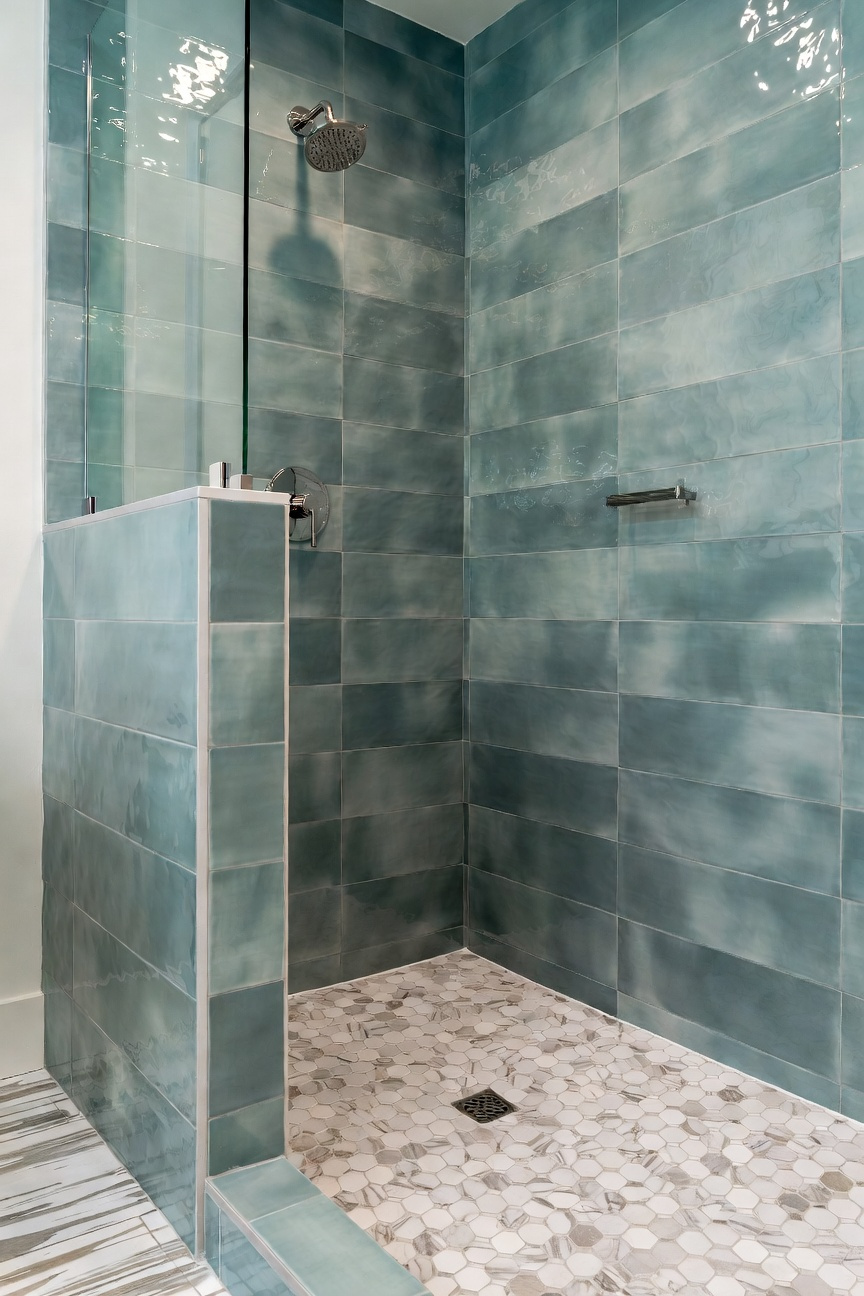
Authentic Zellige tiles offer a unique aesthetic power in coastal bathrooms. Specifically, their artisanal production translates the fluid nature of water into a permanent architectural surface. Artisans in Morocco hand-mold and glaze these terracotta tiles using centuries-old methods. Next, they fire them in natural wood-fueled kilns where heat distributes unevenly. Because of this variation, no two tiles cure exactly alike. As a result, the finished surface features subtle tonal shifts and pockets of pooled glaze.
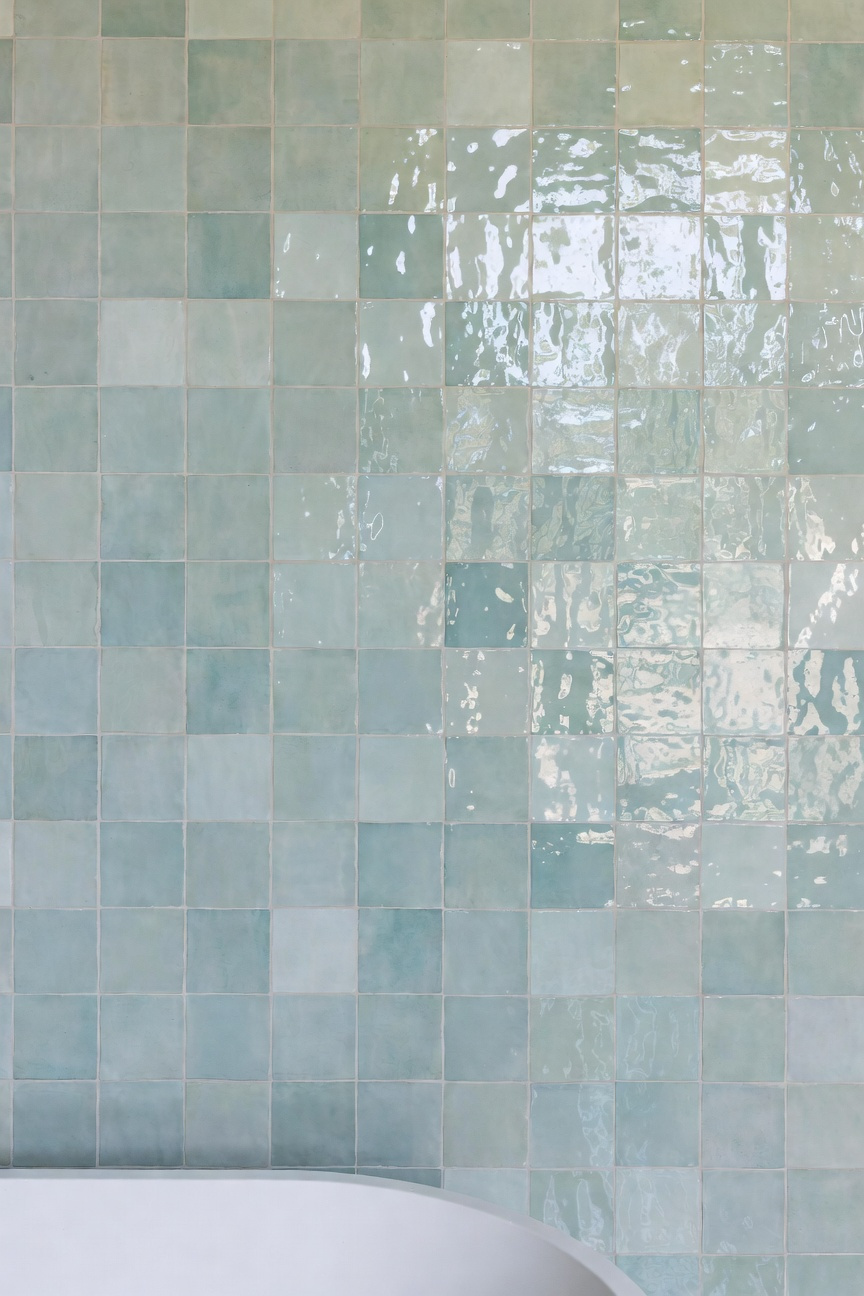
This deliberate imperfection creates a captivating visual depth. In fact, the varying glaze thickness allows light to penetrate and reflect off the raw clay body. Therefore, the wall transforms into a living, breathing surface rather than a flat plane. Unlike mass-produced options, Zellige boasts non-rectified edges and pitted textures. Thus, light bounces in unpredictable ways to simulate organic motion. This constant interplay of light and shadow mimics the gentle ripples of a tidepool.
Furthermore, the color palette completes this sensory illusion. Deep hues like teal or indigo mirror the shifting colors of the open ocean. Conversely, lighter tones like “Cloud White” evoke the glint of wet sand or sea foam. Ideally, these tiles provide a tactile quality that prevents a sleek bathroom from feeling cold. Ultimately, they ground the high-gloss finish with an earthy, handmade soul.
3. Tumbled Limestone & Travertine: Evoking the Raw Texture of Coastal Cliffs
To truly capture the essence of a rugged coastline, we must look to the tumbling process. Specifically, this finish acts as a deliberate recreation of natural erosion. Manufacturers place stones in rotating drums with abrasive media like sand. Consequently, the edges chip and the corners soften. This action mimics the attrition of pebbles grinding against cliff bases. Therefore, the resulting texture feels authentically worn by the sea.
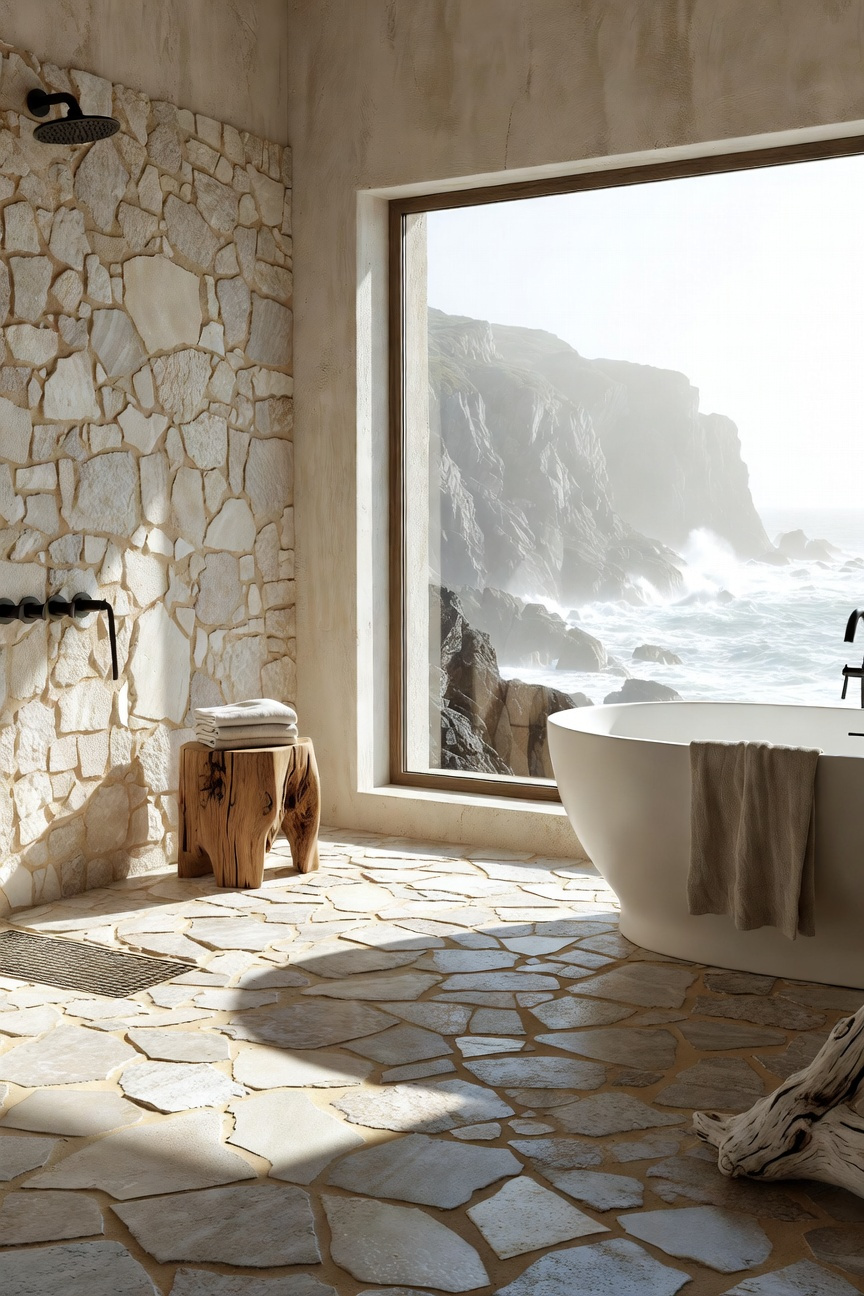
However, the specific material choice alters the design narrative. Limestone, born from ancient marine life, offers a calmer appearance. Its dense uniformity aligns with the monolithic face of a cliff. Conversely, travertine originates in mineral-rich hot springs. Because of this, it possesses natural pits and voids. When tumbled, these voids expand to evoke deep weathering. Thus, travertine feels more rustic and porous.
Beyond aesthetics, this finish serves a highly functional purpose. Notably, the rough surface provides natural slip resistance for wet areas. This tactile quality makes it ideal for shower floors. Furthermore, this approach mirrors Mediterranean vernacular architecture. In these regions, rough-hewn stone blends buildings seamlessly into the landscape. Ultimately, tumbled tiles offer an “instant antiquity.” They ground a contemporary bathroom with the timeless weight of the earth.
4. Sliced Pebble Mosaics: Tactile Grounding and Sensory Connection to the Shore
Sliced pebble mosaics offer a refined alternative to traditional whole stones. Specifically, they provide a distinctively flat surface profile. Unlike their rounded counterparts, these tiles are honed smooth. As a result, they deliver a gentle, luxurious sensation underfoot without the uneven intensity of whole pebbles. This flatness ensures superior ergonomic comfort for daily use. Furthermore, the level surface simplifies drainage slopes in shower pans. However, the texture and grout lines still ensure excellent natural slip resistance.
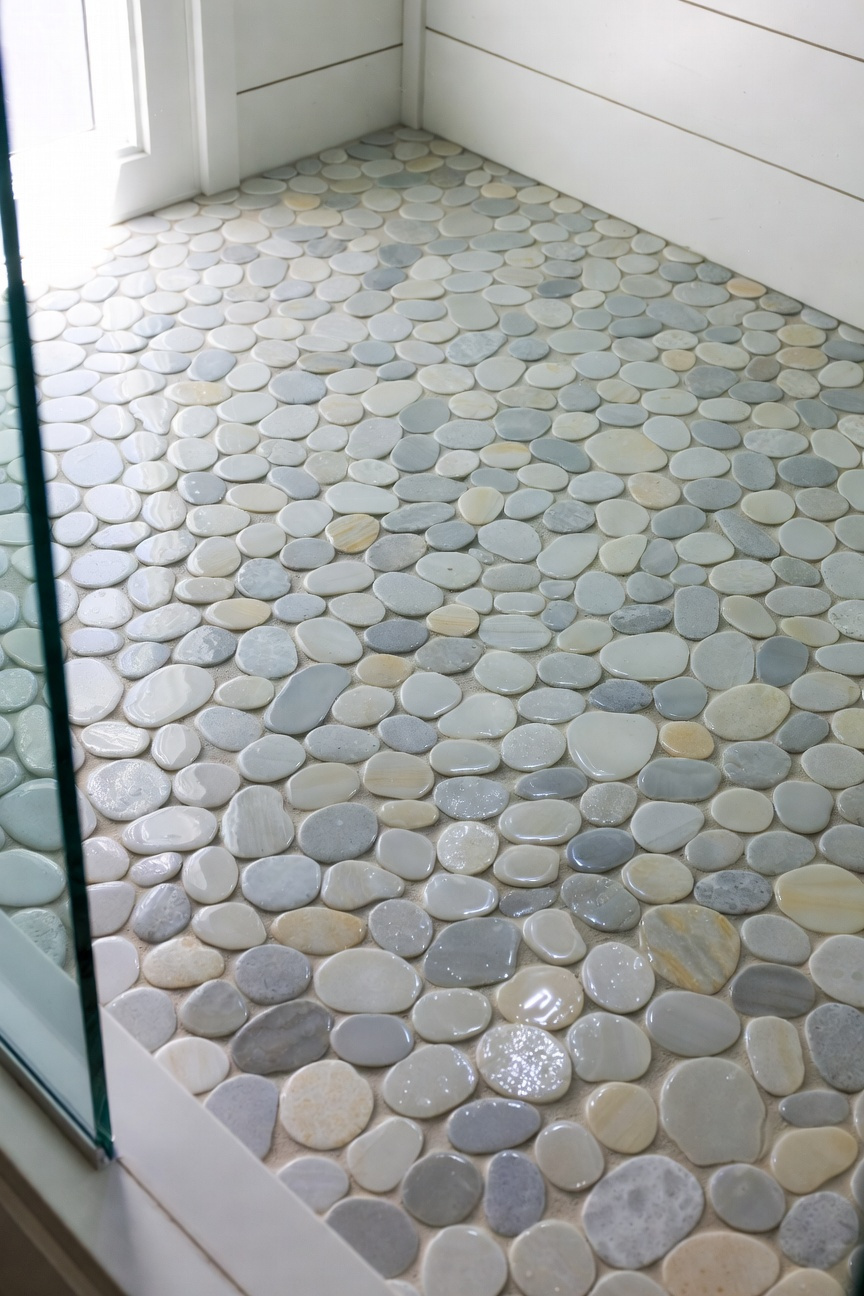
Beyond utility, this cut reveals the stone’s internal narrative. By slicing the pebble, we expose the geologic matrix within. Suddenly, intricate veins of quartz and mineral deposits become visible. In fact, these details remain hidden in the uniformly water-worn exteriors. The result is a raw, complex visual palette. When wet, these colors deepen dramatically. Therefore, the floor mimics the authentic aesthetic of tide-pulled stones.
This material also connects us to ancient architectural traditions. For centuries, craftsmen used natural stones to create grounding floor-scapes. Today, a pebble floor acts as a psychological anchor. It transforms a standard bathroom into a personal sanctuary. Ultimately, the organic patterns serve as a design-based metaphor for paradise. They successfully bring the sensory tranquility of the coastline indoors.
5. Recycled Glass Aggregates: The Sophisticated Evolution of the Sea Glass Look
Genuine sea glass is defined by its imperfections and scarcity. However, modern luxury design demands architectural consistency. Therefore, recycled glass aggregates have evolved to bridge this gap effectively. Through advanced processes like sintering, manufacturers create tiles with a sophisticated “satiny matte finish.” Consequently, these products capture the sensory essence of water-worn glass perfectly. Yet, they offer the geometric uniformity required for precise, large-scale installations. This engineered patina avoids the cliché of raw beachcombing finds while remaining authentic.
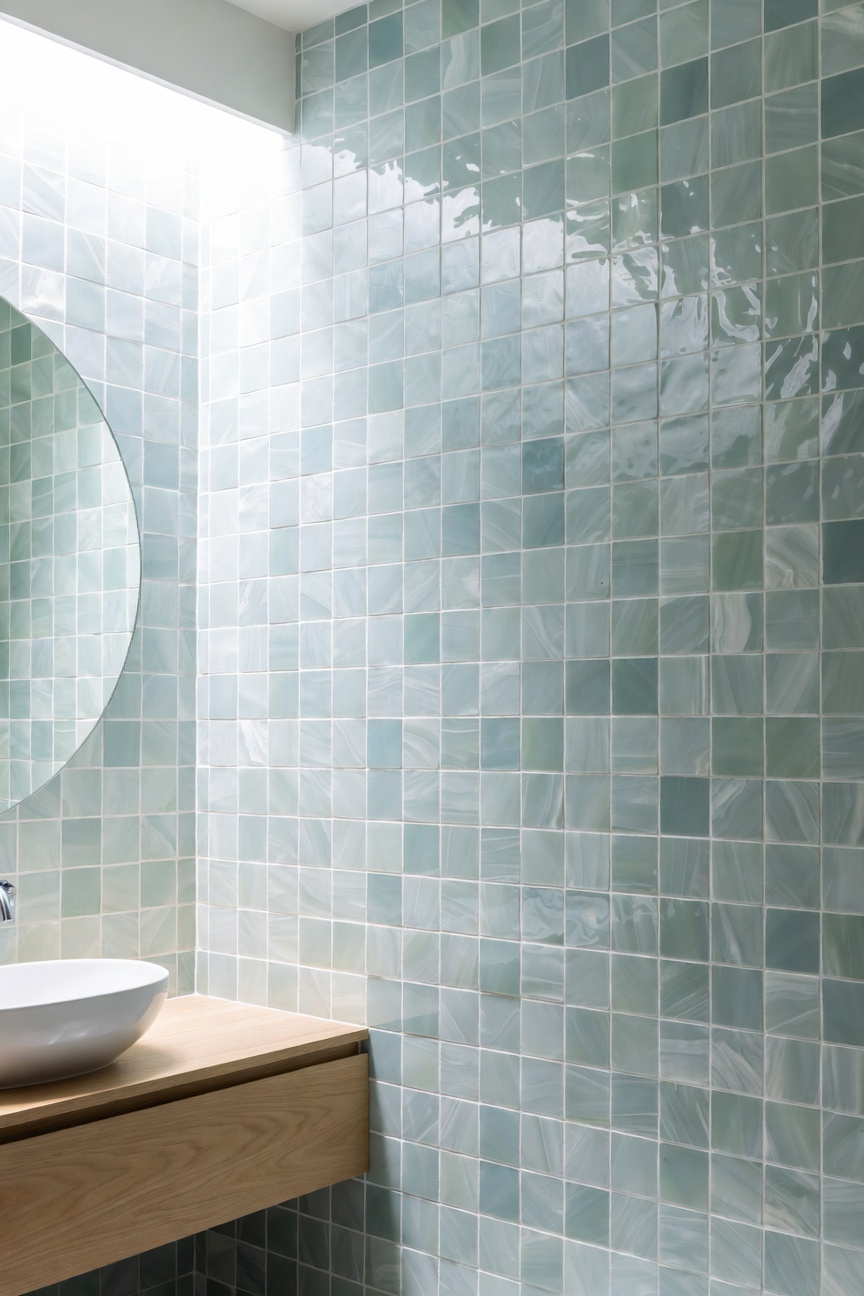
Beyond aesthetics, the technical performance of these aggregates is superior. Specifically, 100% recycled glass boasts extremely low water absorption rates. In fact, some products report absorption as low as 0.03%. Thus, they are practically impervious to moisture in showers or wet rooms. Additionally, the manufacturing process fuses color through the tile’s entire depth. As a result, the glass interacts dynamically with ambient light. It mimics the distinct shimmer of shallow ocean water without structural weakness.
Finally, this material grounds coastal design in genuine environmental stewardship. Manufacturers utilize post-consumer waste, like bottles and windows, to create these durable surfaces. This process diverts tons of material from landfills. Furthermore, producing these tiles often requires substantially less energy than firing traditional ceramics. For high-end projects, they even qualify for valuable LEED points. Ultimately, this transforms waste into a refined, resilient architectural element.
6. Large-Format Sandstone: Creating Expansive, Unbroken Shorelines Indoors
Sandstone offers a direct link to the coast because it is geologically formed from ancient beaches. Naturally, it features the golden, tan, and creamy white hues of the seaside. Furthermore, its distinctive, gritty texture mimics the sensation of walking on a weathered rock shelf. This adds a soft, tactile quality to hard surfaces. It effectively grounds the space in nature.
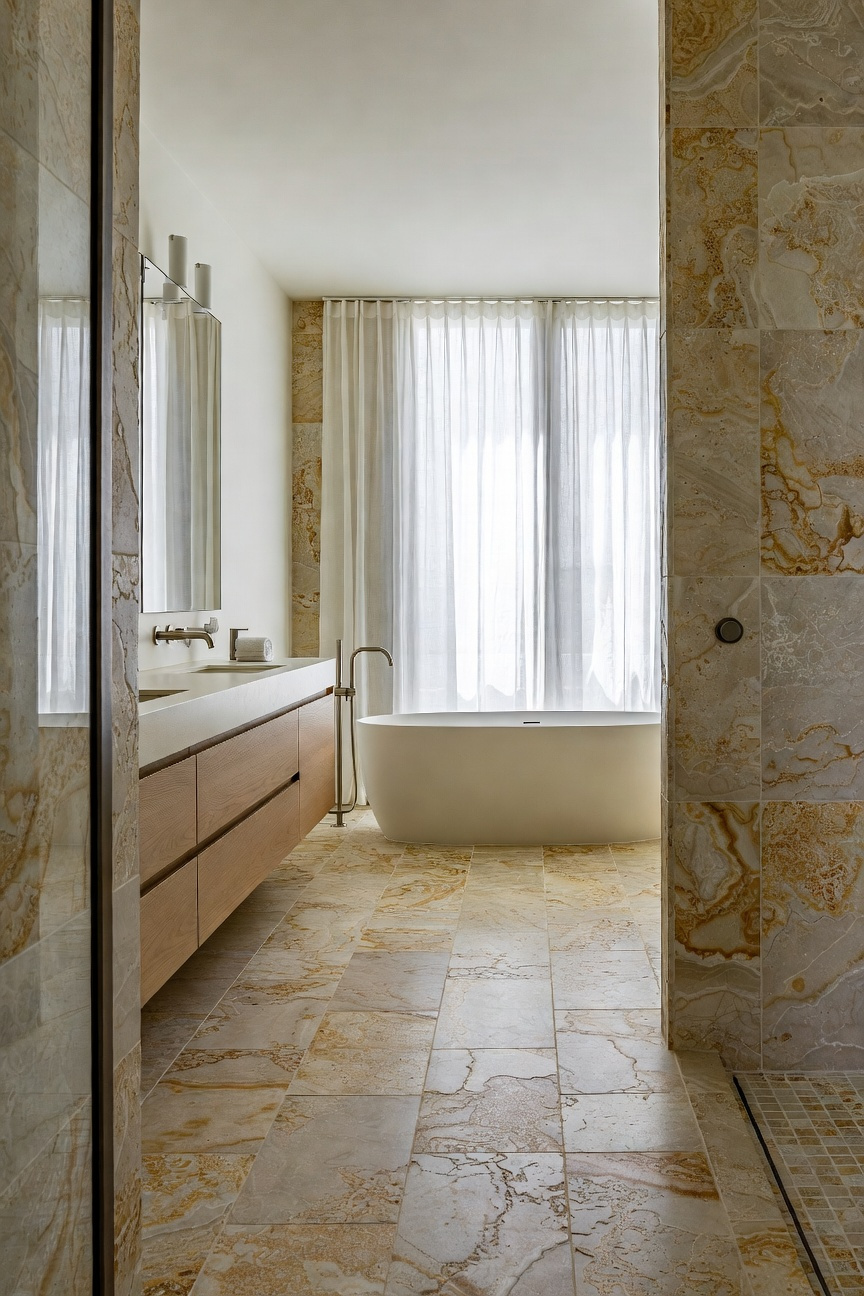
To capture the essence of an unbroken shoreline, large-format tiles are essential. Specifically, sizes like 24 by 48 inches minimize visual interruptions. Therefore, the design strategy focuses on “joint suppression.” By matching the grout color strictly to the stone, the grid pattern effectively disappears. As a result, the bathroom appears as a single, monolithic geological plane. It feels expansive rather than cluttered.
However, achieving this seamless aesthetic requires technical precision. In fact, large tiles magnify even slight imperfections in the subfloor. Thus, the substrate must be obsessively flat to prevent lippage, where one edge sits higher than another. Moreover, installers must utilize specialized Large and Heavy Tile (LHT) mortar. This ensures the heavy stone does not slide or slump before curing. Finally, designers should specify rectified edges. This allows for the narrowest joints possible, preserving the illusion of a vast, sun-drenched expanse.
7. Mother of Pearl Accents: Introducing Organic Iridescence and Luxury
Mother of Pearl, scientifically known as nacre, creates more than a simple surface reflection. Specifically, this natural material produces a complex optical effect. Unlike static ceramic glazes, the microstructure of nacre bends and softens light. Consequently, the surface colors evolve subtly throughout the day. In soft morning light, you might see ethereal pastels. Conversely, evening light reveals rose gold or green-blue tones. Thus, the tile mimics the shifting light on the ocean floor.
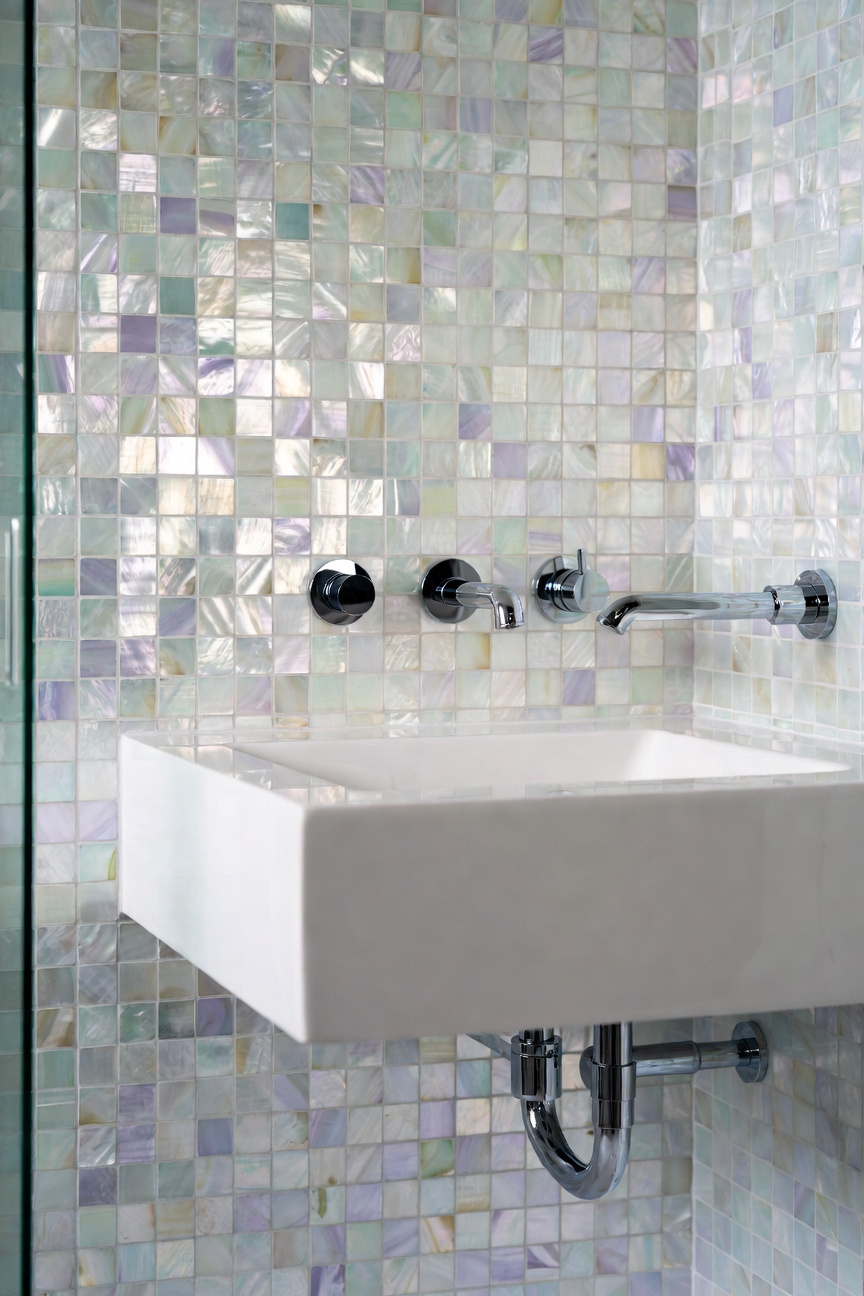
Beyond its visual beauty, this material establishes an atmosphere of timeless luxury. Historically, designers have valued its rarity and unique texture. In fact, it pairs seamlessly with high-end marble for a bespoke aesthetic. Therefore, it serves as a distinct design investment rather than a fleeting trend. Because of this longevity, it lifts a simple layout into something truly curated.
Surprisingly, this delicate-looking material is incredibly durable in wet coastal environments. Since it originates from saltwater mollusks, the shell is naturally waterproof. Furthermore, manufacturers often laminate thin layers onto porcelain for added strength. However, restraint is key when applying such a potent texture. For instance, use it sparingly in a shower niche or vanity backsplash. Finally, simply seal the grout to protect your serene sanctuary.
8. Terrazzo with Blue Aggregate: A Nod to Coastal Retro-Modernism
The current revival of terrazzo offers a sophisticated convergence of history and style. Specifically, this aesthetic nods to the clean-lined functionalism of Mid-Century Modernism. Historically, the material defined the floors of luxury coastal venues in Miami. Now, however, it reappears with a fresh, contemporary application.
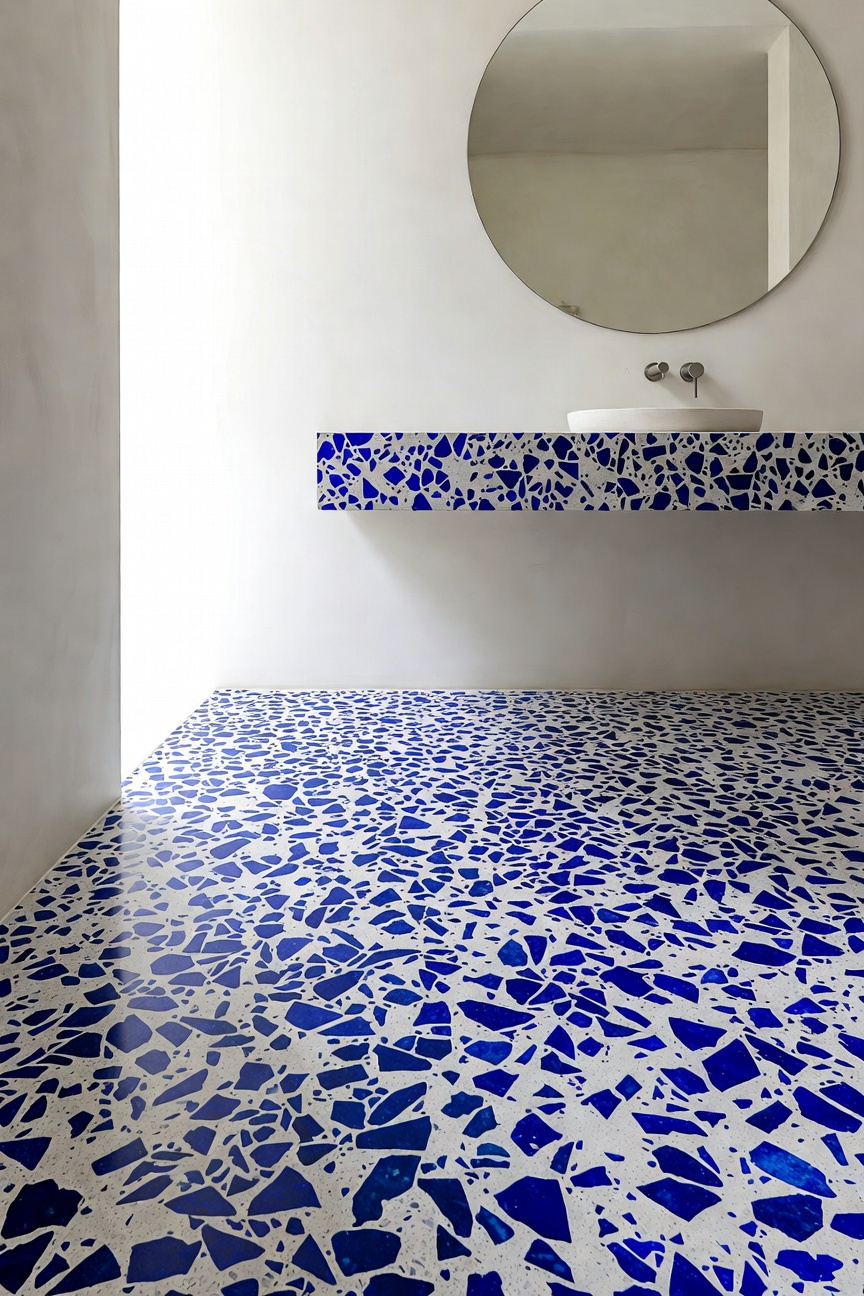
Ideally, designers select a neutral base embedded with blue aggregate. Consequently, this approach creates a serenity atmosphere without relying on literal nautical motifs. Visually, the speckled surface mimics the organic texture of a beach. For instance, the chips resemble scattered sea glass or pebbles on sand.
Furthermore, modern iterations often incorporate recycled glass instead of traditional marble. Therefore, the material supports both sustainability and visual depth. Technically, the translucency of glass allows for unique light reflection. As a result, the floor captures a glimmer similar to sunlight on water.
Practically, terrazzo creates a seamless barrier against moisture. Moreover, using large-format tiles significantly reduces visible grout lines. Thus, the space feels expansive and architecturally clean. Ultimately, this material bridges the gap between retro glamour and modern coastal living.
9. Matte Encaustic Cement: Breezy Geometrics for a Contemporary Cottage Vibe
To capture a contemporary cottage aesthetic, we turn to matte encaustic cement tiles. Specifically, we prioritize “breezy geometrics” that favor movement over heavy visual weight. These designs use fine, interlocking lines or repeating shapes to create a sense of flow. Consequently, the pattern expands the room visually, making it feel airy rather than dense. Ideally, the palette remains subtle, utilizing mineral pigments in ocean mist, white, and sandy beige.
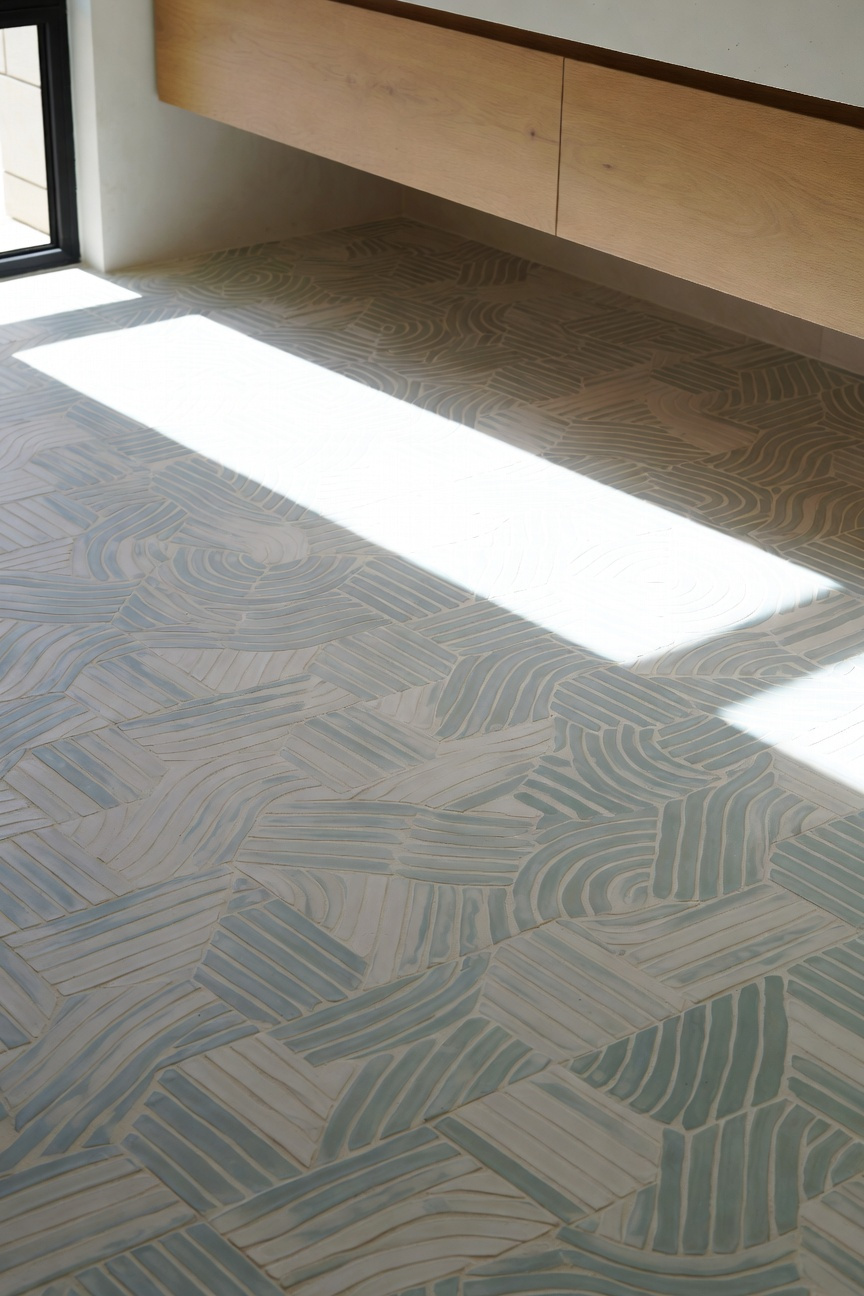
Furthermore, the matte finish is essential for the room’s sensory experience. It offers a silky, unpolished texture that closely mimics natural stone or dried sand. Additionally, this surface absorbs harsh coastal sunlight, preventing unwanted glare in bright spaces. From a practical standpoint, the unglazed cement is inherently slip-resistant. Therefore, it creates a much safer foundation for wet floors than glossy alternatives.
However, choosing this handcrafted material requires technical foresight. Because true encaustic tiles are porous, they are susceptible to moisture absorption. Specifically, high coastal humidity can trigger efflorescence, a reaction that pushes salts to the surface. This results in white, furry deposits that mar the design. To prevent this, a rigorous application of a high-quality penetrating sealer is non-negotiable. Ultimately, this maintenance preserves the vibrant pigments and protects the tile’s sophisticated patina against the elements.
10. The Scallop (Fish Scale) Shape: Reimagining a Maritime Classic with Modern Glazes
The scallop shape holds a distinct place in design history. Originally, this pattern appeared in eighth-century Moorish architecture as the Ogee Drop. Therefore, it is far more than a passing trend. Unlike rigid square tiles, these overlapping curves mimic water. Consequently, they introduce a sense of fluid movement to a room. This organic rhythm naturally softens a bathroom’s hard edges. In fact, the eye follows the pattern like a gentle wave.
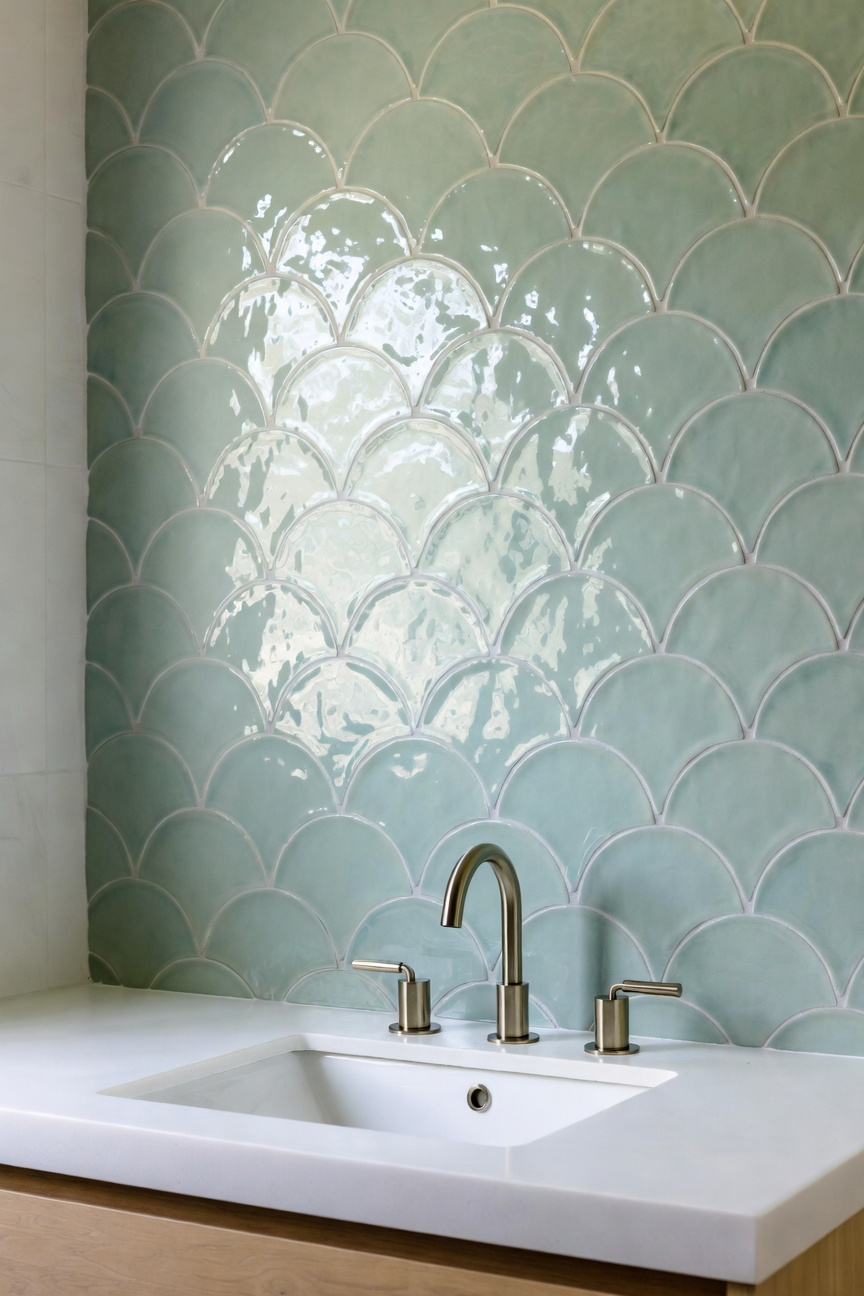
Currently, modern glazes have transformed this maritime silhouette. For instance, mother-of-pearl materials create a sophisticated organic iridescence. This finish gently bends light rather than creating harsh glares. As a result, shower walls shimmer with a spa-like ambience. Furthermore, this effect captures the essence of sunlight on the open sea. It brings a natural opalescence to the space without feeling cliché.
Conversely, textured glazes offer a more subdued aesthetic. Specifically, crackle finishes simulate the look of weathered sea glass. Thus, they add an authentic sense of age and history. Alternatively, matte surfaces emphasize the tile’s sculptural quality. By absorbing light, they highlight the three-dimensional shadows within each curve. Ultimately, these varied finishes allow for a timeless yet fresh coastal atmosphere.
11. Vertical Stack Kit-Kat Tiles: Mimicking the Linearity of Dune Grasses and Reeds
Vertical stack Kit-Kat tiles offer a sophisticated method for interpreting coastal landscapes indoors. Specifically, their slender, rectangular form mimics the rhythmic linearity of marram grasses and dune reeds. By installing these finger mosaics vertically, you immediately draw the eye upward. Consequently, this orientation creates a powerful illusion of height, making compact bathrooms feel significantly airier. The result is a striated visual field that effectively breaks the stark geometry of modern architecture. Therefore, the walls suggest subtle, natural movement rather than static enclosure.
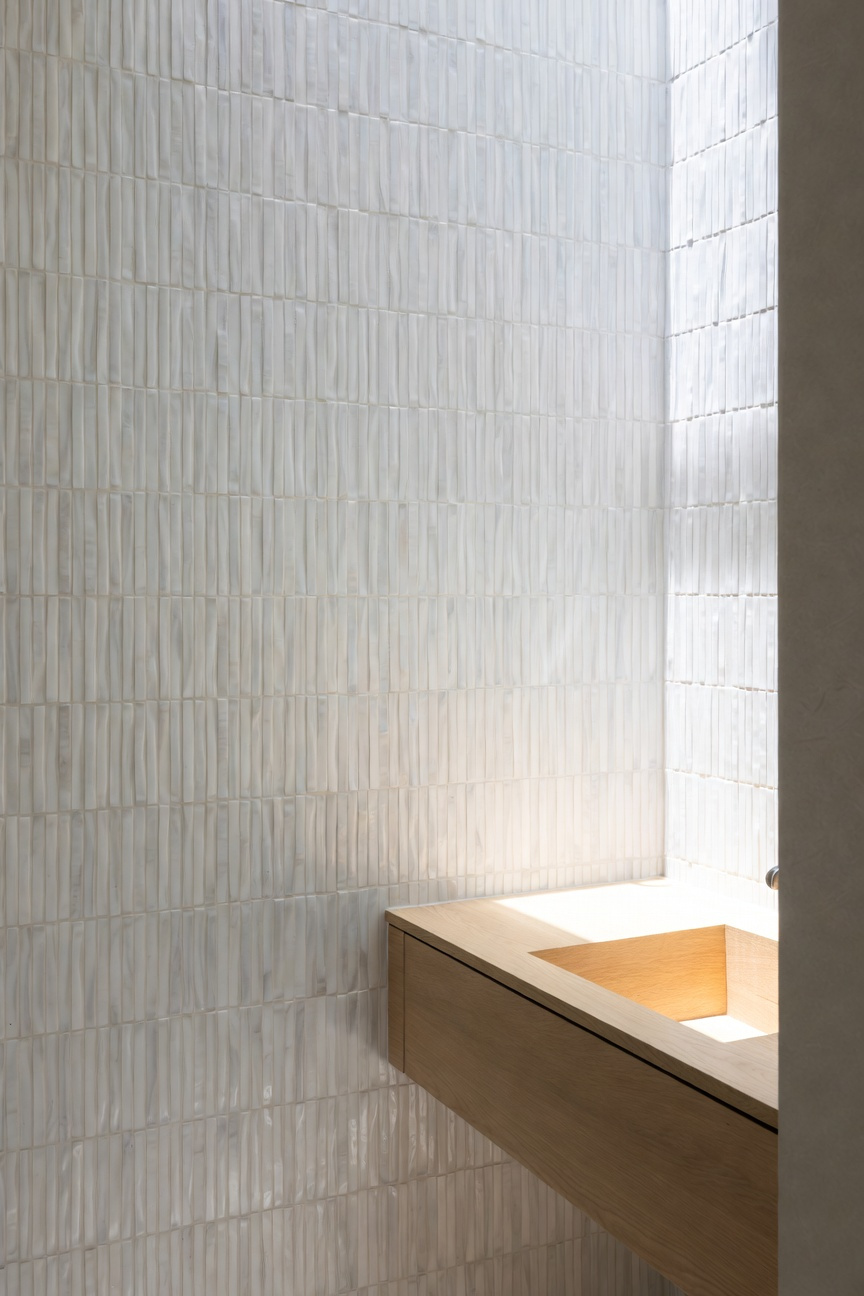
Beyond shape, the finish plays a crucial role in the narrative. Ideally, designers select tiles with glossy or slightly irregular glazes. In fact, these textured surfaces catch the light much like sunlight dancing on ocean water. Similarly, kiln-high variation glazes ensure that no two pieces look exactly alike. This organic imperfection mirrors the subtle tonal shifts found in nature, such as drying reeds. Thus, the wall avoids looking synthetic or monolithic.
Historically, this aesthetic draws from Japanese minimalism and the philosophy of *wabi-sabi*. Therefore, the goal is controlled texture rather than overpowering pattern. The repetitive grout lines create a seamless, “endless mosaic” effect that is perfect for wet areas. Ultimately, this approach transforms a shower wall into a tranquil, living canvas. It connects the bather to the raw, rugged materials of the shoreline without relying on cliché motifs.
12. Oceanic Ombre Layouts: Visualizing the Horizon Line Through Color Gradients
The oceanic ombre is primarily an architectural act of depth simulation. Specifically, it transforms a bathroom into an immersive, marine sanctuary. Usually, the most effective layouts anchor deep indigo tones at the floor level. Then, they progressively lighten to seafoam and sky blue near the ceiling. Consequently, this vertical gradient mimics the sensation of looking up from the ocean floor.
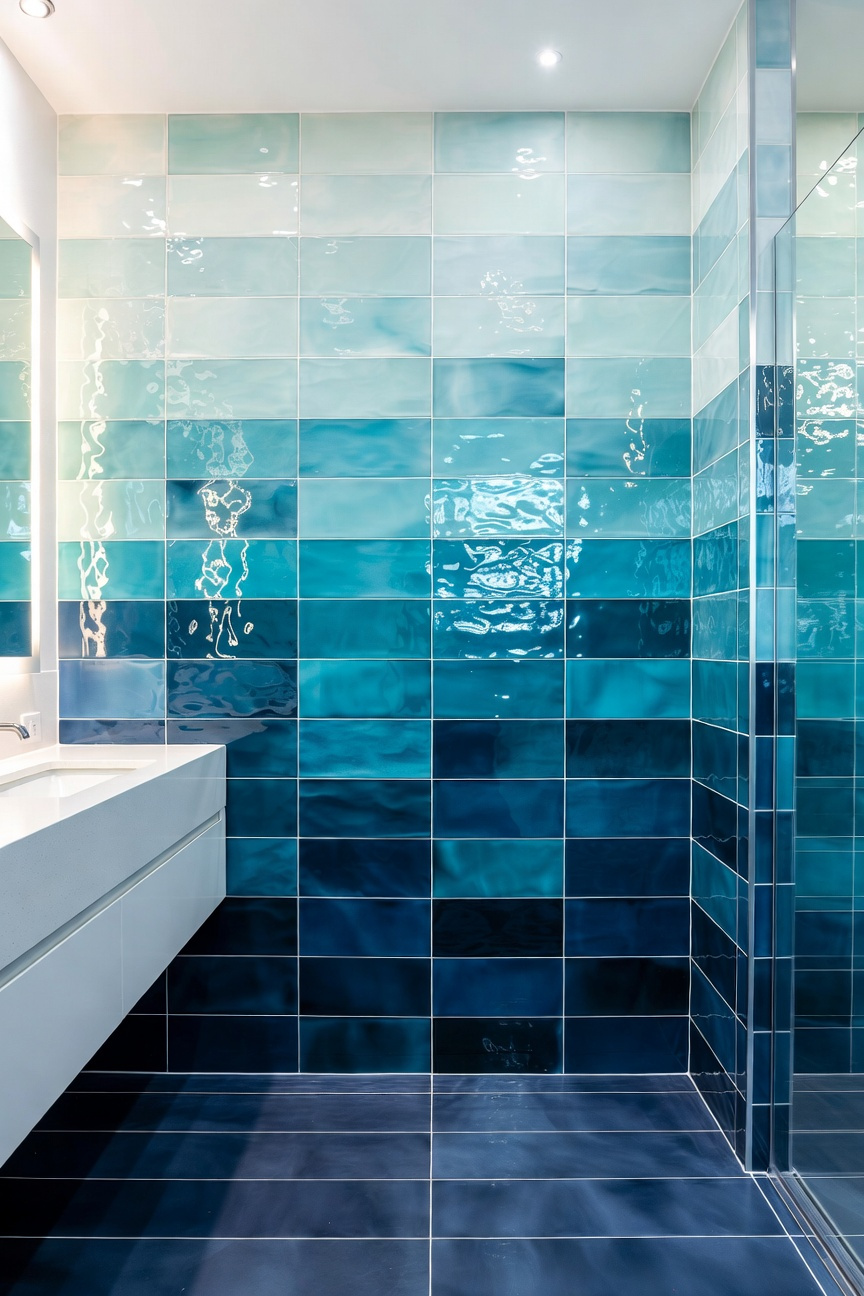
Ideally, the visual horizon line becomes the specific mid-point of this transition. Instead of a sharp demarcation, the gradient dissolves the boundary between sea and sky. To achieve this fluidity, tile geometry plays a massive role. For instance, curvilinear shapes like Moroccan fish scales or hexagons break up rigid grid lines. Therefore, the color blend appears softer, resembling organic ripples rather than stripes.
Furthermore, material selection is critical for capturing the true essence of water. High-gloss ceramics or glass mosaic tiles offer a necessary translucent quality. Thus, they allow light to refract across the surface, mimicking the sun’s reflection on waves. Finally, the choice of grout determines the success of the illusion. Specifically, a blended grout approach is essential for continuity. By matching grout colors to their immediate tile band, you minimize visual breaks. Ultimately, this creates a seamless, watercolor-like canvas that expands the perception of space.
13. High-Gloss Turquoise vs. Matte Navy: Using Finish to Create Depth Perception
True coastal sophistication requires more than just picking a color palette. Specifically, it demands a mastery of light through tile finishes. High-gloss turquoise tiles act as a dynamic “water-sky” plane on your walls. Because they maximize specular reflection, light bounces off them sharply. Consequently, this mimics the shimmering surface of shallow, sunlit water. This optical trick forces walls to visually recede, effectively expanding the room’s perceived volume.
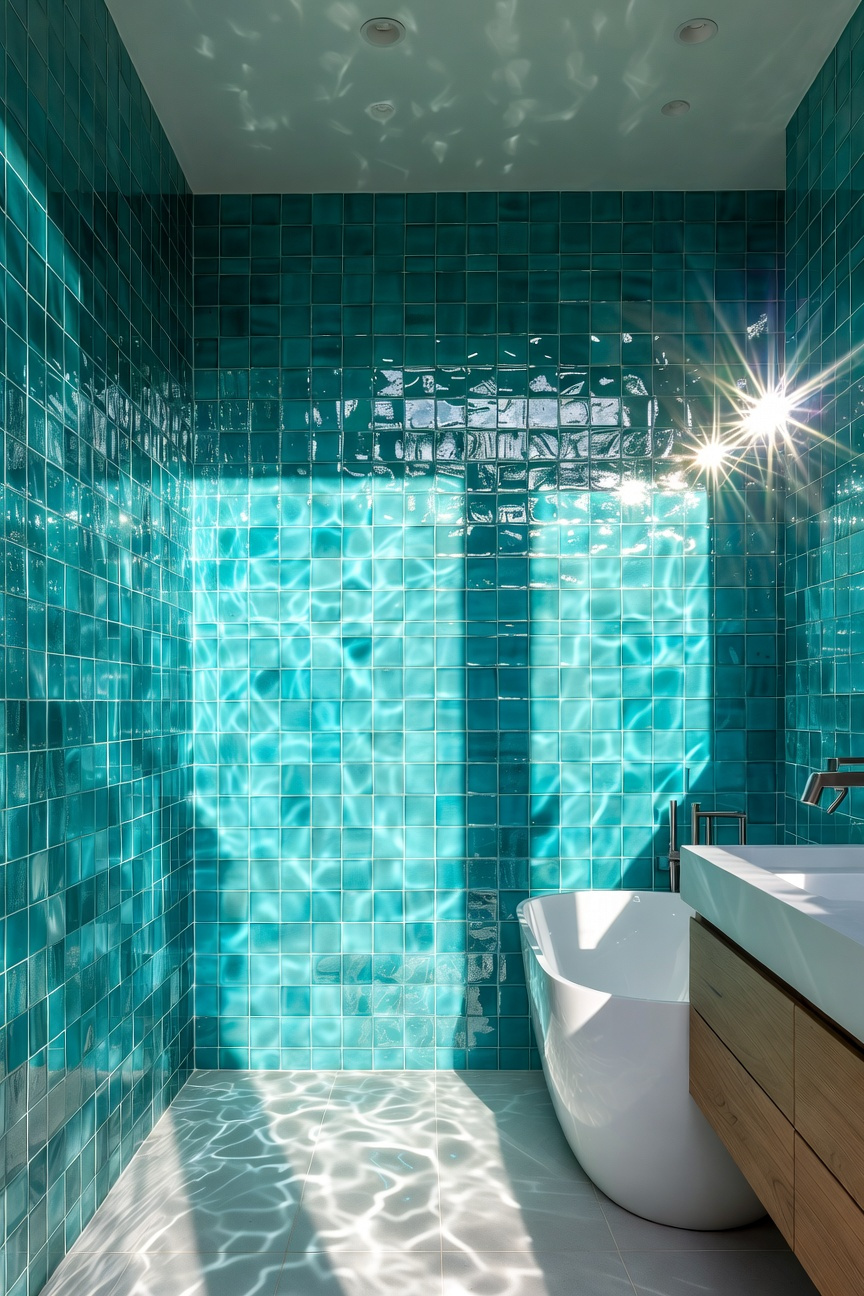
However, you need a visual anchor to balance this energy. Enter matte navy. Unlike gloss, matte finishes diffuse light, creating a velvet-like, light-absorbing surface. Therefore, applying matte navy to floors establishes a stable “deep ocean” foundation. It grounds the airy turquoise above, creating a dramatic vertical dichotomy. Furthermore, this pairing serves a distinct functional purpose. Matte glazes offer necessary slip resistance for wet floors. In contrast, slick, glossy wall tiles are effortless to wipe clean. Ultimately, this approach modernizes the maritime aesthetic. It replaces cliché pastels with the moodiness of the abyss and the brightness of the surface.
14. White-on-White Textural Layering: The Subtlety of Sea Foam and Clouds
True coastal sophistication often relies on texture rather than bold color. Specifically, this aesthetic mimics the ephemeral details of sea foam and clouds. Consequently, the design becomes a study in light and shadow rather than pigment. For instance, 3D-sculpted ceramic tiles effectively capture the movement of rolling surf. These structural elements introduce gentle, flowing forms to feature walls.
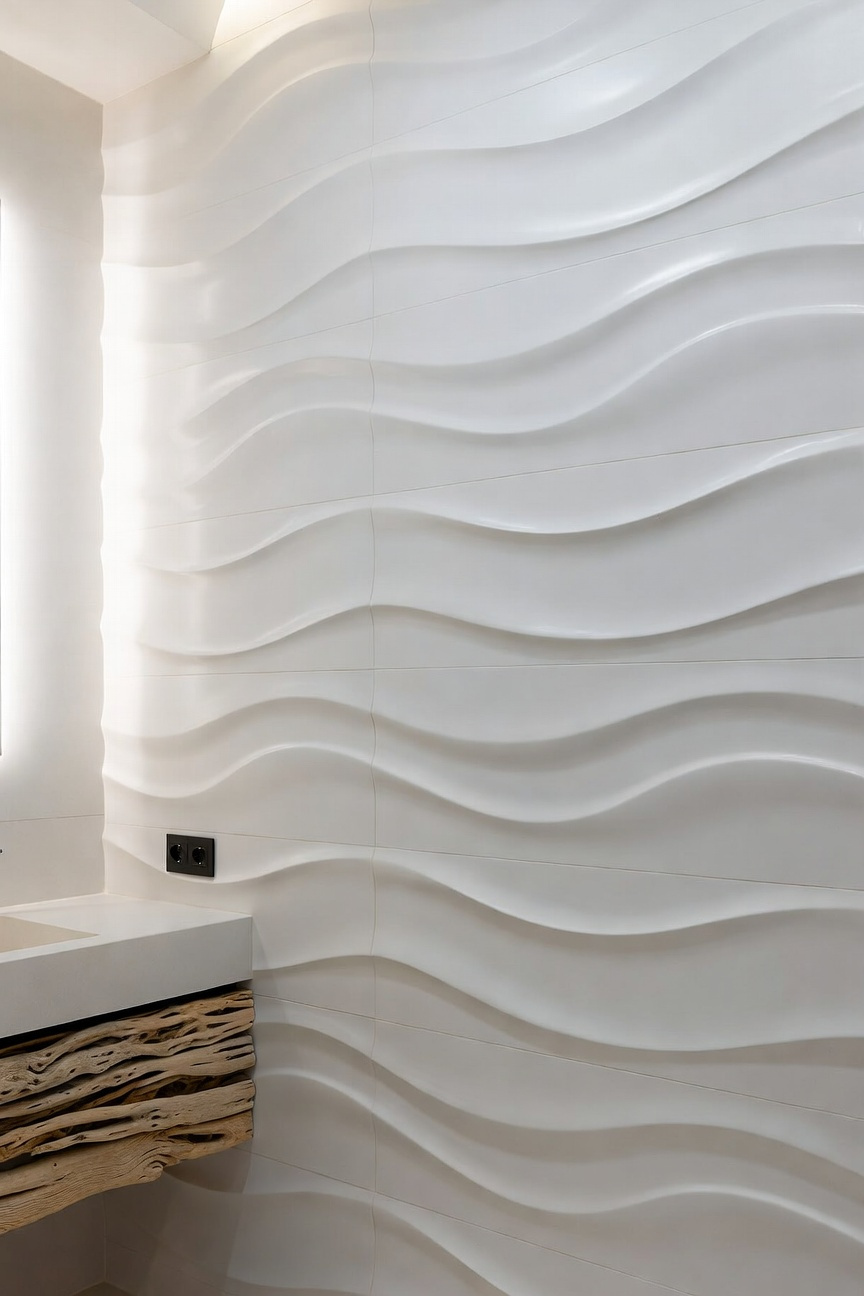
Crucially, light serves as the primary pigment in this monochromatic scheme. Indirect lighting highlights the tile’s grooves, creating soft, nuanced gray shadows. Thus, the wall appears to shift dynamically throughout the day, preventing sterility. Beyond movement, this layered approach fosters deep serenity. Psychologically, the dominance of white expands the room, offering cloud-like lightness. Furthermore, large-format porcelain with delicate gray veining adds necessary visual nuance. This veining echoes the wispy nature of clouds without overwhelming the space. Therefore, the bathroom feels spacious, airy, and restorative.
Successfully executing this look requires careful material juxtaposition. You must marry different finishes to create depth without color. For example, pair glossy, dimensional wall tiles with matte flooring. This contrast mimics the natural difference between wet, shimmering foam and dry sand. Additionally, handcrafted-look tiles with uneven glazes help soften the overall effect. Ultimately, these subtle imperfections replicate the organic, sun-bleached charm of the seaside.
15. Slip-Resistance Ratings (R-Ratings): The Intersection of Maritime Safety and Style
Commonly, homeowners prioritize the standard R-rating when selecting bathroom tiles. However, this metric often misleads renovators in coastal settings. Specifically, the R-scale measures slip resistance for “shod feet” on oily industrial ramps. Therefore, an R10 rating suits a commercial kitchen better than a residential shower. Conversely, the true benchmark for seaside wet rooms is the ABC Classification. This rigorous standard tests barefoot traction in soapy water. Consequently, you should seek a dual rating, such as R10 + B, for genuine safety.
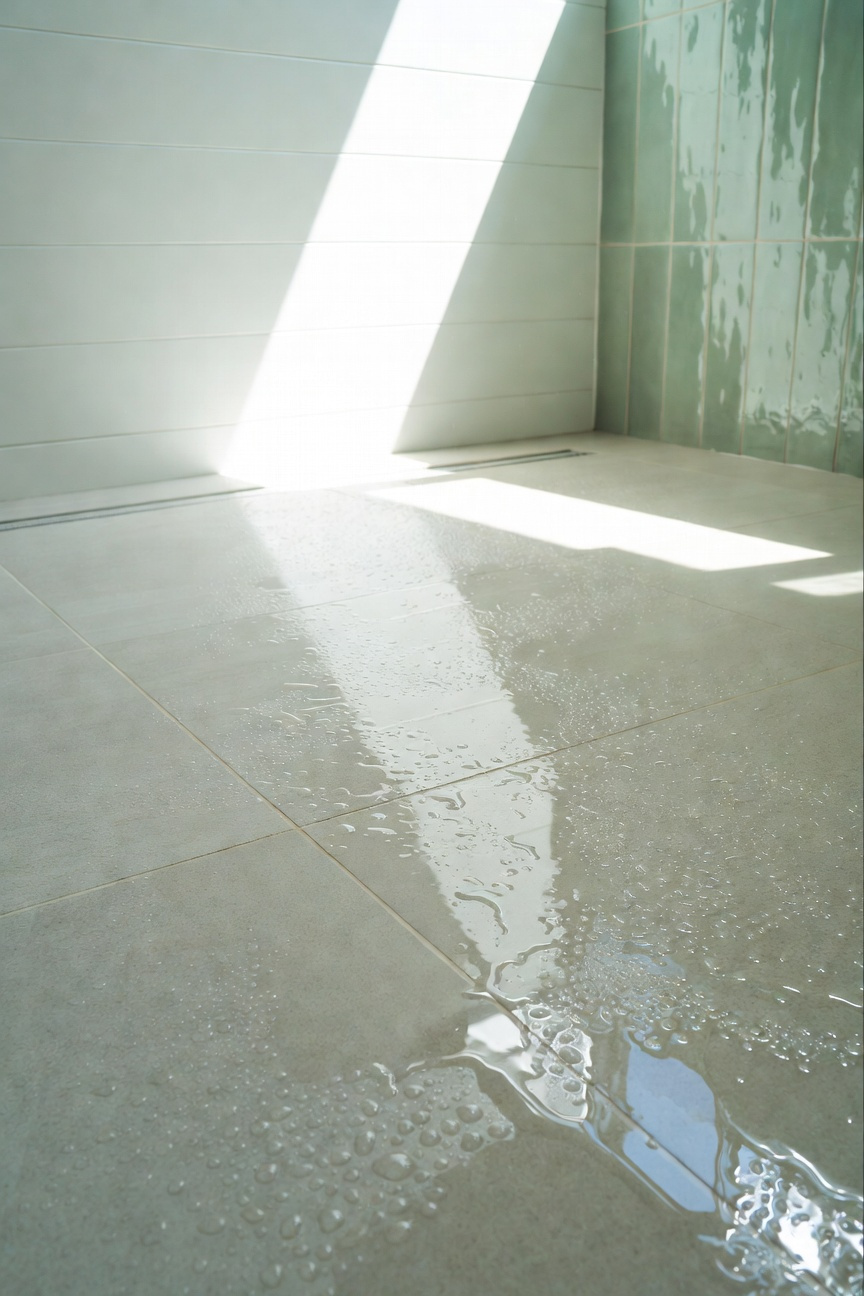
Fortunately, achieving this security no longer requires sacrificing aesthetics. Modern manufacturing now resolves the conflict between polished style and high-traction grip. For instance, engineers infuse hard minerals like Corundum directly into the glaze. During firing, these particles crystallize to form a “micro-grip” texture. Visually, the tile appears matte and sophisticated, mimicking natural stone or wood. Physically, however, it offers essential hydrodynamic traction without feeling abrasive underfoot.
Nevertheless, this advanced engineering introduces a specific maintenance trade-off. Inevitably, the microscopic valleys that provide grip also act as traps. In coastal homes, this texture captures stubborn sea salt and fine beach sand. Thus, a simple wet mop often fails to lift this specific grime. Instead, experts recommend using stiff nylon brushes or steam cleaners to agitate the surface. Ultimately, this extra diligence ensures your sanctuary remains both safe and pristine.
16. Epoxy Grout Strategies: Combating Salt Air and Humidity for Longevity
In coastal environments, traditional cementitious grout is often the structural weak link. Specifically, its capillary nature acts like a sponge. Consequently, it draws in the salt-laden aerosols common in seaside bathrooms. As moisture evaporates, salt crystals expand internally, causing efflorescence. Therefore, we utilize ANSI A118.3 compliant epoxy grout as a necessary defense. Unlike cement, epoxy creates a non-porous “vitreous shield.” Thus, it eliminates the pathways for salt intrusion and physical spalling.
However, installation demands precision to combat humidity. While cured epoxy is resilient, the liquid phase is vulnerable. If high humidity reacts with the amine hardener, “amine blushing” occurs. Subsequently, this results in a waxy, oily surface film that compromises adhesion. To avoid this, strict environmental control is mandatory. For instance, contractors must use dehumidifiers to keep the workspace “bone dry” during the cure cycle.
Finally, formulation determines longevity. We specifically mandate 100% Solids Epoxy rather than single-component mixtures. This two-part system cures into a dense thermoset polymer. As a result, it resists long-term micro-cracking at the resin-filler interface. Ultimately, this strategy ensures your coastal sanctuary remains pristine against the elements.
17. Seamless Indoor-Outdoor Transitions: Extending the Lanai Aesthetic
Originally, the Lanai concept defined Hawaiian open-air living spaces. Now, this philosophy transforms modern coastal bathrooms. Specifically, it evolves the master suite into a private wellness sanctuary. By using retractable glass walls, the room physically connects to the outdoors. Consequently, you experience the luxury of a “moonlit shower” within nature.
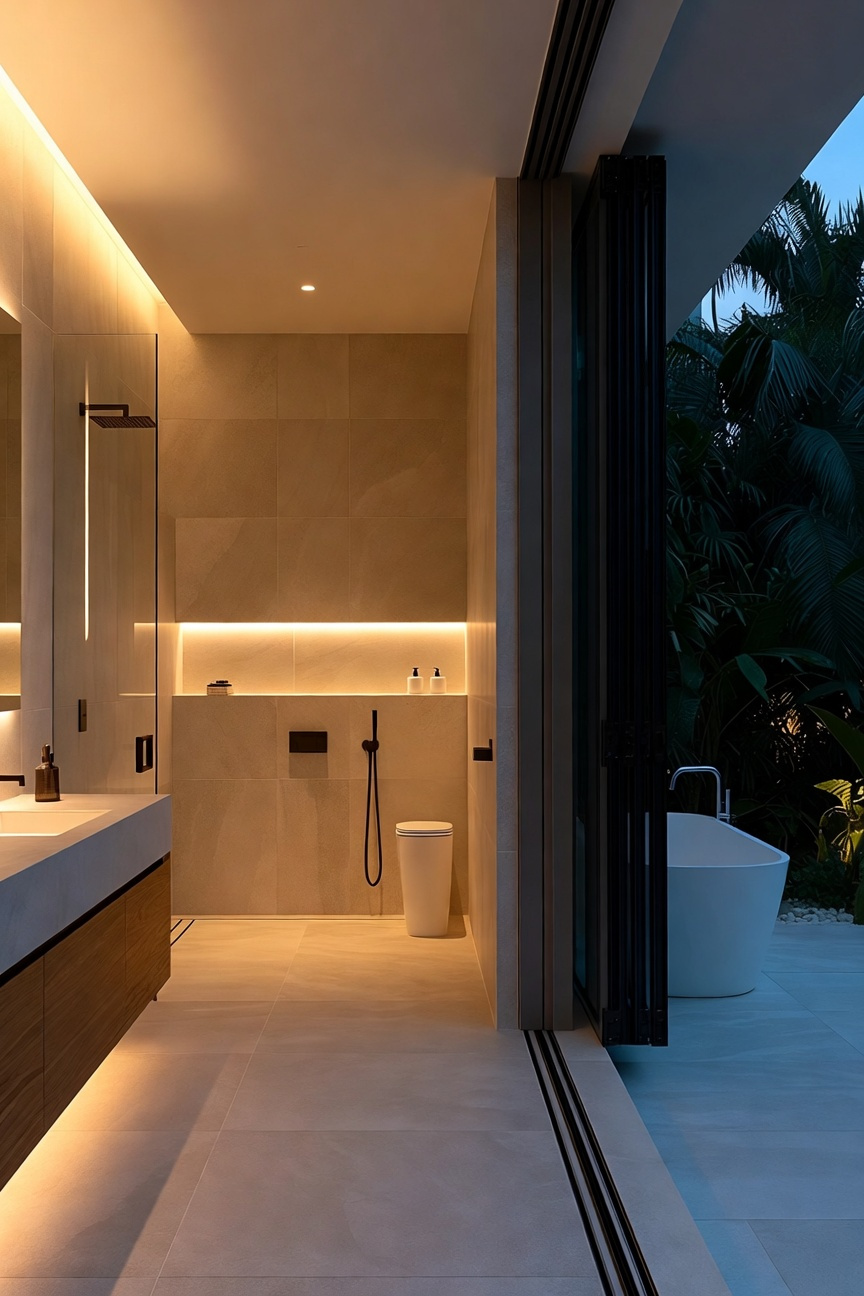
To achieve this, the flooring must appear continuous. However, wet-area safety poses a significant technical challenge. Therefore, designers utilize a sophisticated dual-finish tile strategy. Large-format porcelain serves as the ideal material here. Inside, the finish remains smooth for aesthetic appeal. Conversely, the exterior tile features a high-traction surface. Often rated R11, this rougher texture prevents slipping during rain. Visually, sandy beige or travertine-look styles mask the transition perfectly. Thus, the design maintains visual continuity despite the textural shift.
Furthermore, a true extension requires a flush threshold. This design choice eliminates traditional step-downs at the door track. As a result, the floor plane appears infinite. Technically, this requires precise engineering to manage runoff. Specifically, installers place recessed linear drains immediately outside the glass. These channels efficiently capture water, directing it away from the interior. Ultimately, this seamless integration creates a timeless, airy atmosphere.
Conclusion: Curating Your Private Horizon – Where Durability Meets Serenity
True serenity relies heavily on unseen strength. Therefore, choosing impervious porcelain ensures your sanctuary withstands harsh coastal elements. Consequently, this technical durability creates the mental space for true relaxation. You are no longer fighting maintenance issues or weathering. Instead, you can simply focus on the sensory experience. Large-format neutrals mimic the shore, while textured surfaces capture water’s movement. Thus, the design becomes a timeless, worry-free horizon.
Ultimately, this balance creates a home that ages gracefully alongside you. It serves as a lasting design investment in your daily well-being. Furthermore, future renovations become unnecessary when quality meets timeless aesthetics. So, begin your journey by gathering physical material samples today. Specifically, compare matte stone finishes against glossy, light-reflecting textures. Assess how they interact with your specific natural light. Finally, select the combination of coastal bathroom tiles that feels both grounded and boundless.
- **
Frequently Asked Questions About Coastal Tile Design
H3: Which tile materials are best for ensuring longevity in high-humidity coastal bathrooms?
For maximum longevity in coastal environments, high-quality porcelain tiles are essential due to their near-zero water absorption rate (typically below 0.5%). This makes them impervious to steam and high humidity, preventing moisture-related warping or mildew. Furthermore, pairing porcelain with 100% Solids Epoxy grout provides a non-porous defense against salt-laden air and efflorescence.
H3: What defines the “Modern Seascape” aesthetic and how can I avoid a kitschy look?
The “Modern Seascape” aesthetic avoids literal iconography (like anchors or seashells) and focuses instead on texture, light, and organic movement. Achieve this sophisticated look by selecting materials that mimic natural elements: Zellige tiles for water shimmer, weathered wood-look porcelain for driftwood texture, or large-format sandstone for an expansive shoreline feel. Keep the color palette natural—creams, pale seafoam, and misty grays—to create a sense of serenity rather than shouting a theme.
H3: Are dark or matte tiles suitable for small coastal bathrooms?
Yes, matte finishes are highly suitable, especially on floors, as they diffuse harsh coastal light and provide essential slip resistance. While dark colors like matte navy can ground a design, for smaller bathrooms, focus on maximizing light reflection by using large-format tiles in lighter colors (sandy beige, pale gray) or by utilizing high-gloss, light-reflecting wall tiles (like turquoise) to visually expand the room’s perceived volume.
- **