
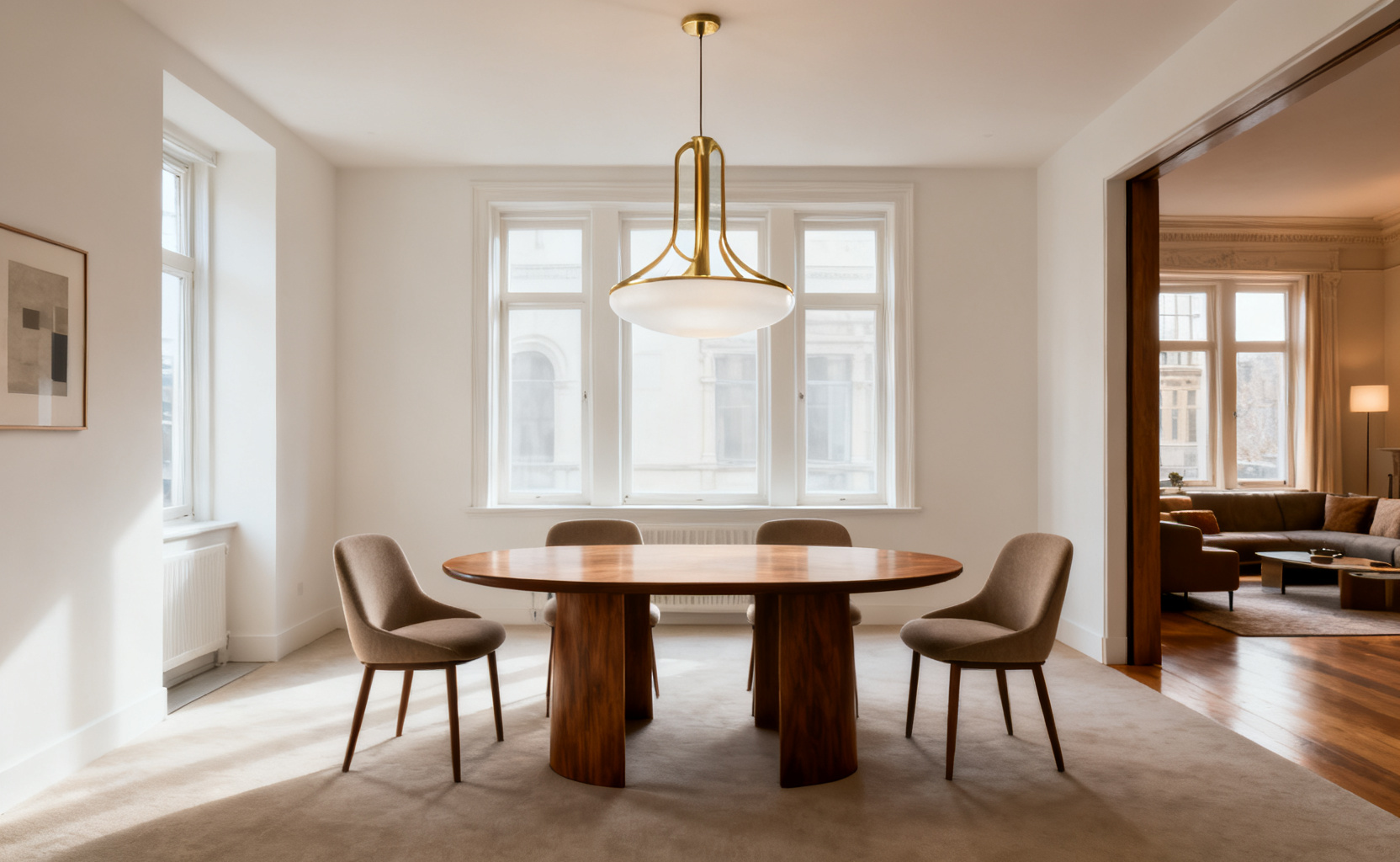
Many assume the dining room is a static domestic fixture. But for discerning homeowners, the space is constantly evolving. Exploring modern dining room ideas reveals a shift in both purpose and design. Historically, this gathering space began as the medieval Great Hall. It was a loud, multi-functional nucleus. Later, Georgian architects isolated the room to enforce strict social hierarchies. Walls separated the elite from the labor of the kitchen. Specifically, privacy became a symbol of status.
The 20th century boldly rejected this rigid separation. Modernism prioritized clean lines over heavy Victorian opulence. In fact, the decline of household staff made architectural segregation impractical. Today, the walls have effectively crumbled. The contemporary open plan strangely mirrors the original Great Hall’s utility. Indeed, our tables now serve as desks, craft stations, and social hubs.
Yet, the debate on domestic sociability remains vibrant. Some homeowners still crave a dedicated space to disconnect from digital noise. This guide explores the balance between fluid integration and intentional design. We will examine how mid-century principles can ground these flexible spaces. In the end, you will discover how to honor design history while meeting contemporary needs.
Since the mid-20th century, the dining room has evolved from a formal showroom to the heart of democratic living.
The dining room was once a rigid showroom designed to display standing. Originally, these spaces prioritized strict etiquette and fine china. However, the mid-20th century sparked a cultural shift toward informality. Specifically, the mass adoption of television decoupled eating from the formal table. Simultaneously, families began rejecting “stiff” Victorian traditions. Therefore, the separate, closed-off room eventually seemed like an economic misuse of space.
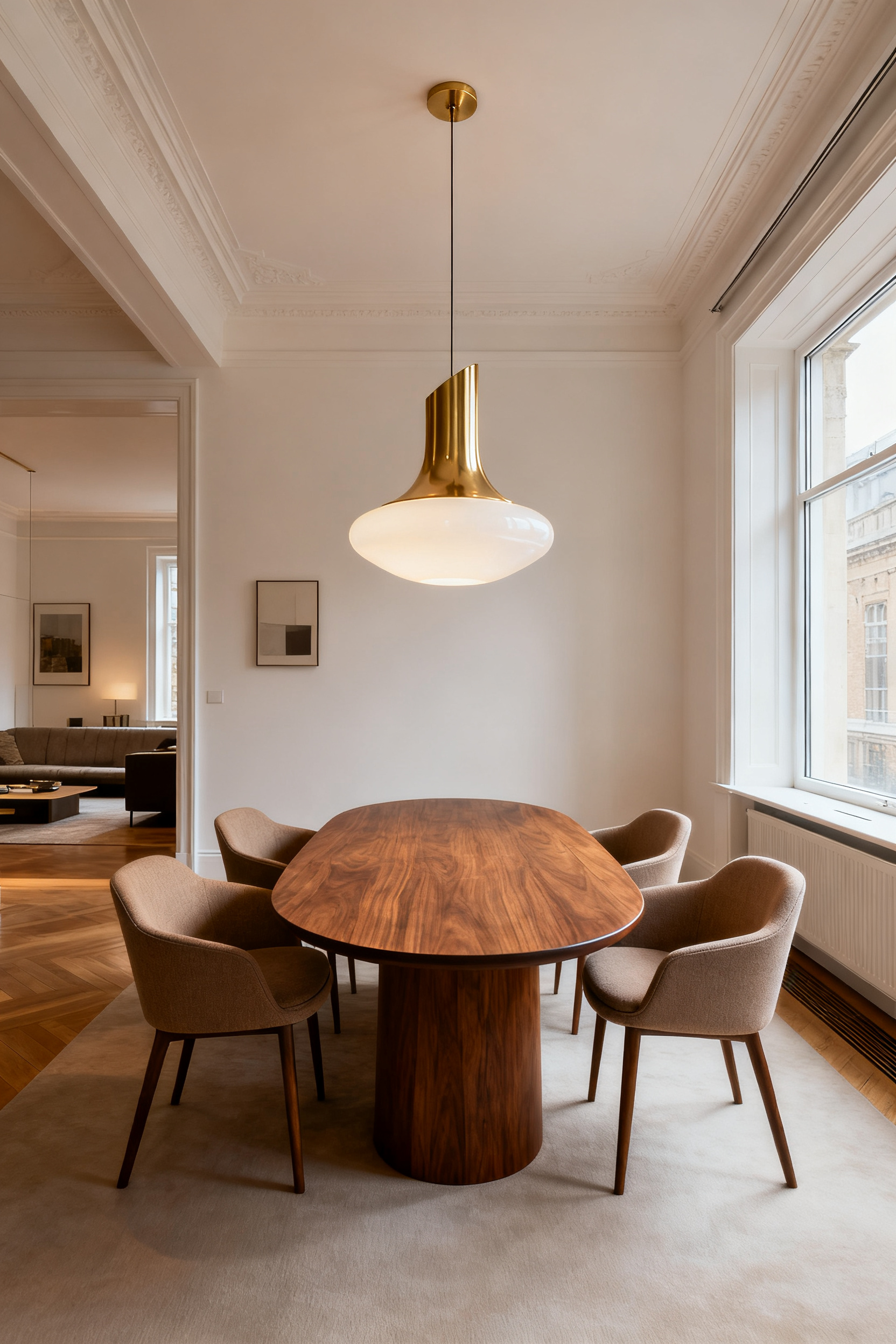
Architecturally, this rejection of formality manifested through the open-plan “Great Room.” Previously, walls strictly segregated the “servers” in the kitchen from the “served” guests. But the modern eat-in kitchen dissolves these outdated hierarchies. Now, meal preparation has evolved into a communal activity. Innovations like improved ventilation allowed the kitchen to become an attractive central node. For those seeking cohesion between zones, consider reviewing our principles for sophisticated contemporary kitchen decoration. Thus, the host remains connected to the conversation. This promotes a style of true “democratic living.” For high-end open plans, this integration is key. Learn more about architectural masterpieces redefining the modern luxury kitchen on our site.
Today, the furniture itself reflects this multi-functional reality. Notably, the table is no longer reserved solely for holiday meals. Instead, it serves as a workstation and creative social hub. In fact, recent global events cemented this versatile identity for millions. Modern design priorities now favor comfort over heavy ornamentation. Essentially, the dining space is defined by sensory warmth rather than dusty formality.
Today’s sophisticated modern spaces understand a dual principle: they must honor architectural history while accommodating contemporary sustainability.
Ideally, modern dining rooms bridge the gap between past and future. One effective architectural approach is “Honest Contrast.” Here, new interventions do not mimic the historic structure. Instead, they stand distinct and clearly modern. For instance, designers might pair exposed original masonry with sleek, raw steel. As a result, the historic weight remains the primary sensory anchor.
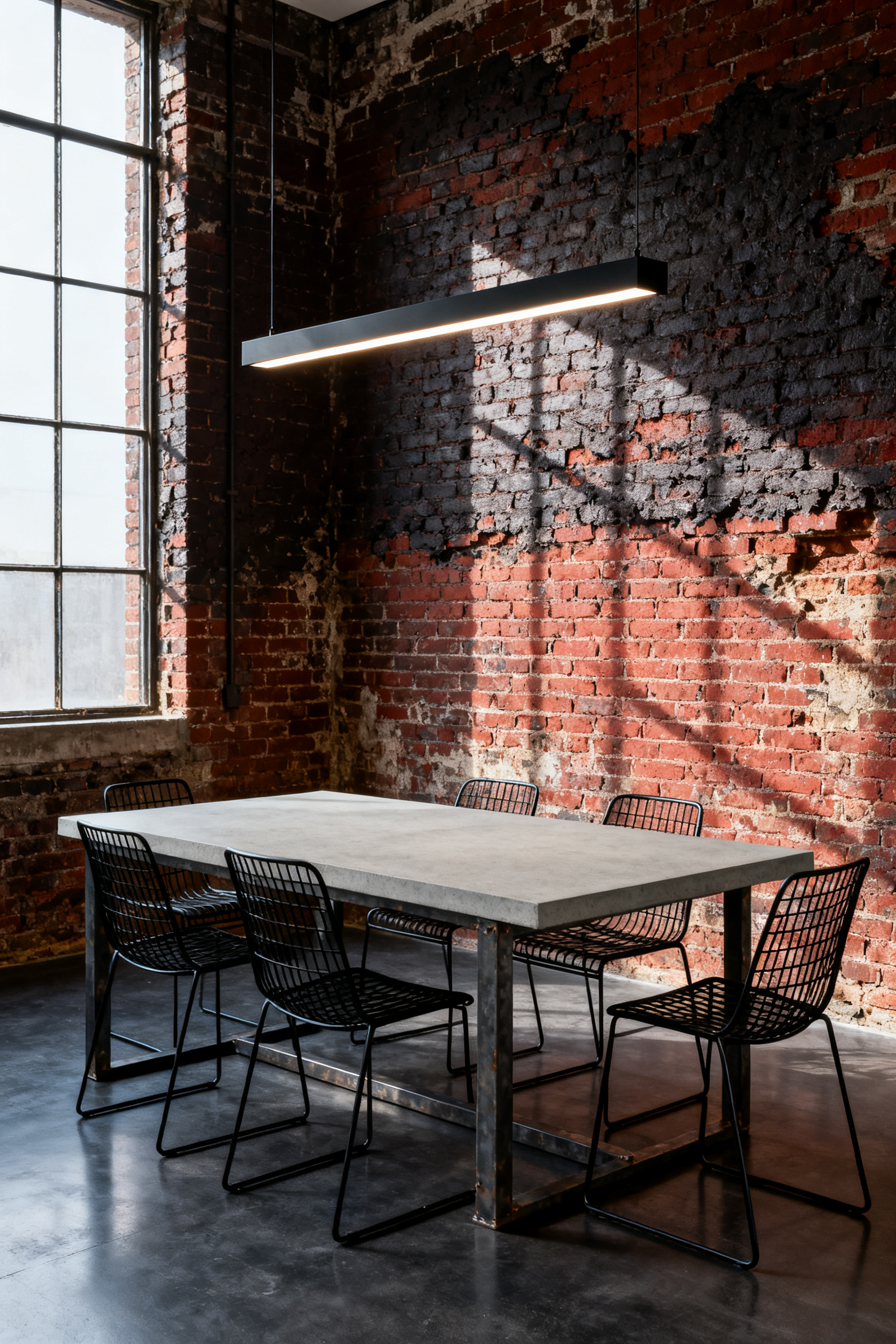
Furthermore, sustainability drives these decisions through adaptive reuse. Specifically, repurposing existing structures reduces construction waste. Original wood trusses or concrete floors become authentic backdrops. This practice effectively preserves the building’s embodied energy. Moreover, introducing reclaimed materials adds necessary texture. A table made from salvaged barn wood serves as a material bridge. In fact, it offers a visual signal of environmental commitment.
Finally, we must reinvent Modernist principles for today. Early Modernism championed efficiency and integration with nature. Therefore, contemporary spaces maximize natural light to reduce energy reliance. Similarly, biophilic elements like large potted olive trees improve air quality. This creates a space that feels both timeless and responsible.
The 18 ideas below separate authentic, character-rich modernism from fast-furniture trends.
True modernism is defined by its ethos, not just its silhouette. Specifically, authentic design adheres to the principle that form follows function. Every curve and joint serves a distinct purpose. Conversely, fast-furniture trends prioritize price over utility. These items mimic clean lines but strip away the engineering required for durability. Therefore, the design becomes a mere stylistic overlay rather than a structural reality.
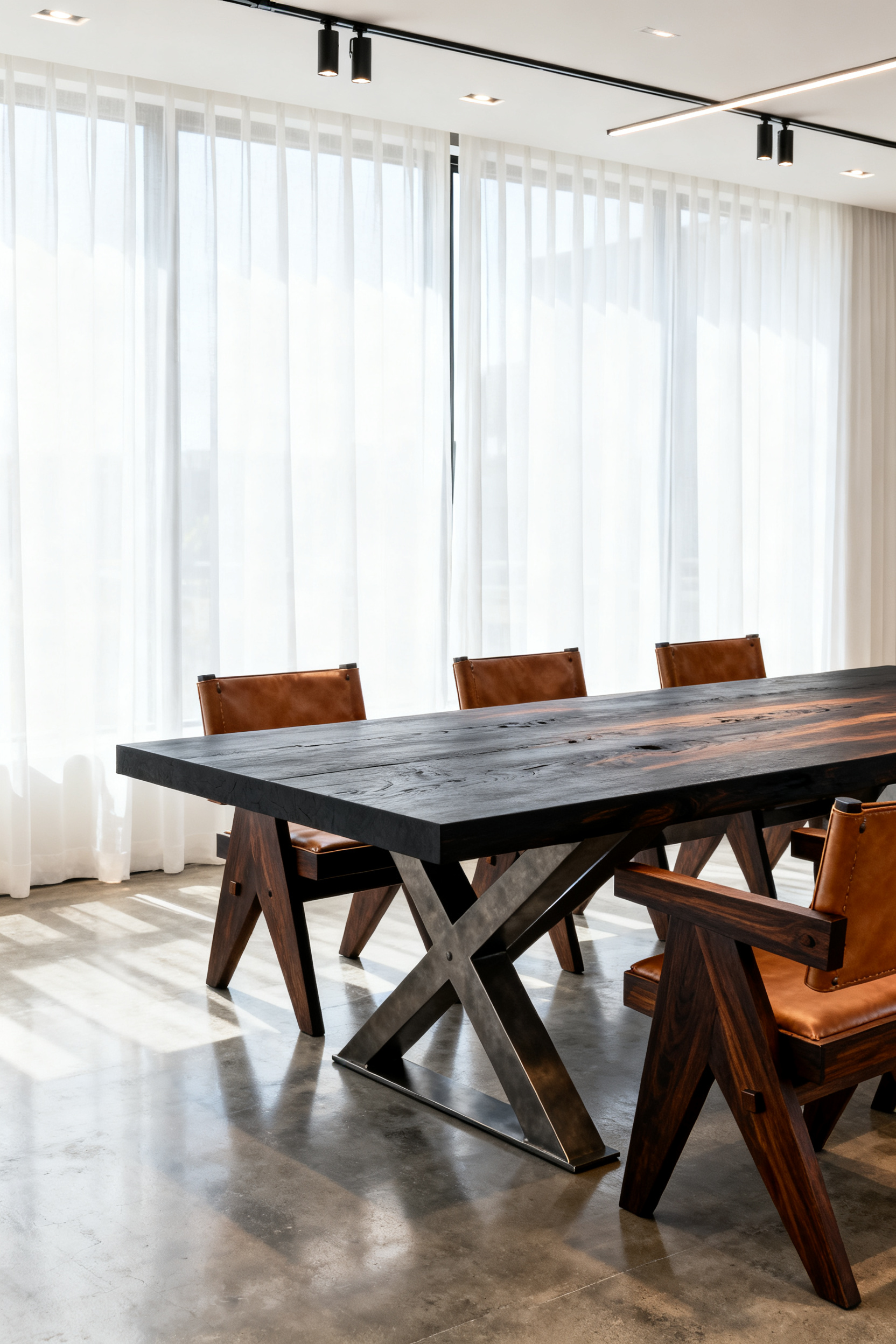
Furthermore, material honesty creates a tangible difference in longevity. Authentic pieces utilize solid hardwood or architectural plywood with thick veneers. Consequently, they possess high resilience. You can sand and refinish a scratched teak table. This effectively restores its surface for generations. In contrast, fast furniture relies on material disguise. Manufacturers often wrap low-density particleboard in paper to simulate wood grain. Unfortunately, this results in a fragile product. Once the thin veneer chips, repair is usually impossible.
Finally, distinct character separates an icon from an imitation. Historic pieces like the Wishbone Chair represent technological breakthroughs. Thus, they carry a “soul” derived from craftsmanship. But trend-based copies lack this narrative depth. They are designed for planned obsolescence. Choosing authentic modernism means investing in a piece that transcends time.
Phase 1: The Philosophy of Form and Function
Originally, the concept of “form follows function” served as a rebellion against Victorian excess. Architect Louis Sullivan argued against purely decorative ornamentation. Modern design strips away heavy details to reveal the structural truth. In a dining context, this means prioritizing clarity. We look for honest materials like unadorned wood or steel.
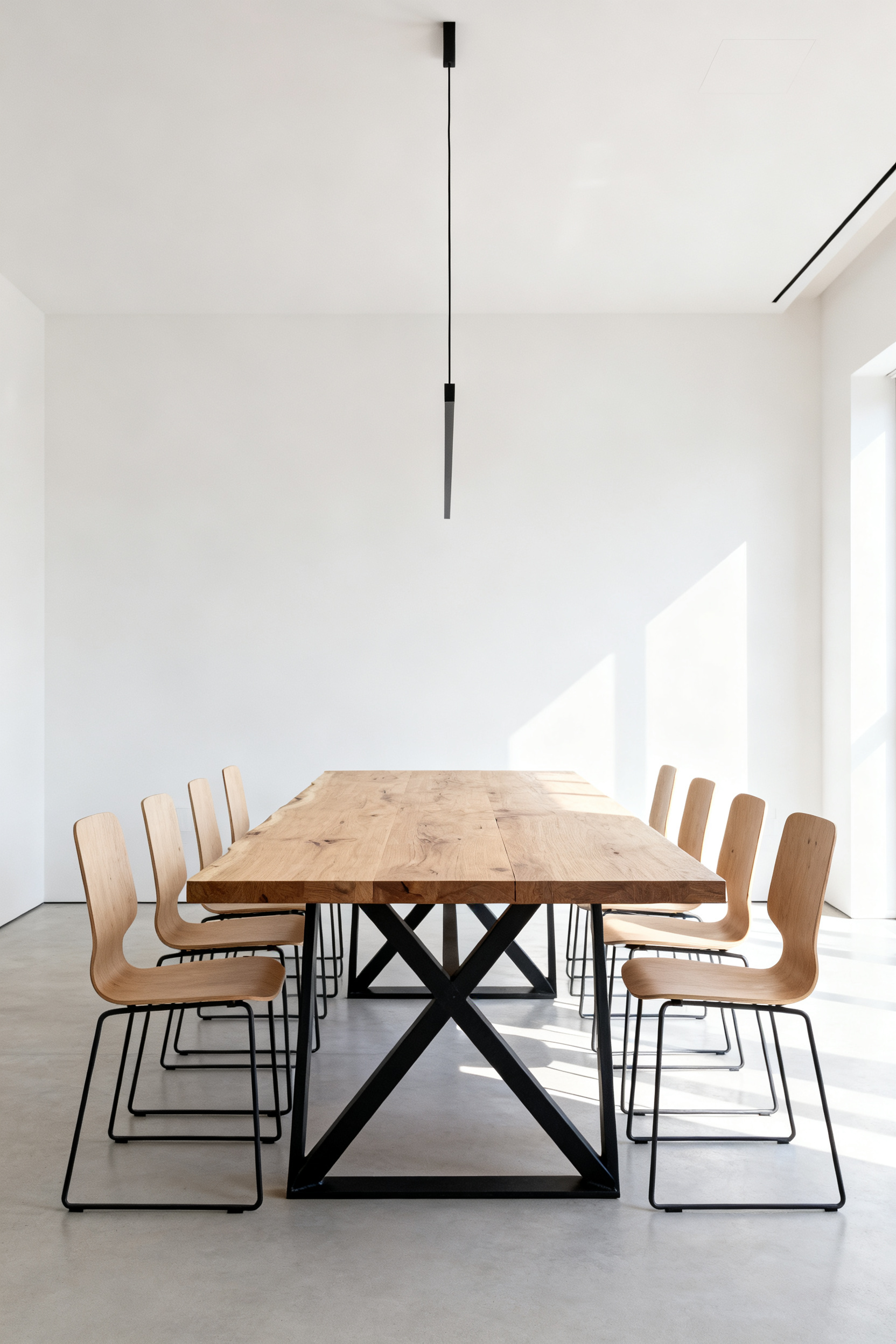
However, the definition of function has evolved significantly. Specifically, the modern dining room is a hub for commensality, or the social act of eating together. The furniture’s form must actively facilitate communication. For instance, circular tables are increasingly popular. They promote visual equality. By eliminating the “head” of the table, the shape itself democratizes the conversation.
Furthermore, these pieces must adapt to multi-purpose living. Often, a dining surface doubles as a workspace. Thus, durability becomes a functional requirement, not just a manufacturing detail.
This philosophy extends critically to seating ergonomics. Historically, some early functionalist pieces were beautiful but physically unforgiving. But true modern function dictates that a chair must provide comfort. If a guest cannot linger happily for two hours, the design has failed. The most successful pieces harmonize a streamlined silhouette with physical needs.
1. The ‘Negative Space’ Narrative: Why Flow Matters More Than Fill
The modern dining room relies heavily on the Japanese concept of *Ma*. Essentially, this philosophy treats space as an intentional pause. Unlike the historical Western tendency to fill every corner, *Ma* embraces the air between objects. Consequently, the room becomes a serene sanctuary. It allows conversation to breathe.
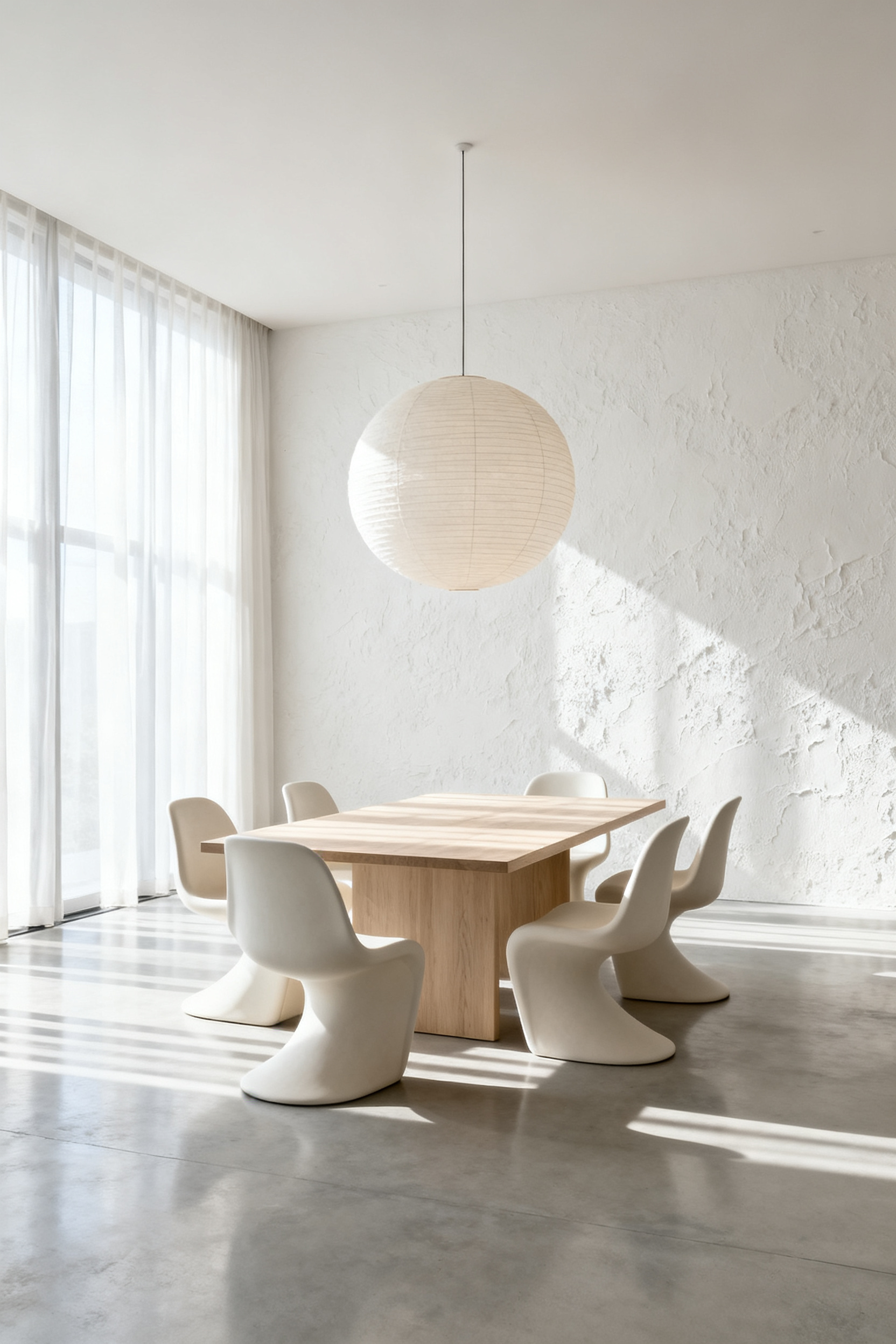
However, this concept of flow is not purely philosophical. In fact, it requires specific ergonomic clearances. Specifically, professional design standards mandate at least 36 inches between the table edge and walls. Ideally, high-traffic areas should expand to 48 inches. Therefore, guests can walk past seated diners without feeling crowded. Architectural choices like large-format floor tiles can also reinforce this continuity.
Moreover, negative space acts as a powerful amplification tool. It creates a necessary “visual breather.” This establishes rhythm within the room. For example, a single sculptural pendant light commands attention precisely because of the empty air surrounding it. Conversely, overstuffing a room diminishes the impact of special vintage finds. Prioritizing restraint over “fill” allows your design to feel confident.
2. Function First: Selecting Pieces with Purpose and History
Authentic modern dining rooms rely on the functionalist mandate. Fundamentally, this philosophy dictates that form must follow function. We reject the superfluous ornamentation of past eras. Instead, we prioritize utility and comfort. Therefore, selecting your central table requires defining its specific purpose. For instance, a substantial, fixed table serves as a permanent anchor. It signals that the room is dedicated to communal ritual.
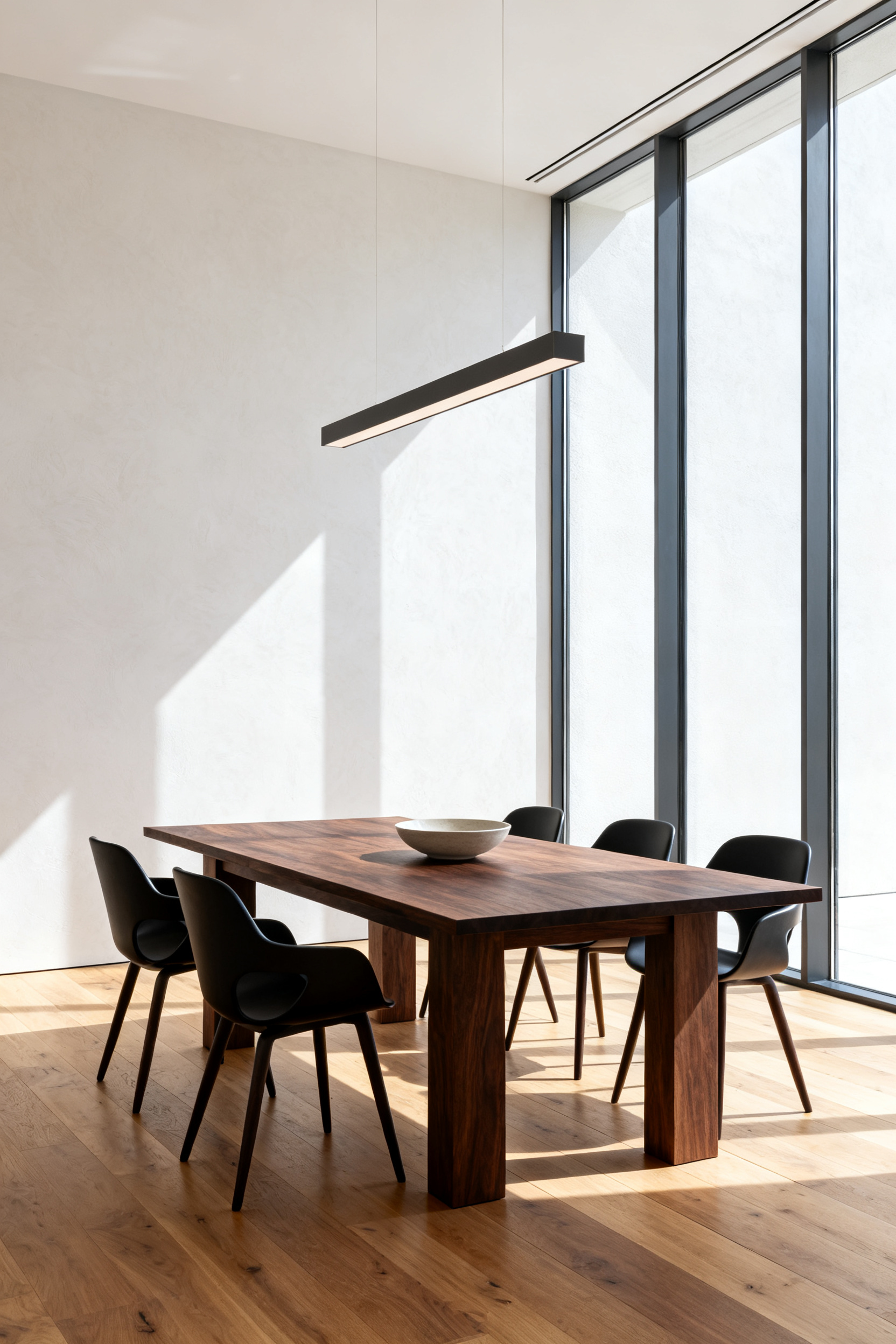
Conversely, modular pieces offer essential versatility for smaller homes. Thus, the space transforms efficiently from a daily workspace to a spirited entertaining area. However, a purely functional space often risks feeling cold. To avoid this, adopt a “collected not decorated” approach. Specifically, juxtapose a clean-lined modern table with vintage elements.
For example, pair a streamlined stainless steel surface with restored mid-century chairs. This combination creates necessary temporal depth. Furthermore, contemporary designers often embed history by honoring traditional craftsmanship. Every item should serve as a medium for storytelling. Whether it is a vintage find or a sustainable new design, the piece must spark an emotional connection.
3. The Warm Minimalist Palette: Moving Beyond Stark White Walls
For years, minimalism meant stark, icy white walls. But modern dining rooms are pivoting toward a “warm minimalist” palette. This crucial shift prioritizes a “lived-in” atmosphere over showroom perfection. Consequently, the design philosophy moves from “less is more” to “less but better.”
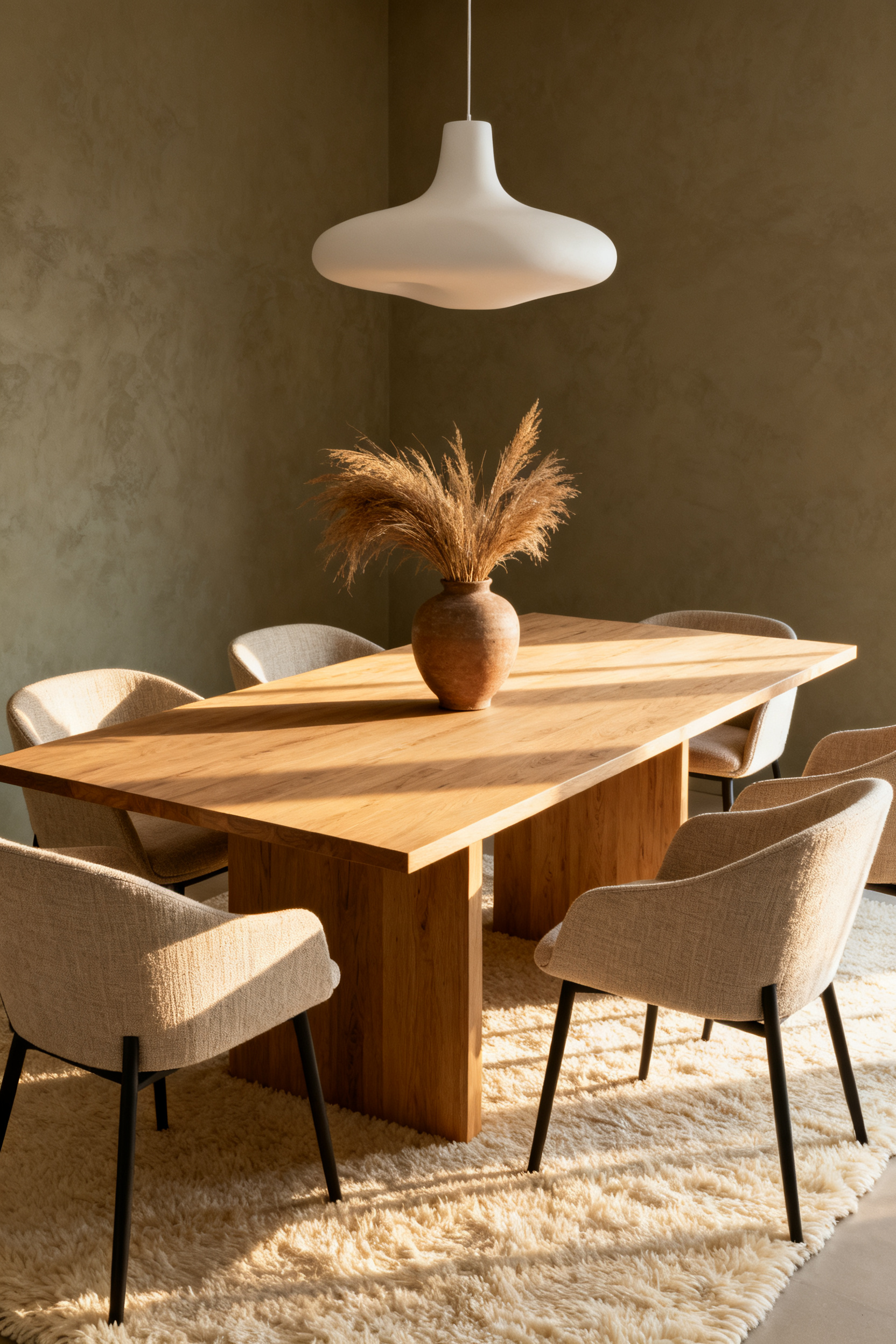
Specifically, the foundation of this look is the sophisticated “Greige” family. A blend of gray and beige, it offers both clarity and coziness. For instance, colors like Benjamin Moore’s *Revere Pewter* provide a neutral backdrop without feeling cold. Alternatively, creamy whites with subtle yellow undertones replace un-pigmented white. Therefore, natural light creates a luminous glow rather than a flat surface.
Beyond paint, materiality adds necessary depth. In fact, texture serves as the main source of visual interest here. We are seeing a move away from glossy, high-shine chrome. Instead, brushed brass or patinated bronze introduces organic warmth. Similarly, natural materials like honed limestone replace slick surfaces.
Ultimately, this palette serves a psychological function. Earthy tones, like muted terracotta, naturally stimulate appetite. Furthermore, soft lighting amplifies these warm undertones during evening meals. Thus, the dining room transforms into an inviting sanctuary.
4. Organic Modernism: Softening Straight Lines with Natural Curves
Organic Modernism serves as a deliberate antidote to austere minimalism. Fundamentally, this aesthetic counterbalances sleek structures with fluid forms. Consequently, the dining room transforms into a lived-in sanctuary. Environmental psychology suggests that curves effectively lower visual stress compared to sharp angles. Therefore, replacing a sharp-cornered table with a round silhouette creates a more relaxing atmosphere.
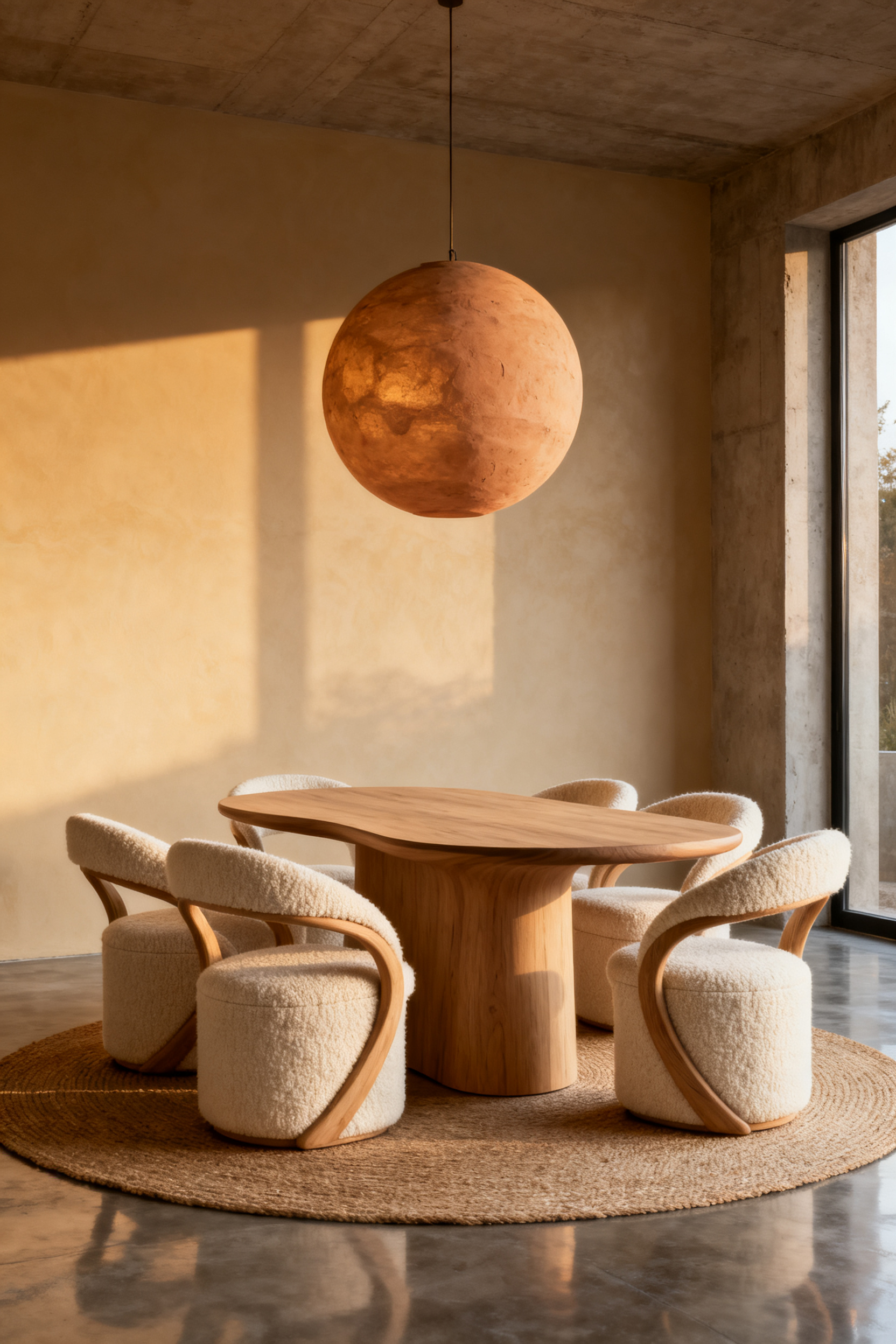
Historically, this approach connects industrial sleekness with craftsmanship. Icons like Eero Saarinen utilized molded curves to remove visual clutter. Conversely, George Nakashima championed the “live edge” wood slab to introduce unpredictable lines. Thus, furniture acts as functional art. It anchors the room with elegant rhythm rather than rigid formality.
Beyond shape, this style relies heavily on a tactile dialogue. Specifically, unbleached, earthy tones allow raw textures to take center stage. For instance, pairing a polished concrete wall with a jute rug creates necessary warmth. Furthermore, dining chairs upholstered in boucle offer a soft contrast to hard surfaces. This intentional tension between the perfect line and the organic form defines the look.
Phase 2: Material Integrity and Restoration
Restoring mid-century modern furniture requires navigating the “Patina Paradox.” Specifically, this demands a choice between strict conservation and functional restoration. Conservation prioritizes history, preserving the unique “story” found in aged finishes. Consequently, valuable pieces like vintage Eames tables often lose value if over-restored. Conversely, restoration focuses on maximizing functionality. But even practical repairs must respect the original material integrity.
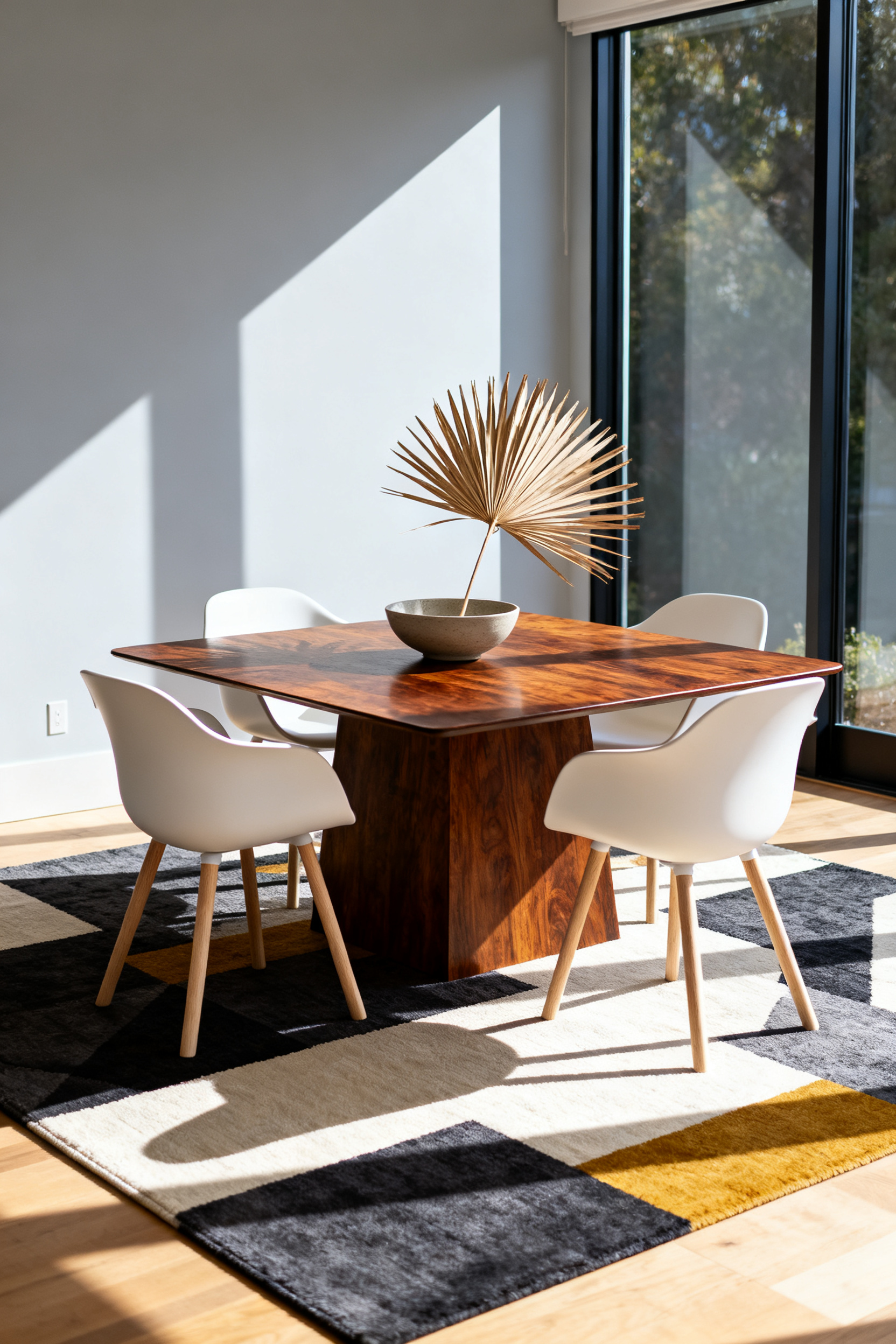
For instance, mid-century veneers are notoriously thin. Therefore, aggressive sanding is rarely a viable option. Instead, structural integrity is restored through meticulous patching. Specialists utilize color-matching toners to blend these repairs with aged wood. This precise technique ensures the surface remains robust without erasing its character.
Moreover, non-organic materials demand distinct technical approaches. For example, treating scratches on stainless steel requires sanding strictly with the grain. Otherwise, you risk creating distracting visual noise. Similarly, vintage chrome finishes benefit from gentle rust removal rather than invasive re-plating. Finally, concrete surfaces often rely on acceptance. Non-structural hairline cracks are embraced as “wabi-sabi” characteristics. Successful restoration extends a piece’s life without erasing its past.
5. The Return of Walnut and Teak: Anchoring the Room with Authentic Wood
Modern design is shifting away from stark, bleached-oak minimalism. Instead, interiors are prioritizing authenticity. Specifically, the dining table serves as the room’s primary visual anchor. Therefore, returning to rich hardwoods like walnut and teak provides necessary grounding.
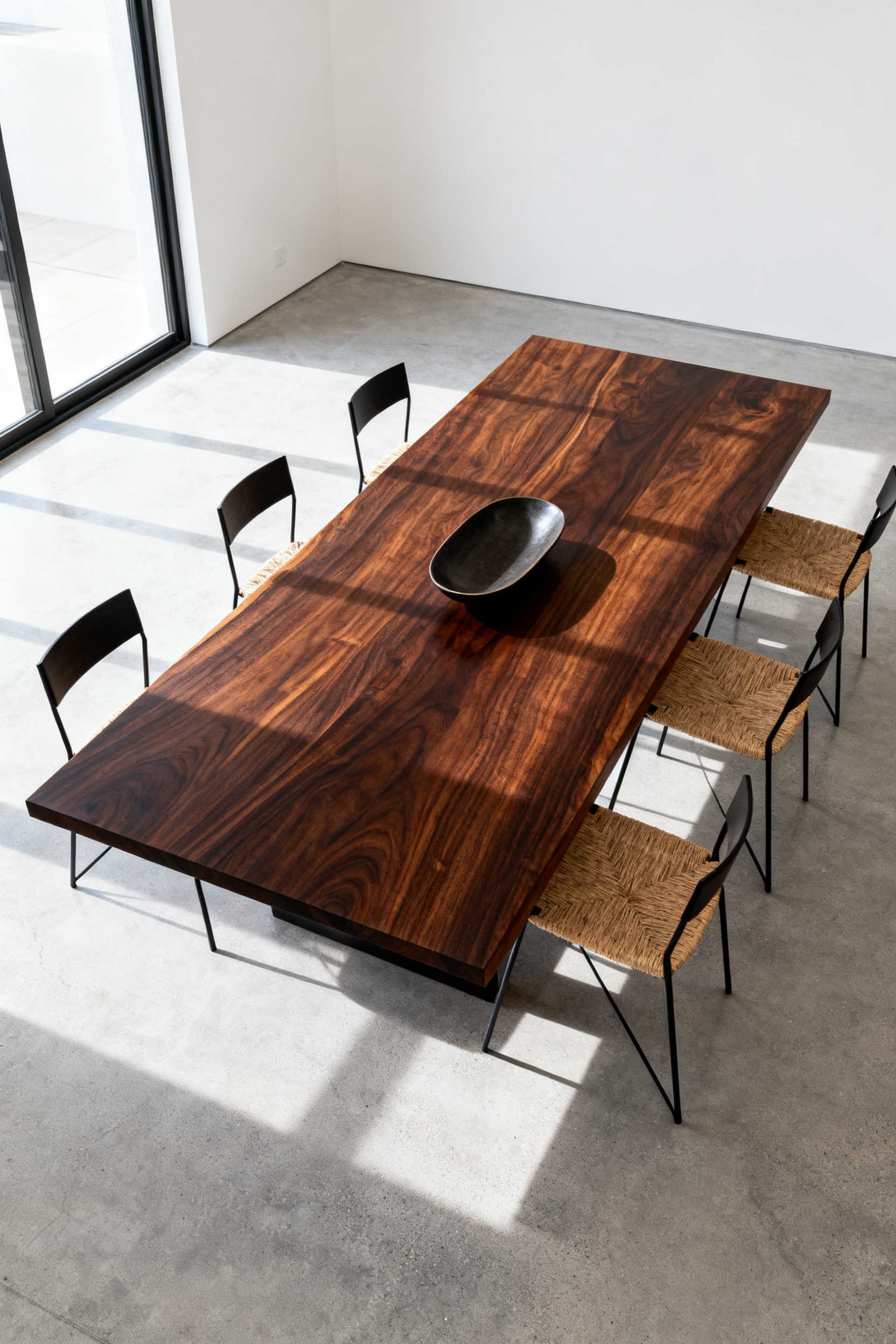
For instance, American Black Walnut offers immediate gravitas. Its deep espresso tones create sophisticated contrast against pale walls. Historically, this wood defined the sculptural works of icons like George Nakashima. Alternatively, teak introduces a golden-honey warmth. Reminiscent of Danish modernism, it brings a sunny atmosphere to the space.
Beyond visuals, these materials offer a luxurious tactile experience. Walnut, when finished properly, feels silky to the touch. Therefore, it lends refinement to everyday dining. Meanwhile, teak is prized for its high content of natural oils. These oils create a distinct texture that connects us to nature. Over time, the wood develops a beautiful patina.
Ultimately, selecting dense hardwoods is an act of conscience. Because of their durability, they act as a counterpoint to “fast furniture.” Moreover, current trends favor sustainably sourced teak. Often used in parquet patterns, reclaimed wood celebrates imperfections. Thus, the dining room becomes a space of ethical luxury.
6. The Glass Top Table: Creating Visual Lightness in Smaller Spaces
For compact dining areas, the glass top table serves as a strategic tool. Fundamentally, its function relies on the psychology of perception. Unlike solid wood, transparent glass allows the eye to travel through the surface. Consequently, sightlines extend uninterrupted to the floor. This visual trick minimizes the furniture’s footprint. Therefore, the room feels significantly larger than its actual square footage.
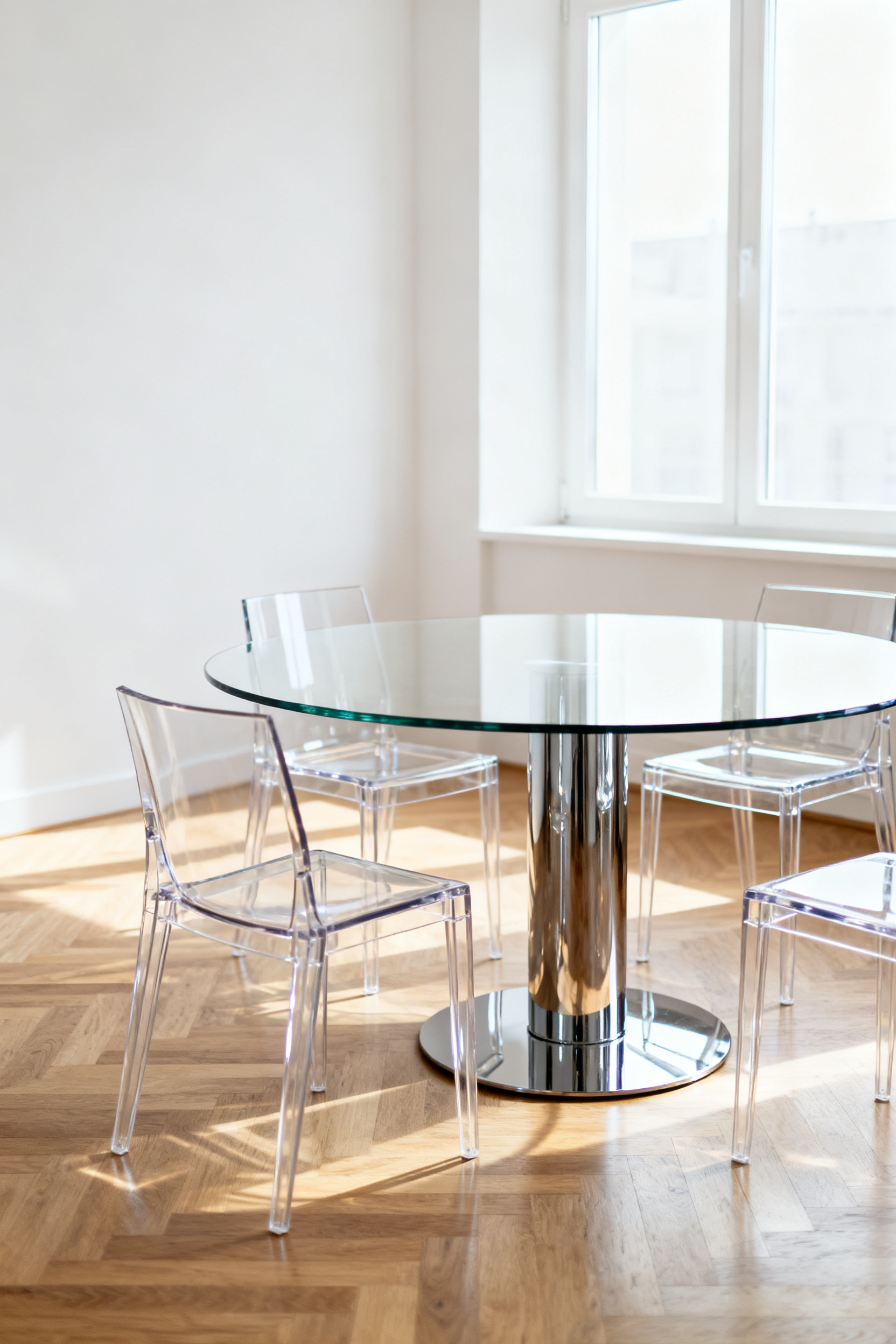
Additionally, clear glass acts as a powerful light conduit. It permits natural light to reflect and pass through. As a result, the entire room gains a brighter ambiance. Historically, this concept connects to the Modernist legacy. Designers like Eero Saarinen sought to eliminate visual clutter. They often paired glass tops with sculptural pedestal bases. Thus, they avoided the “slum of legs” created by traditional chairs.
Technically, achieving this look requires specific materials. For optimal safety, seek tempered glass in the 10–12 mm range. This provides stability without appearing bulky. Furthermore, pay attention to the edge profile. A chamfered edge adds a refined sparkle. To prevent the space from feeling cold, pair the glass with a contrasting base. A base of oiled walnut anchors the piece with warmth. Ultimately, these choices create a space that feels open.
7. Mixed Metals: Pairing Vintage Brass with Matte Black Architecture
In modern dining design, pairing vintage brass with matte black creates sophisticated tension. This aesthetic relies on the contrast between light and structure. Matte black functions as an architectural anchor because it absorbs visual noise. Therefore, it defines the room’s silhouette with restraint. Conversely, vintage brass provides a luminous counterpoint. Specifically, aged finishes introduce essential warmth.
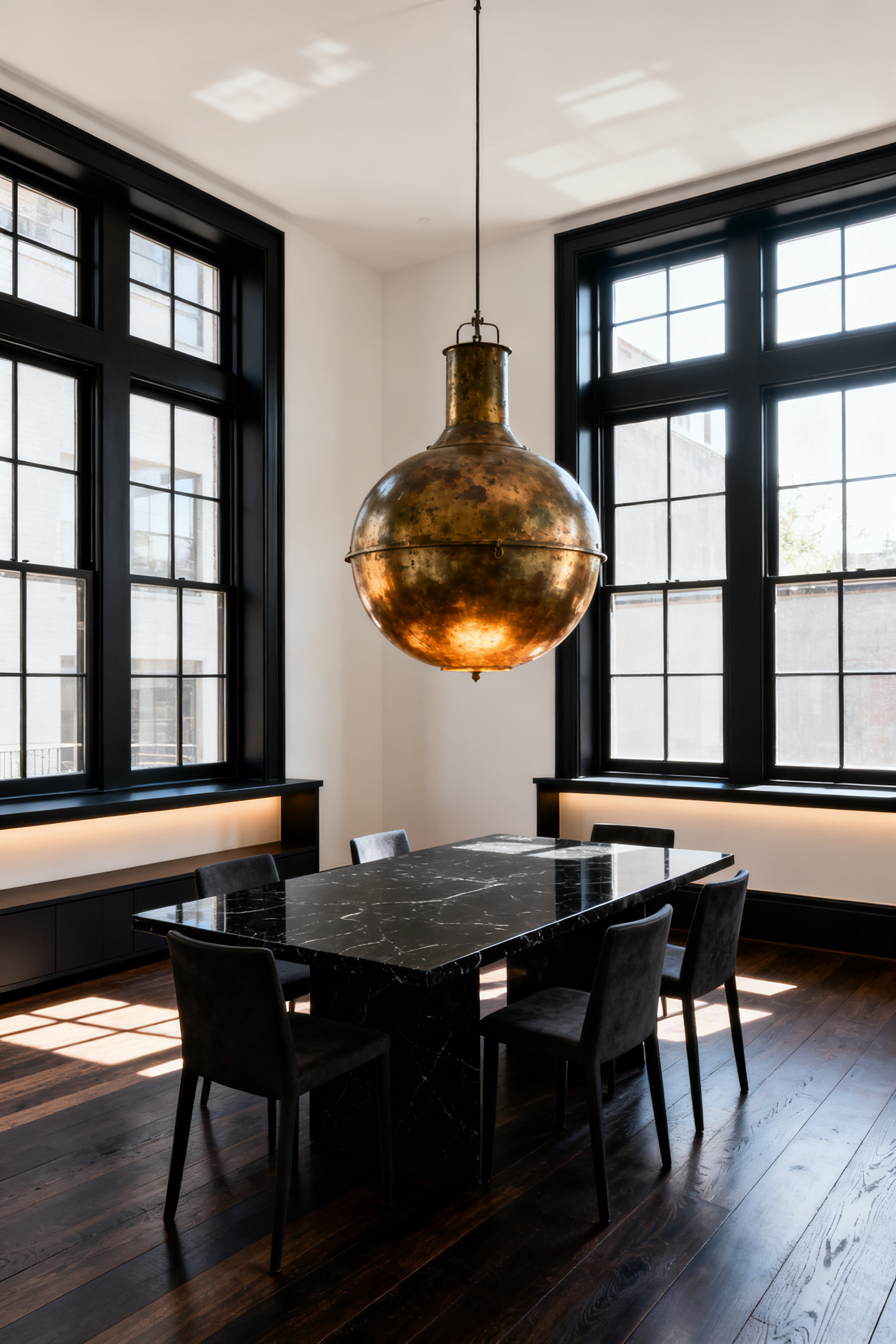
Moreover, this combination honors the narrative of time. Unlike factory-new metals, vintage brass develops a unique patina. Consequently, these pieces tell a rich story. This organic texture softens the stark nature of modern black architecture. Thus, the dining space feels crafted rather than sterile.
However, success requires balance to avoid chaos. Experts often advocate for an 80/20 split. Typically, allow matte black to cover structural elements like window frames. Then, reserve brass strictly for high-impact focal points. For instance, a brass chandelier casts a golden glow directly over the table. This turns lighting into an inviting centerpiece while maintaining minimalism.
8. Sustainable Textiles: Upholstering Classics in Upcycled Bouclé or Linen
Revitalizing a classic dining chair requires thoughtful material choices. Specifically, the upholstery determines both the aesthetic and the environmental impact. For a cozy look, consider upcycled bouclé. Interestingly, this modern fabric creates a powerful narrative of waste redemption. Predominantly, manufacturers weave it from recycled post-consumer PET plastics. Consequently, this process diverts plastic from landfills. Furthermore, the thick texture softens the rigid lines of wooden frames. Practically, it offers exceptional durability in high-traffic spaces.
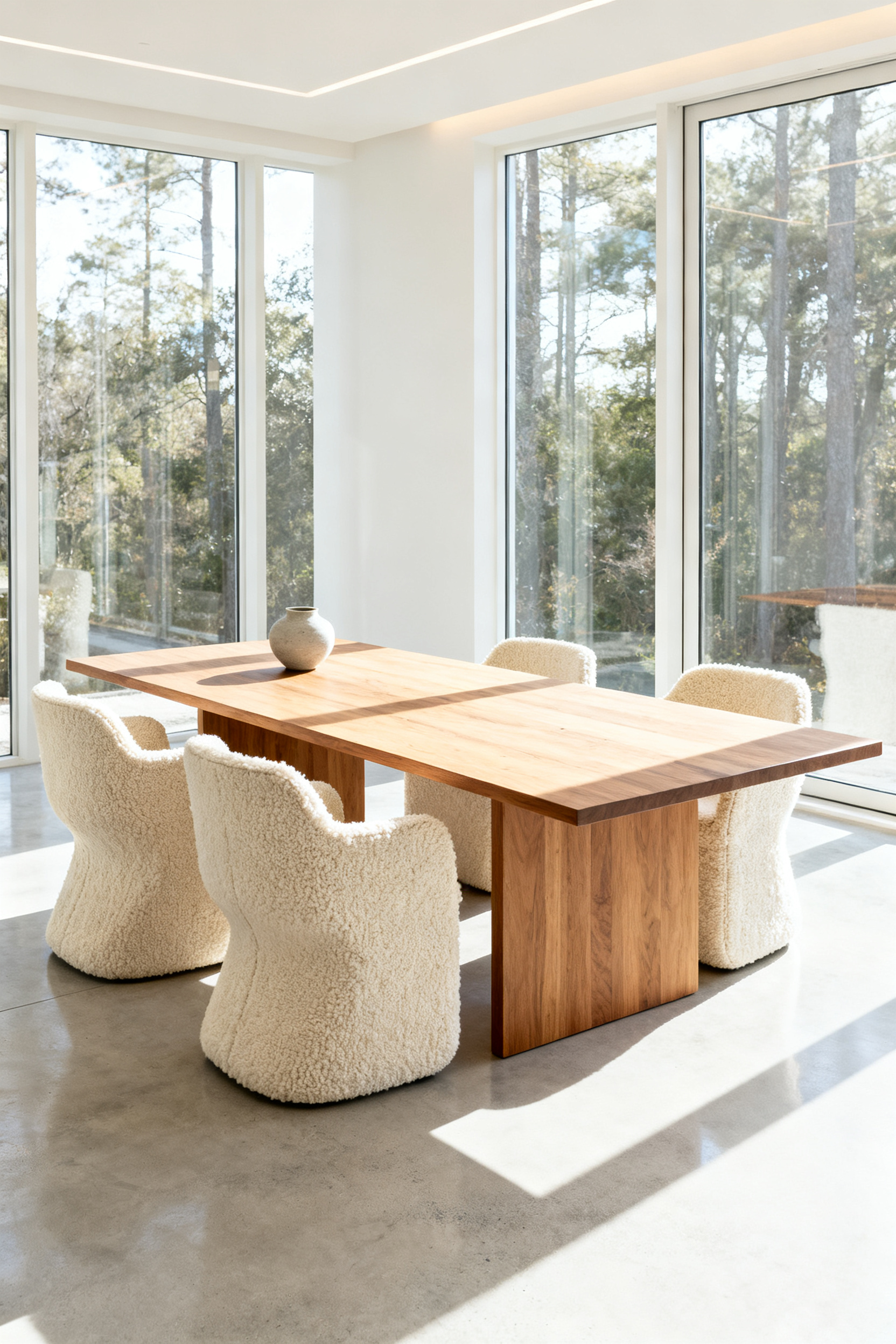
Alternatively, linen offers a timeless elegance. Historically, this textile has served humanity for thousands of years. In fact, the flax plant requires minimal water to grow. Therefore, it represents a genuinely low-impact choice. Visually, linen provides a relaxed finish that celebrates natural imperfections. Ultimately, this “quiet” luxury allows the chair’s original craftsmanship to remain the hero.
Phase 3: The Curated Furniture Edit
A truly modern dining space moves beyond the predictability of a matching set. Instead, it prioritizes “interior storytelling.” Specifically, true curation involves blending eras to achieve “un-matched” cohesion. For example, you might pair a sculptural table with an eclectic mix of seating. Notably, incorporating vintage finds establishes a sophisticated context.
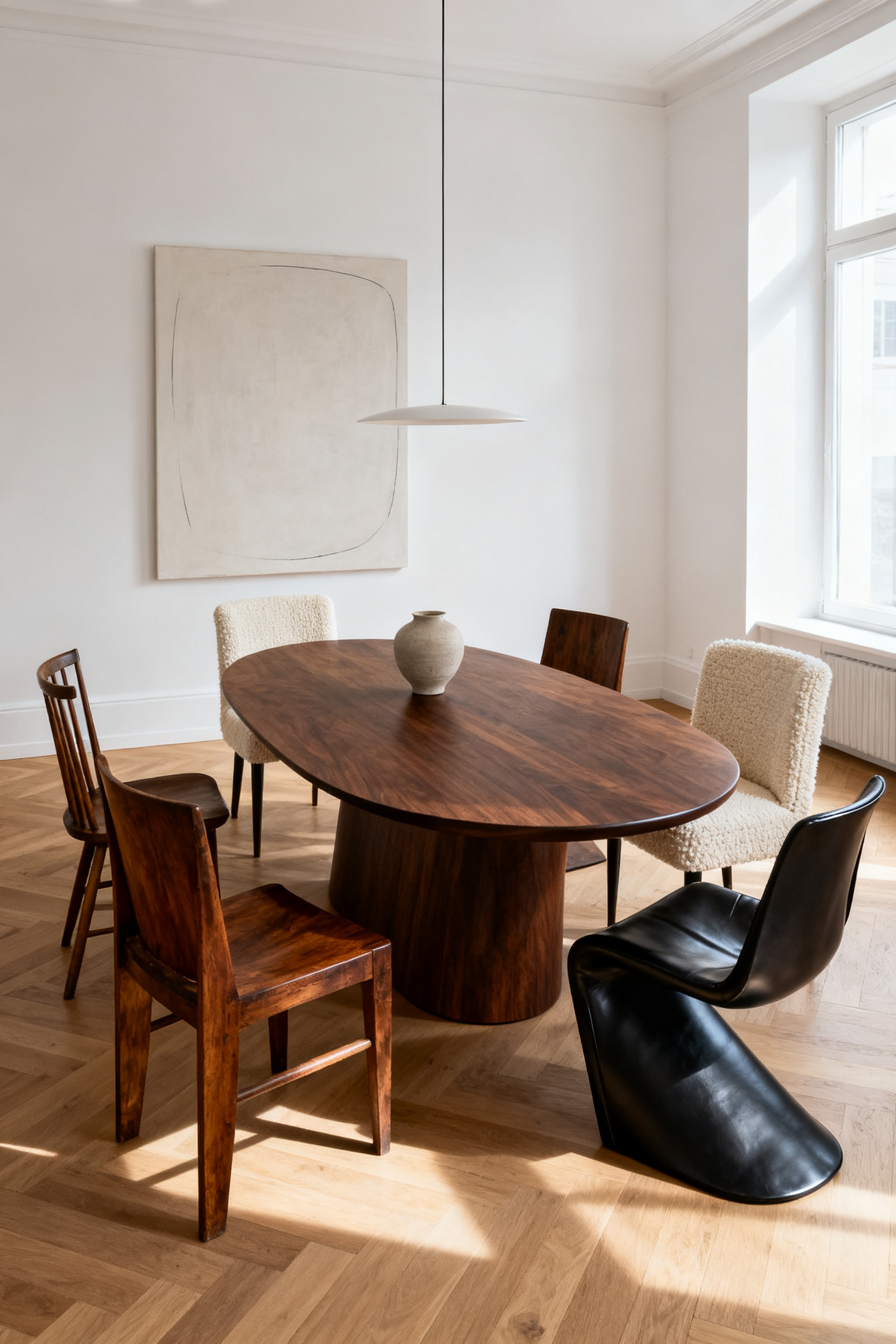
Furthermore, the selection process must address sensory depth. Therefore, focus on contrasting hard surfaces with luxurious textures. In fact, pairing a rich walnut table with velvet chairs creates immediate tactile interest. Additionally, accent materials like polished brass elevate functional items.
Finally, consider spatial versatility during this edit. Incorporating banquettes becomes a strategic choice for modern homes. These pieces effectively reduce visual clutter. Ultimately, this approach transforms a functional area into a collected space.
9. The Wishbone Silhouette: Why This 1949 Design Remains Essential
Hans J. Wegner’s CH24, or Wishbone Chair, represents a sophisticated cultural synthesis. Specifically, this 1949 design bridges Danish functionalism with Chinese Ming Dynasty aesthetics. Consequently, the signature “Y” backrest distills historical forms into a structural necessity. This unique blend allows the piece to adapt to styles ranging from Japandi to traditional.
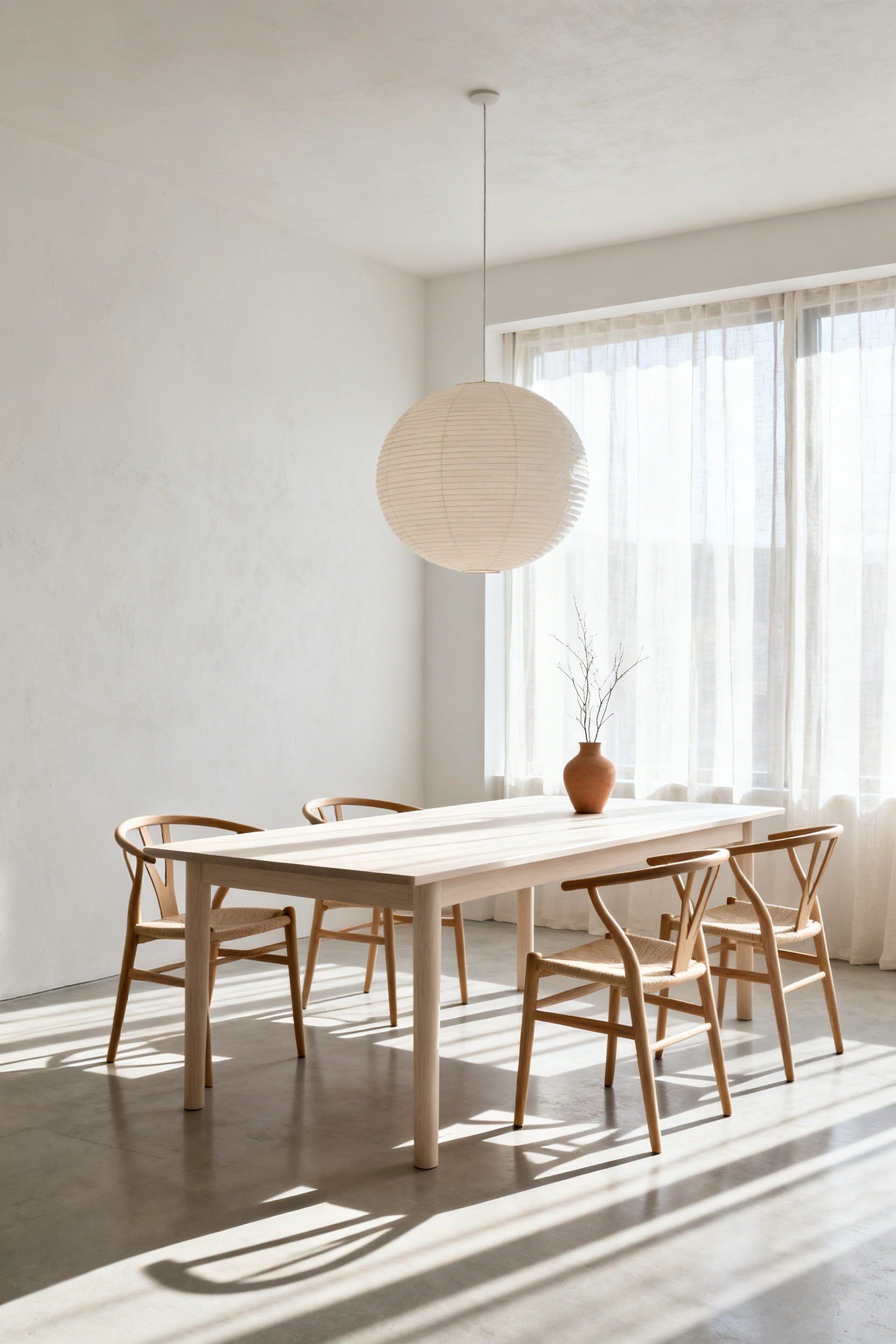
However, its enduring popularity relies on more than history. Ideally, the chair offers a sculptural presence that resists visual weight. Unlike heavy upholstered chairs, the open back allows light to flow through. Therefore, it prevents clutter, making it perfect for open-plan living.
Furthermore, the Wishbone silhouette prioritizes sensory experience. Notably, the seat consists of roughly 120 meters of hand-woven paper cord. This envelope pattern provides flexible support. Simultaneously, the organic texture adds warmth to sleek surfaces.
Ultimately, this chair defines democratic design. Indeed, each piece involves over 100 production steps. As a result, the CH24 is a sustainable heirloom built for longevity.
10. Breaking the Angles: The Resurgence of the Tulip and Pedestal Table
The resurgence of the Tulip table represents a triumph over visual clutter. Historically, architect Eero Saarinen sought to eradicate the “slum of legs” beneath traditional furniture. Consequently, his 1958 design replaced four rigid legs with a single pedestal. In fact, this silhouette mimics a drop of liquid, favoring flow over rigid geometry.
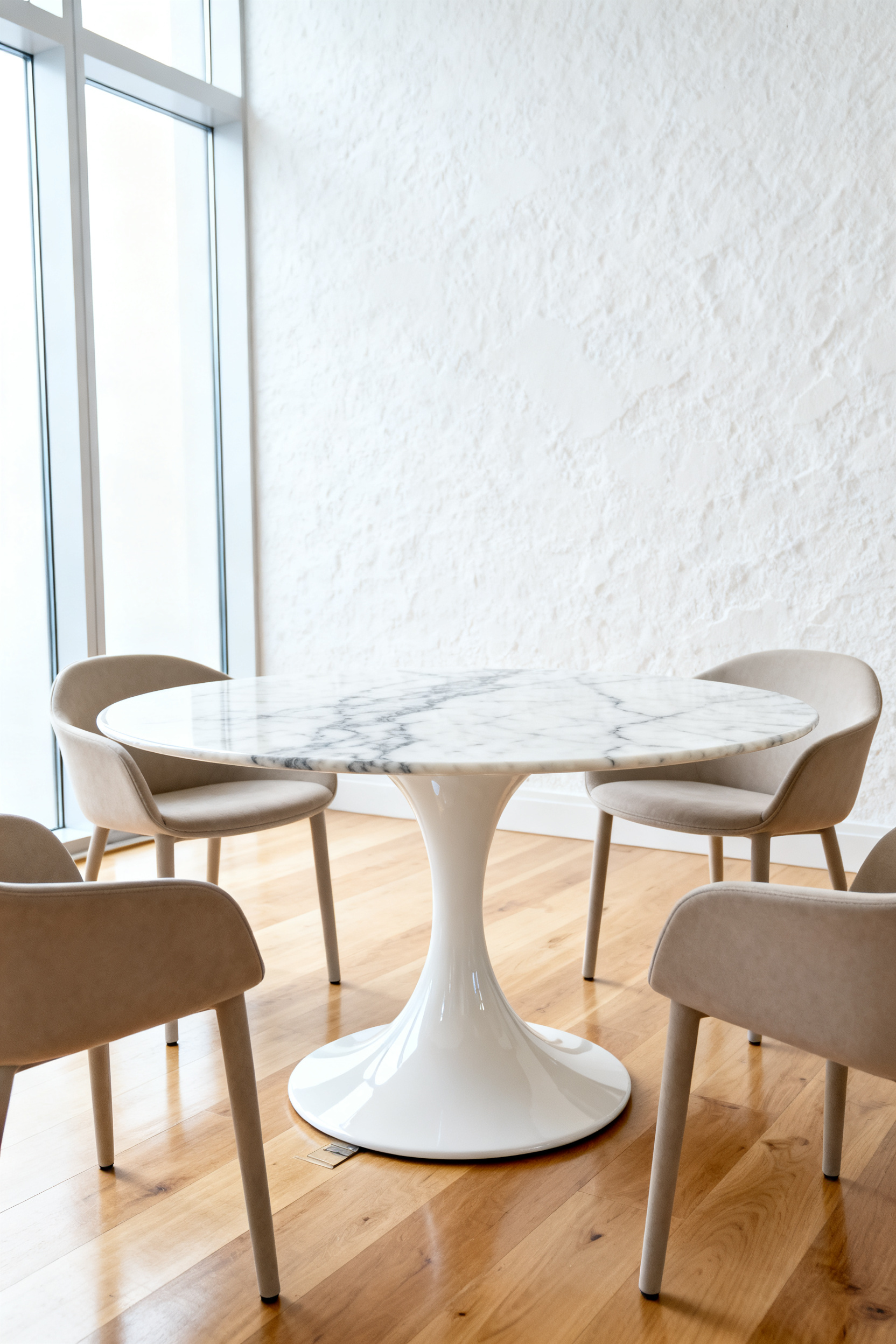
This geometry offers significant functional benefits. Specifically, the central base creates uninterrupted legroom. Therefore, homeowners can accommodate extra guests without navigating awkward corner posts. Furthermore, this design creates “negative space.” It makes compact dining areas feel significantly airier.
Beyond utility, the table acts as a visual palate cleanser. Lush curves soften the sharp lines found in contemporary cabinetry. Today, material choices elevate this piece further. Often, polished marble provides a luxurious finish. Conversely, engineered quartz offers a stain-resistant alternative. The contrast between the cold base and the natural stone remains timeless.
11. The ‘Collected’ Look: Mastering the Art of Mismatched Vintage Chairs
Moving away from the sterile uniformity of matching sets feels liberating. In fact, a “matchy-matchy” dining room often resembles a static showroom. Consequently, it creates an environment that pushes guests into performance mode. Instead, a collected arrangement introduces a calculated irregularity. This signals relaxation. Furthermore, it creates a quiet visual rhythm that standard sets lack.
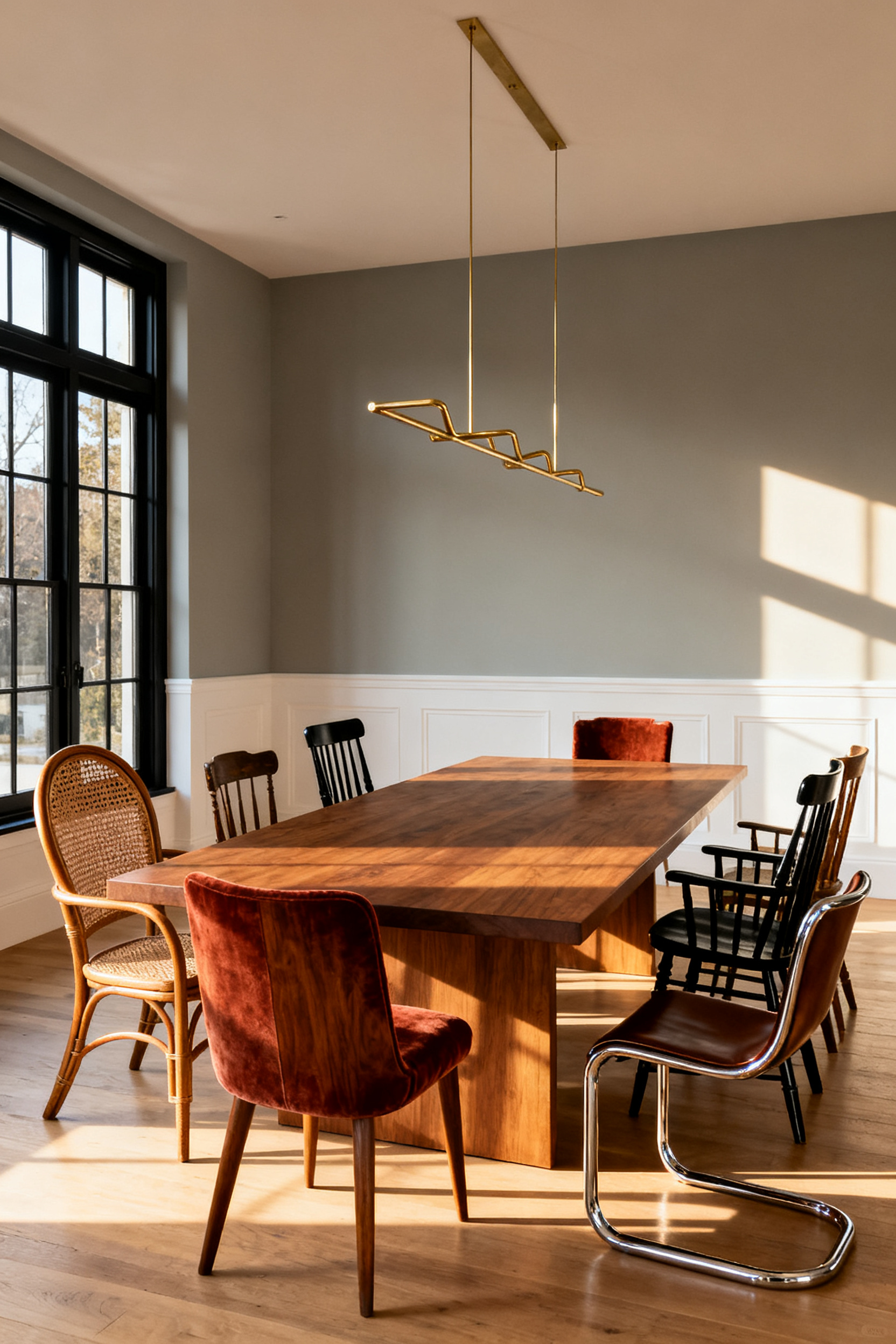
However, mastering this look requires precision. It is not simply a chaotic hodge-podge. Specifically, you must establish a “shared visual thread.” For instance, choose a consistent material like walnut. Alternatively, unify disparate shapes with a single paint color.
Crucially, seat height must remain consistent. While backrest heights can vary, the sitting plane must align. This ensures every diner sits at a functional level. Therefore, measure every vintage find before purchasing.
To ease into this aesthetic, try “anchored symmetry.” Place identical statement armchairs at the table’s heads. Then, vary the side chairs. Treating each chair as a sculptural memory creates lovely tension. Ultimately, this approach honors design history through a curated narrative.
12. The Low-Profile Credenza: Storage as a Sculptural Statement
The low-profile credenza represents a shift from vertical storage. Historically, tall hutches dominated the room, often crowding it. But Mid-Century designers reimagined storage as a ground-hugging element. Consequently, these pieces prioritize a clean horizontal line. This choice pulls the room sideways visually. As a result, the space feels wider and more relaxed. It is particularly effective in open-plan homes where flow is essential.
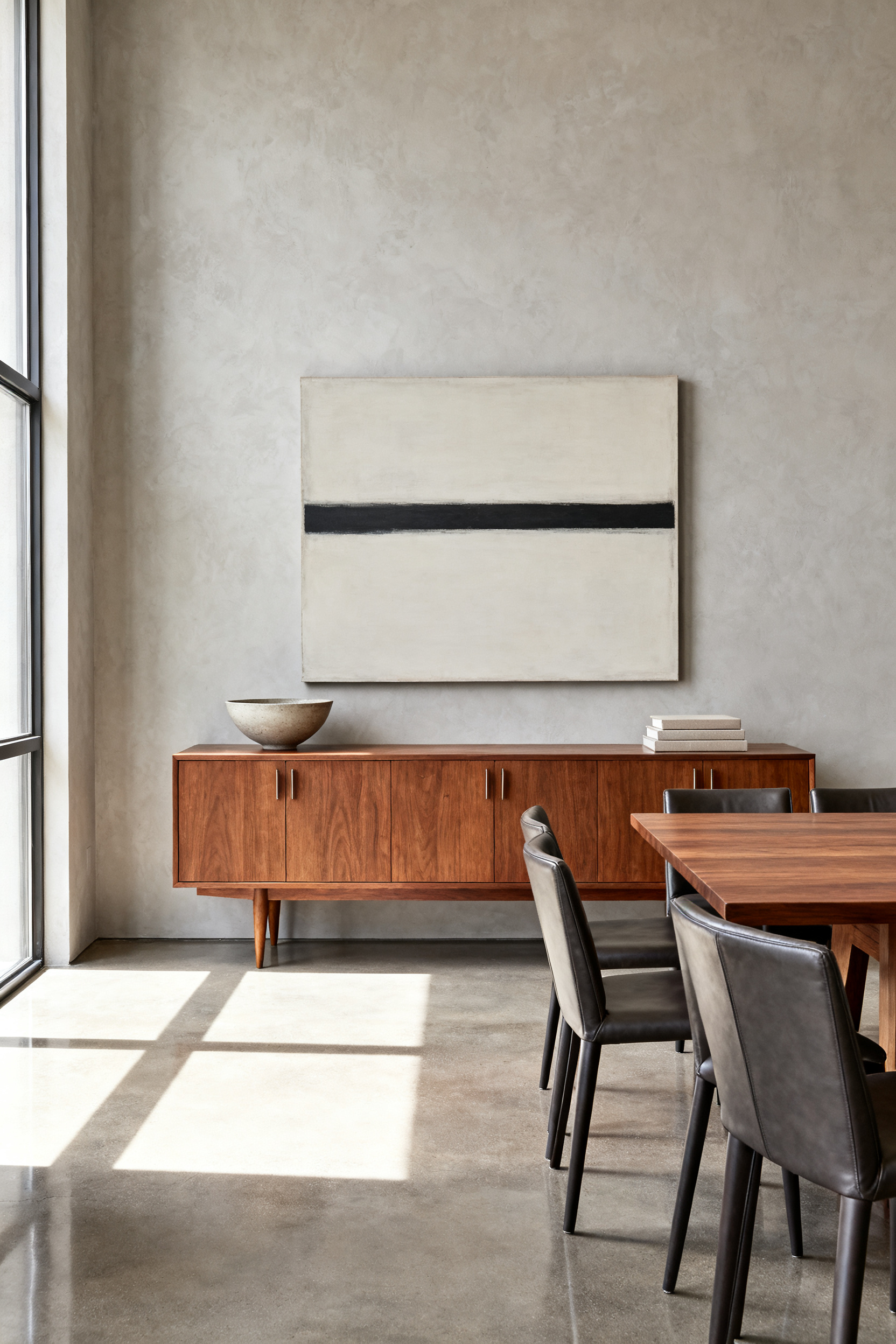
Beyond shape, the modern credenza functions as storage disguised as art. Specifically, sculptural pieces often eliminate visible hardware. Instead, they utilize push-latch mechanisms. Thus, the façade remains a seamless volume of material. Ideally, the wood grain acts as the primary decoration. Rich veneers like walnut offer texture without ornate carving.
Finally, the expansive top surface serves as a display pedestal. Effectively, it anchors wall-mounted art. Designers often treat this surface as a canvas for curation. Mixing objects of varying heights creates dynamic dimension. Ultimately, this turns storage into a sophisticated focal point.
Phase 4: Lighting and Atmospheric Layering
Effective lighting transcends basic illumination. Fundamentally, it orchestrates the room’s psychological impact. Experts recommend a warm color temperature between 2700K and 3000K. This range fosters relaxation. Conversely, cooler light signals alertness, which disrupts a lingering atmosphere. Furthermore, install dimmers on every fixture. This allows the room to shift instantly to a moody setting.
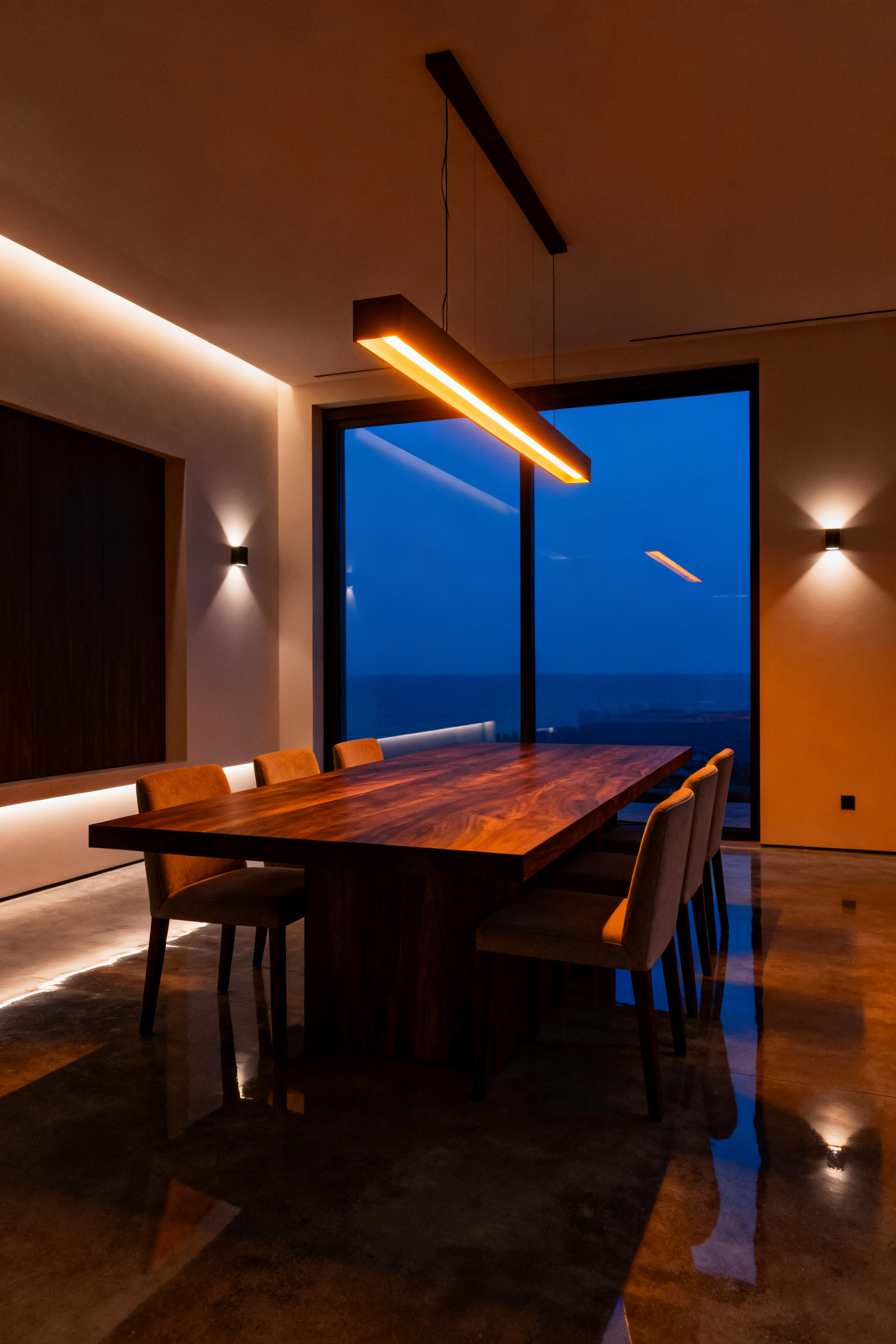
Beyond basic switches, modern design employs a sophisticated framework. First, “Light for Doing” ensures visibility. Specifically, hang pendants 30–36 inches above the table. Next, “Light for Knowing” provides a soft glow for faces. Thus, guests communicate without harsh shadows. Simultaneously, “Light for Feeling” introduces warmth. Use wall sconces to create cozy boundaries.
Finally, true atmosphere relies on texture. Light must interact with material to soften lines. Consequently, incorporate elements like bouclé or warm woods. These surfaces absorb light uniquely. Additionally, vertical lighting expands the perceived space. By washing walls with light, you draw the eye upward. This collaboration between light and material creates a timeless experience.
13. Sputnik and Starbursts: Integrating Iconic Space Age Lighting
The Sputnik chandelier serves as a three-dimensional sculpture. In fact, these celestial fixtures act as “jewelry” for an interior. Historically, the design is synonymous with the 1957 Soviet launch. However, the original “starburst” concept predates the Space Age. Italian designer Gino Sarfatti conceived similar prototypes in 1939. Thus, this fixture represents rational, innovative design rather than just a Cold War monument.
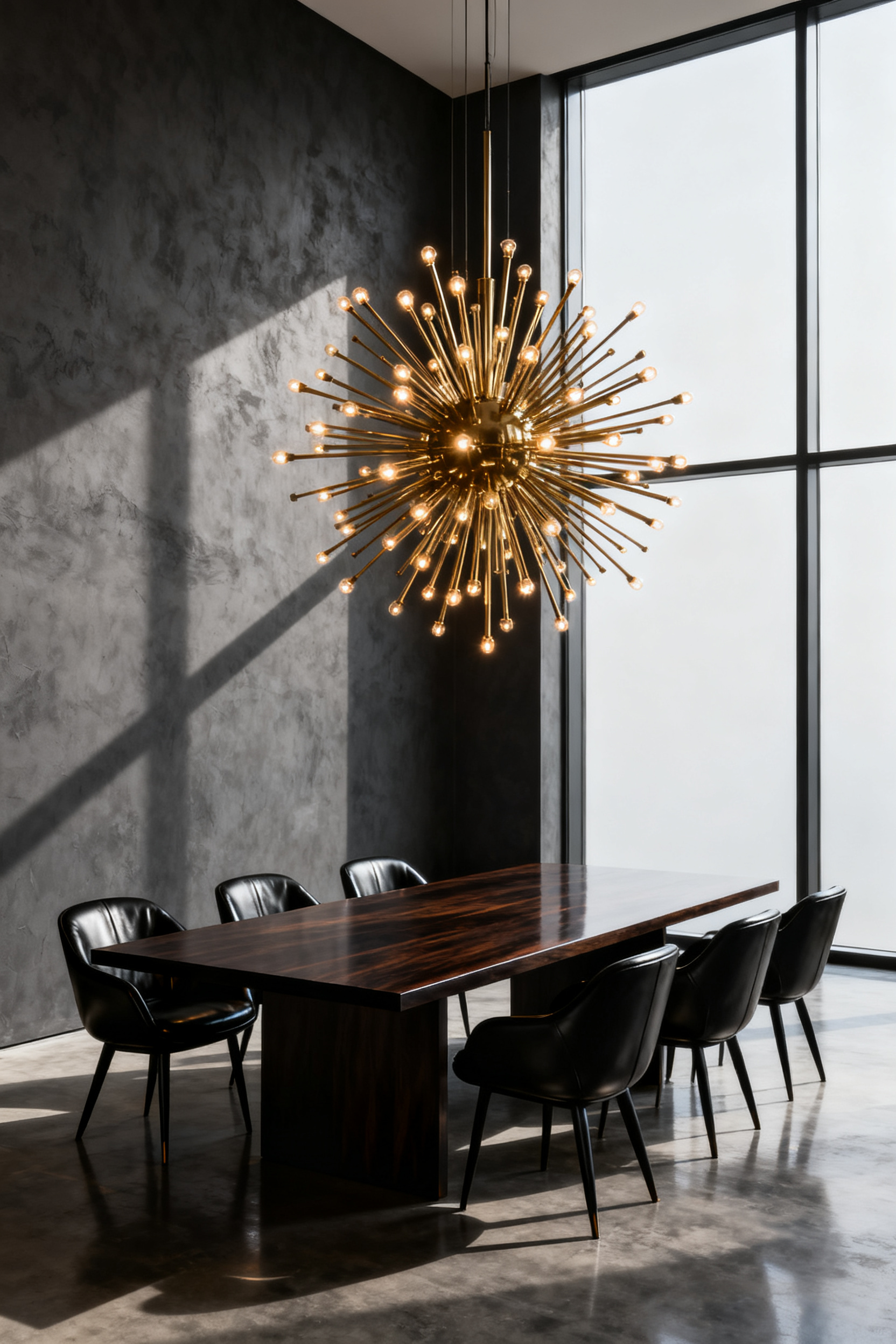
Functionally, the radiating arms provide superior lighting. Unlike traditional pendants, Sputniks cast light outward and downward. Because of this 360-degree brightness, installing a dimmer is essential. This simple addition allows you to shift from a high-energy workspace to an intimate atmosphere.
When integrating this icon, material selection is critical. Polished brass creates a glamorous look. Meanwhile, chrome offers an industrial aesthetic. Furthermore, you must respect the rules of scale. Ideally, the fixture’s diameter should measure one-half to two-thirds the table width. This ensures the piece anchors the room without overwhelming it.
14. Intimacy by Design: The Rule of Low-Hanging Pendants
Deliberately placing a pendant low transforms a space. Specifically, it compresses the vertical volume around the table. Consequently, this creates a psychological “circle of intimacy.” By focusing illumination, the fixture draws guests inward. Conversation naturally flows as people lean into the light. Additionally, this setup shifts focus away from the architecture. Instead, the emphasis lands on the meal.
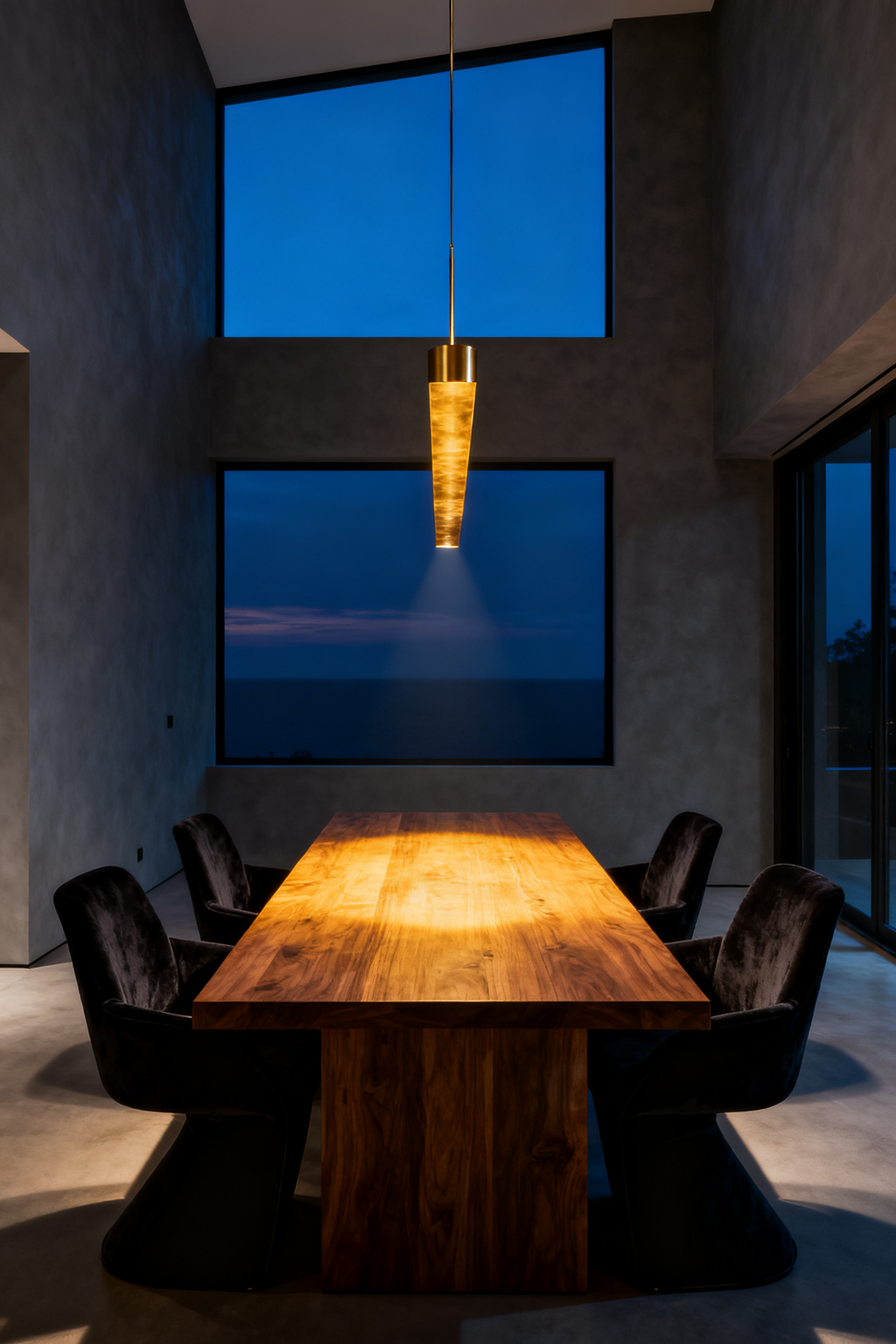
However, proper placement requires precision. Ideally, hang the bottom of the fixture 30 to 36 inches above the surface. This height serves a dual purpose. It prevents obstruction of sightlines while shielding eyes from glare. For rooms with higher ceilings, adjustments are necessary. Lower the fixture an extra three inches for every foot of ceiling height beyond eight feet.
Furthermore, consider the shade’s material. Opaque metal shades direct light downward, eliminating shadows on food. Conversely, translucent glass shades offer an ambient glow. Finally, control the atmosphere with warm bulbs. This glow makes the dining experience truly inviting.
15. Sculptural Sconces: Eliminating the Need for Overhead Glare
Integrating sculptural wall sconces elevates lighting to an architectural feature. Specifically, these fixtures function as *objet d’art*. Therefore, they serve as sophisticated “design hacks” to anchor a room. In fact, oversized geometric fixtures effectively replace a busy gallery wall.
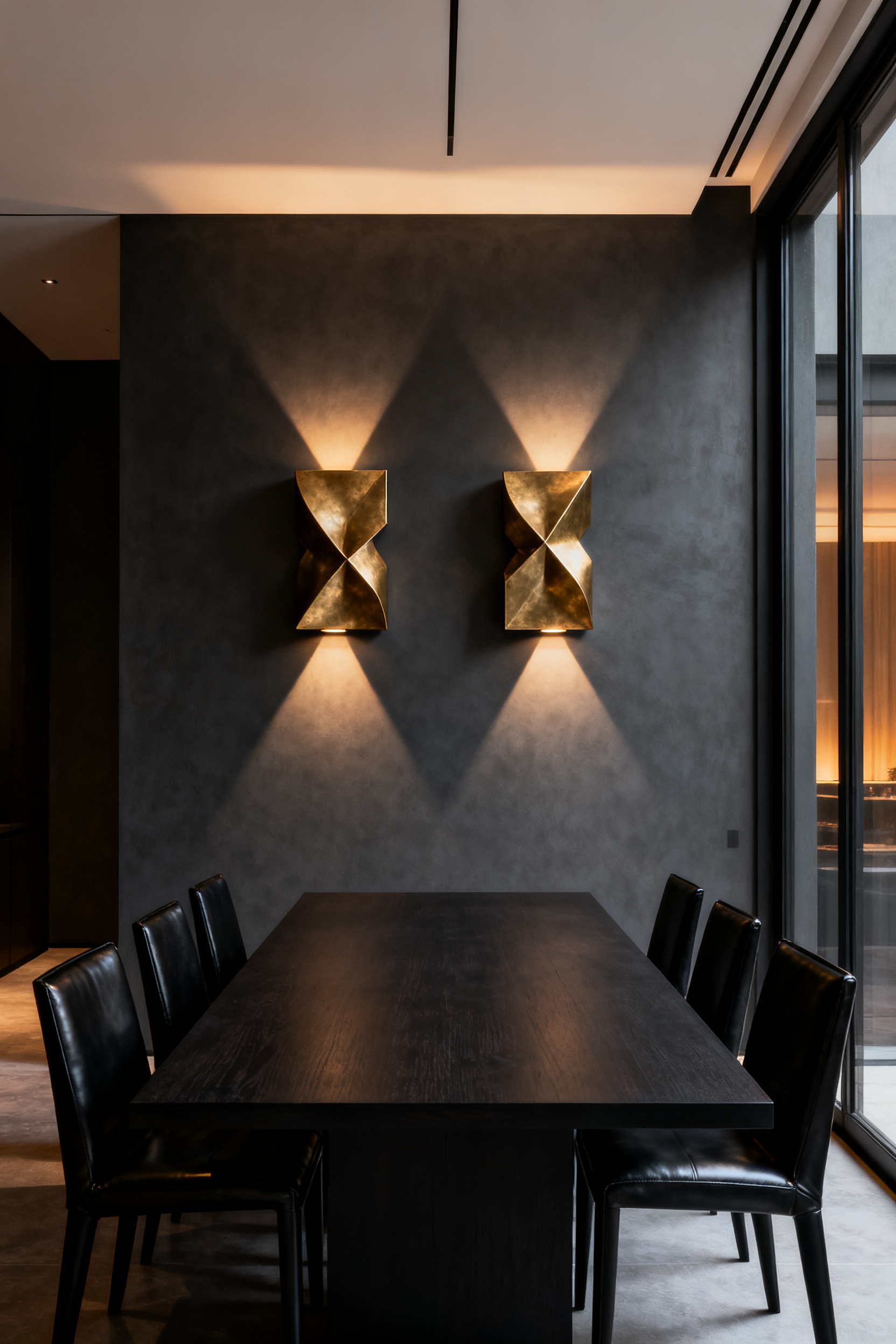
However, their most significant impact lies in eliminating overhead glare. Traditional chandeliers often cast unflattering shadows. In contrast, sculptural sconces employ “wall-washing.” By directing light toward the vertical surface, the fixture utilizes the wall as a diffuser. Consequently, this reflects a steady glow back into the room. As a result, the space feels larger.
Historically, this aesthetic honors the Mid-Century legacy. Notably, it references the work of French designer Serge Mouille. His slender armatures were a deliberate reaction against formal Italian chandeliers. Today, we embrace this philosophy to strip away formality. Choosing a sculptural sconce creates a flattering atmosphere.
Phase 5: The Soul of the Room
True design transcends aesthetics to engage the senses. Therefore, the “soul” of a room relies on non-visual elements. Specifically, acoustic comfort becomes a critical luxury. Soft, layered textiles like velvet absorb noise effectively. Consequently, the room feels quieter and more intimate. Furthermore, lighting acts as a director of mood. Instead of harsh brightness, use warm layers.
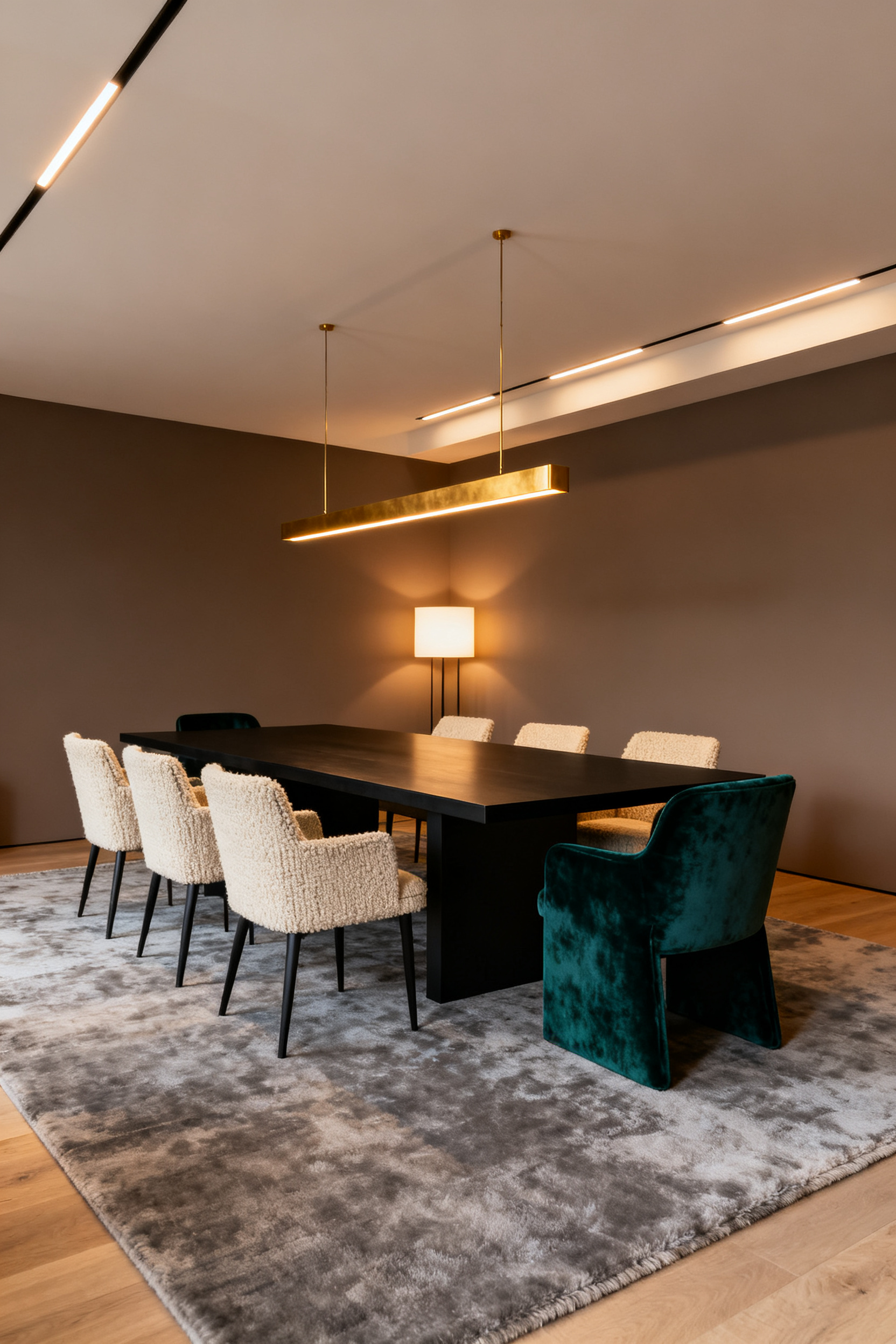
Beyond the senses, a connection to nature fosters well-being. In fact, biophilic design shifts focus to material honesty. Ideally, choose organic elements like sustainable wood or stone. These surfaces add warmth to minimalist lines. Moreover, maximizing natural light frames outdoor views. Thus, the dining space becomes a tranquil sanctuary.
Finally, the most personal layer involves storytelling. Rather than filling every void, select pieces with history. Pair a restored vintage table with contemporary seating. This dialogue creates emotional depth. Additionally, objects with patina prevent spaces from feeling sterile. Intentionally preserving negative space allows these narratives to shine.
16. Large-Scale Abstract Art: One Bold Statement vs. Cluttered Gallery Walls
In modern design, a singular large-scale painting creates immediate hierarchy. Specifically, this “cathedral effect” fosters a meditative atmosphere. Consequently, the dining room becomes conducive to focused conversation. Conversely, gallery walls often increase cognitive load. Guests must shift their gaze constantly. Therefore, in a clean environment, a dense collection risks creating clutter.
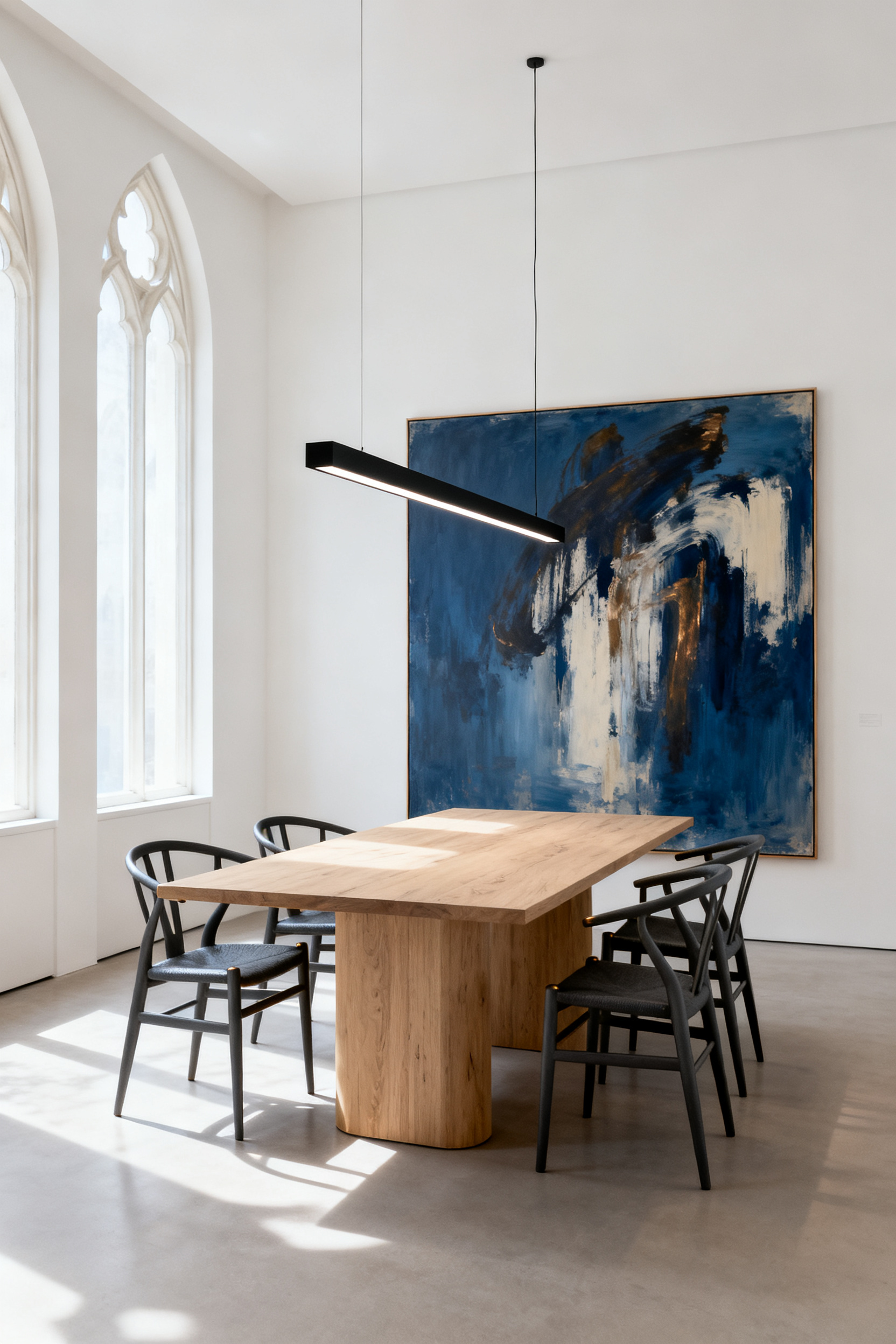
To maintain a spacious aesthetic, a single bold canvas is superior. In fact, one oversized piece makes a smaller room feel larger. However, proper scaling is essential. Technically, the artwork should span two-thirds of the sideboard’s width. Adhering to this ratio anchors the art to the furniture. Thus, the piece feels intentional.
Furthermore, abstract art offers a curatorial advantage. Because it is non-representational, it manages the room’s tone without imposing a specific story. Ideally, choose a work with dynamic color interactions. This approach prioritizes sophisticated minimalism over busy eclecticism.
17. Biophilic Integration: Oversized Flora as Living Sculpture
Integrating oversized flora is more than a trend; it is functional design. Specifically, these plants serve as “living sculptures.” Modern interiors often rely on sharp lines. Consequently, a room can feel sterile without an organic counterpoint. A towering Fiddle-Leaf Fig acts as a visual disruption. Its curved trunk softens architectural edges.
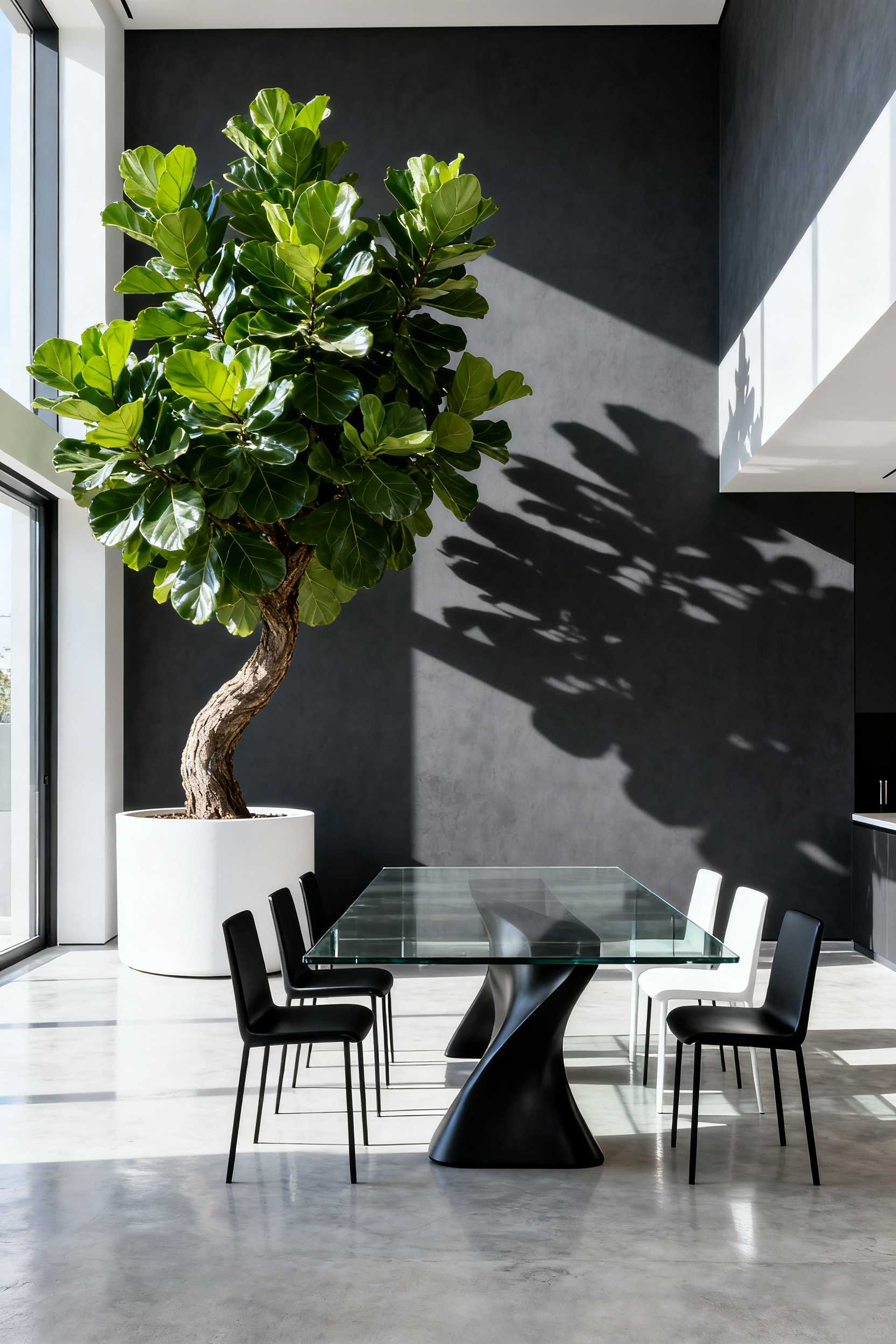
Beyond aesthetics, large plants improve the sensory experience. For instance, hard surfaces frequently cause acoustic echoes. Broad leaves like those of a Monstera Deliciosa function as diffusers. Therefore, they absorb sound to create an intimate atmosphere.
Additionally, placing flora near windows maximizes light play. Sun filtering through foliage creates dynamic shadows. This design choice echoes the prestige of Victorian orangeries. Ultimately, a tree-sized specimen transforms a dining area into a breathing ecosystem.
18. Handcrafted Imperfection: Styling Surfaces with Artisan Ceramics
Modern dining rooms are shifting away from uniformity. Instead, designers now embrace the Japanese philosophy of Wabi-Sabi. This champions asymmetry and natural beauty. Specifically, imperfections are viewed as evidence of creation. For example, a slight wobble in a hand-thrown bowl adds character. Similarly, an uneven glaze adds narrative depth.
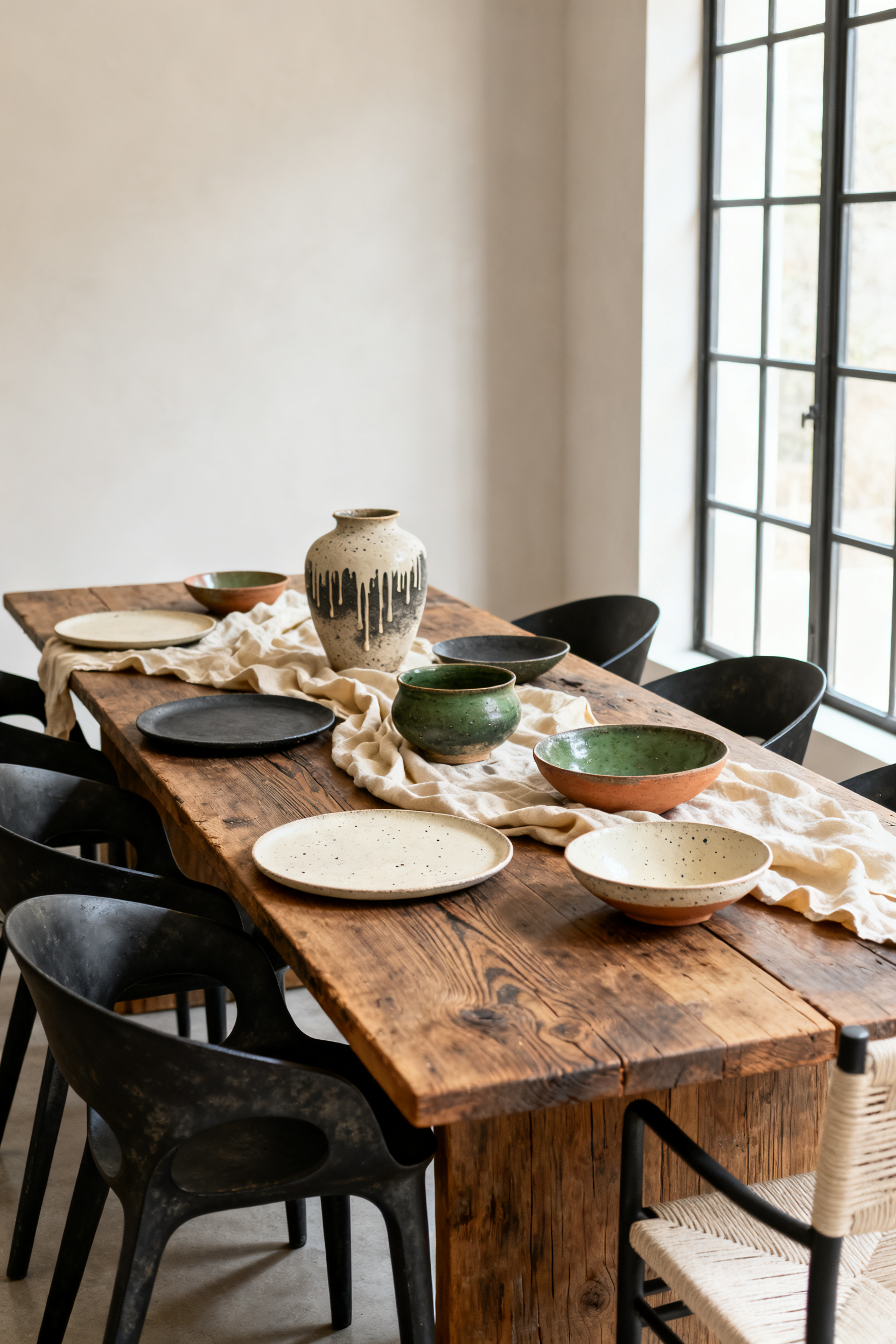
In fact, these artisan pieces create a powerful contrast. Modern spaces often rely on sleek materials like polished concrete. Therefore, distinct textures act as a necessary anchor. A raw-clay vase effectively softens sharp lines. Furthermore, surfaces inspired by weathered stone invite tactile engagement.
Moreover, this styling choice signals a commitment to intentional living. It favors “slow design” over mass-market decor. As a result, each item bears the mark of its maker. This shift prioritizes authenticity over perfection. Investing in craftsmanship brings honesty to the dining table.
Conclusion
The success of your space relies on intentional curation. By prioritizing material integrity and acoustic comfort, you ensure your room transcends fleeting trends. If you are ready to define the look with permanence, review our mandates for exquisite luxury dining room decor. These 18 definitive modern dining room ideas empower you to create a sanctuary. Start curating your timeless space today.
- **
Frequently Asked Questions
H3: What is the most durable material for a modern dining room table?
For high-traffic modern tables, solid hardwoods like American Black Walnut or Teak are superior. They can be sanded and refinished for generations. For surfaces requiring maximum stain resistance, honed natural stone (like granite) or high-quality engineered quartz provide excellent longevity.
H3: How high above the table should a dining room chandelier or pendant hang?
The standard professional height for a dining pendant is 30 to 36 inches above the tabletop. This ensures the fixture illuminates the food without obstructing sightlines. If your ceiling height exceeds eight feet, raise the fixture three inches for every extra foot of height.
H3: Is a formal, dedicated dining room still relevant in modern luxury homes?
While open-concept layouts dominate, the dedicated dining room remains relevant for discerning homeowners. It serves as a purposeful space to disconnect from digital life and host formal gatherings. Modern designs often integrate acoustic comfort to enhance this sense of focus.
- **