
For nearly a century, the ideal kitchen looked like a surgical theater. Initially, this philosophy prioritized strict hygiene and industrial efficiency above all else. However, today’s goal is different. This guide reveals the necessary steps to humanize these traditionally utilitarian spaces. We aim to transform them into architectural masterpieces of warmth and function. Indeed, achieving a successful modern kitchen decoration requires balancing stark industrial roots with domestic comfort. We explore how to replace sterile finishes with warm textures, wood, and patina. Next, the discussion highlights the shift from solitary work to communal connection. Ultimately, you will discover how to honor industrial roots without sacrificing comfort.
Debunking the belief that ‘modern’ equals ‘cold’ or ‘impersonal’
The reputation of modern design as “cold” is outdated. Specifically, early 20th-century movements like the Bauhaus prioritized strict efficiency over comfort. Consequently, designs like the 1926 Frankfurt Kitchen utilized industrial materials to optimize workflow. This utilitarian focus unfortunately led to an austere aesthetic. However, contemporary philosophy actively contradicts this perspective.
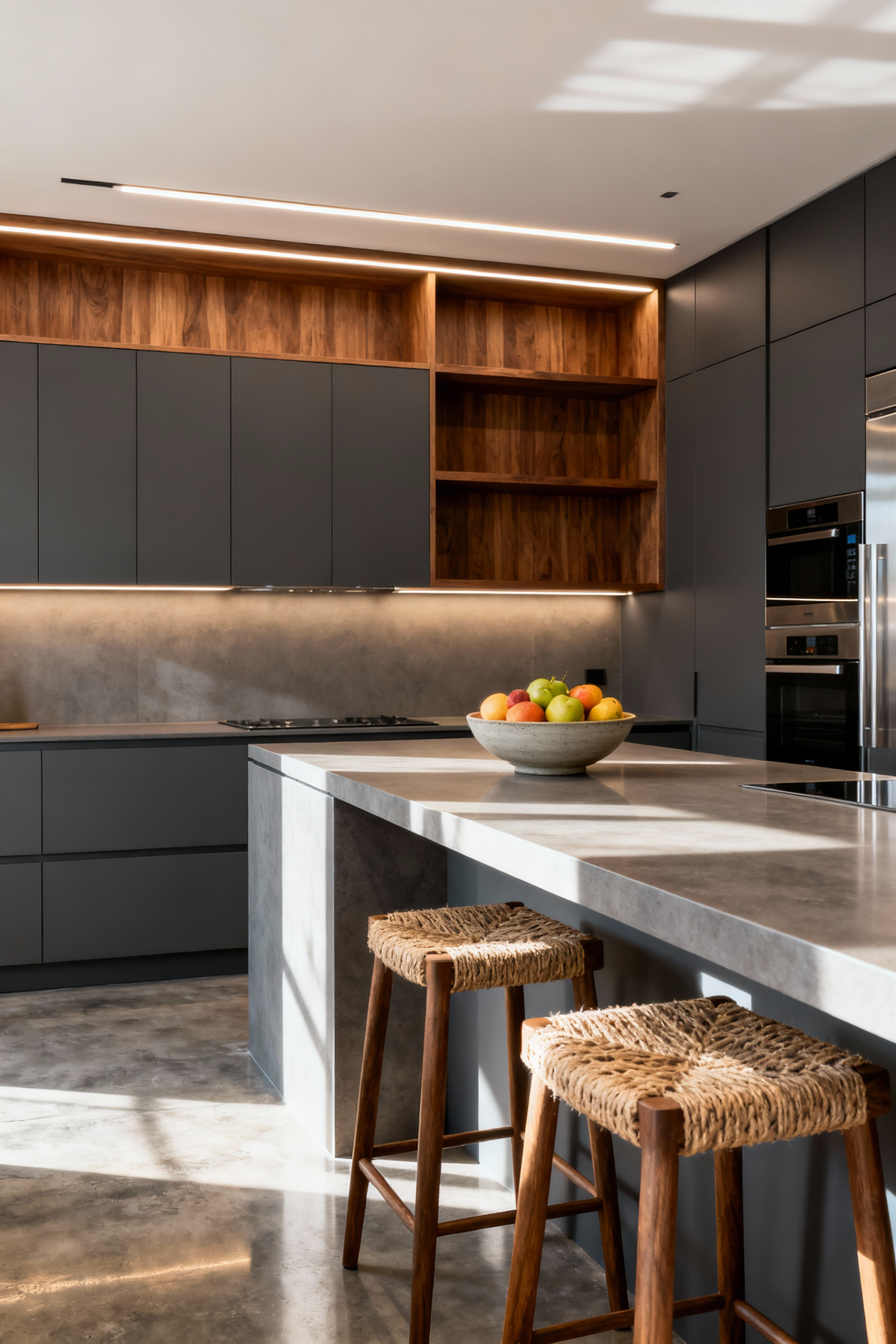
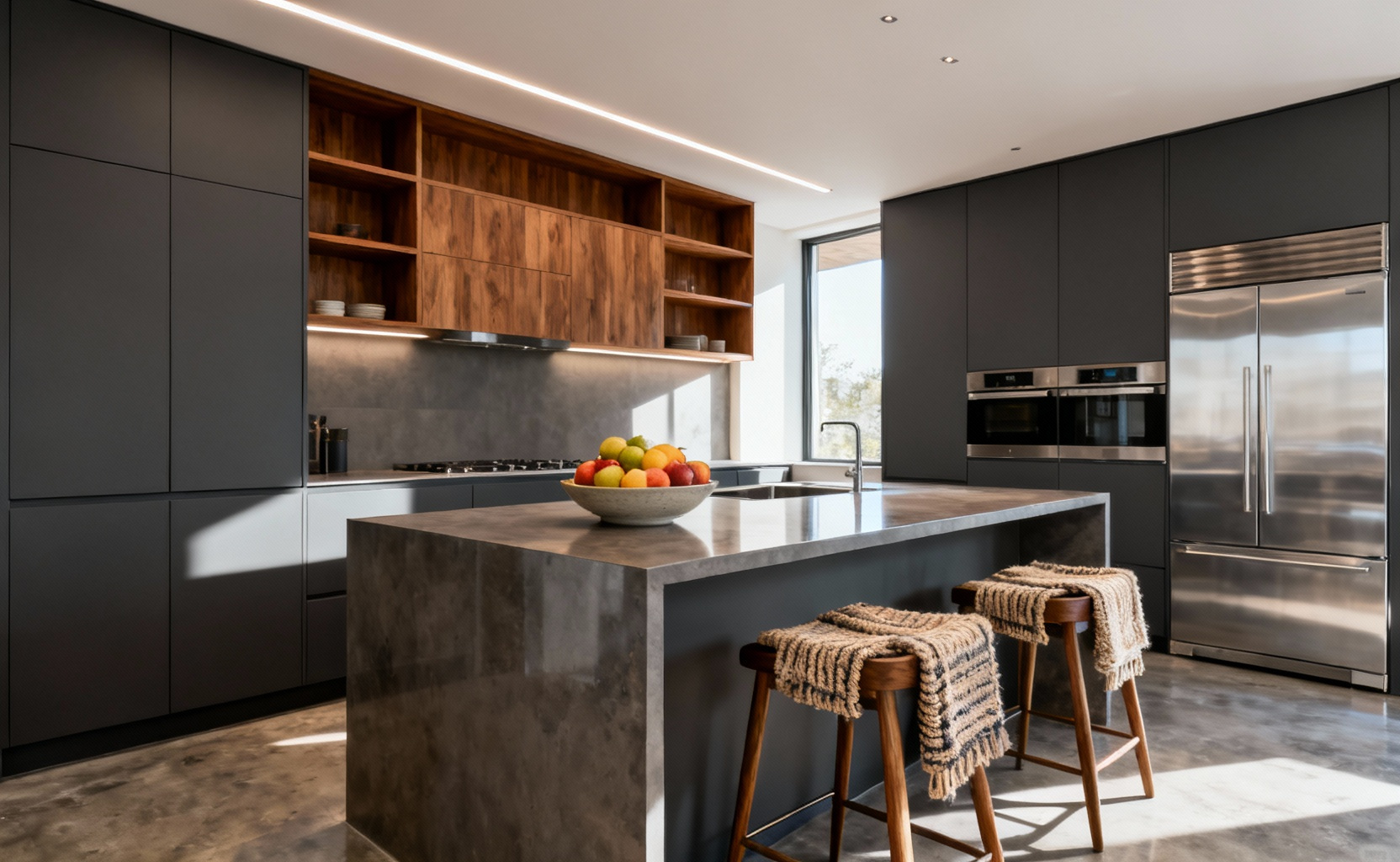
Current design focuses on humanizing these spaces. In fact, the modern kitchen has evolved into a central social hub. To create warmth, architects now strategically integrate natural materials. For example, incorporating walnut cabinetry introduces organic textures against sleek lines. Furthermore, replacing sterile finishes with handmade ceramic tiles adds sensory richness. These tactile elements prevent the space from feeling like a clinic.
Lighting choices also play a pivotal role. Instead of harsh white task lighting, we now prioritize warm yellow bulbs. Additionally, layered fixtures allow homeowners to adjust the ambiance. Finally, the trend of open shelving invites personal storytelling. Therefore, displaying family artifacts or cookbooks breaks the “showroom” feel. Indeed, these layers prove that modern functionality can support deep emotional warmth.
The 80/20 Rule: Why structure matters more than surface decoration
In the realm of industrial renovation, true luxury relies on “good bones.” Specifically, the 80/20 rule dictates that 80% of a kitchen’s value derives from its structure. Conversely, surface decoration constitutes only the remaining 20%. This prioritization echoes the 1926 Frankfurt Kitchen. Originally, architects designed domestic spaces like laboratories. They focused on scientific efficiency over indulgence. Therefore, the layout is an engineering challenge, not merely an aesthetic one.
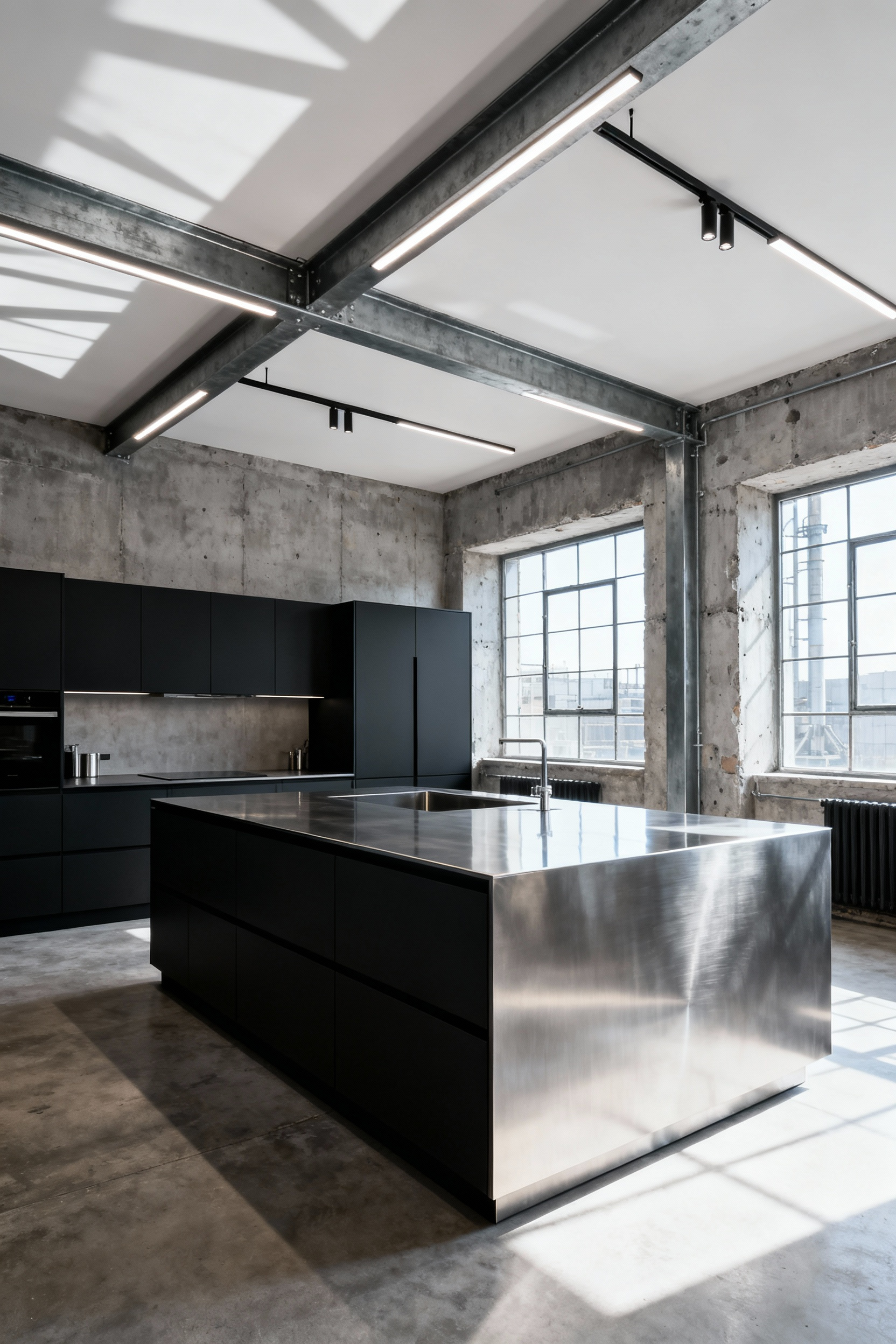
Consequently, successful design prioritizes the “unseen” 80%. This involves establishing a rigorous work triangle between the sink, stove, and refrigerator. Furthermore, the floorplan must maintain distinct zones for preparation and cleaning. Without this foundation, even the most expensive finishes will fail.
Financially, this distinction shapes your budget. For instance, roughly 30-40% of funds should target internal mechanics. High-quality drawer slides and soft-close hinges guarantee longevity. In contrast, visible elements like hardware or paint are low-cost variables. Thus, by investing in a durable structural core, you ensure decades of use. Ultimately, the decorative 20% simply acts as the adaptable personality atop a permanent masterpiece.
Theme 1: Architectural Foundations (The Bones)
The modern kitchen’s architecture has evolved from its strictly utilitarian roots. Historically, the 1920s “Frankfurt Kitchen” prioritized efficiency within a hidden space. However, contemporary design dictates a radical shift toward the open-plan concept. Consequently, the kitchen is no longer a back-of-house workspace. Instead, it is the integrated social hub of the home.
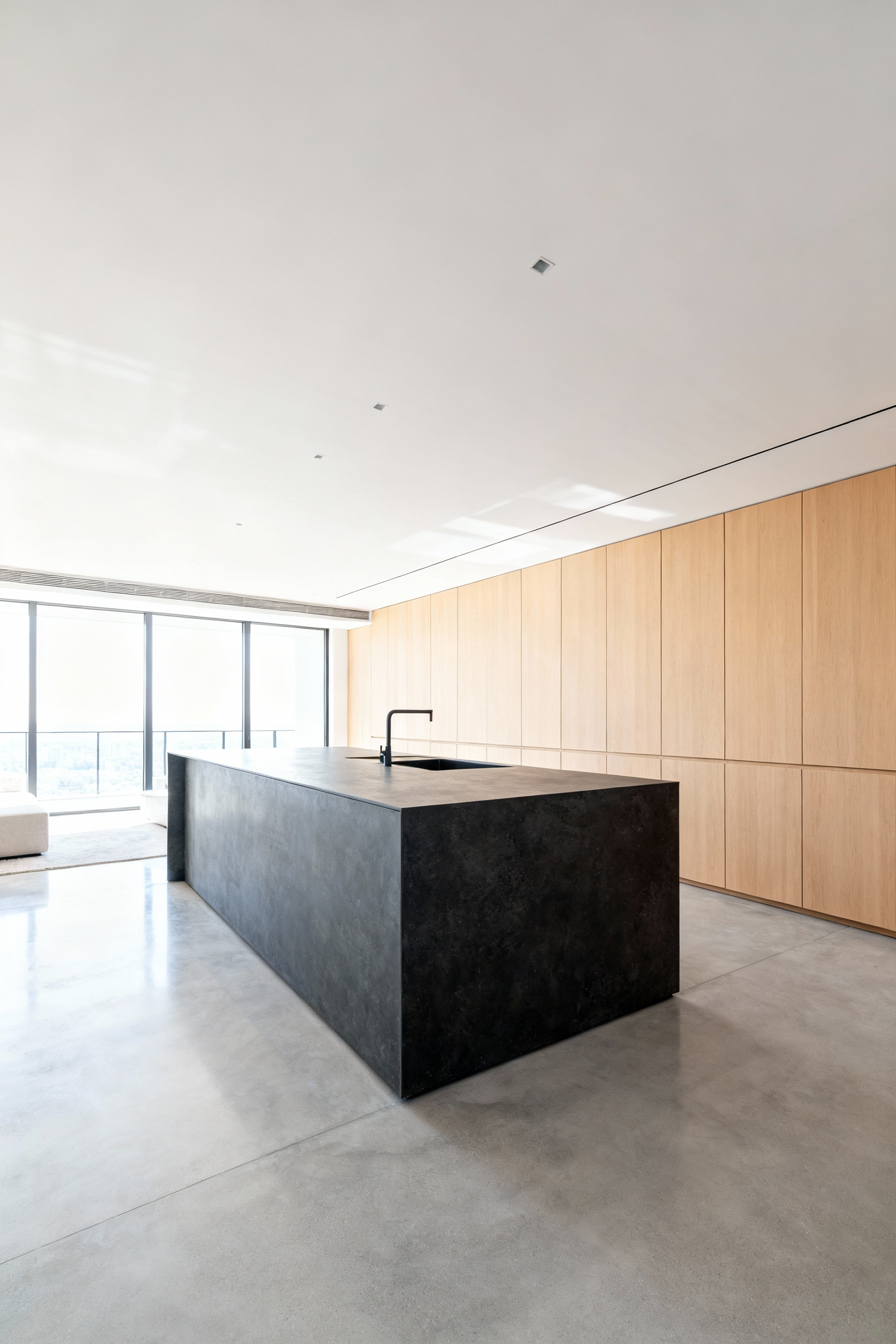
To anchor this volume, architects utilize the monolithic island. Specifically, this structure acts as a central domestic sculpture. It defines the boundary between cooking and living. Furthermore, the architecture relies on a “language of absence.” For example, frameless cabinetry transforms functional storage into sleek architectural planes. Additionally, handleless designs and strong horizontal lines visually lengthen the room. This creates a sense of calm continuity.
Ultimately, the structural materials themselves become the primary decoration. In fact, modern foundations often celebrate “honest” elements like untreated concrete floors. Therefore, raw texture replaces applied ornamentation. Similarly, honed finishes on countertops absorb light rather than reflect it. Thus, the design achieves a sophisticated depth that honors the building’s inherent structure.
1. The ‘Social Polygon’: Evolving Beyond the Classic Work Triangle
The classic kitchen work triangle originated in the 1940s to optimize efficiency for a single cook. However, this concept often fails within modern open floor plans. Specifically, the triangle cannot easily accommodate multiple users. Consequently, contemporary design has evolved into the “Social Polygon.” This approach expands the layout beyond three points into the Five-Zone Principle.
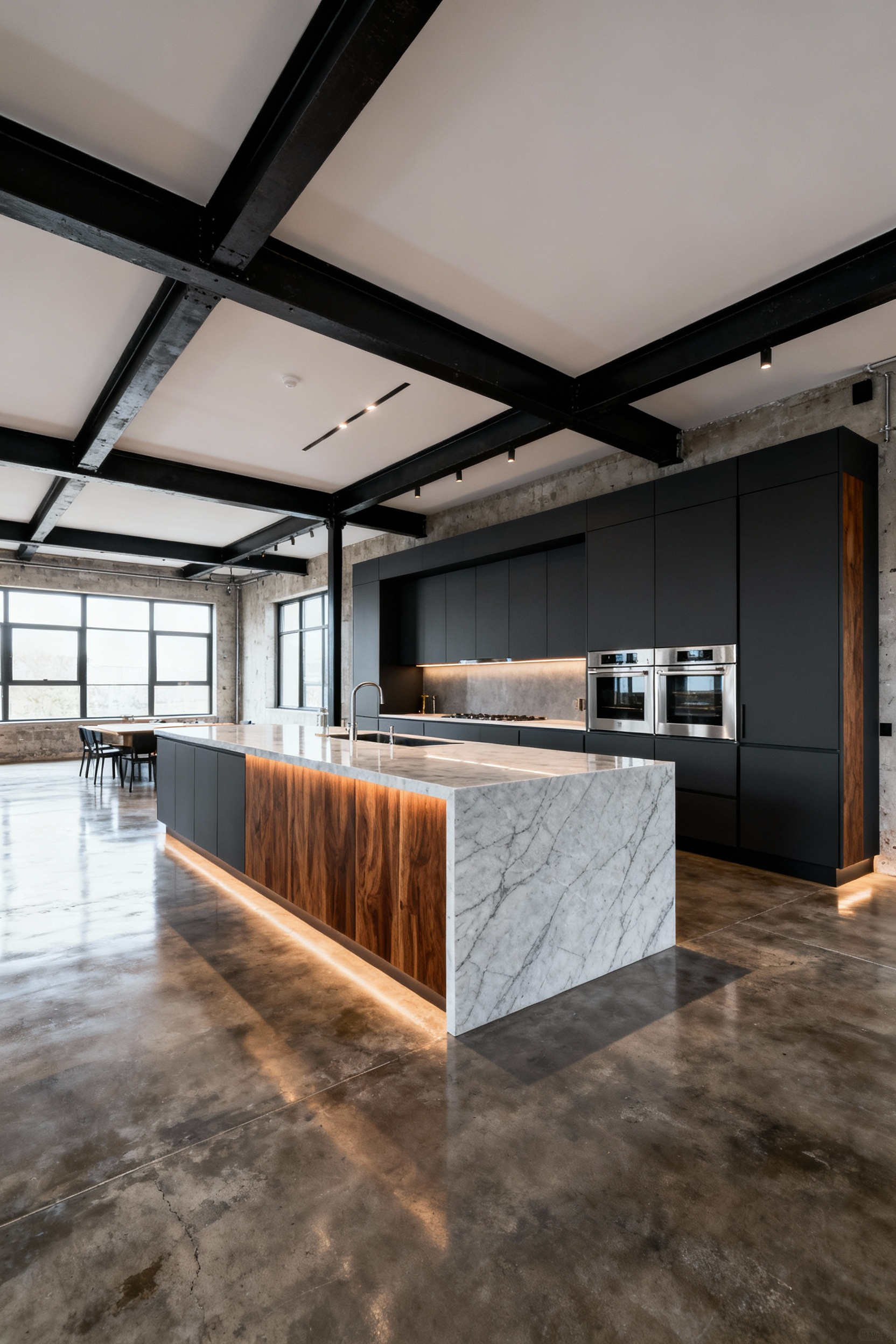
For instance, we now separate “Consumables” like food storage from the active “Preparation” zones. Furthermore, a dedicated “Non-Consumables” area for dishware sits near the “Cleaning” zone. Therefore, these stations allow several people to operate simultaneously without collision.
Crucially, this geometry integrates a distinct social element. In fact, successful designs strategically place beverage centers outside the primary work path. Thus, guests can access drinks without crossing into the chef’s domain. Similarly, the central island often acts as a functional buffer. The inner side facilitates prep work, while the outer edge invites conversation. Ultimately, the Social Polygon merges high-performance workflow with leisure.
2. Structural honesty: Exposing beams, ducts, and raw brick
Structural honesty represents a rejection of concealment. Philosophically, a building’s integrity should serve as its primary aesthetic. In a modern kitchen, this creates tension between raw history and sleek utility. Specifically, exposed brick anchors the space with warm textures. However, this material’s porosity presents a hygiene challenge near cooking zones. Therefore, expert designers apply a clear, matte polyurethane sealant. This essential barrier repels grease without altering the brick’s patina. Crucially, the surface must be meticulously cleaned before sealing to avoid trapping stains.
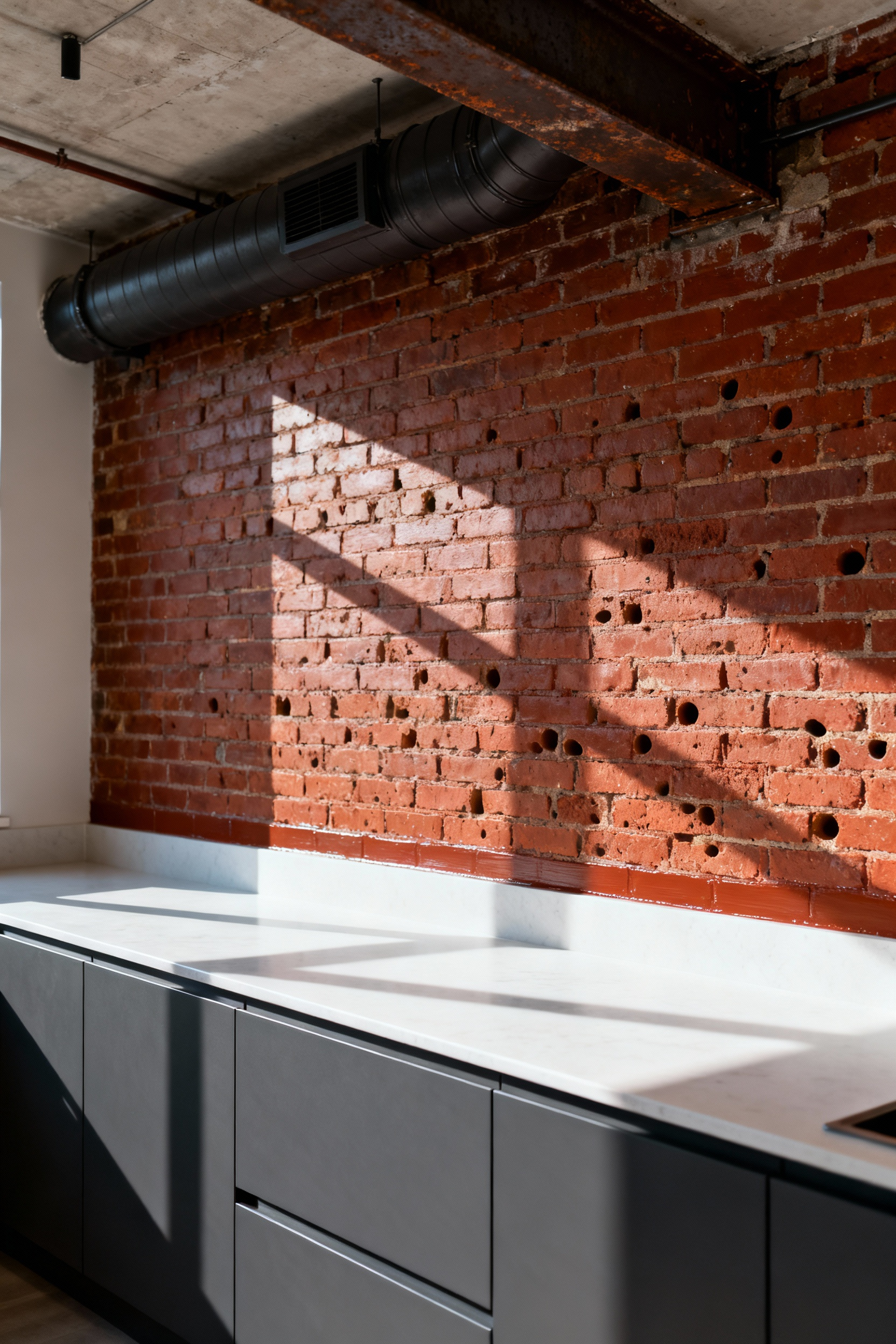
Similarly, overhead ductwork introduces an unapologetic functional element. To manage visual clutter, designers often paint ducts the exact color of the ceiling. Consequently, these systems become sculptural lines rather than distractions. Conversely, leaving steel raw emphasizes commercial-grade functionality. Furthermore, structural beams offer a solution for modern lighting integration. They act as architectural channels, concealing wiring for pendants. Thus, you achieve focused illumination without unsightly cords. Ultimately, exposing these elements transforms necessities into elegant focal points.
3. The Monolithic Island: Anchoring the room with concrete or stone
In open-plan industrial conversions, the kitchen island transcends mere utility. Specifically, it functions as a deliberate architectural anchor. Consequently, the design goal is immediate gravitas. Ideally, the structure appears permanent, as if excavated from a single volume. This heaviness effectively grounds the fluid nature of modern living spaces.
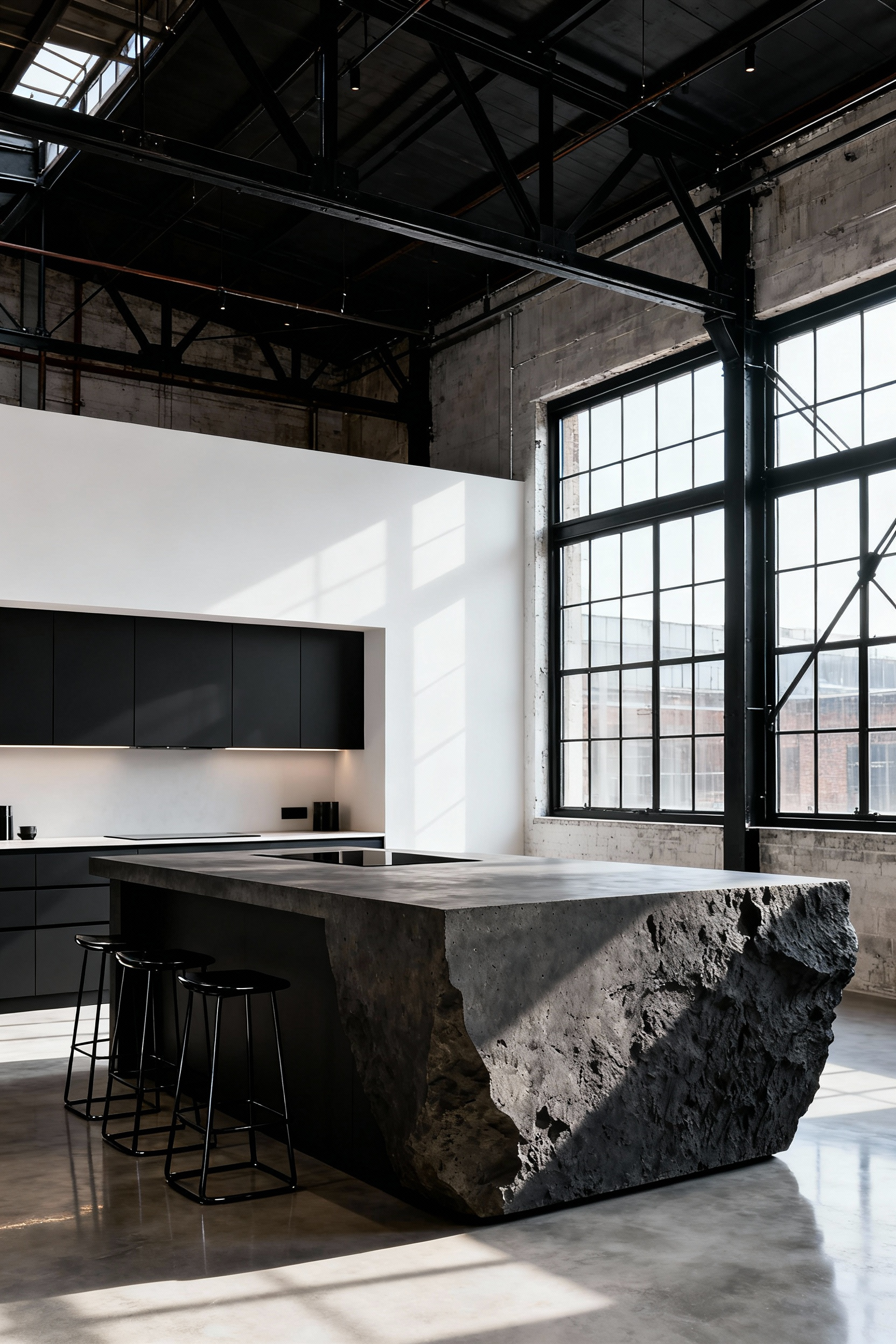
Achieving this seamless illusion requires advanced fabrication. Notably, the most critical method is the 45-degree folding technique. By cutting slab edges at precise angles to create mitred joints, builders eliminate visible seams. As a result, the material’s grain flows uninterrupted down the vertical sides. Ultimately, this precision reconciles the aesthetic of a solid sculpture with the need for storage.
Furthermore, the choice of material establishes the room’s tone. For instance, natural stone like black granite offers dramatic presence. Conversely, concrete serves as a versatile modern canvas. It can be polished for a sleek finish or left porous for a raw feel. However, these monolithic masses can feel austere. Therefore, designers frequently introduce warmth, such as timber accents, to balance the composition.
4. Fenestration focus: Maximizing urban views and natural light penetration
Transforming an industrial kitchen requires rethinking fenestration completely. Effectively, these spaces evolve from utility rooms into viewing platforms. Consequently, the surrounding cityscape becomes a primary design element. Architects often employ minimalist framing to achieve this specific effect. Specifically, dark, ultra-thin metal frames turn the view into “living artwork.” Furthermore, integrating glass flush with countertops extends the workspace outdoors.
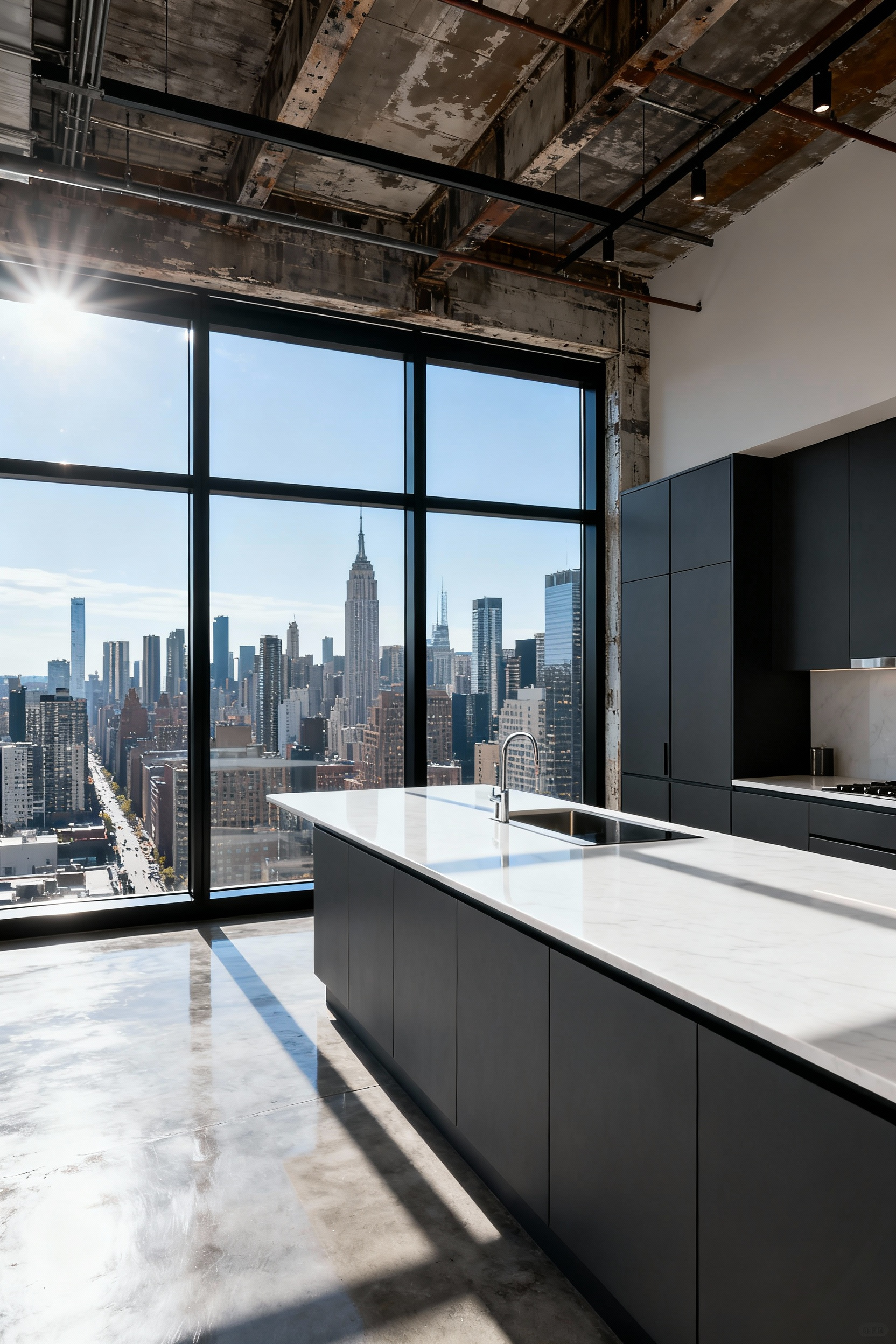
However, urban density presents privacy challenges. Therefore, smart placement is crucial for balancing light and seclusion. For instance, high-set clerestory windows harvest daylight without compromising privacy. Similarly, ribbon windows offer panoramic slices of the horizon while masking street-level chaos. These architectural moves ensure the home feels open yet protected.
Nevertheless, large glass expanses introduce heat and noise issues. Fortunately, advanced glazing technologies now solve these problems. Electrochromic glass, for example, dynamically adjusts tint levels. This reduces reliance on heavy drapes that block views. Additionally, laminated acoustic glass dampens traffic sounds significantly. Ultimately, these innovations create a serene sanctuary.
Theme 2: Material Authenticity (The Skin)
Fundamentally, “The Skin” redefines how we perceive surfaces. It rejects the sterile, synthetic perfection of the mid-20th century. Instead, modern design prioritizes a deep connection to raw materials. Specifically, homeowners now view the kitchen as an emotional hub. Therefore, tactile experiences become paramount. We select wood, concrete, and stone for their grounding presence. Indeed, this shift moves us from visual appreciation to physical interaction.
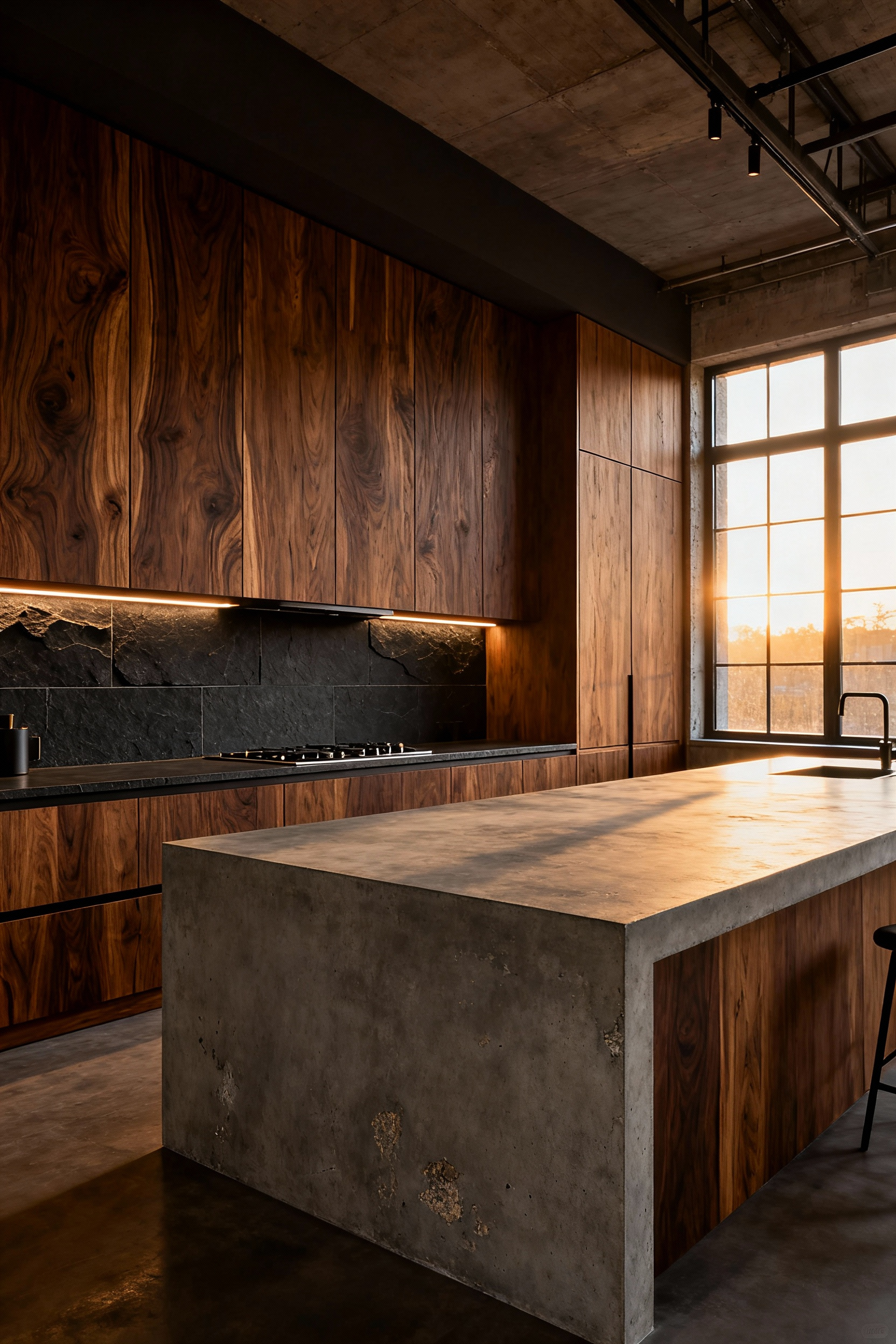
Consequently, this desire for reality elevates “patina” to modern luxury. We no longer hide wear; we celebrate it. For instance, unlacquered brass oxidizes beautifully, developing unique colors over time. Similarly, honed stone finishes are replacing high-gloss polishes. These matte surfaces absorb light softly rather than reflecting it. Furthermore, they conceal everyday scratches, making the space feel lived-in. Essentially, these materials tell a story of use.
However, a tension exists between authenticity and durability. True marble, while stunning, is chemically vulnerable to acids like lemon juice. Thus, choosing it means accepting etching. Conversely, technological advancements offer an alternative. Sintered stone and porcelain slabs now replicate natural veining with precision. Ultimately, these engineered materials provide the aesthetic of stone without the risks, defining a resilient authenticity.
5. The tactile hierarchy: Pairing rough-hewn wood with sleek steel
Successful industrial design relies on striking a balance. Specifically, we utilize a concept known as “tactile hierarchy.” This approach pairs rough-hewn timber with polished steel. Fundamentally, these opposing materials establish a necessary sensory tension. Sleek steel represents architectural rigor and hygiene. It creates a machine-like aesthetic suitable for cooking. However, too much metal feels clinical. Therefore, we introduce distressed wood to ground the space.
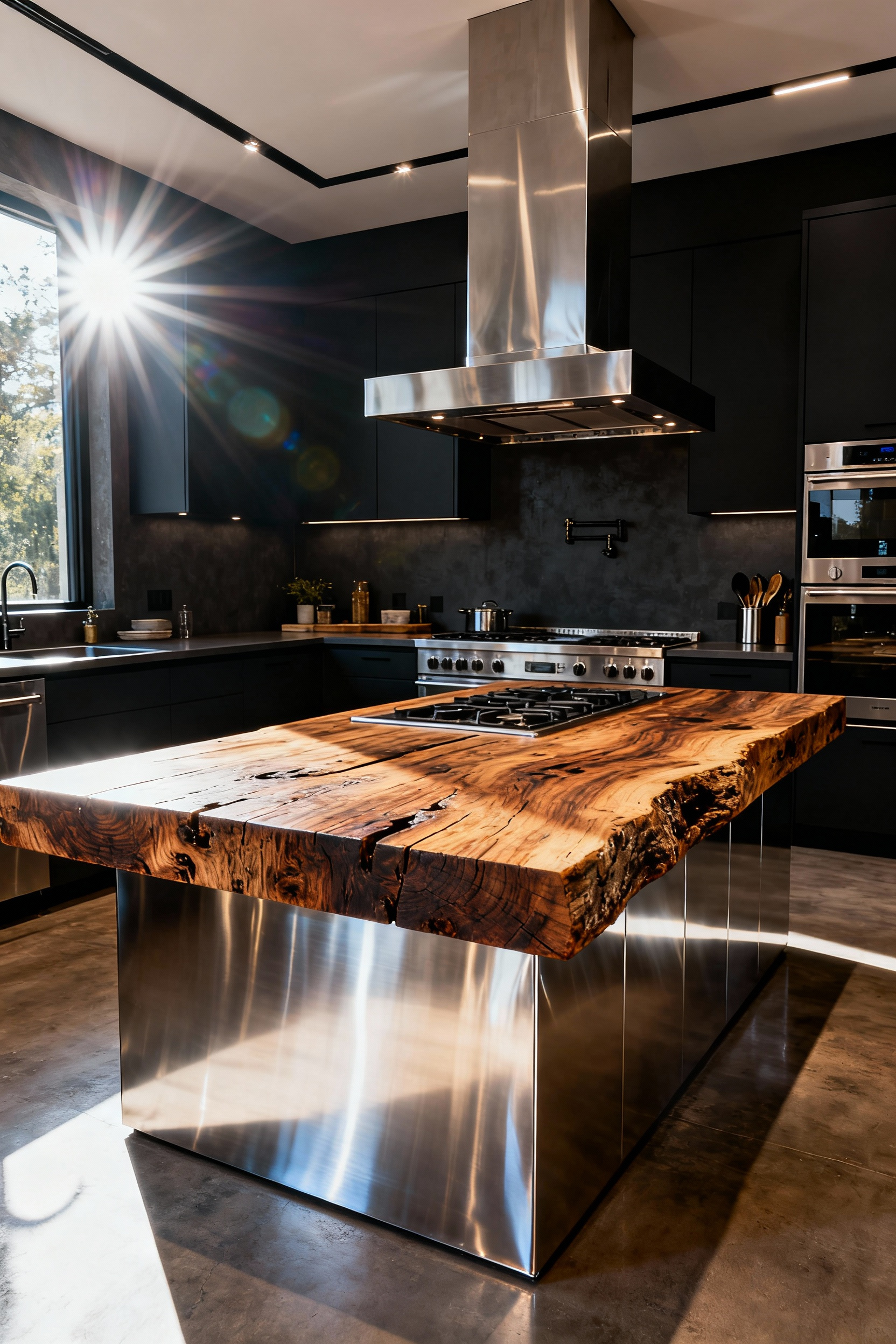
Its organic grain offers deep historical context. Consequently, the kitchen becomes a sanctuary of authenticity. This tactile shift offers a refuge from our digital world. In fact, choosing imperfect wood signifies a preference for substance. Practically, you must apply this hierarchy through careful placement. For instance, utilize raw lumber for primary gathering spots. A reclaimed wood island invites touch.
Conversely, keep steel dominant in task-oriented zones. Thin metal brackets or appliances should provide linear accents. Thus, the design remains sophisticated rather than cluttered. Ultimately, this fusion ensures the room feels both inviting and current. It honors the building’s industrial bones while serving modern life.
6. Matte over gloss: The sophistication of light-absorbing surfaces
Historically, high-gloss finishes defined luxury. However, the contemporary aesthetic has shifted toward “quiet luxury.” Specifically, this look relies on matte surfaces to create calm. Unlike gloss, which creates harsh glare, matte finishes offer diffuse reflection. Consequently, light spreads evenly across cabinet fronts. This absence of visual clutter fosters a sense of tranquility. Furthermore, this texture profoundly affects color perception. Without reflection, dark tones like charcoal appear deeper. In fact, the color feels more solid and grounded.
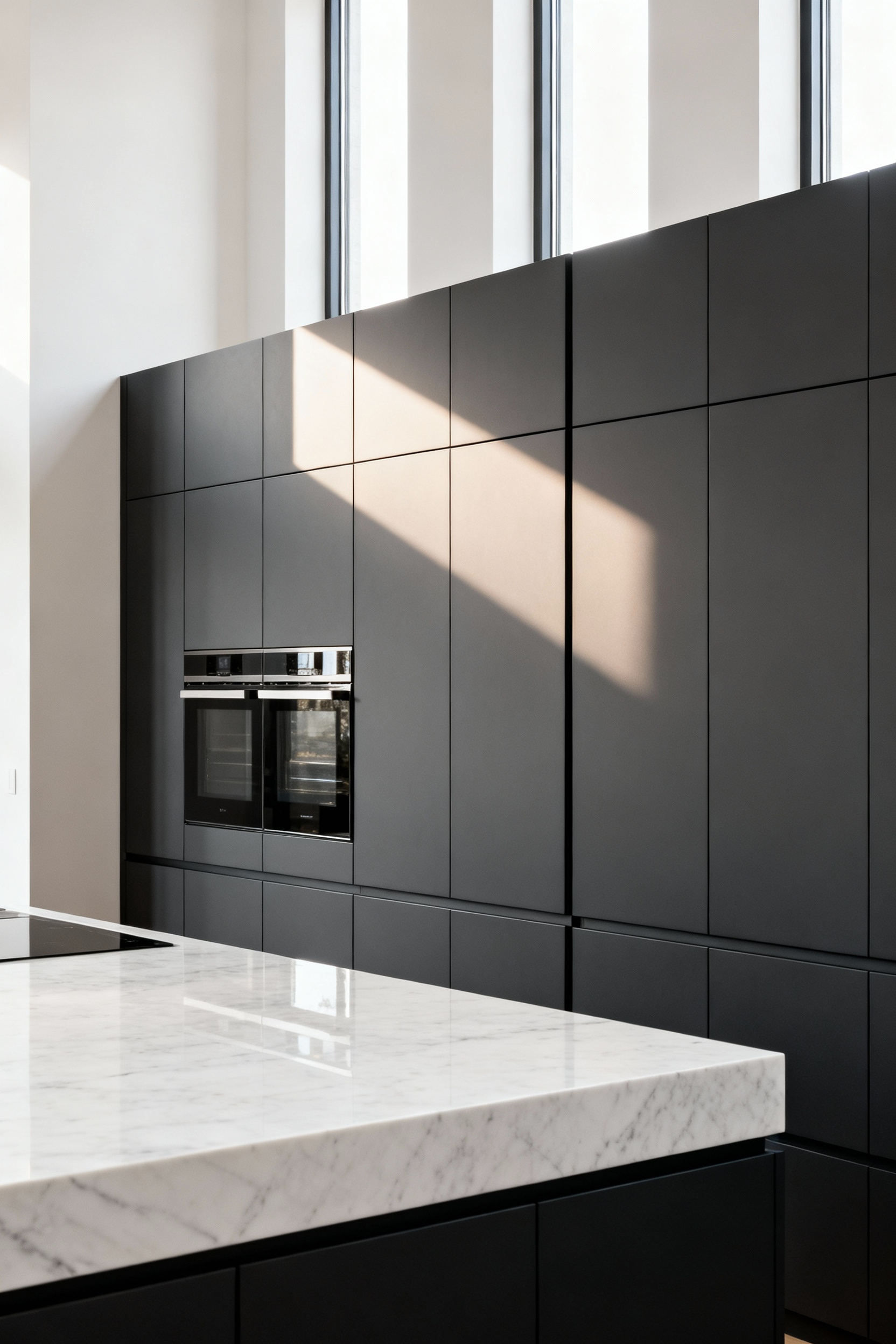
Previously, matte finishes were associated with low-quality laminates. However, advancements in material technology have redefined these surfaces. For instance, super-matte materials like FENIX NTM® utilize electron beam curing. As a result, they possess a velvety texture that invites interaction. Moreover, they offer advanced functionality. Specifically, some surfaces feature thermal healing, where heat repairs micro-scratches. Therefore, these materials are durable enough for high-traffic conversions.
Ultimately, a matte finish serves as a sophisticated canvas. It acts as a grounding backdrop. Therefore, it allows high-sheen accents like brass hardware to shine. By layering these varied reflectivities, you create visual depth. This tension between “dead flat” matte and gleaming metals prevents the room from feeling flat. Thus, the kitchen retains a dimensional composition.
7. Mixed metallurgy: Breaking the rules of matching hardware
Traditionally, high-end design mandated strict uniformity for metal finishes. Consequently, matching every chrome handle to the faucet resulted in sterile environments. However, modern aesthetics are shifting away from this rigid rule. Instead, designers now favor a curated approach. Ideally, the space feels personal and lived-in.
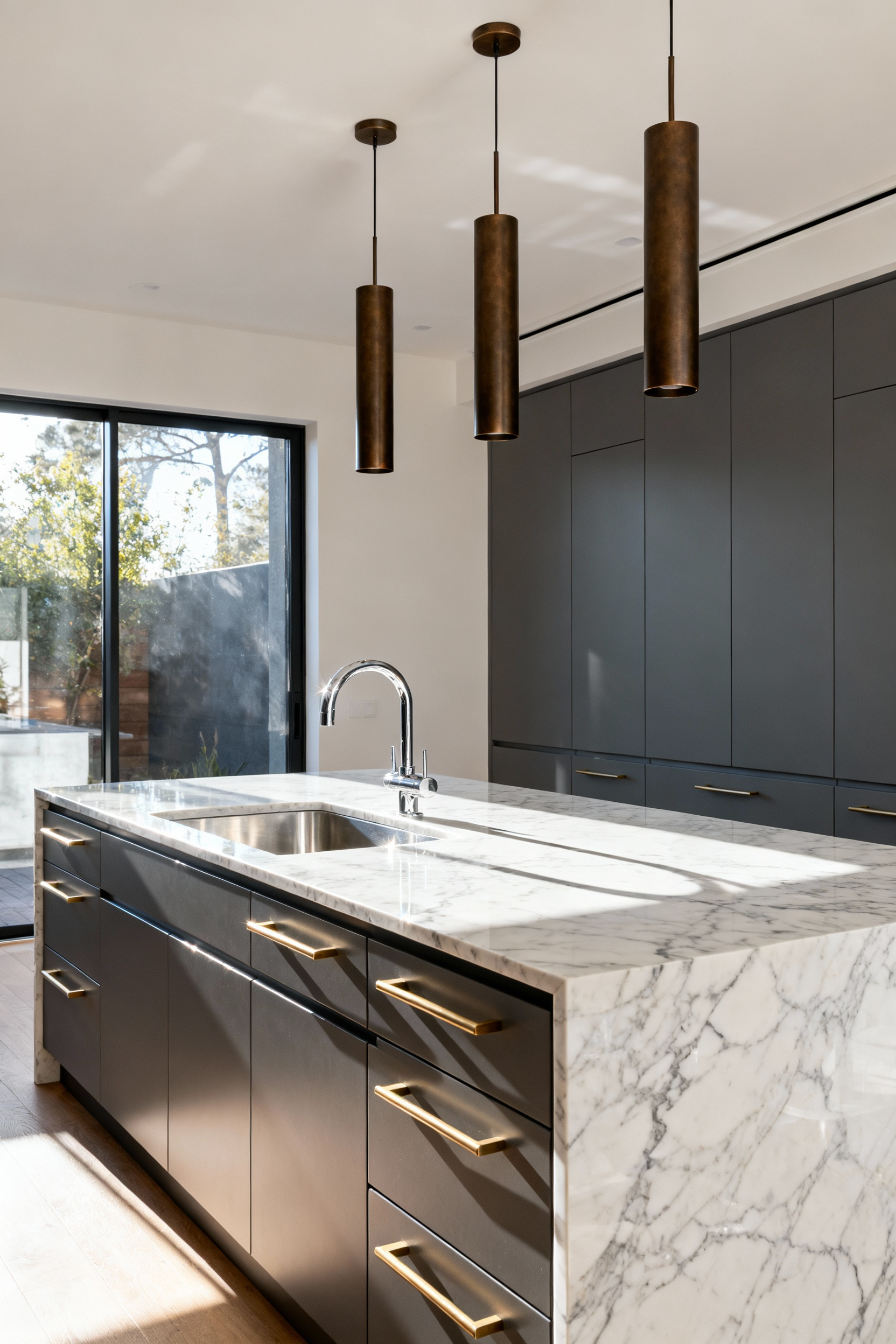
Specifically, mixed metallurgy relies on the tension between color temperatures. For instance, pairing warm unlacquered brass with cool matte black creates visual complexity. Furthermore, depth is achieved by varying textures. In fact, mixing polished and brushed finishes adds dimensionality.
Nevertheless, this expressive freedom requires restraint. Therefore, experts recommend a “dominant-accent” formula. Generally, select one “hero” metal for the majority of hardware. Then, reserve a secondary finish for statement pieces like lighting. Crucially, stainless steel appliances function as a neutral backdrop. Thus, they do not limit your creative choices.
8. The continuous pour: Seamless concrete flooring for visual expanse
Traditional tiled flooring often imposes a restrictive grid. However, visible grout lines segment a room’s foundation. In contrast, a continuous concrete pour creates an uninterrupted base. Consequently, the eye sweeps across the space without obstruction. This seamless quality creates a perception of vastness. Furthermore, the neutral surface allows cabinetry to visually “float.”
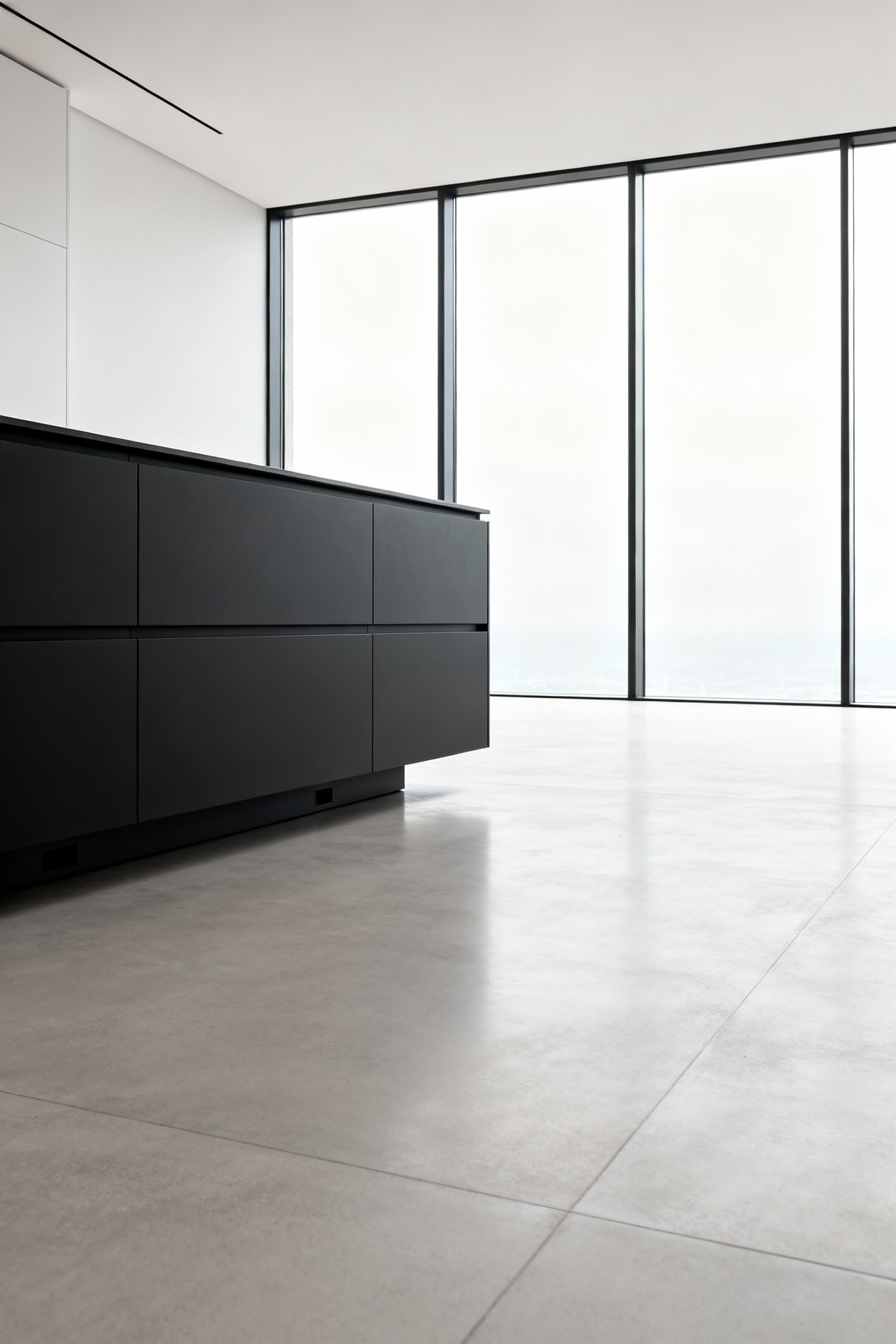
Specifically, homeowners typically achieve this look through microcement or polished slabs. For renovations, microcement is often the superior choice. It adds only millimeters of thickness. Additionally, the hand-troweled application leaves unique organic texture. Conversely, polished concrete involves grinding down a structural slab. Therefore, this method is best suited for new construction.
Ultimately, this aesthetic connects modern homes to the *Béton Brut* architectural lineage. Moreover, the surface is exceptionally hygienic. In fact, the absence of joints prevents dirt accumulation. Finally, sealed concrete facilitates a seamless flow between indoors and outdoors.
Theme 3: Illuminating the Void (The Atmosphere)
In industrial renovations, lighting acts as a primary building material. It shapes the open space often called “the void.” Consequently, modern kitchen design requires a dual mandate. Specifically, food preparation demands a neutral-to-cool light (3500K-4000K). This spectrum mimics midday sun, boosting concentration. Furthermore, it ensures white cabinetry maintains its true color.
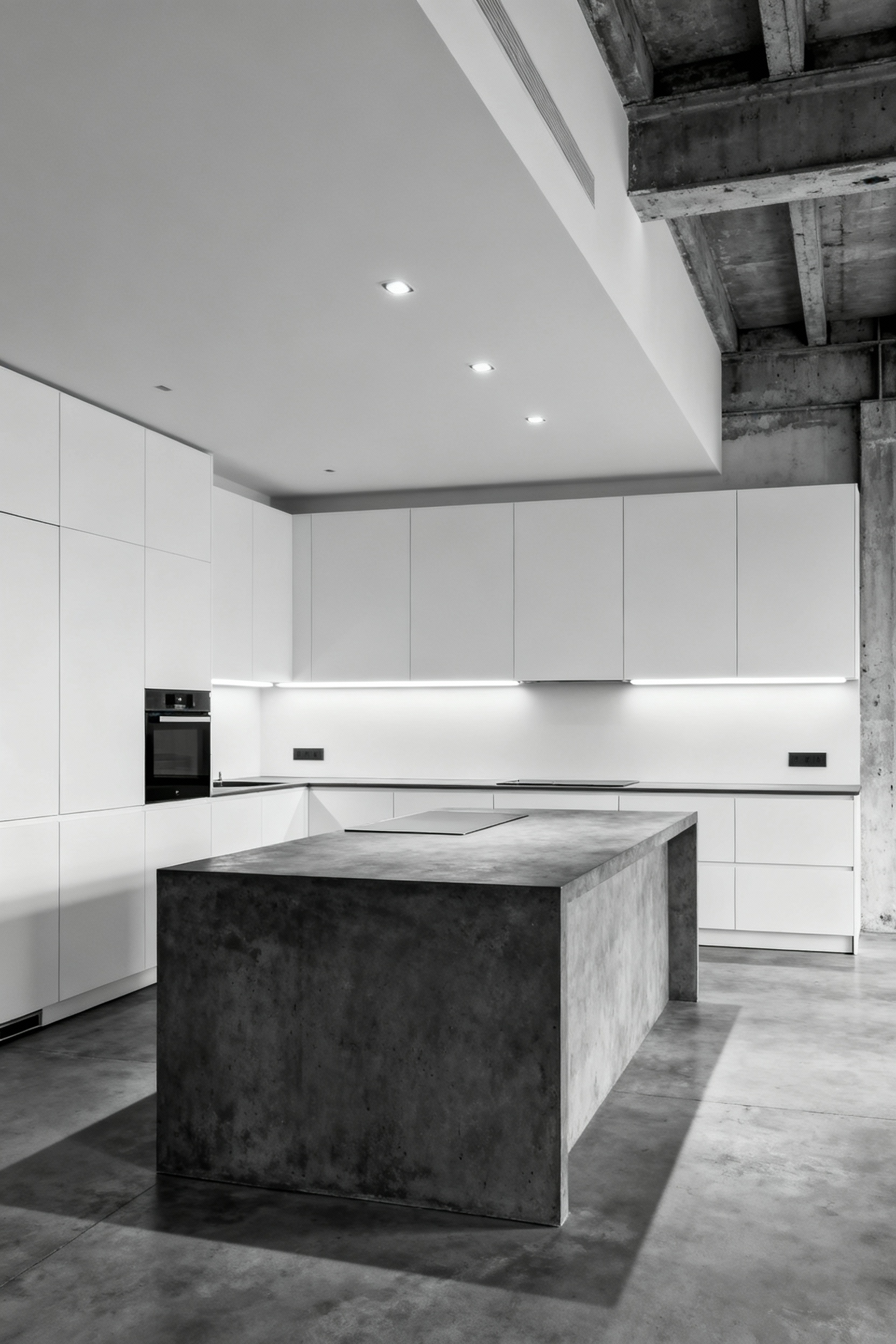
However, the environment must soften once cooking concludes. Therefore, effective design incorporates dimmers. By shifting to warmer tones (2700K-3000K), the kitchen transforms into an intimate hub. In this mode, the light mimics the comforting glow of candlelight.
To execute this, we employ “invisible architecture.” For instance, recessed cove lighting washes the ceiling with a soft glow. Simultaneously, discrete LED strips under cabinets define boundaries. Conversely, sculptural pendants serve as deliberate focal points. They anchor specific zones within the expansive room.
Finally, true atmospheric depth relies on the Color Rendering Index (CRI). High-end designs prioritize a CRI of 90 or higher. Consequently, vibrant ingredients look appetizing rather than dull. Moreover, this accuracy highlights the rich textures of wood and stone.
9. Sculptural luminosity: Lighting fixtures as suspended art
Lighting in industrial conversions has evolved beyond utility. In fact, it has reclaimed an ancient role as symbolic expression. Specifically, the Mid-Century Modern movement transformed the pendant into a design feature. Consequently, the contemporary kitchen often serves as a gallery for these sculptures. Because modern cabinetry is often unadorned, the fixture becomes a tool for artistic expression.
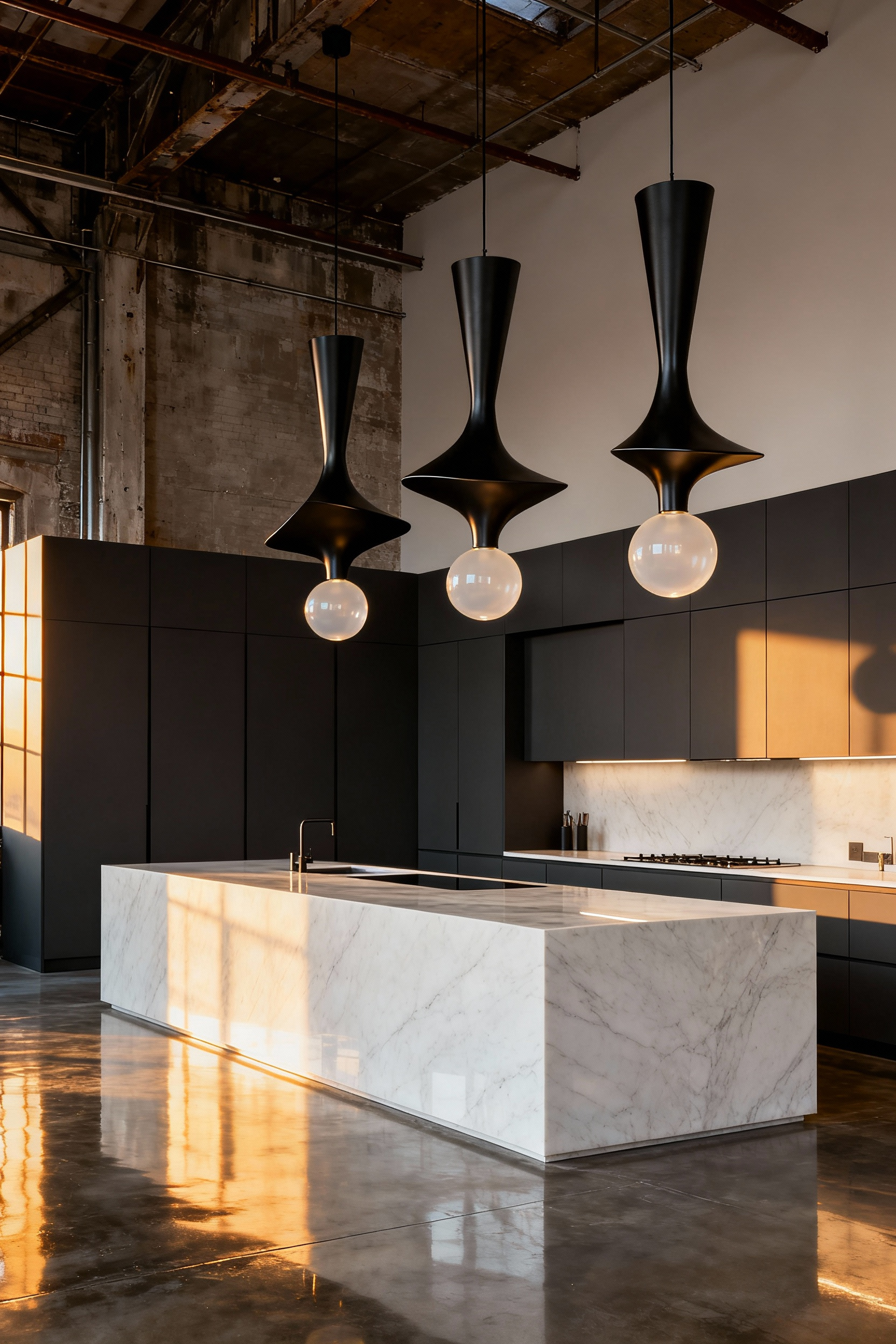
Modern designs typically rely on artisanal materials to achieve this. For instance, brushed nickel might pair with smoked glass. Furthermore, kinetic forms often reject static geometries. Indeed, these fixtures tell a distinct visual story even when unlit. Additionally, integrated LED technology allows for precise control. Thus, high-CRI lights enrich the natural grain of timber.
However, this artistry must coexist with practical needs. Therefore, a successful lighting masterplan requires layering. The sculptural pendant serves as the room’s emotional anchor. Conversely, invisible recessed downlights handle task illumination. Ultimately, this separation ensures the statement piece stands alone without clutter.
10. Architectural track systems: Precision task lighting without clutter
Historically, track lighting served utilitarian purposes in galleries. However, contemporary architectural systems have evolved significantly. Specifically, modern recessed tracks provide a sleek alternative to scattered junction boxes. By utilizing a continuous line for power, these systems maintain seamless ceilings. This supports the monolithic look favored in industrial conversions.
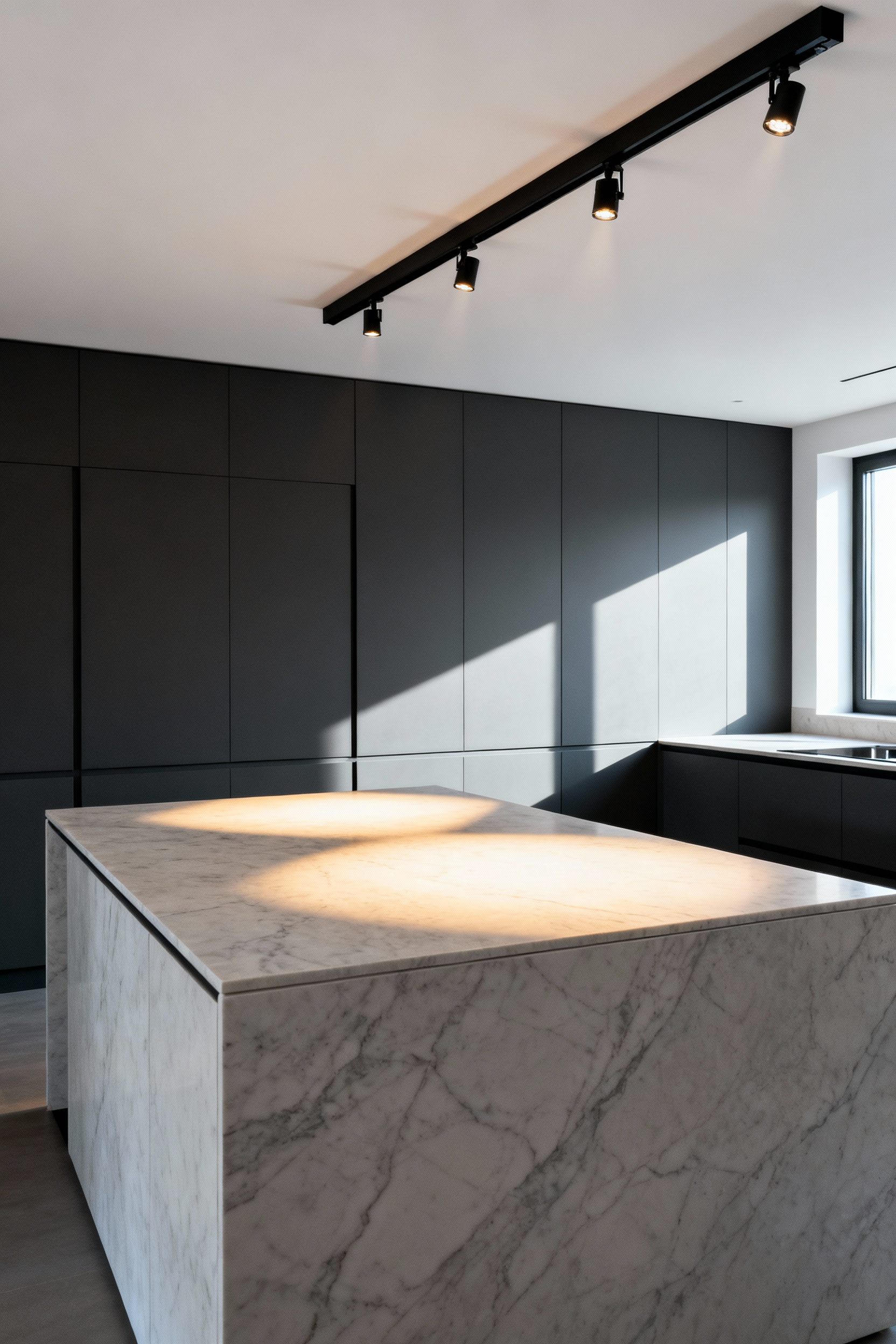
Furthermore, 48V low-voltage systems have revolutionized this design. Because of the lower voltage, track profiles are now miniaturized. Consequently, they can virtually vanish into the drywall. Functionally, magnetic fastening offers unmatched adaptability. Therefore, you can slide a spotlight over a chopping board instantly.
Finally, true precision relies on light quality. Specifically, experts recommend High-CRI LEDs rated 90 or above. This ensures ingredient colors render accurately. Thus, the lighting system becomes a true culinary tool. It merges distinct visibility with minimalist elegance.
11. The hidden glow: Under-cabinet and toe-kick LED integration
Toe-kick lighting serves a purpose beyond illumination. It subverts the perceived mass of heavy cabinetry. By concealing LED strips within the recessed plinth, you cast a soft, upward glow. Consequently, this eliminates the shadow that anchors cabinets to the floor. Therefore, the cabinetry appears to float. This illusion creates a sophisticated sense of weightlessness.
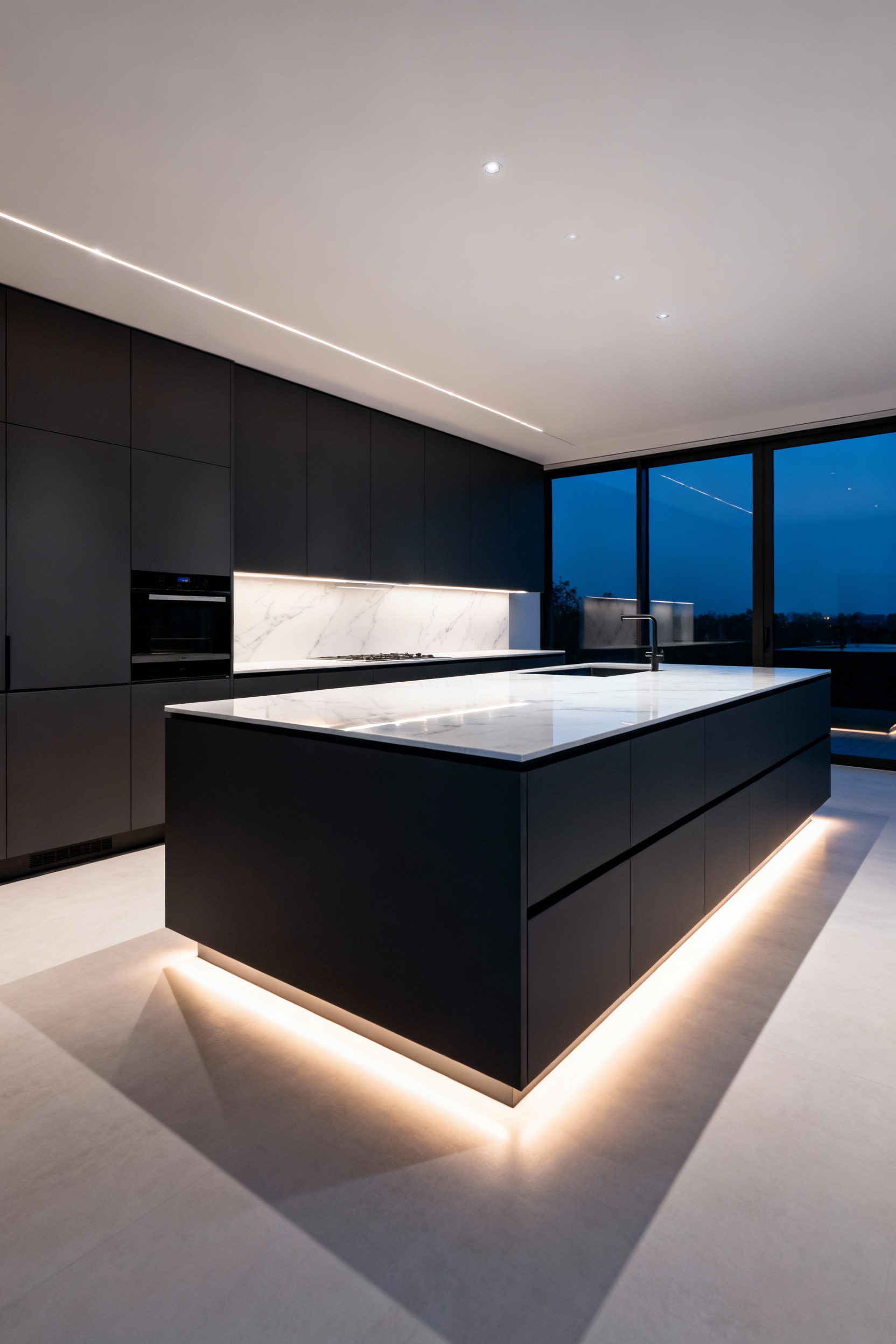
Furthermore, under-cabinet lighting addresses critical functional needs. It acts as primary task lighting. As a result, it removes the “self-shadowing” effect caused by overhead fixtures. Additionally, this layer highlights the texture of backsplash materials. When installed correctly, the source remains hidden.
Beyond aesthetics, these elements provide safety. For instance, toe-kick lights offer a low-level ambient glow for nighttime navigation. This creates a gentle pathway without harsh brightness. Modern smart integration even allows for tunable temperatures. Thus, you can shift from cool light for cooking to warm tones for entertaining. Ultimately, this transforms a utility space into a sculptural environment.
Theme 4: Curated Living (The Soul)
True luxury in modern kitchen design creates a space with a distinct soul. Consequently, we reject the sterile, showroom aesthetic. Instead, we favor environments that feel deeply personal and enduring.
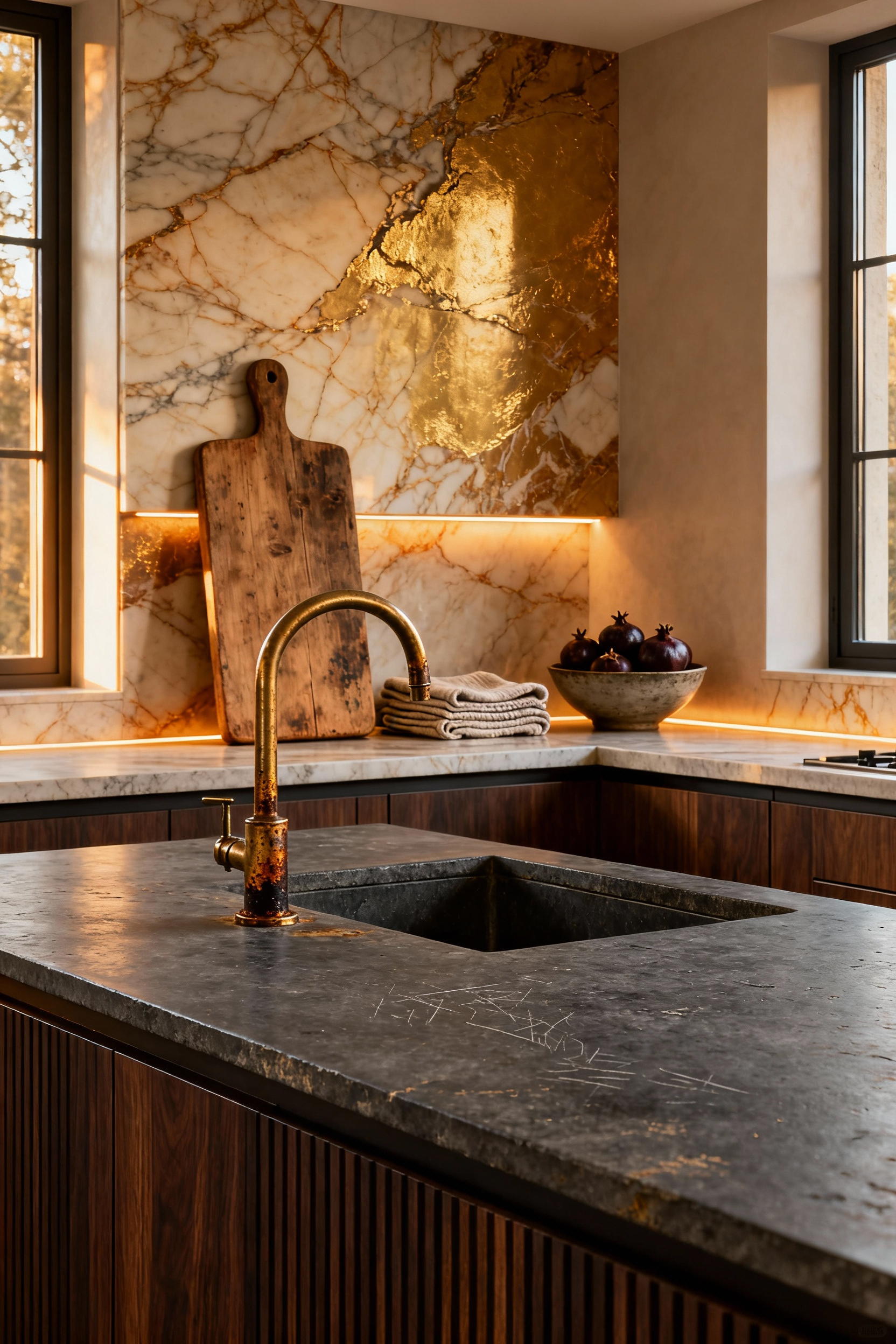
Specifically, this philosophy champions the elevation of patina. We select living materials like veined marble and soapstone. These surfaces do not remain pristine. Rather, they develop character over time. For example, a small etch on marble affirms daily life. It proves the kitchen is lived-in. Therefore, these signs of wear offer emotional depth.
Furthermore, “Curated Living” relies on bespoke craftsmanship. We embrace tailored function over generic customization. In fact, custom millwork is designed strictly around the homeowner’s rituals. Thus, the design reflects individual personality. The space becomes a sanctuary of harmony.
Finally, the kitchen serves as a stage for memory. We utilize open shelving to display emotional artifacts. For instance, heirloom dishware creates visual tension against modern appliances. This practice is an exercise in object literacy. Ultimately, blending old and new ensures the room feels like an ongoing story.
12. The ‘Un-Kitchen’ philosophy: Hidden appliances and handleless cabinetry
The “Un-Kitchen” philosophy pushes the open-plan concept to its limit. It strives to make the kitchen disappear into the living space. Consequently, this reframes a utility room as architectural furniture. In lofts, the kitchen often serves as the social hub. However, appliance clutter disrupts the aesthetic. Therefore, this approach conceals elements to reclaim visual privacy. Ideally, the space feels like a refined lounge.
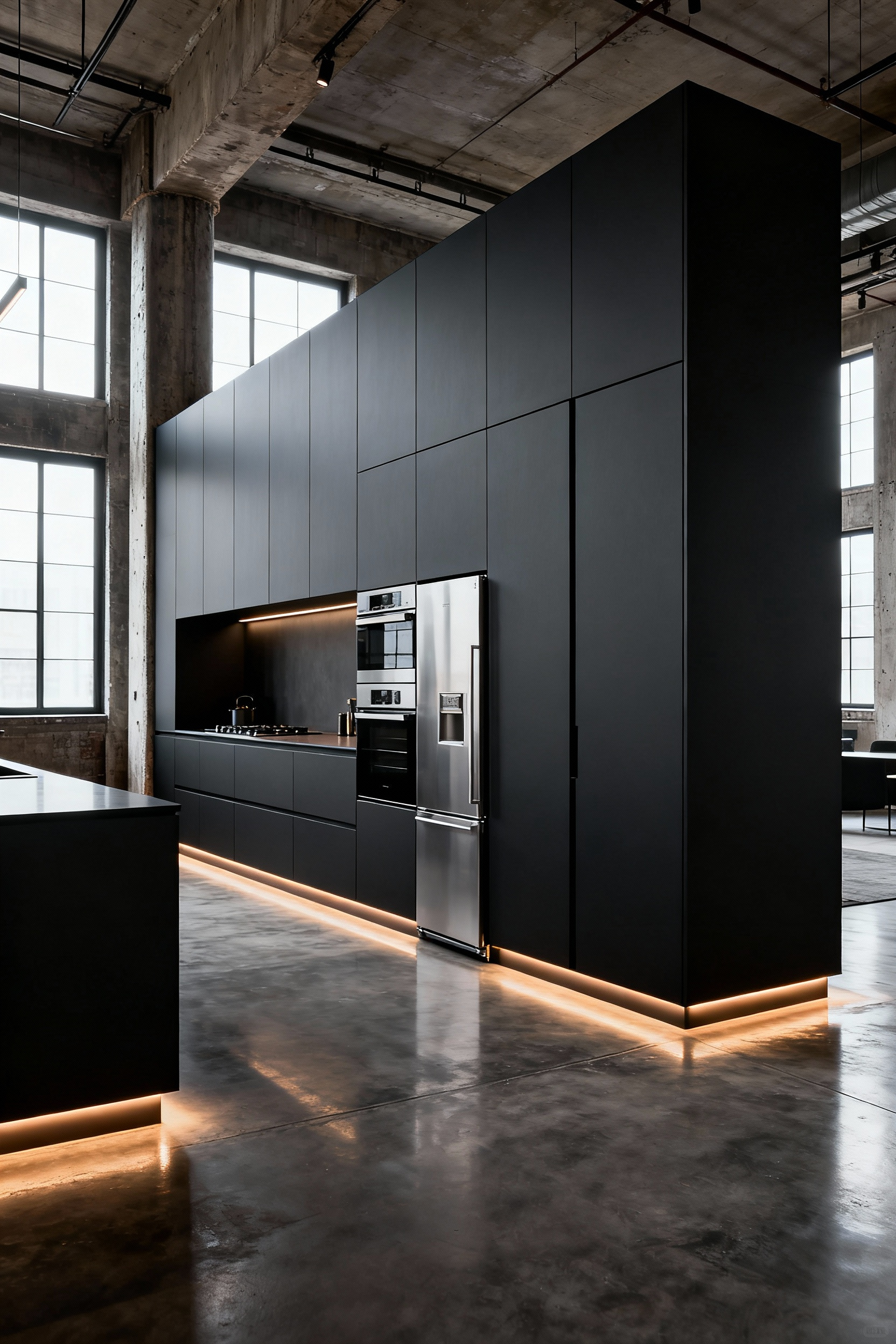
To achieve this, handleless cabinetry transforms storage into a monolithic surface. For instance, the “True Handleless” system utilizes a recessed rail. Alternatively, push-to-open mechanisms allow for a flush finish. Furthermore, pocket door systems can hide entire zones. Similarly, downdraft extractors remain invisible until needed. Even dishwashers sit concealed behind matching panels. Thus, the kitchen unfolds quietly with refinement. If you are looking to modernize kitchen cabinets, this approach minimizes clutter.
13. Negative space mastery: The art of styling open shelving
Styling open shelving requires a shift in perspective. Specifically, it is less about filling space and more about orchestrating the void. This concept, often called *Ma*, acts as a visual pause. In a crowded kitchen, these open areas provide breathing room. Consequently, the shelf becomes a “visual palate cleanser.” Furthermore, removing bulky upper cabinetry aids light flow. Thus, the architectural footprint feels more expansive.
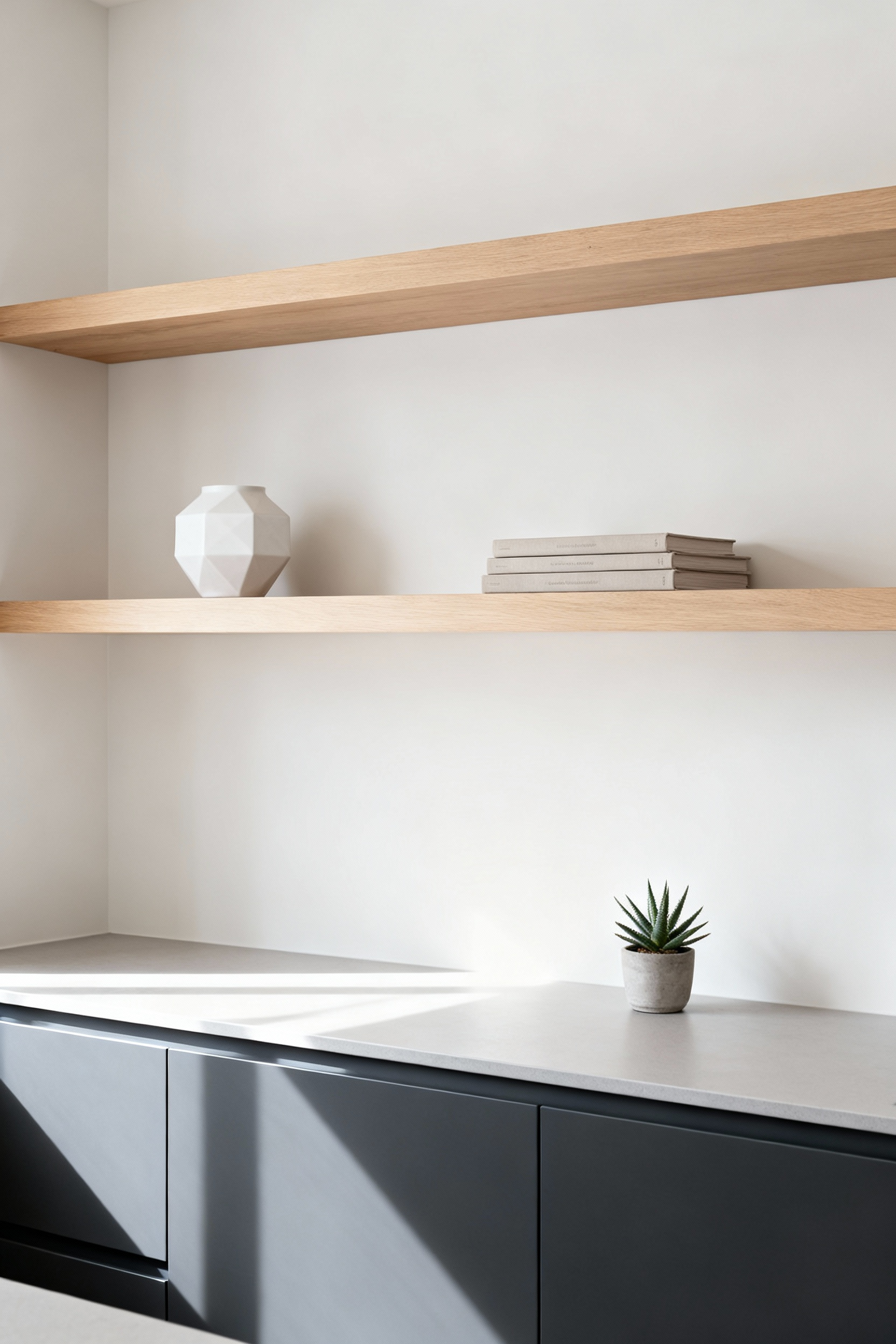
To master this, you must practice curatorial discipline. For instance, adhere to the “70/30 rule.” Ideally, leave 30 percent of the shelf empty. Therefore, every object must earn its place. This rigor transforms a functional shelf into a “mini-gallery.” Additionally, balance visual weight. A dark vase appears heavier than white plates. Accordingly, the darker item requires more surrounding space.
Ultimately, this approach honors the “Shaker ethos” of honesty. Historically, open storage reflected a disciplined lifestyle. Today, floating shelves modernize this tradition by maximizing negative space. By suspending objects, you highlight the wall behind them. In short, the void becomes a strategic asset.
14. Industrial softening: Introducing textiles and leather seating
The modern kitchen is evolving beyond a sterile workspace. Designers now aim to create a hybrid living sanctuary. This trend, “Industrial Softening,” humanizes stark aesthetics. Consequently, we see a blurring of boundaries between rooms. The kitchen becomes an intimate circle where guests linger.
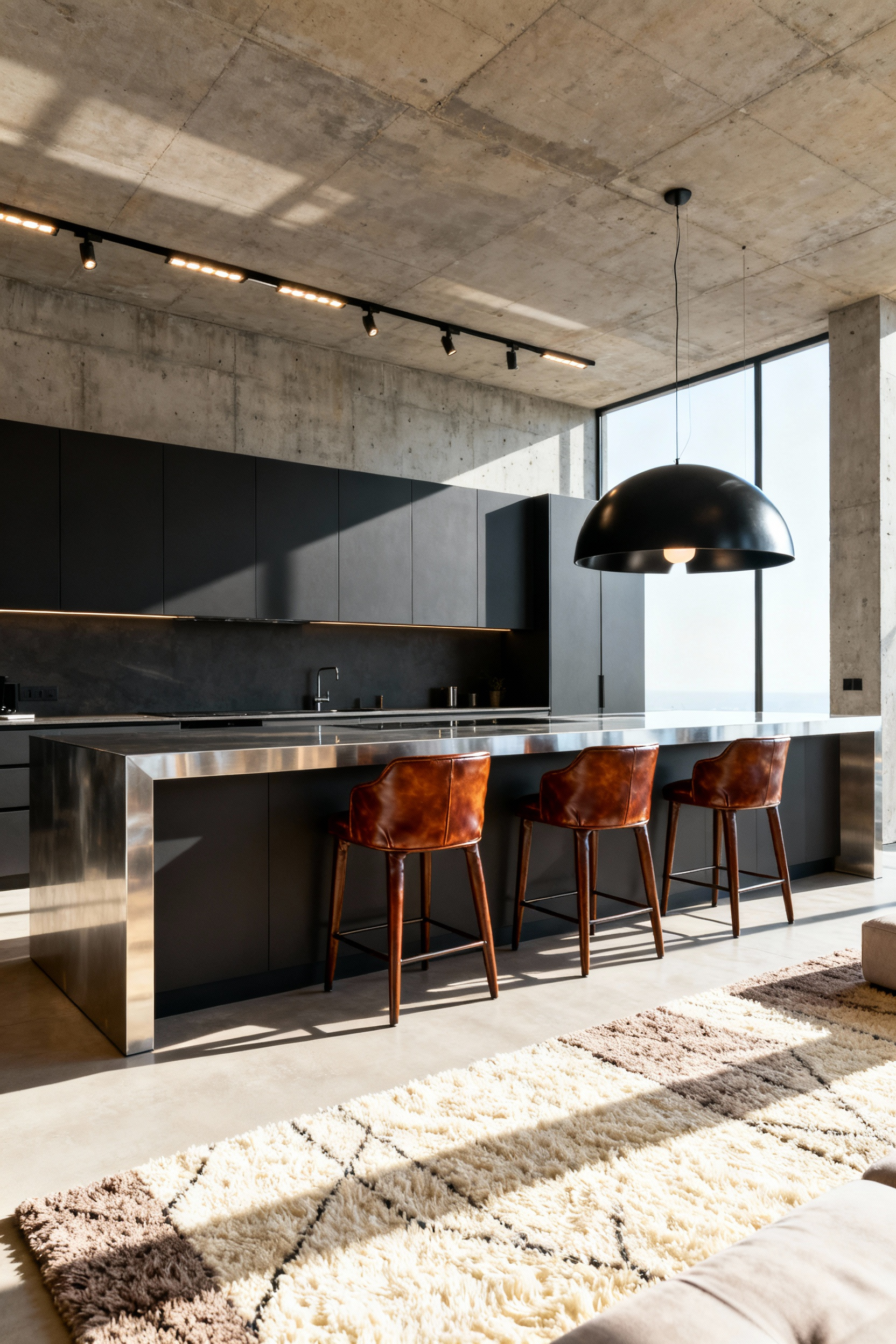
To achieve this, architects utilize sensory contrast. We intentionally juxtapose cold elements like steel against inviting textures. For instance, distressed leather seating offers a perfect solution. Its patina honors industrial history while providing warmth. Furthermore, the material physically yields, unlike metal chairs.
Similarly, introducing textiles changes the atmosphere immediately. A dense wool runner can visually soften concrete. Beyond aesthetics, these additions serve a technical function. Industrial spaces often suffer from harsh acoustics. Therefore, rugs act as necessary sound absorbers. This dampening creates a calmer environment. Ultimately, using materials like velvets neutralizes cold cement.
15. Biophilic urbanism: Large-scale greenery against raw materials
Biophilic urbanism in the modern kitchen transcends decoration. It leverages the contrast between organic life and industrial rigidity. In this context, designers embrace raw concrete or blackened steel. However, these surfaces can feel cold. Therefore, we introduce large-scale greenery as a counterpoint. Vertical gardens create a dialogue between living textures and crafted ones. Consequently, this creates a sensory equilibrium.
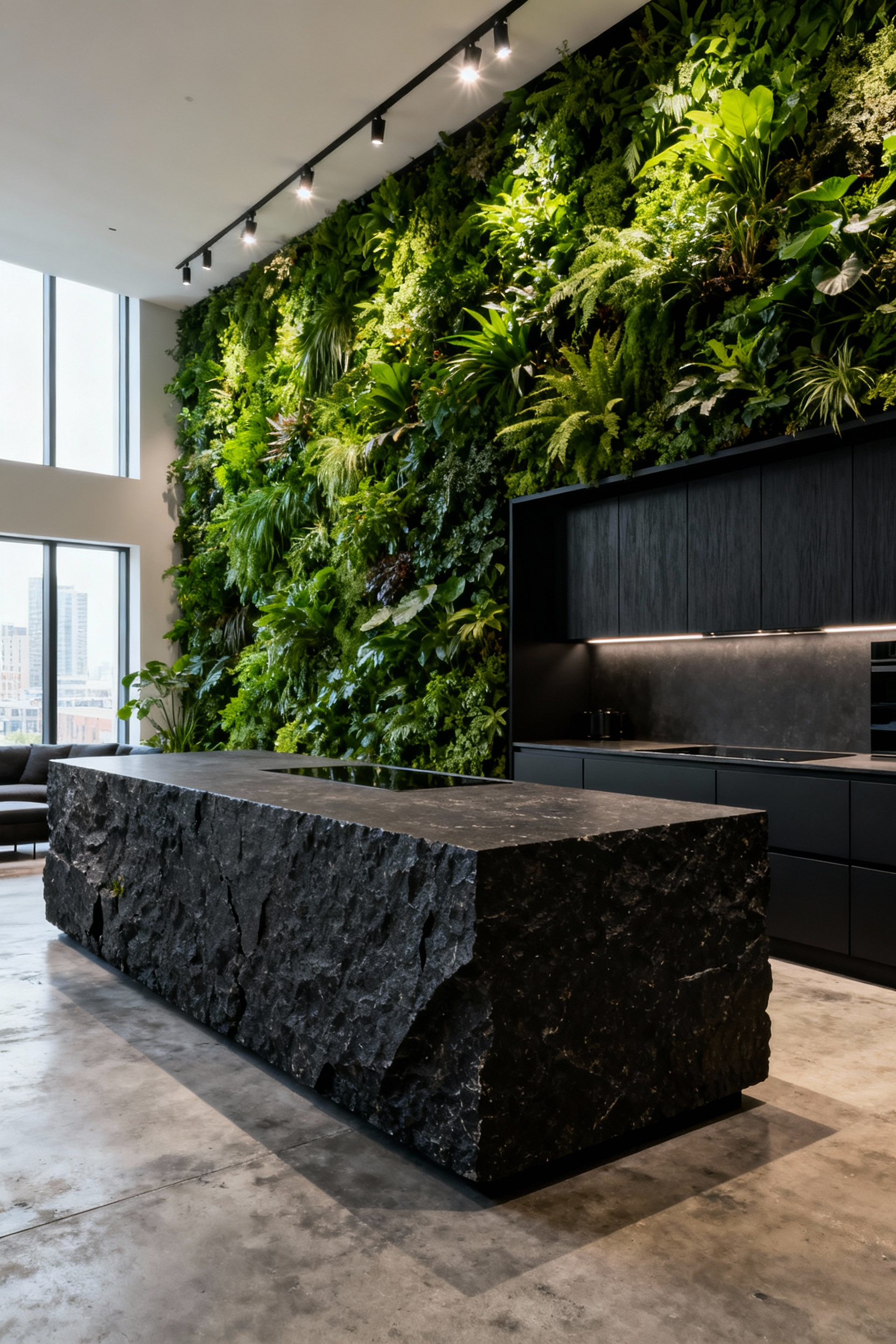
Rough stone stimulates mental engagement for cooking tasks. Simultaneously, greenery promotes relaxation. Beyond aesthetics, this strategy serves a functional purpose. Dense plant life effectively absorbs sound within concrete spaces. Furthermore, living organisms improve air quality. Architecturally, the goal is immersive integration. For instance, windows often turn external gardens into dynamic walls. Ultimately, hydroponic systems merge with raw materials to create a breathing environment.
16. Gallery walls in utility spaces: Elevating the kitchen with curated art
The modern kitchen has evolved beyond a functional workspace. Historically, designs like the Frankfurt Kitchen prioritized efficiency, often segregating the cook. However, the introduction of gallery walls signals a major shift. Now, this utility space serves as the social heart. Consequently, displaying art elevates the room to a primary living space.
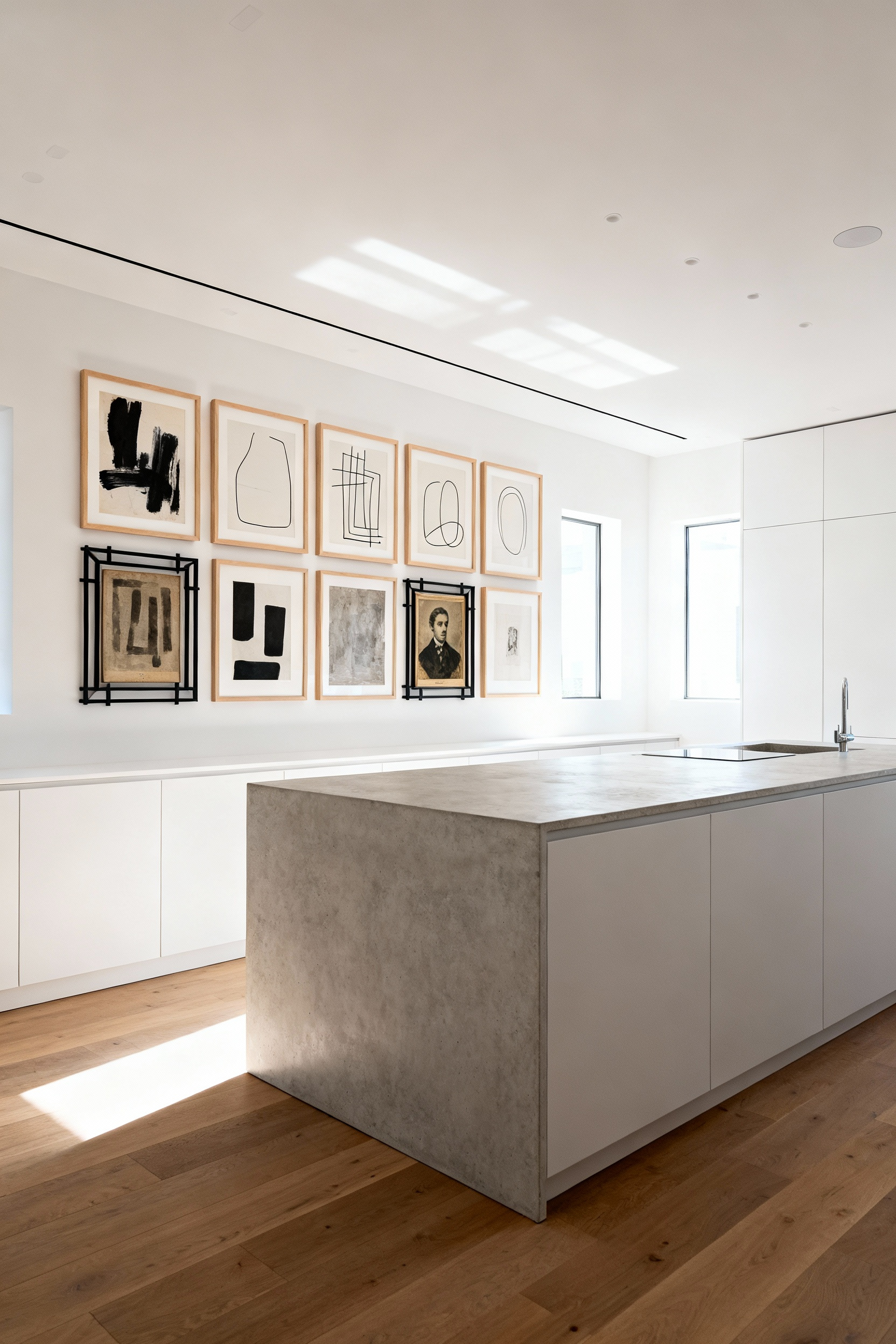
Visually, these arrangements act as a texture-rich anchor. In fact, they inject “soul” into minimalist designs. Furthermore, the choice of art serves a psychological purpose. Experts suggest vibrant colors like yellow excite the eye. Therefore, these hues can stimulate creativity during food preparation.
Nevertheless, introducing fine art here requires foresight. The kitchen is a hostile zone due to heat and humidity. As a result, standard framing is insufficient. Specifically, paper-based works must be protected behind glass. Additionally, placement is critical. Strictly avoid hanging delicate pieces near the stove. Instead, utilize interior walls to ensure longevity.
Conclusion: Achieving the Balance of Raw and Refined
Ultimately, the success of a modern kitchen decoration lies in the calculated tension between opposites. By juxtaposing the rugged history of exposed brick with sleek cabinetry, we create emotional depth. Consequently, the space feels grounded rather than sterile. In fact, applying a refined finish to raw materials elevates them beyond simple industrial chic. Therefore, the design becomes timeless, avoiding the trap of fleeting trends.
Looking forward, this balance ensures your home evolves gracefully. Thus, the kitchen remains a warm sanctuary amidst urban life. As a result, the “lived-in” quality only improves as organic materials age. To begin, audit your current palette for sensory contrast. Specifically, introduce one honed stone element to test the interplay. Finally, embrace imperfections, as they provide the authentic soul of a home.
Frequently Asked Questions
What are the key elements of a luxury modern kitchen?
The hallmarks of a luxury modern kitchen are seamless integration and material authenticity. This includes handleless, monolithic cabinetry (the “Un-Kitchen” philosophy), high-end natural surfaces like honed stone or soapstone, integrated architectural lighting, and bespoke appliances that disappear into the overall structure. The focus is on tactile quality and sophisticated restraint rather than ornamentation.
What is the most important element when starting a modern kitchen decoration project?
The most critical factor is the underlying structure and functional layout, often referred to as the 80/20 rule. Focusing 80% of your effort on creating an efficient layout (like the Social Polygon) and investing in high-quality internal mechanics (drawer slides, hinges) is more important than surface decoration. A perfect layout ensures longevity and high performance, regardless of current aesthetic trends.
How can I make my minimalist modern kitchen feel less cold and impersonal?
To counteract the perceived austerity of minimalism, introduce warmth through tactile hierarchy and layered lighting. Use organic materials like rift-sawn wood or reclaimed timber against sleek, cold elements like steel or concrete. Furthermore, prioritize warm, dimmable LED lighting (2700K-3000K) for social areas, and style open shelves sparingly with curated, personal artifacts that develop patina over time.
- **
“`json
“`