
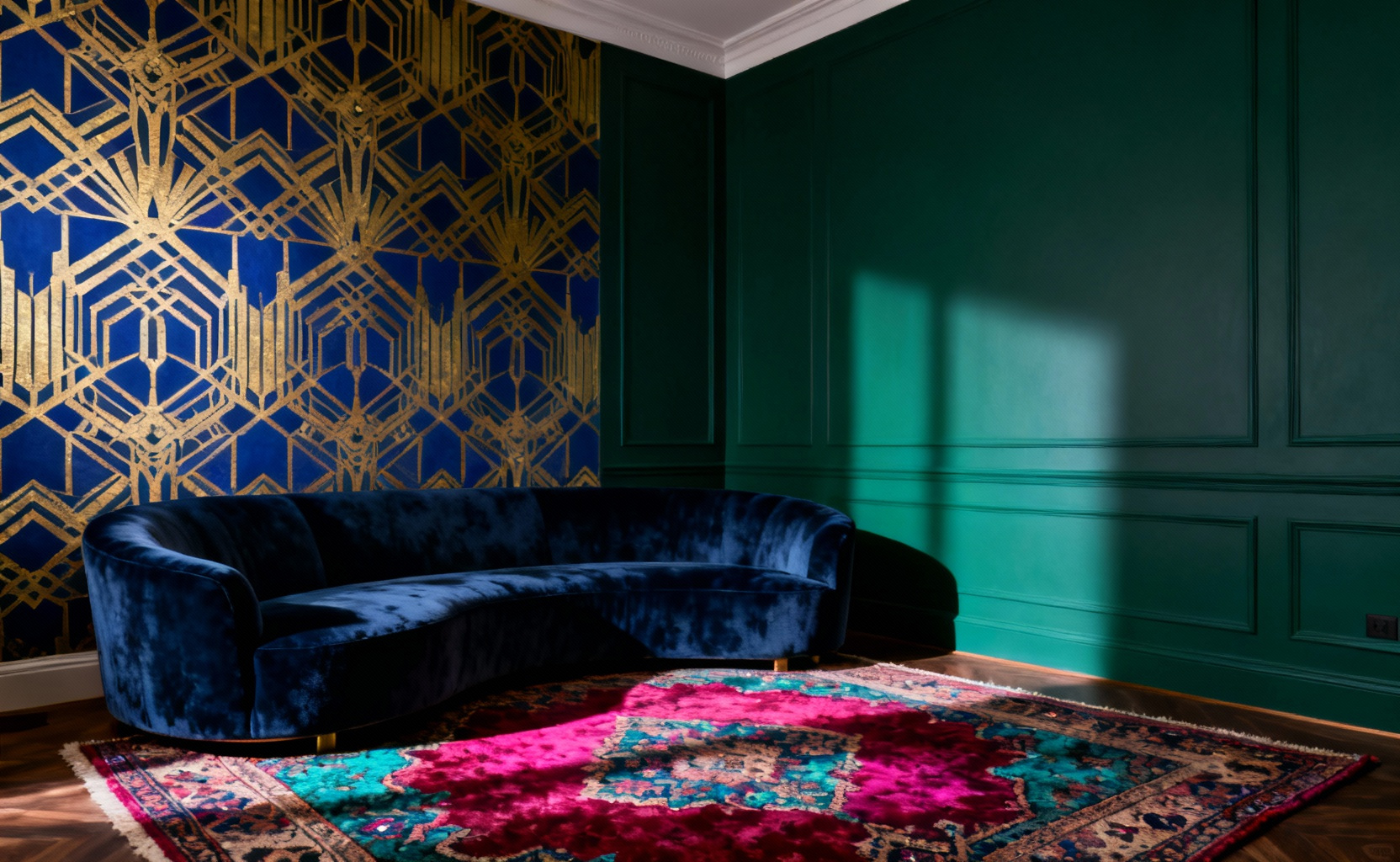

Maximalism is often misunderstood as a synonym for mess. Contrary to the whispers of the beige-obsessed, true maximalism isn’t a lazy accumulation of clutter; it is a high-wire act of design that requires a sharper eye and more discipline than minimalism ever could. Growing up immersed in a kaleidoscope of cultures, I learned early on that a home should scream, not whisper. My own maximalist living room fearlessly blends intricate Middle Eastern textiles with sleek, modern velvet, yet it never feels chaotic. That is because every single piece earns its place.
This design philosophy is best described as “curated chaos.” It demands intentionality. Your living room must function as a visual biography, where every gilded frame and vibrant sculpture tells a specific chapter of your life. If an object doesn’t spark a memory or evoke an emotion, it is simply taking up space. We are aiming for abundance with purpose, not random accumulation. Real luxury lies in the confidence to display your soul on your shelves.
Walking the line between opulence and overwhelming takes skill. Here, we will master the art of selection, exploring how to ground your boldest instincts with a quiet, neutral base and harness the power of a strict color palette to forge cohesion. Banish the fear of “too much.” It is time to stop apologizing for your personality and start celebrating it with elegance.
Phase 1: Setting the Stage – The Courageous Canvas
Banish the beige. True luxury demands bravery, so transform your sterile white box into a dramatic backdrop. I draw from my multicultural roots to embrace fearlessness; a deep, moody wall color like emerald green or a large-scale geometric wallpaper instantly creates emotional depth. This bold decision anchors the entire room. However, abundance requires discipline. Before buying a single accessory, define a cohesive color palette of two primary shades and complementary jewel tones to ensure your space feels curated rather than confused.
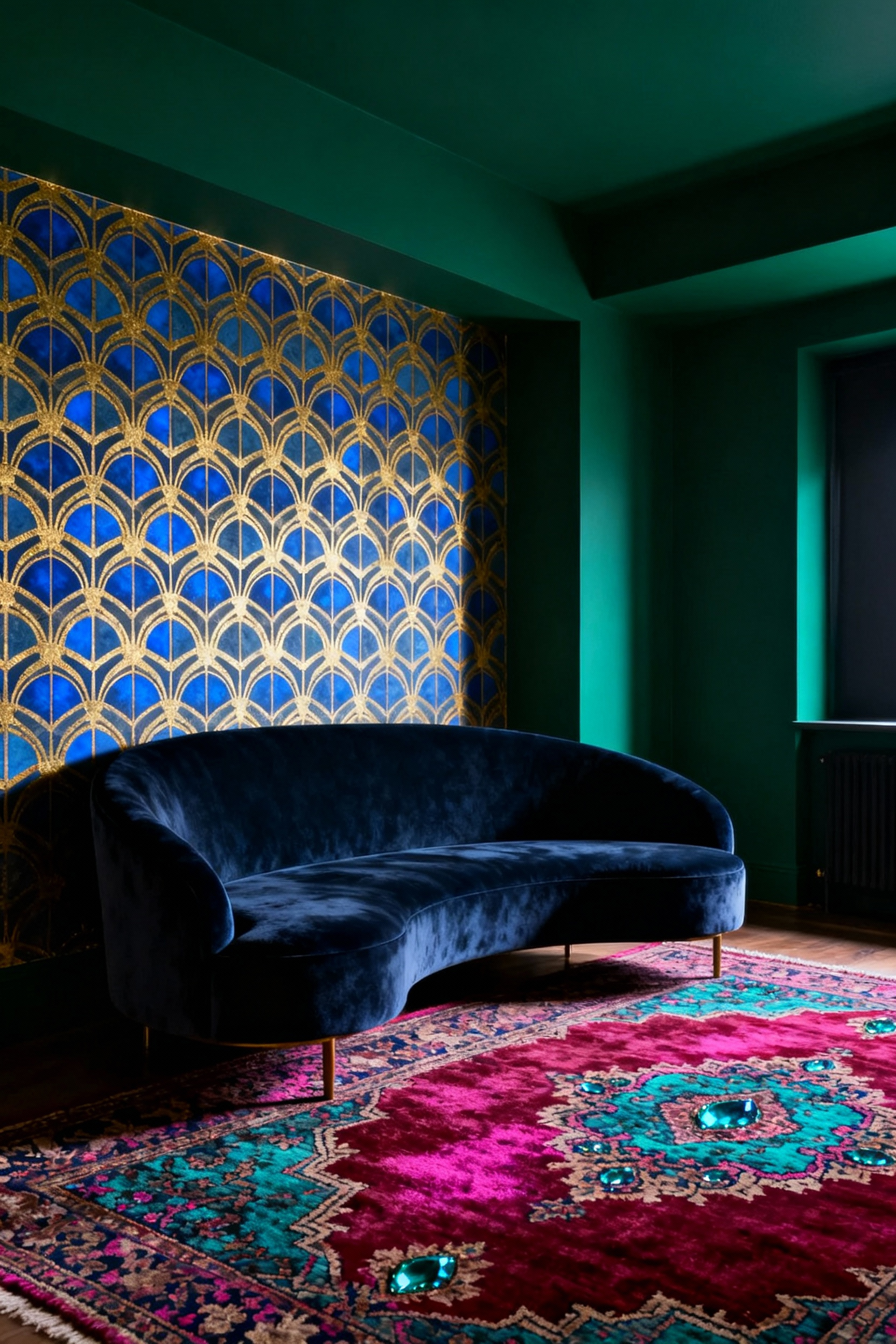
Once the paint dries, position your anchor pieces. Reject the showroom matching set. Instead, hunt for statement furniture that creates a “collected” narrative and sparks conversation.
- Mix Materials: Pair a plush velvet sofa with a distressed leather armchair.
- Contrast Eras: Place a modern silhouette next to a vintage find.
- Prioritize Shape: Choose sculptural forms over standard boxy designs.
By establishing these foundational elements, you build a sophisticated stage for the layers of joy and texture to come.
1. Embrace Color Drenching: Why Painting the Ceiling is Non-Negotiable
Stop treating the ceiling as an afterthought. A stark white “fifth wall” acts as a jarring visual cap, suffocating the immersive drama of a true maximalist sanctuary. Instead, commit fully to color drenching. Saturate your trim, walls, and ceiling in a single, luxurious hue to eliminate visual noise and blur the room’s boundaries. As a result, your eclectic art collection takes center stage, and the space feels expansive rather than enclosed. By erasing the line where the wall ends, you effectively trick the eye and heighten the room’s elegance.
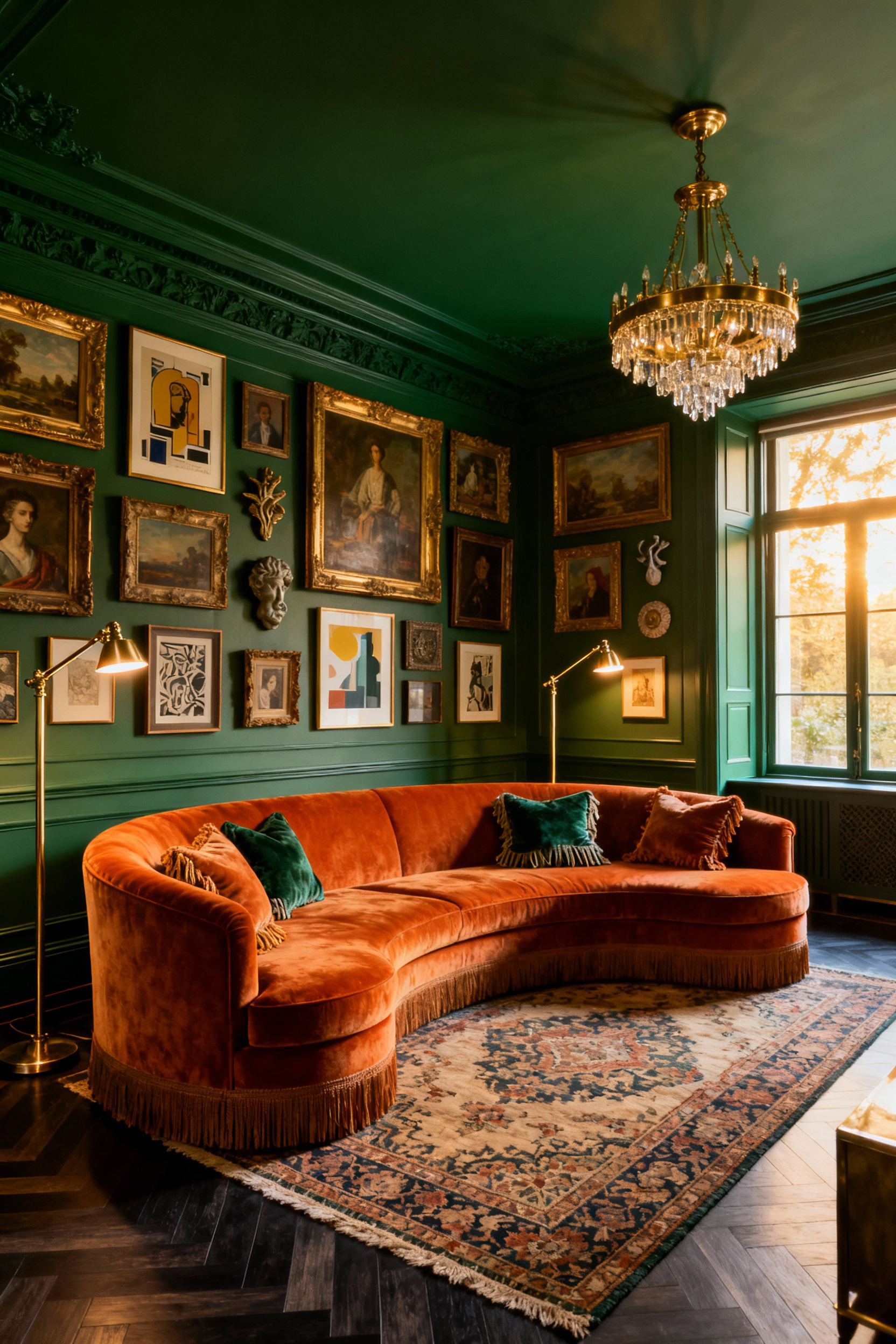
Do not mistake monochrome for flat. To maintain sophistication and prevent the space from feeling one-dimensional, manipulate the sheen to create depth:
- Walls: Apply a matte or flat finish to create a velvety, modern backdrop.
- Ceiling: Switch to satin or high-gloss to reflect light and highlight architectural details.
This strategy creates a seductive “cocooning” effect, wrapping you in intimacy and comfort. My own home is a celebration of joy, and I learned early on that enveloping a room in uninterrupted color is the quickest route to emotional luxury.
2. Wallpaper as Architecture: Large-Scale Florals and Geometric Rigor
Treat wallpaper as a defining architectural element, not a passive backdrop. Transform flat drywall into a gateway by installing large-scale scenic murals. These non-repeating designs destroy structural boundaries and create an immersive sense of grandeur. I often use a lush, floor-to-ceiling botanical print to trick the eye; suddenly, a boxy living room feels like a sprawling, boundless winter garden. To maximize this enveloping effect, employ “pattern drenching” by wrapping the mural onto adjacent walls or pulling a dominant color from the print onto the ceiling to dissolve the room’s edges entirely.
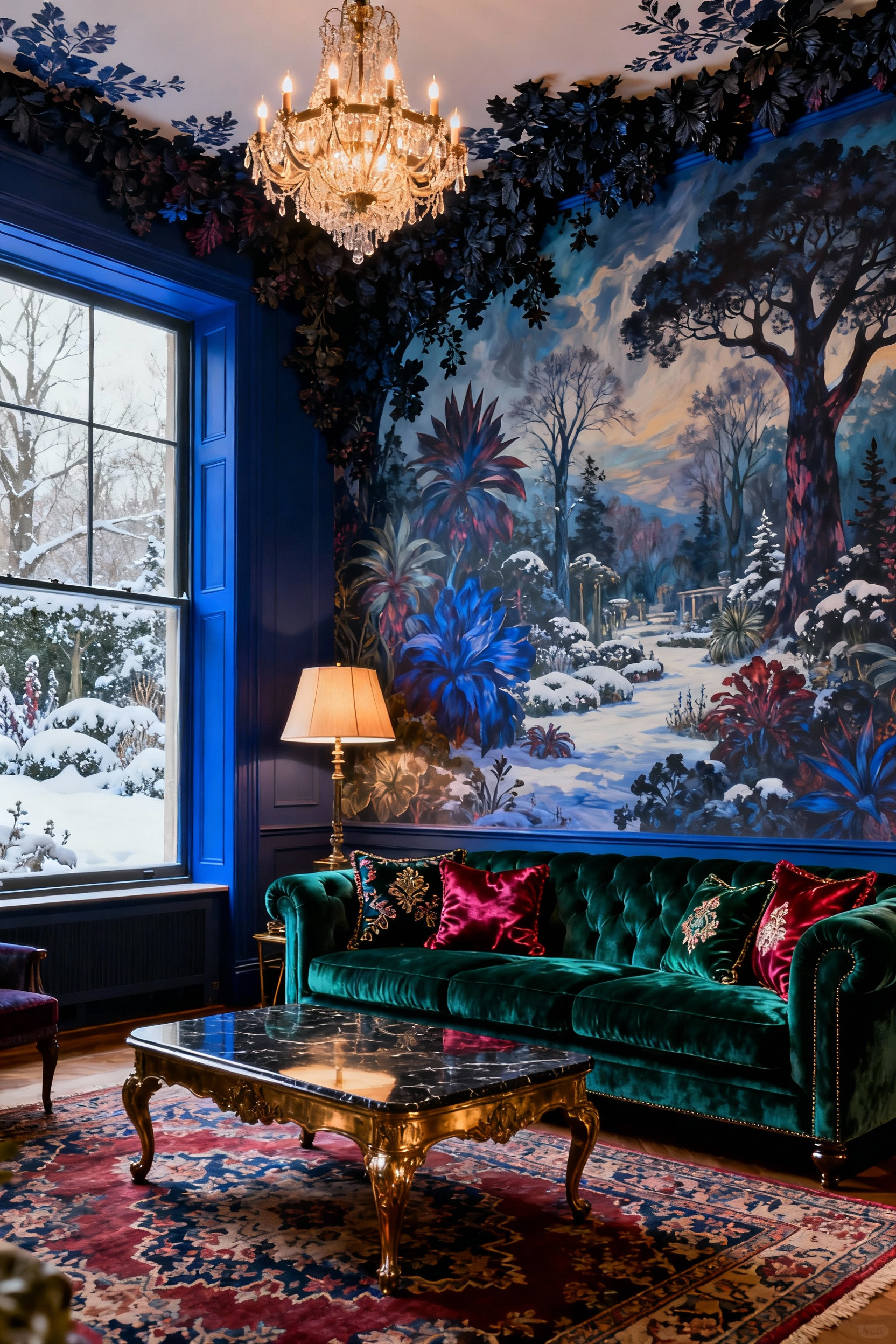
While florals provide fantasy, bold geometrics introduce necessary discipline. Use rhythmic patterns—like Art Deco arches or sharp chevrons—to construct a confident visual framework that holds your eclectic furniture collection together. This structural order prevents abundance from becoming clutter. For a truly luxurious finish, select wallpapers with 3D effects or optical illusions to manipulate perspective, turning a standard feature wall into a dynamic architectural anchor.
3. Grounding the Drama: The Rules of Luxury Rug Layering
Foundational elements dictate the drama of a maximalist room. Begin with a massive, neutral base rug—think jute or sisal—to anchor the visual chaos and let your furniture breathe. Then, demand attention with texture. I often layer plush, high-pile silk or shaggy Moroccan pieces over structured flatweaves to invoke a sense of opulent history and tactile depth. This contrast transforms a flat floor into a landscape of sensory richness.
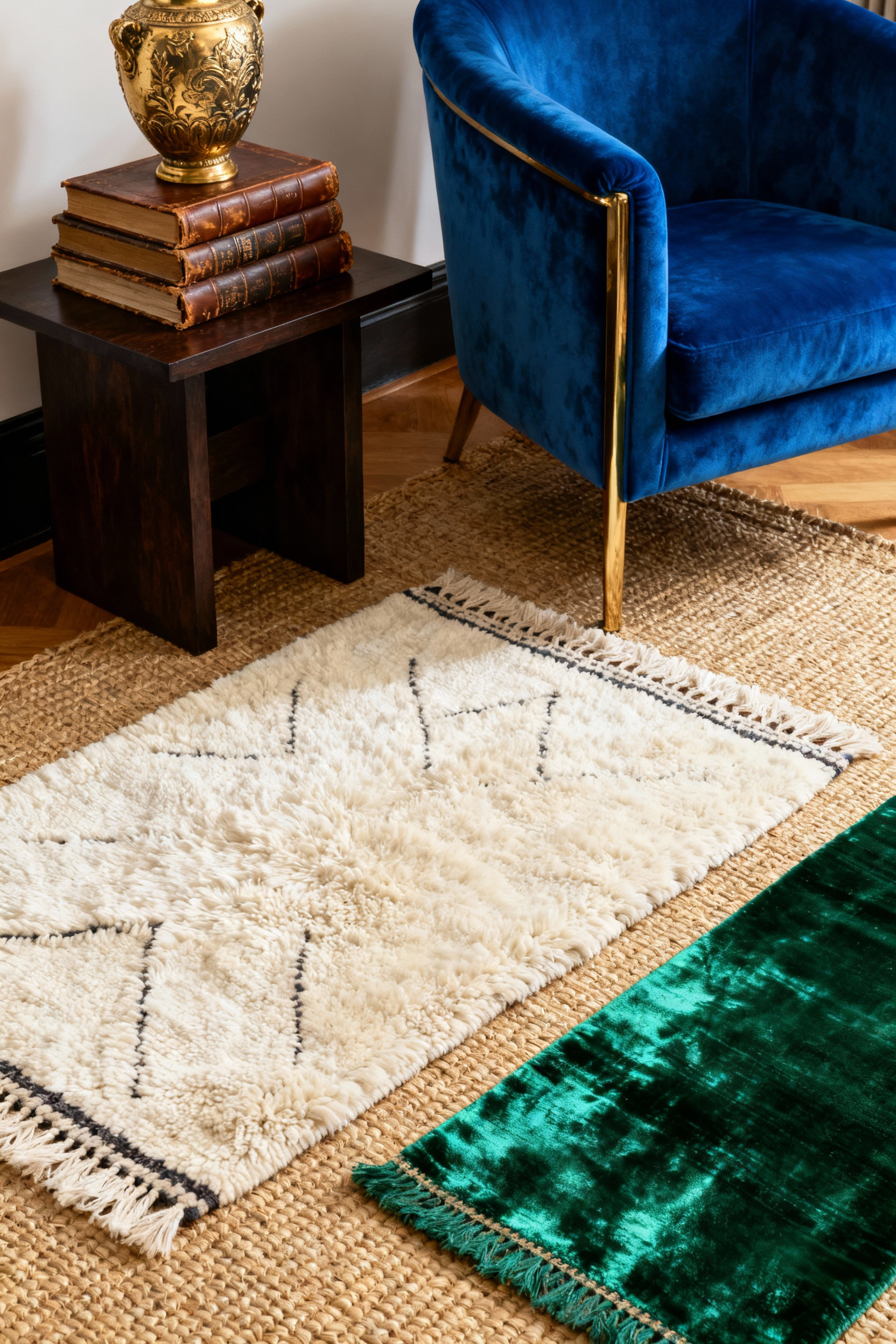
Fearless design still demands discipline to avoid looking messy. My multicultural background taught me that mixing patterns requires a strict adherence to proportion and harmony. Follow these principles to maintain elegance:
- Respect the 2/3rds Ratio: Ensure your top rug covers no more than two-thirds of the base to create a deliberate, framed border.
- Unify with Color: Connect clashing patterns through one shared hue.
This common thread ensures your space feels curated rather than accidental.
Phase 2: Anchoring Your Maximalist Living Room – Furniture with Presence
Banish the invisible. Your foundational furniture must command the room with monumental scale and sculptural drama. These pieces act as the heavy anchors for the maximalist layers to follow. Select a gigantic, curved sofa or a pair of throne-like armchairs to establish a corporeal presence. Drench them in plush, dramatic velvet—think emerald green or deep wine—to instantly inject luxury. I often look for modular shapes that feel more like art than seating; this boldness creates the emotional gravity a joyful home requires.
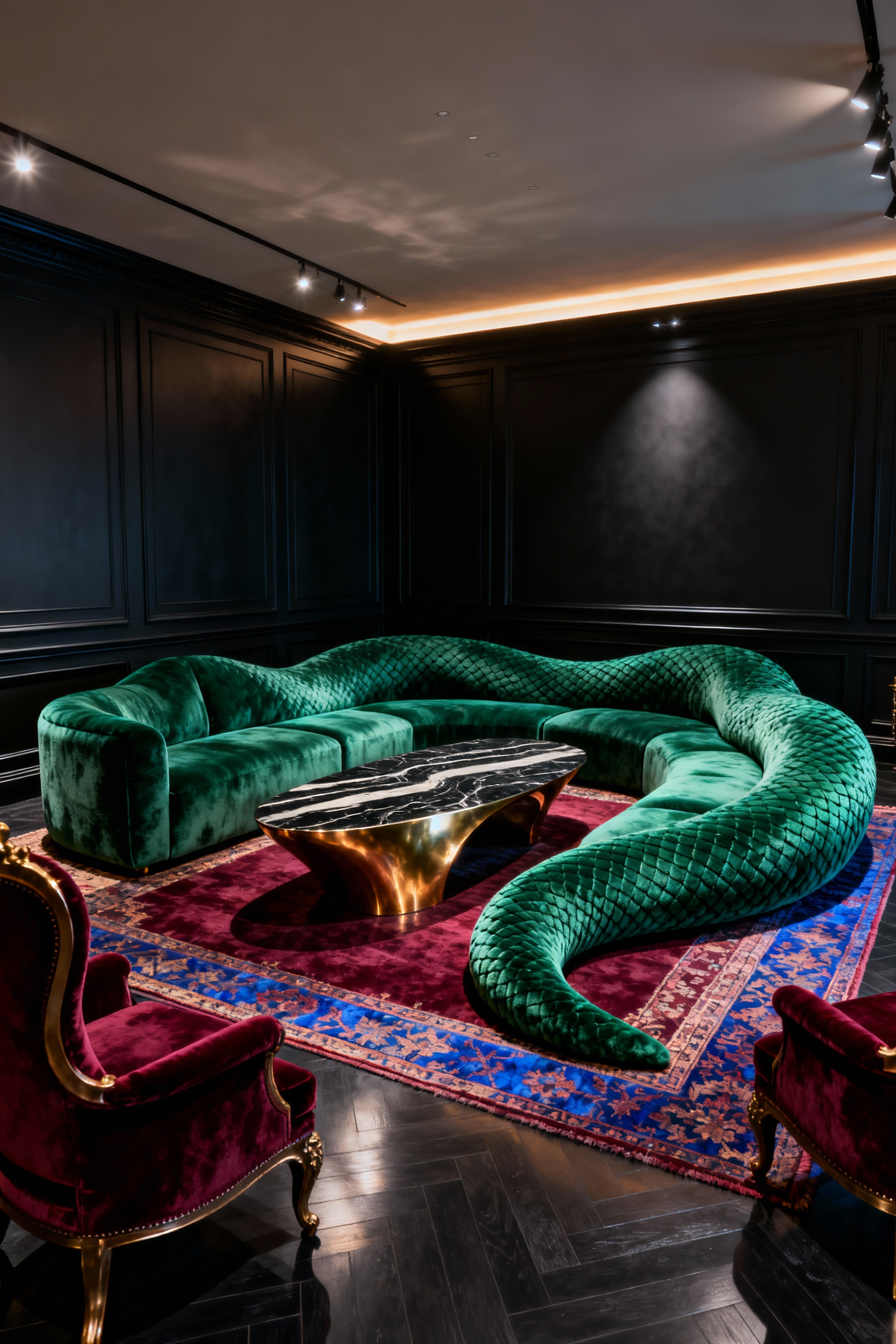
Sheer mass needs relief. You must master the art of dynamic balance to keep the space breathable.
- Offset Weight: Pair a heavy, tufted Chesterfield with an airy, metallic coffee table.
- Crash Eras: Situate a sleek contemporary lamp atop a battered vintage credenza.
Drawing from my multicultural background, I reject the “matching set” mentality. A curated clash of Art Deco and Brutalism tells a richer story than a showroom catalog. Trust your gut, mix the periods, and let your furniture narrate your life.
4. The Velvet Revolution: Selecting Sofas that Demand Attention
Your sofa dictates the room’s energy, so refuse to let it fade into the background. Crown your living space with a plush velvet centerpiece that unapologetically demands the spotlight. Select a deep, saturated jewel tone like Emerald Green or Sapphire Blue to create an immediate center of gravity. Drawing from my own heritage, where homes are vibrant celebrations of life, I treat the sofa as the room’s heartbeat rather than simple seating. Scale is vital: embrace the “big and bold” mantra by choosing a grandiose corner unit or a silhouette with dramatic statement curves to ensure the furniture dominates the floor plan.
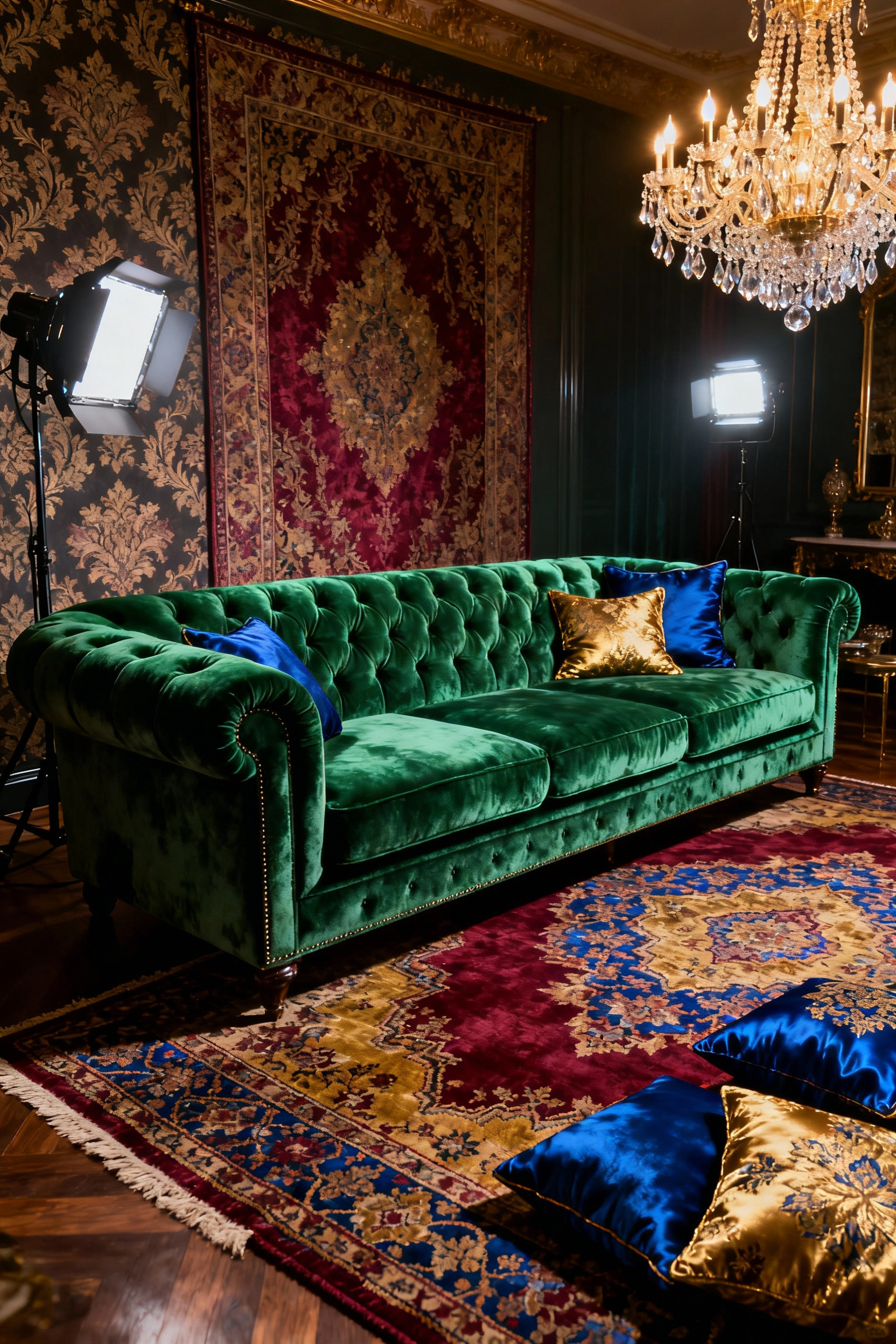
Once you secure your anchor, amplify the drama through tactile contrast. Velvet thrives when challenged by opposing textures, preventing the look from feeling flat. To fully realize this opulent aesthetic:
- Clash Textures: Pair the smooth sheen with shaggy rugs or bouclé throw pillows to maximize visual depth.
- Add Sparkle: Flank the piece with high-gloss brass or gold accents to enhance the fabric’s natural luminosity.
- Pop the Color: Use a Mustard Yellow or Deep Orange velvet against dark walls for a curated shock of brightness.
5. Era-Mixing Mastery: Pairing Rococo Silhouettes with Mid-Century Lines
Embrace the electric tension between the ornate past and the functional present. To master this fearless pairing, establish a sleek Mid-Century Modern foundation first. Let a low-slung walnut credenza or a streamlined sofa ground your space. These clean lines prevent visual chaos and act as a canvas for your bolder instincts. Once grounded, you can introduce Rococo elements as your room’s crown jewels. A sensuous, gilt-framed mirror or a cabriole-leg chair instantly disrupts the geometry, becoming a dramatic focal point and a celebration of complex personality.
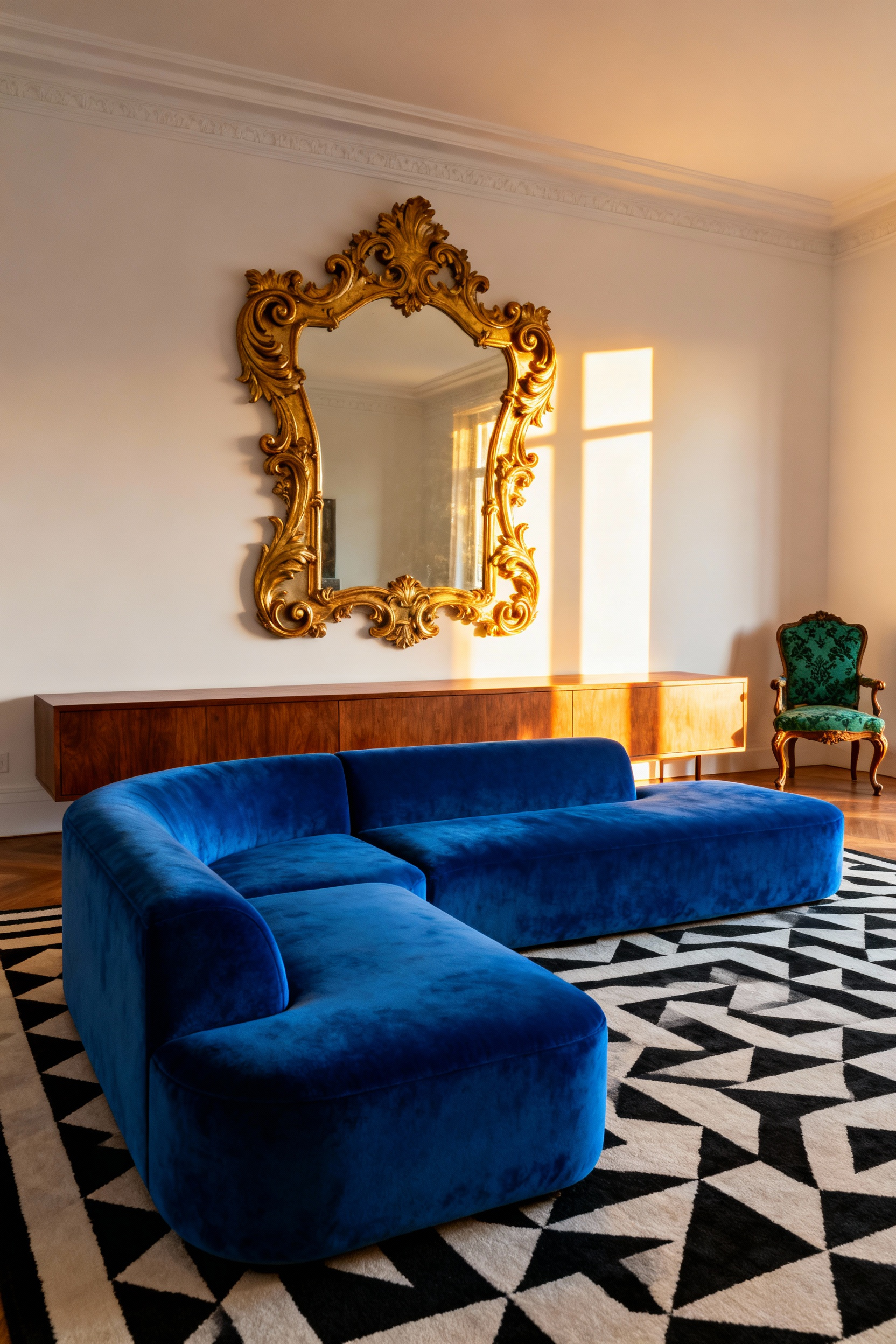
True luxury lives in the mix, not the match. Bridge these centuries through tactile experience and high-stakes contrast. Specifically, employ these strategies to heighten the drama:
- Layer materials: Juxtapose the deep, earthy leathers of MCM with the decadent silk and velvet of Rococo.
- Play with sheen: Contrast the matte finish of modern wood against the high-gloss shimmer of gilded gold.
- Curate the tension: Treat ornate antiques as “jewelry” to let the modern simplicity breathe.
By balancing heavy, historic ornamentation with light, functional forms, you create a space that feels both curated and explosively joyful.
6. The ‘Anti-Matchy’ Coffee Table Strategy: Sculptural Forms over Function
Banish the “matching set” to the past. Treat your coffee table as the room’s rebellious anchor, viewing it as functional sculpture rather than a mere landing pad for remote controls. Deliberately oppose your primary seating to spark high-voltage visual tension; clash a sleek, velvet sofa with a jagged Brutalist concrete block or a heavy antique with ethereal, clear acrylic. Mixing eras and textures fearlessly proves that true luxury lies in the unexpected.
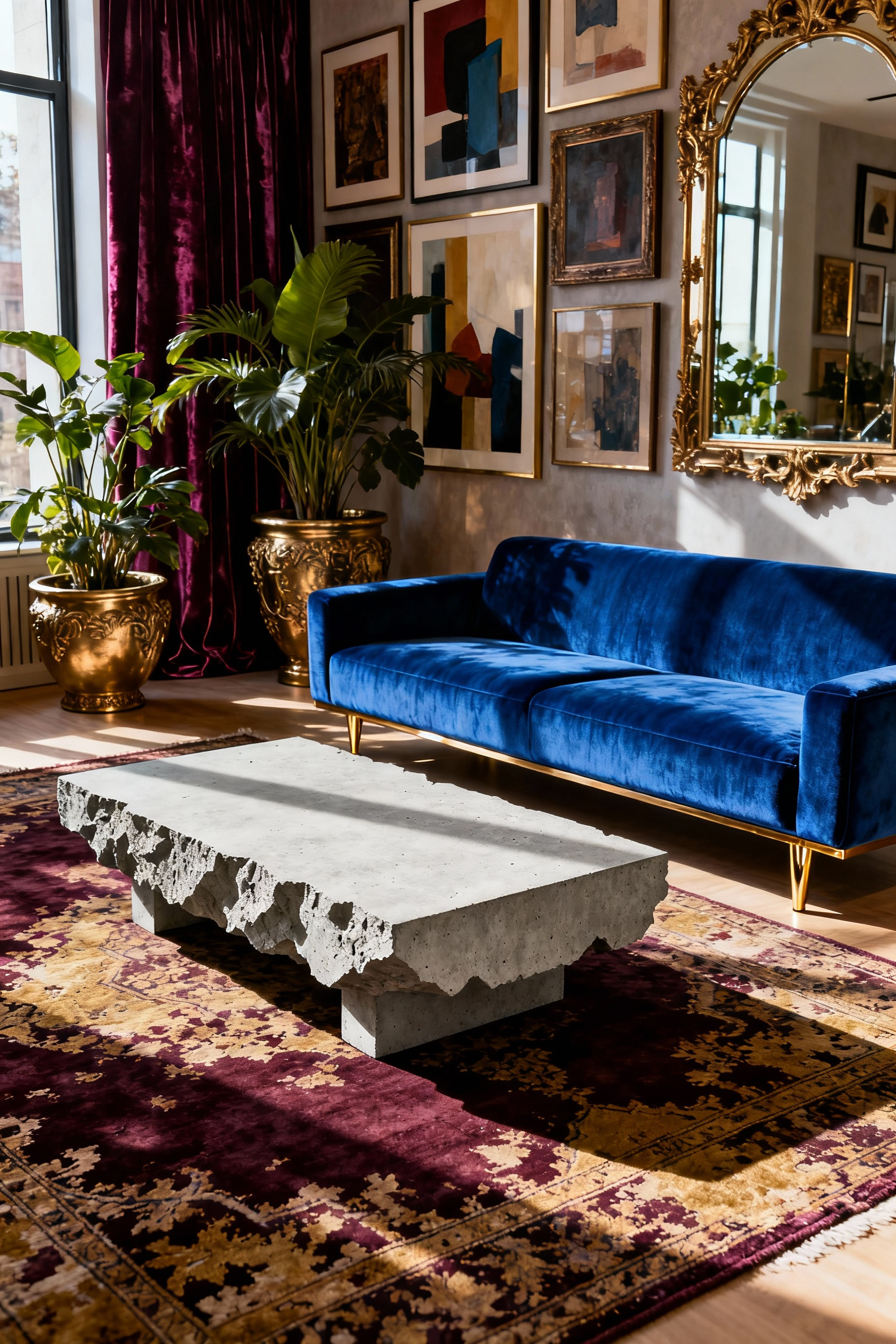
Prioritize silhouette over surface area. A massive, flat table invites clutter, but a curated sculptural piece demands respect. To master this “anti-matchy” aesthetic:
- Create movement: Utilize nesting tables or multi-level clusters to add vertical drama and depth.
- Curate ruthlessly: Limit displays to one or two art books or a singular vase to let the table’s form breathe.
- Embrace friction: Always choose a material or shape that feels aggressively foreign to your rug and upholstery.
Phase 3: The Pattern Play – Intermediate Complexity
True luxury lives in the layers. Elevate your living room from cluttered to curated by mastering the Rule of Three Scales, ensuring your patterns converse rather than compete. First, designate a large-scale “hero” pattern—perhaps a dramatic floral wallpaper—to anchor the space. Next, support it with medium-scale prints on upholstery and small-scale motifs on trim. This creates a visual hierarchy that guides the eye effortlessly.
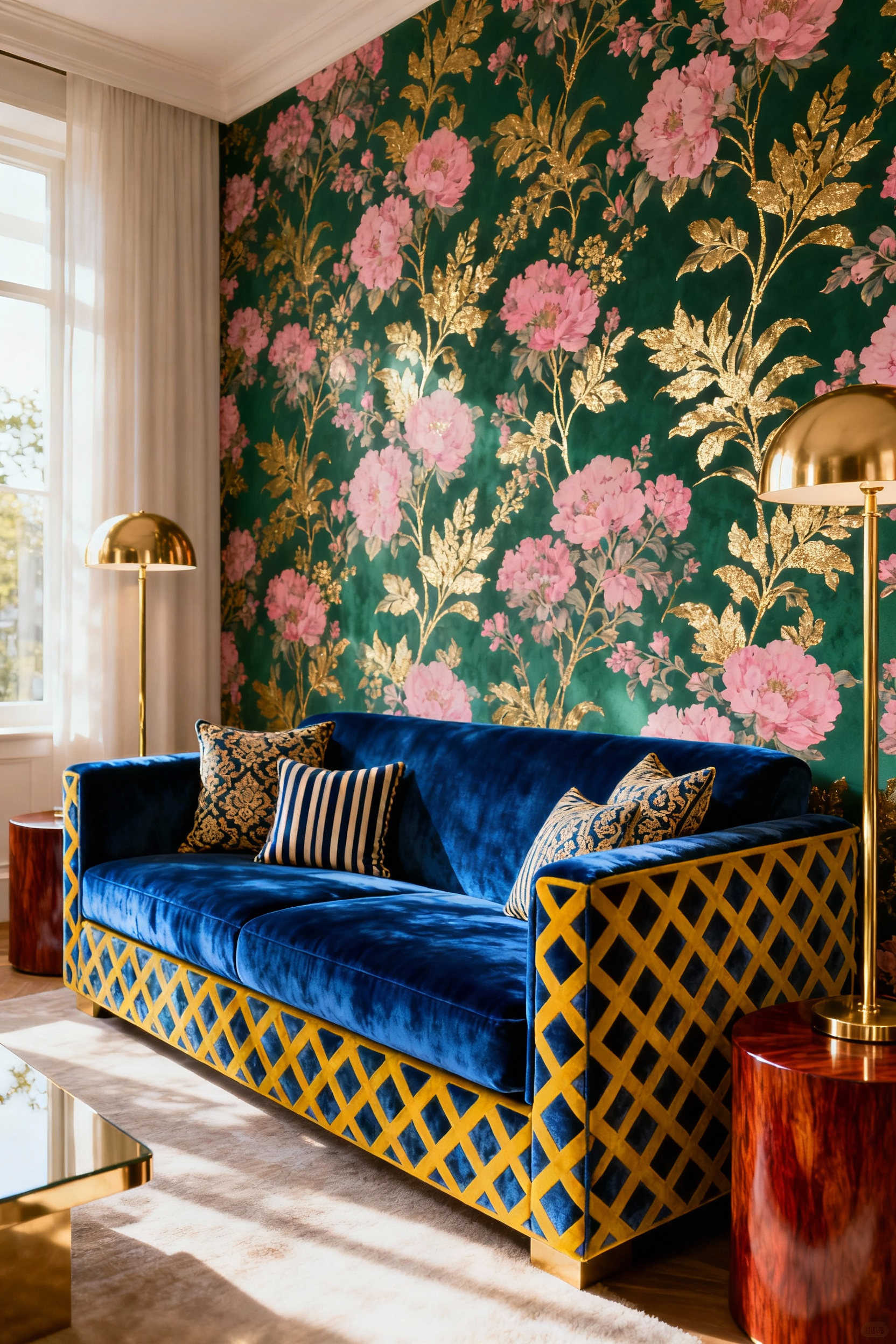
To lock this bold look together:
- Unify with Color: Extract three specific hues from your hero piece and ensure every secondary pattern contains at least one of them.
- Clash Styles: Balance organic curves (paisleys, florals) with structured, crisp lines (stripes, checks).
My multicultural upbringing taught me that daring combinations—like a vintage silk Persian rug paired with sharp modern geometrics—create the most soulful homes. Embrace this friction. Furthermore, mix your materials to amplify the drama; layer plush velvet pillows against rough linen sofas. Be fearless, but remain intentional to build a space that feels as expensive and vibrant as it looks.
7. The Rule of Three: Balancing Scale in Fabric Patterns
True luxury demands the fearless layering of textiles, but boldness requires structure to avoid visual chaos. Drawing from my multicultural background where distinct tapestries often tell a unified story, I rely on the Rule of Three to orchestrate this mix efficiently. You must vary your pattern scales to prevent them from competing for attention. Start with a dominant, large-scale motif—like a sweeping floral—to cover 60% of the visual space, setting a dramatic tone for the room.
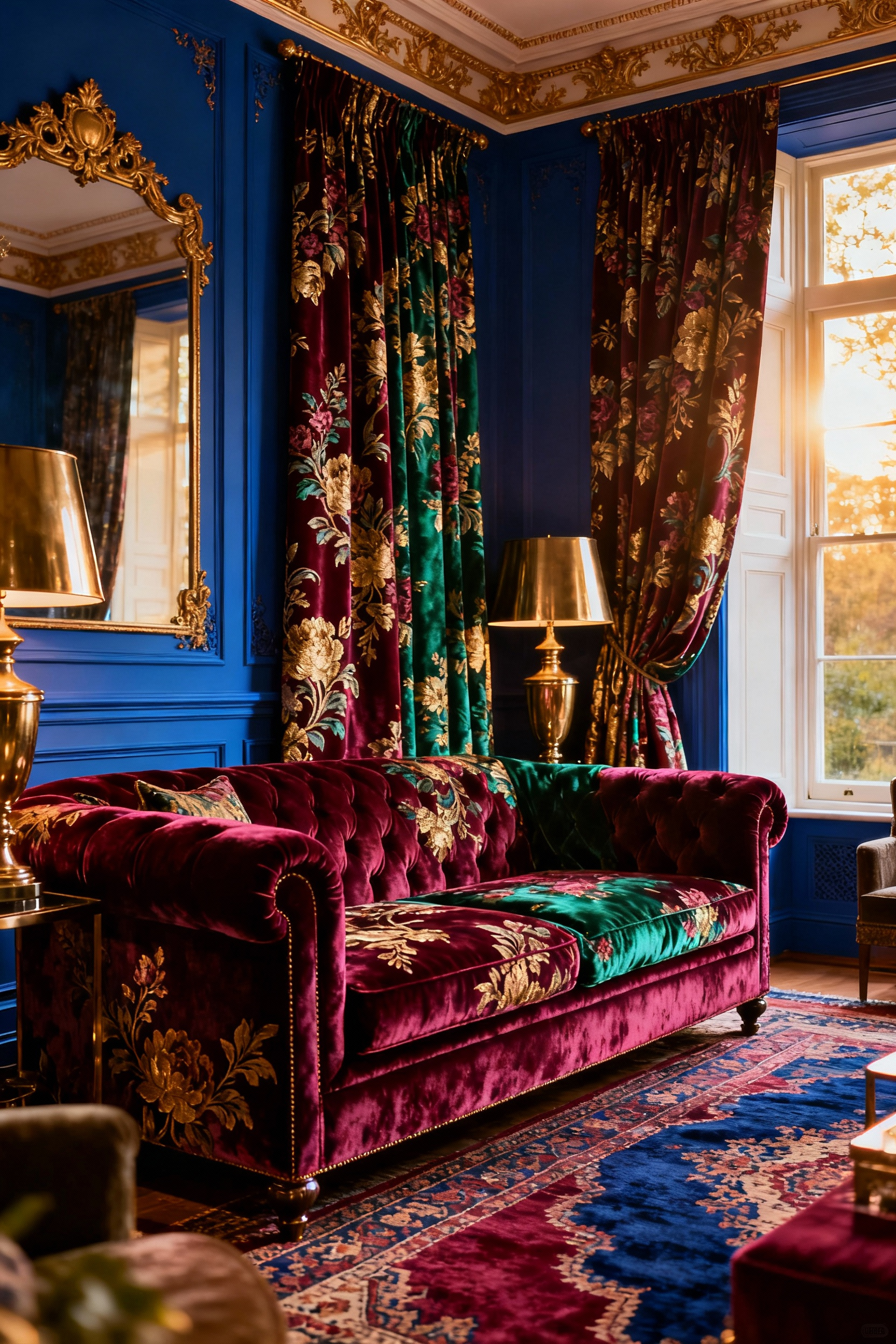
Once the stage is set, introduce contrast through size and geometry to build a sophisticated hierarchy:
- Secondary Support: Select a medium-scale structural print, such as a geometric or check, for curtains or armchairs (30%).
- The Accent: Finish with a small-scale textural pattern or pinstripe on throw pillows to ground the look (10%).
Finally, anchor this trio with a cohesive color palette. Let three to five core colors act as the invisible thread that binds these disparate elements together. This approach ensures your space feels intentionally curated rather than cluttered, turning your living room into a joyous celebration of personality.
8. Animal Prints as Neutrals: How to Integrate Leopard and Zebra without Kitsch
Do not fear the wild. In my design philosophy, leopard and zebra serve as the ultimate neutrals, offering earthy, monochromatic palettes that ground a maximalist space. Treat them exactly as you would beige or black. Instead of scattering small, busy trinkets, commit to the drama with a substantial anchor piece. A large zebra-print rug or a leopard velvet chaise instantly stabilizes a room filled with vibrant jewel tones, transforming the pattern from a noisy distraction into a sophisticated foundation.
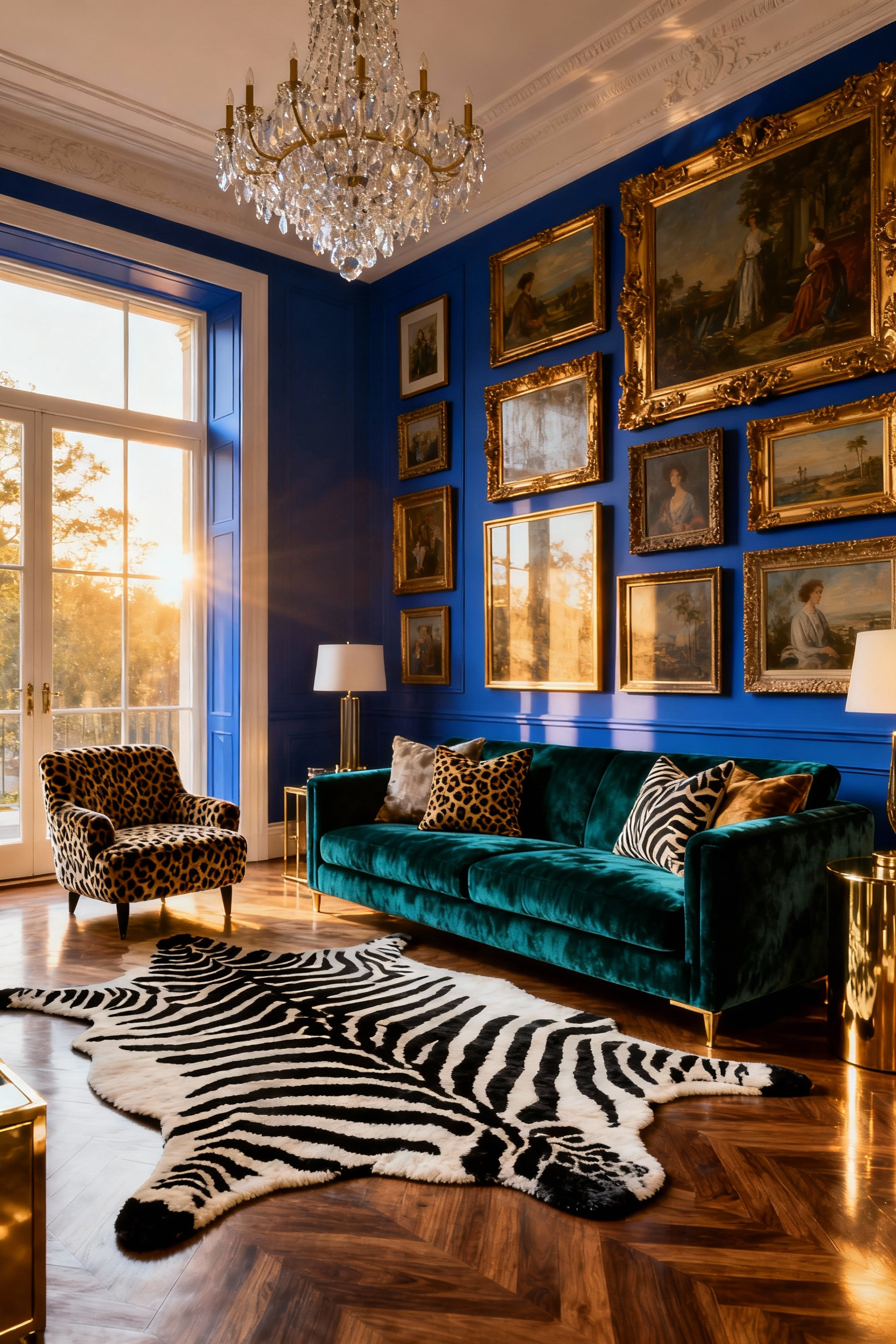
To ensure the look screams “chic” rather than “costume,” prioritize tactile luxury. Cheap fabrics ruin the illusion, so pair your prints with sumptuous textures.
- Layer materials: Toss a silk leopard pillow onto a deep emerald velvet sofa.
- Mix scales: Contrast a tight animal print against wide stripes or sprawling floral wallpapers.
Bold patterns, when layered with intention, create a universal language of comfort. Let these prints act as the cohesive glue in your opulent sanctuary.
9. Window Treatment Drama: Floor-to-Ceiling Tassels, Trims, and Textures
Treat your windows as the grand stage of your living room, not merely a source of light. Viewing textiles as the soul of a home, I always mount drapery rods immediately below the crown molding to visually skyrocket the ceiling height. Allow the fabric to skim or intentionally puddle on the floor for unapologetic opulence. This creates a vast canvas, so refuse to play it safe with single layers. Combine heavy, light-blocking velvet with ethereal, embroidered sheers to build a cocoon of comfort and sophistication.
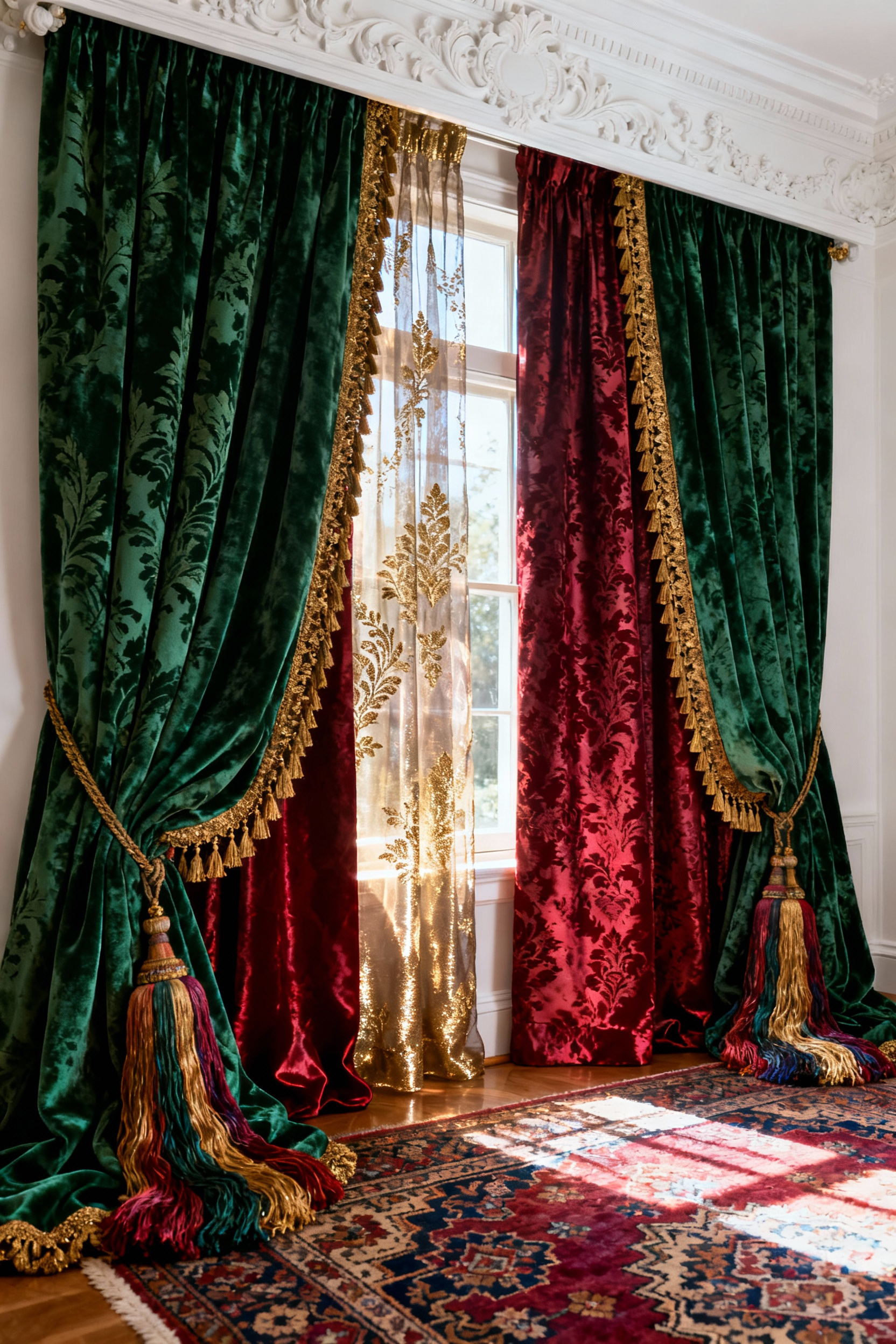
Once the foundation is set, accessorize with passementerie—the essential jewelry of the window world. Plain edges vanish in a maximalist space, so you must demand attention with tactile embellishments:
- Line the leading edges with oversized tassels or beaded fringe to add weight and movement.
- Apply thick brush trims to create a color-blocked border where solid fabrics meet bold patterns.
- Mix fabric sheens, contrasting matte raw silk with metallic brocade to elevate the sensory experience.
These details unify your room’s accent colors and transform standard drapes into bespoke, architectural features.
Phase 4: The Soul of the Room – Advanced Curation
Maximalism demands intention, not just accumulation. Transform mere clutter into curated chaos by treating your home as a living visual diary. I often blend vibrant textiles from my heritage with sleek, modern lines to create a necessary dialogue between the past and present. Choose pieces that spark profound joy and weave a narrative of legacy. Juxtapose a weathered vintage find against a contemporary sculpture; this gives the room a deeply lived-in complexity that transcends fleeting trends.
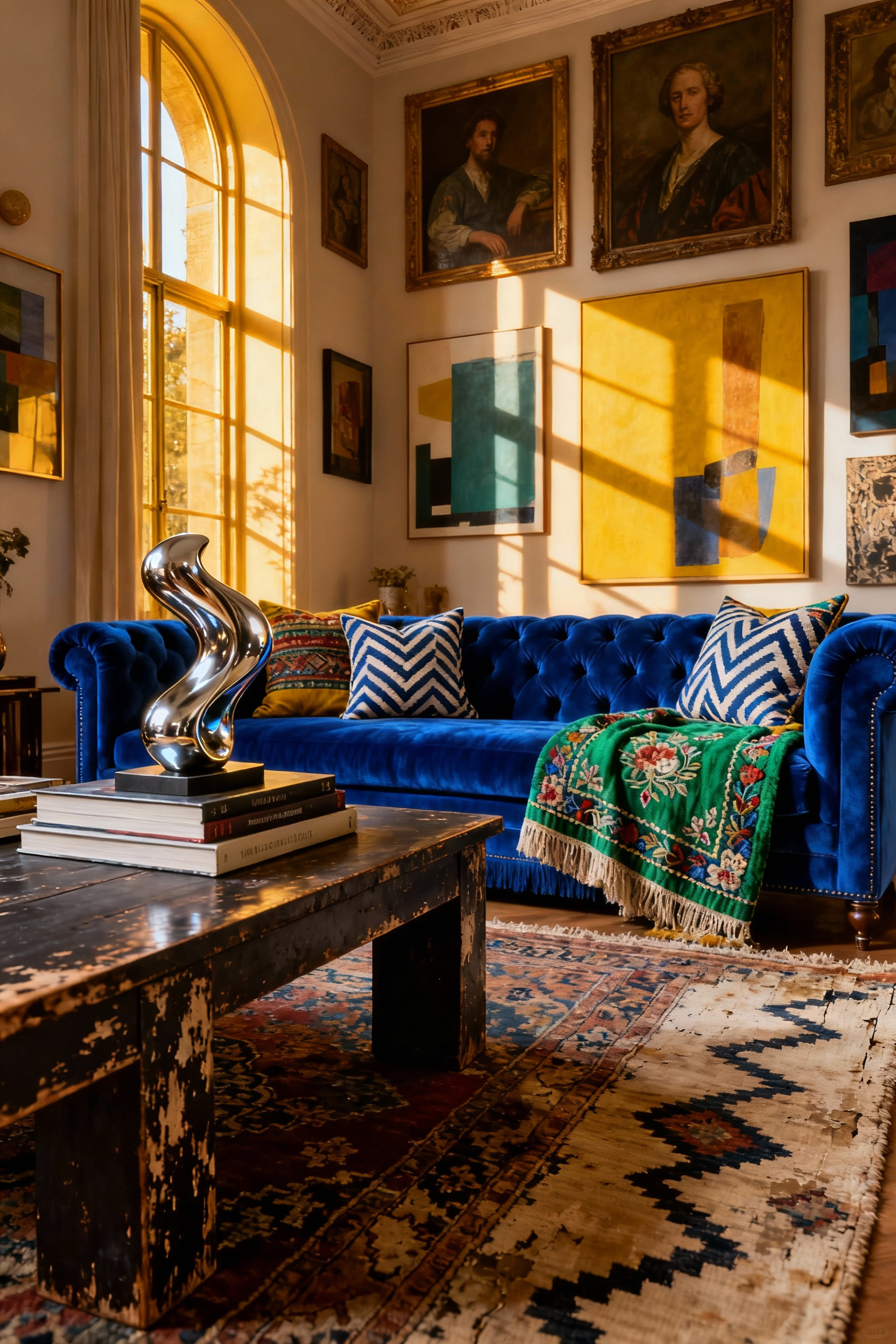
Elevate your display strategy to turn objects into art.
- Group like with like: Cluster ceramic vases or antique books to form a high-impact statement rather than scattering them.
- Build a thematic gallery wall: Mix oil paintings with mirrors from floor to ceiling, anchored by a consistent frame color.
- Design for relief: Integrate pockets of negative space so your boldest focal points can truly breathe.
True luxury lies in the confidence to showcase your soul, making the space an unapologetic celebration of who you are.
10. Floor-to-Ceiling Gallery Walls: Breaking the Eye-Level Rule
Ignore the antiquated “eye-level” rule. True maximalism demands full immersion, transforming static walls into living tapestries of joy. I approach my own home with a fearless “more is more” philosophy, treating every vertical inch as prime real estate for storytelling. Consequently, you must extend your collection from the baseboards to the crown molding to create a cocoon of luxury that totally envelops the viewer.
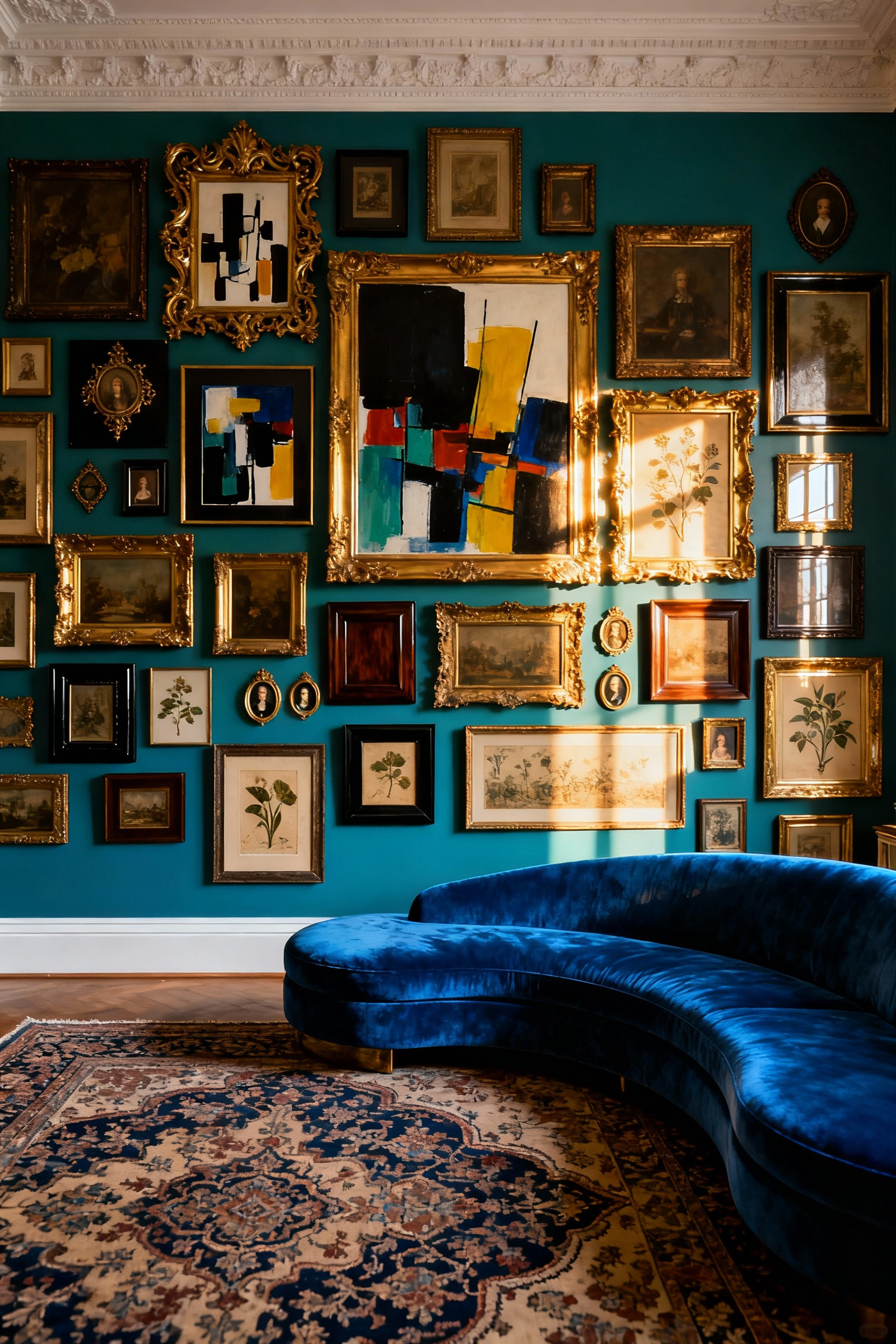
To execute this opulent look without creating clutter, apply strategic discipline:
- Anchor the center: Position your most treasured art at standard eye level (approx. 60 inches), then expand vertically in both directions.
- Diversify textures: Mix ornate gold frames with neon acrylics, or integrate dimensional objects like mounted ceramic plates and vintage mirrors.
- Mind the gap: Maintain strict, consistent spacing of two to four inches between pieces.
Uniform spacing unifies the eclectic mix, ensuring your wall reads as a sophisticated gallery rather than a chaotic pile.
11. The Cabinet of Curiosities: Displaying Collections with Museum Authority
Banish the notion of clutter; embrace the prestige of the *Wunderkammer*. Your living room demands a curatorial thesis, transforming personal artifacts into a physical timeline of your existence. I often place my grandmother’s rustic clay vessels beside sharp, modern brass instruments to honor my roots. This intentional friction between old and new, rough and smooth, generates “museum authority.” You must govern your collection with a sophisticated eye. Every object must fight for its place on the shelf, telling a story that sparks immediate conversation.
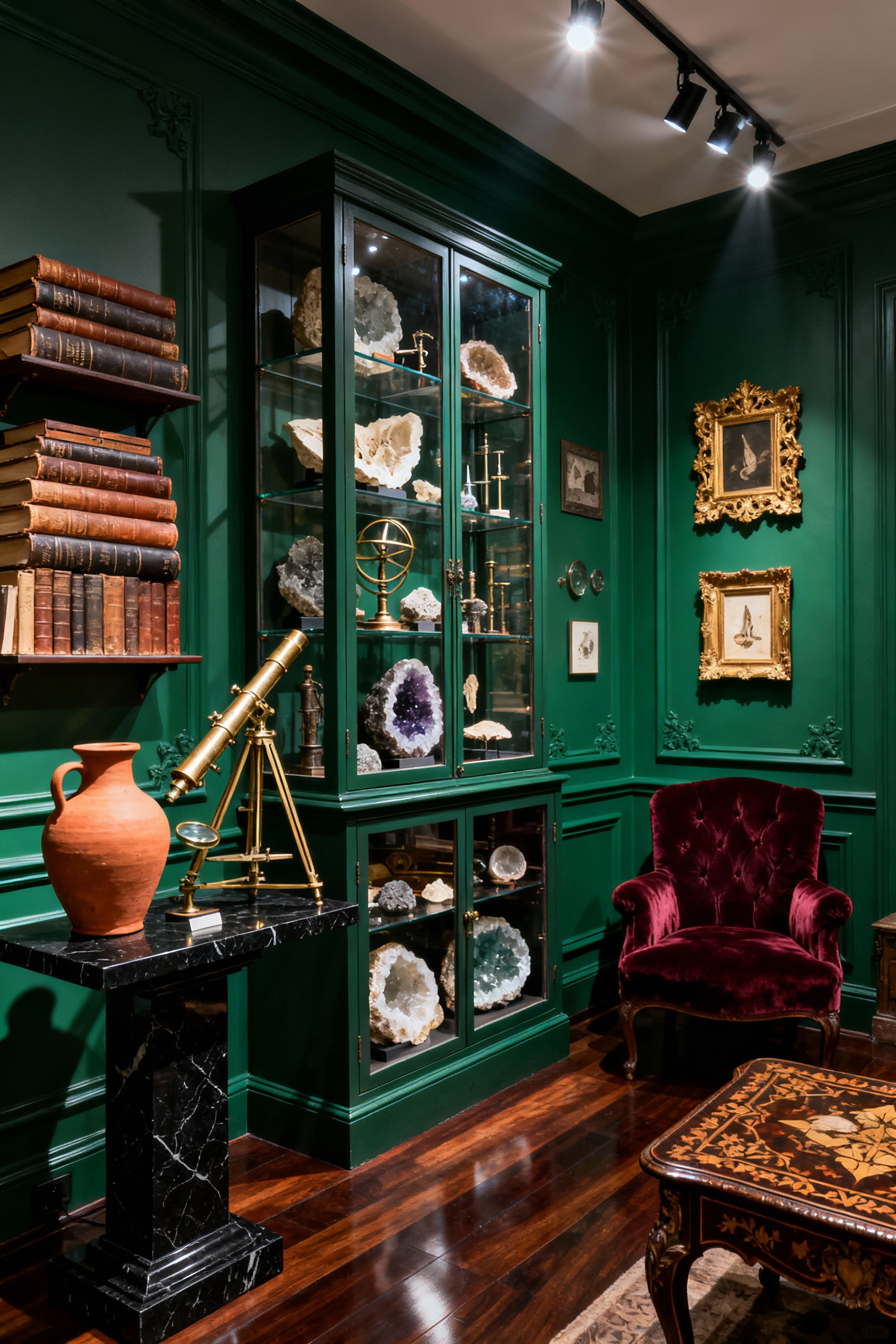
The architecture of your display defines its impact. Treat your shelving as a high-end exhibition wing. Paint the back panel a moody, deep hue to make gold accents pop. Then, master the art of composition:
- Group by Contrast: Pair delicate *naturalia*, like coral or crystals, with industrial *scientifica* elements for visual tension.
- Vary the Vertical: Use stacked art books as risers to lift smaller treasures, preventing a flat, stagnant line.
- Layer Deeply: Lean framed sketches behind 3D objects to invite the eye inward.
Execute these moves with confidence. Your home is a celebration of your journey, so display it with the drama it deserves.
12. Sculptural Lighting: Chandeliers that Act as Jewelry for the Room
Treat your chandelier as the crowning jewel of your living space, not merely a utility. In a maximalist room, lighting must never whisper; it creates the drama. Therefore, ignore standard sizing rules and go intentionally oversized. A commanding scale ensures the fixture acts as functional art, holding its own against bold patterns and rich textures. Prioritize unconventional silhouettes that stun even when the switch is off. Whether it’s an organic, branching form or a sharp geometric abstract, let the shape express your fearless personality.
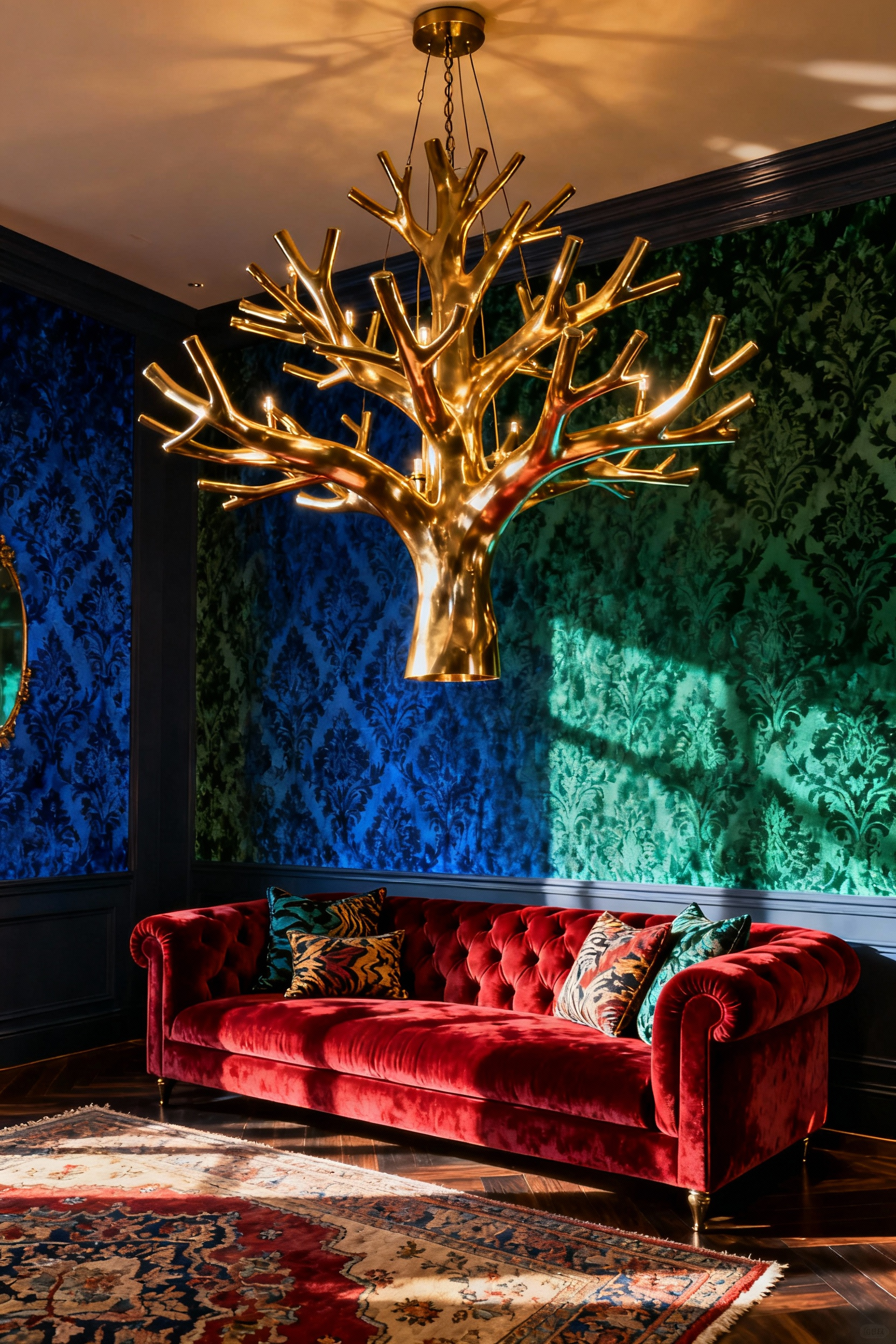
Draw from materials that reflect light and luxury. Select fixtures that double as conversation pieces:
- Polished metals: Antique gold or intricate bronze work adds immediate warmth.
- Artistic glass: Colorful Murano or hand-blown textures bring a global sensibility.
- Vibrant details: Turquoise beads or reflective crystals inject joy.
Finally, anchor this masterpiece directly over your main seating area to create an immediate “wow” factor. Ensure your sculpture sets the right mood by installing a dimmer and using warm bulbs (2700–3000K), allowing the piece to transition from a gallery-style focal point to a cozy, ambient glow.
13. Biophilic Abundance: Using Oversized Flora to Soften Hard Lines
Treat your plants as living sculpture, not mere background decor. I rely on the organic chaos of nature to disrupt rigid architecture. Place a towering Fiddle-leaf Fig or a sweeping Bird of Paradise next to sharp window frames or blocky cabinetry. Consequently, the massive, fluid curves of these architectural giants obliterate the visual harshness of rectangular sofas and geometric shelving. You aren’t just filling space; you are sculpting the air with chlorophyll and drama.
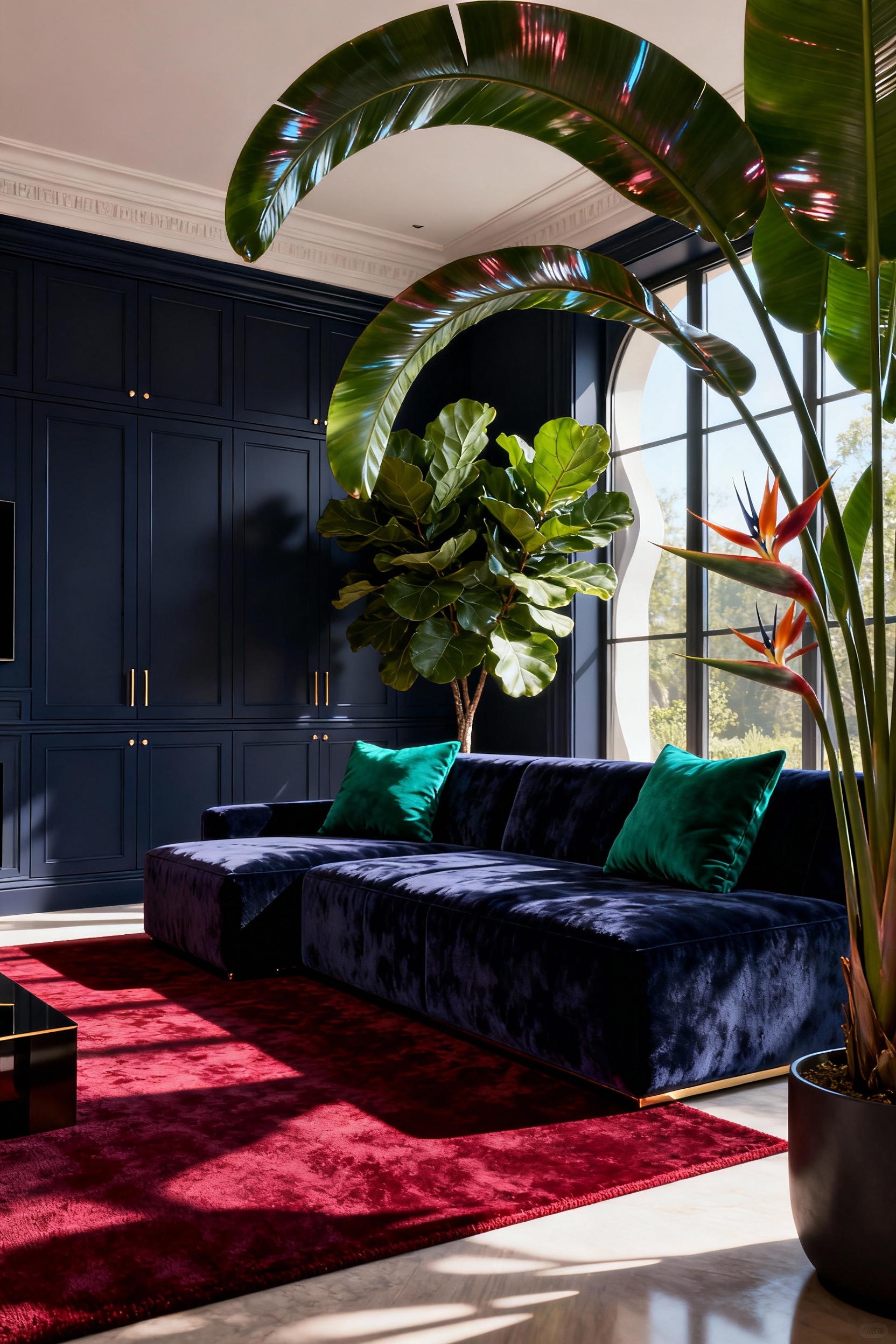
To achieve true biophilic abundance, abandon restraint and curate a lush, indoor jungle. The vessel matters as much as the life inside it.
- Anchor the look: Select bold, ornate planters—think gilded metals or vibrant ceramics—that rival the furniture in presence.
- Layer the levels: Mix towering floor plants with trailing shelf varieties to blur every hard edge of the room.
- Textural clash: Combine glossy leaves with feathery fronds for immersive, tactile luxury.
This strategic overgrowth ensures your sanctuary feels dynamic, opulent, and vividly alive.
Phase 5: The Final Polish – Sensory Luxury
True maximalism transcends the visual; it demands to be felt. Start by banishing harsh overhead lighting in favor of a sultry, golden glow created by layered table lamps and picture lights. This warmth makes brass sing and velvet shimmer. However, visual richness falls flat without tactile depth. To truly seduce the senses, introduce a final tier of decadent textures.
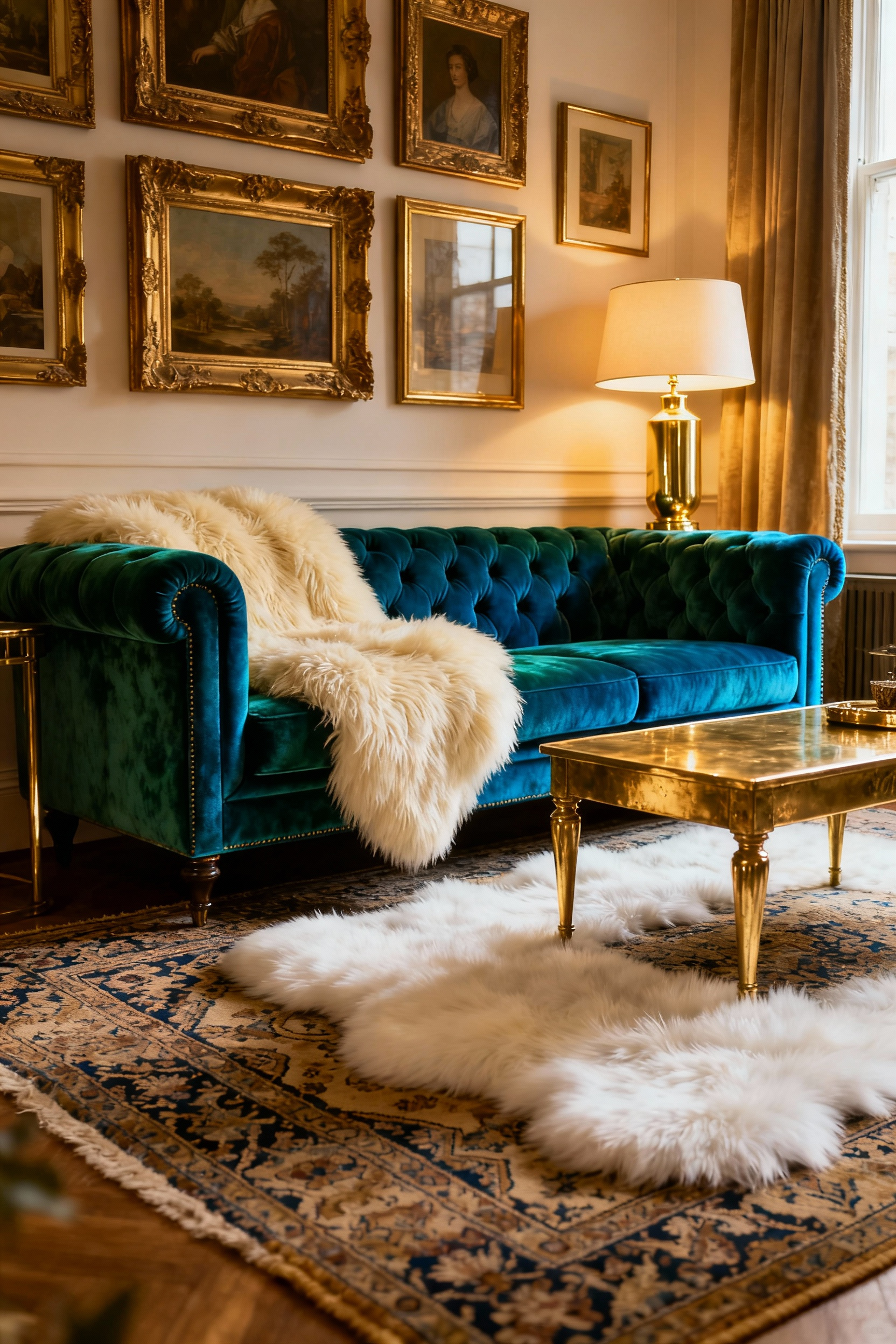
- Drape a heavy mohair or faux fur throw over the sofa for instant weight.
- Layer a smaller sheepskin atop your main area rug to create dimension.
- Swap standard cushions for deep-pile velvet or silk to invite touch.
Finally, curate the invisible layers that turn a house into a sanctuary. Scent acts as the room’s finishing accessory, so select a complex fragrance with woodsy or spicy notes to anchor the space. Simultaneously, assess the acoustics. I rely on heavy drapery and fabric wall coverings to dampen sound, ensuring the environment feels hushed and cozy rather than chaotic. This acoustic softness allows your bold design choices to envelop guests in comfort rather than overwhelming them.
14. Metallic Accents: Mixing Gold, Brass, and Chrome for Depth
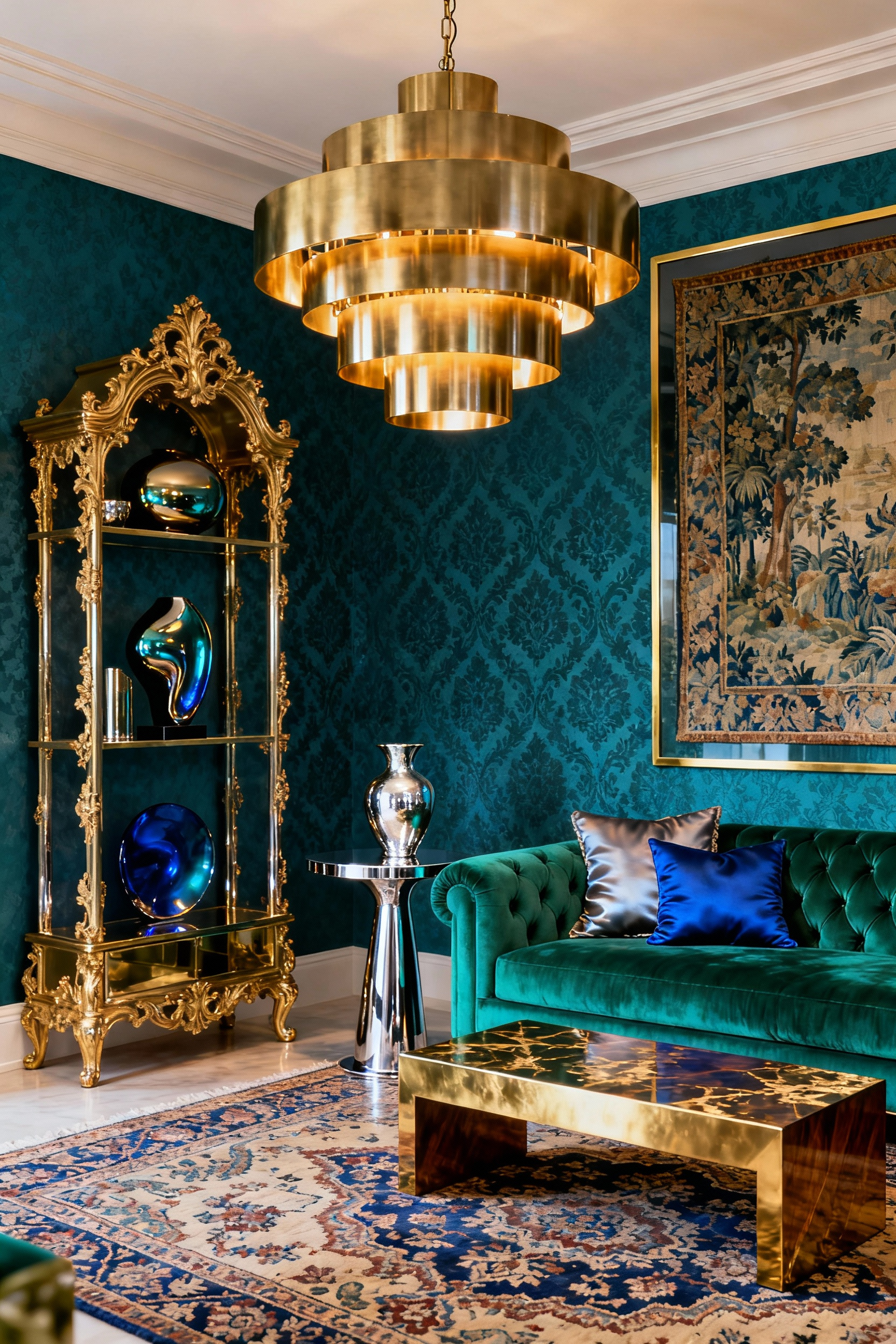
Abandon the outdated notion that metals must match; true luxury demands a fearless collision of temperatures. Just as my multicultural background taught me the beauty of blending traditions, mixing warm gold and brass with cool chrome creates an electrifying dialogue in your home. However, intentionality is key to avoiding visual clutter. Anchor this drama using the 60-30-10 rule:
- *Lighting and Camera Settings:** Shot during the golden hour, with warm interior lighting fully illuminating the space and creating dramatic specular highlights on the metal surfaces. Captured with a professional full-frame DSLR, 35mm lens, f/2.8 aperture to achieve shallow depth of field focused on the metal accents, high contrast, cinematic quality, ultra-detailed photorealism.
- Dominant (60%): Choose a warm metal like brushed brass for large fixtures to set the room’s temperature.
- Secondary (30%): Layer in gold picture frames or lamp bases to deepen the warmth.
- Accent (10%): Pierce the heat with a sleek chrome vase or trim for a sharp, modern edge.
Moreover, vary your finishes to amplify the tactile experience. Pair a highly polished gold mirror with matte chrome hardware to add instant history and dimension. This contrast creates a sophisticated depth that flat, matching sets simply cannot achieve. Finally, soften the high-gloss sheen with rich, light-absorbing textures like velvet or mohair. Your home should shimmer with personality, not feel like a cold, sterile showroom.
15. Reflective Surfaces: Using Mirrors to Multiply the Visual Feast
Banish simple, utilitarian glass from your design vocabulary. Instead, treat mirrors as architectural jewelry that amplifies your home’s soul. Select a massive Baroque or Sunburst frame in gilded bronze to serve as a commanding focal point. Crucially, position this piece opposite your most vibrant design element, such as a wall of eclectic art or bold wallpaper. This strategic placement instantly doubles the visual density, creating an infinite loop of color and texture that celebrates your unique style.
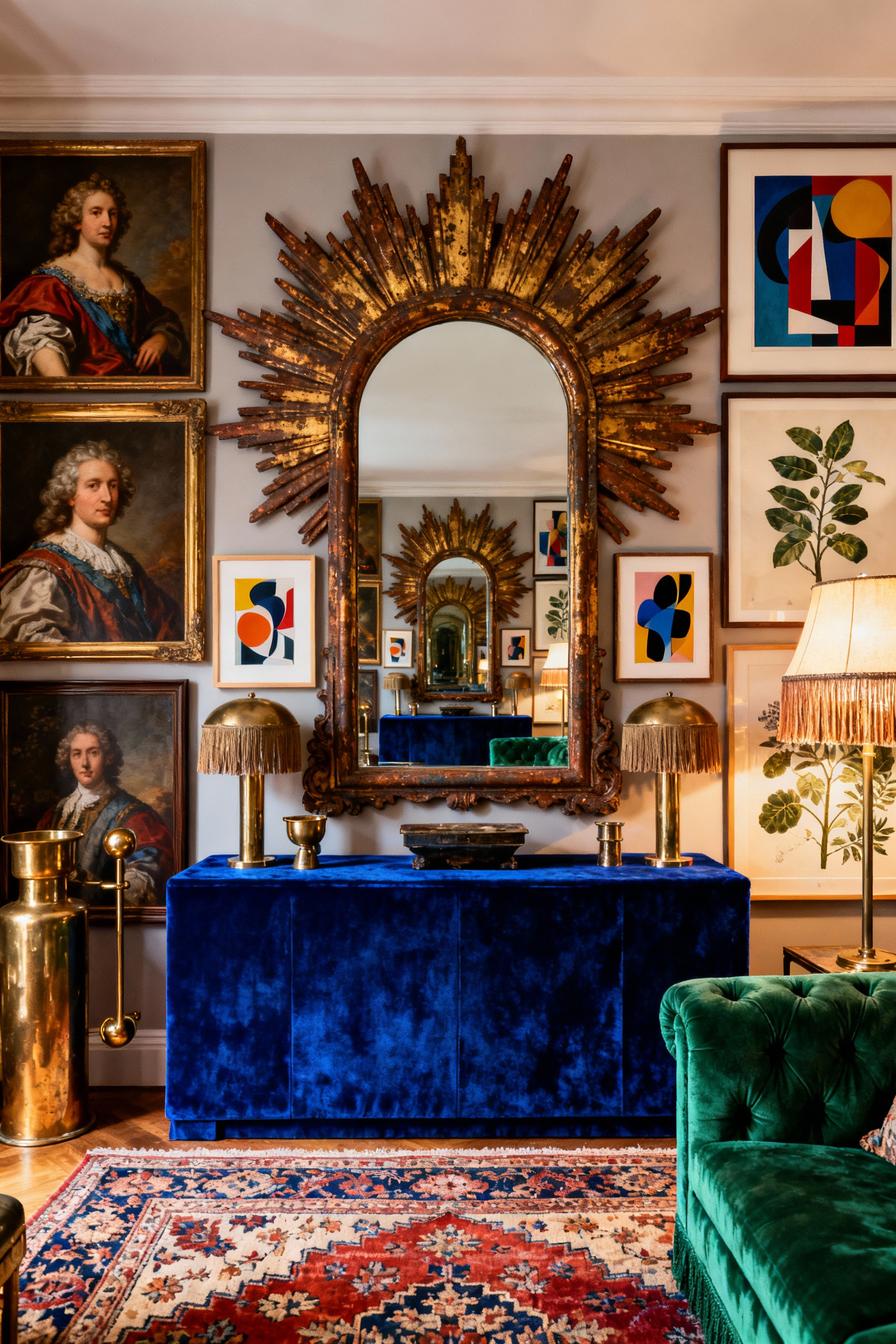
Extend the glamour beyond the walls to create a kaleidoscope of light. Layering reflectivity creates a sense of boundless luxury and energy. To replicate this immersive glow:
- Construct a dynamic gallery wall using an eclectic mix of vintage and geometric frames.
- Layer metallic accents like brass lamp bases or mosaic side tables to fracture reflections.
- Deploy mirrored trays on surfaces to multiply the impact of layered collectibles.
This “more is more” approach ensures your space feels distinct, vibrant, and unapologetically you.
16. Textile Tactility: Layering Silk, Fur, and Bouclé for Touch
Banish flat, one-dimensional rooms immediately. True luxury demands a sensory feast, and nothing delivers drama quite like the “Smooth, Plush, Nubbly” trifecta. You must embrace the tactile tension between silk, faux fur, and bouclé. Start by anchoring your space with a heavy, looped bouclé sofa as your matte foundation. Next, drape a deep-pile fur throw over the arm to invite immediate touch. Finally, scatter silk cushions to catch the light and provide a slick, cool contrast against the warmth. Growing up surrounded by rich, multicultural textiles, I learned that a home is not finished until it physically embraces you; this specific layering technique replicates that sophisticated hug.
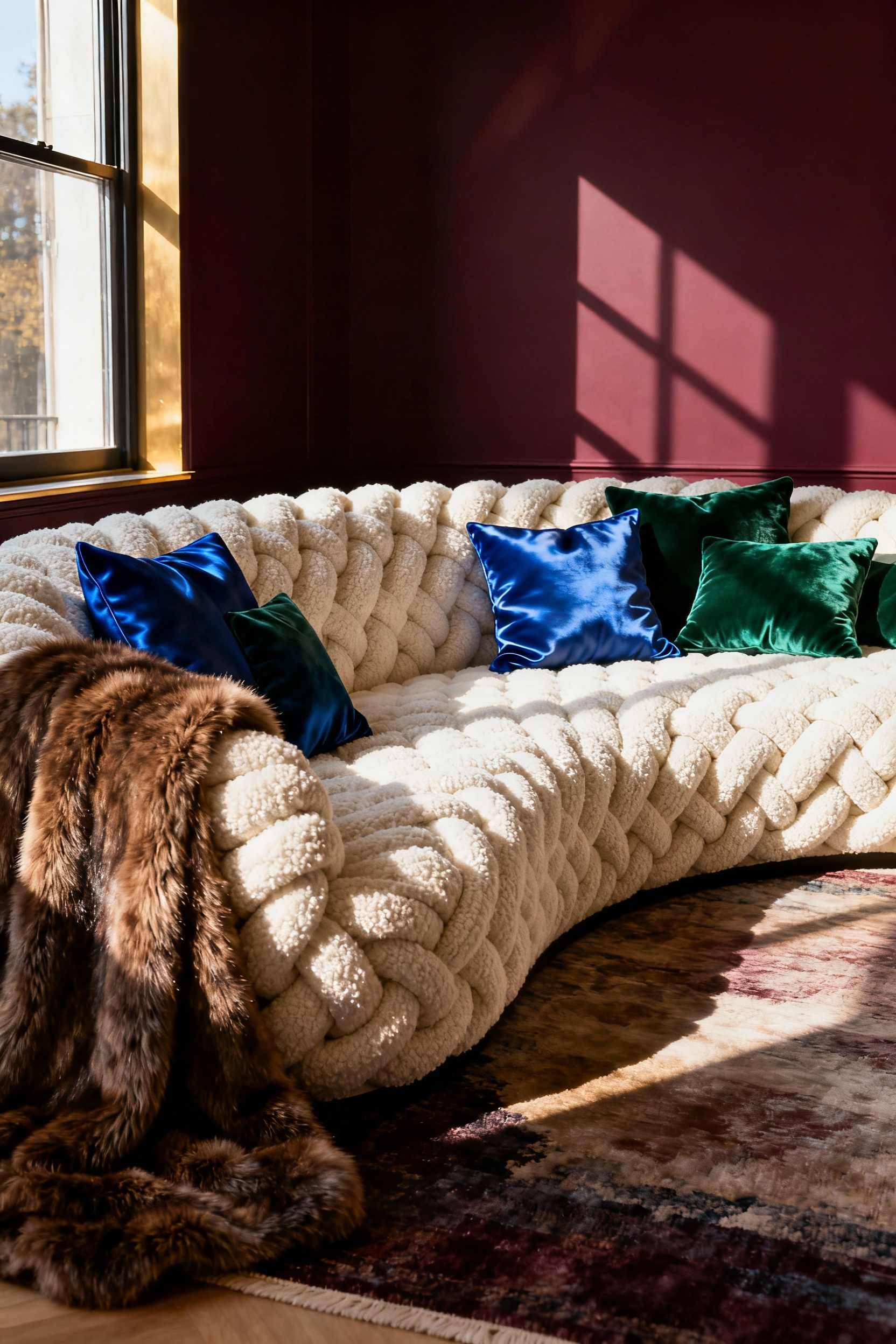
To keep this opulent mixture elegant rather than chaotic, commit to a strict monochromatic palette. When color is uniform, the material itself becomes the pattern.
- Bouclé absorbs light and provides architectural weight.
- Fur adds primal, inviting softness and depth.
- Silk acts as the room’s jewelry, reflecting light for high-gloss glamour.
This “maximalism through material” approach ensures your space feels curated and expensive, signaling that your home is meant to be touched, not just admired.
- **
Frequently Asked Questions About Maximalist Living Rooms
What are the key elements necessary for a sophisticated maximalist living room design?
A sophisticated maximalist living room relies on three key elements: saturated color (often jewel tones like emerald and sapphire), fearless pattern mixing (using the Rule of Three scales), and extreme texture layering (velvet, silk, mohair). Crucially, the design must be anchored by intentional foundation pieces like oversized furniture and dramatic wall treatments (color drenching or scenic wallpaper) to prevent the layers from appearing chaotic.
How do you achieve “curated chaos” in a maximalist space without looking cluttered?
Curation requires discipline. To achieve “curated chaos,” focus on grouping like objects together—such as creating a *Wunderkammer* cabinet of curiosities or a dense gallery wall—rather than scattering them. Maintain visual relief by adhering to a consistent color palette that binds disparate elements, and use large foundational pieces, like massive rugs or sofas, to ground the visual weight. Everything must tell a story; if an item doesn’t evoke an emotion, remove it.
Can a maximalist living room still feel comfortable and cozy?
Absolutely. Maximalism prioritizes sensory luxury, which contributes directly to coziness. Achieve comfort by focusing on tactile materials like deep-pile velvet, heavy mohair throws, and soft layered rugs. Additionally, banish harsh overhead lighting in favor of warm, layered ambient light from multiple lamps and dimmers. The acoustic softness created by heavy drapery and abundant textiles also makes the space feel intimate and welcoming, transforming it into a luxurious cocoon.
What is the primary difference between a maximalist aesthetic and simple clutter?
The primary difference lies in intentionality and coherence. Clutter is accidental, lacking a visual structure or narrative. Maximalism is deliberate and curated: every piece, color, and pattern is chosen to build a complex, personal narrative. Maximalism relies on design principles—like repeating color threads and adhering to scale—to ensure the abundance feels rich and deeply personal, not just messy.
- **
Conclusion: The Symphony of ‘More’ – Living Unapologetically in Your Design
True opulence demands the fearless curation of your life’s journey. Reject the sterile safety of minimalism; instead, transform your home into a biographical exhibit where every layered texture and treasured artifact tells a story. This approach shifts the narrative from mere clutter to a deliberate collection, prioritizing your profound personal joy over fleeting trends. If a piece resonates with your soul, it belongs in your sanctuary, regardless of convention.
To master this visual symphony, however, you must act as the conductor. Anchor your abundance with a dramatic base note—a moody wall color or a dominant metallic finish—to bind the eclectic mix into a cohesive masterpiece. Furthermore, demand that your functionality wears a luxurious mask. Utilize statement storage pieces, like ornate trunks or sculptural shelving, to conceal the mundane, ensuring that even practical elements contribute to the room’s sophisticated drama.
Ultimately, your environment is the stage for your life. Do not dim your light to fit a quiet, conventional mold. Indulge in the excess that comforts you and the colors that energize your spirit. Look around your space today and challenge the silence. Layer your legacy, celebrate your unique taste, and live unapologetically in a world of your own design. This is the essence of designing a truly spectacular maximalist living room.