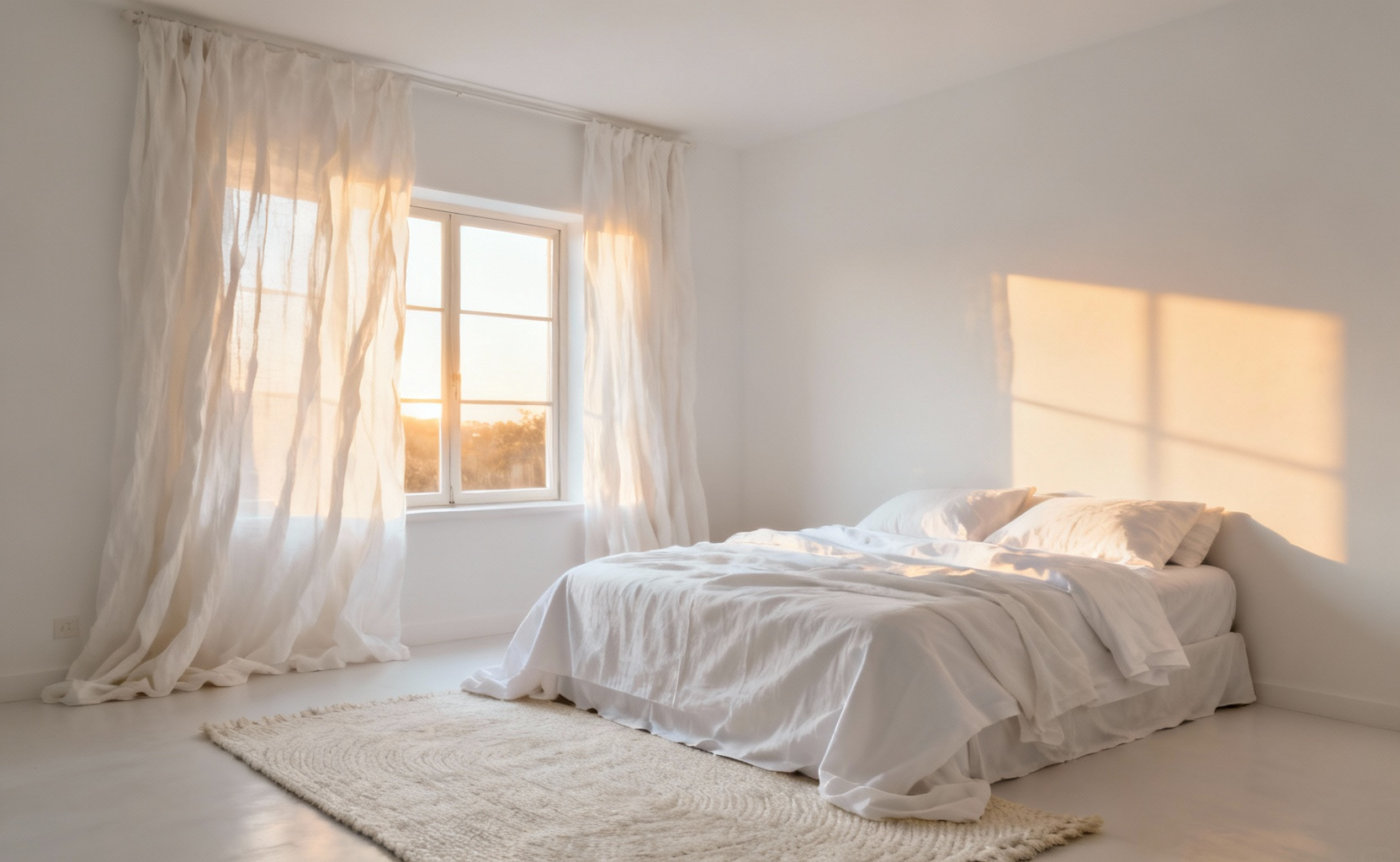

I remember one particular evening, after a day that felt relentlessly demanding, where all I truly wanted was the quiet embrace of my own bedroom. As I stepped inside, the simple, uncluttered vista of white immediately washed over me, offering an almost palpable sigh of relief for my weary mind. That profound sense of calm, that feeling of a mental reset, is not an accident; it’s a deep-seated human need for sanctuary that so many of us crave. This moment of decompression is exactly what separates an intentional, healing space from a room that is merely decorated.
The white bedroom aesthetic is often misunderstood as cold minimalism. But from my work in holistic home design, I’ve come to see it as an intricate symphony of thoughtful details. It is a canvas for peace, layered with textures, warmed by nature, and designed to create an environment of unparalleled calm. It’s not just about painting the walls; it’s about understanding how light plays, how materials feel against the skin, and how a monochromatic palette can actually amplify a sense of warmth. The secret, I’ve learned, lies not in absence, but in a highly curated presence—ensuring every element contributes to a serene narrative. Together, we’ll move beyond the basics into a realm of refined sophistication, crafting a deeply personal haven that truly nurtures your spirit.
Getting Started with Serene White Bedroom Fundamentals (Part 1)
Creating a truly serene white bedroom begins not with grand gestures, but with thoughtful attention to the foundational elements. This is where we lay the groundwork, mindfully considering the core principles that will allow a sanctuary to unfold—a space that invites calm and nurtures well-being from the ground up.
1. Cultivating a Foundation of Pure White Walls for Reflective Calm
The soul of any exquisite white bedroom aesthetic is the transformative power of its walls. Far from being a mere backdrop, the purity of white paint is the primary orchestrator of light, mood, and perceived space within your sanctuary. The key is to move beyond the idea of a single “white” and into its nuanced spectrum. Choosing the right white is like tuning an instrument; each shade has a distinct undertone—a whisper of blue, a hint of grey, or a touch of cream—that will profoundly influence the room’s atmosphere as the light shifts throughout the day.
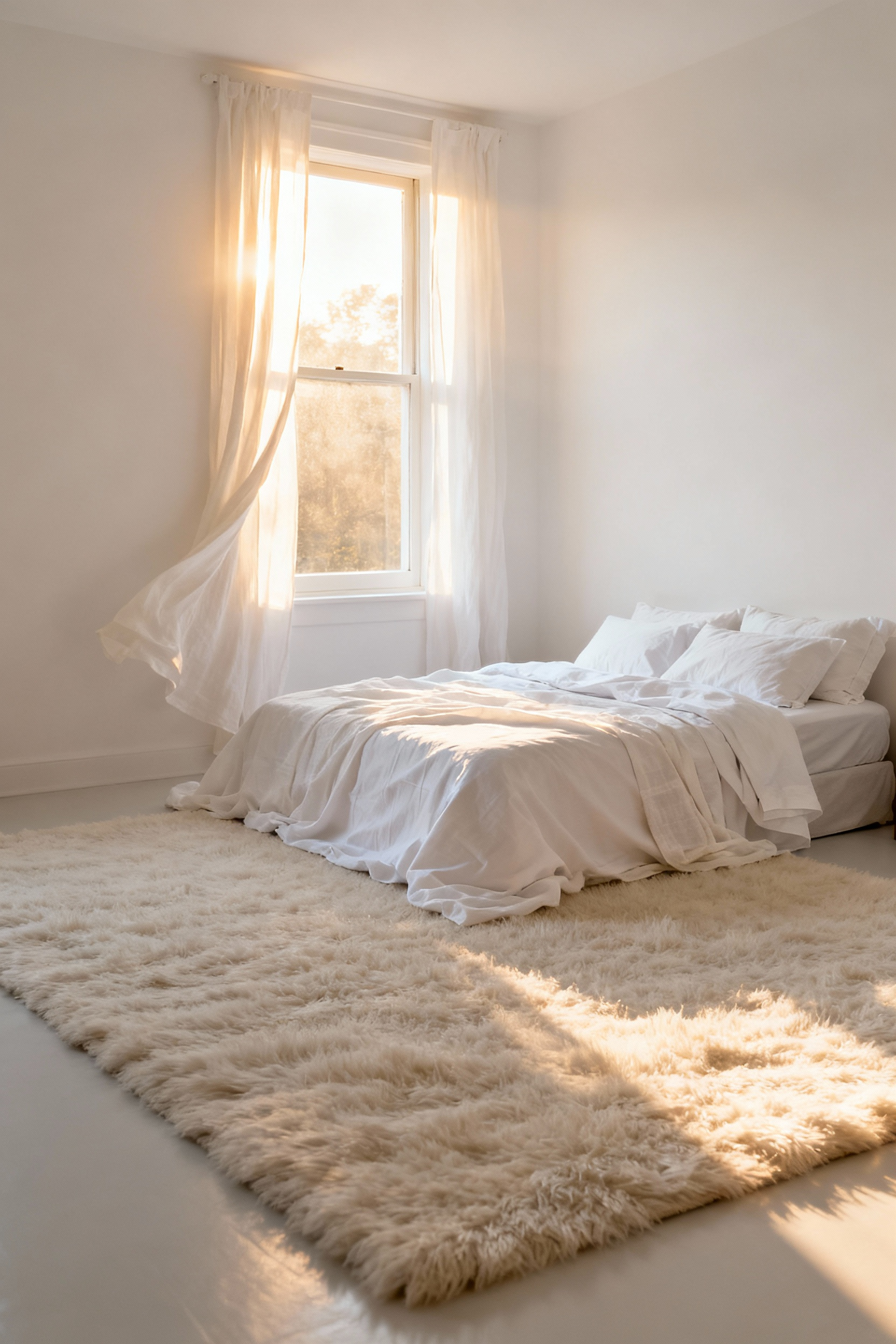
North-facing rooms, with their cooler, indirect light, often benefit from warmer whites that carry a soft yellow pigment, preventing the space from feeling stark. In contrast, sun-drenched rooms can embrace cooler whites, which temper the intensity of the light and create a refreshing ambiance. The psychological impact here is significant; pure, thoughtfully chosen white provides a visual respite in a world of overstimulation, allowing the mind to declutter and find peace. It encourages reflection, not distraction, making your bedroom a true canvas for inner contemplation.
2. Embracing Layered Textures with White Linens for Tactile Richness
With a pristine foundation of white walls, our next layer introduces a vital tactile richness that engages the senses and infuses the room with comfort. Without a careful layering of textures, an all-white scheme can feel flat or clinical. It is through the intelligent interplay of fabrics that true warmth and allure emerge. Imagine the crisp coolness of percale sheets, the subtle, silky drape of sateen, and the gentle, organic rumple of a linen duvet. Each offers a different story for your sense of touch.
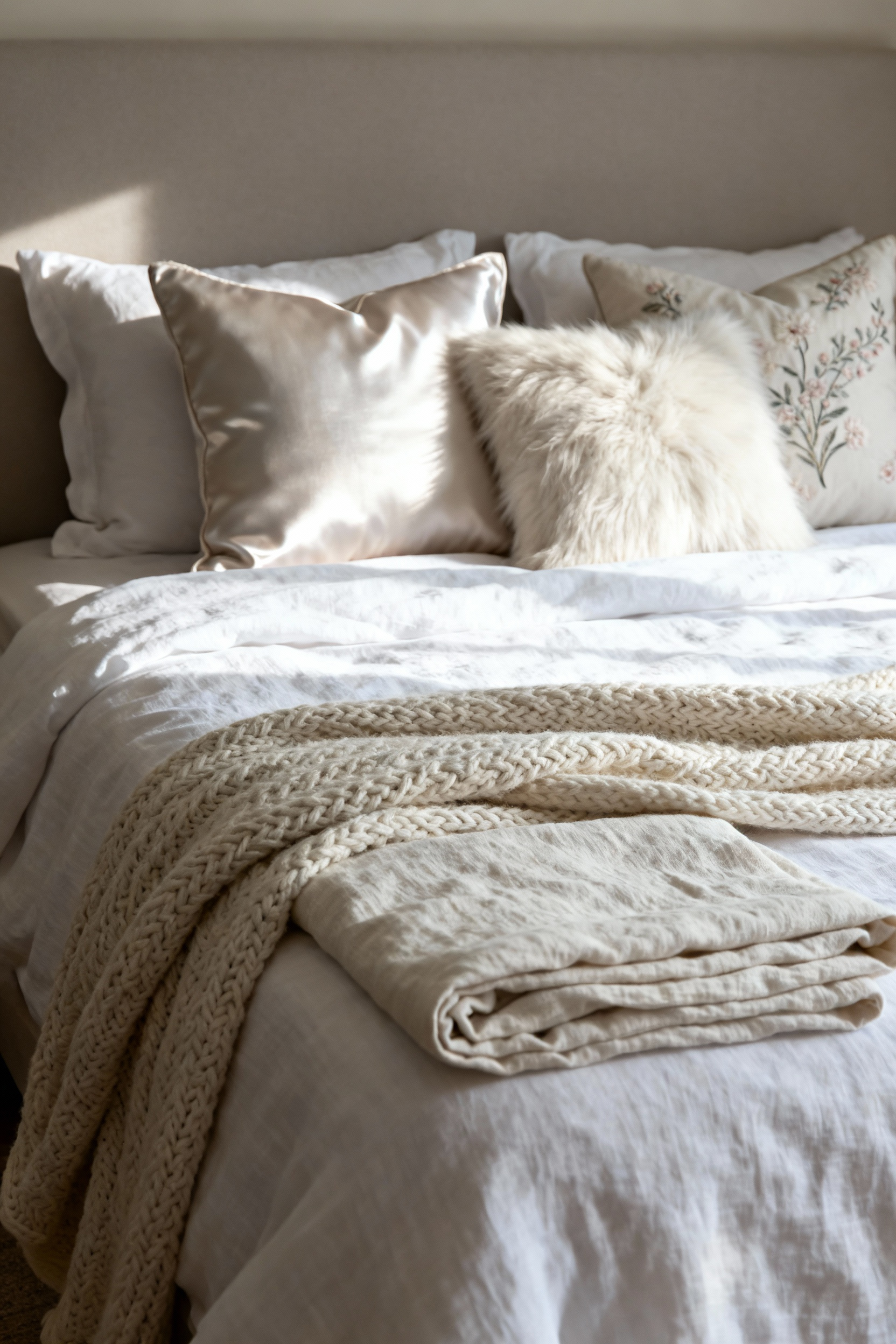
Building on this, you can introduce cashmere throws for unparalleled softness or chunky knit blankets for cozy visual weight. I often suggest clients close their eyes and simply feel the difference; the body knows what nurtures it. The mastery of layering comes from selecting a foundational white and then weaving in variations—creams, ivories, and delicate ecru—through these textiles. This harmonious whisper of differentiation creates visual interest and a sense of plush abundance, transforming the bed into an irresistible haven for rest.
3. Introducing Subtle Warmth through Cream and Ivory Accents
As your white bedroom aesthetic evolves, a more sophisticated level of refinement comes from the astute introduction of subtle warmth. While pure white has an undeniable clarity, there is a delicate point where starkness can usurp serenity. This is where the near-whites—those ethereal shades that whisper of warmth without betraying the palette—become essential. The strategic integration of creams and ivories acts as a gentle embrace, enriching the space with a soft glow that invites lasting comfort.
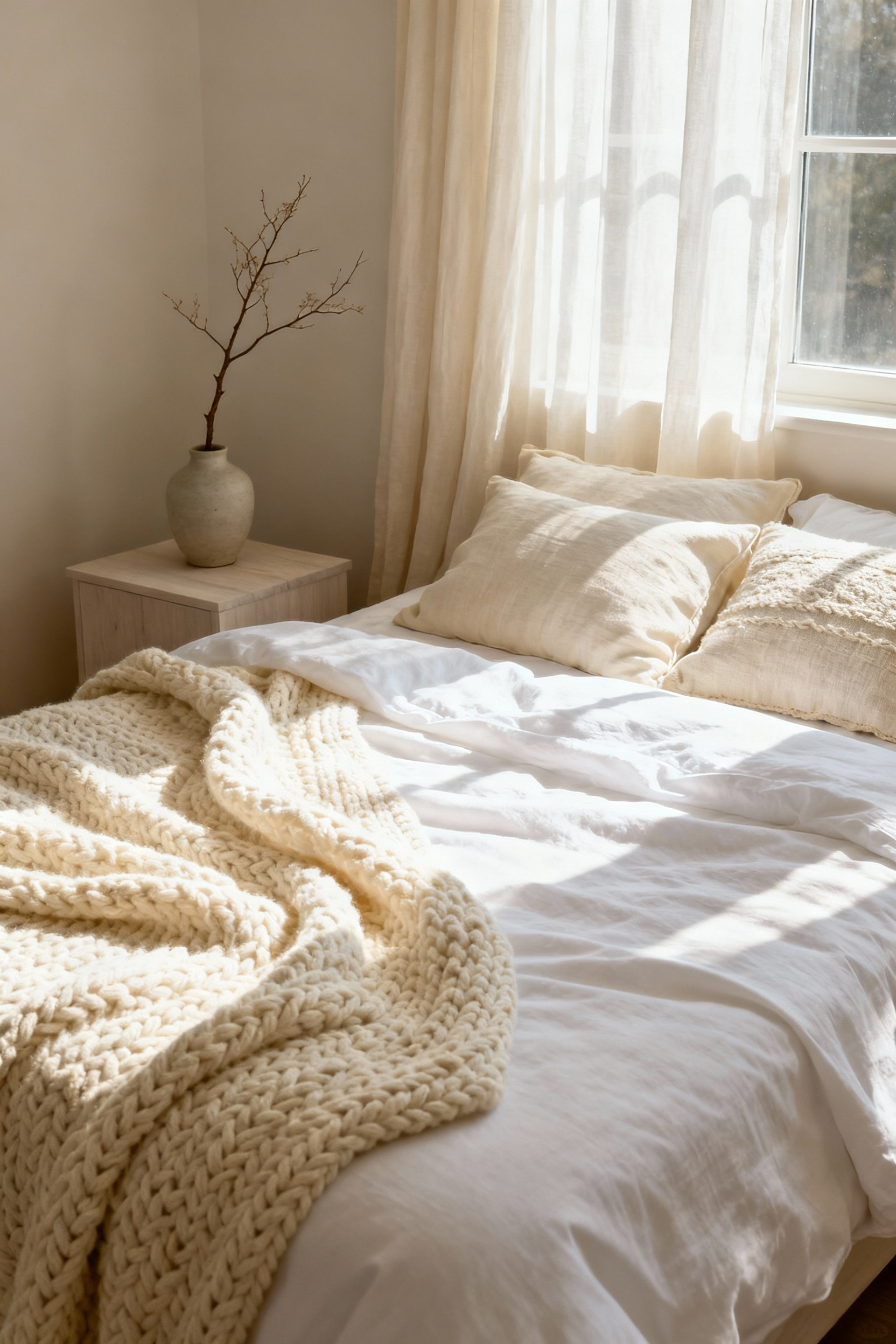
This is not about painting walls cream, but about weaving these warmer tones through judiciously chosen elements: a cashmere throw, hand-thrown ceramic bedside lamps, a jute rug underfoot, or a piece of art with an antique ivory mat. These accents provide vital visual relief and add perceived depth. Think of the way morning light filters through sheer ivory curtains, casting a soft, golden haze that instantly softens the room’s edges. This measured infusion honors the purity of white while ensuring the space remains a living, breathing sanctuary.
4. Selecting White Furniture with Understated Form and Functional Purity
The next step in fully integrating this aesthetic involves the selection of white furniture, where each piece acts as a sculptural element. The goal here is to choose pieces defined by understated form and functional clarity. According to feng shui principles, this allows life-force energy, or chi, to flow without obstruction, promoting peace and vitality. Look for designs that have clean lines and seem to float, contributing to an open, airy feel.
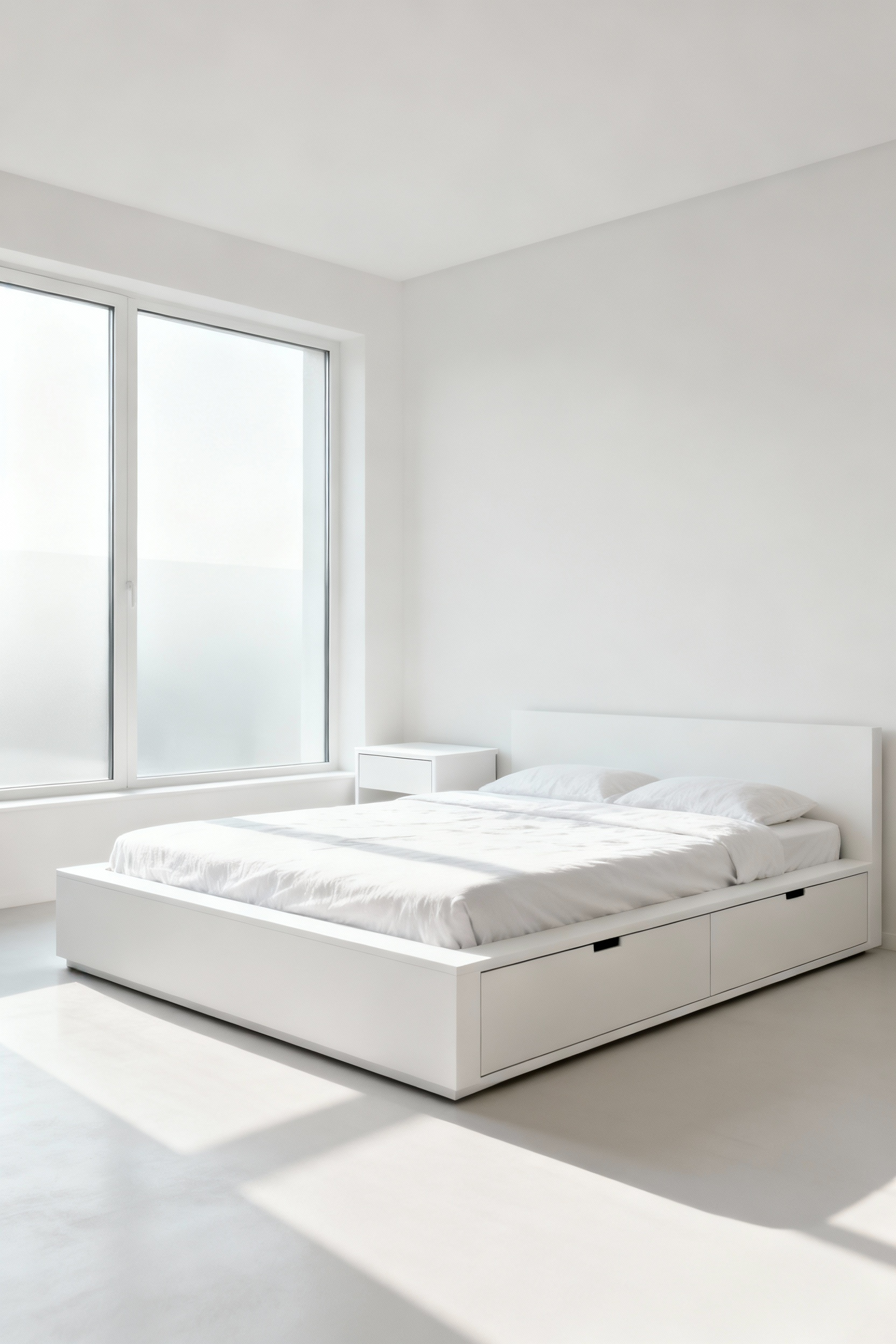
Materials also play a pivotal role. A matte white lacquer offers a sleek, contemporary edge, while limed oak or bleached ash introduces the organic warmth and texture of wood grain. The juxtaposition of a crisp white lacquered dresser with a delicate, subtly textured white bouclé armchair creates a dynamic yet gentle interplay. By choosing furniture that embodies both understated form and functional purity, you transform essential items into quiet contributors to the overarching calm, amplifying the peace of your sanctuary.
Getting Started with Serene White Bedroom Fundamentals (Part 2)
Building upon our foundational elements, we now turn to the most ethereal yet impactful component: light. Its deliberate manipulation isn’t just an enhancement; it is the very breath that animates a white space, transforming a simple palette into a vibrant canvas of subtle interplay and expansive tranquility.
5. Harnessing Natural Light to Amplify Luminous White Spaces
A profound respect for natural light is fundamental to an ultimate white bedroom aesthetic. White acts as an exquisite canvas, reflecting and diffusing light to make a space feel larger, more open, and undeniably brighter. The first step is simply to acknowledge your windows and skylights as your greatest assets. From there, we optimize how that light enters and interacts with the room. Sheer linen or gauzy cotton drapes allow filtered light to bathe the room in a soft glow.
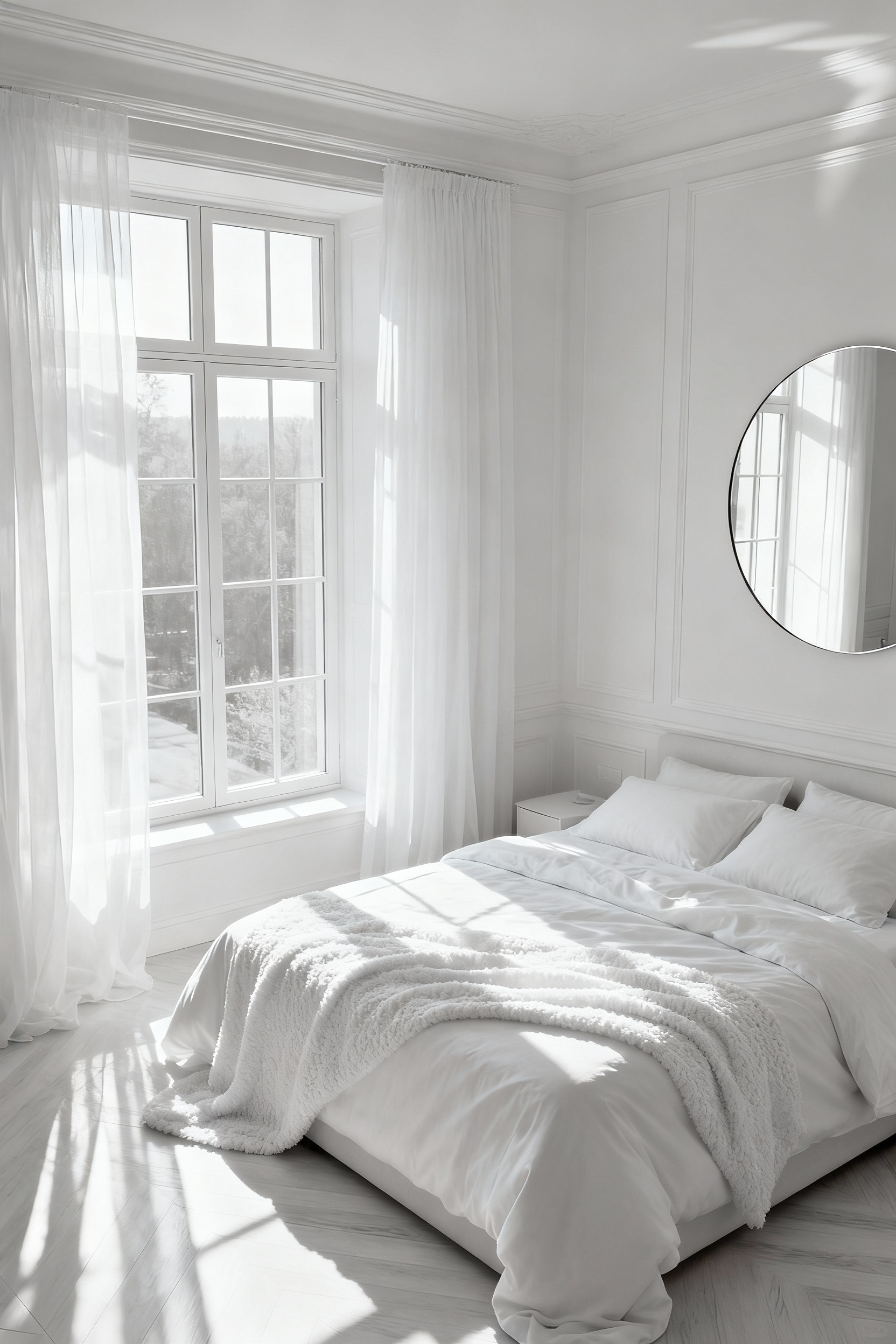
Placing a large mirror opposite a window can effectively double the perception of light and space. But for a more sophisticated application, consider how the quality of light shifts through the day. From my work in wellness-focused spaces, I’ve seen how aligning our indoor environment with these natural rhythms can profoundly support our well-being. A bedroom should support our circadian rhythms, and harnessing natural light is the first step. The ultimate mastery lies in recognizing that every surface contributes to light’s journey, creating an atmosphere that doesn’t just look bright but breathes brightness.
Elevating Your White Bedroom Through Nuanced Design Choices (Part 1)
While a white bedroom promises serenity, a purely monochromatic scheme can feel sterile without careful thought. This section explores refined strategies for infusing your sanctuary with depth, warmth, and vitality, crafting a space that feels both pristine and profoundly inviting.
6. Integrating Natural Materials to Ground the Monochromatic Palette
The crispness of a white bedroom demands elements that ground and soften its expansive qualities. An accessible way to introduce this warmth is with individual pieces of natural materials. Think of a simple raw oak nightstand, its unsealed grain telling a story, or a linen throw casually draped over a chair, offering both tactile comfort and visual texture. These singular additions instantly disrupt any potential starkness.
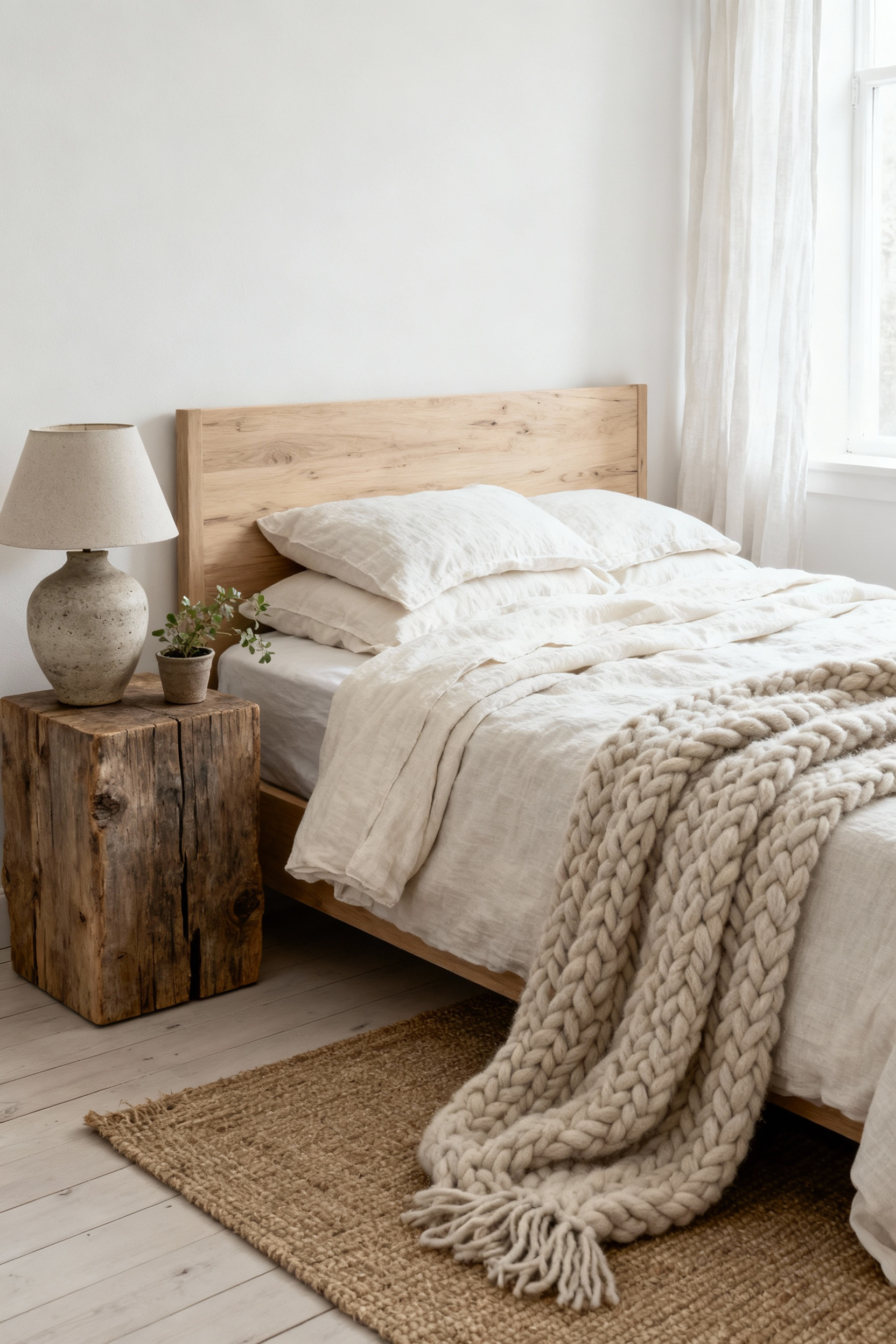
Building on this, an intermediate approach involves harmoniously combining natural textures—a chunky jute rug, a hand-woven rattan basket, an unglazed ceramic vase. In my practice, I notice an immediate shift in my clients’ energy when they introduce these biophilic elements; there is a palpable sense of calm that comes from connecting with the natural world, even indoors. For a more advanced application, a custom headboard of reclaimed wood can become a powerful focal point, its weathered surface providing a profound, earthy contrast to crisp white bedding. These choices don’t just decorate; they sculpt an environment of profound peace.
7. Employing Strategic Lighting Layers for Ambient Radiance and Mood Setting
Light has the power to transform a white bedroom into an ethereal sanctuary. An accessible foundation begins with understanding its primary functions: a central fixture for general light and a bedside lamp for reading. But simply choosing a warm Kelvin temperature (2700K-3000K) can prevent the room from feeling stark. An intermediate step involves layering different light sources—wall sconces casting an upward glow or a floor lamp creating a soft pool of light in a corner. Adding dimmers to all sources is transformational, allowing you to fluidly shift the mood.
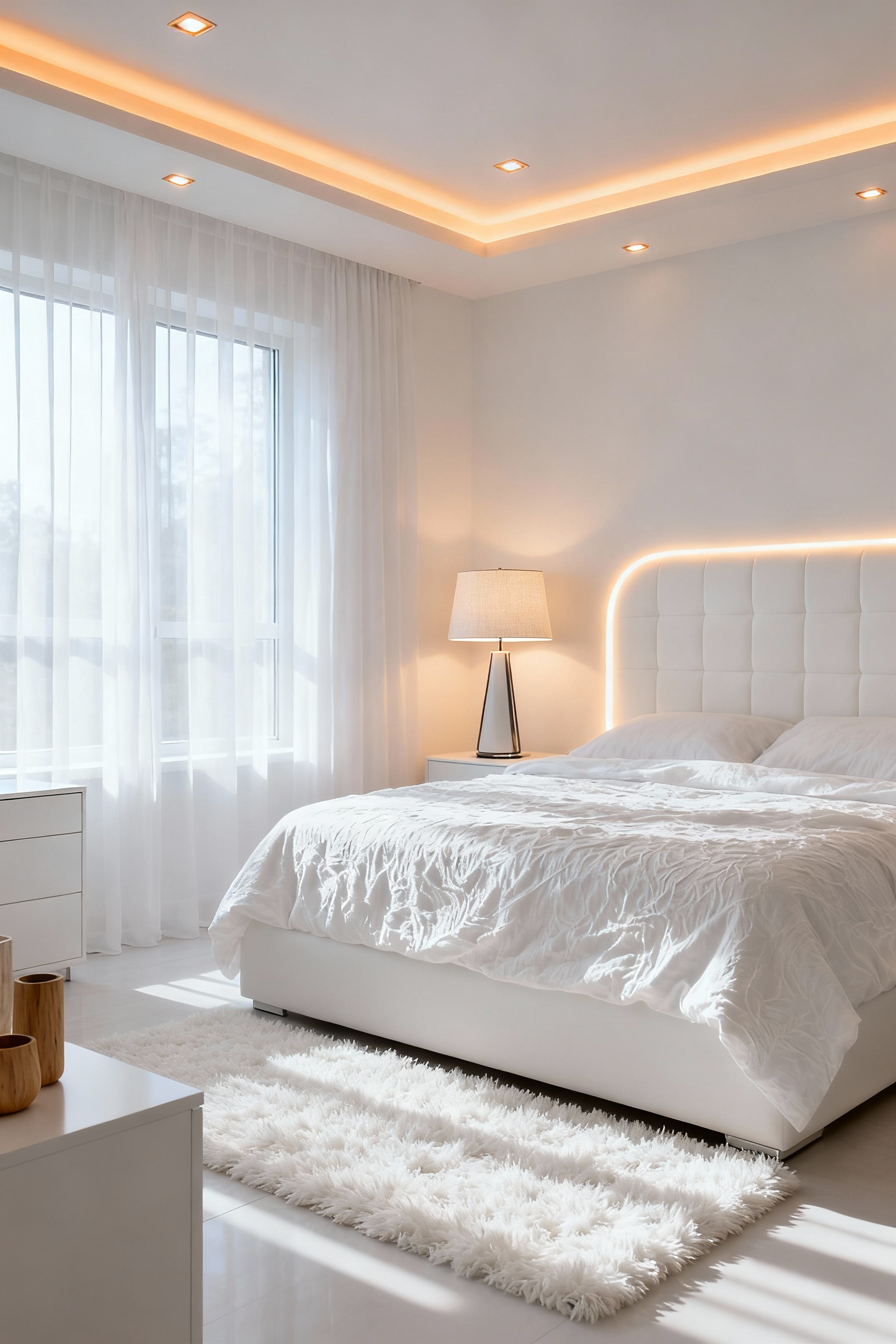
For a more sophisticated application, architectural lighting becomes key. Concealed LED strips behind a headboard or under shelving can wash walls with a gentle luminescence. Advanced integration views light as a living element. A smart lighting system can be programmed to mimic natural circadian rhythms—gently brightening in the morning and softly dimming to an amber glow as evening approaches, guiding your body toward rest. This holistic approach ensures your sanctuary supports your physiological and emotional well-being.
8. Curating Artwork that Provides Subtlety, Not Distraction, in White Rooms
In a white bedroom, artwork is a thoughtful contributor to the feeling of calm. An accessible approach involves selecting a single piece that complements the serene backdrop—perhaps a minimalist line drawing or watercolors with soft, blurred edges. The goal is to offer a focal point without creating visual noise, allowing the eye to rest. For an intermediate approach, you might curate a small gallery wall with a unifying theme, such as black and white landscape photography. The negative space around the arrangement is just as important as the art itself.
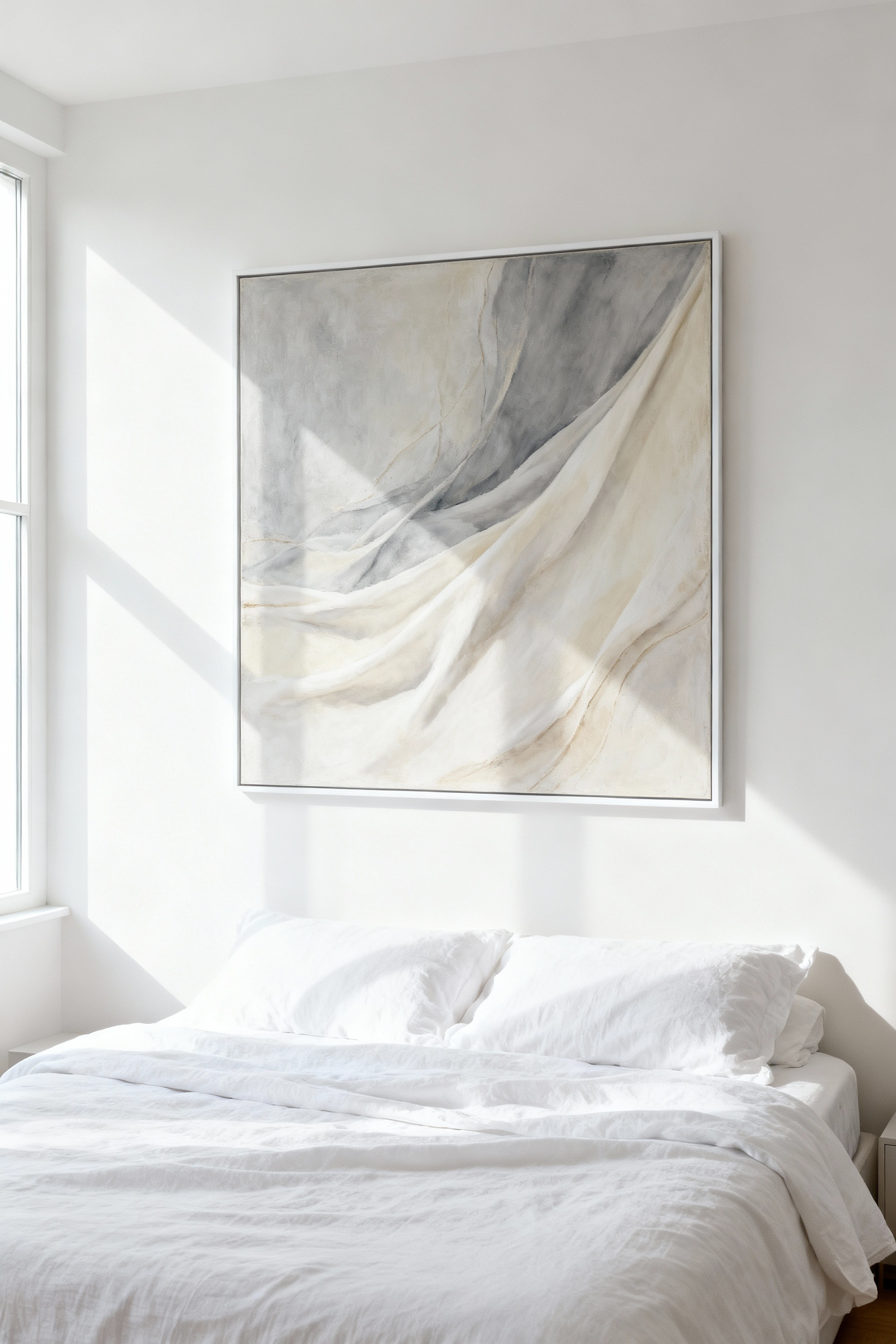
A more sophisticated application integrates art as a structural element. A large-scale monochromatic textile hanging can add immense texture, or a minimalist sculpture can play with light and shadow. Here, art enriches the room’s depth rather than merely adorning its surfaces. The ultimate mastery involves curating pieces for their ability to evoke serenity, introspection, or peace. It’s not about choosing what looks good, but what feels good. This transforms your bedroom into a private gallery of inspiration and calm, where each piece resonates with your innermost self.
9. Infusing Botanical Elements for Organic Vibrancy and Air Purity
The purity of a white bedroom finds its perfect counterpoint in the organic vibrancy of botanicals. An accessible start is a single, easy-to-care-for plant, like a resilient snake plant, which instantly introduces life and softness. This simple addition breaks any perceived monotony and, according to biophilic design principles, reduces stress and enhances clarity. An intermediate approach involves strategically grouping plants of different textures and heights—a trailing pothos from a shelf, a structured Fiddle Leaf Fig in a corner—in planters made from terracotta or woven seagrass.
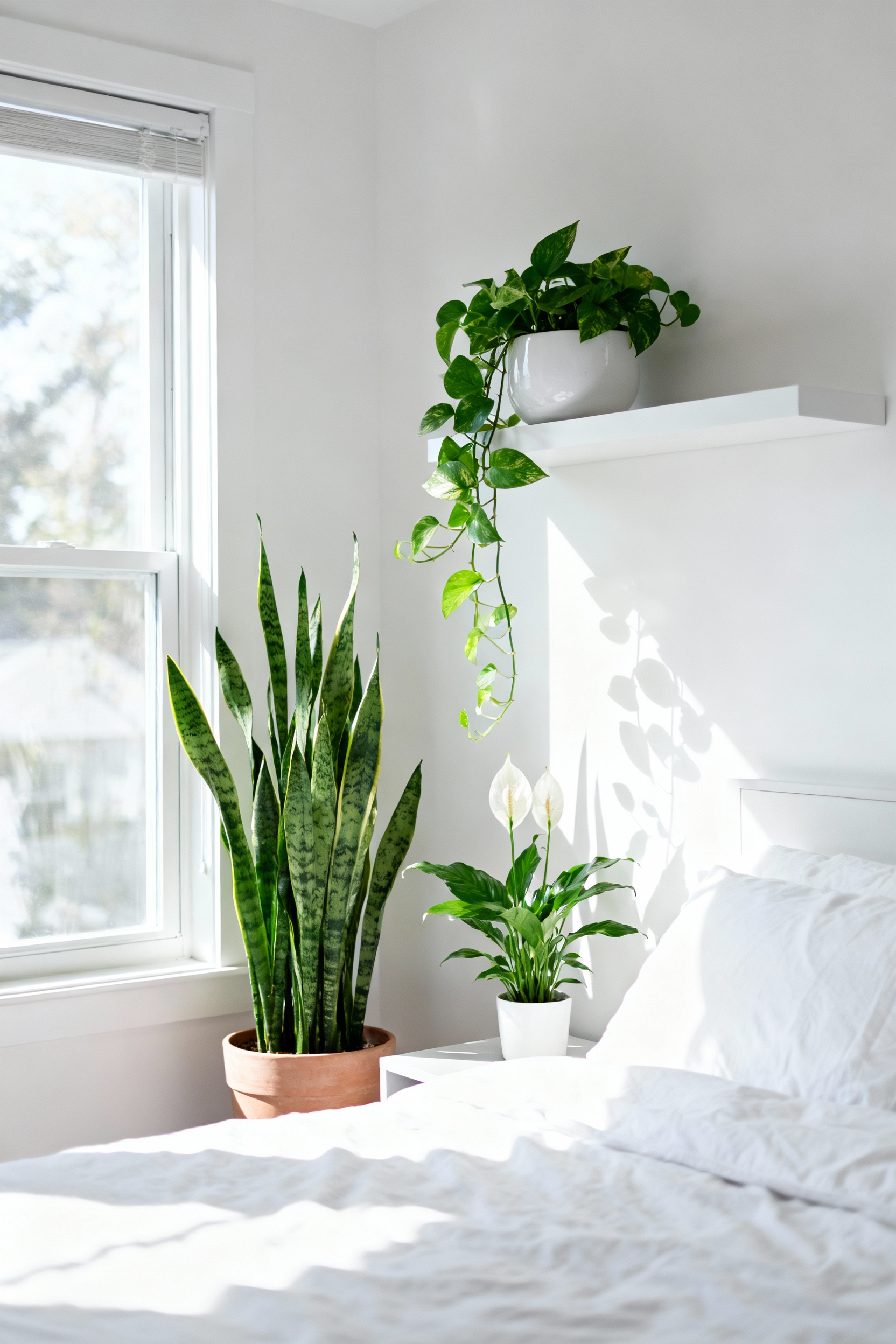
For a more sophisticated application, botanicals can become prominent, sculptural features. A large olive tree or an ethereal Bird of Paradise can serve as a majestic focal point, commanding attention with its organic form. Advanced integration goes beyond looks to consider a plant’s contribution to well-being—its air-purifying qualities or the calming scent of lavender. This thoughtful layering ensures your sanctuary is a truly immersive, restorative environment where every botanical presence actively contributes to a deep sense of connection to nature.
Elevating Your White Bedroom Through Nuanced Design Choices (Part 2)
Building on our exploration, we now delve into the more subtle yet profound layers that define an exceptional white bedroom aesthetic. This segment is dedicated to understanding how refined choices, particularly in the nuanced world of off-whites, can enhance both the visual depth and emotional tranquility of your sanctuary.
10. Understanding the Psychology of Off-Whites for Depth and Undisturbed Calm
Pure white, while crisp, can sometimes feel unyielding. This is where the profound psychology of off-whites becomes paramount. Rather than being ‘impure’ whites, off-whites carry subtle pigmentations that soften the visual impact and create a more inviting atmosphere. Warm off-whites, with touches of cream or gold, evoke coziness and a gentle embrace, fostering a sense of nurturing and security. They are the accessible foundation for a serene aesthetic.
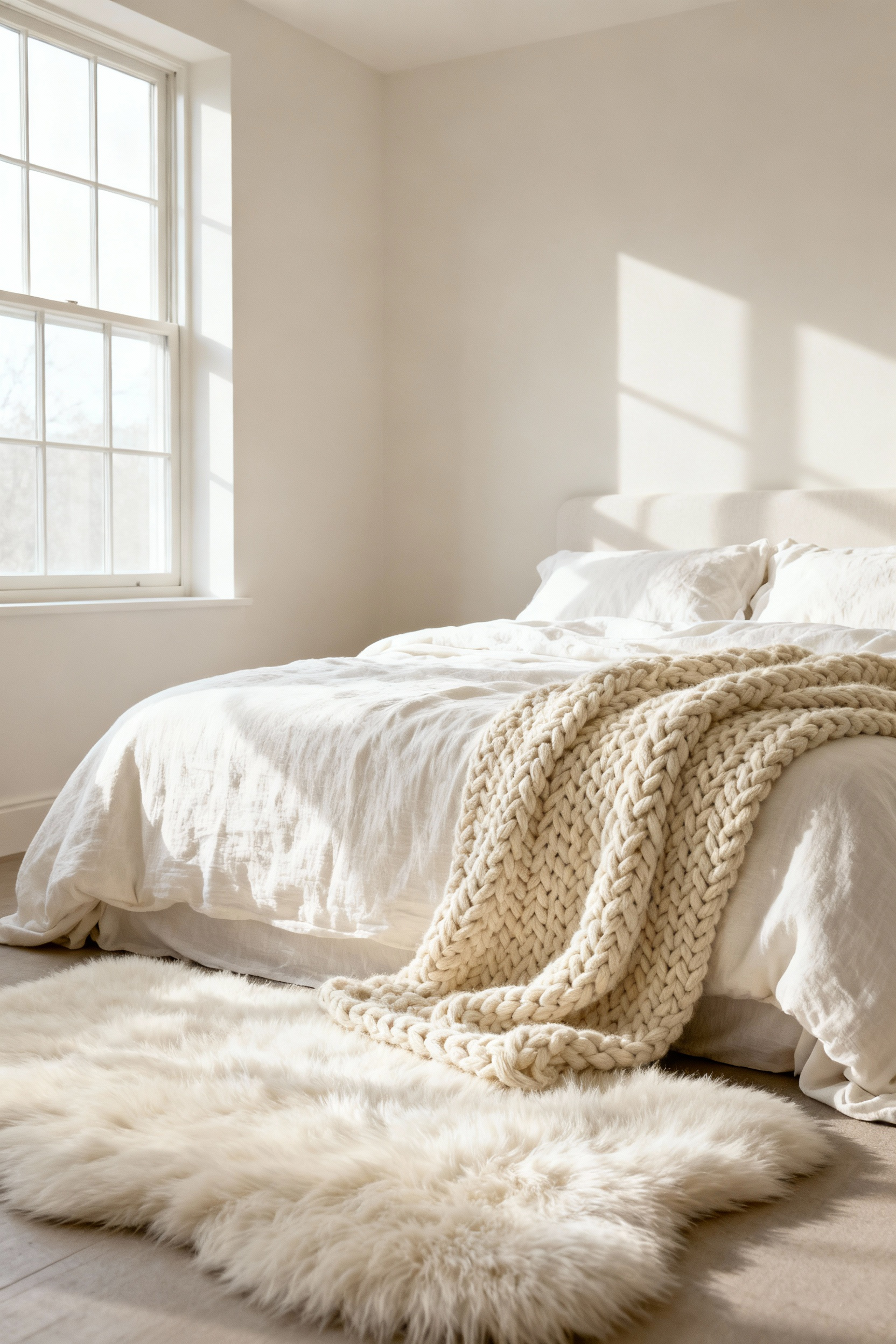
For a more developed application, cool off-whites, with their faint grey or blue undertones, promote a serene spaciousness and crisp clarity, aligning with feelings of intellectual calm. Thoughtful application is key; a naturally warm room might benefit from a cooler off-white for balance. In healing environment creation, I’ve found that the mastery lies in layering multiple off-white shades. Walls might be a soft bone white, trim a slightly crisper grey-white, and textiles a symphony of creamy, oat, or ivory tones. This subtle interplay creates a rich visual depth without harsh contrast, guiding the eye smoothly and nurturing a profound sense of undisturbed calm.
Advanced Stratégies for Mastering the White Bedroom Sanctuary (Part 1)
For those seeking to cultivate a space that profoundly calms the spirit, mastering the white bedroom aesthetic extends into a nuanced interplay of texture, light, and form. Here we explore sophisticated techniques to transform your room into an emblem of serenity and understated luxury.
11. Orchestrating Architectural Details to Enhance White’s Grandeur and Structure
The white aesthetic thrives on precision, and this begins with architectural elements. Crown molding, skirting boards, and door casings become sculptural assets, defining boundaries and offering a visual frame that grounds the room. Painting the walls matte and the trim in a slightly higher sheen (eggshell or satin) accentuates these details without adding another color, allowing light to dance across varying textures.
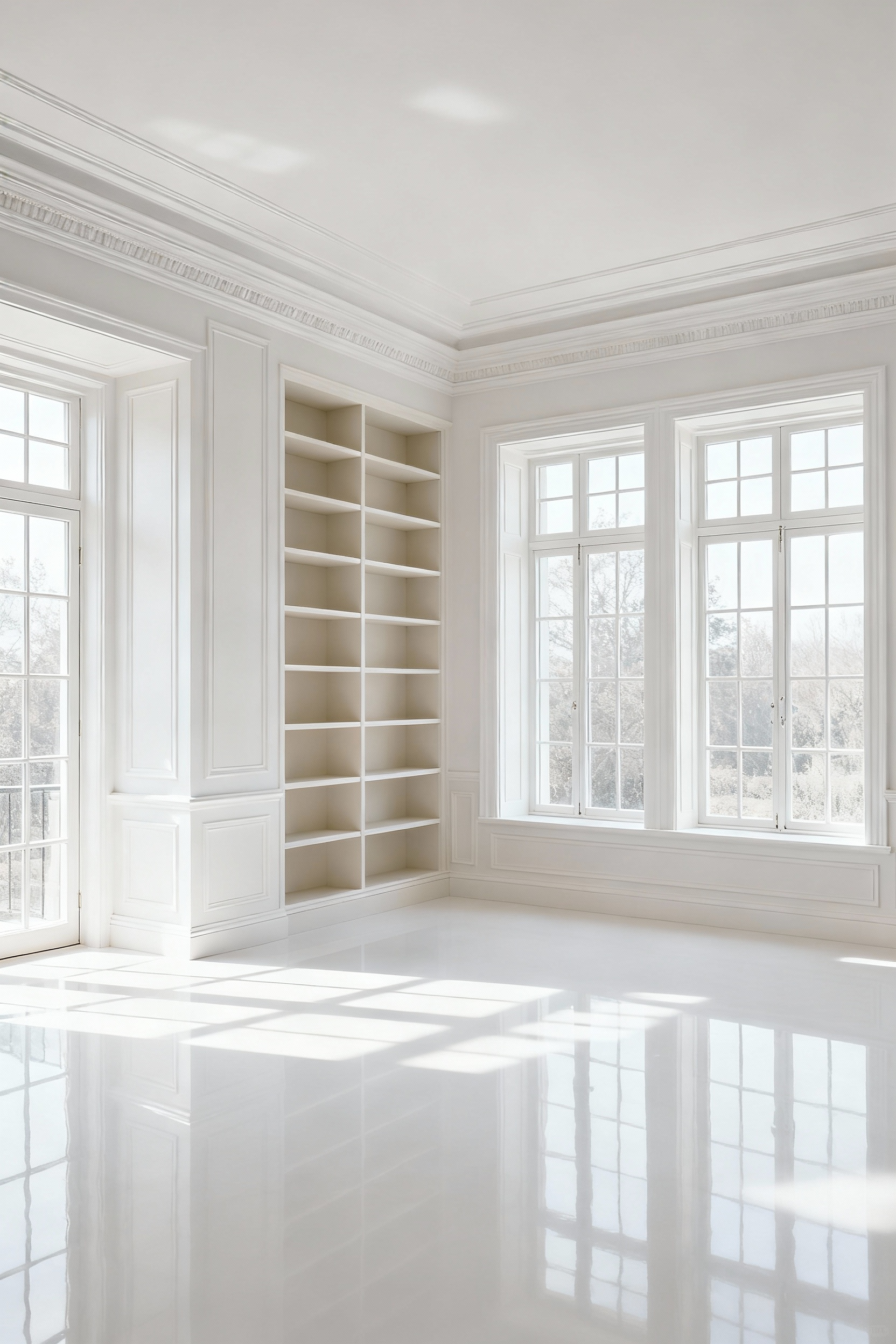
A more sophisticated approach involves using layered detailing to shape the perception of space. Instead of uniform wainscoting, imagine a chair rail designed to interact with framed paneling below it, creating a rhythmic visual interest. The real mastery integration, however, sees these details as components within a unified narrative. It could be coffered ceilings adding monumental scale and shadow play, or deeply recessed wall panels that offer elegant opportunities for integrated art. This creates a sanctuary where white is a medium through which form and light are exquisitely sculpted, giving the space a calm permanence.
12. Selecting Bespoke White Furnishings for Unique Character and Elevated Comfort
In a distinguished white bedroom, furniture selection is an articulation of personal taste and comfort. The accessible approach involves choosing pieces where form is paramount—clean lines or gentle curves—and focusing on how different white finishes create distinct atmospheres. A distressed finish evokes rustic charm, while sleek lacquer signals modern tranquility. An intermediate step is to embrace the tactile dimension, juxtaposing a plush, white linen headboard with a smooth, lacquered bedside table. These varying textures prevent sterility and infuse the space with inviting depth.
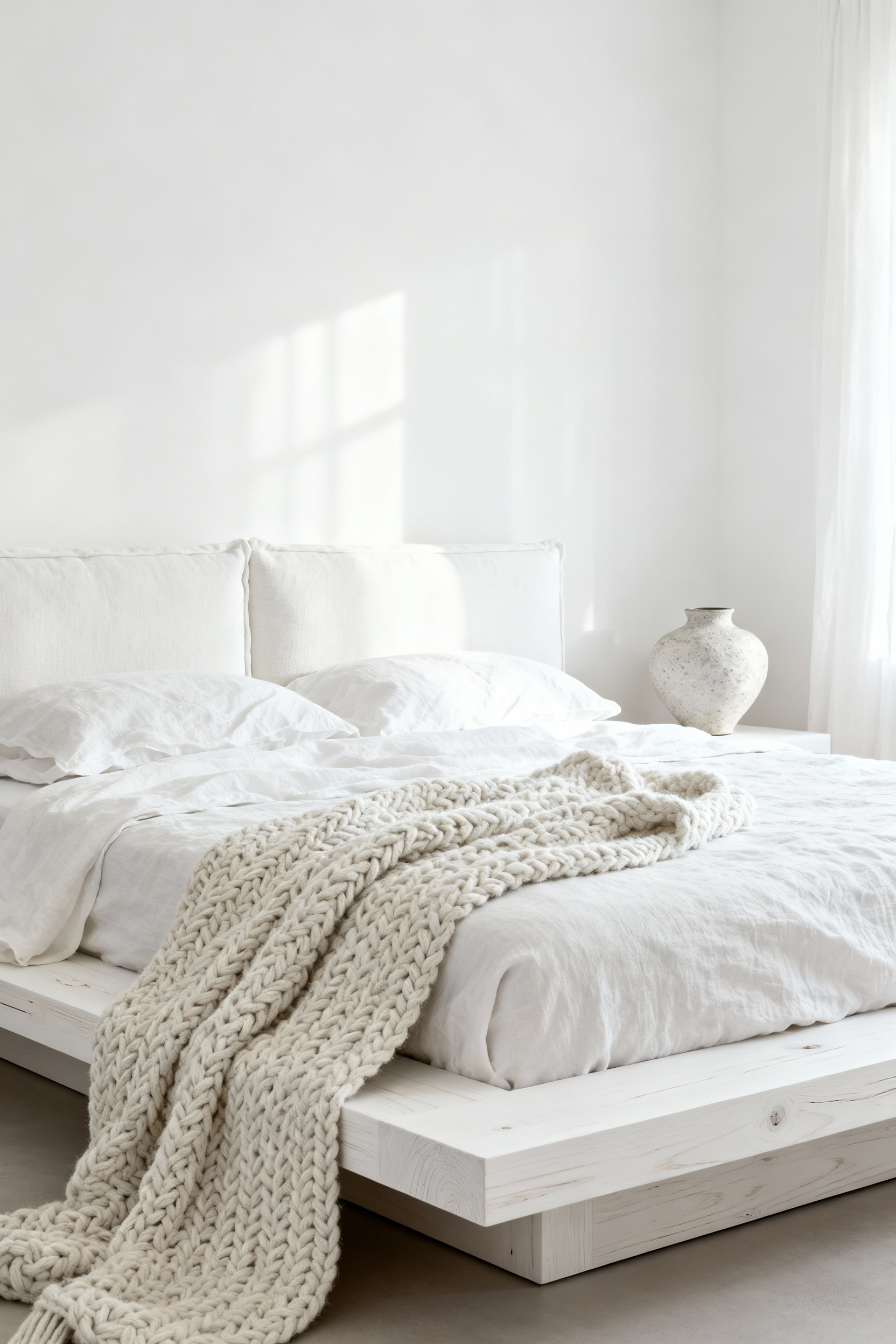
For an advanced application, bespoke furnishings tailor each piece to the room’s dimensions and your comfort needs. Envision a custom-built vanity that perfectly integrates with the wall architecture. The ultimate integration positions these pieces as critical elements in crafting a sanctuary that nurtures its inhabitants. It’s a holistic approach where every furnishing, from a custom storage bench to a cashmere throw, contributes to a narrative of comfort and refined individuality. This results in a bedroom that feels uniquely personal, incredibly inviting, and exquisitely functional.
13. Mastering the Art of Negative Space for Profound Visual Serenity
An often-underestimated yet profoundly powerful element is negative space—the intentional absence of objects. In a white bedroom, this begins with appreciating how uncluttered areas contribute to calm. A clear expanse of wall or a dresser with only a single sculptural object acts as a visual pause, allowing the eye to rest. This is not just decluttering; it is a conscious choice that promotes a sense of breathing room.
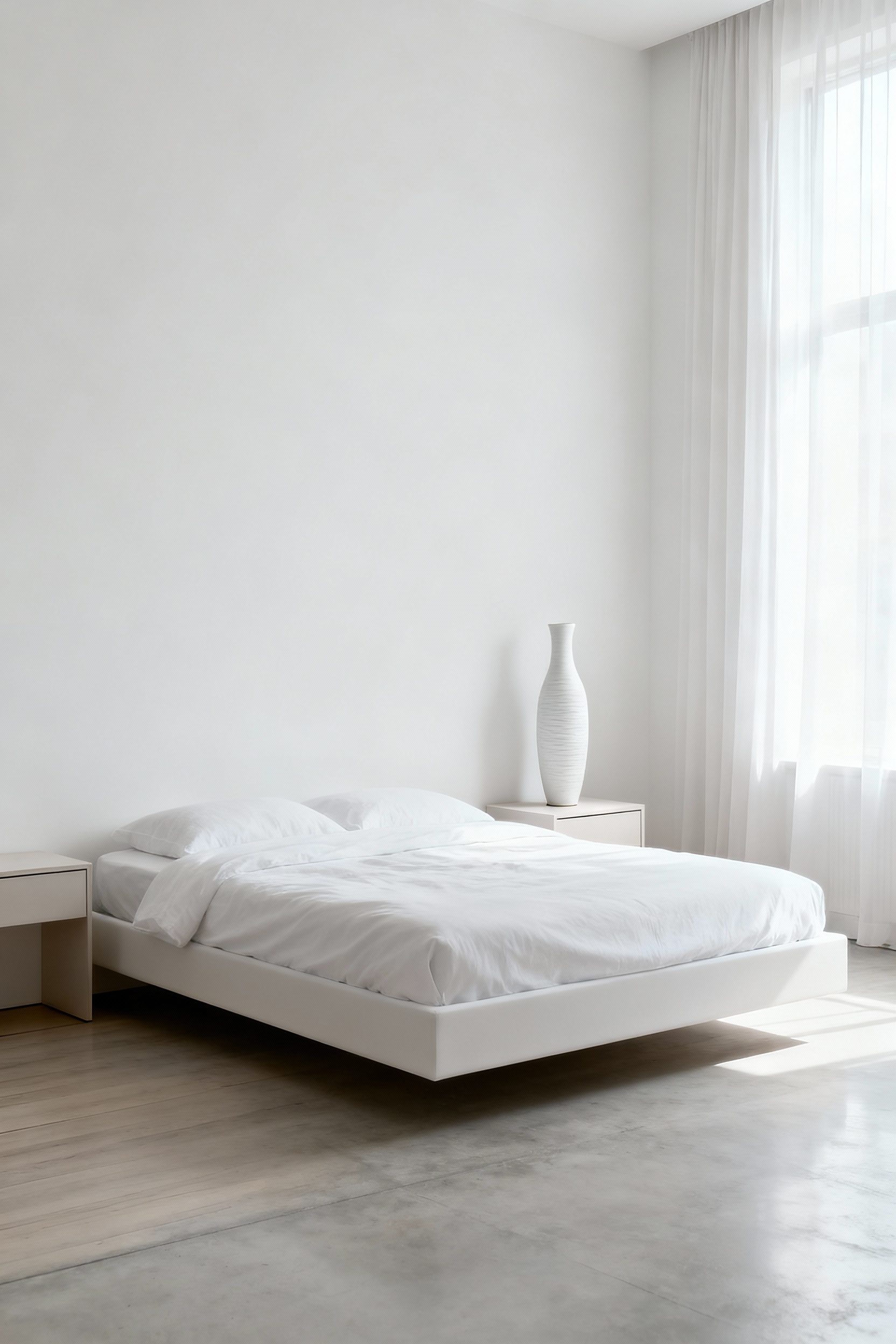
For a more sophisticated application, recognize how strategic omissions actively sculpt the perception of light and form. The negative space around a console table defines its silhouette and emphasizes its lines. What I’ve seen in my practice is that this is one of the most transformative principles for creating a healing space; giving the mind ‘room to breathe’ visually has an immediate calming effect on the nervous system. The mastery of this concept views negative space as a deliberate presence. It is about using unadorned surfaces to create a contemplative quietude, ensuring every element, and every absence of an element, contributes to an immersive experience of clarity and profound visual peace.
14. Incorporating Smart Home Technology with Discreet Integration for Effortless Control
Modernity and serenity can be harmonized through the thoughtful integration of technology. An entry point is using smart lighting for dimming and color temperature adjustments to set different moods. The intermediate step involves programming devices into routines—a ‘good morning’ scene that gradually brightens lights and opens blinds, or a ‘sleep’ routine that dims them, creating effortless comfort.
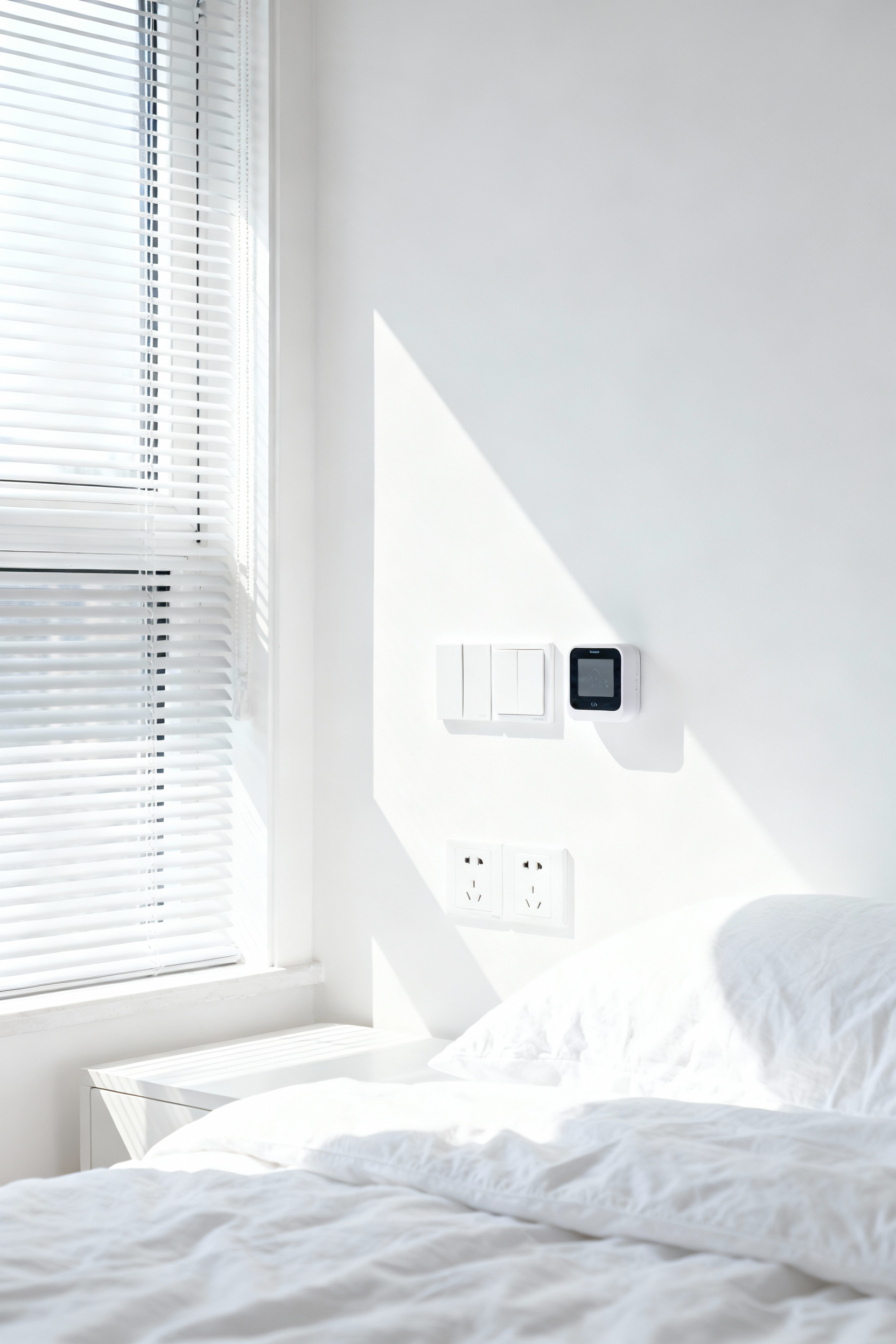
The advanced practitioner recognizes the paramount importance of discreet integration. Technology should be virtually invisible: speakers flush with ceilings, charging pads built into nightstands, or projection screens that retract silently. The goal is an environment where sophisticated control is achieved without any visible technological clutter. The mastery of this sees technology as an invisible assistant dedicated to holistic well-being—from air quality monitors to smart diffusers programmed with calming oils. The result is a bedroom where technology disappears, leaving behind only profound benefits and an uninterrupted sense of peace.
Advanced Stratégies for Mastering the White Bedroom Sanctuary (Part 2)
Building on the foundations of harmonious textures and considered lighting, we now turn our attention to the more subtle, yet profoundly impactful, elements that define a truly serene white bedroom aesthetic.
15. Mitigating Visual Clutter Through Thoughtful, Concealed Storage Solutions
A tranquil white bedroom is one where visual serenity reigns, and since white highlights any disarray, concealed storage is critical. An accessible foundation is the principle that everything must have a home, but in a sanctuary, that home must be unseen. This is about crafting an environment where the eye can rest, unimpeded. For an intermediate approach, move towards integrated solutions, like floor-to-ceiling wardrobes with handleless doors that blend seamlessly with the walls.
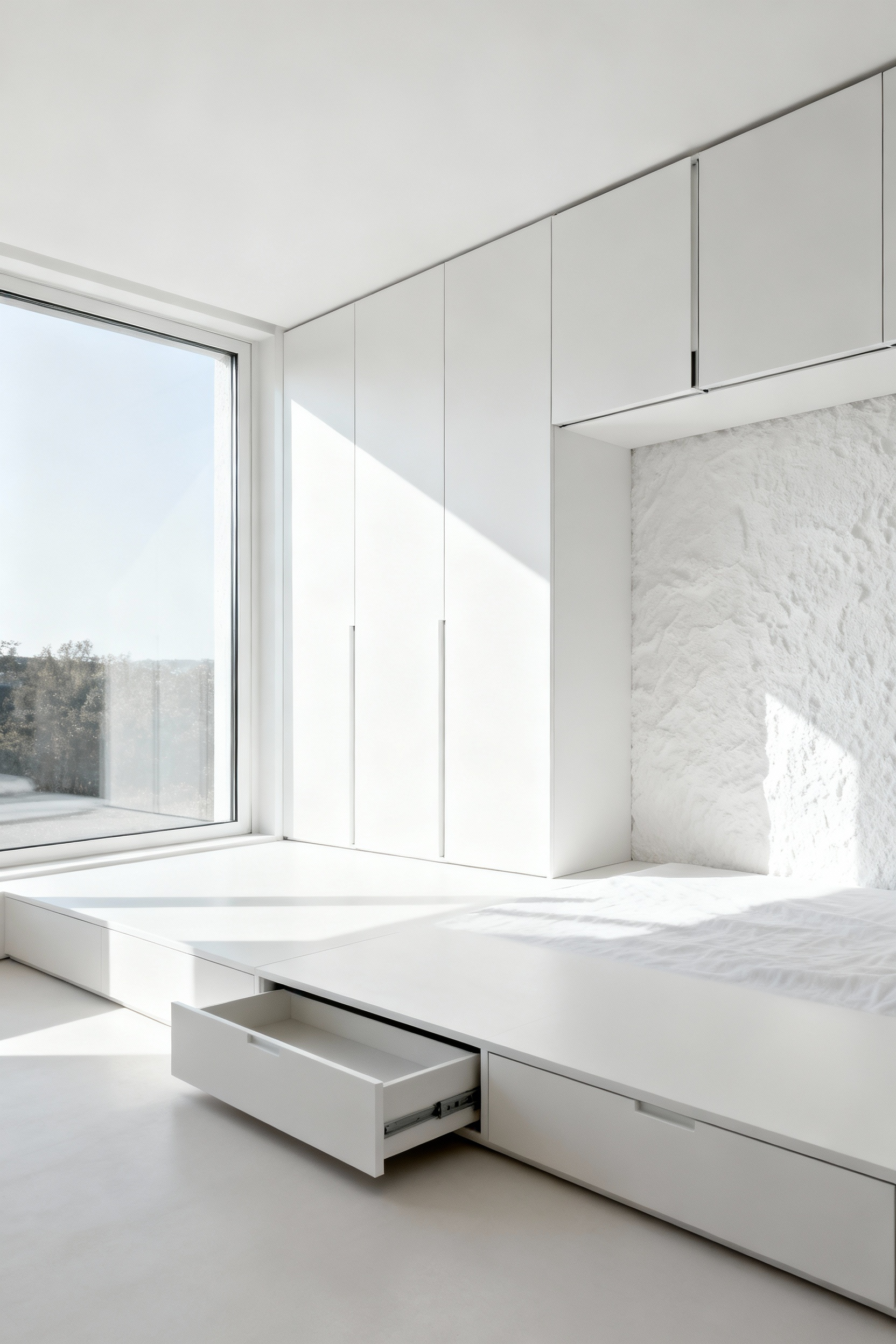
For more sophisticated applications, employ truly disguised storage in multi-functional pieces. A beautiful bench at the foot of the bed can reveal a generous hidden compartment. From my professional experience with clients, the greatest sense of calm comes when storage is not just hidden, but intuitive. The mastery of this is a holistic vision where every element serves to preserve visual quietude. It anticipates your routines, designing homes for everything before clutter accumulates. This isn’t just about hiding things; it’s about curating a sense of effortlessness and expansive peace.
Expert Integration: Crafting a Holistic White Bedroom Experience (Part 1)
True sanctuary emerges from an orchestration of the senses and thoughtful intention. This section delves into methodologies for a truly holistic white bedroom, where every choice contributes to an environment of profound peace and personal resonance, elevating a white space from functional to deeply transformative.
16. Designing for Sound: Cultivating Auditory Serenity in White Spaces
The visual tranquility of a white bedroom is perfectly complemented by auditory serenity. An accessible foundation begins with soft furnishings as acoustic sponges: plush rugs, heavy drapes, and generous throws that muffle sharp sounds. For a more sophisticated application, discreet acoustic solutions like wall panels disguised as art or upholstered headboards can significantly enhance sound absorption.
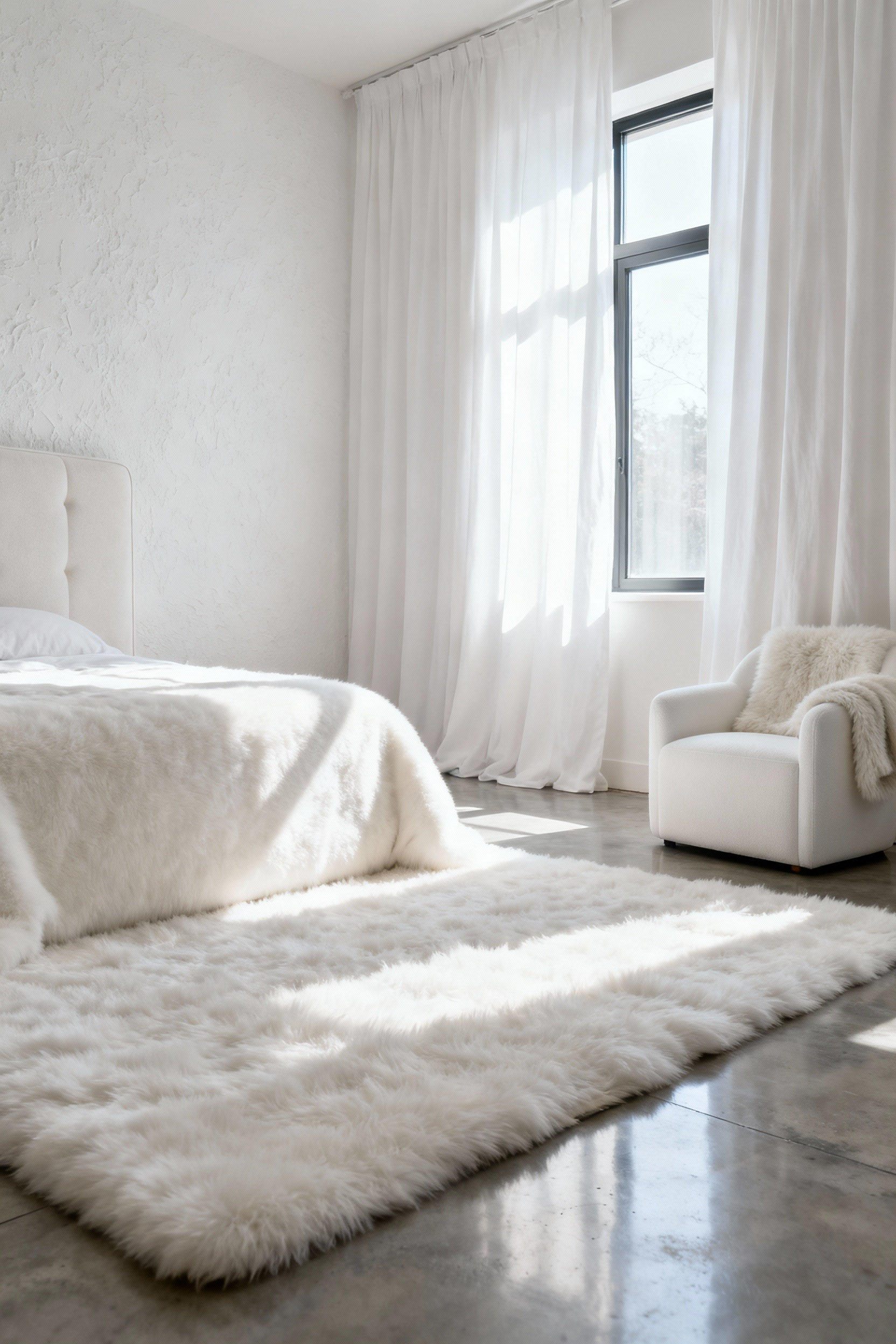
Advanced practitioners address external noise sources by soundproofing windows and doors. The final level involves cultivating active auditory elements—not just reducing noise, but introducing sounds that foster peace. A subtle white noise machine or a small, elegant water feature can create a gentle, rhythmic presence. This mastery integration of both subtractive and additive auditory design ensures your bedroom isn’t merely quiet, but truly peaceful, cococtooning you in stillness.
17. Curating Personal Vignettes to Infuse Authenticity and Soul without Overwhelm
A pristine white bedroom benefits immensely from infusions of your personal narrative. An accessible foundation is to select only a few truly meaningful objects—a cherished photo, a piece of art from a beloved trip. For a more sophisticated application, group them thoughtfully using the ‘rule of odds,’ varying heights and textures, and giving them breathing room. A sculptural element, a stack of beloved books, and a fragrant candle can form a compelling micro-narrative.
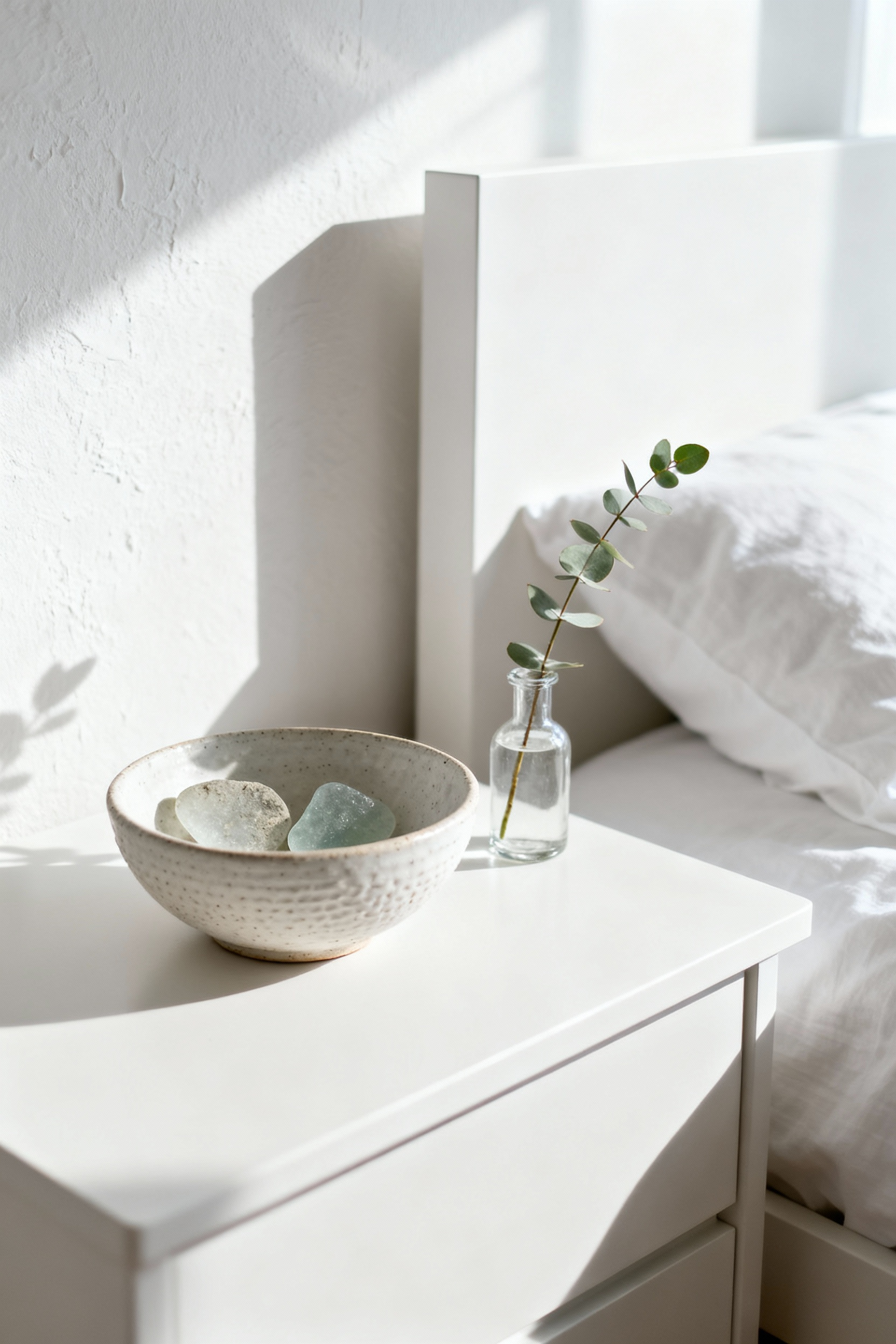
Advanced practitioners understand these vignettes are not static, but a meditative practice that evolves with you. The mastery integration here involves a deeper exploration of intention. Each vignette can become a small altar to moments or aspirations. In my work designing wellness-focused spaces, I’ve seen how these personal touches infuse a room with a client’s unique energy, or chi. Your white backdrop amplifies their significance, fostering a powerful sense of belonging and well-being.
18. Implementing Sustainable Choices for an Eco-Conscious White Retreat
An exquisite white bedroom aesthetic should extend its purity to an ethos of environmental consciousness. An accessible start is choosing organic cotton, bamboo, or linen bedding. For a more sophisticated application, seek out furniture made from reclaimed or sustainably harvested wood and use low-VOC paints. This ensures your serene space is truly wholesome.
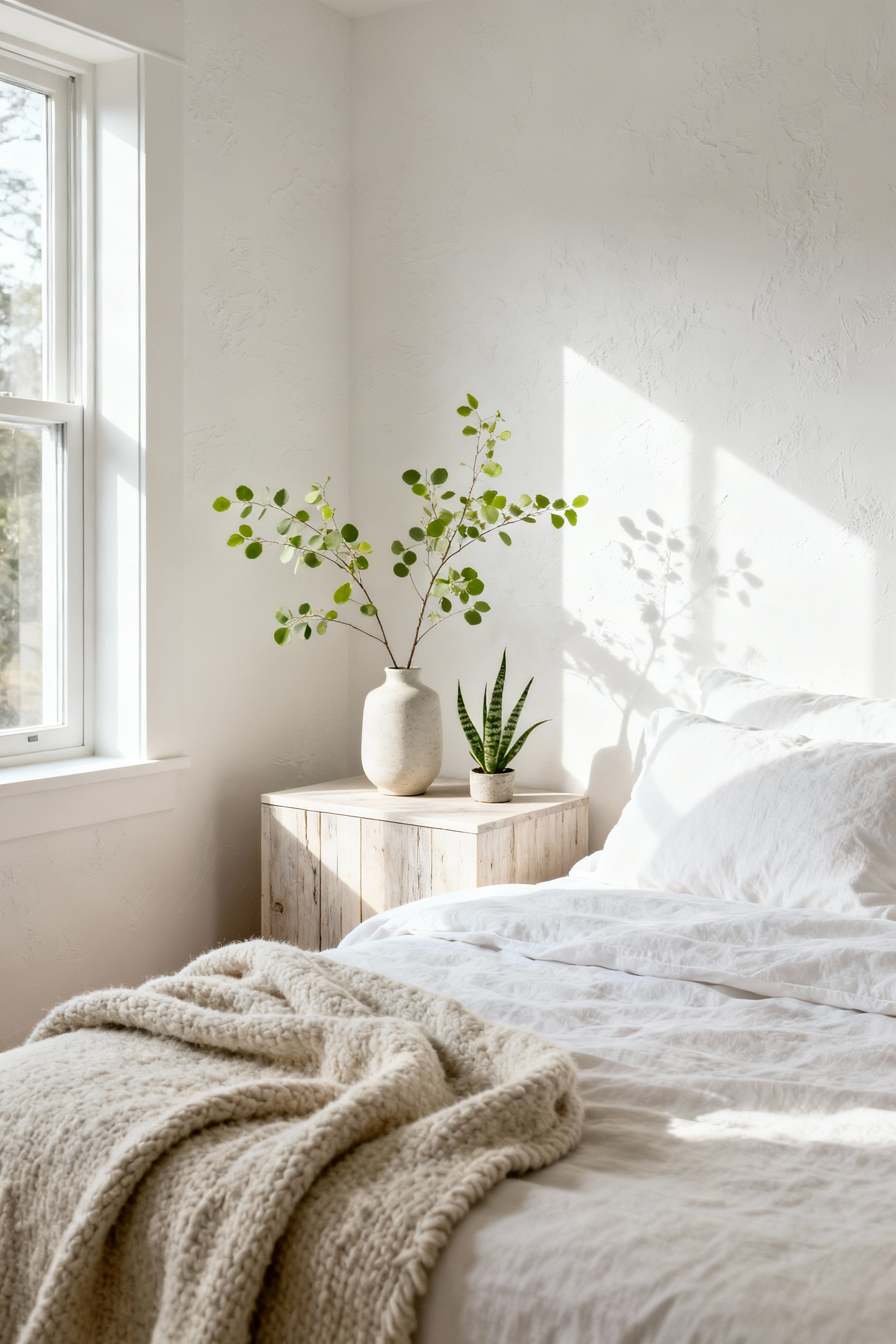
Advanced practitioners reduce consumption by upcycling existing furniture and investing in quality pieces built to last. The mastery of this involves a comprehensive assessment of energy efficiency, like maximizing natural light to reduce reliance on artificial illumination. This approach considers the broader ecological footprint, ensuring your commitment to a pristine white bedroom also supports the well-being of the planet. It’s about creating a space that breathes life, ethically and beautifully.
19. Anticipating the Evolving Canvas: Embracing White as a Dynamic Foundation for Growth
One of the most profound strengths of a white aesthetic is its adaptability. An accessible view sees white as a blank canvas. A more sophisticated application sees it as an active partner in design evolution. Its neutrality allows for seasonal shifts in textiles and accents without requiring major overhauls; a simple change of pillows can recalibrate the entire mood.
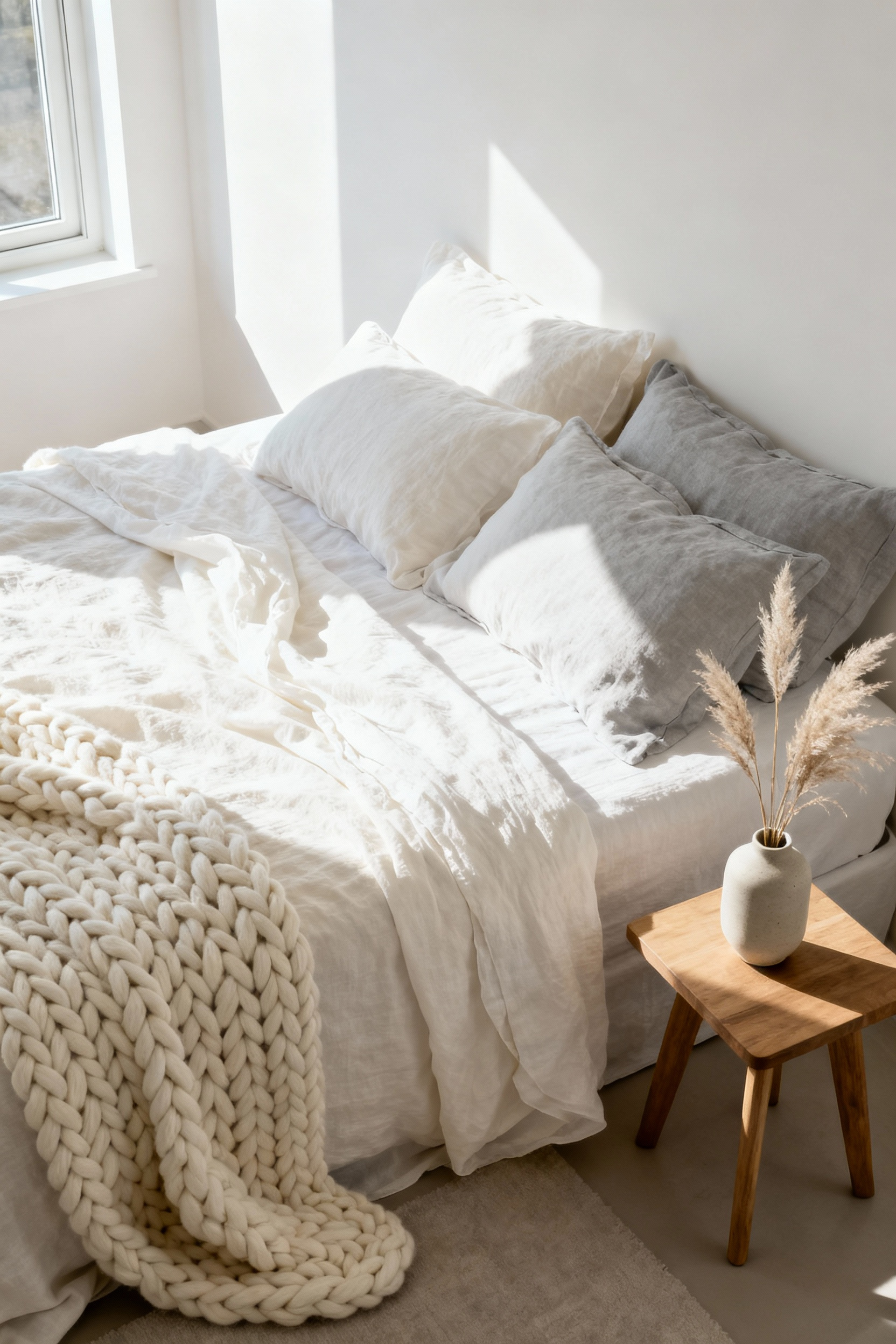
Advanced practitioners understand white’s psychological role in fostering introspection. The absence of dominant color encourages the mind to de-clutter, creating a peace that supports personal development. The ultimate mastery embraces white as a philosophical stance—a commitment to a living, breathing space. I learned this when a client was going through a major life transition, and we found that her white bedroom provided a stable, calming constant that could be subtly changed to reflect her inner shifts. It’s not just a color; it’s a profound declaration of openness and possibility.
Expert Integration: Crafting a Holistic White Bedroom Experience (Part 2)
Building upon visual tranquility, we now explore how engaging our other senses can elevate mere design into an enveloping sanctuary. Here, we refine every facet of the serene aesthetic.
20. Nurturing the Olfactory Experience with Subtle, Calming Aromas
The pure canvas of a white bedroom is the perfect setting to engage our most emotional sense: scent. Aromatherapy is a powerful, invisible architect of atmosphere. The accessible foundation is using calming aromas like lavender for soothing or bergamot for a tranquil uplift, introduced via a high-quality essential oil diffuser. These scents signal to the nervous system that it is time to unwind.
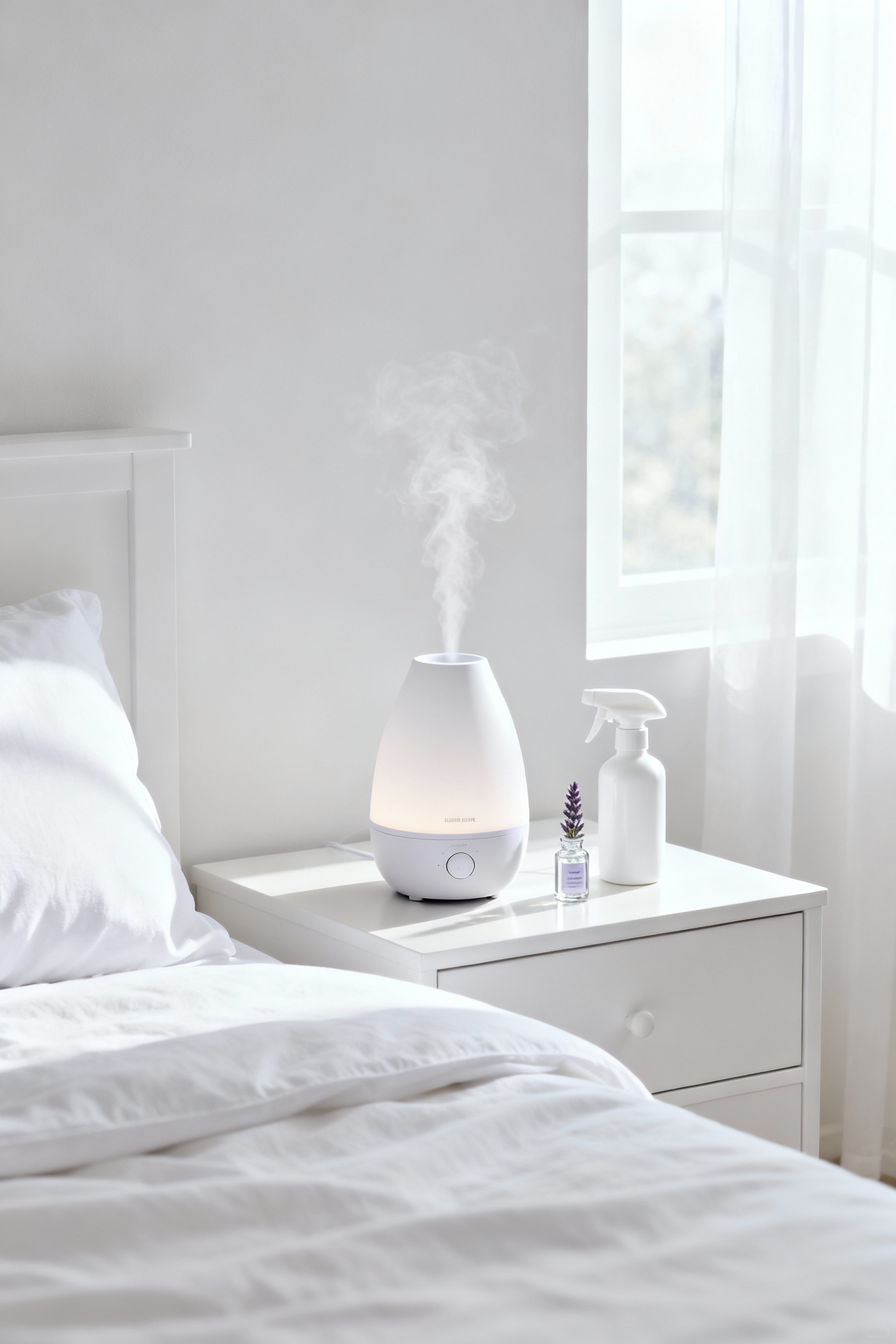
For a more sophisticated application, consider the methodical integration of aromas into your daily rhythm. An ultrasonic diffuser offers consistent, subtle dispersion, while artisan soy or beeswax candles offer both ambient light and gentle scent. The mastery of this goes beyond simple fragrance; it becomes a deliberate, personalized ritual. You can curate an aroma library for specific needs: purifying eucalyptus for morning clarity, comforting sandalwood for evening introspection. By intentionally selecting therapeutic-grade oils, we infuse the bedroom with a deeply nurturing energy, ensuring every breath contributes to a profound sense of peace.
Conclusion
As we draw our exploration to a close, my deepest hope is that you now see the white bedroom aesthetic not as a trend, but as a philosophy for creating sanctuary. We’ve journeyed far beyond stark minimalism, uncovering the nuanced power of texture, the sacred play of light, and the quiet command of space. This is not about rigid rules, but about embracing an artful, holistic approach that speaks directly to your soul and fosters an environment where calm reigns supreme.
Now, I invite you to take these insights and begin to weave them into your own home. Experiment. Trust your intuition. Remember that your bedroom is more than just a room; it is a canvas for your spirit, a refuge that should consistently recharge and inspire you. With these principles as your guide, you possess the vision to not merely decorate, but to cultivate an atmosphere where peace flourishes. Let your refined white bedroom be a testament to intentional living—a daily reminder that a thoughtful environment is the foundation of a life lived with grace and well-being. Nurture your space, and in turn, it will nurture you.