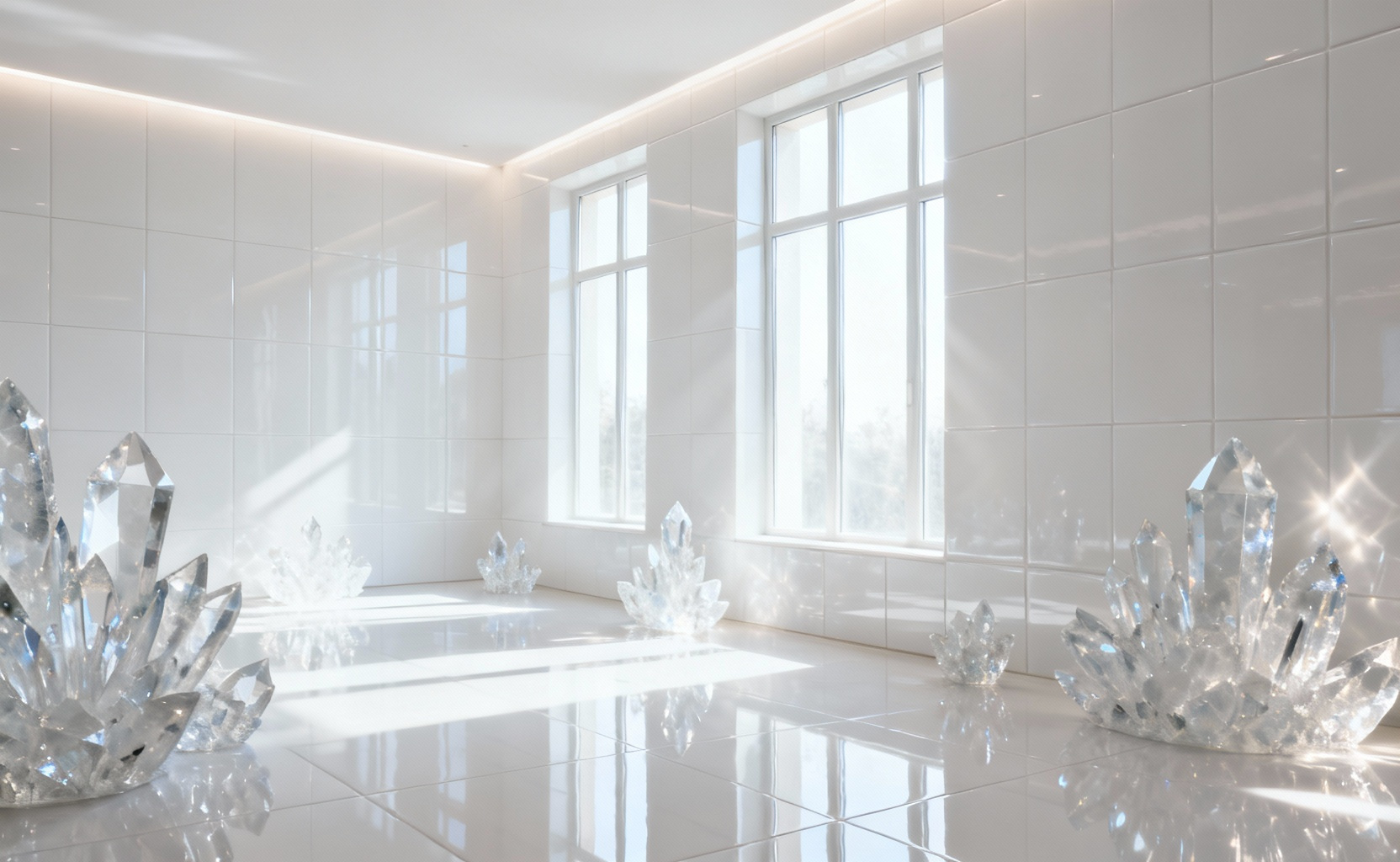

Crafting a home is fundamentally an act of self-care—every choice reflects not just our taste, but our deeper needs for peace, clarity, and renewal. The most compelling wellness spaces aren’t simply decorated; they are intentionally curated to support our journey. They tell a story of how we want to feel every single day. These twenty principles are what separate a space that feels like a true sanctuary from one that just looks pretty.
Your bathroom, more than any other room, holds the potential to be a haven for restoration. It’s where you begin and end each day, a place for private rituals of cleansing and care. At the heart of this transformation lies a simple, foundational element: white bathroom tiles. From my years of experience in holistic home design, I’ve come to see these tiles not as a mere building material, but as a canvas for quietude. They amplify light, create a sense of clean-slate energy, and lay the groundwork for profound calm.
This guide is structured to help you explore this potential from the ground up. We’ll begin with the foundational soul of your sanctuary, move into the art of integrating texture and material, and finish with how to sustain that serenity for years to come. This isn’t about following rules; it’s about learning a new language of design—one that speaks directly to your well-being.
Part 1: The Soul of Your Sanctuary
Before we lay a single tile, we must understand the why behind our choices. This is about connecting with the subtle energy of your space. These principles explore the silent language of white, from the way it moves light to the feel of it underfoot, guiding you toward creating a bathroom that truly nurtures you.
1. Harnessing Light: The Luminous Energy of Glazed Surfaces
The true power of glazed white bathroom tiles is their relationship with light. Think of them not just as surfaces, but as conduits of positive energy. A glazed finish catches natural light and scatters it around the room, making the space feel more open, airy, and alive. This isn’t just an illusion of space; psychologically, it gives our minds more room to breathe.
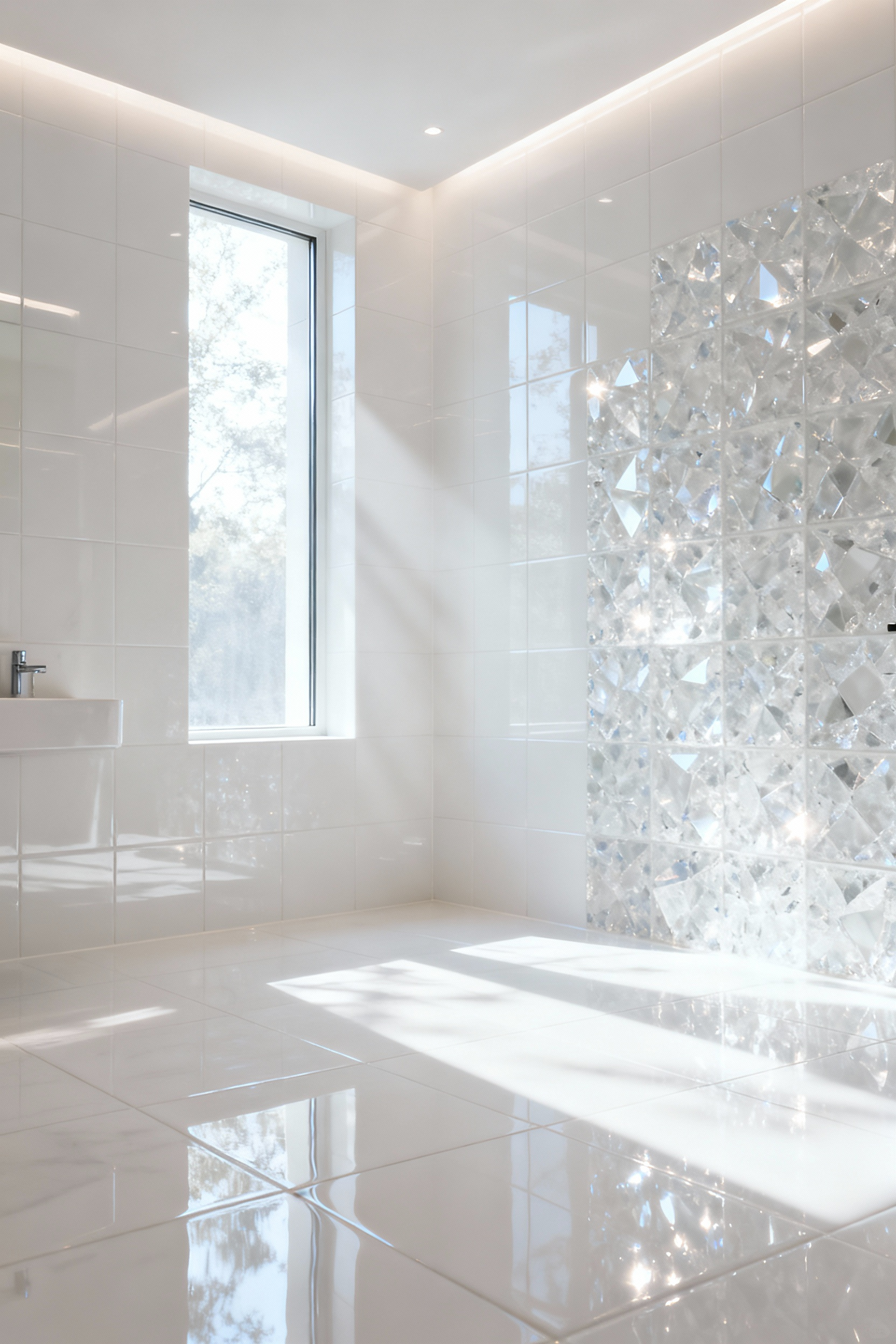
In my work creating wellness sanctuaries, I often explain that in feng shui, light is a form of ‘Chi’—or life force energy. A bathroom that is bright and luminous feels healthier and more vital. When you observe your bathroom’s light throughout the day, notice where it falls. Placing glazed tiles on a wall opposite a window will essentially create a second, softer light source, bouncing that beautiful daylight into every corner. This simple, intentional choice can transform a dim, stagnant space into one that feels vibrant and cleansing.
2. The Psychology of White: Discerning Warm and Cool Undertones
‘White’ is never just white. Within this single color lies an entire emotional spectrum, and learning to discern the undertones in white bathroom tiles is key to creating the exact mood you desire. This is where color psychology plays a beautiful role in our design.
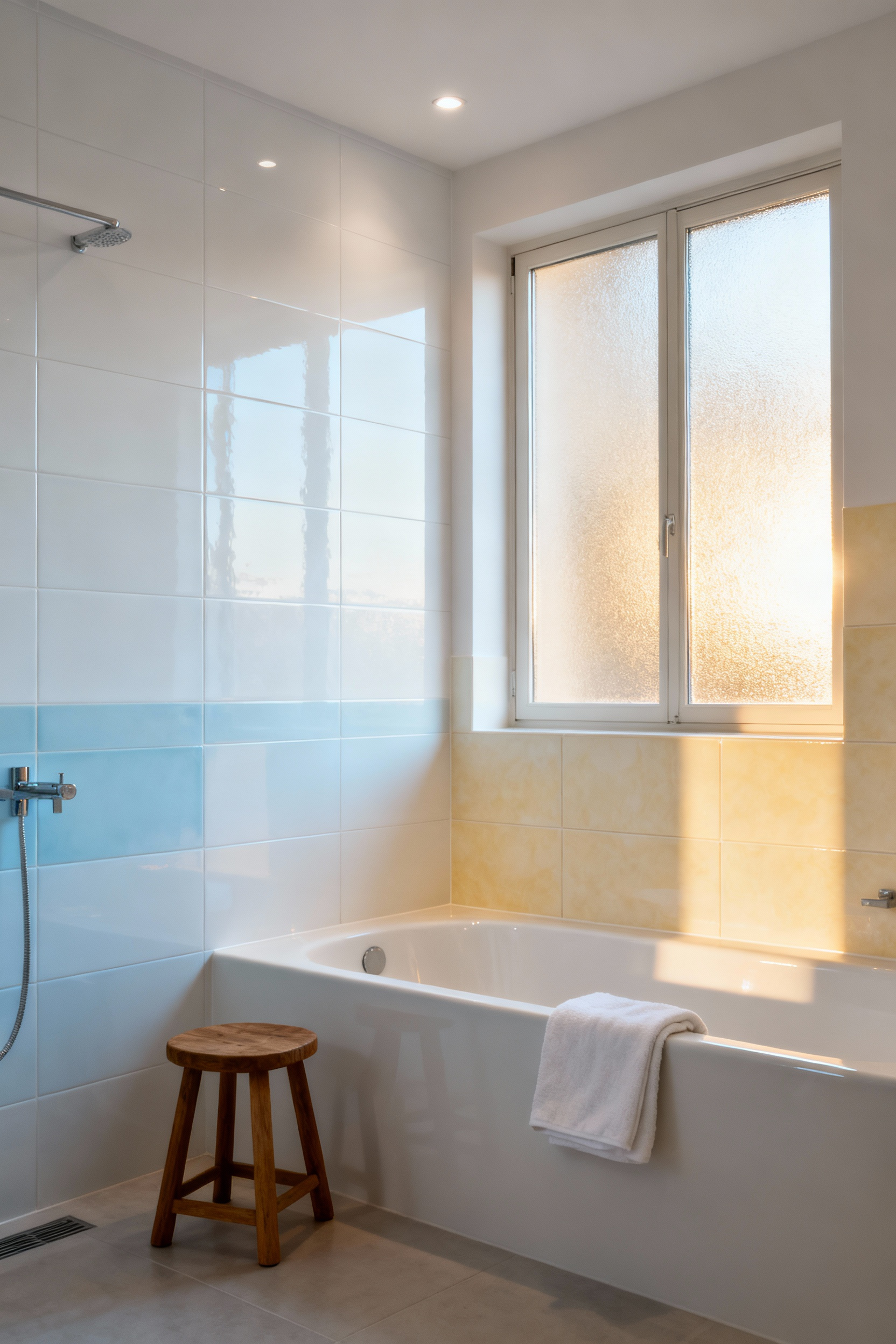
Warm whites, with their subtle notes of cream or ivory, create a nurturing, comforting embrace. They are wonderful for invoking a sense of coziness and are perfect for a sanctuary designed for quiet, restorative bathing. Cool whites, carrying hints of blue or grey, evoke clarity and purity. They feel crisp and refreshing, ideal for starting your day with a clear mind. What I’ve seen play out with my clients is that their intuitive reaction to these tones is almost always right. So, I encourage you: bring samples into your space. Watch how they change in the morning light versus the evening glow. Trust your gut. The white that makes you feel most at ease is the right one for you.
3. The Beauty of Imperfection: The Wabi-Sabi Soul of Hand-Fired Tiles
In our quest for perfection, we sometimes miss the profound beauty found in things that are perfectly imperfect. This is the heart of the Japanese Wabi-Sabi philosophy, which finds beauty in authenticity and imperfection. Hand-fired white terra cotta tiles are the perfect embodiment of this ethos. Each tile is unique, with subtle variations in texture and shade that tell the story of its creation.
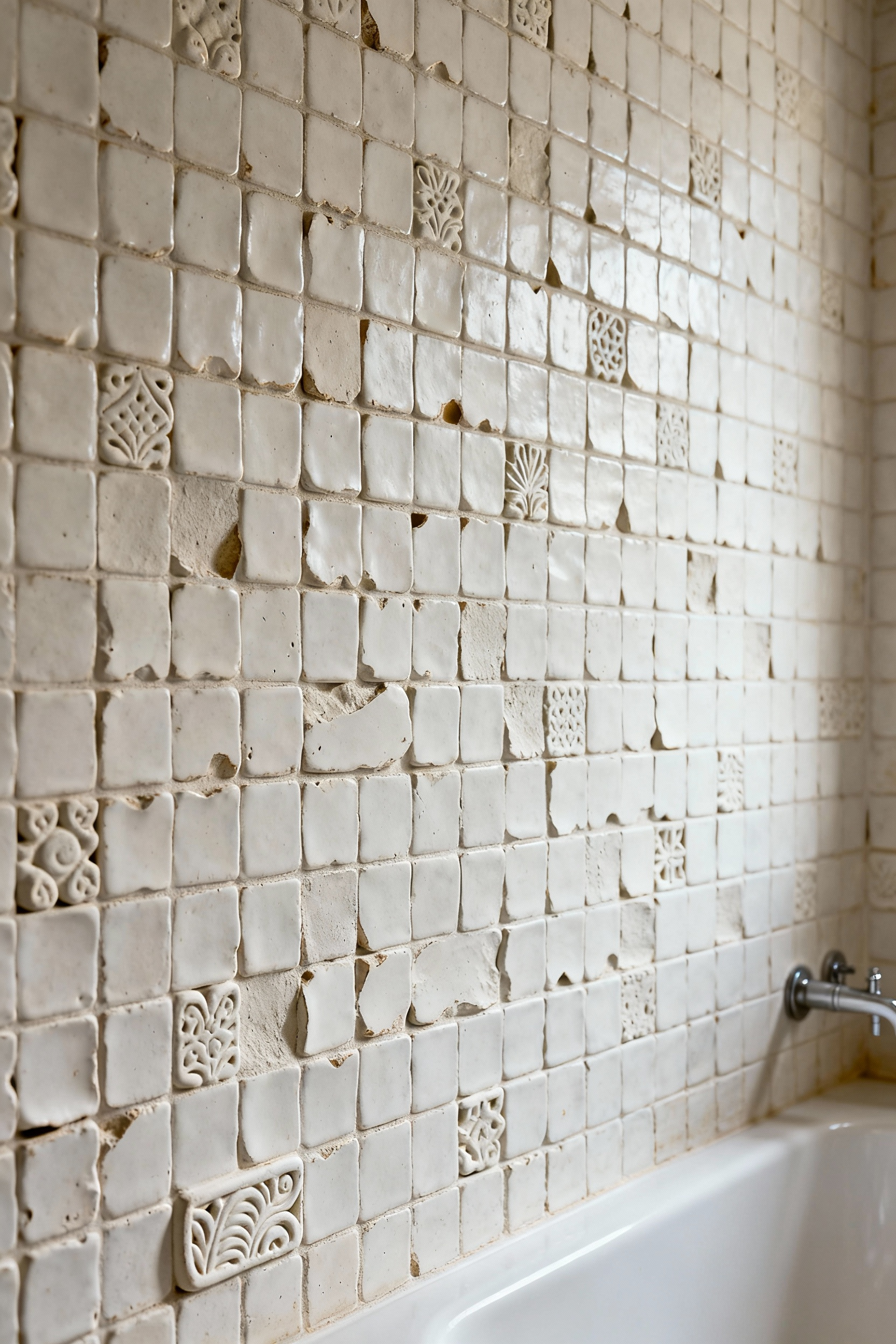
Choosing these tiles is an act of mindfulness. It’s a decision to move away from a sterile, uniform look and embrace something with soul and character. When you run your hand over a wall of these tiles, you feel a connection to the artisan and the earth. In my wellness sanctuary design practice, I often use these imperfect tiles for a feature wall in a shower. The way the water cascades over the subtle textures creates a sensory experience that feels deeply grounding and real, turning a simple rinse into a meditative ritual.
4. The Unseen Sense: Calibrating Surface Finish from Matte to Polished
While our eyes process color and pattern, our sense of touch processes the world in a much more primal way. The surface finish of your white bathroom tiles—the “unseen tactile” element—is incredibly important for setting the tone of your sanctuary. It influences how grounded or energized you feel in the space.
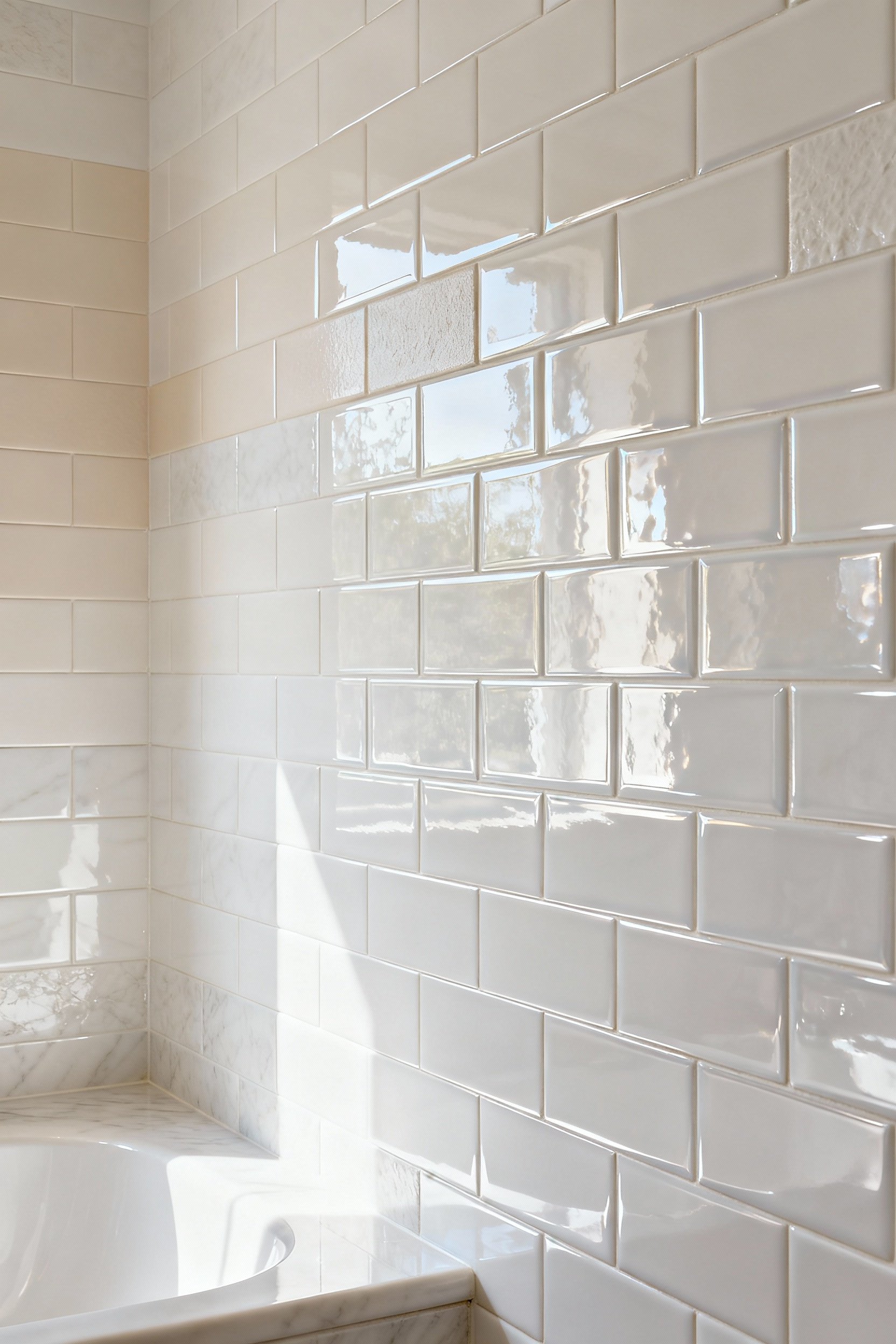
A matte finish absorbs light, creating a soft, quiet feel. It’s velvety and provides a gentle grip underfoot, which is not only safer but also connects you more deeply to the ground you stand on. A high-gloss, polished finish, on the other hand, is all about luminosity and energy. It bounces light beautifully and can make a small bathroom feel expansive and luxurious. Here’s what’s interesting: you don’t have to choose just one. I love using matte white tiles on the floor for that earthy, secure feeling, paired with polished tiles on the walls to lift the room’s energy and reflect light. It’s a beautiful balance of grounding calm and uplifting clarity.
5. Expanding Serenity: The Boundless Feel of Large-Format Tiles
The fastest way to create a feeling of calm is to reduce visual clutter. This is precisely what large-format white porcelain tiles do so beautifully. By minimizing the number of grout lines, you create a seamless, monolithic surface that allows your eyes—and your mind—to rest. It’s an optical illusion that feels deeply real.
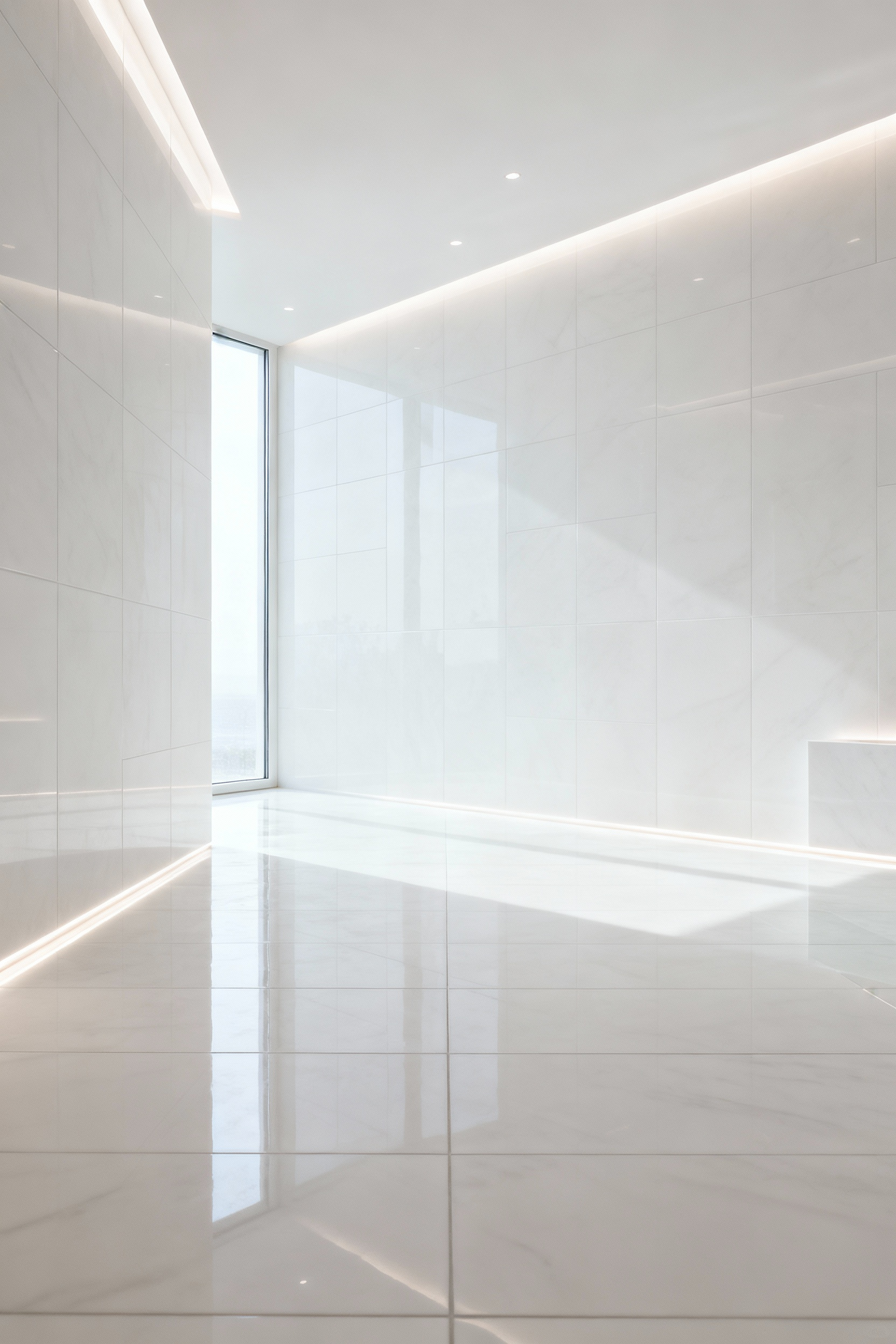
When the same large-format tile flows from the floor up onto the walls, it can make the boundaries of the room seem to disappear. What I tell my clients is that this technique fosters an environment for mindfulness. When your mind isn’t busy “reading” lots of lines and patterns, it can more easily relax and let go. Choosing rectified-edge tiles, which allow for razor-thin grout lines, enhances this effect even further. The goal is to create not just a room, but an enveloping experience of serene, unbroken space.
6. The Biophilic Grid: Using Lay Patterns to Create Natural Rhythm
Biophilia is the idea that we have an innate human need to connect with nature. We can bring this principle into our tile design by using lay patterns that mimic rhythms found in the natural world. The orientation of your white bathroom tiles is more than just a style choice; it’s a way to influence the energy of the room.
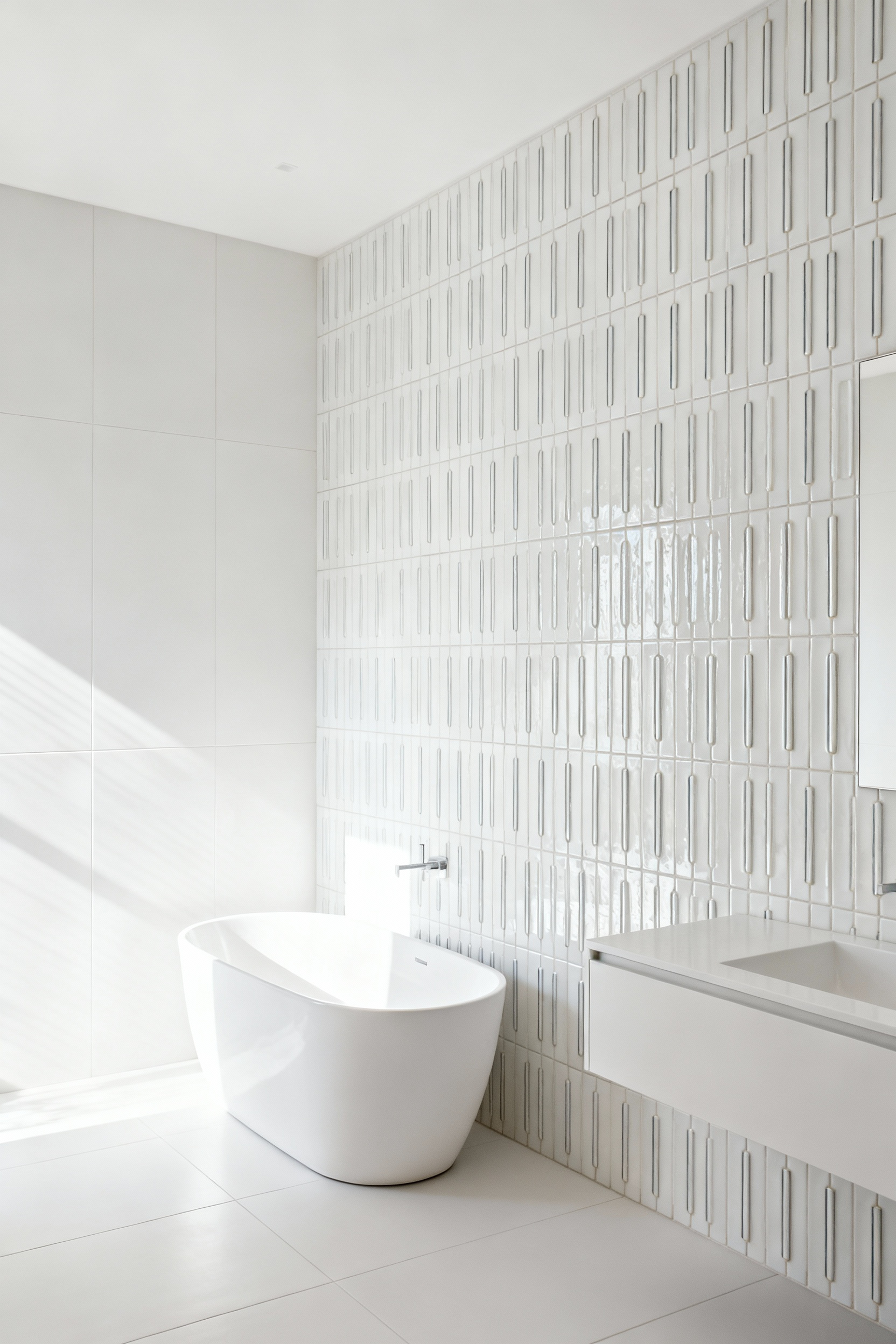
Laying rectangular tiles vertically draws the eye upward, like tall trees in a forest, making a ceiling feel higher and the room feel more expansive and uplifting. Laying them horizontally can ground the space, creating a sense of stability and calm that mimics a wide horizon. Because white tiles are so visually neutral, the pattern itself becomes the focus. From my work in holistic home design, I’ve found that these subtle, nature-inspired rhythms create a subconscious sense of ease, helping align your personal sanctuary with the calming patterns of the world outside.
7. A Sanctuary for the Senses: Using Minimalist Layouts to Reduce Overload
Our modern lives are filled with constant stimulation. A true sanctuary should offer a refuge from this sensory overload. The elegant simplicity of a minimalist white tile layout provides a powerful antidote, creating a space of profound visual quiet where your mind can finally unclutter and unwind.
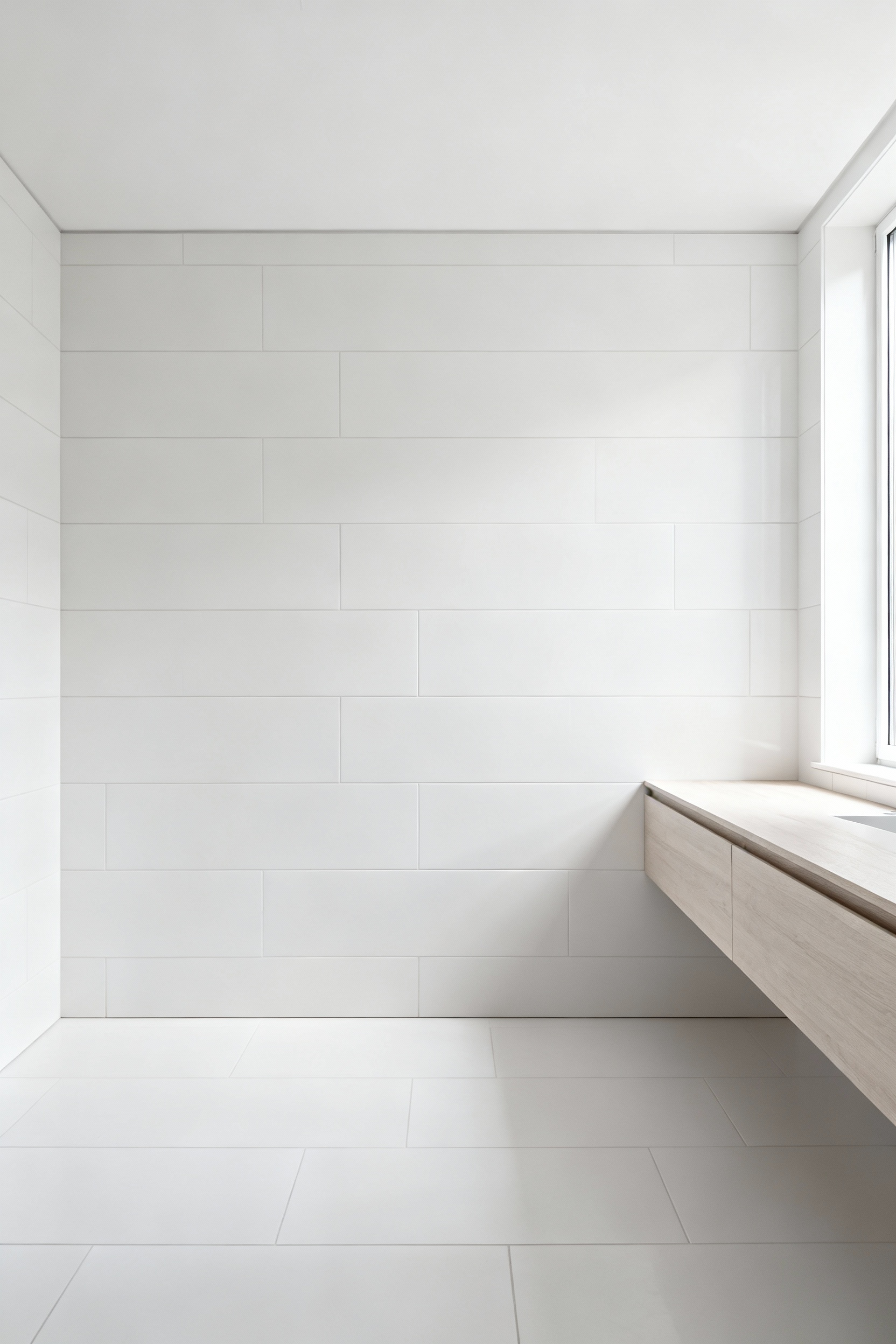
This philosophy is about intentional reduction—paring back to only what is essential for serenity. This often means using a single type of large white tile with perfectly blended grout, creating an uninterrupted plane of calm. The focus then shifts from pattern to subtle texture. Imagine a shower lined in tiles with a gentle, wave-like relief; it’s visually quiet but deeply engaging to the touch. In my experience, spaces that are free of unnecessary visual information are the ones that best support meditation and deep relaxation. It’s not about being stark or cold; it’s about curating a sophisticated quiet that allows your own thoughts and feelings to come to the surface.
Part 2: The Art of Material and Touch
Now that we’ve set our foundation in intention, we can explore how to layer materials and textures to create a truly multi-sensory experience. This is where we elevate the aesthetic, blending different elements to compose a sanctuary that feels as good as it looks.
8. The Disappearing Act: Using Tonal Grout for a Seamless Flow
The details you don’t notice are often the most important. Grout is one of those details. While contrasting grout can be a style statement, choosing a grout color that perfectly matches your white bathroom tiles is an artful move that creates a seamless, monolithic presence. It allows the tiles to become one continuous, sculptural surface.
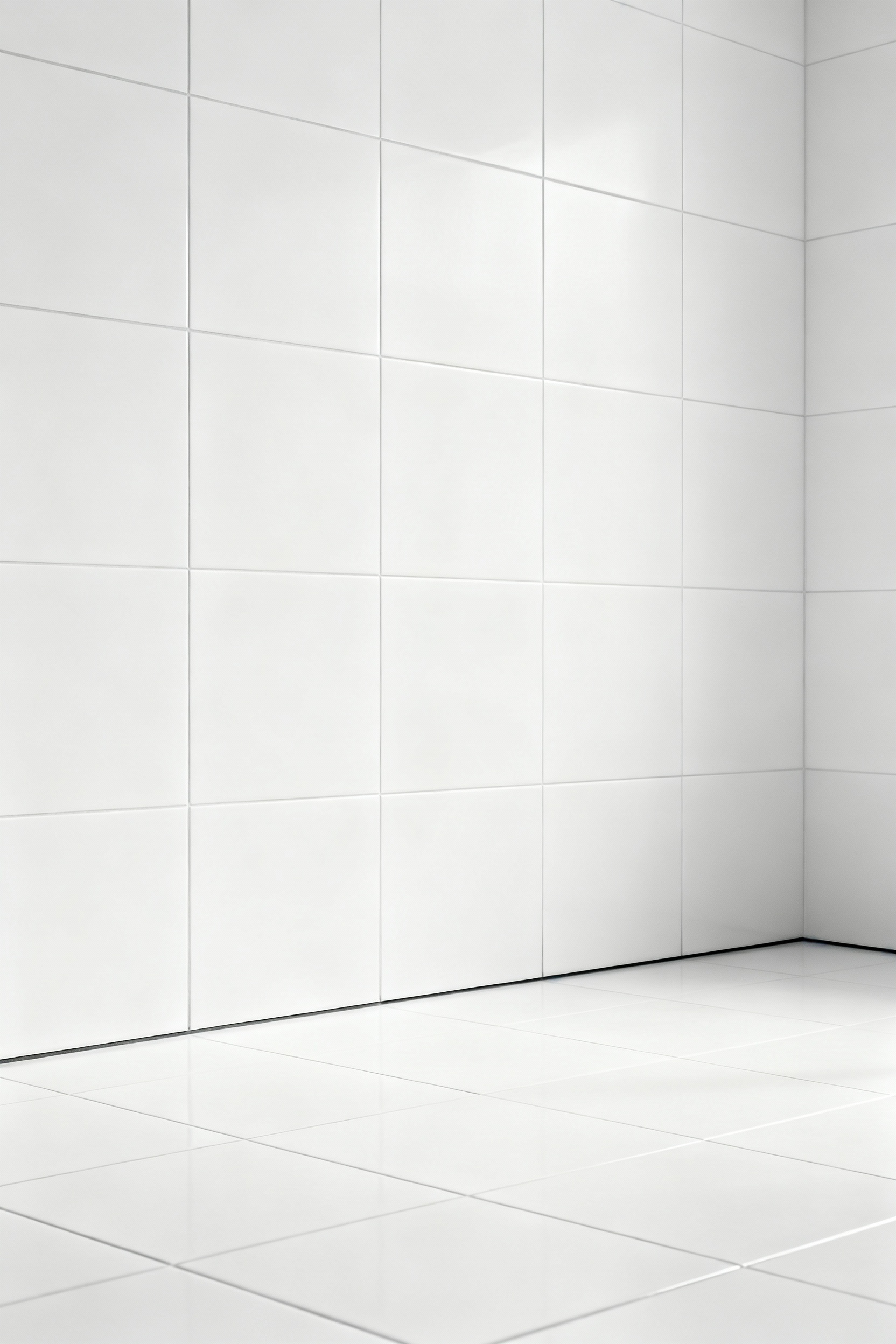
This technique is deeply calming because it eliminates visual breaks, allowing the eye to sweep across the walls and floor without interruption. It’s a powerful tool for making a space feel larger and more serene. When selecting grout, I always have my clients test samples right next to their chosen tile in the bathroom’s own light. A “white” grout can look starkly different next to a “warm white” tile. Achieving this seamless effect turns a simple tiled surface into an architectural feature that feels both expansive and profoundly peaceful.
9. A Dialogue of Textures: Pairing Honed Marble and Iridescent Glass
A room designed entirely in one color and texture can sometimes feel flat. The secret to creating depth within a white palette is to introduce a “textural counterpoint”—a dialogue between different materials. A beautiful pairing I love is the quiet elegance of honed white marble with the playful shimmer of iridescent glass mosaics.
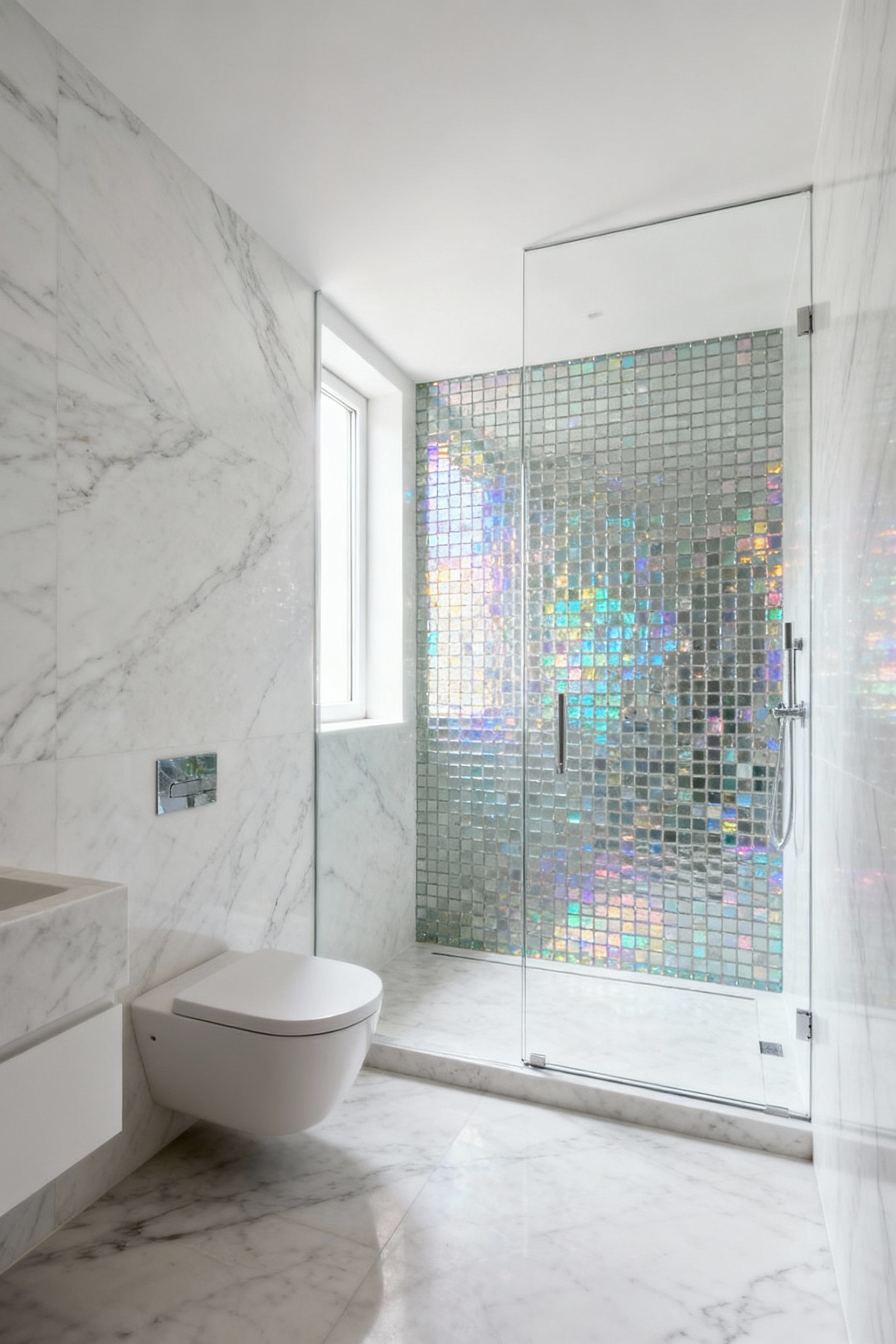
Honed marble has a soft, velvety finish that absorbs light, creating a gentle and grounded feeling. It feels ancient and luxurious. Then, introduce a touch of iridescent glass—perhaps in a shower niche or as a delicate accent strip. This material dances with the light, offering a magical, pearlescent shimmer that shifts as you move. What really gets me is the way these two materials speak to each other: the steady, quiet presence of the marble and the ethereal, lively sparkle of the glass. It creates a space that feels both grounded and infused with a little bit of magic.
10. The Play of Shadows: Sculpting Light with Beveled Edge Tiles
One of the most elegant ways to add dimension to a white wall without adding color is to use tiles that play with light and shadow. Beveled edge white bathroom tiles are masters of this art. The subtle angle along the edge of each tile catches the light, creating delicate shadow lines that give the wall a beautiful, three-dimensional texture.
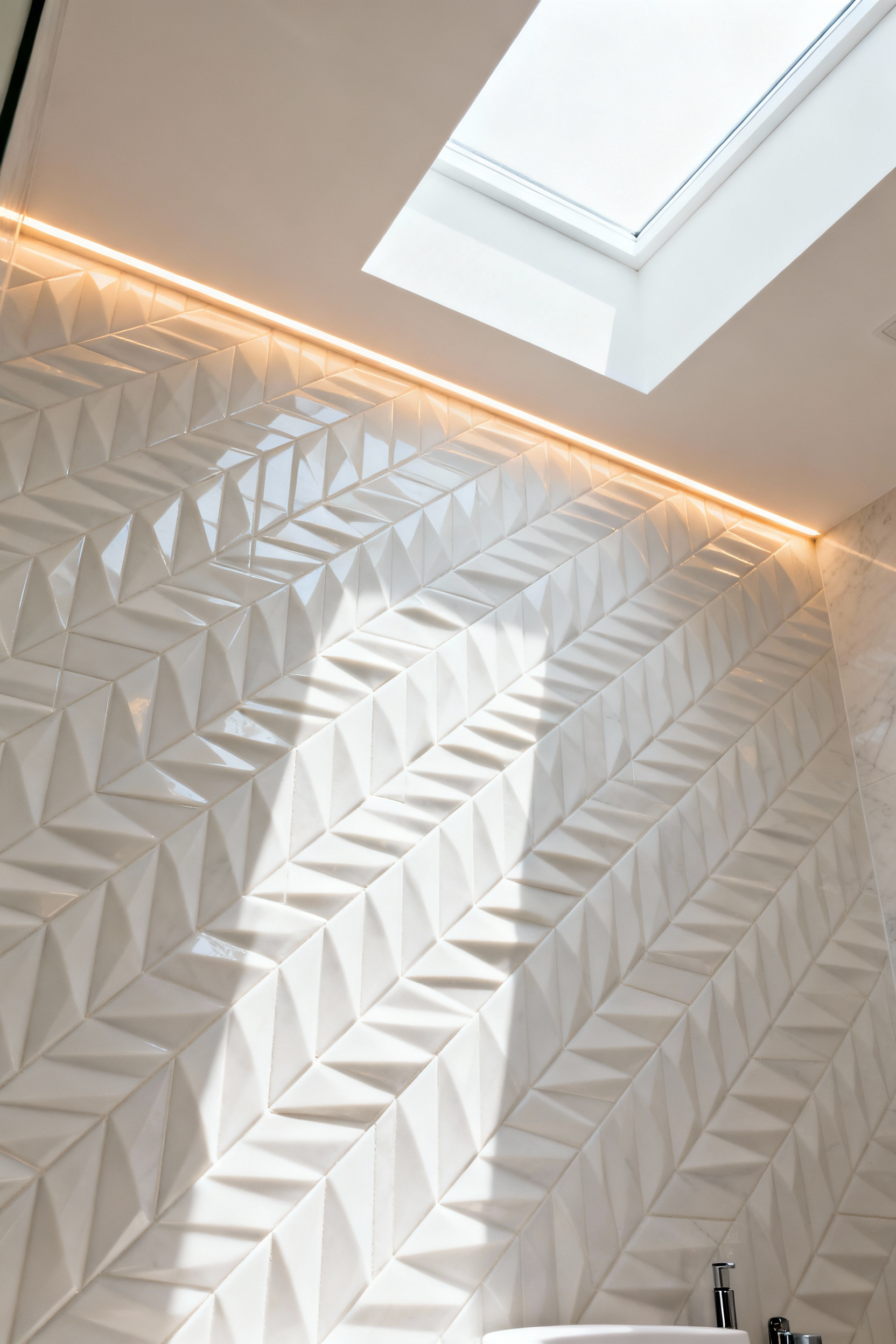
Unlike grout lines which create sharp divisions, these shadows offer a softer, more organic form of definition. The effect is subtle yet deeply sophisticated. What I love is that the wall changes throughout the day as the light shifts, creating a dynamic surface that feels alive. This is a perfect example of how form itself, independent of color, can create visual interest and a sense of handcrafted quality. It turns a simple wall of white bathroom tiles into a subtle work of art.
11. Beyond the Wall: Using Tile as an Architectural Skin
To create a truly cohesive sanctuary, think of your white bathroom tiles not just as a covering, but as an architectural skin that can wrap around different forms in the room. Extending the same tile from the walls onto a built-in shower bench or the surround of a bathtub creates a stunning, sculptural effect.
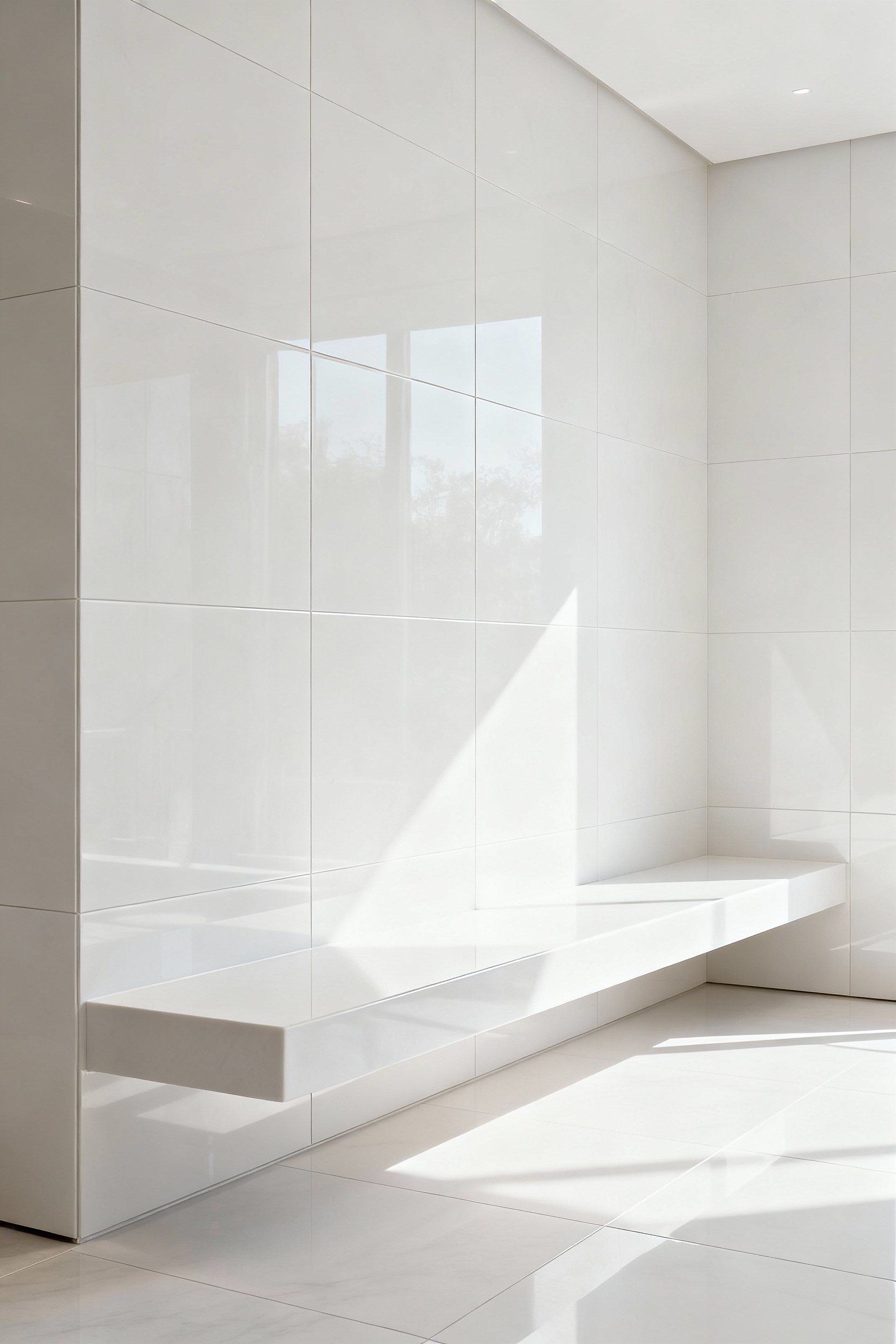
This approach blurs the lines between fixture and structure, making it feel as though the bench is growing organically from the wall. The visual flow is completely uninterrupted, which enhances the sense of spaciousness and minimalist luxury. In my wellness sanctuary design practice, I often use this technique with large-format tiles and mitered edges to create perfectly sharp, clean corners. It elevates functional elements into beautiful, integrated features that contribute to the room’s overarching sense of calm and order.
12. The Grounding Element: Anchoring White with a Dark Wood Trim
While an all-white space can feel ethereal and heavenly, sometimes it benefits from a single, strong grounding element to keep it from floating away. A dark wood base trim—in a rich walnut or wenge—can be a powerful anchor against the luminous expanse of white bathroom tiles. It provides a visual foundation that adds weight and warmth.
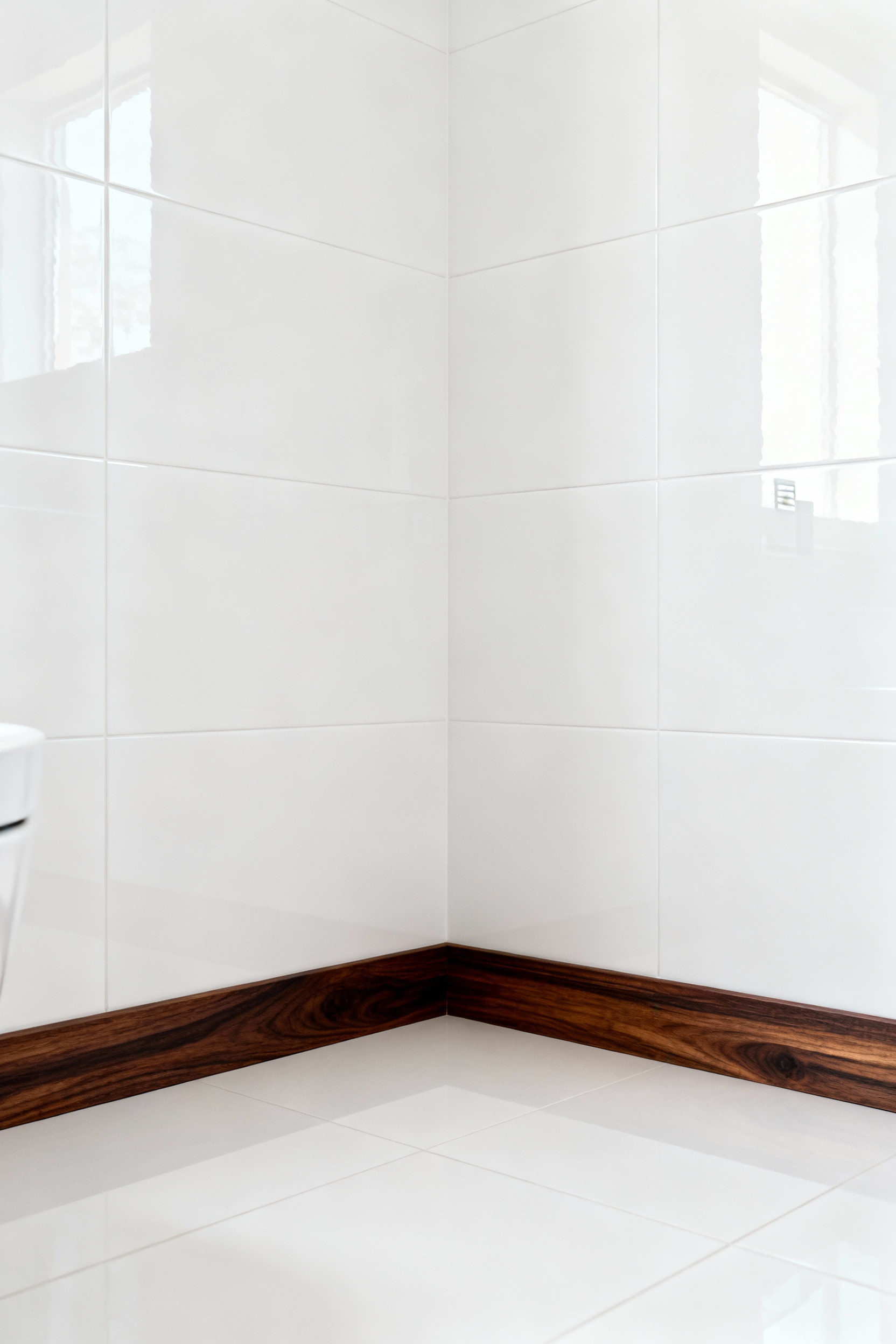
This strategic interruption does more than just frame the room; it creates a beautiful dialogue between the cool, reflective quality of the tile and the warm, absorbent nature of the wood. This connection to a natural, organic material can make the entire space feel more balanced and psychologically comforting. It’s a small detail that makes a profound difference, adding a layer of sophisticated elegance and ensuring your sanctuary feels both airy and firmly rooted.
13. The Radiant Embrace: Designing for Underfloor Heating
The feeling of stepping onto a warm floor is a sensory luxury that transforms a bathroom into a true spa-like retreat. When planning for underfloor heating beneath your white bathroom tiles, the choice of material is key. Porcelain is a fantastic conductor of heat; its density allows it to warm up efficiently and retain that warmth evenly.
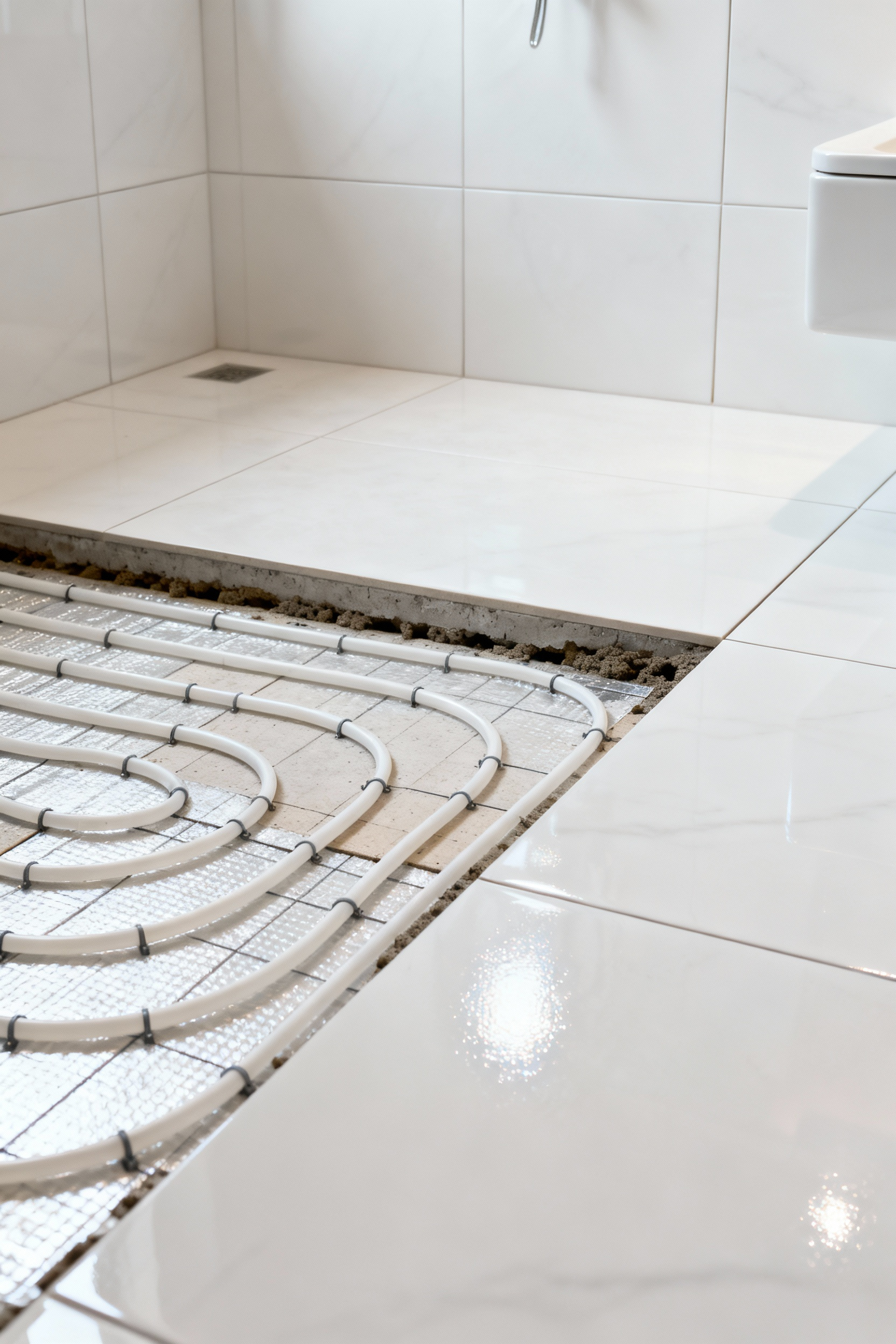
What I tell my clients is that this isn’t just about comfort—it’s about creating a holistic experience. The gentle, radiant heat rises from the floor, warming your entire body in a way that feels incredibly nurturing. It’s a form of unseen wellness. To ensure it works perfectly, the substrate preparation has to be flawless. A perfectly level and stable subfloor is non-negotiable for ensuring the system lasts and your beautiful tiles never crack. It’s a testament to the idea that true luxury is built on a foundation of quality and care.
14. Reflective Symmetry: Precise Tiling Around a Pedestal Sink
A freestanding pedestal sink is a beautiful, sculptural element. To honor its form, the tilework around it must be executed with absolute precision. This is about creating a perfect symmetry that allows the sink to feel perfectly integrated, as if it’s rising organically from the floor.
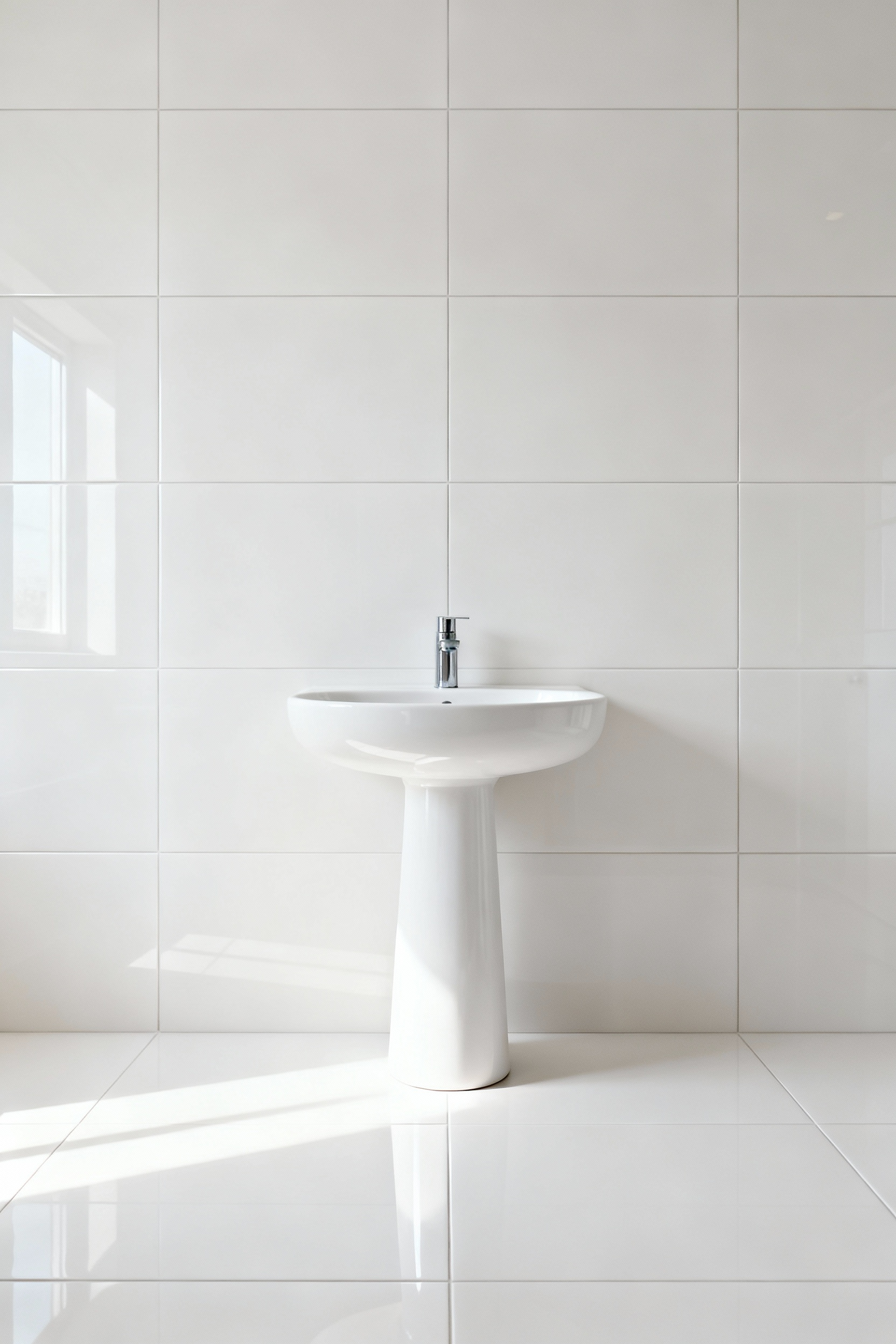
An expert tiler will often center the entire layout of the floor on the sink itself, ensuring the cuts on either side of the base are identical mirror images. Using larger white bathroom tiles can help here, as it minimizes the number of cuts and grout lines right around the feature. The goal is for the tilework to be so seamless that it doesn’t draw any attention to itself; it simply provides a quiet, perfect stage for the beauty of the basin. This level of meticulous detail is what elevates a space from simply ‘finished’ to truly ‘curated.’
Part 3: Sustaining Your Serenity
Creating a sanctuary is one thing; maintaining its peaceful energy is another. This final part is about conscious stewardship—choosing materials that age gracefully, adopting gentle care rituals, and planning for the future, so your haven remains a source of comfort and beauty for years to come.
15. The Story of White: Natural Stone vs. Engineered Composites
The whiteness of your sanctuary will evolve differently depending on the material you choose. It’s important to understand this story before you begin. Natural stone, like Carrara marble, is a living material. Over time, it will develop a ‘patina’—a soft, subtle change in tone that tells the story of its life in your home. It requires mindful care and regular sealing, but its beauty is dynamic and ever-evolving.
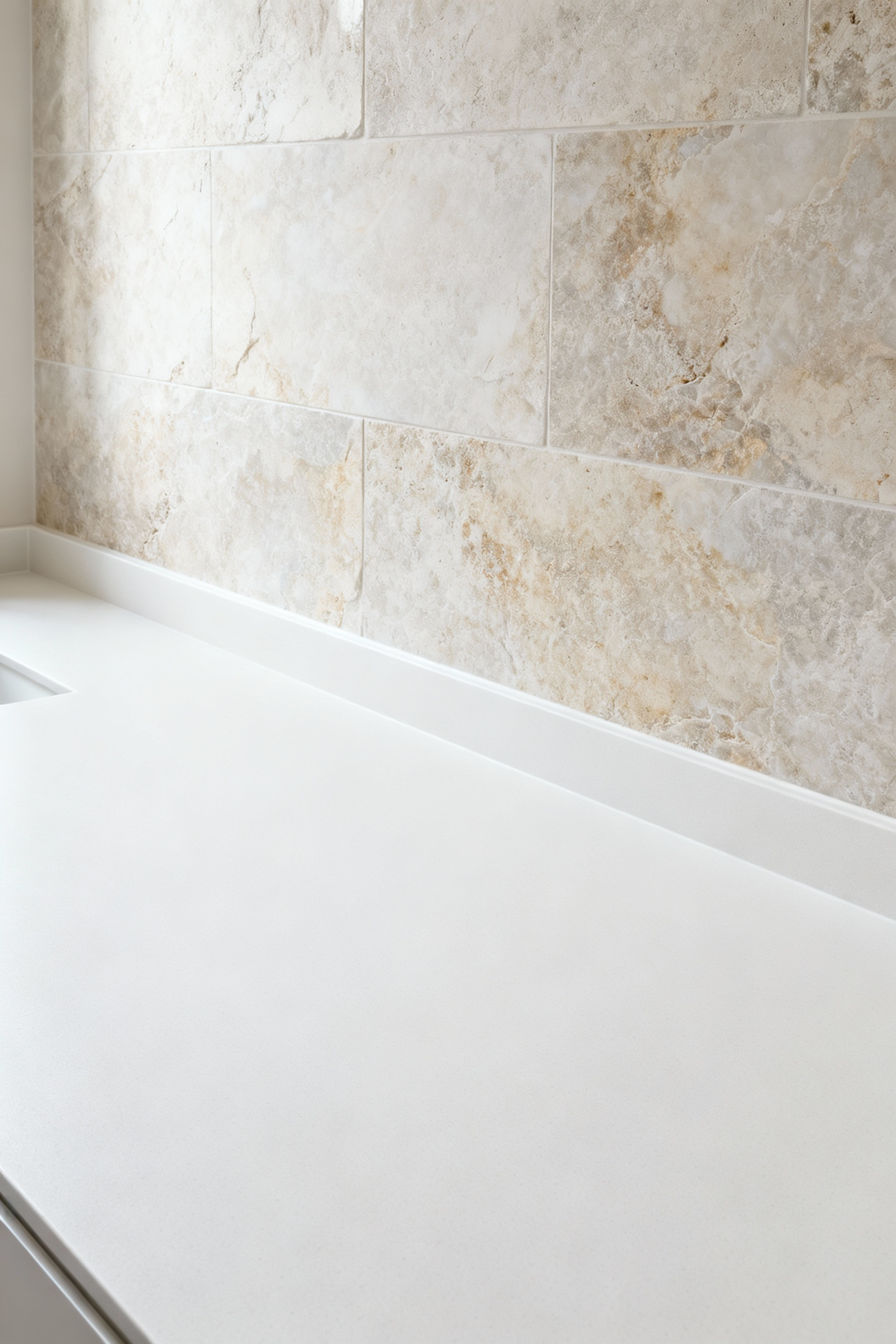
Engineered composites like porcelain, on the other hand, are designed for steadfastness. Their color is locked in, and they will look virtually the same in twenty years as they do today. They offer a pristine, unchanging purity. I learned this when a client chose marble for the deep connection she felt to its history. Another chose porcelain for the peace of mind its consistency offered. There’s no right answer. It’s a personal choice: are you drawn to the evolving story of a natural material, or the serene consistency of an engineered one?
16. The Gentle Cleansing Ritual: Preserving Your Tiles with pH-Neutral Care
The gleaming surface of your white bathroom tiles is precious. Harsh, acidic cleaners can slowly eat away at the glaze and grout, leaving them dull and porous. To sustain the serenity of your space, I encourage you to adopt a gentle cleansing ritual using only pH-neutral cleaners.
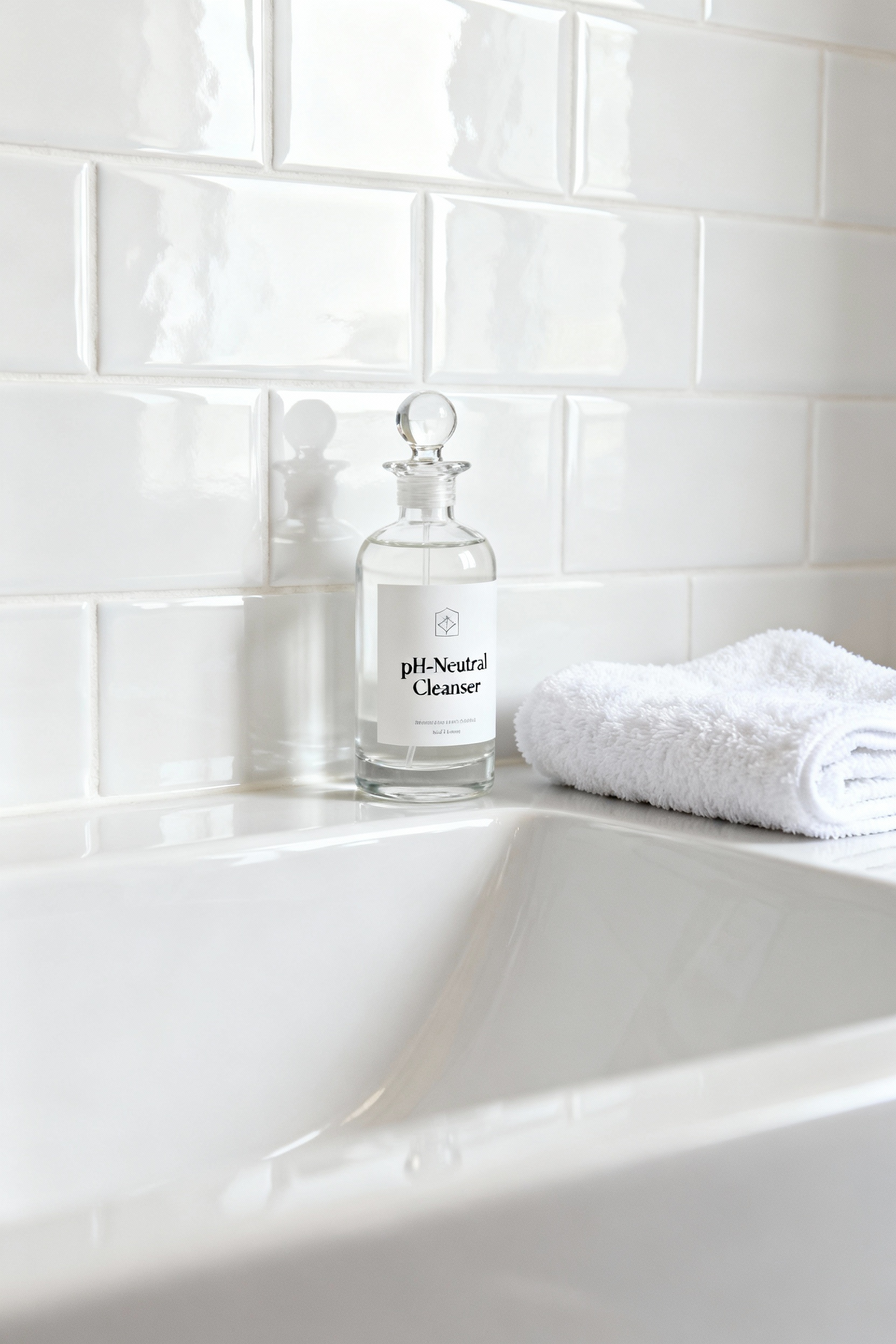
Think of cleaning not as a chore, but as an act of caring for your sanctuary. A simple solution of a pH-neutral cleaner and warm water, applied with a soft cloth, is all you need to lift away grime without damaging the surface. Taking this mindful approach ensures your tiles retain their luminous shine and protective barrier for years to come. This gentle practice reflects a deeper commitment to maintaining the peaceful, healthy energy you’ve worked so hard to create.
17. Preventing Efflorescence: The Importance of Moisture Barriers and Airflow
Have you ever seen a powdery white film appear on tile or grout? That’s efflorescence, caused by moisture pulling mineral salts to the surface. Preventing this requires foresight. The most critical step is a high-quality waterproofing membrane installed beneath your white bathroom tiles. This unseen hero stops moisture from wicking up through the substrate.
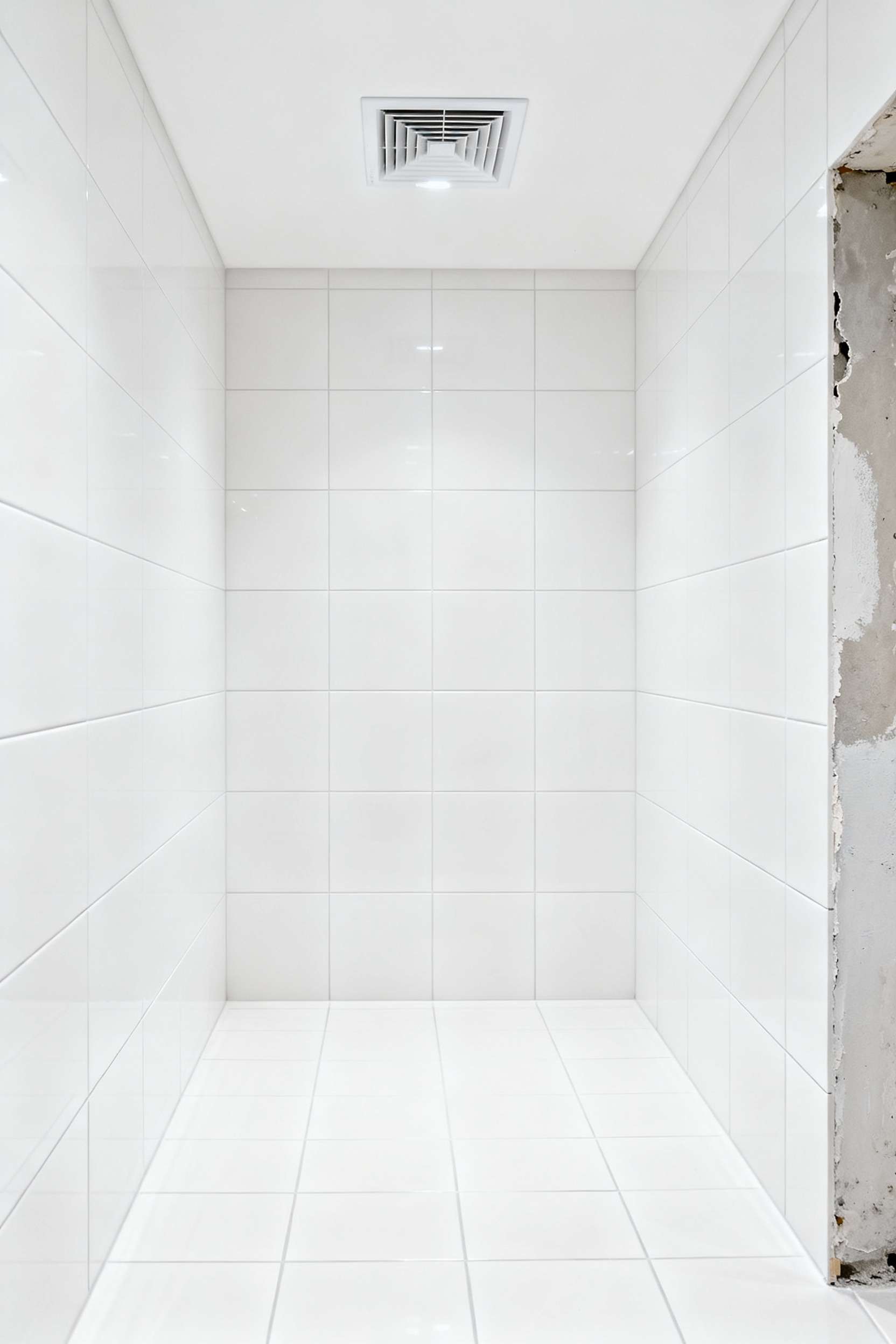
But the second part of the solution is all about airflow. A good ventilation fan isn’t just a code requirement; it’s a wellness tool. Running it during and for 20 minutes after every shower pulls humid air out of the room, allowing your surfaces to dry completely. In my professional experience, a combination of a solid moisture barrier and excellent ventilation is the key to preventing efflorescence and preserving the pristine look of your white bathroom tiles for the long term.
18. The Seamless Transition: Meticulously Matching Floor and Wall Whites
To create that immersive, all-encompassing feeling of serenity, the transition from floor tile to wall tile should be flawless. This means meticulously matching not just the color, but the undertone of your white bathroom tiles. A cool, blue-toned white on the walls next to a warm, creamy white on the floor can create a subtle but definite visual disconnect.
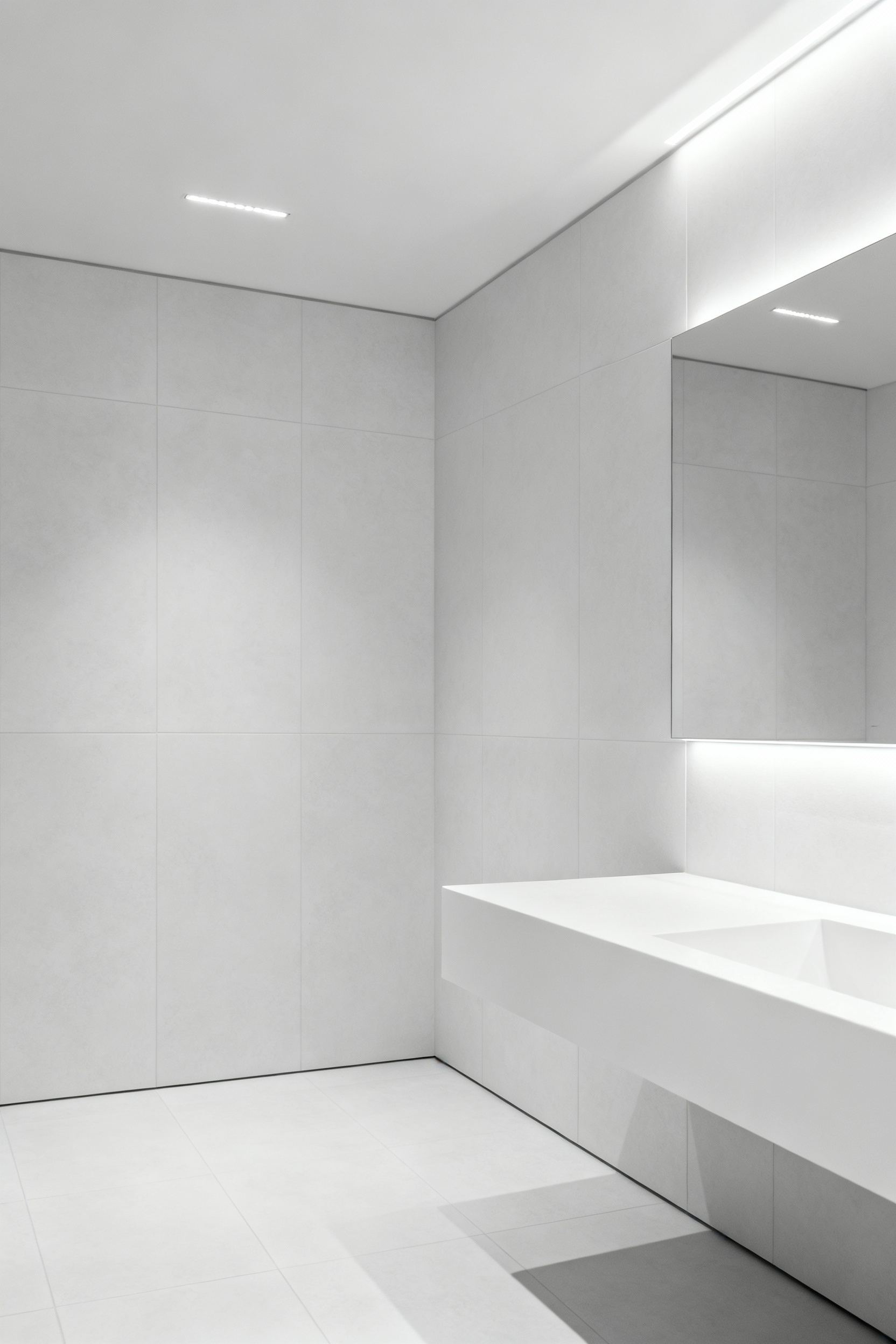
Always look at your final tile choices together, in the actual bathroom, under its specific lighting. A consistent finish—like matte on both floor and wall—can enhance this seamless feeling, though a thoughtful contrast can also be beautiful. The goal is to create a visual continuity that makes the space feel cohesive and whole. This exacting attention to detail is what creates that five-star-spa feeling of being completely enveloped in serene luxury.
19. Living Art: Using Biophilic Elements to Bring White to Life
A pristine white canvas is the perfect backdrop for the vibrant, living energy of plants. Biophilic design—the practice of connecting our spaces to nature—is essential for a wellness sanctuary. The contrast between the lush green foliage and the clean white bathroom tiles is visually stunning and deeply calming.
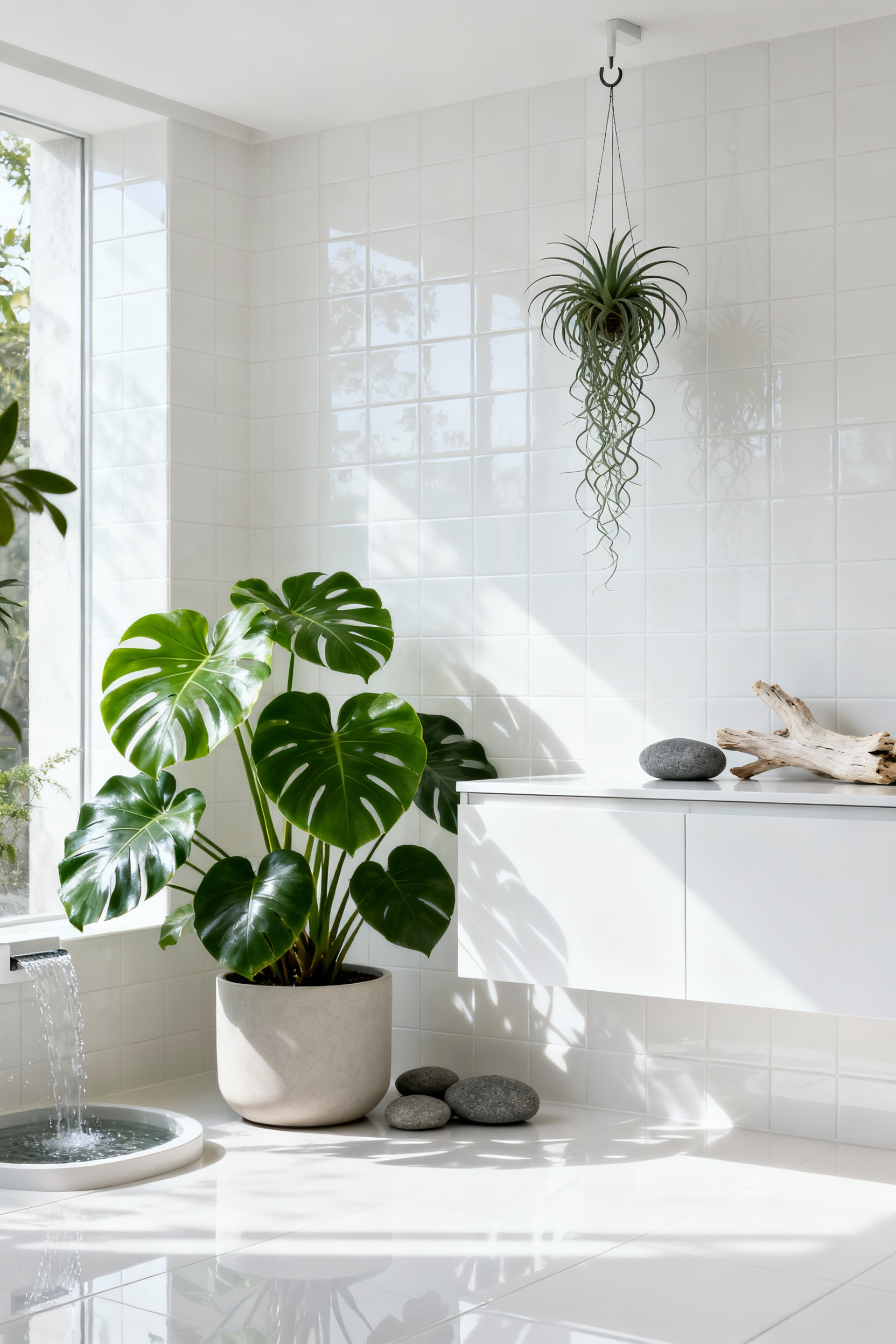
Choose plants that love humidity, like ferns, orchids, or a snake plant. You can place them on a windowsill, a floating shelf, or even hang a kokedama (a Japanese moss ball) for a touch of living sculpture. The white tiles reflect light back onto the plants, helping them thrive, while the plants soften the clean lines of the tilework. I’ve seen this play out when a simple bathroom is transformed into a vital, breathing space with just a few intentionally placed plants. They are a constant, gentle reminder of the world’s natural beauty and our connection to it.
20. A Sanctuary for Life: Future-Proofing with Non-Slip Textures
A true sanctuary should be a place of safety and comfort for everyone, at every stage of life. Planning for the future with accessible design is an act of care. Luckily, you don’t have to sacrifice style. Many beautiful white bathroom tiles now come in elegant, non-slip textures.
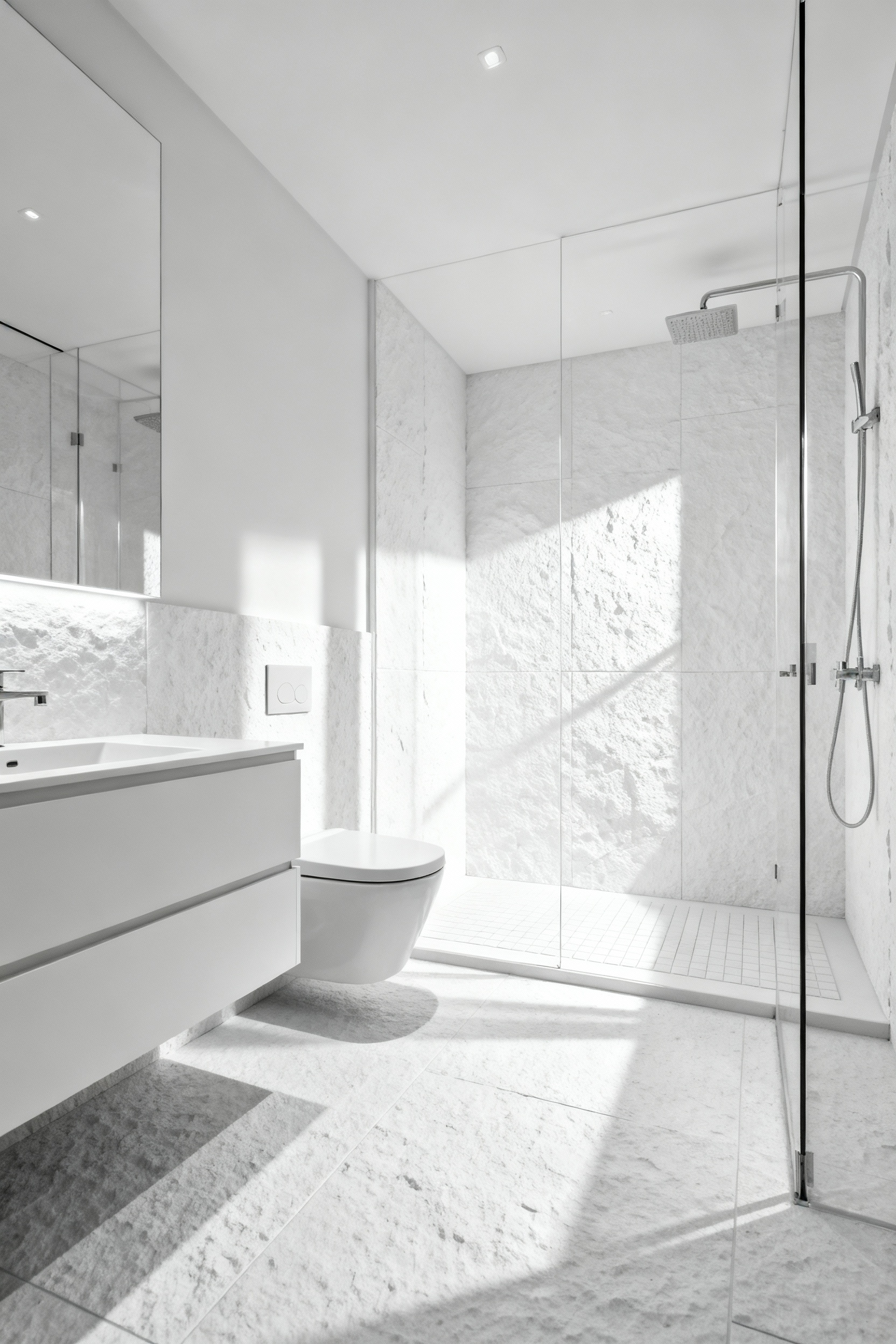
Look for matte finishes or tiles with a subtle, raised texture. These provide a secure footing without looking clinical. Using these tiles to create a curbless, walk-in shower is a perfect example of a design choice that is both incredibly chic and universally accessible. From my years of designing holistic homes, I’ve learned that the most serene spaces are those where you feel completely safe and supported. Choosing a beautiful, non-slip tile is a foundational step in creating a sanctuary that will nurture you for a lifetime.
Conclusion
As we’ve journeyed through these twenty intentional principles, I hope you’ve come to see that creating a luminous sanctuary with white bathroom tiles is about so much more than design trends. It is a thoughtful and loving process of weaving together light, texture, and nature to craft a space that actively supports your well-being. Each choice, no matter how small, is an opportunity to infuse your daily rituals with more peace, clarity, and beauty.
The goal is to create a bathroom that feels like a deep, restorative exhale at the start and end of each day. This space should be a reflection of your commitment to self-care, a personal haven where you can release the pressures of the world and reconnect with yourself. Let these ideas serve as your guide, but always trust your own intuition. The most powerful sanctuary is the one that feels uniquely and beautifully your own. For in shaping our sacred spaces, we are also nurturing our inner selves.