Common wisdom suggests that a spacious, open concept is the ultimate goal for any renovation. But encountering a compact 1950s kitchenette often provokes an immediate sense of claustrophobia. I distinctly remember my first project involving such a restrictive space. The constraints of that vintage footprint shifted my perspective entirely. This guide reveals methods to transform a tiny area into a charming, highly efficient small cottage kitchen. We will explore marrying mid-century efficiency with sustainable, weathered textures. Specifically, we cover replacing cold surfaces with warm butcher block and using open shelving to authentically display personal treasures. You will learn to create a timeless space that honors history while meeting contemporary needs.
The ‘Unfitted’ Philosophy: Why freestanding furniture beats wall-to-wall built-ins in small footprints
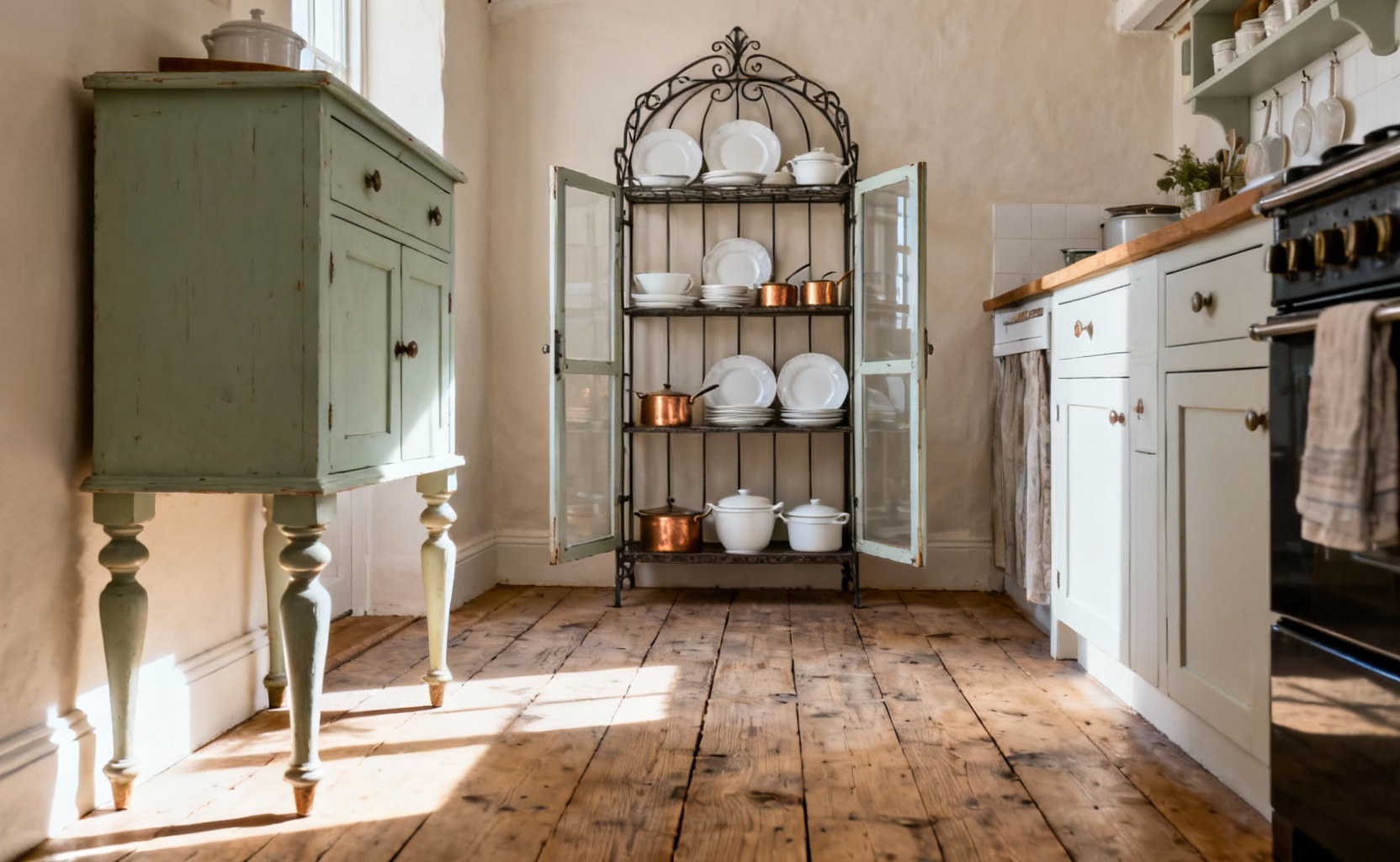
In a compact cottage, wall-to-wall cabinetry often creates a heavy, trench-like effect. The “unfitted” approach utilizes negative space as a design element instead. Freestanding pieces like antique dressers or open baker’s racks expose the floor plane. Light travels underneath the units, instantly creating an illusion of depth and airiness. This method respects the quirky structural narrative of older homes. Instead of masking uneven floors with expensive custom joinery, individual furniture allows architectural imperfections to breathe.
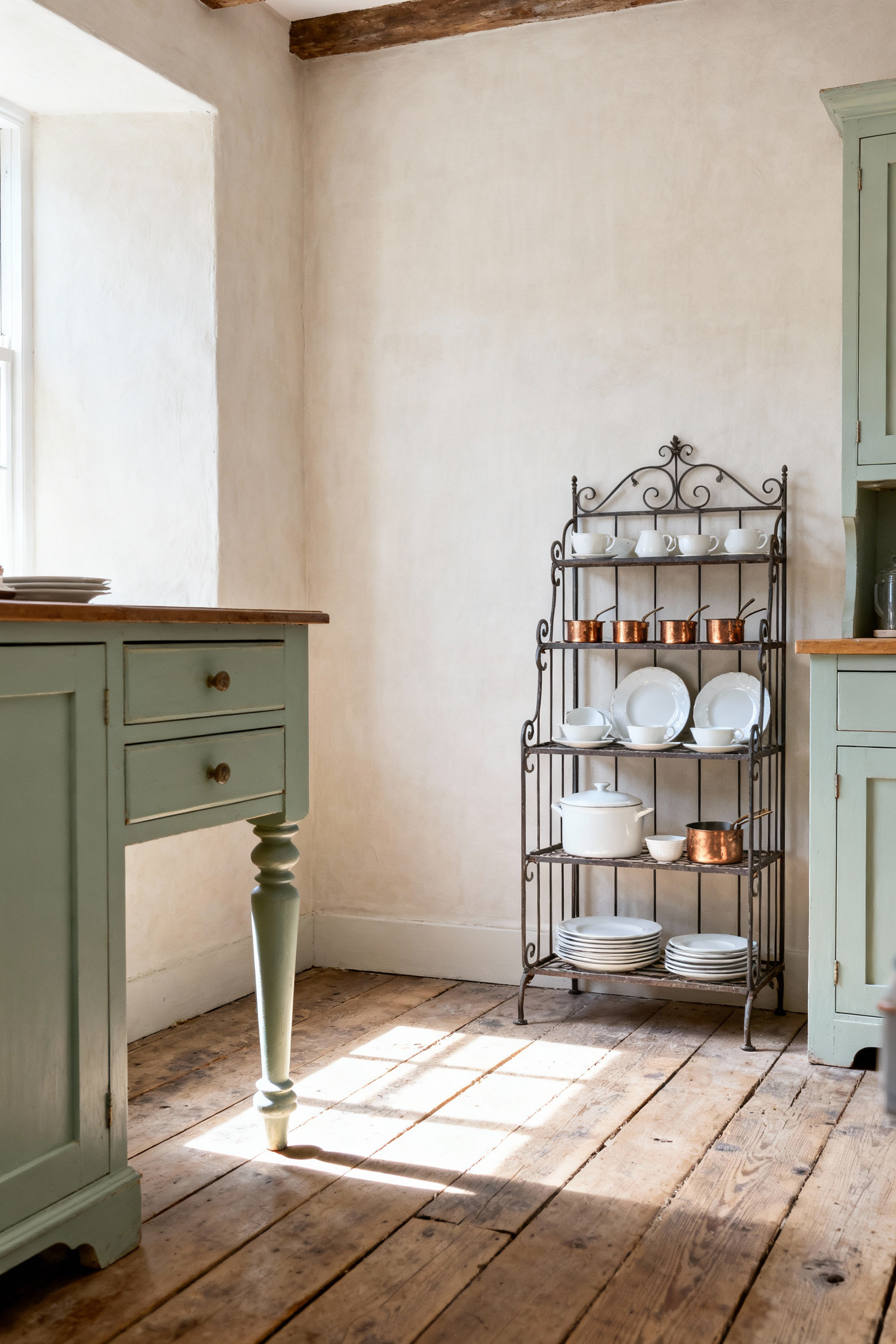
Historically, this style revolts against the standardized, industrial “Frankfurt Kitchen” model. Designer Johnny Grey championed this revival, inspired by Elizabeth David’s eclectic London kitchen. Her space featured unmatched pine dressers and a simple gas stove placed between them. The kitchen becomes a sociable “House Place” rather than a sterile workstation. By selecting distinct vintage items, you avoid the rigid, cookie-cutter aesthetic of mass production.
Beyond aesthetics, freestanding furniture offers dynamic adaptability for small footprints. A butcher block on locking castors serves as a portable workstation. You can instantly reconfigure the room’s layout for intensive cooking or impromptu entertaining. Separated work zones improve ergonomics by reducing the distance between key activities. Moreover, mobility simplifies maintenance, allowing you to clean areas that fitted plinths usually conceal. Thus, the room remains hygienic and versatile.
Sink Skirts and Cafe Curtains: Softening hard edges with vintage linen and floral textiles
Kitchens frequently rely on hard, clinical materials like glazed tile and stone. These utilitarian spaces can often feel sterile or cold. Sink skirts offer a practical, charming architectural solution to counter this rigidity. Originally, they served to conceal exposed plumbing in rural homes without cabinetry. Today, they introduce pleated, flowing curves that visually soften rigid corner joinery.
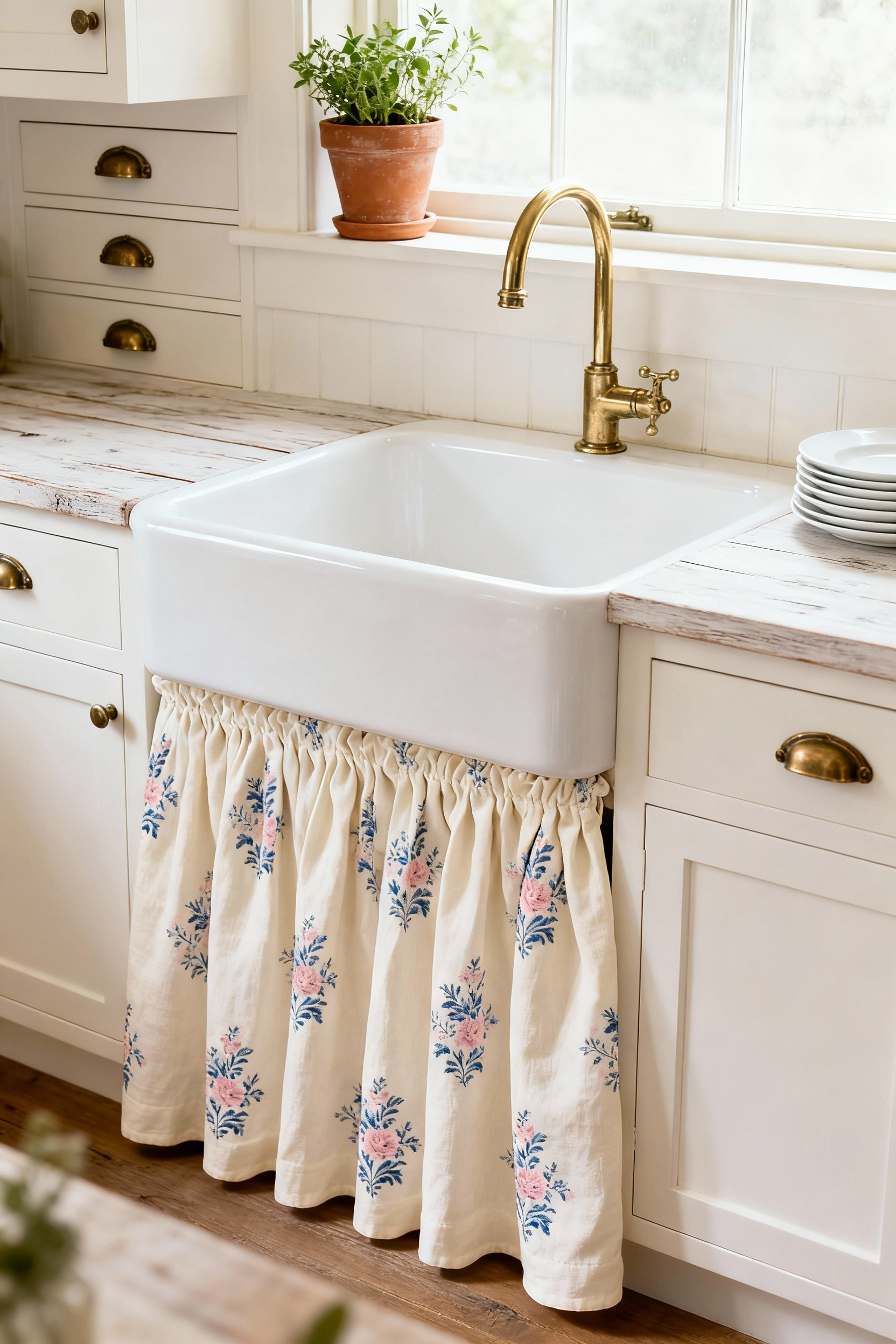
Similarly, café curtains effectively address the dual need for lighting and privacy. By covering only the lower window pane, they block intrusive sightlines while inviting natural light overhead. The room avoids feeling heavy or isolated. Specific material choice is crucial for maintaining authenticity. Vintage linen adds a unique, lived-in patina that new fabrics lack. Unlike static modern textiles, vintage linen grows softer and more characterful with every wash.
Incorporating floral prints injects necessary warmth into the palette. These botanical patterns act as visual “softeners” against stark, monochromatic surfaces. Beyond aesthetics, these textile elements provide significant psychological comfort. Fabric absorbs sound in reverberant spaces, reducing the acoustic harshness of tile floors. The kitchen transforms from a purely functional workspace into a nurturing haven. Ultimately, these soft layers bridge the gap between historical necessity and contemporary comfort. For a broader look at maximizing warmth through textiles and textures, review these Soulful Country Kitchen Ideas.
Vertical Storytelling: Installing period-appropriate plate racks to free up cupboard space
Standard upper cabinets often feel oppressive in small cottage kitchens. These modern units extend twelve inches from the wall, crowding the room. In contrast, a vintage-style plate rack requires significantly less depth. Most racks need only six to nine inches to securely cradle a dinner plate. This shallow profile opens up crucial visual space. It prevents the galley from feeling “boxed-in” or cramped. Historical designs also prioritized hygiene alongside spatial economy. Builders installed these racks above sinks to promote airflow. Wet dishes drained quickly, preventing the mildew often found in dark, enclosed cupboards.
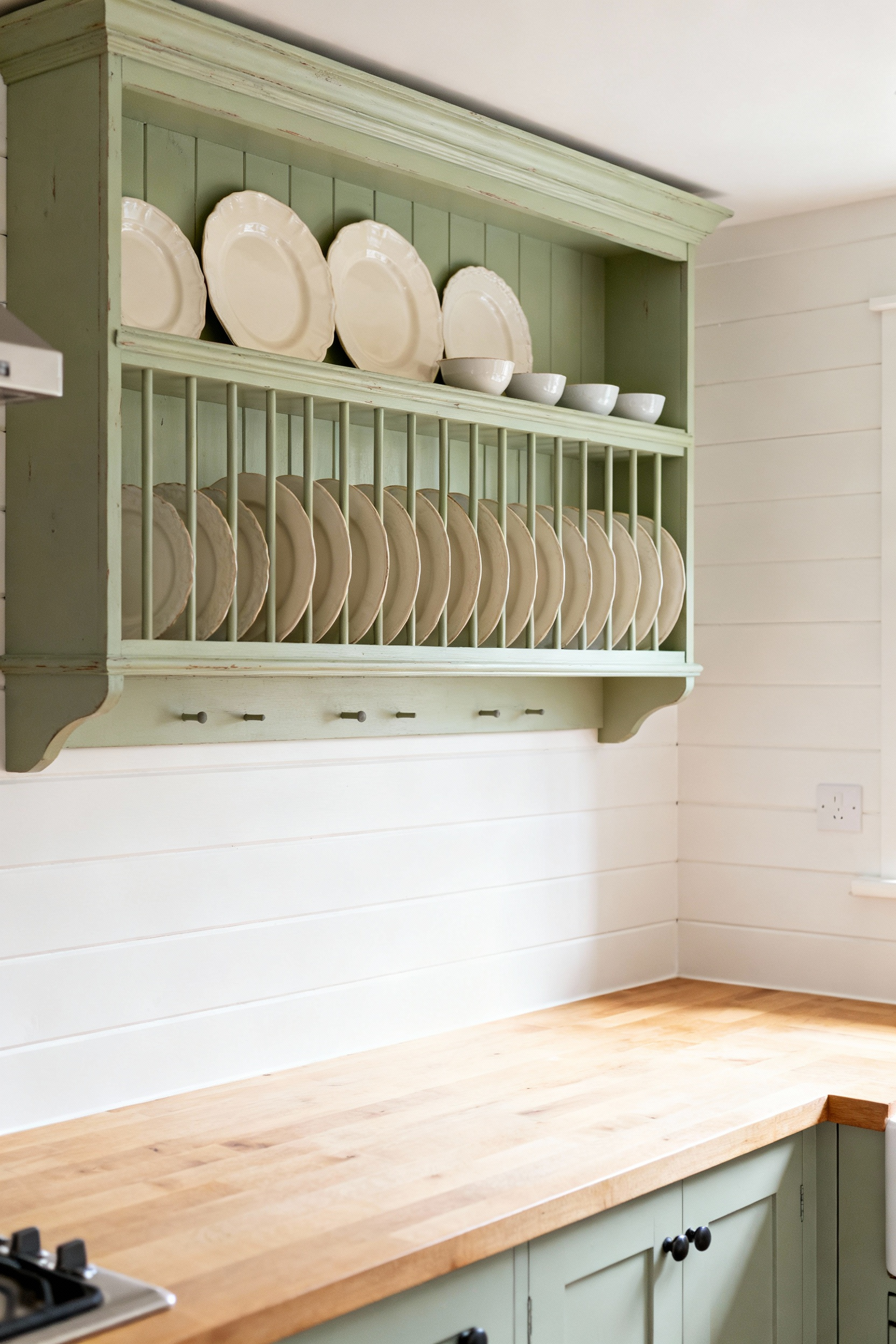
Beyond utility, installing a plate rack reclaims the charm of the “unfitted” kitchen. Before the 1920s, kitchens featured standalone furniture rather than monolithic built-ins. A wall-mounted rack acts as a distinct architectural element. It signals an intentional departure from modern, uniform cabinetry. Ideally, look for racks featuring beadboard backing or simple unvarnished pine. Painted woods in soft hues like sage green or French blue offer a timeless aesthetic. These muted tones contrast gently with natural wood dowels.
This storage method transforms daily dishware into a vertical gallery. Unlike hidden storage, an open rack encourages careful curation. Simple ironstone or creamware creates a soothing, rhythmic visual texture against the wall. This arrangement serves as “vertical storytelling,” showcasing domestic pride through functional items. Moreover, the user experience offers unique sensory details. Placing a plate into a wooden rack produces a gentle “clink.” This sound differs vastly from the heavy “clunk” of a cabinet door. Essentially, the rack creates a lived-in atmosphere that honors design history.
The Art of the Open Shelf: Curating heirloom ironstone and glassware without creating clutter
Historically, ironstone was developed as a durable alternative to delicate porcelain. This opaque earthenware was designed for daily labor, not special occasions. Placing these pieces on open shelves honors their utilitarian roots. It validates the collection as a working kit rather than a museum exhibit. However, visual clutter remains a significant risk in small spaces.
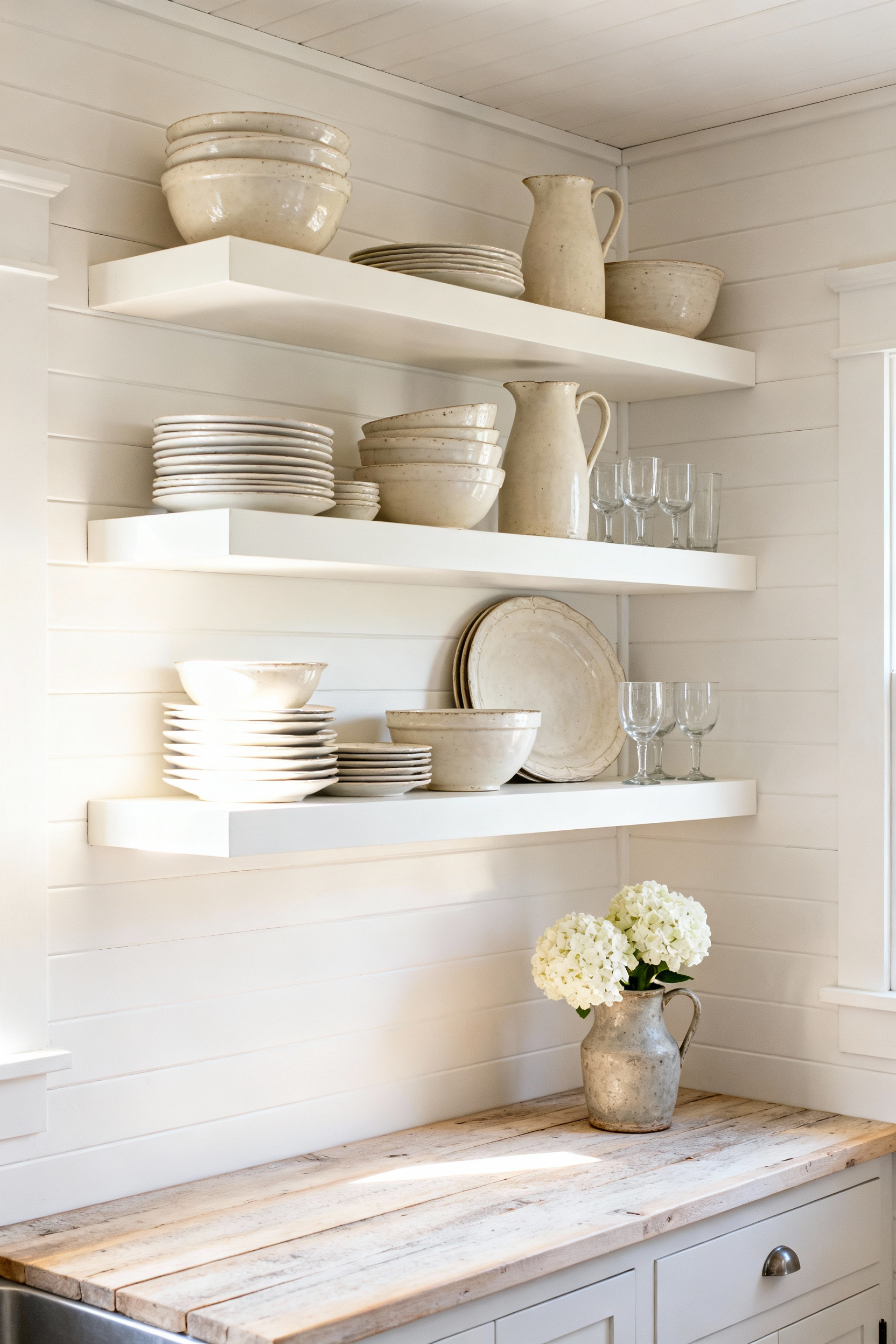
To combat chaos, adhere strictly to a monochromatic palette. The “luscious white glory” of ironstone unifies disparate shapes instantly. The eye focuses on texture rather than colorful noise. You see the “crusty” patina and relief patterns clearly. For depth, pair these matte, crazed surfaces with simple vintage glassware. While heavy ironstone absorbs light, clear glass transmits it. This combination adds necessary airiness to the display.
Furthermore, apply the “Rule of Three” to your arrangement. Group items in odd numbers to create balanced, architectural vignettes. Crucially, you must leave deliberate negative space between these clusters. Instead of filling every inch, allow the shelf to breathe. This “empty” space acts as a visual resting spot. It ensures your heirloom collection feels curated rather than crowded.
Reclaimed Wood Accents: Bringing texture and warmth to sterile corners
Modern kitchens often feature sleek cabinetry, polished stone, and stainless steel. These spaces can sometimes feel cold or impersonal. Reclaimed wood offers an immediate antidote to this sterility. Its texture provides a rich visual contrast to smooth, uniform surfaces. Unlike new lumber, reclaimed timber carries an authentic patina developed over decades. For detailed ideas on how to incorporate this specific materiality, explore our guide on Authentic Rustic Kitchen Decor. Traces of oxidized metal from old nails add distinct character. These imperfections create necessary visual comfort in an otherwise stark room.
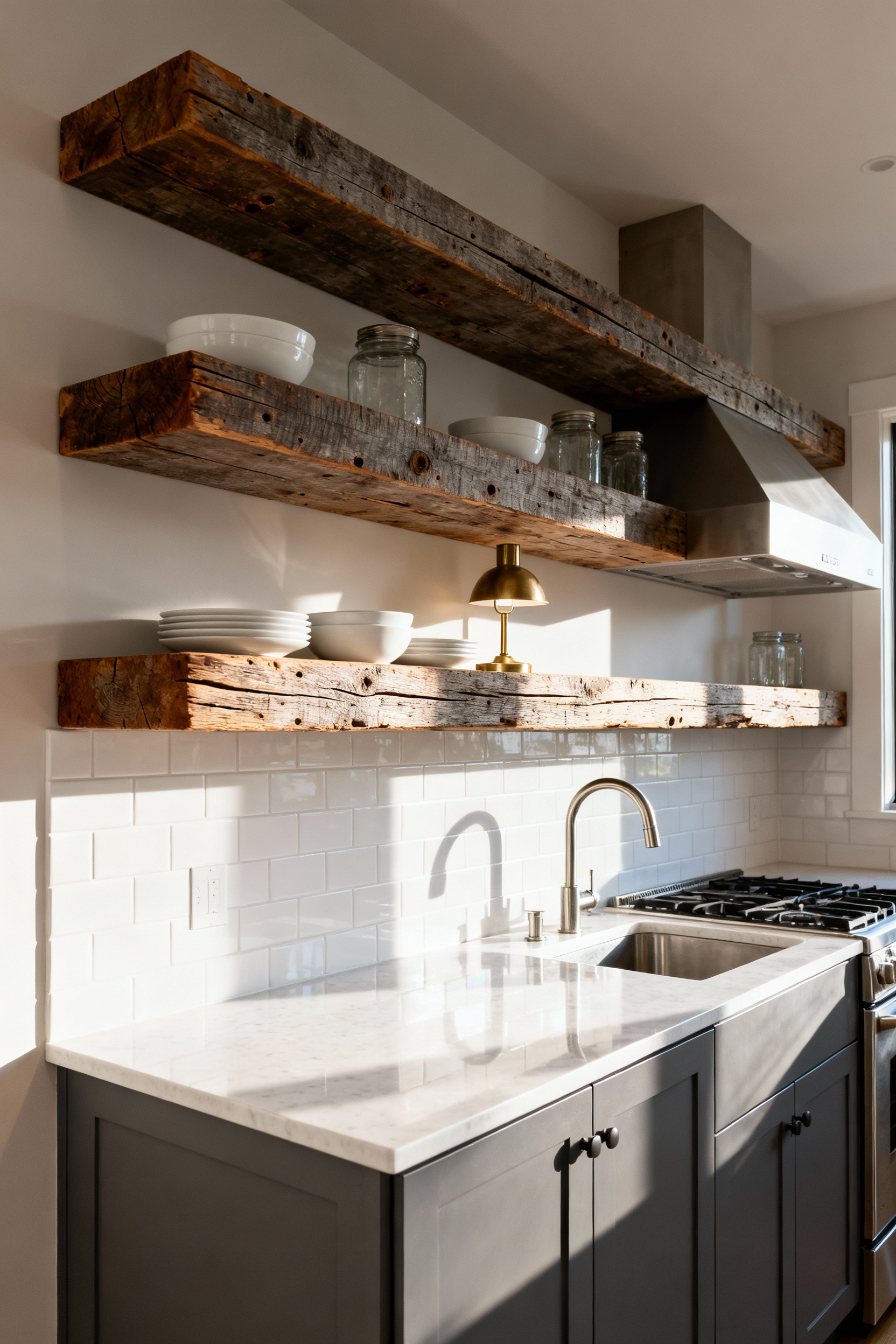
In small cottage kitchens, space is often a premium. Strategic accents create maximum impact without overwhelming the limited footprint. For example, replacing bulky upper cabinets with floating reclaimed wood shelves adds lightness. Alternatively, a butcher block countertop section introduces a tactile, natural focal point. Even a custom vent hood casing can anchor the design effectively.
Beyond aesthetics, this material offers significant psychological warmth. Studies suggest wood functions as a powerful biophilic element that reduces stress. It invites touch and does not radiate cold like stone surfaces do. Moreover, the material boasts superior structural integrity. Typically, this wood is old-growth timber sourced from pre-war structures. Because it matured slowly, it is significantly denser and more stable than modern lumber. Reusing these materials honors a heritage of resourcefulness while adding soul to your home.
Restoring the Heart: Sourcing and refinishing vintage cast-iron or enamel sinks
Vintage cast-iron sinks are more than mere utility fixtures. They serve as a direct callback to the “Heart of the Home” era. Unlike modern acrylics, the original vitreous enamel offers a deep, cold, and lustrous finish. These heavy pieces provide a grounding sense of permanence unmatched by contemporary materials. For small cottage kitchens, the single-basin, single-drainboard model is particularly desirable. These wall-mounted units create a crucial sense of openness in limited footprints.
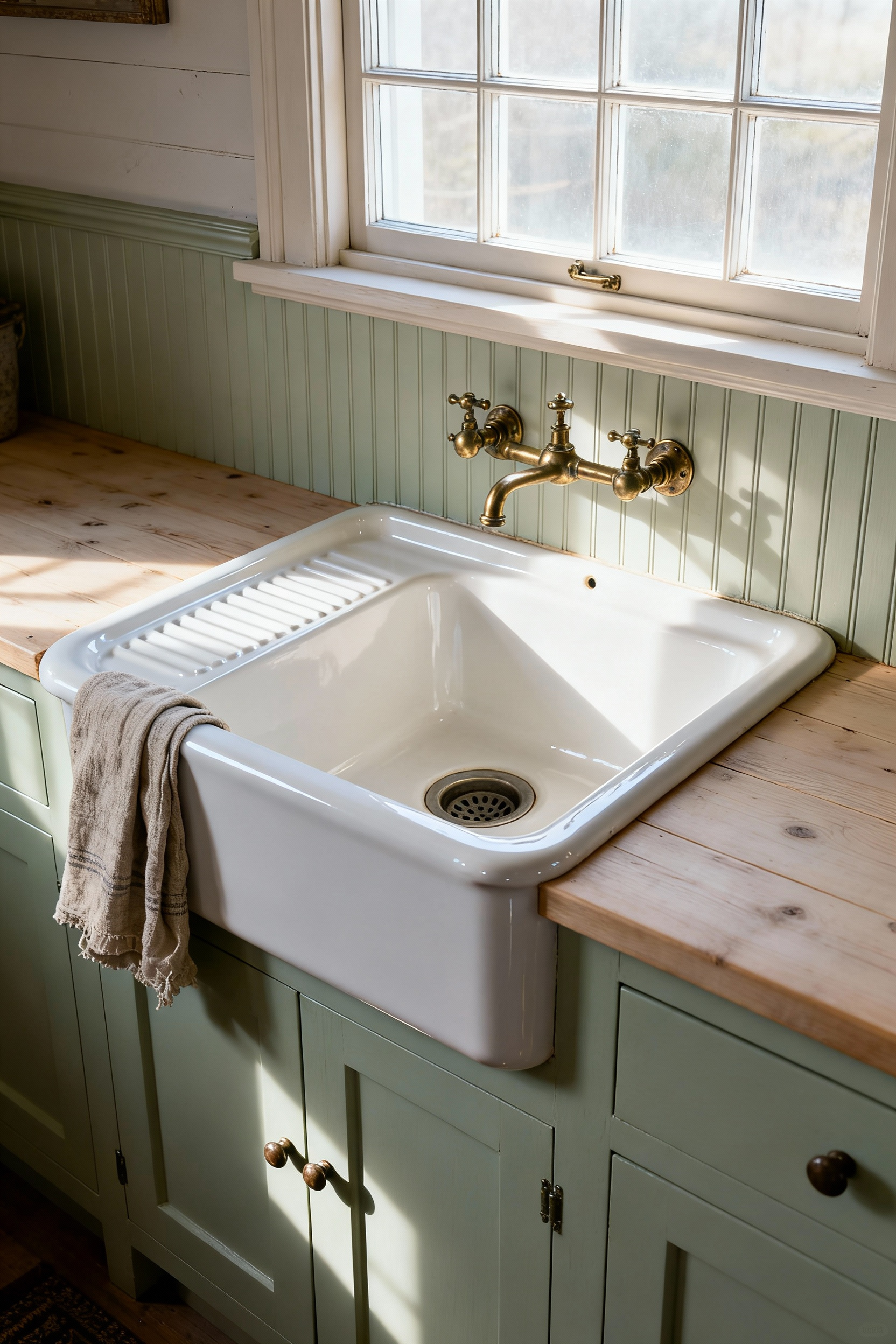
However, sourcing this “unicorn” requires both patience and structural preparation. These sinks can easily weigh over 250 pounds, demanding serious floor support. Finding a compact 30-to-42-inch width is a genuine challenge at salvage yards. Most antique models are simply too wide for petite cottage layouts.
Once acquired, the restoration process presents a distinct technical dilemma. Originally, the finish was glass fused to iron at thousands of degrees. True re-porcelaining is essentially a lost commercial practice today. Therefore, most restorations rely on two-part epoxy coatings to hide rust and pitting. While this restores the brilliant white aesthetic, it sacrifices the original surface’s invincibility. The epoxy paint never truly bonds like the original glass frit. Owners must accept that this beautiful finish may require touch-ups within a few years.
Lighting with History: Hunting for milk glass pendants and brass sconces to define zones
Historically, milk glass evolved to soften the harsh glare of early electric lighting. These opal fixtures remain essential for compact cottage kitchens. Unlike clear glass, the material uses oxides to diffuse light 360 degrees. A central pendant creates a “warm haven” without casting harsh shadows or overwhelming the room.
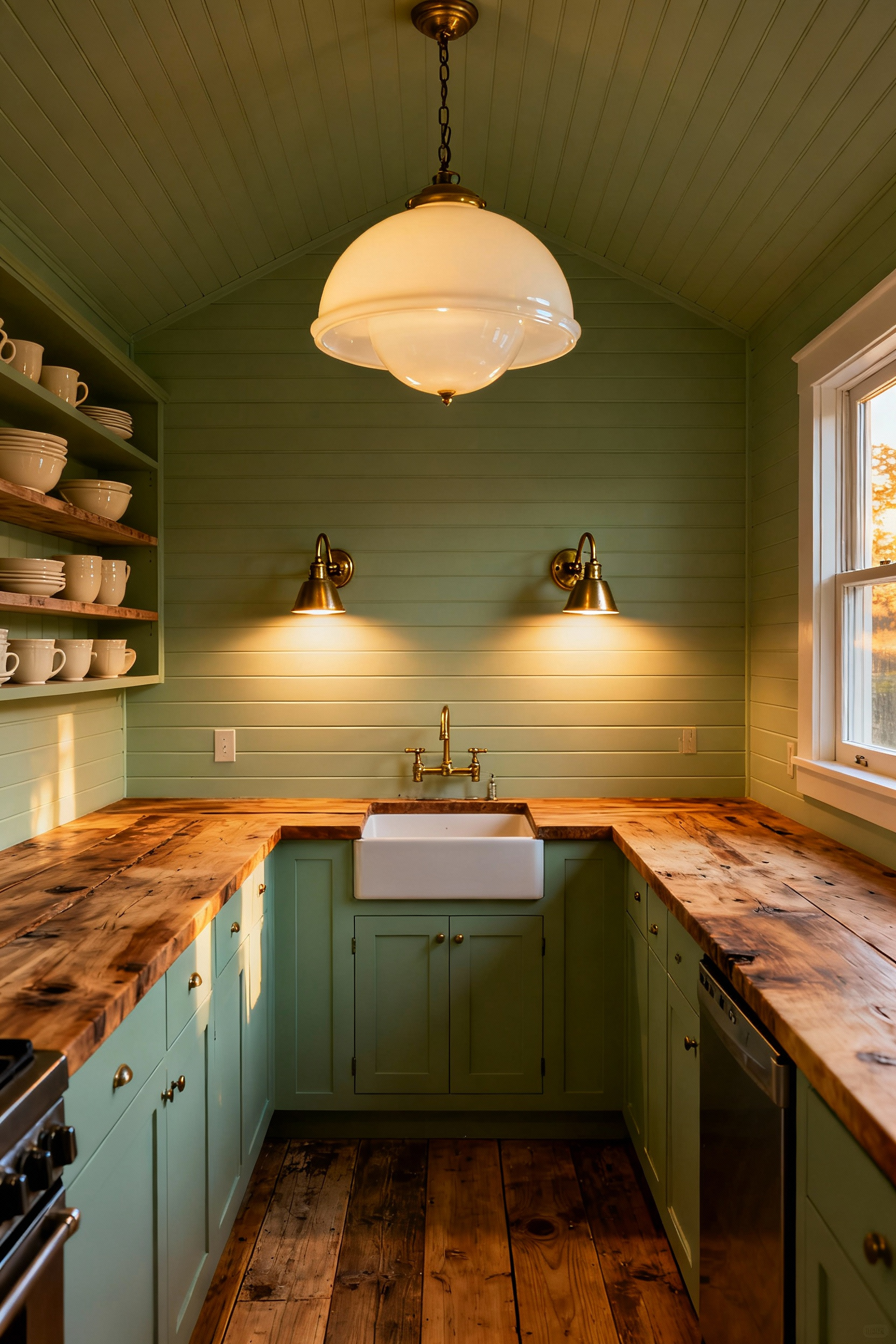
Ambient glow alone cannot support precise cooking tasks. You must incorporate brass wall sconces as focused anchors. Specifically, gooseneck or swing-arm styles offer superior directionality. Placing these above a sink or open shelving defines specific work zones. Mounting fixtures on walls also saves precious visual ceiling space.
Pairing these distinct styles establishes a professional layered lighting strategy. The soft, volumetric glass creates a dialogue with sharp, articulated metal lines. The aged brass finish acts as the kitchen’s unifying jewelry. This contrast adds necessary depth, preventing a small space from feeling flat.
The Upcycled Island: Transforming antique dressers or butcher blocks for prep space
Ideally, we embrace the antique dresser’s original purpose rather than forcing a new function. Historically, the term “dresser” derives from the Old French *dressoir*, meaning “to prepare.” Repurposing these pieces lends an inherent authenticity to your cottage kitchen. Unlike uniform fitted cabinetry, these freestanding units break material monotony with unique textures.
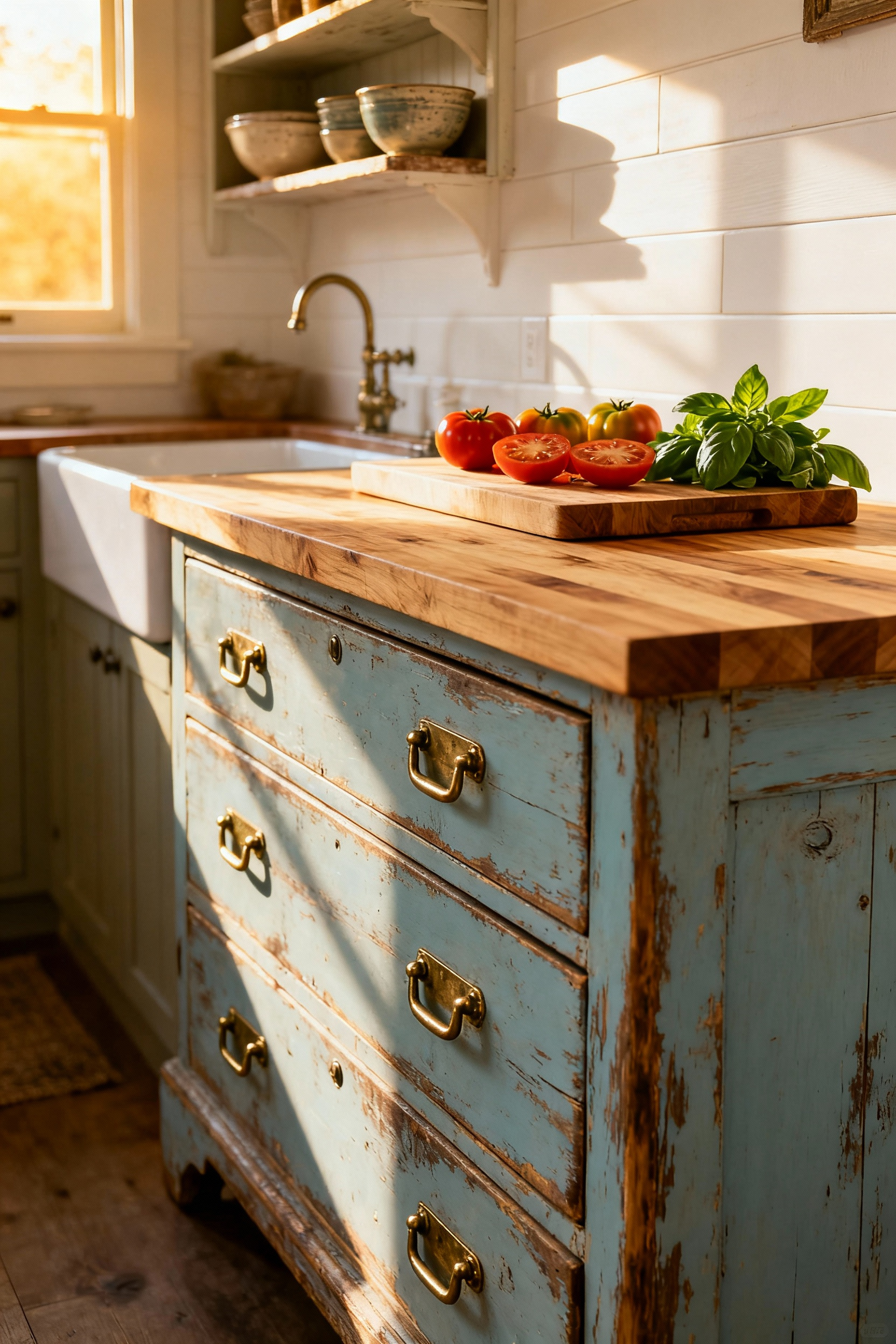
Modern ergonomics do require technical adjustments. Most antique chests sit too low for comfortable chopping. You must raise the height to a standard 36 inches. Sturdy lockable casters are a brilliant solution for small spaces. They effectively transform the piece into a flexible, portable utility cart. Structural integrity is also vital. Because original plywood backs are often flimsy, replace them with a robust lumber frame. Adding beadboard backing ensures the island looks finished from every angle.
Next, consider the work surface material. Butcher block is the imperative choice for durability and warmth. Note that your chosen finish dictates the maintenance level. For heavy prep work, seal the wood with food-grade mineral oil. This keeps the timber hydrated and sanitary. If you prefer water resistance, apply a marine-grade polyurethane.
Finally, rethink the interior storage configuration. Deep original drawers are perfect for housing long items like rolling pins. Alternatively, remove select drawers to create open shelving for baskets. Visually, a distressed painted base contrasts beautifully with the natural wood top. This creates a focal point that honors design history while serving modern needs.
Slow Living Corners: Dedicating limited counter space to coffee rituals and vintage grinders
In a compact cottage kitchen, every square inch usually serves a strict utilitarian purpose. Dedicating limited counter space to a coffee ritual challenges this efficiency mindset. It prioritizes mental well-being by creating a “sacred pause” in your morning routine. A mere twelve inches of countertop transforms from a prep zone into a necessary micro-sanctuary.
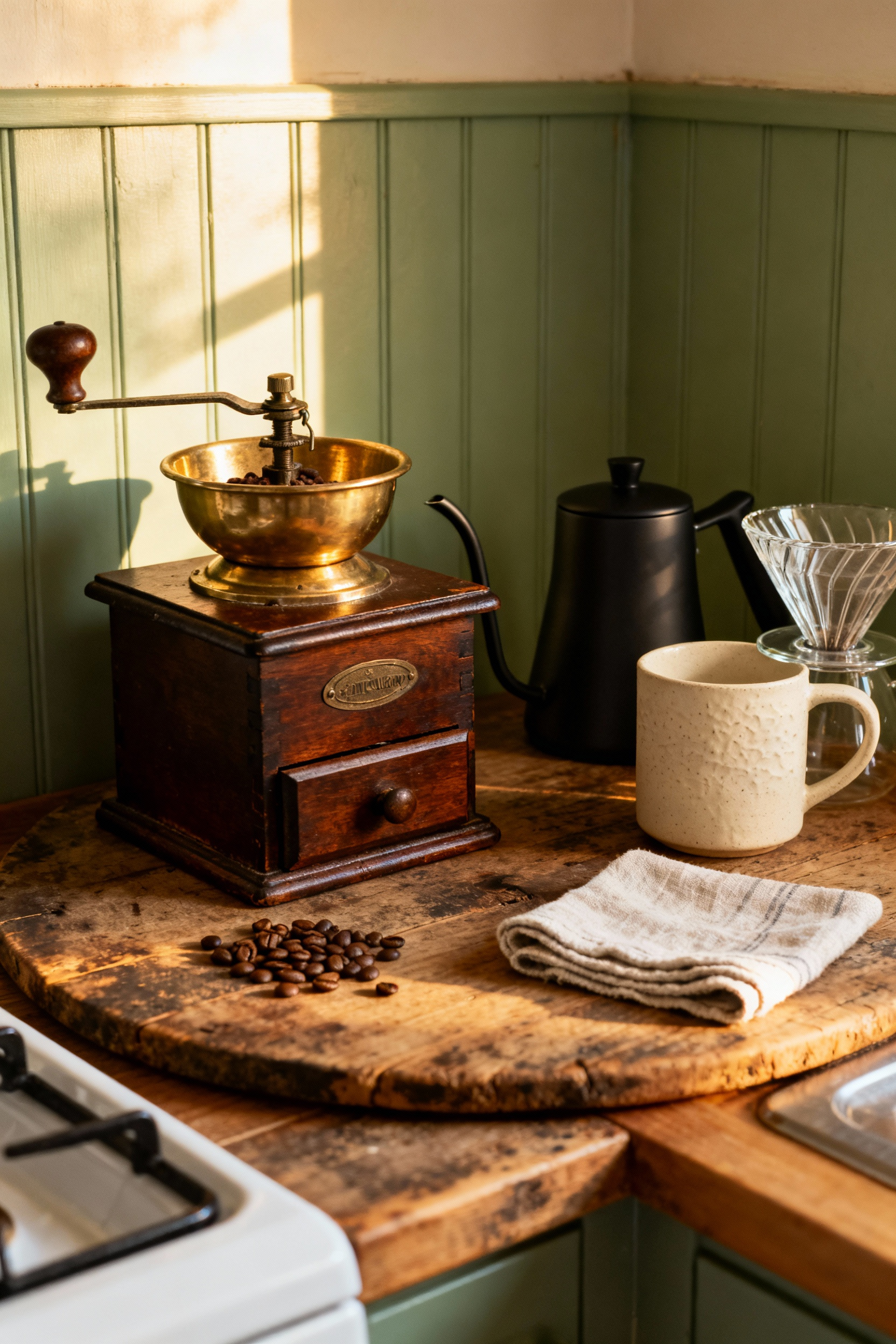
Central to this space is the vintage grinder, often a wooden box mill or cast-iron unit. Unlike loud electric appliances, these manual tools engage your senses directly. Turning the crank creates a rhythmic friction that grounds you in the moment. The low growl of steel burrs crushing beans offers a quiet alternative to modern noise. Historically, these pieces were scaled for smaller homes, making them physically perfect for tight quarters.
To save space, many restorers employ “vertical volumizing” by utilizing wall-mounted grinders. The tool becomes a visual focal point rather than just counter clutter. Pairing a mounted mill with brass sconces elevates the arrangement into functional art. This intentional editing allows you to honor design history while enjoying a mindful start to the day.
Mismatched Chair Charm: Unifying thrifty seating finds with a cohesive retro color palette
Embracing mismatched chairs is about more than affordability; it relies on a design principle called *intentional juxtaposition*. This approach imbues a kitchen with an authentic, “collected-over-time” narrative. Unlike static furniture sets, varied silhouettes create necessary visual rhythm. However, this movement requires a unifying constant to prevent chaos. A cohesive retro color palette acts as the mandatory through-line connecting a Shaker chair to a mid-century find.
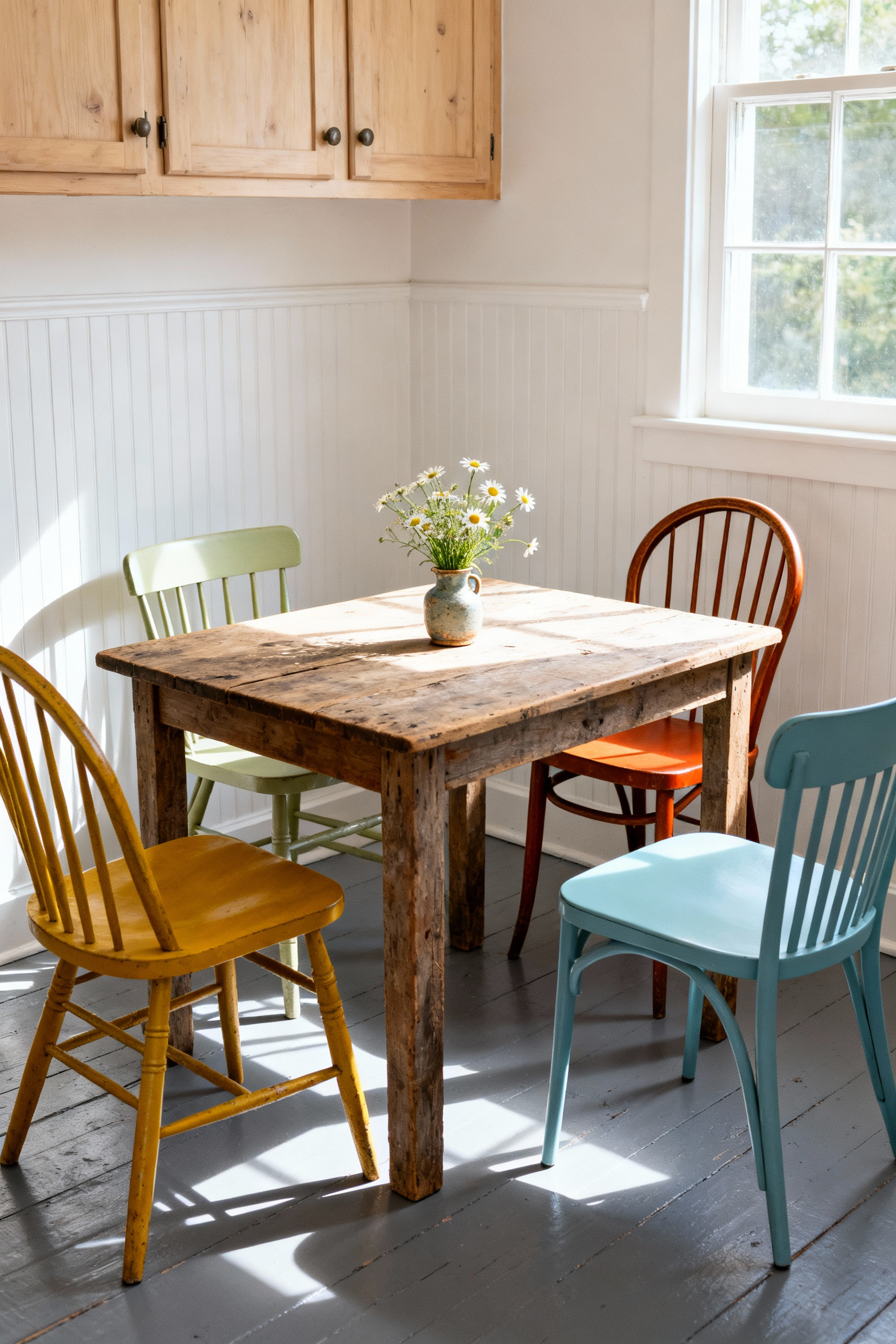
The choice of hue is critical for intimate cottage kitchens. While authentic mid-century shades are often vibrant, bold colors can quickly overwhelm a compact space. Opt for desaturated versions of classic retro tones to maintain calm. Swap a jarring 1970s olive for a soft, pale sage. Similarly, a 1950s cherry red softens beautifully into a dusty, faded rose. Utilizing chalk or milk paint creates a matte finish. This texture diffuses light, reducing cognitive load and enhancing the cozy atmosphere.
Practically, the physical footprint of these thrifted finds matters immensely. Heavy club chairs often fight for space in tight nooks. Prioritize “light and airy” forms like spindle-back Windsors or bamboo cafe chairs instead. These vertical, open designs allow sightlines to remain unobstructed. Pairing these slim seats with a round pedestal table maximizes legroom by removing corner legs. This combination honors the history of each piece while ensuring the space remains functional.
Beadboard and Shiplap: Using vertical architectural texture to heighten low ceilings
Low ceilings often make small cottage kitchens feel compressed and limited. Vertical architectural texture effectively counteracts this squat sensation through optical physics. The vertical grooves in paneling act like an upward arrow. They force the eye to scan the full height of the room. To maximize this optical illusion, you must avoid stopping at a traditional chair rail height. Instead, install the paneling from floor to ceiling. Ideally, paint the ceiling to match, effectively eliminating any horizontal visual breaks.
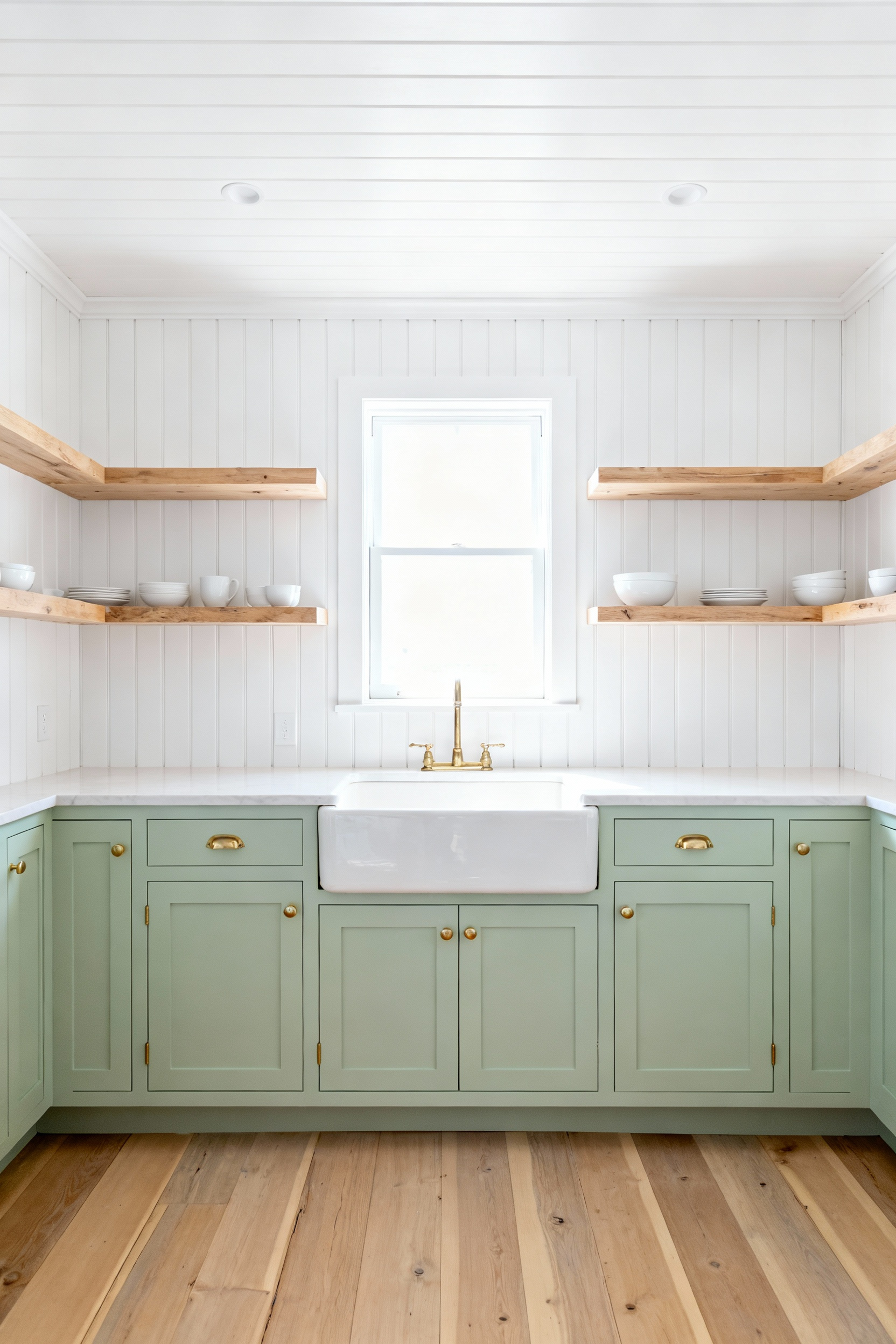
When selecting materials, scale is a critical design consideration. Beadboard features narrow, tightly spaced vertical planks. This creates a refined rhythm that elongates walls without overwhelming the space. Historically, this is the authentic choice for preserving vintage charm. Conversely, wide-plank shiplap often appears too heavy for diminutive rooms. In fact, shiplap was originally utilitarian exterior sheathing, lacking the decorative finesse of interior beadboard.
Durability is essential in a moisture-prone kitchen environment. Traditional wood often warps or separates due to humidity changes. Utilize Moisture-Resistant MDF or PVC for lasting dimensional stability instead. Finally, finish the surface with a light-reflecting satin or semi-gloss paint. This technique bounces light upward, physically brightening the space while visually lifting the ceiling. The room feels taller, airier, and historically grounded.
The Pot Rail Solution: Displaying copper and cast iron cookware as functional art
The pot rail serves as a functional anchor for the authentic cottage aesthetic. This design choice is a revival of ancient, pre-cabinetry traditions. Historically, cooks hung heavy tools near the hearth for immediate access. Reviving this method rejects hidden storage in favor of “lived-in” charm.
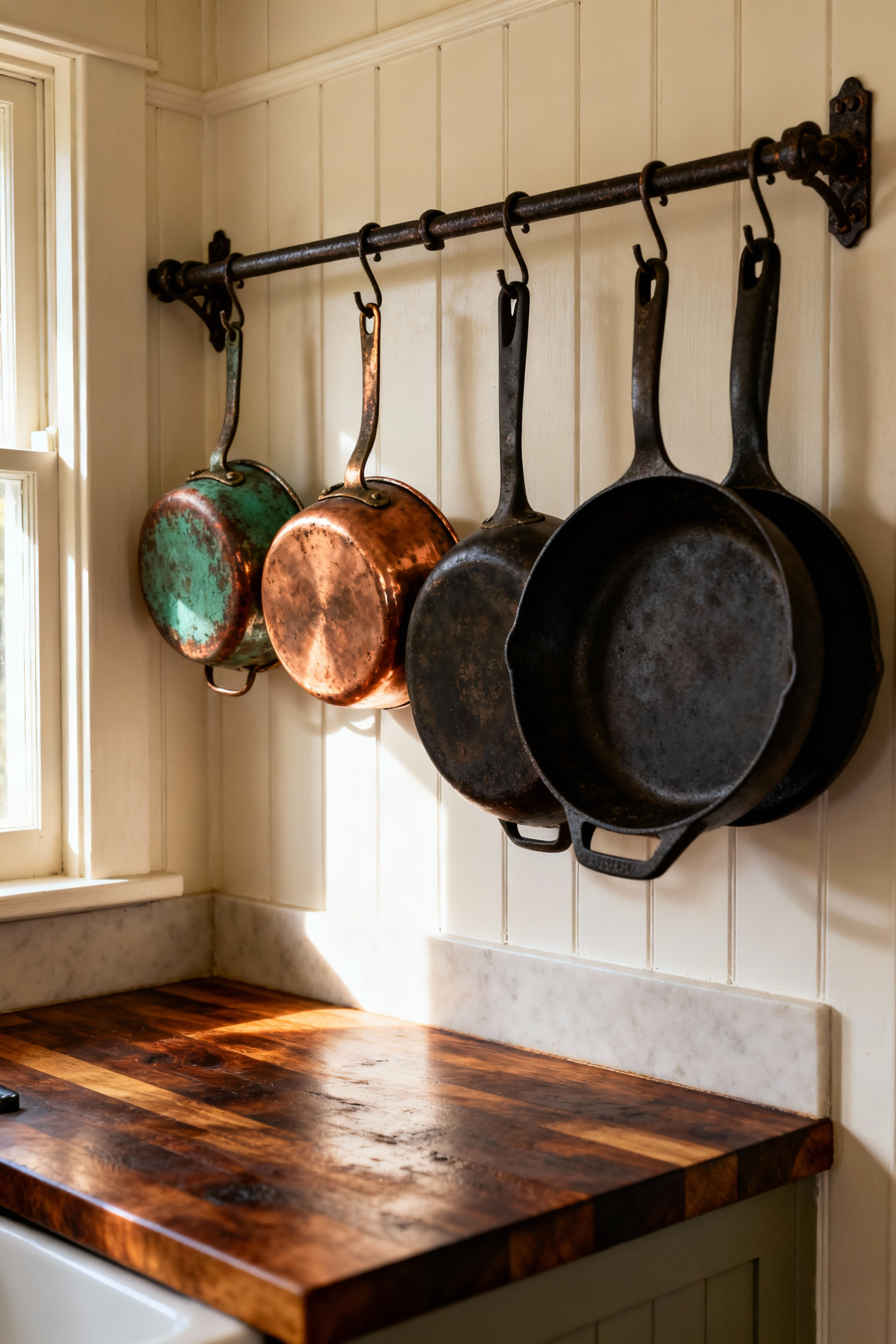
Ideally, the artistic value emerges through the natural aging of high-quality materials. Unlacquered brass and copper develop a rich, unfakeable patina over time. Similarly, seasoned cast iron displays a deep, black finish that signals culinary confidence. This visual warmth prevents small, monochromatic spaces from feeling sterile.
Beyond aesthetics, this solution offers critical engineering benefits for compact kitchens. It maximizes vertical real estate on otherwise “dead” wall space. This moves heavy cookware out of limited cabinets, freeing up prime storage. However, the substantial weight of heritage cookware presents a structural challenge. Securing the rail directly into wall studs is absolutely essential.
For longer spans, restoration experts often insert stainless steel rods inside decorative brass tubes. This hidden reinforcement prevents the metal from bowing under the load. Finally, softening the display creates a curated vignette. Interspersing dried herbs or linens transforms simple hardware into organic art.
Hardware Heritage: Swapping generic pulls for antique brass or glass knobs
Hardware serves as the defining jewelry of a small cottage kitchen. Swapping generic pulls for vintage finds restores historical integrity to the space. Specifically, hexagonal glass knobs offer a poetic link to the Depression era. During this time, metal rationing made glass a necessary, cost-effective alternative to brass. These faceted pieces catch the light, adding brilliance to dimly lit corners. You might even discover period-authentic colors like Milk White or Cobalt Blue.
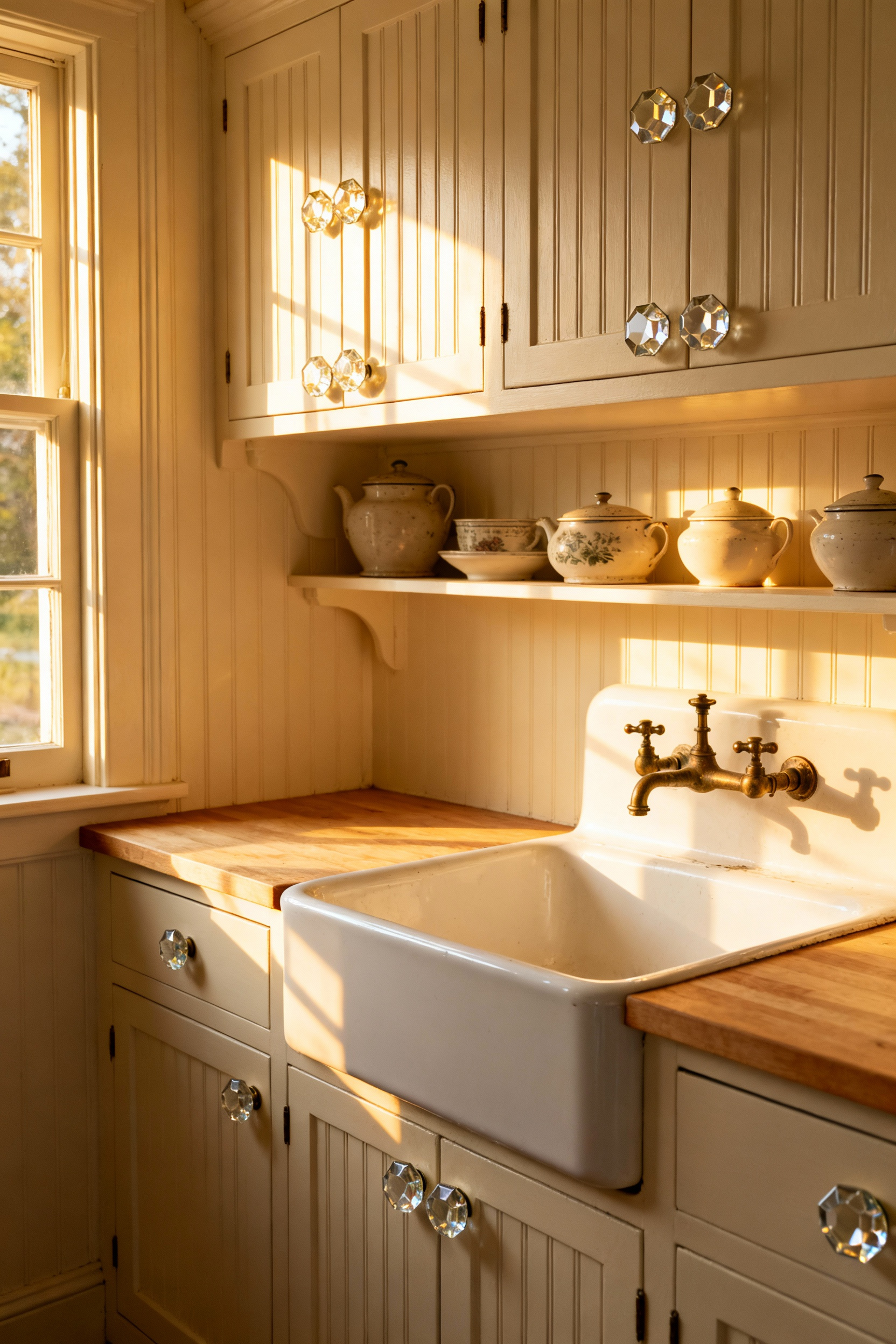
Alternatively, unlacquered brass provides a grounded, tactile experience. Unlike hollow modern alloys, solid brass possesses a satisfying weight in the hand. Over time, it develops a “living finish,” darkening into a rich, brown-gold patina. This natural oxidation honors the Arts & Crafts principle of material honesty. Indeed, the material changes visually with frequent human contact.
Historically, the shape of the hardware matters as much as the material. Simple bin pulls reflect the utilitarian focus of the Eastlake style. These geometric forms were designed to be both attractive and easy to clean. Ultimately, these small details do more than open a drawer. They bridge the gap between past resourcefulness and modern sustainability.
Checkerboard Floors: Painting a classic pattern on existing worn wood for budget impact
Historically, the checkerboard pattern served a distinct dual purpose. It mimicked grand marble floors using affordable, accessible materials. Today, painting worn wood offers this same visual luxury for a fraction of the cost. A DIY project might cost under $150, whereas new hardwood often exceeds $4,000. This technique creates the ultimate camouflage for damaged original flooring. The bold geometric grid naturally distracts the eye from old stains or patched boards.
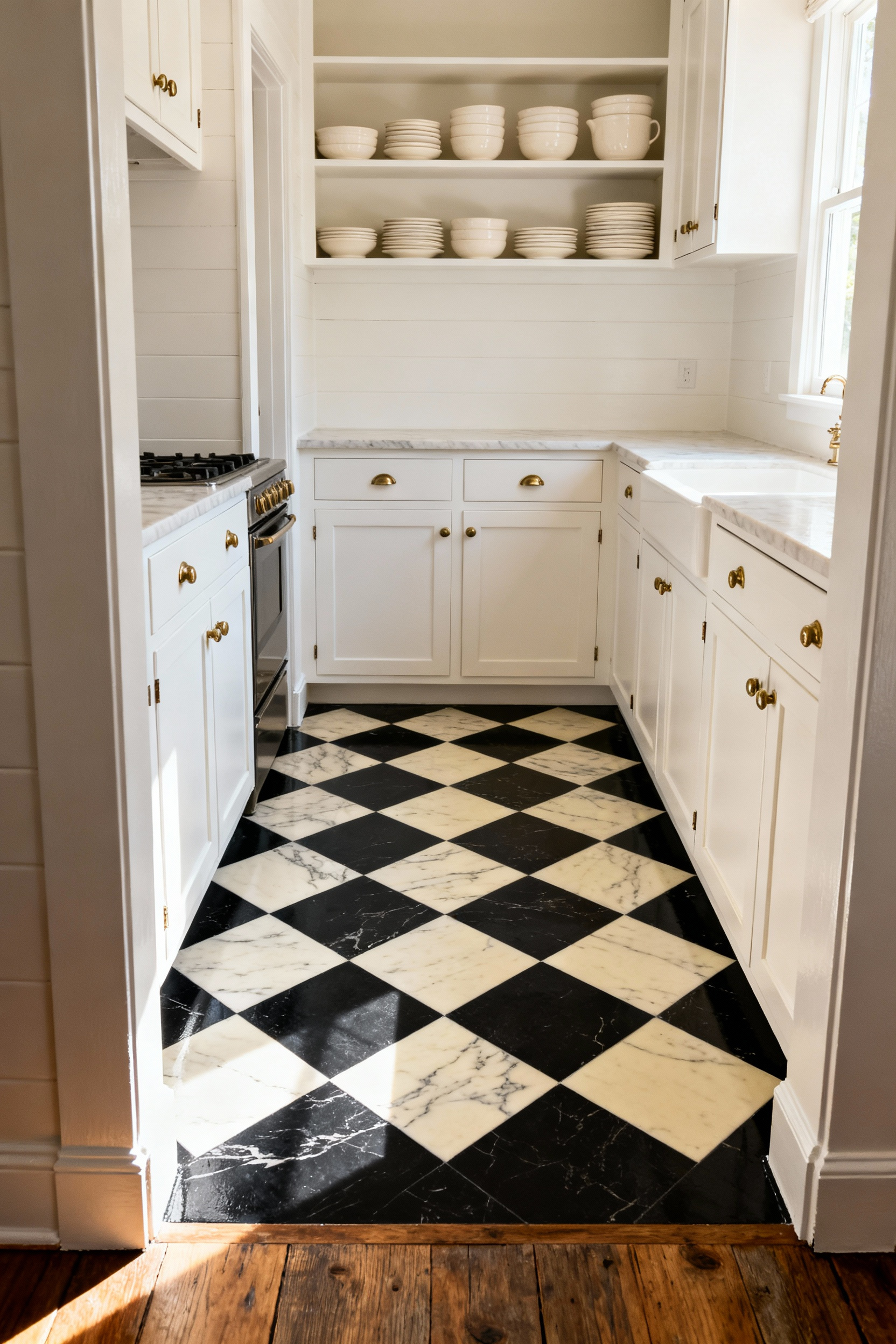
Lasting results depend entirely on meticulous preparation. You simply cannot skip the groundwork on vintage wood. Repair any cracks with high-quality wood filler, then lightly sand the surface to ensure proper paint adhesion. Apply a durable oil-based primer to seal the bare wood against bleed-through. Finally, a clear coat sealer is essential for protecting your design from heavy kitchen traffic.
Beyond durability, design choices significantly impact spatial perception. In small cottage kitchens, small squares often feel chaotic. Selecting large squares reduces visual rhythm, making the room appear more expansive. Additionally, laying the pattern diagonally leads the eye outward. This trick effectively elongates the space. For a softer look, choose tonal colors like beige and taupe over high-contrast black. This sustainable restoration honors design history while meeting modern budget needs.
Hidden Modernity: Strategies for concealing modern appliances behind custom cabinetry facades
Modern cottages frequently feature open-concept designs where the kitchen serves as a central gathering point. Concealing utilitarian elements transforms the space into a serene extension of the living area. This strategy specifically reduces visual clutter, allowing the room to feel expansive rather than technical. It creates a “quiet luxury” aesthetic that prioritizes atmosphere over mechanics.
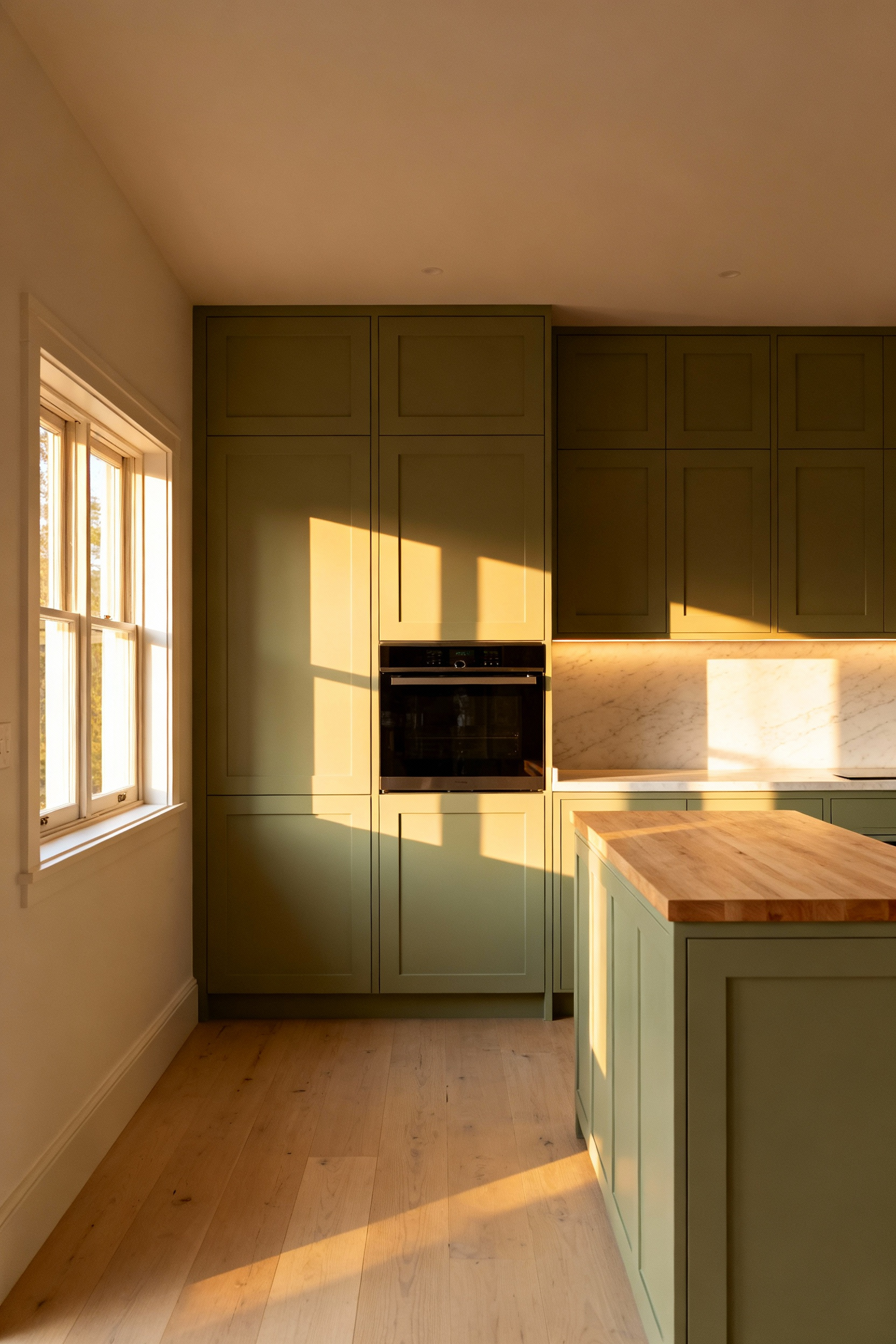
To achieve this, designers prioritize fully integrated, counter-depth appliances. A refrigerator should align perfectly flush with standard base cabinetry instead of protruding into the room. By applying a custom facade, the appliance mimics a traditional tall pantry or larder. The bulky metal object disappears behind a consistent, artisanal face. Similarly, panel-ready dishwashers blend seamlessly into the lower cabinetry run using matching doors and custom toekicks.
The illusion requires precise detailing to be truly effective. Custom cabinetmakers often utilize touch-latch mechanisms to eliminate the need for visible hardware. A gentle press engages an internal piston, allowing the door to spring open slightly. Adding furniture-style feet can make built-in units resemble heirloom armoires rather than standard cabinets.
Finally, countertop clutter requires its own concealment strategy. Specialized compartments, known as appliance garages, hide microwaves and toasters using modern lift-up hinges or pocket doors. Ultimately, these “hidden modernity” techniques balance high-end engineering with artisanal aesthetics to honor the cottage’s historic character.
The Larder Armoire: Repurposing vintage wardrobes for dry goods storage
The term “Larder Armoire” elegantly merges two distinct historical concepts. Traditionally, larders were cool rooms designed for storing perishables like meat and butter. Conversely, pantries were designated dry spaces for bread and linens. In compact cottage kitchens, separate storage rooms are rarely feasible. The Larder Armoire serves as a clever modern compromise. It offers the visual gravitas of a historic larder while performing the essential function of a dry goods pantry. For more inspiration on historic, comforting designs, see our definitive guide on 20 Enduring Ideas for Your Traditional Kitchen Remodel. Beyond history, this piece acts as a vital architectural anchor.
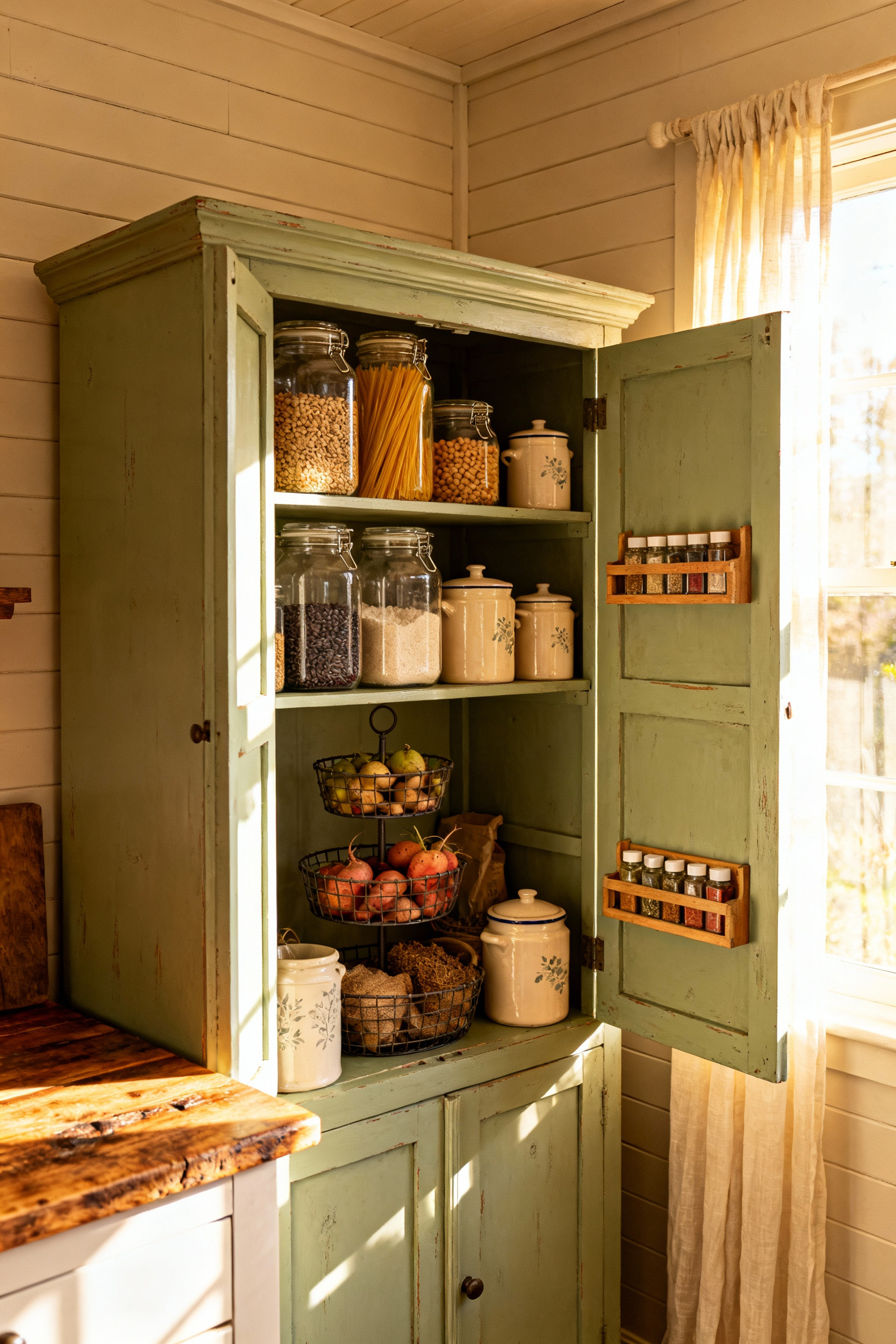
Specifically, it consolidates storage into one vertical unit to free up premium counter space. Because these units are large, they manage visual weight effectively. Painting the armoire a bold, jewel-tone color creates a deliberate focal point. Alternatively, matching the wall color helps the massive piece recede visually. This freestanding charm breaks the monotony of modern fitted cabinets.
Functionality, naturally, requires specific preservation protocols. Dry goods must never sit directly on vintage wooden shelves. Instead, use airtight glass or ceramic canisters to ensure hygiene. This simple step prevents pests and blocks humidity transfer from the wood. Consider installing small brass mesh vents on the back panel. This modification promotes passive airflow to keep ingredients cool and dry. Painting the interior a creamy white enhances visibility, creating a clean, bright reveal when the heavy doors swing open.
Conclusion: Embracing the limitations of space to create a kitchen with infinite soul
A small cottage kitchen is not a space of compromise. Instead, the lack of square footage acts as a powerful catalyst for intentionality. By ruthlessly editing unnecessary clutter, you create room for deeply meaningful design. This financial and spatial restraint allows you to invest in materials that age beautifully. Authentic wood or natural stone brings warmth that sterile trends simply lack. Therefore, the constraint of space directly creates a kitchen with infinite soul.
These compact footprints honor a history of domestic efficiency. Like the multi-functional hearths of the past, your modern kitchen becomes a hardworking hub. Your home serves your actual habits rather than outdated design rules. In the future, this approach ensures a space that evolves gracefully with you. True luxury lies in utility and comfort, not excess volume. Begin by auditing your current cookware collection for both beauty and function today.
Frequently Asked Questions
How do I maximize storage in a tiny cottage kitchen without using bulky cabinets?
In tiny cottage kitchens, maximize storage vertically and utilize the “unfitted” philosophy. Instead of deep upper cabinets, install shallow, wall-mounted plate racks or open shelving. Repurpose antique armoires (Larder Armoires) for pantry storage, consolidating dry goods into one vertical piece to free up precious counter and floor space.
What color palette works best to make a small cottage kitchen feel larger and brighter?
The most effective strategy is adhering to a light, monochromatic palette, focusing primarily on creamy whites, off-whites, and soft, muted pastels like pale sage or dusty blue. This consistency allows light to bounce freely, reducing visual noise and making the eye perceive the space as continuous and larger. Light-reflecting finishes, such as semi-gloss paint on beadboard, also enhance the illusion of height.
Are small cottage kitchens still considered high-end or luxurious?
Yes, absolutely. For discerning homeowners, the focus has shifted from sheer volume to “quiet luxury,” prioritizing artisanal aesthetics, authentic materials (like reclaimed wood and marble), and thoughtful, high-quality bespoke details. The constraint of the small space encourages intentional curation, resulting in a unique, soulful environment that signals enduring style rather than fleeting trends.
“`