Since the mid-20th century, Scandinavian design has served as a gentle but firm answer to the chaos of modern life. It evolved from a post-war democratic ideal—beautiful, functional things for everyone—into what I see as the ultimate philosophy for sustainable, soulful living. Today’s most inviting kitchens understand this dual purpose: they must be hardworking hubs that also provide a sense of calm and clarity. The 20 principles that separate a truly resonant kitchen from a sterile copycat haven’t changed much in 70 years. It’s a legacy I see every day in my work restoring mid-century pieces—a commitment to honest materials, human-centered design, and a quiet confidence that just feels like home.
This is more than just an aesthetic. It’s a way of thinking championed by designers who believed good design could improve life. The heart of scandinavian kitchen decor beats with principles like Hygge (that feeling of deep, cozy contentment) and Lagom (the art of ‘just enough’), which naturally guide us away from excess. This philosophy leads directly to a celebration of natural materials—the honest grain of wood, the quiet strength of stone—and a color story drawn from the Nordic landscape itself.
From these core ideas, the physical space takes shape. It’s a choreography of layout and light, where open plans encourage connection and integrated appliances let the craftsmanship of the cabinetry sing. But a room is only truly finished when it’s lived in. And so, the final layer is a tapestry of personal, practical objects and warm, layered lighting—the elements that turn a beautiful room into your sanctuary. Together, let’s walk through the twenty elements that will help you create a kitchen that is not only beautiful today, but will feel right for a lifetime.
The Foundational Philosophy of Nordic Kitchen Design (Part 1)
Before you pick out a single cabinet handle or paint swatch, it’s essential to understand the “why” behind Scandinavian design. It’s a philosophy born from a unique relationship with light, nature, and community. Getting this right is what gives the style its soul, turning a collection of objects into a truly restorative space.
1. Deconstruct the ‘Hygge’ Imperative: Crafting Ambient Serenity Through Thoughtful Design
Hygge isn’t something you can buy; it’s a feeling you cultivate. It’s that deep sense of contentment you get from being warm, safe, and surrounded by gentle comfort. In a kitchen, Hygge is the antidote to the cold, clinical laboratory. It’s about creating a space that gives you a hug, encouraging you to slow down, to linger over a cup of tea, to make the daily ritual of cooking feel like a gift rather than a chore. It’s a quiet rebellion against the rush of modern life.
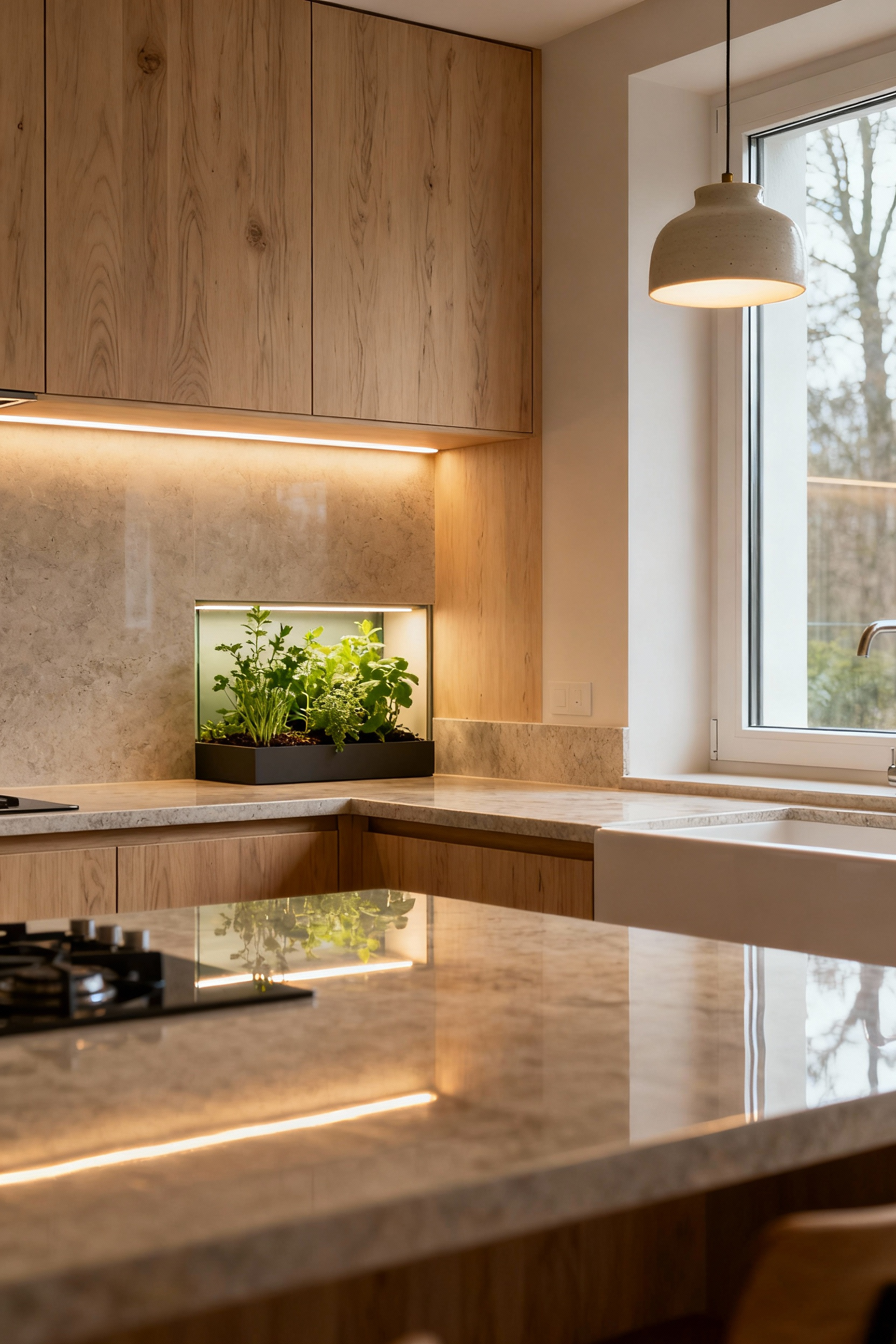
In my work restoring mid-century pieces, I’ve noticed that Hygge often lives in the worn, loved details. It’s in the soft patina of an old wooden stool tucked into a corner, or a vintage wool throw draped over a bench. You can invite this feeling through materials that appeal to the touch: linen curtains that soften the daylight, ceramic mugs that warm your hands, a well-worn wooden cutting board. Lighting is key here. Forget harsh overheads; think in pools of warm, gentle light from a low-hanging pendant over a table, or a small lamp on the counter. It’s about creating pockets of intimacy in a functional space.
2. Embrace ‘Lagom’: Achieving Balanced Modesty in Materiality and Form
If Hygge is the warm heart, Lagom is the clear, guiding mind. This Swedish concept, meaning “not too much, not too little,” is the secret ingredient to the effortless feel of a Scandinavian kitchen. It’s the ultimate principle of sustainability: buy what you need, choose things that will last, and find beauty in simple sufficiency. It’s a quiet rejection of the throwaway culture that plagues modern decorating. Forget about trends and think about legacy.
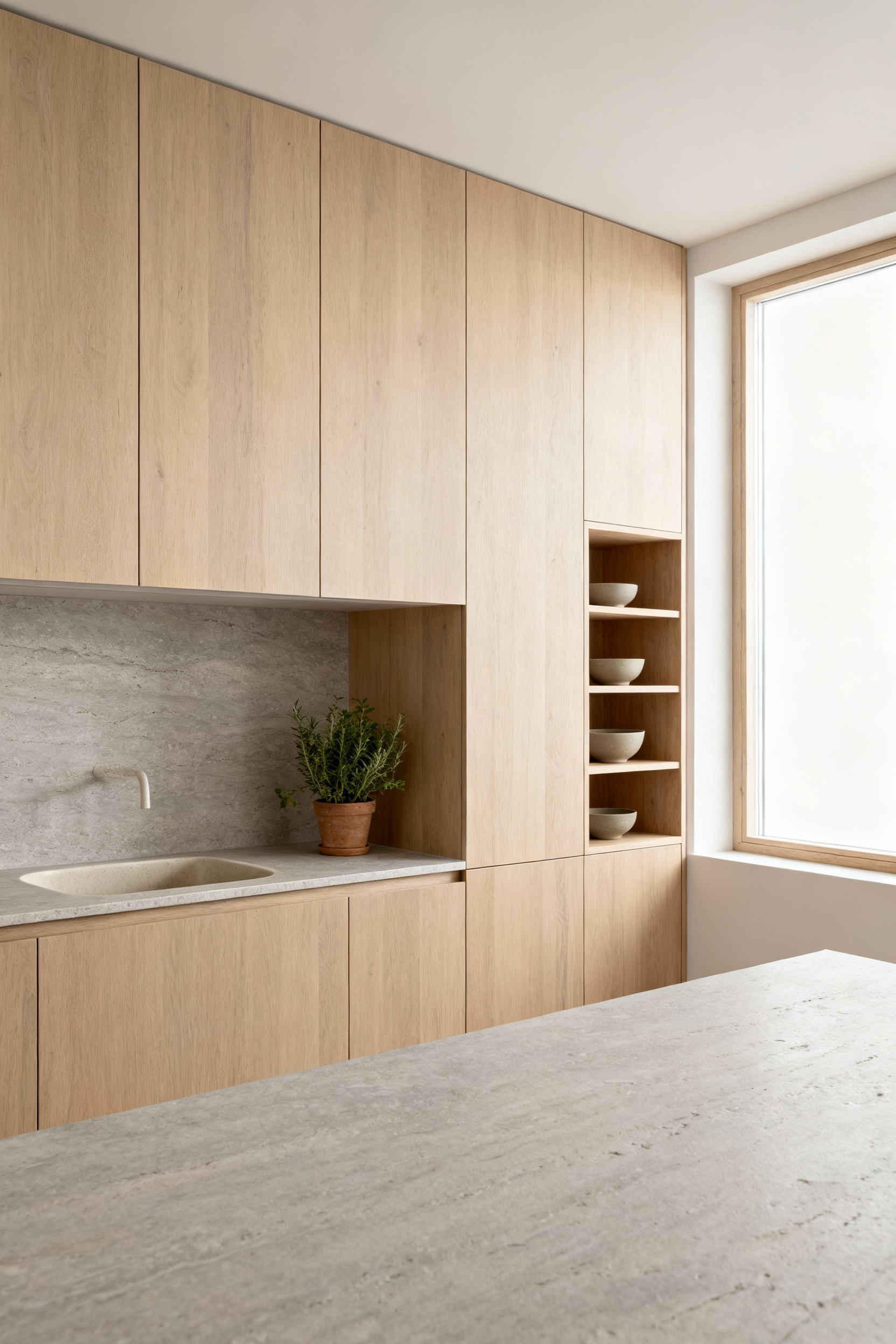
What this looks like in practice is a beautiful restraint. Instead of intricate cabinetry, you’ll see clean lines with simple, honest construction. You choose one beautiful, handcrafted pitcher to display instead of a dozen mediocre ones. Years of sustainable upcycling taught me this lesson: true value is in quality and purpose, not quantity. Surfaces are kept clear not just for looks, but because an uncluttered space means an uncluttered mind. Lagom is about making intentional choices that serve you for years, so you can stop consuming and start living.
3. Maximize Natural Illumination: Architecting Light for Perceived Expansiveness
In the Nordic countries, daylight is a precious, fleeting guest for much of the year, so their architecture has always been designed to welcome and amplify it. This reverence for natural light is a cornerstone of the entire aesthetic. It’s about more than just big windows; it’s about designing every surface to catch and bounce light around the room, making the space feel open, airy, and alive. A sun-drenched kitchen isn’t just beautiful, it’s good for the soul.
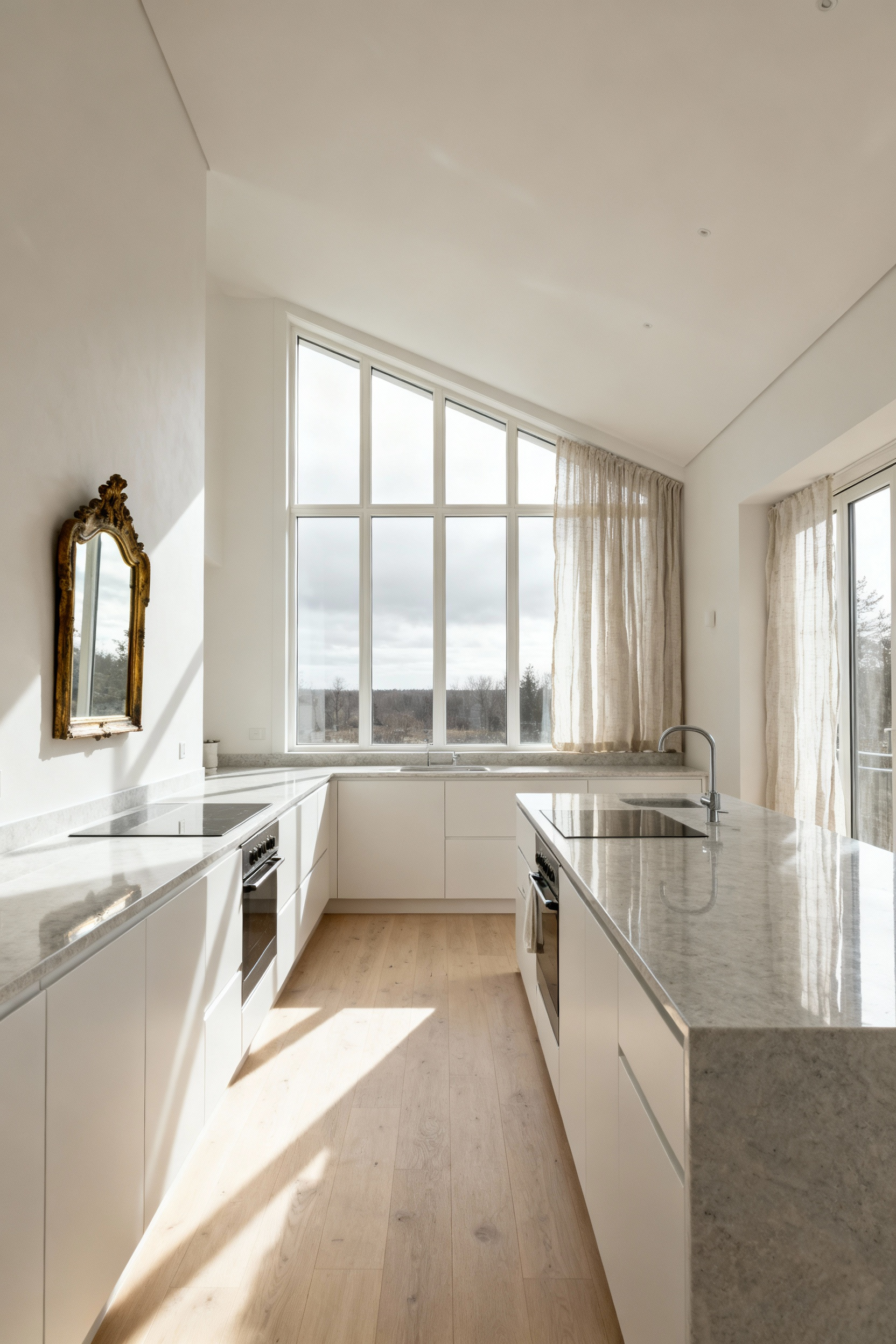
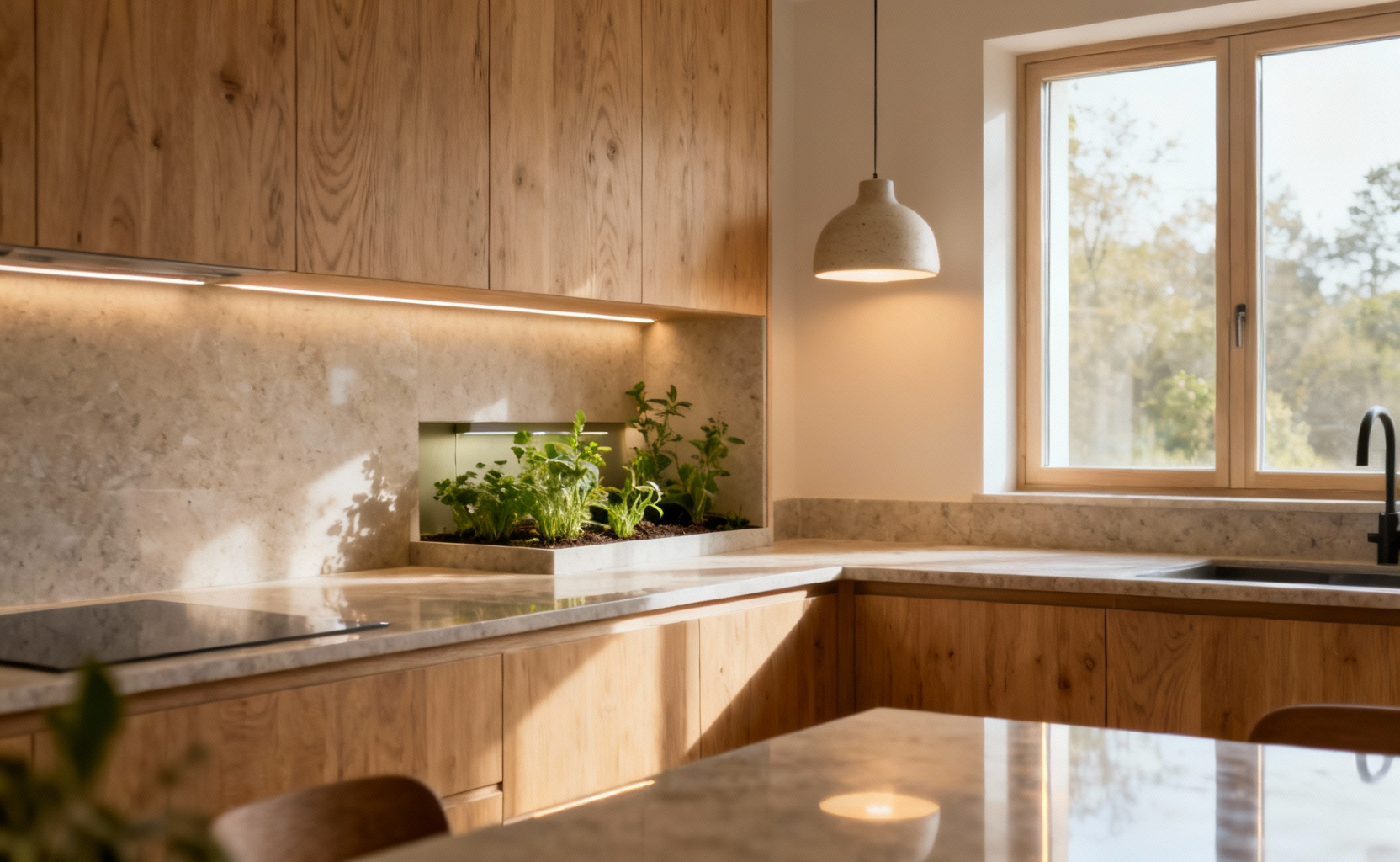
The strategy is simple: turn your kitchen into a canvas for light. A palette of soft whites, pale grays, and other muted neutrals will do the heavy lifting, preventing shadows from pooling in corners. Keep window treatments to a minimum—bare windows are common, but if you need privacy, opt for sheer linen curtains that soften the light without blocking it. Even a strategically placed backsplash with a slight sheen can make a world of difference. This is a trick I often see in mid-century modern design, where architects used clerestory windows and open floor plans to draw light deep into the home. It’s about working with nature, not against it.
4. Integrate Biophilic Elements: Fostering a Seamless Connection with Nature
This might sound like a technical term, but biophilia is simply our innate human need to connect with nature. Scandinavian design understands this on a primal level. Bringing the outdoors in isn’t a decorative flourish; it’s essential for creating a space that feels calming and grounding. It’s about blurring the lines between your home and the natural world, reminding you of the quiet rhythms of the earth even when you’re chopping vegetables.
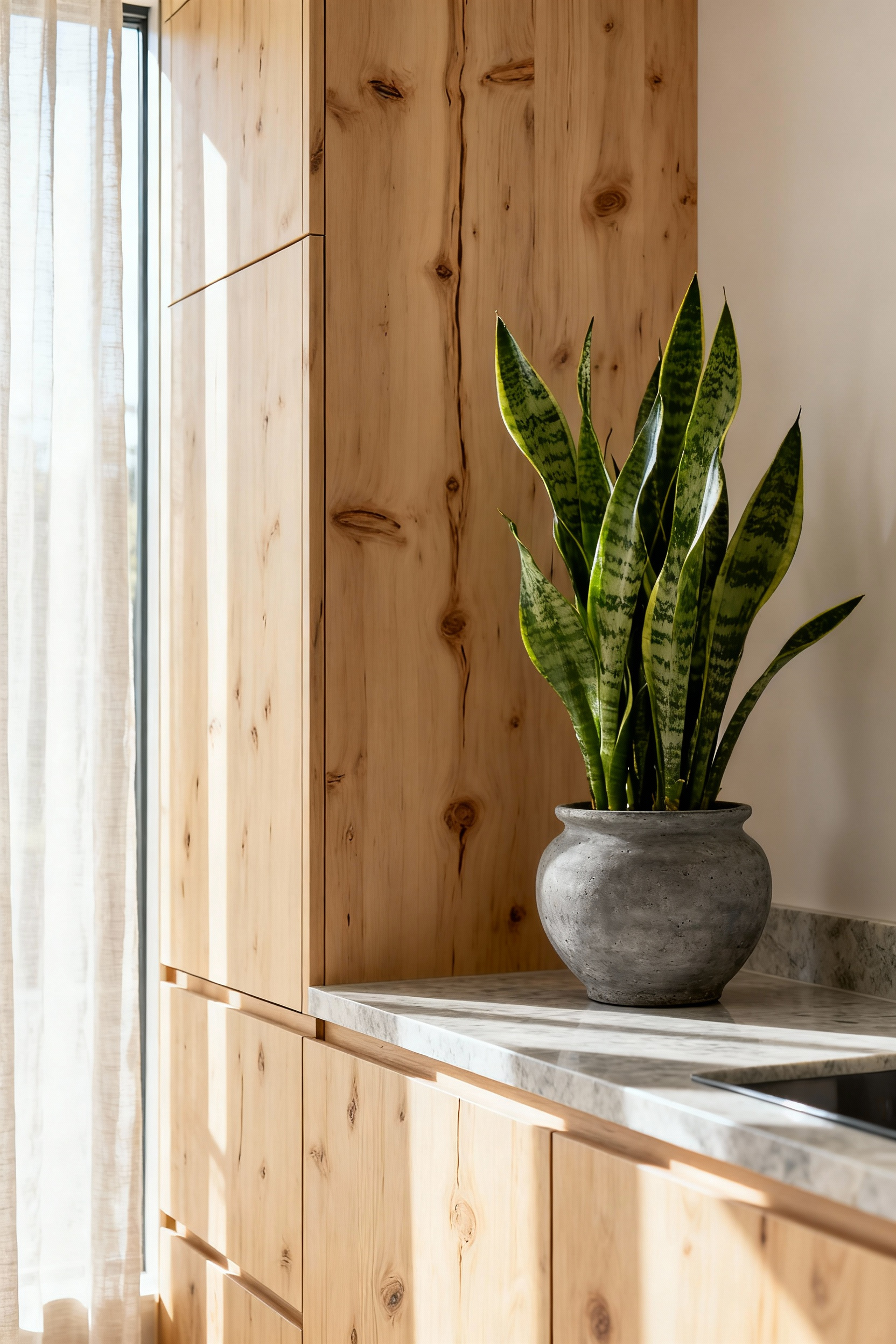
The most obvious way to do this is with plants. A small collection of herbs on the windowsill, a trailing pothos on an open shelf, or a larger fiddle-leaf fig in a corner instantly breathes life into a room. But it goes deeper. The very materials of the kitchen—the grainy wood of the cabinets, the cool veining of a stone countertop—are biophilic. Even the organic, curved shapes you see in classic Scandinavian furniture, like an Alvar Aalto stool, echo forms found in nature. It’s about creating a multisensory connection that nourishes you on a level beyond just aesthetics.
The Foundational Philosophy of Nordic Kitchen Design (Part 2)
As we build on these core principles, we arrive at the beautiful intersection where philosophy becomes tangible form. This is where the ideas of simplicity and purpose translate into the clean lines and intuitive usability that define the Scandinavian kitchen. It’s not just about how it looks, but how it feels to use every single day.
5. Champion Functional Minimalism: Streamlining for Effortless Efficacy and Visual Clarity
This is the principle that ties everything together. Functional minimalism isn’t about cold, empty spaces; it’s about stripping away every non-essential element to let the beauty of purpose shine through. Every object in the room should have a reason for being there. It’s a design philosophy of profound respect—for the materials, for the space, and most importantly, for the person using it. Think of it as visual silence, allowing for moments of peace in a busy world.
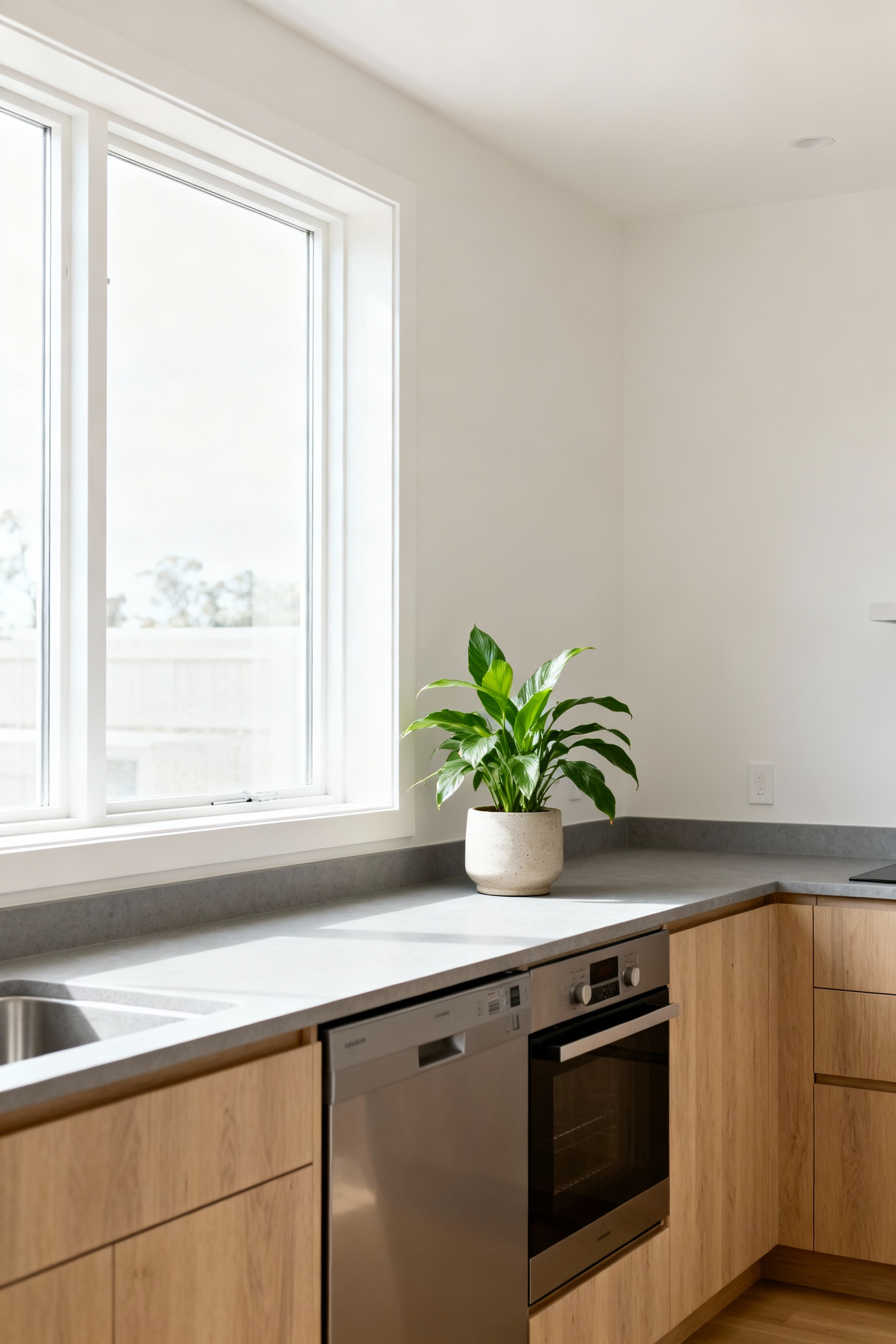
In my work restoring furniture by masters like Hans Wegner, I’m always struck by this truth. The elegance of his “Wishbone” chair isn’t just in its form; it’s in how every curve and joint serves a purpose of comfort and strength. In the kitchen, this translates to handleless cabinetry that creates a serene, uninterrupted surface, or smart internal organizers that keep clutter hidden away. The goal is a kitchen that works so intuitively that you don’t even have to think about it. By removing the visual noise, you make space for life itself.
Tactile Harmony: A Palate of Natural Materials and Hues (Part 1)
Now we get to the fun part: the materials. The soul of a Scandinavian kitchen is expressed through its textures and colors. This isn’t a style that relies on heavy ornamentation. Instead, it finds its beauty in the honest character of wood, the quiet depth of muted tones, and the satisfying integrity of natural materials.
6. Opt for Untreated Light Wood Tones: Instilling Organic Warmth and Textural Depth
Wood is the undisputed hero material of Scandinavian design. Light woods like ash, birch, and pale oak are favored for their ability to bring a sense of warmth and brightness to a space. Opting for untreated or lightly finished wood allows the natural grain and character of the material to tell its own story. There’s an honesty to it—a connection to the forests from which it came that feels grounding and real.
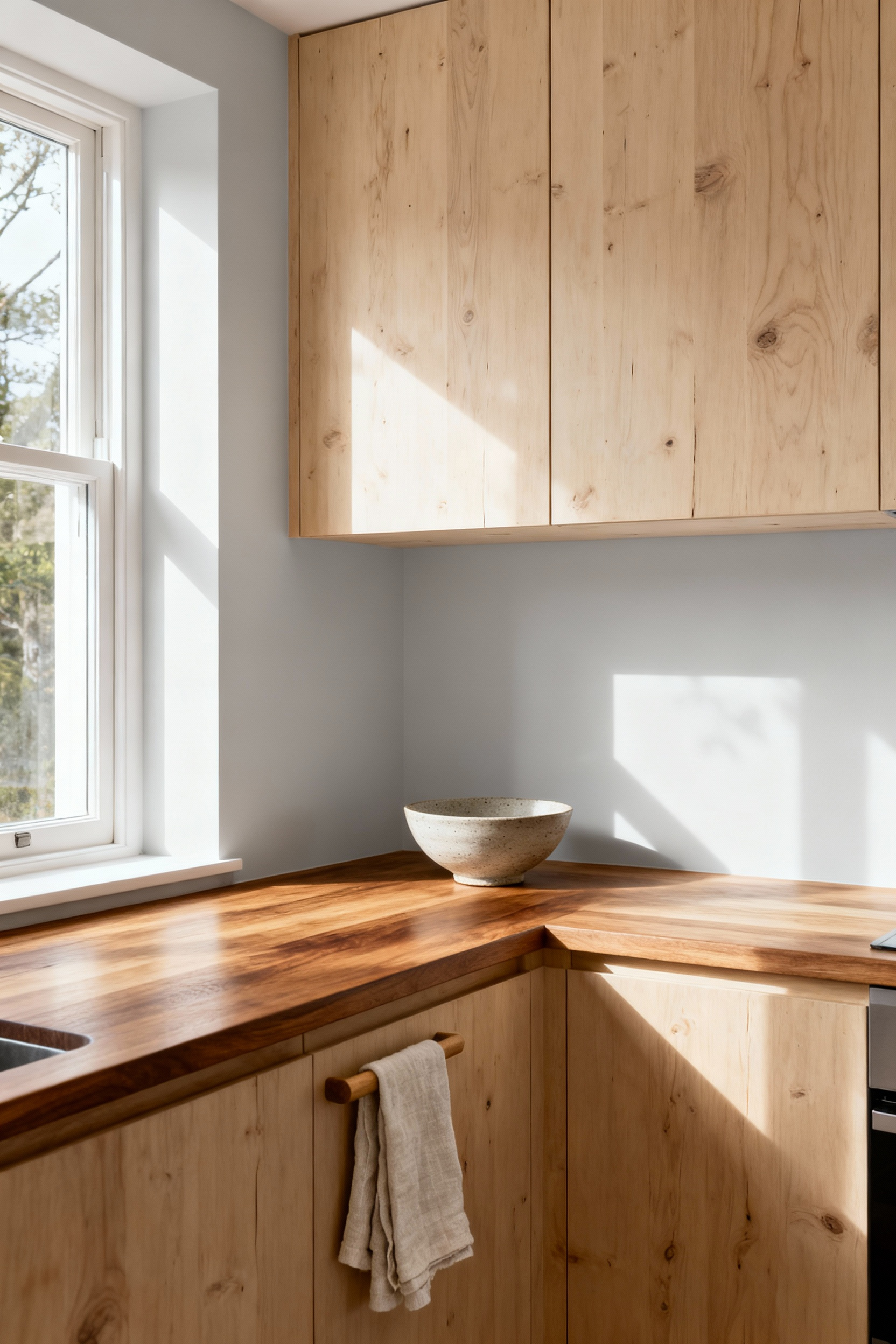
A kitchen grounded in light wood feels warm even on the coldest days. You can use it for cabinetry, flooring, or even as a countertop on an island to create a friendly gathering spot. Smaller doses are just as effective. I love the idea of incorporating a vintage piece—perhaps a small dining set in pale teak or a simple pine step stool—to add a layer of history. Taking care of these wood pieces isn’t a chore; it’s a way of participating in the life of your home, allowing the wood to develop a rich patina that reflects years of shared meals and happy memories.
7. Select Muted Earthen and Scandi-Neutral Palettes: Cultivating Visual Tranquility and Cohesion
The Scandinavian color palette is a direct reflection of the Nordic landscape: the soft grays of coastal rock, the cloudy whites of a winter sky, the muted greens of lichen and moss. These aren’t just colors; they are atmospheres. They create a serene backdrop that allows light, texture, and life to take center stage. Choosing a palette of muted, earthy neutrals is the single best way to establish a sense of visual calm.
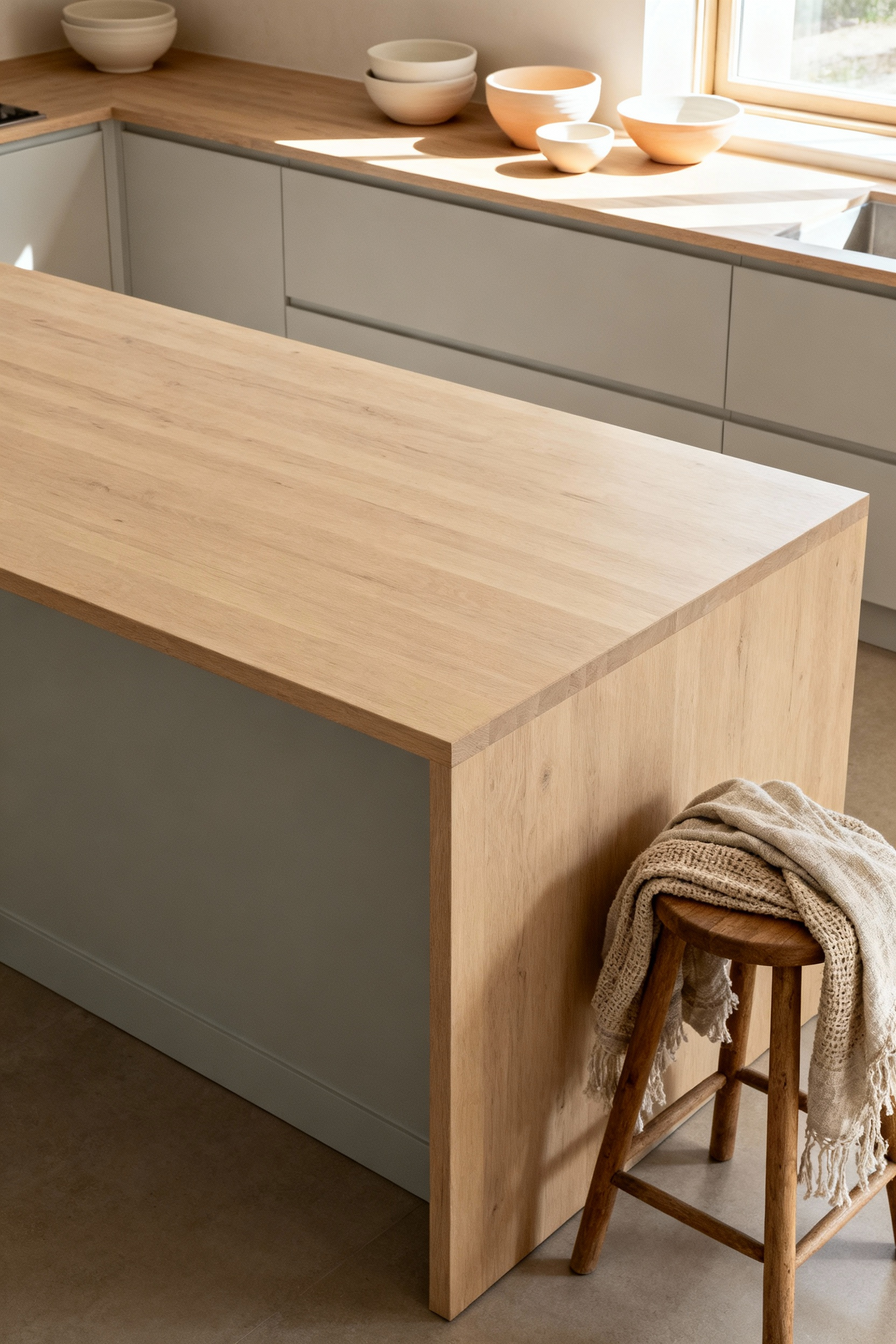
Think of your walls, cabinets, and floors as the canvas. A foundation of creamy whites, warm grays, and soft beige allows the natural beauty of your wood furniture and stone countertops to shine. This isn’t about creating a boring, colorless room. It’s about building a cohesive, tranquil environment where smaller pops of color—from fresh herbs on the counter or a colorful piece of ceramic—can have a real impact. It’s also an incredibly sustainable choice, creating a timeless look that you won’t feel the need to repaint every few years.
8. Incorporate Concrete or Light Stone Surfaces: Introducing Understated Industrial Sophistication
To keep a kitchen from feeling too rustic, Scandinavian design often introduces a counterpoint of cool, solid materials like concrete or light-colored stone. This adds a touch of modern, industrial sophistication and a wonderful textural contrast to the warmth of the wood. It’s a nod to the urban side of Nordic life—sleek, durable, and effortlessly chic. Think of it as a quiet anchor for the room.
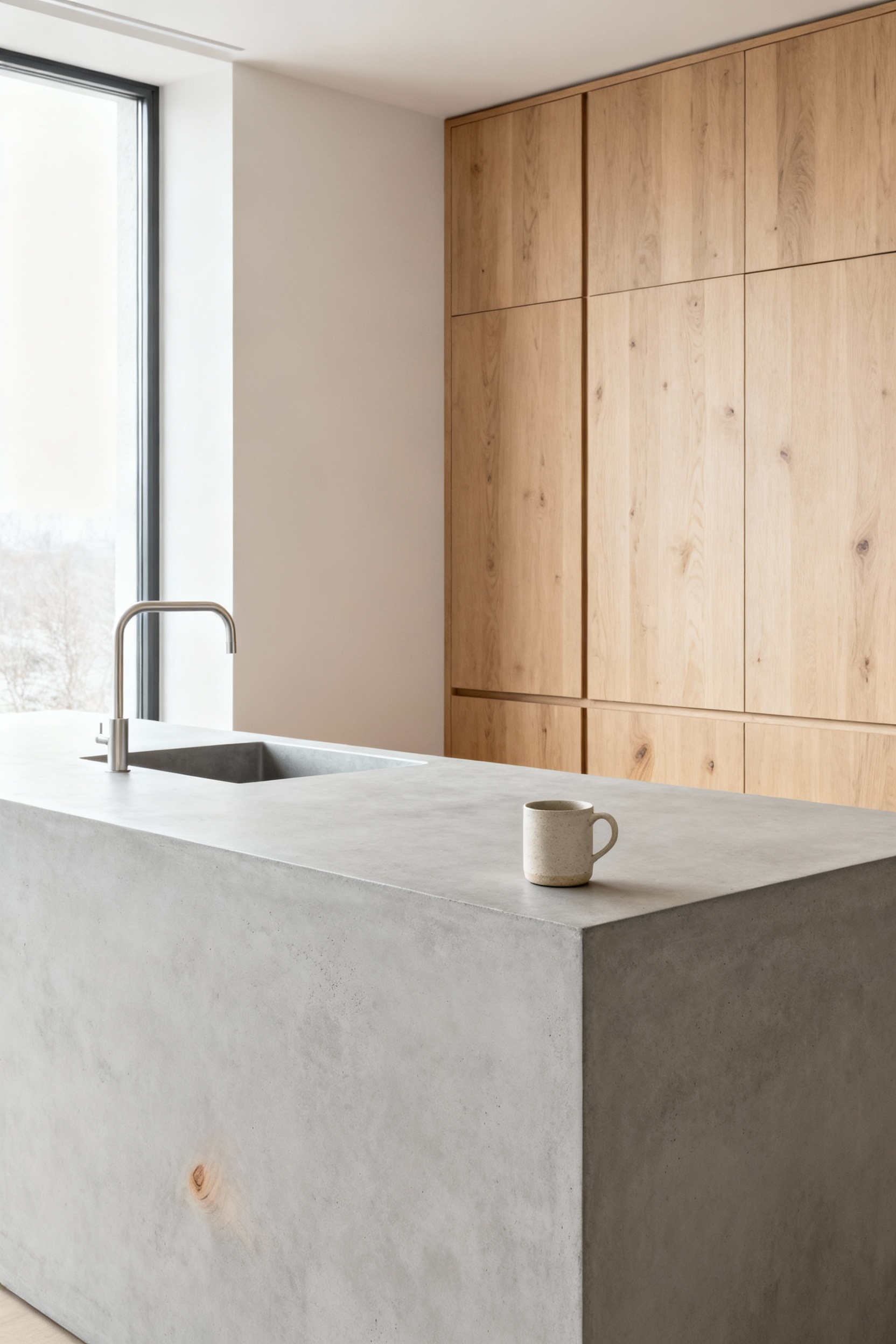
Honed (matte) finishes are key here. A polished concrete countertop or a backsplash of pale limestone with a matte finish has a subtle, velvety quality that feels incredibly sophisticated. It absorbs light rather than reflecting it harshly, contributing to the overall sense of calm. As a sustainable choice, a well-sealed stone or concrete countertop is virtually indestructible, designed to withstand the rigors of a busy kitchen for a lifetime. This is the epitome of “less, but better”—investing in a surface that is both beautiful and built to last.
9. Layer Textiles with Intent: Enhancing Tactility and Acoustic Softness
A room with only hard surfaces can feel cold and echoey. This is where textiles come in. Intentional layering of natural fabrics is the final touch that makes a kitchen feel like a truly comfortable, lived-in home. Textiles soften not just the look of a room, but the sound of it too, absorbing clatter and creating a more peaceful acoustic environment. They are the hygge element that invites you to stay.
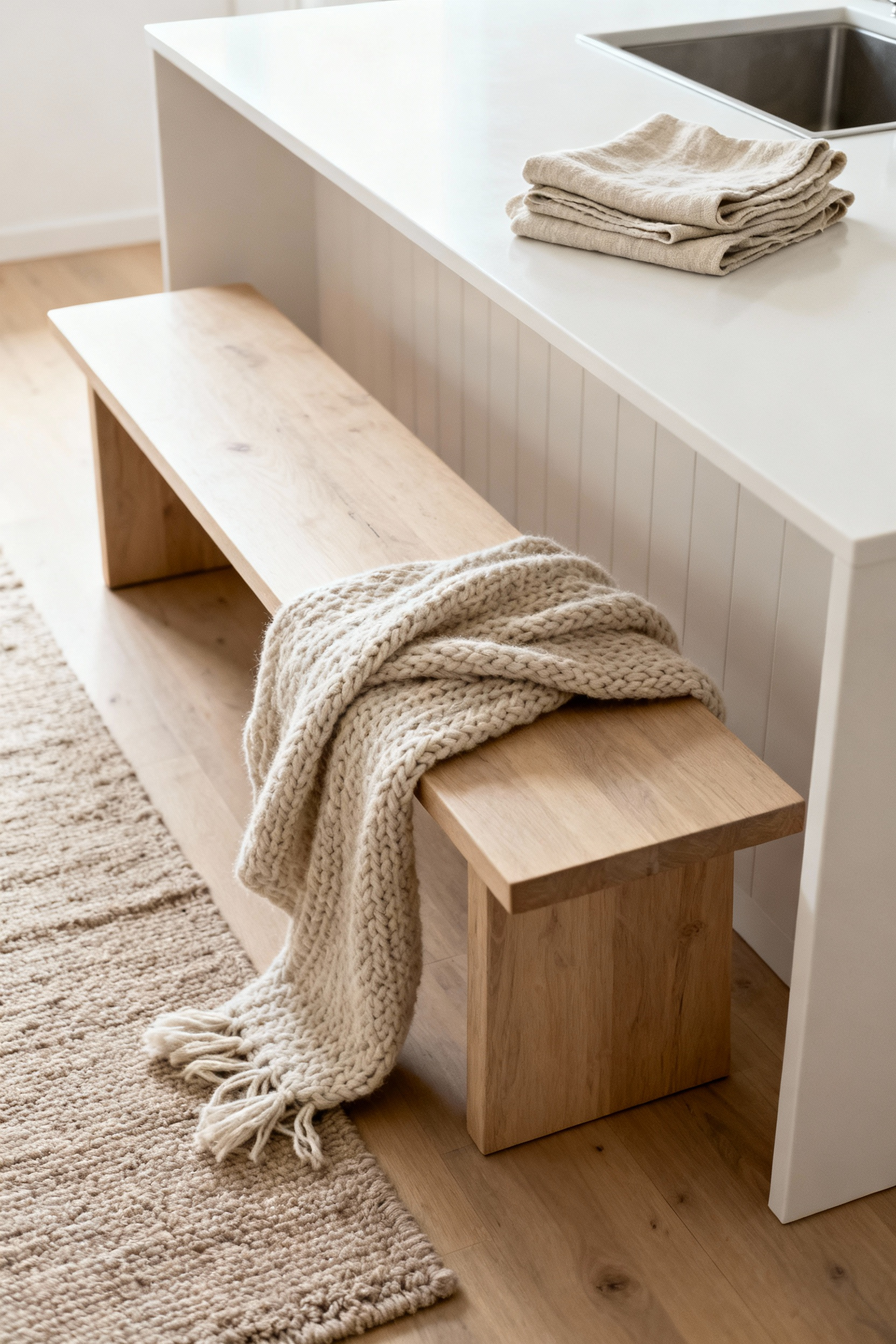
I always encourage people to look for vintage textiles, which bring a story and a level of craftsmanship that’s hard to find in new items. A simple linen runner on the dining table, a hand-woven cotton rug by the sink, or cushions made from soft wool on a bench seat can transform the feel of a room. Even something as simple as a set of beautifully textured tea towels hanging from a hook adds a layer of softness and personality. The focus should be on natural fibers—linen, wool, cotton—in neutral colors or simple patterns that complement the rest of the space.
Tactile Harmony: A Palate of Natural Materials and Hues (Part 2)
As we delve deeper into materials, we discover that the finish is just as important as the material itself. The way a surface interacts with light can fundamentally change the atmosphere of a room. In Scandinavian design, the preference for matte finishes is a deliberate choice—a quiet rejection of glitz in favor of a more subtle, organic beauty.
10. Utilize Matte Finishes: Diffusing Light and Reducing Visual Clutter
Walk into an authentic Scandinavian-inspired kitchen, and you’ll notice an absence of glare. This is thanks to the prevalent use of matte finishes on everything from cabinets to hardware. A matte surface diffuses light, scattering it softly across the room rather than reflecting it back in a harsh gleam. This creates a velvety, uniform look that feels incredibly calm and sophisticated.
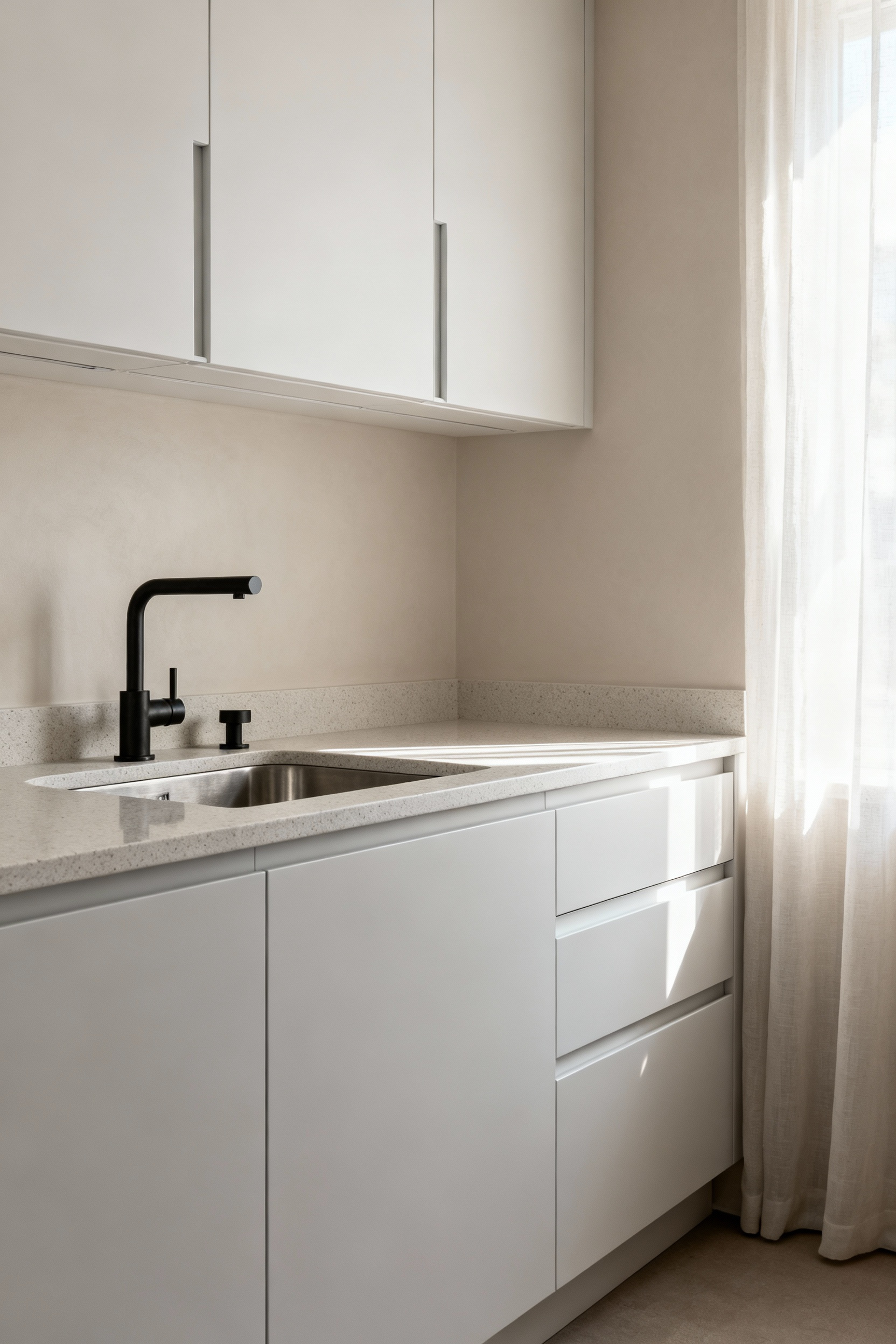
In my own restoration work, I’ve seen the difference firsthand. A mid-century credenza restored with a high-gloss finish can look plastic and dated, but the same piece with a hand-rubbed satin or matte finish suddenly looks authentic and refined. It honors the natural texture of the wood. Practically speaking, matte finishes are also wonderfully forgiving. They don’t show fingerprints and smudges nearly as much as their glossy counterparts, which helps maintain that serene, uncluttered look without constant wiping. It’s a small detail with a huge impact on the overall tranquility of the space.
Mastering the Spatial Symphony: Layout and Function (Part 1)
A beautiful kitchen is nothing if it doesn’t work well. The brilliance of Scandinavian design lies in its obsession with function. The layout of the room is seen as a kind of choreography, designed to make the daily dance of cooking, eating, and living as fluid and effortless as possible.
11. Design an Open-Concept Layout: Facilitating Fluidity and Social Interaction
The Scandinavian kitchen is rarely a closed-off room; it’s the vibrant heart of the home. An open-concept layout, where the kitchen flows seamlessly into the dining and living areas, is a direct expression of the culture’s emphasis on community and togetherness. It breaks down walls, both literally and figuratively, allowing the cook to be part of the conversation and making the entire space feel larger and more filled with light.
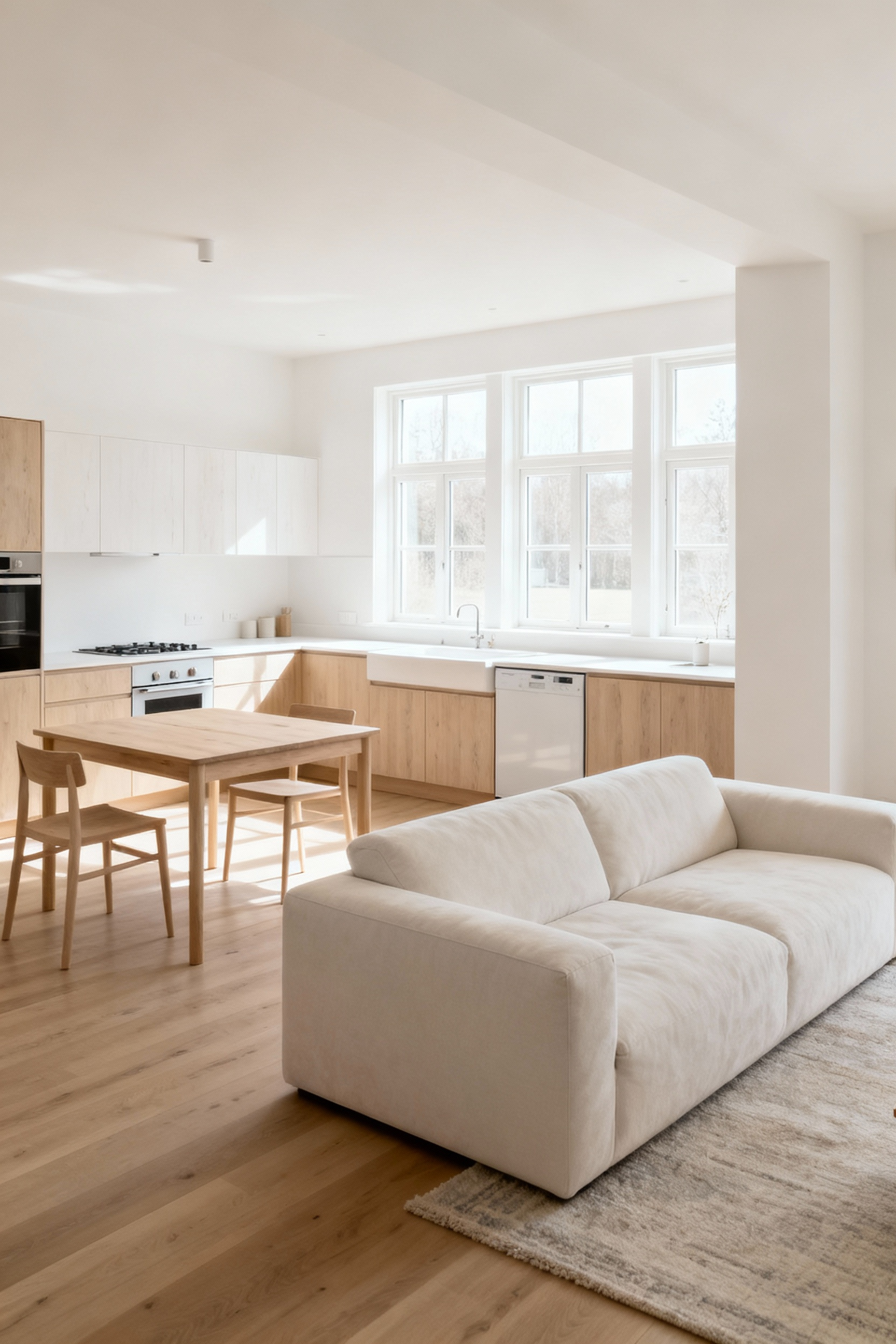
This approach was a hallmark of mid-century design, which sought to create more casual, connected ways of living. By using continuous flooring and a consistent color palette, you can create a unified space that feels both expansive and intimate. An island often becomes the natural gathering spot—a place for guests to perch with a glass of wine, or for kids to do their homework while dinner is being made. It turns the kitchen from a utilitarian work zone into a dynamic social hub.
12. Implement Integrated Appliances: Preserving Aesthetic Continuity and Streamlined Forms
To achieve that serene, uncluttered look, appliances are often hidden from view. Integrating your refrigerator, dishwasher, and even trash bins behind custom cabinet panels creates a seamless, uninterrupted wall of beautiful cabinetry. This allows the kitchen to feel less like a workshop filled with machines and more like a beautifully crafted piece of furniture. It’s a trick that elevates the entire space.
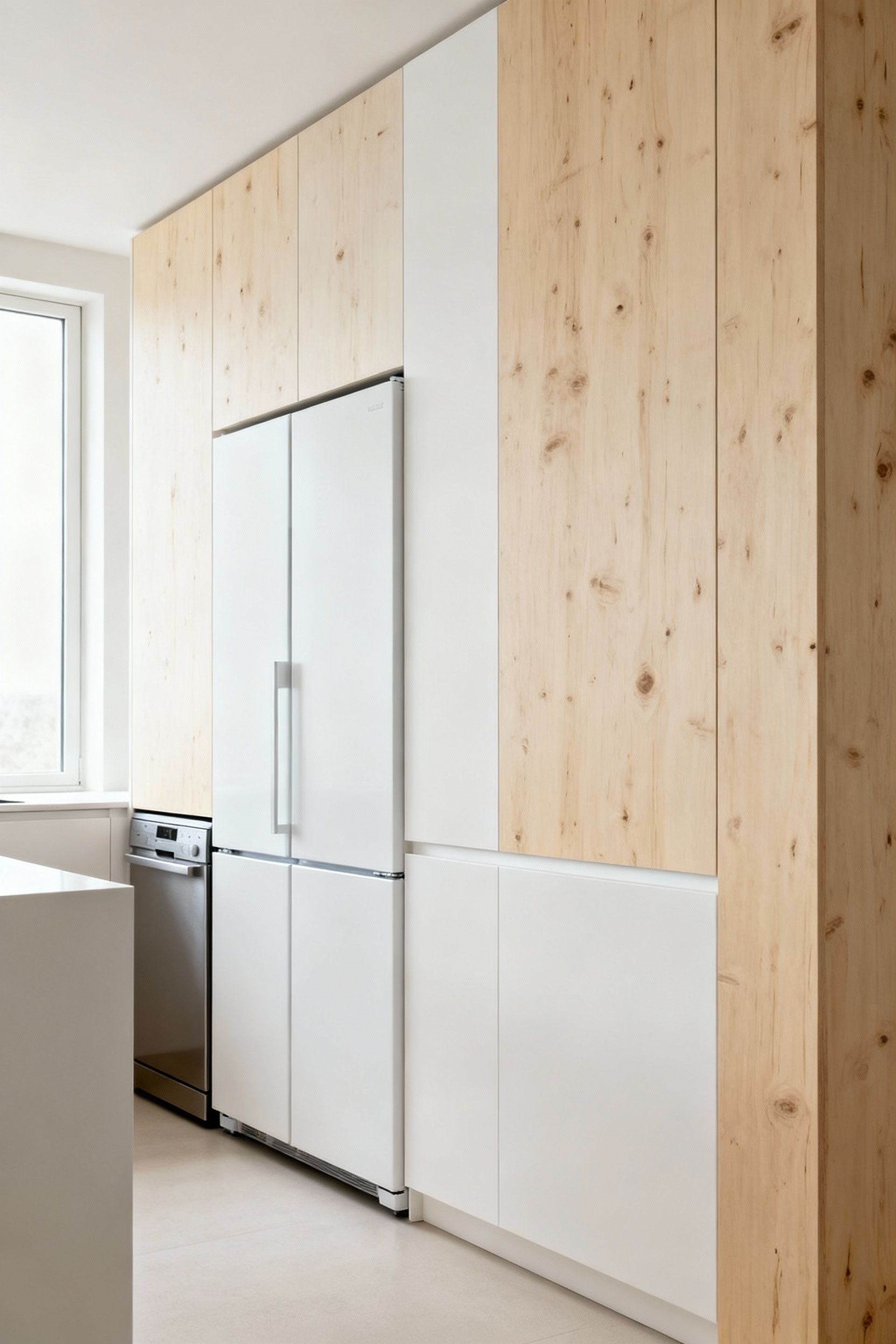
The goal is to let the craftsmanship of the millwork be the star of the show. By concealing the bulky, metallic forms of modern appliances, you preserve the visual peace of the room. This commitment to aesthetic continuity allows the natural textures of the wood and the clean lines of the design to flow without interruption. It’s a sophisticated move that speaks to the philosophy of functional minimalism—all the utility is there, it just doesn’t need to shout for attention.
13. Conceal Utility with Smart Storage Solutions: Achieving Order Without Ostracism
The secret to that calm, clutter-free Scandinavian look? Radical, brilliant storage. Everything has a place. This isn’t just about having enough cupboards; it’s about having smart cupboards. Think deep drawers with custom dividers for utensils, pull-out pantry shelves that bring everything into view, and clever corner units that make use of every last inch.
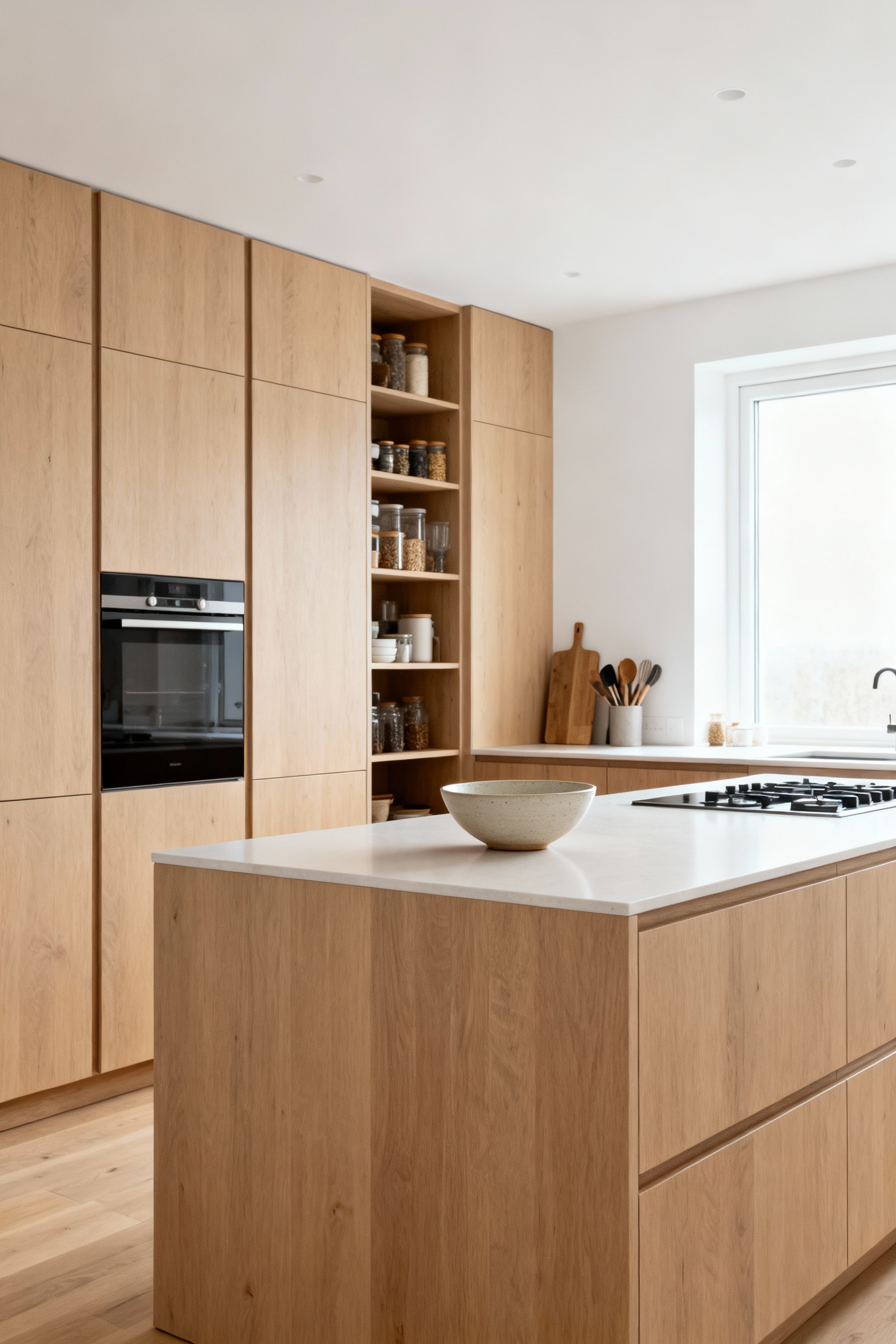
When I restore vintage sideboards, I’m always amazed by the thoughtful interior design—felt-lined drawers, adjustable shelves, perfectly spaced dividers. This is the philosophy you want to bring to your kitchen. Good storage means that the things you use every day are easy to grab and even easier to put away. It’s this underlying system of order that makes maintaining a minimalist aesthetic feel effortless rather than restrictive. It’s not about hiding your life away; it’s about creating a functional framework that supports a more peaceful daily routine.
14. Prioritize Ergonomic Work Triangles: Optimizing Operational Efficiency and User Comfort
This is a classic design principle that the Scandinavians perfected. The “work triangle” is the conceptual path between your three main work areas: the sink, the stove, and the refrigerator. By keeping the distance between these three points efficient and unobstructed, you create a kitchen that is a joy to work in. It minimizes footsteps and makes the process of cooking feel like a smooth, intuitive flow.
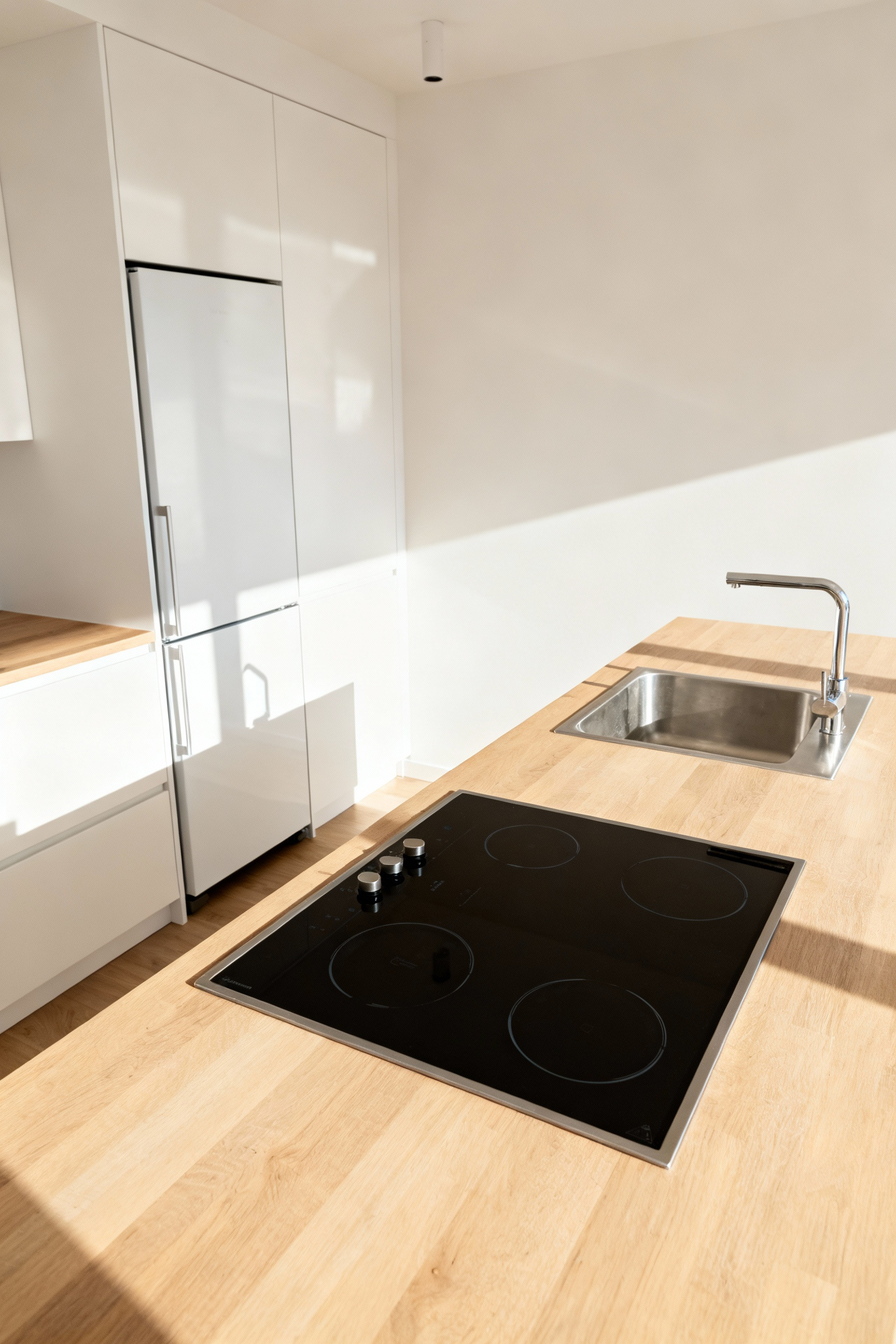
This human-centered approach is at the core of good design. A kitchen should be designed around the movements of the person using it. You need clear counter space next to each point of the triangle for landing groceries, prepping vegetables, or plating finished dishes. While modern kitchens sometimes evolve into “work zones,” the basic principle remains the same: thoughtful layout reduces physical strain and mental stress, making your time in the kitchen more pleasurable.
Mastering the Spatial Symphony: Layout and Function (Part 2)
As we refine our understanding of space, we move beyond the basic floor plan to consider the subtle cues that guide movement and create atmosphere. A truly well-designed Scandinavian kitchen isn’t just one big, open room; it’s a collection of distinct yet harmonious areas, each with its own purpose and feel.
15. Delimit Zones with Purposeful Transitions: Ensuring Distinct Yet Harmonious Areas
Even within an open-plan layout, it’s important to create a sense of distinct “zones” for different activities. You don’t need walls to do this. Subtle transitions in materials or lighting can signal a shift in function without breaking the beautiful, open flow. This creates a space that feels both cohesive and thoughtfully organized, where different activities can happen at once without feeling chaotic.
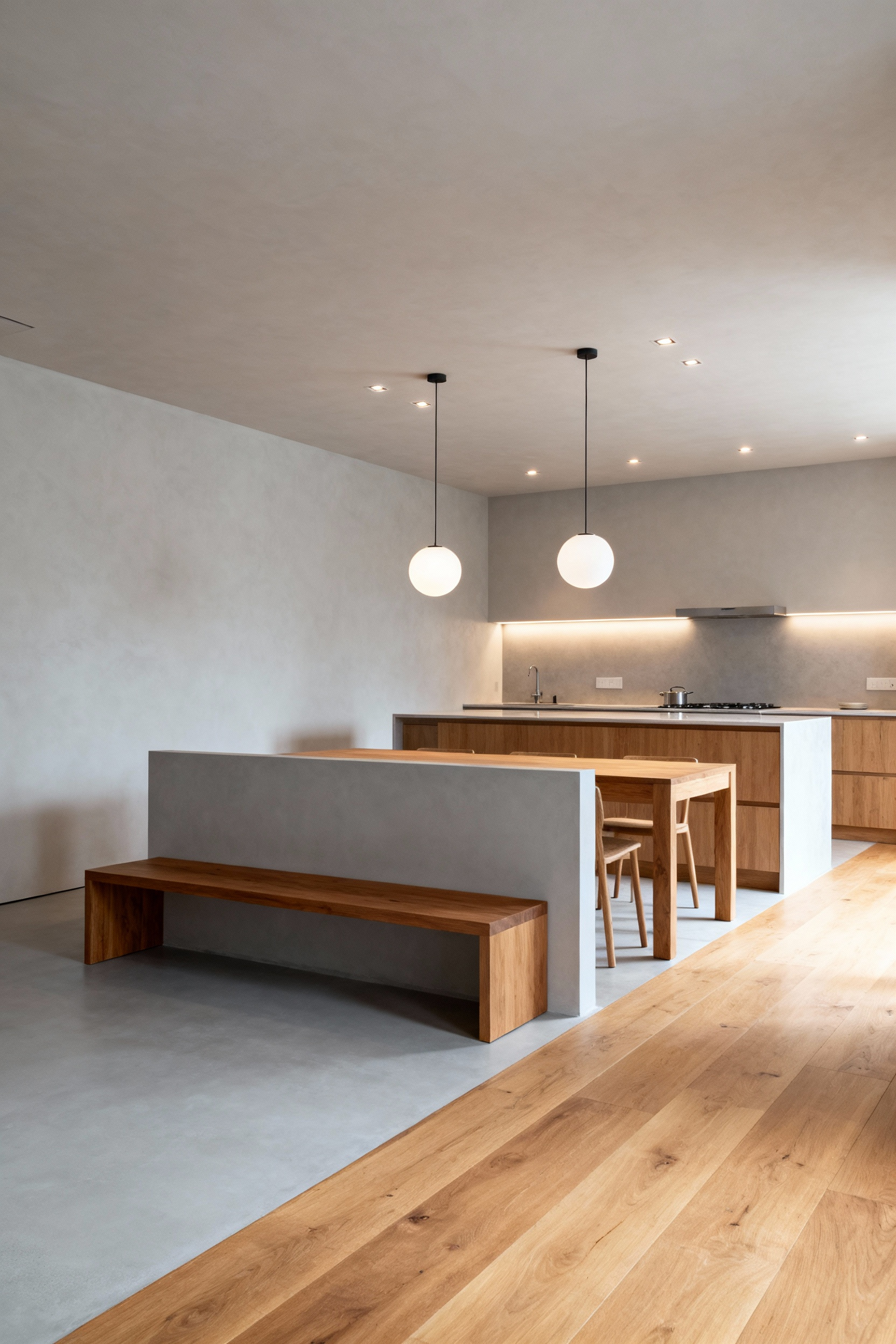
I love using vintage rugs for this. A beautiful, flat-weave runner can define the main cooking aisle, while a larger, softer rug might anchor a small dining table and chairs, creating a cozy nook. A change in flooring—from warm wood in the living area to durable tile in the kitchen—can also create a practical and clear boundary. Even lighting can define a zone: a series of bright, focused spotlights over the main prep area can give way to a single, warm pendant light hanging low over a breakfast bar, inviting a more relaxed pace. It’s a sophisticated way to bring order to an open space.
Cultivating Warmth: Accessories and Everyday Living (Part 1)
A kitchen, no matter how perfectly designed, is incomplete until it’s filled with the details of daily life. The Scandinavian approach to accessories is rooted in practicality and personality. It’s not about adding clutter; it’s about choosing beautiful, functional objects that tell a story and make the space feel uniquely yours.
16. Curate Practical Decorative Accents: Infusing Character Without Redundancy
In a Scandinavian kitchen, every object must earn its keep. There’s no such thing as decoration for decoration’s sake. Instead, beauty is found in the tools you use every day. A set of wooden spoons in a ceramic crock, a beautifully designed pepper mill, a stack of handmade ceramic bowls on an open shelf—these are your decorative accents. This approach infuses the space with character without adding a single ounce of clutter.
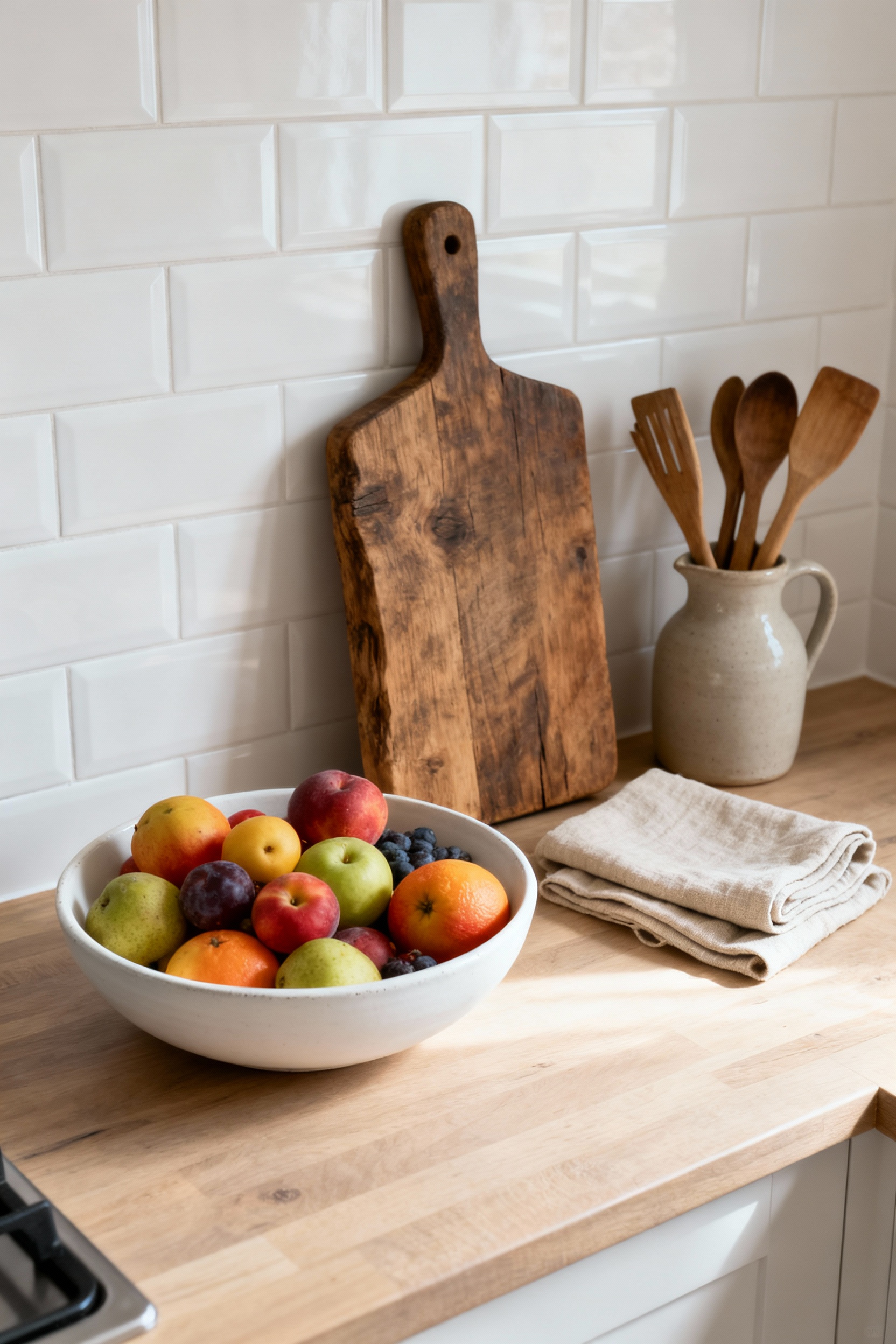
This is where your inner treasure hunter can come out to play. My personal rule is never to buy a new “decor object” when a beautiful vintage tool will do. An old copper kettle, a set of Dansk Kobenstyle enamel pots, or a shapely wooden cutting board all add far more soul than a generic store-bought vase. This practice of “useful beauty” not only looks fantastic but also aligns with a sustainable ethos of consuming less and choosing well.
17. Employ Thoughtful Task and Ambient Lighting Layers: Sculpting Mood and Visibility
We’ve touched on light, but it’s worth revisiting its power to sculpt a room. A great lighting plan involves multiple layers that can be adjusted to suit the mood and the task. You need bright, focused task lighting for chopping and cooking, but you also need soft, warm ambient lighting to make the space feel inviting for dining and conversation. It’s this ability to transition between moods that makes a kitchen truly livable.
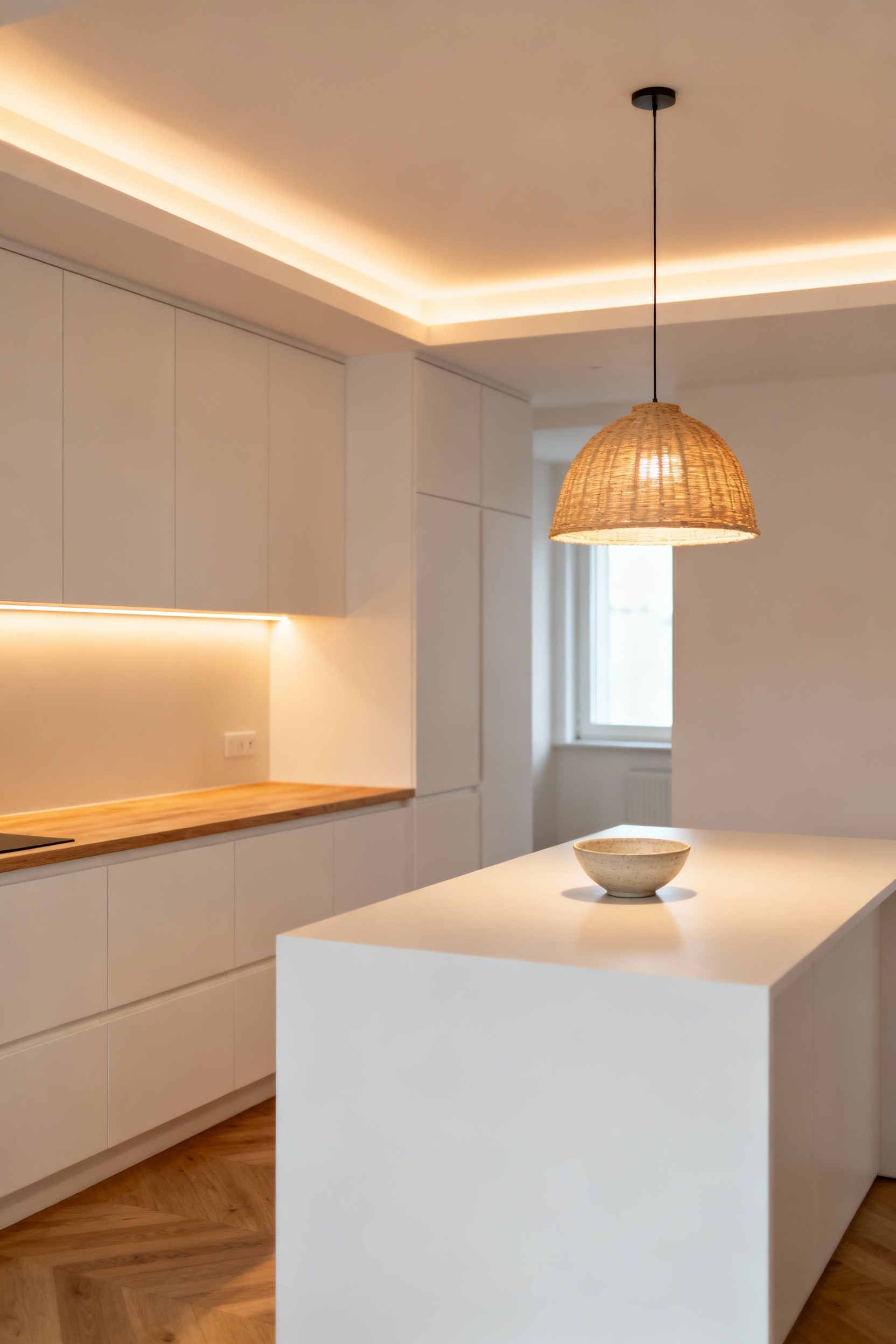
Your task lighting might be sleek under-cabinet LEDs or a pair of pendants over the island. But for ambient light, think more gently. A vintage wall sconce casting a soft glow, a dimmer on your main lights, or even a simple candle on the table can completely change the atmosphere. A well-lit kitchen supports you when you need to be efficient, but it can also wrap you in a soft, flattering glow when it’s time to unwind. It’s the ultimate tool for creating hygge.
18. Showcase Handcrafted Ceramics and Glassware: Adding Artisan Authenticity and Tactile Interest
Nothing adds soul to a kitchen quite like objects that have been touched by human hands. Showcasing a small collection of handcrafted ceramics or glassware is a wonderful way to add authentic, artisanal character. The subtle variations in a handmade piece—the slight wobble in a rim, the unique pattern of a glaze—are marks of its creation story, and they bring a warmth that mass-produced items lack.
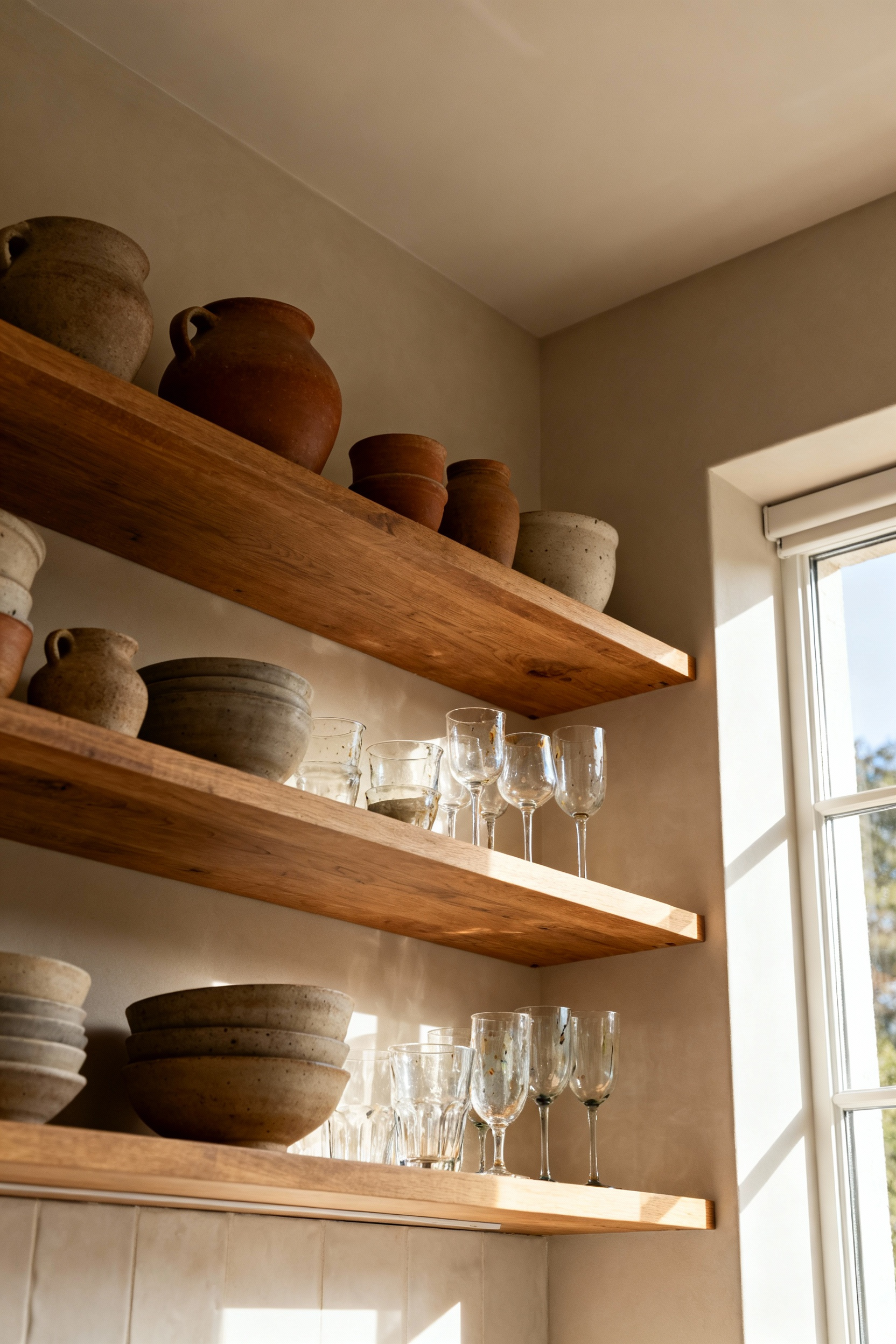
You don’t need a huge collection. A few favorite mugs on an open shelf, a special serving bowl that you use for family meals, or a set of simple, elegant glassware in a glass-front cabinet are enough to make an impact. I often look for vintage Scandinavian ceramics, like pieces from Arabia Finland or Höganäs Keramik. These objects are not just beautiful to look at; their tactile quality makes the simple act of drinking a coffee or serving a salad a more mindful, pleasurable experience.
19. Embrace Sustainable Practices and Durable Goods: Committing to Longevity and Conscientious Consumption
This isn’t just a single element; it’s the philosophy that underpins all the others. The Scandinavian kitchen, at its core, is a sustainable kitchen. It champions the idea of buying once and buying well. It’s a conscious move away from fast furniture and disposable trends and toward durable goods that are meant to be used, loved, and even passed down.
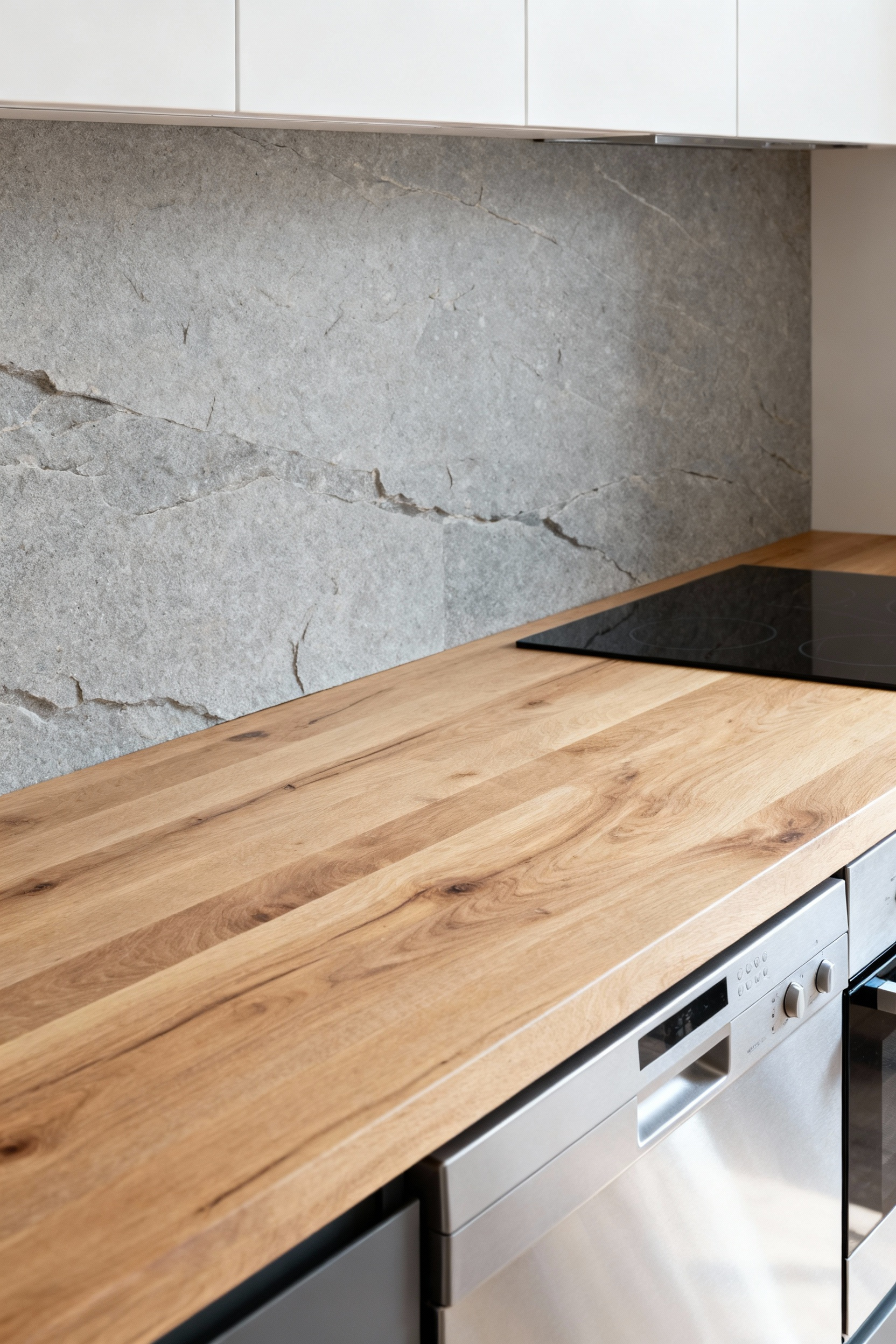
This means choosing solid wood over particleboard, investing in quality cast-iron cookware that will last for generations, and using linen dishcloths that can be washed and reused for years. It’s also about a mindset of care and repair. I learned this when I first started restoring furniture: there’s immense satisfaction in bringing a well-made but neglected piece back to life. A commitment to durability isn’t just good for the planet; it creates a home filled with meaningful objects that have stood the test of time.
Cultivating Warmth: Accessories and Everyday Living (Part 2)
As daylight fades and the work of the day is done, the kitchen undergoes a transformation. It shifts from a space of production to a space of connection and rest. The final element, and perhaps the most important for cultivating a sense of sanctuary, is mastering the art of evening light.
20. Introduce Warm, Indirect Illumination through Layered Fixtures: Elevating Ambiance Post-Preparation
The lighting you need for prepping dinner is not the lighting you want for lingering over it. After the cooking is done, the bright task lights should dim, allowing a softer, warmer layer of illumination to take over. This is when your kitchen truly becomes a haven. The goal is to create a gentle, inviting glow using indirect light that feels more like candlelight than electricity.
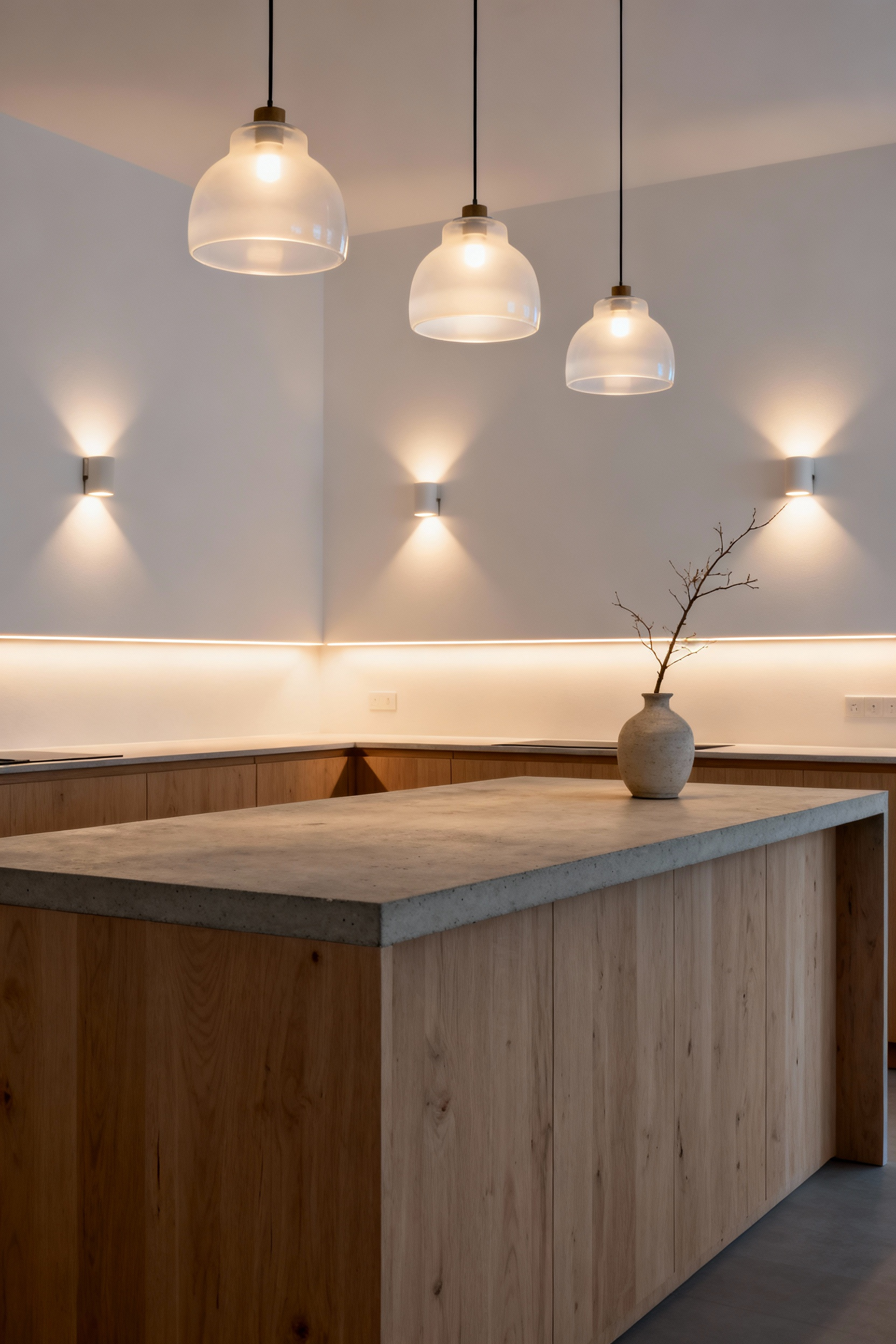
This is achieved with those thoughtful layers we talked about. A floor lamp in a corner, a single pendant over the table turned down low, or even the soft light from under-cabinet strips can create an intimate, relaxing atmosphere. This shift in lighting is a powerful signal to our brains to slow down and transition from a “doing” mode to a “being” mode. It’s the final, crucial step in crafting a kitchen that doesn’t just serve your physical needs, but nourishes your spirit as well.
Conclusion
As you can see, creating an authentic Scandinavian kitchen is about so much more than white walls and pale wood. It’s a holistic approach to design that starts with a philosophy and ends with a feeling. It’s about respecting history and materials, designing for real human needs, and embracing a sustainable ethos that values quality over quantity. Every element we’ve explored, from the embrace of Lagom to the layering of warm light, works together to create a space that is both profoundly beautiful and deeply functional.
In my work, I get to see the enduring power of this design philosophy every day. The mid-century pieces I restore are just as relevant and beloved now as they were 70 years ago because they were designed with integrity and purpose. My hope is that you’ll approach your own kitchen with that same spirit. Don’t just replicate a look; adopt the principles. Let your kitchen become a reflection of a calmer, more intentional way of life—a sanctuary that is timeless, personal, and a true, welcoming heart for your home.