
I found myself in a dusty little shop last Tuesday, running my hand over a beat-up oak cabinet. It wasn’t perfect—far from it. There were water rings, a few gentle scratches, and the kind of worn-smooth finish that only comes from decades of use. I could almost hear the stories it held. That sudden, visceral connection you feel with an object that has truly lived is exactly what separates an intentional, soul-filled home from a room that’s simply been filled with stuff. For me, creating a space has always been a treasure hunt, a search for pieces that whisper of history and character.
Crafting a rustic sanctuary isn’t about following a strict set of rules from a catalog. It’s about curating a story. It’s about letting go of sterile perfection and embracing the warm, honest beauty of natural materials and time-worn treasures. Together, we’ll walk through 14 of my favorite ways to layer in that authentic charm, starting with the very foundations and building up to the little details that will make the space uniquely yours. Think of it as our own personal treasure map to a living room that feels like a warm, welcoming hug.
Essential Rustic Living Room Fundamentals (Part 1)
Before we get to the finer details, we need to lay the groundwork. The most authentic rustic spaces are built on a foundation of honest, natural materials. This is where we establish the room’s warm, beating heart, choosing elements that ground the design in nature and texture.
1. Embrace Natural Wood Finishes for Grounding Warmth
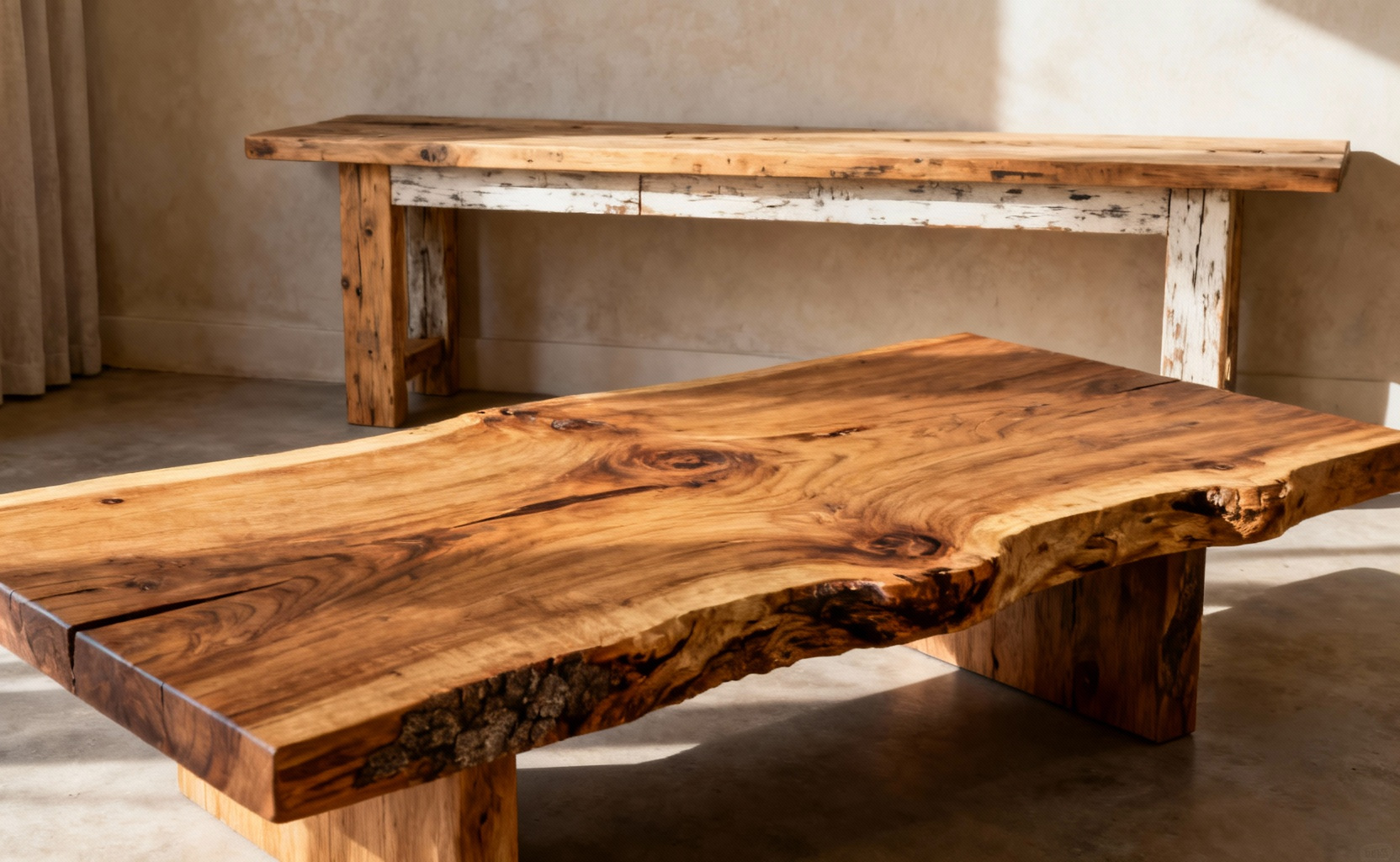
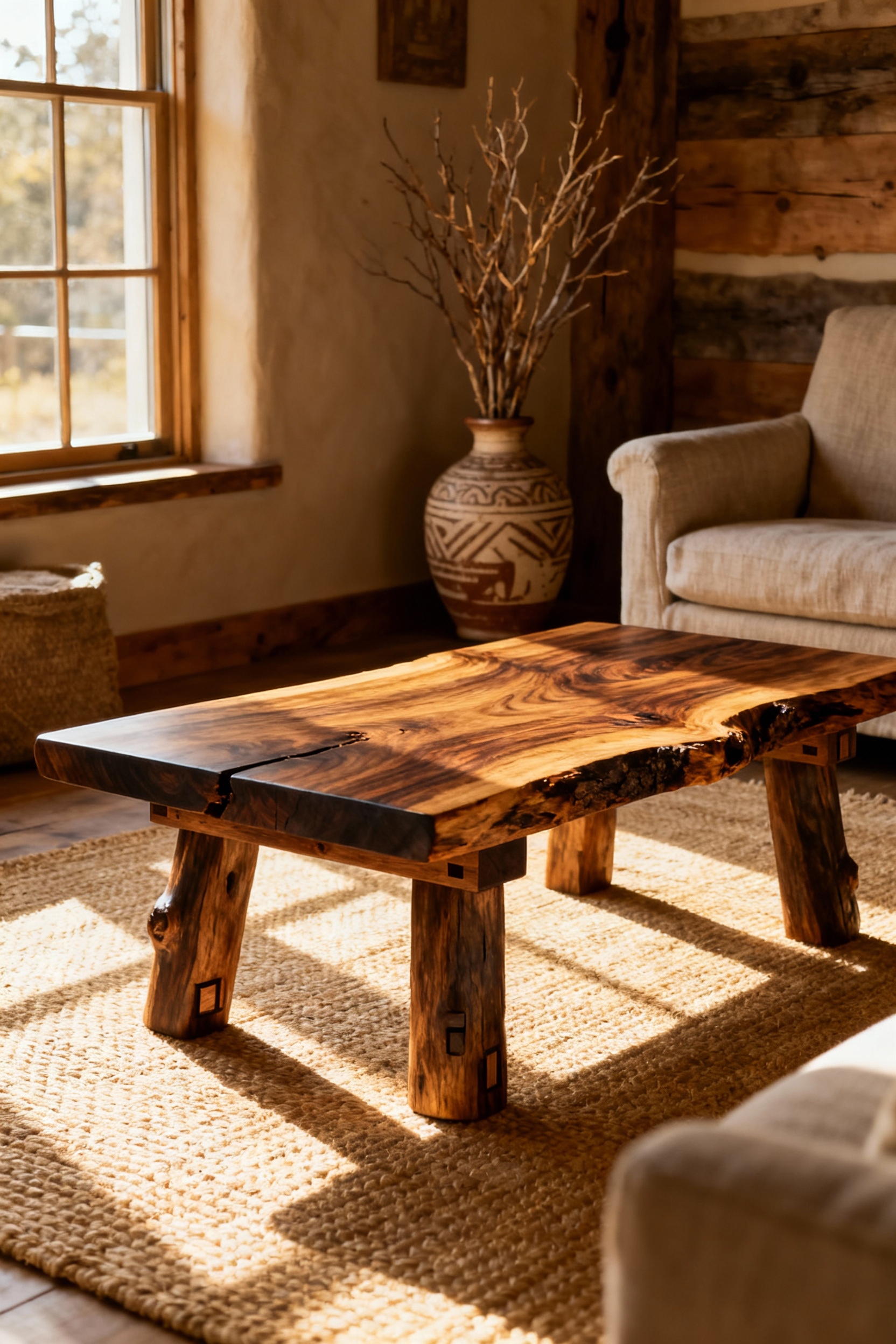
The soul of any rustic room is wood. I’m talking about wood that shows its age and its origin, with the grain, knots, and imperfections all on proud display. Start with a substantial piece that can anchor the room, like a solid, rough-hewn coffee table or a simple, thick plank of reclaimed wood for a mantelpiece. These pieces aren’t just furniture; they are grounding forces that bring an immediate sense of organic warmth.
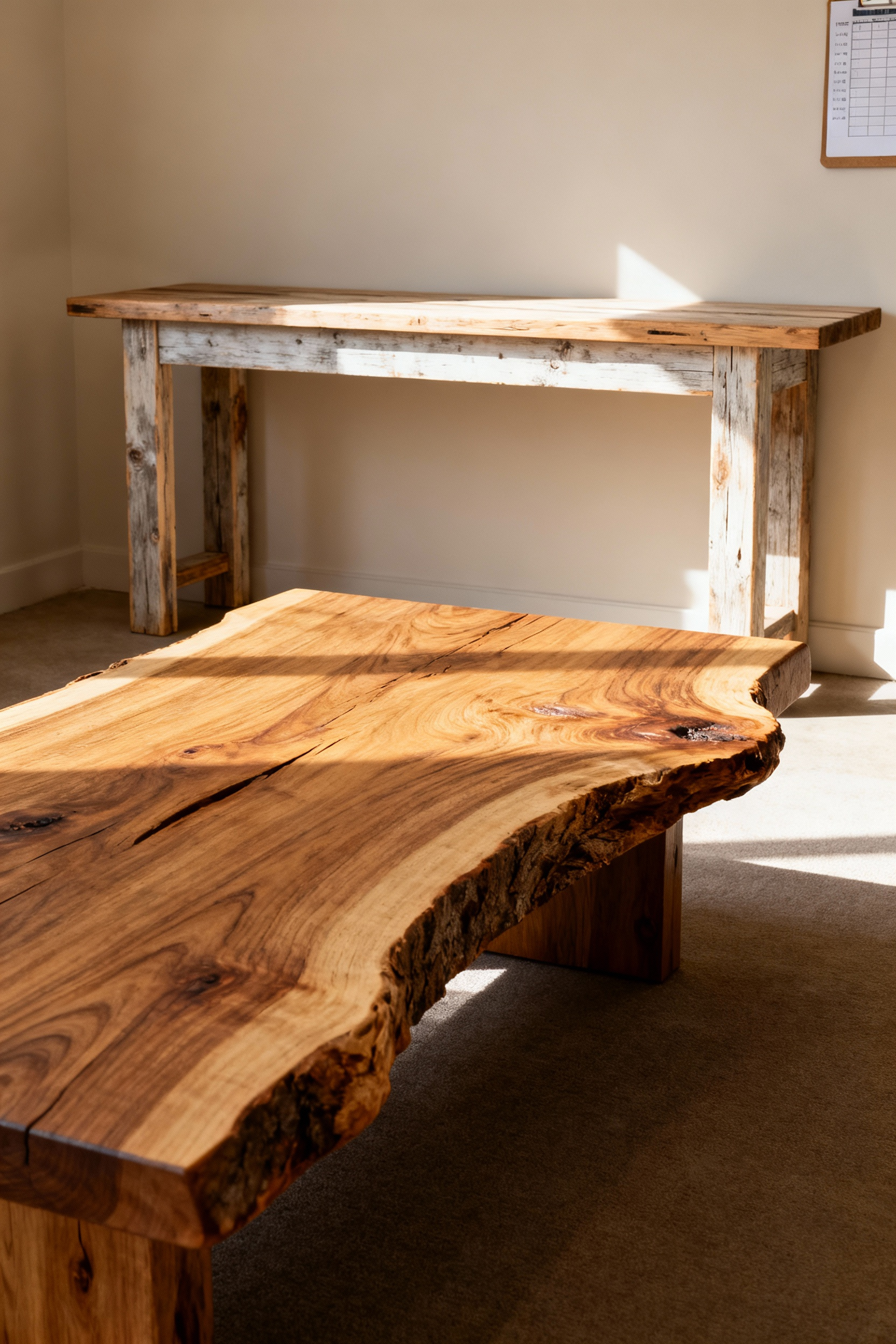
In my work with mid-century modern restoration, I’ve learned that the original masters of that era revered the honesty of materials, and that principle applies perfectly here. Don’t hide the character under thick, perfect stains. Let a live-edge console table tell the story of the tree it came from. Mix textures—the rugged charm of old barn wood on an accent wall can create a beautiful dialogue with the smoother, aged patina of a vintage walnut armchair. It’s this layering of stories that creates a space with real depth.
2. Incorporate Woven Textiles like Jute and Wool for Tactile Richness
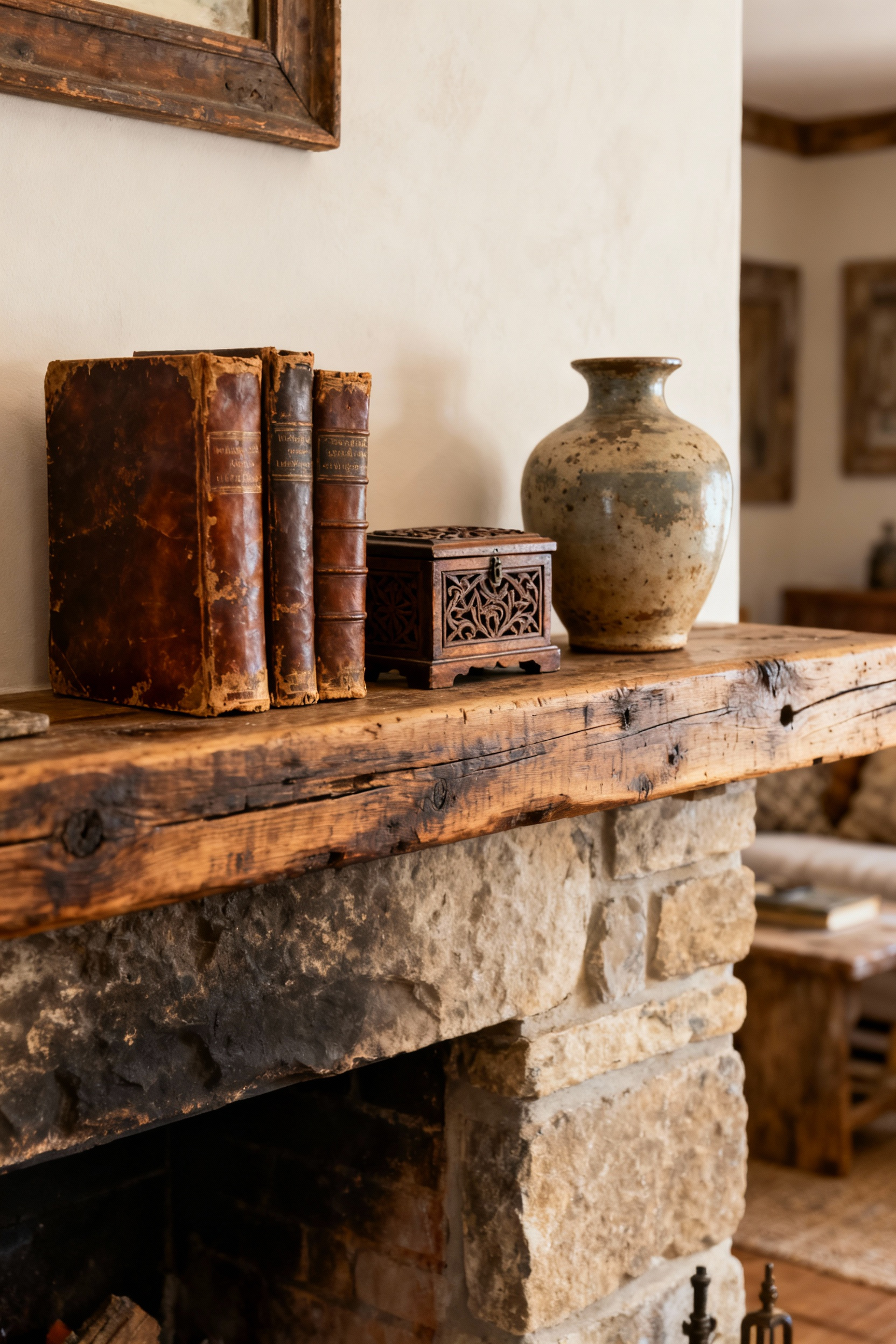
Once you have the solid embrace of wood, it’s time to soften the edges with textiles. A large jute or sisal rug underfoot is one of the quickest ways to define a seating area and introduce an earthy, resilient texture that just begs to be walked on. Then, think about touch. A chunky knit wool throw draped over a chair or a stack of soft, wool-blend pillows is an open invitation to get cozy.
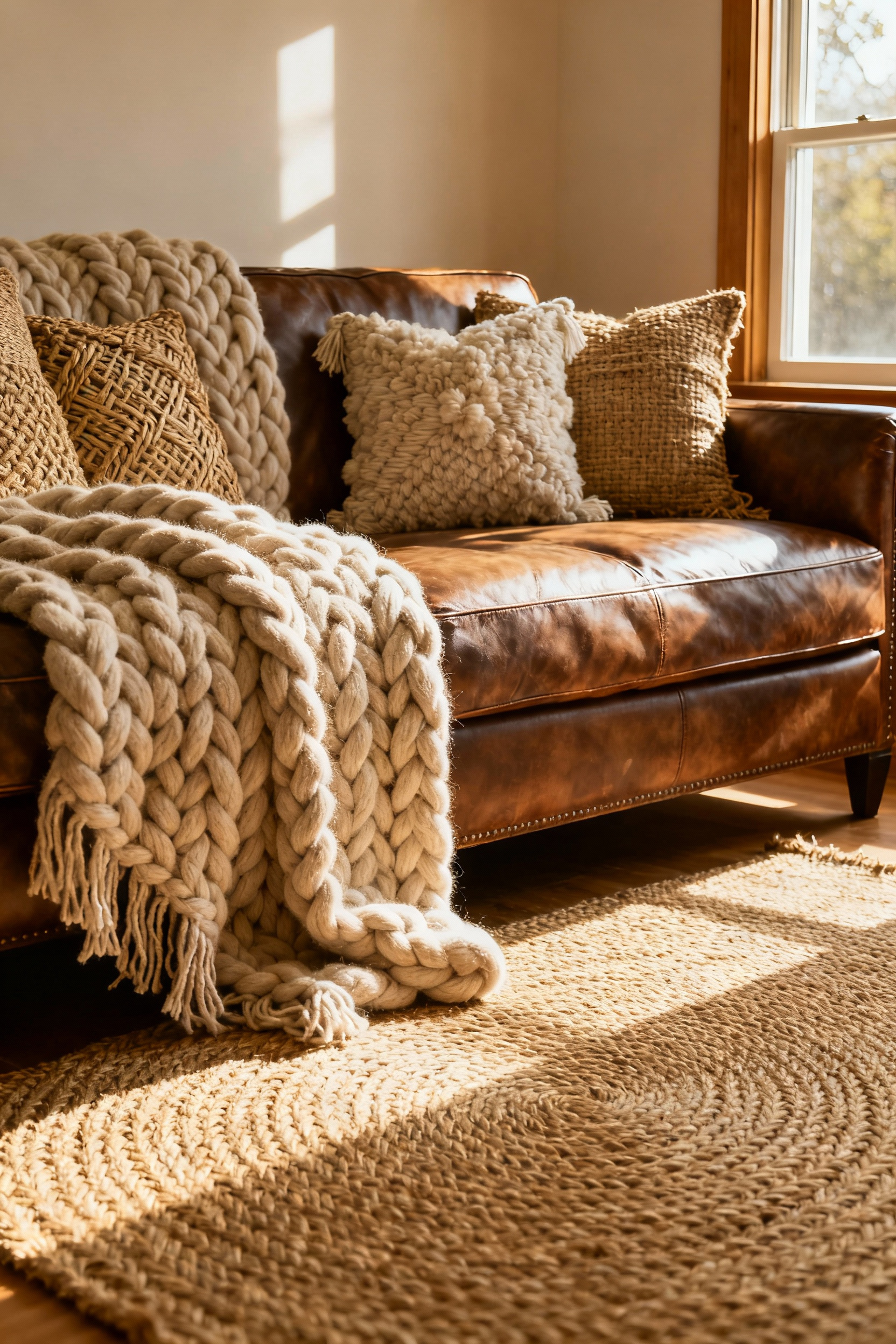
These natural fibers are brilliant for adding a layer of sensory richness. Try layering a smaller, plush wool or sheepskin rug over your larger jute base to create a wonderfully soft landing spot. Don’t be afraid to mix different weaves. The combination of a coarse, nubby wool pillow next to a smoother linen one adds a subtle complexity that feels curated and incredibly comfortable. These textiles do more than decorate; they make a room feel complete and deeply comforting.
3. Select Organic-Shaped Ceramics and Pottery for Earthy Appeal
There’s a special kind of beauty in objects that bear the mark of the human hand. Adding a few pieces of handmade, organic-shaped pottery is like bringing little bits of earth right into your living room. Start with a single characterful vase or a beautifully imperfect bowl. Place it where it can be admired—on the coffee table or a bookshelf—and let its slightly irregular shape offer a gentle contrast to the straight lines of furniture.
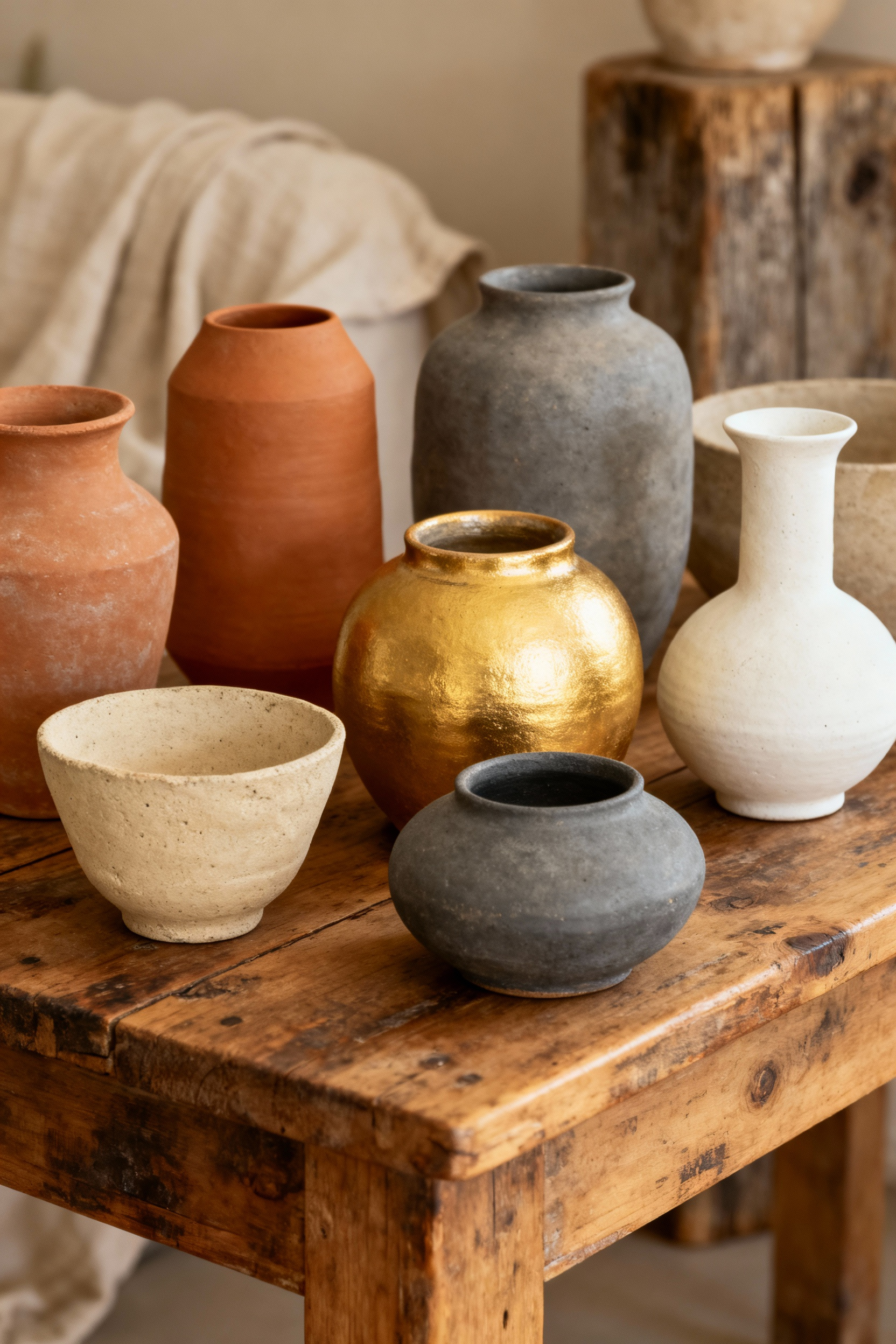
I once found a set of three charcoal-hued ceramic vessels, each one slightly different, at a little potter’s market. Grouped together on a simple wooden console, they created such a powerful, grounded moment. Look for pieces with matte, earthy glazes in shades of terracotta, sand, and stone. Whether you use them to hold a few stray branches or let them stand empty as sculptural forms, these objects whisper of artistry and a connection to the ground beneath our feet.
4. Feature Raw Stone Elements to Connect with Nature’s Majesty
To complete our foundational trio of wood, textiles, and pottery, we need stone. Stone brings a sense of permanence, of ancient history and enduring strength, that no other material can. You can start small—a set of slate coasters, a decorative bowl filled with smooth river rocks, or even a single, beautiful stone used as a paperweight on a stack of books. These simple touches connect your space to the untamed beauty of the outdoors.
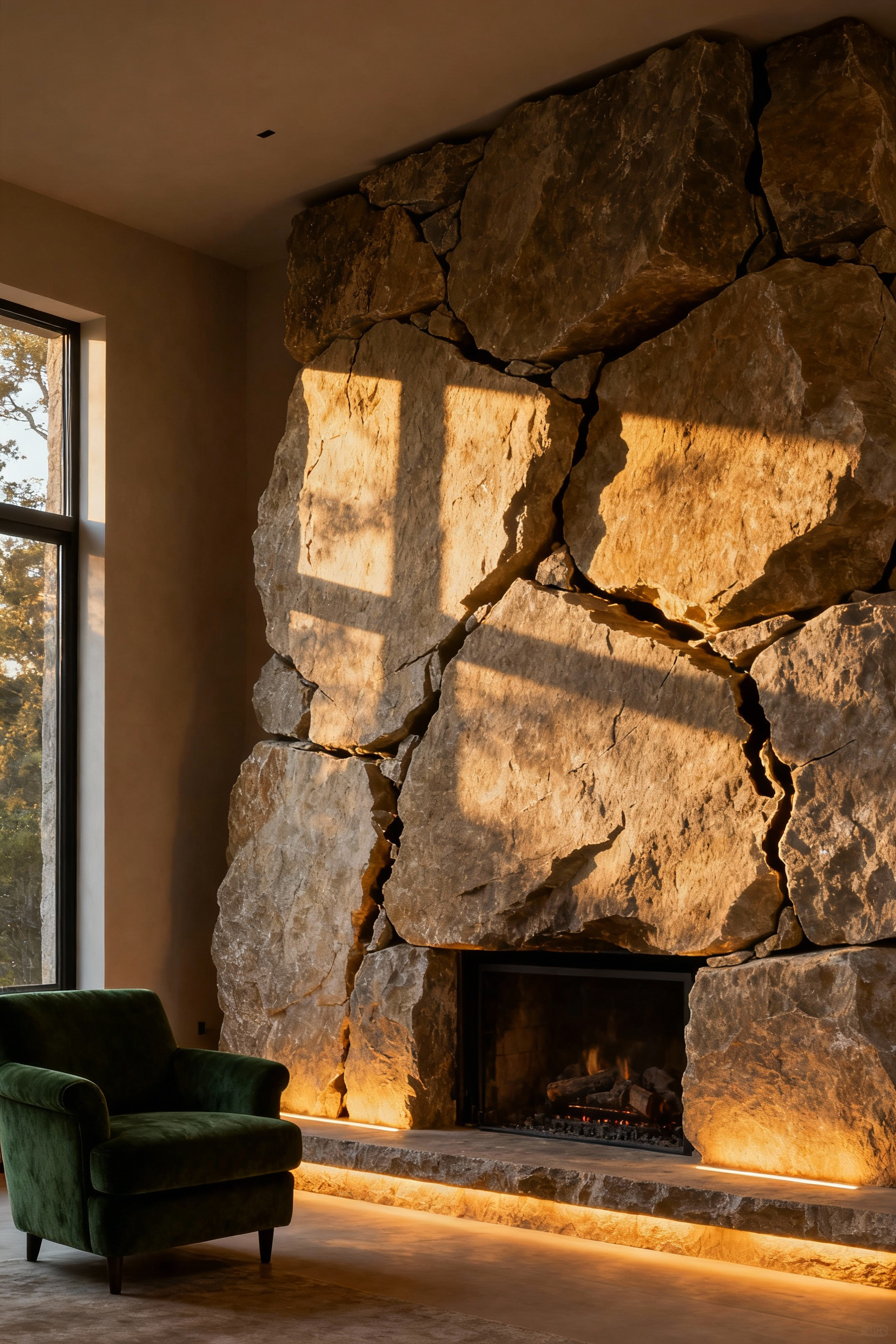
Of course, the classic application is a natural stone fireplace surround, which instantly becomes the majestic heart of the room. But you don’t need a massive architectural feature to make an impact. A side table with a raw stone top or a heavy granite base can provide that same sense of weight and texture. What I love is the contrast—the coolness and ruggedness of stone next to a soft wool rug or a warm leather chair. It’s that dynamic interplay that creates a truly compelling and balanced rustic space.
Essential Rustic Living Room Fundamentals (Part 2)
With our core materials in place, we can now start layering in the objects that carry real history and personality. This is where the true “treasure hunter” in you gets to come out and play, seeking the pieces that transform a room from merely decorated to genuinely lived-in and loved.
5. Curate Timeless Vintage Accessories to Add Layers of History
This is my absolute favorite part of the process. A room can have all the right rustic elements, but it truly comes to life when you add pieces that have a past. Start small. A stack of antique, leather-bound books on a shelf, a weathered wooden box to hold remotes, or a collection of old glass bottles catching the light on a windowsill—these are the details that add soul.
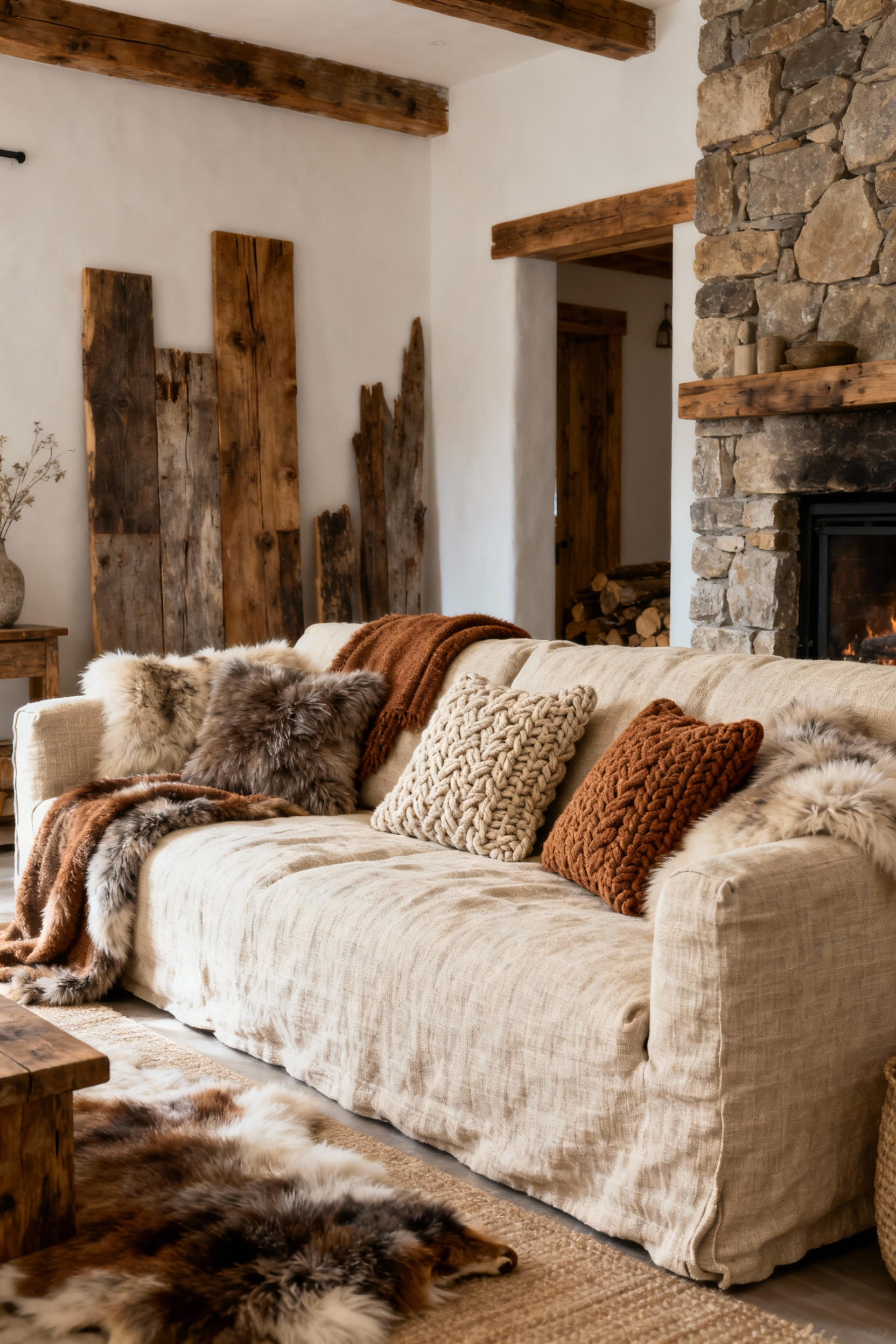
I once learned, when restoring a mid-century piece that had been “updated,” that trying to erase its history is the biggest mistake you can make. The same goes for your accessories. Seek out pieces with a story. A tarnished silver tray adds a touch of unexpected glamour, while a vintage tin sign or an old map can become a fantastic conversation starter. These objects are a powerful reminder that we’re just one small part of a much longer story, and bringing that history into our homes is a beautiful thing.
6. Utilize Upcycled Furniture Pieces for Sustainable Storytelling
Seeing the potential in forgotten things is the heart of sustainable design. Before you buy new, look around for pieces that can be given a second life. An old wooden ladder, once used for reaching high shelves, can become the most charming display for cozy blankets. A pair of antique suitcases stacked on top of each other makes for a wonderfully unique side table with hidden storage.
This isn’t just about being resourceful; it’s about embedding a story of renewal directly into your home. Think bigger, too. I’ve seen old barn doors repurposed as stunning tabletops or sliding partitions. An aged dresser, perhaps missing a drawer or two, can be transformed into a fantastic media console or a bar cabinet. It’s about looking at an object not for what it was, but for what it could become—a truly sustainable and character-rich approach to decorating.
Elevating Your Rustic Aesthetic with Thoughtful Choices (Part 1)
Now we move into making more deliberate, artful choices that refine the rustic feel. This is about layering textures, introducing strong artisanal elements, and defining the space with architectural details and a cohesive color story. These touches build depth and create a profound sense of warmth.
7. Layer Distressed Leather and Linen Textures for Inviting Depth
There’s a reason distressed leather is a rustic staple. A great leather armchair or sofa, with its beautiful patina of wear and time, is like an old friend—it’s comfortable, reliable, and just gets better with age. It serves as a handsome anchor in any living room. But leather on its own can feel a bit heavy. The secret is to pair it with the relaxed, unpretentious elegance of linen.
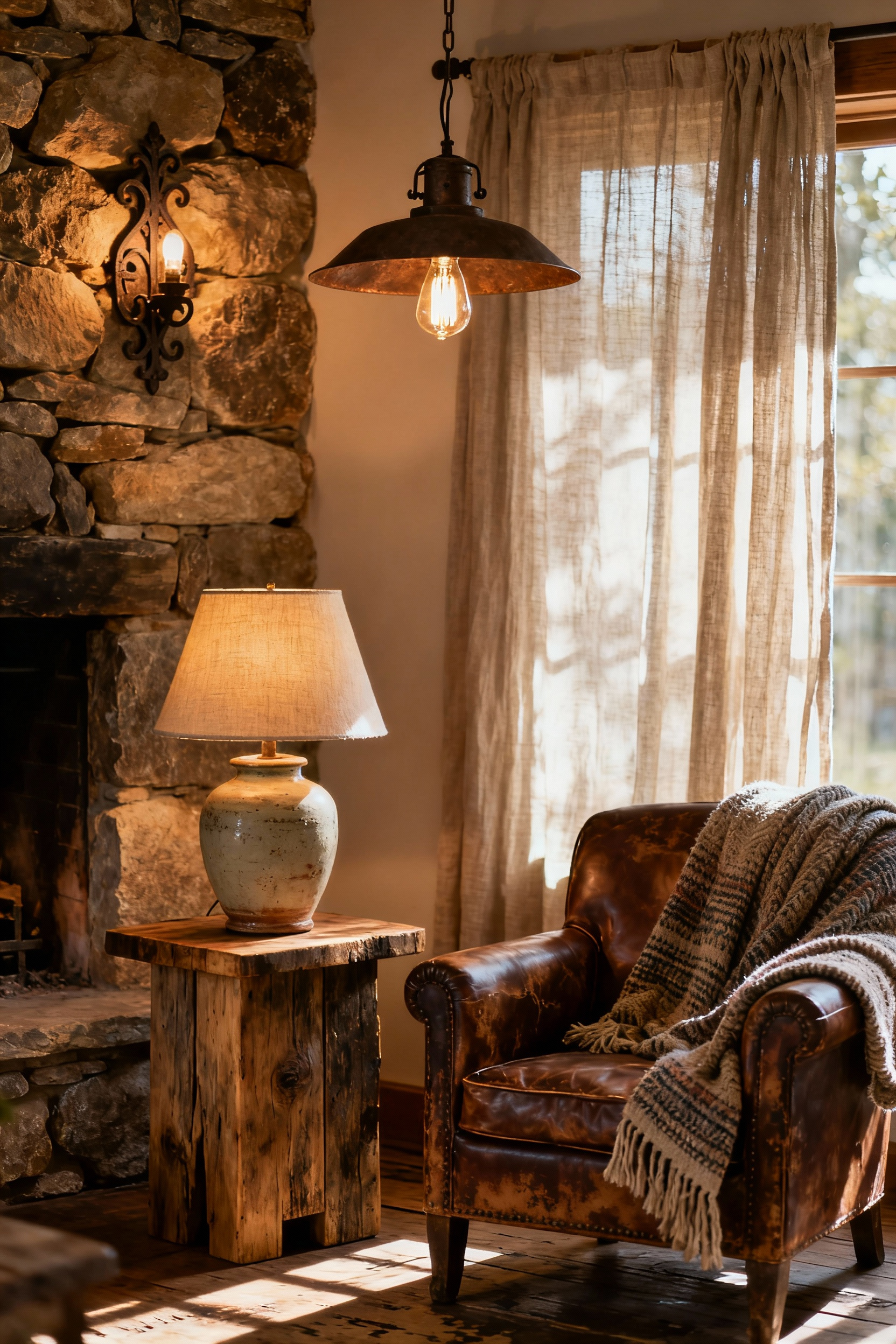
The contrast is just wonderful. Drape a soft, rumpled linen throw over the arm of that leather sofa. Add a few linen cushions. The crisp-yet-soft texture of the linen provides the perfect counterpoint to the smooth, supple leather. This interplay of textures is what makes a room feel rich and inviting. It’s a tactile conversation that encourages you to come in, sit down, and stay awhile.
8. Integrate Forged Iron Accents to Introduce Artisanal Strength
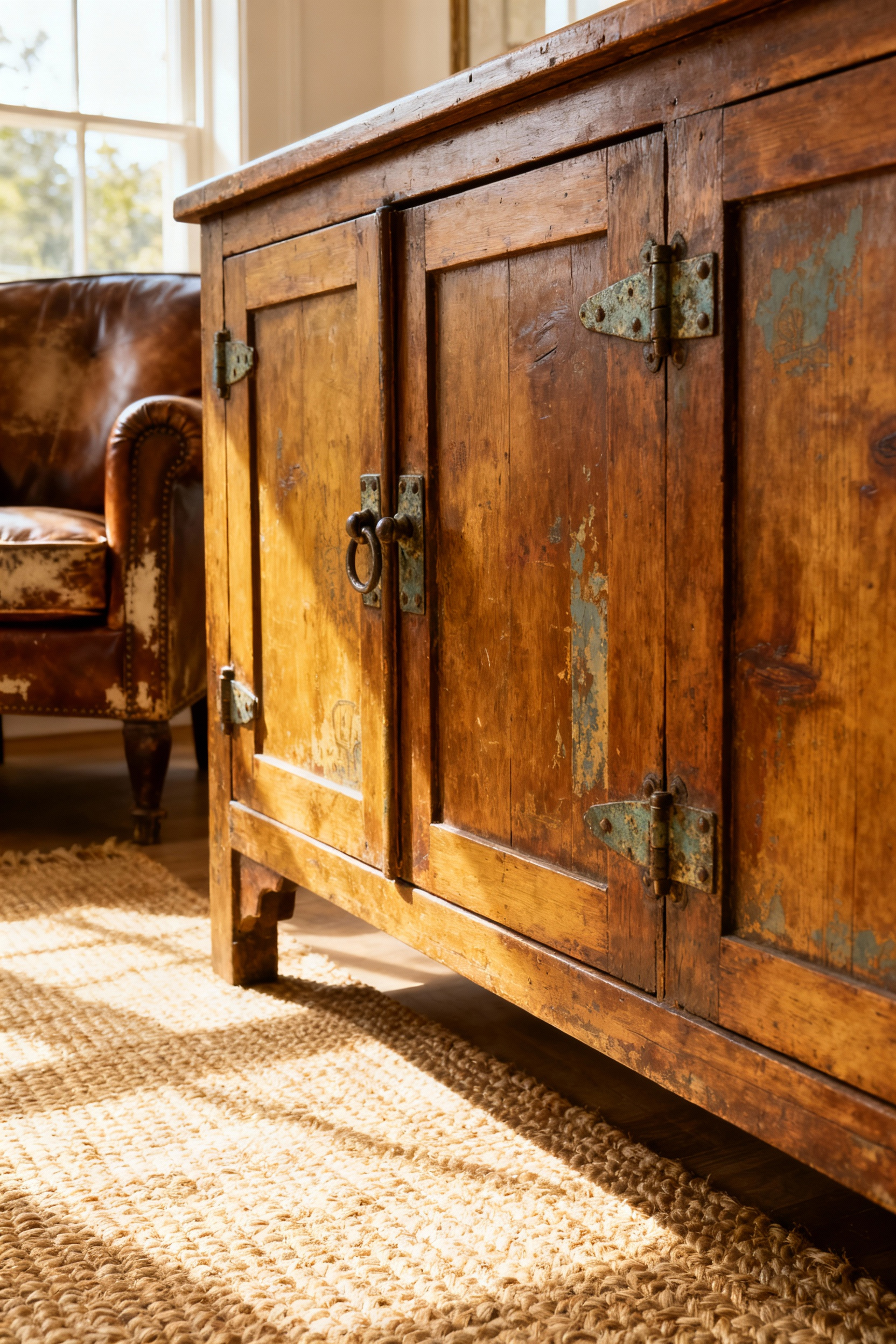
To ground the softness of wood and textiles, you need an element of strength. Forged iron is perfect for this. It brings a sense of history and hand-forged craftsmanship into a space. You can start with smaller touches: hand-hammered curtain rods, rustic cabinet pulls on a console, or a simple, sturdy fireplace toolset. These details add a subtle yet powerful artisanal feel.
For a bigger statement, look for furniture with an iron base—a coffee table with a blackened iron frame supporting a thick wooden top immediately feels solid and timeless. A beautiful, handcrafted iron chandelier can become the sculptural focal point of the entire room. I’ve seen this play out when pairing rustic pieces with cleaner, mid-century lines; the robust, industrial quality of forged iron acts as a fantastic bridge, connecting different styles with its honest, straightforward character.
9. Strategically Position Substantial Wooden Beams or Faux Beams for Architectural Drama
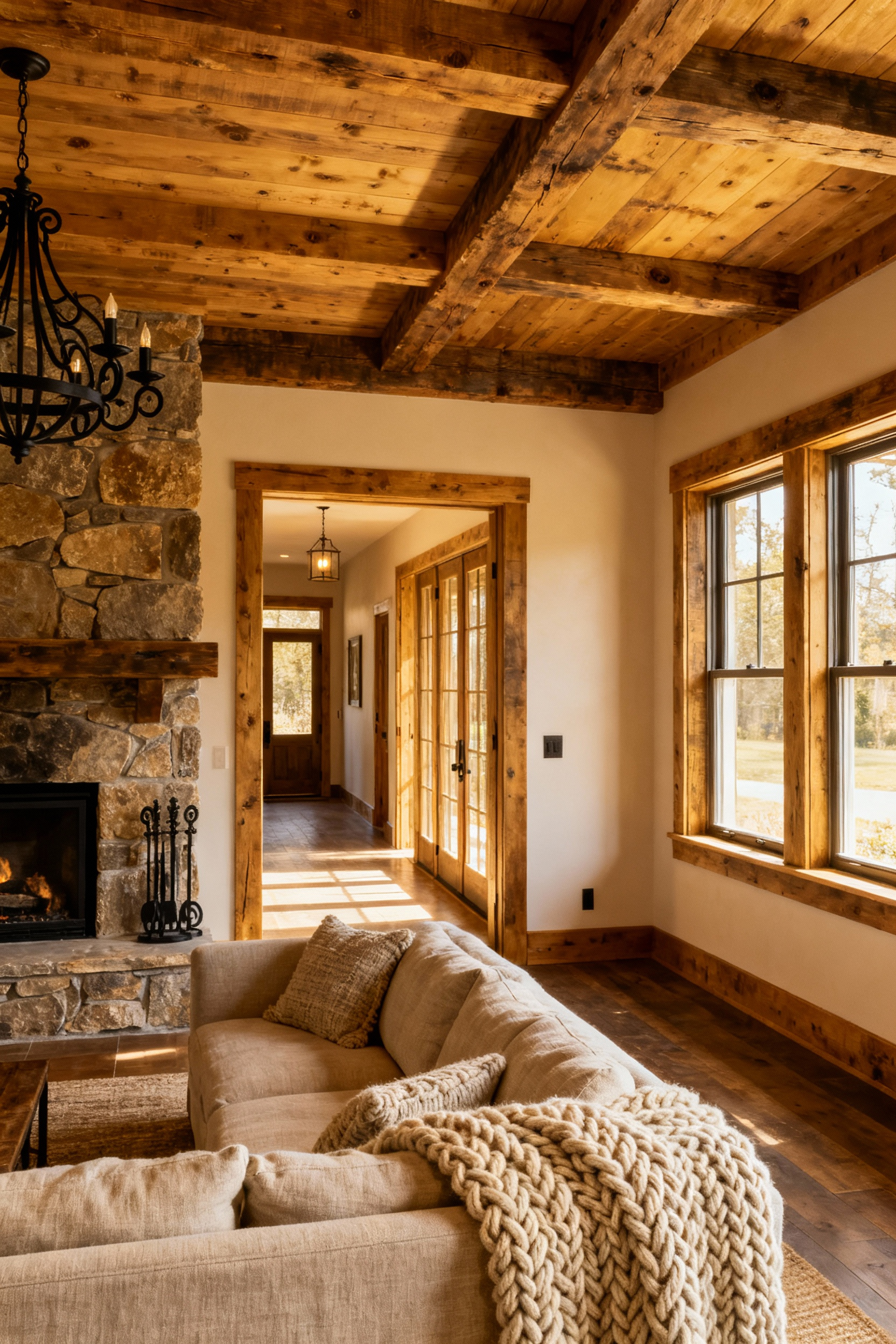
Nothing says “rustic” quite like exposed wooden beams. They add instant architectural character and a sense of history, even in a newer home. If you’re lucky enough to have them, celebrate them! If not, well-made faux beams can achieve a remarkably similar effect, defining the space and drawing the eye upward.
Think about how beams can shape the room. A series of beams running parallel across the ceiling can make a room feel longer and more intimate. A single, substantial beam can be used to visually separate an open-plan living area from a dining space. Used as a mantelpiece over a fireplace, a heavy, weathered beam becomes an incredible focal point. They add a primal, structural element that makes a room feel sturdy and deeply rooted.
10. Choose a Neutral Base Palette with Deep, Earth-Toned Accents
The perfect backdrop for all these wonderful textures is a calm, neutral color palette. Think of your walls and largest furniture pieces as the canvas. Warm whites, soft greys, creamy beiges—these colors create a serene atmosphere and allow the character of the wood, stone, and textiles to really shine. They provide breathing room for your treasured finds.
Once you have that calm base, you can layer in deeper, earth-toned accents. Pull colors from the natural world: the rich red of terracotta, the deep green of moss, the muted gold of autumn leaves, or the inky blue of a twilight sky. Introduce these hues through pillows, a vintage rug, a cozy throw, or a piece of art. This approach keeps the room from feeling busy, while still allowing for rich, soulful color.
Elevating Your Rustic Aesthetic with Thoughtful Choices (Part 2)
Here we get into the more personal layers of your rustic sanctuary. This is about weaving in your own history, mastering the ambiance through lighting, and creating custom solutions that make the space feel as though it were built just for you.
11. Develop a Curated Collection of Ancestral or Inherited Objects to Weave Personal History
This, to me, is what transforms a house into a home. Take a look around at the things you already own that have been passed down to you. That worn leather-bound book from your grandfather, your grandmother’s hand-stitched quilt, even a simple wooden bowl that has seen countless family meals. These objects are pure gold. They hold a history and an energy that you simply cannot buy.
Start by gathering these treasures. Don’t hide them away in a box. Find a place of honor for them in your living room. An inherited quilt can be draped over the back of a sofa, a collection of old family photos can be framed and grouped together, a special piece of china can be displayed on a shelf. Weaving these personal heirlooms into your decor ensures your living room tells a story that is uniquely, beautifully yours.
12. Employ Thoughtful Lighting Layers to Enhance Mood and Highlight Textures
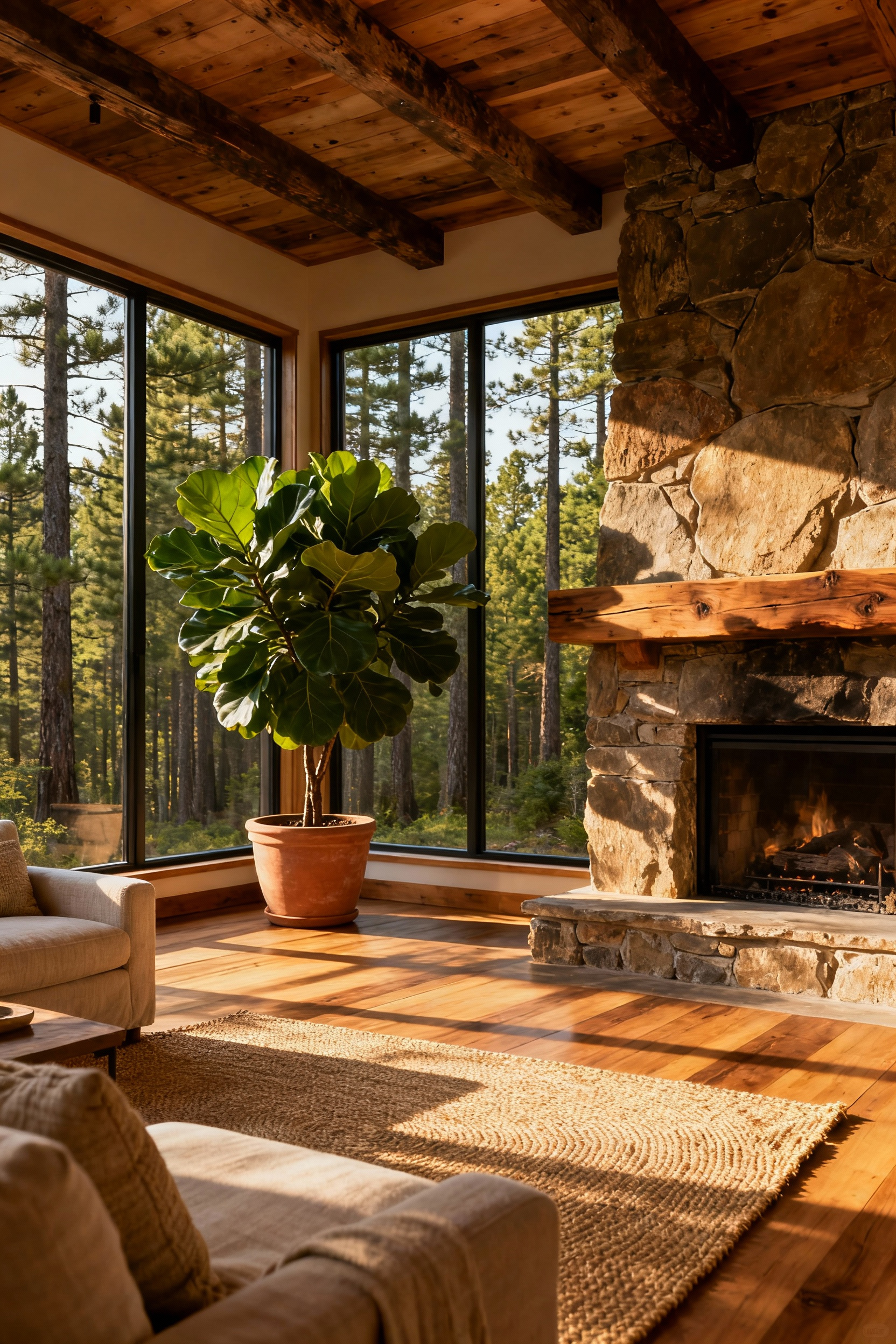
Please, I beg you, don’t rely on a single, harsh overhead light. Lighting is your secret weapon for creating mood. Think in layers: ambient light for overall illumination (from a rustic chandelier or recessed lighting on a dimmer), task light for activities (like a floor lamp by a reading chair), and accent light to highlight your favorite things.
This is where the magic happens. Use a small accent light to graze across a stone wall, revealing its incredible texture. Place a table lamp with a warm linen shade next to your sofa to create a cozy, inviting glow. Dimmer switches are non-negotiable! They allow you to shift the mood of the room from bright and functional during the day to soft and intimate in the evening. Good lighting makes all your beautiful textures—the rough wood, the nubby wool, the aged leather—truly come alive.
13. Design Custom Built-Ins with Reclaimed Materials for Seamless Integration
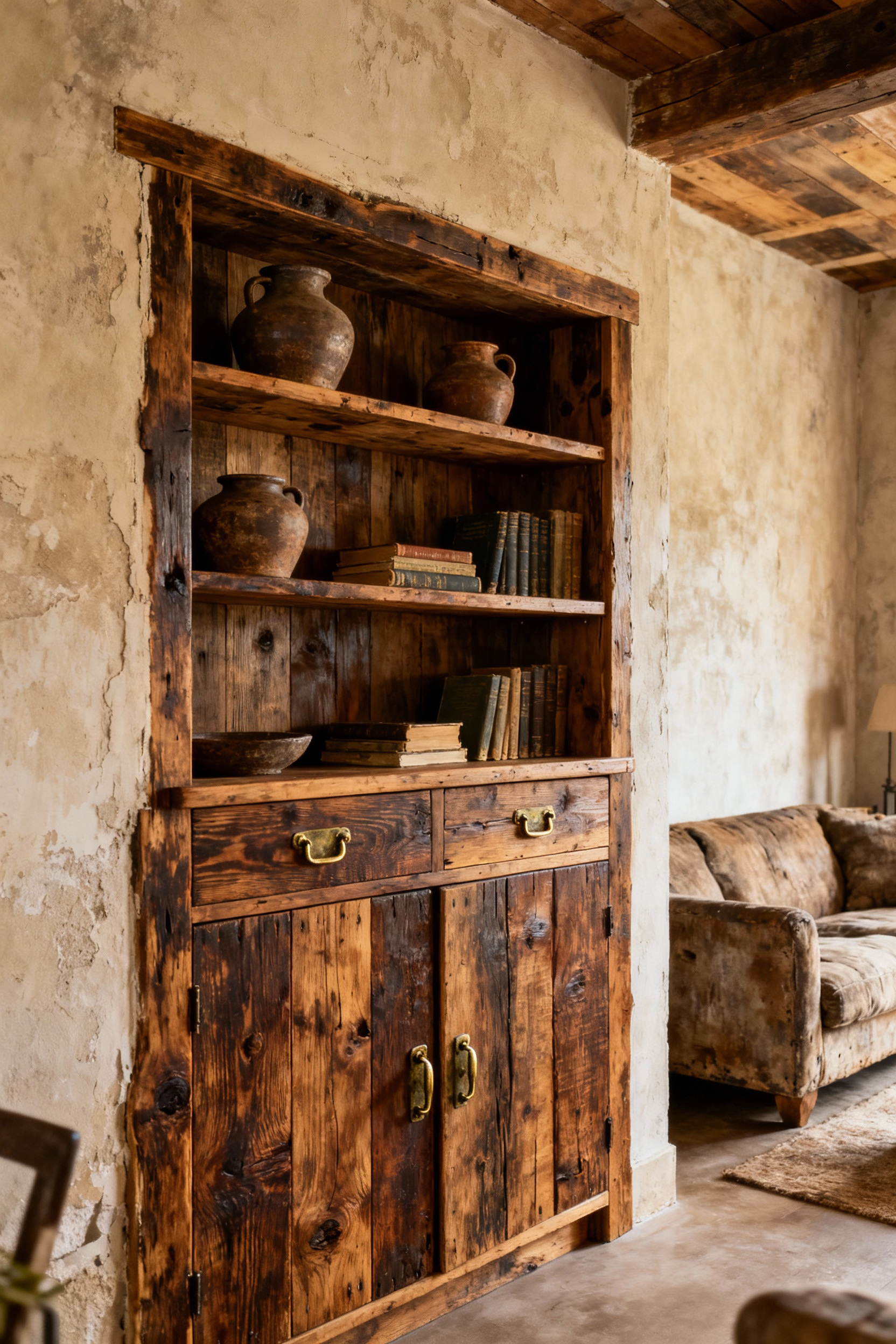
Sometimes, the most seamless solution is a custom one. Built-in shelving or cabinetry is a brilliant way to maximize storage and create a feature that feels like a natural part of the room’s architecture. And when you craft those built-ins from reclaimed materials? Perfection. It’s the ultimate blend of function and character.
Imagine shelves flanking your fireplace made from old barn wood, their weathered surfaces providing the perfect home for your books and curated objects. Or a cozy window seat built from salvaged beams, creating a perfect reading nook with hidden storage below. What I tell my clients is that built-ins are an opportunity to solve a problem with soul. They allow you to add immense character and a sense of history while creating a clean, uncluttered look that freestanding furniture sometimes can’t achieve.
14. Create Visually Engaging Vignettes with Purposeful Groupings
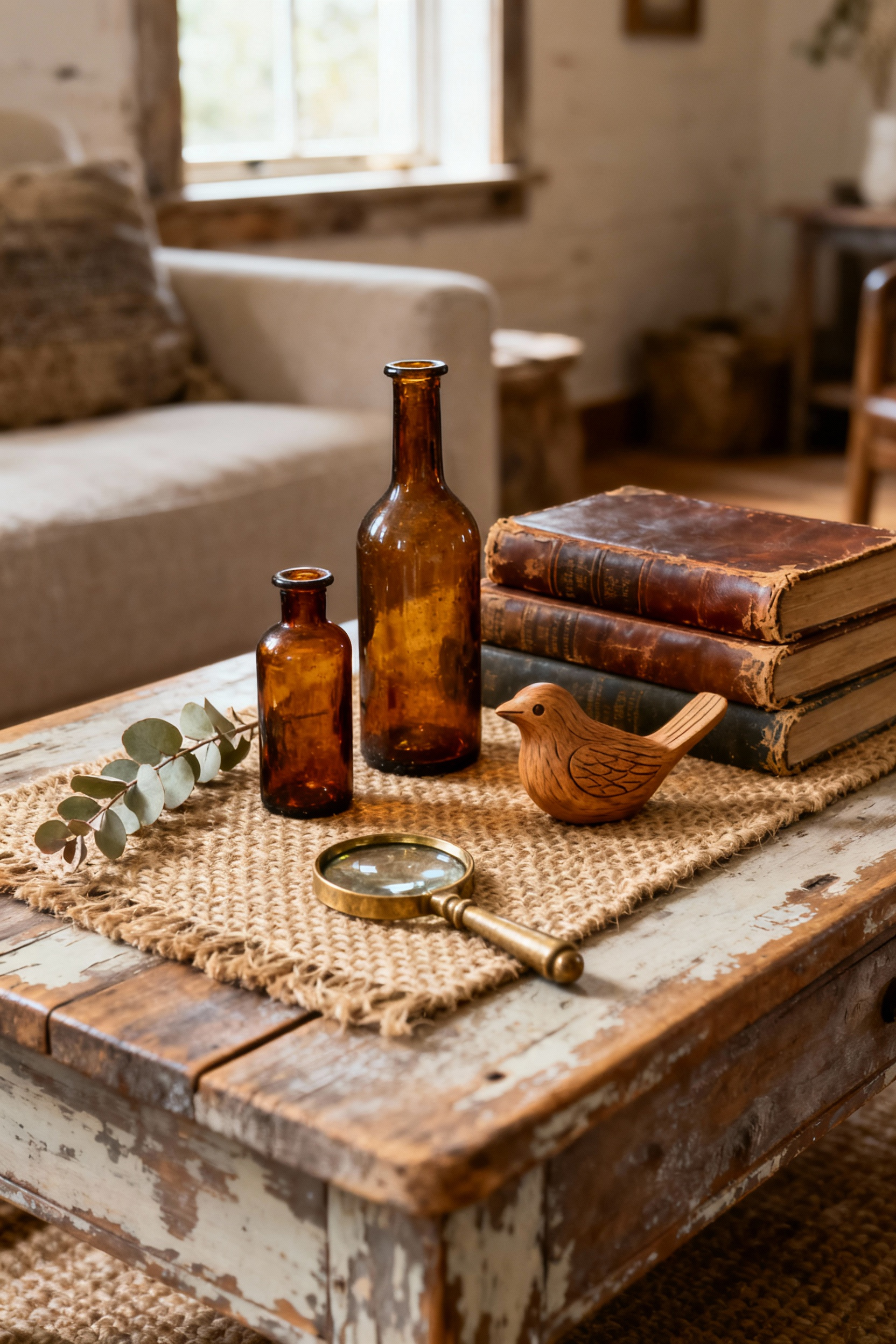
A vignette is a little story you tell on a surface—a tabletop, a mantelpiece, a shelf. Instead of scattering your decorative items around the room, group them together with purpose. This creates small, engaging moments that draw the eye and invite a closer look. The secret is to think like a curator.
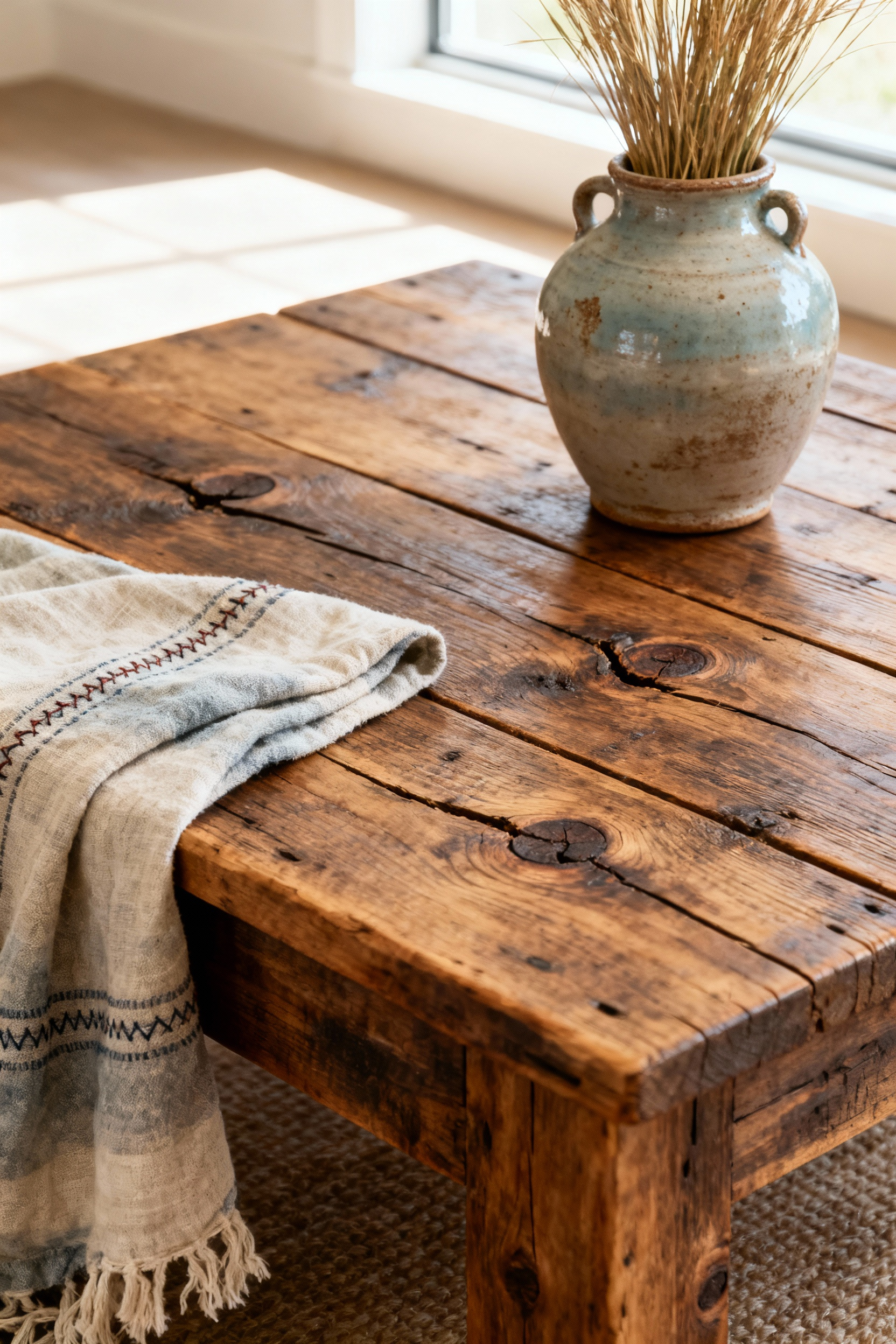
Choose objects that share a common thread—a color, a texture, a theme. Group them in odd numbers, like three or five, which is always more visually pleasing. And most importantly, vary their heights! A tall candlestick, a medium-sized vase, and a low, flat bowl create a much more dynamic arrangement than three objects of the same size. These little curated collections are what make a room feel thoughtful and deeply personal.
Conclusion
So there you have it—our treasure map to a living room filled with warmth, character, and soul. As you can see, creating an authentic rustic space isn’t about buying a matching set of furniture. It’s a wonderful, ongoing process of collecting, curating, and telling your own story. It’s about finding beauty in the history of a well-worn surface and celebrating the honesty of natural materials.
My greatest hope is that you feel empowered to start your own hunt. Trust your instincts. Pick up the pieces that speak to you. Don’t be afraid of a scratch or a dent—that’s where the best stories live. Let your living room evolve with you, becoming a true sanctuary that reflects a life well-lived. Your perfect, imperfect, welcoming haven is waiting for you to bring it to life.