
I was at a flea market last weekend, dust motes dancing in the morning sun, when I spotted it—a sad-looking, cast iron scale, its brass pan tarnished to a deep, moody brown. Most people walked right by, but I saw the elegant swan-neck design and felt the reassuring weight of its history. That little thrill, that spark of seeing the potential beauty in something forgotten, is exactly what separates creating a space with a soul from just filling a room.
This is the very heart of rustic design. It’s not about a checklist of farmhouse decor from a big-box store; it’s a feeling you cultivate. It’s about choosing materials that get better with age, celebrating the story in every knot of wood, and finding joy in things that have been loved and used. As someone who has spent years restoring vintage furniture, I’ve learned that the most magnetic rooms are the ones where every piece has a story, a purpose. This guide isn’t about chasing a trend. It’s about helping you craft a warm, enduring kitchen that feels like it’s always been there, ready to welcome you home.
Part 1: Embracing Natural Foundations
Before we get to the fun of flea market finds, we have to talk about the bones of the room. The soul of a rustic kitchen is born from its core materials. These are the elements that give the space its texture, warmth, and quiet strength, creating a backdrop that feels honest and deeply connected to nature.
1. Let Authentic Wood Lead the Way
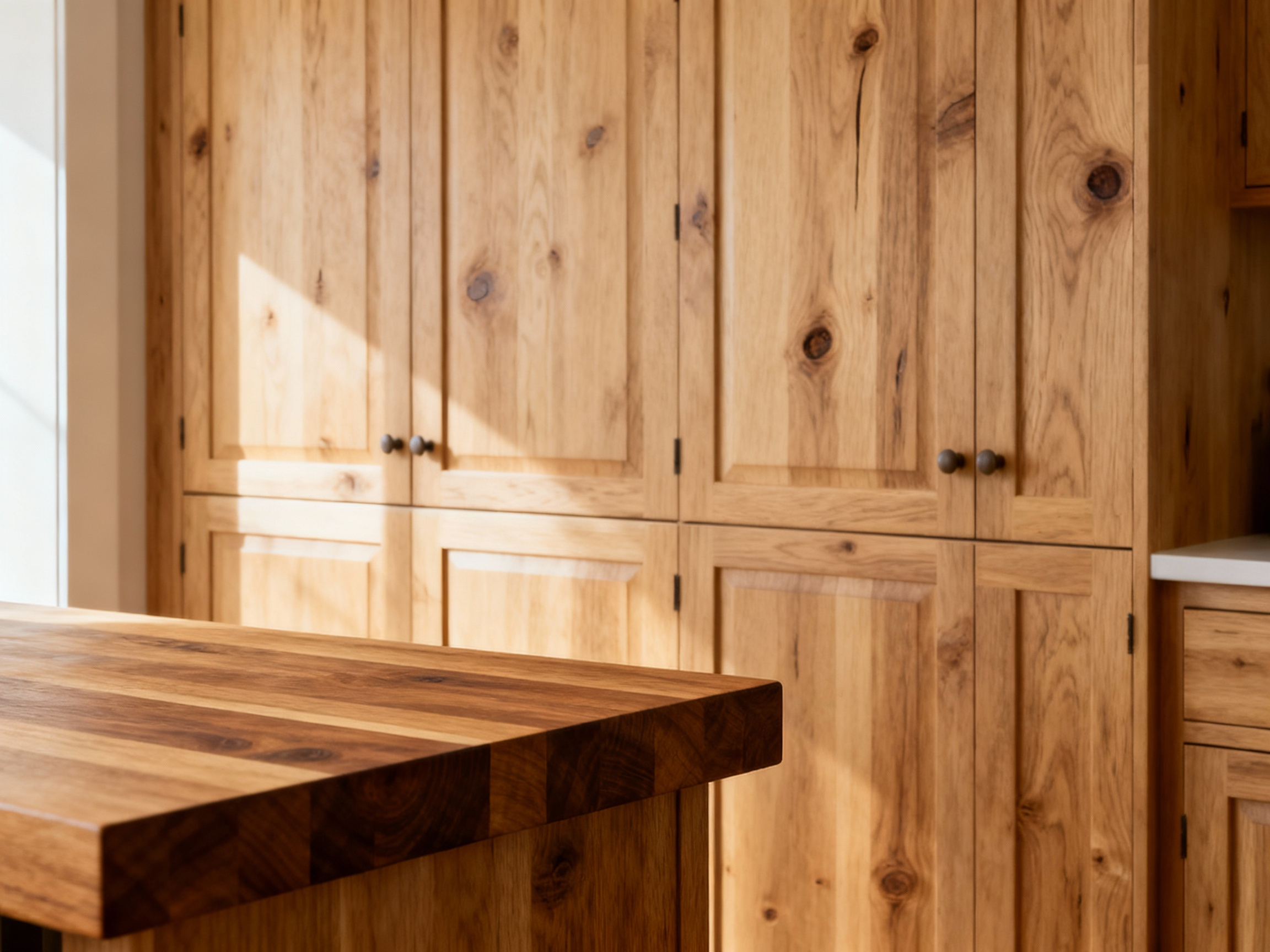
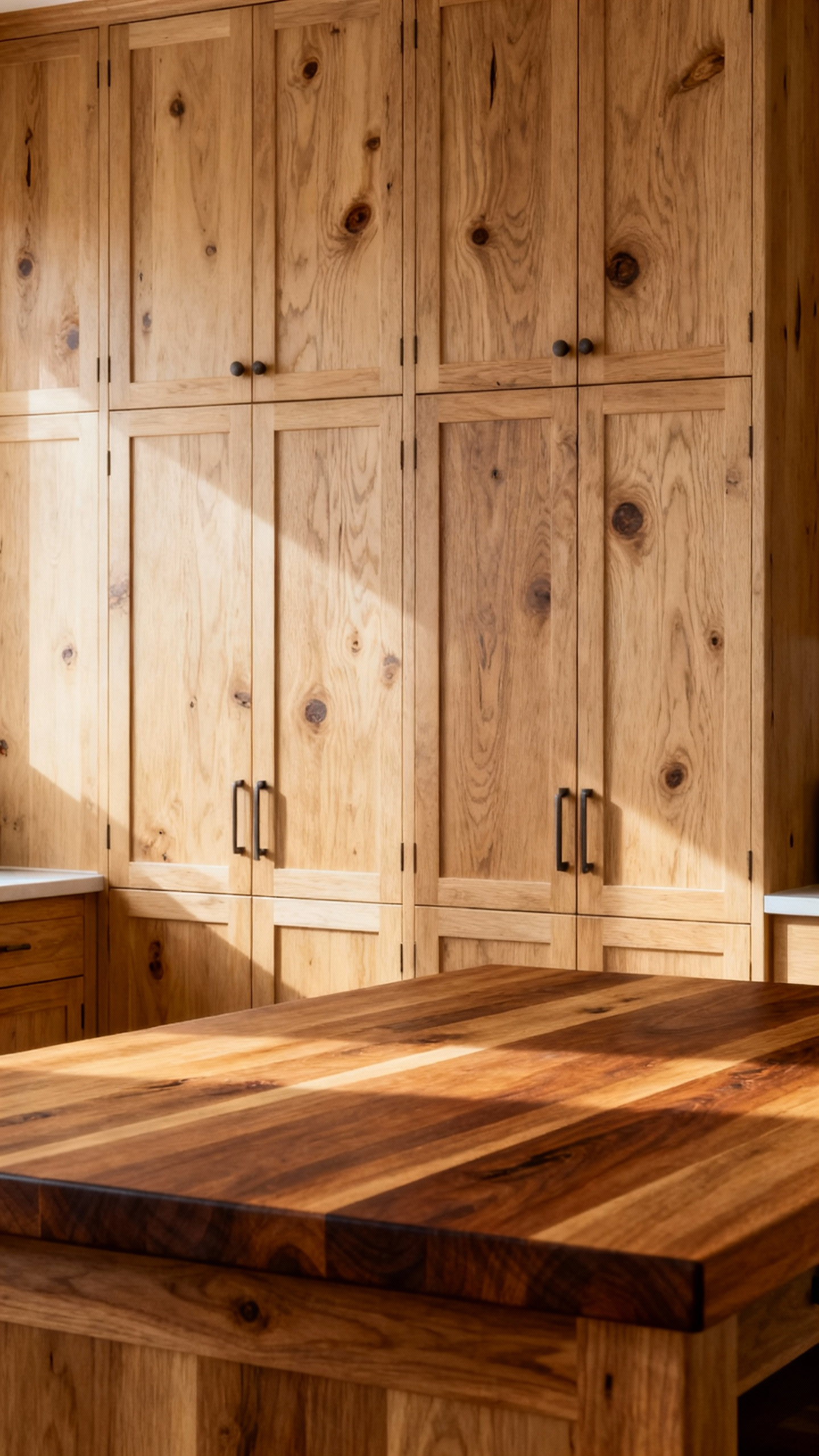
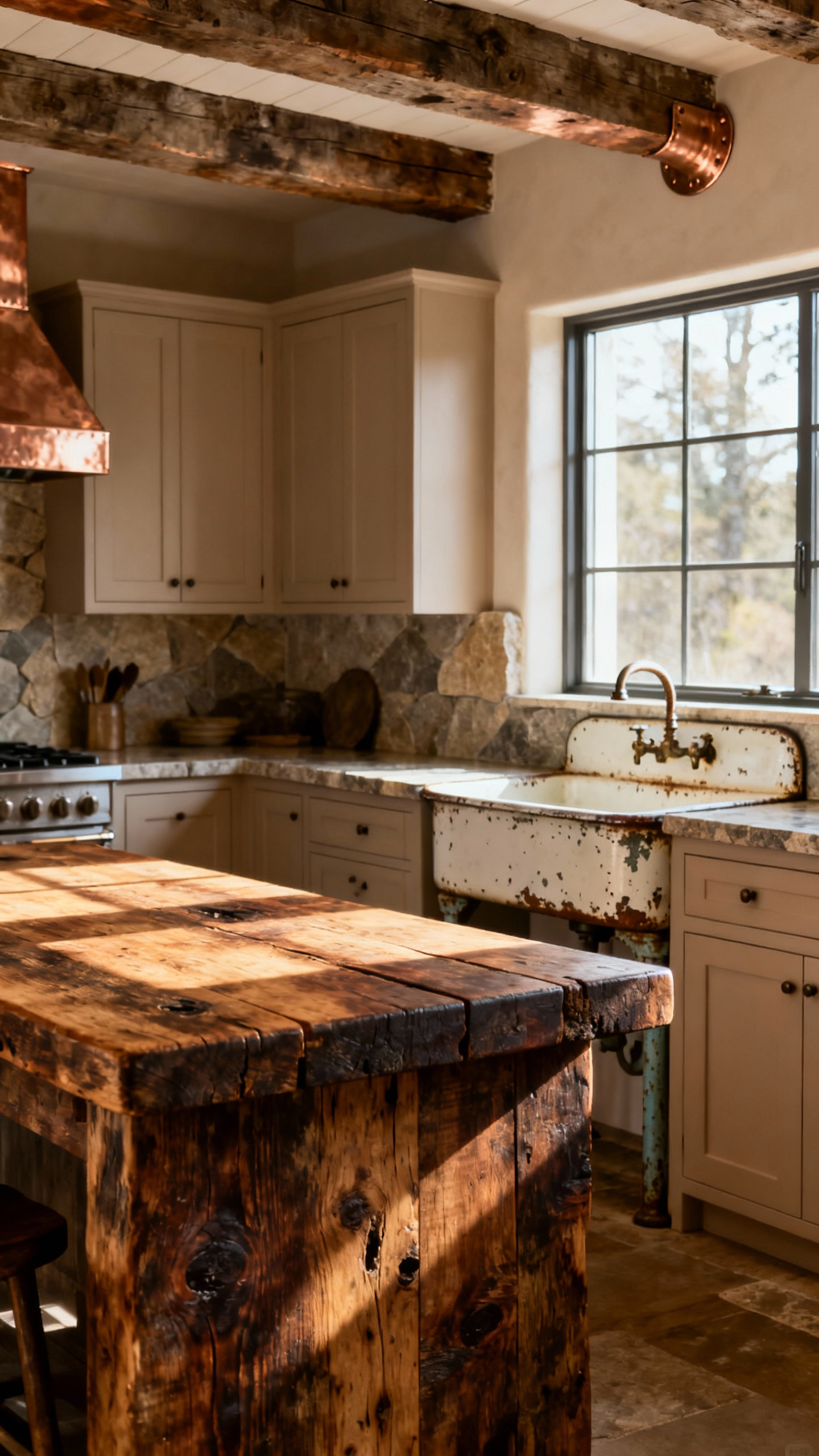
Wood is the warm handshake of rustic design. It’s the first thing you should think about. Forget the sterile look of laminate; we’re talking about solid wood that shows its grain, its history, its life. Whether it’s wide-plank oak floors that creak just a little or simple pine cabinets that invite a coat of milk paint, wood is what makes a rustic kitchen breathe.
From my work in mid-century modern restoration, I can tell you that an appreciation for honest materials is timeless. I once worked on a set of walnut cabinets from the ’60s that had the most beautiful, deep patina. Instead of stripping them completely, we cleaned and oiled them, letting the tiny scratches and marks from decades of family dinners remain. It’s about letting the wood tell its story. In a rustic kitchen, that might mean sourcing reclaimed barnwood for open shelves or choosing a hefty butcher block for an island. Don’t be afraid of the knots and imperfections—that’s where the real character lives.
2. Weave in Natural Stone Accents
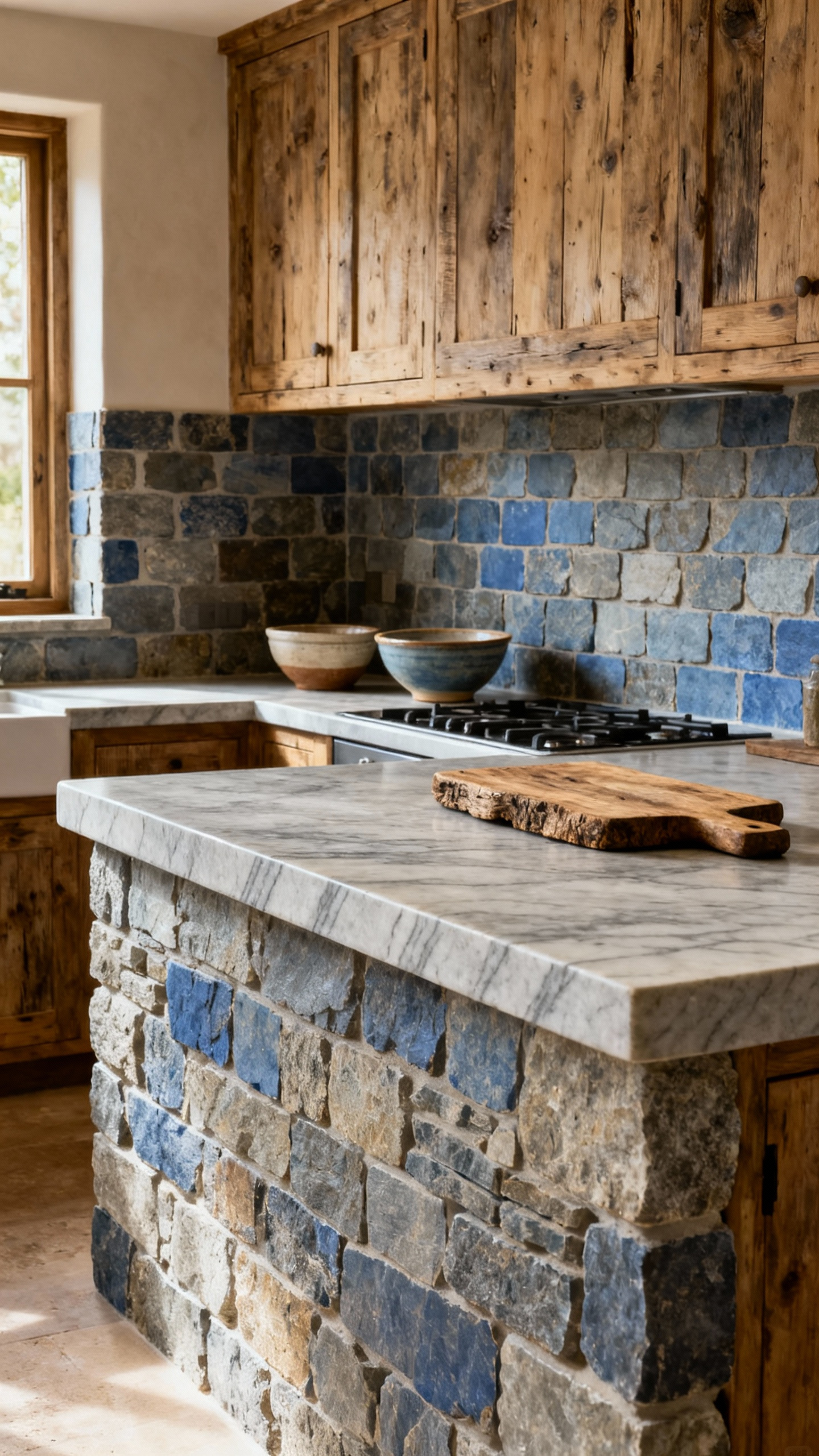
If wood provides the warmth, natural stone offers the grounding, cool contrast. It’s the anchor that keeps the space from feeling too much like a log cabin. Think of the rugged texture of a fieldstone backsplash behind the stove or the smooth, cool feel of a soapstone countertop where you roll out dough. These materials connect your kitchen to the earth in a very real, tangible way.
You don’t need a quarry’s worth to make an impact. Even a simple stone vessel sink or a collection of river rocks used as a trivet can introduce that organic texture. I’ve always been drawn to materials that change over time. Soapstone is a favorite because it darkens and patinas with use, collecting memories along the way. It’s that subtle evolution that gives a space life, ensuring it feels more like a cherished heirloom than a static showroom.
3. Paint from an Earth-Toned Palette
The right colors can wrap a room in a feeling of calm serenity. For a rustic kitchen, look outside your window for inspiration. The palette is right there: the soft greens of moss and sage, the warm tans of dry grass, the deep browns of rich soil, and the creamy whites of weathered seashells. These colors don’t shout for attention; they create a peaceful backdrop that lets your beautiful wood and stone elements shine.
What I’ve noticed is that these hues are incredibly forgiving and timeless. A soft, earthy green on your cabinets today will feel just as right in twenty years. They also have a wonderful way of responding to light. A warm beige might feel golden and bright in the morning sun but cozy and intimate by candlelight. This isn’t about chasing the latest “color of the year”; it’s about choosing colors with staying power that feel grounding and authentic.
4. Uncover the Architectural Bones
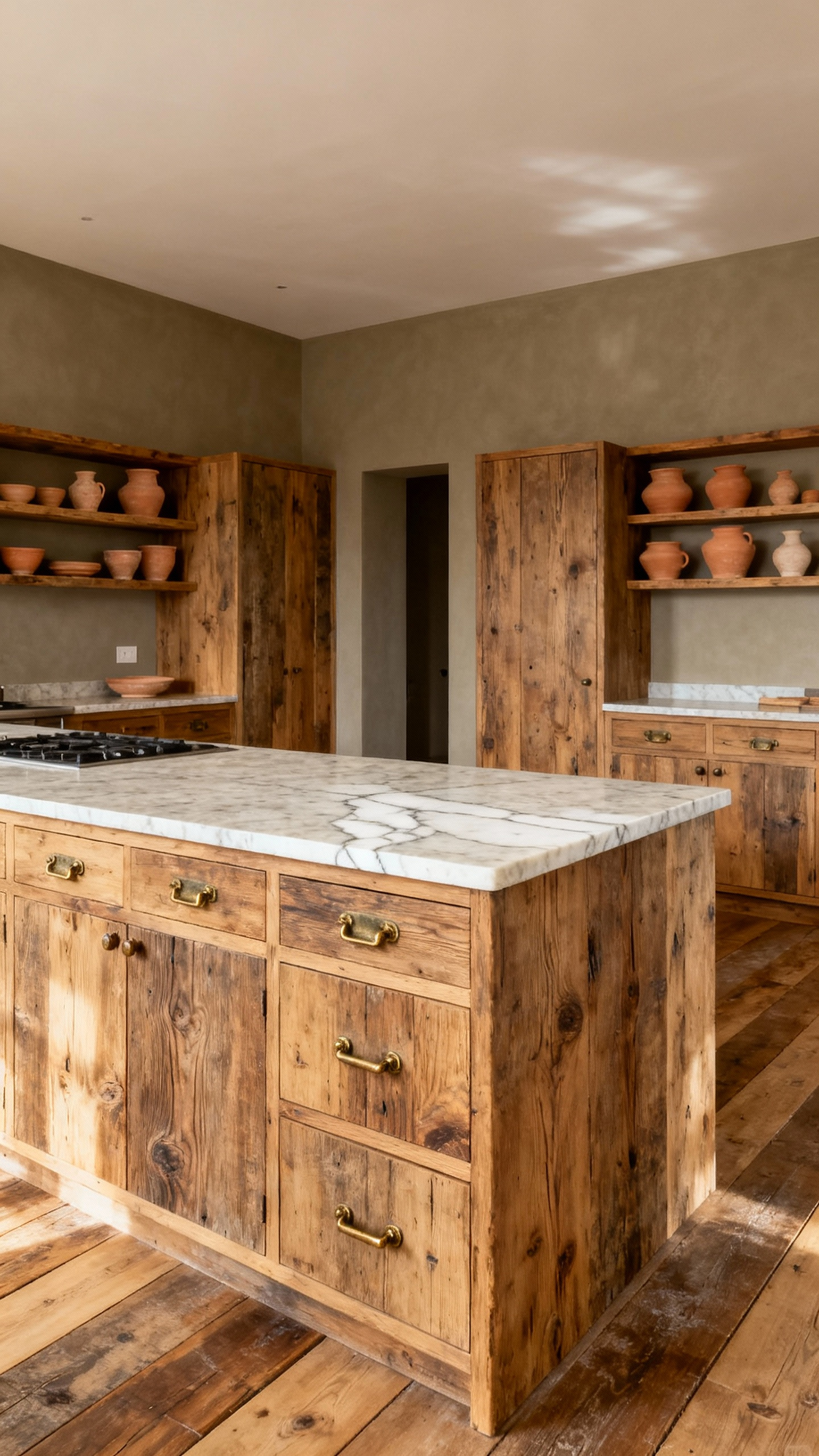
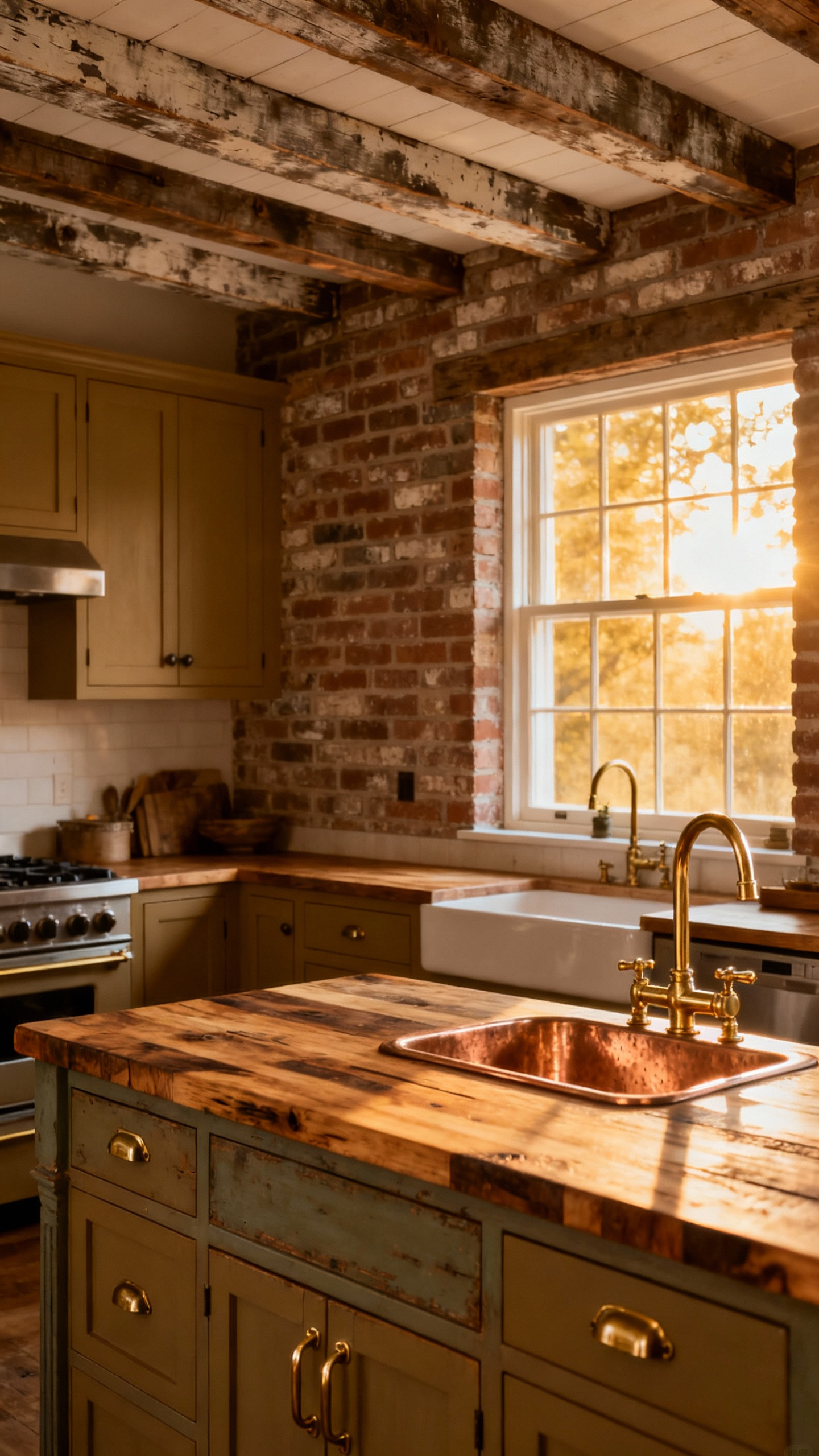
Sometimes, the best features of your kitchen are already there, just hiding behind drywall. Before you add anything new, take a look at what you might be able to reveal. Exposing original ceiling beams or a brick wall is like uncovering a hidden treasure. It instantly floods the room with a sense of history and character that you just can’t replicate with new materials.
Of course, not all of us are lucky enough to have original 19th-century brick waiting to be discovered. I learned this when I helped a friend with a newer build. We added reclaimed wood beams to the ceiling, making sure they were hand-hewn and finished to look genuinely old. It takes care and a good eye, but introducing these powerful architectural elements, whether original or thoughtfully added, gives your kitchen a sense of permanence and strength.
5. Master the Art of Patina
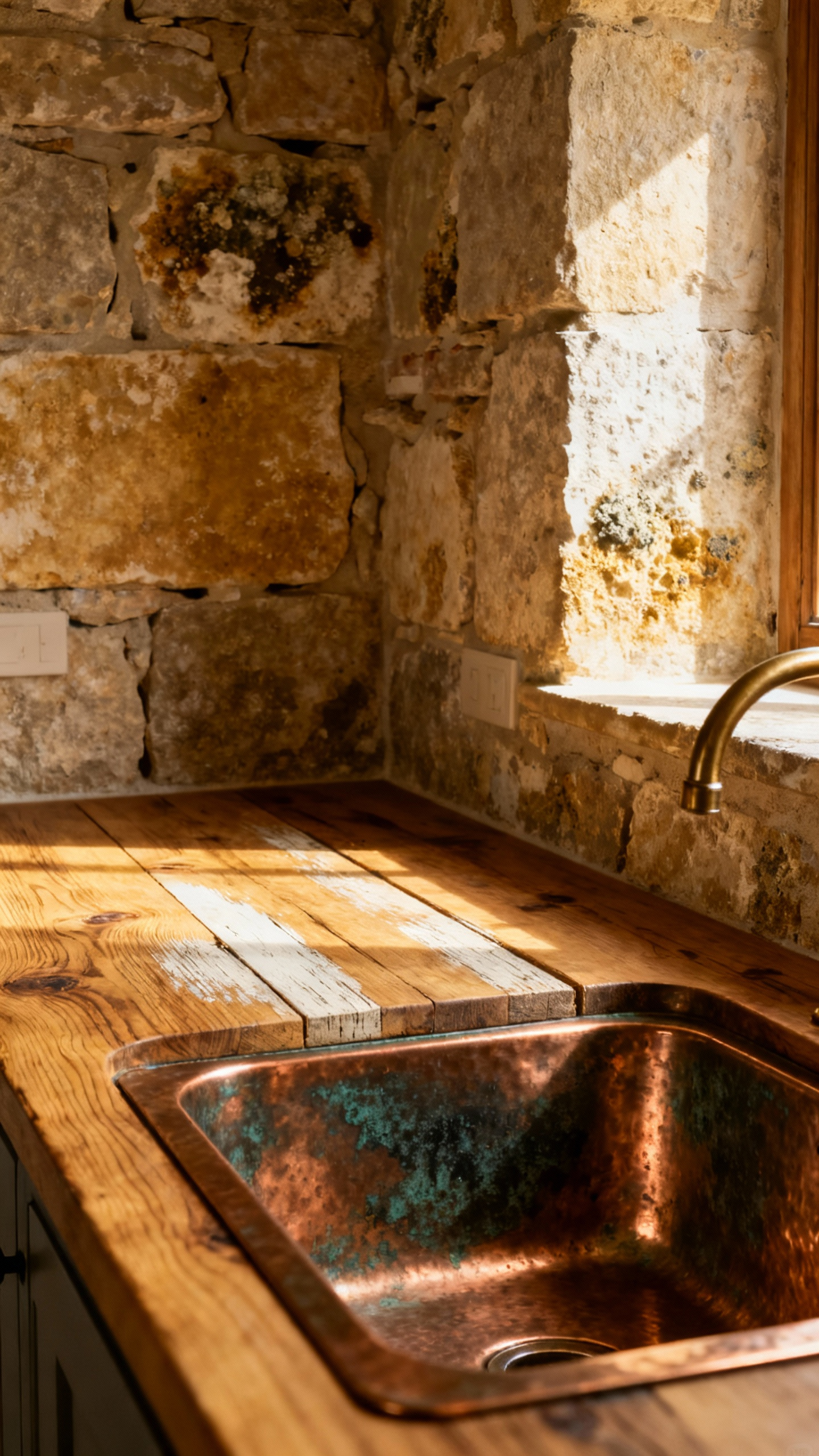
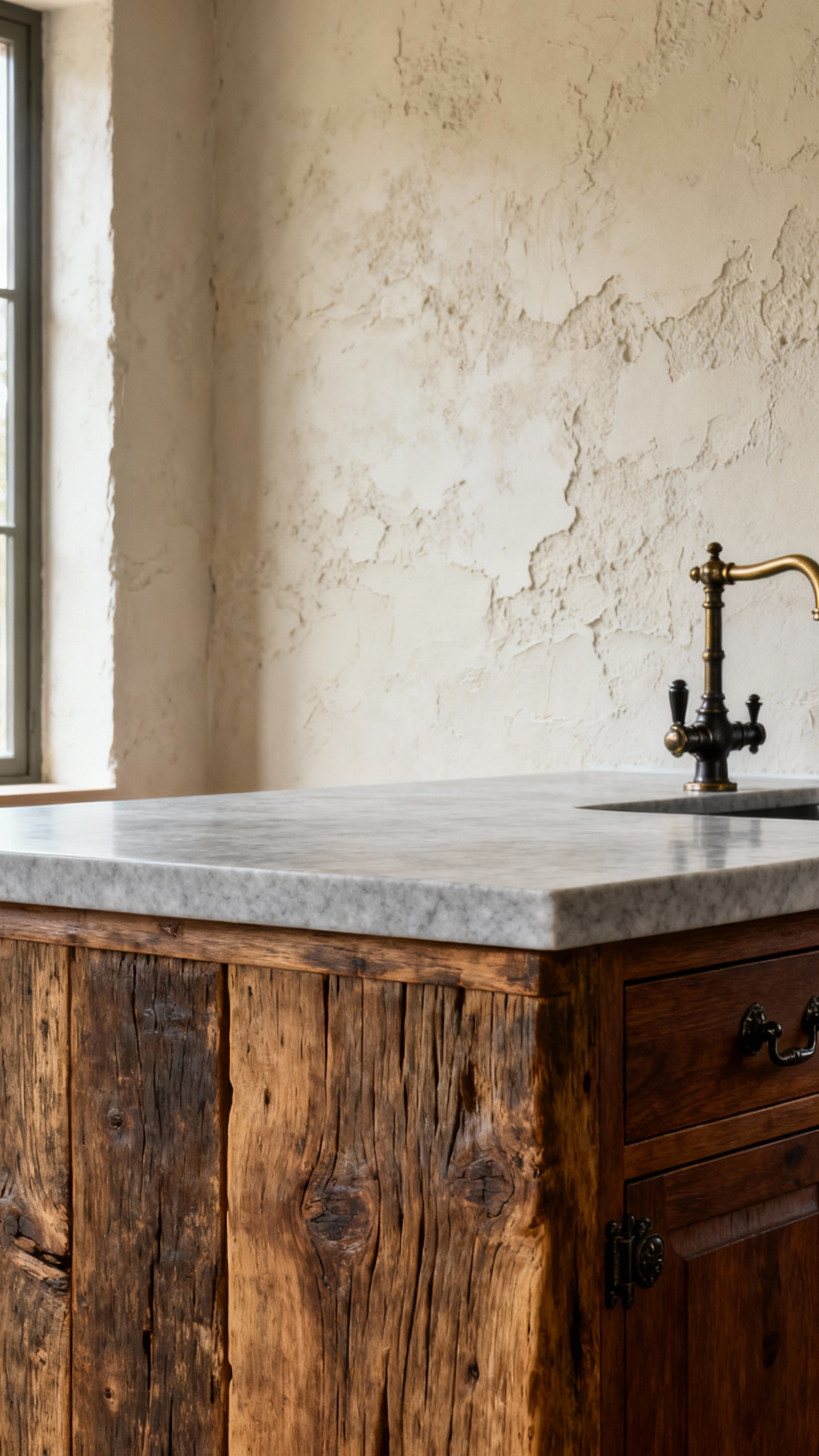
Here’s the thing that really separates an authentic rustic kitchen from a themed one: patina. Patina is the gentle sheen on an old wooden table, the soft tarnish on a copper pot, the faded print on a favorite linen towel. It’s the visible sign of a life well-lived. Rather than fighting against wear and tear, a rustic design philosophy encourages you to embrace it.
Choosing unlacquered brass for your cabinet pulls is a perfect example. They will be shiny at first, but over time, the oils from your hands will cause them to darken and age beautifully. In my professional experience, there’s no finish you can buy in a can that replicates the genuine grace of natural aging. Let your butcher block get a few knife marks. Don’t panic if your copper sink gets a spot. These aren’t flaws; they are the brushstrokes of your life painting a story onto your home.
Part 2: Crafting Functional Beauty
Now that we have our natural backdrop, let’s talk about the hardworking pieces. A rustic kitchen is, above all, a functional one. The key is to choose essential elements and fixtures that are built to last and carry a sense of history and utility in their very design.
6. Choose Cabinetry with Aged Charm
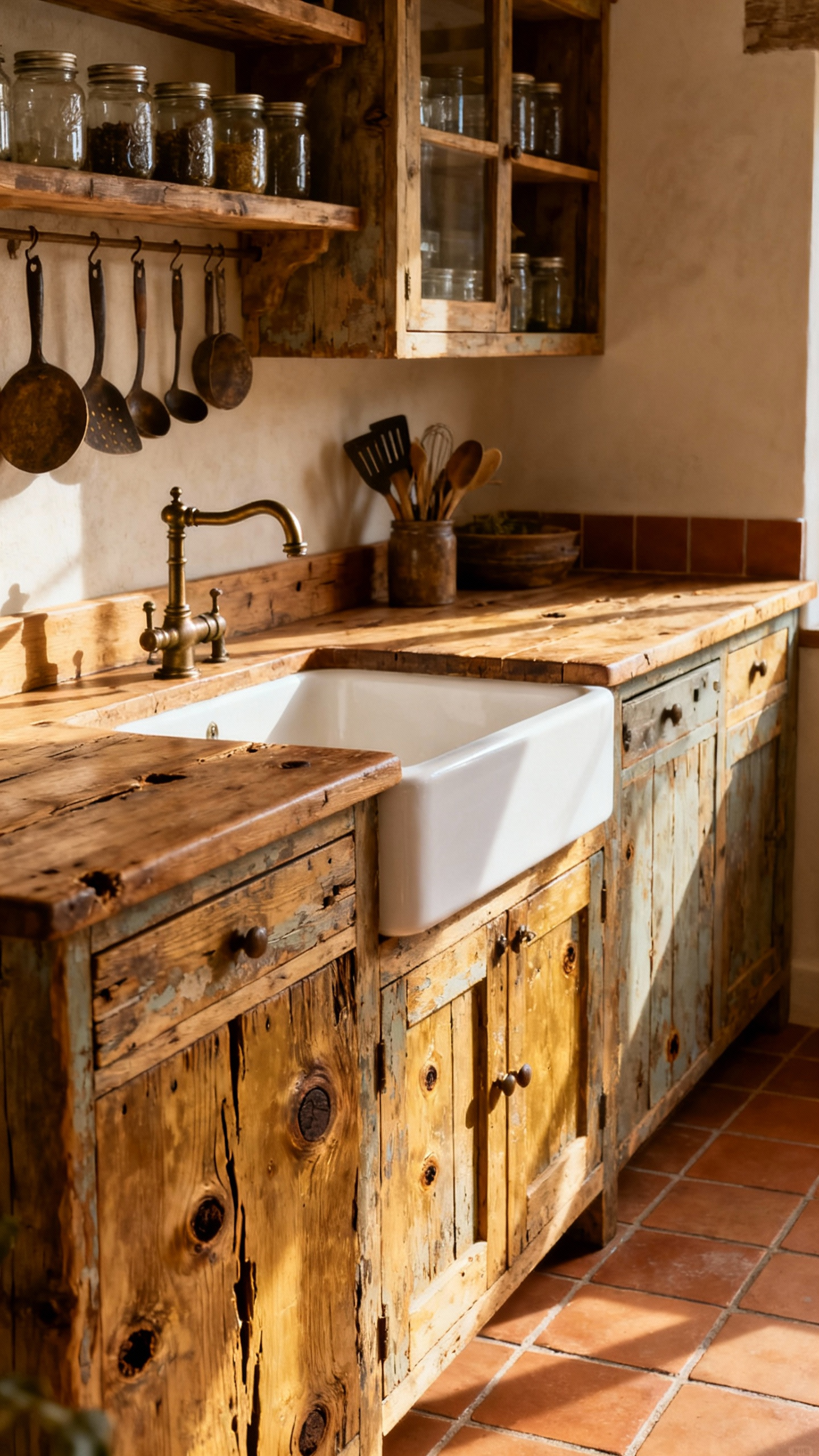
Cabinets are the furniture of your kitchen, and they set the tone more than almost anything else. To get that feeling of aged charm, look for cabinets made from distressed or reclaimed wood. Distressed finishes give a new piece the look of having been loved for generations, while reclaimed wood comes with a genuine history—you can almost feel the stories held within its grain.
A few years ago, I salvaged a set of simple shaker cabinets from a house scheduled for demolition. They were sturdy but painted a terrible color. With some careful stripping and a soft, crackled milk paint finish, they became the heart of a friend’s new kitchen. Choosing cabinets with this kind of character gives your space an immediate sense of soul and provides a beautiful, imperfect backdrop for all the life that will happen there.
7. Opt for Robust, Practical Countertops
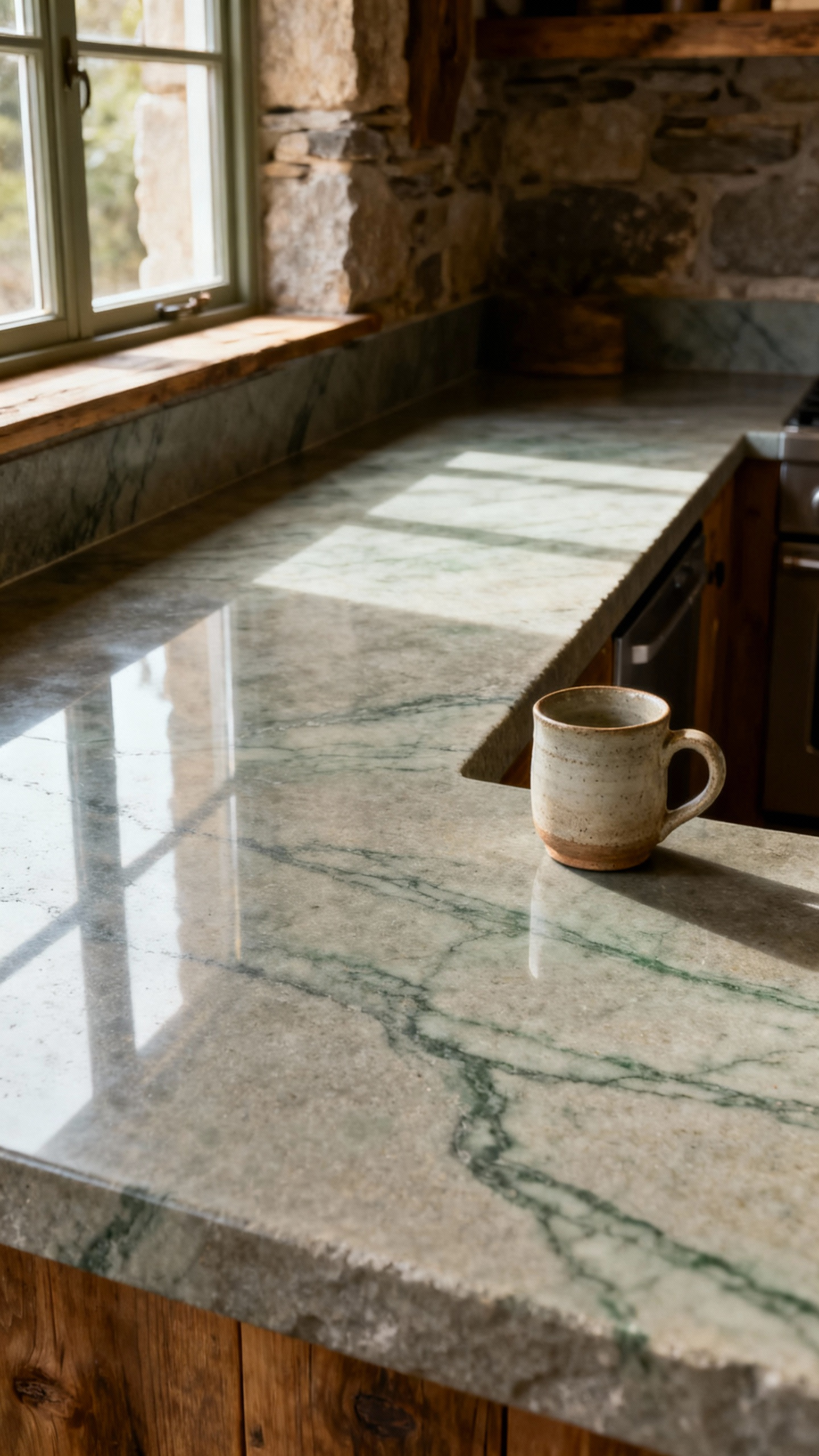
Rustic kitchens are working kitchens, so you need countertops that can stand up to real life. Forget delicate, high-maintenance materials. We’re looking for honest, hardworking surfaces like butcher block, soapstone, or even concrete. These materials are chosen as much for their durability as for their beauty.
Butcher block adds incredible warmth and is wonderfully forgiving—you can sand out any serious marks. Soapstone is a powerhouse; it’s non-porous and develops a gorgeous, dark patina. Concrete offers a modern rustic edge and can be customized in so many ways. What I tell my clients is to think about the touch and feel. These are surfaces you’ll be interacting with every day. Choose one that feels good and will only look better as it becomes part of your family’s story.
8. Introduce a Farmhouse Sink
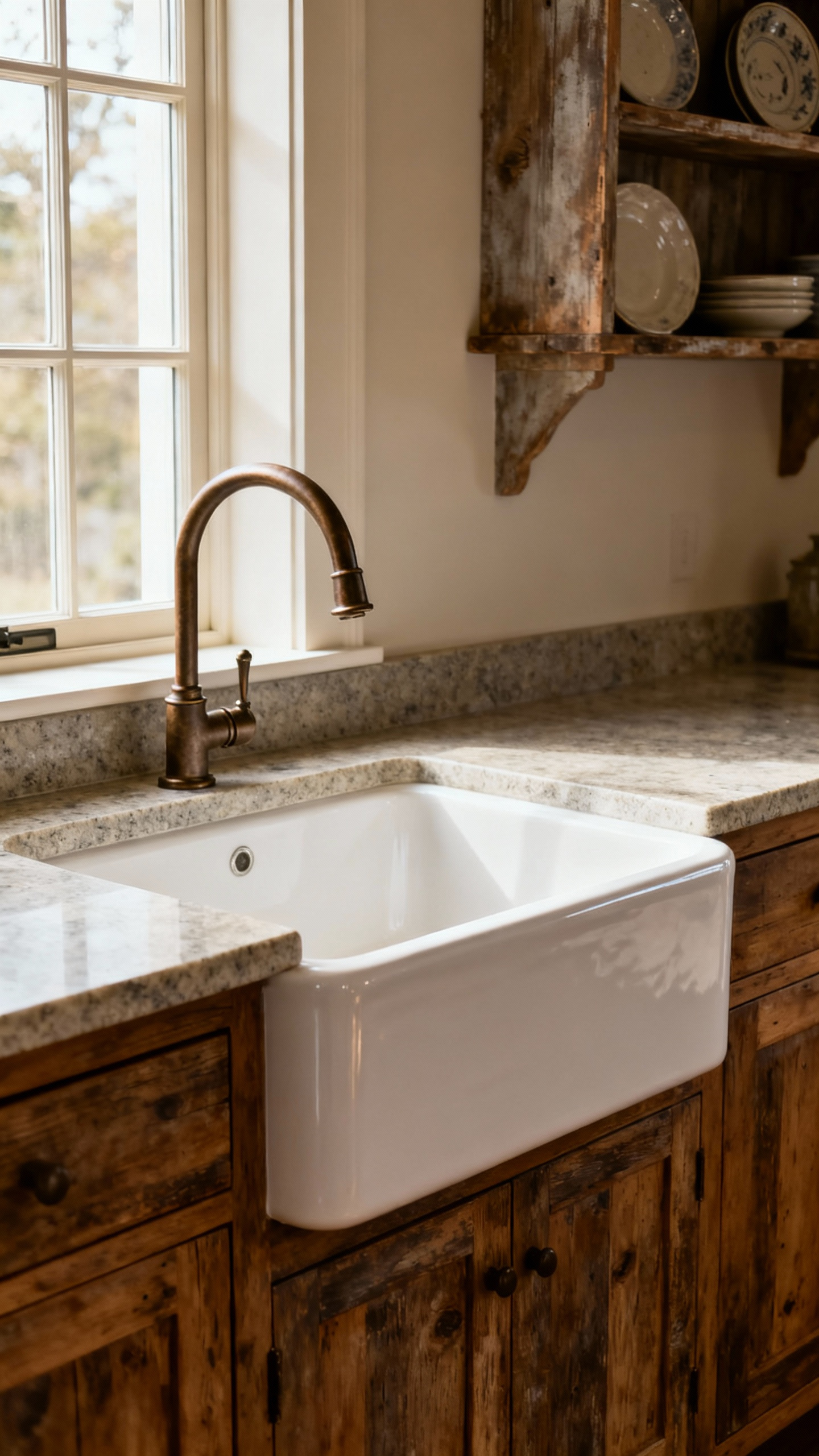
There is nothing that says “rustic kitchen” quite like a big, beautiful farmhouse sink. With its deep basin and classic apron front, it’s a design that has endured for centuries for one simple reason: it works. It’s practical enough to wash a big soup pot, a small dog, or a bushel of vegetables from the garden.
But it’s more than just a utility piece. A farmhouse sink acts as a visual anchor in the kitchen, a symbol of hearth and home. Whether you choose classic white fireclay, hammered copper that will patina over time, or even natural stone, it makes a statement. It declares that this is a room for nourishment, for gathering, and for the joyful messiness of a well-lived life.
9. Illuminate with Intention
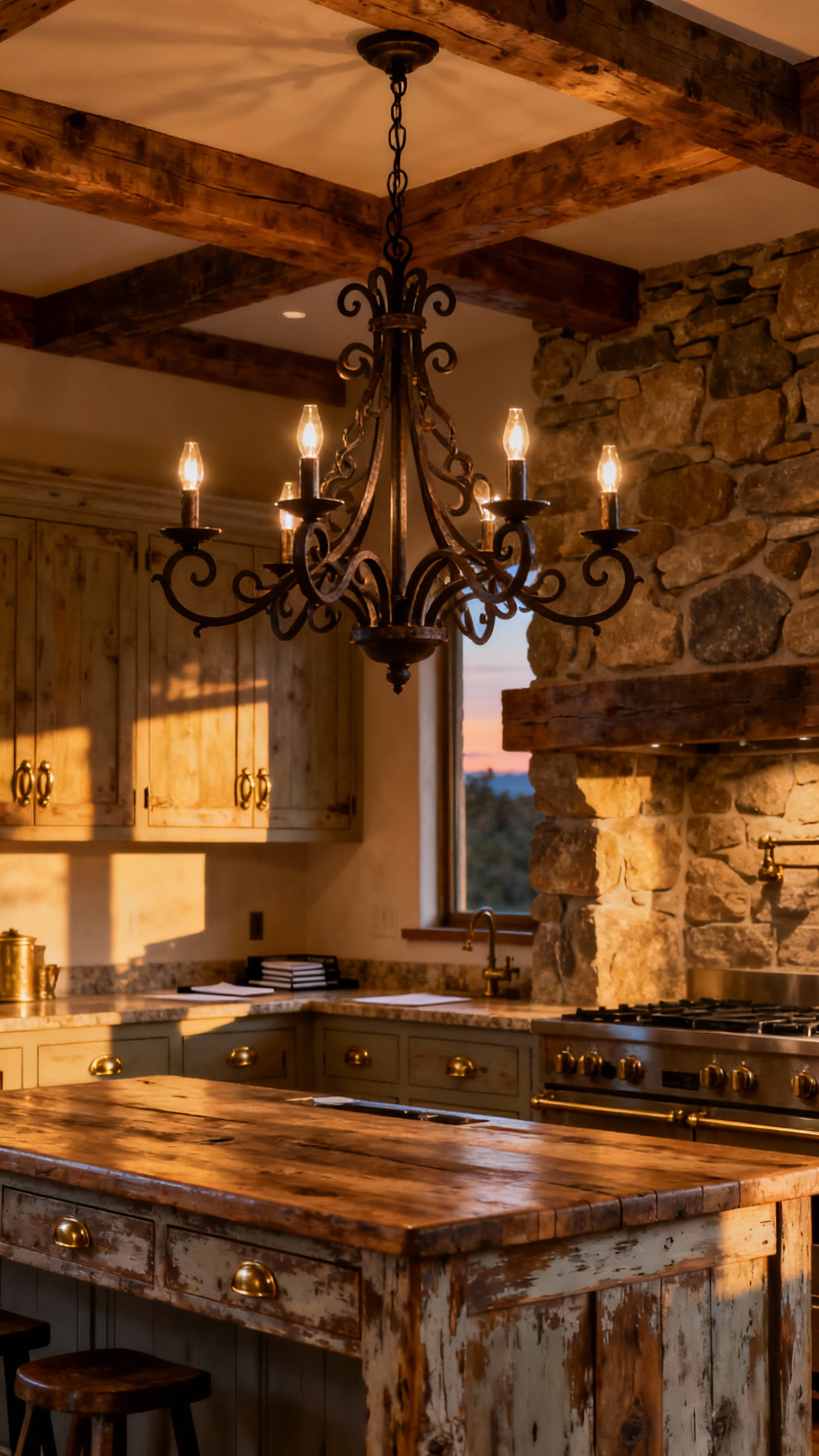
Lighting is what brings your kitchen to life, and your fixtures should feel as authentic as the rest of the space. Look for materials with a sense of history and craftsmanship. Forged iron or cast bronze have a wonderful weight and presence, whether in a simple pendant over the sink or a grander chandelier over the dining table.
Don’t be afraid to get a little creative and resourceful here. A friend of mine grouped several old mason jars together, fitted them with simple pendant kits, and hung them in a cluster over her breakfast nook. It’s a charming look that speaks to the make-do-and-mend spirit of rustic living. And please, use warm-toned bulbs! Nothing kills a cozy, rustic vibe faster than harsh, cool light.
10. Lay a Foundation with Textural Flooring
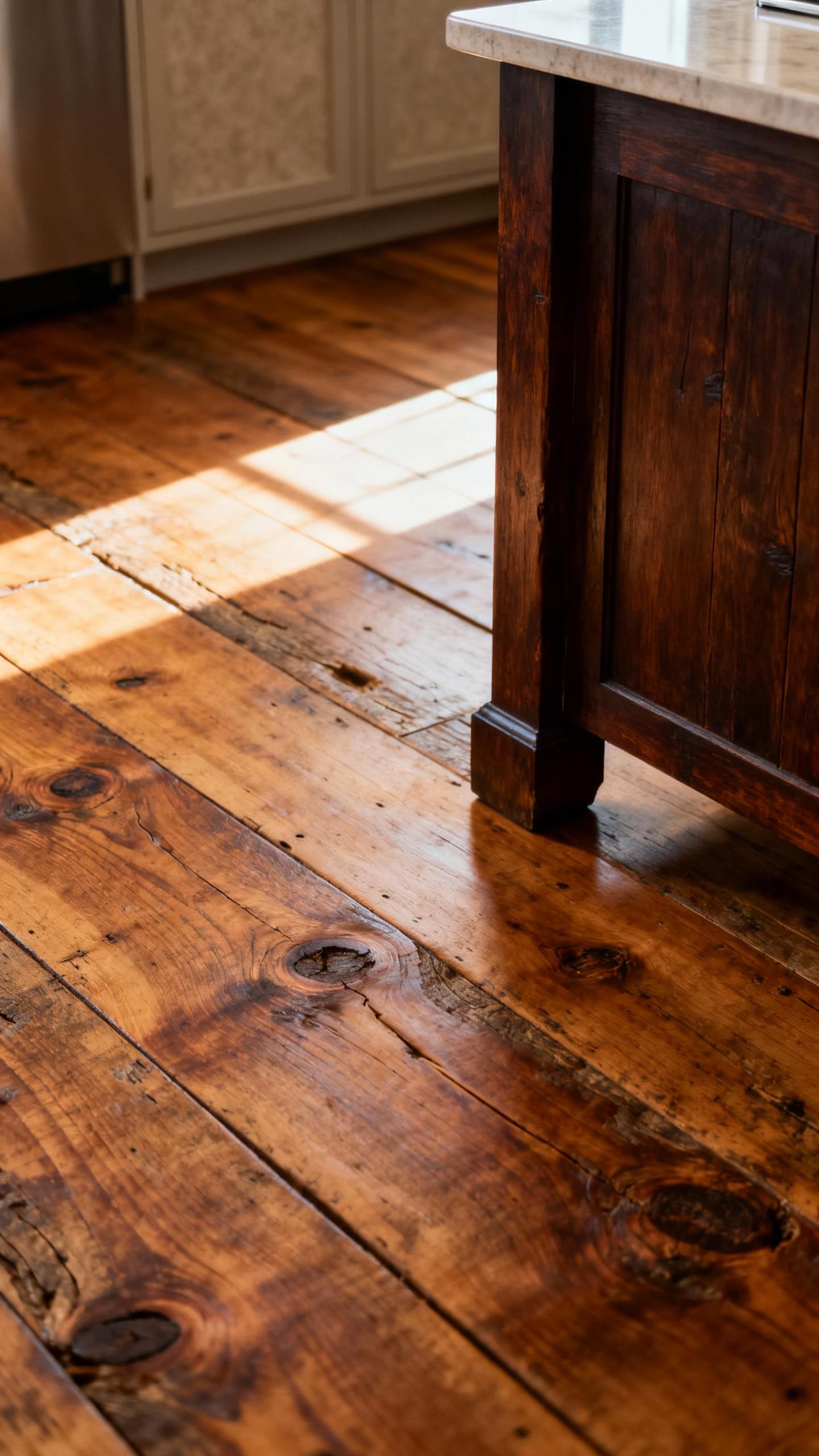
The floor is your kitchen’s fifth wall, so don’t treat it as an afterthought. Wide-plank wood floors are a classic choice, and their generous scale instantly makes a room feel more established and grounded. If you can find reclaimed planks, even better—the old nail holes and saw marks add a layer of history you can’t buy new.
Another wonderful option is hand-laid terracotta tile. Its earthy, reddish tones and slight imperfections bring a touch of sun-drenched, old-world charm. Here’s what’s interesting: both of these materials get better with age. The scuffs on a wood floor and the worn-down corners of a tile path aren’t damage; they’re evidence of a happy, bustling home.
11. Find Hardware with Character
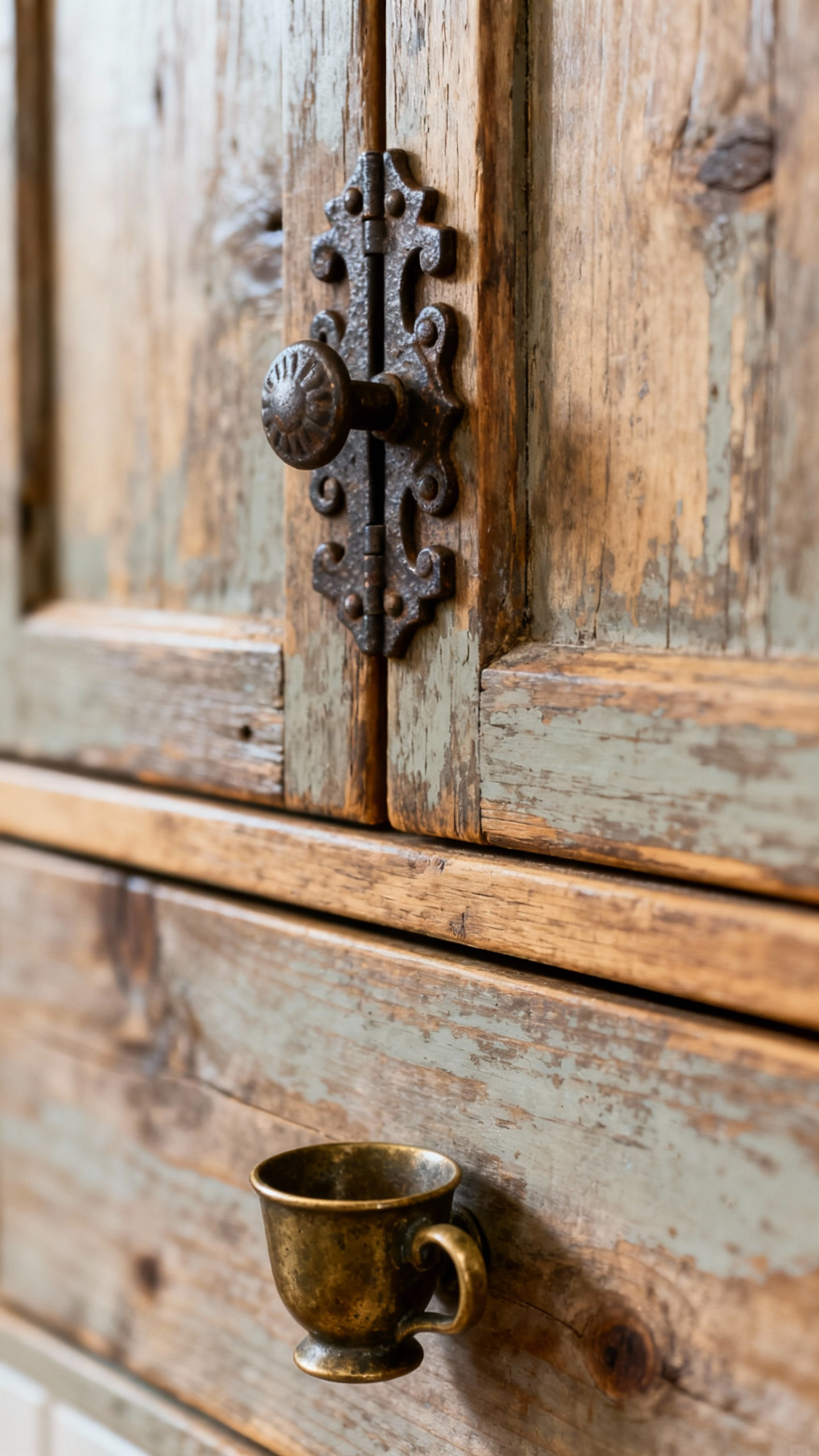
The small details are where the magic really happens. Swapping out standard-issue hardware for vintage-inspired knobs, latches, and pulls is one of the quickest ways to add character. Think of the satisfying click of a cast iron cabinet latch or the solid feel of an aged brass bin pull in your hand.
Years of rummaging through salvage yards taught me to always keep an eye out for hardware. You might not find a full matching set, and that’s okay! A collected-over-time look, with a mix of complementary knobs and pulls, often feels more authentic. These are the touchpoints of your kitchen, and choosing pieces with history makes every interaction, from opening a drawer to closing a pantry, a small, tactile pleasure.
Part 3: Styling with Heart & History
With the main elements in place, it’s time to layer in the personality. This is the fun part—the artful arranging and curating of objects that make the space uniquely yours. It’s about creating a kitchen that feels not just designed, but lived-in and loved.
12. Use Open Shelving for Curated Displays
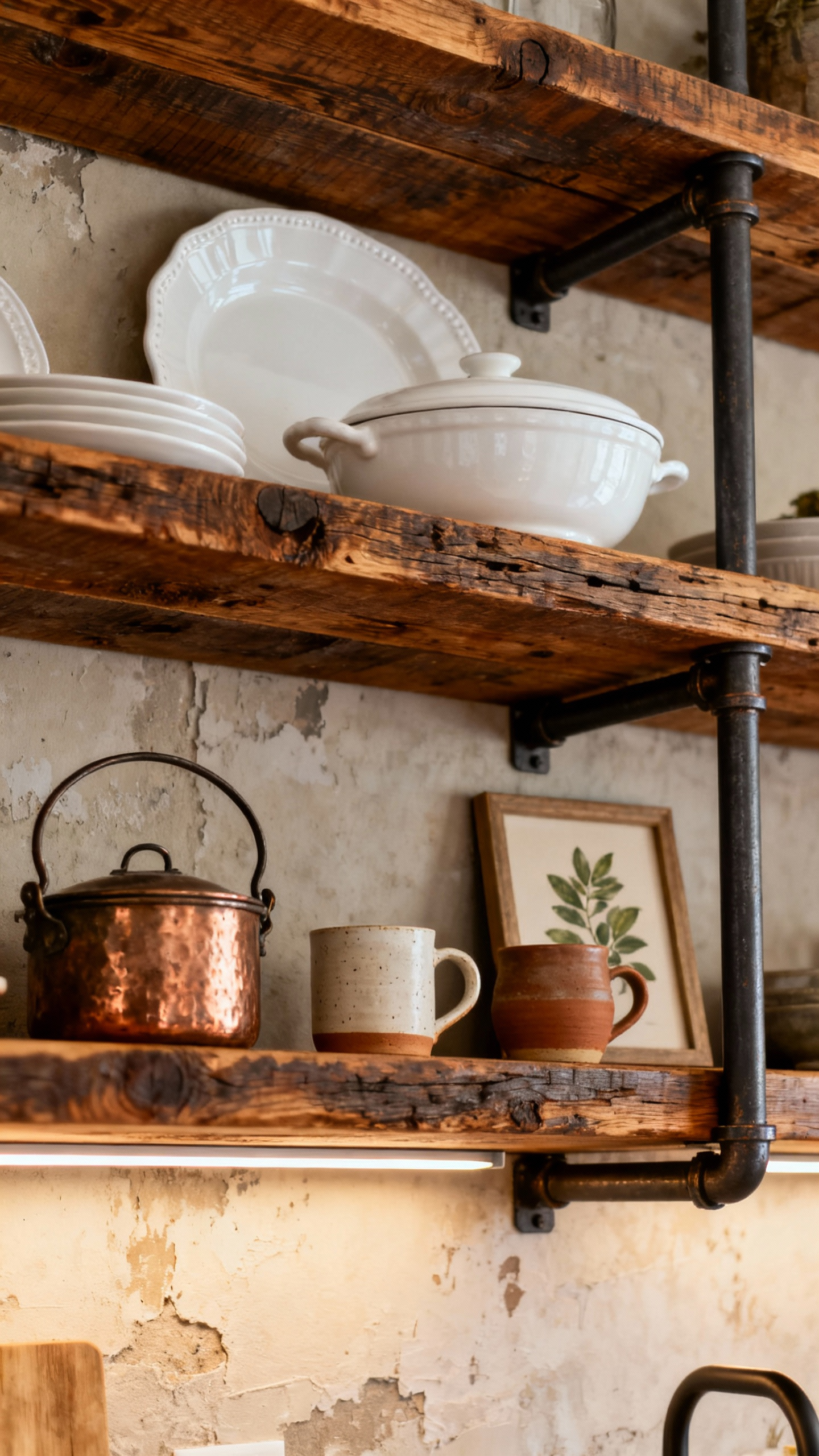
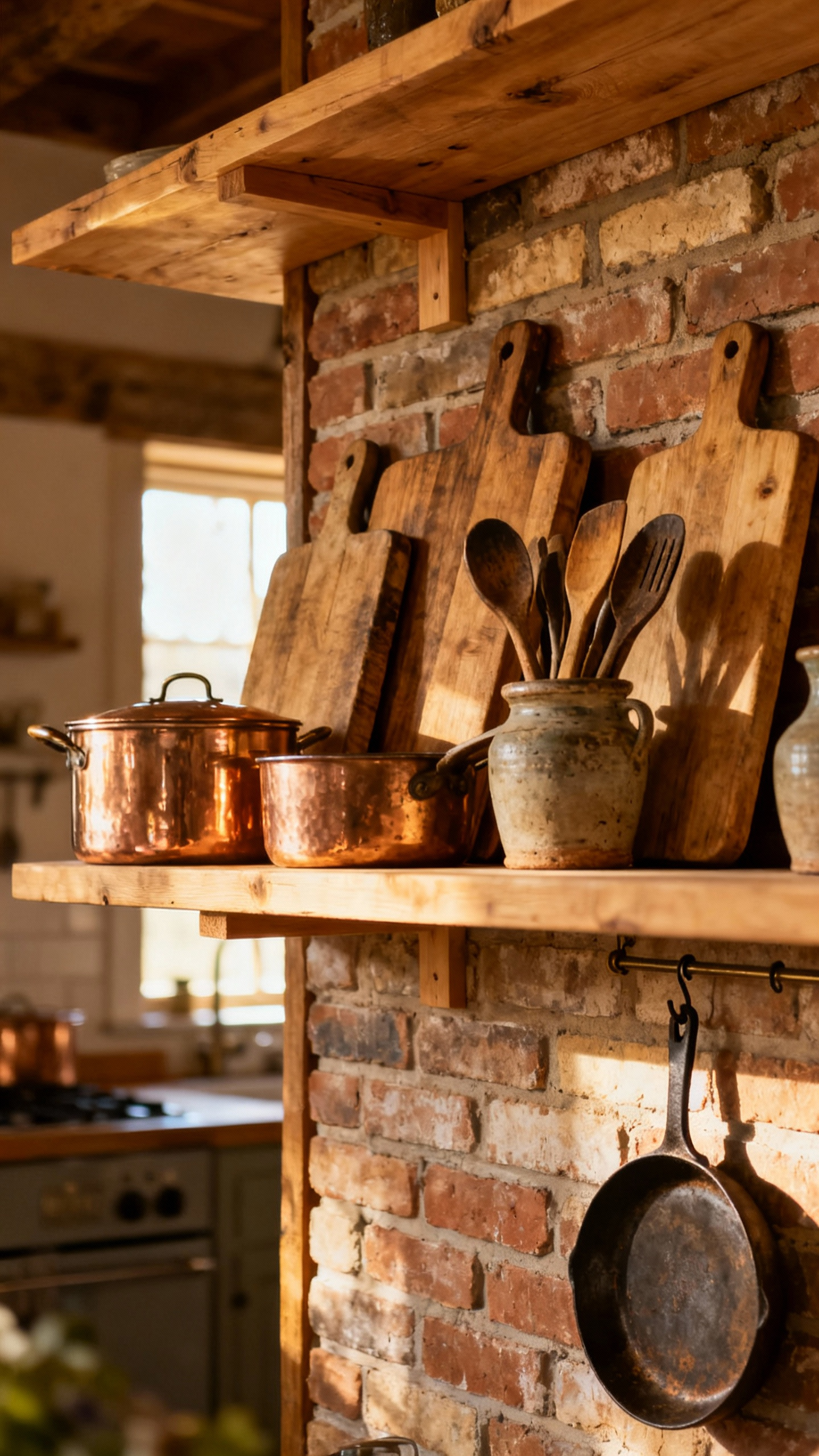
Trading a few upper cabinets for open shelves is a fantastic way to lighten up a kitchen and display your favorite pieces. The key is curation. This isn’t about cramming every dish you own onto a shelf. It’s about creating a thoughtful arrangement of everyday items—your favorite handmade mugs, a stack of stoneware plates, a few jars of spices.
My rule of thumb for open shelving is to blend beauty with utility. What I’ve seen work best is displaying things you actually use. That way, the shelves are always interacting with your daily life. A stack of linen napkins in a basket, a beautiful wooden salad bowl, a small pitcher for cream—these items are both practical and lovely to look at, turning simple storage into a personal art installation.
13. Soften the Edges with Textiles
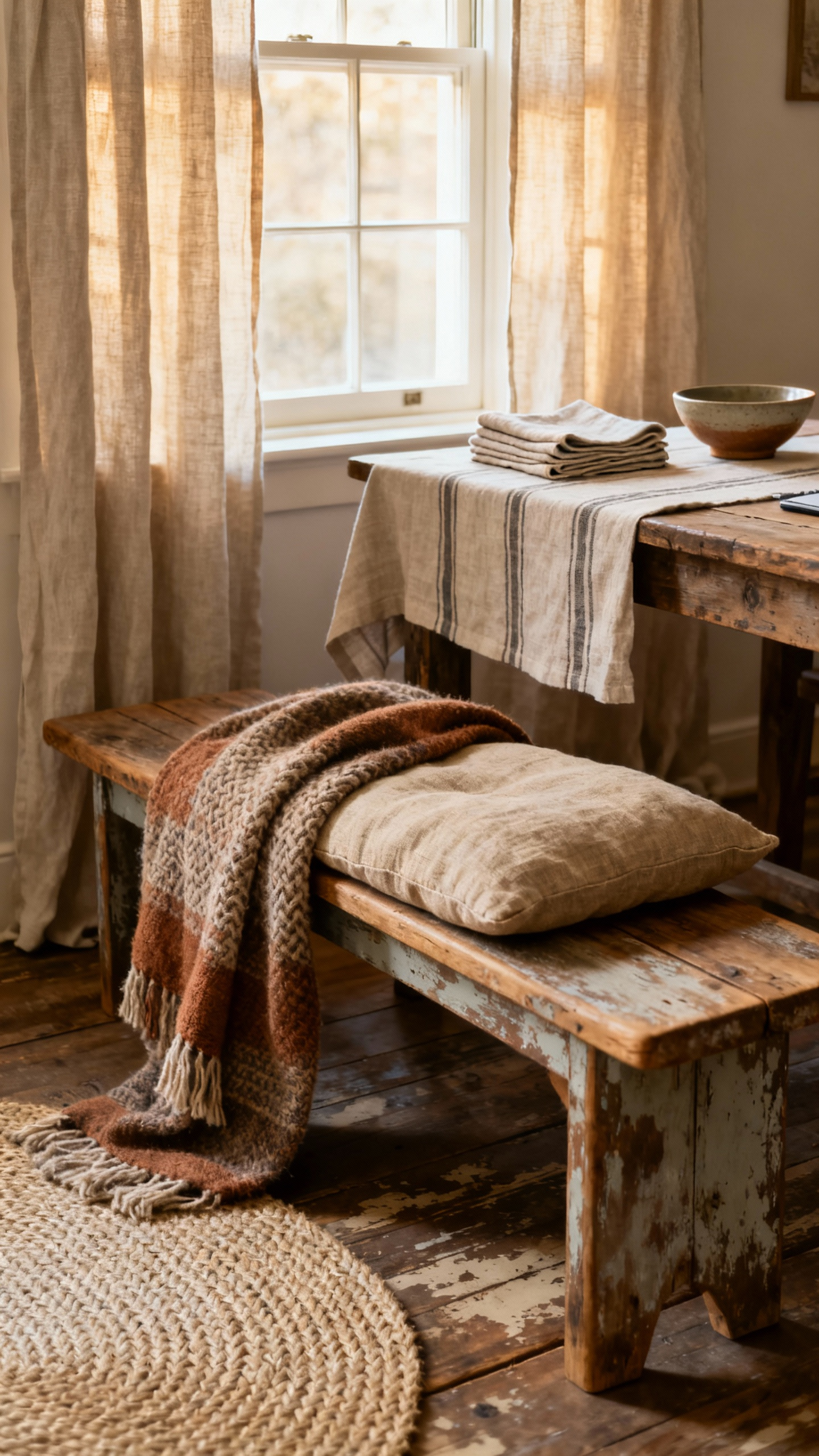
A kitchen full of wood, stone, and metal needs a bit of softness to feel truly welcoming. That’s where textiles come in. Simple additions like linen dishtowels, a striped cotton rug in front of the sink, or soft cushions on your kitchen stools can make a huge difference. These textures invite you to come in and stay a while.
Look for natural fibers like linen, cotton, and wool. I have a passion for vintage textiles and love using old grain sacks, with their beautiful woven stripes, for things like pillows or even upholstery on a bench. They add a layer of texture and a genuine piece of history. A simple linen curtain filtering the afternoon sun can transform the entire mood of a room.
14. Repurpose Found Objects
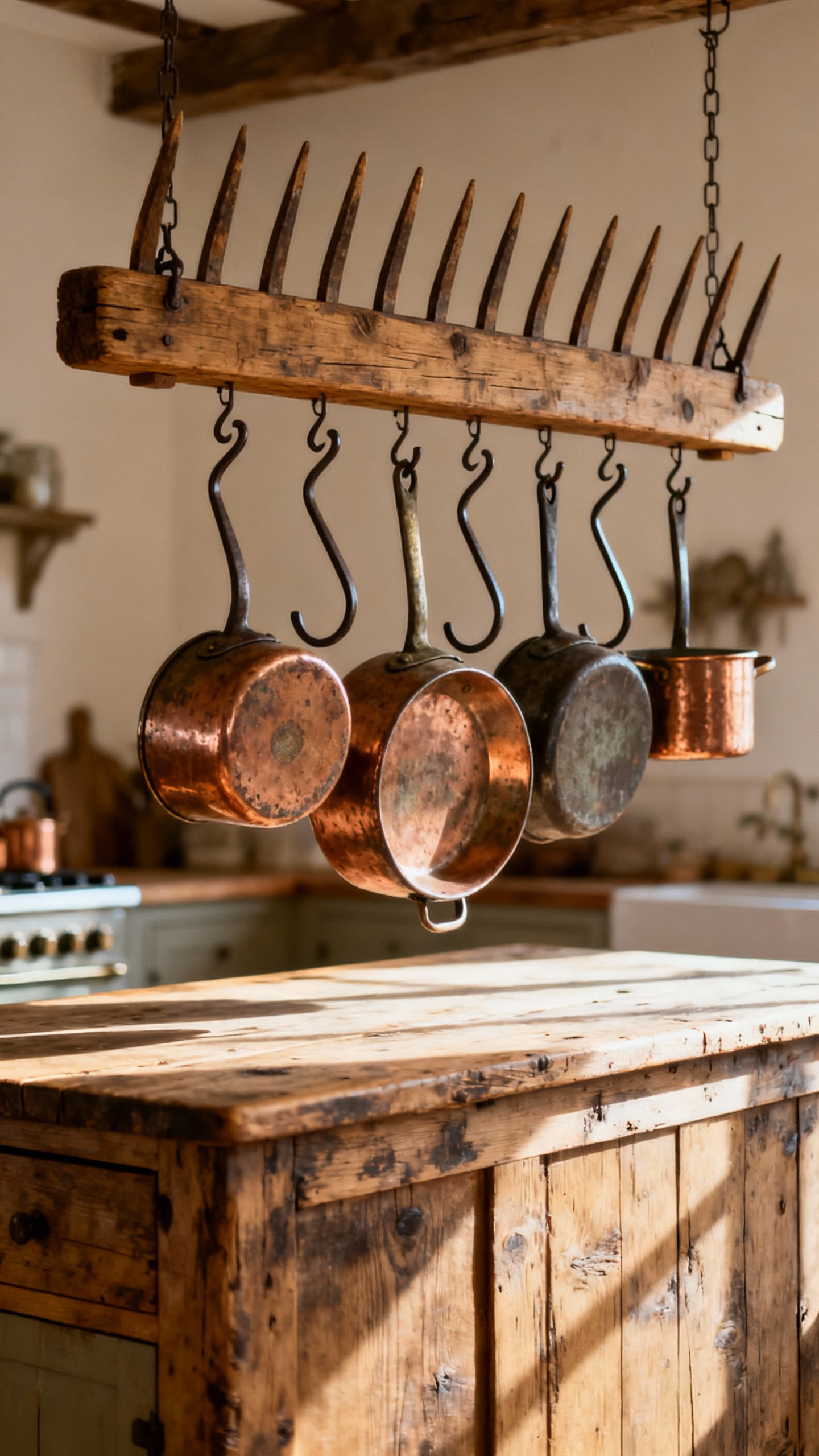
The resourceful spirit of rustic design is all about seeing the potential in forgotten things. A kitchen is a wonderful place to give antique tools and found objects a second life. An old wooden ladder can be leaned against a wall to hang tea towels. A vintage enamelware basin can hold fruit on the counter. A collection of antique rolling pins can be displayed in a stoneware crock.
I love this approach because it’s deeply sustainable and guarantees your kitchen will be one-of-a-kind. At first, I thought my collection of old tin funnels was just a quirky dust-collector, but then I realized I could string them together with twine to create a whimsical garland for my window. It’s about looking at an object not just for what it was, but for what it could be.
15. Source One-of-a-Kind Vintage Pieces
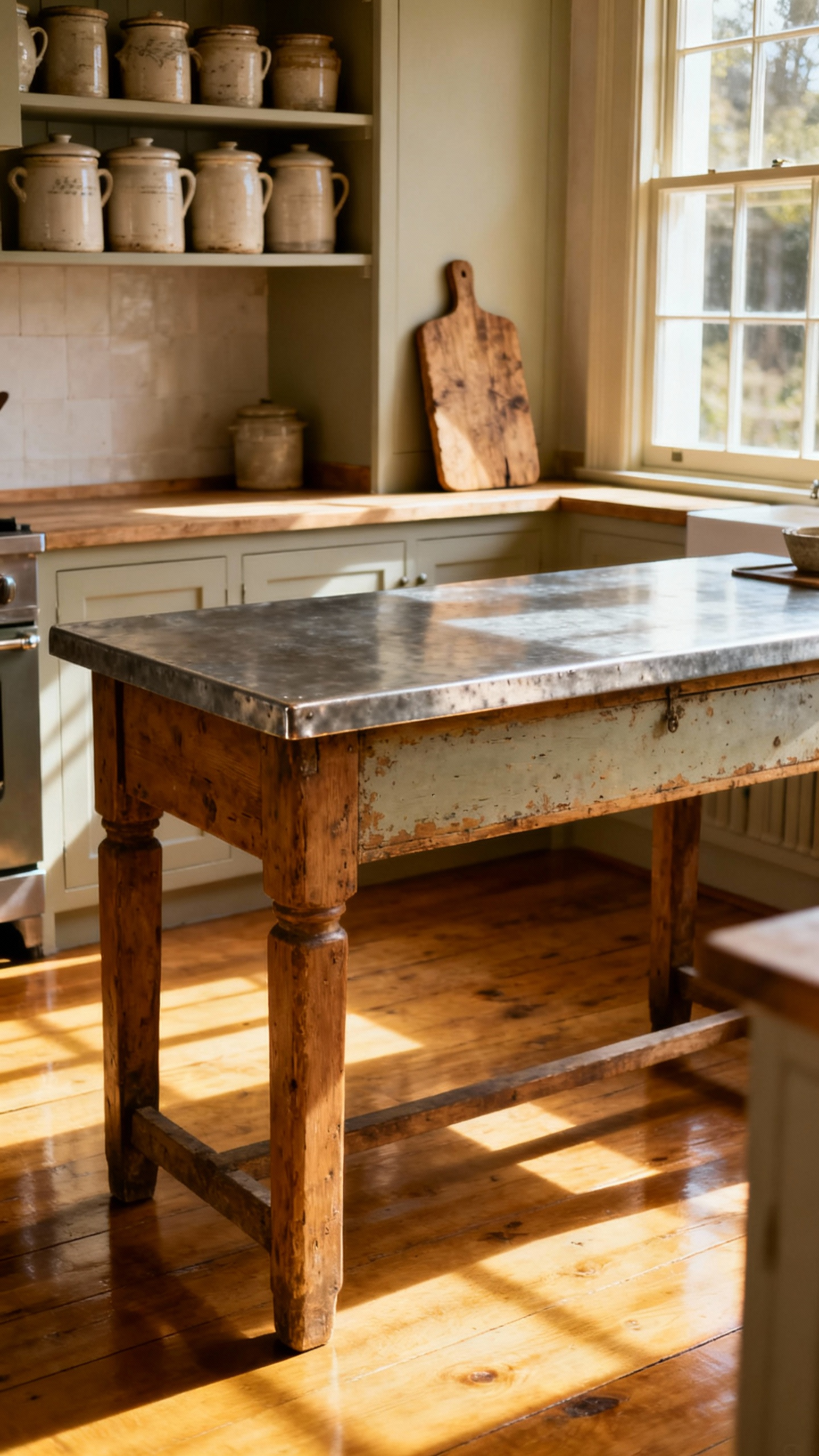
Every room needs a conversation starter, and in a rustic kitchen, that often comes in the form of a unique vintage piece of furniture. It could be a small, weathered work table used as an island, an antique pine hutch for storing dishes, or even just a single, charmingly mismatched chair pulled up to the table.
This is the treasure-hunting part I live for. Don’t worry about finding something perfect. The goal is personality. I once found a primitive, three-legged wooden stool at a barn sale. It’s wobbly and imperfect, but it’s the most coveted seat in my kitchen. A piece with history brings a sense of soul that you simply can’t get from something brand new.
16. Curate Functional Vignettes
Instead of scattering items around your countertops, group them into little “vignettes,” or thoughtful arrangements. Think of it as telling a small story. Near the stove, you might have a beautiful bottle of olive oil, a stoneware cellar for salt, and a small pot of fresh basil. It’s practical—everything you need is right there—but it’s also visually pleasing.
I love creating a little coffee station: a vintage tray holding a French press, a scoop, your favorite mugs, and a small jar of sugar. From my years of styling pieces for photos, I learned that grouping items with varying heights and textures is what makes a vignette interesting. This simple act transforms everyday clutter into a charming and purposeful display.
Part 4: Harmonizing Old & New
A truly successful rustic kitchen isn’t a museum. It needs to work for modern life. The final, most advanced step is mastering the artful blend of time-honored charm with contemporary convenience, ensuring your kitchen is as functional as it is beautiful.
17. Strategically Conceal Modern Appliances
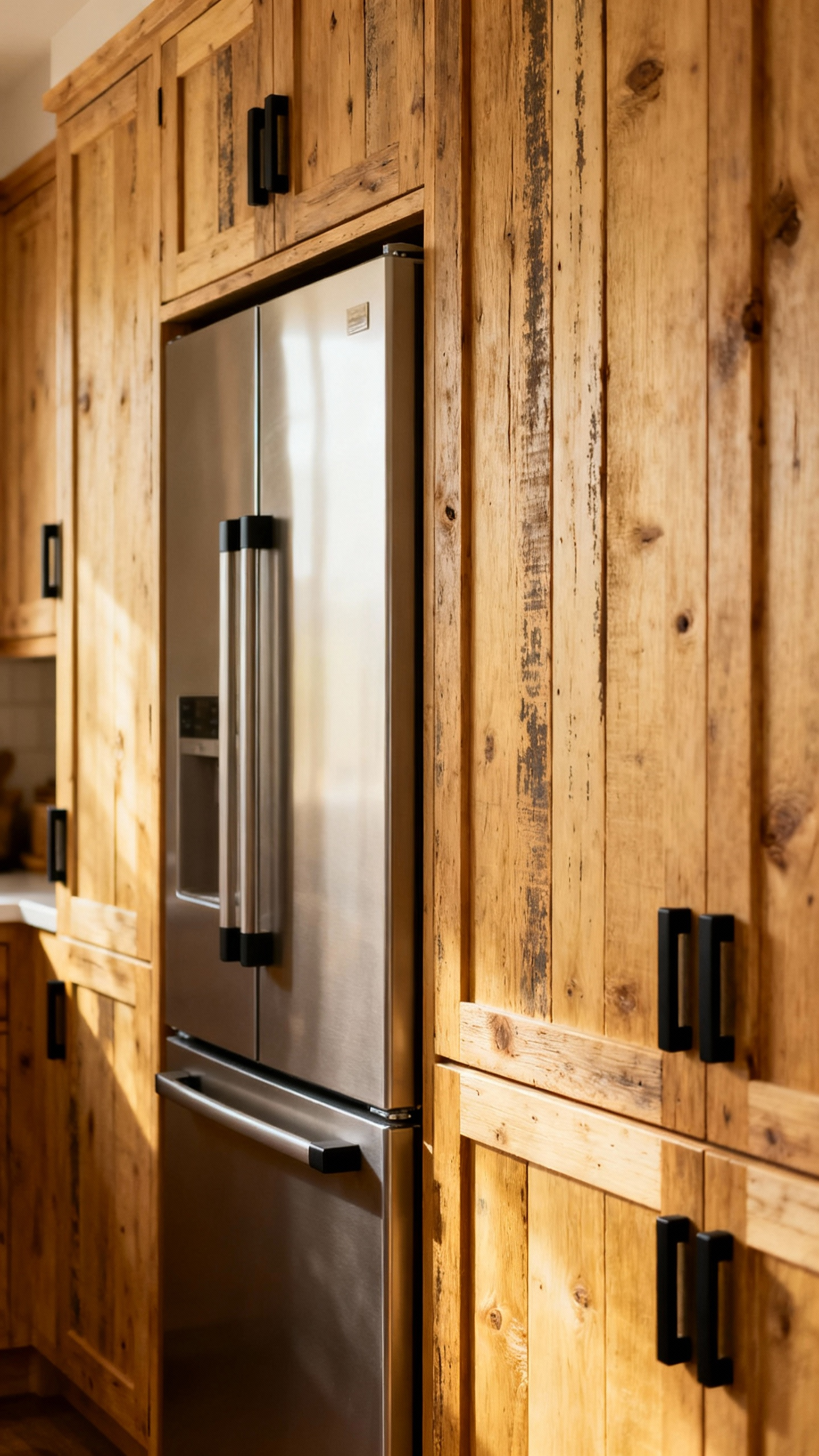
Let’s be honest, a gleaming stainless-steel microwave can feel a bit jarring next to a 100-year-old wooden hutch. The solution is to integrate your modern appliances so they don’t steal the show. Custom cabinet panels that match your woodworking are a game-changer for dishwashers and refrigerators, allowing them to disappear seamlessly.
For smaller appliances, think about creating dedicated “appliance garages” with doors that lift or slide away. I’ve even seen microwaves cleverly hidden inside a pantry cabinet. What I tell my readers is this isn’t about being ashamed of modern technology; it’s about creating a calm, cohesive visual story where the character-rich elements get to be the stars.
18. Optimize the Layout for Rustic Flow
The layout of a rustic kitchen should feel intuitive and communal. Of course, the practical work triangle of sink, stove, and fridge is important, but think beyond that. How can the layout encourage people to gather? A large central island with stools, a cozy breakfast nook with a built-in bench, or even just a comfortable chair in a corner invites people to linger.
A rustic kitchen is often the true living room of the house. The flow should accommodate both the solo cook and a crowd of family members trying to “help.” In my professional experience, a successful layout isn’t just efficient; it’s gracious. It allows for easy movement and creates natural spots for connection and conversation.
19. Achieve a Balance of Textures
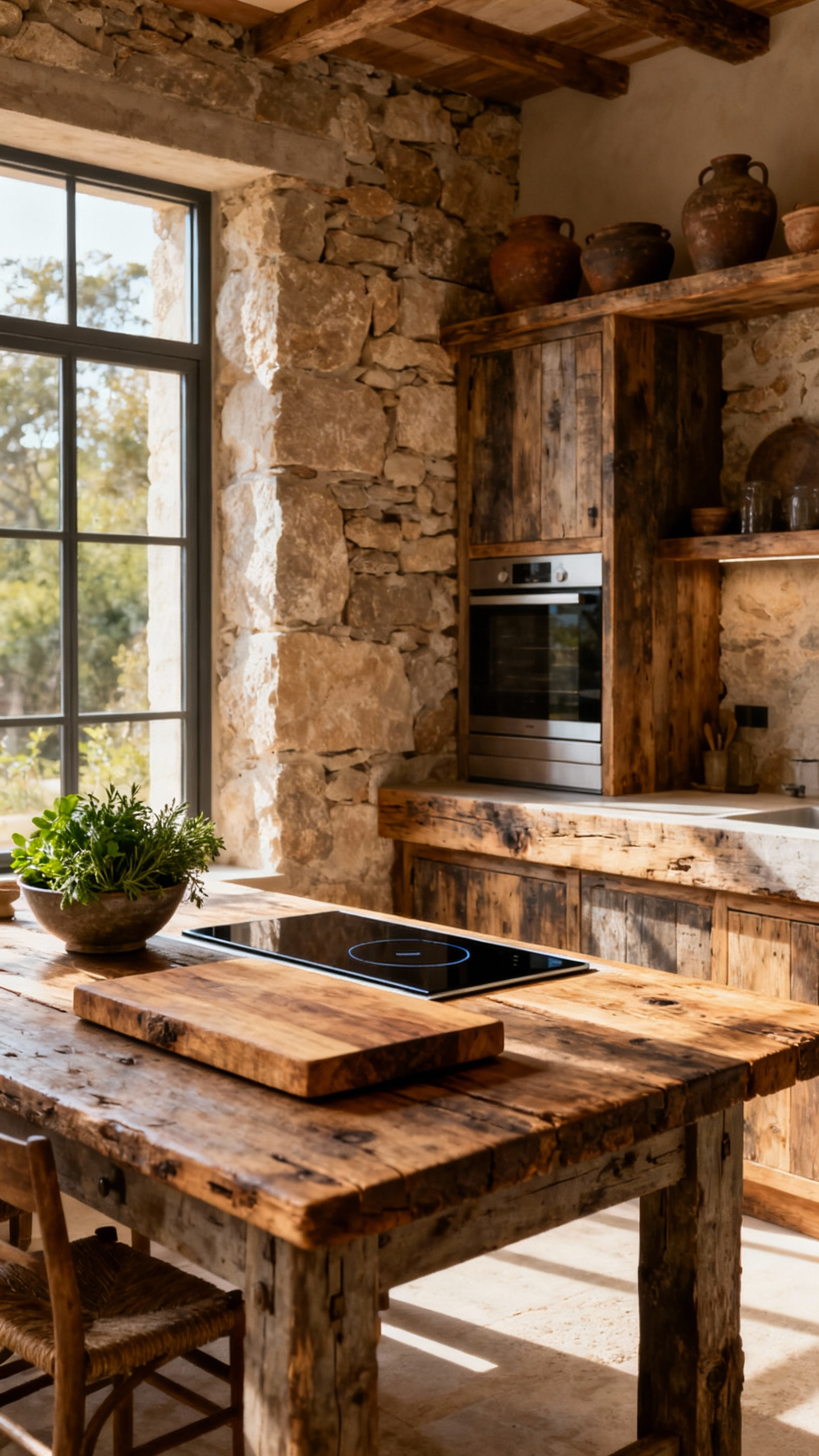
We’ve talked about bringing in wood, stone, and metal. The mastery comes in balancing them. If you have rough, exposed ceiling beams, maybe you choose smooth, honed countertops. If you have a rugged fieldstone wall, perhaps the floors are a calmer, sealed concrete. It’s a dance between rough and smooth, warm and cool, rustic and refined.
This is where it gets tricky, but it’s so important. Too many rough textures can make a room feel heavy and dark. Too many smooth surfaces can make it feel sterile. I’ve seen this play out when a client wanted reclaimed wood everywhere. We balanced it with crisp, painted shiplap and sleek lighting. It’s that tension and balance that makes a space feel sophisticated and truly dynamic.
20. Cultivate a “Lived-In” Feel
Finally, the most important element of all: let your kitchen be lived in. A rustic kitchen is not supposed to be pristine. It’s about embracing imperfection and designing for the long haul. Choose materials that will age gracefully and show the marks of a happy life. Don’t strive for a perfectly curated, magazine-ready look 24/7.
Leave a few dishes in the drying rack. Let a stack of cookbooks pile up on the counter. This isn’t about being messy; it’s about authenticity. A home that is truly loved is a home that is truly used. The ultimate goal is to create a space that feels so comfortable and welcoming that it only gets better with time, collecting more stories and more character with each passing year.
Conclusion
There you have it—a journey from the foundational bones of a rustic kitchen right down to the heartfelt details that give it a soul. We’ve seen that this design approach is less about following a rigid set of rules and more about adopting a philosophy: one that values authenticity, celebrates craftsmanship, and finds beauty in the imperfect. It’s about creating a space that works hard but feels like a warm hug at the end of the day.
Now it’s your turn to become the treasure hunter for your own home. Use these ideas as a jumping-off point, but trust your own story. Pick the pieces that speak to you, the materials that feel right under your hand, and the colors that make you feel calm. The most beautiful rustic kitchen will be the one that is a true reflection of you—a place where your life can unfold, your memories can be made, and your character is joyfully unveiled.