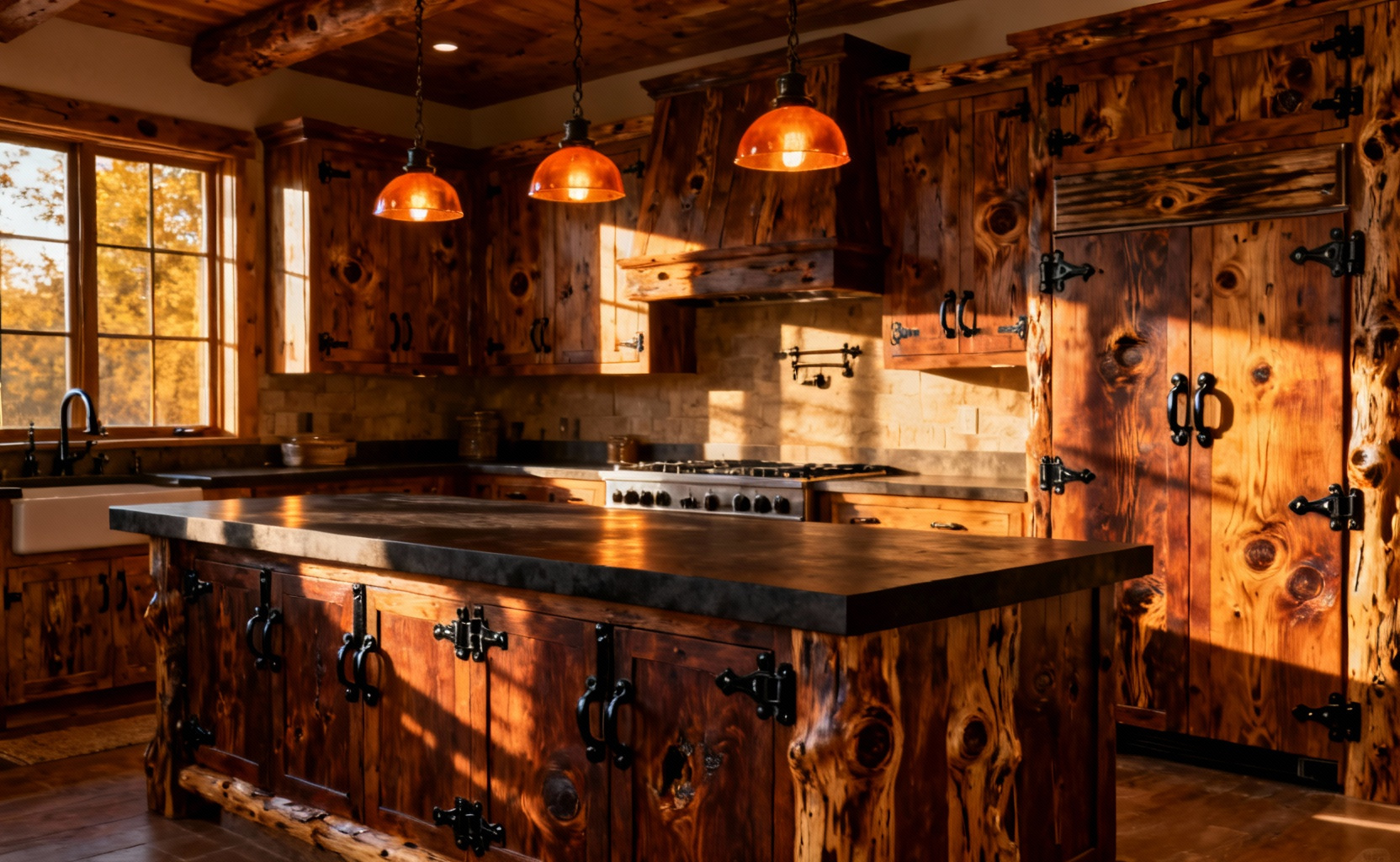
The “soul” of a home often emerges from a concept called material integrity. Specifically, homes designed with rustic kitchen cabinets prioritize visible history over sterile perfection. Unlike minimalist trends, this style embraces natural flaws. Indeed, it highlights knots and mineral streaks rather than hiding them.
For instance, hickory offers a rugged feel. It features extreme color variation and pronounced grain patterns. Similarly, rustic alder provides a softer aesthetic. It creates a welcoming vibe with abundant knots that accept stains beautifully. Therefore, these textured woods naturally hide minor scratches. They remain forgiving options for high-traffic homes.
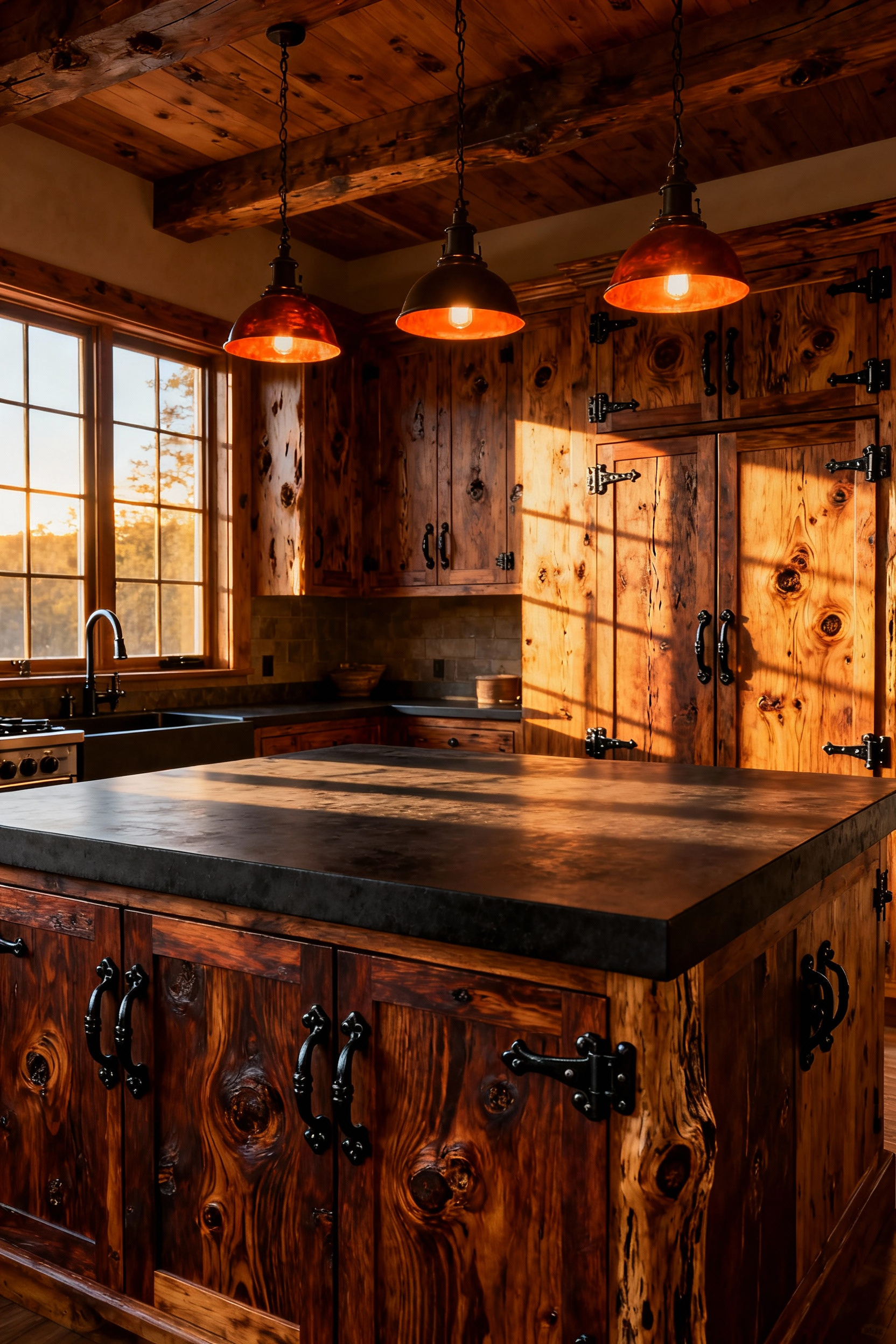
Furthermore, the most authentic warmth often comes from reclaimed wood. This material introduces genuine age that simply cannot be faked. It offers a tangible sense of history. However, artisans can craft this “lived-in” character for new builds through simulated trauma.
For example, they might create “wormholes” using sharp tools. This mimics organic insect damage. Additionally, an antiquing glaze often settles into the wood grain. This creates a time-worn patina. Finally, a “rub-through” technique on painted corners exposes underlying wood. It effectively simulates decades of love and use. Ultimately, these imperfections transform cabinetry. They become a testament to life within the home rather than mere showroom objects.
Modern design trends often demand a flawless, marble-clad perfection. However, a sterile environment rarely feels like a true sanctuary. Instead, we increasingly crave spaces that wear their history openly. Consequently, the “scratched table” represents a rejection of disposable consumer culture.
This shift prioritizes emotional connection over a shiny facade. It embraces *Wabi-Sabi*, finding deep beauty in natural imperfection. Thus, flaws become markers of authenticity rather than failure.
This philosophy naturally extends to the heart of the home. Specifically, rustic kitchen cabinets provide a material language of patina and texture. Unlike synthetic finishes, reclaimed wood accepts the passage of time gracefully. Indeed, gentle scars and visible wear grant a space emotional credibility.
A pristine kitchen often broadcasts a “don’t touch” warning. Conversely, distressed surfaces invite us to truly inhabit the room. Every dent tells a unique story of culinary heritage. Therefore, these elements offer an immediate sense of comfort and belonging.
This guide explores how to balance vintage charm with contemporary needs. We will examine sustainable restoration techniques that preserve these unique narratives. Furthermore, we reveal how to distinguish between damage and desirable patina. Additionally, the text highlights how to integrate mid-century principles with rustic elements. Ultimately, you will learn to curate a space that honors its own history. This ensures you adhere to the key principles of timeless rustic kitchen design.
The Philosophy of Imperfection: Understanding why rustic design resonates in a high-speed digital world
In an era defined by high-speed technology, our daily environments often feel sterile. Consequently, homeowners increasingly seek sanctuary in the tactile warmth of rustic design. Specifically, rustic kitchen cabinets offer a tangible counterpoint. They contrast sharply with the smooth, glowing screens that dominate modern life.
This aesthetic preference is deeply rooted in *Wabi-Sabi*. This Japanese philosophy celebrates transience and imperfection.
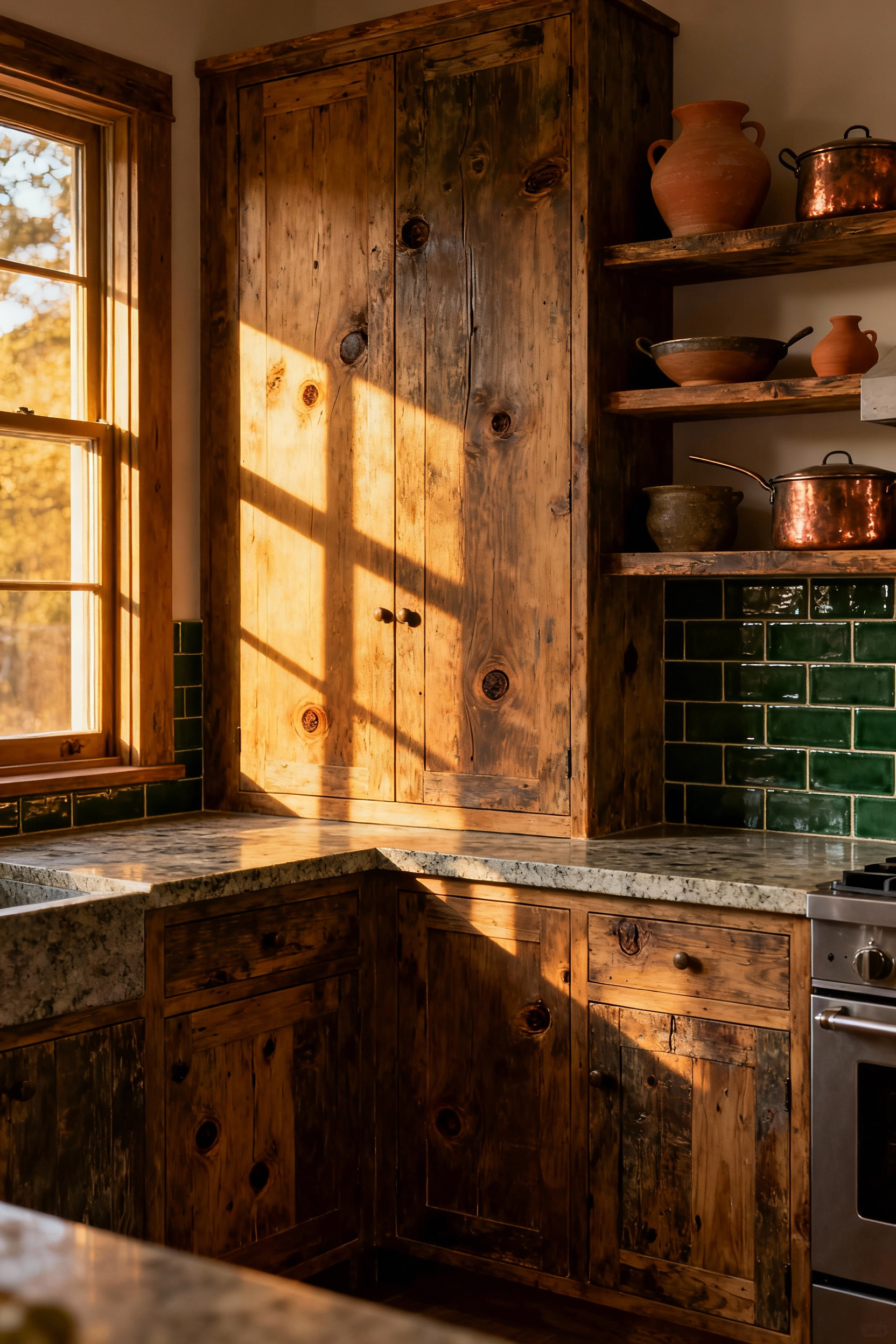
Here, a knot in the wood or an uneven grain isn’t a defect. Rather, it serves as a mark of character. Furthermore, this style embraces patina. It views scratches not as damage, but as a visual record of life. Therefore, these elements ground us in history. They offer permanence against constant digital updates.
Psychologically, this connection to materials creates a necessary balance known as biophilia. According to the biophilia hypothesis, humans possess an innate need to connect with nature. As a result, the tactile depth of reclaimed wood triggers feelings of safety.
In fact, interacting with these organic textures can significantly lower stress levels. This creates a calmer environment compared to high-gloss, synthetic finishes. Historically, this current revival echoes the principles of the Arts and Crafts movement.
Just as 19th-century designers rebelled against industrial mechanization, we now resist the pressure of digital perfection. Thus, we increasingly choose honest construction over mass-produced uniformity. We prefer hand-hewn edges. Ultimately, hiding high-tech appliances behind rustic panels preserves a soothing visual landscape.
1. The Art of Reclaimed Timber: Sourcing Sustainable Wood with a Past Life
Sourcing reclaimed timber elevates cabinetry beyond simple aesthetics. Fundamentally, this material offers structural superiority through old-growth density. Unlike modern fast-grown lumber, these planks originated from slowly maturing trees. Consequently, the tight grain creates exceptional dimensional stability.
In fact, the wood has already survived decades of environmental shifts. Therefore, it is significantly less prone to warping or shrinking in a humid kitchen.
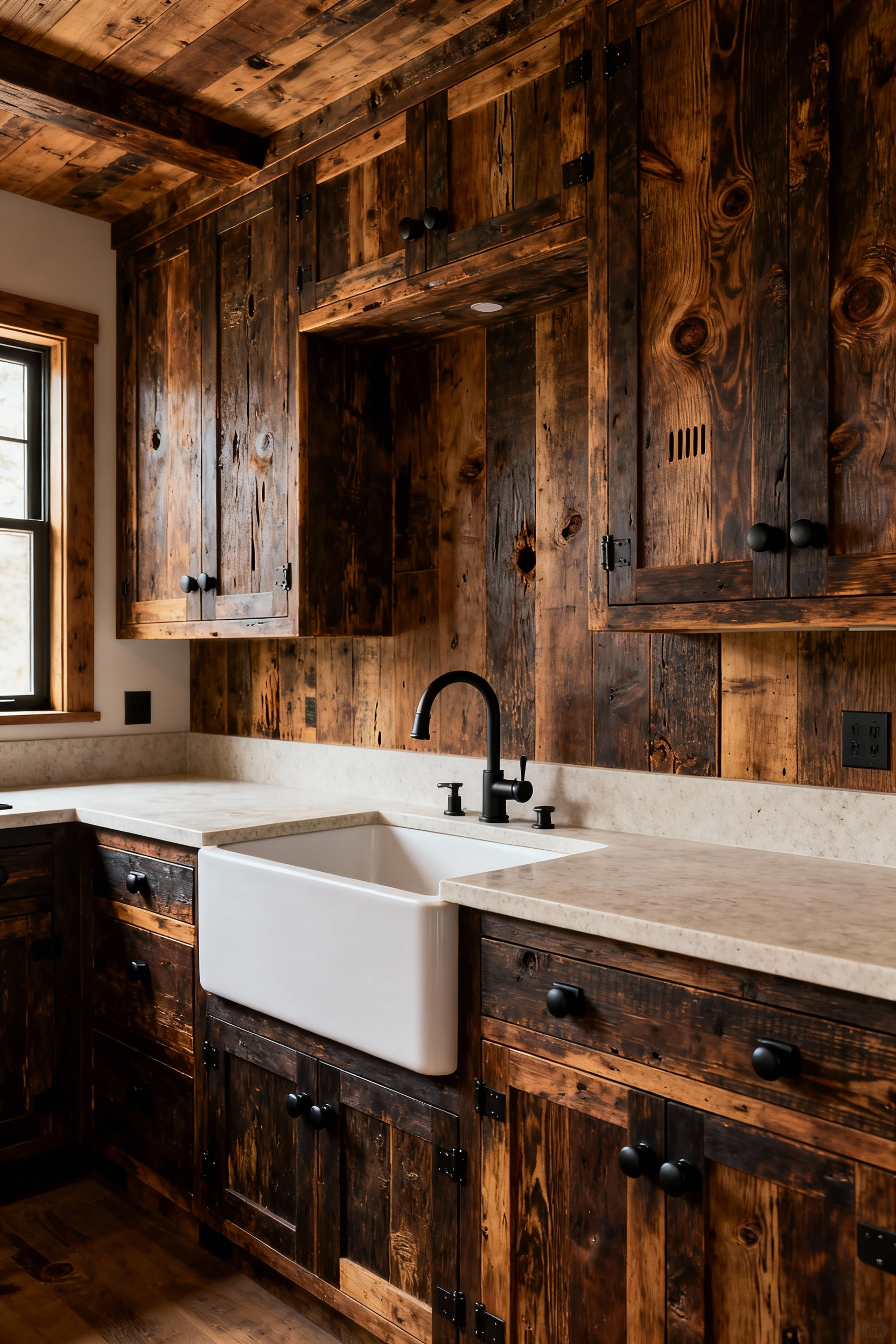
Furthermore, utilizing this lumber acts as a form of historic preservation. You gain access to rare species like the legendary American Chestnut. Specifically, this tree was largely wiped out by blight in the early 1900s. Thus, salvaging it from old barns preserves a lost American legacy.
Alternatively, Heart Pine from industrial factories offers unmatched natural durability. Visually, the surface carries an authentic patina earned over time. For instance, oxidized nail holes and sun spots provide unique texture.
Such character remains impossible to replicate with artificial distressing tools. Instead of a factory finish, the wood displays a genuine narrative.
Moreover, the environmental impact of this choice is profound. Choosing reclaimed wood reduces carbon emissions by up to 50 percent. Additionally, it diverts massive amounts of high-quality material from landfills. Ultimately, your kitchen becomes a beautiful participant in the circular economy.
2. Raw White Oak: The Modern Rustic Standard for Airy, Organic Warmth
Raw white oak has become the definitive standard for the modern rustic movement. Specifically, it bridges the gap between cozy tradition and clean, Scandinavian lines. Unlike the heavily swirled patterns of red oak, white oak features a straight, tight grain structure.
Consequently, this linearity suits modern, flat-panel cabinetry perfectly. Yet, the material retains a genuine, organic character. For instance, quarter-sawn cuts reveal medullary ray flecks. These ribbon-like streaks add architectural texture without overwhelming the eye.
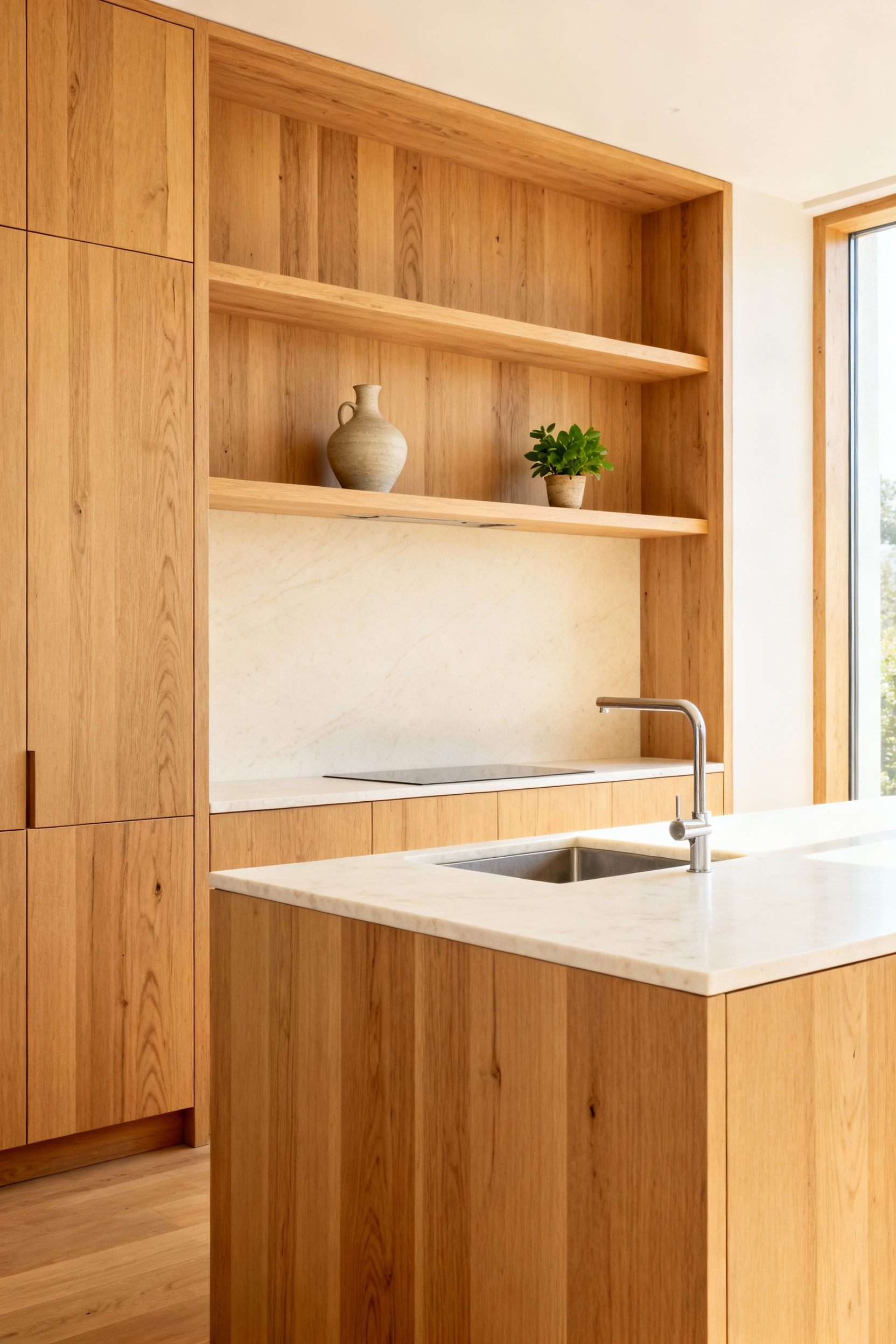
The “raw” aesthetic relies on the wood’s natural pale beige and soft gray undertones. Therefore, restorers often use matte sealants or hardwax oils to preserve this lighter look. Unlike darker woods that absorb light, this finish reflects it. This creates an airy atmosphere.
Beyond aesthetics, white oak offers superior technical performance. In fact, it boasts a Janka hardness rating of 1,360. Historically, its cellular structure made it the top choice for shipbuilding and bourbon barrels.
Because of natural tyloses plugging its pores, the wood is exceptionally water-resistant. Ultimately, this material provides a durable, timeless foundation for any kitchen.
3. The ‘Unfitted’ Kitchen: Incorporating Freestanding Vintage Hutches and Sideboards
The concept of the “unfitted” kitchen offers a refreshing counterpoint to standard built-ins. Historically, kitchens were assemblies of freestanding furniture rather than streamlined, fixed rows. Therefore, incorporating a vintage hutch or sideboard reclaims this authentic, pre-1950s aesthetic.
Unlike fitted rustic kitchen cabinets, these standalone pieces feel collected rather than constructed. Furthermore, this approach champions sustainability. Specifically, a freestanding cupboard is portable and reusable. This effectively saves materials from the landfill.
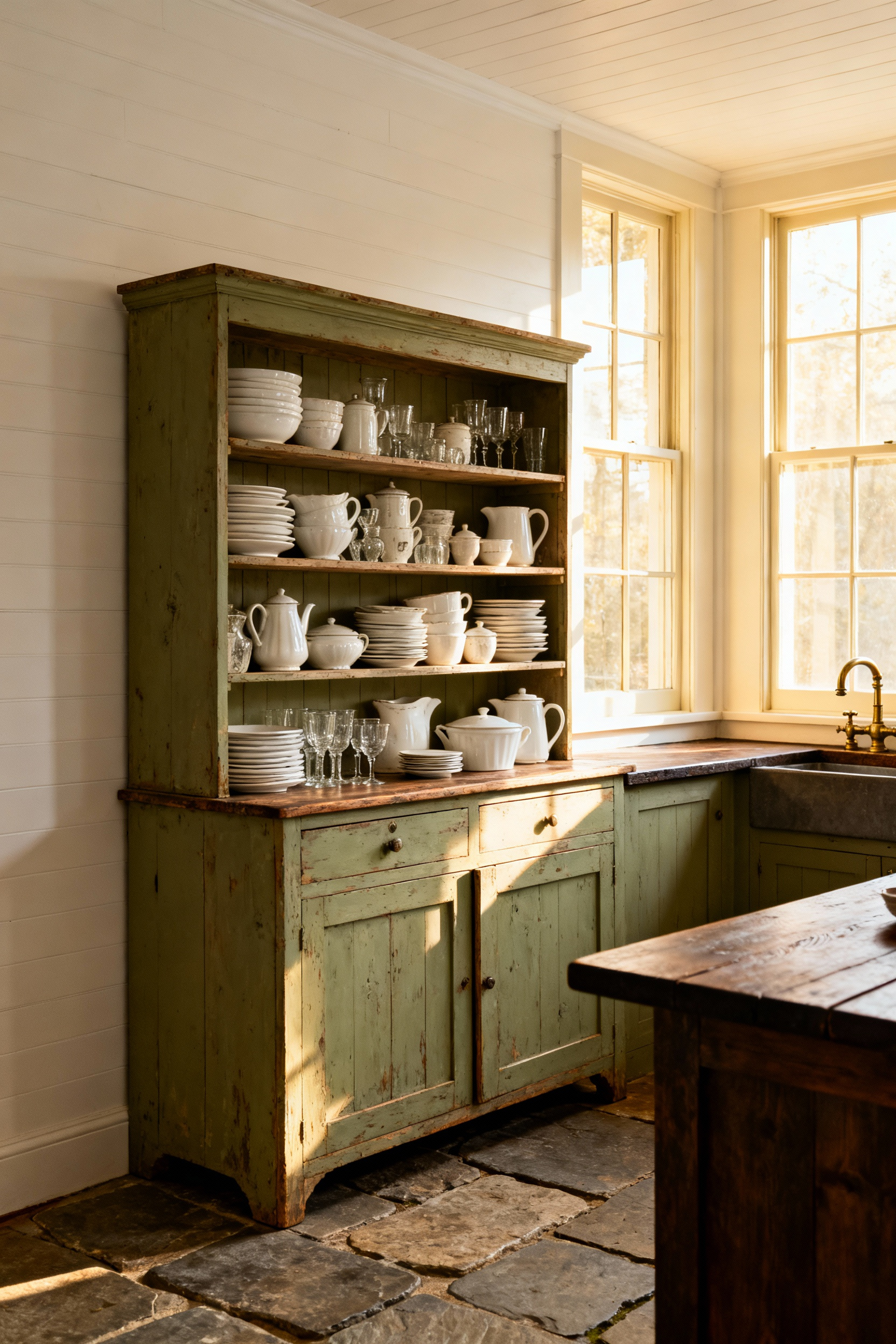
Aesthetically, these vintage finds introduce a depth that modern manufacturing cannot replicate. For instance, the patina of an antique oak sideboard tells a unique story. Nicks, scratches, and faded finishes provide a tactile richness against smoother, fixed cabinetry.
Consequently, this creates a “high-low” contrast. It prevents the room from feeling too staged. Ideally, the freestanding element acts as a stylistic bridge between old-world charm and modern utility. This technique is particularly effective when designing luxurious small cottage kitchens.
Beyond aesthetics, freestanding pieces offer specialized functionality. In fact, a sturdy buffet serves perfectly as a dedicated coffee bar or baking station. Additionally, glass-fronted hutches transform simple storage into curated displays.
They highlight heirloom china or copper cookware. Thus, the furniture becomes a vertical focal point. It grounds the space with history. Ultimately, this transforms a sterile workspace into a relaxed “keeping room” rich with personality.
4. Wire-Brushed Finishes: Adding Tactile History to New Cabinetry
Wire-brushed finishes introduce a refined simplicity that smooth surfaces simply cannot match. Technically, this process involves rotating brushes. These brushes selectively remove the wood’s softer springwood. Consequently, the denser, darker summerwood ridges remain proud and intact.
This creates a subtle, linear texture. It runs perfectly parallel to the grain. Furthermore, the result feels organic rather than abrasive. In fact, it creates a tactile quality that mimics the natural weathering wood undergoes over decades. Thus, you achieve a “lived-in from day one” aesthetic without random gouges.
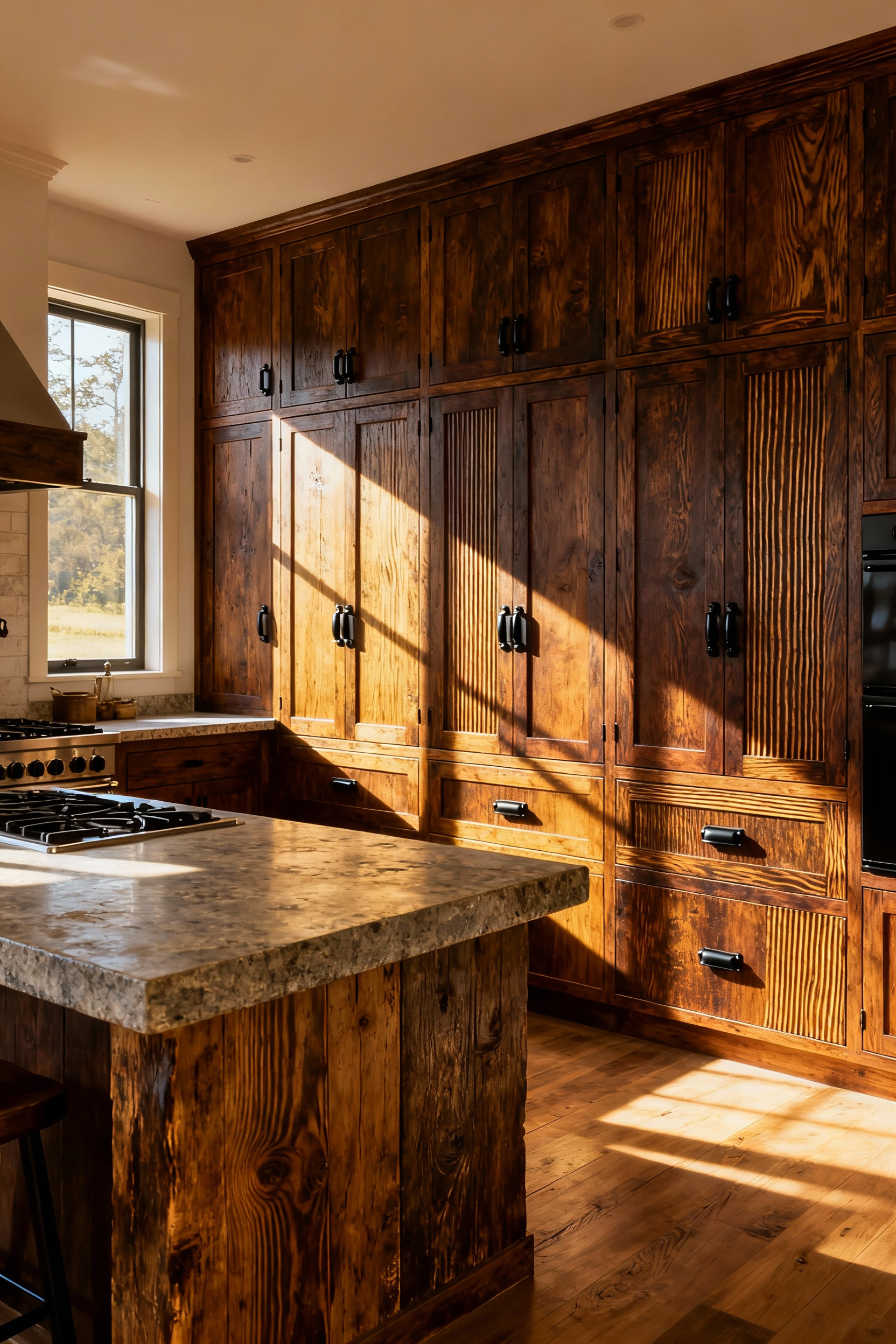
Moreover, this modern texturing enables the revival of the classic Cerused finish. Historically, this technique dates back to 16th-century Europe. Today, wire-brushing deepens the wood’s pores to interact with non-toxic glazes.
Specifically, a contrasting color is pushed into the recessed springwood. Once the excess is wiped away, that color remains locked within the grain. Therefore, the cabinet face gains dramatic visual depth and historical character.
Finally, this finish offers a balance of rustic charm and modern durability. Practically, the intentional texture acts as a natural camouflage. For instance, fingerprints, scuffs, and minor scratches blend seamlessly into the existing patina. Unlike smooth finishes where every mark glares, wire-brushed cabinets age gracefully. Ultimately, this matte, dimensional surface suits everything from coastal designs to modern Scandinavian spaces.
5. Sage, Clay, and Slate: Earth-Inspired Matte Paint Colors that Ground the Space
Selecting the right hue is critical for a rustic aesthetic. However, the finish itself is equally vital to the final look. Specifically, a matte finish absorbs light rather than reflecting it. Consequently, this lack of shine mimics natural surfaces like honed stone or dried mud.
It gives the cabinet a palpable, less-manufactured feel. Therefore, the paint becomes a tactile experience, not just a visual one.
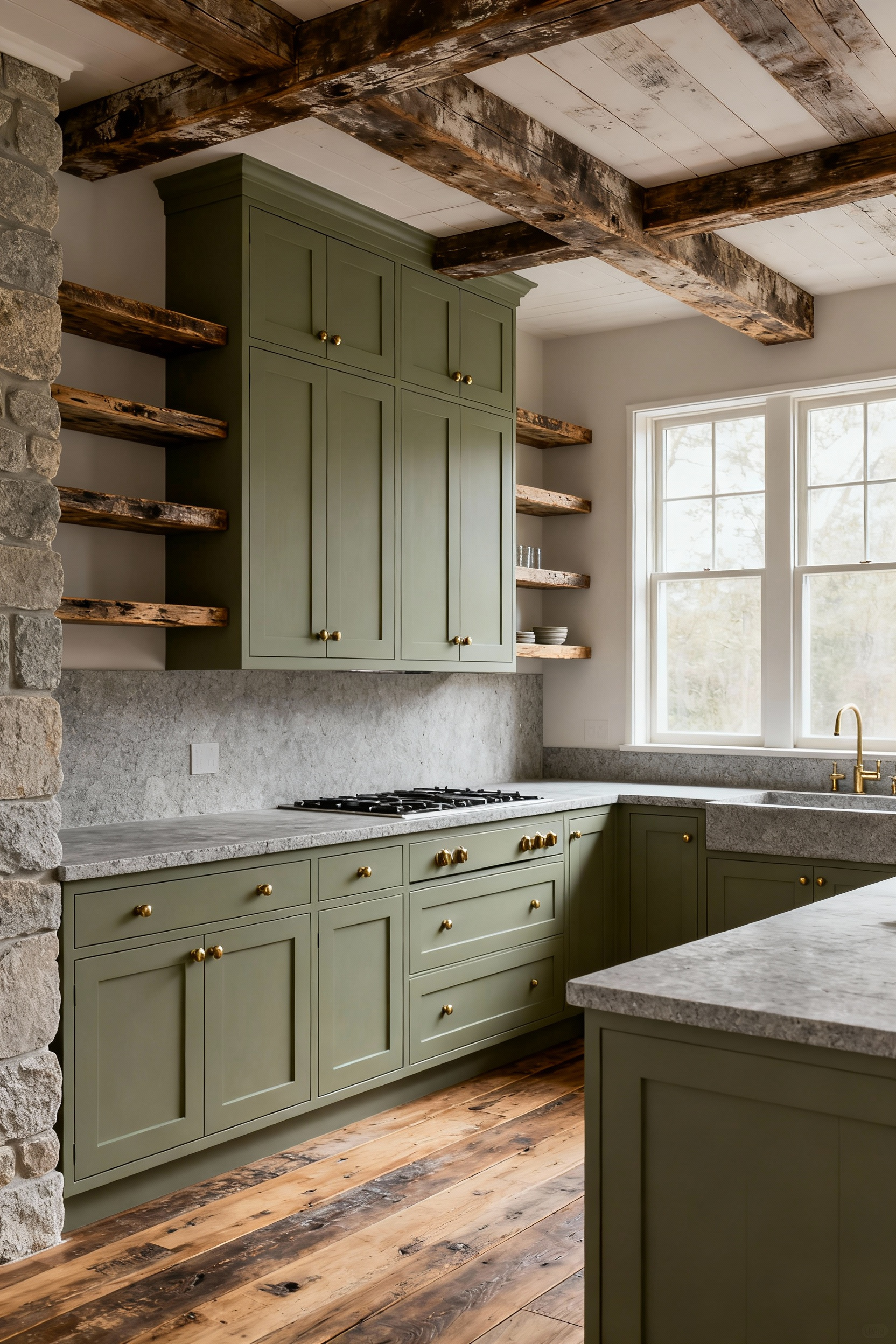
Sage serves as the most soothing option among these earth tones. It acts as a “new neutral” derived from steady plant life. Ideally, choose muted shades with gray undertones to avoid a pastel look. Thus, the color feels lived-in and sanctuary-like. It connects the kitchen directly to the tranquility of flora.
Alternatively, Clay offers a deep, ancestral comfort. Historically, this material has been fundamental to kitchen design for centuries. Therefore, painting cabinets in mushroomy or terracotta tones creates genuine warmth. It provides a tactile sense of home without relying on overly dark shades.
Finally, Slate brings the quiet strength of bedrock. Unlike flat gray, true slate possesses subtle blue or green undertones. Consequently, it shifts beautifully with the changing light. Using this heavy color adds sophisticated structure to the room. It anchors the space, ensuring the rustic design feels modern and composed.
6. Knotty Alder Revival: How to Style Wood Knots without the ‘Log Cabin’ Cliché
Many homeowners fear Knotty Alder inevitably leads to a “log cabin” aesthetic. However, the secret lies in manipulating the wood’s character to serve as an accent. Specifically, proper finishing techniques prevent the rustic elements from dominating the texture.
For instance, glazing involves applying a clear sealer followed by a gel stain. Consequently, the stain collects intentionally in knots. This creates a chiseled, refined depth. This process elevates the knots from raw imperfections to curated features.
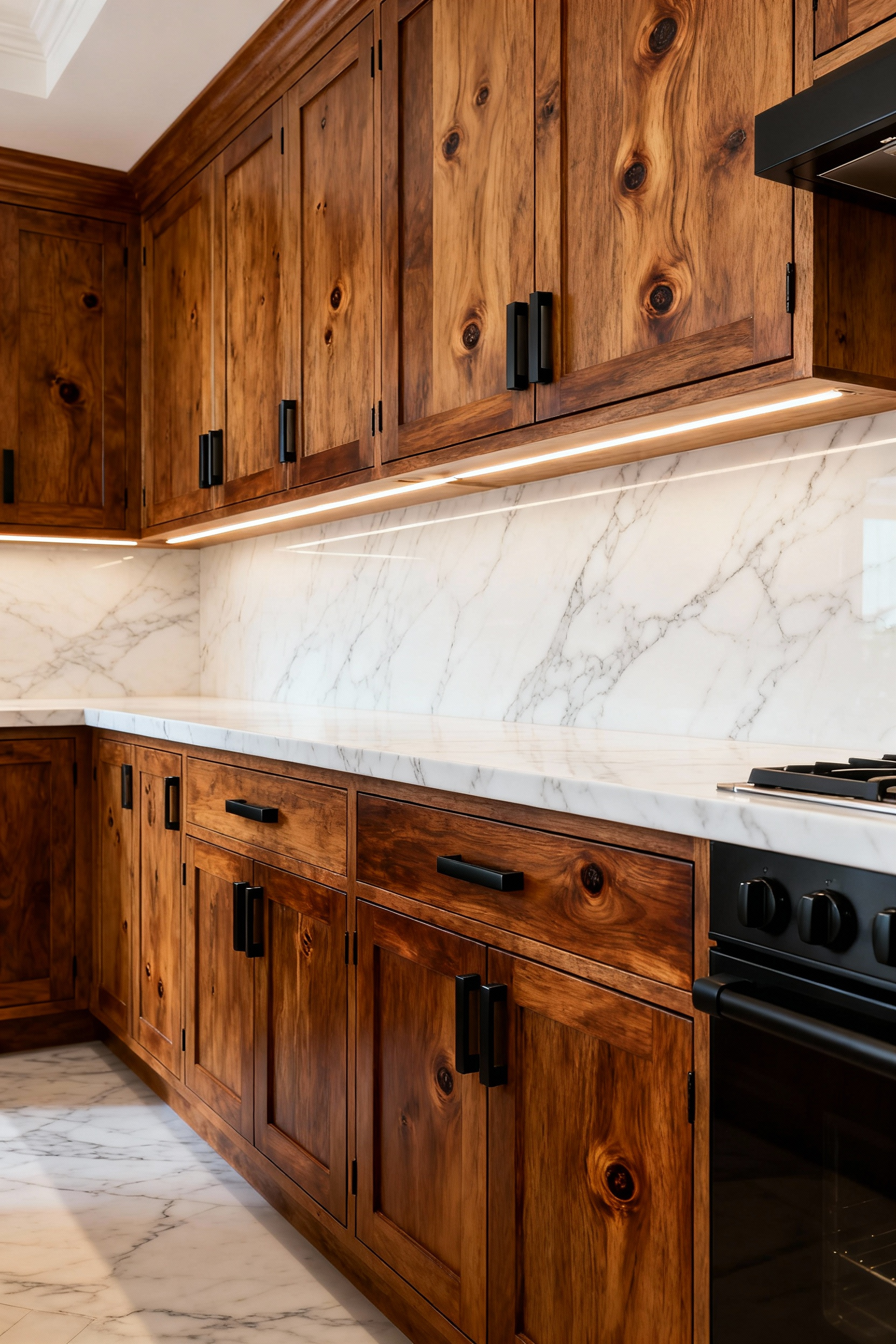
Alternatively, a whitewash finish significantly softens the wood’s deep warmth. In fact, this technique creates a sophisticated “driftwood” look suitable for modern farmhouse styles. For an even bolder approach, painting the cabinets white neutralizes the rustic color entirely.
Yet, the tactile texture of the knots remains visible. It offers a subtle, organic contrast. Furthermore, structural choices play a crucial role in avoiding clichés. Therefore, consider mixing wood grades within the same room.
You might reserve Knotty Alder for a focal point, like a kitchen island. Then, use smoother Clear Alder for the surrounding perimeter. Additionally, shifting away from elaborate raised panels helps modernization. Instead, opt for sleek Flat-Panel or Shaker doors.
Finally, pairing this warm wood with matte black or brass hardware introduces necessary tension. Ultimately, this combination of raw texture and minimalist form creates a timeless, modern space.
7. Architectural Salvage: Upcycling Antique Shutters and Doors for Unique Cabinet Fronts
Incorporating architectural salvage brings tangible history into a modern kitchen. Specifically, this approach harvests “provenance” that factory distressing simply cannot replicate. For example, authentic patina reveals a poetic narrative of decay through the wood’s surface.
You might find mineral staining around old nail holes or wide, characterful growth rings. Furthermore, historical colors often fade into complex, chameleon-like finishes. Indeed, deep greens typically age into the “green-black” tones once used for rust prevention.
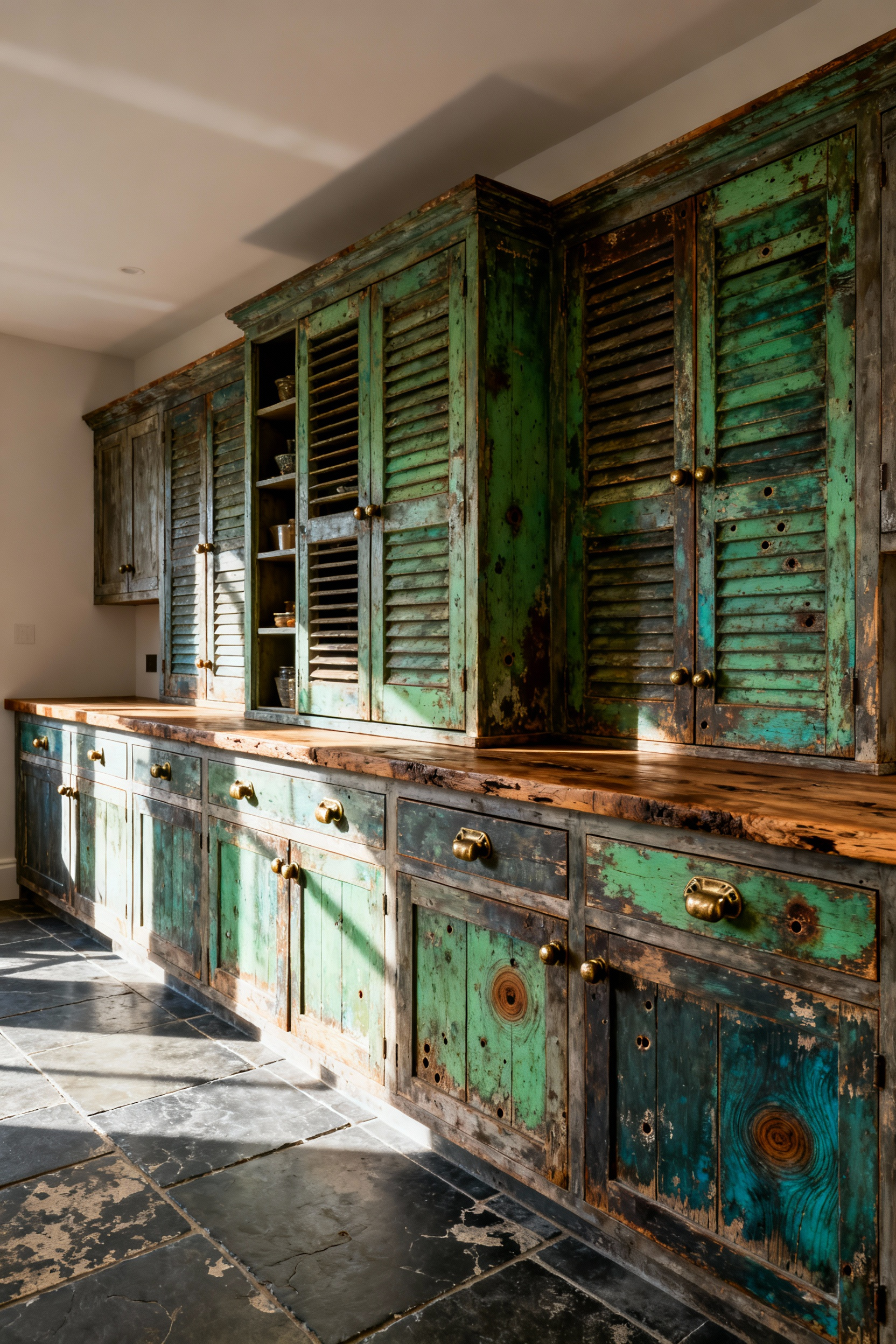
Functionally, antique shutters offer unique textures for cabinet faces. Louvered doors, for instance, instantly evoke a charming French countryside aesthetic. These horizontal lines create a sculptural contrast against smooth, contemporary cabinetry. Additionally, salvaged woods like Douglas Fir and Western Red Cedar provide natural durability.
However, safety is the most critical technical consideration. Since many pieces predate 1978, lead paint is a likely hazard. Therefore, professionals recommend encapsulation rather than sanding to preserve the aesthetic safely.
Use a clear binding primer to stabilize any flaking or chalking paint layers. Subsequently, seal the wood with a food-safe, water-based polycrylic. Unlike oil-based finishes, this prevents yellowing. It maintains the integrity of those creamy whites and faded sages.
8. The Softened Industrial Edge: Pairing Rough Wood with Sleek Concrete Countertops
The success of this pairing is rooted in dramatic sensory contrast. Specifically, it prevents either material from feeling monotonous or overwhelming. Rough-sawn cabinetry invites touch with its organic warmth and visible grain.
Conversely, concrete countertops offer a smooth, cool-toned surface that acts as an anchor. Consequently, this juxtaposition creates a harmonious visual balance. The wood softens the sharp, utilitarian lines of the concrete effectively. Simultaneously, the sleek concrete modernizes the rugged cabinet texture, preventing a heavy aesthetic.
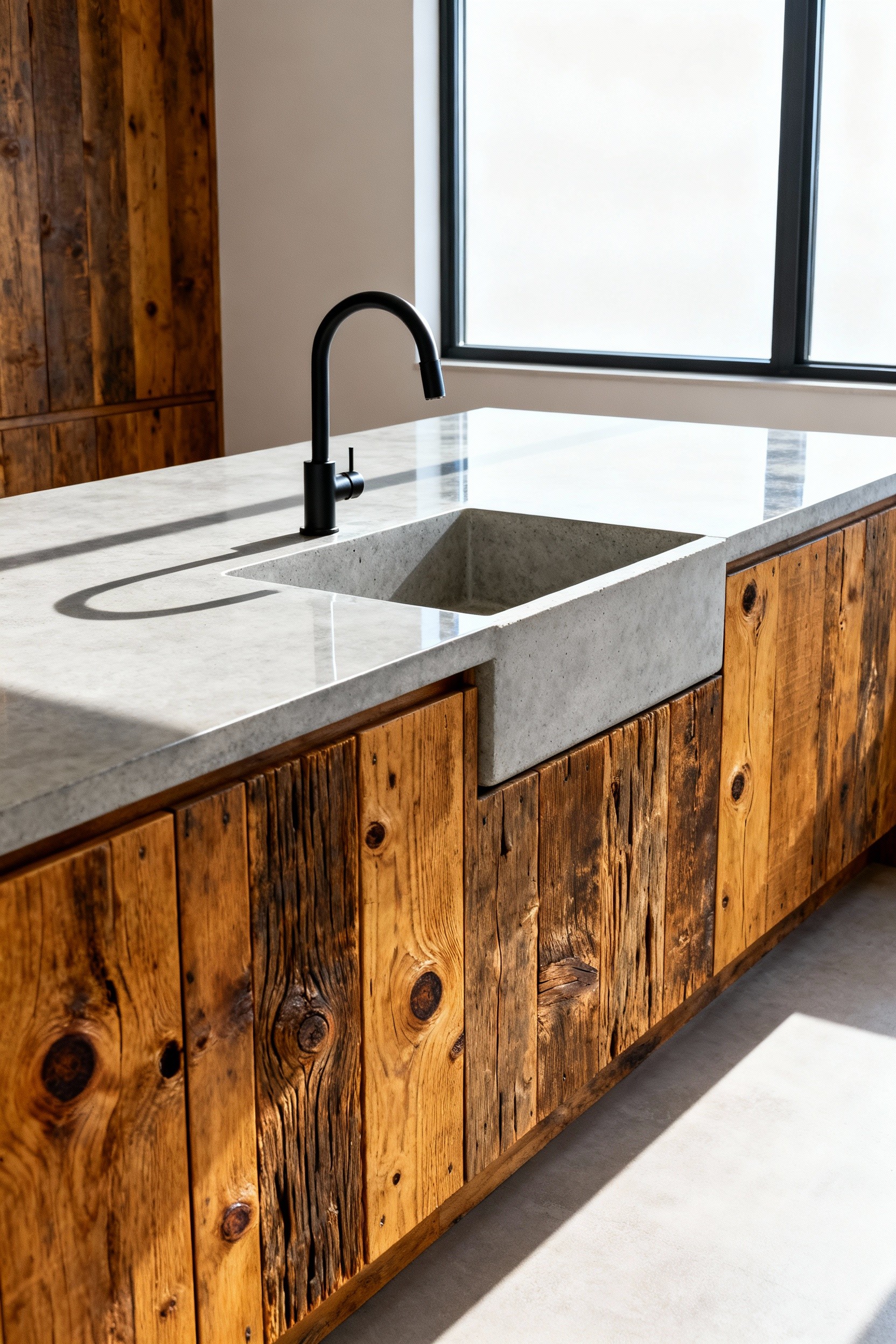
Beyond aesthetics, concrete serves as a functional, grounding force. Designers often choose a matte finish to maintain an earthy, honest quality. Furthermore, customization options allow for subtle textural interest. For instance, adding crushed shells to the mix can reflect light nicely.
This connects the modern surface back to the wood’s natural elements. Ideally, modern applications utilize marine-grade sealants to ensure a hygienic workspace. Therefore, the countertop remains non-porous despite the material’s porous reputation.
Ultimately, blending heritage craftsmanship with modern material science creates timeless appeal. This combination offers a lived-in yet forward-looking atmosphere for the home.
9. Chicken Wire and Seeded Glass: Creating Visual Texture and Depth
This combination serves as a high-concept alternative to plain glass or mesh. Specifically, the design power lies in the intentional juxtaposition of distinct materials. Historically, chicken wire—or poultry netting—was strictly utilitarian. In fact, it originally provided crucial air circulation for vintage pie safes and pantry doors.
Conversely, seeded glass introduces a soft, artisanal element. Also known as “bubble glass,” its trapped air pockets mimic imperfect, hand-blown traditions. Therefore, pairing the cold, hexagonal wire with organic, flawed glass creates a compelling visual dynamic. This tension elevates a simple country aesthetic into a sophisticated, curated style.
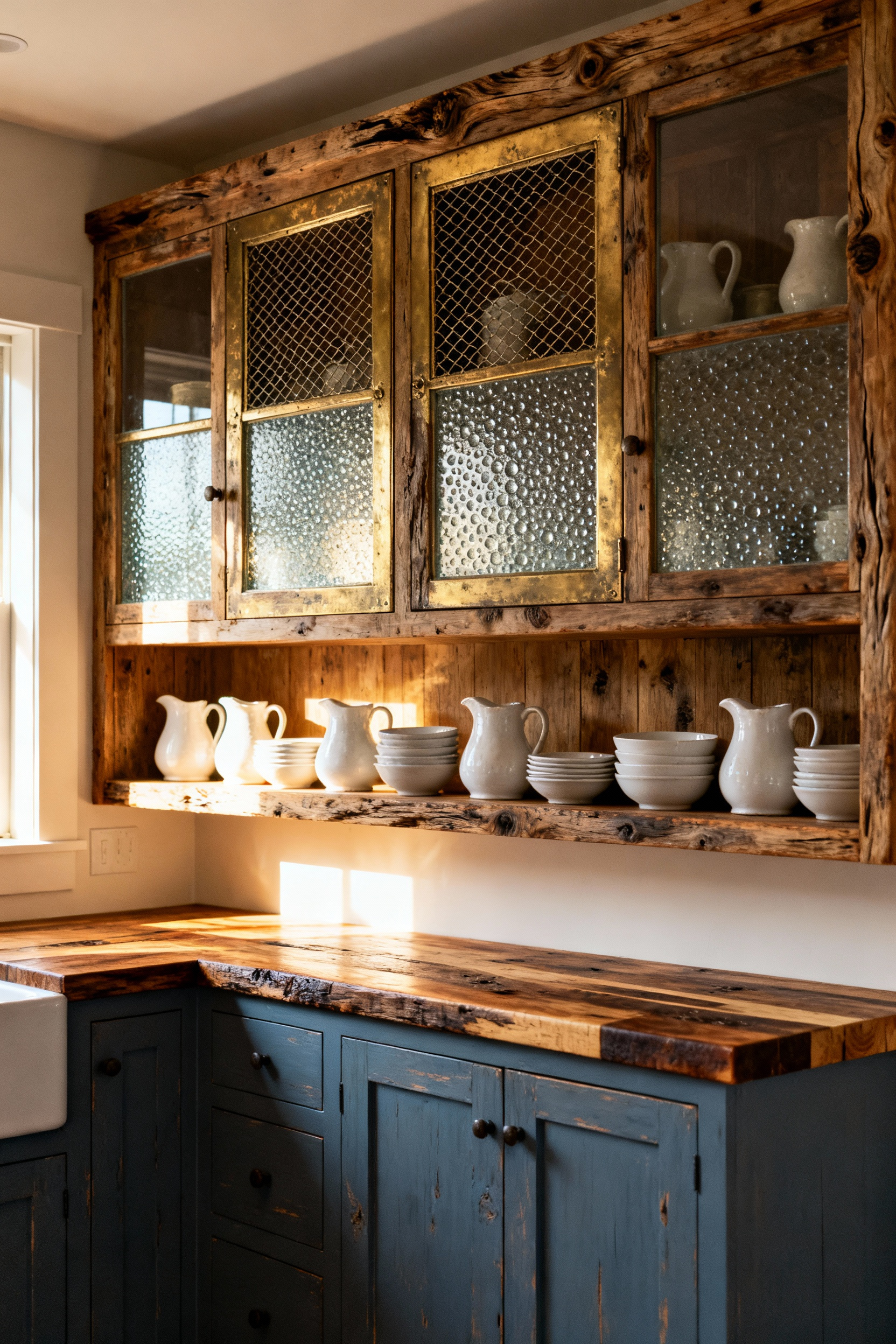
Beyond style, this pairing offers a calculated functional advantage. Notably, the dual textures work together to obscure the cabinet’s contents. Unlike clear glass, this combination reveals only soft, blurred silhouettes. Consequently, it maintains an open, airy feeling while effectively hiding interior clutter.
Additionally, the materials interact with light in unique ways. The rippled texture diffuses light, while the bubbles create a mesmerizing, shimmering effect. Thus, the physical separation of wire and glass establishes a three-tiered visual plane. This layering dramatically enhances the sense of depth within the shelving.
Ultimately, these materials evoke a rich, sensory experience. The visual texture implies a strong, tactile, handmade quality. Furthermore, the aesthetic resonates with nostalgic, old-world charm. It suggests the history of a working farmhouse without sacrificing elegance.
As a result, this design choice bridges the gap between pure rustic and industrial styles. It allows homeowners to honor design history while meeting contemporary needs for storage.
10. Patina over Polish: Choosing Unlacquered Brass and Hand-Forged Iron Hardware
Selecting hardware involves more than simple aesthetics. Fundamentally, it represents a philosophical departure from flawless consistency. In design terms, these materials are known as “living finishes.” Unlike mass-produced items, they are encouraged to change and grow over time. Therefore, the evolving surface becomes a visual chronicle of the home’s activity.
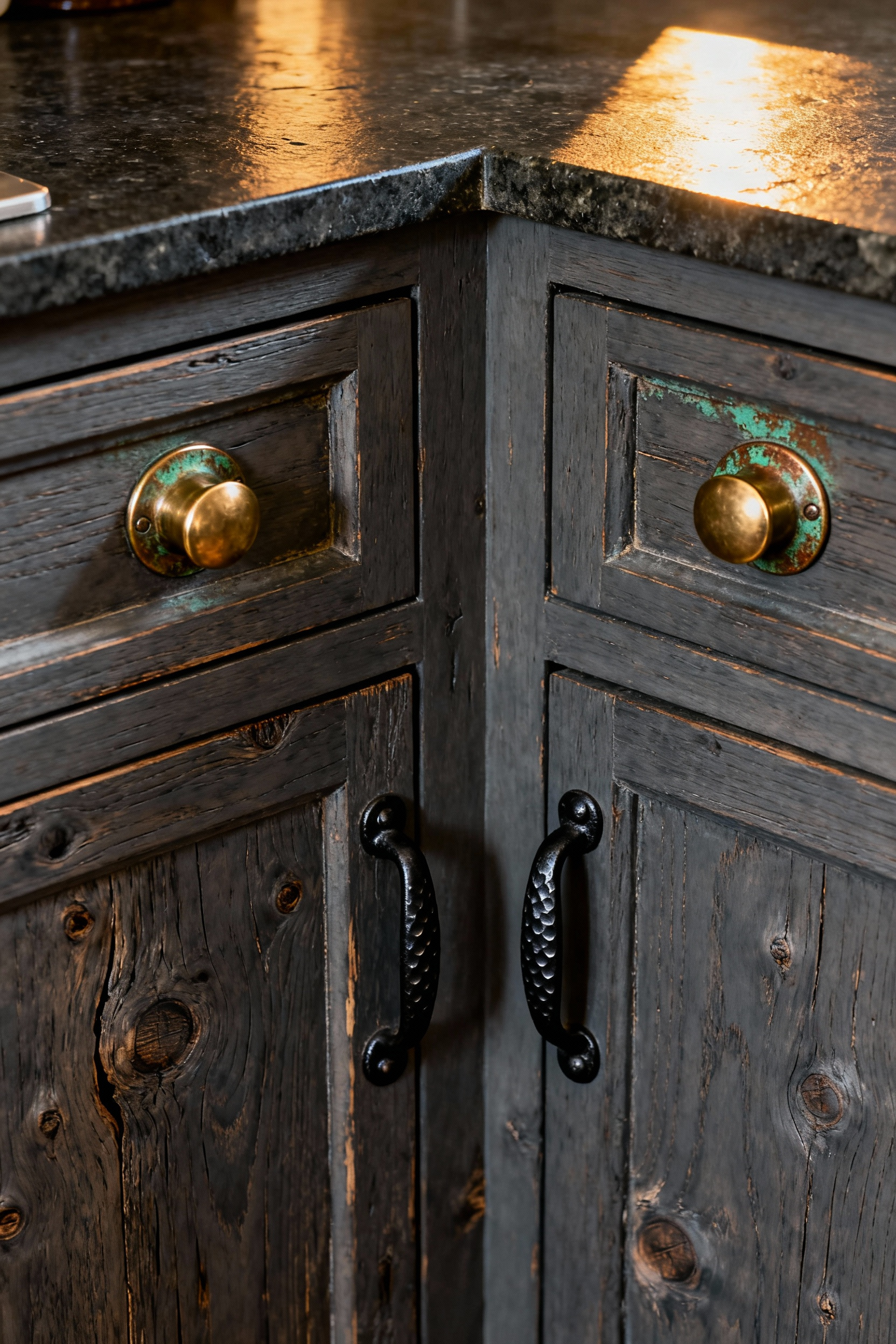
Specifically, unlacquered brass begins as a highly reflective surface. Immediately, however, it starts an accelerated patination process. This reaction creates a unique “patina map” across the metal. For instance, frequent handling keeps central areas polished and bright.
Conversely, untouched edges oxidize into deep, rich bronze tones. Beyond beauty, raw brass naturally possesses antimicrobial properties. Thus, it effectively neutralizes bacteria in high-traffic food preparation zones.
Alternatively, hand-forged iron offers a rugged, tactile contrast. It signals authentic, centuries-old artisanal craftsmanship. Traditionally, blacksmiths apply a hot beeswax seal to these pieces. This process opens the iron’s pores to absorb the wax.
Consequently, the metal darkens organically while gaining corrosion resistance. This technique mirrors the seasoning of a cast iron skillet. Ultimately, choosing patina over polish champions a “perfectly imperfect” narrative.
11. Mid-Century Rustic: Blending Clean Retro Lines with Raw Natural Materials
Mid-Century Rustic design relies on a deliberate visual tension. Specifically, it marries strict post-war geometry with soulful, traditional warmth. At its core, this style embraces the signature MCM slab door. However, instead of smooth teak, these flat panels feature raw textures. Consequently, the clean silhouette frames nature’s imperfections without creating visual chaos.
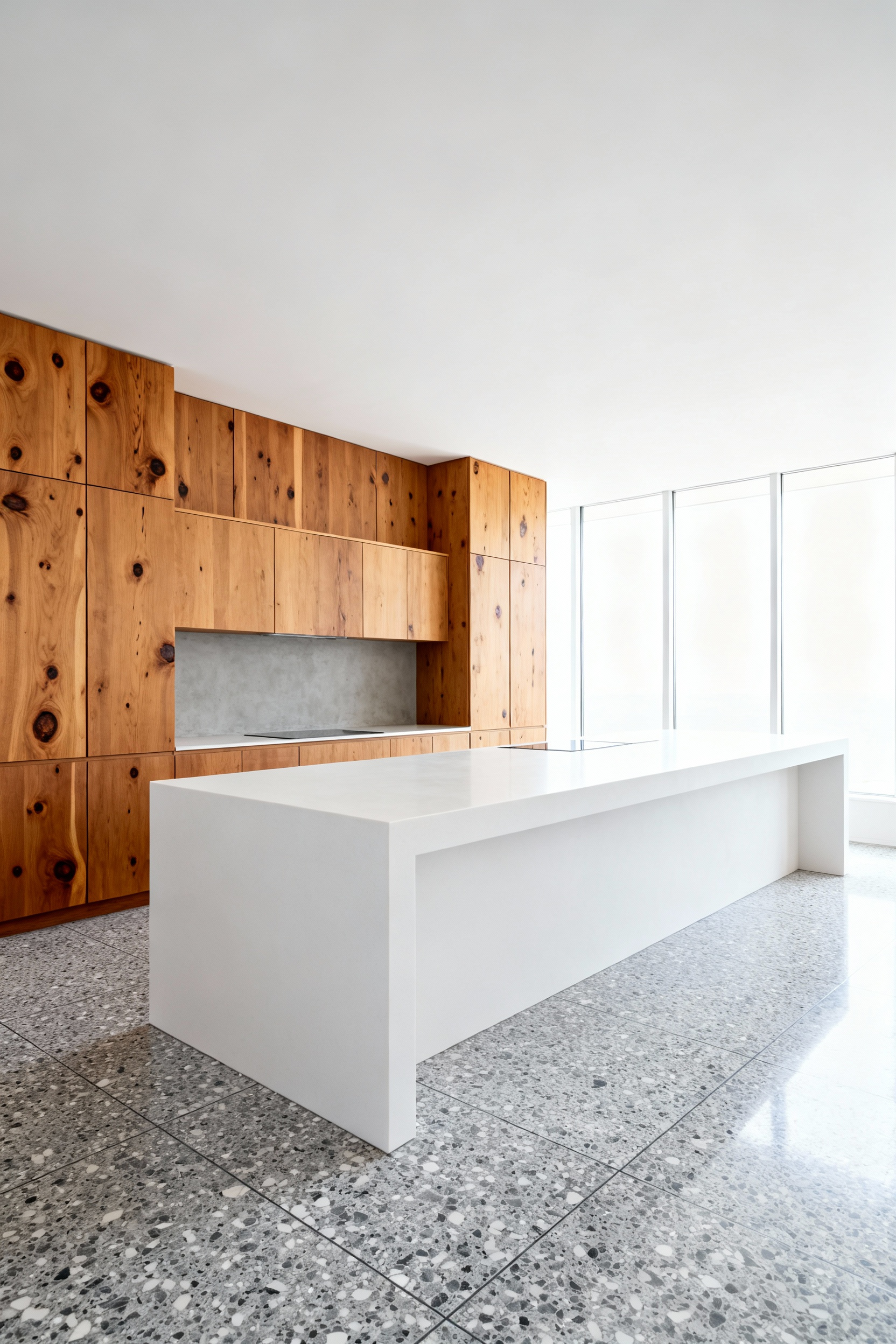
Knotty Alder serves as a definitive material choice here. In fact, its pronounced knots and intricate grain offer immediate character. To maintain the strict linear profile, restorers often utilize veneers over a stable substrate. This technique stabilizes the wood while showcasing its weathered beauty.
Therefore, you achieve the sharp retro look without the risk of warping. Ultimately, this aesthetic rejects sterile modernism. Instead, it prioritizes authenticity over uniformity. The resulting space feels collected over time rather than mass-produced.
Furthermore, hardware acts as a critical bridge between these eras. Aged bronze or copper pulls add necessary tactile warmth to the cabinetry. Thus, the kitchen becomes a place of comfort, weight, and history. If your pursuit of authenticity leans toward high contemporary design, explore our definitive guide to Architectural Masterpieces Redefining the Modern Luxury Kitchen.
12. The Apron-Front Sink Base: Designing Cabinetry Around Statement Basins
The apron-front sink serves as more than just a visual centerpiece in rustic design. Historically, this fixture originated in 17th-century Britain out of ergonomic necessity. Specifically, the exposed front allowed users to stand directly against the basin without leaning over a countertop. Consequently, this design eliminated back strain during strenuous daily chores. Today, this functional heritage translates into a “statement basin” that anchors the kitchen’s aesthetic.
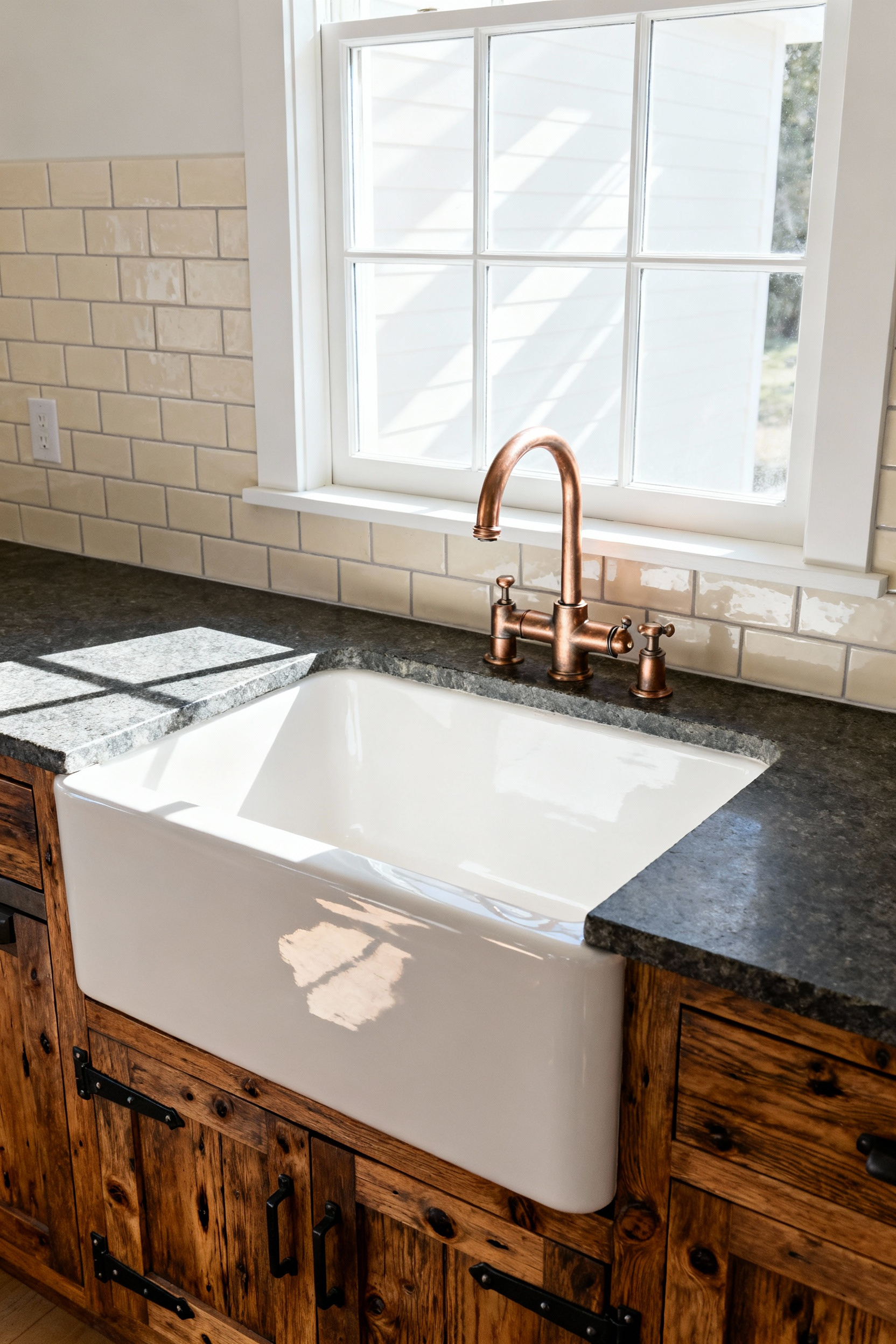
Aesthetically, the deep basin replaces the standard false drawer front found on typical cabinets. Furthermore, the interplay between materials creates a compelling visual story. For instance, white fireclay offers a crisp, bright contrast against dark, weathered wood grains. Alternatively, copper or soapstone sinks blend seamlessly with stained cabinetry for a moody, authentic patina.
However, incorporating these heavy fixtures requires specialized structural planning. Fireclay and cast iron models can weigh over 100 pounds before adding water. Therefore, standard cabinet floors provide insufficient support. Instead, carpenters must construct a robust internal framework using 2×4 or 2×6 lumber. This hidden structure bears the load independently. It ensures long-term stability.
Finally, achieving a seamless look demands specific construction methods. Because handmade sinks often feature irregular shapes, face-frame cabinetry is strongly recommended over frameless styles. Specifically, the solid wood frame allows installers to “scribe” or cut the wood. This technique matches the cabinet precisely to the sink’s unique curvature. It eliminates unsightly gaps. Thus, the cabinet becomes a bespoke cradle for the basin.
13. Open Shelving with Live-Edge Slabs: Reducing Visual Bulk while Maximizing Texture
Replacing upper cabinets with open shelving immediately creates a sense of spaciousness. Specifically, live-edge slabs offer a sophisticated advantage over standard straight-edge lumber. Although these slabs are often thicker—typically up to two inches—their organic contours paradoxically soften the visual weight.
Unlike the rigid, architectural lines of boxy cabinetry, the undulating edge breaks up the room’s visual mass. Consequently, the eye travels freely along the sculptural curves. This prevents the space from feeling compressed. Furthermore, this negative space frames the wall behind it, keeping the kitchen feeling open and airy.
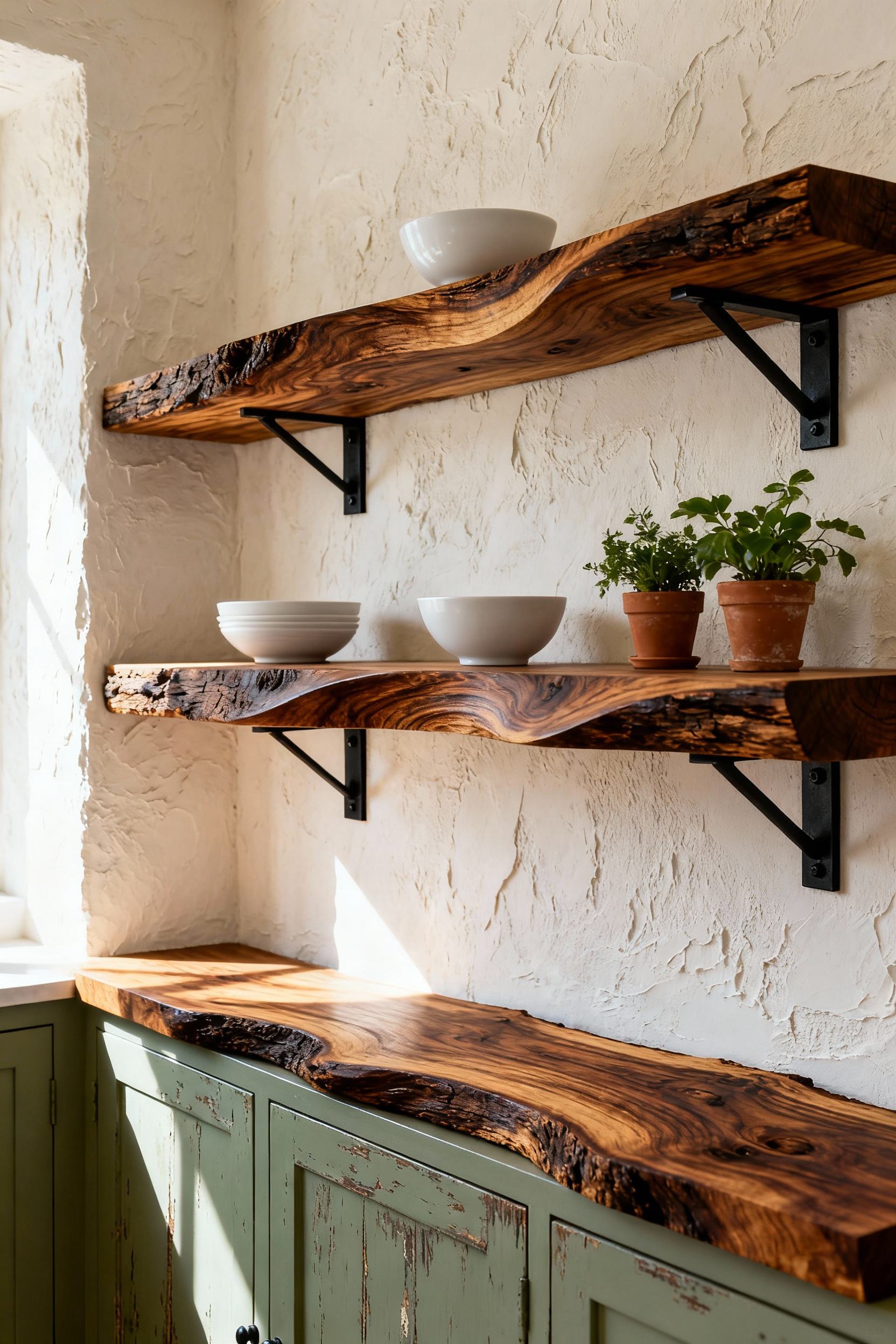
Beyond the silhouette, this design choice maximizes texture through biophilic principles. Essentially, this approach reconnects the modern home to the natural world. The wood retains its original narrative. It proudly displays knots, burls, and sapwood demarcations.
Therefore, the finish applied is critical to the experience. Using a matte natural oil instead of glossy lacquer invites a direct, tactile connection. You do not just see the grain; you feel the raw, organic history.
Finally, incorporating live-edge elements honors a rich mid-century design lineage. Renowned furniture artist George Nakashima popularized this style by consciously respecting the “tree’s heart and spirit.” Today, restorers continue this tradition by stabilizing natural cracks with inlaid butterfly joints.
These distinct wooden bow ties turn structural necessities into celebrated artisanal features. Ideally, homeowners should choose durable species like Black Walnut or White Oak for deep color contrast. Ultimately, these slabs function not just as storage, but as timeless pieces of functional art.
14. Sustainable Sealing: Protecting Raw Wood Cabinets with Natural Oils and Waxes
For rustic cabinetry, the finish defines the tactile experience. Specifically, natural oils penetrate deep into the wood fibers rather than sitting on top. Consequently, they accentuate every knot and curve without creating a synthetic layer.
In contrast, commercial lacquers often form a plastic-like film. Therefore, penetrating oils honor the wood’s natural texture and matte sheen. This preserves the sought-after patina.
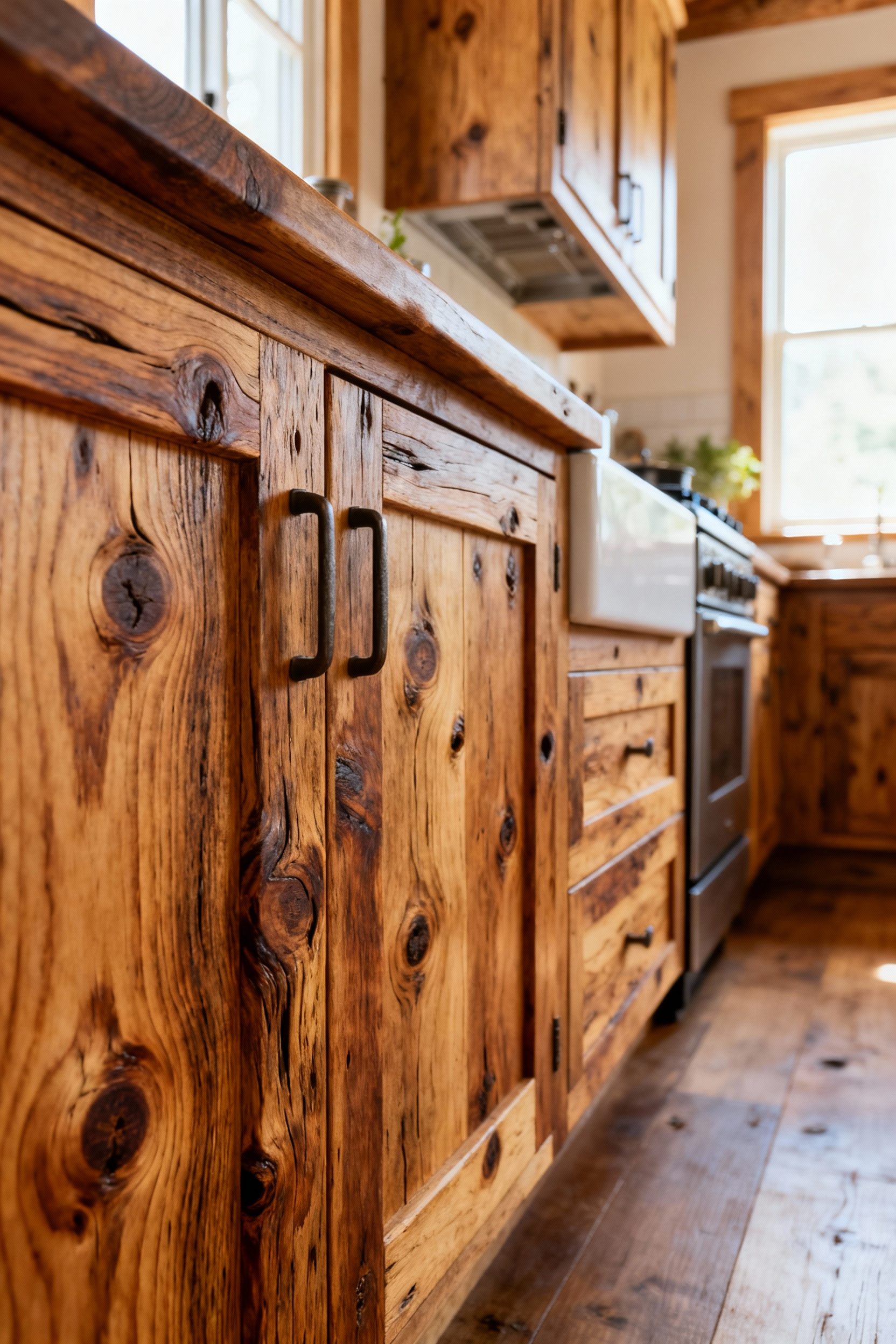
However, pure oils can sometimes lack necessary water resistance for busy kitchens. To address this, Hardwax-Oil blends offer a modern, sustainable solution. These formulas combine hardening vegetable oils with durable natural waxes like Carnauba.
As a result, the oil reinforces the wood structure internally. Simultaneously, the wax cures on the surface to create a durable micro-barrier against moisture.
Furthermore, this approach embraces the rustic philosophy of “aging gracefully.” If scratches occur, you can simply spot-repair them with fresh oil. This avoids total refinishing. Notably, distinct oils impact color differently. For instance, Linseed oil creates a warm, amber hue over time.
Conversely, pure Tung oil remains clear and non-yellowing. Finally, these finishes prioritize indoor air quality. Because they are often plant-based, they contain zero or ultra-low volatile organic compounds (VOCs). Thus, you avoid bringing harsh chemicals into your culinary space. Ultimately, using natural oils returns to a time-honored, non-toxic preservation method.
15. Vintage Textile Integration: Softening Wood Tones with Skirted Sinks and Runners
Rustic cabinetry often dominates a kitchen with rigid lines and dense textures. Consequently, the space can sometimes feel overly heavy or austere. Integrating vintage textiles acts as a necessary counterpoint to this architectural weight.
Specifically, fabric creates a visual “cushion” against the hard surfaces of wood and stone. Unlike linear cabinet doors, a textile element introduces fluid movement through drape and pleats. Therefore, the room feels less like a sterile workshop and more like a cozy, lived-in hub.
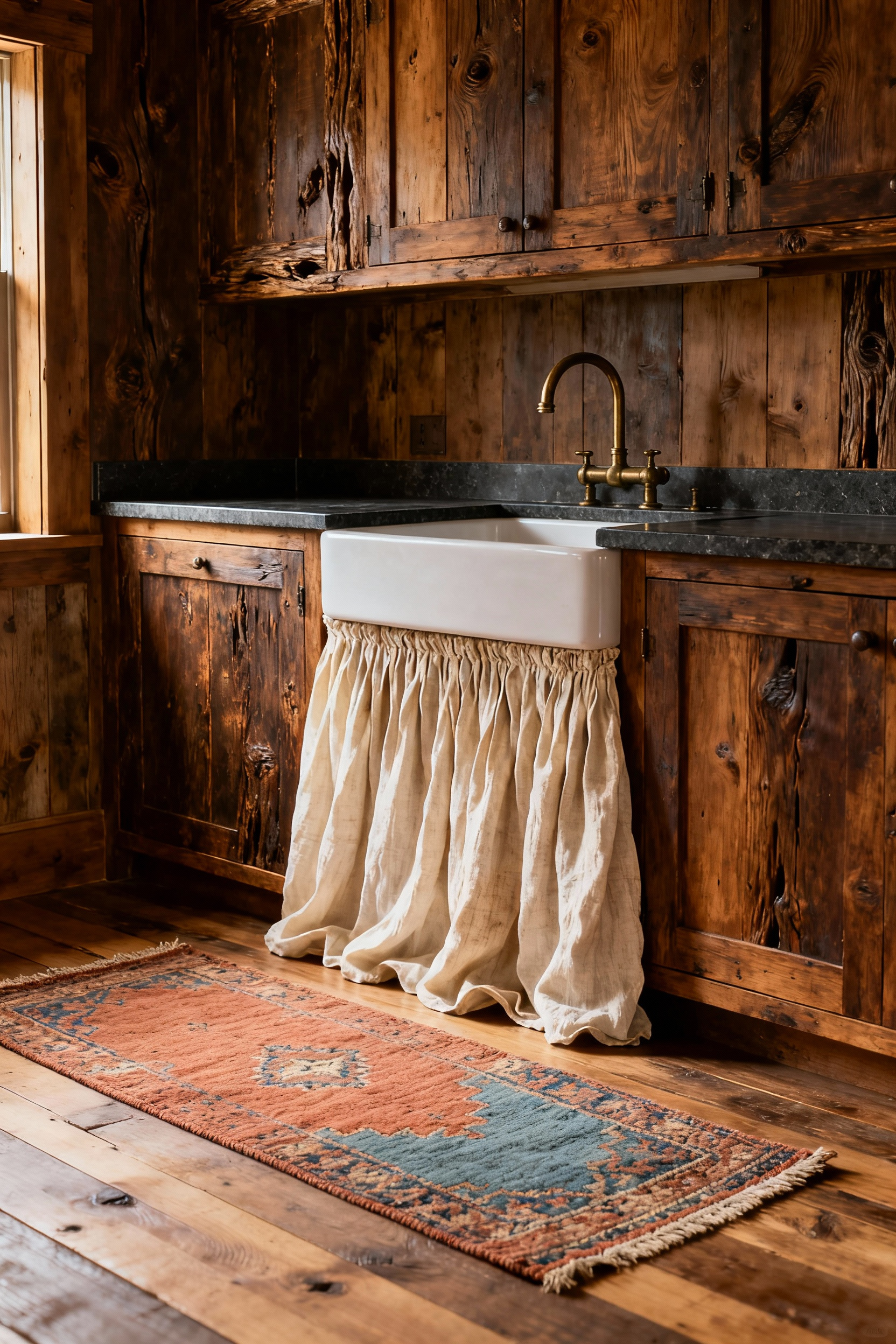
Historically, skirted sinks served a purely utilitarian purpose in 18th-century Europe. They modestly concealed unsightly plumbing before modern integrated cabinetry existed. Today, however, they offer a charming break from repetitive millwork. In fact, replacing a lower cabinet door with a fabric skirt instantly adds “old-world” character.
Nevertheless, practicality remains a valid concern for modern, high-traffic zones. To balance style with sanitation, select durable, machine-washable vintage fabrics. Heavy materials like French linen or ticking stripe hide wear while providing essential textural depth.
Beyond the sink, floor runners play a pivotal role in softening the room’s atmosphere. A vintage runner, such as an overdyed Persian rug, effectively grounds the space. Furthermore, it visually absorbs the dense red or brown undertones inherent in rustic wood.
Ideally, stick to an “aged neutral” palette featuring creams, warm whites, or muted greens to maintain harmony. Ultimately, these soft textures bridge the gap between historic charm and contemporary comfort.
16. Lighting the Rustic Kitchen: Restoring Vintage Industrial Pendants
Vintage industrial pendants originally served as utilitarian workhorses on gritty factory floors. Specifically, these heavy fixtures provided intense downward light for laborers in textile mills. Today, however, they offer more than just illumination.
Introducing these spun steel shades creates a powerful stylistic contrast against rustic kitchen cabinets. Consequently, the raw authenticity of industrial heritage balances the cozy appeal of farmhouse design.
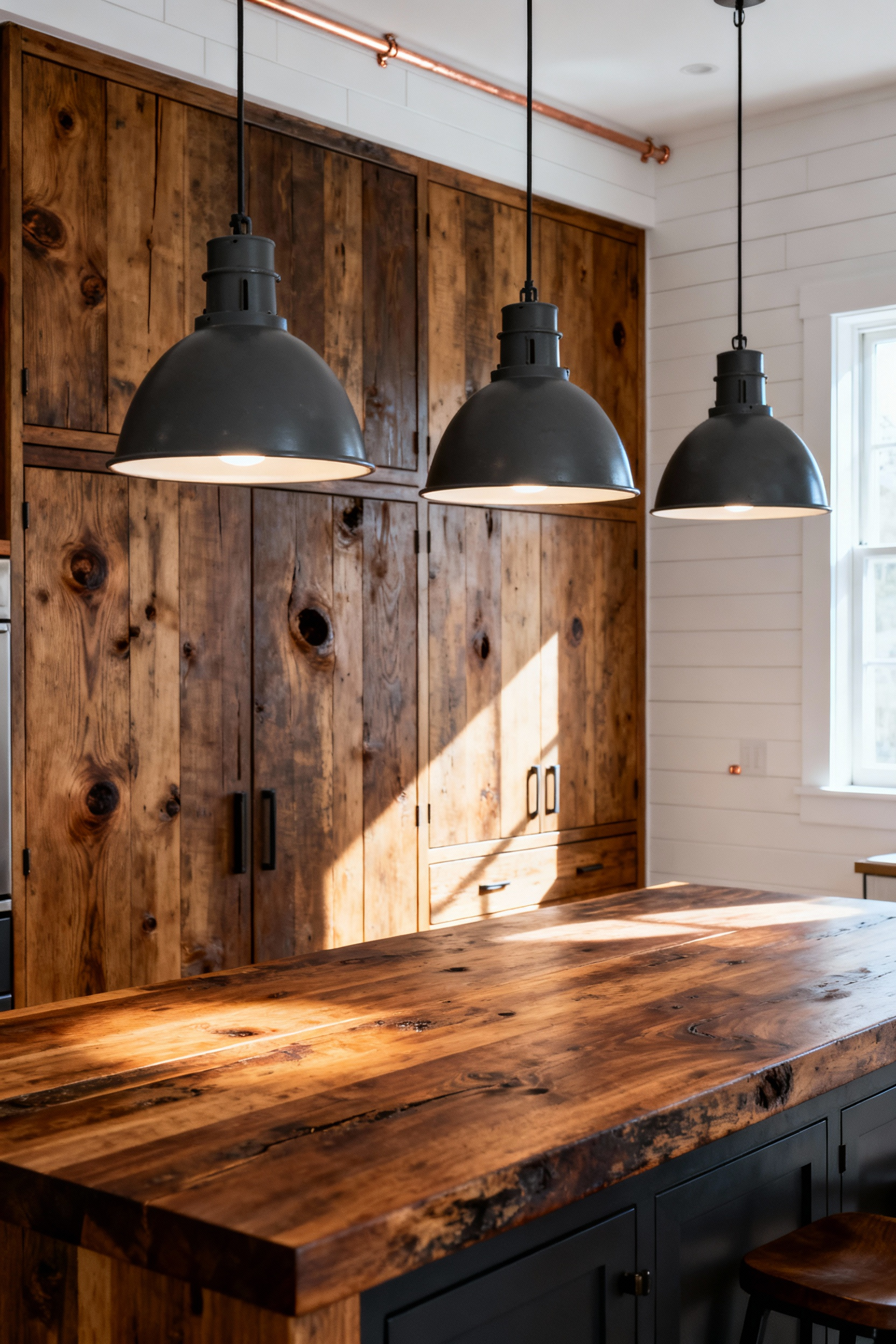
Most desirable vintage shades feature a durable porcelain enamel finish. This glass-like coating protected the metal from heat and harsh chemicals. Therefore, authentic restoration requires a delicate touch. You must clean the fixture thoroughly while carefully preserving its natural patina.
In fact, small enamel chips and oxidation offer a tangible story of past labor. Crucially, always prioritize safety by rewiring antique sockets for modern code compliance.
Functionally, these wide pendants excel as task lighting over kitchen islands. Yet, metal fixtures can sometimes feel cold. To counter this, experts recommend installing Edison-style LED filament bulbs.
Specifically, a warm color temperature of roughly 2700K casts a comforting, amber-hued glow. This soft light complements the natural tones of wood grain. It effectively softens the fixture’s rugged appearance. Finally, consider hanging fixtures in odd numbers to achieve a curated, less formal aesthetic.
Creating a Kitchen That Ages Beautifully: Moving from ‘Renovation’ to ‘Curation’
Creating a timeless space requires shifting your mindset from renovation to curation. Instead of seeking temporary perfection, you prioritize materials that genuinely improve with age. For instance, solid woods used in rustic kitchen cabinets and unlacquered metals do not wear down. Instead, they wear in.
Consequently, the deepening tones of the cabinetry and the patina on hardware tell a rich story. In fact, these inevitable imperfections transform your kitchen. It evolves from a sterile showroom into a soulful home.
Eventually, this intentional philosophy protects your investment against the cycle of fleeting trends. Moreover, it fosters a sustainable connection between your daily lifestyle and your physical environment. Therefore, your kitchen becomes a living backdrop for future memories rather than a dated artifact.
To begin, audit your current material selections for their distinctive ability to endure and evolve. Finally, ask yourself if each element will look better in twenty years than it does today.
Frequently Asked Questions
What is the best wood species for high-quality rustic kitchen cabinets?
The best choice depends on the desired aesthetic and durability needs. For high-end rustic cabinets, discerning homeowners often choose Knotty Alder for its abundant, characterful knots that accept glazes beautifully, offering a soft, refined look. Alternatively, Reclaimed Timber (such as Heart Pine or Douglas Fir) is prized for its exceptional dimensional stability, tight old-growth grain, and unique historical provenance, making it structurally superior for a lasting luxury investment.
How can I ensure my rustic kitchen cabinets look sophisticated and not cluttered or tacky?
Sophistication in rustic design relies heavily on contrast and curation. Avoid overwhelming the space with too many small, decorative items. Instead, pair heavily textured, knotty wood cabinets with clean, sleek elements like honed soapstone or polished concrete countertops (Section 8) and minimalist flat-panel doors (Section 11). Use high-quality hardware, such as hand-forged iron or unlacquered brass, which develops a beautiful patina over time. Finally, focus on a restrained, earthy color palette of matte greens, slates, and creams.
Do wire-brushed cabinets age better than smooth-finished rustic cabinets?
Yes, wire-brushed finishes are specifically engineered for graceful aging. The process selectively removes the softer wood, leaving the denser grain raised, which creates an intentional texture that perfectly camouflages fingerprints, minor scratches, and scuffs (Section 4). This intentional texture allows wear and tear to seamlessly blend into the existing character, requiring less maintenance than a perfectly smooth, high-gloss finish, thereby preserving the desired lived-in patina.