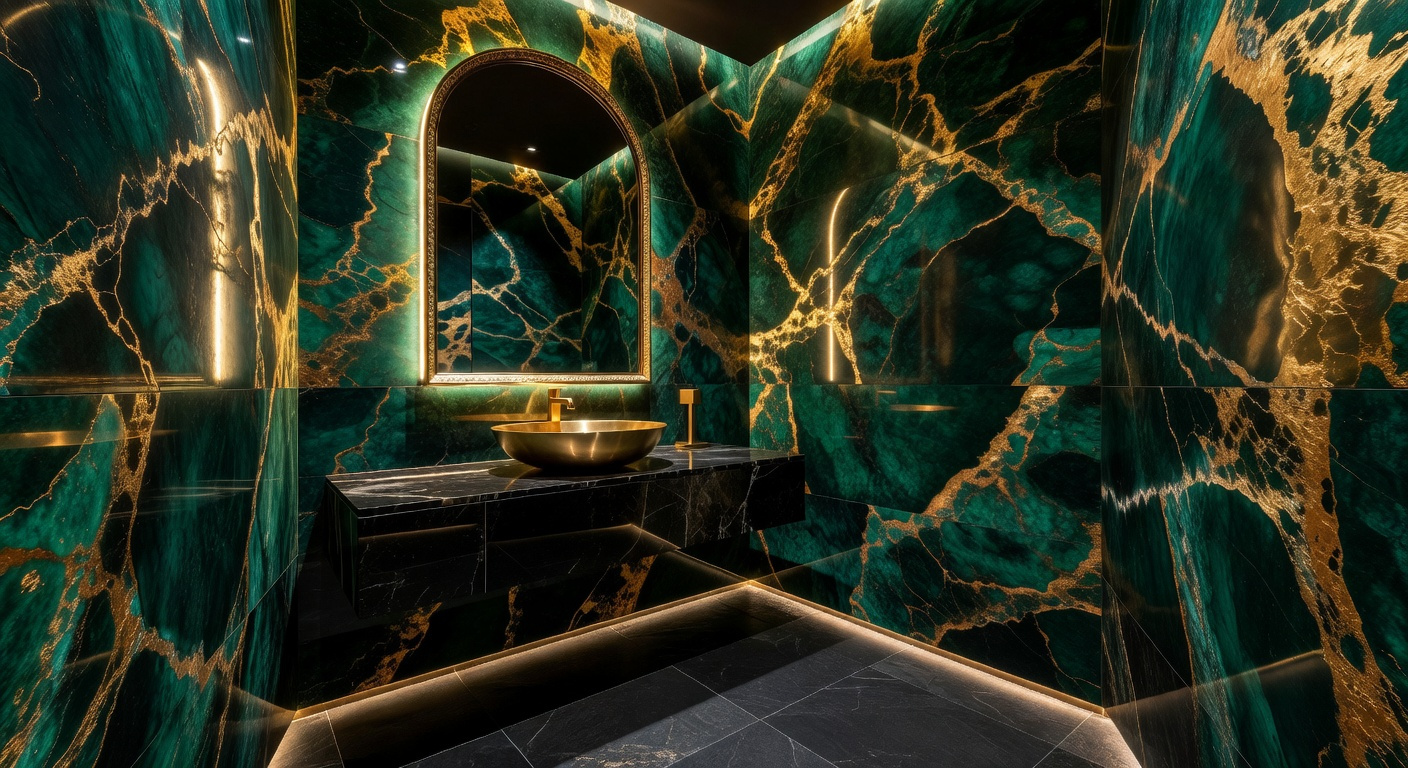

When it comes to high-end interior design, few spaces offer as much creative freedom as the half-bath. Choosing the right powder room tile is the first step in transforming a functional closet into a sensory sanctuary. These rooms are often windowless and compact. Indeed, they invite a level of drama and artisan craftsmanship that might overwhelm a larger suite. Treat the walls and floors as a canvas for bespoke finishes. Next, you can turn a transition space into a memorable destination for guests. In fact, it becomes a private retreat for yourself.
1. The Powder Room as a Jewel Box: Why Small Spaces Demand High-Drama Tiling
Historically, the powder room began as a literal wig closet. Specifically, aristocrats retreated to these tiny spaces for private grooming. Today, designers transform these windowless footprints into opulent jewel boxes. Therefore, the restrictive square footage becomes a massive design asset. In fact, many homeowners treat this space as a luxury small bathroom remodel opportunity. It turns a simple room into an opulent retreat. Uniquely, the absence of shower steam allows for fearless materials. For example, you can safely install delicate metallic-veined marble here.
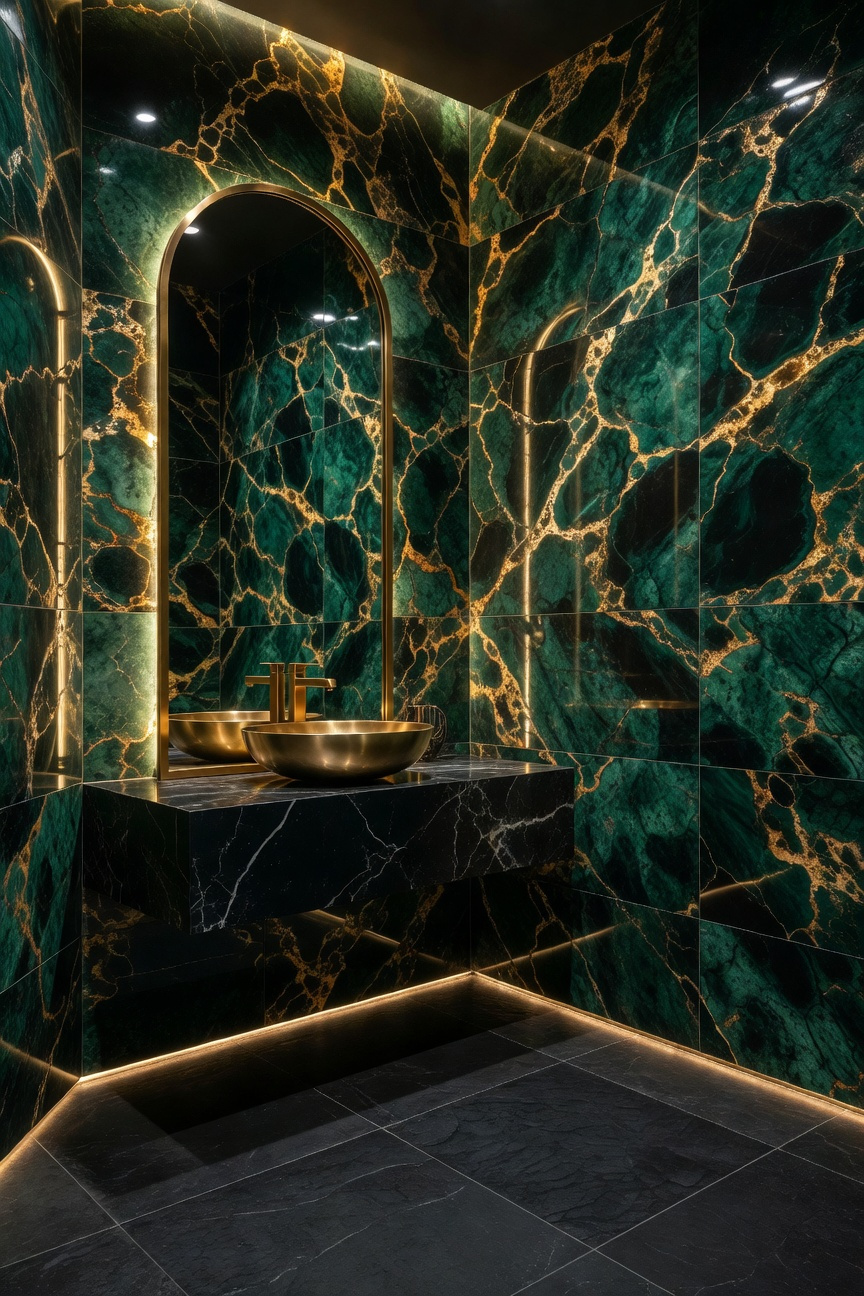
Indeed, we intentionally use high-drama tiling to envelop the guest. Specifically, color drenching floors and walls creates a sensory departure. Therefore, this bold cocooning effect visually tricks the eye. Rather than feeling cramped, blurred boundaries actually deepen the space. In fact, these confined dimensions demand truly exquisite technical artistry. Indeed, a single bookmatched stone slab creates powerful natural art.
However, hand-molded Moroccan Zellige clay tiles offer perfect imperfection. Specifically, their uneven, hand-chipped surfaces catch light dynamically. Indeed, light reflection remains critical since these rooms lack windows. Therefore, pearlescent finishes and high-gloss mosaics mimic actual jewelry boxes. Next, you must choose either massive seamless slabs or mosaics. Otherwise, the small space risks feeling cluttered instead of curated.
In fact, sensory storytelling turns a functional half-bath into a retreat. Specifically, heavy stone tiles reduce echoes to provide a hush. However, tactile micro-details like fluted surfaces reward close-up viewing. Therefore, these opulent tiling choices create a deeply personal experience.
2. Hand-Cut Moroccan Zellige: Capturing Sconce Light with Artisan Imperfections
To craft an opulent powder room, authentic Moroccan Zellige tile is absolutely essential. Specifically, these tiles offer a centuries-old interplay between raw Fez clay and luminous glass. However, their artisan imperfections are never random accidents. Master craftsmen use a heavy hammer called a menqach to hand-chisel each piece. Therefore, this creates a chamfered edge sloping inward from the glaze. Next, installers align the tiles edge-to-edge without wide grout lines. Indeed, this installation creates an undulating surface begging to be touched.
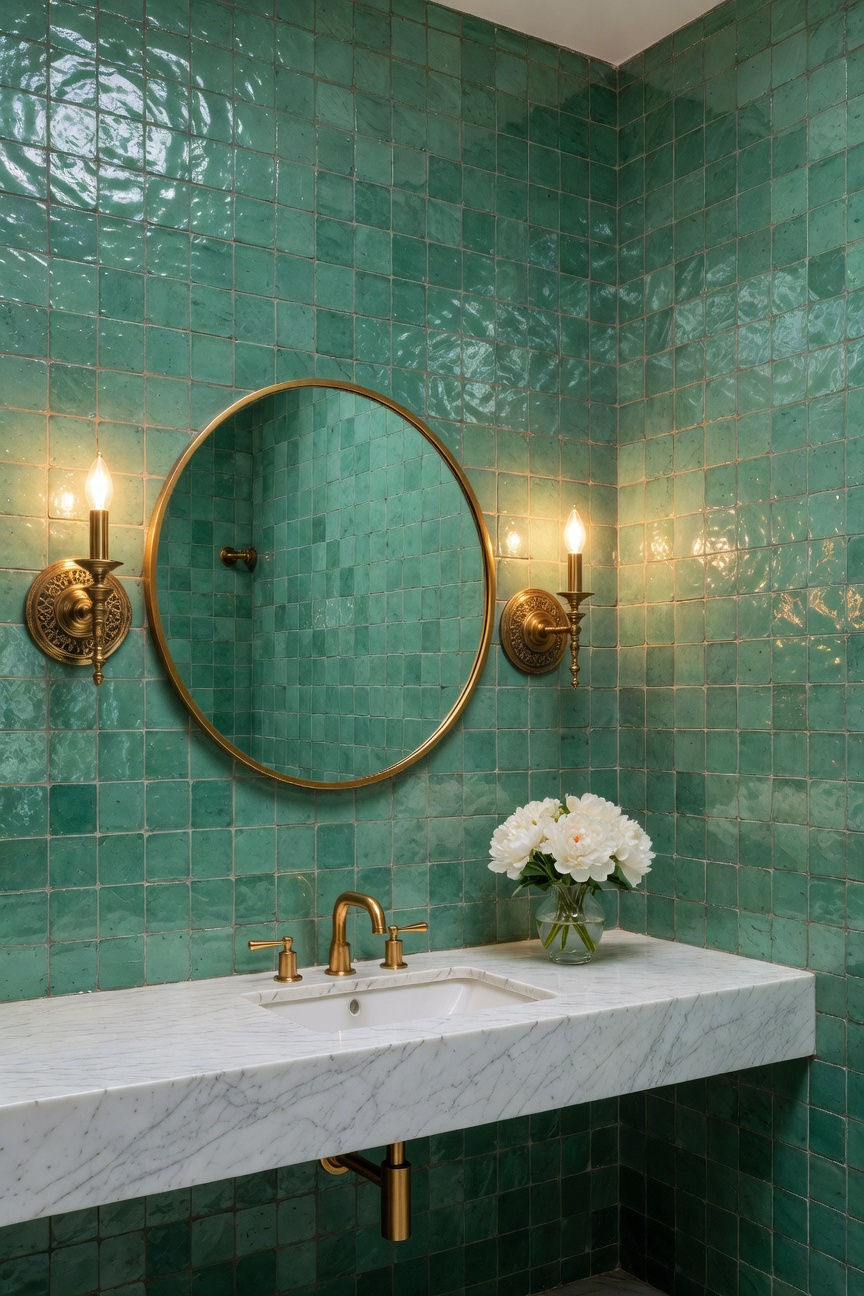
In fact, this uneven texture truly comes alive under wall-mounted sconces. Placing a sconce nearby introduces a brilliant phenomenon known as wall grazing. Specifically, steep raking light rolls over the varying thicknesses and glaze pits. Therefore, a dynamic living wall effect emerges near the sink. However, one tile shines brightly while its neighbor fades into shadow.
Indeed, the translucent glaze itself provides incredible visual depth. Olive-pit-fueled kilns create wild heat fluctuations during the traditional firing process. Therefore, stunning tonal shifts occur within a single color palette. Indeed, choosing a rich emerald or navy transforms the room into a sensory jewel box. The shimmering walls seem to recede into infinity rather than closing you in.
3. Bookmatched Marble Slabs: Leveraging Veining as High Art in Intimate Footprints
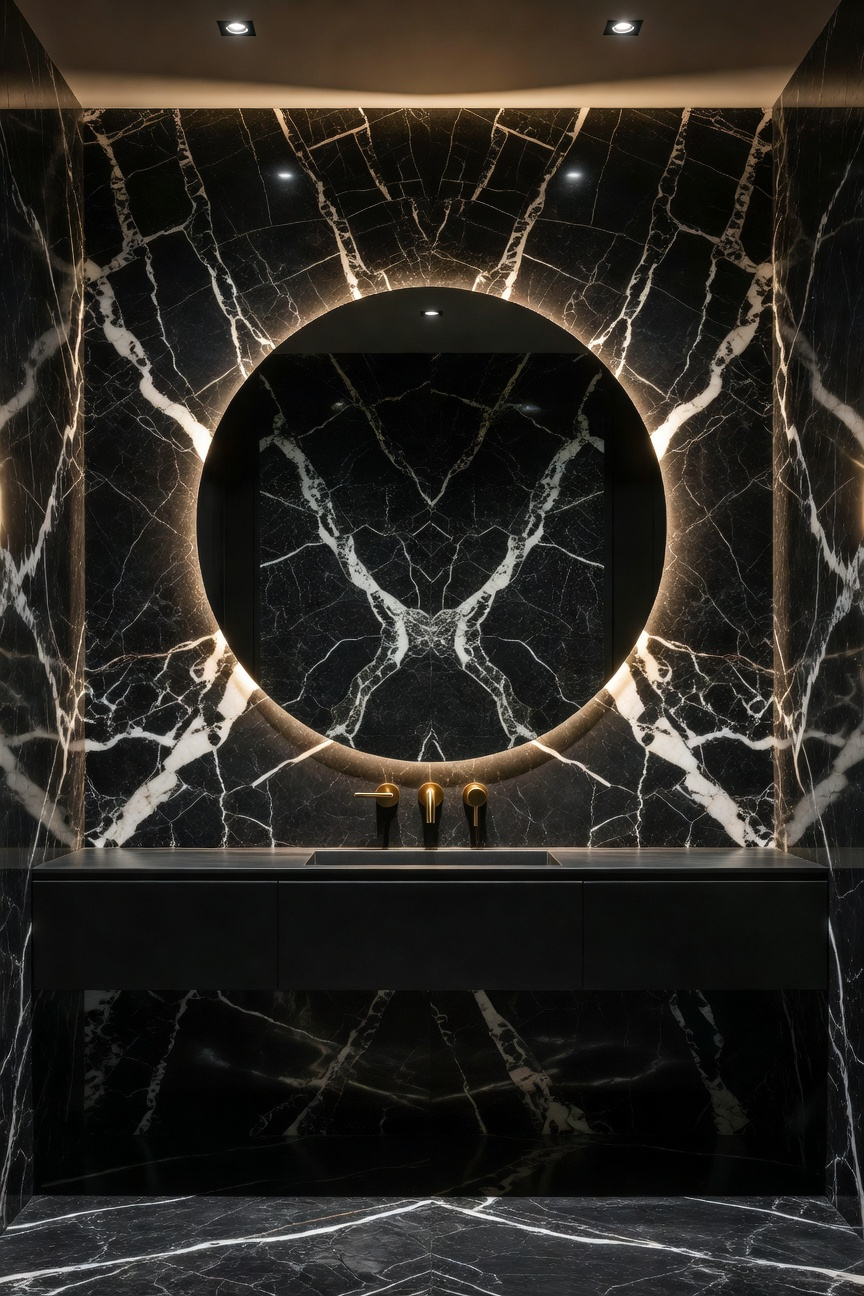
Historically, bookmatched marble was reserved for sprawling cathedral halls. Today, we embrace this grandeur through concentrated luxury. Specifically, designers transform the intimate powder room into a breathtaking jewel box. Rare stones like Nero Marquina make the space a deeply personal gallery. In fact, this technique treats geological history as high art. The mirrored symmetry creates a mesmerizing inkblot effect. Therefore, this bilateral symmetry provides a comforting neurological anchor. It actively keeps the viewer’s eye moving along a structured path. Therefore, the small room avoids feeling claustrophobic. Specifically, vertical veining creates a brilliant illusion of soaring height. However, horizontal veining actively pushes narrow walls outward. Achieving this seamless look demands absolute technical mastery. Indeed, artisans use “slab sisters” sliced directly from the same block. Next, they polish the inside faces to open the stone like a book. Guests stand remarkably close to the walls in these tight spaces. Therefore, joints are kept under a strict one-millimeter margin. Next, mitered corners allow dramatic veining to wrap seamlessly around the room. In fact, this makes the space feel carved from a monolithic block. The sensory interplay of light and texture also elevates the design. Specifically, a backlit vanity reflects off the polished symmetry to create depth. However, employing a leathered finish invites a soft, tactile engagement. Indeed, this fearless approach turns nature’s unpredictability into an opulent masterpiece.
4. Brass-Inlaid Terrazzo: Introducing Warm Metallic Intersections Underfoot
Initially, brass inlays began as a defensive structural necessity. Specifically, they prevented cement-based terrazzo from cracking under pressure. Today, these metallic intersections have evolved into magnificent floor jewelry. Therefore, a utilitarian powder room floor transforms into a bespoke tapestry. These selections are among the most grounding bathroom flooring options. Indeed, they provide structural integrity and a shimmering web of reflected light.
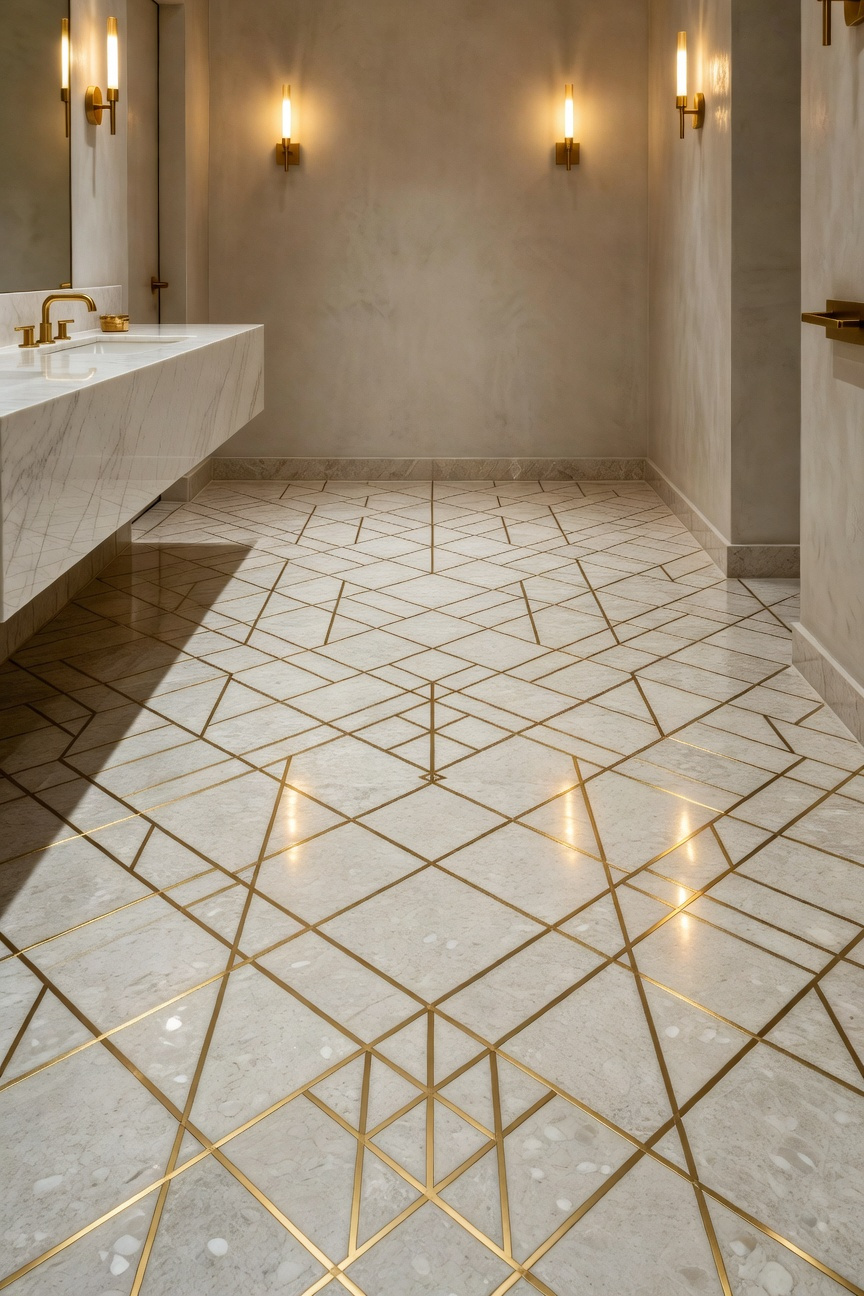
Sensory alchemy is vital within opulent, jewel-box room designs. In fact, bare feet detect subtle changes in texture and temperature. Standard polished terrazzo offers a cool, monolithic sensation underfoot. However, crossing a brass inlay introduces a warm metallic contrast. Therefore, skilled artisans grind the brass and stone matrix simultaneously. Specifically, this honed-together finish creates an undetectable, seamless surface.
However, mixing brass and stone presents a hidden technical conflict. Specifically, ambient moisture can cause the raw brass to oxidize. This chemical reaction often leaves an unsightly blue halo behind. Therefore, craftsmen mitigate this by back-coating the strips with resin. Indeed, the opulent floor ages gracefully without unwanted chemical staining.
Psychologically, high-contrast floor details ground the entire spatial experience. Specifically, radial brass lines effortlessly push narrow walls outward. In fact, these intricate inlays act as a brilliant narrative bridge. They physically connect the gleaming floor to luxurious brass vanity hardware. Next, this fearless layering builds a beautifully cohesive, 360-degree personal sanctuary.
5. The Floor-to-Ceiling Monolith: Wrapping the Entire Room in Single-Format Drama
The floor-to-ceiling monolith represents the absolute peak of unapologetic luxury in powder room design. Specifically, experts call this immersive, bold concept material drenching. Unlike simple paint, this strategy wraps every surface in a singular, opulent tile format. This approach aligns with the core principles of modern bathroom design. Here, seamlessness and material purity take center stage. Indeed, eliminating visual breaks makes the tiny room feel surprisingly expansive.
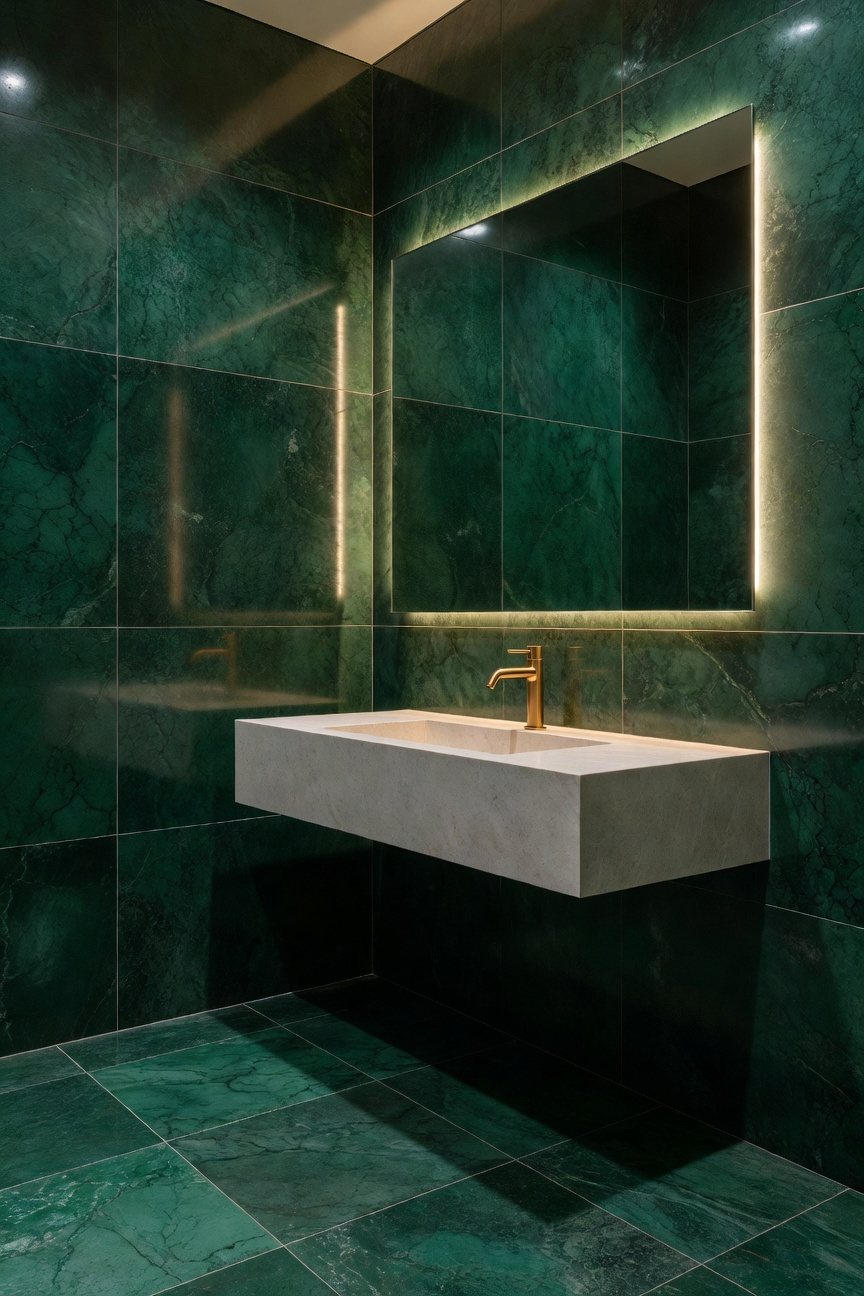
In fact, this cocooning effect draws deep inspiration from rock-cut architecture. Today, massive gauged porcelain panels make this dramatic, seamless look structurally possible. In fact, these oversized slabs utilize incredibly thin grout lines and rectified edges. Therefore, the walls appear carved from a single, continuous block of gorgeous stone. Next, extending the tile across the vanity creates a fearless statement. Specifically, this sculptural technique makes the sink emerge directly from the wall. However, a fully drenched room risks feeling clinical without the right sensory warmth. Therefore, designers rely heavily on strategic, layered lighting to soften the space. Indeed, recessed LED washes make matte stone surfaces glow beautifully from within. However, high-gloss marble panels reflect light infinitely to create a diamond-like atmosphere. In fact, utilizing gorgeous bookmatched slabs eliminates the need for additional decor. Instead, the dramatic, mirrored veining serves as the room’s boldest piece of art.
6. Oversized Botanical Mosaics: Defying Spatial Constraints with Maximalist Scale
Traditional design dictates small, subtle patterns for cramped rooms. However, maximalism completely flips this outdated spatial rule. Designers use oversized botanical mosaics to deliberately trick the eye. Specifically, a single massive three-foot peony bloom triggers psychological macropsia. Therefore, the mind stops trying to measure the room’s precise boundaries. Instead, guests experience the protective cocoon of a theatrical garden enclosure. Indeed, these immersive murals offer a brief but intense psychological reset.
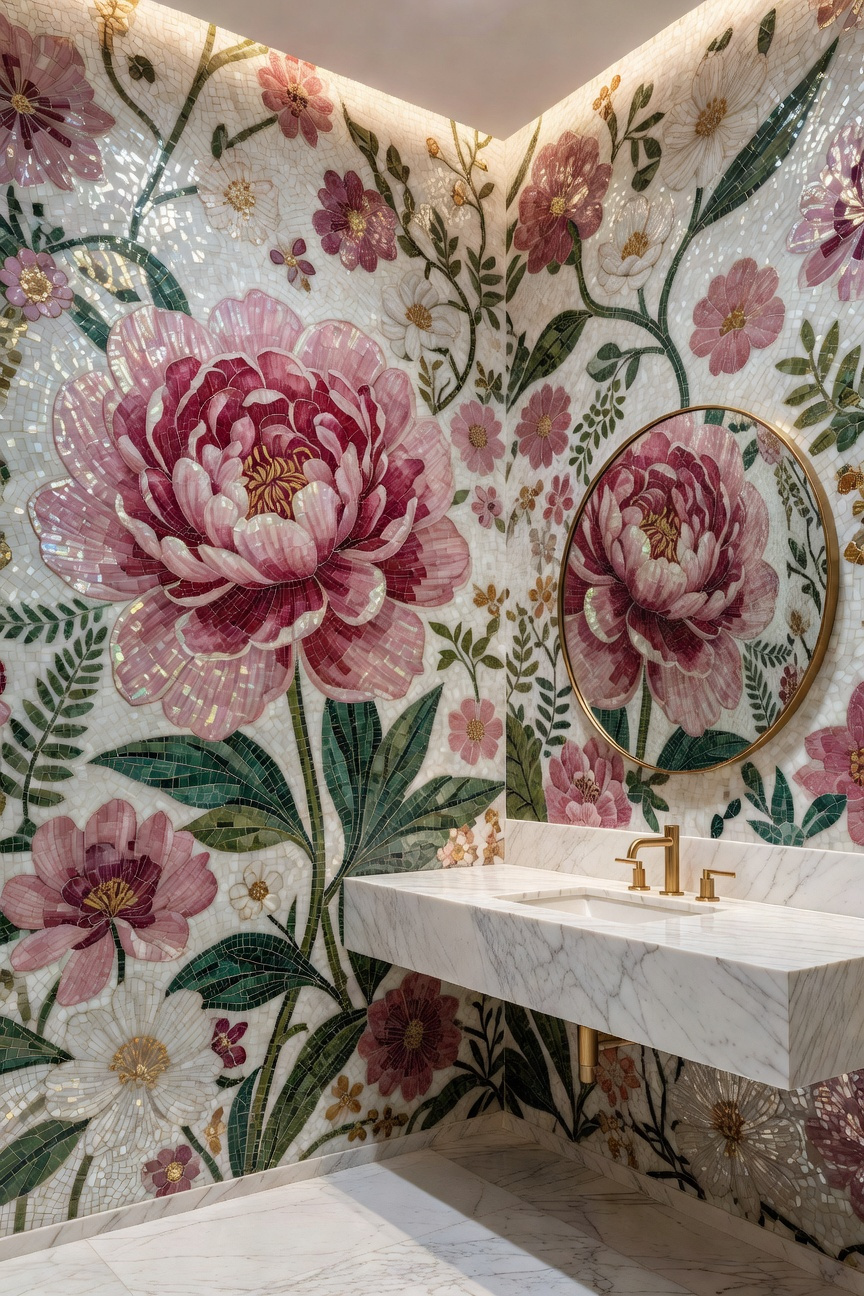
Creating this opulent environment requires an impressive technical metamorphosis. Specifically, the historic double indirect method remains absolutely crucial here. Artisans painstakingly pre-assemble complex glass murals on mesh in their studios. Next, they carefully unroll these seamless designs across difficult plumbing fixtures. In fact, luxury installations rely heavily on individually hand-clipped glass tiles. This rhythmic, tactile luxury of mosaic pieces is classically called andamento. Specifically, artisans use subtle shading blends to mimic organic petal curves. Therefore, this ancient technique yields a breathtaking, three-dimensional painterly effect.
Indeed, the raw sensory narrative of these spaces is incredibly profound. Iridescent glass and genuine 24k gold leaf catch the dim lighting. Therefore, the massive oversized flowers appear to physically shiver and bloom. Physically, the rugged mosaic surface provides an unparalleled haptic luxury. Viewers truly feel a living, breathing tapestry rather than flat drywall. Today, rich dark florals and lush jungle maximalism dominate trend reports. Massive green monstera leaves emerge boldly from moody, midnight-black glass grout. In fact, this audacious botanical scale transforms functional closets into eternal art.
7. The Checkerboard Revival: Classic Geometry Rendered in Deep, Unexpected Colorways
The checkerboard revival boldly abandons safe, monochromatic minimalism. Instead, this trend anchors avant-garde color palettes with ancient geometry. Historically, grand High Renaissance foyers used these patterns to signal opulent order. Currently, we miniaturize this grand entrance for modern powder rooms. Therefore, the space transforms into a deeply personal jewel box design. Designers are embracing chromatic saturation over high-contrast black and white. Specifically, pairing forest green and terracotta mimics natural Mediterranean light. Indeed, sanguine reds and muted yellows create a scholarly coziness.
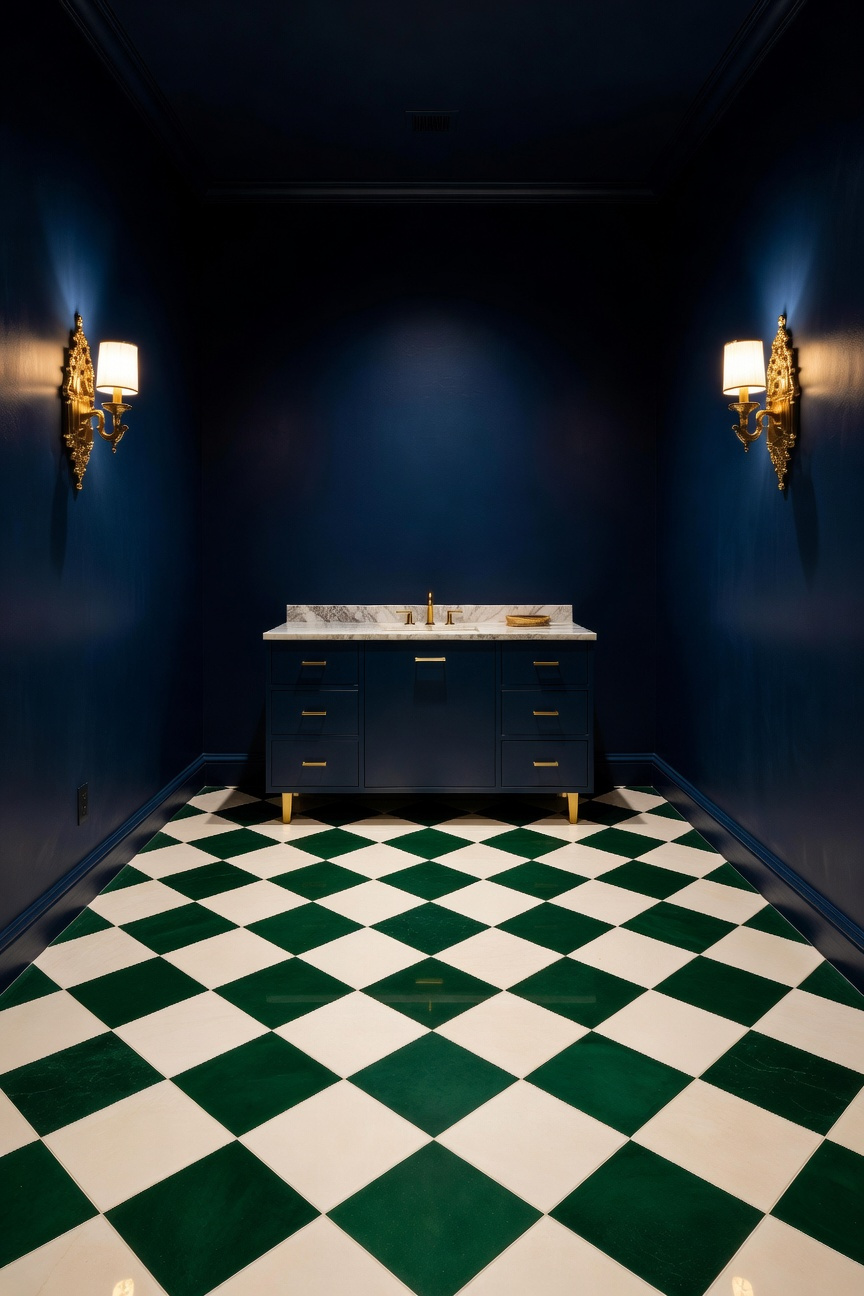
The revival is ultimately about tactility as much as color. Specifically, hand-molded Moroccan Zellige clay introduces perfectly imperfect sensory elements. In fact, these undulating tile surfaces interact beautifully with overhead sconces. Shadows fall into tile valleys while light catches the peaks. Therefore, a deep burgundy clay floor seemingly vibrates with energy. Material innovation further elevates this opulent aesthetic beyond standard porcelain. Specifically, pigmented encaustic cement provides a beautifully dusty, soft touch. However, black marble paired with bronze stone breaks rigid grids. Natural veining gracefully runs across the squares to reveal hidden patterns.
Visually, we use this classic geometry to manipulate small-scale architecture. Indeed, setting tiles on a 45-degree angle stretches perceived boundaries. Next, using contrasting charcoal grout carves the saturated grid into art.
8. Micro-Penny Rounds with High-Contrast Grout: Creating Hypnotic Textural Illusions
Embracing a maximalist philosophy requires exceptionally bold design choices. Specifically, micro-penny rounds deliver an opulent, jewel-box aesthetic. These tiny tiles measure just three-eighths of an inch. Therefore, they echo the intricate luxury of ancient Roman micromosaics. However, their true magic unlocks with high-contrast grout.
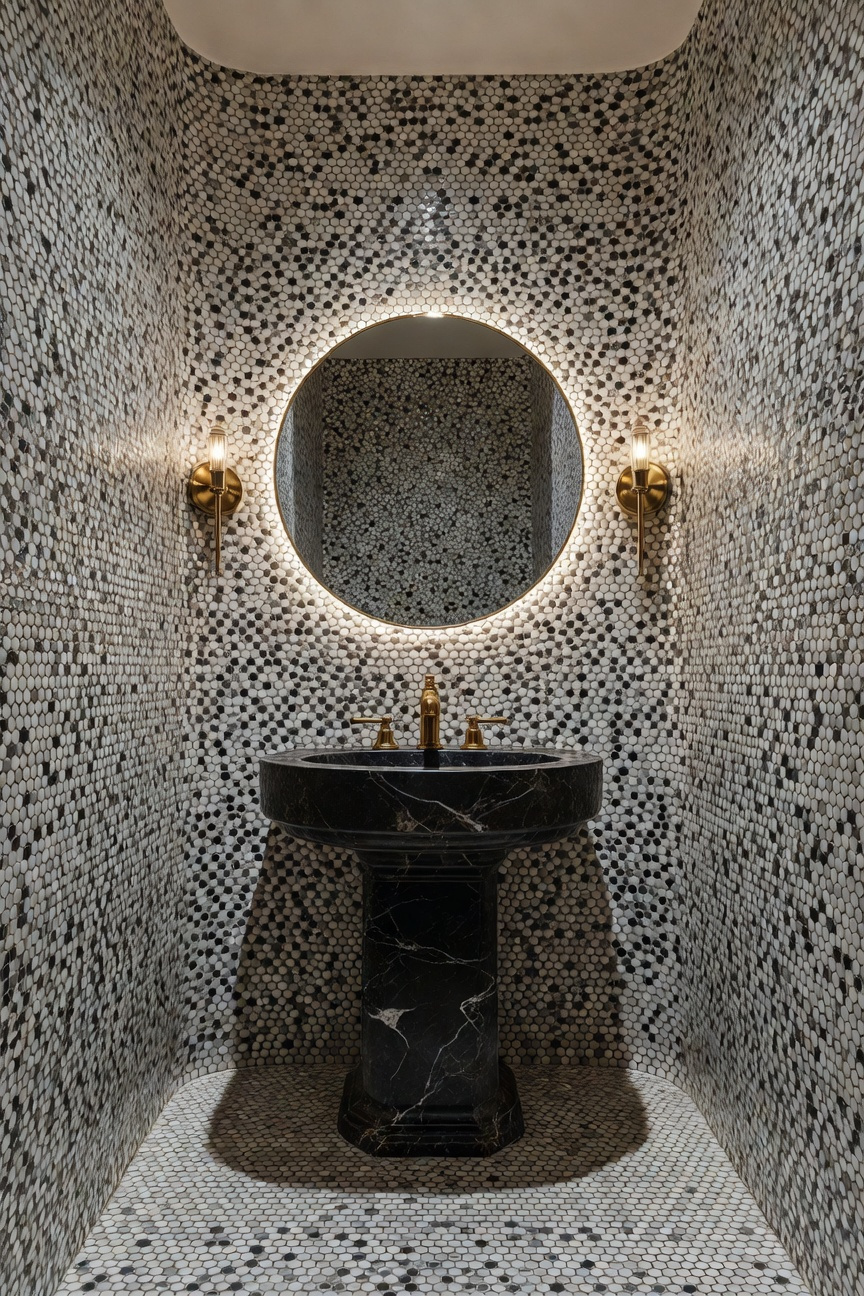
Scientifically, this bold pairing creates the Scintillating Grid Illusion. Therefore, the dark grout lines cause a hypnotic visual vibration. Your peripheral vision perceives flickering phantom spots at intersections. Indeed, this optical shimmer effectively dissolves physical room boundaries. In fact, the powder room feels expansive rather than cramped.
Specifically, this dense repeating pattern acts as visual white noise. This consistency significantly reduces the brain’s cognitive load. Therefore, the tiny room transforms into a relaxing, intentional vessel.
Beyond aesthetics, this application engineers a rich tactile landscape. Indeed, the high grout-to-tile ratio provides excellent micro-friction underfoot. Next, the porous grout feels noticeably warmer than stone slabs. Therefore, the floor abandons a cold, clinical feel entirely.
Materiality heavily influences this luxurious textural illusion. Specifically, matte porcelain absorbs ambient light perfectly. Therefore, the grout resembles a dark net holding soft bubbles. However, iridescent glass tiles change color as you move. This scintillating effect mimics a world-class luxury spa.
However, achieving this unending grid demands absolute mathematical perfection. A single millimeter of misalignment breaks the hypnotic spell instantly. Therefore, expert installers must hand-place individual tiles across sheet seams. Indeed, this flawless execution guarantees a breathtaking, deeply personal space.
9. The Extended Vanity Backsplash: Pushing Wall Tile Beyond the Basin Boundary
The extended vanity backsplash transcends simple bathroom utility. Instead, it becomes an immersive, opulent architectural feature. Historically, Victorian designs used ceramic tile as sanitary wainscoting. Today, we push this boundary to create fearless drama. Specifically, designers stretch textured tile from floor to ceiling. This vertical extension makes a cramped powder room feel taller. However, running tile wall-to-wall horizontally creates a widening horizon. In fact, authoritative styling frequently abandons the matching side splash. Therefore, the grand back wall stands as pure art.
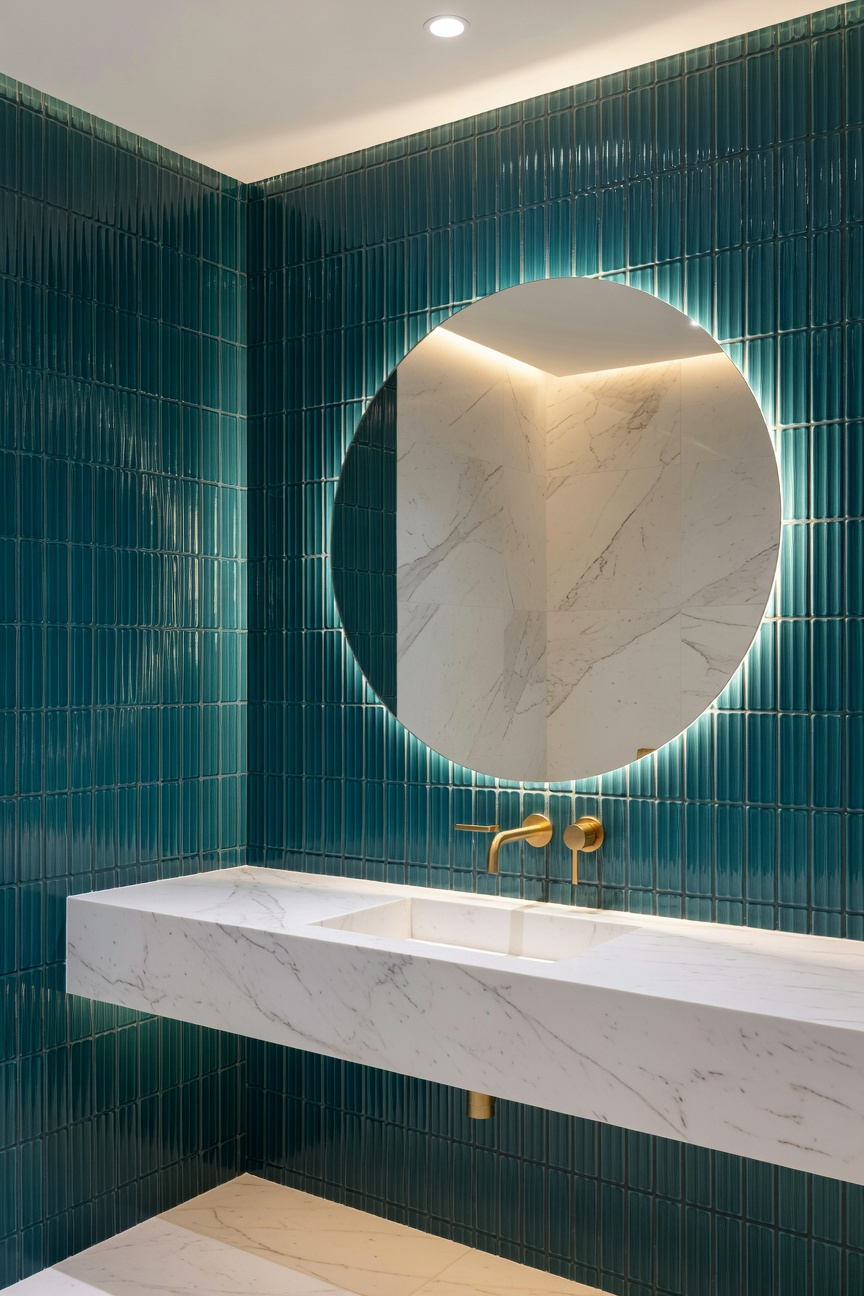
Indeed, luxurious tactile materials elevate this sensory immersion. Specifically, handmade Moroccan Zellige tiles catch warm sconce light. Therefore, their kiln-kissed surfaces create a shimmering, cocooning sensation. In fact, organic boundaries are replacing rigid, straight tile borders. Installers let hexagonal or scalloped tiles trail off naturally. Technically, they float grout directly into the adjacent painted wall. Therefore, this handcrafted aesthetic bypasses traditional metal edge trim.
Next, joining heavy tile and bold wallpaper demands precision. Specifically, designers thicken drywall to create flush inset transitions. However, a thin brass pencil liner forms a metallic seam. Therefore, a grounded tile base perfectly balances a dramatic crown. Together, these rich layers redefine the classic jewel box space.
10. Fluted Ceramic Wainscoting: Using Three-Dimensional Tile as Architectural Trim
Fluted ceramic wainscoting elevates utility spaces into curated architectural experiences. Specifically, it revives luxurious 1920s Jazz Age glamour. Today, this modern boiserie acts as a brilliant visual compass. Historically, vertical fluting mimics classical Greek columns. Therefore, the unbroken upward rhythm visibly stretches cramped walls. Indeed, designers often select high-gloss finishes for these tiles. Therefore, the vertical ridges bounce vanity lighting beautifully. In fact, this creates a luminous, vibrating wall effect.
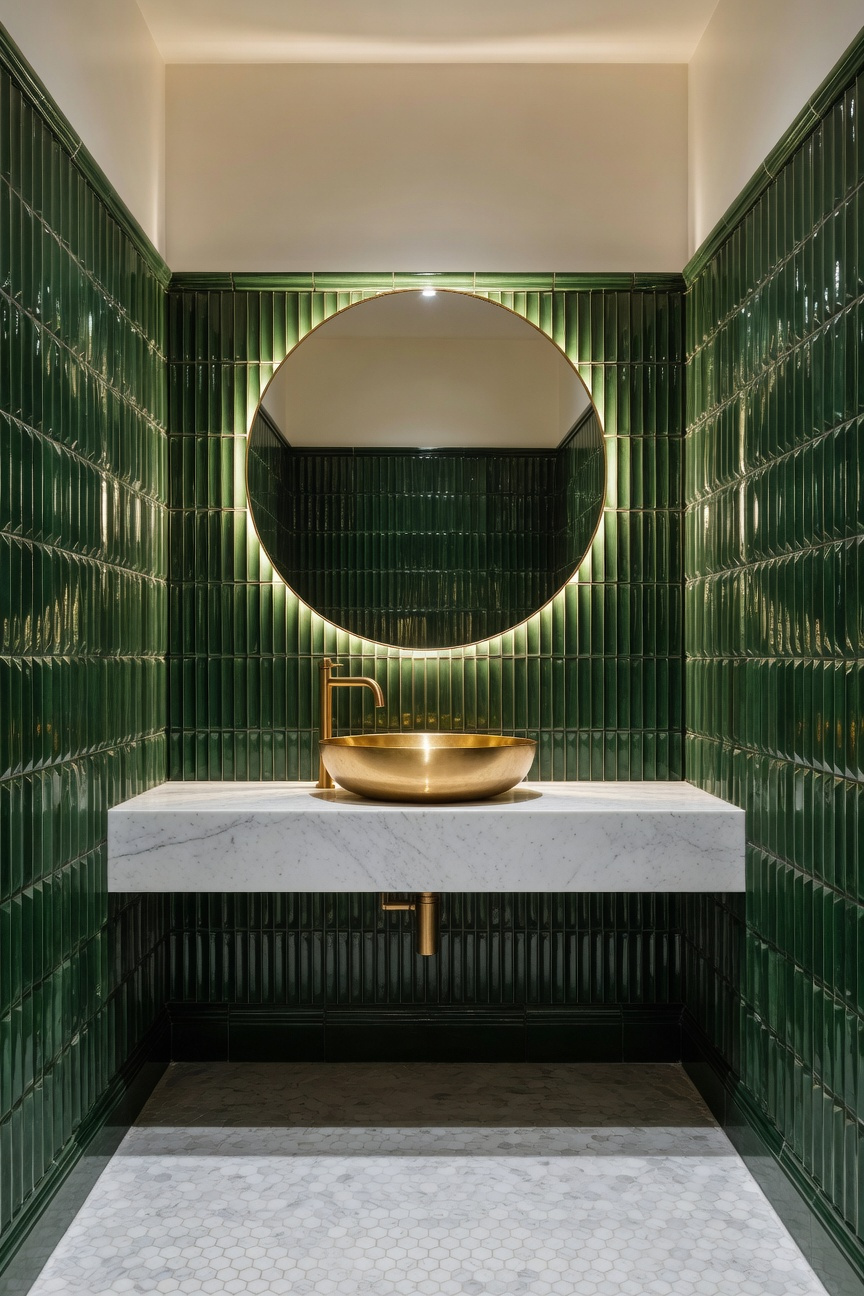
Next, these three-dimensional tiles introduce dramatic chiaroscuro to interiors. Instead of flat surfaces, fluted ceramic relies on deep relief. Therefore, the interplay of shadow evolves throughout the day. During warm evening light, shadows create a dramatic focal point. In fact, the cool ridges provide a grounding, tactile luxury. Specifically, guests reach out to touch this rhythmic texture. However, fearless designers use fluted tile as opulent architectural trim. Specifically, matching ceramic liners create a seamless, stone-carved look. Functionally, ceramic trim easily outlasts wood in humid powder rooms.
However, installing this opulent wainscoting requires precise technical craftsmanship. Traditional grouting methods easily trap material in the deep grooves. Therefore, professional installers use a specialized grout bag instead. They pipe loose-mix grout directly into the vertical joints. Indeed, they carefully protect the beautifully textured ceramic face. Specifically, achieving a clean corner requires complex compound mitering. Similarly, outside corners must look like solid carved stone. In fact, this rich materiality beautifully bridges minimalism and soft luxury. Indeed, it offers a deeply personal, multi-sensory powder room retreat.
11. The Tiled Ceiling Canopy: Continuing Bold Patterns Upward for Enveloping Opulence
The tiled ceiling canopy represents the ultimate jewel box design. Specifically, this approach treats powder rooms with concentrated opulence. By extending bold patterns upward, we completely erase the horizon line. Therefore, this immersive technique is known as monolithic wrapping. In fact, removing the visual break challenges traditional architectural boundaries. Therefore, the floor, walls, and ceiling become one continuous surface. Paradoxically, the cramped space feels intimately cocooned yet infinitely larger.
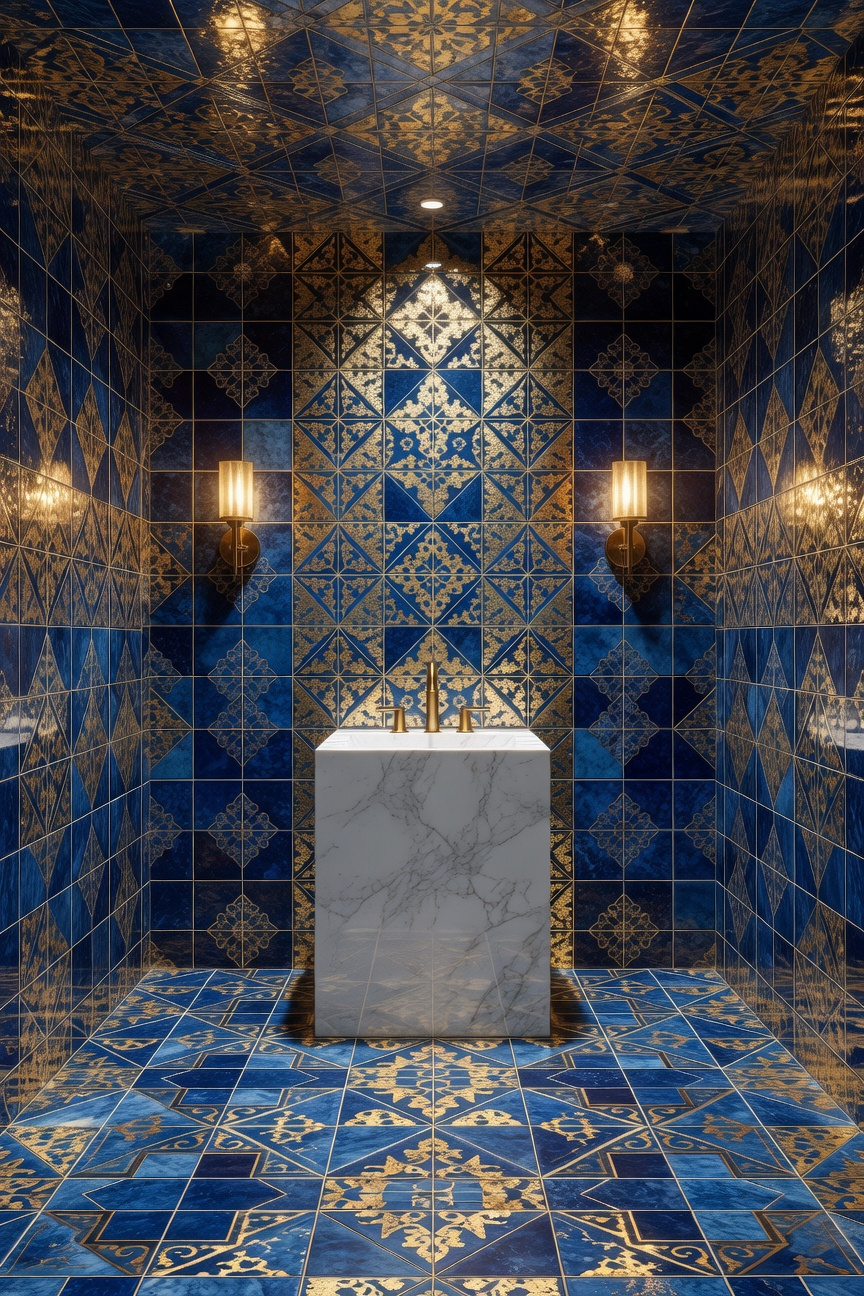
Historically, this concept evolved from affordable Victorian tin ceiling movements. However, modern design flips this utilitarian history on its head. Instead of clinical white, we fearlessly embrace maximalist luxury. Specifically, I love using gleaming gold-leaf glass mosaics overhead. Indeed, hand-painted terracotta brings rich, multicultural textures to life.
In fact, these fully tiled spaces create a unique sensory chamber. Acoustically, dense materials reflect sound waves rather than absorbing them. Therefore, visitors experience a vibrant echo reminiscent of ancient hammams. Visually, bold glazed tiles act as a massive light reflector. Next, the canopy catches vanity illumination and bounces it downward. Indeed, this multidimensional shimmer prevents a dark, cavernous feeling.
Technically, installing this canopy is a massive feat of engineering. Specifically, gravity makes standard drywall insufficient for heavy, luxurious tiles. Instead, masterful contractors must secure cement backer board to joists. In fact, installers strictly need modified thin-set mortar with sag resistance. Therefore, back-buttering each sheet ensures perfect coverage and lasting safety.
12. Illuminated Niche Detailing: Carving Out Hidden Pockets of Contrasting Agate or Onyx
Carving a hidden niche into your powder room wall creates a breathtaking spatial portal. Specifically, using translucent stones like agate or onyx elevates this architectural detail immensely. Traditionally, standard marble reflects light directly off its hard surface. Instead, these crystalline minerals boast an exceptional, warm-blooded translucency. Therefore, the stone behaves more like a captivating lamp than a building material. Specifically, I recommend pairing glowing niches with dark basalt surrounds. Therefore, this bold contrast creates a moody discovery moment for guests.
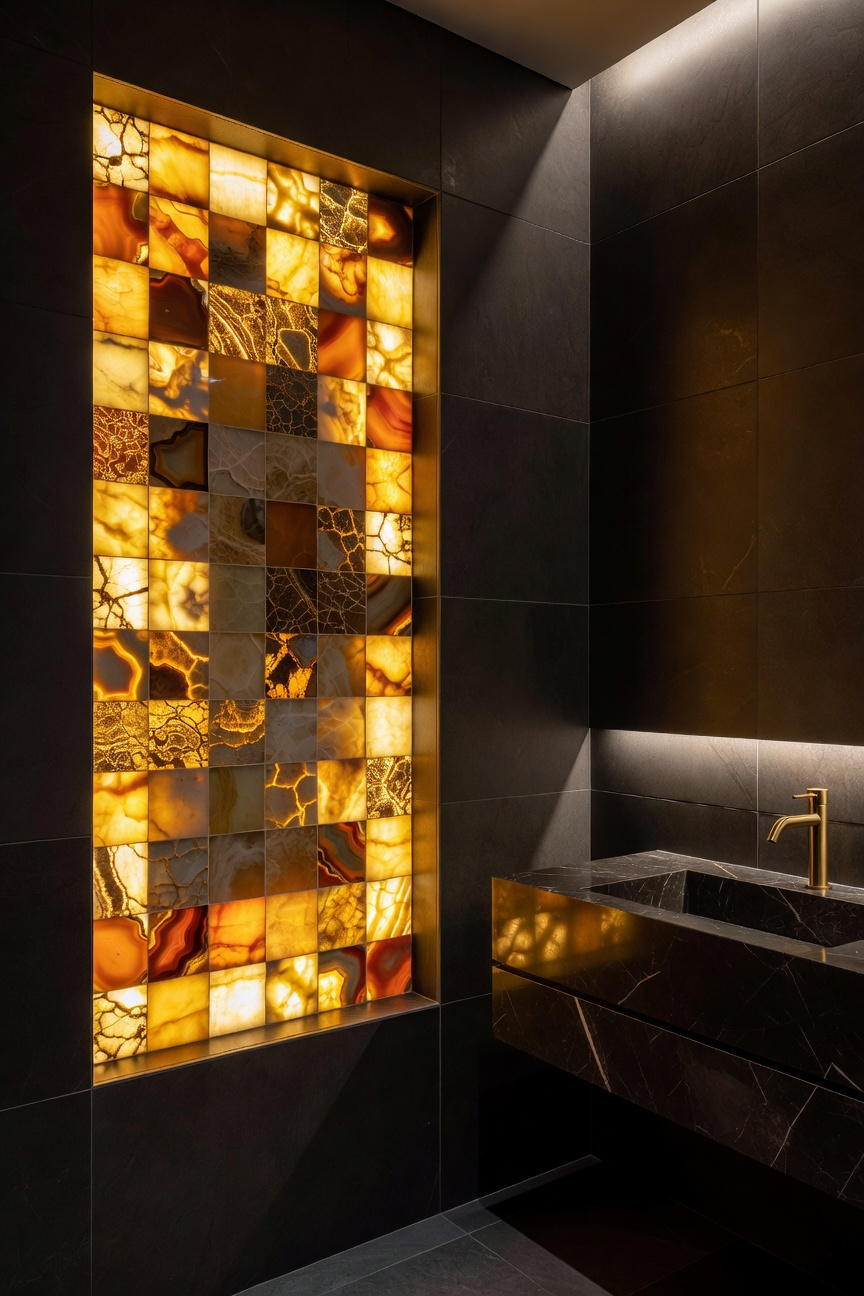
Technically, achieving this seamless glow requires careful masonry and lighting choreography. Installers must float a thin gemstone slab over a back-mounted LED panel. Indeed, leaving a small air gap prevents unsightly hot spots. In fact, mitered edge returns make the space look carved from a geode.
Next, selecting the right lighting temperature is crucial for the stone’s appearance. Specifically, cool lighting beautifully highlights the crisp veins of green onyx. However, warm lighting enhances the fiery, earthy depth of red agate slabs. Therefore, this illuminated pocket transforms a utilitarian wall into a luxurious sanctuary.
13. Moody Jewel Tones: Deep Emerald and Sapphire Glazes That Cultivate Intimacy
To create an opulent powder room, embrace the windowless void. Specifically, deep emerald and sapphire glazes transform small spaces into luxurious sanctuaries. However, these high-fire reactive glazes possess optical depth that flat matte finishes lack. Indeed, light penetrates the translucent glass layer before reflecting off the clay body. Therefore, this creates a rich glow-from-within quality mimicking a faceted gemstone. Specifically, the glaze pools at the tile edges during the firing process. Therefore, a single handmade square displays both blackened forest and bright malachite. To maximize this opulent effect, experts highly recommend a V4 variation rating. In fact, this substantial variation ensures no two tiles are exactly alike.
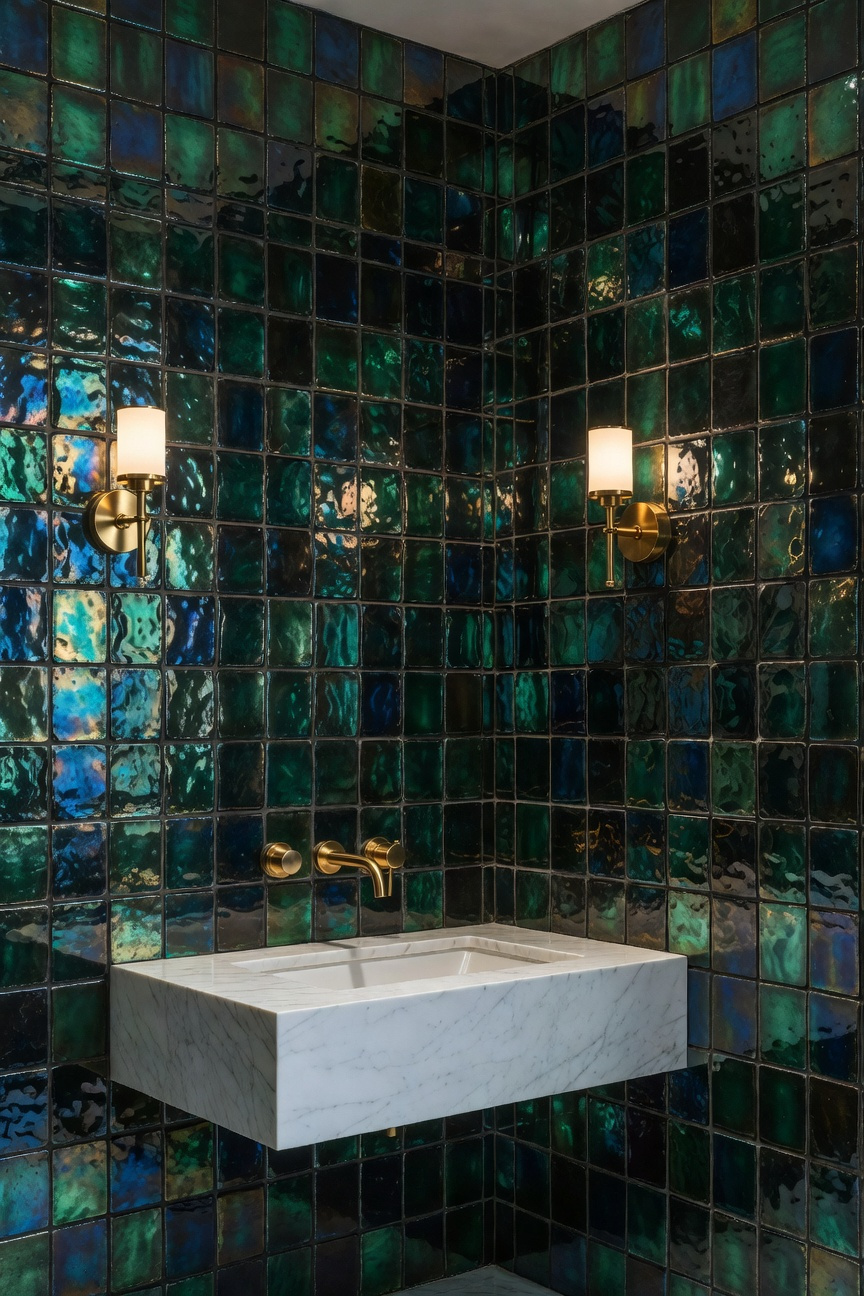
Historically, rich cobalt and copper pigments signified profound wealth and status. Now, dark jewel tones utilize subtractive color theory for visual recedence. Instead of reflecting light, these cool-toned walls actively recede into the shadows. Therefore, they successfully blur the physical corners of the room. Indeed, this cocooning effect replaces a clinical box with infinite velvety depth. In fact, lighting in these moody environments becomes a highly sculptural tool. Specifically, a single sconce reflecting off a sapphire wall creates dramatic shadows. Next, these saturated colors wrap around guests like a heavy velvet blanket. Therefore, the crisp acoustic profile of dense ceramic firmly cements this vault-like intimacy.
14. Matte Versus Gloss Interplay: Sculpting Visual Depth Through Strategic Reflectivity
In a maximalist powder room, mixing matte and gloss finishes beautifully sculpts visual depth. Specifically, monochromatic finish-blending creates a shimmering ghost pattern. Indeed, alternating glossy and flat charcoal tiles adds a hidden texture. Therefore, this movement pushes back restrictive walls as lighting shifts.
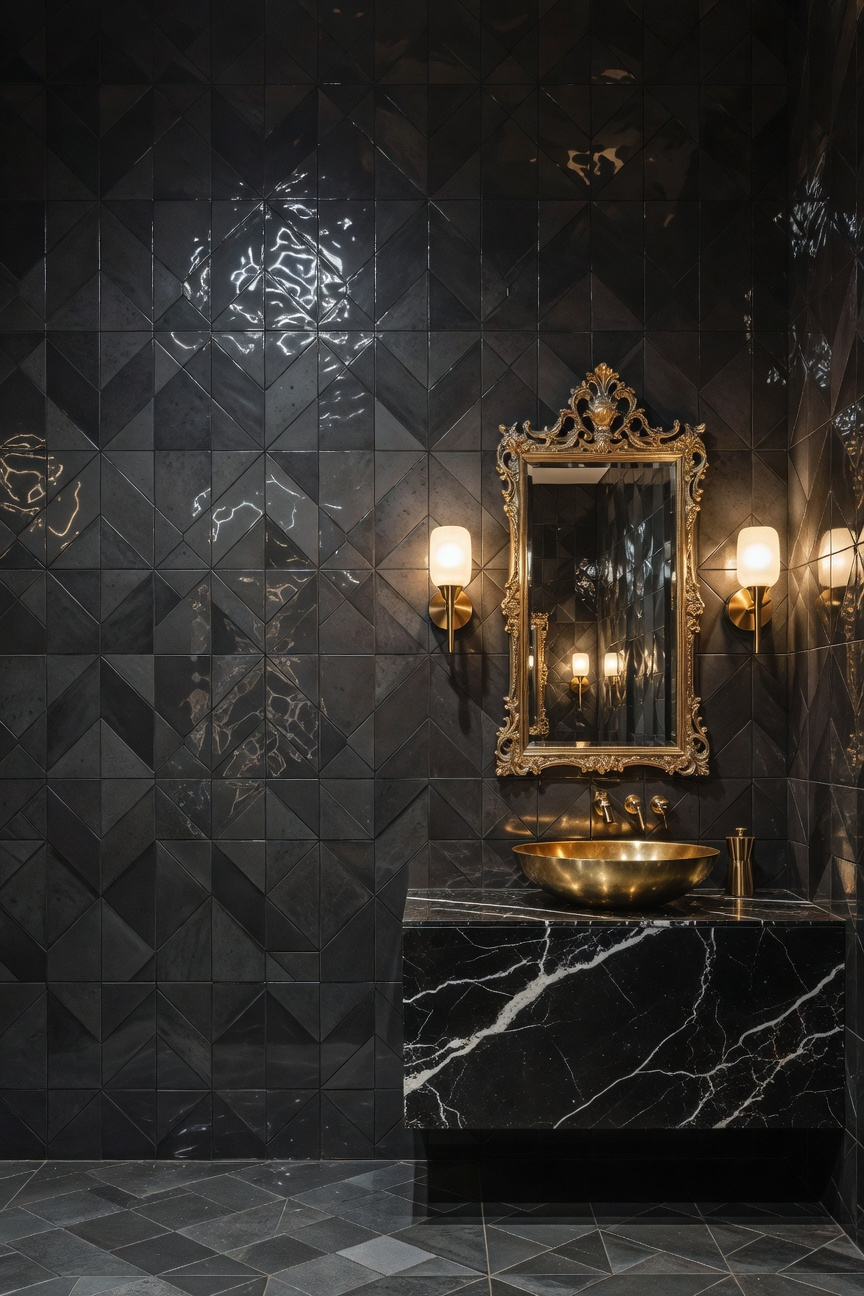
Historically, this strategic reflectivity echoes ninth-century Islamic lusterware. Indeed, ancient craftsmen applied metallic oxides to capture divine light. Today, using metallic-flecked matte tiles pays homage to this opulent, multicultural legacy. Next, modern ceramic manufacturing introduces incredible visual touch technology. Now, spot gloss seamlessly follows the microscopic veins of stone-look tiles. Therefore, the brain registers intense tactile realism and luxurious depth.
In fact, lighting acts as a crucial sculptural tool for this interplay. Therefore, designers use grazing light to perfectly skim the walls. Specifically, this highlights glossy peaks while leaving matte valleys in soft shadow. Indeed, this vertical light play increases the perceived ceiling height. However, balancing this maximalist sensory experience requires the seventy-thirty rule. Specifically, applying seventy percent matte provides grounding and quiet luxury. Next, thirty percent gloss acts as brilliant visual jewelry. Therefore, the bold space feels deeply personal and effortlessly expensive.
15. Sculptural Relief Tiles: Catching Ambient Light with Architectural Contours
In opulent powder room design, sculptural relief tiles transform walls into permanent art. Specifically, these dimensional surfaces rely on the physical manipulation of grazing light. By placing an LED strip mere inches away, designers create an immersive chiaroscuro effect. Therefore, dramatic shadows pool in the carved troughs of the tile. However, the sharp ridges catch brilliant specular highlights.
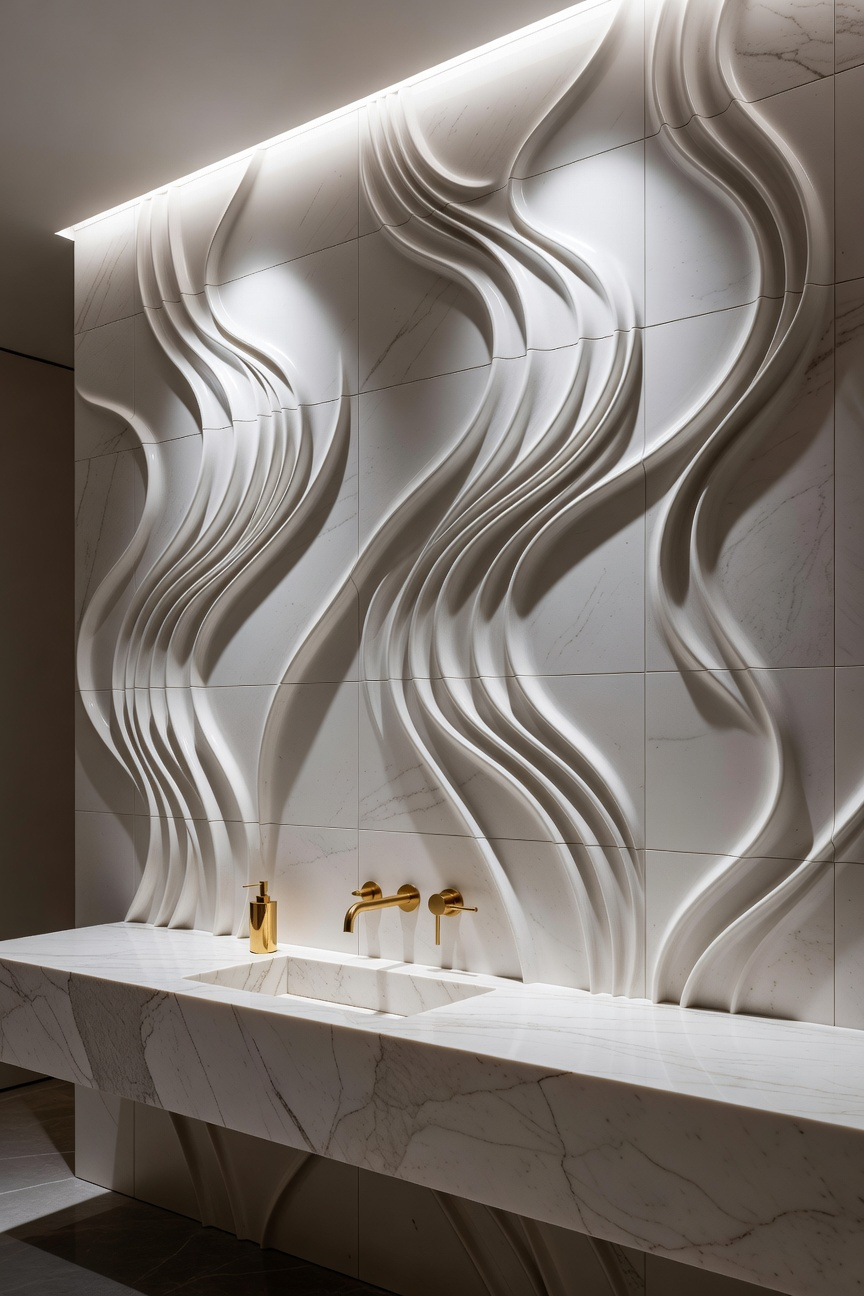
In fact, borrowing from classical masonry adds luxurious architectural scale. Specifically, vertical fluting draws the eye upward to make low ceilings feel soaring. However, low-relief floral motifs provide heavy visual weight to ground a vanity.
Indeed, the true magic of this material lies in tactile confirmation. Indeed, hand-modeled clay tiles purposefully retain beautiful, authentic human imperfections. Therefore, when guests touch the shadowed wall, the physical sensation satisfies deeply.
Next, this transforms a confined space into an unforgettable jewel box. Specifically, matte terracotta absorbs ambient light into soft, velvety shadows. However, high-gloss glazes act like fractured mirrors to energize the room. In fact, monochromatic movement remains an incredibly fearless design approach. Therefore, perfectly matched tile and grout let the relief dictate the narrative.
16. Gilded and Pigmented Grouts: Elevating the Negative Space into a Design Feature
The powder room often acts as the ultimate interior jewel box. Specifically, this windowless canvas allows for an incredible density of luxury. Therefore, the evolution of grout transforms a humble filler into a striking architectural feature. Indeed, modern design boldly embraces the Japanese philosophy of Kintsugi. Instead of hiding tile gaps, we beautifully honor the structural fracture. Therefore, 24-karat gold or copper-infused epoxy grout creates a luminous, shattered mosaic effect.
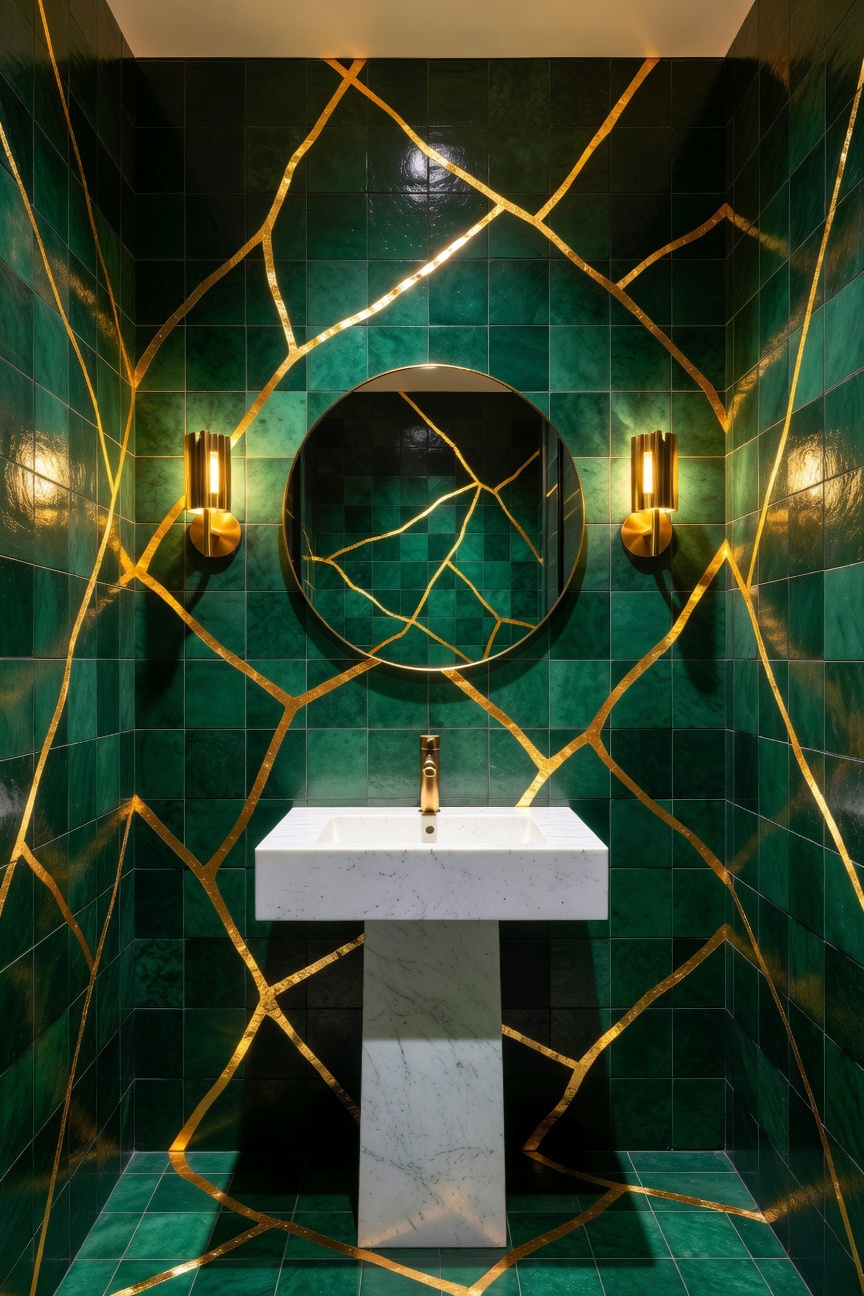
In fact, powder rooms typically lack natural sunlight entirely. However, this design constraint becomes a brilliant advantage using mica-based pigmented grouts. Unlike matte cement, these microscopic mineral platelets reflect low light perfectly. Indeed, they cast a silky, pearlescent shimmer across the surrounding walls. Next, this soft halo effect visually expands the perceived square footage.
Technically, two-part epoxy resins easily outperform traditional porous cementitious systems. Specifically, the clear non-porous epoxy acts like a pristine lens for vibrant pigments. Therefore, rich tones like deep malachite achieve incredible color saturation. In fact, pairing highly saturated grout with bold wallpaper creates a sensory experience.
Historically, this opulent technique mirrors the grand architectural gilding of Versailles. Today, visionary designers treat the negative space as a luxurious pinstripe instead. Therefore, pairing metallic grout with hand-hewn Zellige tiles redefines traditional European patterns. However, dark-on-dark pigmented grouts elegantly create mysterious phantom shadow patterns. Specifically, these hidden geometric features slowly reveal themselves as light catches metallic particles. Indeed, this element of visual discovery perfectly encapsulates a fearless interior design approach.
17. The Ombré Transition: Executing Seamless Gradient Tiling from Floor to Ceiling
Executing a seamless ombré transition transforms a small powder room into an opulent jewel box. Specifically, this technique mimics the Renaissance artistry of sfumato to eliminate harsh visual boundaries. Therefore, the walls beautifully recede, creating a boundless and intensely personal atmospheric experience. Achieving this luxurious dissolve requires precise spatial math and fearless geometric interlocking shapes. Indeed, Moroccan fish scales allow darker tiles to bleed organically into lighter sections. Therefore, the gradient feels like a natural drift rather than a rigid choice.
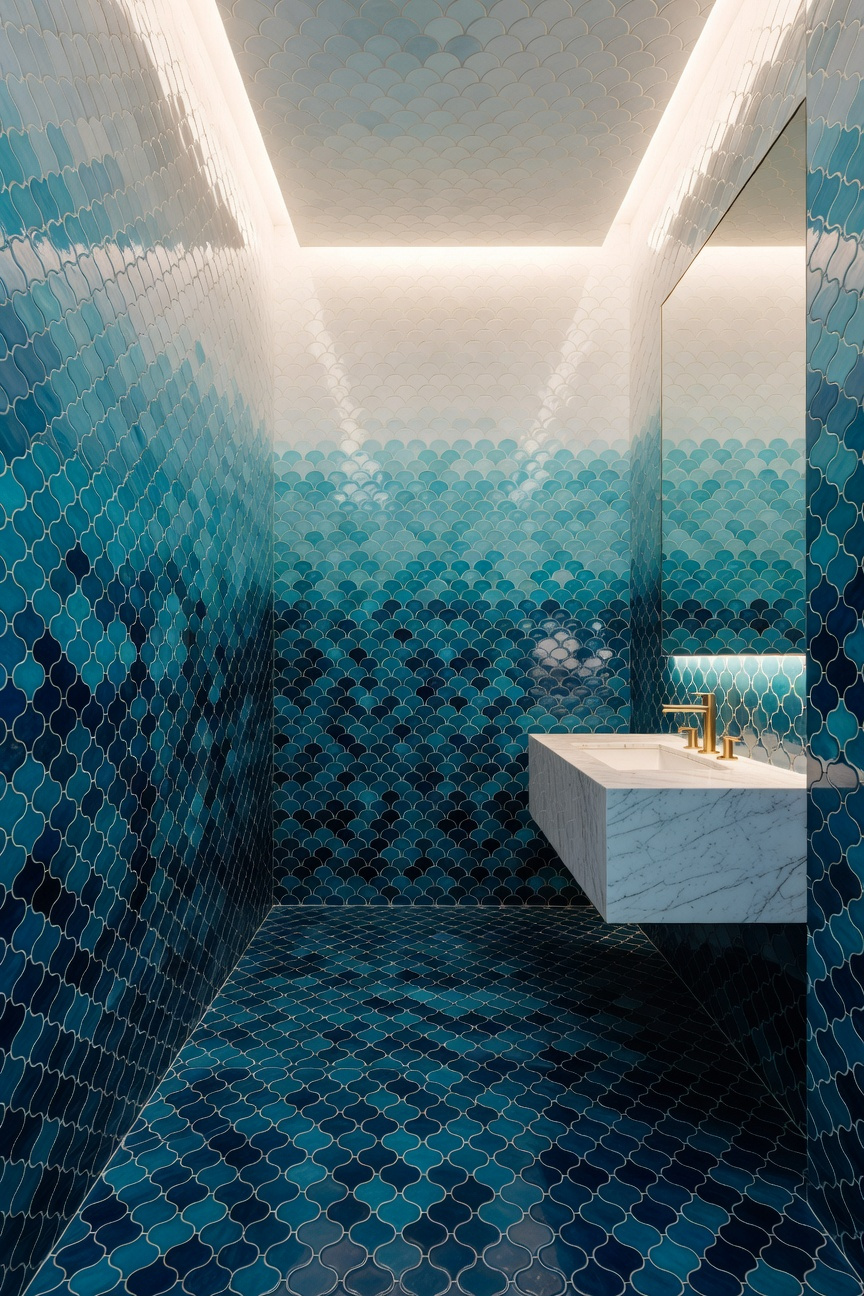
Next, this visual transition zone should peak around shoulder height. Using the Golden Ratio anchors the viewer’s gaze exactly where complex color blending occurs. Psychologically, grounding the floor with dark, earthy matte tiles provides stability in an intimate space. However, shifting to pale glass tiles near the ceiling lifts the room. Specifically, a reverse ombré creates a moody rebellion for high-ceilinged spaces.
To execute this flawlessly, chameleon grouting is an absolute design necessity. In fact, artisans shift grout colors from deep charcoal at the base to white above. Therefore, the rigid grid vanishes completely into the lush, painterly gradient. Indeed, this mosaic honors ancient Roman traditions while confidently pushing modern spatial boundaries.
18. Bespoke Art Deco Arches: Framing Custom Tile Murals Behind the Vanity Mirror
Art Deco arches transcend simple Roman curves to create absolute powder room opulence. Specifically, stepped Ziggurat silhouettes beautifully draw the eye upward. Therefore, this bold verticality transforms a cramped utility space into a dazzling shrine. Creating an Art Deco bathroom requires this kind of architectural layering. Here, geometry and opulence collide beautifully. In fact, modern waterjet cutting technology makes these sweeping, intricate tile designs entirely possible. Indeed, experts flawlessly blend iridescent Mother of Pearl with matte Thassos marble. Next, color-matched epoxy creates a monolithic, shimmering masterpiece with perfectly invisible grout lines.
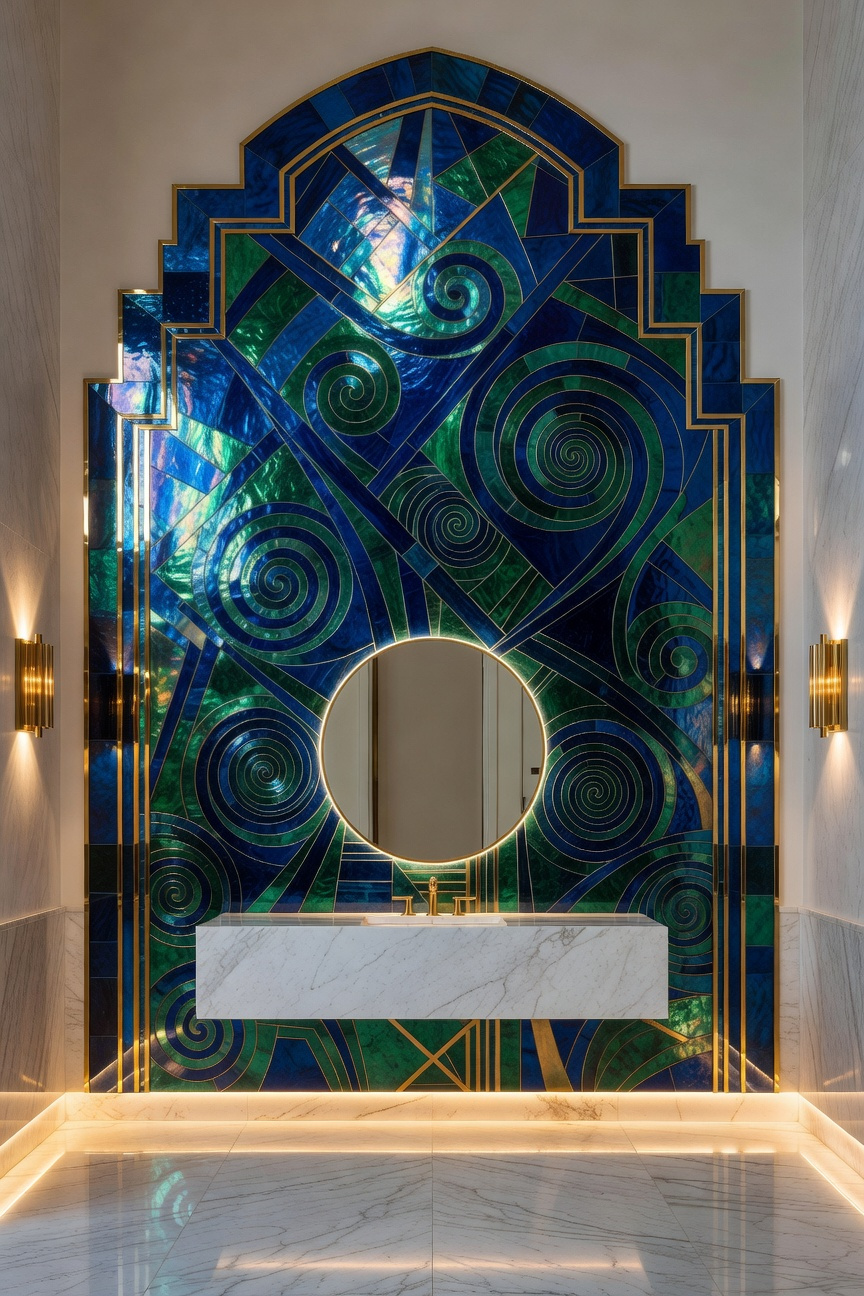
Indeed, the vanity mirror becomes an integrated piece of this theatrical stagecraft. Specifically, glaziers deeply recess the glass within the magnificent tile arch. Therefore, a glowing halo effect envelops the user in rich, tactile luxury. In fact, backlit LED mirrors graze the custom tile to highlight sunburst patterns. However, fearless color theory remains essential for this maximalist jewelry box aesthetic. Specifically, a sharp Nero Marquina black marble border contrasts soft Chinoiserie florals.
Next, executing this opulent vision requires uncompromising technical precision. First, the bespoke mural must be meticulously dry-laid at the studio. Indeed, authentic Art Deco design always worships absolute architectural symmetry. Therefore, the overarching geometric shape must align perfectly with the vanity center. However, slightly misaligned radiating fan motifs will immediately induce unsettling visual vertigo. In fact, this masterful architectural layering casts your guest as a glamorous protagonist.
Frequently Asked Questions
What is the best tile for a small powder room?
For a small powder room, tiles with high reflectivity or oversized patterns are often the best choice. Reflective glazes help bounce light around a windowless space. For example, Moroccan Zellige or iridescent glass mosaics work beautifully. However, oversized botanical mosaics can trick the eye into ignoring physical boundaries. Therefore, the space feels like a theatrical enclosure rather than a cramped closet.
Can I use large format tiles in a powder room?
Yes, using large format tiles is a highly sophisticated design strategy known as material drenching. Oversized panels with rectified edges and minimal grout lines create a seamless, monolithic look. Indeed, this makes a small room feel much more expansive. Therefore, this approach reduces visual clutter. It makes the walls appear carved from a single stone block.
How do I make my powder room look expensive?
To achieve an expensive, high-end look, prioritize materials that offer rich texture and artisan details. Specifically, incorporating bookmatched marble slabs, brass-inlaid terrazzo, or handmade relief tiles adds immediate architectural depth. In fact, focusing on the negative space turns a standard installation into a bespoke design feature. Therefore, try using gilded or high-contrast epoxy grouts.
Indeed, the perfect powder room tile serves as more than just a surface. It acts as the soul of the space. You might choose the shimmering imperfections of Zellige or the grandeur of bookmatched marble. However, these designs ensure your home’s smallest room makes the biggest impression.