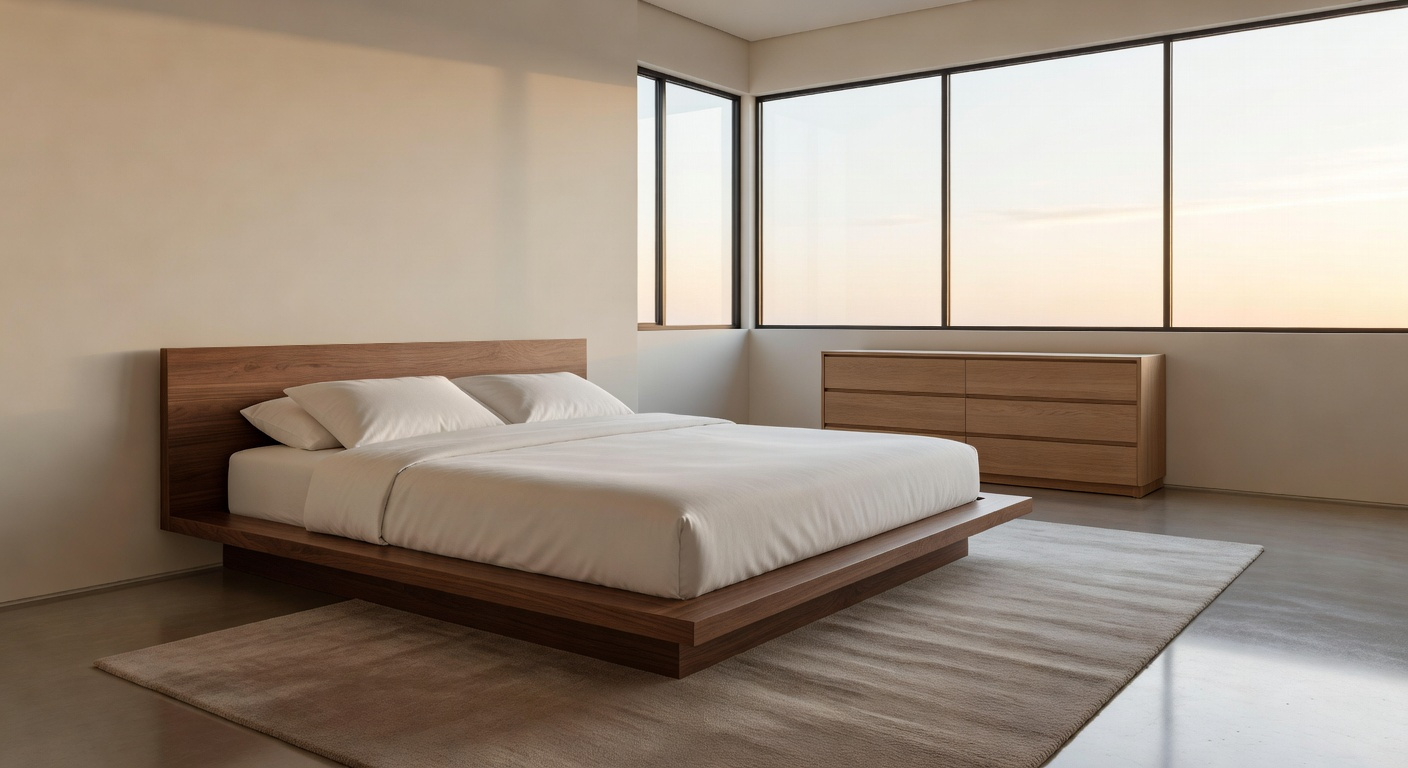

Many view mid-century modern design merely as a nostalgic style choice. However, the 1950s heralded a radical departure in how we inhabit our homes. The evolution of modern bedroom furniture transformed the sleeping area. It shifted from a heavy, decorative space into a “machine for sleeping.” Influenced by the Bauhaus movement, designers like George Nelson prioritized strict efficiency. Indeed, they valued refined aesthetics above all else. Consequently, cumbersome heirlooms vanished. In their place, “Thin-Edge” modules appeared to float. Thus, the era celebrated a scientifically optimized lifestyle through molded plywood and sleek innovation.
Conversely, today’s concept of “modern” serves a different psychological purpose. The post-war era sought technological progress. Today, however, the contemporary bedroom seeks peace. Specifically, the focus has shifted from industrial precision to holistic wellness and bespoke craftsmanship. Therefore, we now favor the tactile warmth of wire-brushed oak over cool, hard chrome. Moreover, the goal is no longer multifunctionality. Instead, we require a “digital detox.” As a result, modern furniture now acts as a biophilic sanctuary against the outside world.
This exploration reveals the profound evolution of modern bedroom furniture. First, we examine the shift from 1950s radicalism to the “slow living” movement. Next, we analyze the transition from efficient workspaces to tactile, restorative retreats. Furthermore, we discuss how materials have evolved from experimental plastics to breathable linens. Ultimately, this guide helps you curate a space that honors design history while prioritizing rest.
The Philosophy of Form: Why ‘Clean Lines’ Does Not Mean ‘Cold’
The concept of “clean lines” is frequently misunderstood as clinical. However, in modern bedroom furniture, these lines represent intentionality, not emptiness. Historically, the Victorian bedroom acted as a “cluttered fortress.” It was filled with heavy drapes and social anxiety. In contrast, modernism—much like a black bedroom aesthetic—seeks luxury through restraint. Modernism stripped away ornamentation to reveal structural honesty. Consequently, the furniture stops “shouting.” It becomes a quiet, breathing backdrop for the inhabitant.
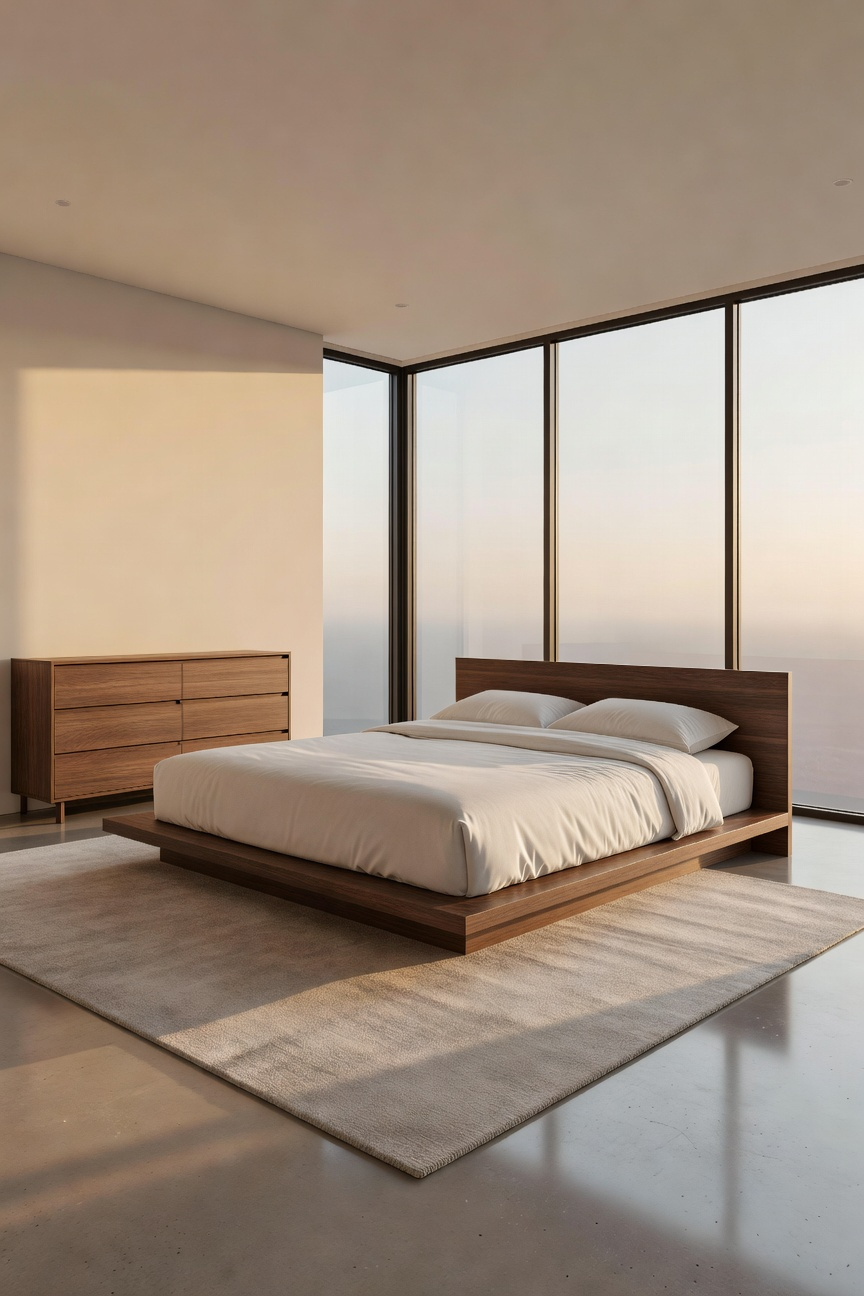
- *Furthermore, neuro-aesthetic research suggests rectilinear forms provide mental stability. Specifically, intricate patterns increase cognitive load. Clean lines, however, significantly reduce visual noise. Therefore, a low-profile platform bed acts as a visual horizon. It physically grounds the room. Ultimately**, this simplicity signals safety and order to the resting brain.
- *Moreover, the perceived “coldness” vanishes upon closer inspection. For instance, “Warm Minimalism” utilizes masterfully book-matched wood veneers. It avoids concealing paint. Thus, the simplicity forces the eye to admire the timber’s natural history. Additionally, the geometry invites touch through tapered legs and beveled edges. While the furniture provides structure, homeowners often pair these architectural lines with luxurious bedroom wallpaper ideas to add depth. In fact, these details remove the threat of sharp corners. Finally, smooth surfaces allow light to wash gently across the wood. As a result**, the furniture distributes a luminous, gradient warmth.
Material Honesty: The Return to Solid Walnut, Teak, and Oak
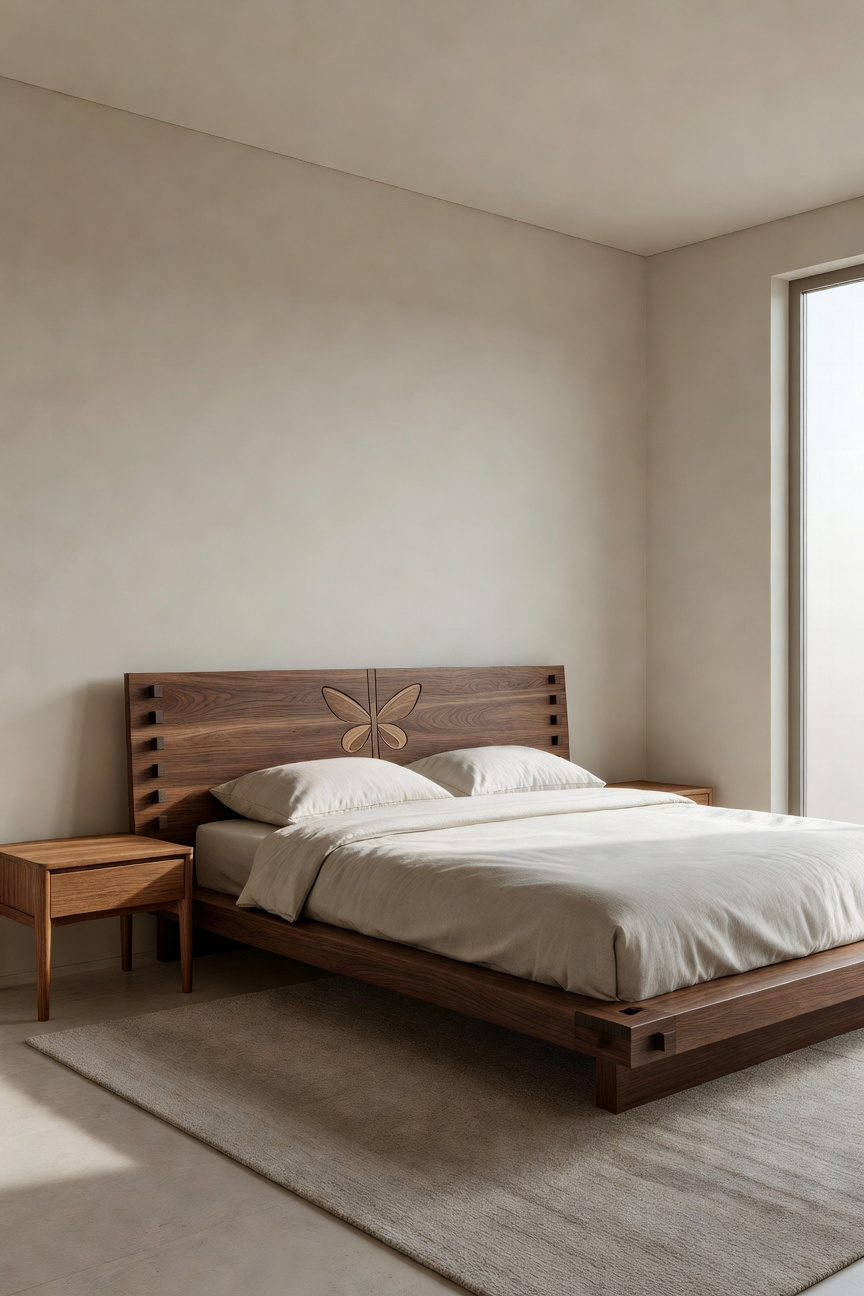
Material Honesty is defined today by the return of visible joinery. For instance, designers now showcase through-tenons and butterfly joints as primary features. Consequently, these details serve as undeniable proof of solid wood construction. A veneer simply cannot support these complex joints. It would peel to reveal a particle-board core. Therefore, this trend offers visual evidence of structural security.
Beyond construction, modern bedrooms increasingly prioritize “haptic wellness.” Specifically, manufacturers are replacing thick polyurethane lacquers with natural hardwax oils. As a result, users can feel the wood’s actual grain. Walnut offers a silky, cool touch. Oak provides a rugged, grounding texture. Conversely, teak is prized for its waxy feel and organic scent. Thus, the furniture actively contributes to a sensory, spa-like atmosphere.
Furthermore, this tactile shift supports better indoor air quality. Unlike composites, solid planks eliminate the need for chemical-heavy glues. In fact, solid walnut and oak are naturally VOC-free choices. Finally, solid wood refuses to fight time. Instead, it develops a rich patina over decades. Teak deepens into amber. Walnut lightens to honey-brown. Ultimately, these materials allow furniture to become a generational anchor.
The Platform Bed: Anchoring the Room with Low-Profile Architecture
To understand the platform bed, look past its minimalist silhouette. Instead, view it as a functional architectural intervention. Historically, this design represents a Western evolution of the Japanese *tatami* tradition. Specifically, mid-century modern designers reinterpreted this “groundedness.” They favored democratic simplicity. Unlike ornate frames, a platform bed sits as a tranquil horizontal plane. Consequently, it replaces the creak of coils with the silent stability of timber.
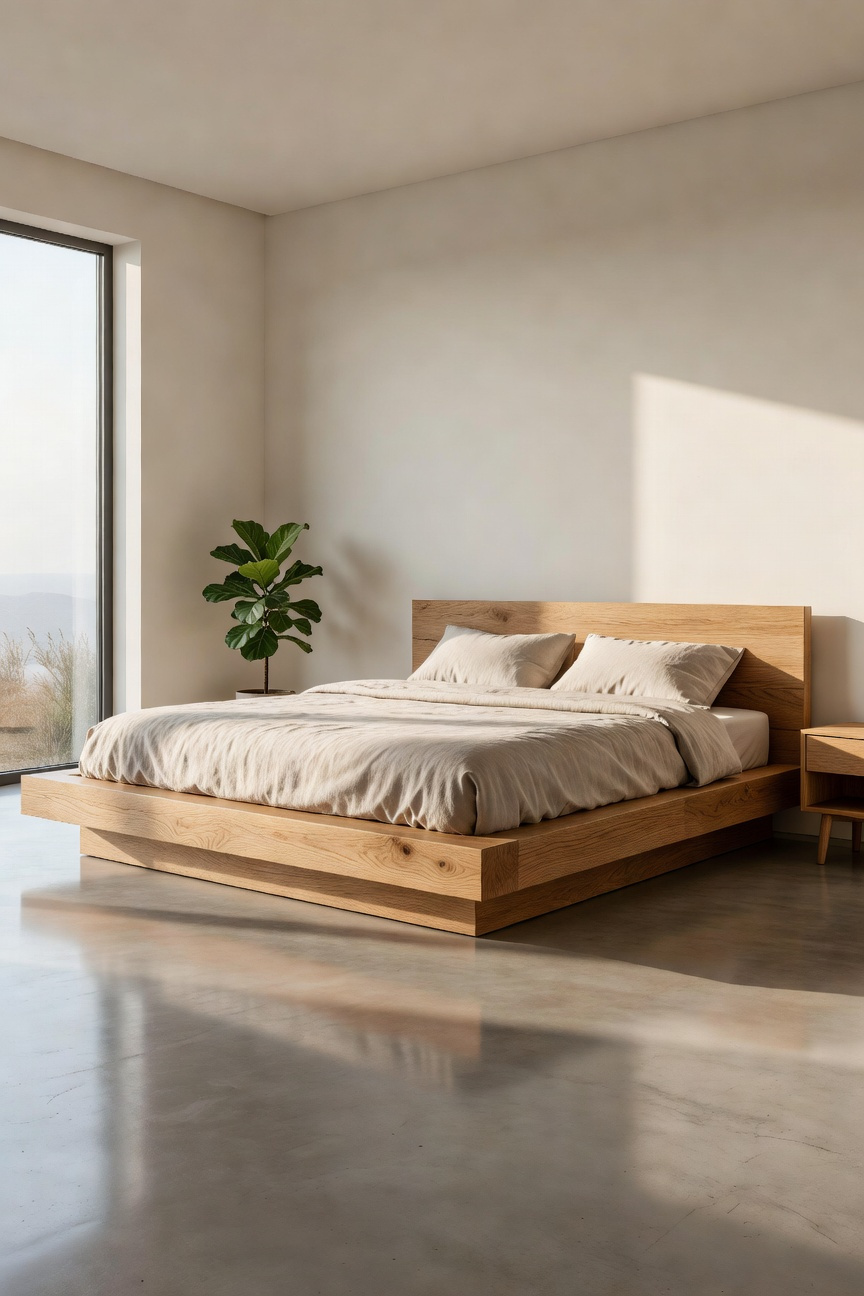
In interior design, this piece functions as a crucial spatial anchor. By lowering the room’s center of gravity, it artificially increases volume. Therefore, the unoccupied upper wall space makes ceilings appear significantly higher. This verticality is essential in modern urban architecture. Additionally, the style eliminates the need for a box spring. In fact, modern foam mattresses require this rigid foundation to prevent sagging. High-end models often utilize “flex-slat” systems. Conversely, cheaper plywood bases may trap moisture.
Finally, the platform bed dictates the “horizon line” of the bedroom. Ideally, accompanying furniture scales down to maintain a continuous flow. Psychologically, this low profile creates a distinct “cocooning” effect. However, there is a functional trade-off regarding accessibility. Specifically, the low height can require more core strength to exit. As a result, “mid-profile” variations now offer a compromise.
Sourcing Sustainably: Distinguishing ‘Fast Modern’ from ‘Heirloom Quality’
Primarily, the distinction between “fast modern” and heirloom quality lies in material composition. Fast modern furniture often utilizes MDF or particleboard. These composites consist of sawdust bonded with resins. Consequently, they lack natural cellular integrity. Therefore, they are prone to permanent sagging. Conversely, true heirloom pieces feature solid hardwoods like walnut or cherry. This “living fiber” breathes. It allows for seasonal expansion without structural failure.
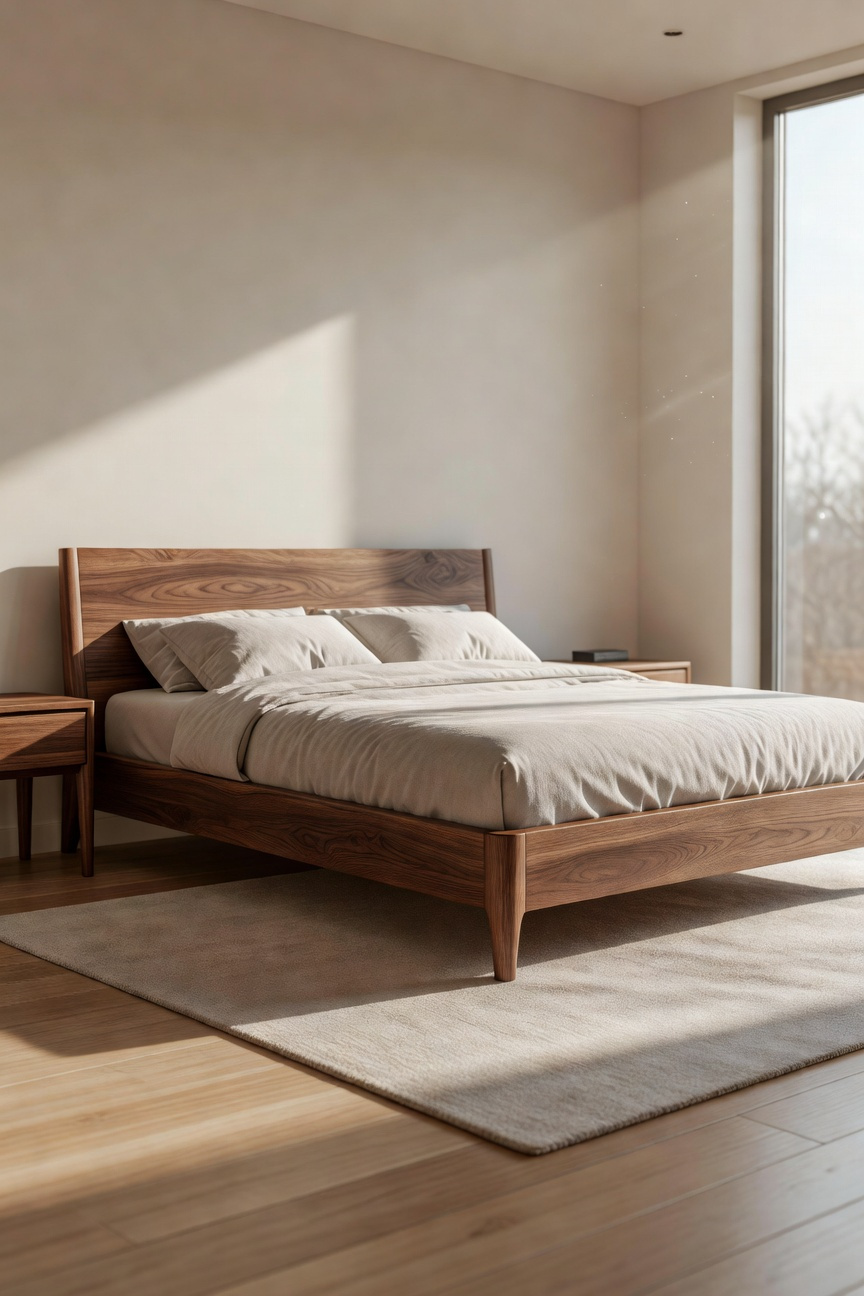
Furthermore, engineering dictates the furniture’s lifespan. Specifically, mass-market items rely on metal cam-locks. Unfortunately, these concentrate stress on brittle particleboard. Repairs become nearly impossible. In contrast, authentic craftsmanship employs geometry-based joinery. For instance, dovetail joints utilize the wood’s shape for strength. This mechanical bond creates a stable structure. It resists racking forces naturally.
Additionally, the surface finish reveals the piece’s true nature. Fast furniture frequently uses “photo-paper” veneers. These are essentially printed images. However, heirloom makers use thick-cut veneers or solid wood. Thus, the piece can be refinished repeatedly. It ages gracefully with the owner. Finally, you can verify quality through touch. Real wood feels naturally warm and insulating. Meanwhile, plastic laminates feel cold. Ultimately, heirloom quality transforms furniture into a carbon sink.
The Dresser as Sculpture: Integrated Hardware and Wood Grain Continuity
In modern design, a dresser is not merely storage. Rather, it is a monolithic sculpture. This transformation relies primarily on continuous flitch matching. Specifically, craftsmen map grain patterns from a single log slice. They extend this across all drawer faces. Consequently, the wood figure flows vertically or horizontally without interruption. To further this illusion, makers often employ mitered wraps. Thus, the grain cascades over edges like a waterfall. It creates a unified visual volume.
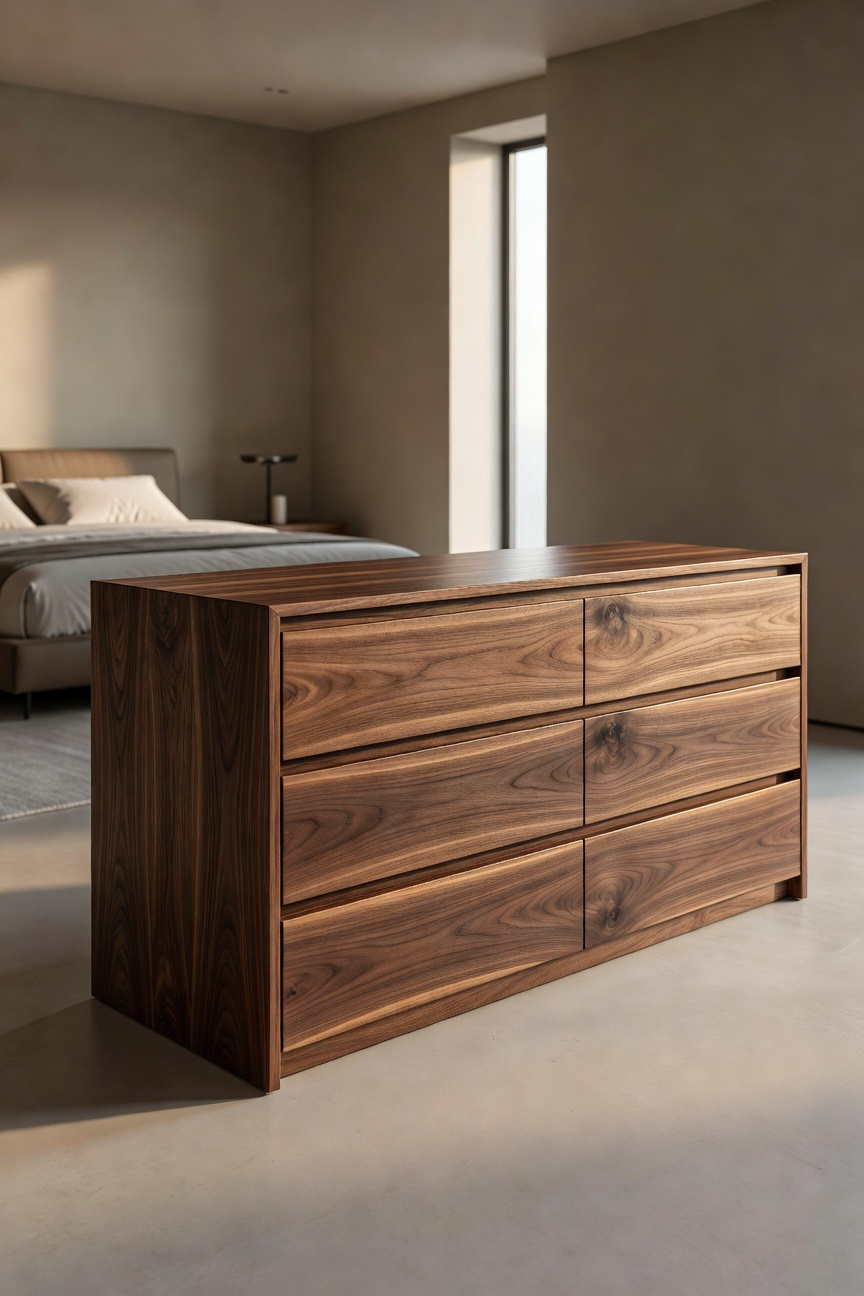
Visual silence is equally vital to this sculptural aesthetic. Therefore, traditional protruding knobs are replaced by integrated hardware. By routing “J-pulls” or coved finger grooves, the form remains uninterrupted. Furthermore, this approach is deeply human-centered. Following the lineage of masters like Sam Maloof, the hand finds these curves instinctively. Additionally, carving into the drawer front reveals the timber’s end grain. This offers a tactile connection to the tree’s growth rings.
Technically, achieving this continuity requires navigating wood movement. Solid wood expands with humidity. However, a sculptural block must remain stable. As a result, modern artisans often utilize architectural-grade veneers over stable cores. This “hybrid” solution prevents drawers from binding. It also allows for intricate slip-matching. Ultimately, these techniques remove visual clutter. The bedroom becomes a sanctuary of serenity.
Visual Aerodynamics: How Tapered Legs Create the Illusion of Space
The concept of “Visual Aerodynamics” is more than a clever metaphor. In fact, it is a direct descendant of the Mid-Century “Space Age” aesthetic. During the 1950s, designers like Paul McCobb drew inspiration from aerospace engineering. Consequently, tapered legs mimic the precise silhouette of aircraft landing gear. By narrowing the leg as it approaches the floor, the design suggests reduced weight. Therefore, a heavy walnut dresser appears ready for lift-off. It replaces traditional bulk with optimism.
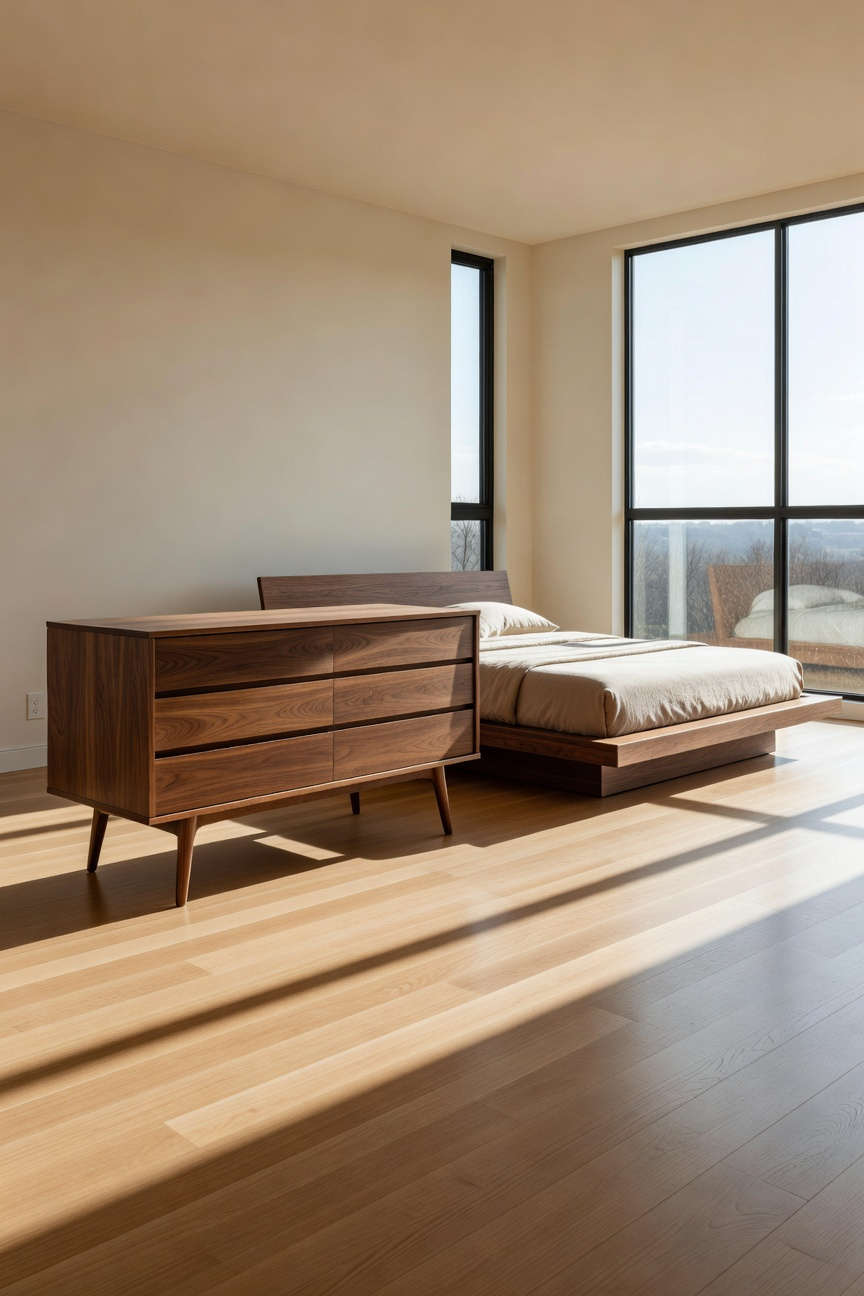
Furthermore, this illusion relies heavily on Environmental Psychology. Specifically, the brain perceives a room’s size based on an “uninterrupted floor plane.” Tapered legs effectively “lift the veil” on heavy furniture. Thus, they expose the flooring all the way to the baseboards. This continuous sightline significantly reduces cognitive load. As a result, the bedroom feels breathable rather than chaotic. Light reflects off the floor, eliminating dark shadows.
Structurally, authoritative design often follows the “Golden Taper.” Typically, the foot measures exactly half the width of the leg’s top. This ratio ensures visual balance without fragility. Surprisingly, engineers note that splayed legs actually create a wider, safer footprint. Ultimately, this geometry transforms furniture from a stationary block into an agile object. For modern urban living, this trick prevents large pieces from suffocating a room.
Nightstand Narratives: The Case for Floating Designs and Asymmetry
Historically, the nightstand was a heavy cabinet built to conceal chamber pots. However, modern design has reversed this necessity completely. Specifically, floating designs detach furniture from the floor. They mirror mid-century architectural lightness. Consequently, the bedroom feels unburdened by the “weight” of traditional storage. Furthermore, this approach utilizes the “unbroken perimeter” concept. When the eye follows the floor to the baseboard, the room feels larger. Therefore, eliminating legs removes visual anchors.
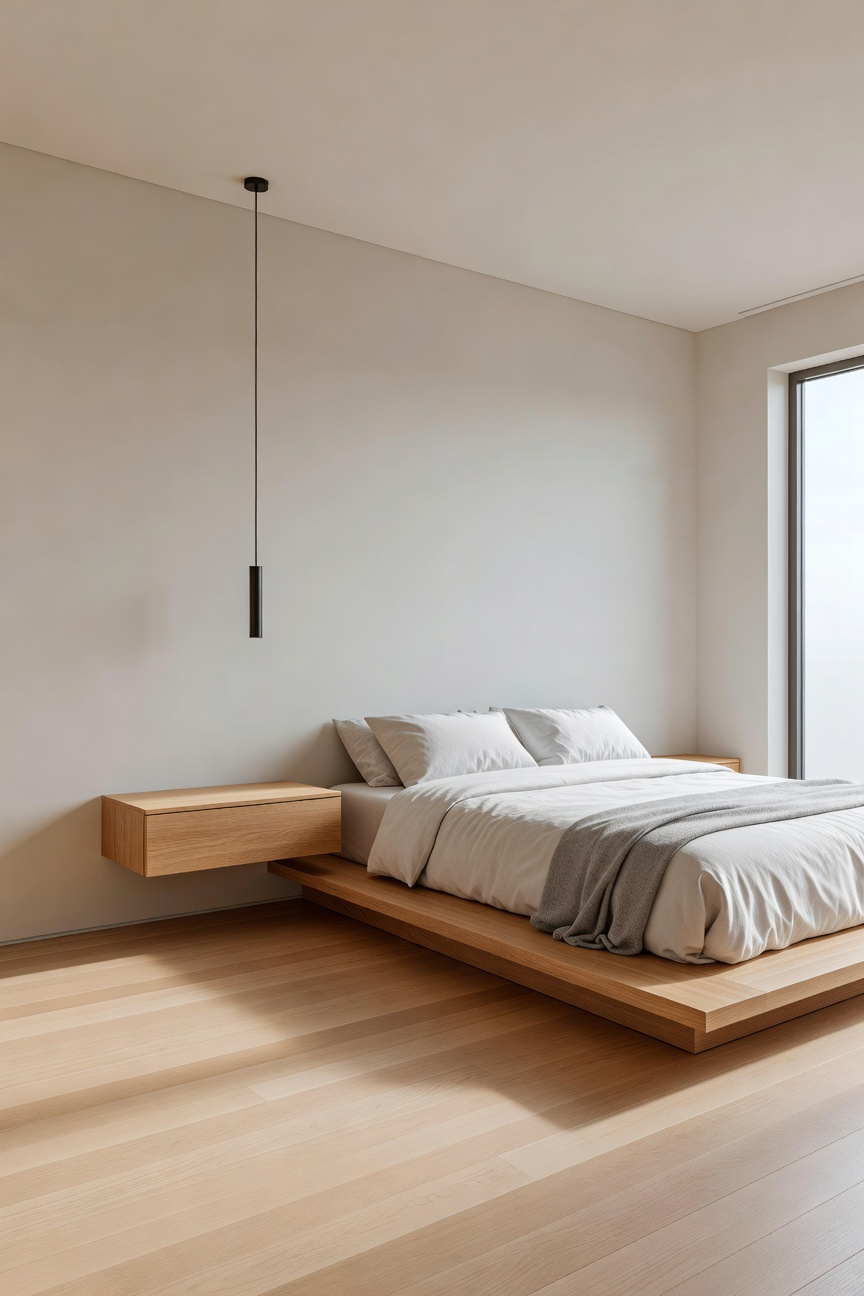
Moreover, the modern narrative embraces asymmetry over rigid perfection. While identical sets signal order, they often feel static. Conversely, a curated mismatch feels more human. For instance, you might balance a heavy walnut drawer on one side. On the other, place a slender floor lamp. Thus, you achieve harmony through visual weight, not repetition.
To execute this look, technical precision is paramount. Most high-end pieces rely on the “French Cleat” system. This allows for invisible, flush mounting. Additionally, proper ergonomics are crucial. You should mount the surface level with the mattress top. Alternatively, place it exactly two inches below. This turns a utility object into a tactile experience. These elements are key when exploring cozy bedroom ideas that aim to create a personal sanctuary.
The Modern Reading Corner: Incorporating Wegner-Style Silhouettes
Creating a modern reading corner requires more than just functional seating. Instead, it demands “functional sculpture.” Specifically, Hans Wegner’s silhouettes offer a psychological transition from sleep to solitude. Wegner didn’t simply invent shapes. Rather, he “purified” them. For instance, he stripped formal styles to reveal their “organic soul.” Consequently, bringing a piece like the Wishbone Chair into a bedroom feels authentic.
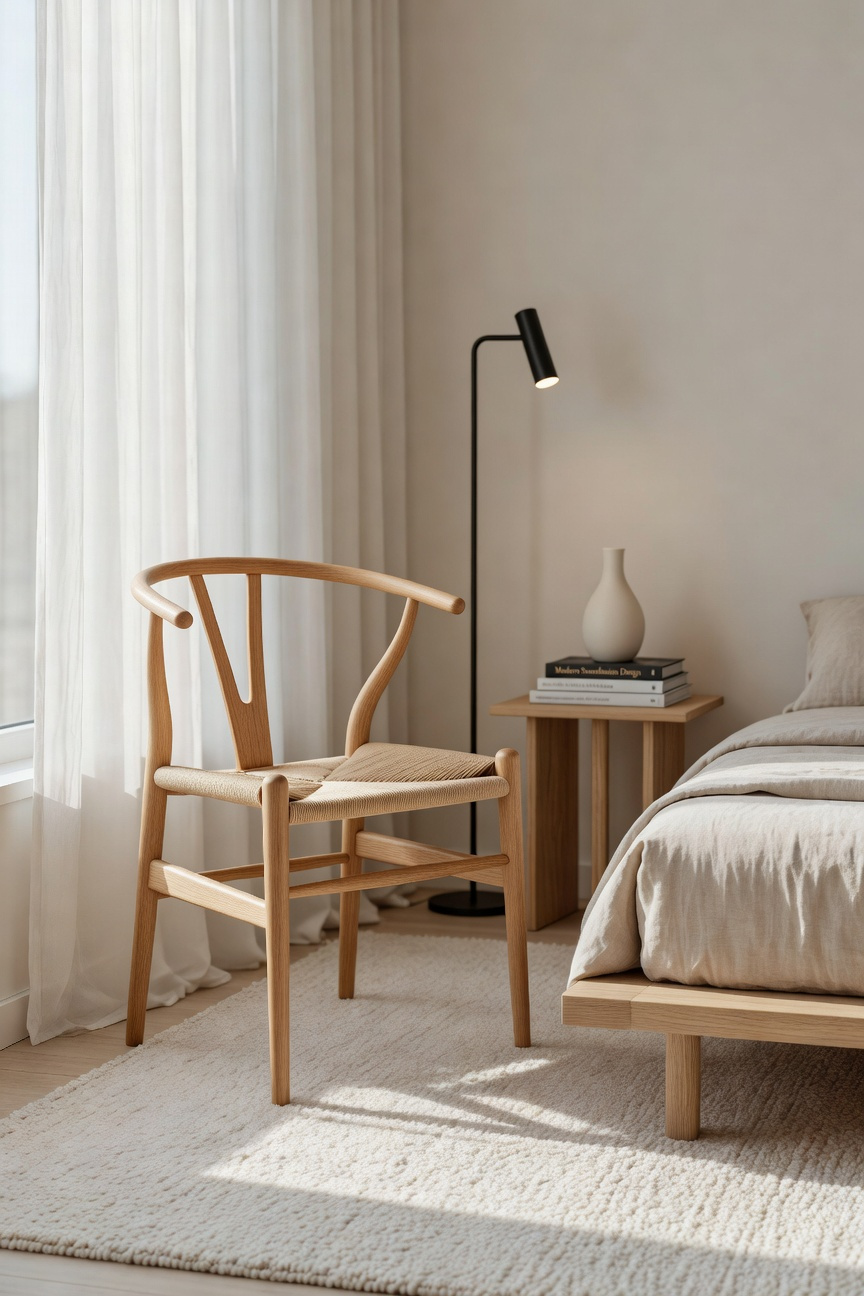
Furthermore, Wegner explicitly designed for the “restless reader.” Unlike standard chairs, the Papa Bear Chair features embraceable arms. These are tipped with solid wood “paws.” Uniquely, these paws prevent fabric wear. They also offer a cool, tactile surface for palms. Similarly, the Wing Chair’s sculpted frame supports the head in any position. Thus, you can curl up without losing lumbar support.
Additionally, material choice defines the room’s atmosphere. Many designs feature hand-woven paper cord. This material breathes better than sticky leather. Over time, this cord develops a golden patina. It becomes a living record of your relaxation. To style these effectively, pair low profiles like the Shell Chair with modern beds. Finally, place a circular rug underneath. This visually anchors the “room within a room.”
Texture Over Clutter: Warming Up Modernism with Bouclé and Wool
Modernist design often evokes images of cold steel and sharp angles. However, the movement has always possessed a softer side. Specifically, mid-century icons like Eero Saarinen utilized bouclé. He used it to humanize industrial forms. In fact, his famous “Womb Chair” relied on this nubby fabric to hug curves. Today, we apply this precedent through “Soft Modernism.” This approach prioritizes sensory weight over visual volume. Consequently, a space feels luxurious without becoming cluttered.
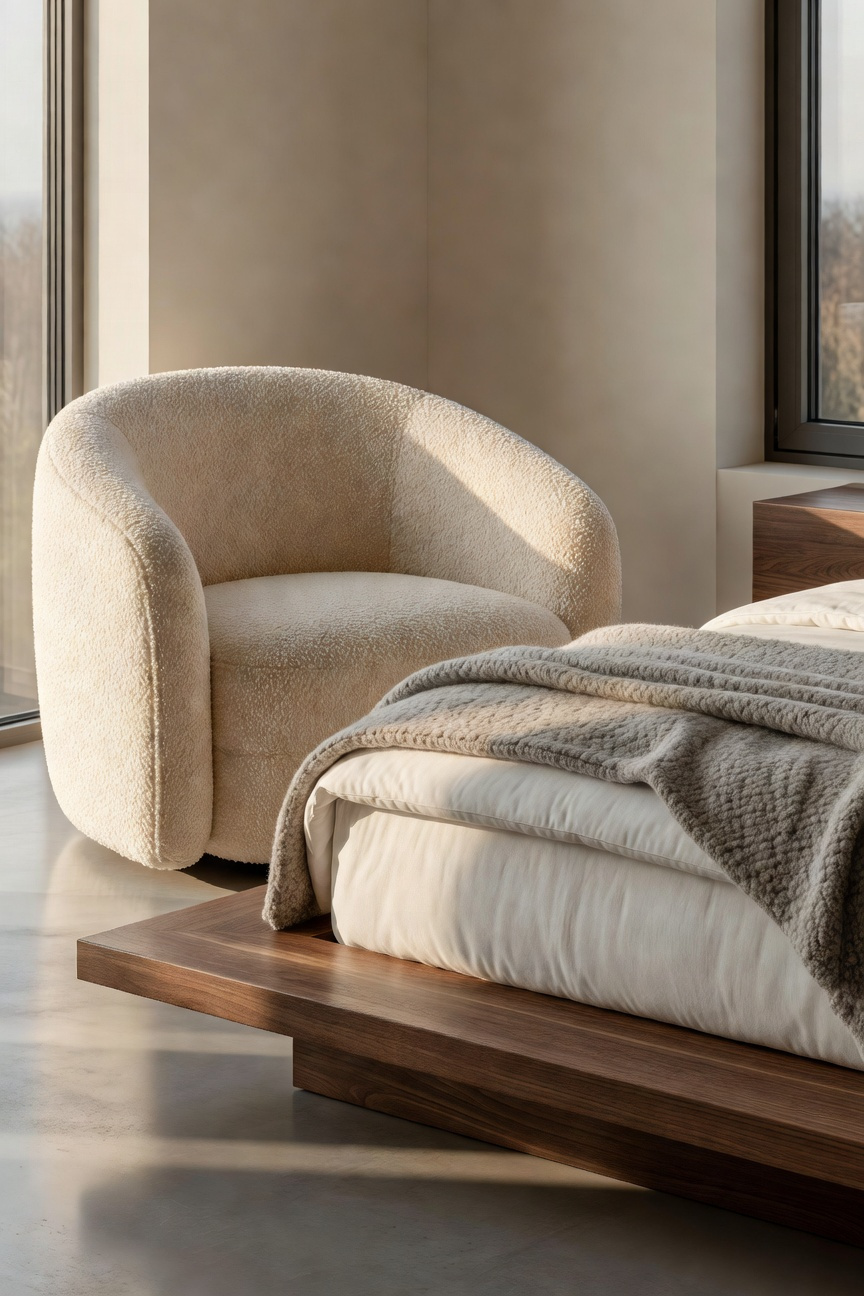
Beyond aesthetics, bouclé and wool act as environmental controls. For instance, the irregular loops of bouclé diffuse light. Instead of harsh glare, the fabric creates a soft glow. Additionally, wool fibers trap air pockets. They function as effective acoustic baffles. Therefore, these materials dampen echoes. They silence the “hollow” feeling often found in minimalist architecture.
Ultimately, the goal is replacing decorative objects with material depth. In practice, the play of light across a textured weave acts as a pattern. Thus, you avoid the need for busy prints. However, material choice is critical for longevity. Unlike trendy synthetic “teddy” fabrics, heirloom wool possesses memory. As a result, the fibers bounce back after compression. Your sanctuary remains restorative for decades.
Lighting the Mood: The Resurgence of Mushroom Lamps and Sputnik Fixtures
The resurgence of mushroom lamps represents a search for visual comfort. Specifically, icons like the 1967 Artemide Nesso utilize “glow-over-beam” architecture. Unlike traditional lamps that cast harsh beams, the mushroom’s cap acts as a diffuser. Consequently, these organic shapes serve as an antidote to “screen fatigue.” Their silhouettes tap into our desire for safety. Furthermore, these fixtures pair perfectly with tactile furniture. For instance, matte bouclé upholstery absorbs the diffused light. This creates a “cocooning” sensory experience.
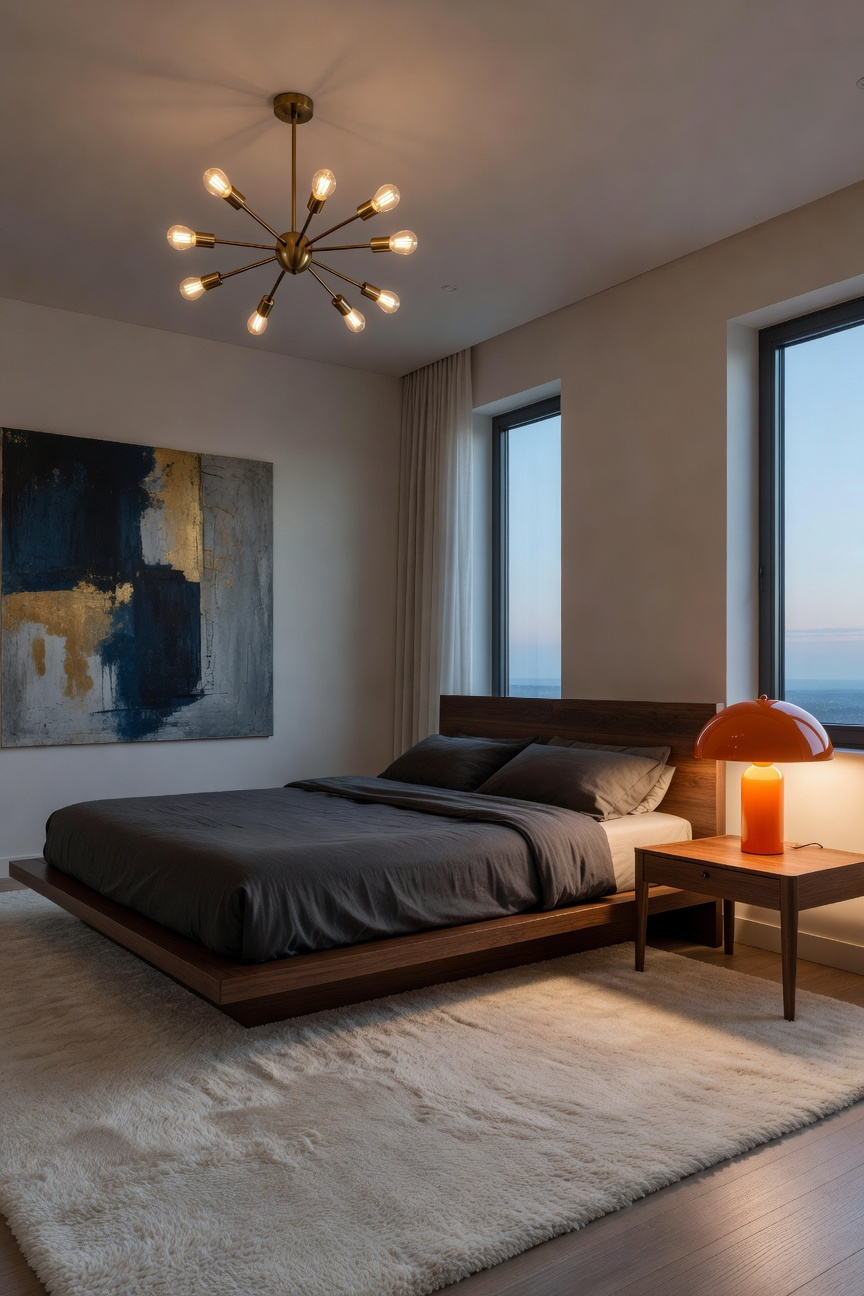
In contrast, the Sputnik fixture serves as “architectural jewelry.” Originally inspired by the Atomic Age, these lights provide dynamic energy. However, modern iterations have evolved. Designers now favor versions with frosted glass orbs. This reduces visual noise. Therefore, a refined Sputnik fixture acts as a vertical anchor above low beds. It draws the eye upward. Standard ceilings feel significantly more expansive.
Ultimately, combining these styles satisfies the theory of “Refuge and Prospect.” The bedside lamp creates an intimate “refuge.” Conversely, the overhead Sputnik symbolizes outward “prospect.” Additionally, material choices have shifted. We now see travertine lamps mixed with warm walnut. Thus, blending textures prevents a dated aesthetic. The result is a curated space that feels like a modern collection.
The Art of the Mix: Blending True Vintage Finds with Contemporary Reproductions
Curating a bedroom requires balancing history with modern functionality. Specifically, authoritative interiors avoid the showroom look by employing the 80/20 rule. Ideally, establish eighty percent of the room’s foundation with contemporary reproductions. For example, new bed frames offer superior structural support for modern mattresses. Conversely, the remaining twenty percent becomes the room’s soul. This comes from authentic vintage finds.
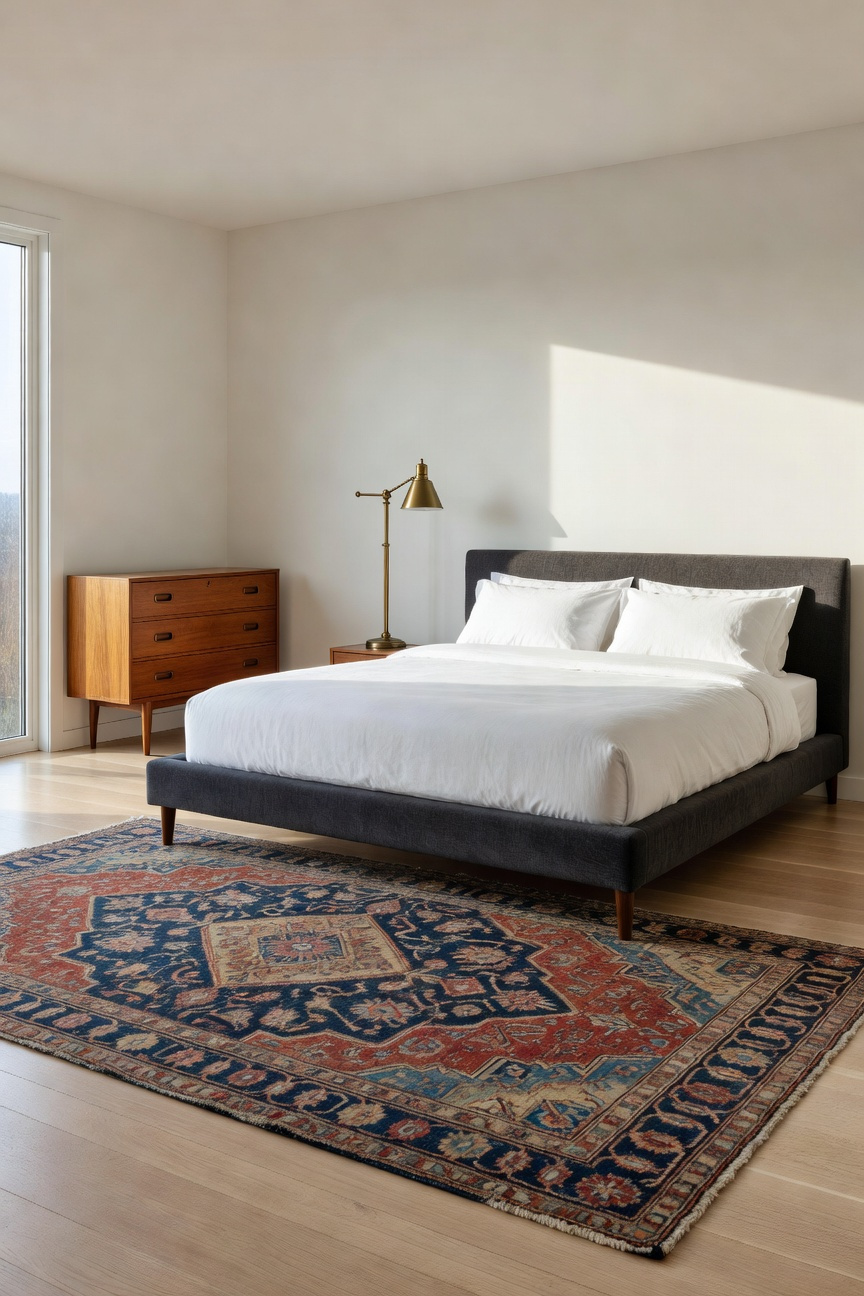
- *Furthermore, successful mixing relies on understanding material differences. In fact, true vintage teak possesses a waxy warmth. Modern stains cannot replicate this. However, contemporary American Black Walnut offers a structured depth. Therefore**, pairing a vintage dresser with a precise walnut bed creates a sophisticated dialogue. This strategy is also common in modern living room decoration to create timeless secrets for luxury homes.
- *Additionally, consider the sensory experience of daily use. Notably, vintage drawers slide on wooden glides. This creates a distinct friction and sound. In contrast, modern furniture features hydraulic soft-close dampers. Consequently, embrace the tactile ritual of vintage pieces for clothing. Simultaneously, opt for modern nightstands to ensure silence. Ultimately**, this strategy fosters a “Slow Interior.” It anchors your space in time while serving current needs.
Restoration Radar: Inspecting Joinery and Finishes in Second-Hand Modern Pieces
Unlike dining tables, bedroom furniture faces a unique chemical battle. Specifically, nitrocellulose lacquers on mid-century headboards suffer from oil degradation. Consequently, natural hair oils soften the finish over decades. If the center feels tacky, the finish is liquefying. Therefore, simple cleaning is futile. The area likely requires a full strip.
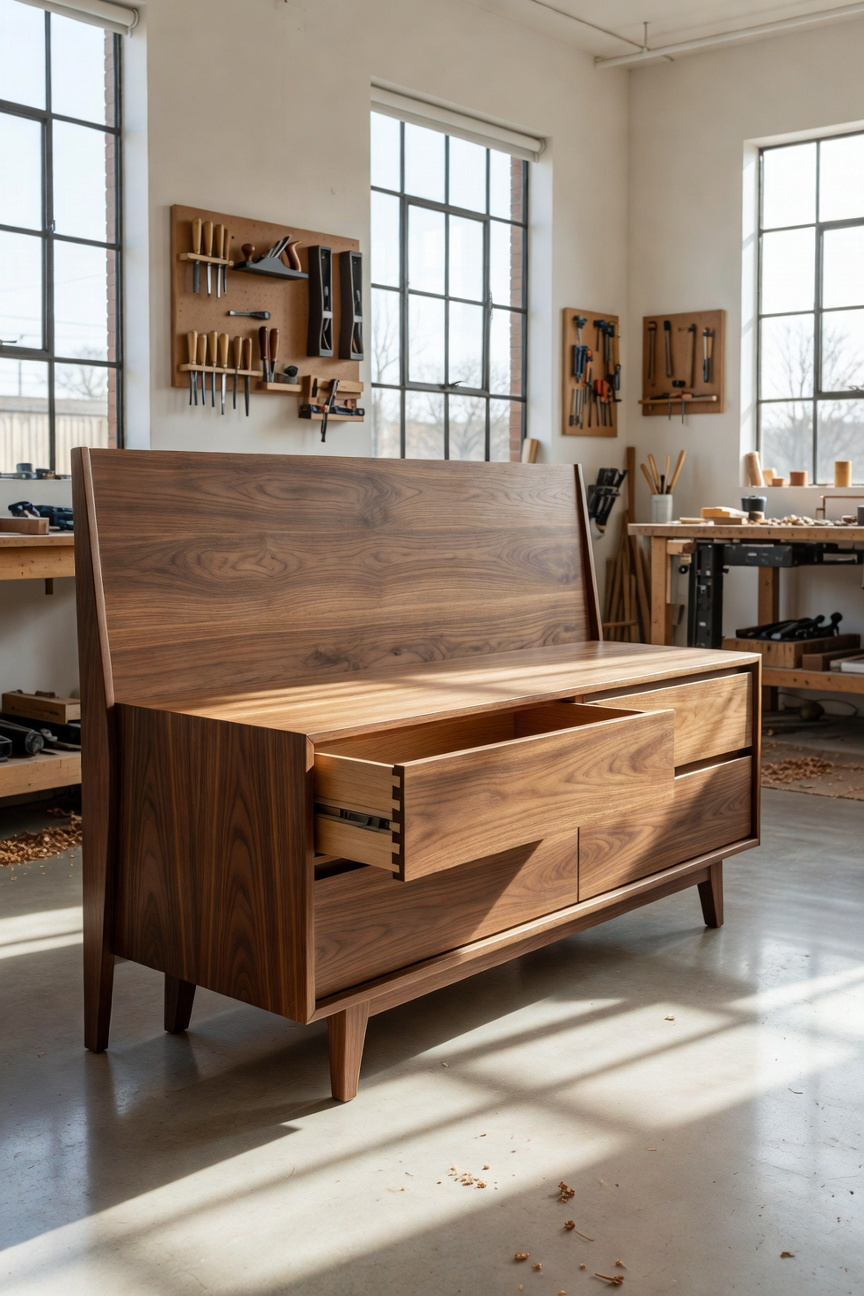
- *Next, inspect the drawer joinery to map the piece’s heritage. High-end brands often utilized half-blind dovetails. Conversely, stapled butt joints signal non-restorable construction. Furthermore**, a quality drawer should “sigh” when pulled. This creates a distinct vacuum resistance.
- *Beyond joinery, evaluate the surface material. To distinguish solid wood from veneer, examine the end grain. For instance, on solid walnut, the grain wraps seamlessly. In contrast, mismatched edge-banding indicates veneer. Additionally, tap the surface. A hollow sound suggests particleboard. A solid “thunk” indicates lumber-core plywood. However**, beware of lighter, “ghostly” patches. This signals a “blown” veneer that cannot be sanded.
- *Finally, conduct a forensic audit of the hardware. Use a magnet to identify the metal’s composition. If it sticks, the piece is brass-plated steel. Unfortunately, pitted plating cannot be polished. Similarly**, check Danish bed bolts for stripped nuts. These often render the frame structurally unsound.
Grounding the Space: Geometric Rugs vs. Organic High-Pile Textures
Selecting the right rug effectively manages “architectural weight.” Specifically, contemporary spaces often feature low-profile beds and stiletto legs. Consequently, without a visual anchor, this furniture appears to float aimlessly. Geometric rugs address this by establishing a “mathematical base.” For instance, aligning linear patterns with window frames creates order. Furthermore, these low-pile weaves offer a stable stage. Therefore, delicate nightstands remain level.
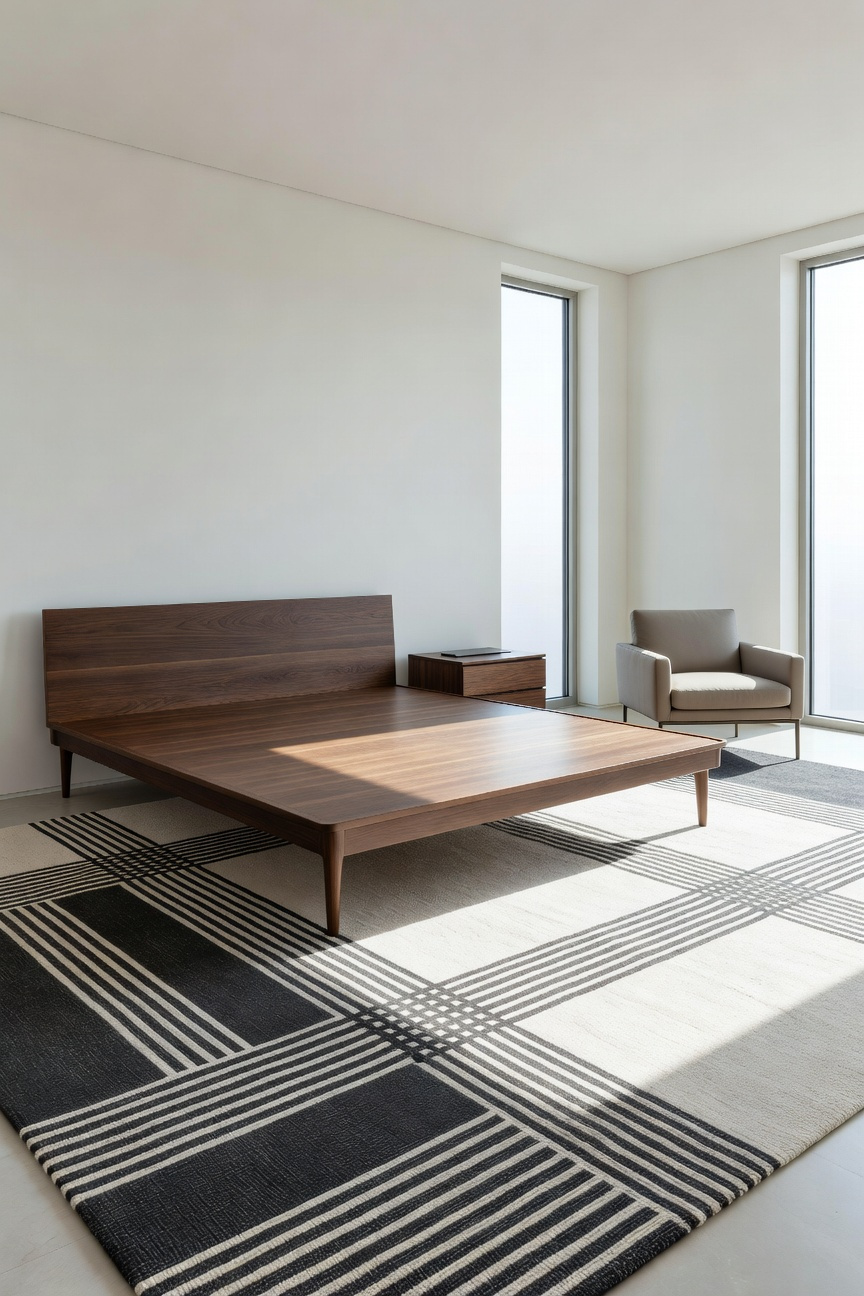
Conversely, organic high-pile textures prioritize “sensory hygiene.” Historically, modernists utilized plush rugs to soften industrial coldness. Today, this tactile foil transforms a minimalist room. Moreover, stepping onto a deep pile provides a gentle “landing zone.” This physical comfort signals safety to the nervous system. It is critical for sleep hygiene.
Technically, fiber resilience is paramount. Ideally, select restoration-worthy pieces made from New Zealand wool. These natural fibers possess a spiral “crimp.” Therefore, the rug bounces back even after supporting a frame. In contrast, synthetic fibers lack this memory. As a result, heavy furniture creates permanent craters. Ultimately, your choice balances structural clarity with comfort.
Vertical Storage Solutions: The Comeback of the Mid-Century Chiffonier
The modern bedroom is often short on space. Consequently, homeowners are experiencing “horizontal fatigue” from sprawling dressers. In response, the mid-century chiffonier is making a comeback. Historically, this piece evolved from a simple “rag-picker” cabinet. However, 1950s designers reimagined it as a precision-engineered “Gentleman’s Chest.”
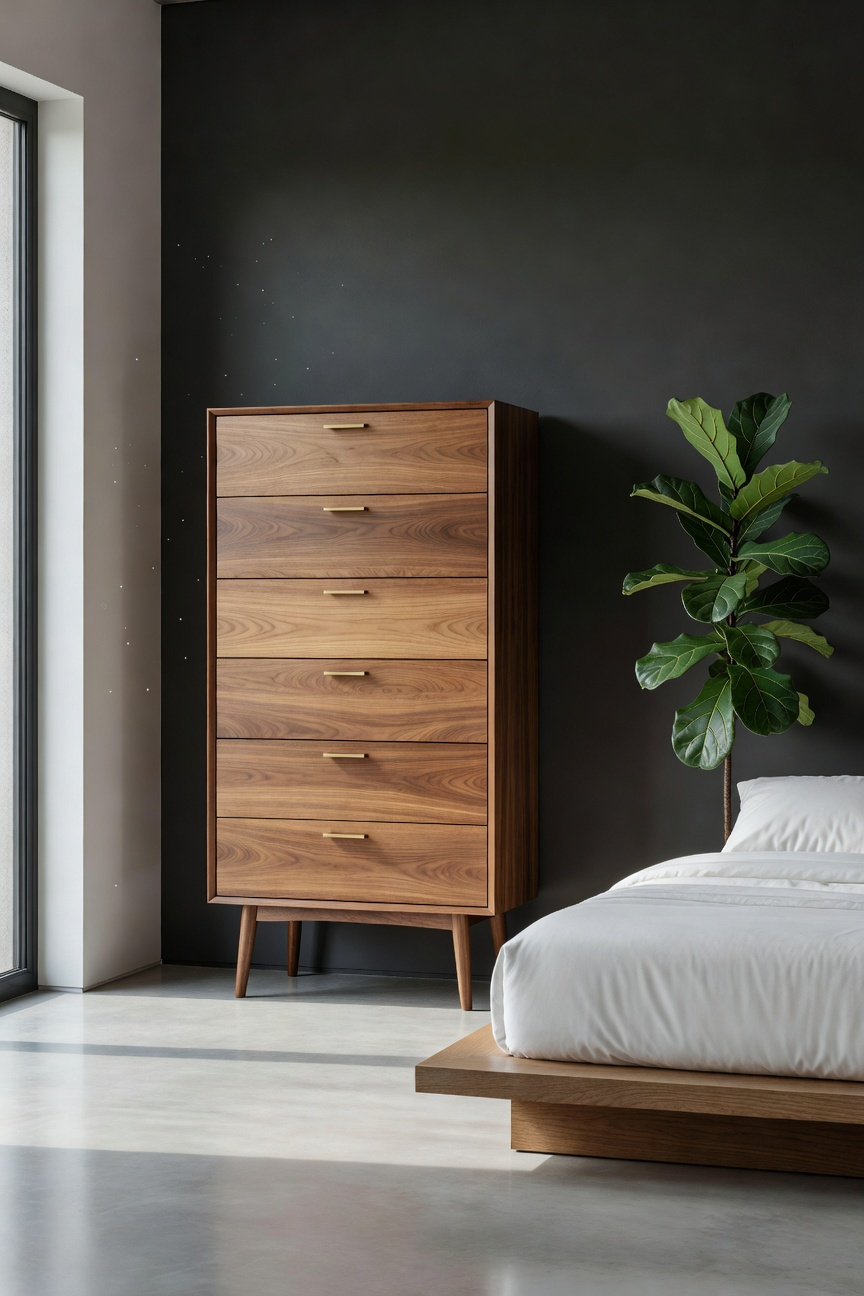
Today, this verticality serves a crucial architectural purpose. Specifically, the height draws the eye upward. Thus, it creates the illusion of elevated ceilings. Functionally, the piece acts as a “standing valet.” You can rest a watch at eye level. This prevents the need to stoop.
Moreover, these pieces offer a rich sensory experience. Unlike the sterile smell of composite wood, vintage chiffoniers often feature cedar linings. Opening a drawer releases a woody scent. Additionally, the construction prioritizes tactile quality. For instance, the thud of dovetail joinery signals durability. Visually, the interplay of materials is striking. Warm Walnut often pairs with brass hardware. Therefore, the cabinet becomes functional jewelry. Ultimately, the chiffonier encourages “slow organizing.”
Modern Palette Theory: Updating Retro Earth Tones for Current Tastes
Modern Palette Theory represents a sophisticated evolution of the 1970s. Specifically, we are transitioning to nuanced, texture-driven aesthetics. Unlike opaque Avocado Green, designers now utilize Light Reflectance Value (LRV). Consequently, modern shades like Moss Green possess complex undertones. They offer better versatility under LED lighting.
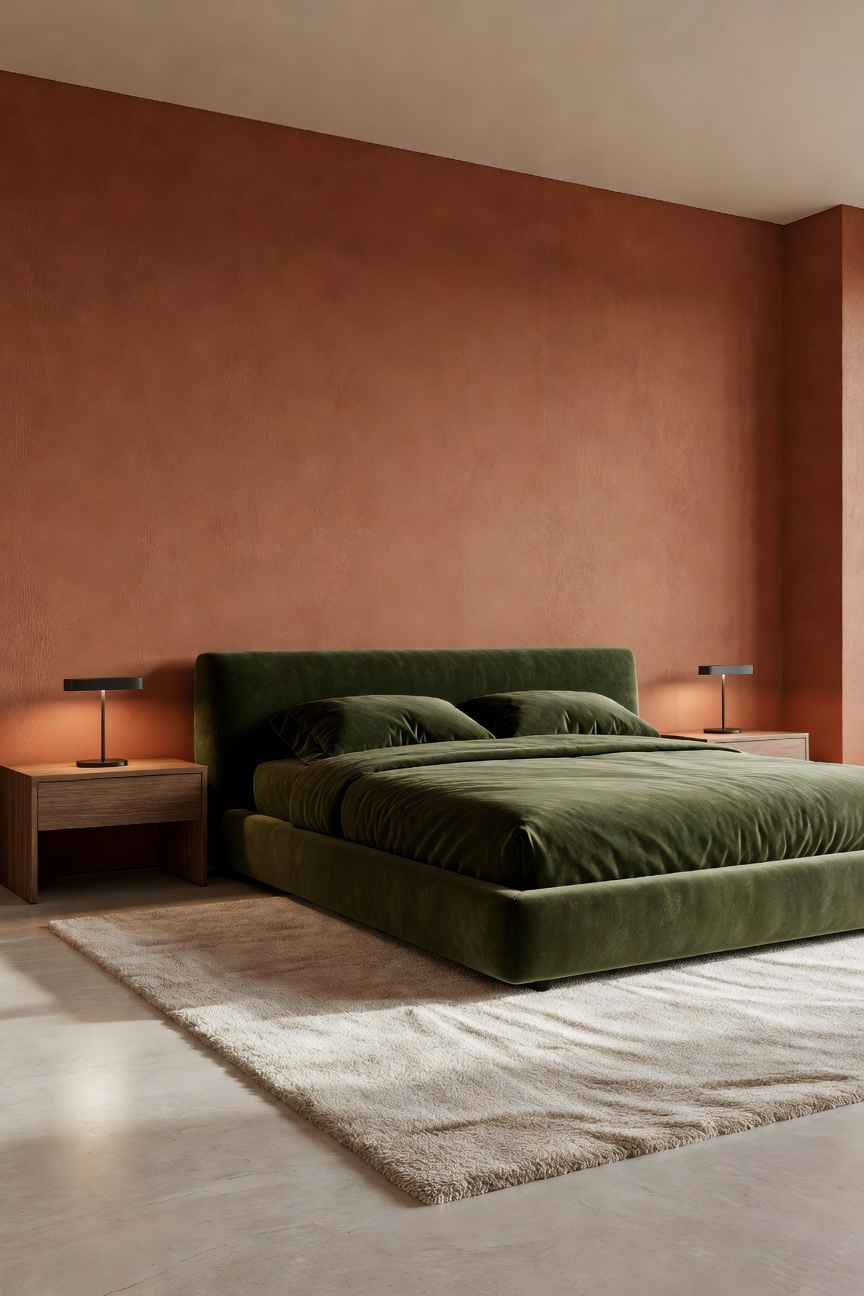
Furthermore, texture acts as a crucial color modifier. For instance, a 1970s burnt orange was often rendered in polyester. Today, however, that hue appears in rust velvet. These materials catch light in their fabric “valleys.” This creates a self-shading effect. Additionally, visible wood grains act as neutral patterns. Therefore, the furniture feels grounded in nature.
Beyond aesthetics, this resurgence is rooted in Biophilic Design. In fact, research indicates earth tones reduce stress. They signal the brain to downshift for sleep. Moreover, the modern application focuses on material integrity. A “Forest Green” bed frame carries authority when finished with plant-based oils. Ultimately, this approach aligns visual warmth with ethical values.
The Final Touch: Biophilic Elements and Planters on Hairpin Legs
Born in 1941 from wartime scarcity, the hairpin leg is a triumph of design. Specifically, Henry P. Glass’s steel rod offers strength with minimal visual weight. Consequently, these legs create a “visual exhale.” Unlike heavy wooden bases, they allow biophilic elements to float. Therefore, even small spaces feel airy.
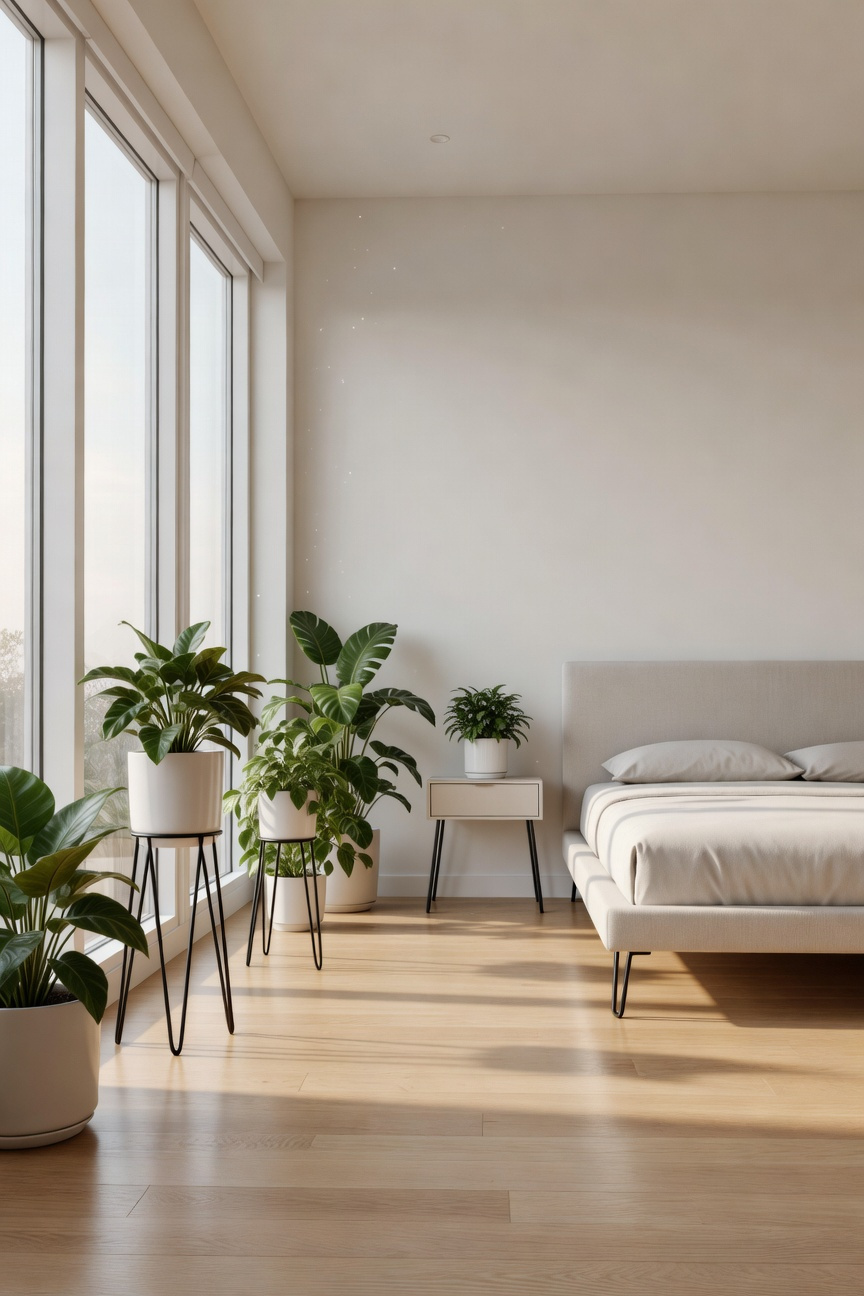
Furthermore, this transparency supports a “light-first” strategy. Because the legs are thin, sunlight passes freely underneath. As a result, this creates a “dappled forest floor” effect. This flow of light is critical for regulating circadian rhythms. Moreover, the metallic finish often adds a subtle shimmer.
Ultimately, the true “final touch” lies in the tension between materials. The industrial precision creates a rigid counterpoint to organic growth. For instance, trailing vines act as a “living screen.” Thus, the furniture becomes transparent scaffolding. This arrangement transforms the bedroom into a curated ecosystem. Finally, as raw steel develops a patina, it mirrors the plant’s lifecycle. This connection creates a truly restful sanctuary.
Frequently Asked Questions
What defines modern bedroom furniture?
Modern bedroom furniture is characterized by clean horizontal lines, a low-profile silhouette, and the use of natural materials like solid walnut or oak. Unlike traditional styles that rely on heavy ornamentation, modern pieces emphasize functional beauty and architectural simplicity.
How do I choose high-quality modern furniture?
Look for “material honesty,” such as solid hardwood construction rather than MDF or particleboard. High-quality pieces will often feature expert joinery like dovetail or through-tenon joints, which ensure the furniture remains a generational heirloom rather than a disposable item.
Can you mix modern furniture with vintage pieces?
Yes, the most sophisticated bedrooms follow an 80/20 rule: establishing the foundation with contemporary high-quality furniture and adding soul with 20% authentic vintage finds. This creates a curated, “lived-in” luxury that avoids the sterile look of a matched showroom set.
Conclusion: Creating a Timeless Backdrop for Modern Living
Ultimately, creating a timeless bedroom is not about acquiring objects. It is about establishing a quiet, architectural horizon line. By prioritizing honest materials and hidden utility, you build a lasting sanctuary. When you invest in high-quality modern bedroom furniture, you are not just buying decor. You are choosing pieces that age gracefully alongside you. They develop a rich narrative through patina. In fact, this emotional durability offers a stability that fast furniture simply cannot match.
Looking ahead, your home should blend heritage craftsmanship with modern precision. Therefore, the backdrop remains relevant even as digital lifestyles evolve. This approach ensures your space serves as a psychological anchor for decades. To start, audit your current collection for structural integrity. Finally, invest in one foundational piece that honors both design history and your future.