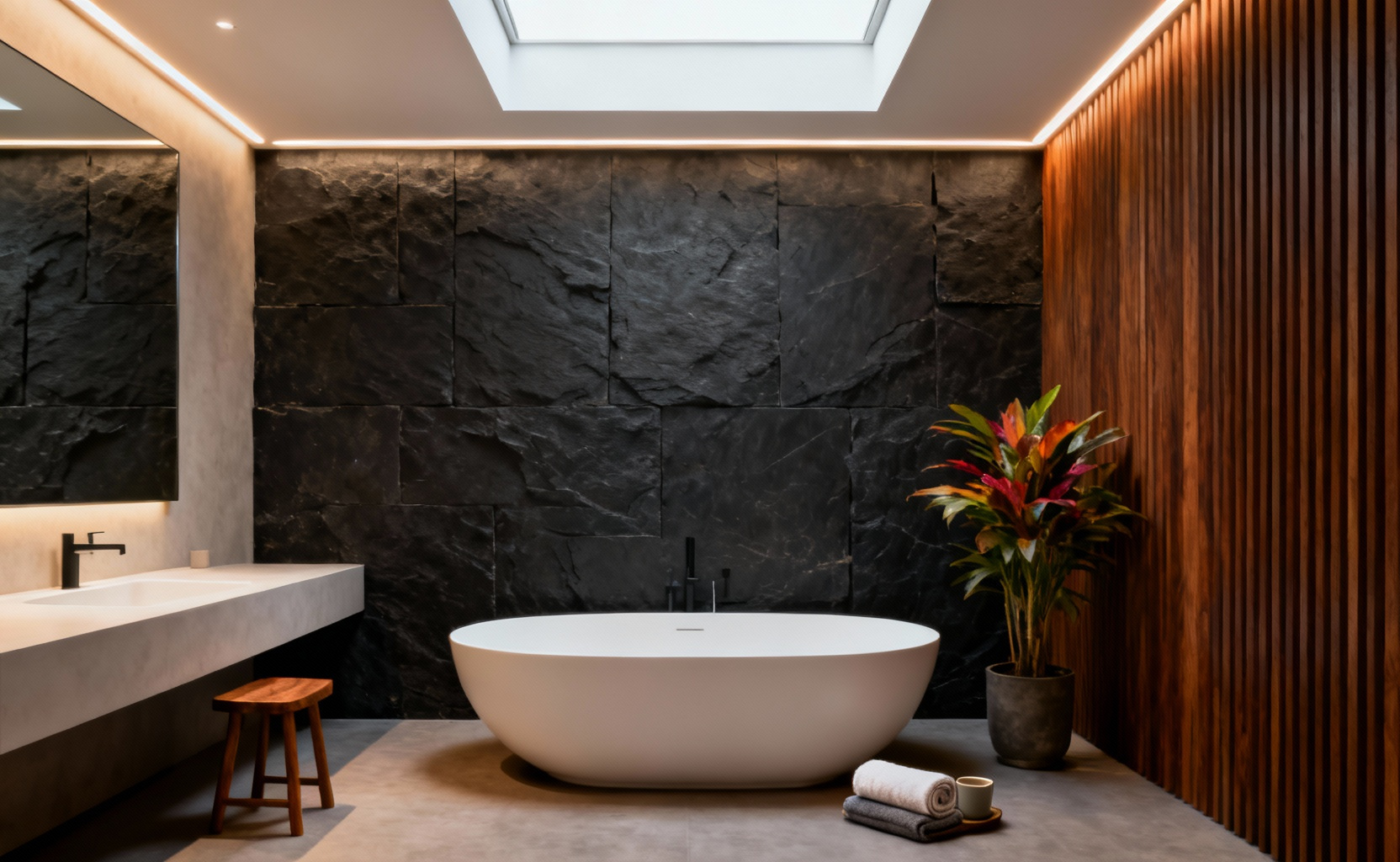

For decades, the bathroom remained a purely utilitarian space. It was defined strictly by efficiency and stark surfaces. However, a profound shift is currently redefining this room’s purpose. Modern bathroom design now recognizes the bath as a private sanctuary—a space dedicated to holistic restoration. Neuroscience actually confirms that our environments directly impact stress regulation. Therefore, we must move from cold function to “emotional architecture.” A cluttered or sterile space often creates mental uneasiness. Conversely, a nurturing design actively calms the nervous system.
Creating this sanctuary requires a specific sensory blueprint. We reject clinical whites in favor of warm, grounding neutrals. Additionally, “soft minimalism” introduces curved, organic forms to evoke safety. Furthermore, tactile contrasts prevent the design from feeling flat. We layer natural stone, wood, and plants to foster a biophilic connection. Consequently, the room becomes a place of restoration rather than just maintenance. It engages the senses to promote deep relaxation.
Finally, modern innovation seamlessly supports these holistic rituals. We integrate layered lighting and chromotherapy to influence mood instantly. Moreover, advanced hydrotherapy transforms a simple shower into a healing tool. Features like radiant heated floors further address physical comfort. This guide reveals how to curate these elements intentionally. You will discover the path to turning a standard bathroom into a retreat. Ultimately, this transformation nurtures both the physical body and mental peace.
The Shift: Moving From Utilitarian Function to Holistic Restoration
Historically, the bathroom served a strictly utilitarian purpose. It was defined by plumbing efficiency and rapid hygiene. However, this mindset has fundamentally shifted. Today, the bathroom functions as a psychological refuge. In fact, it is often the only room where one can truly pause. Consequently, design priorities have moved beyond sterile cleanliness. We now prioritize creating a restorative environment that supports mental well-being.
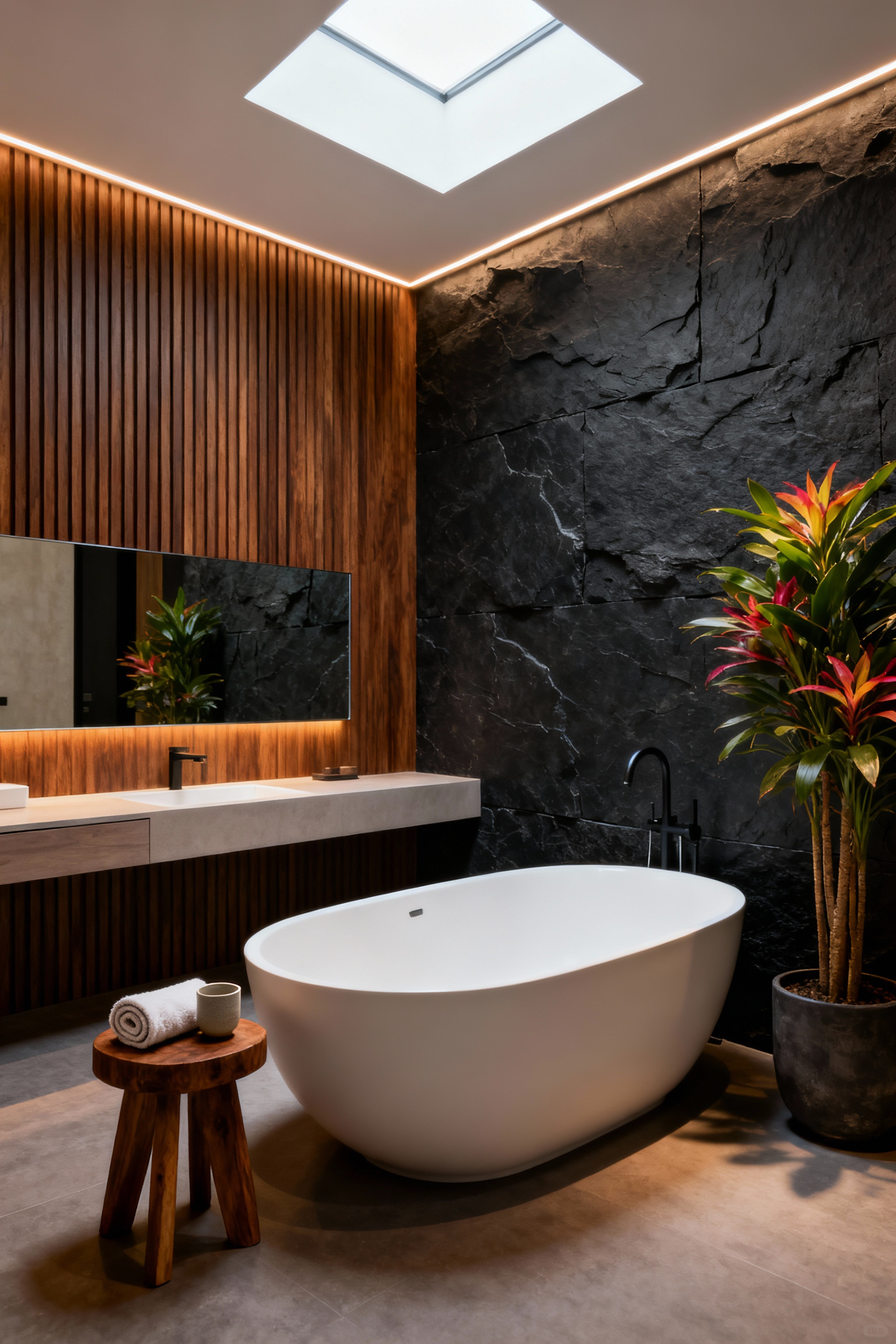
This evolution requires a multi-sensory design language. Visually, stark minimalism is being replaced by tactile depth. For instance, designers now favor “human” materials over high-gloss ceramics. Specifically, honed surfaces and zellige tiles introduce comforting imperfections. Furthermore, natural teak wood adds warmth to offset hard surfaces. Beyond touch, the auditory experience is equally critical. Therefore, sound-optimized plumbing is used to minimize noise transfer. This quiet foundation allows for true relaxation.
Finally, technology transforms routine habits into therapeutic rituals. Advanced features are no longer just novelties. Instead, they serve as intuitive experiential tools. For example, hydrotherapy systems use water pressure to ease muscle tension. Additionally, smart lighting integrates chromotherapy to influence mood. Cool blues can aid sleep, while warm hues energize the spirit. Ultimately, these elements combine to turn a simple cleansing space into a personal wellness sanctuary.
Philosophy: Biophilic Design and the Science of Bringing the Outdoors In
Biophilic design extends far beyond simply placing a potted plant on a vanity. Fundamentally, it responds to an evolutionary necessity rooted in our biology. Biologist E.O. Wilson identified *biophilia* as our innate emotional connection to living organisms. Because humans spent most of history outdoors, our brains physically require natural stimuli. Without this input, we risk suffering from what is called “psychic deprivation.” Therefore, the modern bathroom acts as a critical antidote. It transforms from a utility space into a habitat for true mental restoration.
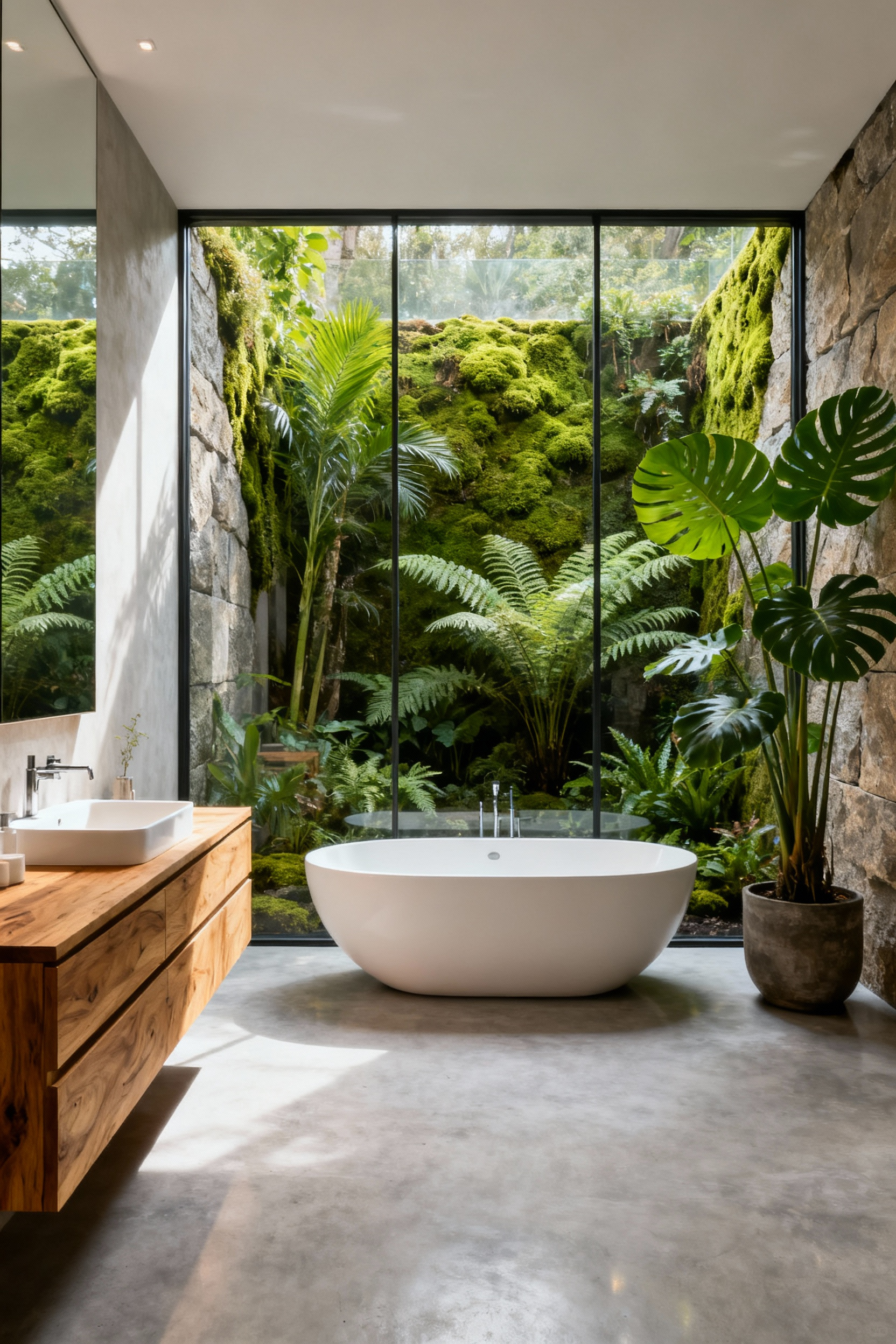
Scientifically, this design approach directly impacts physical health. Specifically, nature-based elements help calm the autonomic nervous system. Research confirms that organic cues lower blood pressure and significantly reduce stress levels. For instance, Roger Ulrich’s pivotal studies demonstrated that views of nature speed up recovery times. Thus, the bathroom becomes a tool for physiological healing. Furthermore, natural light plays a vital role in this ecosystem. Integrating skylights supports healthy circadian rhythms, helping regulate our sleep-wake cycles.
To achieve this, we translate the outdoors into tangible design features. Ideally, we prioritize haptic authenticity through touch. We utilize materials like natural stone, bamboo, or high-quality textured ceramics. These surfaces offer grounding, organic textures that sterile plastic cannot match. Additionally, we carefully consider acoustics. Rainfall showerheads introduce the soothing, primal sound of falling water. Finally, we soften the room with biomorphic forms. Curved bathtubs and oval basins mimic organic shapes, breaking the rigidity of straight lines. Consequently, the space feels intuitively safe, nurturing, and alive.
Philosophy: The Japandi Approach—Balancing Scandinavian Function with Japanese Rusticity
Japandi is not merely a visual style. Rather, it represents a deep philosophical fusion essential for a modern sanctuary. Fundamentally, this approach bridges Japanese *Wabi-Sabi* with Scandinavian *Lagom*. *Wabi-Sabi* finds deep beauty in imperfection. Therefore, it embraces the soulful patina of natural materials. In a bathroom, this often manifests as a rough-hewn stone basin. Alternatively, it could appear through unlacquered brass fixtures that age gracefully. These elements provide a grounding, tactile weight.
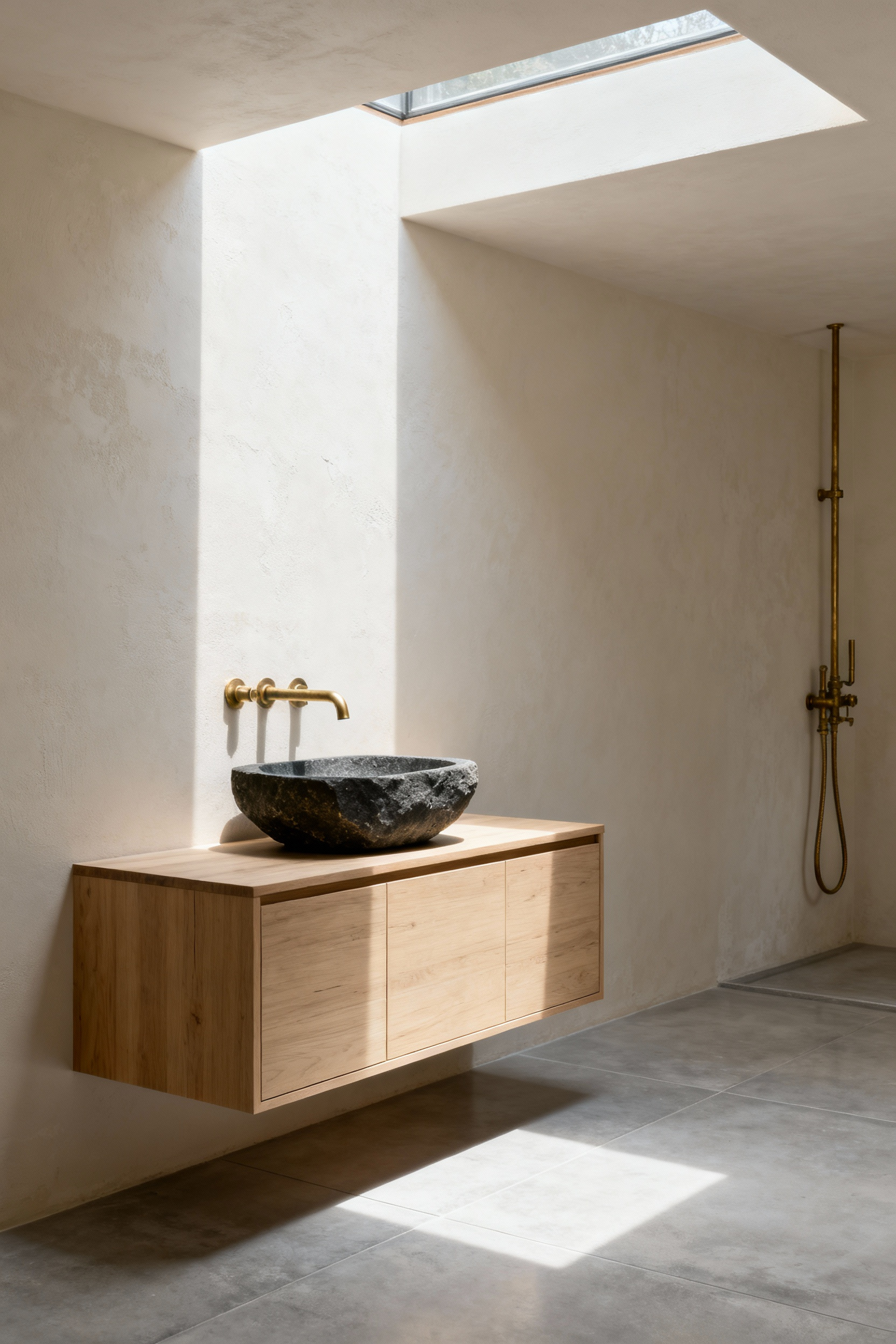
However, Scandinavian *Lagom* prevents this rusticity from feeling heavy. This concept translates to “just the right amount.” Consequently, it introduces functional restraint and clean lines. You see this clearly in sleeker architectural elements. For example, a floating vanity in pale oak creates necessary visual lightness. Similarly, frameless glass enclosures maintain an open, airy atmosphere.
Ultimately, the design’s success lies in the tension between these opposing forces. Specifically, the space pairs raw, organic warmth with precise utility. Furthermore, the layout prioritizes *Ma*, or negative space. Thus, clutter is hidden behind discreet, integrated storage solutions. This intentional emptiness allows the mind to rest completely. Finally, a sculptural, freestanding tub often serves as the room’s anchor. Here, the simple act of bathing transforms into a deliberate, restorative ritual.
Materiality: Grounding the Senses with Raw, Tactile Textures
Modern bathroom design is evolving beyond the clinical edge of traditional minimalism. Instead, the focus has shifted toward creating a “Sensorial Sanctuary.” This approach prioritizes the tactile experience to nurture the user’s mental well-being. Specifically, we are seeing a resurgence of raw, unprocessed textures known as biophilic design.
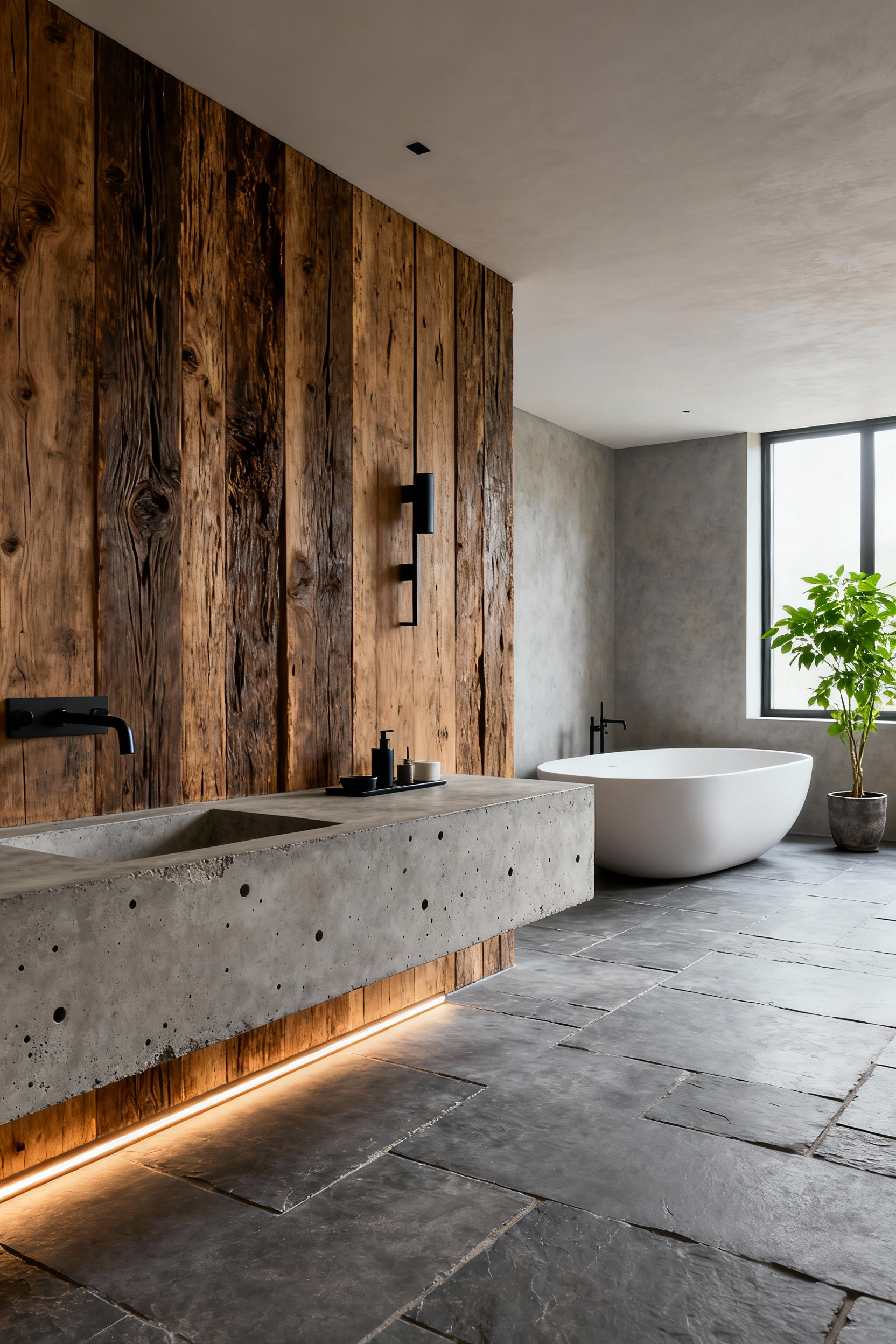
For example, concrete is often celebrated for its industrial purity. However, its visual coolness often requires significant balance. Therefore, designers layer in natural stone as a grounding device. Historically a structural material, stone now serves as luxurious cladding to introduce warmth. In fact, this contrast between rough stone and smooth glass encourages haptic engagement.
Furthermore, wood plays a crucial role in softening the space. It immediately creates an inviting, “Organic Modern” atmosphere. Yet, practical maintenance in wet zones is a valid concern. Consequently, the trend favors matte, “untouched” finishes or durable wood-look porcelain. These options avoid the artificial shine of heavy polyurethane. Ultimately, combining these raw elements with sleek surfaces creates a psychological anchor that grounds the senses.
Materiality: The Psychology of Matte Finishes vs. High Gloss Stressors
Selecting the right finish fundamentally alters your emotional experience in the bathroom. Specifically, high-gloss surfaces operate by aggressively reflecting light. While this creates vibrancy, it often causes glare and visual fatigue. Consequently, these sharp “micro-flares” stimulate the brain rather than soothing it. In contrast, matte finishes absorb and diffuse light softly. Therefore, they minimize visual noise to encourage deep relaxation.
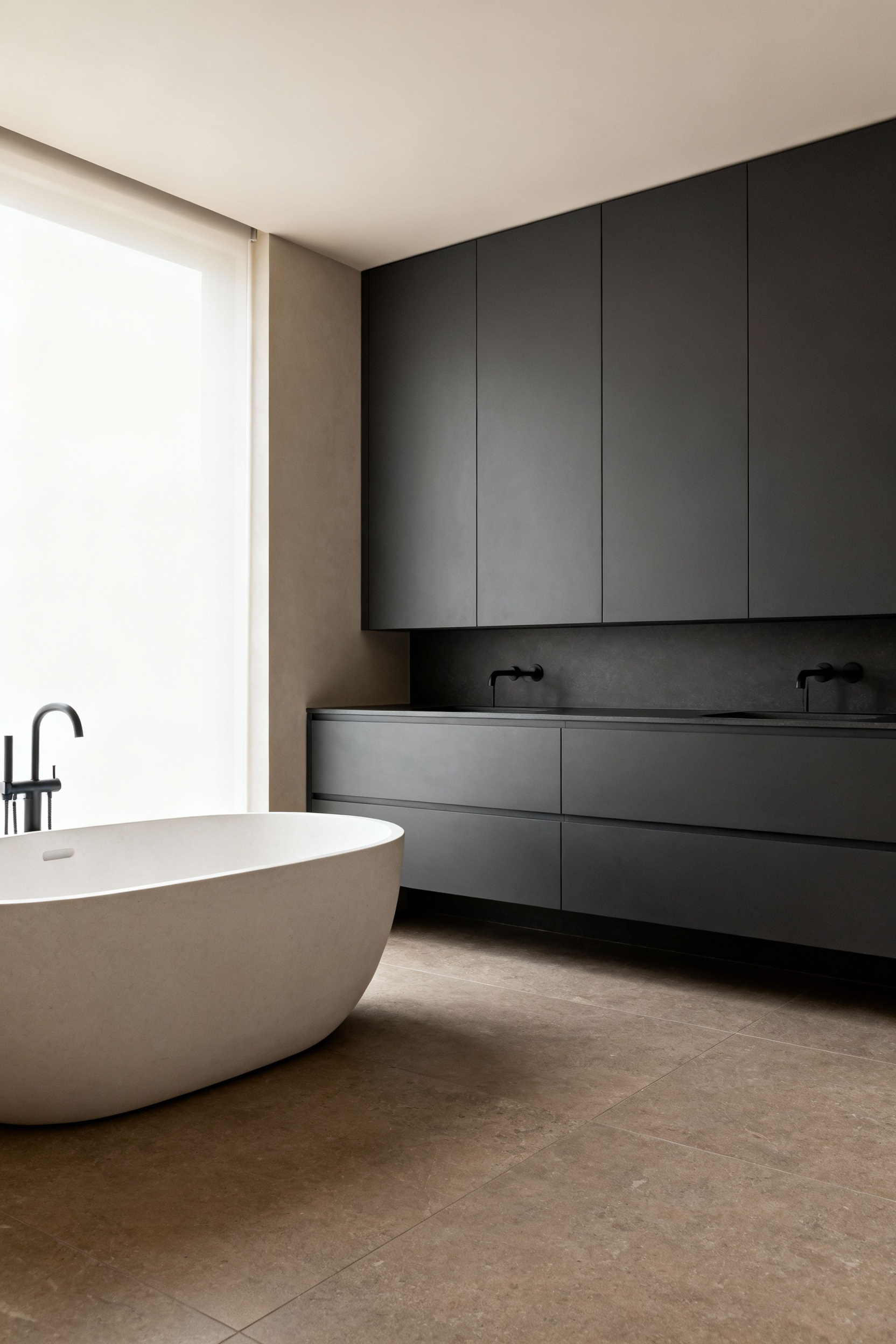
Furthermore, materiality dictates your daily maintenance stress. Glossy finishes are synonymous with luxury and spatial expansion. However, they demand perfection by magnifying every fingerprint or water mark. This creates a subtle, psychological burden to clean constantly. Conversely, matte surfaces are forgiving and grounded. Because they hide imperfections, they reduce this “imperfection tax” significantly. This fosters an environment that feels effortless rather than demanding.
Finally, consider the tactile narrative of the room. Matte textures provide a velvety, warm physical connection. Thus, the room feels like an intimate, protective cocoon. Alternatively, excessive gloss can feel sterile and emotionally detached. To achieve harmony, you should layer these elements carefully. For instance, pair matte walls with glossy faucets to balance serenity with necessary brightness.
Water Rituals: The Rise of the Wet Room and Barrier-Free Showering
The modern wet room represents a profound philosophical shift in residential bathroom design. Specifically, it moves away from compartmentalized utility toward a holistic, ritualistic experience. In fact, these open concepts echo the ancient water rituals of Rome and the Indus Valley. Consequently, the bathroom becomes a private sanctuary intended for both physical and spiritual purification.
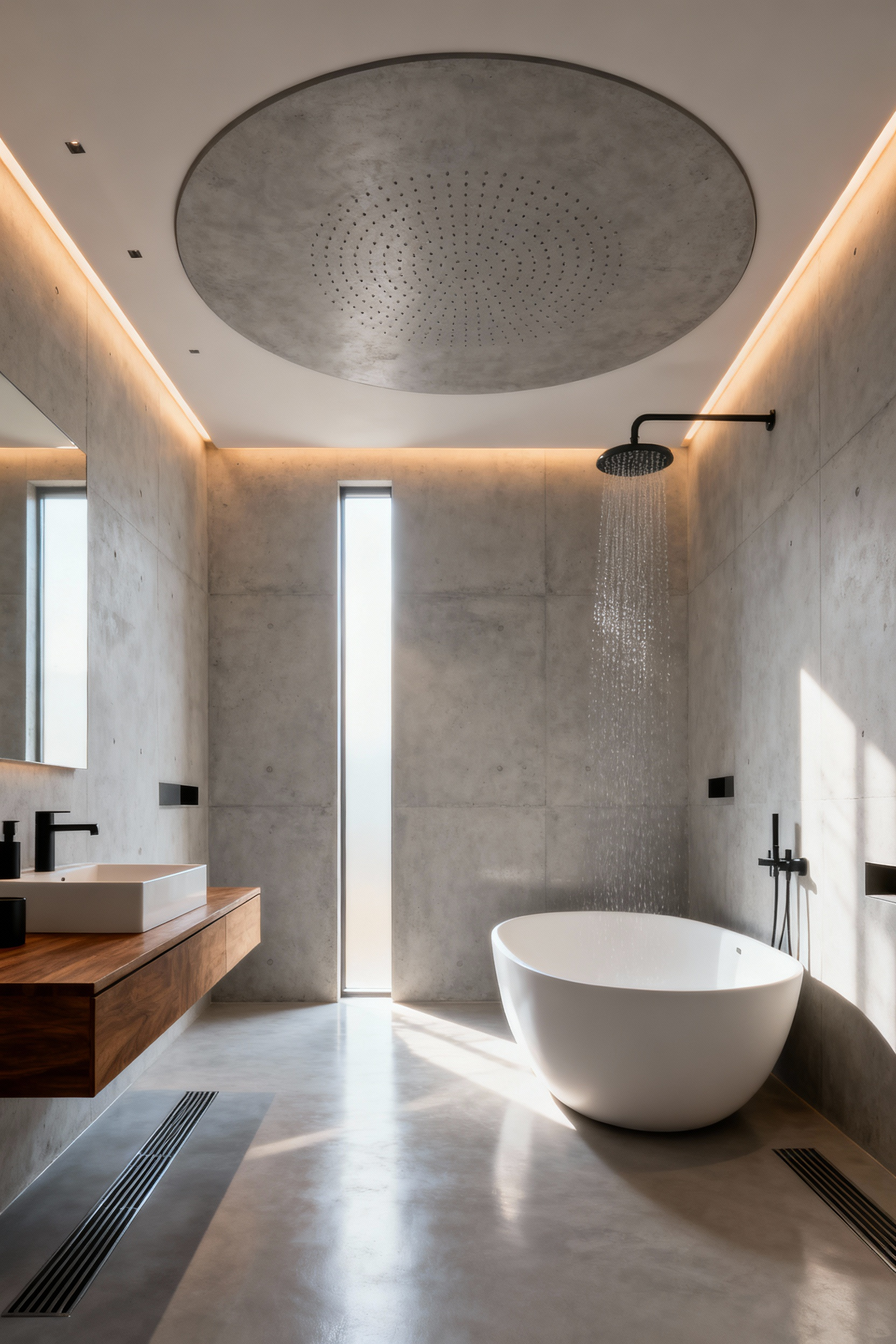
Architecturally, this seamless flow relies on “silent” engineering. For instance, the strategic use of linear drains replaces traditional center drains. Therefore, the floor requires only a uniform slope in one direction. This innovation allows for large-format tiles or stone slabs to extend uninterrupted across the room. As a result, the space feels expansive, creating a calming visual continuity that helps quiet the mind.
Furthermore, this design trend elevates accessibility into a premium luxury feature. Historically, barrier-free showering began strictly as a functional mandate for ADA compliance. However, it has evolved into a sophisticated expression of Universal Design. Specifically, the “zero-entry” style removes tripping hazards and physical hurdles. Thus, it supports aging-in-place while ensuring independence and dignity. Ultimately, the wet room merges safety with serenity, successfully nurturing inhabitants of all ages and abilities.
Water Rituals: Sculptural Freestanding Tubs as Focal Points for Mindfulness
The modern freestanding tub transcends utility, effectively serving as a functional sculpture. Specifically, its isolation within the room creates necessary visual breathing space. This physical separation mirrors the intentional act of detaching from daily chaos. Consequently, the vessel becomes a tangible symbol for slowing down and prioritizing self-care.
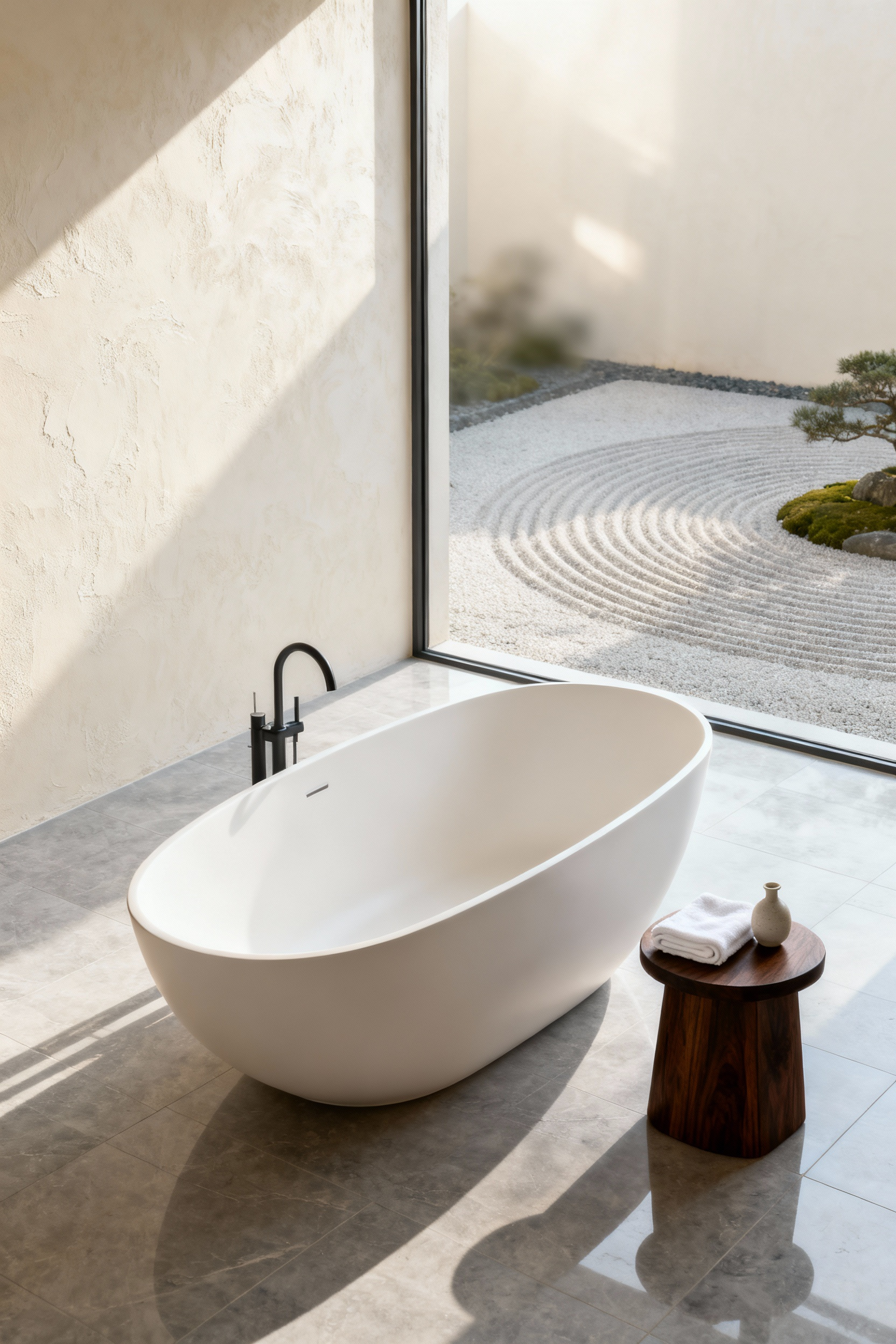
Historically, this approach echoes the Japanese *Ofuro* tradition of deep soaking. Unlike standard shallow models, these designs prioritize vertical depth for total immersion. Therefore, the bather sits upright, a posture that naturally supports alert meditation. Furthermore, choosing materials like stone resin enhances this sensory connection. In fact, natural stone retains heat effectively, allowing for longer, uninterrupted periods of reflection.
Currently, this ritual is evolving through integrated wellness technologies. For example, new Hydro Fusion systems maintain constant temperatures without manual reheating. Additionally, oxygen-rich microbubbles can now offer deep skin restoration. Ultimately, these innovations transform the tub from a passive object into an active therapeutic sanctuary.
Lighting: Circadian Syncing Systems to Support Sleep-Wake Cycles
Modern bathroom design is evolving beyond mere utility into a realm of holistic health. Specifically, these spaces are becoming wellness sanctuaries through the integration of Human-Centric Lighting (HCL). This approach aligns our indoor environments with our biological needs. In fact, light is the primary synchronizer of our internal circadian clock. Specialized cells in our eyes respond intensely to blue-rich light spectra. Consequently, the bathroom serves as a critical control point for daily energy regulation.
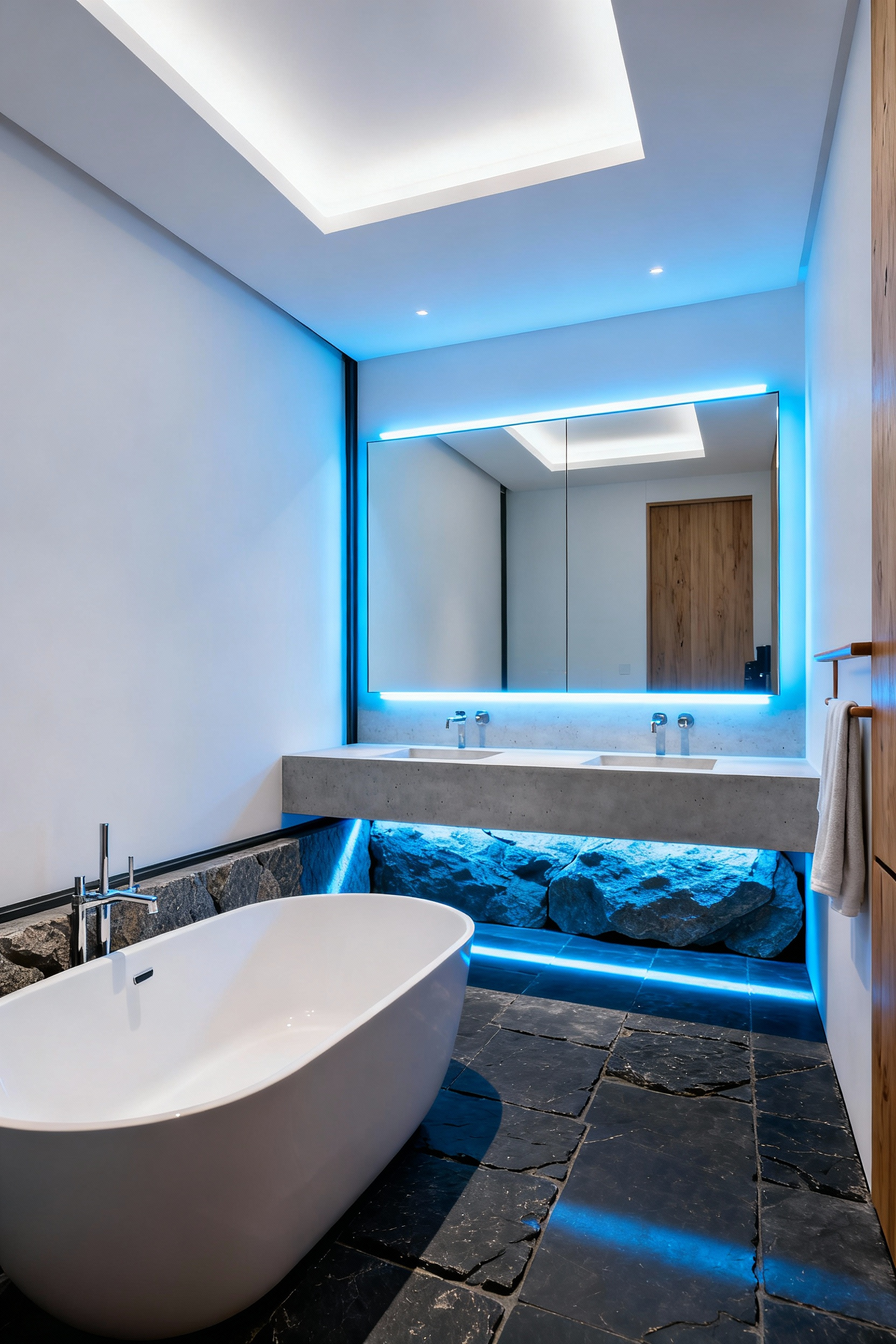
For instance, morning routines require bright, cool-toned illumination. This specific spectrum stimulates cortisol production and signals wakefulness to the brain. Conversely, late-night exposure to this same light intensity can severely disrupt sleep patterns. It suppresses melatonin, often making it difficult to return to rest after a midnight visit. Therefore, advanced systems utilize Tunable White LED technology to mimic natural daylight cycles.
These intelligent fixtures transition seamlessly throughout the day. Ultimately, a crisp “Morning Vigor” scene shifts to a soft, amber “Evening Tranquility.” Furthermore, granular control systems allow for personalized settings based on individual sensitivity. This customization ensures the home environment nurtures, rather than disrupts, the inhabitant’s natural rhythm. By replicating the sensory experience of sunrise and sunset, technology restores our connection to nature.
Lighting: Layering Warmth—Backlit Mirrors and Low-Level Night Lighting
Modern bathroom lighting must balance practical function with deep relaxation. Specifically, backlit mirrors have shifted from simple utility to ambient mood setting. By concealing LEDs behind the glass perimeter, the design projects a soft “halo effect” onto the wall. Consequently, this diffuses the harsh, unflattering shadows often caused by traditional overhead fixtures. Instead, the mirror appears to float, creating a serene, spa-like environment. However, this glow serves best as a secondary, atmospheric layer. Therefore, designers often pair warm 3000K backlighting with brighter front-facing lights for grooming clarity.
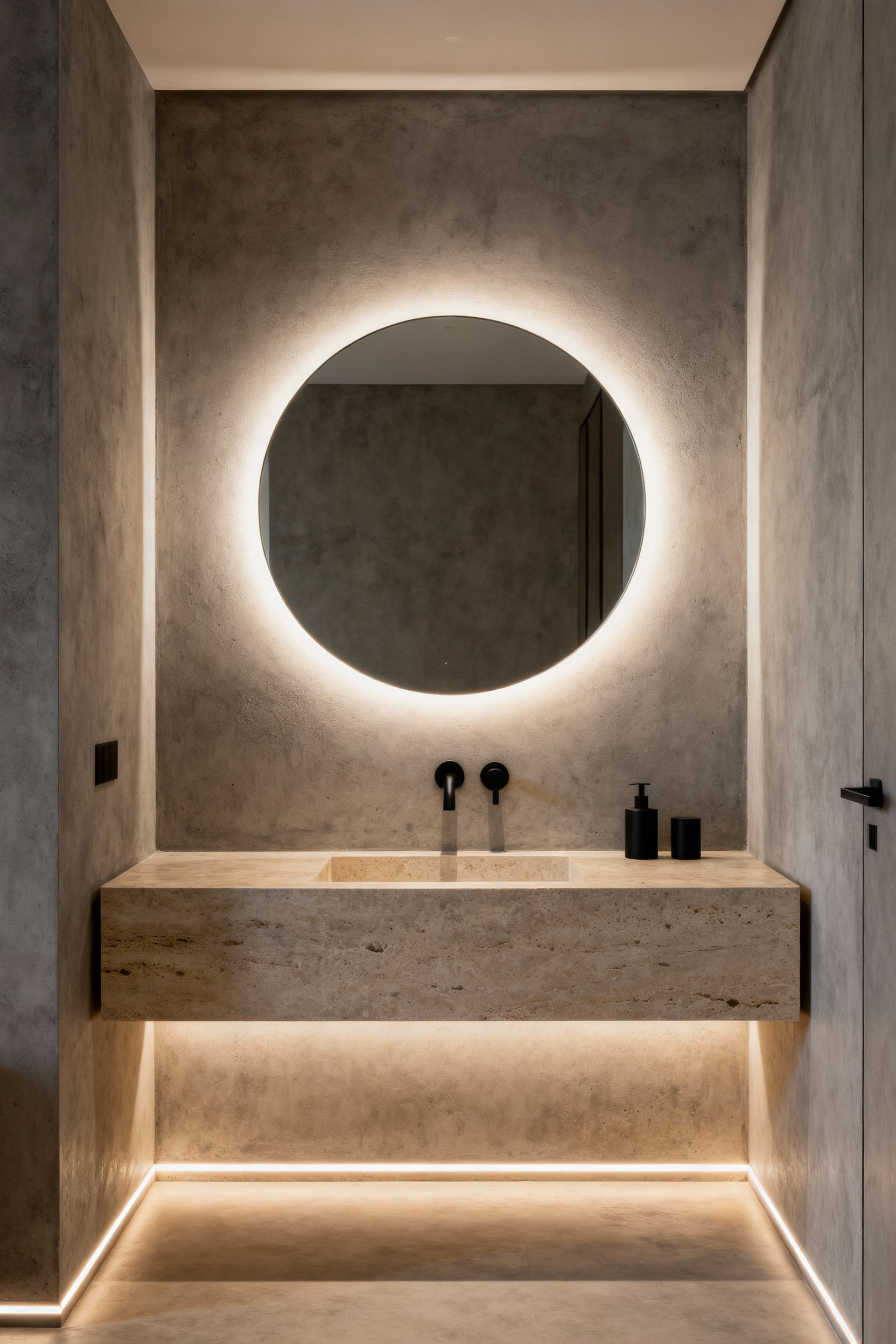
Furthermore, color temperature plays a critical role in supporting your circadian health. Warm white light, generally between 2700K and 3000K, mimics the soothing nature of candlelight. Psychologically, this warmth signals the body to release stress and prepare for sleep. Conversely, exposure to cool blue light at night can suppress melatonin and disrupt sleep cycles. Thus, selecting warm backlighting turns a bathroom into a true restorative retreat.
Finally, low-level night lighting ensures safety without interrupting rest. Typically, LED strips are installed seamlessly beneath vanities as “toe-kick” lighting. Because the source is hidden, it provides guidance without blinding glare. Additionally, modern motion sensors can fade these lights on gently at very low intensity. This careful control prevents the shock of sudden brightness during middle-of-the-night visits. Ultimately, this layered approach creates a clean, fixture-less aesthetic that truly nurtures the inhabitant.
Spatial Flow: Floating Vanities to Create Visual Breathability and Calm
Floating vanities fundamentally alter how we perceive the dimensions of a bathroom. Specifically, they allow the flooring material to extend uninterrupted all the way to the rear wall. Consequently, the eye traces the full floor area, creating an optical illusion that makes compact rooms feel significantly larger. Unlike traditional cabinets, which block the ground plane, these wall-mounted units introduce a sense of “lift.” Therefore, the space gains an immediate feeling of airiness and breathability.
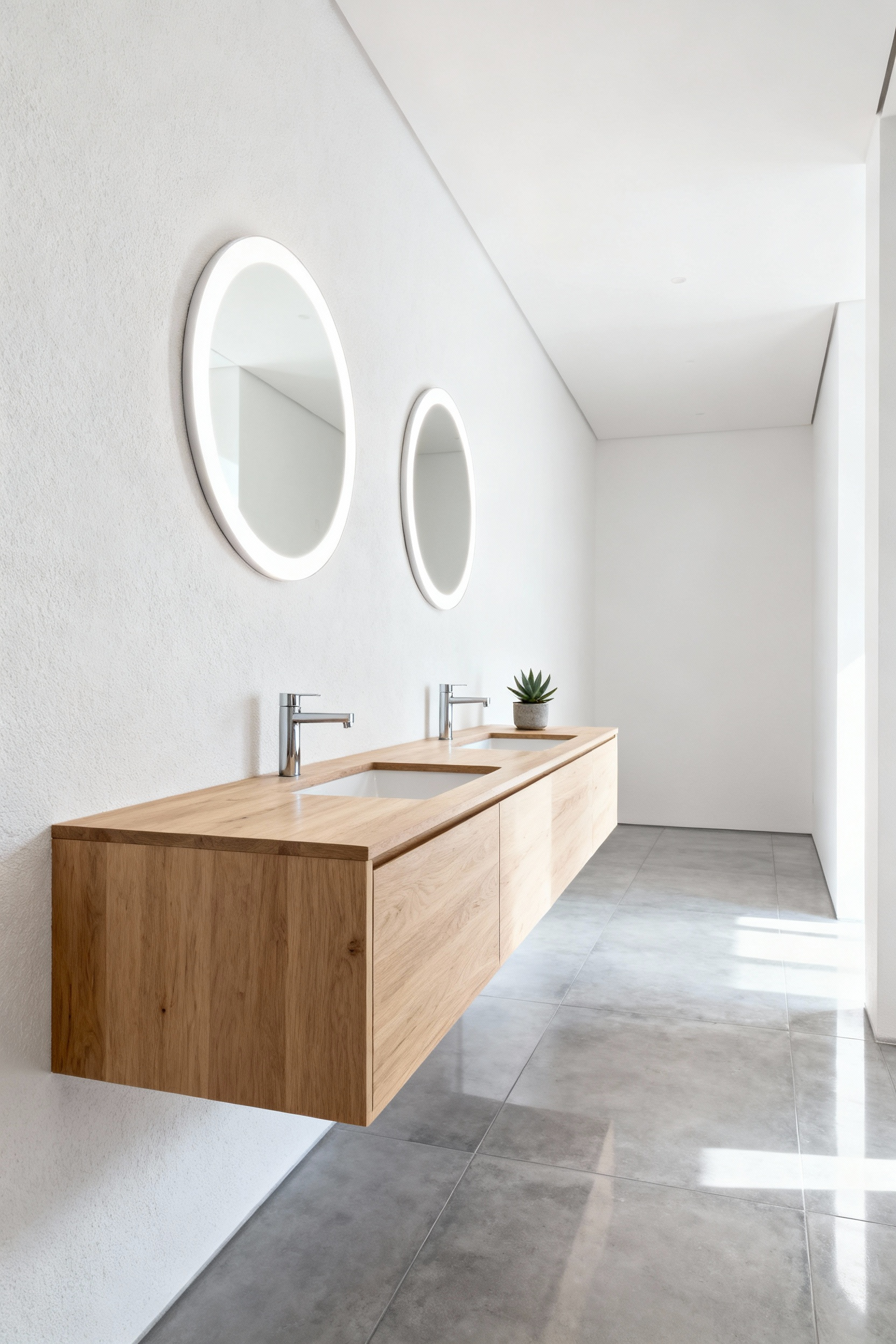
Furthermore, this open design serves to highlight premium finishes. For instance, intricate floor tiles or radiant heating systems remain fully visible rather than obscured by heavy furniture. In fact, adding subtle recessed lighting beneath the unit can further enhance this weightless effect. Ideally, this transforms a standard bathroom into a visually open sanctuary.
Surprisingly, this delicate appearance often supports substantial, grounding materials like solid walnut or thick stone. To achieve this, robust engineering relies on concealed heavy-duty brackets attached directly to the wall studs. As a result, the vanity appears purely sculptural, creating a sophisticated tension between perceived weightlessness and actual mass.
Ultimately, this aesthetic aligns with minimalist principles to foster a sense of mental calm. By concealing clutter within streamlined, handleless drawers, the design effectively reduces cognitive load. Additionally, the installation height is fully customizable to meet specific ergonomic needs. Thus, the floating vanity serves as a functional tool for both physical comfort and visual tranquility.
Spatial Flow: Smart Storage Solutions for a Clutter-Free Mental State
In design psychology, physical clutter often translates directly into mental chaos. Consequently, a disorganized environment introduces unnecessary friction into essential daily rituals. To combat this, we prioritize “visual silence” through intuitive architecture. Specifically, the goal is reducing cognitive load by concealing functional disorder.
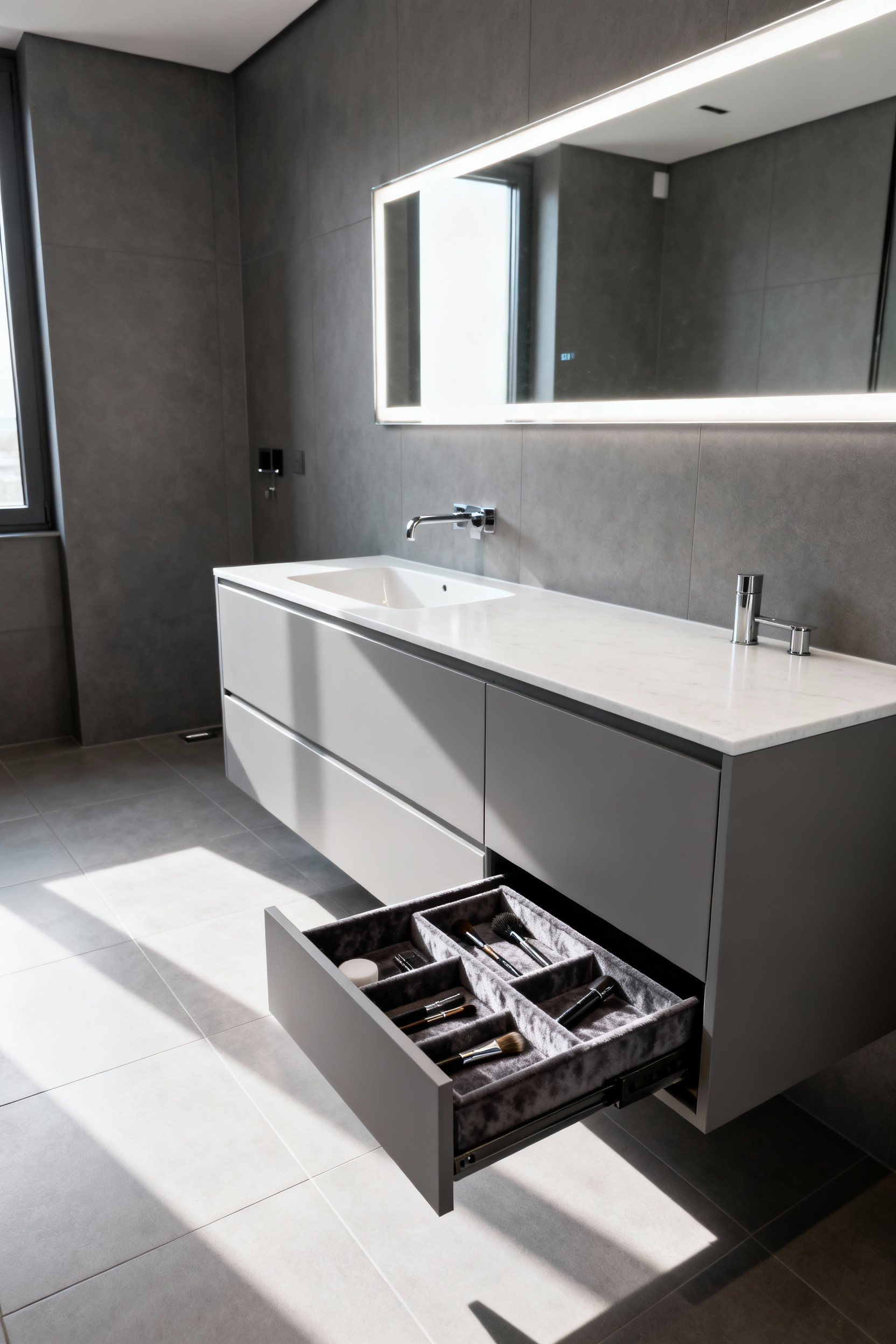
For example, electrified drawers now eliminate the visual noise of tangled cords. Therefore, hair dryers and toothbrushes charge while stored, keeping countertops perpetually clear. Furthermore, architectural elements like recessed wall planes replace disjointed shower niches. As a result, stone surfaces run uninterrupted, making the storage feel purposeful rather than added.
Additionally, floating vanities lift the cabinet mass off the floor. This visual trick extends the flooring, creating a significant sense of airiness. Moreover, the sensory experience governs our interaction with these spaces. Soft-close hinges and touchless features reduce audible friction during use. Ultimately, these hidden functions transform a bathroom from a utility room into a restorative sanctuary.
Wellness Tech: Invisible Luxuries (Heated Floors and Towel Warmers)
Radiant warmth offers far more than simple temperature control. Historically, cultures from Ancient Rome to Korea valued this immersive form of comfort. Today, heated floors transform cold bathrooms into restorative sanctuaries. Specifically, the sensation of gentle heat on bare skin triggers a physiological dopamine release. Consequently, a mundane daily task becomes a soothing, sensory ritual. Furthermore, these systems operate in near-total silence. This absence of mechanical noise supports a tranquil, spa-like atmosphere essential for mental well-being.
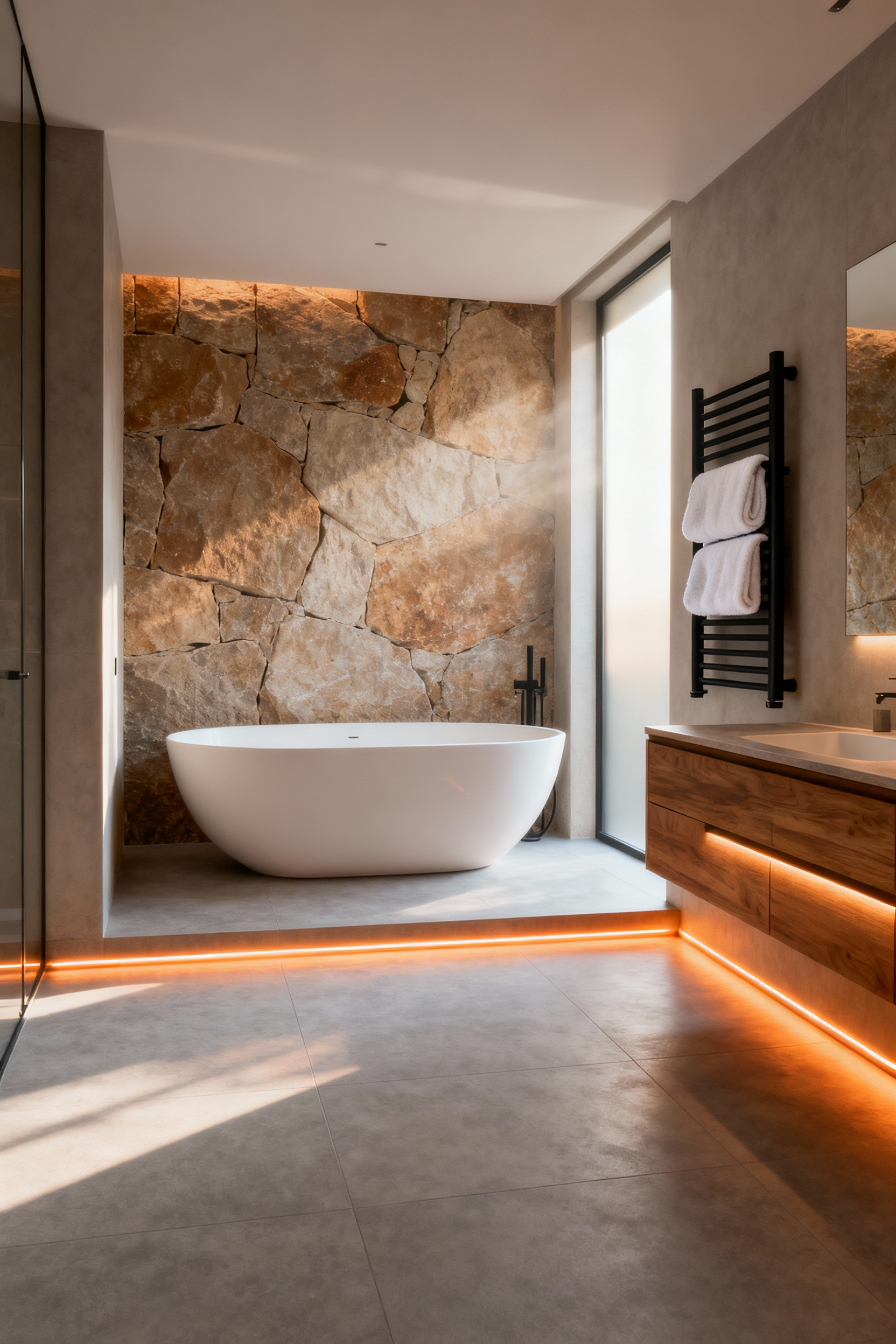
Visually, this technology excels by remaining largely unseen. Because heating elements lie hidden beneath stone or tile, they preserve clean architectural lines. Therefore, designers can eliminate bulky radiators or vents that clutter minimal spaces. Instead, the room gains openness, allowing for floating vanities and uninterrupted large-format tiles. Conversely, modern towel warmers often serve as visible sculptural elements. Available in finishes like matte black, they act as functional art while preventing mildew.
Technically, electric radiant mats offer targeted efficiency for single-room renovations. In fact, these systems install easily with minimal depth, keeping floor levels consistent. Additionally, they pair seamlessly with Wi-Fi-enabled smart thermostats. Thus, homeowners can pre-program floors to warm only during morning routines. Ultimately, this integration balances deep sensory luxury with modern energy consciousness.
Wellness Tech: Integrated Steam Showers and Hydrotherapy Controls
The modern steam shower is not a new invention. Rather, it represents a high-tech evolution of ancient healing rituals. Historically, the Roman *Thermae* established hydrotherapy as a core therapeutic necessity. Today, however, designers translate that public sophistication into private, domestic spaces. Consequently, the bathroom shifts from a purely functional room to a programmed wellness sanctuary. This architectural approach grounds modern luxury in timeless tradition.
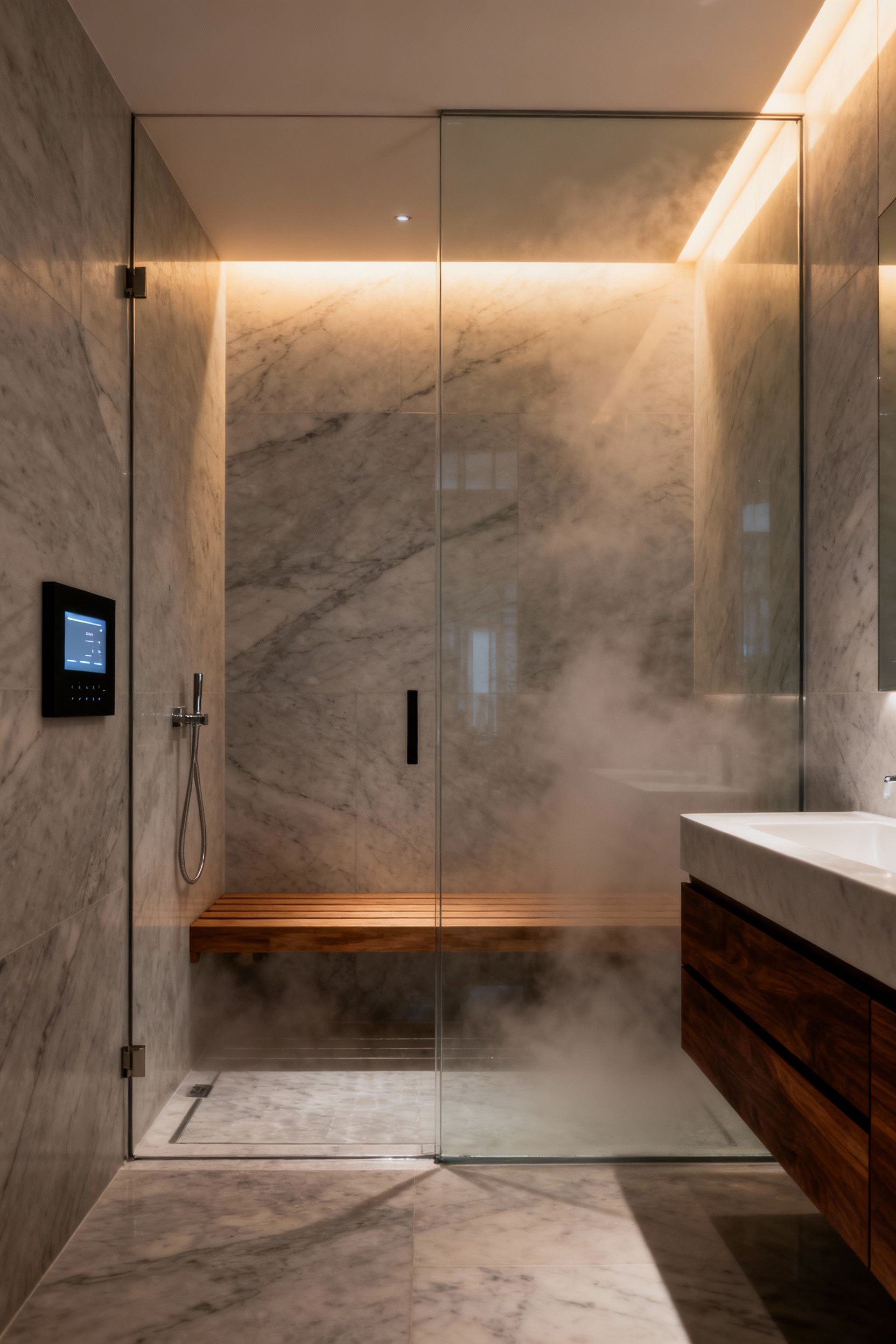
Central to this transformation is the concept of complexity concealed by minimalism. Specifically, high-end digital interfaces now replace cluttered traditional valves. Therefore, users gain precise command over their environment effortlessly. You can control independent temperature zones or manage up to 12 water outlets simultaneously. Moreover, these systems allow for saved “experiences,” such as a “Post-Workout Recovery” mode. Thus, technology transforms a simple shower into a repeatable, curated ritual.
Truly holistic design moves toward a “kinetic bathroom” concept. In this environment, the space actively engages the senses. For example, steam showers now integrate aromatherapy to support respiratory health. Simultaneously, programmable chromotherapy lighting can simulate a sunrise to align with circadian rhythms. Additionally, nonporous materials like porcelain retain heat efficiently, enveloping the user completely. Ultimately, these elements merge to support physical and mental well-being.
Atmosphere: Curating Soundscapes with Hidden Acoustic Technology
Creating a restorative sanctuary requires more than just visual beauty; it demands a curated auditory experience. However, visible technology often disrupts the calm, “analogue” atmosphere essential for a true digital detox. Therefore, designers are turning to hidden acoustic innovations to blend high-fidelity sound with minimalist aesthetics. Specifically, surface sound transducers, or “exciters,” represent the pinnacle of this concealment. These compact devices attach discreetly to the backside of walls, ceilings, or even acrylic bathtubs. Consequently, they convert electrical signals into mechanical vibrations, transforming the surface itself into a speaker.
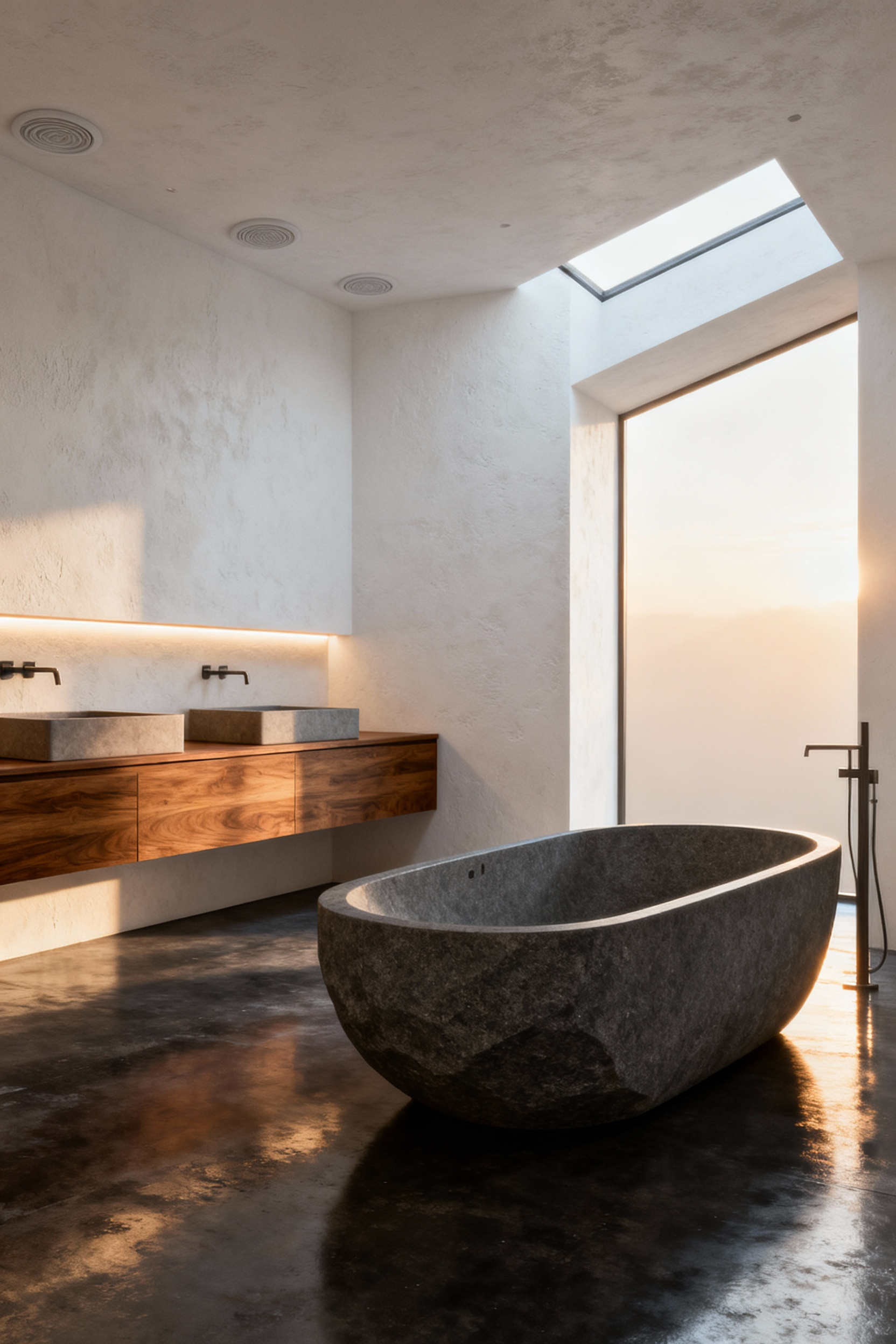
The result is an immersive audio field without a single visible grille. In fact, bath-based exciters allow sound waves to permeate through water, creating a deeply relaxing, multi-sensory home spa experience. Nevertheless, introducing sound into a bathroom presents a unique technical challenge due to hard, reflective surfaces. Porcelain and glass naturally create reverberation, often distorting audio clarity. To combat this “wet echo,” designers integrate disguised acoustic treatments. For instance, perforated wood slat walls or matte-finished textures act as functional diffusers. These elements absorb excess noise, ensuring the soundscape remains rich and balanced rather than hollow. Ultimately, this invisible integration supports physical and mental well-being, prioritizing the feeling of the space over the gadgetry.
Atmosphere: Aromatherapy Integration through Humidity-Loving Eucalyptus and Diffusers
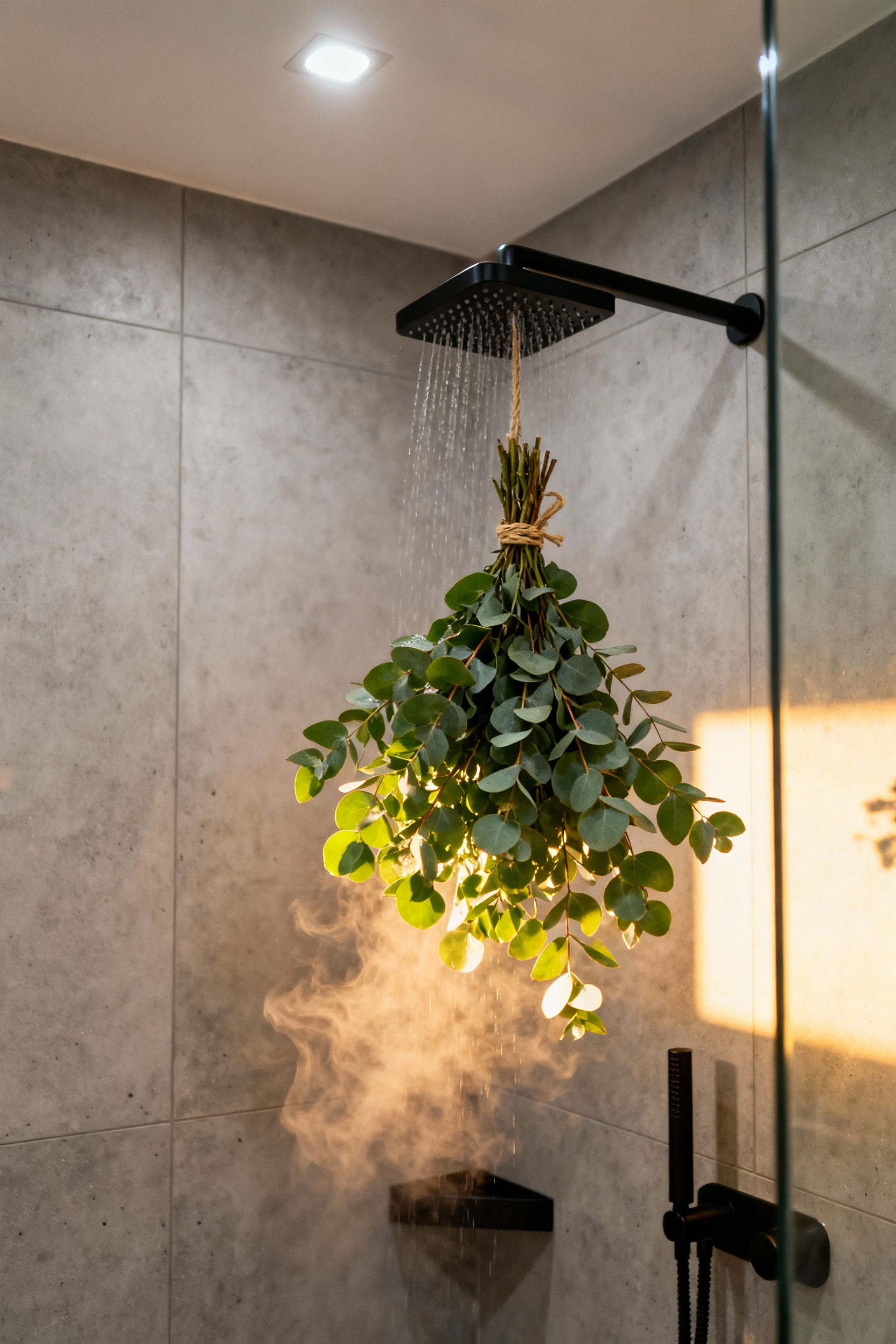
Integrating aromatherapy transforms a modern bathroom into a holistic sanctuary. Specifically, hanging fresh eucalyptus bundles in the shower revitalizes an ancient healing practice. As hot steam rises, it activates the leaves’ natural oils. Consequently, the air fills with 1,8-cineole, a compound known for promoting respiratory clarity. In fact, this scent does more than physically open the lungs. Simultaneously, it clears mental fog, offering an anxiolytic effect that sharpens focus. Aesthetically, the organic texture of leaves complements neutral stone and wood finishes.
However, maintaining fresh plants requires constant attention. Therefore, many designers utilize ultrasonic diffusers for a consistent, controlled aroma. Ideally, these devices feature matte ceramic or concrete exteriors to match minimalist decor. Furthermore, placing them on floating shelves ensures they act as sculptural elements, not clutter. Ultimately, scent becomes an invisible layer of design that nurtures both mind and body.
Color Theory: Moving Beyond Stark White to Healing Earth Tones and Sage Greens
For decades, stark white defined the modern bathroom aesthetic. However, this clinical look often feels cold and sterile in practice. Consequently, the design focus is shifting away from high-contrast minimalism. Instead, the goal is now restorative well-being. In fact, highly reflective white surfaces can increase visual stimulation, creating unnecessary cognitive load. Therefore, designers are turning to palettes that offer warmth, depth, and a grounded atmosphere.
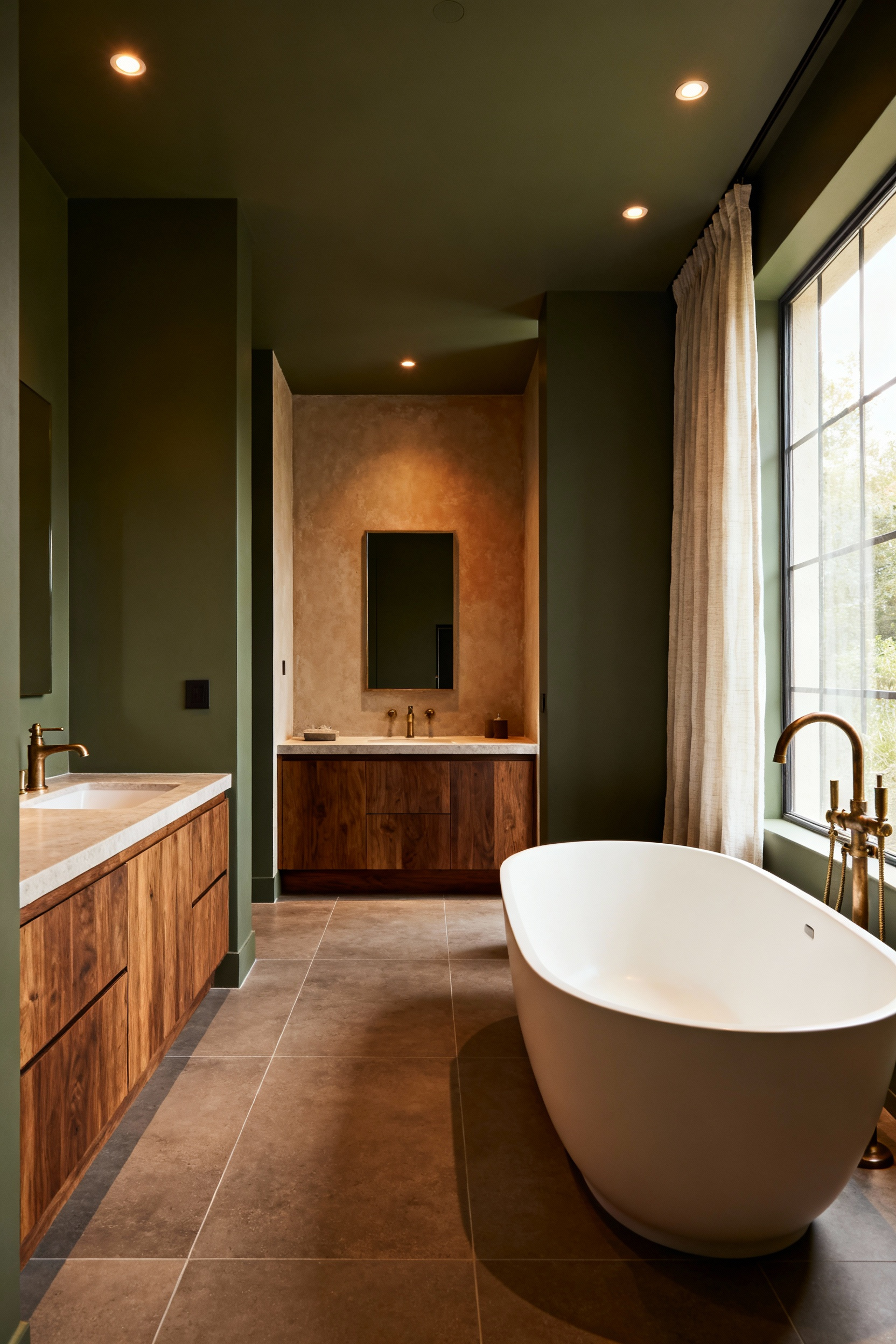
Specifically, sage green has emerged as a powerful tool for reducing stress. Because of its low saturation, it fosters a direct connection to nature. Thus, it effectively quiets the nervous system during morning or evening rituals. Psychologically, this muted hue promotes feelings of calm and harmony. Unlike theatrical jewel tones, sage green infuses the space with the essence of tranquil landscapes, such as sun-drenched eucalyptus.
Furthermore, integrating broader earth tones adds essential stability to the room. Colors like clay, terracotta, and soft mushroom evoke a sense of timelessness. Yet, this trend is about more than just paint. Rather, it emphasizes tactile materiality. For instance, designers often replace flat subway tiles with textured Moroccan zellige or natural stone. Additionally, warm wood vanities contrast beautifully with cool green undertones. Ultimately, layering these elements transforms a bathroom from a utility space into a nurturing refuge.
Conclusion: Designing a Daily Ritual of Renewal
Ultimately, the evolution of modern bathroom design transcends mere utility to become a sanctuary for profound restoration. By merging ancient wisdom with invisible technology, we effectively reclaim these essential daily moments. In fact, the thoughtful interplay of soothing light and natural materials grounds us in the present. Therefore, this design evolution transforms a routine chore into a holistic, healing ritual. It quietly nurtures our physical and emotional well-being through intentional sensory engagement.
Consequently, your home evolves into a responsive partner in your personal wellness journey. Future living spaces will likely prioritize this emotional resonance over purely visual trends. Thus, investing in these sensory details builds a lasting foundation for mental clarity and balance. Begin by auditing your lighting to ensure it supports your body’s natural circadian rhythm. Finally, let this private space serve as a daily invitation to pause, breathe, and renew.
Frequently Asked Questions
H3: What core philosophy defines modern bathroom design for luxury homes?
Modern luxury bathroom design is defined by the shift from stark utilitarian function to holistic restoration. The core philosophy centers on creating a “restorative sanctuary” using clean lines, natural materials (like wood, stone, and concrete), and seamless integration of wellness technology (e.g., steam showers, heated floors) to reduce cognitive load and support mental well-being.
H3: Which color palettes are best for achieving a restful and restorative atmosphere?
To achieve a restful and restorative atmosphere, designers are moving away from stark clinical whites toward grounding, muted earth tones. Palettes featuring low-saturation colors like matte sage green, warm taupe, clay, charcoal, and soft mushroom are highly effective. These hues mimic natural landscapes, creating psychological calm and reducing visual stimulation.
H3: How can I make my small bathroom feel more modern and spacious?
To maximize space and adopt a modern aesthetic in a small bathroom, focus on visual continuity and negative space. Utilize floating vanities to expose the maximum amount of floor area, making the room feel larger. Implement barrier-free wet room designs with linear drains, use large-format tiles to minimize grout lines, and employ concealed or recessed storage solutions to eliminate visual clutter.