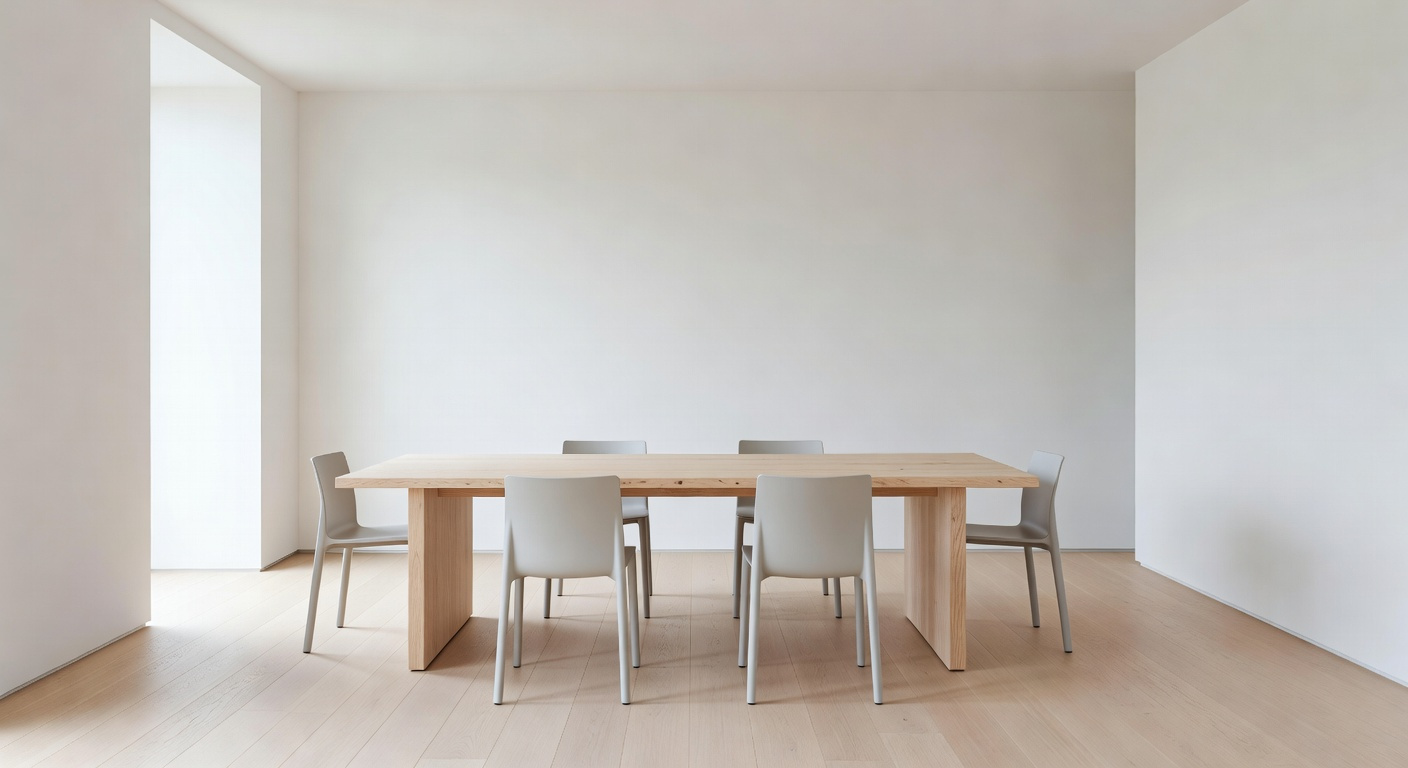
Many view minimalism simply as a stark aesthetic trend. Often, they mistake the style for a cold or empty choice. However, for the discerning homeowner, optimizing a minimalistic dining room is a profound wellness tool. Research links cluttered home environments to elevated cortisol levels. Therefore, visual complexity creates a chronic, low-level stress response.
Conversely, a simplified space acts as a cognitive reset button. It transforms the area into a true restorative sanctuary. By removing extraneous visual stimuli, the design significantly reduces the brain’s cognitive load. Consequently, the negative space allows the central nervous system to settle immediately. Ideally, the room becomes a haven for relaxation.
Intentional simplicity directly impacts our physical behaviors. A distraction-free environment is a critical precursor to the practice of mindful eating. Indeed, eliminating visual noise allows diners to focus purely on sensory details. Thus, the body accurately registers satiety signals to prevent overeating.
Additionally, a clean environment can subtly shift preferences toward healthier food choices. This practice echoes the historical Zen philosophy of Wabi-Sabi. Here, we find deep beauty in imperfection and organic materials. Natural elements foster a grounded connection to the earth. Ultimately, the design shifts focus from decoration to the ritual of nourishment, embodying true emotional luxury.
This guide reveals how the psychology of “less” transforms your home. Below, we explore specific strategies to create a dining space that nurtures both mind and body.
1. Defining “Visual Quiet”: The Proven Connection Between Sight and Digestion
“Visual quiet” is more than a design trend; it is a biological necessity. Fundamentally, this concept refers to a dining environment characterized by minimal complexity. By reducing clutter, we actively lower the brain’s cognitive load. Consequently, this shifts the body from a stress state to the “rest and digest” system.
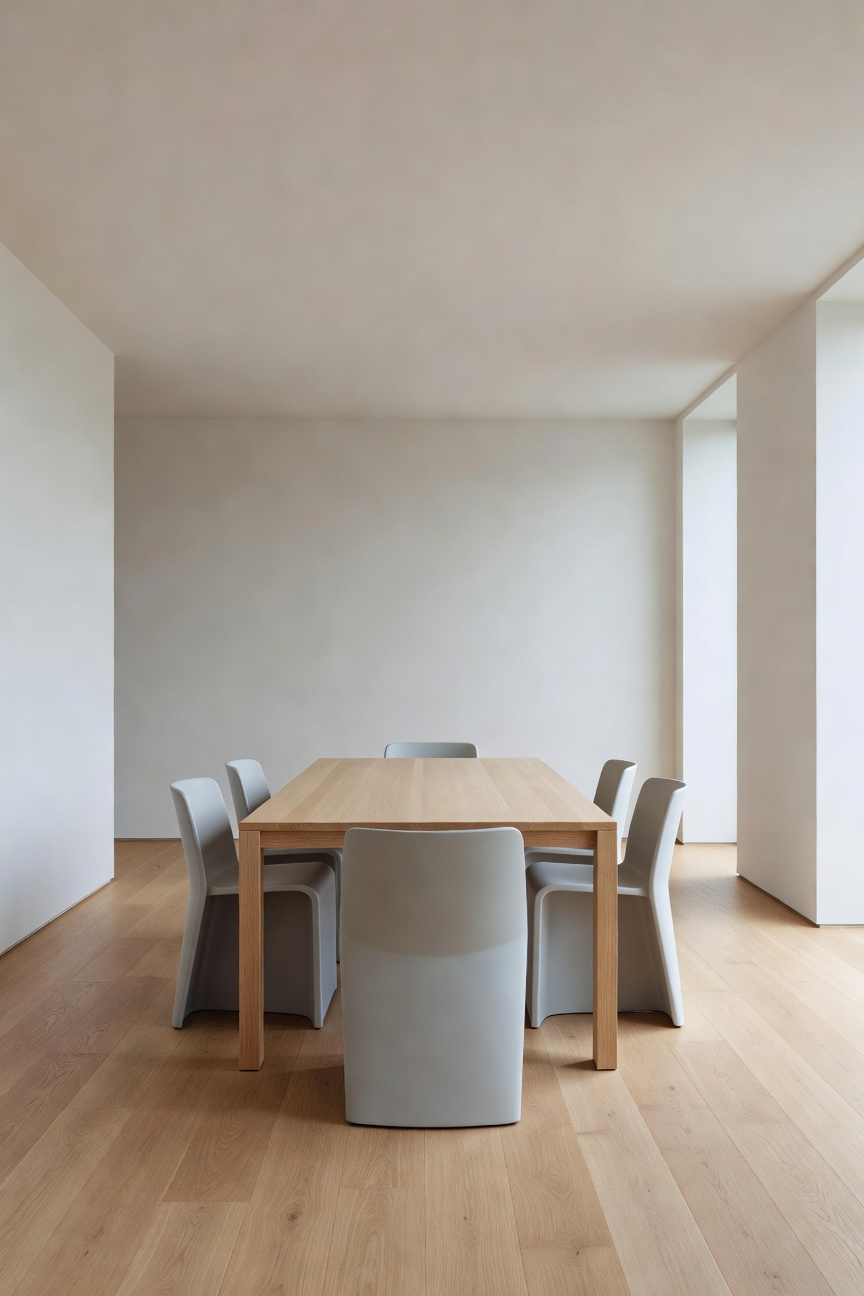
Surprisingly, optimal digestion begins before the first bite during the “cephalic phase.” Specifically, the sight of food signals the vagus nerve to prepare essential gastric enzymes. However, a cluttered room disrupts this delicate process. When the brain registers visual chaos, it triggers the release of cortisol. Unfortunately, this biological response reroutes blood flow away from the gut toward large muscles. This reaction effectively shuts down motility.
To counter these stressors, we embrace the philosophy of Wabi-Sabi. Soft, earthy palettes and natural materials like stone create a grounding, tactile experience. In fact, these muted tones prevent the overstimulation that spikes cortisol. Ultimately, a minimalist space supports the physiological safety required for true nourishment.
2. The Art of Negative Space: Viewing Emptiness as an Active Design Ingredient
In minimalist dining rooms, negative space serves as more than simple emptiness. Instead, it acts as an active, structural ingredient. Specifically, this intentionally designed “void” defines the room’s function. It creates a deliberate visual pause. Consequently, this quietness highlights your chosen objects while influencing the psychological experience.
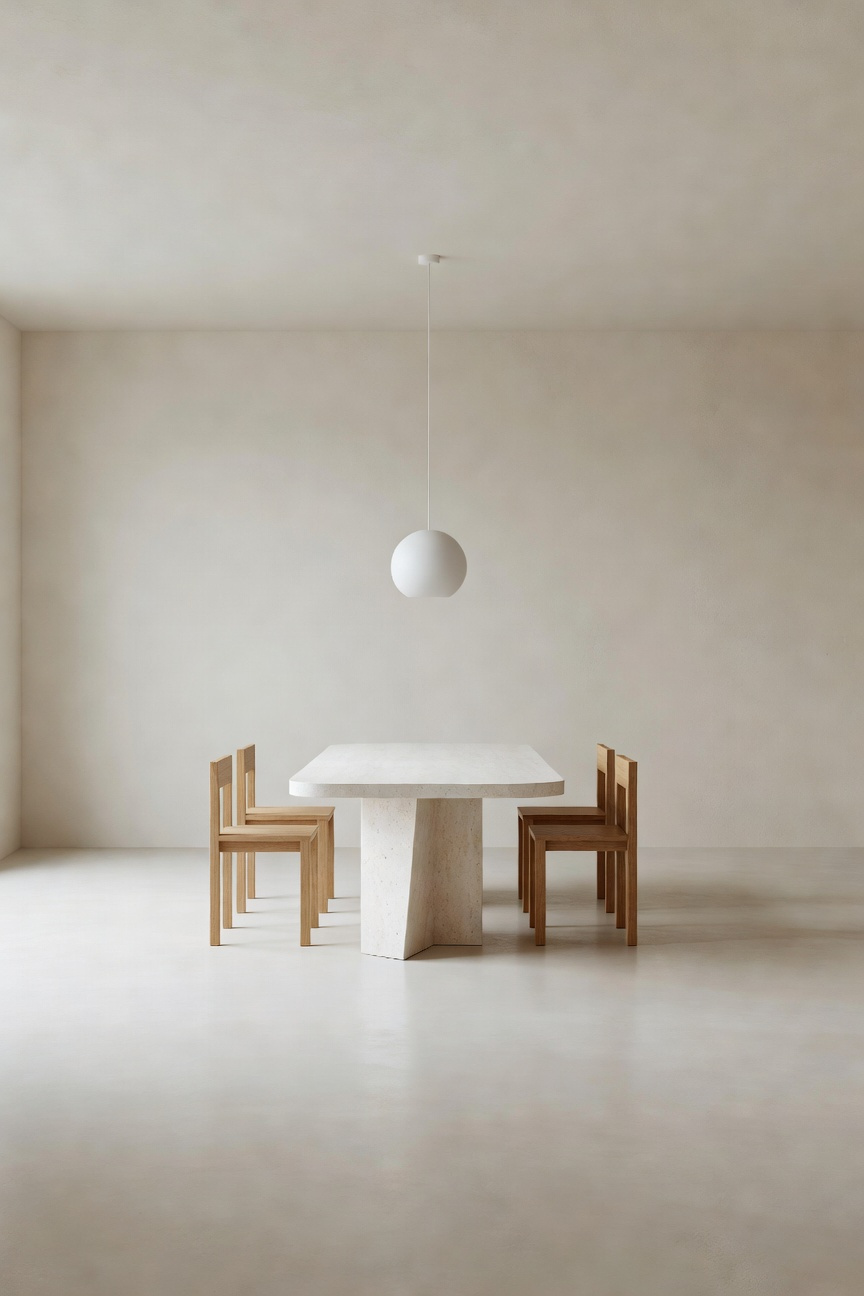
Consider the dynamic figure-ground relationship. When you frame a sculptural table with generous empty space, the form amplifies. Therefore, the texture of organic wood or a sleek metal base becomes art. Without competing clutter, these details register with absolute clarity. A single pendant light surrounded by a volume of air becomes a powerful architectural gesture.
Psychologically, this approach offers profound benefits. Humans require visual breaks to remain relaxed. In fact, reducing sensory input lowers cognitive load significantly. Thus, the dining room transforms into a place for focused conversation. This aligns with the minimalist ethos that luxury is about intentionality, not excess.
Finally, negative space governs physical flow. It is not simply unused floor area. Rather, it is a designed pathway that removes visual choke points. Proper clearance ensures movement around the table feels natural. Ultimately, the absence of décor allows light, shadow, and proportion to take center stage.
3. Flow and Chi: Optimizing Energy Movement for Stress-Free Gatherings
In holistic design, the movement of energy, or *Chi*, is paramount. Specifically, stagnant energy often accumulates around clutter, creating an invisible tension known as *Sha Chi*. Therefore, a minimalist dining room serves as an antidote to this stress. By strictly limiting objects, you allow positive energy to circulate freely. Consequently, guests feel physically and emotionally unburdened immediately.
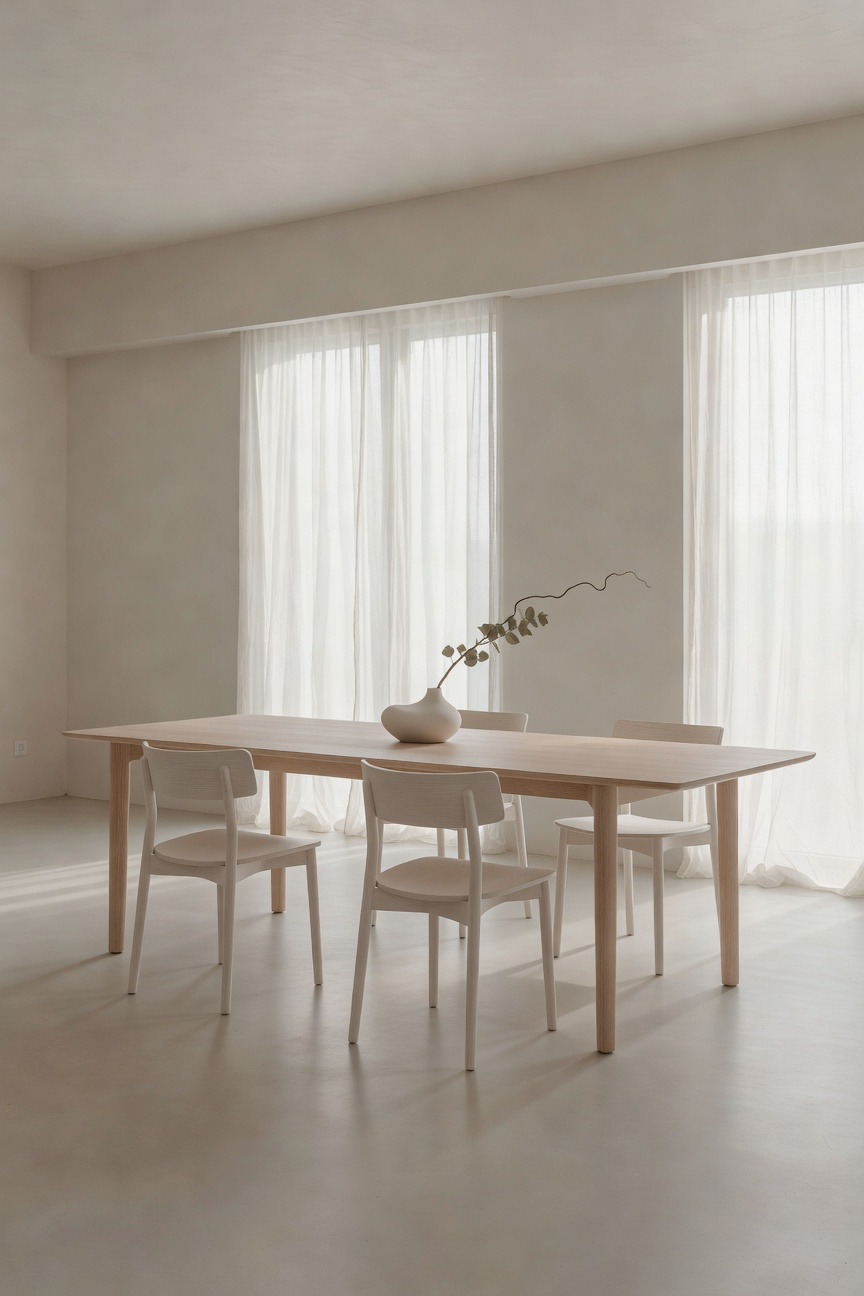
Crucially, the dining table acts as the energetic anchor of the room. Ideally, choose a round or oval shape to facilitate smooth movement. In fact, curved lines eliminate sharp corners, which subconsciously signal danger. Furthermore, prioritize grounding materials like solid walnut over glass. While glass is sleek, it can feel fragile. Wood introduces vitality and stability.
Beyond physical layout, this simplicity supports the state of “Flow.” Because visual distractions are minimized, the mind focuses entirely on connection. However, a purely minimal space risks feeling cold. To counter this, introduce soft, layered lighting. Additionally, incorporate natural textures like linen napkins to balance Yin and Yang. Ultimately, these elements invite guests to linger comfortably in the present.
4. Grounded Palettes: Selecting Earth Tones that Lower Cortisol Levels
Color is more than a visual choice; it regulates our biology. Specifically, selecting earth tones mimics the non-threatening visuals of the natural world. Therefore, these hues lower the activation of the amygdala, the brain’s stress center. As a result, the body shifts into a parasympathetic state. This physiological transition is particularly vital for a nourishing dining environment.
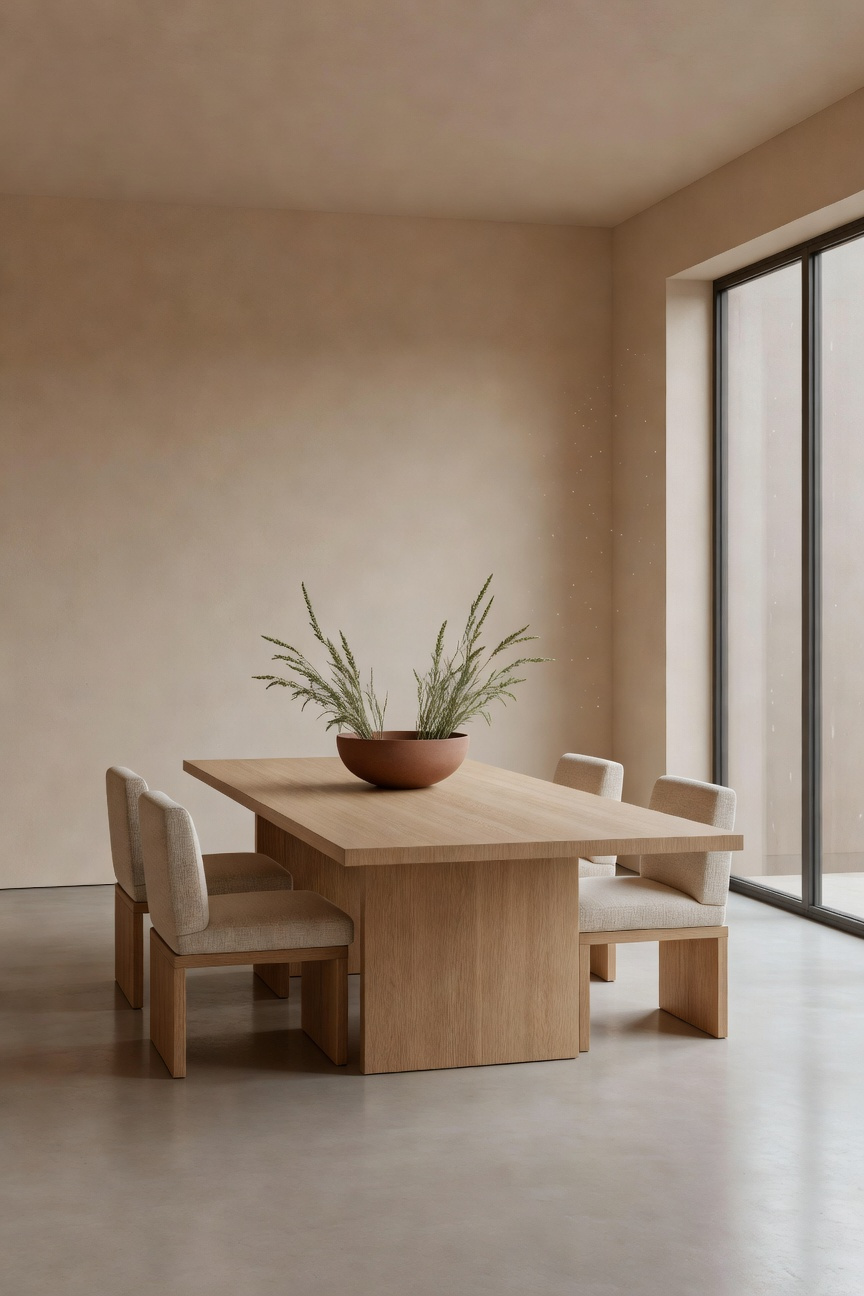
To maintain a minimalist aesthetic, prioritize low-chroma, desaturated tones. For example, muted greens like sage act as soothing neutrals. Indeed, they offer the tranquility of nature without visual intensity. Alternatively, warm neutrals like taupe are effective for those sensitive to overstimulation. These balanced shades feel steady. Additionally, earthy reds like terracotta introduce a sense of “grounding energy.”
Unlike stimulating bright reds, these subdued hues evoke a sun-warmed shelter. Historically, humans associate these pigments with durable environments built from clay or stone. Consequently, using them evokes an ancient feeling of safety. Ultimately, this deep association counteracts the sterile feeling often found in stark minimalism. Thus, the dining space feels intimate and anchored.
5. Tactile Authenticity: The Importance of Honest Materials (Raw Wood, Stone, Linen)
True minimalism relies on integrity. Specifically, it adheres to the “Truth to Materials” principle championed by the Bauhaus movement. Here, materials remain in their natural form without disguise. Consequently, a raw wood dining table becomes an expressed structure rather than just furniture. In fact, its visible grain acts as an antidote to “dishonest” synthetic finishes.
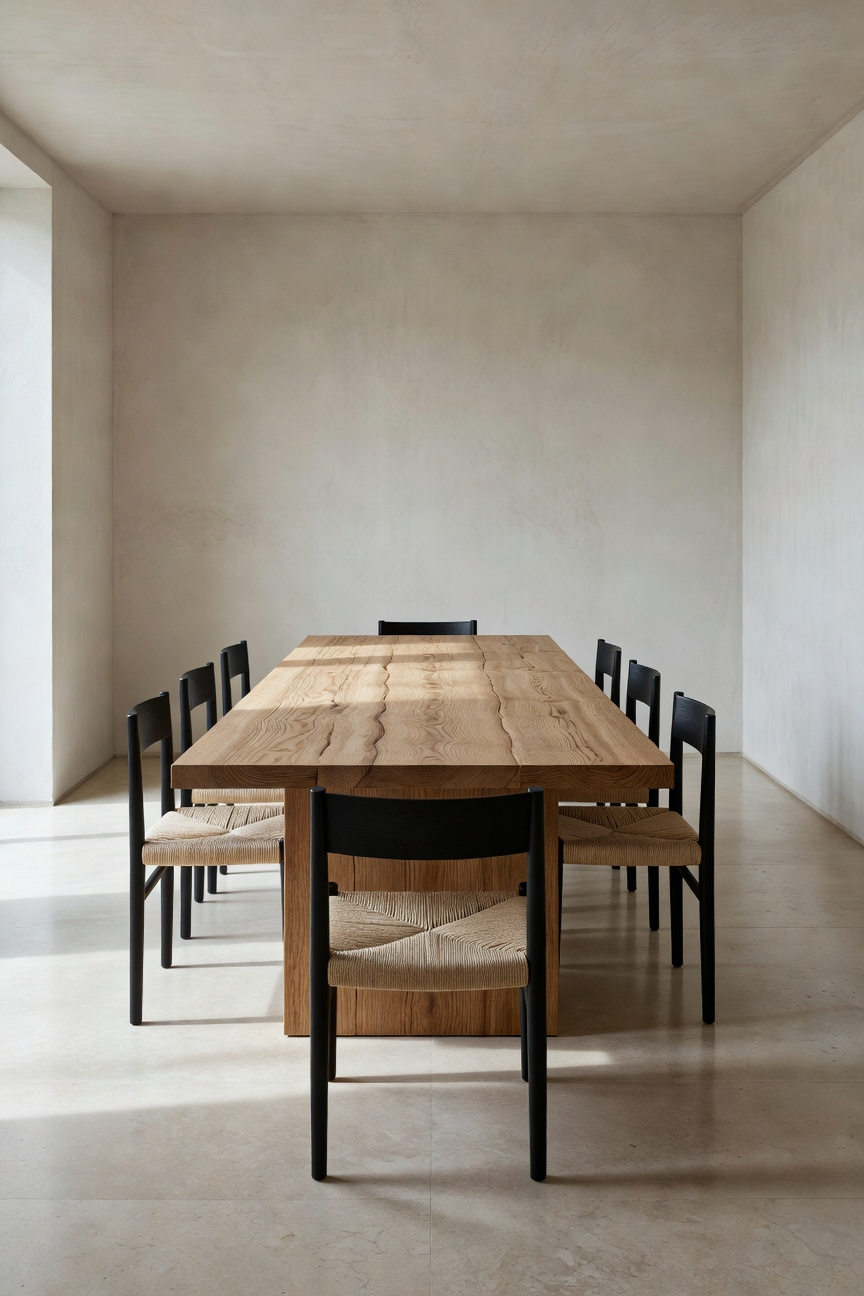
Beyond aesthetics, these choices deeply impact physical well-being. According to biophilic design principles, raw textures provide essential haptic feedback. For example, unpolished wood offers organic warmth that invites touch. Conversely, natural stone introduces a cool, uneven texture that provides necessary visual weight. Additionally, linen accents prevent the space from feeling sterile. Ultimately, this softness contributes to a welcoming atmosphere.
Honest materials offer the unique benefit of aging gracefully. Drawing from Wabi-Sabi, this design approach values imperfection. Unlike synthetics that degrade, natural elements develop patina. Over time, a solid table visualizes the story of shared meals. Similarly, linen softens with use. Therefore, choosing authenticity establishes a sense of permanence and emotional luxury.
6. Acoustic Hygiene: Softening Echoes in Sparse Spaces with Textiles
Minimalist dining rooms often feature hard surfaces like concrete and glass. Consequently, these materials create a reverberant environment that amplifies noise. This phenomenon creates “flutter echo,” where sound bounces rapidly between parallel walls. As a result, conversations become strained. Therefore, achieving “acoustic hygiene” is essential for a truly restorative space.
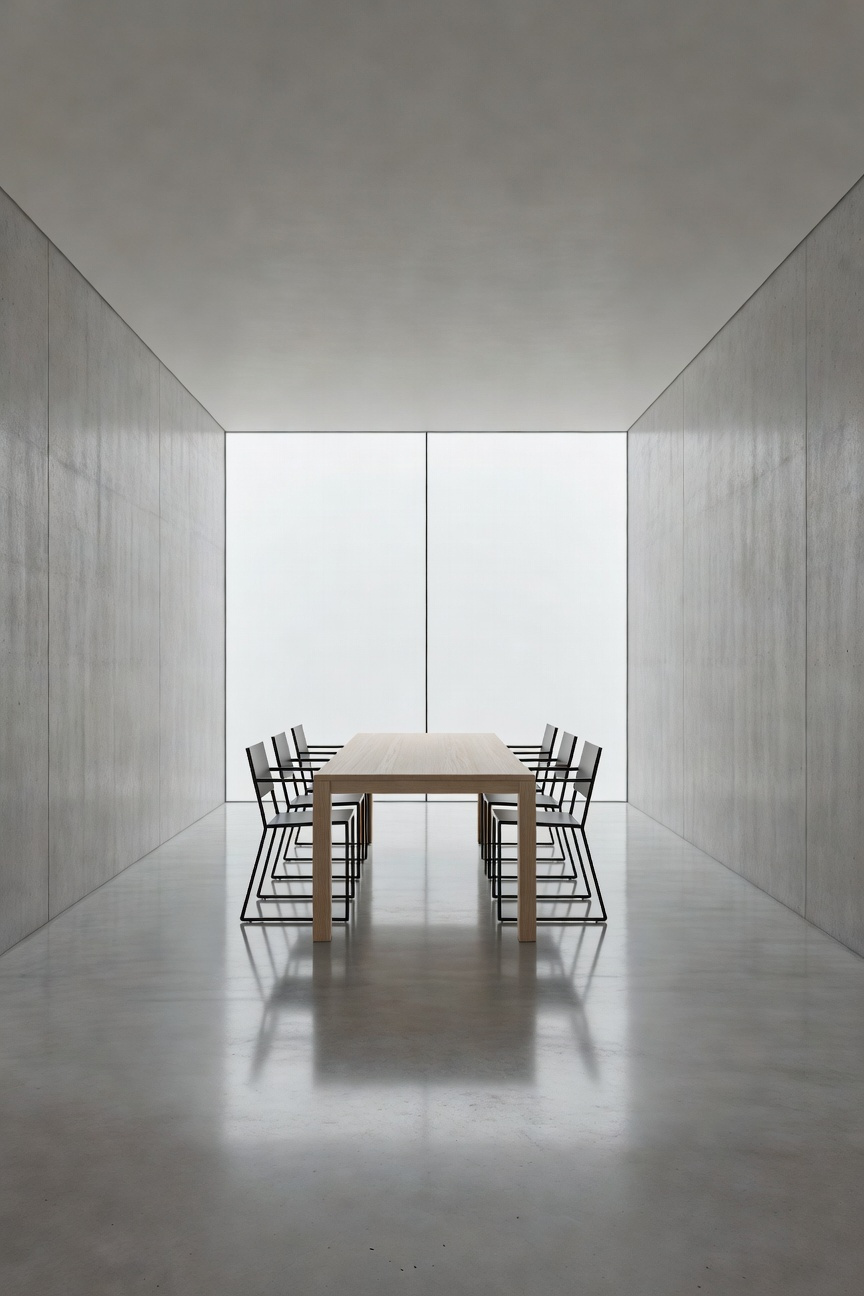
The goal is enhancing speech intelligibility rather than just dampening noise. To achieve this, focus on treating the “First Reflection Points.” These are spots where sound waves first bounce. For instance, placing a dense textile panel opposite the seating area works effectively. Historically, tapestries served this exact function in grand halls.
Material selection requires a strategic approach. Ideally, choose high-density textiles like pressed wool felt. These materials often boast a high Noise Reduction Coefficient (NRC). In fact, architectural felt can absorb sound like a sponge. Similarly, a thick, cut-pile wool rug dampens impact noise significantly.
Window treatments also transform the auditory landscape. Harsh sounds from glass require softening. Therefore, utilize floor-to-ceiling drapes made of heavy wool or velvet. Crucially, ensure the fabric features generous pleats. This folding increases the surface area for absorption, providing immediate acoustic warmth.
7. Biophilic Integration: Using Living Sculptures Instead of Decor Clutter
True minimalism is about intentionality, not emptiness. Consequently, we replace collections of small decor with a singular “living sculpture.” This shift moves the design from additive clutter to restorative volume. Specifically, a large-scale tree or green wall anchors the room instantly. By eliminating fragmented distractions, these organic forms reduce cognitive fatigue. In fact, observing natural patterns actively lowers stress.
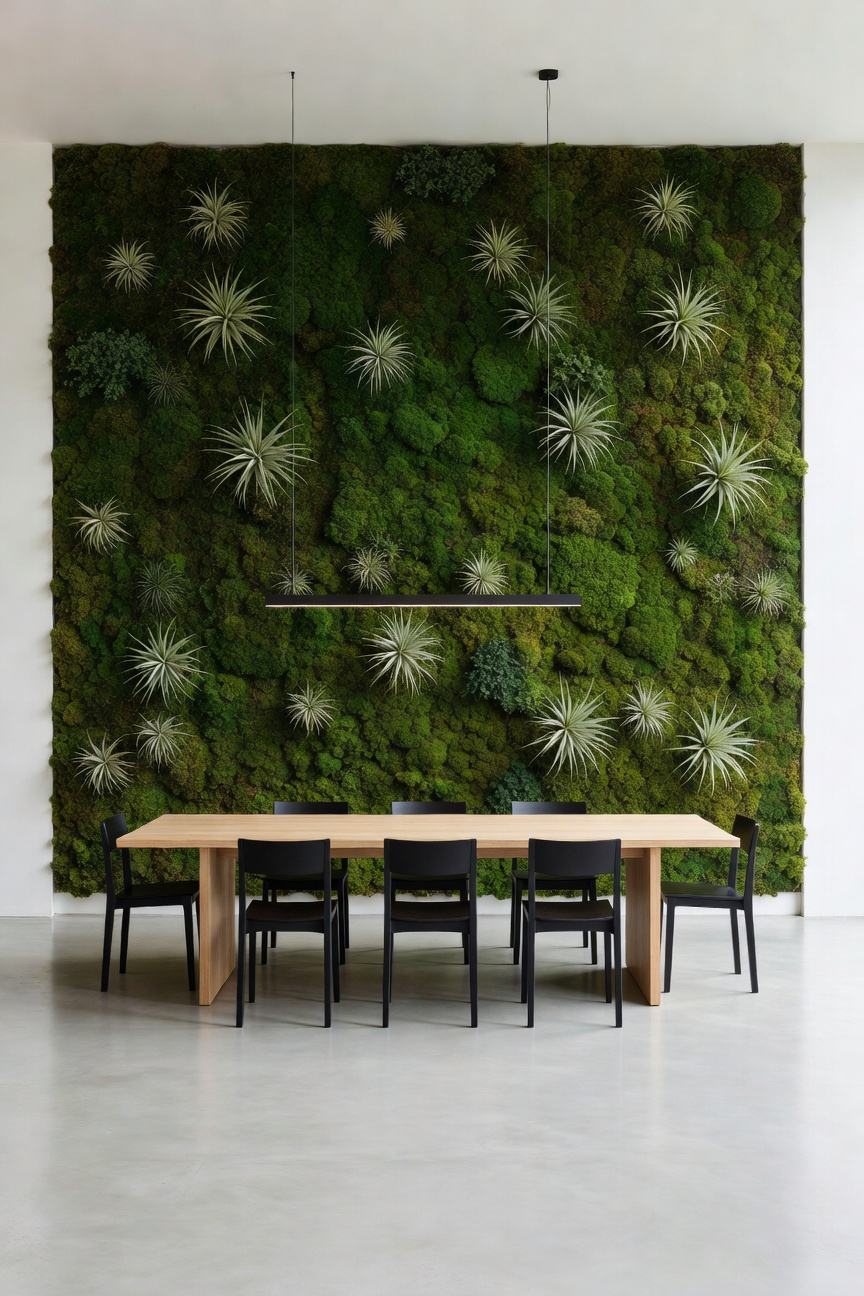
These elements engage the senses beyond just sight. For instance, dense greenery acts as a natural sound damper. This creates a quieter, more intimate environment for conversation. However, maintaining a living ecosystem can feel like a chore. As a solution, preserved moss art has emerged as a design favorite. These pieces offer deep texture without requiring water. Thus, they provide a powerful connection to nature while maintaining a zero-clutter lifestyle.
8. Circadian Rhythm Lighting: Transitioning from Morning Clarity to Evening Intimacy
In minimalist design, light serves as the ultimate invisible decoration. Consequently, circadian rhythm lighting transforms the atmosphere without adding clutter. This system allows the space to fluidly shift its purpose through the strategic modulation of color temperature.
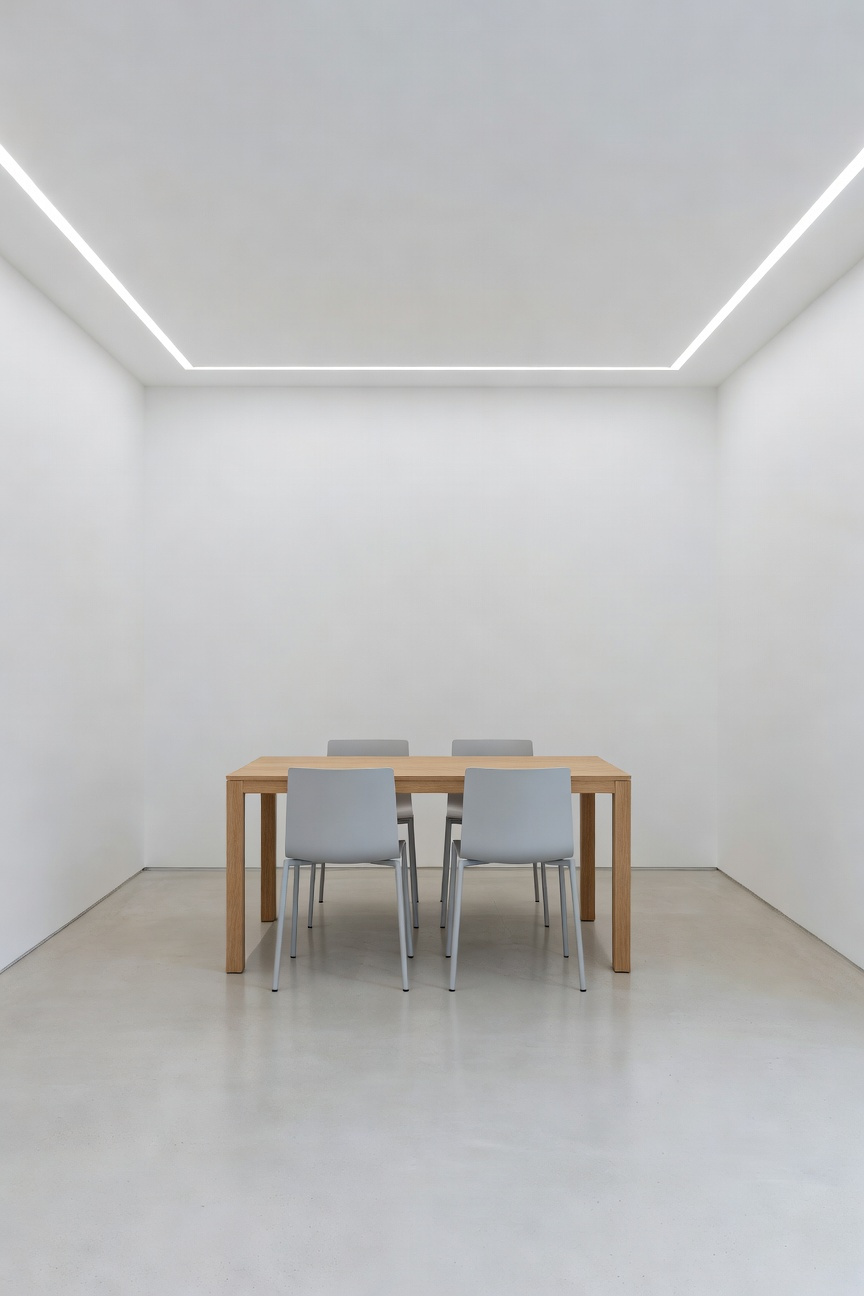
Specifically, the morning setting prioritizes clarity. Cool white light (4000K to 6500K) mimics the stimulating effects of natural daylight. As a result, this high-intensity illumination boosts alertness during breakfast. Ideally, this establishes a productive tone for the day.
Conversely, the evening setting transitions the room into a space of intimacy. As the sun sets, the system shifts to a warm, golden hue. In fact, ultra-warm settings can replicate the comfort of a campfire. Physiologically, this reduction in blue light triggers melatonin. Therefore, the lighting prompts guests to relax and converse deeply.
To achieve this, architectural concealment is essential. Trimless recessed downlights plastered into the ceiling maintain a “quiet” visual plane. Furthermore, fixtures with regressed optics prevent harsh glare. Ultimately, the light becomes pure experience, nurturing both the body’s internal clock and the aesthetic.
9. The Singular Focal Point: Anchoring the Room with Statement Luminaires
In a minimalist dining room, the statement luminaire acts as the primary anchor. Consequently, the fixture must intentionally violate the typical aversion to scale. Without wall art, a small light fails to command attention. Therefore, the room may feel unfinished. Specifically, expert consensus dictates precise dimensions. For instance, the fixture’s width should generally span one-half to two-thirds of the table’s width.
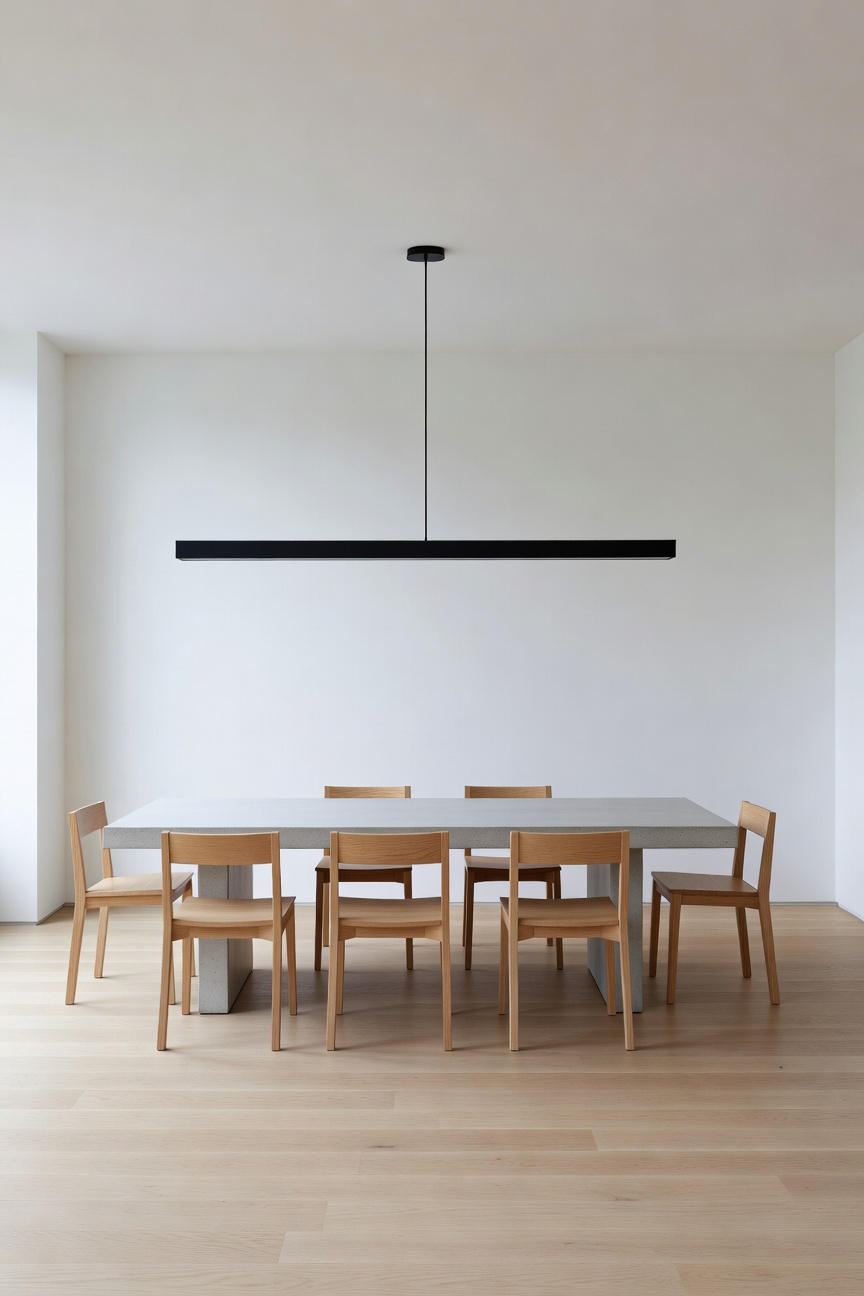
Additionally, positioning the light 28 to 34 inches above the tabletop ensures optimal illumination. Thus, it creates drama without obstructing sightlines. Historically, this approach stems from Mid-Century Modernism. Designers elevated lighting from utility to functional art. Often, they utilized matte metals or frosted glass. As a result, the light becomes a visual manifesto.
Beyond aesthetics, the pendant serves a sensory function. Ideally, focused downward light creates a “room within a room.” This zoning fosters intimacy. Furthermore, selecting warm LED bulbs prevents a clinical atmosphere. Ultimately, this soft glow encourages connection, successfully embodying *hygge*.
10. Window Treatments: Maximizing Natural Light While Preserving Privacy
Window treatments function as architectural filters rather than simple barriers. Specifically, they should soften sunlight into an ambient glow, drawing inspiration from Japanese *shoji* screens. This diffusion transforms harsh beams into gentle illumination. Similarly, Scandinavian principles prioritize maximizing light to foster well-being. Therefore, opt for visually silent fabrics like linen.
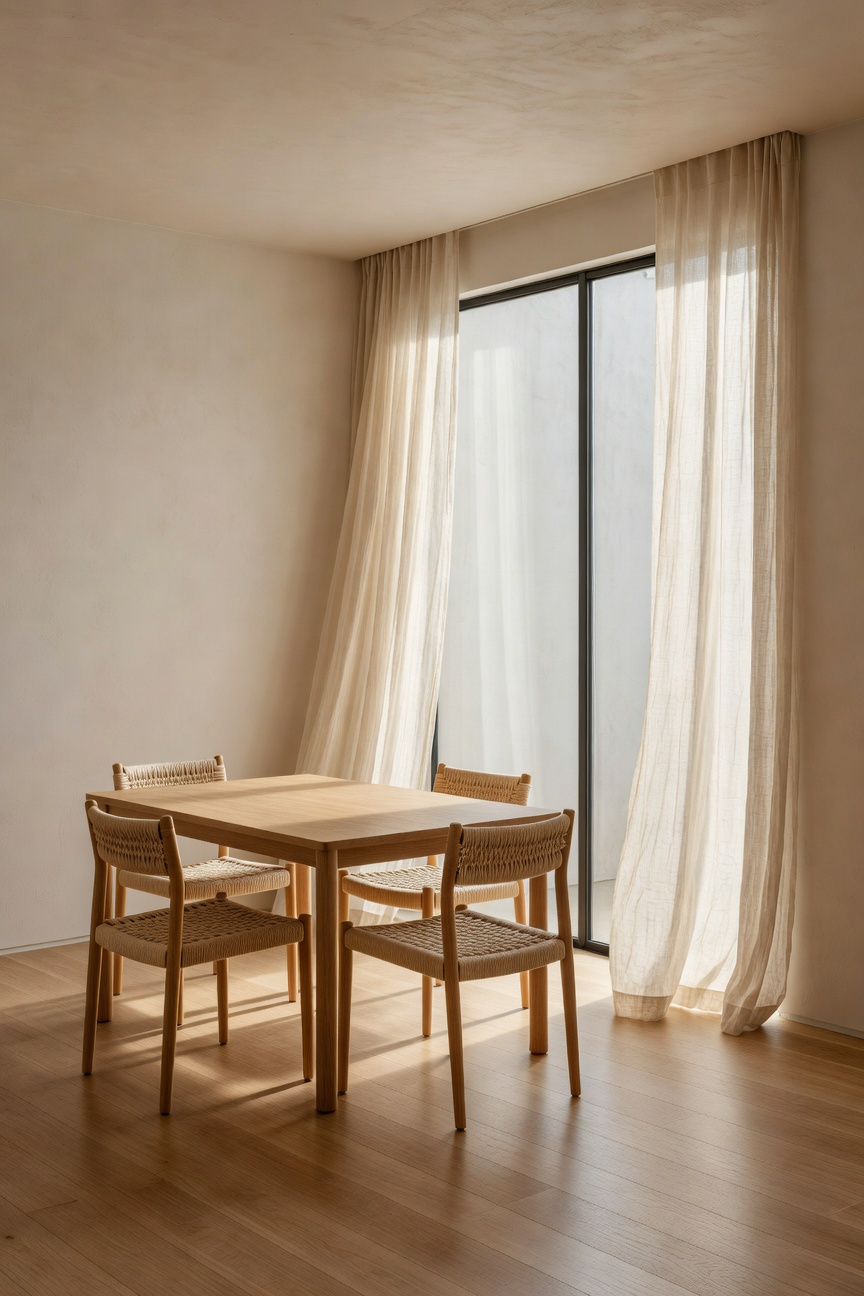
For functionality, a dual-layer system often provides the best solution. Typically, this setup combines a translucent solar screen with an opaque blackout layer. Consequently, you gain total control without adding clutter. While cellular shades offer insulation, sleek roller shades align better with minimalist aesthetics. Furthermore, motorized operations eliminate distracting chains.
The quality of light directly impacts the sensory pleasure of dining. In fact, soft lighting enhances the visual appeal of food. Conversely, harsh glare can subconsciously rush a meal. By filtering light effectively, you create a calm environment that encourages diners to relax.
11. The Table as Sanctuary: Choosing Low-Profile Designs for Grounded Eating
Transitioning to a low-profile dining table fundamentally alters the atmosphere. Typically standing 12 to 20 inches high, these designs physically reorient the dining experience. Consequently, this lower sightline dismantles the rigidity associated with formal furniture. Instead, it fosters a “grounded” sensation that encourages diners to slow down.
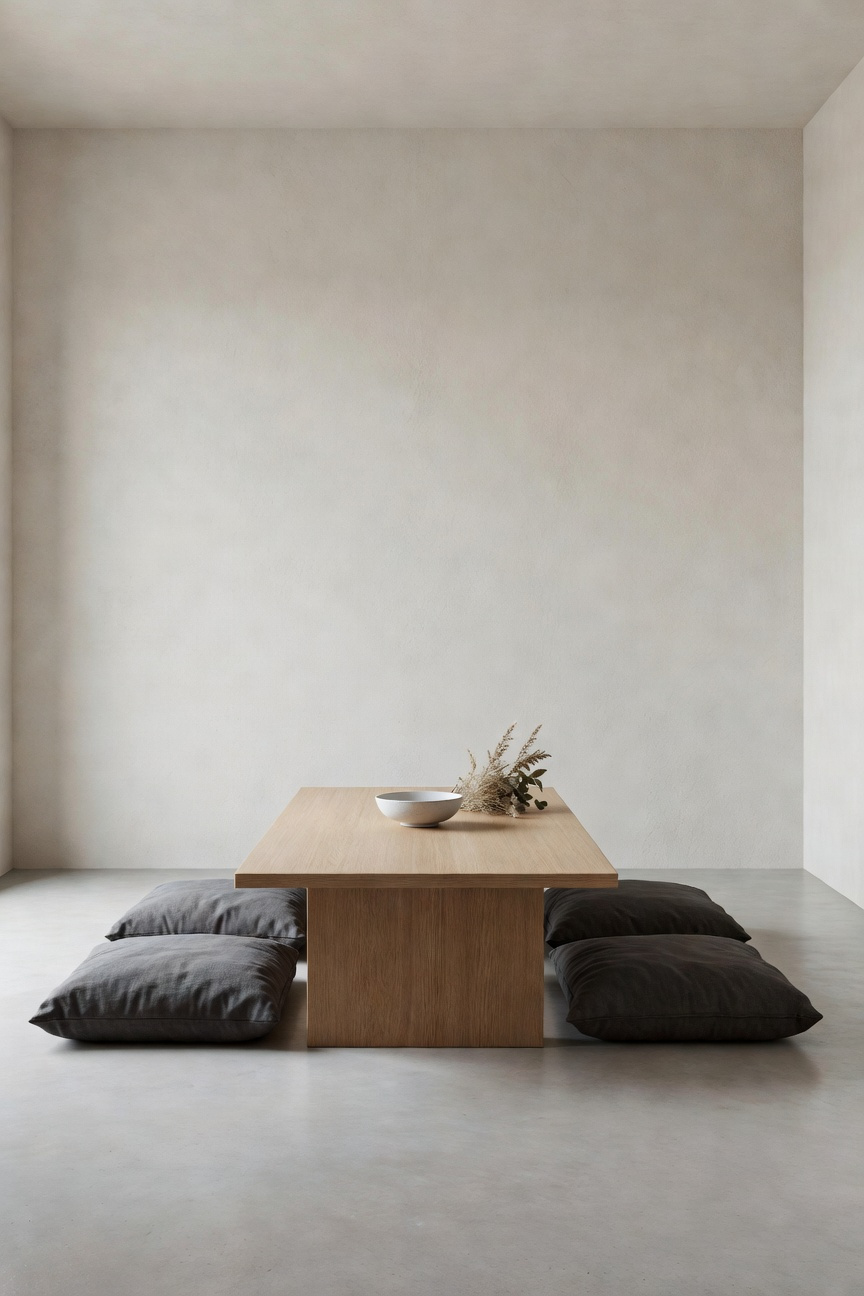
Historically, this concept draws from East Asian traditions. For instance, the Japanese *Chabudai* codified a sanctuary of communal warmth. Conversely, the Korean *Soban* historically emphasized solitary focus. Therefore, whether used for gathering or introspection, low seating frames the meal as a ritual.
From a spatial perspective, keeping furniture low preserves vertical space. As a result, even small rooms feel breathable. Furthermore, this approach supports “Warm Minimalism.” Specifically, pairing grounded materials with soft cushions introduces comfort. Finally, the limited surface area naturally discourages clutter. This restriction acts as a functional design tool.
12. Ergonomic Mindfulness: Selecting Seating that Supports Posture and Presence
Mindfulness begins with the body. Specifically, the relationship between ergonomics and presence centers on reducing physical discomfort. Consequently, achieving a “neutral posture” allows the mind to focus fully on the meal.
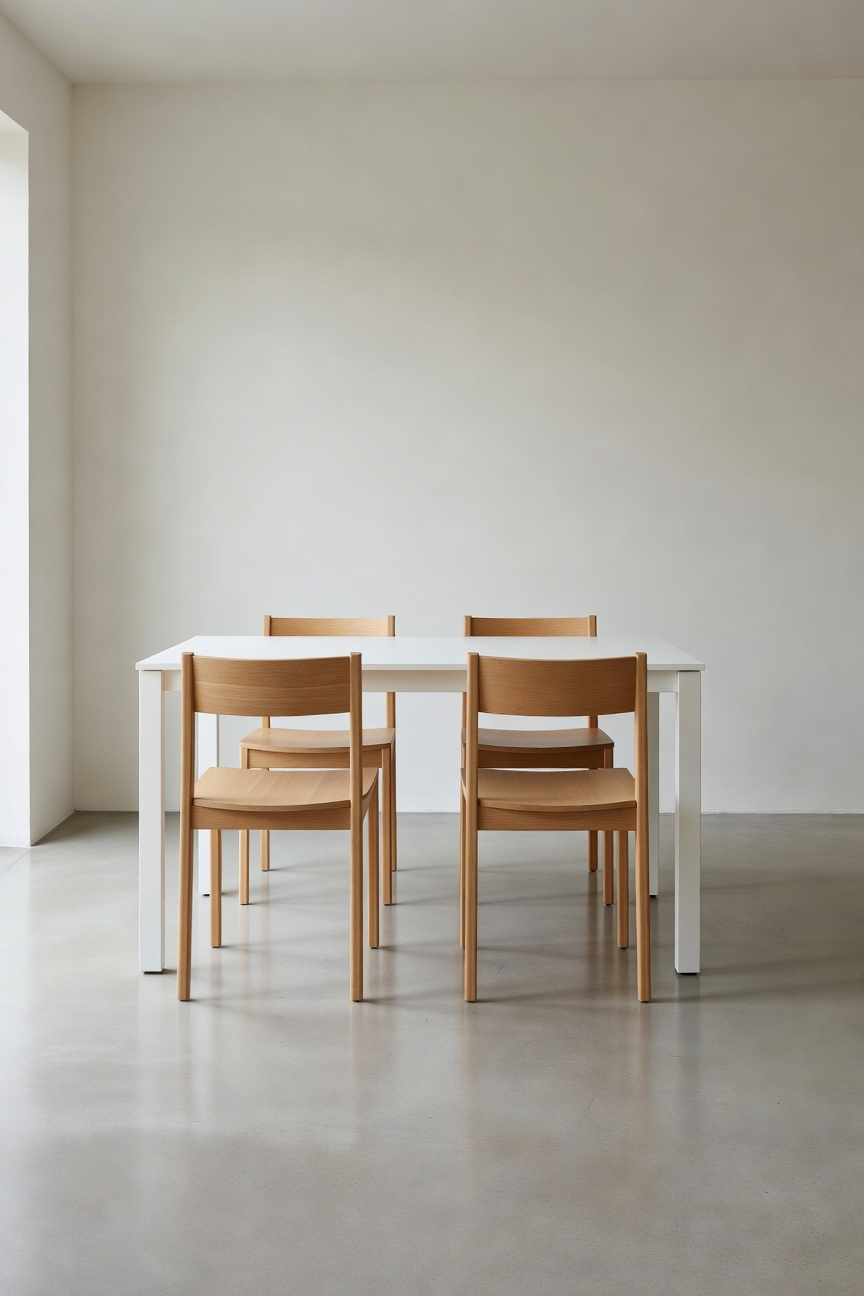
Ideally, choose a seat height of approximately 18 inches. This measurement ensures feet rest flat while knees remain at 90 degrees. Furthermore, maintain 9 to 11 inches between the seat and the tabletop. This specific differential prevents the forward hunch that strains the spine. Additionally, correct seat depth acts as a silent posture cue, encouraging an engaged position.
This approach mirrors the Shaker ethos of integrity. For them, “essential simplicity” encouraged concentration. Today, we see this in the “Japandi” aesthetic. Moreover, materials like steam-bent wood introduce necessary tactility. These organic textures engage the senses without distraction. Ultimately, supportive seating fosters “presence,” allowing guests to lengthen their dining time.
13. Hidden Storage Architectures: The “Everything in Its Place” Principle
The maxim “a place for everything” transcends simple advice. Historically, this mirrors the efficiency of *Kaizen* philosophy. However, in a minimalist dining room, it serves a psychological purpose. Visible clutter activates the brain’s “fight or flight” response. Therefore, hidden storage architectures foster a “decluttered mind.”
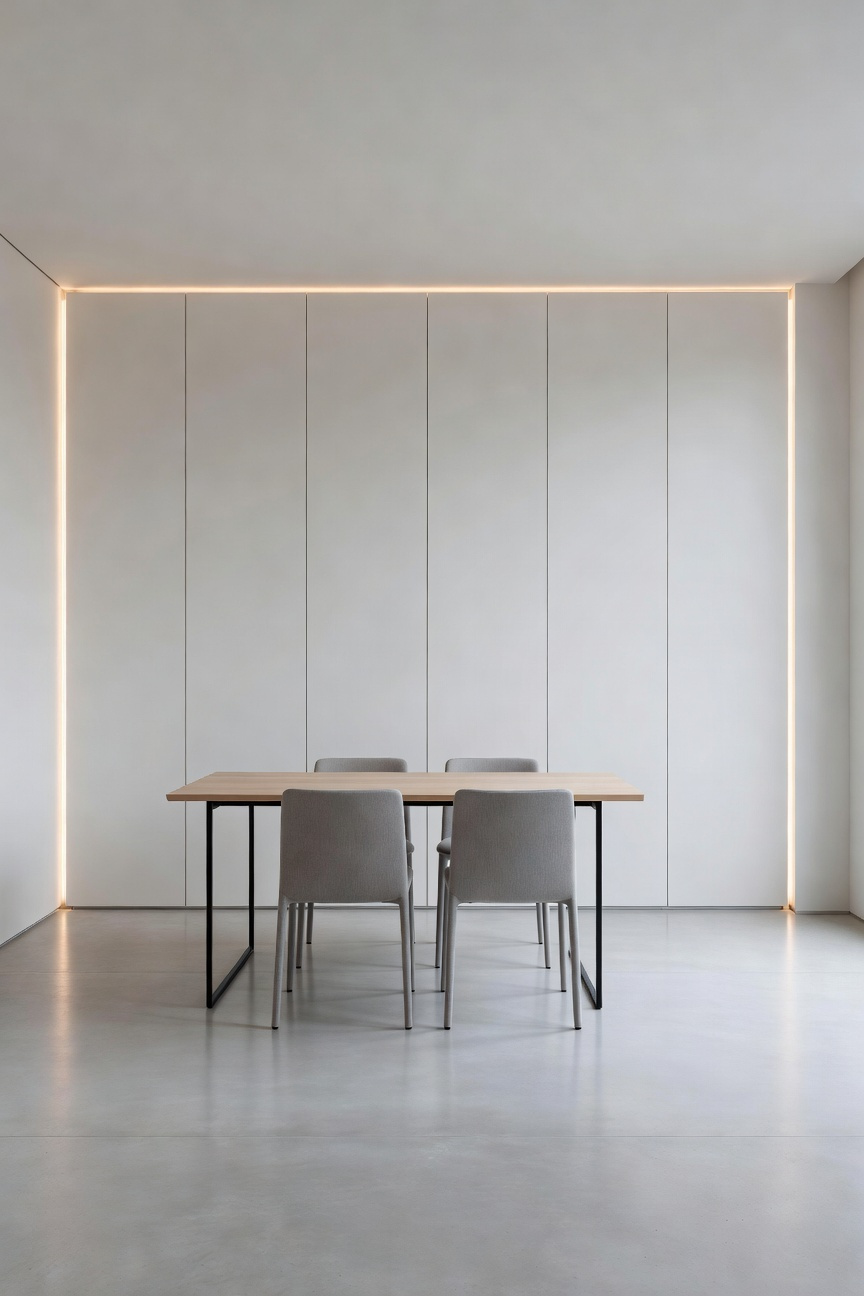
Storage must seemingly vanish into the room’s structure. Ideally, built-in cabinetry sits flush with the wall. Furthermore, matching the cabinet finish to the wall color creates a seamless integration. Consequently, the storage becomes “barely there.” Instead of distracting hardware, push-to-open latches maintain a smooth surface. Thus, essential items remain accessible yet invisible.
In smaller spaces, central furniture often shoulders this burden. For instance, modern dining tables are engineered with hidden compartments. Additionally, banquette seating utilizes the volume beneath the diner. Simply lifting the seat reveals cavities for linens. Ultimately, this design conceals utility behind elegance.
Finally, the goal is sensory purity. By removing visual noise, the design spotlights intentional elements. Moreover, the interaction with the space becomes ritualistic. The soft click of a latch reinforces order.
14. Mindful Table Settings: Curating Ceramics that encourage Slow Dining
Selecting ceramics for a minimalist dining room transforms a meal. Fundamentally, the physical properties of dinnerware can deliberately slow the pace of dining. For instance, high-quality stoneware offers a reassuring weight. Consequently, this heft signals permanence and demands a deliberate lifting motion. This physical cue creates a “micro-pause” between bites.
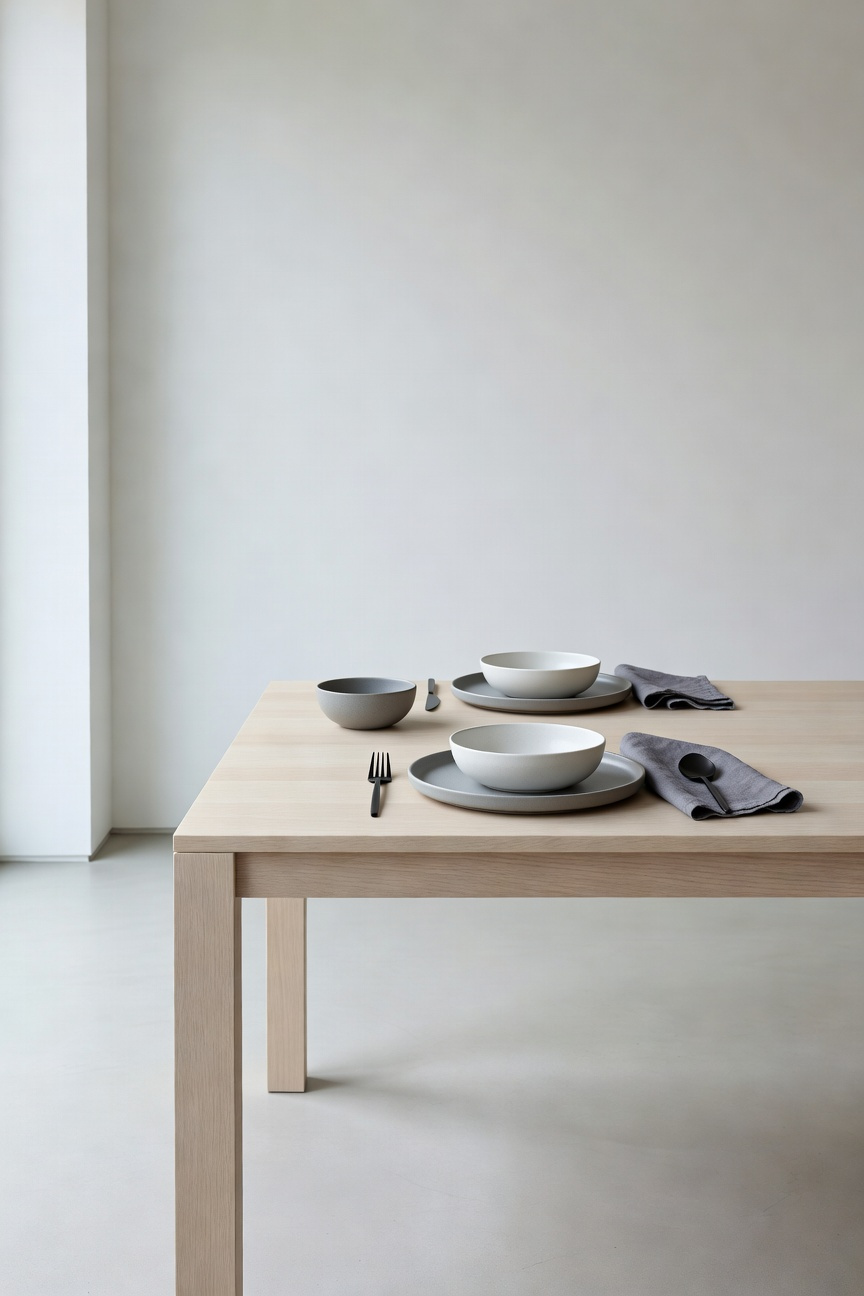
Beyond touch, visual psychology plays a role. Notably, the Delboeuf Illusion suggests that smaller plates make portions appear more generous. Therefore, choosing 8-inch plates can support portion control. Additionally, high contrast between the food and the ceramic frames the meal. For example, colorful ingredients on a black plate become the focal point. This reduces distraction.
Finally, these choices often root themselves in Wabi-Sabi. This concept champions the beauty found in imperfections. Thus, hand-thrown ceramics with uneven shapes invite the diner to reflect. Unlike factory-made uniformity, these pieces connect the user to the artisan. Ultimately, curating these essentials turns the table into a sanctuary.
15. ScentScaping: Subtle Aromatherapy Strategies for Appetite Stimulation
ScentScaping goes beyond atmosphere; it actively prepares the body. Specifically, the right aroma triggers the “preparatory reflex.” Consequently, this initiates the cephalic phase of digestion. Effectively, the scent acts as an invisible appetizer.
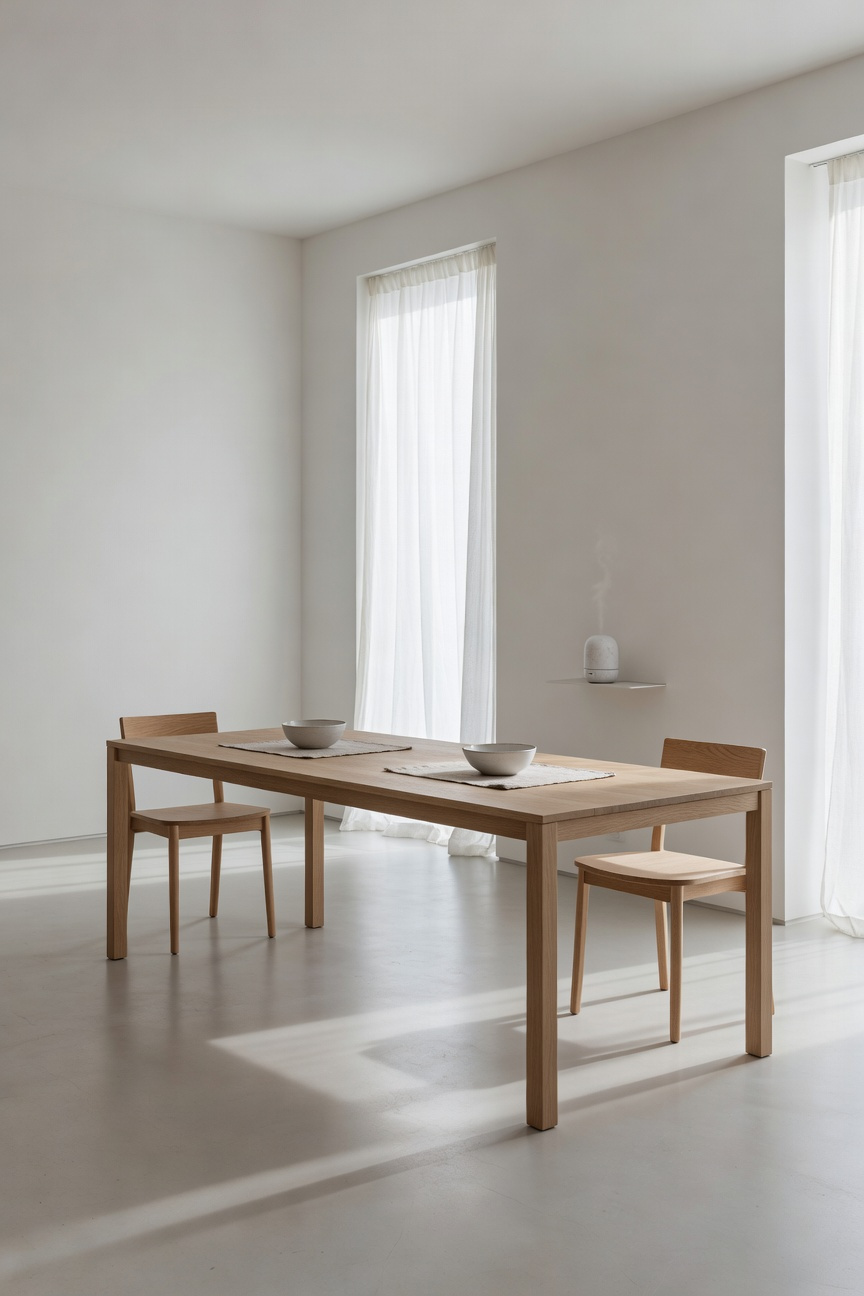
However, fragrance must remain a “gracious guest.” Overpowering smells disrupt retronasal olfaction, which impacts taste perception. Therefore, the goal is an “understated” ambient note. Ideally, utilize passive diffusion through sculptural, porous materials like lava rock. These objects blend seamlessly into a clean aesthetic.
Alternatively, run a ceramic diffuser for just fifteen minutes *prior* to the meal. This ensures the scent lingers softly without overpowering the food. Finally, select essential oils that stimulate appetite. Bright citrus notes like Bergamot provide an uplifting start. Conversely, warm notes like Cardamom offer a grounding embrace.
16. Digital Detox Design: Layouts that Prioritize Conversation Over Screens
In a digital detox dining room, minimalism serves a restorative purpose. Specifically, the absence of clutter reduces cognitive load. This allows the mind to focus entirely on interaction. The table itself acts as the primary layout tool. Architecturally, round tables are superior for connection. They eliminate hierarchy, promoting inclusive discussions.
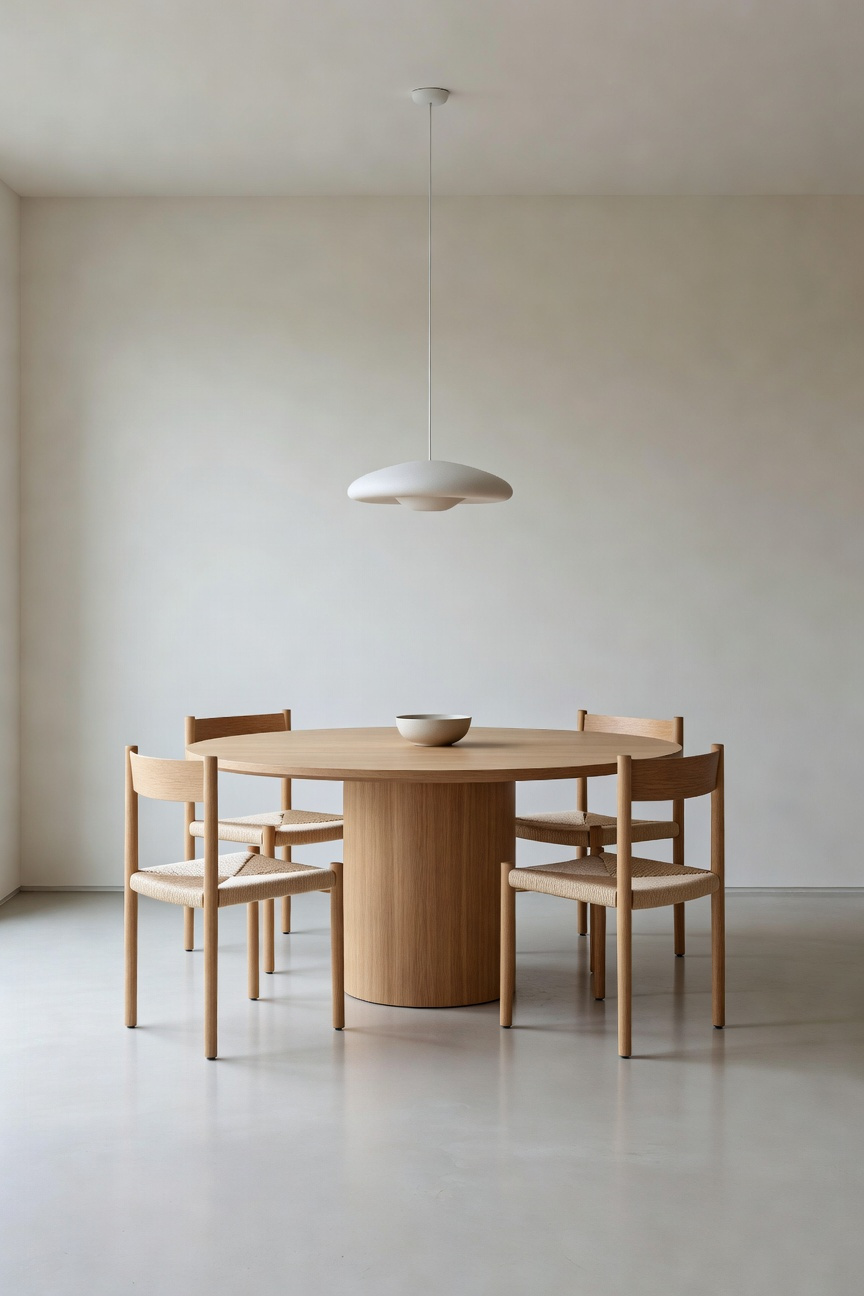
Furthermore, the table’s dimensions dictate intimacy. Ideally, a depth of 36 to 40 inches creates a conversational “sweet spot.” This proximity prevents participants from leaning uncomfortably. Conversely, tables wider than 42 inches create barriers.
Beyond geometry, sensory elements calm the nervous system. For instance, biophilic materials like raw wood reduce stress. Additionally, soft acoustic layers dampen harsh echoes. Thus, the human voice becomes the clearest element. Finally, lighting design solidifies this focus. A low-hanging pendant creates a contained “stage.” Simultaneously, custom cabinetry conceals devices. Ultimately, this “invisible innovation” ensures the space remains a sanctuary.
Moving From Empty to Wholeness
True minimalism transforms your minimalistic dining room from a simple void into a sanctuary of wholeness. It is not merely about removing clutter; rather, it is about curating meaningful presence. By choosing honest materials like untreated wood, you invite organic warmth instead of sterility. Consequently, the room shifts from a cold aesthetic to a holistic environment. Every object serves a purpose, fostering a mindful connection.
Looking ahead, this design approach promises a future defined by sustained clarity. In fact, your dining room will evolve gracefully, developing a patina that reflects a life well-lived. To embrace this shift, begin by auditing your current dining collection. Remove items that feel cold, retaining only what supports a grounded atmosphere. Finally, let your space breathe, allowing the physical environment to nurture your mental well-being.
Frequently Asked Questions
What are the key elements to prevent a minimalist dining room from feeling sterile or cold?
The primary strategy is embracing “Warm Minimalism.” This is achieved by focusing on tactile authenticity and honest materials. Integrate raw, natural elements such as solid, untreated wood (walnut, ash), textured linen upholstery, wool rugs, and matte ceramics. These materials introduce organic warmth, necessary visual weight, and comforting textures, which counteract the sterility often associated with purely white or high-gloss spaces.
Where do I store common dining necessities (linens, extra china) in a strictly minimalist layout?
A truly minimalist dining room relies on hidden storage architectures. Install integrated, handle-less cabinetry that is flush with the wall and matches the wall color to create a seamless, invisible appearance. For smaller spaces, utilize furniture with dual purposes, such as banquette seating with lift-up storage compartments beneath the cushion, or dining tables engineered with internal compartments for storing table leaves.
What is the primary difference between a traditional minimalist dining room and the Japandi aesthetic?
Traditional stark minimalism often prioritizes precise geometry and monochrome palettes, sometimes risking a clinical feel. The Japandi aesthetic, conversely, blends Japanese Wabi-Sabi principles (finding beauty in imperfection and nature) with Scandinavian functionalism (Hyggé and utility). The result is a warmer, softer minimalism characterized by rounded forms, highly visible wood grain, organic textures, and a greater emphasis on soft, diffused natural light (visual quiet).