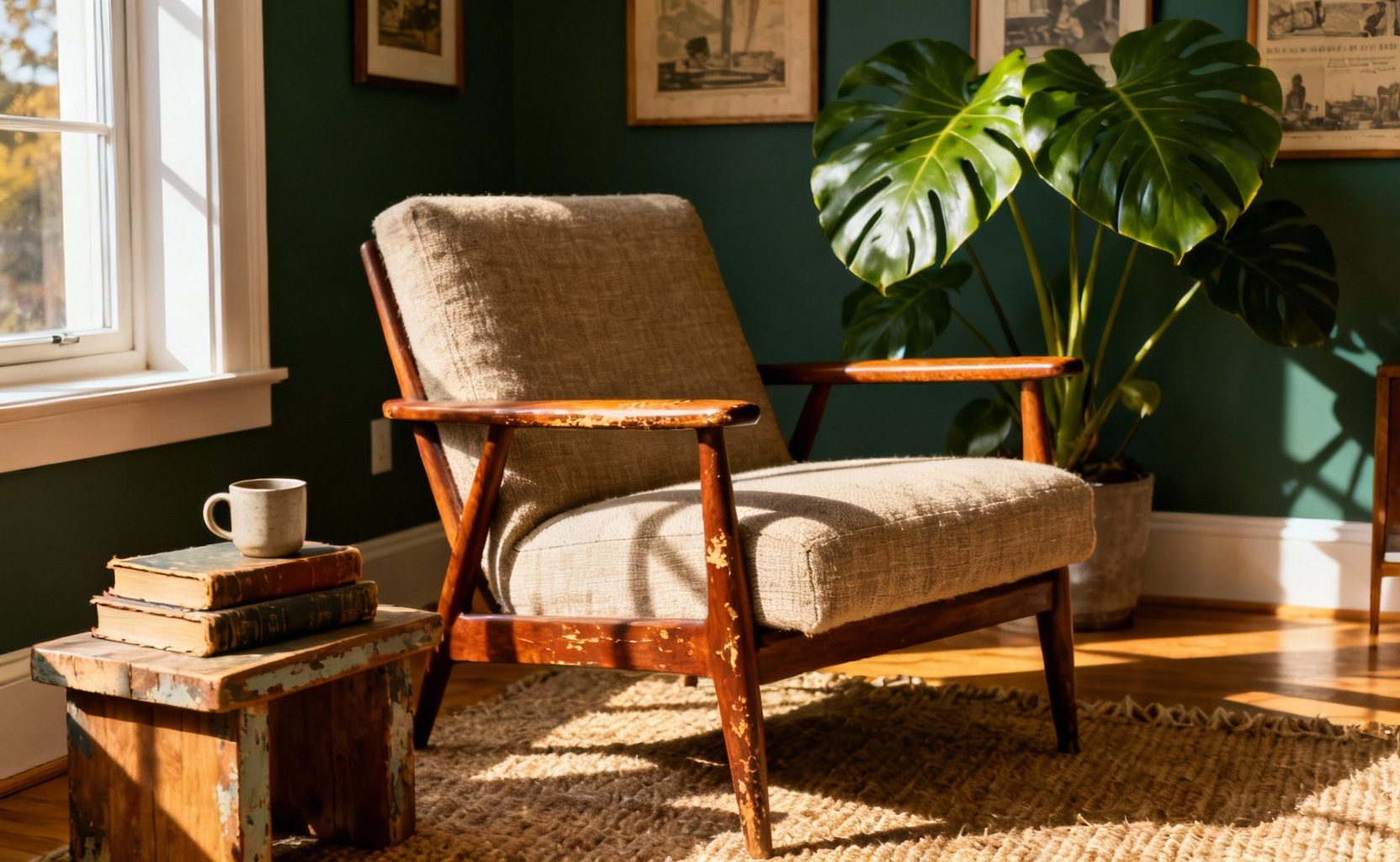

I spotted the Danish teak armchair at a dusty roadside estate sale. Its arms bore deep scratches—evidence of decades of life, perhaps from nervous fingernails or a beloved family cat. My initial instinct was to sand it back to factory perfection, but I paused. Those marks weren’t damage; they were soul. That chair taught me that a home shouldn’t mimic a sterile catalog. True living room styling requires curating a life, not just purchasing a “look.”
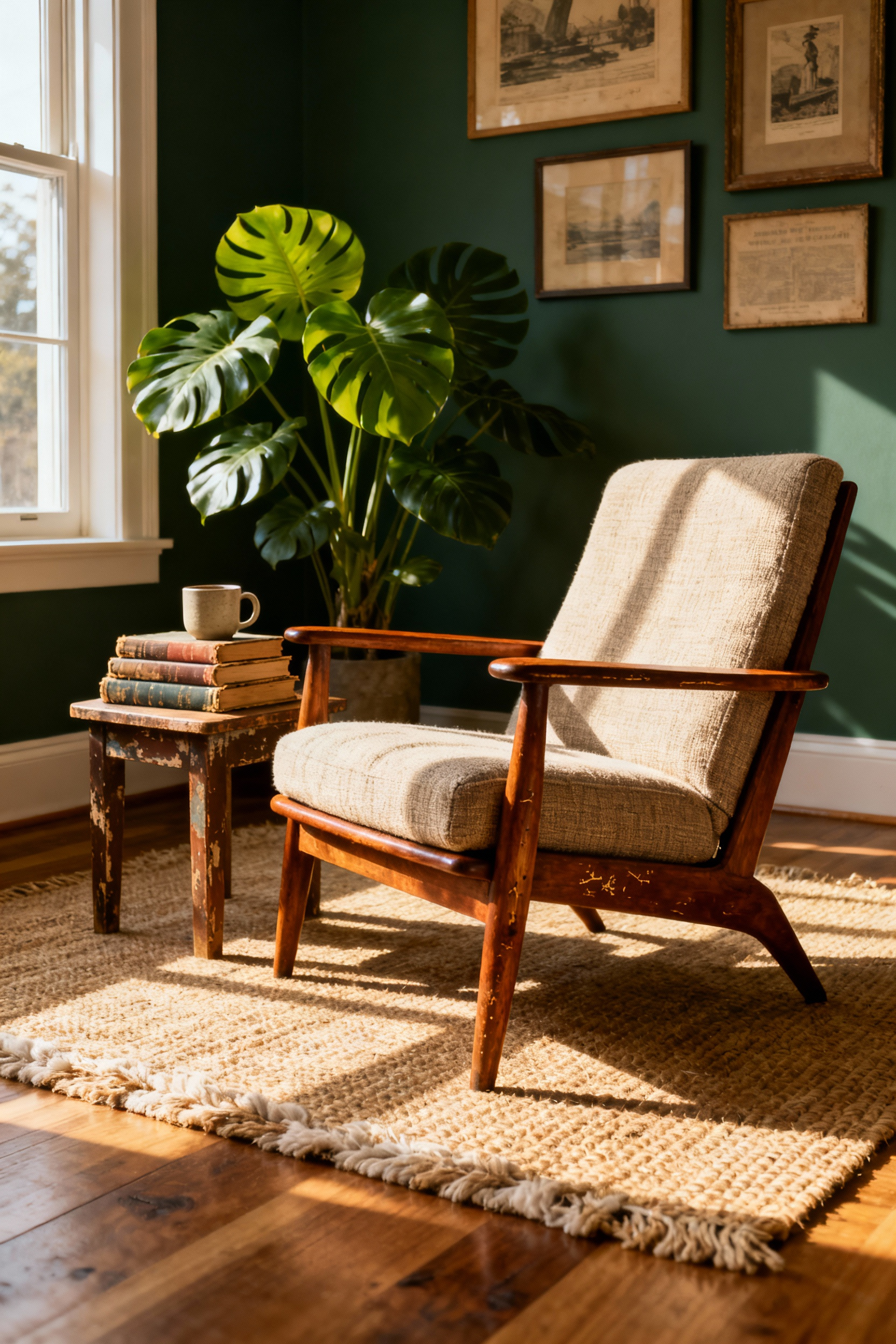
Reject the pressure to buy a matching set and start hunting for character. To break the showroom spell, try these actionable shifts:
- Apply the 80/20 mix: Ensure at least 20% of your decor is vintage to provide instant depth and prevent a flat, “big box” feel.
- Prioritize patina: Let a scratched wood table or worn leather chair anchor your sleek modern sofa to add necessary warmth.
- Design for living: Select furniture that invites you to sink in, rather than pieces that feel too precious to touch.
This approach keeps waste out of landfills and brings history into your living room. Ultimately, your space should tell your story, scratches and all.
Phase 1: The Foundation (Layout & Anchors)
Every room needs a heartbeat, so identify your focal point immediately. This anchor might be an original architectural feature or a rescued mid-century sofa you lovingly restored. Build your layout outward from this centerpiece. Resist the urge to push furniture against the walls; instead, float your seating in a loose U or L-shape to cultivate intimacy. I once centered an entire living room around a low-slung Pearsall gondola sofa, creating a cozy conversation island that instantly felt like home.
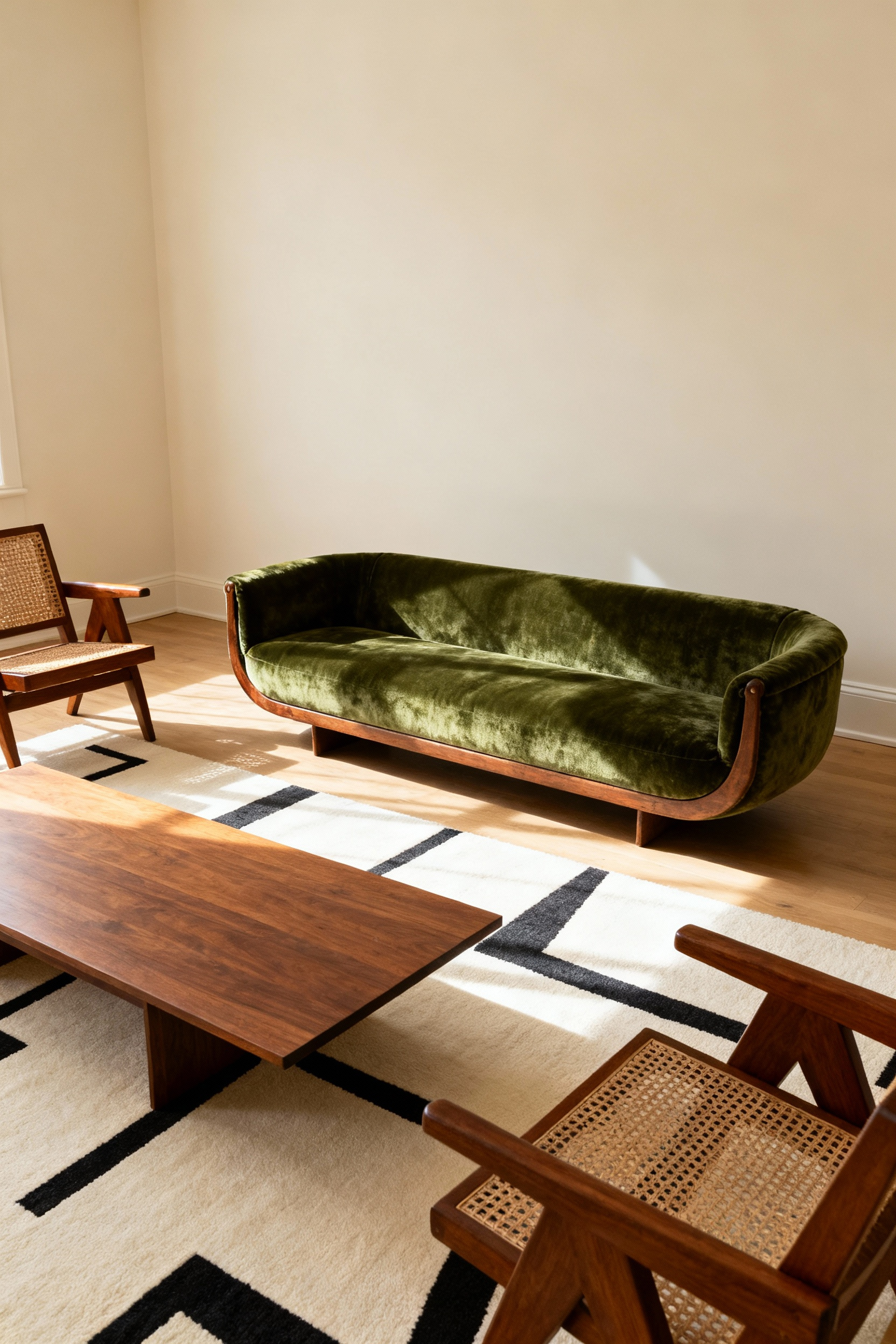
Ground this arrangement with a substantial area rug. A vintage Persian or a sustainable natural fiber weave works best to define the zone, provided the front legs of your key pieces rest firmly on the rug. Beyond materials, precise spacing keeps the room functional and welcoming:
- Position the coffee table 16 to 20 inches from the sofa edge.
- Select a table at least half the length of your sofa.
- Keep distinct seating pieces within 10 feet of one another.
By respecting these proportions, you honor the design’s intent and ensure your space flows as beautifully as it looks.
1. The ‘Conversation Pit’ Philosophy
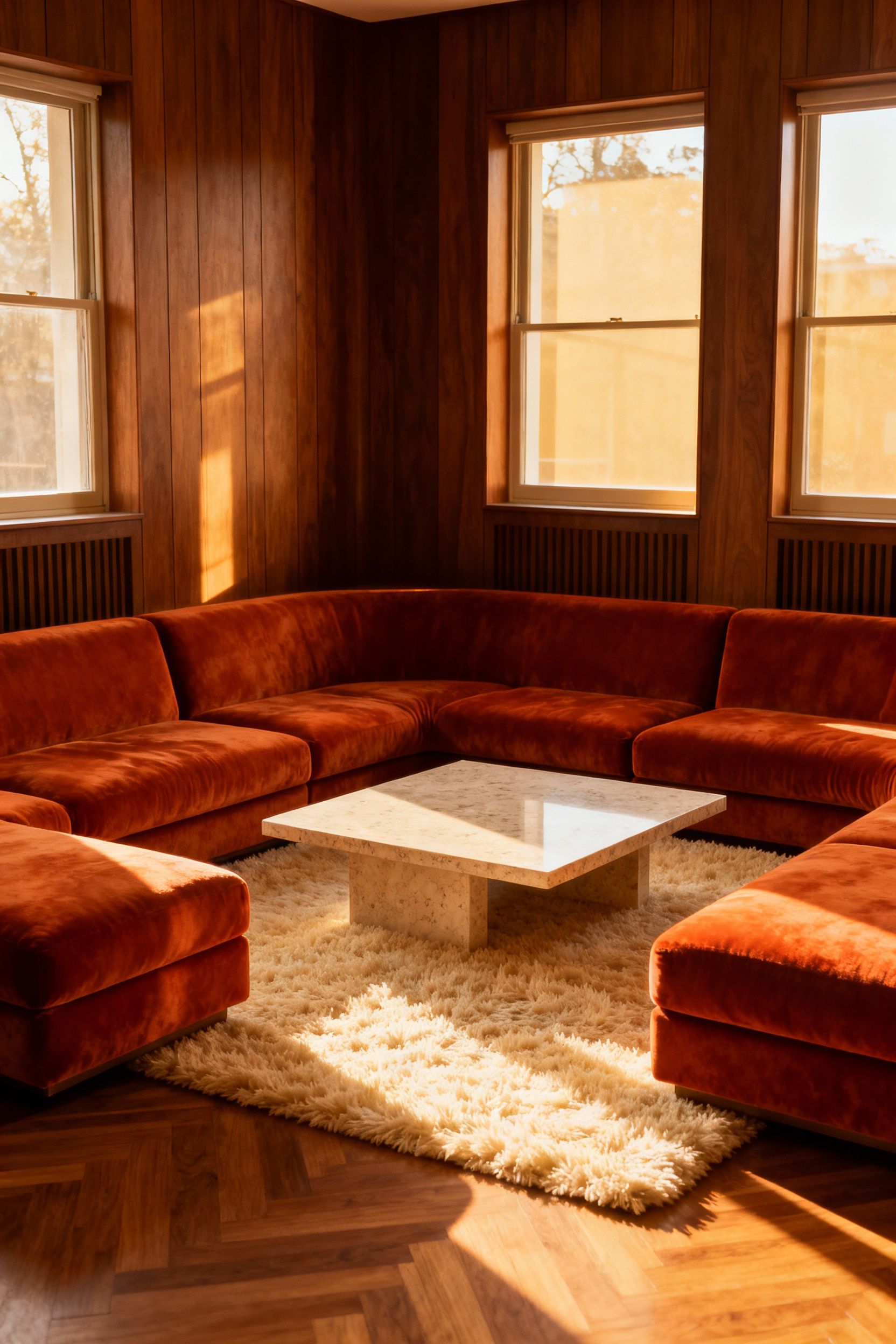
The 1970s understood that living rooms should serve people, not televisions. Restoring a low-slung, modular velvet sectional recently reminded me of this ethos; the furniture draws guests in for hours of chatting rather than passive watching. You can recreate this “sunken” intimacy sustainably without architectural renovation. Simply pull your vintage furniture away from the walls and arrange low-profile sofas in a tight circle or U-shape. This layout prioritizes eye contact and creates a cozy, distinct zone within an open floor plan.
To truly master the vibe, shift your design focus inward.
- Anchor with Audio: Swap the big screen for a vintage media credenza and turntable to spark discussion.
- Ground the Space: Use a large, pre-loved rug to define the conversation boundaries visually.
- Soften the Mood: Layer floor lamps with warm bulbs to mimic a cocooning effect.
By choosing connection over screens, you breathe new life into your home’s social dynamic.
2. Anchoring with History
A living room filled entirely with new furniture often feels flat. It lacks a heartbeat. To break the sterile showroom vibe, anchor your space with one item older than you are. This piece adds instant soul and permanence. Start with a statement piece. Hunt for a Persian rug worn soft by time or a mid-century sideboard with rich teak grain. These items carry stories. Take, for instance, a battered credenza destined for the landfill; after a simple sanding and oiling, it can become the stunning focal point of a modern lounge. The contrast between slick modern upholstery and aged wood creates a curated, layered look that mass production cannot replicate.
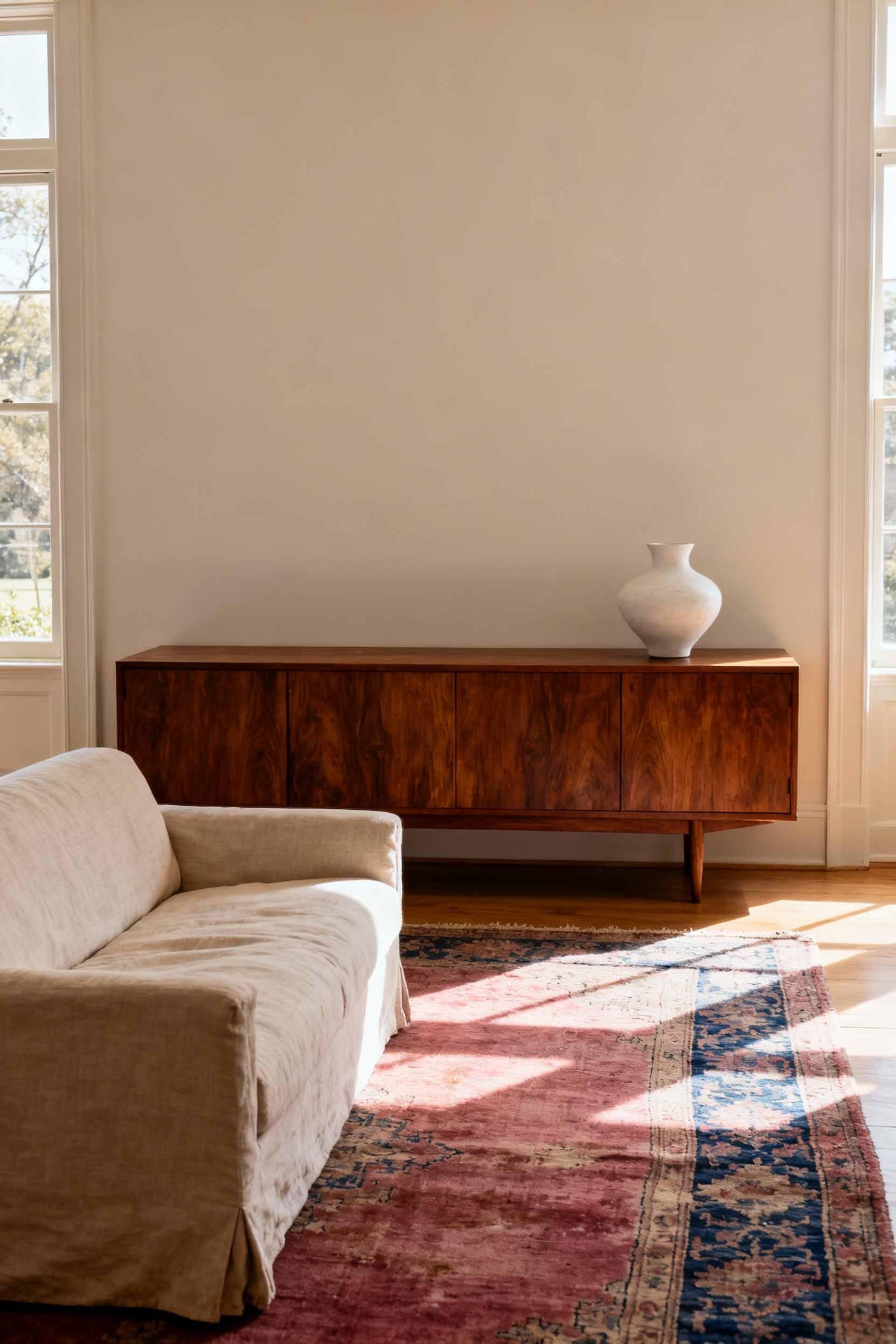
However, utility matters. Choose pieces that serve your daily life rather than fragile museum exhibits. Look for durable materials like solid mahogany or brass that can handle family wear. To blend these eras seamlessly, keep your surrounding palette neutral. Soft olives or warm grays let the patina of an antique shine without clashing. If a large armoire overwhelms your square footage, try smaller history-infused touches:
- Lighting: A heavy vintage brass lamp adds warmth.
- Textiles: Frame a scrap of heirloom fabric or use a vintage throw.
- Objects: Stack leather-bound books on a sleek table.
These small, sustainable choices inject character and prove that the best design is often reused, not newly manufactured.
3. Breaking the ‘Set’ Mentality
Resist the urge to purchase the matching five-piece suite. That “catalog look” feels flat and ignores the sustainable joy of rescuing forgotten vintage gems. Rescuing unmatched mid-century chairs offers a chance to build a story, not just fill a room. To create depth rather than chaos, embrace high contrast. A rich, dark walnut sideboard creates stunning visual tension next to a light, airy ash coffee table, whereas similar medium-browns just look like a mistake.
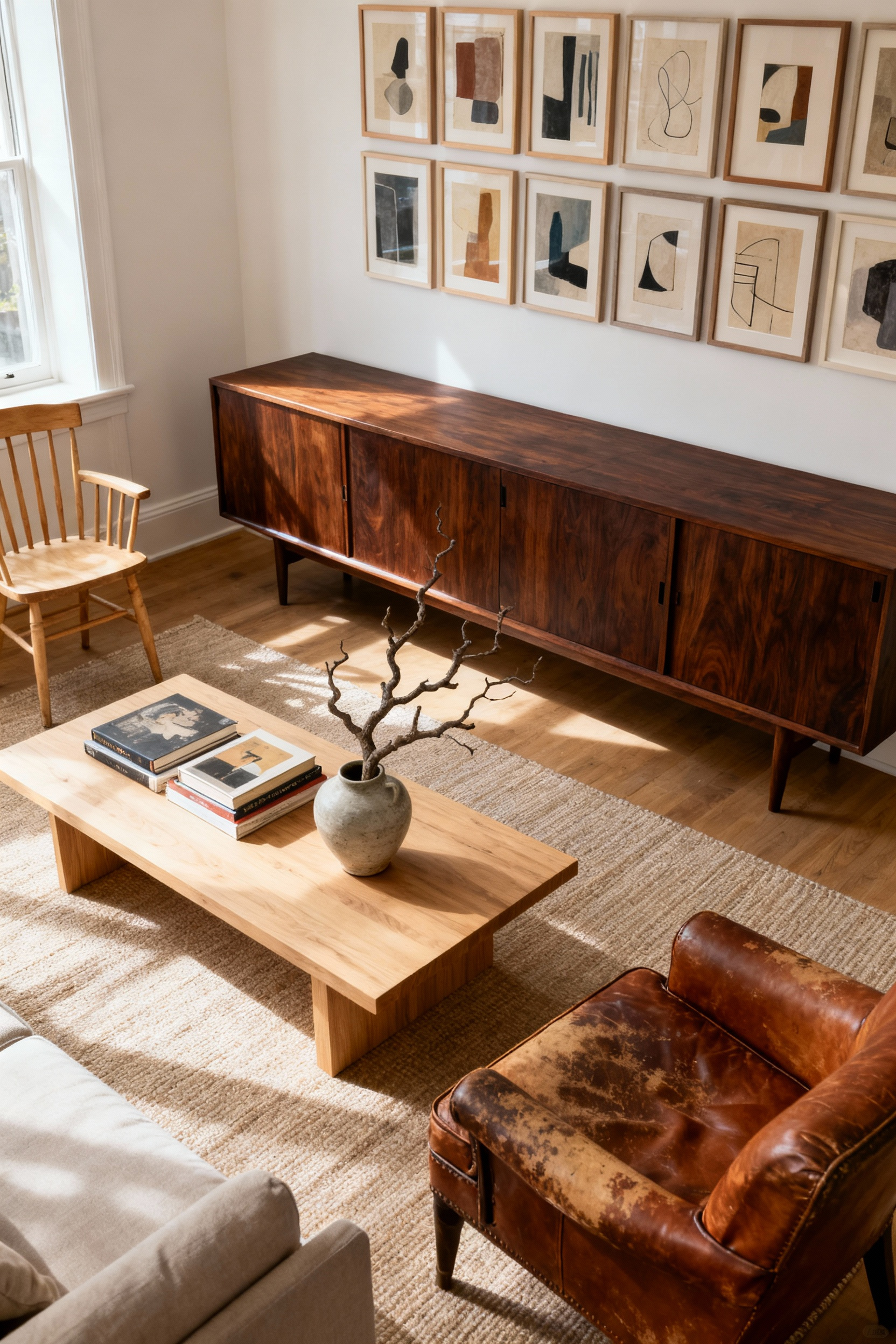
To successfully blend eras, focus on the wood’s “soul”—its undertone. You can mix a Victorian antique with a 1960s teak console if they share the same warm, reddish cast. Connect these disparate elements using the Rule of Three:
- Anchor: Let your largest surface (flooring or a massive bookcase) serve as the dominant tone.
- Contrast: Add a second, distinctly lighter or darker wood for your major furniture pieces.
- Buffer: Use a natural fiber rug or upholstered seating to physically separate wood items, giving the eye a place to rest.
This approach transforms your living room from a showroom display into a curated collection of history.
Phase 2: Mastering Living Room Styling Through Layering & Texture (The Comfort Layer)
To truly make a living room sing, move past the visual and embrace the tactile. A sleek mid-century leather sofa might feel technically perfect, but without help, it can be emotionally cold. The sustainable solution isn’t replacing it, but layering it. Start with a neutral foundation to let materials shine without chaos. Then, apply the “Rule of Three” to create immediate depth and invite touch:
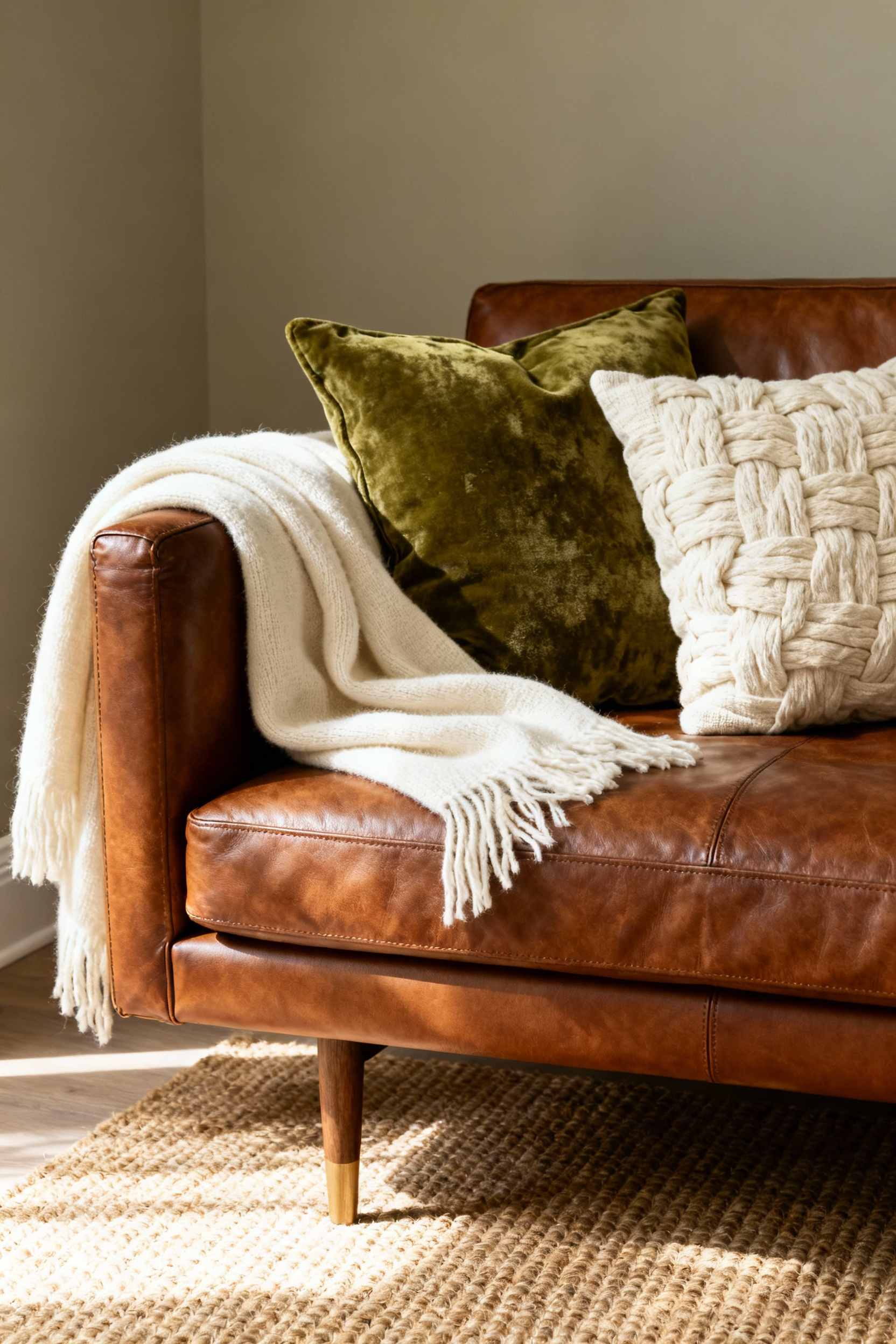
- Soft: Add a reclaimed velvet cushion or a second-hand cashmere throw.
- Rough: Introduce a natural, textured element like a nubby wool knit.
- Smooth: Let the original leather or a vintage glass table provide necessary structure.
Don’t forget to look down to ground the space. Layering rugs adds incredible warmth and actually protects fragile vintage textiles. Place a smaller, high-pile wool rug over a sturdy, expansive jute base to define your primary “comfort zone.” This simple juxtaposition guides the eye and softens the room’s acoustics. Finally, hunt for accessories in comfort-specific materials like bouclé or rattan. These tactile choices honor design history and create a personalized sanctuary that begs you to sink in.
4. The Patina Principle
I once rescued a scratched mid-century credenza others deemed “ruined,” but those marks were the fingerprints of a life well-lived. This is the essence of the Patina Principle: viewing wear not as waste, but as character. Sustainability starts with loving what lasts, so let a battered leather armchair or an etched coffee table anchor your design. Do not hide these imperfections. Instead, frame them as a sophisticated conversation starter.
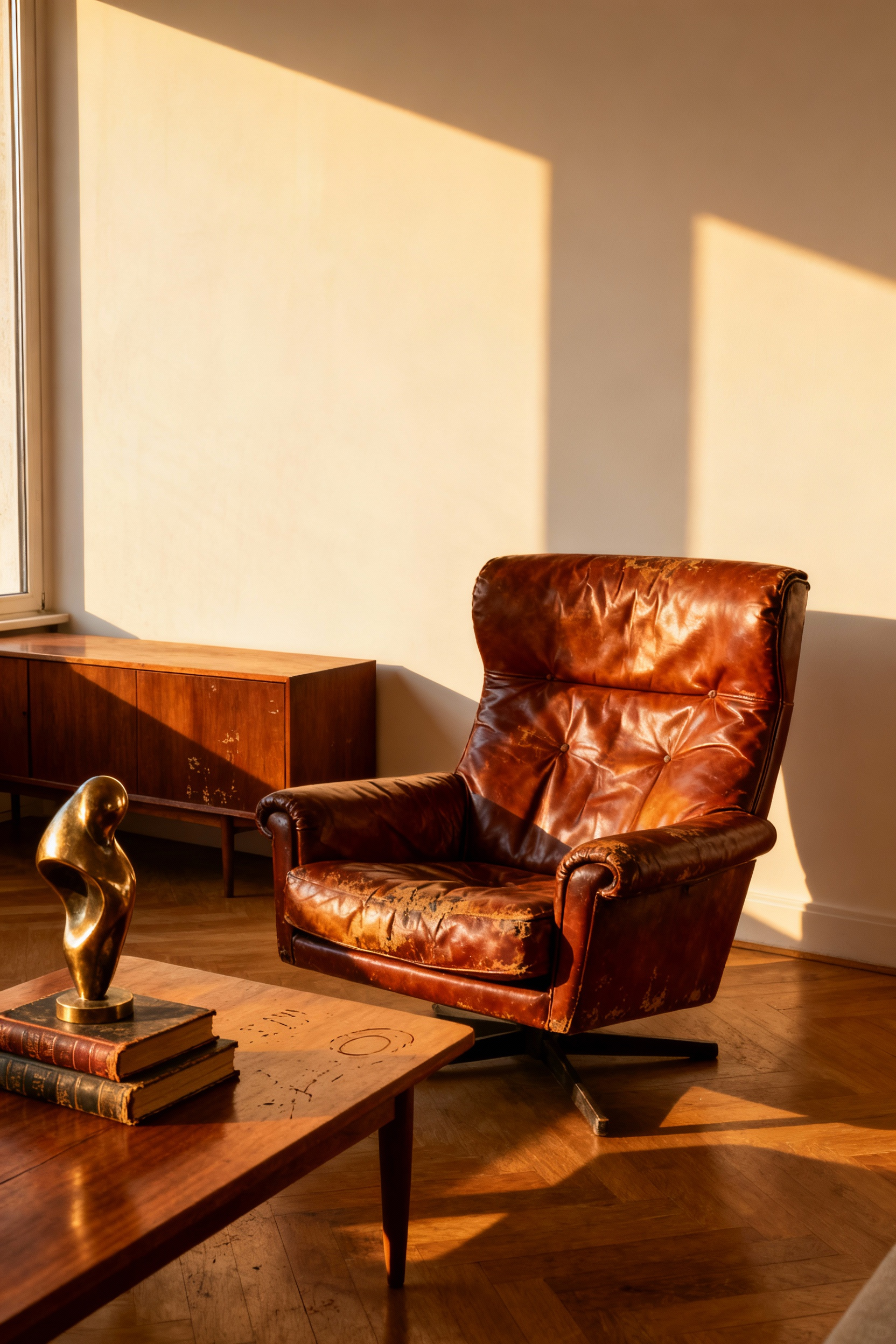
To highlight this history without the room feeling dusty, rely on strategic contrast.
- Juxtapose materials: Pair rough, reclaimed wood with sleek glass or glossy metal to balance the rustic with the refined.
- Add softness: Layer plush velvet pillows or chunky knit throws over firm, worn leather to invite interaction.
- Condition regularly: Treat leather to ensure it develops a rich luster rather than drying out.
Mindful maintenance ensures your furniture ages gracefully, transforming accidental scratches into a sustainable, personalized story.
5. Rug Layering Mastery
Floating modern furniture often feels unmoored in a room, but you can easily anchor it with a heavy, textural foundation. Start with a large, sustainable jute or sisal rug that sits under the front legs of your sofa and chairs. This creates a defined stage for your arrangement and provides the perfect contrasting backdrop for a second, soulful layer. A faded Heriz found at a dusty estate sale, for example, adds rich history against raw sisal, immediately softening the stark lines of a mid-century teak sofa.
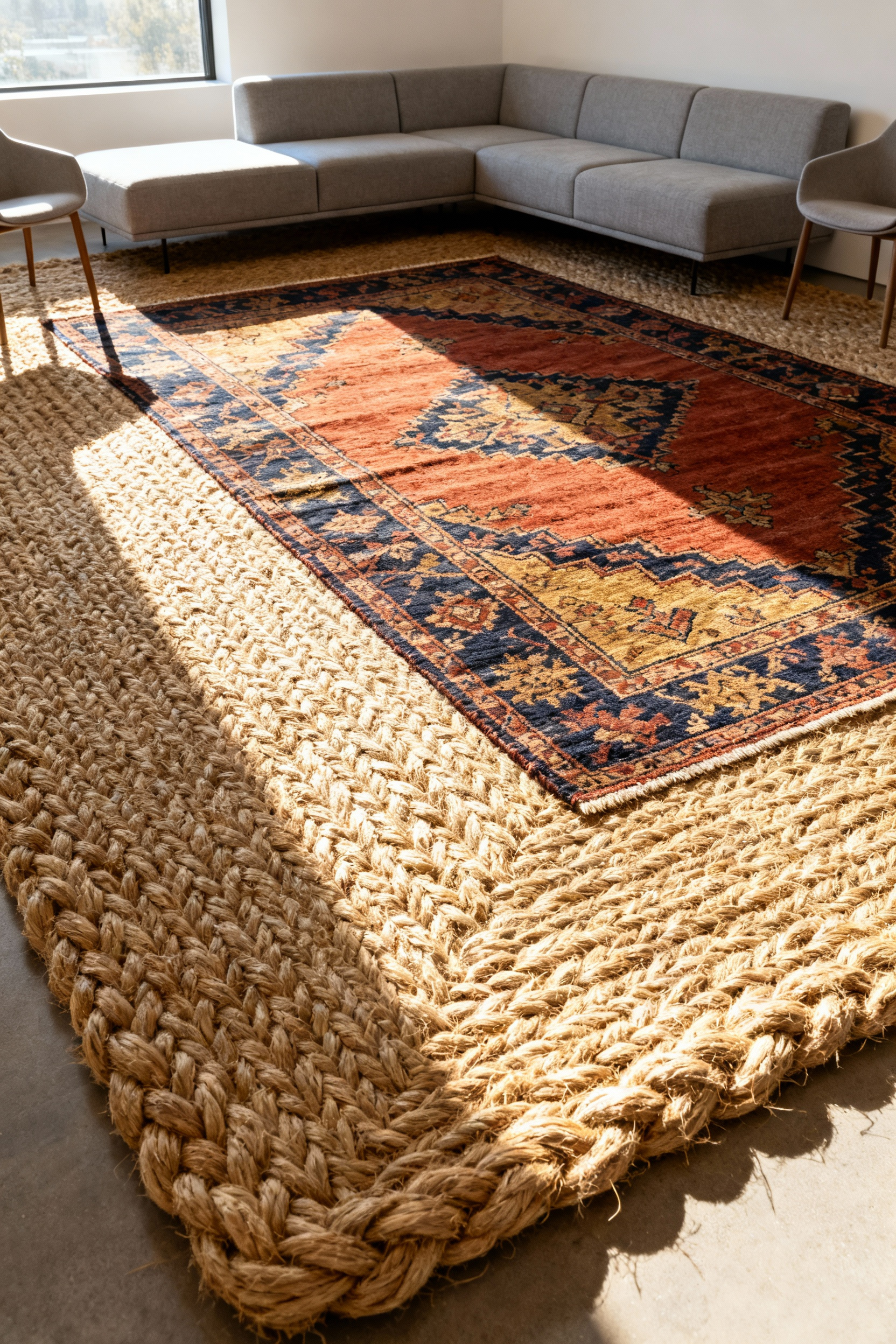
To master this look, center your vintage find over the natural base. The juxtaposition of smooth, historic wool against raw fiber adds instant depth and prevents the space from feeling like a showroom. Follow these guidelines for the perfect setup:
- Adhere to the 2/3 rule, ensuring the vintage rug covers roughly two-thirds of the base layer.
- Frame the history by leaving a visible border of jute around the edges.
- Secure the stack with a non-slip pad between the rugs to prevent bunching and tripping.
6. Textile Time Travel
Break free from the “fast furniture” cycle and embrace the soul of a collected home. “Textile Time Travel” champions sustainability by rescuing forgotten materials and pairing them with contemporary staples. Salvaged 1970s cream boucle, with its nubby, voluminous texture, sings against the crisp matte finish of modern linen drapes. This tactile clash creates immediate sophistication without requiring a brand-new renovation.
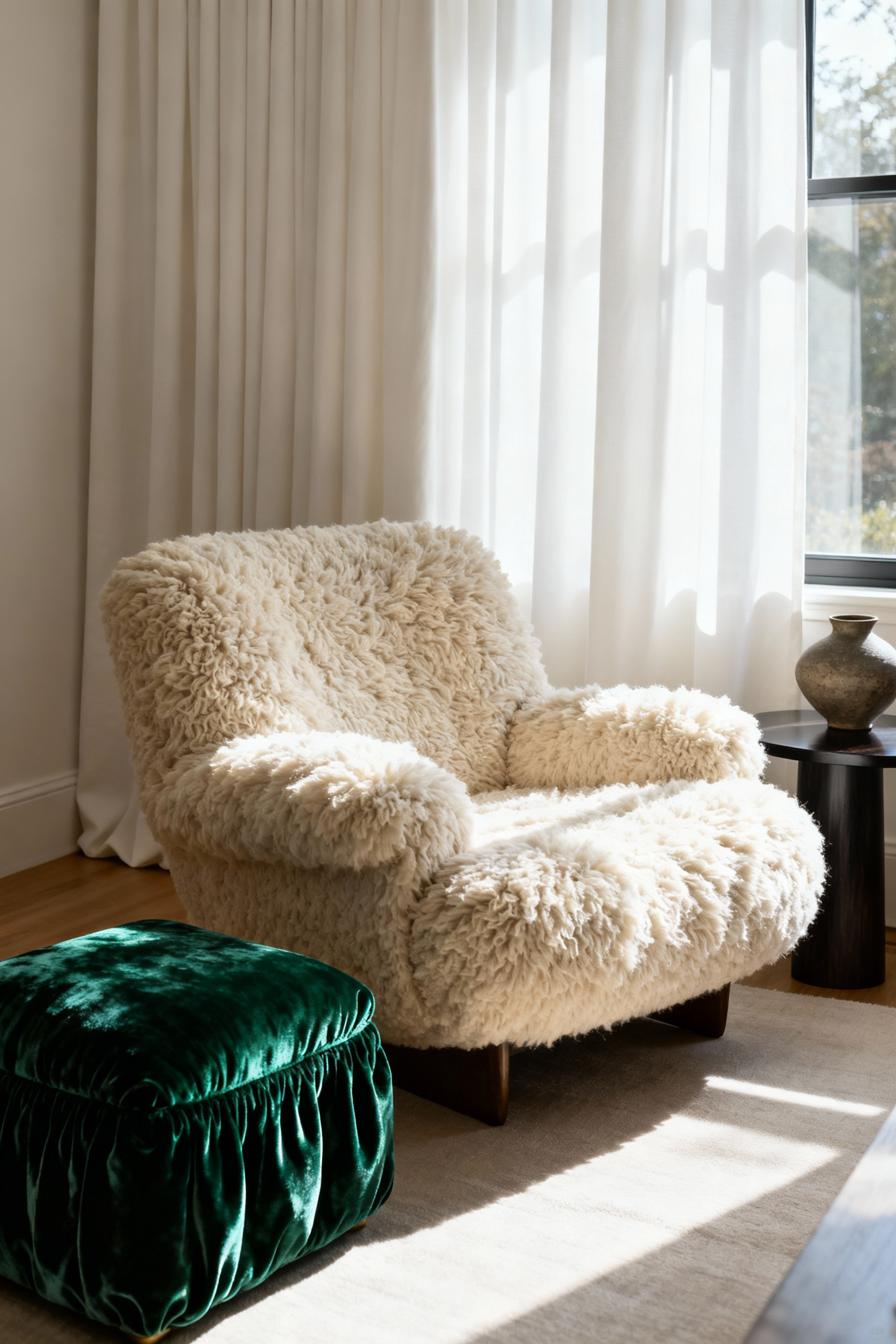
However, you must control the chaos to keep the space livable. Unify your eras through a strict, limited color palette, allowing the contrasting textures to do the heavy lifting. Follow this hierarchy for a balanced, curated look:
- Anchor the room with neutral, breathable fabrics like stone linen on your largest seating.
- Layer history with smaller accents, such as a Victorian velvet footstool or a tapestry-style throw cushion.
By juxtaposing the sleek with the ornate, you honor design history and create a space that feels meaningfully gathered over time.
7. The Sustainable Throw
There is a distinct thrill in unearthing a vintage wool blanket. These dense, durable textiles offer a warmth that modern synthetics simply cannot replicate. I recently rescued a vivid tartan throw from a local estate sale, complete with a tiny moth nip that only added to its storied past. Prioritize provenance over perfection when hunting on Etsy or in thrift stores; genuine wool is breathable, anti-allergenic, and inherently sustainable.
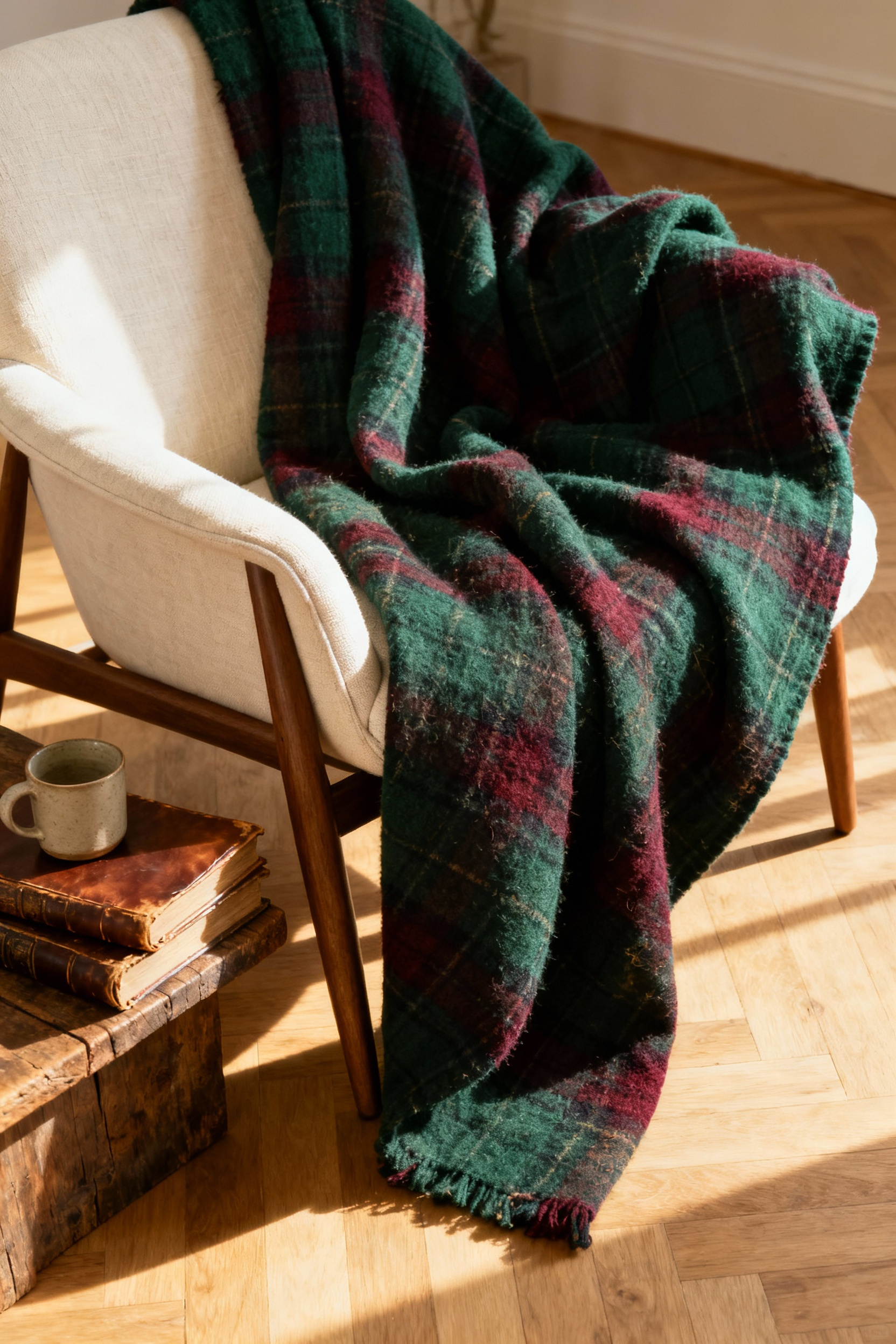
Once you secure your treasure, resist the urge to fold it precisely. Instead, master the “Effortless Toss” to achieve casual elegance over rigid perfection.
- Fold the blanket once lengthwise to manage the bulk.
- Drape it diagonally over a single sofa corner or arm.
- Allow the heavy fabric to pool naturally on the seat.
This technique invites relaxation immediately. The chunky, tactile wool creates a stunning visual contrast against smooth leather or velvet upholstery. Let the vintage pattern serve as your visual anchor, creating a space that feels curated, cozy, and deeply lived-in.
Phase 3: Lighting & Atmosphere (The Mood)
Banish the harsh “big light” immediately. Nothing kills the soul of a room faster than a single, glaring overhead bulb. Instead, embrace layered lighting to let your salvaged treasures truly shine. Rewiring a dusty 1960s teak floor lamp can completely transform a flat corner into a warm reading nook. To achieve this depth, build your lighting plan around three distinct tiers:
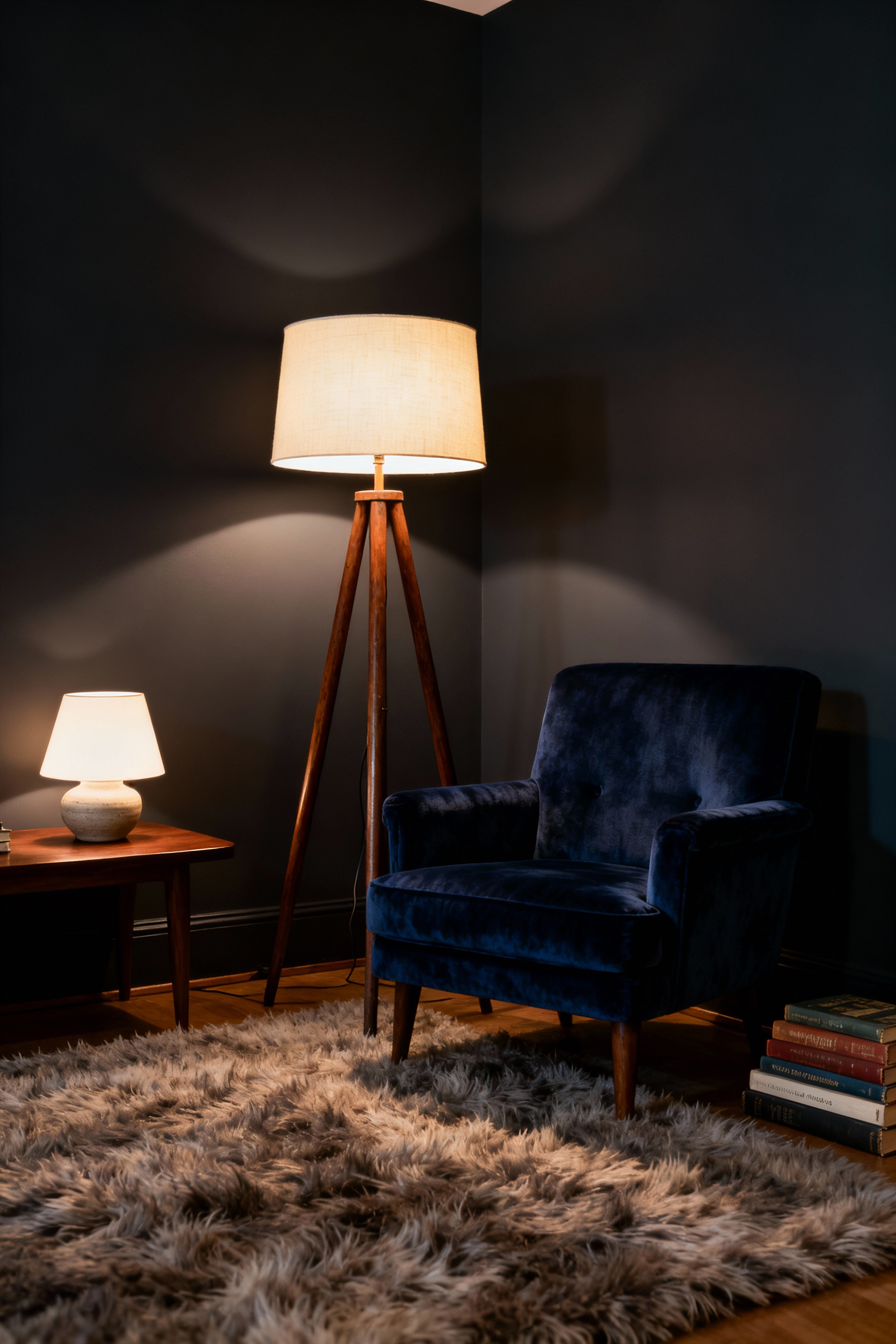
- Ambient: Soft, general illumination to set the baseline.
- Task: Focused beams for reading or repairing small finds.
- Accent: Directional light to showcase specific art or textures.
Next, swap cold, blue-tinted LEDs for warm options in the 2200K–3000K range to evoke the golden glow of mid-century evenings. Install dimmer switches on every source to gain total control over energy consumption and emotional tone. By varying the height of your fixtures—from low table lamps to high pendants—you create flattering “pools of light” that draw the eye to your favorite restored pieces.
8. Lighting with Legacy
Stop treating your ceiling like Swiss cheese with endless recessed cans. Harsh overhead beams flatten your living room, while eye-level lighting creates immediate intimacy and depth. Swap the sterility for character by hunting down heavy ceramic table bases or mid-century floor lamps. Rescuing discarded lamps solely for their sculptural shapes is a winning strategy; a little polish often reveals a masterpiece. These vintage finds do double duty:
- Function: They provide targeted task lighting for reading nooks without over-illuminating the space.
- Form: They serve as unique artistic focal points even when turned off.
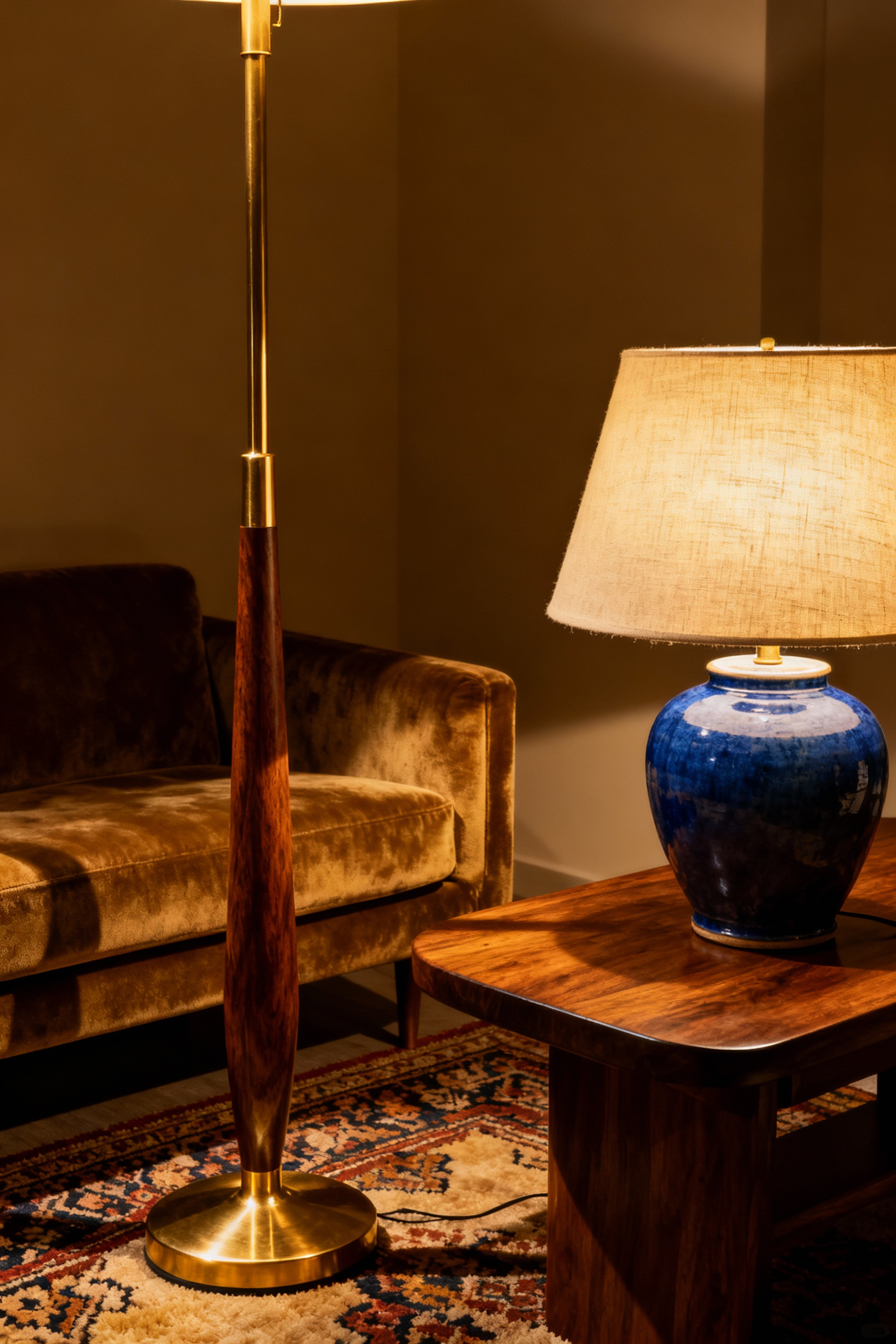
Don’t let old wiring deter you from a one-of-a-kind find. Rewiring a vintage lamp is a straightforward, sustainable project that breathes new life into history. This process guarantees safety and offers a design opportunity; replace brittle plastic cords with vibrant cloth-covered cables to match your decor. By restoring these pieces, you prevent waste and gain a conversation starter that casts a far more flattering glow than any dimmer switch.
9. The Warmth of Brass
Unlacquered brass offers a “living finish” that tells a specific, evolving story. Unlike static, plated metals, this material embraces oxidation to create a rich, sophisticated patina. Over time, the surface naturally darkens from bright gold to warm copper or greenish-brown, adding character without the need for harsh chemical polishes. A mid-century floor lamp with a deep, chocolate-brown tarnish can instantly anchor a room with a sense of history. Choosing materials that age gracefully creates a sustainable, permanent connection to your space.
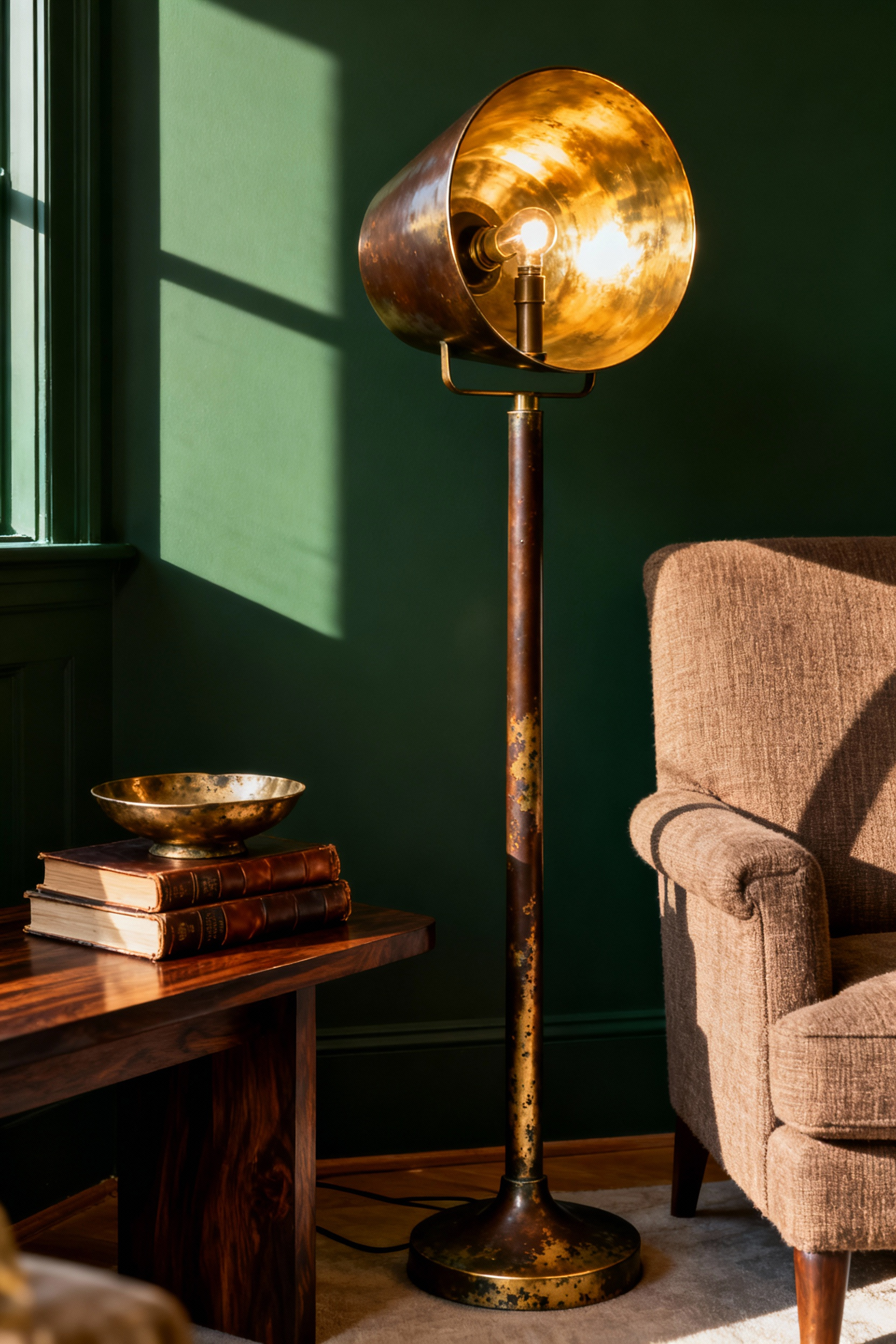
To highlight this golden glow, rely heavily on contrast and texture. The metal shines brightest when you treat it as a bridge between eras.
- Create drama by placing brass accents against deep, moody hues like navy, forest green, or charcoal.
- Soften the metal with complementary organic materials like plush velvet, warm walnut wood, or natural linen.
- Maintain balance by pairing ornate vintage brass hardware or lighting with sleek, minimalist furniture.
This approach prevents the aesthetic from feeling overly traditional and ensures your vintage treasures act as elegant, soulful focal points.
10. Architectural Foliage
A scuffed mid-century teak plant stand, rescued from a curb, can transform a rigid living room layout just as effectively as new furniture. Achieve this warmth by pairing vintage stands with large-scale botanicals like a sprawling Monstera Deliciosa or a glossy Rubber Tree. Position these green giants strategically next to boxy cabinets or in sharp, underutilized corners. The organic, wild shapes of the leaves break up hard architectural lines and soften the room’s industrial edges, creating a cozy contrast against concrete or glass.
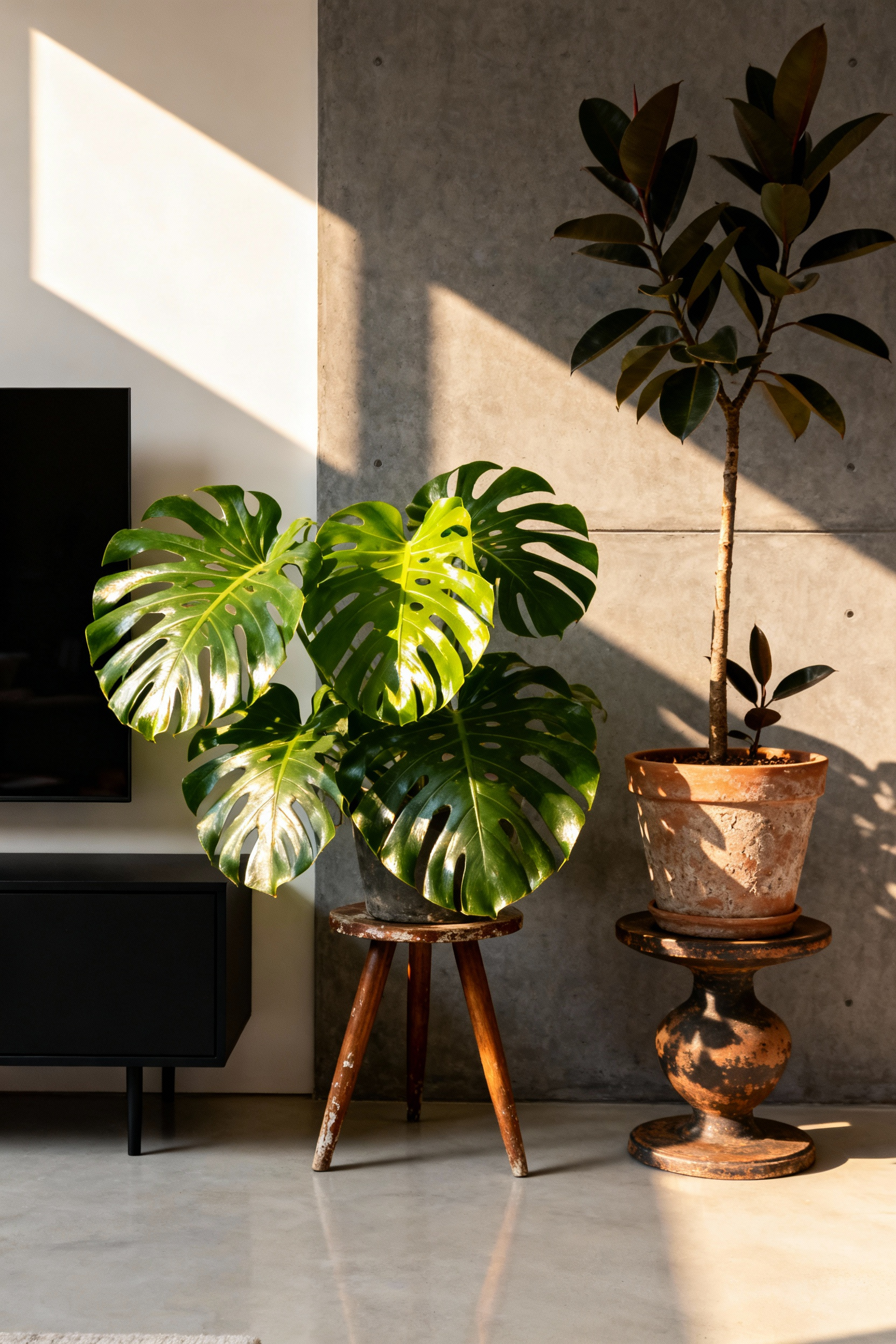
Do not let your plants sit sadly on the floor. Elevate them. Using a retro stand interrupts vertical sightlines and maximizes the plant’s visual weight. To truly honor the “urban jungle” aesthetic and add depth, try this sustainable layering technique:
- Anchor the space with your largest tree on a vintage pedestal.
- Cluster smaller pots at the base to hide leggy stems.
- Mix textures by combining matte fronds with shiny leaves.
This creates a lush, intentional vignette that breathes new life into sterile spaces.
Phase 4: The Curated Details (Personal Narratives)
Your living room should read like a heartfelt biography, not a sterile showroom catalog. Bypass mass-produced filler and hunt for objects with soul. I often tell clients that a chipped, inherited vase holds more aesthetic value than a pristine store-bought one simply because it carries history. Embrace intentionality over quantity by selecting pieces that weave a personal narrative, such as travel souvenirs or family heirlooms. These sustainable choices add depth and ensure your space reflects your specific journey rather than a passing trend.
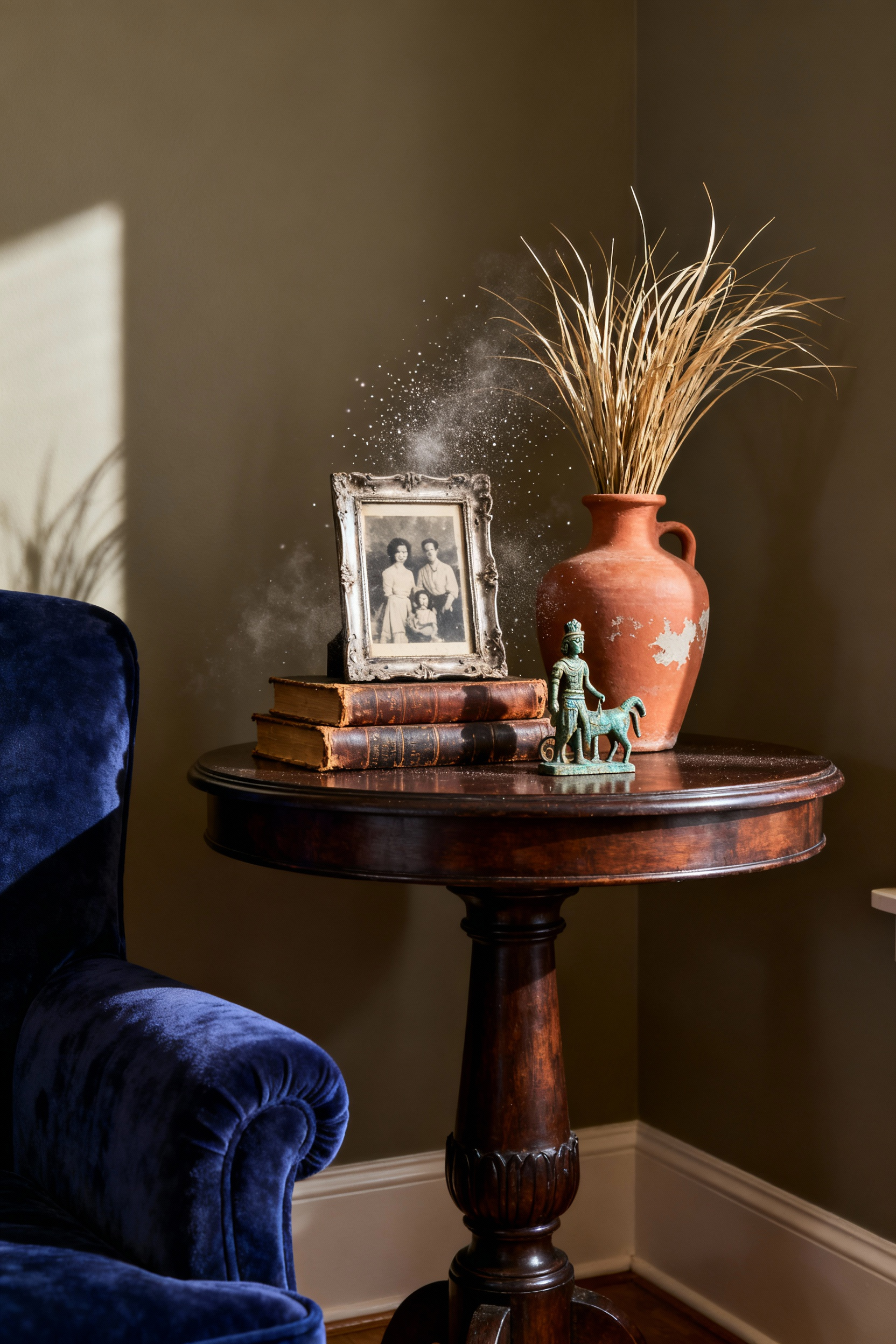
To display these treasures effectively, master the art of the vignette. Random placement creates clutter, whereas focused groupings transform surfaces into a “personal museum.”
- Anchor with trays: Corral smaller collectibles on a vintage tray to create a cohesive focal point.
- Layer for texture: Stack coffee table books to add height and introduce intellectual warmth.
- Juxtapose eras: Place a restored antique beside a contemporary sculpture to prevent visual monotony.
I recently styled a sleek, modern lamp atop a re-oiled mid-century credenza, and the contrast immediately sparked conversation. Ultimately, these lived-in details prevent stagnation and create a genuinely warm environment.
11. The Narrative Coffee Table
Treat your coffee table as a canvas rather than a mere landing pad for coasters. Start with a decorative tray to anchor the display; this simple tool contains your vignette and allows for easy movement when life happens. Choose a material that contrasts with the table’s finish—a brass tray pops beautifully against a restored mid-century teak table. Instead of mass-produced decor, curate a “curiosity cabinet” with tactile treasures found during weekend flea market hunts. A vintage copper bowl often tells a far richer story than any store-bought accessory, instantly adding soul to the room.
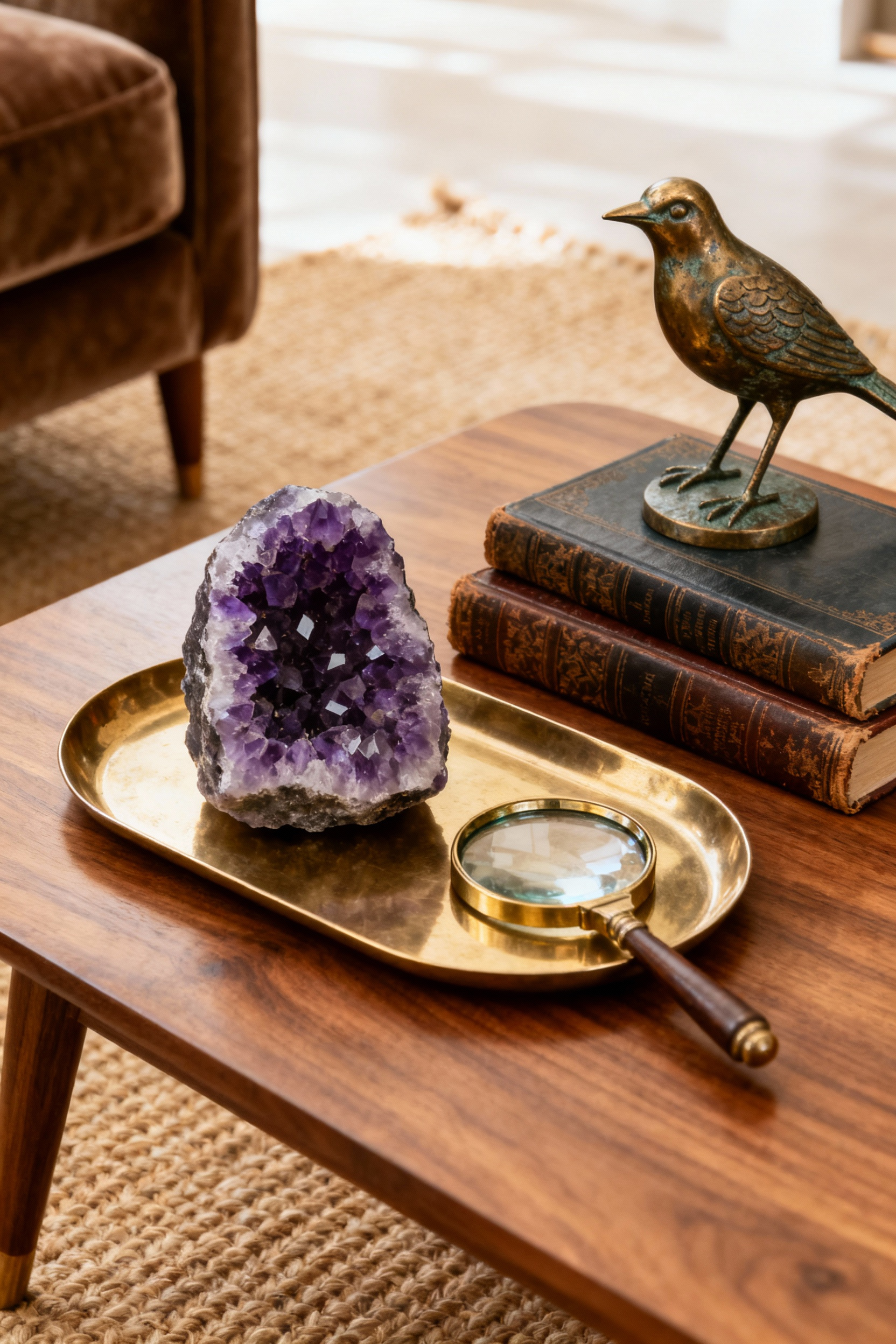
To arrange these finds effectively, master the Rule of Three. Create a dynamic visual triangle by ensuring each piece has a distinct height:
- Tall: Position a sculptural object or vase with greenery.
- Medium: Use a small stack of books as a pedestal.
- Short: Place a unique ceramic dish or glass box in the foreground.
Finally, mix materials to introduce character. Combine rustic ironstone with sleek modern metals to add depth. This sustainable approach ensures the space feels lived-in and invites conversation, truly honoring the history of every object.
12. Art Beyond the Canvas
Skip the mass-produced prints. Your walls crave history. Rescuing a heavy, ornate metal grate from a salvage yard creates a stunning anchor for a living room, reducing waste while injecting immediate soul into the space. Instead of relying on flat canvases, prioritize three-dimensional textures like framed vintage textiles or architectural remnants. These pieces cast shifting shadows, adding a layer of depth that standard prints simply cannot achieve.
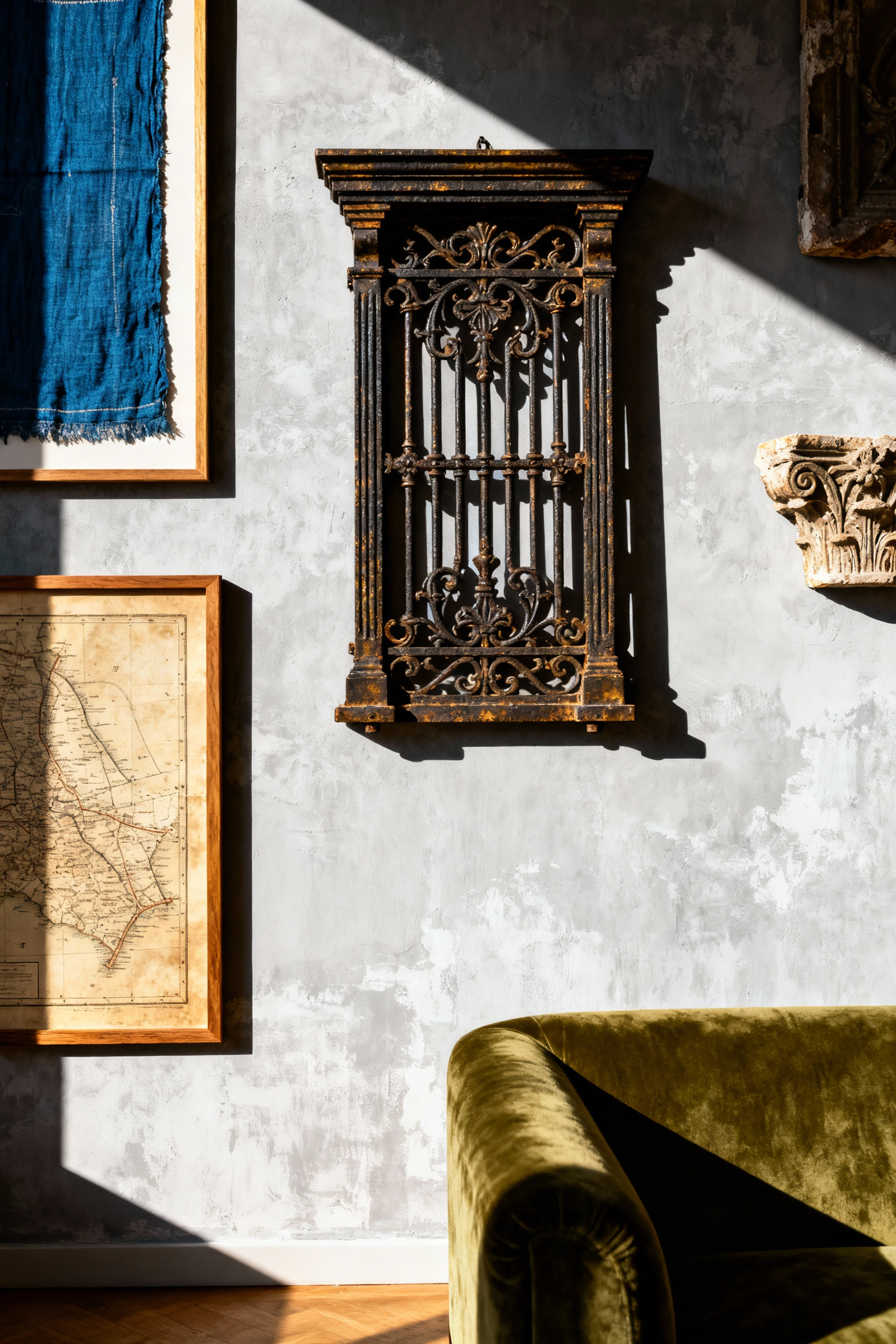
To keep your collection from looking like a cluttered garage sale, rely on a unifying visual thread. I typically build my gallery walls using three strict rules to ensure the “treasure hunter” look remains elegant:
- Start big: Position your statement salvage piece at eye level as the focal point.
- Frame uniformly: Give diverse items, such as vintage maps, a cohesive look by encasing them in identical antique gold or distressed wood frames.
- Match the tone: Ensure every object shares a common color palette or material finish.
By following these guidelines, your wall becomes a curated narrative rather than a random assortment. You honor the design history of each object while keeping beautiful materials out of the landfill.
13. The ‘Unperfect’ Shelfie
Forget the rigid, color-coded library trend. Your shelves should read like a visual biography, not a generic catalog page. Look for mismatched mid-century ceramics that others might overlook; these “imperfect” pieces carry the most soul and beat mass-produced decor every time. Prioritize sentimental oddities—that chipped travel souvenir or a vintage camera—over matching fillers. Authentic design tells a story.
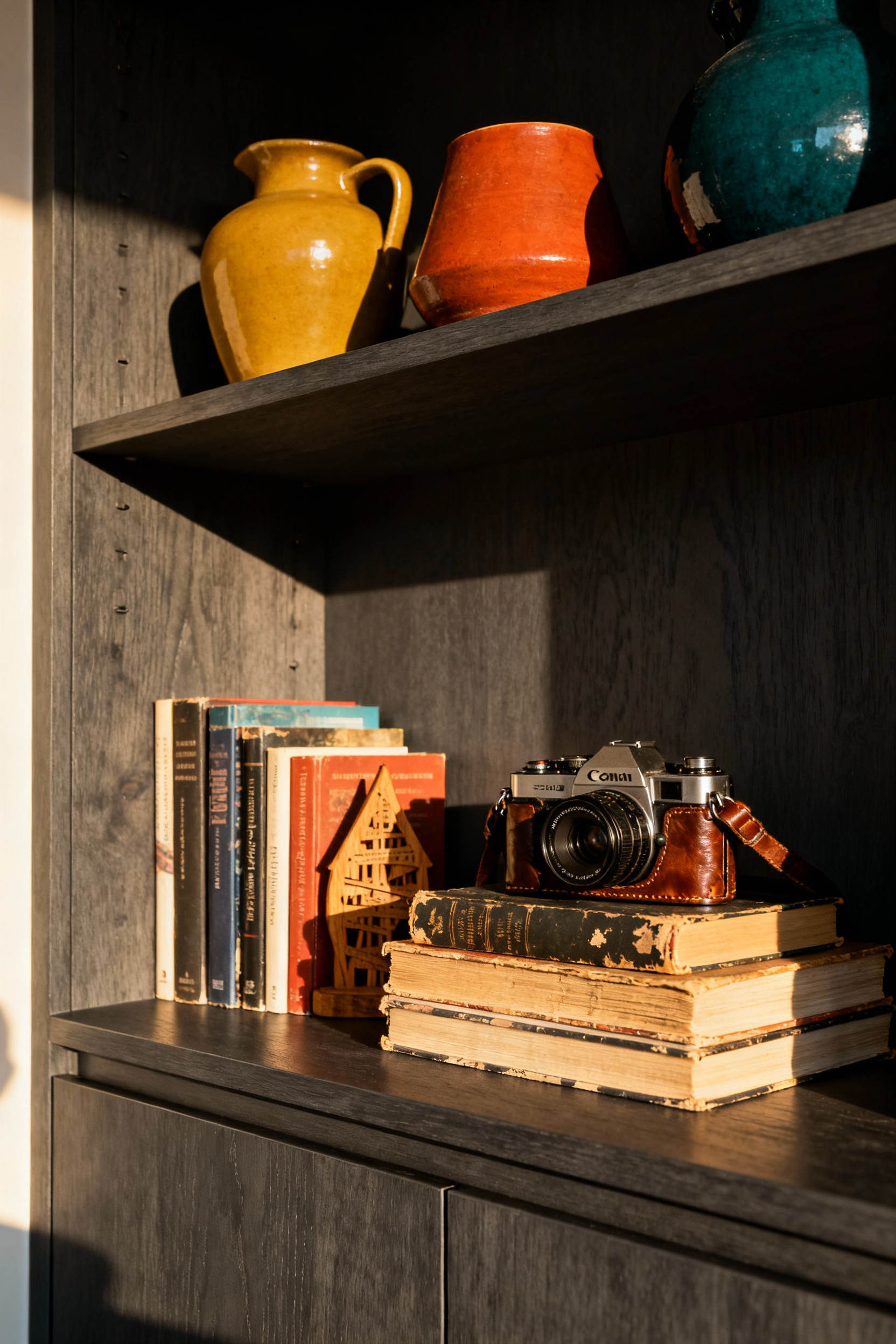
However, curation requires restraint. Clutter obscures beauty, so master the art of negative space to let your collections breathe.
- Leave gaps: Substantial empty space acts as a frame, drawing the eye to specific treasures.
- Stack horizontally: Break up vertical rows with flat book stacks to create mini pedestals.
- Mix materials: Contrast rough stone with sleek glass for tactile variety.
Use these horizontal stacks to highlight a single sculptural object. By shopping your own memories first, you create a sustainable, deeply personal display that evolves with you.
14. The Upcycled Accent
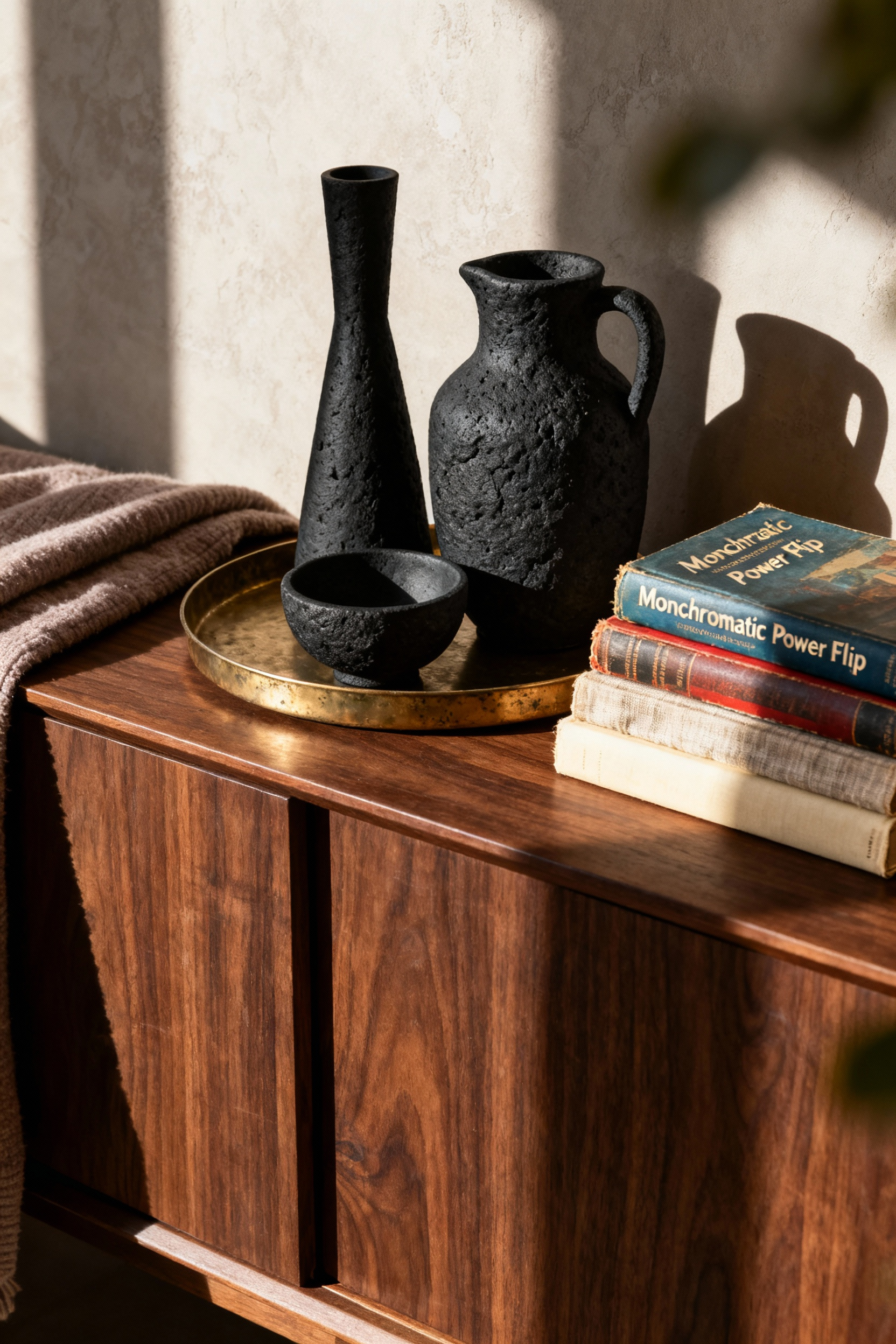
Every chipped vase or forgotten candlestick holds a second life. Try unifying mismatched ceramics with a single coat of matte black or stone-textured spray paint. This “Monochromatic Power Flip” instantly creates a cohesive, sculptural collection out of random objects. Once dry, style these treasures using the Rule of Three to master the vignette. Group a painted vase, a stack of vintage books with dust jackets removed to reveal linen spines, and a thrifted tray. This ensures your arrangement feels curated and intentional rather than cluttered.
Look past the dated finishes on furniture and wall decor to spot the structural potential. You can elevate a sturdy but tired side table by simply swapping old plastic handles for modern leather pulls or sculptural brass knobs. Treat outdated framed art as a versatile starting point for these quick upgrades:
- The Frame Hack: Buy the piece for the solid wood frame, not the image.
- The Fill: Swap the dated print for a digitized public domain museum sketch.
- The Twist: Alternatively, paint the glass directly with mirror paint for unique, reflective wall art.
These simple weekend projects divert waste from landfills and inject bespoke soul into your living room.
Frequently Asked Questions about Interior Design
How do I make my living room look professionally designed?
Focus on foundation and depth. Professionals utilize layered lighting (Ambient, Task, Accent) and strategic furniture placement (floating seating) to create intentional zones. Crucially, mix high-end staple pieces with accessible vintage finds to achieve an expensive, collected aesthetic, rather than a flat showroom look.
What is the most important element for a successful living room floor plan?
The focal point is key. Whether it’s a fireplace, a major window view, or a beautiful statement sofa, all other seating arrangements must be oriented toward that anchor. Prioritize function by ensuring conversation areas allow guests to sit within 8-10 feet of each other to foster connection.
Can you effectively style a small living room using large, vintage furniture?
Yes, absolutely. Smaller rooms benefit from fewer, larger pieces that anchor the space. Choose one large vintage piece (like a credenza or an oversized mirror) and let it act as a central statement. Avoid many small, cluttering elements. Use vertical space for storage, and ensure furniture legs are visible to create the illusion of open air beneath the pieces.
Conclusion: The Evolution of a Room
Abandon the pressure of a “finished” room. A truly effective living room styling approach allows the space to breathe and evolves alongside you, much like the patina on a well-loved leather chair. I look at my own restored mid-century sideboard and see the decades of dinner parties it has hosted, proving that scratches often tell better stories than high-gloss polish. View your home as a curated collection of your journey, not a static catalog page. Prioritize personality over perfection. Mix those hunted vintage treasures with flexible, modular furniture that adapts to your changing life stages without generating waste.
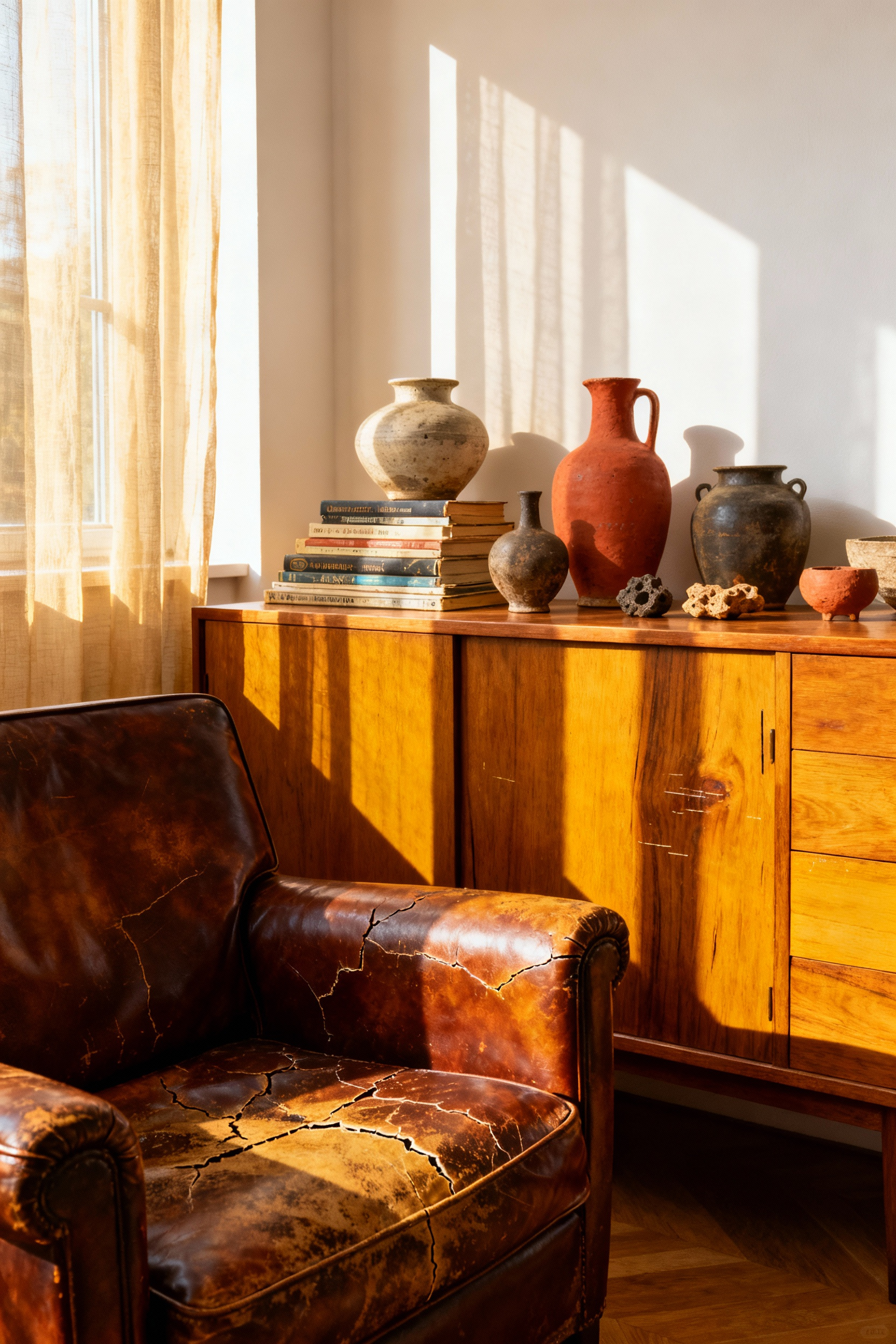
Sustainable design thrives on this fluidity. Instead of purchasing new “fast furniture” for every passing trend, rely on resourceful, reversible updates to shift the room’s energy. Treat your accessories like a living mood board:
- Swap textiles like vintage wool throws or linen pillows to match the season.
- Introduce biophilic elements such as live plants to literally breathe oxygen into the layout.
- Rotate artwork or collectibles to highlight different chapters of your history.
Let the room age gracefully. When you embrace this un-designed aesthetic, you create a sustainable sanctuary that feels authentically yours.