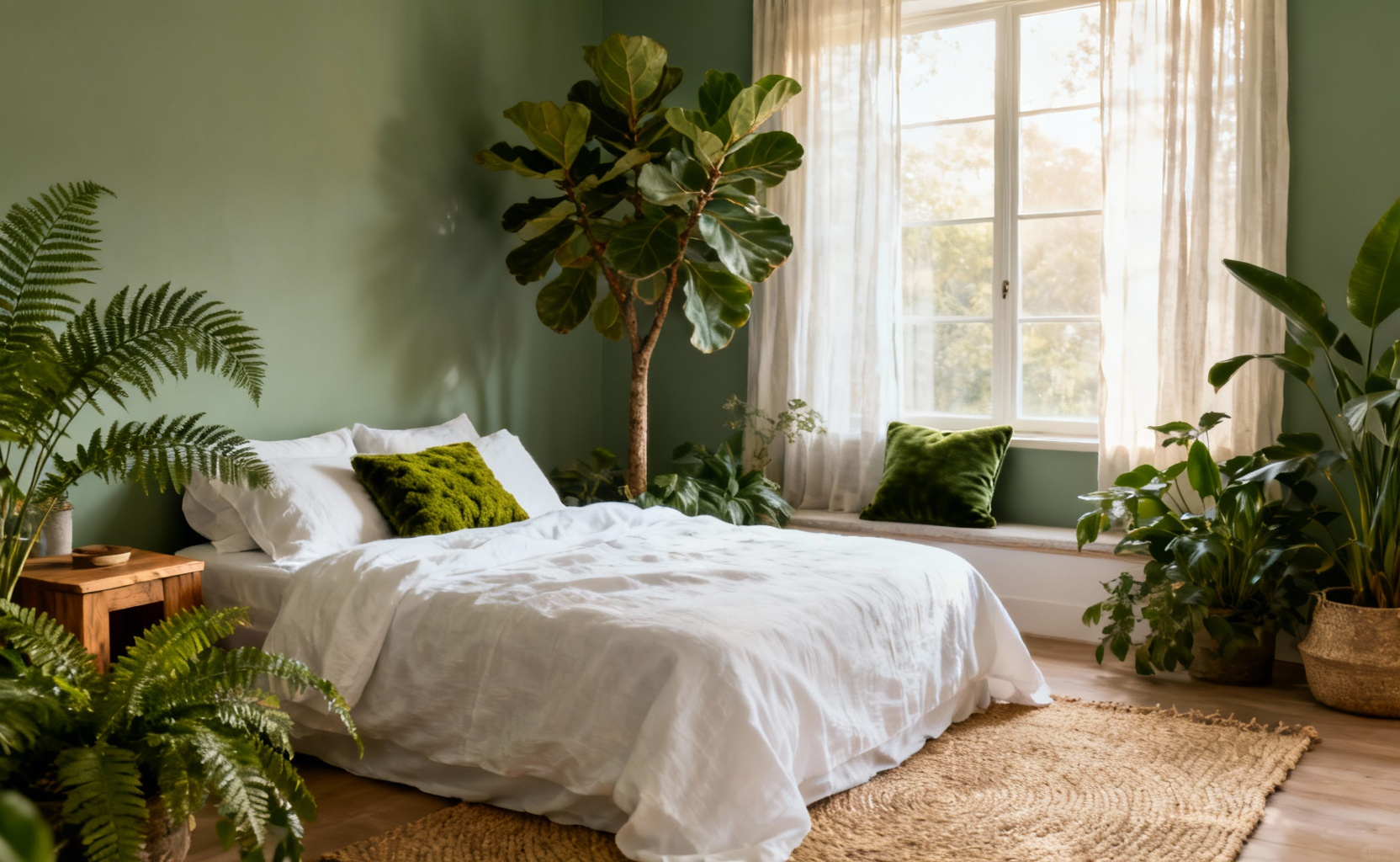

Many discerning homeowners look to upgrade their space, believing that a specific shade of paint or a botanical print is all it takes to achieve a green bedroom aesthetic. They assume the visual cue of the color green is enough to induce relaxation. However, true physiological restoration requires more than just visual stimulation; it demands a holistic engagement of the senses.
When design ignores sound, scent, and texture, it fails to replicate the genuine physiological relief found in the natural world. The solution lies in the “Forest Bathing Effect,” an immersive design philosophy rooted in the Japanese practice of *Shinrin-yoku*. This approach treats the bedroom as a living ecosystem rather than a static backdrop.
By integrating the specific “story” of plant life—such as humidity-boosting Peace Lilies—with the grounding tactile sensation of raw linen and unpolished wood, we create a space that actively lowers stress hormones. We harness the power of phytoncides through cedar scents and mimic the dappled light of a forest canopy to signal the body that it is safe to rest.
This guide reveals the essential components of a sensory-forward green bedroom aesthetic. We will define specific biophilic elements, from auditory soundscapes to textured materials, that turn a sleeping area into a source of holistic well-being. Implementing these strategies transforms your room from a simple living space into a restorative tool that nurtures mental and physical health, helping you create a personal sanctuary.
Harnessing the restorative power of nature within the home: Why ‘green’ is a physiological trigger for relaxation
Our physiological response to the color green is deeply rooted in the Biophilia Hypothesis, which suggests an innate human tendency to seek connections with nature. Because green sits at the center of the visible light spectrum, the human eye processes it with less strain than any other color. This significantly reduces mental fatigue.
Exposure to this hue also activates alpha brain waves, which are associated with a meditative state. This neurological reaction helps lower cortisol levels, heart rate, and blood pressure, transforming the bedroom into a tool for physical recovery.
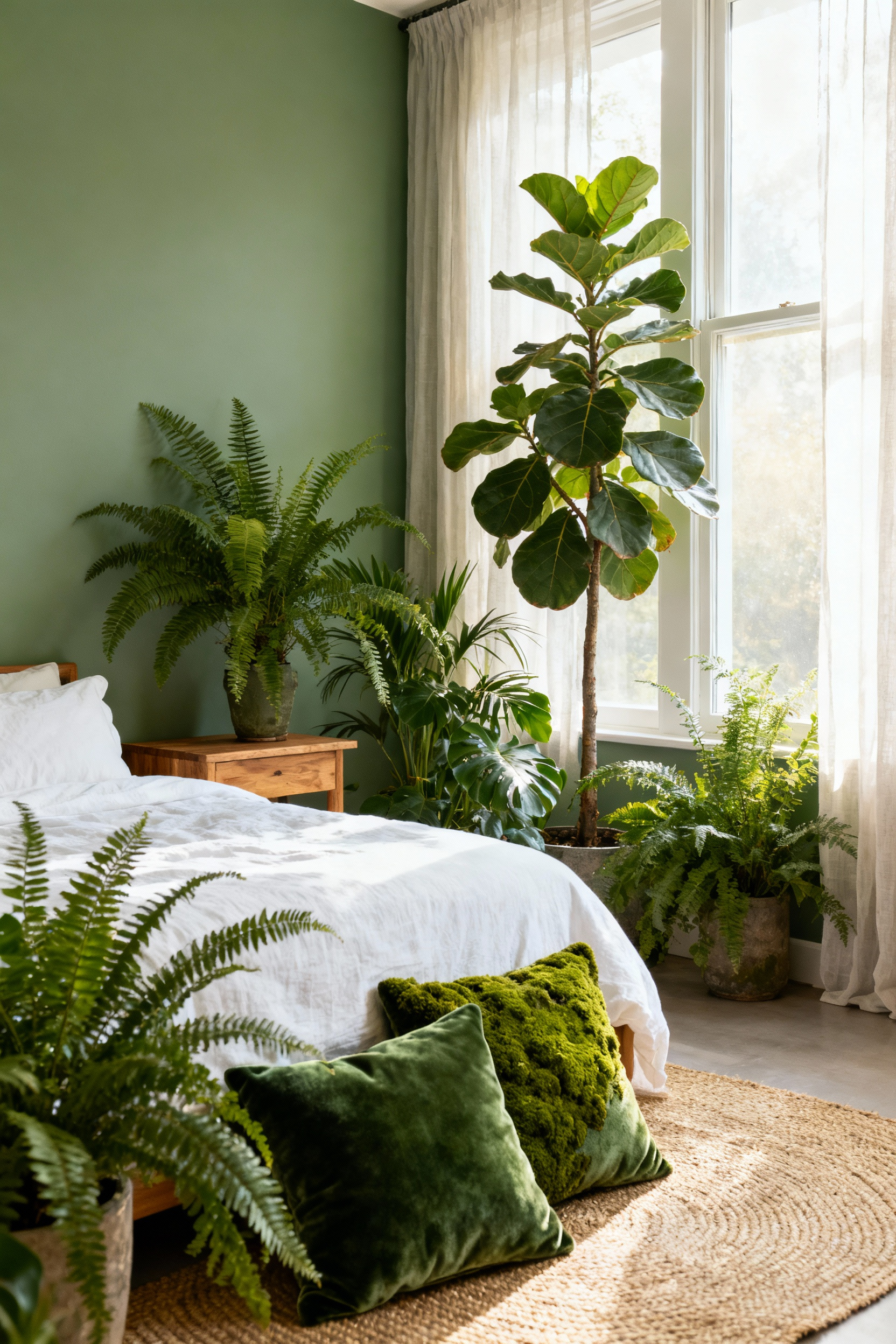
To maximize these restorative effects, prioritize soft, muted tones over bright, saturated shades. Paint walls in colors like sage, eucalyptus, or moss green to create a serene envelope that prevents over-stimulation. This creates a stark contrast to approaches centered on highly reflective hues, though achieving a successful white bedroom aesthetic also requires careful attention to texture and light.
You can then ground the space by incorporating deep forest green or olive green through textiles, such as a throw blanket or accent pillows. This approach adds visual depth and a sense of security without overwhelming the eye.
True relaxation requires layering these color choices with natural elements and textures. To fully support a green aesthetic, consider these additions:
- Introduce Living Greenery: Place one to three low-maintenance houseplants, such as a snake plant or peace lily, in neutral planters to satisfy the biological need for living nature.
- Layer Organic Textures: Incorporate materials like a rattan headboard, linen bedding, or wooden nightstands to add the gentle complexity found in the outdoors.
By combining specific color values with tactile, organic materials, you create a cohesive environment that actively lowers stress markers and promotes deep rest.
Phase 1: The Psychology of the Palette (Establishing the Envelope)
Establishing the “envelope” creates the psychological foundation of your sanctuary. This phase involves selecting dominant colors for walls and large furniture to define the room’s energy.
For a restorative sleep environment, prioritize cool-toned greens with blue undertones, such as deep forest or sage. These shades are scientifically linked to relaxation and lower physiological arousal. Conversely, avoid yellow-based greens like lime or bright olive; their vibrancy stimulates energy rather than rest, which counters the room’s primary function.
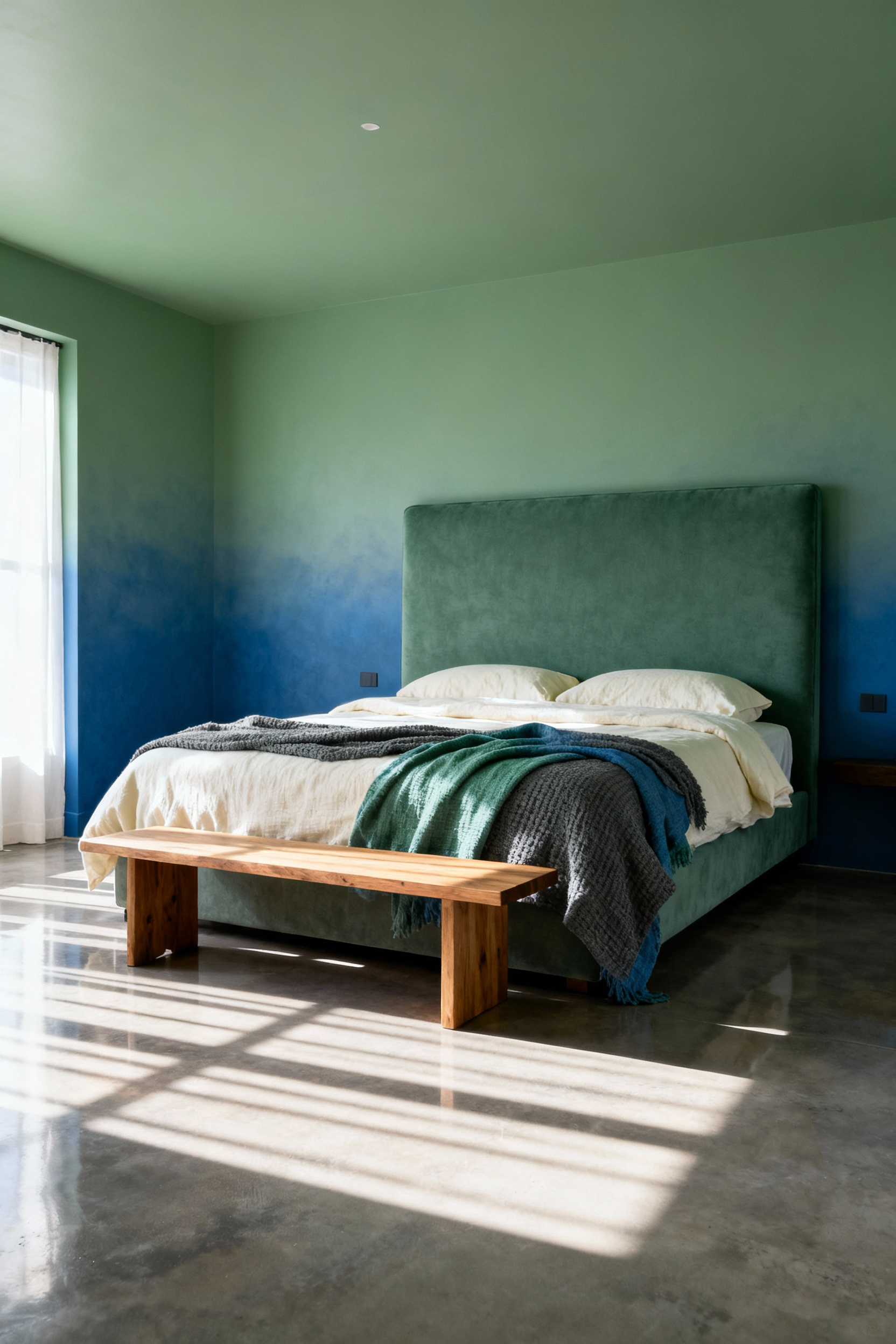
To achieve a sense of safety and opulence, commit to an all-over application of deep green, such as emerald or hunter. Painting all four walls creates an enveloping effect that physically “holds” the space, making it feel intimate. However, you must balance this intensity to prevent the room from feeling heavy or claustrophobic. Integrate raw wood tones and organic textures as your neutral base. This biophilic connection grounds the palette, offering the subconscious sense of security found in nature.
Finalize the aesthetic with high-contrast elements to maintain airiness. Regardless of the green’s depth, incorporate crisp white or cream on architectural features like trim, ceilings, or expansive bedding. This contrast serves a functional purpose: it reflects natural light and prevents the monochromatic scheme from becoming muddy. By clearly defining the boundaries of the room with light tones, you allow the richness of the green to shine without overwhelming the senses.
1. The Cortisol-Lowering Power of Sage: Why muted greens trigger the parasympathetic nervous system
Biophilic design relies on the human instinct to connect with nature, and color plays a pivotal role in this biological relationship. When you introduce muted green tones into a bedroom, you actively trigger the parasympathetic nervous system.
This shift into the “rest-and-digest” state signals safety to the brain, effectively lowering heart rate and reducing stress hormones like cortisol. Because green represents growth and security in the natural world, it acts as a subconscious signal for wellness, making it the ideal foundation for a restorative environment.
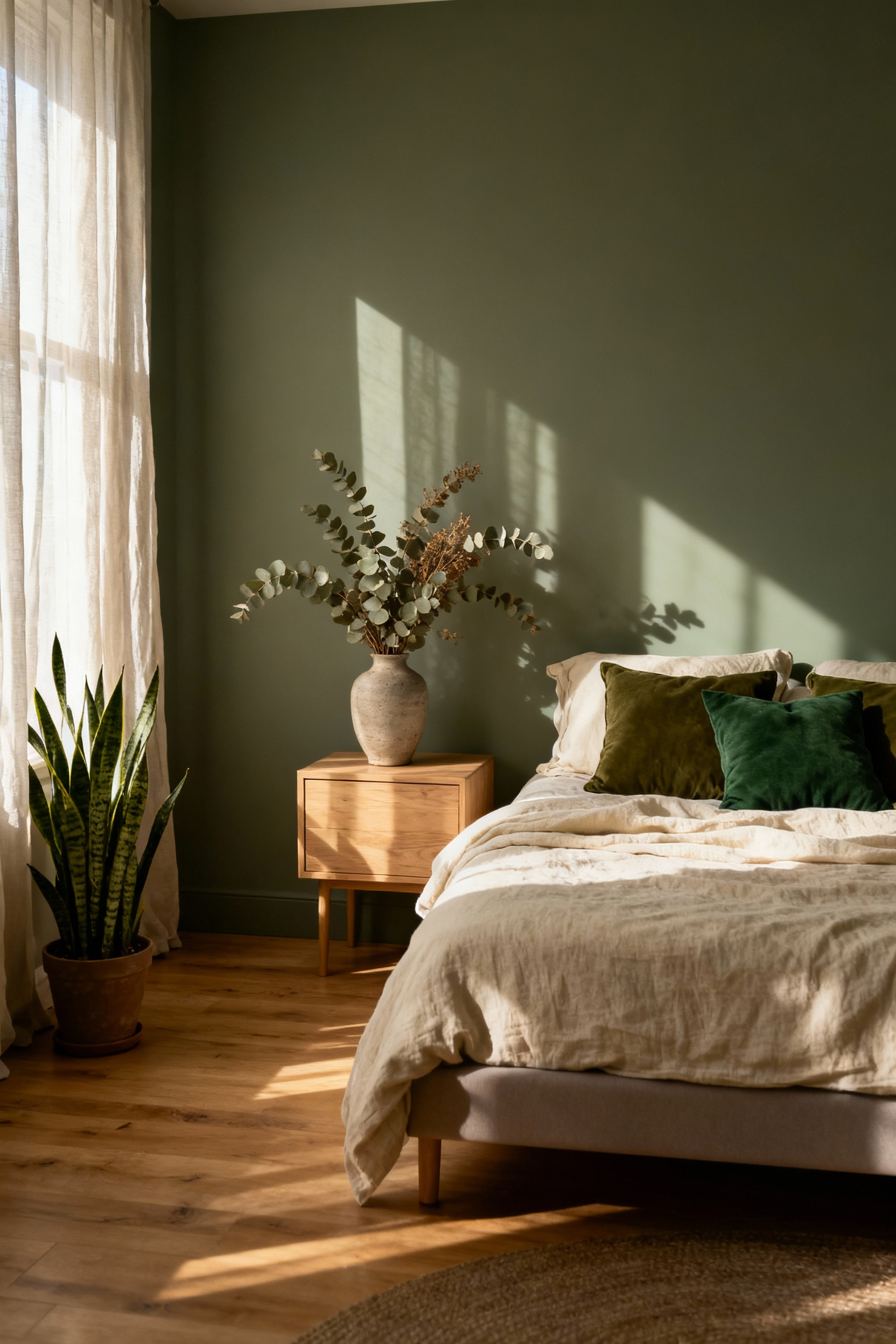
To achieve this physiological response, the specific shade matters. Opt for desaturated, “dusty” tones like sage, moss, or celadon rather than vibrant, high-energy greens. Painting the walls in these soft hues creates a psychological “green reset point” that anchors the room in tranquility. High-saturation colors can overstimulate the mind, whereas these muted tones offer a sophisticated, subtle backdrop that is conducive to deep relaxation and mental recovery.
You can further enhance this calming effect by layering sage tones through tactile elements. Combining visual calm with physical comfort reinforces the sense of balance in the space. Consider these applications for a cohesive aesthetic:
- Textiles: Use sage green linen bedding to introduce breathability and softness.
- Upholstery: Incorporate a moss-colored velvet chair or headboard to add depth.
- Flooring: Anchor the room with a wool rug in muted celadon to ground the design.
2. Deep Forest Cocooning: Using dark emeralds to simulate the safety of a night canopy
To truly replicate the protective sensation of a night canopy, embrace full color immersion. Apply a deep, matte emerald or forest green to every surface, including the ceiling. Painting the ceiling creates a profound sense of enclosure, visually lowering the space to simulate the safety of being nestled beneath thick foliage. This monochromatic approach blurs the rigid boundaries of the room, eliminating visual noise and physically signaling the body to unwind in a secure environment.
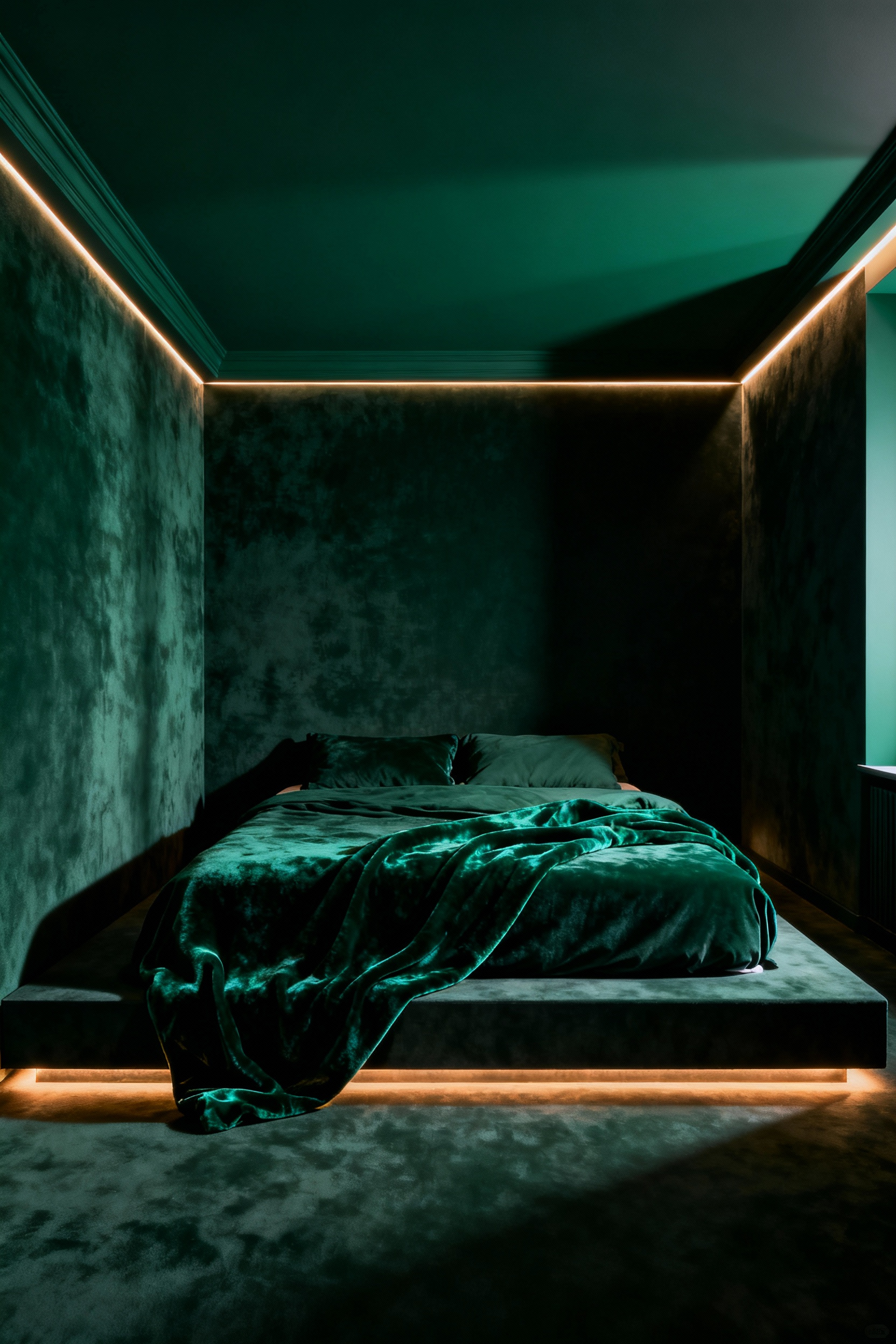
Counterbalance the depth of the walls with rich, tactile materials that mimic the plush density of a forest floor. Incorporate a velvet headboard or heavy drapery in a matching green to add softness and catch the light. To further ground the design, select furniture in dark, organic woods like walnut or mahogany. These natural elements introduce the solidity of tree trunks, anchoring the room’s energy and preventing the dark palette from feeling overwhelming.
Finally, the success of this aesthetic relies on precise lighting control. Avoid harsh overhead fixtures, which can make the space feel cavernous. Instead, use warm-toned bulbs (2700K or lower) in bedside lamps and sconces to cast a gentle, intimate glow. Accentuate this soft light with brushed brass or gold hardware on frames and lamp bases. These metallic touches act like starlight filtering through the leaves, providing a sophisticated gleam that ensures the room feels cozy rather than somber.
3. Organic Movement with Limewash: creating ‘living’ walls that mimic natural texture rather than flat sterility
Limewash offers a sophisticated departure from the flat sterility of conventional latex paints. By utilizing crushed limestone and minerals, this finish creates a “living” surface that mimics the tactile depth of aged stone or plaster. The resulting aesthetic features a soft, cloud-like patina that shifts with natural light throughout the day. This visual movement engages the senses and establishes a calming, organic backdrop essential for a restorative bedroom environment.
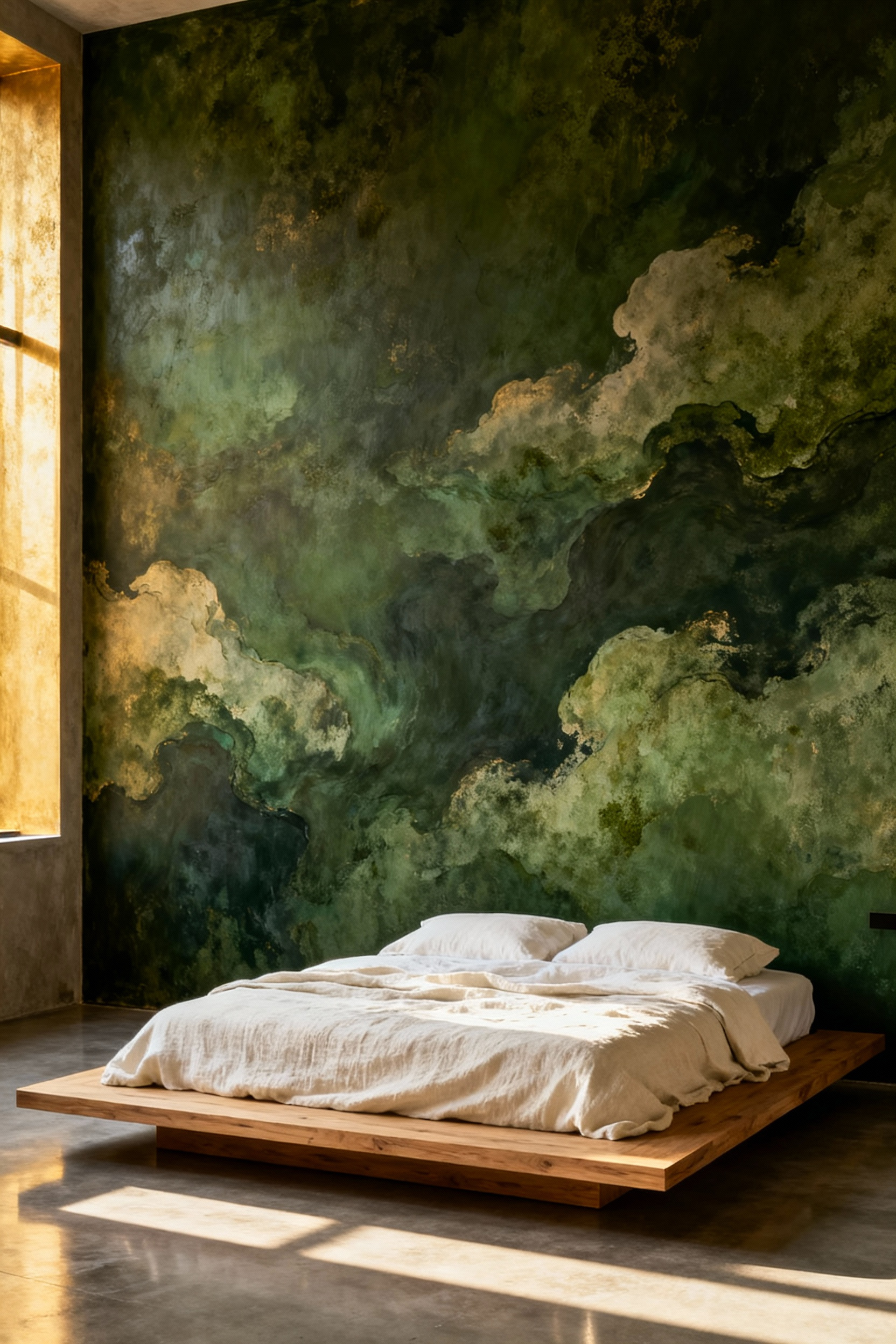
To fully embrace the biophilic potential of this technique, select muted earthy shades such as sage, moss, or deep olive. These natural pigments ground the space and enhance the mineral texture. Achieving the signature mottled look requires a specific application method: apply the wash with a block brush using random, overlapping criss-cross strokes rather than a standard roller. This technique builds dimension and preserves the breathability of the wall. Furthermore, authentic limewash formulas are typically zero-VOC, ensuring the air quality remains non-toxic for a healthier sleep cycle.
Complete the holistic design by contrasting the textured walls with natural furnishings. The matte, chalky finish of limewash serves as an ideal canvas for organic materials like light-toned oak, rattan, and unrefined linen bedding. This layering of tactile elements reinforces the room’s connection to nature, transforming the bedroom into a sanctuary that supports both physical health and mental clarity.
4. The Fifth Wall: Painting the ceiling soft fern to create a continuous canopy effect
Treating the ceiling as the “fifth wall” transforms a standard bedroom into an immersive sanctuary. By applying a soft fern hue to the ceiling, you utilize a technique known as “color drenching.” This method extends the wall color upward, eliminating harsh visual breaks and unifying the space. The result is a continuous canopy effect that creates a sense of enclosure, often described as a “cocoon.” This psychological shift promotes a feeling of safety and relaxation, mimicking the tranquility of resting beneath a natural, leafy grove.
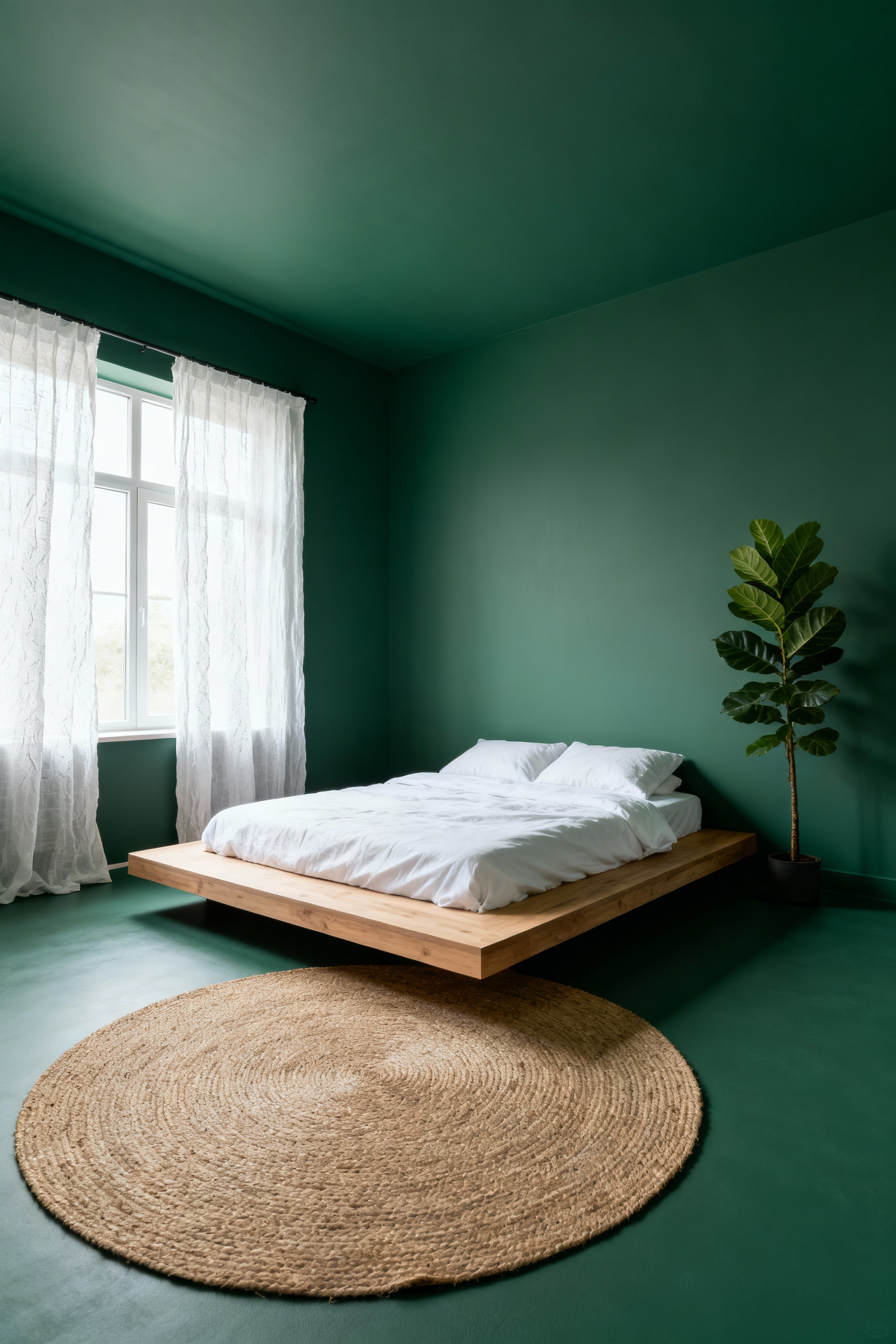
To execute this look effectively, distinct technical choices are required regarding finish and saturation. Select a flat or matte finish for the ceiling to absorb light and minimize glare; this softens the visual impact and reinforces the organic, velvety texture of the canopy.
Furthermore, light hits horizontal planes differently than vertical walls, often making colors appear darker and more saturated overhead. To maintain perceived height and prevent the room from feeling cave-like, consider using a tint mixed at 50-75% strength of your wall color. This subtle adjustment allows the ceiling to recede gently, maintaining an airy atmosphere.
Completing the design involves careful testing and texture integration. Always sample the paint directly on the ceiling to observe how the shade shifts with changing natural light. Once the canopy is established, anchor the aesthetic with biophilic elements. Pair the soft green overhead with organic materials such as linen bedding, rattan furniture, and warm wood accents. These textures complement the color palette, creating a holistic environment that supports rest and mental well-being.
Phase 2: Living Architecture (Biophilic Integration)
True biophilic design extends beyond simple decoration; it transforms walls and windows into active elements of well-being. Instead of cluttering surfaces with small pots, install a wall-mounted planter system or a preserved moss wall behind the headboard. This creates a “living architecture” focal point that conserves floor space and actively purifies the air.
You must also align the room’s lighting with your body’s biology. Maximize natural light using sheer curtains and strategically placed mirrors to bounce daylight deeper into the room. This holistic approach is crucial when cultivating biophilic sanctuaries across the entire home. This approach supports your circadian rhythm, regulating your sleep-wake cycle for more restorative rest.
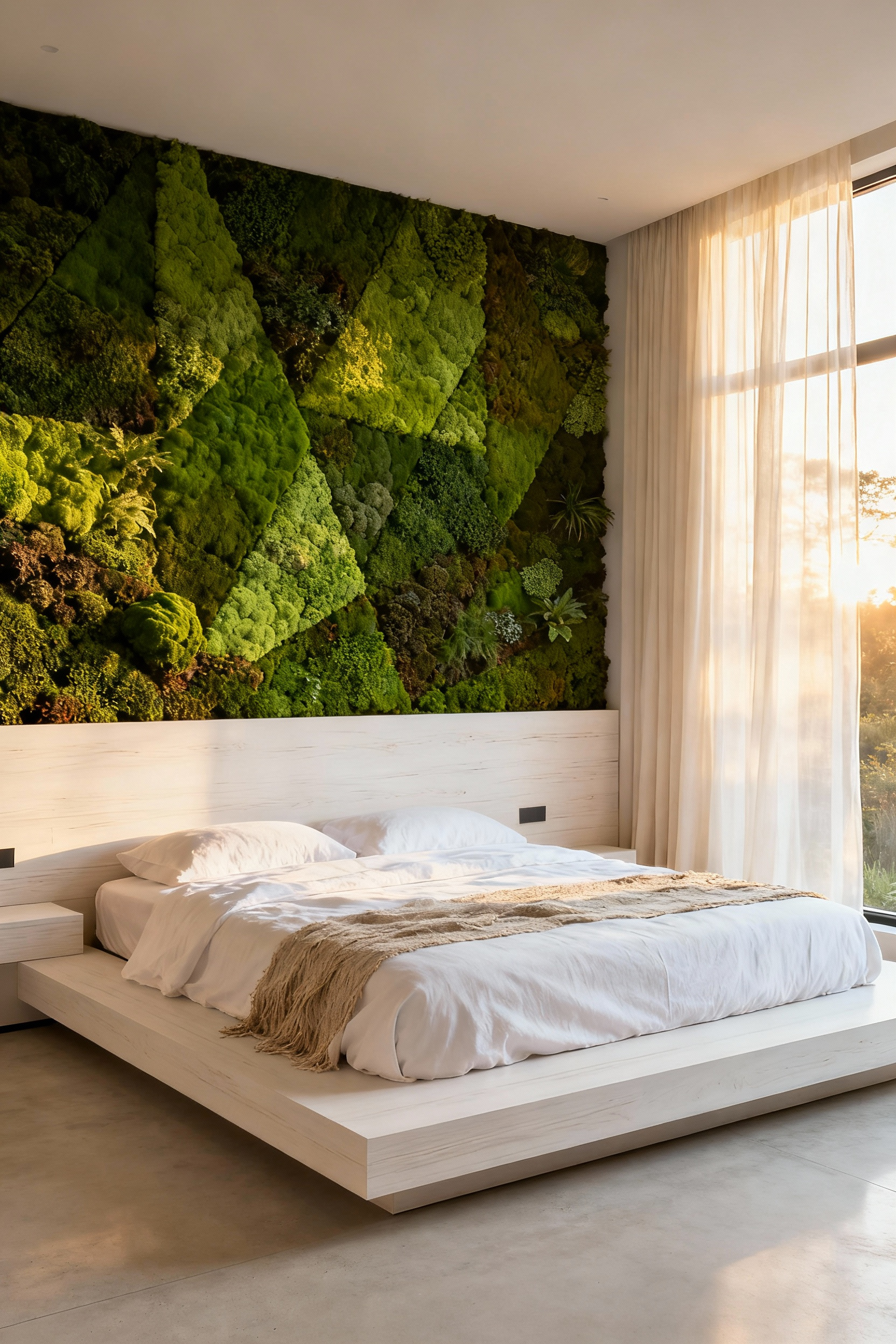
Ground the visual experience by prioritizing a raw, organic material palette. Select furniture and décor crafted from unfinished wood, rattan, bamboo, or stone to introduce natural textures. Complement these hard surfaces with breathable, natural fibers like linen or wool to enhance tactile comfort.
Finally, anchor the room with color psychology. Utilize muted, nature-inspired shades such as sage, moss, or olive for walls and bedding. These specific tones reduce visual stress and evoke the tranquility of a forest retreat, establishing the ultimate backdrop for relaxation.
5. The Oxygenating Corner: Strategic placement of Snake Plants and Pothos for air purification during sleep
To optimize air quality while you sleep, prioritize the placement of a Snake Plant (*Sansevieria*) near your bedside. Unlike most flora, this species utilizes specific photosynthetic processes to release oxygen at night while absorbing carbon dioxide. For the best results, select the largest, tallest variety your space can accommodate, as air purification capacity correlates directly with total leaf surface area. Positioning a substantial Snake Plant in a floor planter near the head of your bed concentrates this oxygen production within your immediate breathing zone.
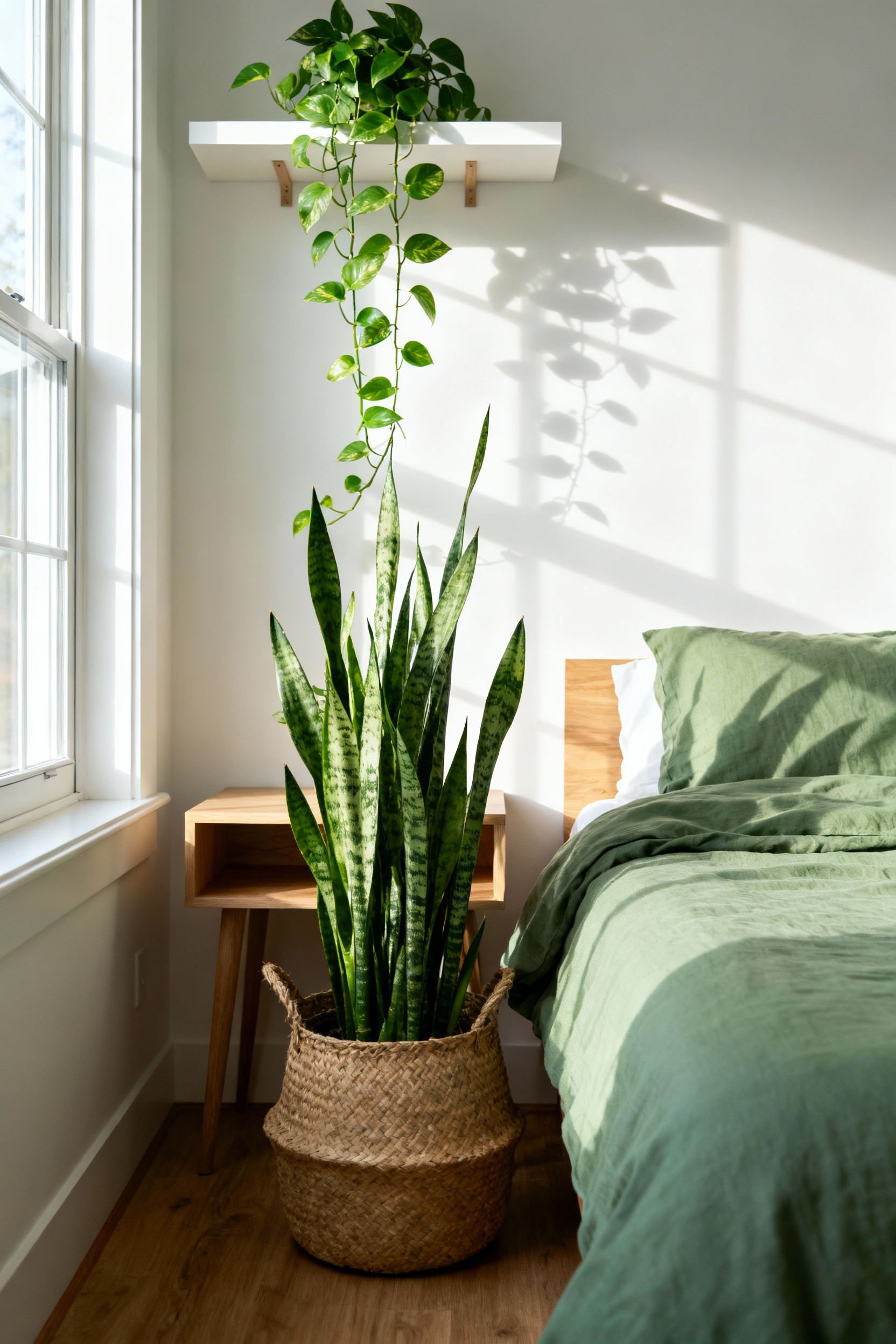
Complement this nighttime oxygen source by installing a trailing Pothos plant in a high corner or on a tall shelf. Pothos excels at filtering common household toxins, such as formaldehyde and benzene, providing a constant detoxifying effect. By grouping the Pothos above or beside the Snake Plant, you create a dedicated “Oxygenating Corner.” This strategic arrangement amplifies the air-cleaning benefits through synergistic filtration and establishes a lush, green focal point that draws the eye without cluttering your essential walkways.
6. Vertical Serenity: Installing living wall art or trailing vines to soften architectural corners
Sharp architectural corners often create subconscious visual tension, disrupting the restful energy of a bedroom. To counteract these rigid lines, introduce trailing vines that naturally draw the eye downward and soften the room’s geometry. Robust, low-light-tolerant plants like Pothos or Heartleaf Philodendron work best for this purpose. Their cascading stems dissolve the harsh angles of shelving units and exposed wall joints, replacing static structure with organic movement.
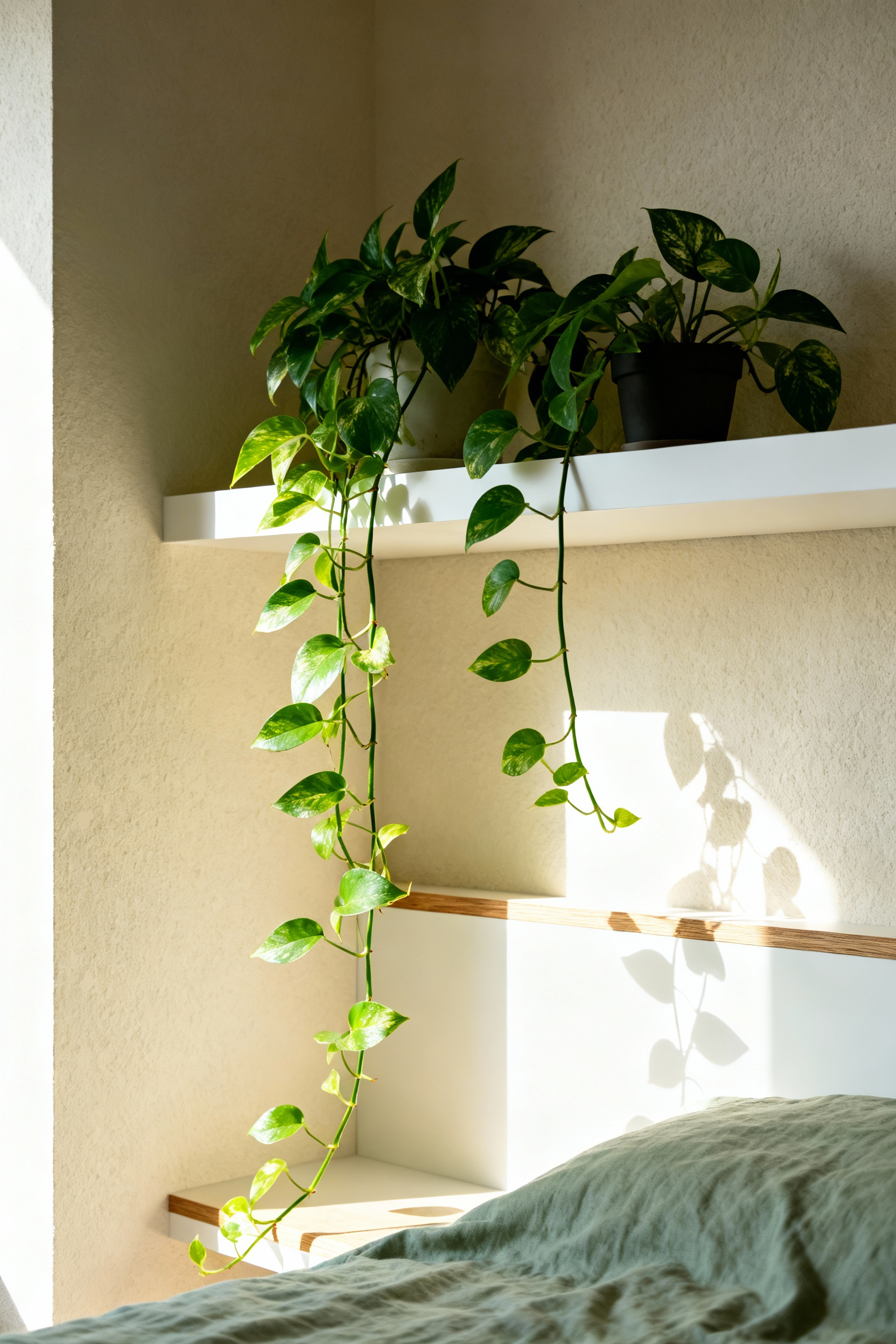
For smaller spaces, maximize vertical real estate by installing modular wall planters or ladder-style shelving directly into the corner. This approach creates a “living wall” effect that utilizes the room’s full height. Incorporate plants with varying textures, such as ferns, syngonium, and rhoeo, to build a dynamic focal point. Alternatively, create a “floating forest” by suspending varieties like String of Hearts or Spider Plants from ceiling hooks at different heights. This layering creates a curtain-like cascade that blurs the boundaries between the walls and ceiling, adding depth and whimsy.
If natural light is scarce, you can still achieve this restorative aesthetic through high-quality alternatives. Use realistic faux trailing vines to soften high architectural features like crown molding, or install framed preserved moss panels. These elements provide the same deep green visual therapy and softening effect as living plants. This strategy ensures every corner contributes to a serene environment, regardless of lighting conditions or maintenance constraints.
7. Dried Eucalyptus Installations: Integrating visual greenery with respiratory-supporting aromatherapy
Dried eucalyptus serves as a sophisticated, low-maintenance method for introducing biophilic elements into a restorative bedroom design. Varieties such as ‘Silver Dollar’ and ‘Baby Blue’ offer muted, silvery-green tones that anchor a green color palette without overwhelming the visual senses. To maintain a calming atmosphere, opt for minimalist arrangements, such as placing stems in clear glass vases or utilizing single-stem wall hangings. This approach adds organic texture to the space while keeping the environment clutter-free, which is essential for mental clarity and rest.
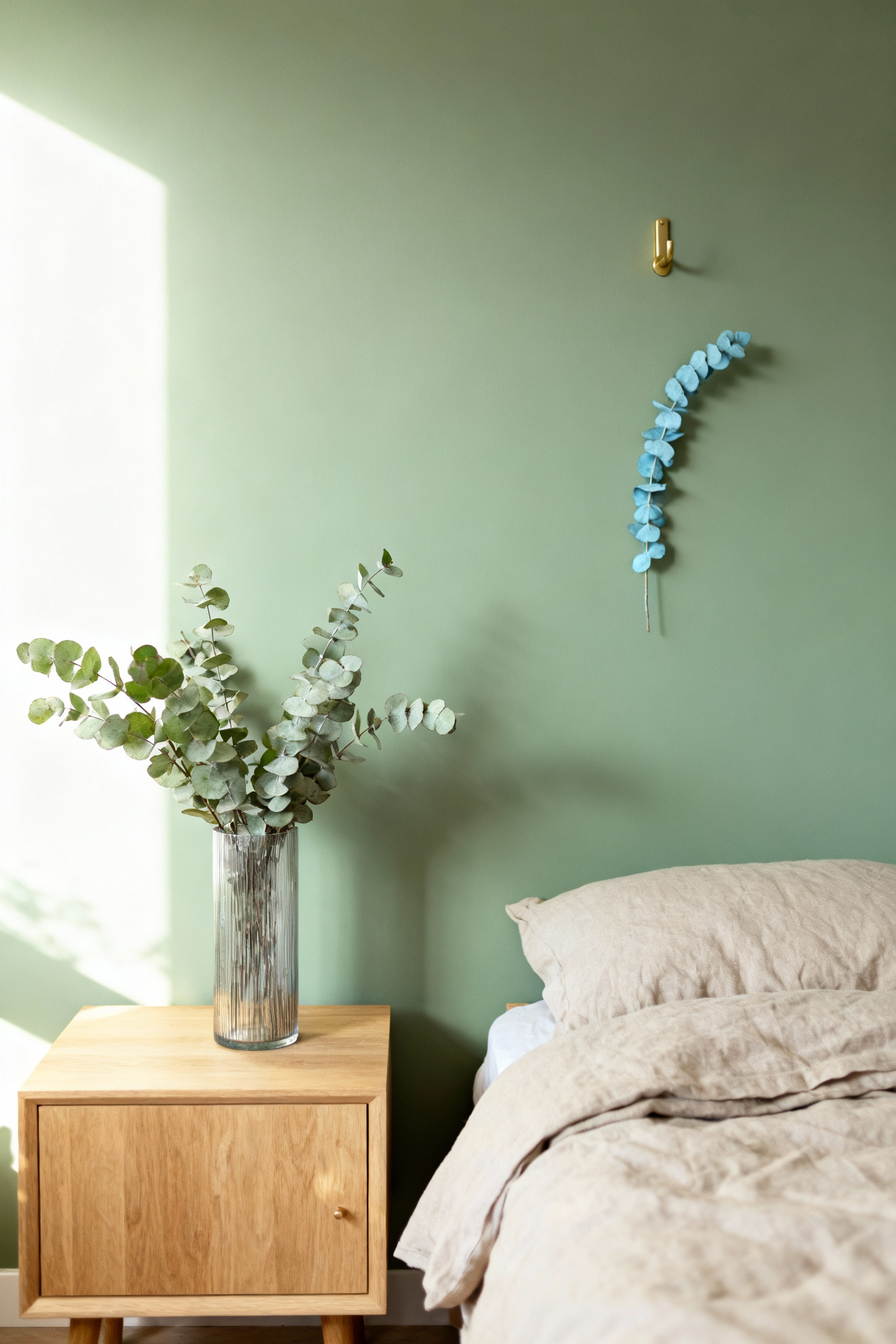
Beyond aesthetics, these installations actively support physical well-being through aromatherapy. Eucalyptus contains eucalyptol, a compound recognized for its expectorant and decongestant properties, which can facilitate easier breathing and deeper sleep. Since dried foliage lacks the natural moisture to release potent fragrance continuously, you must reactivate the scent to maximize its therapeutic value. Periodically mist the stems with water or apply a drop of pure eucalyptus essential oil to the base of the arrangement to boost the release of these respiratory-supporting compounds.
Strategic placement ensures the sleeper benefits most from both the design and the aroma. Current trends favor installing a small garland above the headboard or arranging a bundle in a slim wall pocket near the bed, keeping the fragrance within the immediate breathing zone. For a more subtle application, incorporate dried leaves and stem pieces into linen sachets or decorative potpourri bowls placed in bedside drawers. This method provides a continuous, localized scent that reduces stress and promotes relaxation right where it is needed most.
8. Raw Wood Elements: Grounding the green palette with oak or walnut to balance the Feng Shui ‘Wood’ element
In Feng Shui, the color green serves as the primary representation of the Wood element, symbolizing vitality, growth, and renewal. To fully harness this energy, you must anchor your green palette with solid wood furniture. Incorporating materials like oak or walnut reinforces this deep connection to nature, directly supporting personal health and family well-being.
The rich brown tones found in these woods also introduce the grounding energy of the Earth element. Because Earth nourishes Wood in the productive cycle, this combination brings essential stability to the room, ensuring the space feels supportive rather than overwhelming.
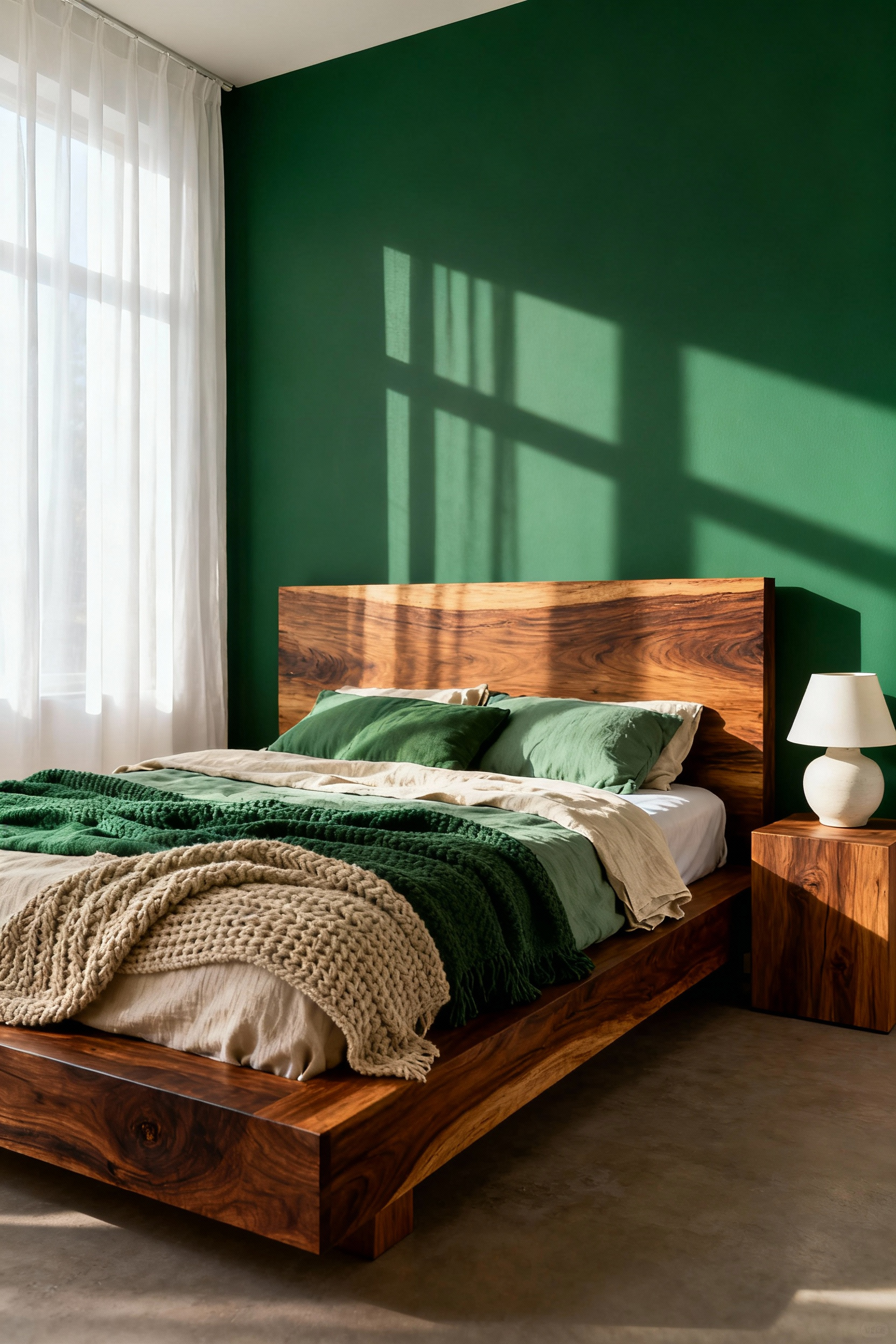
The finish of your furniture significantly impacts the flow of energy, or Chi, within the space. Opt for woods with raw, distressed, or lightly oiled surfaces rather than those with heavy stains or high-gloss lacquers. These natural finishes preserve the material’s authentic character and tactile warmth. By choosing textures that feel close to their original state, you maximize the vital, natural energy entering the room, creating a sensory experience that creates a true sanctuary.
When selecting specific pieces, you can achieve a sophisticated aesthetic by balancing different wood tones through contrast. Consider the following approach for a harmonious layout:
- Anchor with Darkness: Use a rich, dark walnut for your main furniture piece, such as the bed frame, to provide a cool, grounding foundation.
- Accent with Lightness: Incorporate lighter oak elements for smaller items, like bedside lamp bases or shelving, to add warmth and visual lift.
- Harmonize the Mix: Ensure the undertones complement the specific shade of green on your walls to create a cohesive, layered look.
Phase 3: Tactile Therapy (Textiles & Layering)
Tactile therapy engages the sense of touch to transform a bedroom into a sensory-rich sanctuary. To achieve this, combine at least three distinct material types on your bed. Start with a smooth, cooling base layer, such as breathable linen or soft cotton. Add a luxurious medium layer, like velvet cushions or a structured quilt, for visual interest. Finish with a rugged top layer, such as a chunky knit or wool throw. This combination creates a complex, inviting surface that encourages immediate relaxation.
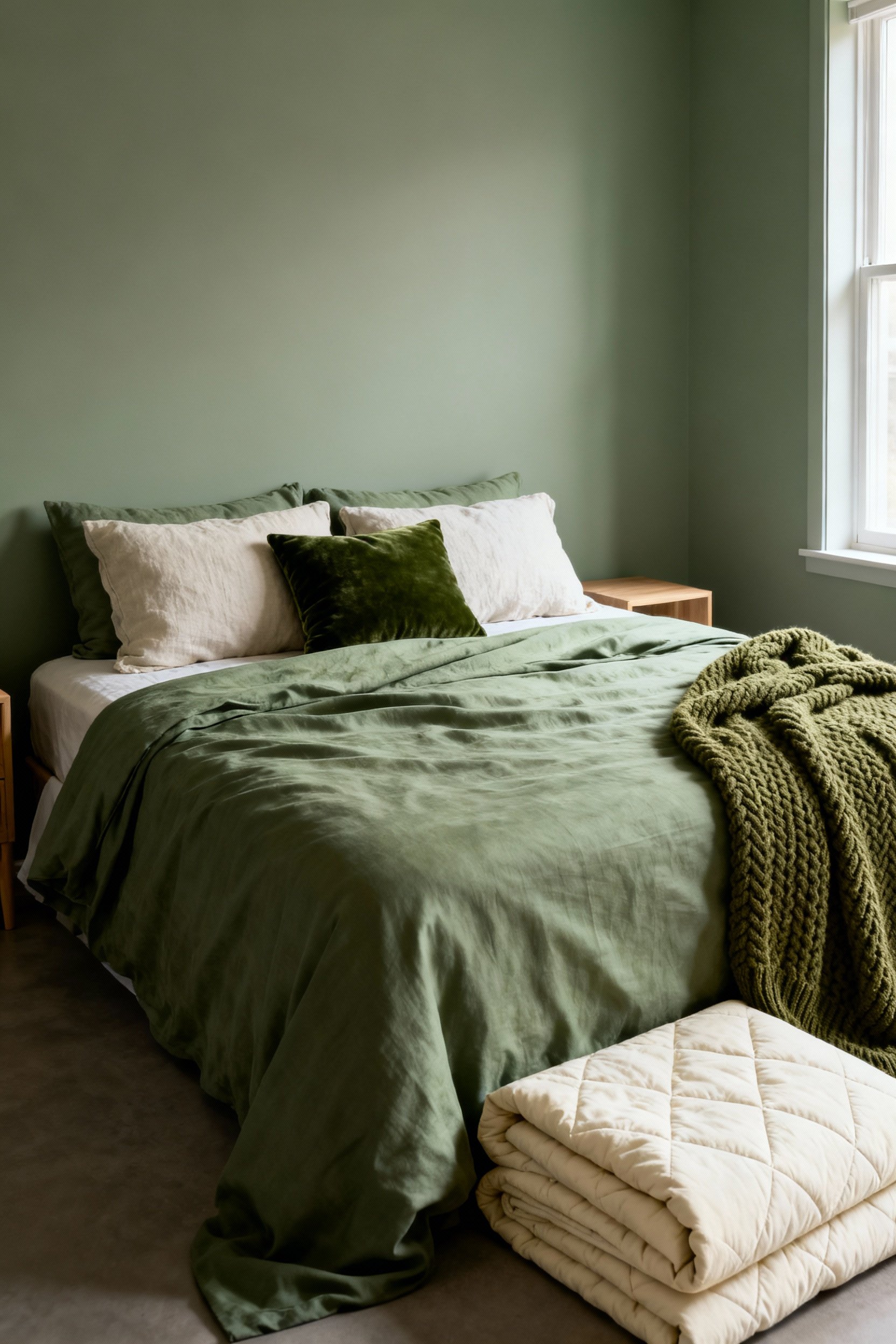
Enhance the “cocoon” effect by layering various shades of green. Mimic the complexity of a forest ecosystem by placing dark olive tones on walls or rugs, then introducing lighter shades like sage, moss, or mint through bedding and pillows. This technique builds dimension and cohesive calm. Anchor these elements with a woven area rug in jute, wool, or shag style. A tactile floor covering grounds the deeper green tones and introduces raw, natural texture underfoot to physically anchor the sleep space.
Finally, incorporate physical weight to promote a sense of security. Select a heavy textile, such as a quilted comforter, a weighted blanket, or a thick knitted throw. The gentle pressure provided by these items applies the principles of tactile therapy, signaling safety to the nervous system. Drape these heavier items over the foot of the bed or a nearby armchair to complete the therapeutic landscape.
9. Unbleached Washed Linen: Pairing moss tones with rough, organic textures to stimulate touch receptors
Create a sensory sanctuary by establishing a tactile foundation with unbleached washed linen for your core bedding. This material offers a pre-washed, relaxed drape that feels soft and breathable against the skin, directly promoting physical relaxation. Unlike crisp synthetics, the subtle, natural texture of linen soothes the nervous system and serves as a neutral canvas. This calming base allows you to introduce bolder textures elsewhere without overwhelming the visual balance of the room.

Introduce moss tones through soft, layered elements rather than the bedding itself to build visual depth. Drape a chunky knit throw, a thick wool blanket, or a velvet lumbar pillow over the pale, unbleached linen. This layering strategy juxtaposes the cool, rumpled linen against the rich, deep green of the warmer fabrics. The variation engages your sense of touch every time you reach for a cover, enhancing the perception of comfort through “soft contrast.”
Finally, stimulate touch receptors by placing rough, organic textures near the smooth sleeping surface. Use elements like a reclaimed wood nightstand, a woven jute rug, or an unglazed terracotta vase to anchor the space. For a moment of deliberate sensory engagement, place a rough-hewn wooden tray directly onto the soft bedding. This close-range contrast between the hard, uneven surface and the pliable linen creates a feeling of “rustic luxury” and grounds the room in the natural world.
10. Heavy Velvet Anchors: Using a hunter green headboard to create a sense of protection and silence
A hunter green velvet headboard serves as both a visual and physical anchor for your bedroom. Psychologically, this deep forest shade serves as a connection to nature, stability, and restoration. It grounds the room, evoking a sense of being enveloped and protected.
Beyond color psychology, the material itself contributes to a serene environment. Large, deeply tufted or channel-quilted velvet functions effectively as a subtle acoustic panel. The thick upholstery absorbs sound and reduces echo, directly improving the silence and privacy necessary for restorative sleep.
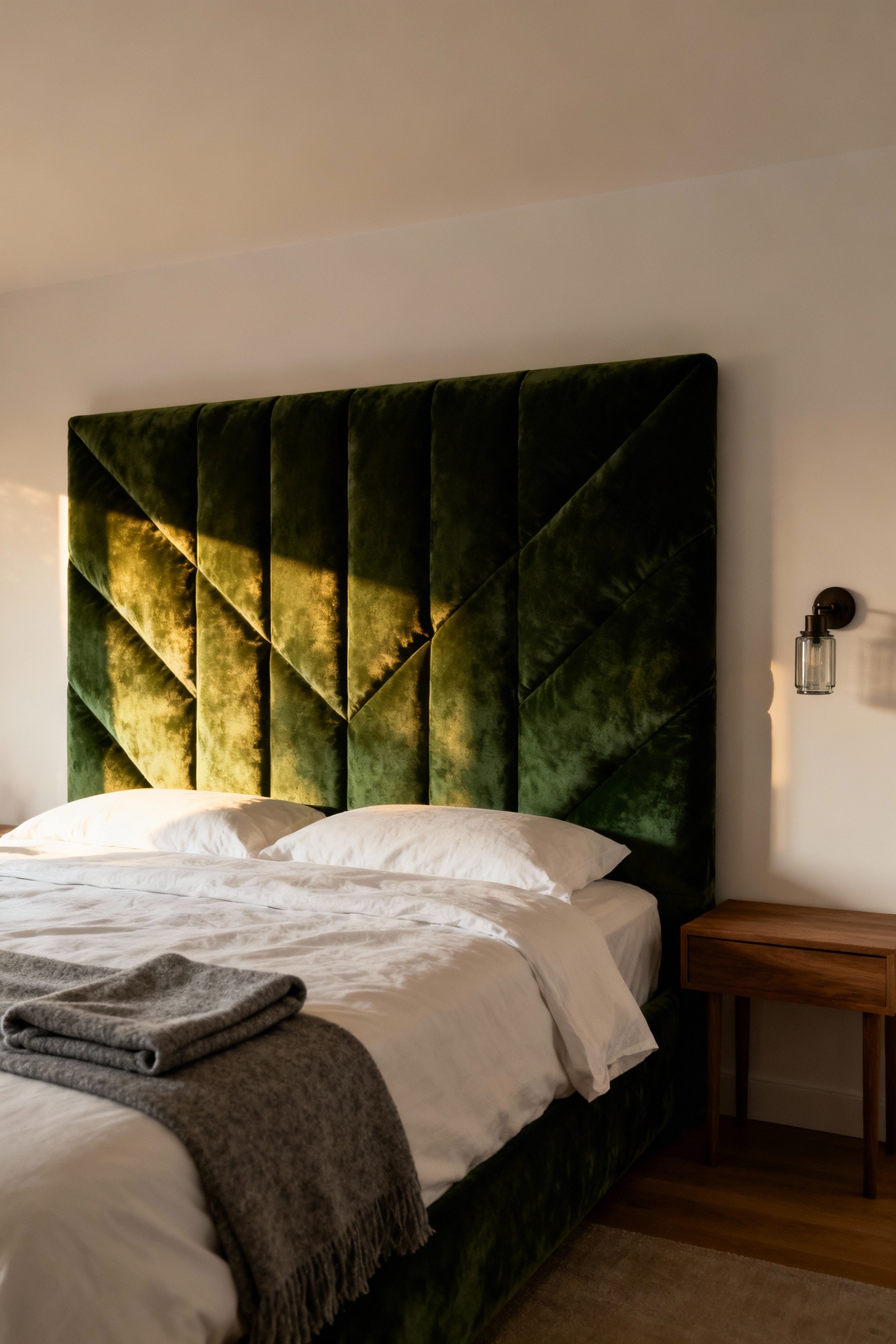
To maximize this sense of heavy protection, choose a silhouette that physically surrounds the sleeper. A wingback design or an extra-tall profile creates a literal cocooning effect. The extended sides or substantial height reinforce the boundary of your sleeping area, creating a distinct separation from the rest of the room. This structural choice enhances the feeling of safety and solitude, turning the bed into a true sanctuary.
Balance is crucial when working with such a substantial element. To prevent the dark green velvet from feeling oppressive, offset its richness with lighter, natural textures. Incorporate white or cream bedding to provide a crisp visual break. Utilize pale wooden nightstands or layer soft cashmere throws and linen pillows in neutral tones. These contrasting materials lighten the overall aesthetic, ensuring the space feels grounded without becoming visually heavy.
11. The Grounding Layer: Jute and sisal rugs to bring the texture of the earth indoors
Establishing a “grounding layer” connects your interior space to the natural world, acting as a durable foundation for a restorative environment. For the bedroom, prioritize jute over sisal. While both are sustainable, natural fibers, jute offers a softer, more pliable texture that is far more comfortable under bare feet. This choice aligns with the eco-friendly principles of the green aesthetic, utilizing biodegradable materials to physically and visually anchor the room without sacrificing comfort.
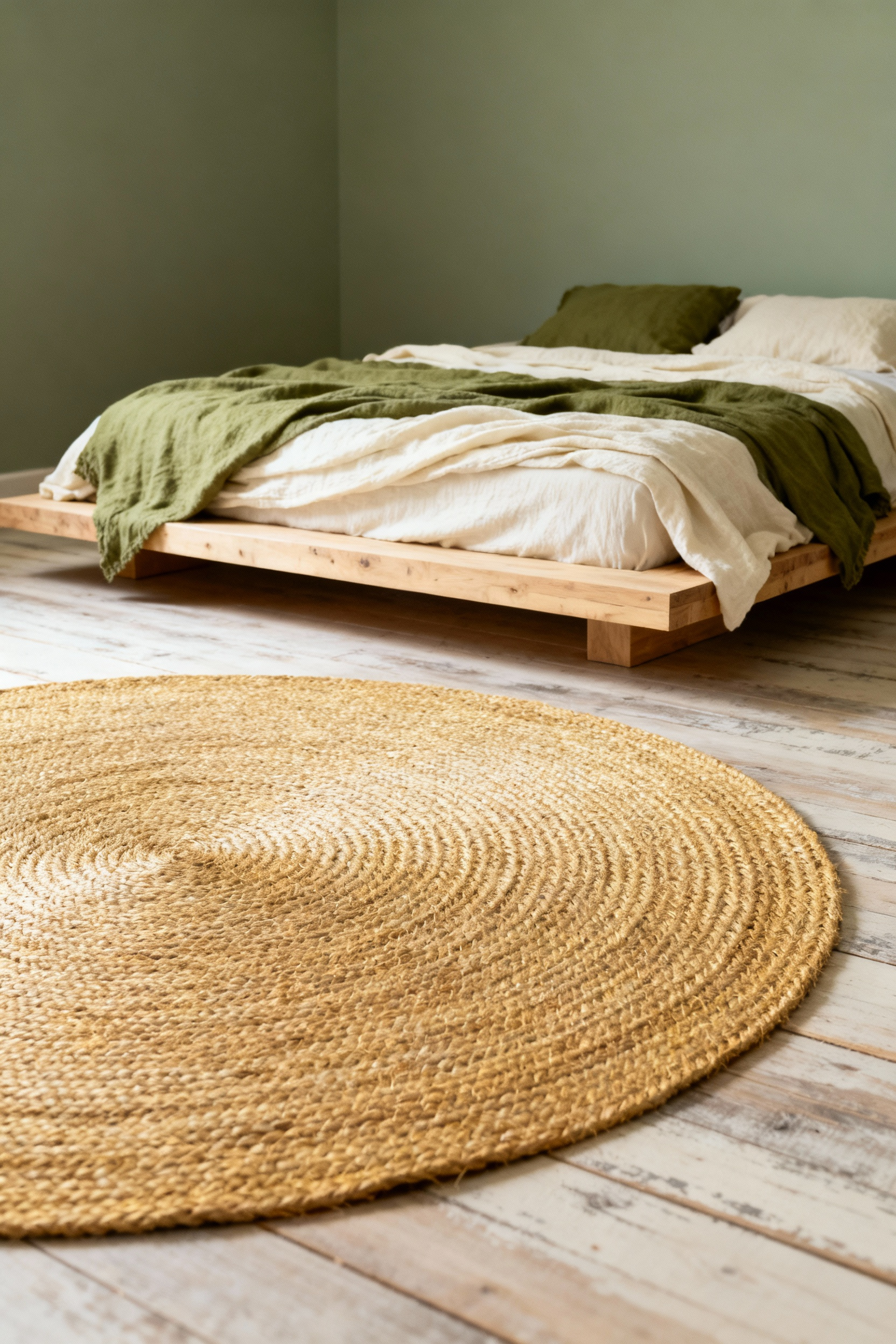
These woven rugs provide essential textural contrast, preventing a room filled with soft linens and smooth wood from looking flat. The coarse, distinct surface of a braided or herringbone rug offers a tactile counterpoint to the glossy leaves of houseplants and the sleek finish of furniture. Visually, the earthy, neutral tones of the fiber act as a quiet backdrop. This allows the various shades of green in your design—from emerald foliage to sage bedding—to stand out clearly.
To elevate the design and maximize comfort, utilize the layering trend. Start with a large jute rug that extends under the bed and nightstands to define the sleeping zone. Then, layer a smaller, plush rug, such as white wool or faux sheepskin, directly on top near the foot or sides of the bed. This technique adds depth and immediate softness where you step, while keeping the organic, earthy base visible to maintain the room’s connection to nature.
12. Botanical Print Curtains: Filtering light through leaf patterns to create ‘dappled light’ effects
To mimic the restorative sensation of sunlight filtering through a forest canopy, prioritize fabric opacity when selecting window treatments. The key to achieving a true “dappled light” effect is the use of light-filtering materials rather than heavy blackout cloth. Opt for semi-sheer, linen-look, or airy voile drapes that allow sunlight to permeate the fabric. Using a white, cream, or light-neutral background further amplifies this effect, maximizing luminosity and casting soft, distinct shadows across the floor and walls to create a natural outdoor ambiance.
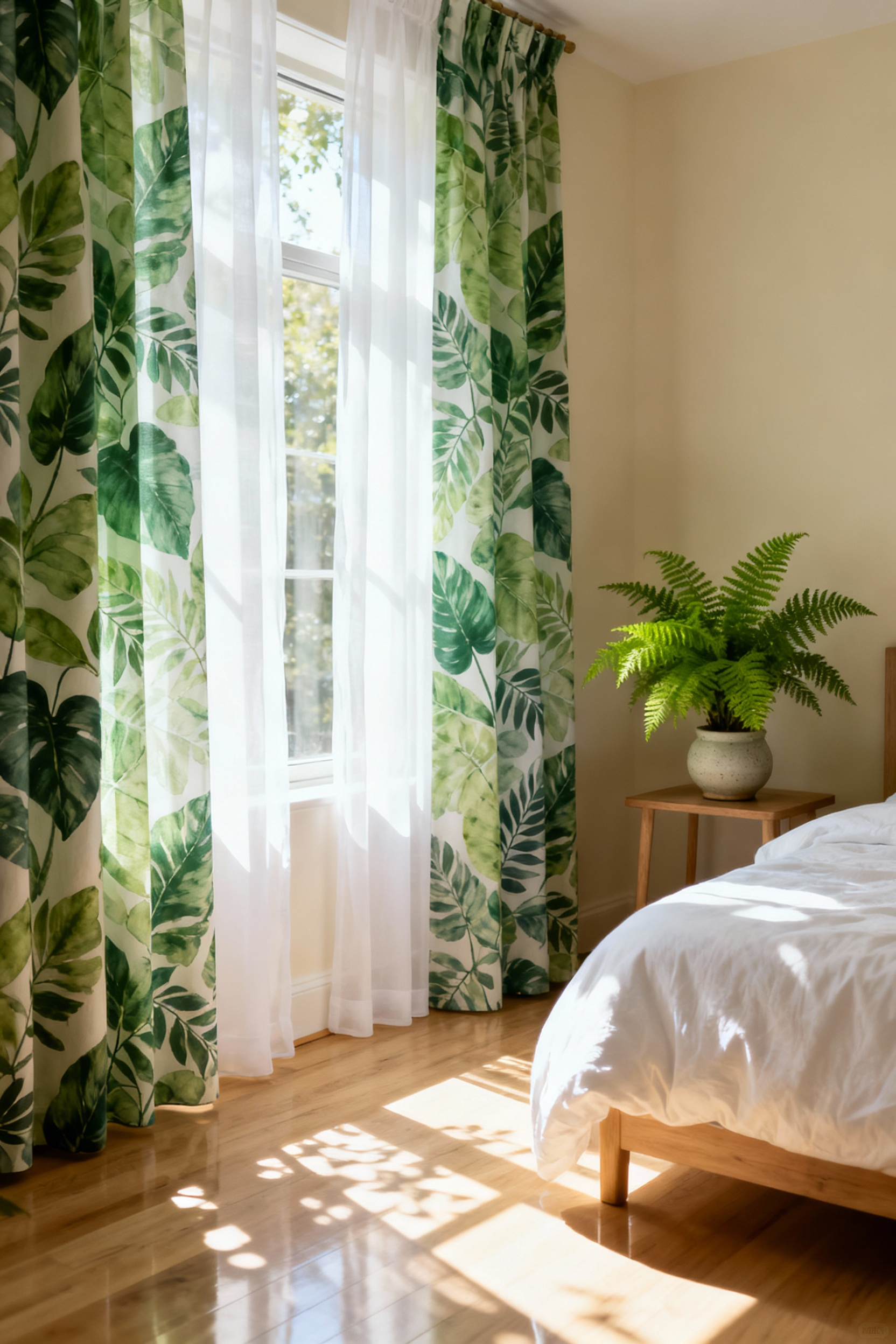
The scale of the botanical print directly influences the quality of the shadow play. Select patterns featuring prominent, distinct shapes—such as monstera leaves, palm fronds, or large ferns—rather than delicate, dense florals. These large-scale organic forms create clear light and shadow contrasts that effectively mirror a real tree canopy. For a cohesive design, ensure the printed greens complement your wall color. If the walls are a deep forest green, choose curtains with lighter sage or moss foliage to maintain a balanced, tone-on-tone aesthetic.
While maximizing natural light enhances well-being, a bedroom must also function as a sanctuary for sleep. Since the dappled effect relies on translucency, incorporate a separate functional layer for nighttime use. Install a discreet blackout roller shade or a solid liner behind the botanical print panel. This layering strategy offers the best of both worlds: it preserves the biophilic, light-filtering benefits during the day while ensuring complete privacy and darkness for restorative sleep at night.
Phase 4: The Sensory Atmosphere (Lighting & Wellness)
Establishing a restorative atmosphere begins with visual cues that signal safety and relaxation to the brain. Apply muted, grey-green shades like Sage Green to the walls, as this hue connects directly to nature and lowers psychological stress levels without overwhelming the senses.
To further support your body’s natural circadian rhythm, prioritize natural light during the day by installing sheer curtains and positioning mirrors to amplify sunlight. As evening approaches, transition to a layered lighting scheme—combining general, task, and accent sources—fitted with warm bulbs around 2700K. This specific color temperature mimics the soft glow of sunset, encouraging the production of melatonin and preparing the mind for deep rest.
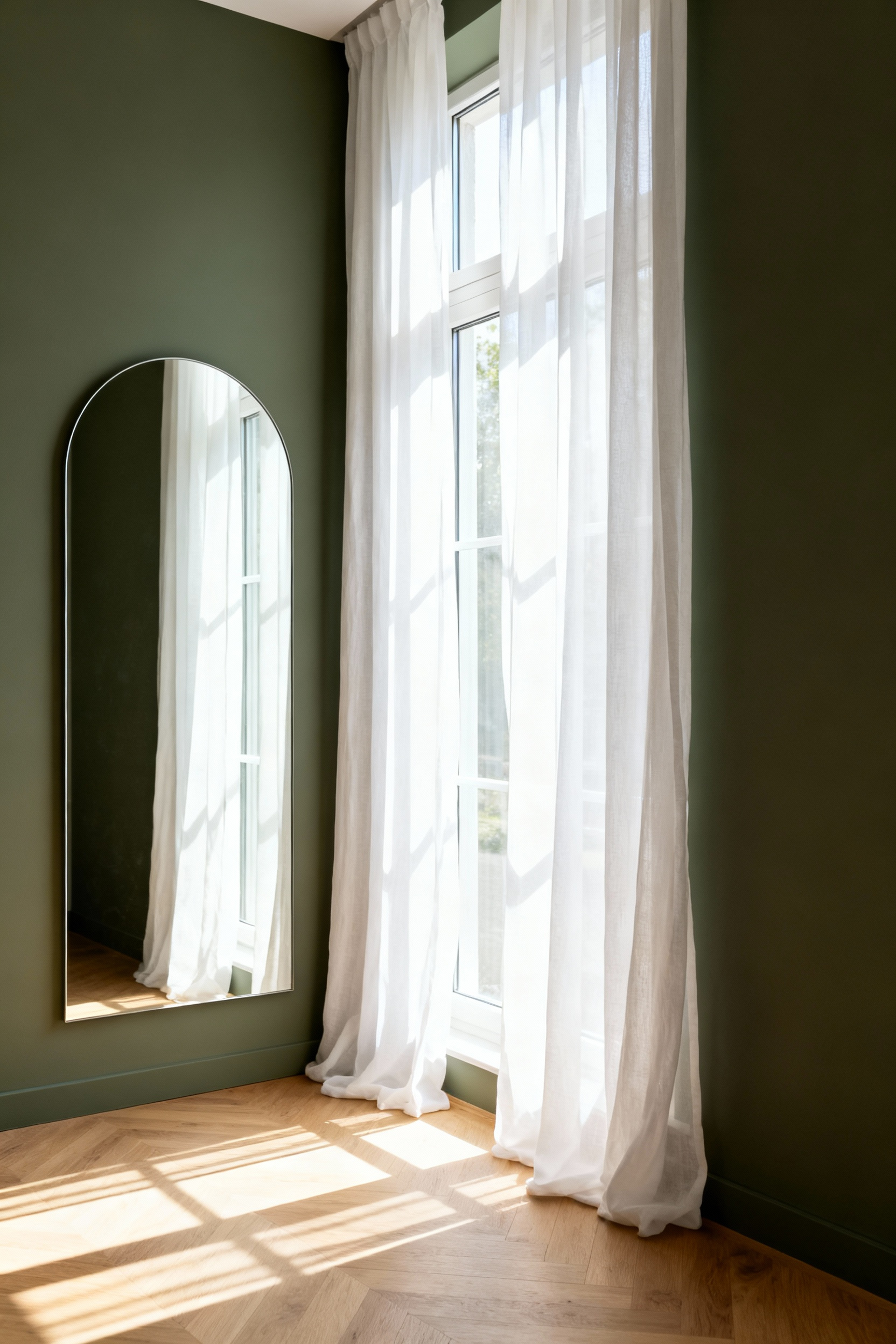
True wellness design extends beyond the visual into the tactile and biological realms. Incorporate soft, organic materials such as linen bedding, velvet cushions, or woven jute rugs to introduce comforting textures. These natural elements offer a grounding sensory experience that physically reinforces a sense of security.
Finally, integrate biophilic design principles by placing low-maintenance, air-purifying plants like Snake Plants or Peace Lilies in the room. These living elements effectively improve indoor air quality and establish an immediate connection to the outdoors, a design choice proven to reduce anxiety and enhance mental clarity.
13. Mimicking the Canopy: Light fixtures that cast organic, forest-floor shadows
To capture the calming essence of a forest, select lighting fixtures that break up solid beams of light. Look for lampshades crafted from woven natural materials like rattan, bamboo, or wicker. The intricate, uneven patterns of these fibers scatter light, casting organic, dappled shadows across your walls and ceiling. This visual texture mimics the soothing experience of sunlight filtering through a leafy tree canopy.
For a more immersive environment, consider trend-forward projection lamps designed to generate subtly moving light patterns. These fixtures add a “living” element to the room, simulating the gentle sway of branches to deepen the connection to nature.
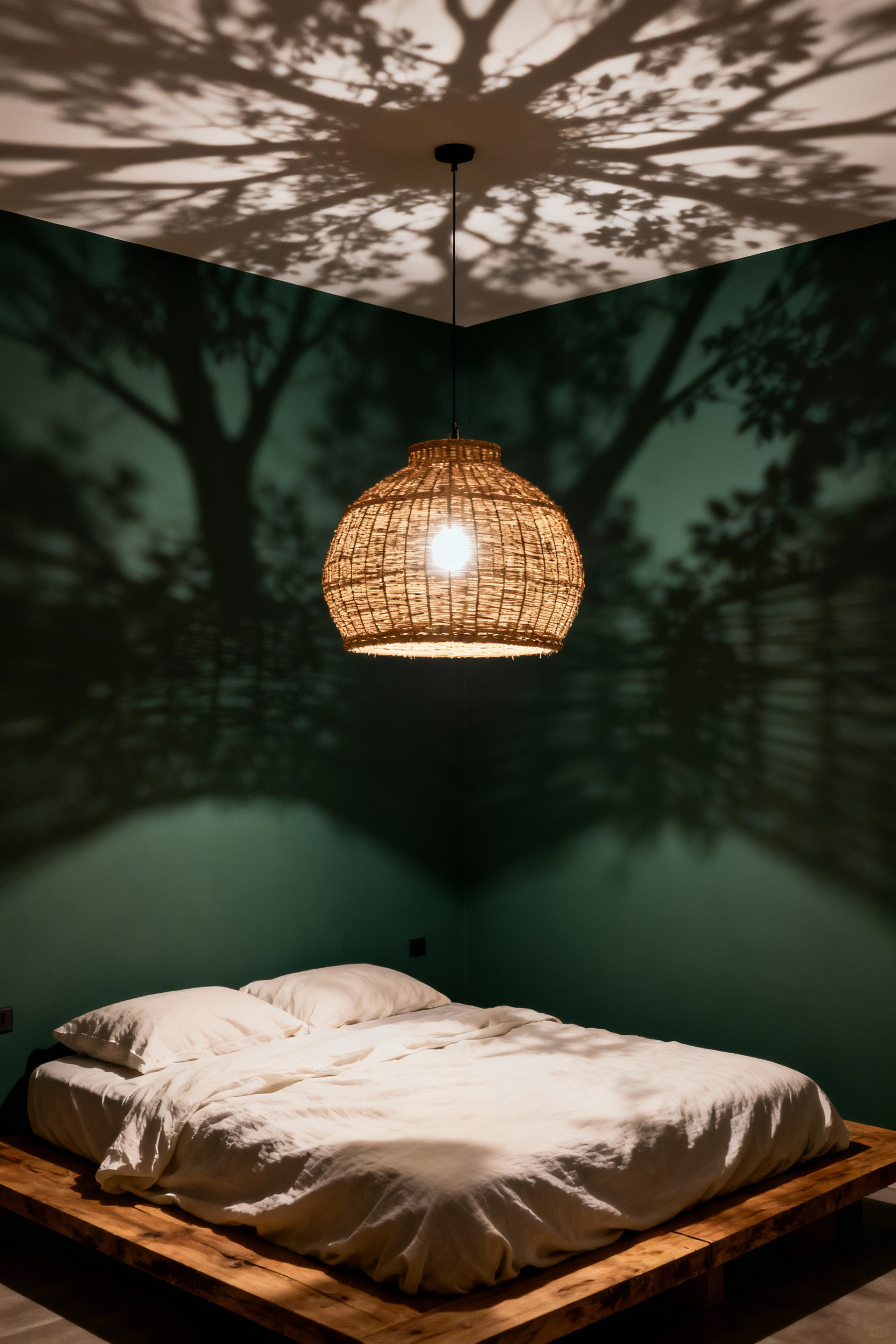
The quality of the light source is just as critical as the fixture itself for supporting well-being. Use warm-toned bulbs falling within the 2700K to 3000K range to replicate the golden hue of twilight or filtered sun. This spectrum supports your natural circadian rhythm and signals the body to relax. Pair these bulbs with dimmer switches to control shadow clarity and intensity, allowing you to shift from a bright ambiance to a cozy, cave-like retreat in the evening.
Finally, rethink your lighting angles to enhance this grounded atmosphere. Avoid relying solely on harsh overhead fixtures. Instead, layer light from lower vantage points using floor or table lamps. Positioning light low to the ground casts shadows upward and outward, adding depth to the room. This technique mimics the play of light through forest undergrowth, creating a tranquil, enclosed environment that fosters deep rest.
14. Circadian-Friendly Bulbs: Avoiding blue light to maintain the melatonin-preserving nature of the green room
Your green bedroom offers visual tranquility, but your lighting choices must actively support biological rest to complete the sanctuary. Standard LED bulbs often emit invisible blue wavelengths that suppress melatonin, the hormone necessary for deep sleep. To counter this, switch to ultra-warm bulbs with a Correlated Color Temperature (CCT) between 2000K and 3000K. This specific range mimics the soft glow of candlelight or a sunset, naturally limiting blue light exposure and reinforcing the restorative atmosphere of your space.
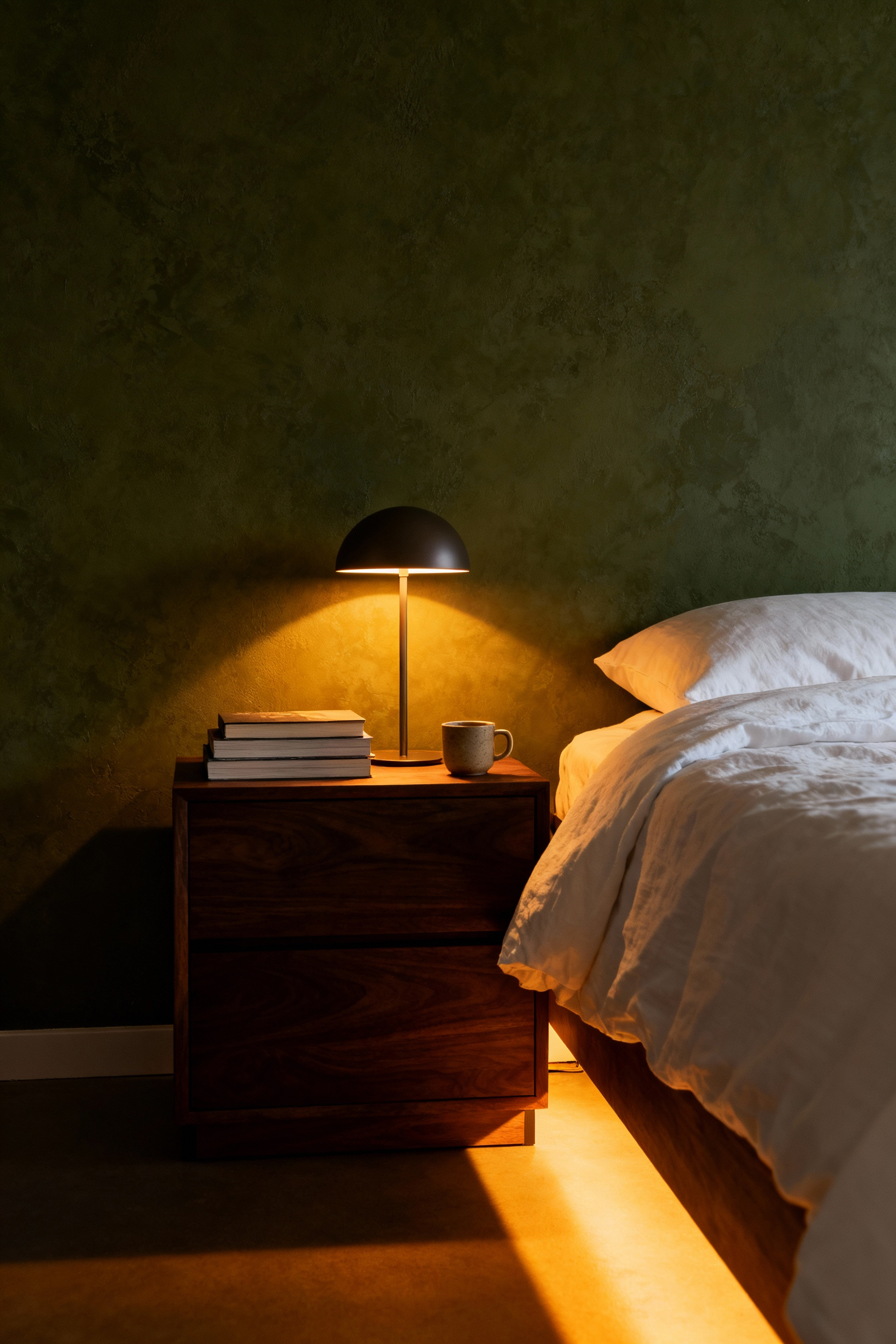
Incorporating technology allows for a seamless transition from active evenings to restful nights. Install smart or tunable white bulbs that automatically shift from a brighter, neutral light earlier in the evening to a deep, ultra-warm 2000K as you prepare for bed. For a powerful circadian intervention, utilize dedicated amber or red bulbs in bedside lamps for the final 60 to 90 minutes before sleep. These specific hues effectively block almost all blue and green wavelengths, providing the most biologically supportive environment for your rhythm.
Finally, control the intensity of your lighting to further signal your body to wind down. Even warm light can stimulate alertness if the brightness is too high. Equip every fixture in the bedroom with dimmers to lower lumen output as the night progresses. Reducing brightness complements the warm color spectrum and maintains the calming integrity of your green aesthetic, ensuring your environment nurtures both your mind and your physiology.
15. Stone and Crystal Accents: Using Jade or Moss Agate for cooling textures and visual harmony
Incorporating natural stone elements like Jade and Moss Agate effectively grounds a green bedroom aesthetic through both tactile and visual means. Moss Agate, characterized by its unique fern-like inclusions, mimics the complexity of a forest floor, adding organic visual depth to vanities or shelving. Beyond their appearance, these stones offer a distinct “cooling texture” that benefits the sensory experience of a room. Replacing standard dresser knobs with polished stone pulls introduces a cool-to-the-touch contrast against warmer wood or painted furniture, creating a moment of mindfulness during daily routines.
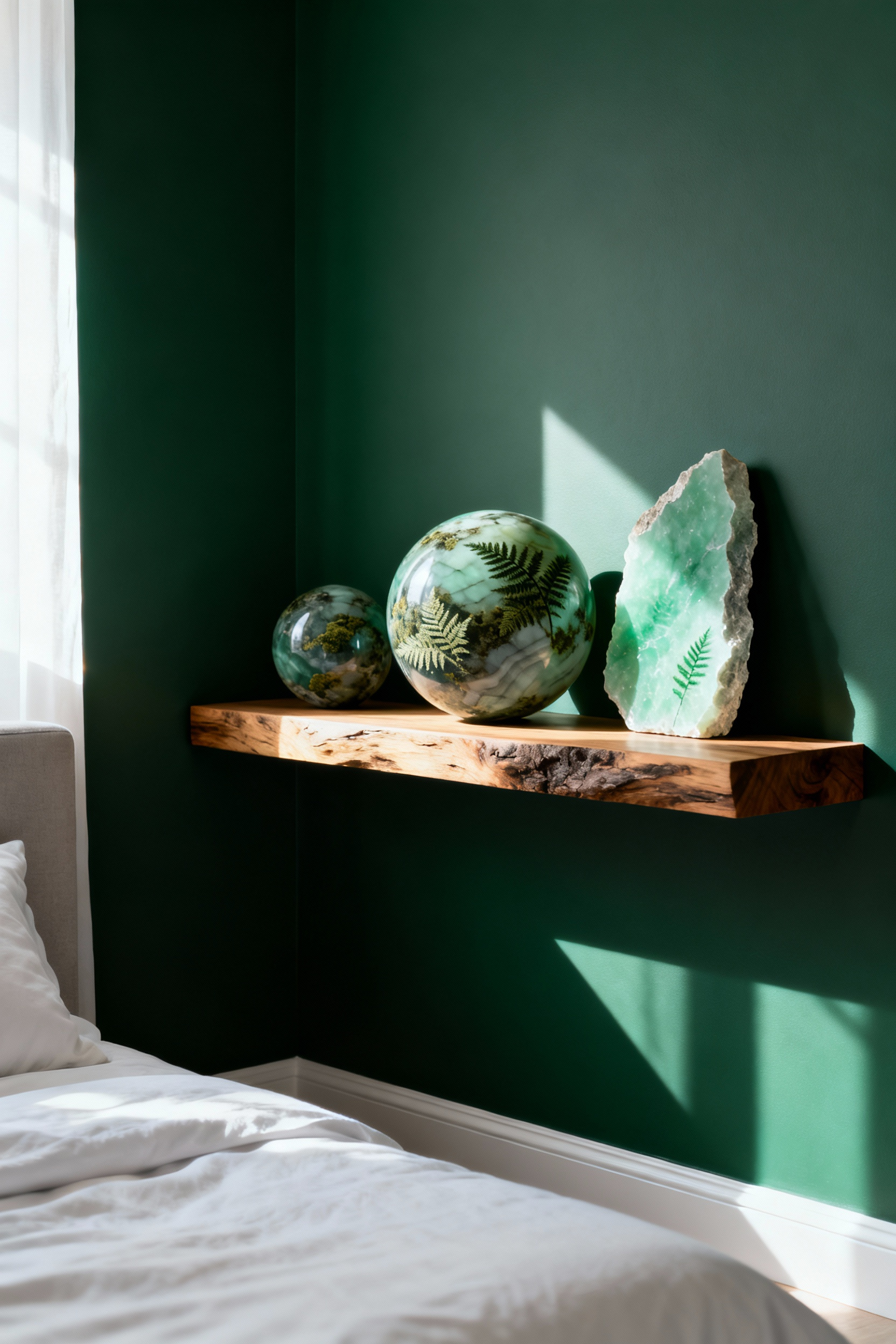
To elevate the design further, consider utilizing larger stone surfaces. A polished agate slab serves as an excellent vanity countertop or a decorative tray for organizing perfumes and jewelry, providing a sleek, luxurious foundation. To prevent these natural materials from appearing overly rustic, pair the opaque greens of Jade and Agate with warm-toned metals. Integrating brushed brass or soft gold hardware adds a layer of sophisticated elegance that highlights the stone’s natural patterns without overwhelming the space.
Strategic placement of these accents can also reinforce the restorative atmosphere essential for a bedroom. Placing a smooth Jade sphere or worry stone on a nightstand leverages the material’s traditional association with purity and serenity. This simple addition acts as a visual anchor, promoting a sense of harmony and psychological calm that helps transition the mind into a restful state before sleep.
16. Acoustic Softening: Using upholstered green walls or heavy tapestries to dampen city noise
External noise and internal echoes often undermine a sanctuary’s tranquility. To combat this, install preserved moss wall panels or textured green felt acoustic panels as a primary feature. These elements serve a dual purpose: they introduce a restorative biophilic aesthetic and utilize certified sound-absorbing materials to dampen noise. For maximum effectiveness, position these heavy acoustic elements on the wall behind your headboard or on walls shared with neighbors. This strategic placement absorbs vibrations before they reach your sleeping area.
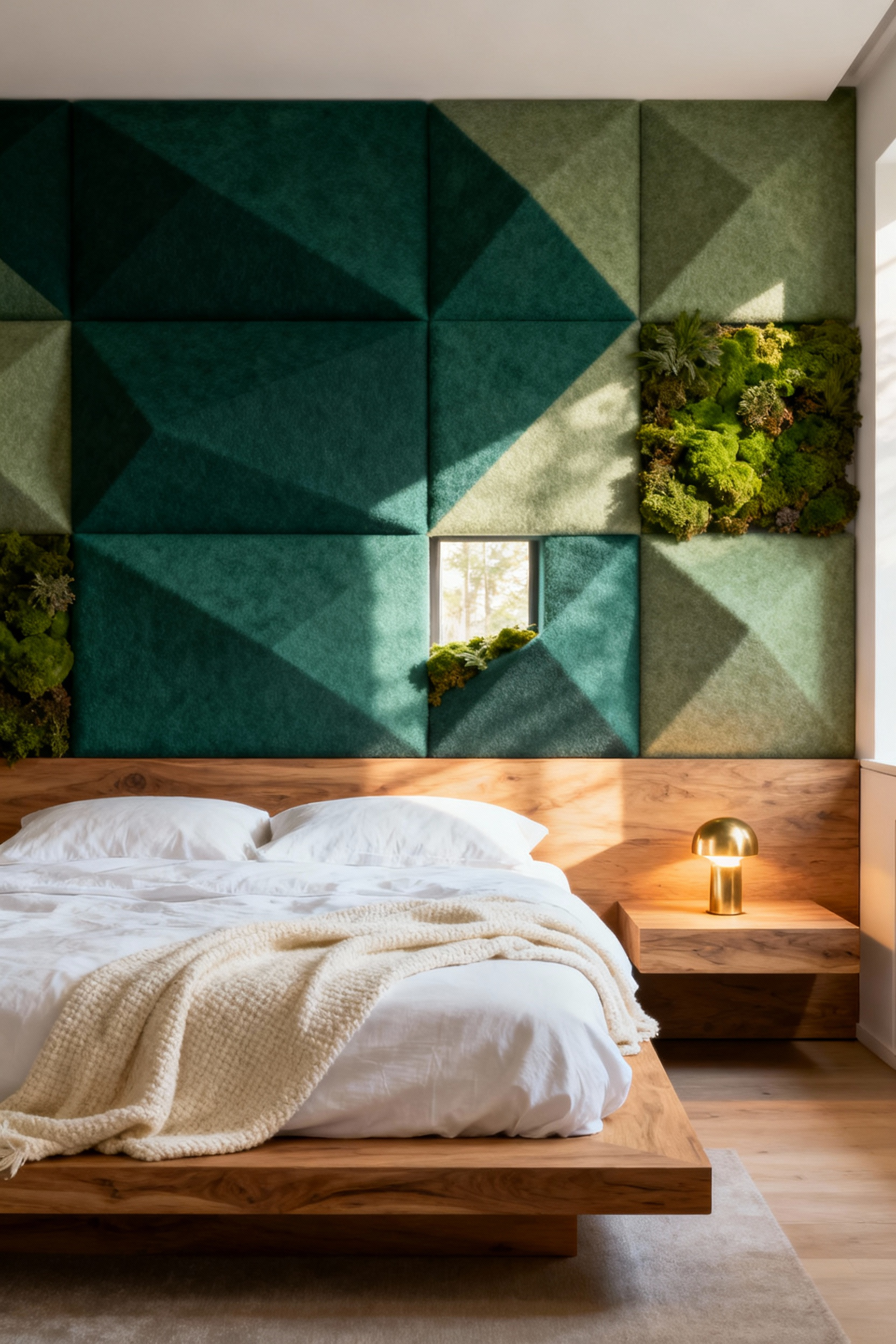
Soft textiles provide versatile, renter-friendly alternatives to permanent installations. Hang heavy, woven tapestries in calming deep green shades; the dense fabric traps sound waves far better than framed artwork or thin wallpaper. Extend this softening effect to the windows by installing floor-to-ceiling velvet or thermal-lined curtains. Shades like emerald or forest green add visual depth, while the plush texture acts as a formidable barrier against street sounds.
Complete the acoustic design by increasing the room’s overall soft surface area to minimize sound reflection. Pair wall treatments with a deep pile area rug, particularly if you have hardwood floors, and incorporate upholstered seating in green linen or wool. Layering these absorbent materials reduces reverberation and cultivates a quiet, serene environment essential for mental well-being.
Phase 5: Mindful Layout & Philosophy
Root your bedroom design in the principles of Biophilia to foster a deep, restorative connection with nature. This philosophy extends beyond simply adding potted plants; it requires a holistic integration of natural elements to reduce stress and regulate sleep cycles.
Prioritize a layout that maximizes natural light and airflow. Position your primary furniture to allow sunlight to saturate the space, as this exposure helps regulate your body’s circadian rhythm. Utilize sheer curtains and arrange the room to encourage cross-breezes, ensuring the circulation of fresh air essential for a healthy environment.
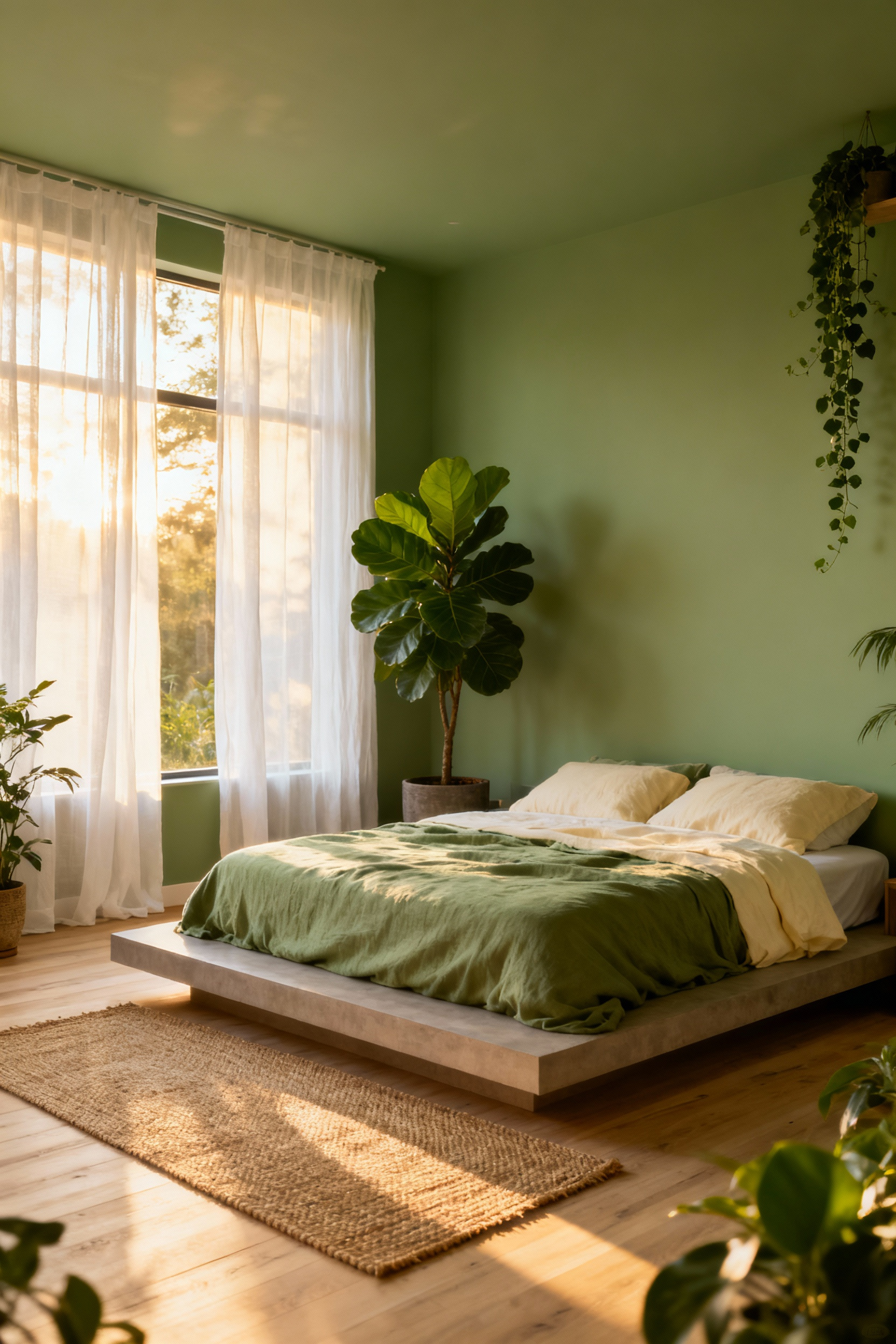
Select furnishings that mimic the organic forms found in the outdoors to soften the room’s energy. Replace rigid, angular pieces with furniture featuring gentle curves and flowing lines. To further engage the senses, layer tactile natural materials throughout the space. Incorporating elements like smooth, weathered wood, rattan, bamboo, wool, and linen creates a grounding sensory experience that actively alleviates stress.
Complete the sanctuary by adopting “Mindful Minimalism.” Embrace a “less is more” approach by retaining only functional items or those that spark joy, fostering the mental clarity found in styles like Japandi. Reinforce this harmony through color psychology and Feng Shui. Apply soft, calming shades of green—such as sage, moss, or deep forest green—to the walls or textiles. In Feng Shui, these tones represent growth and renewal, anchoring the room as a balanced space for rest.
17. The Morning View Layout: Positioning the bed to face the most natural light or greenery source
Position your bed to prioritize the most restorative view available. Whether it serves as a frame for a mature tree or simply captures the morning sky, this visual connection to nature grounds you immediately upon waking. Aligning your sleeping area to receive diffused morning light does more than illuminate the room; it biologically regulates your circadian rhythm. Early exposure to natural light promotes healthy sleep-wake cycles and significantly boosts morning mood and energy levels.
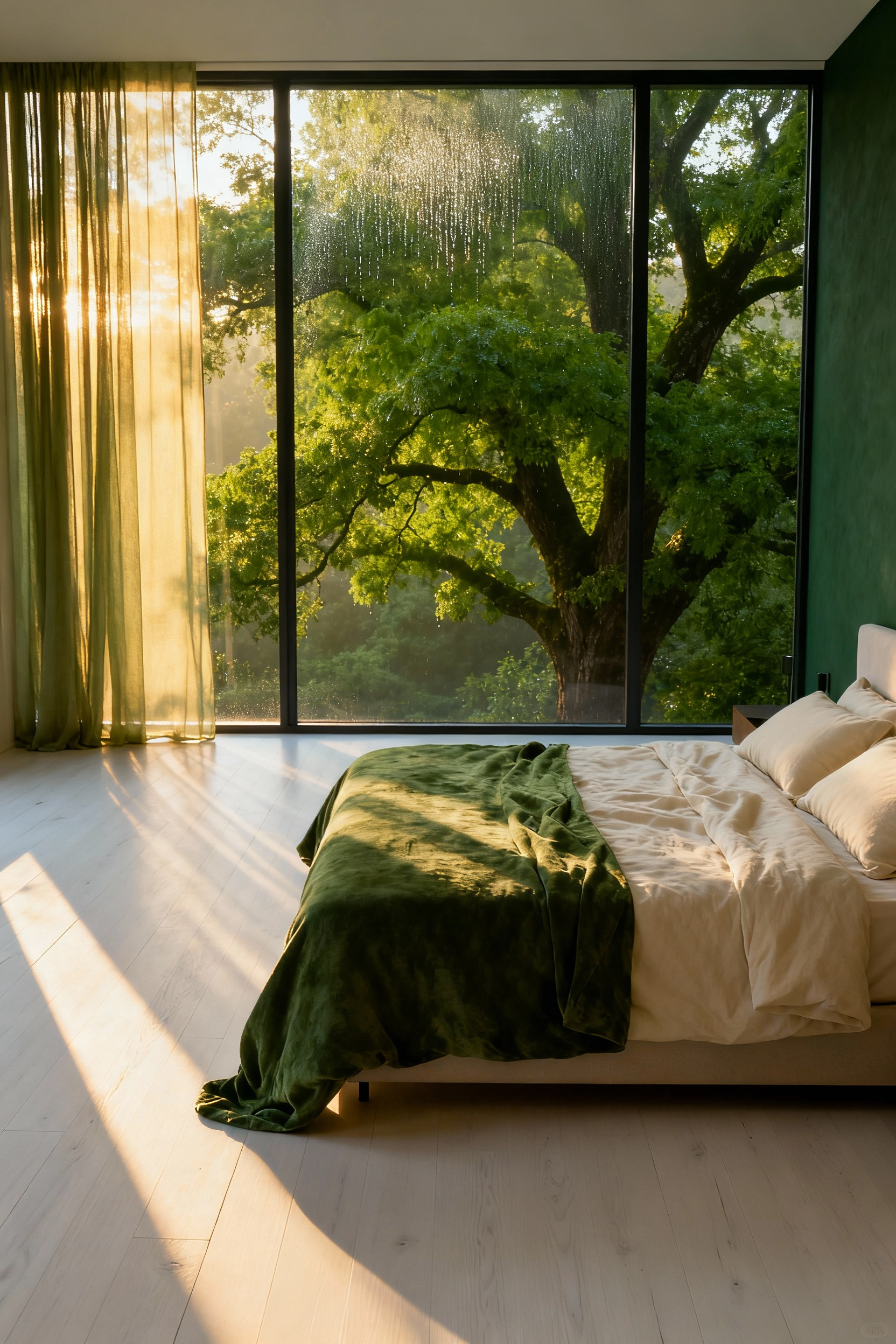
Balance the desire for a view with the psychological need for security by placing the bed against a solid wall at a diagonal to the window. This arrangement maintains a “Commanding Position,” allowing you to enjoy the outdoors without feeling exposed or vulnerable. To manage the quality of this light, install sheer or linen drapes. These treatments diffuse harsh glare and heat while ensuring the space remains bright and energizing throughout the morning.
If your architecture lacks an inspiring outdoor connection, create an internal focal point instead. Position a large, statement plant, such as an Olive Tree or Fiddle Leaf Fig, directly in your line of sight. This introduces living greenery to anchor your gaze, ensuring the biophilic benefits remain present regardless of your external surroundings.
18. The ‘Breathing Room’ Ratio: ensuring 30% of the green space remains negative space for mental clarity
To cultivate true restoration, biophilic design requires strict visual balance. The “Breathing Room” Ratio applies the classic interior design principle of negative space to your greenery to prevent sensory overload. This rule dictates that for every visually dense area—such as a tiered plant stand or a botanical gallery wall—approximately 30% of the immediate surrounding area must remain empty. Without this buffer, rich green details become visual noise. By preserving this negative space, you allow the brain to rest and process the environment without strain, promoting genuine mental clarity.
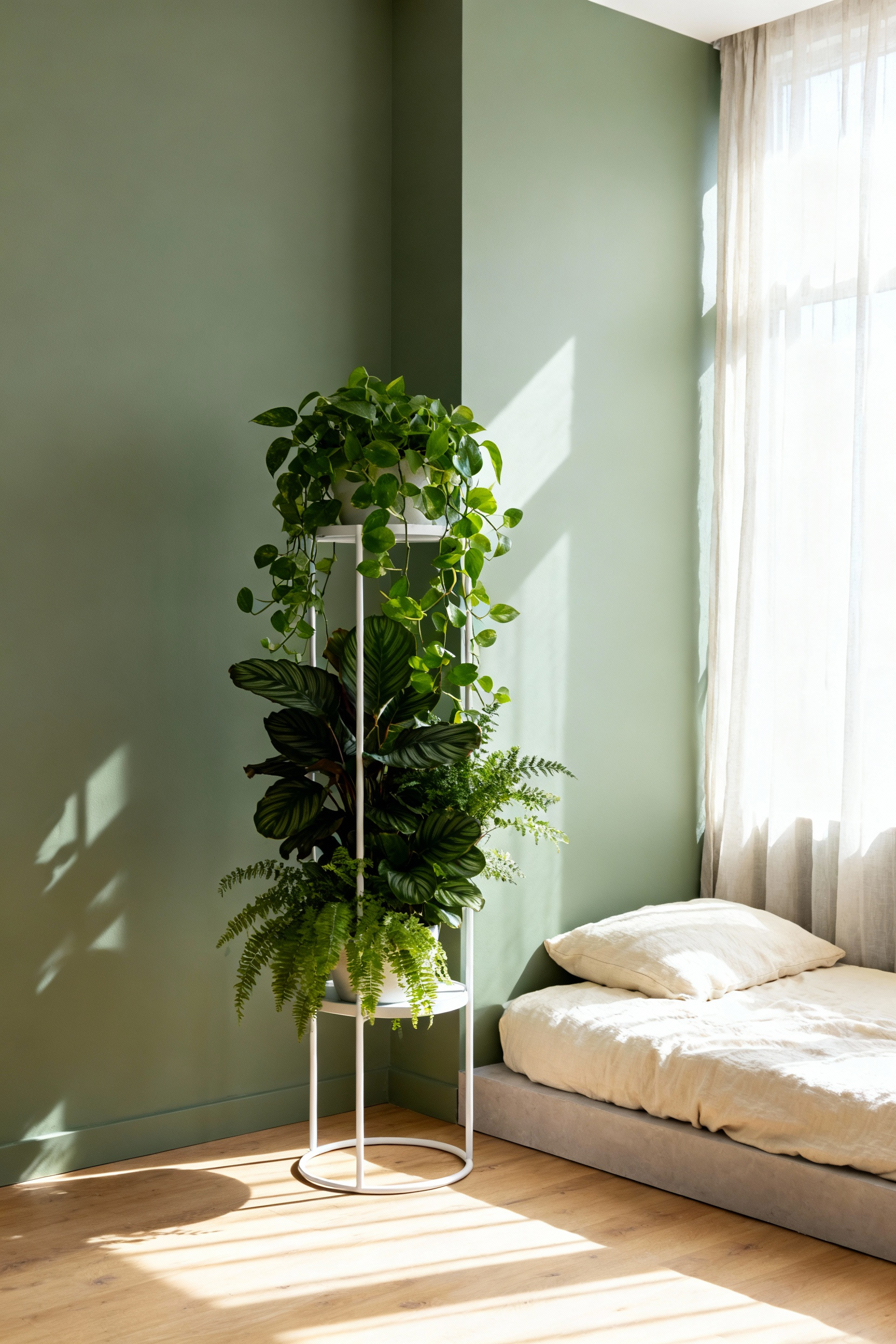
Implementation requires strategic placement rather than the reduction of greenery. Treat large specimen plants, like a Fiddle Leaf Fig or Monstera, as focal points by placing them against a blank or light-colored section of wall. This surrounding emptiness serves as a frame, amplifying the plant’s calming effect. For smaller collections, group plants on a single tray to visually contain the “positive space,” ensuring the rest of the bedside table or dresser remains completely clear. This technique improves functional flow while maintaining the necessary ratio for visual relief.
This principle extends beyond live plants to all green architectural elements. If a room features green paint or extensive botanical artwork, you must leave at least one main stretch of wall entirely bare or minimally styled. This blank canvas signals restoration to the subconscious. Similarly, ensure a vibrant green rug is bordered by ample exposed flooring. By strictly maintaining this 30% margin of negative space, you transform a potentially chaotic collection of nature into a cohesive sanctuary that supports well-being.
Conclusion: From Aesthetic to Anesthetic (transforming the bedroom into a healing vessel)
Transforming your bedroom requires looking beyond the visual to create a space that actively nurtures your health. Adopting a green bedroom aesthetic based on biophilic principles is the first step toward creating a truly restorative retreat. While a coat of sage paint sets the mood, true restoration happens when you engage every sense.
You must prioritize clean air and tactile comfort over fleeting trends. By layering low-VOC materials, air-purifying plants, and organic textures, you turn a simple color palette into a functional tool for wellness. The room shifts from a static image to a living, breathing vessel that lowers your cortisol levels and supports deep recovery.
This holistic approach redefines luxury as the absence of stress. As we move forward, our homes must serve as the ultimate antidote to a high-stimulation world, and your sleep sanctuary provides the foundation for a grounded life. Begin your transformation by auditing your current sensory inputs. Replace harsh, cool lighting with warm bulbs and introduce a single calming scent, such as lavender or jasmine. These deliberate adjustments immediately signal to your body that it is time to heal and cultivate a truly refined sanctuary.
- **
Frequently Asked Questions
What colors pair best with green for a luxury bedroom aesthetic?
For a luxury aesthetic, pair green (especially deep emerald or muted sage) with elevated neutrals and warm metallics. Use creamy whites, ivory, or unbleached linen for bedding. Accent with grounding tones like walnut wood and charcoal gray. Finish the space with soft gold, brushed brass, or copper fixtures to introduce warmth and opulence, ensuring the palette feels rich and refined.
What is the most calming shade of green for a sleep sanctuary?
Sage green is widely considered the most calming shade for a sleep sanctuary. This muted, dusty green contains grey undertones, preventing it from feeling overly vibrant or stimulating. It connects directly to the natural world, actively reducing cortisol levels and promoting a state of deep physiological rest (the parasympathetic nervous system response).
How can I incorporate the green aesthetic without painting my walls?
You can achieve a profound green aesthetic using layered textiles and large focal elements. Invest in a substantial hunter green velvet headboard or heavy emerald curtains. Layer your bed with deep moss and sage linen bedding. Strategically place large, architectural indoor plants (like Fiddle Leaf Figs or Birds of Paradise) in floor planters to create vertical green accents that dominate the visual field.