
I promise you a kitchen that feels less like a room and more like a storybook of your life. After years spent breathing new life into forgotten mid-century treasures, I’ve learned that the most soulful spaces master the beautiful balance of eclectic kitchen design. These aren’t trends that will feel dated in a year; these are 20 foundational secrets to creating a space that honors history while serving you beautifully today.
Think of me as a fellow treasure hunter. My passion is seeing the potential in a piece others might overlook—a chair with good bones, a cabinet with a story etched into its grain. True eclecticism isn’t about just mixing things up; it’s a heartfelt act of curating. It’s about understanding why you love something and finding a way for it to sing in harmony with everything else. Ready to move beyond the showroom and create something truly, wonderfully yours? Let’s begin.
Foundations of Eclectic Harmony: Curating Your Vision
This is where the real magic starts—not with paint swatches, but with a philosophy. Before we pick a single thing, we need to understand the soul of the space we want to create. This is about building a foundation of intention so that every choice, from the backsplash to the salt shaker, feels purposeful and personal.
1. Let the Story Lead
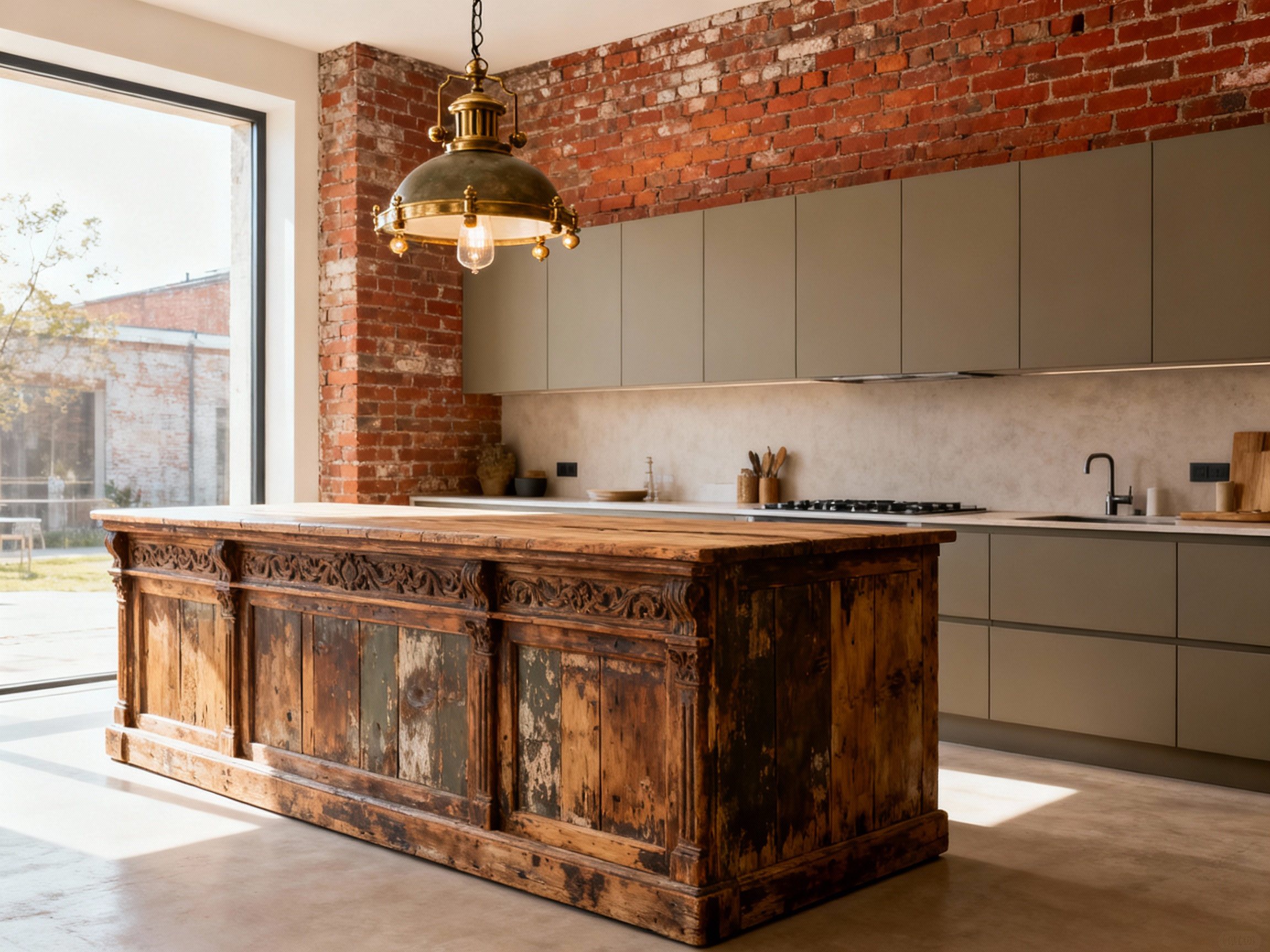
The most captivating rooms I’ve ever stepped into always have one thing in common: they tell a story. An eclectic kitchen should be your autobiography written in furniture, tile, and texture. Before you even think about buying something, ask yourself: what chapter does this add? That reclaimed butcher block isn’t just a surface; it’s a testament to every meal prepared on it before it found its way to you.
What I always tell my readers is to start with a piece that means something. Maybe it’s your grandmother’s worn Danish modern dining table, or the set of mismatched ceramic mugs you collected on your travels. We build the room around that soul piece. It becomes our North Star. In my work restoring vintage pieces, I’ve learned that the nicks and scratches are part of the narrative. Don’t hide them—honor them. Let your kitchen be a gallery of your life, not just a place to cook.
2. The Artful Dance of Juxtaposition
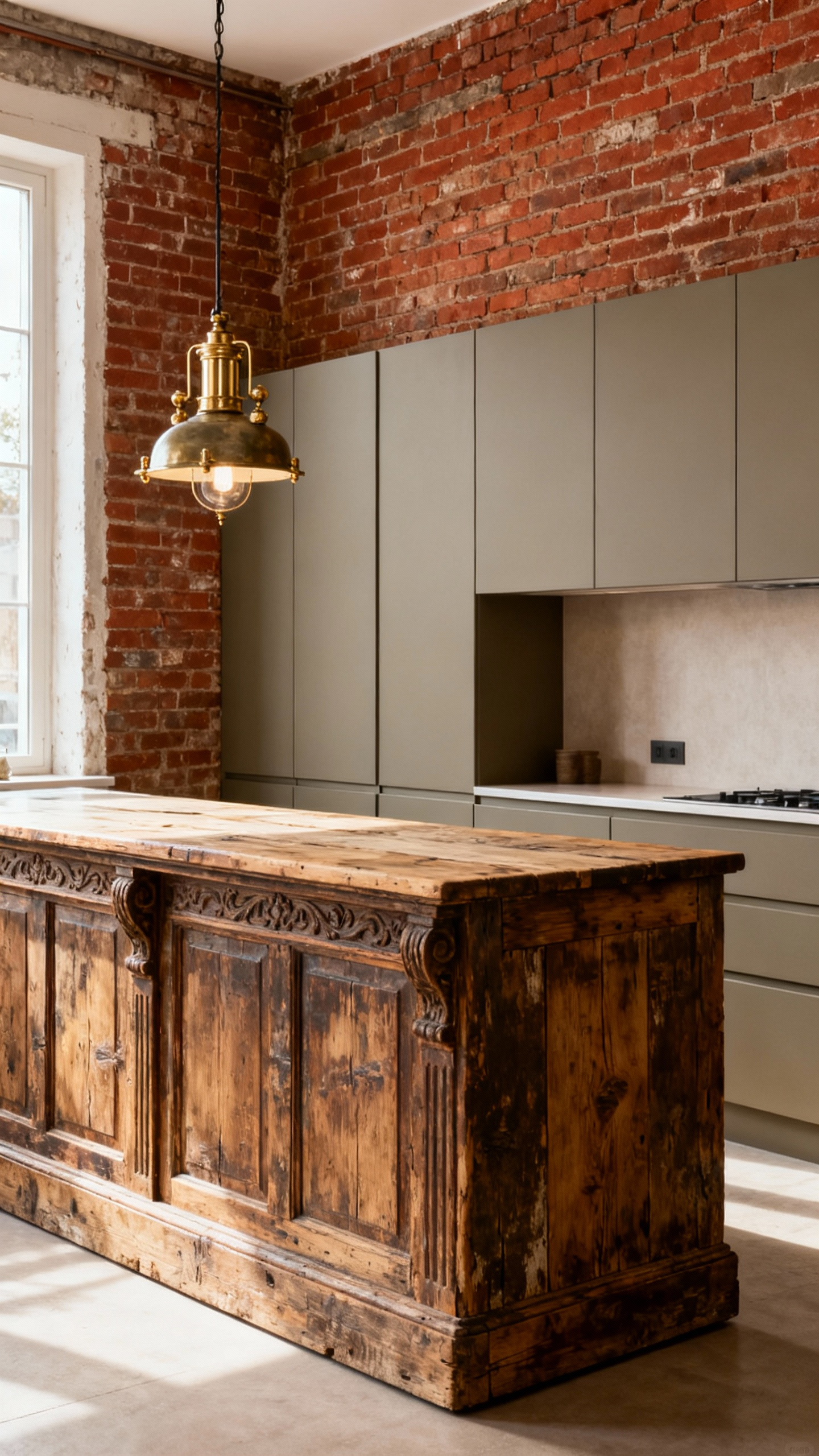
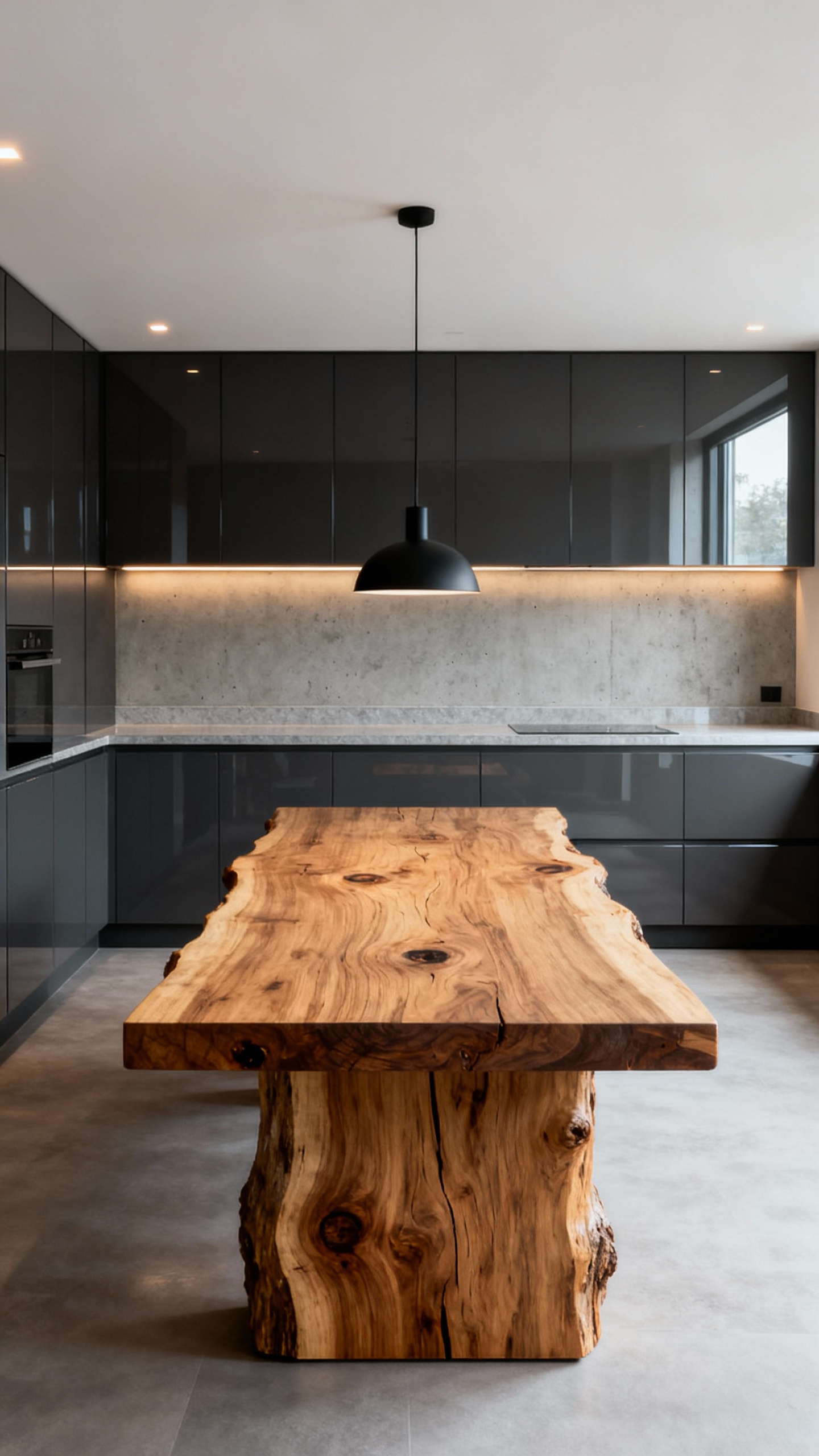
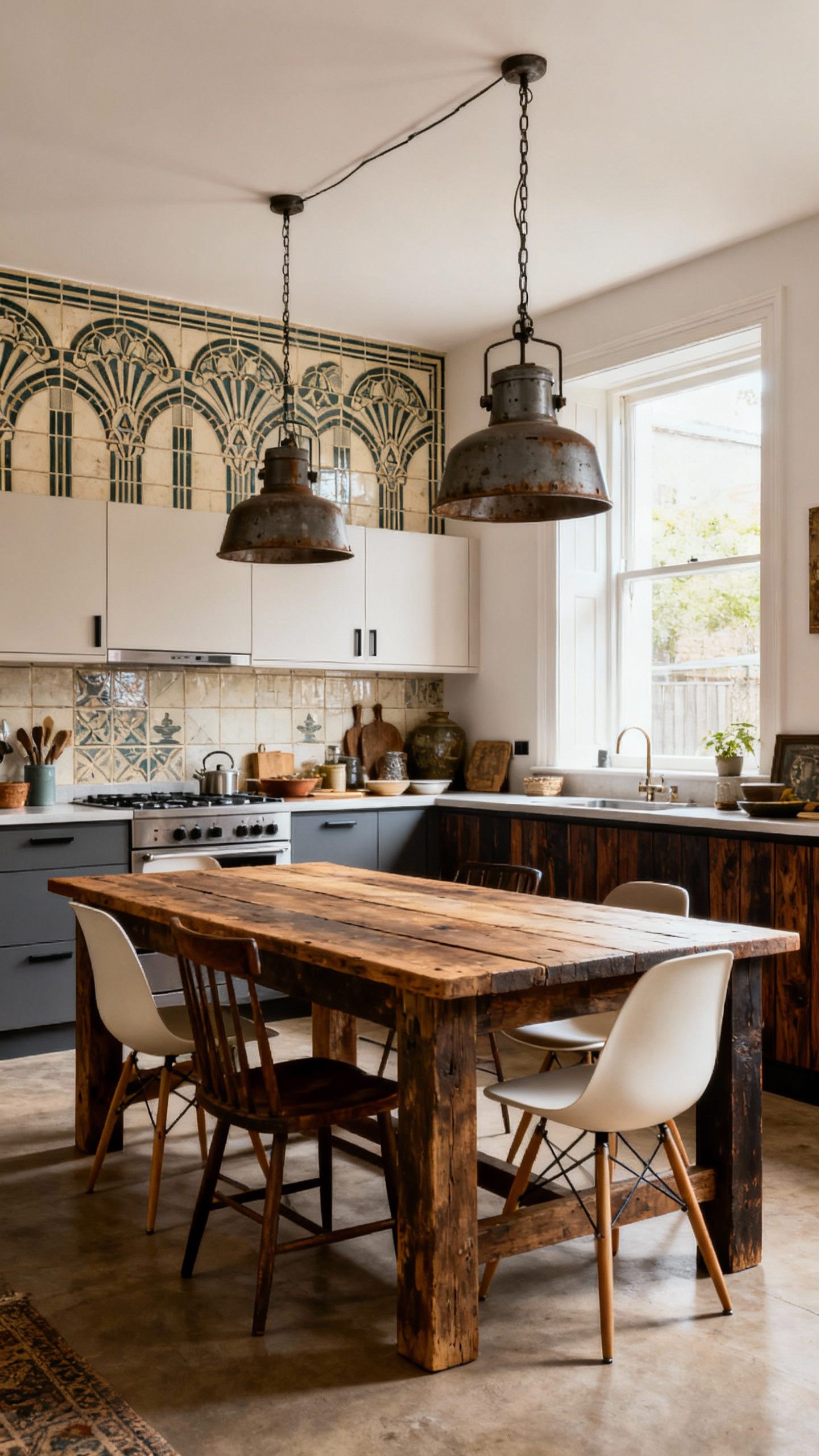
Once you have your story’s anchor, the real fun begins. Juxtaposition is just a fancy word for putting things together that aren’t supposed to go together—and watching them make each other look even better. It’s the delightful tension between old and new, sleek and rustic, raw and refined. Imagine a set of sculptural, molded plastic Eames chairs gathered around a rugged, centuries-old farm table. One speaks of industrial innovation, the other of earthy history, and together, they have a fascinating conversation.
This is about creating energy. Pair the cool, quiet strength of stainless steel appliances with the warm, hand-hewn texture of a reclaimed wood backsplash. The contrast is what makes your heart beat a little faster. From my professional experience, the key is to be bold but deliberate. Don’t just throw things together. Let one element be the star and the other the beautiful supporting cast. It’s this thoughtful dance that separates a curated eclectic space from a chaotic one.
3. The Unifying Thread
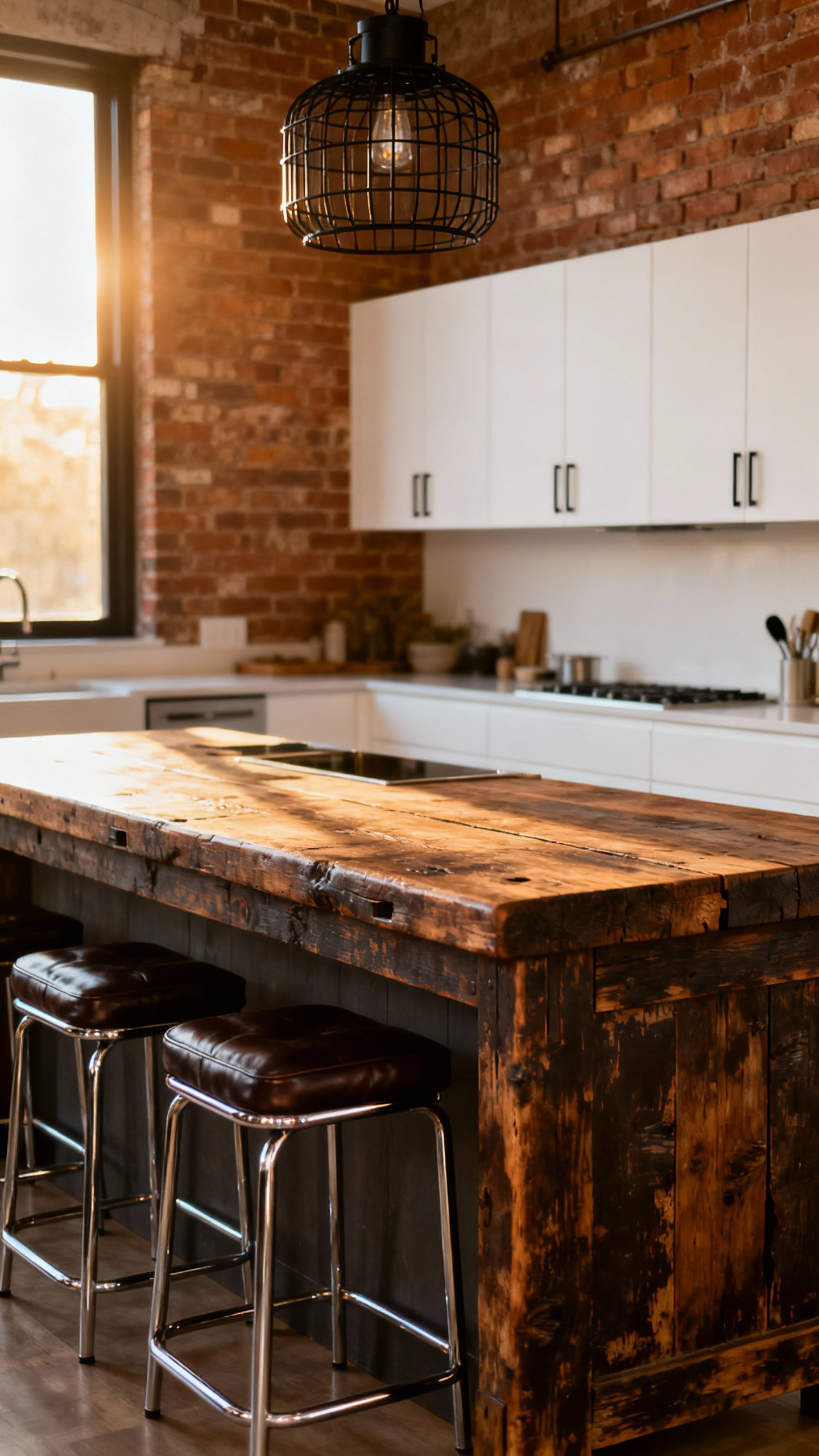
So, how do we keep this beautiful, multi-layered kitchen from feeling like a jumble sale? With a unifying thread. This is a subtle, repeated element that quietly ties everything together. It could be a color, a material, a texture, or even a shape that whispers “we all belong” to your diverse collection of treasures. It’s the secret to making eclecticism feel intentional and serene.
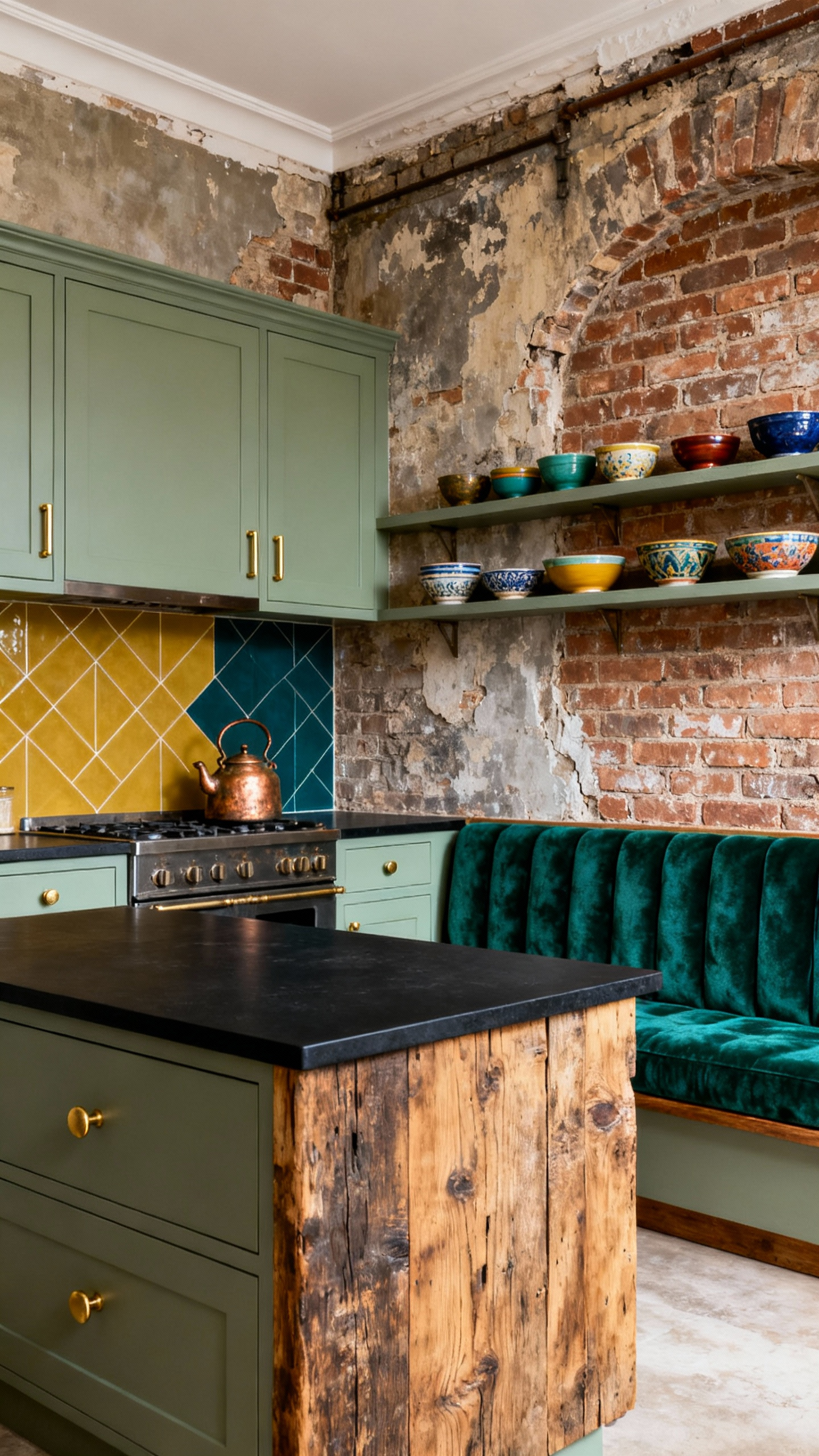
I’ve seen this play out beautifully with color. You might have a Danish teak sideboard, an industrial steel stool, and a rustic ceramic vase, but if they all share a subtle note of warm ochre or deep teal, they feel like family. Or maybe the unifying thread is a material. What if all your metal finishes—from the lighting to the cabinet pulls to the faucet—are a soft, unlacquered brass? Even if the styles are worlds apart, that consistent finish creates a sophisticated, cohesive rhythm that guides the eye peacefully through the space.
4. Playing with Scale and Weight
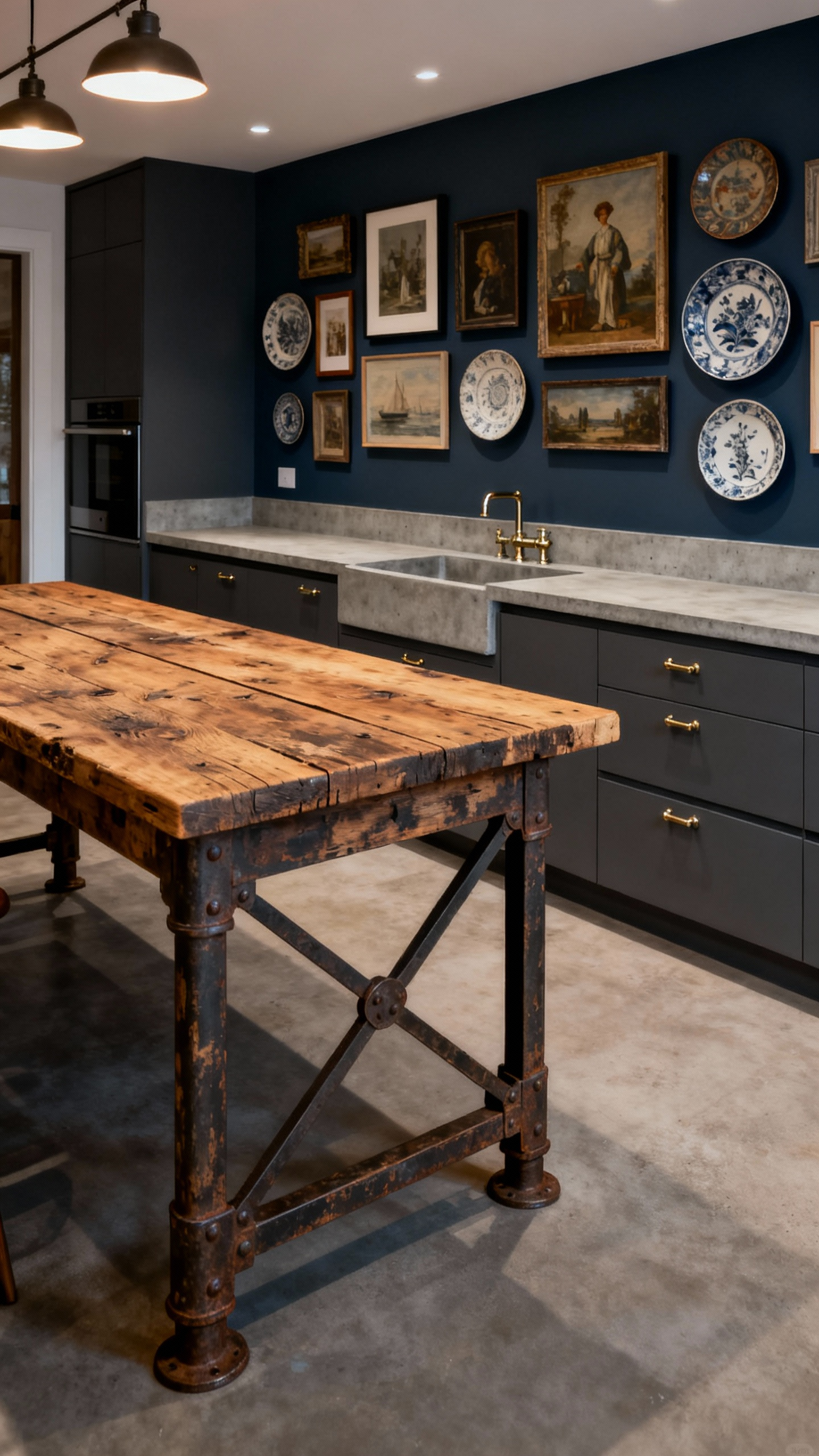
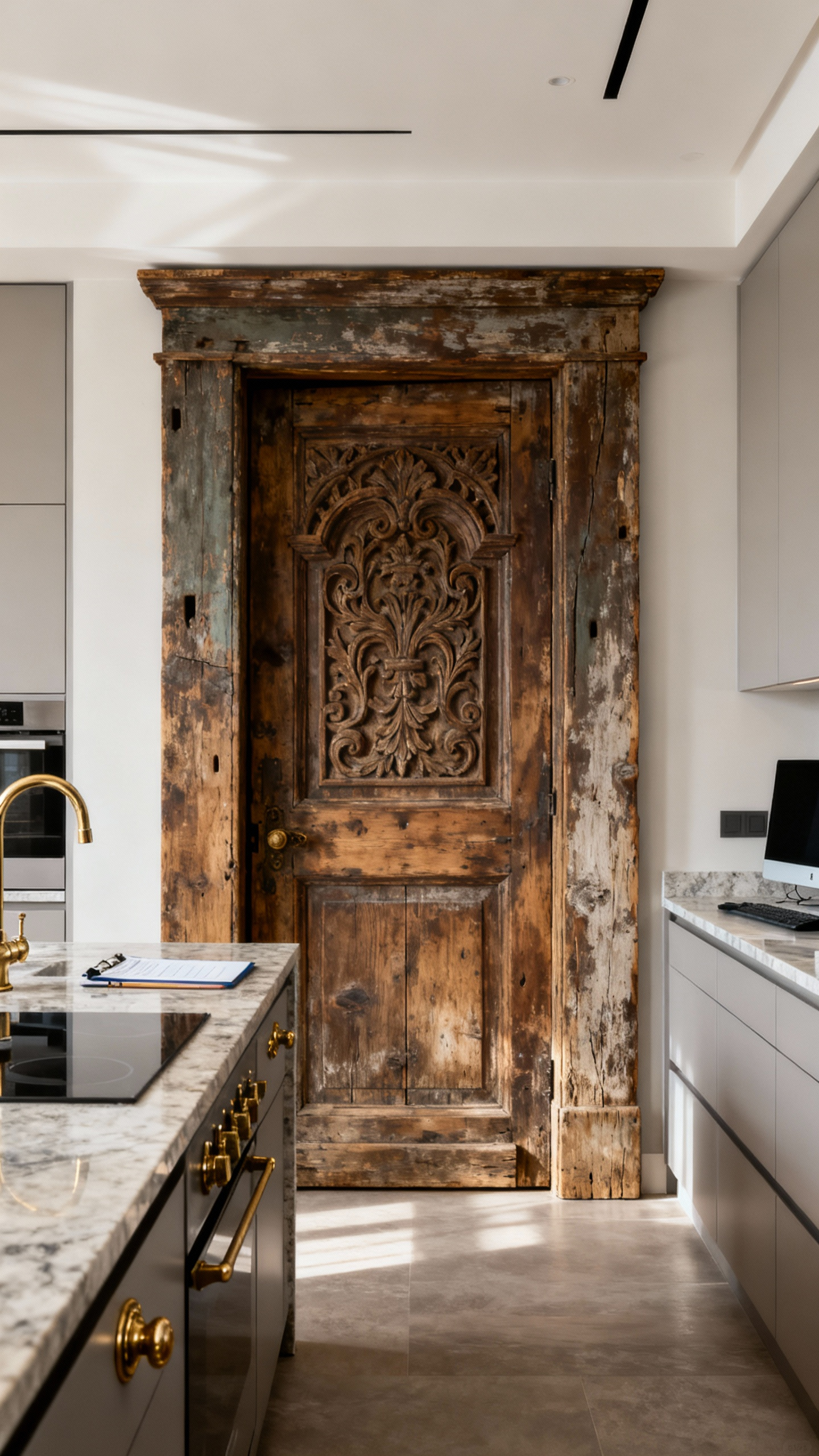
Don’t be afraid to go big. Seriously. One of the quickest ways to create drama and a sense of curated confidence is to play with scale. An eclectic kitchen comes alive when you orchestrate the visual weight of your pieces. A massive, oversized antique French pantry cabinet against a clean, modern wall isn’t overbearing; it’s a statement. It anchors the whole room and gives the smaller, more delicate items a powerful counterpoint to play against.
Conversely, a grouping of small, delicate things can have just as much impact. I once helped a client group a dozen tiny, framed botanical prints on one wall of her kitchen. Individually, they were sweet. Together, they became a breathtaking focal point. Think about pairing a hefty, concrete-topped island with light, leggy barstools, or hanging a massive, sculptural pendant light in a smaller kitchen. It’s this confident manipulation of proportion that gives a room its dynamic energy and personality.
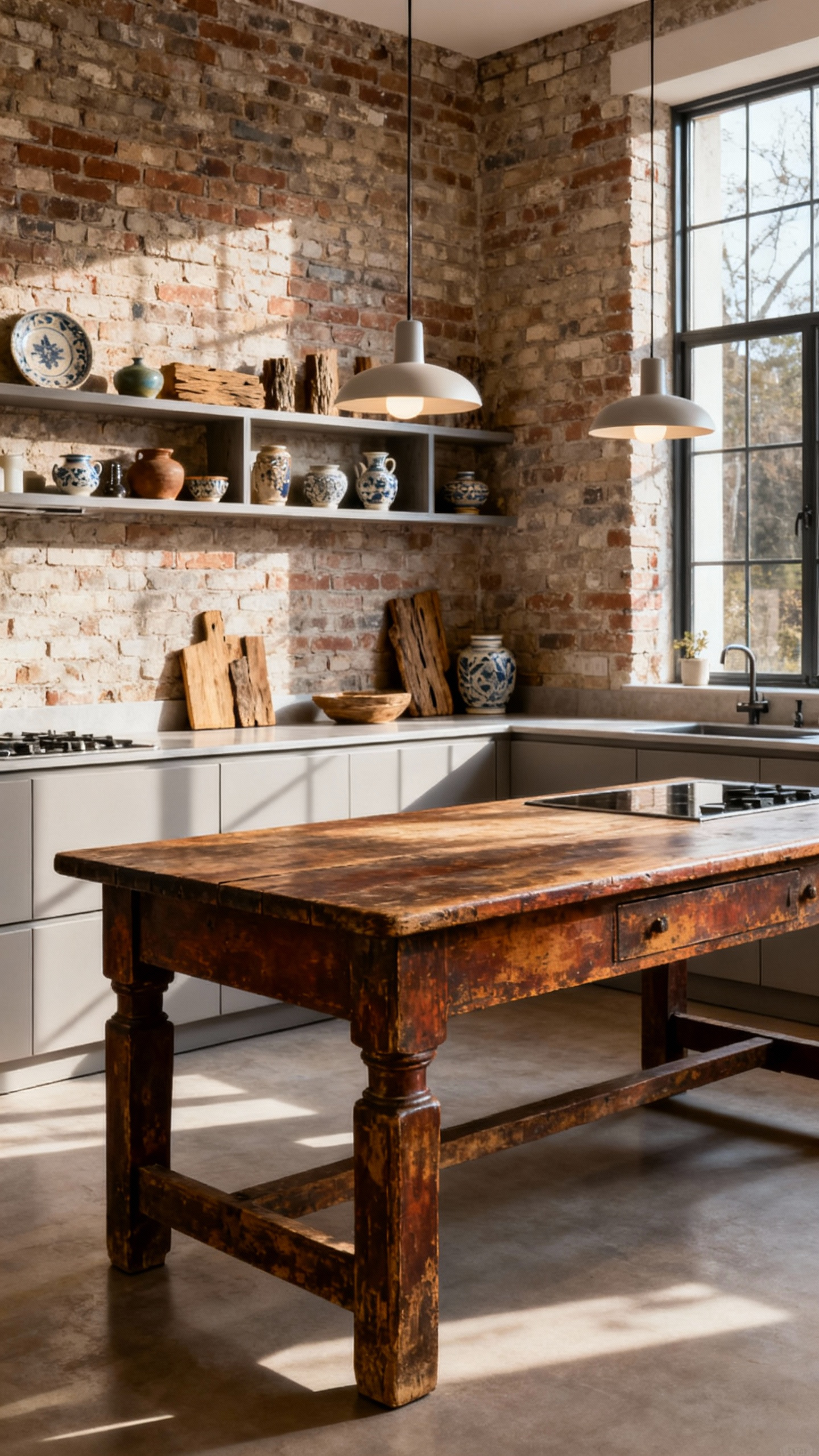
Mastering Material Juxtaposition: A Tactile Symphony
The true soul of an eclectic kitchen often lies in its texture—what you can see and feel. This is where we move beyond just color and style and start thinking like sculptors, creating a rich landscape of surfaces that invite you to touch and experience the space in a deeper way.
5. Embracing the Beauty of Patina
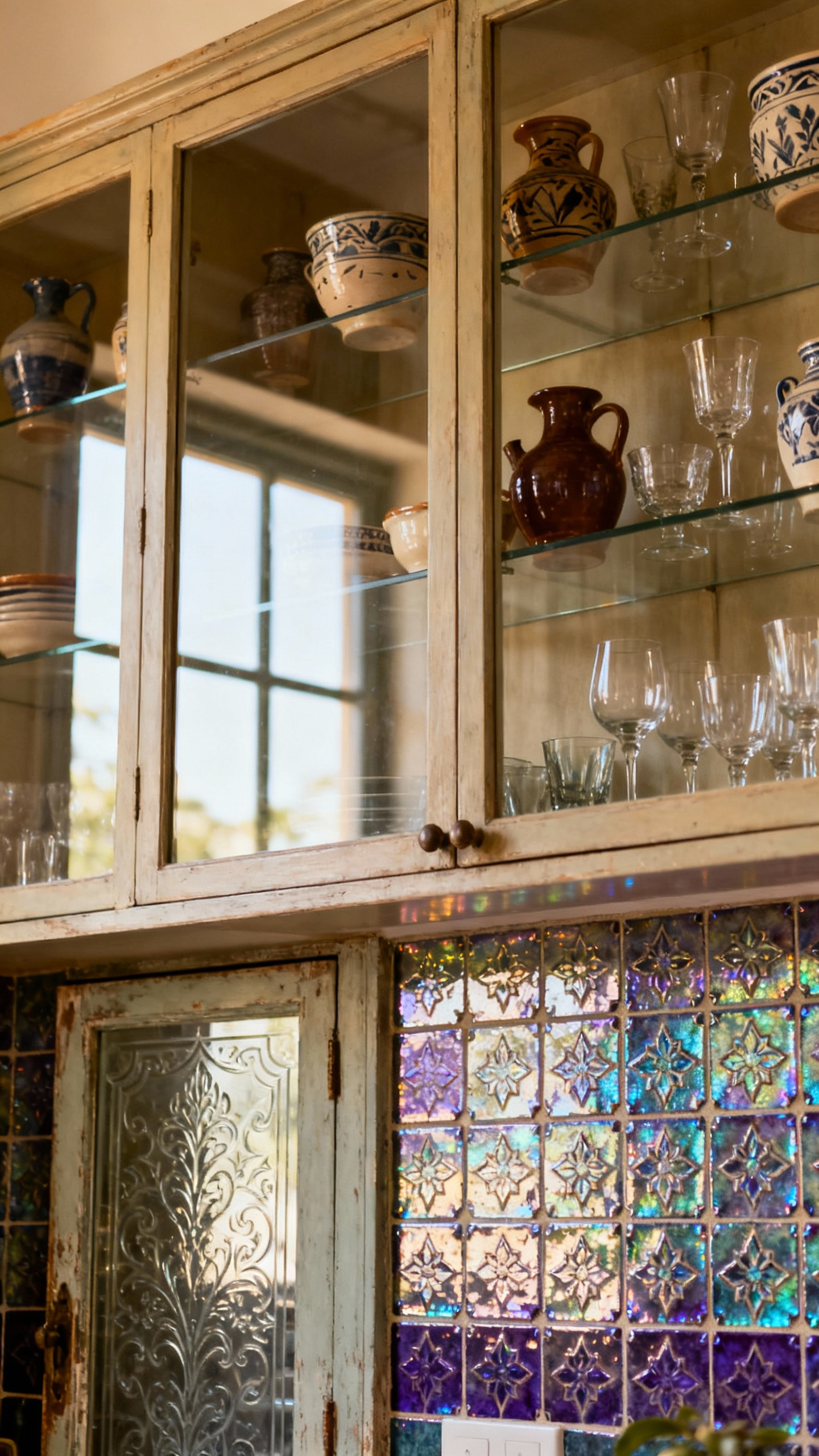
There’s a reason we treasure hunters get so excited about a find with a bit of age on it. It’s the patina—that soft sheen on old brass, the gentle fading on worn wood, the crackled glaze on a vintage tile. These are the marks of a life well-lived. In a world obsessed with the new and flawless, embracing patina is a quiet act of rebellion. It infuses a kitchen with a soulful depth that brand-new items simply can’t replicate.
I learned this early in my mid-century modern restoration work. Trying to sand away every trace of history from a piece often strips it of its character. Instead, I learned to clean and honor the patina. In your kitchen, this means choosing unlacquered brass hardware that will darken with every touch, or finding a salvaged zinc countertop that will record the history of your meals in its subtle watermarks and stains. This isn’t damage; it’s a story unfolding right in your home.
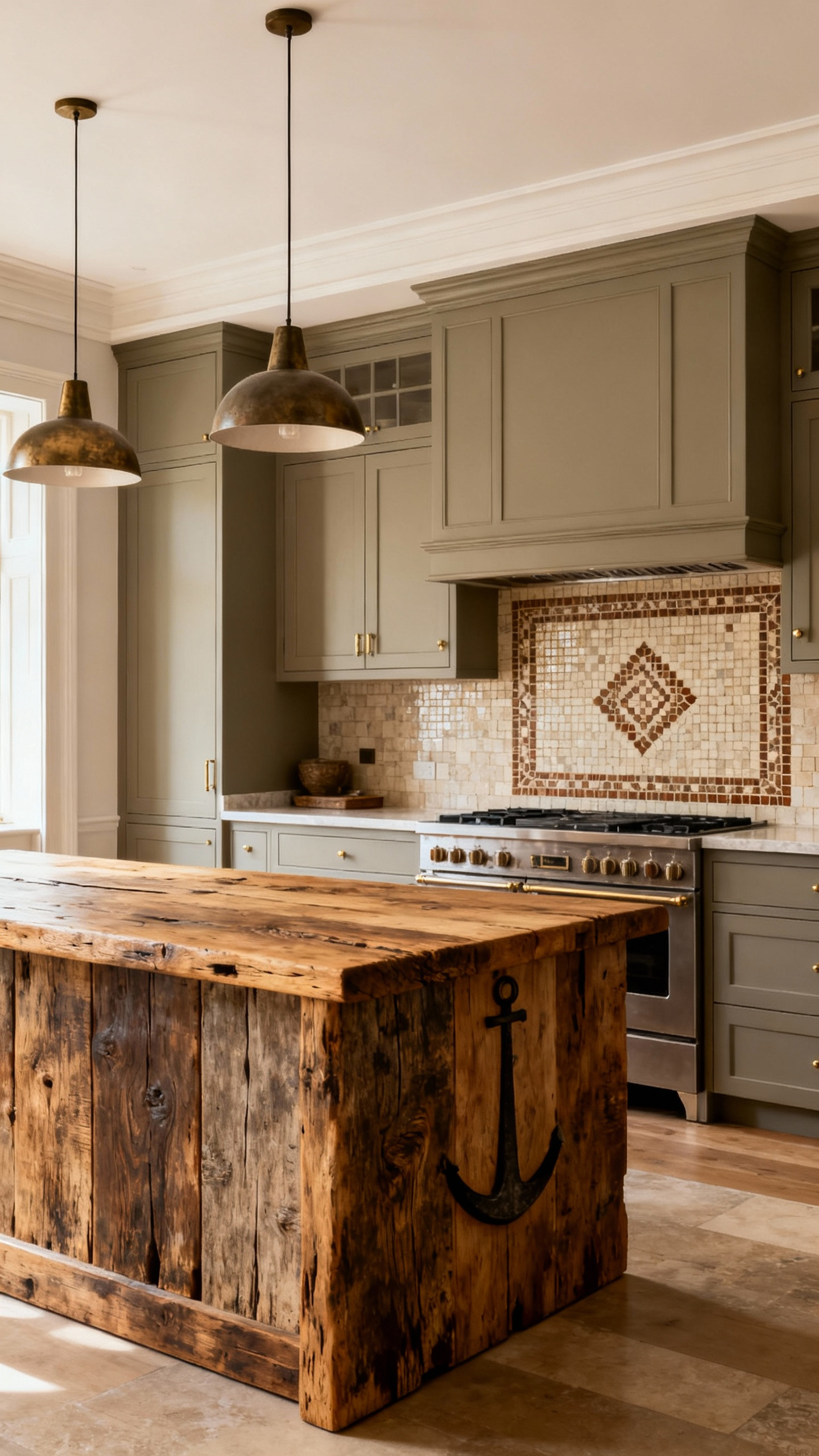
6. Weaving the Natural with the Industrial
One of my favorite pairings is the tension between something grown and something made. Think of the rugged honesty of an exposed brick wall as the backdrop for smooth, warm walnut shelves. Or the cool, machine-age precision of a stainless-steel island softened by a collection of handmade earthenware bowls. This combination creates a beautiful balance—a space that feels both grounded and modern, efficient and warm.
The key is letting each material be its authentic self. Don’t try to make an industrial steel beam look rustic. Let it be what it is. I’ve noticed that this pairing works best when you honor the textures. The smooth gleam of a factory-style pendant light is made even more beautiful when it’s hanging over a rough-sawn reclaimed wood table. It’s a conversation of opposites that creates a harmony far richer than using one style alone.
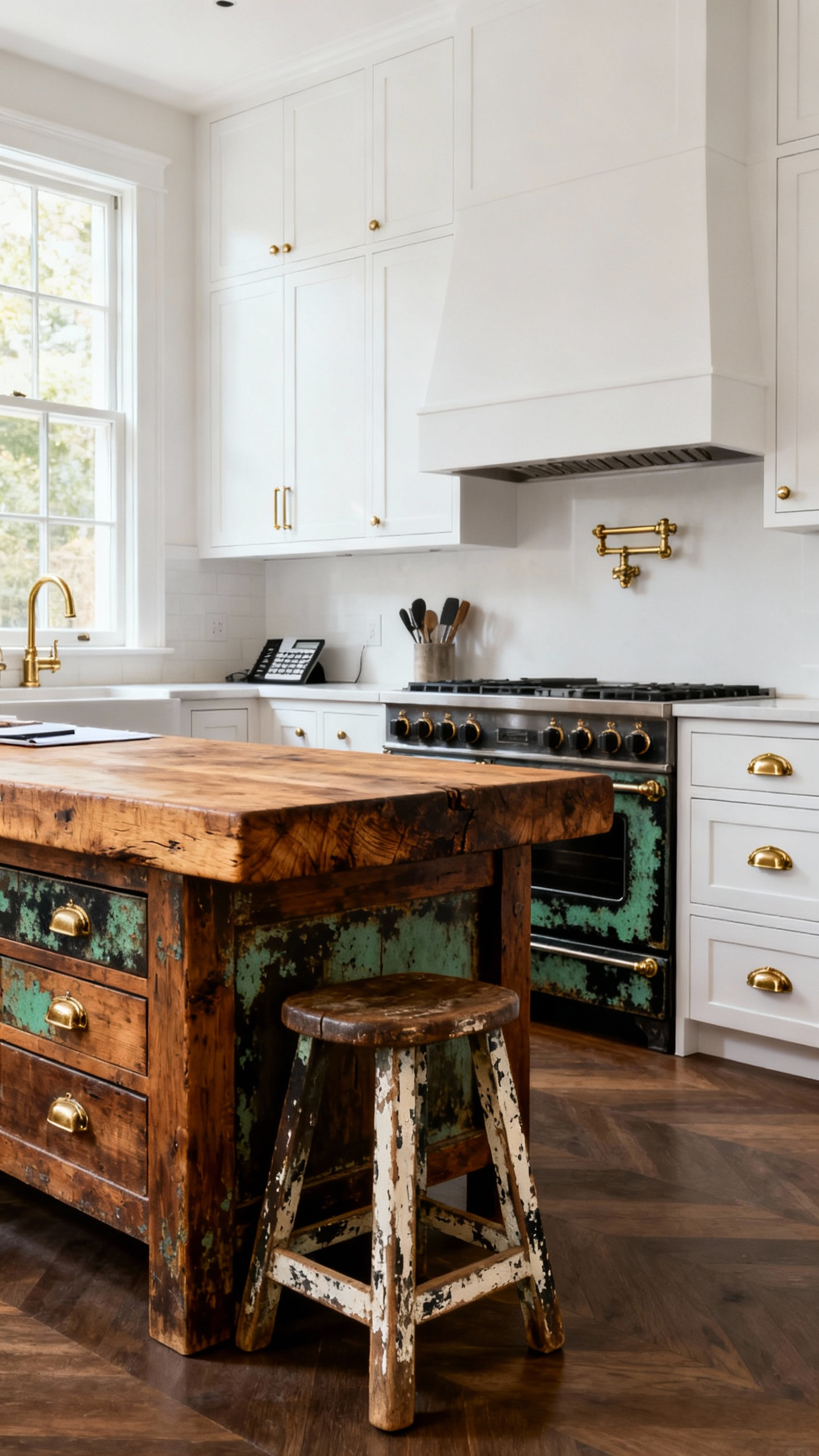
7. The Power of High-Gloss and Raw
Want to create some real energy? Pair something super sleek and glossy with something completely raw and organic. The visual contrast is stunning. Imagine a backsplash of high-gloss, deep emerald green subway tiles right next to open shelving made from a single, rough, unfinished slab of wood. The way the light bounces off the shiny tile makes the matte, raw texture of the wood feel even more rich and earthy.
This strategy brings a level of sophistication to an eclectic space. You could have ultra-modern, lacquered cabinet doors next to a rough, hand-plastered wall, or a polished chrome faucet rising from a honed, unpolished slate countertop. In my experience with vintage textile integration, I’ve used a similar principle, pairing a nubby, raw silk with a sleek leather. In the kitchen, it’s this confident mix of sheens that keeps the eye engaged and adds a layer of unexpected glamour.
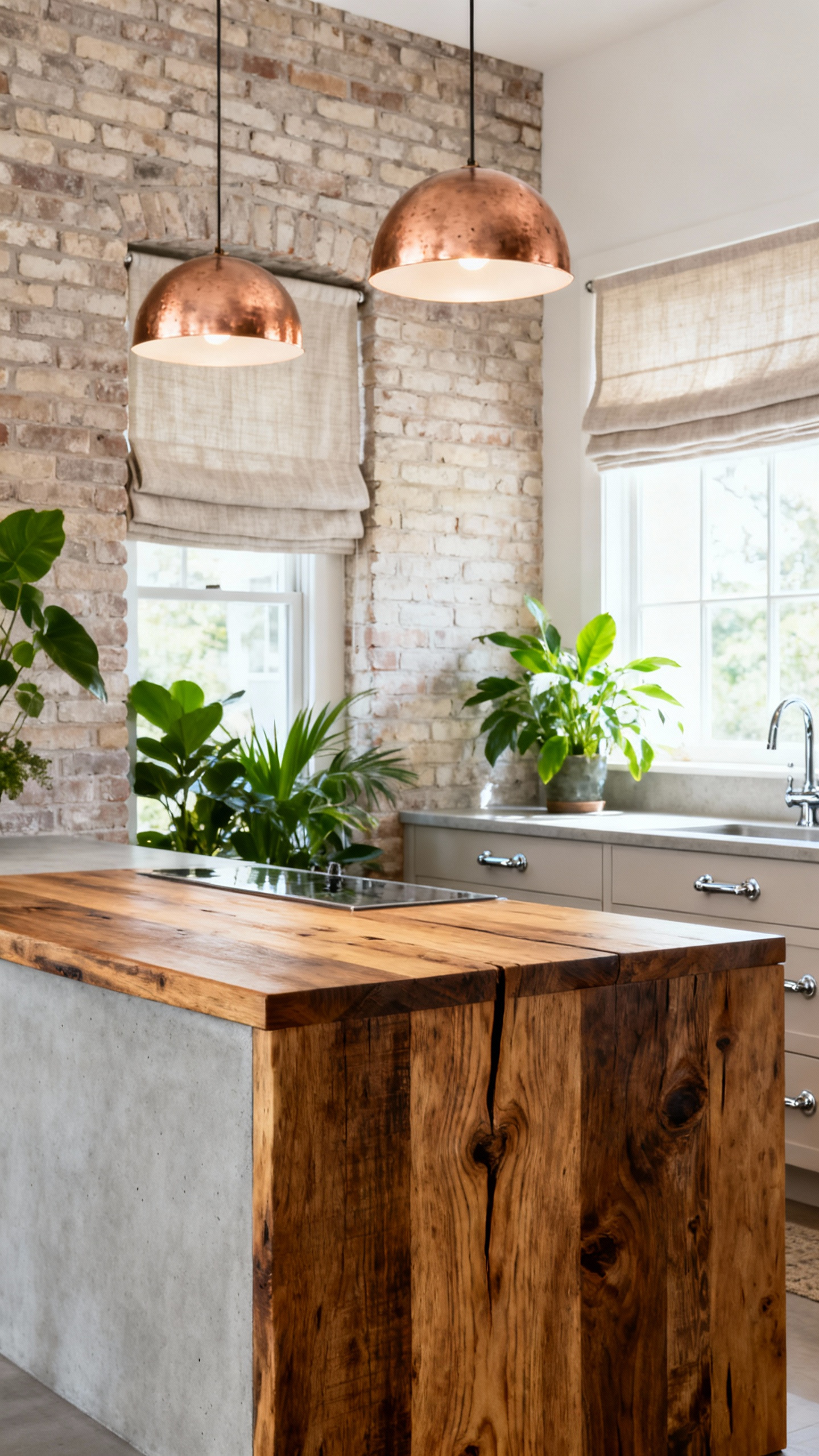
8. Architectural Salvage as Soul
This is one of my absolute favorite tricks for adding instant history and character. Look for beautiful old things and give them a new job. An antique carved wooden corbel isn’t just a decorative element; it can become a stunning support for a new shelf. That old leaded glass window you found at a salvage yard? It can be mounted on the wall as a piece of art or even installed in an interior door to a pantry.
I learned this when I found a set of gorgeous, ornate cast-iron grates from a historic building. We cleaned them up and used them as custom inserts in the client’s otherwise simple Shaker-style cabinet doors. The effect was transformative. It’s about seeing the potential beyond an object’s original purpose. These reclaimed details are the punctuation marks in your kitchen’s story, bringing a sense of place and permanence that can’t be bought off the shelf.
Color Storytelling & Personalized Touchpoints: Infusing Personality
Now we get to the really personal part. Color, lighting, and hardware are the jewelry of your kitchen. This is where you can be playful, bold, and expressive. These choices are what take your kitchen from a well-designed space to one that feels unequivocally, unmistakably you.
9. A Palette That Tells a Story
Your color palette shouldn’t come from a trend report; it should come from your heart. Think of it as a poem you’re writing for your space. Maybe the colors are drawn from a favorite painting, a landscape you love, or a vintage fabric swatch that makes you happy. An eclectic palette isn’t about using every color, but about creating a cohesive mood through a curated selection of hues.
One of my favorite projects involved a client who loved the desert. We built a palette around the sun-bleached tones of sand, the dusty green of sagebrush, and the deep, rich terracotta of clay pots. We used these colors in varying shades and textures—a matte plaster finish on one wall, a glazed tile on another—which gave the room incredible depth. Your palette is your narrative anchor; let it be a reflection of something that truly moves you.
10. Accents with Intention
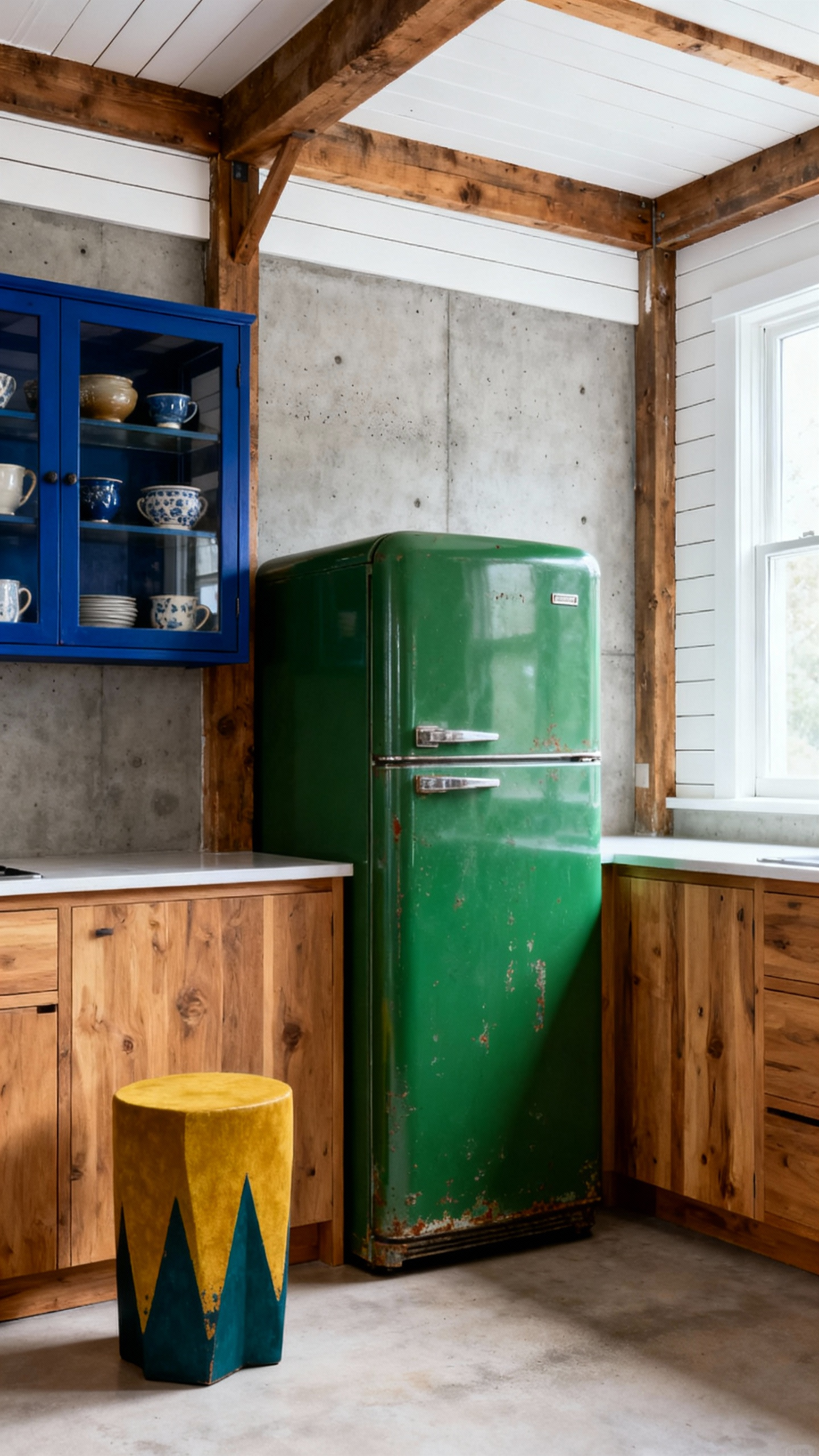
A bold color accent in an eclectic kitchen should feel like a confident exclamation point, not a random shout. This is about using vibrant color strategically to draw the eye, define a zone, or simply inject a dose of pure joy. Instead of just a “pop” of color, think of it as a deliberate focal point.
I once worked on a kitchen that was a beautiful blend of natural woods and soft neutrals. It was serene, but it needed a jolt of energy. We painted the inside of her glass-fronted pantry cabinets a shocking, brilliant citron yellow. When the doors were closed, you just got a subtle hint of it. But when they were open—pure, unapologetic delight. You could do the same with a painted island base, a vintage enamel stove, or even the legs of your dining table. Use bold color to surprise and enchant.
11. Lighting as Sculpture
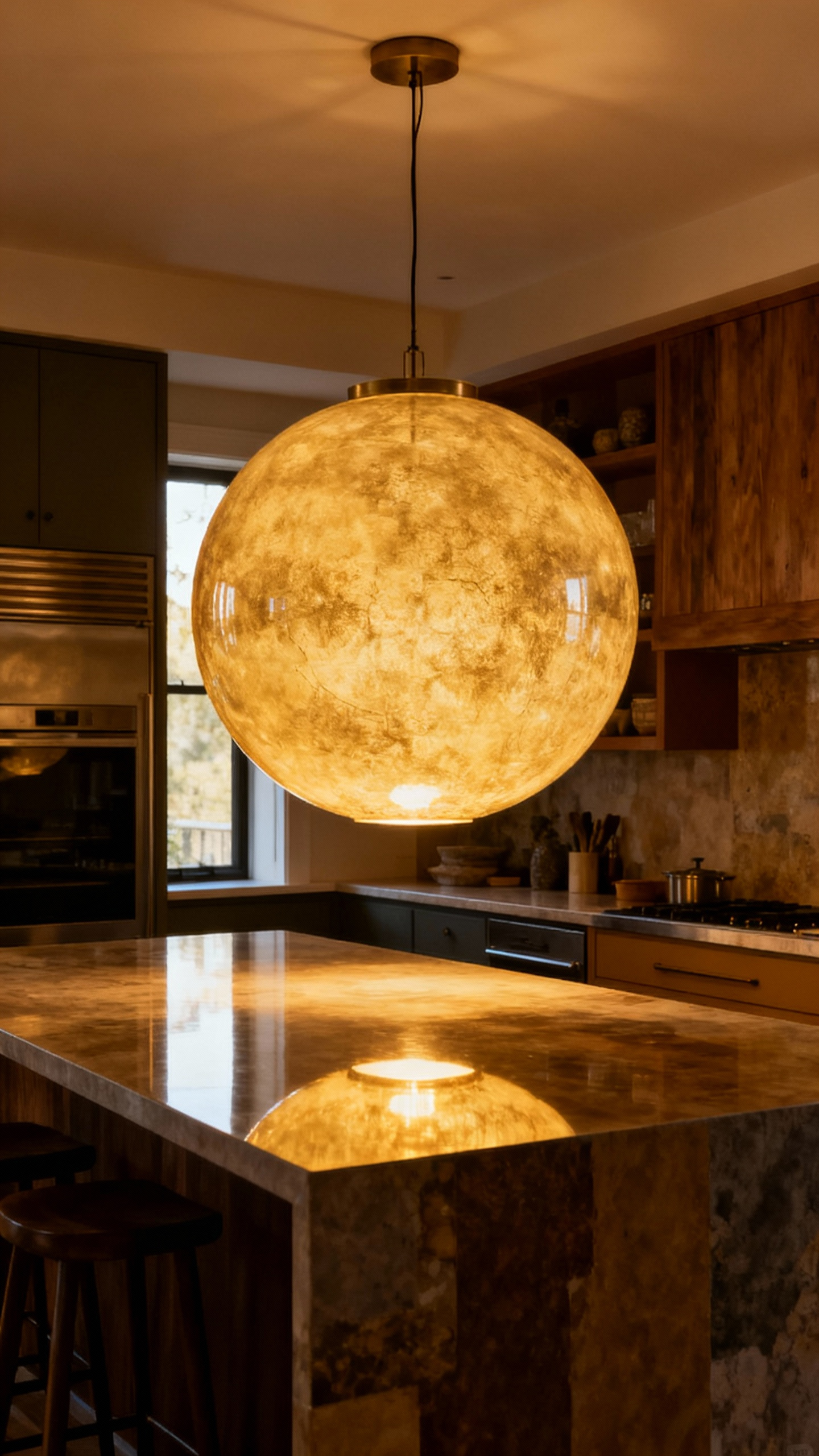
Please, please don’t let lighting be an afterthought. In an eclectic kitchen, your light fixtures are sculptures that just happen to give off light. This is your chance to bring in another era, another texture, and another story. A spiky, Sputnik-style mid-century chandelier hanging over a rustic table is a perfect example of artful juxtaposition.
Think beyond function and look for form and history. I’ve noticed that a fixture with a story—like a salvaged industrial pendant from an old factory or a delicate Murano glass chandelier found on a trip to Italy—brings so much more to a room. Grouping different but related styles can also be beautiful. Imagine a trio of mismatched vintage glass pendants hung at varying heights over an island. They don’t match, but they tell a collective story.
12. Hardware is the Room’s Jewelry
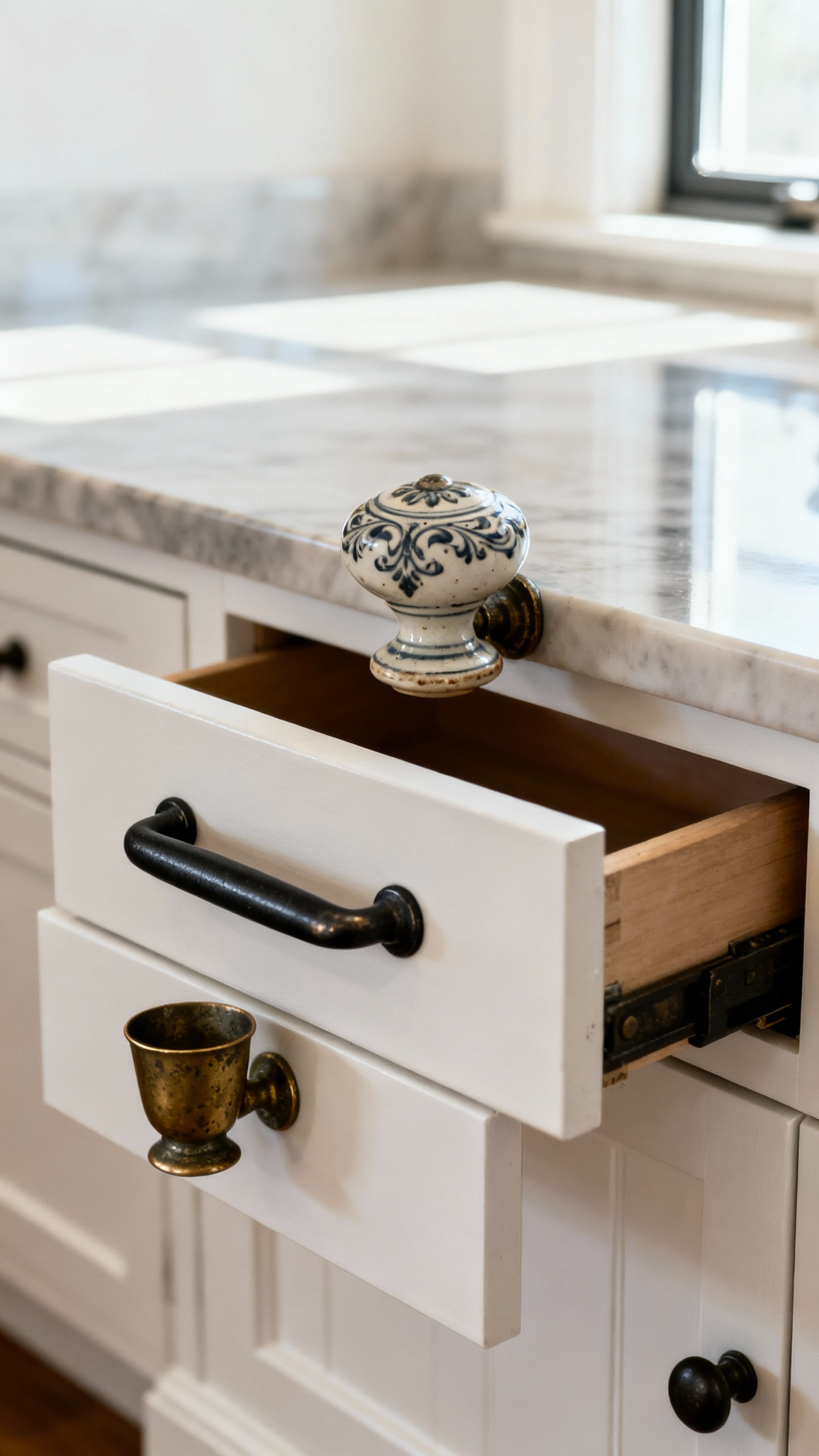
Hardware is the most tactile part of your kitchen; it’s something you touch every single day. So make it count! Think of cabinet knobs and drawer pulls as heirloom jewelry for your kitchen. This is the perfect place to bring in vintage character without a huge commitment. Mixing and matching is not only allowed, it’s encouraged.
In my own home, I have a mix of antique glass knobs, simple mid-century brass pulls, and a few quirky, hand-painted ceramic ones I found at a flea market. It tells a story of my collected tastes. Sustainable upcycling is key here—scour antique shops, flea markets, and even old dressers for hardware with character. The weight of a solid brass pull or the cool, smooth feel of a porcelain knob adds a layer of quality and history that you can literally feel.
13. Your Kitchen as a Gallery
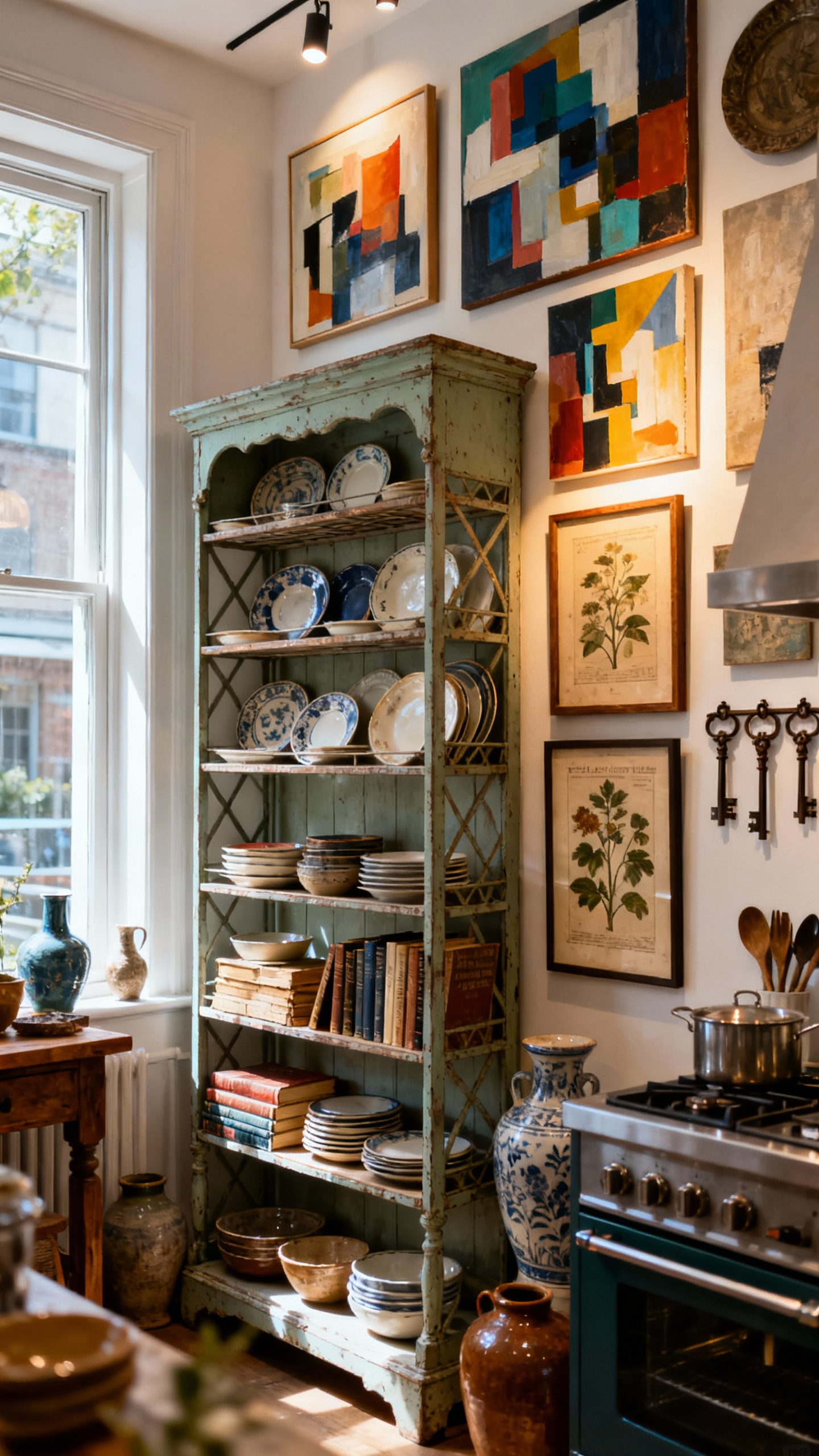
Your kitchen walls aren’t just for cabinets! They are a canvas waiting for you to create your own personal gallery. This is what truly separates a house from a soulful home. An eclectic kitchen is the perfect place for art, found objects, and personal mementos. And “art” doesn’t have to mean an expensive painting.
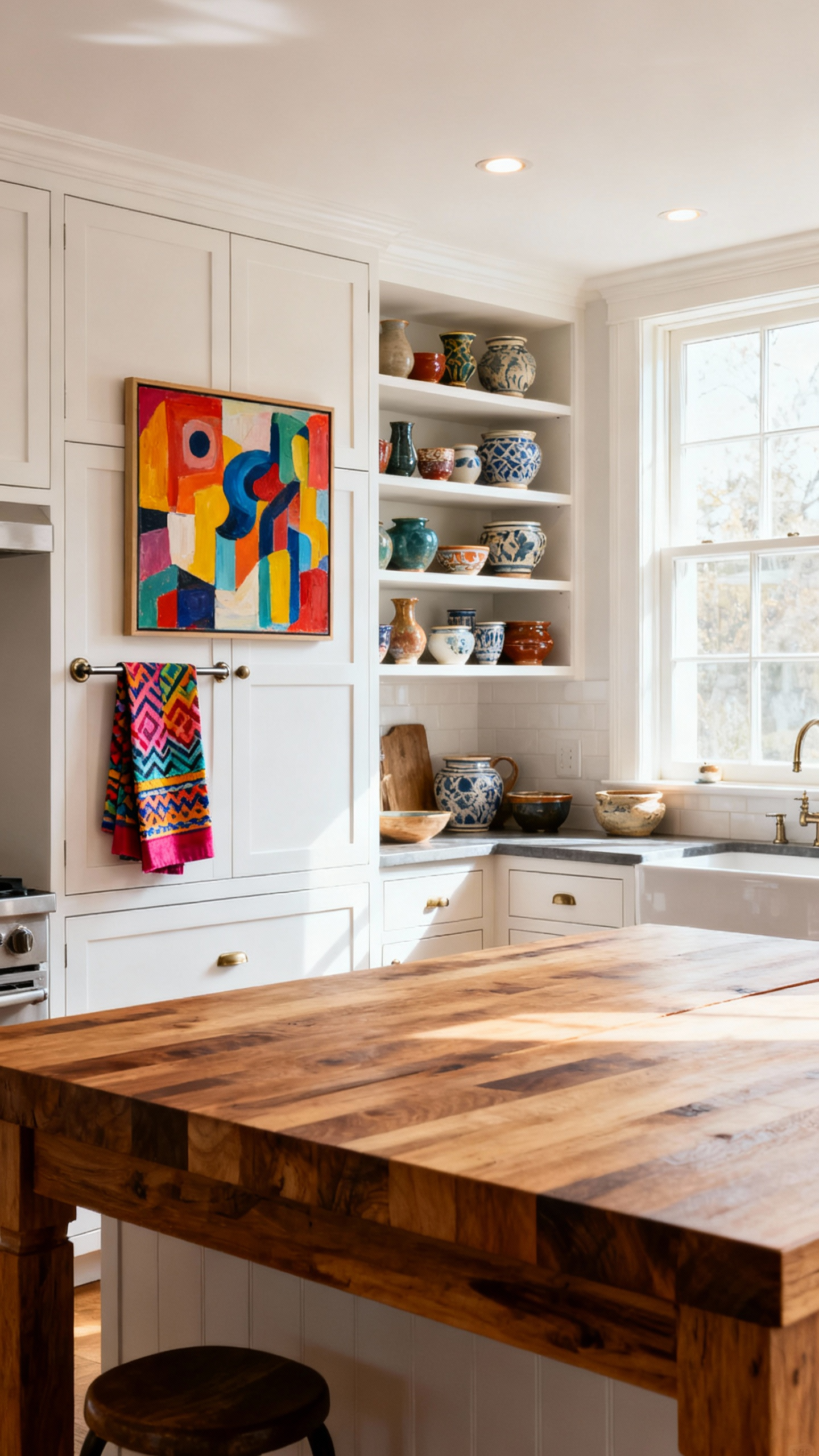
It can be a collection of framed recipes in your mother’s handwriting, a series of vintage botanical prints, or even a single, beautifully shaped cutting board hung on the wall. I always encourage clients to hang things that have personal meaning. Years of professional experience have taught me that a room filled with personal treasures feels more authentic than one filled with expensive, impersonal decor. Create small vignettes on open shelves or dedicate an entire wall to a gallery of your life’s story.
Elevating & Sustaining Your Eclectic Canvas: Refinement and Evolution
A truly great kitchen is never truly “finished.” It should be a living, breathing space that evolves with you. The final touches are about adding layers that can be changed and updated over time, ensuring your space remains fresh, functional, and deeply connected to your life’s journey.
14. Open Shelving as Living Vignettes
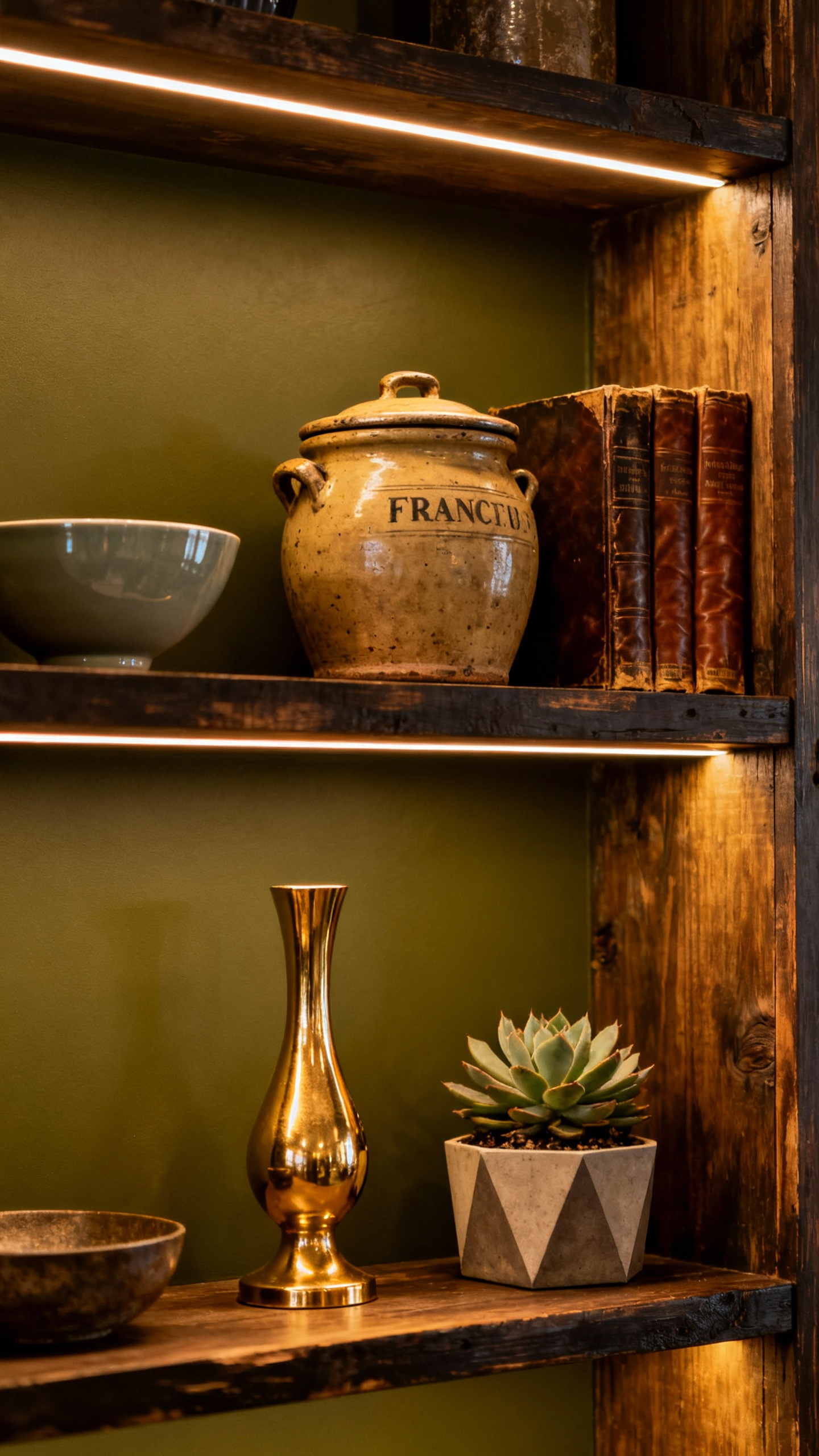
Open shelving is a fantastic element in an eclectic kitchen, but it requires a curatorial eye. Don’t think of it as just storage; think of it as a stage for telling little stories. I call them living vignettes. The key is to mix the beautiful with the useful and to leave some breathing room. Not every inch needs to be filled.
A successful shelf display has variation in height, texture, and shape. Place a stack of your everyday handmade plates next to a sculptural vase with a few foraged branches. Lean a small piece of art against the back wall. What really gets me is when I see a perfectly imperfect arrangement—it shows the hand of the person who lives there. And remember, these displays can and should change with the seasons or as you find new treasures.
15. The Life-Giving Power of Greenery
Every single room, especially a kitchen, needs something living in it. Biophilic design is the idea that we have an innate need to connect with nature, and bringing plants into your kitchen satisfies that need beautifully. Greenery softens hard edges, purifies the air, and adds a layer of organic vitality that makes a space feel alive.
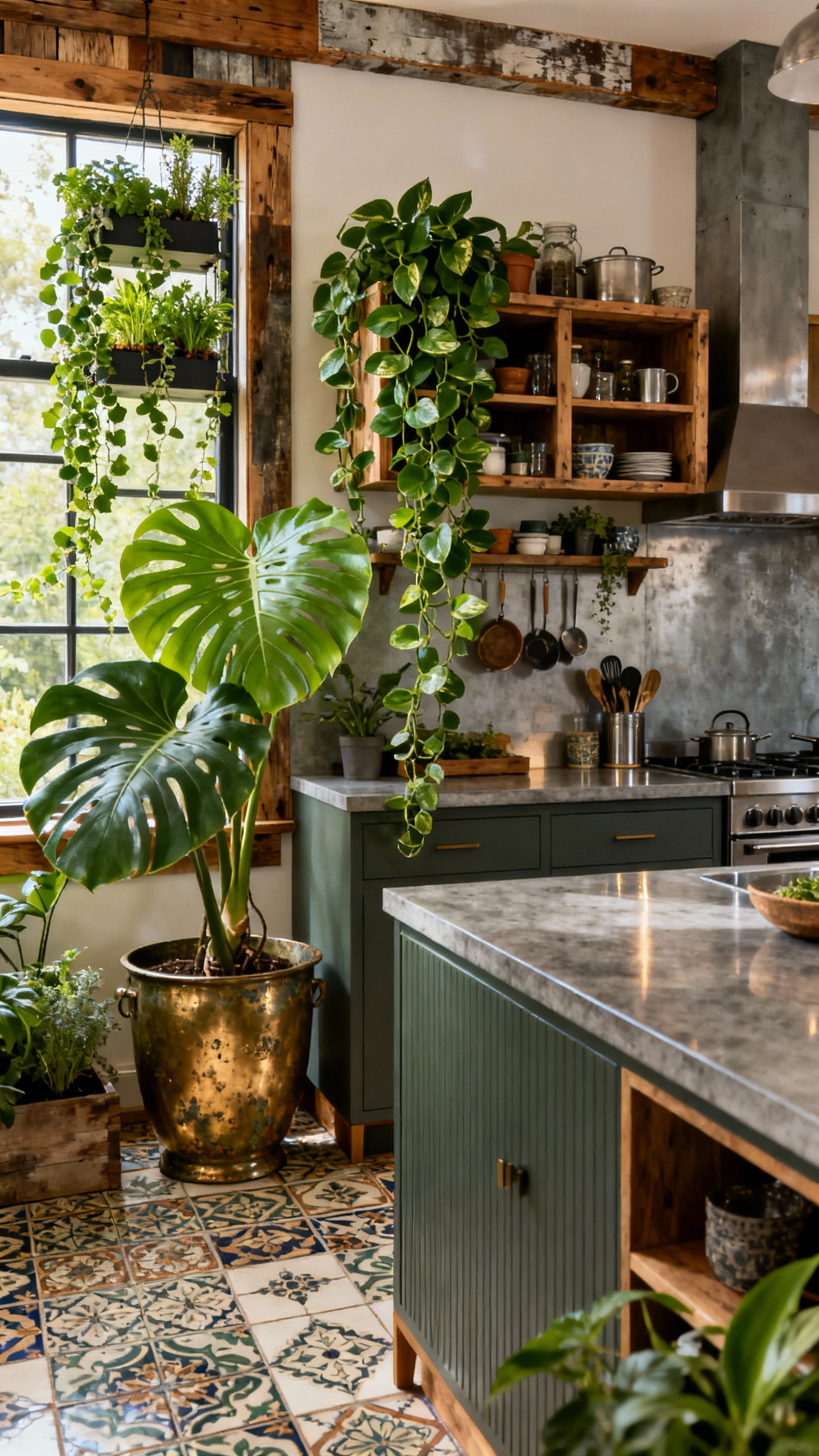
Get creative with it. Hang a trailing pothos from a high shelf, letting its vines cascade down. Keep a collection of fresh herbs in terracotta pots on the windowsill for both beauty and easy access for cooking. A tall, sculptural fiddle-leaf fig tree can be the perfect living sculpture for a forgotten corner. From my work, I’ve learned that even a simple bud vase with a single stem on the counter can change the entire mood of the room.
16. Curating, Not Cluttering
Here’s the trickiest part of eclectic design: knowing the difference between a rich, curated collection and just… stuff. The line between them is intentionality. A cluttered space feels chaotic and stressful, while a curated space feels personal and inspiring. The secret is editing.
I have a rule I share with my readers: for every new treasure you bring in, consider rotating something else out. Create deliberate groupings rather than spreading things out everywhere. Use trays to corral smaller items on a countertop. And most importantly, embrace negative space. Those empty spots are just as important as the filled ones. They give your eyes a place to rest and allow your beautiful objects to truly shine.
17. Designing for a Life in Motion
Your life isn’t static, so why should your kitchen be? A truly sustainable design is one that can adapt to your changing needs. When making foundational choices—like cabinetry and countertops—choose timeless, quality materials that can serve as a neutral backdrop for years to come. Think beautiful wood cabinets, durable soapstone counters, or classic tile.
You can then bring in your personality through elements that are easier to change. A bold paint color on the walls, a funky light fixture, removable wallpaper on a backsplash, or a vibrant rug. I’ve seen this work best when the “bones” of the room are classic and the “personality” layers are flexible. This allows you to refresh your space as your tastes evolve without having to do a massive, wasteful renovation.
18. Textiles: The Secret Ingredient of Softness
A kitchen is full of hard surfaces—stone, wood, metal, tile. The secret to making it feel warm and inviting is to introduce textiles. They absorb sound, add texture, and bring in color and pattern in a way that feels soft and comforting. A vintage runner on the floor can completely change the feeling of the space underfoot.
Think about upholstered cushions on a built-in banquette, a beautiful linen tea towel hanging from the oven, or even simple café curtains on a window. Vintage textile integration is one of my great passions, and I often use framed pieces of antique fabric as art. These soft layers are what turn a functional kitchen into a cozy haven where people want to linger long after the meal is over.
19. The Sentimental Layer
This is the final, most important layer. An eclectic kitchen must have pieces that are there for no other reason than that you love them. They might not be practical. They might not be valuable to anyone else. But they hold a piece of your story. It could be your child’s first clay pinch pot, a kitschy souvenir from a road trip, or a chipped teacup that belonged to your grandmother.
These are the objects that give a room its soul. I always tell people not to hide these things away. Give them a place of honor. A small, curated shelf of personal mementos is what makes a kitchen truly one-of-a-kind. It’s a declaration that this is a home for real people, with real memories and a rich, beautiful, imperfect life.
20. Embrace the Evolution
Finally, please give yourself permission for your kitchen to never be “done.” A truly personal, eclectic space is an evolution, a collection gathered over a lifetime. It should change and grow as you do. Don’t feel pressure to have it all perfect from day one. The joy is in the hunt, the discovery, and the slow, thoughtful process of layering in new stories over time.
Your kitchen is your canvas. It should reflect where you’ve been and where you’re going. So move things around, try new combinations, and never stop looking for those special pieces that speak to you. That’s the enduring beauty of an eclectic kitchen: it is a living, breathing reflection of you.
Conclusion
So there you have it. We’ve journeyed from the foundational philosophies of storytelling to the tiny, tactile details of hardware, and what I hope you see is that an eclectic kitchen is so much more than a collection of things. It’s a curated life. It’s the ultimate act of sustainable design—cherishing the old, celebrating the handmade, and creating a space with such personal resonance that you’ll never feel the need to chase fleeting trends. It’s about confidence, creativity, and the deep comfort of being surrounded by the things you love.
Let these ideas be a gentle guide, not a strict set of rules. The most important tool you have is your own intuition and your own story. Trust it. Be brave, be resourceful, and take your time. Let your kitchen become a warm, inviting, and wonderfully imperfect reflection of your unique journey. Because a home with a story is a home that will bring you joy for a lifetime.