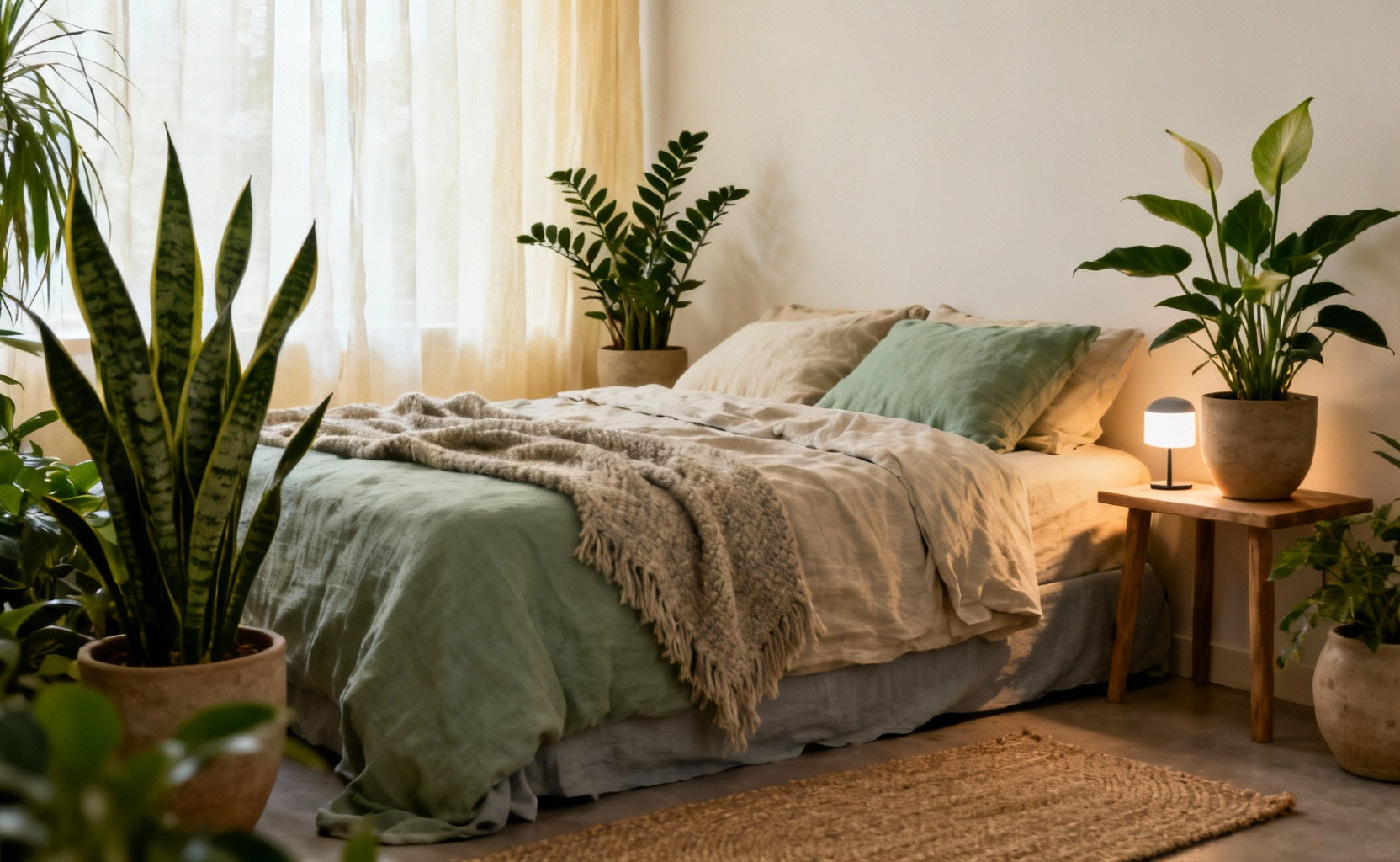

Imagine the soft, diffused light of late afternoon filling a room, scented with a hint of sandalwood and lavender. I see this space in my mind when I begin any design, a space that invites a deep, releasing sigh. In my work creating wellness sanctuaries, I’ve learned that our homes—especially our bedrooms—have a profound ability to heal. This isn’t about luxury; it’s about coming home to ourselves, rediscovering a sense of profound restoration in our most personal retreat.
So often, the bedroom becomes the forgotten room, a place to simply fall into at the end of a long day, filled with the visual static of our busy lives. But it holds the power to be the very cornerstone of our well-being. It’s where we begin and end our days, a space that can either drain us or fill us up. What if we chose to fill it with intention? This is an invitation to begin that gentle journey, to move beyond just decorating and toward the conscious creation of a haven. Together, we’ll explore gentle cozy bedroom ideas, blending ancient wisdom with what modern science tells us about how our environments shape our inner world. This is about crafting a room that doesn’t just look peaceful, but feels like a deep, nurturing breath.
Beginning Your Cozy Bedroom Journey
Embarking on this journey begins with the foundational layers of comfort. We’ll start by connecting with nature, weaving in textures that feel like a hug, and learning to work with light to honor our body’s natural rhythms. These first steps are about building a blueprint for comfort that speaks to you on an emotional and even physiological level, creating a true sanctuary from the ground up.
1. Welcome Nature Inside for Deeper Calm
Inviting nature into your bedroom isn’t just about the beauty of a green leaf against a neutral wall; it’s a practice of deep connection. This is the heart of biophilic design—the idea that we have an innate need to be close to the natural world. When we honor that need, our nervous systems respond with a profound sense of calm, turning our room into a restorative space where we can truly rest. Studies on wellness design have shown that even a small dose of nature indoors can lower our cortisol levels, reduce anxiety, and even improve the quality of the air we breathe as we sleep.
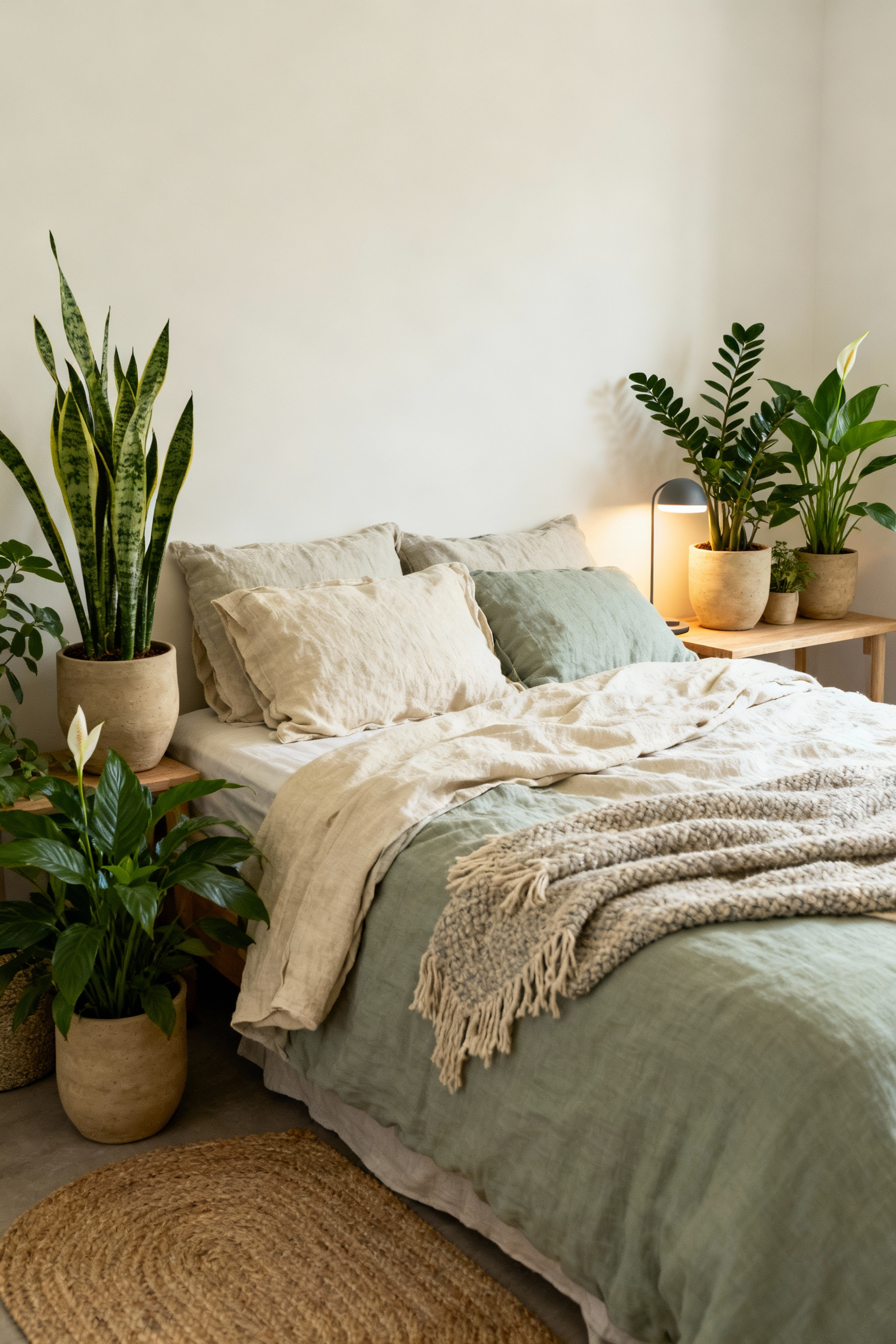
The easiest way to begin is with a few carefully chosen plants. You don’t need a jungle—a simple snake plant or a graceful peace lily can work wonders, and they are wonderfully forgiving. Think, too, about natural materials. A solid wood nightstand, a linen throw, a wool rug—these elements bring the quiet, grounding energy of the earth into your room. In my wellness sanctuary design practice, I’ve noticed the simple addition of a single living plant can be the most transformative element for my clients’ sense of peace. It’s a living, breathing reminder to slow down. Avoid plastic plants, which hold stagnant energy, and opt for natural textiles over synthetics whenever you can.
2. Weave a Story with Layers of Texture
Think of texture as a sensory hug for your space. A room rich with varied, natural textiles provides constant, gentle feedback to our bodies, signaling safety, comfort, and warmth on a subconscious level. This tactile landscape is one of the most powerful tools we have for creating a cozy, nurturing environment. Layering different materials—the smooth coolness of linen, the soft weight of a chunky knit wool blanket, the subtle grain of a wooden headboard—creates a depth that feels incredibly inviting and secure.

Start with your bed, the heart of the room. Begin with breathable, natural fibers like organic cotton or linen sheets. From there, add a cozy duvet and layer on a quilt or a textured throw. Don’t be afraid to mix materials—a velvet pillow next to a linen one creates a lovely contrast. This richness should extend beyond the bed. Consider heavy, woven curtains to soften the light and a plush rug underfoot to greet you warmly each morning. What I tell my clients is to close their eyes and imagine how the room would feel to the touch. That sensory experience is where true coziness is born.
3. Harmonize Your Lighting with Your Body’s Rhythm
Light is one of the most powerful forces in our homes, dictating not just what we see, but how we feel. Our bodies have an ancient, internal clock—our circadian rhythm—that is deeply connected to the rising and setting of the sun. Honoring this rhythm in our bedroom is fundamental to restorative sleep. By creating a lighting scheme that mimics the gentle arc of natural daylight, we send our bodies powerful cues that it’s time to energize for the day or wind down for deep rest.

Throughout the day, let in as much natural light as possible. In the evening, the goal is to create a soft, warm glow that signals to your body it’s time to produce melatonin. This means avoiding harsh, overhead lights. Instead, layer your lighting with warm-toned lamps on dimmers. A salt lamp can cast a beautiful, amber hue, or you can switch your regular bulbs to “warm white.” It’s also vital to block out all light when you sleep with blackout curtains or blinds. From my work in holistic home design, I’ve learned that one of the kindest things we can do for ourselves is to protect our sleep from the blue light of our devices. Creating an analog, warmly lit hour before bed can change everything.
4. Declutter with Intention to Calm Your Mind
A clear space fosters a clear mind. Intentional decluttering is not about sterile minimalism; it’s about making conscious choices to surround yourself only with what supports your peace. Every object in our environment holds energy and requires a small piece of our attention. When our bedroom is filled with visual clutter—piles of laundry, stacks of books, forgotten items—it creates a low hum of mental static that prevents us from fully relaxing.
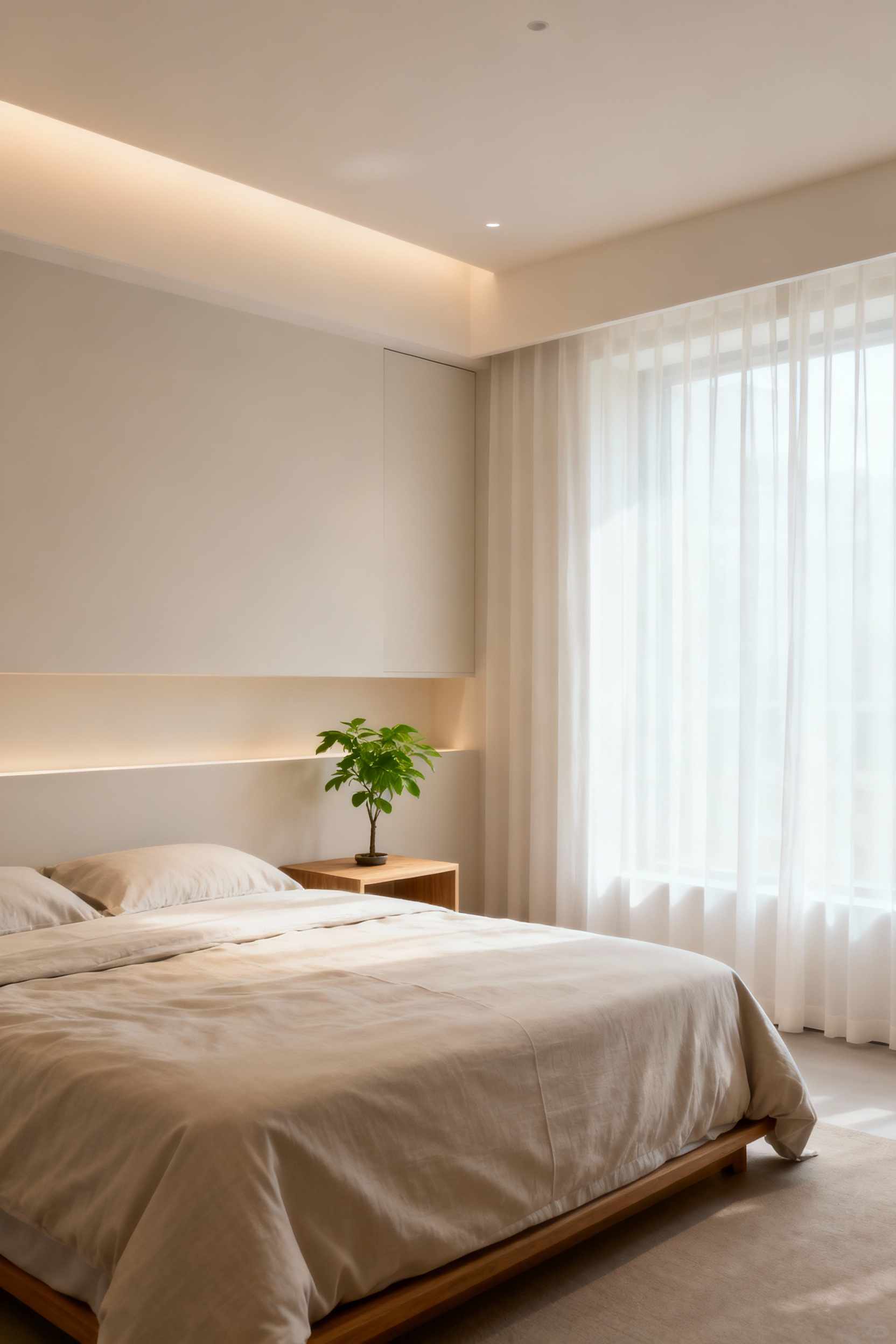
I often guide my clients to view this not as a chore, but as a practice of creating space—space for breath, for rest, for you. Begin by looking at your bedroom with fresh eyes and ask a simple question for each item: does this bring me a sense of calm and joy? If not, it may belong elsewhere. Invest in beautiful, discreet storage—like woven baskets or a wooden chest—to house the essentials. This keeps surfaces clear and allows energy, what feng shui masters call Qi, to flow freely. The goal isn’t emptiness; it’s serenity. I’ve seen this play out when a client finally moves their ‘work-from-home’ corner out of their bedroom. The shift is palpable—the room can finally breathe, and so can they.
5. Discover Your Personal Coziness Archetype
What feels cozy is deeply personal. For one person, it might be a dark, moody room that feels like a cocoon. For another, it’s a light, airy space filled with plants and sunlight. Before you dive into specific ideas, take a moment to connect with your own unique ‘coziness archetype.’ This is about moving beyond trends and listening to what truly makes your soul feel safe and nurtured. Does the idea of a rustic cabin appeal to you, a serene zen retreat, or a soft, romantic haven?
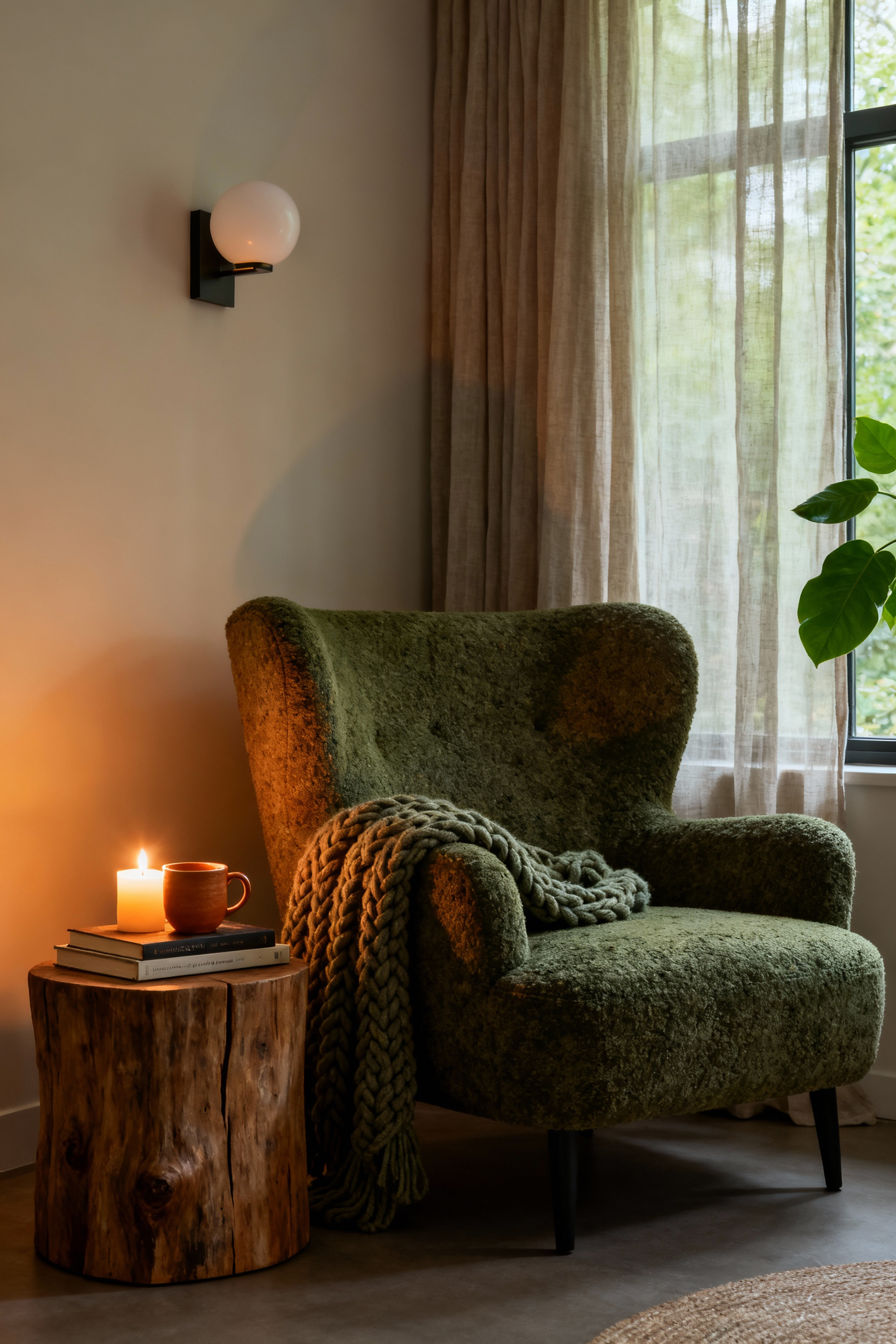
Take some time to gather images that give you that feeling of a deep exhale. Look for patterns in the colors, textures, and moods. You might create a small mood board, either physically or online. This isn’t about copying a specific look, but about capturing an essence. This archetype will become your guiding star, ensuring that every choice you make resonates with your personal definition of sanctuary. In my wellness sanctuary design practice, I find this step is where the magic really begins. It’s the moment a client stops thinking about what they ‘should’ do and starts creating a space that is a true reflection of their inner world.
Exploring Cozy Bedroom Possibilities
With a solid foundation in place, we can now explore the more nuanced elements that elevate a bedroom from comfortable to truly cozy. These ideas focus on refining the sensory experience of your sanctuary—from what you hear and smell to creating small, intimate moments within the larger space. This is where we add the layers that make the room feel uniquely and profoundly yours.
6. Create a Sonic Sanctuary with Sound-Dampening
True coziness engages all the senses, including our hearing. A quiet room is a calm room. Unwanted noise from outside—or even from elsewhere in the house—can create a subtle layer of stress, keeping our nervous system on low-level alert. By thoughtfully incorporating sound-dampening elements, we can create a sonic sanctuary that allows our minds to truly unwind and fosters deep, uninterrupted sleep.

This doesn’t require expensive soundproofing. The same elements that add textural warmth also absorb sound beautifully. Think soft, plush rugs on bare floors, heavy curtains over windows, and upholstered furniture like a fabric headboard or a small armchair. Even a large tapestry or a canvas painting can help break up sound waves on a hard wall. For those in particularly noisy environments, a white noise machine can work wonders by creating a consistent, soothing backdrop that masks jarring sounds. I learned this when designing a serene bedroom for a client in a bustling city apartment. The simple addition of thick, velvet drapes and a plush wool rug made the space feel miles away from the chaos outside.
7. Anchor Your Calm with Aromatherapy
Our sense of smell is profoundly linked to emotion and memory. A specific scent can instantly transport us, calming our minds and relaxing our bodies. Incorporating gentle aromatherapy into your bedroom creates an ‘olfactory anchor’—a subconscious cue that tells your brain it’s time to shift from the stress of the day into a state of rest. It’s a beautiful and simple ritual for closing your day with intention.
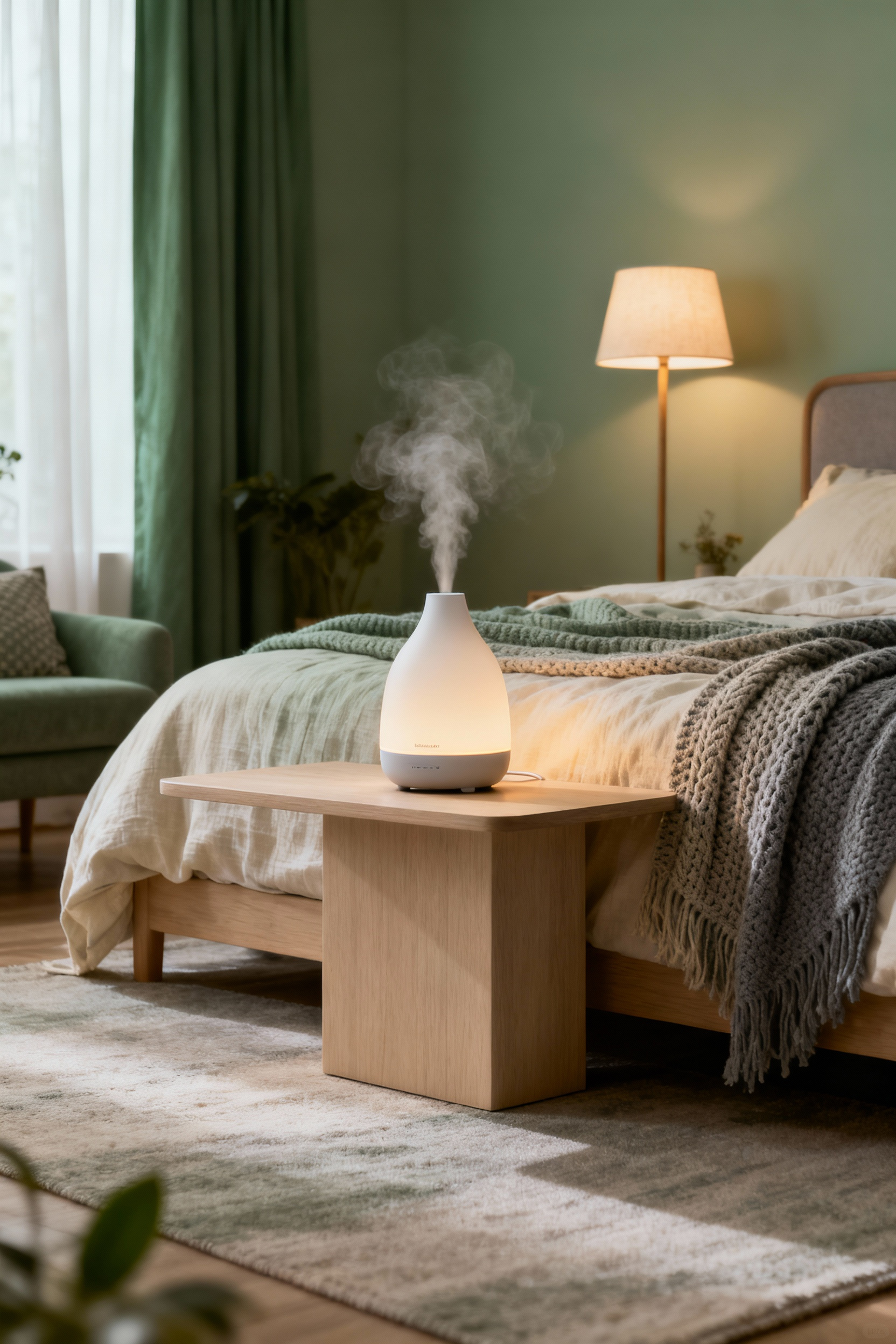
An essential oil diffuser is a wonderful tool for this. Choose pure, therapeutic-grade essential oils known for their calming properties, such as lavender, chamomile, cedarwood, or frankincense. A few drops diffused for about 30 minutes before you go to sleep can fill the room with a subtle, healing aroma. You can also create a simple pillow mist with water and a few drops of your favorite oil. I’ve noticed that consistency is key. When you use the same calming scent each night, your body learns the association, and the relaxation response becomes quicker and deeper over time. Just be sure to avoid synthetic fragrances, which can contain chemicals and disrupt the calming atmosphere.
8. Find Beauty in Imperfection with Wabi-Sabi
There is a deep and quiet beauty in things that are not perfect. This is the heart of the Japanese philosophy of Wabi-Sabi, which finds serenity in authenticity, simplicity, and the natural passage of time. Embracing this idea in your bedroom can be a powerful antidote to the pressure for perfection. It allows for a space that feels lived-in, soulful, and deeply comforting, rather than one that feels like a showroom.

Look for items that have a story. A worn wooden stool, a hand-thrown ceramic mug for your bedside water, or linen bedding that grows softer and more beautifully rumpled with every wash. It’s about choosing natural materials that age gracefully and celebrating the little imperfections that give an object its character. In my professional experience, a room truly comes to life when it has soul. An heirloom quilt, even if frayed, brings more warmth and history to a space than anything mass-produced ever could. This approach isn’t about striving for a ‘distressed’ look; it’s about genuine appreciation for the authentic and the beautifully imperfect.
9. Design a Personal Sleep Nook
Even within the sanctuary of your bedroom, creating a smaller, designated ‘sleep nook’ can dramatically enhance your sense of security and coziness. This micro-environment is all about creating a feeling of being gently enclosed and protected, which signals to our primal brain that we are safe to enter deep, restorative sleep. It’s about cultivating the feeling of a nest or a cocoon right in your own room.
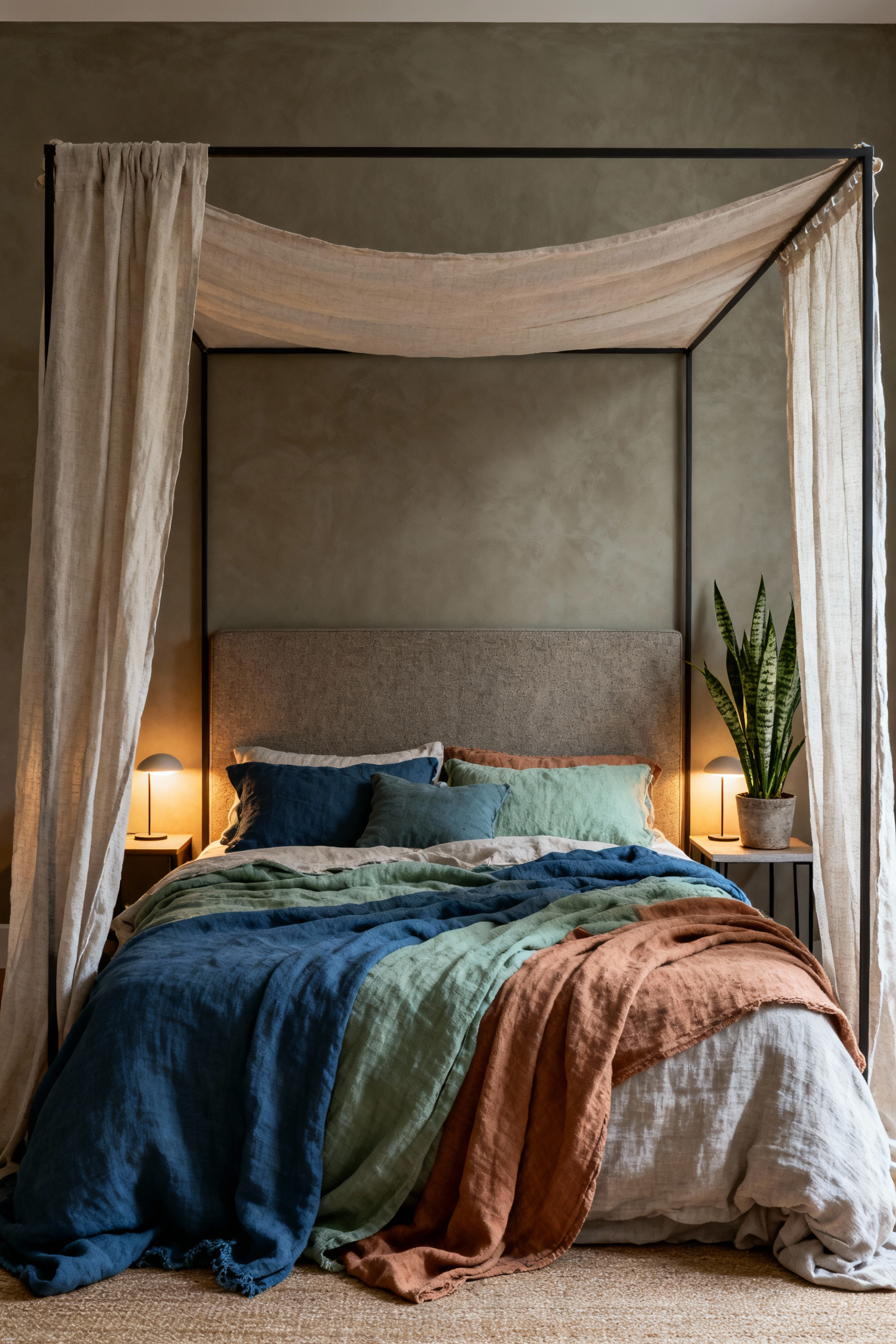
A four-poster or canopy bed is the most classic way to achieve this, allowing you to drape soft fabrics for a sense of enclosure. But you can create a similar feeling in other ways. Position your bed with the headboard against a solid wall—a principle from feng shui known as the ‘commanding position,’ which promotes a sense of security. You can also visually define the space by painting the wall behind the bed a slightly deeper shade or by flanking the bed with two tall, slender bookshelves to create a sense of being nestled in. I’ve seen this work best when the focus is on sensory reduction. Within the nook, lighting is kept extra soft, textiles are at their plushest, and all other distractions are out of sight.
10. Soften the Space with Calming Wall Treatments
The walls of your bedroom form the backdrop to your entire sanctuary, enveloping you in color and texture. Choosing wall treatments with intention can have a massive impact on the overall feeling of the room. Moving beyond a simple coat of paint to consider soft hues and subtle textures can add a layer of visual quietude and warmth that transforms the space.
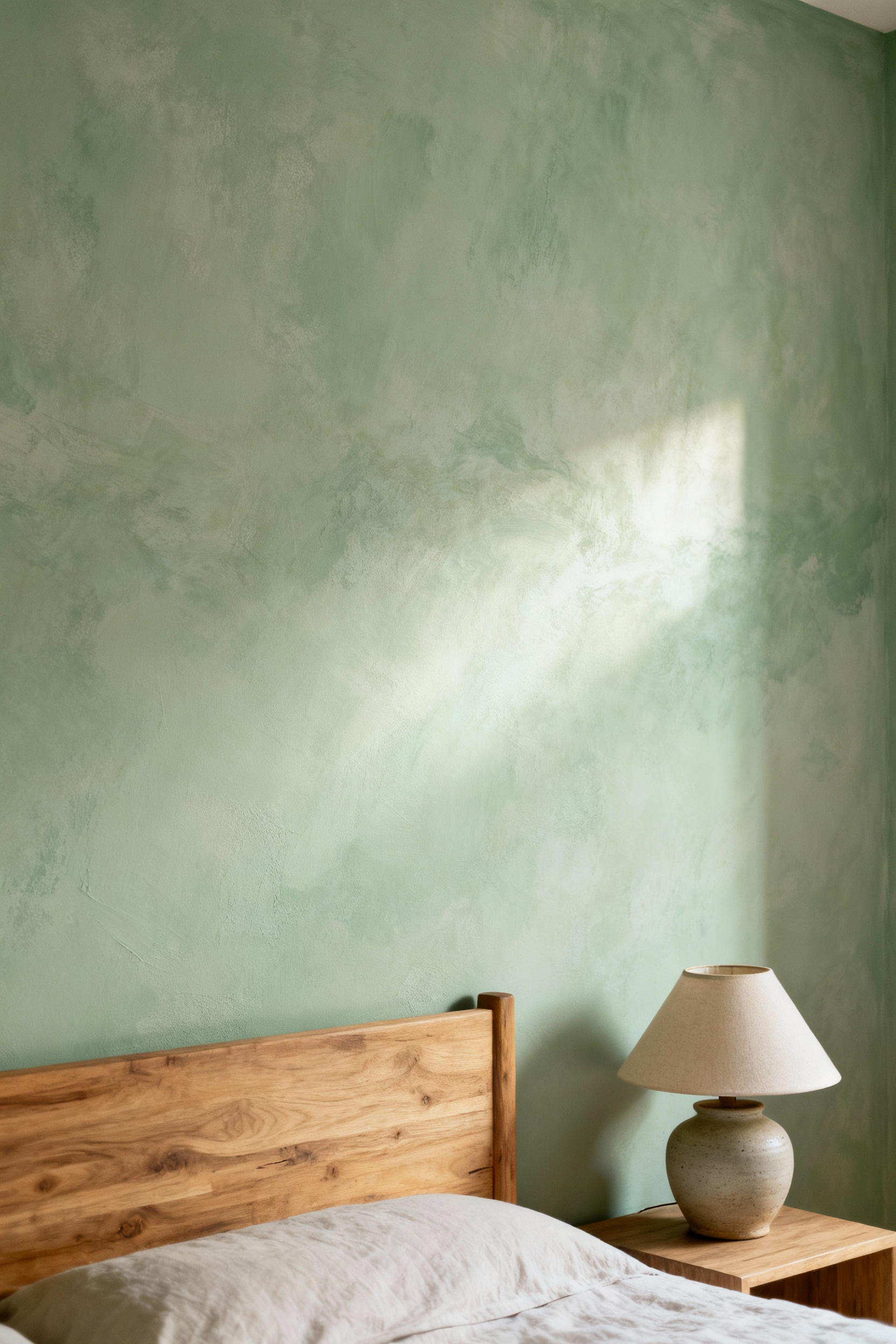
Color psychology teaches us that soft, muted colors drawn from nature—like sage greens, gentle blues, warm greys, and earthy beiges—are inherently calming to our nervous systems. But you can deepen that effect with texture. Consider a natural grasscloth wallpaper on an accent wall to bring in organic texture and dampen sound. A limewash or Roman clay finish can give your walls a soft, velvety depth that changes beautifully with the light throughout the day. What really gets me is the way these finishes make light feel different in a room. A limewash wall doesn’t just reflect light; it seems to hold it, creating a gentle, immersive glow that you just can’t get with standard paint.
11. Choose Smart Storage for Functional Zen
A truly cozy and restful bedroom must also be functional. Smart, thoughtful storage isn’t just about being tidy; it’s about creating a sense of effortless order, or what I like to call ‘functional zen.’ When every item has a designated home, and clutter is kept gently out of sight, your mind is freed from the distraction of disorganization, allowing you to fully relax into the space.
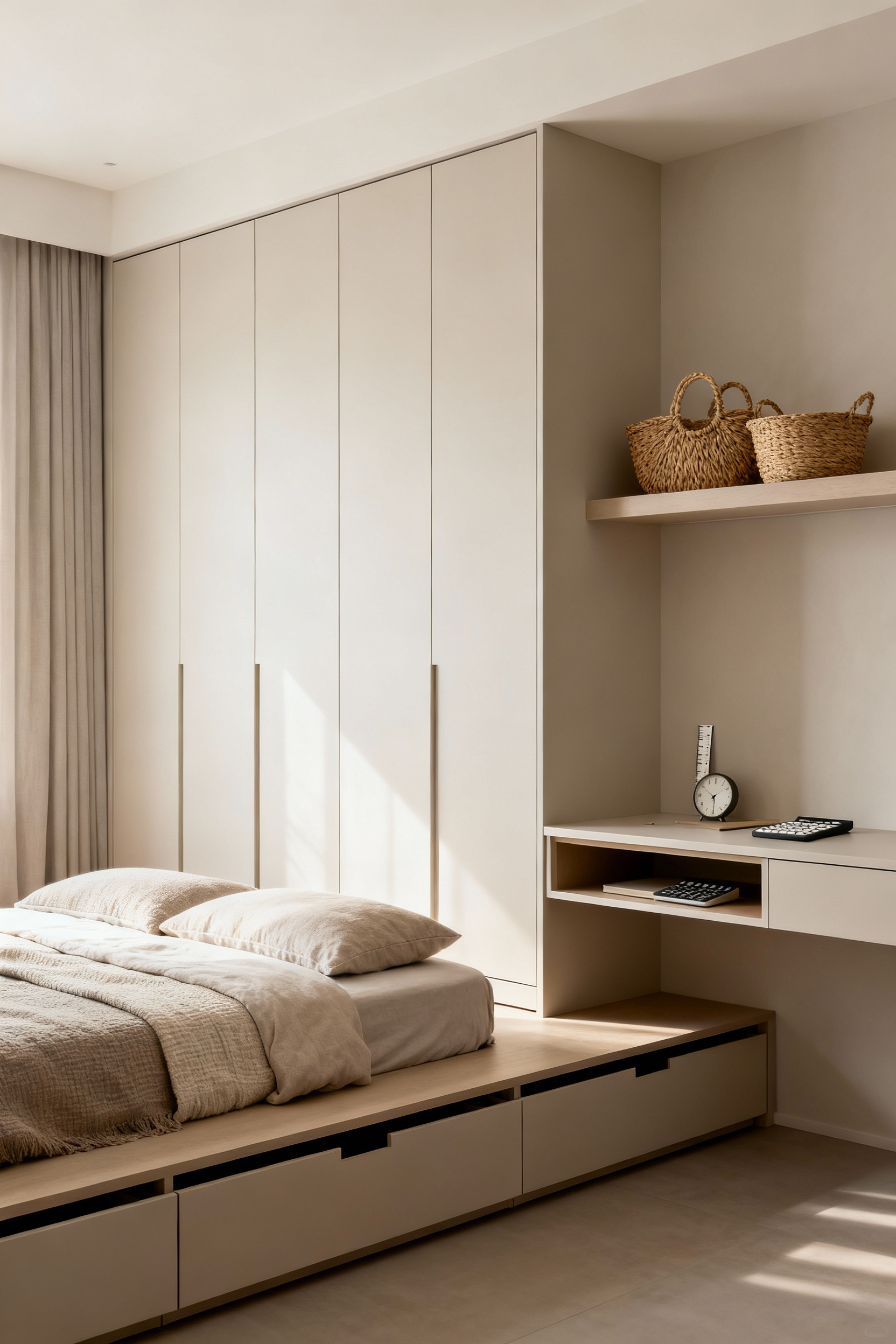
Look for furniture that serves a dual purpose. A platform bed with built-in drawers can be a game-changer for storing extra linens or out-of-season clothing. An upholstered storage ottoman at the foot of the bed provides a soft place to sit while also hiding away blankets or books. The key is to integrate storage so seamlessly that it enhances the aesthetic flow of the room rather than disrupting it. A beautiful lidded basket is one of my favorite tools. It can hold anything from laundry to magazines, but all you see is its lovely natural texture, adding to the room’s calm instead of taking away from it.
12. Connect Your Colors to Your Emotions
The final, most personal layer of creating your sanctuary is consciously choosing a color palette that resonates deeply with your own emotional landscape. While color psychology provides a wonderful guide—blues are calming, greens are restorative—your personal history and associations with color are just as powerful. A color that one person finds soothing, another might find sad. The goal is to create a palette that feels like a personal homecoming.
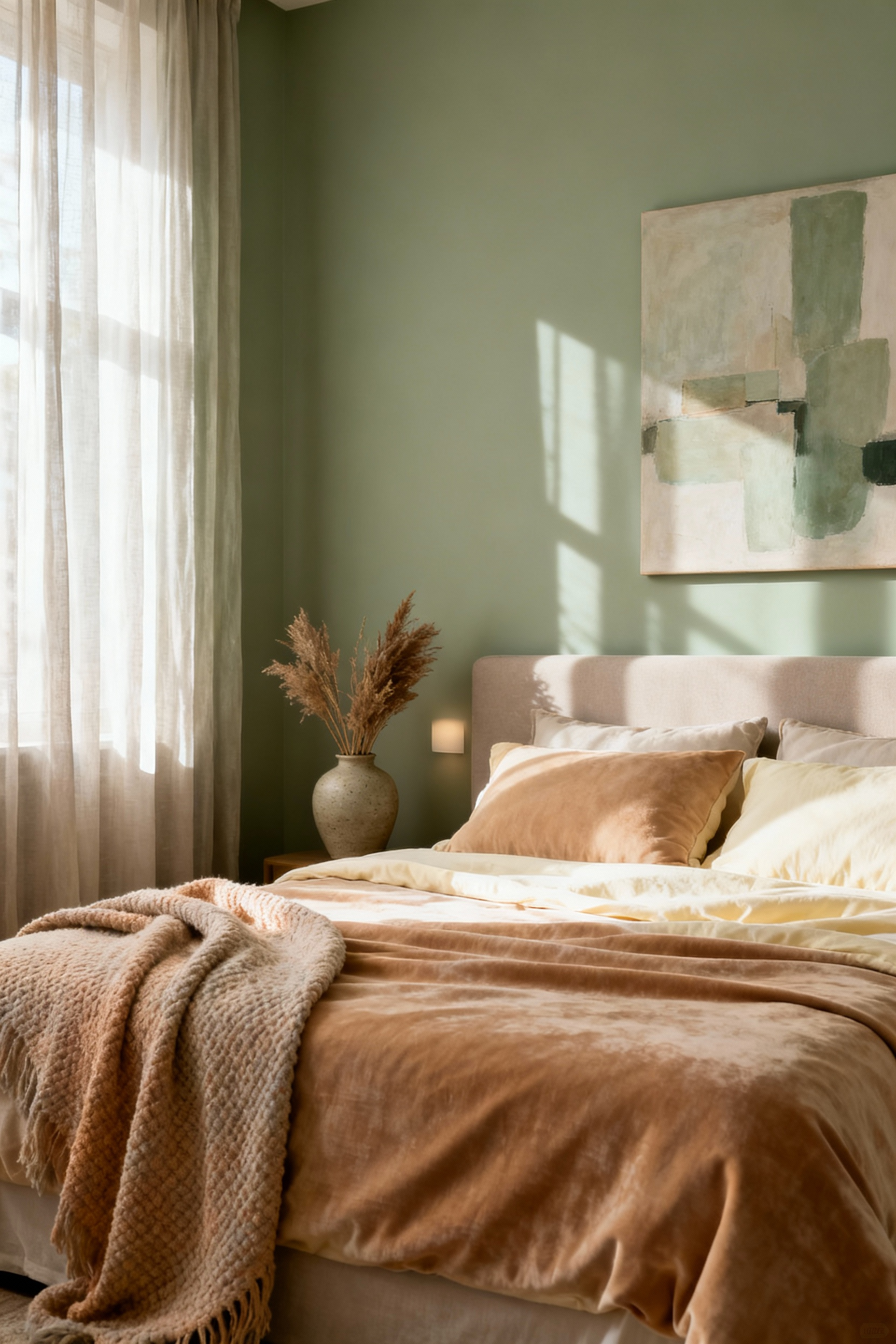
Take a moment to reflect on the colors that make you feel truly at peace. Think about places in nature you love, or memories that bring you comfort. Is it the soft, sandy beige of a quiet beach? The deep, mossy green of a forest floor? The gentle, cloudy grey of a rainy afternoon? Use these personally meaningful hues as your foundation. This is how you create a space that doesn’t just follow design rules, but speaks your own unique emotional language. I always tell my clients, your intuition is your best guide. If a color makes you feel a deep sense of ‘yes,’ trust that feeling. That is the color your spirit needs to feel truly at home.
Conclusion
Creating a cozy bedroom is a beautiful and profound act of self-care. As we’ve journeyed through these ideas, from inviting nature indoors to listening to your own emotional connection to color, I hope you see that this process is so much more than decorating. It is an intentional weaving of comfort, security, and beauty into the very fabric of your daily life. Your bedroom is the one place in the world that is entirely yours—a space to retreat, to dream, and to deeply restore your body and soul.
The ultimate goal is to cultivate an environment that feels like a true reflection of you and a supportive container for your well-being. By embracing these principles, you are crafting a lived experience, a personal sanctuary where you can release the demands of the day and reconnect with your inner peace. Let this be a gentle evolution, not a race to a finish line. Start with one small change—perhaps a new plant, a soft blanket, or the simple ritual of lighting a candle before bed. Listen to how your space feels, and let your intuition guide you. Remember, you are not just making a room cozier; you are building a haven that will nurture and replenish you for years to come.