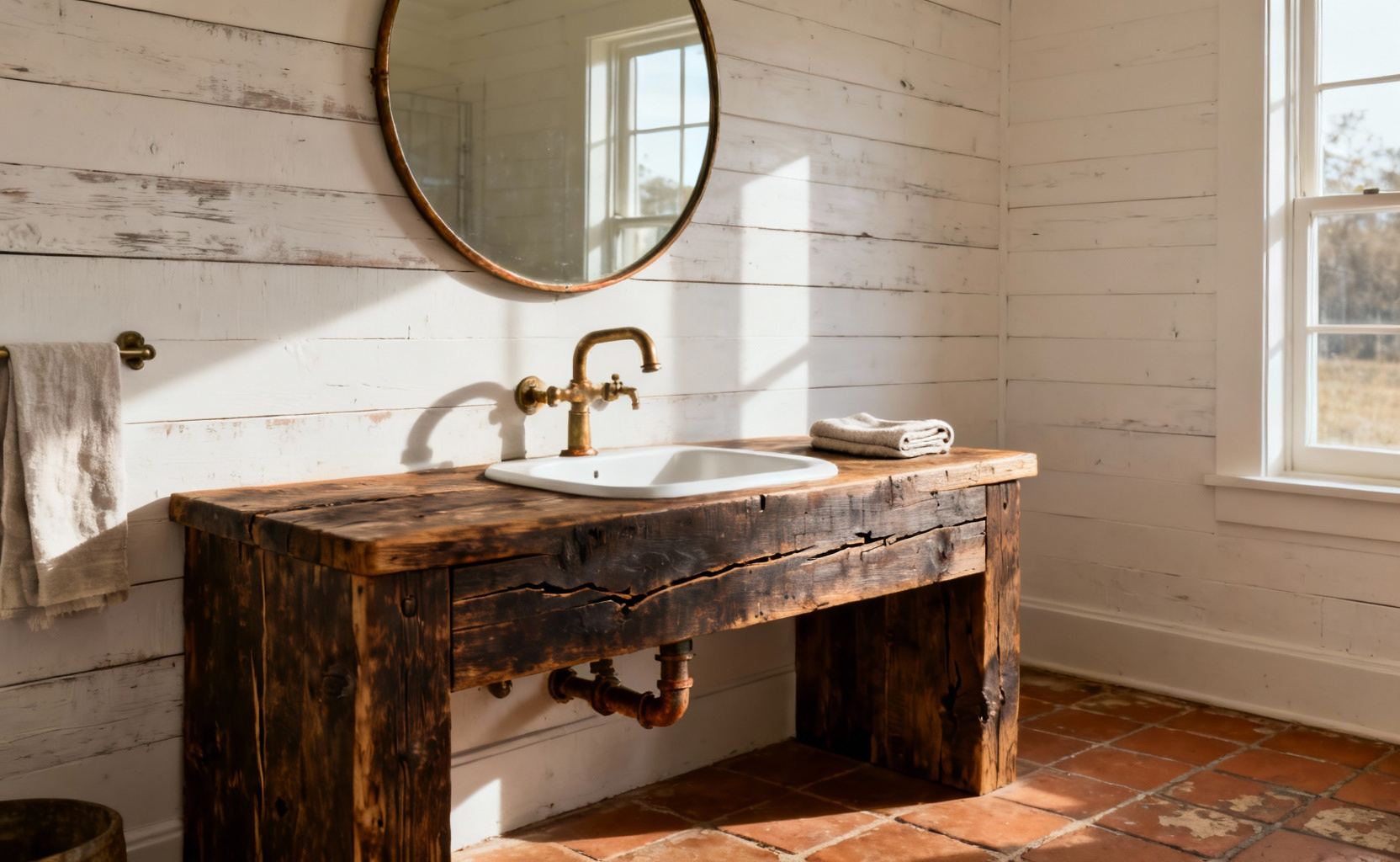

While many designers argue that a bathroom must prioritize sleek modernity, a truly memorable space often looks backward for inspiration. For homeowners seeking character, mastering the art of rustic charm begins with exploring unique country bathroom decor ideas.
My grandmother’s washbasin remains a vivid memory of design done right. The deep porcelain pedestal sink stood as a proud centerpiece, cool to the touch and softened by decades of morning routines. Sunlight warmed the aged brass faucet, while the faint scent of lavender from a dried bundle on a wood soap dish filled the air. This wasn’t just a functional station; it was a grounding ritual rooted in history. Capturing this nostalgia requires shifting away from sterile finishes toward materials with soul, ensuring a truly *timeless quality*.
A statement farmhouse sink anchors the aesthetic, offering a rustic silhouette that commands attention. To complement this centerpiece, replace standard chrome with oil-rubbed bronze or copper fixtures. These finishes develop an *authentic patina* that suggests a well-loved quality. You can also soften the hard lines of porcelain with a floral toile or ticking stripe sink skirt to conceal plumbing and introduce texture. Finally, a backdrop of soft whites or sage greens ensures the space feels airy rather than dated.
This guide reveals how to translate these vintage elements into a cohesive country bathroom design. We will examine restoration techniques for antique finds and methods for selecting sustainable, heritage-inspired pieces that function perfectly in a modern home.
Defining Authentic Country: Separating Timeless Character from Kitsch Trends
Creating an authentic country bathroom requires a commitment to material integrity rather than a reliance on superficial decoration. True character stems from elements that have earned their patina through time and use. You should prioritize naturally aged materials, such as reclaimed wood or unlacquered brass fixtures, which develop a unique finish over decades.
Avoid new items featuring heavy, artificial distressing or mass-produced “faux rust.” These fabrications often parody rural design rather than honor it. Instead, ground the space with substantial architectural details. Install authentic wainscoting in soft, muted tones like sage green or cream, and pair it with natural stone flooring like slate. This approach establishes a sense of history and permanence that glossy, modern surfaces simply cannot replicate.
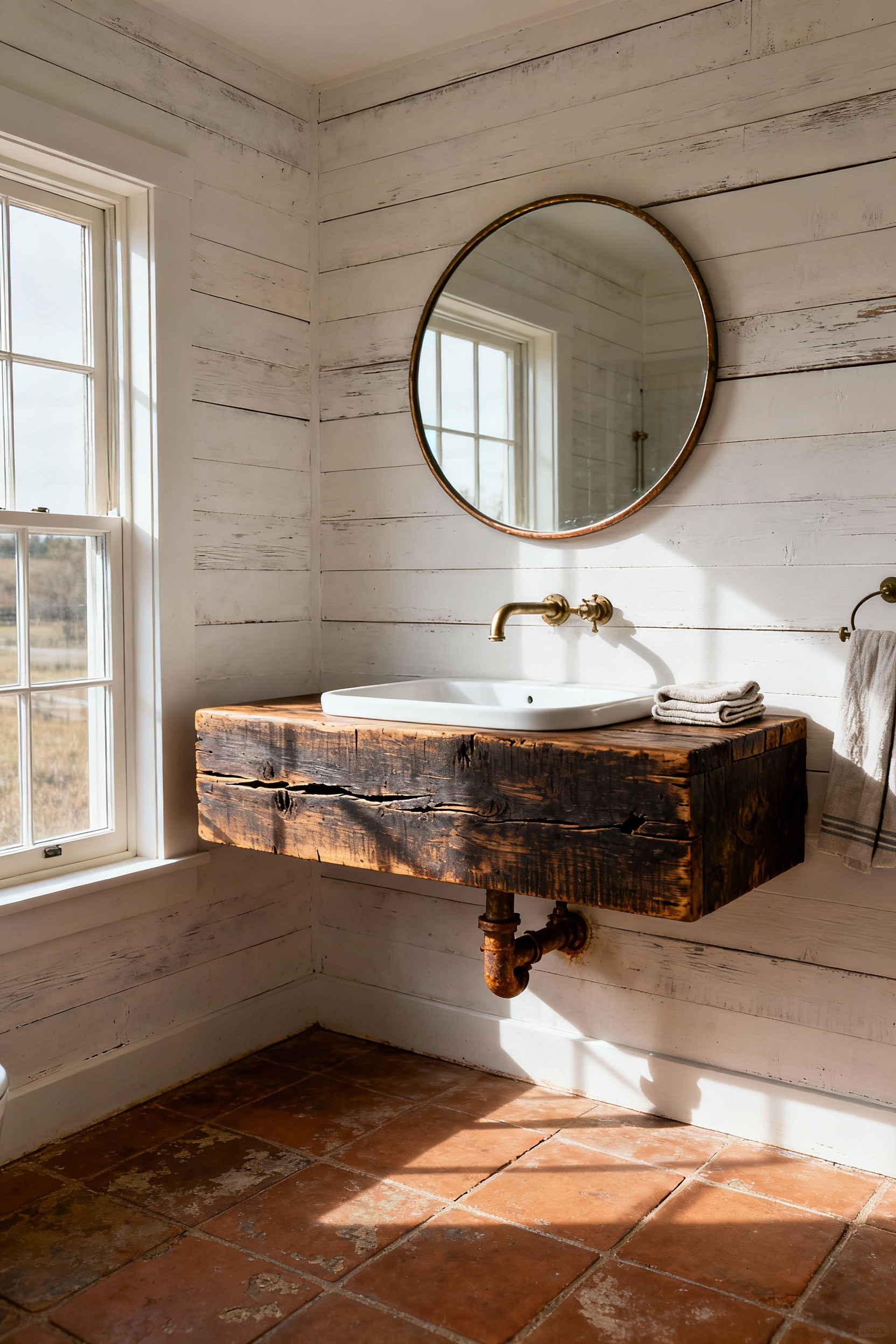
Your selection of furnishings and decor must balance utility with aesthetics. Authentic country design celebrates repurposed function. Consider adapting an antique dresser into a vanity or utilizing vintage lantern-style lighting. These choices provide practical value while anchoring the room in the past.
Conversely, steer clear of gimmicky decor trends. Filling shelves with thematic figurines or signs featuring generic slogans creates a cluttered, kitschy atmosphere. Maintain visual serenity by building your color palette around warm neutrals and earth tones. Use beige, taupe, and soft blues as your primary backdrop. If you incorporate patterns like gingham or florals, choose muted versions that blend harmoniously with the room’s natural textures.
Theme 1: The Architectural Shell & Foundations
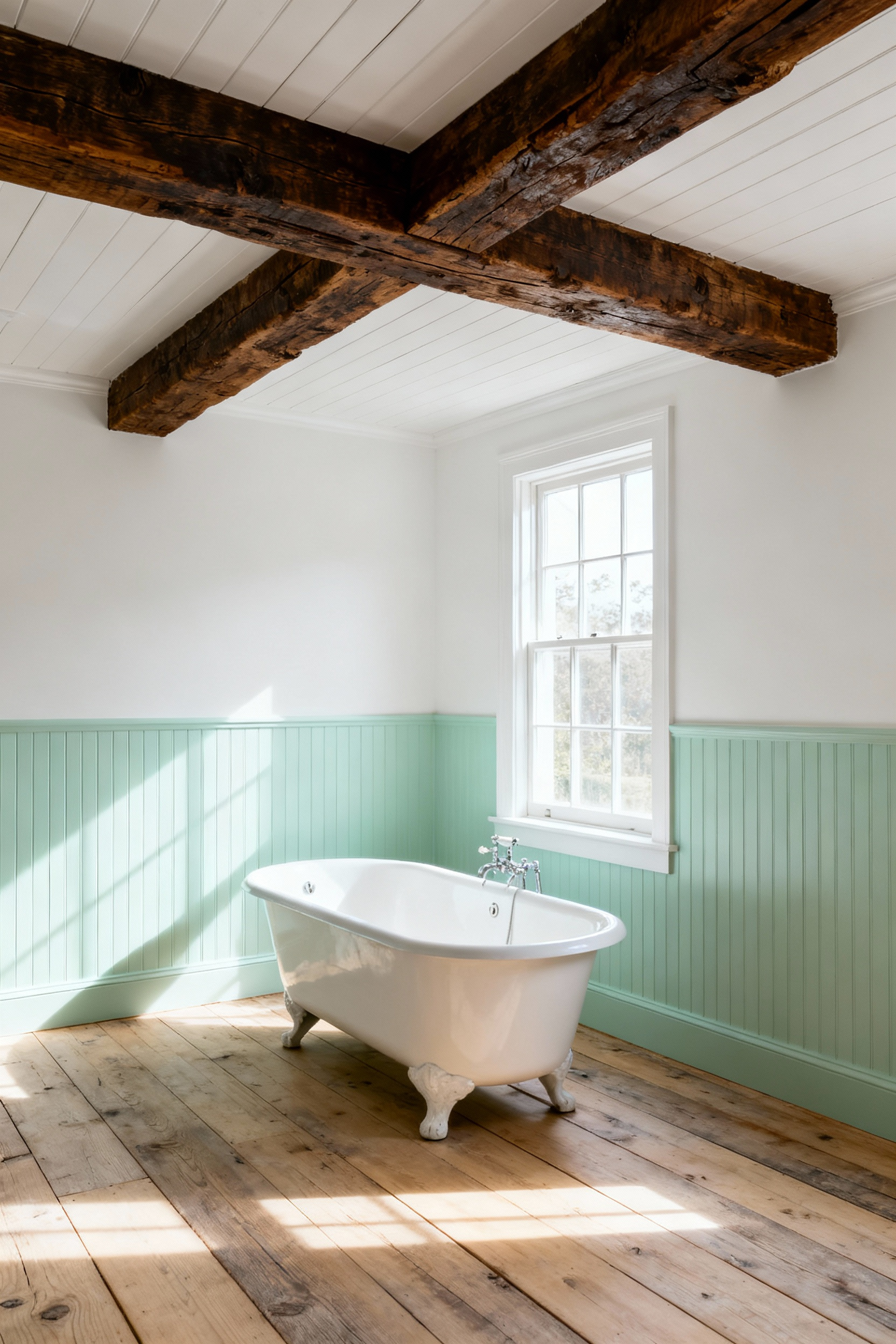
To create a country bathroom with genuine character, start by treating the walls and ceiling as historical canvases. Install shiplap or beadboard paneling to instantly establish a traditional farmhouse foundation. Painting these surfaces in soft white, pale aqua, or mint green keeps the atmosphere fresh and calming.
To add necessary warmth and architectural weight, expose original wooden ceiling beams. If structural elements are missing, install reclaimed or distressed wood accents to mimic that cozy, rustic integrity. For comprehensive guidance on integrating natural timber throughout your washroom, explore our serene wooden bathroom ideas. For a rugged, tactile contrast against smoother fixtures, expose an existing brick wall or apply brick-look tiles with a light white wash.
Ground the space with flooring that balances rustic aesthetics with modern durability. Select large porcelain tiles that replicate the look of natural flagstone, slate, or limestone. This choice provides essential water resistance while maintaining a connection to nature.
Extend this organic approach to the vanity by choosing natural stone countertops, such as granite or marble. Opt for a honed or matte finish rather than a high polish; this preserves the stone’s natural texture and complements the room’s authentic, time-worn appeal. For an in-depth review of foundational choices, see our complete guide to grounding bathroom flooring options.
1. Embracing Imperfection: Whitewashed Shiplap and Beadboard Wainscoting
A pristine, opaque finish often feels too sterile for a country bathroom. Instead, apply a whitewash technique to highlight the wood’s inherent character. Create this finish by diluting white paint with water, applying it lightly to allow natural grain patterns, knots, and color variations to remain visible. Select a matte or flat finish to absorb light, which softens the overall look. To further emphasize this lived-in aesthetic, leave small details untouched; tiny unfilled nail holes or slight gaps between boards enhance the authentic, built-over-time atmosphere.
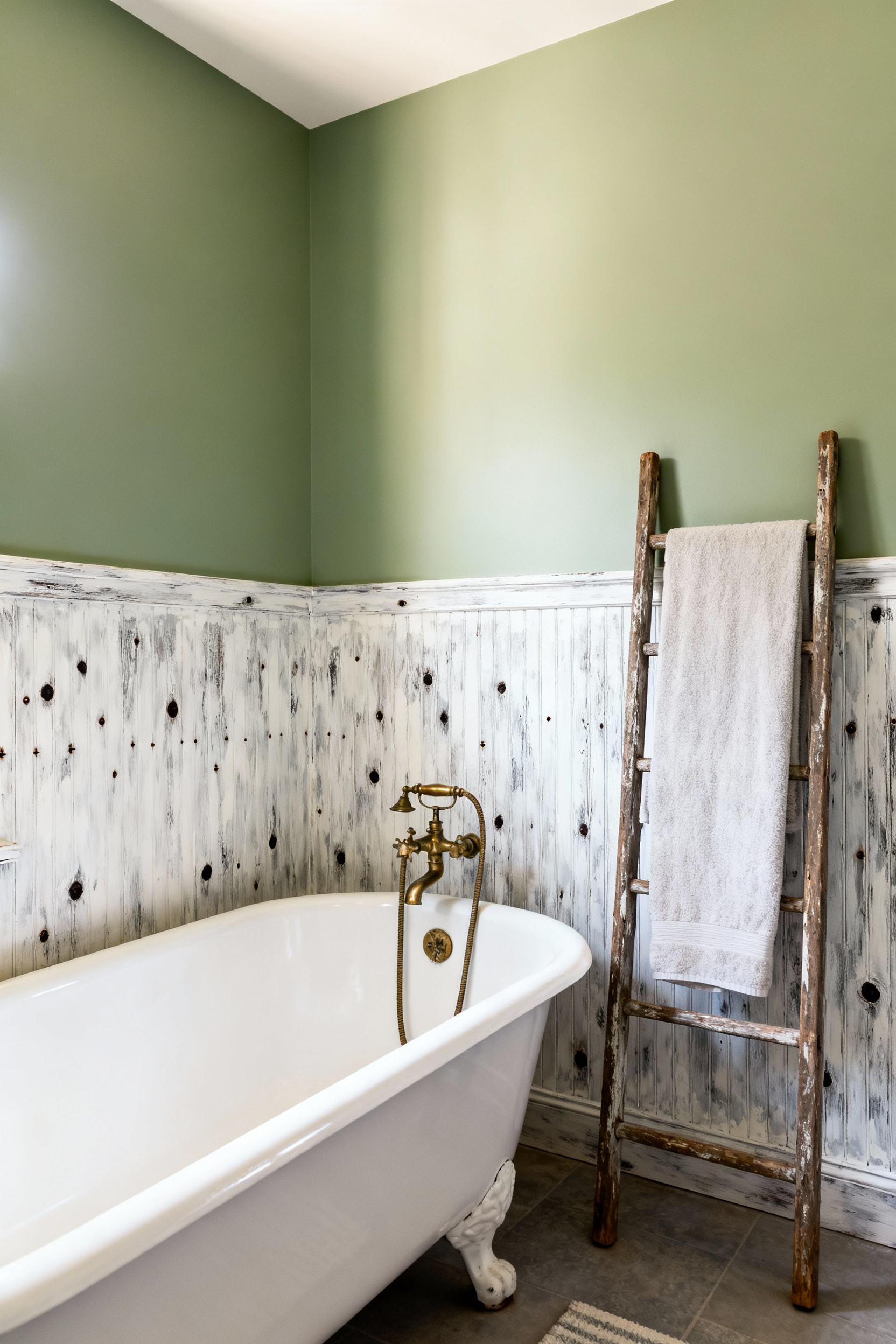
While the aesthetic relies on rustic charm, the bathroom environment demands durability. Standard lumber absorbs moisture, which leads to warping or mold in high-humidity zones. Choose moisture-resistant materials like cellular PVC, vinyl, or treated MDF for your wainscoting and paneling. These modern alternatives mimic traditional wood textures effectively but withstand steam and splashes, preserving the visual integrity of the design without compromising longevity.
Maximize visual interest in compact spaces by manipulating texture and board direction. Install beadboard wainscoting on the lower half of the wall to ground the space, then pair it with vertical shiplap above. This combination adds depth without introducing competing colors. Ensure the boards run vertically to draw the eye upward; this simple directional shift creates the illusion of higher ceilings, making a small bathroom feel spacious.
2. Grounding the Space: Reclaimed Terracotta or Natural Slate Flooring
Reclaimed terracotta tiles introduce immediate history to a country bathroom. Their earthy tones, ranging from burnt orange to rich reddish-brown, create a sun-baked foundation that warms the entire room. To achieve a classic farmhouse aesthetic, pair these tiles with a reclaimed wood vanity and white subway tiles.
Alternatively, natural slate offers a cooler, rugged sophistication. Its distinctive riven surface provides an authentic texture that is inherently non-slip, making it a practical choice for wet environments. Select slate in dark charcoal or earthy greens to firmly anchor the room while complementing other stone or wooden accents.
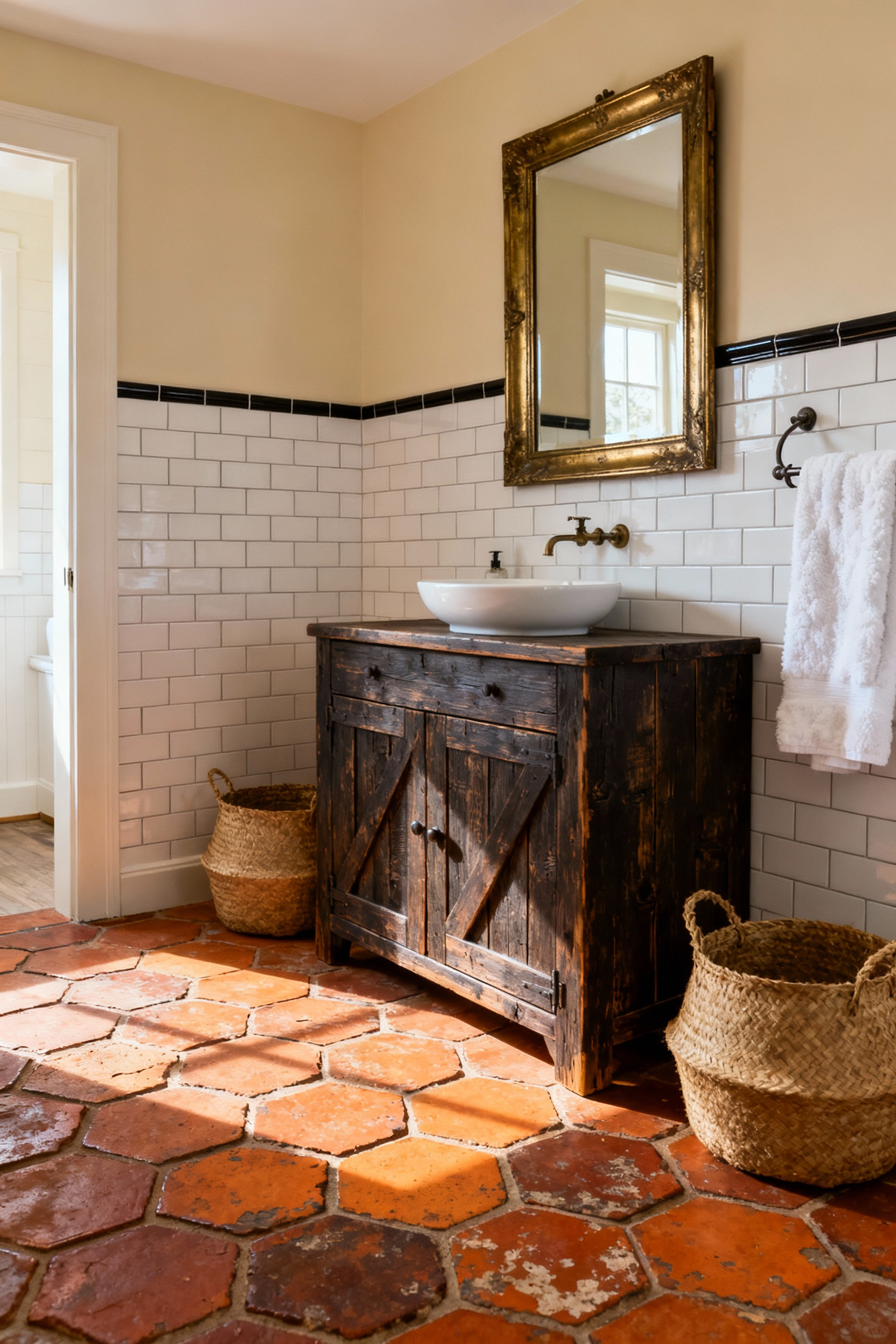
While these natural materials age beautifully, they require protection. Both slate and terracotta are porous, so you must prioritize periodic sealing to prevent water damage and staining. If low maintenance is a priority, consider high-density tiles or porcelain “terracotta-effect” alternatives. These offer superior water resistance without the rigorous upkeep.
Because these floors carry significant visual weight, balance them with lighter elements. Contrast the rich textures of the floor with white plaster walls, shiplap, or a pristine white porcelain tub to keep the space feeling airy rather than cramped. The installation pattern also influences the final character. For a traditional rustic look, stick to classic square or small-format tiles. If you prefer a fresh twist on the vintage aesthetic, utilize a hexagonal terracotta pattern to bridge the gap between past and present design.
3. Upward Gazes: Exposing Original Wooden Beams for Rustic Height
Exposing original wooden beams serves as a powerful architectural choice in country bathroom decor. This technique creates immediate rustic texture and forces the eye upward, significantly enhancing the room’s perceived height.
For the most dramatic transformation, consider removing dropped ceilings to reveal the structural elements hidden above. This renovation creates a vaulted or cathedral ceiling that floods the space with natural light and defines the room’s character with authentic history.
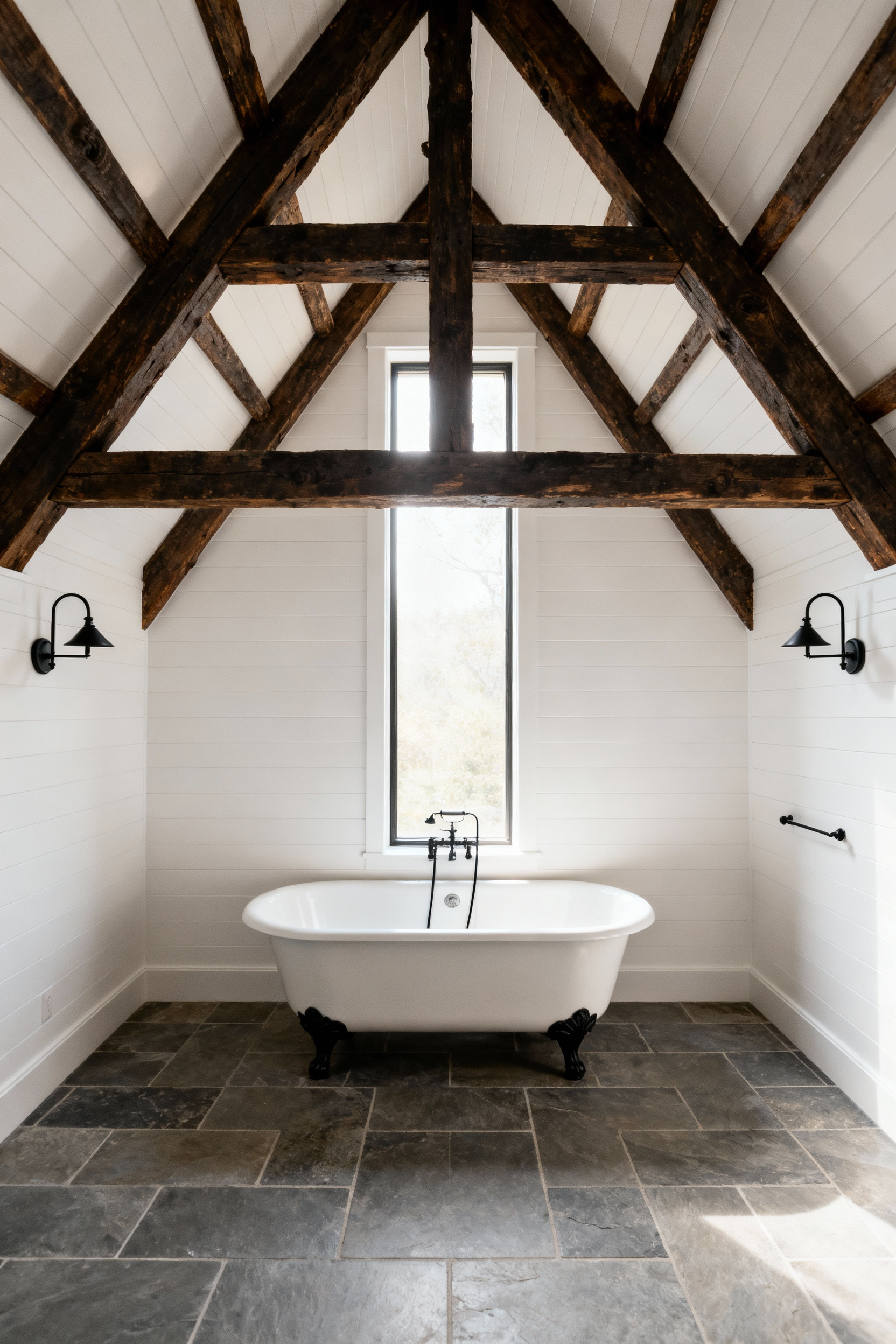
However, maintaining vintage wood in a high-humidity environment requires specific preservation methods. You must properly seal or treat original or reclaimed beams to prevent common issues like rot, mold, or warping. Apply a waterproof clear sealer or a semi-gloss waterproof bathroom paint to the wood surface. This protective layer ensures the longevity of the material and makes the beams easier to clean without stripping away their natural patina.
The finish and orientation of the beams also dictate the room’s final aesthetic. Dark-stained timber creates the greatest visual contrast against a white ceiling, offering a bold, barn-inspired feel. Conversely, light-stained or whitewashed beams blend subtly for an airy, modern farmhouse look. To maximize the spatial impact, orient horizontal beams so they run parallel with the longest dimension of the room; this visual trick draws the viewer’s gaze across the length of the space, making the bathroom appear larger.
Theme 2: The Centerpieces – Restored Fixtures
To ground a country bathroom design, establish a commanding focal point using authentic, substantial materials. A restored cast-iron clawfoot tub serves this purpose perfectly, particularly when it retains a pristine white enamel finish and features polished feet. Alternatively, a large vintage farmhouse sink anchors the space with necessary weight and history. These heavy elements honor the room’s architectural past and effectively dictate the layout for the rest of the decor.
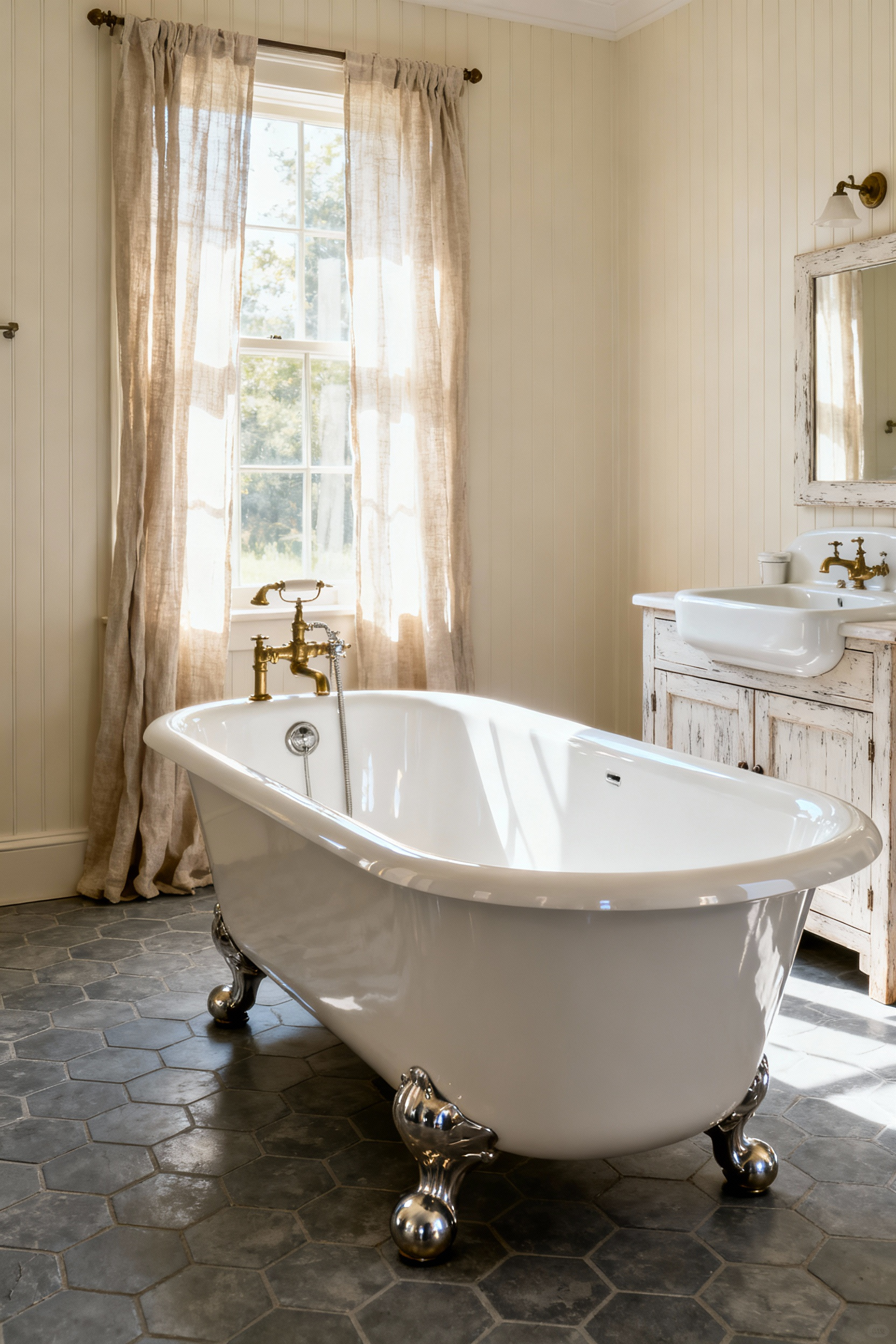
Select hardware finishes that complement the age of your centerpiece. Avoid modern chrome and instead choose taps, shower sets, and cabinet hardware in warm, distressed finishes like Copper, Bronze, or Brushed Brass. These materials naturally develop a beautiful patina, enhancing the rustic aesthetic over time. To reinforce this character, seek out fixtures with classic cross handles and visible elements like exposed shower plumbing. These mechanical details immediately evoke a timeless quality that hidden modern plumbing lacks.
Complete the restoration theme by treating lighting fixtures as secondary centerpieces. Install wall sconces, pendant lights, or chandeliers that feature aged metal elements or traditional lantern designs. Opting for fixtures with exposed bulbs casts a warm, nostalgic glow that defines the room’s ambiance. This lighting approach highlights the textures of the metal finishes and enamel, ensuring the space feels cohesive and curated rather than purely utilitarian.
4. The Crown Jewel: Sourcing and Refinishing a Cast Iron Clawfoot Tub
Locating an authentic cast iron tub typically requires visiting architectural salvage yards, flea markets, or checking online classifieds. While these pieces offer unmatched vintage appeal, you must prepare for significant weight considerations. A genuine cast iron vessel weighs between 350 and 500 pounds when empty, necessitating professional movers for installation. Before purchase, consult a contractor to verify your bathroom floor joists can support this load once the tub is filled with water and a bather.
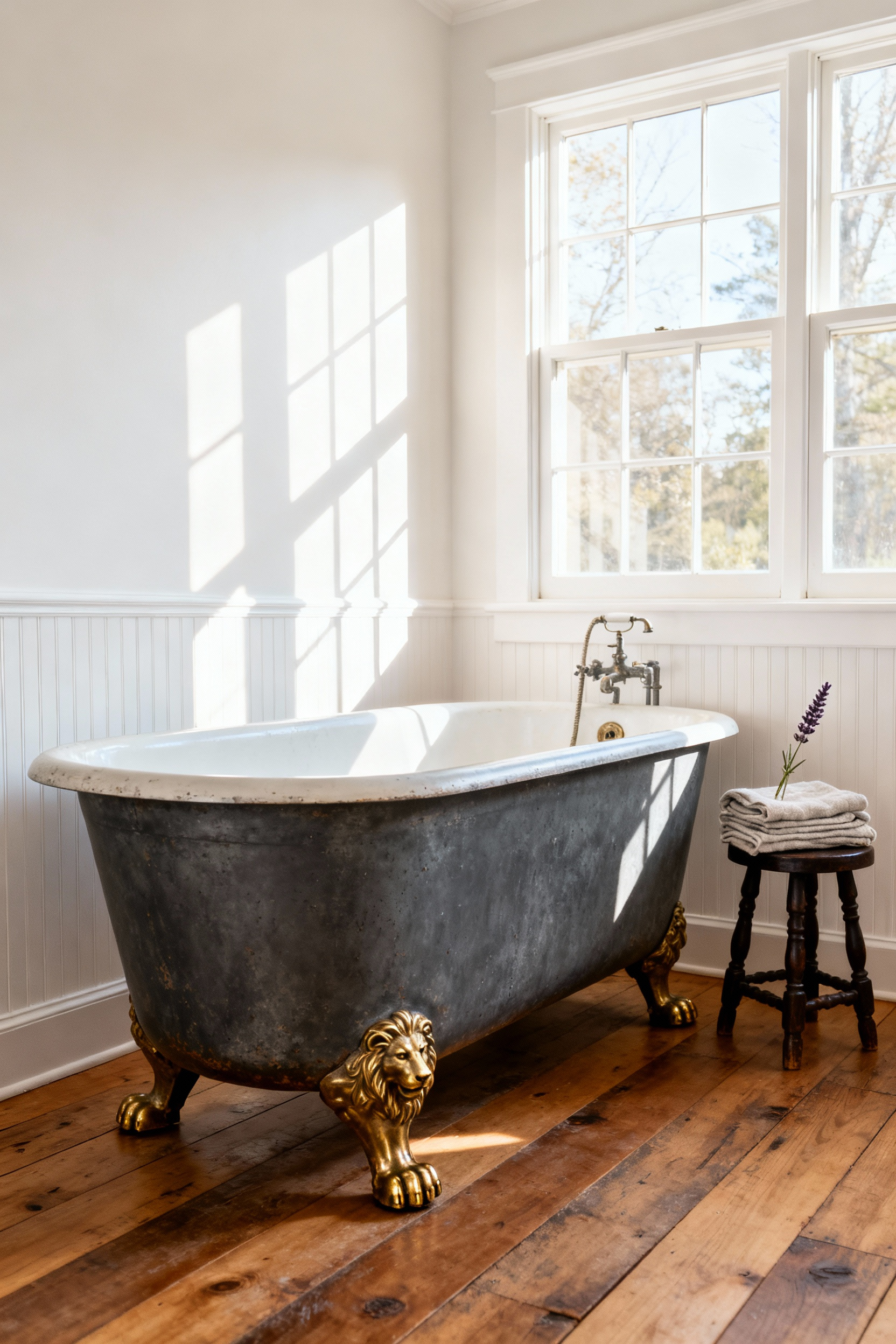
When inspecting potential candidates, verify the tub includes all four original feet. These components are rarely universal, and finding replacements that fit specific vintage brackets is both difficult and expensive. Missing feet can easily negate the savings of a second-hand find.
Once you secure a complete unit, you can use the exterior as a primary design element. Apply chalk paint or an epoxy enamel in bold tones like matte black, deep navy, or soft sage green. This customization creates a unique focal point while keeping the interior classic white. While you can manage the exterior painting yourself, hire a professional refinisher for the interior porcelain enamel. Vintage tubs often contain deep chips, rust, or lead-based coatings that require specialized removal and resurfacing techniques. Professional reglazing ensures a smooth, sanitary, and durable finish. Budget between $700 and $1,700 for this service; this investment restores the tub’s functionality and preserves a piece of design history for decades.
5. The Upcycled Vanity: Transforming Antique Dressers into Sink Consoles
Transforming an antique dresser into a sink console adds immediate character to a bathroom, but structural compatibility determines success. Measure the unit before purchasing to ensure it meets standard vanity height requirements, typically around 34 inches. Depth is equally critical; check for adequate plumbing clearance and sink dimensions.
To protect the piece in a high-moisture environment, replace the original top with a durable, waterproof surface like marble or quartz. If you choose to preserve the wood top, install a vessel sink and apply multiple coats of marine-grade sealant to prevent water damage.
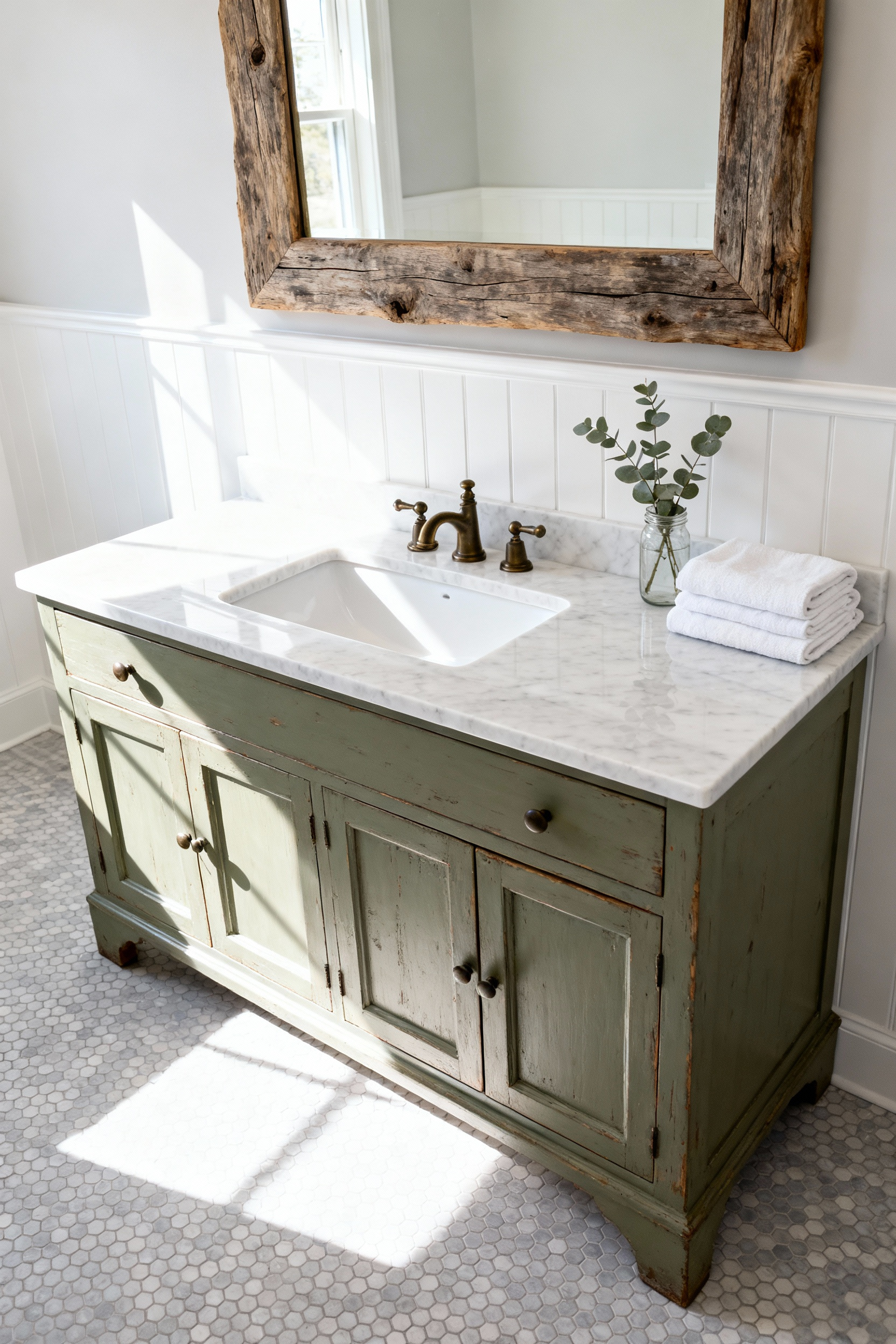
Accommodating modern plumbing requires specific internal modifications. You must cut openings in the back panel and often through internal supports for water lines and drainpipes. While the sink basin and P-trap will occupy space where the top drawers sit, you do not need to lose that storage entirely. Retrofit these drawers by cutting around the plumbing and rebuilding the frame with a shallow bottom. This converts a non-functional panel into a useful tray for small toiletries.
Finish the restoration by focusing on the original details. Embrace the authentic hardware that came with the dresser, as these brass, iron, or crystal elements define the vintage aesthetic. Clean and polish the existing knobs rather than replacing them. This simple step preserves the integrity of the design and instantly elevates the finished console.
6. Hardware with History: Choosing Unlacquered Brass or Cross-Handle Faucets
Unlacquered brass serves as a “living finish” essential for achieving a truly historic aesthetic. Unlike coated metals, this raw material oxidizes upon exposure to air, water, and touch. Over time, it develops a darker, richer patina that adds visible character and makes each fixture unique.
If you appreciate the vintage look but prefer minimal upkeep, opt for “antique brass” or “aged brass” finishes. These chemically treated alternatives mimic the appearance of age out of the box but will not change further.
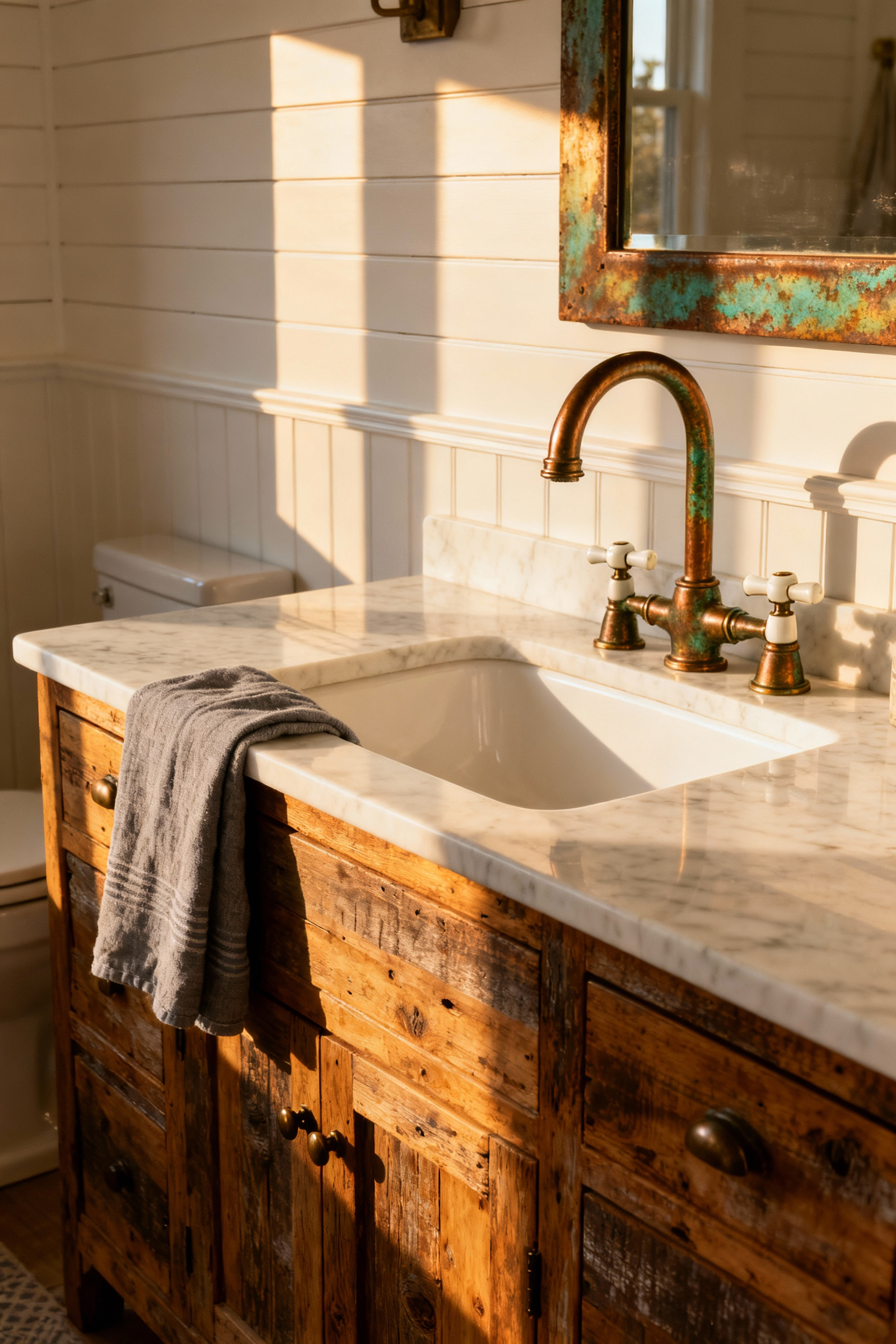
Pairing this warm metal with cross-handle faucets instantly elevates the hardware to a traditional or English country style. The classic ‘X’ shape complements marble surfaces and Belfast sinks perfectly. However, choosing genuine unlacquered brass involves a lifestyle decision regarding maintenance. In high-moisture environments, the patina develops quickly and may show greenish hues. You retain control over the final look: allow it to age naturally for rustic authenticity, or polish it regularly to restore its initial golden shine.
To complete the design, avoid the pressure to match every fixture perfectly. Unlacquered brass adds necessary warmth, but it works best when layered with other textures. Consider pairing these warm brass accents with cooler metals like black or brushed nickel for accessories. This approach creates a sophisticated, collected look that honors design history while preventing the space from feeling one-dimensional.
Theme 3: Softening the Edges – Textiles & Patterns
Bathrooms are often full of hard, cold surfaces like ceramic tile, porcelain, and varnished wood. To counterbalance this rigidity, prioritize soft, natural fabrics throughout the space. Choose materials such as breathable linen, crisp cotton, or delicate lace for your shower curtains, bathrobes, and window treatments. These textiles introduce an inviting tactile quality that instantly breaks up rigid architectural lines. By selecting high-quality natural fibers, you ensure sustainability and durability while creating a space that feels curated rather than sterile.
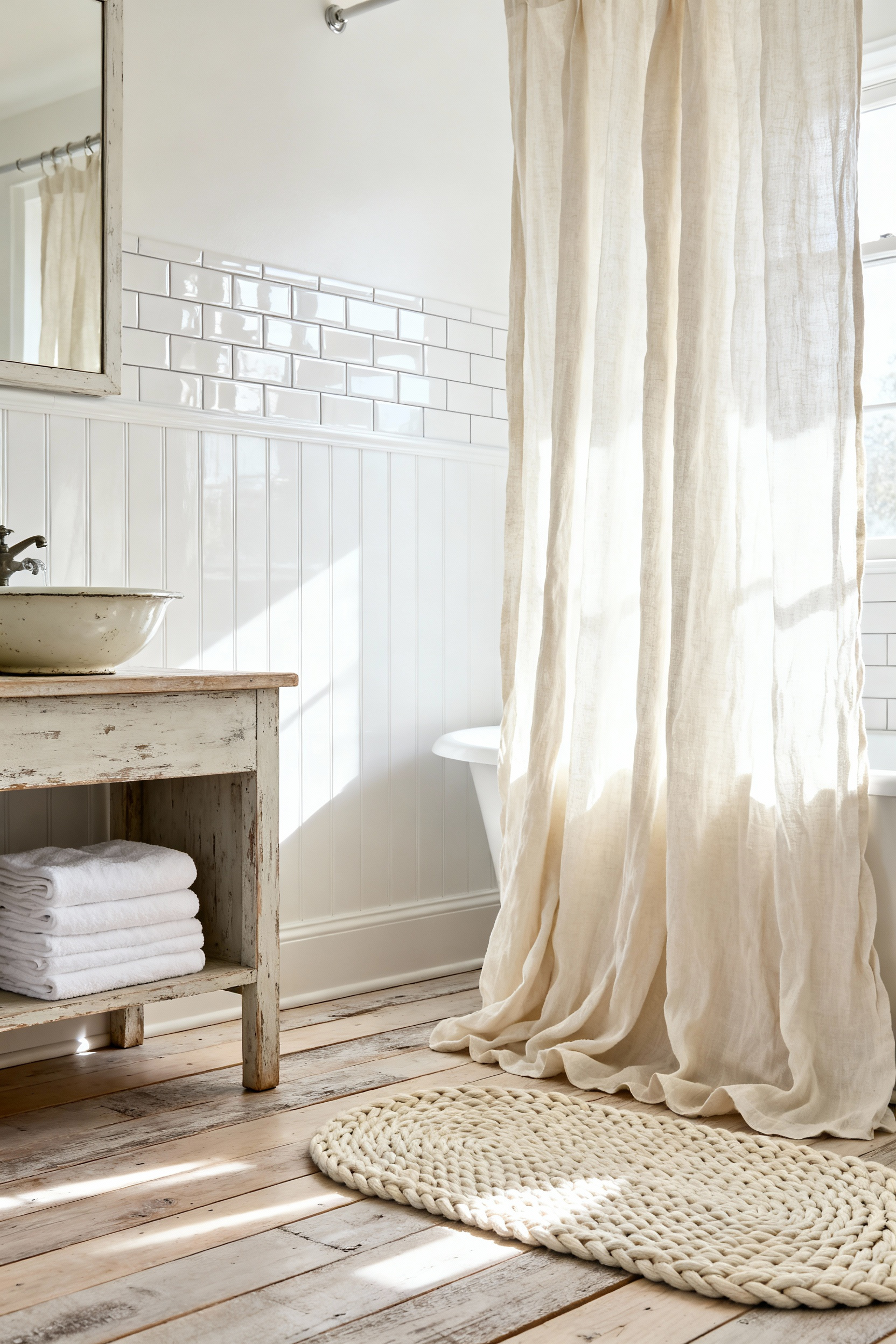
Visual warmth is just as important as physical texture. Incorporate classic country patterns to foster a lived-in aesthetic without overcrowding the design. Gingham checks, floral motifs, or botanical prints work beautifully on hand towels and wallpaper accents. For those curating highly individualized and *discerning homes*, we also offer inspiration for luxury bathroom wallpaper ideas. For a more restrained approach, opt for timeless stripes on a fabric shower curtain or a decorative sink skirt. Regardless of the pattern, maintain harmony by selecting muted color accents. Shades like dove gray, off-white, light lavender, or muted greens and blues provide a gentle contrast to rustic wood tones, preventing the room from feeling stark or heavy.
Finally, address the floor to ground the space effectively. Hard flooring often amplifies sound and feels cold underfoot, which detracts from a relaxing atmosphere. Layer the floor with a plush bath mat or a natural fiber rug made of woven cotton or jute. This addition adds a crucial layer of comfort, absorbs sharp acoustics, and visually softens the transition between the floor and fixtures. Using rugs acts as a foundational step in bridging the gap between strict utility and the cozy appeal of country design.
7. The Return of the Sink Skirt: Hiding Clutter with Vintage Linens
Sink skirts offer a practical solution to the often clinical atmosphere created by glazed tile and porcelain. By introducing a textile element, you instantly warm the room and counterbalance hard surfaces with necessary softness. Beyond aesthetics, this addition serves a crucial organizational role.
A well-placed skirt conceals unsightly plumbing beneath pedestal or wall-mounted sinks while creating a discreet storage zone. Use this hidden area to stow bulky items like cleaning supplies and waste bins, transforming a visually cluttered corner into a tidy anchor for the room.
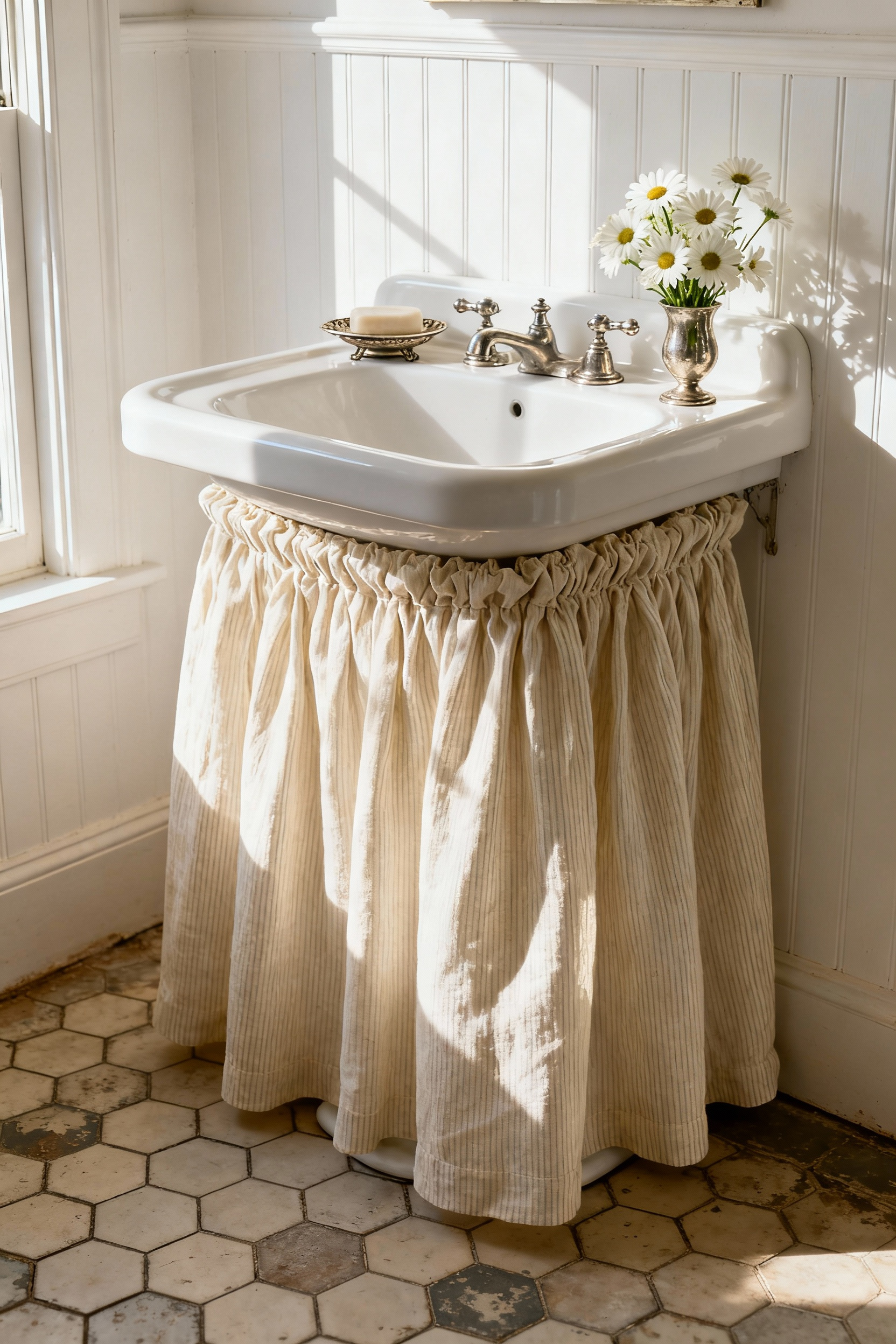
For a genuine country aesthetic, prioritize sustainability by sourcing authentic vintage linens or remnants rather than new textiles. Antique German duvet covers, embroidered cotton, and patterned linens provide a storied, nostalgic feel that modern reproductions often lack. Look for patterns like gingham, ditsy florals, or light stripes to maintain a cohesive, soft color palette. This approach allows you to repurpose high-quality heritage materials while honoring design history.
Installation requires minimal effort and ensures long-term functionality. Attach the fabric using self-adhesive or sew-on hook-and-loop tape around the rim of the sink basin. This simple DIY method allows you to quickly remove the skirt for laundering, ensuring the fabric remains fresh and practical despite the bathroom’s humidity. By using this technique, you preserve the integrity of the vintage fabric while meeting the sanitary demands of a busy household.
8. Window Dressing: Filtering Light with Café Curtains and Gingham Checks
Maximize natural light without sacrificing privacy by utilizing the fundamental design of café curtains. Position the rod halfway up the window frame to shield the bathroom’s lower section while leaving the upper expanse open to the sun. This approach floods the space with daylight, making small rooms feel expansive.
Choose lightweight, natural fabrics like unlined cotton or linen to enhance this effect. These breathable materials softly diffuse incoming light, establishing the warm, airy atmosphere essential to a rustic aesthetic.
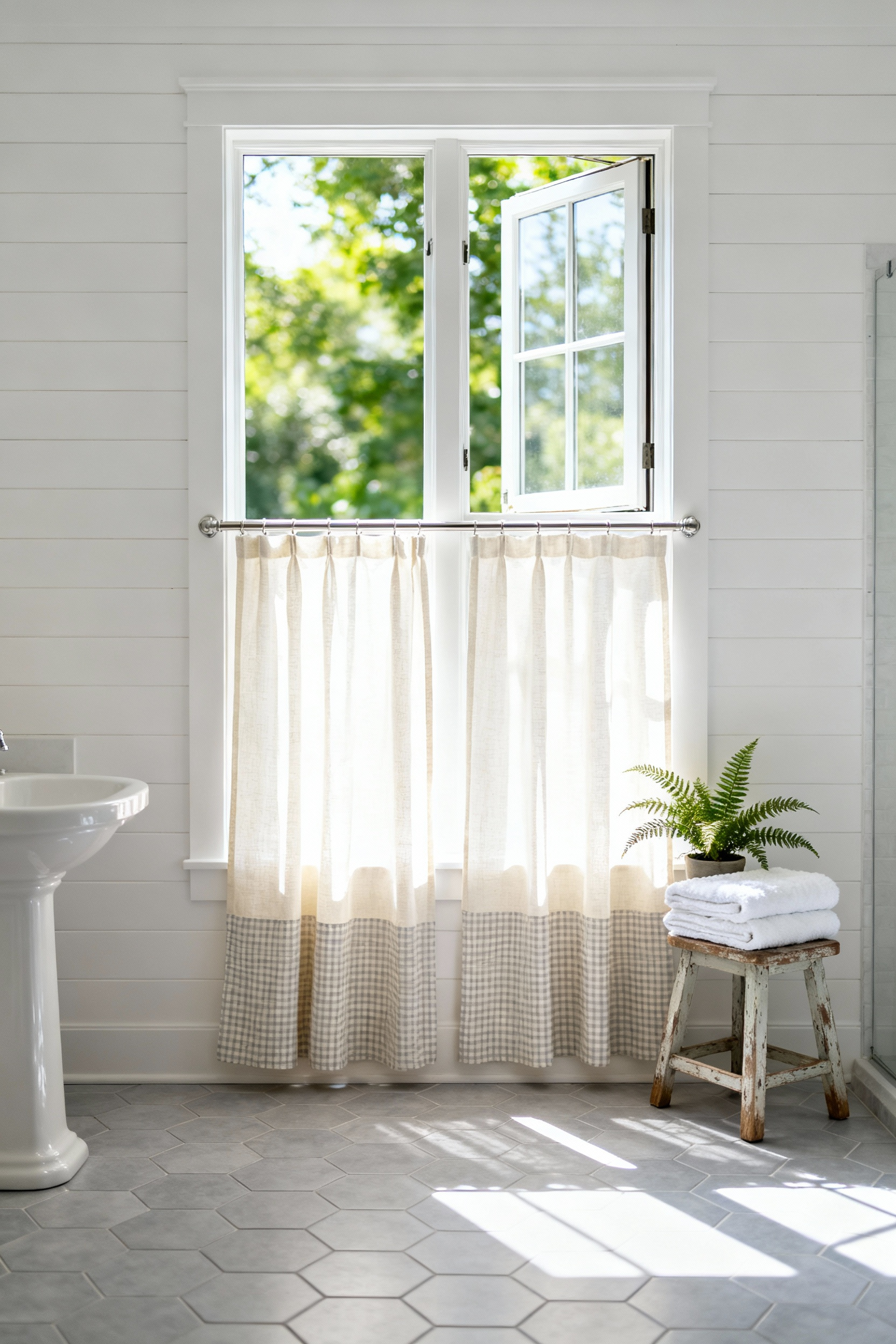
Select the scale of your gingham check based on the specific impact you desire. A classic 1/8″ or 1/4″ check offers subtle, traditional cottage charm, whereas a larger “Buffalo Check” creates a bolder, modern farmhouse statement. If your aesthetic leans further into quaint charm, exploring deeper rustic elements for your cottage bathroom decoration can provide additional inspiration. Regardless of size, stick to a welcoming country palette. Soft neutrals, muted sage greens, or deep reds coordinate seamlessly with natural wood accents, reinforcing a cohesive, homespun look.
Complete the installation with hardware that honors the room’s character. Avoid generic plastic fixtures in favor of simple, robust materials that age well. Consider these options for an authentic finish:
- Slim metal café rods for a discrete, clean line that lets the fabric stand out.
- Wooden dowels to match vintage vanities or shelving.
- Decorative vintage hooks used with tie-top curtains to add unique, restored appeal.
9. Underfoot Warmth: Swapping the Bath Mat for a Worn Turkish Rug
Elevate the utilitarian bathroom floor by exchanging standard bath mats for worn Turkish rugs. This design choice introduces rich, muted colors and intricate patterns, such as Oushak or Kilim, which define a collected country-chic aesthetic.
Prioritize vintage-style wool or durable, woven cotton for these pieces. Wool naturally repels water and permits airflow, making it far more resilient against humidity than synthetic alternatives. This material shift turns a functional floor into a statement piece that offers genuine patina and warmth.
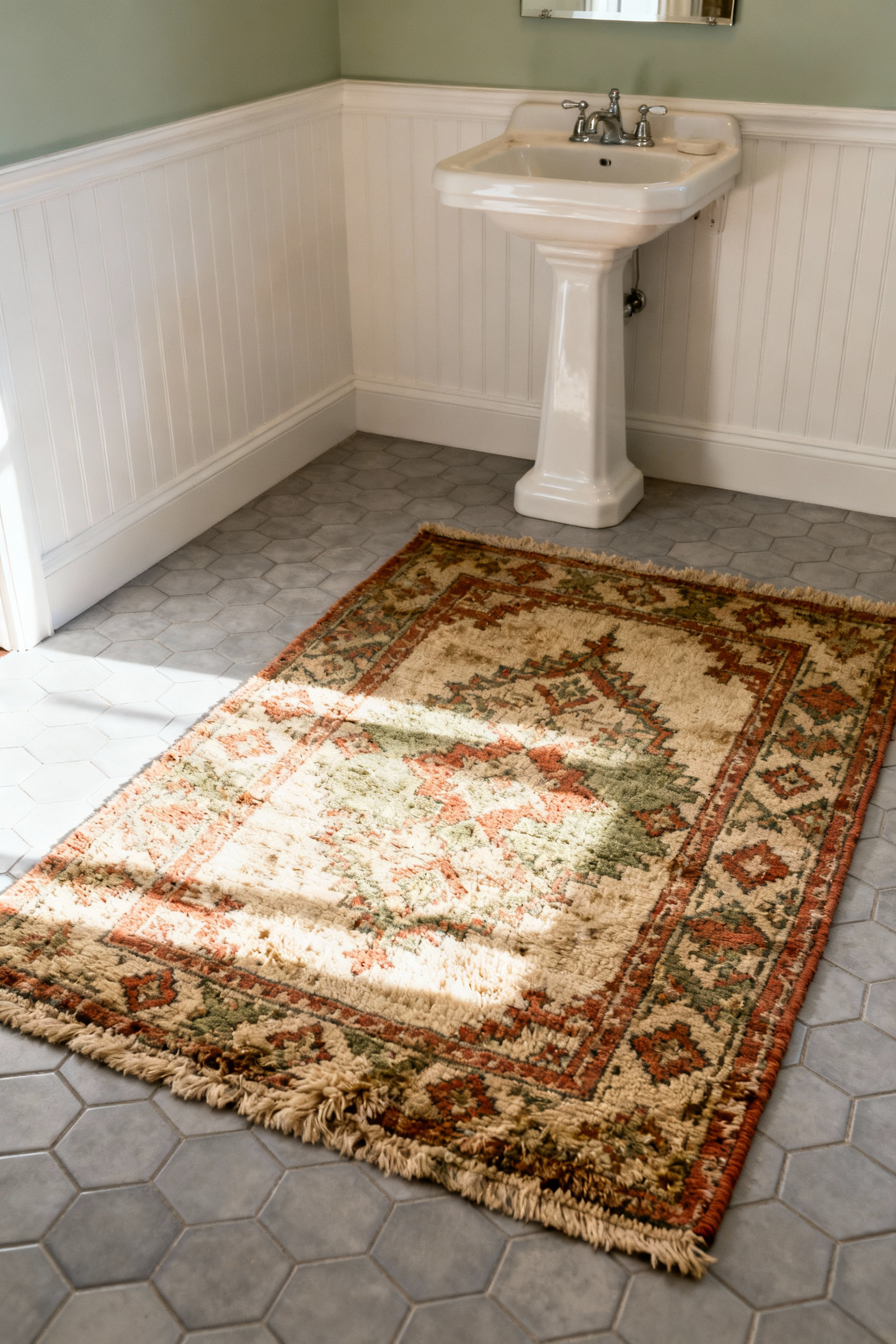
Strategic placement ensures both longevity and hygiene for vintage textiles. Position the rug in the driest area of the room, typically in front of the vanity or sink, rather than directly adjacent to the tub or shower. Good ventilation prevents musty odors and dries the fibers quickly. To ensure safety on slippery tile, always install a high-quality non-slip rug pad. This pad stabilizes the rug and facilitates air circulation underneath the weave to prevent mildew.
Adapt the rug shape and usage to your specific layout. For narrow spaces, a vintage runner provides continuous underfoot warmth and draws the eye down the room, creating a cohesive and luxurious look. To protect the vintage fibers during heavy water use, layer a small, washable cotton mat on top of the rug immediately after showering. This simple step captures excess moisture while maintaining the room’s sophisticated, historical character.
Theme 4: The Treasure Hunt – Curated Accessories
To achieve a genuine country aesthetic, reject the uniformity of matching accessory sets found in big-box stores. A truly *curated space* relies on the “treasure hunt” approach, where individual pieces appear collected over time rather than purchased all at once.
Prioritize found objects and repurposed items for essential storage to build character. For example, utilize vintage-style ammo boxes or wooden crates to hold towels and toiletries, offering a rugged, sustainable alternative to standard shelving. Similarly, replace modern plastic containers with antique glass jars for soap dispensers and toothbrush holders. This switch instantly adds historical charm and breaks the monotony of mass-produced design.
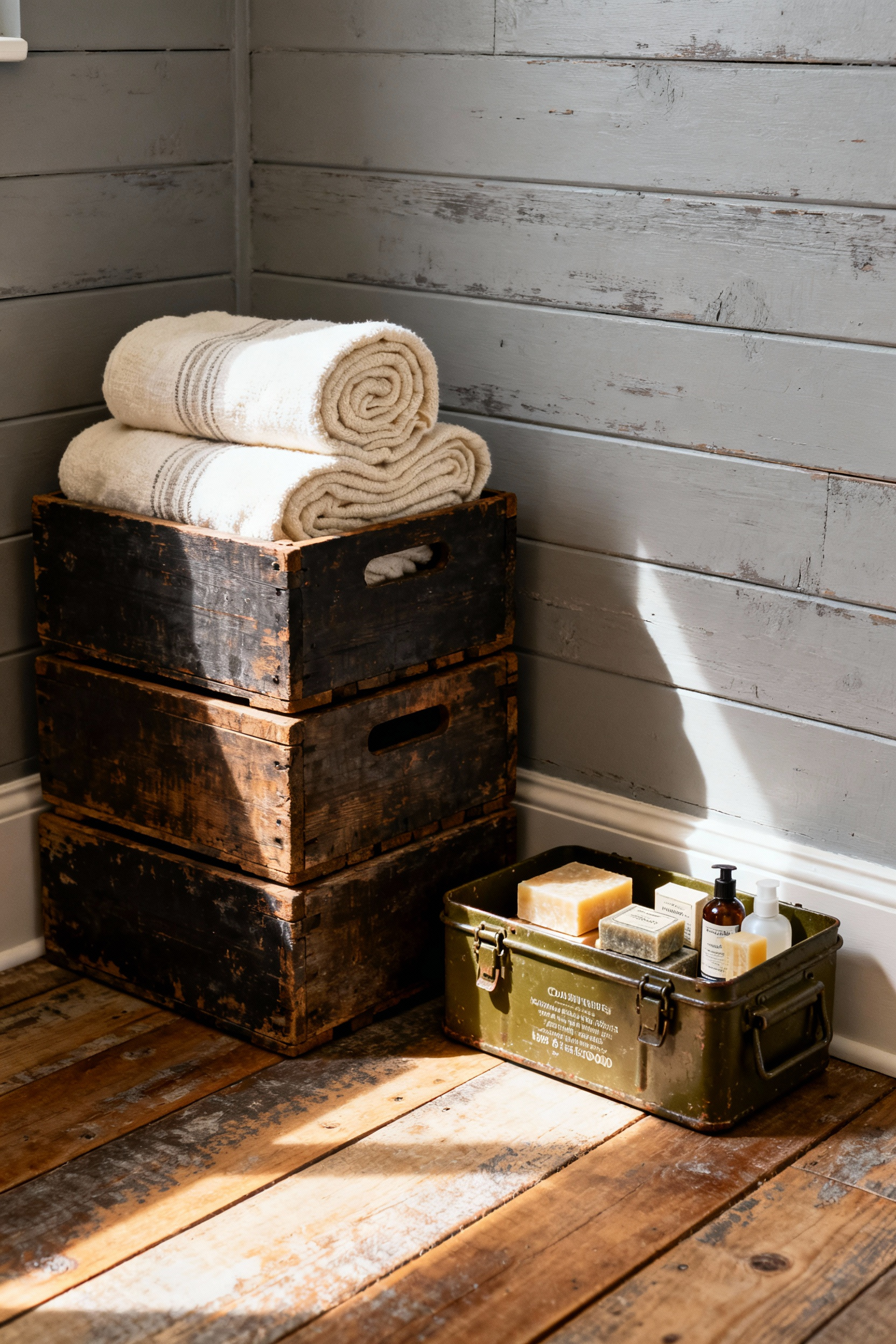
Hardware selection establishes the room’s underlying character and should focus on aged, raw finishes. Move away from polished chrome and embrace textures that look discovered or salvaged. Installing exposed pipe faucets or shower units introduces a distinct industrial element, while oil-rubbed bronze or black iron mirror frames ground the design in rustic tradition. To bridge the gap between the indoors and the outdoors, integrate nature-inspired accents with high visual impact. Small details carry significant weight; consider faux antler-shaped hooks for towels or vanity pieces crafted from distressed reclaimed wood to subtly reference lodge aesthetics.
Successful curation requires balancing visual interest with strict utility to avoid a cluttered appearance. Every “treasure” must serve a specific purpose. Layer accessories thoughtfully by using rustic woven baskets to provide essential texture while keeping linens organized. For lighting, select vintage-style fixtures, such as sconces with Edison bulbs. These serve as strong focal points that anchor the country theme while providing warm, ambient light that complements the room’s raw metals and wood textures.
10. Functional Enamelware: Pitchers and Basins as Storage Vessels
Functional enamelware brings authentic vintage character to country or farmhouse bathrooms, offering durability alongside timeless appeal. Rather than letting these pieces sit idle, repurpose a large basin as a rustic alternative to standard woven baskets. Place the basin on an open shelf or directly on the floor to store rolled hand towels, washcloths, or extra rolls of toilet paper. This approach transforms basic storage into a deliberate design feature that is easily accessible and simple to clean.
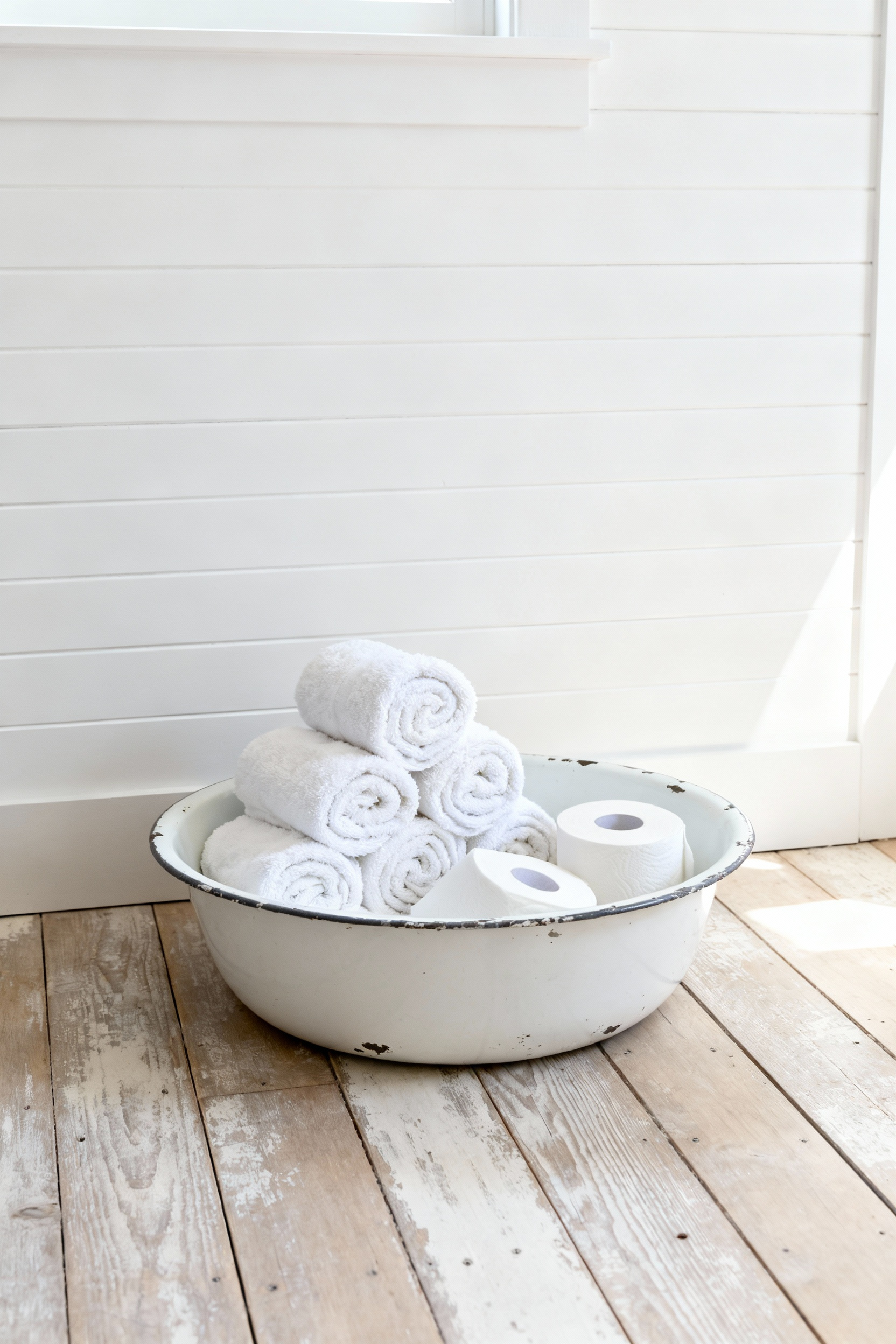
Maximize the utility of matching pitchers by giving them a permanent spot on your vanity or countertop. Instead of their original water-pouring function, use them as durable vases filled with fresh or faux botanicals. Cotton stems, eucalyptus branches, or wildflowers work particularly well to introduce organic textures.
For smaller items, create a cohesive countertop vignette using enamel cups or bowls. These smaller vessels organize daily essentials like cotton balls, bars of soap, and hair accessories, effectively reducing visual clutter while maintaining the room’s style. When sourcing these items, prioritize texture and history. Select authentic vintage pieces that display a slightly chipped, distressed patina, as these imperfections tell a story and add depth to the space. Stick to traditional colorways to ensure the look remains grounded. Simple white enamel with black, blue, or red rims is a versatile choice, while the popular blue swirl or graniteware style enhances a primitive country aesthetic.
11. Reflecting the Past: Styling Distressed Trumeau or Venetian Mirrors
Incorporating European history into a rustic bathroom requires a careful balance of opulence and grit. Distressed Trumeau and Venetian mirrors offer a premium solution for this aesthetic. The delicate, etched glass of a Venetian mirror creates a striking “rustic contrast” when paired with raw elements. Hang one above a heavy reclaimed wood vanity or juxtapose its intricate bevels against matte-black fixtures. This visual tension transforms a purely functional space into a “Refined Farmhouse” retreat, merging sophisticated artistry with country durability.
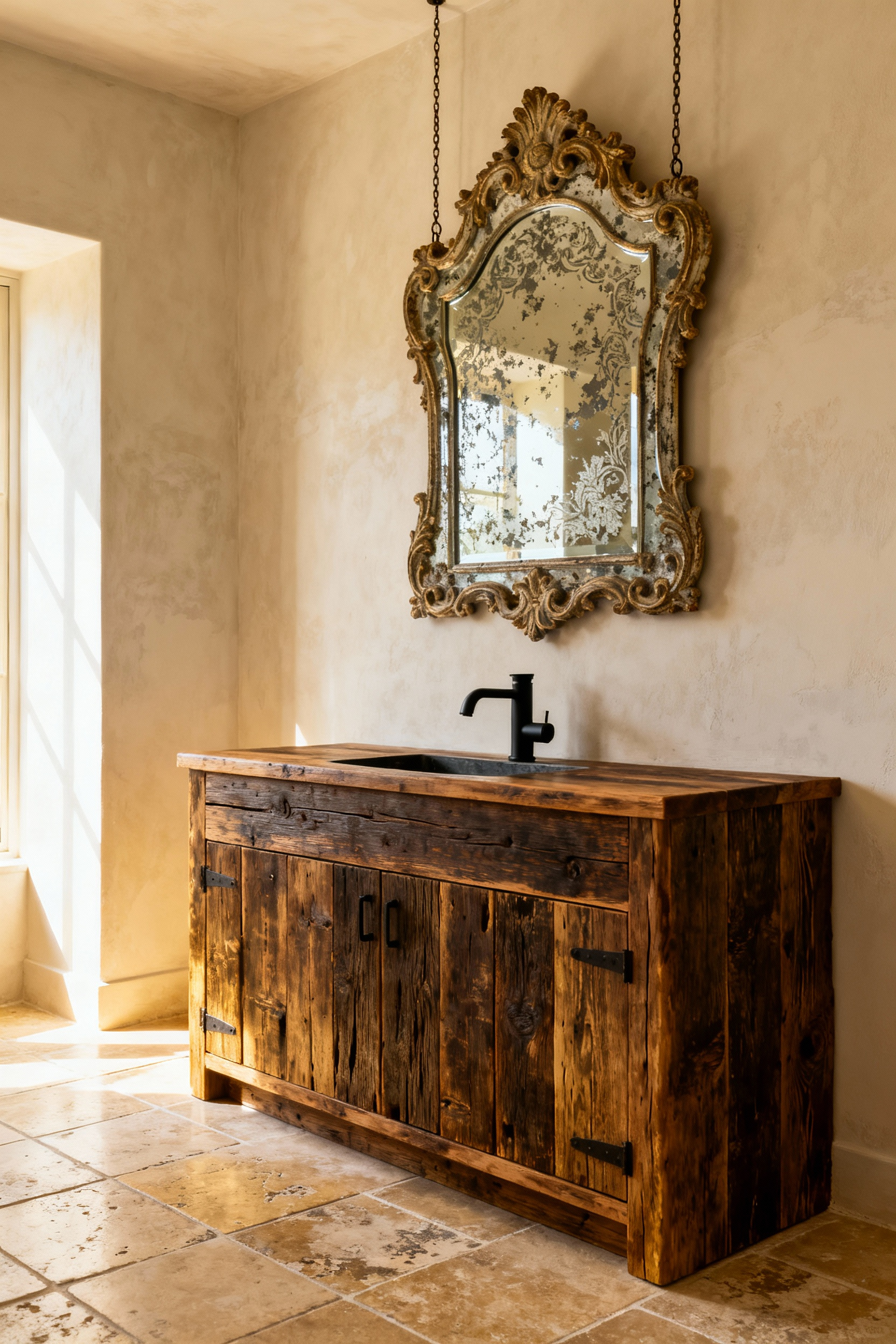
For a more structural impact, utilize a Trumeau mirror as an architectural focal point. These elongated pieces, often featuring a decorative panel above the glass, mimic the presence of an antique window and add significant height to the room. To maintain the country feel, prioritize frames with a soft, weathered patina. A finish featuring chipped paint, muted tones, or subtle aged gilt ensures the piece possesses a “lived-in appeal” rather than looking too pristine for the setting.
True vintage character extends beyond the frame to the glass itself. Select mirrors with a non-perfect, antiqued reflective backing, particularly around the edges, to establish a timeless narrative rather than a brand-new appearance. Because both styles are substantial in size, position them strategically to reflect windows or primary light fixtures. This placement not only highlights the mirror’s weathered details but also maximizes natural light, making smaller or windowless bathrooms feel brighter and more expansive.
12. Apothecary Aesthetic: Glass Jars for Soaps and Bath Salts
Transforming daily essentials into decor requires the right vessel. Moving items like cotton balls, Q-tips, and colorful bath salts out of disposable packaging and into glass jars immediately elevates a bathroom’s aesthetic. Select clear glass to keep inventory visible, or choose ribbed and fluted options to introduce vintage texture. For a distinct farmhouse nod, standard Mason jars serve as excellent, sustainable dispensers for liquid soaps and lotions.
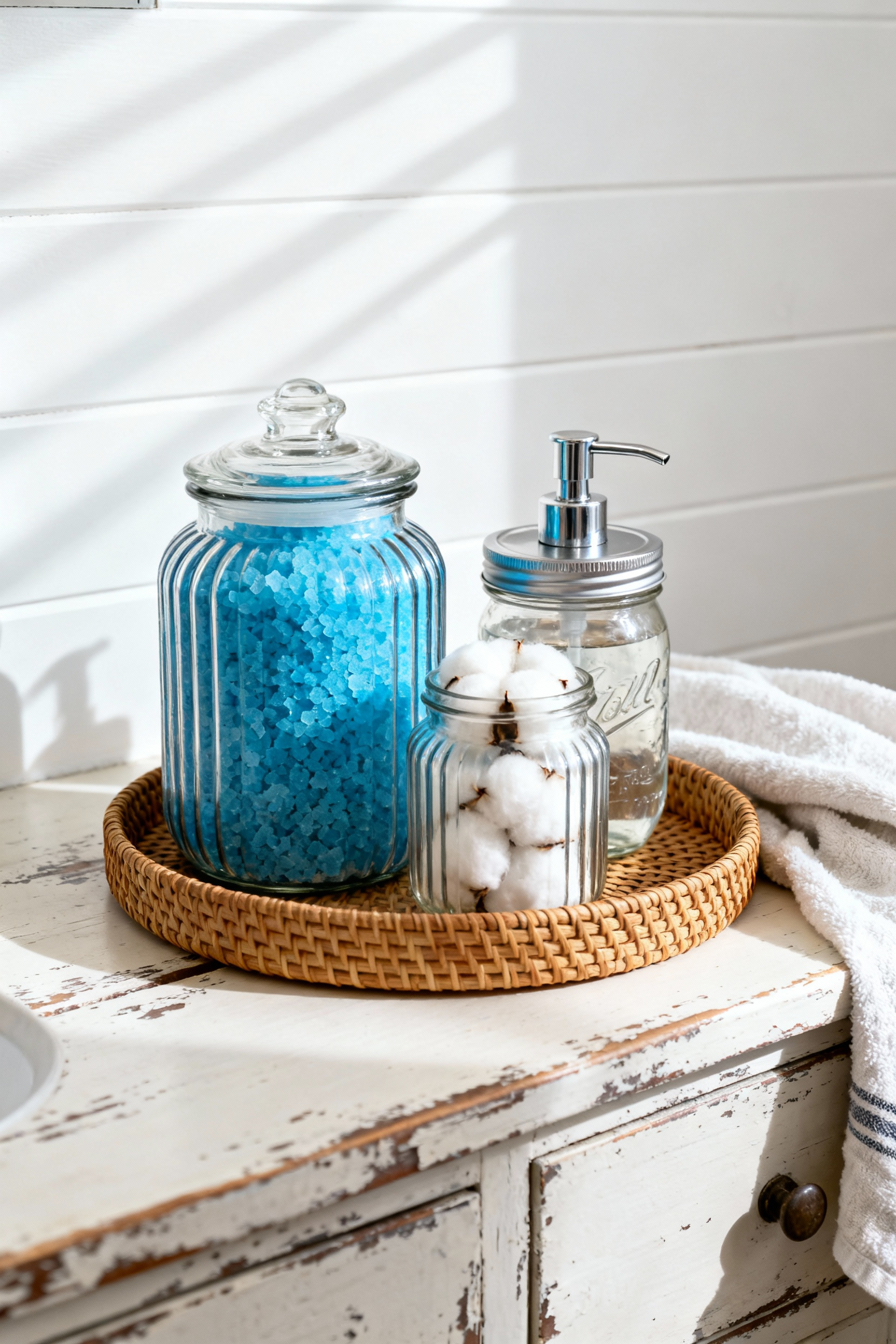
Arrangement is key to achieving a curated apothecary look rather than a cluttered countertop. Create a dynamic vignette by grouping three jars of varying heights—tall, medium, and short—on your vanity or open shelving. To maintain organization, ground this collection on a cohesive base. A natural wood slice, weathered tray, or rustic metal caddy unifies the display and prevents the jars from floating visually in the space.
Small, tactile details bridge the gap between simple storage and true country charm. Enhance the rustic appeal by tying a simple bow of jute twine or burlap ribbon around the neck of each jar. For functionality that doubles as decor, place a small wooden scoop or a decorative shell directly inside bath salt containers. These natural elements warm up the glass and create a timeless, collected atmosphere.
13. Bringing the Outdoors In: Fresh Wildflowers in Stoneware Crocks
Vintage stoneware anchors a country bathroom design with historical texture and weight. To achieve an authentic aesthetic, look for crocks featuring salt-glaze finishes with a characteristic “orange peel” texture or white Bristol glazes with classic blue markings. In a bathroom setting, scale is critical. Opt for smaller vessels, such as half-gallon or one-gallon sizes, to avoid overwhelming the space. Position these pieces on a vanity, toilet tank shelf, or windowsill to introduce organic warmth without creating clutter.
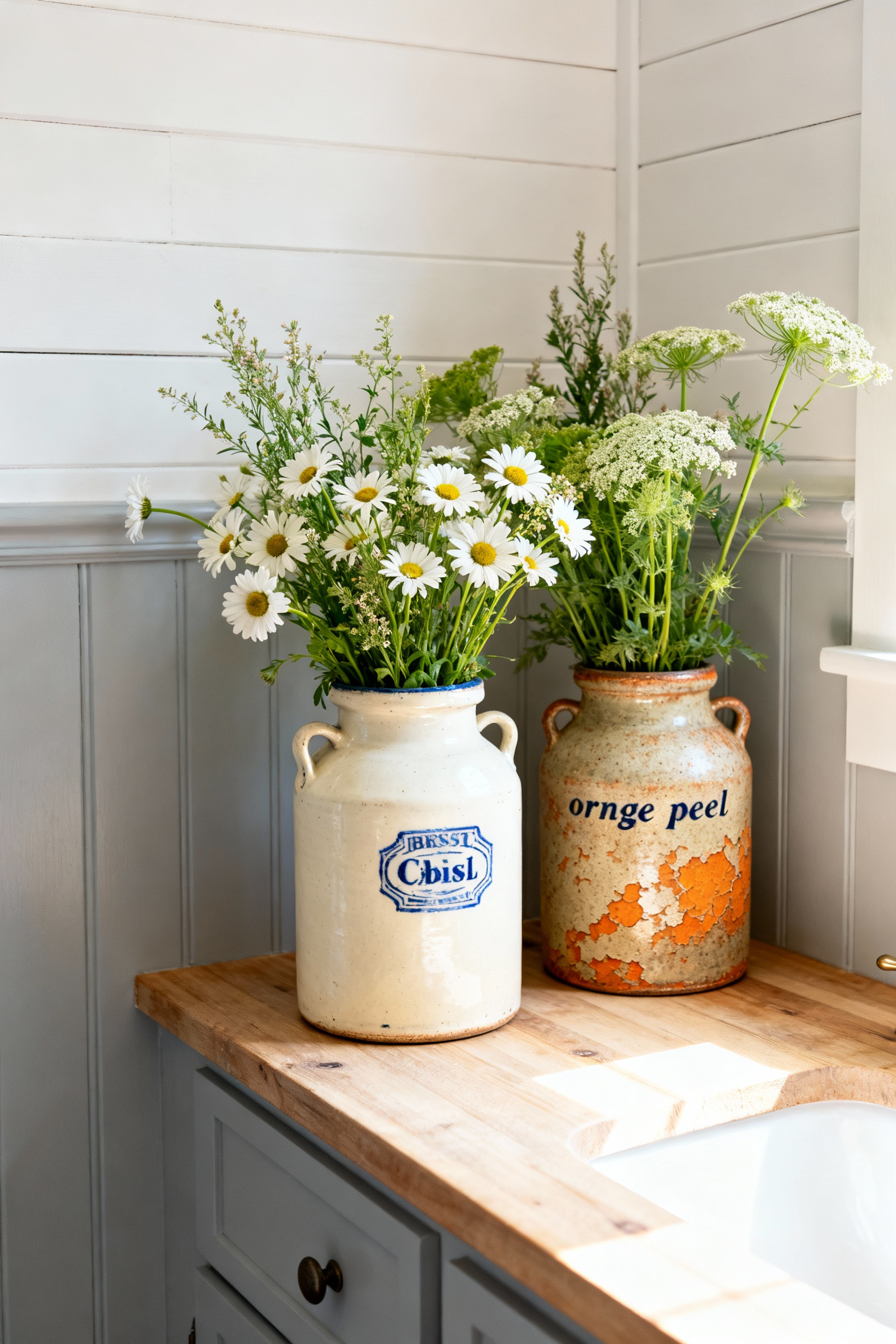
Preserve the integrity of your antique pottery by using a hidden liner. Vintage stoneware can be porous, so nestle a clean glass jar or small plastic vase inside the crock to hold the water. This protects the vessel and simplifies the process of changing the water. Because these crocks often feature wide mouths, place a heavy metal flower frog inside your liner. This provides necessary structural support, keeping stems upright and organized rather than letting them fall loosely against the rim.
Select botanicals that reflect the relaxed, informal nature of the container. Rigid, formal arrangements often clash with rustic pottery, so choose unfussy blooms like daisies, Queen Anne’s Lace, and black-eyed Susans. Simple bundles of mixed greenery or wild grasses also offer a genuine farmhouse feel. For a functional twist, display fresh sprigs of eucalyptus. The natural humidity of the bathroom interacts with the leaves to release a spa-like scent, merging visual charm with aromatherapy.
Theme 5: Illumination & Ambiance
To create a truly welcoming country bathroom, you must move beyond basic utility and focus on the quality of light. The goal is to achieve a cozy, lived-in atmosphere rather than a sterile, clinical environment. Start by prioritizing soft, warm lighting tones. Select warm LED bulbs with yellow undertones for all fixtures. These bulbs mimic the glow of candlelight or sunset, softening the room’s hard surfaces and enhancing the warmth of wood or stone elements.
During the day, maximize natural light to keep the space airy. Replace heavy blinds with sheer shades or gauzy curtains; these window treatments filter sunlight beautifully while maintaining necessary privacy.
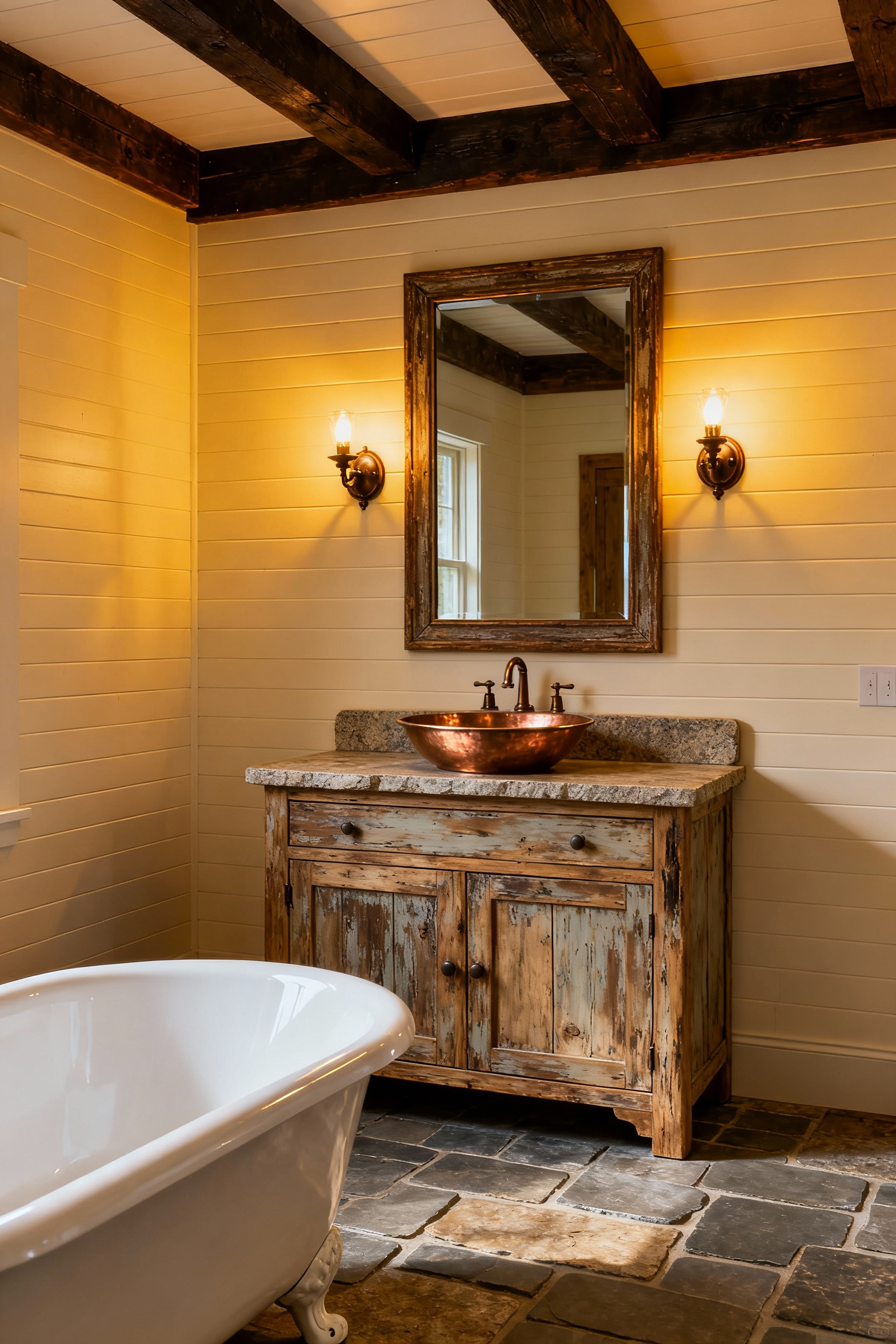
The hardware you choose plays a crucial role in establishing the room’s historical character. Seek out fixtures featuring rustic or aged materials that imply a sense of permanence. Finishes like antique brass, wrought iron, weathered pewter, and oil-rubbed bronze pair exceptionally well with the country aesthetic.
For the shades, traditional materials like milk glass and piastra glass offer a timeless look, while mason jar fixtures provide a distinctively rustic touch. These elements ground the design in history and add textural interest to the upper portions of the room.
Finally, effective illumination relies on a strategic layering of different light sources. Combine functional task lighting with decorative ambient fixtures to create a flexible environment.
- Vanity Area: Flank the mirror with vintage-style sconces or rustic vanity lights. This placement eliminates harsh shadows on the face during grooming routines.
- Overhead: Install a central statement piece to anchor the room. A small chandelier adds a touch of farmhouse elegance, while a woven or wood-shaded pendant introduces organic texture.
By balancing these layers, you ensure the bathroom functions perfectly for morning routines yet remains relaxing for evening soaks.
14. Milk Glass Sconces: Diffused Lighting for a Soft Glow
Milk glass naturally diffuses light, eliminating the harsh glare often associated with clear glass fixtures. This opacity creates a warm, soft glow that is particularly flattering for grooming tasks at the vanity. By concealing the light bulb, styles like the classic Schoolhouse or simple opal globe maintain a clean, uncluttered aesthetic. These choices honor traditional design while providing the gentle illumination essential for a calming country bathroom.
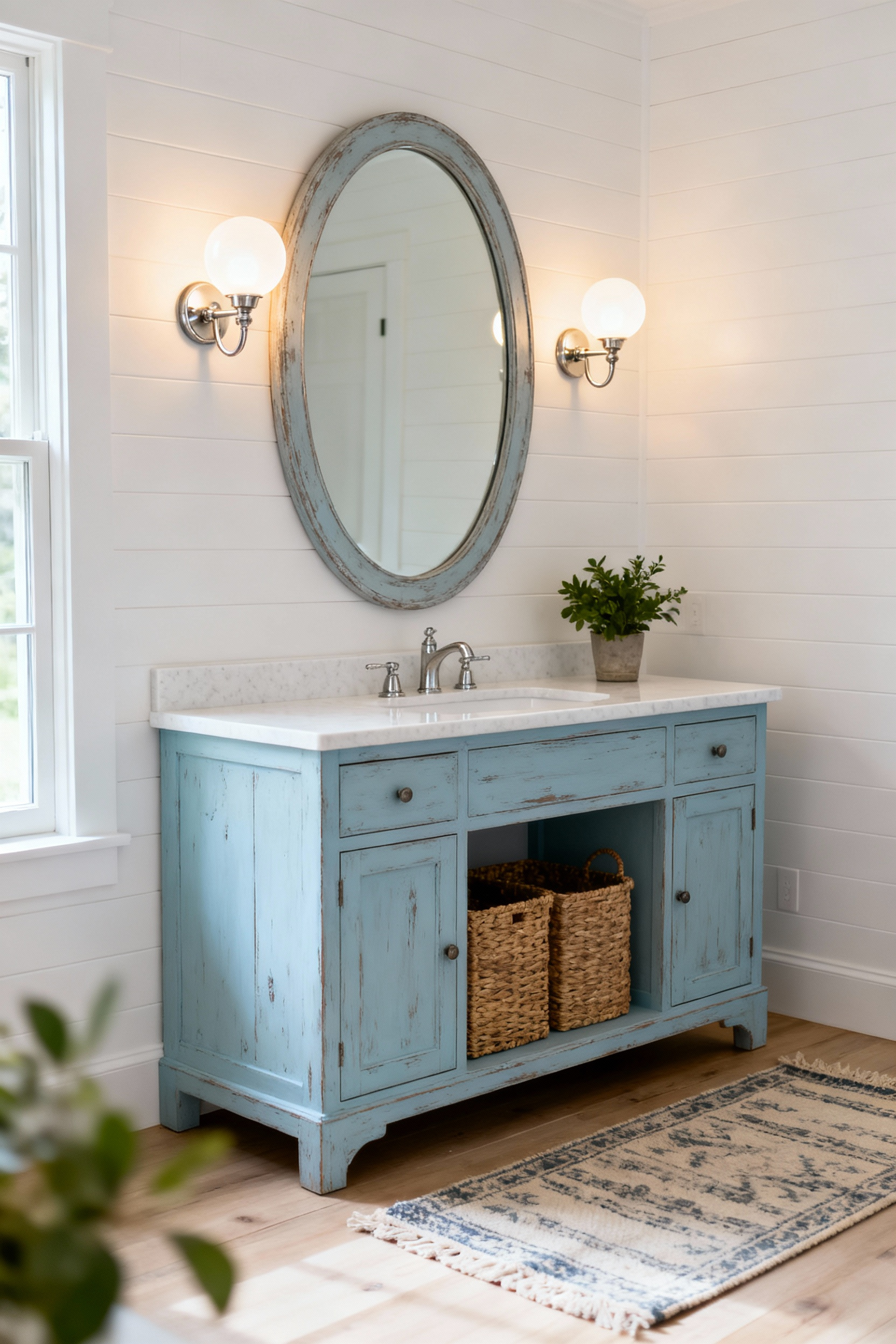
To ground the fixture in the vintage or farmhouse style, select hardware with aged finishes such as rubbed bronze, antique brass, or matte black. Functionality is just as important as form; mount sconces on either side of the mirror to provide balanced, layered lighting. For maximum versatility, wire these fixtures to a dimmer switch. This allows you to easily shift from bright, functional light for morning routines to a low, ambient setting perfect for a relaxing evening.
15. Oil Lamp Conversions: Electrifying Vintage Finds for Modern Safety
Vintage oil lamps offer undeniable charm, but open flames present significant safety hazards in modern bathrooms. Fortunately, you can electrify these pieces without destroying their historical integrity or value. Avoid drilling into the glass or metal base, as this permanent alteration ruins the antique. Instead, prioritize non-destructive conversion kits. These electrified burner adapters, typically sized #1 or #2, simply screw into the existing collar to replace the original wick mechanism, rendering the lamp safe and functional while keeping the artifact intact.
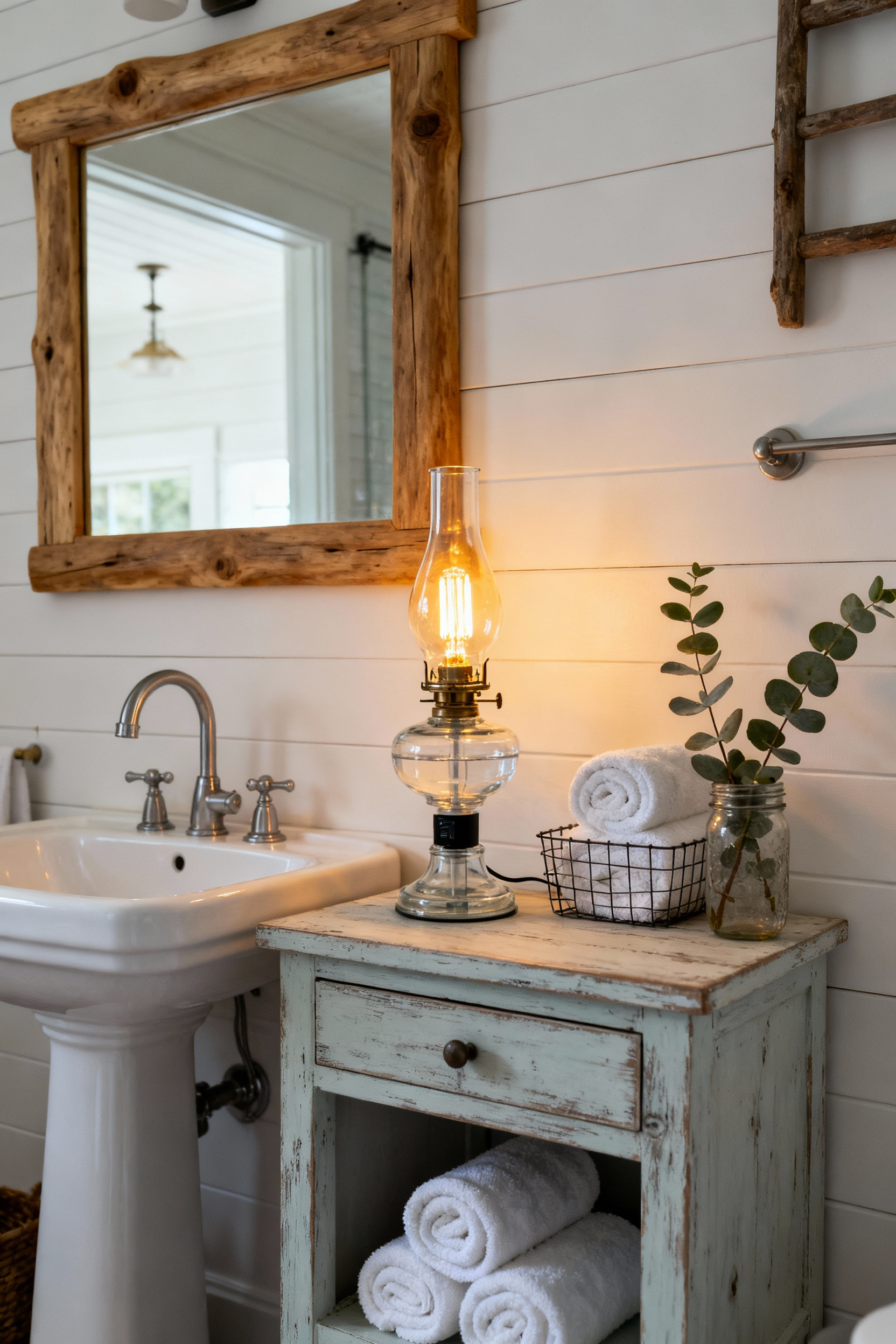
Lighting quality defines the atmosphere in a restored space. To maintain the rustic warmth of an original oil burn, select LED filament bulbs or flicker-flame options with an amber or warm-white color temperature. These bulbs provide a vintage aesthetic without the dangerous heat output of old incandescent versions, which is critical when using delicate glass chimneys. This switch also reduces power draw, making it a sustainable choice for daily use.
Integrate these converted pieces to anchor your country bathroom decor. A matching pair of brass or clear glass lamps works beautifully as unique vanity sidelights, offering a softer, more historical alternative to standard overhead fixtures. For a subtle touch, place a single converted hurricane-style lamp on a shelf or toilet tank as ambient accent lighting. Whether you choose milk glass or classic brass, these restored items honor design history while meeting the practical needs of a contemporary home.
Conclusion: Creating a Sanctuary that Honors the Slow Life
Curating a sanctuary that honors the slow life moves beyond simple decoration; it requires a shift toward mindful curation. By eliminating visual noise through uniform vessels and softening the atmosphere with layered lighting, you transform a functional bathroom into a restorative retreat. This process focuses less on accumulation and more on revealing the essential beauty of your space through natural textures and living greenery. The result is a room that does not just serve a utility but actively invites you to pause and breathe.
Ultimately, implementing these high-end country bathroom decor ideas supports a sustainable lifestyle where quality consistently outweighs quantity. A truly timeless space evolves with you, grounding your daily routine in moments of quiet appreciation rather than hurried necessity. To begin your transformation, audit your countertop surfaces today and commit to replacing disposable plastic with permanent, high-quality fixtures that will stand the test of time.
Frequently Asked Questions About Country Bathroom Decor
What is the key difference between Country Bathroom style and Modern Farmhouse style?
While both styles celebrate rustic elements and natural materials (like shiplap and reclaimed wood), Country style prioritizes authenticity, age, and a collected, sometimes maximalist, look. It favors deep patinas, antique furniture repurposed as vanities, and warm, darker color palettes. Modern Farmhouse, by contrast, is often cleaner, featuring open concepts, stark white backgrounds, stainless steel accents, and a focus on simplicity and newness, often drawing more from industrial elements.
What are the best materials for a durable, authentic rustic bathroom vanity?
The most authentic and durable materials include reclaimed barn wood or solid oak, specifically chosen for its visible knots, grain, and established patina. For the countertop, select natural stone such as honed granite or soapstone, as these provide a matte finish that complements the rustic texture of the wood. Using materials with a history (like reclaimed pieces) ensures a high-quality finish that transcends trends.
How can I incorporate antique or vintage accessories without making my country bathroom look cluttered?
The key to managing vintage finds is mindful curation. Ensure every antique piece serves a functional purpose (e.g., repurposing an enamel pitcher as a vase or a wooden crate for towel storage). Limit purely decorative objects, focus on quality over quantity, and ground the accessories on trays or in clear glass apothecary jars to maintain visual order while celebrating the piece’s unique history.