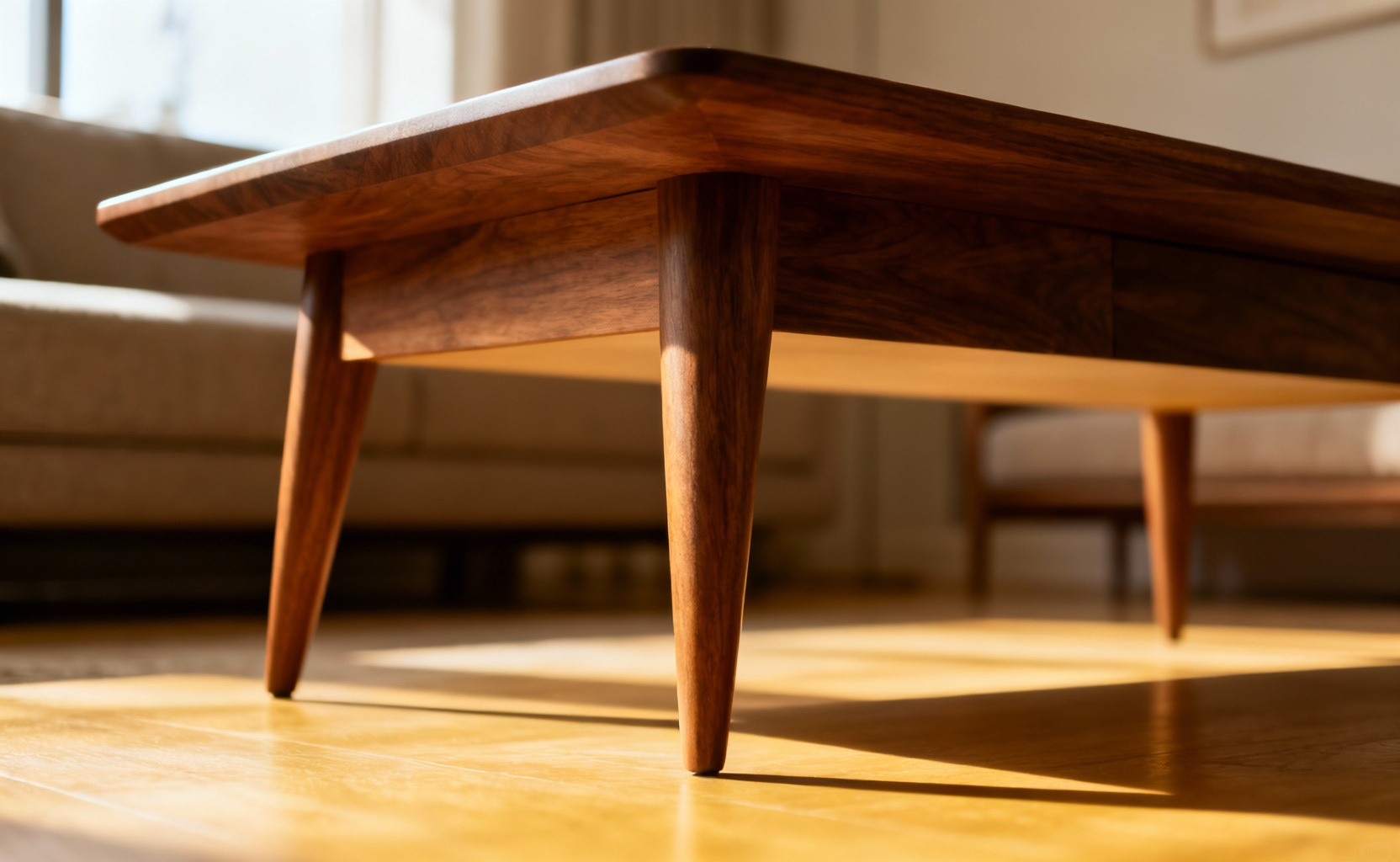

It’s hard to imagine a cozy Sunday morning without a low surface for your brew, but that concept of “horizontal living” is a relatively modern luxury. We traded the stiff, upright posture of Victorian tea parlors for the deep, low-slung comfort of the post-war era, necessitating a unique piece of coffee table furniture that was less about service and more about connection. I remember unearthing my first authentic mid-century slat table under a pile of dust at an estate sale; its long, architectural lines weren’t just beautiful—they were physical proof of the cultural shift from formal hosting to relaxed lounging.
Instead of buying a mass-produced replica that will eventually end up in a landfill, I encourage you to hunt for these vintage “anchors” that truly define a room. Mid-century pieces were specifically designed to be the focal point, moving away from the peripheral utility of tray stands toward expansive, sculptural art. When scouting for a sustainable centerpiece to ground your living space, keep these evolution-based principles in mind:
- Look Low: Seek out the “Great Descent” profile—tables that sit 16–18 inches high are authentic to the era and pair perfectly with modern, deep-seated sofas.
- Prioritize Material: Vintage tables were often built with solid teak, walnut, or heavy glass; unlike modern particle board, these materials can be sanded, oiled, and restored indefinitely.
- View it as Sculpture: Look for geometric shapes or biomorphic curves that break up the boxy nature of a room, turning your table into a conversation starter rather than just a drink coaster.
1. The Architectural Silhouette: Why Mid-Century Forms Remain Timeless
When I rescued my first battered surfboard table from a dusty estate sale, I realized the magic wasn’t just in the warm walnut grain—it was in the air underneath it. Mid-century architects understood that furniture shouldn’t weigh a room down; it should let it breathe. This is achieved through the “lift,” where tapered, splayed, or hairpin legs minimize visual weight and create a floating effect that makes even small, sustainable living spaces feel expansive. By choosing pieces that pair honest materials—like a heavy teak base with a transparent glass top—you aren’t just buying furniture; you are curating light and preserving a legacy of thoughtful, open design.
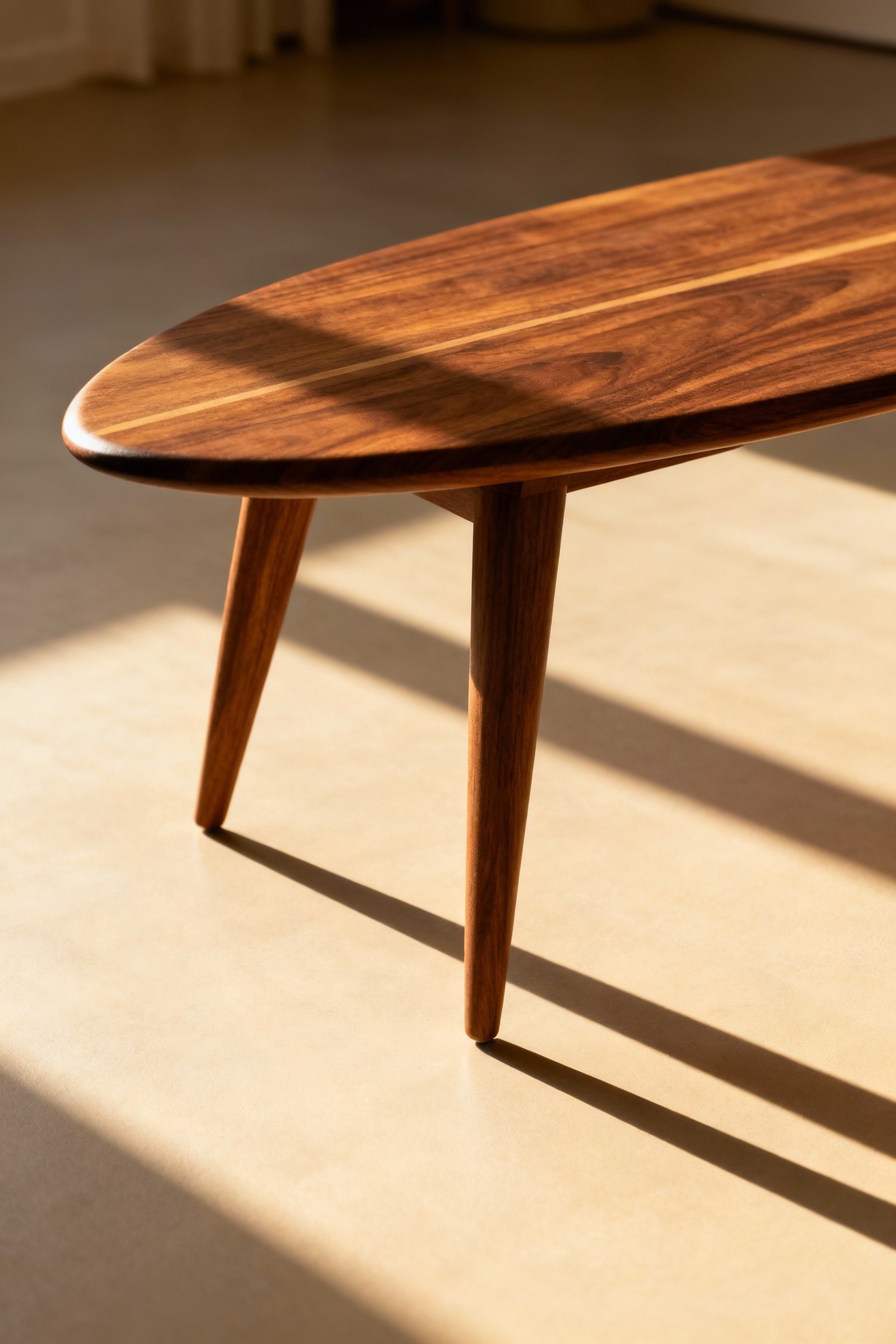
To bring this timeless architectural balance into your own home, focus on the silhouette’s interaction with your existing lines:
* Embrace Organic Flow: If your room is dominated by a modular sofa or rectangular built-ins, introduce a kidney or elliptical shaped table. This softens the rigid geometry and encourages a natural traffic flow.
* Maintain the Horizon: Stick to the classic 14–18 inch height profile. A low-slung table protects your sightlines, connecting your interior space to the outdoors—a core tenet of modernist architecture that makes any room feel larger and more grounded.
2. The Heritage Trunk: Marrying Hidden Storage with Travel History
There is a distinct romance to anchoring your living room with a battered steamer trunk; when I spot those brass latches and worn leather corners at an estate sale, I see a traveler’s history waiting to be retold. Beyond the undeniable aesthetic impact, these pieces offer the ultimate sustainable solution: repurposing an existing, durable object into cavernous storage for bulky winter throws or your entire board game collection. Whether you find a genuine antique or opt for a modern reproduction with hydraulic lift-top functionality, the goal is to let the hardware and patina serve as the room’s narrative focal point.

However, marrying 19th-century travel gear with 21st-century comfort requires a few thoughtful tweaks to protect the piece and your posture. Since authentic trunks often sit lower than modern sofas, I treat every restoration project with three specific upgrades to ensure the piece is as functional as it is beautiful:
- Add Height and Mobility: Install industrial locking casters or wooden bun feet to lift the trunk to a standard 18–20 inches. This aligns the table with your sofa seat and acknowledges the object’s mobile roots.
- Protect the History: Top the trunk with a custom-cut sheet of tempered glass or durable acrylic. This preserves the delicate original finish against heat rings and spills while creating a stable, coaster-friendly surface.
- Optimize the Interior: Don’t let the deep storage become a “black hole.” Utilize the trunk’s original lift-out trays or insert segmented organizers to keep smaller items like remotes and coasters accessible.
3. Visual Weightlessness: Using Glass and Lucite in Compact Vintage Spaces
In a cozy vintage apartment, every square inch of visual real estate counts. I recall once squeezing a heavy teak trunk into a 400-square-foot studio, only to realize it sucked all the air out of the room. The sustainable solution wasn’t less furniture, but invisible furniture. Acrylic (Lucite) and glass tables create a “ghost” effect, allowing the eye to travel uninterrupted through the piece to the flooring or rug beneath. This optical illusion is essential for small spaces; it preserves open sightlines and ensures your cherished vintage collection feels curated rather than chaotic.
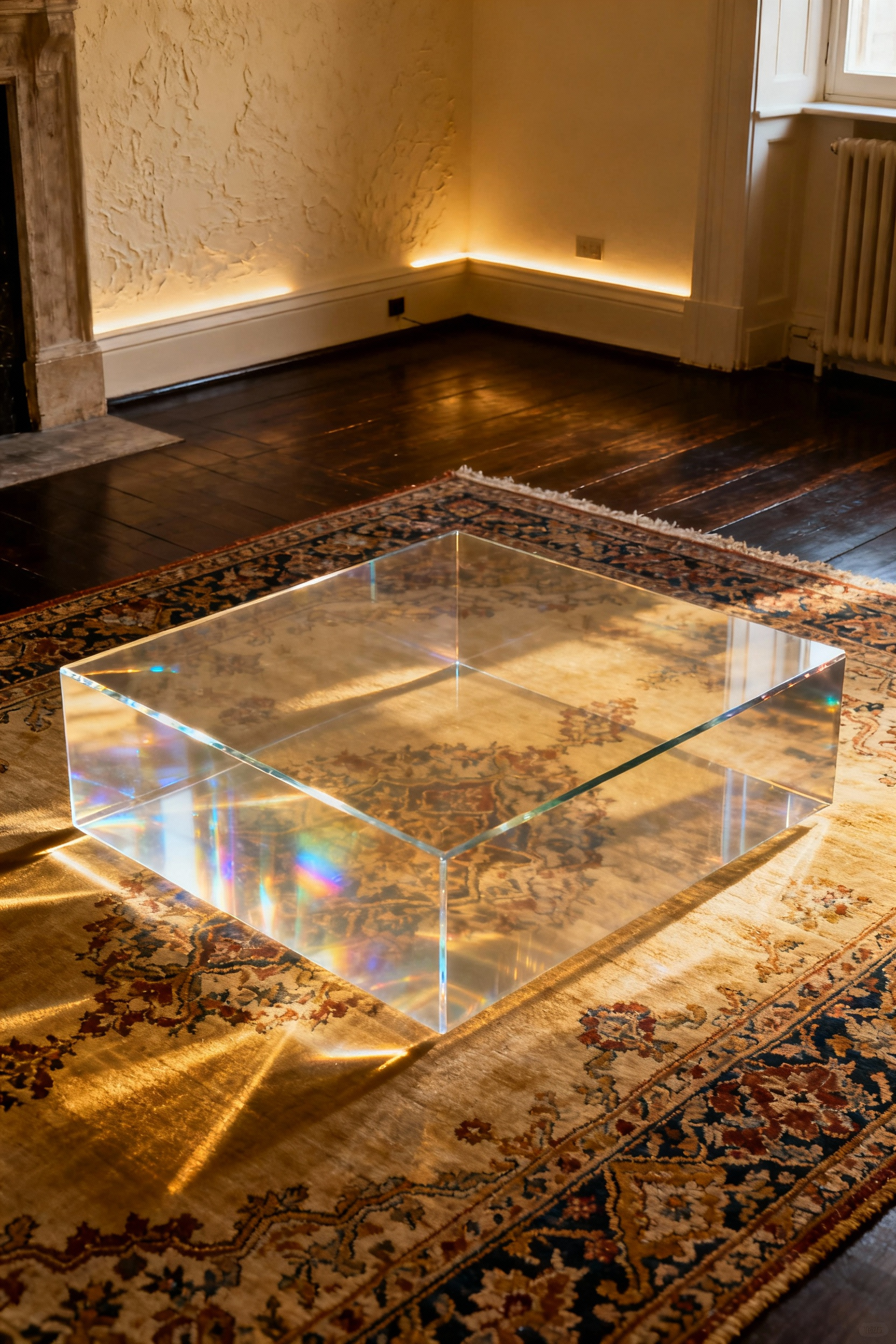
When you are out treasure hunting, look for pieces that balance this weightlessness with character.
* Seek Minimal Framework: Opt for thin chrome or brass perimeters—reminiscent of 1970s Milo Baughman or Pace Collection designs—rather than solid bases. This adds metallic warmth without blocking the view.
* Prioritize Clarity: While smoked glass has a moody mid-century appeal, stick to crystal-clear, low-iron glass for the smallest footprints; any tint adds visual mass you can’t afford.
* Restore, Don’t Replace: Don’t be afraid of surface scratches on a vintage Lucite find. A simple buffing kit can often restore that crucial transparency, saving a piece of history from the landfill.
4. Organic Brutalism: The Enduring Appeal of Live-Edge and Burl Wood
There’s a specific thrill in unearthing a burl slab that feels less like a piece of furniture and more like a prehistoric sculpture. Organic Brutalism celebrates the “perfectly imperfect” soul of the tree, turning chaotic grain patterns and natural voids into high-value art rather than manufacturing defects. I once rescued a discarded walnut root destined for mulch; simply revealing its holographic grain turned it from waste into the room’s absolute anchor. This style is the ultimate sustainable statement, honoring the tree’s history by prioritizing single, wide slabs that demand attention without apologizing for their roughness.
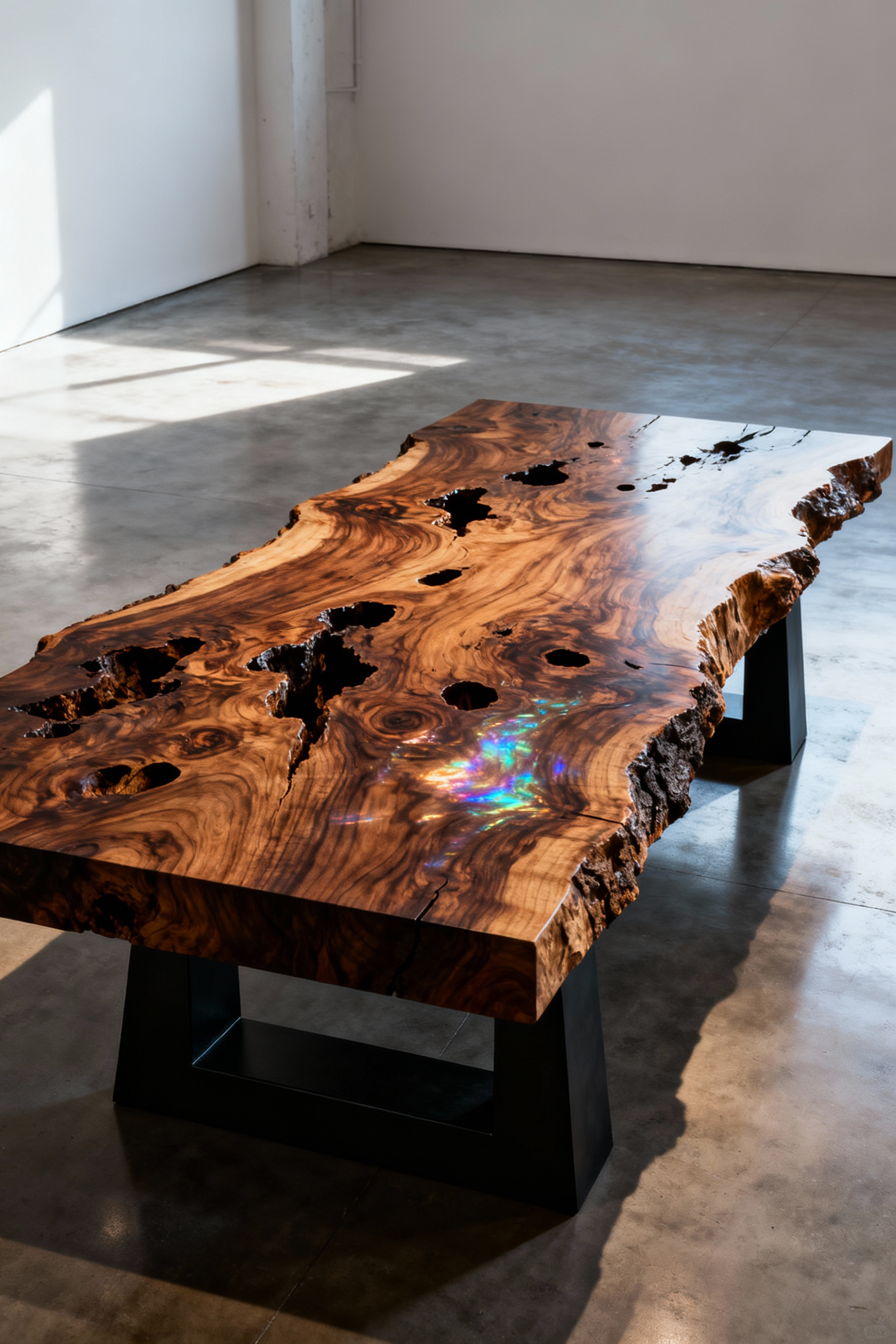
Integrating these monumental pieces requires a delicate balance between raw weight and modern function. You don’t want your living room to feel like a lumber yard, so the secret lies in contrast and stabilization. When hunting for or commissioning your own organic centerpiece, keep these restoration principles in mind to ensure the piece is livable, not just lookable:
- Balance the Mass: Counteract a heavy, 3-inch thick live-edge top with a “floating” base—think sleek black steel or clear acrylic—to prevent the piece from visually overwhelming the room.
- Seek Stabilization: Look for deep-pour epoxy resin (clear or tinted) in the cracks. This preserves the visual drama of the natural voids while creating the level, spill-resistant surface you need for your morning coffee.
- Chase the “Flaws”: Don’t shy away from sapwood lines, deep knots, or inclusions. In Organic Brutalism, these history marks are exactly where the value and uniqueness lie.
5. The Repurposed Industrial Cart: Bringing Grit and Grace to the Living Room
I’ll never forget the thrill of hauling a beat-up textile cart out of a defunct mill; beneath the grime was a hardworking history waiting to be retold. These carts are the ultimate sustainable statement, physically grounding a room with heavy iron and scarred wood that new furniture simply can’t replicate. However, the secret to bringing this look indoors without turning your lounge into a machine shop is mastering the juxtaposition. You must balance the industrial “grit” with intentional “grace.” Pair the rough-hewn textures of the cart with plush velvet upholstery, a luxurious shag rug, or delicate glass décor to create a space that feels warm and curated rather than cold and utilitarian.
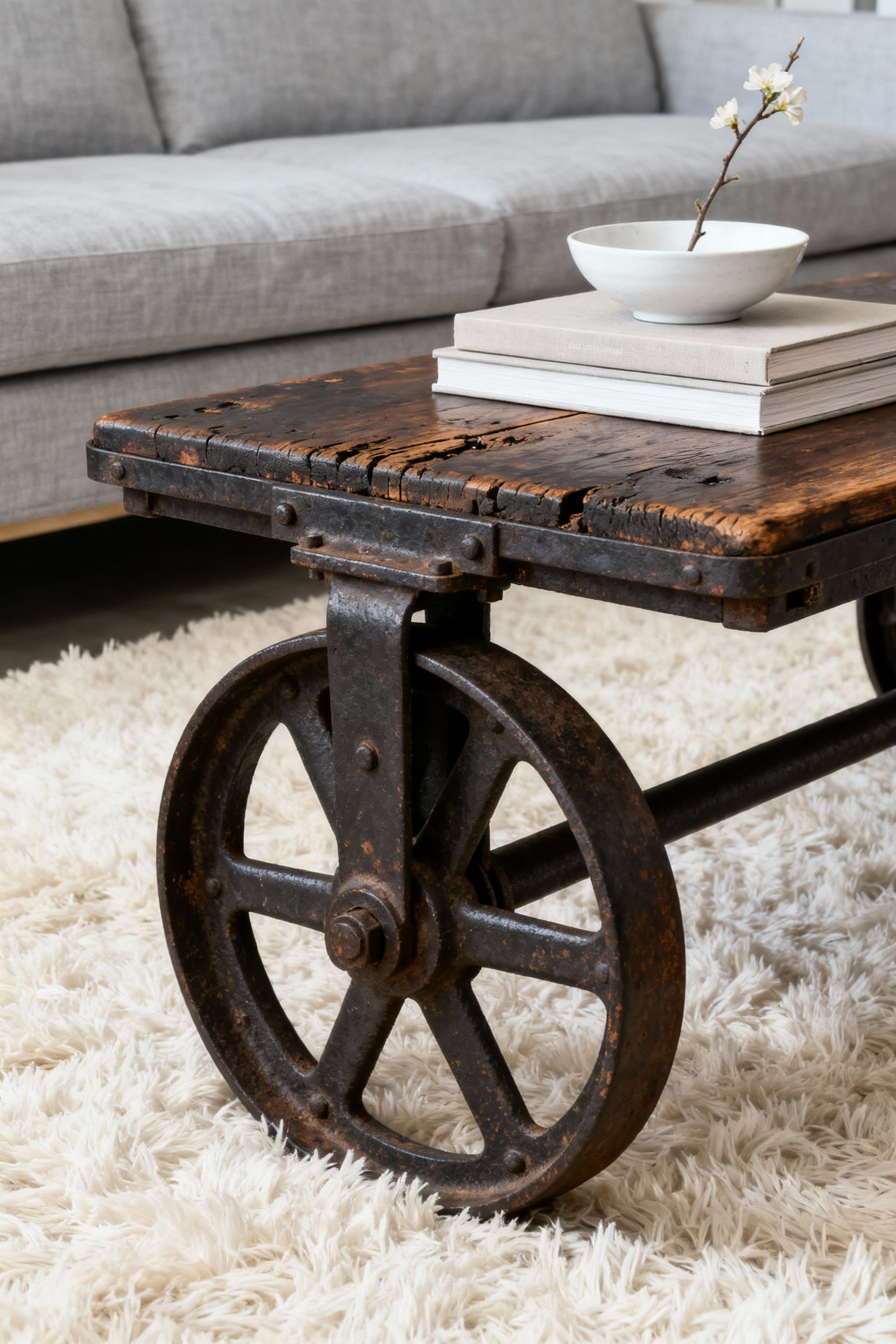
Before you roll that beauty into place, a little elbow grease is non-negotiable to transition it from an industrial tool to a family-friendly centerpiece. Here is my checklist for a safe and functional restoration:
* Seal the Story: Always clean, lightly sand, and apply a clear matte sealant to the wood and metal. This locks in the beautiful patina while preventing splinters, snagging fabrics, or exposing your family to old rust.
* Check the Height: Authentic carts can sit lower than modern furniture. Measure to ensure the surface is within 1–2 inches of your sofa seat (typically 18–20 inches) for comfortable ergonomics.
* Embrace the Roll: Don’t permanently immobilize the wheels. In open-concept spaces, the ability to easily roll your coffee table aside for entertaining is a massive functional advantage—just ensure the casters have a locking mechanism for daily use.
6. Stone & Travertine: Anchoring Your Space with Geological History
There is something profoundly grounding about bringing a piece of the earth right into your living room. While current trends favor monolithic, sculptural slabs of Travertine, I see these pieces as the ultimate “forever furniture”—a sustainable rebellion against the disposable culture of flat-pack designs. These heavy, pitted surfaces introduce a warm, geological history that instantly softens the sharp edges of industrial or minimalist spaces. A vintage stone table doesn’t just fill a gap; it anchors the room with a permanence that feels almost ancient, balancing modern coldness with organic texture.
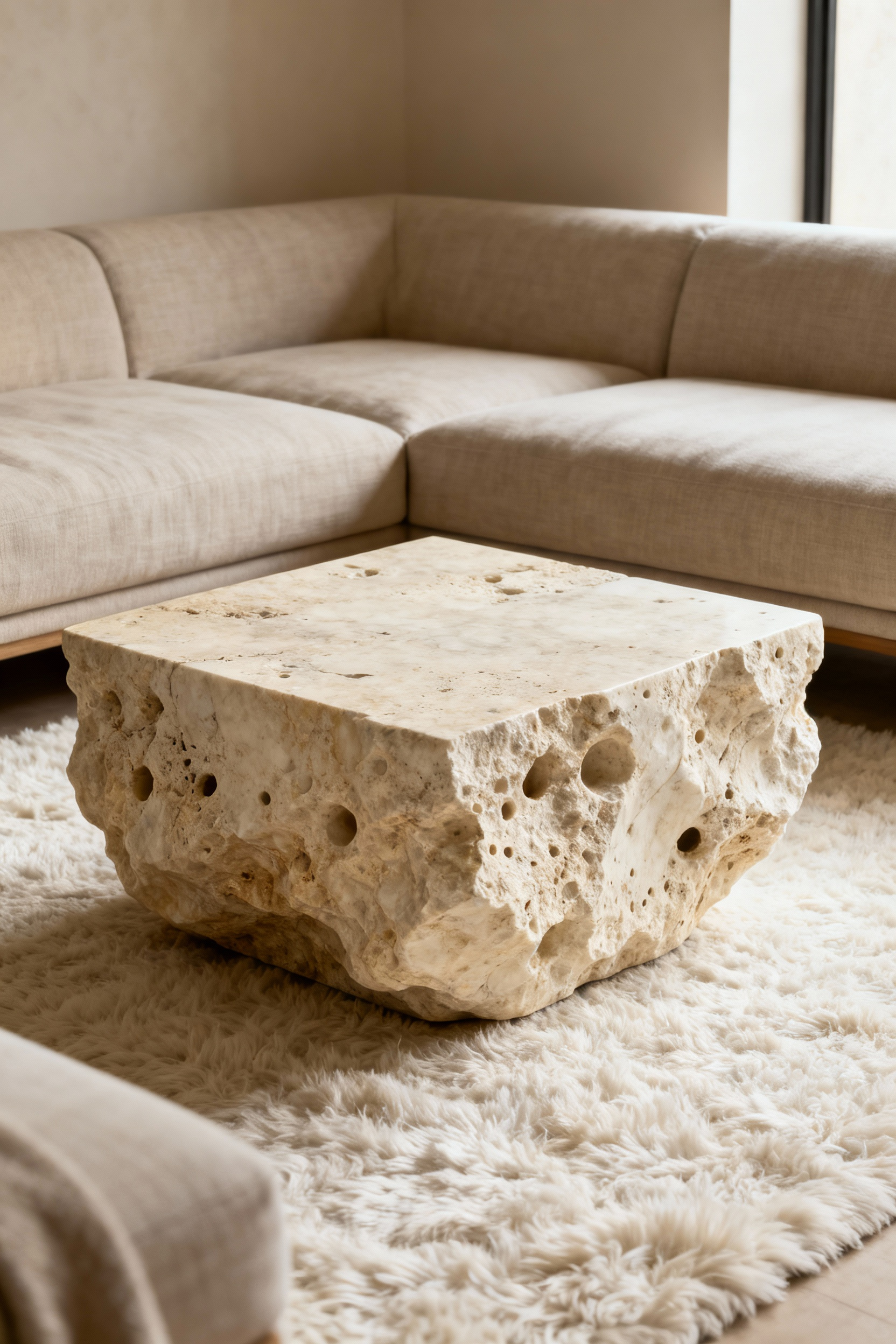
However, adopting a stone piece requires a commitment to its care and its heft. I once underestimated a vintage marble plinth and nearly sacrificed my floorboards (and my back) trying to scoot it three inches to the left. To ensure your stone remains a treasure rather than a burden, keep these rules in mind:
- Commit to the Placement: Stone tables are often immovable without a crew. Choose your spot wisely, ensure the floor structure can handle the load, and install heavy-duty protective pads immediately to save your hardwood.
- Seal to Sustain: Travertine and limestone are naturally porous sponges for red wine and coffee. Treat the stone with a penetrating sealer upon installation and reseal every 1–2 years to preserve its natural beauty against acidic life spills.
7. The Nesting Concept: Flexible Functionality for Dynamic Socializing
I recently rescued a scratched-up trio of mid-century teak nesting tables from a dusty estate sale, and after a little sanding and oiling, they completely transformed my small living room’s hosting potential. The brilliance of the nesting concept is that it offers a sustainable solution to the “too many guests, not enough space” dilemma; you essentially triple your surface area without permanently committing to a massive footprint. This modular approach supports dynamic socializing by allowing you to pull out smaller sub-tables for a reading nook or side chair, creating fluid zones for conversation that static furniture simply can’t support.
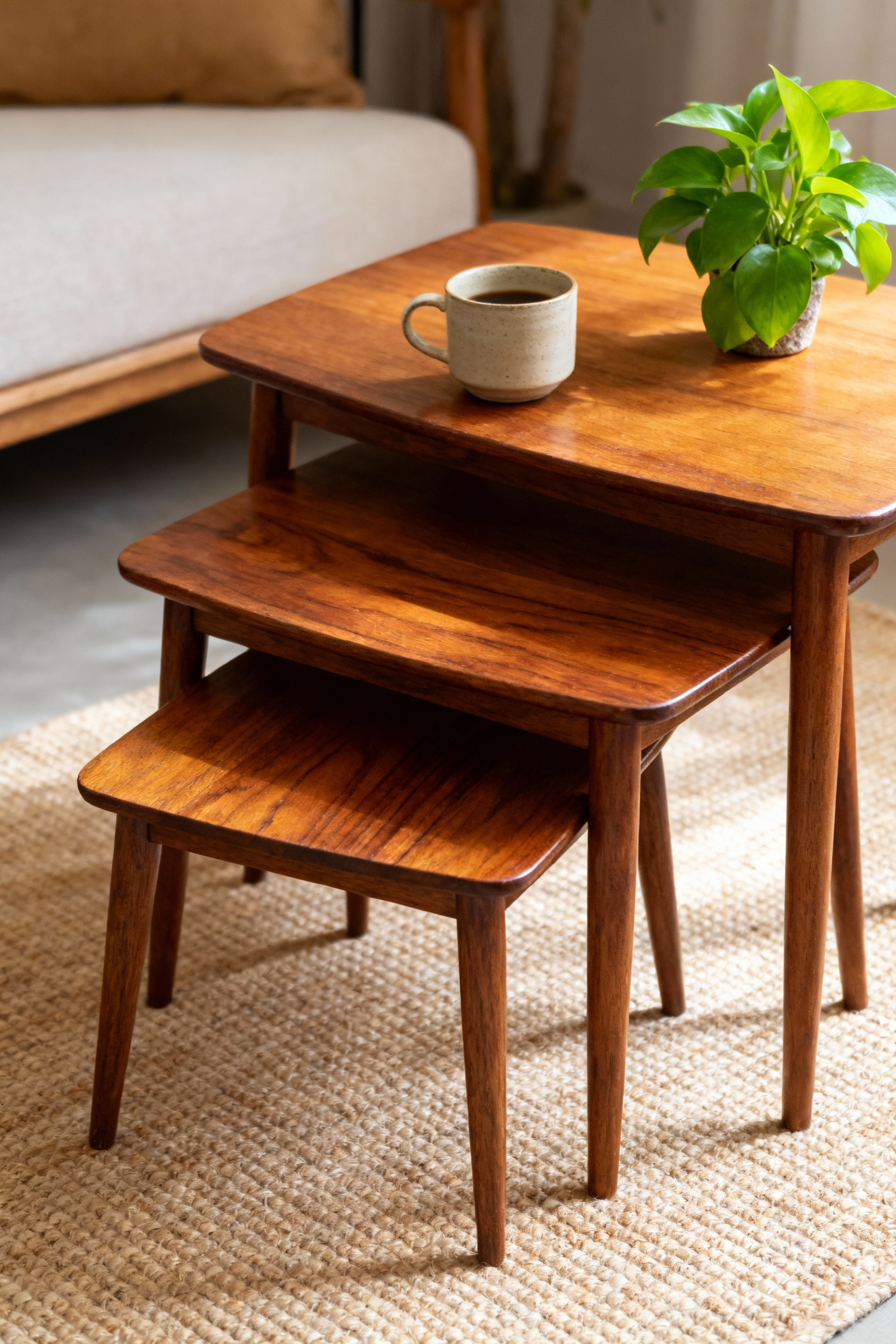
To master this look with a curated, vintage flair, keep these principles in mind:
- Mind the Gap: Ensure there is at least a 3-to-5-inch height difference between tables. This guarantees ergonomic comfort when used independently and prevents scratches when you tuck them away.
- Mix Your Materials: Don’t be afraid to create your own “nest” by pairing a larger wooden vintage table with a smaller metallic or stone orphan find. This creates visual depth—akin to layering jewelry—and gives a second life to unmatched pieces.
- Prioritize Mobility: While solid wood is beautiful, ensure the smaller, “satellite” tables are light enough for guests to move easily without strain.
8. Sourcing with Conscience: Distinguishing True Vintage from Fast Furniture Reproductions
There is nothing quite like the rush of spotting a sleek mid-century silhouette across a crowded flea market, but sourcing with conscience requires a detective’s eye to separate heirlooms from “fast furniture” imposters. I have spent countless hours crawling around dusty showroom floors because the underside of a coffee table is where the truth hides; we want to rescue pieces with soul, not fill our homes with replicas destined for the landfill in five years. True vintage is defined by construction quality—look for heavy solid wood components and hand-cut or early machine-cut dovetail joints, rather than the staples, cam locks, and particleboard common in modern reproductions. Furthermore, trust the story the wood tells you: authentic patina shows uneven, natural darkening and wear from decades of life, whereas factory-made “distressing” often looks suspiciously uniform and deliberate.
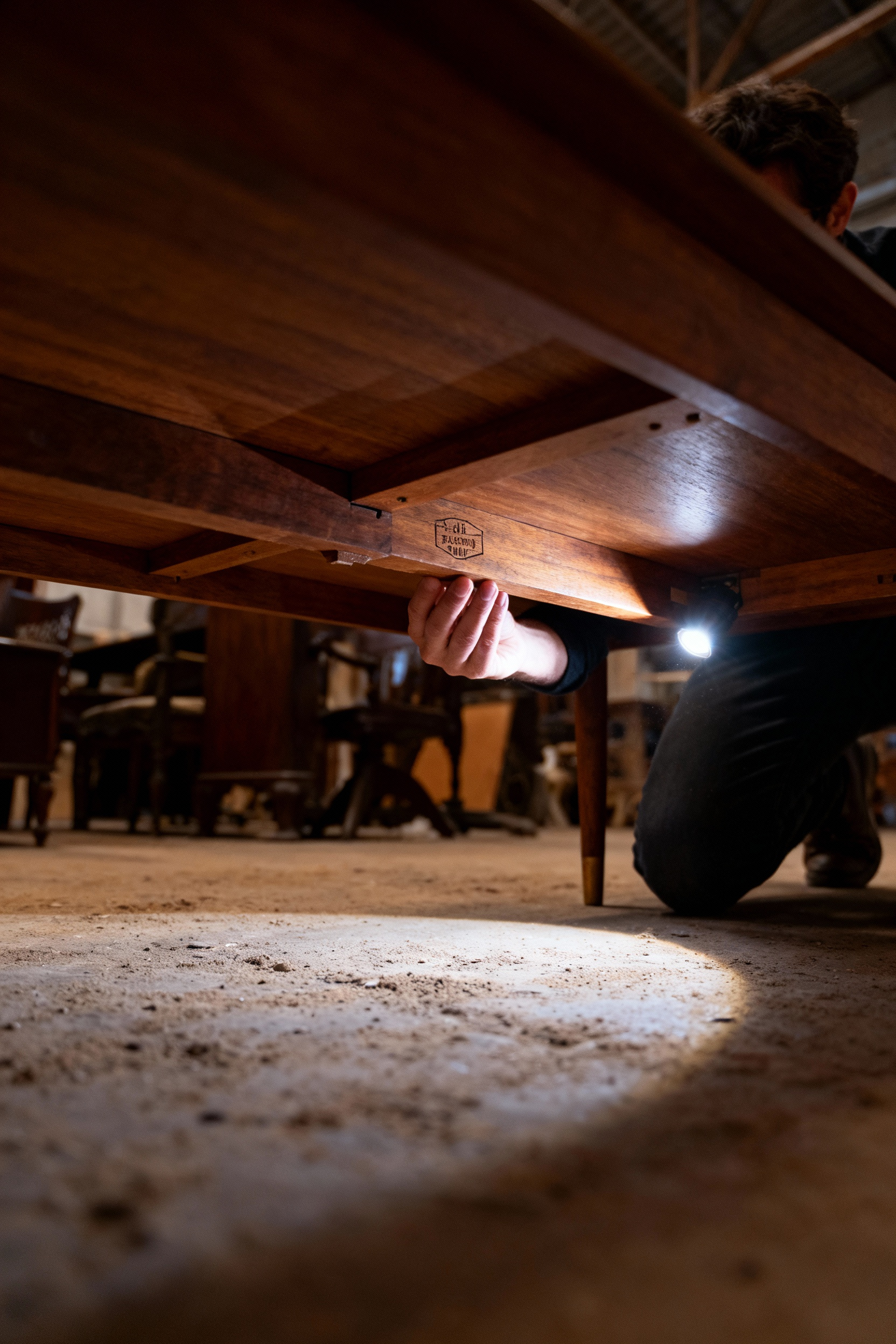
To ensure you are investing in design history rather than a hollow copy, perform these rapid checks before loading your find into the car:
- The Fastener Test: Inspect the hardware. Flat-head screws (often oxidized) suggest genuine age, while Phillips heads were rare before the late 1930s. Modern reproductions will almost always use shiny, standardized contemporary screws or plastic components.
- The Weight Check: Lift a corner. Authentic vintage tables, particularly mid-century modern pieces, often have a density and heft that veneer-over-MDF simply cannot mimic.
- Hunt for Hallmarks: Always search for stamps or paper labels from manufacturers like Knoll or Heywood-Wakefield. While an unmarked piece can still be a high-quality treasure worth saving, finding a maker’s mark is the gold standard for verifying age and ensuring the piece is worth the restoration effort.
9. Material Forensics: How to Spot Solid Teak vs. Mid-Grade Veneer
Nothing breaks my heart quite like starting a restoration project only to sand through a thin layer of wood and hit the crumbly, gray reality of particleboard. Finding solid teak isn’t just about scoring a valuable antique; it’s a sustainability win because solid wood can be refinished indefinitely, keeping it out of landfills for generations. To distinguish a mid-century masterpiece from a mid-grade veneer, you need to channel your inner detective and look for these tell-tale signs:
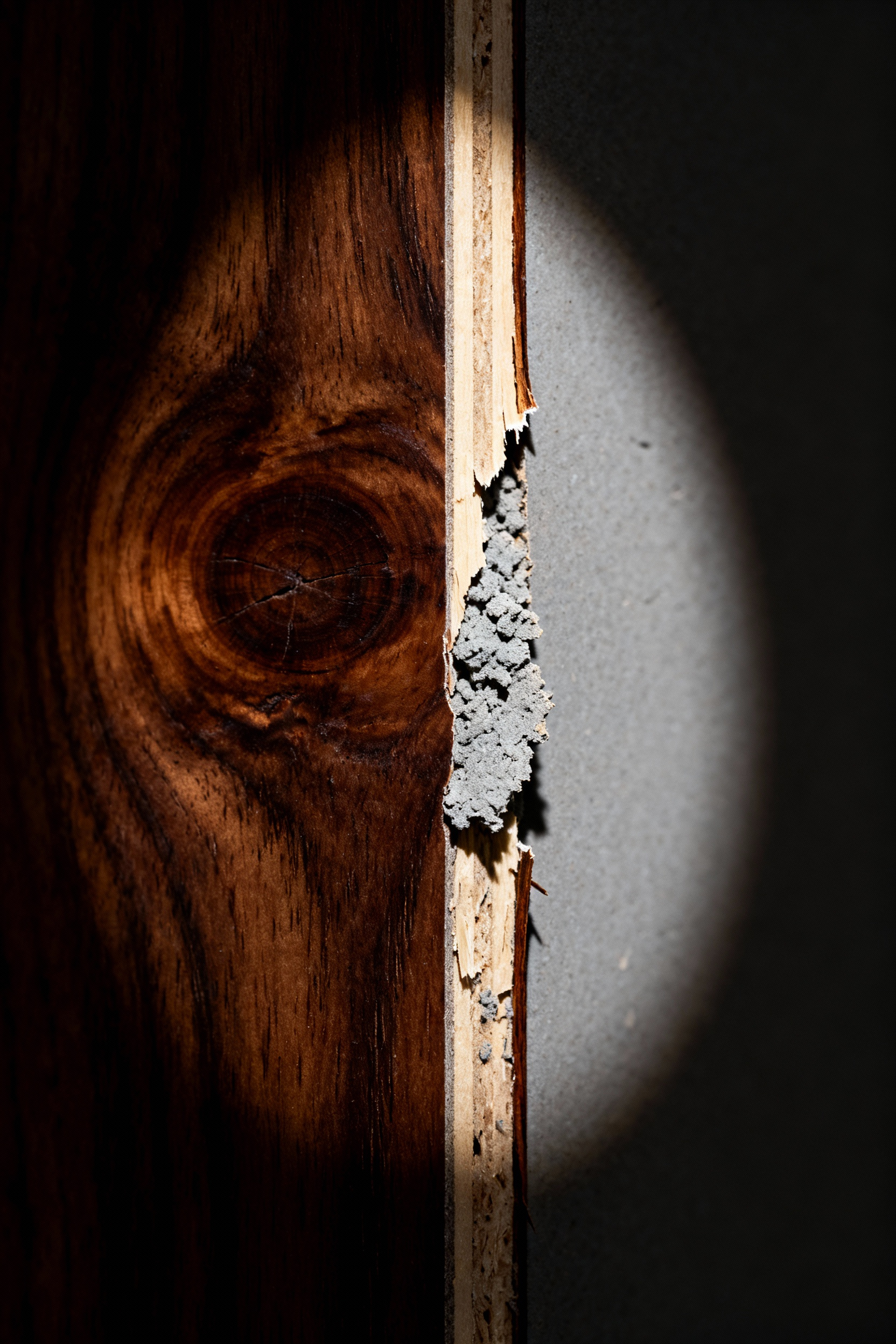
- The Waterfall Test: Inspect the corners and edges. On solid teak, the grain flows continuously over the side like water. A sharp seam or disjointed pattern usually signals a veneer sheet applied over a cheaper substrate.
- The Wallpaper Effect: Scan the tabletop. Nature rarely repeats itself, so if you see an identical grain pattern echoing every few feet, it’s a machine-cut sheet rather than organic timber.
- The Heft Check: Give the table a nudge or a lift. Teak is dense and oil-rich; if the piece feels surprisingly hollow or lightweight, it’s likely a composite core dressed up in a costume.
If you are still on the fence, try my favorite covert move: the scratch test on the underside of a leg or an inconspicuous corner. Genuine teak will reveal rich, honey-brown timber beneath the surface, while a veneer fake will expose a pale, composite interior. Trust your hands and eyes—real quality has a weight and warmth that composite materials just can’t fake.
10. The Gentle Revival: Restoring Finish Without Erasing Character
There is a distinct tragedy in stripping a vintage coffee table of its soul—that golden, honeyed patina earned through decades of morning coffees and evening conversations. Before you reach for the heavy-grit sandpaper, embrace a “gentle revival” approach that cleans away grime while preserving the piece’s history. I often find that what looks like a ruined finish is simply layers of old wax and nicotine; a thorough wipe-down with a non-silicone, spirit-based cleaner can reveal the original luster without harsh chemicals. Once the wood is clean, prioritize a “feed-and-wax” method using restorative oils or a hard paste wax. This nourishes dry fibers and masks minor spiderweb scratches, allowing the character of the wood to shine through rather than being erased by a plastic-like new coat of polyurethane.
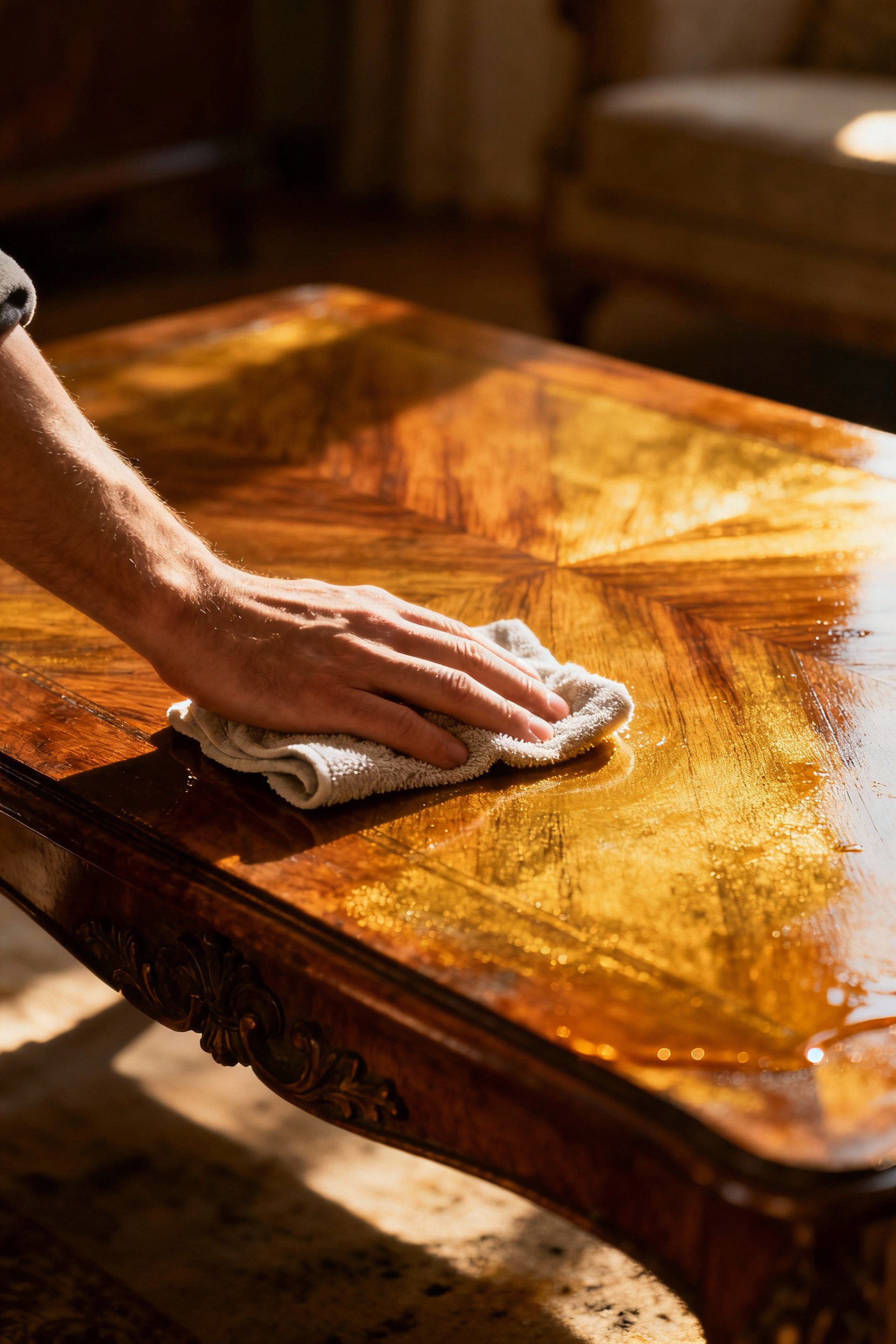
For specific battle scars, use surgical precision rather than a blunt instrument. I once rescued a stunning Lane Acclaim table priced for pennies simply because of a glaring white water ring, a flaw easily fixed without refinishing the whole surface. Here is my go-to triage kit for common issues:
- Banish the Blush: For white heat or water rings, place a dry cloth over the spot and gently apply low heat with an iron to draw out trapped moisture, or lightly buff with 0000 steel wool and mineral oil.
- Fill, Don’t Strip: Treat deep gouges with color-matched artist oils or wax sticks, blending only the damaged area into the surrounding finish.
- Preserve the Patina: Finish with a clear beeswax polish to seal your work; this protects the wood while maintaining that warm, satin glow that only time can create.
11. The Art of the Mix: Pairing Modern Sofas with Antique Surfaces
There is a distinct thrill in rescuing a forgotten piece—like a heavy, salvaged industrial cart or a battered steamer trunk—and giving it a second life as the anchor to a contemporary living room. To me, this isn’t just design; it is a sustainable dialogue between the past and present. While modern modular sofas offer incredible comfort, their sleek, uniform upholstery can sometimes feel sterile. By introducing an antique coffee table, you leverage its natural patina—the visible grain, the wear, the imperfections—to inject immediate warmth and soul into the space, grounding the room in a story that mass manufacturing simply cannot replicate.
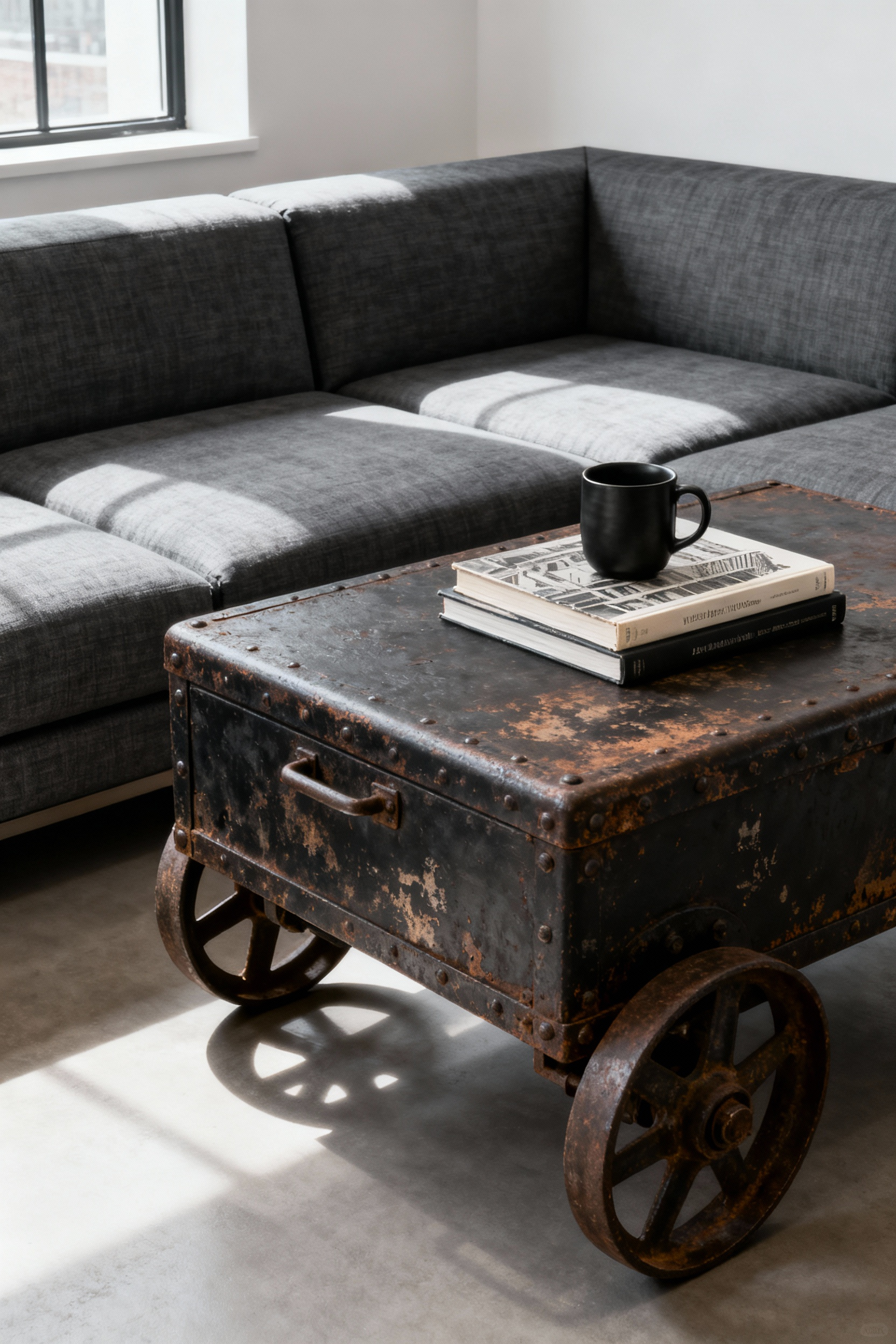
To ensure your vintage treasure feels at home next to a modern silhouette, focus on creating deliberate visual tension rather than trying to match styles. Here is how I bridge the gap between eras:
* Anchor with Scale: Modern sofas are often low-slung and deep. Counter this by choosing an antique with significant visual weight so it isn’t dwarfed by the seating.
* Bridge the Tone: Create harmony by echoing the underlying richness of the antique wood in your modern accents, such as matching a dark walnut table to the black iron legs of the sofa or the brass of a floor lamp.
* Juxtapose Geometry: If your sofa is strictly linear and square, pair it with a vintage piece that features organic curves, turned legs, or intricate carving to create a dramatic, intentional contrast.
12. Textile Juxtaposition: Choosing the Right Rug to Frame Your Table Legs
Think of your area rug not just as a floor covering, but as the mounting board that frames a piece of art. I remember dragging home a sleek, glass-topped mid-century table with delicate brass legs; it looked lost and cold on my hardwood floors until I anchored it with a vintage, high-pile wool rug. That interplay of texture is where the magic happens—pairing slick industrial metals with soft, organic fibers creates a tactile balance that makes a room feel lived-in and loved. To truly honor the craftsmanship of your table while keeping the space functional, consider these framing techniques:
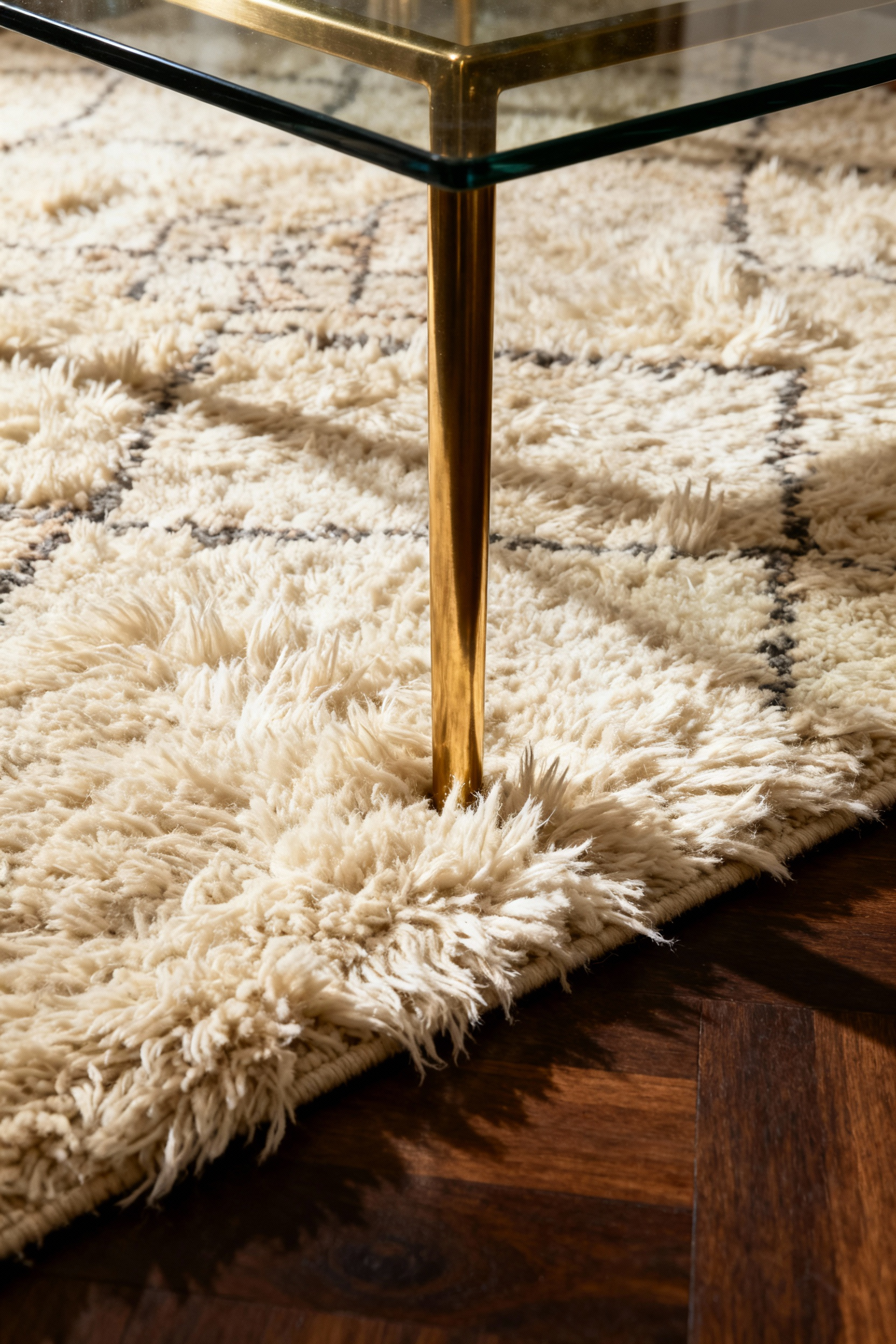
- Create Contrast: If your table features heavy, carved wooden legs, opt for a sustainable flatweave or jute rug to prevent visual heaviness; conversely, let sleek, minimalist legs pop against a thick, plush texture.
- Balance the “Noise”: If the table legs are sculptural and ornate, choose a solid or subtle rug to let the joinery take center stage. Save the bold, large-scale patterns for simpler, straight-legged tables that need a boost of character.
- Mind the Stability: While I love the cozy look of a shag rug, ensure the pile isn’t so high that your coffee cups wobble. Low-pile or woven wool is best for stability and essential if your vintage table sits on casters.
13. Curated Surface Styling: The Rule of Thirds for Books and Trays
Borrowing a trick from photography, the Rule of Thirds is how we make our scavenged treasures sing without cluttering up the narrative. I recently restored a scuffed mid-century teak table that felt flat until I stopped trying to center everything; instead, I mentally divided the surface into a grid. By shifting my stack of vintage art books to the left “third,” I created negative space that allowed the restored wood grain to breathe and show off its history. This asymmetry creates dynamic movement, guiding the eye across your collection rather than stopping it cold in the middle.
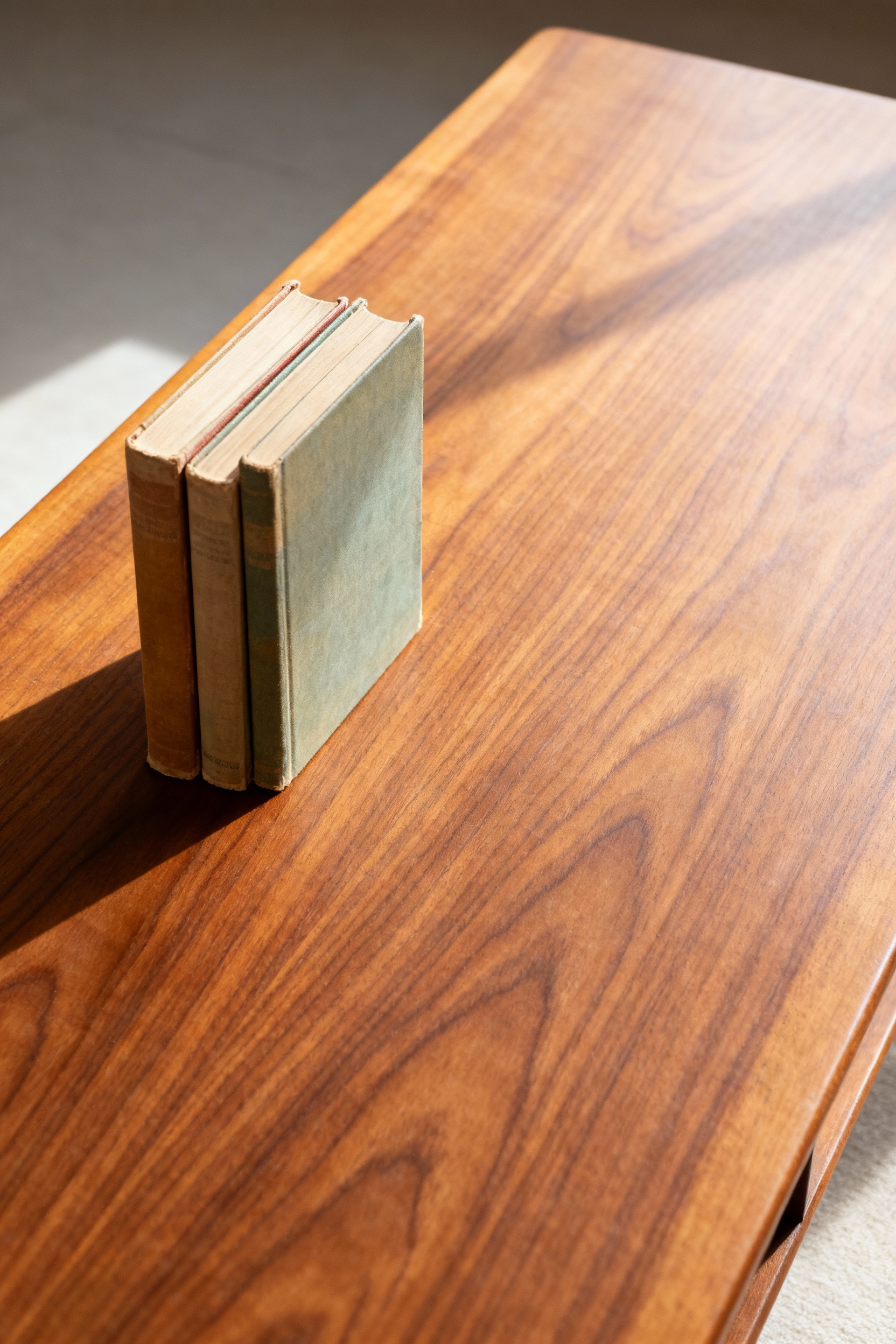
To master this look using what you already own, think of a tray not just as a catch-all, but as a frame for a vignette. Try this sustainable approach to balancing your surface:
- Anchor Off-Center: Place your largest element—like a thrifted lacquer tray or a heavy book stack—so it occupies roughly two-thirds of the visual space, leaving the final third open for a tall, singular object like a sculptural lamp.
- Grid Within a Grid: If styling inside a tray, place objects at the intersection points of an imaginary 3×3 grid. I love pairing a tall, rescued brass candlestick with a low, potted succulent to create necessary height variation.
- Create Diagonal Flow: Ensure items atop your books follow a subtle diagonal line from high to low. Using odd numbers (3 or 5 items) keeps the arrangement feeling organic and lived-in rather than rigid.
14. Lighting the Low Plane: Creating Ambiance from the Center Out
Think of your coffee table as a modern campfire; it’s the emotional center of the room, yet we often leave it in the dark. To create that cozy, “stay a while” atmosphere, I always recommend ignoring the ceiling switch and focusing on the low plane with bulbs between 2200K and 2700K. This warm spectrum mimics candlelight, softening the wear on vintage wood finishes and making restored brass sing. I’ve recently fallen in love with placing rechargeable, sculptural mushroom lamps directly on the table surface—it’s a brilliant, cord-free way to highlight your décor without drilling holes or running trip-hazards across the rug.
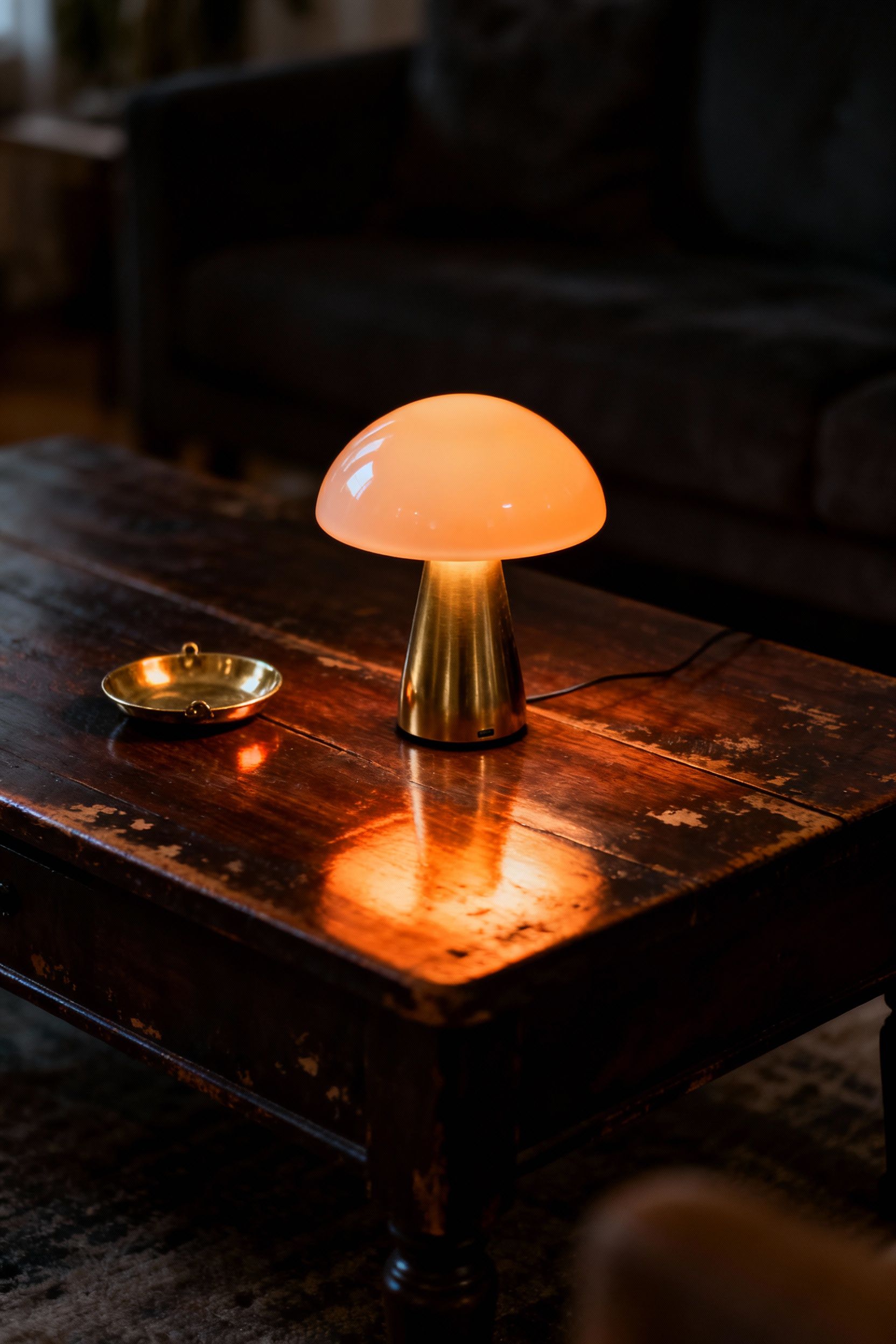
If you are ready to commit to a wired fixture, aim for lighting that structures the space rather than just flooding it. Here is how to anchor the zone effectively:
* Drop the Pendant: Channel the intimacy of a mid-century bistro by hanging a pendant light 28 to 36 inches above the coffee table. This creates a deliberate pool of light that defines the seating area.
* Float the Furniture: For a touch of modern magic, tuck an LED strip under the lip of a heavy table. It illuminates the negative space, making solid pieces feel weightless while drawing the eye downward to the room’s center.
The Coffee Table Furniture as the Modern Hearth: Creating a Centerpiece for Connection
Just as the fireplace once drew families together for warmth, the coffee table furniture now generates the heat of human connection. I recently restored a scuffed mid-century slat bench that had clearly seen decades of use; by carefully sanding down the history and adding modular nesting tables underneath, it transformed from a tired relic into a dynamic puzzle station for my client’s grandkids. To create this “modern hearth,” prioritize sustainability by hunting for pieces with solid bones that can adapt to your life’s changing rhythm. Look for oversized surfaces or nesting designs that allow you to expand the “hearth” when the party grows, ensuring the furniture remains a gathering point rather than a static display.
Your centerpiece should tell your story while discreetly managing the realities of the digital age. A truly inviting space balances the soul of the past with the utility of the present. To achieve this balance:
* Curate with Intention: Group vintage ceramics or travel mementos in odd numbers to create “curated clusters” that serve as visual anchors and natural conversation starters.
* Retrofit for Connectivity: Don’t be afraid to modify a thrifted chest or lift-top table by mounting a power strip inside a drawer, keeping devices charged and cables hidden.
* Prioritize Interaction: Ensure your styling leaves ample negative space for shared experiences, like board games or collaborative projects.
By marrying the character of a vintage find with these practical touches, you build a space that invites people to linger, connect, and create new memories.