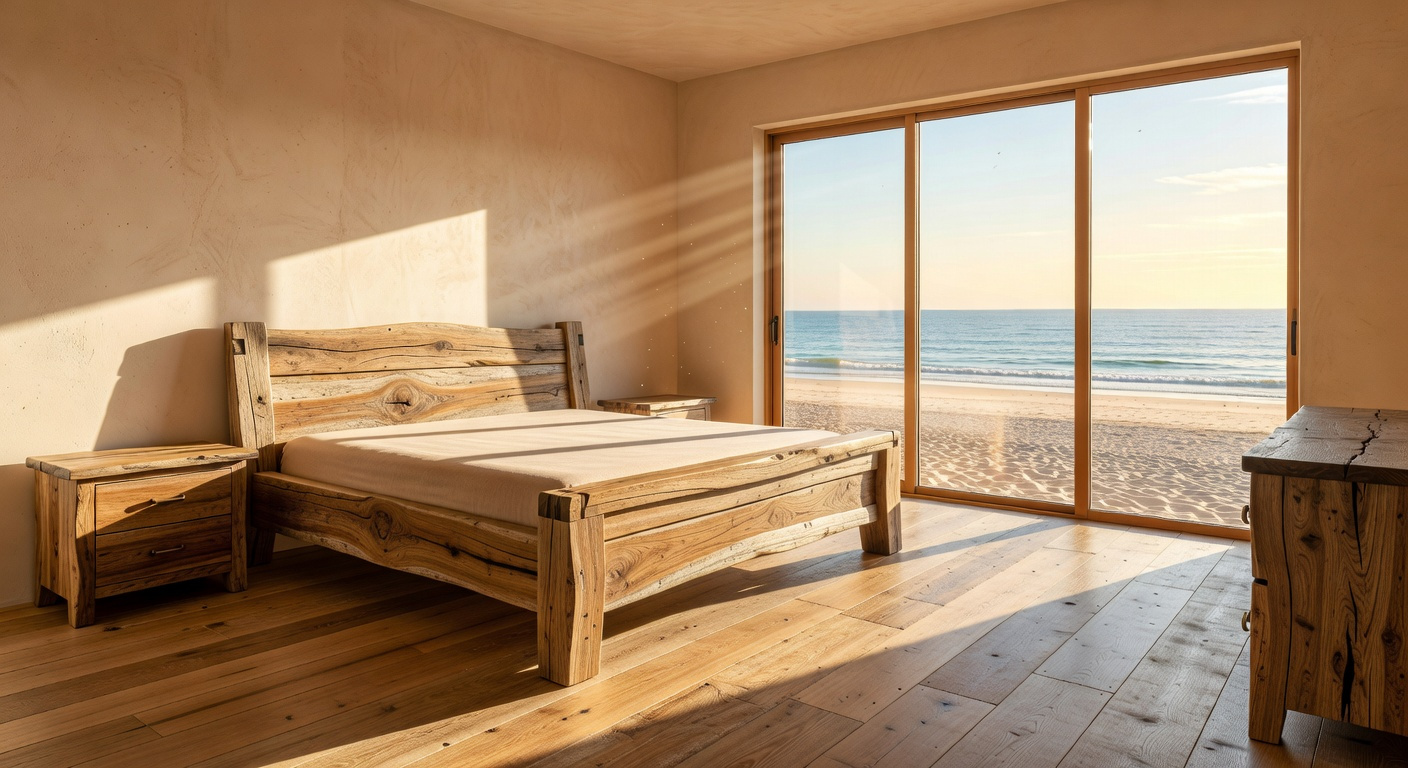

Many people believe coastal design requires literal maritime elements. They often envision anchors, navy stripes, and beach signs. However, this traditional view relies heavily on mass-market kitsch. Investing in high-quality coastal bedroom furniture allows homeowners to move beyond predictable clichés. Instead, they can embrace a more refined, architectural aesthetic. True seaside living relies on subtle, sophisticated bedroom furniture decor. It avoids feeling like a themed vacation rental. Therefore, the curatorial confidence approach redefines this aesthetic completely. It prioritizes intentional curation over nautical tropes. Next, we elevate spaces by balancing maritime influences with contemporary design.
Historically, designers utilized literal found objects like fishing nets. Later, modern coastal architecture shifted toward blurring indoor-outdoor boundaries. Today, we must focus on sensory materiality and texture. In fact, a confident curator selects unique, architectural anchor pieces. Similarly, they avoid matching room-in-a-box furniture sets entirely. The overarching goal involves building a living library. We utilize productive tension between rugged woods and refined surfaces. Specifically, this contrast mimics the actual shoreline landscape beautifully.
This guide explores the curatorial confidence approach in detail. Next, we will uncover how to utilize negative space effectively. Specifically, the thirty percent rule provides crucial breathing room for furniture. You will learn to balance heavyweight textiles and bleached woods. In fact, the aesthetic embraces natural patina and wabi-sabi imperfections. Therefore, every selected piece tells a deliberate cultural narrative. Finally, your bedroom will become a timeless, fresh coastal sanctuary.
Phase I: Materiality & The Organic Coastal Foundation
True coastal design looks past simple blue and white clichés. Instead, it demands structural choices that deeply ground a space. Specifically, the foundation begins with maritime woods like teak and European white oak. These are chosen due to their cellular integrity. Historically, these dense materials were essential for shipbuilding. They withstand environmental extremes beautifully.
In fact, they safely expand and contract with shifting coastal humidity. They do this without ever warping or losing structural strength. Next, sand-blasted finishes quickly mimic years of natural wind erosion. This highly tactile surface catches the low-angled morning light common in seaside environments. Beyond wood, organic design integrates resilient fibers like abaca. Naturally, these robust materials easily resist harsh saltwater damage.
Together, tight industrial sisal and loose organic rattan create a layered sensory soundscape. A subtle creak provides a perfect auditory cue for rest. Visually, the style draws heavily from the 1941 Organic Design movement. Therefore, harsh machine-made edges are strictly rejected. Instead, they are replaced by soft radiused corners and tapered furniture legs.
These organic forms wonderfully mimic smoothed beach stones and coastal dunes. Additionally, material breathability remains a vital functional design pillar. Linen absorbs ambient moisture to expertly regulate human thermal comfort. Similarly, open-weave caning promotes crucial airflow. This prevents salty mildew in damp coastal air. Indeed, this primary phase is an exercise in unyielding resilience. It masquerades perfectly as effortless softness.
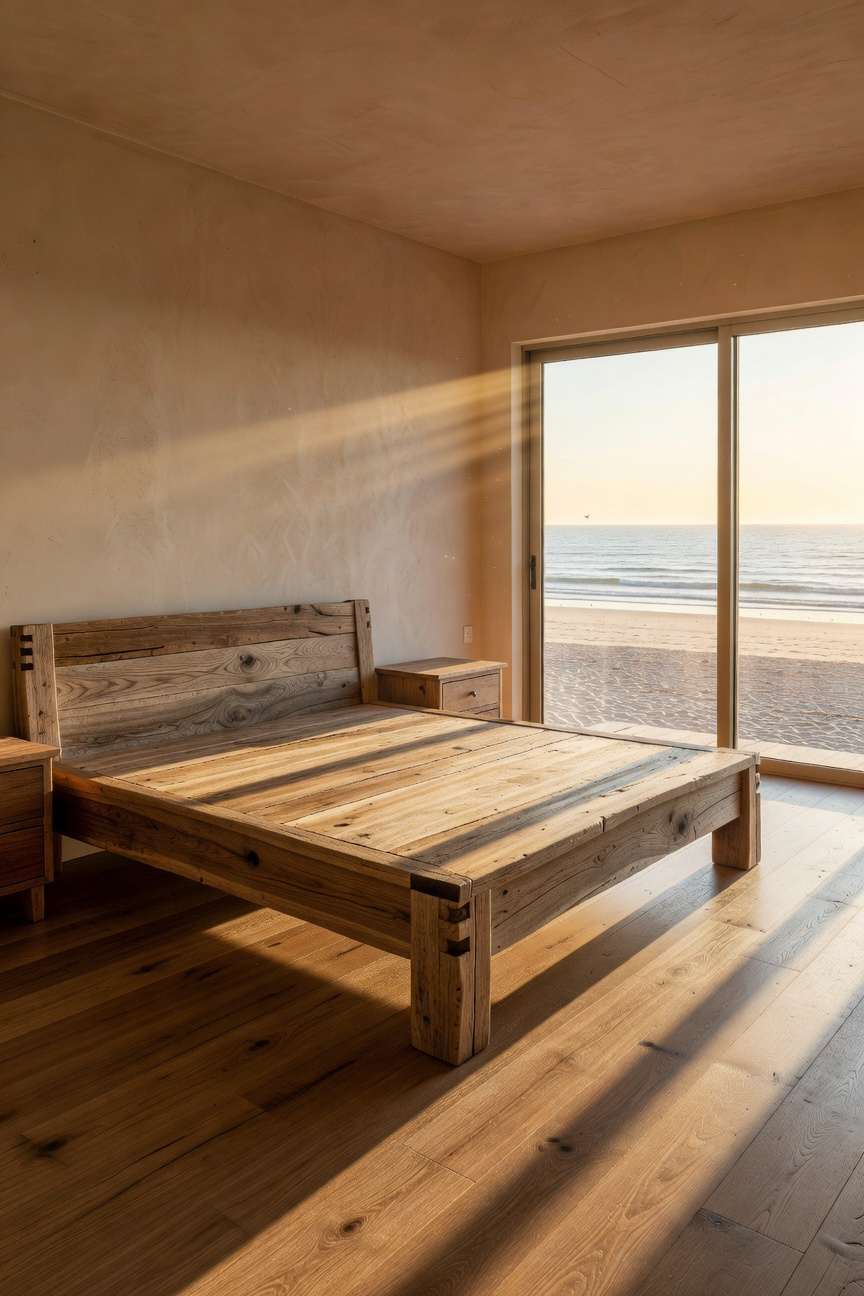
1. The Weathered Oak Platform Bed: Anchoring Your Seaside Retreat with Grounding, Organic Texture
Weathered oak is far more than a simple color choice. Specifically, it simulates a beautiful biological reaction. High tannic acid in oak reacts to coastal salt air. As a result, golden hues shift into a sophisticated silver-gray patina. Craftsmen use wire brushes to expose dense summerwood. Next, this technique creates a kinetic texture full of micro-shadows. Naturally, sunlight moves across the raised grain to mimic dunes.
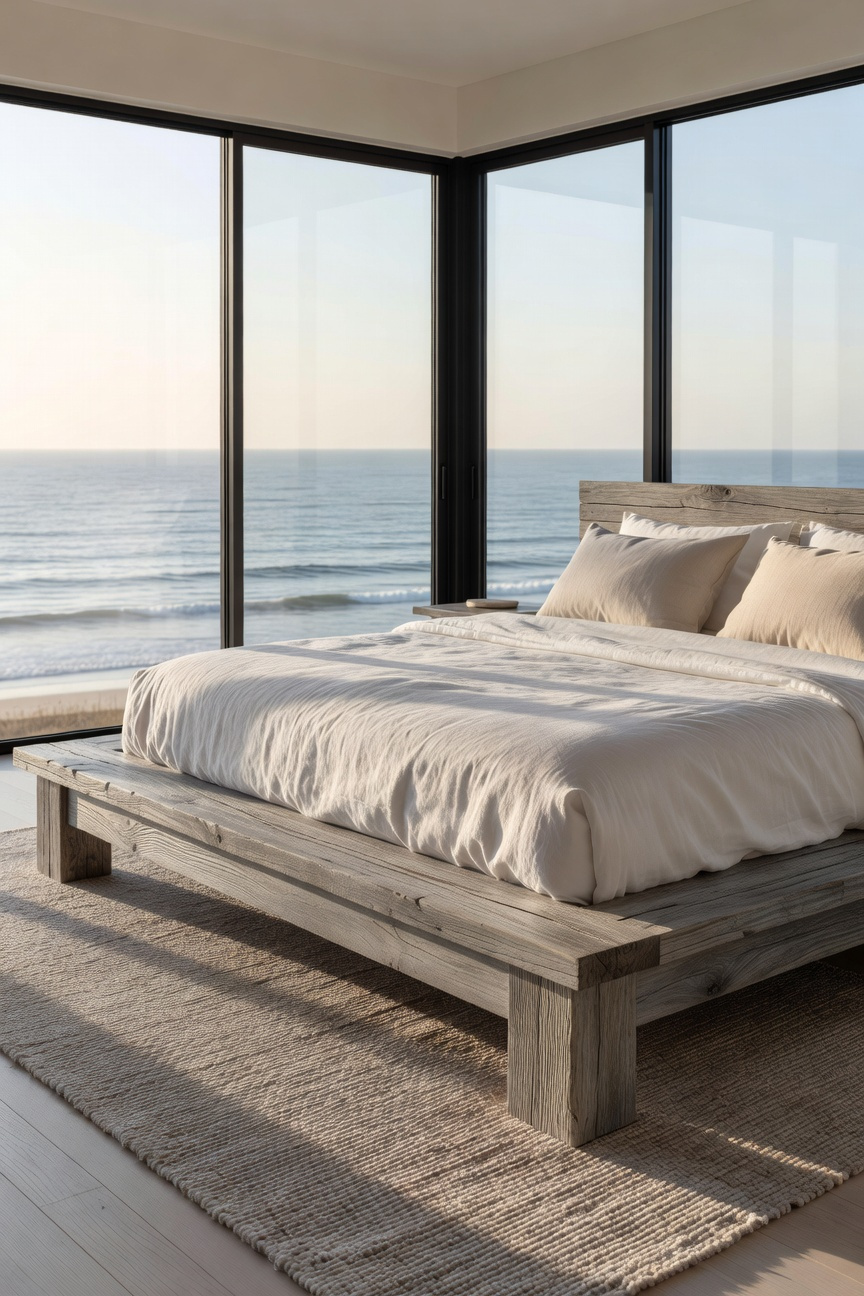
Next, a platform silhouette serves a crucial architectural purpose. Namely, it preserves the uninterrupted horizon of large bedroom windows. Therefore, keeping visual weight low psychologically grounds the airy space. Additionally, the slatted base promotes essential 360-degree airflow around mattresses. This directly prevents moisture buildup in humid seaside environments. Coastal living inevitably introduces the abrasive grit of tracked-in sand. However, oak possesses incredible density to resist this daily pitting.
In fact, everyday wear simply enhances its pre-distressed, organic texture. Touching this rough wood provides a haptic natural connection. A weathered oak bed acts as a tactile anchor. To complete this sanctuary, you must balance the cool tones. Accordingly, pair the rugged frame with warm linen and jute. This contrast transforms a generic room into a timeless retreat.
2. Rattan and Cane Nightstands: Introducing Breathable, Authentic Beach House Materials
Authenticity in coastal bedroom design often hinges on material choices. Specifically, rattan and cane offer a sophisticated alternative to synthetic plastics. Though often confused, these two elements serve entirely distinct structural roles. Namely, rattan forms the solid, sturdy core used for bending curved nightstand frames. Conversely, cane is the flexible outer bark stripped into thin ribbons. Typically, artisans weave this cane into panels. These panels create a beautifully breathable surface.
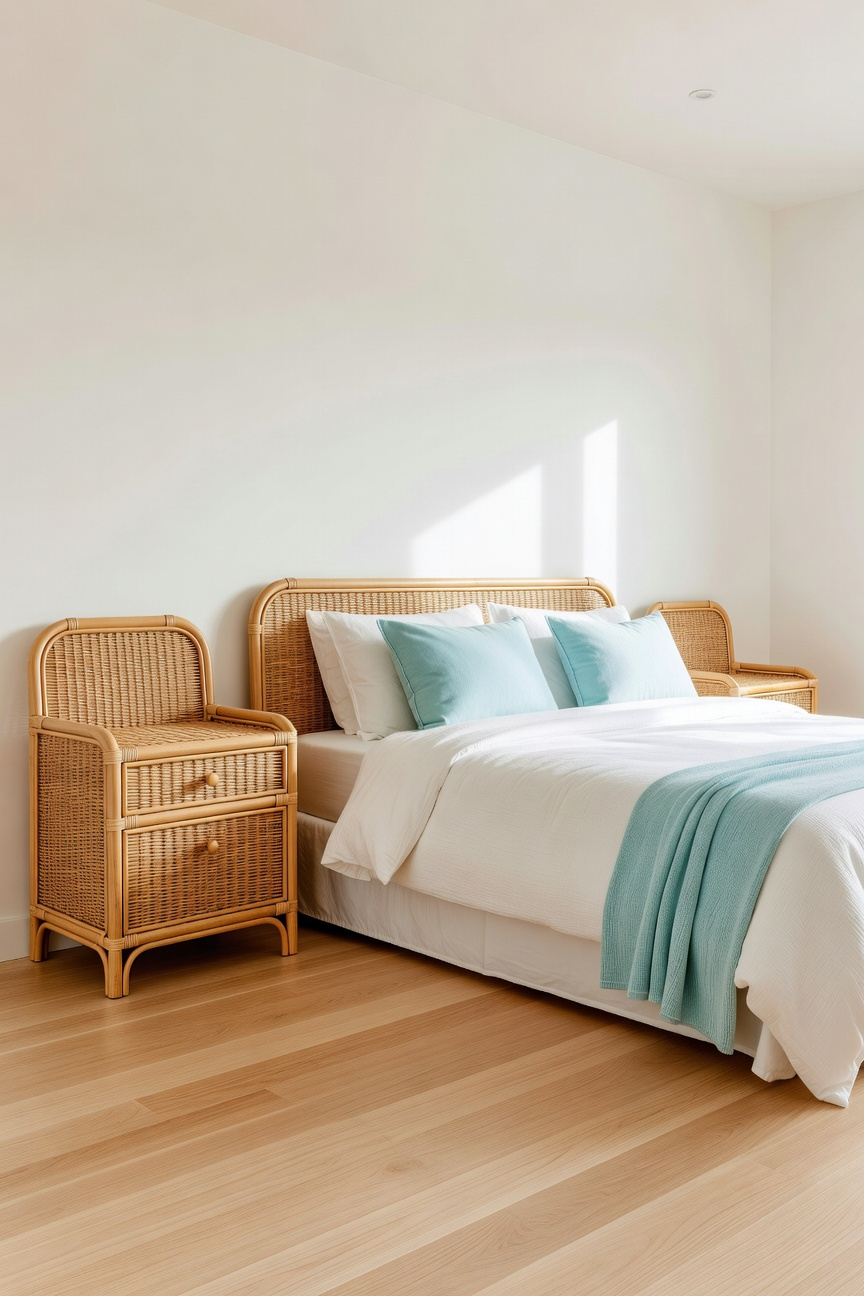
Therefore, this breathability is essential for humid seaside environments. Practically, open-weave cane panels promote constant air circulation around stored linens. This natural airflow acts as a heat sink for modern bedside electronics. Historically, designers embraced these humble materials to establish relaxed California luxury. Today, choosing natural rattan also supports vital ecological sustainability. In fact, rattan vines fully mature in just two to three years. Importantly, harvesting these climbing vines incentivizes local communities to preserve existing rainforest canopies.
Naturally, maintaining these beautiful pieces near the ocean requires minor upkeep. For example, microscopic salt crystals can settle deep within the intricate weaves. Experts recommend a monthly freshwater wipe to dissolve damaging salt residue. Additionally, applying lemon oil occasionally keeps the natural skin wonderfully supple. This diligent care allows the honey-toned fibers to develop a sun-kissed patina. Thus, your nightstands will gracefully age alongside your timeless coastal retreat.
3. The Driftwood-Tone Dresser: Achieving Sophisticated Coastal Patina Without the Nautical Kitsch
Coastal decor historically relied on literal nautical tropes like anchors. Today, sophisticated coastal design prioritizes atmospheric texture instead. Specifically, a driftwood-tone dresser should quietly evoke the shoreline’s feeling. The process begins by selecting the proper wood species. For example, open-pore white oak and acacia are ideal choices. Designers avoid woods with high resin content like pine. The resin bleeds and turns gray finishes kitschy orange.
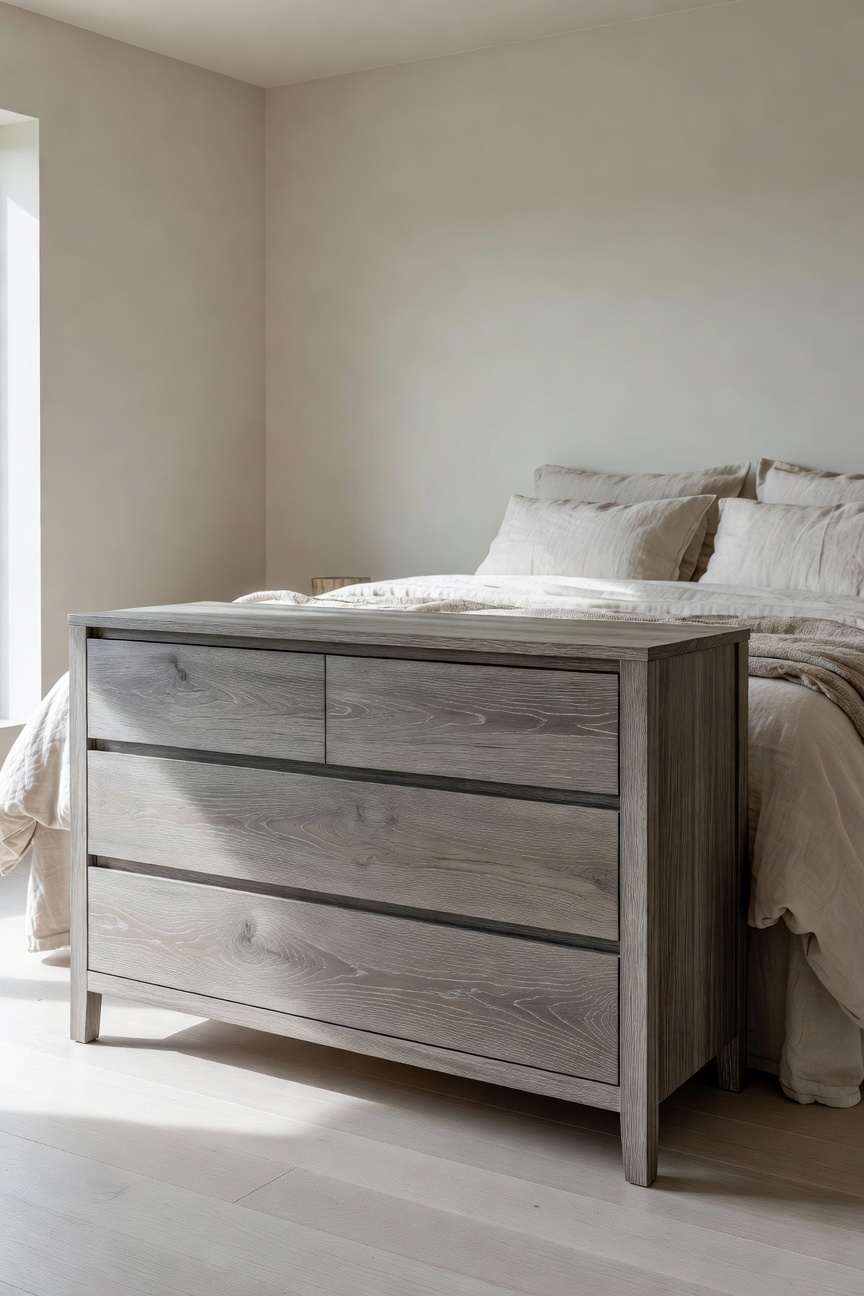
Authentic driftwood patinas are actually grown rather than simply painted. Notably, reactive stains like iron acetate manipulate the natural tannins. The wood naturally oxidizes from the inside out. This chemical process mimics decades of harsh saltwater exposure. Mechanical distressing then adds necessary tactile depth to the piece. Craftsmen typically use a wire brush on cathedral-cut oak veneers. This technique scours away soft springwood while leaving hard summerwood.
Next, a white liming wax is applied to the surface. This cerusing settles deeply into the newly created grain valleys. The finish resembles dried salt spray on a shipwreck. This dry, parchment-like surface demands high-contrast, luxury hardware. For instance, unlacquered brass or blackened iron pulls add elegance. In short, this rough and refined tension creates timeless sophistication.
4. Whitewashed Teak End-of-Bed Benches: Bringing Weather-Resistant Maritime Elegance Indoors
Teak once served as the resilient backbone of 19th-century clipper ships. Specifically, its unique natural oils allowed it to survive the relentless wet-dry cycles of ocean travel. Placing a whitewashed teak bench indoors subverts this rugged history. This choice transforms a weather-resistant maritime material into an intimate piece of bedroom luxury.
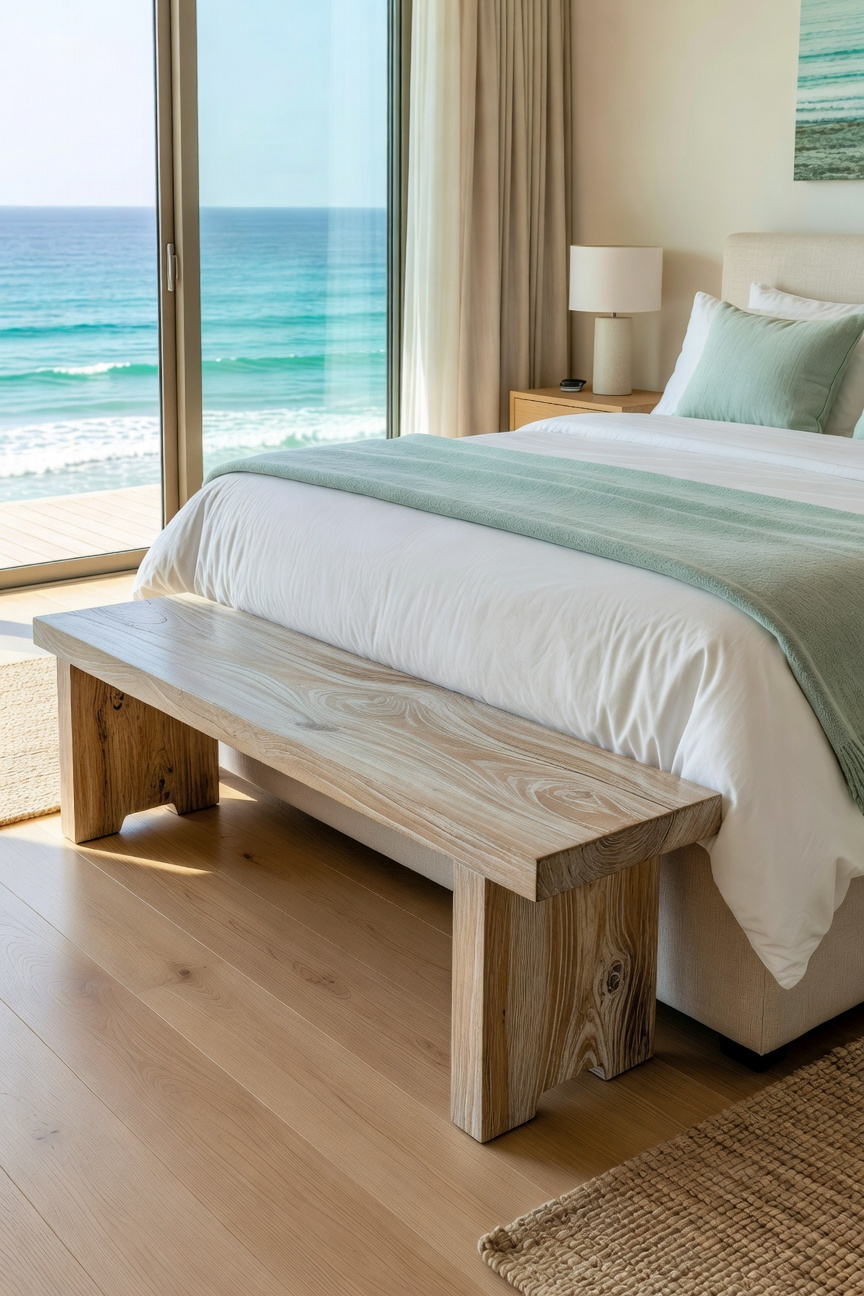
However, mastering this whitewashed finish requires overcoming a significant chemical conflict. Naturally, teak’s heavy oil content actively repels standard water-based paints. Therefore, master craftsmen must carefully degrease the wood surface before applying any finishes. Next, they apply a specialized wash-coat. This bridges the oily wood and the white pigment. The diluted pickling stain reveals the unique, tight grain underneath. This technique expertly mimics sun-bleached driftwood without compromising a smooth, indoor-appropriate texture.
High-end maritime benches rely on deep mortise and tenon joinery for structural integrity. Historically, shipwrights pinned these joints to withstand extreme humidity fluctuations. Additionally, modern designers incorporate gently radiused edges to soften the furniture’s visual profile. While originally designed for rolling ships, these rounded curves now evoke deep psychological calm. Teak is a poor conductor of heat and remains temperature-neutral across all seasons. Thus, it feels perfectly inviting for bare feet resting at the edge of the bed.
Finally, sourcing this wood adds another layer of sophisticated coastal narrative. For instance, Grade-A plantation teak offers a beautifully clean and uniform grain pattern. Conversely, reclaimed teak from old Javanese structures provides heavily seasoned structural stability. In fact, the whitewash beautifully settles into decades-old surface checks and nail marks. This specific approach balances timeless maritime durability with fresh, contemporary aesthetic appeal.
Phase II: Form, Flow & Breezy Upholstery
Modern coastal design fundamentally strips away literal nautical motifs. Instead, we embrace an atmospheric, architectural approach to interiors. Specifically, furniture form shifts to become highly sculptural. We utilize curvilinear silhouettes and pebble-shaped nightstands. These gentle radii echo shoreline stones smoothed by erosion. Material honesty perfectly grounds the sleeping space. Raw teak and bleached cerused oak replace artificially weathered paints. Visually, this clearly highlights the tactile grain of the wood. It mimics walking barefoot on a sun-bleached boardwalk.
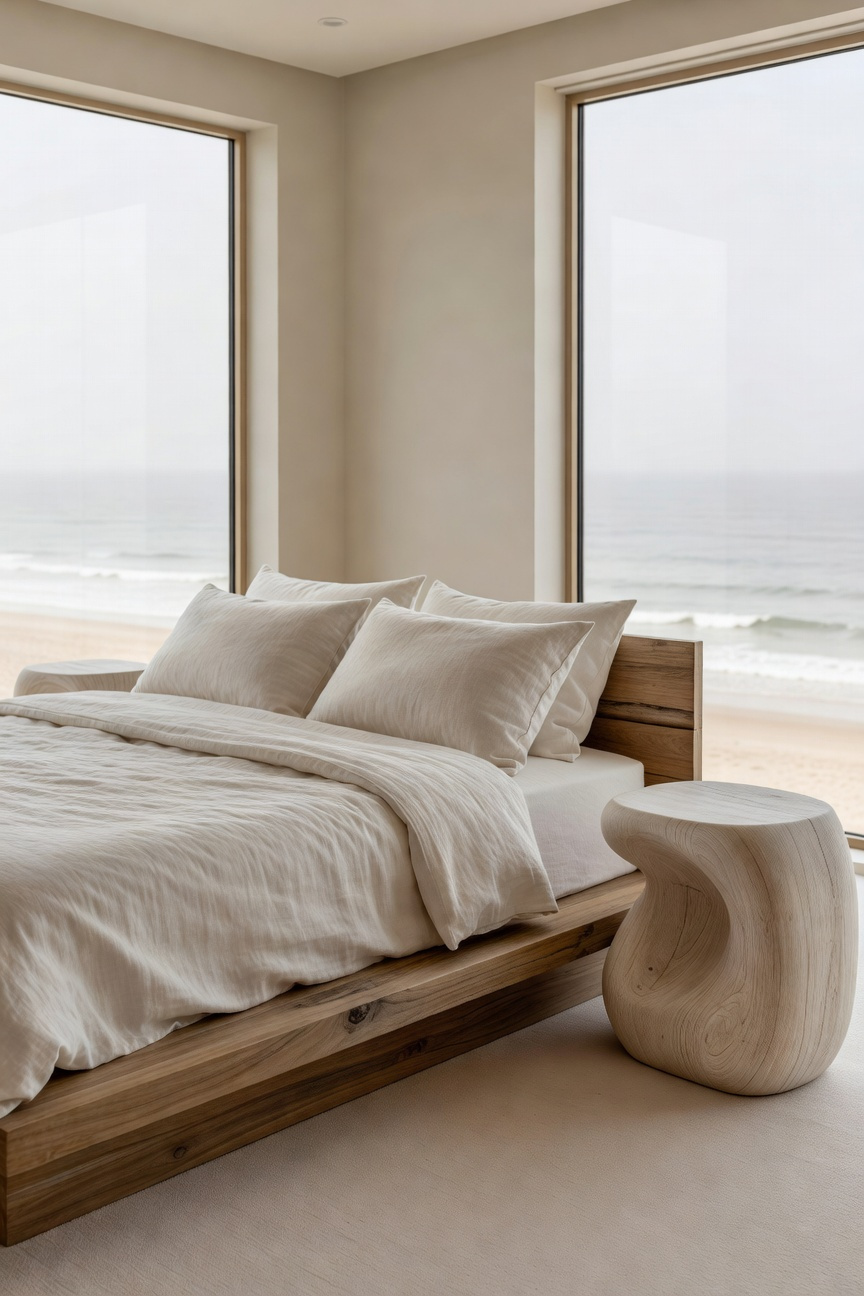
Flow is equally critical in this evolved design phase. Therefore, low-profile beds sit just above the floor. This arrangement naturally draws the eye toward the horizon line. Additionally, slatted armoires playfully manipulate natural light throughout the day. These pieces cast rhythmic shadows reminiscent of coastal reeds.
Technical upholstery choices define this truly airy environment. Notably, we prefer a balanced linen-cotton blend over pure linen. This specific ratio prevents sagging while maintaining crucial breathability. A loose basket-weave allows for higher air permeability. This completely prevents the sticky feeling common in humid climates. Aesthetically, the color palette shifts to calming sand and foam tones. These can be beautifully layered with blue bedroom decor to enhance holistic well-being.
Unstructured cushions with feather wraps offer sink-in luxury. This feeling directly mimics the shifting support of warm sand. Indeed, these coastal homes must function for permanent year-round living. Thus, performance fabrics resist UV bleaching and dampness very gracefully. This perfectly bridges sophisticated aesthetics with rugged seaside durability.
5. The Belgian Linen Slipcovered Headboard: Mastering Effortless Luxury and Seaside Practicality
Authentic Belgian linen offers a perfect technical solution for coastal bedrooms. Specifically, the Flanders region provides a damp, cool microclimate. As a result, flax cells elongate slowly without becoming brittle. These extra-long fibers deliver exceptional tensile strength. They also offer a silken hand-feel. Naturally, this fabric is evolutionarily adapted to high-humidity environments. Salt air will not make it stiff. Linen is a hollow fiber. It can absorb twenty percent of its weight in moisture. Therefore, it acts as a natural room regulator. The fabric pulls dampness away from the wall.
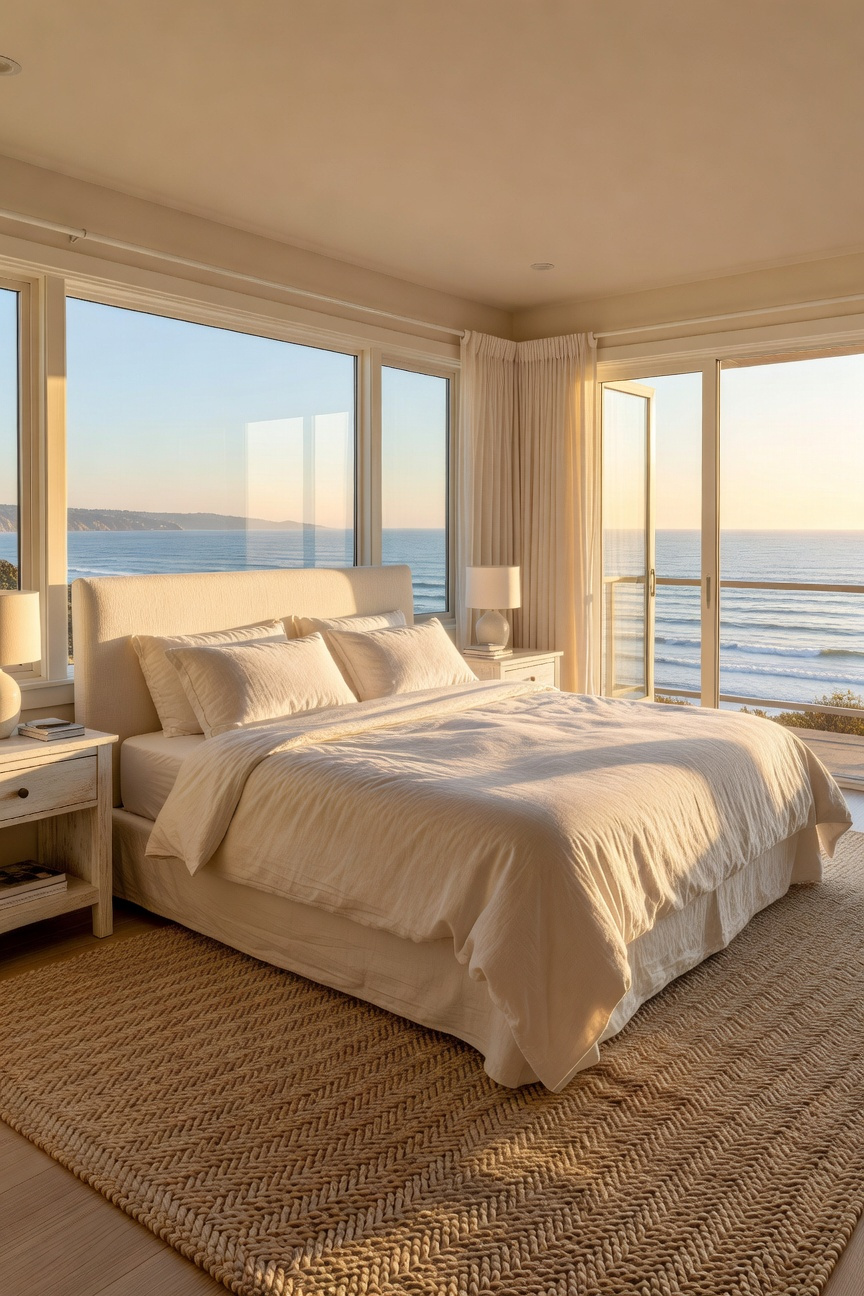
Beyond climate control, the slipcover masters effortless seaside luxury. Distinctly, designers use edge tailoring to craft different coastal narratives. A flange edge extends outward to create a fluttering silhouette. This delivers a relaxed, bohemian texture. Conversely, a knife-edge slipcover features crisp, sharp corners. This style bridges architectural minimalism with tactile softness. Maintenance in a beach house is remarkably practical. Sand acts as a harsh abrasive on fixed upholstery. Fortunately, a removable slipcover allows for easy washing. Remarkably, Belgian linen increases in strength when wet. Frequent laundering actually improves the fabric’s natural luster. Additionally, natural flax embraces a beautiful sun-bleached patina. Harmful UV rays simply enhance its organic tonal variations.
This aesthetic honors the Wabi-Sabi design philosophy. Specifically, it abandons the perfection of tight, tufted upholstery. Such rigid perfection feels entirely out of place here. Instead, a slipcover offers a soulful, monastic luxury. Indeed, high levels of natural pectin bind the flax fibers. Over time, these pectins break down through daily use. The headboard develops a signature, lived-in drape. It suggests a lifestyle of relaxed, authoritative storytelling. Essentially, you possess the finest textile but let it wrinkle. This mastered imperfection beautifully defines sophisticated seaside living today.
6. Slipcovered Cotton Accent Chairs: Softening Bedroom Corners with Cloud-Like, Washable Textures
Historically, the modern coastal slipcover evolved from the 18th-century practice of summer dress. Wealthy estates encased heavy velvets in white cotton duck to protect them from humidity. Designers realized these breathable cotton cases felt vastly superior against the skin. Today, a rounded slipcovered chair actively softens the harsh 90-degree angles of bedroom corners. Biologically, our brains find these organic, curved forms much more soothing than sharp edges. Therefore, this visual softness directly decreases activity in the brain’s fear center.
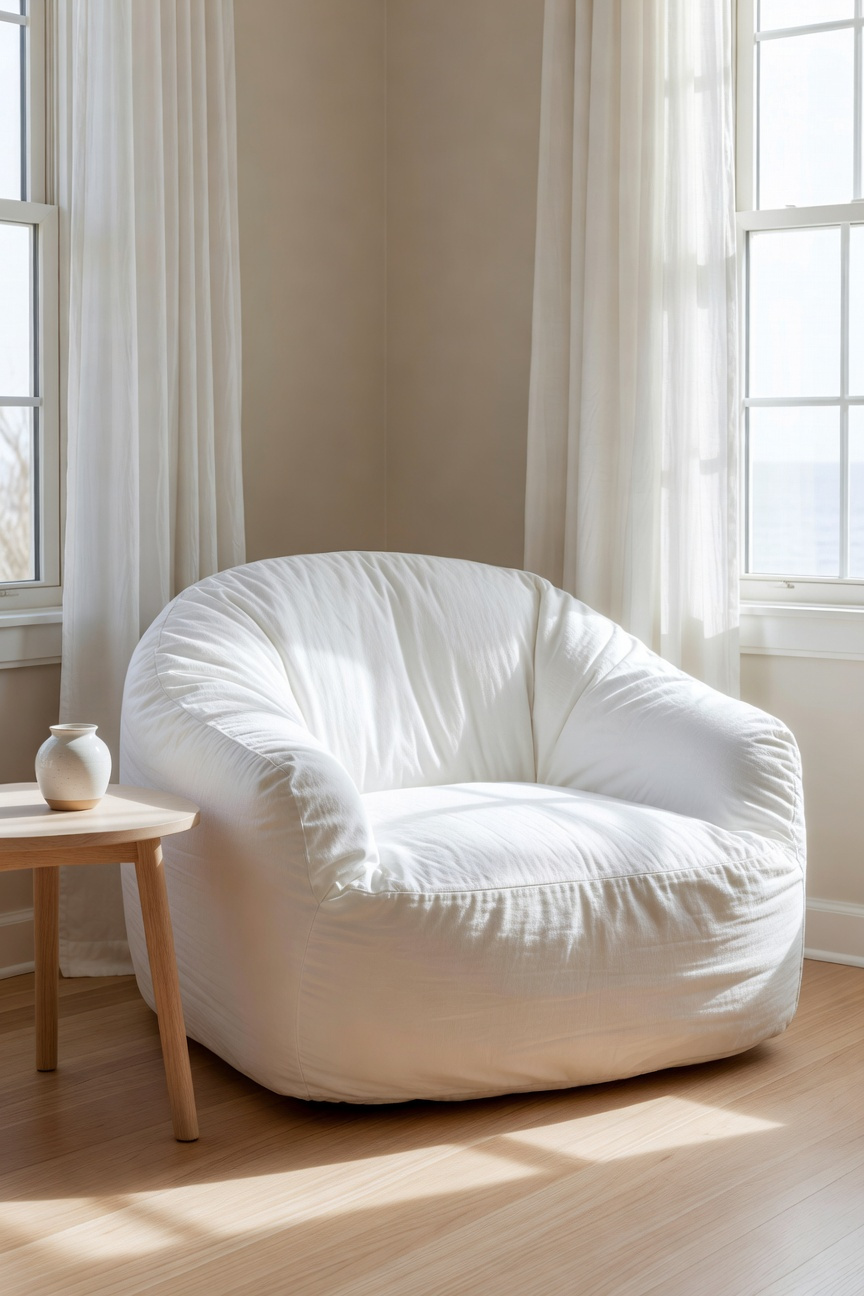
Inside the chair, hybrid cushioning creates a resilient yet cloud-like seating experience. Specifically, a high-resiliency foam core is wrapped in a quilted down-alternative envelope. This construction provides vital structural lift while delivering an airy, floating sensation. Adding this tactile comfort zone deeply enhances functional sleep hygiene. For example, reading here for just six minutes reduces stress levels by 68 percent. Thus, the soft chair serves as a grounding spatial anchor for powering down.
The sensory ritual of washable cotton elevates this lived-in coastal luxury. Naturally, a bedroom chair must promote pristine tactile hygiene in an intimate space. Uniquely, a washable slipcover easily removes the worry of trapped dust or stale allergens. Instead, resting in a crisp, clean cover offers a powerful psychological cleanse. Indeed, treating beautiful furniture casually transforms the bedroom into an effortless, restorative sanctuary.
7. The Woven Abaca Bed Frame: A Contemporary, Sophisticated Nod to Traditional Maritime Ropes
The woven abaca bed frame redefines nautical design. Specifically, abaca is also known as Manila Hemp. Historically, this fiber was the lifeblood of 19th-century maritime fleets. In fact, its high lignin content makes it exceptionally resistant to saltwater. Therefore, using abaca honors seafaring history without resorting to cliché anchors.
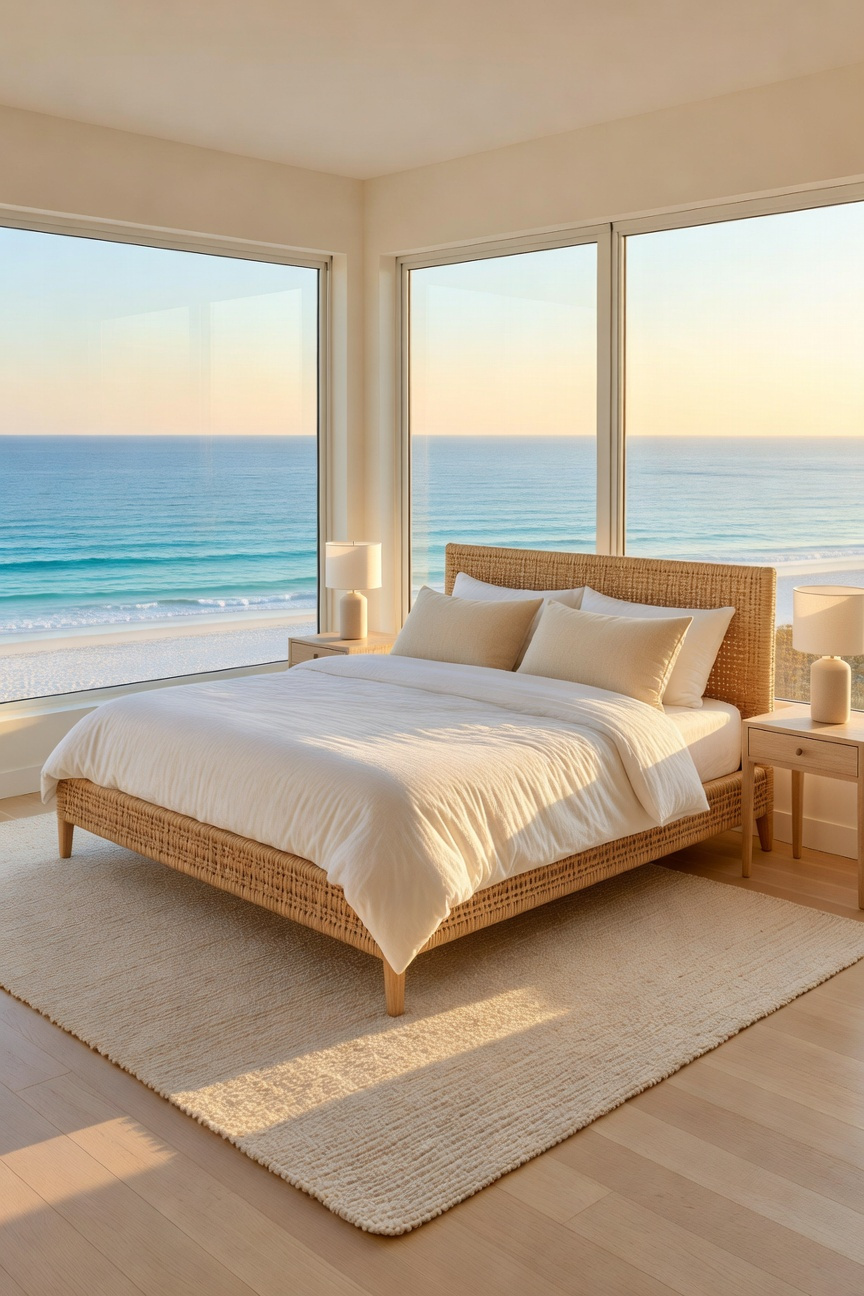
The journey from wild plant to luxury furniture requires intense artisanship. Artisans harvest the leaf fibers through a specialized process called tuxying. Afterward, they hand-twist the raw materials into substantial cords. Typically, these cords measure between six and eight millimeters in thickness. This specific gauge beautifully mimics traditional ship rigging. Additionally, abaca possesses a natural luster that gently catches the light. As a result, it feels inherently more expensive than standard matte wicker. A tight cable weave provides grounded visual weight in a bedroom.
This material champions modern environmental responsibility. Notably, the United Nations designates this self-sustaining plant as a future fiber. Its deep roots also help minimize vital coastal erosion. An abaca bed frame should act as the anchor of your retreat. Designers often juxtapose this rough industrial texture with ultra-fine textiles. For example, dressing the bed in mulberry silk creates a stunning tactile tension. Indeed, this rough-meets-refined approach perfectly captures the essence of sophisticated seaside living.
8. Curved Plaster-Finish Side Tables: Mimicking the Smooth, Organic Lines of Sea-Worn Stones
Historically, plaster finishes served a functional role in coastal Mediterranean regions. Specifically, breathable Moroccan Tadelakt was used to seal bathhouses and water cisterns. Today, modern designers repurpose this ancient Luxe Povera technique for high-end sanctuary spaces. These plaster tables retain ambient warmth. Consequently, they offer a friendly, tactile sensation compared to cold, rigid marble. Visually, the aesthetic perfectly leverages the psychological safety of biomorphic design. Neuroaesthetic studies confirm that our brains perceive sharp angular furniture as subtle threats. Therefore, adopting the organic curves of sea-worn stones signals a subconscious refuge. This surrender to soft geometry actively lowers cortisol levels, promoting deeper sleep.
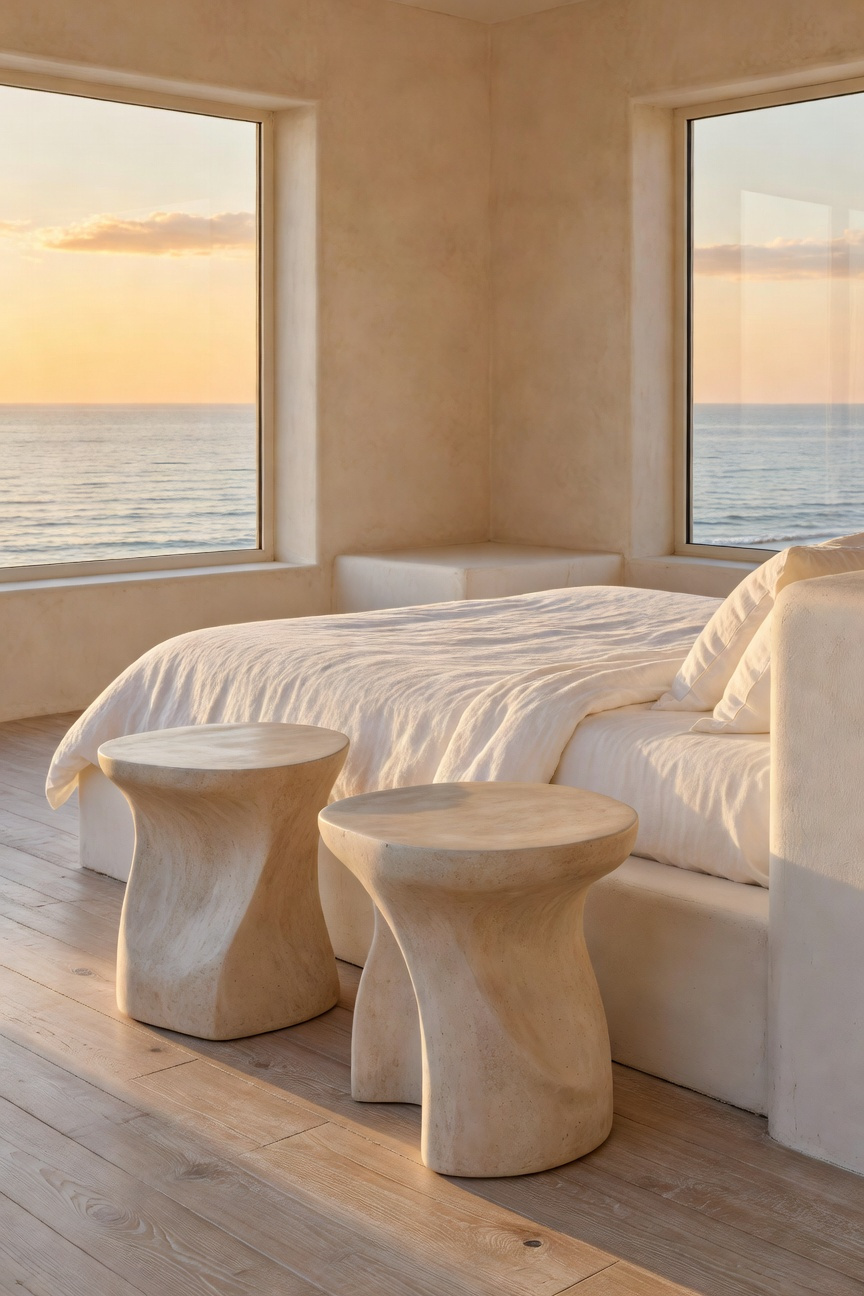
Interestingly, creating this floating monolith illusion requires complex hybrid craftsmanship. Artisans first build an armature from CNC-cut plywood or high-density foam. Next, they wrap the skeleton in fiberglass mesh to provide essential tooth. Finally, experts apply multiple layers of microcement or traditional lime-based plaster. They burnish the setting plaster with a stainless steel trowel or river stone. As a result, the compressed particles create a beautiful, soft-sheen shoreline patina.
In contrast to busy jute rugs, these matte surfaces offer visual silence. They absorb coastal sunlight rather than casting harsh, unwanted room glares. This uniquely ethereal quality makes the furniture feel like a discovered beach treasure. Indeed, contemporary design icons use these sculptural pieces as grounding room anchors. They inject ancient gravitas without relying on literal, kitschy nautical motifs.
Phase III: Spatial Application & Functional Storage Layouts
Phase III translates abstract coastal moods into engineered spatial realities. Specifically, we must balance intense environmental demands with visual weightlessness. Historically, original maritime cabins relied on incredibly cramped, eight-inch chests. We adapt this wall-hugging legacy today. Therefore, shallow case goods intentionally preserve the room’s open drift. Floating consoles keep the floor entirely visible. This is a technique also used in balcony decoration ideas to maintain an uninterrupted horizon line. This continuous shoreline vista drastically reduces cognitive fatigue while maximizing perceived square footage.
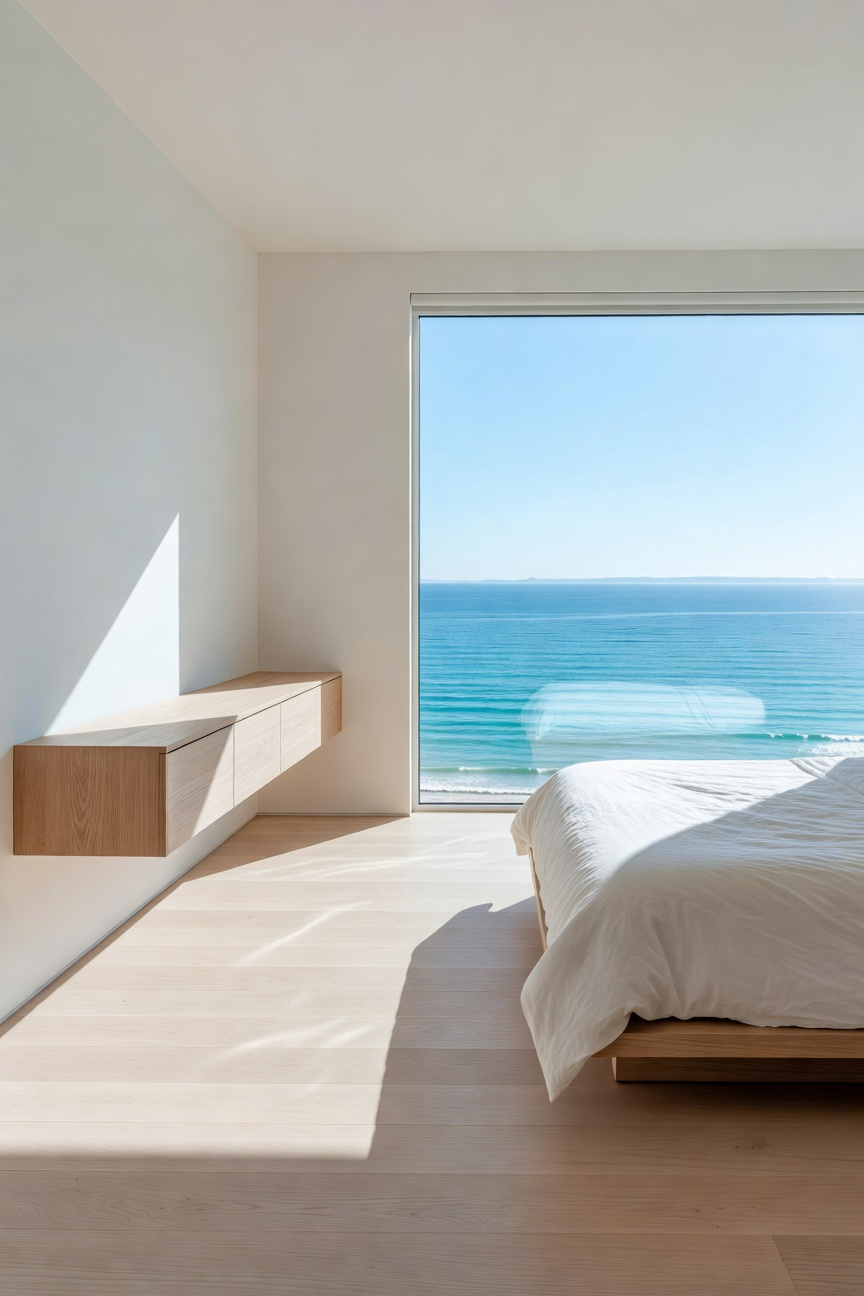
Functional coastal storage must actively serve as a lung. We never specify sealed cabinets. Instead, louvered doors and slatted shelving provide absolute passive ventilation. Additionally, a custom two-inch breathing gap protects the back walls. This crucial space permanently prevents hidden cold spots and condensation. Naturally, material science completely dictates our precise high-end architectural specifications. Cellularly stable teak is the absolute gold standard. Its immense silica content ensures wooden drawers never swell shut. Grade 316 stainless steel strictly prevents aggressive chloride pitting.
Similarly, blue-space psychology deeply informs our entire spatial zoning strategy. Horizons must remain completely uninterrupted. Consequently, low-profile headboards deliberately sit just below the window sills. This visual layout draws the eye directly toward the ocean. Also, reflective whitewashed cabinets bounce blue-toned morning light deeply indoors. Therefore, occupants experience improved circadian rhythms and truly restful sleep. Finally, tactical luxury demands highly practical, beautifully weathered surface finishes. Indeed, wire-brushed woods easily disguise the inevitable microscopic sand abrasions. Meanwhile, heavy jute-wrapped hardware anchors the room with tactile permanence.
9. The Louvered Door Armoire: Maximizing Natural Airflow with Elevated Tropical Plantation Style
In coastal environments, stagnant humidity is the enemy of fine textiles. Therefore, traditional solid-panel wardrobes often act as damaging sweatboxes. Specifically, they trap salt-laden moisture and cause musty odors. Conversely, the louvered door armoire offers an elegant, breathable solution. These angled slats function as a highly efficient passive ventilation system. Through natural convection, cooler air continuously enters the bottom slats. Subsequently, warmer moist air is effortlessly pushed out the top. As a result, heirloom linens safely maintain an equilibrium moisture content.
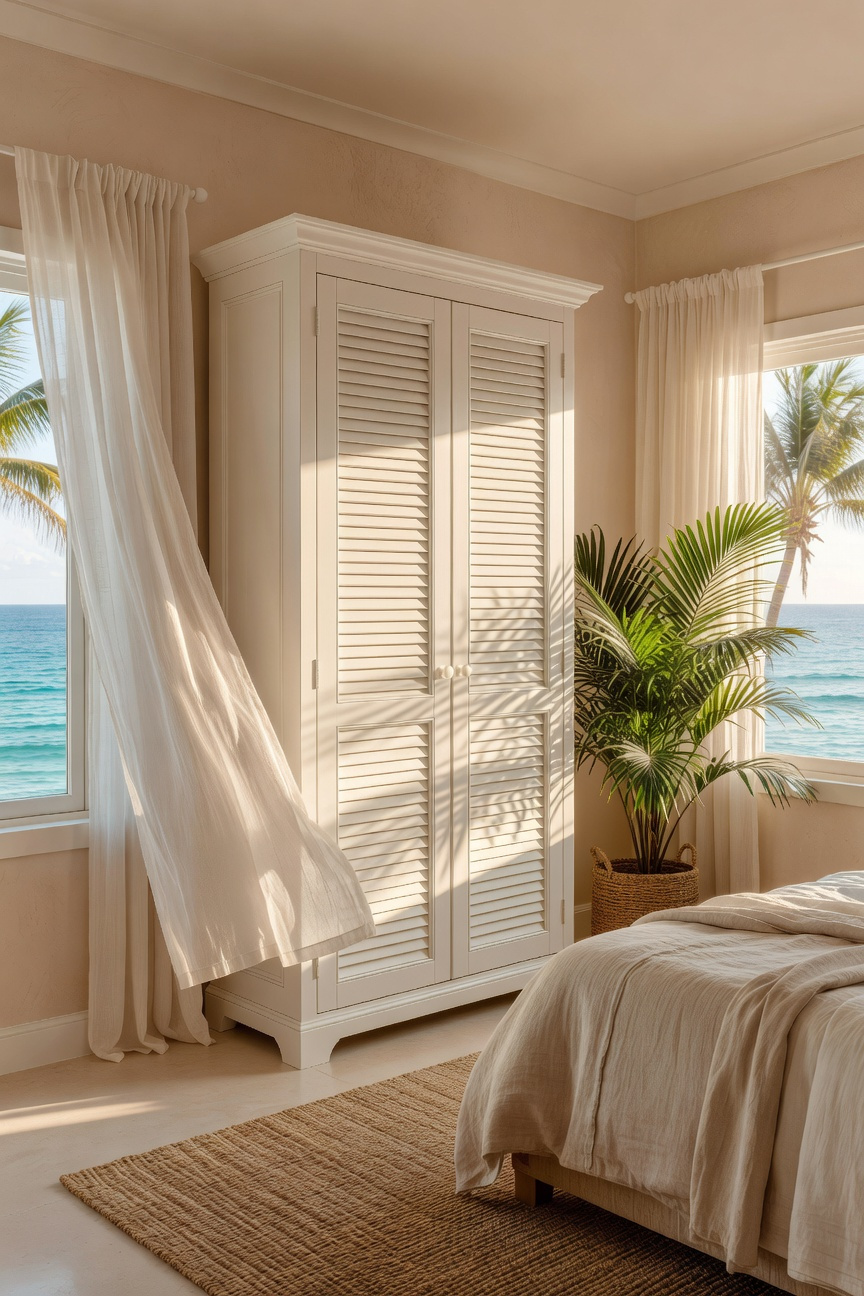
Historically, this design stems from the classic British West Indies style. Local craftsmen brilliantly adapted heavy European furniture for tropical heat. They utilized oil-rich woods like mahogany and teak. Naturally, these materials effectively resisted coastal rot and wood-boring insects. Aesthetically, the louvers create a mesmerizing visual rhythm each day. Sunlight filters through the slats to cast long linear shadows. Indeed, this effect perfectly mimics the dappled shade of palm fronds. Additionally, the uneven wooden surfaces help diffuse harsh sound waves. Consequently, the armoire dampens sharp echoes to cultivate a quiet sanctuary.
Today, these beautiful pieces seamlessly pivot into concealed technology hubs. For instance, the constant airflow cools modern electronics without noisy fans. Infrared signals can easily pass through the slender wooden slats. Homeowners can select a grounded dark tobacco finish. Alternatively, a bleached cerused finish effortlessly evokes a breezy driftwood aesthetic.
10. Woven Seagrass Storage Trunks: Concealing Extra Linens with Authentic Maritime Utility
Woven seagrass trunks bring authentic maritime history into the modern coastal bedroom. Historically, sailors relied on sturdy sea chests for absolute utility. Today, placing a woven trunk at the foot of your bed mimics this classic layout. Consequently, the space feels grounded and purposeful. Unlike cliché nautical decor, these pieces offer sophisticated, breathable storage.
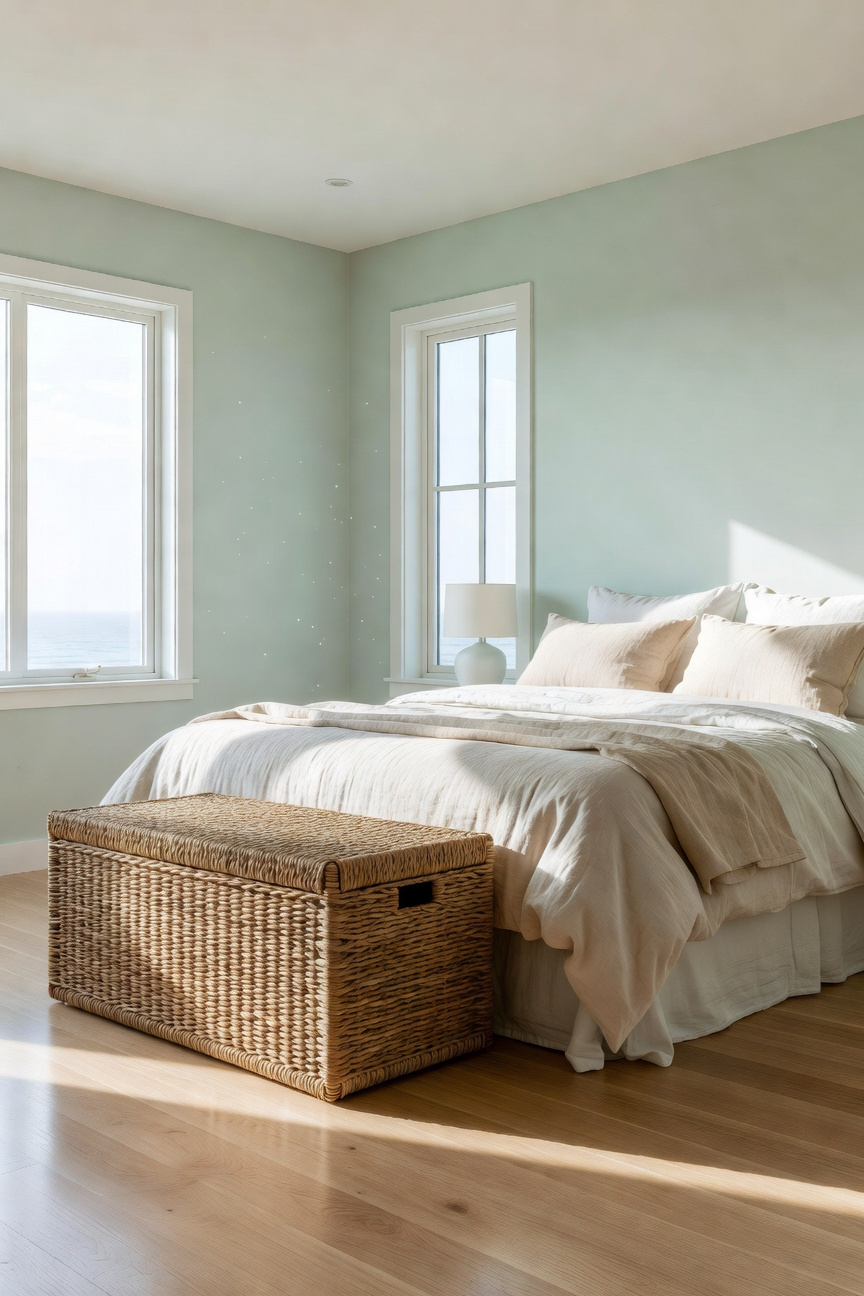
Specifically, aquatic seagrass evolved to survive in harsh, salty environments. Therefore, it possesses a natural waxy cuticle. This protective barrier makes the fibers inherently resistant to coastal moisture. Furthermore, seagrass is highly hygroscopic. It actively absorbs excess humidity before releasing it back into the room. As a result, your stored extra linens never develop that musty maritime smell. Additionally, the plant’s high silica content naturally deters dust mites.
Structurally, artisans often twist the grass into durable ropes. This specific technique creates a trunk strong enough to serve as a bench. Inside, premium designs typically feature smooth cedar or mahogany linings. Delicate heirloom quilts will never snag on rough woven ends. Aesthetically, the material ages gracefully alongside your home. Initially, a fresh trunk carries a soft sage-green hue and a hay-like scent. Eventually, indirect sunlight cures the grass into a rich, warm sandy beige. This organic evolution perfectly captures the essence of timeless seaside living.
11. Floating Ash Wood Shelves: Displaying Curated Ocean Finds with Minimalist, Contemporary Restraint
White ash represents the connoisseur’s choice for contemporary coastal furniture. Specifically, its open-pore grain mimics authentic sun-bleached driftwood beautifully. However, ash avoids the structural instability of scavenged wood. Its impressive dimensional stability prevents warping in humid seaside air. Therefore, these shelves remain perfectly level against the bedroom wall. In practice, the floating illusion relies on internal steel blind brackets. This eliminates visual noise and promotes essential bedroom relaxation. Moreover, utilizing negative space makes smaller coastal rooms feel expansive.
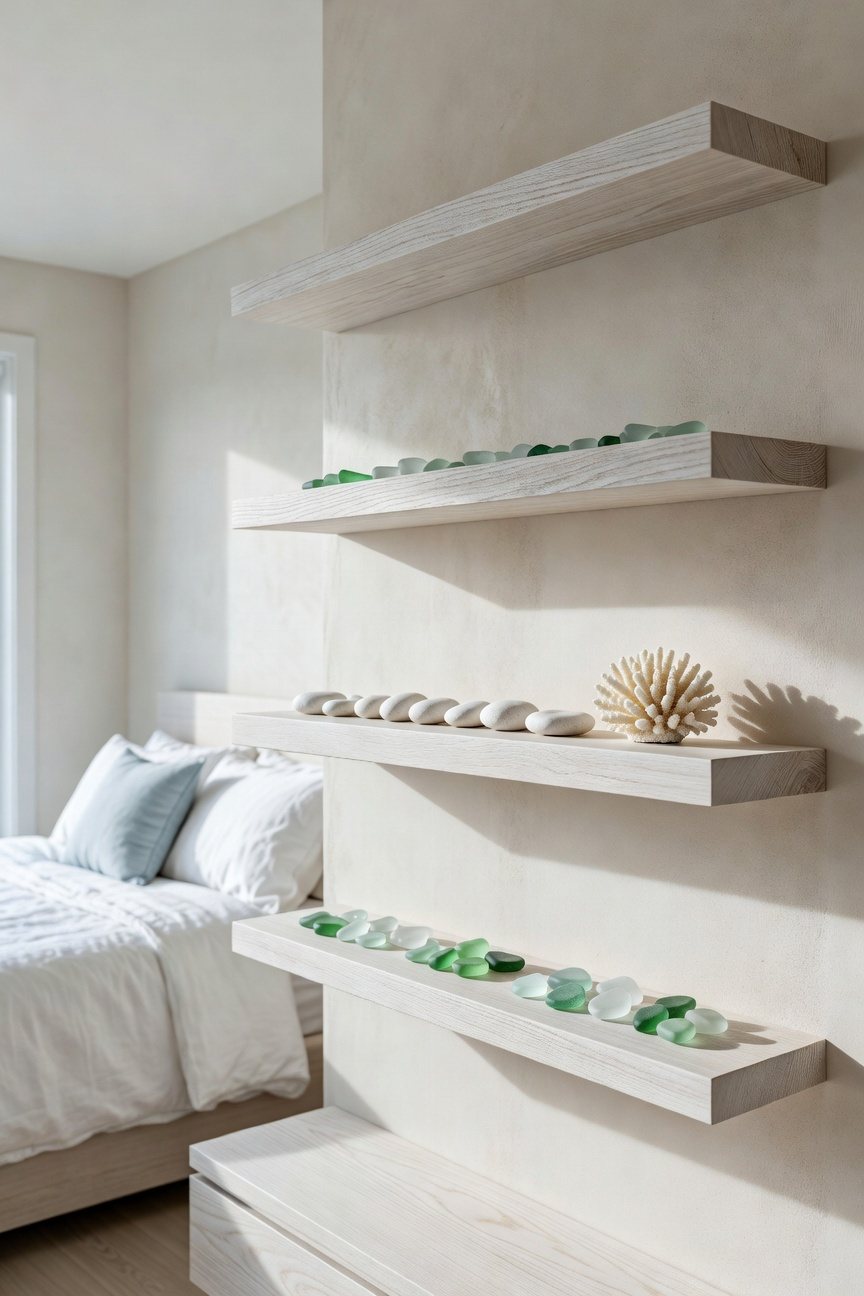
Historically, maritime cabins featured dark, heavy woods bolted down for survival. Conversely, contemporary floating shelves celebrate open, light-filled architectural freedom. Indeed, this minimalist ash canvas transforms how we display objects. Instead of cluttered jars, modern design favors a focused specimen approach. For instance, resting a single piece of elkhorn coral elevates it instantly. Naturally, the machine-planed wood contrasts beautifully against irregular ocean finds. This honors the wabi-sabi philosophy of finding beauty in imperfection.
Additionally, the dry visual texture absorbs light rather than reflecting it harshly. Thus, the blonde wood catches the blue-tinted morning light effortlessly. Later, the setting sun casts intricate shadows from curated sea fans. Accordingly, the shelf becomes a dynamic stage within your coastal sanctuary.
12. The Multi-Drawer Coastal Chest: Organizing Essentials in Salt-Air Treated, Durable Woods
The modern multi-drawer coastal chest transcends simple storage. Instead, it represents a brilliant evolution of historical maritime engineering. Historically, sea chests utilized a trapezoidal shape to prevent tipping. Today, contemporary designs retain this nautical DNA through sturdy plinth bases. The multi-drawer configuration perfectly supports a dynamic coastal lifestyle. Specifically, residents can separate heavy island sweaters from daytime linens. Interestingly, many modern pieces even feature a felt-lined top drawer. This detail mimics a traditional sailor’s private storage till.
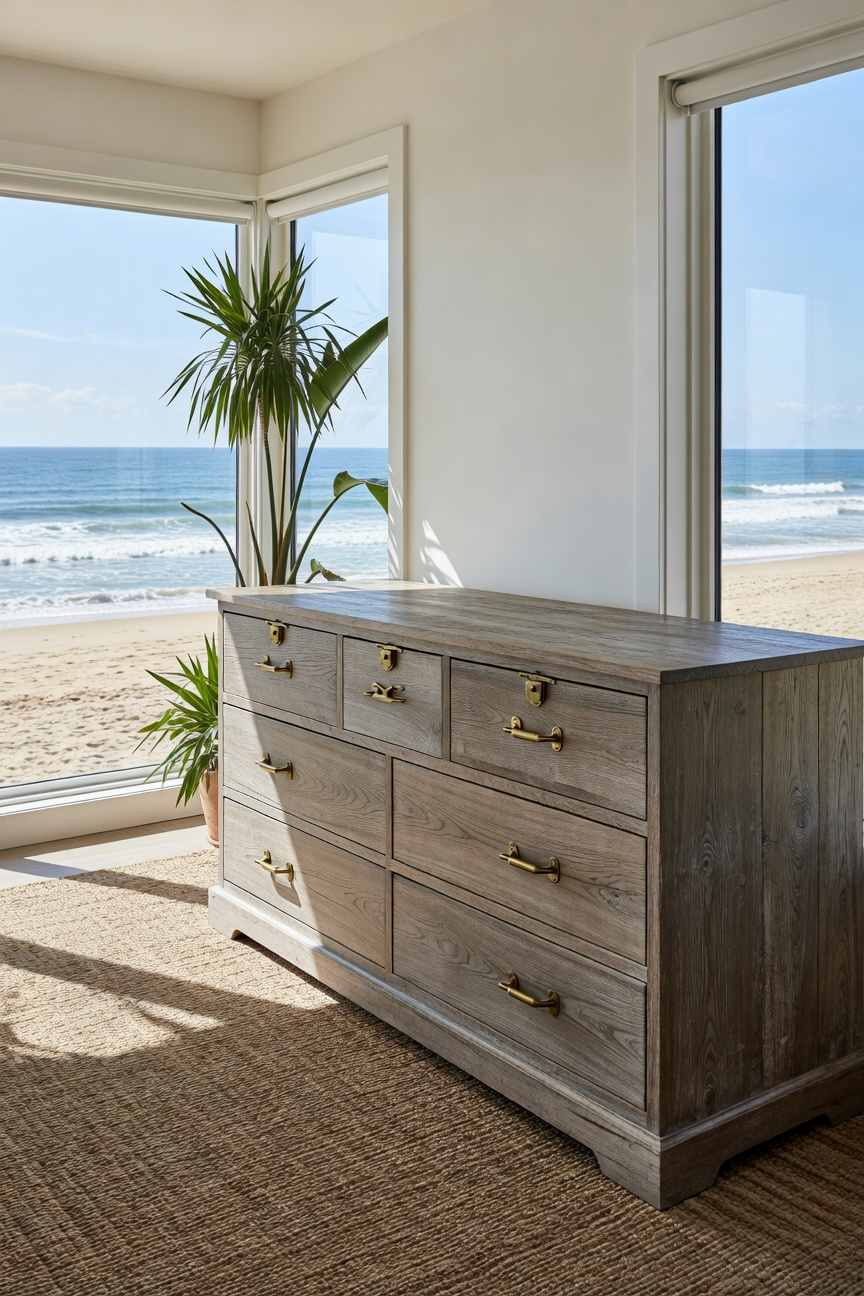
Naturally, surviving a corrosive seaside environment requires exceptional materials. Therefore, high-end chests employ naturally oily hardwoods like teak. Additionally, camphor wood is often used inside the interior drawers. Its aromatic oils actively repel moisture and counteract musty odors. Crucially, builders apply a rigorous three-step marine sealant process. First, deep-penetrating oils feed the raw wood fibers. Next, a flexible spar varnish provides critical environmental protection. Importantly, this finish expands and contracts alongside shifting coastal humidity.
Aesthetically, these pieces celebrate the concept of weathered endurance. Often, designers use a saline-based salt wash on the wood. As a result, this creates a beautiful, silvery-grey driftwood patina. Finally, authentic hardware completes the sensory maritime experience. For instance, woven jute rope beckets replace standard metal pulls. Combining these tactile elements with weathered brass delivers timeless sophistication.
13. Deconstructed Bedroom Sets: Why Sophisticated Coastal Design Favors Curated Mixing Over Heavy Matching
Historically, matching bedroom sets dominated traditional coastal interiors. Today, sophisticated coastal design rejects these rigid themes. Instead, modern seaside homes favor a curated approach. Matching sets create a static, showroom feel. They suffocate the airy aesthetic essential to seaside living. Conversely, deconstructing the bedroom set enhances visual breathability. Mixing leg styles allows natural light to pass freely. This prevents the room from feeling heavily anchored. For example, a leggy rattan dresser pairs beautifully with chunky nightstands. Consequently, this variety mimics the dappled light of a shoreline.
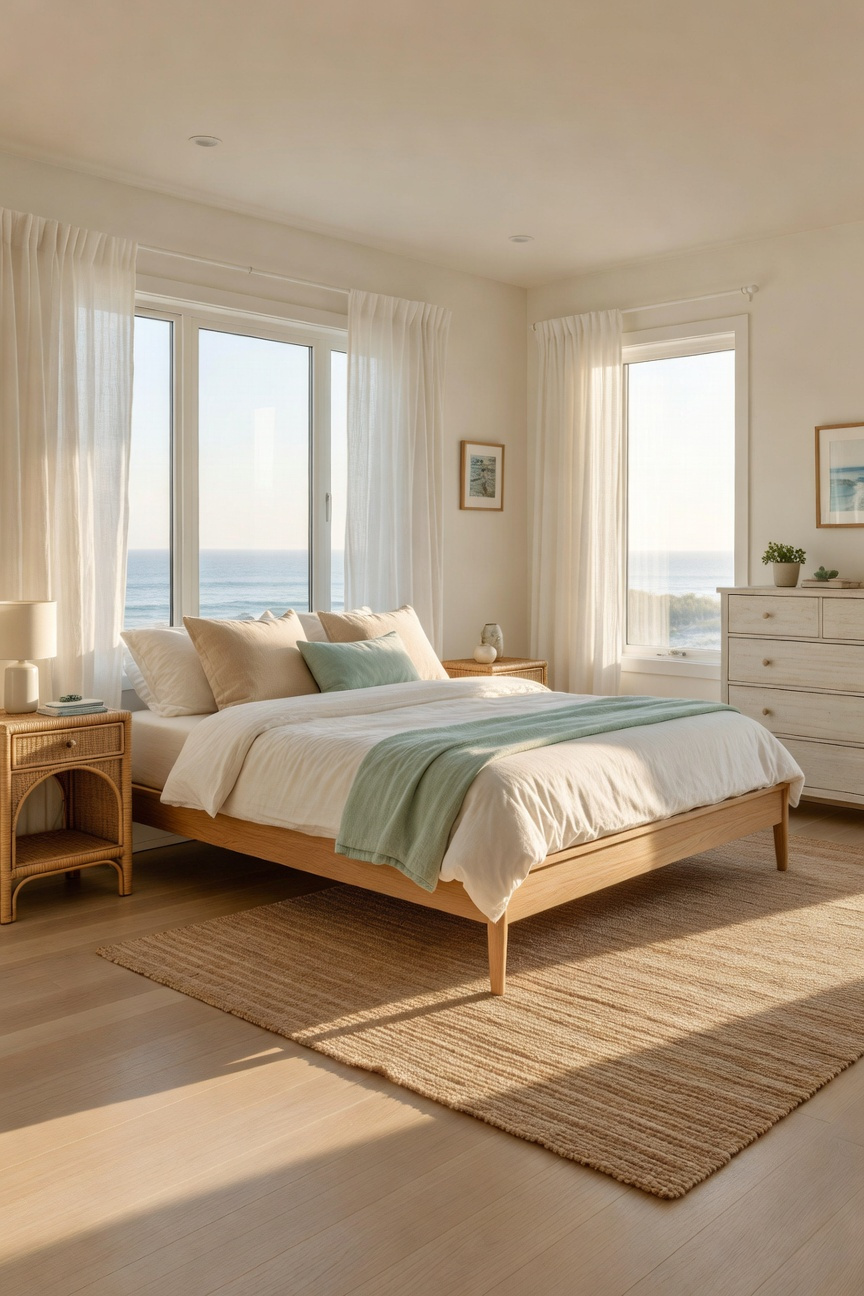
Sophisticated mixing relies on a textural triad. Designers blend grounding woods, woven elements, and soft linens. This tension evokes the varied natural textures of the beach. A rough-hewn oak bed complements a smooth marble nightstand perfectly. Additionally, curated rooms capture a sense of deep heritage. Vintage chests introduce a rich, well-traveled patina. Therefore, the space feels collected over decades of coastal living. Finally, moving away from matching sets expands the color palette. You can layer subtle tones of tallow, driftwood, and mist. This nuanced approach brings the sand and sea directly indoors.
Phase IV: Lifestyle Integration & The Seaside Atmosphere
In this final phase, furniture becomes a catalyst for a sophisticated permanent vacation lifestyle. Specifically, this transformation relies heavily on the neurological Blue Mind theory. Inherently, humans possess a deep affinity for water that reduces anxiety. Therefore, low-contrast finishes like driftwood gray act as calming neurological signals. These matte watery hues lower visual processing loads and cortisol.
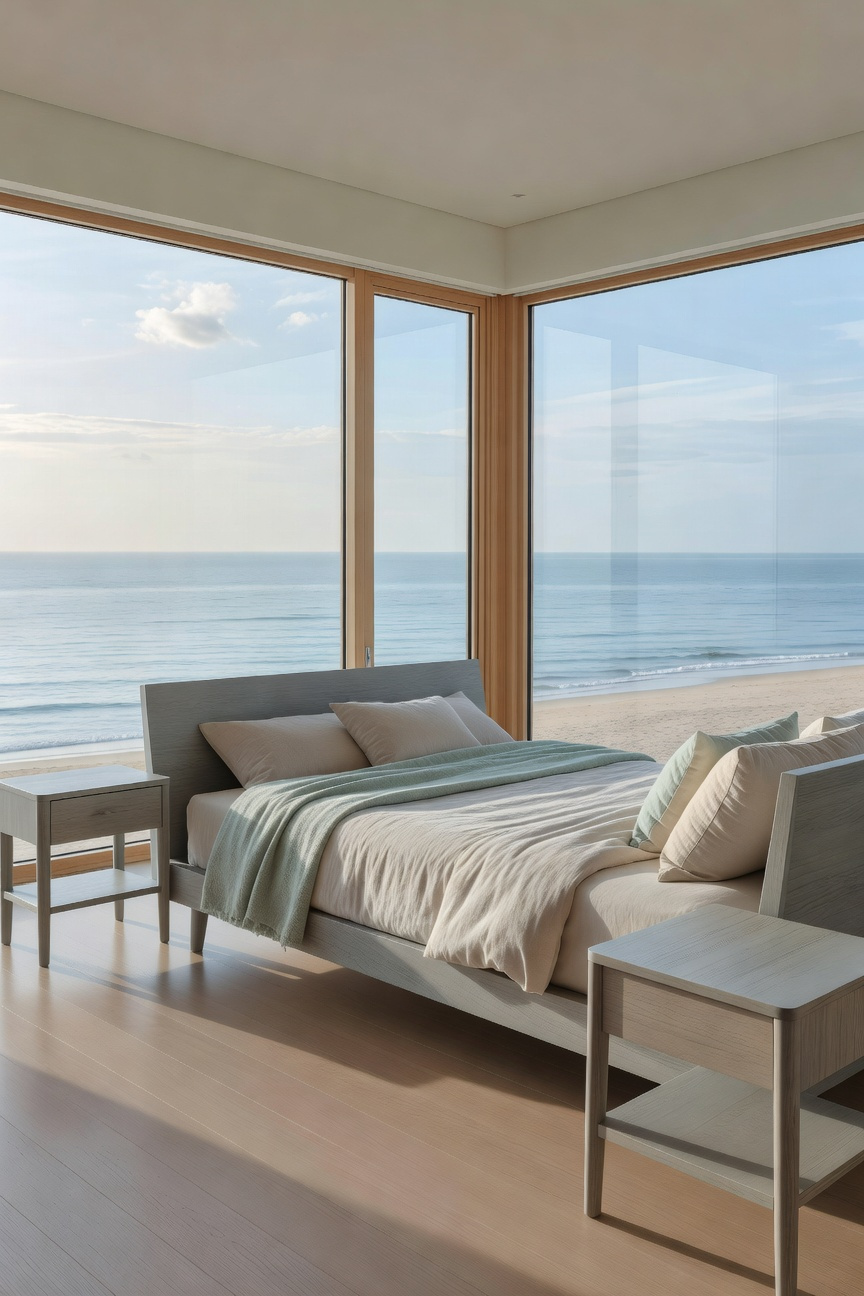
Historically accurate breathable silhouettes enhance this highly restorative environment. For instance, louvered doors originated in colonial Caribbean tropical architecture. Today, this functional slatted design actively prevents stagnant humid seaside air. These pieces promote an airy environment essential for breezy living.
Tactile sensescaping plays a vital role in grounding the inhabitant. Tactile contrast beautifully anchors this immersive haptic sensory experience. For example, pairing smooth marble with rough oak mimics sun-warmed dunes. Additionally, luxury designs utilize recycled boat wood for its tactile connectivity.
Similarly, acoustic softening remains crucial for creating a restorative nesting sanctuary. Heavy slipcovered linens actively absorb sound and dampen typical room echoes. Consequently, this quiet cocoon mimics the hushed atmosphere of dawn shorelines.
Finally, coastal designers must blur the traditional interior threshold entirely. Accordingly, low-profile platform beds keep the beautiful horizon line perfectly unobstructed. Bringing nautical rope and teak indoors makes nature feel seamless.
14. Jute-Wrapped Bedside Pendants: Replacing Traditional Lamps to Add Textural, Nautical Warmth
Swapping traditional bedside lamps for jute-wrapped pendants elevates a coastal bedroom instantly. Specifically, this transition leverages rich 19th-century maritime history. Jute was famously known as the “Golden Fiber.” In fact, it was the primary material for ship rigging. Therefore, hanging a jute pendant evokes a subtle nautical story. You capture the essence of docked vessels without overt kitsch. Furthermore, these woven fixtures offer surprising acoustic benefits. The porous textile absorbs low-frequency room sounds quite effectively. Consequently, it creates a quiet cocoon perfect for restful sleep.
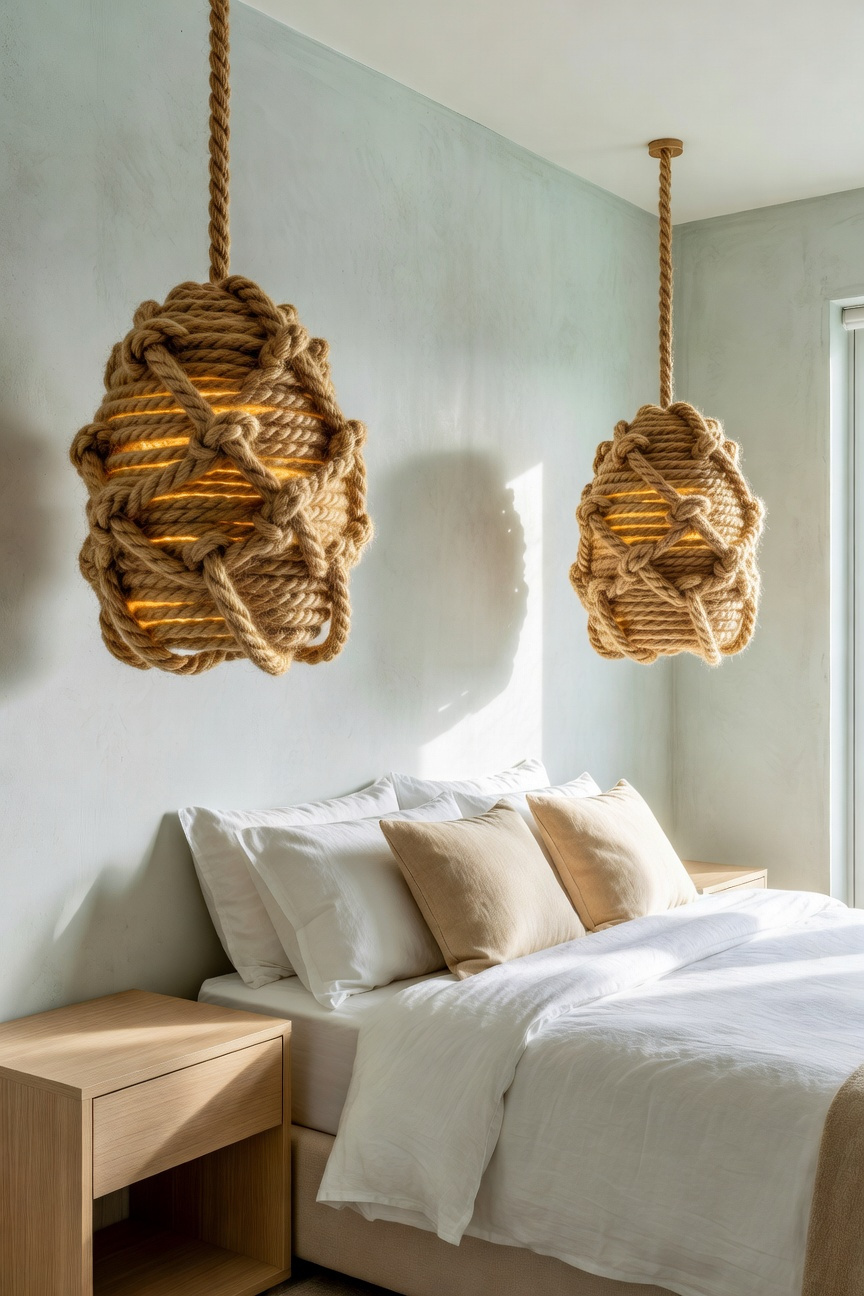
Visually, the natural fiber’s golden hue brings deep textural warmth. Safety dictates pairing these pendants with cool-burning LED bulbs. Indeed, the jute filters this light into a beautiful sunset glow. This warmth prompts a necessary sensory pause before bedtime. Additionally, going vertical reclaims valuable nightstand surface area. Your weathered oak or louvered cabinets finally become focal points. Moreover, hanging pendants at asymmetrical heights adds relaxed visual movement. It subtly mimics a swaying buoy out on the open water. Ultimately, jute acts as the perfect sophisticated material bridge. It flawlessly balances smooth linen bedding against coarse driftwood furniture.
15. The Oversized Rattan Reading Chaise: Creating a Private Sanctuary by the Ocean-View Window
An oversized rattan reading chaise serves as an architectural anchor in a coastal bedroom. Specifically, it creates a private sanctuary right by the ocean-view window. Historically, these pieces lived on tropical verandas. Today, bringing them indoors signifies a modern luxury of leisure. Rattan is remarkably well-suited for coastal environments. Unlike heavy upholstery, its porous cellular structure allows for continuous airflow. Consequently, this natural breathability keeps you cool in direct sunlight. Moreover, the material’s waxy skin resists salt-air corrosion beautifully. Over time, UV rays will gracefully age the pale fibers into a rich amber.
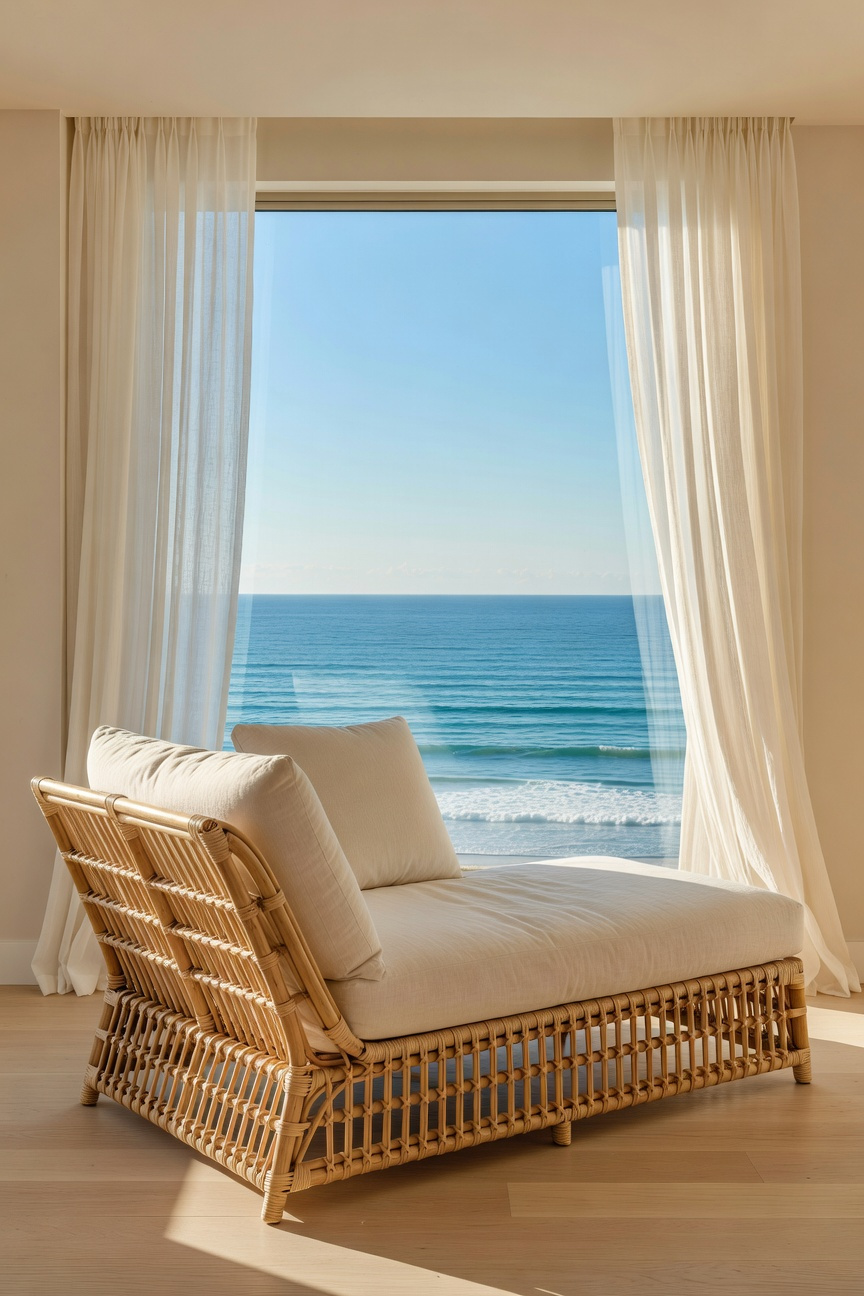
Psychologically, this oversized piece creates a vital liminal space. Indeed, the high woven arms act as a protective boundary. Therefore, you experience a comforting sense of enclosure while gazing at the horizon. Visually, the open weave filters sunlight into calming, dappled shadow patterns. Interestingly, this mottled lighting lowers stress more effectively than harsh direct sun. Also, the natural rattan provides a necessary biophilic connection to the outdoors. To maximize comfort, pair the rigid rattan skeleton with soft textiles. For instance, a draped Belgian linen throw adds stunning tactile contrast.
Finally, always tuck the chaise into a dedicated window nook. Despite its large footprint, the breathable weave maintains incredible visual weightlessness. This ensures the bedroom’s primary focus remains firmly on the ocean beyond.
16. Capiz Shell Accent Consoles: Adding Subtle, Pearlescent Glimmer to Darker Bedroom Corners
Dark bedroom corners often feel heavy and lifeless. A Capiz shell console solves this visual dead space beautifully. Historically, artisans used these shells as glass substitutes in the 16th-century Philippines. Specifically, the material diffused harsh tropical glare into a soft, milky glow. Today, this organic surface acts as a highly functional light refractor. Capiz shells feature overlapping layers of calcium carbonate. This unique mineral structure creates beautiful subsurface scattering. Light actually enters the shell and bounces around inside. As a result, this produces a subtle, ethereal shimmer from within. Indeed, the console easily catches stray photons from nearby hallway lamps.
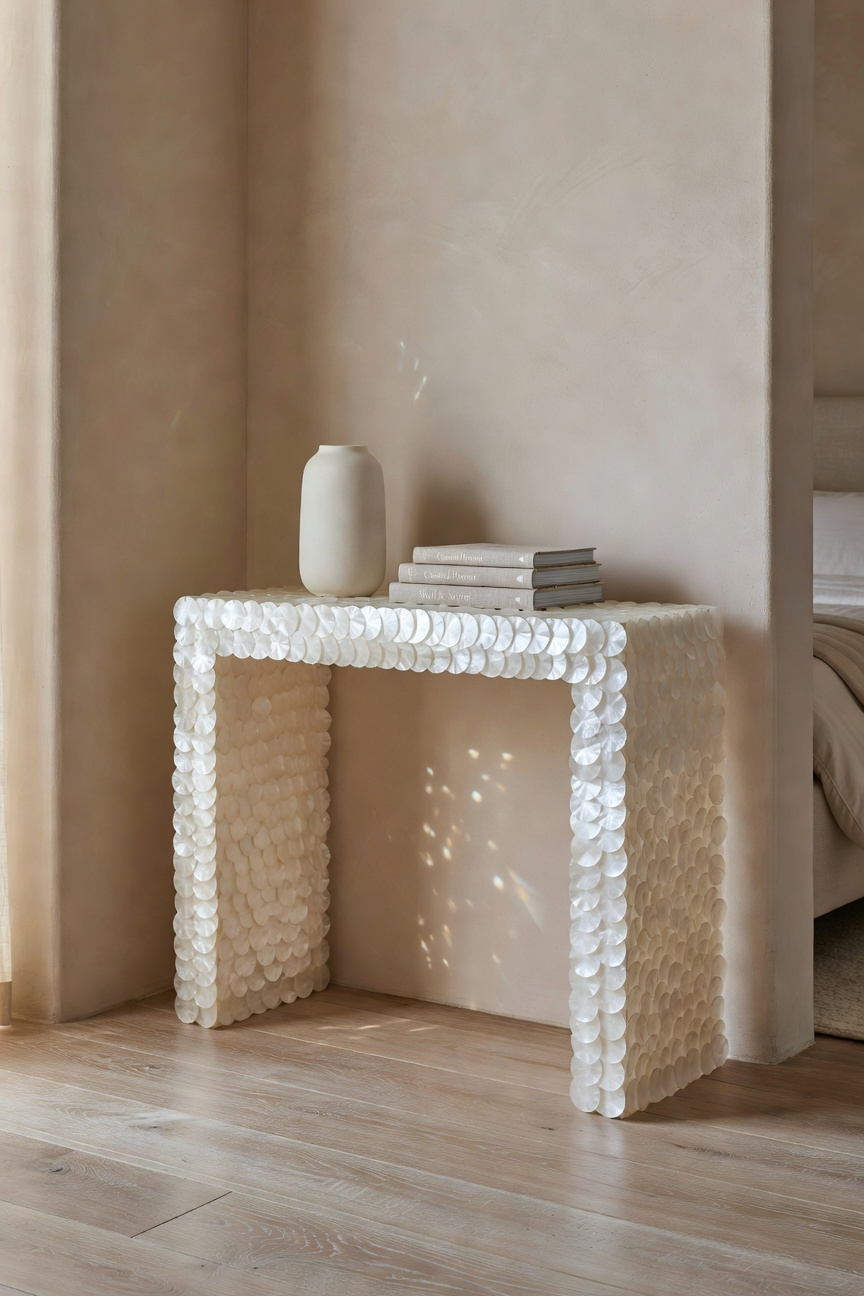
Artisans meticulously hand-cut and tessellate hundreds of these fragile shells. Next, the mosaic is sanded smooth and sealed with matte resin. Therefore, the delicate surface remains incredibly practical for everyday bedroom use. Designers frequently treat these luminous consoles as a crucial third layer. Particularly, pairing them with darker driftwood legs naturally anchors the piece. This material contrast prevents the shimmer from feeling overly kitschy. Additionally, hanging a matching mirror above creates a brilliant lightbox effect.
Ethically, these windowpane oyster shells are a sustainable seafood byproduct. Thus, using them in furniture supports regional marine conservation efforts. A Capiz console introduces organic luxury to contemporary coastal homes. Instead of cold metal, you gain a timeless, pearlescent elegance.
17. The Canvas-Sling Lounge Chair: Integrating Sophisticated Vintage Beach Pavilion Elements
The canvas-sling chair transcends basic outdoor patio furniture. Specifically, it serves as a transitional piece bridging rugged seaside utility with interior high-design. This sophisticated aesthetic stems from 19th-century British Campaign furniture. Later, designer Kaare Klint revolutionized the style with a glueless, tension-based frame. The exposed mortise and tenon joinery provides remarkable visual lightness. This un-fixed architecture echoes the skeletal beauty of vintage pier pavilions. As a result, the transparent profile makes a coastal bedroom feel instantly larger.
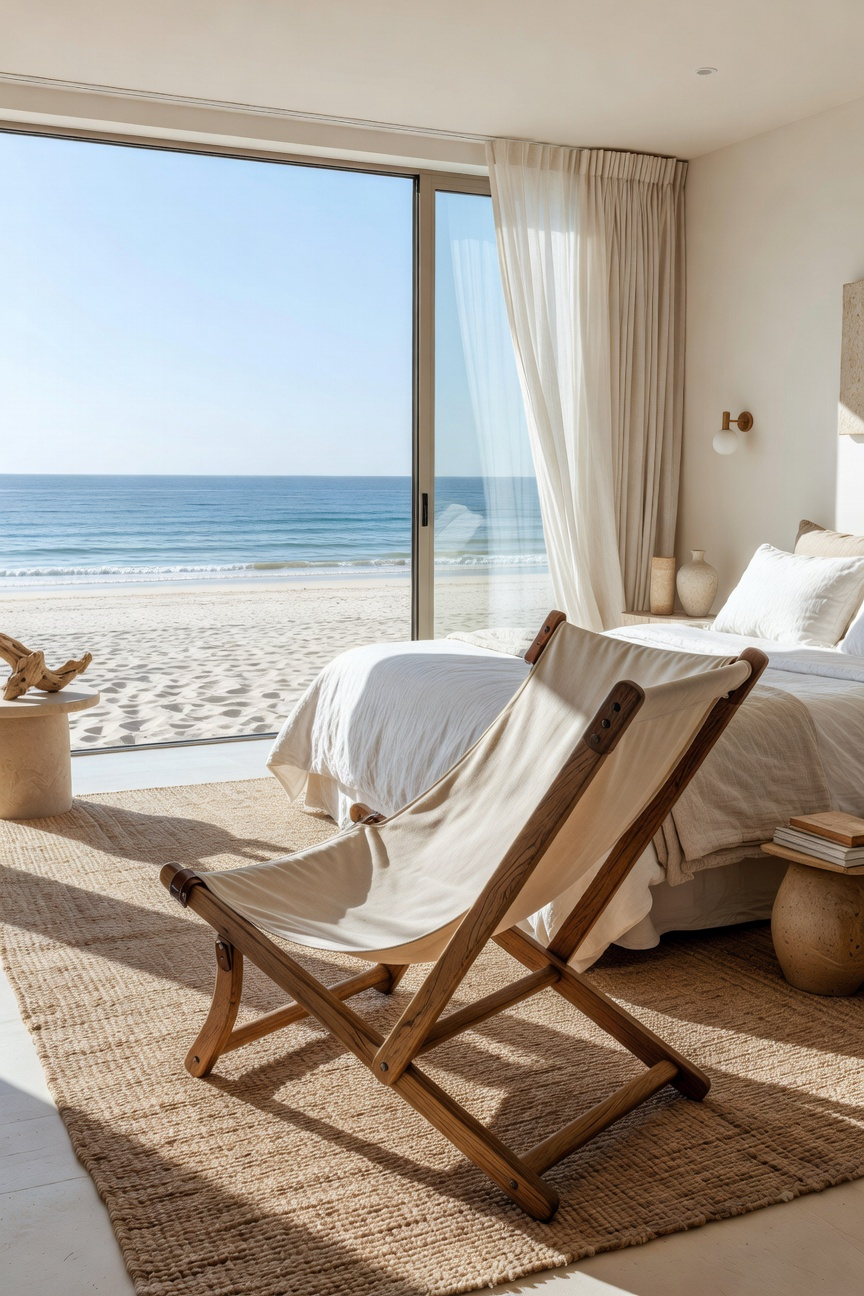
Authentic vintage-style slings utilize Grade-A teak rather than cheap sapwood. The wood’s high natural oil content prevents the frame from feeling dry or splintery. Meanwhile, bespoke acrylic canvas mimics the toothy texture of 1920s cotton duck. Importantly, this engineered fabric resists coastal salt-air rot while remaining highly breathable. Marine-grade brass hardware catches soft morning light to provide a subtle nautical glint. Thus, a room avoids the cliché of overt anchor motifs entirely. Sitting in the chair offers a suspended, body-contouring cradle experience. Indeed, the heavy canvas yields a muffled crunch that signals restful relaxation.
In practice, designers often utilize these chairs to create statement negative space. Styling with muted 1920s awning stripes honors the canvas-topped beach huts of Deauville. Finally, pairing the chair with a chunky knit wool throw anchors it indoors. This juxtaposition of beach utility and bedroom softness creates sophisticated design tension.
18. Sand-Friendly Jute Rug Integration: Grounding Your Furniture Layout on Durable, Coastal Surfaces
In coastal bedrooms, integrating a jute rug solves unique environmental challenges. Specifically, this natural material acts as a highly functional sand sieve. Synthetic high-pile rugs aggressively trap abrasive sand. Conversely, jute’s loose, porous weave allows coarse sand to drop straight through to the floor below. Therefore, you must pair it with a breathable rubber rug pad. This addition prevents filtered sand from grinding into the subfloor like coarse sandpaper.
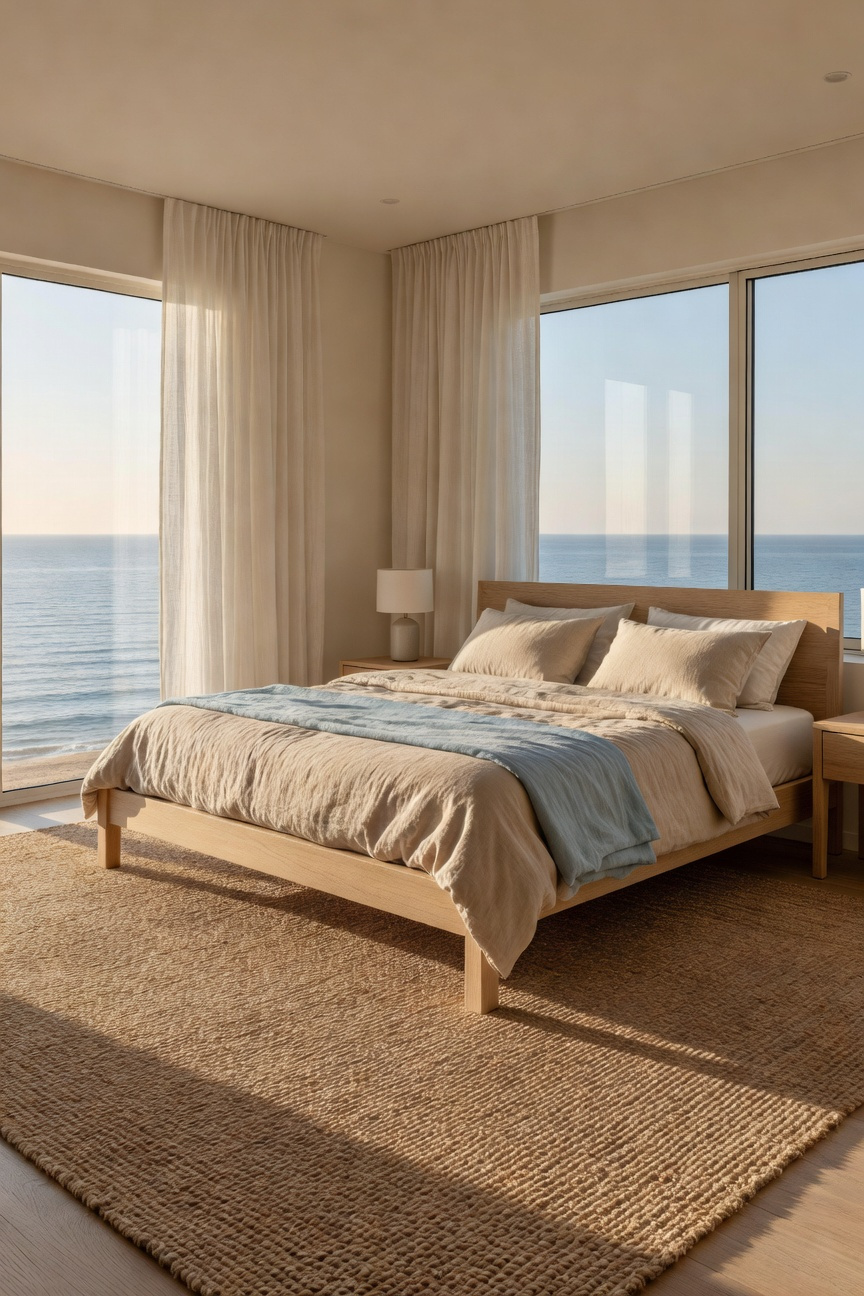
Historically, this resilient golden fiber was woven into durable maritime sails. Visually, its silky luster beautifully mimics authentic sun-bleached seagrass. A chunky jute weave effectively anchors light-colored coastal furniture. Designers frequently struggle with the airy, ungrounded feel of pale rattan and white-washed oak furniture. Consequently, jute provides essential visual weight to firmly balance the room.
Ensure the bottom two-thirds of your bed rests directly on the textile. Ideally, the rug should extend roughly two feet beyond the bedframe. Thus, your first morning step meets a remarkably soft, massage-like surface. Interestingly, jute feels dramatically softer on bare feet than scratchy agave sisal.
These dense braided rugs offer excellent ambient acoustic dampening. Specifically, they absorb sharp coastal echoes in high-ceilinged seaside rooms. Additionally, these breathable fibers naturally regulate temperature while safely absorbing excess moisture in humid micro-climates. Layering a plush organic cotton rug over this durable jute base works best. This technique perfectly balances rugged maritime history with sophisticated boutique luxury.
Frequently Asked Questions
What materials are best for luxury coastal bedroom furniture?
The most durable and sophisticated materials for seaside environments are naturally oily hardwoods like teak and white oak. These woods resist humidity without warping. Additionally, organic fibers such as Belgian linen, abaca, and woven seagrass are ideal. Specifically, they offer superior breathability and a tactile, maritime-inspired texture.
How do I achieve a coastal aesthetic without using kitschy decor?
Move away from literal nautical motifs like anchors and ship wheels. Instead, focus on “maritime materiality.” This means using textures that evoke the shoreline. Examples include wire-brushed woods with a silver-gray patina, matte plaster finishes, and neutral sand-toned textiles. Therefore, a curated mix of high-quality pieces is far more sophisticated than a matching bedroom set.
Is rattan furniture durable enough for a permanent coastal home?
Yes, high-quality natural rattan is exceptionally resilient in coastal climates. Its porous cellular structure allows for continuous airflow. This prevents the “sticky” feeling of synthetic materials. Regular maintenance helps significantly. For instance, a monthly wipe with a damp cloth removes salt residue. Consequently, the honey-toned fibers will age gracefully into a sun-kissed amber patina.
Conclusion: Synthesizing the Modern Coastal Philosophy for a Timeless, Permanent Vacation Retreat
The modern coastal bedroom transcends literal nautical themes of the past. It becomes a deeply sensory sanctuary. You should no longer view coastal design as a collection of anchors and stripes. Instead, true seaside living relies on material honesty and psychological restoration. By selecting curated coastal bedroom furniture, you transform a simple sleeping area into a timeless haven. Specifically, using Grade-A teak and slipcovered linens makes a massive difference. These elements lower cortisol levels by mimicking the tranquility of water. Consequently, your retreat shifts from a basic room to a permanent vacation.
Naturally, this sophisticated philosophy ensures your home will age gracefully into the future. Indeed, honed and matte finishes will effortlessly diffuse harsh sunlight for decades. Next, low-profile furniture guarantees unbroken sightlines to your natural surroundings. You can enjoy a restorative biophilic haven every single morning. Begin your transformation by auditing your current bedroom collection. Replace any high-gloss finishes or literal beach motifs with artisanal craftsmanship. Instead, introduce tactile materials like cerused oak or woven abaca to ground your space. Finally, your bedroom will capture the timeless essence of modern seaside living.