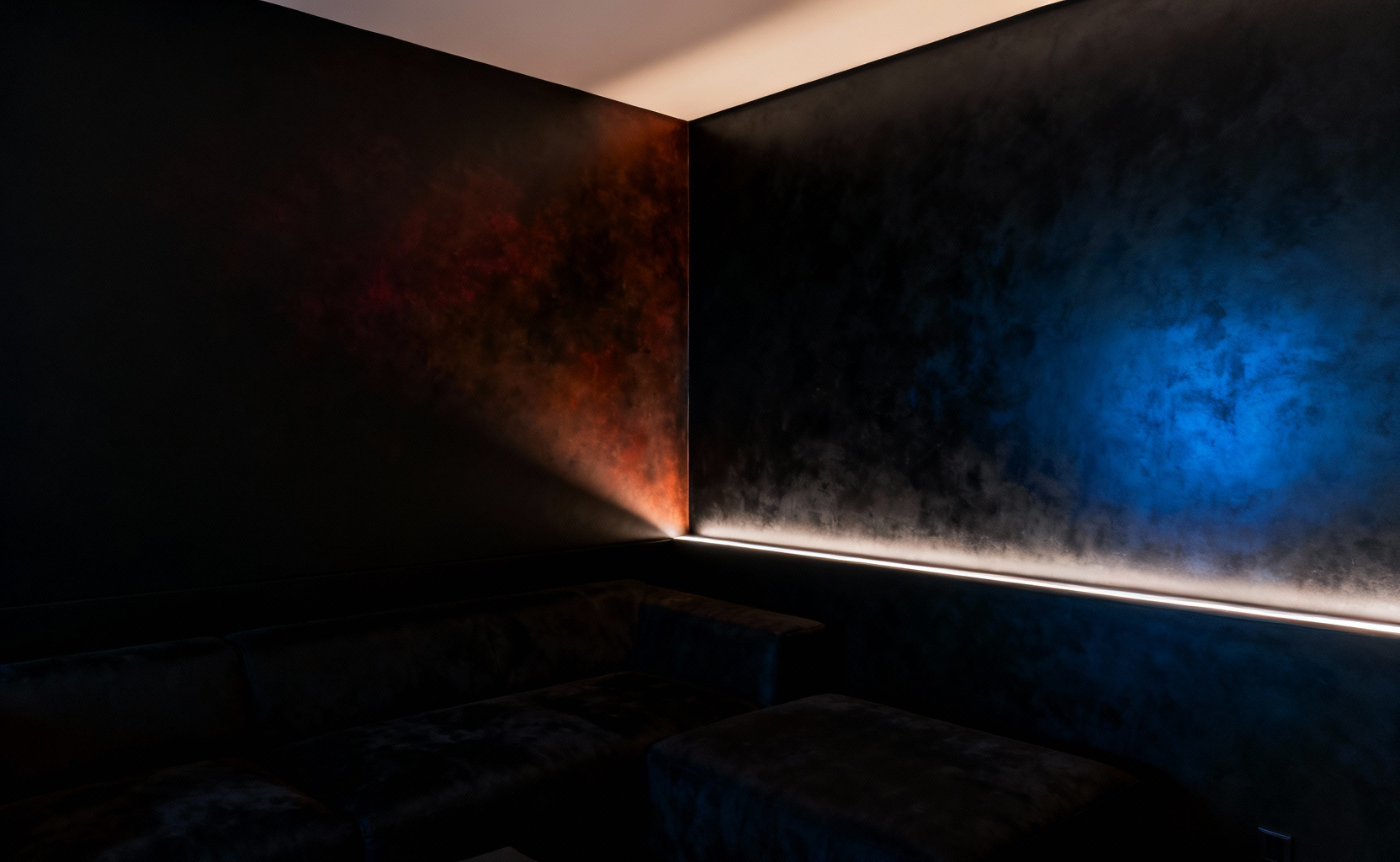

Most people believe black walls will shrink a room, swallowing it whole into an oppressive, cavernous gloom. Interior design blogs repeat this caution as gospel. Here is the secret they are not telling you: From my years of professional experience in gothic contemporary fusion, breathing life into shadowed spaces, I have learned that this is a profound misunderstanding of darkness. Black does not shrink a room; it erases its boundaries. It creates an illusion of infinite depth, a velvety backdrop against which life—in all its color and texture—is thrown into stunning relief.
These 20 black living room ideas are not a collection of mere tips; they are an invitation to see differently. They are a progression, a journey into the heart of dramatic design, moving from the foundational bedrock to the masterful integration of a singular, personal aesthetic. We will begin with the essential alchemy of pigment and texture, then progress to the artful sculpting of light and shadow. We will ascend to advanced strategies of architectural cohesion before, at last, arriving at the pinnacle: crafting a space that is not just designed, but curated—a personal mythology written in shades of night.
Forget the hollow warnings. The truth is that a black living room, when artfully conceived, becomes a sanctuary. It is an embrace, a quiet stage for contemplation, and the most sophisticated canvas imaginable. Come, step into the shadow. I will show you its beauty.
Essential Foundations of Black Opulence (Part 1)
Before one can command the symphony of shadow, one must first learn the notes. The true mastery of a dark aesthetic begins not with a grand gesture, but with an intimate understanding of its core components. Here, we lay the elemental groundwork, forging a foundation both formidable and deeply resonant.
1. Embrace the True Pigment: Understanding Undertones in Black Paint
Let us dispel the first and most common myth: black is not a singular, absolute color. It is a world of them, each whispering a different story. To treat it as a monolithic void is the first step toward a flat, lifeless room. A true understanding of black living room ideas begins with decoding its soul—its undertones.
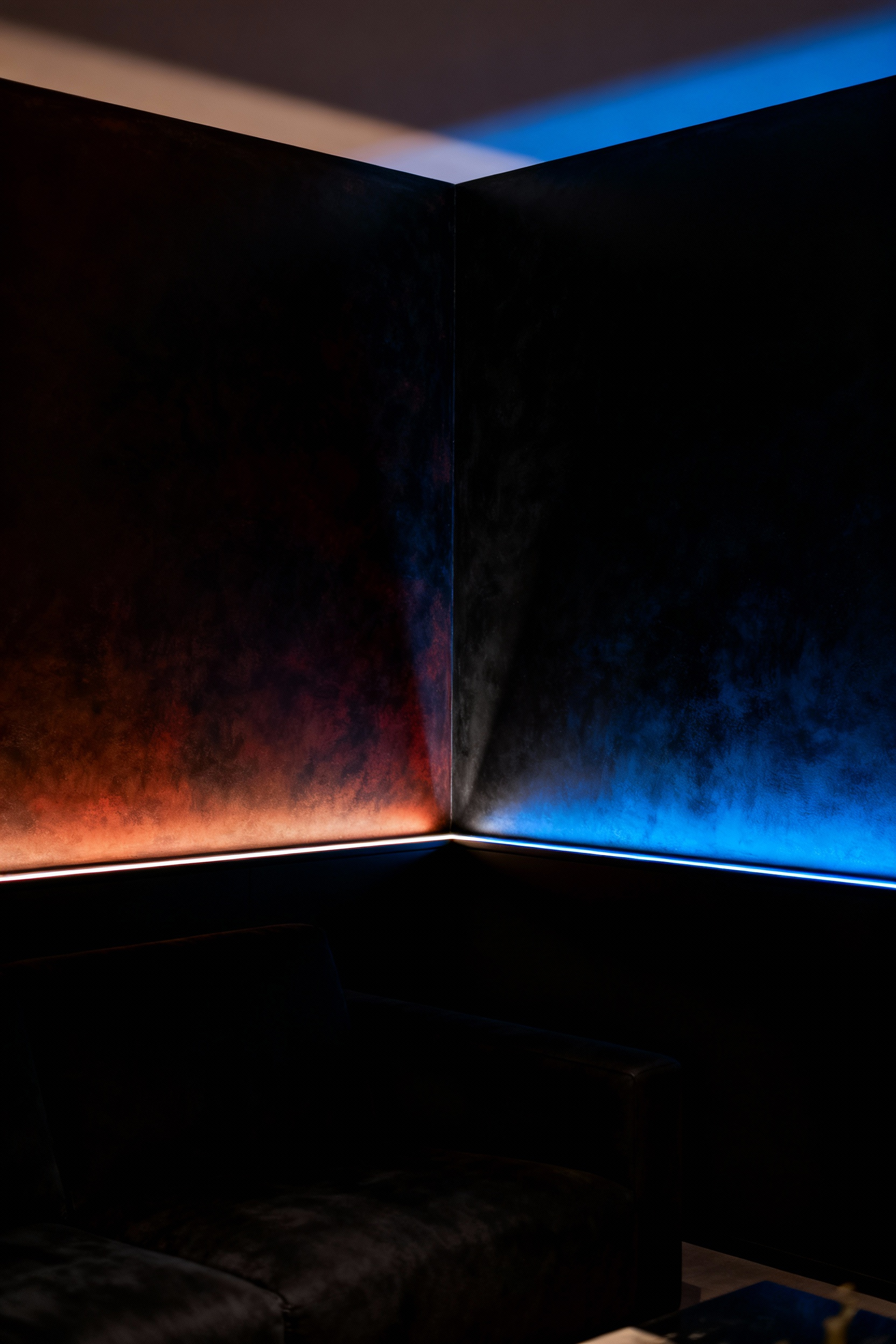
Is your black born of a midnight sky, with the ghost of blue or violet hidden in its depths? This cool, crisp character lends itself to a modern, almost crystalline gothic sensibility. Or is it warmed by the embers of a forgotten hearth, a black infused with brown or a deep, clotted red? This kind of black offers a softer, more ancient embrace, perfectly suited for a space filled with worn leather and the scent of old books. In my work with gothic contemporary fusion, I’ve seen clients have an almost visceral reaction to this choice; a blue-black feels like intellect and reserve, while a brown-black feels like history and comfort. This decision alone will dictate the entire emotional temperature of your sanctuary.
2. Cultivate Tactile Intrigue: Layering Textures for Depth and Warmth
A living room rendered in a single, unvarying black finish is not a sanctuary; it’s a photograph waiting to be developed. Without texture, darkness lacks dimension. This is where your space comes alive—in the interplay of surfaces, a feast for the hands as much as the eyes.
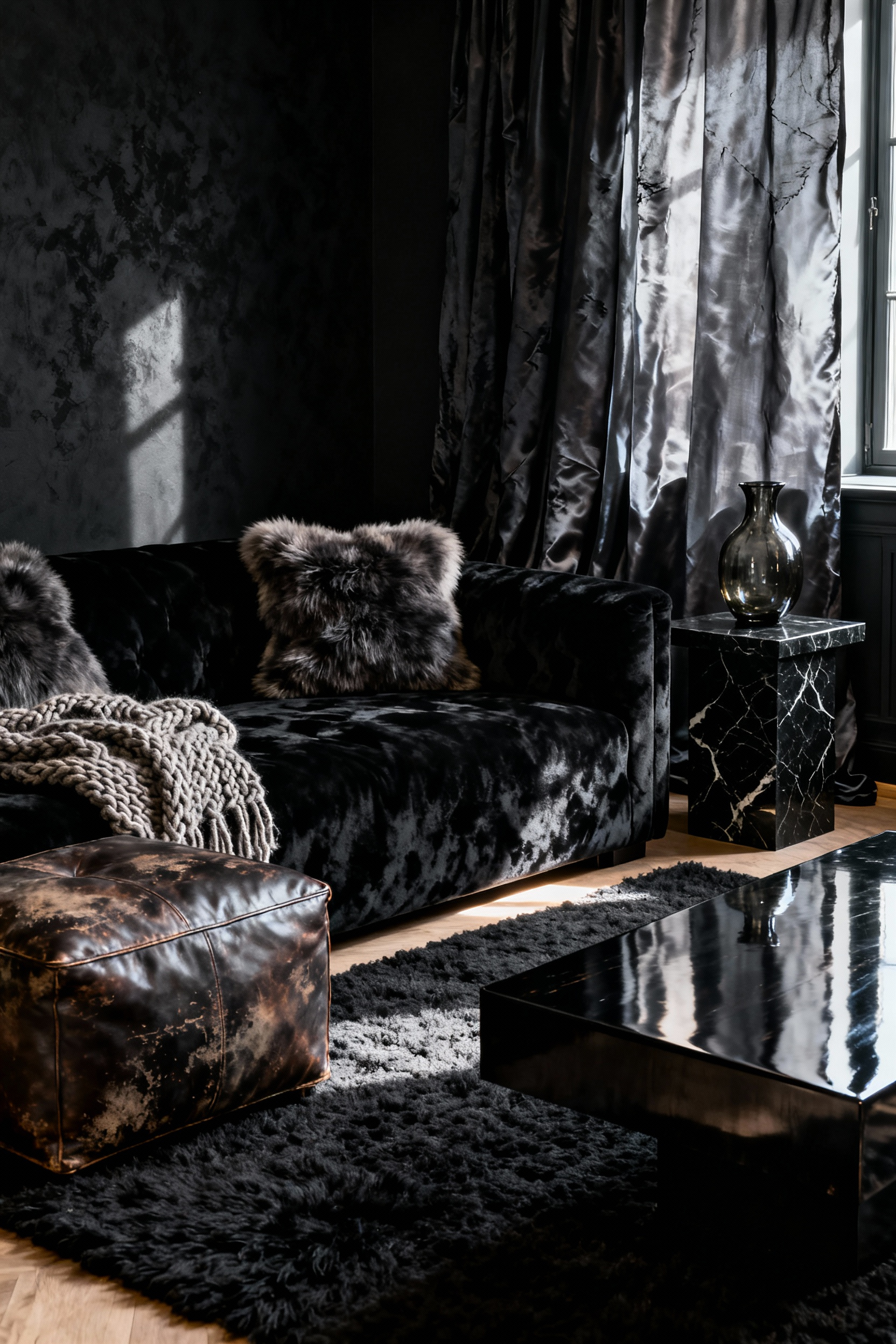
Begin by imagining a light-devouring velvet sofa, its deep pile creating valleys of pure shadow. Now, throw across it a raw silk cushion with a cool, lunar sheen. Place it upon a coarse, hand-knotted wool rug and beside it, a cold, smooth marble table. Each surface tells the light a different story. What I tell my clients and readers is that a monochromatic room is the perfect stage for a tactile narrative. From my work in dark academia aesthetics, I know that this sensory layering—the feel of worn book spines, the cool kiss of a brass lamp, the warmth of a wool throw—is what transforms a room from a set into a living, breathing space.
3. Anchor the Room: Selecting a Statement Black Sofa
Within the shadowed chamber of your living room, the sofa is not mere seating. It is the protagonist. It is the gravitational center, the silent, brooding heart around which every other element will orbit. Its selection is therefore not a matter of function, but of character.
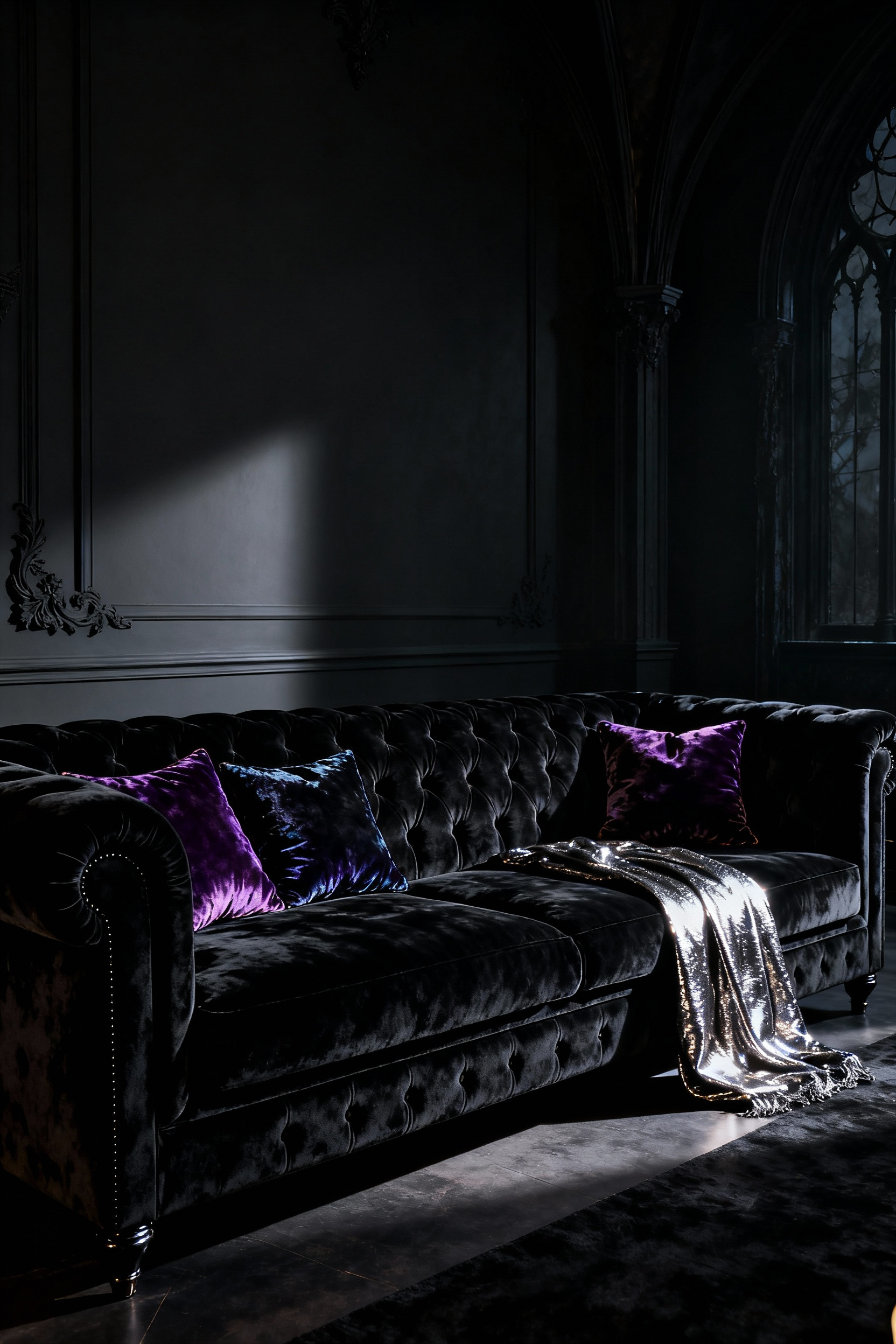
A black sofa immediately establishes a tone of unapologetic sophistication. But what story will it tell? A clean-lined silhouette in taut black leather speaks of modern discipline and gothic severity. A sprawling, deep-buttoned chesterfield in sumptuous black velvet, however, speaks of decadent romanticism and long, candlelit conversations. I’ve learned that the right piece becomes more than furniture; it becomes an anchor for the room’s entire mood, a dark island of comfort in an elegant sea. Don’t be afraid of its scale—a commanding black sofa has the power to ground the space, creating an irresistible magnetic pull.
4. Reflect and Expand: Strategic Placement of Mirrored Accents
In a room that courts the shadows, mirrors are not tools of vanity. They are portals. They are slivers of borrowed light, instruments of illusion that can carve out space and multiply beauty. Placing them is a strategic, almost magical, act.
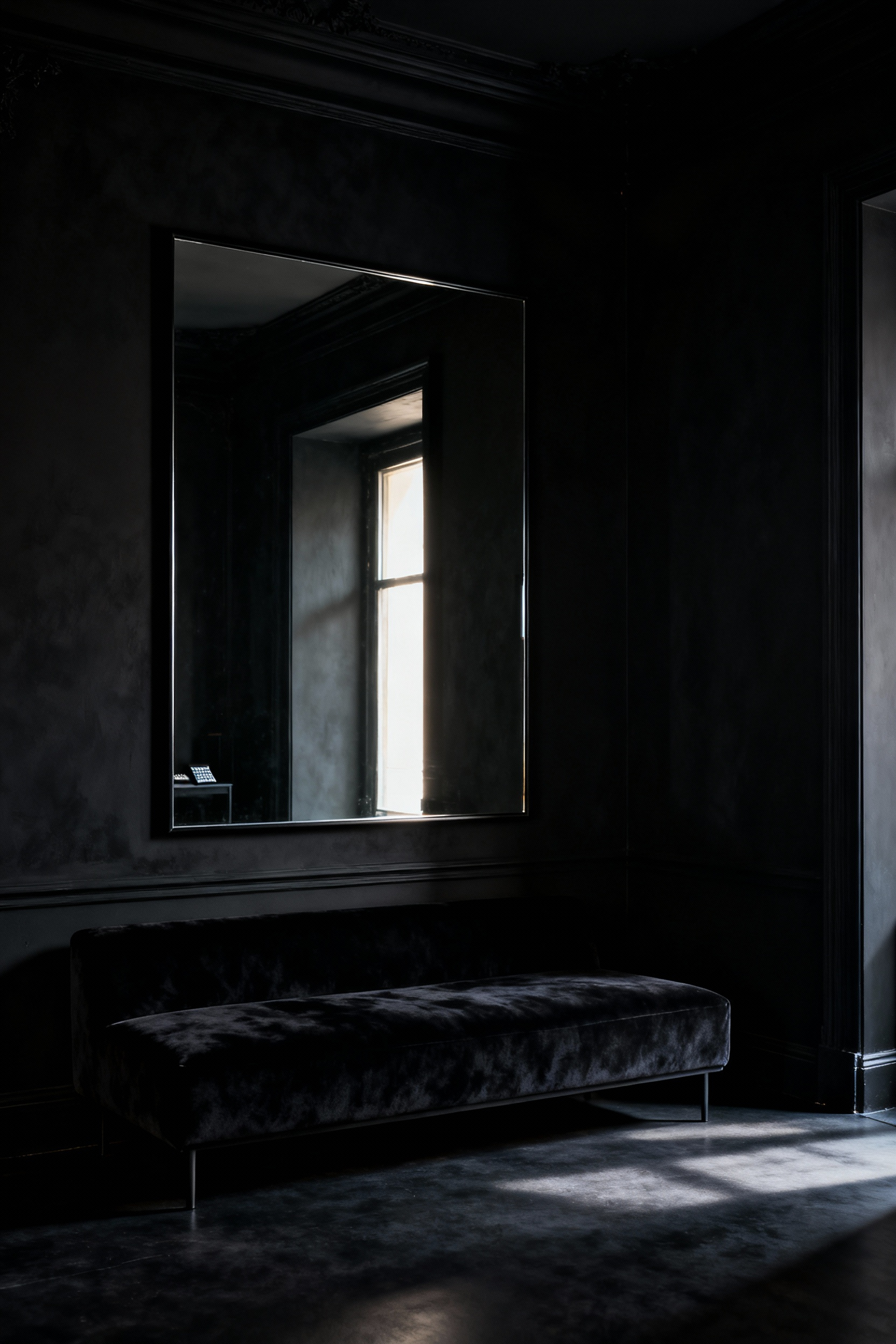
The most obvious function is to seize light from a window and cast it back into the room’s depths. But think beyond the obvious. A large, gilt-framed mirror leaning against a wall adds a touch of baroque grandeur, its ornate form a brilliant contrast to the minimalist darkness. A smoked or antiqued mirror, however, offers a more ghostly reflection, deepening the mystery and adding a sense of timeworn elegance. I’ve seen this play out when a series of small, mismatched antique mirrors are arranged as a gallery wall; they don’t reflect a clear image, but rather a fractured, shimmering impression of the room, adding an exquisite layer of intrigue and light.
Essential Foundations of Black Opulence (Part 2)
With our foundation set in pigment and form, we now turn to the most ethereal and powerful tool in our arsenal: light. In a black living room, light is not a utility; it is a chisel. It is the force that sculpts the void, revealing texture, creating mood, and bringing the darkness to life.
5. Illuminate the Abyss: Crafting Atmospheric Lighting Schemes
To truly command the darkness, you must learn to paint with light. A single, glaring overhead fixture is the enemy of atmosphere. Instead, think in layers, as a theatrical designer would, creating pools of luminescence and vast, intriguing chasms of deep shadow. Every black living room requires this trinity: ambient, task, and accent lighting.
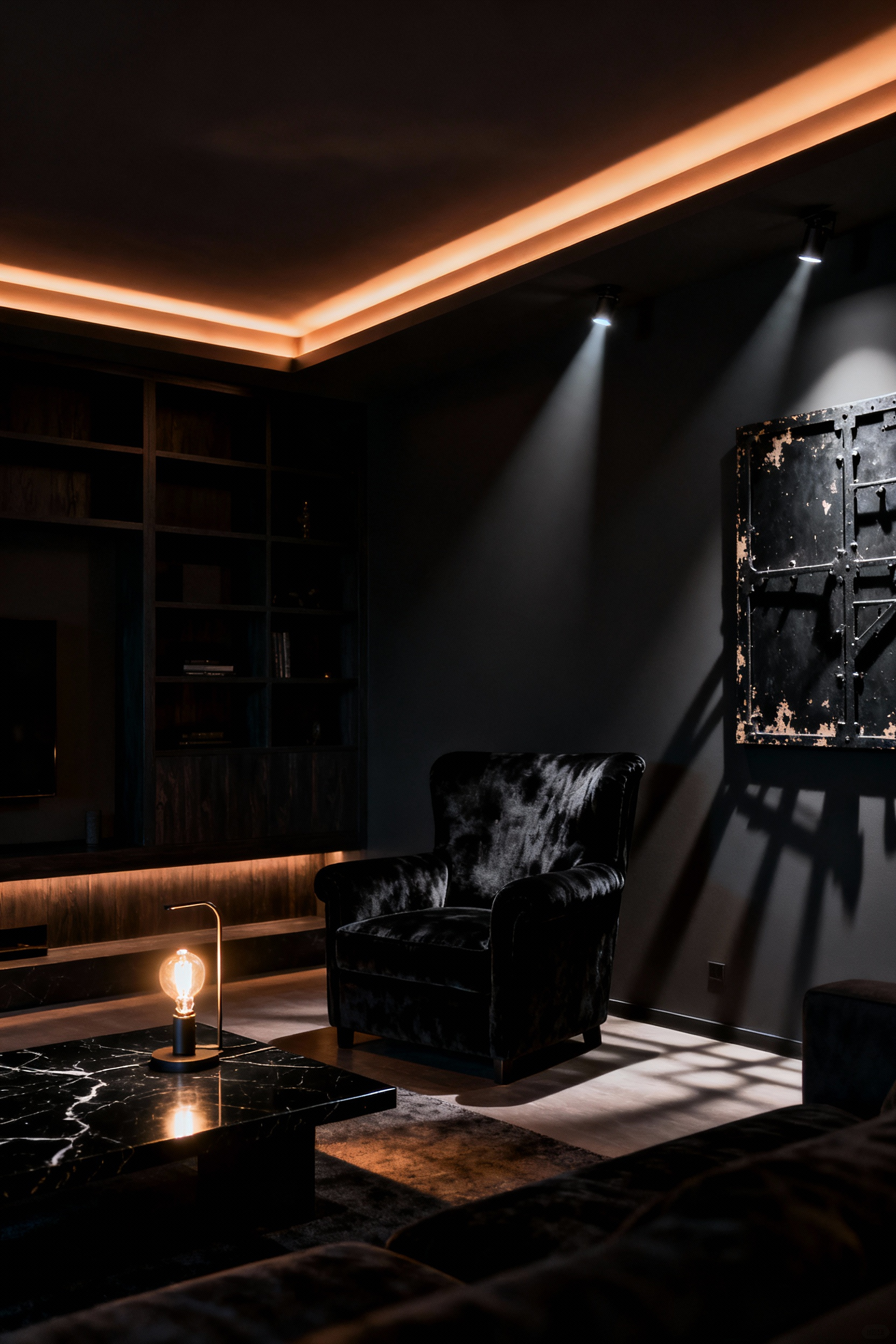
Ambient light sets the base mood, a general, diffused glow. But it’s the other two layers where the real artistry happens. Task lighting carves out purpose—a focused, golden beam over a leather reading chair, a soft glow illuminating a writing desk. Accent lighting is pure drama; a single, sharp spotlight catching the gleam of a bronze sculpture or washing across a textured wall to reveal its subtle landscape. In my professional experience with dramatic lighting design, dimmers are not an option; they are an absolute necessity. They give you the power to shift the room’s soul from a bright, social stage to a hushed, contemplative retreat with the slide of a finger.
Intermediate Artistry: Sculpting Shadows and Light (Part 1)
Now that the foundations are laid, our artistry deepens. We move from broad strokes to deliberate, surgical choices. Here, we learn to sculpt the shadows, to wield accents with precision, and to transform walls from mere backdrops into powerful narrative canvases. This is the heart of creating a space that feels curated, not just decorated.
6. The Alluring Enigma: Incorporating Black Feature Walls
For those not yet ready to plunge the entire room into darkness, the black feature wall is a powerful first step—a declaration of intent. It is a panel of pure drama. A black wall acts as a void, absorbing light and pushing everything placed before it into glorious, high-contrast relief. A painting, a sculpture, even a simple vase of flowers becomes an object of intense focus, its colors and form singing with a vibrancy they could never possess against a paler background.
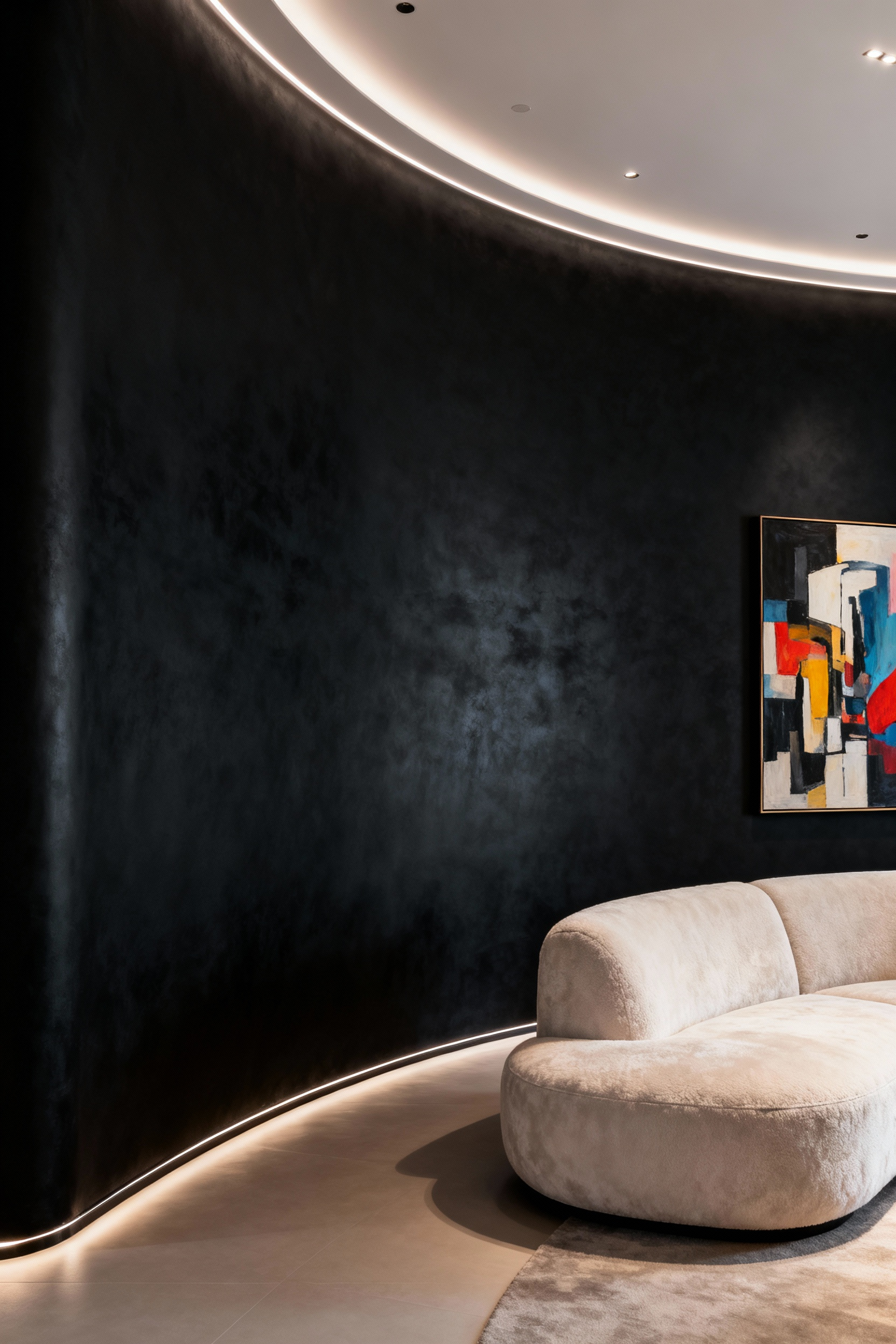
And this is where it gets interesting. Don’t think of it as just a painted rectangle. Consider a feature wall clad in black-stained wood planks, introducing a rustic, organic texture. Or perhaps a wallpaper with a subtle, velvety black damask pattern that reveals itself only in certain light, a secret for the observant eye. I often guide clients to choose the wall that serves as the room’s natural focal point—the one behind the sofa or fireplace—to instantly anchor the entire design scheme with an undeniable sense of drama.
7. Subtle Interruptions: Introducing Juxtaposing Accent Hues with Precision
An entirely black room holds a certain power, but a single, perfectly chosen accent color can elevate it from solemn to sublime. This is not about disruption; it is about punctuation. Think of a rich jewel tone—an emerald green, a deep sapphire, or a blood-red ruby—emerging from the darkness. A velvet cushion, a single art glass vase, or the lacquered surface of a small box becomes an intense focal point, its color saturated and deepened by the surrounding black.
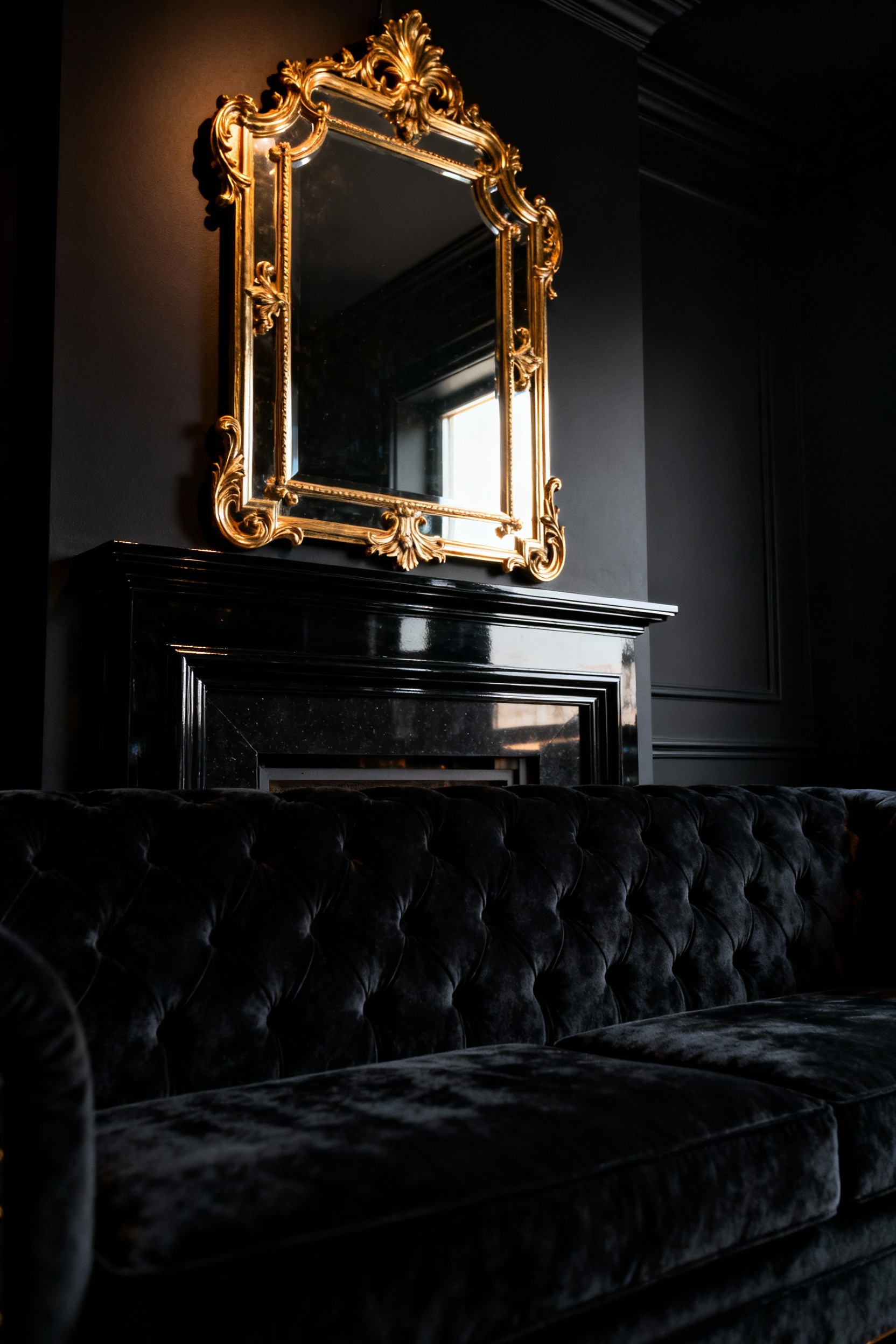
But accents need not scream. What really gets me is the quiet power of metallics. The warm, soft gleam of aged brass or burnished gold offers a flicker of candlelight warmth, connecting the space to a sense of history and opulence. Polished chrome or silver, by contrast, can feel cooler, more architectural. The key is restraint. These are not broad strokes of color, but whispers. They are subtle interruptions that prevent the eye from becoming complacent, ensuring the darkness remains dynamic and alive.
8. Curate a Gallery: Showcasing Art in a Monochromatic Setting
A black wall is the greatest gift you can give a piece of art. Against the profound, silent canvas of black, colors become electric. Whites appear impossibly bright. Textures are rendered with almost hyper-realistic detail. The frame—whether it’s an ornate, gilded antique or a minimalist black strip—becomes part of the composition, sharply defined against the void.
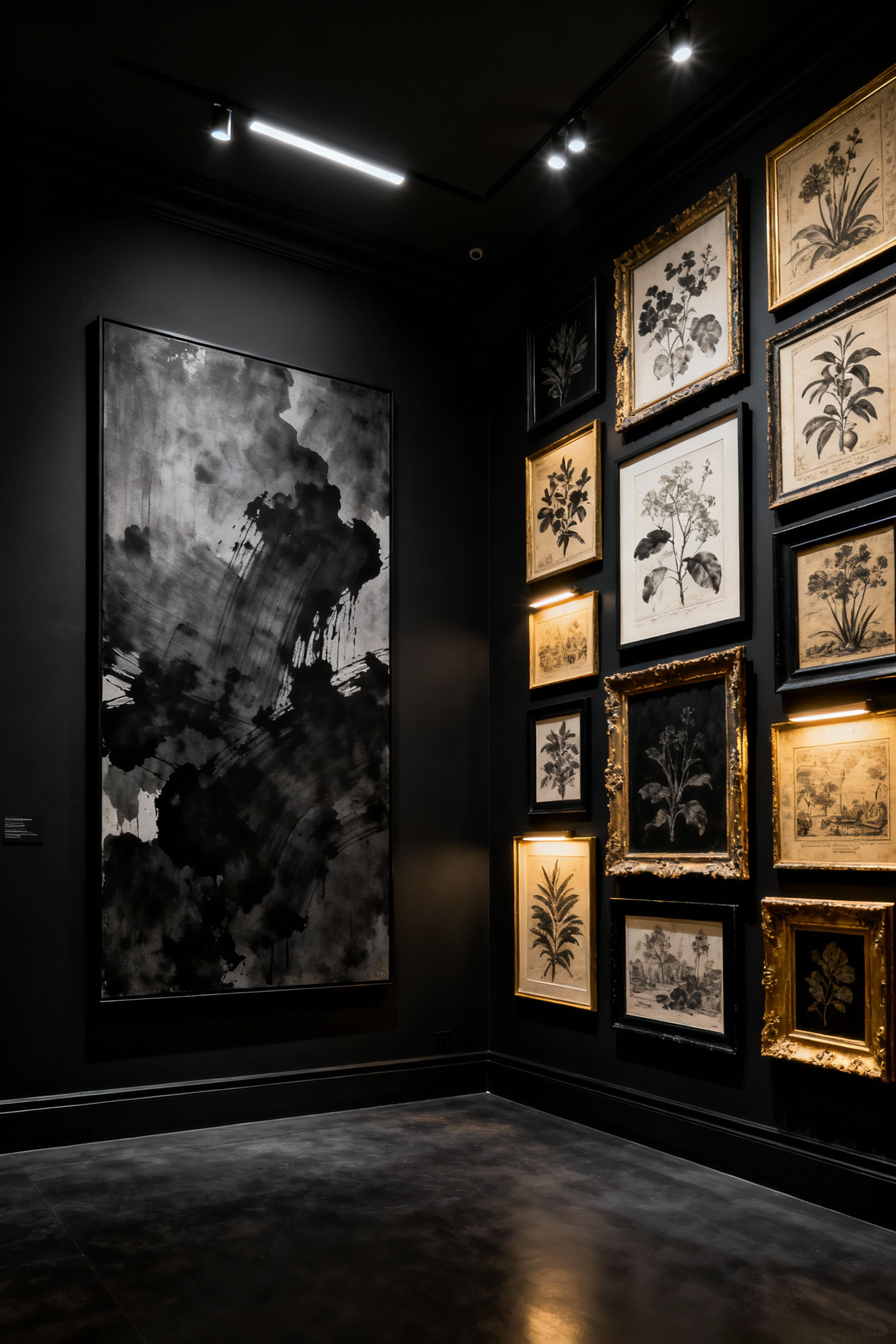
This transforms your living room from a simple domestic space into a personal gallery. Think beyond a single, centered painting. A collection of black-and-white photographs gains an incredible narrative power and poignancy against a dark wall. Antique etchings or botanical prints seem to float, their delicate lines etched against the night. Years of gothic contemporary fusion taught me this: don’t be afraid to let a single, massive abstract piece dominate a wall, its chaotic energy contained and amplified by the disciplined darkness surrounding it.
9. The Velvet Embrace: Harnessing Luxurious Fabric Textures
We return to texture, but now with a more focused intent. If your room is a dark forest, luxurious fabrics are the moss and ferns that invite you to touch and stay. Velvet is the queen of these textures. Its deep, soft pile drinks in the light, creating an effect of impossible richness and depth. A velvet sofa, ottoman, or heavy drapes immediately introduce a sense of gothic romance and undeniable comfort.
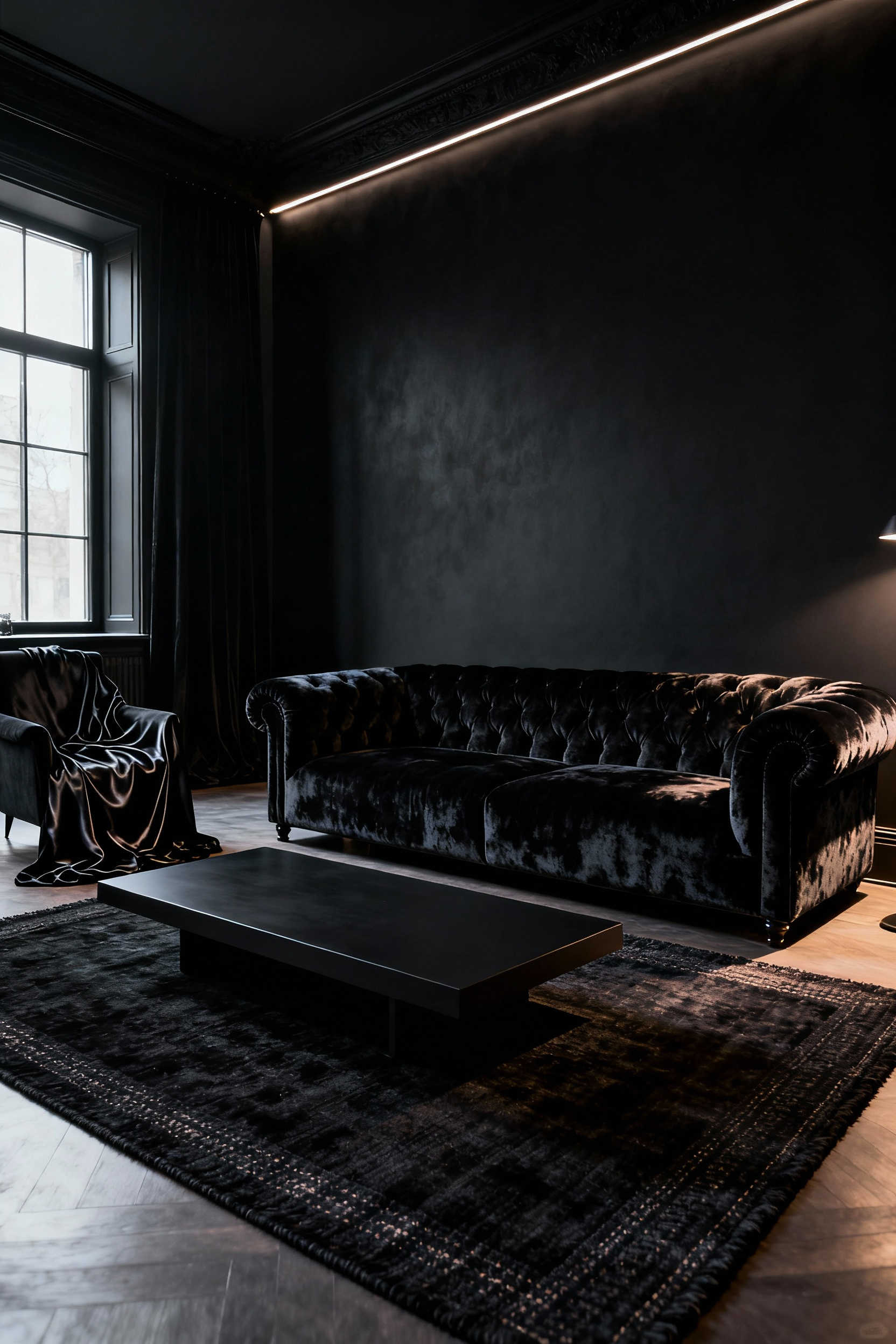
But the symphony doesn’t end with velvet. Imagine the cool, liquid slide of black satin pillows. The nubby, reassuring roughness of a black bouclé armchair. The unapologetic sheen of black leather. Each fabric contributes its own character, its own way of playing with the light. I learned this when designing a library for a client: layering these dark, rich textiles is what gave the room its acoustic properties—a hushed, enveloping quiet that made it the perfect sanctuary for thought.
Intermediate Artistry: Sculpting Shadows and Light (Part 2)
Having mastered color and texture, we now consider form. In a black room, furniture is not simply furniture; it becomes sculpture. Each silhouette is carved out of the darkness, its lines and curves defining the very character of the space. This is where we learn to use the shape of things to tell our story.
10. Floating Elegance: Choosing the Right Black Furniture Silhouettes
In the depths of a black living room, solid, blocky furniture can feel heavy, even oppressive. The secret to maintaining an air of sophistication is to choose silhouettes that feel light, that seem to float. This is achieved through an attention to form, particularly the legs and base of your pieces.
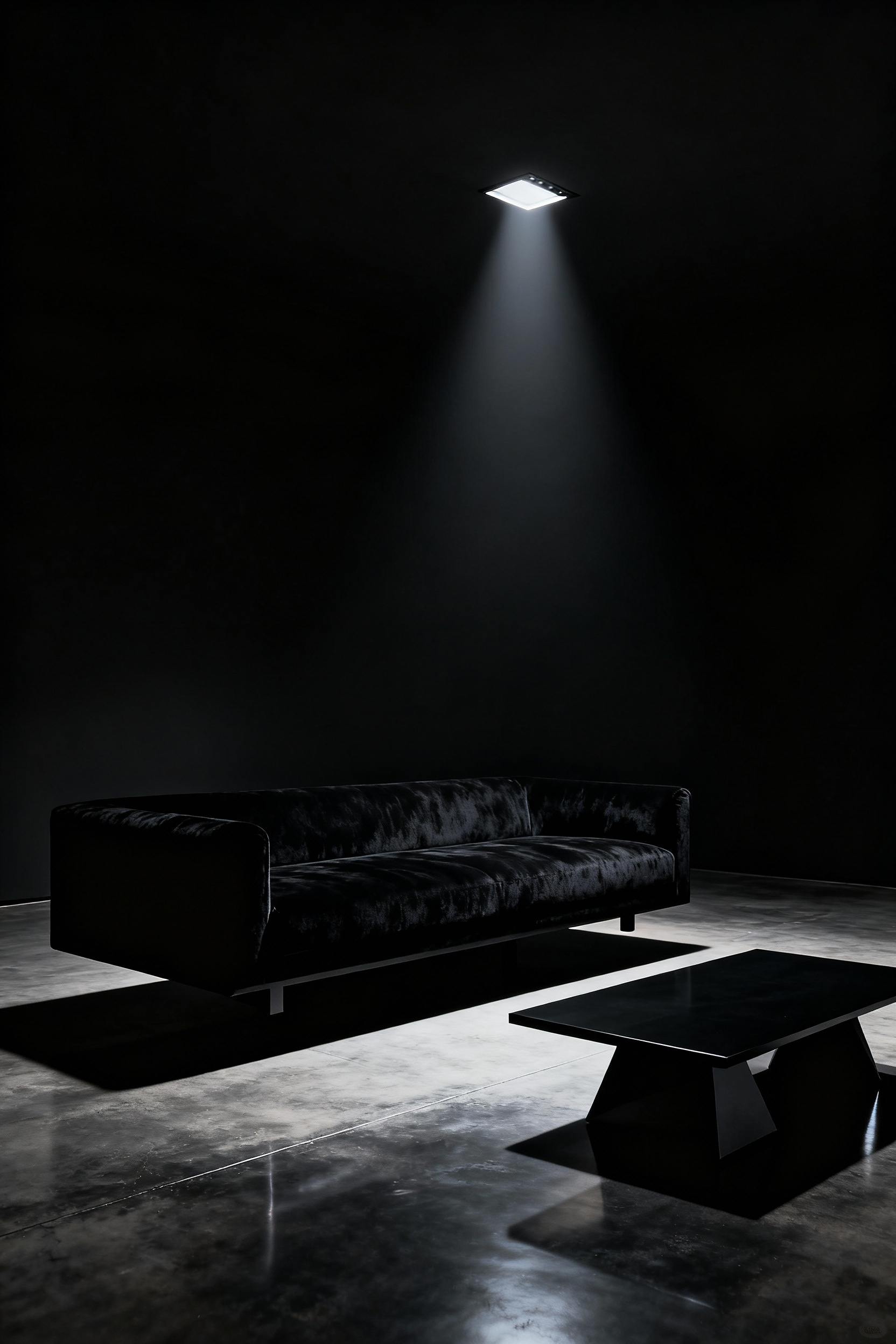
Think of sofas and armchairs raised on slender, almost skeletal legs—whether of dark wood or metal. This simple act of lifting the piece off the floor creates negative space underneath, allowing the darkness to flow and breathe. This gives the illusion of more space and a sense of ethereal elegance. From my work in dark academia aesthetics, I’ve found that even substantial pieces, like a heavy bookshelf, feel lighter when their lines are clean and their form is articulated, rather than simply being a solid mass. It’s a subtle but crucial distinction between a room that feels grounded and one that feels weighed down.
Advanced Strategies: Orchestrating Dramatic Cohesion (Part 1)
We now ascend to a more architectural understanding. At this stage, we move beyond decorating a room and begin to define its very soul. These advanced strategies involve manipulating the structural elements and foundational planes of the space to create a truly immersive and cohesive dramatic experience.
11. Beyond Flat Walls: Employing Architectural Details in Black
Painting your walls black is the beginning. Sculpting them is the next level. Architectural details like crown molding, baseboards, picture rails, and door frames are often ignored or painted a contrasting white. Painting them the same black as the walls is a transformative act.
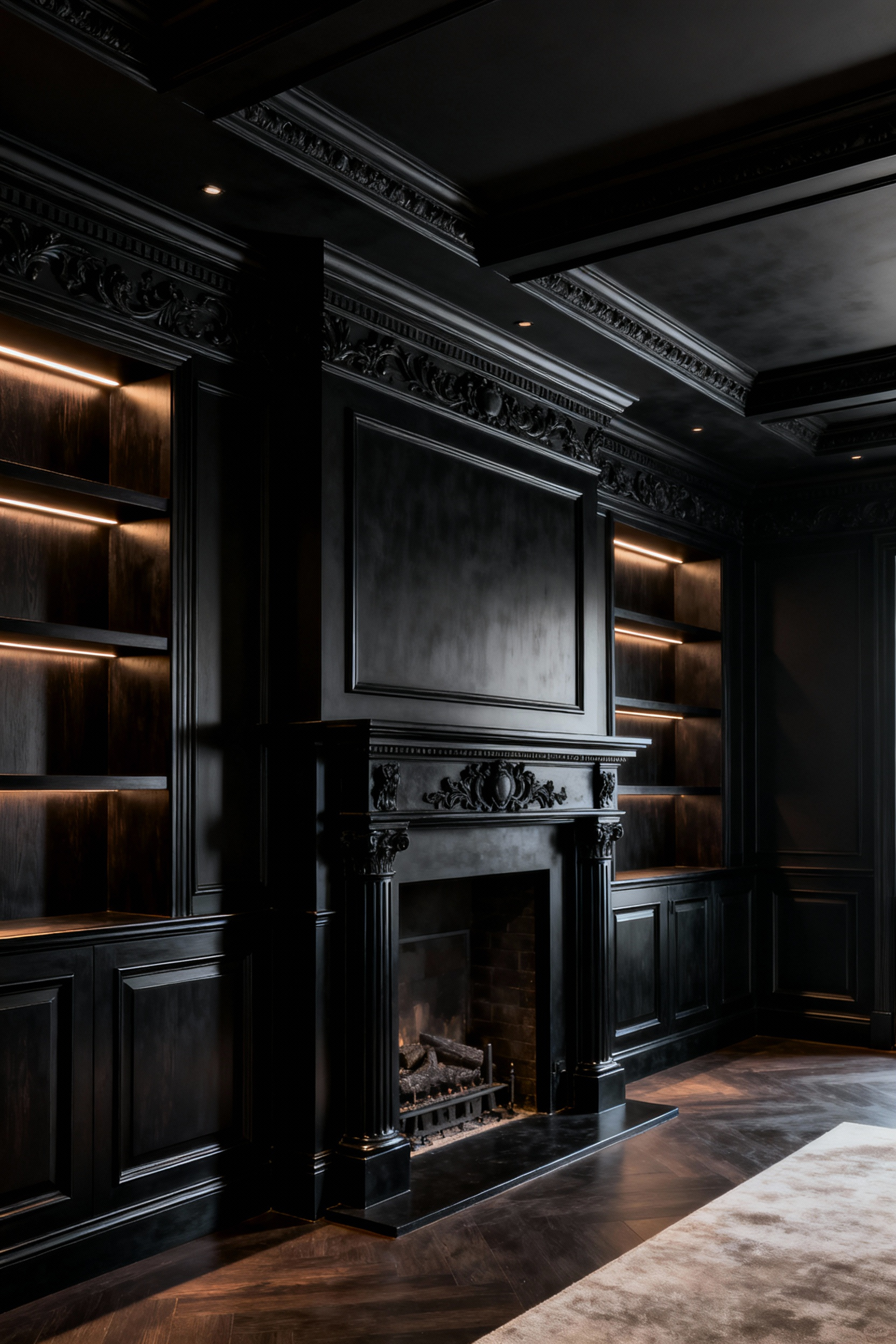
Suddenly, the hard boundaries of the room dissolve. The space feels taller, more seamless, an unbroken cocoon of darkness. For a subtle, sophisticated effect, play with sheen: a matte black wall with a high-gloss black trim. The detail is still there, but it reveals itself through the way it catches the light—a secret only visible from certain angles. I’ve seen this work best when you want to create an all-encompassing, immersive world, where the room itself feels like a single, exquisitely carved object.
12. Grounding the Grandeur: Mastering Black Flooring Choices
The floor is the anchor of your room, its foundation both literally and aesthetically. To choose a black floor is a bold, definitive statement. It creates an endless, uninterrupted plane of darkness from which everything else can rise. Polished black concrete offers a sleek, industrial edge. Dark, ebonized wood planks feel historic and solid. Black slate tiles provide an earthy, textured foundation.
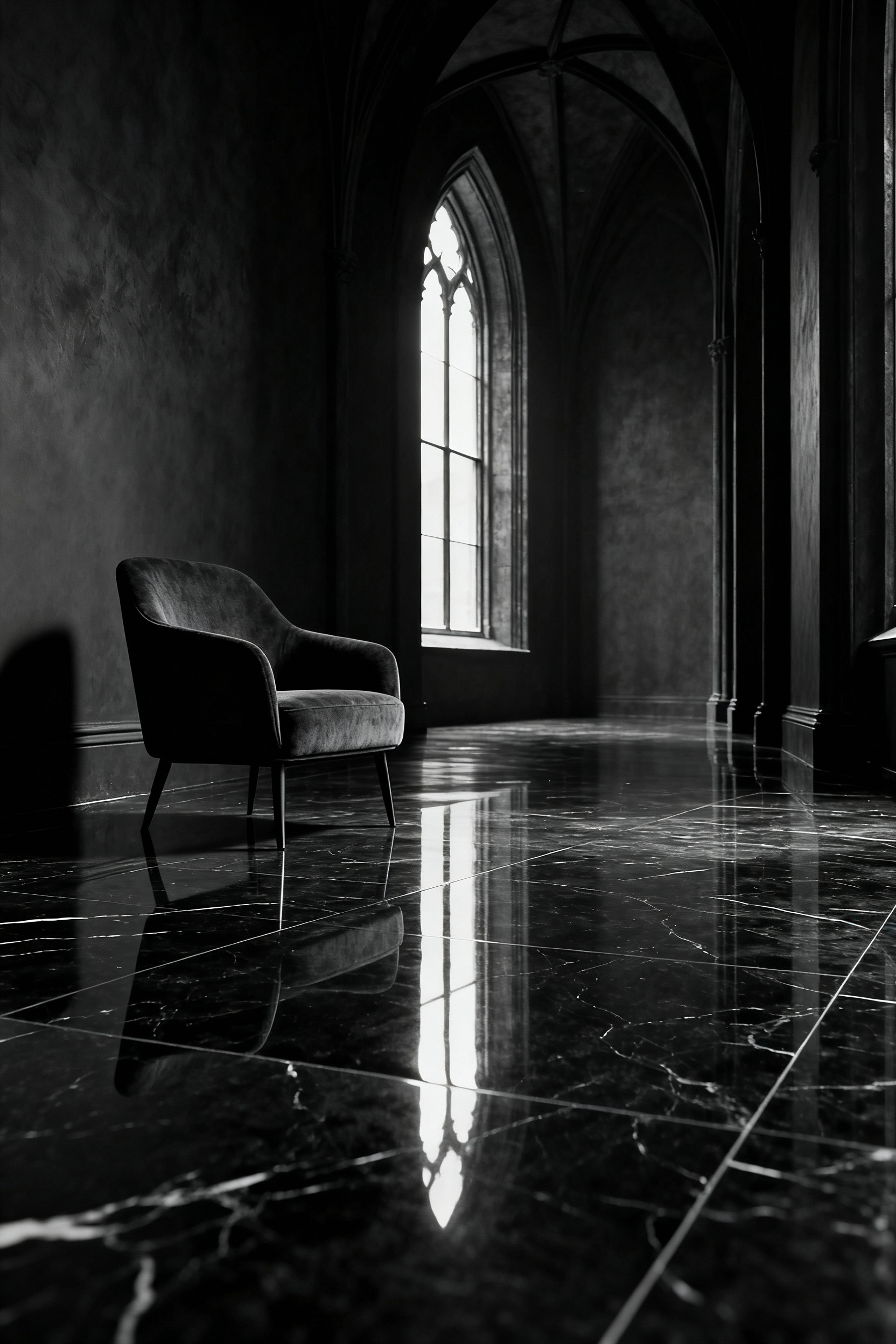
The effect is one of profound grandeur. A black floor grounds the room, pulling the visual weight down and making the ceiling feel impossibly high. It becomes a silent, powerful stage upon which your furniture, your art, and your life are presented. I love to pair a dark floor with a single, richly textured rug in a slightly different shade or material—like a deep charcoal shag—to define a zone and add a layer of tactile comfort without breaking the cohesive darkness.
Advanced Strategies: Orchestrating Dramatic Cohesion (Part 2)
We continue our architectural exploration, now focusing on how to weave different narratives and functions within a singular dark space. This is the art of creating zones without walls, of telling multiple stories within one cohesive vision, proving that a black room can be as practical as it is poetic.
13. Dynamic Narratives: Designing Multi-Functional Zones within Black Spaces
A black living room is the perfect canvas for creating distinct zones without clumsy partitions. The enveloping darkness allows for subtle delineations to feel more powerful. A reading nook, a conversation area, a small workspace—each can be defined by a careful constellation of lighting, furniture, and texture.
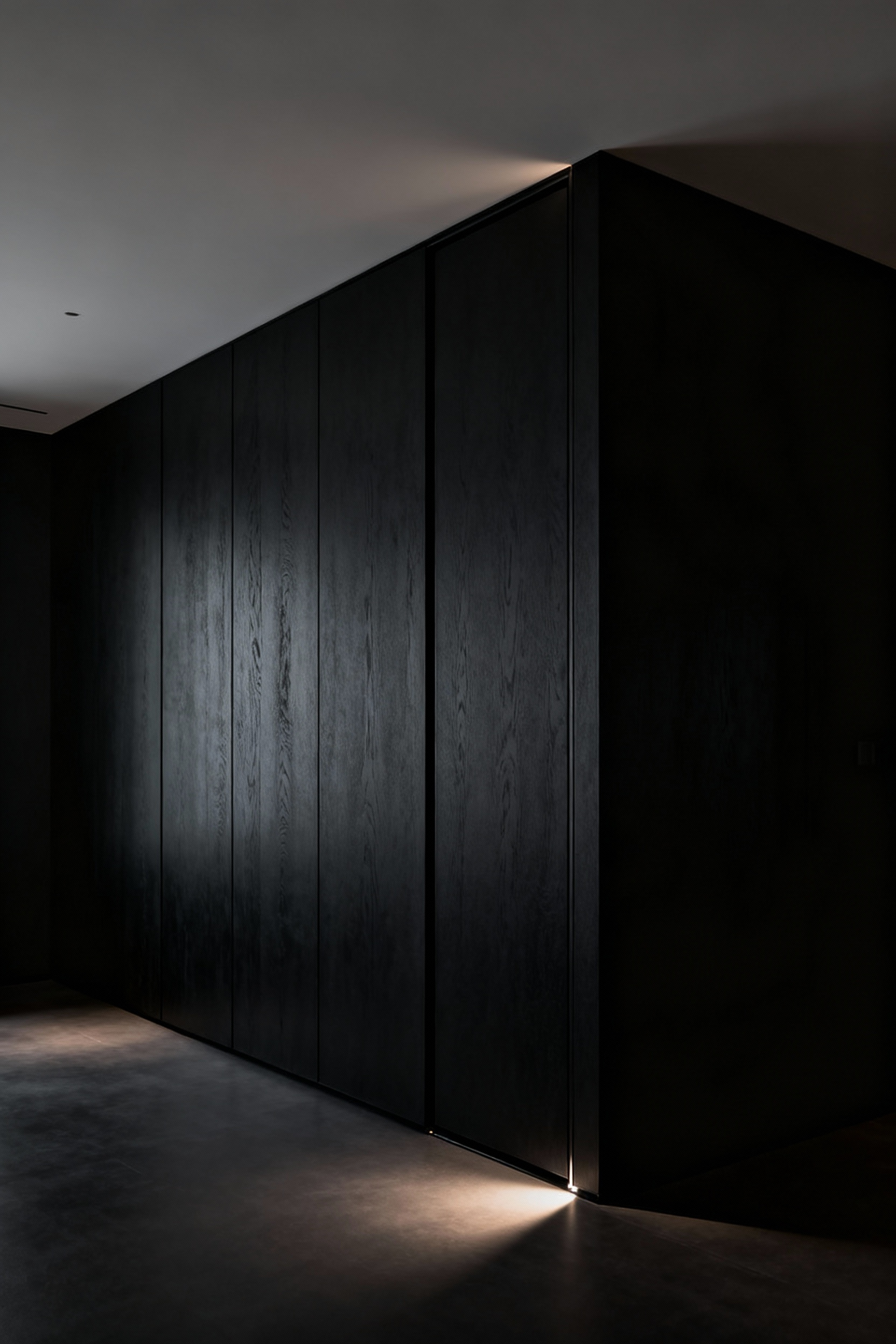
The key is suggestion, not segregation. Define a reading corner with a single, dramatic floor lamp arching over a comfortable armchair. Use a distinctively textured rug to visually anchor a seating arrangement. In my professional experience, the uniform black backdrop makes these islands of activity feel more intimate and purposeful. The darkness between them becomes a quiet, transitional space, allowing each zone to feel like its own private world while remaining part of a harmonious whole.
Mastery Integration: Crafting a Singular Black Aesthetic (Part 1)
We have arrived at the final and most personal stage. Mastery is not about following rules, but about weaving together all these elements into a singular expression of self. This is where your black living room becomes more than a design; it becomes a portrait, infused with history, life, and curated beauty.
14. The Echo of Ages: Weaving Antiques and Modern Pieces
A black room is a timeless stage, making it the perfect environment for a conversation between eras. Placing a weathered, ornate 18th-century writing desk against a stark, matte black wall doesn’t create conflict; it creates a thrilling dialogue. The clean lines of a modern sofa can highlight the intricate carvings of an antique chest used as a coffee table.
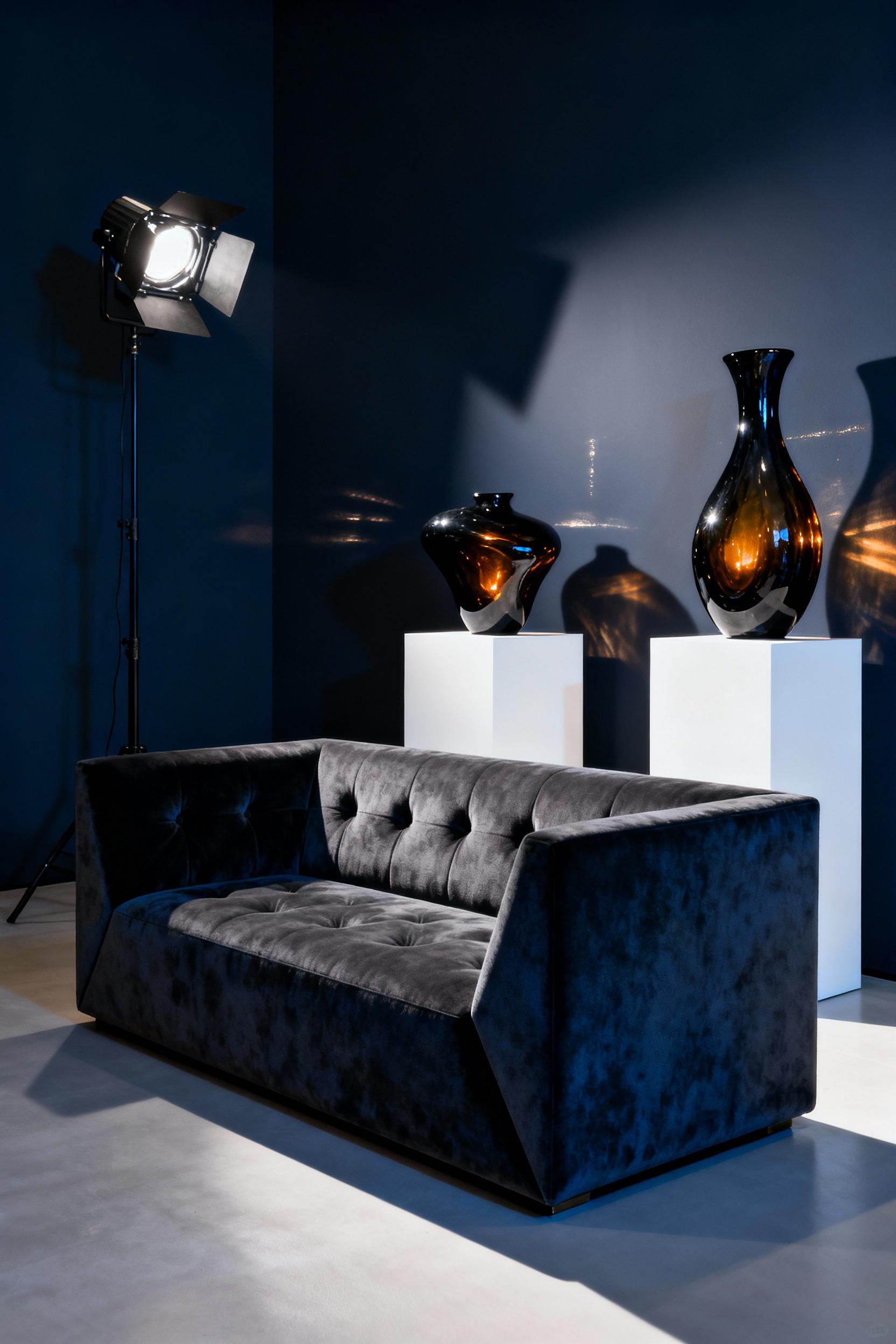
The secret is to find a common thread. Perhaps it’s a shared material, like dark wood, or a similar sense of gravitas. Or maybe the connection is pure contrast. What I tell my clients is not to be afraid of this mix. The unifying power of the black backdrop allows disparate styles to coexist in a way that feels curated and intentional, not chaotic. Your space becomes a testament to the fact that beauty is not confined to a single period.
15. Curated Darkness: Mastering Vignette Composition
In a black living room, small surfaces—a mantelpiece, a console table, a bookshelf—become intimate stages for storytelling. These are your vignettes: carefully composed arrangements of treasured objects. This is where you can be a poet, a historian, a naturalist.
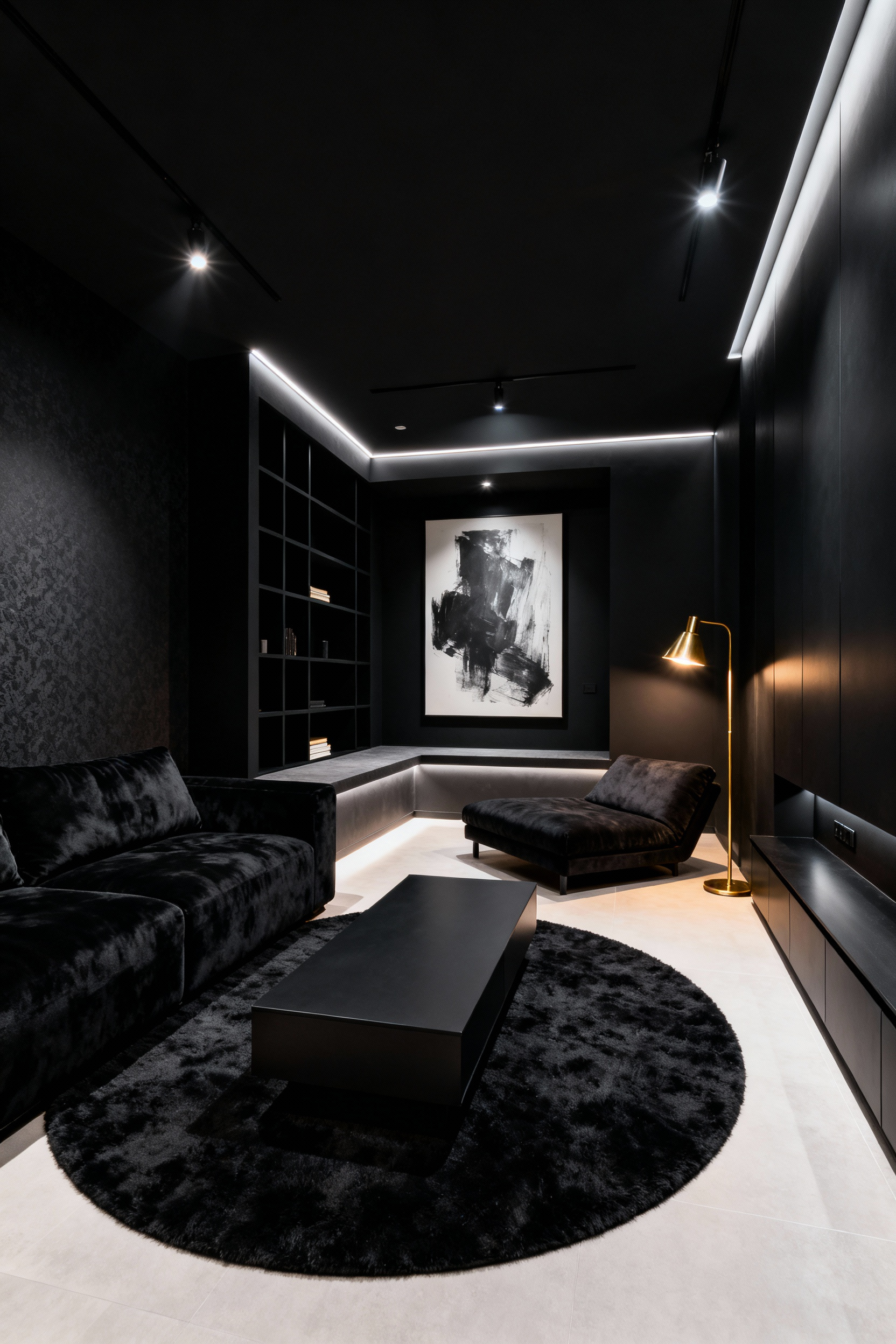
Group objects with varying heights and textures. An antique brass candlestick, a collection of smooth, dark river stones, and a single, perfect crow feather. A stack of old, leather-bound books topped with a human skull replica. The enveloping darkness allows these small collections to feel precious and important, like museum exhibits of your own life. These vignettes are what give a room its soul, inviting guests to look closer and discover the stories hidden in the shadows.
16. Biophilic Shadows: Integrating Dark Botanicals and Natural Elements
Life flourishes in the dark. Bringing natural elements into your black living room adds a vital, organic counterpoint to its architectural severity. Think beyond the typical houseplant. Seek out botanicals with a gothic soul: the deep, near-black leaves of a ‘Black Raven’ ZZ plant, the dramatic silhouette of a fiddle-leaf fig, the otherworldly elegance of a dark purple orchid.
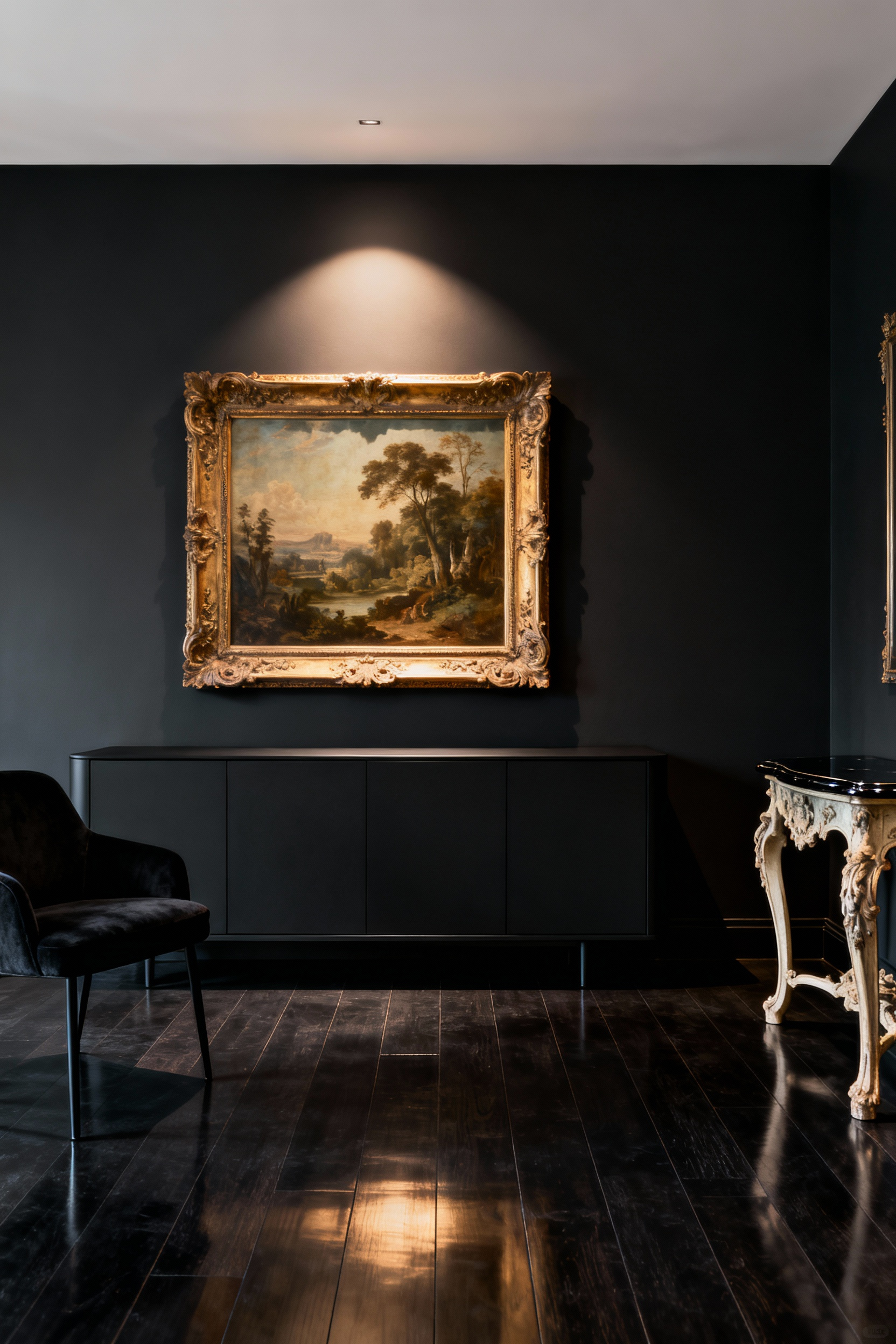
But don’t stop at plants. A gnarled piece of driftwood, a collection of crystals, or a large, sculptural piece of stone can feel just as alive. I learned this when I placed a single, massive black vase filled with dried, dark thistles in a client’s minimalist black room. It became the most powerful element in the space—a reminder of nature’s wild, enduring, and sometimes melancholic beauty.
17. Acoustic Allure: Enhancing Sensory Experience in Black Interiors
A truly masterful room appeals to more than just the eye. The acoustics of a black living room are a crucial, though often overlooked, element of its allure. The goal is to create a space that feels hushed, intimate, and absorbing.
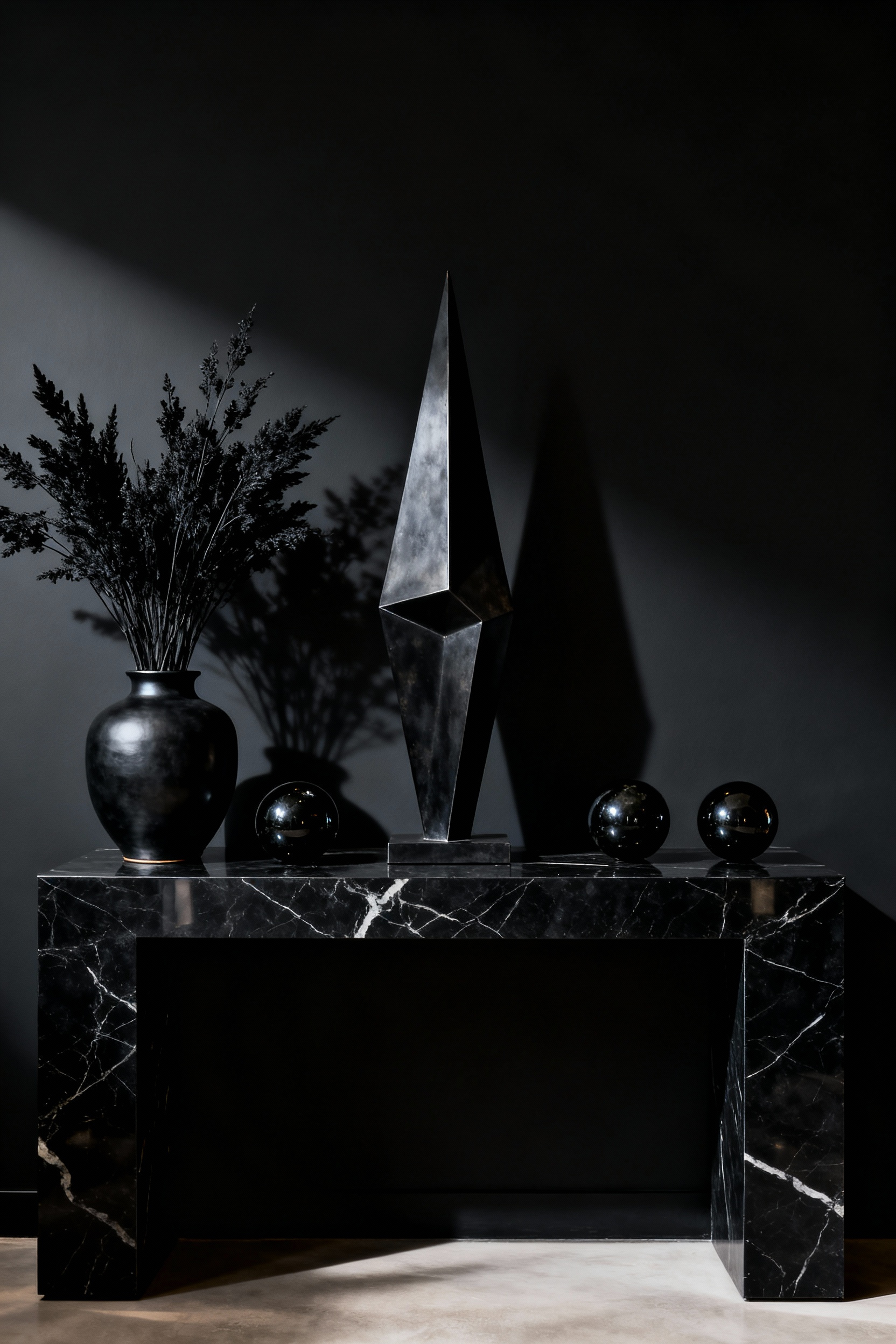
This is achieved through soft surfaces. Heavy velvet drapes, plush wool rugs, fabric-upholstered furniture, and even walls hung with tapestries or textiles all work to dampen sound. The effect is profound. The outside world recedes. Voices become softer, more intimate. Silence itself becomes a palpable presence. This acoustic embrace is what truly transforms your black living room into a sanctuary, a quiet retreat from the clamor of modern life.
Mastery Integration: Crafting a Singular Black Aesthetic (Part 2)
Here, in the final turn, we fuse design with identity. The ultimate black living room is not one that merely looks dramatic, but one that feels like a direct extension of its inhabitant. It becomes a physical manifestation of your inner world, a sombre canvas for your own personal story.
18. Personal Mythology: Infusing Individuality into the Sombre Canvas
A black room is a deeply personal space, and its final layer should be you. This is the stage for your personal mythology—a curated collection of objects that tell your story. It’s the opposite of generic decor. It is a collection of artifacts, totems, and talismans that hold personal meaning.
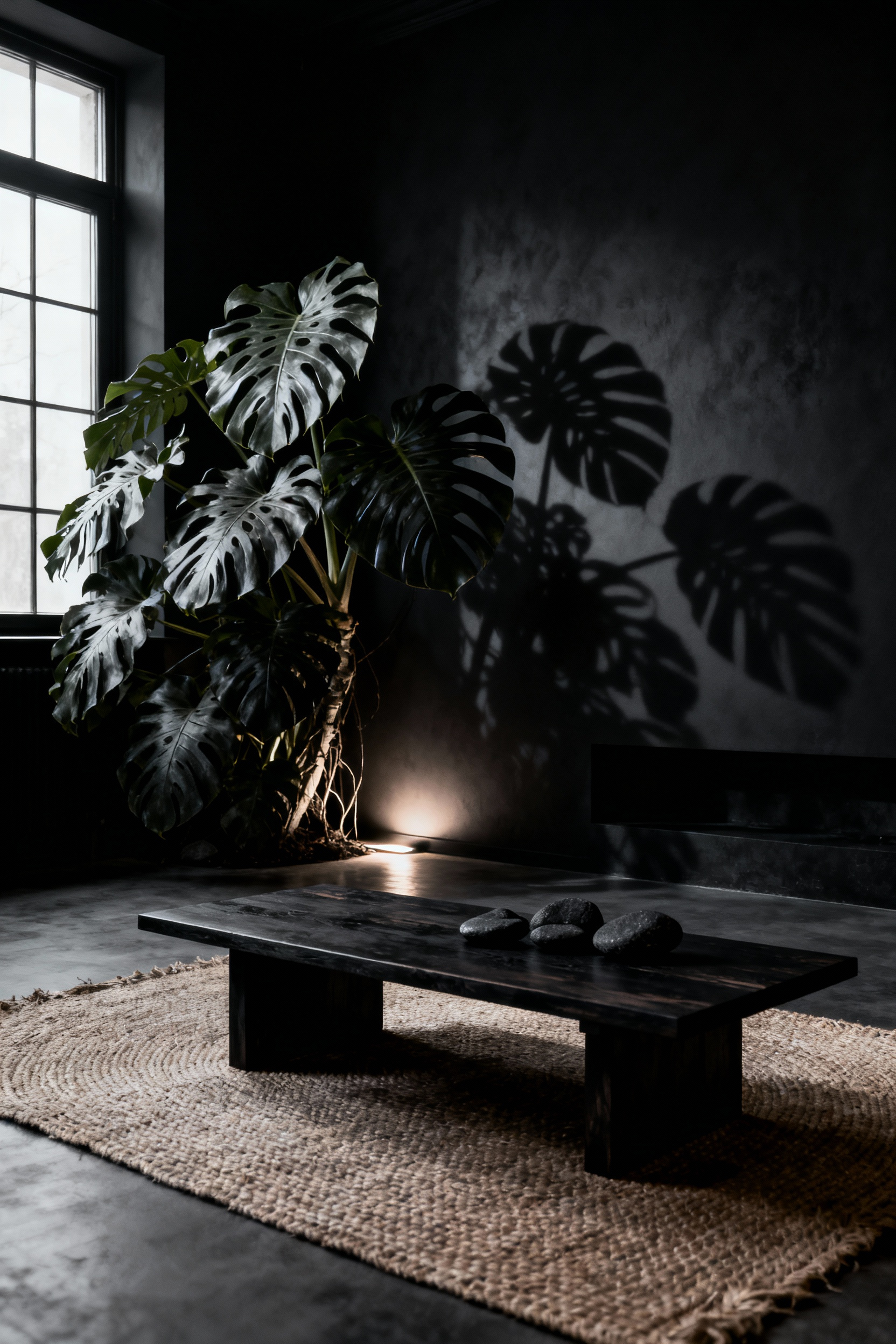
This might be a gallery wall of ancestral photographs, a cabinet of curiosities filled with your travels’ treasures, or shelves dedicated to the books that shaped your mind. The somber canvas of the room allows these personal items to shine, to feel less like clutter and more like sacred relics. In my gothic romance modernist practice, I believe a room should be an autobiography. Your black living room is the perfect, profound setting in which to write yours.
Conclusion
We began this journey by challenging a tired convention—the baseless fear of black. Through these twenty ideas, we have journeyed from the foundational truths of pigment and texture to the masterful orchestration of a space that is both a sanctuary and a statement. We have seen that black is not an absence, but a presence. It does not confine; it liberates. It is the ultimate canvas for light, for texture, for art, and for the stories that make a house a home.
The evidence is clear: black offers an unparalleled depth, a sophisticated embrace that elevates everything within it. It is a bold choice, yes, but it is also a surprisingly forgiving one, a unifying force that can bring harmony to even the most eclectic collection of belongings. Now, the knowledge is yours. It is time to cast aside timidity and dare to compose your own symphony in shadow. Use these principles not as rigid rules, but as guiding whispers in the dark.
Ultimately, choosing from these black living room ideas is an act of quiet rebellion. It is a turning away from the bright, the loud, the ephemeral, and a turning toward the timeless, the contemplative, the profound. As an architect of modern gothic romance, I can assure you of this: within the beautiful darkness, you will not find a void. You will find the most authentic reflection of yourself.