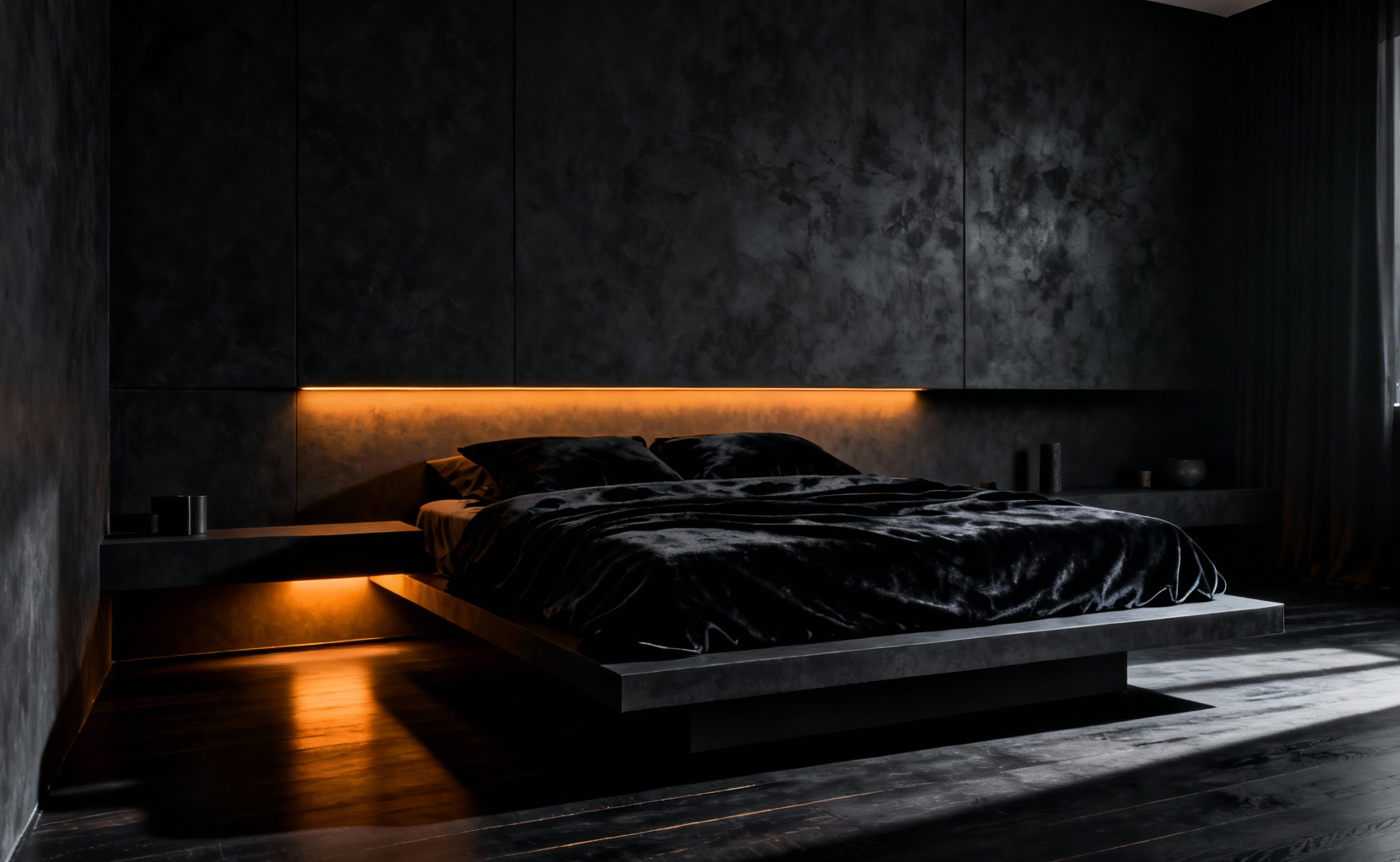

Most homeowners believe that painting a room black makes it feel significantly smaller. However, for discerning homeowners, mastering the black bedroom aesthetic offers profound psychological benefits. Indeed, early renovation shows often perpetuated this “shrinking room” myth. They argued that dark hues absorb light and claustrophobically close in the walls. Yet, established psychological research contradicts this common fear. In reality, the “Principle of Recession” proves that dark colors recede from the eye. Therefore, black walls visually push back rather than closing in.
Consequently, this optical trick creates a powerful illusion of infinite depth. By utilizing “color-drenching” on walls and ceilings, you blur architectural boundaries. Thus, the room’s physical limits disappear into a deep void. Instead of feeling like a cramped box, the space feels cavernous. Furthermore, this intentional darkness allows lighter furniture to float dramatically. Essentially, the walls vanish to highlight the life within them.
If you are looking for specific black bedroom inspiration, this guide reveals the techniques to master this sophisticated look. We explain how to balance visual vastness with intimate comfort. Additionally, we uncover the importance of layered lighting. These elements prevent the room from feeling flat. Ultimately, you will learn to design a modern sanctuary of mystery and rest.
The Psychology of Shadow: Why Dark Bedrooms Induce Deeper Sleep
Designing a black bedroom creates a profound act of sensory attenuation. Fundamentally, deep restorative sleep requires the complete suppression of light. Specifically, the pineal gland needs absolute darkness to maximize melatonin synthesis. However, even standard room lighting can drastically shorten melatonin production. Consequently, black walls actively absorb light, creating the optimal environment for biological repair.
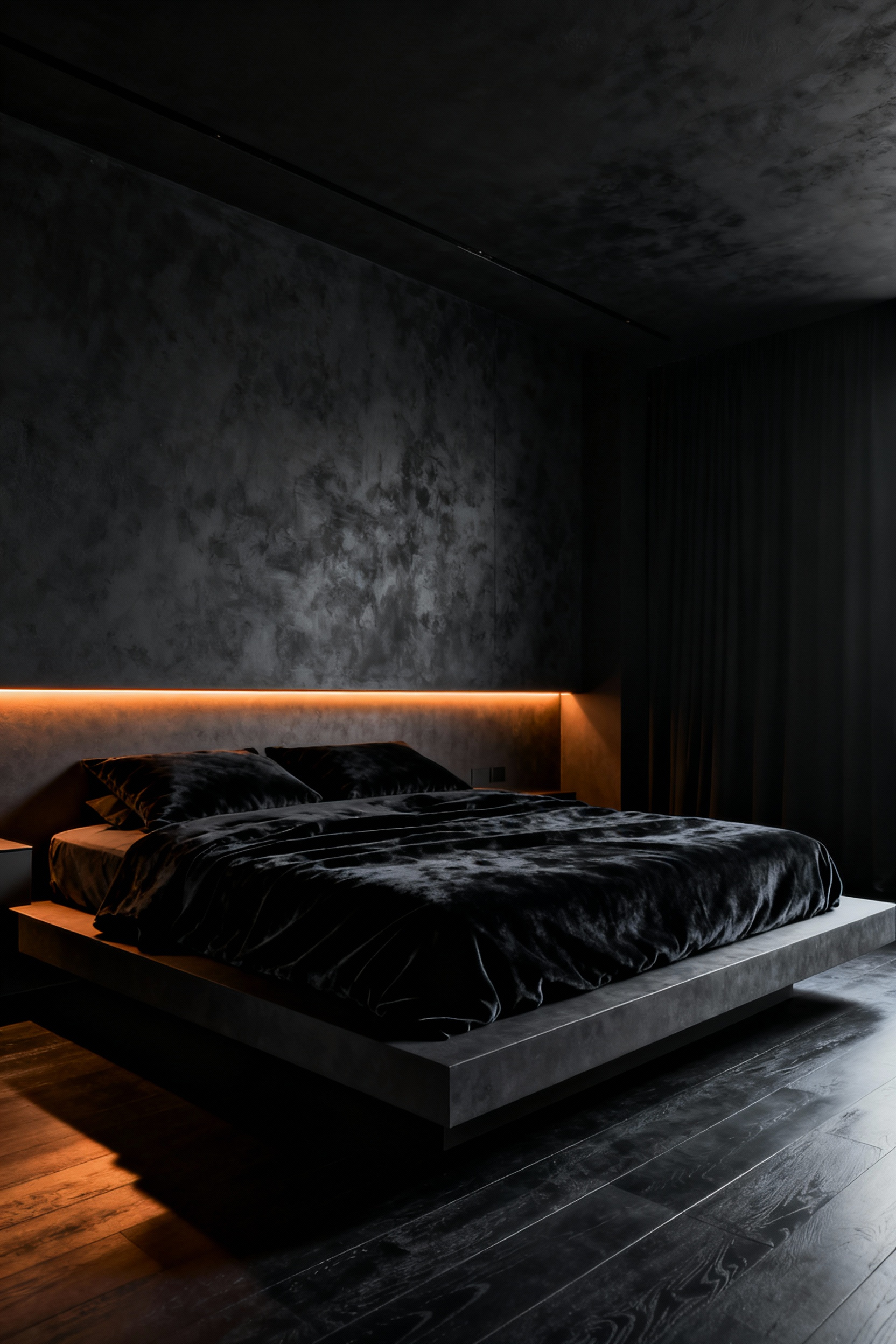
Beyond physiology, these spaces satisfy an instinctual need for enclosure. In fact, black interiors minimize high-contrast distractions that keep the brain alert. This reduction in visual noise fosters a “cocoon-like atmosphere.” Historically, we see this desire in the use of heavy medieval bed curtains. Similarly, the modern black bedroom serves as a protective architectural refuge.
Finally, we must consider the psychological concept of the “Shadow.” In Jungian terms, insomnia often represents the active voice of repressed emotions. Therefore, a room of total darkness acts as a symbolic sanctuary. Here, the conscious mind can safely lower its defenses. Ultimately, this intentional void allows for emotional integration and truly restful sleep.
The Foundation: Choosing the Right Undertone (Charcoal vs. Onyx vs. Midnight)
Selecting the perfect black paint requires looking beyond simple darkness. Fundamentally, the specific undertone dictates the room’s entire atmosphere. Specifically, Charcoal acts as a “soft black” with deep gray roots. Therefore, it absorbs light gently rather than creating a harsh void. This quality creates a tranquil effect ideal for deep sleep. In fact, its warm undertones allow organic textures to feel naturally layered.
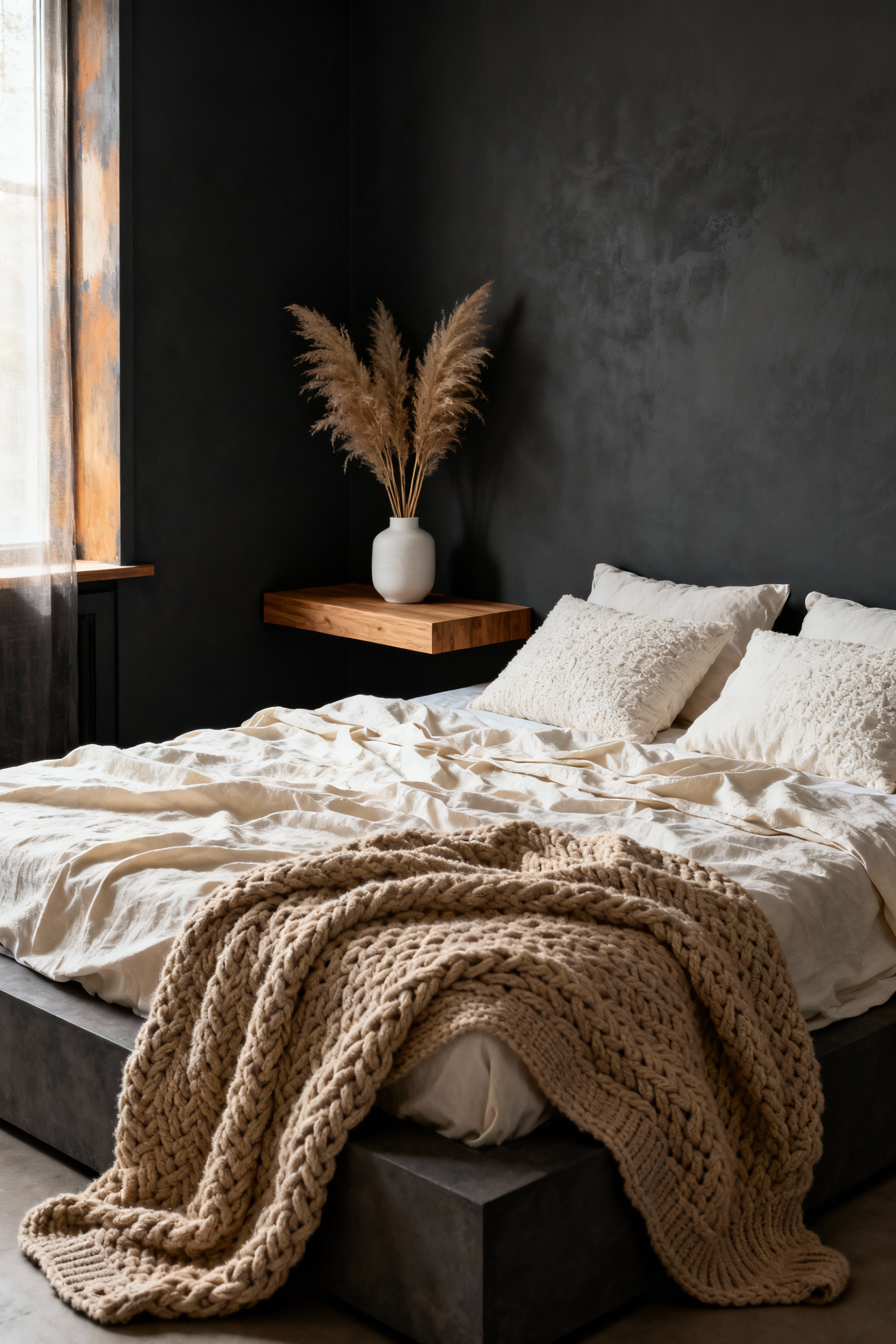
Conversely, Midnight offers an intense, inky depth. Because of its blue or violet base, it evokes the night sky. Consequently, this shade creates high-concept drama rather than soft restfulness. Under natural light, these cool tones become visibly immersive. They demand attention rather than fading into the background.
However, for pure versatility, Onyx is the superior architectural anchor. Distinctly, its neutral nature prevents clashes with warm wood or brass. Thus, it remains sophisticated across various lighting conditions. Furthermore, a matte finish helps Onyx absorb light like a velvety embrace. Ultimately, the choice depends on whether you seek a soft sanctuary or dramatic intensity.
Texture Theory: Preventing the ‘Black Hole’ Effect with Velvet and Silk
Designing a monochrome black bedroom carries a significant risk. Designers often refer to this pitfall as the “Black Hole Effect.” Essentially, deep matte surfaces absorb all available light. Consequently, the room loses visual definition. However, Texture Theory offers a sophisticated countermeasure. Specifically, the solution lies in manipulating light through material selection. Therefore, introducing the opposing properties of velvet and silk is critical.
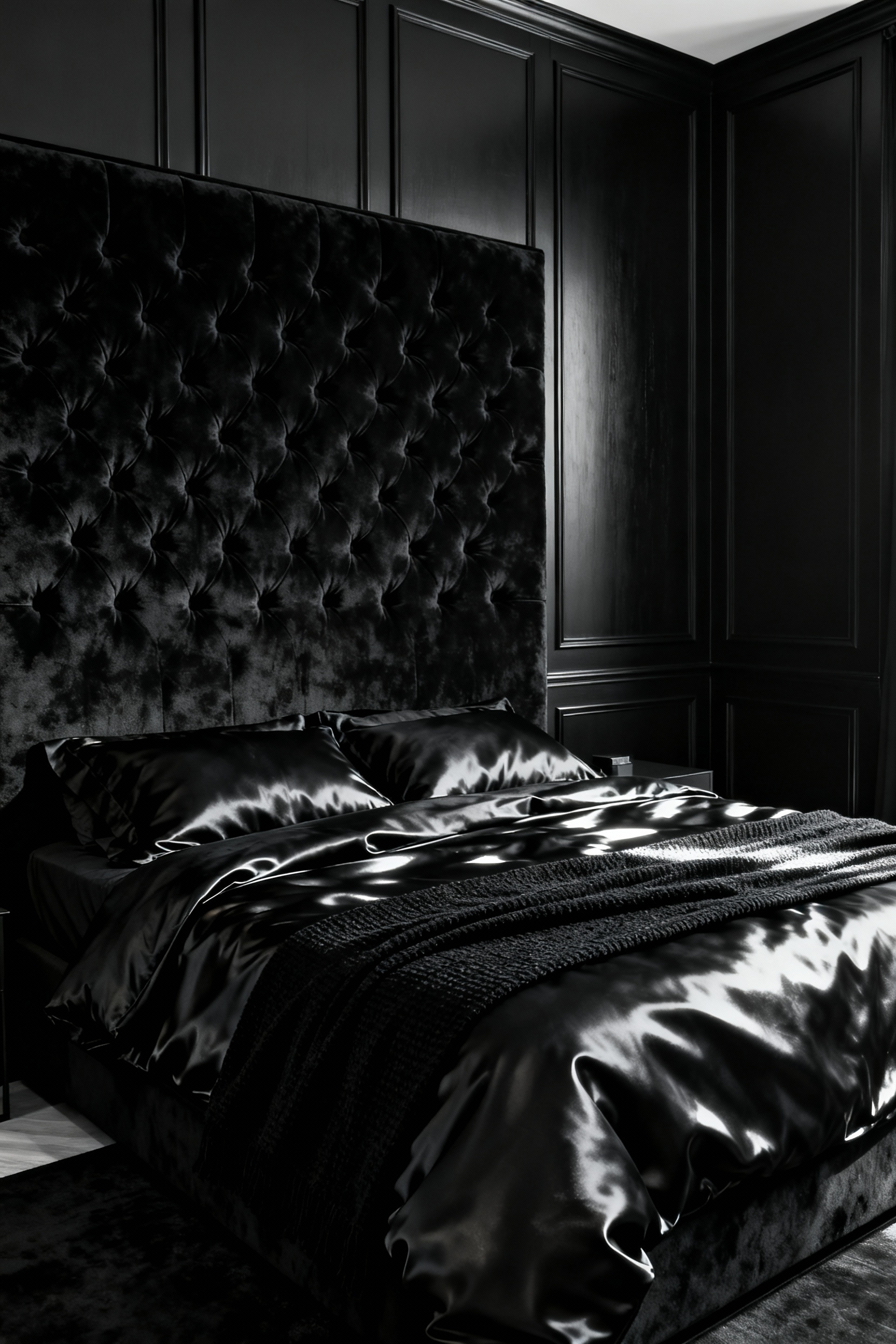
First, consider velvet for its ability to create volumetric depth. Technically, its dense pile facilitates diffuse reflection. When light hits the fibers, it scatters broadly. As a result, the fabric produces a soft, luminous halo. This effect transforms a flat wall into an enveloping cocoon.
Conversely, silk provides a necessary element of sharp definition. Its natural fibers feature a unique triangular structure. Thus, they act like tiny prisms that refract light. This creates specular reflection, resulting in crisp highlights. Ideally, use silk for accents like throw pillows. Ultimately, layering these textures ensures the eye always finds a point of light. This prevents the space from feeling cold.
The Fifth Wall: Painting the Ceiling Pitch Black for Architectural Drama
In modern interior design, the ceiling is often overlooked. However, treating this “fifth wall” with pitch-black paint creates immediate architectural drama. Surprisingly, this dark choice does not always shrink a room. Instead, a flat black surface absorbs light completely. Consequently, the visual boundary recedes into an ambiguous darkness. This phenomenon creates an illusion of an infinite void. Therefore, the ceiling appears to float, making the space feel expansive.
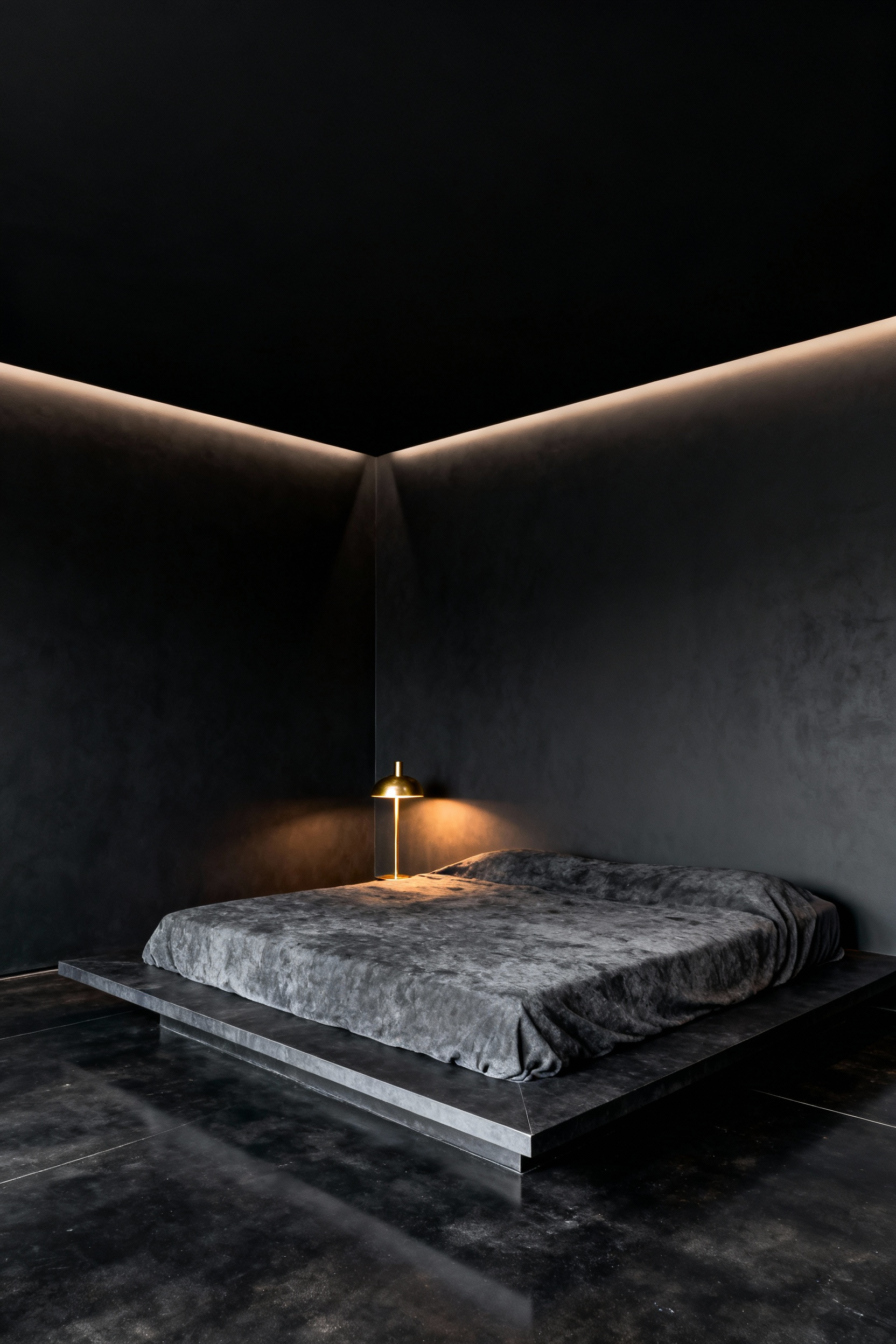
Conversely, in rooms with high ceilings, black paint offers a grounding effect. It visually lowers the height to create a “cocoon.” Specifically, this cave-like atmosphere fosters a sense of intimacy. Furthermore, black acts as a form of visual soundproofing. It dampens sensory input, allowing the mind to pause. This signals a bold intentionality often associated with luxury.
To achieve this sophisticated look, the technical finish is critical. You must strictly use an ultra-flat or matte paint. Glossy sheens reflect light and highlight imperfections. This breaks the immersive illusion. In contrast, a matte finish masks infrastructure. Finally, this dark backdrop creates a stage-like effect for lighting. A sculptural chandelier will sparkle dramatically against the void.
Wall Treatments: The interplay of Matte Paint and Glossy Moldings
To create a sophisticated dark bedroom, mastering light manipulation is essential. Specifically, matte black paint acts as a “velvet void.” Because flat finishes absorb incoming light, the walls appear to recede. Consequently, this creates a deep, soothing cocoon. Ideally, this non-distracting atmosphere promotes relaxation, making it perfect for sleeping.
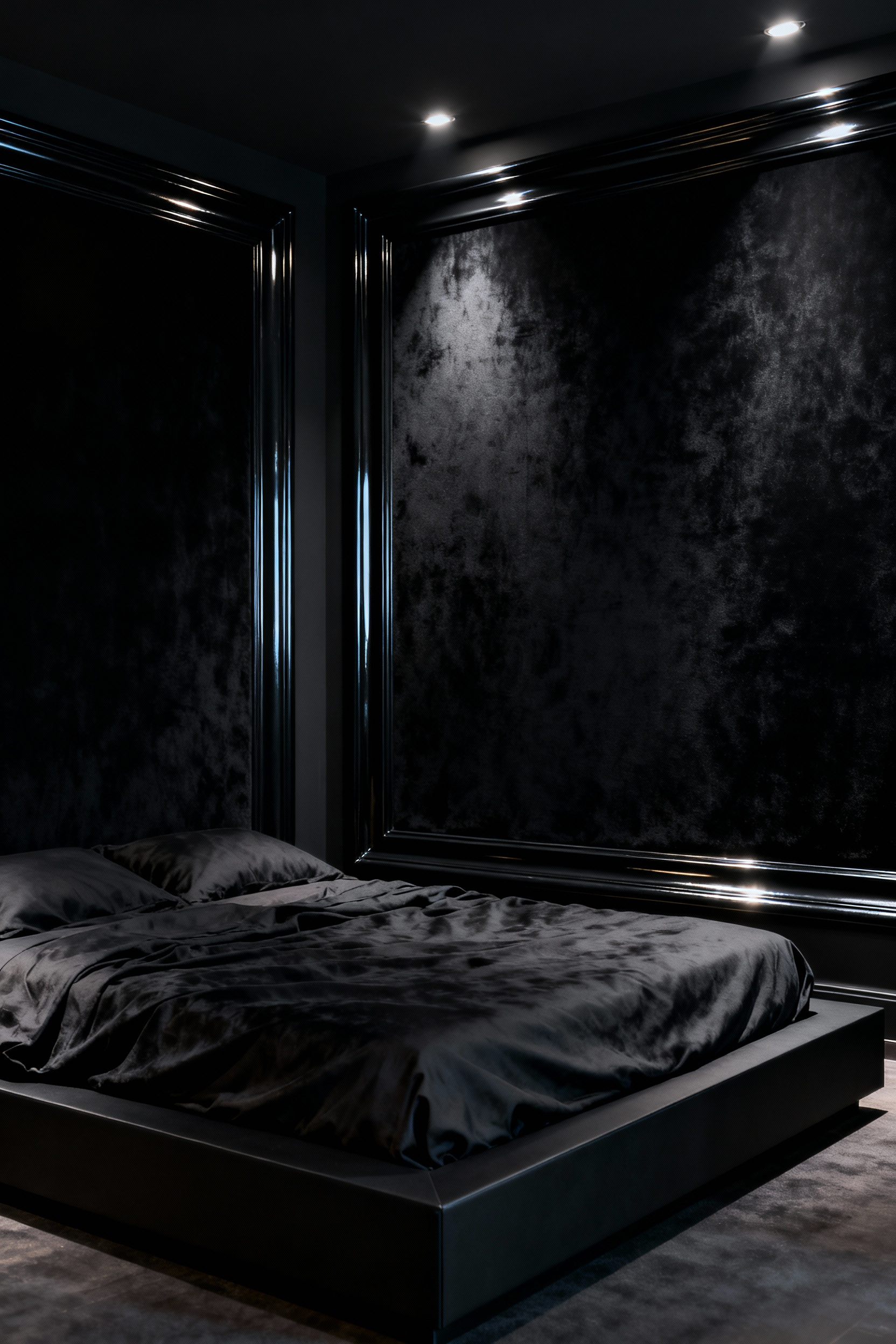
However, total darkness can feel formless without definition. Therefore, high-gloss moldings serve a critical architectural function. Unlike the walls, glossy trim reflects light sharply. This contrast prevents the room’s features from dissolving. Effectively, the sheen creates a crisp line that frames the space. It defines the geometry of baseboards and window casings.
Furthermore, this sheen interplay offers practical luxury. High-gloss finishes are significantly more durable than matte paints. Thus, they protect high-traffic areas from scuffs. Historically, this distinction was a hallmark of Victorian design. Builders used gloss to highlight the craftsmanship of woodwork. Today, applying a high-gloss black on trim continues that tradition. It adds a layer of intentional detail. Ultimately, you achieve a complex look using a single color.
Gothic Fusion: Incorporating Modern Victorian Wallpaper Elements
Gothic Fusion marries 19th-century opulence with dramatic modern minimalism. Historically, Victorian wallpaper signified wealth through dense patterns. However, modern interpretations strip away the bright hues. Instead, they utilize monochromatic schemes, such as matte black patterns on glossy backgrounds. Consequently, texture becomes the primary visual element. This technique creates a tactile “velvety damask” effect that whispers elegance.
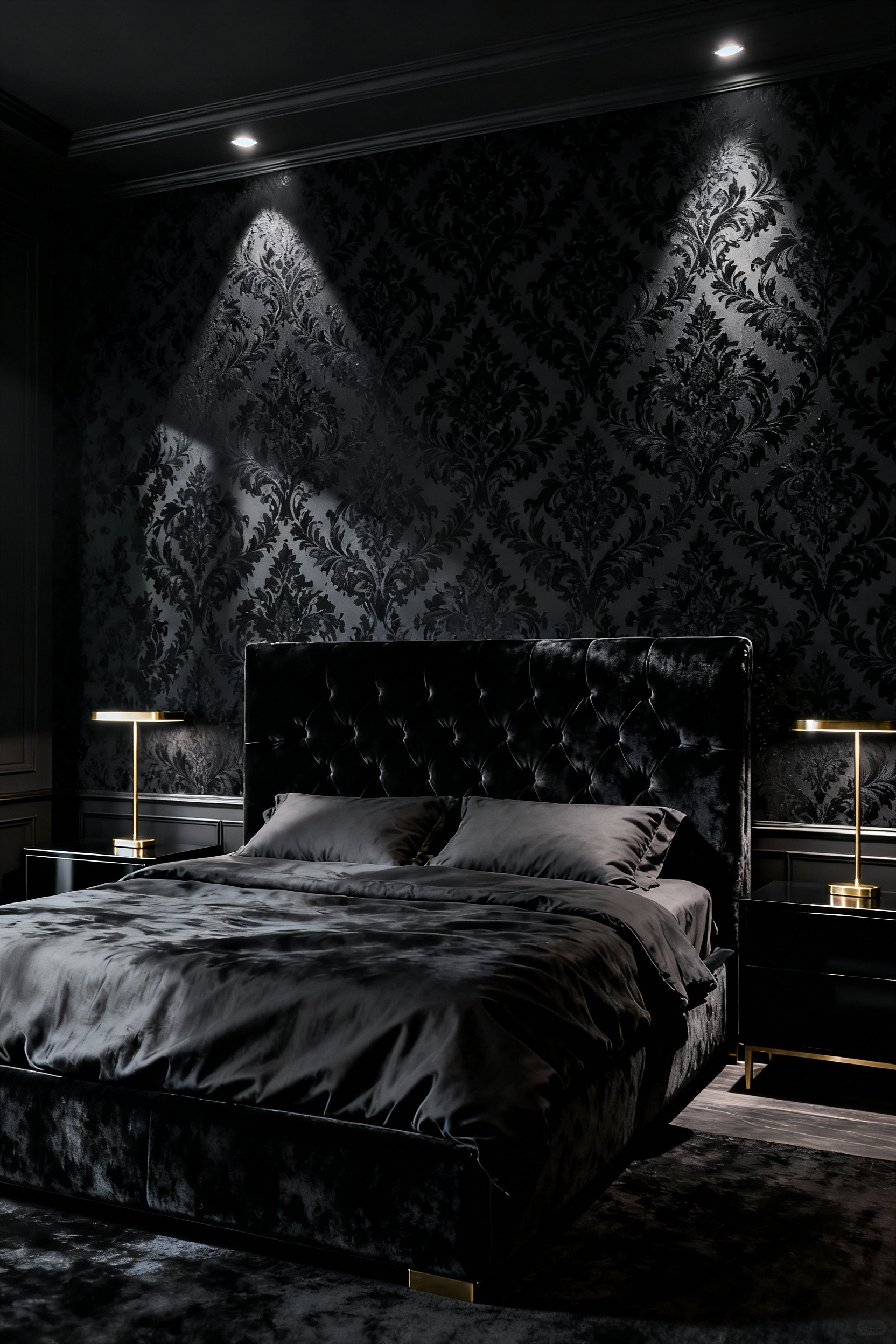
Nevertheless, an all-black room risks feeling flat. Therefore, the Victorian principle of grandeur provides a necessary corrective layer. Specifically, seek patterns highlighted with deep jewel tones. For instance, a gold foil damask against a dark base catches ambient light. Thus, the space feels luxurious rather than cold.
Furthermore, this aesthetic evolves traditional themes into something theatrical. Originally, designers like William Morris championed naturalistic beauty. In contrast, Gothic Fusion takes these florals to the dark side. For example, look for lush vintage roses rendered in shadowy plum. Additionally, some designs incorporate surreal elements. Ultimately, these choices transform a simple bedroom into a mysterious sanctuary.
The Centerpiece: Statement Beds from Iron Four-Posters to Tufted Velvet
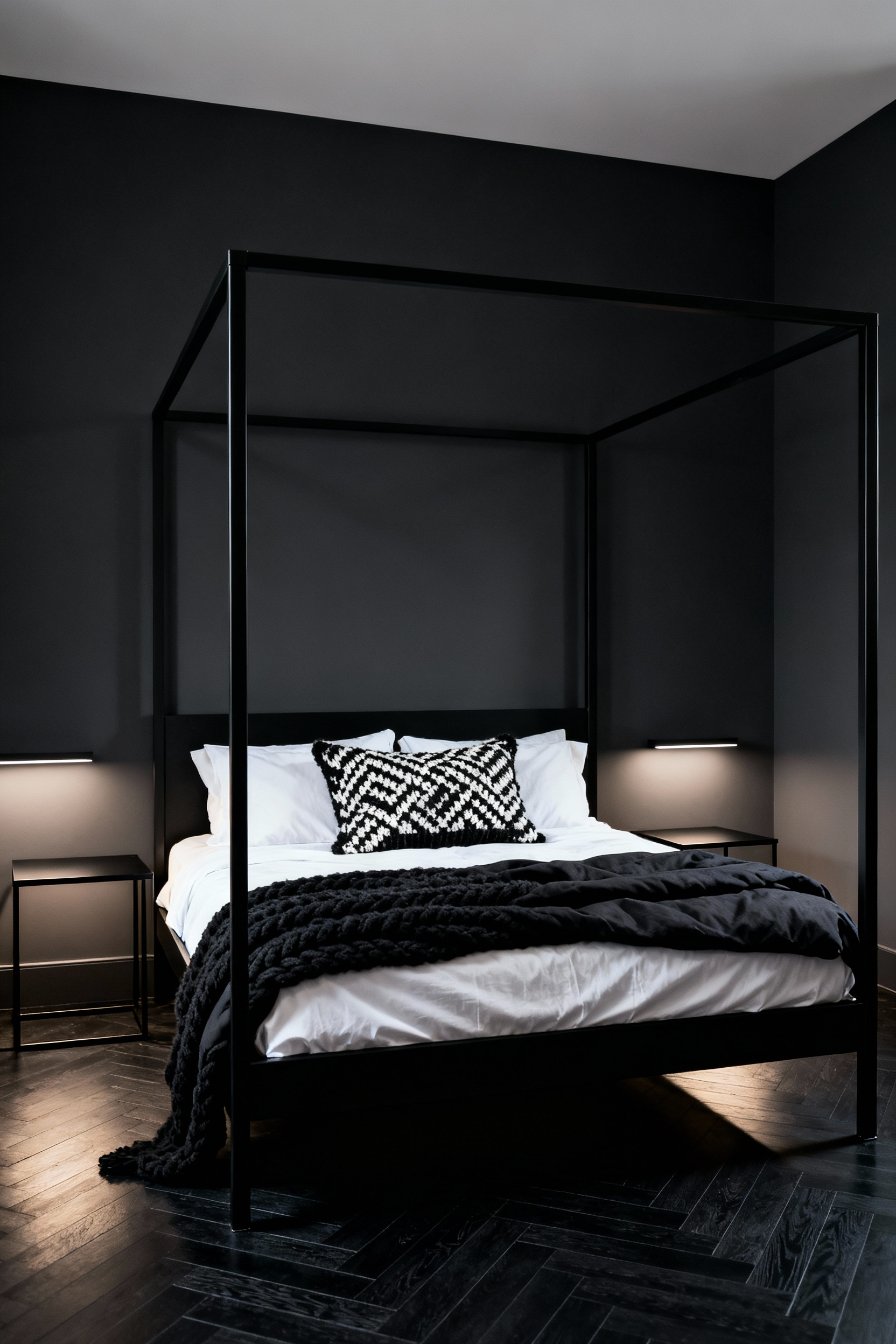
Selecting the right bed is crucial for mastering the black aesthetic. Specifically, this choice pivots between architectural structure and sensory opulence. For instance, the black iron four-poster acts as negative-space architecture. It uses verticality to define the room’s volume. Historically, these frames created a private room within a room. Today, however, matte-black iron offers a sharp silhouette. Consequently, this style anchors the space, creating a Modern Gothic atmosphere.
On the other hand, a tufted velvet bed embodies sensory maximalism. Velvet acts as a powerful light absorber. Thus, it deepens color saturation without reflecting distracting glossiness. Furthermore, the tufting creates a subtle chiaroscuro effect. This textural richness transforms the bed into a comforting cocoon.
Ultimately, the decision relies on balancing aesthetic tension. The iron frame introduces cold, regal authority. In contrast, velvet offers plush, yielding warmth. Therefore, successful design requires mixing these opposing elements. If selecting the iron frame, layer it with soft linens. Conversely, pair a velvet bed with sharp metallic accents. This ensures the room feels sophisticated rather than monolithic.
Textile Layering: Mixing Chunky Knits with Sleek Satins for Haptic Contrast
Designing a monochromatic black bedroom requires more than just color selection. Specifically, without distinct textures, dark spaces often appear flat. Consequently, designers rely on haptic contrast to introduce depth. This approach focuses on the sensory experience of touch alongside visual impact.
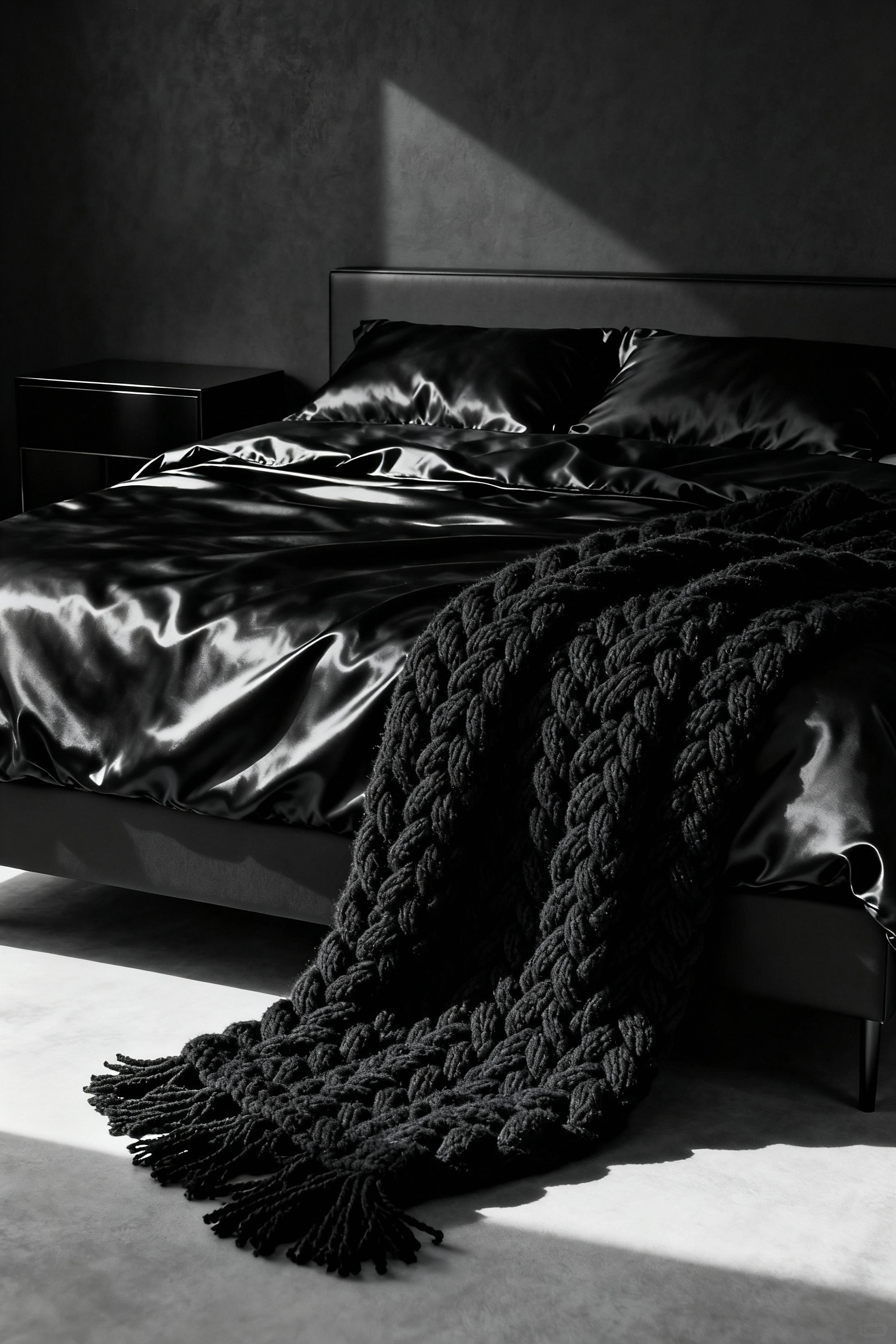
Ideally, pair a chunky knit throw with sleek satin bedding. The rough, irregular loops of wool actively absorb light. As a result, this material appears as a deep, velvety matte black. Conversely, smooth satin reflects even dim ambient light. This creates high-shine highlights that cut through the shadows.
Furthermore, this juxtaposition balances conflicting emotional moods. The heavy knit offers a protective, cocoon-like warmth known as *hygge*. In contrast, cool satin adds a layer of formal sophistication. Ultimately, this interplay transforms a potentially void-like room. Therefore, haptic contrast remains the most effective tool for adding dimension to the Noir aesthetic.
Lighting Philosophy: Why Warm Bulbs are Non-Negotiable in Dark Spaces
In a black bedroom, lighting design goes beyond mere visibility. Specifically, it must respect your biological needs. Cool light suppresses melatonin, signaling the brain to stay alert. In contrast, warm bulbs (2200K–3000K) mimic an ancient “hearth glow.” Therefore, this spectrum triggers primal feelings of safety. This creates a sense of intimate darkness.
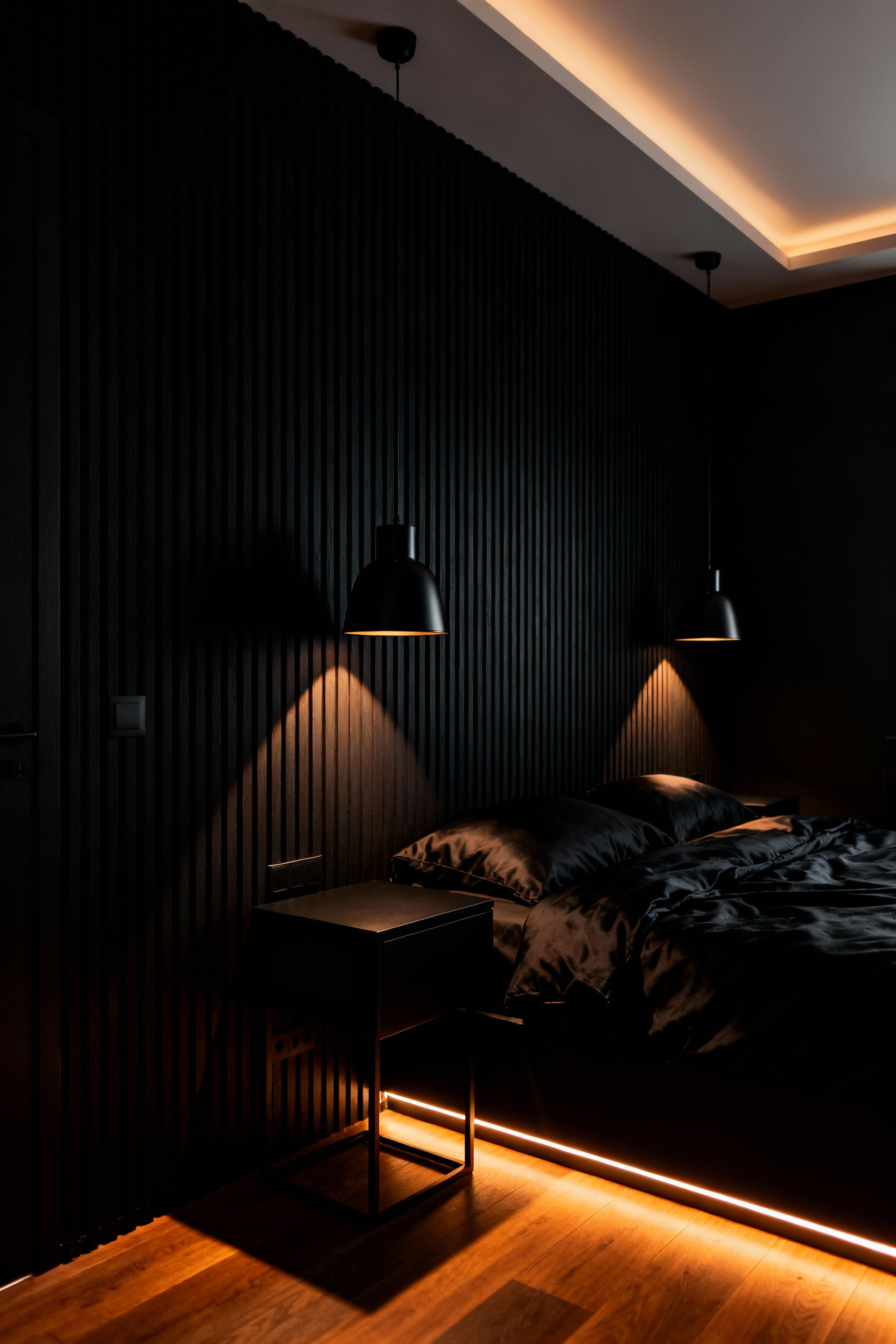
However, warmth alone is insufficient for sophisticated design. Technically, black surfaces absorb over 95% of visible light. Thus, the light source must offer exceptional clarity. For this reason, a Color Rendering Index (CRI) of 90+ is non-negotiable. Without this precision, dark textures like velvet appear flat. Furthermore, rich accent colors may look washed out.
Ultimately, the goal is a moody sanctuary, not a gloomy cave. Specifically, successful dark interiors rely on *chiaroscuro*. This is the dramatic play of light and shadow. Warm, directional light sculpts the room’s features. Conversely, cool lighting introduces a sterile blue cast. This flattens the visual depth. This same dramatic approach can be applied when considering black living room ideas.
The Jewelry of the Room: Brass and Gold Accents as Essential Anchors
Pairing brass and gold with a black aesthetic moves beyond simple decoration. Instead, it acts as a strategic material counterpoint. Specifically, these metals anchor light against the absorbing depth of black walls. Consequently, a high-contrast visual dynamic emerges. Deep black finishes create a backdrop of disciplined depth. In contrast, small metallic accents act as directional light conductors. Therefore, they catch illumination and diffuse a warm glow.
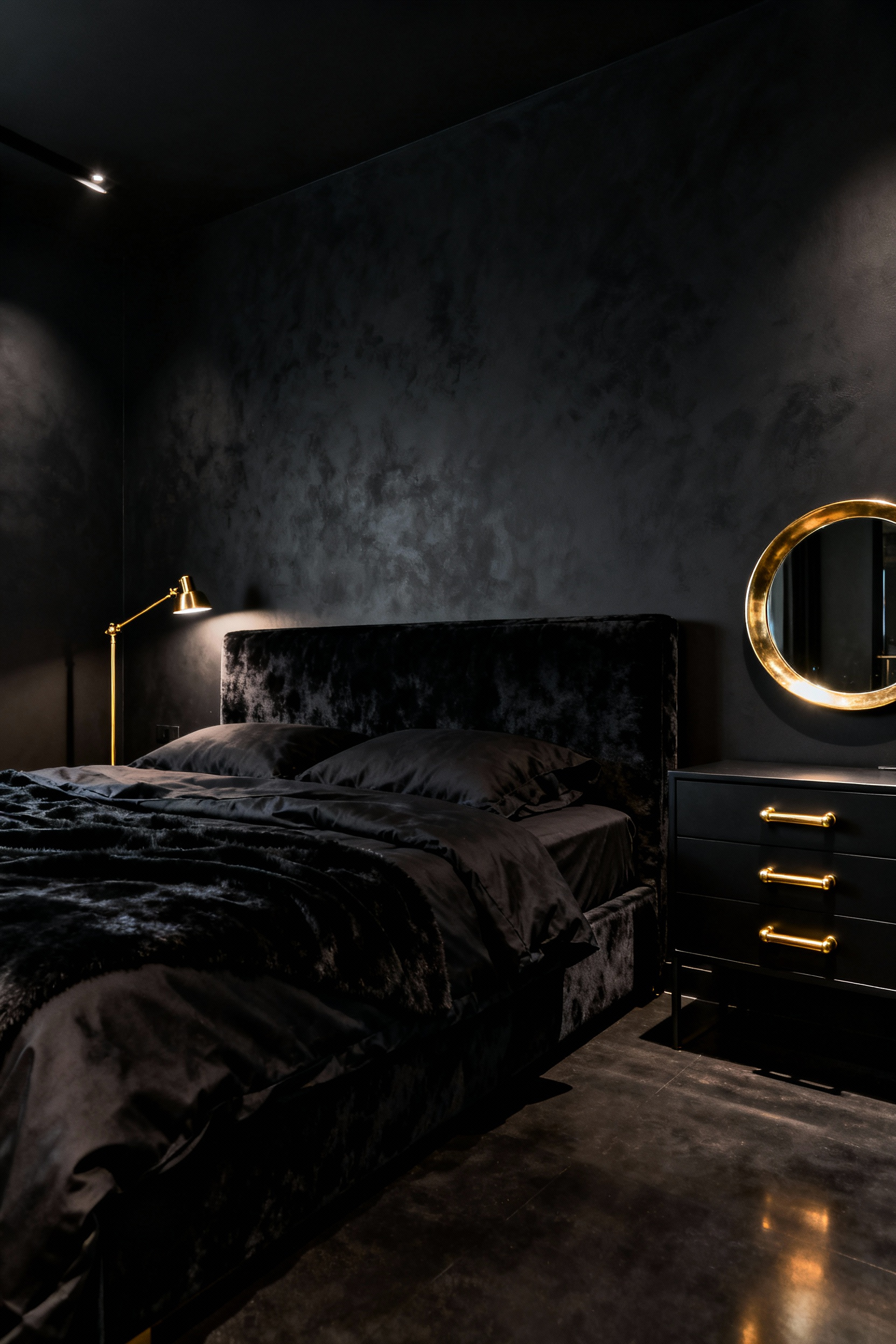
Furthermore, gold and brass introduce essential warmth. While black symbolizes stability, gold conversely offers energy. Together, they harmonize these opposing forces. Thus, the resulting atmosphere feels both bold and serene. Historically, this pairing echoes the opulence of the Art Deco movement. It instantly conveys a sense of timeless grandeur.
However, moderation is vital for achieving true elegance. Experts often recommend antique or brushed finishes over high-shine surfaces. Specifically, the brushed texture adds nuanced richness. Ideally, integrate these accents through functional elements like hardware. For instance, swapping drawer knobs for brass instantly transforms dark furniture. Ultimately, these pieces function as essential anchors rather than overwhelming surfaces.
Statement Illumination: Chandeliers that Cast Dramatic Shadows
In a black bedroom, lighting serves a significantly different purpose. Specifically, dark walls absorb light rather than scattering it. Consequently, this creates a high-contrast canvas perfect for casting dramatic shadows. In art history, this interplay is known as *chiaroscuro*. Therefore, a chandelier becomes more than a light source; it acts as a spatial manipulator.
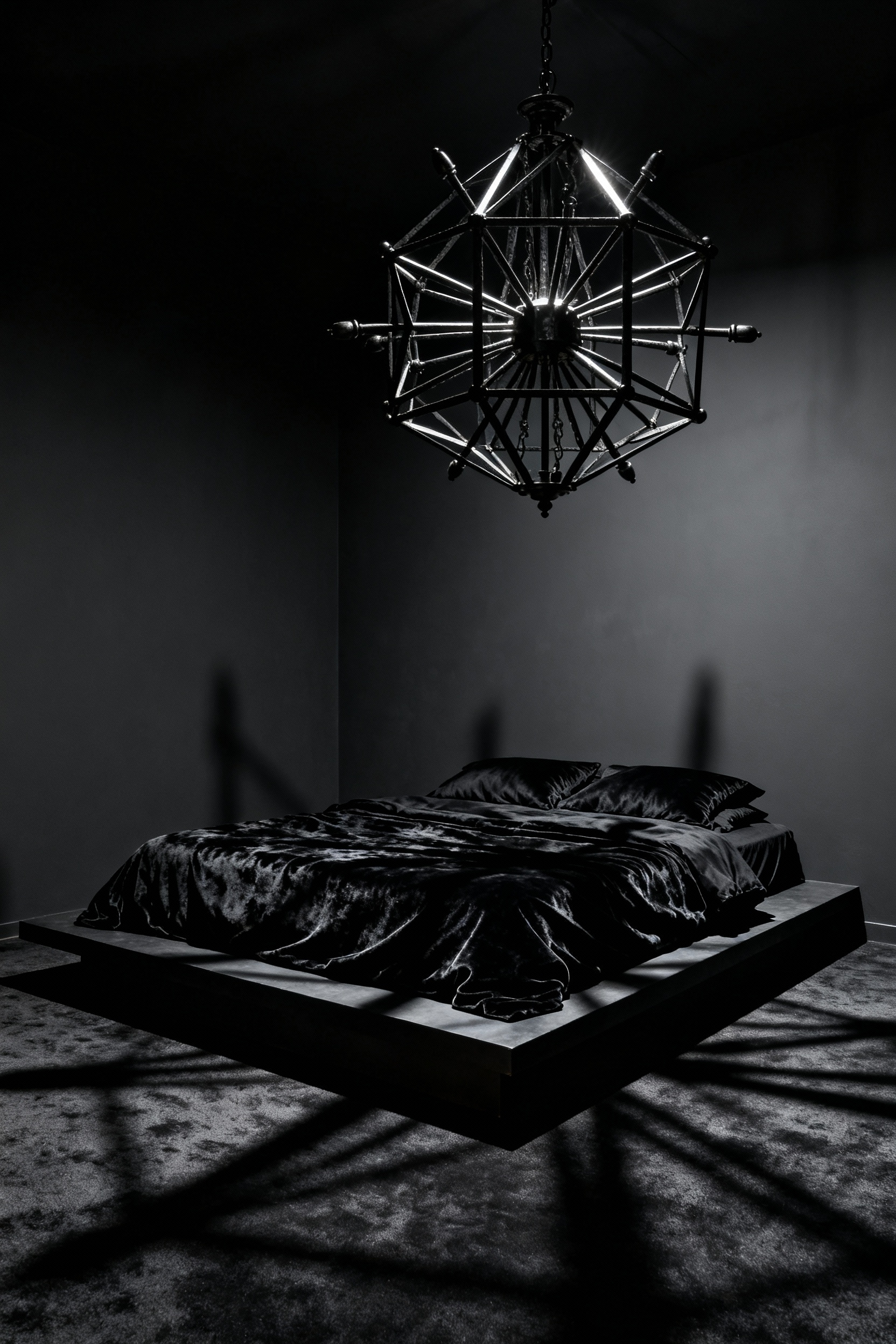
To achieve this effect, the fixture must prioritize obstruction over simple brilliance. Unlike crystal chandeliers that refract light, modern statement pieces use perforated materials. For instance, laser-cut metals function like intricate stencils. When illuminated, these designs project complex geometric patterns. Thus, the ceiling transforms into a dynamic, textured plane.
However, the light source itself is critical for establishing mood. Ideally, utilize warm-toned filament bulbs, such as antique Edison styles. These low-intensity lights cast soft, amber glows. As a result, the shadows remain gentle, effectively preserving the room’s intimacy. Ultimately, this approach turns illumination into a theatrical experience.
Sconce Placement: Creating Intimate Pools of Mystery
The term “sconce” derives from the Latin *absconsus*, meaning concealed. Therefore, using them in a black bedroom is an exercise in intentional concealment. Specifically, black walls actively absorb light rather than reflecting it. Consequently, this creates a “visual pause” that acts as a sensory damper. Because the dark paint consumes illumination, the light creates a sharply defined “pool” of brightness.
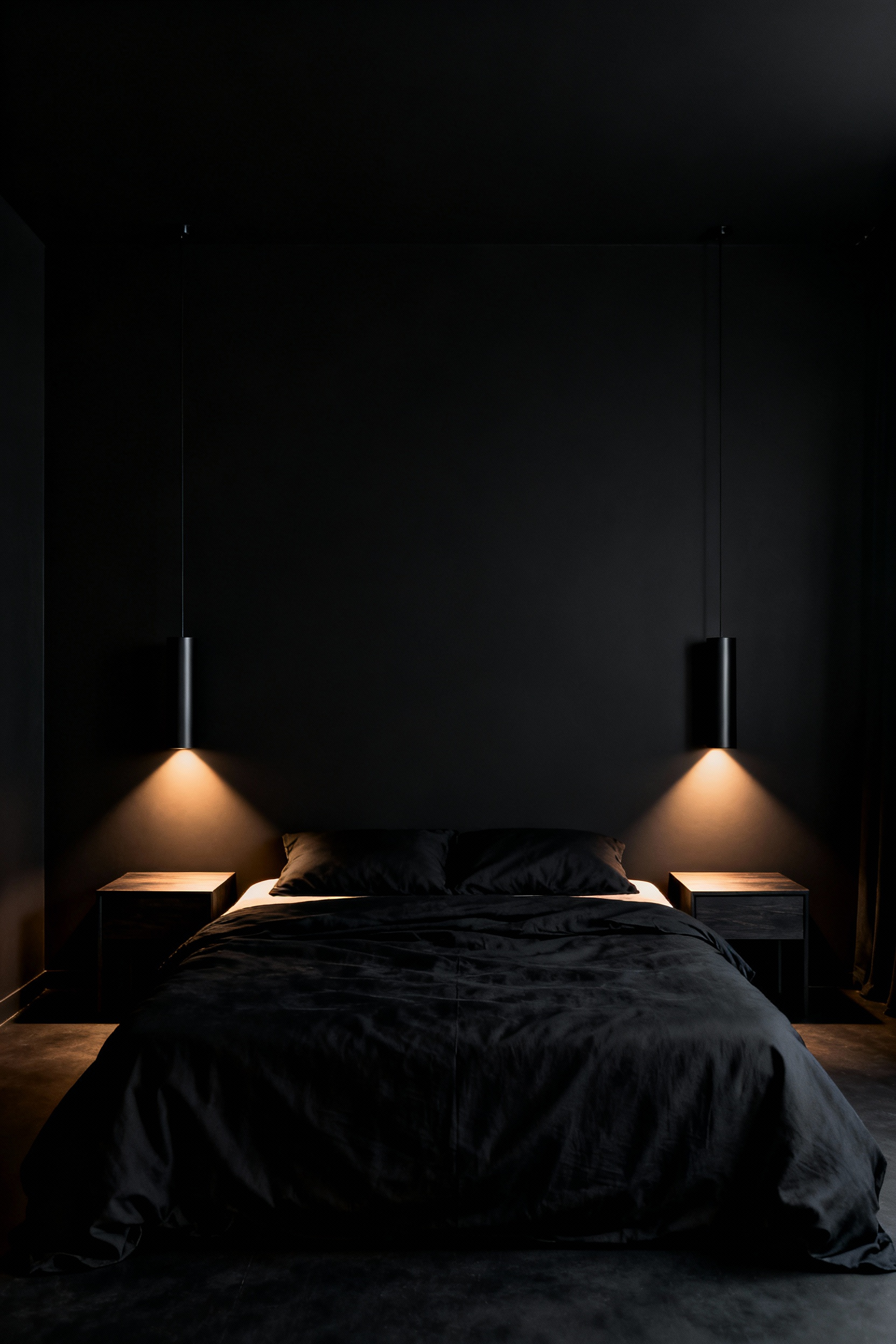
This high contrast adds immediate cinematic depth. However, to keep the space inviting, you must use warm bulbs. Specifically, aim for 1800K to 2700K. Otherwise, the contrast becomes stark and clinical. Furthermore, distinct placement techniques maximize this mysterious allure. For example, “wall grazing” involves installing the fixture close to the surface. This highlights the subtle relief in matte paint.
Finally, proper height ensures the room remains liveable. Typically, you should mount bedside sconces 60–66 inches from the floor. Thus, you avoid direct glare while sitting up. Ultimately, this directs a focused, intimate glow downward. This carves a functional reading space out of the shadows.
The Mirror Strategy: Expanding Space and Reflecting Candlelight
Black walls possess a unique challenge: they absorb almost all ambient light. Consequently, a room can feel smaller without proper intervention. However, the “Mirror Strategy” functions as an essential architectural tool. Specifically, a mirror acts as an optical multiplier. It prevents light from vanishing into the wall by reflecting it back. Therefore, this creates a necessary illusion of depth.
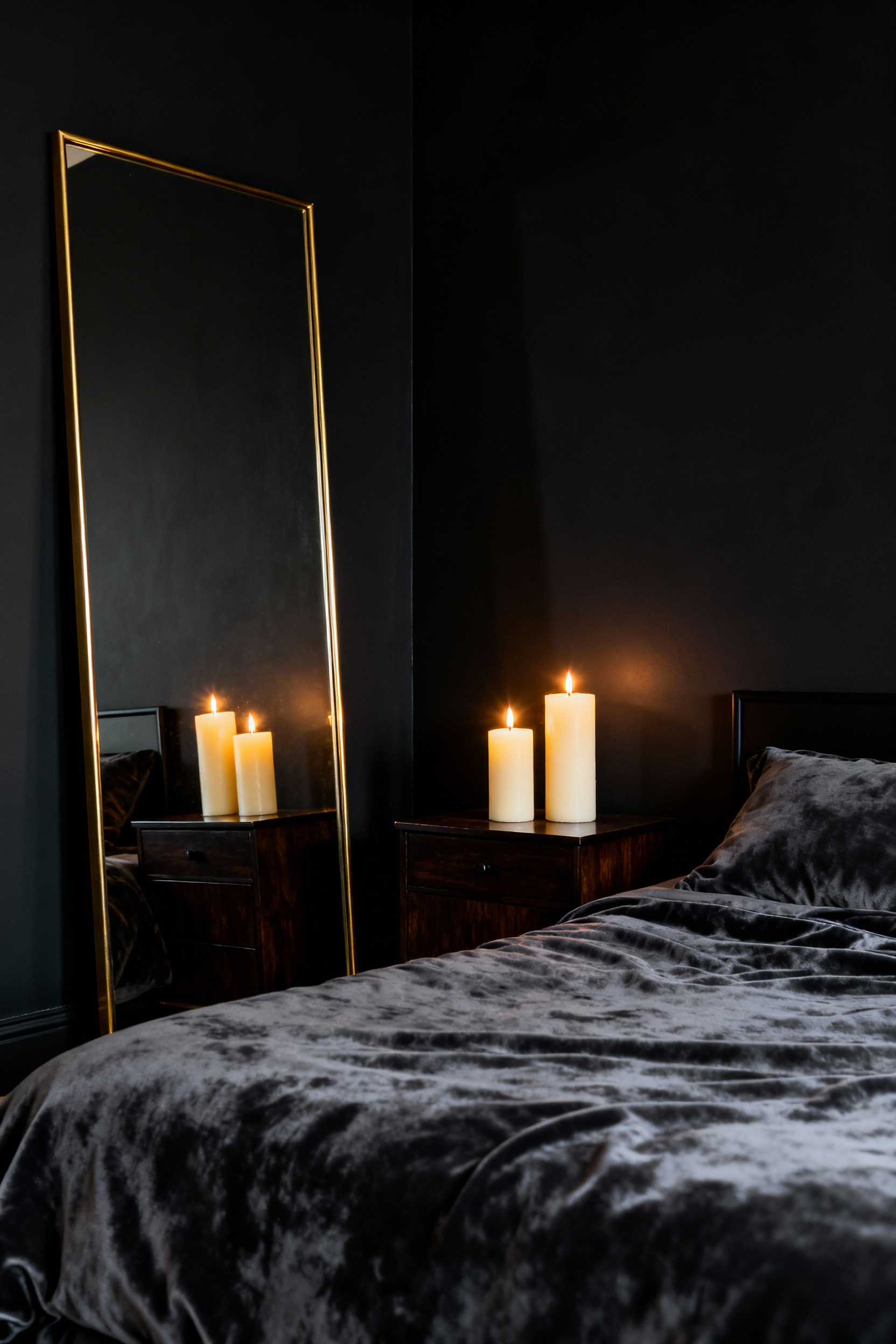
Furthermore, this technique turns lighting into a sensory experience. Because black acts as a velvet canvas, it eliminates visual noise. Thus, the warm glow of a candle becomes a singular focal point. Additionally, the mirror captures the flame’s flickering movement. This introduces dancing shadows, bringing life to the space.
Finally, this approach anchors your modern design in historical luxury. In fact, elite pre-electric interiors relied heavily on mirrors to amplify weak candlelight. By adopting this method, you channel an elite, old-world sophistication. Ultimately, placing a gilded mirror in a black bedroom transforms the aesthetic. It shifts from merely dark to undeniably opulent.
Dark Biophilia: Styling with Dried Florals and Deep Green Foliage
Dark Biophilia transforms a black bedroom into a sophisticated sanctuary. Specifically, this aesthetic utilizes darkness to create a sense of “refuge.” Consequently, the room functions like a protective forest shade. This approach actively counters biophobia, or the anxiety felt in enclosed spaces. Instead, black walls ground the occupant. Therefore, the design feels safe and enveloping rather than imposing.
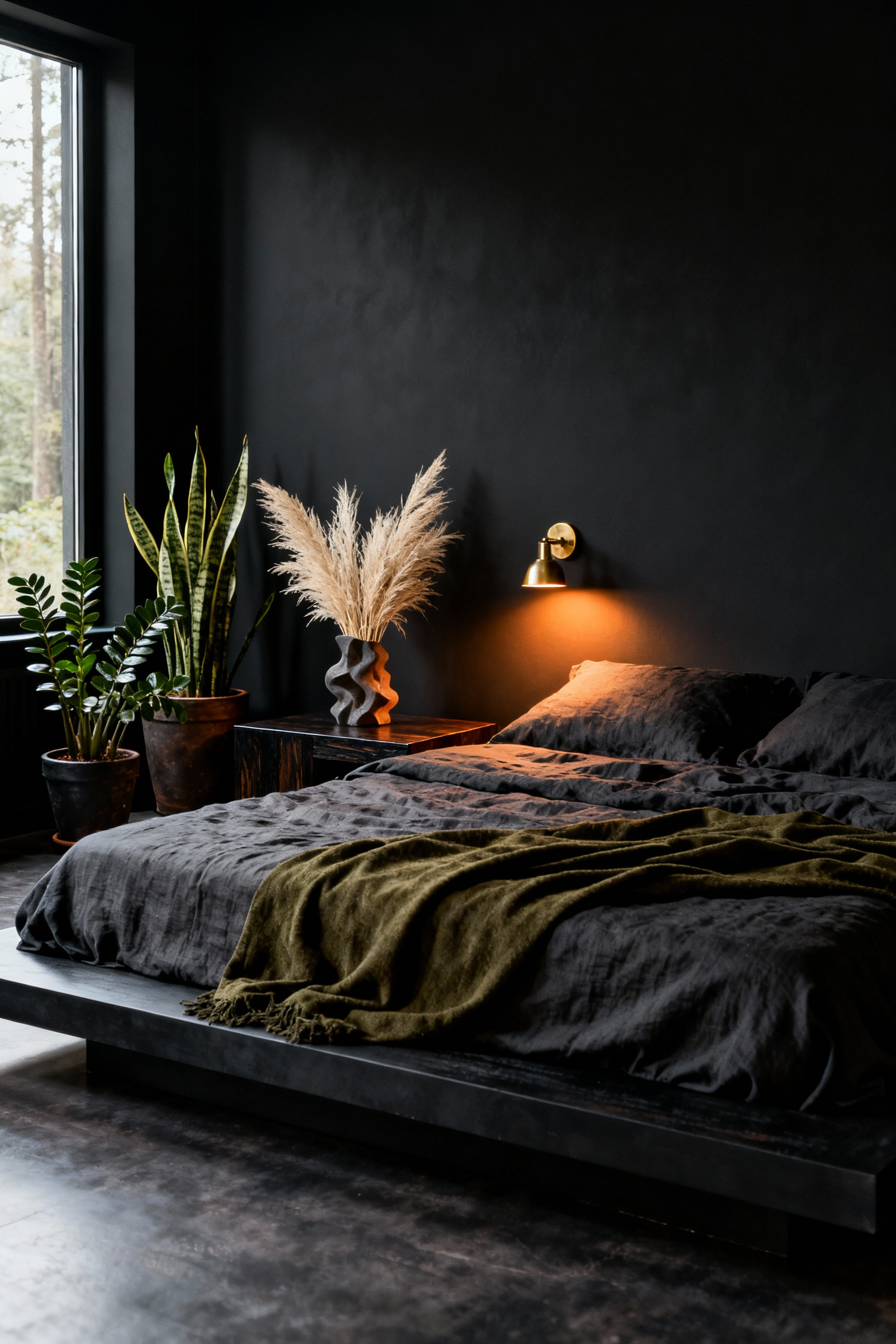
Texture becomes the primary language in a room void of bright color. For instance, dried florals introduce essential sculptural softness. Elements like pampas grass contrast beautifully against hard walls. Furthermore, their feathery forms break up sleek lines. To anchor the look, place these stems in black vessels. This technique captures a sense of enduring elegance.
Finally, living plants must complement the dramatic narrative. However, standard greens can feel too jarring. Instead, opt for foliage with deep, near-black pigmentation. Specifically, varieties like *Aeonium ‘Zwartkop’* are ideal choices. Under focused lighting, these leaves reveal hidden purple undertones. Consequently, they provide vitality without disrupting the aesthetic. Ultimately, this balances life with mystery.
Curating the Walls: Moody Oil Paintings in Ornate Vintage Frames
A flat black or charcoal wall provides a canvas of visual stillness. Specifically, this minimalist backdrop forces ornate vintage frames into the spotlight. In fact, a giltwood frame acts as a dramatic anchor against the dark paint. Consequently, the heavy carving contrasts beautifully with the wall’s sleek modernity. This juxtaposition bridges the gap between historical weight and contemporary simplicity.

Furthermore, the visual language of the artwork dictates the lighting strategy. Moody oil paintings often utilize *chiaroscuro*. This technique relies on dramatic light and shadow. Therefore, you should mimic this intent with a directional picture light. For example, an antique brass fixture illuminates the artwork’s texture. As a result, the impasto pulses with contrast against the darkness.
Finally, this combination offers a profound psychological benefit. Unlike bright art, somber tones contribute to a sense of calm. Additionally, the tactile surface of oil paint prevents the room from feeling flat. Ultimately, this layered design turns the bedroom into a sophisticated sanctuary.
Floor Foundation: Distressed Persian Rugs to Soften the Void
Embracing a black bedroom aesthetic creates an instant sense of drama. However, a monolithic dark floor can sometimes feel like a void. Consequently, integrating a distressed Persian rug acts as a necessary counterpoint. Specifically, these rugs serve as a soft anchor. Through processes like sun-fading, the wool develops a rich patina. As a result, this introduces a human element to modern minimalism.
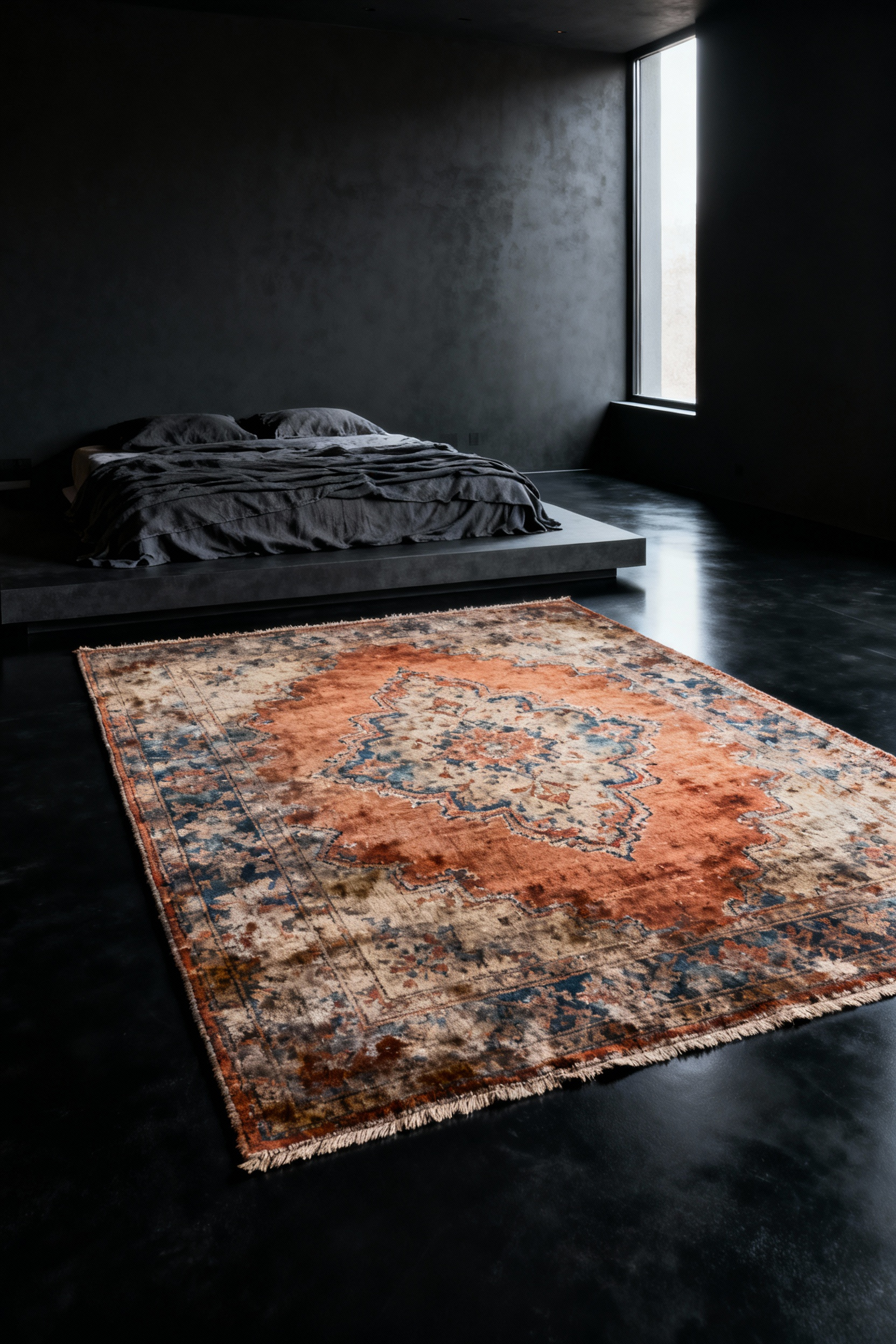
Furthermore, the rug manages the room’s contrast with sophistication. Instead of sharp colors, the distressed palette offers muted blues and charcoals. Therefore, the worn patterns provide visual complexity without heaviness. Additionally, this layer introduces essential tactile warmth. Because the visual scheme is cool, the soft wool creates a cozy experience. Moreover, the distressed texture is functionally forgiving. In fact, it naturally hides everyday wear. Thus, the floor becomes a textured narrative.
Conclusion: Embracing the Night – Moving from Fear to Sophistication
Ultimately, choosing a black bedroom aesthetic represents a shift from fearing the dark to curating it. Instead of feeling cold, these spaces act as a velvety cocoon against the modern world’s visual noise. For more ways to design a comforting personal sanctuary, the fear of the “void” vanishes when you introduce deep richness. Matte finishes and plush textiles replace color contrast. This ensures the room feels expensive rather than severe. Furthermore, lighting transforms from utility into a design partner. By layering warm glow with metallic accents, you create a sanctuary that feels grounded.
In fact, embracing this darkness signals a high level of design confidence. Much like the classic little black dress, this aesthetic speaks of discretionary luxury. Therefore, your home becomes a reflection of quiet power. As you move forward, consider how this visual silence can elevate your daily rituals. Begin by auditing your current lighting and textiles for essential warmth. Finally, allow yourself to step boldly into the sophistication of the shadows.
Frequently Asked Questions
H3: Does painting a bedroom black make it look smaller?
Contrary to popular belief, painting a room black does not necessarily make it look smaller. Due to the “Principle of Recession,” dark, matte colors absorb light and cause the walls to visually recede. This effect blurs the architectural boundaries, creating an illusion of infinite depth and making the space feel vast and cavernous rather than cramped.
H3: What accent colors work best with a luxurious black bedroom aesthetic?
For a truly luxurious black bedroom aesthetic, focus on metallic accents to provide essential contrast and warmth. Polished brass, brushed gold, and copper are ideal because they reflect light dramatically against the matte black background. For non-metallic accents, jewel tones like deep emerald green, ruby red, or sapphire blue provide rich, sophisticated pops of color without undermining the dramatic mood.
H3: Is a black bedroom beneficial for getting better sleep?
Yes, a black bedroom is highly beneficial for restorative sleep. The deep, dark walls actively absorb ambient light, creating the optimal environment necessary for maximizing melatonin production. Furthermore, the reduction in visual noise and high contrast fosters a cocoon-like atmosphere, helping the mind attenuate sensory input and promoting faster, deeper rest.