
For years, a pervasive belief ruled the world of interior design: wallcoverings and bathrooms simply did not mix. Design choices often remained limited to tile and paint, leaving the aesthetic potential of these personal sanctuaries largely untapped. However, recent industry advancements have fundamentally debunked this “moisture myth,” opening the door to truly opulent and enduring design.
This guide reveals the definitive bathroom wallpaper ideas for discerning homeowners, focusing on high-performance materials and installation techniques that guarantee longevity.
A material revolution has introduced solid vinyl, fiberglass, and patented waterproof systems capable of withstanding direct water contact, even inside shower enclosures. These modern high-end wallcoverings feature non-porous, anti-fungal surfaces that resist mildew and allow for easy cleaning. Today’s technology transforms wallpaper from a fragile decorative element into a durable, protective layer suitable for the steamiest environments.
We will examine how to leverage these innovations to create personality-rich bathrooms without compromising on durability. From specific high-performance materials that resist water vapor to critical installation protocols—such as using mold-resistant primers—we will outline how to ensure longevity. It is time to look beyond the tile and embrace a fearless, texture-rich approach to curated bathroom design.
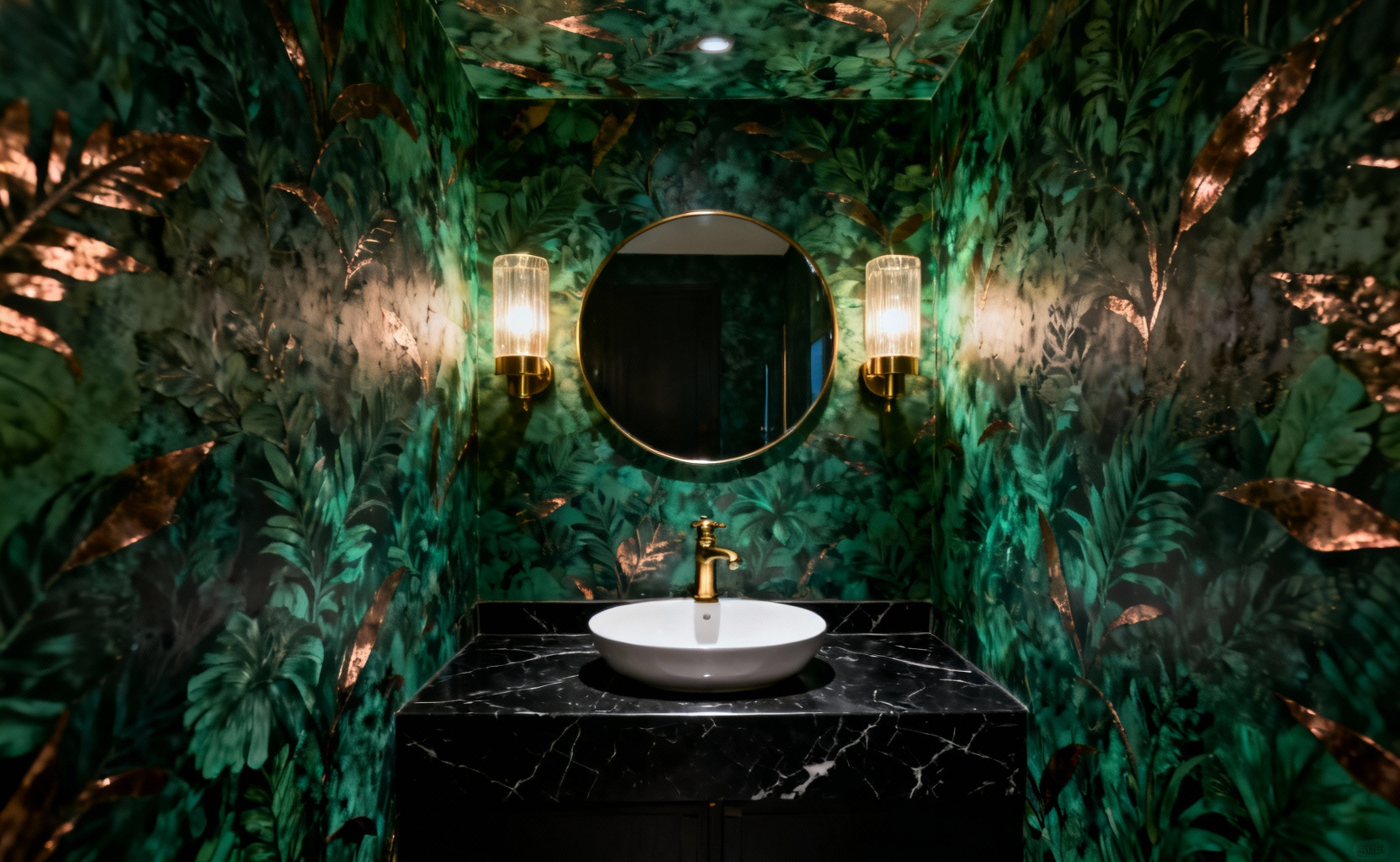
The ‘Jewel Box’ Philosophy: Transforming windowless powder rooms into immersive experiences using dark, saturated palettes.
Windowless powder rooms present a unique opportunity to create a standalone immersive experience. Instead of attempting to brighten the space with white paint, embrace the lack of natural light. Select a deep, saturated palette featuring charcoal, deep navy, or emerald green.
This approach envelopes guests in a sophisticated “other world,” turning a confined footprint into a cozy, intentional asset rather than a dark compromise.
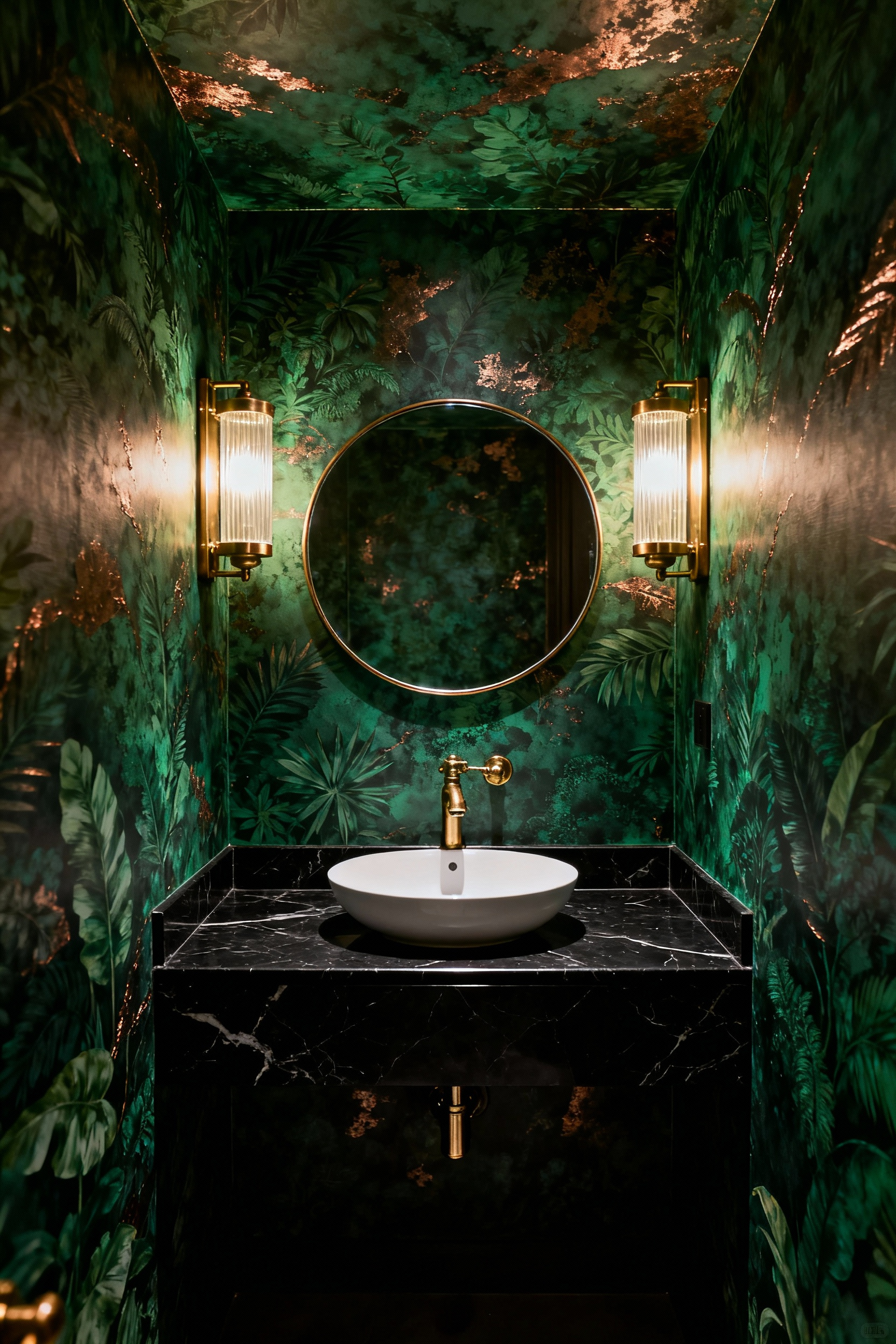
Commit fully to this aesthetic by applying wallpaper to every surface. Install heavily patterned or richly textured papers, such as metallic grasscloth, on all four walls and even the ceiling. While bold prints might overwhelm a large living area, a small powder room creates the perfect container for dramatic maximalism. Covering every plane creates a cohesive, box-like effect that amplifies the luxury of the materials and eliminates visual breaks.
Complete the design by treating hardware and fixtures as the room’s jewelry. Counteract the dark backdrop with reflective finishes like polished chrome, brass, or gold. Incorporate an ornate statement mirror to catch artificial light and reflect the wallpaper’s intricate details. These glittering elements add necessary contrast, ensuring the saturated space feels opulent and inviting rather than cave-like.
Oversized Botanicals: Why scale matters in small spaces and how giant floral motifs actually expand visual perception.
It may seem surprising, but small spaces often benefit most from grand gestures. Using oversized botanical wallpapers shifts the focus from a room’s physical limitations to the depth of the design itself. When you apply a floor-to-ceiling mural with widely spaced motifs, you achieve “envelopment.”
This technique stops the eye from registering tight corners and forces a visual journey across the surface to comprehend the pattern. The brain interprets this necessary eye movement as evidence of a larger space, transforming a cramped bathroom into a transportive experience rather than a confined utility area.
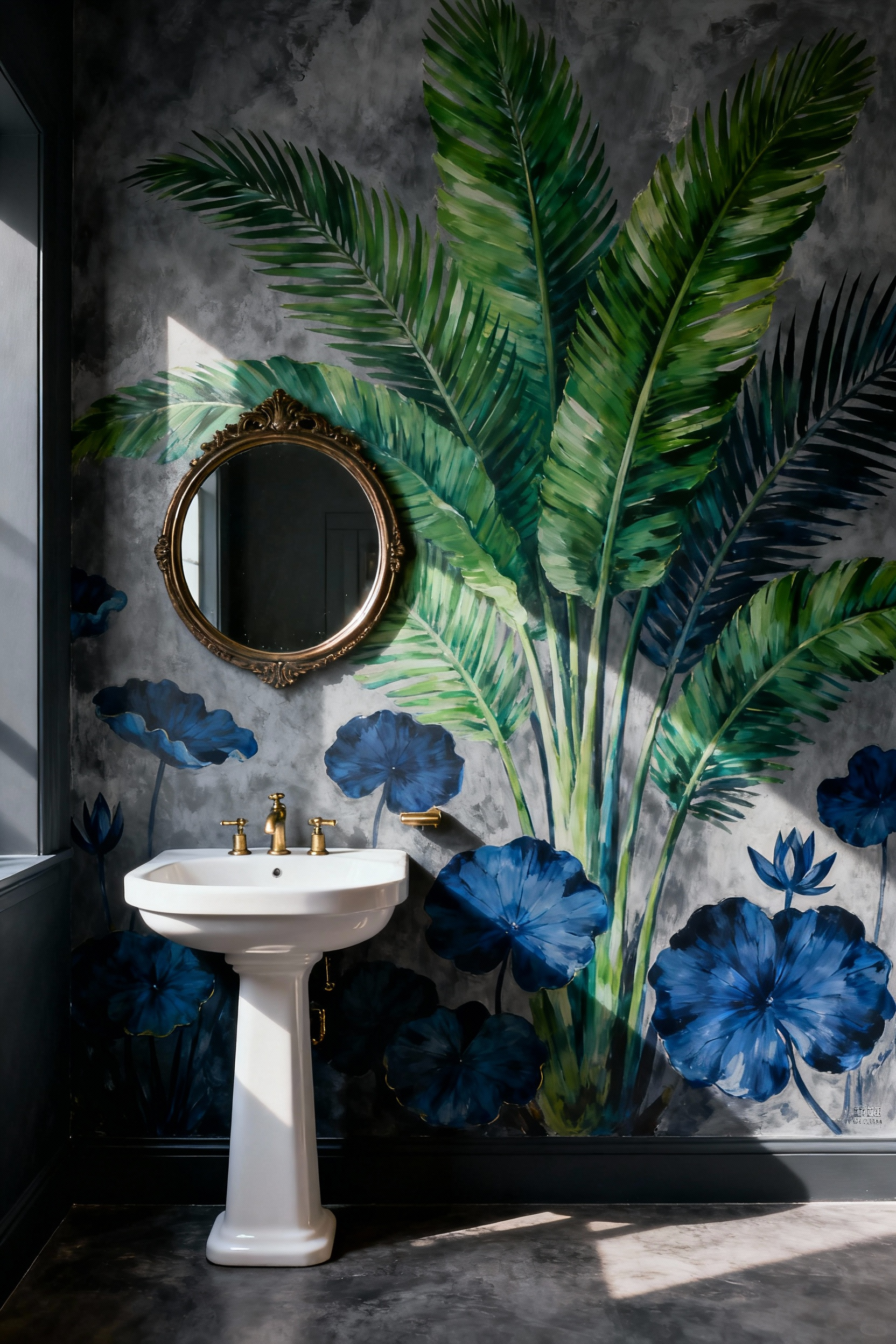
Strategic styling further enhances this optical illusion. Select botanical prints in nature-inspired colors, such as muted greens or soft blues, to foster a psychological sense of openness and airiness.
To maximize this impact, install a large mirror directly opposite your most impactful wall. This simple addition reflects the oversized pattern, effectively doubling the visual field and amplifying the room’s depth. The result is a luxurious, expansive atmosphere created entirely through visual perception.
Chinoiserie & Scenic Panels: Treating your bathroom walls as a continuous fine art mural rather than a repeating pattern.
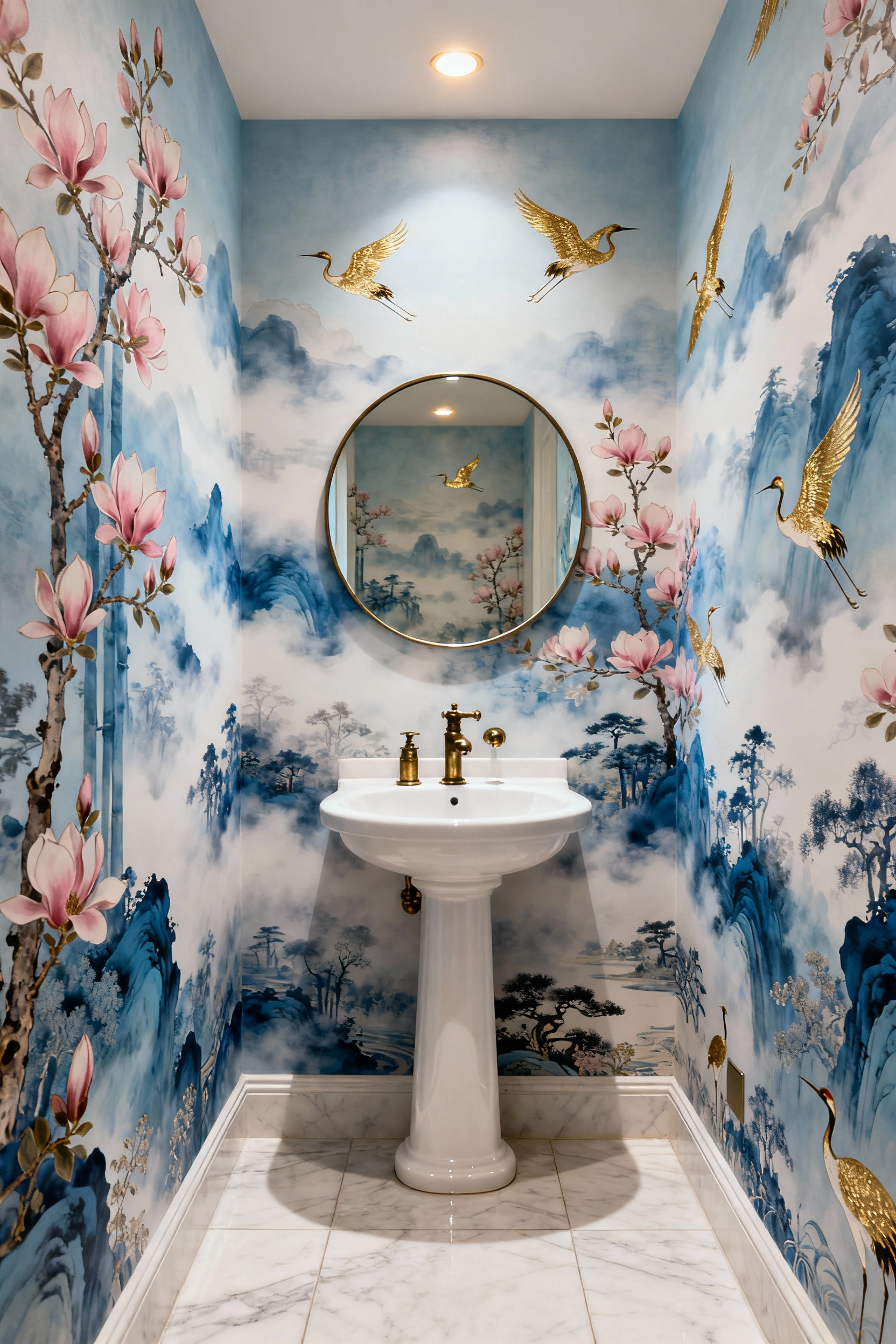
Transforming a bathroom requires more than simple repetition; it demands a narrative. Chinoiserie and scenic panels elevate walls from a mere background to a continuous fine art mural. By choosing designs with landscape elements or fading edges, you add significant visual depth to the room.
This creates the illusion of a distant garden or view, visually expanding even the most compact powder room. For the most dramatic effect, wrap the design around all four walls. This full immersion turns a small space into an intentional conversation piece rather than an afterthought.
However, the bathroom environment poses unique challenges for delicate art. You must prioritize durability to preserve the hand-painted aesthetic against humidity and steam. Select murals manufactured from vinyl or specially treated moisture-proof materials to prevent peeling and fading.
When planning the installation, identify the least visible area for the inevitable seam, such as directly behind the open door. This strategic placement maintains the illusion of a never-ending, seamless panorama. For more advice on elevating artistic elements, see our luxury principles for high-impact bathroom art decor.
To further refine the look, consider pairing the mural with wainscoting. Installing wooden paneling on the bottom third of the wall serves two distinct purposes:
- Protection: It provides a durable barrier against splashes and moisture near the sink and toilet.
- Framing: It pushes the scenic panel up to eye level, effectively framing the mural like a grand piece of artwork.
This combination balances practical durability with the opulent aesthetic of a curated gallery, ensuring your space feels both luxurious and lived-in.
The Fifth Wall Revolution: Why wallpapering the bathroom ceiling is the ultimate signature of a maximalist designer.
To a maximalist, a white ceiling represents a missed opportunity. Treating the ceiling as the “fifth wall” completes the visual narrative of a space and eliminates the jarring break of a plain surface.
By extending wallpaper overhead, you achieve “pattern drenching.” This technique envelopes the bathroom in continuous color and texture, transforming a utilitarian room into an immersive, opulent experience. It ensures the design feels intentional rather than unfinished.
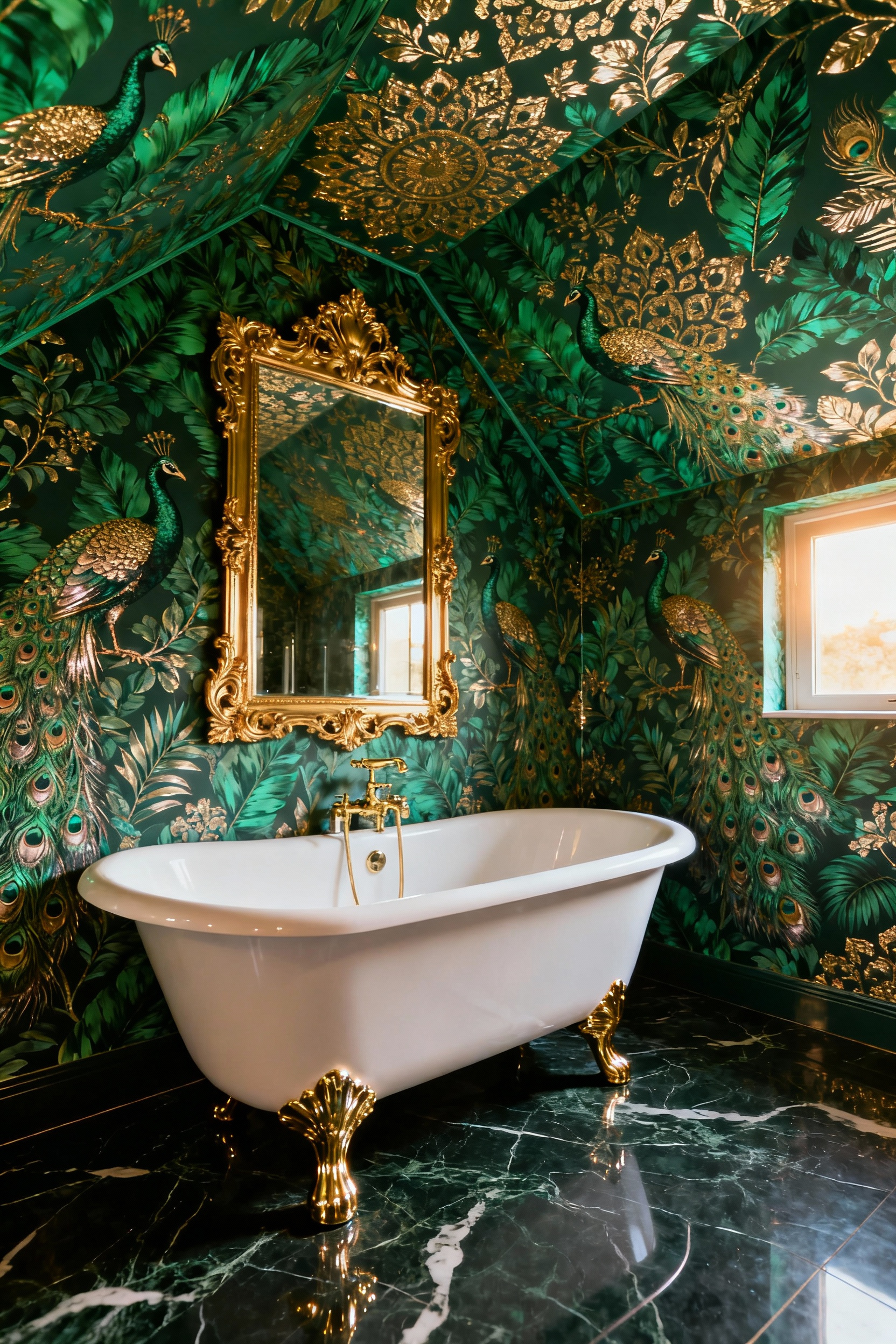
Selecting the right motif for an overhead surface requires a shift in perspective. Avoid patterns with a distinct vertical orientation, such as plants growing upward, as these can look disorienting on a horizontal plane. Instead, choose non-directional patterns like abstracts, geometrics, or all-over prints that look purposeful from any angle.
To further elevate the ambiance, prioritize wallpapers with a sheen, shimmer, or metallic finish. These textures reflect light from your fixtures, adding depth and amplifying the sense of grandeur in a compact space.
Durability remains just as critical as aesthetics in these humid environments. Always specify moisture-resistant materials to ensure the installation withstands steam and condensation. Vinyl-coated wallpapers and specialized washable papers are essential choices that prevent peeling or warping. While powder rooms offer the easiest entry point for this trend due to lower humidity, utilizing high-quality performance papers allows you to bring this bold, signature look into full baths without compromising longevity.
Geometric Art Deco Revival: Using sharp, metallic gold lines to add architectural structure to boxy builder-grade bathrooms.
Transform a standard, boxy bathroom into a structured masterpiece by embracing Geometric Art Deco Revival. Patterns featuring strong vertical lines, repeating diamonds, or sunburst motifs draw the eye upward, effectively elongating the walls. This vertical emphasis distracts from limited square footage and mimics the grandeur of architectural detailing.
By applying these sharp, metallic gold designs to a single focal wall—such as behind the vanity—you create a defined central element that breaks the uniformity of a builder-grade space. (If you are looking for more dramatic focus, explore maximalist blueprints for an accent wall.)
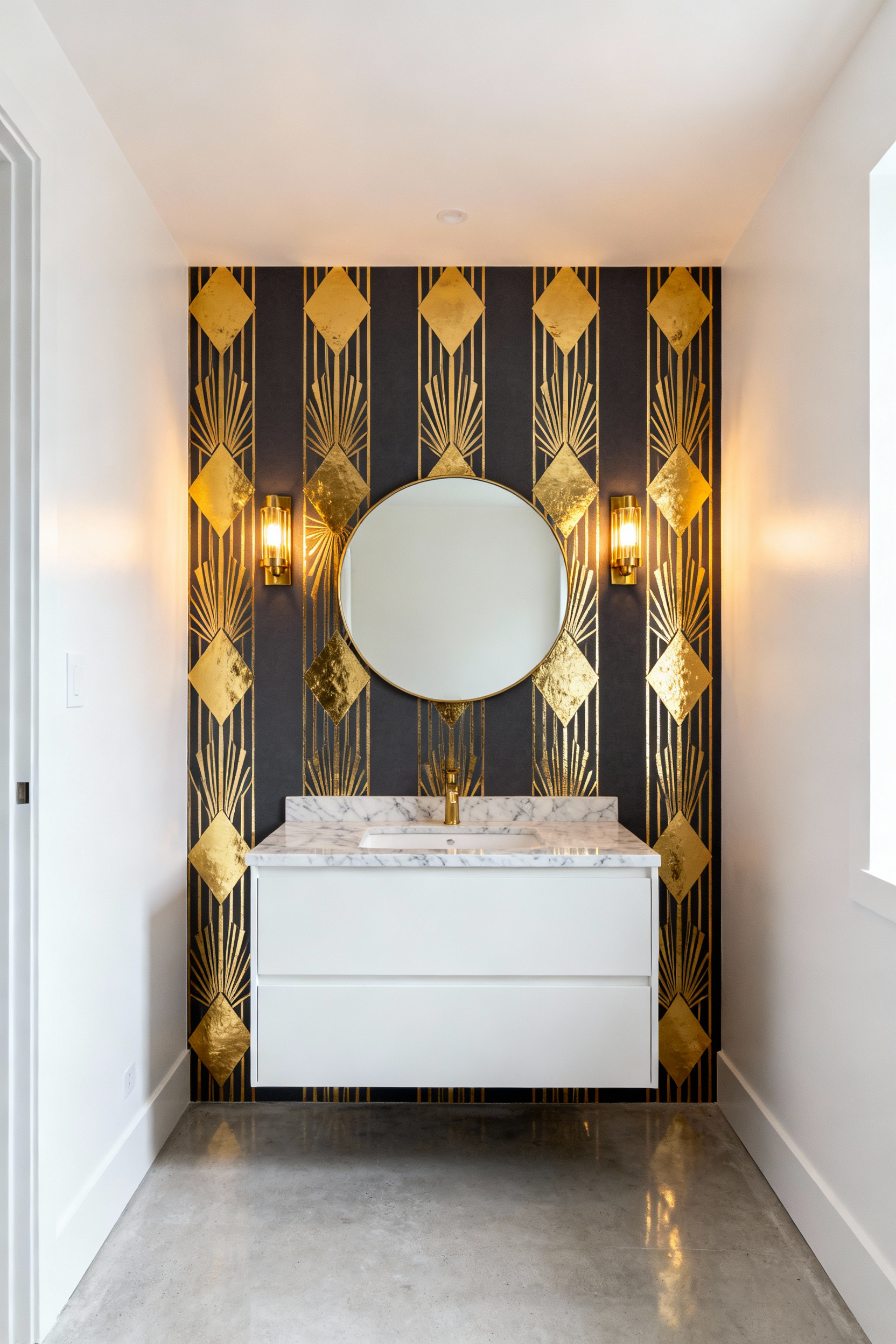
The finish of the wallpaper plays a crucial role in elevating the atmosphere. Metallic gold lines catch and reflect ambient light, adding a sophisticated, opulent glow that flat paint cannot achieve. For a cohesive look, treat these gold accents as structural materials rather than mere decoration. Coordinate your hardware, including mirror frames, vanity pulls, and lighting, with crisp brass or gold finishes to reinforce the design and unify the room.
Practicality remains essential in high-humidity zones. Select durable vinyl or peel-and-stick formats to ensure longevity. These materials resist moisture and allow for easy cleaning, unlike traditional paper options. This approach delivers the luxury of the Art Deco era with the resilience required for modern living, ensuring your bold aesthetic remains pristine.
Tactile Illusions: Utilizing faux-shagreen, leather, or embossed crocodile textures to soften hard ceramic surfaces.
Bathrooms often feel cold due to the prevalence of hard, glossy surfaces like ceramic, porcelain, and glass. To introduce a necessary sensory counterpoint, incorporate tactile wallpapers featuring faux-shagreen, leather, or embossed crocodile textures.
For these humid environments, prioritize moisture-resistant, heavy-duty vinyl. This material ensures washability and longevity while providing a deep, embossed 3D effect that physically and visually softens the room.
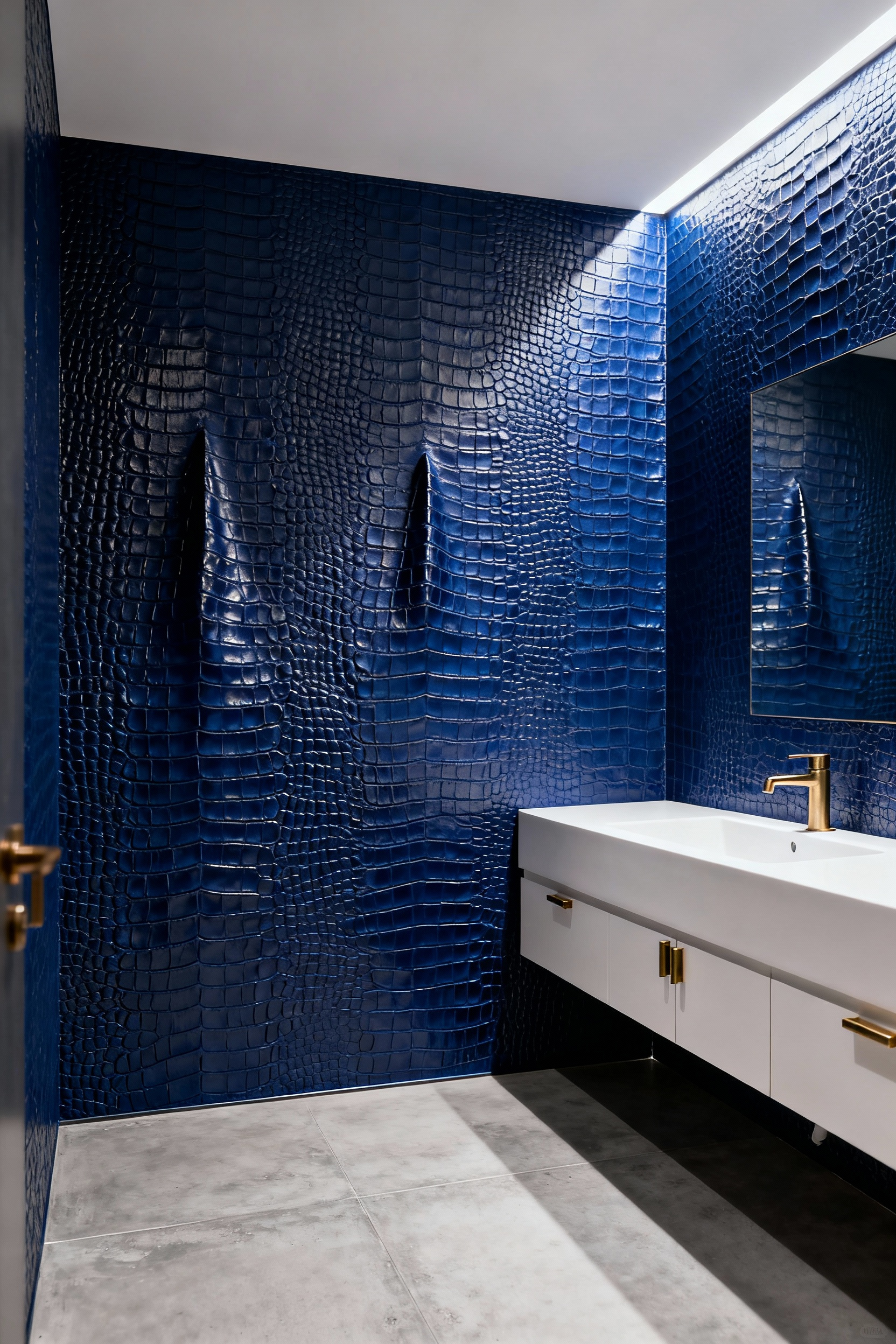
Leverage the power of contrast to elevate the aesthetic. Select textures with a matte or sueded finish to act as a visual foil against polished tiles. This approach creates a perceived softness and adds substantial depth. Apply these exotic textures to a feature wall, such as behind a vanity, to achieve a sophisticated “hotel chic” atmosphere. This focused application makes a powerful statement without overwhelming the space.
To fully realize this bespoke illusion, layer the wallpaper with other rich materials. Pair crocodile or leather textures with veiny marble countertops and aged brass or bronze fixtures. This combination enhances the room’s elegance. Furthermore, this high-impact look is often budget-friendly; many embossed faux-skin options are manufactured from affordable vinyl or recycled materials, delivering luxury style at a standard price point.
Moody Noir Narratives: Embracing black and charcoal grounds to make chrome and brass fixtures pop.
Deep black and charcoal wallpapers provide the ultimate theatrical backdrop for metallic accents. To maximize this effect, prioritize highly reflective finishes like Polished Brass or Chrome. These surfaces utilize the dark, matte ground to amplify their shine, effectively acting as jewelry within the space.
For a crisp, contemporary aesthetic, pair deep gray walls with Polished Chrome or Nickel; the silver tones cut through the darkness for a high-contrast pop. Alternatively, Brushed or Aged Brass introduces essential warmth. The golden-yellow hues counteract the coolness of a noir palette, ensuring the room feels luxurious rather than stark.
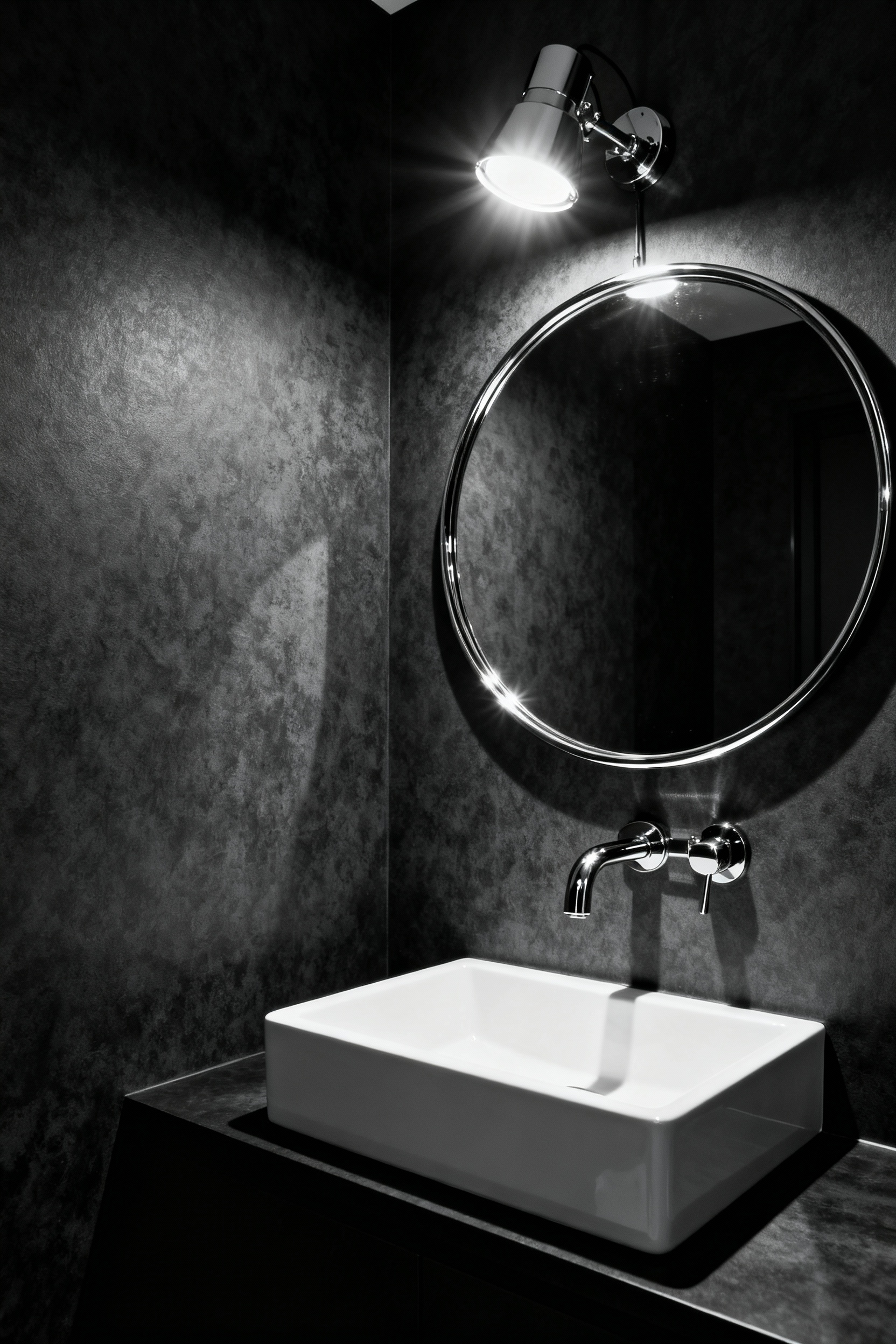
Successful execution of this look requires strategic illumination and repetition. Without proper lighting, a moody room becomes a “cloud of darkness.” Install wall sconces or vanity lights that directly graze your metallic fixtures to enhance their reflective qualities.
Furthermore, repetition is key to a cohesive design. Repeat your chosen finish—whether brass or chrome—across at least two elements, such as matching the faucet to the shower hardware or mirror frame. This unifies the space and transforms hardware into a powerful design statement.
The Jungle Immersion: Layering leafy, tropical prints with live plants for a biophilic sanctuary that feels wild, not manicured.
To achieve a biophilic sanctuary that feels immersive rather than manicured, you must blur the line between architecture and nature. Start with the walls by selecting a lush, photorealistic jungle mural or oversized tropical print to establish depth.
Because bathrooms present unique challenges, opt for washable vinyl or premium non-woven wallpaper capable of withstanding high humidity. Anchor these bold visuals with unpolished textures like rattan or reclaimed wood, and use matte black fixtures to ground the design. This material mix prevents a kitschy “tiki bar” effect and ensures the space feels sophisticated.
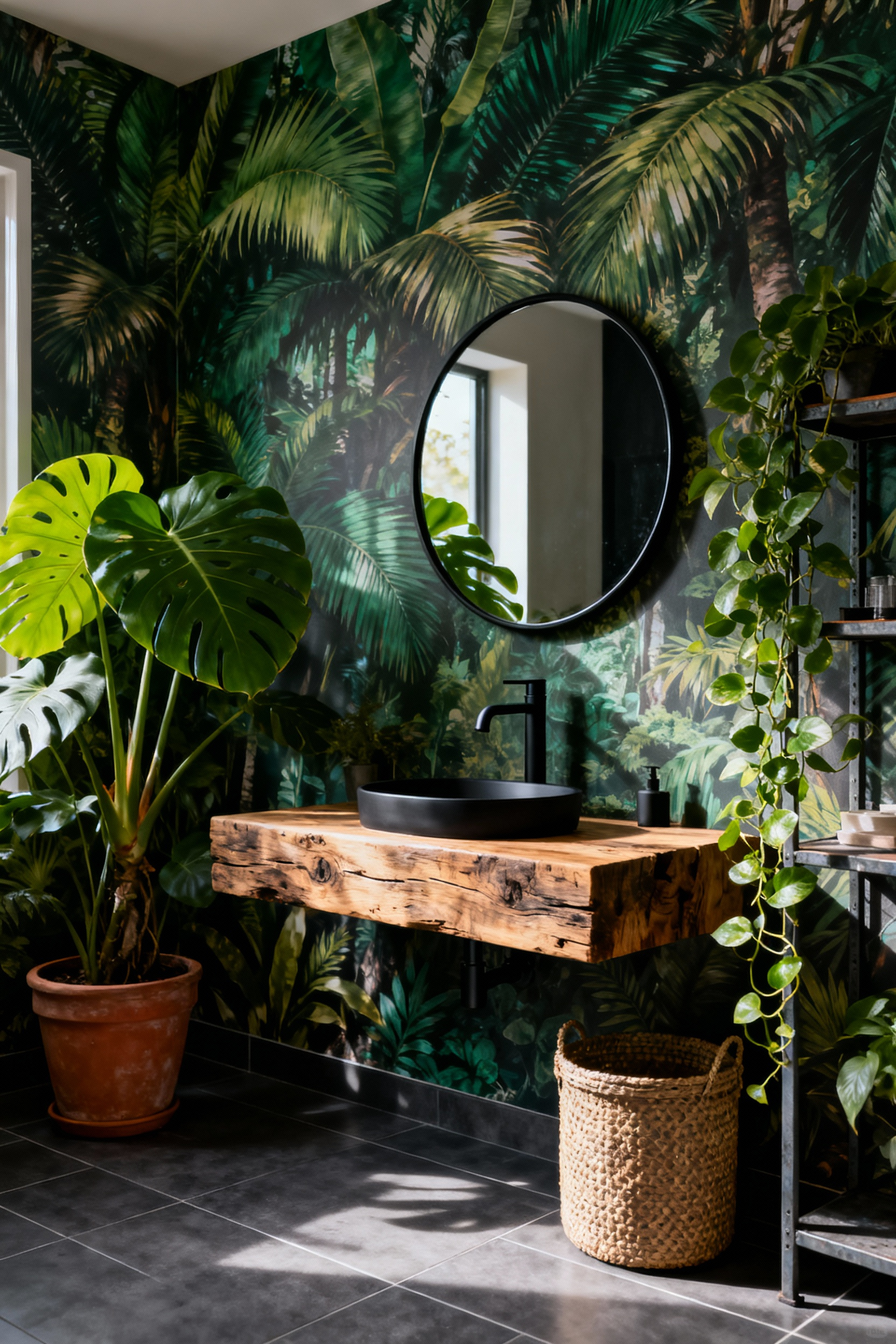
Implement “rainforest layering” to create a dense, canopy-like atmosphere. This technique involves arranging live greenery at three distinct levels: low foliage to hide planter bases, mid-level plants on wooden shelves, and trailing varieties like Pothos suspended from the ceiling. Position these live plants directly in front of the wallpaper to contrast real, 3D textures against the 2D print. This arrangement tricks the eye, making the wallpaper appear as a deep, organic backdrop while real vines visually spill out into the room.
Finally, utilize the bathroom’s inherent climate to maintain this wild aesthetic. Steam and moisture create a perfect environment for tropical species such as ferns, orchids, and philodendrons. By choosing plants that naturally thrive in damp conditions, you ensure the design remains sustainable and lush without constant intervention. This approach moves beyond simple decoration, resulting in a living environment that fully embraces organic abundance. (For holistic design, ensure your aesthetic extends to the lighting and privacy layers; review our guide on transformative bathroom window treatments.)
Unexpected Pairings: How to successfully mix high-pattern wallpaper with marble or beadboard wainscoting.
High-impact wallpaper transforms a bathroom, but it requires a solid foundation to avoid overwhelming the compact footprint. Install marble or beadboard wainscoting on the lower one-third to one-half of the wall to create a necessary visual “pause.”
This structural base acts as a neutral anchor, effectively framing the bold design above. By keeping the wainscoting simple—such as crisp white paint or classic light Carrara marble—you ground the room, allowing maximalist florals or geometric murals to take center stage without competing for attention.
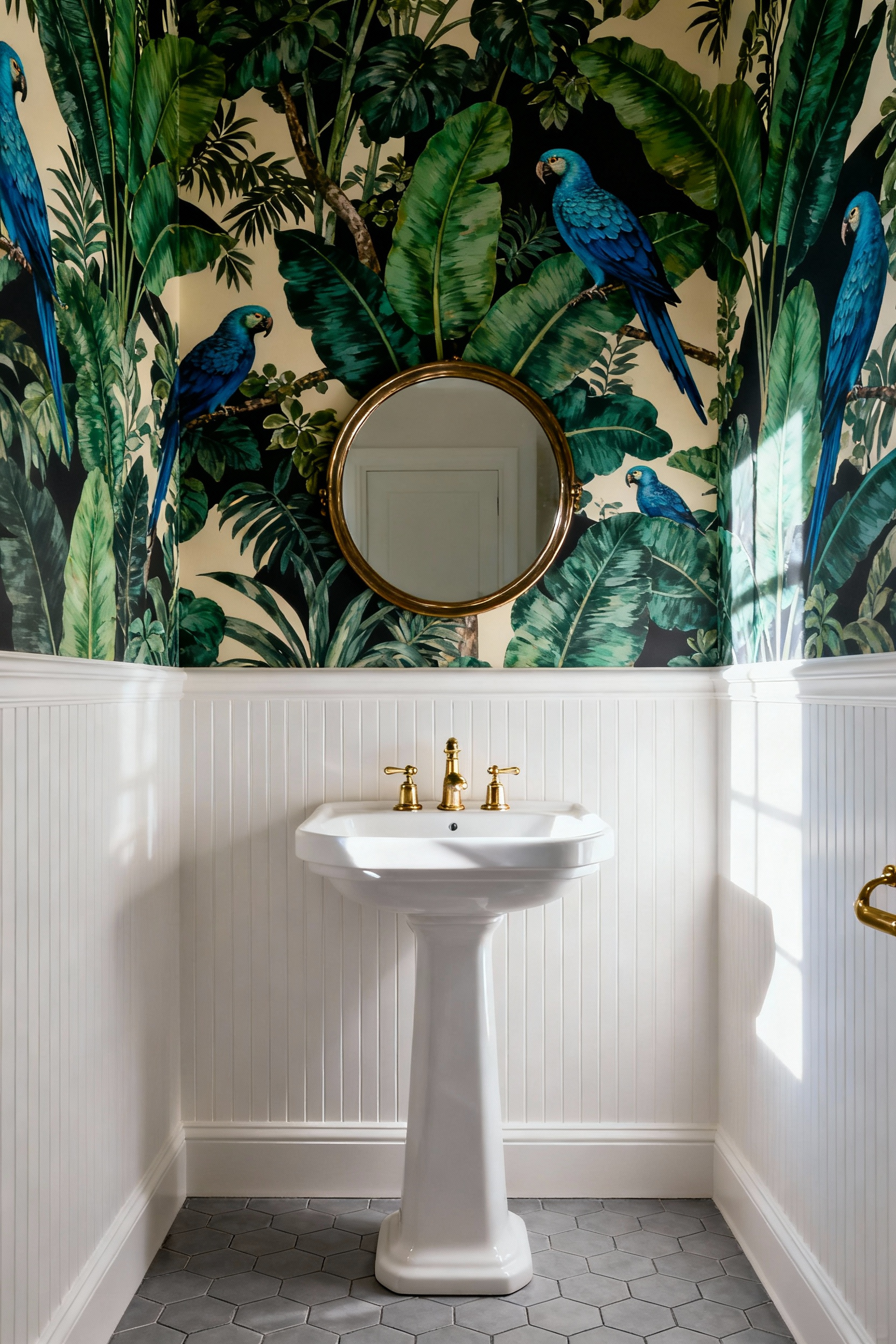
To ensure these distinct elements feel cohesive rather than chaotic, establish a color bridge. Extract a single accent color from the wallpaper’s pattern to inform the material below. This might mean painting beadboard a coordinating tonal shade or selecting marble with veining that mirrors the wallpaper’s undertone, such as pairing cool gray veins with a cool-toned print.
Simultaneously, use scale to create visual rhythm. Pair large-scale, bold prints with the fine, repetitive lines of beadboard. This contrast in size adds depth and prevents the patterns from clashing.
The most bespoke luxurious results come from mastering the contrast between texture and polish. You must balance the physical feel of the wainscoting against the surface finish of the paper to avoid a flat appearance:
- Beadboard: Counter the vertical, matte, and cozy texture of wood with a lush or glossy wallpaper, such as silk, vibrant vinyl, or a high-sheen floral.
- Marble: Soften the cold, polished sleekness of stone by pairing it with a tactile, matte, or fabric-look wallpaper, like grasscloth or heavily textured linen.
Abstract Watercolor Washes: Using fluid, non-linear designs to counteract the rigidity of subway tile.
Subway tile defines a space with crisp, linear geometry. To counteract this rigidity, introduce abstract watercolor washes. The fluid, organic nature of watercolor softens the hard, repetitive lines of tile and grout.
By treating neutral subway tile as a grounding element, you create a “clean slate.” This allows the vibrant, complex wallpaper to act as the room’s artistic focal point without causing visual chaos. The pairing creates a necessary tension between the industrial structure of the wall and the softness of the art.
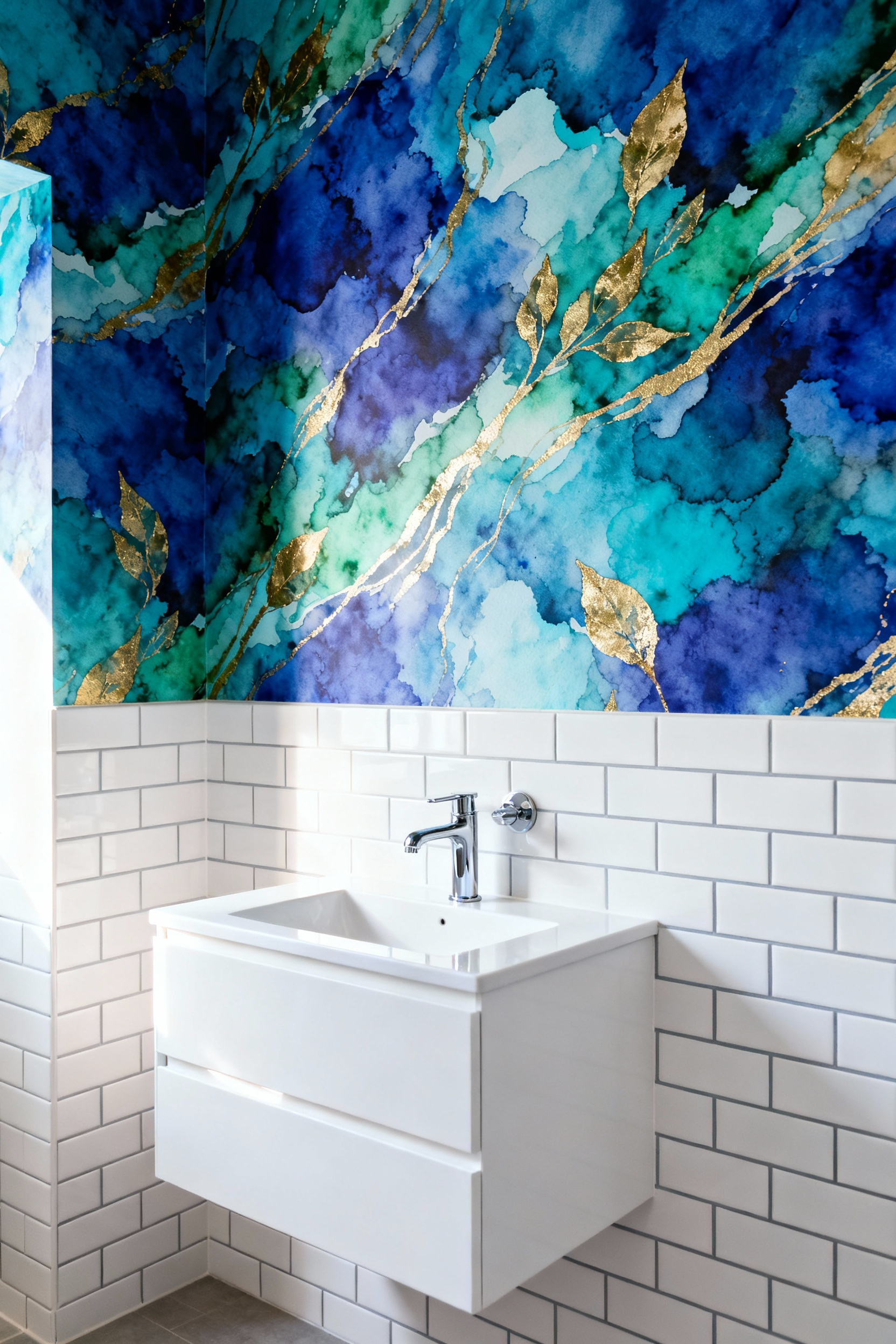
Select your wallpaper scale carefully to maximize impact. Avoid small, repeating patterns that compete with the grid of the tile. Instead, choose oversized murals or designs with long vertical repeats. These mimic custom, hand-painted wall art and break the visual rules established by the brickwork.
For a cohesive look, pull colors from the tile’s undertones. A watercolor wash that includes the faint warm-grey of your grout, for instance, bridges the gap between the two contrasting surfaces.
Prioritize material performance alongside aesthetics. Watercolor designs often feature delicate details and soft gradients that require protection. Always select moisture-resistant materials, such as vinyl or specific “wet room” grade papers. These materials withstand the humidity inherent in a tiled bathroom. Proper material selection ensures the opulent, personality-rich design endures the daily demands of the environment.
Toile de Jouy Reimagined: Updating classic French pastoral scenes with neon accents or subversive modern motifs.
Reimagined Toile de Jouy transforms a bathroom from a utilitarian space into an immersive experience by blending historic elegance with modern shock value. Rather than relying on traditional pastoral scenes, select subversive motifs that tell a contemporary story. Designs featuring urban cityscapes, mythological creatures, or satirical takes on modern life offer an unexpected twist.
Move beyond the classic monochromatic blue or red palettes; instead, embrace high-performance colorways like hot pink, electric chartreuse, or high-contrast black and white. This approach maintains the intricate line work of the original style while injecting a necessary dose of opulent personality.
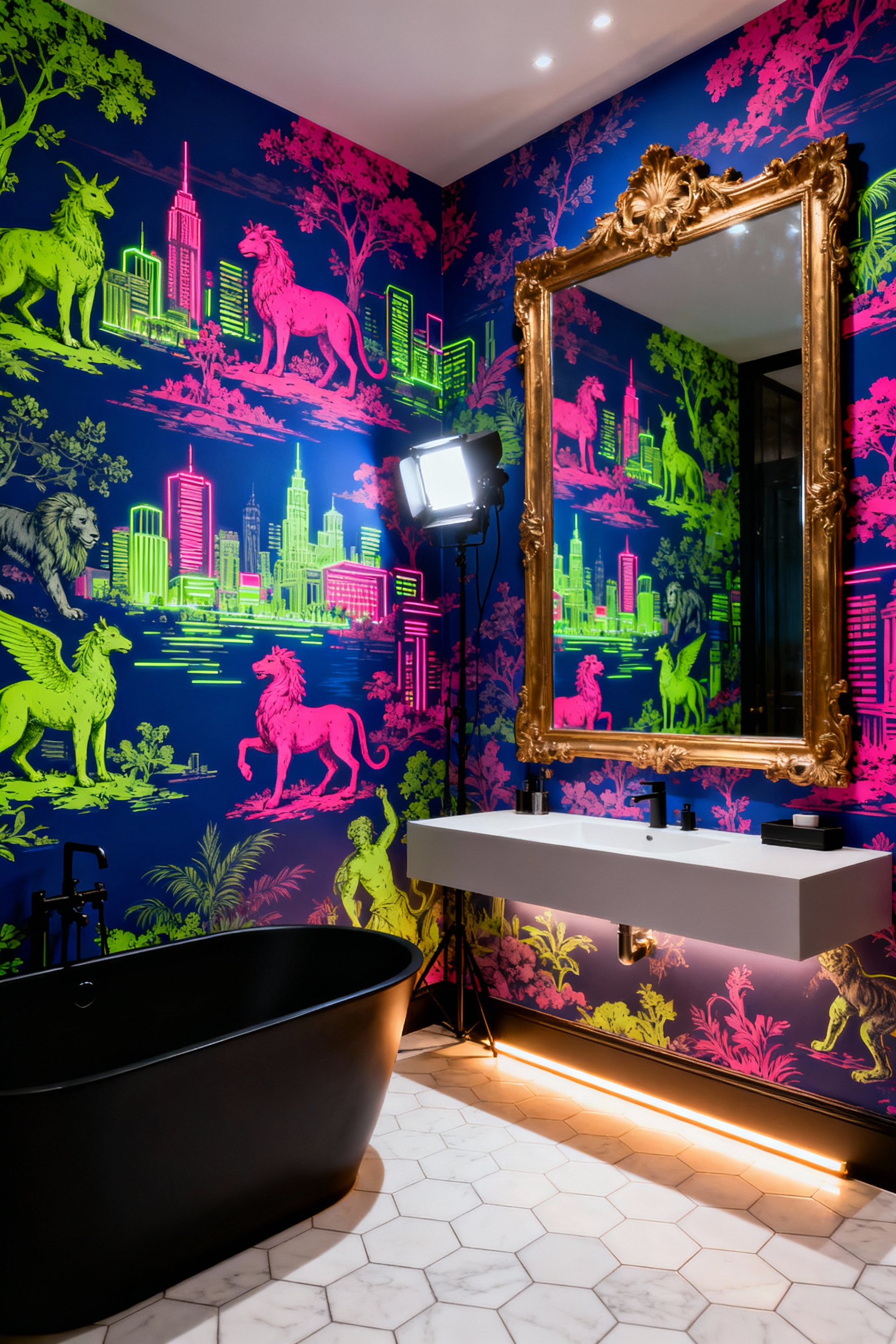
Small spaces, particularly powder rooms, serve as the perfect canvas for these dense, narrative patterns. Enveloping the room in a bold print creates a jewel-box effect that captivates without overwhelming the rest of the home. To execute this look effectively, focus on high-contrast pairings and saturated accents:
- Anchor with Modern Fixtures: Balance the complex pattern with ultra-modern elements, such as polished nickel faucets or crisp white subway tile, to prevent the room from feeling dated.
- Saturate the Millwork: Pull a vibrant hue from the wallpaper design—such as a deep navy or lime green—and apply it to the trim, baseboards, and window frames for a cohesive, custom finish.
- Create Focal Points: Utilize the narrative elements of the wallpaper, like a quirky animal or specific scene, to center the design behind the vanity mirror for maximum visual impact.
The Metallic Factor: Selecting papers with reflective mica elements to amplify limited lighting.
Incorporating metallic elements into wallpaper offers a sophisticated solution for windowless or dimly lit bathrooms. To maximize this effect, select papers featuring a light-colored base, such as cream or soft white, infused with reflective mica particles or a metallic foil finish.
Unlike standard matte surfaces, the light base reflects ambient glow while the mica scatters it, making the space appear significantly brighter and more spacious. For the greatest impact on visual dimensions, prioritize silver or pearlescent hues. These cool tones amplify light more effectively than warmer copper or gold, creating an airy ambiance that counteracts the enclosed feeling of a small room.
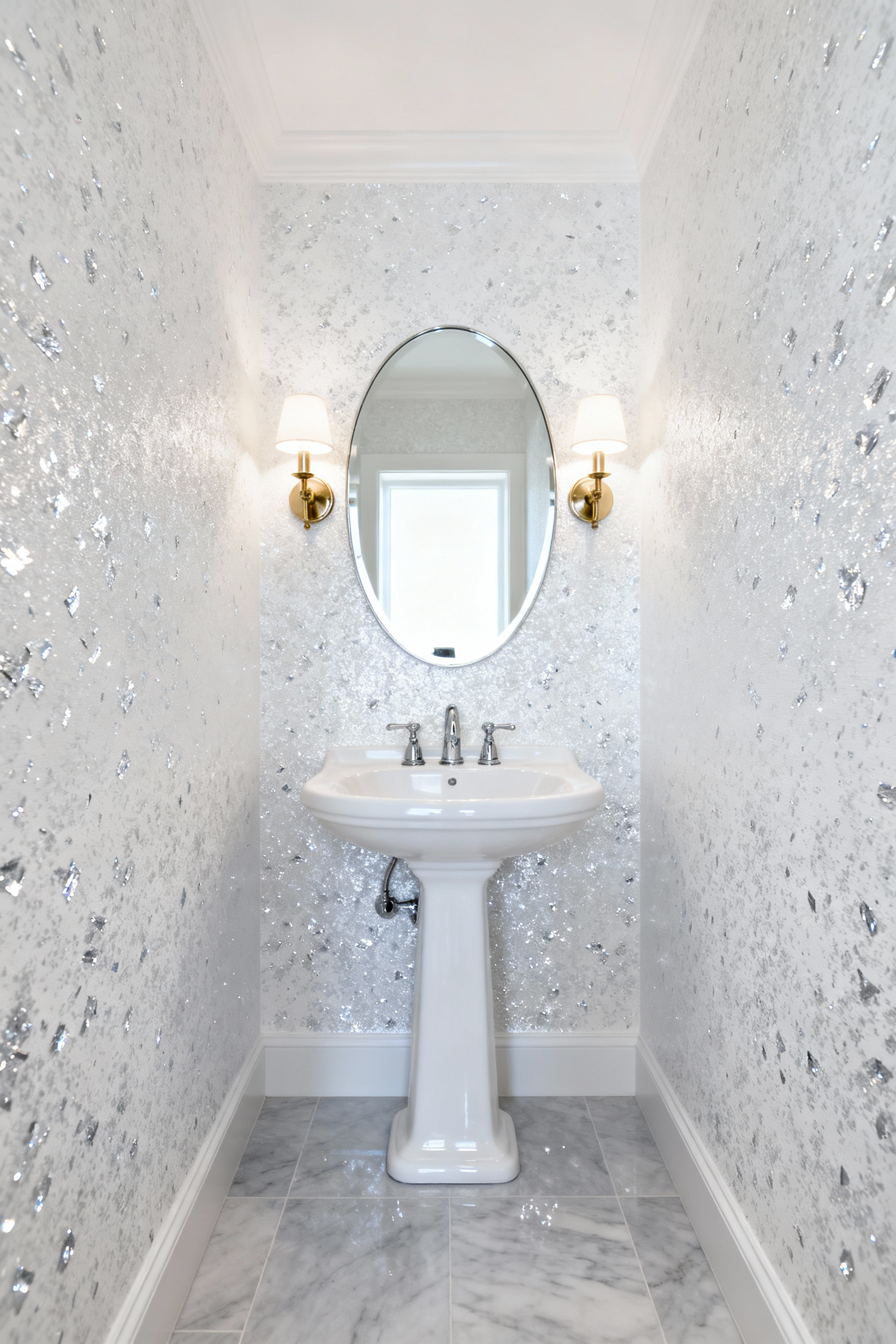
Strategic placement further enhances this “more is more” approach to lighting. Utilize reflective paper on a single accent wall, such as the area behind a vanity, to establish a luxurious focal point without overwhelming the layout.
To fully leverage the metallic effect, install a large mirror directly opposite or adjacent to the mica-infused wallpaper. The mirror catches the light scattered by the metallic particles and bounces it back into the room. This technique effectively doubles the visual brightness and depth, transforming a dark powder room into a luminous jewel box.
Animal Print Sophistication: How to style leopard or zebra prints so they read as ‘classic neutral’ rather than ‘kitsch’.
To establish animal print as a sophisticated element rather than a novelty, you must first restrict the color palette to true neutrals. Select wallpaper in classic, realistic colorways, such as the stark black and white of zebra or the warm brown and gold tones of leopard. Alternatively, monochromatic iterations like navy and cream or charcoal and dove gray offer a subdued elegance.
By limiting the palette, you allow the pattern to function as a rich texture rather than a loud graphic, enabling it to blend seamlessly with the room’s architectural elements.
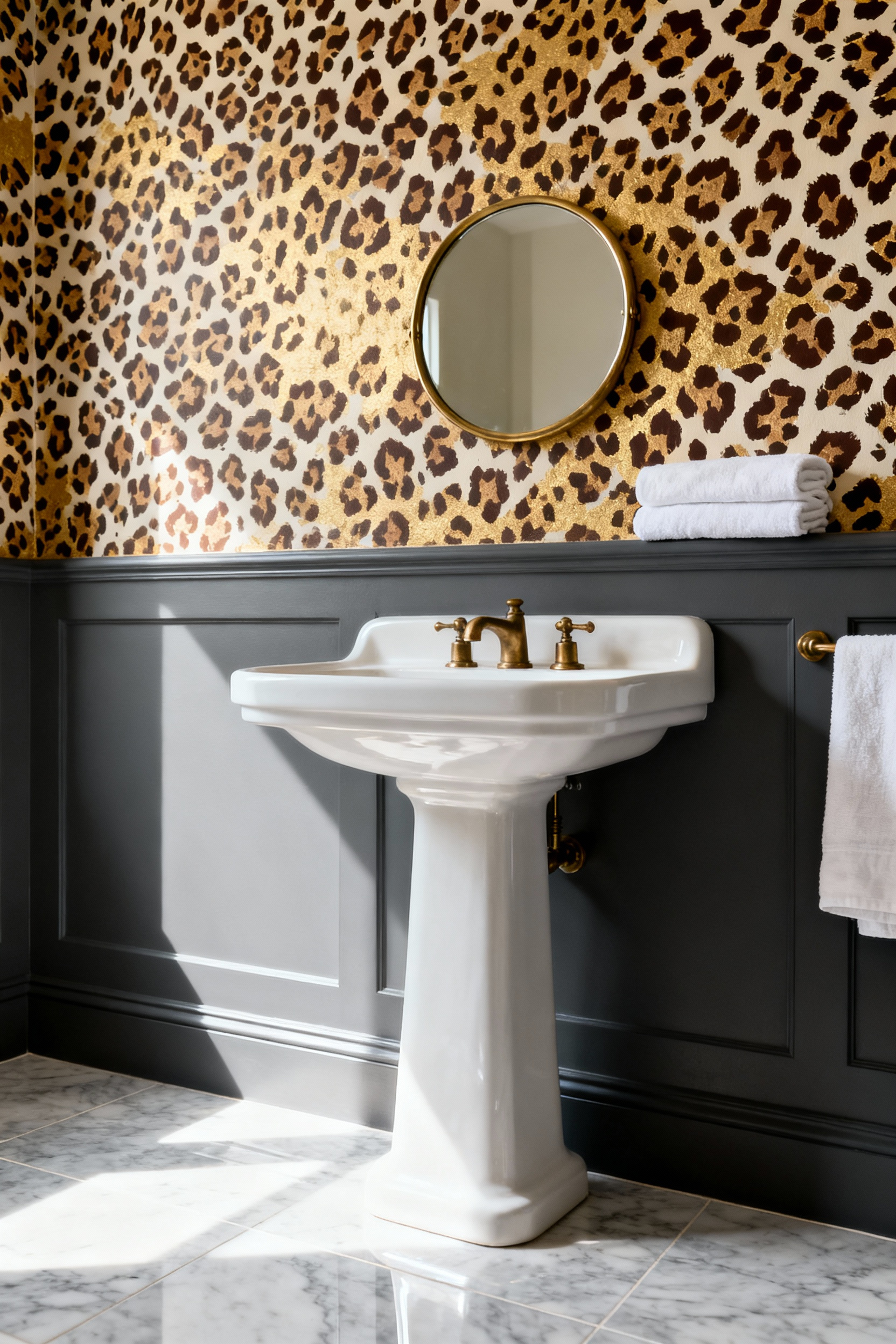
Implementation requires a thoughtful approach regarding the pattern itself; the wallpaper must serve as the sole focal point in the room. Avoid layering the space with matching animal-print accessories, such as patterned shower curtains or themed rugs, which immediately push the aesthetic into kitsch territory. Instead, utilize solid-colored textiles to anchor the visual experience. This strategy allows the walls to shine as a deliberate design choice without creating a “themed” environment.
Finally, ground the print in luxury by pairing it with high-end textures and finishes. The organic, wild nature of animal spots or stripes creates a compelling contrast when placed against refined materials like polished marble countertops, unlacquered brass fixtures, or sleek chrome hardware. To further elevate the space, incorporate tactile elements such as linen hand towels or a velvet vanity stool. These curated premium finishes communicate intentionality, ensuring the overall design reads as opulent and timeless.
Stripes on the Bias: Using diagonal patterning to manipulate the sense of height and width in cramped ensuites.
Diagonal patterns, such as chevron or herringbone, offer a distinct advantage over standard linear designs in compact bathrooms. While vertical stripes lift the ceiling and horizontal lines widen the walls, stripes set on the bias achieve both effects simultaneously.
This optical illusion guides the eye upward and outward, effectively stretching the perceived dimensions of the room. The continuous angled lines introduce dynamic movement, preventing the boundaries of a cramped ensuite from feeling stagnant or visually flat.
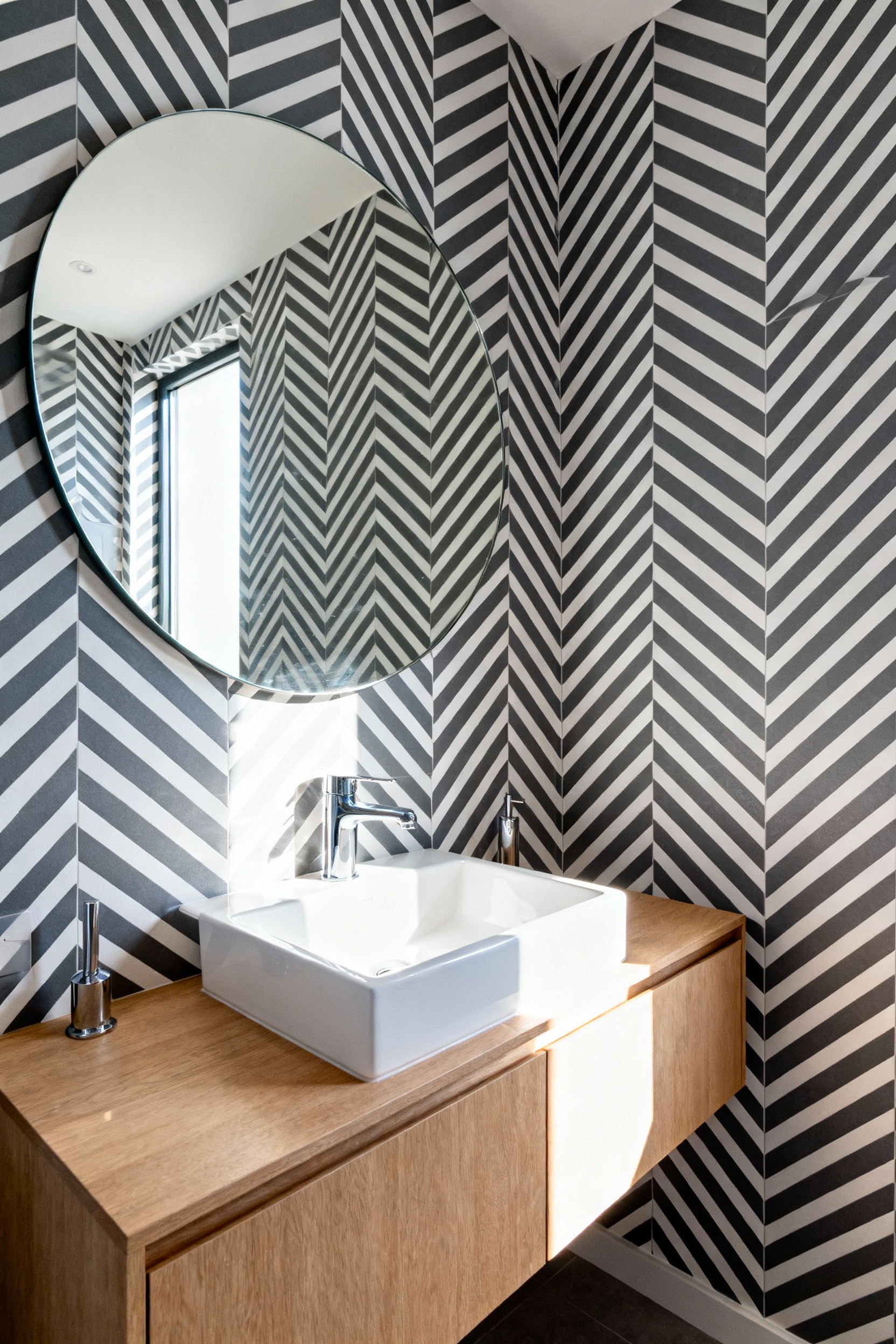
To implement this without overwhelming the footprint, apply the pattern to a single feature wall. Placing diagonal wallpaper behind a vanity or toilet creates an immediate focal point that anchors the room. This technique draws the eye toward the “stretched” surface, adding depth where it is needed most. Treating just one area avoids the visual clutter often caused by wrapping a small room entirely in complex graphics.
Select the pattern scale and color palette carefully to maintain a sense of luxury and openness. Opt for wallpaper featuring thin, delicate lines in light, neutral tones like pale grey or white. These lighter hues maximize light reflection, while the finer stripes ensure the design remains airy rather than oppressive. By prioritizing subtle contrast over bold, heavy blocks of color, you expand the sense of space while injecting sophisticated personality into the design.
Heritage Pattern Mixing: The art of layering William Morris-style intricate prints with bold geometric floor tiles.
To master heritage pattern mixing, you must embrace the tension between opposing forms. This aesthetic relies on the deliberate clash between organic flow and linear structure. Pair the curvilinear, nature-inspired details of William Morris wallpapers, such as ‘Strawberry Thief’ or ‘Willow Bough,’ with the strict angularity of geometric floor tiles.
The sharp lines of stars, hexagons, or chevrons on the floor amplify the softness of the botanical prints above, making each pattern distinct and impactful.
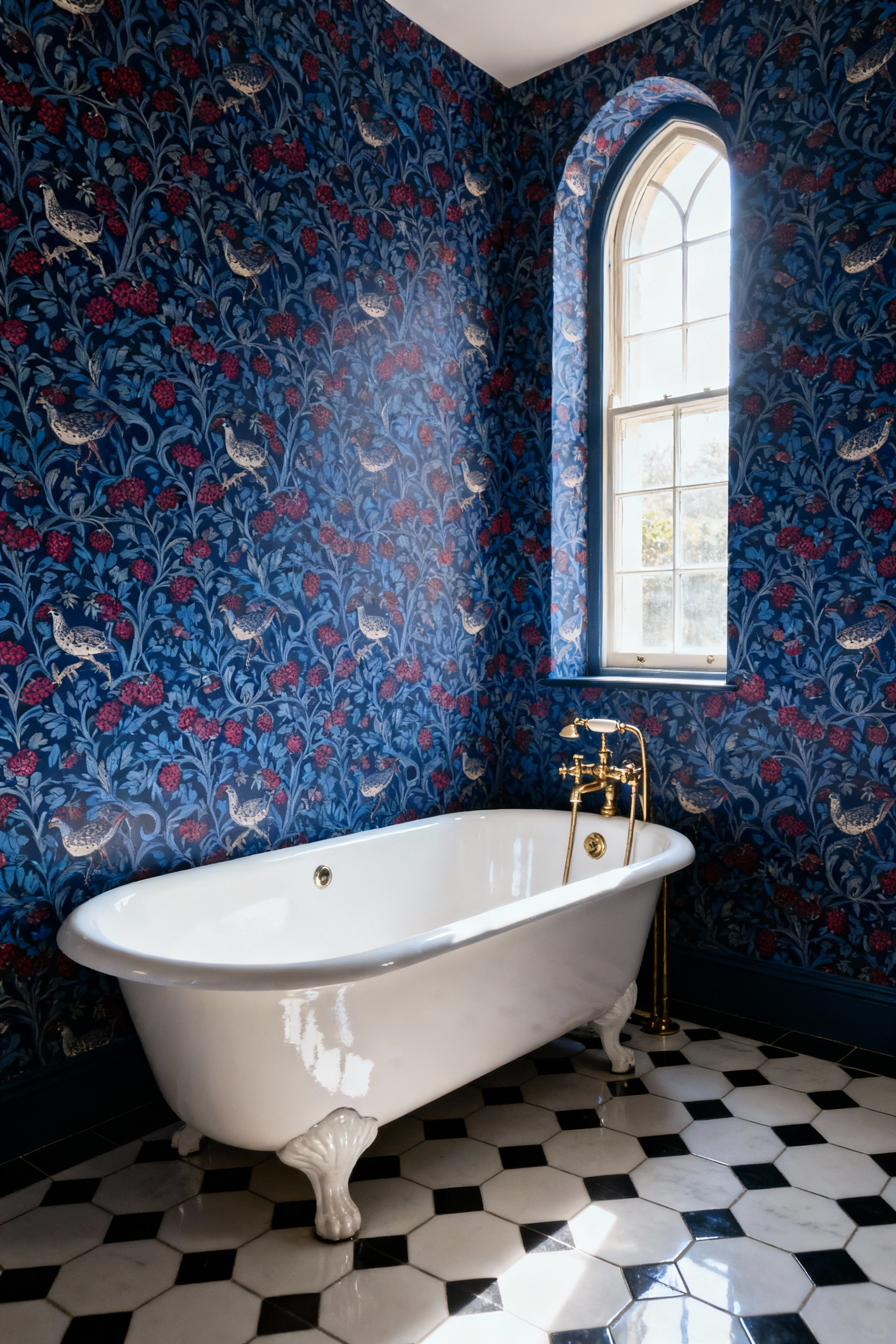
Visual cohesion in this maximalist approach requires a careful color strategy. Select a bold floor tile and ensure it shares a secondary or background hue with the wallpaper. For instance, if the floor features a dark teal, that same teal should appear in the wallpaper’s foliage or background.
To prevent the space from feeling chaotic, install wainscoting or a chair rail as a buffer. This creates a necessary visual break. Use a plain mid-wall section to cleanse the visual palate as the eye travels between the intricate upper walls and the structured floor.
Durability is just as critical as style in a bathroom environment. Standard paper creates maintenance issues, so you must prioritize moisture-resistant materials. Specify high-quality vinyl, peel-and-stick, or washable pre-pasted wallpapers for the upper walls. Many classic William Morris designs are now available in these resilient formats, ensuring the heritage print withstands humidity without peeling or fading.
Installation Strategy: Why ‘wrapping’ the mirror (wallpapering the vanity wall) creates a floating focal point.
Wrapping the vanity wall transforms a functional space into a singular, cohesive piece of art. By applying a patterned or deeply colored wallpaper from floor to ceiling, you create a dimensional backdrop that contrasts dramatically with the reflective surface of the mirror.
This high-contrast approach forces the eye to perceive the mirror as a separate, forward layer, creating a sophisticated optical illusion where the glass appears to “float” off the vibrant plane. Rather than acting as a mere background, the wall becomes the primary anchor of the room.
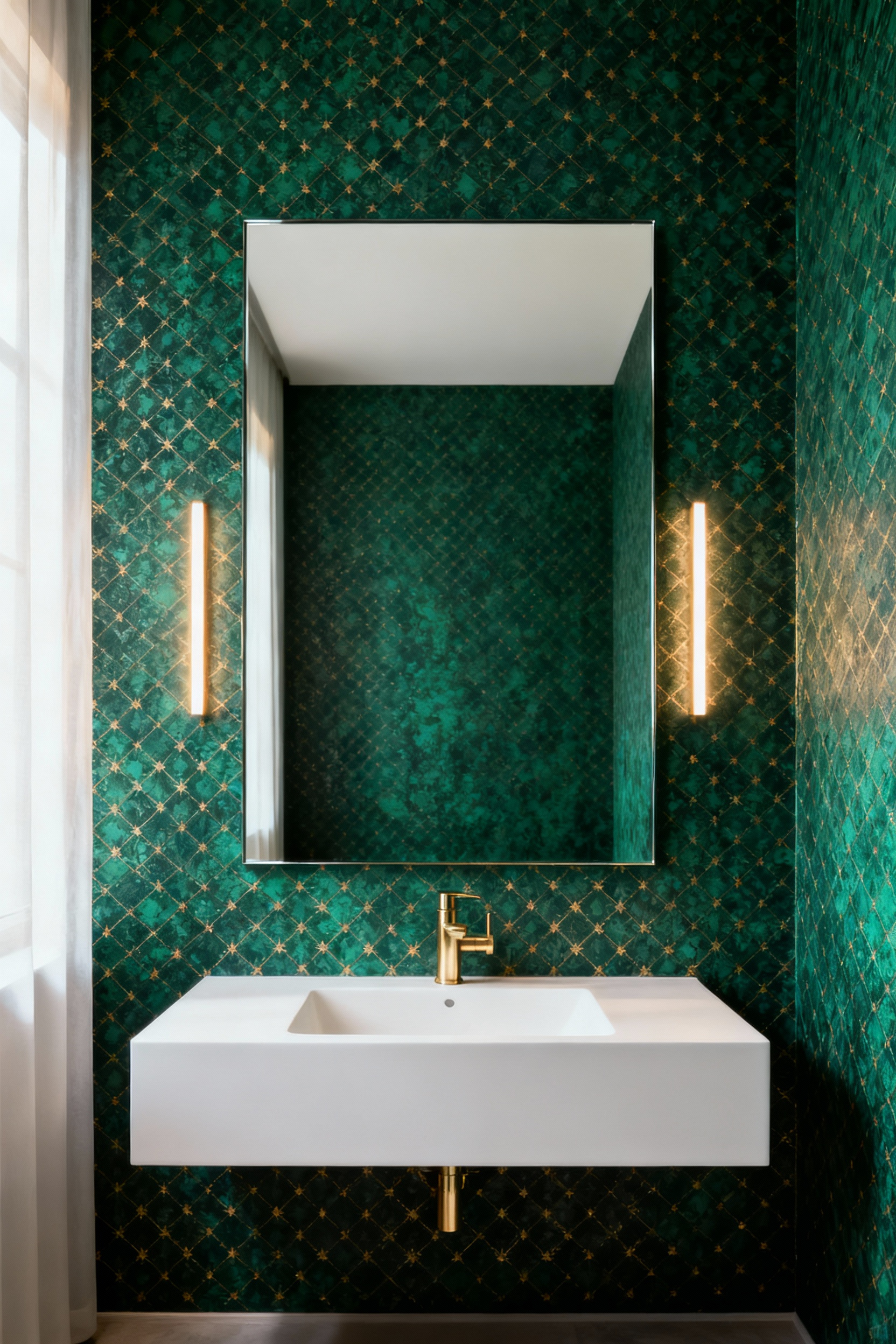
To maximize this effect, design selection is critical. Opt for large-scale, non-repeating murals or abstract motifs to add depth and drama without visual clutter. These bold designs allow the wallpaper to serve as a bespoke high-impact “frame” for the entire setup.
Consequently, you should choose frameless or lightly framed mirrors—such as simple round or oval shapes—so the fixture does not compete with the wall covering. This pairing ensures the wallpaper remains the dominant texture while the mirror provides clean, functional reflection.
Durability matters in high-traffic, moisture-prone environments. Always select vinyl, solid vinyl, or vinyl-coated wallpapers for the vanity wall. These materials resist humidity and allow for easy cleaning, preventing the paper from bubbling, fading, or peeling over time. Using the correct material preserves the integrity of your focal point and ensures the luxurious aesthetic withstands daily use.
Conclusion: From Fear to Fearless – Final tips on selecting the right adhesive and finish for longevity in humid zones.
True luxury requires resilience. By mastering the technical foundation—specifically selecting heavy-duty, fungicidal adhesives and applying protective varnishes—you transform a moisture-prone bathroom into a canvas for self-expression. Implementing these bathroom wallpaper ideas confidently allows you to embrace a bold aesthetic, knowing your intricate patterns are secured by rigorous wall preparation and precise edge sealing.
The shift from caution to confidence relies entirely on creating an impenetrable barrier against the elements, allowing you to layer texture and color without hesitation.
A humid environment should never dictate the limits of your style. When you pair the correct adhesive with your specific paper type and ensure a completely dry application surface, you invest in the longevity of your home. Your bathroom evolves from a sterile utility space into a durable, personality-filled retreat that withstands daily steam. Begin your project today by verifying the chemical composition of your chosen adhesive against your wallpaper manufacturer’s guidelines to ensure a bond that lasts as long as your design intent.
Frequently Asked Questions (FAQ)
Is bathroom wallpaper durable, and which types are best for high humidity?
Modern bathroom wallpaper is highly durable, provided you choose the correct material. We recommend solid vinyl, heavy-duty vinyl-coated paper, or fiberglass wallpapers, as they are non-porous and resistant to moisture absorption and mildew. Traditional paper is not suitable. Always pair high-performance paper with a fungicidal, mold-resistant adhesive for maximum longevity.
How do I make a small powder room feel more luxurious using wallpaper?
For a small powder room, embrace the ‘Jewel Box’ philosophy. Use deep, saturated colors (like emerald or navy) and large-scale, high-impact patterns (such as oversized botanicals or Chinoiserie murals). Applying the paper to all four walls—and even the ceiling—creates an immersive, cohesive, and sophisticated look that transforms the compact space into an intentional design feature rather than a confined area.
Can I install wallpaper directly inside my shower enclosure?
While most wallpapers are designed for bathroom walls, installation inside a wet zone (like a shower enclosure) requires a specific type of specialized, patented waterproof system, often made of fiberglass or solid vinyl, that must be professionally sealed at all seams and edges. Standard vinyl-coated or peel-and-stick papers are not suitable for direct water contact and should only be used outside the immediate splash zone.