
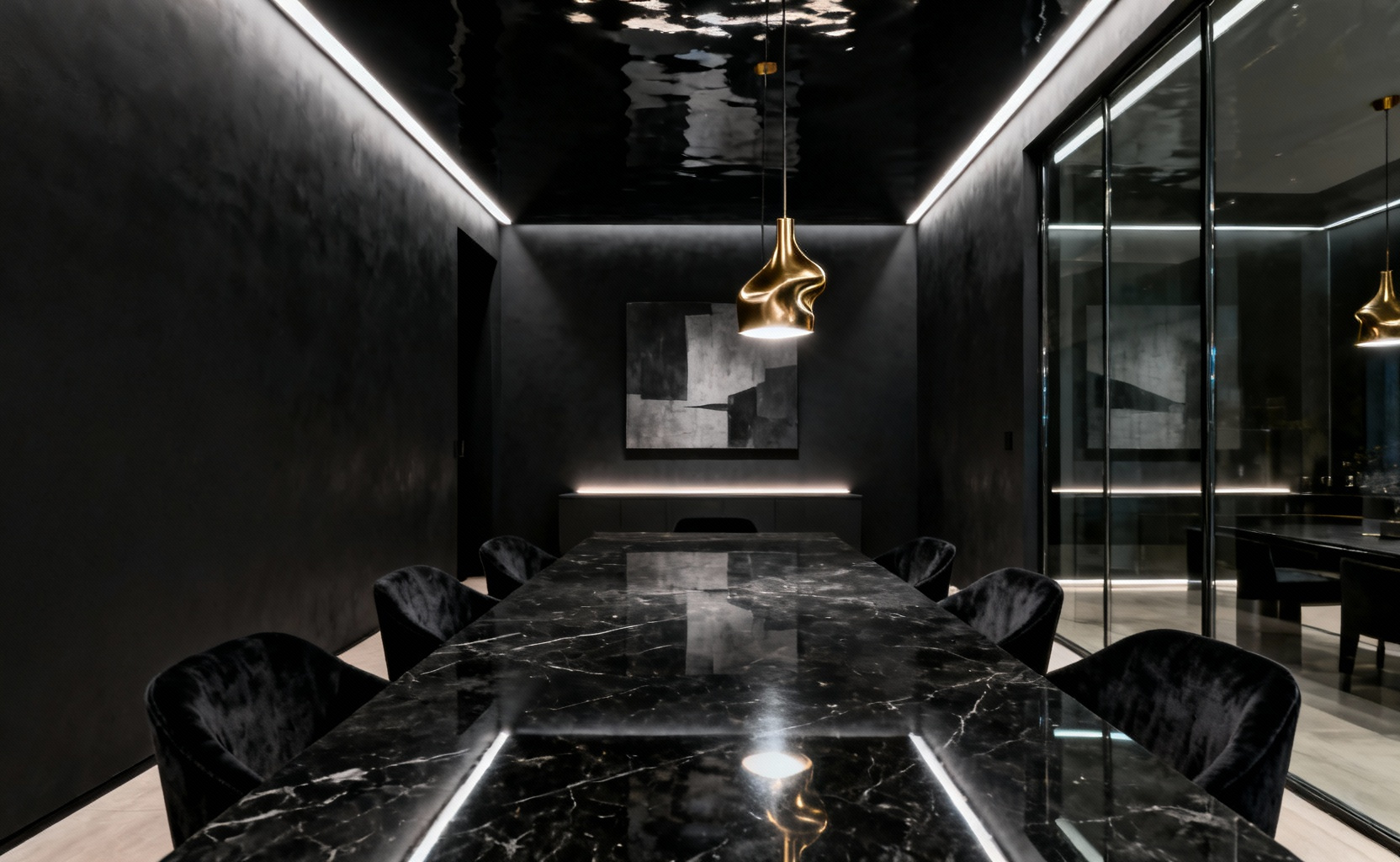

They will tell you black shrinks a room. This is the tired, tedious chorus sung by mainstream design, repeated across blogs and broadcast from television screens until it feels like gospel. Here is what they are not telling you: that this fear of the dark is a profound failure of imagination. I am Iris Blackwood, and my life’s work is dedicated to weaving the soul of gothic romance into the fabric of modern living. In my gothic romance modernist practice, I have witnessed countless transformations where walls cloaked in ebony and charcoal do not constrict, but rather, they dissolve, creating an illusion of boundless depth. These twenty poetic insights, drawn from years of cultivating Dark Academia aesthetics and pioneering Gothic Contemporary Fusion, will guide you through the looking-glass, past the myths, and into the potent, enigmatic heart of a black dining room remodel.
The Veiled Allure: Anchoring the Philosophy of Profound Darkness
Before we touch a single brush, we must recalibrate our spirit. Embracing the night-hued dining room is not about color; it is a philosophical commitment to depth, intimacy, and the dramatic potential of shadow. This is where we lay the foundation for a space that is felt as much as it is seen.
1. Deconstructing the Myth of Constriction
The lie they tell is that black walls close in on you. The truth? Black blurs the edges of a room. Where a pale wall shouts, “Here is the corner! Here is the end!” a wall of deepest charcoal whispers a question. The eye cannot find purchase on the boundary, and so the mind perceives an infinite, enveloping depth. A room doesn’t feel smaller; it feels boundless, a private universe where the world outside falls away.
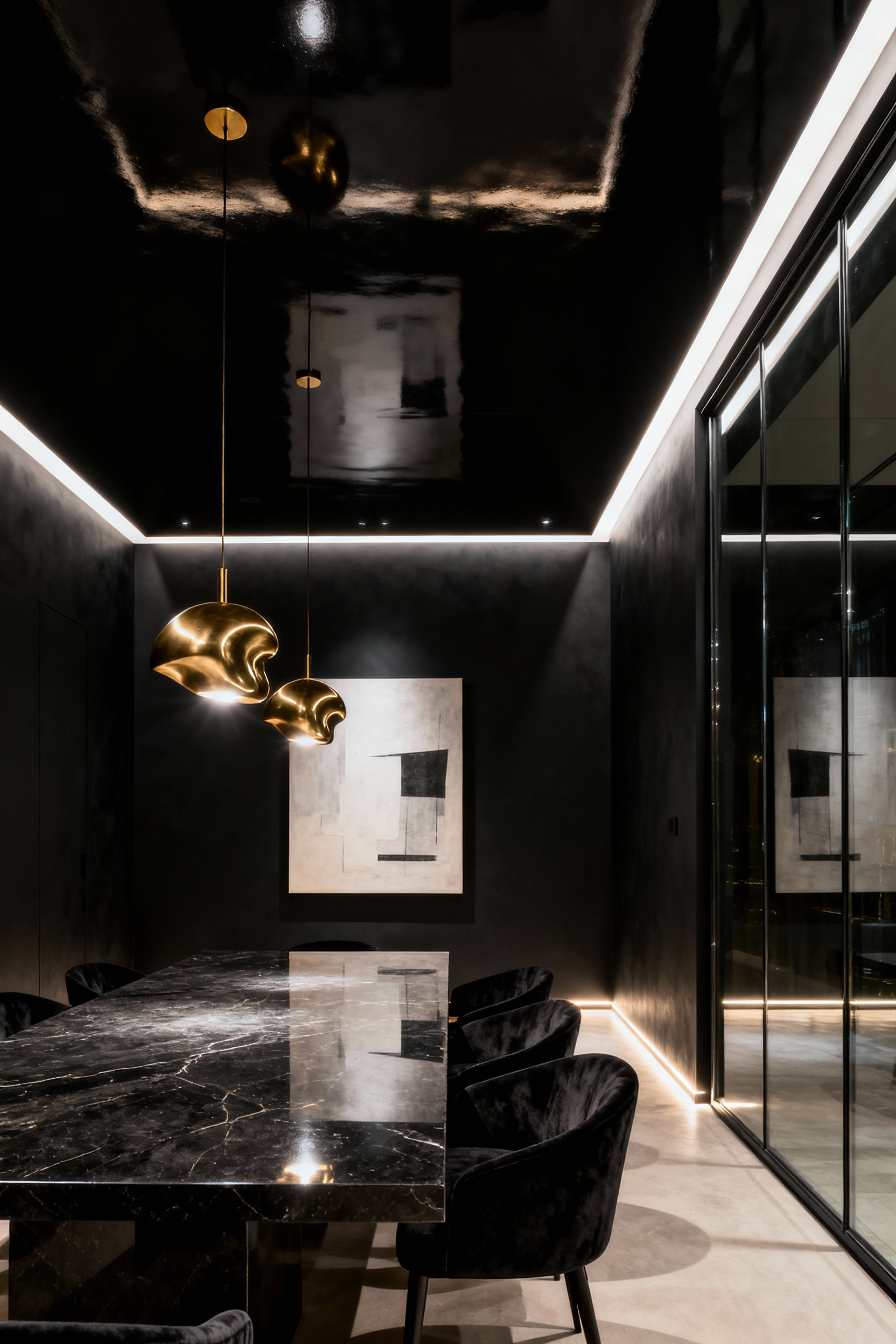
This is the alchemy of shadow. It is especially potent in a smaller dining space, paradoxically making it feel grander, like a beautifully crafted jewelry box lined with velvet. You are not shrinking the room; you are removing its mundane limitations and inviting a sense of endless possibility.
2. Mastering the Artful Melancholy
Let us speak of melancholy not as sadness, but as a profound and beautiful stillness—a mood that heightens every other sense. A black dining room acts as a theatre, where the clinking of glasses, the warmth of candlelight, and the faces of your guests are thrown into exquisite, dramatic relief. This is atmosphere, cultivated.
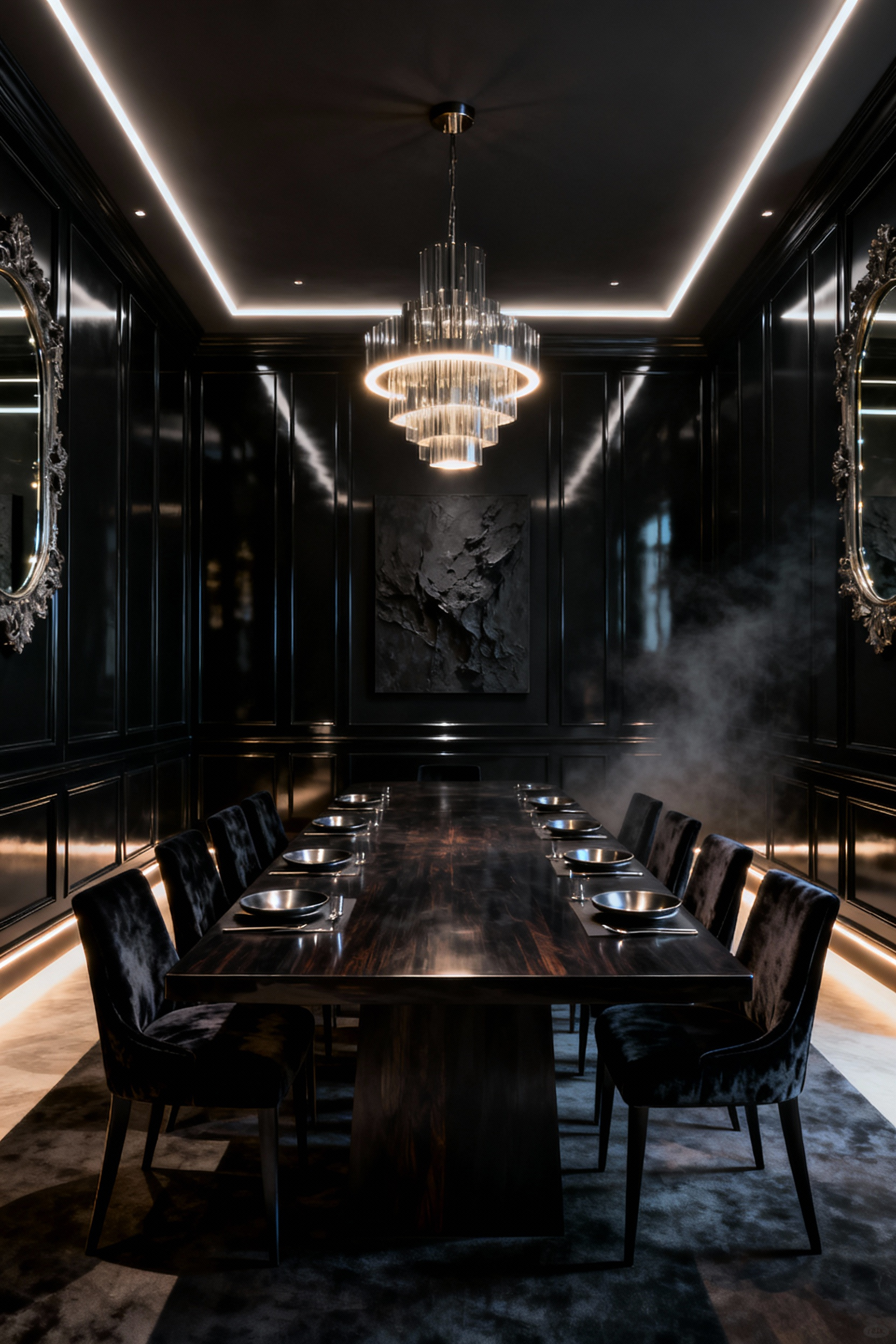
This is achieved not through darkness alone, but through the tension of texture. Imagine matte black walls that drink the light, contrasted with the sharp, liquid gleam of a polished lacquered sideboard. It is this symphony of surfaces—velvet, linen, polished stone, aged metal—that creates a space that feels alive, contemplative, and impossibly chic.
3. Architectural Intent
In the hands of the thoughtful, black becomes a structural force. It is not merely paint; it is a tool for defining, highlighting, or even erasing architectural lines with deliberate intent. It can turn an ordinary archway into a dramatic proscenium, a portal to another experience.
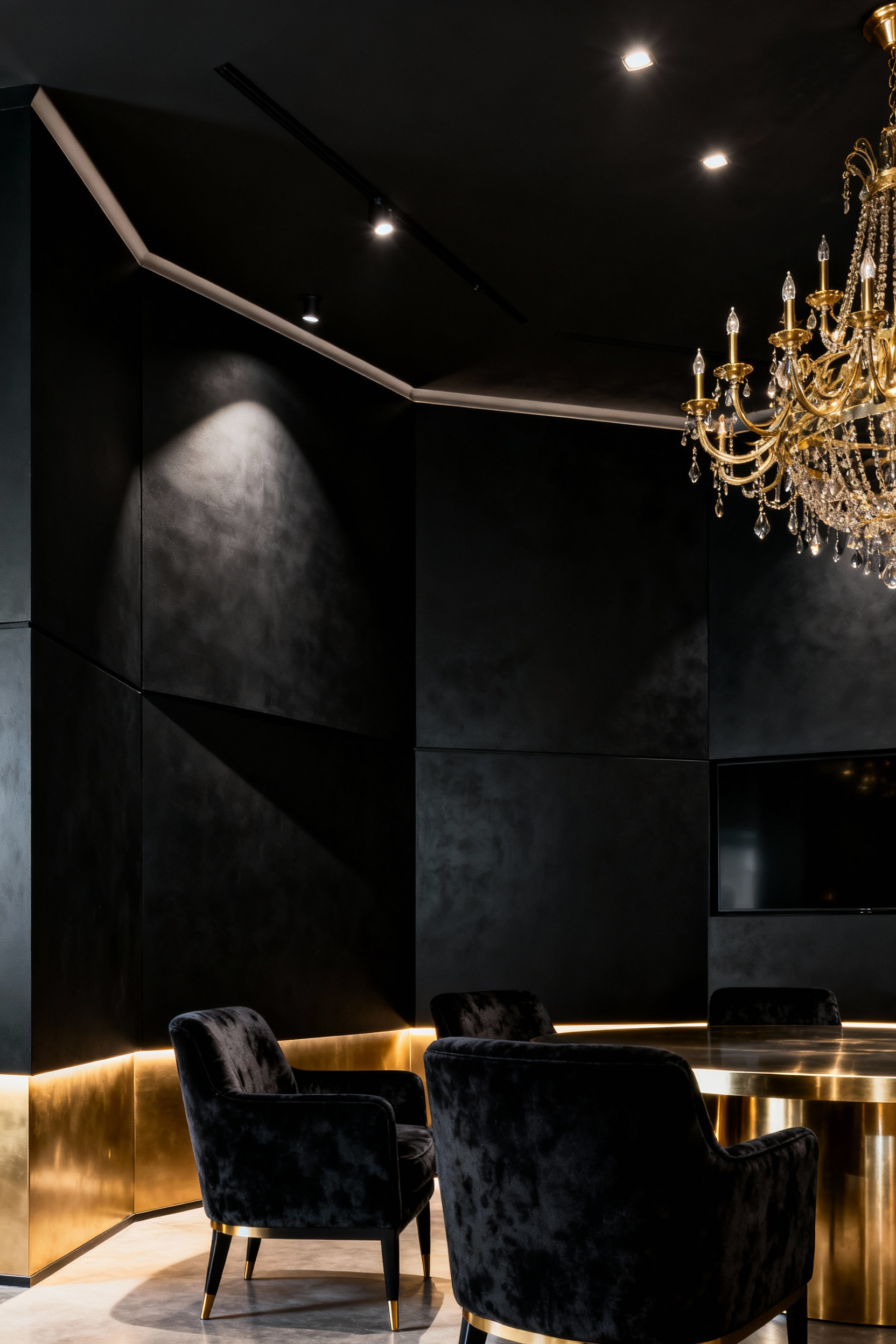
In my gothic romance modernist practice, I’ve found that rendering an archway in black does more than frame a view; it creates a psychological threshold, a deliberate passage into a more sacred space. Painting window frames black transforms your view of the garden into a living portrait, perfectly composed. It grants your home an artistic precision, turning structural necessities into bold, graphic statements of purpose.
4. The Palate of Nuance
To say ‘black’ is like saying ‘flower.’ Which one? The spectrum is vast and breathtaking. There are blacks with undertones of midnight blue, cool and sophisticated. There are warmer, earthier blacks that hint at scorched wood or rich soil. There are charcoal greys that carry the softness of a coming storm.
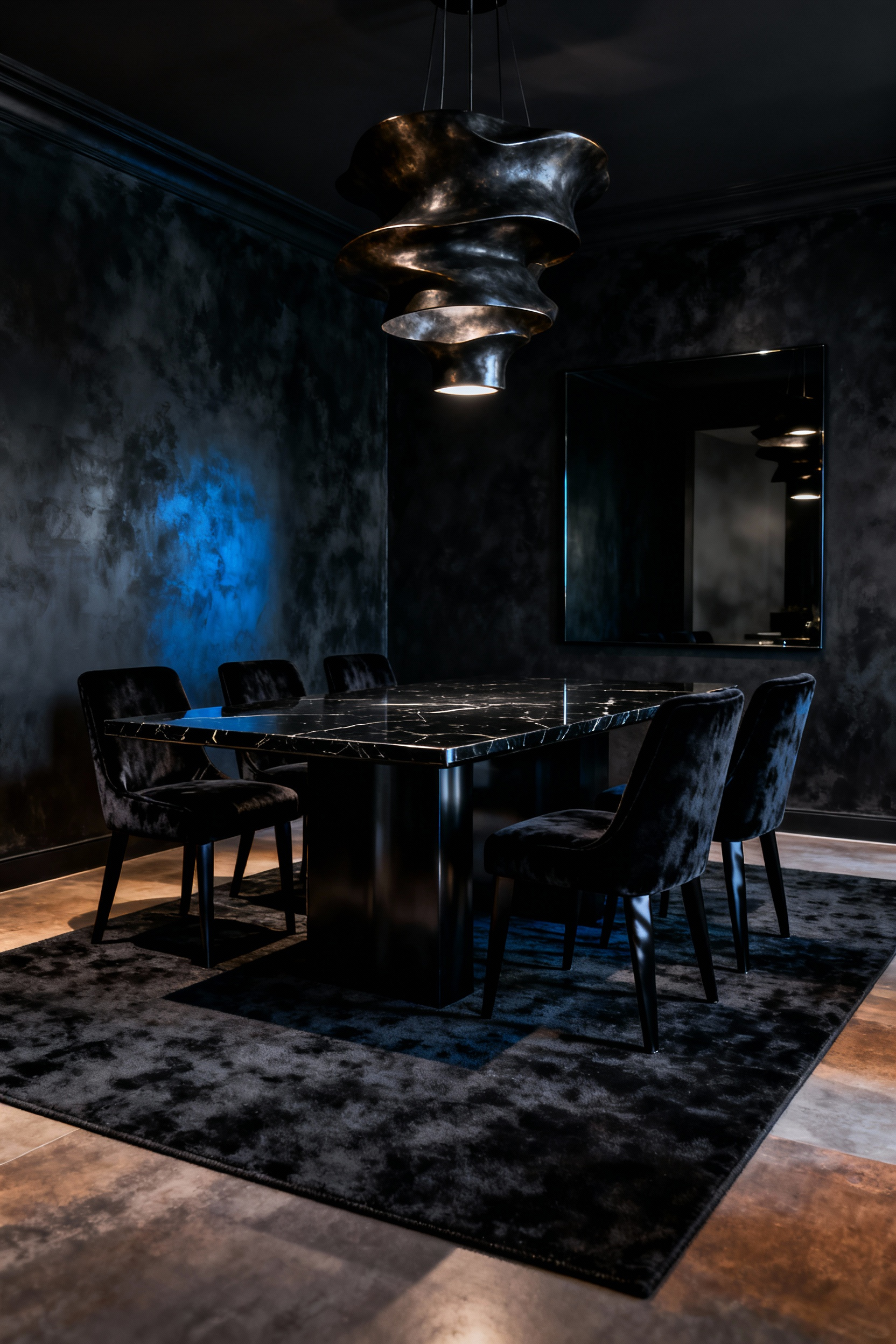
The finish, too, is a world of its own. High-gloss black is liquid drama, a pool of night reflecting the candlelight. A chalky matte finish is pure, tactile poetry, absorbing all light and offering only its velvety depth in return. Discerning these subtleties is the first step toward crafting a space that is truly yours.
5. Foreseeing the Luminosity
Do not mistake a dark dining room for a room without light. On the contrary, a dark room becomes a stage upon which light is the star performer. Every beam, every flicker, every subtle glow is amplified, made more significant against the enveloping void.
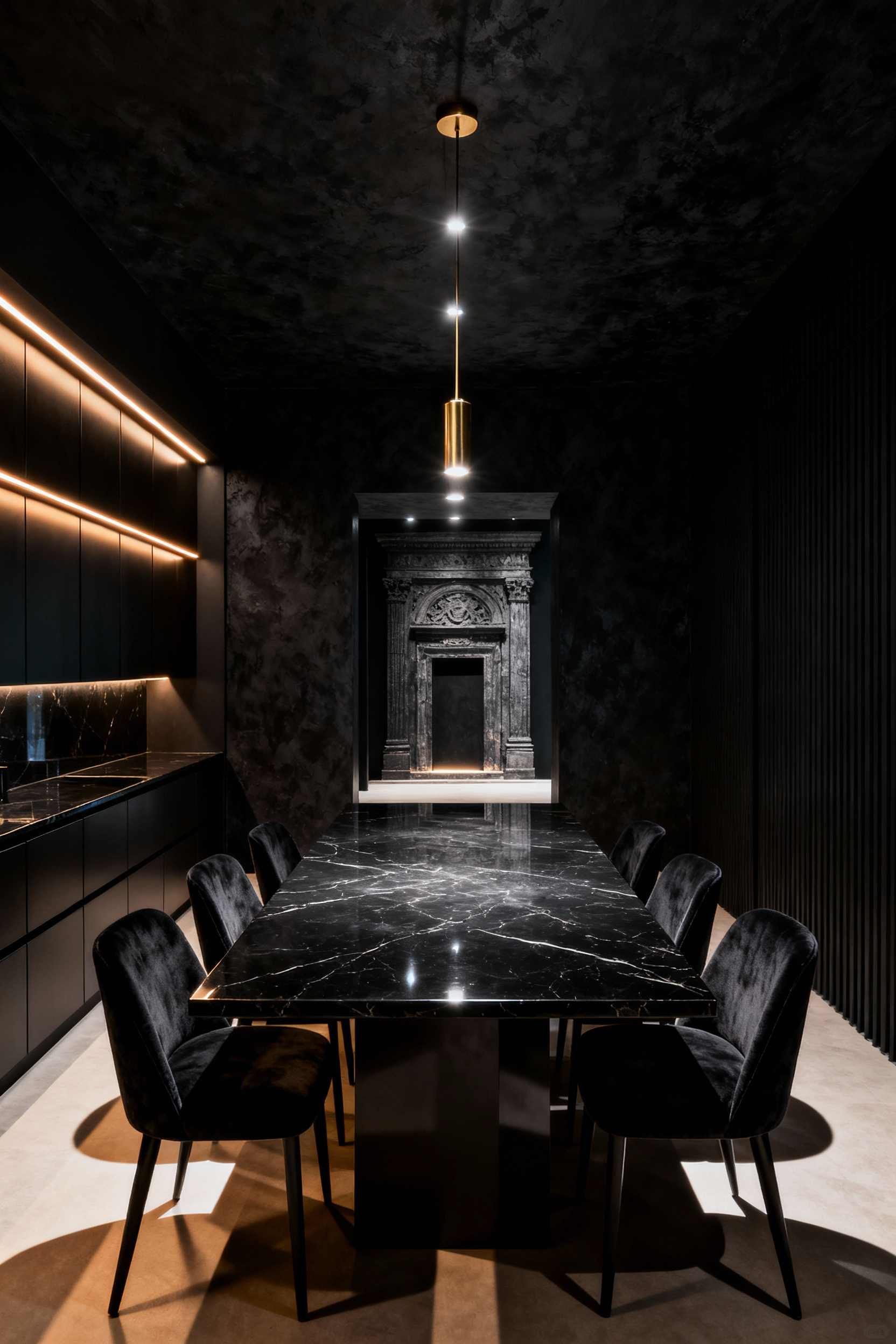
Before a single can of paint is opened, you must plan this choreography. Where will the chandelier cast its pools of light? How will sconces wash the walls in a soft, ethereal glow? How will the afternoon sun slice across the space, illuminating the dust motes like constellations? The room is not dark; it is a canvas designed for the masterful artistry of light.
The Obsidian Palette: Exploring Textural Dimensions and Materiality
Having established our philosophy, we now turn to the tangible. A truly resonant space is a sensory experience, a rich tapestry woven from carefully chosen materials that beg to be seen and touched.
6. The Resonant Glimmer of Reflective Surfaces
To give your darkness life, you must invite moments of brilliant reflection. A high-gloss lacquered ceiling, for example, becomes an inverted, midnight lake, doubling the twinkle of your chandelier and adding immeasurable height and drama. A strategically placed mirror—perhaps with an antique, smoky finish—does not just reflect a room; it reflects a dream of the room.
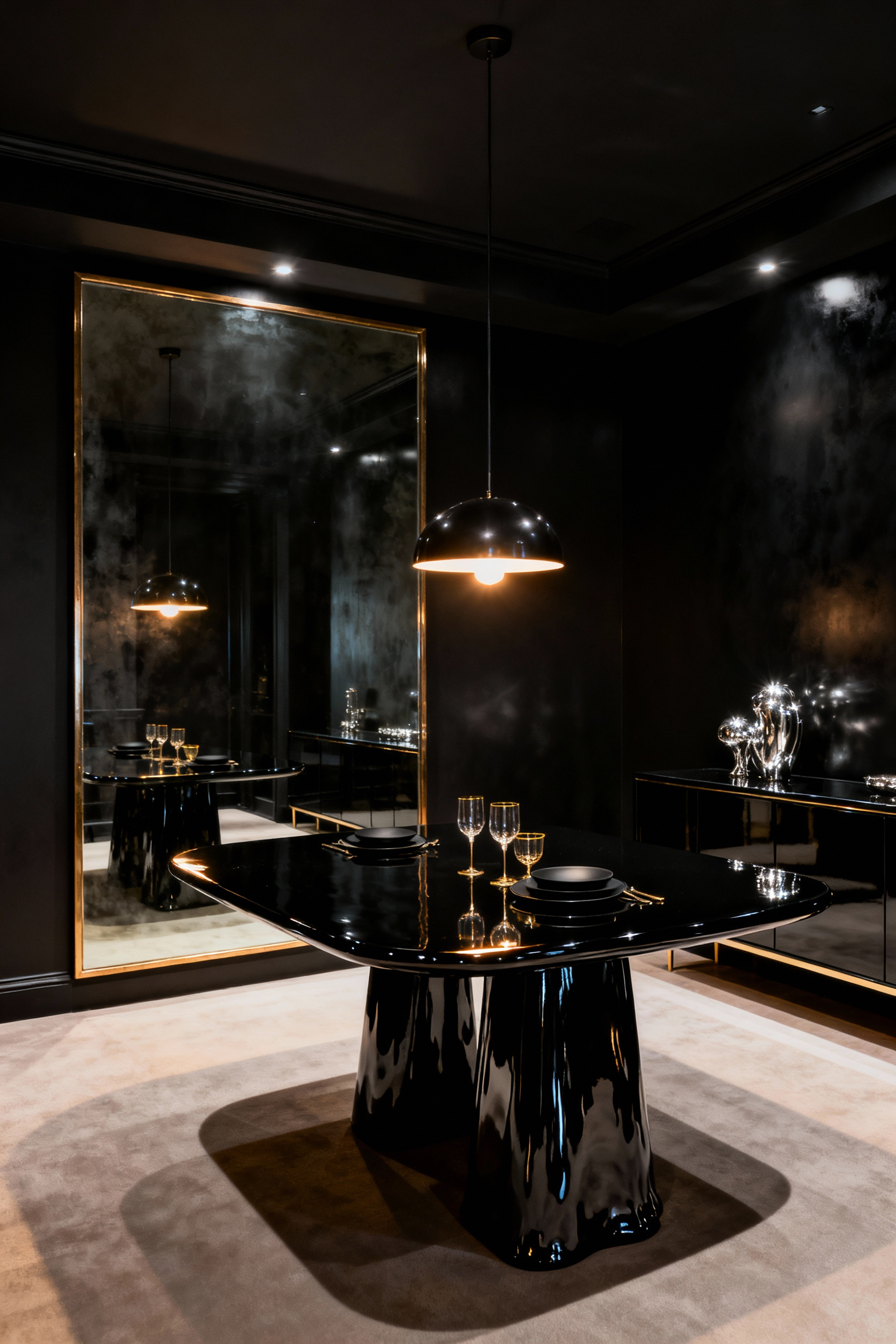
These surfaces break up the void and amplify your precious light. Polished chrome, smoked glass, and gleaming silver all become jewels against the black velvet of your walls, catching the eye and adding a necessary layer of opulent intrigue.
7. Velvet Depths and Linen Veils
The secret to a luxurious black room is the harmony of opposing textures. Nothing absorbs light with the same decadent thirst as velvet. Upholster your dining chairs in a deep, inky velvet, and they become thrones of pure comfort and visual weight. It is an immediate signal of lavishness and repose.
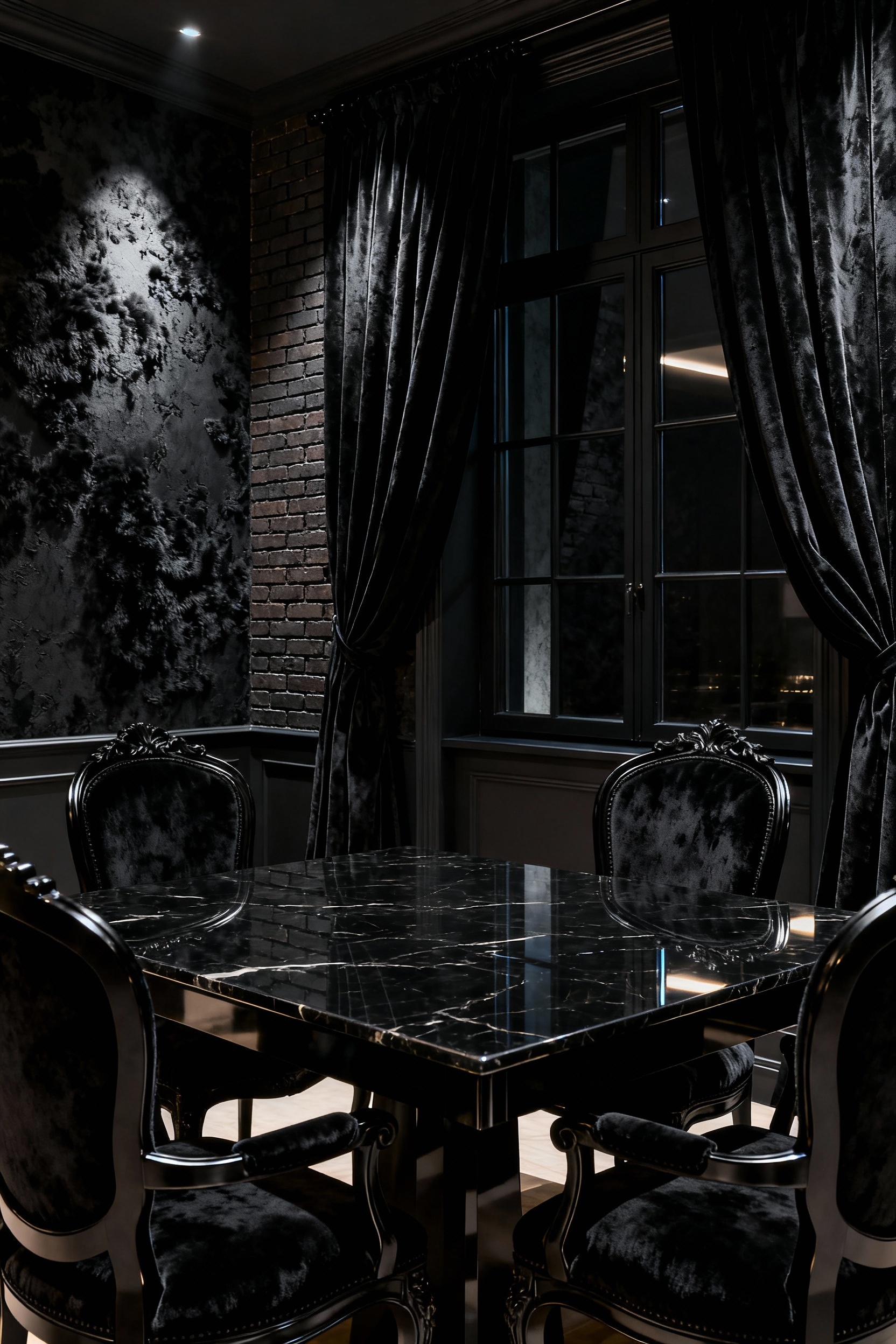
Now, contrast that with the humble honesty of linen. Sheer, charcoal-colored linen drapes can filter daylight into a soft, poetic haze. A heavy linen tablecloth can offer a slightly rustic, tactile counterpoint to the glamour of a polished table. This dialogue between the plush and the raw is what gives the room its soul.
8. The Soul of Artisanal Woodwork
Wood brings history and organic warmth into the drama. But instead of honeyed oak, we turn to the profound beauty of ebonized or deeply stained woods. The process doesn’t hide the grain; it exalts it, turning the wood’s natural patterns into a subtle, topographical map of time.
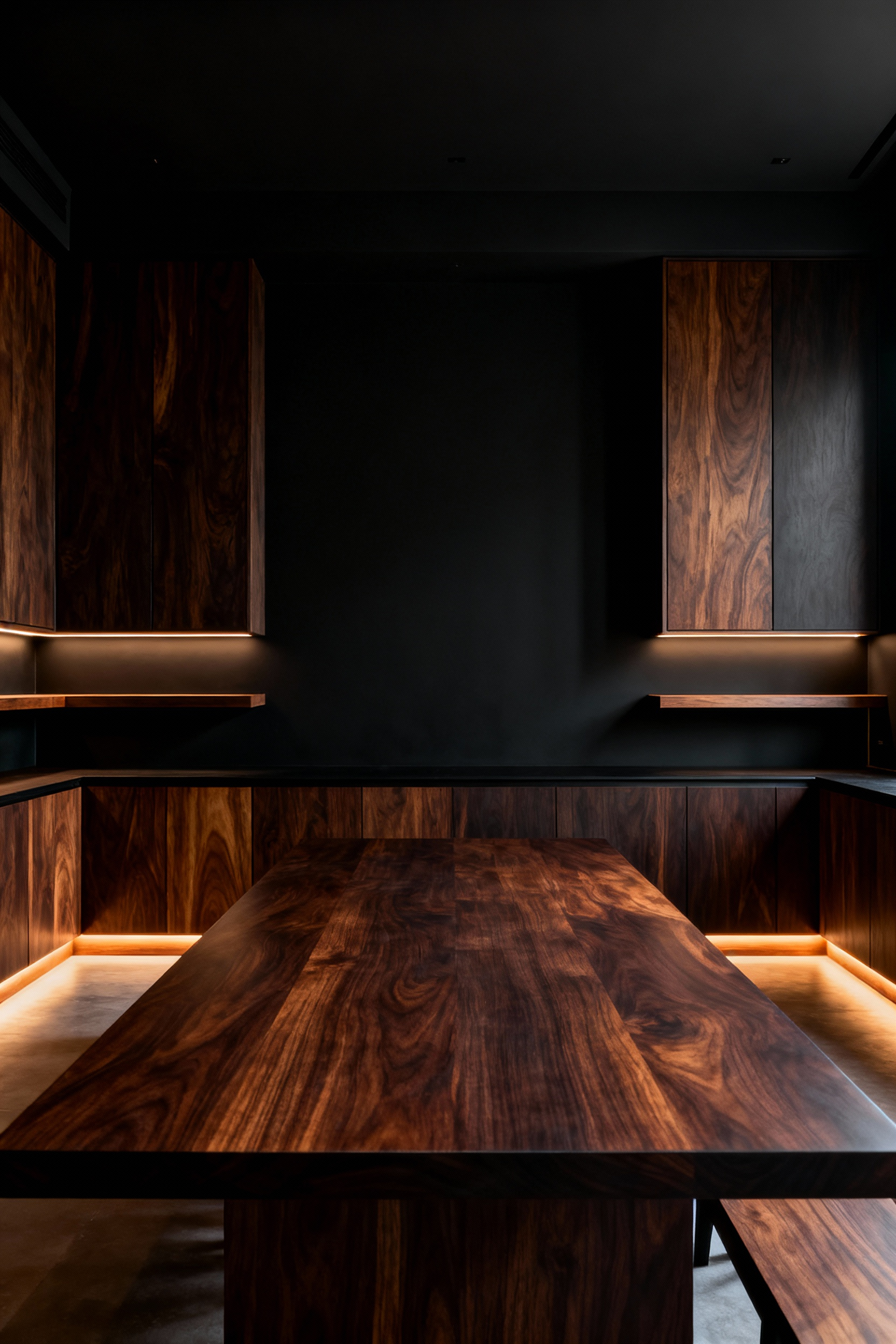
A grand dining table crafted from blackened ash or deep wenge becomes the undisputed heart of the room—an anchor of timeless elegance. Built-in shelving in the same dark tones provides storage while creating shadowy alcoves for your treasures to reside, making the objects within them feel all the more precious.
9. A Metallic Epiphany in Bronze and Brass
Stark silver has its place, but the soul of a gothic-inspired space lies in warmer, aged metals. Aged brass and antique bronze carry the soft, burnished glow of history. They possess a patina that speaks of time and touch, offering a warmth that stark, cool metals cannot.
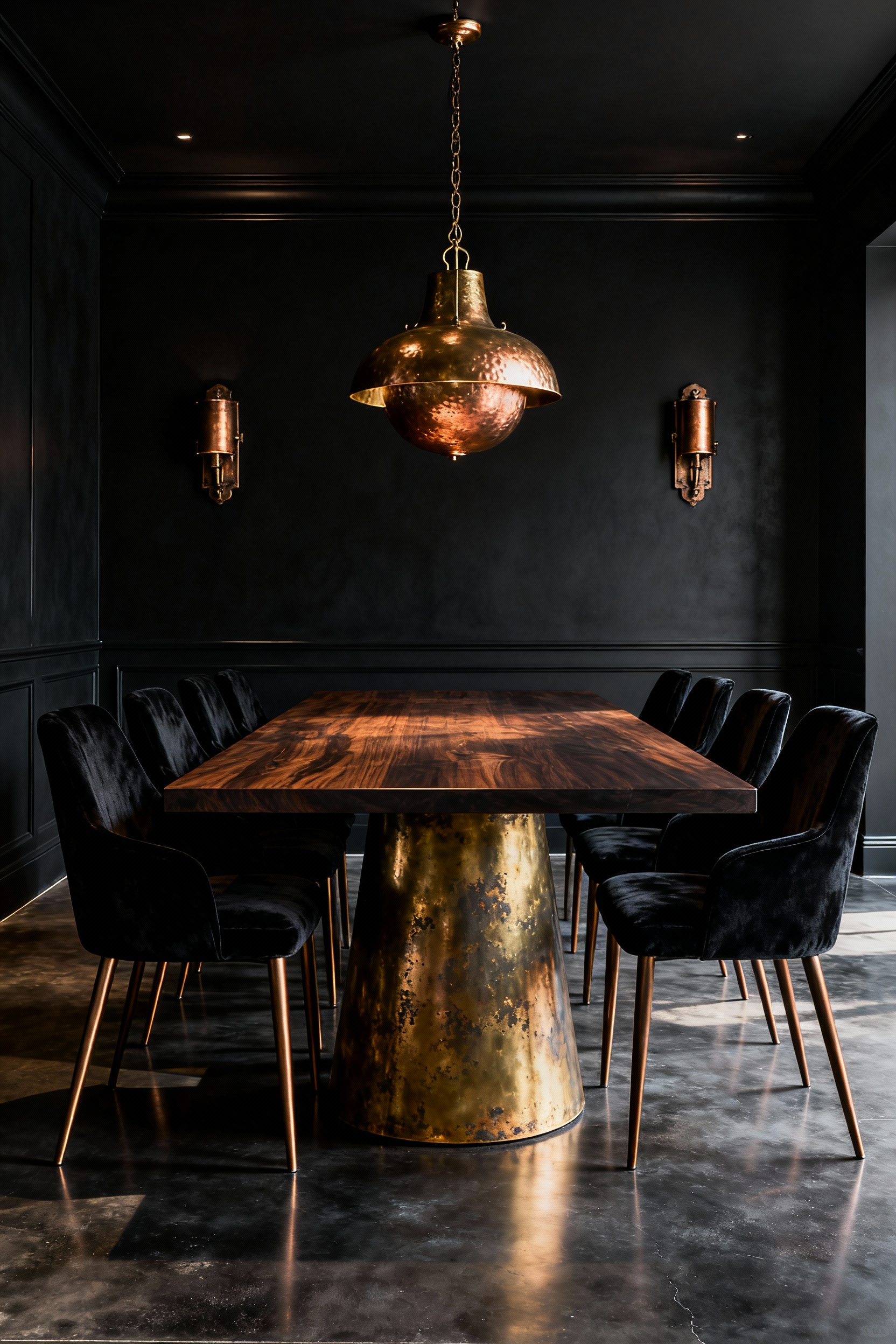
What really gets me is the way aged brass responds to candlelight. It doesn’t just reflect; it drinks the light and glows from within, a quiet warmth against the profound cool of an obsidian wall. Use it for your light fixtures, your cabinet hardware, or the delicate legs of a console table. These are not accents; they are moments of metallic poetry.
10. The Immutable Presence of Stone
To truly ground your space in an elemental power, turn to stone. The raw, volcanic texture of honed basalt for a floor or tabletop provides an unshakeable foundation of primordial strength. Its matte surface feels ancient and true, a connection to the very core of the earth.
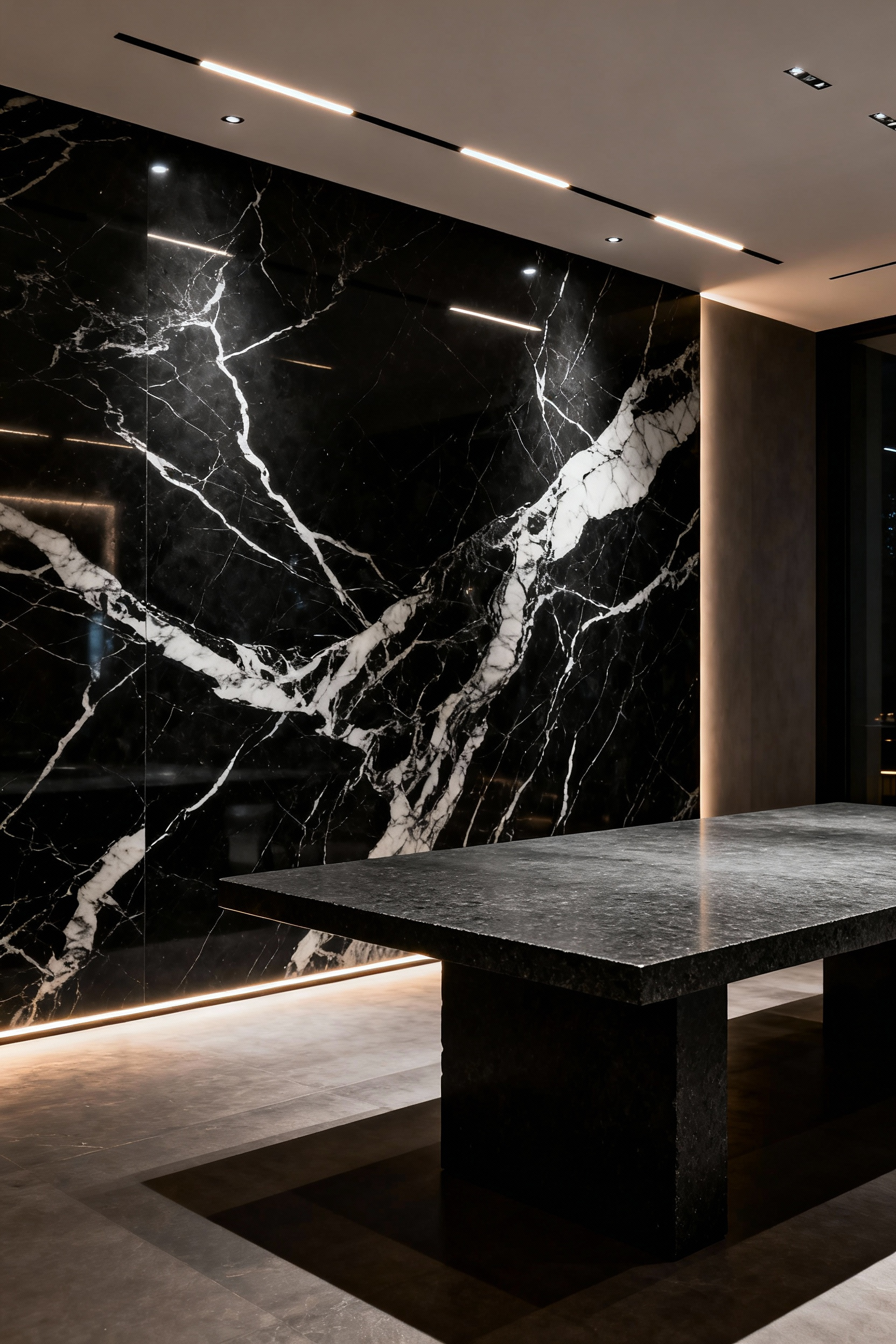
For a different kind of drama, consider Nero Marquina marble. Its deep black expanse is shattered by brilliant white veining, like lightning in a midnight sky. On a fireplace surround or a sideboard top, it becomes a piece of natural, abstract art—a testament to the violent beauty of geology.
Choreography of Space: Orchestrating Form and Function
We now move from what the room is made of to how the elements within it relate to one another. This is the art of composition, the careful choreography of objects within the void you have so bravely created.
11. The Grand Silhouette
In a black room, the shape of your furniture is paramount. Silhouettes are amplified, becoming powerful sculptural statements against the dark canvas. Seek out pieces with commanding forms—a dining table with a substantial pedestal base, chairs with an elegantly curved or architecturally dramatic back.
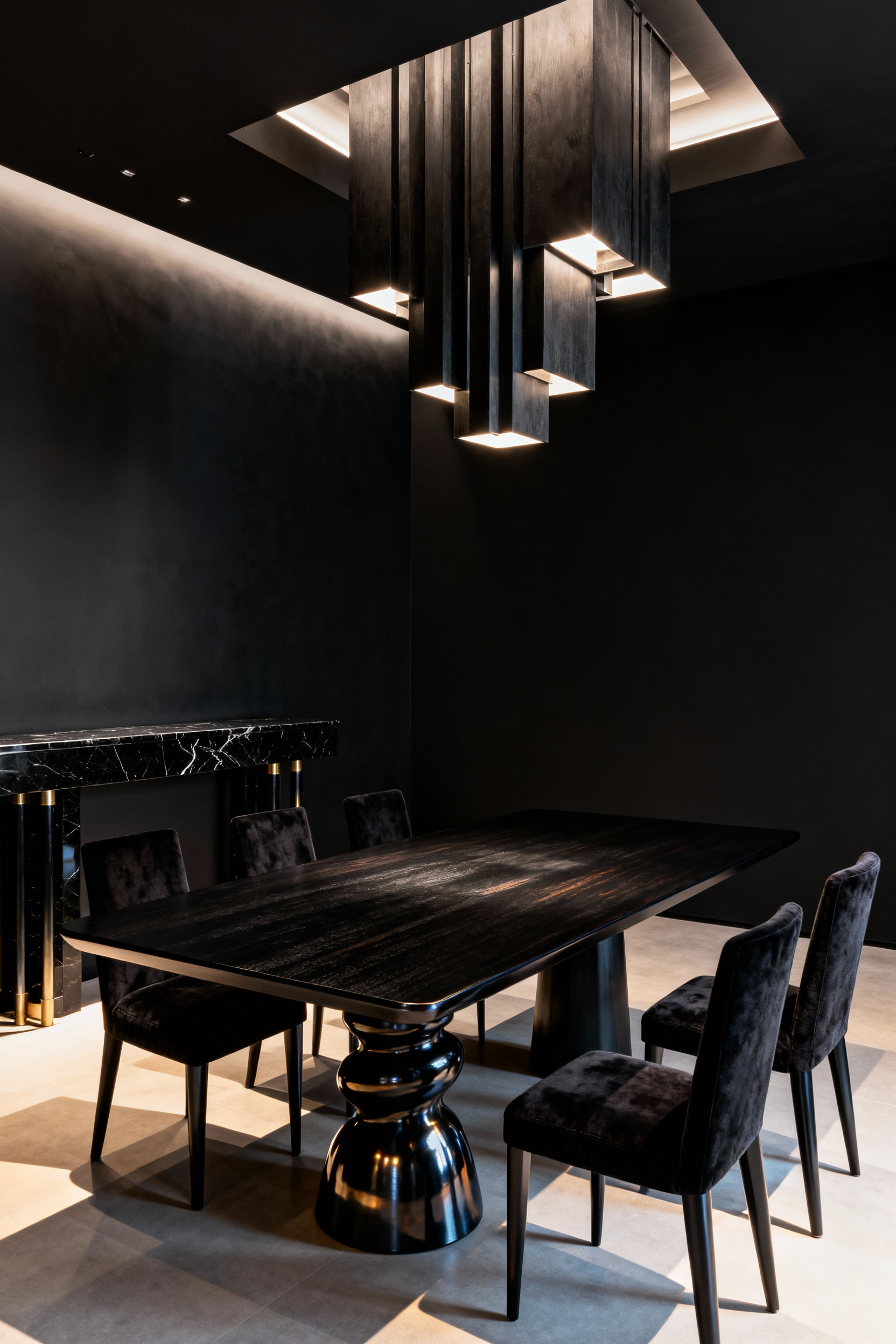
Don’t be afraid of scale. Often, a large, dramatic piece feels more at home in a black room than several smaller ones. Allow each piece room to breathe. The negative space around your furniture is just as important as the furniture itself, allowing its form to be truly appreciated.
12. Illuminating the Void with Layered Light
One overhead light is an interrogation. A layered lighting scheme is an invitation. Your black dining room demands this nuance. Start with an ambient layer—a magnificent chandelier on a dimmer—to set the overall mood.
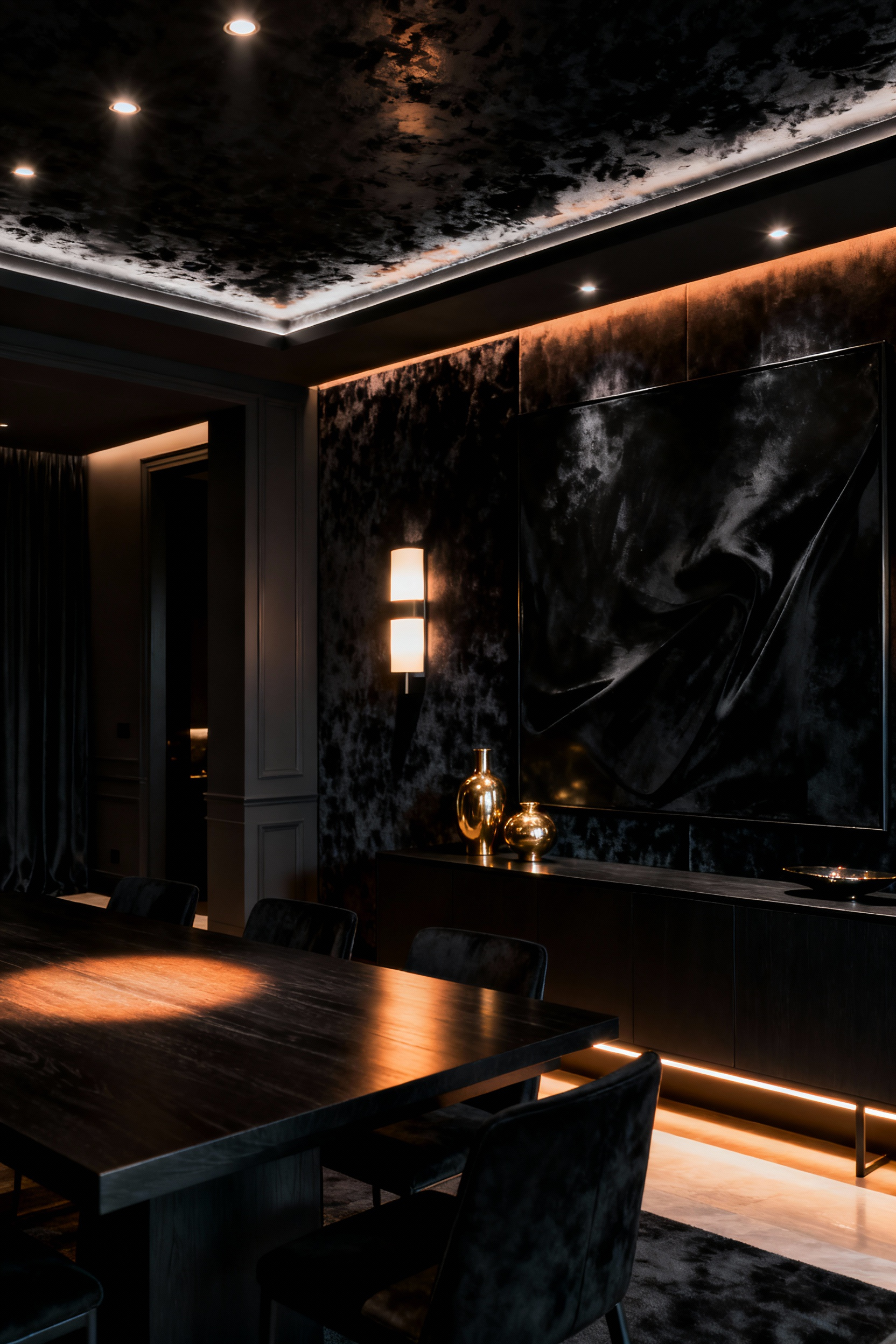
Then, add a task layer: focused downlights or a lower-hanging pendant to perfectly illuminate the tabletop, making food and company the focus. Finally, and most importantly, an accent layer: picture lights over artwork, small uplights behind plants, or candles. Always, candles. This allows you to sculpt the atmosphere, shifting it from bright celebration to intimate mystery at will.
13. Curatorial Display for Art and Objects
A black wall is the most generous backdrop for art. Colors become more vibrant, textures more pronounced, forms more defined. It asks for nothing, allowing the art to be the undisputed hero. Resist the temptation to clutter; this is about curatorial precision.

Years of work in Dark Academia aesthetics have taught me that a dark wall is the ultimate silent patron of art. It demands nothing for itself, allowing the story of the piece to speak with an uninterrupted, resonant voice. A single, oversized painting can command a room. A small, strange sculpture on a pedestal becomes an object of intense fascination. Group smaller items in tight, thoughtful vignettes to give them collective power.
14. Reframing Boundaries with Mirrors
A mirror in a black dining room is a portal. It is a slash of brilliant light, a tool of glorious deception. Placed opposite a window, it seizes the daylight and pulls it deep into the room’s heart. Placed at the end of a table, it creates the illusion of a banquet hall that stretches into infinity.
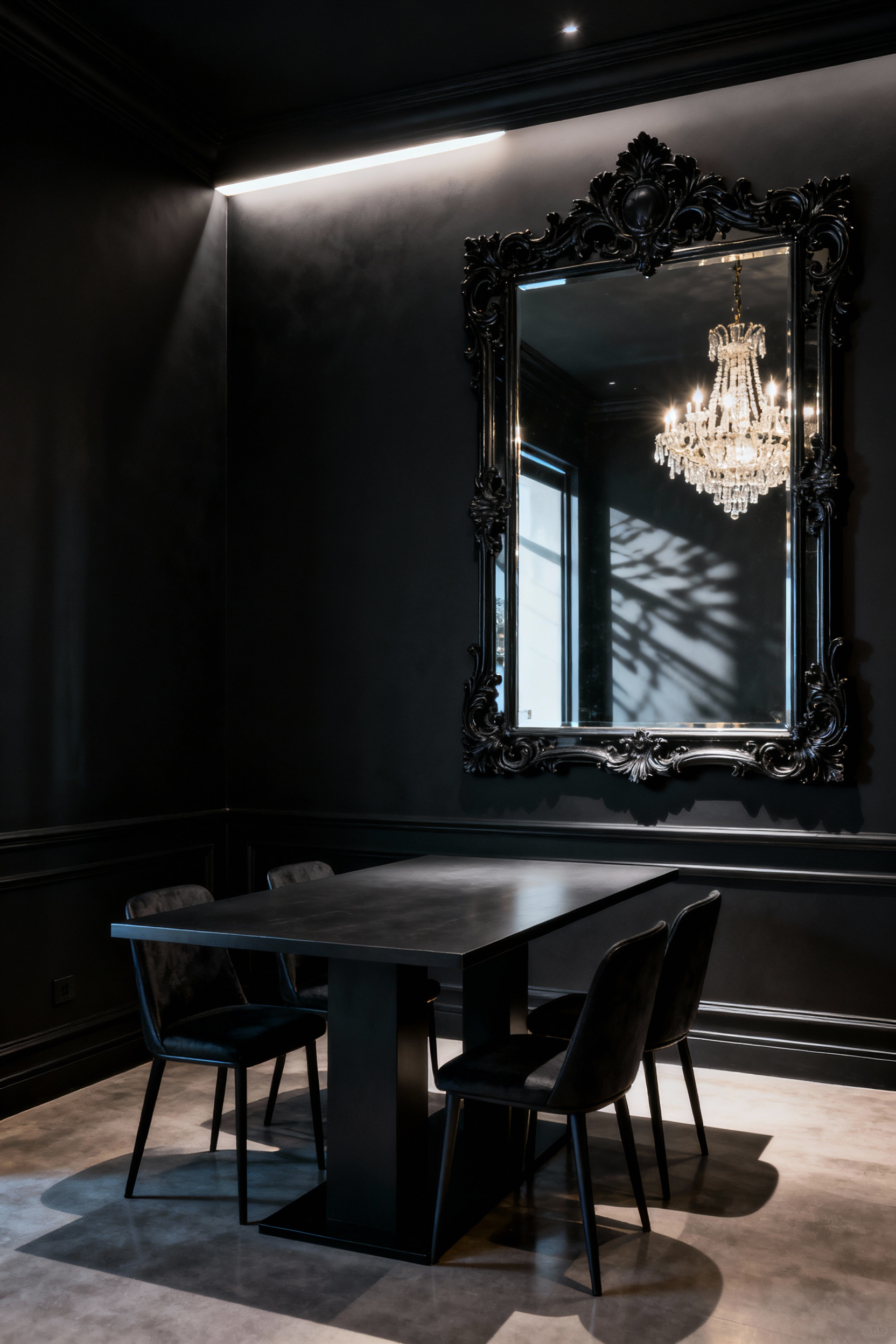
It is a trick, a beautiful and necessary lie that disrupts the comfortable enclosure of the dark walls. The reflection it offers expands the space not just physically, but imaginatively, adding a layer of captivating complexity and light.
15. The Power of Architectural Intervention
When possible, integrate the darkness into the very bones of the room. A custom, built-in banquette, upholstered in dark velvet or leather, feels both monumental and inviting. Bespoke floor-to-ceiling shelving, rendered in the same dark hue as the walls, can create a library-like alcove, turning storage into a feature of immense character.
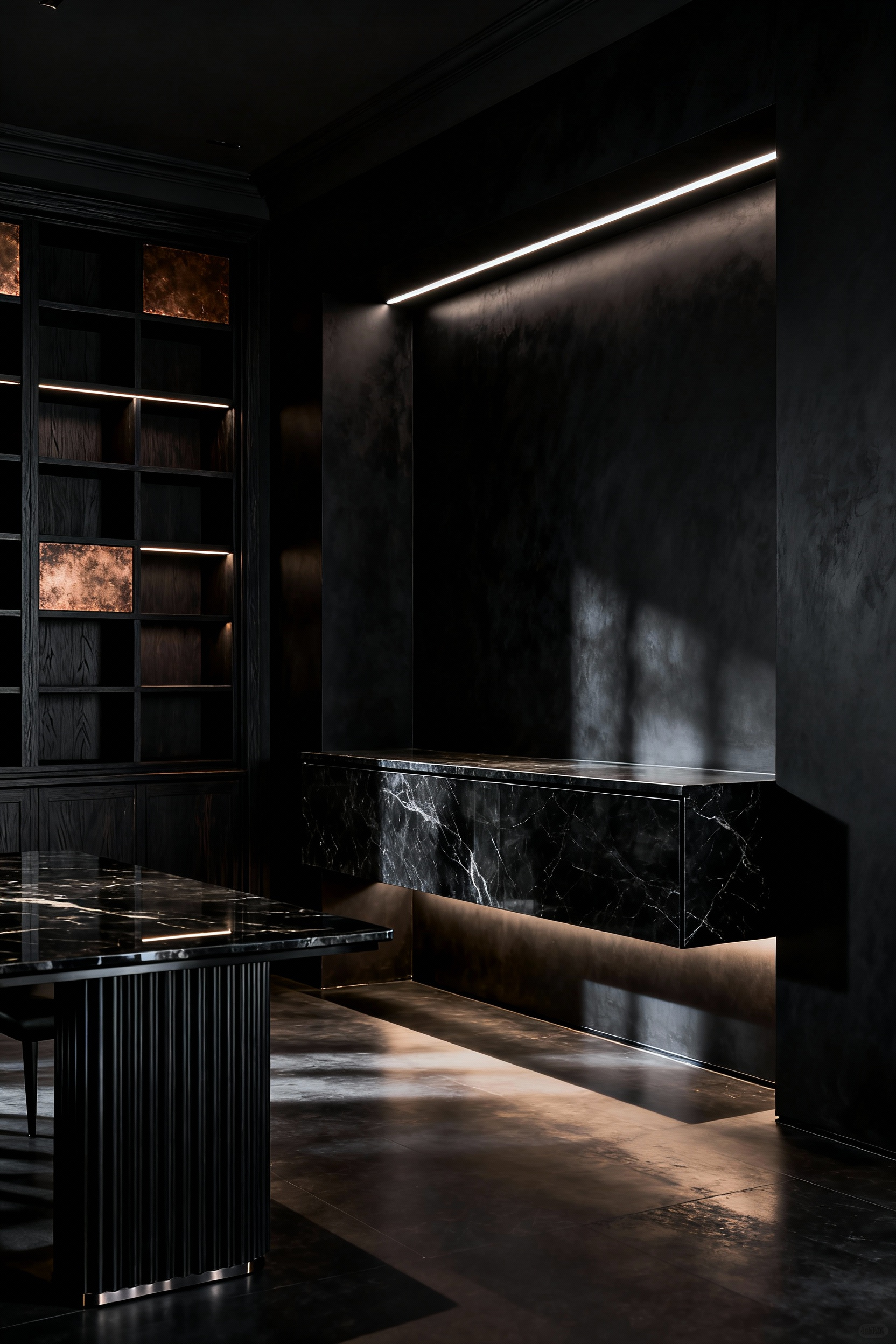
These architectural gestures make the design feel intentional and permanent. It declares that this darkness is not a whim or a passing fancy, but an integral part of the home’s very identity—a statement of enduring style.
The Gothic Modernist’s Legacy: Cultivating an Enduring Aesthetic
A design is not finished when the last object is placed. It is a living thing that must be tended to. This is how you ensure your dramatic space remains a source of inspiration and comfort for years to come.
16. Verdant Embellishment as Organic Contrast
Against the profound darkness, the vibrant green of living things appears almost electrifying. Introduce botanical life—a towering fiddle-leaf fig in a corner, the dramatic spill of a pothos from a high shelf, a simple bouquet of dark Calla lilies on the table.
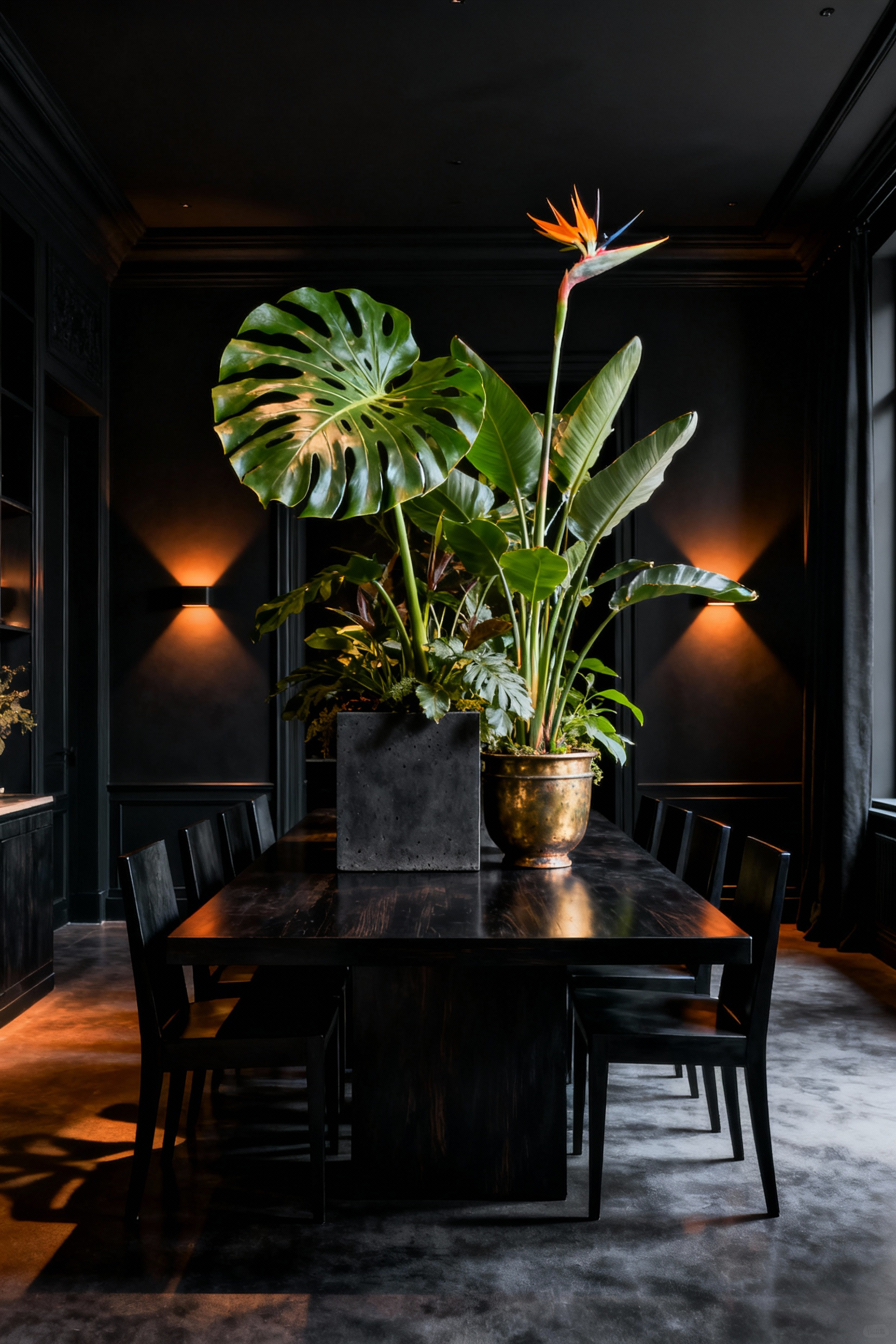
This is the necessary counterpoint, a reminder of life, growth, and untamed nature within your carefully constructed world. It provides organic texture and a vital splash of color that prevents the room from feeling too severe, ensuring it remains a sanctuary of life.
17. The Art of Absence
True luxury often lies in what is left out. The curation of negative space—the quiet, unadorned expanses of wall or floor—is crucial. This visual pause allows the eye to rest and to better appreciate the objects you have chosen to display.
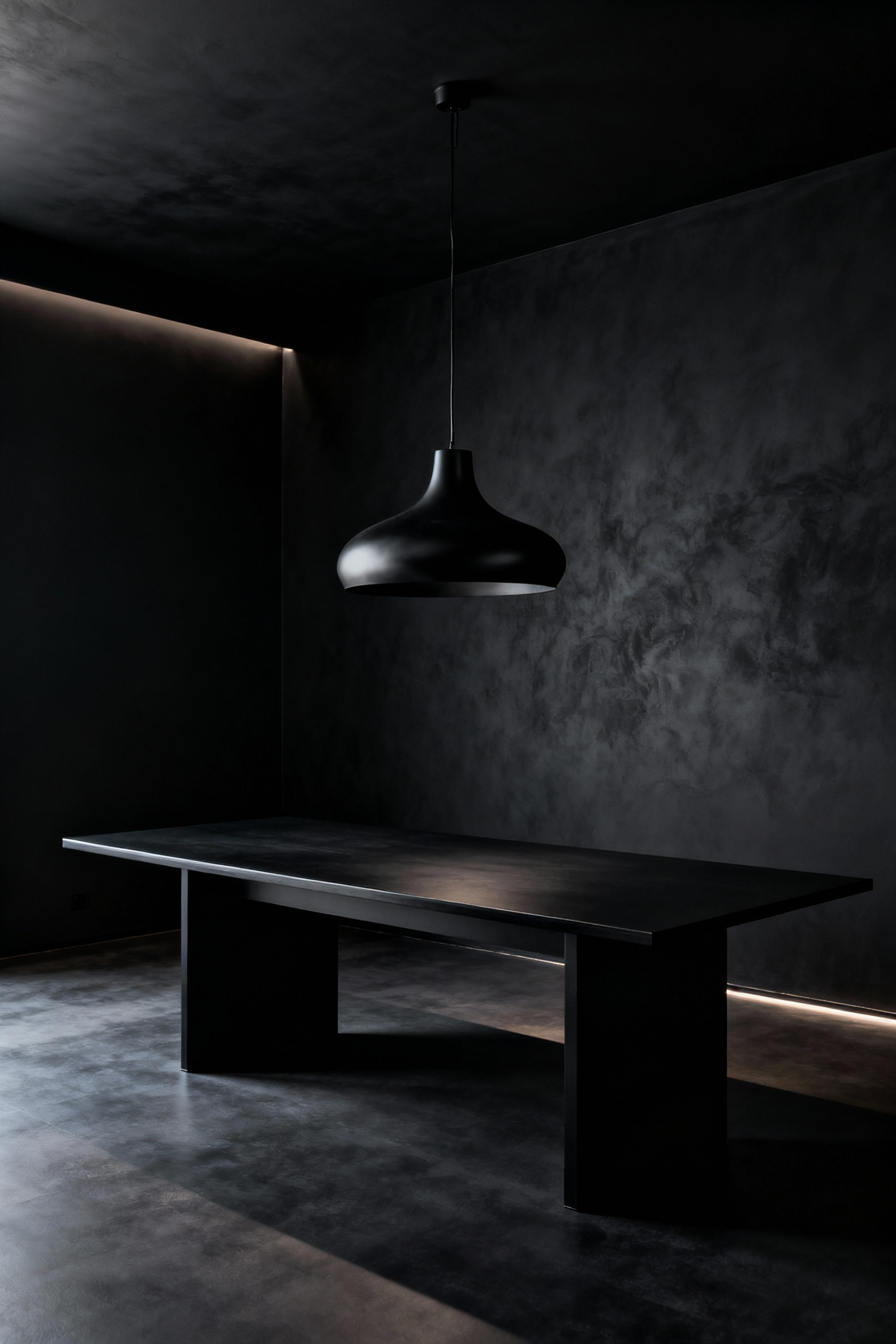
Resist the urge to fill every surface. An empty corner is not a failure; it is an opportunity for shadow-play. A bare stretch of wall is a statement of confidence. This restraint is what elevates a room from being merely decorated to being truly designed.
18. Embracing Seasonal Metamorphosis
Your black dining room is a perfect stage, ready to be dressed for any season. The core remains, but the accents can shift with your mood and the calendar. In winter, introduce deep jewel tones through velvet pillows or a heavy wool throw. Bring in more brass and candlelight for warmth.
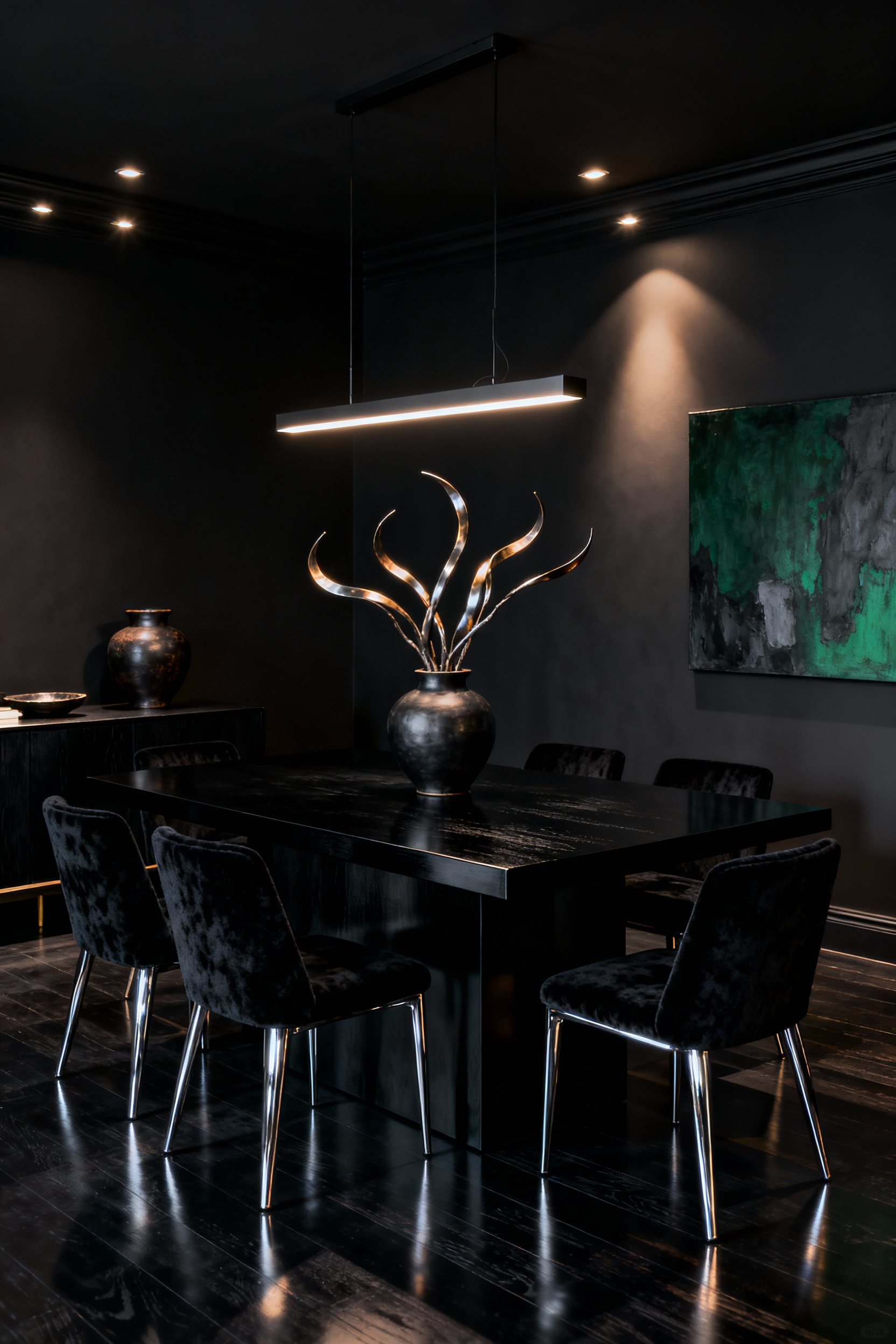
In summer, swap these for crisp white linens, clear glass vases filled with wildflowers, and lighter textures. This adaptability ensures the space never feels static. It evolves with you, a constant source of renewed beauty and inspiration.
19. Crafting a Narrative with Personal Artifacts
Your home should tell your story. Against the quiet backdrop of a black room, personal artifacts gain a special poignancy. An heirloom silver bowl, a collection of antique books, a piece of art acquired on a meaningful journey—these items should be given pride of place.
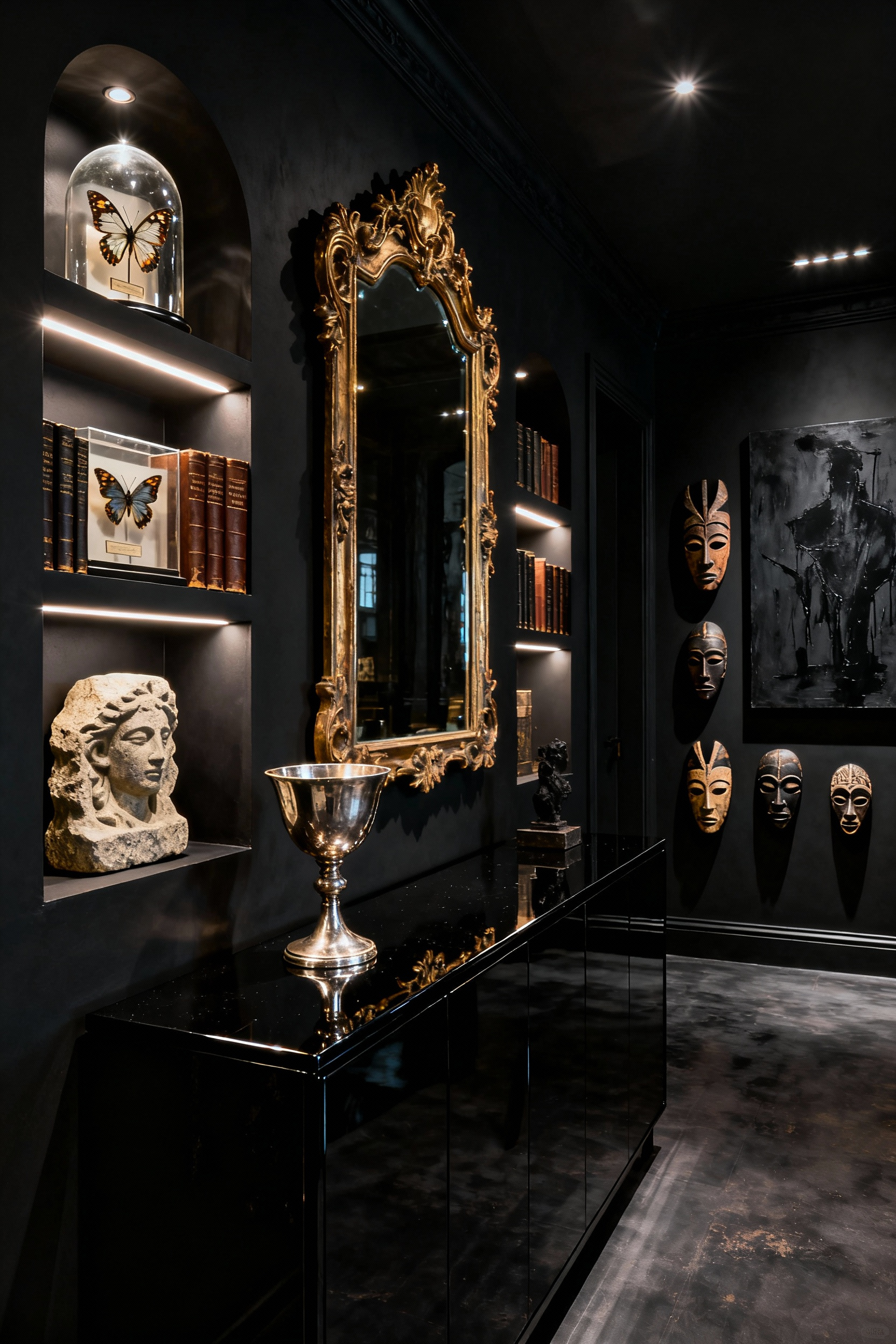
Lit properly, these pieces become more than objects; they are characters in the story of your life. They invite questions, spark memories, and infuse the sophisticated space with a layer of deep, personal meaning that no designer can purchase.
20. Sustaining the Mystique
An elegant black surface demands care. This is not a chore; it is a ritual. A matte wall will show scuffs, a lacquered table will show fingerprints. Embrace the practice of maintaining your sanctuary.
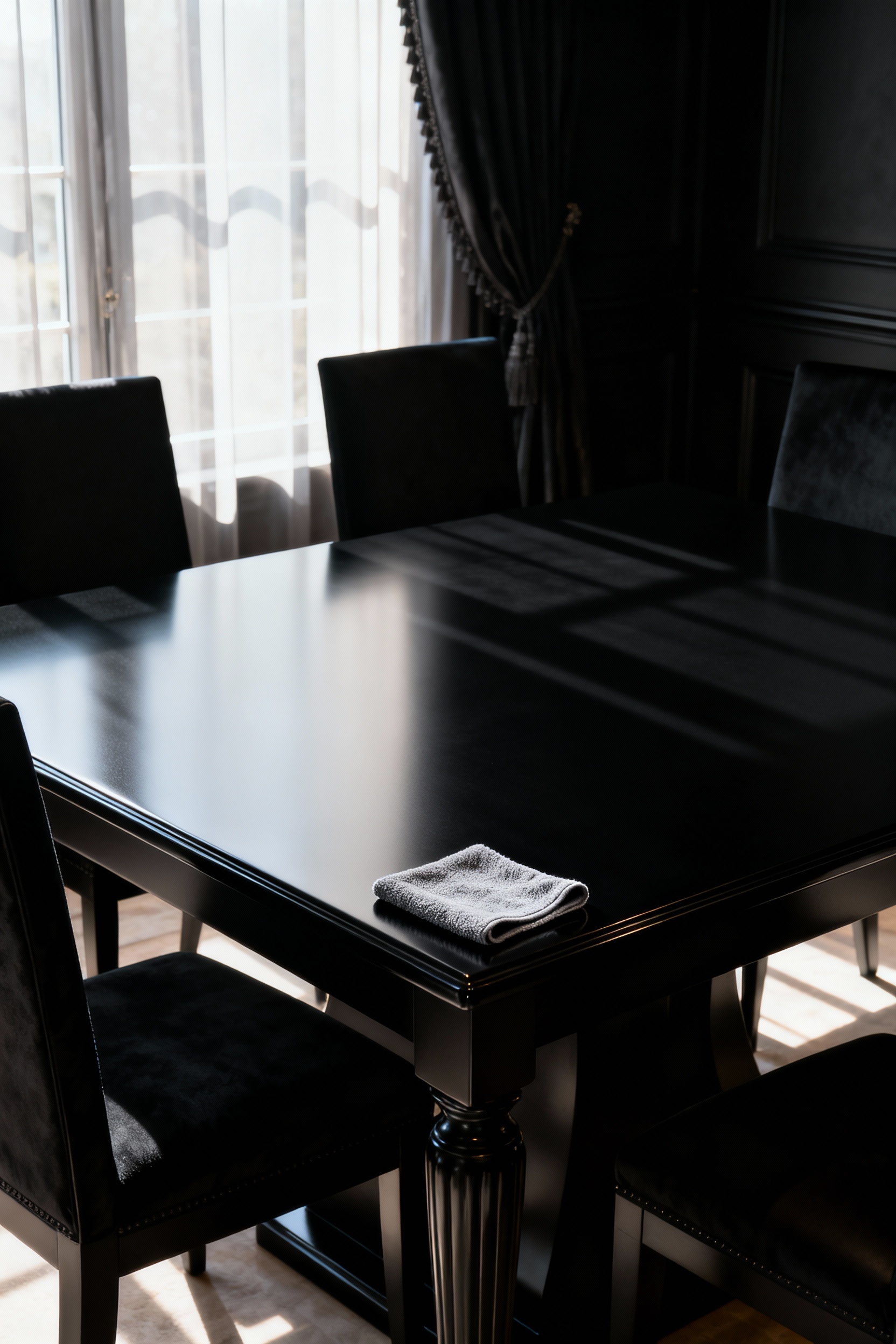
I learned early on that the most beautiful matte finishes demand a certain ritual. I tell my clients to think of it not as cleaning, but as tending to a living surface, preserving its soul with deliberate care. Invest in soft microfiber cloths and gentle cleaners. See the act of dusting and polishing not as work, but as an act of devotion to the beautiful and mysterious world you have built.
Conclusion
We stand now at the close of our journey, having walked through the shadowed corridors of myth to arrive at a place of profound clarity. The twenty insights explored here have, I trust, thoroughly banished the notion that a black dining room is anything less than a vessel for extraordinary beauty. We have proven that this audacious choice is not a descent into gloom, but an ascent into a realm of sophistication, intimacy, and unmatched dramatic potential.
Let the timid cling to their pale, predictable walls. You now possess the knowledge and the philosophical grounding to create something far more resonant. I implore you to embrace this revelation. Wield darkness not as a color, but as a medium. Sculpt with shadow and light. Craft your own obsidian sanctuary—a space that defies convention, delights the senses, and stands as a timeless testament to the potent elegance of the dark.