
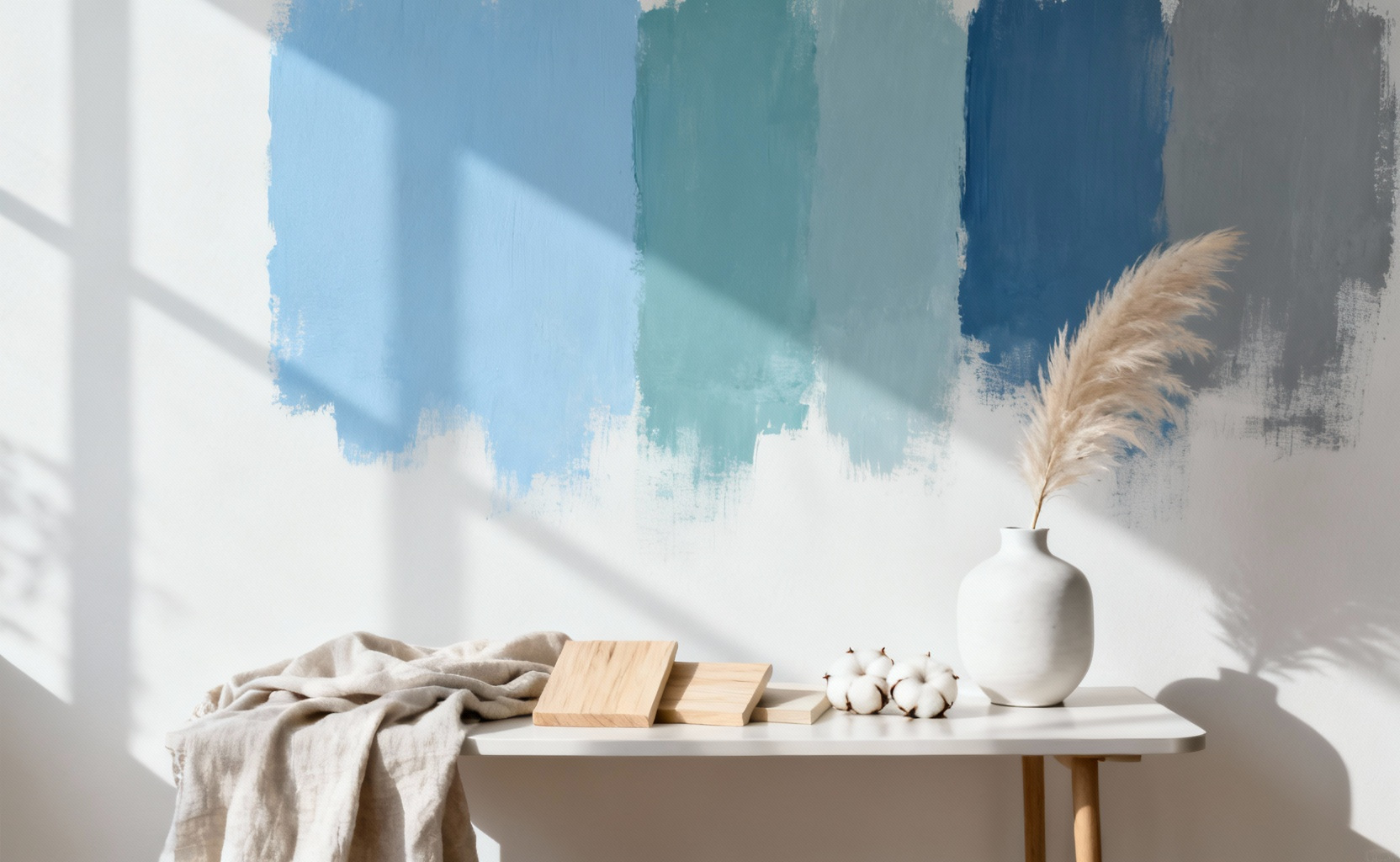

I recently sat with a friend who described her bedroom as a “charging station that wasn’t plugged in.” The furniture was there, the layout made sense, but the energy felt flat, disconnected. We all know that feeling, when a space is simply functional instead of truly restorative. That subtle hum of unease you can’t quite name is what separates a room you just sleep in from a sanctuary that actively heals you.
From my work in holistic home design, I’ve seen that the right color isn’t just decoration; it’s a wellness tool. Blue, with its deep-seated connection to the endless sky and calming sea, has a profound effect on our nervous system. Scientific studies confirm what ancient wisdom has always known: certain shades of blue can actually lower blood pressure and slow your heart rate. By intentionally weaving blue bedroom decor into your space, you’re not just painting a room—you’re composing a lullaby for your entire being. But this is about more than a can of paint. It’s about a thoughtful, layered approach.
Together, let’s explore 20 ways to transform your bedroom with blue, building from simple, foundational choices to sophisticated, holistic integrations. This is your guide to creating a space that doesn’t just look peaceful, but genuinely helps you find it, every single day.
Essential Blue Bedroom Fundamentals (Part 1)
Our journey begins with the foundational elements—the gentle first steps that lay the groundwork for profound tranquility. Here, we’ll explore the core choices that establish your room’s calming energy, building a base upon which a truly restorative atmosphere can flourish.
1. Cultivating Calm with the Right Blue Hue
Before a single piece of furniture is moved, the most important choice is the specific blue that will hold your space. This isn’t just about picking a color you like; it’s about choosing an emotional frequency. Lighter shades like a pale sky blue physically expand a room, making it feel airy and open—ideal for inviting in the feeling of possibility. Mid-tones like duck egg or cerulean offer a gentle embrace, fostering security without feeling heavy.
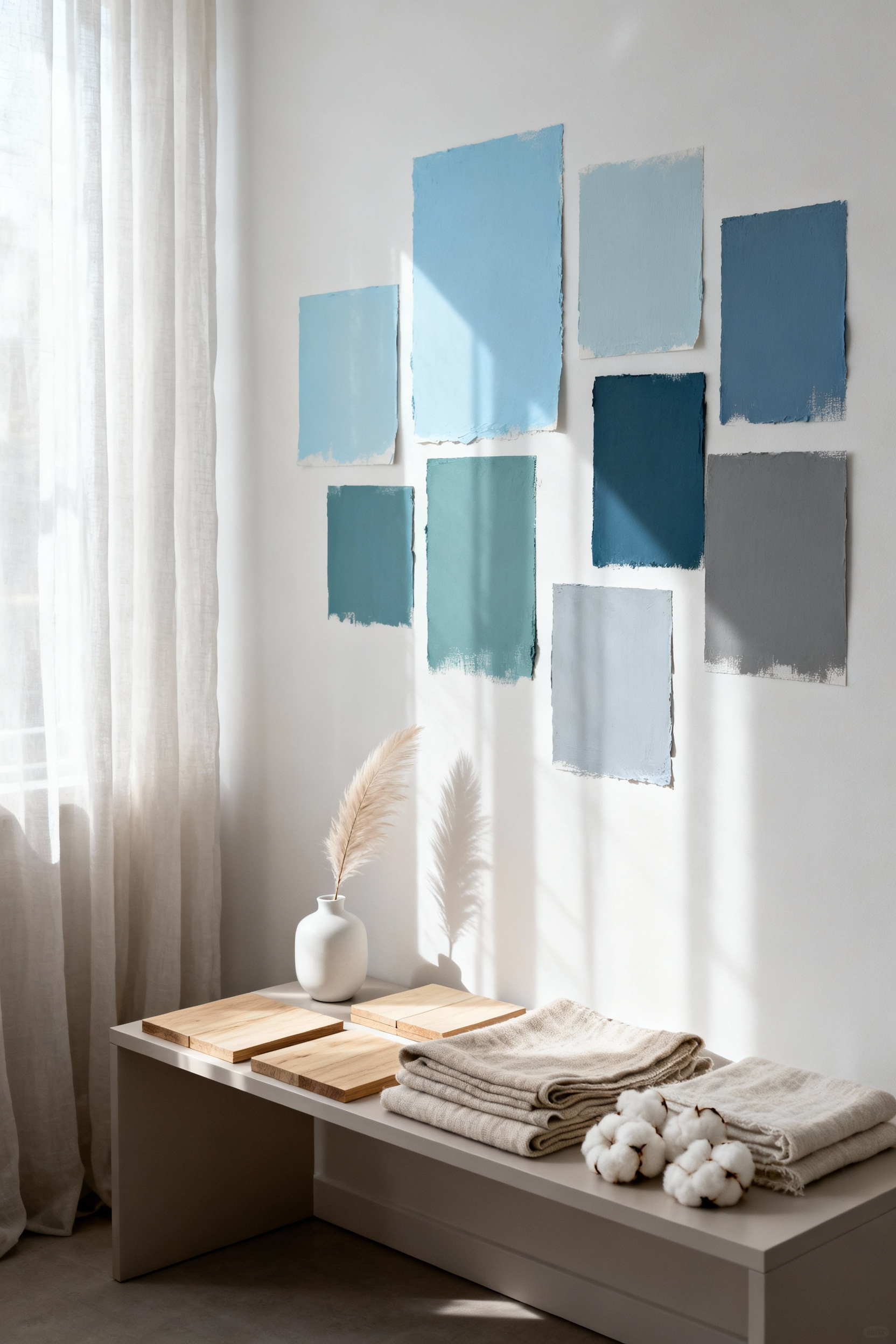
Then there are the deep, grounding blues—navy, indigo, sapphire. These shades create an intimate, cocoon-like atmosphere that quiets the mind and encourages deep rest. What I tell my clients is to get large swatches and live with them for a few days. Notice how a certain blue feels in the quiet morning light versus how it comforts you at dusk. Your emotional response is the only true north star here; it will tell you which hue your soul needs to truly exhale.
2. Integrating Azure Accents with Pillows and Throws
With your core color chosen, the next layer of serenity comes from tactile elements. Think of pillows and throws not as afterthoughts, but as gentle invitations to rest, to curl up, to be still. Their softness and texture are a crucial part of creating a holistic environment.

Start a conversation of textures: a set of crisp linen pillow shams in a deep navy against a plush velvet cushion in a lighter azure. Drape a chunky-knit throw in a heathered blue over the corner of the bed. Each material invites a different sensory experience—the cool smoothness of linen, the comforting weight of a knit—that deepens the room’s sense of comfort. These elements are wonderfully flexible, allowing you to adjust the room’s mood with the seasons or as your own needs evolve.
3. Harmonizing Walls with a Whisper of Blue Paint
Painting your walls blue is a commitment—it’s like deciding to swim in the ocean instead of just dipping your toes in. When you immerse the room in a single hue, you create a complete sensory environment. The finish you choose is as important as the color. A matte finish will absorb light and even a bit of sound, creating a velvety, quiet atmosphere perfect for deep blues. An eggshell or satin finish, with its gentle sheen, will reflect more light, making a medium blue feel fresh and alive.
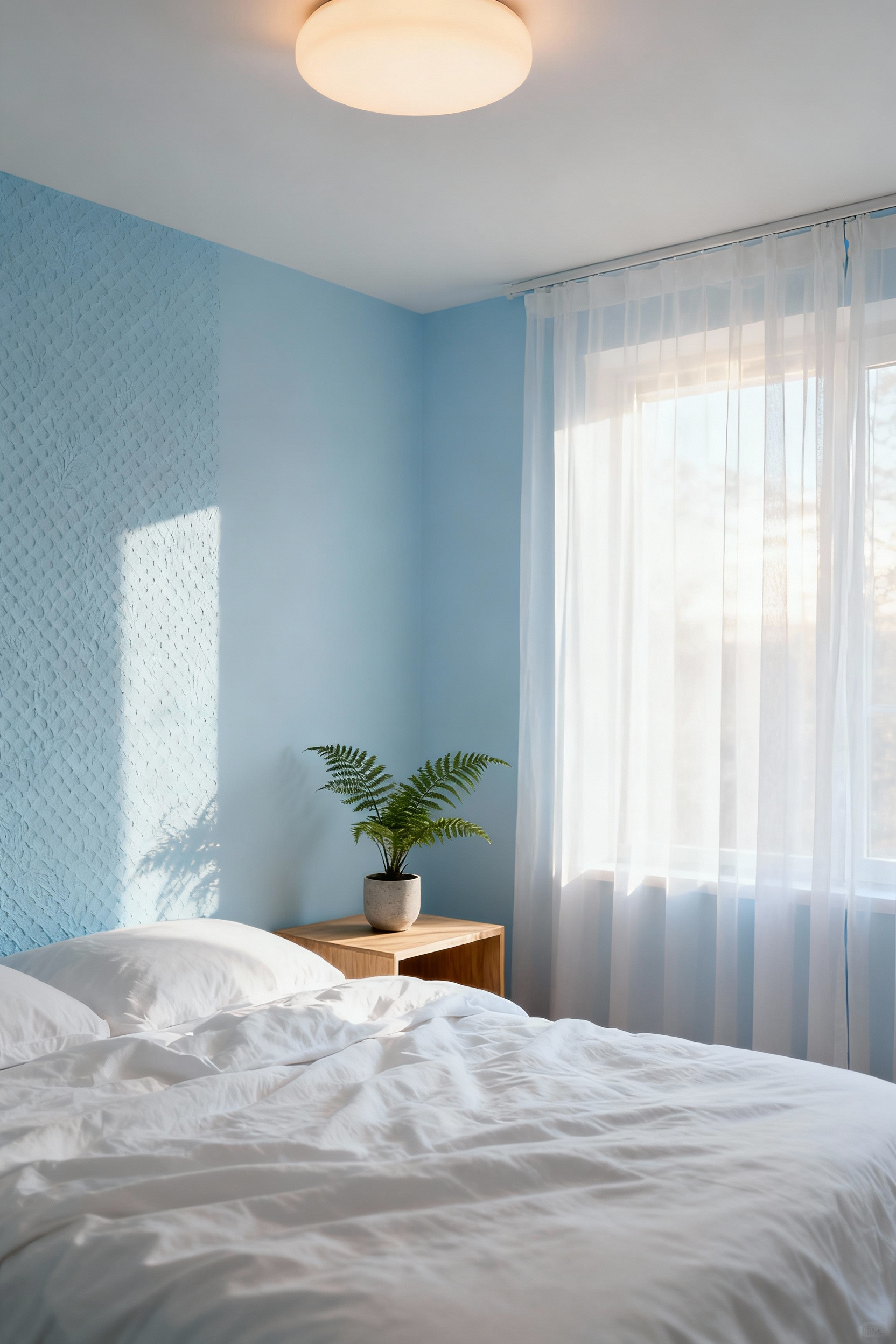
An accent wall behind the bed can be a powerful choice, grounding the space where you rest without overwhelming the entire room. In my wellness sanctuary design practice, I’ve found that this is a great way to use a bolder, more saturated blue while keeping the overall feeling light. This single act can redefine the room’s entire emotional landscape, wrapping you in tranquility from the moment you step inside.
4. Anchoring Your Space with Blue Area Rugs
In Feng Shui, a rug doesn’t just decorate the floor; it anchors the energy of a space, defining its purpose and providing a sense of stability. A blue area rug is the grounding force for your sanctuary. Your first experience in the morning and your last at night is often the feeling of the floor beneath your feet, so making it soft and welcoming is a powerful act of self-care.
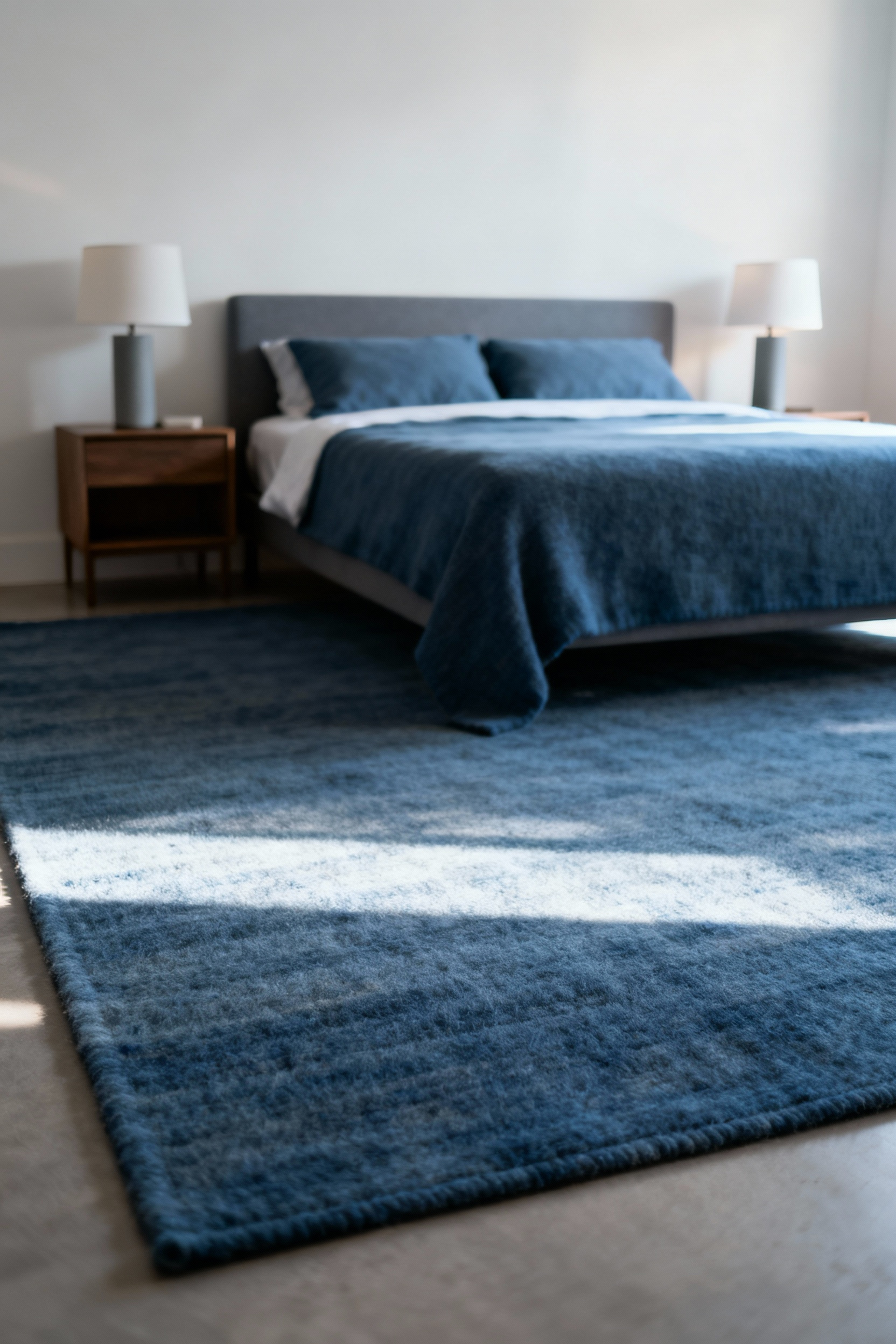
Choose a rug large enough to extend past the sides of the bed, so your feet land on softness when you wake. A plush wool will absorb sound, adding to the room’s quietude, while a flatweave with a subtle blue pattern can introduce gentle movement. The right rug knits all the other blue elements together, creating a cohesive visual field that is profoundly calming to the nervous system.
Essential Blue Bedroom Fundamentals (Part 2)
Building on our foundation, we now turn to one of the most vital—and often overlooked—elements in holistic design: light. How light interacts with your chosen blues can either amplify serenity or disrupt it. Let’s focus on how to master this interplay for sustained peace.
5. Enhancing Light with Sheer Blue Curtain Panels
The quality of light in your bedroom has a direct impact on your well-being. Harsh, unfiltered sunlight can feel jarring, while a soft, diffused glow is instantly calming. Sheer blue curtains are a beautiful tool for sculpting light, transforming it into an active element of your design. As sunlight passes through, it picks up the fabric’s cool hue, bathing your room in a gentle, tranquil wash of color.
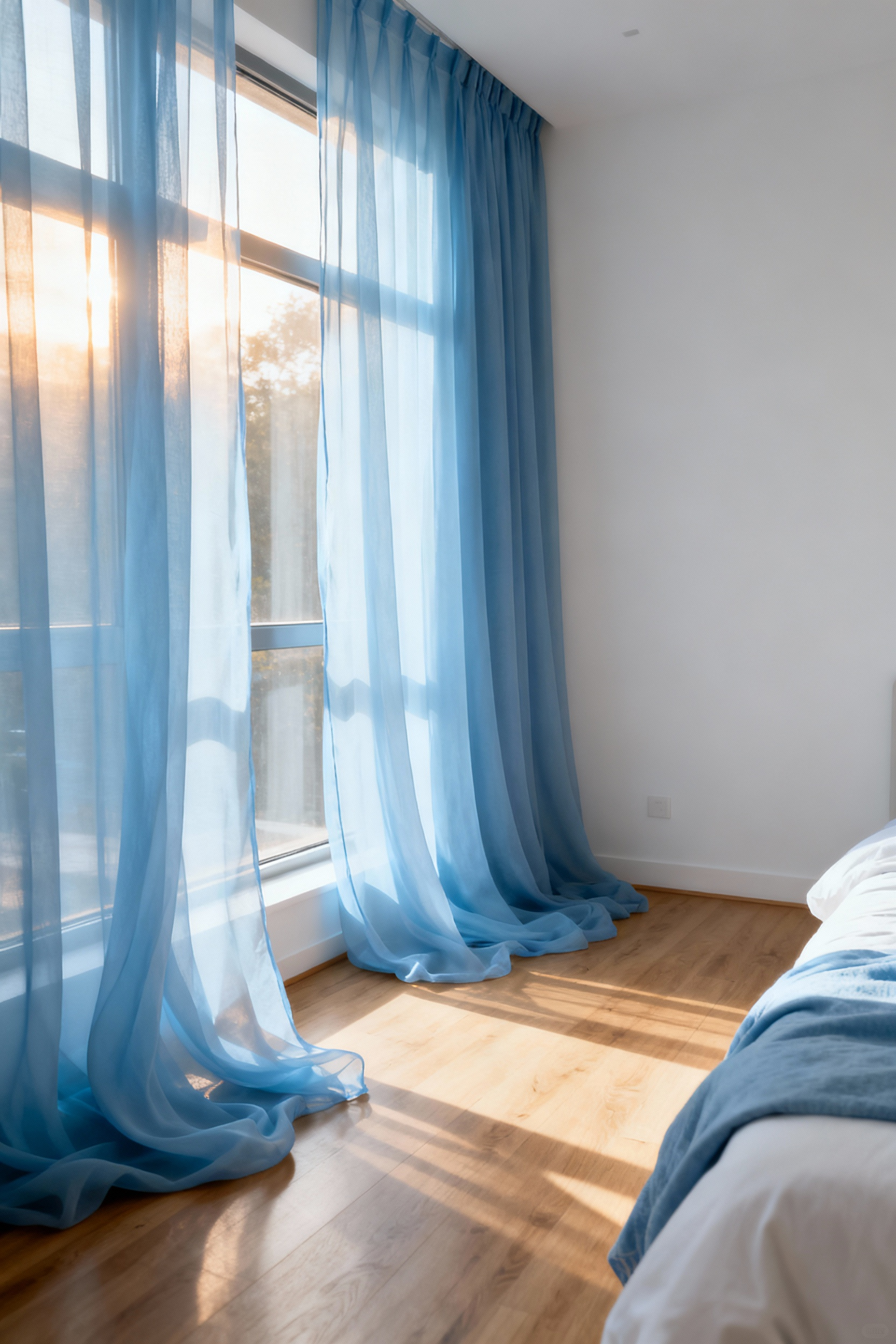
Think of it as creating your own custom daylight. In a south-facing room with intense sun, a slightly deeper blue sheer can cool and calm the light. In a north-facing room with softer light, a pale sky blue can keep the space from feeling chilly. In my professional experience, the way light filters through a beautiful textile is one of the most effective ways to establish a peaceful mood without adding clutter.
Elevating Your Blue Bedroom Approach (Part 1)
Now that our foundation is set, it’s time to weave in more sophisticated layers of texture, light, and nature. These next steps will elevate your space from simply decorated to deeply restorative, creating a multi-sensory experience of calm.
6. Crafting Layered Blue Textures with Linen and Velvet
A room designed for wellness should engage more than just your eyes. By layering different blue textures, you create a rich tactile experience that is deeply comforting. The cool, crisp feel of linen bedding offers a beautiful counterpoint to the plush, light-absorbing depth of a velvet headboard or accent chair. This is a conversation between materials.

You can extend this interplay throughout the room. Consider a soft, low-pile blue rug underfoot, a cashmere throw draped over a chair, and silk-blend accent pillows on the bed. Each material interacts with light and touch in its own unique way, preventing a monochromatic palette from feeling flat. What really gets me is how this simple strategy makes a room feel so much more soulful and inviting.
7. Strategic Placement of Reflective Blue Surfaces
While texture absorbs light, reflective surfaces can dance with it. Incorporating reflective blue elements is a sophisticated way to add movement and life to your sanctuary. This can be as simple as a glazed ceramic lamp base in a deep cobalt, a polished blue vase that catches the morning sun, or a mirror with a lacquered blue frame.
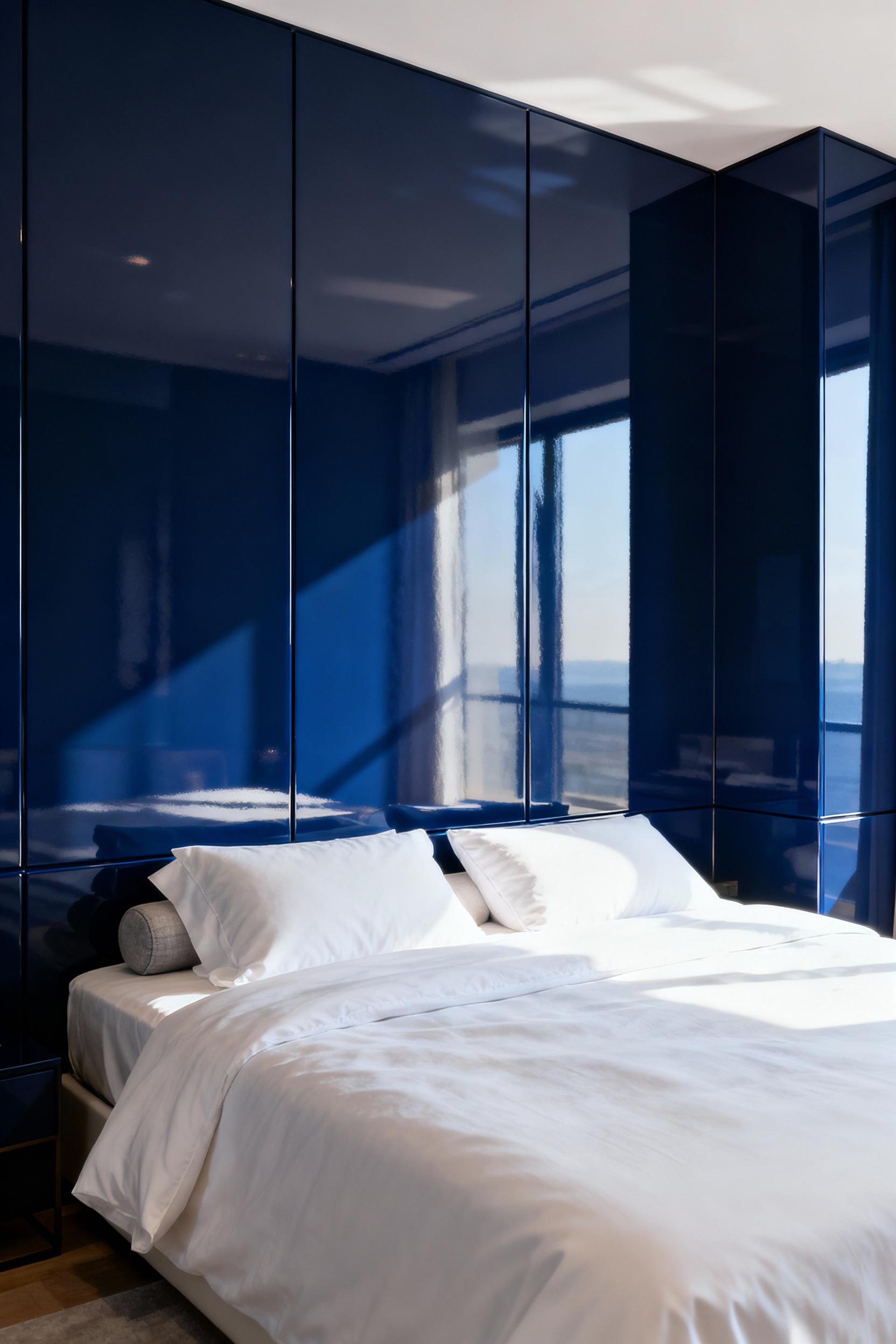
Placed opposite a window, a mirror not only makes the space feel larger but also multiplies the natural light, bouncing it around the room. I’ve noticed that even a small touch, like a piece of art with iridescent blue flecks, can add a magical quality. It’s about creating subtle moments of sparkle that prevent the calming atmosphere from feeling static.
8. Curating Blue Art to Personalize Your Serene Canvas
Art is the soul of a room. A thoughtfully chosen piece of blue-themed art can serve as the emotional focal point for your entire sanctuary. Look for works that evoke the feeling you want to cultivate—a serene seascape, an abstract wash of indigo and white, or a photograph of a misty morning. Placing it above the bed solidifies it as the anchor for the room’s calm.
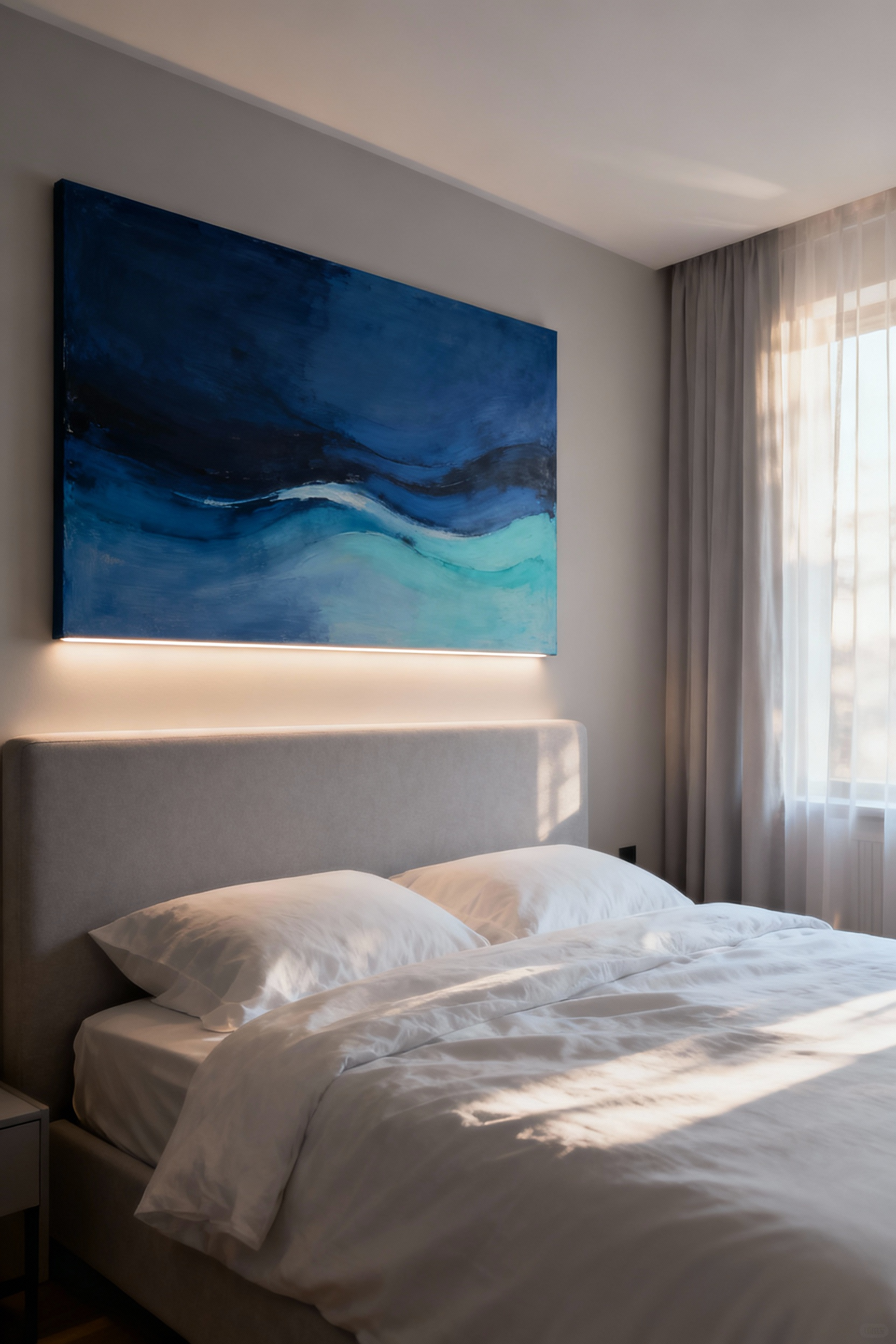
Don’t be afraid to think beyond a single framed print. A gallery wall of smaller pieces, united by their blue palette, can tell a more complex story. A large, woven tapestry in shades of blue can add both visual art and sound-dampening texture. Art makes the space uniquely yours, turning a beautiful room into a meaningful one.
9. Infusing Biophilic Blue Through Botanical Elements
Biophilic design is the practice of connecting our indoor spaces with nature, and it has profound benefits for our well-being. While green is the color we usually associate with plants, you can bring nature’s blue tones inside as well. Fresh hydrangeas in a simple vase are a classic, but you can also look for plants with blue-tinged foliage, like some varieties of eucalyptus or succulents.
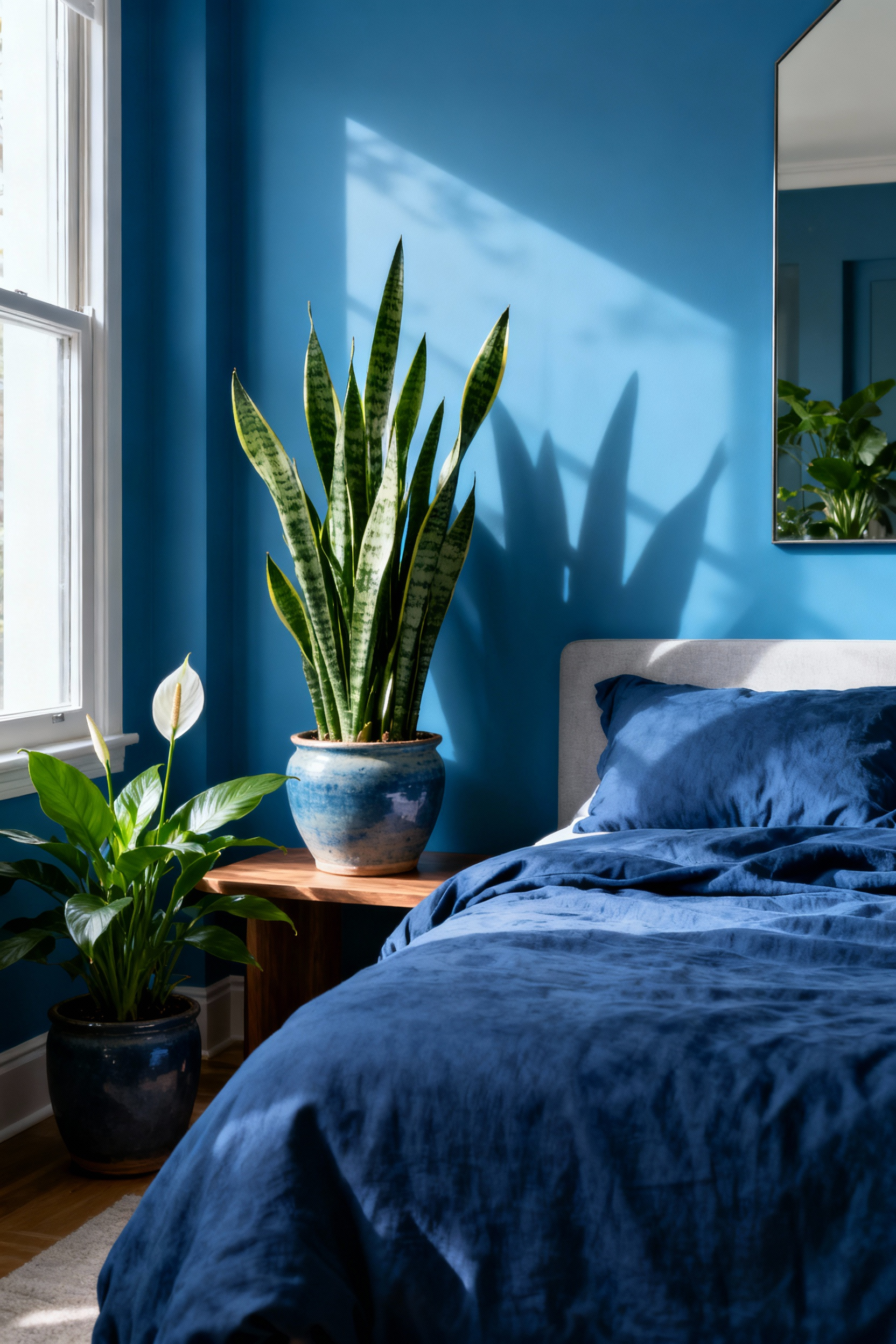
Housing these plants in beautiful blue ceramic pots deepens the connection. You get the air-purifying benefits of the plant itself, the grounding presence of the ceramic, and the calming hue of the glaze. It’s a small detail, but one that creates a powerful synergy between the natural and the curated elements of your blue bedroom decor.
Elevating Your Blue Bedroom Approach (Part 2)
Here, we’ll refine our design with elements that create both dynamic interest and a strong sense of serene focus. It’s about mastering patterns and making the bed itself the undisputed heart of your sanctuary.
10. Mastering Blue Pattern Play for Dynamic Calm
A room entirely in solid colors can sometimes feel one-dimensional. The artful introduction of pattern creates visual interest and rhythm without disrupting the peace. The key is to vary the scale. You can pair a large-scale pattern, like a botanical blue duvet cover, with a smaller, more subtle pattern on an accent pillow, like a delicate pinstripe.
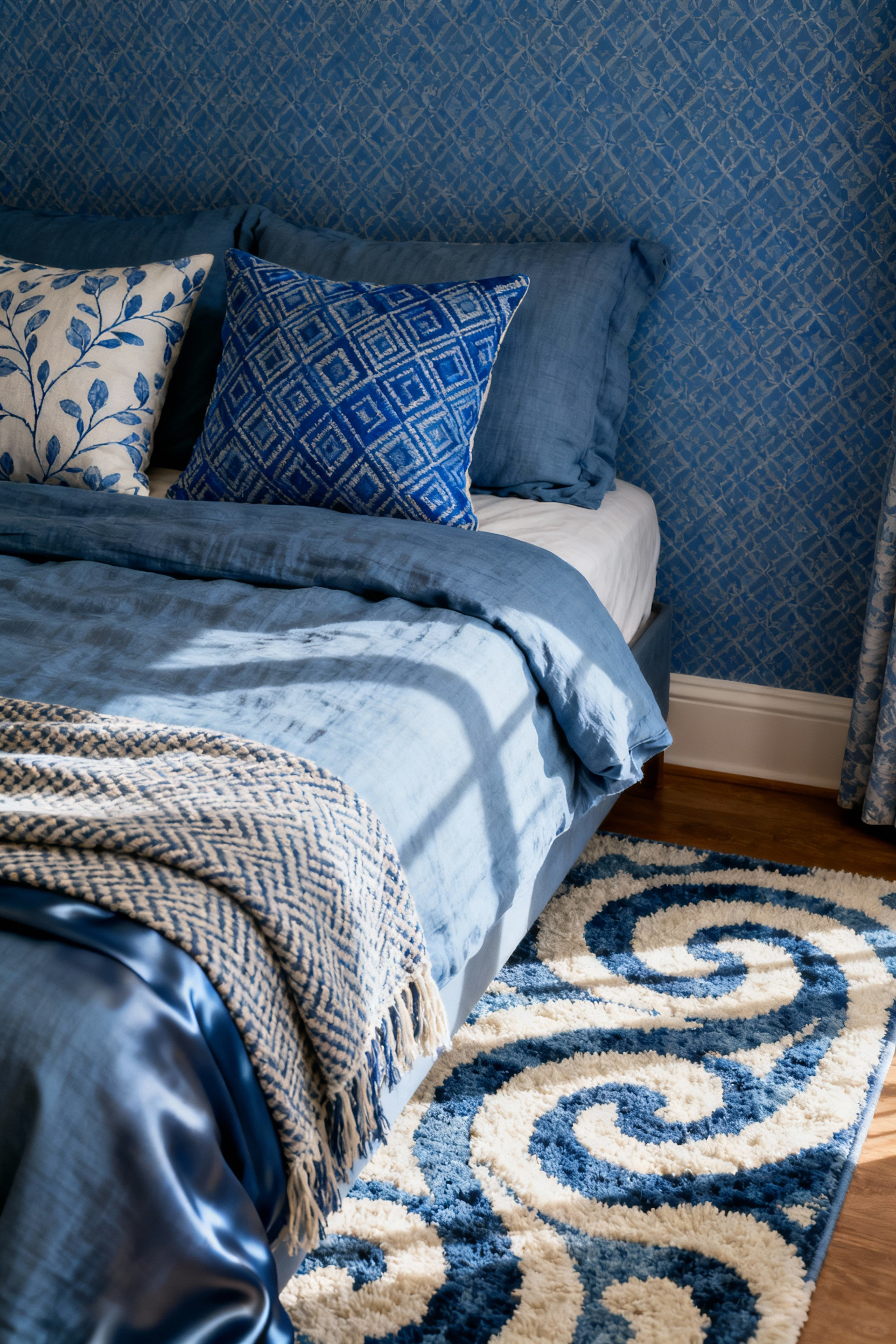
Another approach is to play with pattern styles. A crisp geometric can feel modern and orderly, while a soft, flowing watercolor pattern feels more organic and dreamy. The patterns should whisper, not shout. By weaving them into textiles like rugs, curtains, and bedding, you add a layer of sophisticated personality that keeps the calm from becoming boring.
11. Designing a Blue Headboard as a Statement of Serenity
The bed is the heart of the bedroom, and the headboard is its crown. Making the headboard a beautiful blue statement piece instantly anchors the entire room. An upholstered headboard in a deep navy velvet or a soft blue linen is both visually striking and physically comforting to lean against. It creates a soft, secure backdrop for rest.
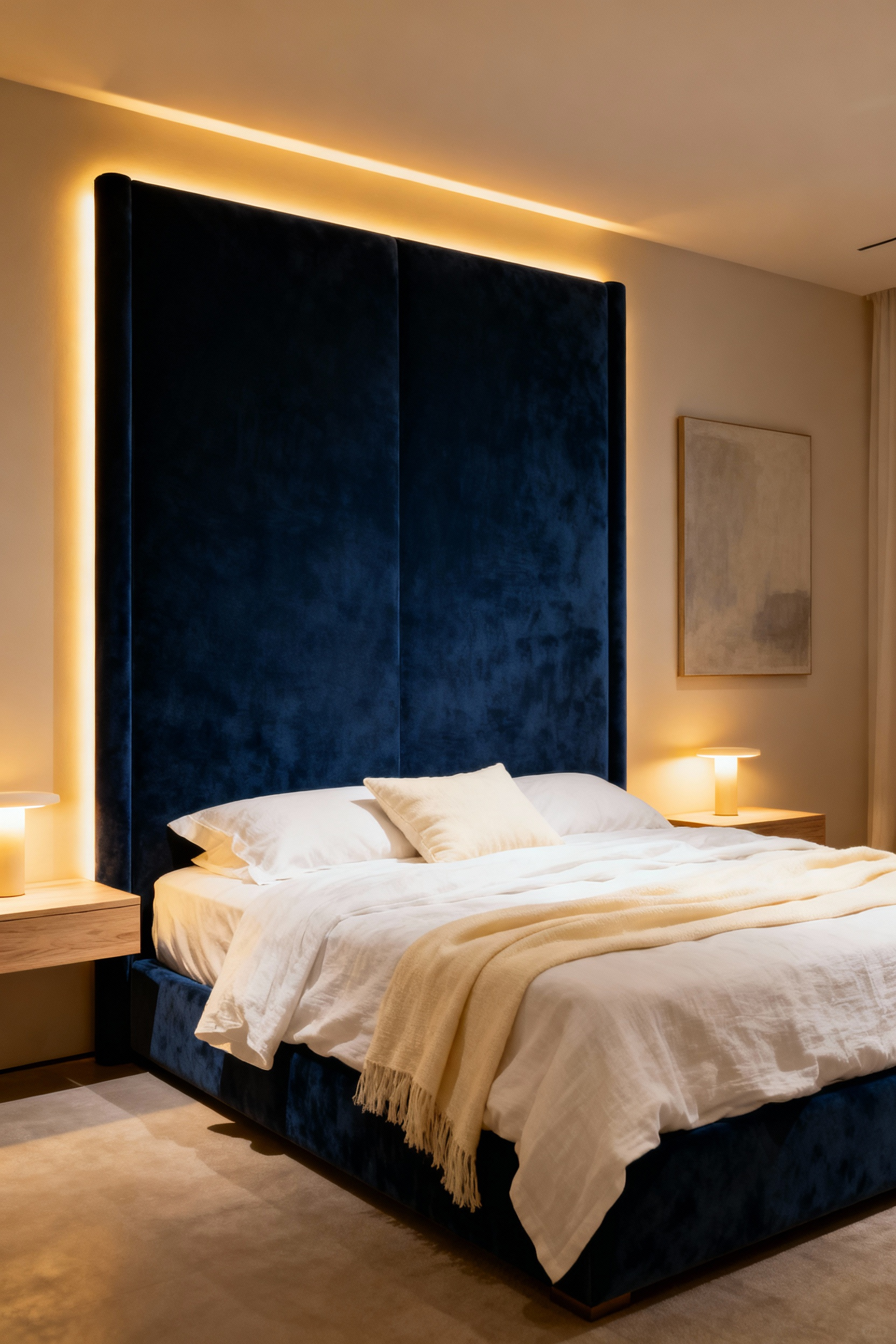
For a more architectural approach, you can create the effect of a headboard by painting a dramatic blue arch or rectangle on the wall behind the bed. This is a wonderful way to define the sleep space and add a bespoke touch. Years of holistic home design have taught me that when the bed feels grounded and protected, we sleep more deeply.
Advanced Blue Bedroom Strategies (Part 1)
Now we venture into more comprehensive design methodologies. These advanced strategies go beyond individual elements to create a seamless, holistic environment where every detail works in concert to support your well-being.
12. Implementing a Gradient Blue Palette for Seamless Flow
Instead of distinct blocks of different blues, imagine a color that flows and melts from one shade into another. A gradient or ombré effect creates a wonderfully serene and dreamlike atmosphere. This can be applied to a wall, with a deeper blue near the floor gradually lightening as it rises to the ceiling, mimicking the sky at dawn.
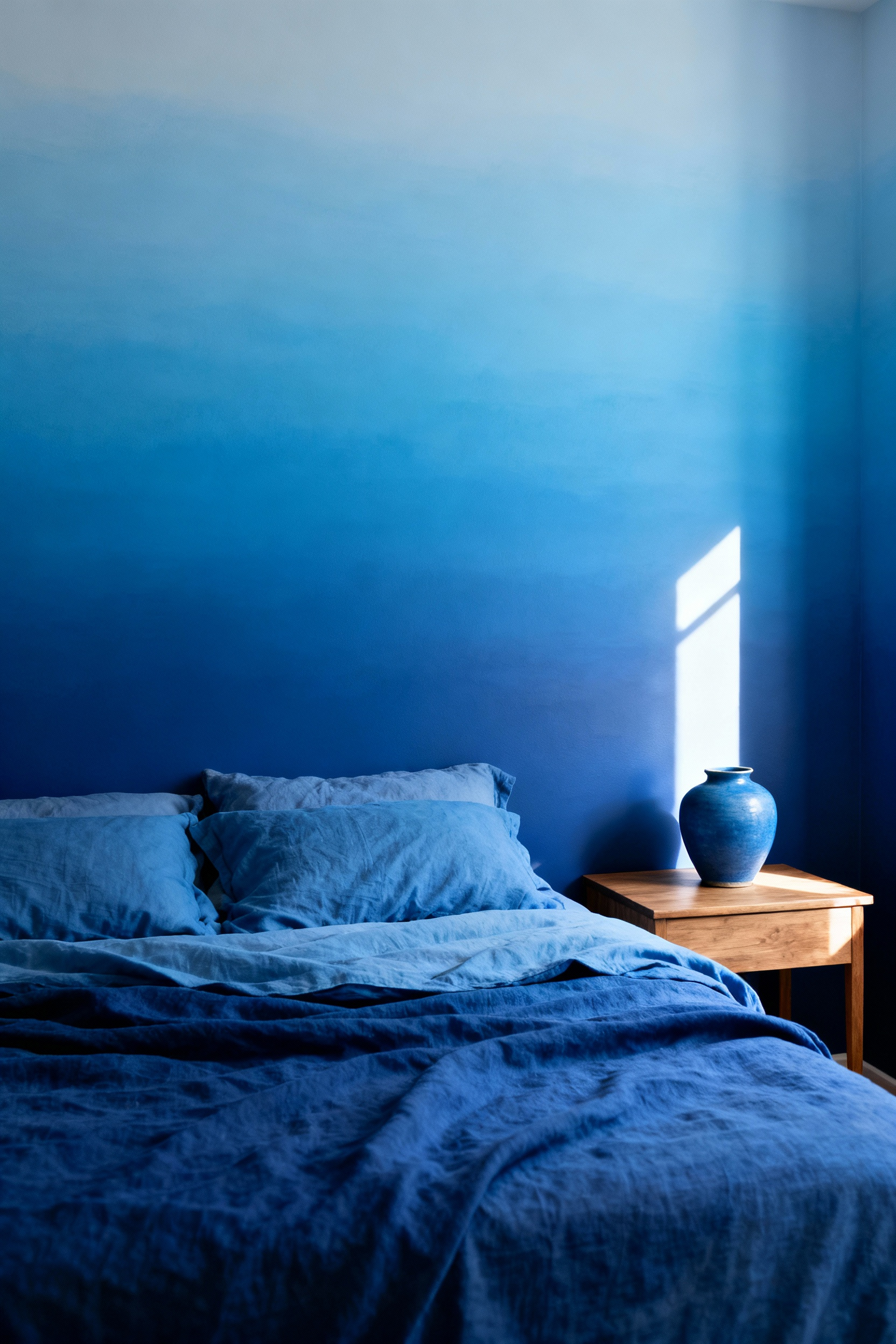
This seamless flow can be echoed in your textiles as well. Ombré curtains that transition from deep indigo to pale sky blue add a touch of effortless elegance. Bedding with a subtle gradient effect makes the bed feel like a calm pool of water. This approach is powerful because it eliminates hard visual lines, allowing the eye—and the mind—to rest.
13. Unifying Architectural Details with Bespoke Blue Trimwork
Attention to detail is what elevates a nice room to an exceptional one. Painting architectural trim—like baseboards, crown molding, and window frames—in a carefully chosen shade of blue is a sophisticated way to create a cohesive, custom look. It frames the room with intention.
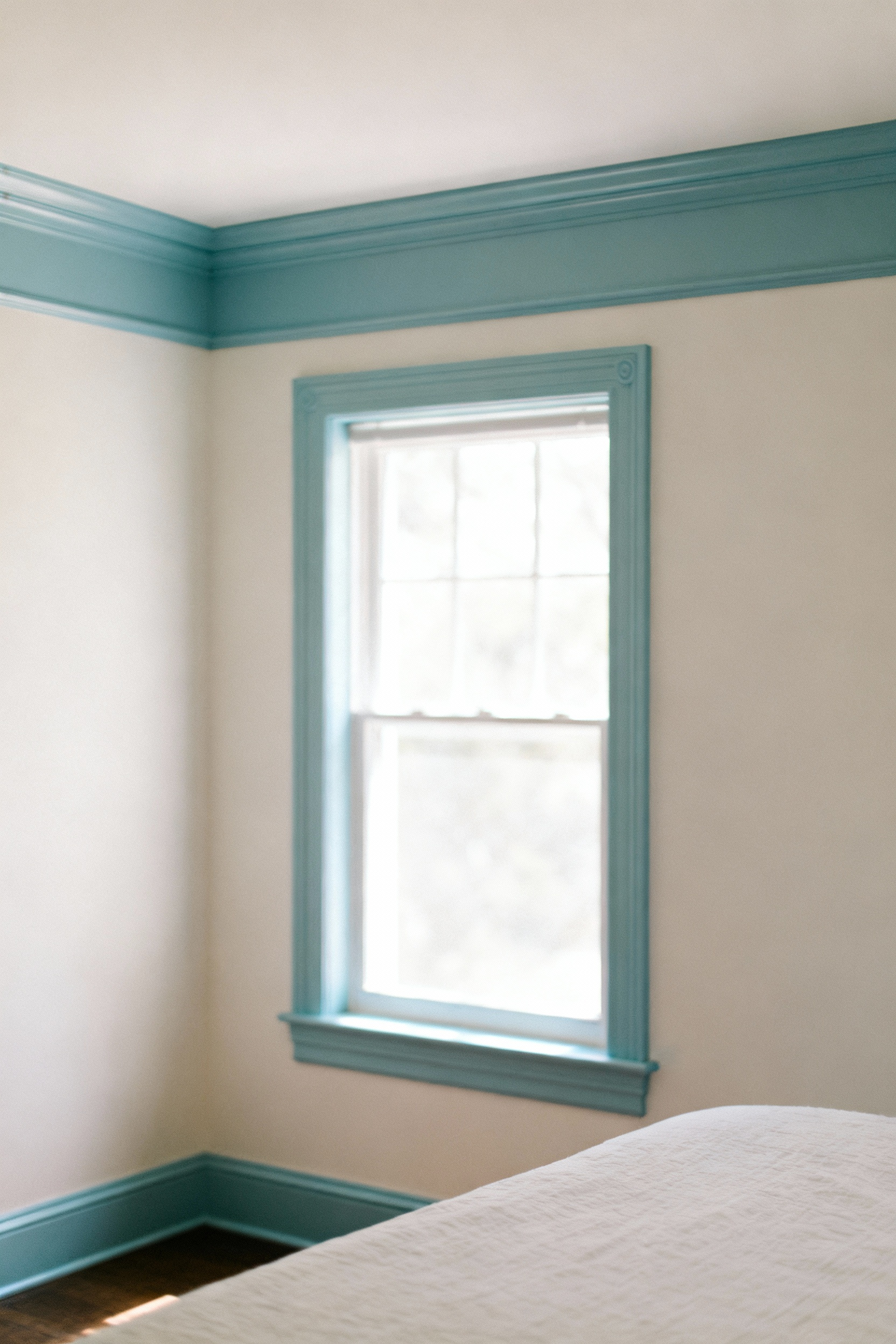
You could choose a blue that’s a few shades deeper than the walls for a subtle, layered effect. Or, for a bolder statement in a room with neutral walls, a rich navy or sapphire trim can be stunning. In my practice, I’ve found this technique gives a space a sense of history and permanence, making it feel deeply considered and cared for.
14. Employing the Psychology of Blue for Enhanced Sleep
This is where we move from aesthetics to true therapeutic design. Desaturated, muted blues have the strongest link to tranquility and are physiologically conducive to sleep. Painting the ceiling a very light, ethereal blue can subtly trick the mind into feeling more open and less confined, which can be soothing for those who struggle with feeling enclosed at night.
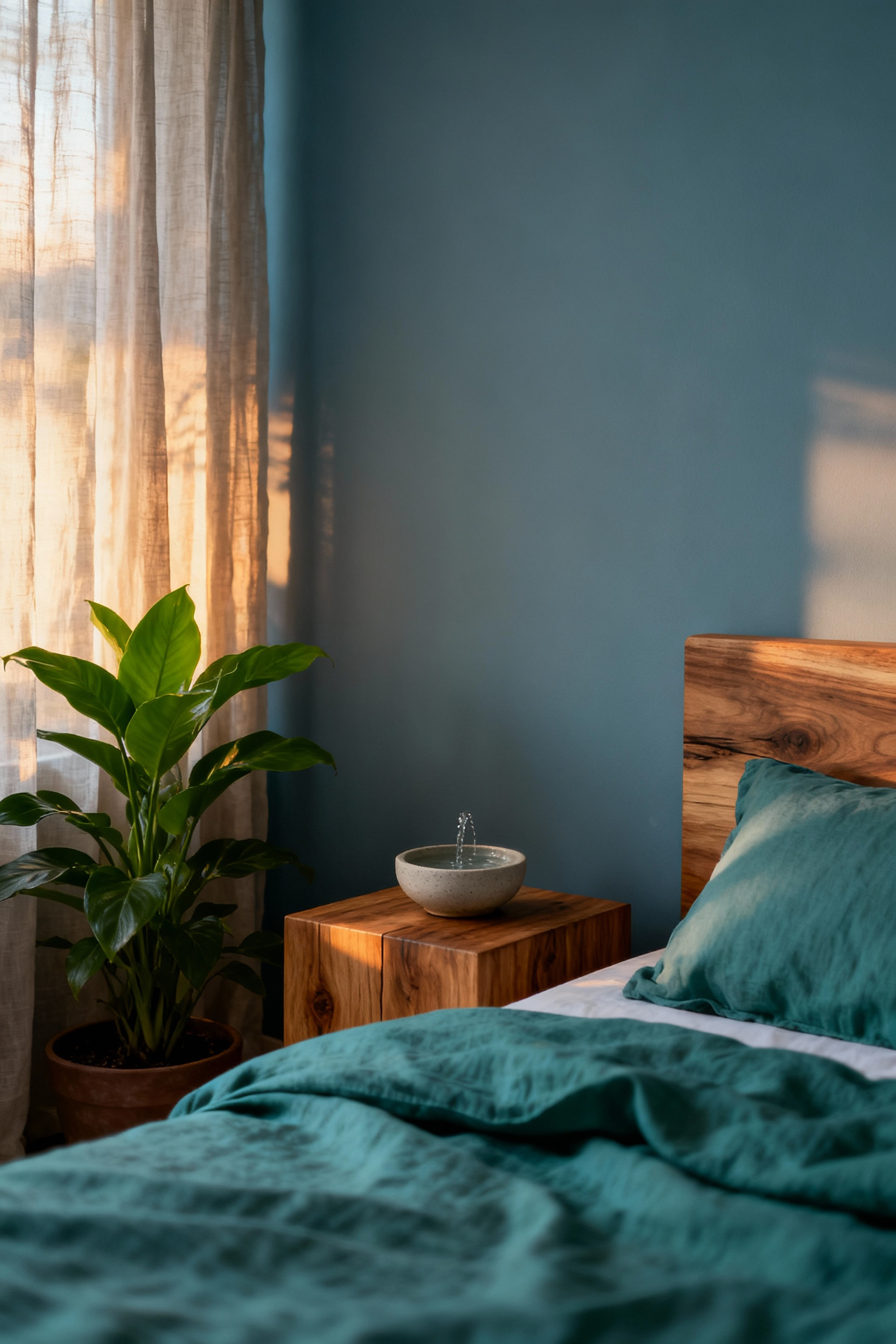
Consider designating specific blues for specific functions. A soft, calming blue for the overall wall color promotes rest, while a slightly more vibrant shade in a reading nook could help with focus without being overstimulating. You are using color as a gentle, subconscious cue to your brain, guiding it toward states of rest or mindful attention.
15. Harmonizing Blue with Complementary Warm Neutrals
A room that is entirely cool-toned can sometimes feel a bit sterile. The secret to a perfectly balanced blue sanctuary is the artful integration of warm neutrals. Think beyond stark white and consider shades like soft cream, warm oatmeal, sand, or even a blush-toned beige. These colors provide essential balance and prevent the blue from feeling chilly.
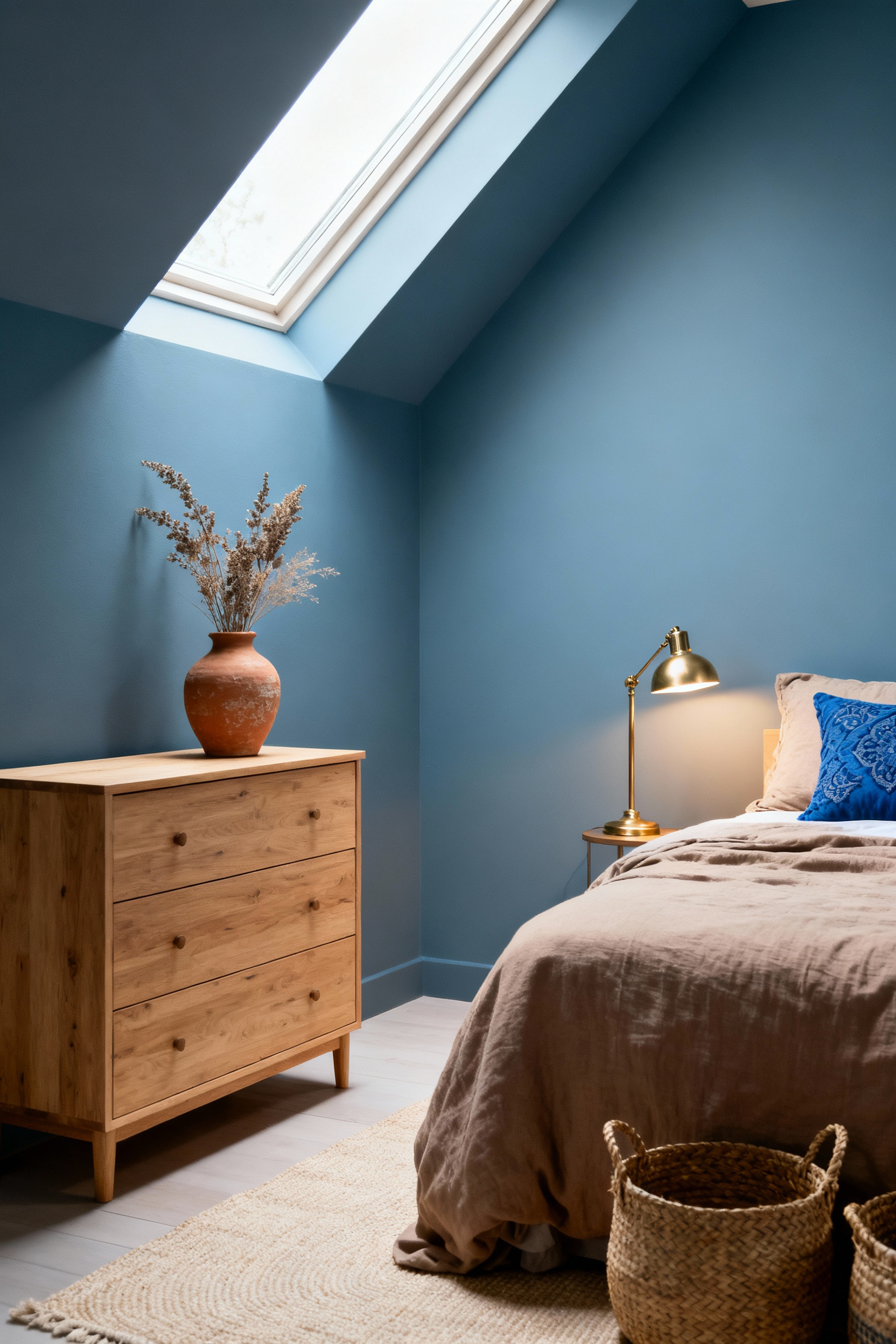
Introduce these warm tones through natural materials. A warm oak bed frame, rattan light fixture, or a creamy wool rug adds both warmth and texture. The interplay between the cool tranquility of blue and the earthy comfort of warm neutrals creates an environment that feels perfectly poised: serene yet incredibly inviting.
Advanced Blue Bedroom Strategies (Part 2)
As we refine our approach, we look to the intangible elements that shape our experience. Here, we focus on an advanced lighting strategy that adapts to your needs, transforming your room into a responsive and intelligent wellness environment.
16. Designing Flexible Blue Zoned Lighting for Varied Moods
A single, overhead light is the enemy of a serene bedroom. A truly holistic space requires a flexible, layered lighting plan. “Zoned lighting” means creating different lighting environments for different activities. You need bright, clear light at a vanity, soft, focused light for reading in bed, and a gentle, ambient glow for relaxing in the evening.
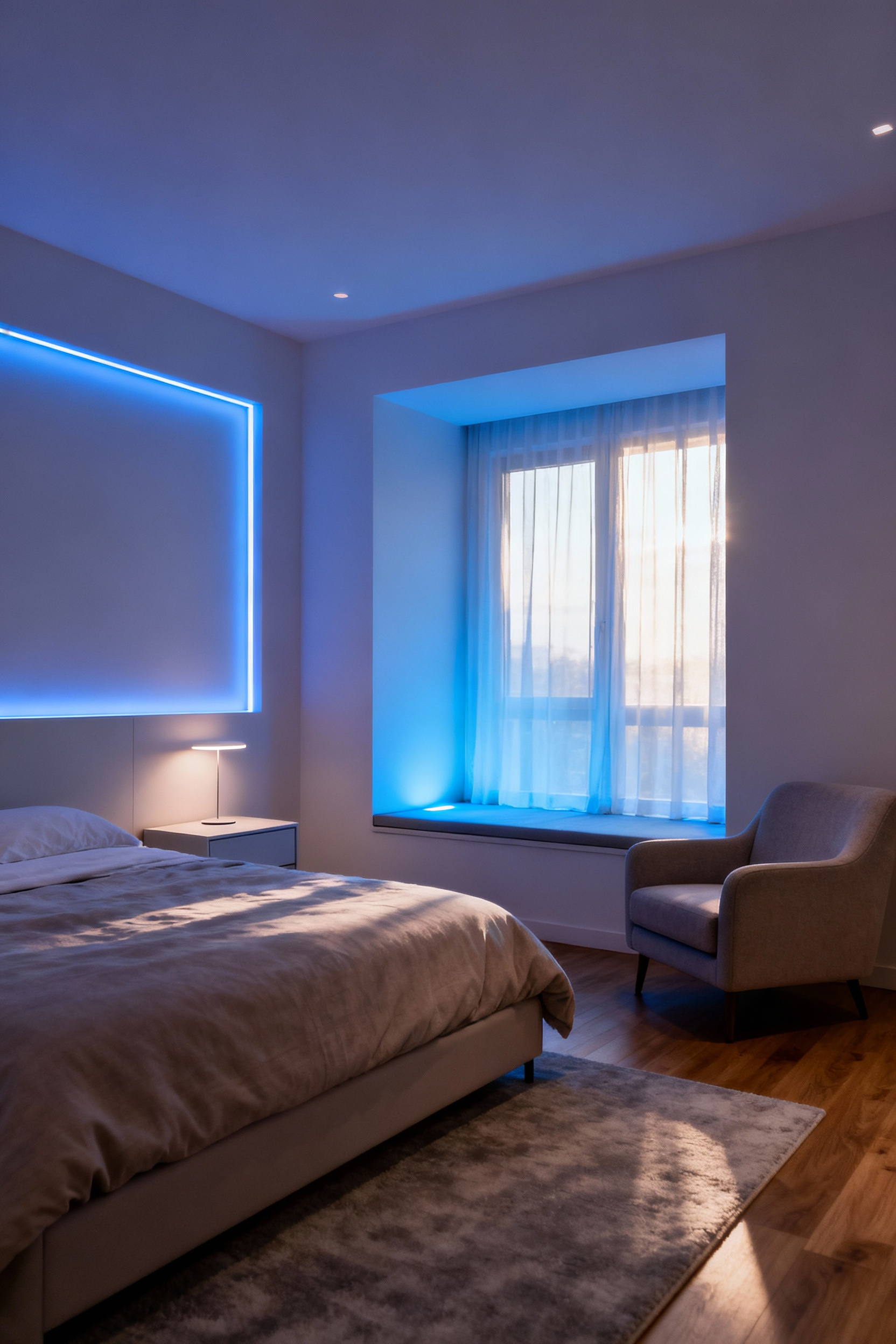
This becomes a blue-themed strategy when you use smart bulbs that can change color temperature. In the morning, you can tune your lights to a brighter, cooler white with a hint of blue to help you wake up. In the evening, shift to a very warm, dim glow to signal to your body that it’s time to produce melatonin and prepare for sleep. By controlling the light, you are actively supporting your body’s natural circadian rhythm.
Expert Blue Integration for Holistic Sanctuaries
Finally, we arrive at the most profound level of integration. This is where your blue bedroom becomes part of a larger wellness ecosystem, engaging all your senses and reflecting a deep commitment to conscious, healthy living.
17. Curating Blue-Toned Soundscapes and Aromatherapy
Our sense of peace is influenced by more than what we see. Layering in sound and scent creates a truly immersive sanctuary. For sound, think beyond generic “spa music” and consider soundscapes that evoke the feeling of your chosen blue: the gentle rhythm of ocean waves for a coastal theme, or the sound of a soft breeze for an airy, sky-blue room.
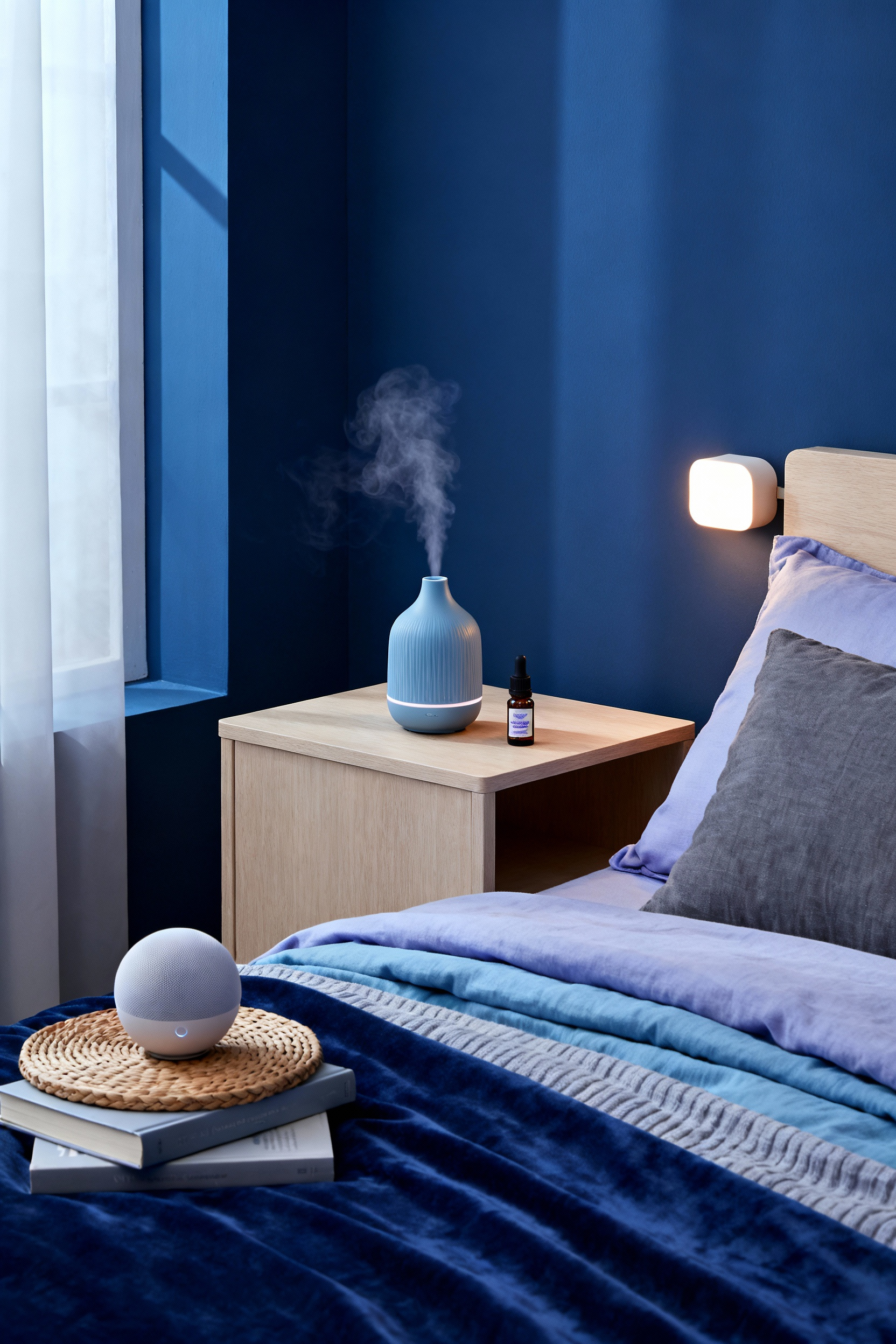
Aromatherapy is a powerful partner. Lavender is a classic for sleep, but consider other scents that align with your blue theme. Chamomile and frankincense have deeply grounding qualities perfect for an indigo room, while a blend with bergamot can bring an uplifting feel to a lighter blue space. The goal is a gentle synergy where sound, scent, and sight all communicate the same message: calm.
18. Implementing Blue Through Sustainable and Ethical Sourcing
A space cannot be truly holistic if the items within it are a source of harm to the planet or its people. As you choose your blue decor, let your wellness values guide you. Prioritize natural fibers like organic cotton, linen, or TENCEL™, which are better for your health and the environment. Look for paints that are low-VOC (Volatile Organic Compounds) to ensure healthy air quality.
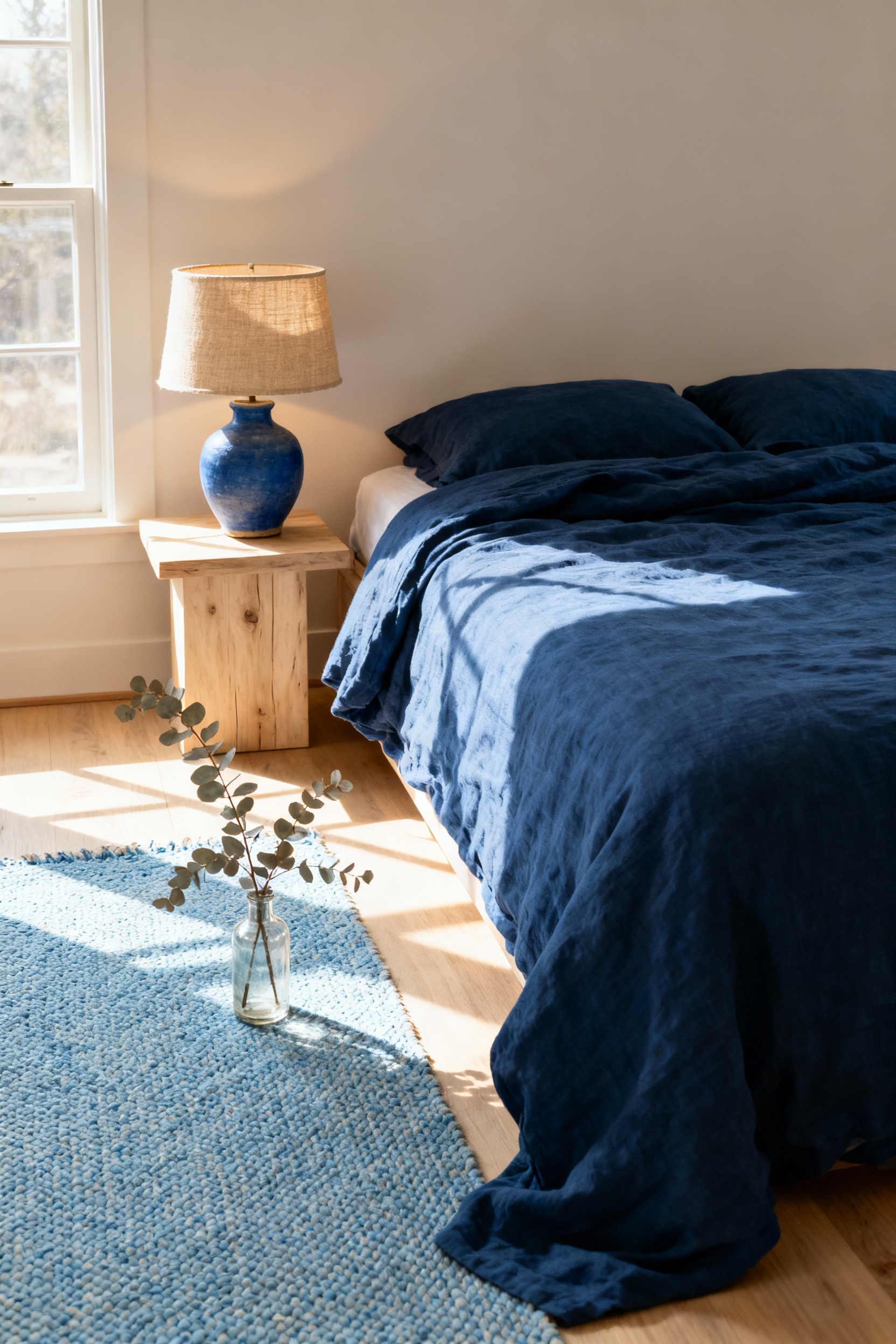
When possible, choose vintage pieces or support local artisans. This not only adds unique character to your space but also supports a more sustainable, circular economy. Knowing that your serene sanctuary was created with kindness and care—for yourself, others, and the earth—adds an intangible but profound layer of positive energy to the room.
19. Crafting a Personalized Blue Sanctuary for Regenerative Rest
Ultimately, the most restorative sanctuary is one that is uniquely yours. After exploring all these ideas, the final step is to listen to yourself. How does your body respond when you see a deep navy versus a pale periwinkle? Do you feel more at ease with minimalist design or with layers of soft textiles?
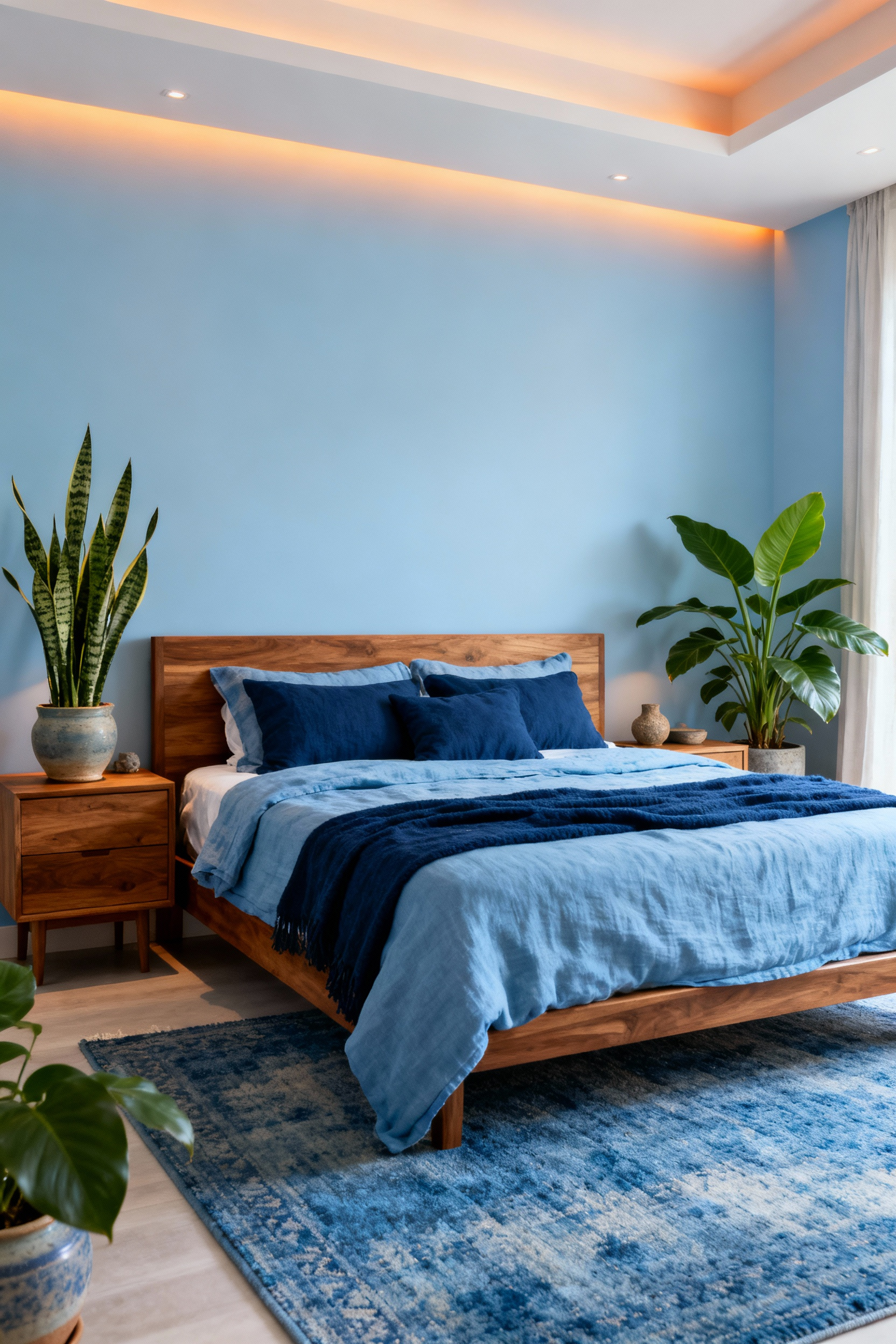
Create small rituals that connect you to your space. Maybe it’s lighting a specific candle as you wind down, or taking a few deep breaths while appreciating a piece of blue art. I learned this when working on a particularly difficult project: the ‘perfect’ design only works if it aligns with the inhabitant’s soul. Check in with yourself and make small adjustments. Your blue bedroom should evolve with you, always serving as a reflection of your journey toward peace.
20. The Blue Living Wellness Ecosystem: Beyond the Bedroom
True well-being doesn’t stop at the bedroom door. Allow the calming blue energy to flow into adjacent spaces. This doesn’t mean painting your whole house blue. It can be as simple as carrying the same shade of blue from your bedroom onto a feature wall in your en-suite bathroom or choosing bath towels in a complementary tone.
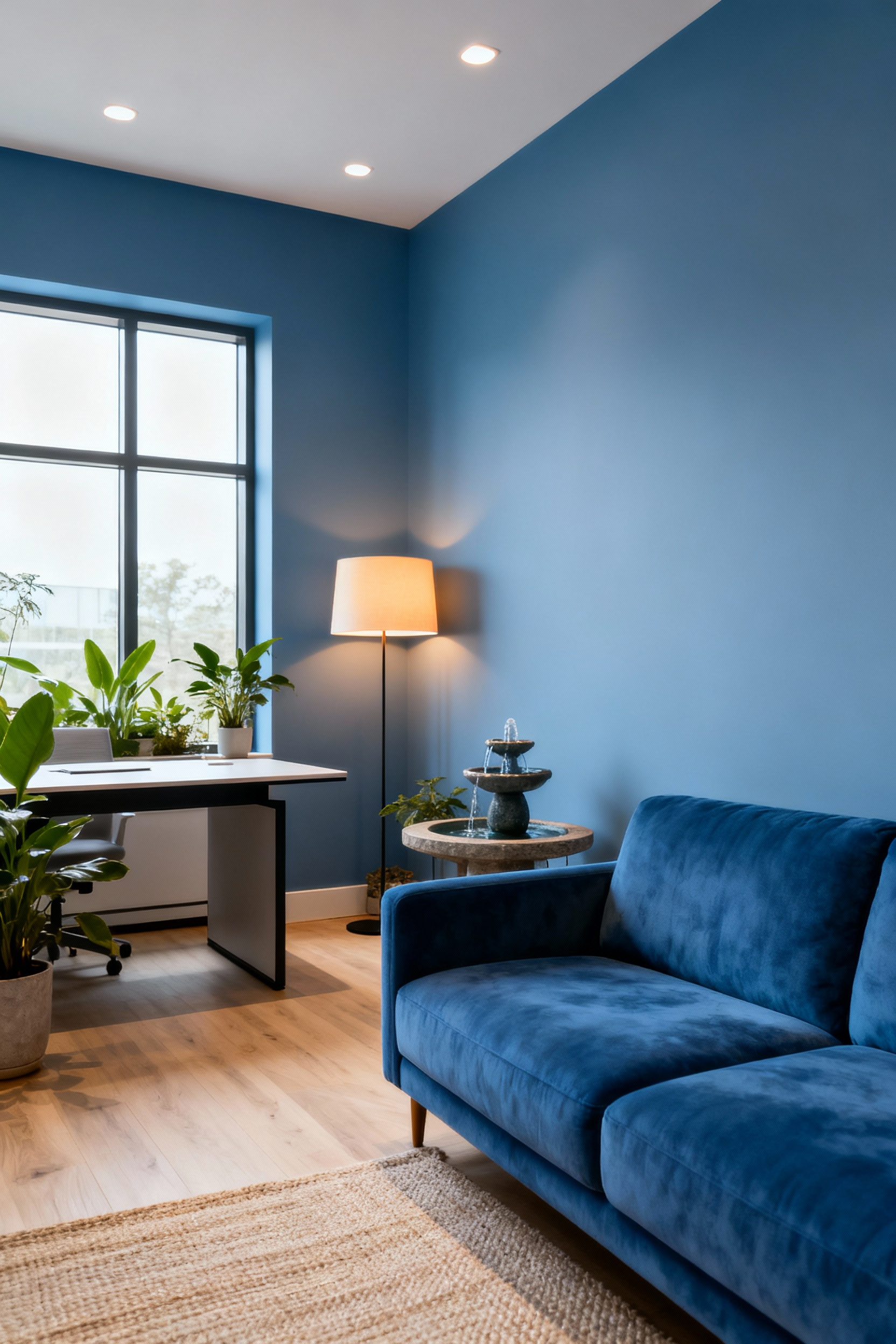
Think of it as creating gentle energetic pathways. A blue runner in the hallway leading to your bedroom or a piece of blue pottery in the living room can act as a subconscious reminder of the calm that awaits. By creating a cohesive wellness ecosystem, your entire home becomes a partner in your health, with your blue bedroom as its serene, beating heart.
Conclusion
We have journeyed through the vast, calming world of blue, seeing how it can be so much more than a simple color. From choosing the perfect foundational hue to weaving in holistic layers of light, texture, and scent, you now have the tools to create a bedroom that is not just beautifully designed, but deeply nurturing. The goal was never just to create a pretty room, but to empower you to shape an environment that actively supports your rest and rejuvenation.
As you begin your own design process, trust your intuition. Let these ideas be your guide, but allow your personal sense of peace to be the final word. Every choice you make is an act of intention, a commitment to your own well-being. May your blue sanctuary be a soft place to land at the end of each day, a quiet hum of peace that follows you into your dreams and greets you in the morning. Let it be the beautiful, tangible expression of the tranquil life you are creating.