
A great white kitchen doesn’t just look clean—it feels like a deep, restorative breath. We promise your space can be a beacon of refined taste that’s both fresh and truly timeless. After years of designing homes that live and breathe with the ocean, I’ve learned to master the delicate balance between luminosity and livability. From this work, I’ve identified 20 foundational white kitchen ideas that consistently create spaces of enduring coastal sophistication. These aren’t trends that will feel dated by next summer; they are thoughtful, lasting choices designed to elevate the rhythm of your daily life by the water.
The Foundational Brilliance: Crafting the White Narrative
Before a single cabinet is ordered, we must understand that white isn’t a color so much as a conduit for light. This is about establishing the core philosophy of your space, choosing a white that works in harmony with the natural elements to create a kitchen that feels both expansive and intimately calm.
1. Orchestrating Luminosity: Selecting the Perfect White Undertone
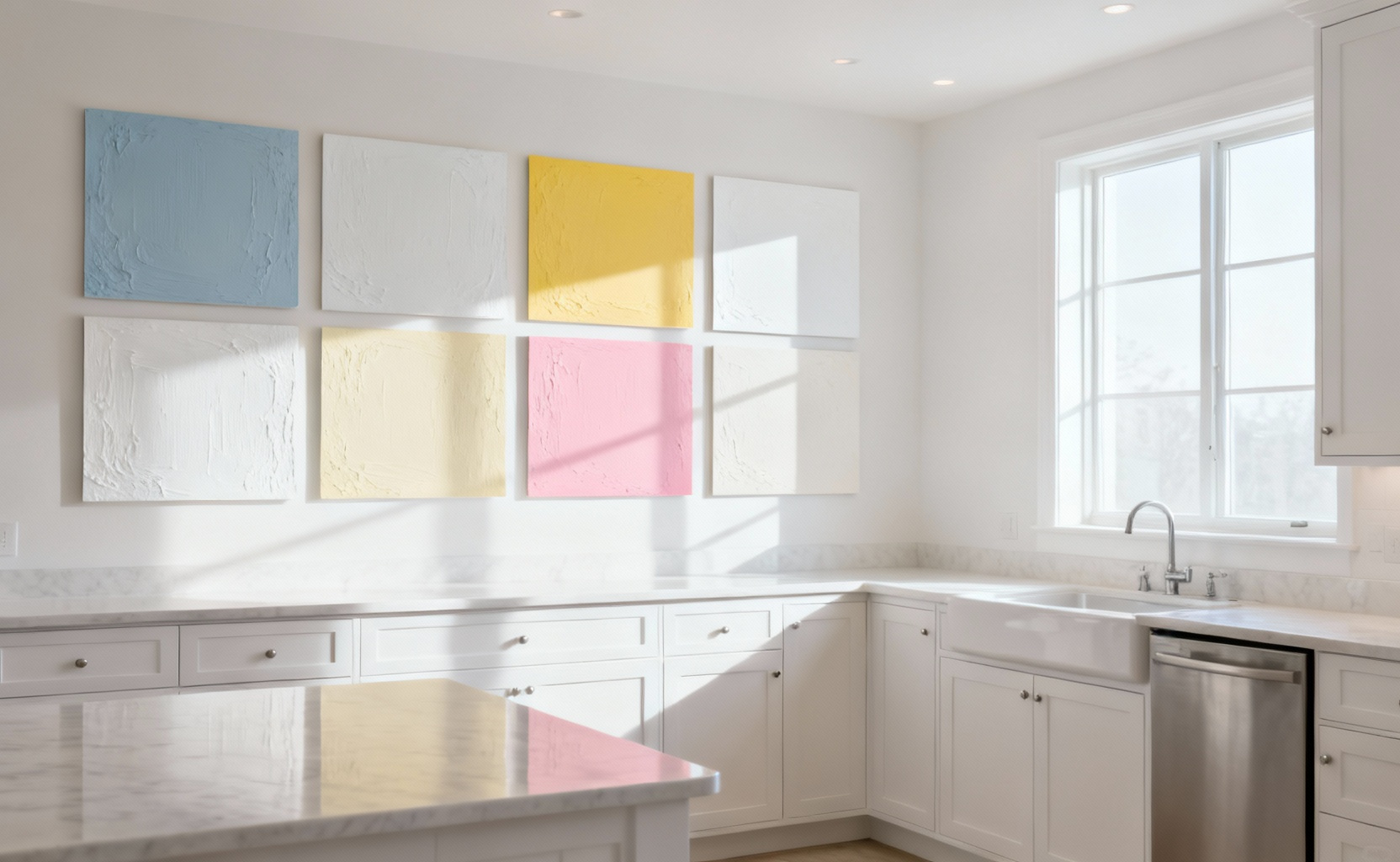
The first and most critical decision is choosing your white. It’s never just “white.” It’s a spectrum of possibilities, each with a subtle undertone—cool, warm, or neutral—that will completely dictate the mood of your kitchen. A warm white with a hint of cream or beige can soften the intense, direct light of a south-facing room, creating an inviting glow. A crisper, cooler white with a whisper of grey or blue can balance the warm afternoon sun from the west, offering a serene, airy feel.
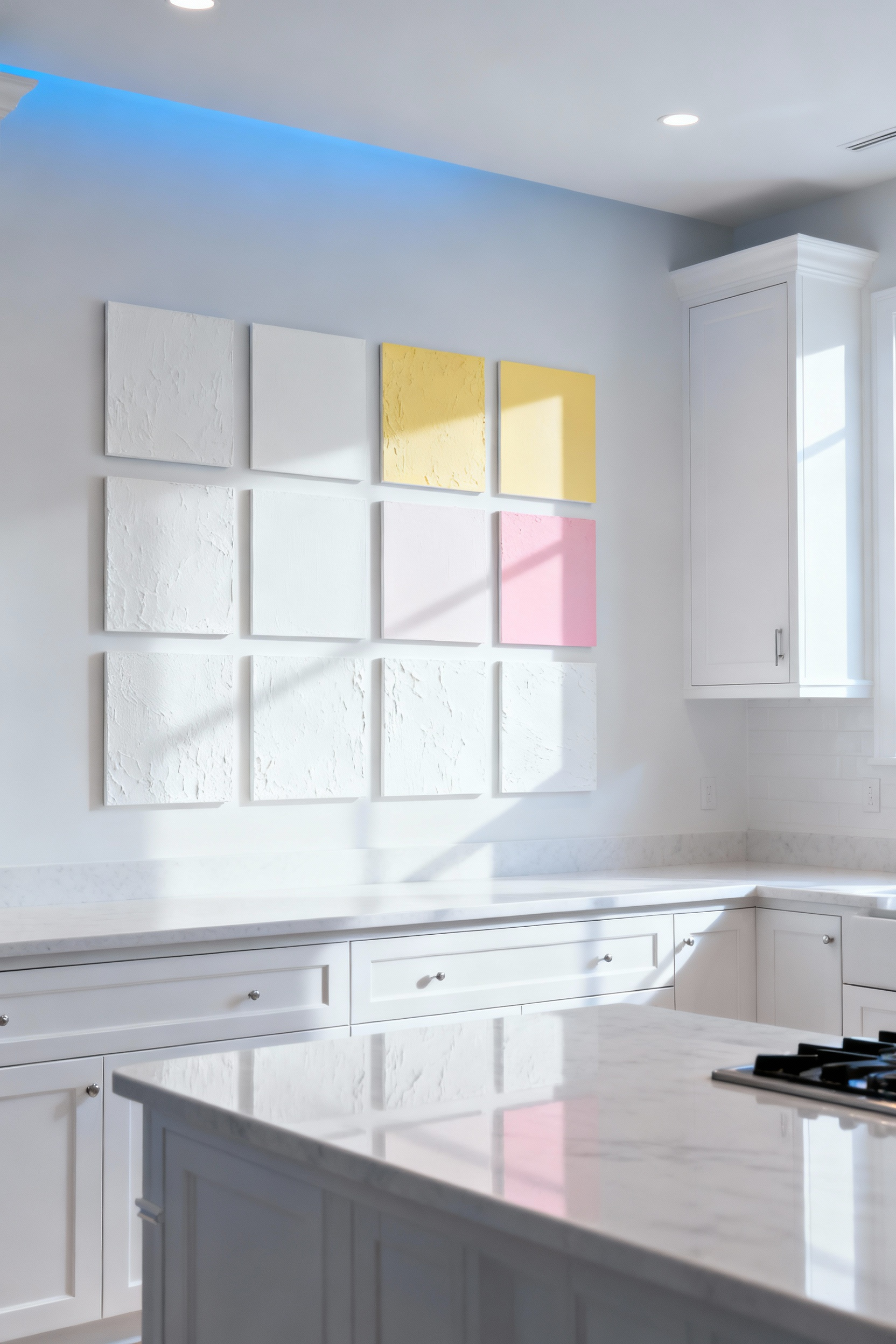
In my coastal contemporary practice, the first question is always about light. The low-angled morning sun reflecting off the water demands a different white than the soft, diffuse light filtered through dune grasses in the evening. Spend time in your space. Watch how the light changes, and select a white that feels like a natural extension of that daily rhythm. This single choice sets the entire stage.
2. Harmonizing Natural Illumination: Maximizing Daylight’s Reflective Potential
Once you’ve chosen your white, the finish becomes your next tool for manipulating light. In a coastal home, light is an active element, and your surfaces can either absorb it or send it dancing around the room. A high-gloss or lacquered finish on cabinetry will act like a mirror, bouncing reflections of the sky and sea, making a smaller space feel boundless and bright. It’s a fantastic choice for bringing the energy of the outdoors in.
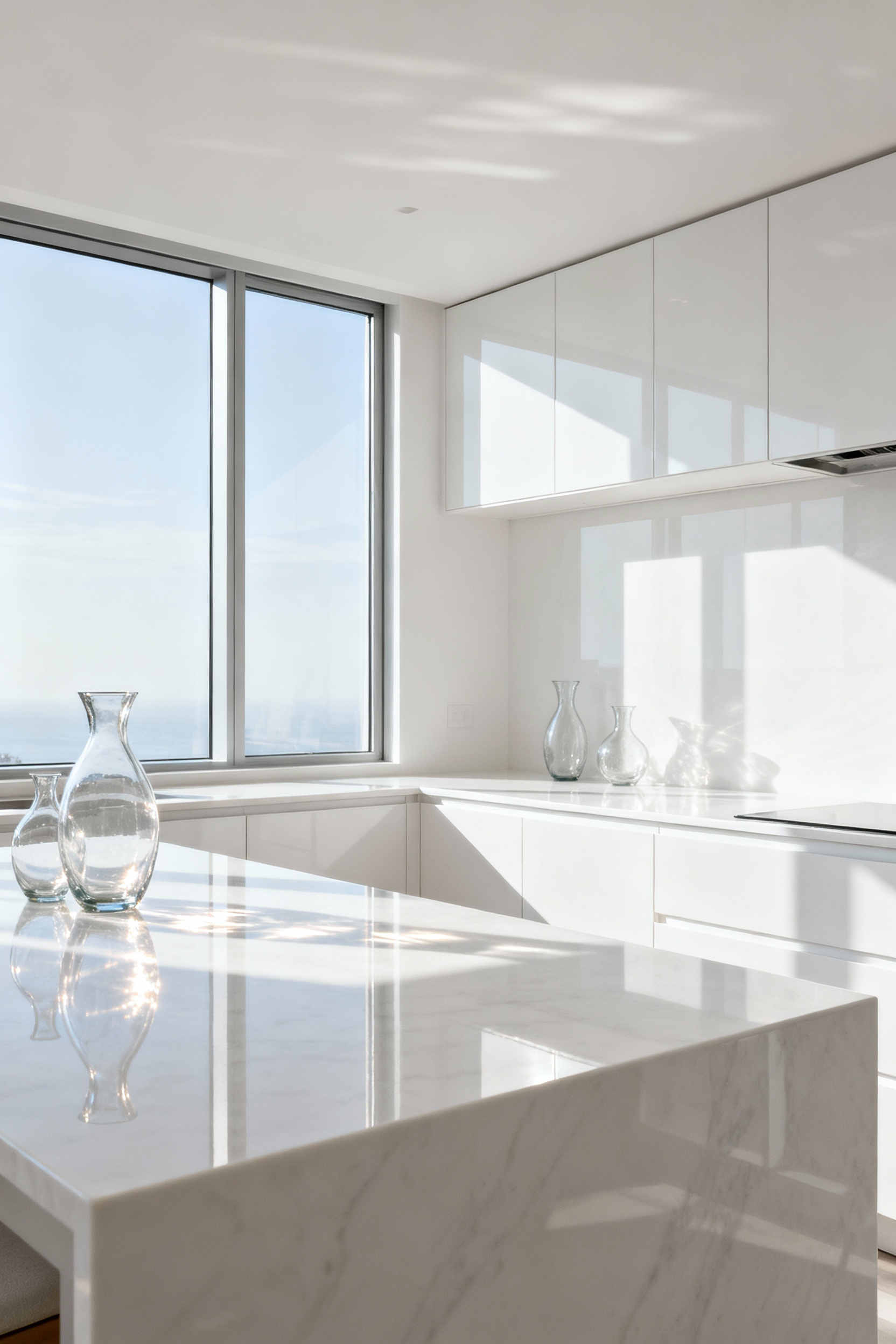
For a softer effect, consider a matte or honed finish. This will diffuse the light, creating a gentle, ethereal glow that can feel incredibly calming—think of the soft haze on an early coastal morning. Backsplashes of glazed tile or polished stone will capture and scatter light, adding a layer of subtle animation to the space. The goal is to create a symphony of reflection that makes the kitchen feel alive and connected to the environment just outside its windows.
3. Preventing Clinical Sterility: Layering Diverse Finishes for Depth
The fear of a white kitchen feeling “clinical” is valid, but easily avoided. The antidote is texture. A space becomes truly sophisticated when it engages more than just the eye. It’s about creating a landscape you can feel. Imagine running your hand over the subtle grain of a light oak island, the cool, honed surface of a marble countertop, or the smooth finish of a ceramic vase. These moments add soul.
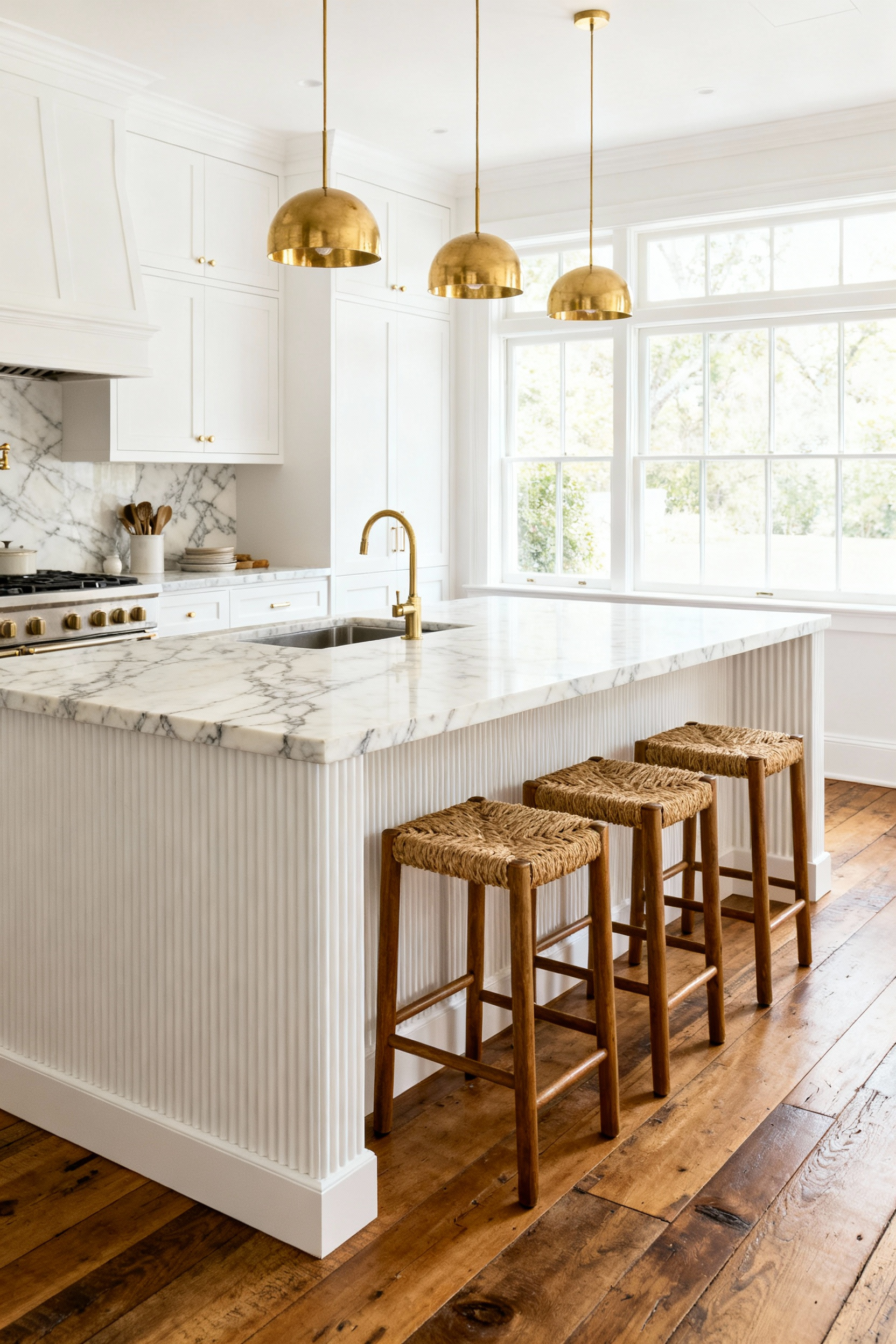
This philosophy extends naturally to every choice. Juxtapose sleek, smooth cabinetry with the rustic warmth of reclaimed wood shelving. Introduce metals like unlacquered brass for hardware that will patina beautifully over time, telling a story of use. Add linen window shades or a woven wool runner. It is this thoughtful layering of materials—the smooth with the rough, the polished with the matte—that creates a rich, inviting space that feels collected and deeply personal.
4. Embracing the Monochromatic Paradox: Achieving Interest Through Tonal Variation
An all-white kitchen doesn’t have to be one-note. In fact, some of the most compelling spaces are built from a quiet conversation between different shades of white. Think of it like composing with texture and light. This isn’t about stark contrast, but about subtle, elegant shifts that create depth and architectural interest. It’s the difference between a flat photograph and a living, breathing space.
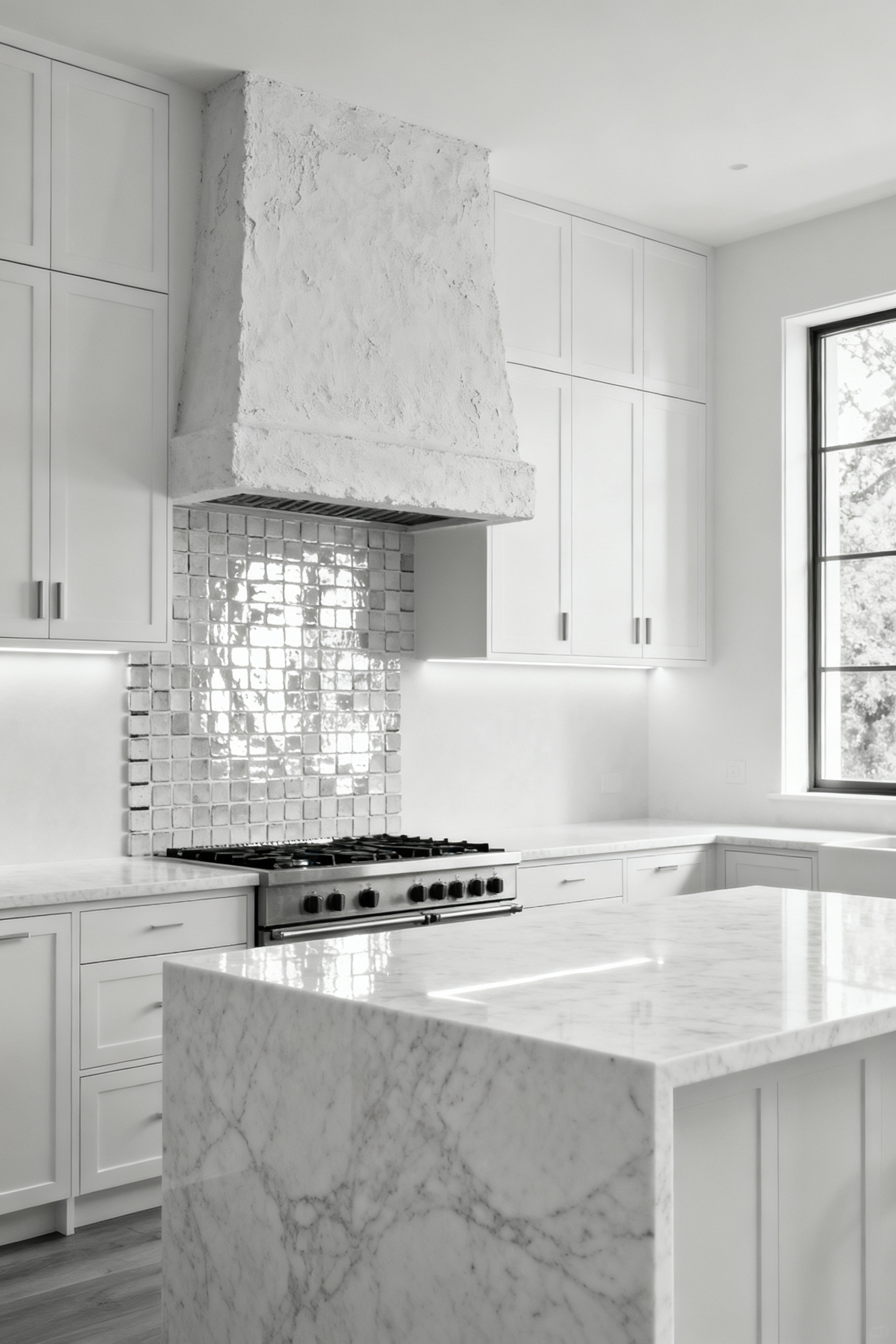
Try pairing crisp, pure white upper cabinets with lowers painted in a slightly softer, warmer off-white. This small distinction grounds the room without breaking the serene monochromatic palette. You might choose a creamy white for the walls and a brighter, cleaner white for the trim to subtly accentuate the room’s architecture. By layering whites with slightly different undertones and sheens, you create a space that is both cohesive and quietly dynamic, revealing its nuances slowly over time.
5. Cultivating a Timeless Aesthetic: Prioritizing Enduring Whiteness Over Trends
In coastal design, it’s easy to fall into the trap of fleeting, kitschy trends. A truly timeless kitchen, however, avoids anything that feels too thematic. My philosophy is to use white as an architectural foundation—a statement of enduring elegance that allows the life within the home to be the star. This means focusing on classic forms, clean lines, and high-quality materials that will age with grace.
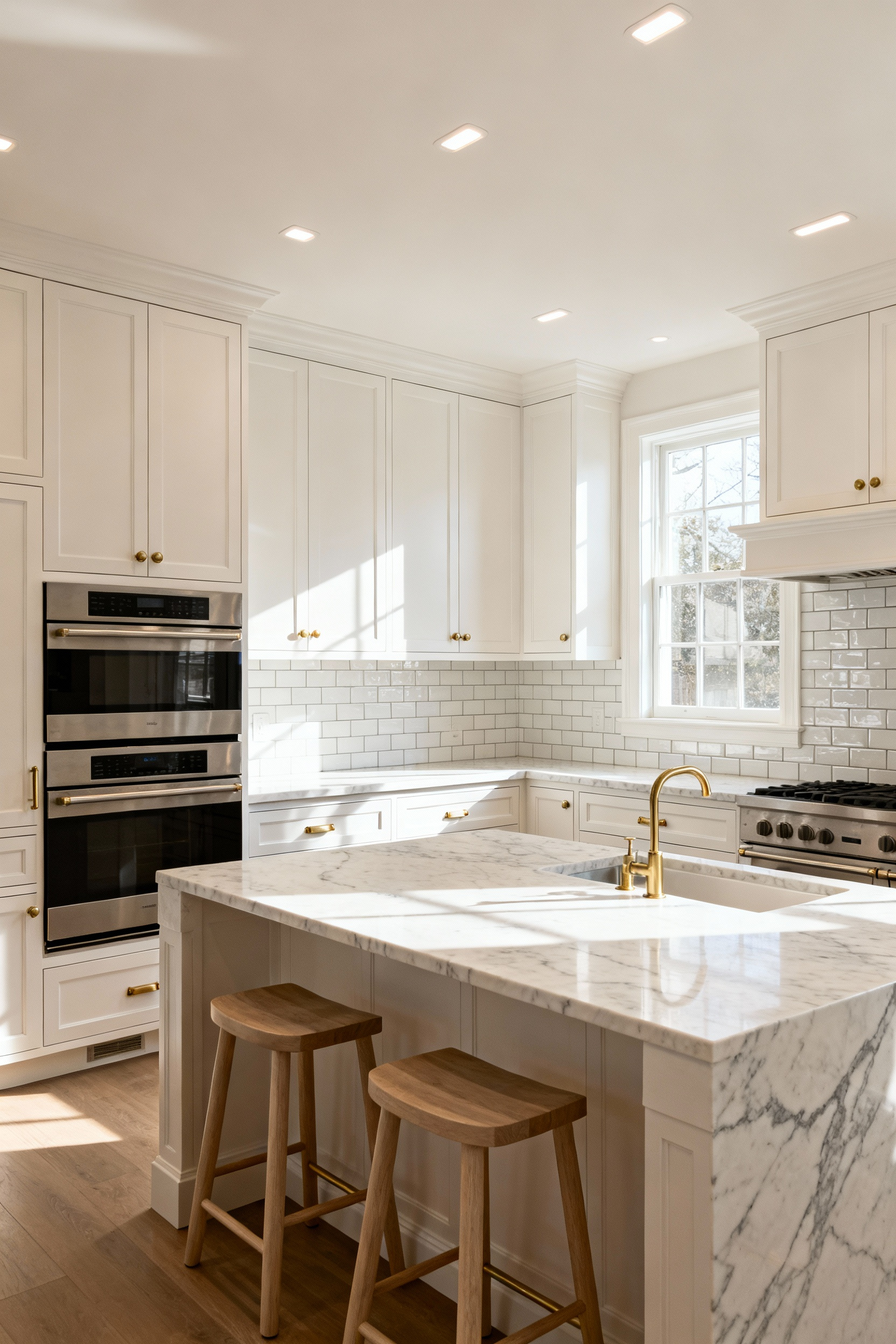
Instead of overtly nautical hardware, choose simple, beautifully crafted pulls in a classic finish like polished nickel or aged brass. Opt for a classic profile for your cabinet doors, like a simple Shaker or a clean slab front. This approach ensures your kitchen will serve as a serene, sophisticated backdrop for years to come, easily updated with accessories or artwork as your tastes evolve. It’s an investment in a quiet, lasting style that will never feel dated.
Material Mastery: Textural Depth in White Palettes
Here, we move from the abstract to the tangible. The soul of a sophisticated white kitchen is found in its materials. It’s the subtle interplay between different textures and finishes that elevates a simple color palette into a rich sensory experience, creating a space that is as beautiful to touch as it is to behold.
6. Anchoring with Organic Warmth: Integrating Natural Wood Grains
A white kitchen needs an anchor, something to ground all that lightness and prevent it from floating away. Natural wood is the perfect solution. Whether it’s the warm, sun-bleached tone of white oak for an island or the richer grain of walnut for open shelving, wood introduces an essential, organic element that speaks to the natural world. It adds warmth, texture, and a sense of history to a new space.
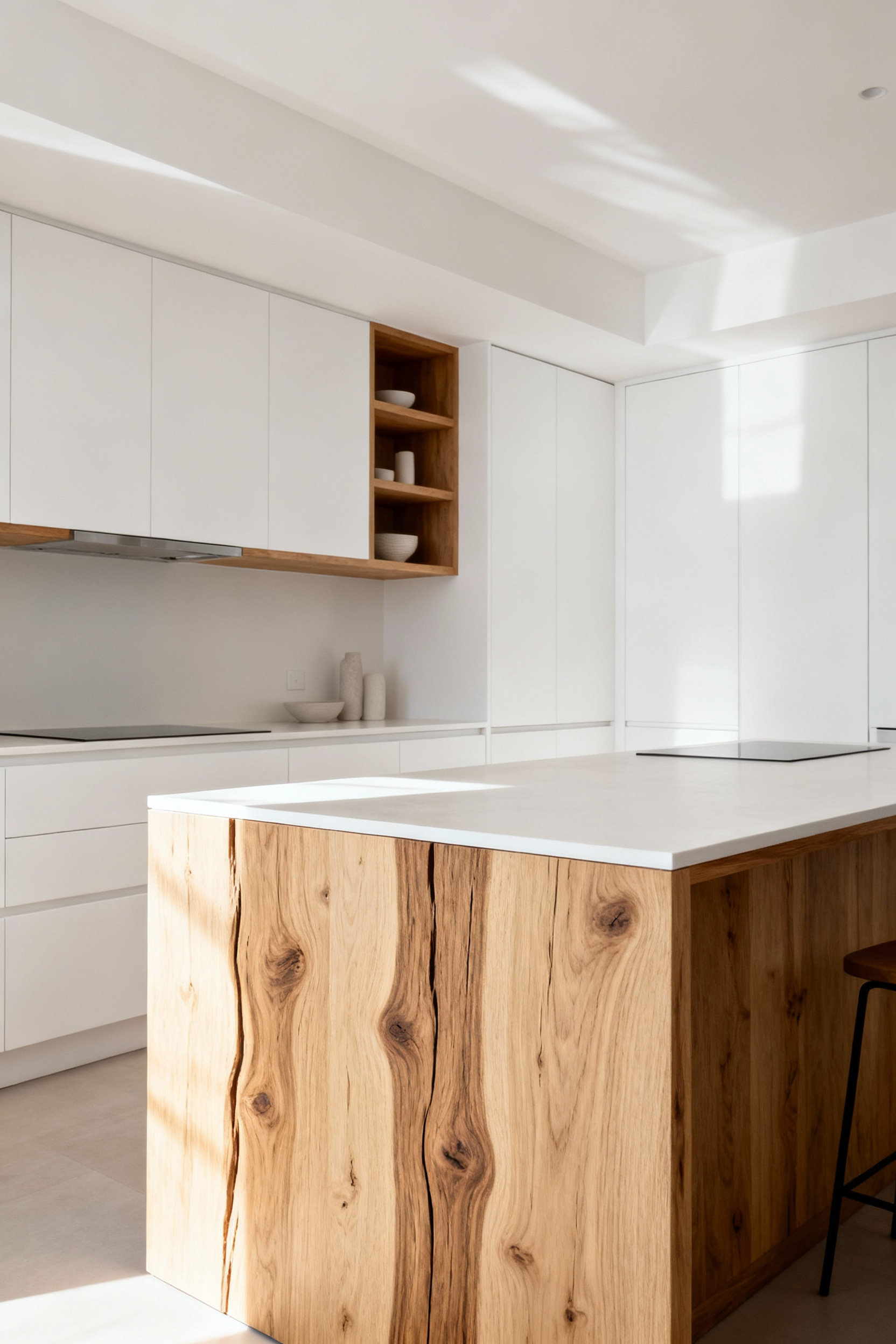
You can incorporate wood in grand gestures, like a butcher block countertop or exposed ceiling beams, which instantly add architectural character. Or, you can use it more subtly—the interior of your cabinets could be finished in a beautiful light oak for a private, luxurious detail every time you open a door. What I’ve noticed in my work is that this contrast is what makes the white feel even brighter and the space more inviting. Wood keeps a white kitchen from feeling stark and reminds us of the world just outside.
7. Selecting Countertop Resilience: Specifying High-Performance Surfaces
Your countertops are the primary work surface of your kitchen, and in a coastal home, they need to be resilient. Sun, sand, and constant entertaining demand a material that is as durable as it is beautiful. While I love the soulful look of natural marble, for many projects, a high-performance engineered quartz is the smarter, more practical choice. It offers the look of natural stone without the worry of staining or etching.
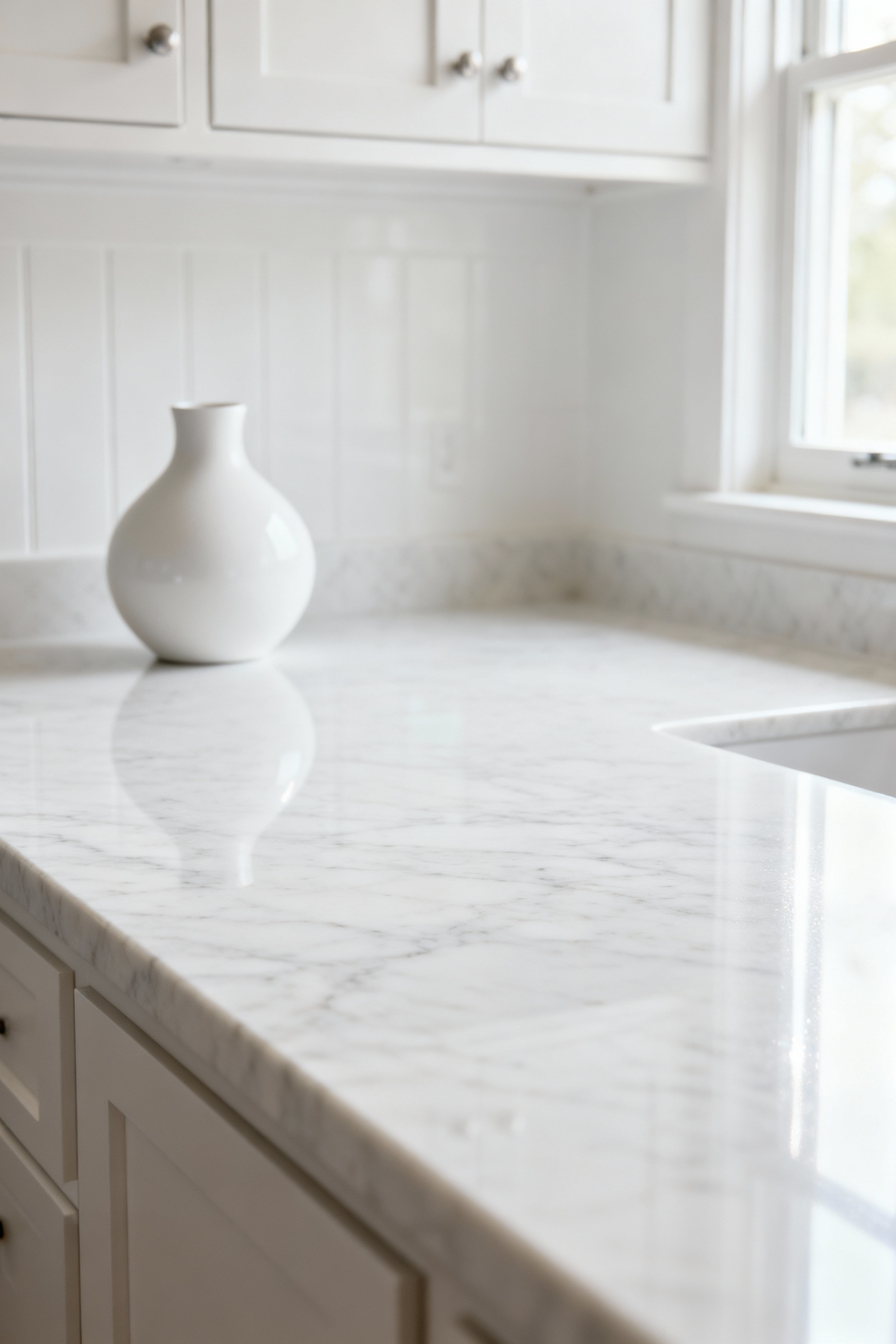
Look for a quartz with subtle, soft veining that mimics the patterns of sand washed by the tide. This introduces a gentle, organic movement without overwhelming the serene white palette. A honed or matte finish can offer a soft, velvety feel that’s incredibly sophisticated. The goal is to find a surface that elevates the design but can also withstand the joyful mess of a life well-lived by the sea.
8. The Jeweled Accent: Curating Distinctive Hardware Finishes
Hardware is the jewelry of the kitchen. It’s a small detail that has an enormous impact on the overall feel of the space. In a white kitchen, hardware provides a critical point of contrast and an opportunity to introduce a different material and finish. Think of it as a quiet punctuation mark that helps to define the style of the room.
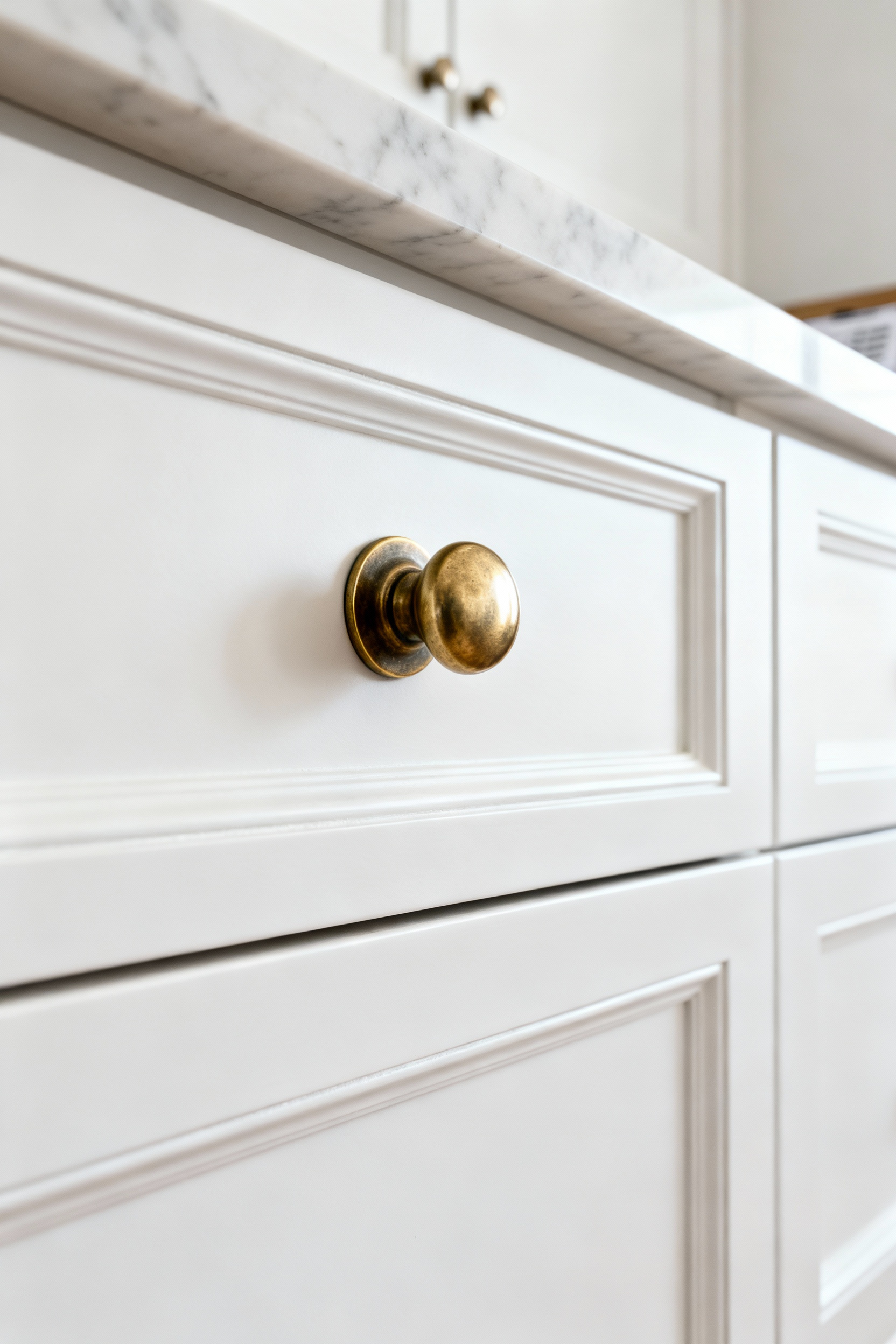
Unlacquered brass is a favorite of mine; it’s a living finish that develops a beautiful, rich patina over time, lending a sense of age and character. Polished nickel offers a timeless, classic shimmer, while matte black can provide a bold, graphic contrast for a more modern look. Whatever you choose, be consistent. This is a place for intentionality, not randomness. Quality, well-chosen hardware can make standard cabinetry feel custom and luxurious.
9. Articulating Subtlety: Employing Textured Tile Backsplashes
The backsplash is an opportunity to introduce a significant layer of texture and quiet pattern. Instead of a standard, flat subway tile, consider something with more life and character. Zellige tiles, handmade in Morocco, are perfectly imperfect. Their slight variations in color and undulating surface catch the light in the most beautiful way, creating a shimmering, dynamic effect that feels both ancient and contemporary.
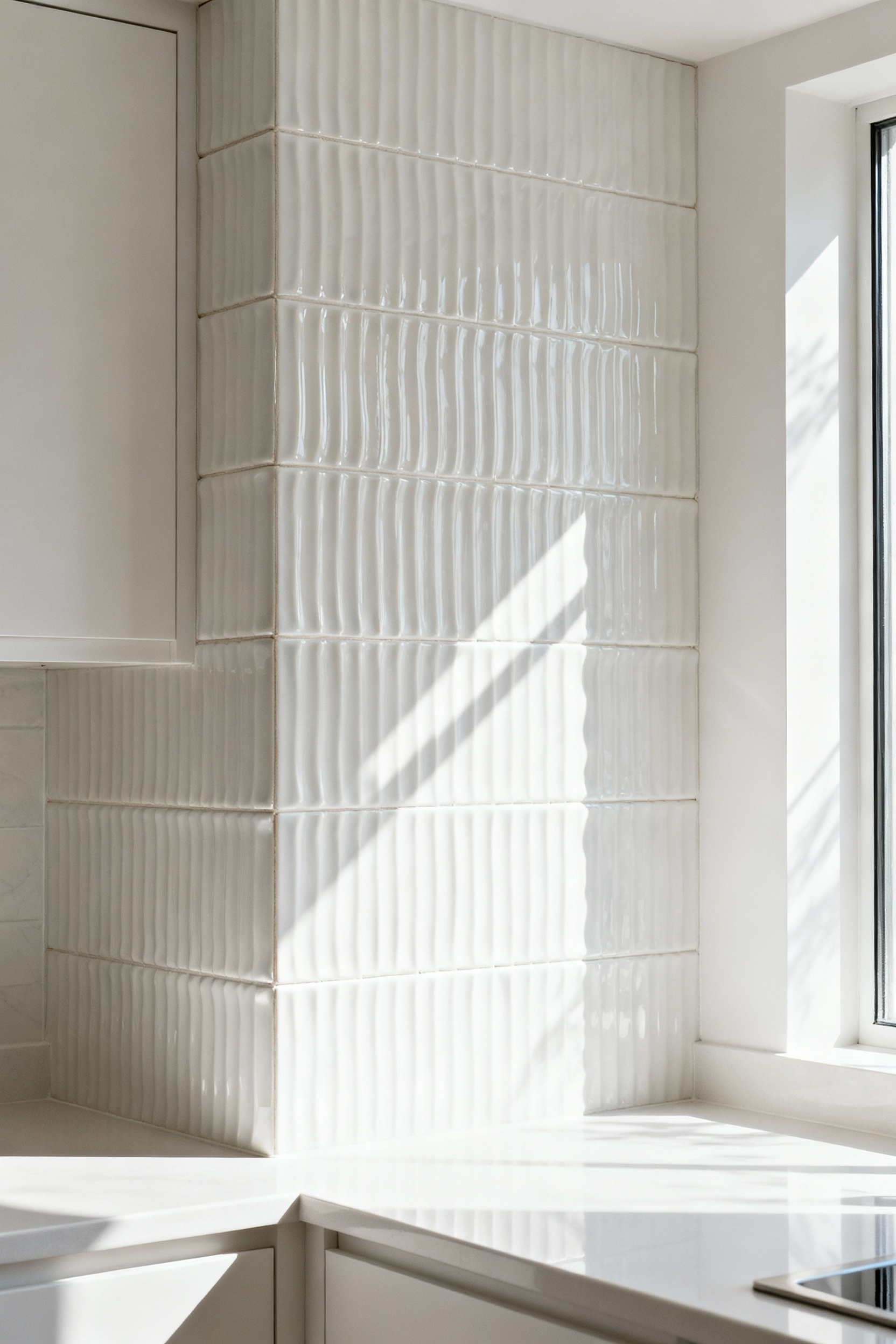
Another wonderful option is a simple ceramic tile laid in an interesting pattern, like a herringbone or vertical stack. This adds architectural interest without introducing another color. The key is to create a surface that invites a closer look, one that adds depth and artistry to the wall. A textured backsplash transforms the kitchen from a purely functional space into one with a distinct, crafted personality.
10. Grounding the Grandeur: Choosing Reflective or Contrasting Flooring
The floor is the foundation of your entire design, and it sets the tone for the entire room. In a white kitchen, you have two primary paths. You can either enhance the light, airy feeling with a floor that continues the bright palette, or you can ground the space with a contrasting material that provides a strong visual anchor. Both can be incredibly successful.
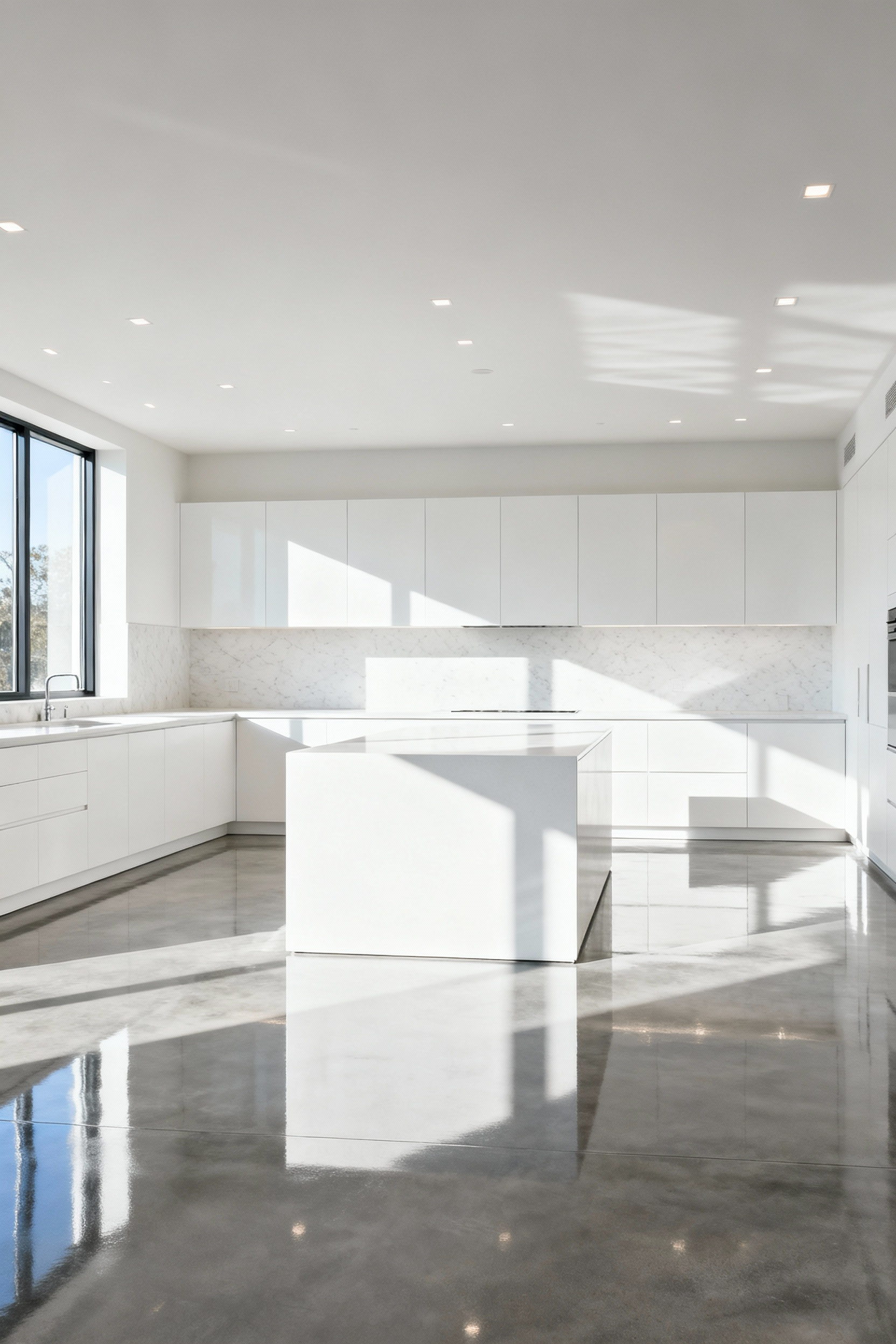
A light wood floor, like a pale European oak, can create an almost seamless transition from the white cabinetry, making the room feel larger and more open. For a more dramatic and grounding effect, a darker wood or a natural stone like slate can provide a beautiful contrast that makes the white cabinetry truly pop. I often recommend continuing the home’s primary flooring into the kitchen for a sense of cohesive flow, especially in open-concept coastal homes. It reinforces the idea that the kitchen is an integral, elegant part of the living space.
Spatial Synergy: White’s Role in Functional Layouts
A beautiful kitchen that doesn’t function well is a failure of design. White is a powerful tool in space planning, as it has a unique ability to make spaces feel larger, brighter, and more organized. Here, we focus on how to use white to create a layout that feels both effortlessly efficient and beautifully serene.
11. Discreet Integration of Appliances: Ensuring Seamless Transitions with Paneling
For a truly seamless and sophisticated look, I almost always recommend paneling the appliances to match the cabinetry. A large stainless steel refrigerator can be a jarring visual interruption in an otherwise serene white kitchen. By concealing it behind a custom panel, you create an uninterrupted plane that enhances the sense of calm and space.
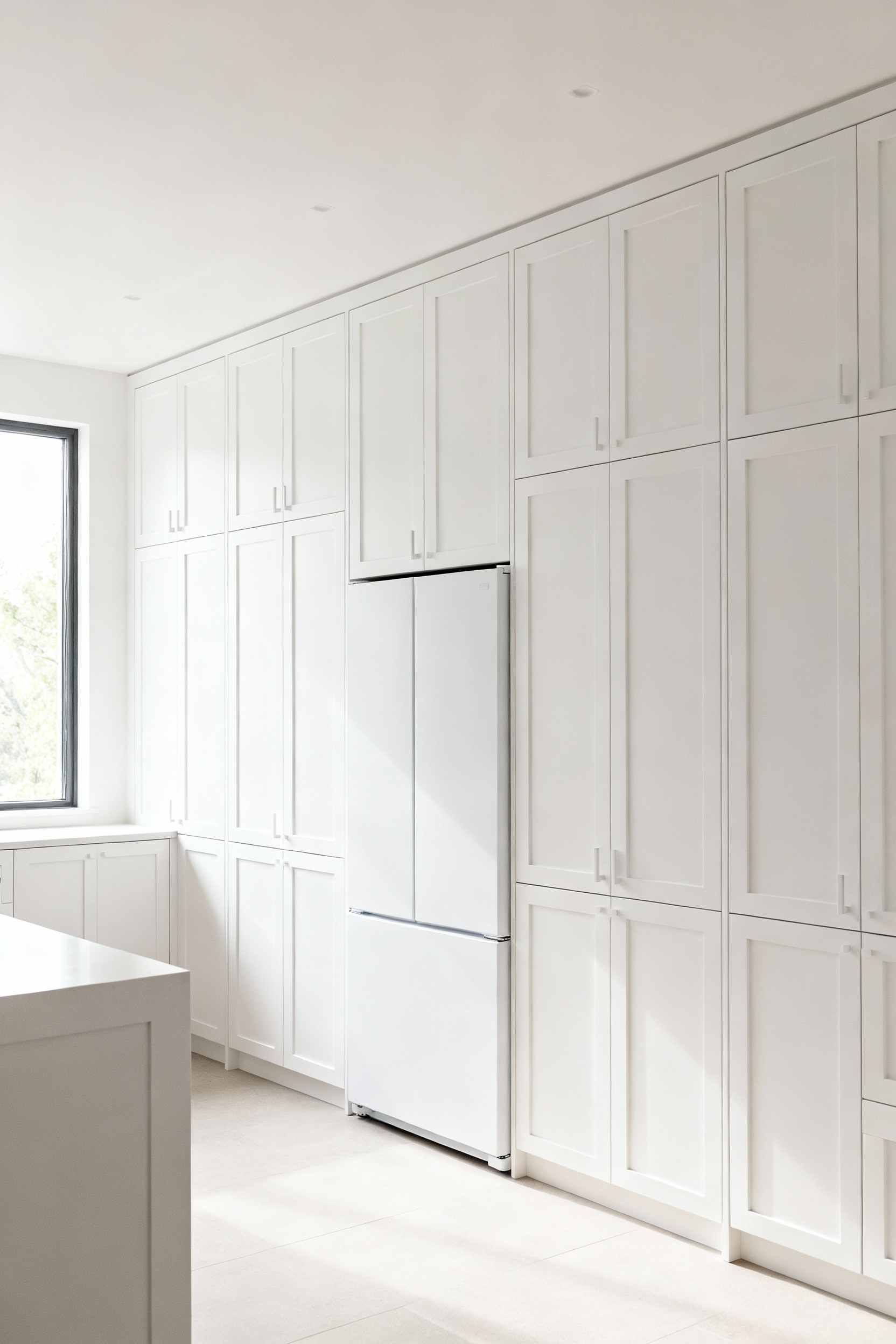
This “disappearing act” makes the kitchen feel less like a utility room and more like a beautifully appointed piece of furniture. It’s a luxury, to be sure, but it has a transformative effect, especially in an open-plan home where the kitchen is always on view. It allows the eye to flow without interruption, creating a horizon line within the room that is calming and architecturally pure.
12. Mastering Illumination Strategies: Layering Light Effectively
In a white kitchen, lighting is everything. White surfaces reflect light, so a well-designed lighting plan can make the space truly glow. The key is to use layers of light for different tasks and moods. You need three types: ambient, task, and accent. Ambient light is the general, overall illumination, often from recessed ceiling lights.
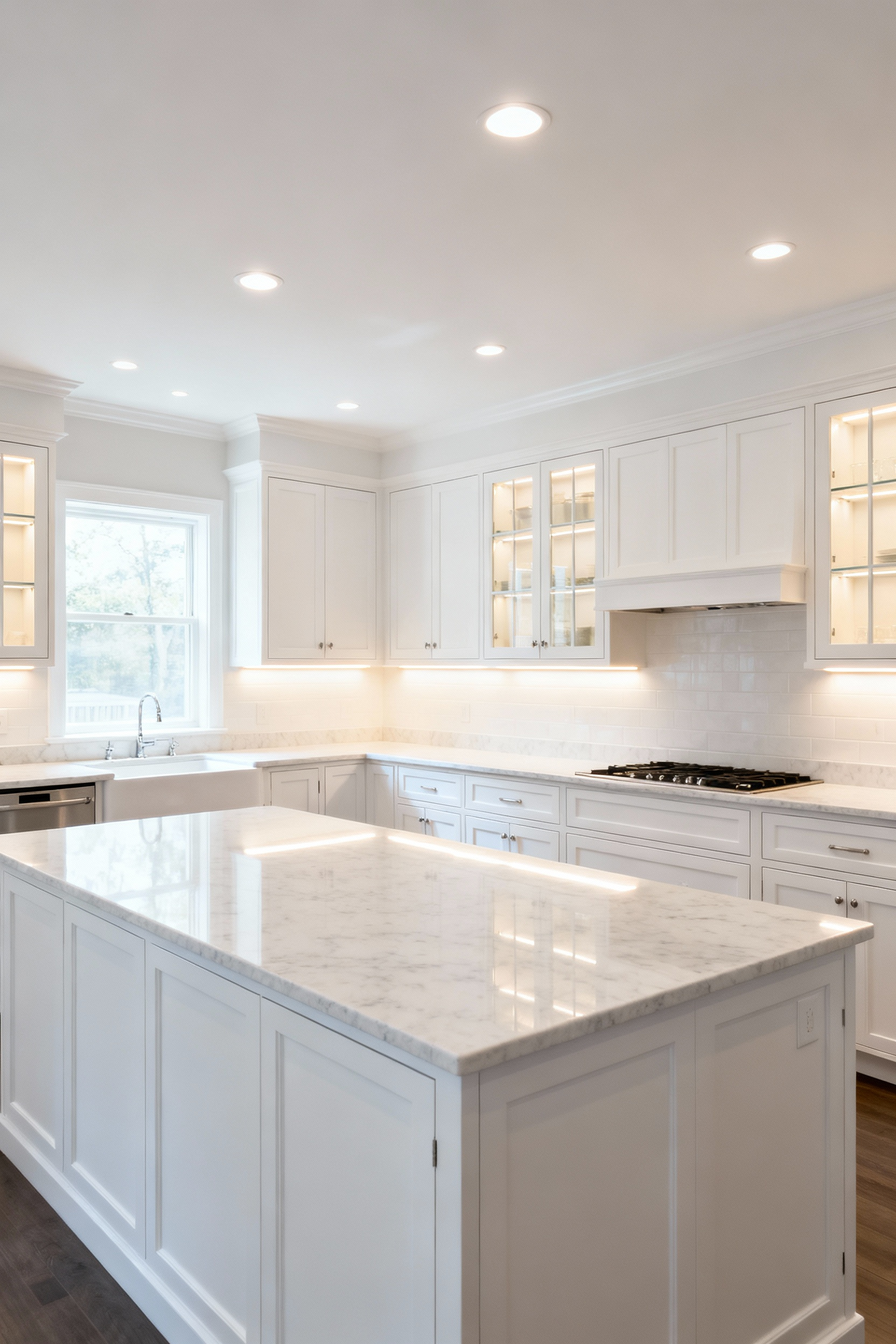
Task lighting is crucial for work areas. I always install under-cabinet lighting to illuminate the countertops, which eliminates shadows and makes food prep easier and safer. Finally, accent lighting adds a layer of beauty and drama. Think of a pair of beautiful pendants over the island or a small, artful sconce on a wall. Years of experience have taught me that putting all your lighting on dimmers is non-negotiable. It gives you complete control to shift the mood from bright and functional to soft and intimate.
13. The Island as Focal Point: Designing a Multifunctional White Hub
The kitchen island is often the heart of the home—a place for cooking, gathering, and connecting. In a white kitchen, the island can serve as a stunning focal point. A waterfall edge, where the countertop material flows down the sides of the island to the floor, is a beautiful way to showcase a stunning piece of stone or quartz and create a sculptural, modern statement.
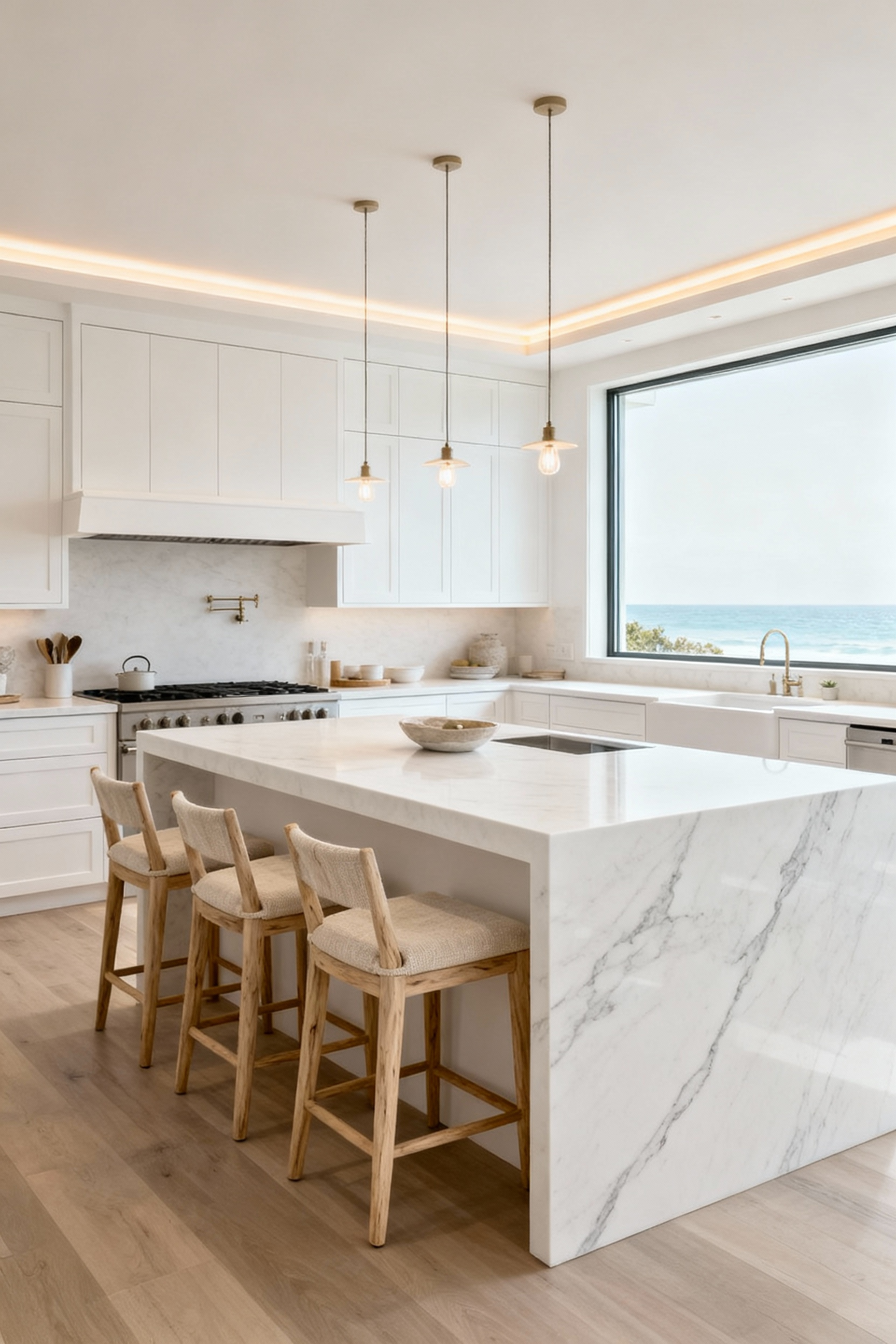
The design of the island should be driven by how you live. Do you need a second sink for prep work? A built-in wine fridge? Ample seating for casual family meals? Think through the function first, then wrap it in a beautiful form. A well-designed island becomes the kitchen’s command center, a hard-working and elegant hub for daily life.
14. Vertical Ascension: Maximizing Storage with Tall Units
To create that feeling of serene, uncluttered space, you need excellent storage. Taking your cabinetry all the way to the ceiling is one of the most effective ways to maximize storage and enhance the feeling of height and openness in a room. It draws the eye upward and eliminates that awkward, dust-collecting space above standard cabinets.
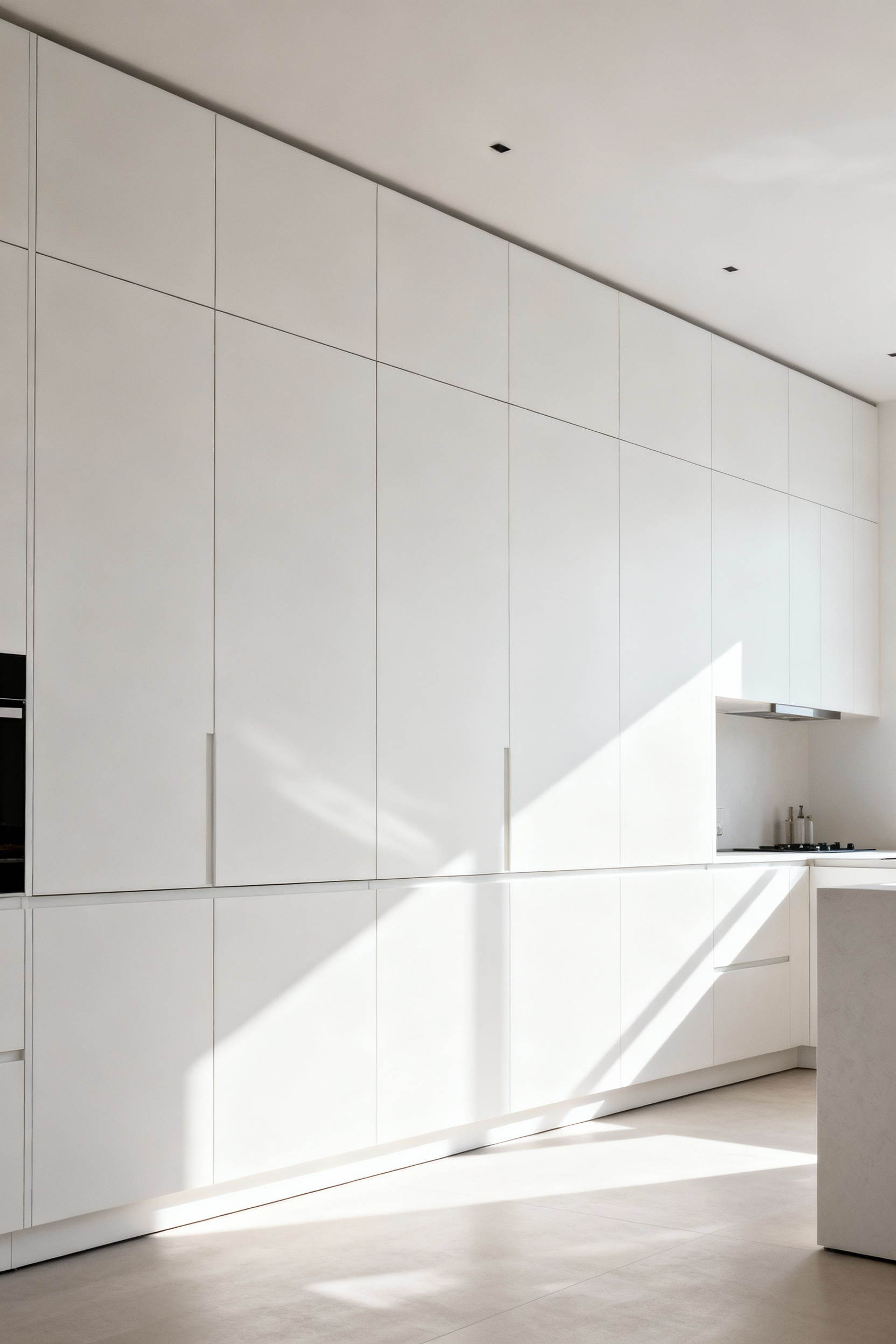
A full wall of floor-to-ceiling white cabinetry can create a stunning architectural feature. Within this, you can house a pantry, integrated appliances, and all of your less-frequently-used items. This allows you to keep your main work zones free of clutter, reinforcing the calm, organized aesthetic. It’s a powerful design move that marries immense practicality with a clean, expansive look.
15. Curated Vignettes: Incorporating Open Shelving for Personal Expression
While concealed storage is key for calm, a few moments of curated open shelving can bring personality and life to a white kitchen. This isn’t a place for your jumble of mismatched mugs. It’s an opportunity to create a beautiful, gallery-like display of your favorite ceramics, glassware, and cookbooks. It’s a moment of curated openness in an otherwise serene space.
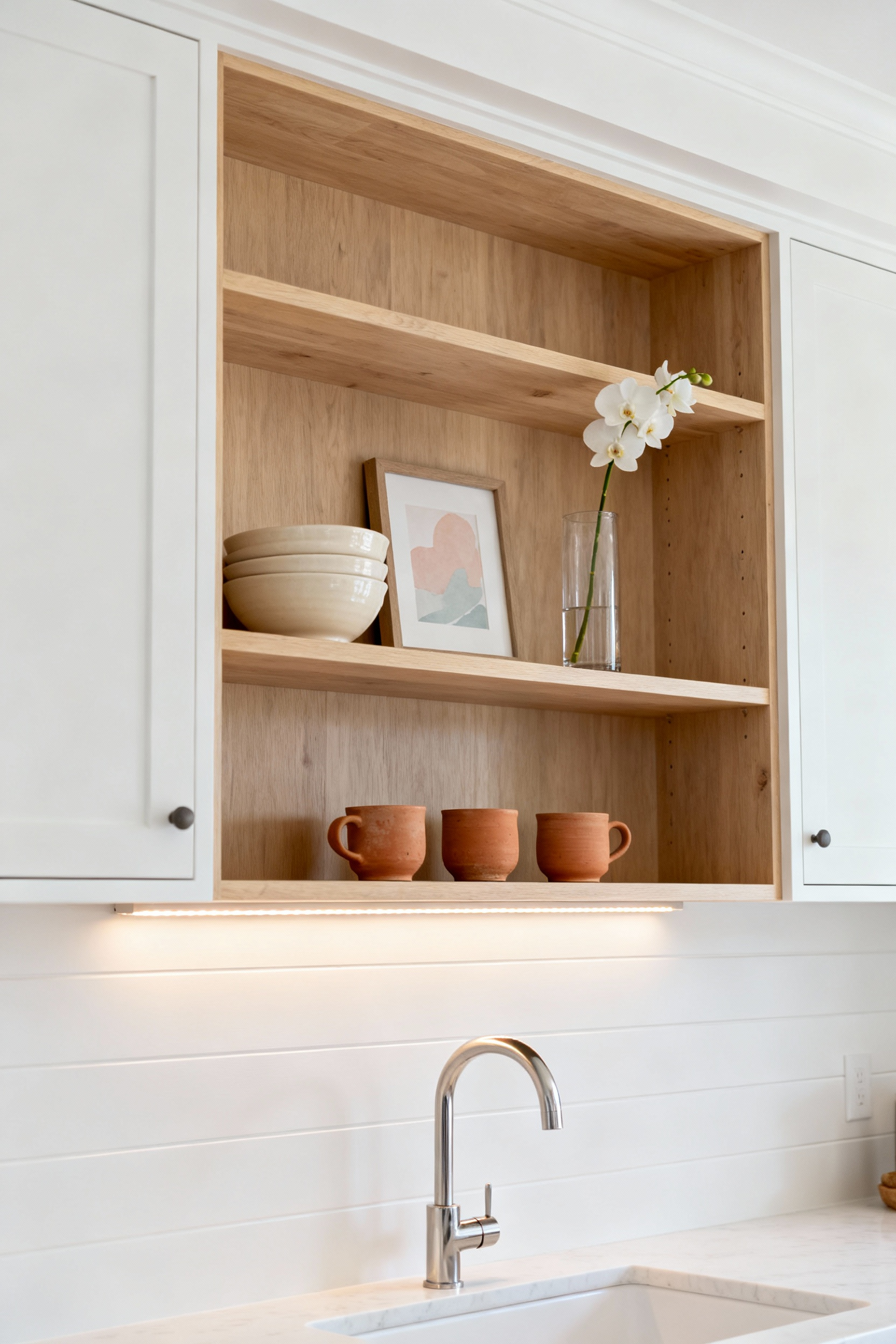
The key is to treat these shelves like a composition. Mix materials and shapes, vary heights, and don’t be afraid of negative space—let the objects breathe. A simple shelf in a warm wood or a sleek metal can provide a beautiful contrast to the white walls and cabinetry. This is where you tell your story and prevent the kitchen from feeling impersonal.
Lived-in Elegance: Infusing Personality and Practicality
A kitchen is not a museum. It’s the most lived-in room in the house. The final layer of a successful design is about infusing the space with warmth, personality, and practical touches that make it a joy to use every day. This is how we transform a beautiful space into a beloved home.
16. Breathing Life into Brilliancy: Adorning with Verdant Greenery
Nothing brings life to a white space like a touch of green. A simple potted herb on the windowsill, a collection of succulents on a shelf, or a dramatic fiddle-leaf fig tree in a corner can instantly soften the architecture and connect the room to the natural world. Plants add color, organic form, and a sense of vitality that is essential in a coastal home.
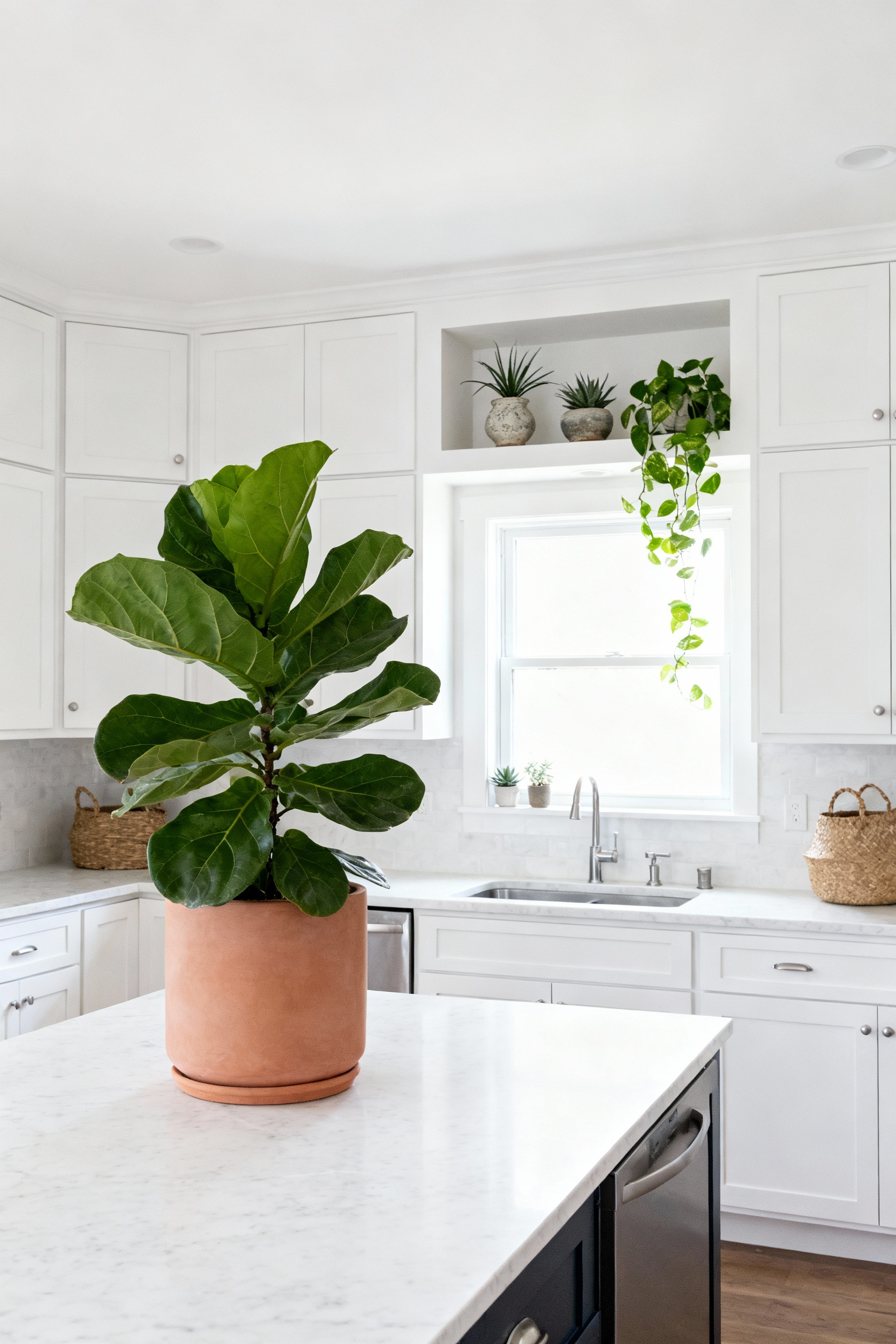
What I always tell my clients is to think of plants as living sculptures. Choose vessels that complement your design—a simple terracotta pot for a rustic touch or a sleek ceramic planter for a more modern feel. Even a simple branch cut from the garden and placed in a tall vase on the island can be a stunning, ephemeral work of art.
17. Softening the Edges: Introducing Textiles and Window Treatments
To keep a white kitchen from feeling too hard or cold, you need to introduce some softness. Textiles are the easiest way to do this. A simple Roman shade in a natural linen over the window can diffuse the light beautifully and add a layer of welcome texture. A durable, washable runner can bring warmth and comfort underfoot.
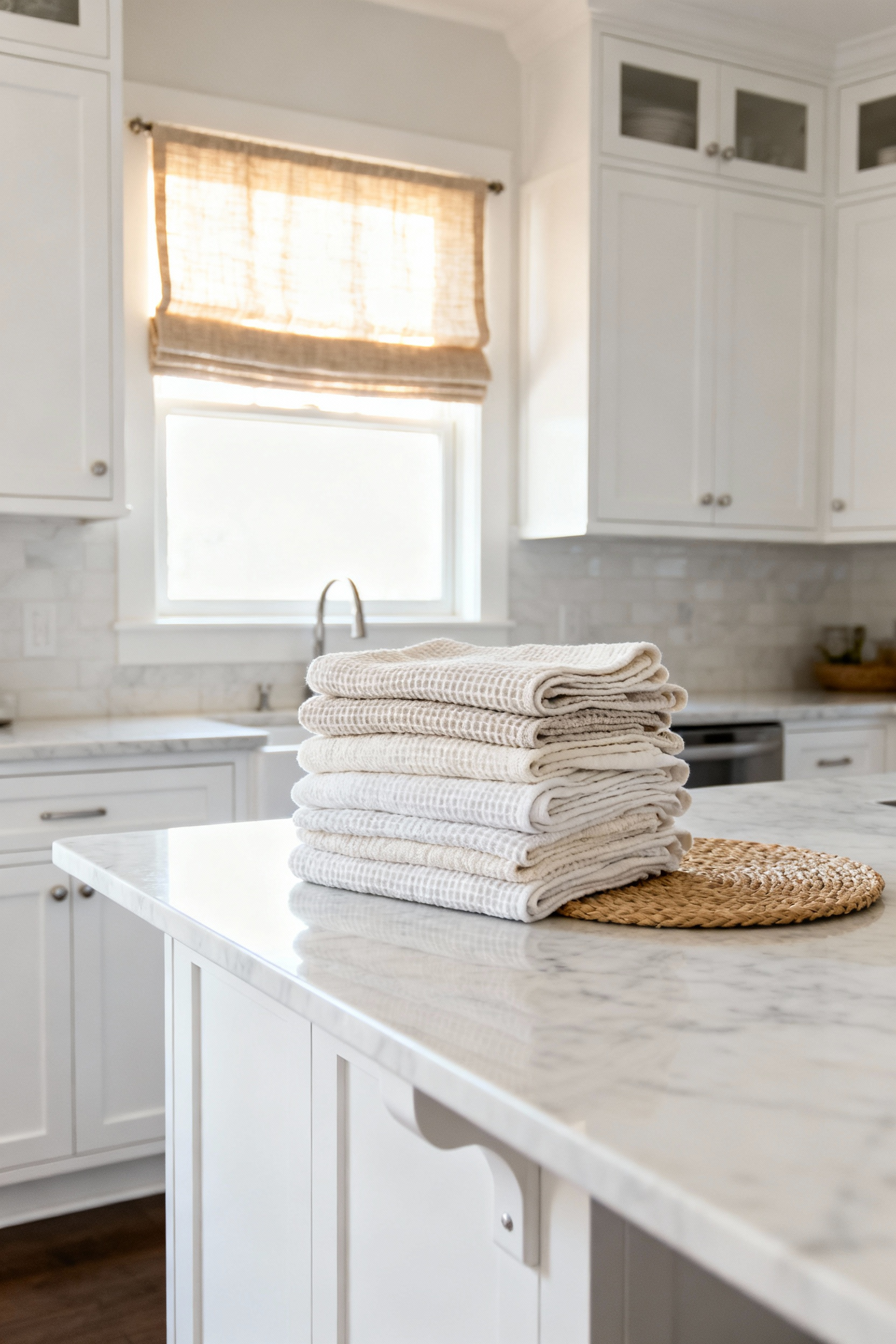
Even the small details matter. High-quality linen dish towels and simple, comfortable cushions on your counter stools can make a big difference. These elements add a crucial layer of tactile comfort, making the space feel more inviting and lived-in. They are the final, essential touches that turn a house into a home.
18. The Artful Ensemble: Curating Distinctive Artwork and Decor
A white kitchen is the perfect gallery for a piece of meaningful art. The neutral backdrop allows the artwork to truly shine and become a focal point. It doesn’t need to be a large or expensive piece. It could be a small painting that you love, a beautiful photograph from a family vacation, or even a collection of antique cutting boards hung on the wall.
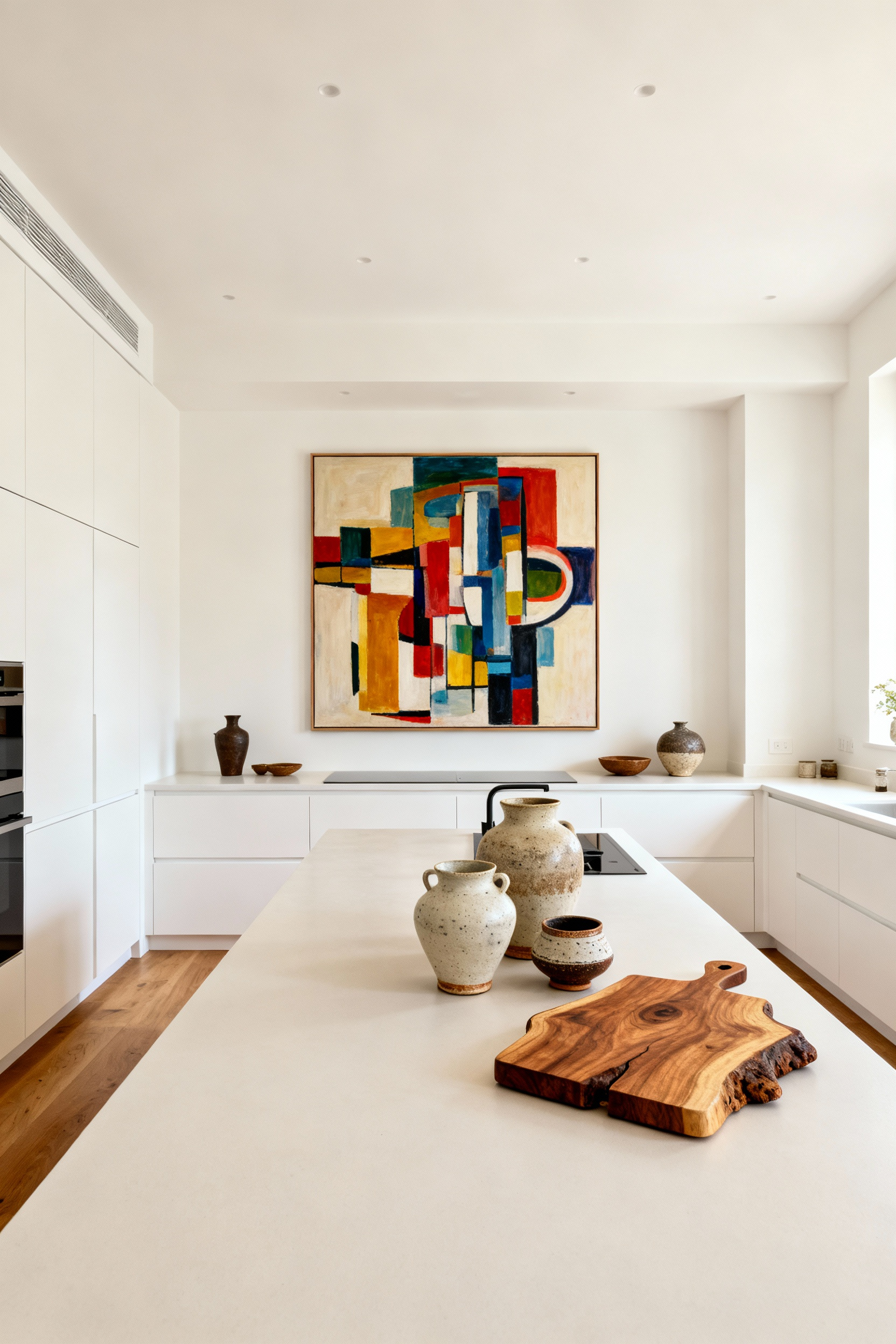
This is your opportunity to infuse the space with your unique personality and story. Choose something that speaks to you, something you’ll love looking at every day. A piece of art transforms the kitchen from a functional room into a space with soul, reflecting the lives and tastes of the people who live there.
19. Intelligent Kitchen Ecosystems: Integrating Smart Technology Thoughtfully
Modern luxury is often about invisible convenience. Smart technology can make life in the kitchen easier and more efficient, but it should be integrated discreetly so it doesn’t disrupt the serene, timeless design. Think of induction cooktops that have minimalist controls, or smart faucets that are sleek and voice-activated.
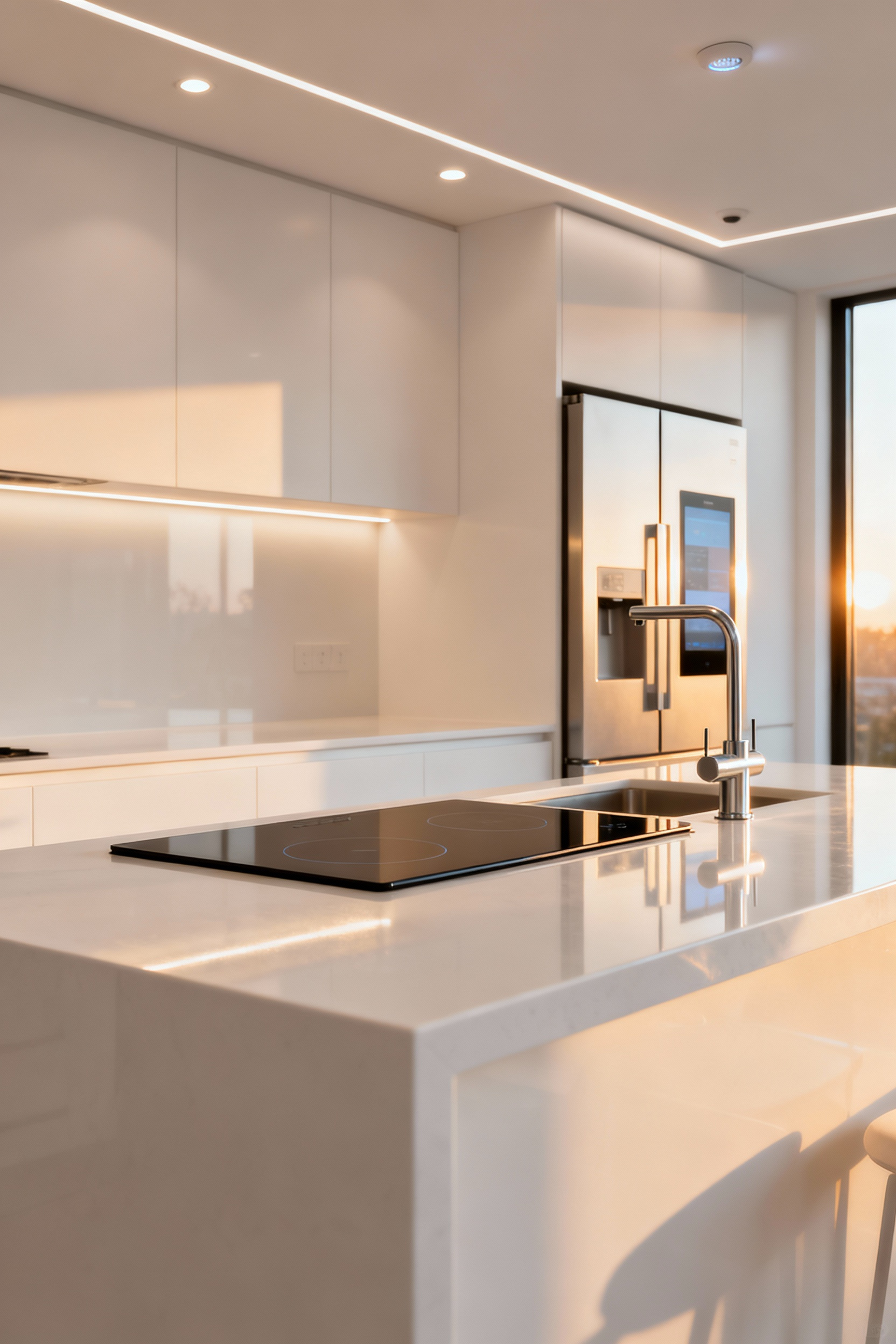
You can hide charging stations for devices inside a cabinet or drawer to eliminate cord clutter. I learned early on that the best technology is the kind you don’t notice until you need it. The goal is to enhance functionality without sacrificing the classic, elegant aesthetic. It’s about creating a kitchen that is as smart as it is beautiful.
20. Preserving Pristine Appeal: Implementing Streamlined Maintenance Practices
The beauty of a white kitchen is worth preserving, and this is easier than you might think with the right materials and habits. Choosing non-porous surfaces like quartz for countertops and high-quality, wipeable paint finishes for cabinetry is the first step. These materials are designed to resist stains and make cleanup simple.
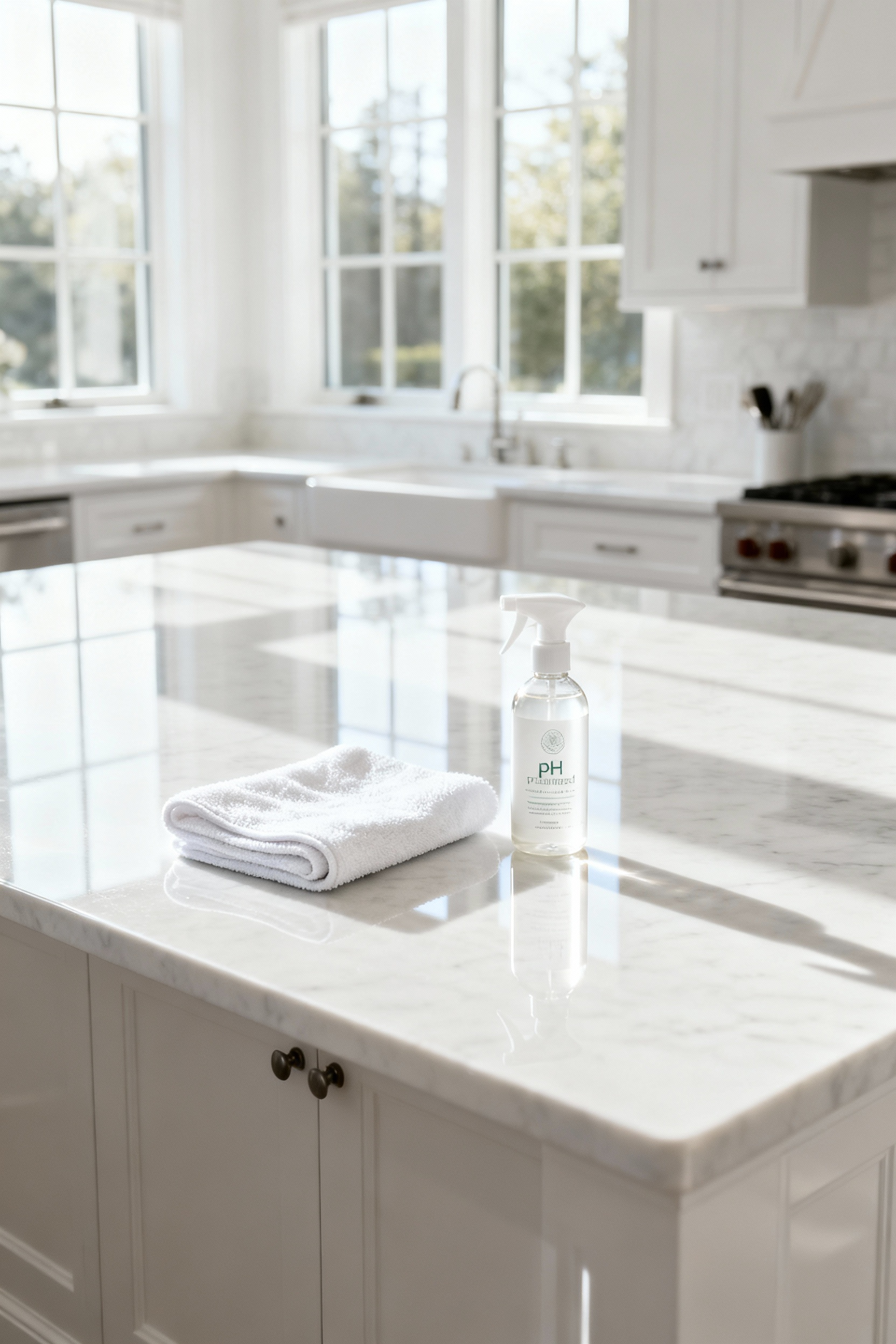
The real secret, however, is to adopt a ‘little and often’ approach. Wiping up spills as they happen and doing a quick wipe-down of the main surfaces at the end of the day will prevent build-up and keep the kitchen looking fresh. A beautiful space inspires you to take care of it, and these small, mindful habits become a rewarding part of the daily rhythm.
Conclusion
As we’ve journeyed through these ideas, it’s clear that a white kitchen is so much more than a color choice. It is a canvas for life, a backdrop that amplifies light, simplifies form, and offers a profound sense of calm. These are not rules, but principles—a guide to help you compose a space that is a true reflection of your own style and the unique character of your coastal home.
I encourage you to take these concepts and make them your own. Trust your intuition. Let the natural light be your guide, and choose materials that feel good to the touch. A truly successful kitchen is one that not only looks beautiful but feels like an effortless extension of your life. It should be a source of daily joy, a serene sanctuary that stands the test of time, proving that true sophistication is always simple, personal, and enduring.