
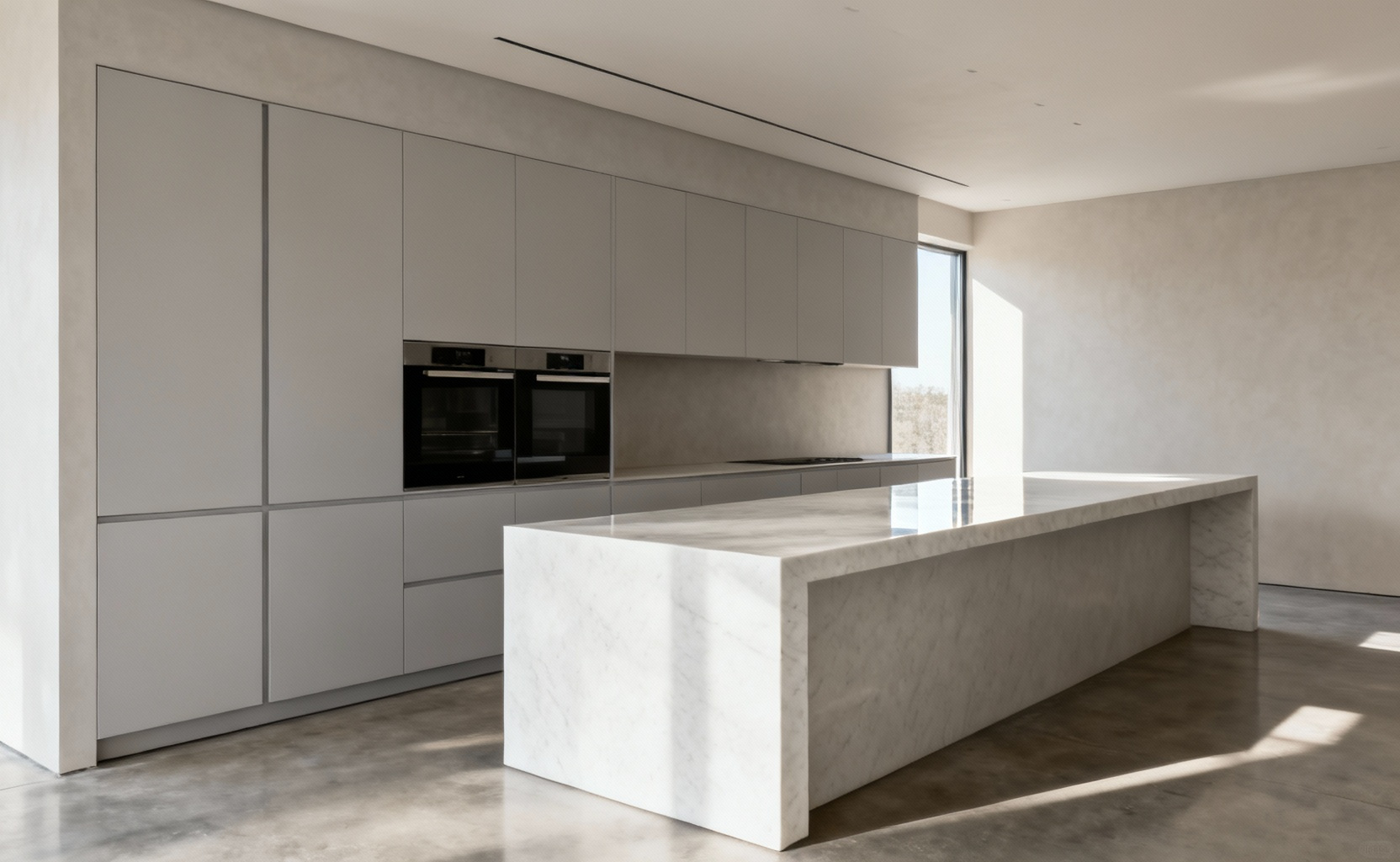
Designing a kitchen is, at its core, an act of revealing how you want to live. Every choice—from the handle on a cabinet to the finish on the floor—reflects not just a passing taste, but deeper values about ease, comfort, and beauty. The most compelling kitchens aren’t simply decorated; they’re authored. They tell a story about who you are. These 20 principles are the ones I use to separate a kitchen that feels authentic and timeless from one that is merely on-trend. They are the foundation for creating a space that is both a sophisticated sanctuary and the true heart of the home.
Let’s move beyond the catalog images and dive into the thinking behind a truly extraordinary contemporary kitchen. We’ll start with the philosophy, the very soul of the space. Then we’ll touch the materials that give it character, and finally, arrange it all in a way that feels as natural and effortless as a shoreline. This is about crafting a kitchen that doesn’t just work beautifully but feels beautiful, a place that enhances every single day.
The Philosophical Anchor: Unveiling the Core Ethos of Modern Kitchen Design
Our journey into contemporary kitchen decoration begins with philosophy, not fixtures. It’s about establishing a clear intention for how the space should feel before we even think about what goes into it. This section is about understanding the principles of value, psychological calm, and refined simplicity. When you get this right, you create a cohesive environment that reflects a thoughtful, curated life, avoiding the noise of fleeting trends.
This thinking guides every choice that follows, shaping not just the look but the soul of your kitchen. Here are the five ideas that transform a functional room into an authored sanctuary.
1. Embracing the Minimalism Paradox: Functionality as Organic Ornamentation
At the heart of any truly great contemporary kitchen is what I call the ‘Minimalism Paradox.’ It’s the idea that the best ornamentation isn’t something you add, but something that arises naturally from perfectly executed function. True elegance is found in utility—a flawlessly integrated appliance, a perfectly silent drawer. This is what creates an environment of profound clarity. For any contemporary kitchen decoration to feel right, it has to work with a quiet, confident grace, reducing visual clutter and calming the mind.
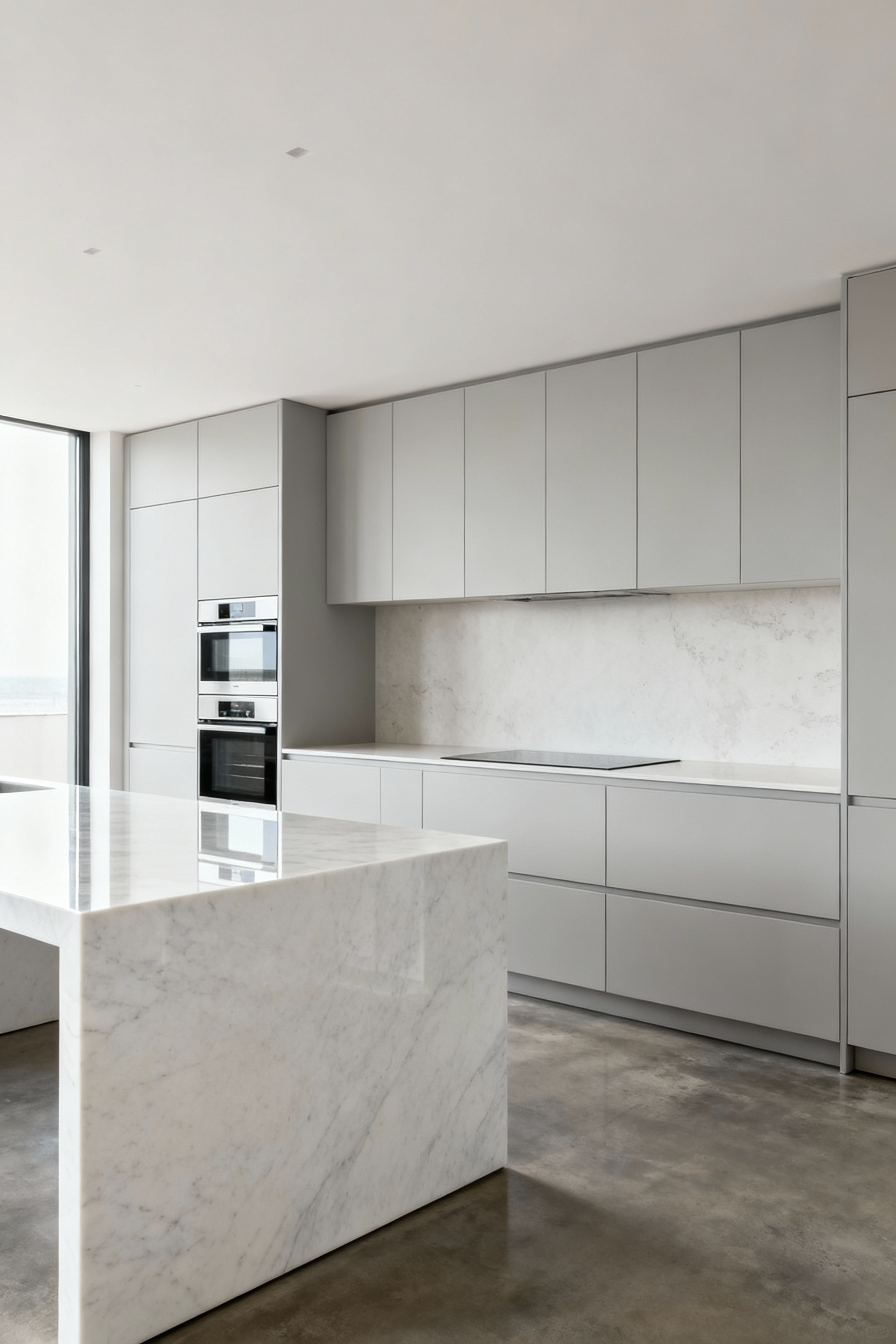
Think about how to achieve this. It demands prioritizing fully integrated appliances that disappear into bespoke cabinetry, creating an uninterrupted visual plane. Handle-less doors and drawers, operated by a simple push-latch or a recessed channel, preserve that clean, monolithic look. In my coastal contemporary specialist practice, I’ve noticed that when you pare back the unnecessary details, you allow the true stars—the quality of the materials and the play of natural light—to take center stage. It’s not about emptiness; it’s about making sure every single thing in that room earns its place. A kitchen designed this way doesn’t just look timeless; it functions with an ease that makes daily life better.
2. Curating a Cohesive Visual Narrative through Intentional Simplicity and Refined Form
Once you embrace function as its own form of beauty, the next step is curating a cohesive visual story. This is where we move beyond just picking nice things and start making intentional, simple choices that create a serene sanctuary. Every line, every texture, and every color needs to contribute to a singular, sophisticated vision. It’s this discipline that makes a space feel generous and calm, reducing the cognitive load of a visually busy room. A kitchen that tells one beautiful story feels infinitely more luxurious than one that tries to tell ten at once.
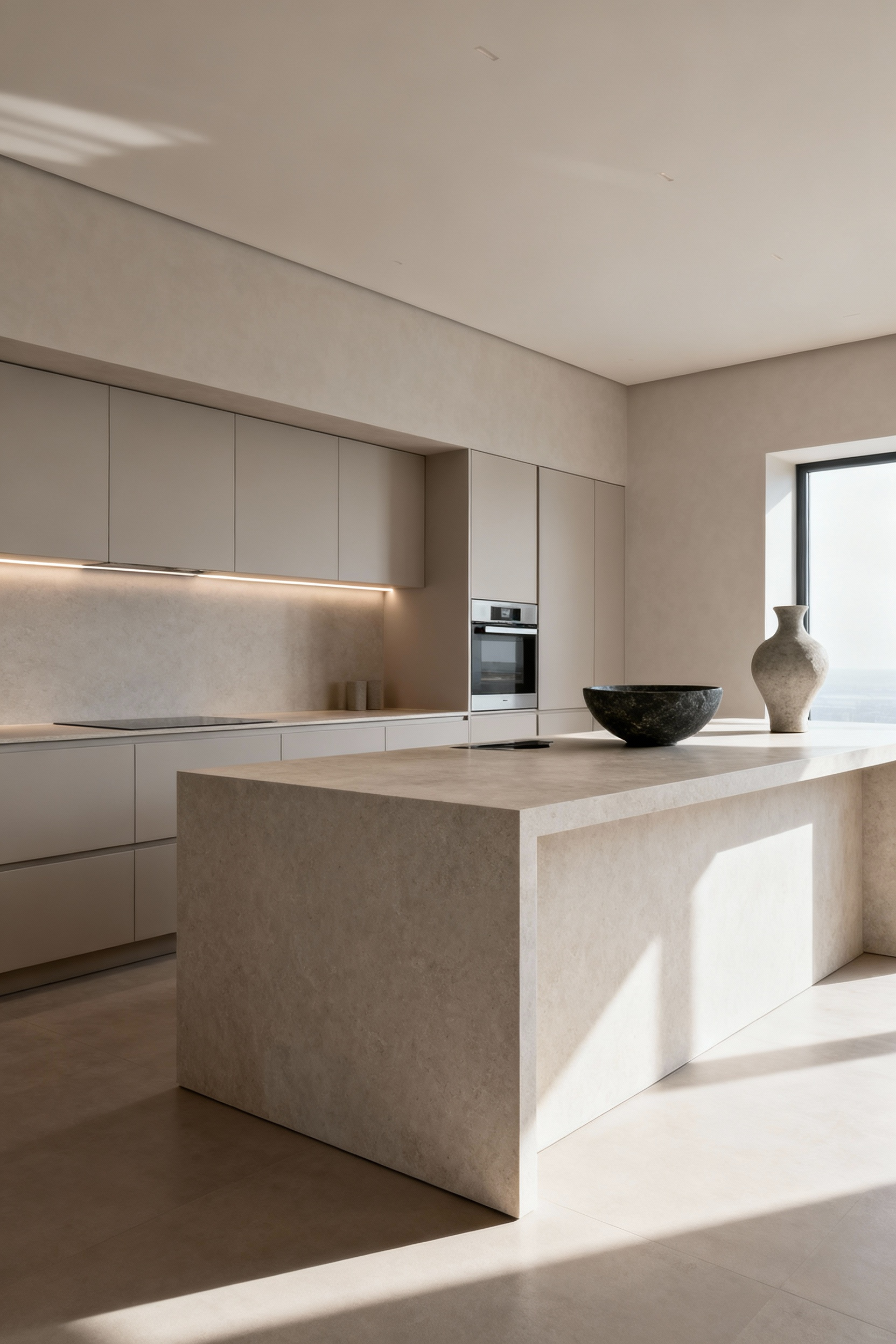
To get there, start with a restrained color palette—monochromatic or analogous tones work wonders. You can create depth and interest through subtle shifts in texture and sheen rather than jarring color changes. Integrated appliances and handle-less cabinetry are your best friends here, as they help maintain those seamless surfaces. Then, select a very limited palette of honest materials, like a beautiful honed stone or a rift-sawn oak, and let them speak for themselves. What I tell my clients is that great contemporary kitchen decoration isn’t about an absence of things; it’s about having exactly enough. It’s the quiet confidence of knowing when to stop.
3. Decoding the ‘Quiet Luxury’ Aesthetic: Cultivating Understated Grandeur
‘Quiet Luxury’ is more than a trend; it’s a philosophy. In the kitchen, it means choosing understated grandeur over anything loud or flashy. It prioritizes exquisite craftsmanship, superior materials, and a sophisticated restraint that you feel more than you see. This is how you create a space that transcends fads and feels just as relevant in twenty years as it does today. The focus shifts to the tactile experience—the solid feel of a cabinet, the cool smoothness of a stone countertop—and the integrity of the design itself.
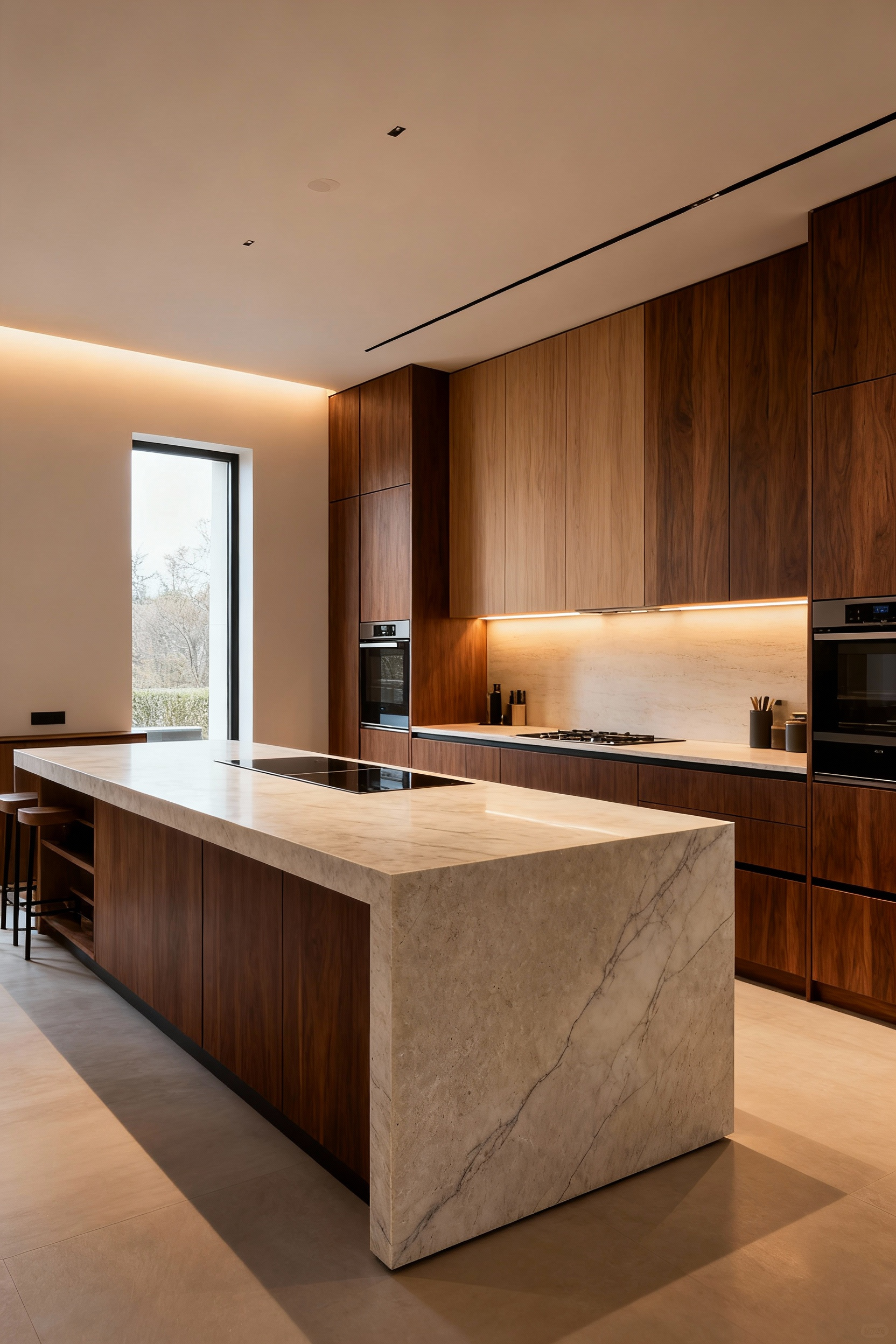
To cultivate this, begin with a carefully curated material palette of natural, high-quality finishes. Think honed marble, solid wood, and the subtle warmth of unlacquered brass. Then, double down on seamless integration. Appliances should disappear. Storage should be completely concealed behind custom, flush panels. Lighting is key here, too; a layered scheme of soft, indirect light highlights the texture of your materials without shouting. From my work in coastal modern design, I’ve learned that true luxury is about permanence and quality. It’s the opposite of disposable. It’s an investment in a certain kind of calm and longevity that quietly elevates everyday life.
4. Harmonizing Advanced Ergonomics with Undeniable Elegance for Seamless Flow
A truly sophisticated contemporary kitchen is one where elegance and ergonomics are one and the same. It’s a space where every movement feels fluid, intuitive, and effortless. The design should anticipate your needs, creating a seamless flow that makes cooking a joy, not a chore. This is about more than just the classic work triangle; it’s about mapping your daily rituals and designing a space that supports them with grace. This is where a kitchen becomes a true extension of the home, a high-performance sanctuary that feels utterly serene.
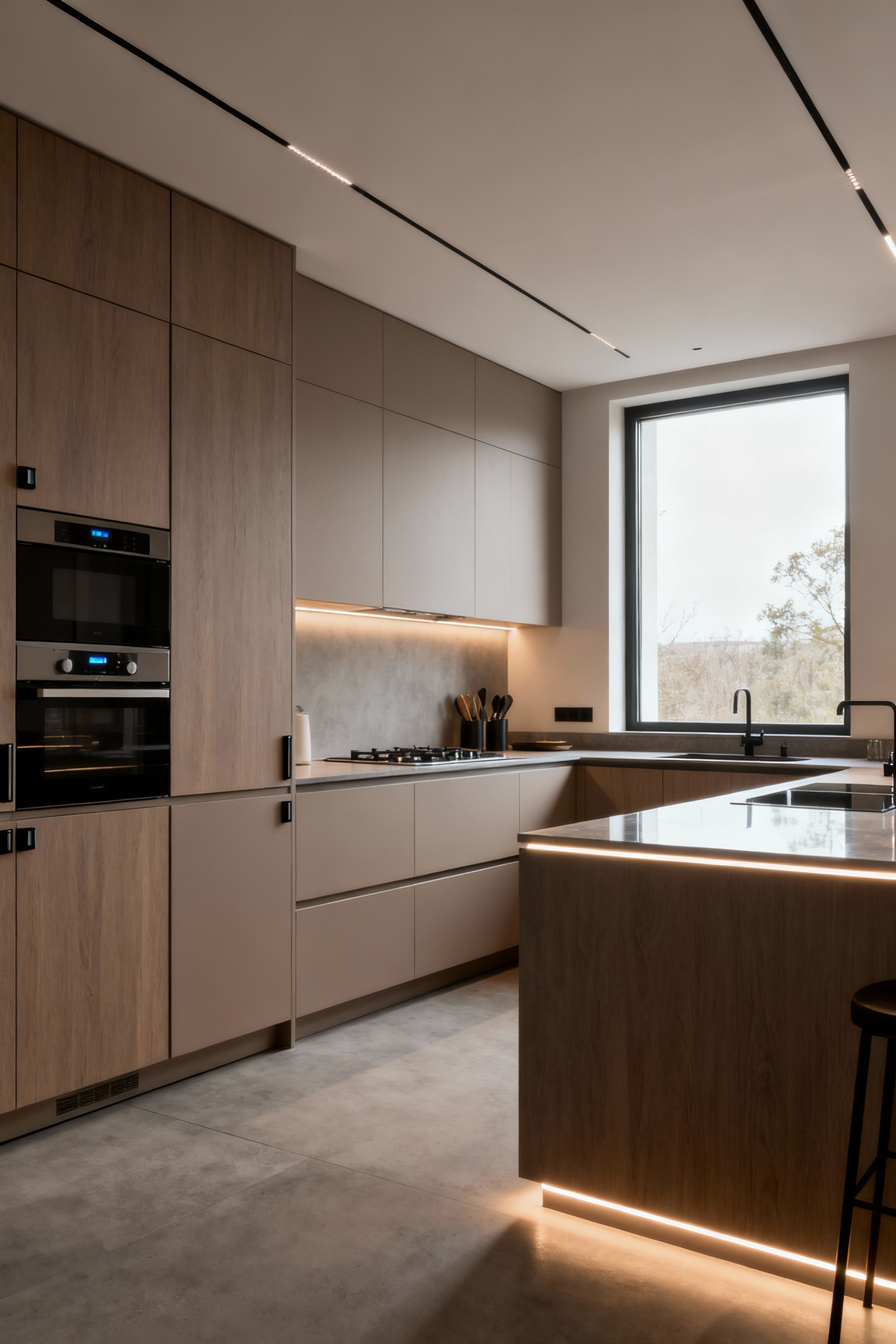
Implementation starts with a deep understanding of how you use the space. We map out the flow between storage, preparation, and cooking to create an unobstructed circuit. High-performance appliances and storage are then discreetly integrated within bespoke cabinetry using things like pocket doors or touch-latch systems to maintain that clean, monolithic look. Layered lighting also plays a huge ergonomic role, defining functional zones and enhancing depth. Years of professional experience have taught me this is non-negotiable. An elegant kitchen that doesn’t work well is a failure. But when you get the flow right, the elegance feels earned, authentic, and deeply satisfying.
5. Mastering Negative Space: The Unseen Architect of Sophistication and Tranquility
Negative space—the intentional use of empty, uninterrupted surfaces—is the secret weapon of sophisticated contemporary kitchen decoration. It’s the quiet that makes the music audible. By deliberately leaving areas unadorned, you create a canvas that allows your carefully chosen materials and forms to breathe and command attention. This deliberate absence is what fosters a sense of tranquility and architectural purity. It makes a kitchen feel calm, expansive, and luxurious. It’s the ultimate act of restraint.
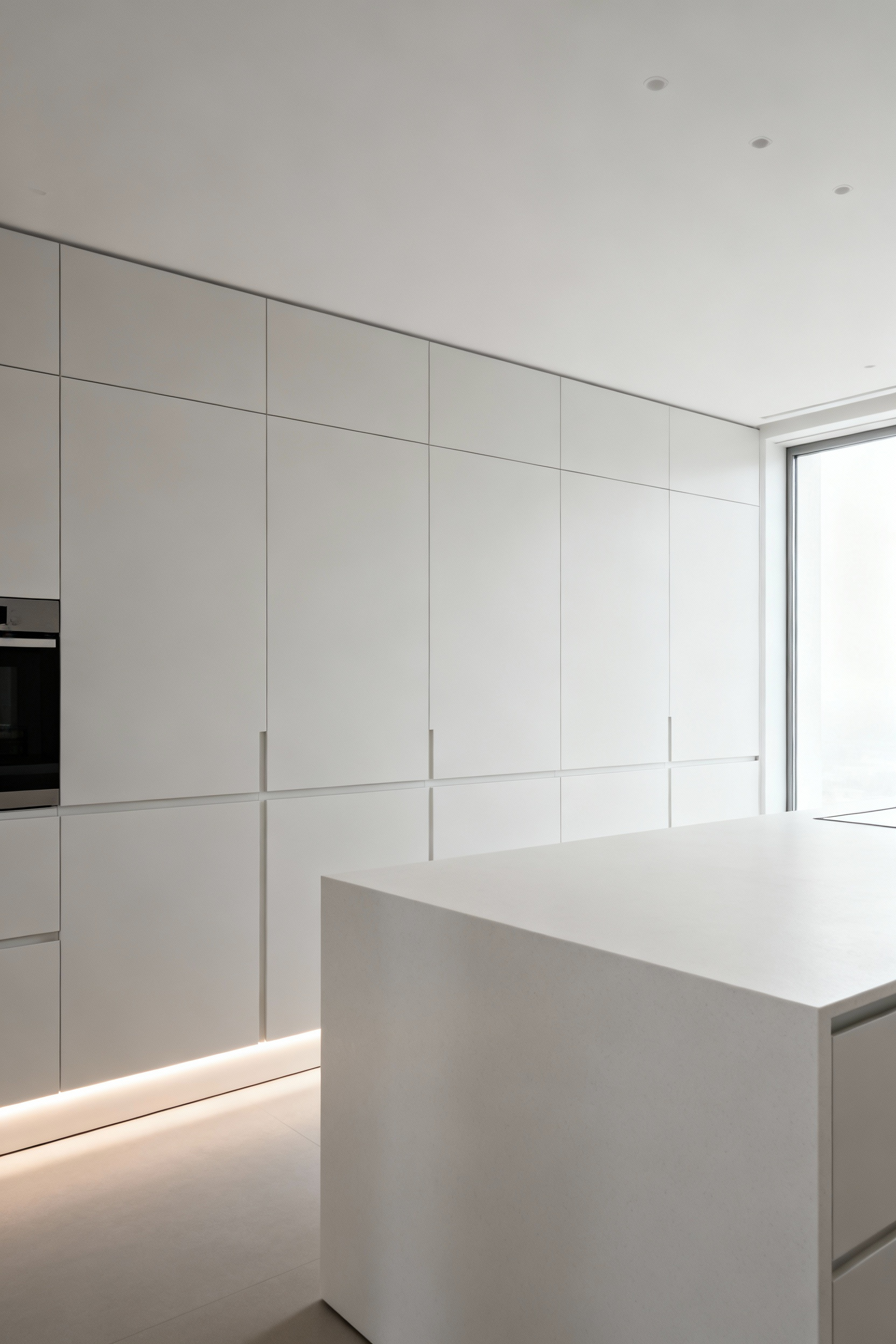
The most effective way to achieve this is through relentless decluttering, architecturally. This means designing incredible concealed storage—flush cabinetry, integrated pantry walls, drawer-within-a-drawer systems—so that countertops and open shelves can remain clear. It means choosing streamlined forms and fully integrated appliances to create seamless, uninterrupted visual planes. Here’s what’s interesting: what at first feels like ‘emptiness’ quickly becomes ‘calm.’ It gives your eyes a place to rest. In my projects, especially those with ocean views, mastering negative space inside is critical. You don’t want the kitchen to compete with the landscape; you want it to be a quiet frame for it.
Material Exploration: Articulating Form Through Curated Textures and Finishes
Now that we’ve established our design philosophy, we can start to talk about the materials that will bring it to life. This is where a kitchen gains its character and soul. Textures and finishes aren’t just decorative afterthoughts; they are the primary way we articulate form and introduce warmth. We’ll look at innovative surfaces like sintered stone, the timeless grain of rift-sawn wood, and how to use metallics with a deft hand.
Each choice contributes to the overall feeling of the space—that breezy elegance I’m always aiming for. This isn’t just about what looks good; it’s about what feels good to touch and to live with. Understanding these material nuances will elevate your contemporary kitchen decoration from merely functional to a rich, sensory experience.
6. Exploiting the Versatility of Sintered Stone Surfaces: Beyond Traditional Countertops
Sintered stone is a game-changer for contemporary kitchens. It’s a man-made marvel, crafted from natural minerals fused under incredible heat and pressure, resulting in a surface that’s nearly indestructible and aesthetically versatile. But to think of it as just a countertop material is to miss the point entirely. Its true power lies in its ability to create cohesive, monolithic statements that are the bedrock of minimalist design. Large-format slabs allow you to wrap an entire island or even clad walls with almost no visible seams, achieving a sculptural quality that’s hard to get with other materials.
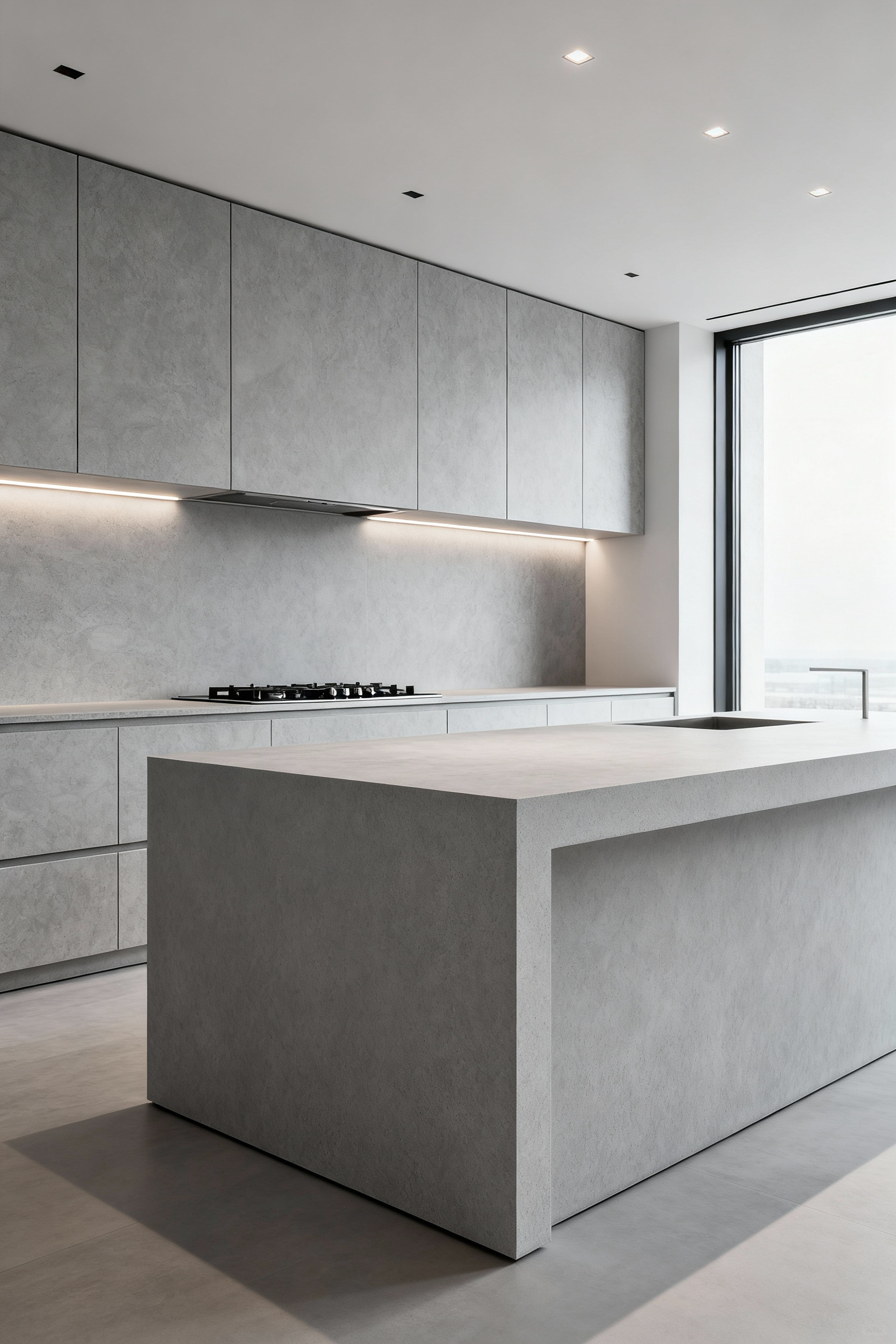
The key is to think bigger. Plan for integrated applications where the sintered stone flows from a horizontal countertop up a vertical wall, or is used to fabricate a custom sink that disappears into the surface. What really gets me is its ability to flawlessly replicate the look of natural materials—like a veined marble or a textured slate—without any of their inherent vulnerabilities. In my work with weather-resistant styling for coastal homes, having a non-porous surface that won’t etch or stain from salt air or a spilled glass of wine is a massive advantage. It offers both aesthetic freedom and complete peace of mind.
7. The Strategic Application of Rift-Sawn Wood for Tactile Warmth and Grain Intrigue
There is nothing quite like rift-sawn wood for introducing warmth and organic texture to a contemporary kitchen without disrupting its clean lines. Unlike other cuts, rift-sawn wood has a tight, perfectly straight grain pattern that is incredibly calming to the eye. It offers a subtle visual intrigue and a tactile quality that masterfully balances the cooler, harder surfaces of stone and metal. It’s the element that connects a modern space back to nature, preventing it from feeling sterile.
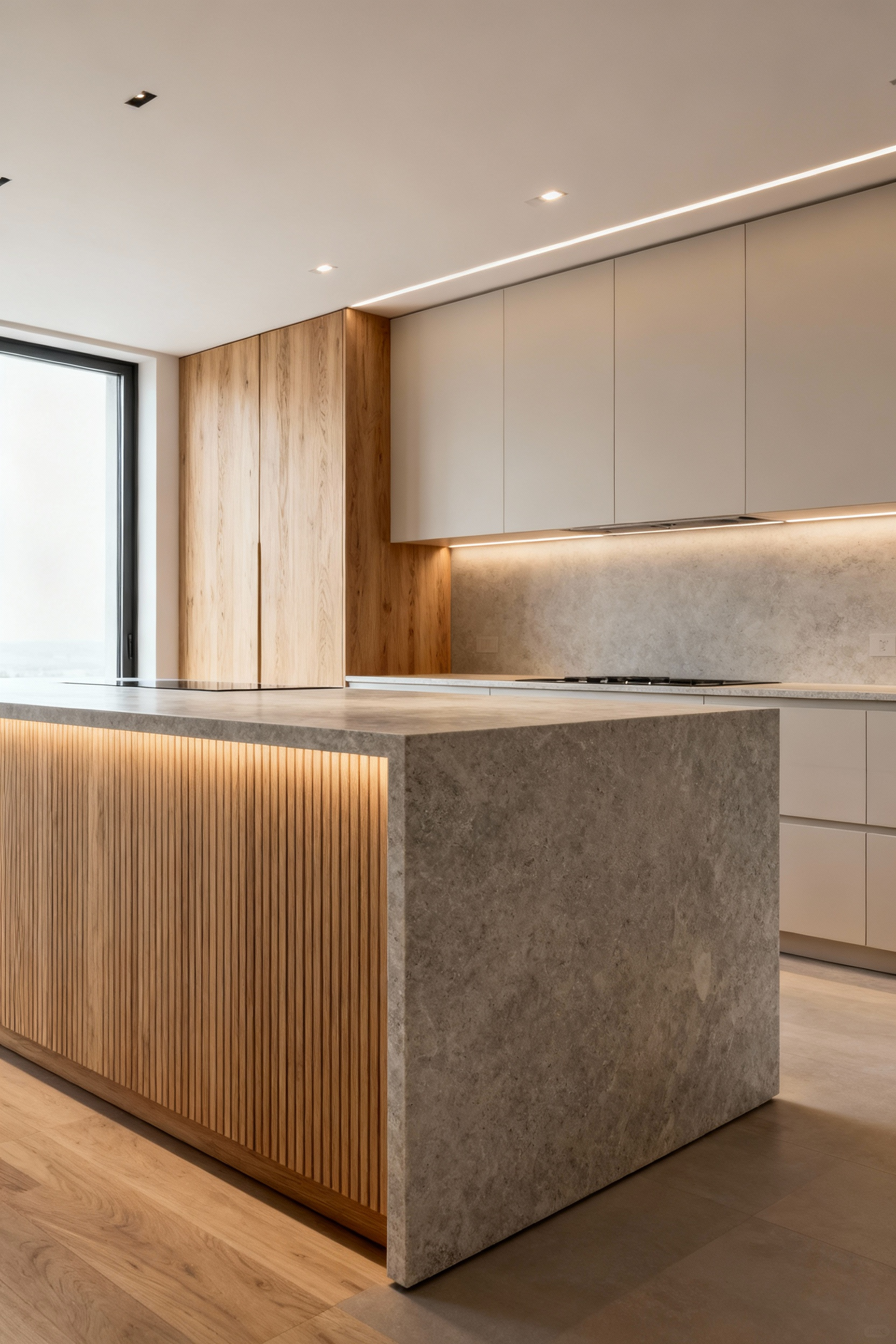
The application needs to be strategic. Use it on an island base or a bank of full-height cabinets to serve as an elegant focal point. Always opt for an ultra-matte or low-sheen finish; you want to feel the wood’s texture, not see a plastic-like gloss. The key is pairing it with contrasting materials. I often use rift-sawn white oak to bring in the feeling of a sun-bleached boardwalk or a ship’s deck—that straight, honest grain feels grounding, especially against the wide-open views we often work with in coastal homes. It’s that balance of the sleek and the natural that defines sophisticated contemporary kitchen decoration.
8. Incorporating Metallics: From Brushed Patina Accents to Blackened Steel Focal Points
Metallics are the jewelry of a contemporary kitchen—the finishing touch that provides punctuation and refinement. Used thoughtfully, they introduce an elemental purity and textural contrast that can elevate the entire space. From the soft, living finish of a brushed brass that will patina over time to the bold, graphic statement of blackened steel, these materials serve as crucial architectural details. They can anchor the aesthetic and provide a vital counterpoint to monolithic surfaces, adding depth and character.
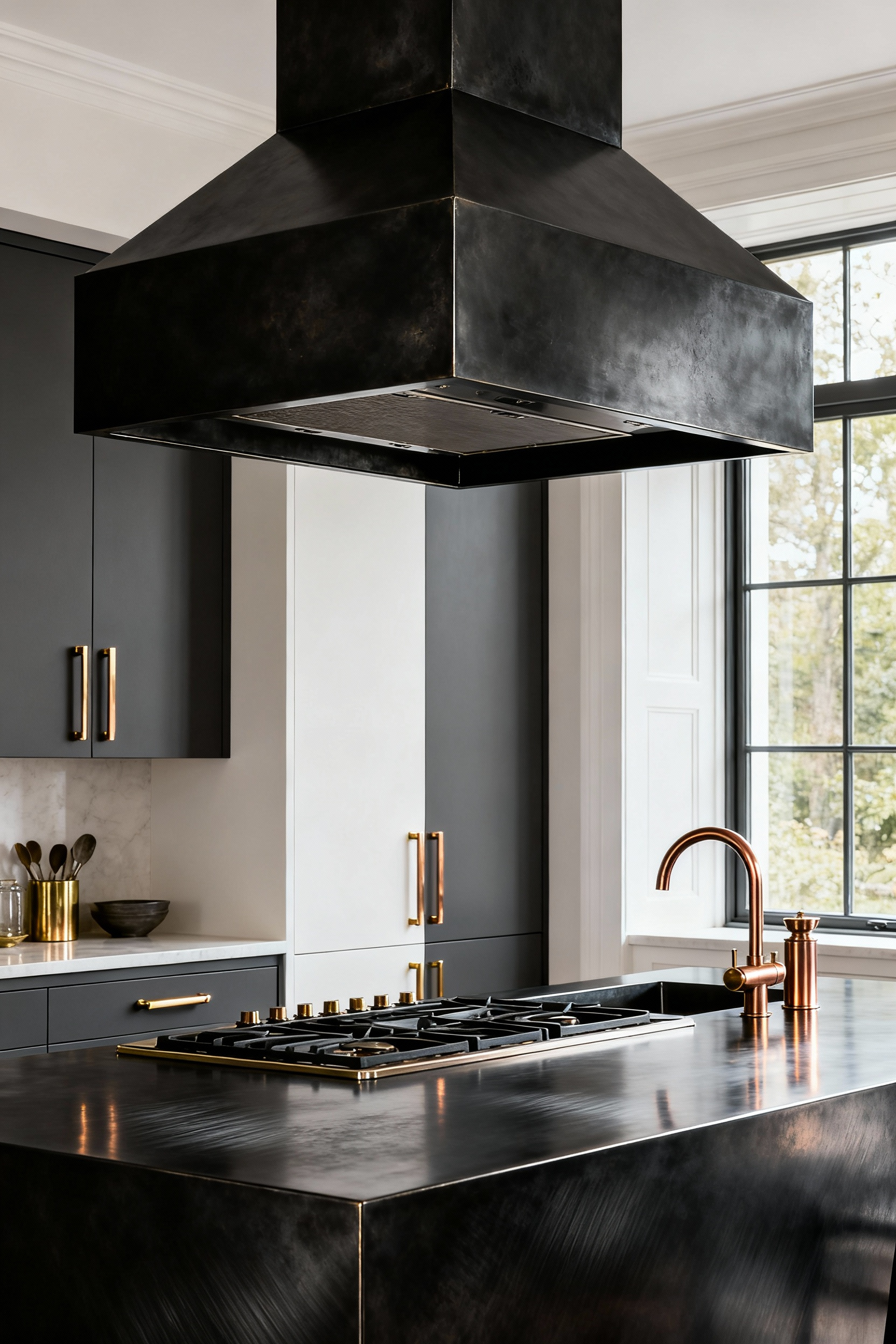
I advocate for a “less is more” approach. Choose one dominant metallic to act as an architectural anchor—perhaps a striking custom range hood in blackened steel or an island base clad in hand-patinated bronze. Then, layer in secondary accents like hardware or a faucet in a complementary finish. The goal is a harmonious dialogue, not a competition. I learned this when designing a kitchen overlooking a harbor; we used just a touch of brushed nickel for the hardware, which caught the light in the same way the water did outside. It wasn’t an overt nautical theme, but it created a subtle, powerful connection to the location.
9. Illuminating Surfaces: The Role of Integrated LED in Revealing Material Richness
Light is a material in itself. In a contemporary kitchen, integrated LED lighting is one of the most powerful tools we have to reveal the richness of all the other materials. When light is seamlessly merged into the architecture—tucked into a recess, hidden beneath a cabinet, or running along a baseboard—it stops being a fixture and becomes an effect. It can wash over a textured stone wall to bring out its depth or graze across a panel of rift-sawn wood to highlight its grain. It sculpts the space.
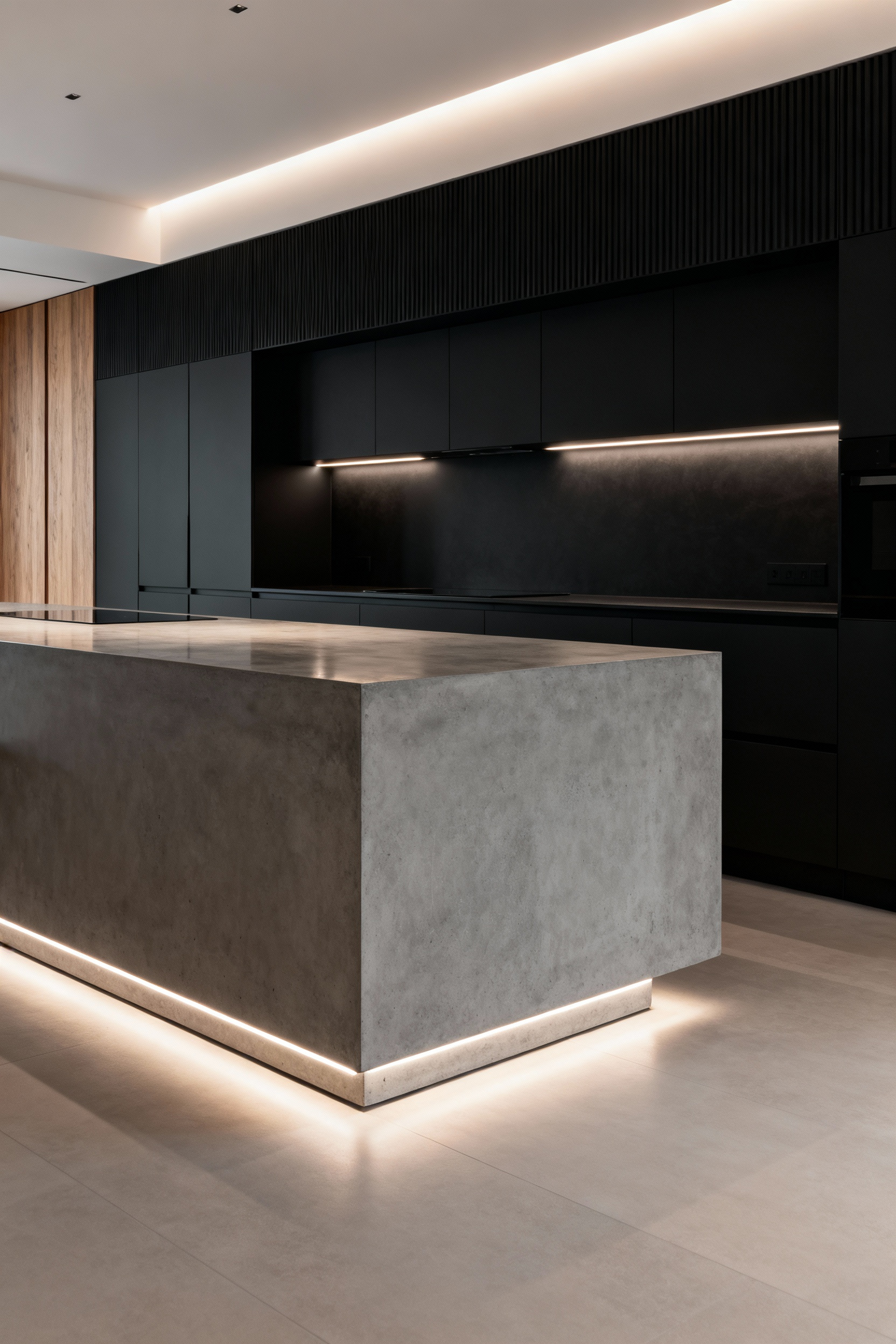
This requires planning from day one. You have to design the details where the light will live, ensuring the source is always hidden. The focus should be on the effect of the light, not the fixture. What I tell my clients is to think of light like a tide. It should be able to come in and go out, changing the room’s mood throughout the day. A well-designed system should offer bright, clear task light for cooking, then dim down to a soft, ambient glow for the evening. This dynamic quality is what brings a contemporary kitchen to life, making it feel responsive and attuned to the rhythm of the home.
10. Advancing the Aesthetics of Microcement: Achieving a Patina of Industrial Modernity
Microcement offers something truly special: the ability to create a seamless, monolithic surface with a subtle, artisanal patina. Applied by hand, it can wrap floors, walls, and even countertops in a continuous, grout-free finish, which is the holy grail for a minimalist aesthetic. It brings a sophisticated, industrial modernity to the space, but with a softness and textural depth that you don’t get from poured concrete. It’s both raw and incredibly refined.
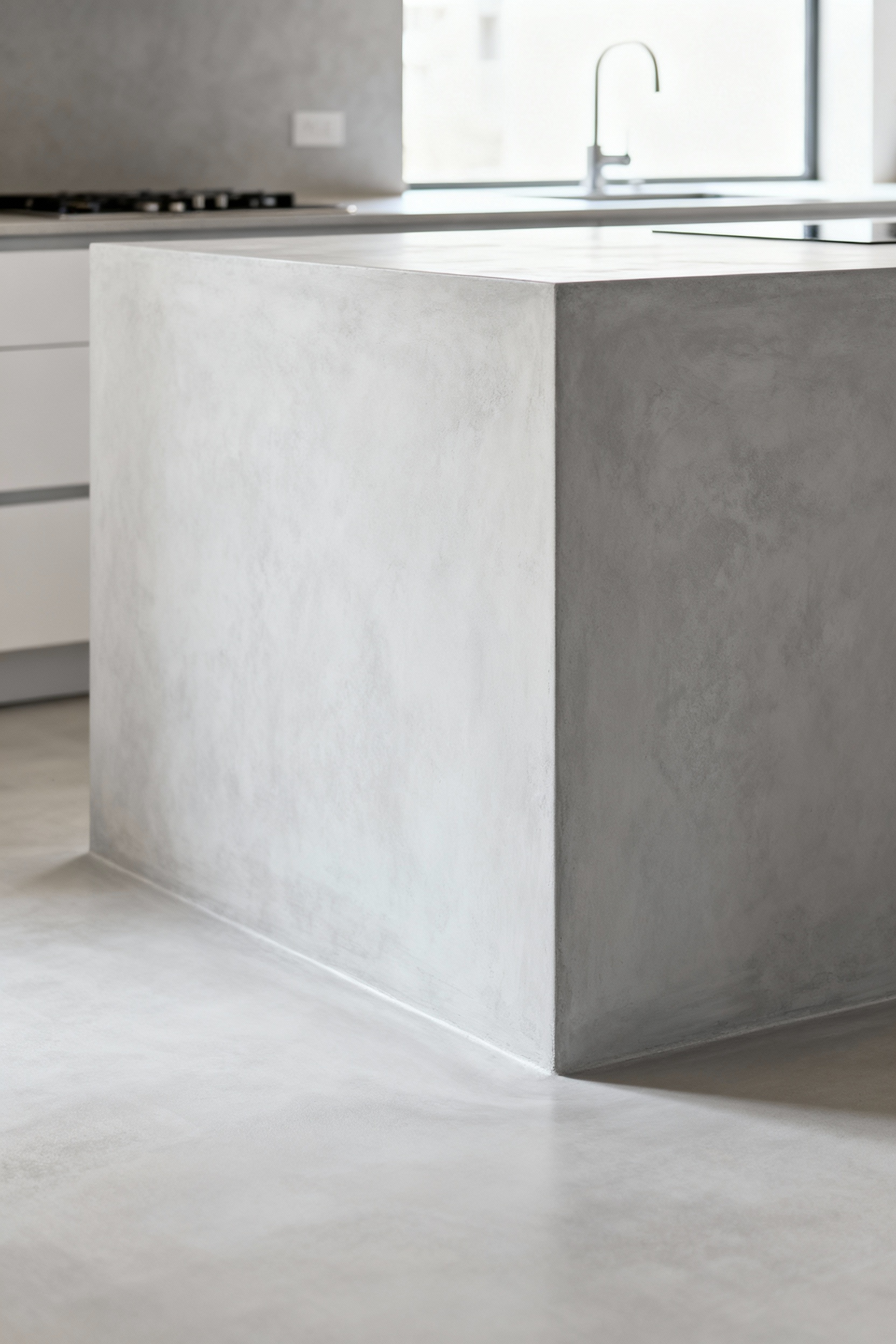
The magic of microcement is in its bespoke nature. The final look depends entirely on the skill of the applicator and can be custom-pigmented to achieve the perfect shade. It offers monolithic cohesion, which is fantastic for creating a sense of calm and spatial continuity. In my professional experience, it works particularly well as a grounding element, a quiet backdrop against which other materials like warm wood or sharp metallics can really pop. It feels elemental and permanent, like a stone worn smooth by the sea, making it a perfect fit for a coastal contemporary palette. Just be sure your installer is a true artist—the application is everything.
Spatial Application: Orchestrating Layouts, Light, and Seamless Integration
Having established our philosophy and chosen our materials, we now arrive at the architectural act of orchestrating space. This is where we arrange all the pieces into a composition that is more than the sum of its parts. It’s about moving beyond static layouts and thinking about the dynamic flow of daily life.
Here, we will look at how to sculpt with light, how to turn the kitchen island into a powerful architectural statement, and how the overall layout can create an intuitive and visually coherent sanctuary. This deliberate orchestration is the final, crucial step in crafting a contemporary kitchen decoration that not only looks stunning but feels deeply, intuitively right.
11. Sculpting Light with Layered Illumination: Mastering Ambient, Task, and Accent Strategies
In contemporary kitchen design, we don’t just light a room; we sculpt it with light. A sophisticated lighting plan is layered, combining ambient, task, and accent lighting to create depth, enhance function, and modulate the mood of the space. It’s this layered approach that moves a kitchen beyond flat, uniform illumination into something with atmosphere and nuance. Great lighting makes good materials look exceptional and can entirely redefine the feeling of a room.
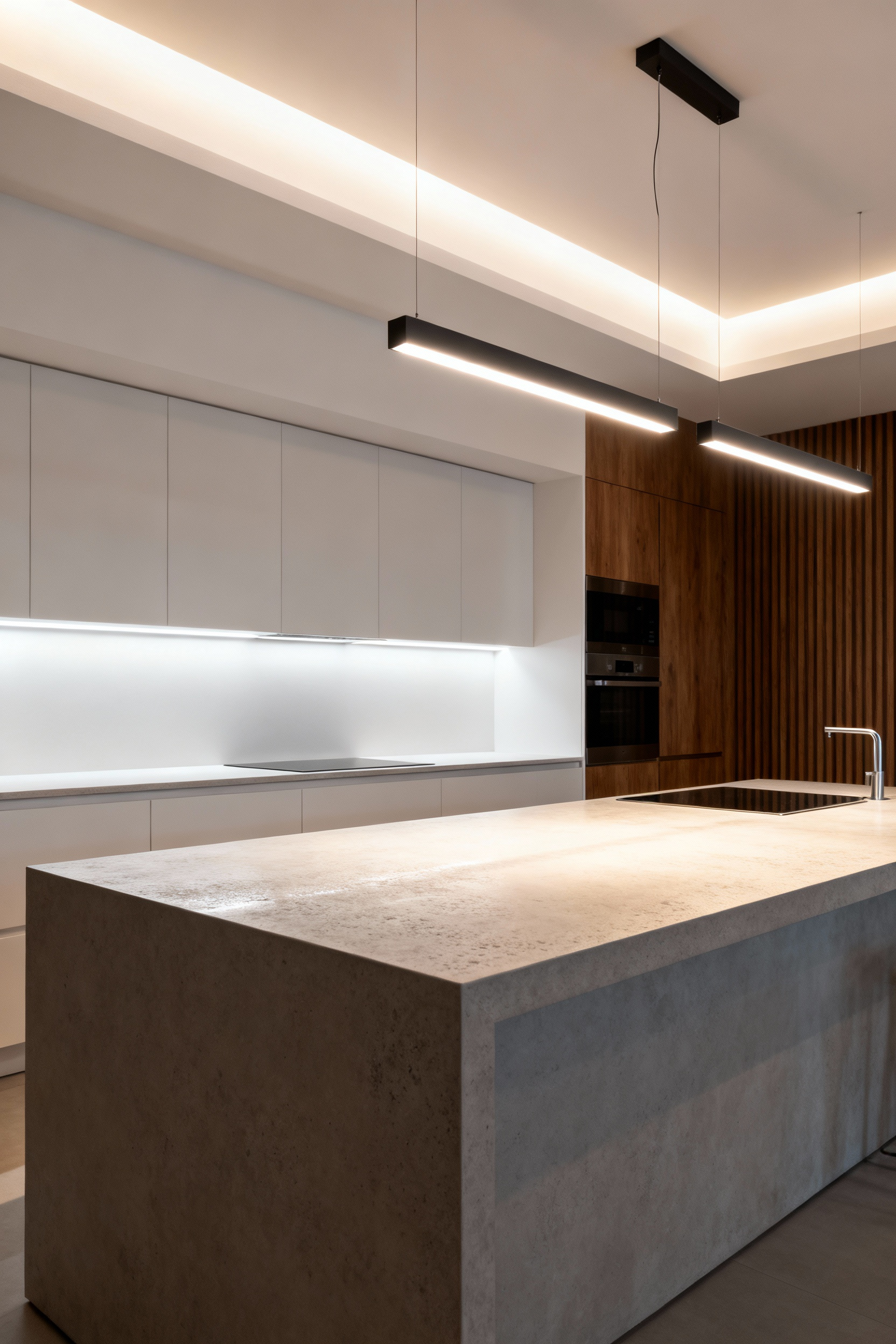
The strategy is to think in zones and layers. Ambient light, often from discreet recessed downlights, provides the base level of illumination. Task lighting is the workhorse—think powerful, focused light from under-cabinet linear LEDs right where you’re chopping and cooking. Finally, accent lighting adds the drama and focus, like a beautiful sculptural pendant over an island or a wash of light on a textured backsplash. A good control system with dimmers is essential. In my practice, I always say that being able to dial the light down to a soft, warm glow is as important as having bright light for working. It’s what allows the kitchen to transition from a workshop to a place for quiet connection at the end of the day.
12. The Island as an Architectural Focal Point: Beyond Mere Utilitarian Function
The kitchen island has evolved far beyond a simple workspace. In contemporary kitchen decoration, it is the anchor, the sculptural nucleus around which the life of the home revolves. Its design should be a deliberate architectural statement, dictating the flow of the room and serving as a showcase for your most beautiful materials. It’s the piece that can single-handedly elevate a kitchen from functional to phenomenal.
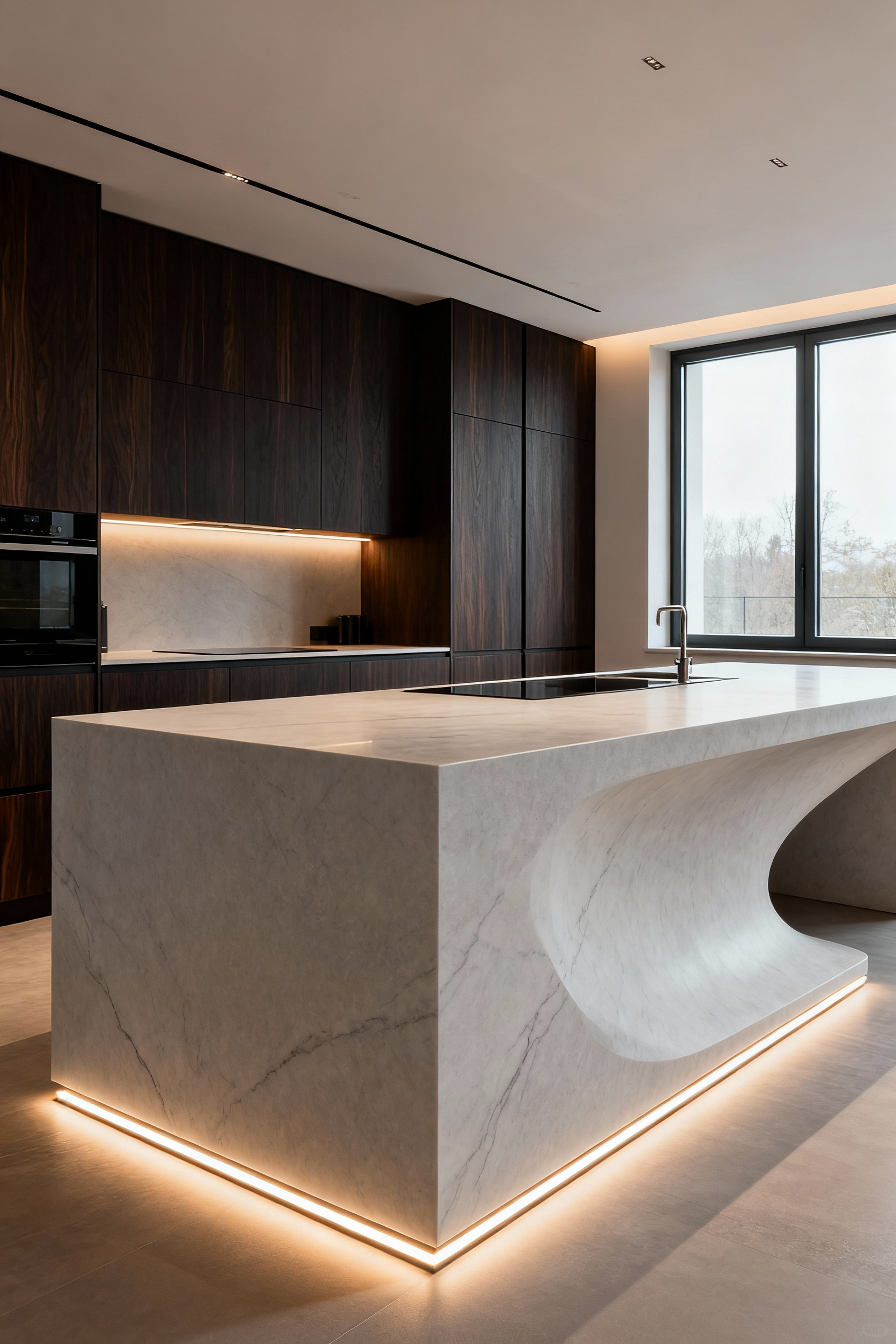
To treat the island as a focal point, you must consider its scale and proportion first, ensuring it commands attention without overwhelming the space. This is a place for a dramatic material choice, like a monolithic slab of stone with a waterfall edge or a cantilevered countertop that seems to defy gravity. Then, integrate function so seamlessly that it disappears—think induction cooktops flush with the surface, pop-up outlets, and handle-less drawers. I’ve seen this work best when the island is designed as a beautiful object in its own right. It becomes the natural gathering spot, the hub for everything from morning coffee to evening cocktails, embodying the perfect marriage of form and function.
Conclusion
Our walk through these principles for contemporary kitchen decoration reveals a simple truth: the most successful spaces are born from clear intention. We’ve moved from the philosophy of quiet luxury and minimalism to the tactile reality of rift-sawn wood and sintered stone, and finally to the orchestration of light and space. The thread connecting them all is the pursuit of a kitchen that feels as good as it looks—a space that is authored, not just assembled.
This is the essence of my coastal contemporary approach. It’s not about trends, but about creating environments that are timeless and fresh, that enhance our daily rituals and reflect a deep appreciation for quality and thoughtful design. These kitchens are calm, organized, and filled with light—not just rooms to cook in, but sanctuaries to live in.
I encourage you to use these ideas not as strict rules, but as a starting point for your own conversation about what you want your kitchen to be. Be deliberate in your choices. Ask not just what something will look like, but how it will feel to use every day. If you do that, you won’t just be designing a kitchen; you’ll be creating the enduring heart of your home, a space where mastered modernity and your own distinct character live in perfect harmony.