
I remember the exact moment I found it—a beautiful, but forgotten, walnut credenza tucked away in the back of a dusty estate sale. The veneer was peeling slightly, the finish clouded, but I could feel its story. It’s that thrill, that sudden connection to a piece’s past and its potential future, that I believe every home deserves. We all have that ache for a space that feels deeply personal, a sanctuary from the relentless pace of the modern world. That feeling of real connection is exactly what separates intentional, soulful design from just filling a room with things.
Crafting a country living room that feels genuinely yours isn’t about following a rigid set of rules. It’s a treasure hunt. It’s about listening to the stories whispered by timeworn wood and faded textiles. It’s about blending the resourcefulness of the past with the way we live today. This is my passion—breathing new life into forgotten gems and helping others create spaces that are not just beautiful, but sustainable and full of character. These 20 secrets are the markers on your treasure map, guiding you from the essential foundations to the nuanced touches that make a space sing. Let’s begin.
Laying the Foundation (Part 1)
Before you can add the treasures, you need to create the perfect setting. These first steps are about establishing a calm, authentic backdrop—a canvas of natural textures and soft light that will allow your more personal pieces to shine.
1. Let the Light In with Effortless Linen
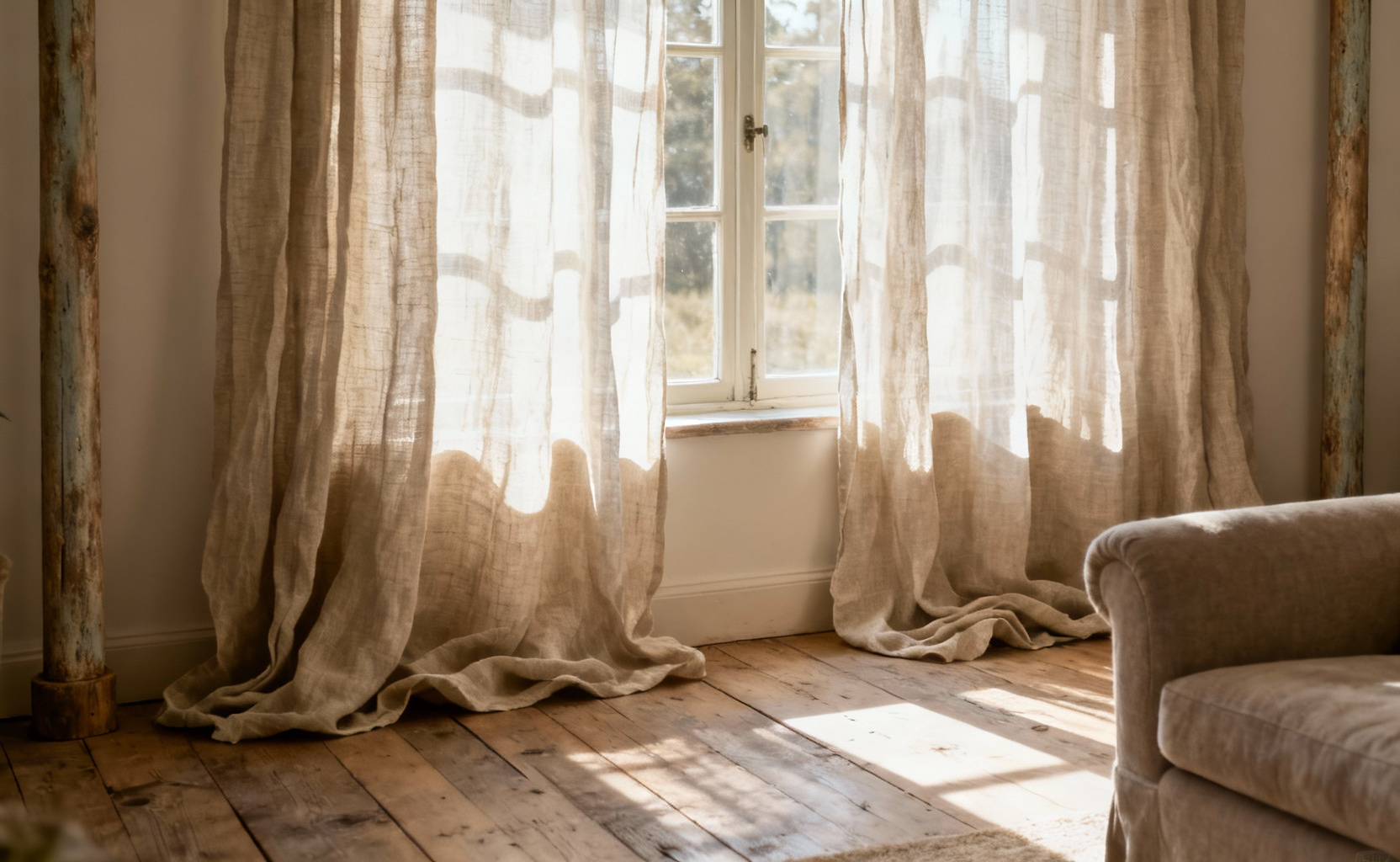
The soul of a country living room is its light. Forget heavy, formal draperies that block the view and stifle the air. Your first move should be to frame your windows with simple, unlined linen panels. Think of them not as curtains, but as filters that soften the sunshine into a warm, hazy glow, connecting your indoor sanctuary with the world just outside.
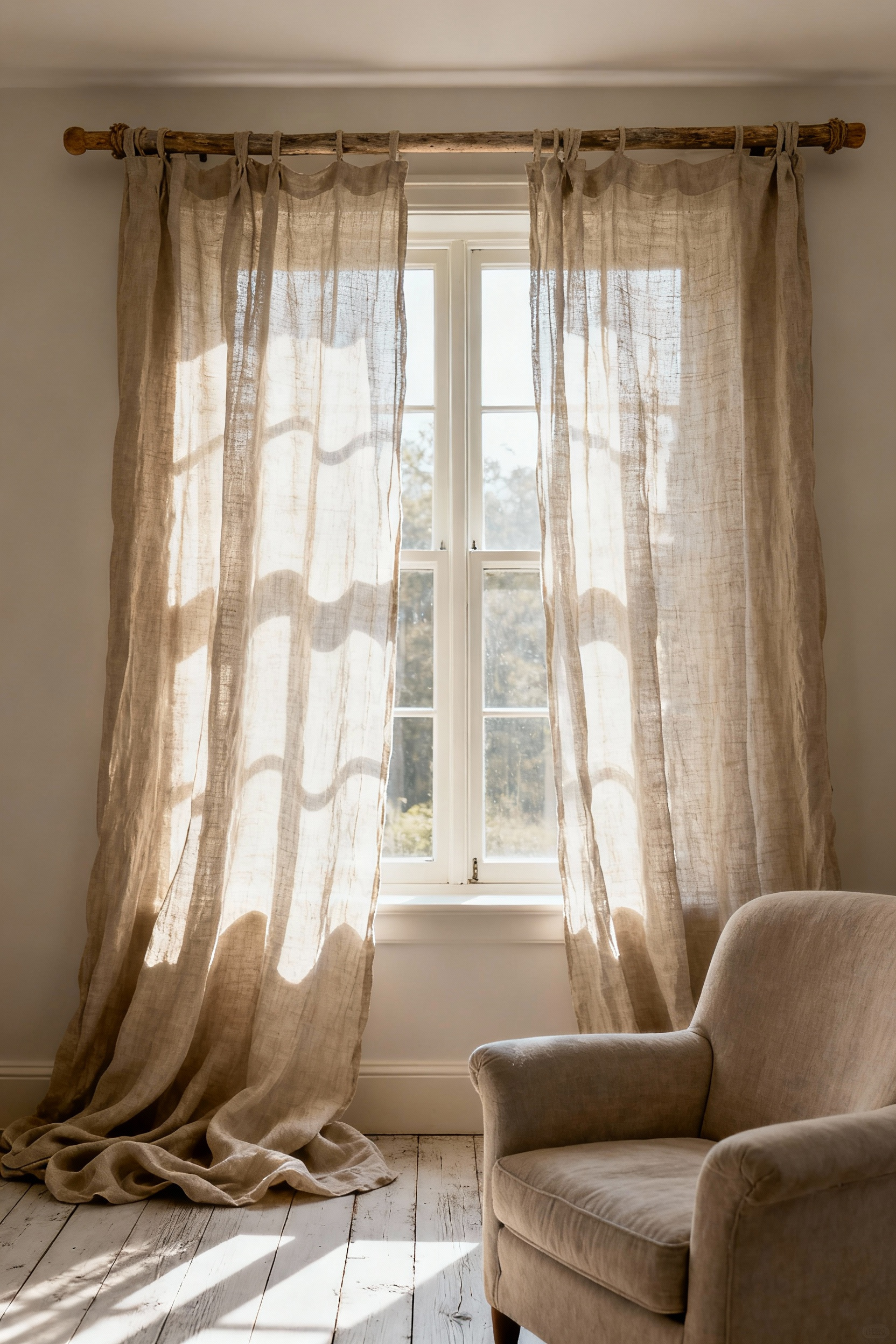
This simple act immediately establishes a feeling of relaxed elegance. But to take it further, think about the linen itself. I’ve learned from my work with vintage textiles that the weave tells its own story. A gauzy, open-weave linen feels ethereal and maximizes light, while a heavier, slubby linen adds a comforting, tactile weight to the room. Let the panels just “kiss” the floor—or for a touch of romanticism, let them pool an inch or two. It’s an understated luxury that feels both timeless and deeply inviting.
2. Anchor the Room with a Weathered Wood Coffee Table
Every living room needs a heart, a central point where people gather. In a country living room, that heart should be a weathered wood coffee table. I’m not talking about a perfect, factory-finished piece, but something with history etched into its grain—knots, dings, and the soft patina that only comes from years of use. It immediately grounds the space with a sense of permanence and story.
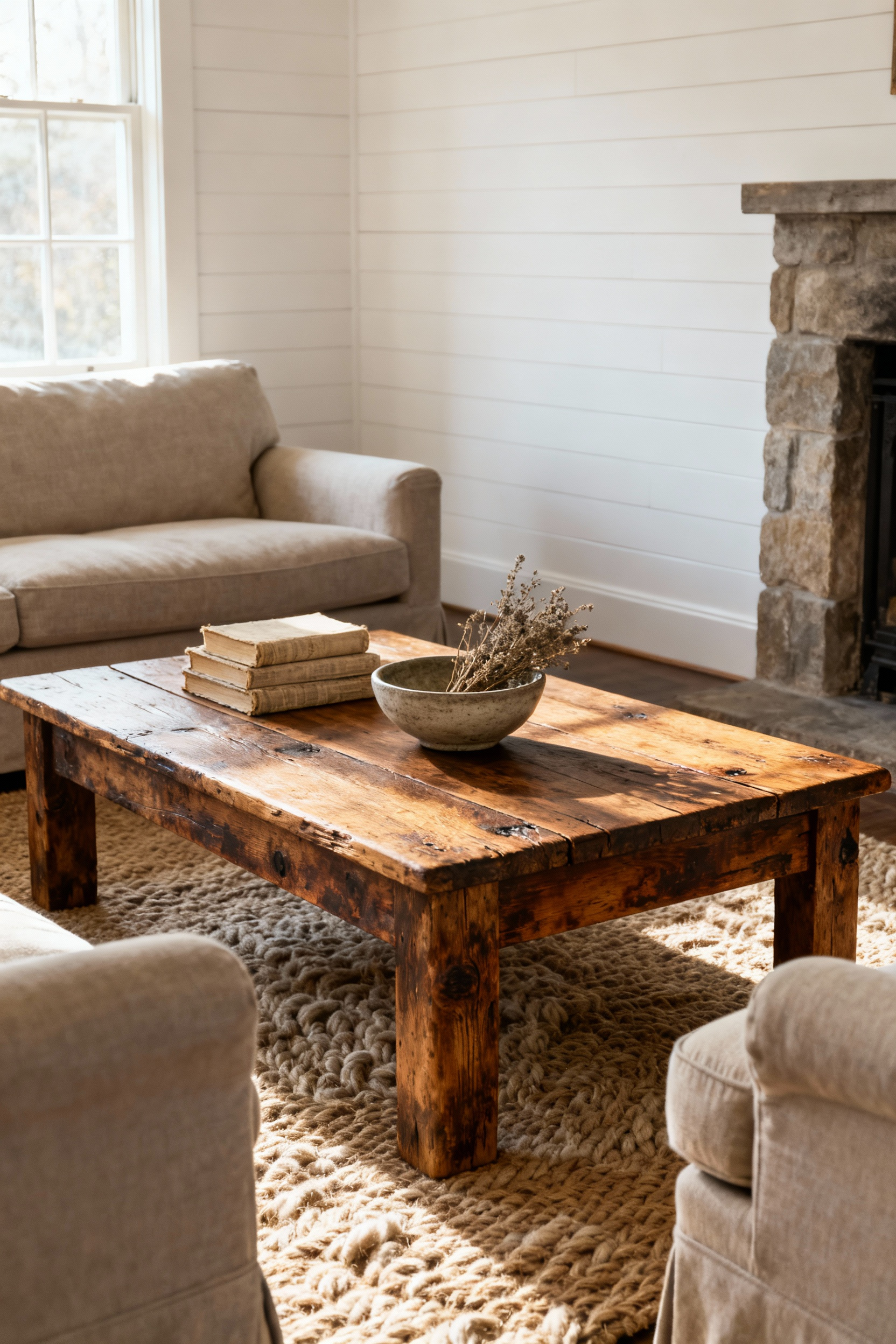
The hunt for the right piece is half the fun. Look for an old pine farm table cut down, a reclaimed factory cart on cast iron wheels, or even a sturdy antique trunk that offers hidden storage. In my professional experience, the magic is in the imperfection. This piece serves as the perfect foil for softer upholstery and more delicate decor. It’s the rugged, honest anchor that allows everything else around it to feel just a little more special.
3. Layer Comfort with Heirloom-Inspired Textiles
Now that you have your light and your anchor, it’s time to weave in softness. This is where you create that irresistible urge to curl up and stay awhile. Begin with a chunky knit throw draped over the arm of a sofa and a few mismatched cushions in natural fabrics like wool or a heavy cotton weave.
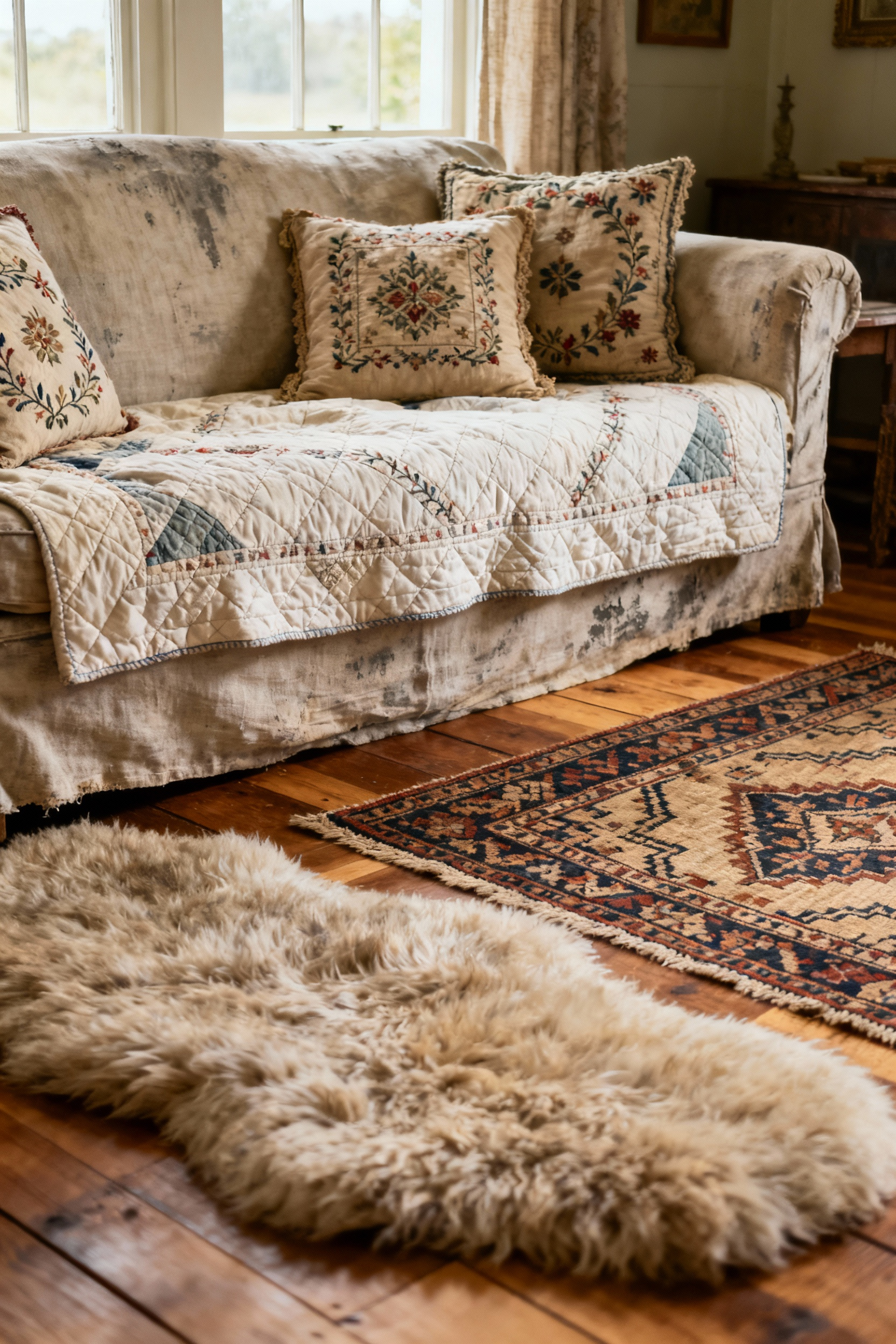
But don’t stop at just “cozy.” Curate your textiles like you’re collecting stories. Seek out a hand-stitched quilt from an artisan market or a vintage wool blanket with a classic check pattern. What really gets me is the beautiful tension created by mixing textures—the slight scratch of wool against smooth linen, or the worn softness of a vintage floral print next to a simple ticking stripe. It’s this thoughtful layering that makes a room feel like it has evolved organically over a lifetime.
4. Paint with a Palette of Earthy, Whispering Hues
The perfect country color palette isn’t about bold statements; it’s about listening to the quiet hues of nature. Start with a backdrop of warm, chalky whites, soft greiges, or the color of unbleached flax. These tones create a serene canvas that beautifully reflects natural light and lets your textured pieces do the talking.
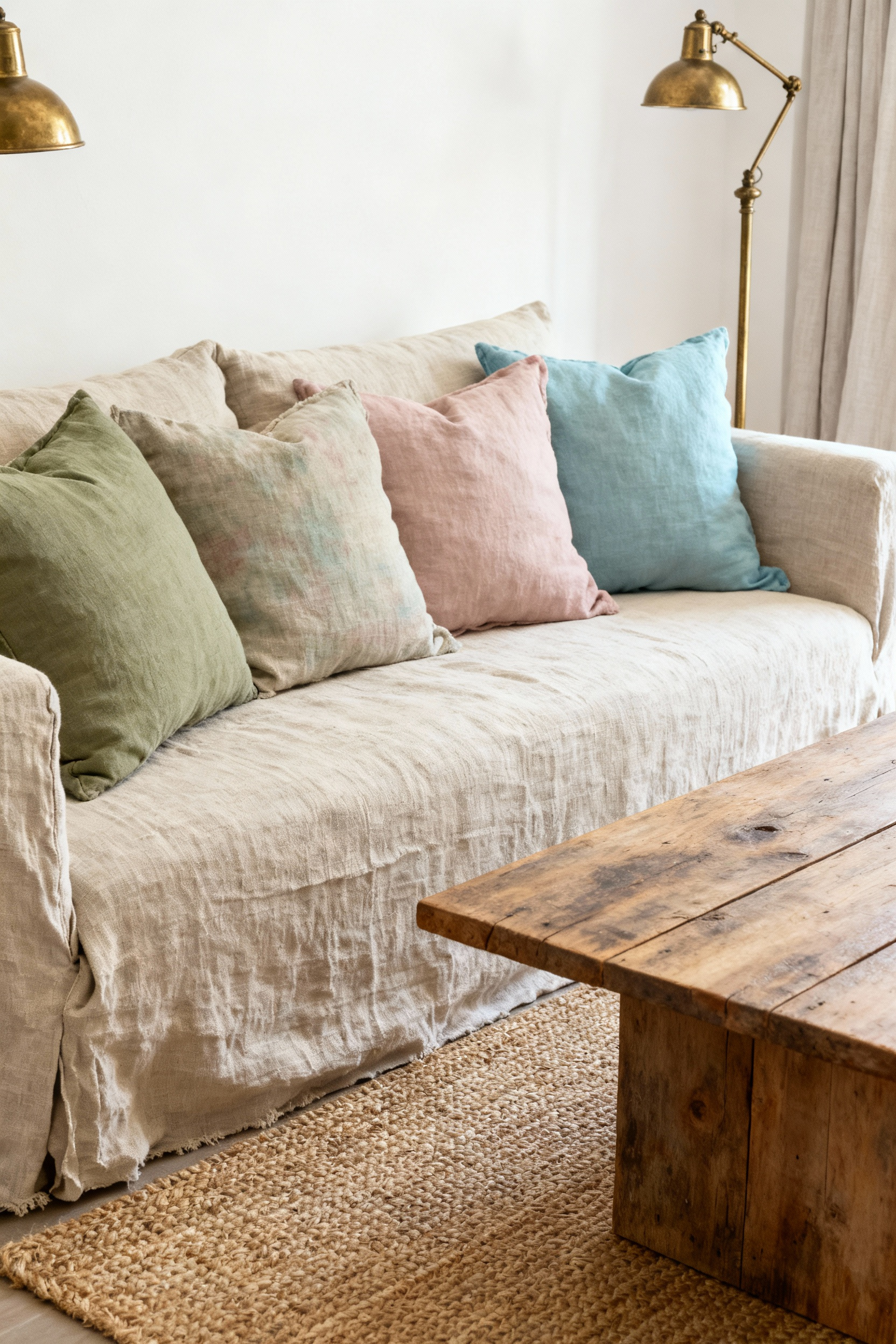
Once your foundation is set, introduce what I call “whispering hues.” These are muted, gentle colors pulled directly from the landscape: the dusty green of sage, the faded blue of a twilight sky, or the warm blush of worn terra-cotta. Use them sparingly—on an accent wall, a piece of painted furniture, or in your textiles. This approach ensures your room feels calm and cohesive, a gentle echo of the fields and skies outside.
Weaving in Soul and Substance (Part 2)
With your foundational canvas complete, it’s time for the real magic: infusing the room with pieces that tell a story—your story. This is about curating, not just decorating.
5. Find One Signature Vintage Piece
I’ve seen this play out time and time again: a single, incredible vintage find can define an entire room. Forget furnishing your space all at once. Instead, make it your mission to find one piece that makes your heart sing. It could be a towering pine armoire, a perfectly worn leather club chair, or an ornate, gilt-framed mirror with foxed glass.
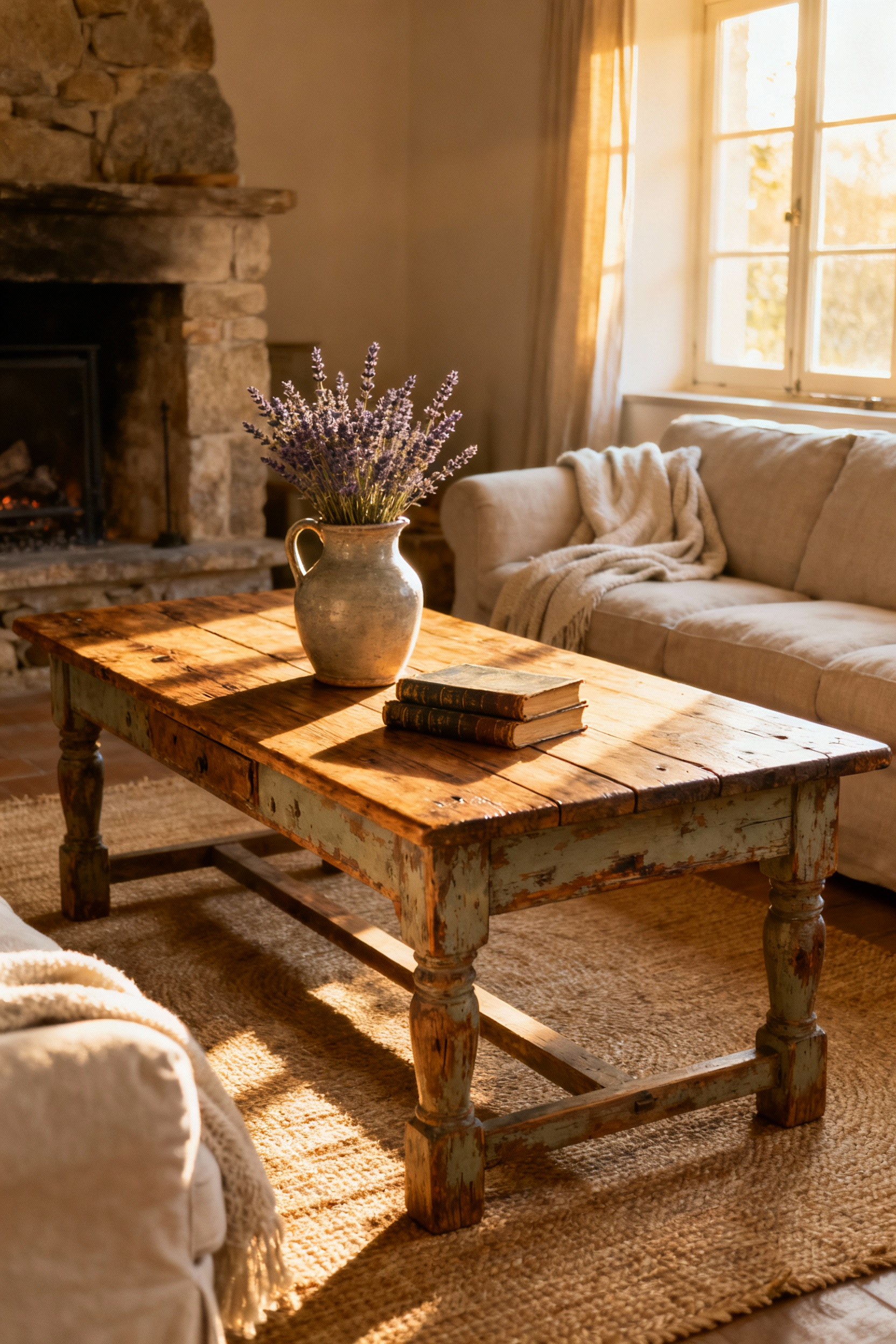
This one piece becomes your North Star. It sets the tone, provides instant character, and gives you a story to tell. It’s also a fundamentally sustainable act, giving a beautifully crafted item a second, third, or even fourth life. In my vintage modern revival specialist practice, I always tell clients to lead with the piece that has the most soul. The rest of the room will follow.
6. Create Cozy Nooks with Plump, Slipcovered Seating
Nothing says “country comfort” quite like generous, overstuffed seating dressed in relaxed slipcovers. They signal a casual, come-as-you-are elegance that is both practical and beautiful. Choose natural, washable fabrics like a heavyweight linen or a soft cotton canvas in those calm, earthy tones we talked about. The slight wrinkles and forgiving nature of a slipcover feel lived-in from day one.
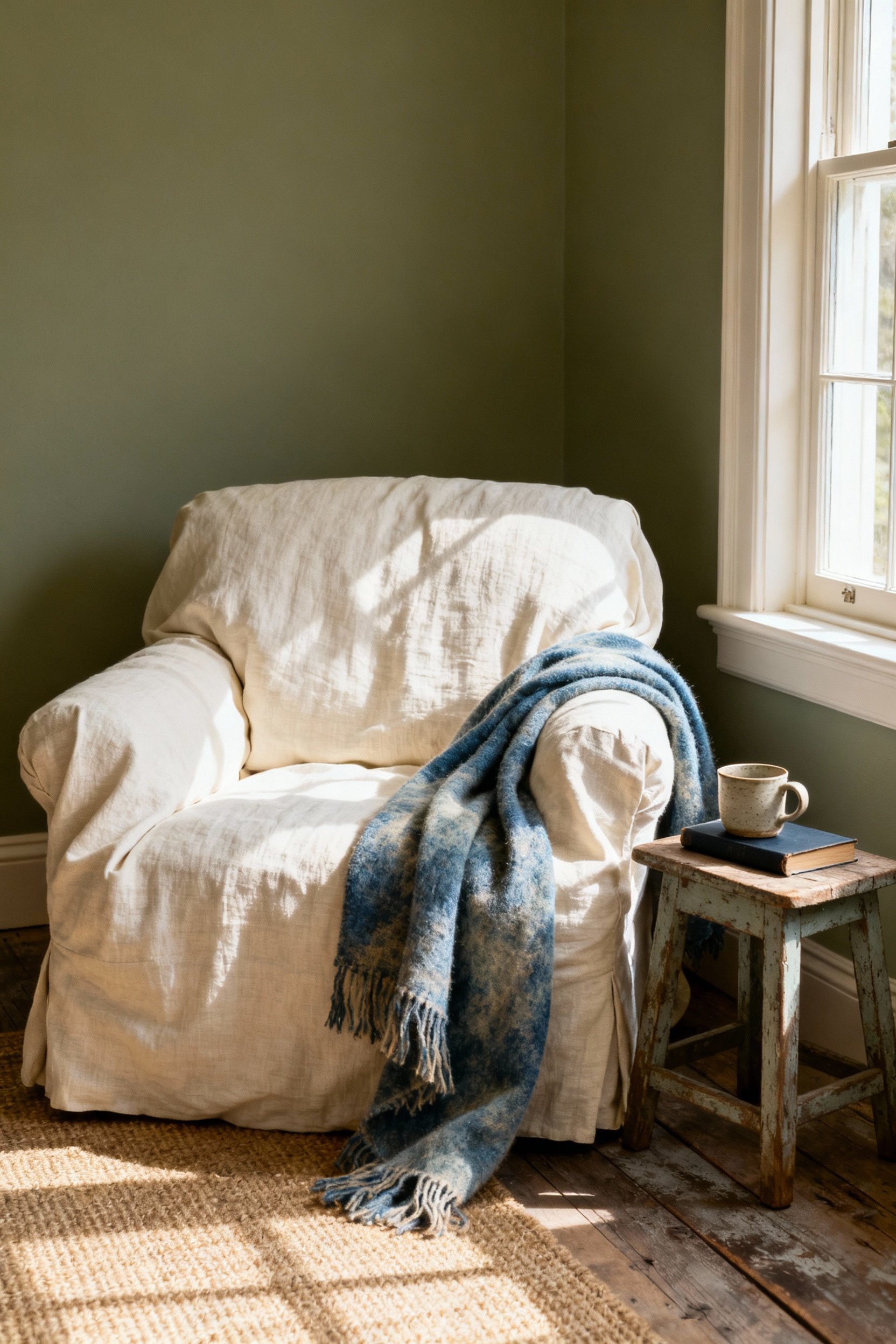
Beyond just a sofa, think about creating deliberate “nooks.” Tuck a single slipcovered armchair into a sunlit corner with a small table and a lamp—an instant reading retreat. Or, face two small loveseats toward each other over a soft ottoman to encourage conversation. This is about designing for real life, creating smaller, more intimate zones within the larger room for quiet moments and heartfelt connection.
7. Bring the Outdoors In with Foraged Botanicals
Forget formal, store-bought bouquets. The most authentic way to bring life into your country living room is to look in your own backyard or on your next walk. A few dramatic branches from a flowering dogwood in spring, a clutch of dried Queen Anne’s lace in late summer, or even bare, sculptural twigs in winter can feel more like art than a simple arrangement.
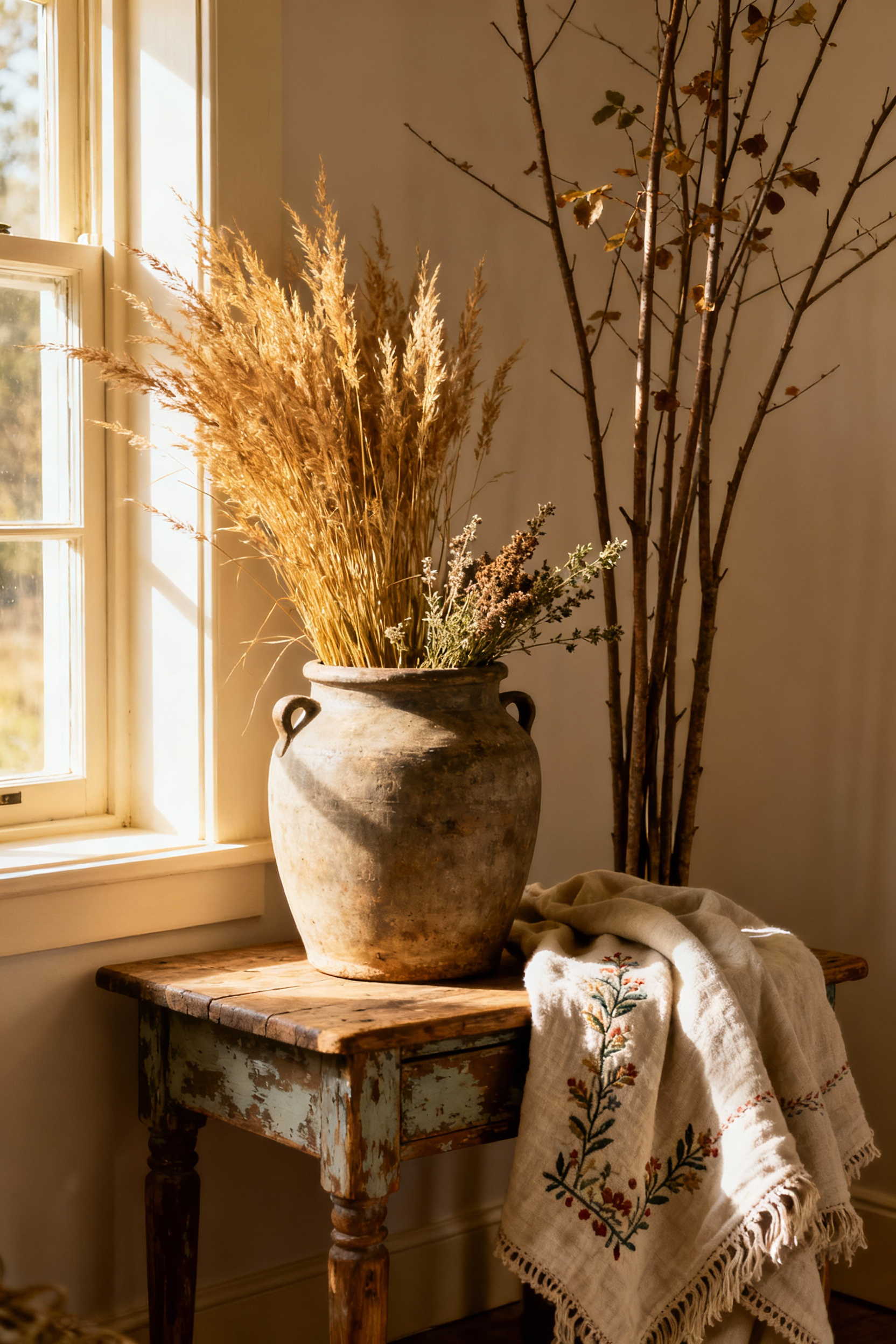
The vessels are just as important as the botanicals. Group your finds in humble, honest containers—a vintage stoneware crock, a collection of mismatched glass bottles, or a simple ceramic pitcher. This practice not only connects your home to the rhythm of the seasons but also adds a layer of effortless, natural beauty that is both free and profoundly soulful.
Elevating the Aesthetic (Part 3)
Now we layer in the artistry. This stage is about the thoughtful details that create visual harmony, narrative depth, and a sense of curated elegance.
8. Tell Your Story with a Curated Gallery Wall
A gallery wall should be more than a collection of pretty pictures; it should be a visual memoir. Start with what you love—a flea market oil painting of a landscape, a faded family photograph, a pressed botanical specimen. Don’t worry about making it perfect right away. Think of it as a living collection that grows with you.
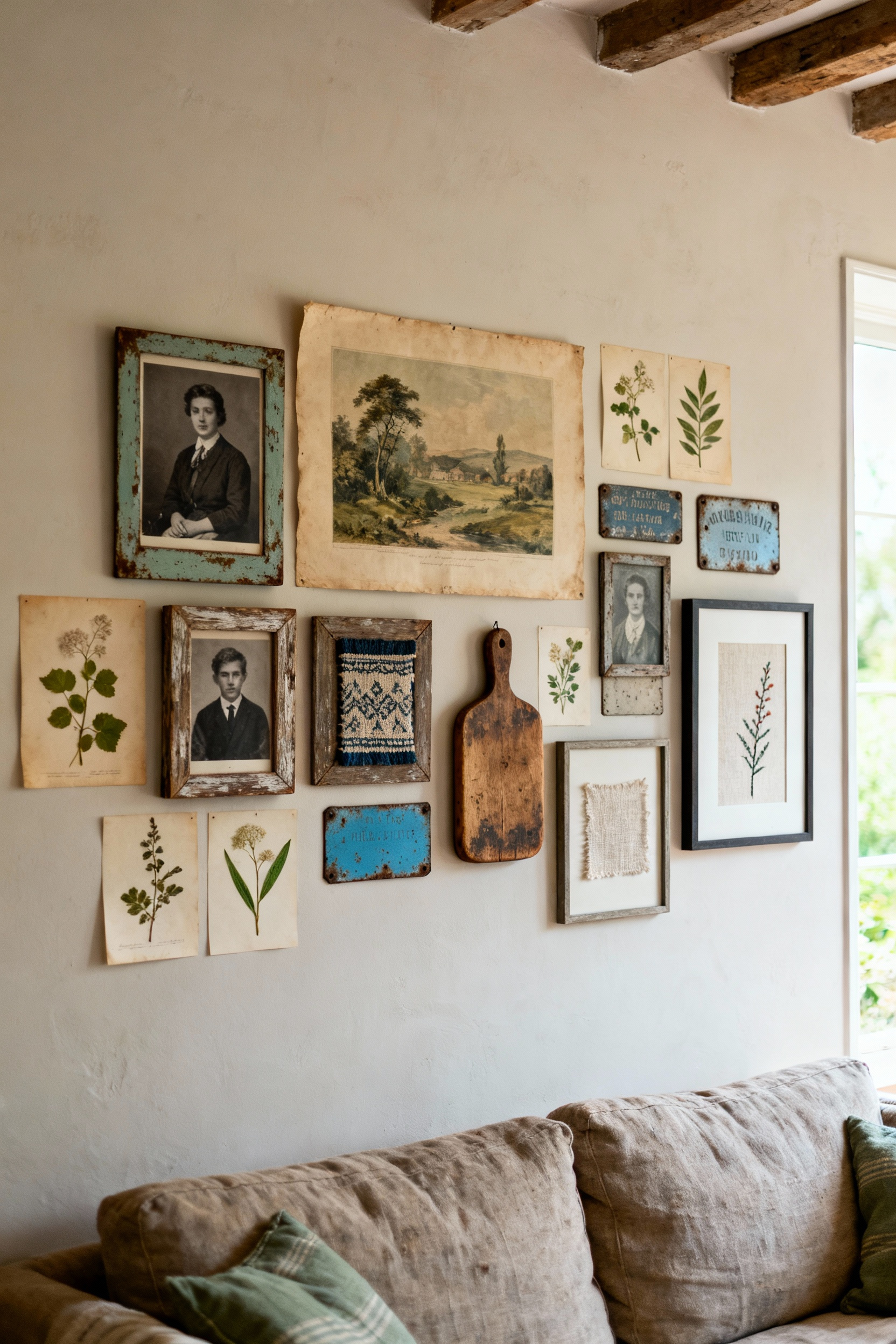
For a cohesive look, unite the pieces with a common thread. You might use frames made of similar weathered wood, or stick to a palette of sepia and black-and-white images. Here’s a tip from my restoration work: mixing a few unique shapes, like a small oval frame or a narrow rectangular one, among standard sizes adds instant character and keeps the arrangement from feeling too rigid.
9. Layer Surfaces with Found Objects and Old Books
Coffee tables, mantels, and sideboards are stages for tiny, captivating stories. Instead of styled, impersonal decor, layer these surfaces with objects that hold meaning. A stack of antiquarian books with beautifully worn covers, a smooth stone from a favorite beach, a small ceramic bowl made by a local potter—these are the details that give a room its soul.
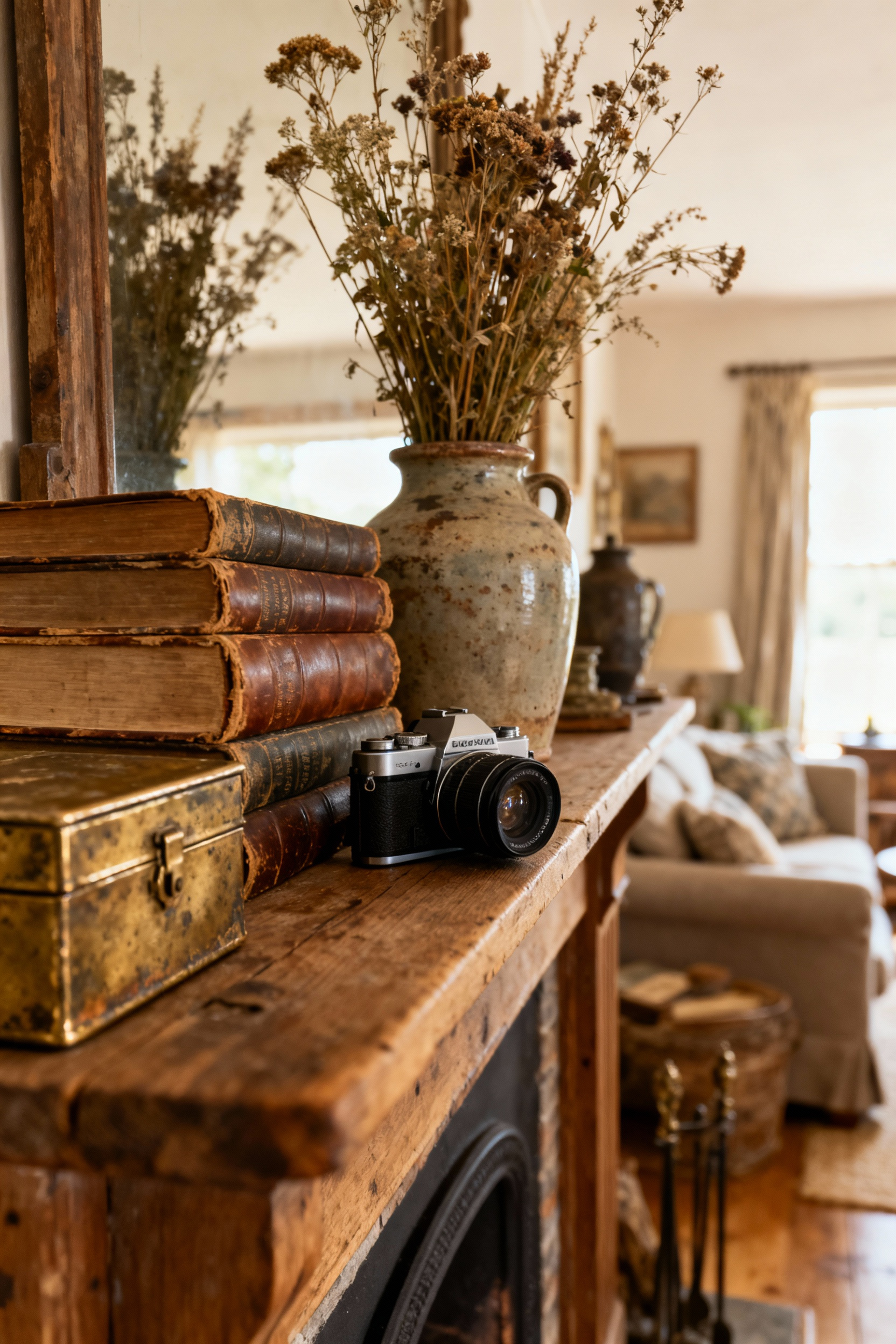
The key is to create small vignettes. Group items of varying heights and textures together, allowing them to play off one another. A horizontal stack of books can create a pedestal for a smaller, more delicate object. This isn’t about creating clutter; it’s about mindful placement that invites closer inspection and sparks curiosity.
10. Arrange Furniture for Connection, Not Just for Show
Too often, furniture is pushed up against the walls, creating a stiff, formal feeling. To create a truly inviting country living room, pull your seating into purposeful groupings that encourage conversation. A sofa and two armchairs should form a loose “U” or “H” shape, close enough that people can talk without raising their voices.
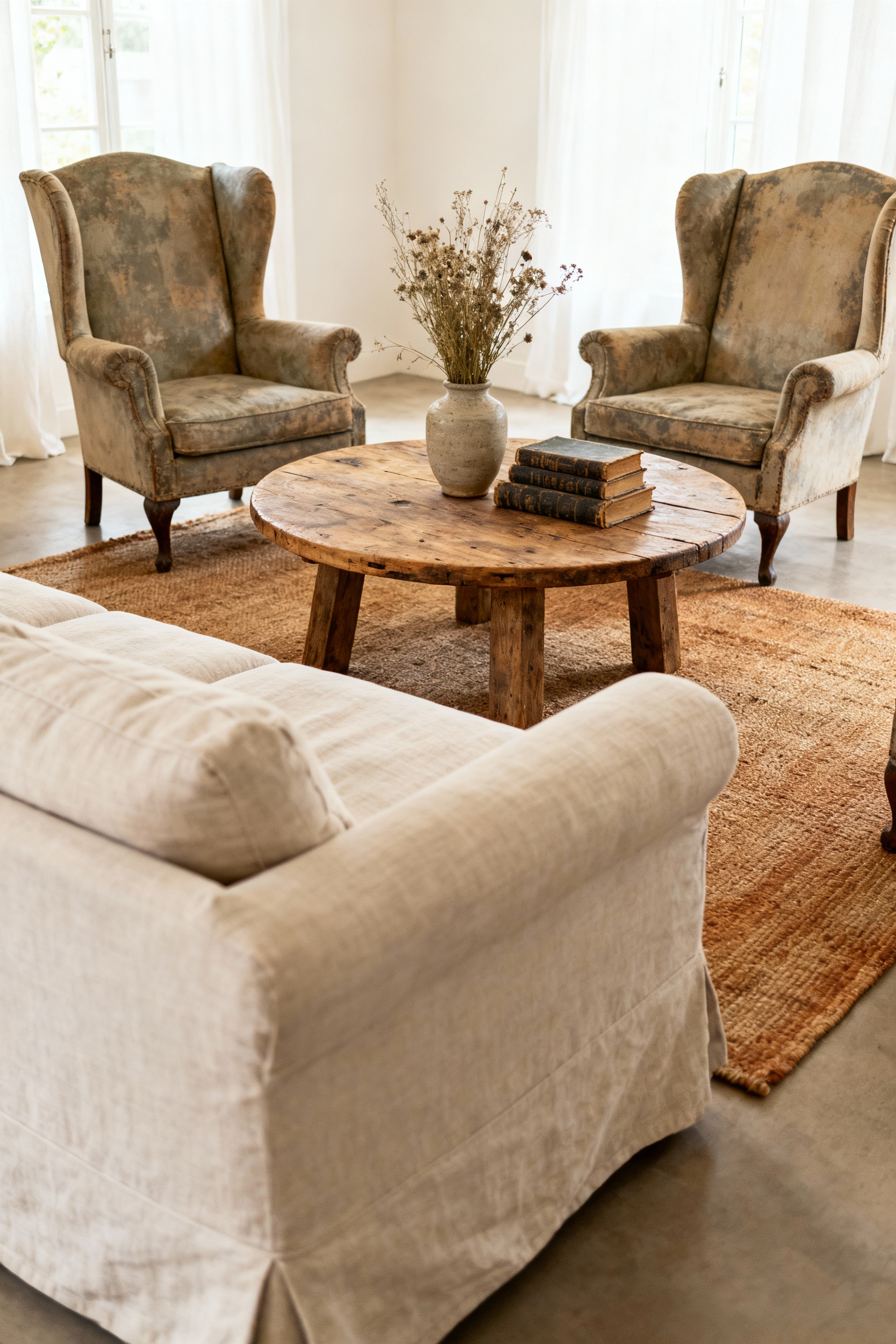
Anchor this main conversational zone with a large area rug—it should be big enough that at least the front legs of all the seating pieces are on it. This simple act creates a visual “island” that feels cozy and defined. Every seat should have a place to set down a drink, and every path through the room should feel natural and easy. It’s a subtle shift that makes a world of difference in how a room feels and functions.
11. Choose Rugs with Timeless Character
A rug is the foundation of your room’s comfort. In a country living room, opt for natural fibers that feel good underfoot and age with grace—wool, jute, or even a soft cotton flatweave. Look for pieces that suggest a history, like a gently faded Persian-style rug or a simple, hand-braided wool design.
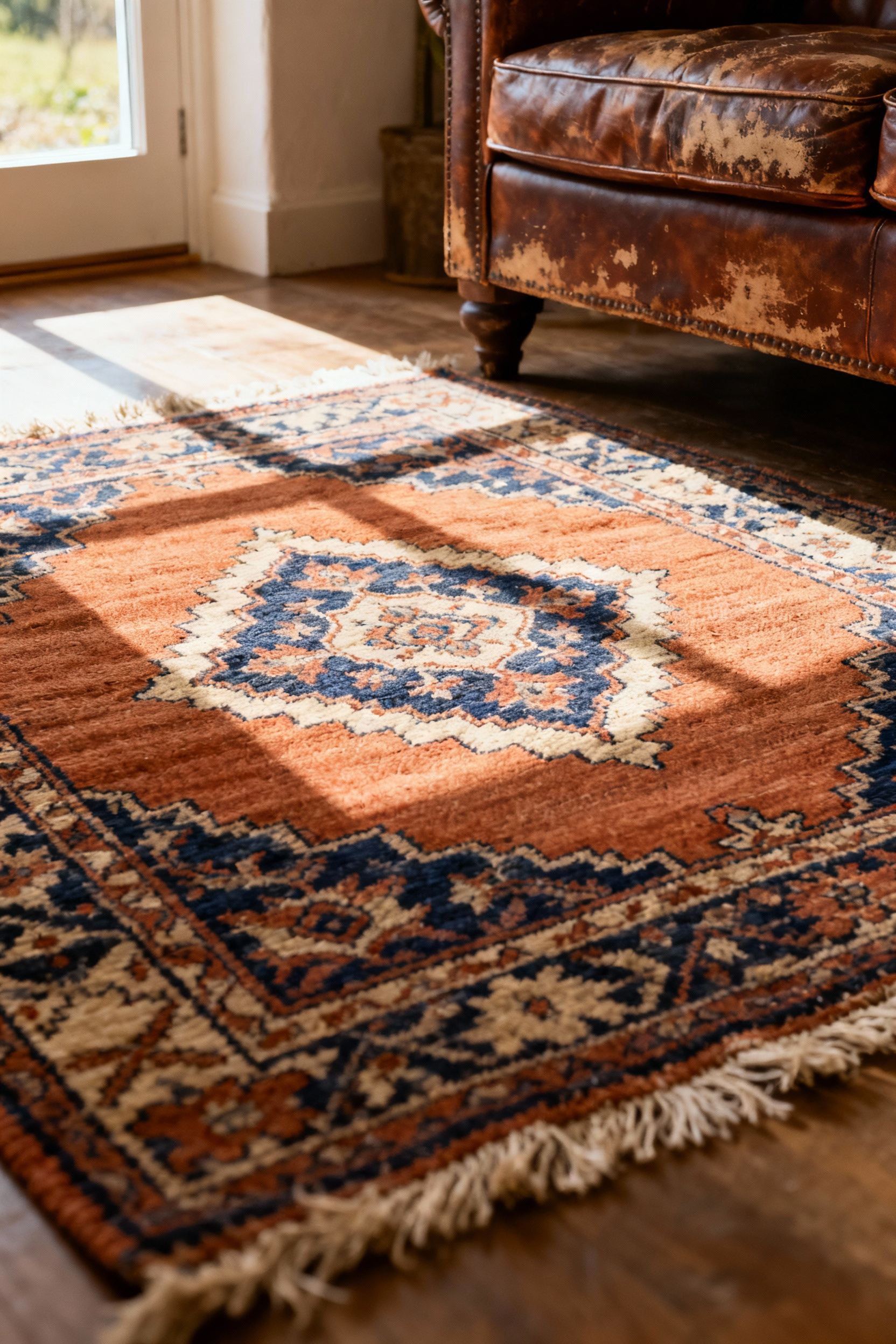
For a more advanced, collected look, don’t be afraid to layer. Placing a smaller, more decorative rug (like a vintage Kilim) at an angle over a larger, neutral sisal or jute rug adds incredible depth and personality. It’s a trick that makes a room feel instantly more curated and breaks up a large expanse of floor with pattern and texture.
12. Integrate Discreet, Rustic Storage
A serene room is a tidy room, but storage doesn’t have to be boring. Weave your storage solutions into the decor itself. Woven baskets tucked under a console table can hold blankets or magazines, while a vintage wooden crate can stylishly hide children’s toys. The goal is for your storage to add to the aesthetic, not detract from it.
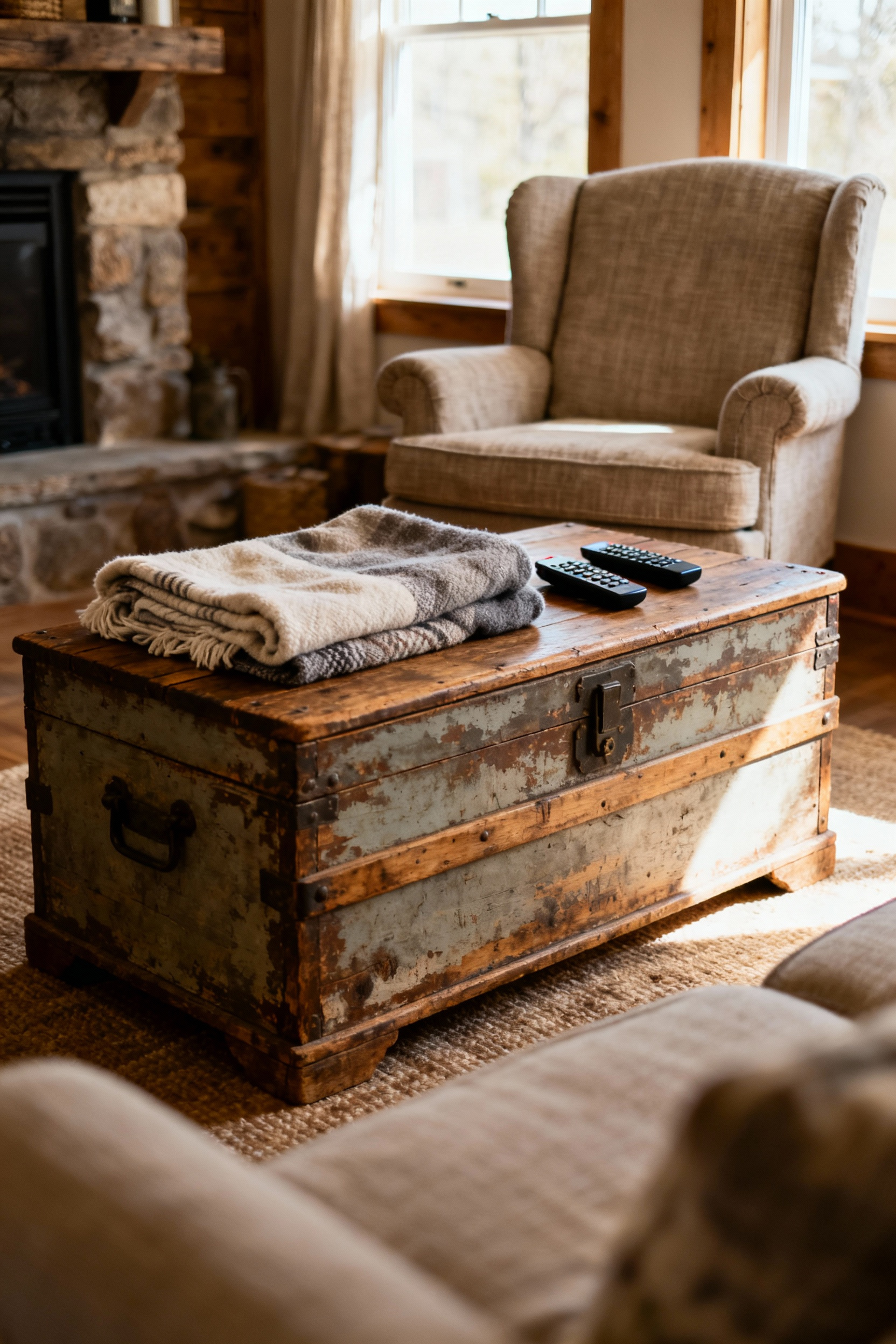
I learned this when working on tight spaces: multi-functional pieces are your best friends. A beautiful antique blanket chest can double as a coffee table. A tall, rustic armoire can conceal a television and its messy tangle of wires. These solutions are not only practical but also add another layer of vintage charm to your sanctuary.
Mastering the Art of Atmosphere (Part 4)
These final strategies are about fine-tuning the sensory experience of the room—the light, the flow, and the subtle details that transform a well-designed space into a true sanctuary.
13. Master the Glow with Warm, Layered Lighting
Nothing kills a cozy vibe faster than a single, harsh overhead light. Creating a warm atmosphere is all about layering your illumination. Start with an ambient source, like a simple wrought-iron chandelier on a dimmer switch. Then, add task lighting—a handsome floor lamp beside a reading chair, for example.
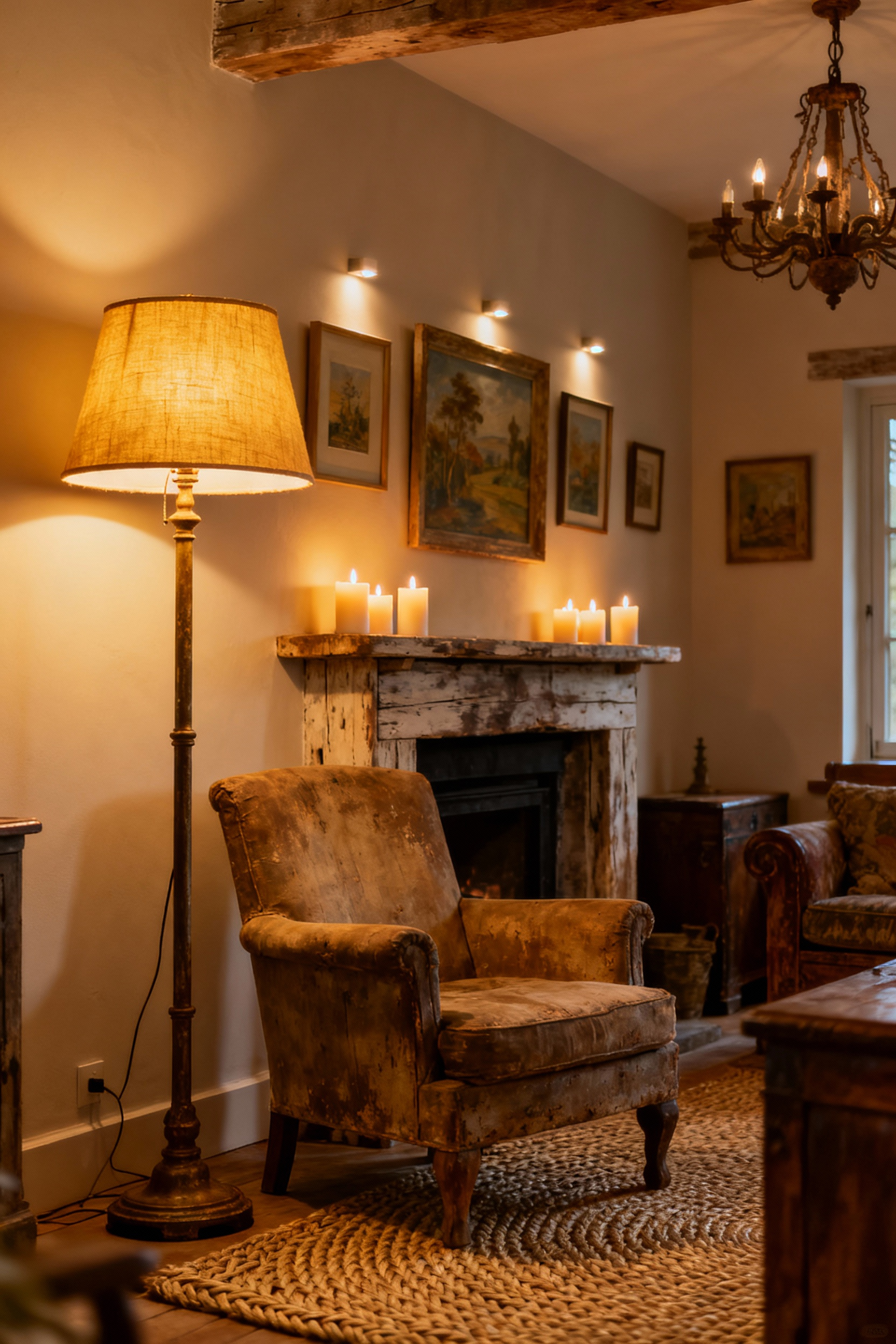
Finally, sprinkle in accent lighting: a small table lamp on a sideboard casting a soft pool of light, or a picture light highlighting a favorite piece of art. The key is to use warm-toned bulbs (around 2700K) throughout. This trio of light sources creates a dynamic, flattering glow that makes everyone—and everything—look and feel better.
14. Display Treasures on Open Shelving
Open shelving turns everyday objects into art and keeps your most-loved pieces within sight. A few floating shelves made from reclaimed wood can display a collection of ironstone pitchers, a row of vintage novels, or your favorite family photos. The trick is to avoid overcrowding. Leave a bit of “breathing room” around objects so each one can be appreciated.
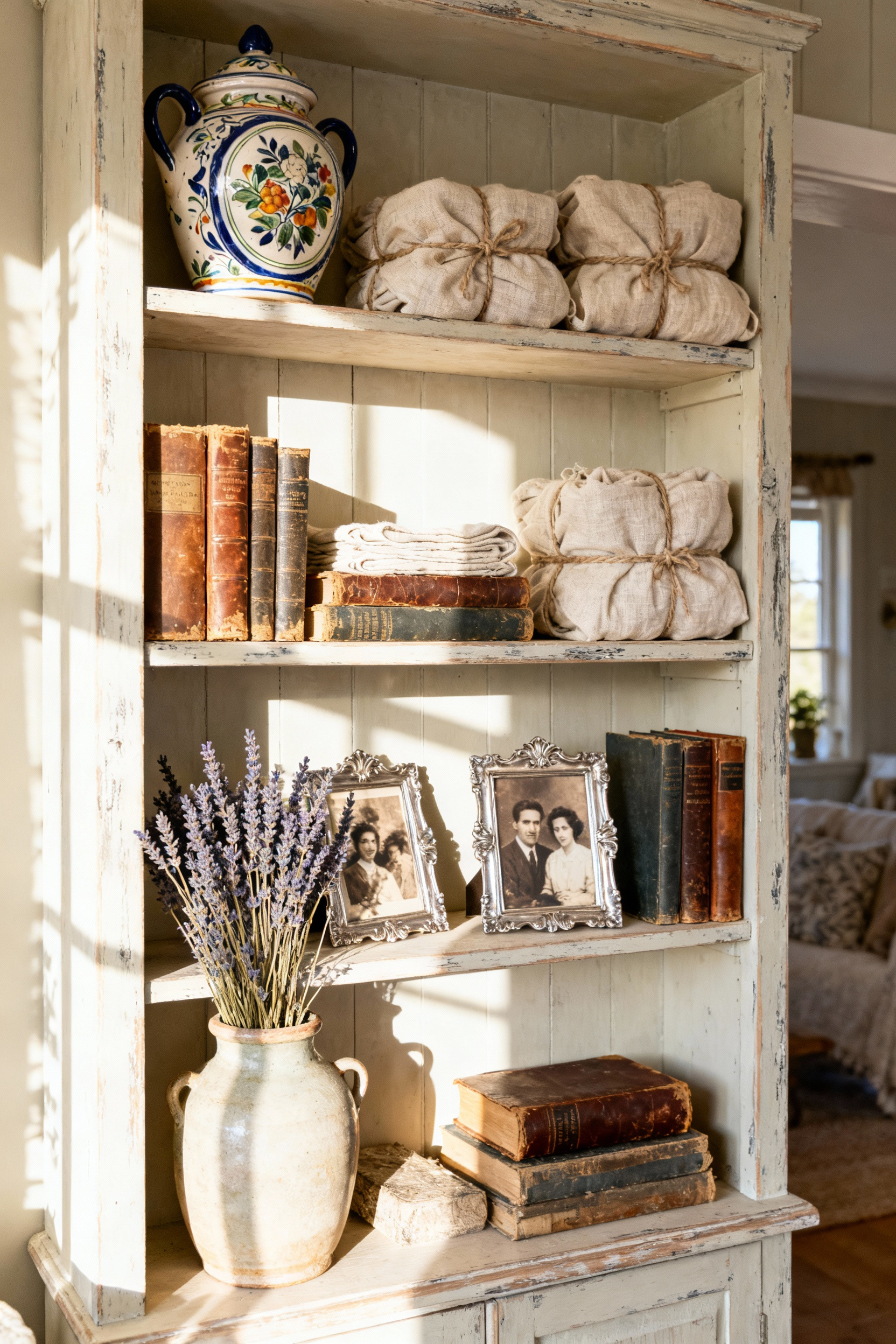
Think beyond traditional bookshelves. A rustic plate rack can display cherished platters or even framed prints. This is your space to curate and rotate displays with the seasons. Open shelves make your room feel personal and alive, a constantly evolving reflection of your life and loves.
15. Blur the Line Between Inside and Out
A true country living room is in constant conversation with the landscape around it. The easiest way to foster this connection is by framing your views. Keep window treatments simple, as we discussed, and arrange furniture to take advantage of a beautiful sightline to the garden or a distant field.
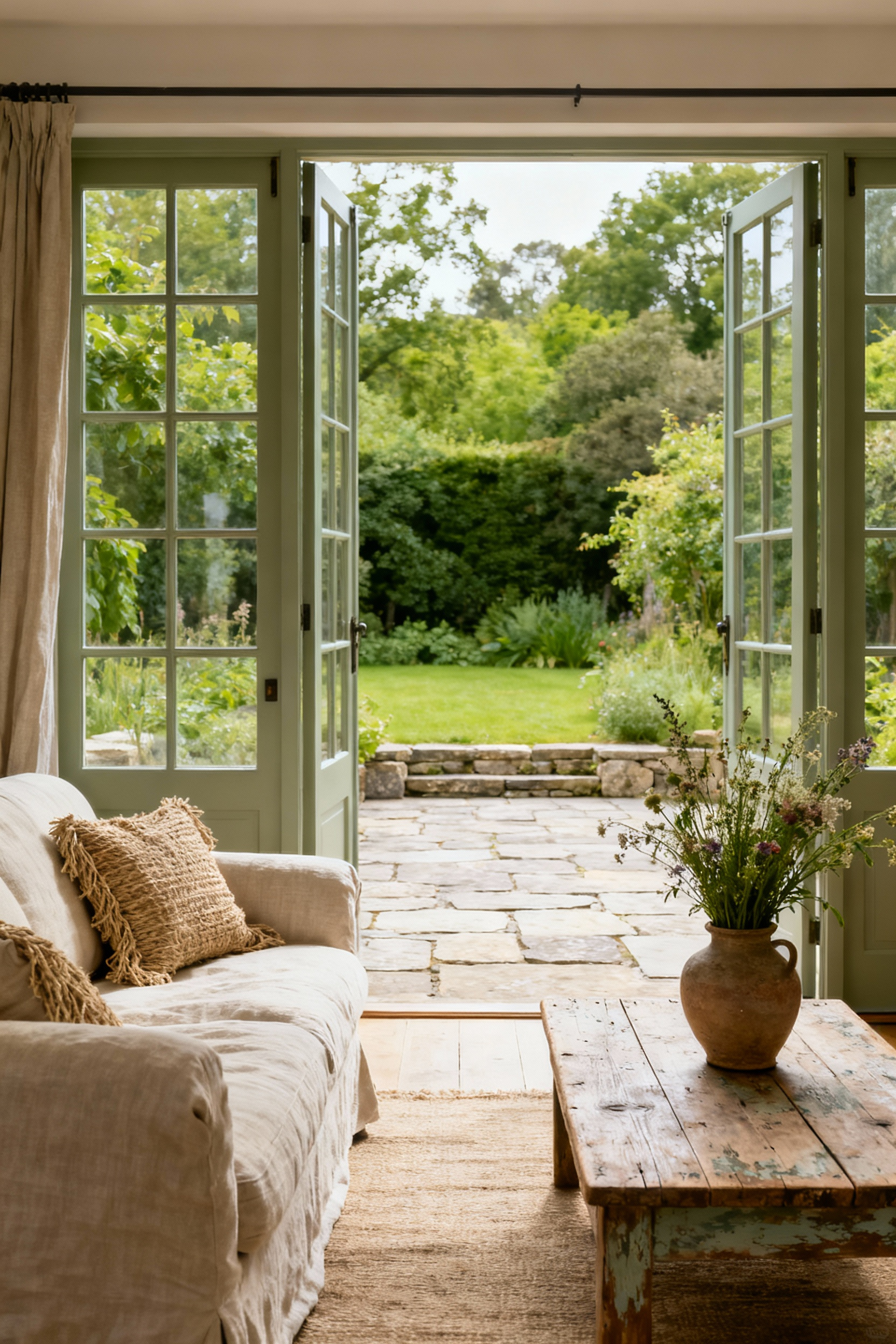
On a deeper level, use materials that echo the outdoors. A stone hearth, floors of wide-plank oak, and furniture made from natural wicker all help dissolve the boundary between your home and the natural world. On a beautiful day, throw open the doors and windows and let the fresh air and birdsong become part of your home’s ambiance.
16. Honor the Home’s Architectural Bones
The most authentic spaces are those that respect their own history. If your home has unique architectural features—exposed ceiling beams, original wood floors, a brick fireplace—celebrate them! Don’t cover them up. Clean them, restore them, and make them the star of the show.
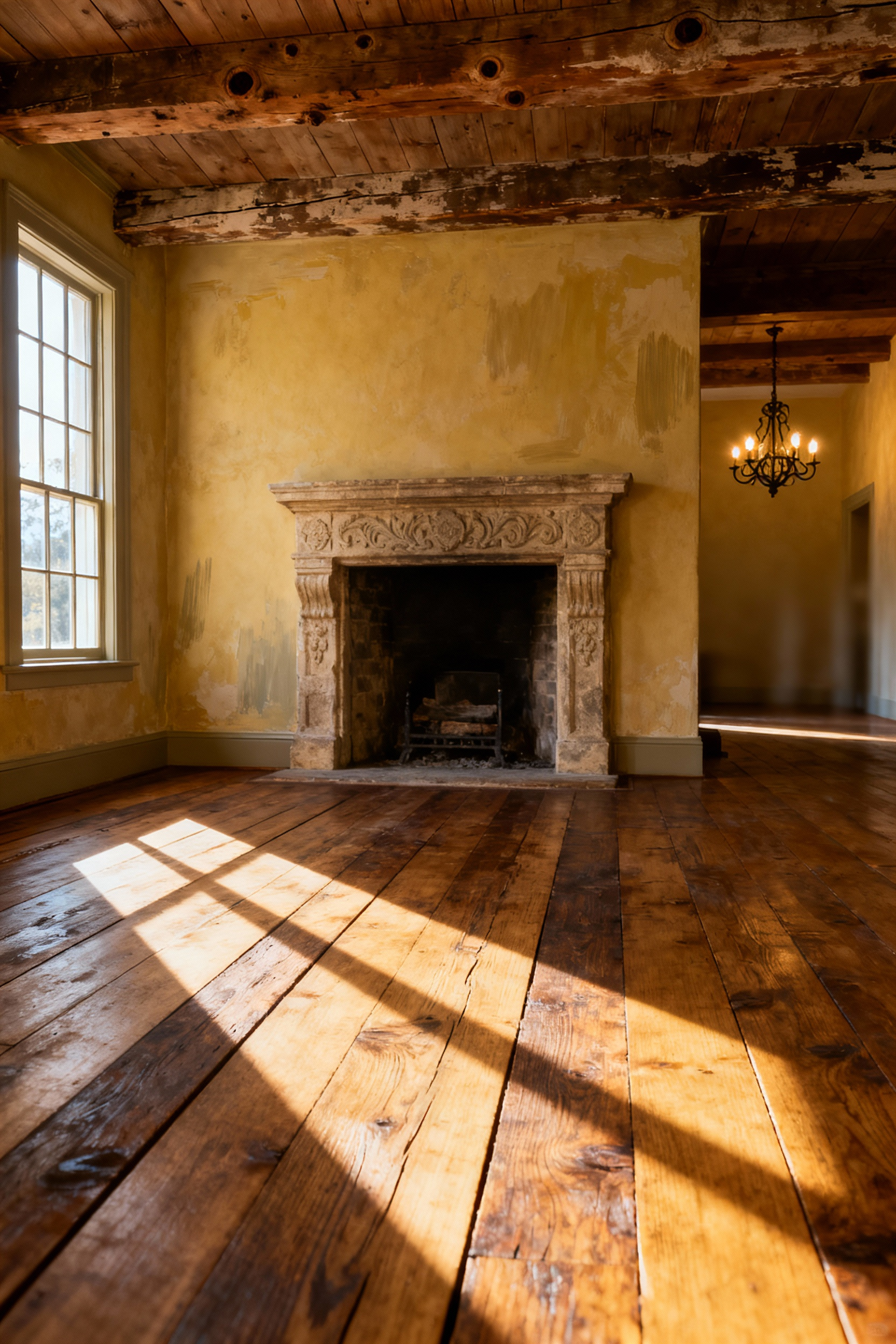
If you’re adding new elements, choose finishes that feel historically appropriate. Beadboard paneling, simple trim work, and solid wood doors can all add character that feels earned, not manufactured. In my restoration work, I’ve found that honoring a home’s original integrity is the surest path to creating a space with enduring soul.
17. Champion Upcycled and Locally-Made Pieces
Embracing a sustainable mindset is at the very heart of the country aesthetic. It’s about resourcefulness, quality, and community. Prioritize finding furniture at flea markets, antique shops, and estate sales. Giving a well-made piece a second life is not only environmentally responsible but also ensures your home is filled with unique items that have a story.
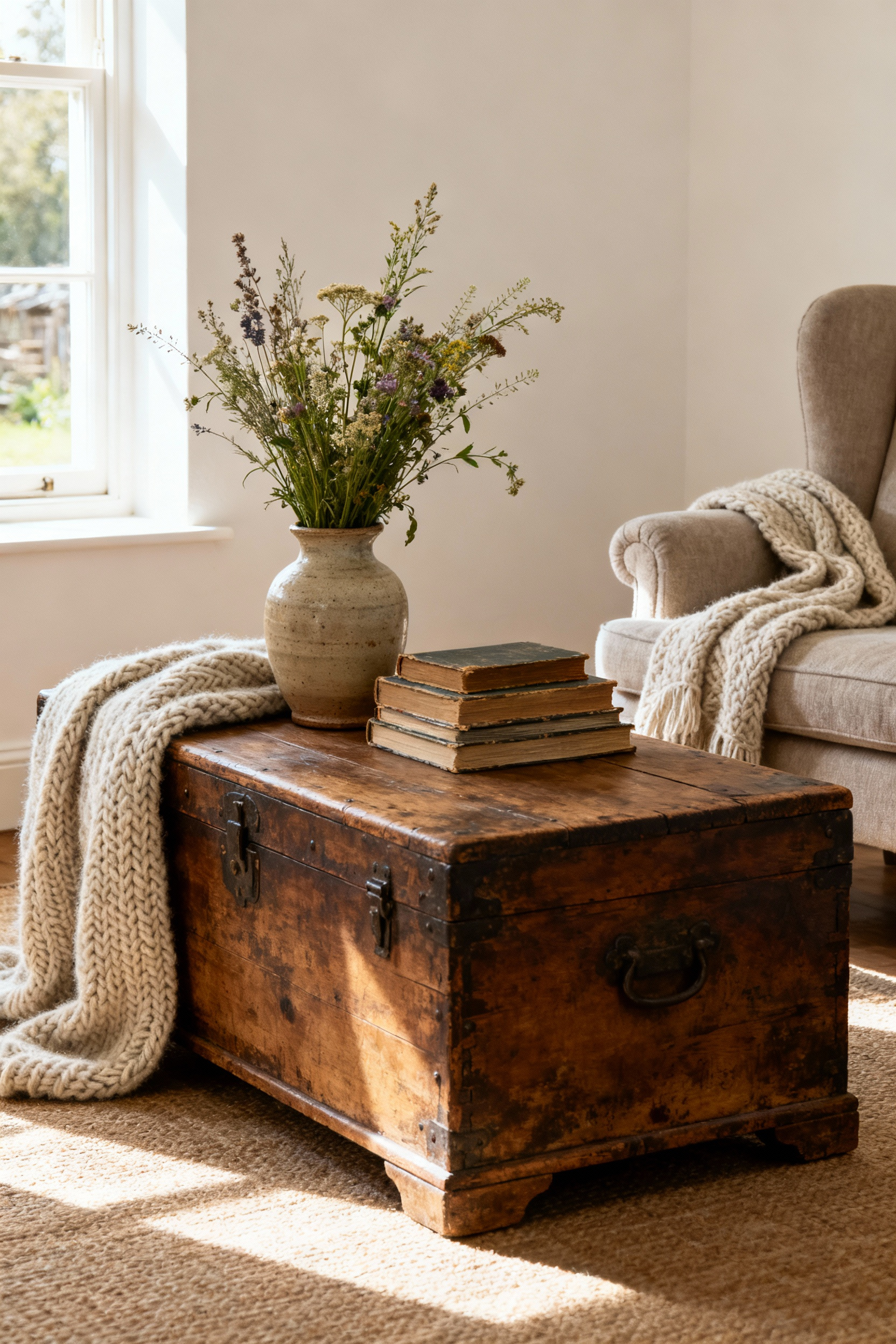
Beyond vintage finds, seek out local artisans. A hand-thrown lamp from a potter, a custom side table from a woodworker, or hand-woven pillows from a textile artist will bring a unique, soulful quality to your room that mass-produced items never can. You’re not just buying an object; you’re supporting a craft and investing in a future heirloom.
18. Design for Deep, Human Comfort
Above all, a country living room must be comfortable. This goes beyond just soft cushions. It’s about creating a layout that is fundamentally designed for living. Think about a person’s needs: Is there a place to set a drink next to every chair? Is the lighting right for reading? Is there an ottoman to put your feet up after a long day?
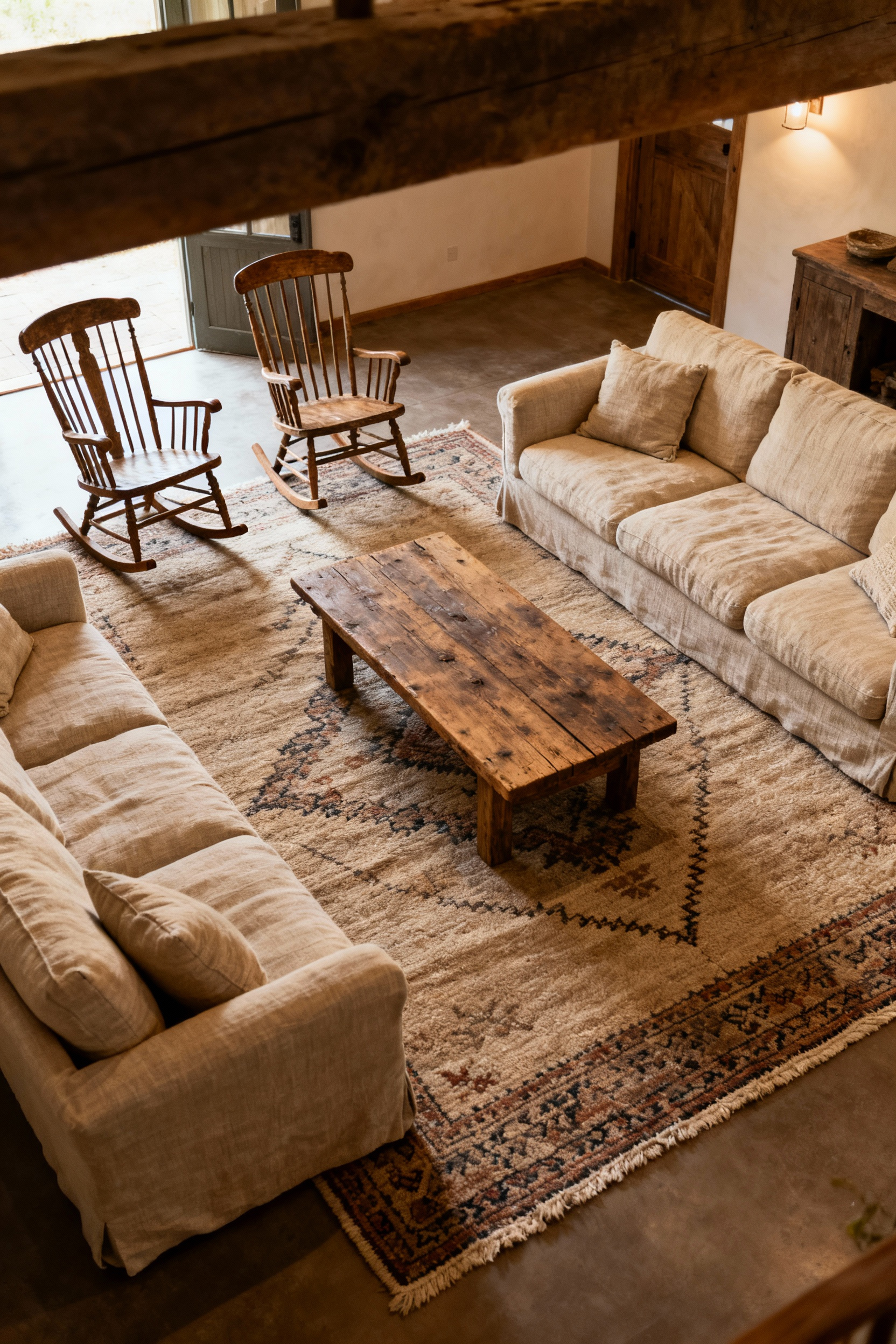
Design for conversation, for napping, for gathering. Use soft, natural, and durable fabrics that can stand up to real life. The goal is to create a space that doesn’t just look inviting but actively caters to the comfort of the people within it. That is the ultimate luxury.
19. Artfully Mix Patina, Provenance, and Polish
The most dynamic rooms are a beautiful dance between the old and the new. “Patina” is the gentle wear of time on a surface. “Provenance” is the history of an object. “Polish” is the clean, crisp feel of something new or refined. The secret is learning how to mix all three.
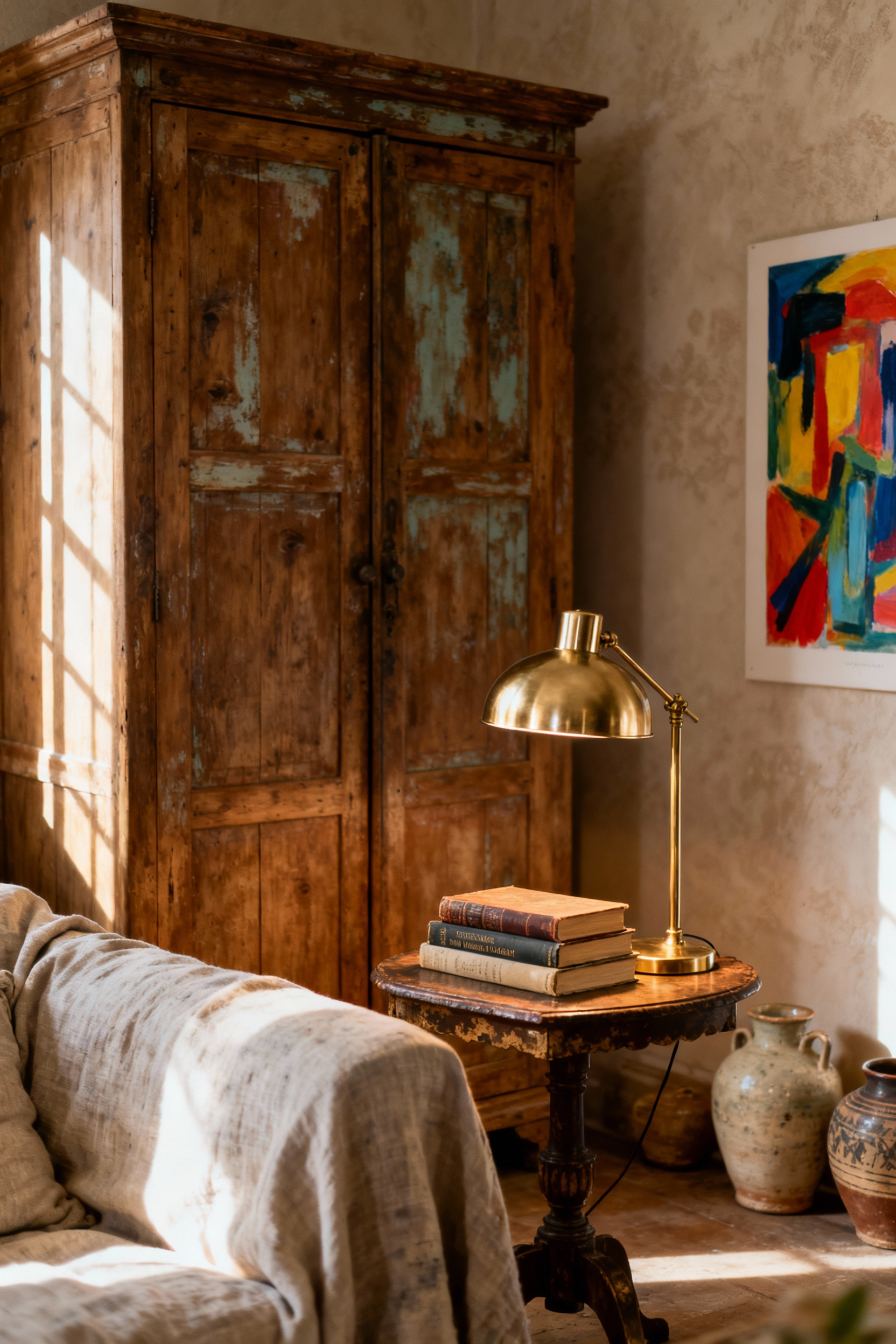
Place a sleek, modern floor lamp (polish) next to a worn, vintage leather armchair (patina and provenance). Hang a contemporary abstract painting (polish) over a rustic, antique console table (patina). These juxtapositions create a thrilling visual energy. The polished elements keep the room feeling fresh and current, while the aged pieces provide depth and soul.
20. Make Your Mark with Bespoke Details
The final, most personal layer is a bespoke touch that is uniquely yours. This could be a custom built-in bookcase that perfectly fits an awkward nook, transforming it into a library corner. It could be a hand-painted mural on a small feature wall, or even a piece of furniture you’ve lovingly restored and painted yourself.
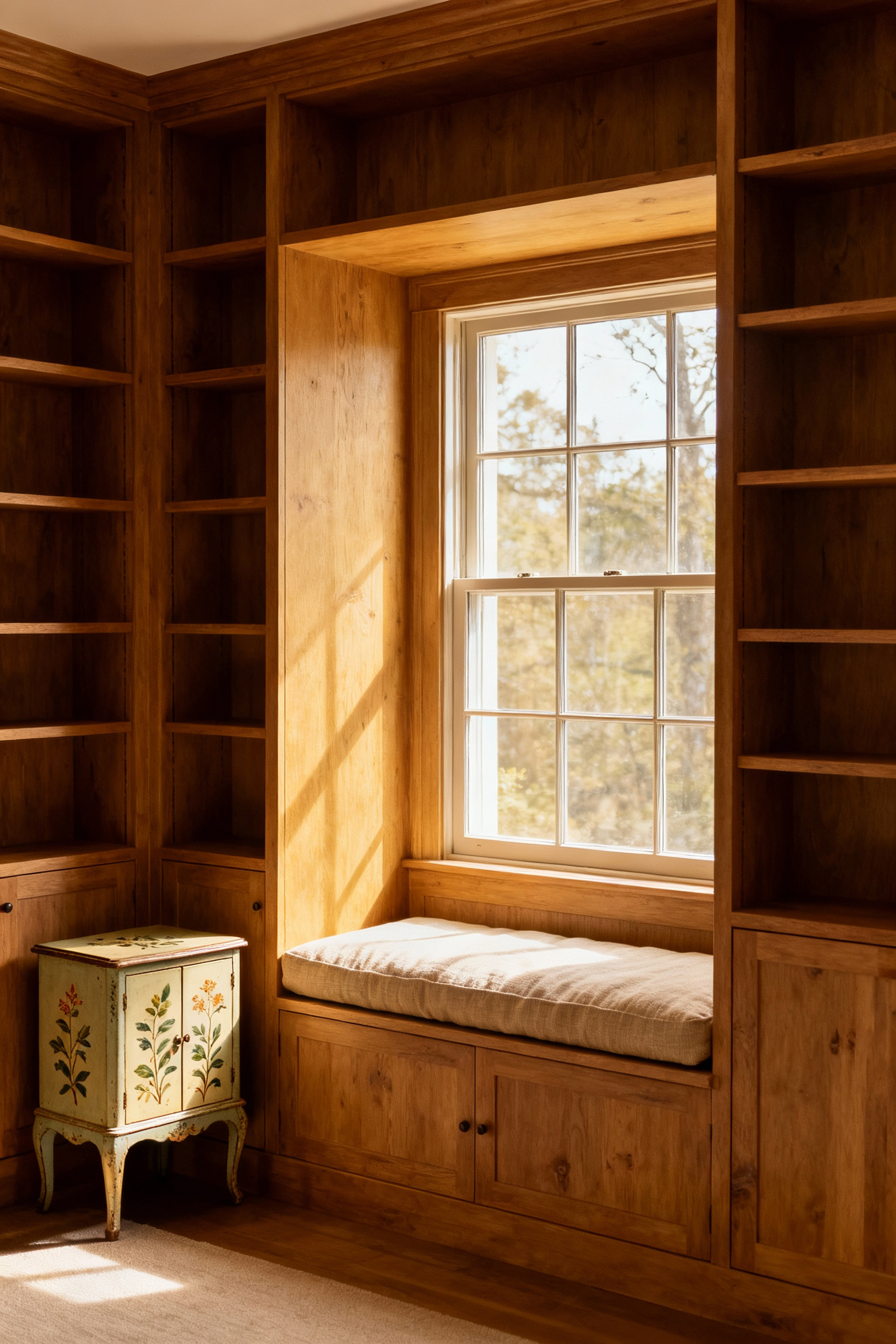
These custom details are what elevate a room from being well-decorated to being a true reflection of its owner. They are an investment of time and care that infuses the space with personality and intention. This is your signature, the final brushstroke that makes your country living room an irreplaceable sanctuary.
Conclusion
There you have it—a map to guide your hunt. As you can see, creating a country living room that feels like a true sanctuary has less to do with buying new things and more to do with seeing the world with an artist’s eye. It’s about cherishing stories, celebrating imperfection, and making conscious choices that align with a slower, more meaningful way of living. It’s about the quiet joy of finding a forgotten piece and imagining its next chapter in your home.
Don’t ever feel that this process has to be perfect or finished overnight. The most soulful rooms, like the richest lives, are layered over time. Let your home be a living diary of your adventures, your tastes, and your love for things that last. Take these secrets, trust your instincts, and enjoy the beautiful, rewarding journey of creating a space that is authentically, wonderfully yours.