

The old restorer’s hands moved with a quiet, certain grace, each pull of the needle on a tattered linen curtain telling a story. I’ve spent years in dusty workshops and forgotten attics, and what I’ve learned is this: the true soul of a country kitchen isn’t about buying a specific look. It’s about the patient hours of sourcing, the thoughtful mending, the magic of giving a forgotten piece a second act. It’s a feeling built from a hundred tiny, sustainable choices that most people never see, transforming a room into a living scrapbook of your life.
Think of this less as a list of rules and more as a conversation over coffee. We’re going to walk through the foundational ideas that give a country kitchen its heartbeat and then explore the little secrets that make it sing your unique song. This isn’t about creating a perfect replica of something you saw online. It’s about empowering you to build a kitchen that feels like it has always been there, perfectly ready for the life you live today.
We’ll start with the bones—the colors, the textures, the very spirit of the space. Then, we’ll move on to layering in the details that tell your story. So grab your notebook. Let’s start uncovering the potential in your home, celebrating the beauty in the imperfect, and crafting a kitchen with a real, beating heart.
Essential Country Kitchen Fundamentals: Setting Your Foundation
Before you pick out a single pot or pan, we need to talk about the canvas. These first steps are all about creating the backdrop—the foundational character that makes everything else work. This is where we lay the groundwork for a kitchen that feels warm, welcoming, and effortlessly timeless.
1. Embrace the Serene Palette of Natural, Earthy Hues
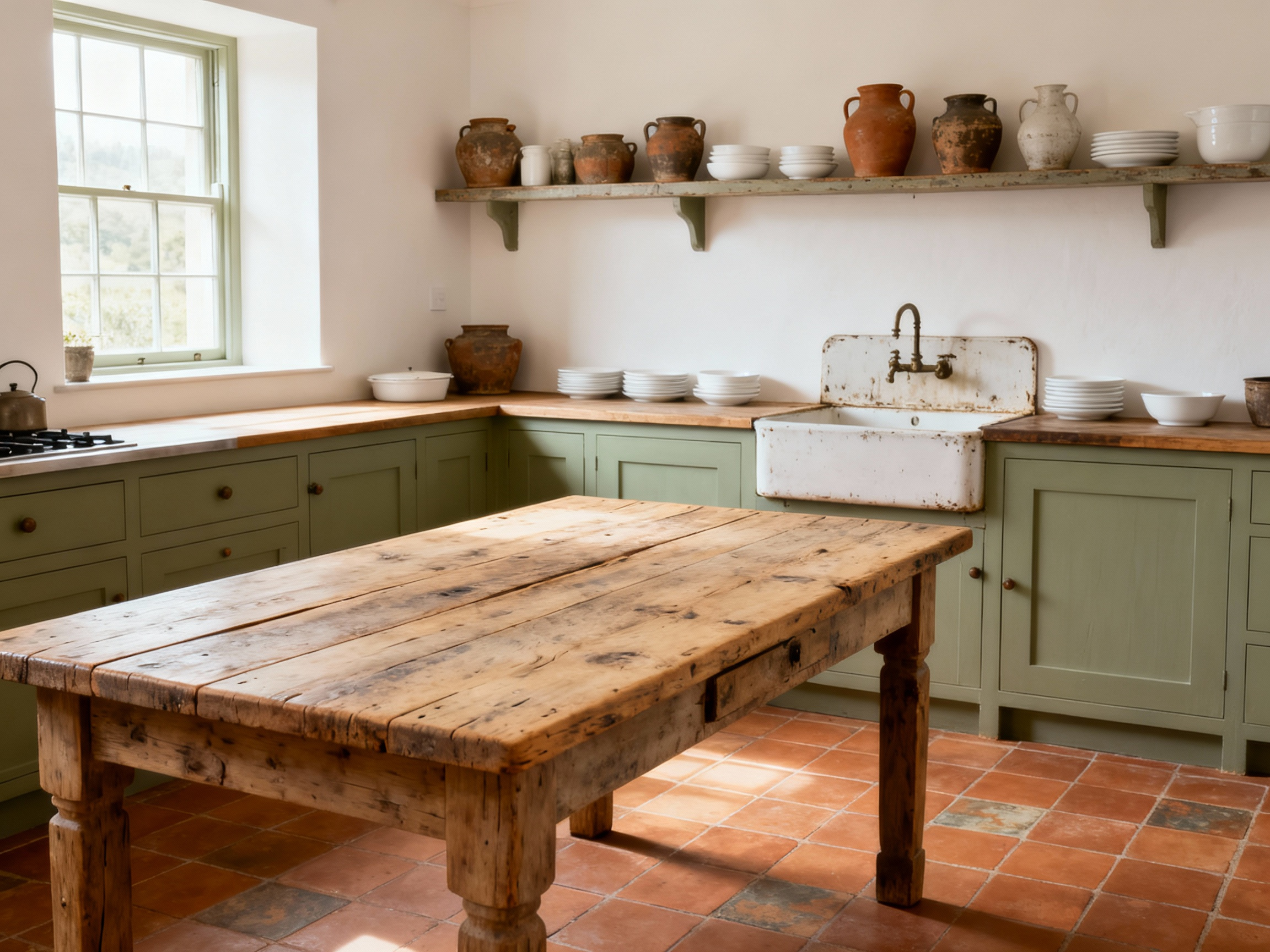
A timeless country kitchen begins with a conversation with nature. The colors that feel right are the ones you’d find on a quiet walk in the woods: muted greens like old moss, the gentle blue of a hazy morning sky, the warm cream of fresh butter. These tones don’t just create a calm atmosphere; they act as the perfect stage for your vintage finds to truly shine. You’re not just painting walls; you’re inviting the landscape in.
This kind of palette has a magical ability to make a space feel bigger and softer. Natural, earthy tones reflect light gently, making even a small kitchen feel more open and breathing a sense of tranquility into the busiest room in the house. What I tell my clients and readers is this: An earthy palette is your greatest ally when integrating vintage pieces. It creates a quiet, cohesive backdrop that lets the history and craftsmanship of an old pine hutch or a collection of ironstone pottery speak for itself, without having to shout.
So, how do you start? Spend a day noticing the light in your kitchen. Where does it fall? A sunny room can handle deeper, moodier tones, while a darker space might crave a soft off-white or pale clay. Choose one or two main colors for the big surfaces like walls and cabinets, and then pull in a few accents from there. And don’t forget texture—raw wood, woven baskets, and linen curtains all bring their own natural color to the party. A common slip-up is choosing a “neutral” that’s too sterile; look for creams with warm, earthy undertones to avoid that flat feeling.
2. Select Authentic Hardware for Enduring Character and Patina
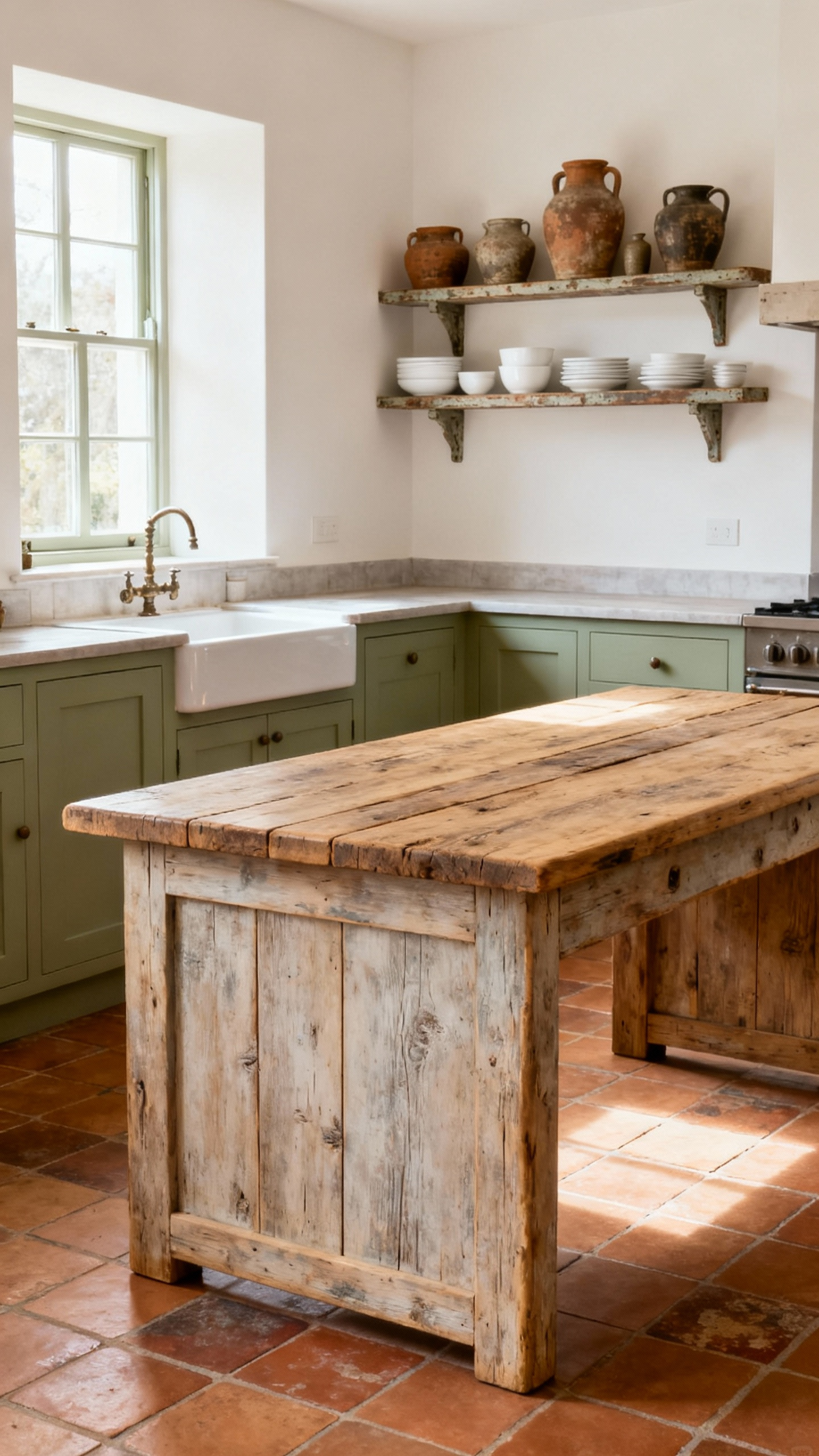
Hardware is the jewelry of your kitchen. The right knobs, pulls, and latches can completely transform simple cabinets, giving them a sense of history and soul. This isn’t the place for flimsy replicas. Choosing authentic, solid hardware is an investment in character, selecting pieces that will tell a story as they develop a beautiful, deep patina over the years.
There’s just no faking the weight and feel of real, old hardware. Solid brass, wrought iron, and heavy porcelain were made to last lifetimes, unlike so many modern equivalents. A good friend of mine who specializes in architectural salvage always says, “Each scratch and spot of oxidation on a salvaged pull is a ghost—a memory of all the hands that opened that drawer before you.” This is also a wonderfully sustainable choice. Giving old hardware a new home is one of the easiest ways to reduce waste and honor the resources used to make them in the first place.
Start by getting a feel for different eras. Do you love the simple utility of bin pulls or the rustic charm of iron latches? Then the fun begins: the treasure hunt. Scour architectural salvage yards, flea markets, and online sellers for the real deal. In my vintage modern revival work, I’ve found that it’s crucial not to over-restore these finds. Clean them gently to preserve that lovely aged patina. You’re not aiming for shiny and new. I once salvaged a set of tarnished brass cup pulls from a 1920s Vermont farmhouse. After a simple cleaning, they brought an incredible warmth and authenticity to otherwise simple Shaker cabinets. That’s the power of the real thing.
3. Infuse Warmth and History with Thoughtfully Chosen Vintage Linens
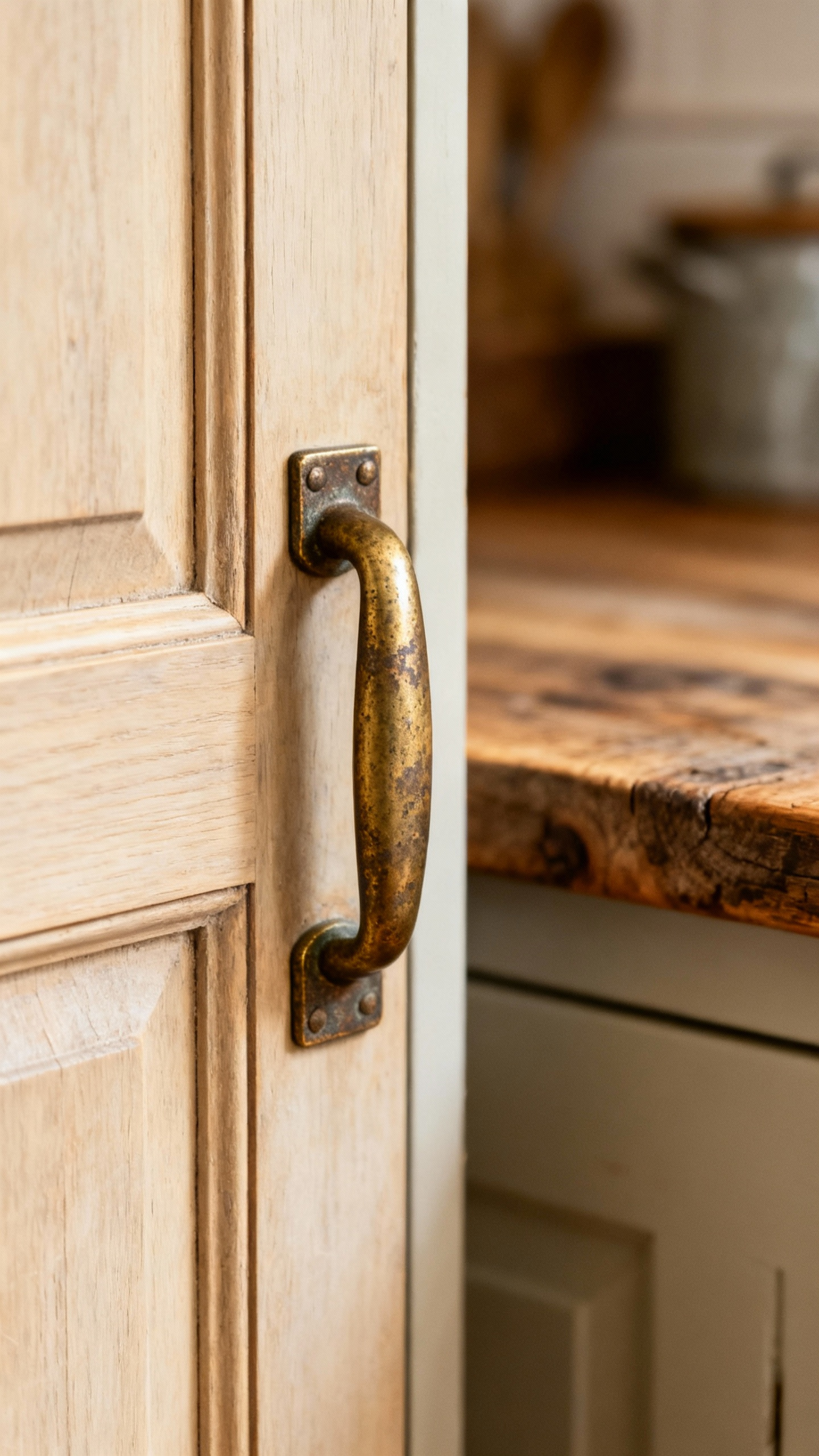
One of my absolute favorite ways to instantly add warmth and history to a kitchen is with vintage textiles. A stack of antique tea towels, an embroidered runner on the island, or simple flour sack curtains can soften all the hard surfaces of a kitchen and make it feel lived-in and loved. These aren’t just decorative flourishes; they are storytellers.
You simply can’t get the same character from a new, mass-produced tea towel. An old piece of linen carries a tangible history in its weave and a softness that only comes from years of use and washing. From my work in vintage textile integration, I’ve learned that these pieces connect us to generations of homemakers. It’s also a beautiful form of upcycling. Choosing to use these pre-loved textiles means you’re not contributing to the demand for new production, which is a small but meaningful sustainable choice.
Begin your collection slowly. Look for pieces at antique shops, estate sales, or online marketplaces. I’m always on the hunt for things like French ticking, grain sacks, or hand-embroidered napkins. Don’t worry about small stains or mended spots—those are part of their charm! Before using them, give them a gentle hand wash with a pH-neutral soap to preserve their integrity. You can use them as intended, or get creative. I once framed a beautifully embroidered—but sadly torn—doily. It became a piece of unique art that held more meaning than anything I could have bought new.
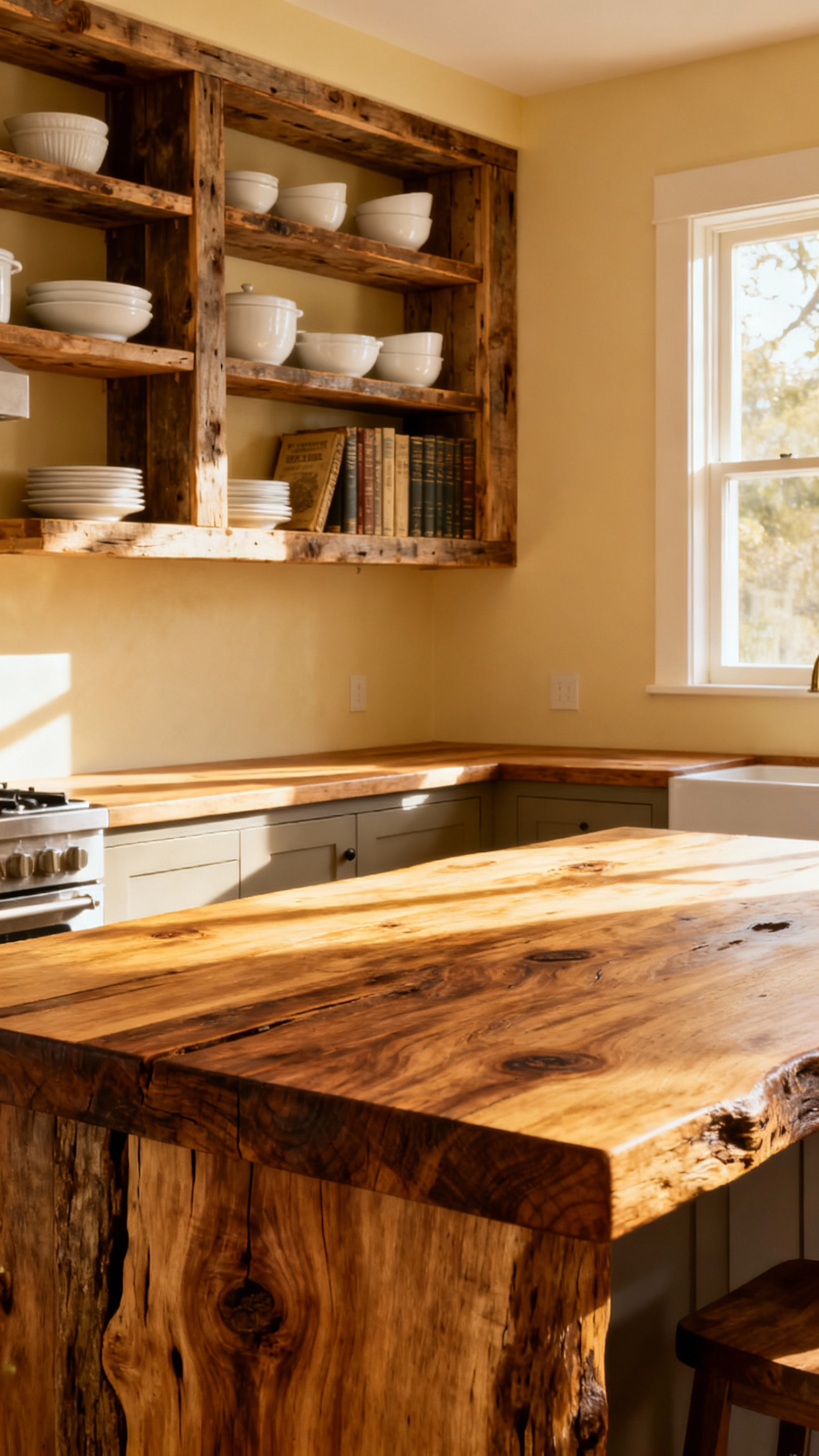
4. Introduce Sustainable Natural Wood Accents for Organic Texture
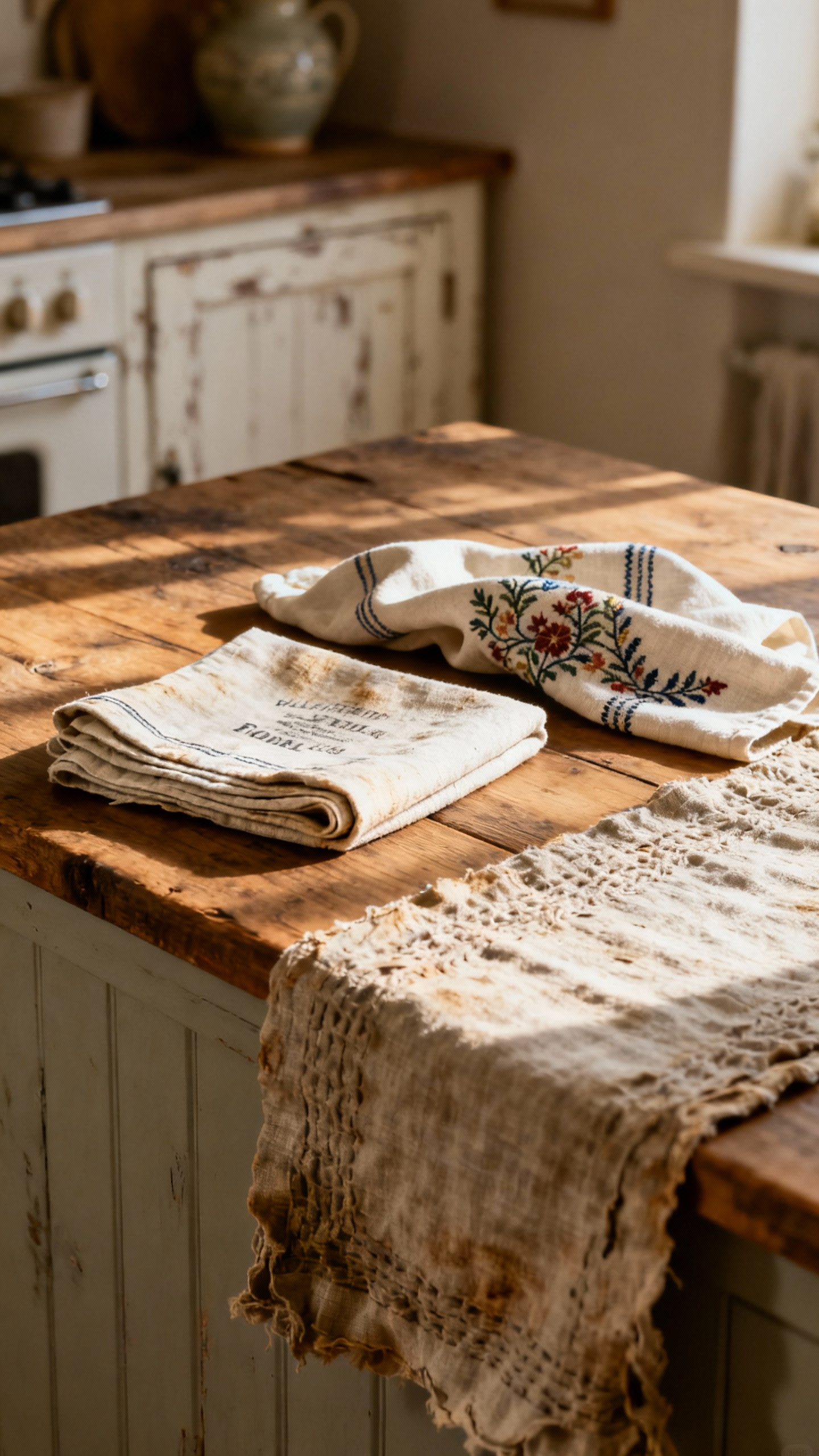
Wood is the soul of a country kitchen. It provides an immediate connection to nature, grounding the space with an organic warmth and texture that no other material can quite match. Using sustainable, natural wood—especially reclaimed or salvaged pieces—is about celebrating character and story, not just a certain look.
A piece of reclaimed wood carries its history right on the surface. The nail holes, the saw marks, the subtle shifts in color—these aren’t flaws; they are the narrative. This is what gives a kitchen that feeling of having evolved over time. Of course, the sustainable aspect is huge. By choosing reclaimed wood, you’re diverting beautiful, usable material from the landfill and reducing the demand for new logging. Years of restoration have taught me that old-growth wood, often found in salvaged timbers, possesses a density and richness of grain that is almost impossible to find in new lumber.
Start your search at architectural salvage yards or specialty reclaimed wood suppliers. You might find old barn wood for open shelving, a thick slab for an island countertop, or even just a beautifully weathered cutting board to lean against the backsplash. When you bring it home, the key is to clean and seal it gently. Use natural oils or waxes that nourish the wood rather than a thick polyurethane that would mask its texture. I learned this when I found wide-plank chestnut floorboards from a dismantled 18th-century barn. We had them milled into a countertop, and the result was breathtaking—functional, beautiful, and steeped in local history.
5. Illuminate with Purposeful Task and Ambient Lighting Layers
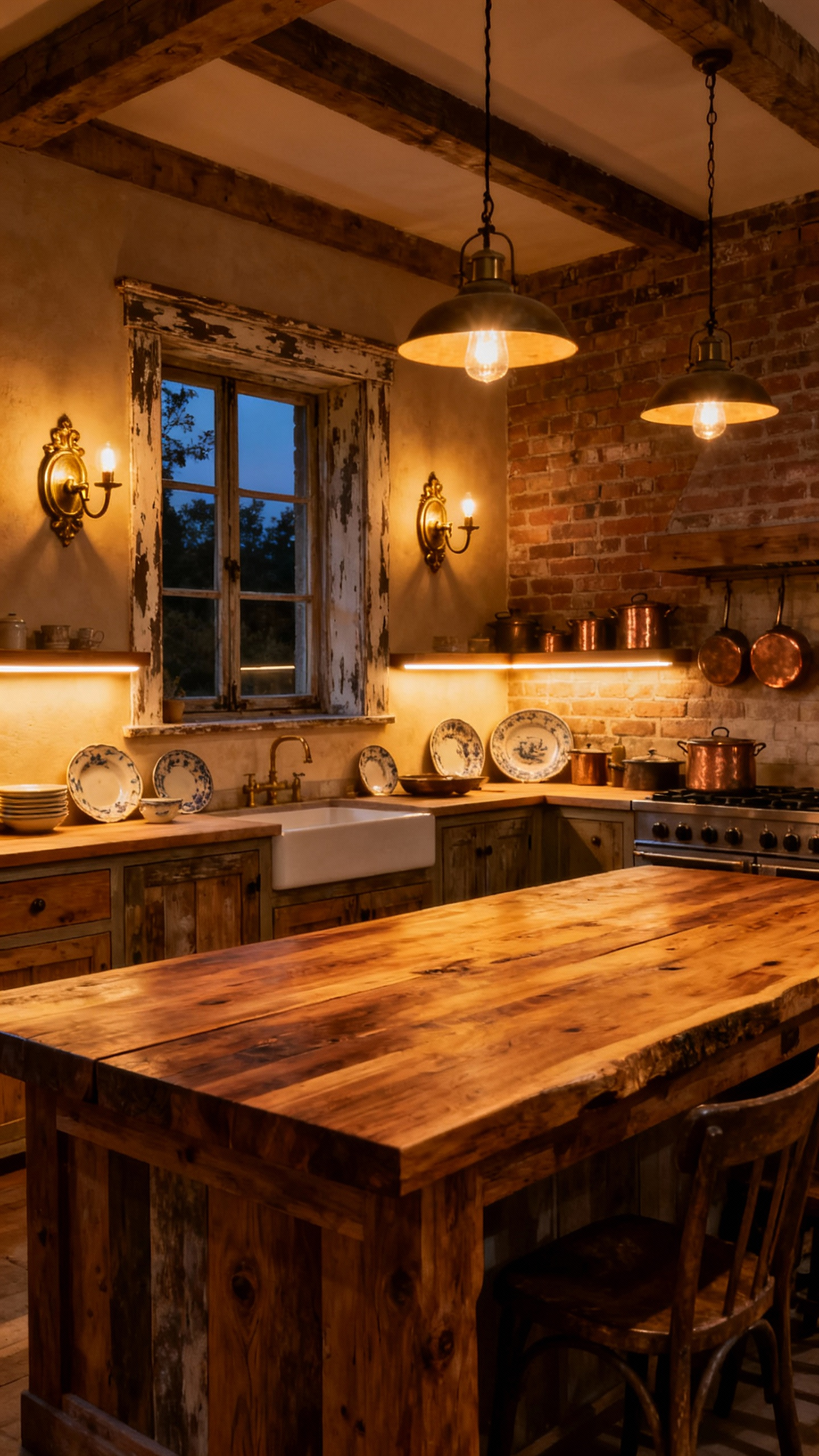
Lighting is one of the most overlooked, yet most critical, elements in creating a warm, inviting country kitchen. It’s not just about seeing what you’re doing—it’s about setting a mood and highlighting the beautiful textures and details you’ve so carefully chosen. A single, harsh overhead light just won’t cut it. You need to think in layers: overall ambient light, focused task light, and gentle accent light.
Good lighting makes a kitchen safer and more enjoyable to work in. Think about bright, focused light over your main prep areas and the sink, eliminating shadows where you’re chopping or washing. Then, you can add warm, ambient light from pendants or a vintage chandelier to fill the room with a welcoming glow. What really gets me is seeing a beautifully designed kitchen undone by cold, functional lighting. Choosing the right fixtures and bulbs can make salvaged wood look warmer, metal hardware gleam softly, and a collection of pottery feel like an art installation.
Start by making a simple lighting plan. Map out your key work zones. Then, go on the hunt for fixtures with character. I love salvaged enamel barn pendants over an island or antique brass sconces on either side of a window. Don’t be afraid to update the wiring on a vintage find—a qualified electrician can make it safe and ready for modern, energy-efficient LED bulbs. And here’s a crucial tip: put everything on a dimmer. Being able to soften the lights for a quiet dinner or brighten them for a baking project is a game-changer for creating the right atmosphere.
6. Showcase Everyday Charm Through Accessible Open Shelving Displays
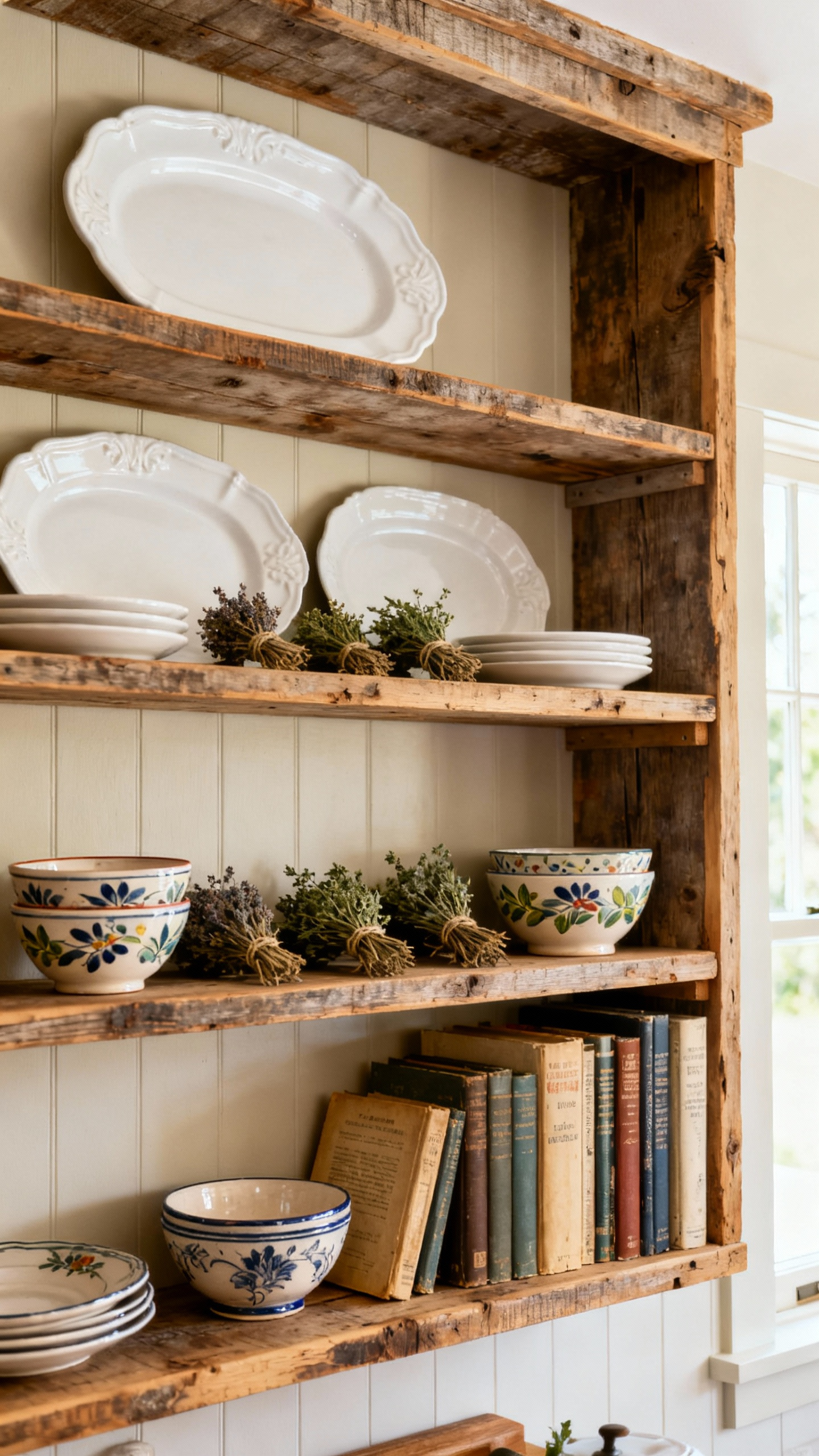
Open shelving is the heart of a lived-in country kitchen. It’s an invitation to turn your everyday items—your favorite bowls, stacks of plates, jars of spices—into part of the decor. It’s a move that fosters a sense of honesty and accessibility, beautifully blurring the line between storage and display.
This approach immediately breathes life and personality into a kitchen. Instead of hiding everything behind closed doors, you’re creating small, curated vignettes that tell a story about how you live and cook. From a practical standpoint, it’s fantastic. Your most-used items are right at your fingertips, making the daily rhythm of kitchen life feel more fluid. Plus, using reclaimed wood for shelving is often more budget-friendly and sustainable than installing a full bank of upper cabinets.
First, decide where shelves will work best. They’re perfect for a stretch of wall near the stove or dishwasher for easy access. Next, choose your materials. Thick planks of salvaged pine or oak with sturdy iron brackets have an undeniable country charm. In my professional experience, the key to successful open shelving is editing. It can be tempting to fill every inch, but negative space is your friend! It allows each item to breathe and prevents the look from becoming cluttered. Start with your bigger, foundational items, then layer in smaller, more decorative pieces. And don’t be afraid to switch things up with the seasons—a few sprigs of herbs in the summer or a small stack of cookbooks in the fall keeps it fresh.
Elevating Your Country Kitchen Aesthetic: Intermediate Techniques for Depth
Once you’ve got the foundation right, it’s time to add the layers that bring real depth and personality to your kitchen. These next steps are about a more nuanced approach—blending old with new, harmonizing different materials, and making strong, characterful statements that turn a nice kitchen into an unforgettable one.
7. Curate a Visible Collection of Heirloom-Quality Cookware Displays
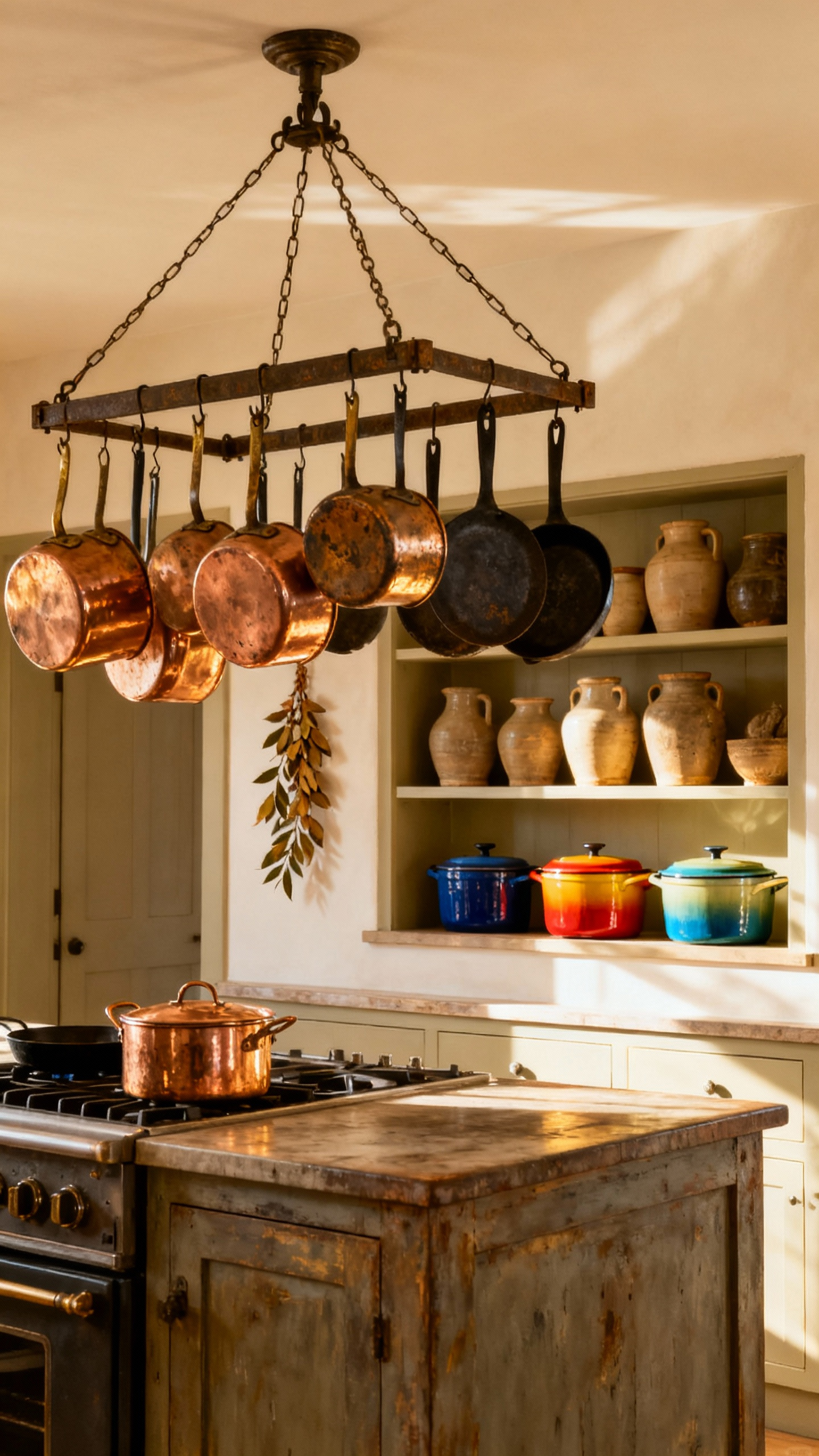
There’s something incredibly soulful about a kitchen where the tools of the trade are out on display. Hanging a collection of well-loved copper pots, a cast-iron skillet, or even a line of old wooden spoons is a nod to the kitchen as a workspace, a place of nourishment and creation. It turns utilitarian objects into a beautiful, functional art installation.
Displaying your best cookware does more than just look charming; it’s practical. Having your favorite pan within arm’s reach is a simple joy. It also promotes a mindset of buying for quality and longevity. When you invest in heirloom-quality pieces you’re proud to display, you’re far less likely to fall for disposable trends. Here’s what’s interesting: displaying these items celebrates their history. The dark patina on a cast iron pan tells a story of a thousand meals, and you become a part of that story every time you use it.
Start by taking stock of what you have. Do you have a collection of copper from your grandmother? A few beautiful ceramic mixing bowls? Choose the pieces that are both beautiful and functional. Then, think about how to display them. A simple wall-mounted pot rack is classic, but you can also use open shelving or even a freestanding hutch. A common misstep is overcrowding the display. Let each piece have a little space. I once helped a client install a simple iron rail system from a salvaged barn above her stove. It was the perfect, rustic perch for her gleaming copper pots and pans, turning that entire wall into the kitchen’s focal point.
8. Integrate Modern Conveniences with Seamless Retro Appeal
Let’s be honest: while we love the charm of a bygone era, we don’t want to give up our modern dishwasher or a refrigerator that actually keeps things cold. The art of a truly great country kitchen is in the seamless blend of vintage soul and modern convenience. It’s about clever integration and thoughtful choices that keep the magic alive without sacrificing functionality.
A hulking stainless steel refrigerator can be a real vibe-killer in a rustic space. The goal is to make your modern appliances disappear, or at least feel like they belong. This is what separates a thoughtful design from a themed one. When technology is so well-integrated that you barely notice it, you’ve succeeded. It ensures your kitchen is a joy to work in every day, not just pretty to look at.
The best way to do this is with panel-ready appliances. Covering your dishwasher and refrigerator with custom cabinet fronts that match the rest of your kitchen is a total game-changer. For appliances that have to be visible, like your stove, look for retro-inspired models from brands that specialize in vintage aesthetics. I learned this when working on an 1890s farmhouse: we built a beautiful, freestanding pine armoire to house a modern refrigerator. With antique glass panels in the upper doors for a bit of charm, it looked like a piece of furniture that had been there forever. You can also hide smaller things, like microwaves, inside a pantry or a large cabinet with a lift-up door. It’s all about preserving the beautiful, uninterrupted lines of your vintage-inspired space.
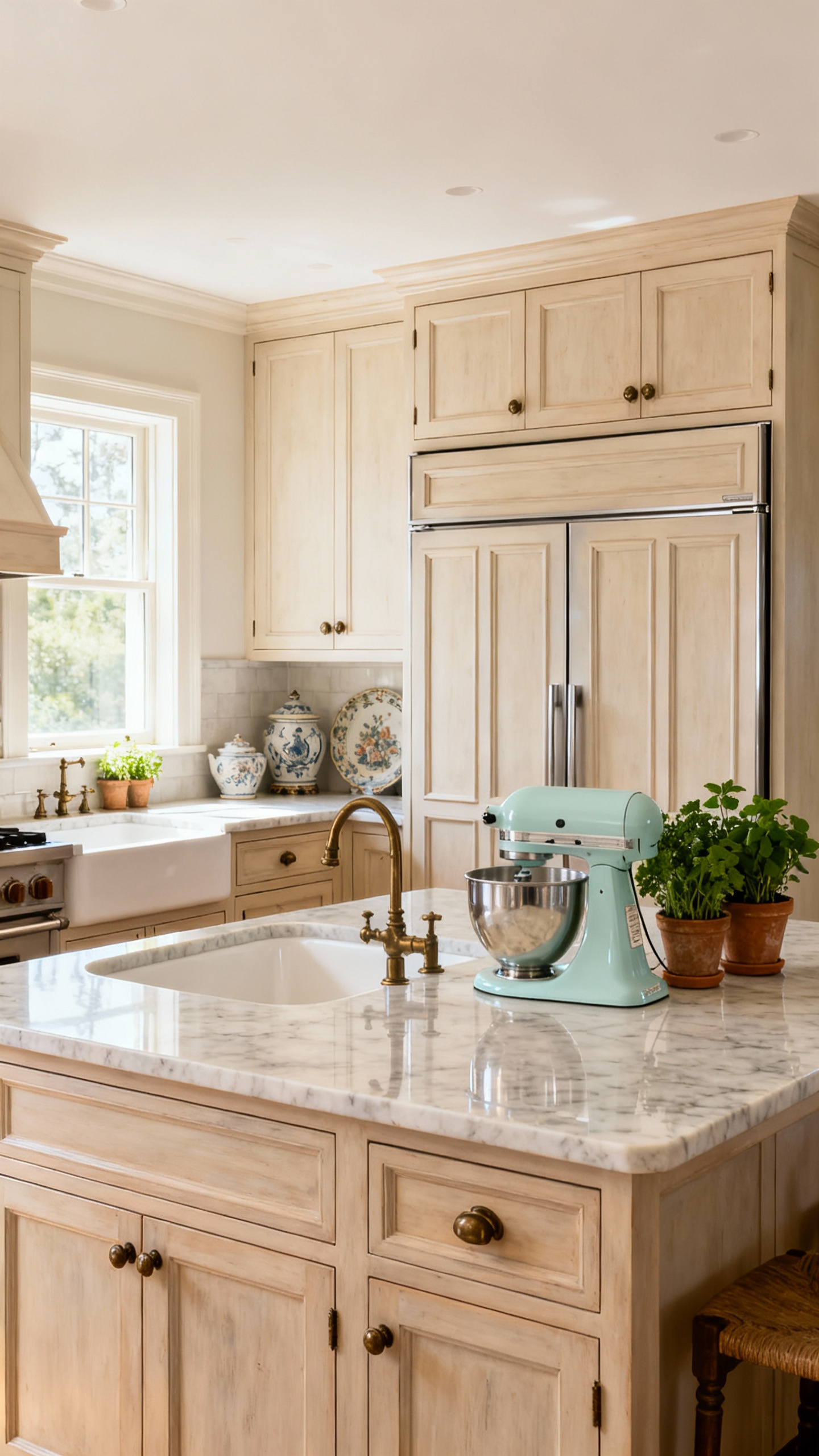
9. Harmonize Mixed Materiality for Visual Depth and Tactile Interest
A truly captivating kitchen engages all the senses. The best way to achieve this is by masterfully mixing materials. Think about the cool, smooth feel of a stone countertop against the rustic grain of reclaimed wood cabinets, or the glint of aged brass hardware next to a soft linen curtain. This intentional blending of textures is what gives a space depth and makes it feel collected over time.
A kitchen with only one or two materials can feel flat and one-dimensional. By layering in different textures, you create visual interest that keeps the eye moving and discovering new details. This is what gives a kitchen its unique personality and bespoke character. From my experience with Mid-Century Modern restoration, where the interplay of wood, metal, and fabric is key, I’ve seen how this principle translates beautifully to country design. The dialogue between different materials is where the real story of the room is told.
The trick is to start with a primary, foundational material—maybe it’s the warm pine of your cabinets or the honed slate of your countertops. Use this as your anchor. Then, begin layering in contrasting, complementary elements. Perhaps that means an exposed brick wall as a backsplash, a polished nickel faucet, or an antique zinc-topped table as an island. Finally, bring in the soft touches: woven baskets for storage, hand-thrown pottery, a plush wool rug underfoot. Just be careful not to introduce too many competing elements. Stick to a palette of three to four primary materials for a result that feels rich and cohesive, not chaotic.
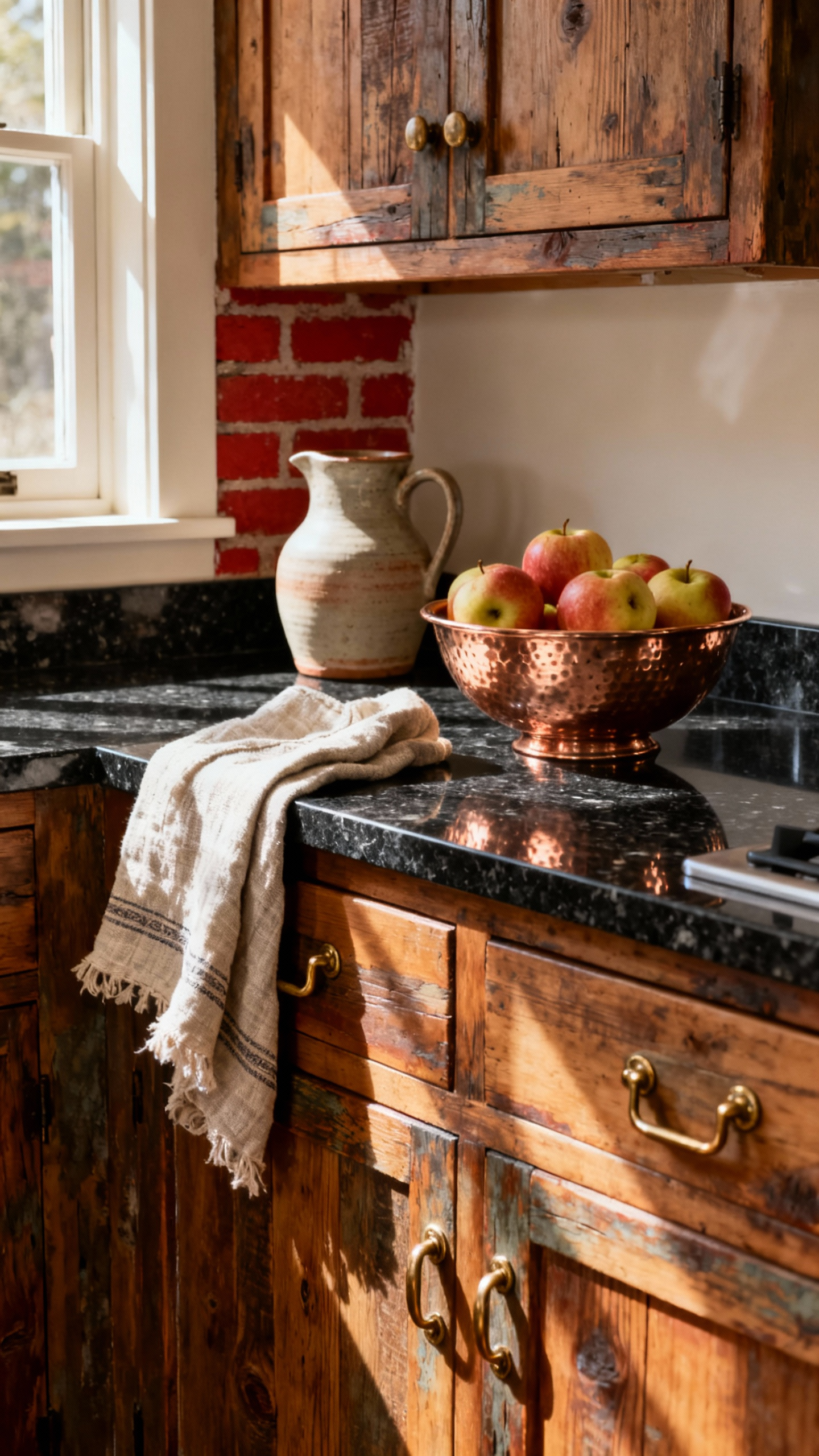
10. Select Period-Appropriate Countertops for Lasting Function and Form
The countertops are one of the biggest visual and financial investments in your kitchen, and they have a massive impact on its overall character. Choosing a period-appropriate material is crucial for achieving an authentic look. This isn’t the place for a trendy, high-gloss synthetic. You want a surface that feels honest, hardworking, and gets better with age.
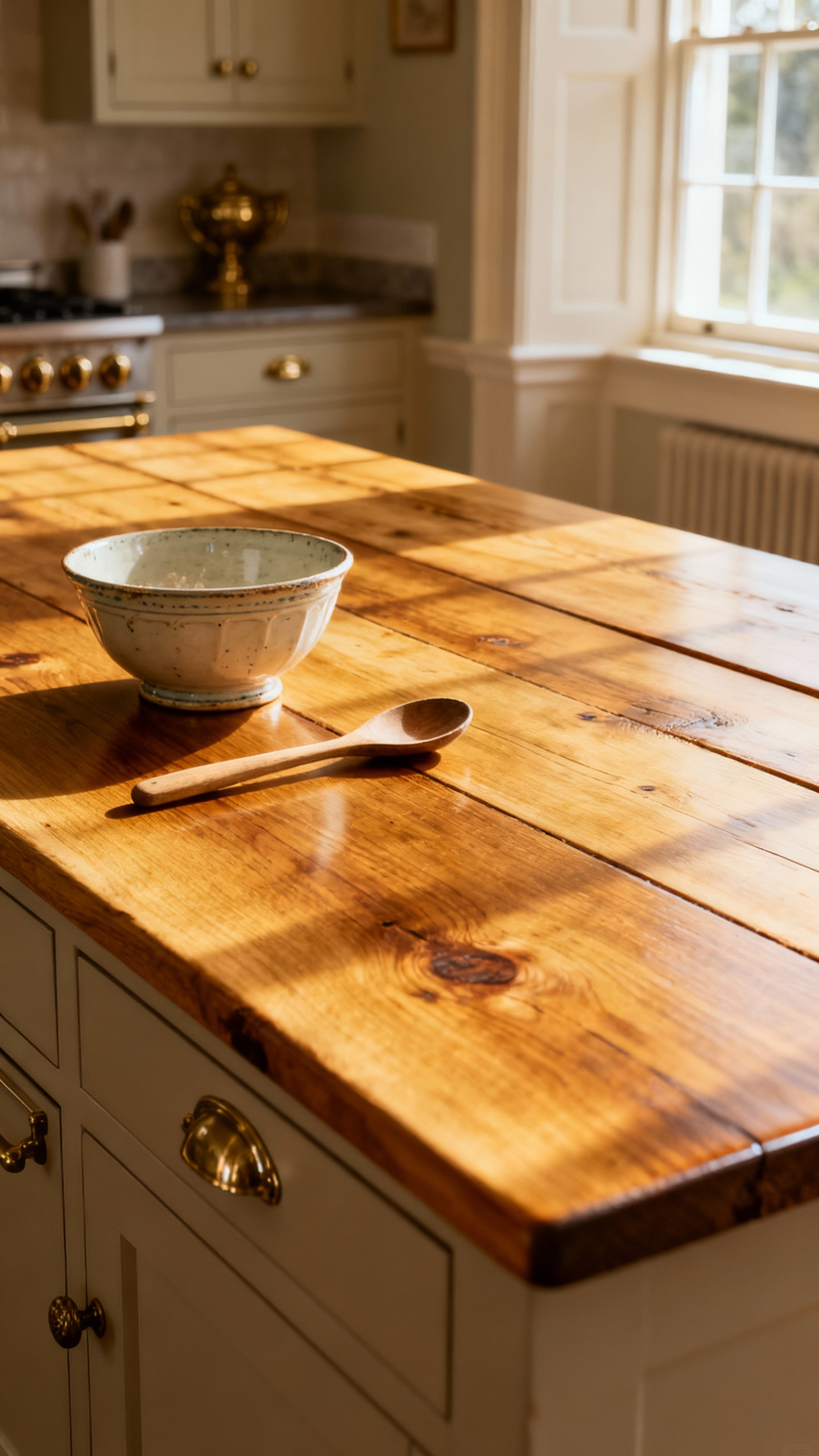
Materials like soapstone, honed marble, slate, and butcher block have been used in kitchens for centuries for a reason. They are incredibly durable, beautiful, and develop a wonderful patina over time. A seasoned kitchen restorer I know once told me, “The first scratch on a new countertop is a tragedy. The thousandth scratch on an old butcher block is character.” That perfectly captures the mindset. Embracing these materials means embracing a surface that will live and age alongside you.
When making your choice, think about both the look and the upkeep. Soapstone is famously resilient and darkens beautifully over time with a simple oiling. Honed (not polished) marble has a classic, soft look but requires a bit more care to avoid stains. And butcher block brings an incredible warmth but needs regular sealing. I’ve seen this play out when a client opts for a mixed-material approach, which can be both practical and beautiful. For example, using durable slate around the sink and a warm, inviting butcher block on the island offers the best of both worlds. Sourcing from a local stone yard or finding reclaimed timber will add another layer of unique, sustainable story to your choice.
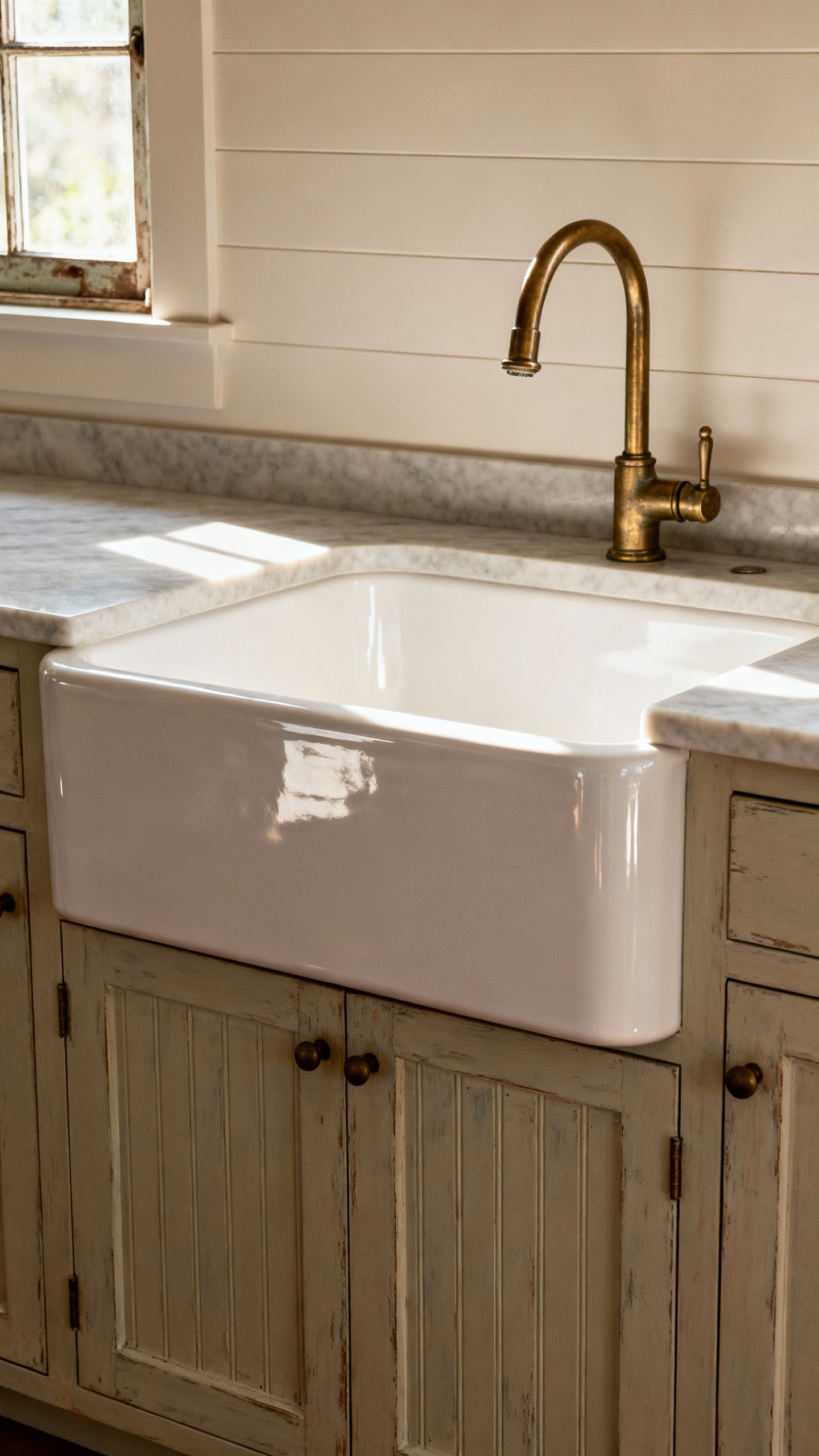
11. Install a Statement Farmhouse Sink as a Timeless Utilitarian Anchor
There is perhaps no single element more emblematic of the country kitchen than a big, beautiful farmhouse sink. With its deep basin and iconic apron-front, it’s a functional workhorse that immediately anchors the entire room with a sense of rustic authenticity and timeless charm.
This isn’t just about looks. The ergonomic design, with its front wall pushed forward, is genuinely more comfortable to work at for long periods. And that deep, generous basin is a lifesaver for washing large pots, canning produce, or even bathing a small puppy. A farmhouse sink isn’t just a fixture; it’s a centerpiece that declares the kitchen is the true heart of the home, ready for real work and real life.
When choosing one, you’ll find them in classic fireclay, durable cast iron, or even materials like copper that develop a stunning living patina. The most important thing to remember is that these sinks are heavy—especially when filled with water—and require special cabinetry for support. This isn’t a simple drop-in installation; you’ll need to work with your cabinet maker to ensure the base is properly built to hold the weight. In my professional experience, embracing the timeworn character of a salvaged sink is a truly special choice. I once sourced a vintage double-basin fireclay sink for a cottage renovation. Its crazed glaze and subtle imperfections told a story that a brand-new sink never could, making it the undeniable soul of the new kitchen.
12. Develop a Curated Collection of Wall Art as Narrative Focal Points
The walls of your kitchen shouldn’t be an afterthought. They are a canvas for expressing your personality and telling stories. Curating a collection of art and objects transforms a functional space into one that’s deeply personal and full of narrative. It’s your chance to add layers of charm that are entirely, uniquely you.
Art in the kitchen makes it feel less like a sterile utility room and more like a cherished living space. It can add color, texture, and a point of view. A thoughtful collection demonstrates intentional design and a connection to things you love, whether that’s nature, history, or simply beautiful craftsmanship.
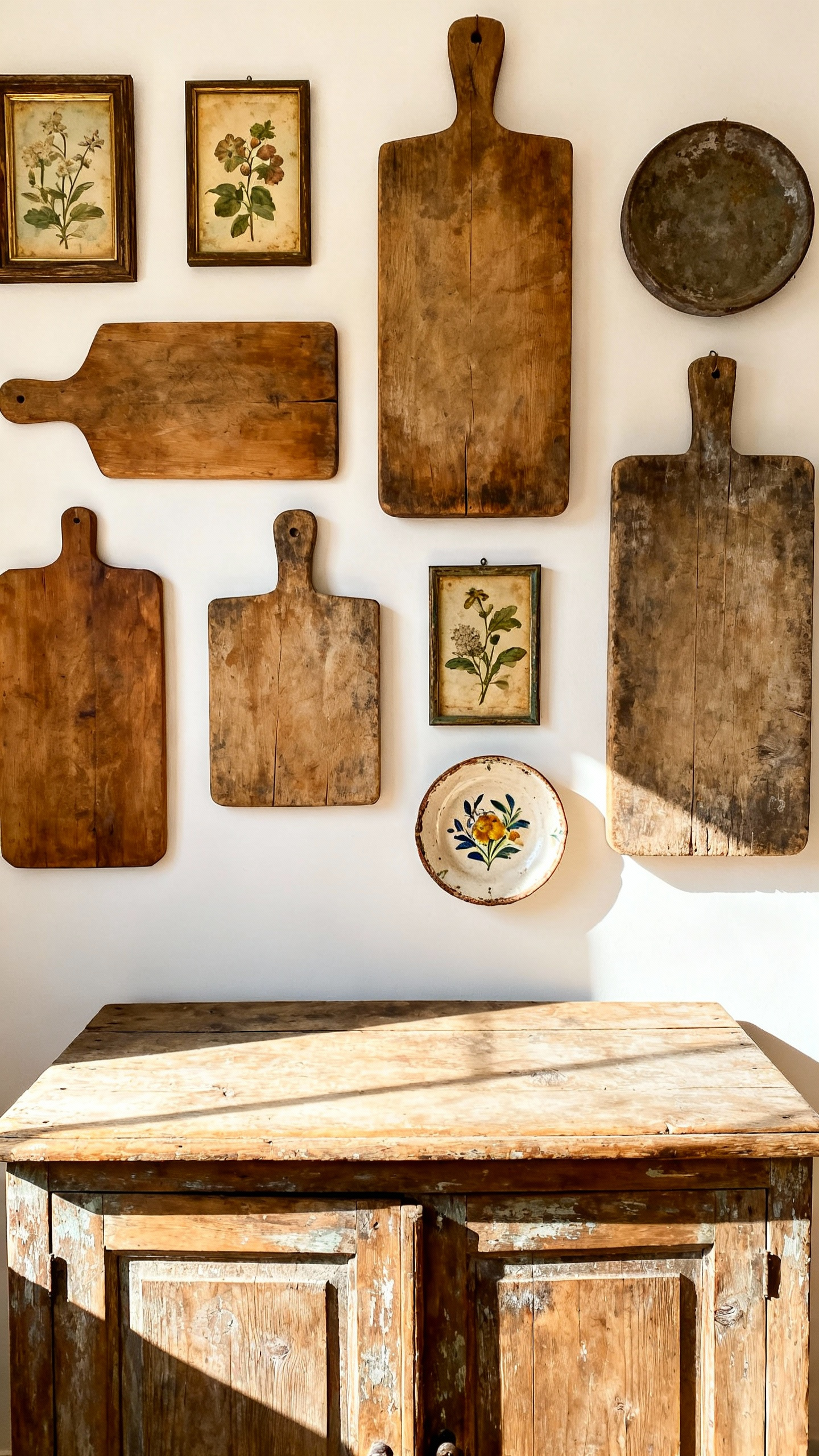
So, what kind of art belongs in a kitchen? The possibilities are endless! Think beyond traditional framed prints. I love to create “functional galleries” by grouping together vintage cutting boards of different shapes and sizes, or framing a collection of antique European bread labels. A series of botanical prints, a salvaged metal sign from an old grocery, or even a beautiful hand-painted plate can become a stunning focal point. Start by choosing a theme to keep the collection cohesive. Then, hunt for pieces at flea markets, antique shops, and estate sales. Don’t be afraid to mix mediums. The interplay between a framed print, a piece of textural ceramic, and a rustic wooden object is what makes a gallery wall truly dynamic and interesting.
Conclusion
So there you have it. We’ve journeyed from the foundational colors and textures to the soulful details that truly bring a country kitchen to life. My hope is that you no longer see this as a list of “ideas” to be checked off, but as a new way of seeing—a philosophy for building a space with heart. The most beautiful rooms aren’t the most perfect ones; they are the ones that tell a genuine story.
Remember that the soul of this style lives in character, not in perfection. It thrives on the history of a salvaged piece, the quiet dignity of natural materials, and the honest beauty of things made to be used and loved for a lifetime. Every time you choose a vintage find over something new, you’re not just decorating; you’re being a storyteller and a steward of resources. You are weaving a personal narrative into the very heart of your home.
Now, it’s your turn. Go on that treasure hunt. Let your curiosity lead you to dusty antique shops and cluttered salvage yards. See the potential in a worn linen tea towel, a heavy iron latch, or a sturdy farmhouse sink. Take these principles and begin writing your own kitchen story, one thoughtful, sustainable, beautiful choice at a time. Create a kitchen that doesn’t just work, but welcomes. A kitchen that endures.