

I was watching the morning fog burn off the water from a client’s balcony a few years ago. It was a spectacular view, but the balcony itself felt like a spectator box—stiff, separate, and unused. We’ve all seen them, those sad little patches of outdoor space that feel more like an obligation than an oasis. That moment of clarity—realizing a space isn’t an active participant in the life happening around it—is exactly what separates an intentional seaside retreat from a mere architectural feature.
It’s tempting to simply add a chair and a pot of geraniums and call it finished. But creating a balcony that truly feels like an extension of a sophisticated coastal home, a place that breathes with the rhythm of the tides, requires a more thoughtful approach. As someone who spends their days designing homes that embrace the coast without succumbing to seashell clichés, I’ve learned that the most beautiful outdoor spaces are built on a foundation of durability, function, and a quiet, confident style.
Forget the overwrought nautical themes. We’re going to explore 20 balcony decoration ideas, building from foundational principles to the finer points of enduring elegance. This is about transforming your balcony, no matter its size, into a personal haven that feels both timeless and fresh—a place you’ll find yourself drawn to, morning, noon, and night.
Part 1: Envisioning Your Elevated Oasis
Before any furniture is chosen or a single plant is purchased, we must lay the groundwork. This is about understanding the canvas you’re working with—the light, the space, the very purpose of your retreat. This foundational intelligence is what turns a simple plan into a sophisticated reality.
1. Master the Art of Spatial Assessment
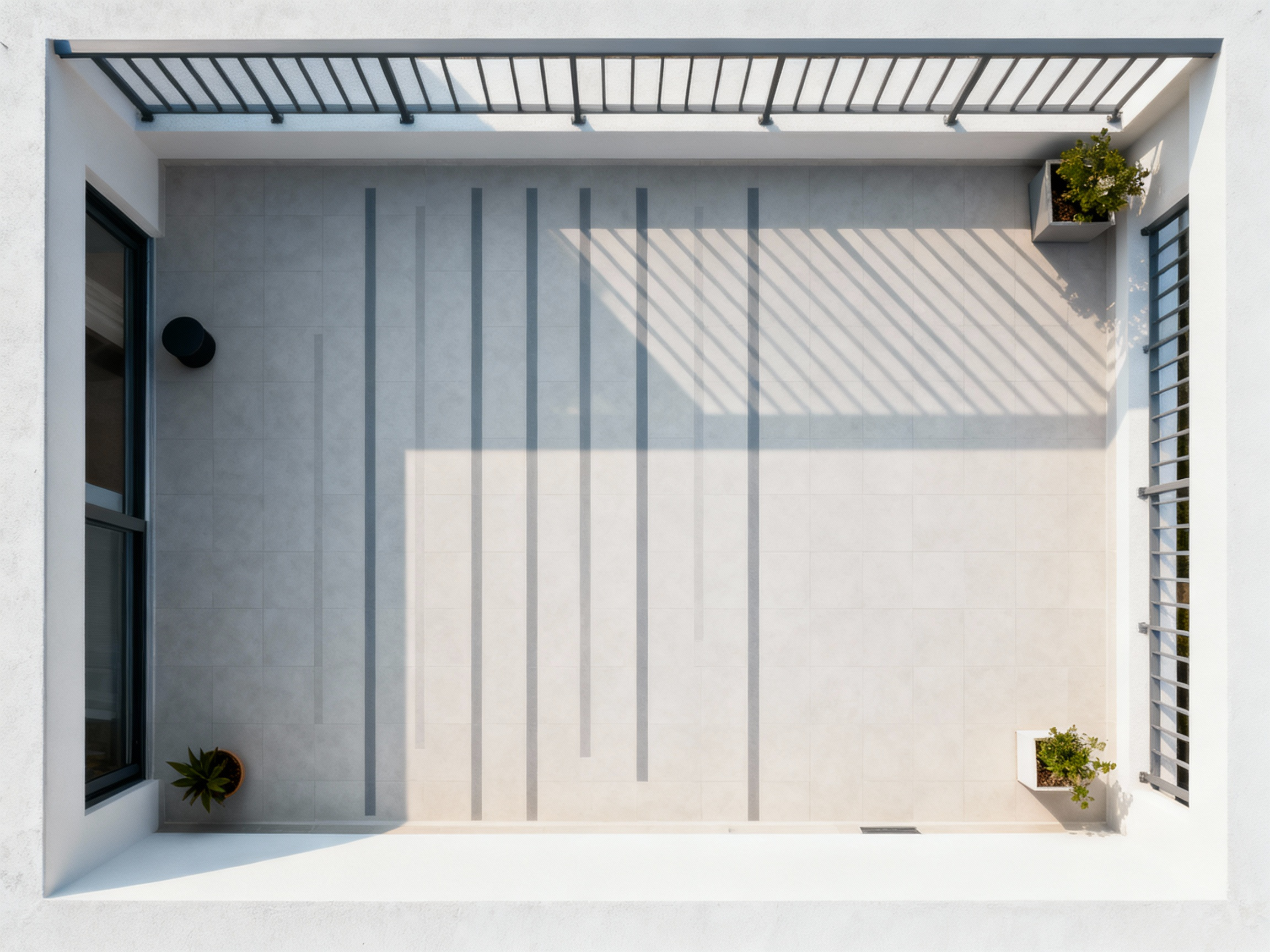
The first step toward a beautifully realized balcony isn’t glamorous, but it’s essential. You must understand the space you have. Start by taking precise measurements—length, width, railing height. This simple act prevents the most common mistake I see: overcrowding. Your balcony should be a place to breathe, not a place to navigate an obstacle course of oversized furniture. Think of this as establishing the proper scale.
From there, look at the fixed elements. Note the swing of the door, the placement of drains, and the location of any outlets. These aren’t limitations; they are the guiding principles of your layout. In my coastal design practice, I treat these elements as the shoreline of the space—an unchangeable boundary that dictates the flow. For more complex shapes, sketching a quick floor plan can reveal opportunities for creating distinct “zones,” even in a tiny footprint. The goal is to create a layout that feels intuitive and inviting, not forced.
2. Decode Your Balcony’s Relationship with the Sun
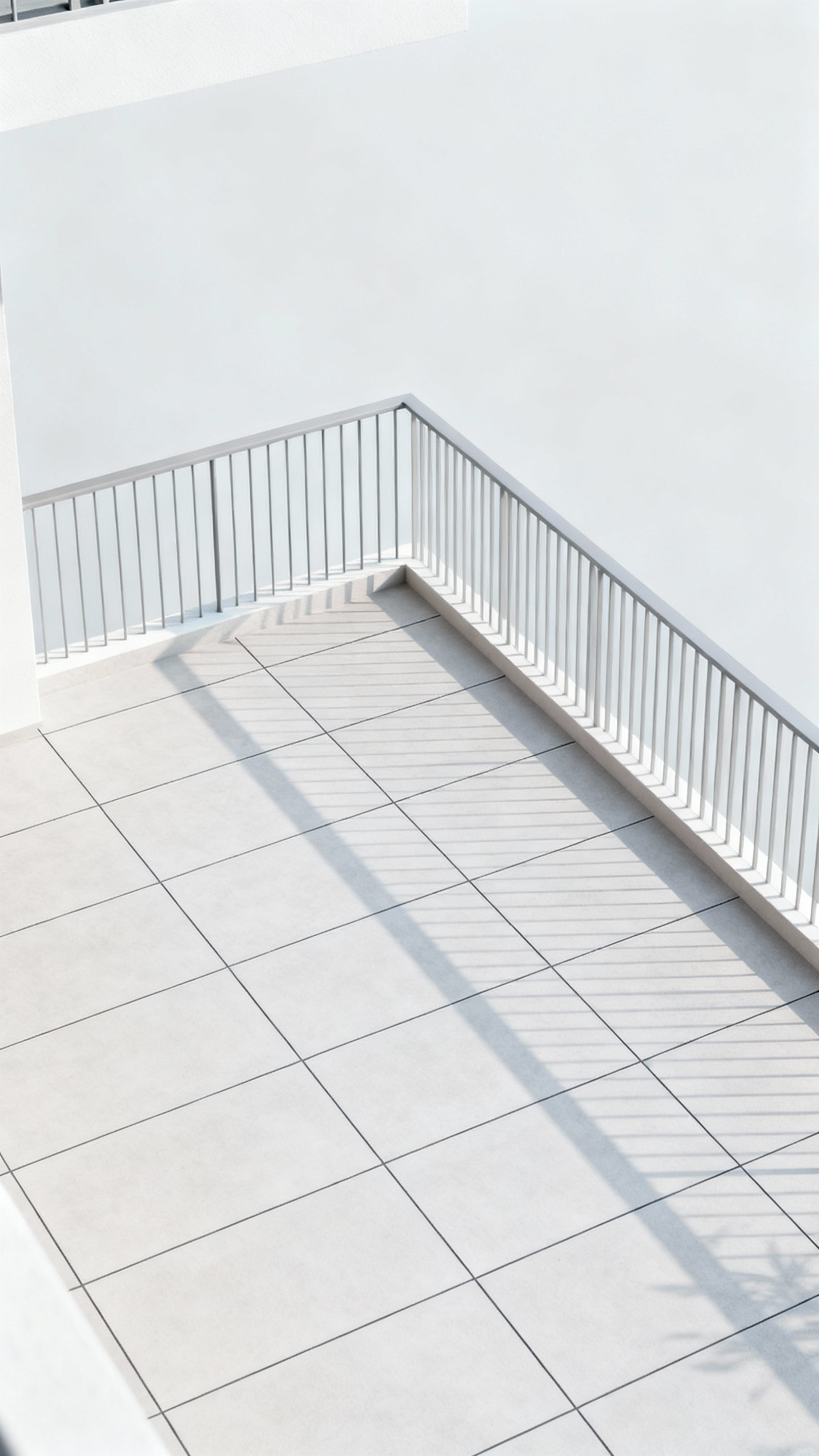
Your balcony has a unique rhythm dictated by the sun, and understanding it is crucial. Is it a gentle morning-light space perfect for coffee, or does it bake in the intense afternoon glare? Start by simply observing its cardinal direction—north, south, east, or west. This gives you a baseline for what plants will thrive and what materials will endure. A sun-drenched, south-facing balcony demands different choices than a shaded, north-facing one.
For a more nuanced approach, chart the sun’s path for a day. Notice where shadows fall and for how long. This will inform not only your plant selection but your seating arrangement. There’s nothing worse than creating a beautiful reading nook that’s unusable after 1 p.m. This deeper understanding allows you to design with the light, perhaps using a sheer outdoor drape to diffuse harsh rays or placing a polished metal accent where it can catch the golden hour glow.
3. Define Your Balcony’s True Purpose
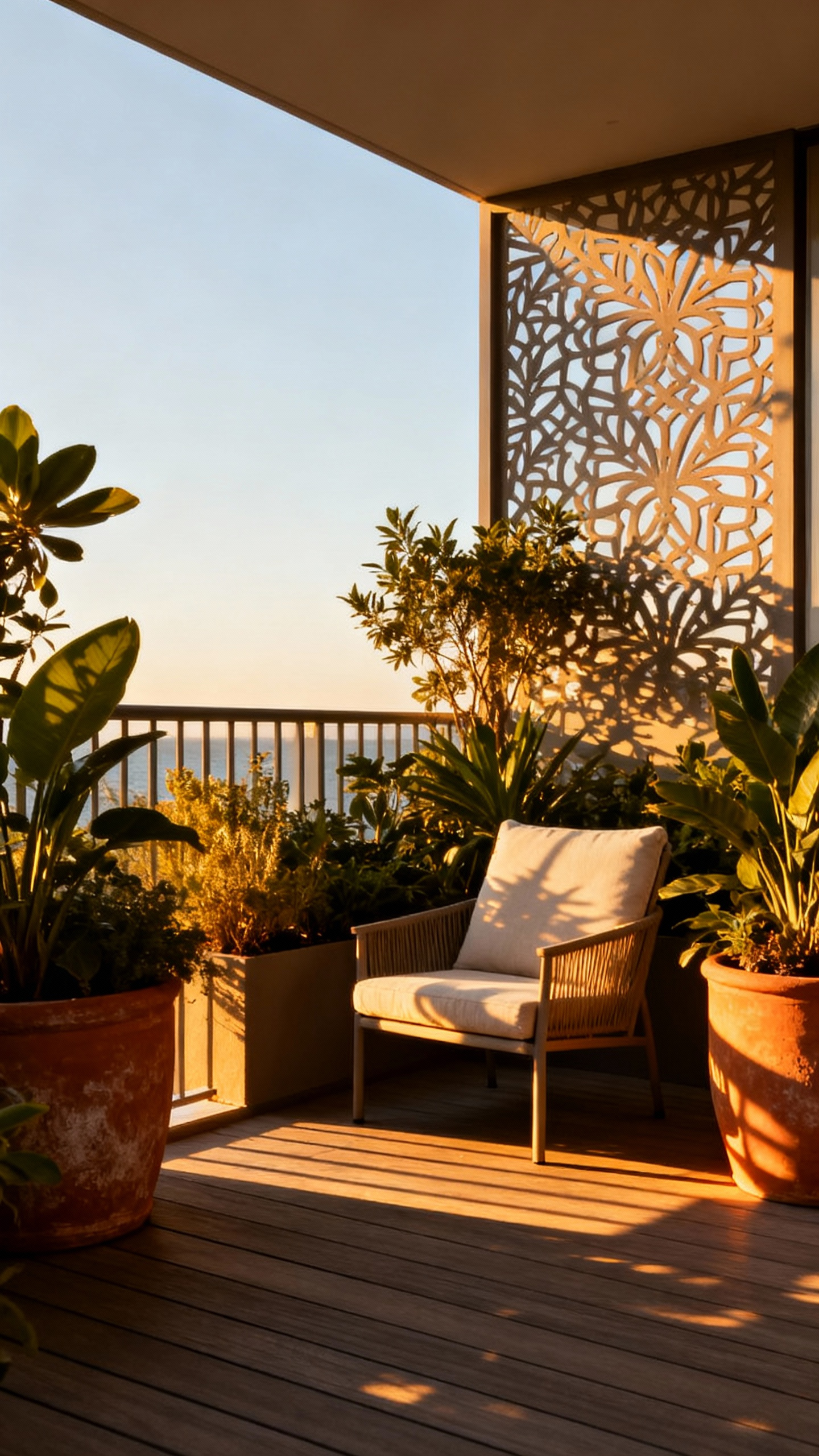
Before you fall in love with a particular chaise lounge, ask yourself a simple question: What do I want to do here? The answer defines everything that follows. Is this a solitary retreat for meditation and a glass of wine? An intimate setting for al fresco dinners? Or a casual spot for cocktails with friends? Be honest about its primary role.
Once the main purpose is clear, you can consider secondary functions. A stylish bench might offer seating while concealing storage for cushions. A bar-height table against the railing can serve as a workstation with a view in the morning and a social hub in the evening. This isn’t about trying to be everything at once, but about selecting intelligent, versatile pieces that allow your balcony to adapt gracefully to the rhythm of your life.
4. Respect the Unseen: Weight Limits & Building Codes
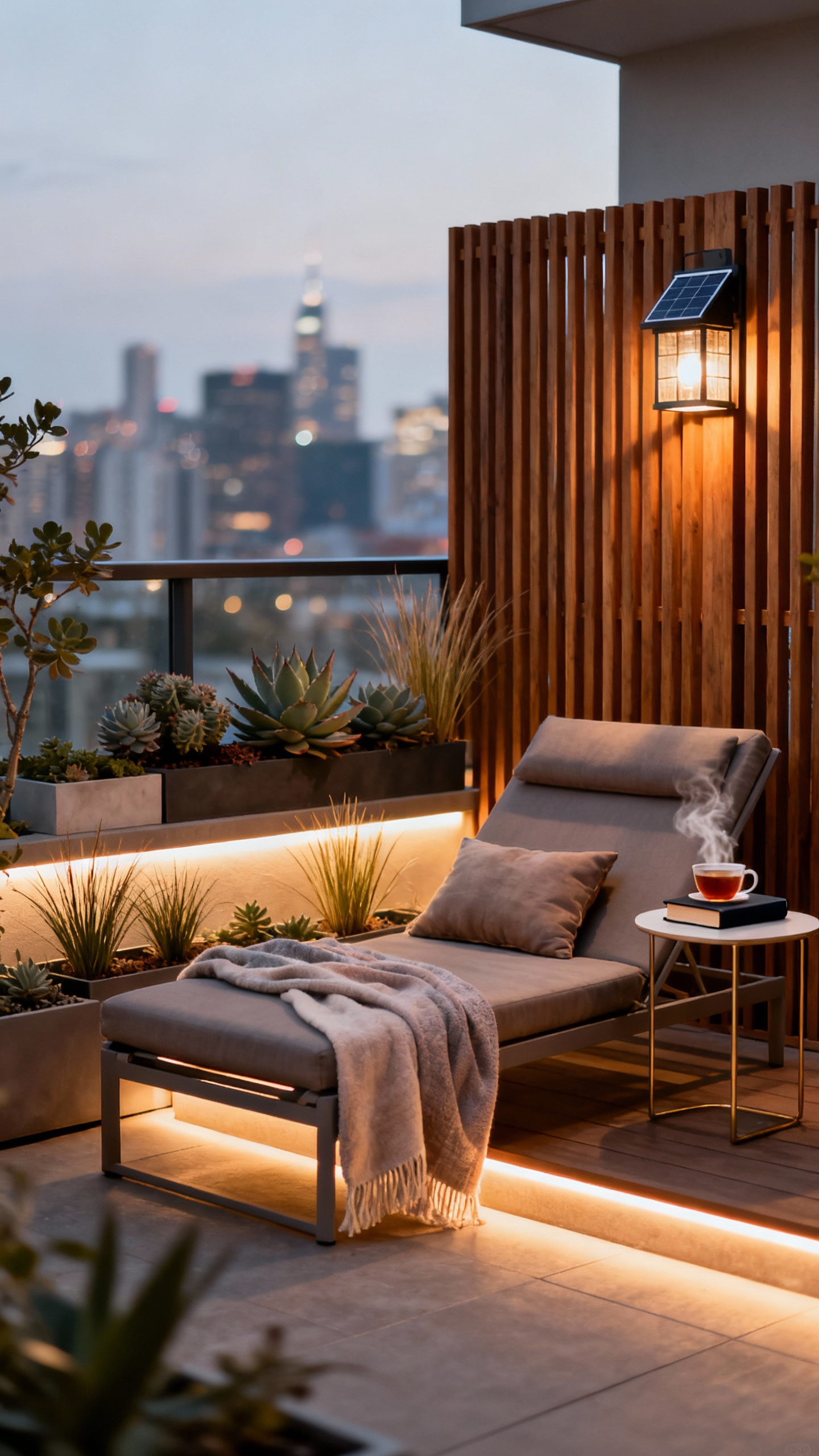
This is the serious but non-negotiable part of our conversation. A sophisticated design is always a safe one. Balconies have structural weight limits, and it’s your responsibility to know what they are. Before you dream of large terracotta planters or a cast-iron bistro set, consult your building management or local codes to understand the specific “live load” capacity, measured in pounds per square foot.
Ignoring these limits isn’t just risky; it’s a fundamental design failure. Think of it as respecting the integrity of the home. True elegance is effortless, and that feeling can’t be achieved if there’s an underlying concern about structural safety. Once you know your limits, you can make smarter choices—favoring lightweight fiberglass planters over heavy ceramic, for instance, and placing heavier items over load-bearing points when possible.
5. Craft a Cohesive Coastal Palette
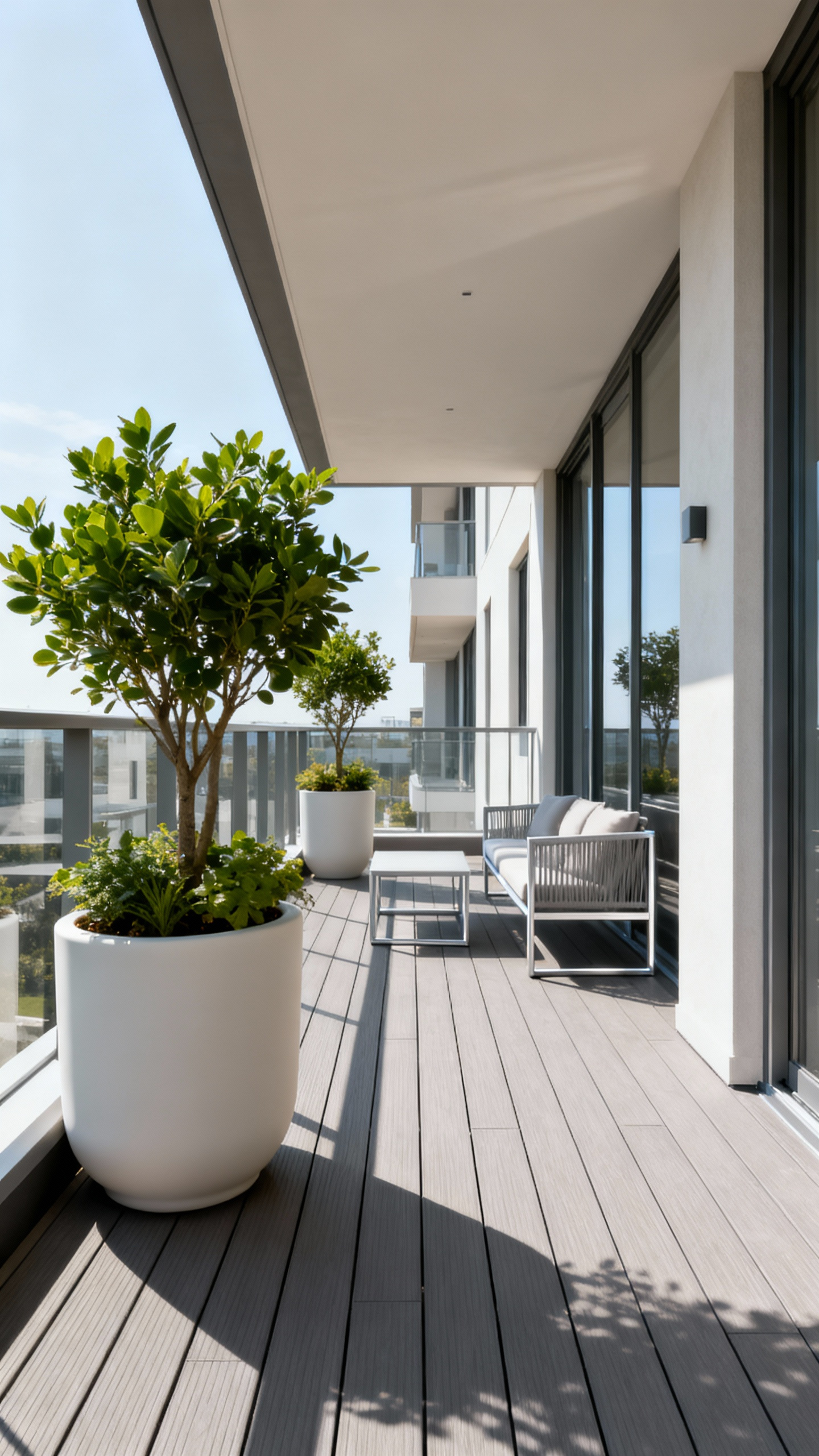
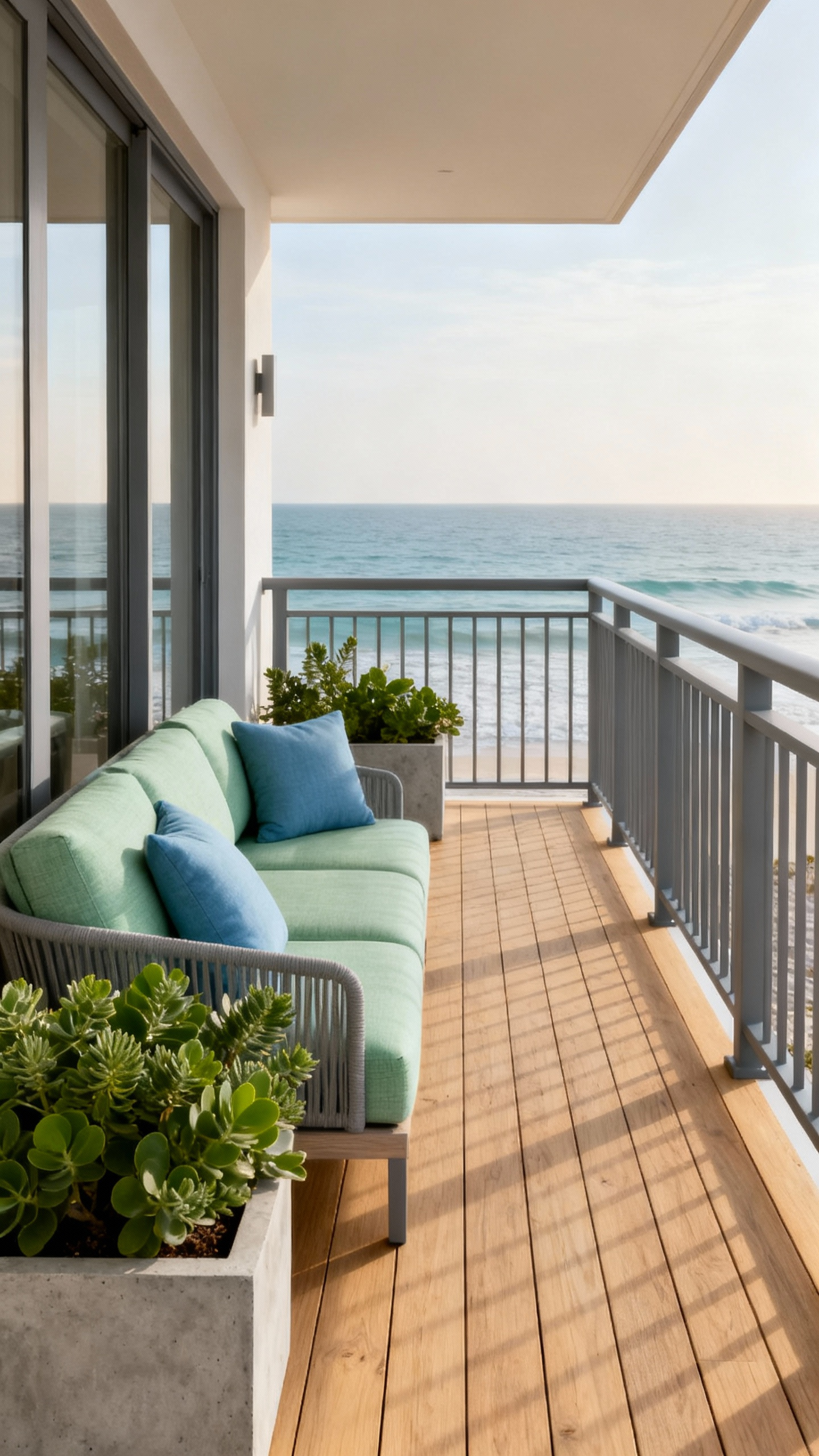
A sophisticated coastal aesthetic is whispered, not shouted. It begins with a color and material palette inspired by the seaside itself. Think of the soft, sun-bleached tones of driftwood, the myriad shades of white in the sand, and the hazy gray-blue of the horizon. Start with this neutral base to create a serene, expansive feel.
Now, let’s layer in texture. Contrast the smooth, cool feel of powder-coated aluminum with the warmth of weather-resistant teak or the natural weave of an all-weather wicker. What I tell my clients is to think about how things feel as much as how they look. Subtle pops of color can be introduced through textiles—a cushion in a muted sea glass green or a throw in a deep indigo. The goal is to create a palette that feels cohesive, calm, and deeply connected to the coastal environment.
Part 2: The Art of Resilient Furnishing
Choosing furniture for your balcony is an investment in your outdoor life. The key is to select pieces that possess not only style but the resilience to stand up to the elements with grace. This is where practicality and beauty converge.
6. Invest in Weather-Resistant Materials
The single most important factor for outdoor furniture is the material. Indoor pieces simply won’t survive. Look for materials designed to withstand sun, rain, and—especially in my line of work—salt air. Powder-coated aluminum is a brilliant choice; it’s lightweight, durable, and won’t rust. For a natural touch, teak is unparalleled. It’s rich in natural oils that repel water and, if left untreated, it will slowly age to a beautiful silvery-gray patina that is the very essence of coastal elegance.
Beyond the frame, pay attention to the fabrics. Look for cushions made from solution-dyed acrylics, a performance fabric where the color permeates the entire fiber, making it incredibly resistant to fading. This ensures your beautiful indigo cushions stay indigo, season after season. Choosing the right materials from the start means less maintenance and more time simply enjoying your retreat.
7. Embrace Multi-Functionality in Compact Spaces
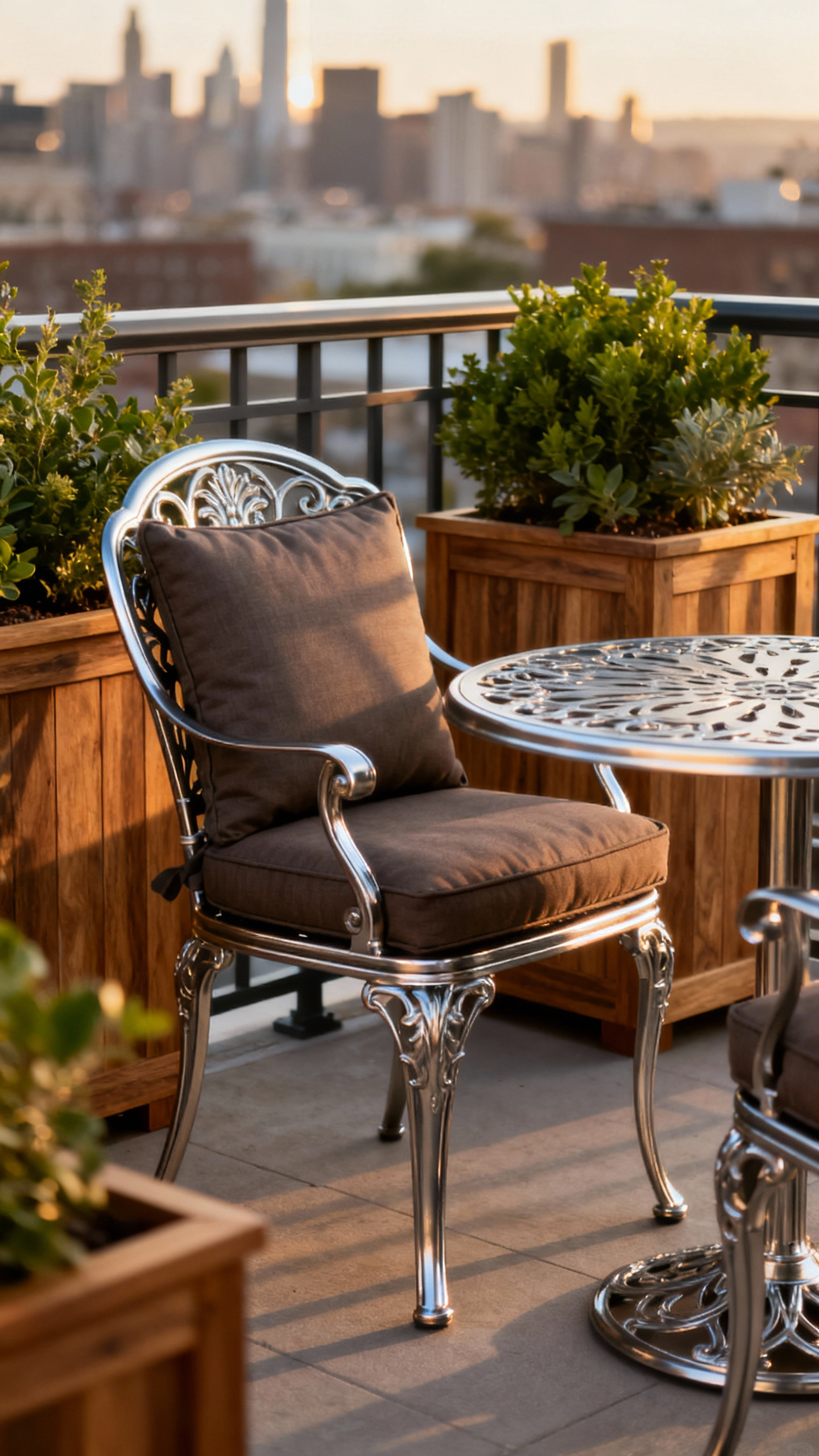
On a balcony, every piece of furniture must earn its keep. This is where multi-functional and foldable pieces become your best allies. A storage bench provides both seating and a discreet home for throws and gardening tools. A narrow console table can serve as a serving station or a potting bench, while a nest of small tables can be deployed for guests and tucked away when not in use.
I’m particularly fond of beautifully designed folding bistro sets. They offer a charming spot for a meal but can be hung on a wall, like art, to free up floor space. This isn’t about compromising on style for the sake of function. It’s about smart, sophisticated design that makes a small space feel generous and versatile, ready for whatever the moment holds.
8. Use Railing Planters for Vertical Greenery and Privacy
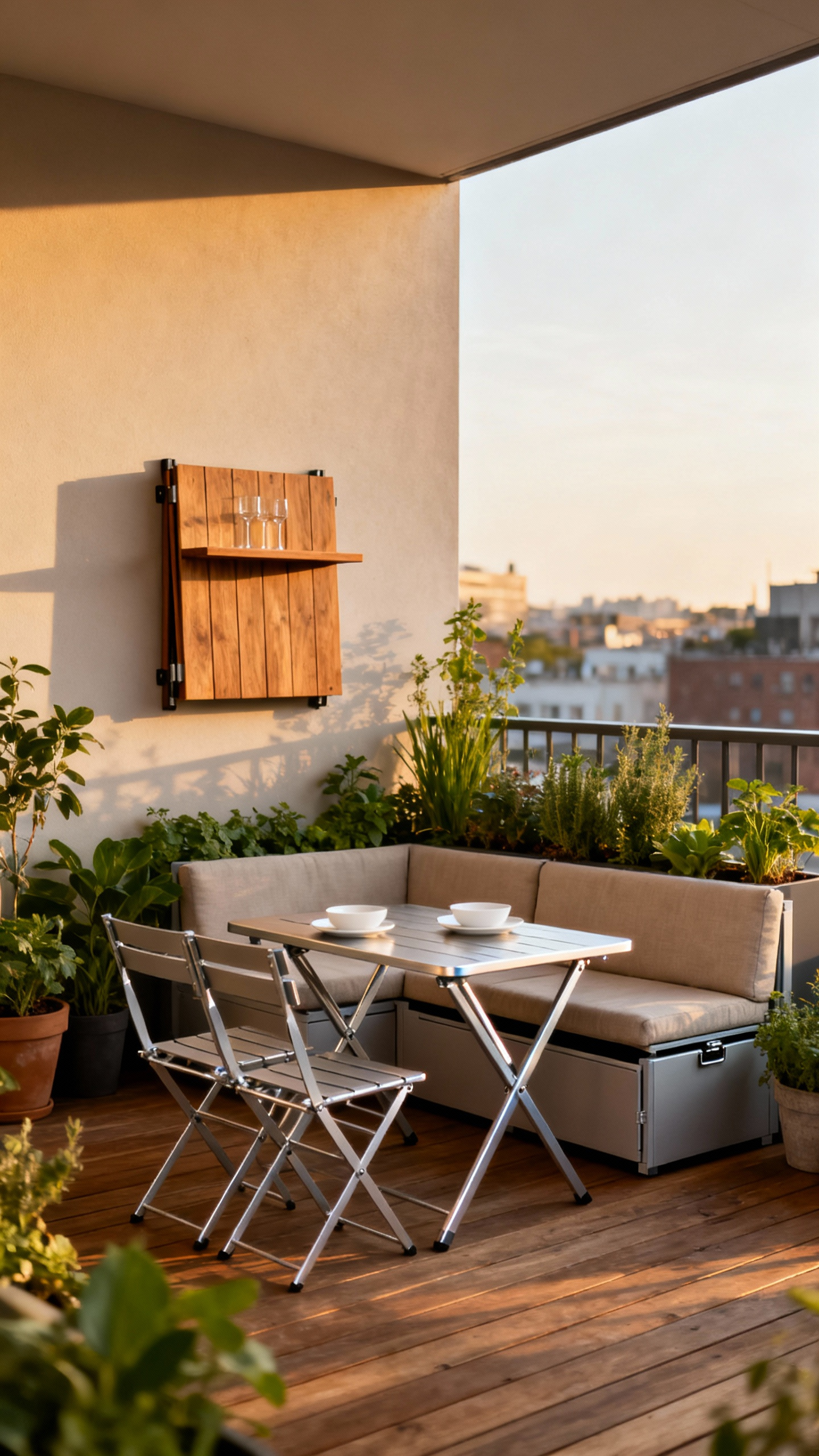
When floor space is at a premium, look up. Railing planters are a fantastic way to introduce lush greenery without sacrificing a single square foot. They instantly soften the hard lines of a balcony and create a sense of life and movement. Choose a mix of plants—some that trail elegantly downwards and some that reach up, like ornamental grasses that will catch the sea breeze.
Beyond aesthetics, railing planters can be a clever privacy solution. Planting a screen of tall, slender grasses or training a climbing vine along a trellis can create a living curtain that shields you from neighbors while still feeling open and natural. From my professional experience with coastal modern design, this creates a soft, organic boundary that is far more pleasing than a solid screen.
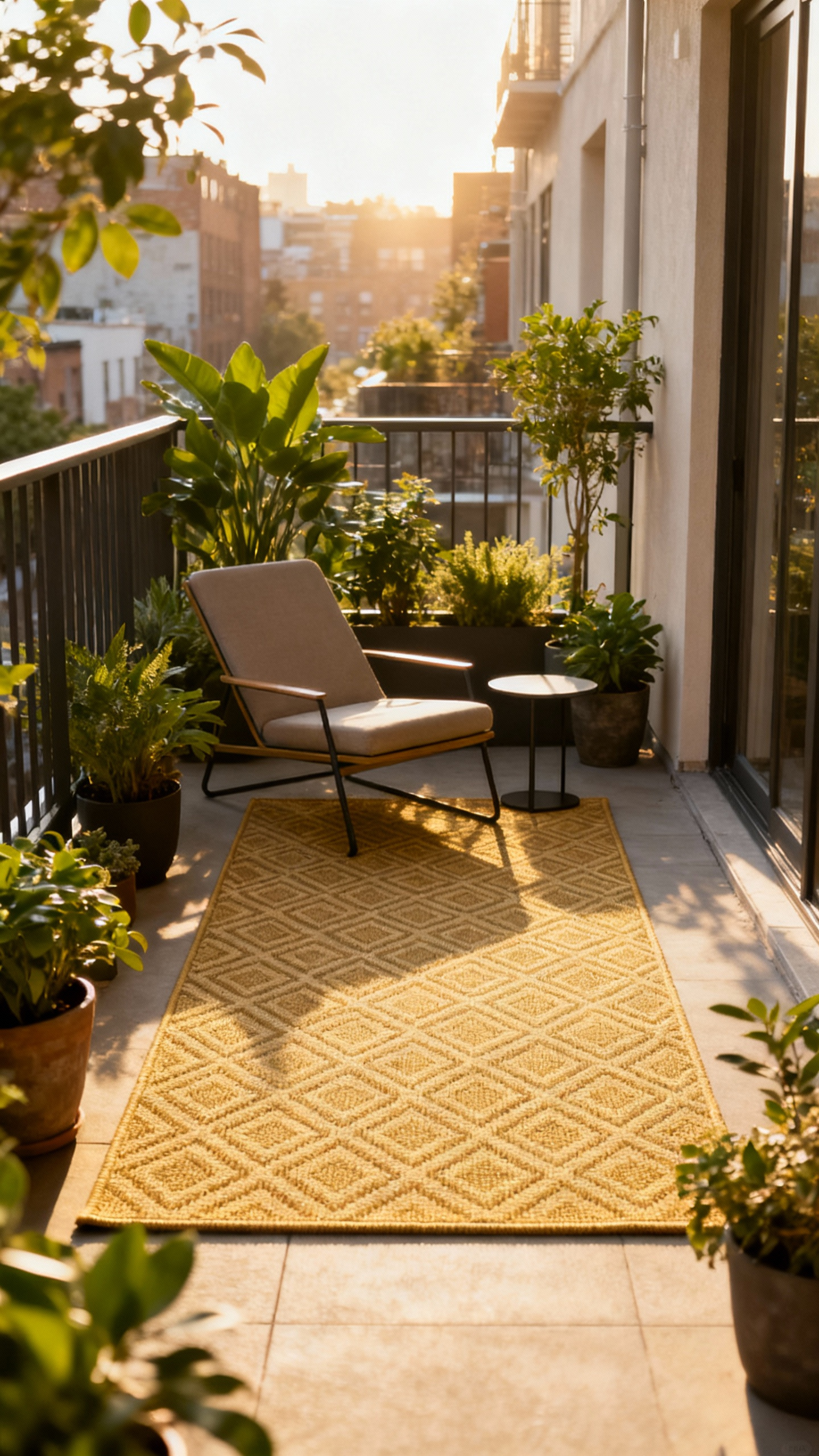
9. Anchor the Space with a Durable Outdoor Rug
Nothing defines a space and makes it feel like a true “room” more than a rug. An outdoor rug can instantly transform a cold, hard balcony floor into a comfortable and inviting foundation. The key is choosing one made from the right materials. Look for rugs woven from synthetics like polypropylene, which are designed to resist mildew, fading, and moisture.
An outdoor rug is a chance to introduce pattern and texture. A subtle stripe or a natural jute-look weave can anchor your seating area and tie all the design elements together. It provides a soft surface for bare feet and adds a layer of finished sophistication that makes your balcony feel like a deliberate and cohesive extension of your home’s interior.
10. Integrate Smart and Seamless Storage
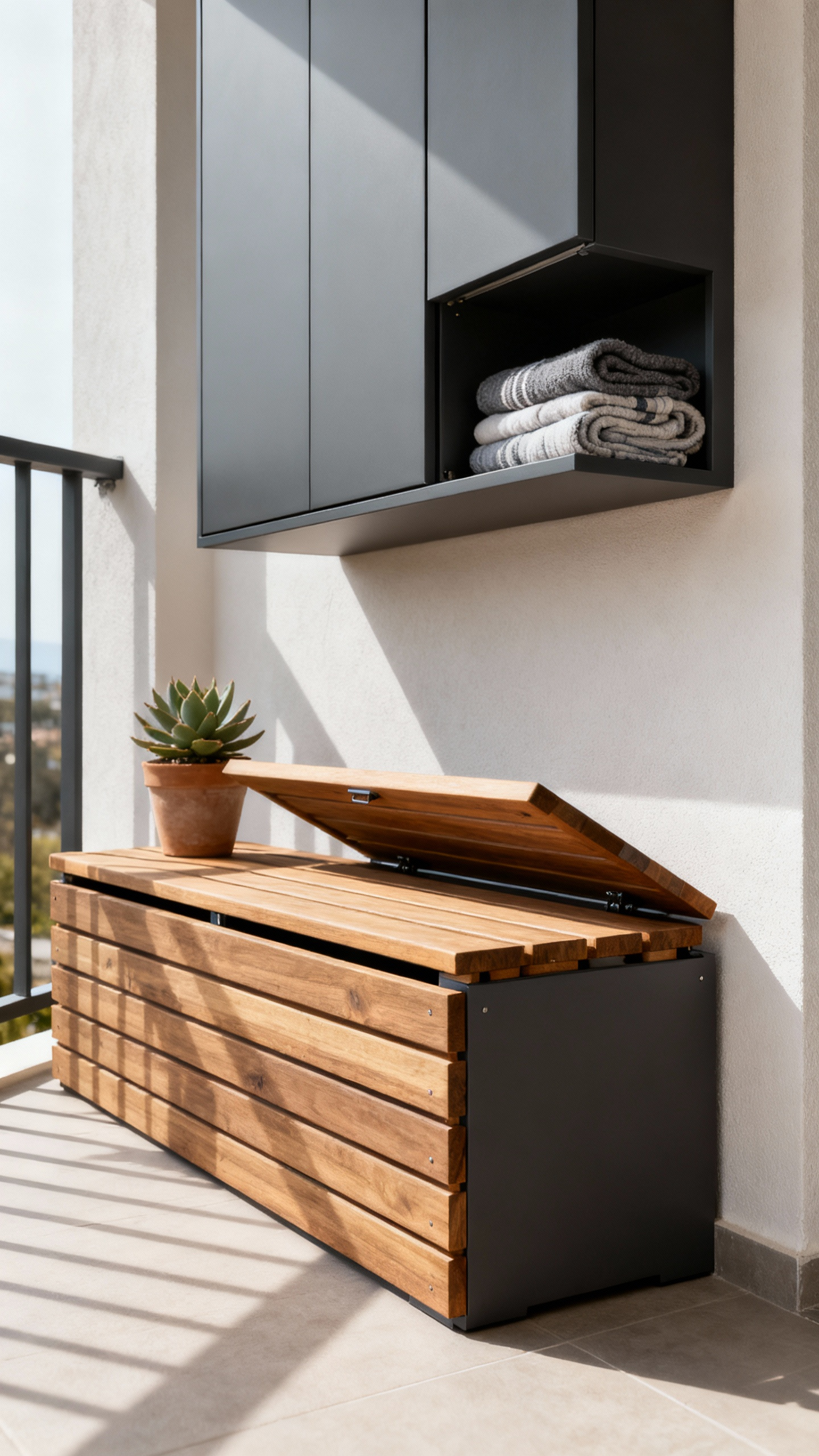
Clutter is the enemy of tranquility. For a balcony to feel like a true retreat, everything needs a place. This is where smart storage becomes a design element in itself. We’ve already touched on storage benches, but consider other discreet solutions as well. A slim, vertical cabinet can hold gardening supplies, while wall-mounted shelving can display a few curated objects without taking up floor space.
I’ve seen this play out beautifully in projects where we’ve designed custom built-in seating that flows along the perimeter of the balcony. The top lifts to reveal deep, weatherproof storage for everything from cushions to outdoor dinnerware. When storage is this seamlessly integrated, the space feels perpetually calm and organized, allowing the beauty of the view and the design to take center stage.
Part 3: Cultivating Ambience
Now we move into the elements that bring your balcony to life—the sensory details that create mood and character. This is about adding layers of greenery and light to craft an atmosphere that feels truly special.
11. Curate a Resilient, Climate-Appropriate Botanical Collection
The key to a lush, thriving balcony garden is choosing the right plants for your specific environment. It’s a simple principle: work with nature, not against it. For a coastal balcony, this means selecting salt-tolerant and wind-resistant species. Think sculptural succulents, hardy sea grasses, lavender, and rosemary. These plants not only survive but often thrive in seaside conditions.
Beyond resilience, think about creating a composition. Vary the height, texture, and color of your plants for visual interest. A tall, architectural plant can create a focal point, while trailing plants soften the edges of pots and railings. I often advise clients to choose planters that complement their furniture—sleek fiberglass for a modern look, or classic terracotta for a more Mediterranean feel. A well-curated botanical collection turns your balcony into a living, breathing space.

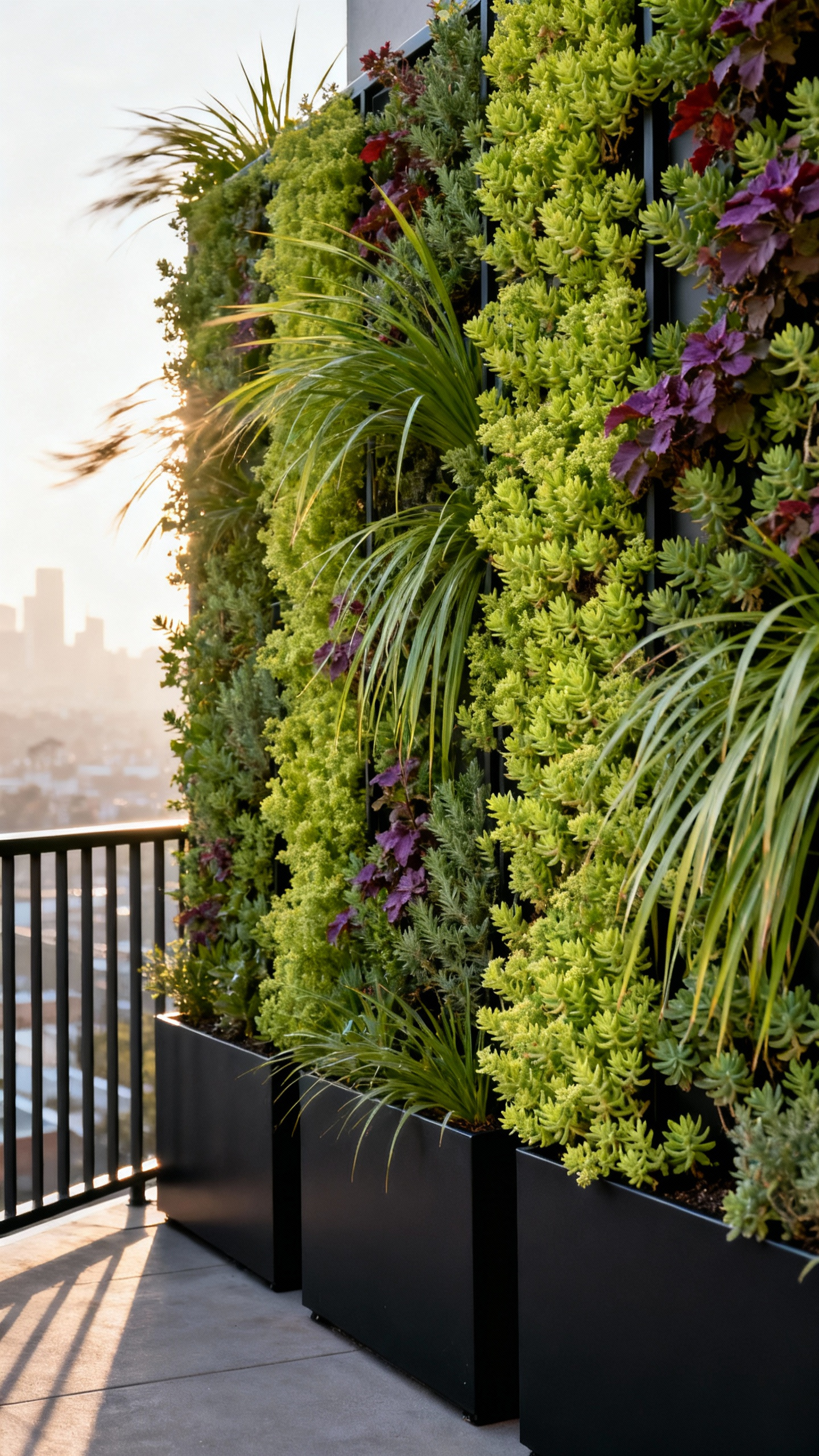
12. Design Vertically with Living Walls
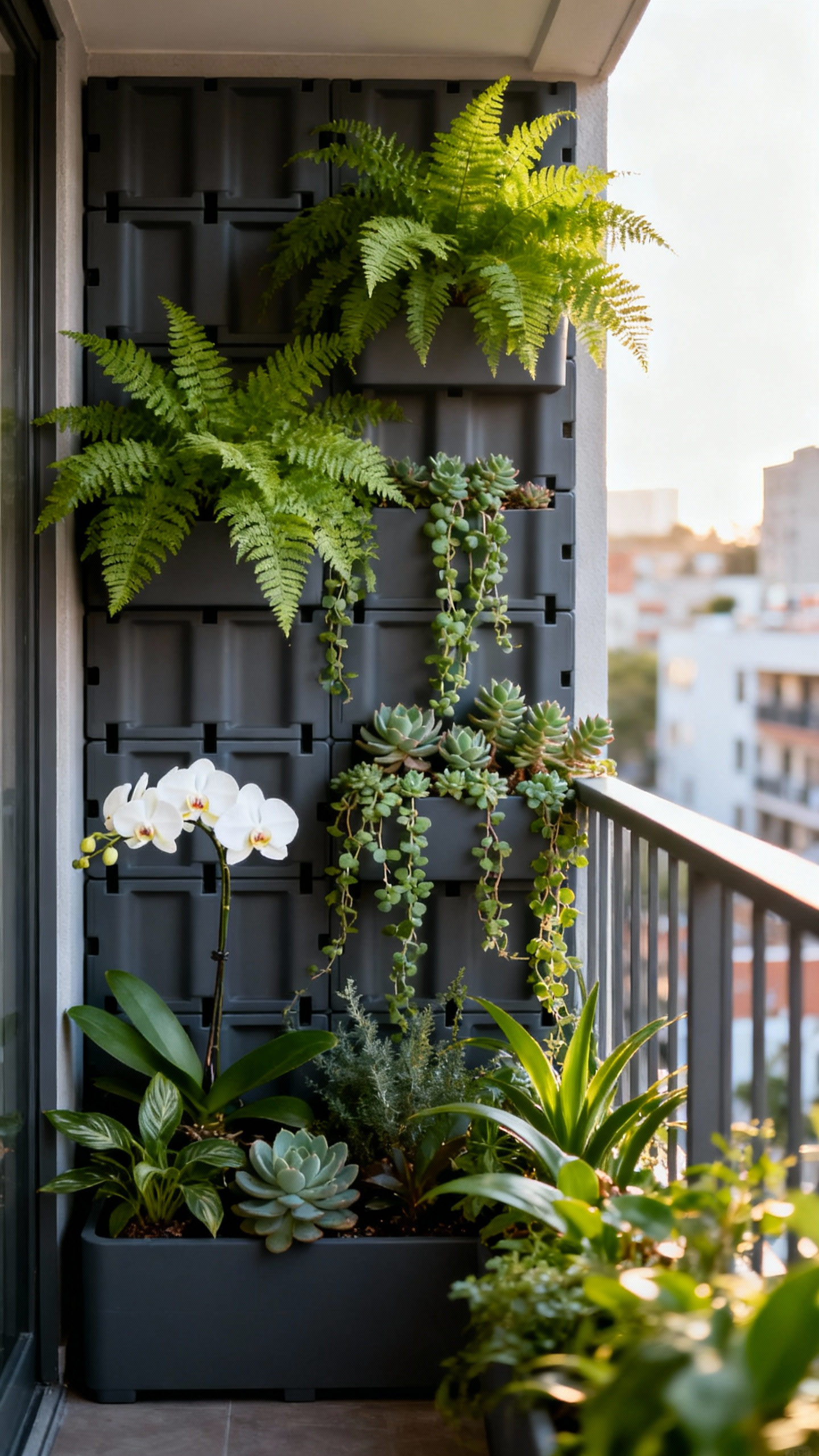
For a truly dramatic green statement, consider a vertical garden or a living wall. This is an incredibly efficient way to create a lush, immersive feeling, especially in a small space. You can start simply with a trellis and a climbing plant like jasmine or clematis, which will also add a beautiful fragrance to your balcony.
For a more integrated look, modular living wall systems allow you to create a dense tapestry of greenery. I’ve found that a wall of ferns and mosses can create a cool, calming focal point on a shaded balcony, transforming it into a private grotto. It’s a powerful design move that brings an unexpected and sophisticated dose of nature to an urban setting.
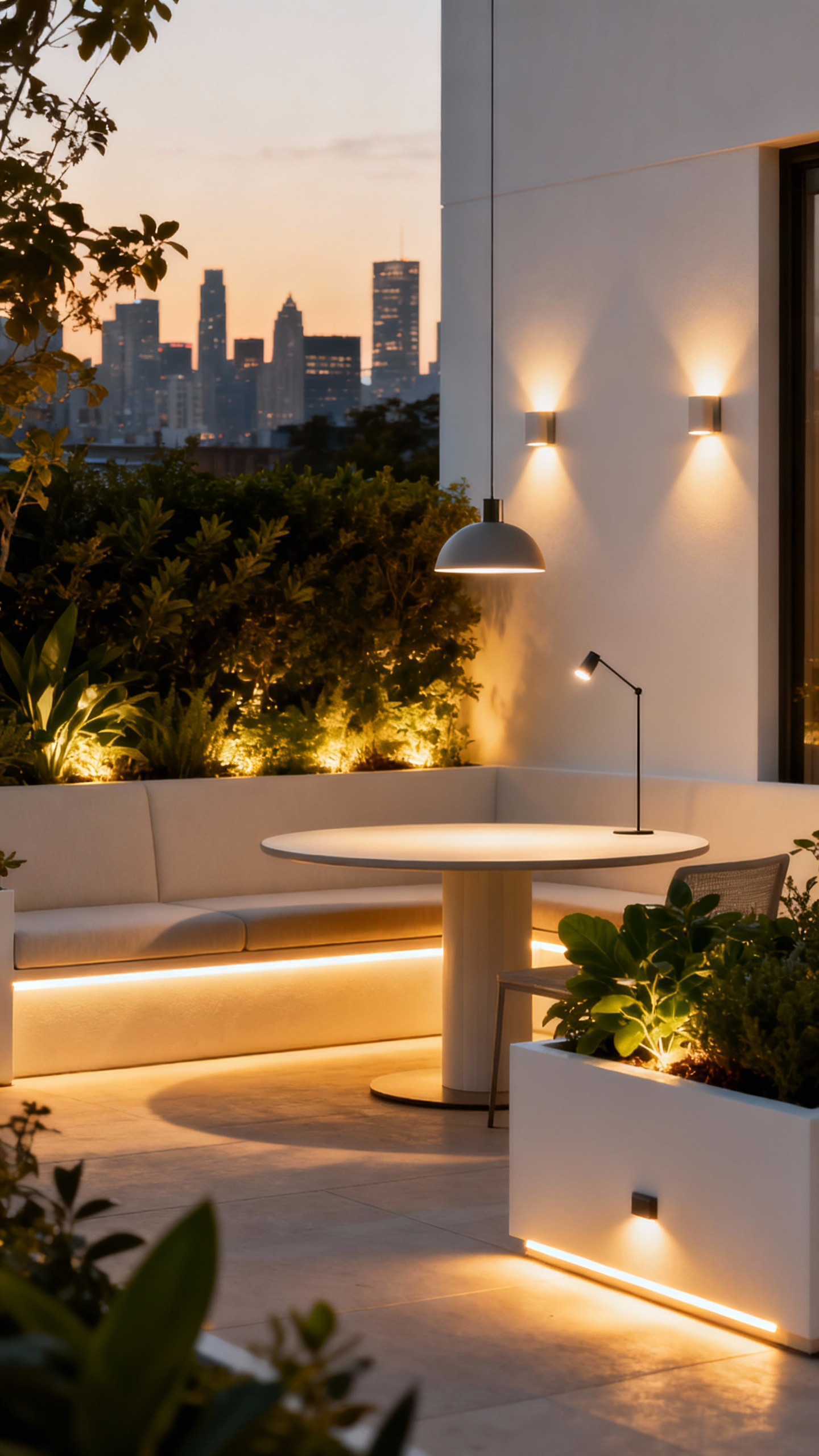
13. Layer Your Lighting for a Magical Glow
Lighting is what gives your balcony its after-dark personality. A single, harsh overhead light does nothing for ambiance. Instead, think in layers: ambient, task, and accent. Ambient light provides a general, soft glow. This can be achieved with outdoor string lights, LED strips tucked under a railing, or stylish wall sconces. Their warm light makes the space feel instantly inviting.
Task lighting is for specific activities, like a well-placed reading lamp next to a comfortable chair. Finally, accent lighting adds drama. Use small, upward-facing spotlights to highlight a beautiful plant or an interesting architectural detail. When you layer these three types of light, you create a rich, dynamic, and magical atmosphere that invites you to linger long after the sun has set.
14. Add Softness with Sophisticated Performance Textiles
Textiles are the final layer of comfort and style. Invest in high-quality outdoor cushions, pillows, and throws made from performance fabrics. They not only provide softness and color but are designed to withstand the elements without fading or developing mildew. This is your chance to play with pattern and texture against the neutral backdrop of your furniture.
For an added touch of elegance and privacy, consider outdoor drapes. Made from weather-resistant, sheer fabric, they can be drawn to diffuse harsh sunlight or to create a more intimate, enclosed feeling in the evening. They add a gentle movement as they catch the breeze, contributing to that relaxed, breezy feeling we’re striving for.

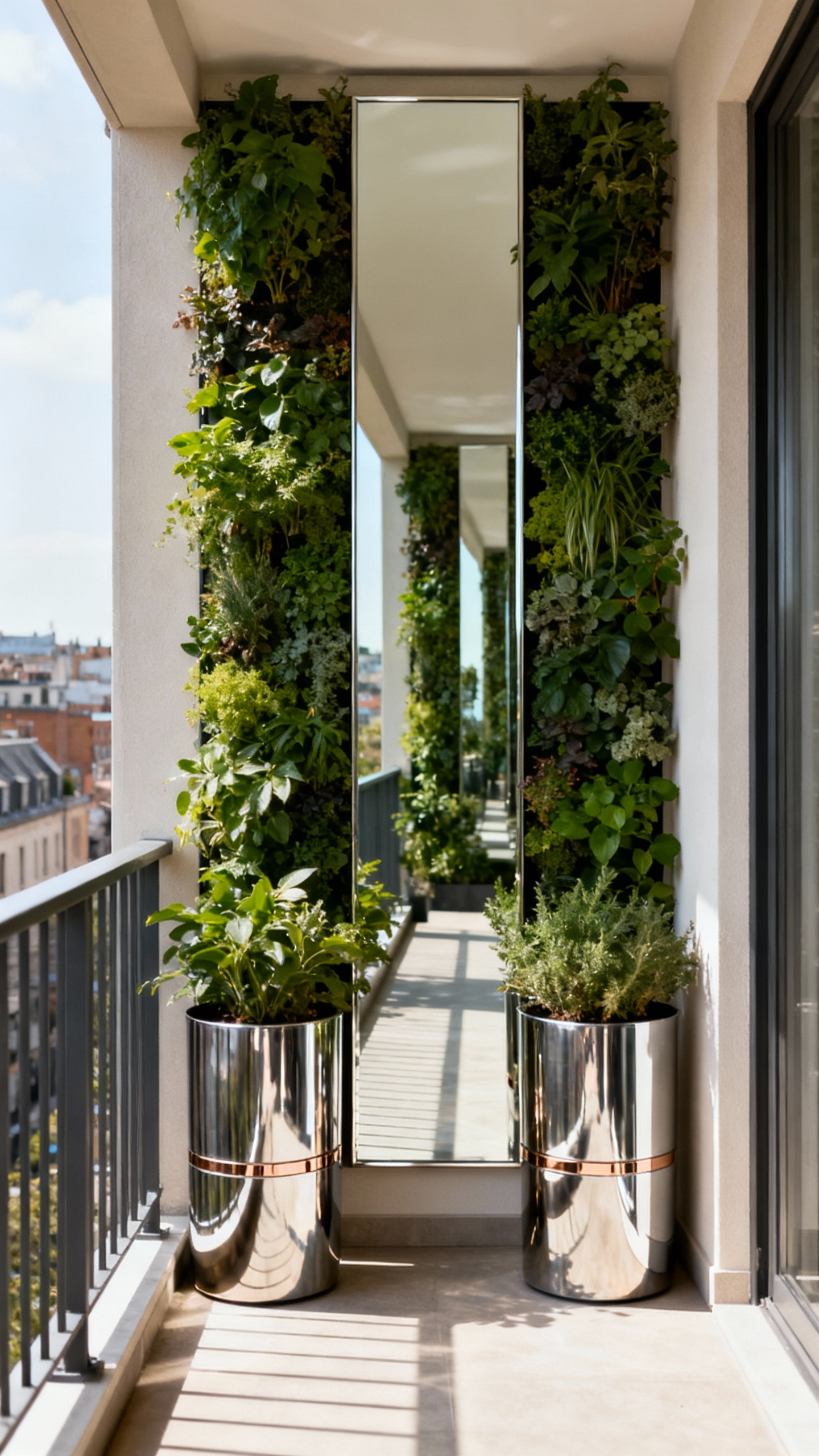
15. Amplify Light and Space with Mirrors and Metallics
A well-placed mirror is one of the oldest tricks in the design book, and for good reason. On a balcony, an outdoor-rated mirror can visually double your space and bounce light into darker corners, making the entire area feel larger and brighter. Position it to reflect a beautiful view or a cluster of lush plants to maximize its impact.
Beyond mirrors, metallic accents can add a subtle sparkle and sophistication. Think of a polished copper lantern, a group of galvanized steel planters, or the sleek aluminum frame of your furniture. These surfaces catch the light beautifully, from the bright sun of midday to the soft glow of your evening lighting, adding a dynamic and refined layer to your design.
Part 4: Elevated Living & Enduring Sophistication
The final touches are about longevity and personalization. These are the details that transform a well-designed balcony into a space that is enduringly stylish and uniquely yours, ready to be enjoyed across all seasons.
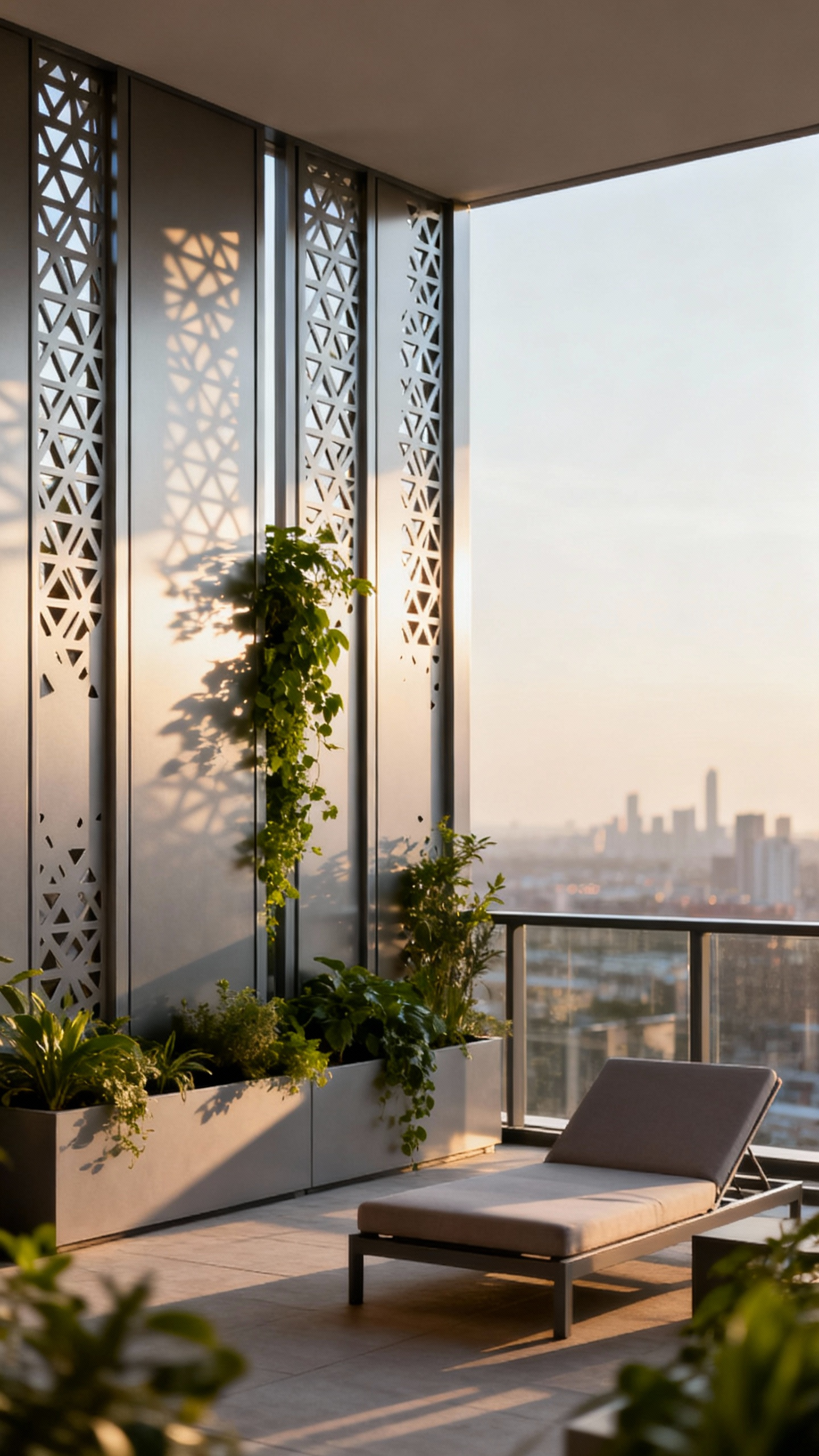
16. Create Seclusion with Artful Privacy Screens
Privacy is the ultimate luxury. Instead of a solid, imposing screen, opt for something more architectural and artful. Slatted screens made from weather-resistant wood or composite materials offer privacy while still allowing light and air to filter through. They create a sense of enclosure without feeling confining.
Laser-cut metal panels are another sophisticated option. They can be found in beautiful patterns that cast intricate shadows throughout the day, acting as both a privacy solution and a piece of art. Or, as mentioned before, use tall planters to create a living green screen. The goal is to achieve seclusion through elegant design, not just obstruction.
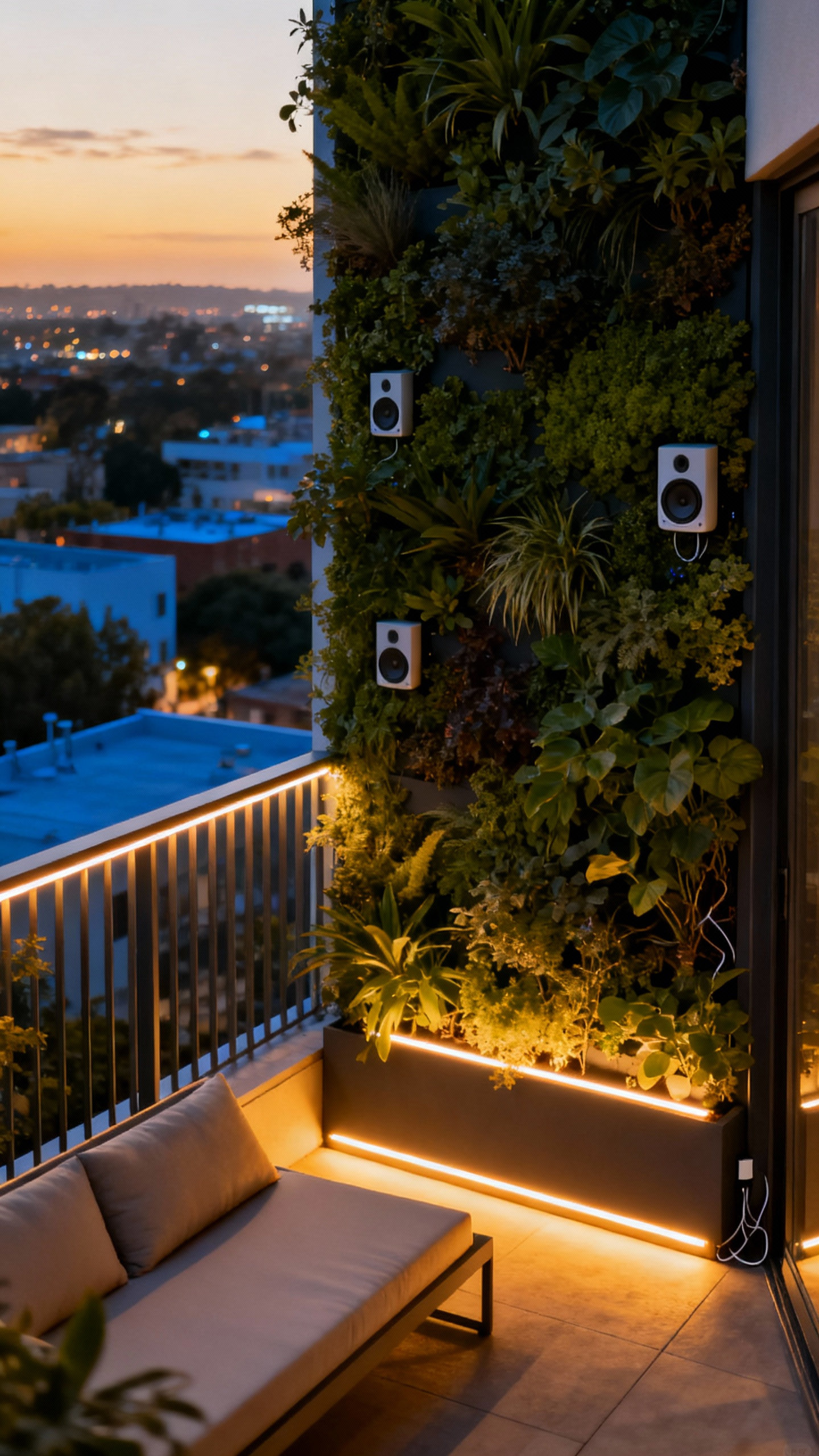
17. Integrate Outdoor Audio for an Immersive Experience
To complete the sensory experience, consider integrated audio. Instead of a portable speaker, have discreet, weatherproof speakers professionally installed. They can be designed to look like rocks and blend into your planters, or mounted subtly under an eave, delivering high-quality sound that seems to emanate from everywhere and nowhere at once.
Connected to your home’s smart system, you can control the music and volume with your phone, setting the perfect soundtrack for any occasion. Imagine a lazy Sunday morning with gentle jazz, or a lively evening with friends accompanied by your favorite playlist. It’s a seamless and luxurious detail that elevates your outdoor living.
18. Extend the Seasons with Heating and All-Weather Protection
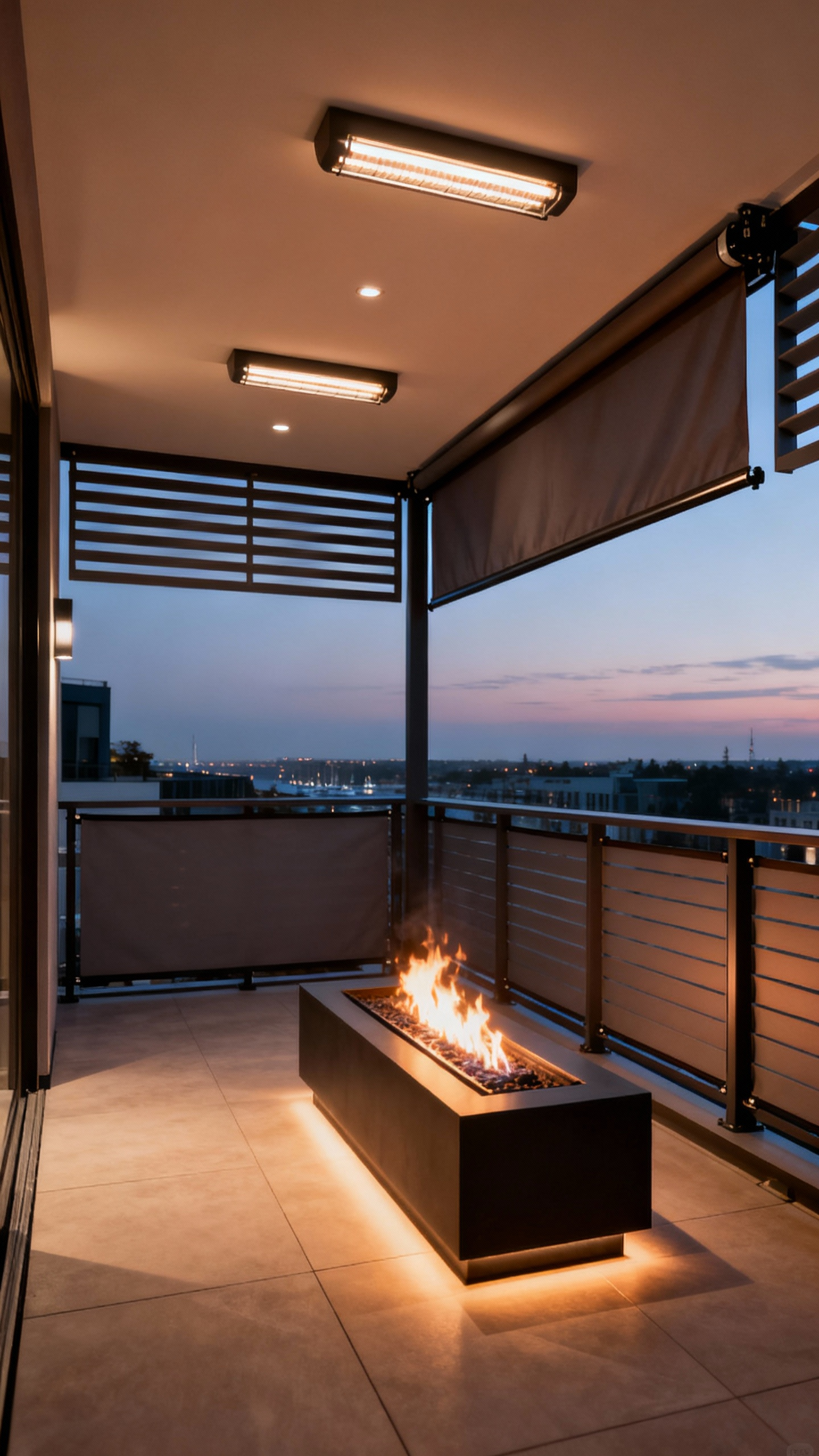
Why limit your balcony enjoyment to perfect summer days? With the right elements, you can extend its use well into the cooler months. Sleek, mounted infrared heaters can be installed overhead, providing direct, efficient warmth that makes a crisp autumn evening feel cozy and comfortable.
For protection from sun and unexpected showers, a retractable awning offers incredible flexibility. For a more permanent solution, a pergola with an adjustable louvered roof gives you complete control—open to the sun, angled for shade, or closed for rain protection. These additions are investments that pay dividends by transforming your balcony into a true three-season room.
19. Establish a Simple Maintenance Regimen
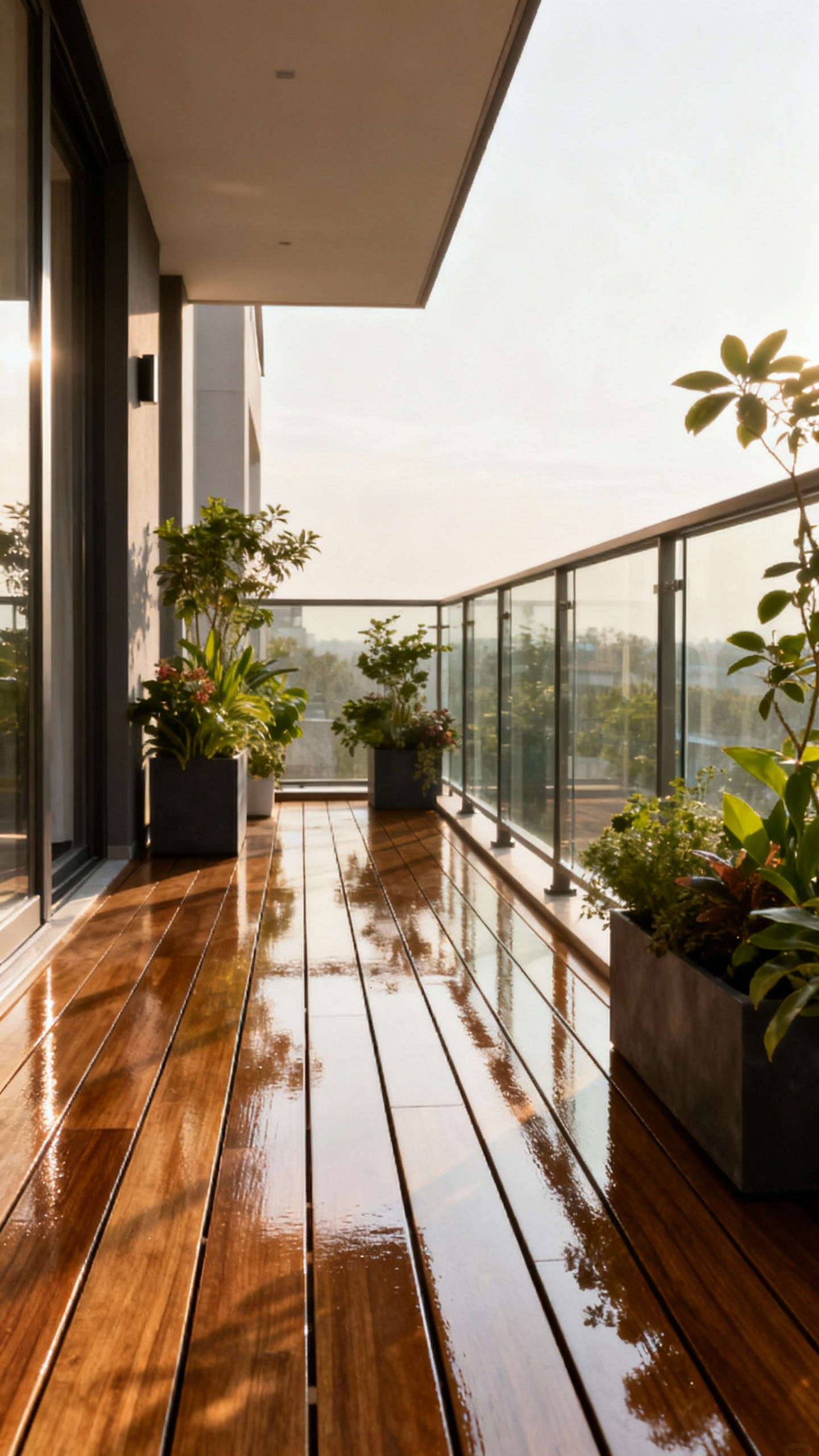
An elegant space is a well-cared-for space. The beauty of choosing high-quality, weather-resistant materials is that maintenance is minimal, but it’s not zero. Establish a simple routine: regularly wipe down furniture to prevent grime from building up, sweep the floors, and check on your plants. At the beginning and end of each season, give everything a more thorough cleaning and inspect for any wear and tear.
I learned this years ago when a stunning teak set on a project aged poorly simply due to neglect. A little care goes a long way. This prudent regimen isn’t a chore; it’s a ritual that honors the investment you’ve made in your outdoor sanctuary and ensures its enduring beauty for years to come.
20. Personalize with Bespoke, Curated Accents
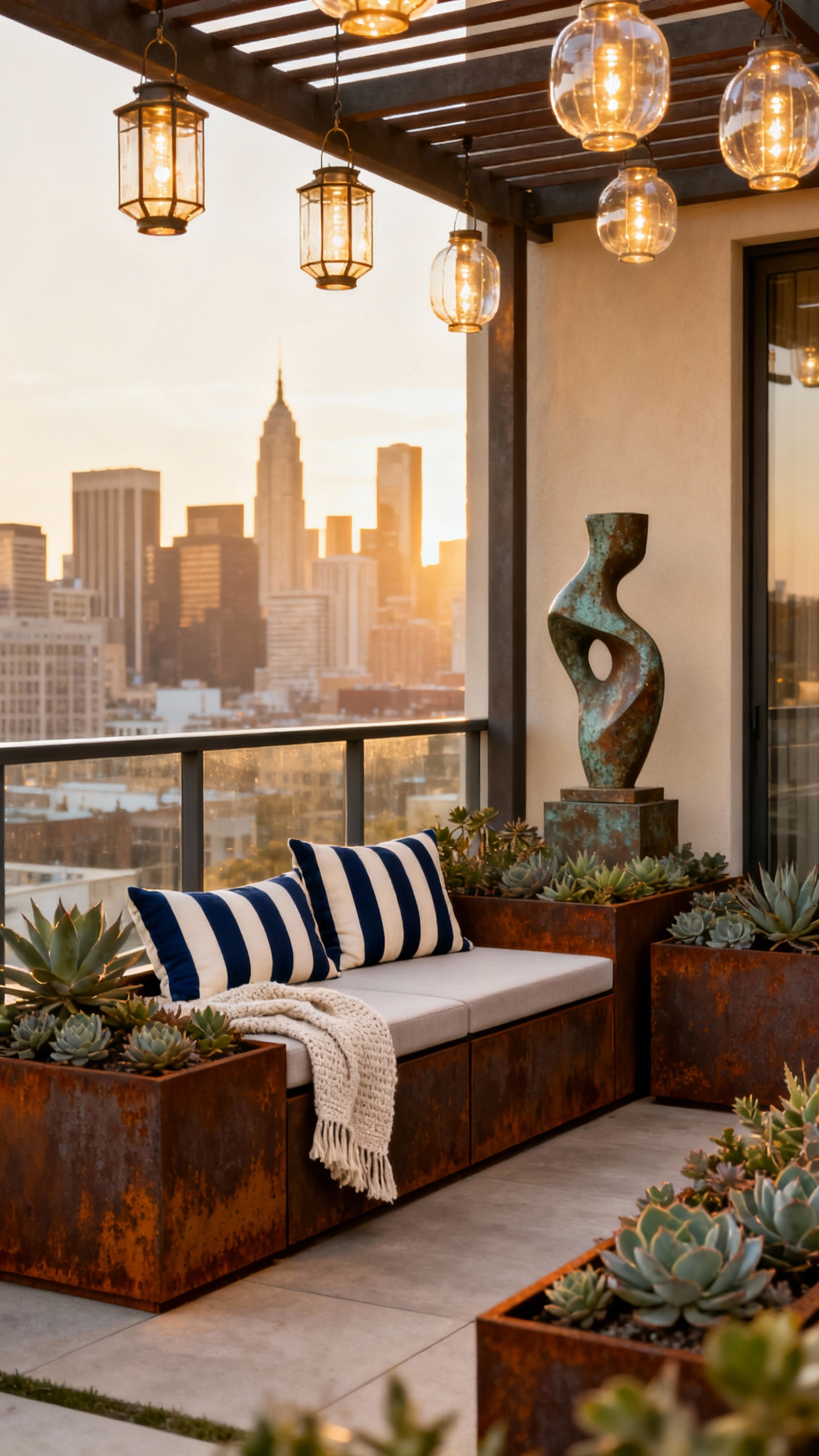
Finally, make the space undeniably yours. This is where you add the layers that tell your story. It’s not about cluttering the space, but about a few, carefully chosen objects that hold meaning. It might be a piece of sculptural driftwood found on a favorite beach, a set of hand-thrown ceramic planters from a local artist, or a beautiful storm lantern that you light every evening.
This final layer is the most important. It’s what infuses the space with soul and transforms it from a “designed” space into your personal retreat. Choose pieces you love, that speak to you, and that enhance the feeling of sophisticated, relaxed living you set out to create. This is the signature touch that makes your balcony truly one-of-a-kind.
Conclusion
We’ve journeyed from the bare bones of your balcony to the fine art of creating a personal, enduring sanctuary. I hope these ideas have left you feeling inspired, not overwhelmed. The goal was never to provide a rigid set of rules, but to offer a guiding philosophy for creating a space that feels both elegant and effortlessly livable. Your balcony isn’t just an appendage to your home; it’s an opportunity for a private escape, a place to connect with the open air.
Remember that true coastal sophistication lies in the balance—between beauty and durability, style and comfort, nature and design. Take these concepts, filter them through your own personal lens, and begin the rewarding process of crafting your own elevated oasis. Don’t just decorate; curate a space that supports and enhances your life, a place where every sunset feels a little more personal, and every morning breath of fresh air feels like a gift.