
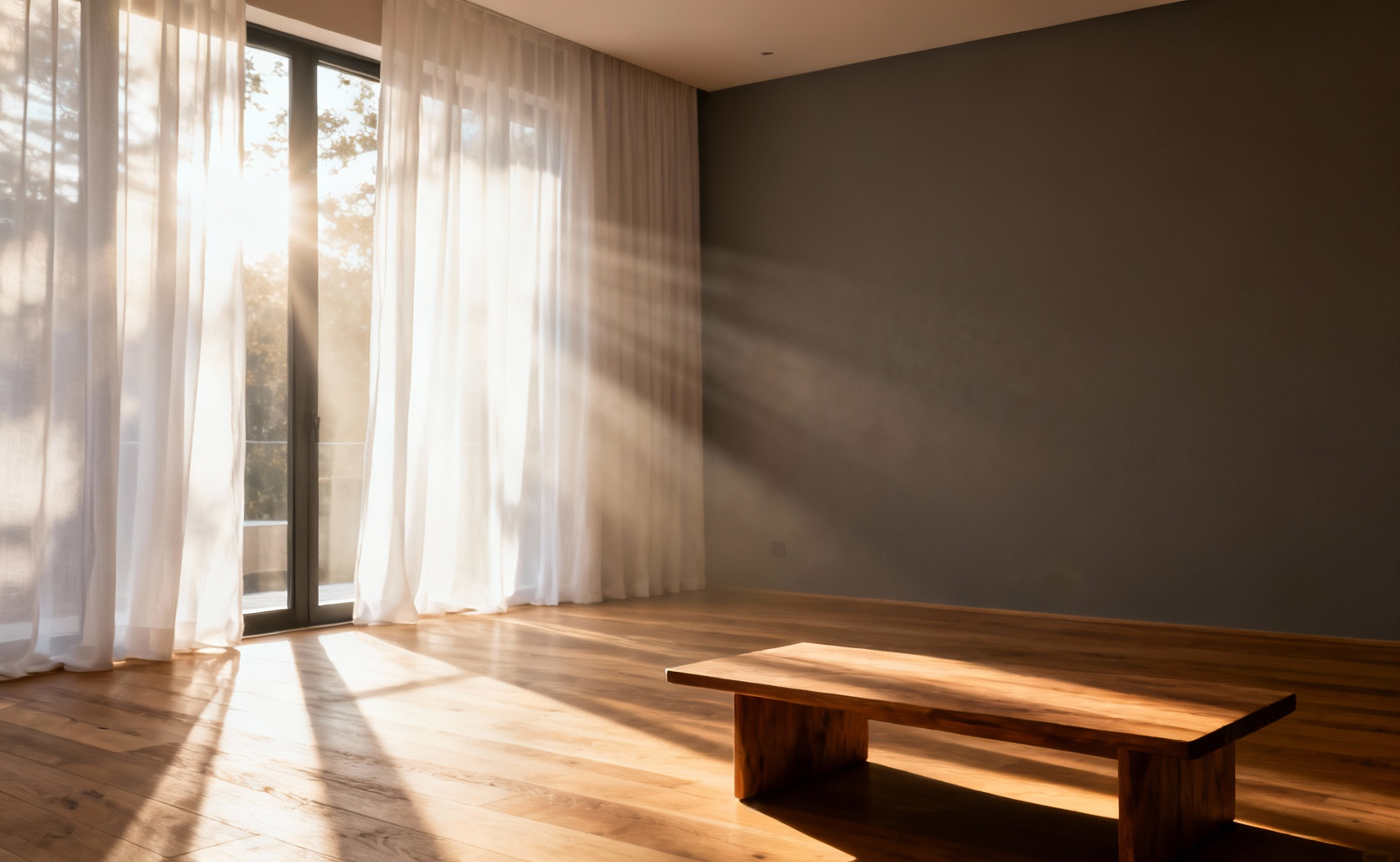

Achieving a truly timeless aesthetic requires more than following fleeting trends. When undertaking modern living room decoration, the process must be rooted in intentionality—a radical departure from the rigid, segmented parlors of the Victorian era.
The journey began not with a mere decorative trend, but with the utopian philosophy of the Bauhaus school. This movement rejected heavy ornamentation in favor of rationality and industrial elegance, championing the famous dictum that form must follow function.
This architectural revolution eventually met the practical needs of post-war American life, transforming the domestic landscape entirely. While early European modernism introduced the transparency of glass and the cool touch of chrome, the Mid-Century Modern movement truly domesticated these ideas.
Designers softened the austere edges of the machine age with organic woods like teak and walnut, ensuring furniture offered the “warm receptive look of a well-used first baseman’s mitt.” This evolution permanently shifted the room’s purpose from a formal area for receiving guests to a multi-functional family hub designed for television, dining, and relaxation.
This guide explores how the avant-garde principles of the 1920s evolved into the warm, enduring aesthetic of the modern home. We will examine how understanding these historical shifts—from the introduction of tubular steel to the rise of the open plan—can help you curate a living space that honors design history while meeting the demands of contemporary life.
The Philosophy of Function: Why ‘Less is More’ Still Matters for Mental Clarity
In an era defined by digital noise, the design of our living spaces has become a matter of neurological necessity rather than simple aesthetics. Visual clutter does more than crowd a room; it imposes a high cognitive load on the brain.
This state of visual disarray forces us to process excessive sensory data constantly, keeping the body in a low-grade fight-or-flight mode. Research links cluttered environments directly to elevated levels of cortisol, the stress hormone. By prioritizing clean lines and clear pathways, a modern living room actively reduces this extraneous load, allowing the mind to truly decompress.
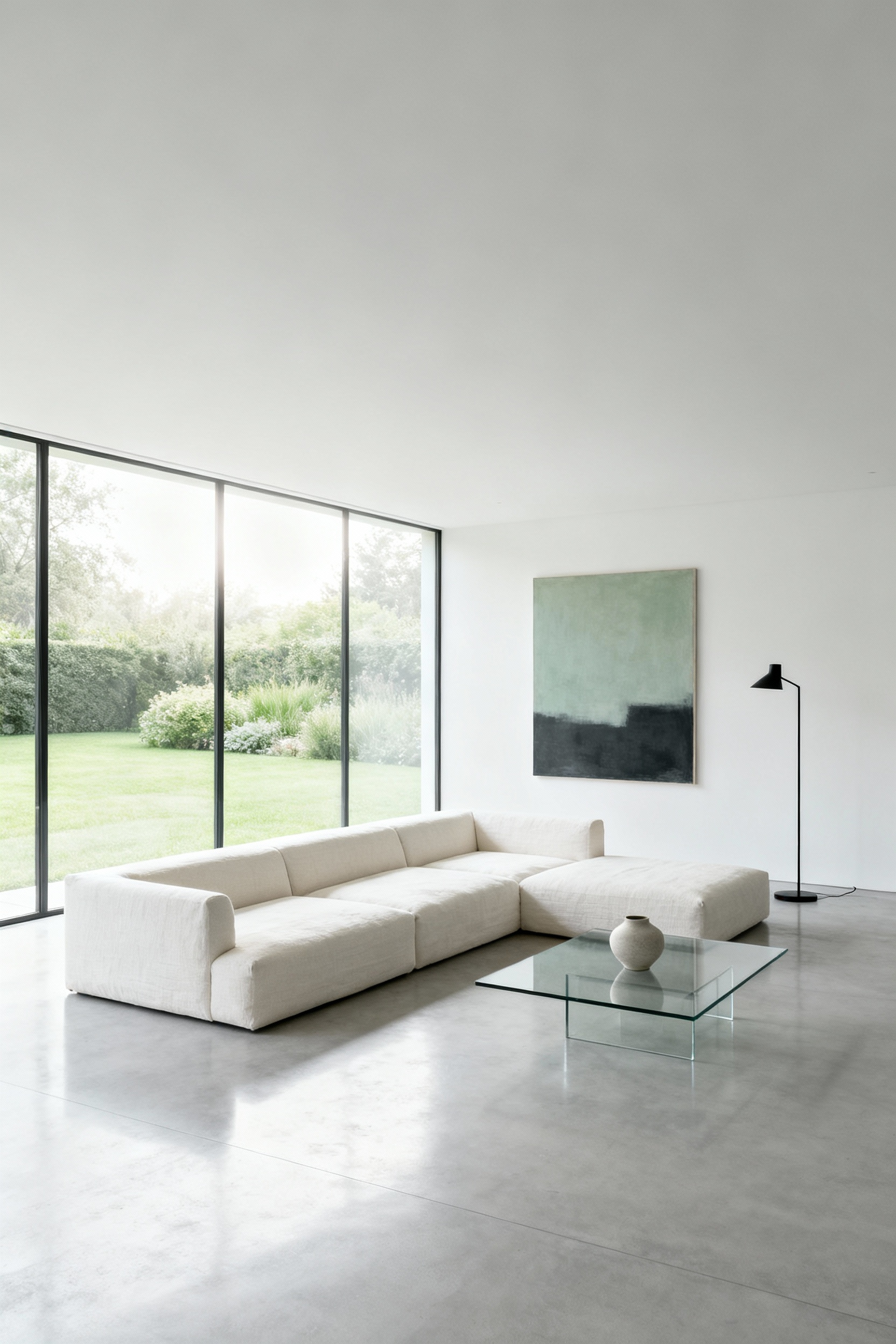
This biological need for order validates the intellectual inheritance of the mid-century era. When architect Ludwig Mies van der Rohe famously declared “less is more,” he championed a functionalist approach where every object serves a deliberate purpose. This Western philosophy converges beautifully with the Japanese concept of *Ma*—the intentional void that is full of potential.
In a living space, *Ma* isn’t merely empty floor space; it is a pause that allows us to appreciate the form and craftsmanship of the pieces that remain.
To prevent this functionalism from feeling sterile, contemporary design has evolved into “Warm Minimalism.” This approach grounds the philosophy in tactile reality. We replace visual noise with a curated palette of natural materials—the grain of restored wood, the weave of linen, or the coolness of stone. Integrating these biophilic elements creates a sensory language that signals safety to our deepest instincts. Ultimately, a function-first living room becomes a sanctuary where decisions about possessions are pre-made, offering a vital reprieve from the overwhelm of modern life.
Authenticity Over Fast Furniture: The Value of Investing in Design History
The allure of fast furniture is often deceptive. While the upfront price tag suggests affordability, mass-produced items relying on particleboard and thin veneers frequently have a lifecycle of merely three to five years before joints fail or laminates peel.
In contrast, authentic design pieces—particularly those rooted in the mid-century tradition—operate on an investment model. When you purchase a chair crafted with solid hardwoods and time-tested joinery like mortise-and-tenon, you aren’t just buying a seat; you are acquiring a repairable asset. Unlike MDF, which swells with moisture and crumbles, solid oak or walnut allows for scratches to be sanded and finishes to be refreshed. These pieces often appreciate in value while disposable alternatives require constant replacement.
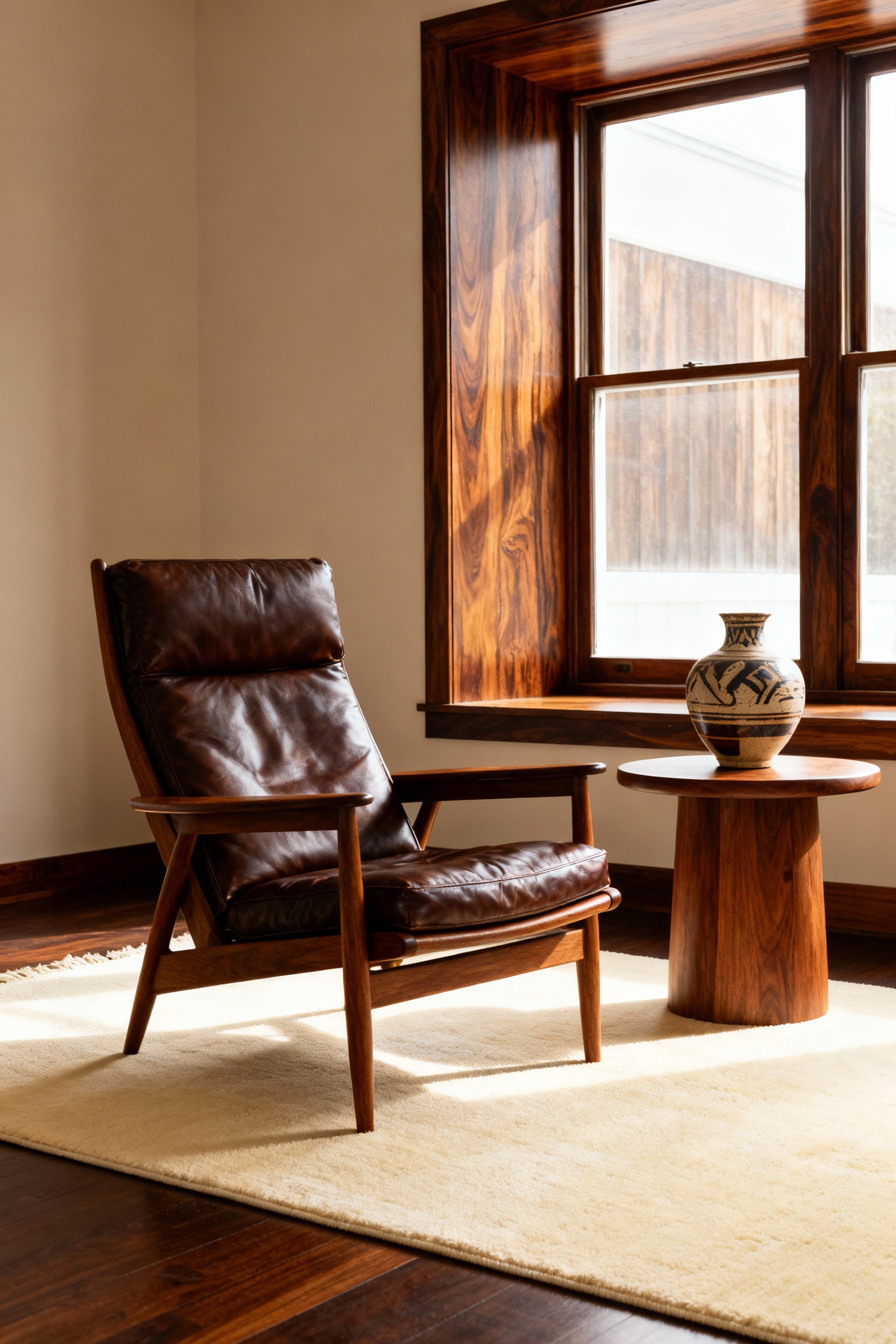
Beyond the balance sheet, there is a profound sensory shift when you introduce design history into a modern living room. Synthetic plastics and flat-packed laminates contribute to a visual coldness, whereas natural materials develop a narrative. We call this patina—the rich, evolving sheen that solid wood or quality leather acquires through years of use.
This distinct character turns a piece of furniture into an emotional anchor, offering the warmth of real grain and a tangible connection to the craftsman’s original vision. This depth transforms a space from a temporary showroom into a true refuge that quiets the visual noise of contemporary life.
Choosing these heirlooms is also a decided rejection of the “disposable design” footprint. The fast furniture industry mirrors fast fashion, filling landfills with non-recyclable materials and toxic resins. Opting for restoration-ready vintage pieces or ethically crafted icons aligns your home with a sustainable practice, ensuring that the resources used to build your furniture honor the environment rather than depleting it.
Material Warmth: Anchoring the Room with Teak, Walnut, and Rosewood
In a contemporary landscape often dominated by the cool sterility of concrete and glass, mid-century timbers act as the room’s heartbeat. These materials are not merely surfaces; they are design statements that bridge minimalism with humanity.
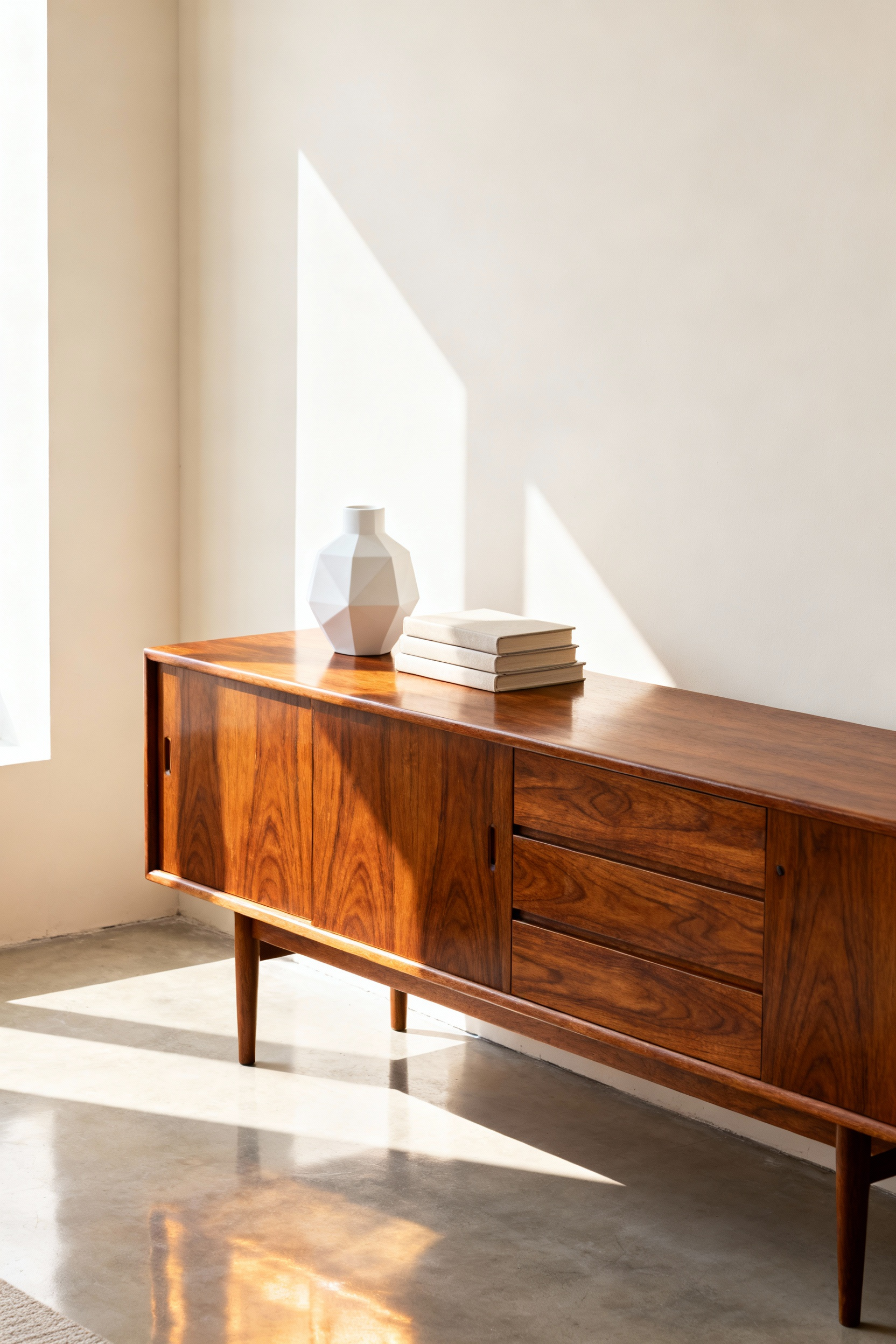
Teak, the golden standard of Danish Modernism, introduces a functional warmth reminiscent of sunlight on sand. Its high oil content once served boat-builders, but in the living room, that durability translates into an honest, grounded presence. A vintage teak sideboard offers a honey-toned glow that softens the stark lines of a Japandi-inspired space.
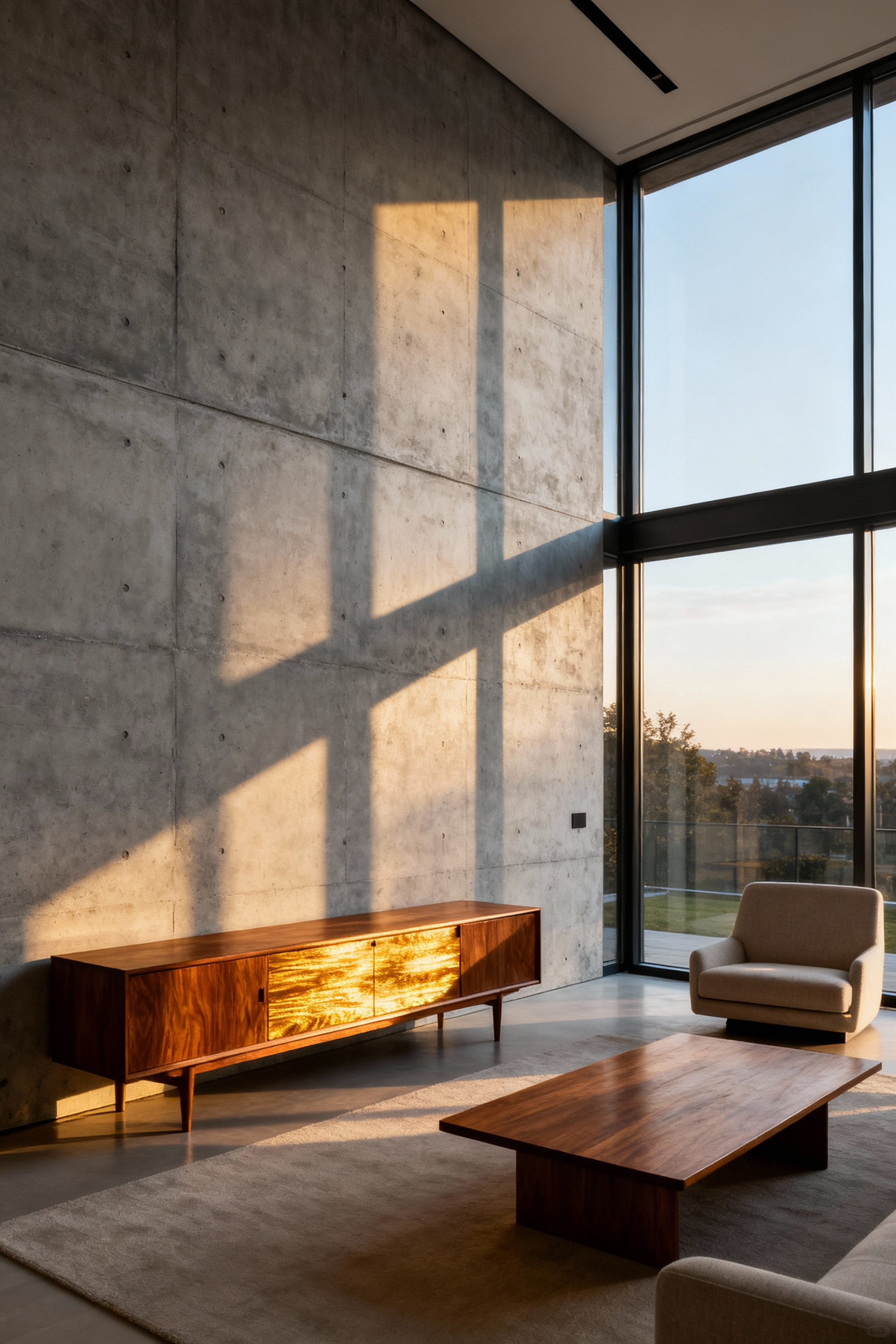
For a more dramatic visual weight, American Walnut serves as a deep-toned anchor. Its chocolatey hues and workability allowed mid-century artisans to carve the organic, sculptural shapes that define the era. Running your hand along a walnut console reveals a silky finish that invites physical interaction, offering a sophistication that contrasts beautifully against lighter elements like white plaster or marble.
The true pinnacle of material warmth, however, lies in the rare and the rescued. Rosewood, with its intense “spider-webbing” grain and distinct floral aroma, transforms furniture into artifacts. Because rosewood is now endangered and restricted, owning a vintage piece is an act of preservation. This scarcity extends to teak as well; the dense, old-growth timber found in vintage finds is structurally distinct from the lighter, porous teak harvested commercially today. Choosing these heritage woods is an investment in ethical luxury, ensuring your space is anchored by history rather than disposable trends.
Textural Contrast: Softening Sleek Lines with Bouclé, Velvet, and Wool
Injecting bouclé, velvet, or wool into a modern living room isn’t just an aesthetic choice; it is a calculated rebellion against the sterility of pure minimalism. This approach honors a foundational principle of Mid-Century Modern design: humanizing severe forms.
When Eero Saarinen upholstered the iconic Womb Chair in 1948, he did so because Florence Knoll specifically requested a seat she could “really curl up in.” Today, that same looped, nubby yarn acts as a necessary visual counterpoint to the straight edges, steel legs, and polished concrete typical of contemporary architecture.
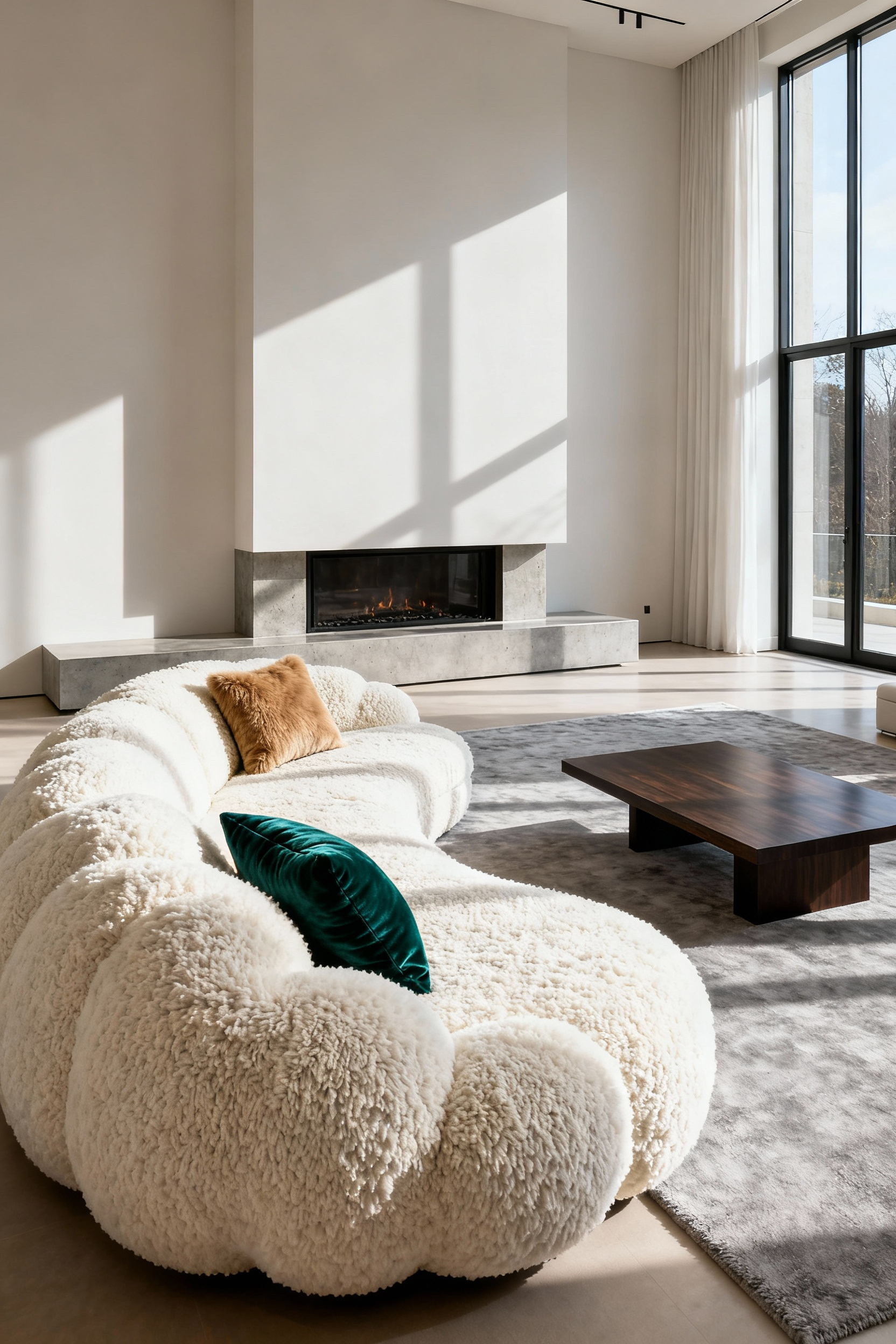
The true power of these textiles lies in their distinct interaction with light. Velvet offers a subtle sheen, catching the sun to introduce movement and a sense of sophistication to static spaces. Its deep pile absorbs light without being glossy, creating a “cocooning” effect that feels instantly luxurious. Conversely, wool and bouclé provide a grounded, matte finish. Placing a reflective glass coffee table next to a light-absorbing, organic wool rug creates a dimensional depth that prevents a room from feeling flat.
Beyond visuals, these heavy textiles serve a crucial psychological purpose. In the open-plan layouts inherent to modern homes, sound often bounces off hard surfaces, creating a cold, echoing environment. Dense, irregular fibers naturally absorb this noise, turning a cavernous area into an intimate retreat. This tactile grounding fulfills the “cozy-chic” imperative, transforming a house from a pristine showroom into an enveloping home where design actively supports mental wellness and comfort.
Sustainable Foundations: Selecting Eco-Friendly Rugs and Organic Flooring
To truly honor a space, you must look beneath your feet. Choosing flooring isn’t just about aesthetics; it is about the lifecycle of the material and the atmosphere it creates.
Reclaimed wood offers an immediate sense of history, diverting timber from landfills while bringing the warmth of natural patina and nail holes into a modern setting. For a softer touch, cork flooring harvested from the regenerating bark of the *Quercus suber* offers incredible acoustic insulation and a biophilic connection without harming the tree. Both options vastly outperform vinyl, which often carries a heavy carbon footprint and off-gasses harmful Volatile Organic Compounds (VOCs).
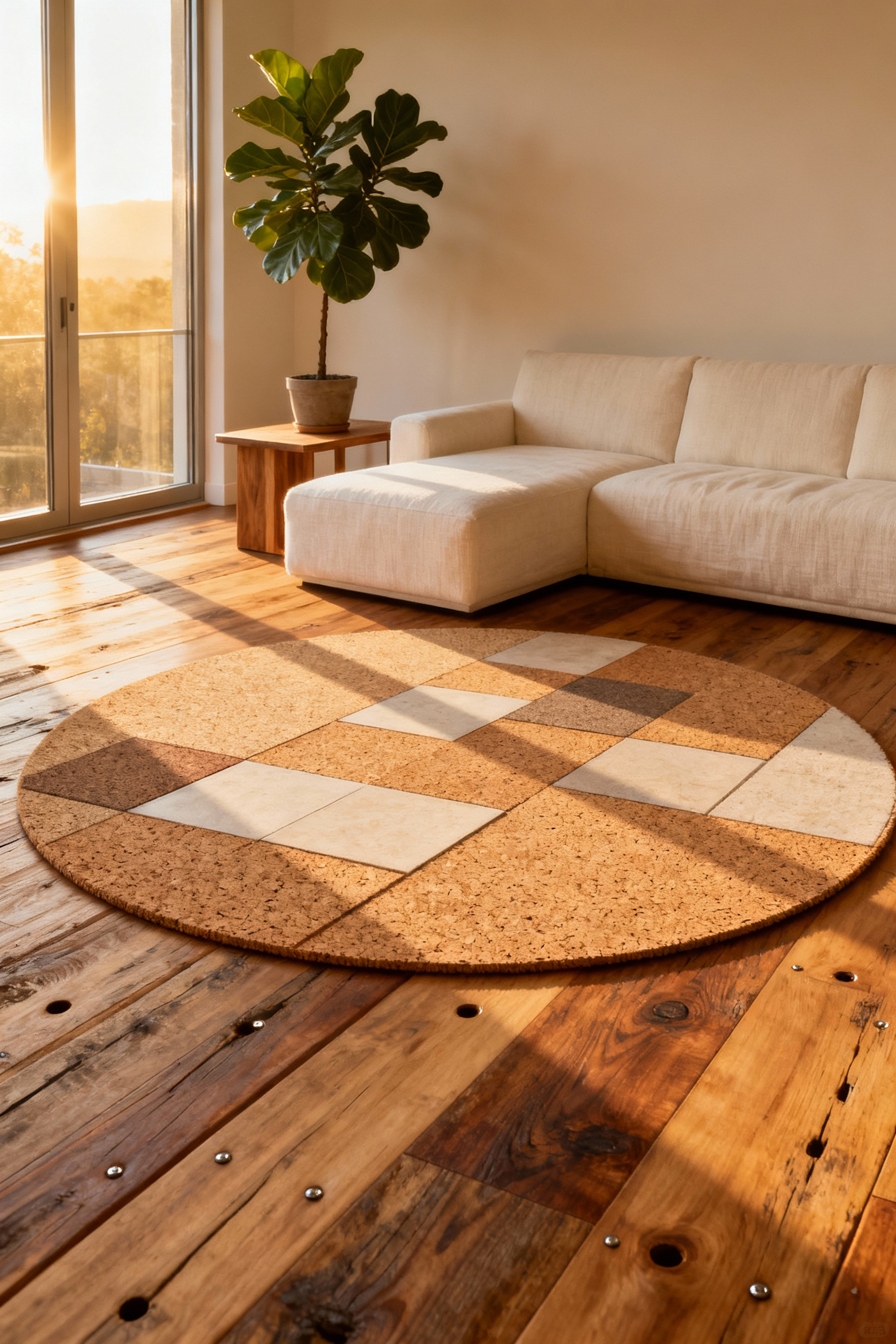
Health really is the ultimate luxury here. Avoiding high-VOC synthetics improves indoor air quality, a lesson we can take from history where rugs were functional tools for insulation and hygiene rather than sources of chemical exposure. To layer texture over these healthy foundations, look to natural fibers. Jute and sisal provide a grounding, earthy grit that prevents a minimalist room from feeling sterile.
If your mid-century aesthetic demands high-glamour sheen, TENCEL™ Lyocell is the modern solution. Unlike the toxic production of conventional viscose, TENCEL™ utilizes a closed-loop system that recovers and reuses non-toxic solvents. The result is a rug with the lustrous hand-feel of silk, bridging the gap between ethical manufacturing and the sleek elegance required for contemporary living.
The Spatial Plan: Liberating Furniture from the Walls (The Floating Layout)
Historically, furniture was relegated to the perimeter, serving as a static border that emphasized the room’s architectural shell. The modernist revolution, led by the Bauhaus school, liberated these pieces. It viewed a sofa or lounge chair not as an accessory to the wall, but as an autonomous, three-dimensional sculpture.
When you adopt a floating layout, you honor this 360-degree design philosophy, allowing the clean lines of a restored teak frame or the silhouette of a vintage Barcelona chair to be appreciated from every angle.
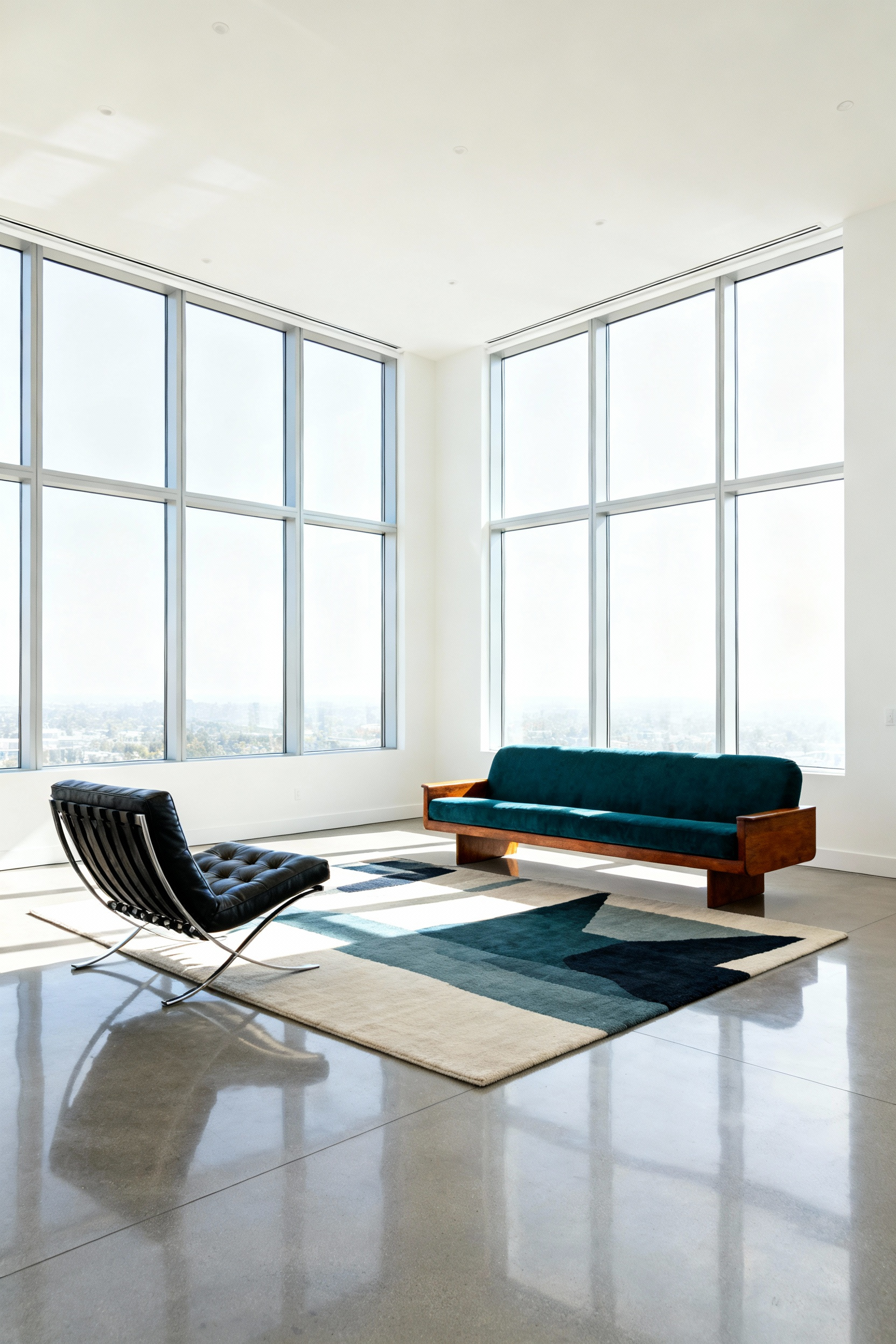
Pulling furniture toward the center fundamentally shifts the room’s psychology. A perimeter-heavy layout often leaves a “dead zone” in the middle of the room, creating distance that stifles interaction. By floating your seating arrangement, you create an intimate vignette that invites genuine connection—a cozy conversation zone that feels intentional rather than imposed. In open-concept homes, this technique acts as invisible architecture, using the back of a sofa to define a living zone without the need for physical partitions.
This visual “breathing room” actually makes a space feel larger and lighter, provided the flow is managed correctly. The goal is to create a liberated corridor where movement feels natural. To maintain cognitive calm and prevent the room from feeling cluttered, ensure your primary pathways allow for 30 to 40 inches of clearance. Even in tighter quarters, inching a sofa just six to twelve inches off the wall creates a shadow line that suggests airiness, proving that the most impactful renovation tool is often just empty space.
Grounding the Space: The Art and Ergonomics of the Low-Profile Sofa
When you drop the seat height to a mere 15 or 17 inches, something fascinating happens to the room’s volume. The furniture stops interrupting your gaze. By keeping the silhouette below the natural line of sight, these pieces minimize visual clutter, tricking the eye into perceiving higher ceilings and a more expansive horizontal plane.
It’s a design strategy deeply rooted in the Zen principles often found in Japandi aesthetics, where lowering the body fosters a grounded, mindful connection to the environment—essentially a Westernized approximation of traditional floor-living.
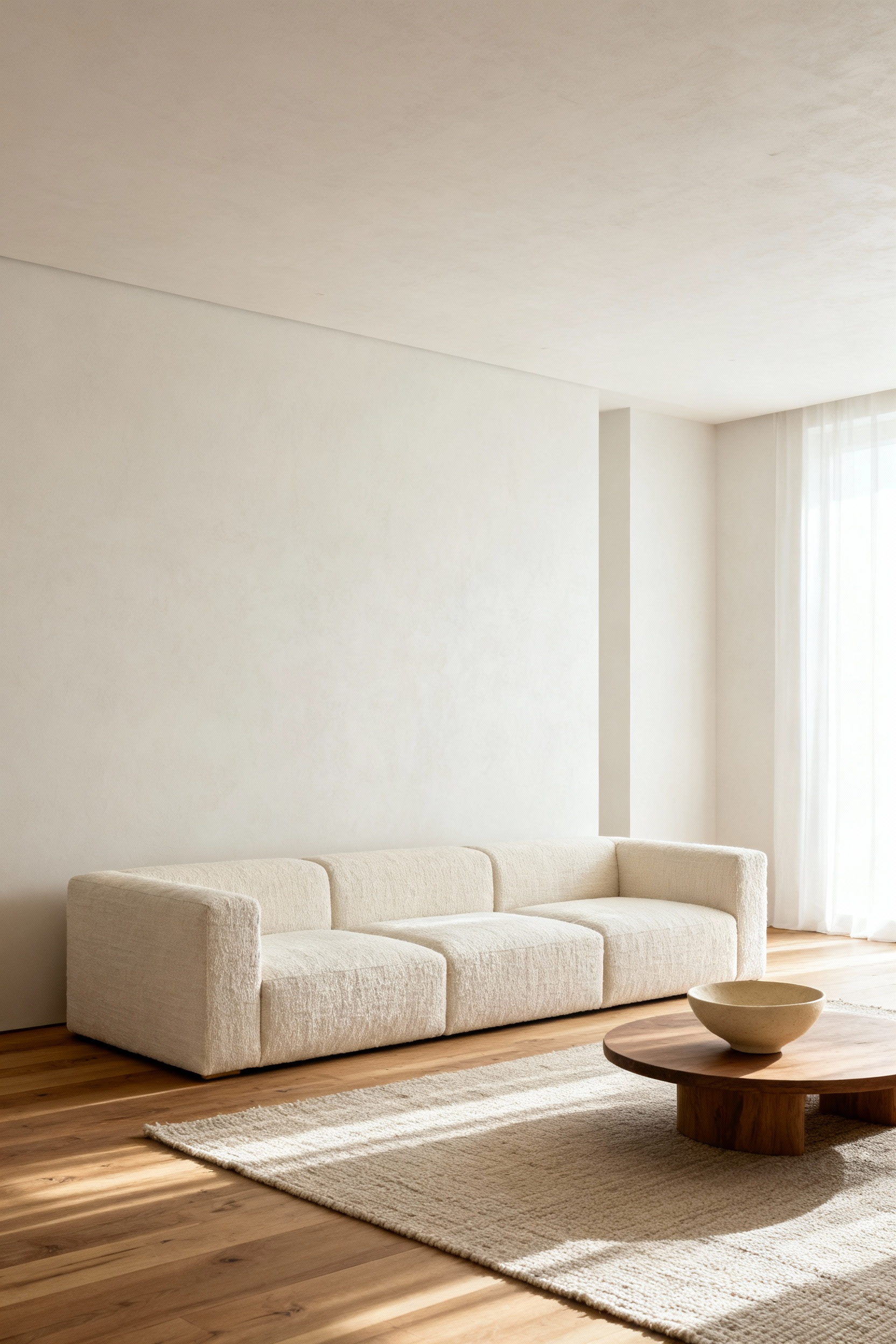
This aesthetic has traveled a distinct path to reach our modern living rooms. It began with the architectural rigor of mid-century masters like Le Corbusier and Florence Knoll, who designed low, exposed-frame pieces meant to float within a space rather than dominate it. However, the 1970s radically softened this approach. Designers like Mario Bellini and Michel Ducaroy swapped hard edges for all-foam constructions like the *Camaleonda* and *Togo*, transforming the low profile from a disciplined structure into a malleable, floor-hugging invitation to sprawl.
Embracing this look requires an honest assessment of how you live. The characteristic deep seats and low backs prioritize a relaxed, *hygge*-style lounge posture over formal upright sitting. While this creates an atmosphere of informal luxury, it presents a functional trade-off. The reduced height can be challenging for those with mobility concerns, and the lack of upper back support often necessitates a strategic arrangement of throw pillows to prevent slouching. Ultimately, choosing a low-profile sofa is an authoritative design choice, signaling a commitment to a slower, more relaxed pace of life.
Sculptural Seating: Treating Your Accent Chair as a Piece of Art
When you select a statement chair, you are effectively choosing a piece of functional art. Unlike standard upholstery designed to fade into the background, sculptural seating makes a declaration. It embodies a post-utilitarian philosophy where the object demands to be contemplated, blurring the line between a domestic tool and a *chef-d’oeuvre*.
In this context, the act of looking at the chair becomes just as significant as sitting in it, introducing a layer of “semi-functionality” that elevates the entire room.
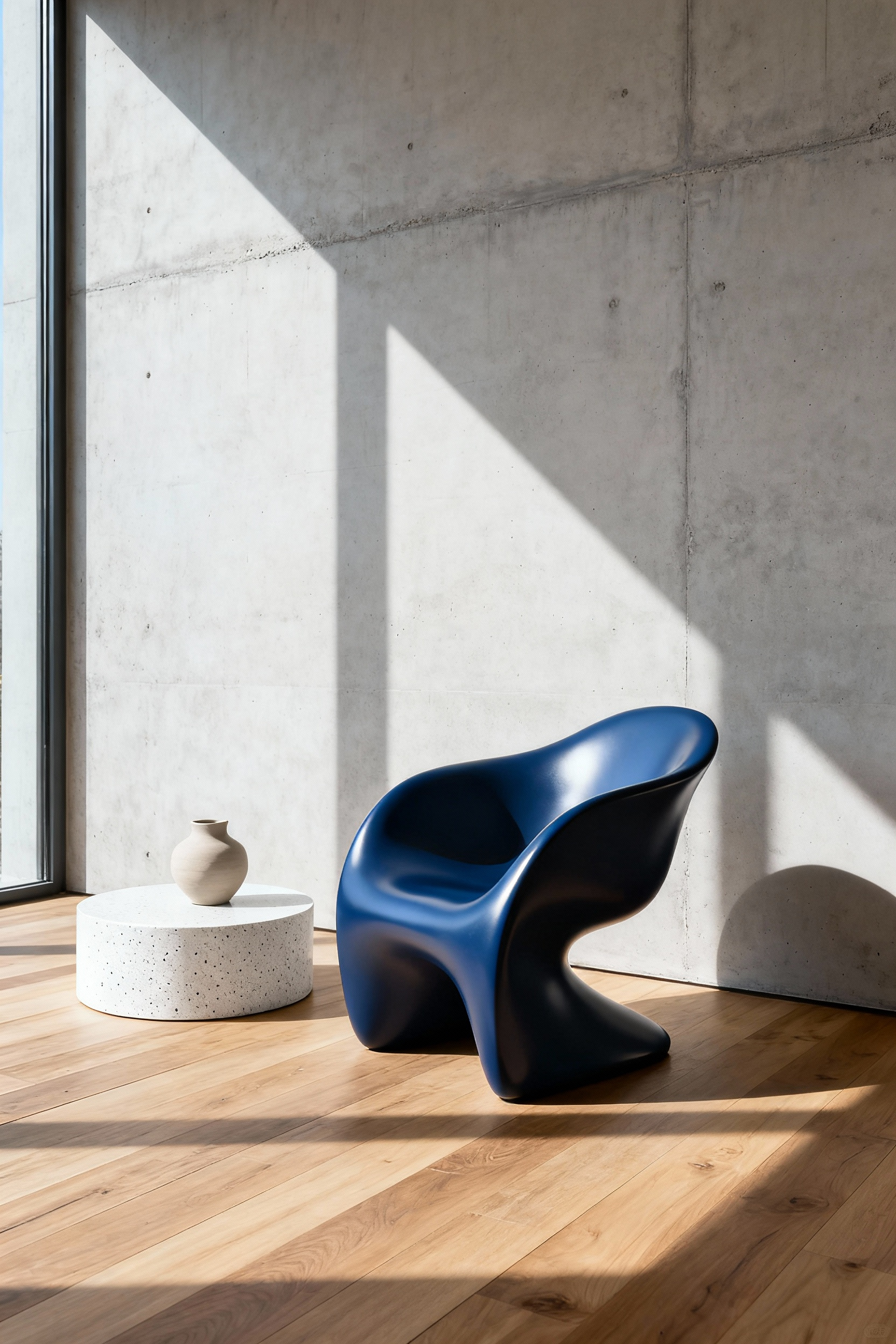
This approach is deeply rooted in the Mid-Century Modern tradition, where pioneers like Isamu Noguchi viewed furniture as ideas born into space without hindrance. We see this in the organic, river-stone shapes of his designs or the cocoon-like embrace of Arne Jacobsen’s Egg Chair. These biomorphic forms broke free from rigid traditional joinery, paving the way for innovations like Verner Panton’s sinuous, single-curve plastic or Frank Gehry’s unexpected use of corrugated cardboard to create lasting icons.
To let these pieces truly sing, they require room to perform. A sculptural chair should serve as a visual anchor, ideally positioned with ample negative space to highlight its silhouette—perhaps near a window where natural light can emphasize the texture of eco-velvet, bouclé, or the grain of hand-finished walnut. The goal is dynamic contrast; allow the bold, unconventional geometry of the chair to offset the straight lines of a neutral sofa. By prioritizing form and tactile materials over pure utility, you transform a corner of your living room into a curated gallery experience.
Lighting Architecture: Layering Ambient Glow with Iconic Mid-Century Silhouettes
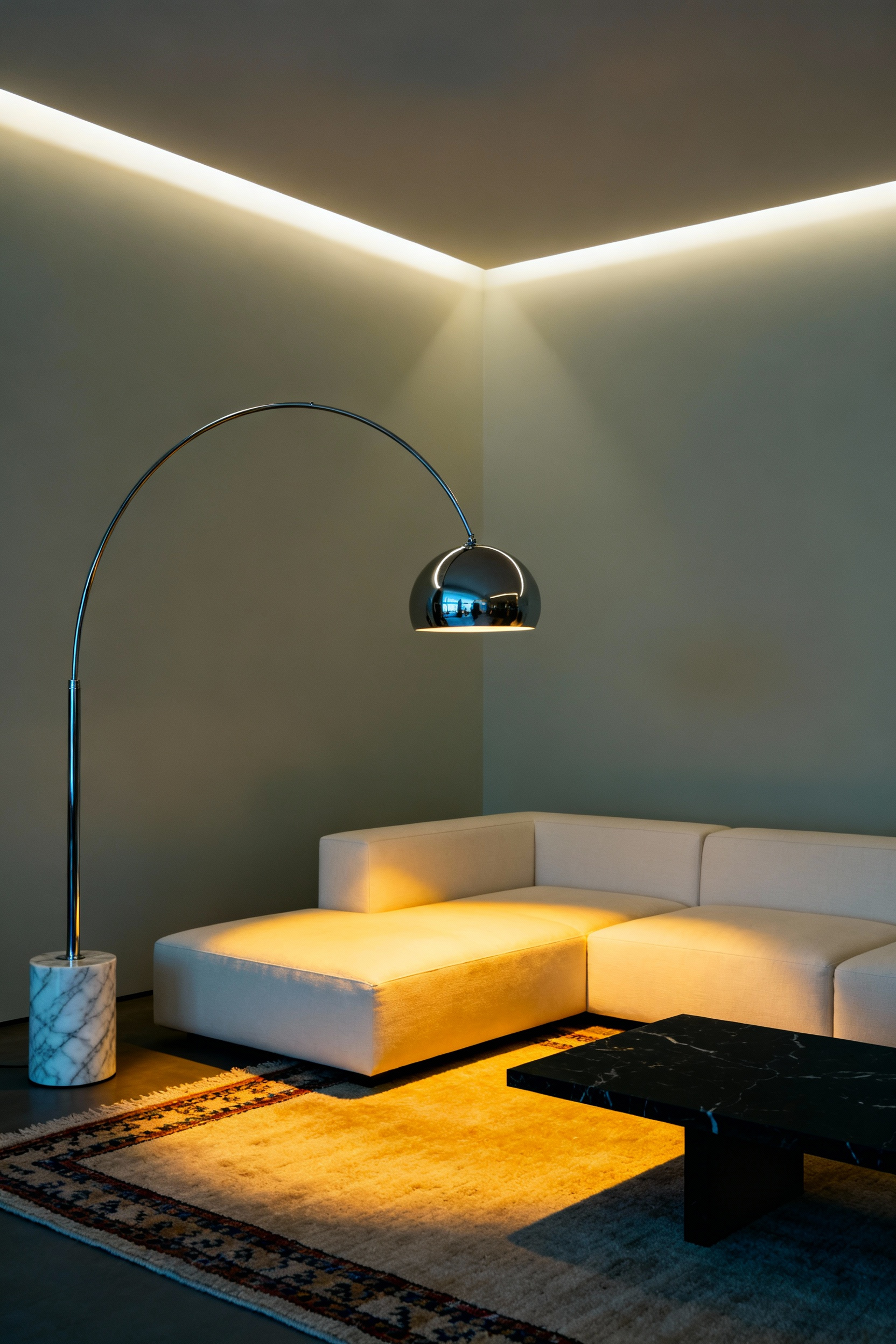
Lighting functions as an emotional and architectural force, a concept famously outlined by architect Richard Kelly in 1952. His principle of “ambient luminescence” creates the necessary stage—a shadow-free, comfortable background often achieved today through discreet architectural wall-washers or cove lighting.
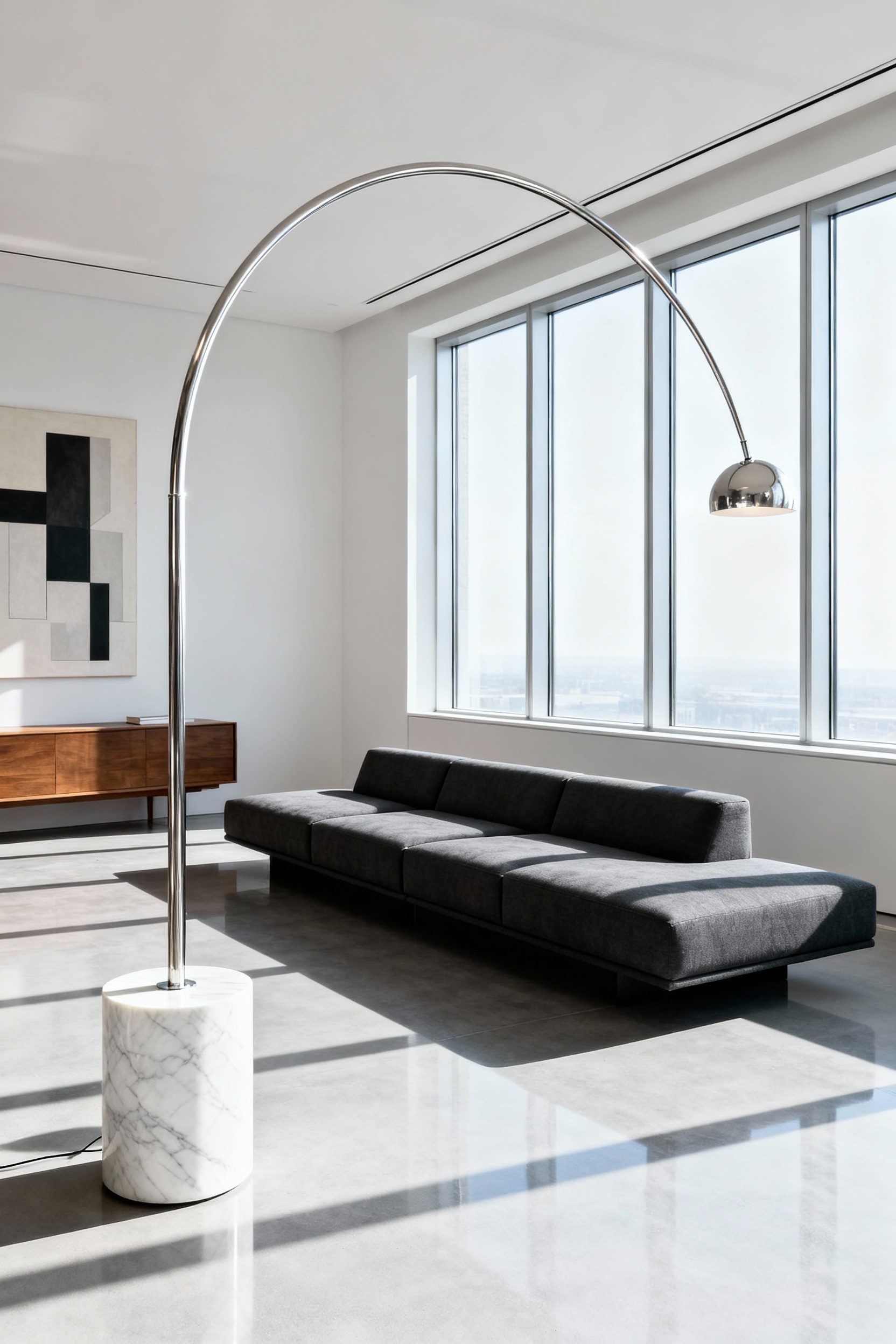
Against this neutral canvas, iconic mid-century silhouettes provide the “focal glow.” These pieces aren’t merely functional; they shape the narrative. The sweeping chrome arm of an Achille Castiglioni Arco Lamp, for instance, does more than illuminate a coffee table; it grounds the entire seating zone, transforming a generic wash of light into a defined destination with distinct boundaries.
To introduce Kelly’s “play of brilliants,” we look to the kinetic energy of a Sputnik chandelier or the multi-bulb works of Gino Sarfatti. These fixtures act as visual punctuation, adding a layer of sophisticated sparkle that elevates a lamp from a utility to a dynamic art piece. However, the true magic of mid-century design often lies in its mastery of diffusion and materiality. Isamu Noguchi’s Akari sculptures or George Nelson’s Bubble Lamps turn the fixture itself into a luminous volume. By filtering light through Washi paper or sprayed polymer, they create a soft, shadow-reducing presence that feels deeply organic, bridging the gap between Japandi minimalism and mid-century optimism.
When you pair these tactile materials—think polished brass warming up against walnut—with a modern ambient scheme, you create a necessary dialogue between past and present. The lamp serves as an aesthetic anchor, balancing historical character with contemporary comfort to ensure the room feels classy, yet undeniably spirited.
The Statement Fixture: Restoring or Replicating the Sputnik and Arc Lamp
Selecting a centerpiece fixture forces a choice between engineering integrity and aesthetic precision. When considering the Arco Lamp, designed by the Castiglioni brothers, authenticity is a matter of physics rather than brand snobbery. The original’s massive 140-pound Carrara marble base isn’t merely decorative; it provides the essential counterbalance for the eight-foot stainless steel arm.
While inexpensive replicas often substitute lighter stone or composites, they sacrifice stability for cost, risking a distinctive wobble when fully extended. True restoration or a high-end reissue preserves the functional beauty of the squared, telescoping stem, ensuring the light creates a grounded, architectural zone over a sofa without the need for ceiling wiring.
The Sputnik chandelier debate, on the other hand, centers on atmosphere. A restored mid-century piece, particularly one with Italian roots, carries the soul of the Atomic Age in its patina. The uneven, darkening brass offers a sculptural warmth and historical texture that feels alive against a modern ceiling.
If your space relies on a neutral, minimalist palette, the “perfect” finish of a contemporary replication might actually serve the room better. Modern iterations often utilize satin or brushed finishes on electroplated steel, swapping the heavy, golden gloss of the past for streamlined consistency. Ultimately, the choice depends on whether your room needs the vertical drama of a historical starburst or the grounded fluidity of a marble anchor.
Window Dressing: Maximizing Natural Light with Sheers and Linen
True mastery of modern lighting often happens at the window pane. While clear glass invites the outdoors in, it also admits harsh glare and severe shadows that can disrupt the serenity of a living space. Utilizing sheer linen creates a sophisticated filter, conditioning raw sunlight into a soft, ethereal glow. This diffusion significantly reduces visual contrast, flattering interior finishes like matte paints and natural wood while washing the room in a calm, consistent warmth.
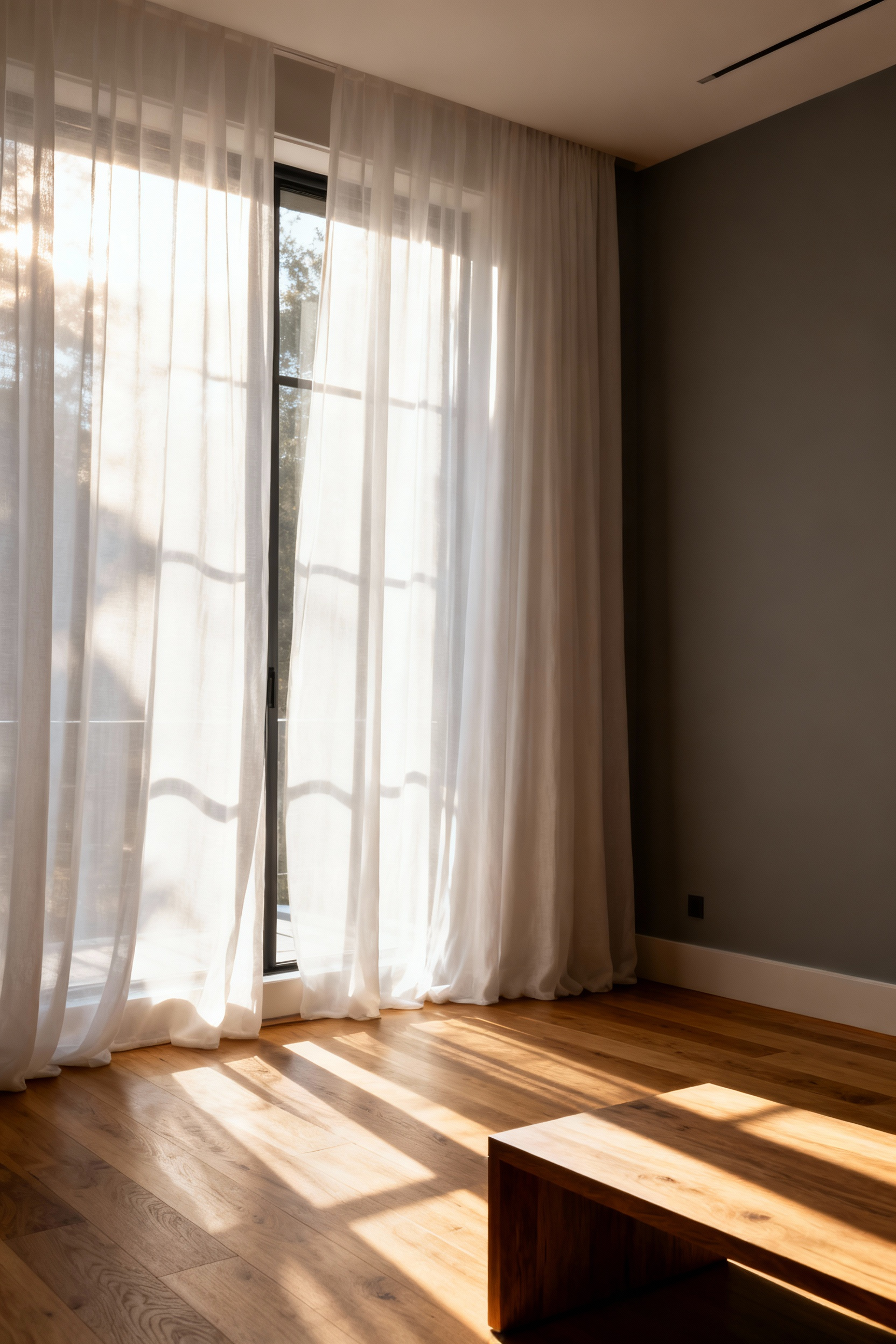
The choice of linen over synthetic alternatives adds a crucial tactile dimension to this lighting effect. Derived from flax, linen possesses a natural “slub”—slight irregularities in the fiber—that introduces an organic, *wabi-sabi* texture. This subtle imperfection prevents a minimalist room from feeling sterile, offering a nod to a material history stretching back to Ancient Egypt while serving modern sustainability goals. The weave allows for privacy without sacrificing that coveted connection to the outdoors, creating a water-like ripple of shadow and light that keeps the room feeling dynamic rather than static.
To maximize this aesthetic, installation technique is paramount. Mounting the hardware high, just below the ceiling or crown molding rather than the window frame, draws the eye upward and emphasizes vertical volume. A layered approach works best here: pairing a translucent sheer for daytime diffusion with a heavier, solid drape for evening insulation offers complete control over the atmosphere. By keeping the hardware minimalist and the fabric tones neutral, the focus remains on the interplay of light and textile, anchoring the room in timeless elegance.
The Curated Surface: Styling Coffee Tables and Sideboards with Intentional Vignettes
Your coffee table is more than a landing pad for remotes; it is an opportunity to write an “autobiography of objects.” In modern spaces where furniture often follows strict, clean lines, these surfaces become the primary canvas for personal expression. Rather than the cluttered curiosity cabinets of the past, we aim for a distilled reflection of taste.
A well-styled vignette offers a sense of order to the homeowner and serves as interactive decor for guests—a stack of art books or a sculptural vintage find invites conversation and signals a life well-lived.
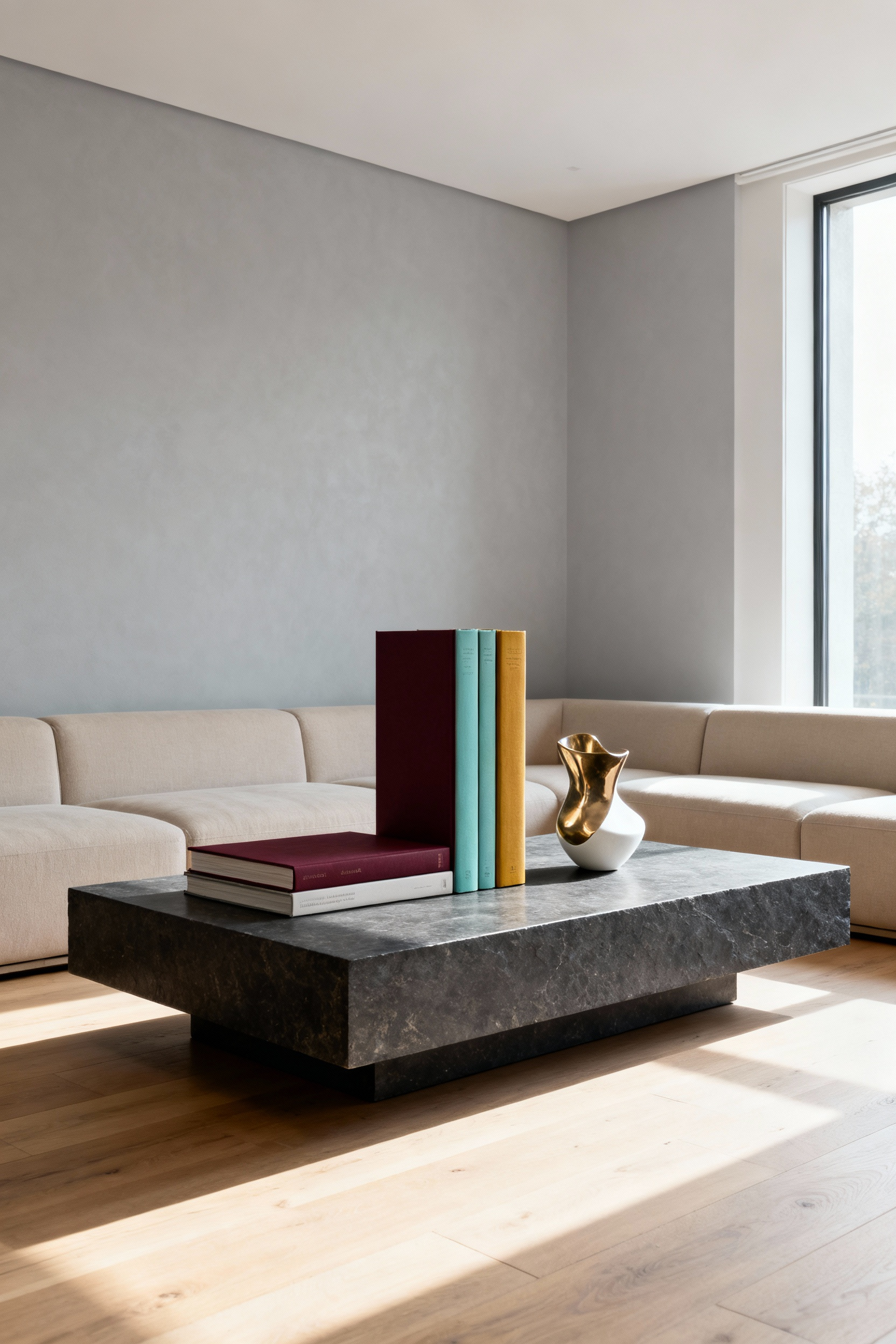
To translate this personal narrative into visual harmony, rely on the discipline of geometry. The “Rule of Three” suggests that odd-numbered groupings are inherently more dynamic and balanced to the human eye. Avoid a flat landscape by varying heights; use coffee table books as architectural plinths to elevate a bowl or candle, creating a tiered effect. Crucially, respect negative space. Allowing areas of the table to remain empty ensures your chosen pieces feel like an art installation rather than accidental clutter.
Finally, engage the senses through material contrast and utility. Juxtapose the sleekness of glass or polished silver with the organic warmth of a woven basket or a moss bowl to introduce “living energy.” To keep this arrangement practical, anchor smaller items within a decorative tray. This not only grounds the vignette visually but creates a moveable base, allowing you to effortlessly clear the stage when life requires the table’s full function.
Biophilic Accents: Using Snake Plants and Monsteras as Living Sculpture
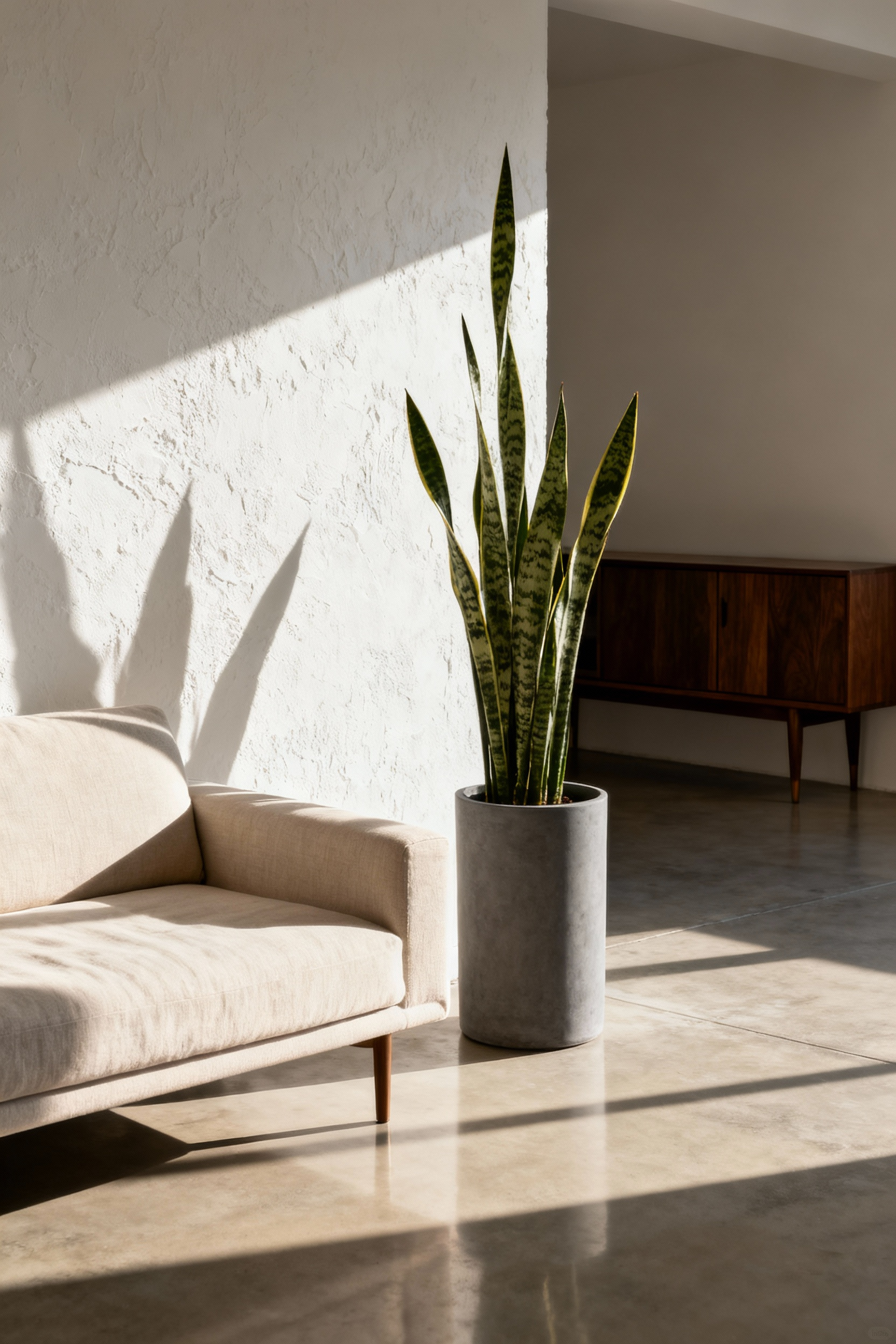
Moving beyond simple decoration, specific botanicals act as intentional, living sculpture within a room. Take *Dracaena trifasciata*, commonly known as the Snake Plant. Its rigid, sword-like leaves offer a dramatic vertical counterpoint to the low-slung, horizontal lines typical of mid-century credenzas or streamlined sofas.
This isn’t just greenery; it is kinetic geometry. Placing a tall variety like ‘Bantel’s Sensation’ in a corner creates a visual punctuation mark, defining the space without cluttering the floor plan. Beyond its structural beauty, this plant serves as a biological filter, scrubbing toxins like benzene from the air—a functional benefit that aligns perfectly with the wellness-focused ethos of modern design.
For a softer, yet equally powerful statement, the *Monstera deliciosa* brings a sense of curated chaos. This plant is an absolute icon of the Mid-Century Modern movement, celebrating the era’s desire to dissolve the barrier between indoors and out. Its massive, glossy leaves are defined by fenestrations—natural splits and holes—that play with positive and negative space like a piece of abstract graphic art. A mature specimen acts as a biomorphic anchor, its organic form providing a necessary lushness against the matte concrete and cool steel often found in contemporary interiors.
Incorporating these botanical giants does more than please the eye; it serves a restorative psychological function. Research suggests that the presence of these living textures can lower cortisol levels, acting as an antidote to urban stress. Unlike static sculptures or vintage ceramics, these biophilic accents are dynamic. They unfurl and evolve, ensuring your living space feels vibrant and continuously in motion.
The New Retro Palette: Updating Mustard and Olive with Modern Neutrals
We aren’t aiming to recreate a 1960s time capsule with jarring avocado greens or synthetic, bright yellows. The modern interpretation of this palette relies on a sophisticated tonal shift, moving toward deep, mossy olives and earthy mustards that lean closer to ochre or turmeric. These desaturated hues serve as a bridge, honoring mid-century design history while fitting seamlessly into a contemporary lifestyle.
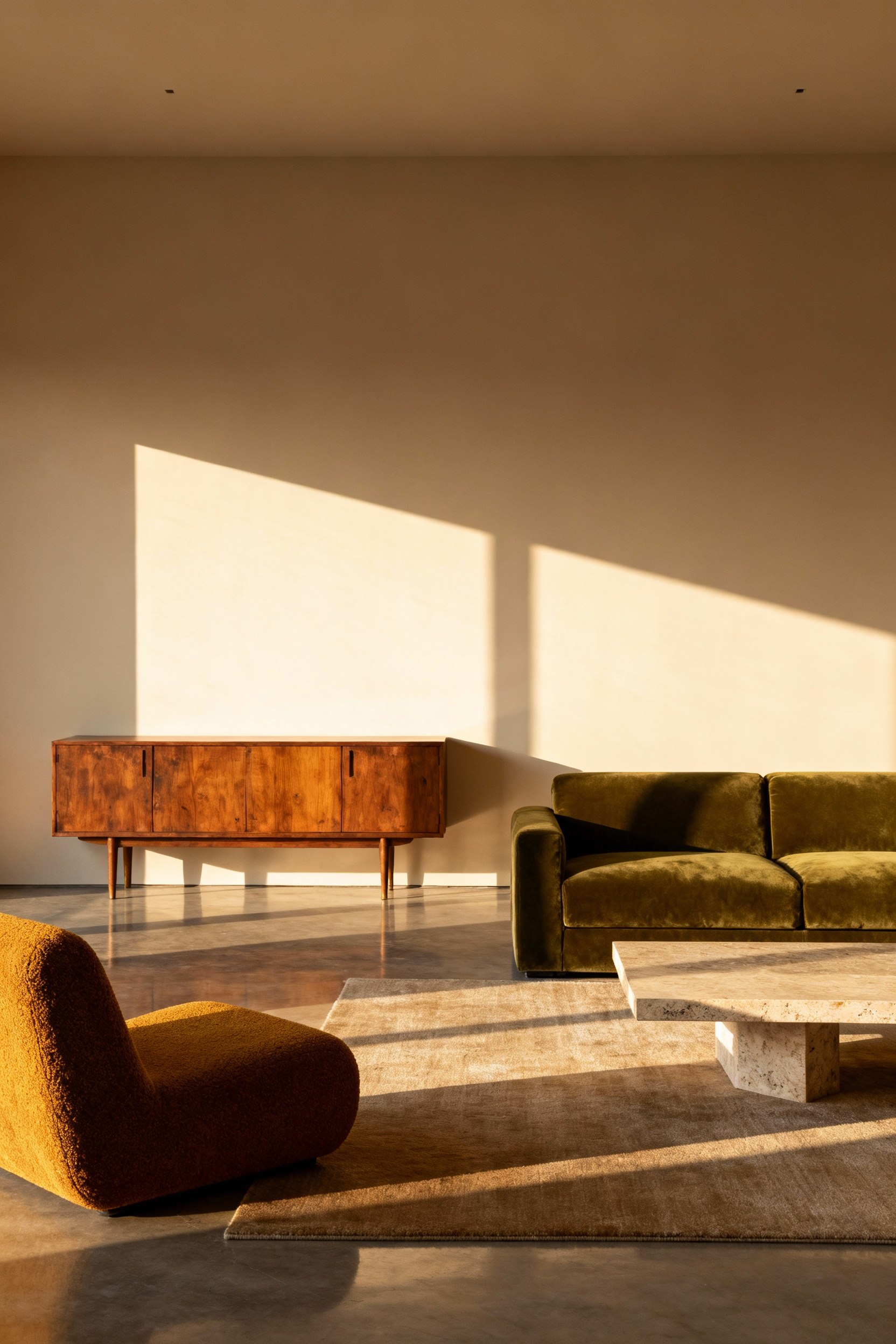
The key to grounding these colors lies in your choice of neutrals. Stark whites or cool grays often create a harsh contrast that makes vintage tones feel costume-like. Instead, opt for a foundation of warm neutrals—think creamy beiges, unbleached ivory, or soft stone tones. This warm, non-sterile backdrop acts as a calming canvas, preventing the retro hues from overwhelming the room and ensuring the atmosphere remains serene. For those considering an entirely monochromatic scheme, explore how dramatic contrast elevates black living room ideas into sophisticated sanctuaries.
Texture plays just as vital a role as color in modernizing these shades. To avoid a flat or dated look, prioritize tactile materials. Introduce olive green through the lush nap of a velvet accent chair or bring in mustard via heavy, textured linen throw pillows.
You can elevate this further by incorporating warm metallics like brushed brass or bronze. These accents not only echo the golden warmth of the mustard but add a touch of glamour that refines the organic greens. This combination strikes a perfect psychological balance: the yellow stimulates optimism while the biophilic green stabilizes the mood, creating a space that is equal parts vibrant and restorative.
The Gallery Wall: Mixing Vintage Prints with Contemporary Photography
Creating a gallery wall is less about filling empty space and more about establishing a dialogue between eras, a concept often called “Modern Heritage.” While this guide focuses on minimalism, those who prefer high-density displays can explore the layered approach required for a Maximalist Living Room.
A sleek, contemporary living room risks feeling transactional or overly curated without the grounding presence of history. By introducing vintage prints—perhaps a sepia-toned portrait or a distressed botanical illustration—you provide the emotional anchor that pure minimalism often lacks. This juxtaposition creates a dynamic energy where the razor-sharp resolution and high-key colors of modern photography balance the tactile grain and soft patina of analog pieces.
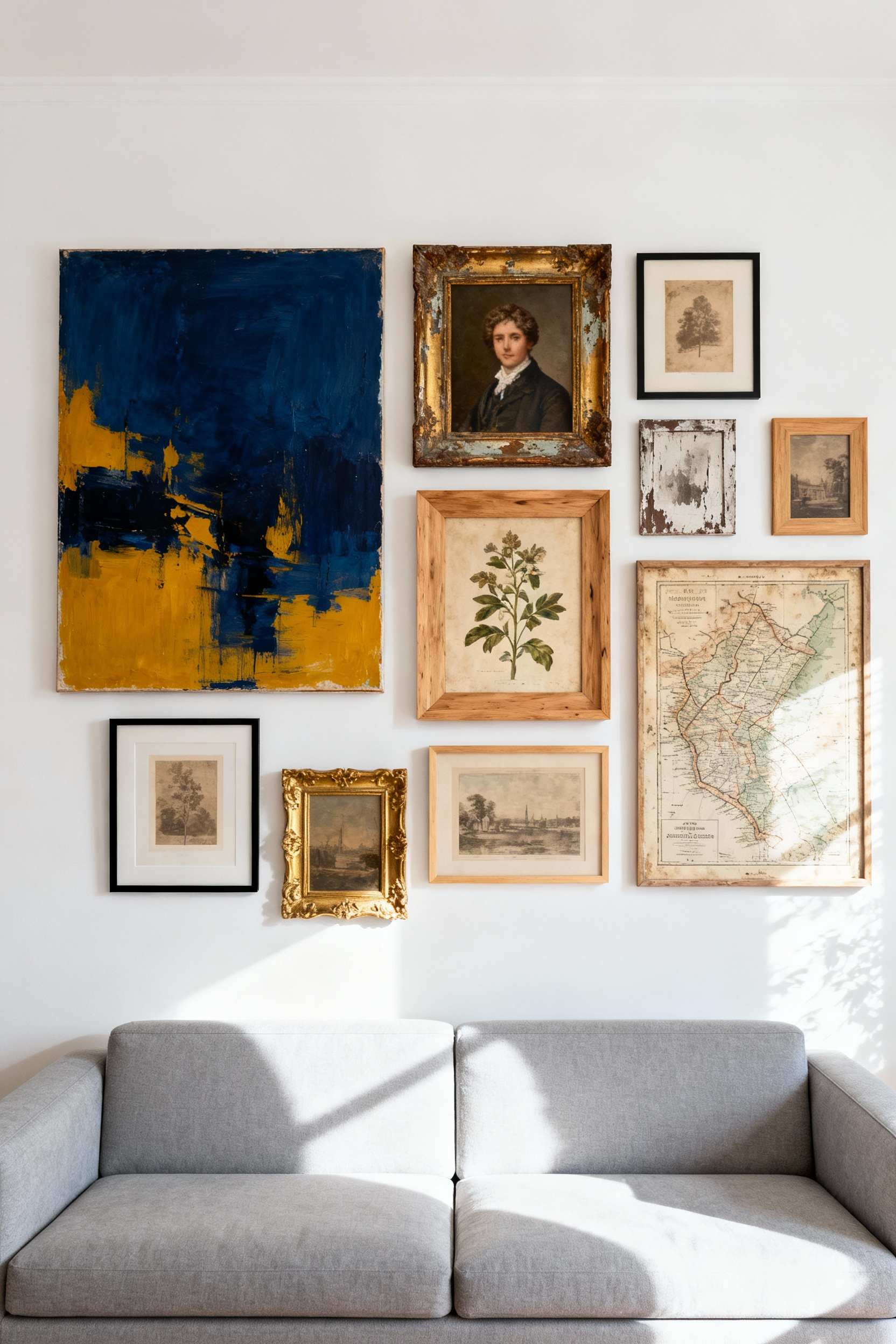
The secret to blending these disparate visual textures lies in the framing. Rather than defaulting to uniform gallery frames, which can flatten the wall’s character, consider a cross-framing strategy to bridge the gap. Try placing a stark, architectural photograph within an ornate, distressed gilt frame to give it weight, or encase a fragile, faded etching in sleek, matte black metal to modernize it. This intentional clash highlights the unique qualities of both mediums while knitting them together.
To ensure the arrangement feels collected rather than chaotic, rely on a visual thread to ground the composition. A shared color palette is your strongest ally here. Whether it’s a specific shade of moody indigo or a soft, coastal gray appearing across both the 1920s prints and the 2020s photos, this subliminal link turns a mix of centuries into a cohesive, personal narrative.
Restoration Corner: Simple Techniques to Revive Thrifting Treasures
The most common dilemma in restoration is the ethics of the finish: to paint or to preserve? The answer almost always lies in the provenance. When you stumble upon a piece crafted from rich walnut or teak—perhaps attributed to a mid-century icon—the goal is strict preservation. Products like Restor-A-Finish or Feed-N-Wax are invaluable here, gently reviving the finish so the wood’s inherent grain serves as the primary decoration.
However, for mass-produced vintage items or common pine, painting is a celebrated act of upcycling. A coat of matte monochromatic paint doesn’t destroy value; it transforms an outdated relic into a functional statement that fits a contemporary living room.
To make that painted piece truly sing, focus on sensory contrast. Pair a smooth, modern matte finish—achieved with a quality spray paint and a flat top coat—with the original hardware. Instead of replacing handles, revive them using #0000 steel wool and a mild cleaner like Barkeeper’s Friend. The aim isn’t to make them look brand new, but to remove grime while retaining the dark patina in the recesses. This tension between the cool, flat paint and the warm, metallic history creates a sophisticated look that feels intentional rather than DIY.
A piece isn’t truly restored if it carries the lingering “old house” scent. For musty upholstery or vintage velvet, skip the heavy chemical sprays and borrow a secret from theatre costume departments: cheap vodka. Fill a spray bottle with the straight spirit and mist the fabric liberally. The high ethanol content acts as an organic solvent, killing odor-causing bacteria and evaporating quickly without leaving a trace. It’s a simple scientific solution that ensures your vintage find feels as fresh as it looks.
Conclusion: Creating a Modern Living Room That Transcends Time and Trend
True timelessness is not achieved by adhering to a rigid aesthetic checklist, but by fostering a dialogue between your home’s architectural bones and your personal history. When we shift our focus from the immediate gratification of trends to the enduring quiet of natural materials—honing in on the grain of solid wood or the patina of quality leather—we stop decorating for the moment and start designing for longevity. This philosophy prioritizes the structural integrity of the room and the emotional weight of heirloom pieces, proving that a modern living room feels most current when it is deeply anchored in the past.
An enduring space is a sustainable ecosystem that breathes and evolves with you. It is a sanctuary where a mid-century silhouette and a contemporary texture coexist, united by craftsmanship rather than a catalogue date. Begin by auditing your current collection for the “placeholders”—those items purchased for temporary style—and commit to replacing them slowly with pieces rich in narrative and material quality. By curating for soul rather than speed, you ensure your modern living room decoration remains a relevant, comforting backdrop to your life’s unfolding story.
Frequently Asked Questions
What is the difference between modern and contemporary living room decoration?
Modern design refers to a specific period (roughly 1920s to 1970s) characterized by clean lines, natural materials (teak, leather), and functional forms (like Mid-Century Modern). Contemporary design, conversely, refers to what is popular and current *right now*. Contemporary styles are constantly evolving and often borrow elements from various historical periods, including modernism, but also industrial and maximalist aesthetics.
What is the best color palette for a sophisticated modern living room?
The foundation of a sophisticated modern living room palette should be warm neutrals (creams, warm grays, off-white, soft taupe). To add depth, use desaturated mid-century colors as accents, such as mossy olive green, deep navy blue, or earthy ochre/mustard. These tones provide color without sacrificing the room’s intentional quietude.
How can I make my minimalist modern living room feel warm and inviting, not sterile?
The key to preventing sterility is incorporating textural contrast and natural elements. Use textiles like thick bouclé, velvet, or wool rugs to soften sleek lines. Integrate biophilic elements (like tall Snake Plants or Monsteras) and wood pieces with rich, visible grain (like walnut or teak). Layered lighting, especially soft, diffused ambient light, will also make the space feel cozy and enveloping.