
For discerning homeowners seeking bedroom wallpaper ideas master suites demand, conventional wisdom often points toward safe neutrals. However, limiting the most intimate room in your home to a clinical, spa-like aesthetic overlooks its potential. True luxury lies in bold design. It treats the master suite not merely as a functional sleeping quarter, but as a bespoke sanctuary reflecting a mature personal narrative.
Opulence often requires embracing a “more is more” philosophy. Here, the bedroom becomes an experiential retreat rather than a passive box. Contrary to the fear that strong design causes over-stimulation, deep, moody hues—such as emerald, charcoal, or sapphire—create a “cocooning” effect that actually enhances intimacy.
(For a deep dive into using the darkest shades, see our guide on Embracing the Elegant Drama of Black Bedroom Walls.)
This psychological shift moves the room away from feeling cold and open to warm and enveloping. By utilizing darker tones and rich textures, the space absorbs light rather than reflecting it. This offers a sense of safety and depth that pale colors simply cannot achieve.
We are going to explore how to leverage the theatricality of wallpaper to reclaim your master bedroom’s potential. We will examine how scenic murals and large-scale patterns act as immersive art, visually breaking boundaries to create an illusion of expansive space. From the tactile luxury of velvet-flocked finishes to the narrative power of bold motifs, discover how to curate a space that demands attention and serves as a spectacular backdrop for your life.
You’ve invested in the linens and the lighting, yet the room lacks soul: The transformative power of wall coverings.
High-thread-count linens and layered lighting provide necessary comfort, but they rarely define a room’s spirit. If a master bedroom feels like a well-appointed box rather than a personal sanctuary, the missing element is almost always the treatment of its largest surface area. While paint provides color, it remains a static, two-dimensional backdrop. Wall coverings, however, introduce a physical “fifth wall” of sensory depth that fundamentally alters how a space feels.
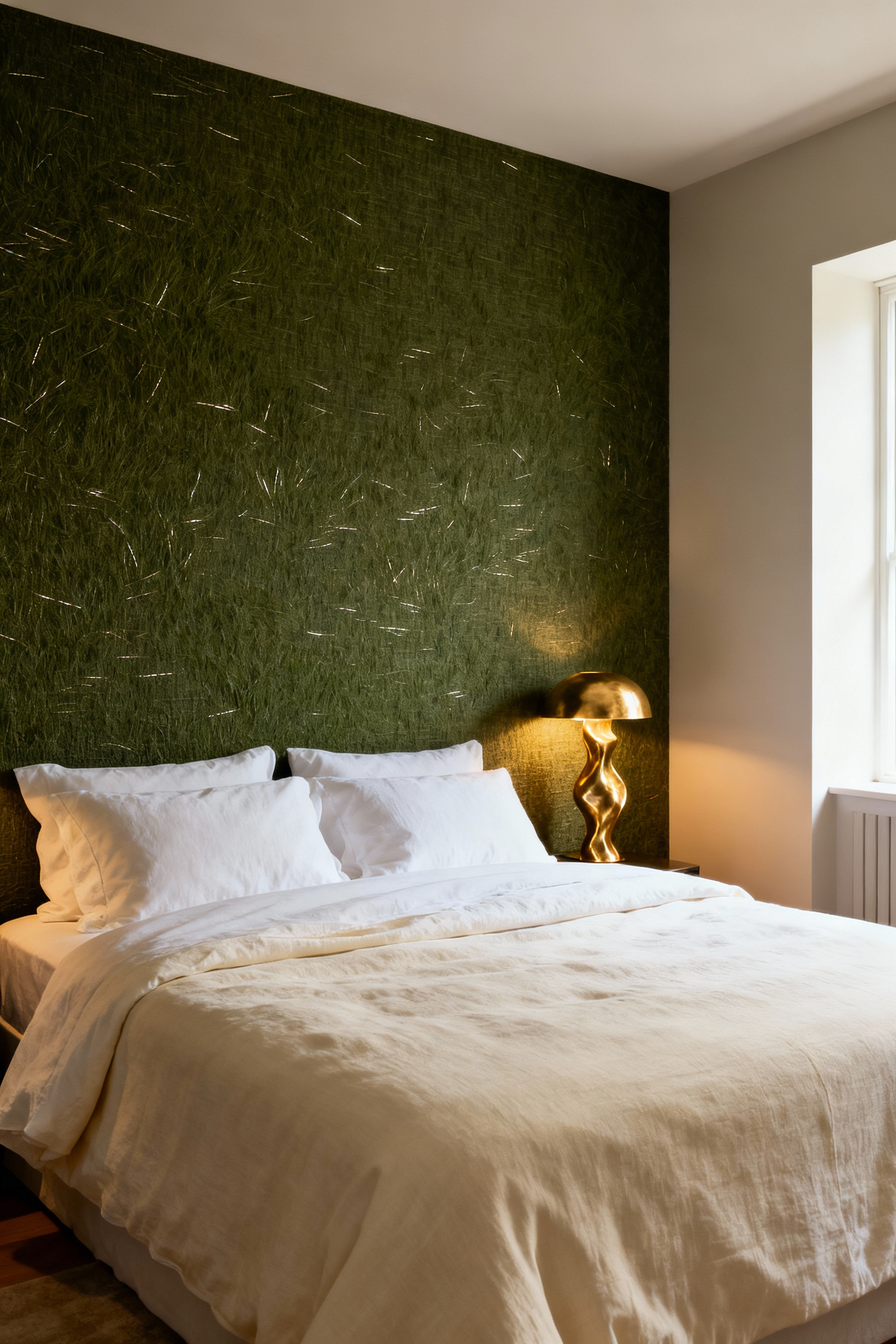
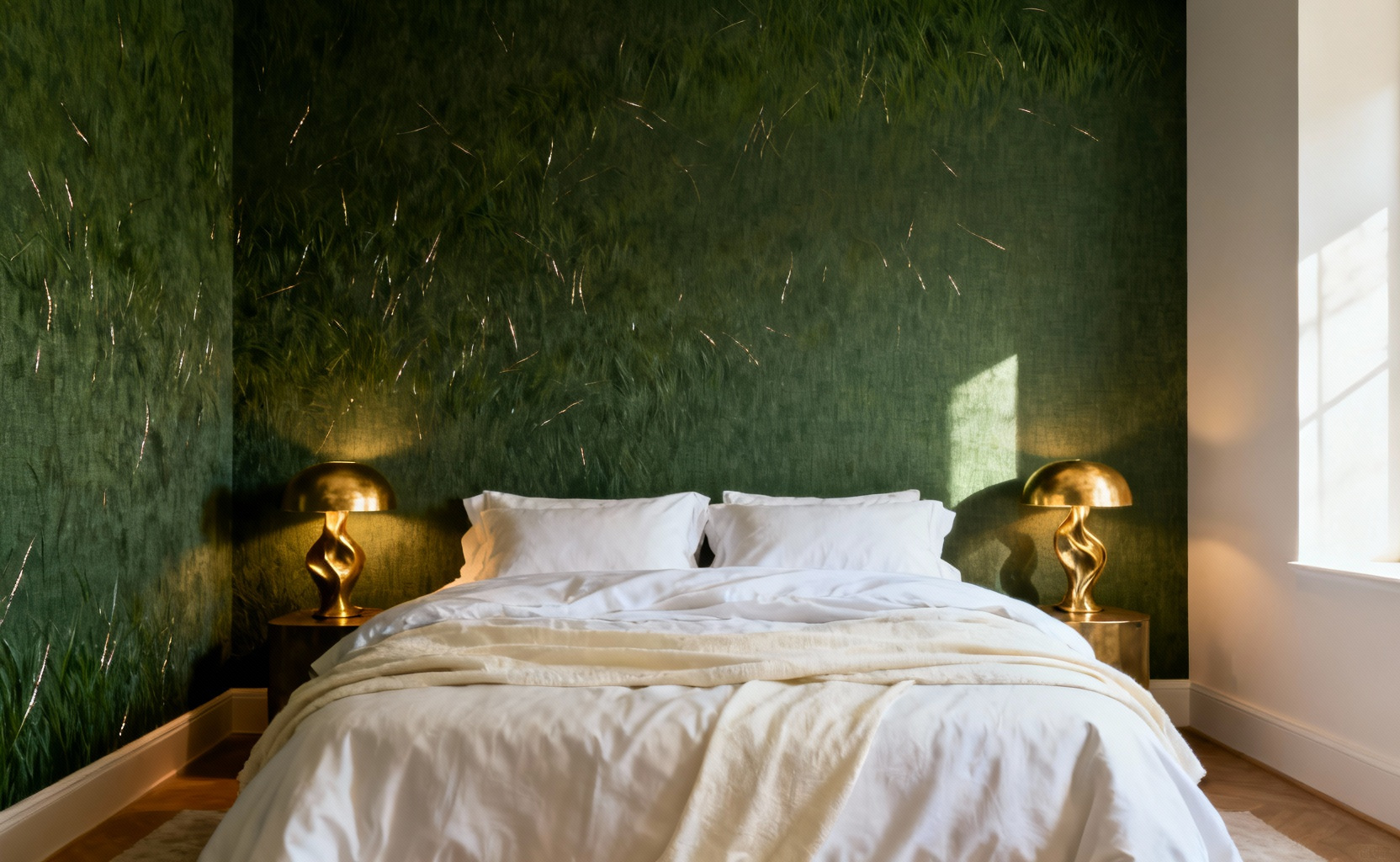
Consider the difference between a flat charcoal wall and a charcoal grasscloth or silk. The textured material interacts dynamically with your lighting, catching the glow of a bedside lamp to cast microscopic, shifting shadows. This creates a sense of organic movement and warmth that paint simply cannot replicate.
High-end wall coverings often utilize specialized printing techniques involving mica or metallic foils engineered to refract light. This adds a luminosity that gives the room a pulse. This physical layering also provides acoustic dampening, creating the subtle, hushed atmosphere essential for a restful retreat.
Beyond the tactile experience, wall coverings act as a narrative anchor. In a modern home that may lack architectural character, a mural or an intricate Old-World motif compensates for the absence of structural detail. It effectively tricks the eye into perceiving history and architectural grandeur. Instead of relying on a single piece of art above the bed, the walls themselves become the storytelling device. By committing to a wall covering, you move beyond mere decoration to create an immersive environment.
1. The Tactile Revolution: Silk and Grasscloth for Sensory Depth
To truly elevate a master suite, design must move beyond flat visuals and embrace physical, palpable texture. A bedroom should not just look finished; it should feel inhabited. Silk wallcoverings offer an immediate path to this level of sophistication by transforming walls into dynamic, shifting surfaces.
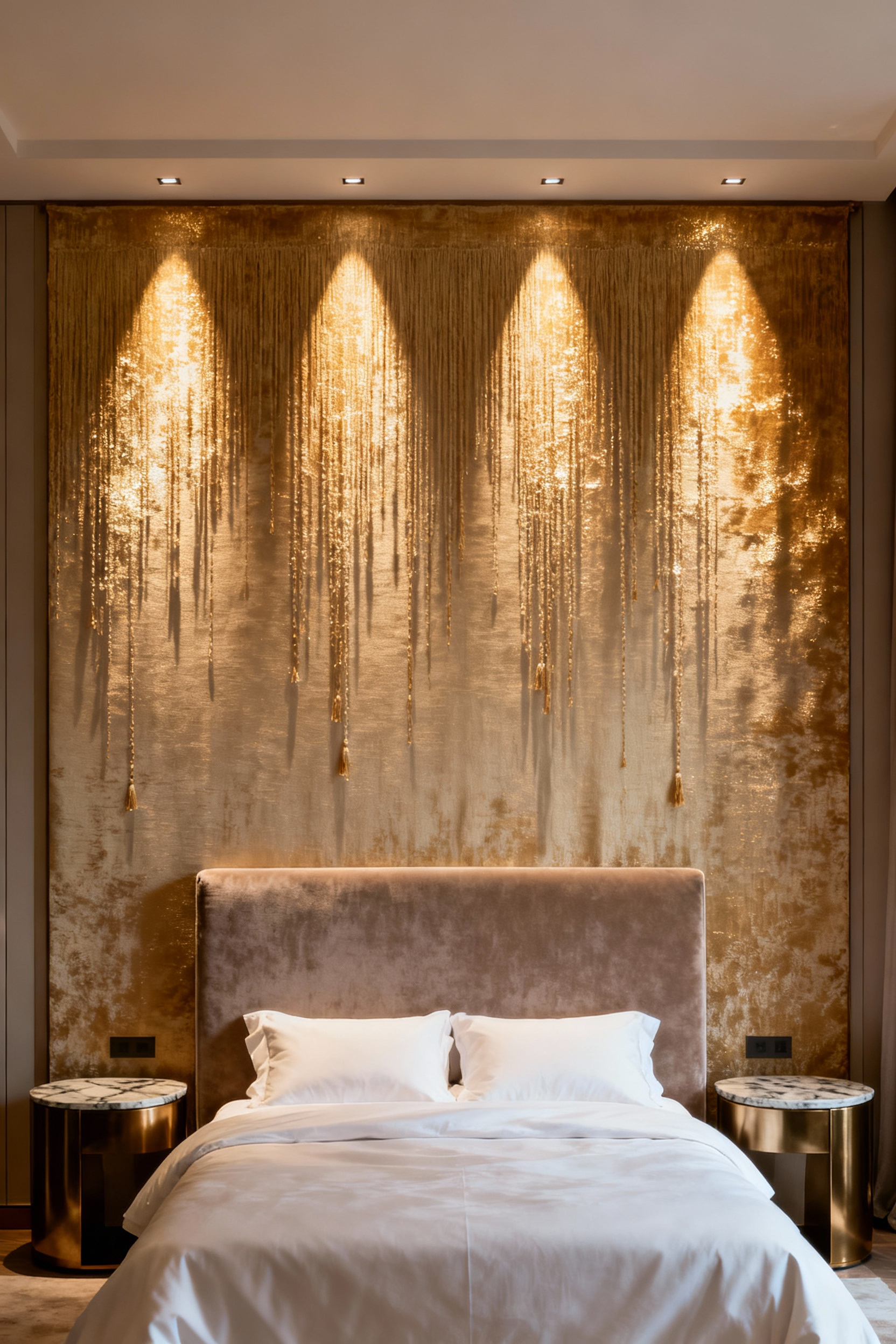
Unlike the static nature of paint, a knotted silk or *dupioni* weave interacts with overhead lighting to create an atmospheric glow, often described as a “rainfall effect.” For those seeking a deeper narrative, Moiré finishes—where fabric is pressed to create a rippling, “watered” pattern—introduce organic movement that turns the room into an intimate cocoon.
On the opposite end of the sensory spectrum lies grasscloth, which grounds the space through biophilic connection. Woven from natural fibers like sisal, jute, or hemp, these coverings offer a rich, absorbent texture that contrasts beautifully with smoother surfaces. The appeal here is the intentional imperfection. Visible seams and natural irregularities are not flaws but markers of the human hand, adding warmth and authenticity.
Beyond the aesthetic of “rough luxury,” grasscloth provides a functional advantage for the master bedroom. Its porous nature creates excellent acoustic properties, dampening sound to ensure the space remains a tranquil sanctuary. Whether opting for the ethereal reflection of silk or the earthy depth of woven grasses, introducing these materials ensures the room appeals to the touch as much as the eye.
2. Dark & Moody Florals: Embracing the ‘Night Garden’ Aesthetic
The “Night Garden” aesthetic draws a direct line to the opulent Dutch Golden Age still life paintings of the 17th century. This look moves beyond simple floral patterns into the realm of art history, juxtaposing oversized, robust blooms—peonies, carnations, and rare tulips—against deep charcoal or chocolate backgrounds. Historically, this contrast symbolized *Vanitas* (a reminder of the fleeting nature of life), but in modern interior design, it serves a different purpose: it creates a sophisticated narrative of optimism and beauty set against a canvas of calming darkness.
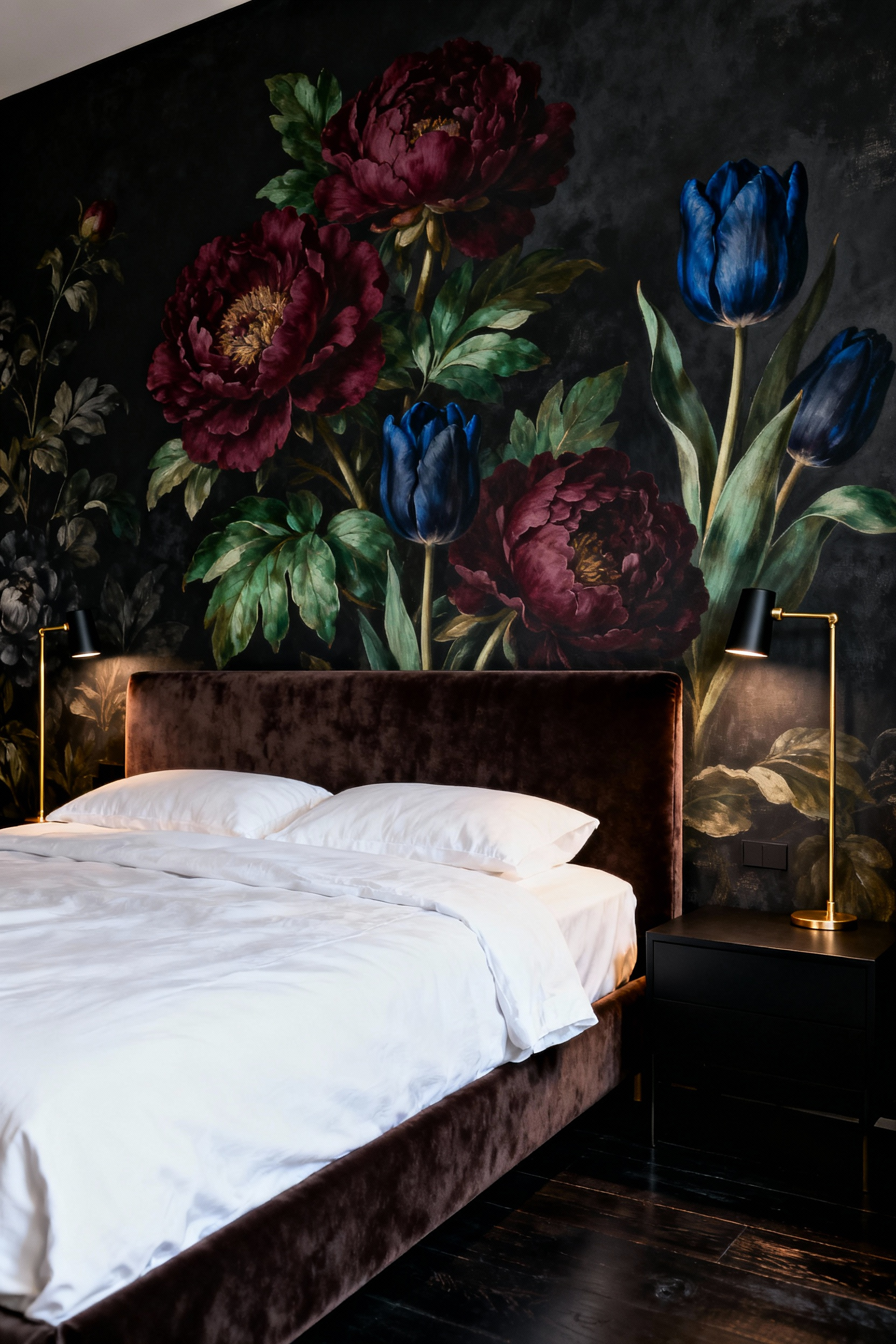
Applying this dense, dark palette in a master bedroom fundamentally alters the room’s psychology. Because dark colors absorb light rather than reflect it, the space feels immediately more unified and enclosed. This visual weight creates a sensory “embrace,” transforming a standard room into a cozy, intimate retreat.
The secret to mastering this look without making the room feel heavy lies in the details. The most successful wallpapers in this genre often feature metallic accents—gold or brass leaf—woven into the floral elements. These highlights catch the illumination from bedside lamps, causing the jewel-toned ruby and sapphire petals to glow vividly against the shadow. To maintain this luminous quality, balance the bold walls with light neutral trims and soft metallic hardware.
3. Chinoiserie Panels: Telling a Story with Hand-Painted Scenery
To truly embrace a philosophy of abundance in a master suite, look beyond the repetitive nature of standard wallpaper. Hand-painted Chinoiserie panels offer something far more exclusive: a continuous, non-repeating mural that transforms walls into a canvas of bespoke narrative art. Historically imported for the European elite, these panels are often created on delicate rice paper or silk, designed to wrap the entire room in a seamless panoramic landscape.
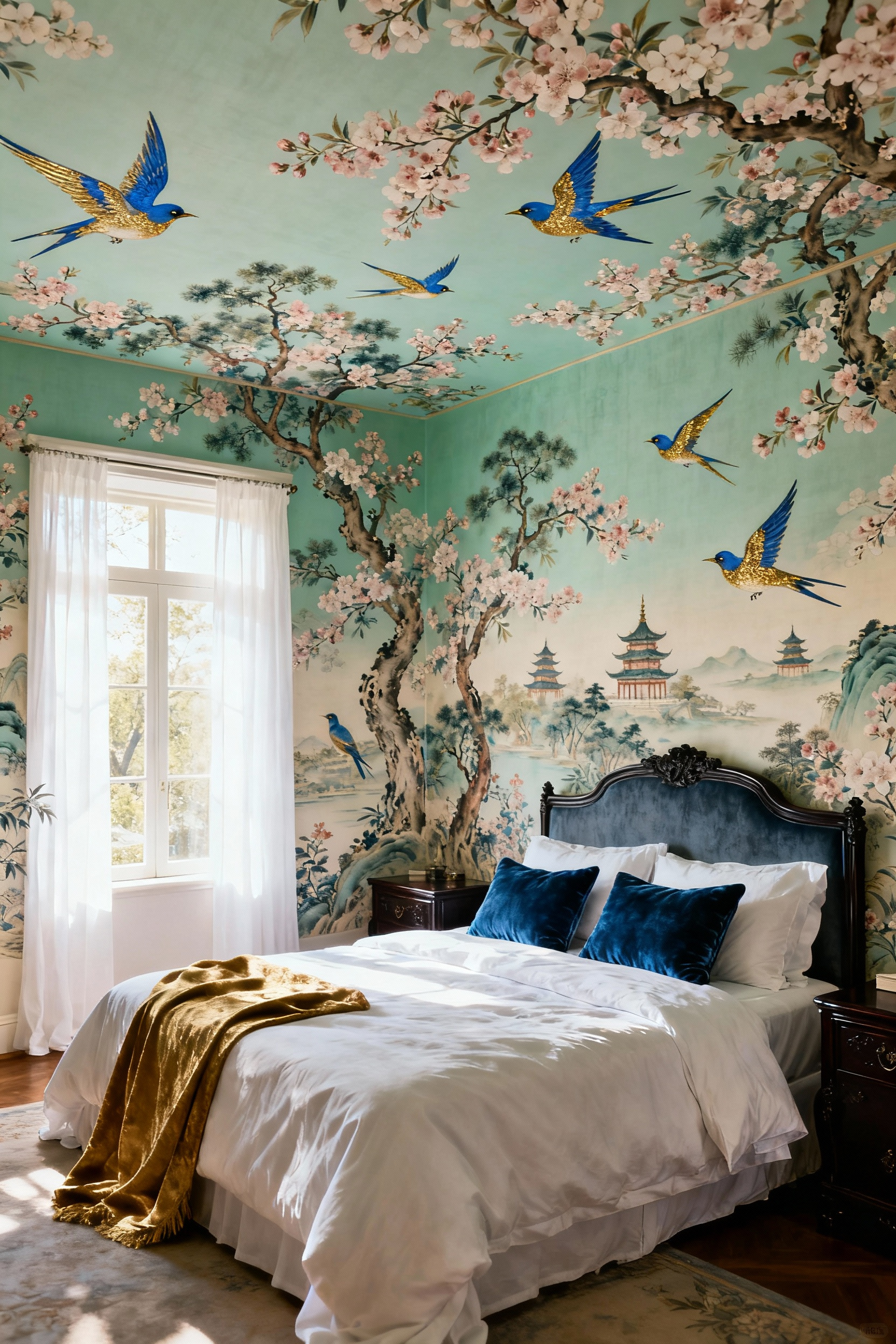
The impact lies in the composition. These scenes are crafted to be immersive, creating what designers call an “inhabitable dream.” Through masterful layering—placing large blossoms in the foreground against distant, stylized pagodas and weeping willows—the artwork creates a profound sense of depth. This visual journey draws the eye inward, expanding the perceived boundaries of the bedroom. When set against a ground of soft pastels like blush pink or pale blue, the walls become a serene, sophisticated backdrop that feels both opulent and restful.
Every brushstroke carries meaning, turning the decor into a story of wellbeing. The motifs are not random; they are intentional symbols of fortune and harmony meant to bless the home. Peonies and tea roses evoke beauty and spring, while the elegant crane—a staple of these designs—symbolizes longevity. By enveloping the space in lush flora and exotic songbirds, you aren’t just decorating a room; you are curating a sanctuary of elegance.
4. The Fifth Wall: Wallpapering the Ceiling for Enveloping Luxury
In the master bedroom, the ceiling serves as the canvas most frequently viewed during moments of rest, yet it is often neglected as a blank, white afterthought. Treating this “fifth wall” is essential for creating a truly enveloping atmosphere. By extending wallpaper overhead, we achieve a distinct cocoon-like effect—using deep, moody florals to visually lower the ceiling for intimacy, or employing ethereal sky-inspired murals to create a serene, floating portal above the bed. This fearless layering revives the high-Victorian tradition of “room sets,” where coordinating patterns covered every surface to mimic the grandeur of hand-painted frescoes.
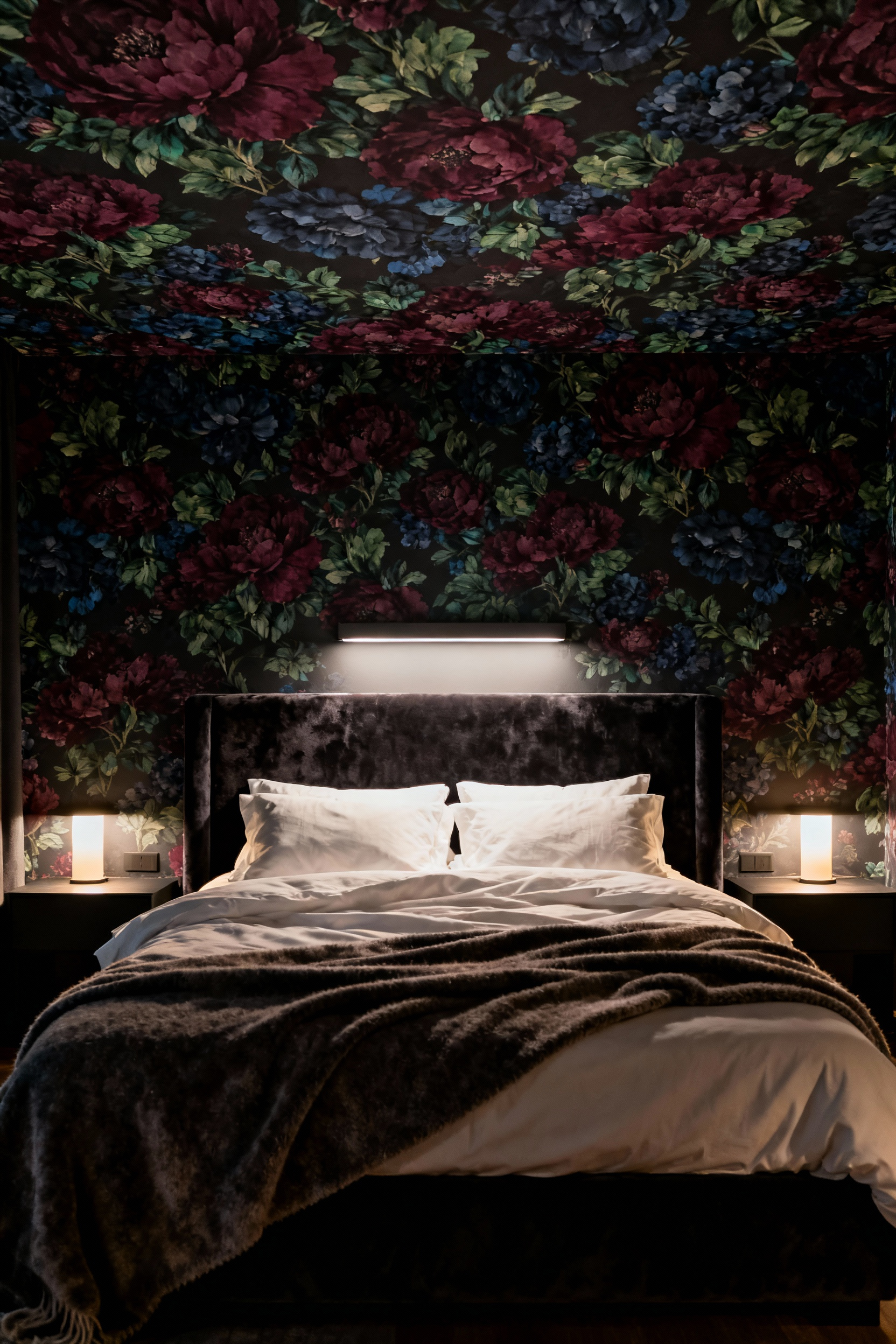
Beyond aesthetic immersion, the ceiling offers a unique functional advantage for material indulgence. Because this horizontal plane sits above the reach of daily scuffs and receives less direct UV exposure, it becomes the safest place to utilize delicate, high-luxury finishes. We can embrace vulnerable textures like natural silk and grasscloth, or opt for papers embedded with glass beads and metallic threads. These materials perform exceptionally well overhead, catching the light from chandeliers to cast a shimmering glow.
However, executing this level of luxury requires uncompromising technical precision. Gravity makes the installation significantly more demanding than vertical application, necessitating professional craftsmanship. Success relies entirely on a flawlessly prepped, smooth substrate, as overhead lighting will unforgivingly highlight any texture or cracks. Furthermore, the design must be anchored intentionally; the first strip should align with the room’s primary focal point, typically centered above the bed, ensuring the pattern flows naturally with the light.
5. Metallic Geometrics: Art Deco Glamour that Catches the Evening Light
Channeling the exuberant spirit of the Roaring Twenties, metallic geometric wallpaper transforms a master bedroom into a personal sanctuary of high-octane glamour. This aesthetic acts as a celebration of the Art Deco movement, where the organic curves of the past gave way to the crisp precision of the machine age. By incorporating motifs like stepped ziggurats, fan shapes, or sharp chevrons, you introduce a sense of architectural structure that feels both vintage and forward-looking.
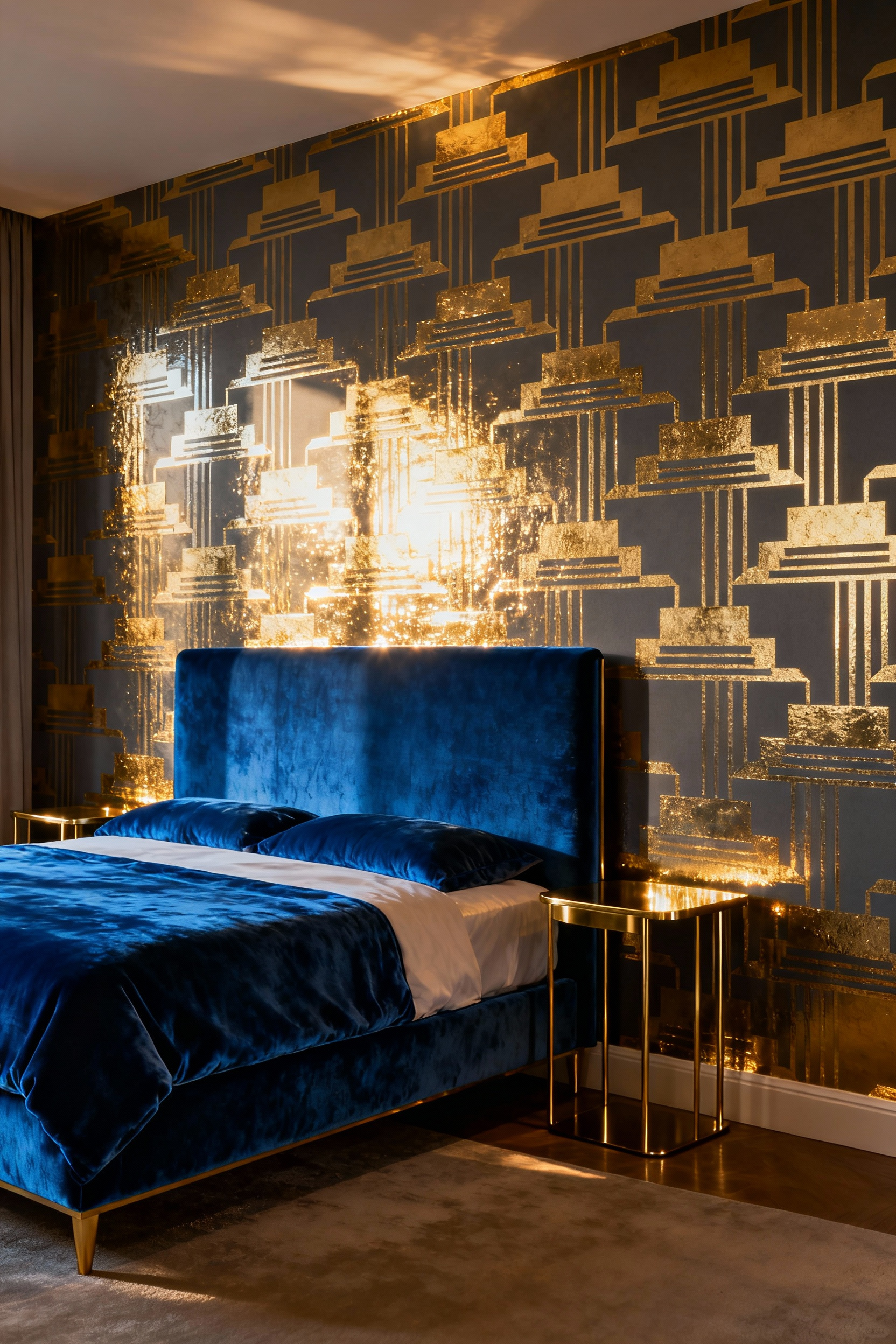
The visual impact of these wallcoverings reveals itself after sunset. Because bedrooms often rely on lower, ambient lighting rather than harsh overhead glare, they are the perfect stage for reflective finishes. High-quality papers utilizing metallic inks, aluminum foils, or Mylar don’t just sit flat on the wall; they actively interact with your bedside lamps. As the light hits the geometric planes, the wall appears to flicker and gleam, creating a dynamic, jewel-box atmosphere.
This interplay between matte backgrounds and shimmering lines creates a powerful optical illusion, often mimicking the depth of a bas-relief sculpture. To maximize this opulence without overwhelming the senses, consider positioning a large-scale geometric print behind the headboard. This turns the bed into a focal point anchored by visual weight and texture. Whether you choose the warmth of gold to soften the room or the cool sophistication of silver for a modern edge, the result is a tactile, multi-dimensional backdrop.
6. The Headboard Illusion: Framing Your Sleep Space with Architectural Pattern
One of the most sophisticated applications of wallcovering is the “Headboard Illusion,” a technique that transcends simple decoration to create phantom architecture. By leveraging the art historical concept of *trompe-l’oeil*, or “trick the eye,” wallpaper can simulate the gravitas of permanent structural elements without the dust or expense of renovation. This approach allows you to introduce the visual weight of intricate wood paneling, weathered industrial brick, or even polished marble slabs. It adds immediate dimensional gravity that anchors the bed as the undisputed focal point.
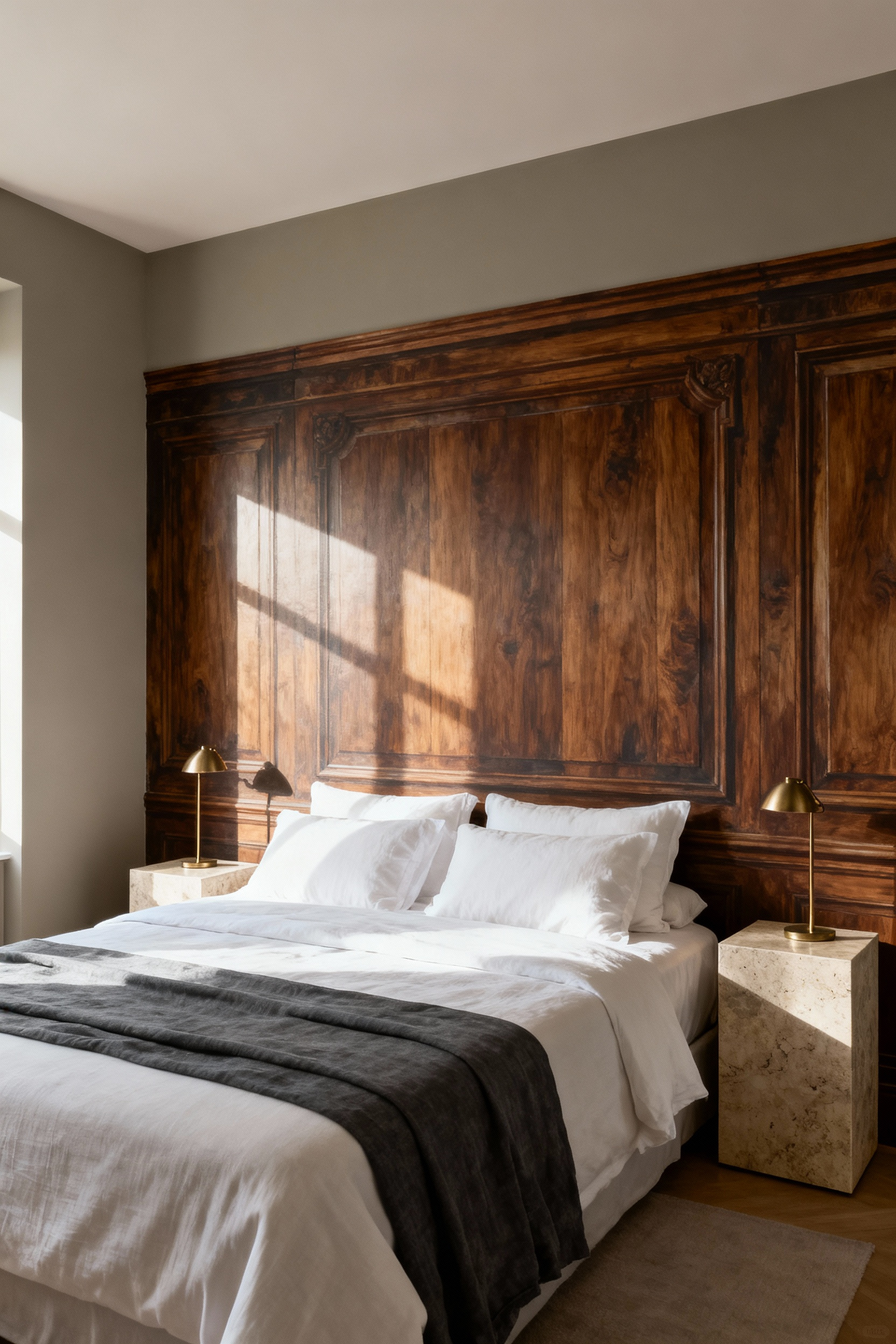
The success of this illusion lies in precision framing rather than wall-to-wall coverage. By limiting the wallpaper to a defined zone directly behind the bed—mimicking the scale of an oversized custom headboard—you create a concentrated design moment. To fully sell this architectural sleight of hand, consider bordering the paper with physical elements like painted wood trim or metallic tape. This physical border seals the edge, convincing the eye that the wallpaper is a deliberate, built-in panel.
This strategy also offers a powerful tool for spatial manipulation. A vertical pattern, such as Gothic-inspired lines or fluted detailing, draws the eye upward, effectively stretching the ceiling height to make the master suite feel grander. Conversely, horizontal rhythms can visually widen a narrow room. Whether you are aiming for the serenity of botanical layers or the urban edge of faux concrete, this method transforms a flat wall into a sculptural asset.
7. Velvet Flocking: Reviving Old World Opulence for Modern Spaces
There is a distinct sensuality to velvet flocking that flat paper simply cannot replicate. Originally designed in the 17th century to democratize the look of prohibitively expensive cut-velvet and silk damask hangings, this style quickly became a hallmark of aristocracy. Today, we revive that grandeur not merely as an imitation of textile, but as a deliberate, tactile statement of luxury.
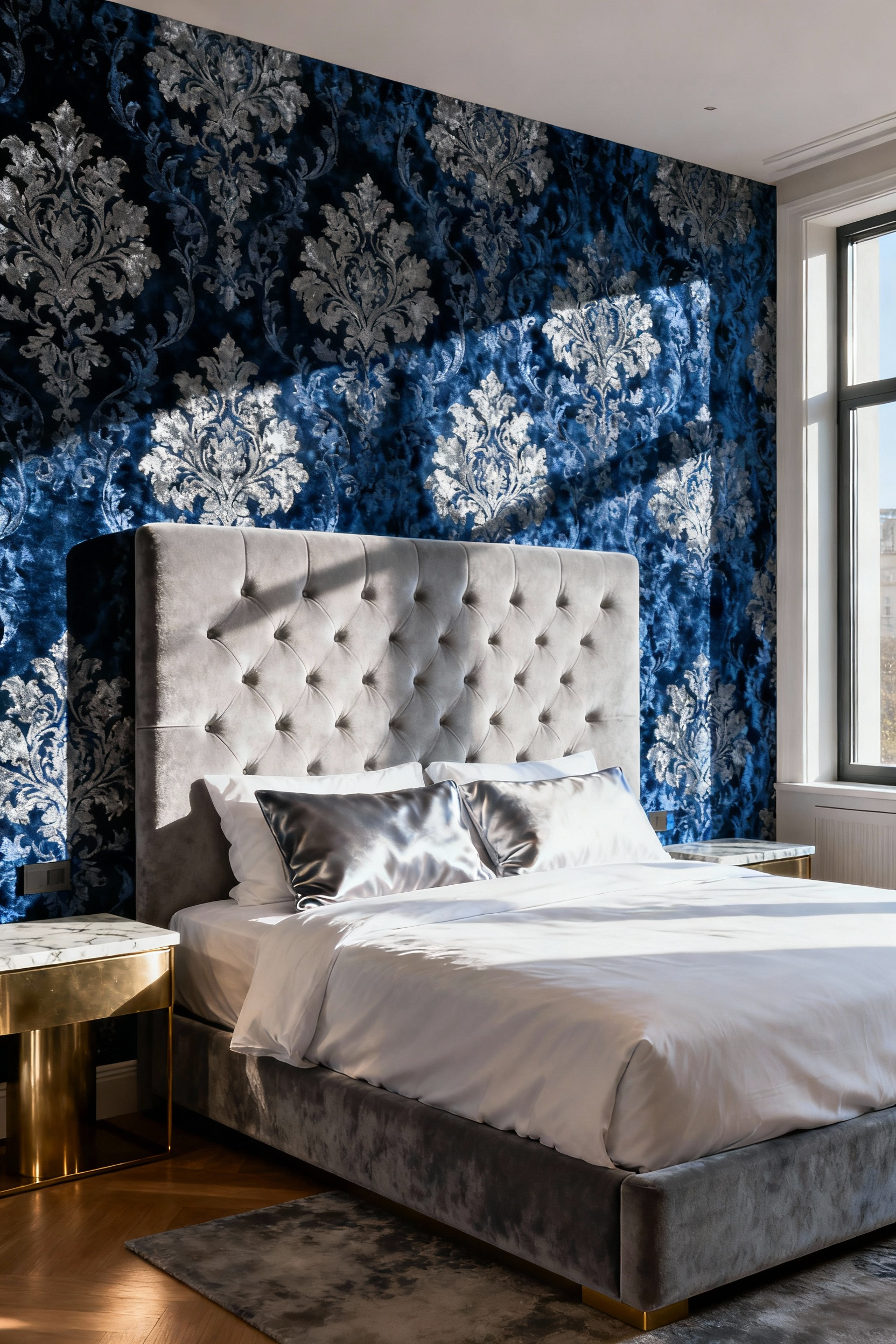
The allure lies in the modern electrostatic application, where short man-made fibers are charged to stand perpendicular to the backing. This creates a dense, plush pile with a genuine three-dimensional effect. For the master bedroom, this depth is transformative. The raised fibers capture and absorb light, adding a warmth and acoustic softness that makes the space feel enveloped and secure. Practically, this heavy, textured surface is exceptional at hiding uneven walls, offering a flawless finish where paint or standard wallpaper might fail.
Contemporary design has liberated flocking from strictly traditional damasks. We now see this opulent technique applied to sharp geometric lines, animal prints, and even edgy motifs like skulls, blending historical technique with modern rebellion. To maximize the drama, designers often pair the matte, soft flock against metallic or pearlescent backgrounds. This creates a sophisticated tension between the shimmering base and the velvety relief.
8. The Jewel Box Effect: Wrapping All Four Walls in Deep Saturated Color
To truly elevate a master bedroom, move beyond the safety net of the single accent wall. The “Jewel Box Effect” embraces a fearless, all-encompassing approach, wrapping all four walls—and often the ceiling—in deep, saturated hues. Imagine the sensation of opening an antique jewelry casket; the interior isn’t partially lined, but fully enveloped in plush velvet. Applying this philosophy to a bedroom creates an immersive cocoon that feels intentional and finished, replacing the jarring transition of an accent wall with a seamless, atmospheric backdrop.
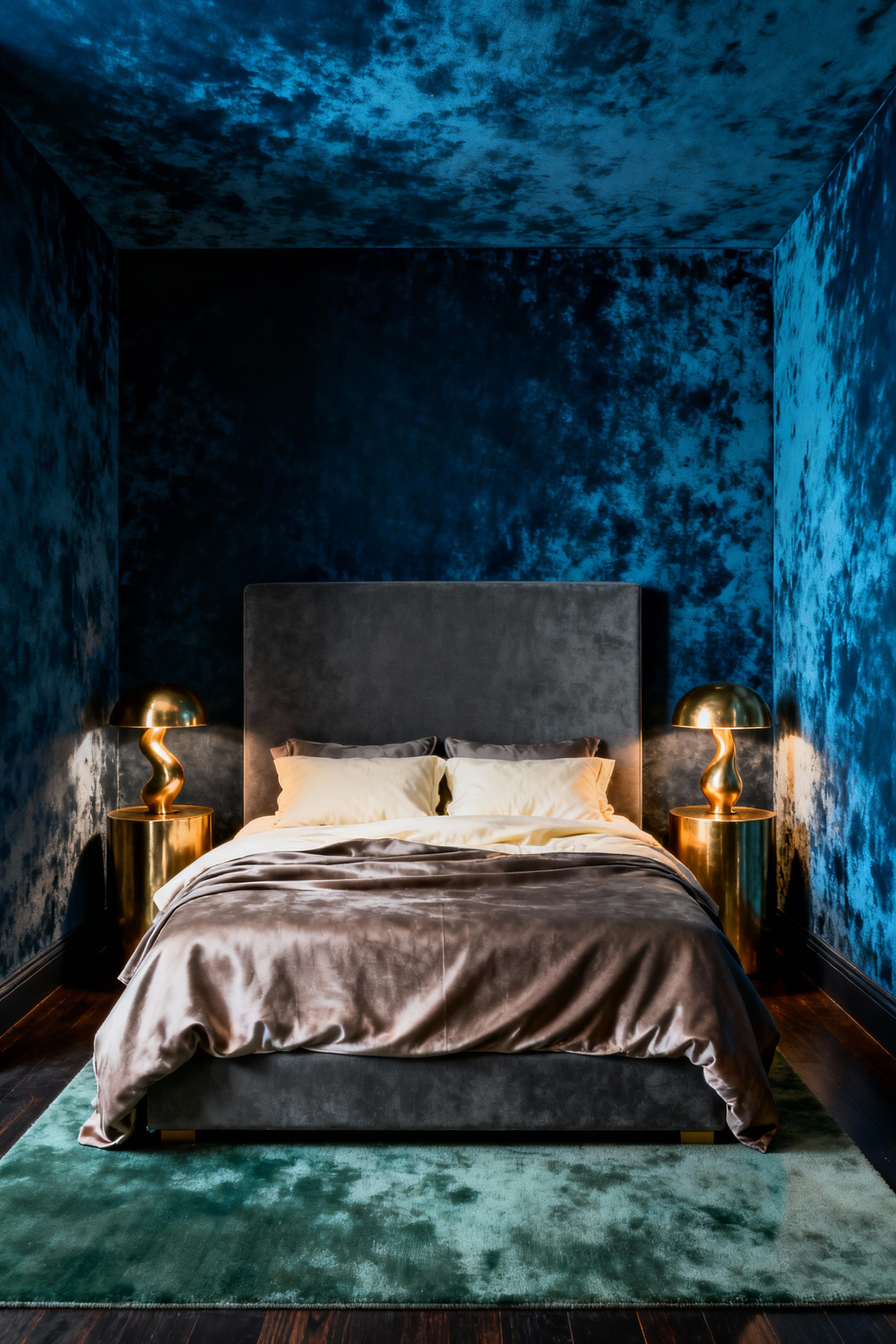
Psychologically, this level of saturation is surprisingly grounding. Deep sapphire blues, emerald greens, or amethyst tones do not shrink the room as often feared; instead, they blur the boundaries, fostering a sense of intimacy that is essential for deep rest.
The key to mastering this look without overwhelming the eye lies in texture and scale. Rather than bold, aggressive graphics, opt for subdued, small-scale patterns that read as a rich, solid color from a distance. Alternatively, embrace the tactile luxury of a deep-hued grasscloth or woven textile paper. These materials provide a “good middle ground,” offering sensory depth while maintaining the tranquility required for sleep.
To capture the true essence of a jewel, consider how the wallcovering interacts with light. A pure matte finish creates a soft, velvety absorption of light that maximizes the cozy factor. However, to truly embrace the “more is more” philosophy, look for papers with a whisper of metallic sheen or gold thread. This subtle luster mimics the way a gemstone catches the light, ensuring the dark palette feels opulent and alive rather than heavy.
9. Panoramic Murals: Transporting Your Suite to the Italian Countryside
There is a profound joy in transforming a flat wall into a window overlooking an idealized past. Reviving the 19th-century tradition of scenic paper, panoramic murals offer a form of “armchair tourism” that turns a master suite into a personal sanctuary. Originally crafted by French ateliers like Joseph Dufour and Zuber for the elite returning from their Grand Tours, these non-repeating scenes were designed to wrap the viewer in a classical painting.
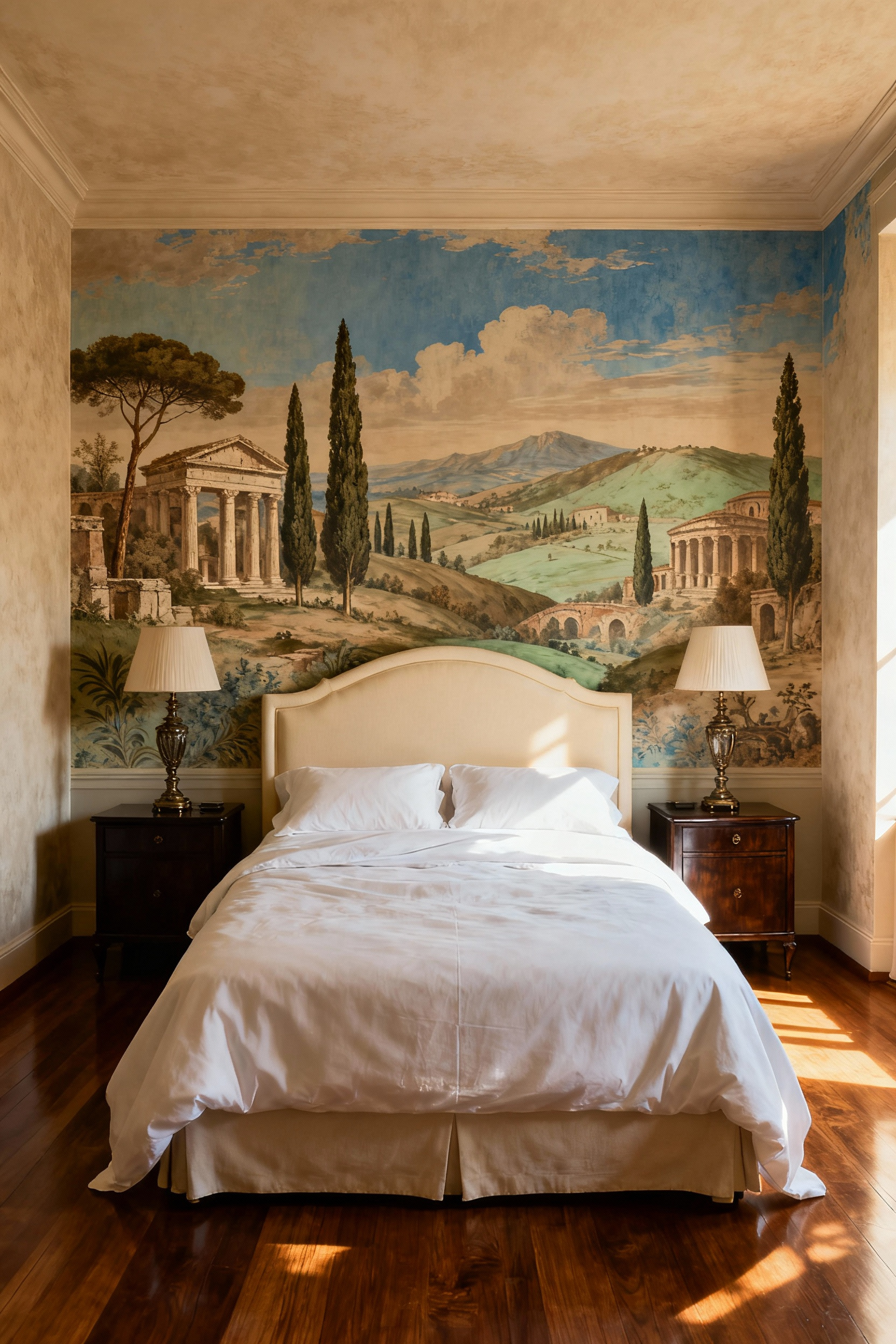
Unlike standard wallpaper, which relies on patterns, a panoramic mural adds dramatic architectural depth. The lack of repetition tricks the eye into perceiving a boundless vista rather than a closed corner, effectively expanding the room’s psychological footprint. To truly capture the narrative of the Italian countryside, look for compositions anchored by majestic umbrella pines and pencil-thin cypress trees framing classical villas or ancient Roman ruins.
While the scale is grand, the atmosphere should remain restful. The most successful applications in a bedroom setting often rely on a soft, golden luminescence or the elegant restraint of grisaille—tones of gray that mimic an antique fresco. This muted, patinated palette ensures the scene remains a tranquil backdrop for sleep rather than a visual shout. It creates a space where time slows down, allowing you to wake up amidst sun-drenched Tuscan hills without ever leaving your bed.
10. Faux Stone and Marble: Architectural Grandeur Without the Construction
Incorporating faux stone or marble wallpaper into the master bedroom is less about compromising on genuine materials and more about embracing the historical art of *trompe-l’oeil*. Dating back to Pompeii and the Renaissance, this technique was used to deceive the eye, adding architectural grandeur where structural weight or cost made solid stone impossible. By adopting this approach today, you engage in sophisticated architectural storytelling that brings the gravitas of a neoclassical villa directly into your home without the need for specialized masonry.
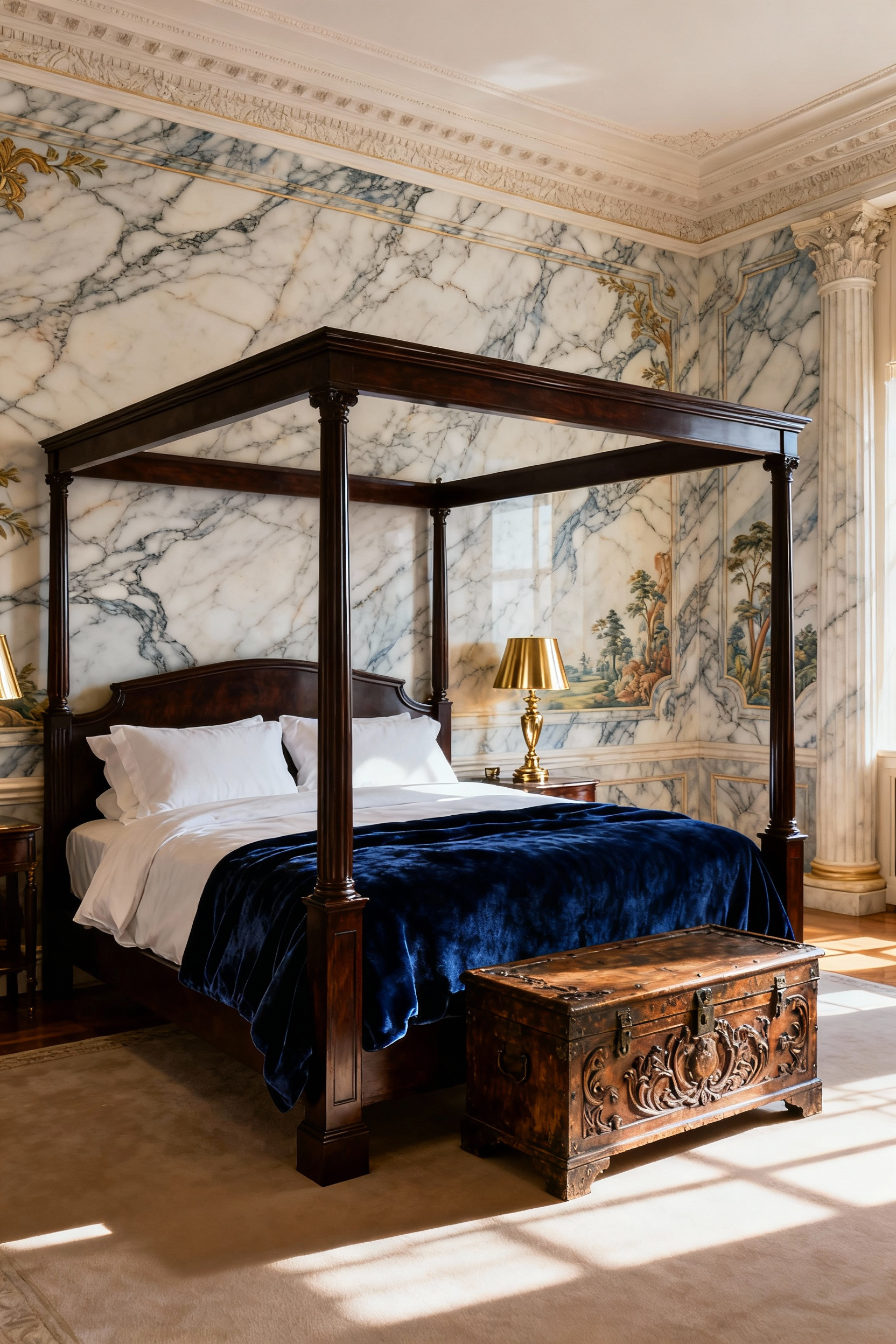
Modern advancements have bridged the gap between illusion and reality. Unlike flat prints of the past, contemporary wallpapers utilize raised, imported inks to achieve a hyper-realistic texture that mimics the natural pitting and ruggedness of stone. This allows for expansive, seamless visuals that replicate the look of a massive, single-slab installation—an effect that is logistically daunting with heavy, natural materials.
In a bedroom setting, the impact is transformative. A sleek, dark marble print embellished with gold tendrils can instantly evoke a moody, Art Deco-inspired decadence, perfect for pairing with velvet furnishings. Alternatively, soft, mineral-style veining offers a grounded, serene atmosphere. Beyond the aesthetic, these high-end wallcoverings offer practical durability. They are often washable and mildew-resistant, providing timeless elegance that is far easier to maintain than porous, fragile marble.
11. Subtle Tone-on-Tone Damask: Complexity for the Quiet Luxury Lover
For the homeowner who craves opulence without visual noise, subtle tone-on-tone damask offers a masterclass in restrained grandeur. True quiet luxury relies on complexity that isn’t immediately obvious. This specific style is rooted in the technical mastery of the original textile. Historically, artisans created these ornate patterns not through contrasting dyes, but by exploiting the tension between matte threads and lustrous, light-reflecting ones. Modern wallpapers faithfully replicate this illusion using low-contrast inks, flocking, or pearlescent finishes to create a design that reveals its full intricacy only upon closer inspection.
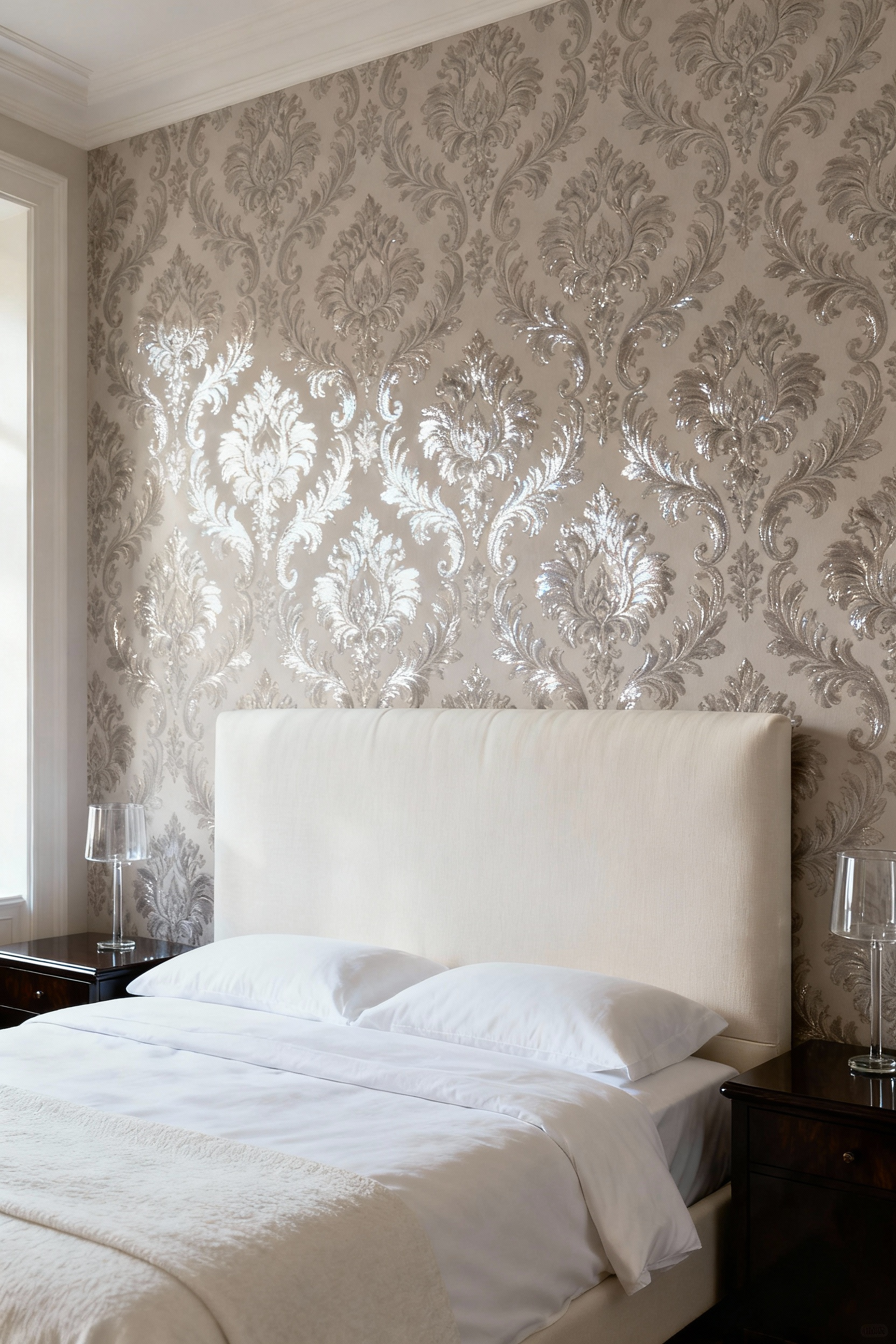
This approach transforms the walls into an “elevated neutral,” perfect for the sanctuary of a master bedroom. Rather than settling for flat, static paint, you introduce a tactile richness that creates a dynamic interplay of light and shadow. As natural light shifts across the room or bedside lamps are dimmed, the metallic or embossed elements catch the glow, adding a gentle luminosity that feels alive.
This aligns with the Edwardian philosophy that restraint is actually a more evolved form of elegance. By choosing a monochrome palette—perhaps in soft white, mushroom, or grey—you maintain a serene atmosphere while anchoring the space with a texture that carries centuries of aristocratic heritage. It creates a backdrop that is calming enough for sleep yet sufficiently complex to satisfy the desire for deep, layered design.
(If tranquility is your core goal, you may also enjoy these Nurturing Cozy Bedroom Ideas to Create Your Personal Sanctuary.)
12. The Walk-In Wardrobe Connection: Carrying the Pattern Behind Closed Doors
Historically, the concept of the “owner’s suite” implied a comprehensive sanctuary, yet the walk-in wardrobe often remains an afterthought—a utilitarian box disconnected from the luxury of the sleeping quarters. Extending your design narrative into this ancillary space serves a vital psychological function: it signals that every square inch of the home matters. When you treat the closet as a private art installation rather than a mere storage unit, you elevate the mundane routine of dressing into a curated experience.
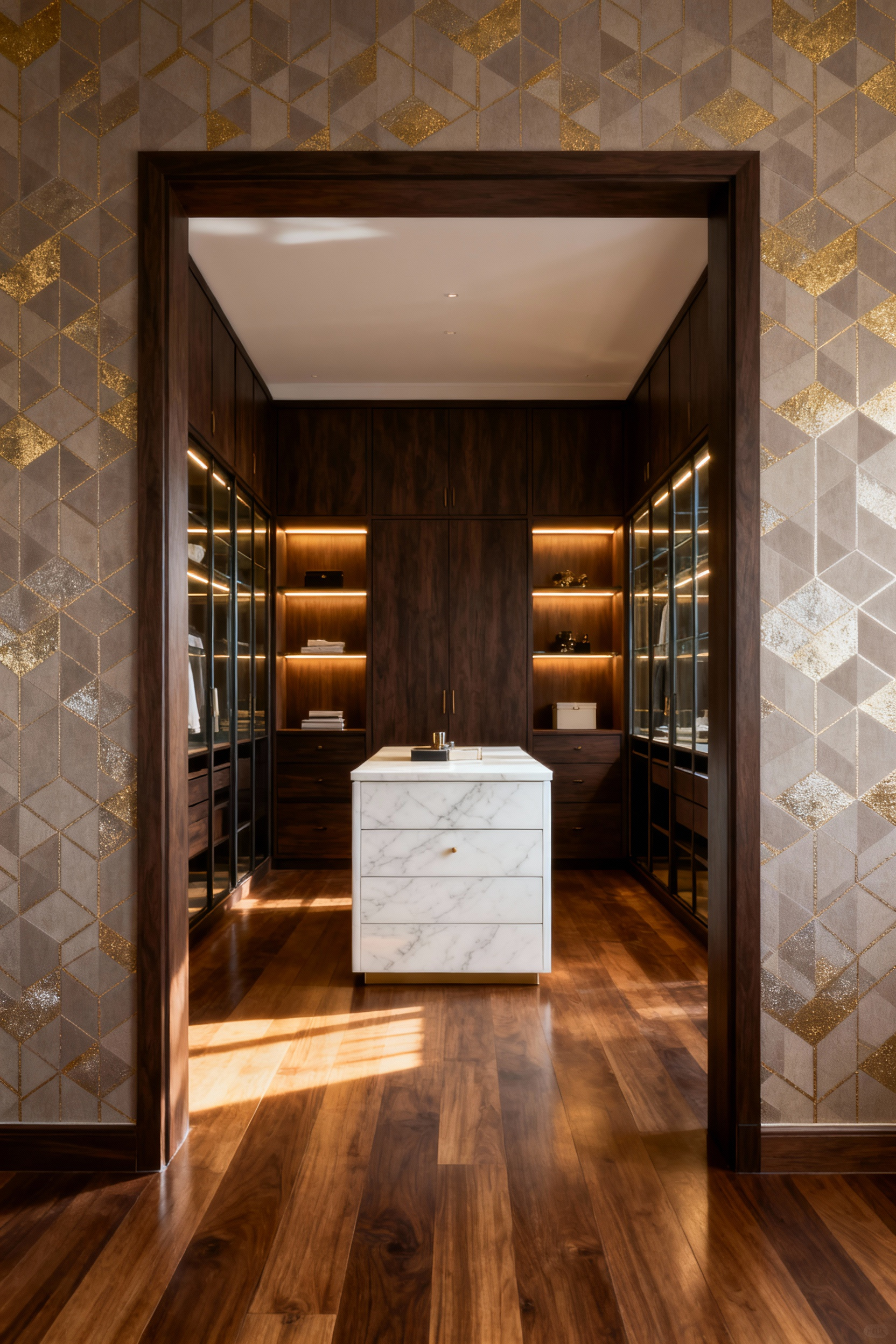
While a maximalist might delight in wrapping the wardrobe interior in the exact bold print found in the bedroom, achieving a seamless transition often requires a more nuanced touch. There is a valid design debate regarding visibility; a dark or chaotic wallpaper can distort how you perceive clothing colors in the morning light. A sophisticated compromise involves pulling a single thread from the bedroom’s tapestry to maintain rhythm without overwhelming the eye.
For example, if your primary suite features a dramatic floral wall covering, consider lining the wardrobe in a coordinating textured grasscloth or linen that matches the floral’s background hue. This approach ensures the spaces feel architecturally unified and seamless while keeping the closet neutral enough to function properly. Ultimately, greeting the morning in a space rich with texture and intention provides a subtle mood boost, setting an energized, organized tone for the day ahead.
13. Maximalist Pattern Mixing: Coordinating Drapes and Bedding with Bold Walls
In a maximalist bedroom, bold wallpaper serves as far more than a backdrop; it acts as the “Hero Print,” or the conductor of the room’s visual orchestra. Whether utilizing large-scale botanicals or intricate Chinoiserie, this dominant pattern anchors the space. To prevent the design from slipping into chaos, extract two or three core hues from this hero print to dictate the palette for your textiles. This creates an invisible thread of harmony, ensuring that a deep emerald found in a floral wall mural speaks the same language as the velvet of your drapes or the piping on a duvet.
(For more extreme inspirations, explore 14 Luxury Bedroom Wallpaper Accent Wall Ideas designed for the unapologetic maximalist.)
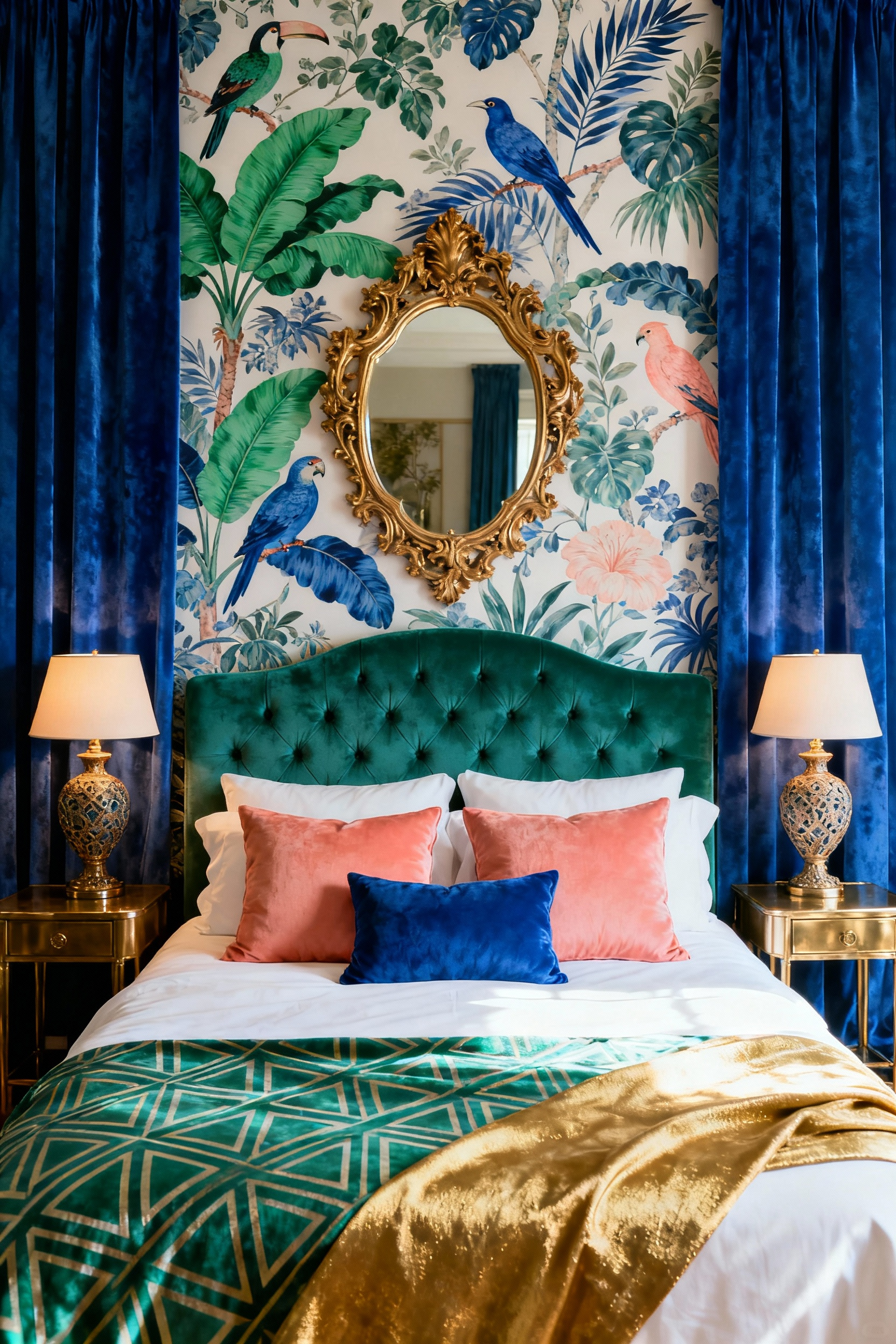
Successful pattern mixing relies heavily on a hierarchy of scale. If the walls feature oversized motifs, the bedding and window treatments should transition to medium-scale prints—such as geometric trellises or bold ticking stripes—that are roughly half the size of the primary pattern. This variation establishes a necessary visual rhythm. You can then introduce the smallest scale, perhaps a pinstripe or leopard print on throw pillows, to provide a final, playful clash that cuts through the softness of the larger florals.
Beyond the prints themselves, texture plays a critical role in grounding the design. A room filled with flat cotton prints can feel one-dimensional, so look to historical precedents like the Victorian era for inspiration on tactile luxury. Layering rich materials such as heavy silk, lush velvet, or coarse linen against crisp wallpapers adds a sensory depth that flat patterns cannot achieve alone. This combination of calculated scale and tactile richness transforms a bold, personality-filled room into an enveloping, opulent sanctuary.
14. Niche Appeal: Highlighting Alcoves with Contrast Paper
An alcove offers a unique architectural opportunity to create a distinctive micro-environment within your master bedroom. Historically utilized for warmth and privacy, modern recesses function as visual partitions that invite a moment of pause. While the primary bedroom space often relies on soothing, neutral palettes to foster rest, the alcove serves as the perfect canvas for a deliberate visual accent. By applying a contrasting wallpaper here, you not only break the monotony but also create an optical illusion of depth, making the recess appear farther back and adding significant dimension to the room’s architecture.
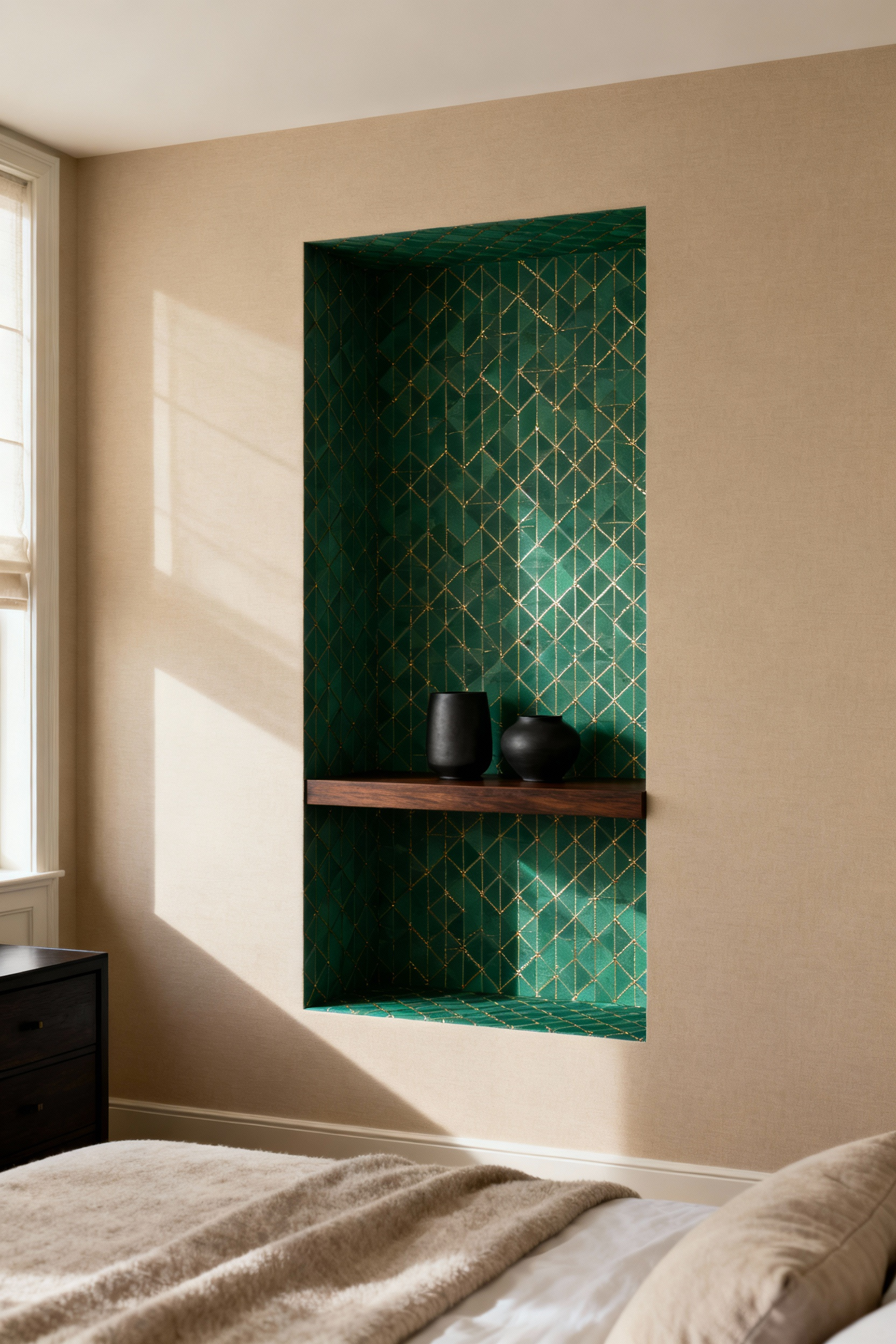
The design power of the alcove lies in containment. The surrounding neutral walls act as a frame, effectively turning the wallpaper into a piece of art. This containment grants you the license to embrace bold, maximalist patterns that might feel overwhelming if applied to all four walls. Counterintuitively, it is often better to choose large-scale patterns over small, busy prints in these tight spaces; a larger repeat creates a sense of expansiveness and confidence, whereas tiny details can make the niche feel cluttered.
To truly elevate the luxury factor, consider the tactile experience alongside the visual one. Wallpapers featuring organic grasscloth, tailored faux linen, or a soft velvet finish introduce a quiet opulence that flat paint cannot achieve. If your choice includes a metallic luster, strategic accent lighting within the recess becomes essential. A slim wall sconce or LED strip will catch the sheen, highlighting the texture and transforming the alcove into a glowing, cocoon-like focal point that anchors the entire room’s color story.
15. Trompe l’Oeil Moldings: Creating Classical Structure with Paper
Achieving classical grandeur doesn’t always require a contractor or a cloud of drywall dust. Trompe l’oeil, a technique meaning “deceive the eye,” relies on the meticulous manipulation of light, shadow, and linear perspective to create convincing three-dimensional forms on a flat surface. Modern digital printing has elevated this art form, allowing for photorealistic reproductions of carved wood paneling, marble entablatures, or historical stucco. By creating a vanishing point and mimicking exactly how light hits a carved surface, these papers add volume to the master bedroom, making walls appear to recede and significantly expanding the perceived space.
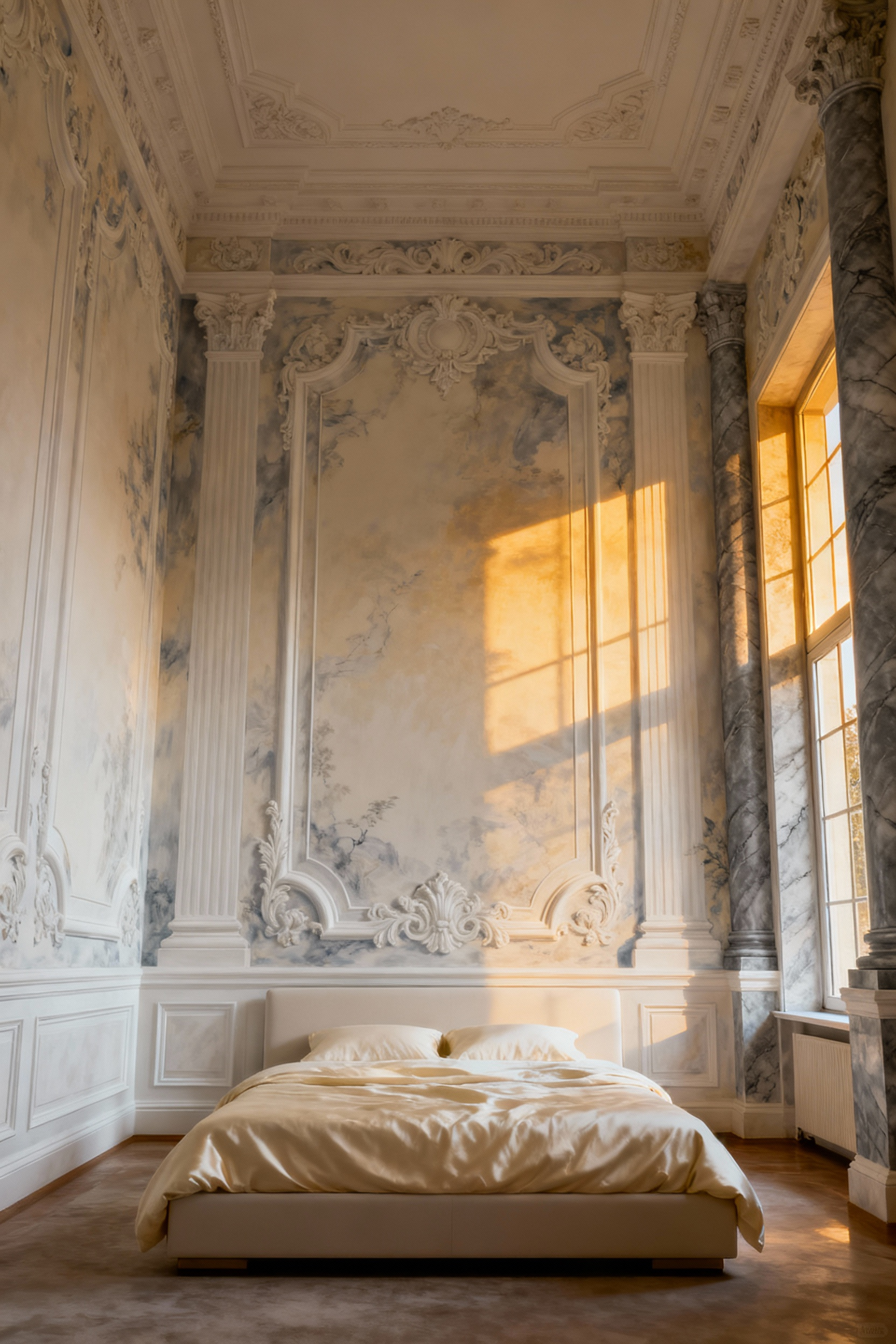
In a sanctuary like the master suite, this technique offers structure without visual chaos. Unlike whimsical, full-scene murals, faux moldings in monochromatic creams or soft grays provide a grounded, architectural backdrop. This is particularly effective for creating a “headboard effect,” framing the bed with established elegance while keeping the floor plan entirely open.
Historically used by the rising bourgeois class to emulate the expensive stonework of the elite, this approach remains a practical way to inject authenticity into a plain box. It effectively conceals architectural imperfections and delivers a high-end, custom look that eliminates the labor of a master carver. For renters or homeowners looking for flexibility, it offers the weight of tradition with the ease of a washable, reversible application.
16. Lighting Interaction: Choosing Finishes that Glow Under Sconces
Lighting choices change a room’s atmosphere, but the wallpaper finish dictates the quality of that light. For a truly luxurious touch, consider finishes that incorporate metallic leaf, foil, or mica particles. Unlike flat matte paint, these materials offer a specular reflection. When a warm-white LED bulb from a shade-less sconce hits these surfaces, the light skims across the wall, creating a luminous, liquid effect. This creates a cozy, ambient glow that feels opulent rather than harsh, amplifying the warmth of brass or gold tones in the paper.
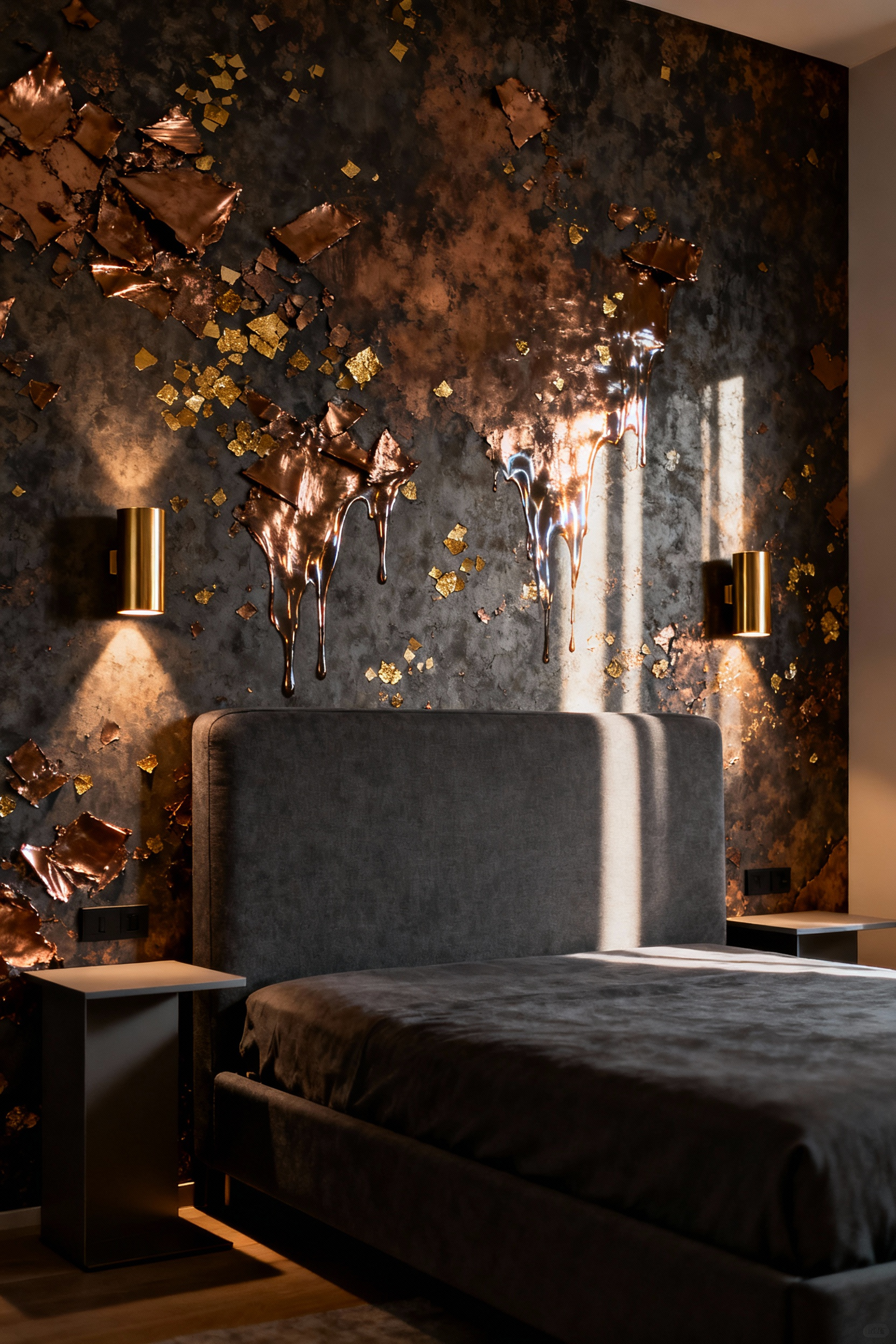
If your preference leans toward tactile depth over shine, the interaction changes from reflection to shadow-play. Heavily textured wallpapers—such as natural grasscloth, linen, or embossed vinyl—rely on “grazing” light to come alive. By positioning an up-and-down sconce or a wall washer against these surfaces, you force the light to travel vertically across the reliefs. This technique highlights the natural slubs and variations in the material, transforming a static wall into a dynamic architectural feature full of organic dimension.
Ultimately, this pairing establishes the room’s visual narrative. A sleek, minimal sconce can provide a modern contrast to a baroque foil, while a traditional fixture might blend seamlessly with a delicate floral. Crucially for a sleep environment, indirect sconce lighting softens graphic patterns, subduing their impact to ensure the space remains restful while still retaining the rich character of the design.
Conclusion: From Sleeping Quarters to Sanctuary—The Art of Living Boldly
Transforming your bedroom from a utilitarian sleeping quarter into a true sanctuary requires a fundamental shift in perspective. View your walls not as mere boundaries, but as a canvas for self-reclamation. By rejecting the safety of modern neutrality and embracing the historical weight of opulent design—whether through the grounding tactile depth of grasscloth or the sweeping grandeur of a hand-painted mural—you are essentially authoring your own environment.
This pursuit of personalized bedroom wallpaper ideas master suites deserve is the essence of living boldly. It is the deliberate choice to surround yourself with a sensory narrative that expertly balances the restorative necessity of rest with the vibrant energy of your unique personality.
Allow your sanctuary to serve as a daily reminder that true luxury is found in deep, personal expression rather than safe conformity. The most successful “more is more” approach marries high-impact aesthetics with emotional resonance, creating a space that evolves alongside you. Begin your transformation by identifying the dominant emotion you wish to cultivate—be it the dramatic intimacy of a dark, moody hue or the expansive freedom of a biophilic design. Then, order three large-scale samples that speak to that specific feeling to test within your space’s lighting.
- **
Frequently Asked Questions
What type of luxury wallpaper is best for concealing imperfect walls in a master bedroom?
Heavily textured wallpapers, such as natural grasscloth, woven sisal, or high-quality thick vinyl (especially those with embossed or flocking patterns), are the most effective options for concealing wall imperfections. Their thickness and three-dimensional surface naturally absorb light unevenly, drawing the eye away from minor flaws, unlike flat matte paint which highlights every ripple.
Should the wallpaper in the master bedroom match the ensuite bathroom?
While a direct match is typically avoided, the spaces should be architecturally unified. For a cohesive look, pull a single design element (a color, a texture, or a metallic sheen) from the master bedroom wallpaper and incorporate it into the bathroom. For example, if the bedroom features large navy florals, the bathroom might use a navy-and-white geometric print or a solid navy tile to maintain visual rhythm without overwhelming the senses.
What is the average lifespan of high-quality master bedroom wallpaper?
High-quality, non-vinyl wallpapers (like natural paper or silk blends) generally have a lifespan of 10 to 15 years before natural fading or peeling might occur, especially if installed correctly and not exposed to excessive humidity or direct sun. Commercial-grade vinyl or heavy-duty textile-backed wallpapers, however, are extremely durable and can often last 20 years or more with proper maintenance.