
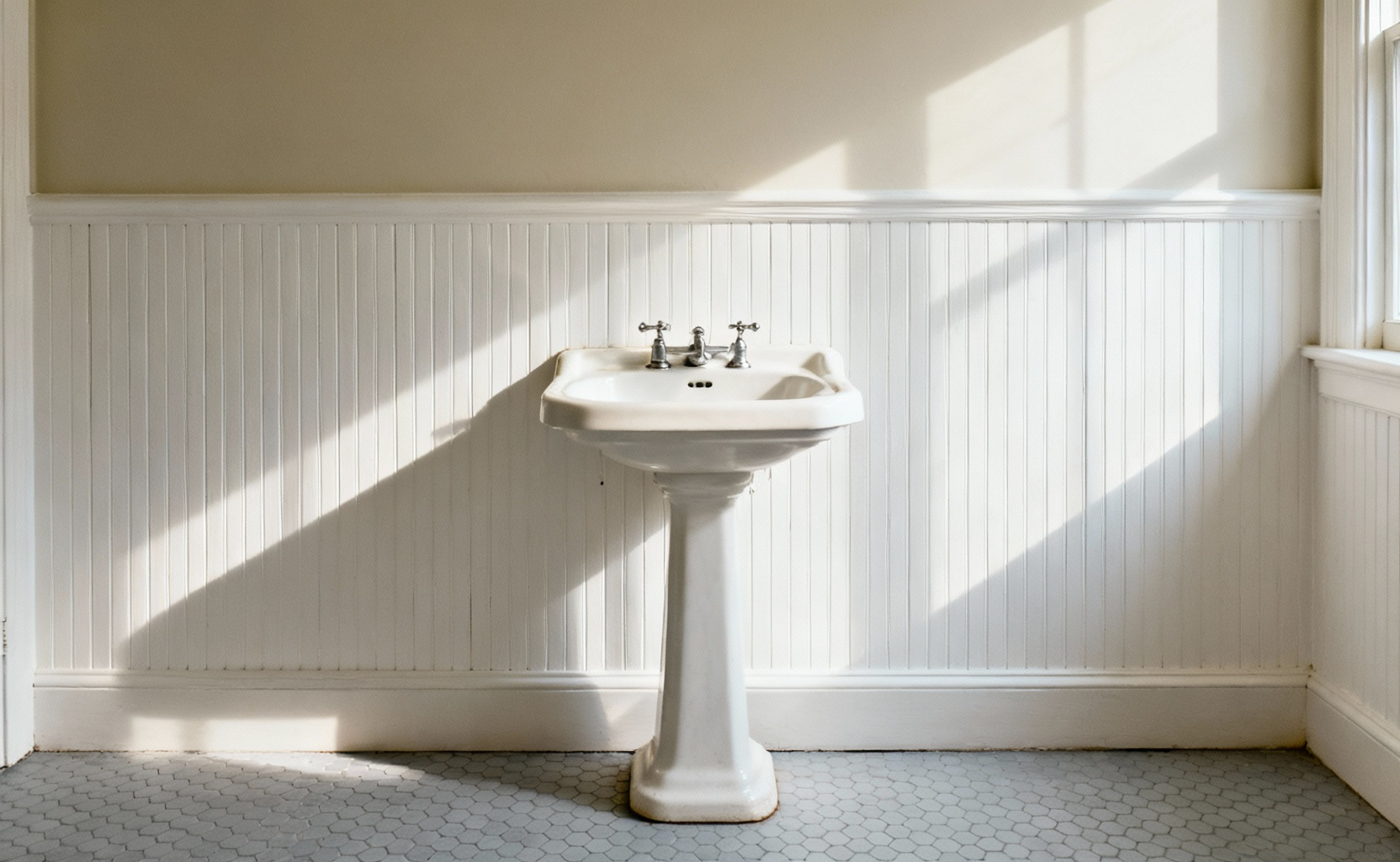

I call it the “Morning Light Revelation.” It struck me recently while washing my hands in a friend’s pristine, high-end master bath. Every surface gleamed with showroom precision, yet the space felt sterile, almost clinical. Contrast that with the quiet joy of sunlight hitting a repurposed dresser-turned-vanity, catching the slight tarnish on an oil-rubbed bronze faucet. That imperfection pulls us in. We crave these spaces because they prioritize authenticity over anxiety, offering a warm welcome that perfection simply cannot provide.
This longing for connection drives the cottage aesthetic. If you are looking for authentic cottage bathroom decoration, you are trading uniform chrome for the “patina preference,” seeking out materials that tell a story. It isn’t just about decoration; it is about psychological comfort. Rough-sawn wood shelving and beadboard walls absorb the light, offering a tactile warmth that smooth, manufactured surfaces lack. By choosing salvaged pieces and visible history, we build rooms that feel lived-in and loved, rather than just looked at.
Creating this sense of “imperfect” comfort in your own bathroom requires a shift in perspective. It means swapping modular big-box cabinetry for unique vintage finds and embracing “wabi-sabi” storage solutions that celebrate irregularity. You don’t need a massive budget to create a sanctuary with soul. Grab your treasure-hunting gear, and let’s uncover the potential in the forgotten and the well-worn.
1. The Architectural Soul: Essential Details for Your Cottage Bathroom Design
Texture forms the nostalgic heartbeat of true cottage design. While I adore salvaging rough-hewn timber for living spaces, the bathroom demands a smarter kind of resourcefulness. Choose moisture-resistant PVC or treated MDF instead of raw wood to prevent warping in high humidity. This selection creates a sustainable foundation that withstands the elements, ensuring your renovation lasts for decades rather than years.
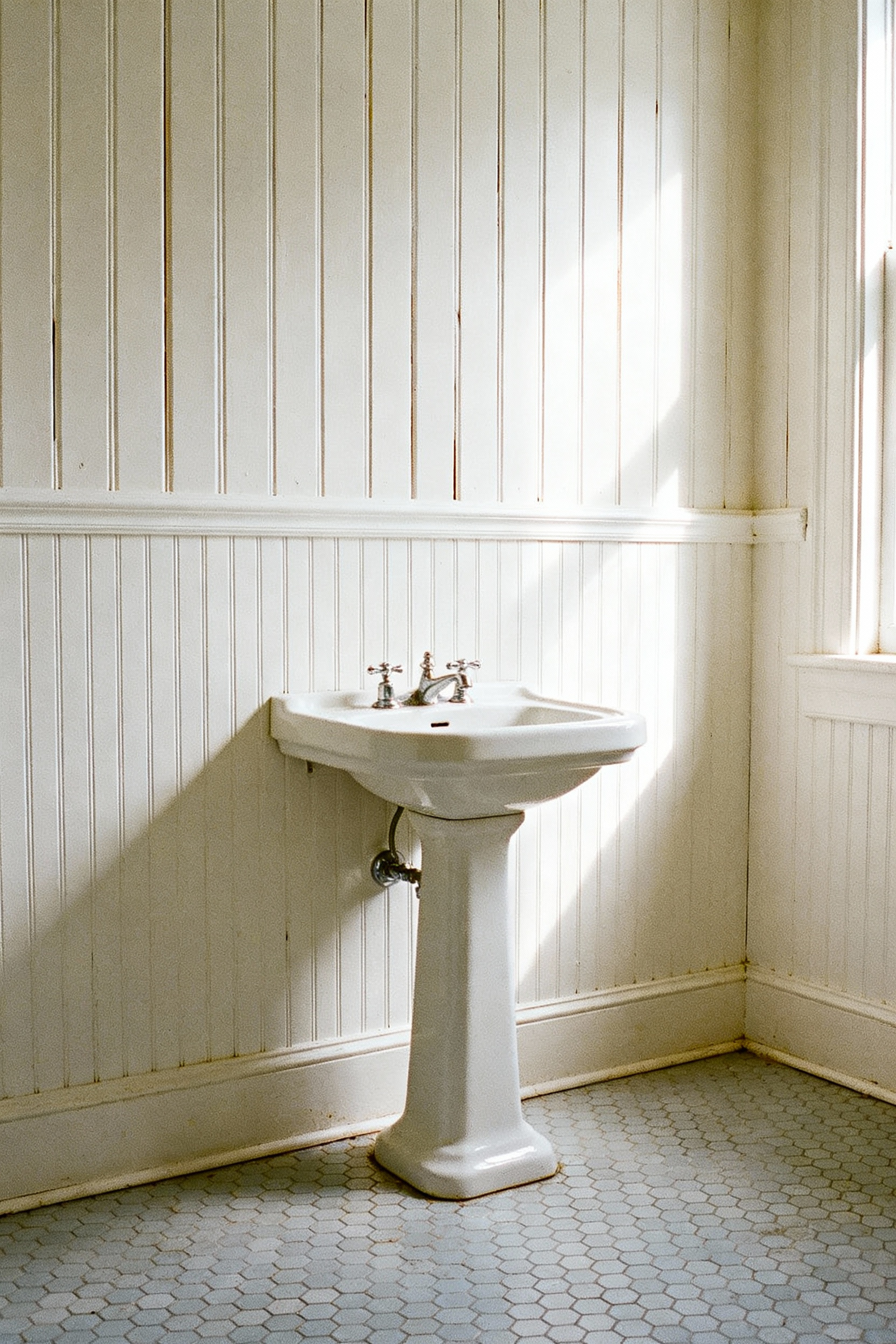
Beyond the material choice, let the installation method dictate the room’s atmosphere.
- Beadboard: Mount as wainscoting at 38 to 42 inches high to add historical armor against splashes. For an overview of historical wainscoting dimensions and installation, consult reliable design resources.
- Shiplap: Run panels horizontally to visually widen narrow rooms and balance low ceilings.
- Finish: Coat everything in high-gloss white paint.
This sheen reflects light and ensures your vintage-inspired sanctuary remains effortless to clean, setting the stage for color.
2. Pastoral Palettes: Moving Beyond Sterile White to Sage, Buttercream, and Sky Blue
Ditch the sterile white that makes bathrooms feel like clinics. Instead, look to the garden for inspiration. Anchor your space with deep Sage Green or muted Moss on the vanity or wainscoting. These earth tones instantly ground the room in nature. Swap harsh, modern whites for a rich Buttercream on the walls to retain warmth, especially in low light. I once salvaged a chipped mid-century cabinet, and a single coat of dusty sage transformed it from roadside trash to a stunning focal point. This approach honors the past while keeping capable materials out of the landfill.
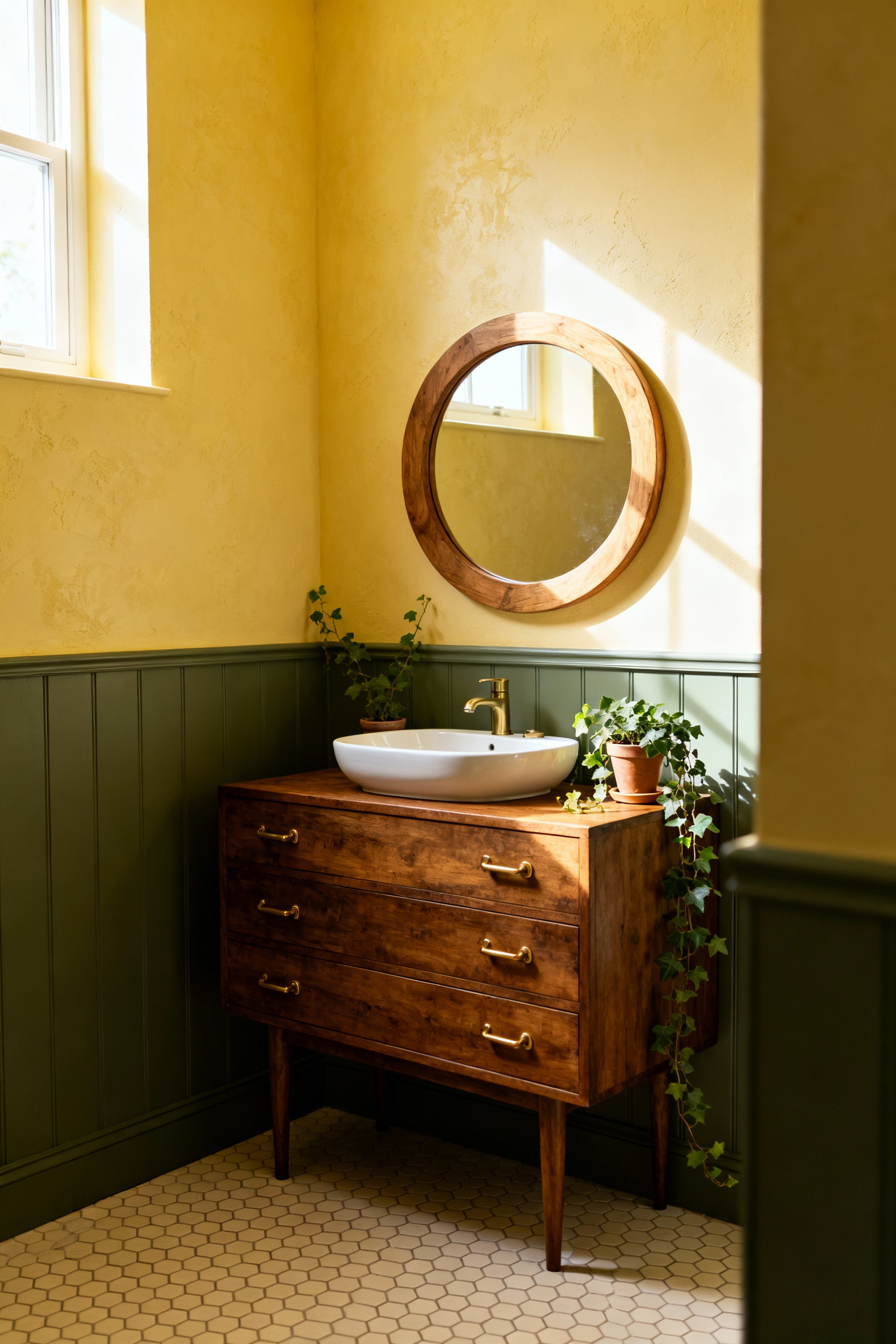
To prevent these warm earth tones from feeling too heavy, balance them with airy contrast. Introduce Sky Blue accents through vintage towels or subway tile trim. Crucially, select paints with dusty or gray undertones to mimic the faded elegance of a historic cottage rather than using saturated, contemporary brights. Finally, avoid the chill of polished chrome. Pair your pastoral palette with warm, reclaimed metals:
- Aged Brass: Adds a soft, golden glow to cabinetry.
- Oil-Rubbed Bronze: Provides a rustic, grounding contrast for fixtures.
By hunting for secondhand fixtures in these finishes, you add instant character and reduce the demand for new production.
3. The Art of the Upcycle: Transforming a Vintage Dresser into a Bespoke Vanity
Rescuing a vintage dresser creates a focal point with a soul, offering character that generic particleboard simply cannot match. However, bathrooms demand durability. Start by selecting a solid wood piece, ideally 18–20 inches deep, to ensure it fits smaller cottage footprints without overwhelming the space. Waterproofing is non-negotiable; moisture destroys untreated wood quickly. Apply 3–5 coats of marine-grade polyurethane or epoxy resin to the top surface, paying close attention to the raw edges inside sink cutouts. This barrier prevents swelling and mold, ensuring your sustainable treasure withstands the humidity.
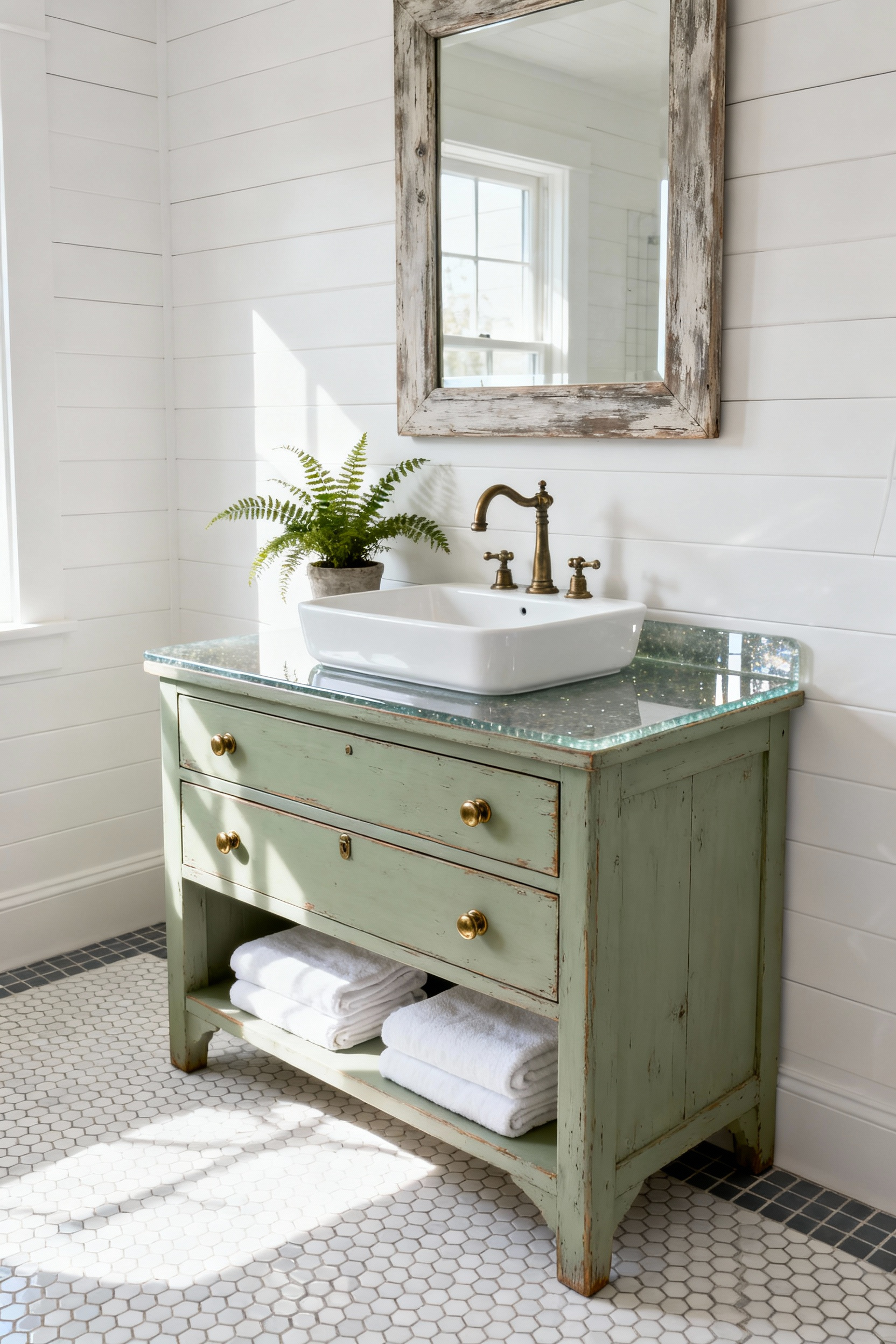
Once the structure is sound, curate the aesthetic to tell a story. I once transformed a battered mid-century oak chest into a stunning vanity using just paint and patience. To achieve that quintessential cottage charm:
- Coat the frame in muted chalk paint, such as sage green or linen white.
- Lightly sand the edges to reveal the original wood grain for a distressed finish.
- Swap modern knobs for period-specific hardware like crystal or aged brass cup pulls.
Finally, pair your bespoke unit with a bridge faucet in polished nickel. This blend of history and function creates a meaningful, personalized space that honors the past.
4. Heritage Underfoot: Why Honeycomb and Penny Tiles Remain Timeless
Nothing captures the soul of a cottage bathroom quite like honeycomb or penny tiles. I often uncover these geometric gems hidden under layers of cheap vinyl in my restoration projects, and they always deserve a second act. Beyond their nostalgic charm, these small-scale ceramics offer a sustainable solution for compact footprints. They add necessary texture without overwhelming the eye, while the dense network of grout lines provides essential slip resistance in wet zones.
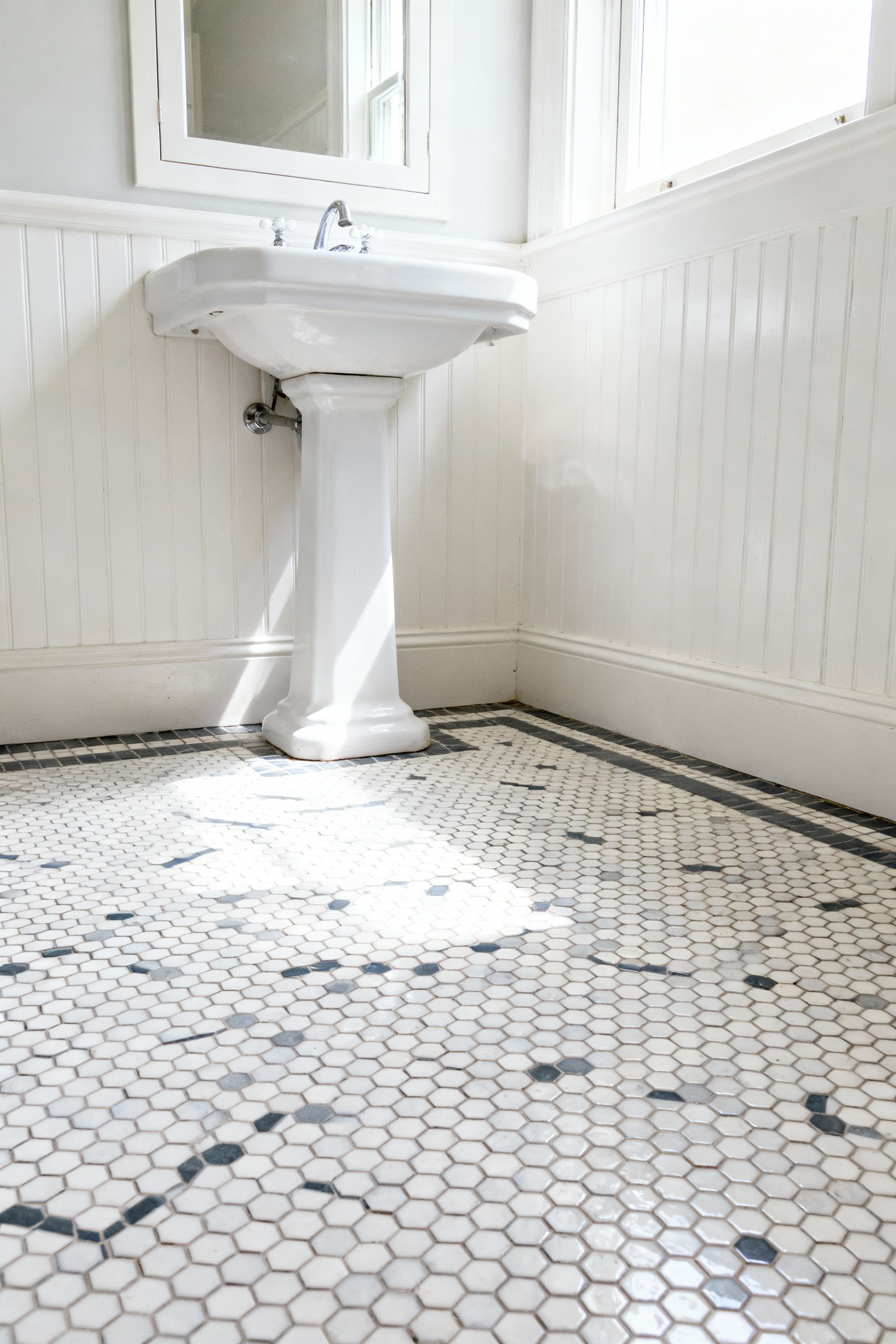
To truly honor the period style, steer clear of clinical white grout. Instead, pair white porcelain with medium gray or charcoal grout. This high-contrast choice creates that crisp, authentic definition found in historic homes and brilliantly conceals inevitable wear. For a bespoke finish, use contrasting tiles to define the space:
- Run a single row of black or navy tiles around the room’s perimeter to create a sophisticated border.
- Frame the vanity area to visually ground your focal point.
This simple, resourceful tweak elevates standard hardware store finds into a timeless heritage floor.
5. The Clawfoot Conversation: How to Choose the Perfect Tub for Your Cottage Bathroom Aesthetic
Nothing beats the soul of an original cast iron tub, but I once rescued a clawfoot from a demolition site only to realize it weighed nearly 450 pounds empty. Before you fall in love with a vintage beauty, verify your floor joist load capacity immediately. Consult resources on structural considerations for heavy fixtures to prevent expensive structural hazards. Old cottage timber often creates a structural hazard without expensive reinforcement. Furthermore, skip the DIY kits if you proceed with the original. Invest in professional resurfacing to achieve that durable, pristine “cottage white.” This commitment restores the piece’s history while ensuring it withstands decades of daily use.
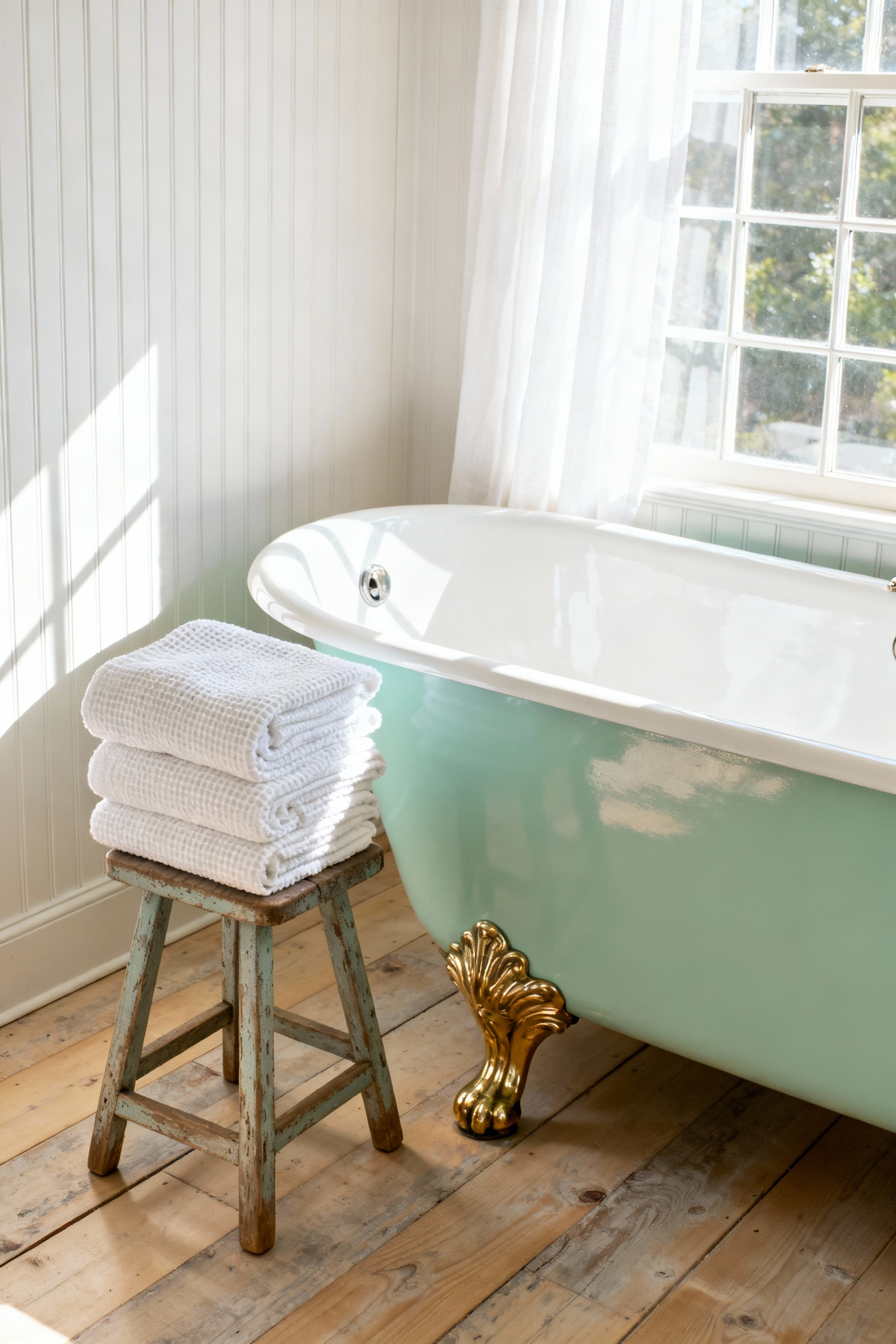
If structural changes are cost-prohibitive, modern acrylic interpretations serve as a brilliant, lightweight alternative. To keep the spirit of the design alive, focus on three key details:
- Size: Select 54-inch or narrow slipper styles to maximize limited square footage.
- Feet: Prioritize sturdy, historically accurate details like lion paw or ball-and-claw designs.
- Fixtures: Pair the tub with antique-style exposed plumbing to anchor the aesthetic.
This approach preserves the nostalgic cottage feel without compromising your floor structure.
6. Skirted Sinks and Softness: Reintroducing Fabric to the Bathroom for Texture and Hiding Storage
Bathrooms naturally feel cold due to hard porcelain and tile, so introduce a skirted sink to immediately soften those edges. I often rescue vintage linen tablecloths or textured cotton duck for this exact purpose, as these natural materials absorb sound and add necessary warmth. This sustainable choice also conceals unsightly plumbing and creates a secret cavity for stashing cleaning supplies.
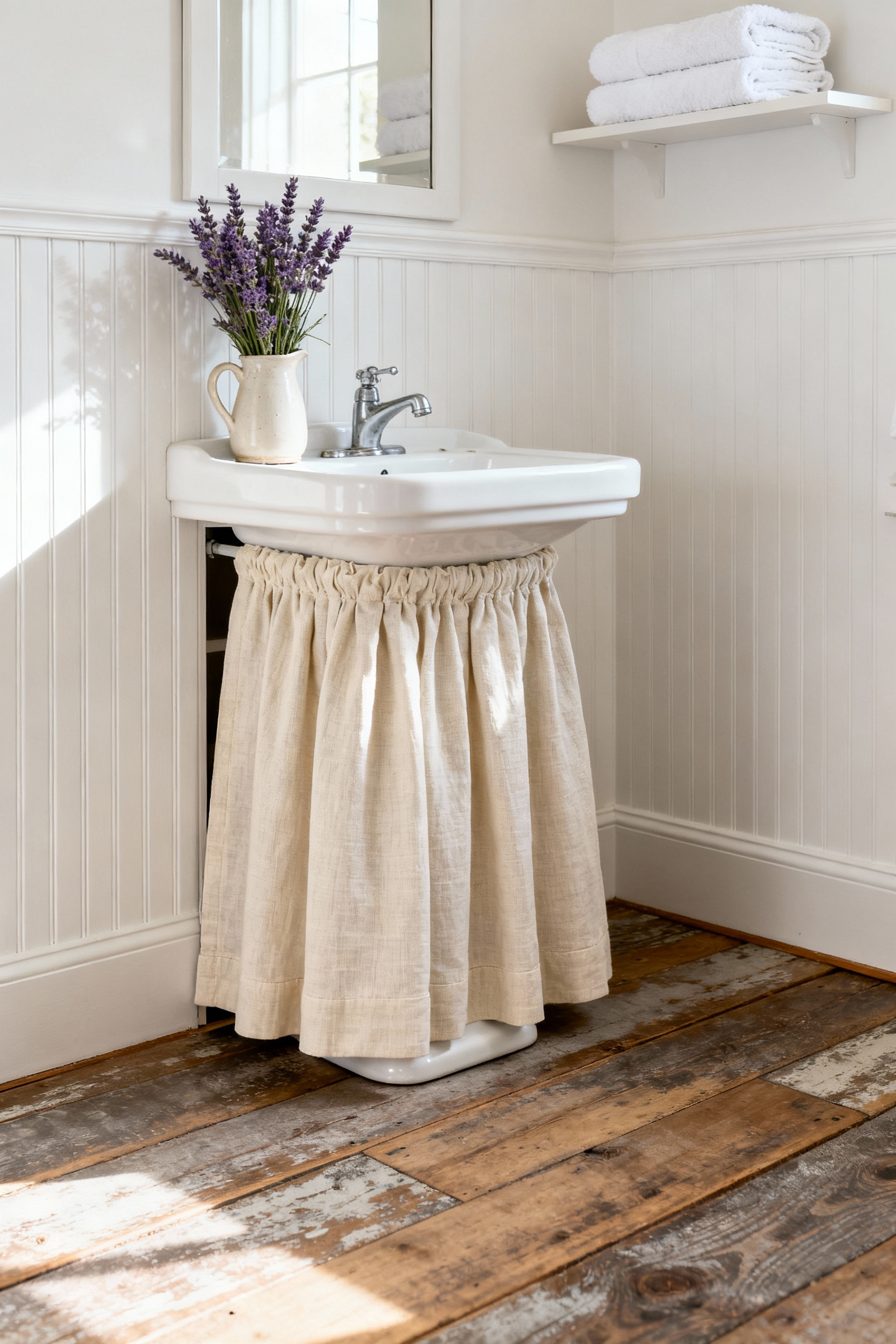
To achieve this look without damaging vintage fixtures:
- Choose heavy fabrics: Use laundered linen or cotton duck to prevent the skirt from looking limp.
- Attach simply: Apply heavy-duty adhesive Velcro or use a tension rod for easy removal.
- Add volume: Sew box pleats or gathers to effectively hide stored items.
Once installed, the skirt becomes a canvas for unifying your room’s palette. Use a ticking stripe or floral print that complements your towels to create a cohesive, resourceful sanctuary. By avoiding permanent hardware, you protect the integrity of the sink while solving modern storage needs.
7. Patina over Polish: Choosing Unlacquered Brass Hardware that Ages Gracefully
Swap sterile, factory-sealed finishes for unlacquered brass to instantly ground your bathroom in history. This “living finish” skips plastic clear coats and embraces the environment, evolving alongside your home. In a steamy cottage bathroom, high humidity becomes your secret weapon. It accelerates the aging process, transforming shiny gold into a rich, dark bronze within months. I often rescue vintage hardware solely for this warmth; seeing a faucet darken over time feels like watching a story unfold.
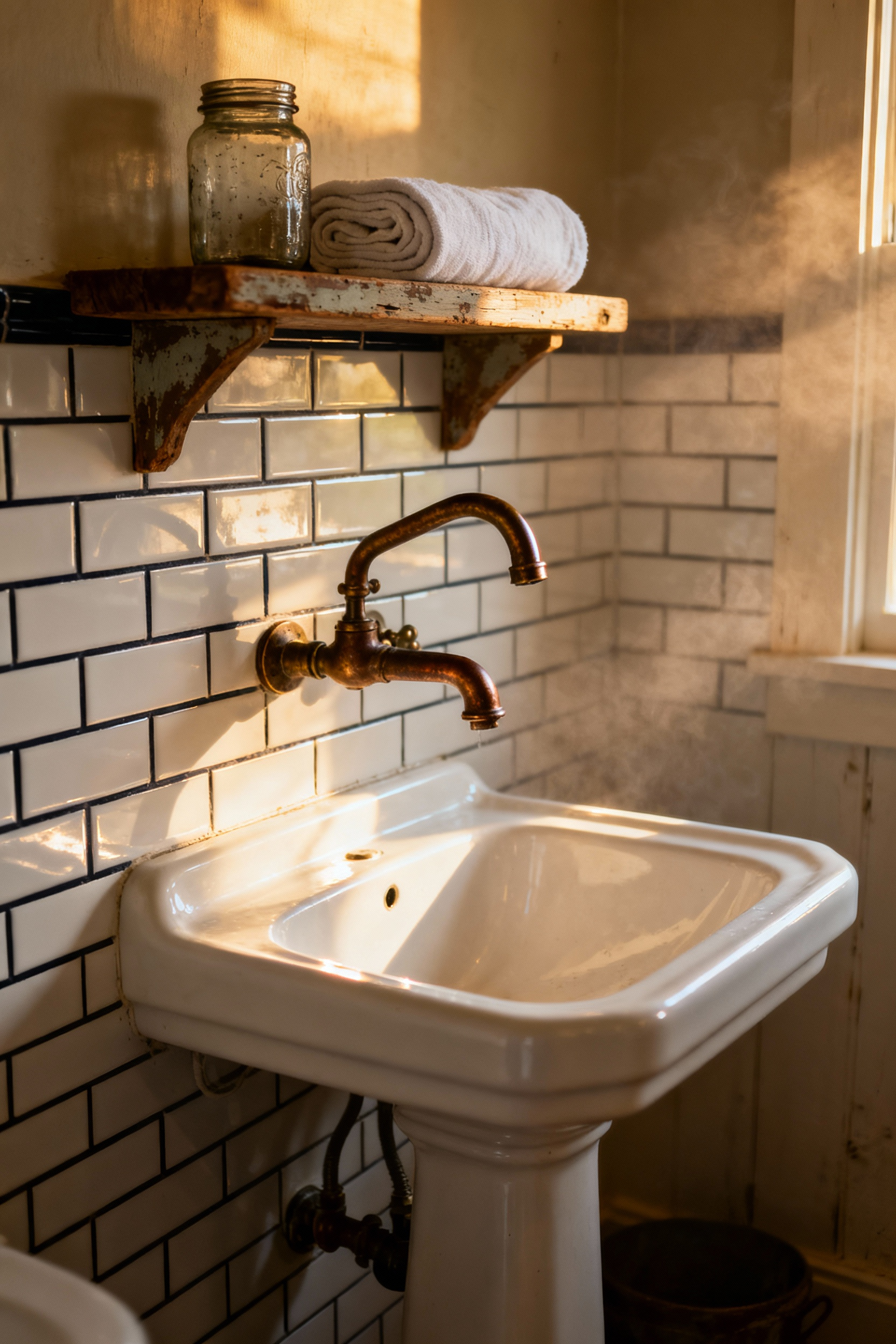
Maintain this authentic character with a gentle touch. Harsh chemicals strip away the patina, so adopt a simpler routine:
- Wash gently: Use only mild soap and water to preserve the oxidation.
- Polish selectively: Brighten only high-touch areas like handles to mimic natural wear.
- Mix metals: Pair brass with matte black iron or pewter for a collected look.
Ultimately, embrace the imperfections. Let the metal age gracefully to create a space that feels curated, not manufactured.
8. Illumination with History: Hunting for Milk Glass Sconces and Schoolhouse Pendants
Nothing beats the soft, moonlit glow of authentic milk glass. I recently rescued a dusty schoolhouse pendant from a local salvage yard, and after a gentle scrub, it transformed a sterile powder room into a cozy retreat. These fixtures excel at diffusion, banishing the harsh shadows that standard clear bulbs often cast. To truly honor the cottage aesthetic, skip the modern chrome. Instead, hunt for fitters boasting aged brass, unlacquered nickel, or oil-rubbed bronze. The patina tells a story of the past while warming up the cool white glass.
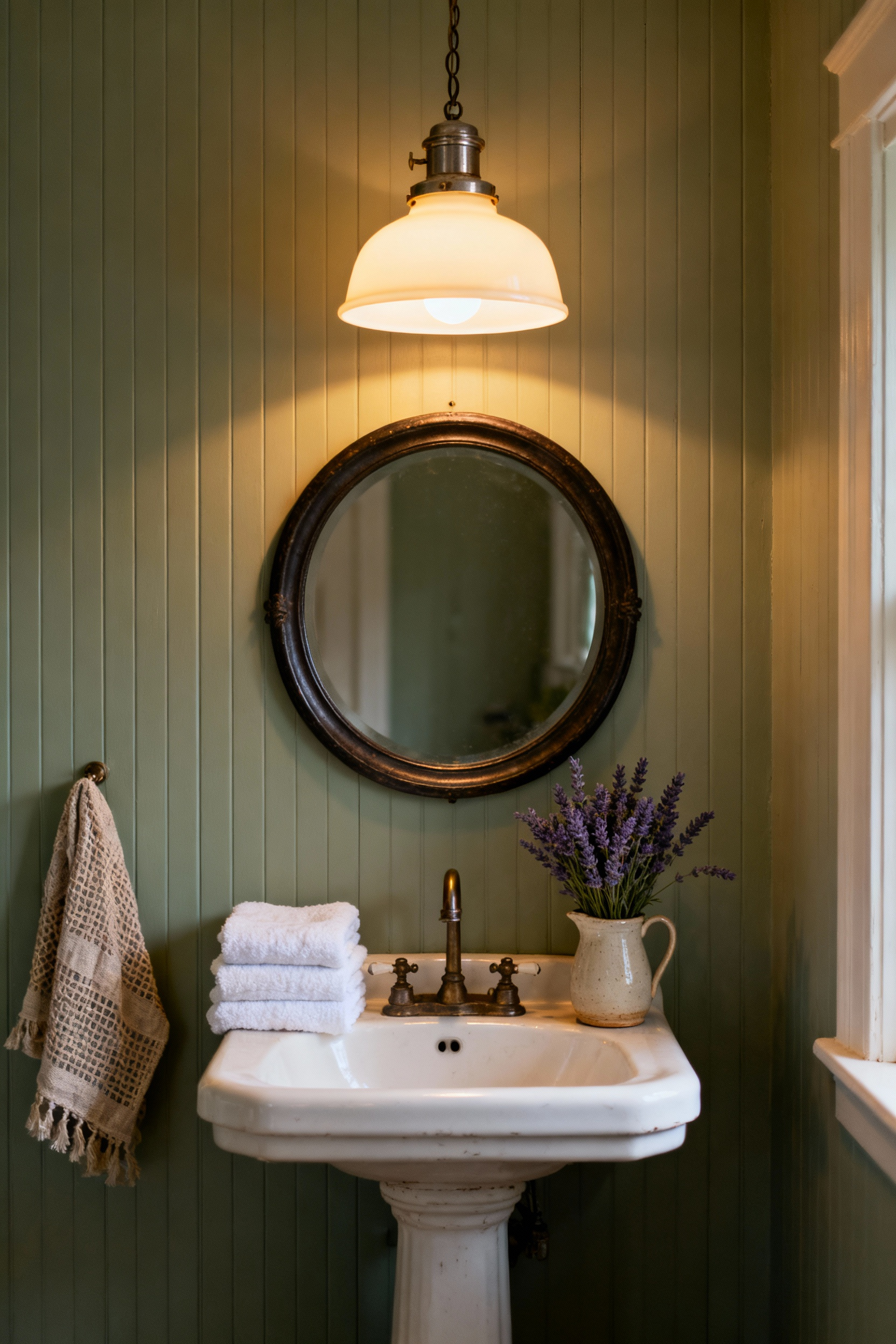
Blending history with modern safety is non-negotiable. Before hanging your flea market scores, verify they are damp-rated or have them professionally rewired to meet UL standards. Correct placement ensures these pieces function as well as they look:
- Mount vanity sconces at eye level (roughly 60–66 inches from the floor) to illuminate your face without glare.
- Scale your central pendant to a 10–12 inch globe to suit standard ceilings without dominating the room.
By repurposing these historic beauties, you reduce landfill waste and secure superior, flattering illumination that new fixtures rarely replicate.
9. The Wall as a Canvas: Integrating William Morris-Inspired Botanical Wallpapers
I once salvaged a beautiful roll of vintage Morris paper, only to watch the bathroom humidity curl its edges within weeks. Don’t make my mistake. To honor these iconic designs without sacrificing longevity, mandate high-quality wipeable vinyl or marine-grade non-woven substrates. These modern materials resist mold and peeling, ensuring your investment endures rather than deteriorating in the damp air. True sustainability means choosing materials that last.
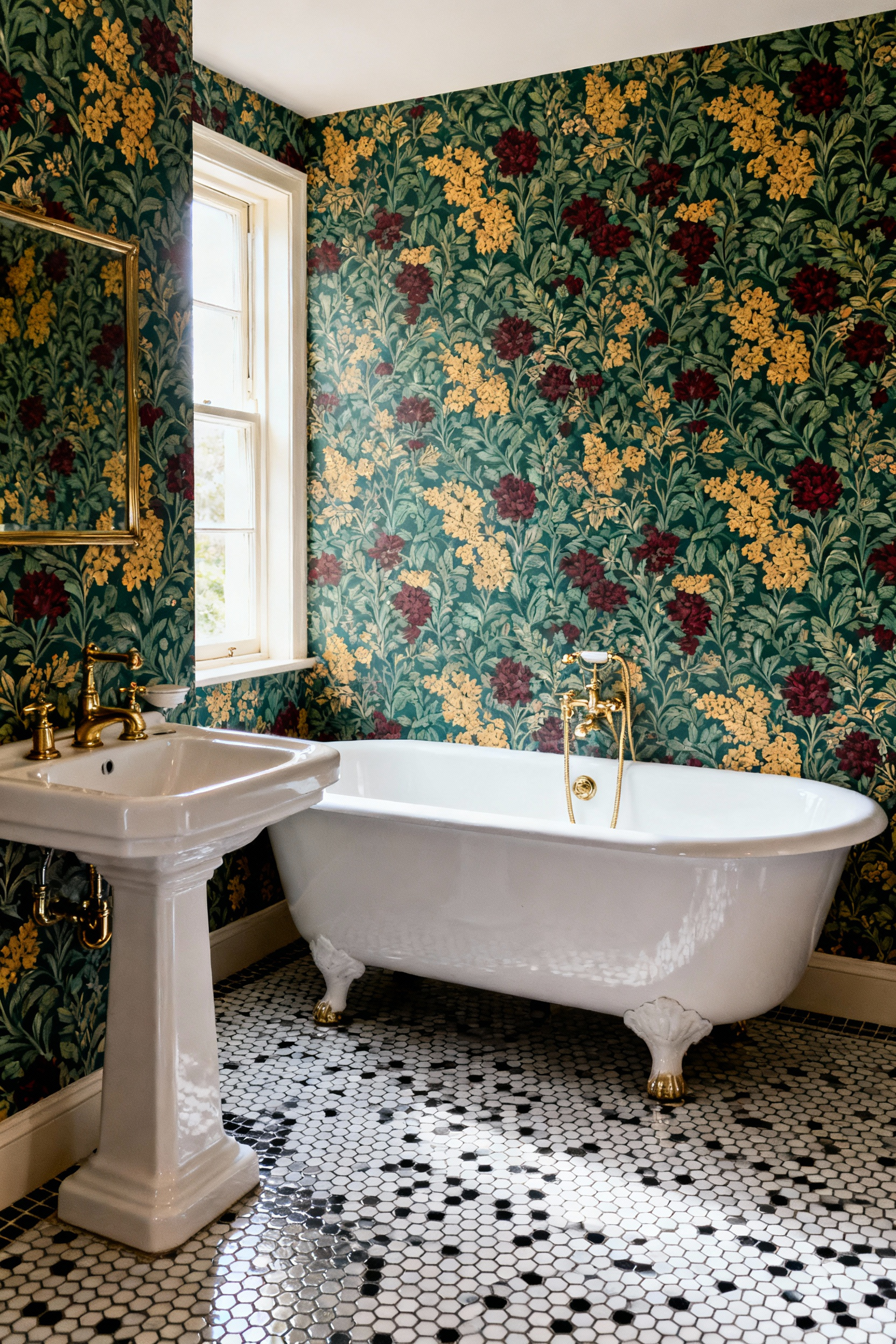
To prevent the intricate patterns from overwhelming your cozy cottage space, apply the wallpaper strategically. I recommend treating the wall as a two-part canvas:
- Install above wainscoting: Apply the botanical print only to the upper two-thirds of the wall, using durable beadboard below to protect against splashes.
- Soften the palette: Opt for muted backgrounds like dusty sage or cream instead of heavy indigos to maintain an airy, open feel.
This approach balances historic charm with modern durability, creating a bathroom that feels both curated and functional.
10. Reflecting the Past: Sourcing and Styling Antique Gilt and Wood-Framed Mirrors
Skip the mass-produced vanity sets and hunt for a mirror with a soul. An antique gilt frame with chipped edges or a weathered wood piece adds instant history to a cottage bath. These imperfections aren’t flaws; they are stories waiting to be told. I often rescue discarded Louis Philippe mirrors, as their ornate gold detailing creates a stunning contrast against humble shiplap or a simple pedestal sink. Embrace this “unfitted” look to break the monotony of modern design.
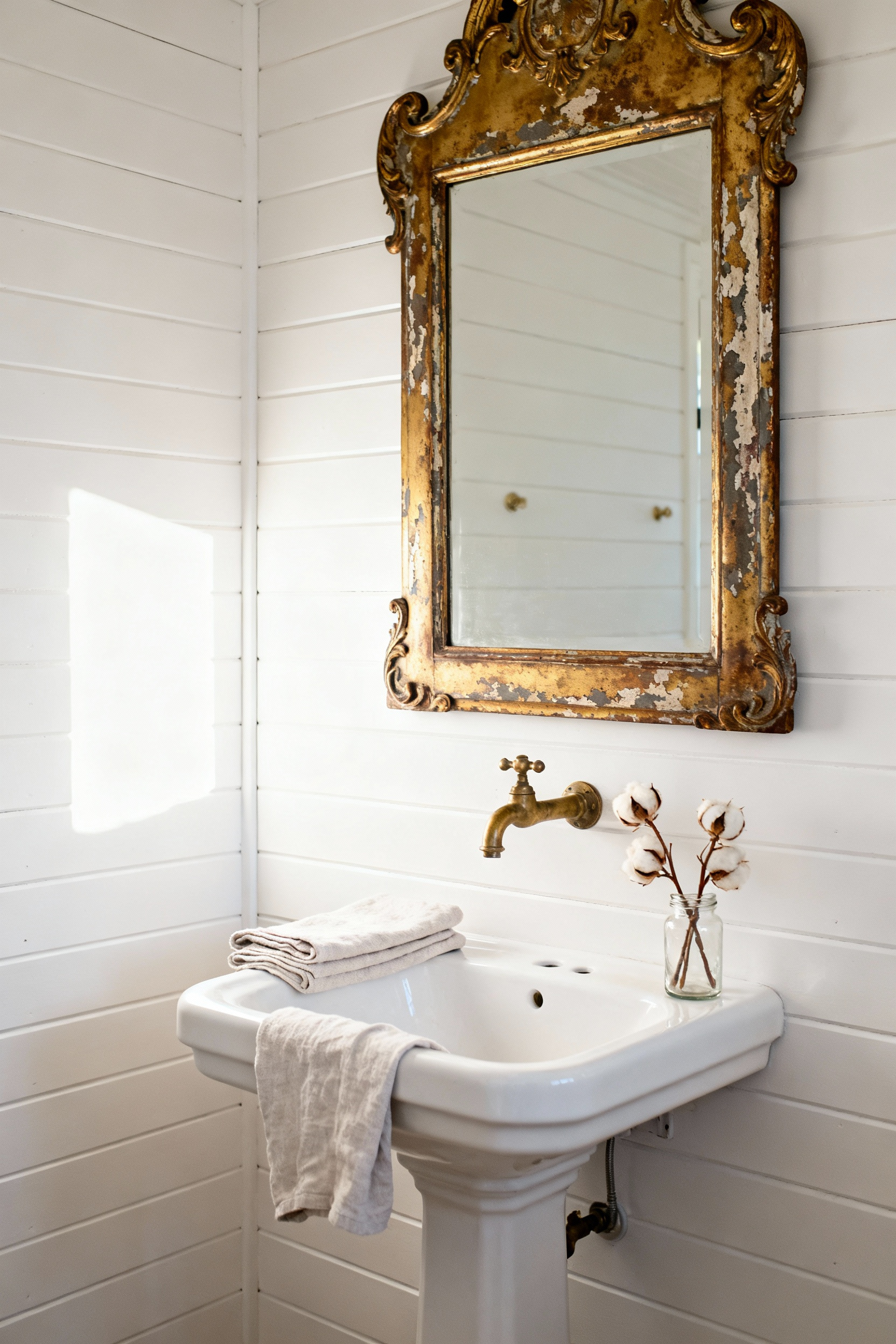
Preserving vintage charm in a humid environment requires preparation. Protect your find before installation:
- Seal the frame: Apply a clear matte polyurethane to wooden edges to prevent warping or swelling from steam.
- Upgrade the hardware: Old backing wire often rots; replace it with professional-grade mirror wire and heavy-duty wall anchors.
- Check the scale: Select a mirror at least two-thirds the width of your vanity to ensure visual balance.
By taking these steps, you ensure your sustainable treasure survives for another generation.
11. Practical Nostalgia: Using Apothecary Jars and Woven Baskets for Sustainable Storage
Swap clinical plastic packaging for the soulful charm of vintage glass. I once rescued a dusty set of amber apothecary jars from an estate sale, and they now proudly hold my zero-waste bulk supplies. These airtight vessels protect essentials like cotton rounds or baking soda while instantly warming up a cold vanity. Furthermore, prioritizing thrifted finds over mass-produced reproductions significantly lowers your environmental footprint.
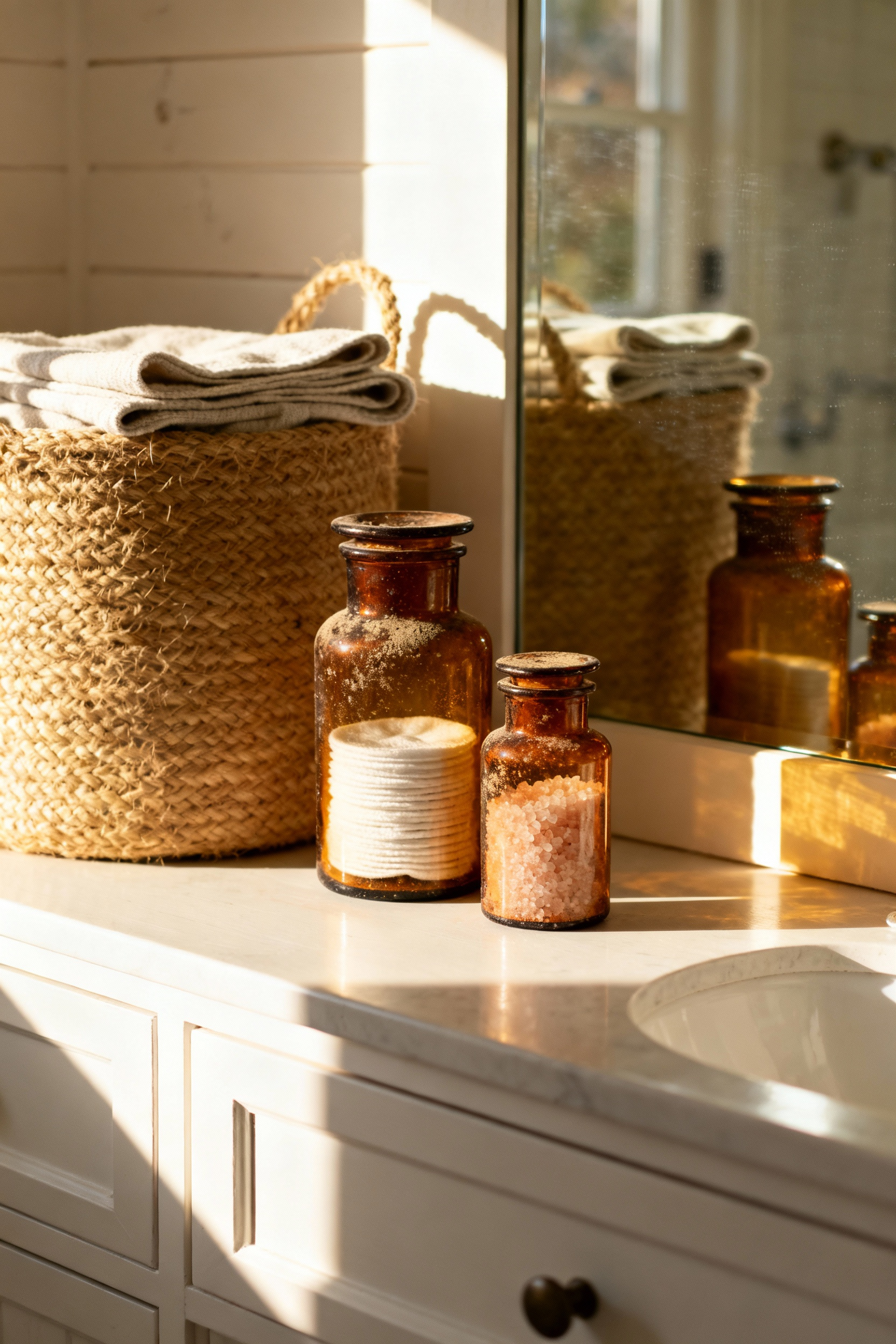
Balance these hard surfaces with the organic texture of woven storage. Open-weave baskets made of bamboo or seagrass offer crucial ventilation for humid spaces, preventing mildew on stored towels. Keep your system accessible with these simple touches:
- Use nesting sizes to organize unsightly cleaning products under the sink.
- Attach handwritten twine tags for authentic, navigational charm.
- Select natural materials that age beautifully rather than cracking like plastic.
12. The Gallery Wall: Waterproofing and Displaying Vintage Art in Humid Spaces
I once found a pristine 1950s botanical chart, only to watch it ripple and yellow after just one month near the shower. Don’t let humidity destroy your flea market treasures. To preserve that authentic cottage aesthetic, start by swapping standard glass for UV-protectant acrylic. Glass traps condensation against paper, but acrylic minimizes dangerous “sweating.” Furthermore, create a vapor barrier by sealing the frame’s backing board completely with archival tape. Always apply small cork bumpers to the rear corners; this offsets the art from the damp wall, promoting essential airflow and preventing trapped mold.
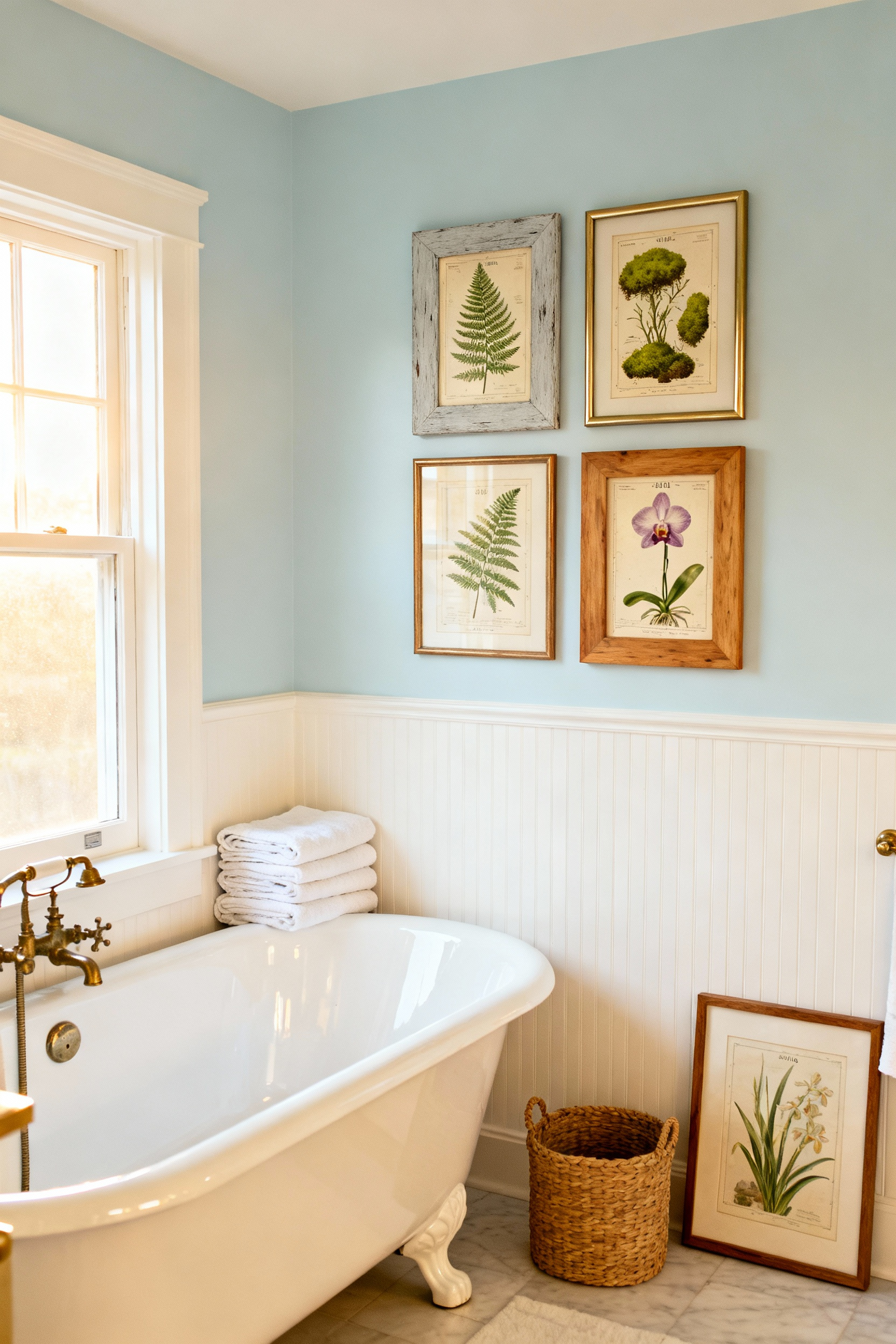
For your most delicate finds, sustainability means preservation through replication. Keep the fragile originals in the hallway and use durable alternatives for the “splash zone.”
- Sealed canvas transfers withstand steam while mimicking vintage oil texture.
- Matte-coated metal prints offer rugged durability without a modern, glossy shine.
- PVC board reproductions provide rigid, waterproof style.
These smart swaps allow you to honor the design history without risking the artifact itself.
13. Window Dressing: Layering Café Curtains and Natural Linens for Privacy and Light
Capture the romance of a sun-drenched cottage bath without sacrificing privacy. The secret lies in the café curtain, a staple I often fashion from salvaged vintage textiles. Install your rod specifically at the window’s halfway point or bottom third. This placement shields you from view while allowing sunlight to flood the upper pane unfiltered. Consequently, you achieve a warm glow without the gloom. Regarding fabric, skip high-maintenance synthetics. Instead, choose pre-washed natural linen or durable linen-cotton blends. These breathable materials resist the severe wrinkling and shrinking often caused by bathroom humidity, ensuring your sustainable design lasts.
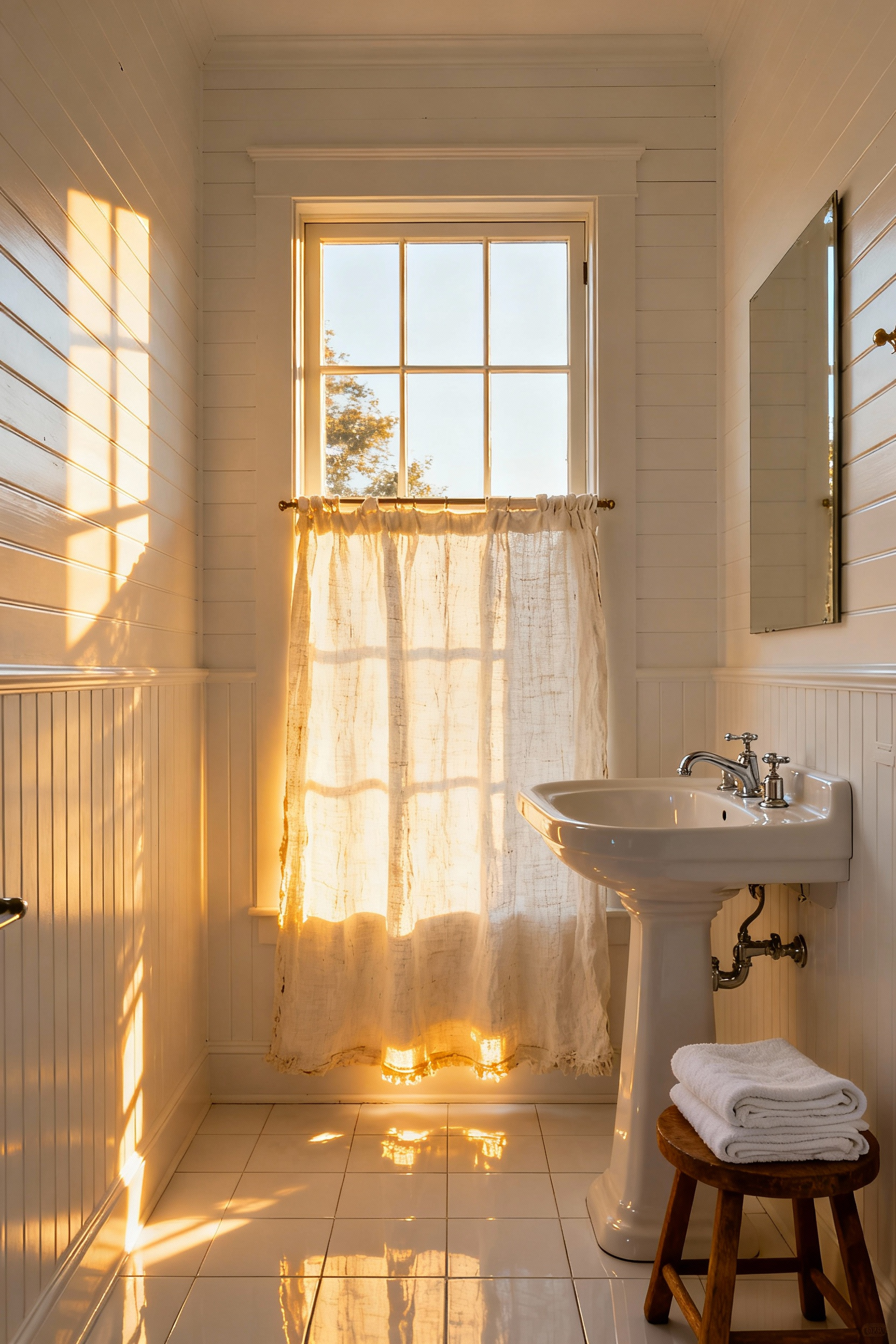
To create visual depth, layer a wispy, textured cotton or salvaged lace panel directly against the glass. Overlay this with your heavier linen curtain to soften harsh afternoon rays. Finally, keep your hardware honest and unpretentious to match the nostalgic aesthetic:
- Use antique brass tension rods for a warm, classic finish.
- Select matte black iron clips to facilitate easy removal for washing.
- Opt for simple wooden dowels to add an earthy, rustic touch.
Avoid heavy, ornate fixtures that weigh down the vignette. Simple, exposed hardware keeps the focus on the natural beauty of your fabrics and the light they frame.
14. Bringing the Outside In: Selecting Humidity-Loving Ferns and Pressed Botanicals
Transform your bathroom into a living sanctuary by harnessing its natural humidity. Moisture-loving varieties like Maidenhair or Boston ferns thrive here, drinking in the steam while softening hard tile lines. I always scout local flea markets for “imperfect” vessels to house them, swapping generic plastic for sustainable character. Replant your greenery in unique, vintage containers to add instant history and necessary weight.
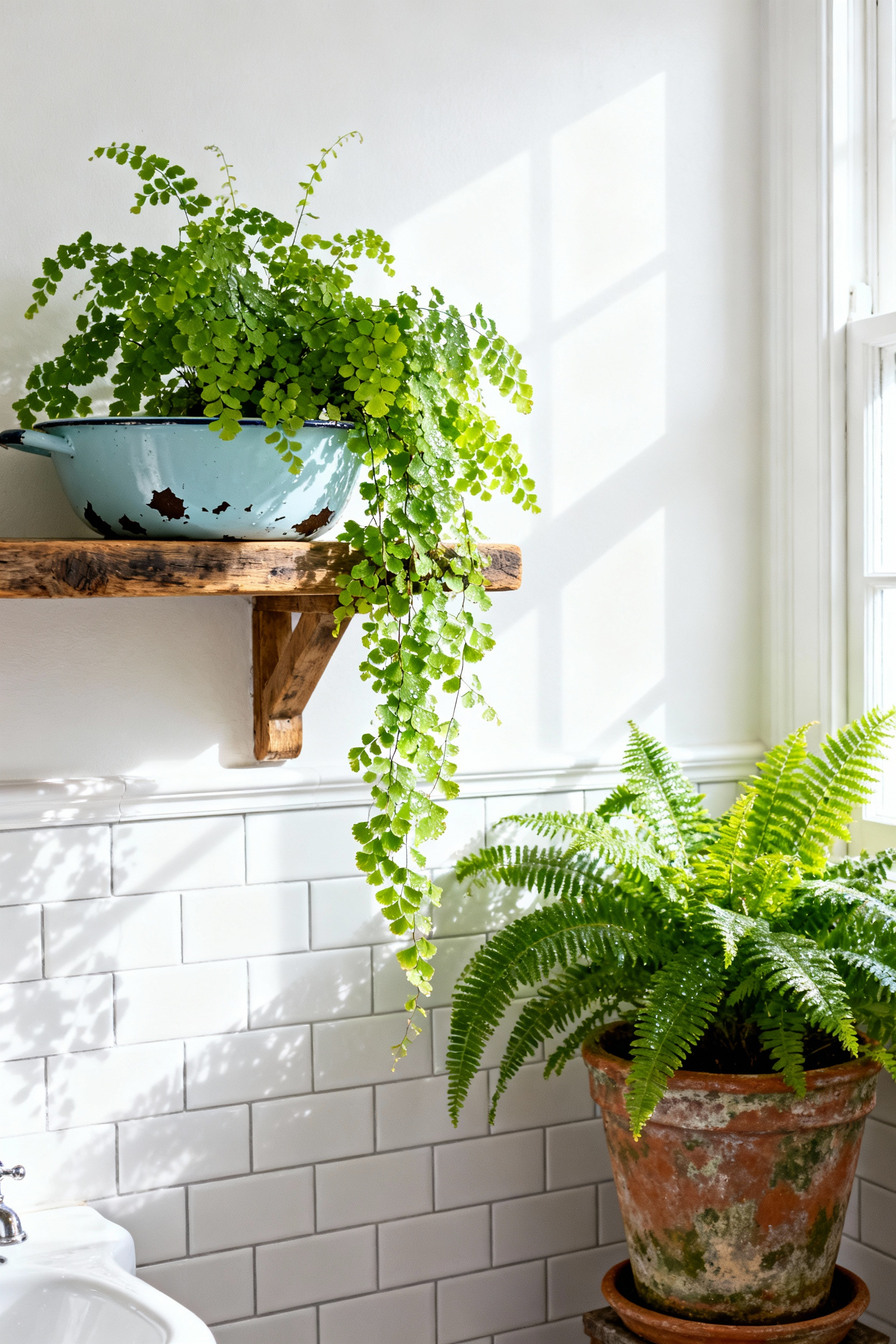
Consider these vessel options for maximum charm:
- Chipped enamelware for a farmhouse feel
- Weathered terra cotta for earthy warmth
- Ceramic pitchers for a whimsical touch
- Macrame hangers for vertical interest
Extend this botanical theme to your walls without risking water damage. Create timeless art using pressed Queen Anne’s Lace or hydrangeas harvested from your own garden. To protect these delicate specimens from dampness, seal them tightly between two panes of salvaged glass within rustic wood frames. This resourceful method preserves organic textures while giving forgotten frames a beautiful second life.
Frequently Asked Questions About Cottage Bathroom Design
What colors work best for a cozy cottage bathroom aesthetic?
The ideal cottage palette moves beyond harsh white, favoring soft, nature-inspired tones. Try pairing a deep, grounding color like dusty Sage Green or Moss for the vanity or wainscoting with a warm neutral like Buttercream or Linen White on the walls. Use Sky Blue or muted pinks for airy accents in towels and art to keep the space feeling light and expansive.
How do I protect antique wooden furniture used as a vanity from humidity?
Water damage is the biggest threat to upcycled wood vanities. To protect your antique, ensure you select solid wood, not particleboard. Apply 3 to 5 coats of marine-grade polyurethane or clear epoxy resin to the entire top surface, paying special attention to the raw wood edges exposed by the sink cutouts. Proper ventilation in the room is also critical.
What is the difference between cottage style and farmhouse style in bathroom decoration?
While both styles embrace vintage and rustic elements, Cottage style tends to be softer, more whimsical, and colorful, incorporating florals, delicate patterns, and smaller, more charming details (e.g., small hexagonal tiles, skirted sinks, aged gilt mirrors). Farmhouse style is typically more streamlined, rustic, focusing on practicality, white ceramics, shiplap, and industrial or galvanized metal accents.
Conclusion: The Slow Collection – Curating a Bathroom That Grows More Beautiful with Time
Curating a timeless bathroom doesn’t happen overnight; it requires patience and an eye for potential. Instead of chasing fleeting trends, choose materials that mature alongside you. Let unlacquered brass hardware darken with daily use and allow heavy, natural linens to soften with every wash. Swap sterile, factory-made cabinets for the soulful imperfections of a repurposed antique dresser. These distinctive choices transform a functional space into a living, breathing room rich with history.
Embrace the freedom of the hunt. Reject the pressure of matching sets and effortless perfection. Scour local flea markets for mismatched glass jars and unique ceramics that carry their own stories. This resourceful approach not only keeps quality items out of the landfill but also adds unmatched depth to your cottage bathroom decoration. Sustainability looks beautiful when it wears a patina. Every scratch and fade becomes part of the narrative, proving that character cannot be manufactured.
Start small today. Find one vintage piece that speaks to you—perhaps a chipped pitcher or a brass hook—and build around it. Trust the process of slow design. Ultimately, you aren’t just renovating a bathroom; you are crafting a legacy. Go out, hunt for the forgotten, and let your home grow more beautiful with every passing year.