
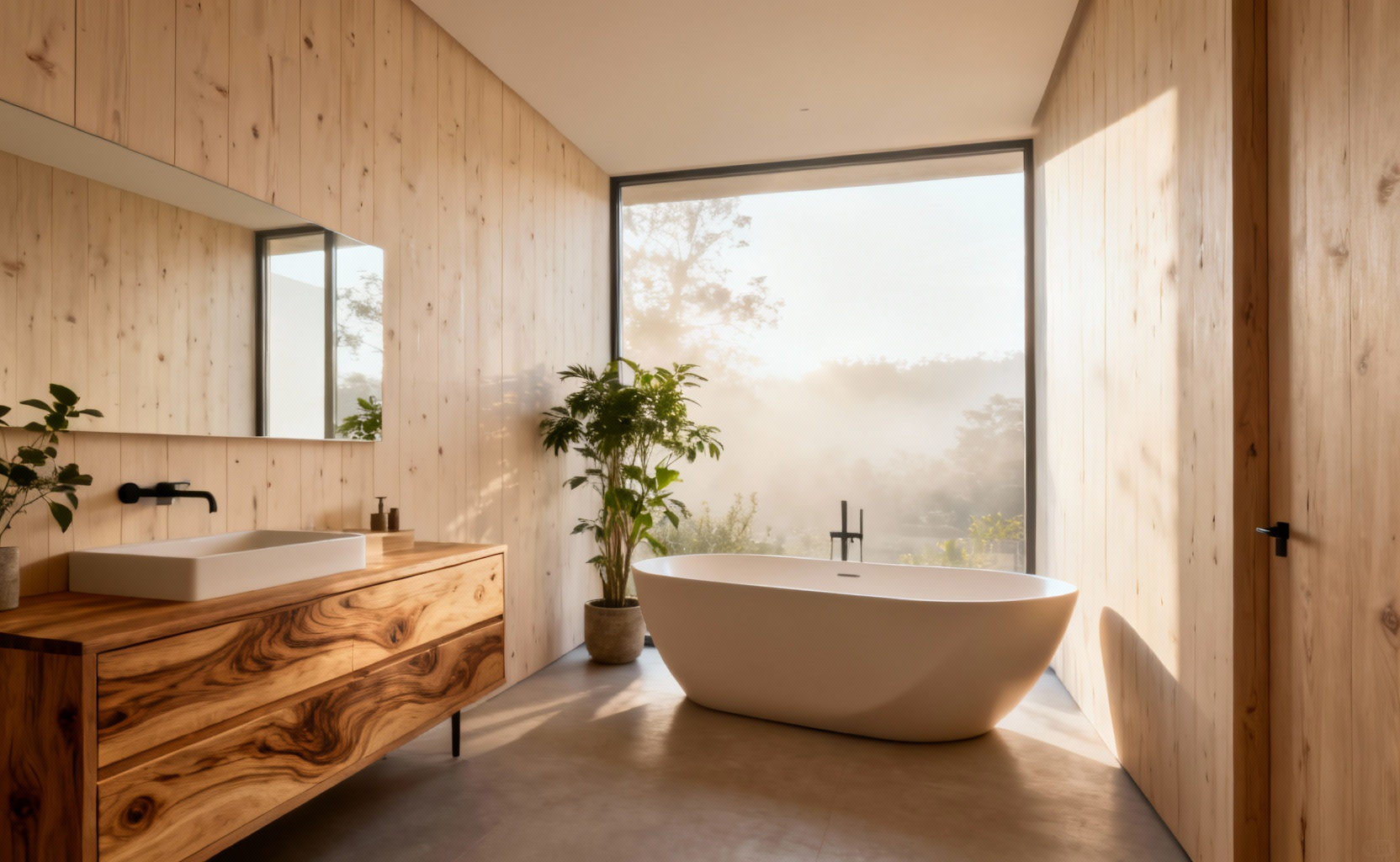

Designing a home is, at its heart, an intimate act of self-care. Every material choice reflects not just an aesthetic preference, but a deeper value about how you wish to feel in your own space, how you choose to live your life. The most compelling rooms aren’t merely decorated; they are authored. They tell a coherent story about your journey, your aspirations, and your connection to the world around you. This is especially true of the bathroom—our most personal space for ritual and renewal.
In my wellness sanctuary design practice, I’ve seen how the simple introduction of natural wood can fundamentally shift the energy of a room. It’s more than just a material; it’s a piece of the forest, a carrier of quiet, grounding energy. Its warmth, texture, and organic patterns are a form of biophilic therapy, scientifically shown to lower our stress responses and bring us back to a state of calm. These 20 wooden bathroom ideas aren’t just about style; they are invitations to author a space where nature is not just a visitor, but an integral part of your daily restoration.
This exploration will guide you through more than just a gallery of inspiration. We will move from the foundational philosophy of wood’s healing presence to the practical wisdom of selecting the right timber. We’ll explore how to craft intentional forms that serve both function and soul, and how to care for these elements holistically, ensuring your sanctuary endures. This is about transforming abstract principles into the tangible, restorative retreat you deserve.
Cultivating the Biophilic Bathroom Sanctuary: Embracing Wood’s Intrinsic Wisdom (Part 1)
Our journey begins by understanding the soul of the material. Before we discuss application, we must connect with the ancient wisdom held within wood. This section explores the core philosophies that make timber a uniquely nurturing choice, revealing how it can transform an ordinary space into a profound sanctuary.
1. Reconnecting with Nature’s Resonance: The Biophilic Imperative of Timber Integration
Our bodies remember the forest, even when our minds are caught in the city’s rhythm. This innate, ancestral pull toward nature is what we call biophilia, and answering its call is no longer a luxury—it’s an imperative for well-being. The bathroom, our space for cleansing, is the perfect place to reforge this connection. Timber isn’t just a building material here; it’s a direct conduit to the natural world.
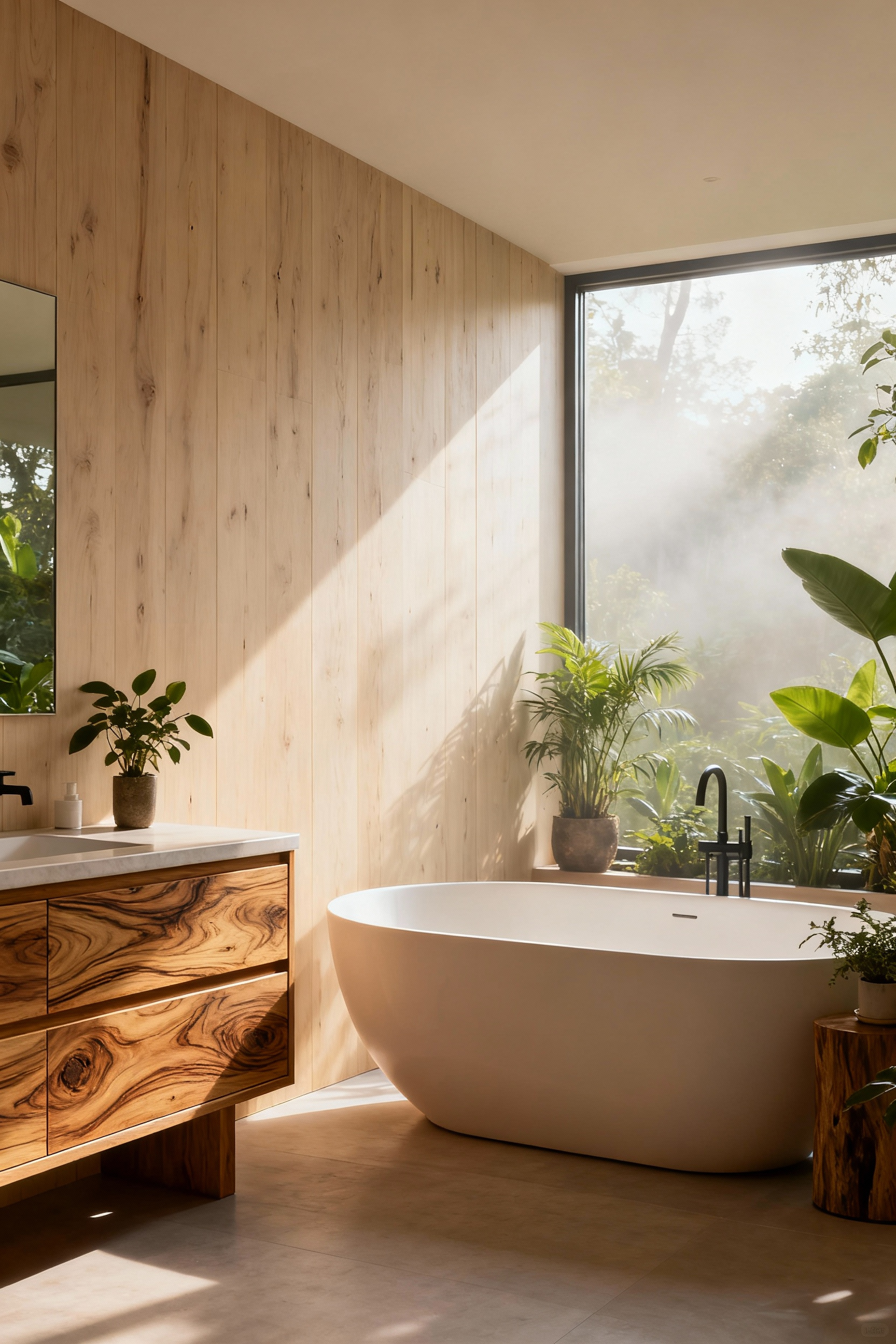
The intricate grain pattern on a vanity, the warm hue of a cedar wall—these are not static decorations. They are visual stories that our nervous system instinctively reads, signaling safety and calm. Research confirms that exposure to these natural patterns can lower heart rate and blood pressure. It’s a physiological response. In my work with holistic home design, I’ve watched clients physically relax, their shoulders dropping, when I introduce even a sample of rich, natural wood into a sterile design concept. It’s a visceral homecoming. By thoughtfully choosing wooden bathroom ideas—a simple teak bath caddy, a warm cedar shower floor—we are engaging in a deliberate act of care for our inner landscape.
2. Harnessing Wood’s Hygrothermal Harmonizers for Ambient Wellness Calibration
Beyond what we see and feel, wood works on a subtle, atmospheric level. It possesses a remarkable ability to breathe with the space, absorbing and releasing moisture from the air. This natural regulation, what scientists call its ‘hygrothermal’ properties, is pivotal for creating ambient wellness, especially in a humid room like the bathroom.
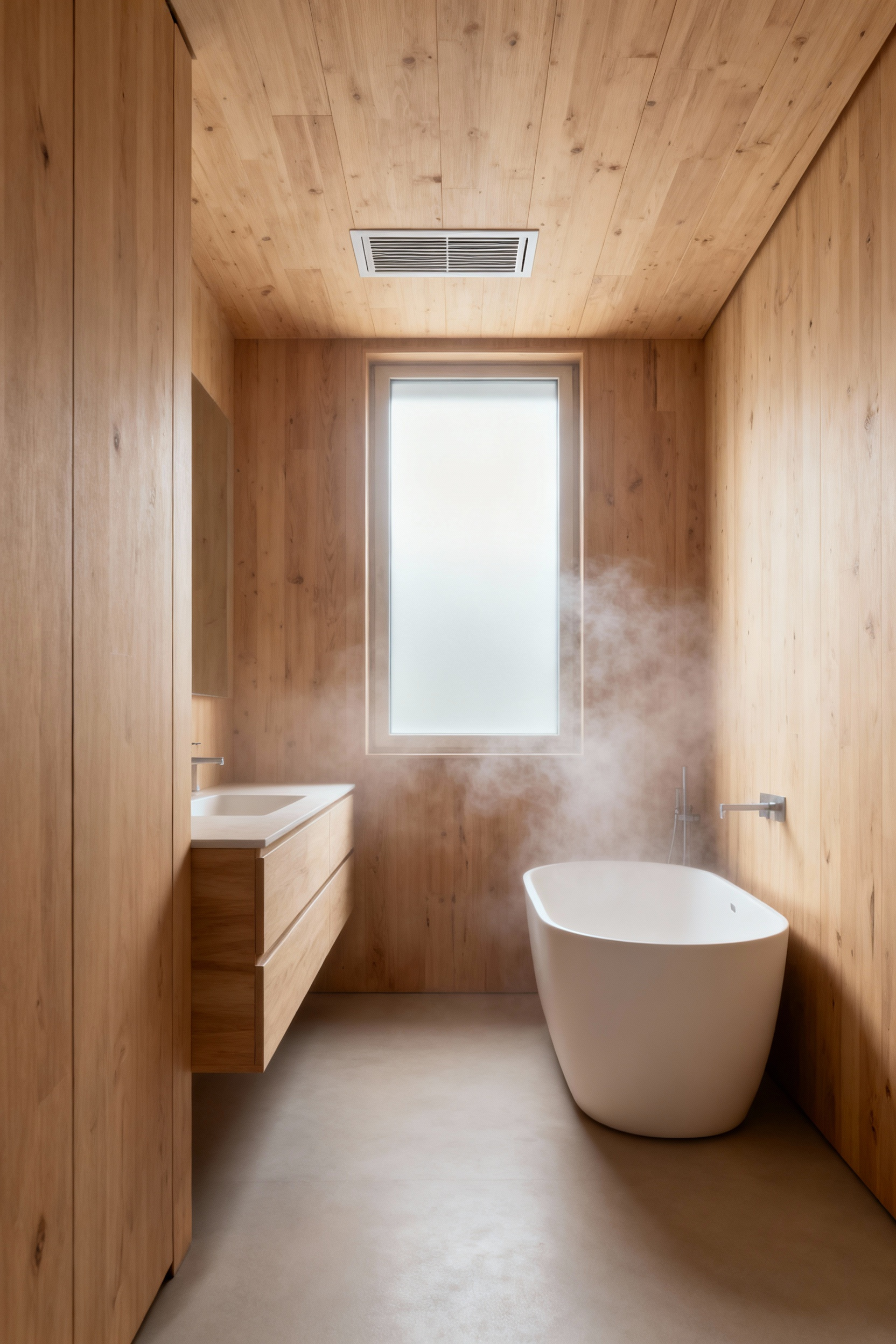
Think of wood as a natural balancer. It prevents the stifling dampness that can lead to mold and also mitigates the overly dry air that irritates our skin and sinuses. This creates a microclimate that simply feels better. The very air is softer, more stable. What I find so beautiful about this is how it enhances other wellness practices. For instance, a room with balanced humidity allows the delicate notes of essential oil aromatherapy to diffuse more purely, without being dampened or dissipated too quickly. By using wooden bathroom ideas like a wood-paneled ceiling or well-sealed hardwood flooring, you’re creating a holistic space where the material itself actively supports a harmonious inner atmosphere.
3. Designing for Tactile Serenity: The Sensory Nuance of Unvarnished Grain Textures
In a world of slick glass screens and polished stone, our sense of touch is often forgotten. But tactile engagement is a powerful tool for grounding ourselves in the present moment. The sensory nuance of natural wood grain offers a vital counterbalance to our smooth, synthetic world, inviting a moment of conscious connection.
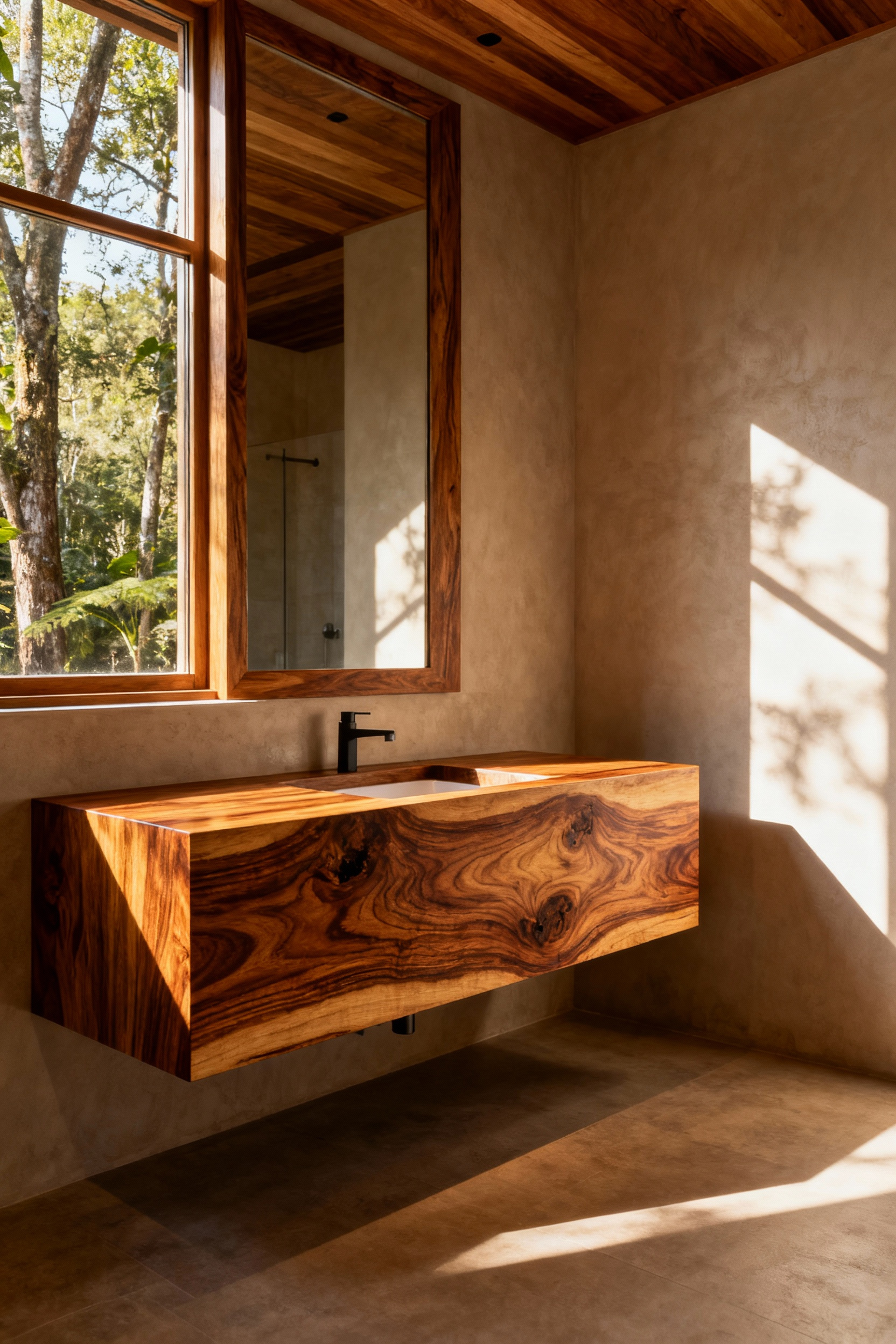
Imagine running your hand over a custom-milled oak vanity or feeling the warmth of sanded, oil-finished acacia boards underfoot. This isn’t just a physical sensation; it’s a haptic dialogue with nature that quiets the mind. I always encourage my clients to think about where their body will connect with the space. For wooden bathroom ideas, this means integrating wood in ways that invite touch—a live-edge shelf holding your favorite lotions, textured wall panels behind the mirror, or even a simple, handcrafted wooden stool. By choosing minimal finishes like a matte seal or a natural oil, we preserve the wood’s authentic texture. This commitment transforms the bathroom from a purely visual experience into a deeply sensory sanctuary where the comforting embrace of natural surfaces allows the nervous system to truly rest.
4. The Art of Intentional Imperfection: Embracing Kintsugi Principles in Wooden Accents
The Japanese art of Kintsugi teaches that an object is more beautiful for having been broken, its history honored with seams of gold. This philosophy beautifully translates to our appreciation of wood. Instead of seeking flawless uniformity, we can celebrate the unique marks that tell a timber’s story—its knots, its grain variations, its mineral streaks.
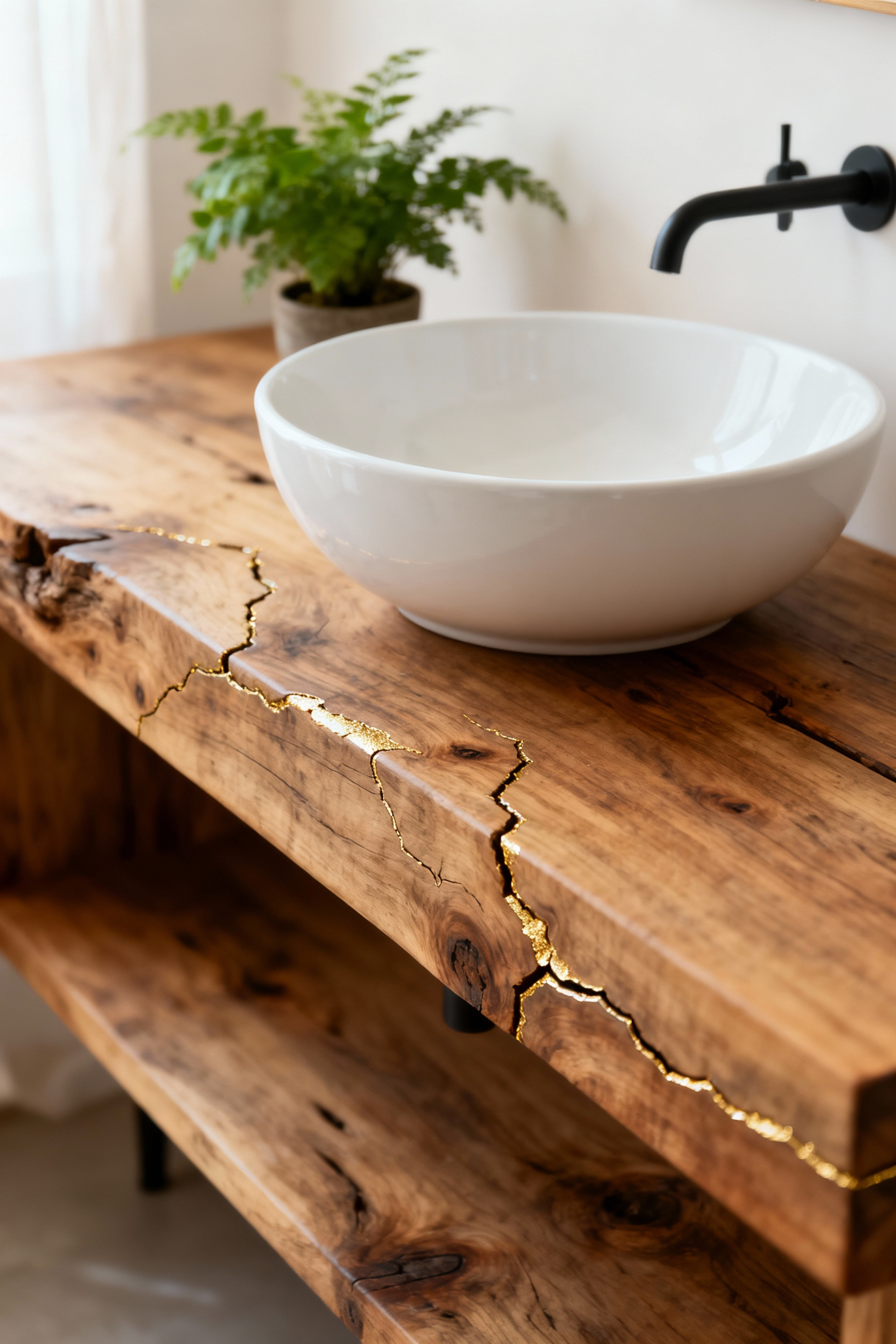
This is the art of intentional imperfection. When you choose reclaimed timber or a piece with a distinct live edge, you are inviting a rich narrative into your space. That fissure in a live-edge countertop isn’t a flaw; it’s a testament to the tree’s resilience. The nail holes in a vanity crafted from old barn wood speak of a past life, adding a layer of soul that brand-new materials simply cannot replicate. What I tell my clients is that these “imperfections” are the fingerprints of nature. They prevent a space from feeling sterile and untouchable. By embracing this ethos within your wooden bathroom ideas, you create a sanctuary that feels deeply authentic, lived-in, and real. It’s a powerful reminder that true beauty lies not in perfection, but in a life gracefully lived.
Cultivating the Biophilic Bathroom Sanctuary: Embracing Wood’s Intrinsic Wisdom (Part 2)
With our philosophical foundation set, we now look at the interplay between wood and the very layout of the space. It’s about more than just placing objects; it’s about orchestrating an environment where energy flows harmoniously and natural wooden planes create an aesthetic grace that nurtures from the moment you step inside.
5. Calibrating Energetic Flow: Optimizing Layouts with Natural Wooden Planes for Spatial Harmony
In the language of holistic design, particularly feng shui, the flow of energy—or chi—is everything. A space can be visually stunning, but if the energy feels stagnant or chaotic, it will never be truly restorative. The bathroom, a place of cleansing and release, must have a clear, gentle energetic flow to support its purpose. And wood is one of our most powerful tools for this calibration.
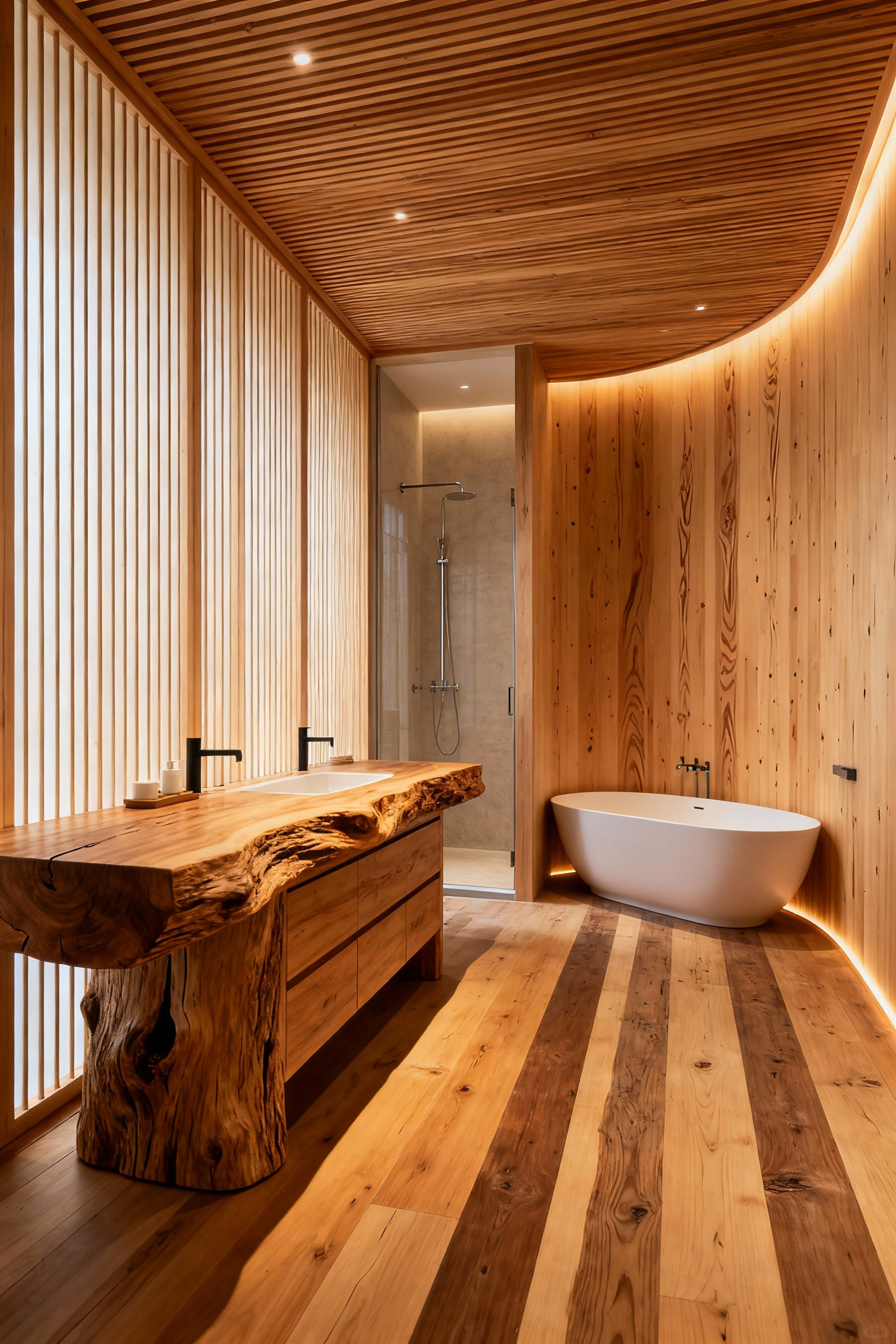
Unlike cold, reflective surfaces that can make energy feel sharp or hurried, wood grounds and softens. Its grain patterns create a natural visual path, guiding the eye—and the energy—through the room with a quiet vitality. A long, live-edge wooden vanity can act as a grounding anchor, organizing the space around it. In a larger bathroom, a slatted wooden screen can serve as a beautiful, permeable divider—what I call a “breatheable boundary.” It might separate the showering zone from the vanity, creating a sense of gentle enclosure without blocking light or flow. From my work in healing environment creation, I learned this when designing a recovery suite: a simple wooden accent wall was all it took to make a clinical space feel like a protective embrace. By using natural wooden planes to define and enhance the energetic landscape, we transform a room into an experience of effortless ease and deep, holistic rejuvenation.
Navigating the Biomechanical Integrity: Strategic Timber Selection and Preservation for Longevity (Part 1)
To create a sanctuary that lasts, our choices must be rooted in wisdom. This section moves from the “why” to the “what,” focusing on the science and integrity of timber itself. We’ll explore intentional selection and preservation strategies that honor both the beauty of the wood and the health of your home.
6. Prioritizing Hydrophobic Hardwoods: Teak’s Resilience and Other Indigenous Water-Resistant Alternatives
The foundational rule for a wooden bathroom is to work with nature, not against it. This begins by selecting timbers that are inherently suited for a humid environment. Teak is the gold standard for a reason. Its natural oils and incredibly dense grain make it exceptionally resistant to water and rot, a quality proven over centuries of use in shipbuilding. It has an innate resilience that feels calm and confident.
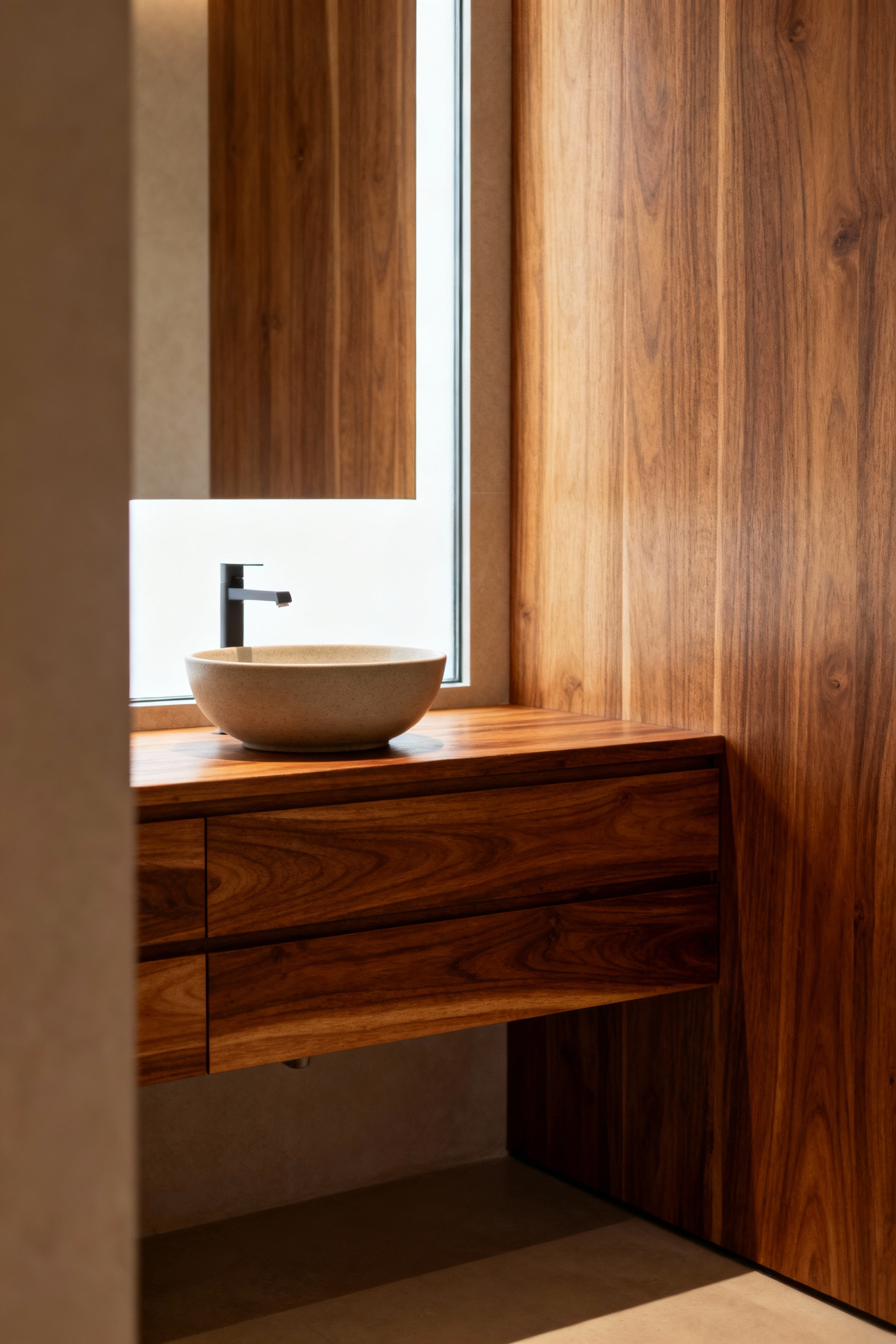
But our world of wood is wonderfully diverse. Beyond teak, there are other incredible hydrophobic hardwoods to consider. Iroko, often called “African Teak,” has similar oils and stability. Jarrah from Australia offers a stunning deep red hue and is naturally resistant to decay. Black Locust, a North American native, is remarkably durable and weathers beautifully. The key is to look for woods with tight grains and natural oils. This conscious choice means you’ll rely less on heavy chemical sealants, fostering a healthier indoor environment. It’s an intentional selection that ensures the peace you create is built on a foundation of profound strength and lasting tranquility.
7. Ethical Sourcing and Certifications: Upholding Forest Stewardship Principles for Sustainable Timber
The serene energy we cultivate in our personal sanctuary must not come at the cost of the global one. This is non-negotiable in holistic design. The story of your wood—where it came from and how it was harvested—becomes part of the energy of your home. Ethical sourcing isn’t a trend; it’s a responsibility.
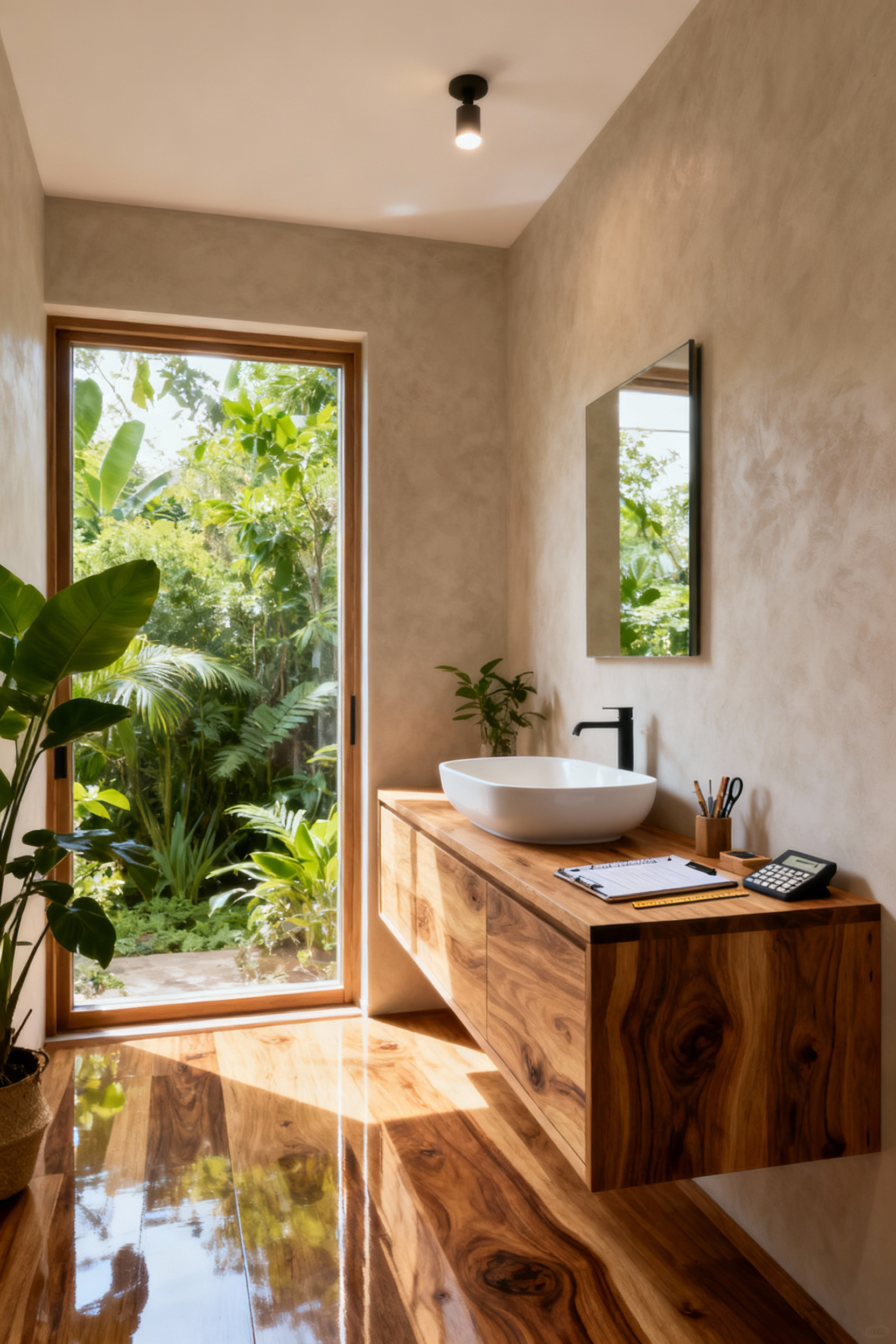
Certifications like the Forest Stewardship Council (FSC) are your most reliable guide. They guarantee that the timber comes from a responsibly managed forest, one where biodiversity is protected and local communities are respected. This choice elevates the material, imbuing it with a layer of integrity you can feel. What I tell my clients is to think of it as good karma for your home. Knowing your design choices support planetary health brings a deeper sense of peace that no aesthetic alone can provide. Choosing sustainable timber reinforces the core biophilic principle of interconnection, making your bathroom a living testament to your respect for nature’s delicate balance.
8. Mitigating Moisture Permeation: Advanced Varnish and Sealer System Integration for Superior Protection
Even the most resilient wood benefits from a protective partner in a bathroom setting. The philosophy here is one of reverent care—creating an invisible shield that honors the wood while safeguarding its longevity. This isn’t about encasing the wood in plastic; it’s about using modern science to support a natural material.
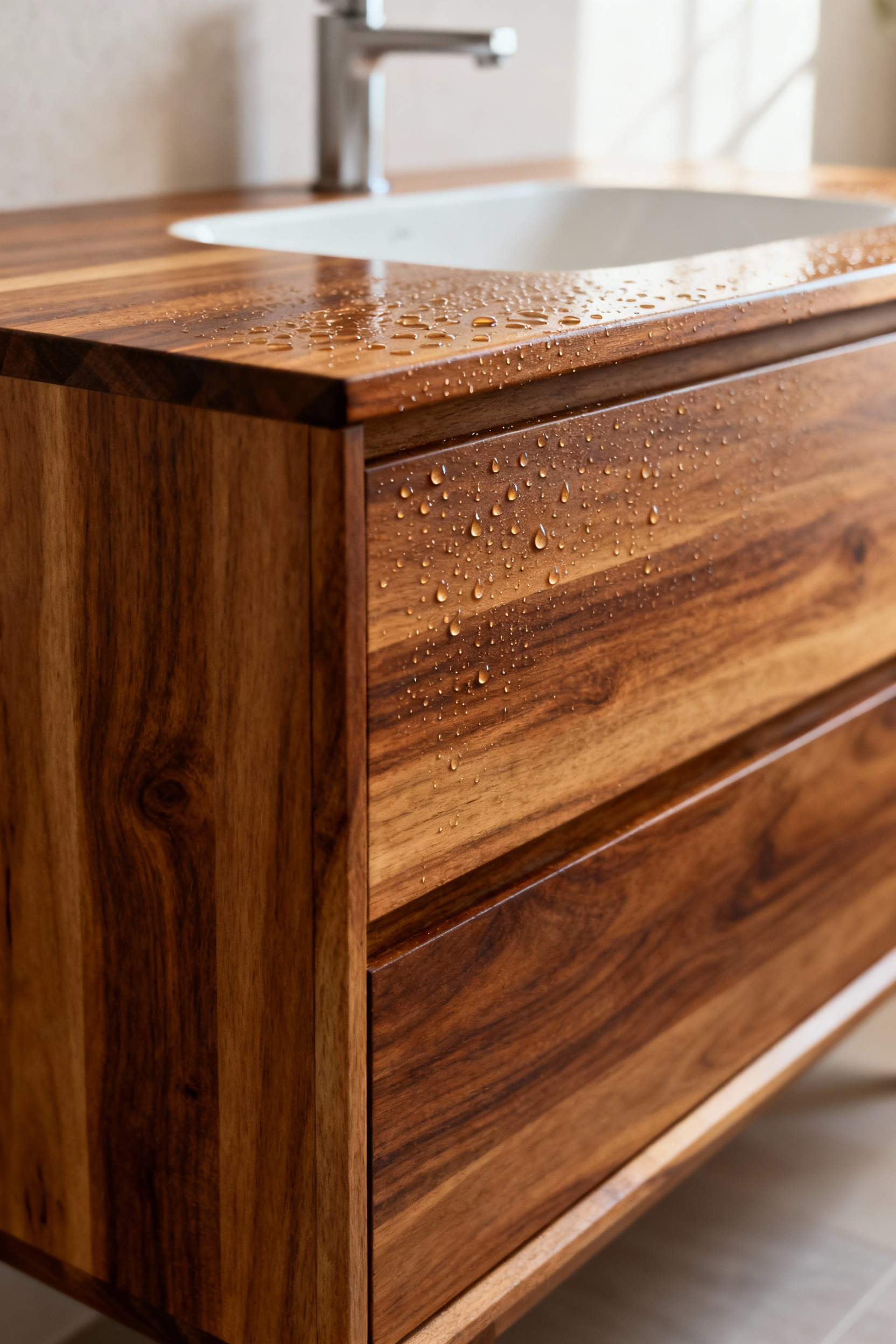
Think of it in zones. For high-splash areas like a shower bench or the countertop around a sink, a marine-grade varnish or epoxy is a wise choice. It creates an impermeable barrier. For wall cladding or cabinet fronts, you might opt for a high-performance polyurethane that provides a durable surface layer. But for a more tactile, organic connection, I often lean toward deep-penetrating hardwax oils. These nourish the wood from within, enhancing its grain and creating a water-repellent finish that still allows the wood to breathe. It’s a bit more of a maintenance ritual, but the reward is a surface that feels alive. This intelligent application ensures your timber remains pristine, allowing the serenity of your space to endure for generations.
9. The Alchemy of Thermal Modification: Enhancing Wood Stability and Durability through Scientific Processes
Here is where ancient material meets modern alchemy. Thermal modification is a fascinating process that uses high heat in an oxygen-free environment to fundamentally change the wood’s structure. It’s like a scientific sauna for timber, and the results are transformative for bathroom design.
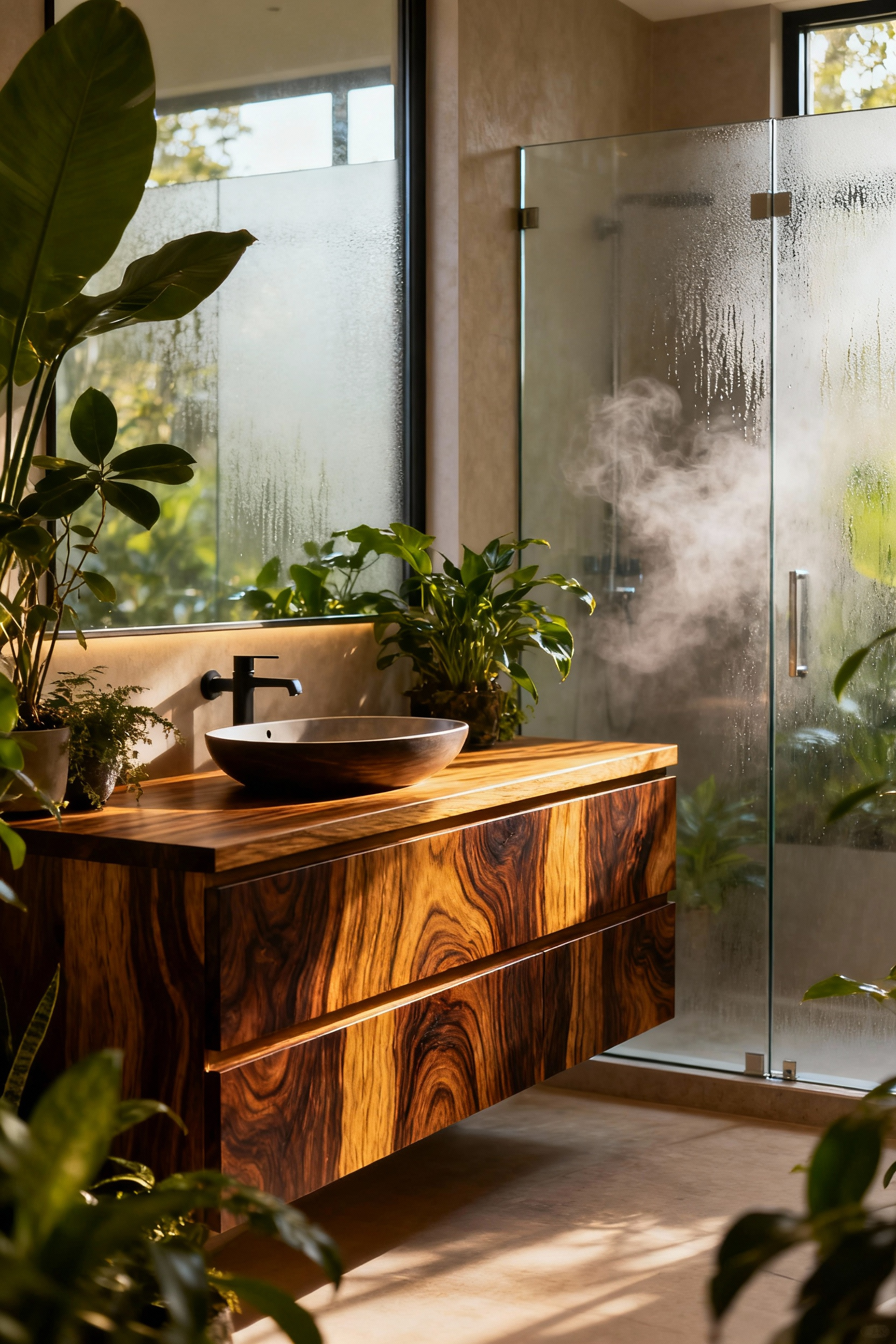
The process removes the wood’s natural sugars (hemicellulose), which are what attract moisture and microbes. The result? The timber becomes incredibly stable—it barely expands or contracts with humidity changes—and it becomes highly resistant to rot and decay. This is a game-changer. It means we can now use a much wider array of woods, like ash, pine, or poplar, in the most demanding wet environments. In my professional experience, this opens up incredible design possibilities, allowing for the use of local, sustainable woods that were previously unsuitable. The process also deepens the wood’s color, giving it a rich, roasted tone. Embracing thermally modified wood is an intelligent choice that blends cutting-edge science with biophilic principles, crafting a resilient, adaptive, and truly innovative sanctuary.
Navigating the Biomechanical Integrity: Strategic Timber Selection and Preservation for Longevity (Part 2)
Diving deeper into the material, we now look at the language of the wood itself: its grain. This isn’t just an aesthetic detail; it’s a critical indicator of how the wood will behave over time, a key to ensuring the health and resilience of your biophilic bathroom sanctuary.
10. Deciphering Grain Patterns: Selecting for Optimal Aesthetics and Structural Performance in Humid Climates
The way a log is cut determines the grain pattern you see on a board, and more importantly, it dictates how that board will react to moisture. Understanding this is like learning the secret language of wood, and it’s essential for creating lasting wooden bathroom ideas. There are three main types: plain-sawn, quarter-sawn, and rift-sawn.
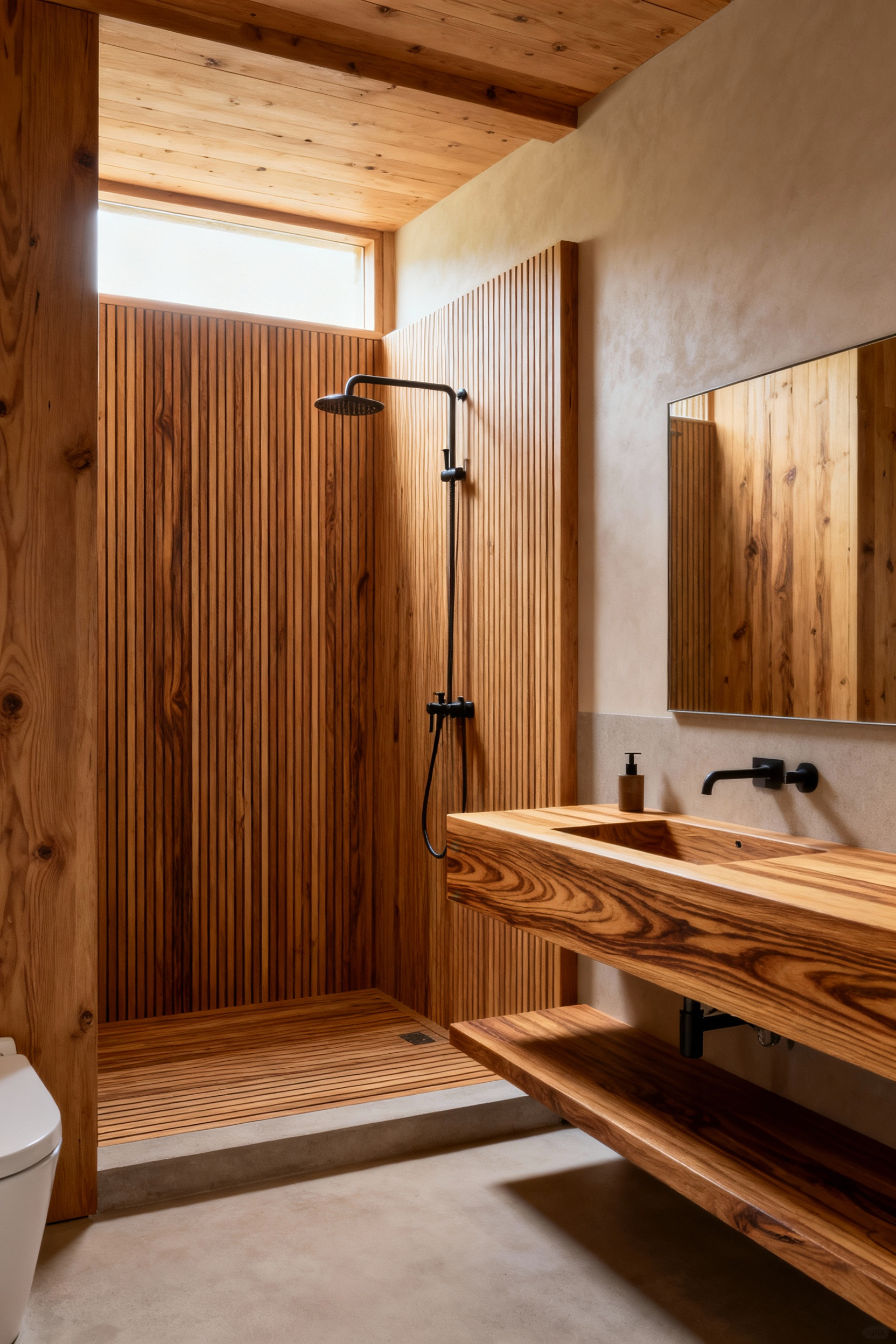
Plain-sawn wood shows the beautiful, classic “cathedral” patterns we often associate with wood grain. It’s dramatic, but it’s also the least stable cut, most prone to warping as it absorbs humidity. For a bathroom, it’s best reserved for accents in dry zones. Quarter-sawn and rift-sawn cuts, on the other hand, produce a much straighter, linear grain. Why does this matter? Because this orientation makes the wood incredibly stable. It expands and contracts far less, making it the superior choice for high-humidity areas like flooring, vanities, or shower surrounds. I’ve noticed that the clean, linear grain of a quarter-sawn wood also has a calming psychological effect, lending a serene, minimalist feel to a space. Choosing your wood with an eye on its grain is a profound investment in peace of mind. It ensures the natural beauty of your sanctuary endures, silently reinforcing its health and stability for years to come.
Crafting Intentional Forms: Integrated Wooden Applications in the Wet Zone (Part 1)
Now we move into the artful dance of wood and water. This section is about how we shape timber into intentional forms within the bathroom’s wettest zones. This isn’t just about problem-solving; it’s about crafting moments of beauty that elevate our daily rituals and ground us in nature’s quiet strength.
11. Bi-directional Wood Partitioning: Introducing Zen Divides with Louvered Screens for Privacy and Airflow
In a sanctuary, we need both connection and enclosure—spaces for quiet retreat that don’t feel isolating. Instead of solid walls, I love using what I call “Zen divides.” Louvered wooden screens are a perfect example. They artfully sculpt space, offering privacy while allowing light and air to flow through. It’s a design that breathes.
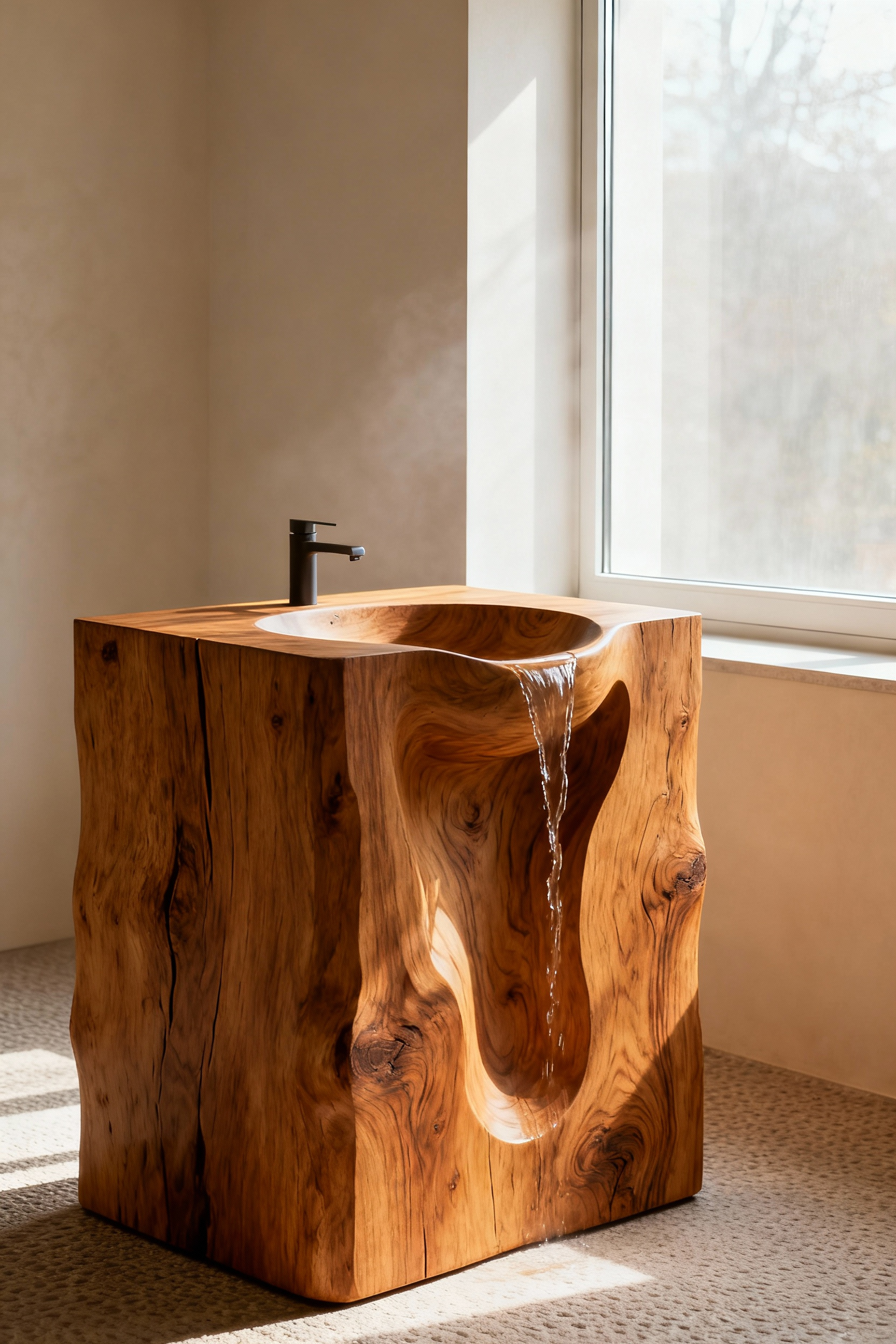
Imagine a beautiful teak or cedar louvered screen separating a freestanding tub from the main vanity. It offers a sense of intimate enclosure for your soak, yet you never feel closed off. The play of light filtering through the slats creates a dynamic, moving art piece in the room. This approach is brilliant from a wellness perspective, as it encourages crucial airflow in a humid environment, preventing stagnation. This is a core principle in feng shui—allowing energy, or chi, to move gently. What I love is how this bi-directional function serves both the soul and the science of a healthy space, turning a simple room divider into a beautiful, functional piece of architectural sculpture.
12. Seamless Integrated Vanities: Crafting Functional Sculpture from Solid Timber Blocks
The vanity is often the centerpiece of the bathroom. Instead of a standard cabinet with a sink dropped in, imagine a vanity carved from a solid block of wood, where the basin is a seamless, sculpted extension of the countertop itself. This approach embodies unity and flow, transforming a utilitarian object into functional art.
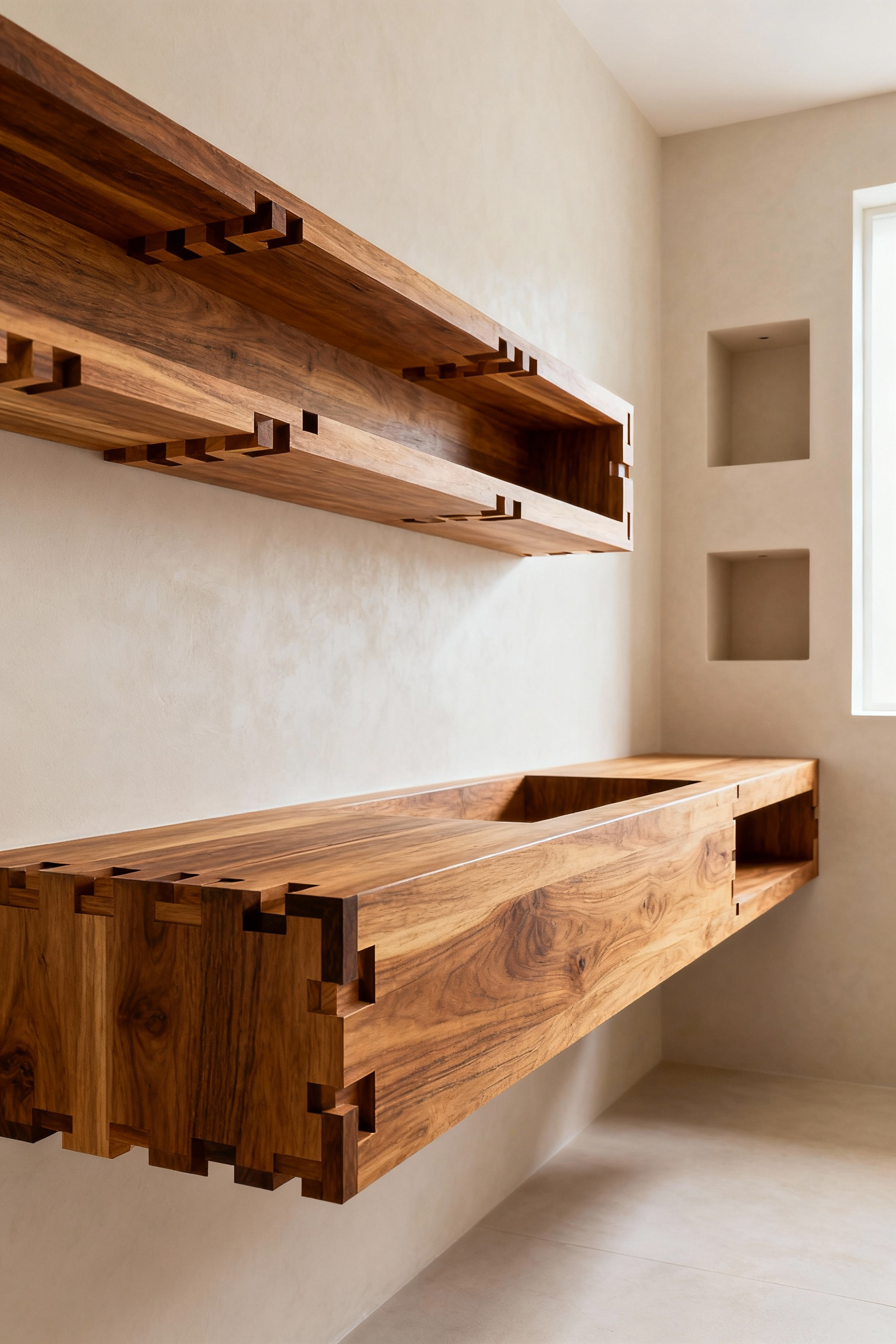
This design requires mastery. Using a dense, resilient hardwood like teak or a richly grained walnut, a craftsman can shape the wood so that water is guided gracefully toward an integrated drain. The eye follows the uninterrupted grain, creating a sense of profound calm. I’ve seen this play out with a client who wanted a bathroom that felt like a forest spring. We designed an integrated vanity from a single live-edge slab, and it became the soul of the room—a place she now touches every morning as a grounding ritual. It’s a statement of intentional living, where the functionality you need marries the organic beauty you crave, creating an anchor of tranquility in your home.
13. Floating Shelving and Recessed Niches: Evoking Weightlessness with Exposed Joinery
Storage in a serene space should feel intentional, not intrusive. Floating shelves and recessed niches are beautiful ways to achieve this, creating a sense of weightlessness while offering curated spots for necessities and cherished objects. It’s not about storing everything, but about elevating the essential.
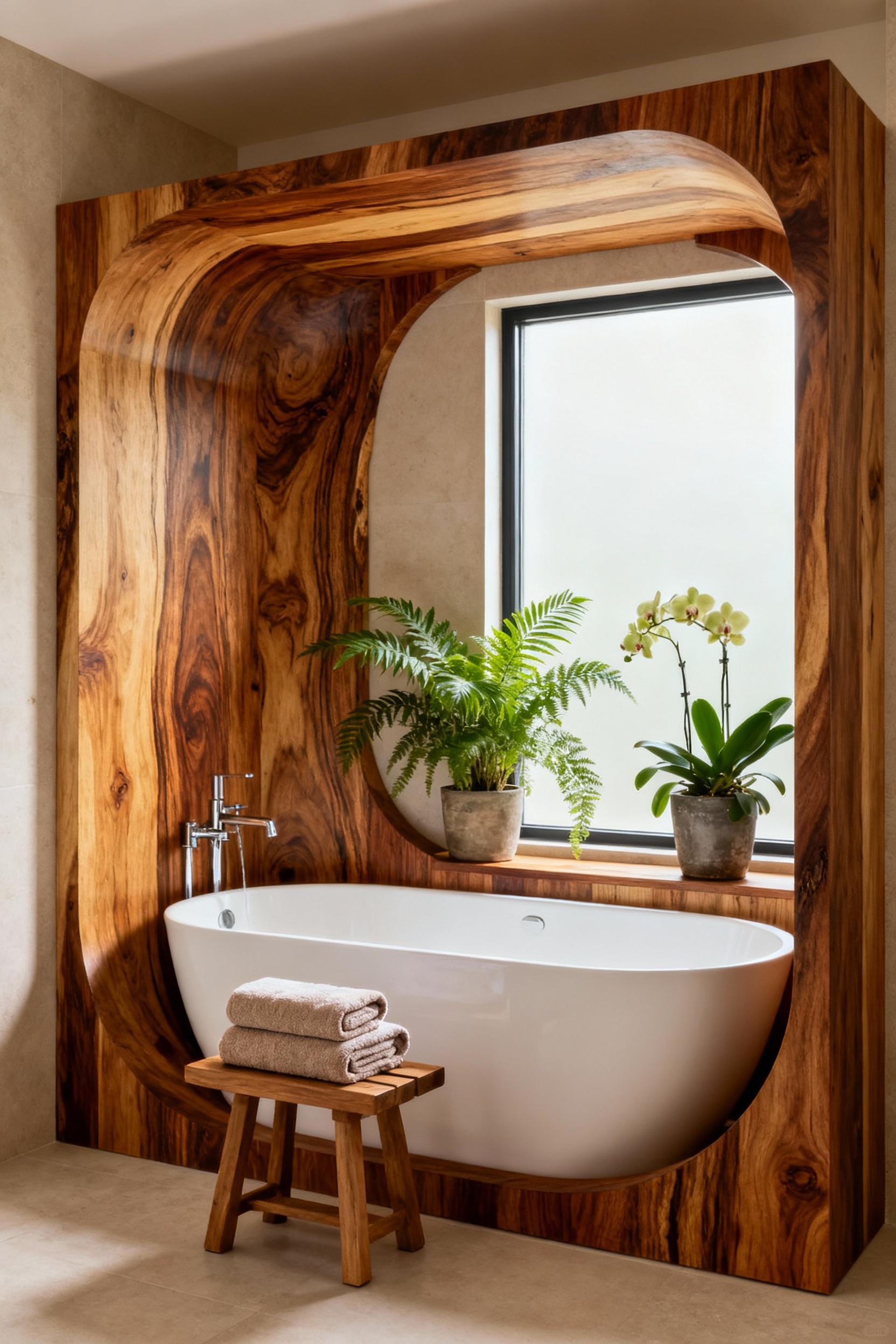
The magic is in the details. Rather than hiding the construction, we can celebrate it with exposed joinery. Seeing the craftsmanship of a dovetail or a finger joint turns a simple shelf into a story of material honesty. These traditional techniques feel solid and true. A single floating shelf of reclaimed redwood above a tub can hold bath salts and a candle, turning that corner into a personal spa. A recessed niche in a shower, lined with the same wood as the vanity, becomes an elegant, integrated home for your soaps and bottles. This approach encourages mindfulness, prompting you to choose with care what you want to display. It declutters surfaces and, by extension, declutters the mind, fostering an environment where clarity and serenity can truly flourish.
14. Architectural Bathtub Surrounds: Elevating the Soaking Ritual with Custom Woodwork
A bath is one of our most ancient self-care rituals. We can honor it by creating a cocoon of natural beauty around the tub itself. An architectural wooden surround elevates the act of soaking from simple hygiene into a deeply sensory, meditative experience.
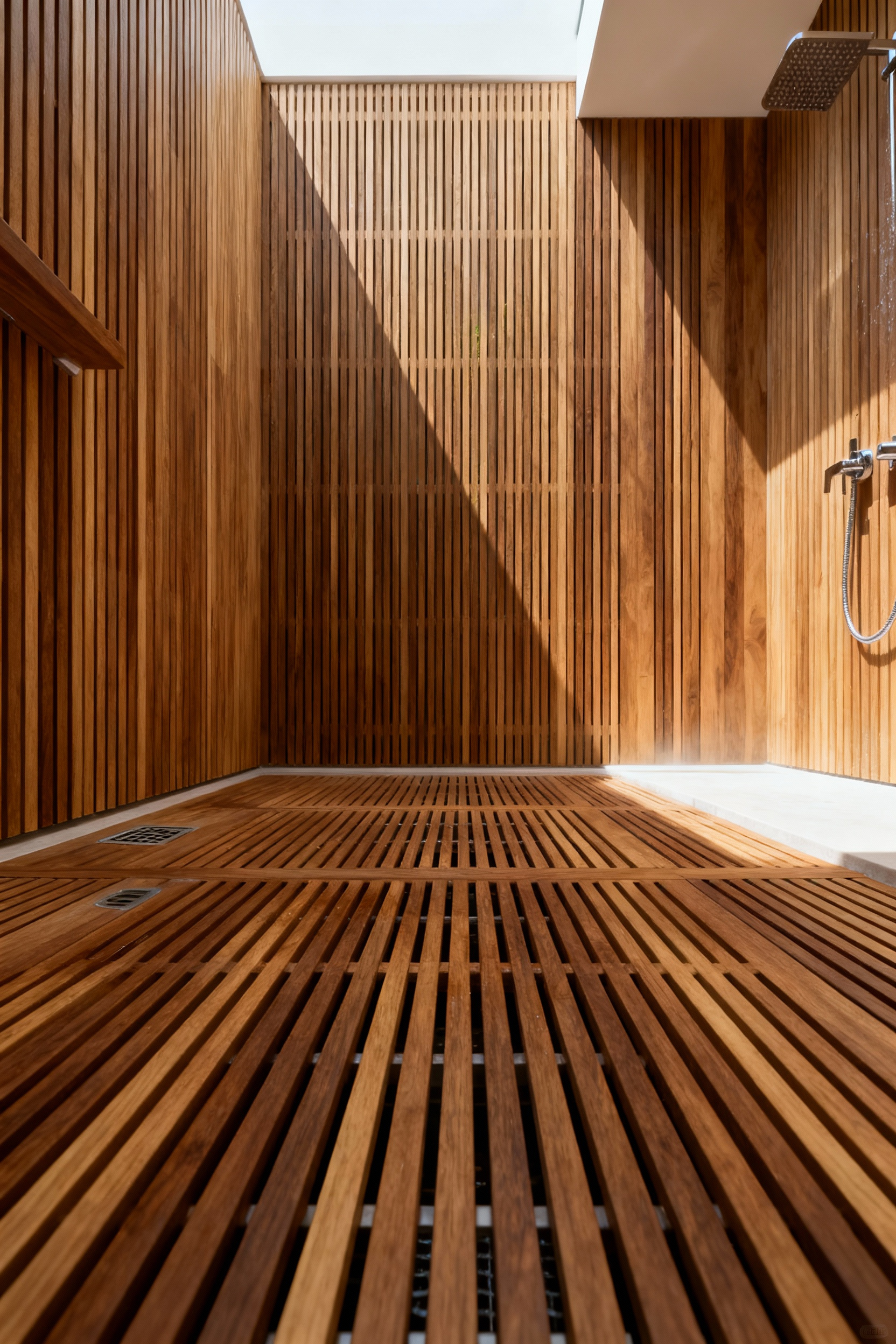
This goes beyond just boxing in a tub. Think of a custom framework of warm teak or thermally modified ash that transforms the bathtub into a central, organic sculpture. The wood can extend to create a wide ledge for a book or a cup of tea, or even flow into a built-in bench. The warmth of the wood, both visually and to the touch, offers a beautiful contrast to the cool water, engaging multiple senses. I designed a surround for a client using slatted Iroko wood. The way the bathroom light filtered through the slats, creating soft stripes of shadow on the water, turned her evening bath into her favorite part of the day. This is where design directly supports well-being—by infusing a daily act with intention and natural beauty, we create a powerful pocket of calm that recharges the spirit.
15. Beyond Floorboards: Strategically Employing Wooden Slats for Wet Room Paneling and Drainage
Wooden slats offer an ingenious solution for the wettest zones, proving that practicality and beauty can be one and the same. It’s an innovative way to manage water while introducing incredible texture and warmth, especially in a modern wet room or shower floor.
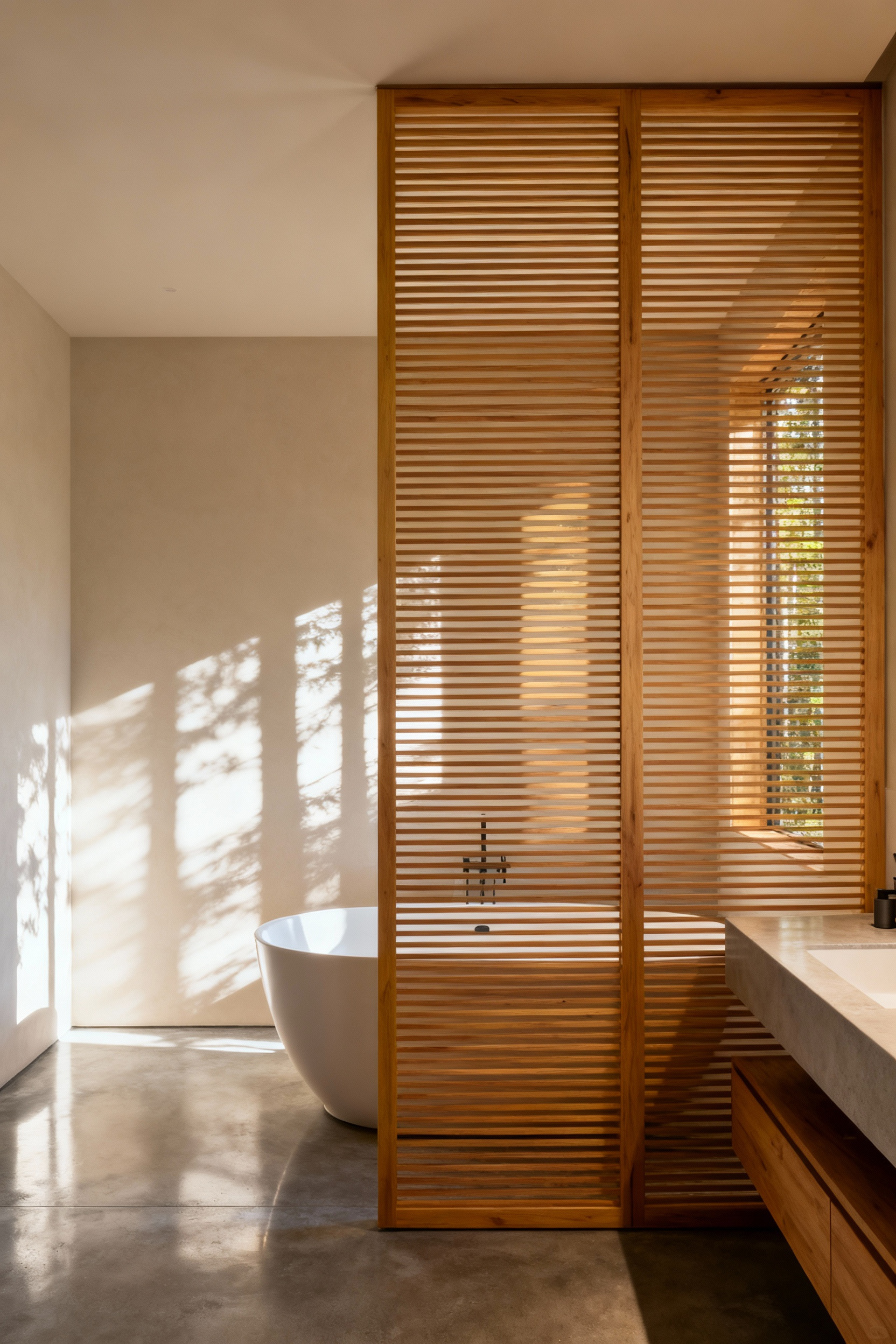
Imagine a shower where the floor is a mat of smooth teak slats. Water drains away effortlessly through the gaps, while your feet rest on a warm, tactile, non-slip surface. The experience is immediately more luxurious and spa-like than standing on cold tile. These slats can also be used as wall paneling over a waterproof membrane, creating a dynamic, rhythmic backdrop that adds depth and architectural interest. From my years of holistic home design, this is one of my favorite techniques. It solves a functional problem with such elegance. It celebrates wood’s natural resilience and turns a purely utilitarian area into a stunning, immersive design feature.
Sustaining Serenity: Longevity, Bioregionalism, and Holistic Wooden Care Practices (Part 1)
Creating a sanctuary is one thing; nurturing it is another. A truly biophilic space is a living one, and its vitality depends on our ongoing care and respect. This section explores holistic practices that preserve the beauty of your wood and honor the ecological systems from which it came.
16. Proactive Moisture Management: Integrating Passive Ventilation and Desiccant Strategies for Wood Preservation
The secret to a long-lasting wooden bathroom is creating an environment where the wood can thrive. This starts with proactive, intelligent moisture management. Beyond a good exhaust fan, we need to encourage the room to breathe.
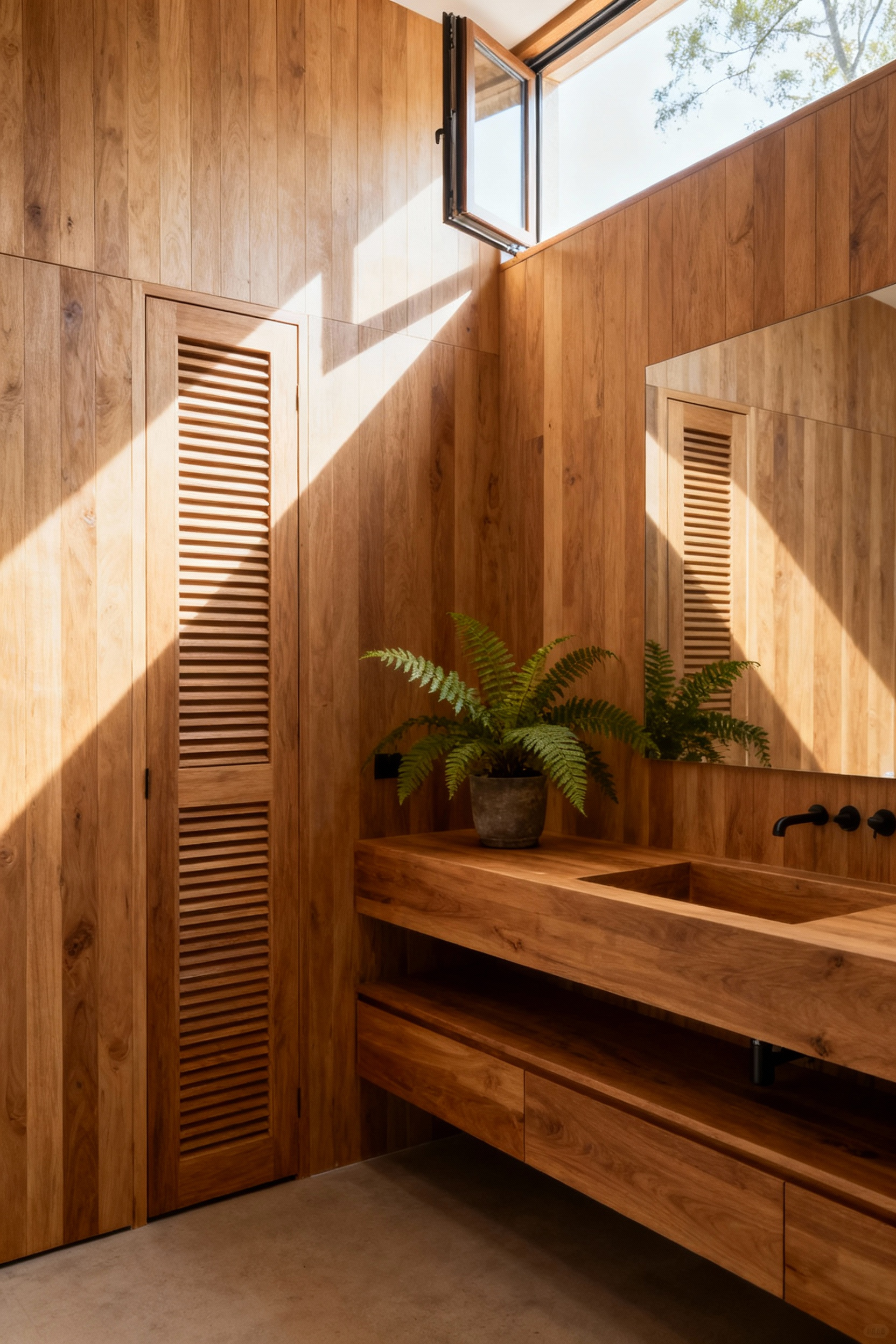
This is about passive ventilation—design choices that promote gentle, continuous air exchange. A transom window above the door, an operable skylight, or even a door with louvered panels can create subtle air currents that prevent humid, stagnant air from settling. This is a foundational principle of a healthy home. For an added layer of protection, especially inside wooden vanities, I love using natural desiccants. Small linen bags filled with activated charcoal or natural clay not only absorb excess moisture but also purify the air. This gentle, holistic approach works in harmony with the wood, allowing it to remain stable and beautiful for decades to come.
17. Botanical Oil Polishing Regimes: Nurturing Timber’s Luster and Protecting its Integrity Naturally
Instead of sealing wood under a synthetic, plastic-like film, we can nourish it with botanical oils. This is not just maintenance; it’s a ritual of care that honors the wood’s living nature and develops a rich, inviting patina over time. It’s like moisturizing your own skin.
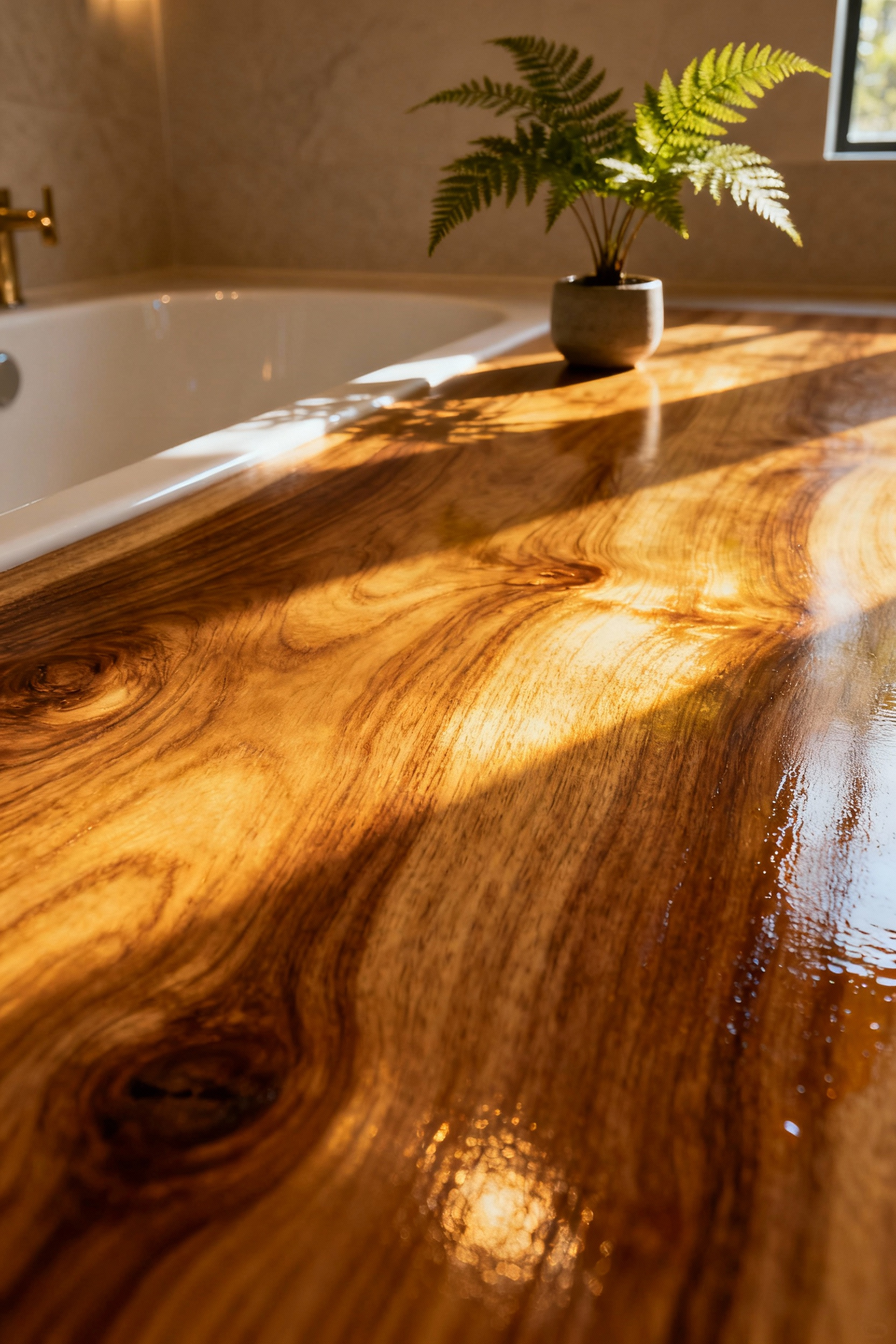
Natural oils like tung oil, linseed oil, or hardwax oils penetrate deep into the wood fibers, fortifying them from within while allowing the material to breathe. This enhances the natural grain and warmth while repelling water. The process itself can be a mindful practice. Once every few months, gently clean the surface, then apply a small amount of oil with a soft cloth, working it into the grain. As you buff off the excess, you are in direct communion with the material. What really gets me is the way the wood’s color deepens and its grain comes alive during this process. It feels less like a chore and more like a therapeutic ritual that keeps your sanctuary vibrant and healthy.
18. Bioregional Timber Sourcing: Minimizing Environmental Footprint Through Localism and Artisan Collaboration
The story of your wood begins long before it enters your home. Bioregional sourcing is the practice of choosing timber that is grown and harvested locally. This philosophical shift connects your home directly to the landscape around you and carries a powerful, positive energy.
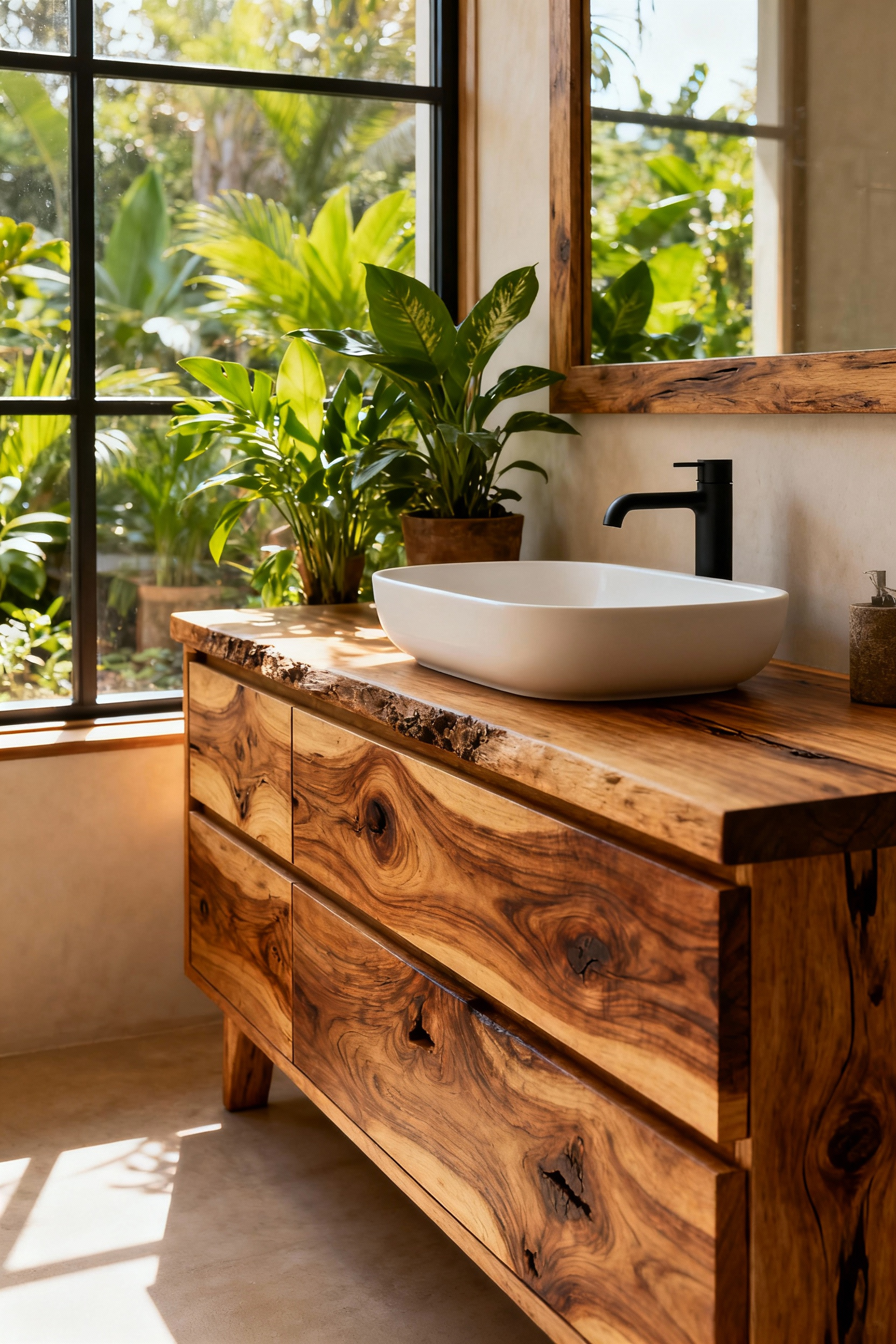
By choosing local wood—whether it’s oak, ash, or maple, depending on your region—you drastically reduce the carbon footprint associated with transportation. It also allows you to support local sawmills and artisans, building a relationship with the people who steward the land. Ask about the wood’s story. Was it salvaged from an old building? Did it come from a sustainably managed local forest? This approach imbues your space with a sense of place and authenticity. A bathroom paneled in wood from your own bioregion feels deeply, honestly rooted—a sanctuary that honors not just your own well-being, but the health of your local ecosystem.
19. Lifecycle Considerations: Designing for Disassembly and Recyclability in Wooden Furnishings
A truly holistic perspective considers the entire life of an object. “Designing for disassembly” means creating furnishings not just for today, but with their future in mind. It’s a commitment to circularity, ensuring the wood we use can have another life beyond this one.
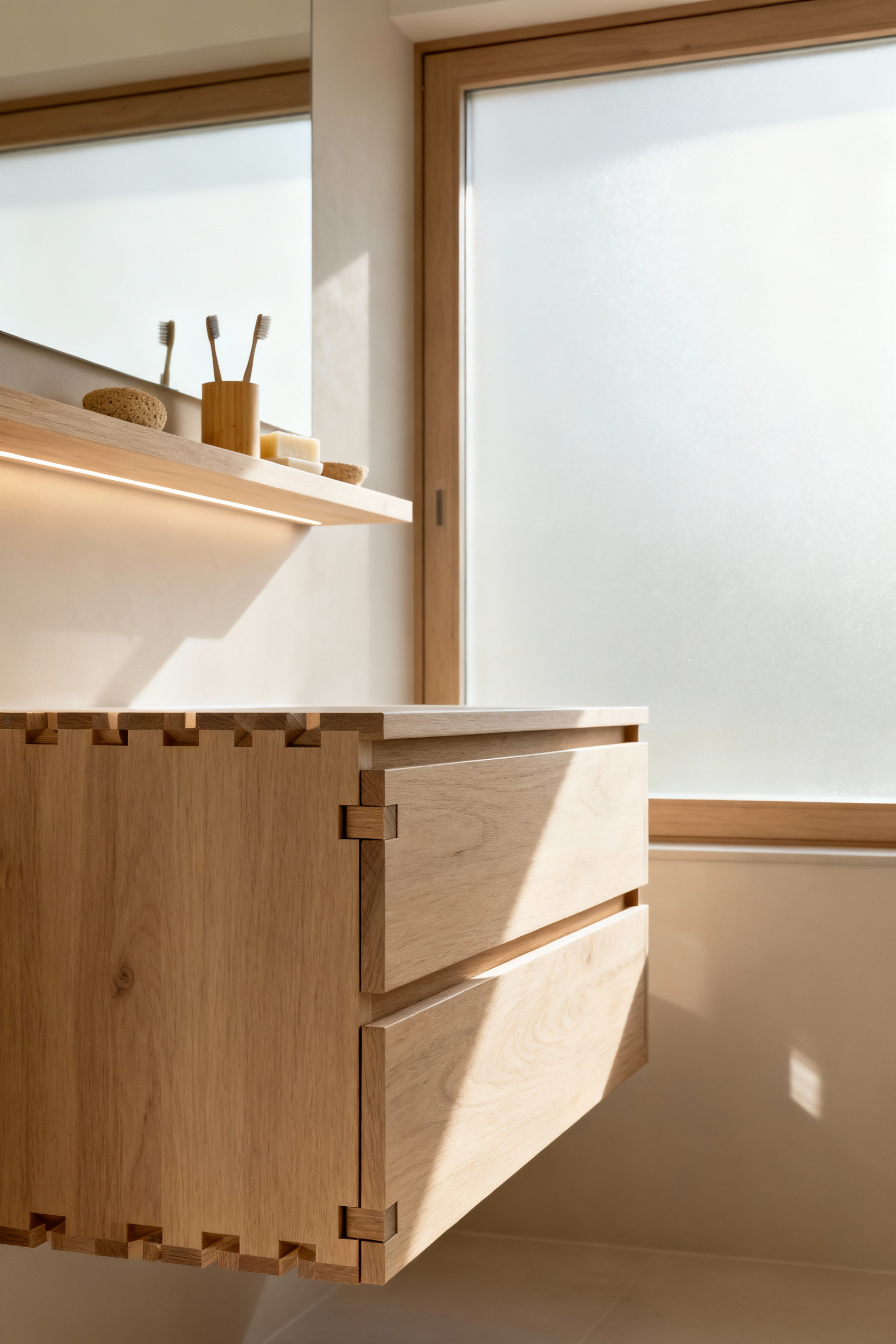
This means favoring mechanical fasteners like screws over permanent glues, so a vanity can be taken apart and its wood repurposed. It means choosing traditional joinery that can be disassembled and repaired. I learned this when I worked on a historical restoration project; the beautiful old cabinets could be saved precisely because they were built to be taken apart. When commissioning a piece, talk to the artisan about its construction. This foresight transforms your furnishings from consumable goods into cherished assets that can be passed down or recycled cleanly. It’s the ultimate act of respect for a precious natural resource, ensuring the legacy of your sanctuary is one of renewal, not waste.
Sustaining Serenity: Longevity, Bioregionalism, and Holistic Wooden Care Practices (Part 2)
Our final step is to fully integrate the practice of care into our daily lives. A sanctuary is not static; it is a relationship. This section is about embracing the small, mindful acts that ensure our wooden bathroom ideas mature into spaces of enduring beauty and vibrancy.
20. The Zen of Maintenance: Ritualistic Care for the Enduring Vibrancy of Your Wooden Sanctuary
Longevity is born from mindful interaction. In a wooden bathroom, maintenance should not be a chore, but a ritual—a moment to connect with the living material that surrounds you. This “Zen of Maintenance” is an act of gratitude that ensures the vibrancy of your sanctuary.
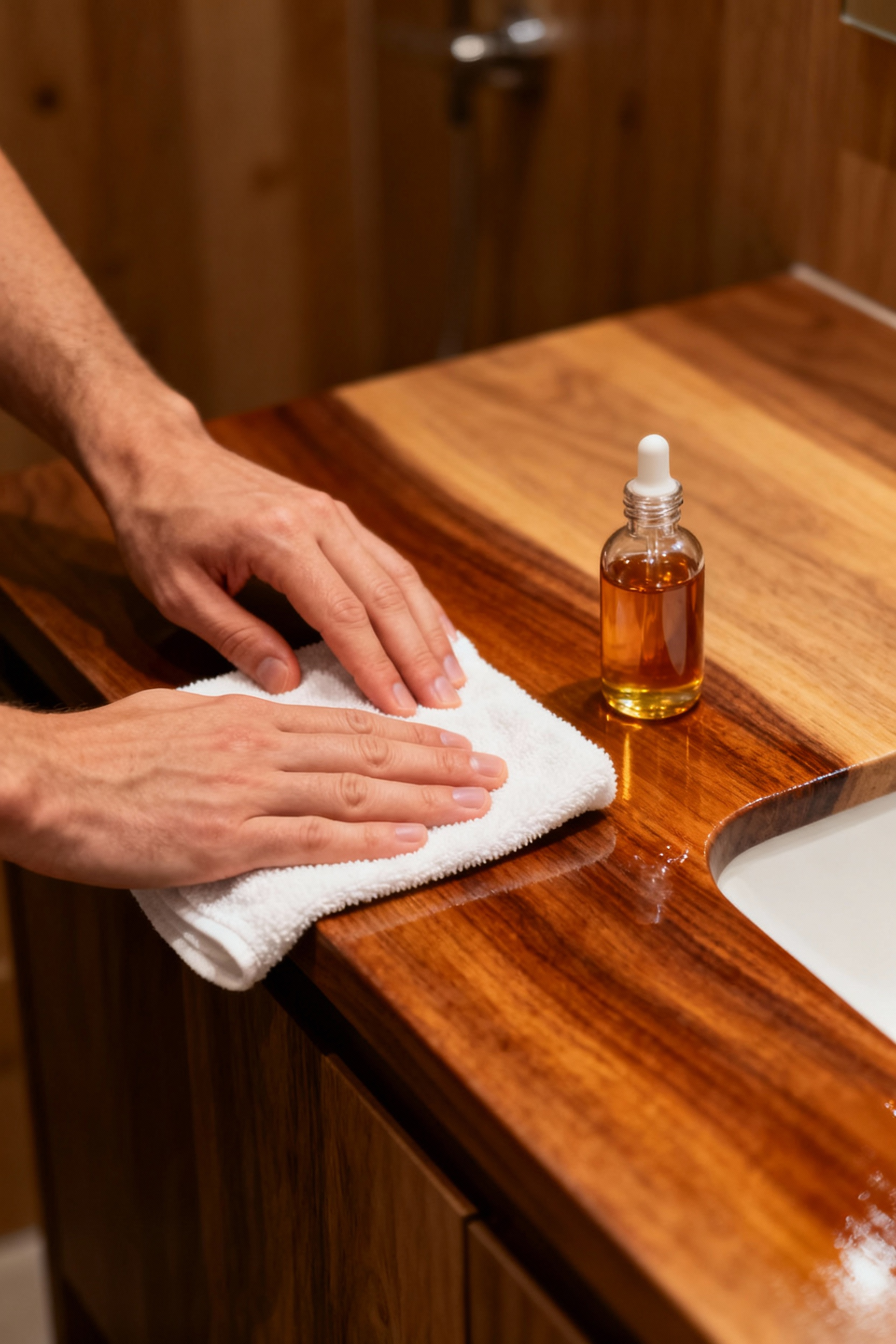
This practice is rooted in gentle, consistent observation. The foundational gesture is simply wiping down wooden surfaces with a soft, dry cloth after your shower to prevent water from lingering. Once a week, you might use a damp cloth with a mild, pH-neutral soap. These small acts are moments of presence. I tell my clients and readers to notice the beauty of the water beading on an oiled surface, to feel the smooth grain under their fingertips. This shifts the mindset from cleaning to caring. Re-oiling a vanity or a bench becomes a seasonal ceremony of renewal. This intentional engagement ensures your wooden sanctuary remains not just aesthetically pleasing, but a genuinely living, breathing space that nurtures your well-being for decades.
Conclusion
Our journey through these 20 serene wooden bathroom ideas reveals a simple but profound truth: wood has the power to transform a room into a sanctuary. We have seen how its warmth, texture, and living presence can cultivate an environment where the restorative energy of nature is a part of your daily life. From the sweeping gesture of a paneled wall to the quiet detail of a handcrafted shelf, wood connects us back to the earth and, in doing so, back to ourselves.
This holistic path has shown that choosing wood is a commitment to well-being. By integrating these intentional designs, we are authoring an experience—a space for genuine self-care and quiet contemplation. As you reflect on these inspirations, I hope you feel empowered to create a bathroom that is more than just functional. May it be a cherished retreat where every detail nurtures a sense of profound calm and vital rejuvenation. Your sanctuary awaits, ready to offer solace and grounding peace for years to come.